When they eventually install microcameras into the corneas of our eyes, we’ll still be watching this hockey highlight.
This was Kerri Strug vaulting on one leg in 1996. Bob Beamon shattering the long jump in Mexico City in 1968. Sid the Kid in 2010, only much, much cooler.
It was more than historic. It was iconic.
In overtime of the gold-medal game at the 2026 Winter Olympics, Team USA defenseman Megan Keller deked Canadian defender Claire Thompson and left her in the dust, flailing with her stick.
Keller then beat goalie Ann-Renée Desbiens with a backhand to the short side.
It’s hard to compare this Olympic moment with Romania’s Nadia Comăneci, who scored gymnastics’ first perfect 10 in 1976 at the age of 14. It’s not really the same as Usain “Lightning” Bolt, the Jamaican sprinter who broke Michael Johnson’s world record in the 200 meters in 2008 or Michael Phelps, who, at those same Beijing Games, swam his way to eight golds; their moments were parts of aggregations. And it certainly lacks the social significance of Black sprinter Jesse Owens, who won a then-record four golds in 1936 in front of host Adolf Hitler.
Jamaica’s Usain Bolt celebrates as he wins the men’s 200-meter final with a world record during the 2008 Beijing Olympics.
I was there for Bolt and Phelps. All of those moments took your breath away the way only great moments in sport leave you breathless.
None was quite as magical as Keller’s golden goal.
Sidney Crosby did something similar for Canada in 2010, and he did it against Team USA, and I was there for that, too. But Crosby’s goal was simpler: He carried the puck in, had a weak shot deflected away, got it back, went to the boards, passed to teammate Jarome Iginla, skated away from suddenly inattentive defenseman Brian Rafalski, got the pass back from Iginla, and snapped a shot past goaltender Ryan Miller.
Hockey legend Wayne Gretzky and film legend Donald Sutherland, both great Canadians, were sitting right behind me. They’d probably disagree with my assertion here.
Keller’s goal isn’t quite the same event as Team USA’s upset of the Soviets in 1980. That was a true underdog story, mostly U.S. college kids playing an elite set of professionals who’d won the last four golds. It might be the biggest upset in sports history — but it wasn’t an overtime game, or even a gold-medal game, and there was no defining, game-ending moment like Keller’s.
Pity poor Thompson, but not too much. She’d been a hero in China with 11 assists and two goals, an Olympic record for defensemen, when the Canadians won the gold in 2022.
There are plenty of caveats surrounding what should be the play of the year. None of them of Keller’s making.
Megan Keller celebrates after scoring one of the best golden goals you will ever see in hockey.
Crosby scored his goal in a four-on-four setting, but overtime rules were changed ahead of the 2022 Olympics to make it three-on-three.
The teams in 2010 were more evenly matched, while the U.S. team in Milan, Italy, was heavily favored, having outscored opponents, 31-1, in a 6-0 run that included a 5-0 win over Canada in the preliminary round. However, Canada’s strategy and execution Thursday had the reigning champs holding onto a 1-0 lead before American captain Hilary Knight tied the game with 2 minutes, 4 seconds left in regulation.
Finally, no teams besides Canada (five) and the U.S. (three) have won a gold medal, and they have met in the gold-medal game seven of the eight times it has been played. To date, it is not a sport in which the field offers the titans much resistance.
This should not diminish the moment. Keller and her teammates can only beat opponents they meet.
This golden goal is one of the best plays you will ever see.
In fact, as a spontaneous athletic maneuver of incomparable audacity and breathtaking skill, seizing the biggest moment in a player’s life, I struggle to find its equal.
A battle of the beer festivals is brewing in Philadelphia, and it’s set to come to a head next weekend, when Philly Bierfest and Philly Beer Fest — two completely unrelated beer festivals with names that are homophones — take place on the afternoon of Saturday, Feb. 28.
This isn’t a coincidence, according to some members of Pennsylvania’s beer scene who claim the New York City-based organizers of the two-year-old Philly Beer Fest are deliberately trying to capitalize on the good name of Bierfest, a long-standing event with deep local roots.
“It’s a very pointed move,” said Meredith Megan Rebar, the founder of Home Brewed Events, which plans major food and drink festivals in the Philly region. “They’re just doing this intentionally to mess with the event that’s been around longer.”
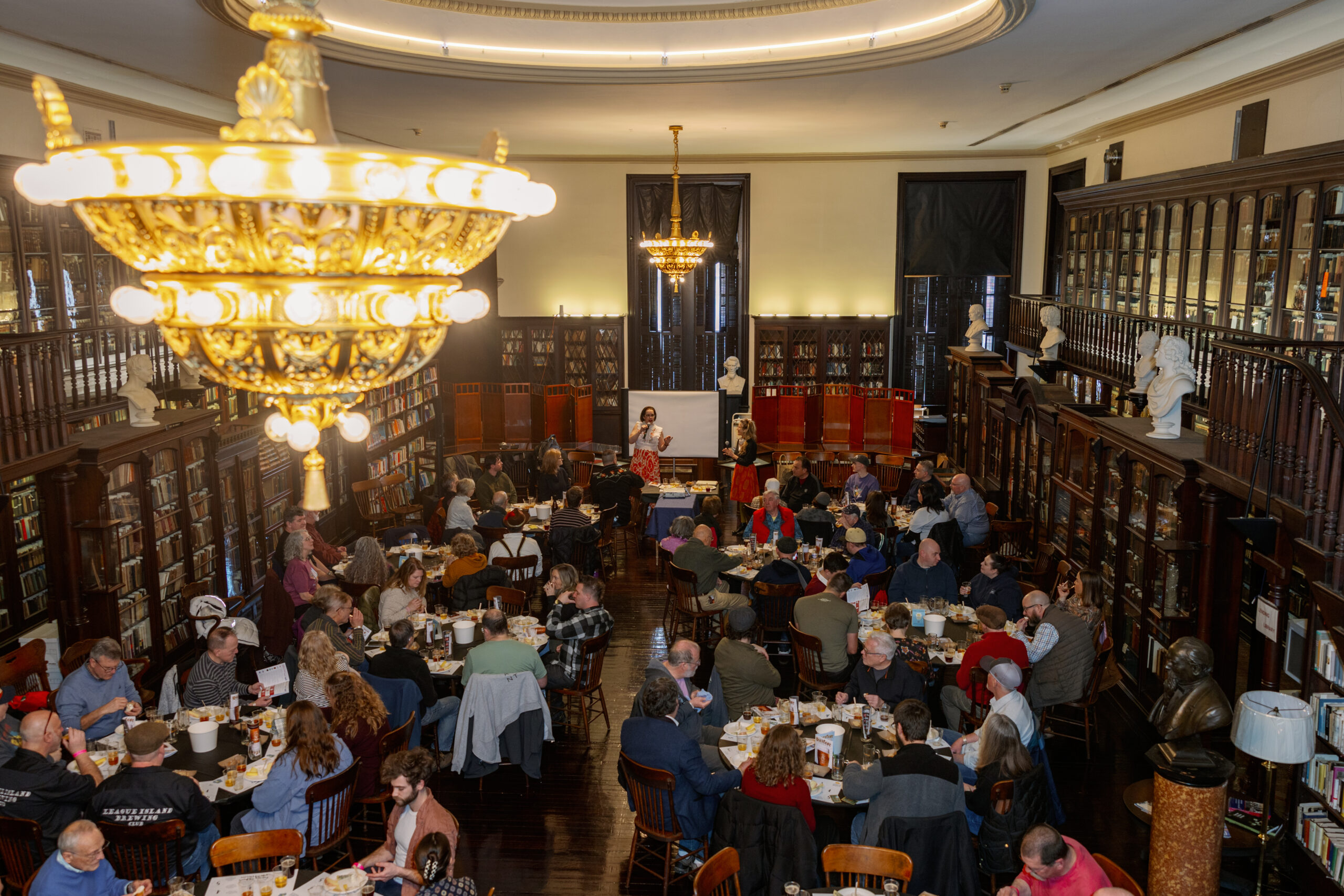
The 2024 Philly Bierfest, held at the German Society of Pennsylvania at 611 Spring Garden St. The event spans two buildings and includes a food hall, beer classes, and burlesque performances, among other things.
Philly Bierfest was created in 2013 by Northern Liberties-based nonprofit the German Society of Pennsylvania and Marnie Old, a local wine author and longtime freelance columnist for The Inquirer. It began as a way to honor the state’s rich tradition of brewing German-style beers, such as pilsners, kölsches, and lagers.With a deep benchof Pennsylvania- and Germany-based brewers — there are 45 pouring at this year’s event — the festival sells out each year, and was named one of the best beer festivals in the U.S. by USA Today in 2023. The event’s proceeds have gone to the Philly Roller Derby and Brewers of PA since its inception.
Philly Beer Fest, on the other hand, is hosted by by Craft Hospitality, a national events company headquartered in New York City that organizes beverage festivals across the U.S., including the Philadelphia Zoo’s Summer Ale Festival. Craft Hospitality launched Philly Beer Fest at the 23rd Street Armory in 2024. Just over 30 Philadelphia-area beverage makers are featured this year, and proceedspartially benefit the Trauma Survivors Foundation.
In 2024 and 2025, Craft Hospitality scheduled Beer Fest on the weekends immediately before and after Bierfest, which hasbeen held on the last Saturday of February for 13 years (save for a pandemic-induced disruption).
This year’s identical scheduling hasn’t necessarily hurt Bierfest, Old said, noting that tickets sold out this week. But it has caused some headaches. Bierfest’s barbecue vendor accidentally showed up to the wrong venue for a site visit, and Old has spent a great deal of time confirming with vendors that they’re signed up for the right event. In past years, Old has heard from some disappointed Beer Fest attendees who showed up to their event expecting it to be the German-themed Bierfest.
The nonprofit-run festival tried to get ahead of any confusion this year.Prior to Bierfest selling out, it had a pop-up on its website that read: “Friends don’t let friends get the wrong tickets. Share this link to ensure pals get tickets to the original, authentic Philly Bierfest and not the other similarly named event.”
Old isn’t sure if the warnings entirely worked.
“We don’t hear from anyone who got tickets to the wrong festival until after our event,” she said. “I don’t know what their intention is because I’m not on their team, but misleading [the consumer] does seem to be the end effect.”
Craft Hospitality denies scheduling Beer Fest for Feb. 28 as a way to undercut its preexistingcompetitor. In a statement, the company attributed the scheduling snafu to the event being held at a National Guard facility, which limits scheduling.
“Event dates are determined based on venue availability and planning logistics, and are often set by contract approximately 12 months in advance,” the statement read. “Philadelphia has an incredibly active event calendar — this year especially with the World Cup … Overlap between events is not uncommon.”
This isn’t the first time Craft Hospitality’sBeer Fest has been accused of riding Bierfest’s coattails.
After a Craft Hospitality employee emailed Ploughman Cider owner Ben Wenk in Nov. 2023 to gauge interest in vending at the first Philly Beer Fest — then scheduled for Feb. 17, 2024 — Wenk said his cidery would boycott all future Craft Hospitality events over what he felt was the company’s “intentional and malicious” attempt to deceive.
Scheduling a beer festival with an identical-sounding name just a week before its established competitor, Wenk said, went too far.
“Our people and our brand won’t be devoting any further resources towards an organization such as yours that is so brazenly and transparently willing to act in such a predatory way towards an established event like Philly Bierfest, who, by our estimation, have done nothing to deserve it,” Wenk emailed the Craft Hospitality employee in February 2024.
Another Craft Hospitality employee replied to Wenk days later. “No one else has ever mentioned this other beer fest to me personally. Brands have just signed up fairly easily but I do see the conflict you’re pointing out. I will be looking into this,” they wrote.
No one followed up with him, Wenk said, and Craft Hospitality didn’t respond to questions about this interaction.
“Why is this New York events company coming down here to Philadelphia and thinking they can get one over on us?” Wenk said. “It just feels predatory to me.”
Ploughman Ciders, of Adams County, Pa., is boycotting Philly Beer Fest and all other Craft Hospitality events.
Bierfest co-creator Old had also directly flagged issues to Sam Gelin, Craft Hospitality’s founder. Shortly after both beer festivals wrapped in 2024, Old learned Craft Hospitality had scheduled its 2025 Beer Fest on the same day as Bierfest. When she asked Gelin if he would consider moving his event out of concern that it would confuse customers and vendors, Old recalled that Gelin said it would be “desirable” for the events to share the date. Still, Gelin obliged. Philly Beer Fest 2025 took place one week after Bierfest.
“After that conversation and then for this year, I didn’t think I needed to follow up with them. I assumed that they would continue choosing a different date,” Old said.
When she learned in September that this year’s Beer Fest was once again set for same exact date as Bierfest, Old figured it wasn’t worth reaching out to Gelin again.
“If you’re renting your venue, it’s too late to change by that point. Six months is cutting it too close to make any changes,” she said. “And it was clear to me at that stage that [Craft Hospitality] saw having [its] event on the same date as ours as a benefit.”
Craft Hospitality did not respond to questions about whether its founder had been contacted by Old. “Philly Beer Fest is not affiliated with Philly Bierfest,” they said in their statement. “They are separate events with different producers, different names, different socials, different formats, different pricing, different breweries, different cultural focuses, different venues, and overall different experiences.”
Festivals with different aims
The different vibes are part of the problem, according to Rebar,the festival organizer who specializesbeer festivals.
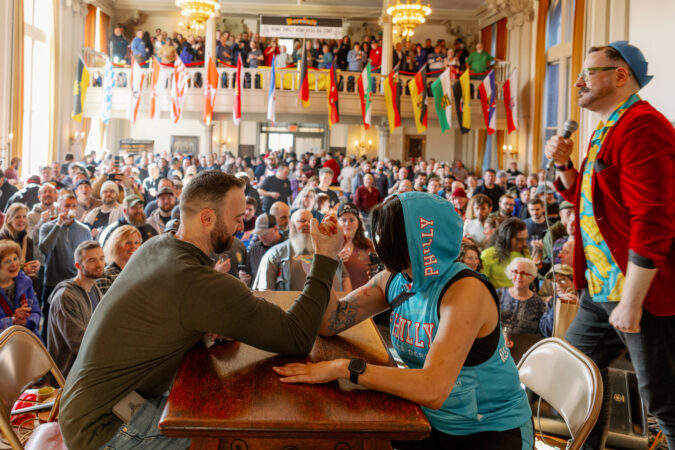
Bierfest typically draws “real beer enthusiasts,” who are there to drink but also to deepen their understanding of German brewing techniques and beer culture. The festival’s format includes beer seminars, a food hall showcasing traditional German eats by local makers, a German Masskrugstemmen (stein-holding) strength competition, and performances from Bavarian folk dancers.
An attendee at the 2024 Philly Bierfest, which has been held on the last weekend of February since its inception in 2023.
Beer Fest, said Rebar, is for people who want to party. The festival is a hodgepodge of beer, hard seltzer, and spiked tea purveyors compared to Bierfest’s lineup of respected German beermakers and Pennsylvania brewers making traditional German beer styles.
“There’s no educational standards to it. It’s just a generic festival, and it’s not [organized] by anybody local,” said Rebar, who attended the first Beer Fest in 2024. “Philly Bierfest has been around for so long, has a really good representation, and has a very clear mission.”
Craft Hospitality did not respond to questions about whether it would provide refunds to attendees who showed up thinking they were at Bierfest and are dissatisfied with their experience.
And while Rebar concedes that it would’ve been difficult for Craft Hospitality to reschedule given the impact on vendors, she said the winter months are typically slow for beer-industry events.
“There’s plenty of other weekends in January, February, [and] March when there’s not a lot going on,” Rebar said.
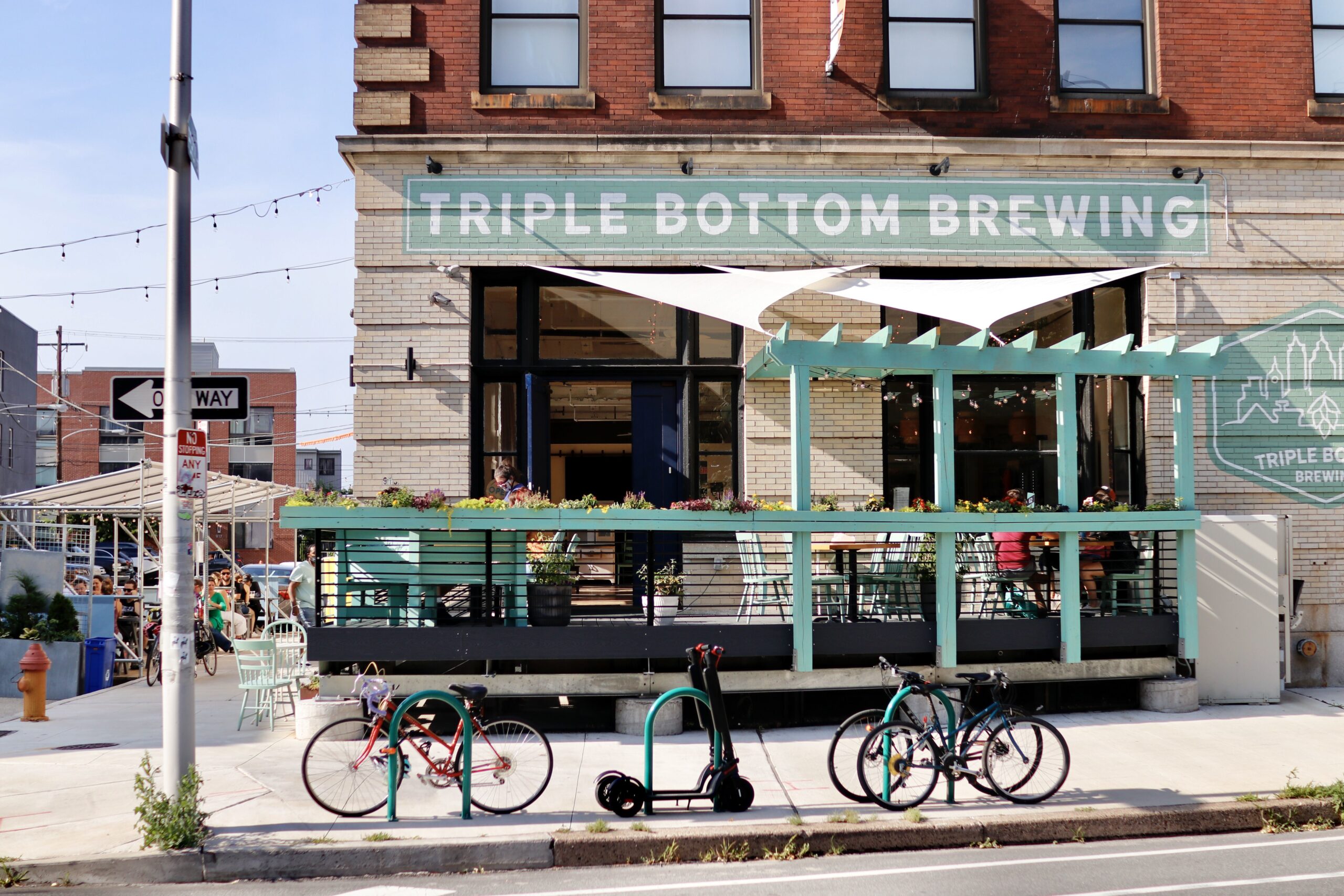
Not everyone views the festivals as being in competition. Currently three local breweries are participating in both festivals: Norristown’s Von C Brewing, Broad Street Brewing in Bristol, and Triple Bottom Brewing in Spring Garden.
Old said she didn’t force any vendors to choose between the two events. “I hate to put my vendors in an awkward situation … We do not have a problem with anyone being registered for both.”
Triple Bottom Brewing is one three breweries participating in both Philly Bierfest and Philly Beer Fest on Feb, 28, 2026.
Triple Bottom Brewing co-owner Tess Hart has found a silver lining to the fest-on-fest drama. The six-year-old brewery has repeatedly participated in both festivals. The dual events kick off Triple Bottom’s 16-week brewer apprenticeship program for individuals impacted by the justice system and housing insecurity, she said.
This year’s 10-person cohort started last week, Hart said, and they’ll be staffing both festivals concurrently. The challenge, she thinks, will be rewarding.
“We’ll be stretched a little thin on Saturday,” Hart said. “But this will be a good opportunity to get them out of the taproom and really well-practiced about talking about beer in a high-volume situation. For us, that’s a big benefit.”
You never know how Jeffrey Lurie sees his team, but, after two Super Bowl trips and two post-Super Bowl disasters, it feels more than ever like there’s a one-year window in which Nick Sirianni and Jalen Hurts can save their jobs in Philadelphia.
Their chances got a lot better Thursday.
That’s when The Inquirer reported that right tackle Lane Johnson, arguably the greatest Eagle ever and inarguably the greatest Eagles offensive lineman, would return for a 14th season. The Birds are 110-57-1 with Johnson, 18-27 without. He’s the only Eagle on either offense or defense to start in both of their Super Bowl wins. Johnson considered retirement after missing the last seven games with a foot injury and after offensive line coach Jeff Stoutland resigned.
Thursday also was when both The Inquirer and former Eagles TV reporter Derrick Gunn reported that left guard Landon Dickerson, whose body has endured multiple injuries beginning in college, will return for a sixth season. Before this season, Dickerson was voted onto the three previous Pro Bowl teams.
Despite his frustrations with health issues Landon Dickerson is planning to return for the 2026 season … per source.
There has been a lot of noise since the Eagles’ season ended a month ago: A.J. Brown’s dissatisfaction; the firing of offensive coordinator Kevin Patullo; the tortuous pursuit of his replacement, who turned out to be little-known Sean Mannion; and the possibility of losing defensive coordinator Vic Fangio to retirement.
None of those issues mattered as much as the possible loss of Johnson and Dickerson.
Replacing either of them would have been difficult.
Replacing both would have been catastrophic.
That’s because Hurts has shown little capacity for success in the NFL unless he plays behind an elite offensive line. When the Eagles went to Super Bowls after the 2022 and 2024 seasons, the offensive lines were elite and stable. They were markedly less so in 2023 and 2025, seasons in which the Eagles lost their first playoff game.
Not coincidentally, Sirianni’s offenses have flourished when Johnson, Dickerson, & Co. have been healthy and wisely utilized, relying on a turnover-averse run-first attack.
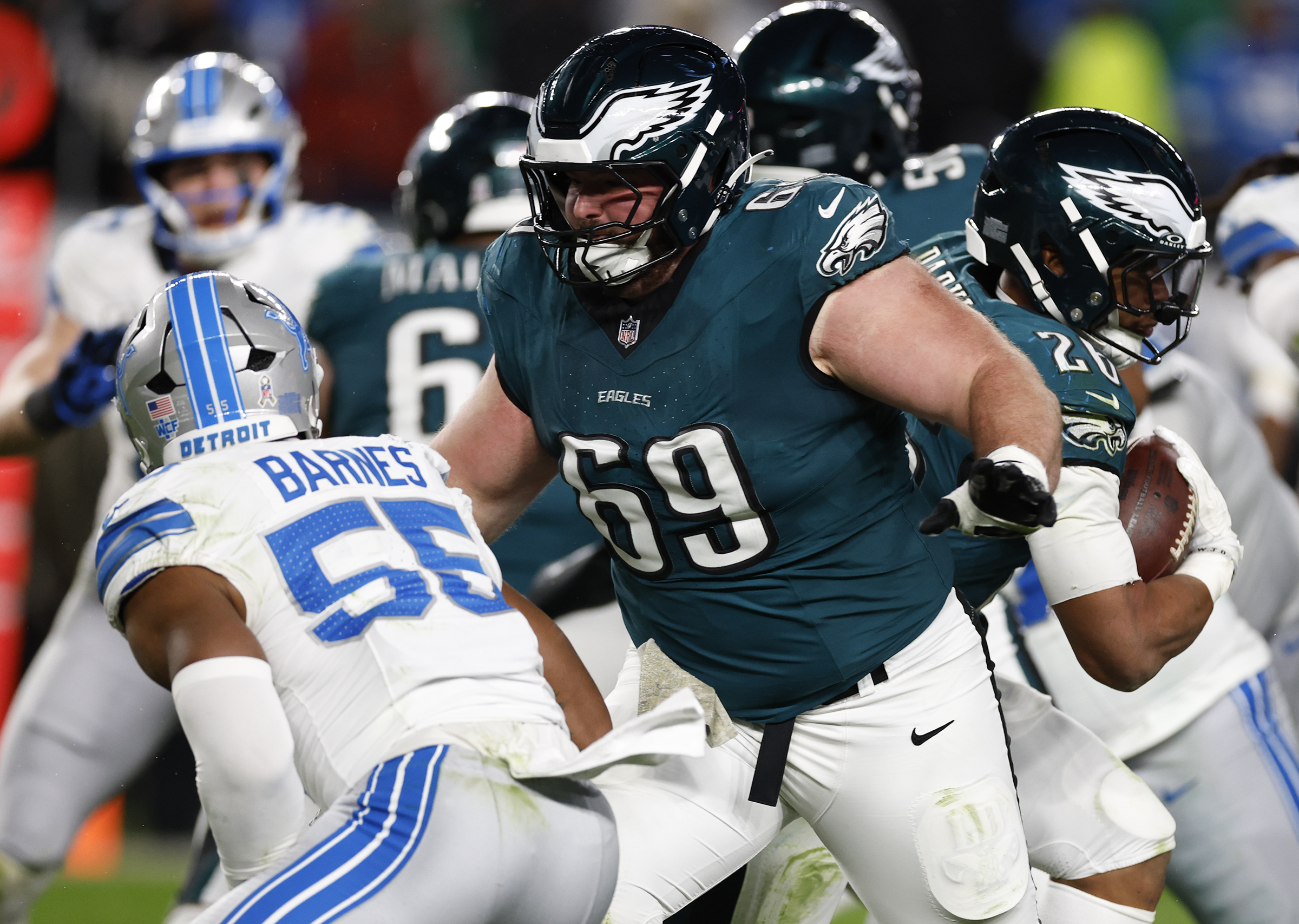
Eagles guard Landon Dickerson blocks Detroit Lions linebacker Derrick Barnes.
When healthy, Johnson and Dickerson, both athletic freaks, are voracious run-blockers.
An ancillary benefit of Johnson returning relates to the departure of Stoutland. “Stout” is the only offensive line coach Johnson has ever had in the NFL; for that matter, that’s true of every other Eagles starter.
But no other Eagles lineman has either the base of knowledge or capacity to impart that knowledge on teammates like Johnson. He founded and runs an annual offensive line offseason camp every summer in Texas called OL Masterminds.
Almost every lineman that has ever played with him testifies that Johnson has, at some point, acted as a sort of assistant coach when Stoutland or his offensive line assistants weren’t fully able to get their message across.
More than anything, Johnson brings a level of intensity and professionalism to every game and practice that few others in the NFL can match. It is why he is great, and that sort of greatness is contagious. Certainly, Dickerson has benefited.
So, their return not only could save the 2026 season, but it also could extend the Philadelphia shelf-life of both coach and quarterback.
Granted, there are contingents of fans and pundits who would rather that either one or both leave the employ of Lurie sooner than later, and so this development on the offensive line might not be met with unrestrained joy.
But one never should be thankless for news that is, on the whole, good for their own self-interests.
Country-style spinach pie at Madis Coffee Roasters
I’ve been devoted to spanakopita since growing up in Metro Detroit, where Greektown was among my favorite downtown haunts. Philadelphia has great spinach pies, too, from Zorba’s Tavern in Fairmount to Stina near West Passyunk. But lately, I’ve become obsessed with the big round pans of spanikopita served at Madis Coffee Roasters, the fast growing local trio of modern cafes owned by the Navorsidis family. Their coffee is also excellent, by the way, including a well-balanced “Four Seasons” blend that’s become a regular in my house rotation of morning brews, as well as quality pour-overs of single-origin beans.
But the spanakopita the cafes import from Greece is one of the main reasons I frequently stop at Madis’ spacious Curtis Center location beside Independence Hall for breakfast before heading into The Inquirer newsroom nearby. Unlike the vast majority of spinach pies made in the U.S., which feature ultra-flaky and delicate phyllo, these big round pies made by Rodoula in Athens are encased in crispy waves of thicker phyllo sheets that are typical of the more rustic country style, especially when shaped into rounds.
An imported round spinach pie made by Rodoula in Athens, this one stuffed with extra feta, is warmed to a crisp and served at Madis Coffee Roasters locations across Philadelphia.
I give credit to Madis for warming it correctly, since I’ve had other versions of the same pie elsewhere (at a local gyro chain) where the same pastry was hastily underbaked and chewy. At its toasty, tawny prime, a crusty wedge of this pie shatters beneath fork and knife around a luxuriously soft filling of spinach, leeks, and extra cheese — a particularly creamy blend of tangy sheep and goat’s milk feta. Straight from Athens to the cradle of Liberty, it’s the spanakopita breakfast of champs. Madis Coffee Roasters, 601 Walnut St., 3527 Lancaster Ave., 1441 Chestnut St.; madiscoffee.com
— Craig LaBan
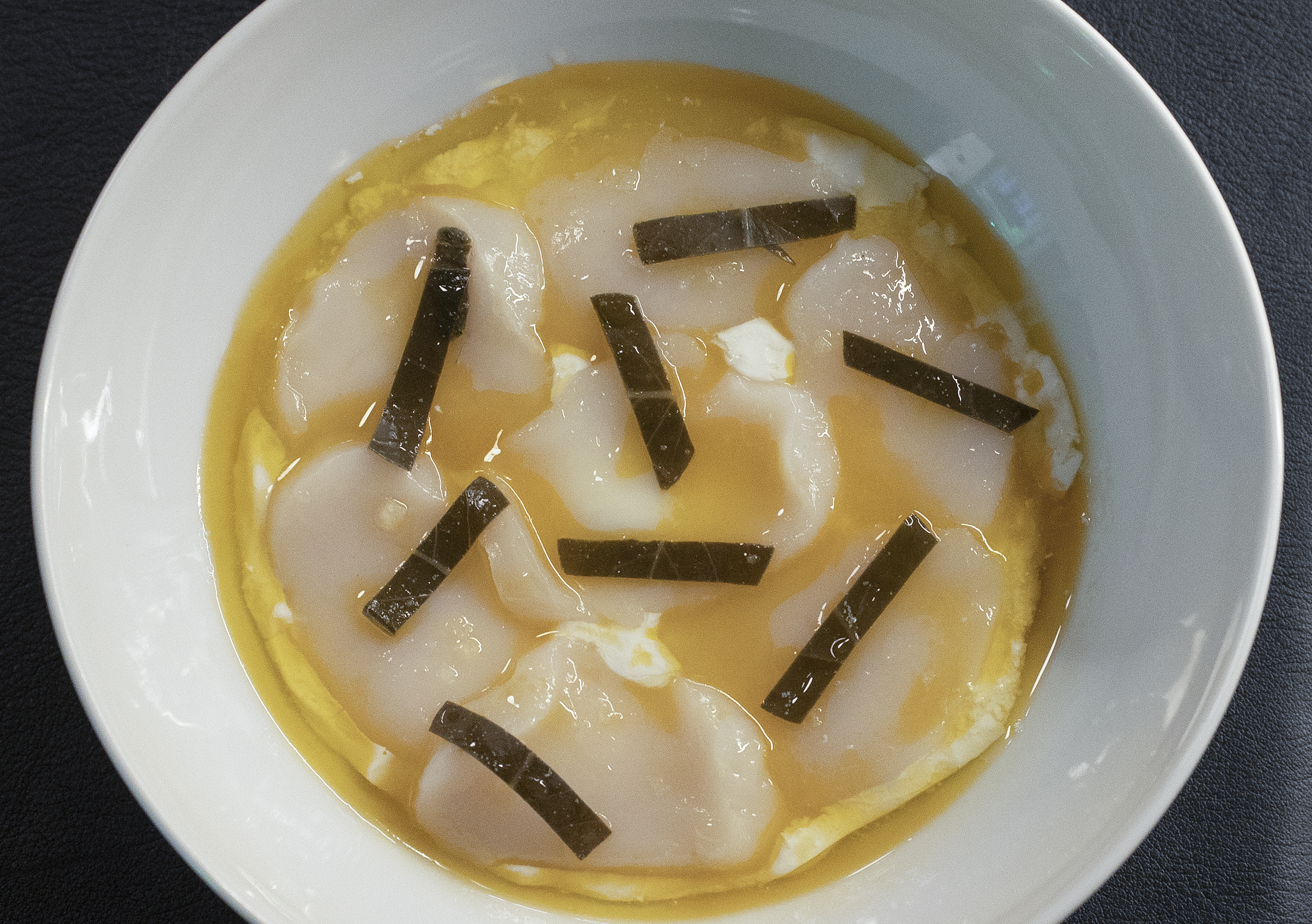
The sea scallop crudo and burrata served at Emilia, the Italian restaurant from Greg Vernick, in Kensington on Friday, January 23, 2026.
Scallops and burrata at Emilia
When Greg Vernick and Meredith Medoway were previewing the menu at Emilia, their new Italian restaurant in Kensington, they seemed proud of a dish pairing scallops and burrata in a caper vinaigrette. “That surprises people at first because of the similar textures,” Vernick said. Oh, it’s a surprise, all right. What it lacks in crunch it more than makes up for in lusciousness. The kitchen thinly slices day-boat sea scallops from Viking Village in Barnegat Light, N.J., and fans them over a puddle of burrata cheese and a vinaigrette made of capers and Calabrian chili oil. Sea salt goes on top. And here’s a tip to get the most of it: Your Emilia meal will start with house-made focaccia, Italian breadsticks, and a slice of Mighty Bread’s sesame ciabatta. Put aside some ciabatta. After you finish the scallop, you’ll use it for mop-up duty. Emilia, 2406 Frankford Ave., 267-541-2360, emiliaphilly.com
— Michael Klein
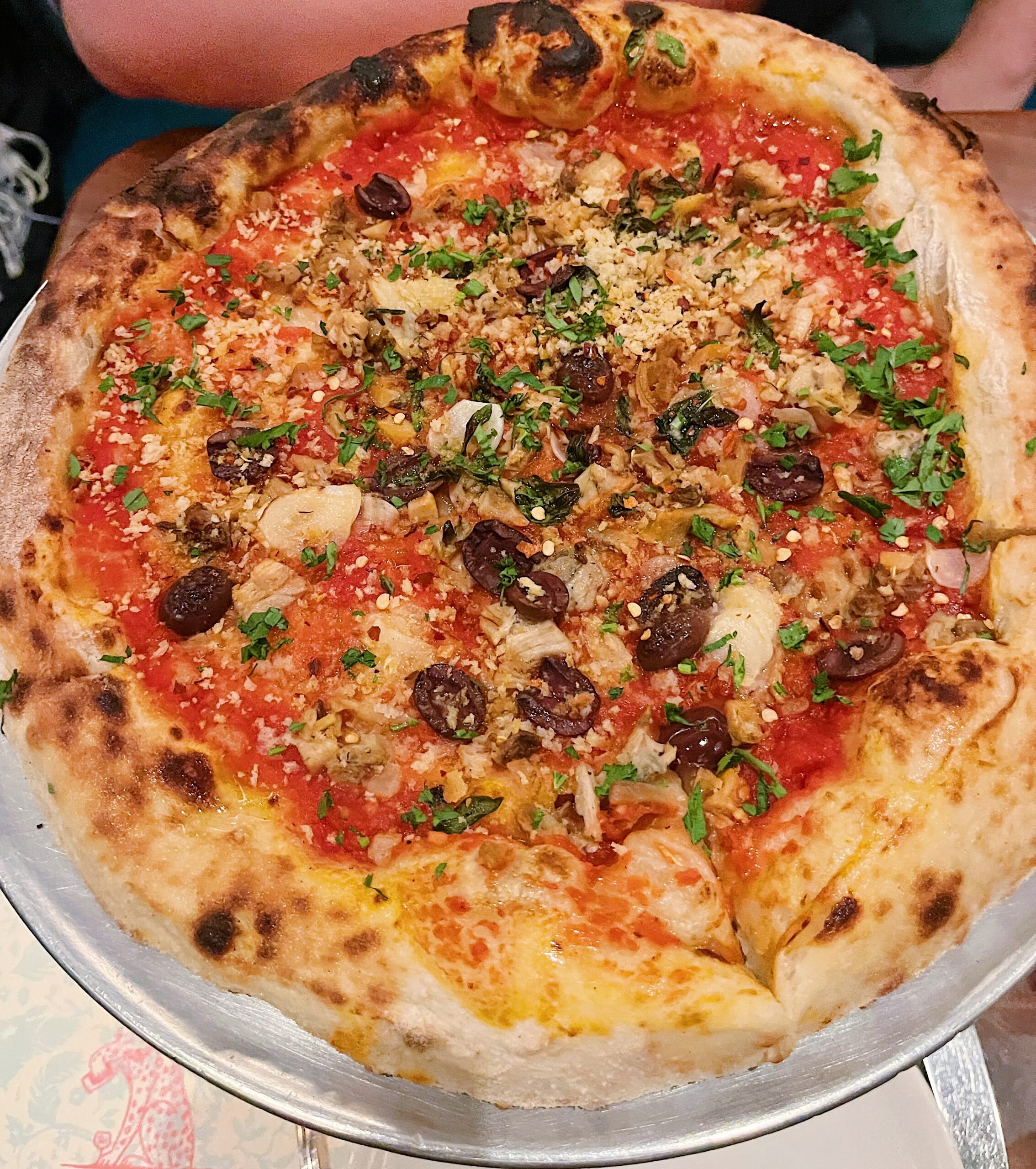
The Clam Posillipo pizza from Wilder.
Clam Posillipo pizza at Wilder
To me, Valentine’s Day has always been about celebrating the things I already love about my life — my partner, my cat, and all the restaurants I depend on for date-night specialness — so I rarely want to go some place I’ve never tried before for the holiday. That changed this year when my partner and I went to Wilder for the first time and tried a pizza so good it has converted us to wannabe regulars.
Wilder’s clam Posillipo pizza is a take on the classic Italian American dish (and Frank Sinatra favorite) wherein littleneck clams are steamed in a light, garlicky tomato sauce. For the pizza version, Wilder sprinkles briny Taggiasca olives, breadcrumbs, and parsley atop a vibrant tomato sauce. The clams’ contribution wasn’t fishy — they created an experience more like eating a pie by the beach in the summer: fresh and a little salty, with a delectably doughy crust. Wilder, 2009 Sansom St., 215-309-2149, wilderphilly.com
— Beatrice Forman
A mango calamansi danish from the Sir/Mom Tour pop-up at Small Oven Pastry Shop.
Mango calamansi danish from the Sir/Mom Tour pop-up at Small Oven Pastry Shop
It’s still gray and cold out, but a limited-time pastry offering helped me briefly forget. As part of their “Sir/Mom Tour,” chef Mike Strauss of Sidecar Bar & Grille (and formerly Mike’s BBQ) and his wife, Eylonah Mae Strauss, staged a Point Breeze kitchen takeover last week, sharing their love of Filipino cuisine with a slate of specials served at chef Chad Durkin’s Porco’s Porchetteria/Small Oven Pastry Shop and Breezy’s Deli. I went specifically for the mango and calamansi danish — a burst of citrus and sunshine that sold out both days. The silky yellow custard encrusted in golden flaky pastry with small bites of fruit laced throughout made for a gorgeous pick-me-up. I hope we see another collab soon, but given the Strausses live in the Philippines — where they run Sugaree Gelato Bakery Cafe in Bacolod — I expect a long wait. Small Oven Pastry Shop, 2204 Washington Ave., 215-545-2939, smallovenpastryshop.com.
Mike Nardi turned 41 a few weeks ago, and considering he arrived on Villanova‘s campus as an 18-year-old freshman in 2003, played under Jay Wright for four seasons, then joined Wright’s staff in 2015 after seven years playing professionally overseas and remained on the bench through the end of last season, Villanova basketball was basically all Nardi knew for most of his adult life.
He was there in the nascent days of Wright’s dynasty as a player and was back on the bench in time to enjoy the two national championships he laid the groundwork for.
Xfinity Mobile Arena has been the site of many memories. Villanova fans still recite Sean McDonough’s “Nardi for three and the lead” call during an ESPN Big Monday broadcast on Feb. 13, 2006, with reverence. Nardi, who had missed the previous two games with tonsillitis, drilled a transition three-pointer from the right wing in front of the Villanova bench during a 22-4 run that erased a 12-point deficit and gave fourth-ranked Villanova its first win over No. 1 UConn in three years.
A year earlier, the building was where Villanova, during a freshman season that saw Nardi make the All-Big East rookie team, announced its arrival on the national stage with a blowout victory over second-ranked Kansas.
Nardi is returning to that building Saturday night. It’s the latest installment of the Villanova-UConn rivalry (5:30 p.m., FOX). But Nardi will be on the visitor’s bench, and he’d like nothing more than to prevent Villanova from getting its best win of the season over his fifth-ranked Huskies.
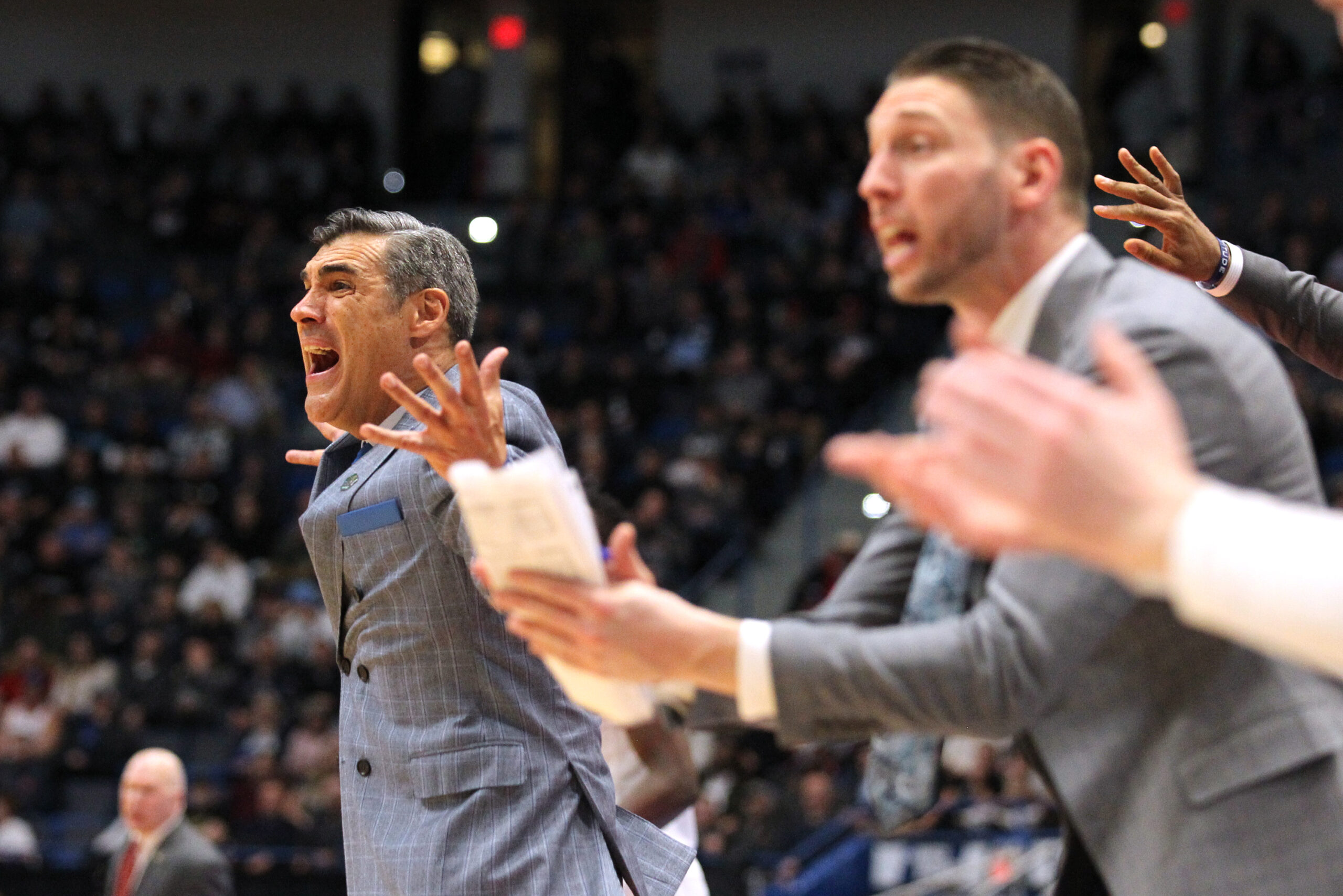
Mike Nardi joined Jay Wright’s staff in 2015.
“I had a great experience, but the emotions for me now are, ‘Hey, it’s competition,’” said Nardi, who was hired by Dan Hurley to be an assistant coach after Villanova brought in Kevin Willard last year. “I’m competing and I’m at a place where we want to win. The emotions and all of that, I’ve never been a guy to get caught up in that kind of stuff. There’s a task at hand and we want to go there and get a win and that’s the most important thing.”
Nardi already got some of those feelings, if there were any to begin with, out of the way during Villanova’s trip to Connecticut in January. He caught up with Ashley Howard, JayVaughn Pinkston, and Nick DePersia, the only holdovers from Kyle Neptune’s staff; longtime radio voice Whitey Rigsby; athletic director Eric Roedl; and longtime sports information director Mike Sheridan. Then it was all business. Villanova was Nardi’s scouting assignment for each of the matchups this season. He exchanged his pleasantries, said his hellos, and then he helped coach a UConn overtime victory.
“I was sad to see it end, but I landed in a place where, again, it’s like the standard of college basketball,” Nardi said. “I’m working for another Hall of Fame coach, a guy who has won at every level. For me, it’s a great learning experience because I played at Villanova, I coached at Villanova, and besides going overseas and seeing different systems and playing for other coaches, I really haven’t had a chance to branch out and see a different system and learn the game a different way.”
If it were up to Nardi, this story probably wouldn’t be written. He returned a reporter’s call Friday in part, he said, out of respect for Villanova. He doesn’t want Saturday night to be about anything more than UConn trying to go on the road against a good team in a tough environment and get a win in its pursuit of a Big East regular season title.
“I don’t want to make this about me,” he said. “It’s really not Mike Nardi and coming back to Villanova. This is about UConn and Villanova. That’s what’s most important to me.”
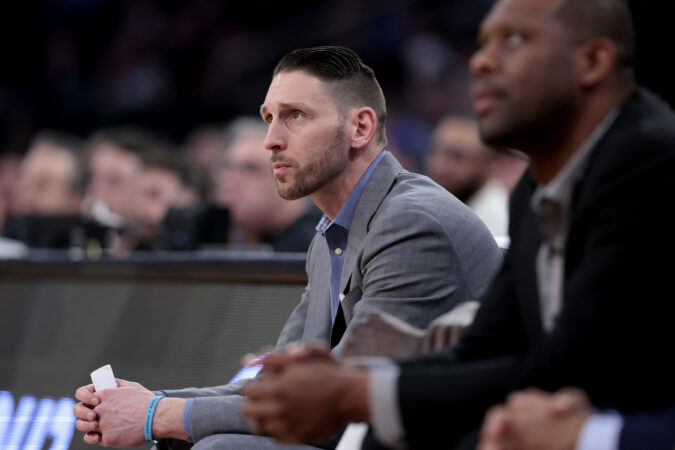
Former Villanova coach Kyle Neptune (left) and assistant coach Mike Nardi shown during the Big East tournament at Madison Square Garden last March.
It didn’t take very long to get over being on the other side of the rivalry despite all his history with it. The good and the bad. He made that crucial three to earn his first win over UConn in 2006, then watched the meaningful portion of the 2024-25 season end at the hands of Hurley in the Big East tournament, only to have his friend, Neptune, fired a few days later.
Nardi respects winning, he said, and respects excellence. He always viewed Connecticut in that light, from Jim Calhoun’s teams to Hurley’s. It was a good landing spot for him for basketball reasons and because Hurley, he said, respected everything Nardi was about, from playing for St. Patrick High School in New Jersey against Hurley’s father’s St. Anthony, to playing and coaching in the rivalry.
Nardi wasn’t asked to stay by Willard, he said, and never expected to be.
“I never felt slighted. I never felt a certain way,” Nardi said. “I kind of knew there was a slim chance of me being asked to stay. And that was OK. I didn’t take that the wrong way. I think I’m good at what I do. I think I could’ve been an asset, but I never ever looked at it like this is messed up, why aren’t you keeping me? That’s not how this works.”
Hurley, meanwhile, thought Nardi could be an asset in Connecticut. The Huskies are 24-3 after a Wednesday night home loss to Creighton, and they’re pursuing a third national title in four seasons. Villanova, meanwhile, is 21-5, 12-3 in the Big East, and in line to snap a three-season NCAA Tournament drought.
Nardi was happy, he said, that Willard got the job. He wanted the school to hire someone who cared about the program, and Willard fits that description. Part of him is happy to see Villanova back in the mix, but he’s not watching Villanova games in his free time with his old No. 12 jersey draped over his shoulders.
“It’s good to see them doing well,” Nardi said. “It’s obviously good for the league. I think that’s a big piece of it. But I’d be lying to you if I said I was rooting for them. I don’t root for anybody else in the league. I’m rooting for UConn and that’s it.”
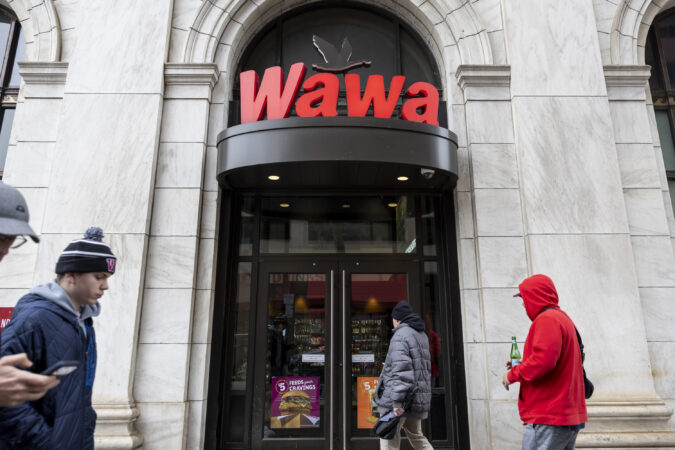
Wawa customers have been able to order roasted chicken on sandwiches, salads, burritos, and more since summer 2024. Hoagie-loving Philadelphians may scroll past the high-protein option on Wawa’s trademarked built-to-order screens, while others tap its icon instinctively in their rush to order lunch.
Wawa CEO Chris Gheysens said he sees the chicken breast differently.
From idea to inception, “that was a labor of love for quite a long time,” Gheysens said in a recent interview. “It’s 37 grams of protein, something consumers are really looking for today.”
And, he added, “it’s still highly customizable, which our customers love doing at Wawa.”
To Gheysens, the menu addition shows how the Delaware County-based company responds to consumer demand. Just as it did decades ago when Philly-area store managers began brewing coffee for customers on the go, and in 1996, when Wawa executives decided to start selling gasoline.
Even now, with nearly 1,200 stores in 13 states and Washington, D.C., Wawa is still listening to consumer feedback, Gheysens said. And despite expanding as far away as Florida and Kentucky, the CEO said, the convenience-store giant remains especially in tune with its hometown fans.
“For a lot of people, it’s their daily routine,” said Gheysens, a South Jersey native. “It becomes a part of their neighborhood. It’s a relationship that’s built on consistency, on trust” — and on getting customers out the door in five minutes or less, depending on the time of day.
(function() { var l = function() { new pym.Parent( ‘wawa-stats__graphic’, ‘https://media.inquirer.com/storage/inquirer/ai2html/wawa-stats/index.html’); }; if(typeof(pym) === ‘undefined’) { var h = document.getElementsByTagName(‘head’)[0], s = document.createElement(‘script’); s.type = ‘text/javascript’; s.src = ‘https://pym.nprapps.org/pym.v1.min.js’; s.onload = l; h.appendChild(s); } else { l(); } })();
Customers say they are drawn to the homegrown chain for its convenience, consistency, quality, and wide-ranging menu of grab-and-go and made-to-order items (even though some miss the old Wawa delis where lunch meat was sliced on the spot).
In Runnemede, 78-year-old Barbara MacCahery said she goes to her local Wawa at least a couple of times a week — “sometimes for breakfast, sometimes for a sandwich, a lot of times for coffee.”
In MacCahery’s mind, she said, the chain has proven itself time and time again for decades: “It’s very rare that you’ll have a bad experience.”
Wawa’s ‘secret sauce’ for success
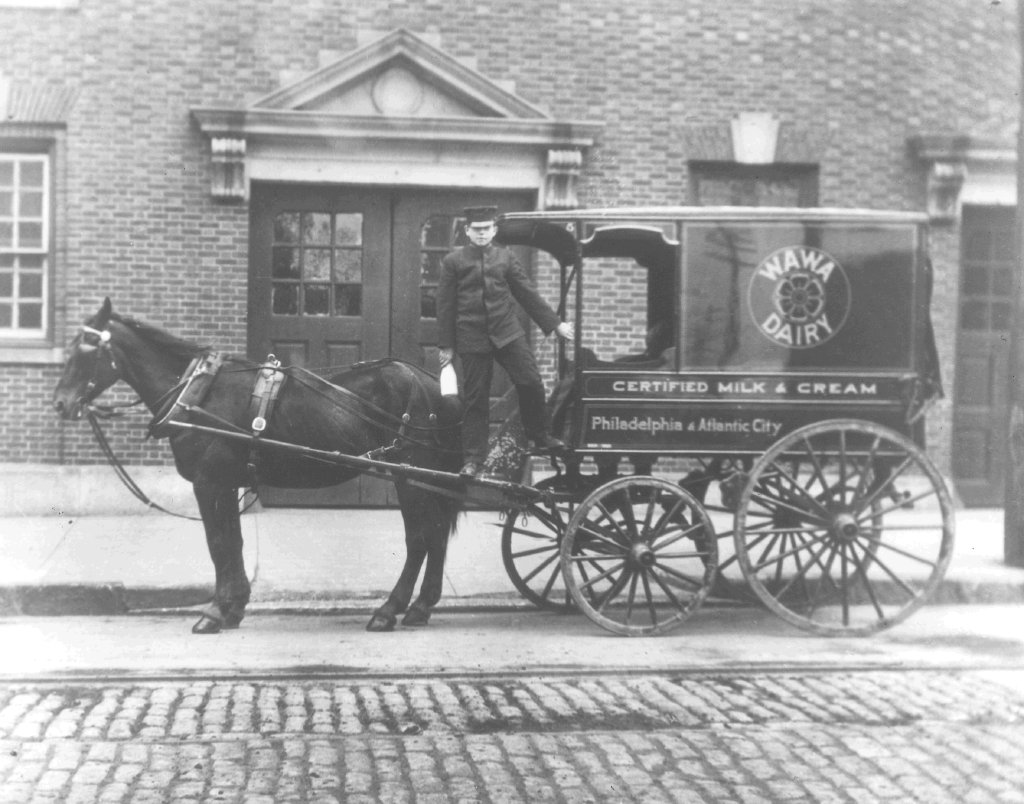
More than 100 years ago, Wawa started out as a dairy, delivering milk to Philadelphia-area households.
Wawa has set a national standard for success in the convenience-store industry, said Z. John Zhang, a marketing professor at the Wharton School of the University of Pennsylvania.
“It really is some kind of a secret sauce,” said Zhang, who studies retail management. “For many people, Wawa has become a destination store,” one that combines “speed, customization, and perceived high quality” with near-constant availability — many Wawa stores are open 24/7.
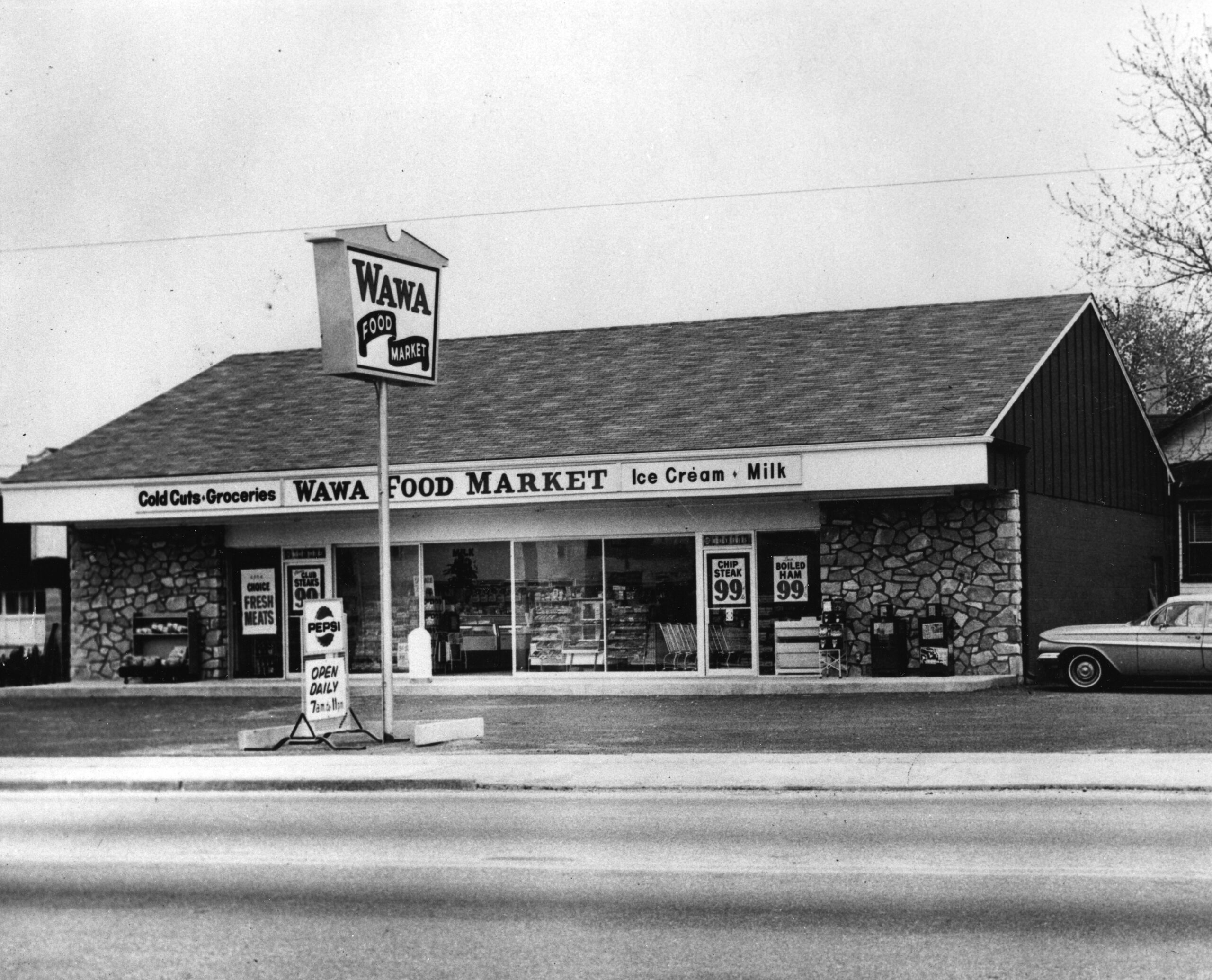
The company got its start as a dairy, delivering milk to Philly-area households. In 1964, it opened its first store in Folsom. Soon, the family-owned company expanded into New Jersey and Delaware, and established a reputation for quality and speed, with slogans like “People on the Go — Go to Wawa Food Markets.”
Wawa’s first convenience store opened in Folsom, Delaware County in 1964.
Wawa is privately held, owned in part by workers who get a percentage of their earnings contributed to an employee stock-ownership plan. Zhang said this program likely leads to more-invested employees who provide better customer service.
Because Wawa is not public, it is not required to disclose its finances, and company executives declined to discuss them.
But by many appearances, Wawa seems to be doing well: Over the last decade, the company has increased its store count by about 65% and doubled its workforce to about 50,000 associates.
Philly-area Wawas are often crowded, too, which is key to making money in the convenience-store industry.
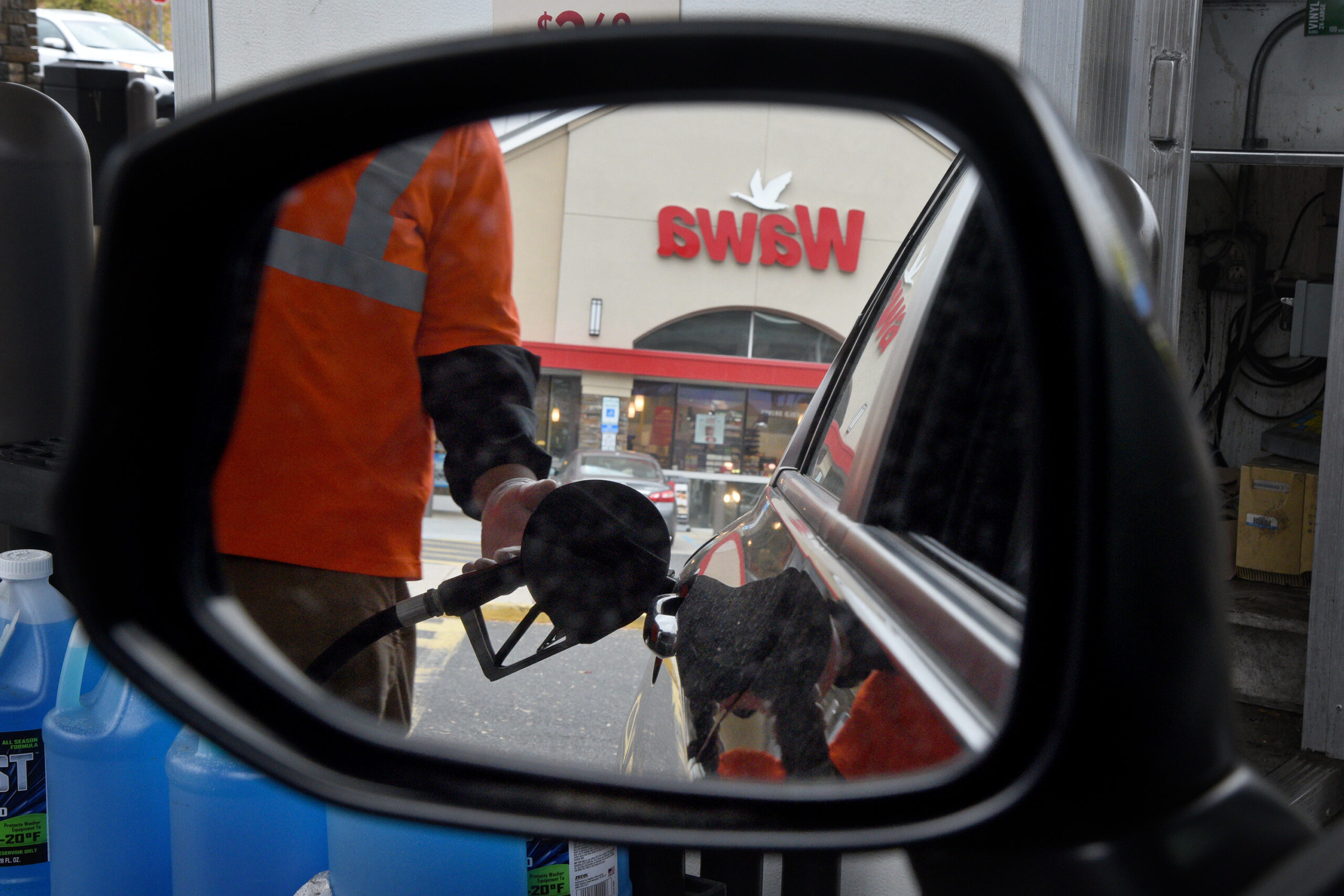
A gas attendant fills up a customer’s tank at a Wawa in Pennsauken in 2020.
“We think it’s high-impulse, but 80% of all people who walk into a convenience store pretty much know what they want,” said Zelinski, who consults with retailers. (He declined to discuss specific companies and said he has never worked for Wawa.)
Successful operators have encouraged customers to spend more by adding seating and improving their food service, Zelinski said. And stores with better food see higher profit margins.
“Once you have somebody that’s addicted to your food service program, they’re more likely to come back to your store vs. a competing store,” he said.
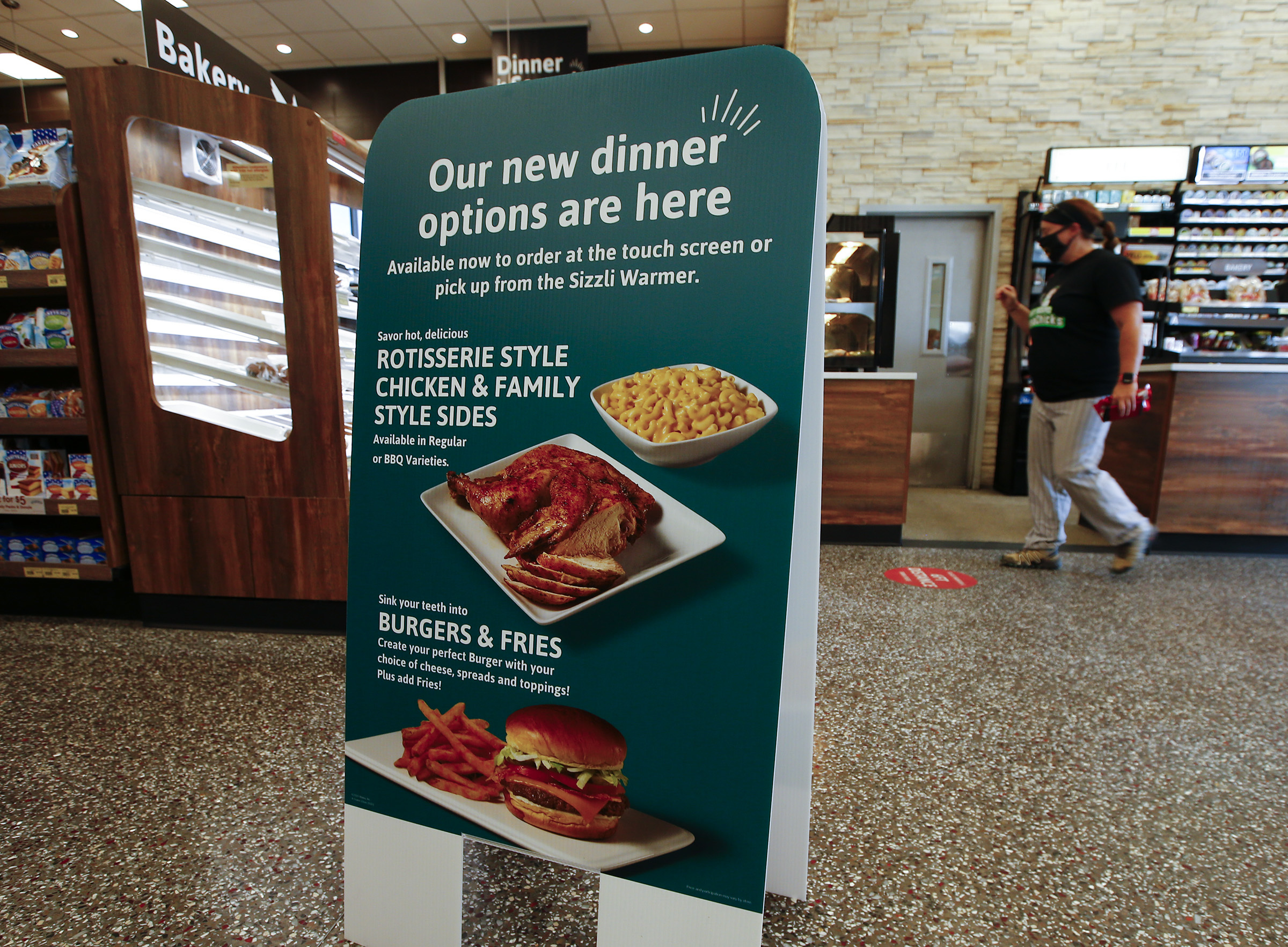
In 2020, Wawa debuted new menu offerings, including hamburgers, pot roast, rotisserie chicken, pasta alfredo, and kids meals, at a tasting in Media.
Wawa has certainly gotten people hooked on their coffee, hoagies, and ever-expanding menu, Zhang said. Options added in recent years include pizza, wraps, protein-packed “power meals,” limited-edition coffee flavors, and smoothies “boosted” with protein, vitamins, and minerals.
This older Wawa in Cherry Hill closed in 2024. The township has six remaining Wawas.
Despite Wawa’s best efforts, not all stores thrive, Gheysens said. But “luckily for us, we’re still in growth mode, and don’t have to worry about closures in a broad way.”
Gheysens said he sees room for more Wawas in the Philadelphia market — even as convenience-store competitors like Maryland-based Royal Farms and Altoona-based Sheetz have opened new stores in the region.
Wawa executives want “to make sure that we are the number-one convenience store in the area, that’s important to us,” Gheysens said. “These are our hometown counties.”
What keeps Philly-area consumers going to Wawa
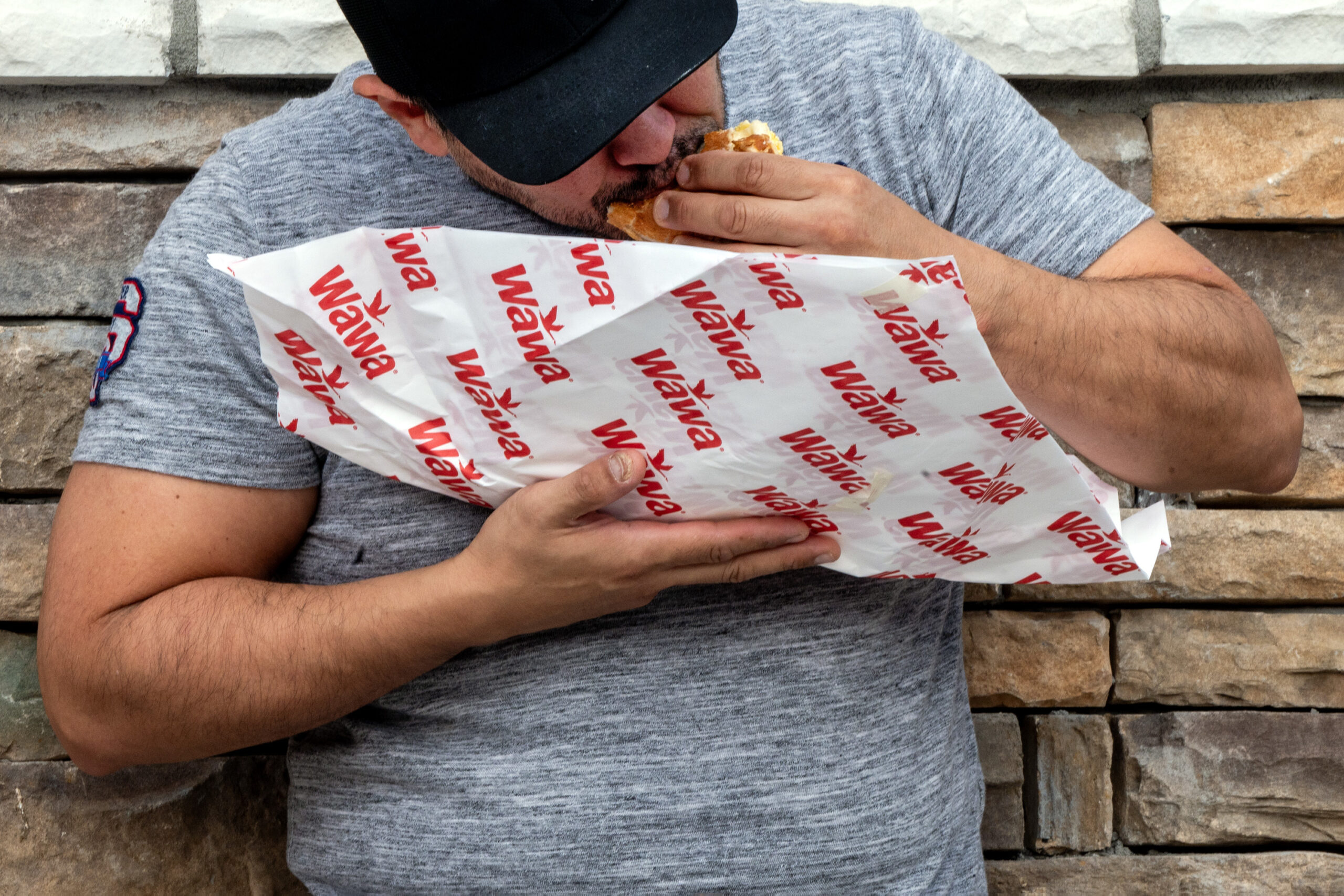
A Wawa customer eats a breakfast Sizzli during the 2024 grand opening of the company’s first central Pennsylvania store.
Many Philly-area consumers grew up alongside Wawa.
In interviews with nearly a dozen of them, some were quick to reminisce about early memories of their local stores, such as the distinct smell of coffee and deli meat or the excitement of a Wawa run with high school friends. Others bemoan what has changed with the company’s expansion, including more congested parking lots.
Most have a quick answer when asked what their Wawa order is.
Rick Gunter, 45, of Royersford, misses the Wawa of his youth. Back in the day, he said, the Wawa hoagies “hit different,” with lunch meat fresh off the slicer.
Contrary to some customers’ beliefs, most stores still bake Amoroso rolls — a custom recipe made exclusively for Wawa — fresh in store multiple times a day, Gheysens said. As for the deli meat, the CEO said that was another decision rooted in customer preference.
When customers have participated in blind tests of the pre-sliced meat Wawa uses today against a fresh-sliced alternative, “they can’t tell the difference,” Gheysens said. “They would choose our pre-sliced meats, because of what we’ve done in terms of quality and the supply chain and the ability to deliver them at such a pace.”
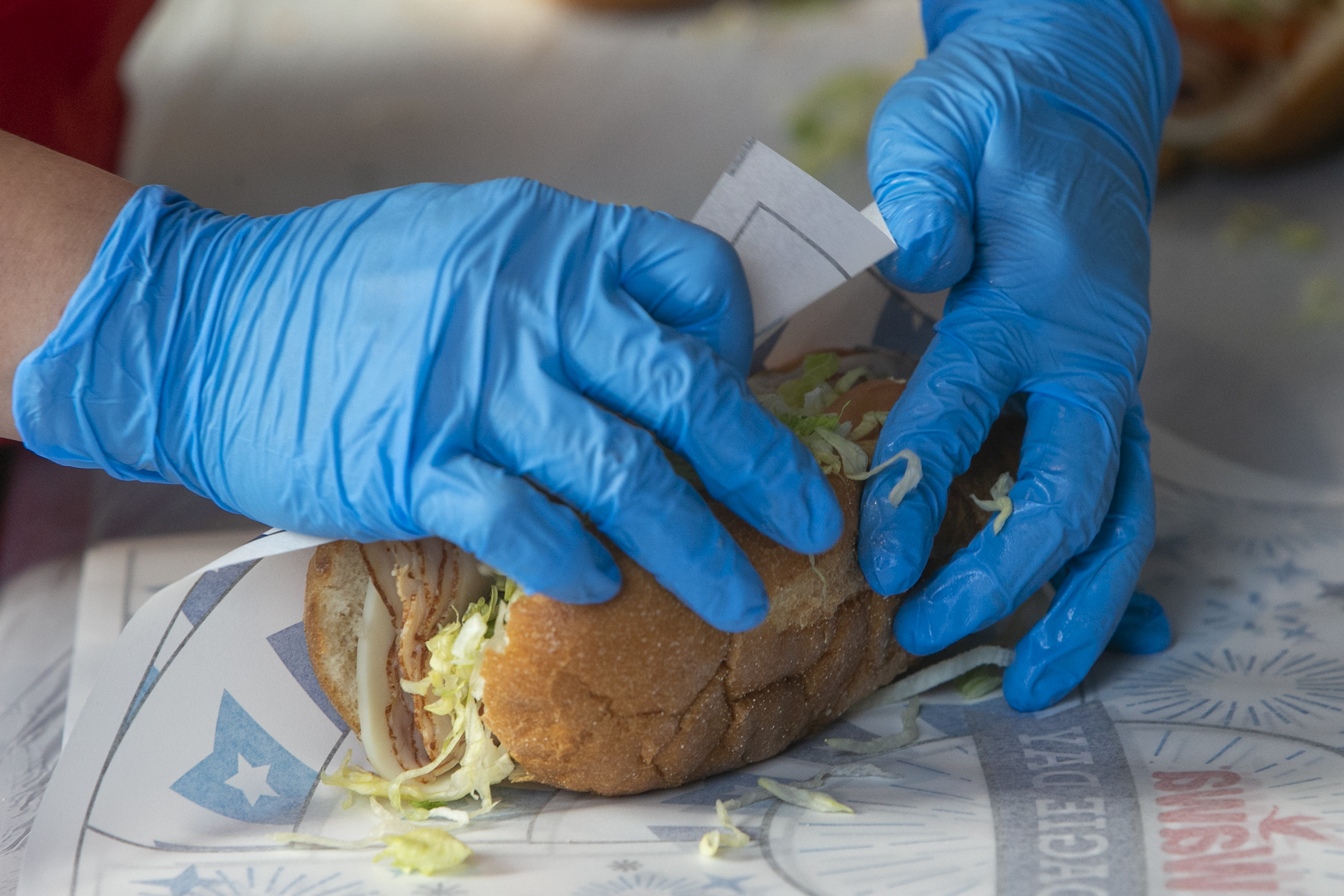
A sandwich maker at Wawa wraps a hoagie with turkey, provolone, tomato, and lettuce in this 2020 file photo.
Some customers disagree.
“It was way better when it was kind of also a deli. Now they try to make everything for everybody,” said Bill Morgan, 79, of East Coventry Township. “I’m within five miles of three Wawas, but I rarely eat their food. Only under extreme duress.”
Morgan acknowledged he must be in the minority, given how crowded Wawas are at lunchtime. And despite his distaste for much of their food, he said he still gets gas there and loves their coffee. And he can’t help but admire their business model.
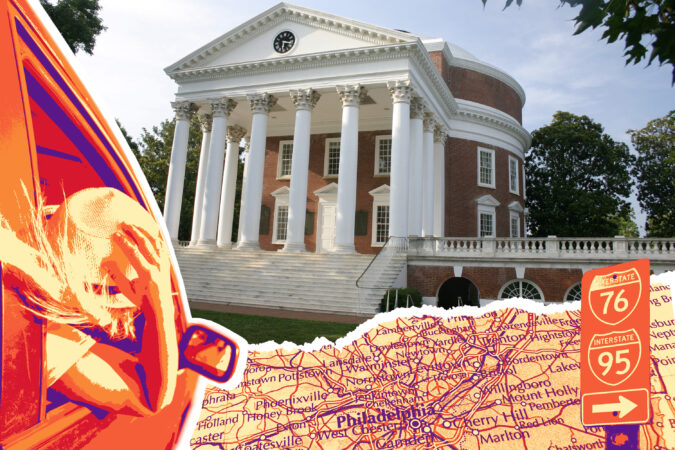
Nestled in the foothills of the Blue Ridge Mountains, Charlottesville is ready for spring. The season there comes a little earlier than ours — cherry blossoms popping, birds trilling — so those planning a March getaway should consider the Virginian city, where the weather is often mild enough to spend serious time outside. Rails and walking paths wind like shoelaces through downtown and into the surrounding countryside. As a university town, C’ville is also packed with arts, music, shopping, and dining, and Thomas Jefferson’s Monticello estate sits just on the outskirts of town, high on a hill.
The first stop in town, Oakhurst Cafe, announces you’ve arrived in the South with a house-baked buttermilk biscuits layered with country ham, apple butter and mustard. There’s also strawberry shortcake French toast, sweet potato hash with chorizo and fresh-fried beignets, served in a sunny room whose generous windows make the tangerine walls and hardwood floors gleam.
📍 1616 Jefferson Park Ave, Charlottesville, Va. 22903
Stay: Graduate Charlottesville
Charlottesville is a college town, with the University of Virginia’s idyllic and historic campus right downtown. Lean into it and stay at the Graduate, a newer property from the collegiate-themed brand under the Hilton umbrella. Opened in 2015, the hotel is still super fresh, with a game room, scenic rooftop, and rooms dressed in soothing blue walls, Cavalier-print curtains, and bolster pillows embroidered with “Wah-hoo-wa,” the university’s sports cheer.
A short walk from the Graduate, Charlottesville’s pedestrian Downtown Mall offers a solid orientation to the city’s commercial core. Visit shops like C’Ville Arts, a co-op gallery representing over 50 Virginia artists, or catch a show at the historic Paramount Theater, which opened in 1931, closed in 1974, and reopened after a $17-million restoration in 2004. When the biscuit craving returns, hit Miller’s Downtown for lunch. It’s famous for the Charlottesville Nasty chicken biscuit, but the pimento-cheese BLT is the actual move.
📍 East Main Street, between Second Street NW and Ninth Street NE, Charlottesville, Va.
Whether you think history is a snooze or can quote Hamilton from memory — “Thomas Jefferson’s coming home!”— Monticello is must-visit. Set on 2,500 bucolic acres, the estate features multiple exhibits inside, outside, and even beneath the mansion, with thoughtful attention paid to the enslaved people who worked Jefferson’s plantation, including Sally Hemings, with whom he fathered six children.
Beyond the landscaped gardens of Monticello proper, the fairytale woods and meadows of the estate beg for exploring. The Saunders-Monticello Trail is an easy lift for all activity levels, with a maximum 5% incline and two miles of wheelchair-accessible paved paths and boardwalks winding through forest and over ravines. Stop at Carter Overlook for panoramic views of Charlottesville and the Blue Ridge Mountains.
📍 Parking: 503 Thomas Jefferson Pkwy., Charlottesville, Va. 22902
Drink: Blenheim Vineyards
Dave Matthews Band got its start in Charlottesville, gigging at Miller’s on the mall and other stages around town. Though the singer now lives in Seattle, he maintains a strong connection to Virginia. One touchpoint is his winery, Blenheim Vineyards, situated on 32 acres of rolling chartreuse hills stitched with sauvignon blanc, chardonnay, and albarino vines. Giant windows in the wood-clad A-frame frame the landscape during guided tastings of five wines (just $25). Consider this your predinner drinks.
Back downtown, Smyrna’s oysters with ramp mignonette, hamachi crudo with anise-compressed melon, and manti dumplings dabbed with garlic yogurt earned chef Tarik Sengul a semifinalist nod from the James Beard Foundation this year. You’ll have to wait till April to find out if he advances to the finalist round of the awards — making right now an ideal time to check this sharp Aegean restaurant out for yourself.
Almost 250 years ago, George Washington created America’s first mass immunization mandate, relying on science to protect public health.
Oh, how times have changed.
Back then, smallpox had just helped end the Continental Army’s invasion of Canada. Despite making it all the way to Quebec, thousands of soldiers contracted the disease. Washington feared the same would happen to his own troops, fresh from their surprise victories at Trenton and Princeton. As Washington wrote at the time, “Necessity not only authorizes but seems to require the measure, for should the disorder infect the Army, in the natural way, and rage with its usual Virulence, we should have more to dread from it, than from the sword of the enemy.”
The inoculation methods of Washington’s time were crude. No genuine vaccine existed. Instead, scabs or pus were taken from someone infected with smallpox and then placed into scratches or small wounds. Another option was to inhale it. Either way, those who experienced variolation inevitably developed fevers, rashes, and other symptoms of smallpox. At least 1% of those who received it died. Still, without his tough choice, the Continental Army might have failed entirely, and America with it.
These days, safe vaccines are available for diseases that ravaged our ancestors. Forms of influenza, hepatitis, chickenpox, polio, rubella, mumps, measles, and many other diseases can now be prevented. The smallpox virus that Washington dreaded has been eradicated.
The quality and availability of vaccines are a modern miracle, one that all humanity should be proud of.
Yet, according to data from the Centers for Disease Control and Prevention, vaccination rates for measles in the U.S. are declining, and the number of cases is climbing. More and more parents are opting against vaccination for their children, which gives these diseases room to spread.
Pennsylvania, New Jersey, and Delaware have all slipped below the 95% vaccination rate the CDC says is necessary to keep measles outbreaks at bay. Despite being nearly eliminated in 2000, rates have reached their highest levels in decades.
A sign is seen outside a clinic with the South Plains Public Health District in February 2025, in Brownfield, Texas.
According to CDC data, more than 90% of infections occur in people who are either unvaccinated or have unknown inoculation status. Given this group makes up less than 10% of the overall population, that’s a staggering concentration of sickness. It also isn’t a surprise — the vaccines work.
Parents offer a range of justifications for refusing vaccinations. Some cite religious faiths that discourage inoculation. Others feel that the schedule of shots is too concentrated. A number of them mention debunked fears of shots “causing autism.”
In some cases, existing health issues may lead to medical professionals advising against vaccination. (These children rely on what scientists call herd immunity for protection, and are endangered by rising rates of voluntary refusal.)
It doesn’t help matters that Health and Human Services Secretary Robert F. Kennedy Jr. is a leading skeptic of both vaccines and modern medicine. Kennedy has strong opinions about public health based on no formal medical training.
This is the kind of privileged ignorance that can only thrive in a post-vaccine world, where mass immunization has dramatically changed life for the better.
In 1900, 30% of all U.S. deaths occurred in children under the age of 5. In 1915, the infant mortality rate was 100 out of every 1,000 live births. As late as 1952, a polio outbreak killed more than 3,000 people.
Unfortunately, rising vaccine refusal rates may bring some of this suffering back. While city health officials urge calm in the wake of a possible exposure at Philadelphia International Airport earlier this month, these events will only increase as vaccination rates continue to fall. So will unnecessary deaths among children.
Instead of turning back the clock, our leaders and parents must learn from Washington’s example. Necessity requires that we vaccinate our children.
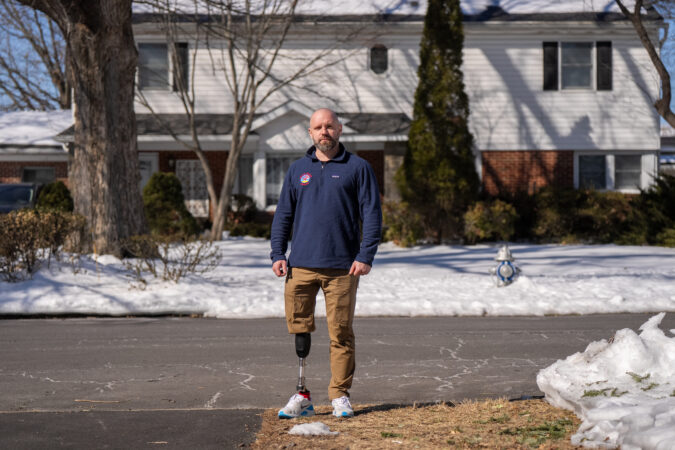
To explain his journey from Ukraine to Huntingdon Valley in Montgomery County, Ukraine army veteran Illia Haiduk first must explain one of the worst days of his life.
On Nov. 3, 2023, Haiduk and about 70 other Ukrainian soldiers were at an outdoor awards ceremony in Zaporizhzhia, near the war’s front line. After an enemy drone spotted the gathering, the Russians launched an Iskander-M ballistic missile.
“You hear nothing,” Haiduk said. “It just hits immediately.”
Haiduk awoke on the ground. To his left, people were moving. To his right was “a mess, fire, and smoke.”
He tried to get up. That was when he realized shrapnel had mangled his lower right leg.
Haiduk belted a tourniquet around his thigh and tried to crawl to another soldier from his unit, the 128th Mountain Division. “I wanted to get to him. And there was this hole in his chest. Nothing could save him. He was the same age as me,” the 35-year-old said.
The attack killed at least 19 soldiers and wounded dozens more, according to news reports.
Haiduk’s injury sent him on a long path of healing that ultimately brought him to the Philadelphia area. But more than two years later, the attack is just one incident in a war that has claimed an estimated 2 million lives.
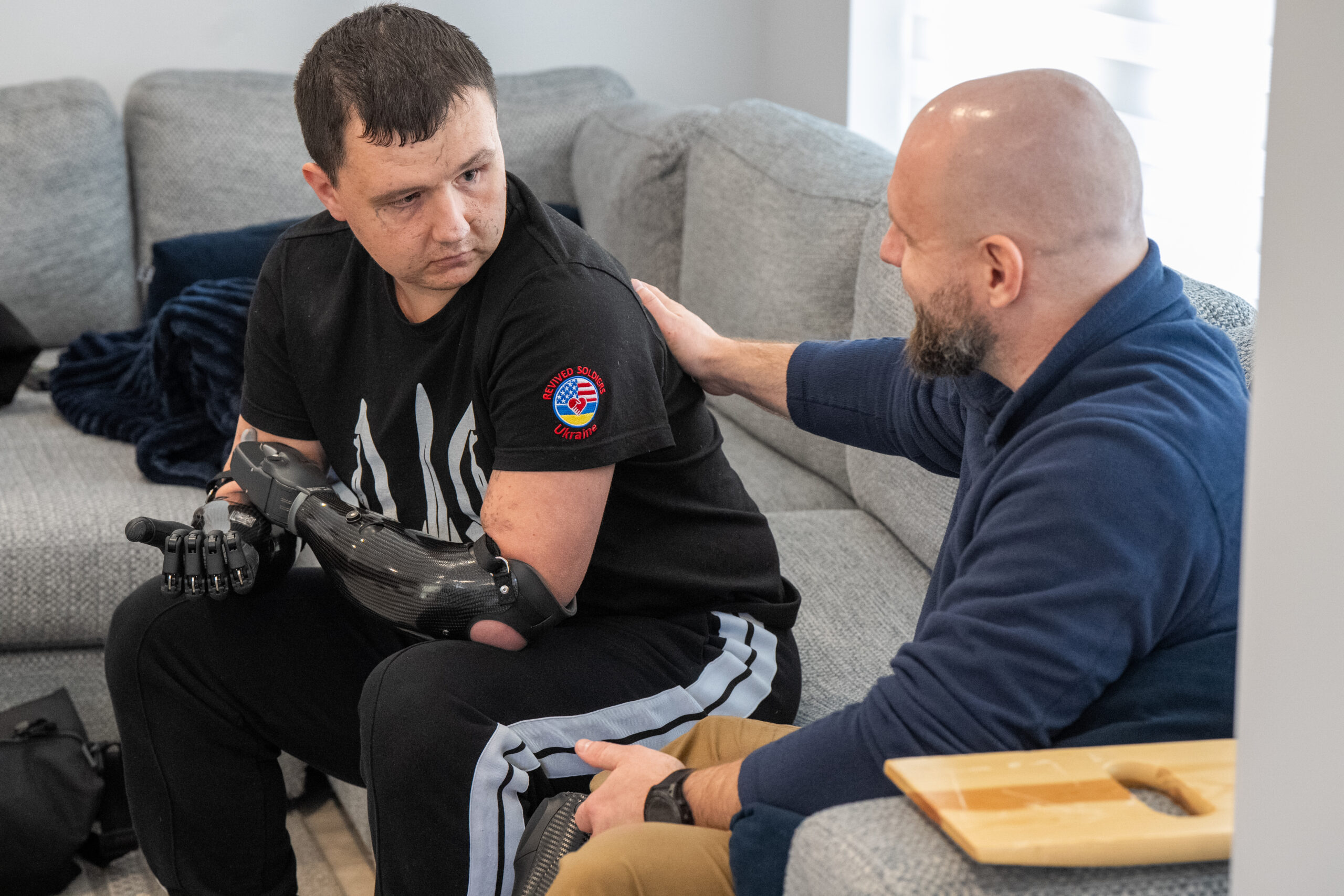
Vladislaw Romanenko (left) and Ilia Haiduk in a community-living home where veterans of the war in Ukraine support each other through their medical journeys, in Philadelphia, Feb. 13, 2026.
Four years after Russia invaded Ukraine, the war’s effects can be found throughout the region, among refugees and veterans seeking support services and the advocates helping them. Many are concerned about the future.
“In 2022, support and donations poured, but every year they become smaller and smaller,” said Roman Vengrenyuk of Philadelphia, who helps run the Revived Soldiers Ukraine program that brought Haiduk to the U.S. “A lot of nonprofits closed.”
Vengrenyuk said he has no expectation that the war will end this year. The Trump administration has failed to provide Ukraine with the weapons it needs to win, he said. Meanwhile, the bloodshed has left 60,000 Ukrainians in need of amputations, overwhelming hospitals in Ukraine and Europe.
Though it has gotten harder to get attention for their cause, an alliance of healthcare providers, nonprofits, and advocates across Philadelphia has continued to help wounded veterans and refugees. And for that, Vengrenyuk said, he is grateful.
“The Philadelphia community of doctors really stepped in,” Vengrenyuk said.
Life after war
After recovering from his injury, Haiduk went home and attempted to return to civilian life, but he felt depressed. That changed, however, in 2025, when he traveled to Canada to compete in the Invictus Winter Games, a multisport event for disabled veterans. He won a bronze medal in the skeleton race, and he found purpose and fellowship with others who had similar experiences.
“We can talk really freely, because we know that this man will understand me,” Haiduk said of his fellow veterans.
Vladyslaw Romanenko at a community-living home where veterans of the war in Ukraine support each other through their medical journeys, in Philadelphia, Feb. 13, 2026.
Later that year,Revived Soldiers Ukraine sent Haiduk to Orlando , where he received a prosthetic lower leg.
Haiduk got more involved with the Florida-based nonprofit. He has since helped numerous disabled veterans who were routed to the Philadelphia region for medical care.
One is 30-year-old Vladyslav Romanenko, a former engineering student from Kharkiv who joined the army in 2022 and lost his lower arms in a drone strike last May. Romanenko is one of six Ukrainian war veterans living together at two homes in Huntingdon Valley.
Revived Soldiers Ukraine flew Romanenko and his partner to Philadelphia. At Wills Eye Hospital, a Ukrainian-speaking doctor, Michael Klufas, helped to restore vision in his right eye. Then, Prosthetic Innovations in Eddystone, Delaware County, outfitted him with bionic arms. “I’m very grateful to the Ukrainian and American doctors,” Romanenko said in Ukrainian, as Haiduk translated.
Oleksii Kondratenko at a community-living home where veterans of the war in Ukraine support each other through their medical journeys, in Philadelphia, Feb. 13, 2026.
Haiduk said Romanenko’s story is typical of the soldiers he works with: men from a wide range of professions and ages, who signed up to save their people. “I would never have joined the army, but because the war started, it was my responsibility to join, for my country,” Romanenko said.
Haiduk said people in the U.S., and most of the world, support the Ukrainian cause of “democracy and humanity.” However, more pressure needs to be put on Russia, he said.
“There is support, but it isn’t enough support to end this war,” Haiduk said.
Paying to stay in the U.S.
As an American-born Ukrainian whose parents were displaced after World War II, 71-year-old Mary Kalyna said, she considers it her mission to help those in “the Ukrainian diaspora.” The fluent Ukrainian speaker from Mount Airy said the situation has gotten worse for Ukrainian refugees since last year.
“Even though Ukraine is not in the news as much, I believe people still support Ukraine,” Kalyna said. “The problem is our government has changed. Now we have a government that is less supportive of Ukraine.”
The Konoshchuk family has lunch Sunday, Feb. 15, 2026. The family, from Ukraine, lives in Delaware County.
She criticized President Donald Trump for welcoming Russian President Vladimir Putin and holding peace talks where Ukraine was expected to cede land to Russia.
To her, Trump administration policy is working against local efforts from churches and communities that have embraced Ukrainians.
“There are many, many screws being tightened,” Kalyna said.
She provided an example: Due to one provision in Trump’s “OneBig Beautiful Bill,” thousands of Ukrainians who previously had been invited to the U.S. through the federal United for Ukraine program have to pay $1,000 per family member to maintain their humanitarian parole status.
On a Sunday afternoon at an apartment in Norwood, Delaware County, Kalyna met with one family who received such a notice at the end of December. Yurii Konoshchuk, 43, explained that he and his wife and four children came to the U.S. in May 2023. His 9-year-old daughter, Milana, has leukemia and is receiving treatment at Children’s Hospital of Philadelphia.
“We don’t have any safe place in Ukraine,” Konoshchuk said. “It is so important for us to be here. We thank God that we’re in Philadelphia.”
Though Konoshchuk works full-time at the Barry Callebaut chocolate factory in Eddystone, and has a supportive community at the nearby Living Hope Ukrainian Baptist Church, money has been tight. Then, he got a bill from the federal government to pay $6,000 or risk his familybeing deported.
As Kalyna prayed with the family and shared in the Sunday dinner they had prepared, she was brought to tears when asked about the money. Kalyna said that after people in the Northwest Regional Refugee and Immigrant Network sent out emails, they raised $6,000 within a few hours.
“People really want to give,” she said. “They understand.”
Milana Konoshchuk smiles for a portrait between her parents, Yurii (left) and Anna on Sunday, Feb. 15, 2026. Refugees from Ukraine, the Konoshchuks are living in Delaware County while their daughter receives medical treatment for leukemia at CHOP.
At the dinner table, the Konoshchuk family recounted their journey. Katie Konoshchuk, 14, remembered going weeks without school, and having to evacuate to the schoolbasement during air raids. Each child had to carry a flashlight. Her 13-year-old sister, Ohli, said they used to hope that if the bombs came, they would come on a day they had to take a test.
“People adjust to the situation that they’re in,” their mother, Anna Konoshchuk, said.
Yurii Konoshchuk said he saw missiles flying so low overhead that he could read the words written on them. “It’s good then, because you think it will not fall on you, but you don’t know about next time, and you don’t know who it did fall on.”
One of the missiles struck an electric power station less than a mile away, he said, and over the winter of 2022-23, it was a regular occurrence to rush from their home to the air-raid shelter in a city without light.
“We never in the city saw such bright stars,” he said. “It was beautiful on the heaven, but not on the earth.”
Yurii Konoshchuk struggled to predict what will happen next. “We are thankful, first to God, and to American nation, to give us the possibility of treatment here,” he said.
When they came to the U.S., Anna Konoshchuk said, she told her children life would be better, more peaceful. “But we’re treating it as an experience,” she said. “We don’t know how long America will allow us to stay. We’re being flexible.”
MILAN, Italy — A popular stop for Winter Olympics spectators when they’re not at a sporting venue is an opera house.
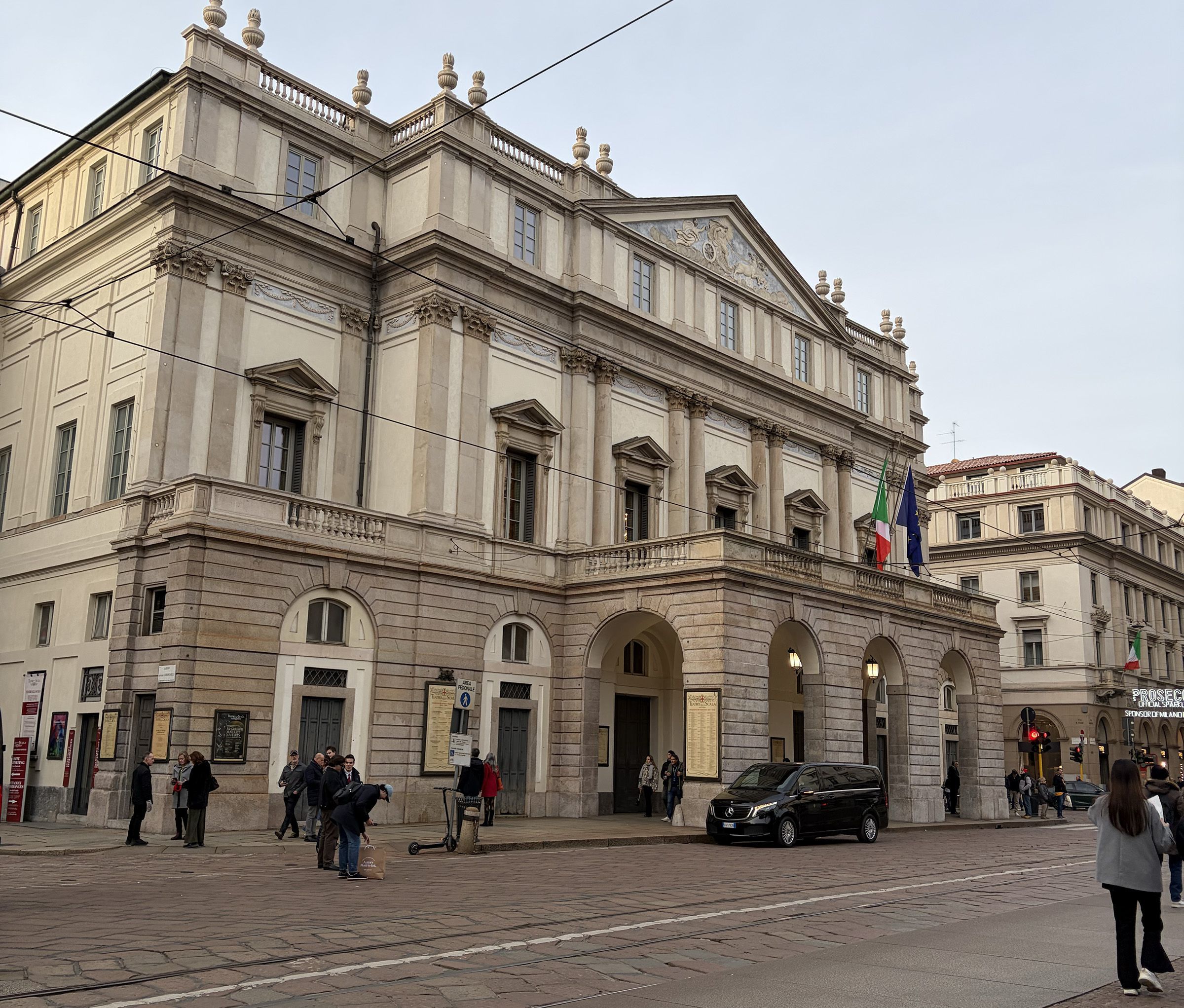
Teatro alla Scala, better known as La Scala, is one of the most famous ones in the world. Maria Callas rose to fame there; Franz Liszt’s piano is in its museum. The opera house, which opened in 1778, is the heart of Italian opera.
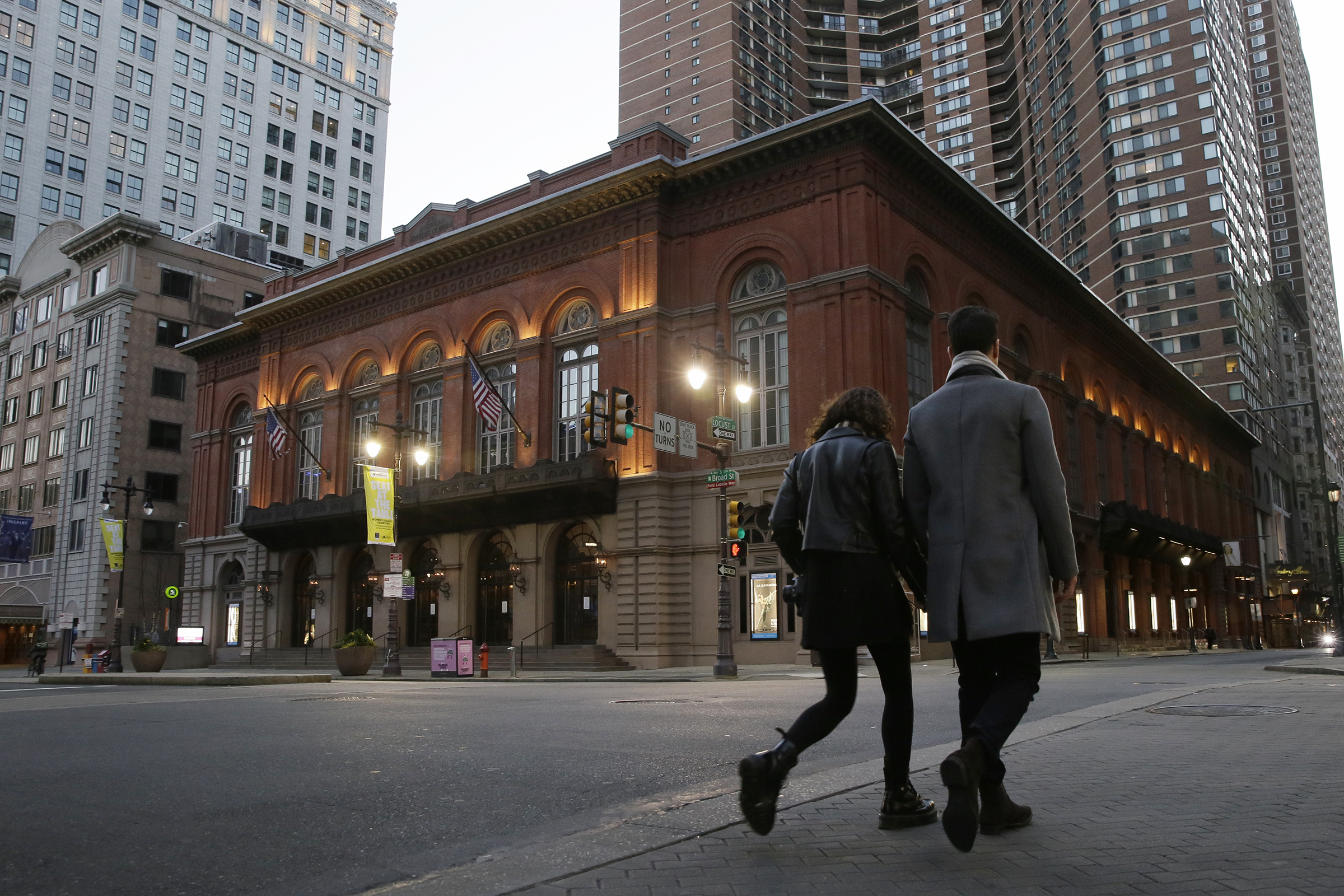
And it may feel especially familiar to visitors from Philadelphia: La Scala was the inspiration for the city’s Academy of Music.
The Great Stages Gala reception honoring Marian Anderson was held on the Academy of Music stage in Philadelphia on Saturday, June 8, 2024.
In 1854, a building committee invited architects to submit plans for an opera house in Philadelphia, John Francis Marion wrote in his book, Within These Walls: A History of the Academy of Music. The next year, the committee chose Napoleon LeBrun and Gustav Rungé to design what would become the Academy. LeBrun was sent to Milan to sketch La Scala just four months before ground would be broken on Broad Street.
From the outside, the two buildings look very different.
La Scala is somewhat modest because there were originally homes across the street that a grander building would overwhelm. The Academy of Music was also designed humbly, in the Rundbogenstil (round arch style), inspired by Runge’s German roots, reserving most of the budget for the interior.
Inside both buildings, a red-and-gold-tiered jewel box of an auditorium awaits.
“It’s kind of like an event to go to La Scala,” said Philadelphia Ballet artistic director Angel Corella, who famously danced Romeo and Juliet with Alessandra Ferri in that opera house in 2000. (Their performance was filmed for TV and is available on YouTube.)
“People would go just to see anything, pretty much [at La Scala] because it’s not only the event to go to see ballet or hear opera and see opera,” Corella said, “but it’s also the fact that you’re going to an opera house that has so much history in it.”
Francine Garino, a La Scala tour guide who coaches opera singers in French pronunciation, agrees.
“Some people don’t know anything about opera or ballet. They don’t mind. They want to live this experience.” Sometimes they will leave after the first intermission, saying they feel fulfilled just having experienced the theater.
Philly’s version, which opened in 1857, is equally beautiful but less imposing.
“The great thing about the Academy of Music is that it’s still a big opera house,” Corella said, “but it feels very intimate and close to you when you’re on stage. So it’s a perfect theater.”
The outside of La Scala, the world-famous opera house in Milan, Italy, is fairly humble. But the inside reveals a red-and-gold tiered jewel box. The Academy of Music was designed after La Scala.
Horseshoe shapes and other similarities
The similarities between the two theaters lie “in the position of the theater, the position of the seats, the acoustics,” Corella said.
LeBrun and Rungé replicated La Scala’s horseshoe-shaped seating areas, but they closed it up more for better sight lines.
Like the Academy, La Scala has a huge central chandelier. But the Italian theater is a neoclassical design and somewhat grander than the Philly version. It has six levels above the orchestra to the Academy’s four.
The Academy has more seats (2,800 in Philadelphia and 2,030 in Milan), thanks to its full mezzanine and balconies with boxes on the sides.
The outside of the Academy of Music was designed to look like a marketplace.
At La Scala, the first four levels above the orchestra are made up of lots of small individual boxes that were originally purchased by members of the aristocracy.
They were said to be more expensive than buying an apartment and owners would decorate the boxes as they wished. They’d bring in servants and could come any time they wanted. Here, they’d take business meetings, eat dinner, and go down to where the orchestra seats are now and dance to the music.
“If you owned a box,” Garino said, “it was home for you.”
Today all seats are individually sold as in any theater, with prices going from €10 to €300. Fans stalk the website to buy tickets as soon as they go on sale. They sell out extremely quickly.
La Scala was damaged when it was bombed during World War II.
Paul Miers lowers the chandelier to clean it and replace light bulbs on May 29, 2024, at the Academy of Music in Philadelphia. The large crystal chandelier measures 16 feet in diameter and weighs 5,000 pounds.
Rake vs. no rake
At the time the Academy of Music was built, there were similar academies in other American cities.
“There was an Academy of Music in New York that predated the Metropolitan Opera. The Brooklyn Academy of Music was something that was founded in 1859, inspired by what we had done,” said Ryan Fleur, president and CEO of the Philadelphia Orchestra and Ensemble Arts, which runsthe Academy of Music.
Brooklyn Academy of Music’s original building burned down and was replaced by a Broadway-style theater.
Because of that, “the Academy of Music is truly unique,” Fleur said. “As far as I know, it not only is an oldest continuously operating Opera House [in the country], but it’s the only opera house that still has this configuration of spaces.”
For American dancers, La Scala, and most European opera houses, are a challenge, because they have raked stages. The stage slopes downhill from back to the front, improving the view for audiences.
The Academy is “a perfect venue” for Philadelphia Ballet, said Corella. “Because all the ballets, especially the [older full-length ballets], fit incredibly well, because it’s almost like a continuation from the house into the stage.”
In the United States, he said, the rakes have been fixed and made flat.
“In Europe, there’s a lot of theaters that are still in rake. For the dancers, it’s great for jumping, because when you going down the hill, you feel like you’re flying … but it’s much harder for turning.”
La Scala Ballet étoile Nicoletta Manni thinks the opera house she regularly performs on is the best of both worlds.
“In La Scala, we have a good rake,” Manni said. “It’s not too much. It’s very good for jumps, because it’s helping us to jump even higher. You have to be careful with turns, because you might lose your balance, but you just need to get used to it.”
This month, Manni, 34,
was chosen to be an Olympic torch bearer. Then, she was told she would be the last one and would light the cauldron.
“It’s history, and so being there and have the privilege of doing that was very [much] something to remember. I will have it in my memory forever.”
Another thing she’d like to do is dance on our side of the Atlantic.