Like so much of life, the year in soccer has raced out of the blocks without waiting for the starter’s gun.
The Union’s preseason started Monday, while the English Premier League’s winter circus played at full blast. While their fellow Americans were vacationing, Medford’s Brenden Aaronson and the rest of the circuit’s U.S. players spent the holidays working not just to win games, but to earn places on the World Cup team.
They’re at a sprinter’s pace in women’s soccer, too. Gotham FC will play in the inaugural FIFA women’s Champions Cup later this month in London and has already been in Spain for a week preparing.
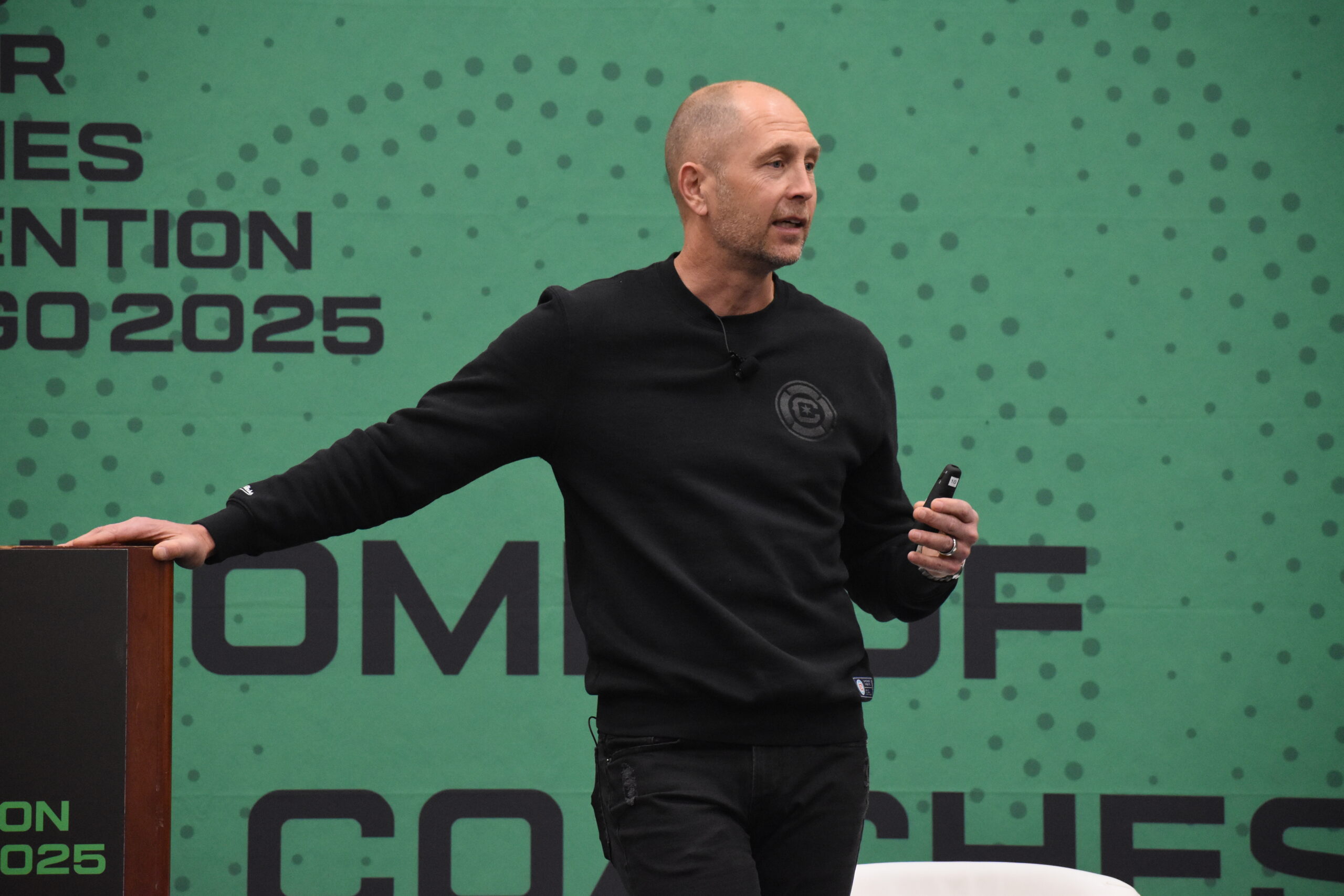
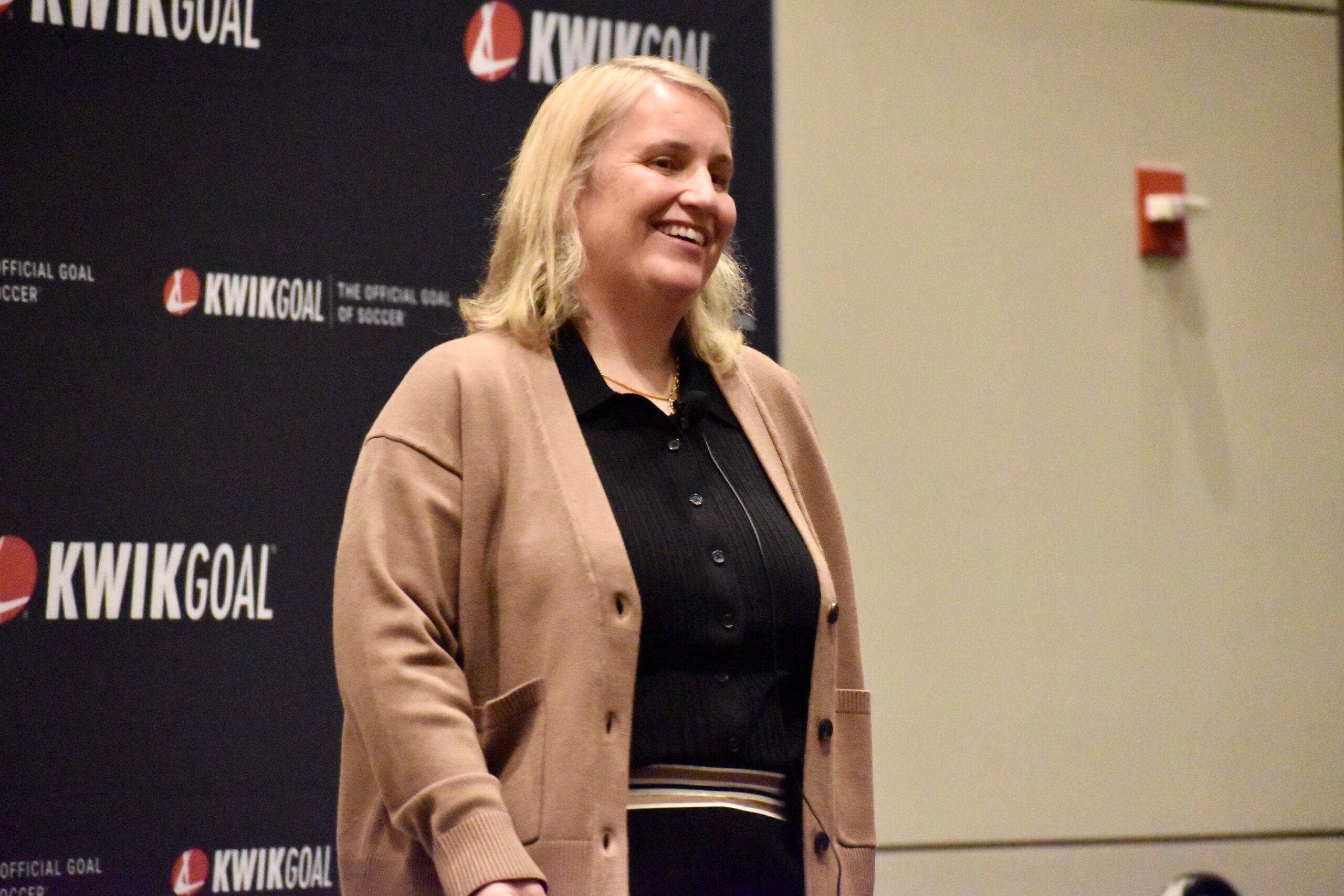
Former U.S. men’s national soccer team manager Gregg Berhalter, now in charge of the Chicago Fire, speaking at last year’s coaches’ convention in Chicago.
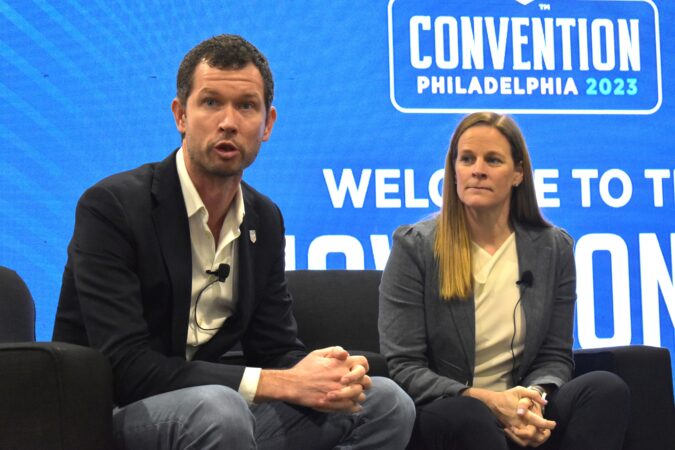
Amid all this, the event that’s usually American soccer’s annual curtain-raiser will take place in Philadelphia this week. From Wednesday to Saturday, the United Soccer Coaches Convention will draw thousands to the Pennsylvania Convention Center for the traditional festival of speeches, exhibits, and All-America honors.
The association has organized conventions in almost all of its 85 years, and Philadelphia has been a frequent host. It was last here in 2023, and this will be the 11th time since 1989. That history has also been profitable for the organization, which is headquartered in Kansas City, Mo., but has many members in this part of the country.
There’s always a little extra shine when the convention happens in a World Cup year, and this one will be no exception. Nor will it be lost on anyone that it’s in a World Cup host city.
On top of that, Paul Payne, who became the association’s president in April, has strong Philadelphia ties. He grew up in the region and coached soccer at Conestoga High School, the University of Scranton, then Bloomsburg for more than 20 years.
“I think it’s a great way for us as an association to kick off, with our connection with U.S. Soccer [and] our national teams,” said Payne, who noted that he delivered The Inquirer for two years as a child. “The World Cup doesn’t start in June — to me, it’s started already. And I think you’re going to see that ramp up with a lot of the activities of U.S. Soccer, and, obviously, the United Soccer Coaches Convention in Philly this year.”
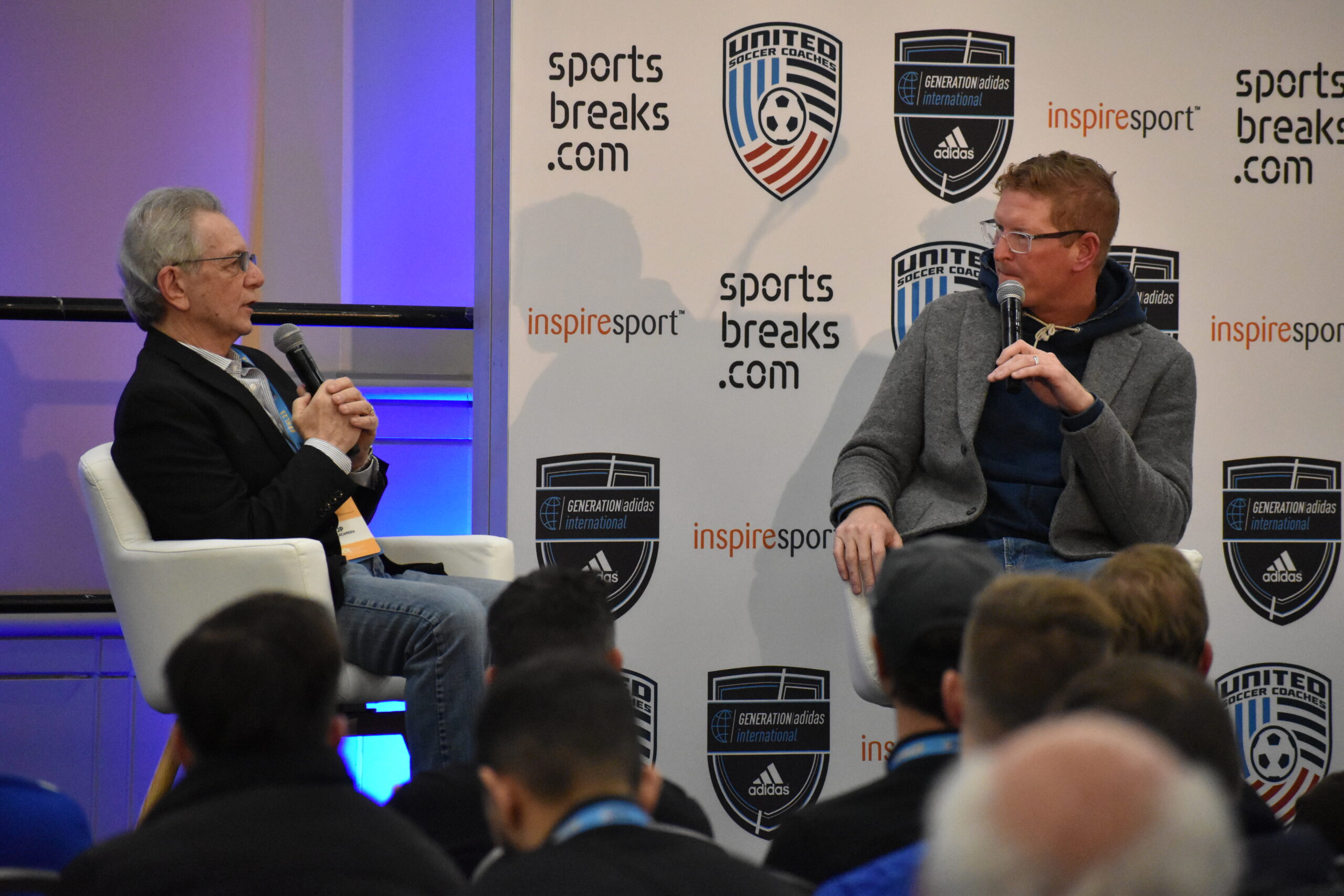
Former Union manager Jim Curtin (right) with longtime soccer broadcaster JP Dellacamera at the 2023 coaches’ convention in Philadelphia.
Star players and coaches on stage
As usual, the speakers will span the range of the sport. Amid the dozens of high school, college, and youth coaches, famous ex-players on stage will include Tab Ramos, John Harkes, Jozy Altidore, Jay DeMerit, and Delran’s Peter Vermes.
Heather Mitts will share the stage with her husband, former Eagles quarterback A.J. Feeley, on Friday, while her former teammates, Lori Lindsey and Heather O’Reilly, have an event on Thursday.
Lindsey also will join Carli Lloyd, Alexi Lalas, and JP Dellacamera for a Fox Sports panel on Friday previewing the network’s coverage of this summer’s World Cup.
Guests from abroad will include former Manchester United player Nicky Butt, former England women’s manager Mark Sampson, and Portugal men’s manager Roberto Martínez. Expect Martínez to draw a big crowd — and perhaps face a few questions about playing the United States in March.
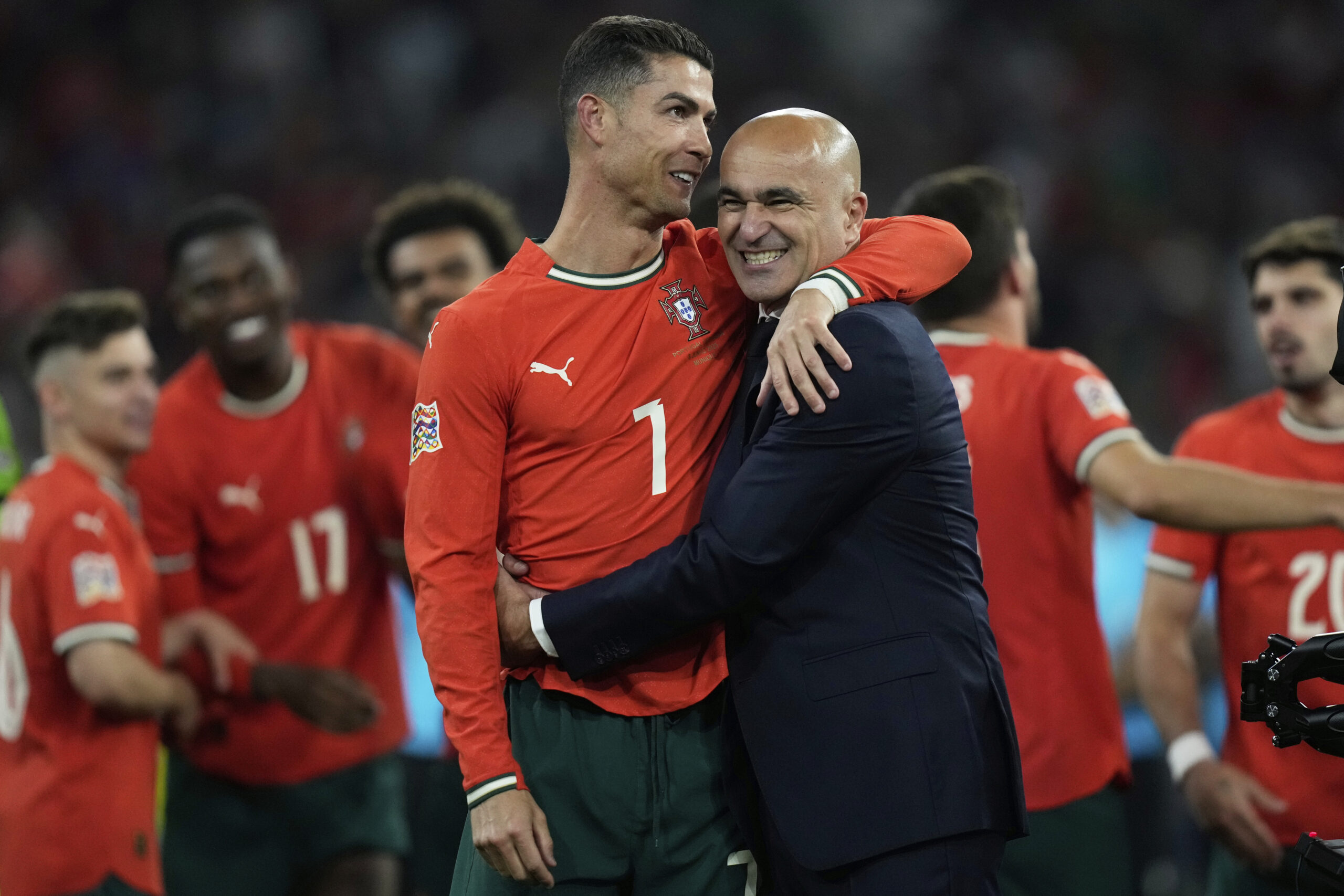
Roberto Martínez (right) with superstar Cristiano Ronaldo at Portugal’s UEFA Nations League title game win last summer.
The Union will be well-represented, with manager Bradley Carnell, academy director Jon Scheer, reserve team head coach Ryan Richter, and goalkeeper coach Phil Wheddon scheduled to speak.
U.S. Soccer also will have lots of dignitaries there: from president Cindy Cone to CEO JT Batson, sporting director Matt Crocker, vice president of strategy Emily Cosler, and Soccer Forward Foundation executive director Lex Chalat. A number of coaches from across national teams will hold seminars, though Mauricio Pochettino and Hayes won’t be there because of other commitments.
“It will be great to get insight into the preparation for the World Cup,” Payne said. “The youth coaches in Ardmore, they want to know what’s going on with the big shots. It’s neat to hear. … All of a sudden, you’re connected to the highest level, and you have a personal seat there to what’s going on.”
Saturday night will bring the annual Walt Chyzowych lifetime achievement awards, named for one of Philadelphia’s soccer legends, at the Marriott next door on Market Street. Former U.S. men’s star goalkeeper Tony Meola is this year’s honoree, and it’s always special when the event is in Chyzowych’s adopted home.
Emma Hayes has long been a regular at the coaches’ convention, but she won’t be there this year because of the U.S. women’s team’s January camp.
The public can attend the convention, though it has never been cheap. It’s $665 for the week this year for nonmembers, with extra outlays for some of major ceremonies. (The Chyzowych event doesn’t cost extra, but its regulars often fill the room.) Most attendees will have already registered when they arrive.
There are day passes available from Wednesday through Saturday for $250 each. There also are tickets just for the exhibit hall, $50 for Thursday night and $75 for the day Friday or Saturday. It’s quite a scene, with vendors hawking everything from newfangled soccer balls to travel packages for youth tournaments.
Day passes haven’t always existed for the convention, but Payne wanted them to expand the audience — particularly to youth coaches who don’t have the money to pay for the whole thing.
“If they’re unsure what this is really about, it gives them a chance to get a glimpse of it and experience what this convention is,” he said. “And hopefully it whets their appetite, so they say next year, ‘You know, what I’m going to ask my club to fund me to go all four days,’ or ‘I’m going to ask my high school for professional development money.’”
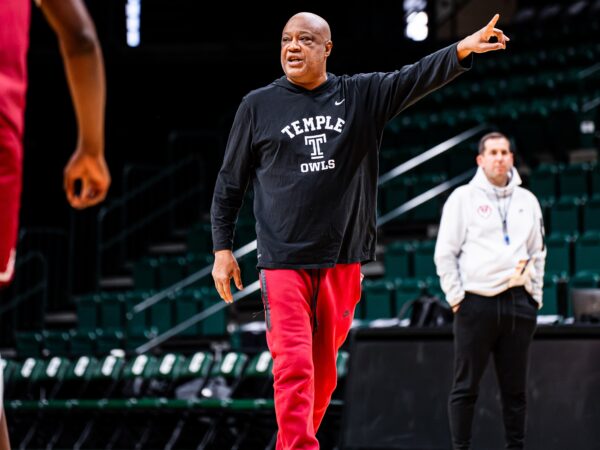
Temple assistant men’s basketball coach Bill Courtney died suddenly at the age of 55, the school announced Tuesday morning.
“I am shocked and heartbroken by the tragic news and passing of my close friend Bill Courtney,” Temple coach Adam Fisher said in a statement. “Bill made such a big impact on our program in such a short time. He was one of the most respected coaches in the country — thoughtful, prepared, and deeply committed to the game and to winning the right way. Bill made every program he touched better, and his loss is felt profoundly by everyone who knew him. Our thoughts and prayers go out to Bill’s family during this extremely difficult time.”
Mr. Courtney was in his first season with the Owls. He joined Fisher’s staff after spending six seasons in assistant and associate head coaching roles at Miami. He stepped in as Miami’s interim head coach for 19 games last season after Jim Larrañaga retired. Mr. Courtney was the head coach at Cornell from 2010 to 2016, and before that, he spent time as an assistant at Virginia Tech, Virginia, Providence, George Mason, Bowling Green, and American.
Temple University is deeply saddened to announce the sudden passing of assistant men’s basketball coach Bill Courtney.
“We are deeply saddened by the passing of Temple men’s basketball assistant coach Bill Courtney,” said Tim Pernetti, commissioner of the American Conference. “In over 30 years as a basketball coach, Courtney had a profound impact on his colleagues and student-athletes.
“He helped lead Miami to the Final Four and programs to nine postseason tournaments, but his [effect] on the lives of the student-athletes and coaches who worked with him will be his ultimate legacy.”
A native of Alexandria, Va., Mr. Courtney played at Bucknell University, where he was inducted into the school’s Athletics Hall of Fame in 2007 and remains among the program’s all-time leaders in points and assists. He graduated from Bucknell in 1992 with a degree in education.
Temple (11-5, 3-0 American) traveled to Memphis Tuesday afternoon as scheduled, according to a source, and will play Wednesday night’s game vs. the Tigers.
“In the short time that he has been part of the Temple family, I saw the impact that he had on our program with the joy that exuded from him on and off the court,” Temple athletic director Arthur Johnson said in a statement. “He will be missed by his immediate family, his Temple basketball family, and the greater basketball community.”
Mr. Courtney is survived by his wife, Gina, and two sons, Billy and Derek.
The school said information regarding memorial services will be announced later.
The Eagles are who we thought they were. A team that consistently disappointed its fans despite winning the NFC East in defense of its Super Bowl crown put in a disappointing one-and-done playoff performance under a clueless offensive coordinator, with a banged-up O-line and some stars (cough, cough…A.J. Brown) perhaps past their peak. But this is what Philly fandom is all about: one battle after another.
Dirty, toxic oil from Venezuela is the last thing that America needs
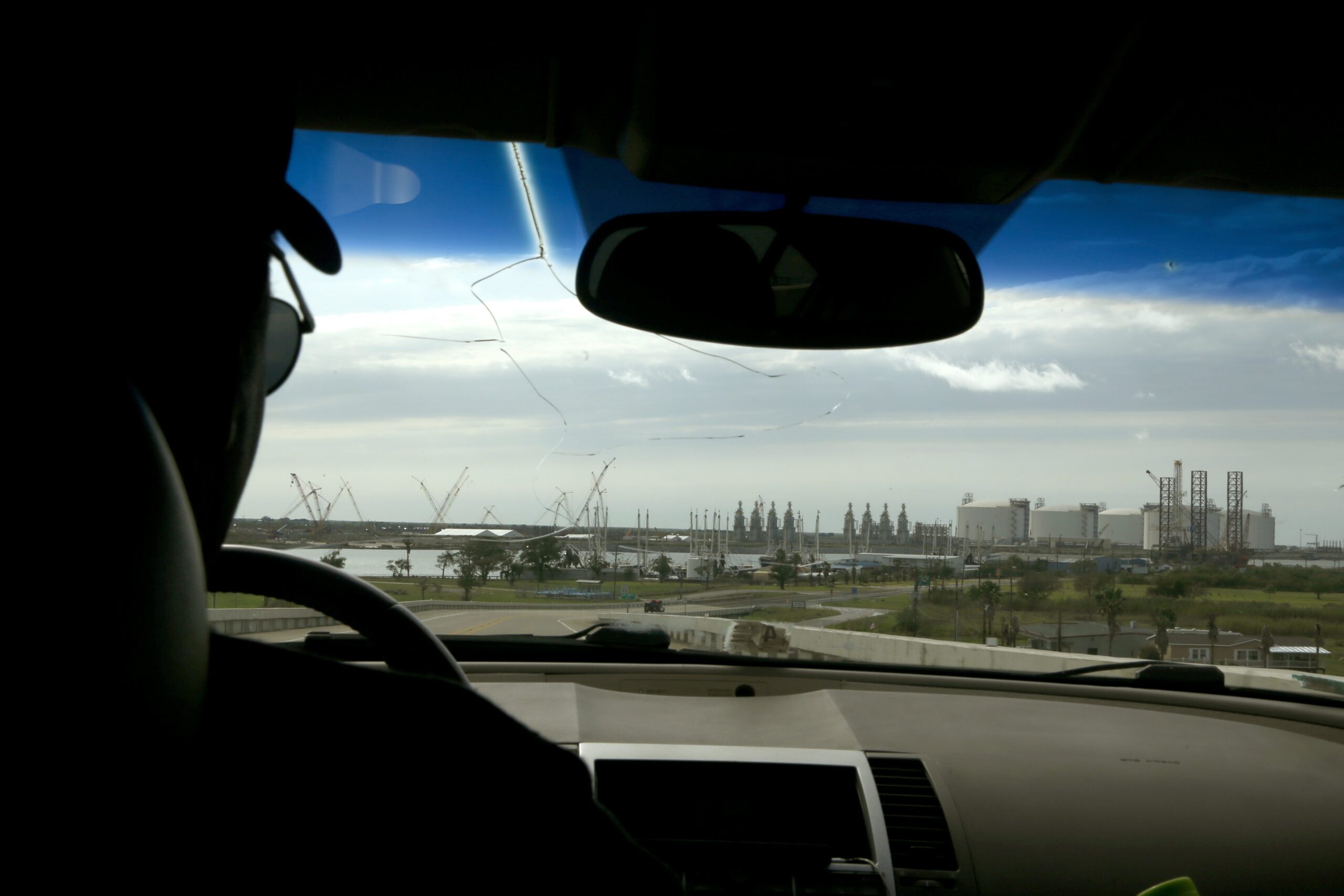
John Beard drives near a liquid natural gas facility in Port Arthur, Texas. In addition to LNG facilities, Port Arthur is surrounded by oil refineries and petrochemical plants. Beard says Black and brown communities like Port Arthur are having to bear much of the risk posed by the facilities.
You could say that crude oil is in John Beard Jr.’s blood. His dad worked for more than 44 years at a giant Gulf Oil refinery in the heady 20th-century days of the South Texas energy boom, and Beard then followed his father’s footsteps by working 38 years at a rival Exxon facility in Beaumont, before heading home to sleep in the shadow of Port Arthur’s own dense row of dozens of refineries.
But today, Beard — a longtime civic activist and political leader in Port Arthur’s large Black community — is fighting to keep oil out of his neighbors’ blood, literally.
“It was nothing to wake up the next morning and find a yellow stain against the side of your house with something had been released in the air,” Beard told me last week on the phone as he talked about growing up surrounded by tall refinery stacks. “You may have smelled it, or you may have slept through it and all and come to find out that it stained your house or whatever.”
“You know how you say when the refinery has a sneeze, we get pneumonia?” he asked. “But no, we don’t get pneumonia. We get cancer.” The most-feared disease has touched pretty much every family that Beard knows in the economically struggling town.
This was all before last week’s lightning bolt of news: that the U.S. military had bombed Venezuela and seized its indicted strongman leader Nicolás Maduro. It was quickly followed by Donald Trump announcing a scheme to bring some 30-to-50-million barrels of oil to the United States — meaning the backyards of Beard and his neighbors.
Indeed, experts have tagged Valero’s big refinery in Port Arthur that towers over Beard’s home — heavily invested in specialized equipment to process the sour, heavy crude that comes from Venezuela — as most likely to benefit from Trump’s proposed gambit.
Environmentalists say any new refinery jobs and U.S. corporate profits will be swamped by increased pollution of both the toxic chemicals that have already sickened Port Arthur, and greenhouse gases that threaten us all through climate change.
When America woke up 10 days ago to news that Trump had ordered the dead-of-night assault on Venezuela and seized Maduro, there was one word that echoed among Democratic lawmakers asked for a comment. “Is anyone going to just stop for a second and be honest?” U.S. Rep. Seth Moulton of Massachusetts told CNN. “This is insane. What the hell are we doing?”
Those problems have been amplified in the days since Moulton and others branded the operation as “insane.” It is indeed insane when Trump declares to the world that the United States is “in charge” of Venezuela and a few days later his State Department says the country is unsafe for Americans because of violent roving gangs. For that matter, it’s also meshugana to upend the global order that has reigned since the end of World War II, when the U.S. led efforts to ban wars of aggression.
But we’re not talking nearly enough about what’s maybe most whacked-out about Trump’s splendid little war in Latin America — that by making his operation all about taking the oil, he seeks to endanger the entire planet by accelerating climate change. One expert told the Associated Press that increasing production of Venezuela’s thick, dirty crude by a target of 1 million barrels a day would also add roughly 360 million metric tons of carbon dioxide a year from the production process — a significant spike in the gases that are warming our planet.
That Trump made it clear that his goal in making war against Venezuela was all about grabbing its oil on the one-year anniversary of the deadly Los Angeles wildfires — perhaps the most dramatic of the floods, amped-up hurricanes, and other weather catastrophes exacerbated by a hotter planet — was especially disgusting.
Michael E. Mann, director of the Center for Science, Sustainability and the Media at the University of Pennsylvania, told me that while Trump’s initial target for Venezuelan oil seems modest, experts believe the South American nation could harbor a whopping 300 billion barrels under ground. He has written that Trump aims to make America a “petrostate,” allied with other bad actors such as Russia and Saudi Arabia in working to undermine any global consensus around fighting climate change.
Less than a week after the Venezuela strike, the New York Times reported that Trump’s U.S. Environmental Protection Agency is dropping its longtime requirement to weigh the cost on human lives — early deaths, or chronic diseases like asthma — in regulating key air pollutants, including those from oil refineries. As a matter of policy, the U.S. government now values the dollars that Valero or Exxon can make from burning dirty oil over the very existence of Beard and his Texas community. That’s not surprising from the crew that’s dismantled an entire generation of EPA programs that once targeted the environmental racism that dumps pollutants on disadvantaged Black and brown communities like Port Arthur.
Indeed, the 100 fatalities caused by the Trump regime’s militarism against Venezuela — although a human-rights outrage — will likely pale over time against the canopy of death and destruction that historians will blame on the president’s obsession with doubling down on fossil fuels while other nations focus on green energy such as wind or solar.
A preview of the world’s coming attractions is arguably taking place right now on the blood-soaked streets of Tehran, where experts believe months of severe drought that sometimes left poorer neighborhoods in the Iranian capital with little or no running water has been a key trigger for the collapse of social order.
While foreign policy experts aren’t wrong to worry about U.S. expansionism triggering World War III, Trump’s backward-looking energy policies could cause a similar or worse toll through civil war and mass migration. While top energy officials — including the Exxon Mobil CEO who called Venezuela “uninvestable” — say Trump’s Venezuela dreams are economically unrealistic, the time lost for America to reduce its greenhouse gas pollution is a clear and present danger for civilization.
History is almost sure to judge that “insane” was far too generous a word to describe it.
Yo, do this!
I’ve written about this before but I can’t say enough about the essentialness of Andrew Hickey’s long-running podcast, A History of Rock Music in 500 Songs, which currently is up to around 1969 on its long, strange trip. His latest episode — about Jimmy Cliff, “Many Rivers to Cross,” and the invention of reggae — proved unexpectedly prescient when Cliff died at age 81 just before its release. Now, the passing of the Grateful Dead’s Bob Weir has me dredging up his recent episode about the Dead, “Dark Star,” and the rise of an almost spiritual cultural phenomenon.
In the world of media, the mid-2020s will be remembered as the moment that intrepid independent journalists stepped up and did the work that traditional newsrooms are suddenly too cowed or too compromised to perform. Since ICE and the Border Patrol amped up their immigration raids last summer, I’ve become a big fan of Amanda Moore (@noturtlesoup17.bsky.social on Bluesky), who has birddogged Greg Bovino and his goon squad from the Big Easy to the frigid streets of Minneapolis. Check out her coverage of the far right for Mother Jones.
Ask me anything
Question: Please explain how the “anti-elite” [MAGA] base can continue to support all the elite personnel in charge of America’s economy in this regime? Just ONE recent example: [Pennsylvania Sen. Dave] McCormick’s wife’s Facebook promotion in charge of….“sovereign relations concerning AI…“. — @tim215.bsky.social via Bluesky
Answer: Tim, I think the ascension of Dina Powell McCormick — the former Trump 45 aide who is also married to Pennsylvania’s Republican junior senator — to the job of president of Facebook’s parent company Meta has profoundly troubling implications. This is neither to say that Mark Zuckerberg’s new hire lacks qualifications, nor that Senate spouses should be barred from the private sector. But the move surely reflects Silicon Valley’s determination to curry favor with the personalist Trump regime by any means necessary. What bothers me even more, as a Pa. voter, is that I see the issues surrounding Meta — especially the currently unchecked rise of artificial intelligence, or AI — as requiring clear-eyed leadership. How can anyone now expect Sen. McCormick to be an honest broker?
What you’re saying about…
Last week’s question about the attack on Venezuela drew a robust response, as I expected, and — also as I expected — almost unanimous opposition to Trump’s policy for the troubled country. Most of you saw the military operation as illegal and unconstitutional, and share my befuddlement (see above) on the president’s assertion that taking Venezuela’s oil was the prime reason, except for Jon Elliott, who wrote: “I absolutely endorse Trump’s Pirates of the Caribbean excursion with one proviso — he performs Maduro redux in North Korea.” More typical was Tom Lees: “I was born in June 1945, two months before the dropping of the atomic bombs. The world order that has prevented WWIII seems to be in the process of being dismantled by people who should be imprisoned (Donald Trump) or institutionalized (Stephen Miller).”
📮 This week’s question: Given the uproar over the killing of Renee Good, is “Abolish ICE” now the mainstream position, and do you support it? If so, how should the U.S. enforce its immigration laws? Please email me your answer and put the exact phrase “Abolish ICE” in the subject line.
Backstory on the end of Newsom’s WH dreams
California Gov. Gavin Newsom speaks during his State of the State address Thursday in Sacramento, Calif.
One of the most anticipated stories of 2026 isn’t supposed to happen until the waning weeks of the year, when the votes from the midterm election have been counted and top Democrats beginning lining up for their shot at following Donald Trump as the 48th president. But the most consequential early moment in that Dem primary race may have already happened. On Monday, California Gov. Gavin Newsom faced a career-defining choice between the growing populism of his party’s anxious voters, or the Silicon Valley moguls who’ve been there for him in the past.
Newsom chose the billionaires.
At issue is a citizen initiative to place a wealth tax on California’s richest of the rich — those with a net worth of more than $1 billion — to pay a one-time levy equal to 5% of their assets, with most of the revenue targeted toward keeping troubled hospitals open and other healthcare costs. Backed by a powerful labor union, the Service Employees International Union-United Healthcare Workers West, the ballot measure reflects growing global rage over economic inequality and the current zeitgeist among Democrats likely to vote in the 2028 primaries. Not surprisingly, the push has angered Silicon Valley’s increasingly right-wing tech titans and investors like Peter Thiel or Google co-founder Larry Page who’ve threatened to move to red states like Florida or Texas.
Newsom, who is term-limited and leaves the governor’s mansion at year’s end, has long walked a tightrope between boosting his White House ambitions by relentlessly needling Donald Trump on social media while — with considerably less fanfare — catering to the high-tech poobahs who’ve funded his campaigns and who, Newsom insists, would damage the Golden State economy by leaving. On Monday, the governor told the New York Times that he firmly opposes the proposed wealth tax and will use his bully pulpit to fight the measure if it reaches the ballot.
“Hey idiots: You’re rich,” the independent journalist Hamilton Nolan wrote in a riposte to Thiel and Co. posted hours before Newsom’s decision. “Enjoy your lives. Pay your taxes and count your blessings. Is this the perfect life that you dreamed of for yourself — performatively kissing the ass of a dictator, giving up your home to flee the taxman, earning the enmity of your fellow man, all in service of money you will never spend?”
Nolan’s piece may have targeted the 0.1%, but it also seemed to carry a message that Newsom and any other Democratic presidential hopefuls need to hear. Running as a performative kind of center-left Trump with viral social media posts will get you attention but not the White House. The core of rank-and-file Democrats — especially the 7 million who took to the streets last summer for the No Kings protest — wants radical changes they’re not seeing in Newsom’s California. These include limits on artificial intelligence, a major overhaul of the Supreme Court, and — especially — an end to the gross unfairness of economic inequality. Hopefully Newsom’s pals in Silicon Valley can find him new work, because 1600 Pennsylvania Ave. already looks above his future pay grade.
What I wrote on this date in 2019
One of the many similarities between today and the United States seven years ago is that Democrats and other progressives were already deeply divided over how best to respond to Donald Trump and threats against democracy. On this date in 2019, I put forth my own idea that I’m not sure I’d endorse in hindsight: that Bernie Sanders was the most inspiring figure in U.S. politics, yet should stand down from the 2020 election. I wrote about “a sense that white dudes from the baby-boomer-and-older generation have been running things for far too long, and that America needs some new blood.” Instead, we got the two oldest presidents in American history. Read the rest: “Bernie Sanders is the leader America needs now. Just NOT by running for president in 2020.”
Recommended Inquirer reading
Late last year, I predicted that Trump’s plummeting popularity would cause him to double down on autocracy. For once, I was right. In my Sunday column, I wrote about the shocking ICE Minneapolis murder of 37-year-old poet and mom Renee Nicole Good and the broader war for the truth that was defined by the Trump regime’s instant smears against the victim. Over the weekend, I looked at how 2026’s shocking start from Caracas to the Twin Cities was punctuated by Trump’s jarring comments to the New York Times — that nothing can stop him but “my own mind” and “my own morality.” I stressed that he can and will be stopped — by our morality.
The nation remains on edge nearly one week after the ICE agent gunned down Good in the streets of Minneapolis, and already the resistance movement to ICE has seen some twists and turns. None has been more dramatic in Philadelphia than the unexpected return of the Black Panther Party for Self Defense, an iconic social movement that thrived in the late 1960s and early ‘70s before a government crackdown. When several armed members of the Black Power group demonstrated against ICE near City Hall on Thursday, The Inquirer’s Brett Sholtis jumped on the story and followed up with an in-depth profile of the small group, whose Philly leader, Paul Birdsong, said Good’s killing “wouldn’t have happened if we were there.” Sholtis is part of the paper’s jacked-up weekend news coverage that is supported by your subscription dollars. Local journalism is a bulwark against tyranny. Become a part of it by subscribing to The Inquirer today.
By submitting your written, visual, and/or audio contributions, you agree to The Inquirer‘s Terms of Use, including the grant of rights in Section 10.
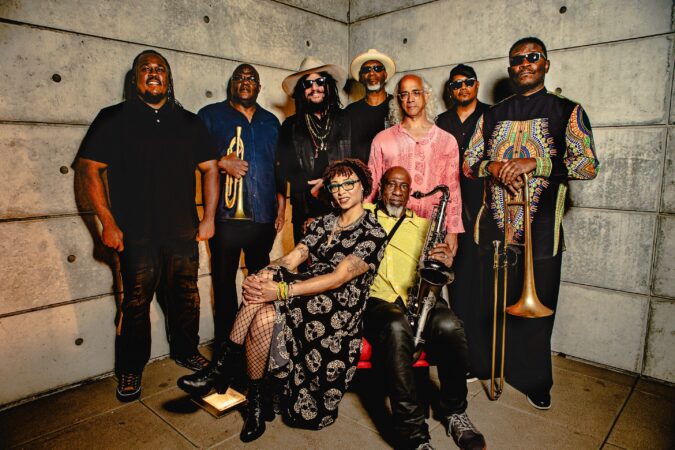
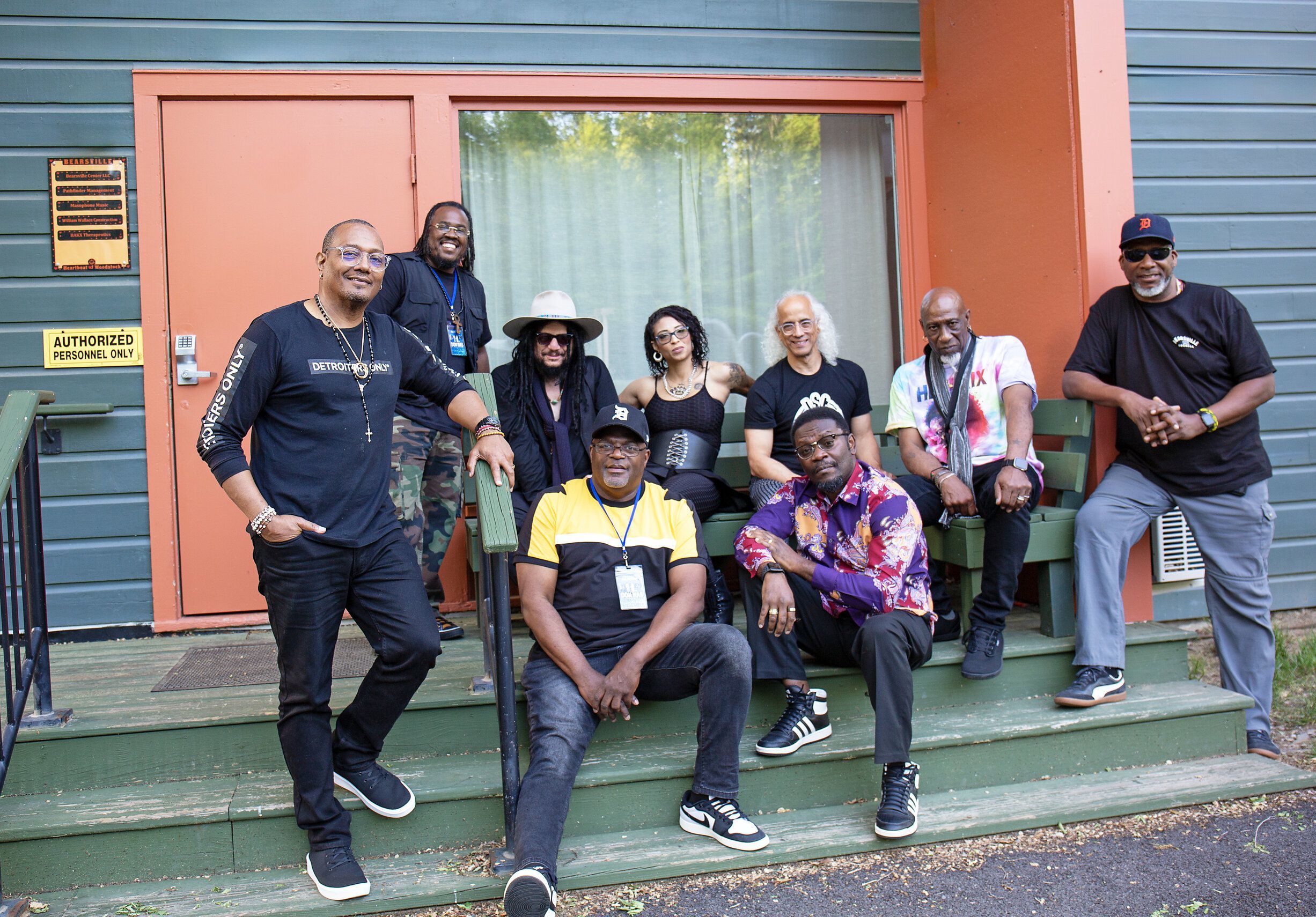
Don Was’ show with the Pan-Detroit Ensemble at Ardmore Music Hall on Wednesday was always going to be, in part, a tribute to the music of the Grateful Dead.
Along with digging deep into the rugged, funky sounds of their hometown — as the bassist and Grammy-winning producer and his bandmates do on their new album, Groove in the Face of Adversity — the date will also include a performance of the Dead’s 1975 album, Blues for Allah, in its entirety.
But now the Dead community is reeling from the loss of Bob Weir, the singer-guitarist who cofounded the Dead in 1965 and became a torch bearer for the band’s music in the decades since Jerry Garcia died in 1995.
It will also serve as a celebration of the short-shorts-wearing rhythm guitarist and vocalist who sang many of the psychedelic rock band’s most beloved songs, including “Sugar Magnolia,” “Truckin’,” and Blues for Allah’s “The Music Never Stopped.”
Was is president of the esteemed Blue Note Records jazz label and the former coleader of art-pop band Was (Not Was), best known for the hit “Walk the Dinosaur.” His long list of production credits includes Bonnie Raitt, the Rolling Stones, Willie Nelson, Bob Dylan, and many others.
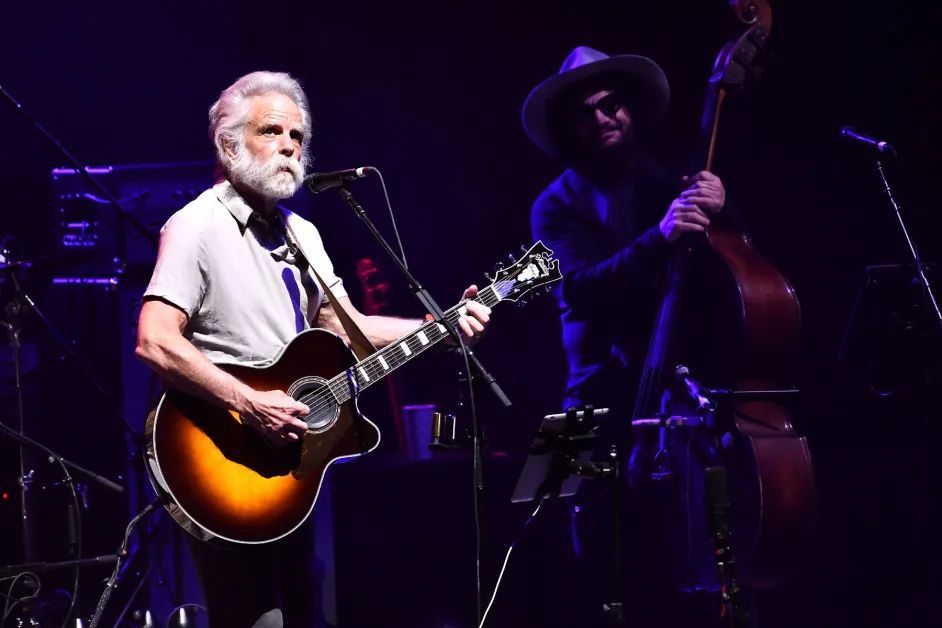
He also toured extensively with Weir, playing double bass with Wolf Bros, the band formed in 2018 whose repertoire mixed country and jazz with the Dead’s mystical roots-music blend.
Don Was (at right) with Bob Weir performing together as Wolf Bros in 2018.
Weir played Philadelphia stages with the Dead or one of their many offshoots over 70 times — including a record 57 concerts at the Spectrum in South Philly before it closed in 2009. His last Philly show was a Wolf Bros gig at the Met in September 2023.
Was learned of Weir’s death shortly before going on stage in Ann Arbor, Michigan, on Saturday, and broke the news to a crowd full of Deadheads.
“I told them the story Bobby told me about the night Jerry died,” Was said, talking on Monday from New York, where he and the stellar Pan-Detroit Ensemble, which includes saxophonist David McMurray and powerhouse vocalist Steffanie Christi’an, were set to play the Blue Note before heading to Philly.
“Bobby was in New Hampshire with [his side project] Ratdog [in 1995]. He told me, ’You go up there and play, man. The way you deal with grief is you go up there and make some good music for everybody.’
“So that’s what we’re going to do for Bobby. We’re going to play a soulful show, as soulful as we can. [In Ann Arbor] I hung out with the audience afterwards, and everybody had their story about some encounter with Bob over the last 60 years. It was almost like a wake. It might just be that this tour is about bringing some comfort to people who suffered a loss. Even if you’re just a fan. Bobby is like a family member to people.”
Was first saw the Dead in Detroit in 1972. “I always dug them,” he says, “and being a jazz head, I understood the method of improvisation. But I never got in a car and followed them around, so I don’t think you could have called me a Deadhead then.”
You could now, as well as a key player in the enduring band’s long, strange post-Garcia afterlife. In 2015, while producing guitarist John Mayer in Los Angeles, Was introduced Weir and Dead drummer Mickey Hart to Mayer, who was boundlessly enthusiastic about Garcia and the band.
“John waxed eloquent about his love of the Grateful Dead,” recalls Was, 73. “And those guys were just kind of bowled over by it. … And that turned into Dead & Company.”
Wolf Bros was inspired by a dream of Weir’s. The singer and guitarist was a frequent collaborator with bassist Rob Wasserman, who had introduced Weir to Was in the 1990s.
After Wasserman died in 2016, Weir called Was. “He said he had a dream where Wasserman said the reason he had introduced Bobby to me,” said Was, “was so I could take Rob’s place after he was gone. So he asked me if I wanted to start a trio with him and [drummer] Jay Lane. And I said, ‘Yeah, of course.’”
Playing with Wolf Bros “changed everything for me,” Was says. Weir was “utterly fearless about suspending self-consciousness and playing freely in the moment without regret.”
“There’s a tremendous allure to those songs, and to play them the way Bobby wanted to, which was with a beginner’s mind every night and just have a completely different adventure with a song every time you play it.”
Don Was and the Pan Detroit Ensemble play Ardmore Music Hall on Wednesday, performing music from their album “Groove in the Face of Adversity” and also playing the Grateful Dead’s 1975 album “Blues for Allah” in its entirety.
As head of Blue Note, Was is excited about the young artists on the storied home of Herbie Hancock and Wayne Shorter. He name-checks Joel Ross, Melissa Aldana, Paul Cornish, and Upper Darby native saxophonist Immanuel Wilkins.
“They all have records coming out this year, and they’re all blowing my mind,” Was said. “People who see Immanuel Wilkins will be talking about seeing him the way they talk about seeing Coltrane. They still be listening 60 or 70 years from now.”
On Groove in the Face of Adversity, Was and the PDE bring a loose, expansive sensibility to a wide range of material, from Hank Williams’ honky-tonk “I Ain’t Got Nuthin’ But Time“ to Cameo’s 1978 funk workout “Insane.”
Most powerful is “This Is My Country,” the Curtis Mayfield title track from a 1968 album by the Impressions that stands as a statement of defiant patriotism in the face of oppression. “I realized it’s tragically more relevant now than it was in 1968,” Was said.
“I feel an urgency” about playing with the PDE, “especially after Saturday night,” Was said. “I feel like I’m just starting to crack the code about playing bass. I want to play while I can” — he laughs — “while my fingers still work.”
The PDE sound is more muscular and R&B-powered than the acoustic-based style he played with Weir in Wolf Bros. But Was says they’re connected in not-obvious ways.
“When I first started to play with Bobby, I was haunted by Phil,” he said, speaking of bassist Phil Lesh, who died in 2024. “But I can’t play like Phil. Nobody can play like Phil. It was putting me in stylistic limbo. And then I quickly realized the most Grateful Dead thing you can do with a song is be yourself. Be who you are.
“So that’s what our band does. We play like us. In the music business, we tend to think of anything that’s different as a marketing problem. But in fact, being different is your superpower. I’ve tried to impart that to artists on Blue Note and people I’ve produced. To be as different as you can be: That’s the only chance you’ve got!”
Don Was and the Pan-Detroit Ensemble at Ardmore Music Hall, 23 E. Lancaster Ave., Ardmore, at 8 p.m. Wednesday. ardmoremusichall.com.
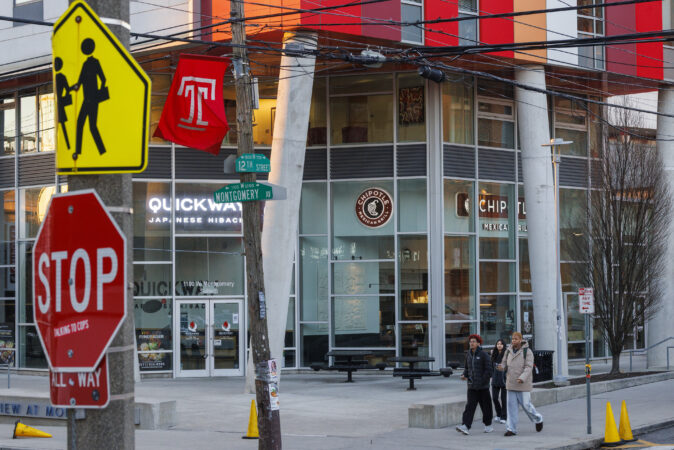
A 16-year-old boy died Monday evening after he was found with a gunshot wound inside a Chipotle restaurant bathroom in an off-campus residential building used by Temple University students.
Around 5:15 p.m., police responded to a report of a shooting victim inside the Chipotle on the ground floor of the The View at Montgomery apartments on Montgomery Avenue at 12th Street.
The victim, who was shot in the chest, was found in the bathroom by an employee, police said. The teen was pronounced dead at the scene at 5:24 p.m.
Police on Tuesday identified the teen as Khyon Smith-Tate, of the city’s Hartranft section.
Chief Inspector Scott Small said the teen was in the bathroom with at least one other juvenile when he was shot. Police found one spent shell casing inside the bathroom, Small said.
“The place was very crowded with customers as well as employees,” but music was being played loudly so it was unclear if anyone heard the gunshot, Small said.
A possible suspect wearing all dark clothing and a backpack was seen on surveillance video fleeing the restaurant, Small said.
A person of interest was detained a few blocks away, Small said. No arrests were reported.
Temple University officials issued a statement notifying the university community about the shooting.
“The loss of life to gun violence is a profound tragedy and there are no words that can make sense of it. Our thoughts are with the victim’s family and loved ones,” John Fry, the university’s president, and Jennifer Griffin, vice president for public safety and chief of police, said in a joint statement.
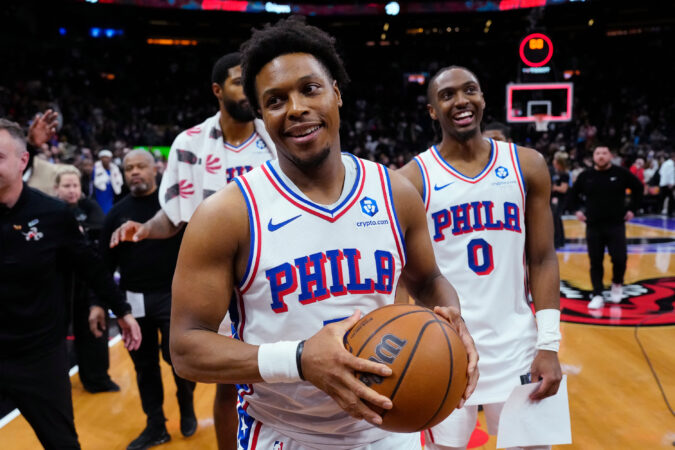
TORONTO — Photos from Kyle Lowry’s fabulous Raptors tenure lined the hallway leading to Scotiabank Arena’s visitors’ locker room. No. 7 jerseys peppered the home crowd. And Tyrese Maxey told Lowry at the start of Monday’s matchup that his 76ers teammates would “do whatever we’ve got to do to get you in tonight.”
Maxey kept his word by spearheading the Sixers’ 115-102 victory, allowing Lowry to check in late and soak in (potentially) one last ovation from an adoring crowd that watched the North Philly native become a six-time All-Star and 2019 NBA champion.
“Probably one of the greatest basketball moments of my personal career,” Lowry said after the game.
Lowry, who now is primarily a veteran mentor with his hometown team in his 20th NBA season, received that joyous curtain call because of the Sixers’ scorching offensive start to build a 33-point cushion. They dropped a season-high 80 first-half points on 73% shooting from the floor, making 13 of 20 shots from three-point range. It was a resounding response to the previous night, when the Sixers collapsed in regulation before falling in overtime against this same opponent.
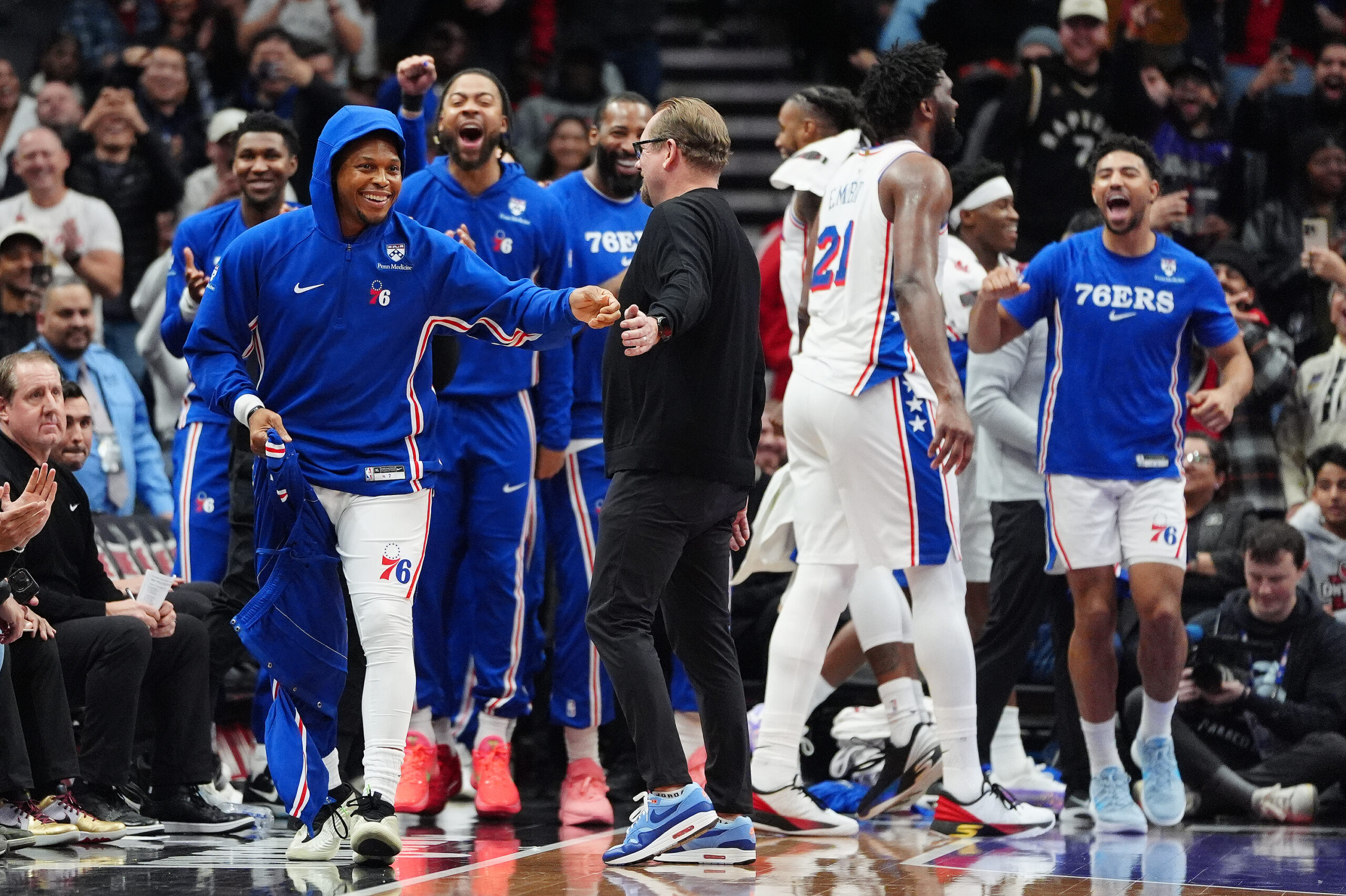
So as the fourth quarter progressed, a faint “We want Lowry!” chant turned boisterous. Teammates encouraged the crowd from the bench before, at coach Nick Nurse’s command, Lowry finally unzipped his blue hoodie.
Maxey swung his arms in support as Lowry took the floor. Nurse drew up a play to get Lowry a three-point look on his first possession, which he left well short. Teammates kept getting the ball into his hands for shooting opportunities, before his third and final long range-attempt rimmed out. Lowry held onto the ball as the final seconds ticked down in the Sixers’ win.
“A lot of neat [moments] up here,” said Nurse, who coached Lowry with the Raptors and Sixers. “And that was another one.”
The sentimental emotions were complemented by spicy ones, however. As Maxey poured in 18 first-quarter points, he visibly barked at the Raptors’ bench multiple times. Joel Embiid said after the game that he was displeased with Toronto’s Alijah Martin pointing at Maxey as the Raptors finished off Sunday’s overtime thriller, and used that as an extra dash of motivation in his return from a one-game absence because of knee/groin injuries.
“They were talking a lot last night after they won,” Embiid said at his locker. “With just me sitting on the bench, that kind of rubbed me the wrong way. So just wanted to make sure we came out aggressive and set the tone. …
“I don’t know about everybody else, but I didn’t like the way [Martin] was pointing at Tyrese last night. So that’s why, tonight, I had to make sure everybody was on point.”
Sixers players cheer as teammate Kyle Lowry (left) enters what could be his final game in Toronto.
Following this unique road back-to-back, the regular-season series between the Sixers and Raptors is over at 2-2. But if the playoffs began Tuesday, they would face each other in the matchup between the Nos. 4 and 5 seeds.
Sign us up for at least four more of these games, eh?
Here are some more observations from the Sixers’ 2-1 road trip.
Get well soon, Bill Kennedy
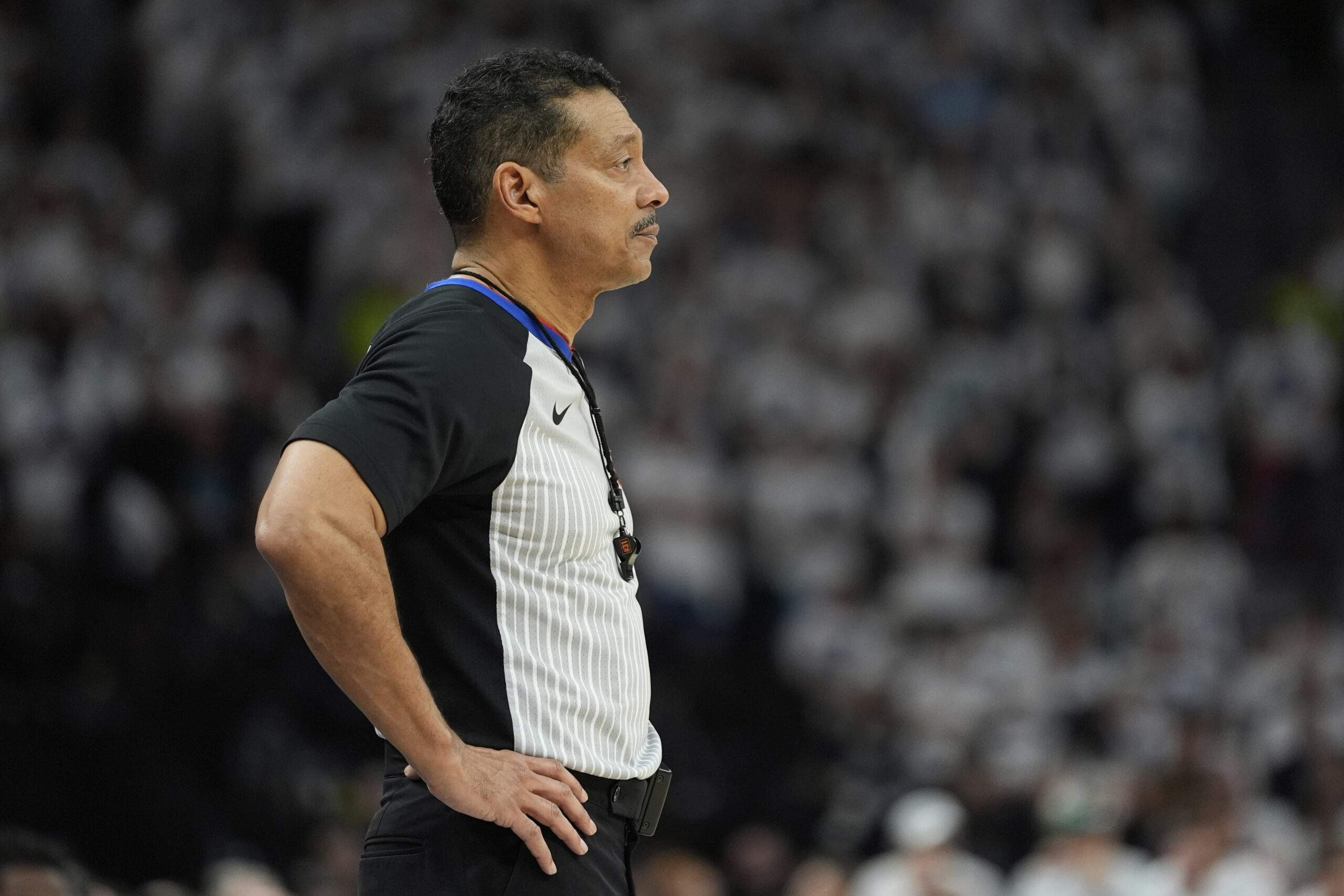
Early in the victory against the Magic on Friday in Orlando, Nurse heard referee Bill Kennedy scream and grab his leg along the baseline near the Sixers’ bench. Then Kennedy yelled again and went to the floor.
Kennedy’s reported hamstring injury, which will keep him out indefinitely, captured the attention of the most dialed-in NBA followers. He is a rare example of an official fans actually like because of his entertaining explanations of replay reviews and coaches’ challenges.
Referee Bill Kennedy suffered an injury during the Sixers’ game against the Orlando Magic.
Several Sixers players and staff members displayed concern for Kennedy when he hit the floor. Embiid and fellow center Andre Drummond were among those who helped Kennedy into a wheelchair to leave the court.
“I’ve had some of the most unfortunate injuries,” Embiid said after that game. “So every single time I see someone struggling or getting hurt, I know that kind of hits me a little bit. … Hopefully it’s nothing too bad. I’ll be praying for him.”
Embiid, the All-Star?
In Orlando, Embiid was asked about the new All-Star Game format, and whether he would play for the U.S. or World team.
“Am I going to make it?” Embiid quipped. “I think I should. I don’t think we’re pushing it enough, but I’ve been playing a lot and I think I’ve got pretty good stats. You guys should start putting the word out that Joel Embiid is back.”
Such consideration would have seemed outlandish even a few weeks ago. But Embiid has played in six of the last seven games, including logging 40 minutes for the first time since the 2024 playoffs. He has progressed from a ho-hum late-game dunk in a Jan. 3 win at the New York Knicks to a nasty one-handed flush in traffic Monday night in Toronto. He is contesting shots at the rim and taking center court for jump balls. He is averaging 23.7 points, 7.1 rebounds, and 3.3 assists, and on Monday surpassed the number of games he played in during the entire 2024-25 season (20).
And Embiid meshed Friday’s playful trolling with expressing genuine emotion about looking — and feeling — more like himself in recent weeks.
“I know I usually say, ‘Got to keep building,’” Embiid said. “But this is a moment where I’m like, ‘Wow.’ A lot of people, I think, never thought this would happen again. So got to keep praying and put in the work to keep that going.”
But … back to a potential All-Star choice.
Though Embiid played for the U.S. in the 2024 Olympics, he reiterated that he is “always going to be from Cameroon.”
“I’m part of the whole world,” Embiid said with a grin. “I wasn’t planning on [being an All-Star], but I guess since you’re talking about it, maybe there’s a chance.”
Get your popcorn ready
As Maxey packed up his belongings at his locker in Toronto, he spotted a staffer with a bag of popcorn and asked for his own.
This is no surprise. A box of popcorn is often found in his locker at Xfinity Mobile Arena. Whenever the Sixers visit Chicago, an attendant brings Maxey a trash bag filled with it.
It’s not just his go-to locker-room snack, but a go-to snack, period. For a simple reason: It’s what his mother, Denyse, used to give him most often as a child.
“She said it had good fiber in it,” he said.
Where’s Watford?
Nearly three hours before each game’s tipoff, Lowry is always the first Sixer to go through his pregame shooting routine. But Monday evening, Trendon Watford had joined him on the floor.
The versatile forward has not cracked the rotation since returning from a 17-game absence with an adductor strain in his thigh. When asked about remaining steps to reintegrate and potentially earn more minutes, Nurse said Watford still has “a ways to go” with his conditioning.
The coach also wants to exercise extra caution because, after Watford also missed training camp and the preseason with a hamstring issue, he does not want to risk another injury.
“I want to kind of take some baby steps with him,” Nurse said. “Because I want him to be in for a while. I don’t want to see three games and then not see him for three weeks again.”
Watford is averaging 7.4 points, 4 rebounds, and 3.1 assists in 17 games, including a triple-double against the Raptors in November. He checked in at the stoppage in play with Lowry on Monday, recording one rebound in 1 minute, 27 seconds.
And when Lowry detoured from the locker room for a formal postgame news conference, Watford sneaked into the back of the room to take in the scene.
Tip-ins
Eric Gordon pulled out his cell phone as soon as he returned to his locker following Friday’s win in Orlando. The former Indiana star and Indianapolis native needed to catch the end of the Hoosiers’ blowout win over Oregon in the College Football Playoff semifinals to continue that program’s magical ascension.
Quentin Grimes donned appropriate game-day attire in Toronto, wearing half brother Tyler Myers’ Vancouver Canucks and Buffalo Sabres hockey jerseys to the arena. Myers, a defenseman, also played for the Winnipeg Jets.
While reminiscing Sunday about Lowry’s tenacious playing style, Nurse mentioned that the three most relentless players he has ever coached were part of the current Sixers’ locker room. The other two are player development coaches Fabulous Flournoy, whom Nurse coached with the Birmingham Bullets of the British Basketball League, and Curtis Stinson, whom Nurse coached with the then-D League’s Iowa Energy.
Quotable
Embiid on Lowry’s legacy in Toronto: “When you play this game, that’s the respect you want at the end of your career. I loved it. I know Philly’s tough, but hopefully one day I’m in that position, too.”
Maxey on Lowry’s legacy in Toronto: “Any time I ask him to set up reservations for me [in this city], he gets me in wherever I need to get in like that.”
Flip a reservation and find out — or at least that’s how the warning goes at South Philly’s acclaimed Cambodian restaurant Mawn.
Last week, the restaurant’s owners, Phila and Rachel Lorn, took to Mawn’s Instagram to lambaste a woman attempting to sell coveted dinner reservations on the “Buy, Sell, Trade” section of Philaqueens, a private Facebook group with 75,000 members.
“Selling a Mawn dinner reservation for this month and February if anyone is interested,” read the since-deleted post, which did not specify a price. Commenters were split on the unorthodox offering. Three people immediately replied to say they were interested, while another didn’t mince words.
“Selling a free reservation?” she wrote. “Horrible.”
The Lorns agree.
“Eww. Gross … Don’t play with us,” they wrote, sharing a screenshot of the Facebook post that included the seller’s name. “All 11 of this person’s reservations are canceled.”
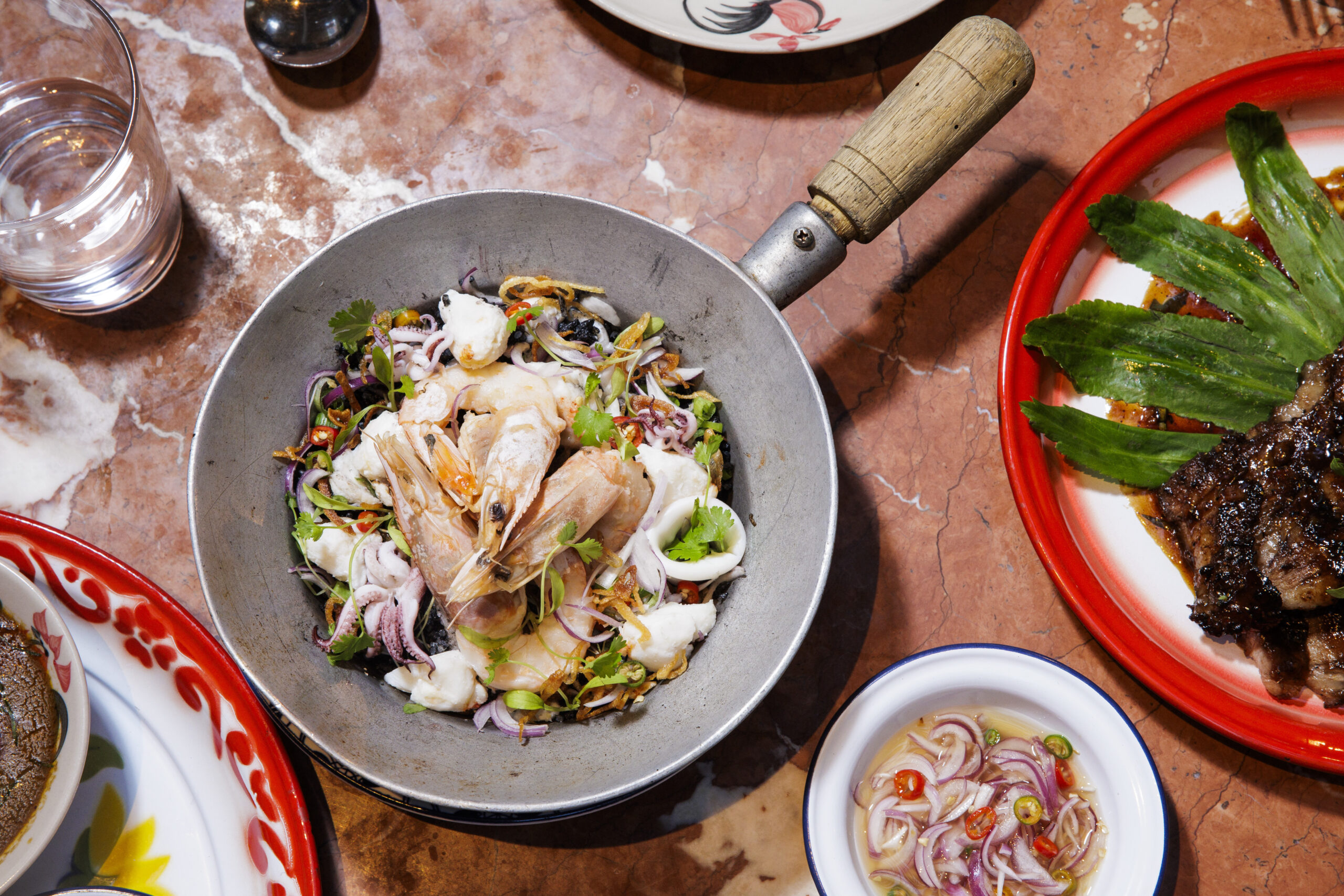
The “all star seafood rice” at Mawn, an acclaimed South Philly restaurant targeted by reservation scalpers.
The interaction was a glimpse into the burgeoning underbelly of restaurant reservation scalping, in which enterprising individuals can make a lucrative side hustle using bots and other means to snap up free reservations at in-demand restaurants, then selling them at a premium.
The reservation black market is more established in New York City, Chicago, and Miami, where tables at celebrity-favorite Italian restaurant Carbone or Ralph Lauren’s notoriously exclusive Polo Bar can fetch between $350 and $1,700 on the third-party website Appointment Trader. One Brown University student told the New Yorker in 2024 that he made $70,000 just by using fake phone numbers and aliases to book reservations to flip on Appointment Trader. The website itself claims that sellers average $172 per reservation.
The practice has spread to smaller cities, too: During Super Bowl LIX weekend in New Orleans, a once-free reservation for a table at the French Quarter restaurant Antoine’s went for $2,138.
As reservation scalping becomes more widespread, so has legislation attempting to guard against it. Philadelphia City Council unanimously passed a law in Decemberthat would prohibitthird-party websites from selling reservations without a restaurant’s consent, fining platforms such as Appointment Trader $1,000 per violation. The bill was signed last week by Mayor Cherelle L. Parker, who joined leaders in New York, Louisiana, and Illinois in banning the practice.
Still, these bills do not prevent savvy foodies from making under-the-table reservation deals in, say, a Facebook group.
‘Nobody should be making money off a free reservation’
Rachel Lorn said that she and husband Phila found out about the offending Facebook post from several back-to-back direct messages tipping her off.
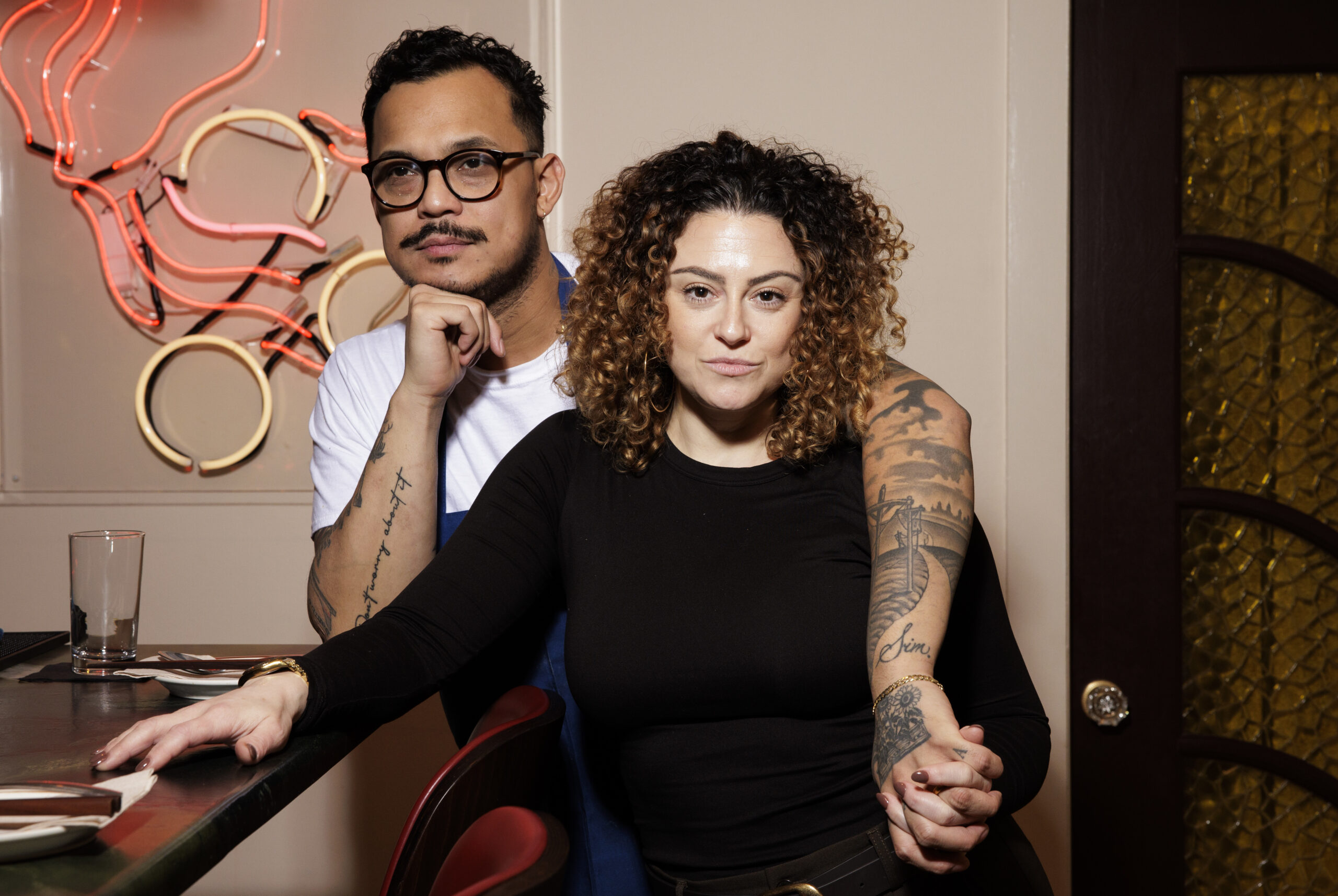
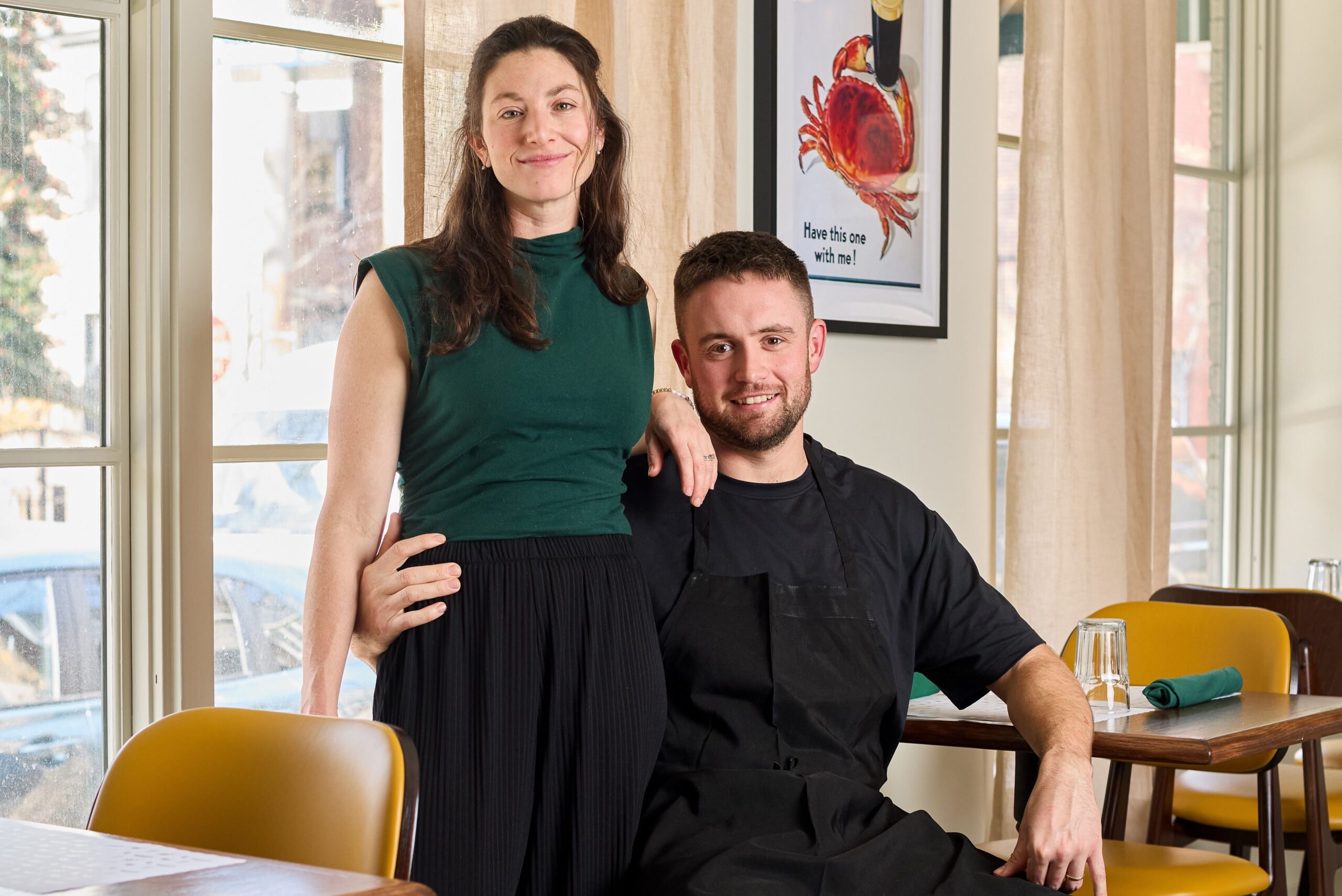
Mawn co-owners Phila (left) and Rachel Lorn, who say reservation scalpers are unwelcome at their James Beard-award winning restaurant.
“It’s disrespectful. Nobody should be making money off a free reservation. … We felt like we had a responsibility to [say to] all the people who can’t get a reservation, ‘This is not OK,’” said Rachel Lorn, who oversees front-of-house operations for Mawn, including the restaurant’s packed guest book.
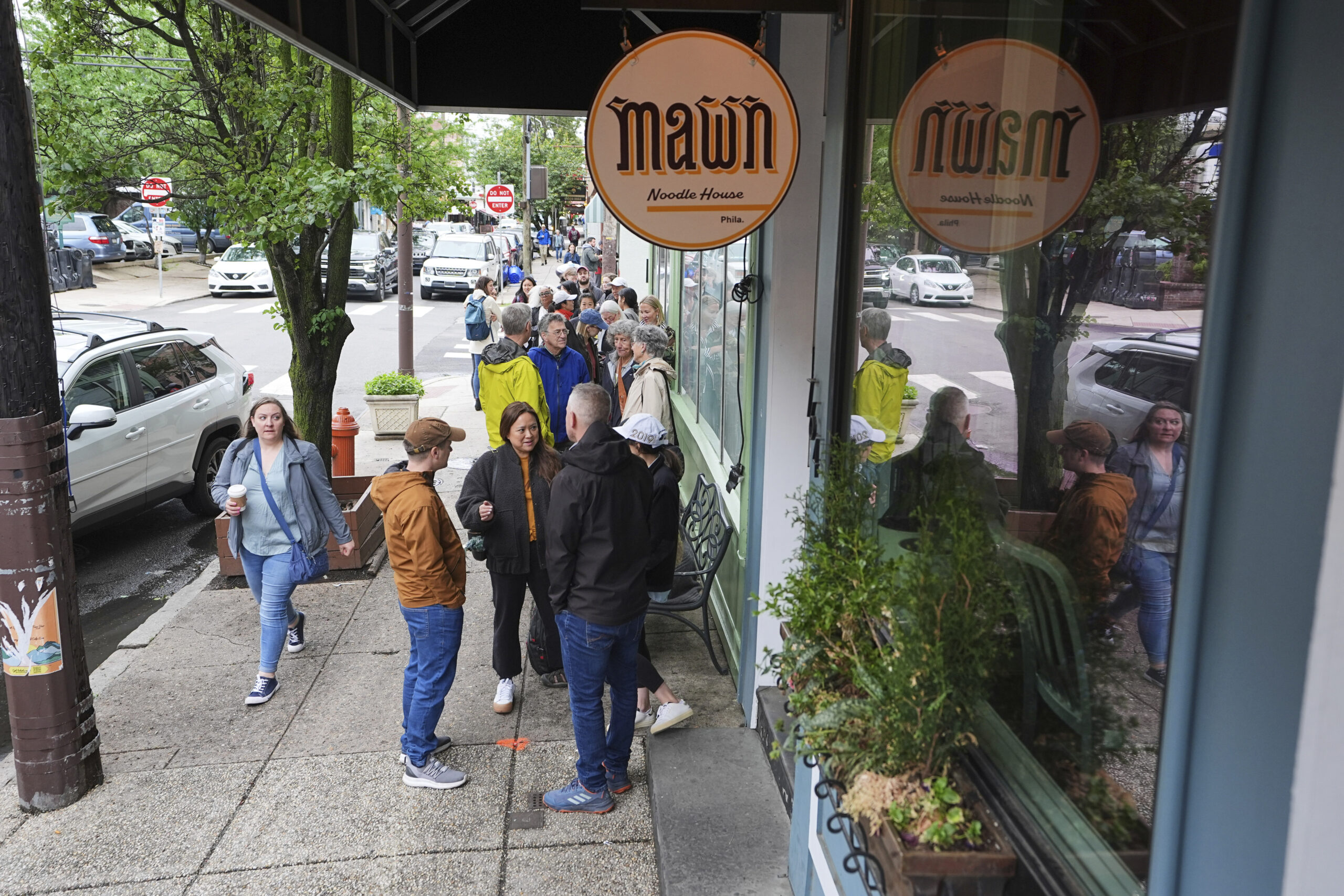
Customers wait in line for Mawn to open for lunch.
Mawn draws lines that wrap around the block for its first come, first served lunch service, but dinner reservations are the hotter commodity. Rachel Lorn uses OpenTable to drop reservations at noon on the first of every month, making roughly 650 total tables available at once. Customers are allowed to book multiple reservations, Lorn said, and many regulars manage to do so. It’s a pain point for would-be diners who miss out, whom Lorn said she hears from nonstop.
“I watch [the reservation drops] from our computer. They sell out in seconds,” she said. “We never imagined that this would be the response to our restaurant. … It’s amazing, but it’s also a really tough position to be in. There isn’t much I can do with our small restaurant and how many seats we have.”
Upon learning of the attempted black market deal, Rachel Lorn checked OpenTable and found that the Philaqueens poster had dined at Mawn six times prior and had 11 dinner reservations booked on different days throughout January and February. Lorn canceled them all immediately.
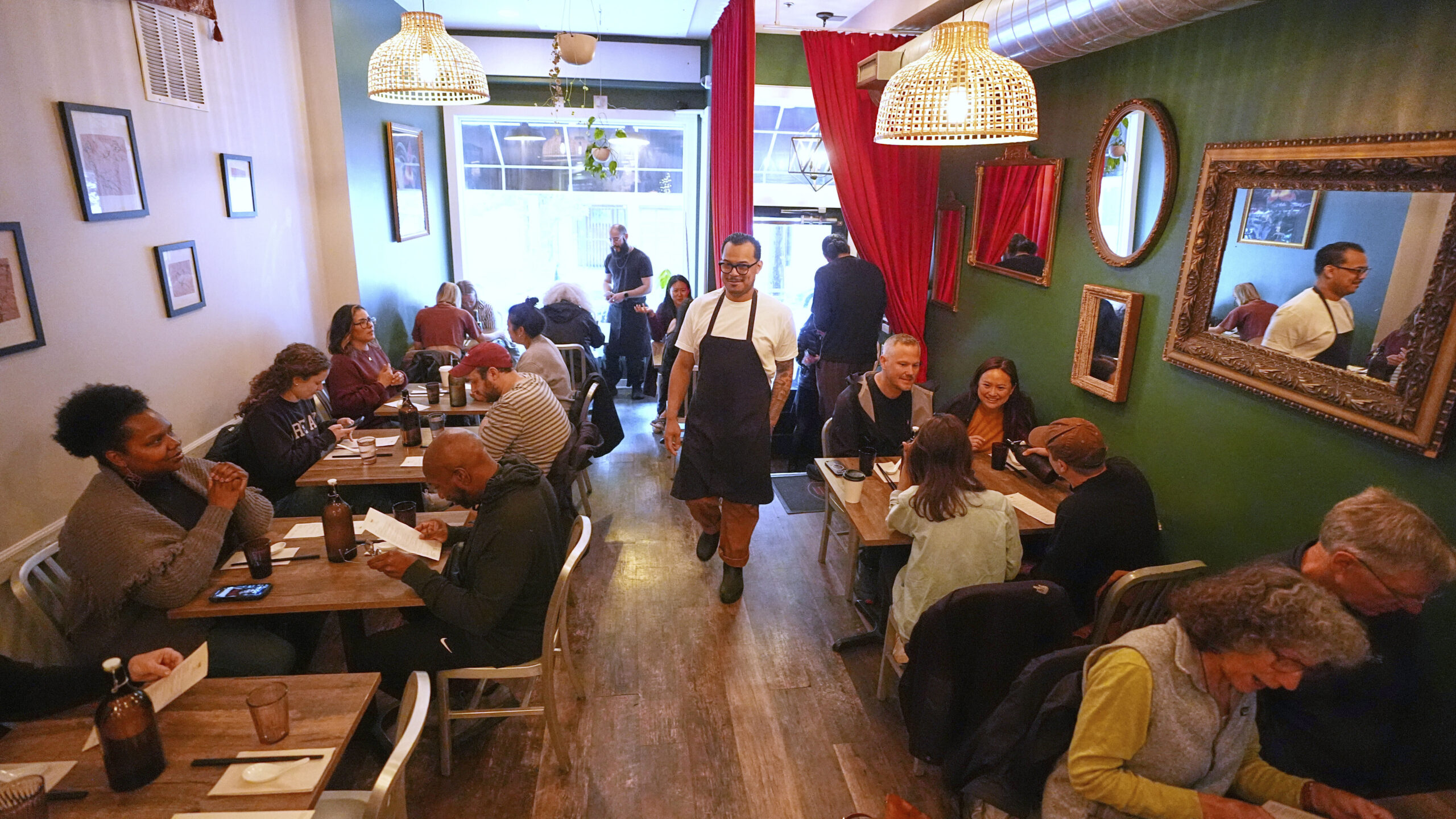
Mawn’s dining room, which has only 32 seats. The restaurant is first come, first served for lunch, but dinner reservations are snapped up in seconds.
She also reached out to the seller directly, who Rachel Lorn said didn’t respond but did manage to change the name and email associated with her OpenTable account. The Lorns said they would ban the seller, if only they could figure out a way to do so; OpenTable currently does not allow for restaurants to prevent specific users from making reservations.
“It felt like she was trying to trick us further,” Rachel Lorn said. “She shouldn’t be coming to our restaurant.”
The reservation seller declined to comment to The Inquirer, citing privacy concerns. She said only that she “meant no harm and there was no ill intent,” and declined to answer questions about why she was selling the reservations. The Inquirer is not releasing her name since the attempted sale happened in a private Facebook community.
For the most part, the Mawn incident is an anomaly in Philly. Reservation scalping has yet to take off here, according to Ben Fileccia, the senior vice president of strategy for the Pennsylvania Restaurant and Lodging Association, which worked with at-large Councilmember Isaiah Thomas to draft Philly’s anti-reservation scalping bill.
Fileccia said that this was the first time he had ever seen someone try to sell a reservation on Facebook, and that he had only seen a smattering of reservations for Philly restaurants on third-party platforms before working on the bill. Free trades are more common, he said, likely because cost is more top of mind for diners in Philly, a city with large wealth inequality.
“When you have an audience of folks to which prices are no object, [reservation scalping] becomes more of a problem,” Fileccia said. “Whereas when I discuss this issue and ask people [in Philly], ‘Would you pay $500 for reservation at 7:30 p.m. at X restaurant?’ … They usually laugh and roll their eyes.”
The gaeng pae, khao mun klone, and moo yaang prik at Kalaya, one Philly restaurant featured on reservation resale platform Appointment Trader.
That doesn’t mean scalping doesn’t happen here.
A recent search on Appointment Trader foundprime-time Saturday night reservations at Kalaya averaging $113 and 9 p.m. reservations for any day at raw bar Tesiny for between $107 and $360. A 7 p.m. Saturday table for six at Stephen Starr’s Barclay Prime steakhouse, or a reservation for two for literally any day or time at Pine Street Grill, Amanda Shulman and Alex Kemp’s new spot? That will cost at least $241 or $124, respectively, on Appointment Trader.
Until recently, Appointment Trader functioned similarly to StubHub, where buyers could purchase reservations that scalpers had already acquired. Now, founder Jonas Frey is shifting the model to a concierge system: Buyers request a certain reservation and an algorithm spits out an average price based on demand. Once a bid is placed, Appointment Trader matches you with a seller whose job it is to secure the reservation by any means possible. There’s a 100% refund guarantee if the request goes unfulfilled.
Representatives for the restaurants The Inquirer recently found on Appointment Trader were initially unaware they were listed on the platform.
“We do not have experience with guests utilizing this platform,” said Kalaya chef and co-owner Chutatip “Nok” Suntaranon. “All reservations for Kalaya run through Resy.”
Tesiny owner Lauren Biederman called the discovery “concerning.”
“There isn’t too much we can do in terms of figuring out if the reservation is scalped really, though,” she said, noting that Tesiny requires customers provide a credit cardupon booking and charges $25 per person for late cancellations and no-shows.
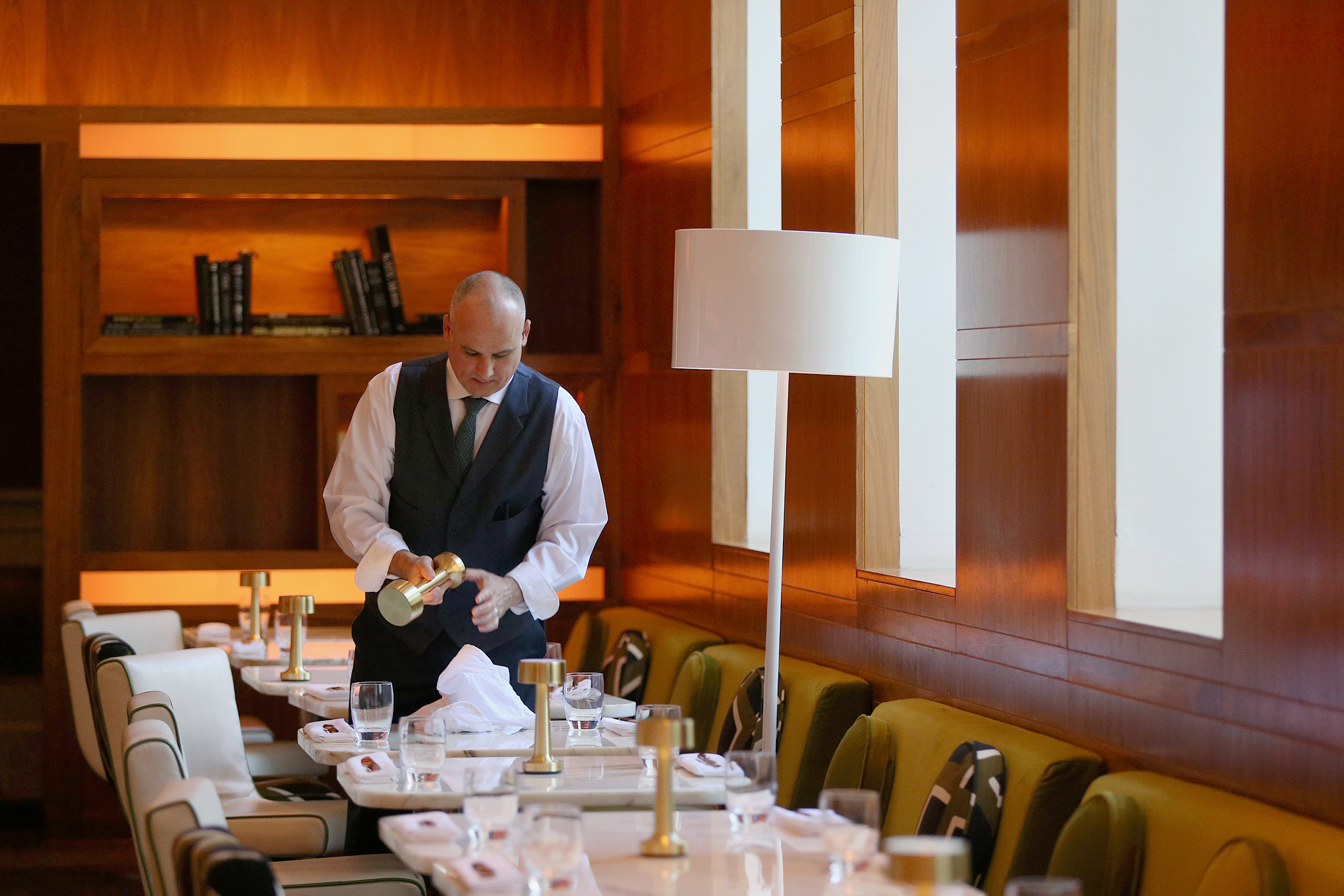
Longtime server Matthew Penn prepares for dinner service at Barclay Prime, Stephen Starr’s steakhouse, where a table can go for upwards of $221 on Appointment Trader.
When Shulman and Kemp opened Pine Street Grill last month, they designated half the nightly seats for walk-ins, in part to keep it a neighborhood restaurant.“We were especially surprised to see Pine Street listed for such a hefty price since it’s by far our most casual restaurant,” the couplewrote in a statement. “Oftentimes a dinner for two at Pine Street is less than the reservation cost you shared.”
Rachel Lorn said she feels “powerless” againstplatforms like Appointment Trader. She often finds out after the fact when a reservation has been resold. She also tries to hide her suspicion when a guest shows up and struggles to recall the name a table is under.
“What am I going to do in that moment?” she asked, exasperated. “Accuse them?”
Chief among the concerns reservation scalping has raised in the restaurant industry: It overinflates the demand for a restaurant.
Often, scalpers will sit on hundreds of reservations that go unused, leading to no-shows that can hurt a restaurant’s bottom line and lead to less tips for servers. At COQODAQ, an upscale fried chicken joint in New York that’s popular on Appointment Trader, the no-show rate more than tripled after the website took off, Fox Business reported.
Fileccia said it’s hard for some establishments to make that business back.
Chefs Amanda Shulman and Alex Kemp at Pine Street Grill, another Philly restaurant that has appeared on Appointment Trader.
“The types of restaurants that have reservations being sold are not restaurants that are going to get walk-ins to refill those seats,” he said. “These are places that people know they need a reservation for.”
Frey, who founded Appointment Trader in 2021 after he struggled to get an appointment at the DMV,has pushed back against that narrative repeatedly in interviews. He argues that the site has gone to great lengths to tamp down on no-shows by penalizing reservation sellers for a low “sell-through rate.” If less than 50% of an account’s reservations go unsold, he has said, those accounts can no longer upload new reservations; if that rate dips below 25%, those accounts are banned altogether. (Between 2023 and 2024, Frey reported Appointment Trader did $6 million in reservation sales.)
It’s unclear if reservation scalping will find a foothold in Philly. But at Mawn, at least, it’s deeply unwelcome.
Rachel Lorn said the practicereminds her “of when everyone went and bought up all the toilet paper during COVID. There was nothing left for anyone else,” she said. “It boils down to a human decency thing.”
Correction: An earlier version of this article stated City Council’s unanimously passed bill banning reservation scalping had yet to be approved by Mayor Cherelle L. Parker. Mayor Parker signed the bill into law on Friday, Jan. 9.
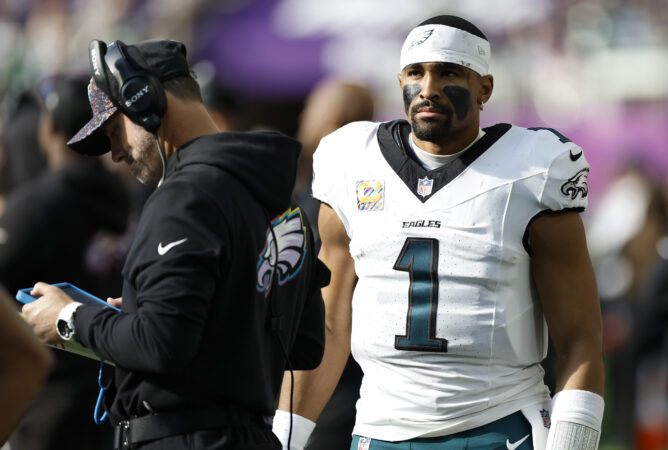
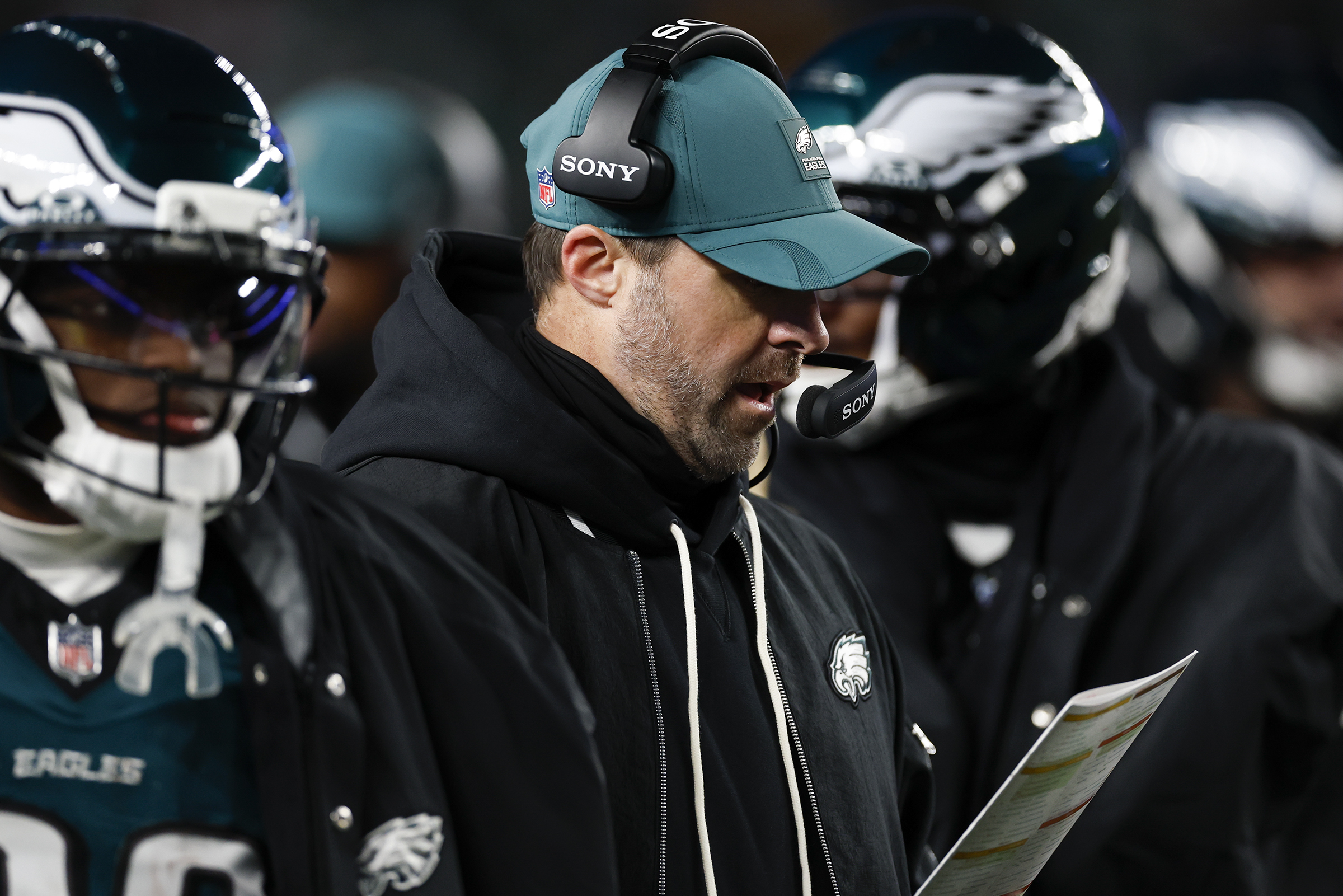
Jalen Hurts knew the score. He knew Kevin Patullo was done. It made zero sense for the Eagles quarterback to say he wanted the offensive coordinator to return, knowing it was a fait accompli.
“It’s too soon to think about that,” Hurts said Monday when asked about wanting Patullo back. “I put my trust in Howie, Nick, and Mr. Lurie.”
The Eagles haven’t officially fired or demoted Patullo as of this writing, but it’s only a matter of time before Howie Roseman, Nick Sirianni, and Jeffrey Lurie come to that conclusion after a once-banging offense ended a calamitous season with a whimper on Sunday. (Editor’s note: Patullo was removed from his position Tuesday).
It was hard to find any source within the NovaCare Complex who expected otherwise. And if you listened closely to Hurts’ comments at his locker stall the day after the Eagles lost to the San Francisco 49ers, you could hear in his tone an elegy for Patullo.
“I hate that, you know … [pause] … I hate that,” Hurts said before another pause. “I hate that it ended this way, but I know we’ll be better from it.”
Hurts was talking about how the season ended, but he just as easily could have been talking about Patullo’s fate.
He could have also, of course, stood up on his stool and defended the coach. He could have taken accountability for his role in the first-time play-caller’s struggles. He could have pointed to specific plays he failed to make and specific ways he limited the offense.
But it really made no sense. Patullo will be the latest coordinator to exit the annual roller coaster that is having Hurts as your quarterback. From the highs of getting head coaching promotions (see: Shane Steichen and Kellen Moore) to the lows of getting canned (see: Brian Johnson and eventually Patullo).
Hurts, meanwhile, will remain and have a fifth different coordinator and sixth play-caller since Sirianni became head coach in 2021. And if you want to go all the way back to college — as Hurts has noted before — he’ll have his 14th different play-caller in the last 11 years.
That’s a lot of change and most of it out of his control, especially in Philadelphia after Sirianni gave up play-calling during his first year. But Hurts isn’t a pup anymore. And even he seemed to acknowledge that play-caller turnover isn’t a credible excuse after he won a Super Bowl in his first season with Moore.
“I accept the change,” Hurts said when asked about areas he wanted to work on this offseason. “I accept that those things come, whether expectations are met or whether we’re making Super Bowl runs. I’ve experienced both ends of it, and so I have a unique perspective on that.
“So I’m not going to allow that to be an excuse for us not to make championship runs and for us to not have the success that we desire and that I desire.”
Hurts is just one piece of the puzzle, just as Patullo was. They’re major parts of the machinery, so they rightfully get the most attention. But too much outside blame was placed on the coordinator because he was new, while not enough was directed toward the quarterback because of his previous success.
It’s understandable. Doesn’t make it accurate.
Inside the Eagles, most understood that there were myriad reasons for the offense’s decline. The personnel wasn’t as good. The offensive line wasn’t as healthy. The coaching staff wasn’t as sharp. And it’s damn hard to repeat as champions. The margin for error is slim in the NFL.
The Eagles’ best leaders looked internally at themselves and what they could improve and refused to point fingers. But there was definitely some redirecting of criticism, with the split about evenly distributed between Hurts and Patullo.
The Hurts critics just seemed louder. Some of the gripes were performance-based. Like the offense isn’t exotic and moves slowly because Hurts can’t read complex defenses or doesn’t want pre-snap motion. Or his inability to process post-snap limits middle-field throws. Or he doesn’t want to run as much anymore.
All claims can have some semblance of truth, but the first two didn’t seem to hinder the offense when the going was good. The scheme, as wide receiver DeVonta Smith said Sunday, was essentially the same since 2021.
There was more nuance than that. The system evolved to become more run-based. Moore brought in some new passing concepts in 2024, but some were never used. The Eagles could rest on their talent more than most.
But they rolled it back again in 2025 as running back Saquon Barkley said on Monday — similar to how they did in 2023 — and defenses caught up. And Patullo, as it increasingly became clear, wasn’t able to consistently dial up sustainable drives. He showed his acumen in the red zone, but getting there was often a battle.
If there was a conflict between Hurts and Patullo that went public, it was over designed quarterback runs. Hurts didn’t originally deny reports that he didn’t want to run as much, but when asked last week about how that factored into his good health this season, he suggested that it wasn’t his doing.
“The approach this year, and the way the games have been called with this coordinator — with Coach KP — it’s just kind of gone that way,” Hurts said. “I’ve taken it in stride and [am] giving my best with the position they’ve put me in.”
It’s hard to believe that Hurts doesn’t have a say in those conversations. He has said his influence has steadily increased. Some team sources have said it’s much greater than has been conveyed. But if he has been overpowering coaches, isn’t that as much of an indictment of Sirianni and Patullo as it is the quarterback?
Hurts was asked Monday how comfortable he had been with being uncomfortable in the offense.
“I think that’s the essence of what my career has been,” Hurts said. “Can’t say that every situation I’ve been in has been the most comfortable, but I’ve been able to find my way out of it and find ways to win and find ways to success. And so that’s a part of growth, and I’ve never run away from growth.”
Hurts has progressed. He’s better as a drop-back passer. He’s better at reading coverages. He’s better vs. the blitz. But in his growth as an NFL quarterback, he may have lost sight of how his mobility made him dynamic.
“He is not who he thinks he is,” an Eagles source said.
Teammates openly call him “Lil Jordan” in reference to his relationship with Michael Jordan, being one of the faces of the Air Jordan brand, and wanting to emulate and be the NFL version of the iconic basketball player. It’s a slight tease and Hurts rolls with it, several players said.
He is an easy target. No one faces as much scrutiny. And some of the internal forces against him seem to be holding his famously stoic demeanor against him. He isn’t the most cuddly creature.
But he has taken steps in that regard, as well. When A.J. Brown made it apparent he was frustrated with Hurts earlier in the season, he went to the receiver first to clear the air, two sources close to the situation said.
“That was mostly about not being on the same page,” one source said.
It took a while, but Hurts and Brown, whose friendship dates back almost a decade, have smoothed things over off the field. It’s unclear if they’ll be on the field together next season, although the quarterback intimated that he wants the receiver back.
“A.J. and I have talked. We’re in a good, great place,” Hurts said. “I know you all can talk to him and ask.”
The last sentence was a sly reference to Brown not talking to reporters in over a month. He again wasn’t available during locker clean-out day.
Hurts, meanwhile, didn’t miss a media requirement all season. He’s heard the criticisms and he’s hardly ever thrown shade toward a teammate, coach, or otherwise. Maybe he could have taken some of the arrows for Patullo.
But that stagecoach has departed. There will be a new coordinator in town soon enough. Hurts wouldn’t say how much influence he’ll have over the decision. He still may not be especially approachable, but Roseman, Sirianni, and Lurie have his number.
“Overall, my line is always open,” Hurts said. “And so however involved or whatever level of inquiry I [have], I’ll definitely be available. Ultimately, I put my focus on controlling the things I can.”
On Tuesday, the final episode of HBO’s in-season Hard Knocks show following the NFC East will debut, which will encompass the Eagles’ season-ending loss to the San Francisco 49ers in the wild-card round.
The season didn’t end the way that Eagles producer Shannon Furman may have hoped, but the final episode is a 50-minute look inside the Birds’ final game.
Furman is the mastermind behind the Eagles’ segments of the show. Because the in-season Hard Knocks is released on the Tuesday the following week, Furman said it’s important for the film crew to come in with a plan each week on which players to spotlight.
Unlike the training camp edition, this year’s in-season Hard Knocks covered the entire division, leaving the Eagles with approximately 12 minutes to fill on the show every week, edited down from several dozen hours of footage per week.
“It’s so tough with the Eagles, because there’s so many guys and there are so many choices,” Furman said. “It ends up happening, like, ‘Who has an event this week? Who’s doing something?’ Week 1, it was like, ‘Let’s follow the quarterback,’ and then we had heard everybody saying Jordan Davis was a big personality.”
The team filming the footage sent it in batches to the editing team in Mount Laurel each day leading up to Tuesday’s release date, flagging segments it particularly liked or thought would be good to include. Sometimes, like after the Monday Night Football loss to the Chargers in November, the filming crew submitted the last of the footage after midnight, less than 24 hours before the episode aired.
There’s so much footage that often gets cut for time or is reused later. Furman said the Hard Knocks team shot a lot of footage of Davis for the first episode, which was released on Dec. 2, that got cut because of time restraints. But she loved the segment so much that they eventually worked him into a later episode.
Hard Knocks also mics up players during games, and the game footage caps the episode. Furman quickly learned that some players were much better mic’d up than in an interview setting, like DeVonta Smith.
“He’s a quiet guy off the field, and then he gets on the field and he turns into a completely different person,” Furman said. “Everybody is a little bit different. Some people stay completely the same. Some people get more quiet when they’re on the field than they are when they’re off, so you just get to see all different sides of people.”
Furman hoped that the show provided a new look into the team beyond what spreads on social media. She was struck most by the passion the players had for coach Nick Sirianni, and how much they respected and related to him personally.
“As a person who grew up in Philadelphia, learning about Nick, he is Philadelphia,” Furman said. “Everyone should love this guy, because he is the definition of our city, the fiery, where maybe it comes across as arrogance at times, but at the same time you still love him. It’s like a lovable arrogance. He’s perfect for this city.”
The Eagles’ 2025 season came to an end sooner than many expected Sunday night, with an underwhelming 23-19 loss to the San Francisco 49ers ending the dream of a Super Bowl repeat.
With the offseason officially here, The Inquirer has identified the most significant questions the team will face as it attempts to avoid the sting of a premature exit at this time next year.
Do you expect a change with embattled offensive coordinator Kevin Patullo?
The offense’s performance this season did not reflect well on Patullo. The unit finished the year 19th in the league in scoring, 24th in total yards, and 13th in expected points added per play, which measures the average points added by the offense on each play.
For comparison’s sake, here’s how the 2023 Eagles offense fared under former offensive coordinator Brian Johnson, who was fired in the offseason: No. 7 in scoring, No. 8 in yards, and No. 9 in EPA per play.
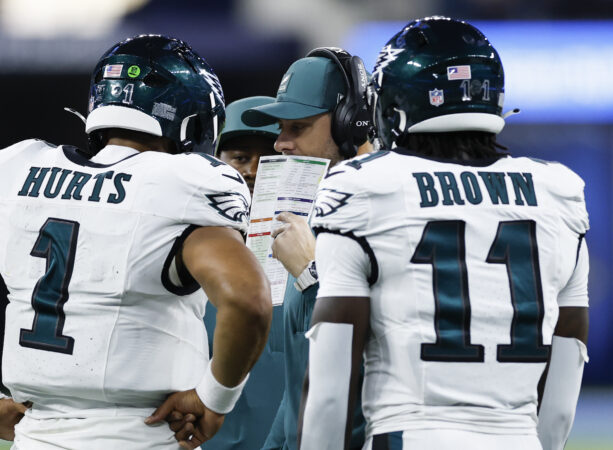
The Eagles seem certain to move on from Kevin Patullo as the play caller.
Yes, that season was different, as the Eagles lost six of their last seven games. But both the 2023 and 2025 offenses regressed substantially following Super Bowl appearances. The 2025 Eagles returned 10 of 11 offensive starters from the Super Bowl-winning team, and yet the most expensive offense in football couldn’t make it past the wild-card round.
While all of the offense’s shortcomings this season can’t be pinned exclusively on Patullo, something has to change. If the Eagles fire a coordinator and decide to hire an external replacement, there’s always a chance that person would want to handpick his own assistants. In 2024, Kellen Moore brought in former quarterbacks coach Doug Nussmeier. Vic Fangio overhauled the defensive staff. — Olivia Reiner
Is there any reason to expect changes with A.J. Brown or any of the other skill-position stars?
Four of the offense’s big five skill players — Jalen Hurts, Saquon Barkley, Brown, and DeVonta Smith — are under contract through at least 2028. Brown is under contract through 2029. Dallas Goedert, meanwhile, is set to become an unrestricted free agent at the start of the new league year.
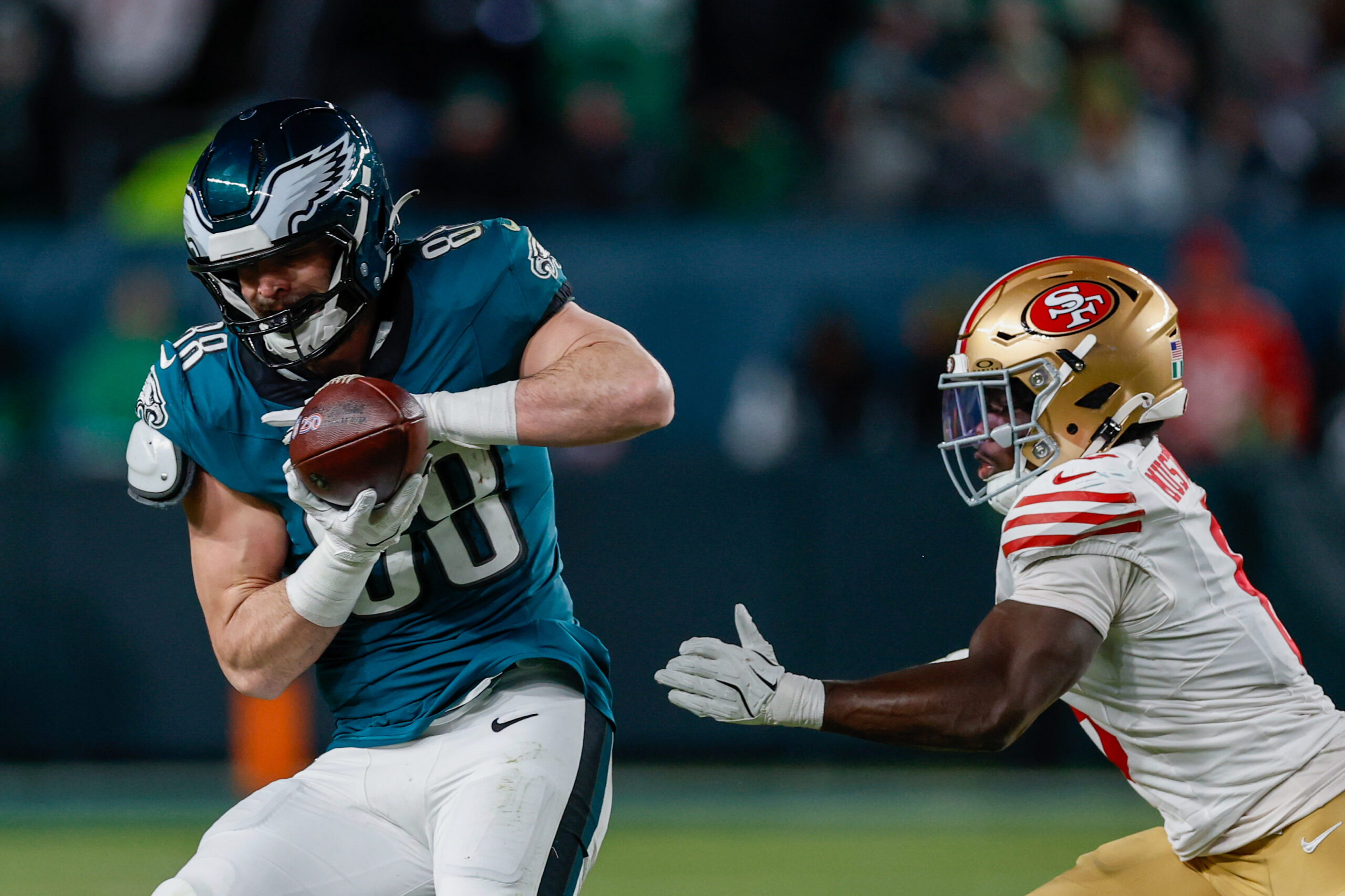
Given Goedert’s status as a pending free agent, his future as an Eagle is in question. The 31-year-old tight end had a career year with 11 touchdowns, plus two more in the postseason. After an injury-riddled 2024 season, he stayed mostly healthy and started 15 games in 2025. But he’s an aging — and potentially expensive, given his touchdown output — tight end who took a step back as a run blocker this year.
It would be expensive for the Eagles to move on from A.J. Brown.
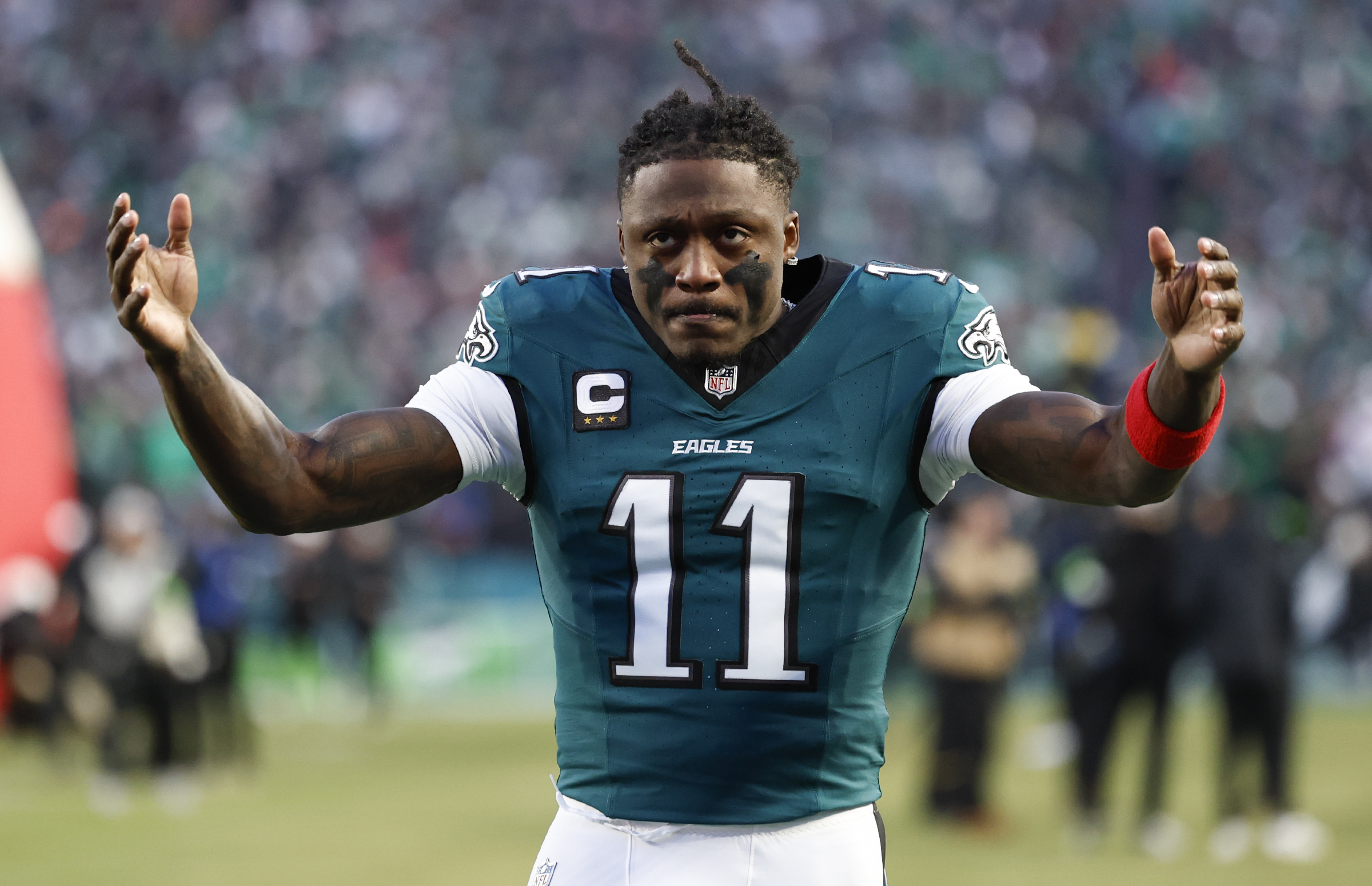
Then, there’s the elephant in the room. Will Brown be back in 2026, let alone finish out his contract in Philadelphia? He voiced his frustration with the offense’s inconsistency earlier in the season. While he made an impact on paper during the regular season and eclipsed 1,000 receiving yards for a fourth straight year, he also was part of the problem at times, especially in the wild-card loss to the San Francisco 49ers. He finished with three receptions on seven targets for 25 yards.
Brown’s contract would be very difficult to move. Cutting him before June 1 would incur $72 million in dead money in 2026. The Eagles would still be on the hook for $43 million in 2026 if they traded him, too. But, as our colleague Jeff McLane wrote, would a change of scenery benefit the 28-year-old wide receiver, send a message to the locker room, and eventually clear some salary-cap space? — Reiner
Besides Goedert, which Eagles are scheduled to become free agents? Which members of that group will be the highest priorities for the team to re-sign?
As Reed Blankenship noted Sunday in the locker room: “It’s not going to be the same.”
“Who knows where we all end up?” the safety said. “That’s just part of the business side of it. They can’t keep us all. I wish they could.”
Blankenship is one of the Eagles’ nearly two dozen free agents. Like Blankenship, a few are notable players who may not be back.
Will the Eagles be willing to pay 31-year-old Dallas Goedert?
Let’s start with Goedert, who had a career year — the most prolific touchdown season in the history of Eagles tight ends. There are zero tight ends on next season’s roster as it stands. Along the offensive line, reserves Fred Johnson, Brett Toth, and Matt Pryor are free agents. So is wide receiver Jahan Dotson. Deeper reserves like running back AJ Dillon, quarterback Sam Howell, and injured fullback Ben VanSumeren are set to hit the market, too.
Blankenship, linebacker Nakobe Dean, and edge rusher Jaelan Phillips are the marquee names among the defensive free agents. Two more starters from Sunday’s game are also scheduled to be free agents: safety Marcus Epps and cornerback Adoree’ Jackson. Other free agents include edge rushers Brandon Graham, Joshua Uche, Azeez Ojulari, and Ogbo Okoronkwo. Punter Braden Mann’s contract also is up.
As for which players the Eagles will prioritize, it’s not hard to imagine them wanting to rework something with Goedert before they look elsewhere for a tight end. Phillips will be at or near the top of the priority list, too. The Eagles are thin at edge rusher and could use an impact player like Phillips at the top of the depth chart to pair with Jalyx Hunt and Nolan Smith. Blankenship’s position is a priority, but it remains to be seen what his market looks like and what the Eagles decide to do at safety. Rookie Drew Mukuba will be coming off a season-ending injury at one of the safety spots.
As for Dean, he may be the most expendable among the top free-agents-to-be with Jihaad Campbell waiting in the wings. — Jeff Neiburg
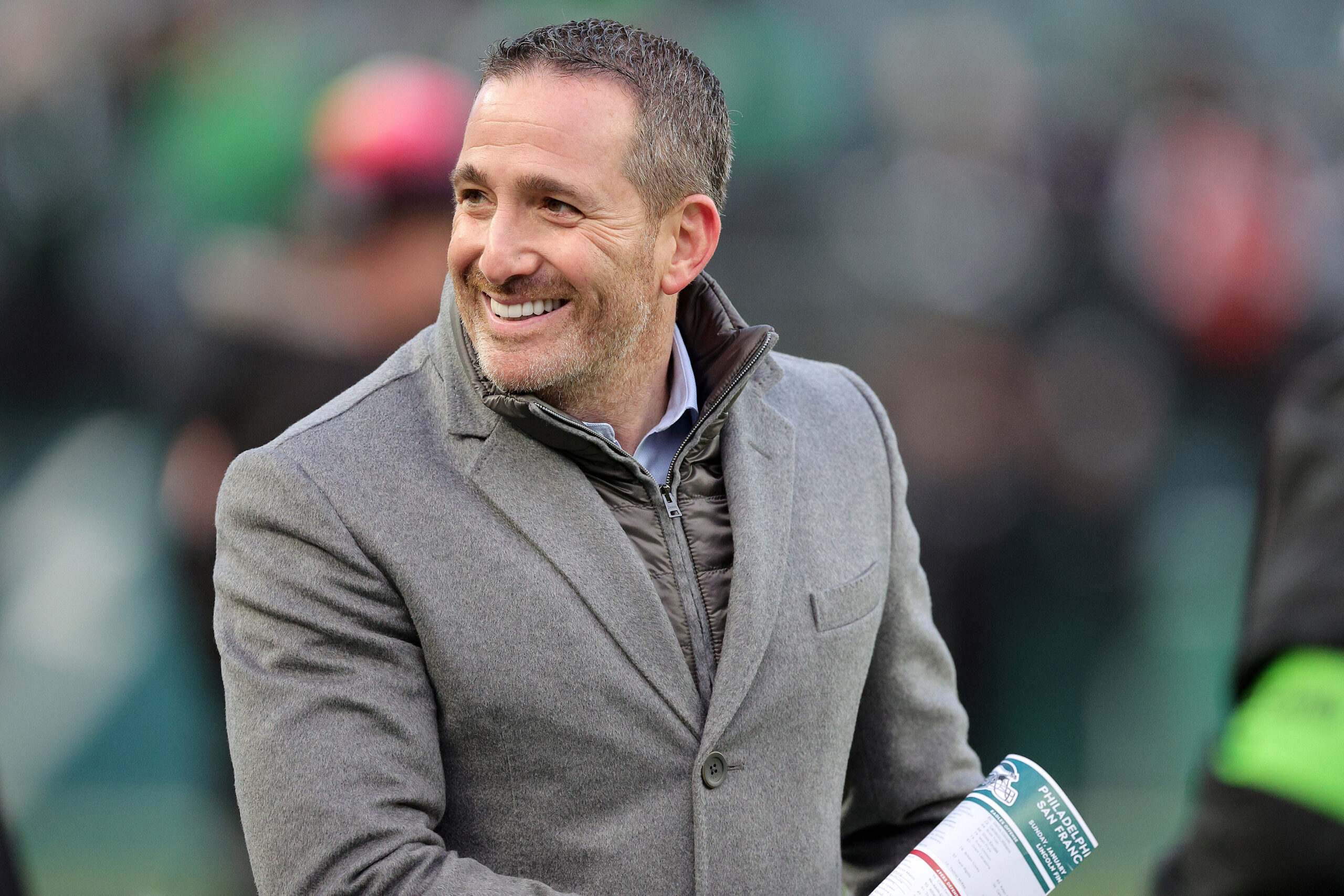
Howie Roseman has a reputation for being aggressive in all aspects of the Eagles’ business.
What is the Eagles’ salary-cap situation heading into the offseason? What does history say about their willingness to be aggressive on the free-agent front?
According to Over the Cap, the Eagles have $20.3 million in cap space for 2026. It is not a lot, partially because some Eagles have increases in their cap hit. Jalen Hurts’ cap number, for example, jumps from $21.87 million this past season to $31.97 million next season.
The Eagles have 40 players under contract and have eight draft picks. As it stands, they again will have a high-priced offense. Seven of the eight players with cap hits of at least $9 million are offensive players.
While there isn’t a ton of money available for Howie Roseman to play with, history shows us he is willing to be aggressive to create more room and to improve his roster to compete for a Super Bowl. He also has mastered the art of structuring contracts to game the NFL’s salary-cap system. — Neiburg
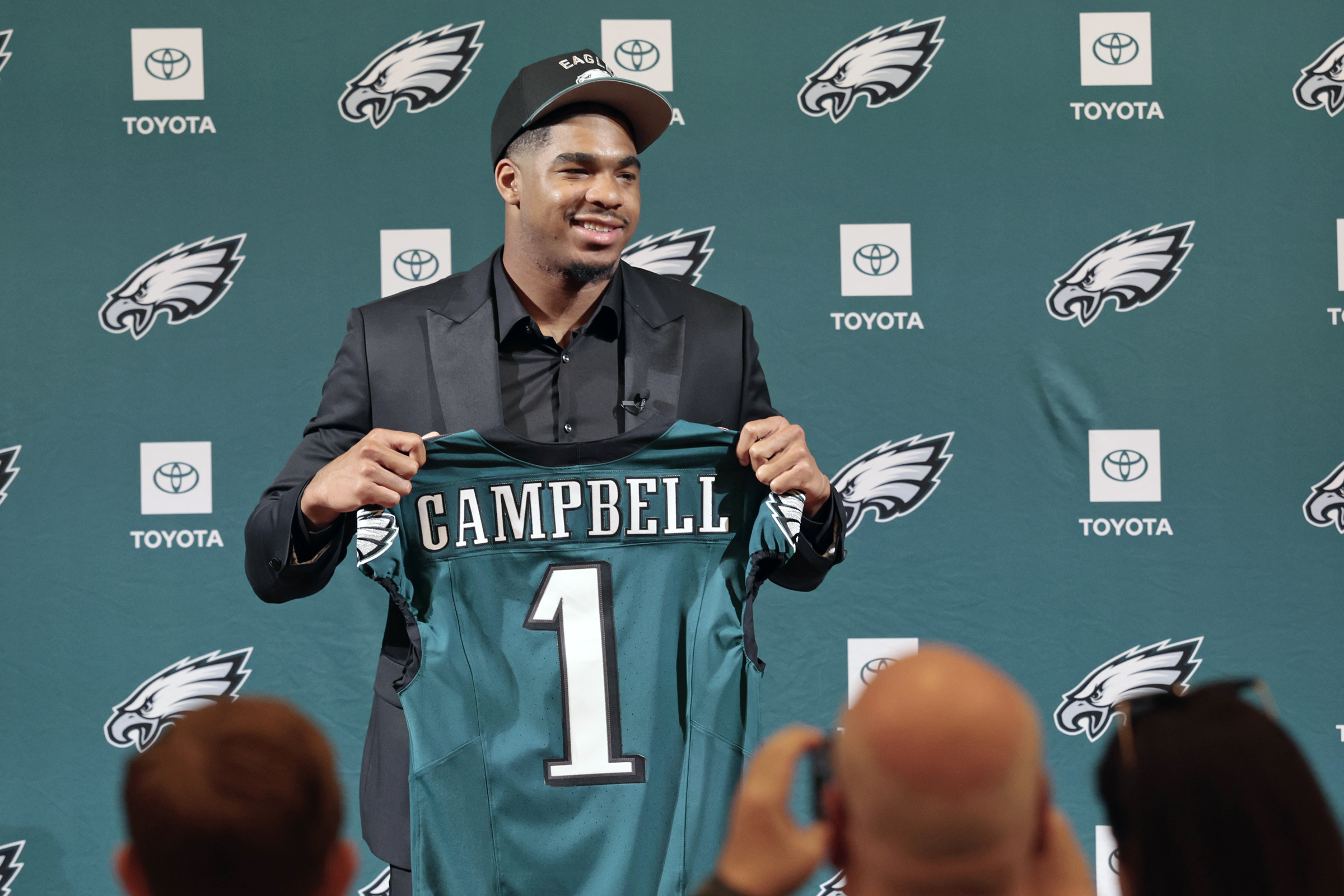
The Eagles moved up to select Jihaad Campbell in the 2025 draft.
How many draft picks are the Eagles scheduled to have in 2026? How aggressive do you expect them to be in moving draft capital to address other needs (or to move up in the draft)?
The Eagles are set to have eight draft picks, including three projected compensatory picks, in 2026:
Round 1
Round 2
Round 3 (from the New York Jets in the Haason Reddick trade)
Round 3 (projected compensatory pick for Milton Williams)
Round 4
Round 4 (projected compensatory pick for Josh Sweat)
Round 5
Round 5 (projected compensatory pick for Mekhi Becton)
Roseman has a track record of moving up in the draft, even if it’s just a couple of spots, to go get a player on the team’s short list. His most significant jump came in 2016 when he moved up six spots from No. 8 to No. 2 to select Carson Wentz. Last year, Roseman moved up one spot from No. 32 to No. 31 to get Campbell.
He goes after what he wants in veterans, too, with his most prominent example occurring in 2022 with his draft-day acquisition of Brown from the Tennessee Titans. Given that the Eagles have eight picks, Roseman has plenty of ammo to make moves and address the team’s needs. — Reiner
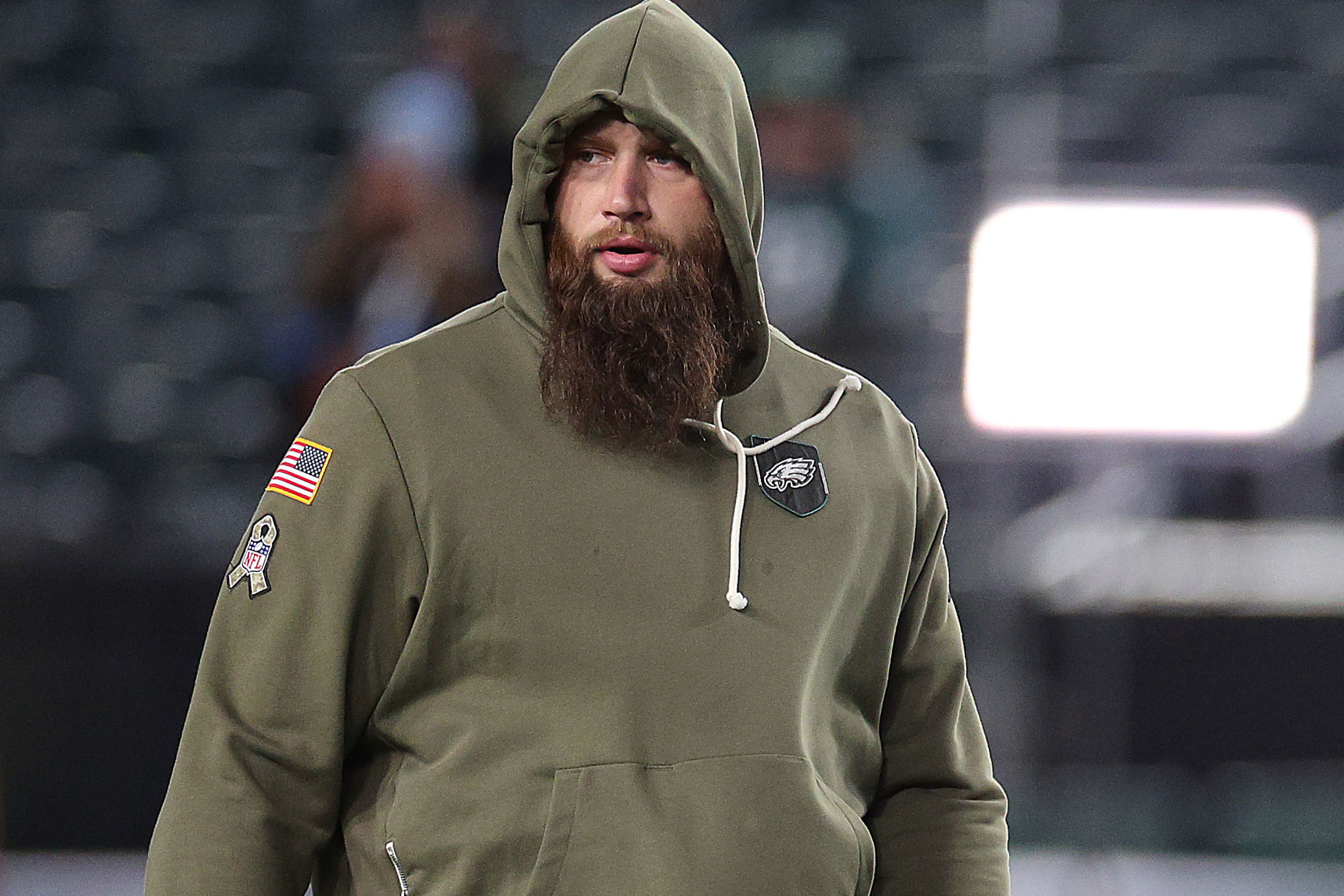
The limited availability of tackle Lane Johnson this season means the Eagles must consider the future along the offensive line.
Which personnel groups do you expect Howie Roseman to concentrate most on upgrading heading into 2026?
Where to begin? The Eagles still have a pretty solid roster, but they do have some flaws and are set to have a few holes.
They have no tight ends. They have no obvious answer yet for a Lane Johnson replacement. How long is Landon Dickerson going to hold up? They went heavy at offensive line toward the end of the draft last season, but they could soon need top-end talent.
They are in the market for wide receiver help, regardless of where the Brown saga leads them. They need edge rushers. They need cornerbacks. They may need a new kicker.
A high-impact edge rusher, like Phillips, should be high on the list of most important personnel groups to upgrade the talent level, and it will be interesting to see how the Eagles go about addressing tight end. They obviously will sign a few in free agency and could draft one. Could Goedert return?
There are a lot of unanswered questions right now. It’s that time of year.
The Johnson replacement is a tricky one, too. He still is very good when he’s on the field, but the clock is ticking. Same for Dickerson, who has had multiple surgeries and has played through plenty of pain. — Neiburg
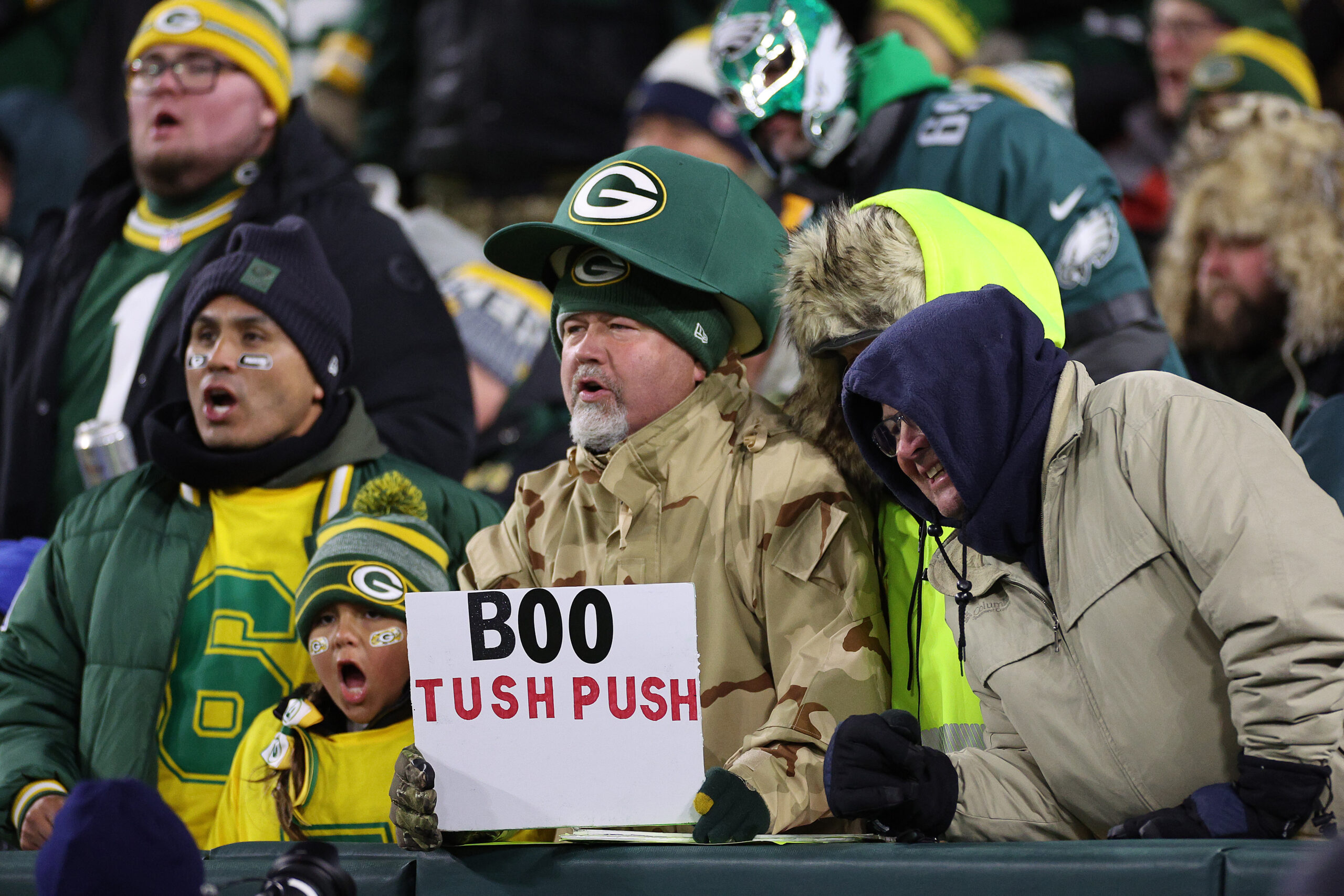
Will another NFL team lead the charge to ban the Tush Push, as the Packers did last offseason?
Will the Tush Push be in the spotlight again this offseason? What are the mechanics of a potential rule change from a league/competition committee standpoint?
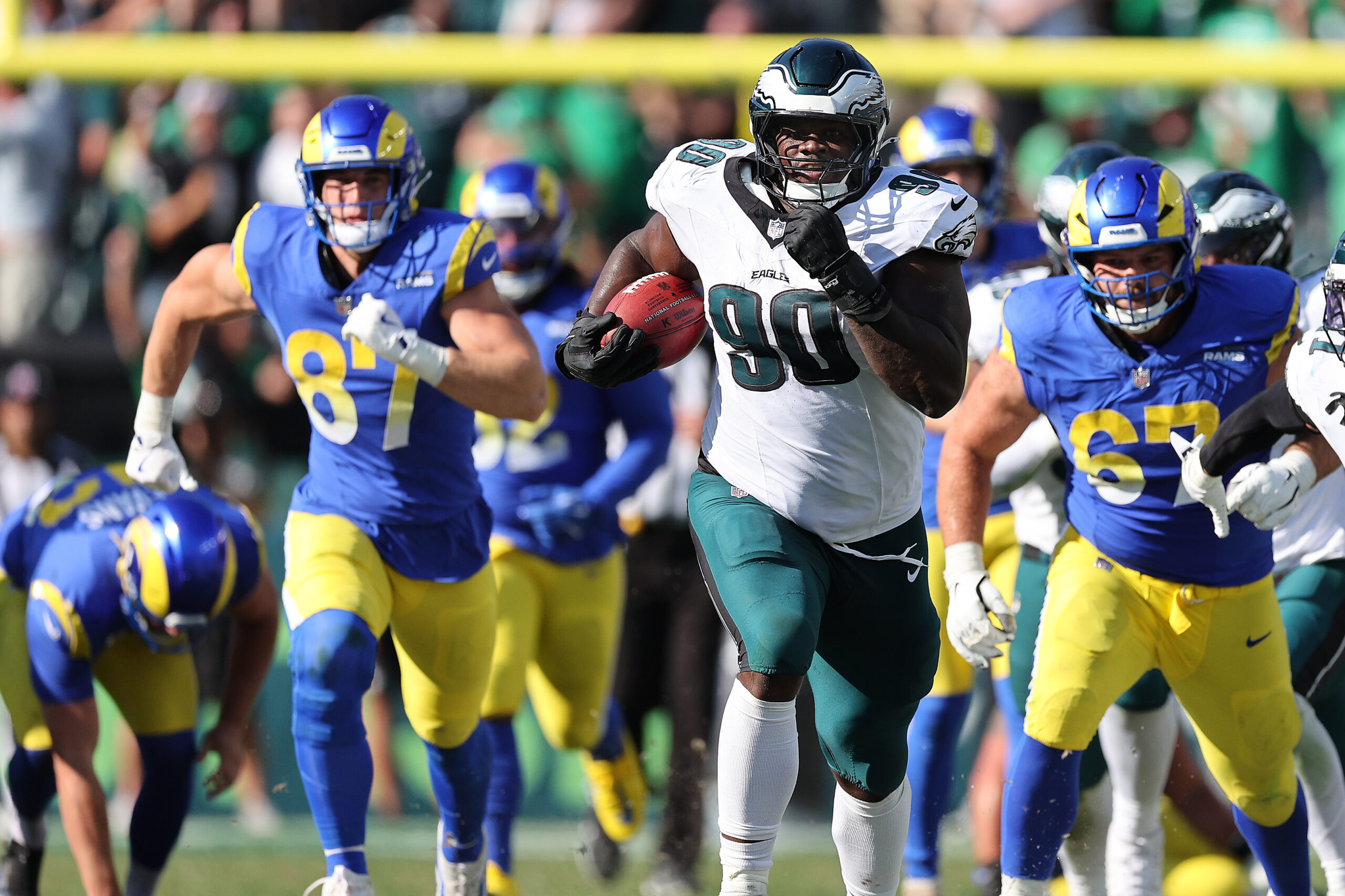
Earlier in the season, it seemed like a foregone conclusion that the Tush Push was getting banned in the spring. This year, instead of detractors fixating on its aesthetics and its player safety risks, its officiating was called into question.
But false-start penalties mounted on the Eagles as the season progressed. Defenses improved at stopping the play, too. The Eagles grew less effective on the Tush Push and eventually, in short-yardage situations, stopped running it entirely. The last Tush Push the Eagles ran in the regular season occurred in Week 16 against the Washington Commanders. It failed, just like four of their previous six attempts.
The public outcry against the Tush Push seems to have dissipated with the Eagles’ waning efficiency. In fact, fans seemed to love the Buffalo Bills’ 10-yard push sneak for a touchdown in their wild-card win over the Jacksonville Jaguars. The Bills were among the teams that voted to effectively ban it in the offseason, too.
Unless there is new injury data that suggests the play is dangerous, the path to a ban is unclear. The officiating of the play still would be an issue on a traditional quarterback sneak. Perhaps the league again would seek to eradicate an offensive player pushing the runner downfield on any play, which was illegal in the NFL before 2005. Ironically, it was legalized because it was difficult to officiate.
A rule proposal, either submitted by the competition committee or by one of the 32 clubs, would be the first step to getting rid of the play. That proposal would need at least 24 “yes” votes from the 32 owners at the spring league meeting to pass. Last year, the Green Bay Packers submitted an assisting-the-runner proposal, but it didn’t garner the requisite support. — Reiner
The Rams’ return trip to Philly next season should be among the highlights of the 2026 home schedule.
Who are the Eagles’ 2026 opponents?
In addition to their six division games, the Eagles will face the 2025 winners of the NFC North (Chicago Bears on the road), NFC South (Carolina Panthers at the Linc) and AFC North (Pittsburgh Steelers at the Linc); they’ll face the entire NFC West (Los Angeles Rams and Seattle Seahawks at the Linc, 49ers and Arizona Cardinals on the road) and the entire AFC South (Houston Texans and Indianapolis Colts at the Linc, Jaguars and Tennessee Titans on the road).
The Eagles are scheduled to play nine home games in 2026. Dates are expected to be announced as part of the NFL schedule release in May.