Tag: topic-link-auto

  • Bradley Carnell never doubted his untested lineup in the Union’s first game of the year

    Bradley Carnell never doubted his untested lineup in the Union’s first game of the year

    Whatever doubts Union fans had about the team’s starting lineup in Trinidad on Wednesday, it wasn’t surprising that manager Bradley Carnell had none.

    “We knew that at some point, with the type of intensity we could play at, it could be too much for them,” he said a day after his team’s 5-0 rout of Defence Force FC. “And that did prove to be the truth.”

    The biggest decisions were putting Stas Korzeniowski at striker in his first game with the Union’s first team, and attacking midfielder Jeremy Rafanello at right back. Both worked out fine, helped by their teammates’ cavalcade of goals.

    “We’ve been training a couple weeks with Stas alongside Bruno [Damiani], alongside Ezekiel [Alladoh],” Carnell said. “So, I mean, for us, that was a no-brainer. It didn’t even come into thought that there’s anything doubtful or risky going on there.”

    Stas Korzeniowski jumps to celebrate with Olwethu Makhanya after Makhanya scored the Union’s third goal of the game.

    He praised Rafanello for being “always ready for a game, and he can always run for days, and he always puts his best effort forward.”

    But while Carnell praised “a lot of good things” in Rafanello’s game, he also admitted that playing Rafanello in that position was in part “by necessity.”

    “We’ve been challenged over the last couple of days with a couple of … day-to-day type of scenarios,” he continued.

    Those “scenarios” included minor injuries to midfielders Ben Bender and Jovan Lukić along with forward Agustín Anello. Carnell also confirmed that new centerback Geiner Martínez is temporarily on a visa status that makes it difficult for him to leave the United States and promptly return.

    But right back Olivier Mbaizo’s absence was Carnell’s choice, one he said he made “just basically through preseason performance. Nothing much to question there.”

    That choice left the manager with no outside backs on his bench. Both players with experience there started, Frankie Westfield on the left and Nathan Harriel at centerback. Westfield grabbed at a hamstring midway through the second half, but Carnell said he “should be good.”

    Praise for Alladoh and Sullivan

    As debut goals go, Alladoh’s was pretty impressive. He watched teammates circulate the ball to Westfield, then charged up the middle, split two centerbacks, and slammed in a leaping header from close range.

    “New environment, new teammates, he has to figure things out, wasn’t able to get on the score sheet in preseason, but he worked really hard,” Carnell said. “And then in the big games and in the games that matter most, he showed up. So I’m really happy for that, and hopefully he takes that energy and confidence into the next couple of games.”

    That was the second of three goals the Union put on the board before Carnell started a raft of substitutions. Cavan Sullivan was one of the entrants, and immediately started shredding Defence Force’s back line.

    The 16-year-old made multiple surging runs forward, including three that drew payoffs: a great assist to fellow substitute Bruno Damiani in the 69th minute, a penalty kick in the 78th, and a red card to former Seattle Sounders defender Joevin Jones in the 92nd.

    “I’ve seen a lot more maturity from Cavan over the last couple of weeks, and he’s worked his way into being a contributor,” Carnell said. “I speak about the environment, just think about the young kid coming in there and running rings around Defence Force. So I was really happy with his performance.”

    Sullivan had some longer runs as a starter last year in the U.S. Open Cup, but quality-wise this might have been his best outing in a Union jersey so far.

    “It was a very mature performance, I would say,” Carnell said. “He kept it simple when he needed to, he accelerated and got on the dribble when he had to, and then he draws crucial moments and puts the opponents under pressure. … I thought that was his best performance over the last 12 months.”

    The Union’s next game is their MLS season opener on Saturday at D.C. United (7:30 p.m., Apple TV), headlined by an early reunion with former leading striker Tai Baribo.

    Then it’s back to Chester for the finale of the Defence Force series next Thursday (7 p.m., FS1), followed by a rematch of last year’s playoff loss to New York City FC on March 1.

    Cavan Sullivan on Instagram this afternoon:

    [image or embed]

    — Jonathan Tannenwald (@jtannenwald.bsky.social) February 19, 2026 at 6:19 PM
  • What Mayor Cherelle Parker’s administration told the DOJ about Philly’s ‘sanctuary’ policies in a letter the city tried to keep secret

    What Mayor Cherelle Parker’s administration told the DOJ about Philly’s ‘sanctuary’ policies in a letter the city tried to keep secret

    Mayor Cherelle L. Parker’s administration last August told the U.S. Department of Justice that Philadelphia remains a “welcoming city” for immigrants and that it had no plans to change the policies the Trump administration has said make it a “sanctuary city,” according to a letter obtained by The Inquirer through an open-records request.

    “To be clear, the City of Philadelphia is firmly committed to supporting our immigrant communities and remaining a welcoming city,” City Solicitor Renee Garcia wrote in the Aug. 25, 2025, letter. “At the same time, the City does not maintain any policies or practices that violate federal immigration laws or obstruct federal immigration enforcement.”

    Garcia sent the letter last summer in response to a demand from U.S. Attorney General Pam Bondi that Philadelphia end its so-called sanctuary city policies, which prohibit the city from assisting some federal immigration tactics. Bondi sent similar requests to other jurisdictions that President Donald Trump’s administration contends illegally obstruct immigration enforcement, threatening to withhold federal funds and potentially charge local officials with crimes.

    Although some other cities quickly publicized their responses to Bondi, Parker’s administration fought to keep Garcia’s letter secret for months and initially denied a records request submitted by The Inquirer under Pennsylvania’s Right-To-Know Law.

    The city released the letter this week after The Inquirer appealed to the Pennsylvania Office of Open Records, which ruled that the Parker administration’s grounds for withholding it were invalid.

    The letter largely mirrors Parker’s public talking points about immigration policy, raising questions about why her administration sought to keep it confidential.

    But the administration’s opaque handling of the letter keeps with the approach Parker has taken to immigration issues since Trump returned to office 13 months ago. Parker has vowed not to change immigrant-friendly policies enacted by past mayors, while avoiding confrontation with the federal government in a strategy aimed at keeping Philadelphia out of the president’s crosshairs as he pursues a nationwide deportation campaign.

    Although U.S. Immigration and Customs Enforcement officers operate in the city, Philadelphia has not seen a surge in federal agents like the ones Trump sent to Minneapolis and other jurisdictions.

    A spokesperson for the Justice Department did not respond to a request for comment.

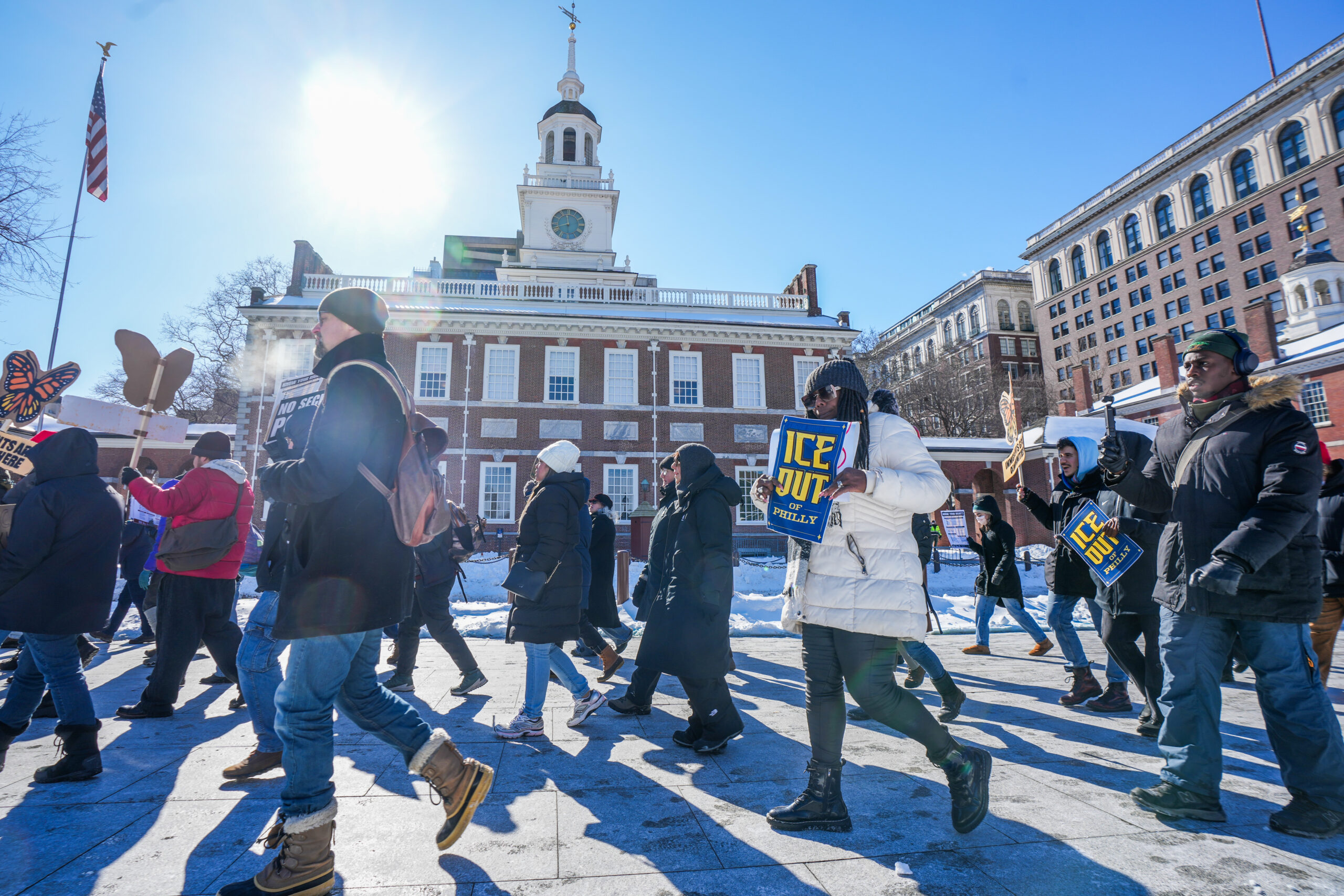
    Immigrant advocates have called on Parker to take a more aggressive stand against Trump, and City Council may soon force the conversation. Councilmembers Rue Landau and Kendra Brooks have proposed a package of bills aimed at further constricting ICE operations in the city, including a proposal to ban law enforcement officers from wearing masks. The bills will likely advance this spring.

    Advocates and protesters call for ICE to get out of Philadelphia in Center City on January 27, 2026.

    Parker’s delicate handling of immigration issues stands in contrast to her aggressive response to the Trump administration’s removal last month of exhibits related to slavery at the President’s House Site on Independence Mall.

    The city sued to have the panels restored almost immediately after they were taken down. After a federal judge sided with the Parker administration, National Park Service employees on Thursday restored the panels to the exhibit in a notable win for the mayor.

    ‘Sanctuary’ vs. ‘welcoming’

    Bondi’s letter, which was addressed to Parker, demanded the city produce a plan to eliminate its “sanctuary” policies or face consequences, including the potential loss of federal funds.

    “Individuals operating under the color of law, using their official position to obstruct federal immigration enforcement efforts and facilitating or inducing illegal immigration may be subject to criminal charges,” Bondi wrote in the letter, which is dated Aug. 13. “You are hereby notified that your jurisdiction has been identified as one that engages in sanctuary policies and practices that thwart federal immigration enforcement to the detriment of the interests of the United States. This ends now.”

    “Sanctuary city” is not a legal term, but Philadelphia’s policies are in line with how the phrase is typically used to describe jurisdictions that decline to assist ICE.

    Immigrant advocates have in recent years shifted to using the label “welcoming city,” in part because calling any place a “sanctuary” is misleading when ICE can still operate throughout the country. The newer term is also useful for local officials hoping to evade Trump’s wrath, as it allows them to avoid the politically hazardous “sanctuary city” label.

    Philly’s most notable immigration policy is a 2016 executive order signed by then-Mayor Jim Kenney that prohibits city jails from honoring ICE detainer requests, in which ICE agents ask local prisons to extend inmates’ time behind bars to facilitate their transfer into federal custody. The city also prohibits its police officers from inquiring about immigration status when it is not necessary to enforce local law.

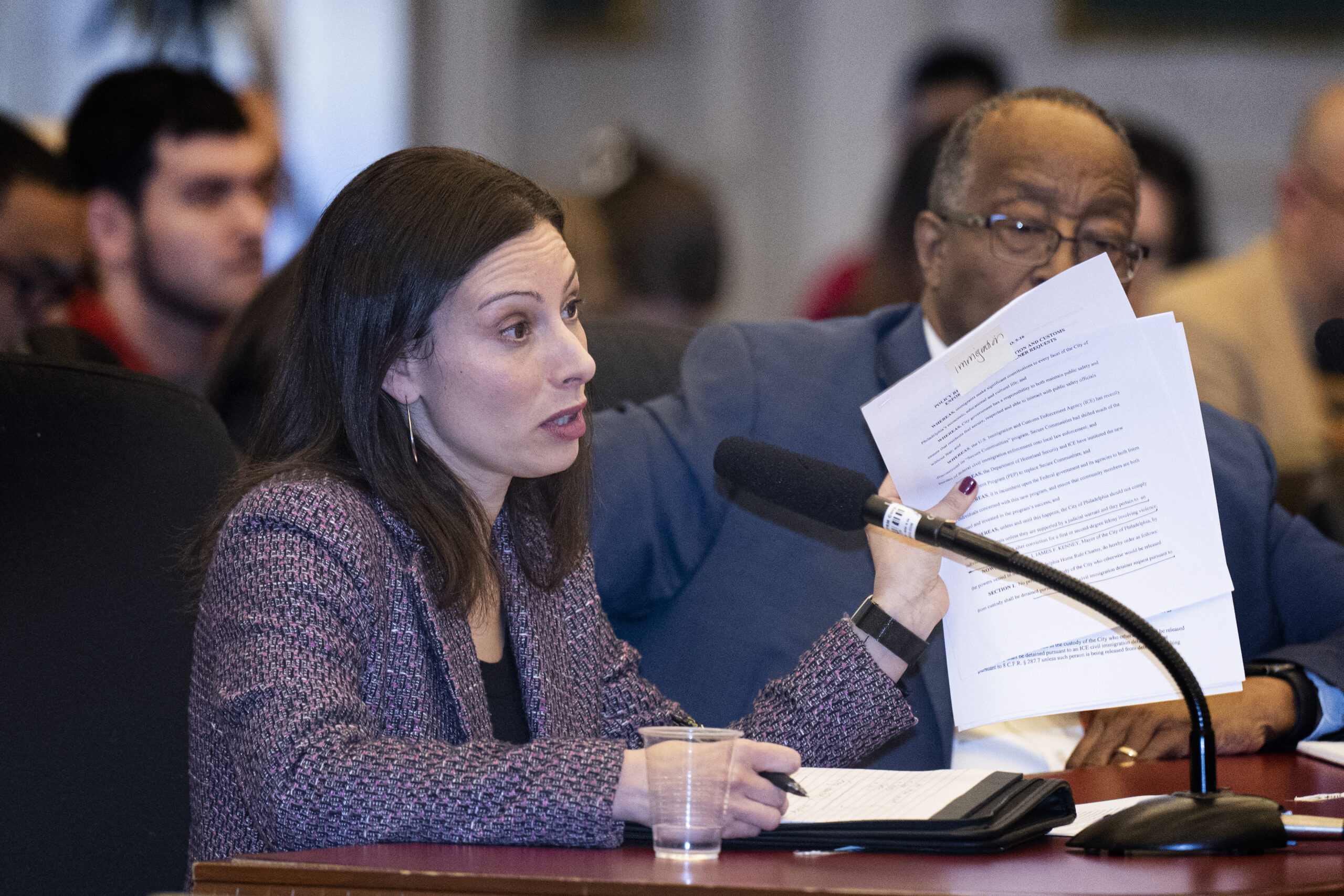
    Renee Garcia, Philadelphia City Solicitor speaks before City Council on Jan 22, 2025.

    Garcia wrote in the August letter that Kenney’s order “was not designed to obstruct federal immigration laws, but rather to clarify the respective roles of the Police Department and the Department of Prisons in their interactions with the Department of Homeland Security when immigrants are in City custody.” The city, she wrote, honors ICE requests when they are accompanied by judicial warrants.

    Immigration enforcement is a federal responsibility, and — in a case centered on Kenney’s order — the Philadelphia-based U.S. Court of Appeals for the Third Circuit ruled in 2019 that cities do not have to assist ICE.

    The court, Garcia wrote, “held that the federal government could not coerce Philadelphia into performing immigration tasks under threat of federal repercussions, including the loss of federal funds.”

    City loses fight over records

    In Pennsylvania, all government records are considered public unless they are specifically exempted from disclosure under the Right-To-Know Law. In justifying its attempt to prevent the city’s response to the Trump administration from becoming public, the Parker administration cited two exemptions that had little to do with the circumstances surrounding Garcia’s letter.

    First, the administration argued that the letter was protected by the work product doctrine, which prevents attorneys’ legal work and conclusions from being shared with opposing parties. Given that the letter had already been sent to the federal government — the city’s opponent in any potential litigation — the doctrine “has been effectively waived,” Magdalene C. Zeppos-Brown, deputy chief counsel in the Pennsylvania Office of Open Records, wrote in her decision in favor of The Inquirer.

    “Despite the [city’s] argument, the Bondi Letter clearly establishes that the Department of Justice is a potential adversary in anticipated litigation,” Zeppos-Brown wrote.

    Second, the city argued that the records were exempted from disclosure under the Right-To-Know Law because they were related to a noncriminal investigation. The law, however, prevents disclosure of records related to Pennsylvania government agencies’ own investigations — not of records related to a federal investigation that happen to be in the possession of a local agency.

    “Notably, the [city] acknowledges that the investigation at issue was conducted by the DOJ, a federal agency, rather than the [city] itself,” Zeppos-Brown wrote. “Since the DOJ is a federal agency, the noncriminal investigation exemption would not apply.”

    Garcia’s office declined to appeal the decision, which would have required the city to file a petition in Common Pleas Court.

    “As we stated, the City of Philadelphia is firmly committed to supporting our immigrant communities as a Welcoming City,” Garcia said in a statement Wednesday after the court instructed the city to release the letter. “At the same time, we have a long-standing collaborative relationship with federal, state, and local partners to protect the health and safety of Philadelphia, and we remain [in] compliance with federal immigration laws.”

    Staff writers Anna Orso and Jeff Gammage contributed to this article.

  • The slavery exhibits at the President’s House are starting to be restored by the National Park Service

    The slavery exhibits at the President’s House are starting to be restored by the National Park Service

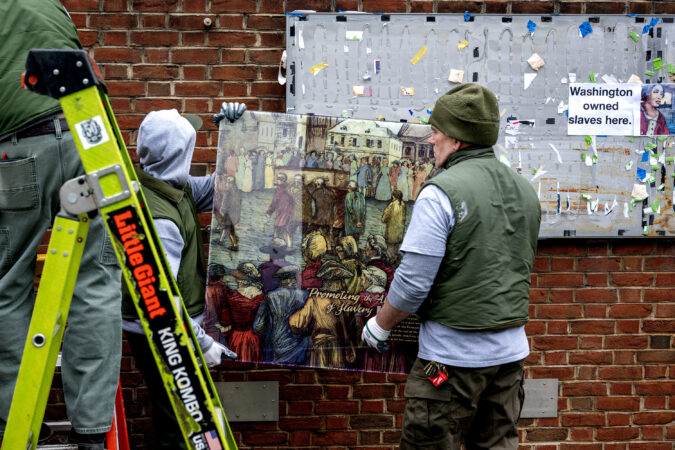
    Almost a month after abruptly dismantling exhibits about slavery from the President’s House Site, National Park Service employees began reinstalling the panels late Thursday morning ahead of a court-imposed deadline.

    Just before 11 a.m., four park service employees carted glass panels from a white van to a barricaded area at the site. They screwed each panel back into the bricks before cleaning the glass with rags.

    The restoration is a win for the City of Philadelphia and local stakeholders who have been fighting to preserve the President’s House after President Donald Trump’s administration ordered the removal of educational panels from the exhibit on Independence Mall last month, censoring 400 years of history. The removal sparked weeks of community activism that turned into celebrations Thursday once the reinstallation began.

    U.S District Judge Cynthia M. Rufe sided with Mayor Cherelle L. Parker’s administration on Monday, issuing an injunction ordering the government to “immediately” restore the site to its normal condition. On Wednesday, she set a Friday evening deadline.

    As of Thursday evening, 16 of the 34 panels had been reinstalled. A couple of bystanders clapped as the displays were put back up.

    Shortly before noon, Parker arrived at the scene, taking in the newly reinstalled exhibits. She shook hands with and thanked the National Park Service employees.

    “It’s our honor,” an employee told the mayor.

    Parker did not take questions from the media but later issued a statement celebrating the return of the exhibits.

    “We know that this is not the end of the legal road,” the mayor said. “We will handle all legal challenges that arise with the same rigor and gravity as we have done thus far.”

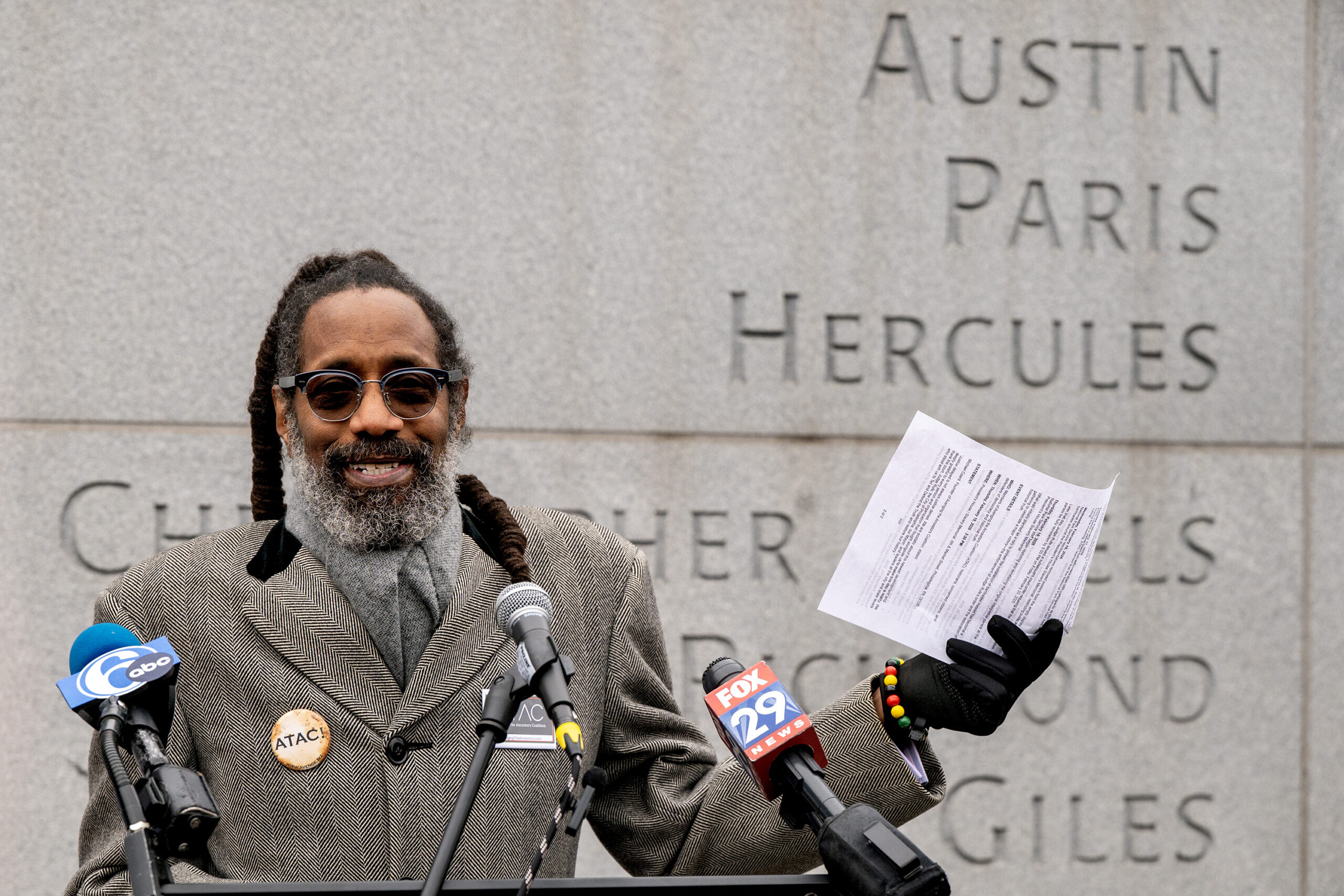
    Michael Coard, an attorney and leader of Avenging the Ancestors Coalition, which helped steer efforts to preserve the President’s House, called Thursday’s reinstallation a “huge victory” after weeks of advocacy in court and around the site itself.

    “We had people doing something at least every single day since the vandalism took place on Jan. 22, and we’ve had the attorneys in court, so it’s a great day, but the battle is not over,” Coard said.

    On Wednesday, several employees from Independence National Historical Park placed metal barriers around the brick walls where panels had been displayed near the open-air exhibit’s Market Street entrance. One employee said the barriers were set up so employees could clean the area.

    Prior to Thursday, exhibits were being stored in a National Park Service storage facility adjacent to the National Constitution Center.

    The reinstallation was a moment that Philadelphians who had been tirelessly fighting to protect the President’s House had been waiting for.

    On Jan. 22, after park employees took crowbars and wrenches to the President’s House, which memorializes the nine people George Washington enslaved at his Philadelphia residence, the City of Philadelphia filed suit against members of the Trump administration. Community stakeholders took action to preserve the memory of the site.

    “It’s important to hang on to hope,” said Bill Rooney, 68, of Chestnut Hill. “The people who lived here — sometimes that’s all they had to hold on to. We need to do that, too, and [make] sure that the whole history is told.”

    Rooney, a certified tour guide, added: “History matters. All of history matters.”

    Rufe, a George W. Bush appointee, issued a blistering 40-page opinion in which she compared the federal government’s arguments justifying the removal of the interpretive panels to the dystopian Ministry of Truth from George Orwell’s novel 1984.

    The opinion said it was urgent that the full exhibit be shown to the public. When the federal government did not comply 48 hours later, the judge set a deadline of 5 p.m. Friday for the Department of the Interior and the National Park Service to fulfill her order.

    The Trump administration asked Rufe on Wednesday night for a stay on the injunction while its appeal is pending in the U.S. Court of Appeals for the Third Circuit.

    The motion says enforcement of the order makes Philadelphia a “backseat driver holding veto power” in all decisions related to Independence National Historical Park. By forcing the government to restore the slavery panels, the court “compels the Government to convey a message that it has chosen not to convey,” the motion says.

    The city filed a brief Thursday opposing the stay, saying that the federal government did not add anything new to its argument. The idea that the restoration would cause harm was undermined by the fact that the exhibits “stood for 15 years without alteration, conveying the ‘whole, complicated truth,’” the city said. The filing does not acknowledge that some panels had been reinstalled.

    Rufe had not ruled on the stay as of Thursday afternoon. But neither the federal government’s appeal to a higher court nor the request for a stay pauses Rufe’s order.

    Complying with the order could complicate the federal agencies’ argument that restoring the panel inflicts irreparable harm because they have “turned around and done what they said they couldn’t do,” said Marsha Levick, a visiting chair at Temple University’s Beasley School of Law.

    Attorney Michael Coard, leader of the Avenging the Ancestors Coalition speaks during a rally at the President’s House in Independence National Historical Park Thursday, Feb, 19, 2026, after some of the slavery exhibits were returned.

    The people behind the fight to restore the President’s House Site were lauded at a late-afternoon rally. Organizers had called the 120-person event after the barricades were installed Wednesday, which they said prevented people from visiting the memorial. Instead, the event Thursday — set to Kool & the Gang’s “Celebration” and “Fight the Power” by Public Enemy — was celebratory.

    “We’re still fighting. The battle is still being fought in court,” said coalition member Mijuel Johnson. “But today — this greatest day, this day of pride — we got our panels put back up.”

    Coard said Thursday’s development epitomizes the group’s name. He said his coalition’s advocacy for the President’s House stands on the shoulders of activism by ancestors during the Civil Rights Movement.

    “We took that baton from them and we ran with it,” Coard said. “And the interesting thing about taking that baton is that this track was not as difficult for us. They had more obstacles on their track. We have fewer because they cleared it for us.”

  • U.S. beats Canada 2-1 in overtime to win Olympic gold in women’s hockey

    U.S. beats Canada 2-1 in overtime to win Olympic gold in women’s hockey

    MILAN (AP) — Megan Keller backhanded in a shot 4 minutes, 7 seconds into overtime and the United States won its third Olympic gold medal in women’s hockey, beating Canada 2-1 at the Milan Cortina Games on Thursday night to close another thrilling chapter of one of sports’ most heated rivalries.

    American captain Hilary Knight, in her fifth and likely final Olympics, forced overtime by tipping in Laila Edwards’ shot from the blue line with 2:04 remaining. The goal was the 15th of her Olympic career and her 33rd point to break the U.S. record in both categories.

    Captain Hilary Knight tied the gold-medal game for the U.S. with a late tip on a Laila Edwards point shot.

    With the sides playing three-on-three, Keller broke up the left wing and pushed past Claire Thompson. Driving to the net, the U.S. alternate captain got off a backhander that beat Ann-Renée Desbiens over her right pad.

    Aerin Frankel stopped 30 shots for the U.S.

    Kristin O’Neill scored a short-handed goal for Canada, and Desbiens finished with 31 saves.

    This was the seventh of the 12 Olympic meetings between the rivals to be decided by one goal and the third to go past regulation. Canada overcame a late 2-1 deficit to beat the U.S. 3-2 on Marie-Philip Poulin’s overtime goal at the 2014 Sochi Games. The U.S. won 3-2 in 2018 when Jocelyne Lamoureux scored in a shootout.

  • South Jersey’s Isabeau Levito finishes 12th, fellow American Alysa Liu claims gold medal at Olympics

    South Jersey’s Isabeau Levito finishes 12th, fellow American Alysa Liu claims gold medal at Olympics

    MILAN, Italy — In her first Olympics, in her mother’s hometown and very close to where her grandmother still lives, South Jersey figure skater Isabeau Levito earned a score of 131.96 in the free skate, or long program on Thursday.

    The 18-year-old wound up in eighth place in the short program after a score of 70.84 and 13th in the free skate. But scores, rather than placements are what count, so she wound up in 12th place with a 202.80.

    In the end, her teammate, friend, and fellow Blade Angel, Alysa Liu, won her second Olympic gold, after helping win the team event last week.

    Liu, 20, scored 150.20 to win the free skate. She was the only skater to have positive grades of execution on all elements. She was third in Tuesday’s short program.

    Liu also is the reigning world champion.

    Two Japanese skaters earned silver and bronze.

    Kaori Sakamoto, the favorite entering the Olympics, earned the silver after winning bronze at the 2022 Games. She was second in both the short and free programs.

    Ami Nakai, 17, who won the short program, was ninth in the free skate despite landing one of only two triple Axels on Thursday night. She had won the short program. She earned the bronze medal.

    Alysa Liu is the Olympic women’s figure skating champion.

    Levito entered the day in eighth place and was in sixth after that skate, with seven more skaters to go.

    She had an uncharacteristic fall on her opening triple flip, which was supposed to be in combination, but skated with her usual elegant spins and footwork to “Cinema Paradiso” by Ennio Morricone, Italian music for the occasion. Levito was born in Philadelphia, grew up in Mount Holly, and now lives closer to where she trains, in Mount Laurel.

    “I did my best” after the fall, Levito said in the mixed zone following her performance. “I just went on autopilot, and the rest went how it usually goes.”

    Despite the fall and placement, Levito said she felt better at this competition than at the World Figure Skating Championships, U.S. Figure Skating Championships, or other competitions.

    “Honestly, I felt like I had more energy,” she said. “And I don’t know if it’s because consciously I know I’m at the Olympics, or if it’s the crowd. The crowd is very, very energetic and supportive here.”

    Levito skated in the second-to-last group (the free skate goes in reverse placement order from the short program). She wore a light blue, sparkly dress for the occasion.

    After Tuesday’s nearly clean short program, many on social media felt that Levito had been underscored. Some felt that after the free skate as well.

    She is the reigning U.S. bronze medalist and was the U.S. champion in 2023 and the world silver medalist in 2024 in women’s singles.

    In the previous group, Levito’s fellow Blade Angel, Amber Glenn, skated a far better program than she had in the team event (where she was part of the gold-medal win) or Tuesday’s short program.

    She was third in the free skate and fifth overall after finishing 13th in an error-filled short program.

    Glenn, the reigning and three-time U.S. champion, opened the free skate with her trademark triple Axel, landing it strongly, and knocked off element after element, only putting a hand down on her triple loop. She earned a season-best score of 147.52, for a total of 214.91.

    Glenn gave Levito a standing ovation from the leader’s chair near the kiss-and-cry area.

    Adeliia Petrosian, a Russian skater competing under a neutral flag, was seen as a potential medalist as well. She was the only woman to attempt a quadruple jump. She opened her free skate with the quad toe loop but fell on it. She wound up fifth in both the short and free skate and sixth overall.

  • Philadelphia Medicaid advocates meet to plan outreach, with coverage at stake

    Philadelphia Medicaid advocates meet to plan outreach, with coverage at stake

    About 300,000 Pennsylvania residents risk losing Medicaid next year when new eligibility rules take effect, and advocates worry that too few people are aware.

    More than 100 public health workers, community advocates, and medical providers gathered Thursday to strategize how to spread the word about forthcoming changes to Medicaid.

    The nonprofit Community Behavioral Health organized the event at its Center City offices as a first step toward rallying the stakeholders tasked with helping people navigate the new rules in order to maintain access to critical health services. The city contracts with CBH to provide mental and behavioral health services for Philadelphians with Medicaid.

    New federal rules taking effect in January 2027 require certain adults to meet work requirements and reapply for Medicaid every six months, instead of the current once a year. The changes were ordered under Republicans’ 2025 spending bill and signed into law by President Donald Trump. They are part of the largest cut in recent history to Medicaid, the publicly funded health coverage program for low-income families and individuals, and people with disabilities.

    States will be expected to verify eligibility for millions of people twice as often, a major administrative burden. For now, who will be exempt remains unclear. For instance, the law suggests that “medically frail” individuals will not need to meet work requirements or reapply every six months, without detailing who would qualify.

    The federal government expects to release more details in June.

    Public health leaders say they cannot wait for the additional guidance to begin talking about the forthcoming changes, in order to minimize the number of people who lose coverage.

    “It needs to be consistent and ongoing,” Donna E.M. Bailey, CEO of CBH, said of the group’s outreach efforts. “It really is a Philadelphia responsibility.”

    The coming Medicaid changes

    Roughly three million Pennsylvania residents are covered by Medicaid. About a quarter of them — roughly 750,000 people, including 180,000 in Philadelphia — qualify because the 2010 Affordable Care Act expanded access to low-income parents and childless adults. This so-called expansion group saw the bulk of the Medicaid cuts in last year’s Republican spending bill.

    Beginning next year, most people in this group will need to provide monthly proof that they spent at least 80 hours working, volunteering, or participating in job training. Every six months, they will need to reapply for the program. Some experts have compared this process to filing taxes because of the extensive paperwork and documentation required.

    Pennsylvania has estimated that about 300,000 people will lose Medicaid because they cannot navigate the new requirements — even though many remain eligible.

    “It’s hard to imagine with all these changes that it’s just going to be smooth,” said Mike Nardone, a former director of Pennsylvania’s Medicaid program, who spoke during the CBH event. “We’re going to have people who lose coverage, and we’re going to have to understand why that happens.”

    Starting outreach early

    Early and frequent communication is the best strategy for minimizing the number of people who lose Medicaid, public health advocates said at Thursday’s event.

    “We need to start now. This isn’t something that can wait,” said Joan Erney, CBH’s former chief executive.

    The dozens of medical providers, social workers, and community advocates in attendance were urged to work together to develop strategies for helping people to understand what new steps to take to keep their Medicaid coverage.

    “We always need the voice of those of you on the ground,” said Leesa Allen, a former Pennsylvania Medicaid director, who spoke during the panel.

    The event was the first in a series planned by CBH, which will expand outreach with similar events throughout Philadelphia designed for families and individuals to ask questions and learn more about the new Medicaid rules.

  • 🐉 Celebrate the Year of the Horse | Things to do

    🐉 Celebrate the Year of the Horse | Things to do

    Last week was for the lovers. This week, well, it’s for the culture. The region will be booming with celebrations all weekend.

    Fashion lovers can catch the latest from local and international designers at Philly Fashion Week runways. Home improvement-obsessives and amateur DIYers can stop by the annual Philly Home + Garden Show for gardening and landscaping tips.

    Then there’s Lunar New Year, which marks the arrival of spring, and another year of good fortune. Dozens of parades, tai chi demonstrations, dance performances, and other celebrations will continue throughout the region.

    And I can’t forget about the Barnes Foundation’s new exhibition, celebrating the work of famed post-Impressionist painter Henri Rousseau, running through Sunday.

    Read on to find more exciting celebrations happening this weekend.

    — Earl Hopkins (@earlhopkins_ Email me at thingstodo@inquirer.com)

    If someone forwarded you this email, sign up for free here.

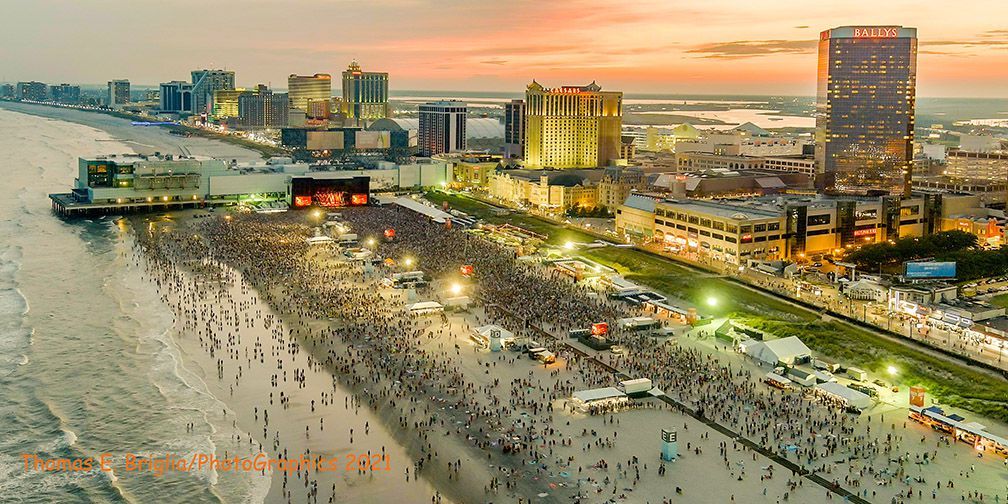
    An overhead shot of the beach in Atlantic City during Phish’s three night concert run in August 2021.

    Beach concerts are finally coming back to Atlantic City

    Once again, there will be music on the beach in Atlantic City this summer, thanks to a new collaboration between Visit Atlantic City and Live Nation.

    Electronic dance music trio Rüfüs Du Sol will kick-off a wave of ocean-side shows after their Aug. 29 concert at the A.C. boardwalk this summer.

    Their performance will mark a return to the tradition of A.C. beach shows, which have included ocean-side concerts that have included Pink in 2017, the Vans Warped Tour in 2019, the pop-punk Adjacent Music Festival in 2023, and others.

    For the last two years, there’s been an absence of large-scale A.C. beach shows, though Philly impresario Dave P.’s Making Waves festival drew a crowd last year.

    The collaboration between Visit Atlantic City and Live Natioon means more shows at the shore, and not just in the summer.

    Read more of my colleague Dan Deluca’s story here. And don’t miss out on some of his concert picks for this weekend below.

    The best things to do this week

    🖼️ Make-it-POP!: Join InLiquid from Thursday to Saturday at Crane Arts for an inside look at Make-it-POP!, a vibrant group exhibition showcasing InLiquid members’ bold portfolios, cultural commentary, and playful imagery.

    🎨 Meet me at the Barnes: Explore the work of artist Henri Rousseau, which will fill the Barnes Foundation as part of a collaboration between the Benjamin Franklin Parkway museum and the Musée de l’Orangerie in Paris.

    🎶 Musical down the Shore: Compassion Cafe in Beach haven is a nonprofit that employs neurodivergent adults. It is launching its sixth season with Be Our Guest, performed by its employees and inspired by the evergreen Disney classic, Beauty and the Beast.

    🧵 Step into your best: Join thousands of fashion lovers for Philly Fashion Week, now in its 20th year. From now through Saturday, there will be runway shows, design competitions, pop-up shops and more throughout the city.

    📅 My calendar picks this week: Black History Month Family Fun Night at the Constitution Center and Punk Rock Flea Market at 23rd Street Armory.

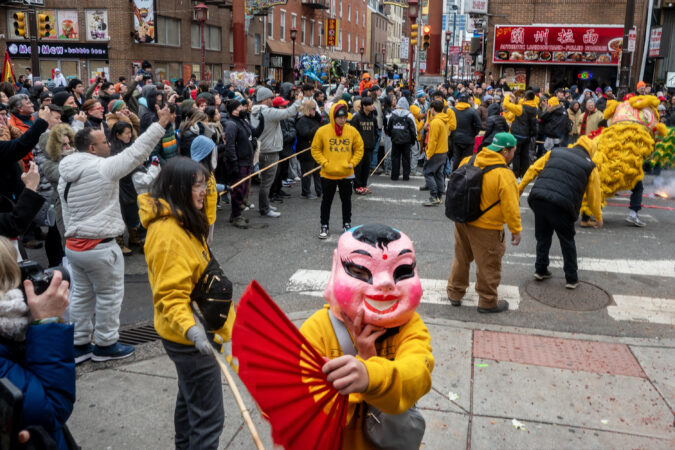
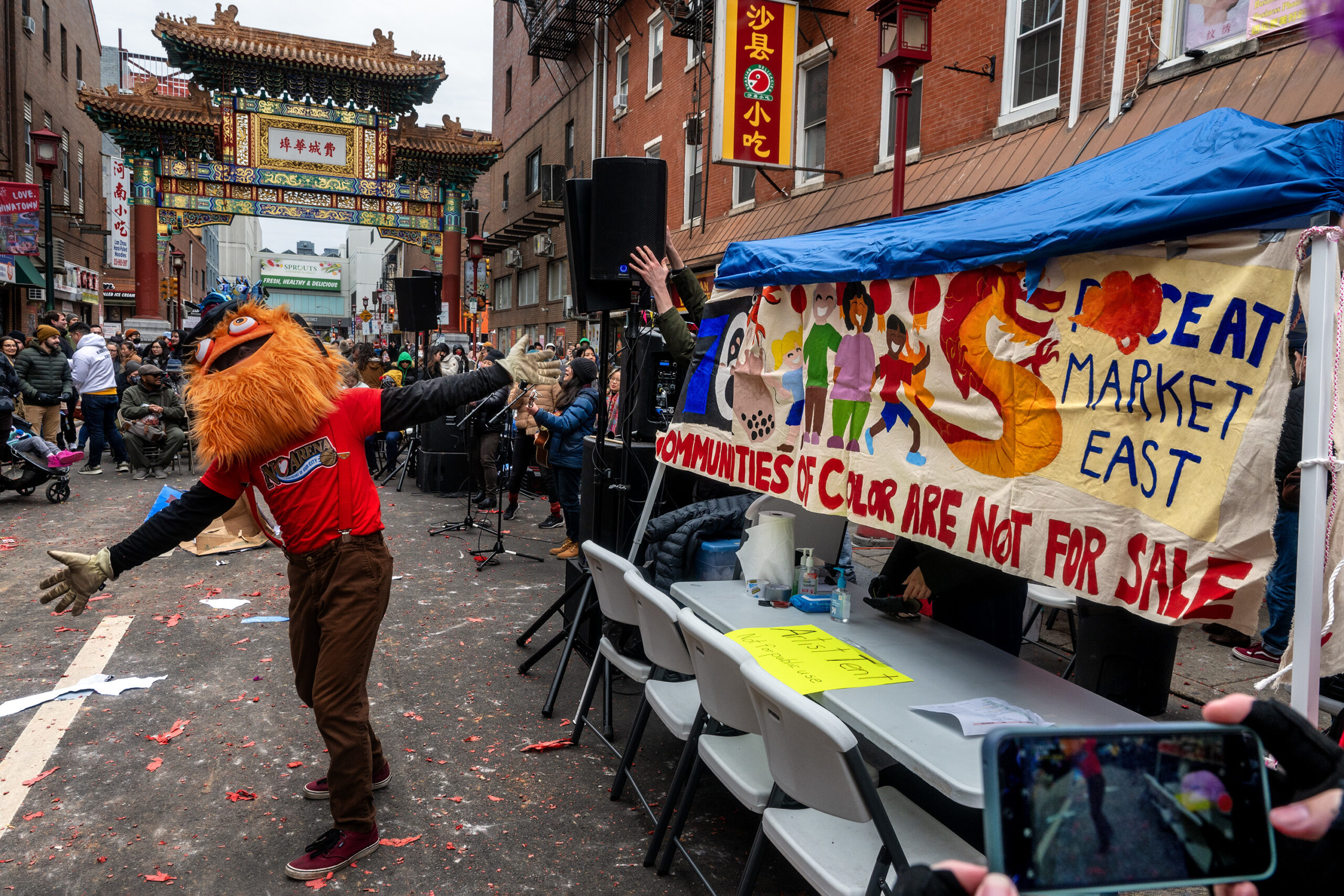
    Community organizers hold a “No Arena” block party near the Friendship Gate in Chinatown Sunday, Feb. 2, 2025, as the neighborhood celebrates the Lunar New Year nearby with a parade, lion dancers and fireworks.

    Lunar New Year at Dilworth Park

    The Year of the Horse is charging its way into Center City this weekend.

    Head to Dilworth Park to celebrate the first new moon of the lunisolar calendar, signifying the start of spring and the ushering of good fortune.

    The celebration includes a red envelope giveaway to the first 100 guests, a Kun-Yang Lin/Dancer performance, Chinese opera by Jiaye Xu of Temple University’s Boyer College of Music and Dance.

    The celebration closes out with the Philadelphia Suns performance at 6:30 p.m.

    Check out some more Lunar Year celebrations happening this weekend.

    Winter fun this week and beyond

    🏡 A little home improvement: Nearly 300 exhibitors will be at Montgomery County’s Greater Philadelphia Expo Center for the annual Philly Home + Garden Show. Specialists will offer tips on everything from gardening to landscaping, architecture, construction, electronics, interior design, and more.

    ⛸️ The Winter at Dilworth wrap-up: The Winter at Dilworth Park will wrap up select attractions starting this Sunday. The Rothman Orthopedics ice Rink and Cabin will pack things up this week, so bundle up and put on your best ice skates for a final lap this weekend.

    🐉 Lunar New Year festivities: Among the most popular Lunar Year celebrations is at Rail Park. Head there to see live lion dances, tai chi performances, K-pop workshop, and an appearance from the Fletcher Urban Riding Club on Saturday from 1-4 p.m.

    🎡 A festival of multiple traditions: Stop by the Mummers Museum for the Festival of Many Colors. The new multiweek event series highlights the Mummers Parade, Philly Caribbean Carnival and Carnaval de Puebla. There will be hands-on workshops to design garments, forge tools, and learn traditional dance that run through May 17.

    Staffer picks

    Pop music critic Dan DeLuca lists the top concerts this weekend and a few holiday pop-up jams happening this month.

    🎸 Thursday: After playing in Philly for his solo tour last year, songwriter Alejandro Escovedo is back, plugged in, and ready to rock with his band Electric Saints at Sellersville Theater on Thursday.

    🎸 Friday: Philly songwriter Ben Arnold is home to promote his new solo album, XL. He will perform at WXPN’s Free At Noon with the 48 Hour Orchestra on Friday.

    🎤 Saturday: R&B superstar Miguel, who’s played multiple times at the Made in America festival, returns to Philly for a headlining show at the Met Philly for his 2025 album, CAOS.

    🎤 Tuesday: Mariah the Scientist, who’s enraptured fans with her sultry vocals and chilling love songs since her major label debut Master in 2019, will headline the Met Philly on Tuesday.

    — Earl Hopkins

    Enjoy everything the region has to offer this weekend. And per Lunar New Year tradition, avoid wearing black and white if you can. Trust me, nobody likes a killjoy.

    Courtesy of Giphy.com
  • David J. Farber, celebrated Penn professor emeritus and pioneering ‘uncle’ of the internet, has died at 91

    David J. Farber, celebrated Penn professor emeritus and pioneering ‘uncle’ of the internet, has died at 91

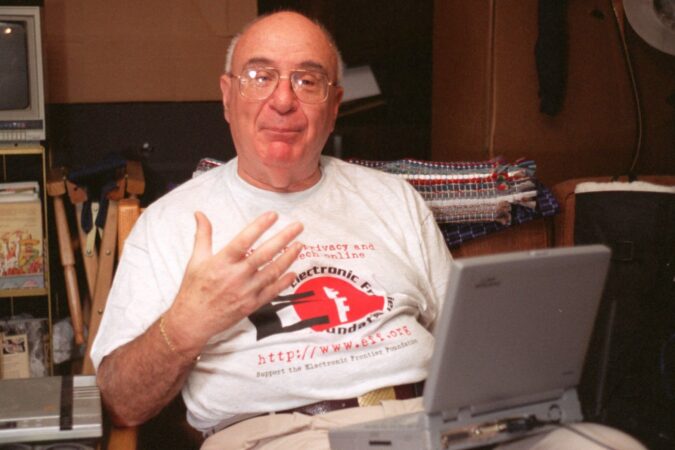
    David J. Farber, 91, formerly of Landenberg, Chester County, celebrated professor emeritus of telecommunication systems at the University of Pennsylvania, former professor of computer science at Carnegie Mellon University and the University of Delaware, professor at Keio University in Japan, award-winning pioneer in pre-internet computing systems, entrepreneur, and known by colleagues as the “uncle” and “grandfather” of the internet, died Saturday, Feb. 7, of probable heart failure at his home in Tokyo.

    A longtime innovator in programming languages and computer networking, Professor Farber taught and collaborated with other internet pioneers in the 1970s, ’80s, and ’90s. He helped design the world’s first electronic switching system in the 1950s and ’60s, and the first operational distributed computer system in the 1970s.

    His work on the early Computer Science Network and other distributive systems led directly to the modern internet, and he taught many influential graduate students whom he called the “fathers of the internet.” He was thinking about a World Wide Web, he said in a 2013 video interview, “actually before the internet started.”

    “Farber may not be the father of the internet. But he is, at least, its uncle,” Penn English professor Al Filreis told the Daily News in 1998. “Few have paid such close attention for so long to new trends in the information age.”

    Colleagues called him “part of the bedrock of the internet” and a “role model for life” in online tributes. Nariman Farvardin, president of the Stevens Institute of Technology in Hoboken, N.J., said: “Professor Farber did not just witness the future, he helped create it.”

    In 1996, Wired magazine said Professor Farber had “the technical chops and the public spirit to be the Paul Revere of the Digital Revolution.”

    He joined Penn as a professor of computer science and electrical engineering in 1988 and was named the endowed Alfred Fitler Moore professor of telecommunication systems in 1994. He left Penn for Carnegie Mellon in 2003 and joined Keio in 2018.

    Gregory Farrington, then dean of Penn’s School of Engineering and Applied Science, told The Inquirer in 1996: “He’s one of the most engaging, imaginative guys who sometimes alternates between great ideas and things that sound nuts. And I love them both. His life is an elaboration on both.”

    He was a professor at Delaware from 1977 to 1988 and at the University of California Irvine from 1970 to 1977. Among other things, he created innovative computer software concepts at UC Irvine, studied the early stages of internet commercialization at Delaware, and focused on advanced high-speed networking at Penn. He also directed cyber research laboratories at every school at which he worked.

    He earned lifetime achievement awards from the Association for Computing Machinery, the Board of Directors of City Trusts of Philadelphia, and other groups, and was inducted into the Internet Society’s Hall of Fame in 2013 and the Stevens Institute of Technology Hall of Achievement in 2016.

    Stevens Institute also created a “societal impact award” in 2003 to honor Professor Farber and his wife, Gloria. “I think the internet has just started,” he said in 2013. “I don’t think we’re anywhere near where it will be in the future. … I look forward to the future.”

    Professor Farber earned grants from the National Science Foundation and other organizations. He received patents for two computer innovations in 1994 and earned a dozen appointments to boards and professional groups, and an honorary master’s degree from Penn in 1988.

    He advised former President Bill Clinton on science and engineering issues in the 1990s and served a stint in Washington as chief technologist for the Federal Communications Commission. Clinton called him a “pioneer of the internet” in a 1996 shoutout, and Professor Farber testified for the government in a landmark technology monopoly court case against Microsoft Corp.

    Professor Farber (left) worked with Professor Jiro Kokuryo at the Keio University Global Research Institute in Tokyo.

    He championed free speech on the internet, served on technical advisory boards for several companies, and wrote or cowrote hundreds of articles, papers, and reports about computer science.

    He was featured and quoted often in The Inquirer and Daily News, and lectured frequently at seminars and conferences in Japan, Europe, Australia, and elsewhere around the world. He wrote an email newsletter about cutting-edge technology that reached 25,000 subscribers in the 1990s, and he liked to show off his belt that held his cell phone, pager, and minicomputer.

    He cofounded Caine, Farber, & Gordon Inc. in 1970 to produce software design tools and worked earlier, from 1957 to 1970, on technical staffs for Xerox, the Rand Corp., and Bell Laboratories. In a recent video interview, he gave this advice: “Learn enough about technology so that you know how to deal with the world where it is a technology-driven world. And it’s going to go faster than you ever imagined.”

    David Jack Farber was born April 17, 1934, in Jersey City, N.J. Fascinated by gadgets and early computers in the 1940s, he built radios from wartime surplus components as a boy and helped make a unique relay device with a punch card in college. “The card reader was three feet big, but it worked,” he told the Daily News in 1998.

    Professor Farber enjoyed time with his family

    He considered being a cosmologist at first but instead earned a bachelor’s degree in electrical engineering and a master’s degree in math at Stevens.

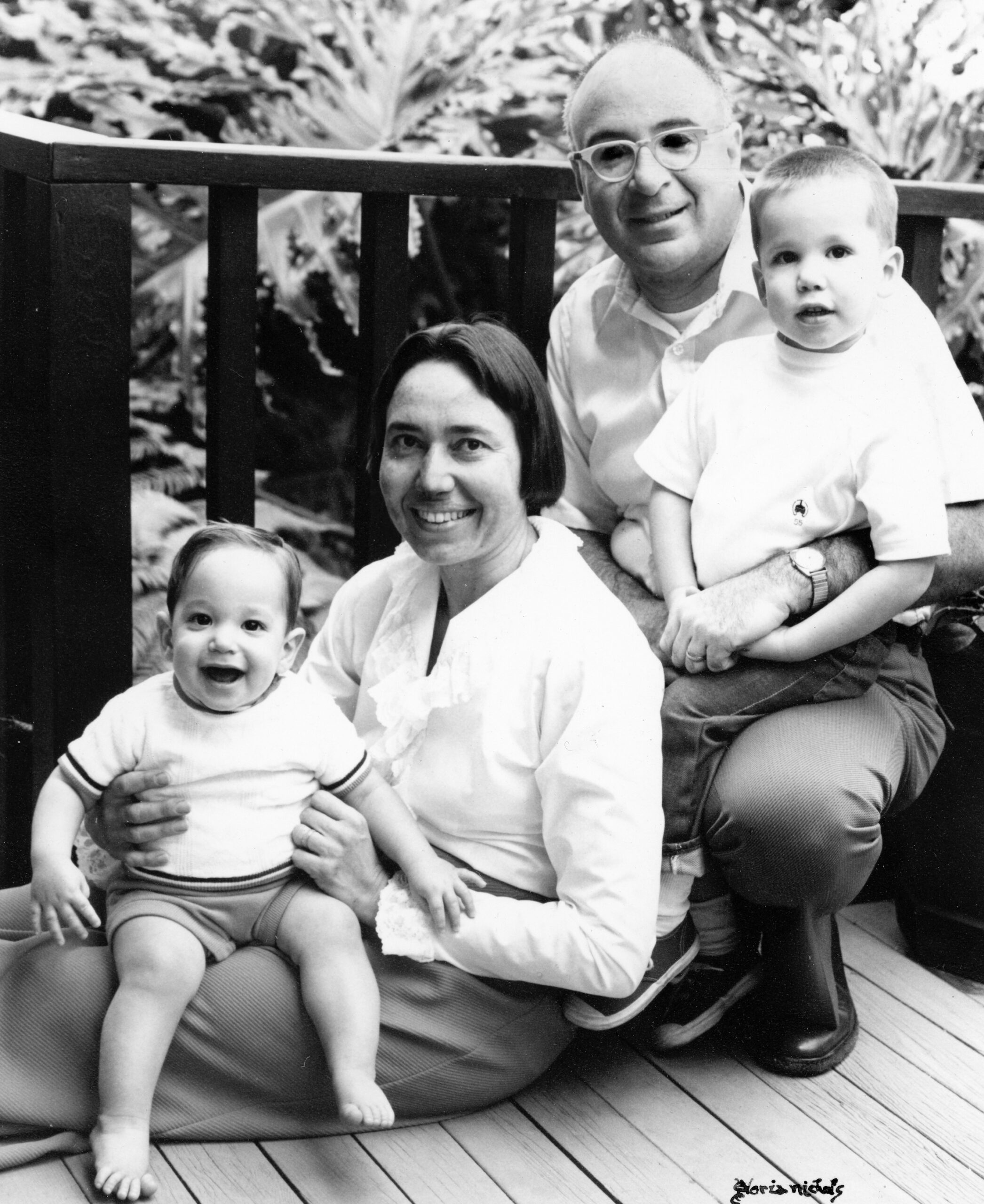
    He met Gloria Gioumousis at Bell Labs, and they married in 1965. They had sons Manny and Joe, and lived in Landenberg from 1977 to 2003. His son Joe died in 2006. His wife died in 2010.

    Professor Farber enjoyed iced coffee and loved gadgets. He was positive and outgoing, and he mixed well-known adages into humorous word combinations he called “Farberisms.”

    He was an experienced pilot and an avid photographer. In 2012, to honor his son, he established the Joseph M. Farber prize at the Stevens Institute for a graduating senior.

    Mr. Farber was an experienced pilot who could fly solely on cockpit instruments.

    “He was bold,” his son Manny said. “He connected to a lot of people and was close to his friends. He worked on big projects, and it wasn’t just theoretical. He built things that work.”

    In addition to his son, Professor Farber is survived by his daughters-in-law, Mei Xu and Carol Hagan, two grandsons, and other relatives.

    A memorial service is to be held later.

  • Two rival sex traffickers arrested in Norristown following shooting, police say

    Two rival sex traffickers arrested in Norristown following shooting, police say

    A street shooting in Norristown last week led investigators to discover two sex-trafficking operations that transported women from New York to Montgomery County to engage in prostitution, prosecutors said Thursday.

    A dispute between two men who ran rival enterprises erupted in gunfire on Feb. 13, police said, when one shot the other in the thigh during a confrontation on the 400 block of Sandy Street.

    On Tuesday, authorities arrested both men.

    Efran Flores-Rodriguez, 24, of Norristown, and Fernando Meza-Ramirez, 42, of Corona, Queens, are each charged with trafficking individuals and involuntary servitude. Flores-Rodriguez faces additional charges, including attempted murder, in connection with the shooting.

    Officers responding to reports of gunfire found Meza-Ramirez inside a bullet-riddled Toyota RAV4, police said. He had been shot in the thigh.

    Meza-Ramirez told police that a stolen white Acura TLX had followed him from Lafayette Street to Sandy Street. When he pulled over, he said, the sedan pulled up beside him and someone opened fire. A witness identified Flores-Rodriguez as the shooter, according to the affidavit of probable cause for his arrest.

    But investigators say the shooting exposed more than a personal feud.

    At the hospital where Meza-Ramirez was treated, officers found business cards in his wallet bearing photographs of scantily clad women posing on beds, according to the affidavit.

    Days later, on Feb. 17, police searched Flores-Rodriguez’s home and encountered a woman from Flushing, Queens, who told them she had worked as a prostitute under his direction last summer.

    She said Flores-Rodriguez, whom she knew as “Guerro,” drove her to Norristown six days a week, provided her a room and charged clients $60 for 10-minute sexual encounters. She told police she sometimes had as many as 15 encounters a day and kept half the money he collected.

    The woman said she also worked this year for Meza-Ramirez, whom she knew as “Leo,” under the same arrangement, according to the affidavit.

    Both men were denied bail at arraignment and are being held at the Montgomery County Correctional Facility.

  • Some Delco SEPTA riders will have 15 minutes added to their commutes, beginning Monday

    Some Delco SEPTA riders will have 15 minutes added to their commutes, beginning Monday

    Rides on the two trolley lines serving Delaware County promise to be safer but longer with a modern signal system scheduled to go live on Monday, SEPTA said.

    The upgraded signals on the D1 and D2 trolley lines will require operators to make more gradual accelerations and decelerations. They will also enforce speed limits and stop signals with automatic braking if needed.

    “It will reduce the possibility of operator error,” SEPTA general manager Scott A. Sauer said. “They won’t be able to speed and risk derailment. They won’t be able to violate stop signals or misaligned switches.”

    But the computer won’t replace the judgment of the people operating a trolley, Sauer said. Operators will get an alert, and the system provides backup if they cannot correct it in time, he said.

    Trips will be up to 15 minutes longer on the D1 route and 10 minutes on the D2 route, depending on where a passenger boards and gets off the trolley.

    The trolleys operate between Media and the 69th Street Transportation Center in Upper Darby, and between Sharon Hill and the transit hub. They were formerly called Routes 101 and 102.

    The transit agency also is releasing new spring schedules for all elevated-subway and bus transit, using the new “Metro” way-finding nomenclature, which uses letters for the various services.

    SEPTA accounted for the increased Delaware County trolley travel times in the new schedules, which begin Monday.

    It took about a decade and $75 million to install the system, called Communications-Based Train Control, on the Delco trolleys, said John Frisoli, SEPTA’s top rail signals engineer. Radios communicate between the control system and the trolleys.

    A similar system has operated in the Center City trolley tunnel since 2005. SEPTA has been adding safety features to its rail-signal systems for about 20 years, including the installation of Positive Train Control on Regional Rail, which controls train speed and applies automatic brakes to prevent crashes caused by human error.