Tag: topic-link-auto

  • Savú, a two-level restaurant-bar in Washington Square West, aims for dining and nightlife under one roof

    Savú, a two-level restaurant-bar in Washington Square West, aims for dining and nightlife under one roof

    Savú opened earlier this month in Washington Square West with a clear pitch: dinner and nightlife under one roof — and a retractable one, at that.

    “The concept is really about bringing a little bit of Miami and New York to Philadelphia,” said owner Kevin Dolce, the restaurant’s managing partner and founder of Hi-Def Hospitality. “There are places that do dinner and places that do nightlife. We want both in the same space, consistently.”
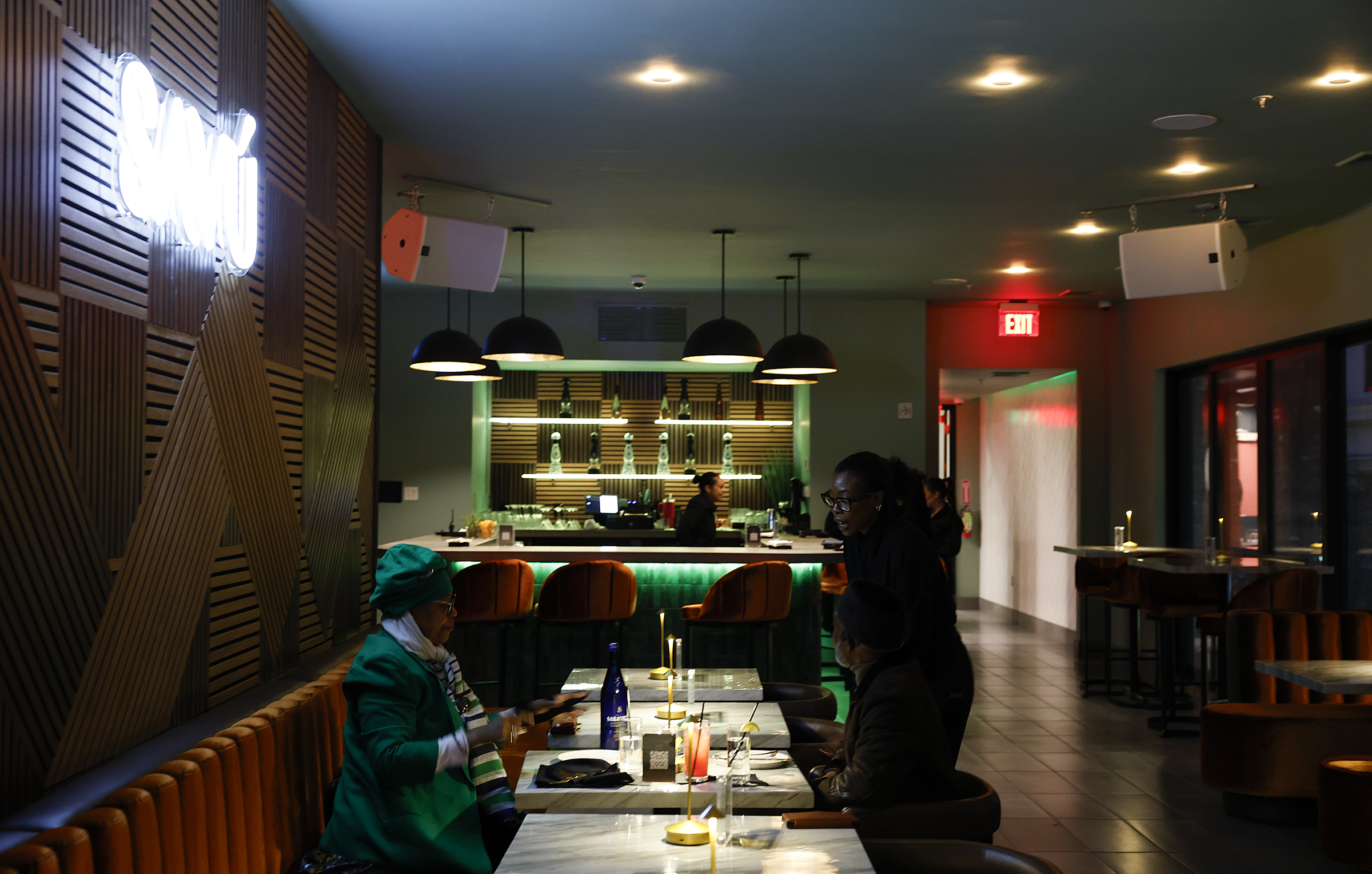
    The second-level dining room, and the rear bar, at Savú.

    Savú occupies the two-level space that last housed Cockatoo, an LGBTQ-friendly bar-restaurant. Dolce said Savú is aimed at everyone. The first floor is anchored by an enormous rectangular bar for walk-ins at the center of the room, with seating wrapped around it. Lounge seating lines the fling-open front windows at 13th and Chancellor Streets, where DJs spin Thursday through Sunday from 9 p.m. to 2 a.m., shifting the mood from dinner to late-night. Cocktails stick to standards — espresso martinis, French 75s — alongside Champagne and bottle service.

    Upstairs, two additional bars designated for customers with reservations serve a dining room outfitted with banquettes and low lighting. When weather allows, the retractable roof will open, creating an indoor-outdoor feel rare among Center City restaurants.
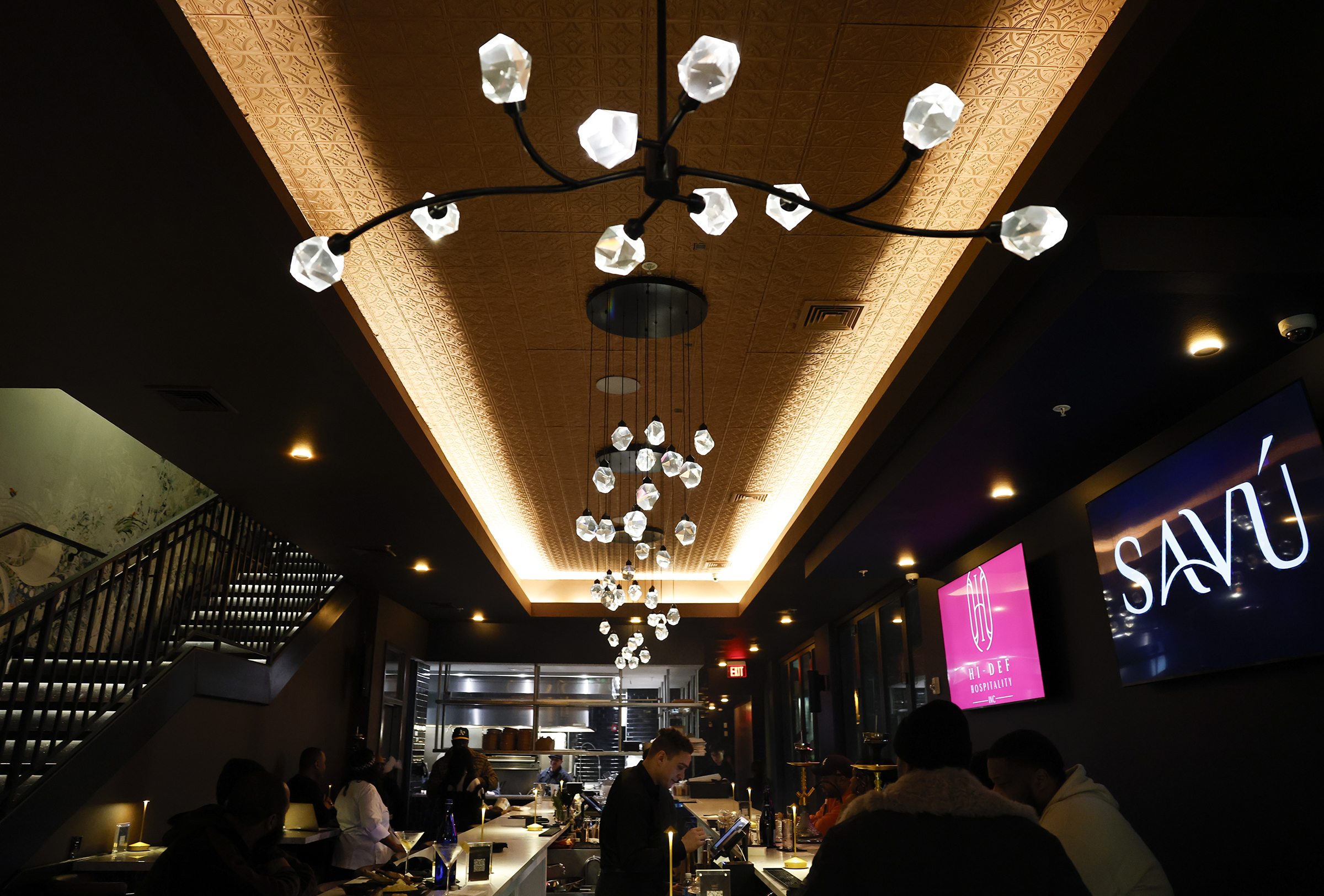
    The ground-floor bar at Savú, in Washington Square West.

    Savú’s address — along the restaurant row that includes Barbuzzo, Double Knot, and El Vez — has turned over in recent decades. A midcentury diner called Dewey’s once stood there, followed later by Letto Deli. The building was razed in the mid-2010s and replaced with a modern structure that reopened in 2017 as Maison 208. That concept gave way in late 2020 to Cockatoo.

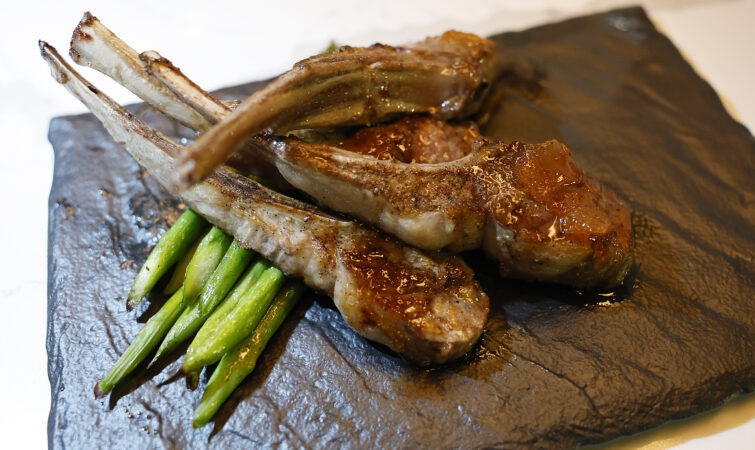
    Chef Maulana Muhammad’s dinner menu signals a push toward a higher-end night out: caviar bumps paired with fries and champagne, lamb chops, grilled branzino, lobster pasta, and ribeyes.
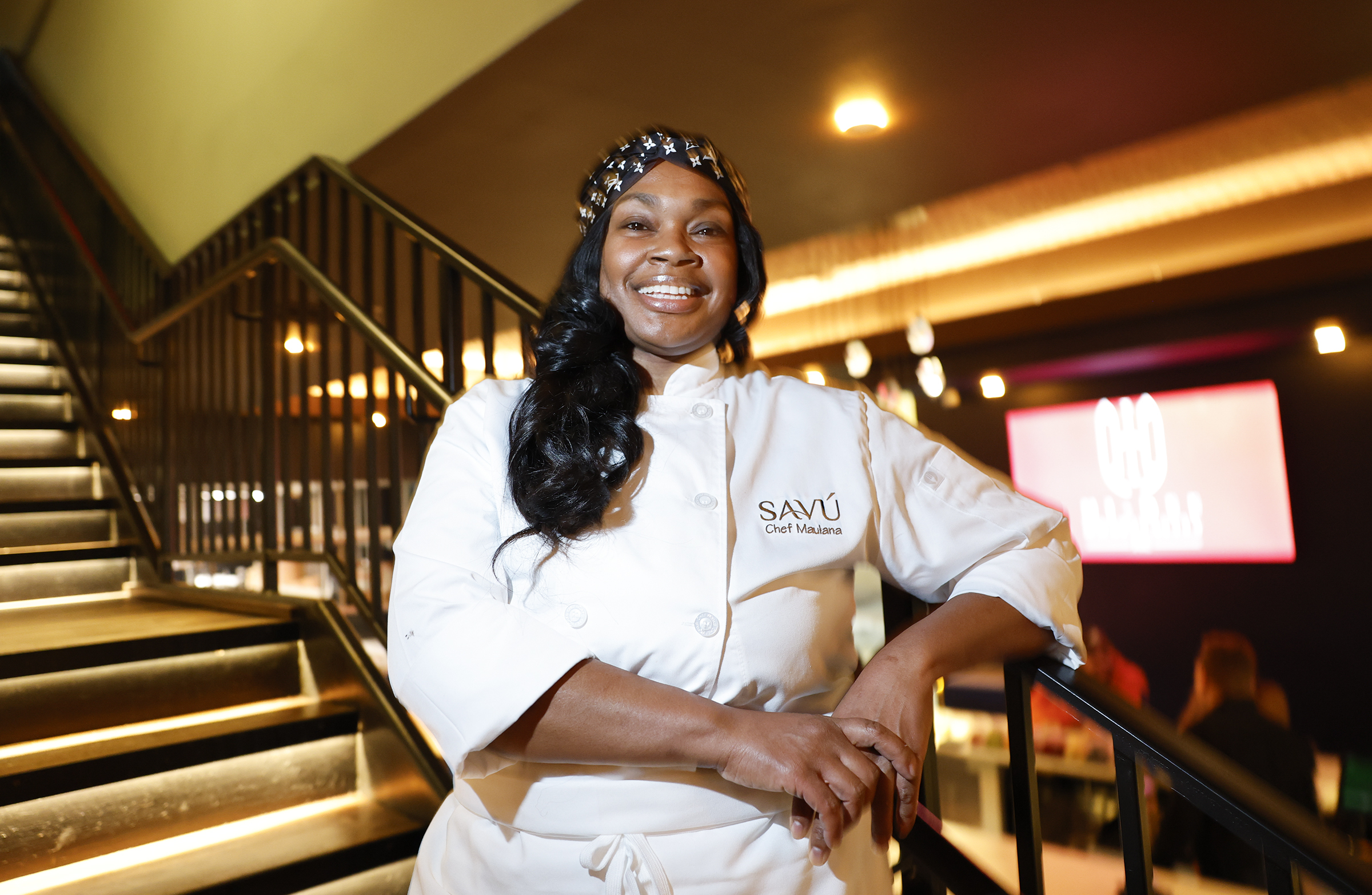
    Chef Maulana Muhammad at Savú.

    Muhammad, a graduate of the Restaurant School, has been around the block. She interned at the old Striped Bass and spent 12 years at the Four Seasons on Logan Square under chef Jean-Marie Lacroix and his team. Through the 2010s, she ran her own restaurant, Maulana’s Café, in the Philadelphia Design & Distribution Center in Wissahickon, and then worked for Constellation Catering just before the pandemic.

    After handling production that had her and colleagues cranking out 50,000 meals a day, she stepped away from the kitchen to help operate her family’s home healthcare agency.
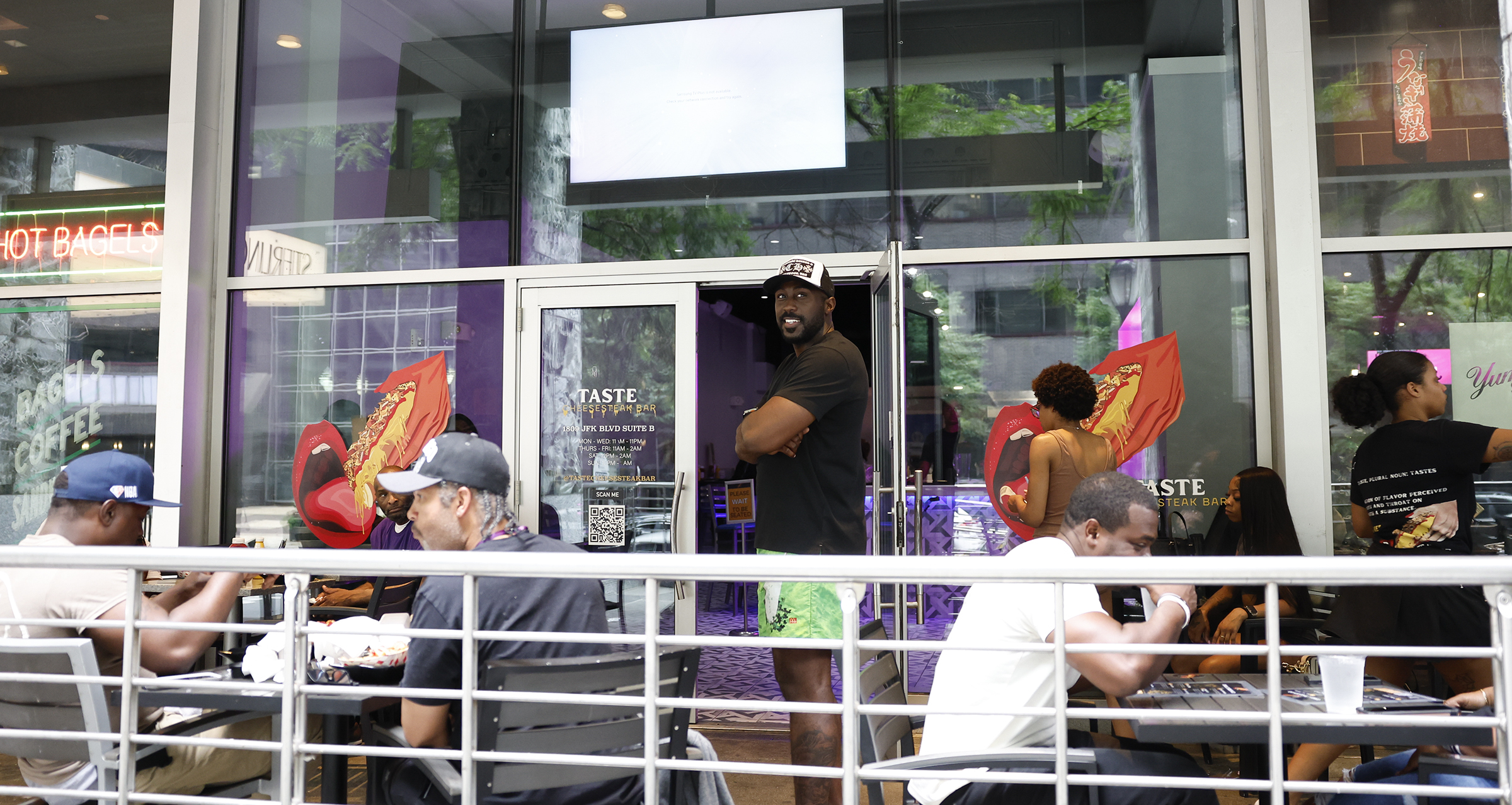
    Kevin Dolce with customers at Taste Cheesesteak Bar in 2024.

    Muhammad joined Savú a year ago to build the menu, after her brother, who knows Dolce, mentioned plans for the restaurant. “I like simple, good food,” Muhammad said. “I love creativity, but I want people to feel full and satisfied. I don’t want them leaving and stopping somewhere else to eat.”

    Dolce has brought in chef Dominique Shields, founder and former owner of North Philly’s Pretty Girls Cook, to oversee weekend brunch, which starts Feb. 28 with such offerings as seafood grits with fried flounder and shrimp, pancakes with fried chicken wings and honey butter, and oxtail hash along with made-to-order omelets and classic egg plates with beef or turkey bacon. In addition to the 11 a.m.-to-3 p.m. brunches, there will be a Sunday Champagne brunch from 4 to 8 p.m. that will be a ticketed, entertainment-focused event upstairs. General admission will include a drink and booths will be reservable.
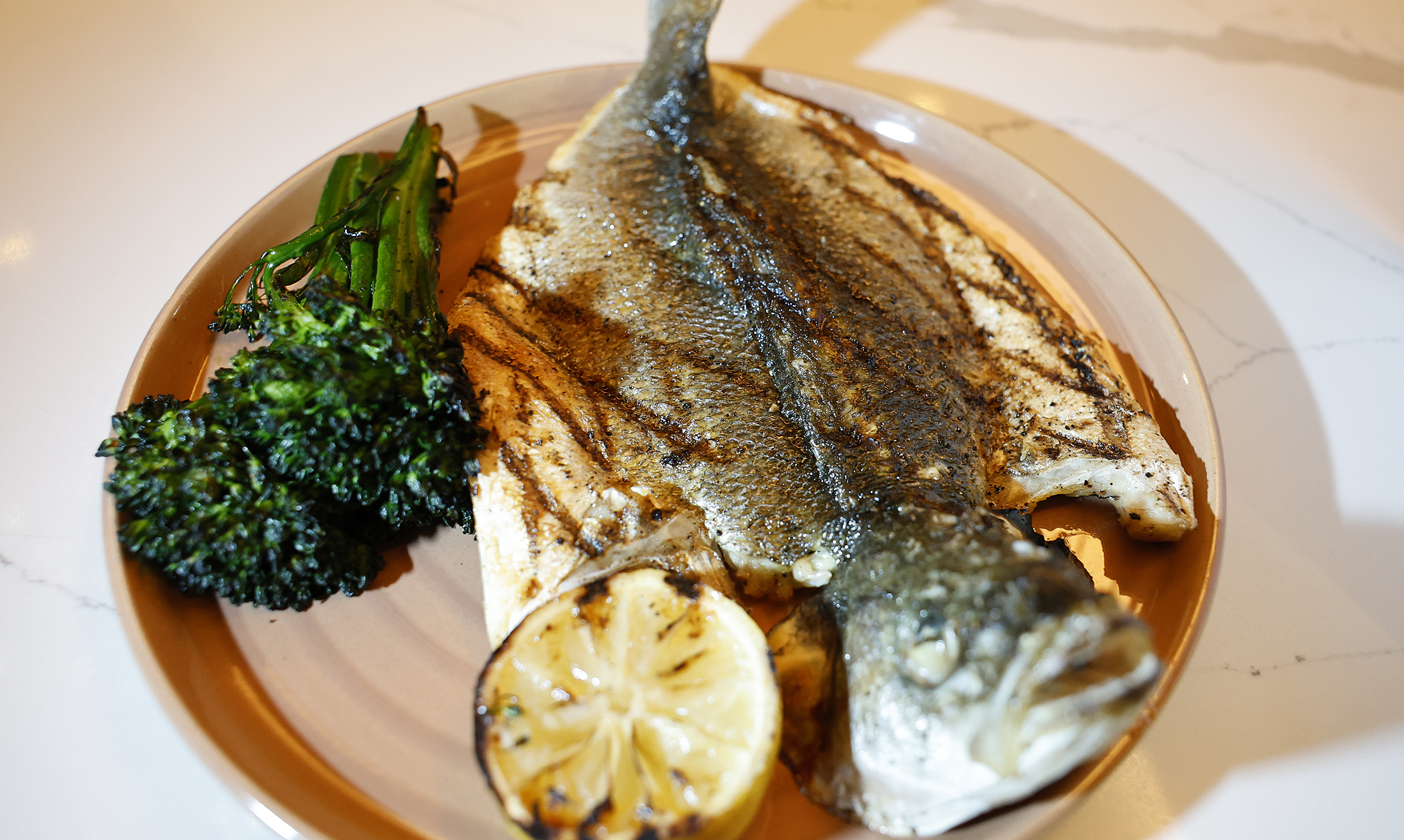
    Branzino served at Savú.

    Dolce, whose background is in financial consulting, got a taste for nightlife in September 2023 when he opened Taste Cheesesteak Bar on the ground floor of the Sterling, an apartment building at 1809 JFK Blvd. It was, and still is, one of the city’s few cheesesteak shops offering DJs and a full bar.

    Dolce has been on a tear of lease-signing. In 2024, he announced plans for Enigma Sky, a three-story Thai-fusion restaurant and lounge in the former Golf & Social at 1080 N. Delaware Ave., as well as Taste Taco Bar, under the Larry Fine mural at Third and South Streets, at the former Jon’s Bar & Grille. Last year, Dolce said he was also converting the former 7-Eleven store at 1084 N. Delaware Ave., next to Enigma Sky, into Finish Your Champagne, a brunch-driven concept. Citing delays with permitting and approvals, Dolce said Taste Taco Bar is expected to open for Cinco de Mayo, with Enigma Sky and Finish Your Champagne opening by the end of the year.
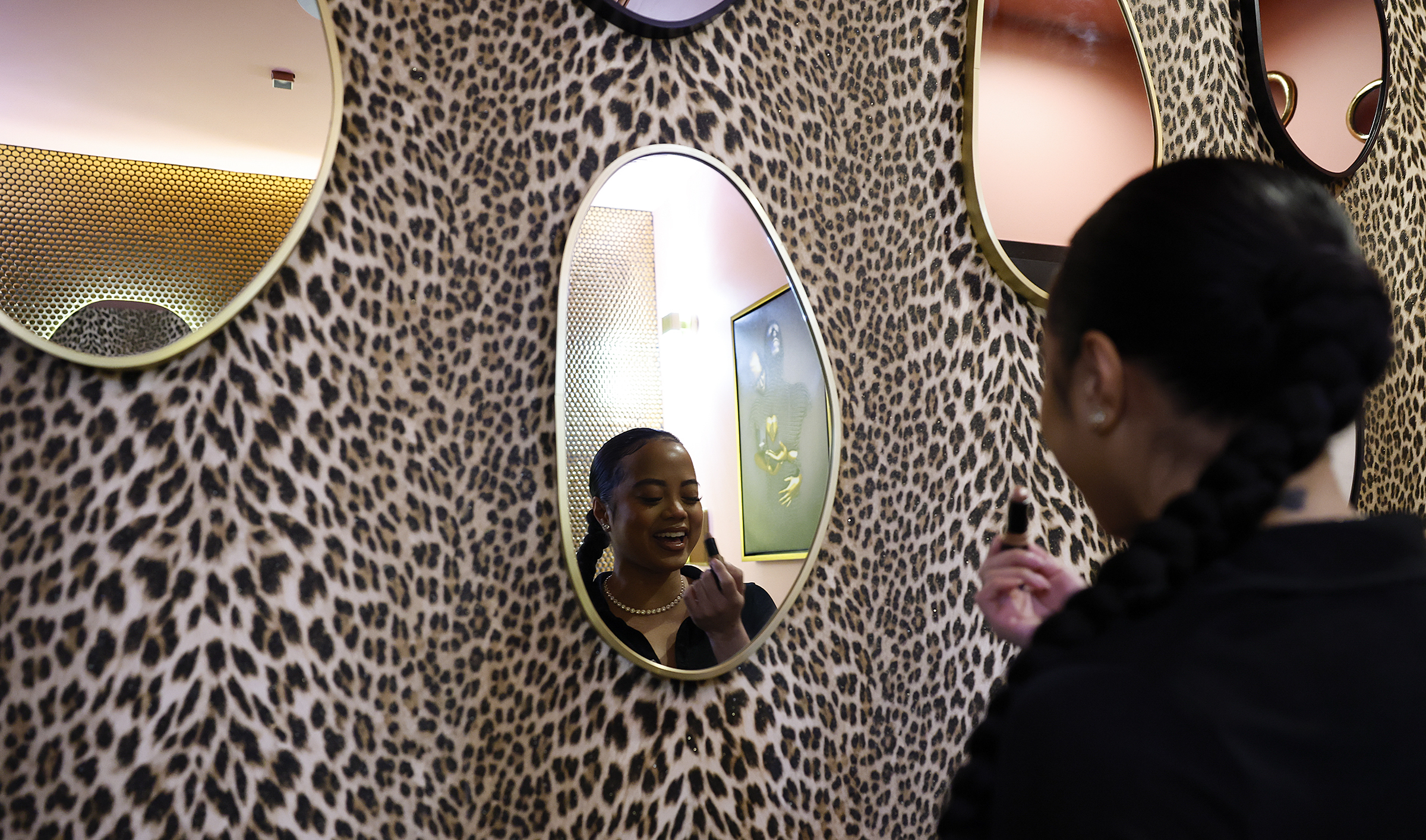
    Savú waitress Dominique Antes fixes her lipstick in a restroom at the restaurant.

    “Philadelphia is about to have a huge few years: the World Cup, the city’s 250th anniversary, the MLB All-Star Game, NCAA tournaments, PGA events,” Dolce said. “Millions of people are coming, and we want to grow alongside the city and be part of that story.”

    Savú, 208 S. 13th St., 445-223-4865, savuphl.com. Initial dinner hours: 4 p.m. to 2 a.m. Thursday to Saturday. Brunch (starting Feb. 28): 11 a.m. to 3 p.m. Saturday and Sunday. Champagne brunch: 4 to 8 p.m. Sunday.
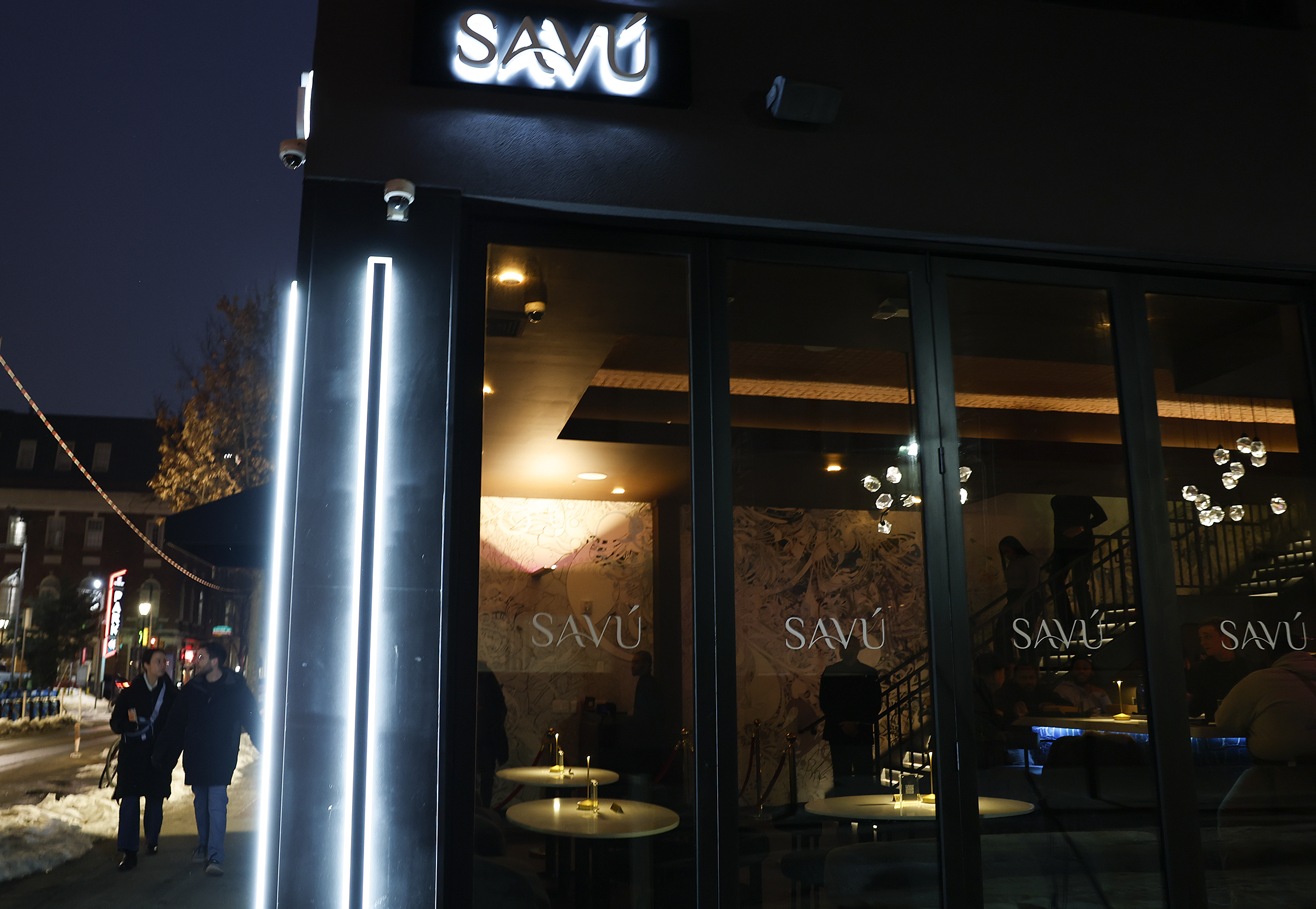
    Savú at 13th and Chancellor Streets.
  • Philly’s economy is among the nation’s strongest for the first time in generations | Expert Opinion

    Philly’s economy is among the nation’s strongest for the first time in generations | Expert Opinion

    Philadelphia is a happening place. No, I’m not referring to the winning sports teams or the great restaurants. I’m talking about the economy. For the first time in generations, Philadelphia’s economy is among the nation’s strongest.

    Among the 25 largest metropolitan areas in the country with populations of more than 3 million, Philly enjoyed the strongest job growth last year. Soak that in for a second. Our hometown’s economy grew faster than those of high-flying cities such as Atlanta, Dallas, Denver, and Phoenix.

    This economic success is also evident in the major development projects underway across the region, including the redevelopment of the old oil refinery in Southwest Philly, the planned transformation of the area around the stadiums, and all the action at Penn’s Landing, in Center City, and the Science Center.

    To be transparent, Philadelphia’s economy looks good, in part, because the nation’s economy is struggling to create jobs. Since so-called Liberation Day in April, when President Donald Trump announced massive tariffs on all our trading partners, many nervous businesses stopped hiring, and job growth has come to a standstill.

    Some industries are actually suffering serious job losses, especially those on the front lines of the global trade war, including manufacturing, agriculture, transportation, and distribution. These are big industries in many parts of the South and Midwest, but not in Philadelphia.

    Federal government jobs have also been hit hard by the Trump administration’s workforce cuts, which began soon after he took office a year ago. Of course, the broader Washington, D.C., area has struggled with these job losses. These positions were also important to many communities across the country, but less so in Philadelphia.

    window.addEventListener(“message”,function(a){if(void 0!==a.data[“datawrapper-height”]){var e=document.querySelectorAll(“iframe”);for(var t in a.data[“datawrapper-height”])for(var r,i=0;r=e[i];i++)if(r.contentWindow===a.source){var d=a.data[“datawrapper-height”][t]+”px”;r.style.height=d}}});

    Eds and meds

    In fact, Philadelphia’s economy is fortunate to be powered by education and healthcare — eds and meds — the only industries consistently adding to payrolls nationwide. The largest employers in the region are world-class institutions of higher education and healthcare providers, including the University of Pennsylvania, Thomas Jefferson University, the Children’s Hospital of Philadelphia, and Temple University.

    Employers in eds and meds are especially attractive, as demand for the services they provide is fueled by the insatiable need for highly educated workers in the age of artificial intelligence, and the inexorable aging of the population. Baby boomers have aged into their 60s and 70s and will require high-quality healthcare for years to come. And since healthcare is largely delivered in person, it is less vulnerable to losing jobs to AI.

    These large institutions employ workers of all skill levels. There are highly trained physicians, nurses, and researchers, as well as middle-skilled technicians and administrators, and lesser-skilled maintenance workers. An entire economy can be built on eds and meds, and that’s Philadelphia.

    The Philadelphia region also has the good fortune of being home to successful companies across a diverse range of industries. Examples include the media giant Comcast, the financial services powerhouse Vanguard, the global software company SAP, and the technology giant Siemens.

    Cost of living

    It isn’t cheap to live and work in Philadelphia, but it is highly affordable when compared to neighboring New York and D.C. For example, the typical-priced home in Philadelphia costs about $400,000, which is almost four times the typical household income. In D.C., houses typically cost close to $600,000, or 5.5 times income, and New York house prices exceed $1 million, or 10 times income.

    I could go on, but I’m beginning to sound like a Chamber of Commerce, and Philadelphia certainly has big challenges. The nation’s universities and research centers are facing large budget cuts and heightened federal scrutiny. This is a huge shift from the financial largess from D.C. they’ve come to rely on.

    Challenges and what’s ahead

    Poverty and all the attendant social ills, like crime and drug use, are also long-standing problems in the city. Although the poverty rate has dipped a bit recently, close to one-fifth of the city’s residents live below the poverty line, a disturbing stat. Of the nation’s big cities, only Houston has a higher rate.

    The high poverty rate is the result of a complicated brew of factors, but the severe shortage of rental housing for lower- and middle-income residents is one of them. Putting up more homes is a priority for the city’s mayor, and with good reason.

    The city’s high wage tax remains a barrier to even stronger growth. It is encouraging that it has declined since peaking more than 40 years ago, but it remains prohibitively high, hindering the city’s efforts to attract workers back into its office towers. The lower-taxed suburban Pennsylvania counties are the key beneficiaries.

    It won’t be easy for Philadelphia to consistently remain among the nation’s best-performing economies. We need to support our institutions of higher education and healthcare, work to address poverty, and make it more affordable to live and work here. If we do, we have a good chance of always being in the mix. Kind of like our Eagles.

  • 1,100 dead or sick geese in N.J. spark bird flu warning, prompt lake’s closure

    1,100 dead or sick geese in N.J. spark bird flu warning, prompt lake’s closure

    At least 1,100 dead or sick birds, mostly Canada geese, have been reported across New Jersey in an outbreak that started on Valentine’s Day, according to state officials.

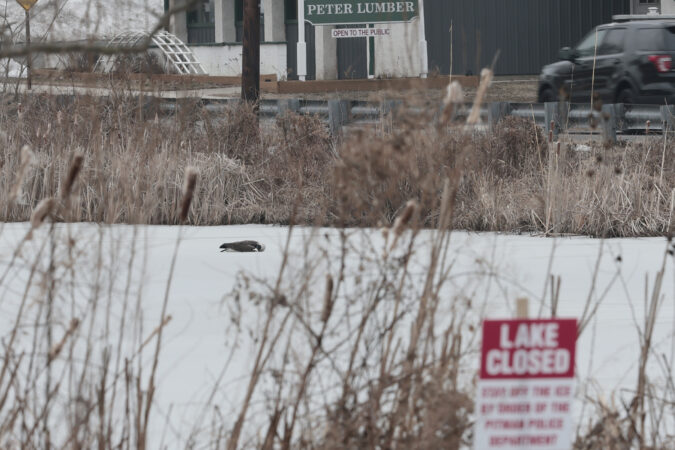
    At least 50 geese have died at Alcyon Lake in Pitman, Gloucester County. Officials have closed the lake and the adjoining Betty Park out of precaution.

    The fish and wildlife division within the New Jersey Department of Environmental Protection (DEP) and the U.S. Department of Agriculture are tracking them as suspected cases of highly pathogenic avian influenza (H5N1), or bird flu.

    Bird flu is not new. But it began to spread in the U.S. in January 2022 and has infected wild and domestic birds in every state.

    While bird flu can infect humans, the U.S. Centers for Disease Control and Prevention has said it is primarily a threat to animals and poses little risk to the public.

    State officials say large numbers of dead geese may be concentrated in areas where birds gather to look for open water as ice melts. They said that the 1,100 dead or sick wild birds were reported between Saturday and Monday.

    Where have dead geese been found?

    The DEP says it has received reports of dead Canada geese in South Jersey, including in Hainesport, Burlington County; Sicklerville, Camden County; and Pitman.

    Annmarie Ruiz, Gloucester County’s health officer, said the dead geese were noticed in Pitman on Tuesday. She said that there were probably more than 50 at Alcyon Lake, but that there were reports of dead geese elsewhere in the municipality.

    “Right now, we have to presume that it is bird flu based on the signs the birds were exhibiting,” Ruiz said.

    The New Jersey Department of Agriculture took some of the birds for testing. The results could take weeks, she said.

    “Right now, we’re just erring on the side of caution,” Ruiz said.

    Ruiz said workers use face shields and gloves when handling the birds, which are triple-bagged before being disposed.

    She said people can report sick or dead wild birds to Gloucester County animal control at 856-881-2828 or the DEP at 877-927-6337.

    A lifeless bird lays on the ice at Alcyon Lake in Pitman, N.J. on Wednesday, Feb. 18, 2026. Two adjacent parks, Betty Park (in background) and Alcyon Park (not in photo) are closed as a result of the mysterious birds deaths.

    Caryelle Lasher, Camden County’s health officer, said there have been only a small number of reports of dead birds in the county.

    Those were concentrated in the lake off Mullen Drive in the Sicklerville section of Gloucester Township, she said.

    Overall, however, the county has not seen a spike in reports, she said.

    Ruiz and Lasher — as well as state officials — stress that people should not touch sick or dead wildlife of any kind. And they should keep pets away.

    Even though the risk is low, the potential for human infection exists.

    The DEP also has an online form to report sick or dead birds.

    H5N1 is a respiratory bird disease caused by influenza A viruses. Wild birds, such as ducks, gulls, and shorebirds, can carry and spread these viruses but may show no signs of illness, according to the DEP.

    The disease can kill domestic poultry such as chickens. Typical symptoms include diarrhea, nasal discharge, coughing, sneezing, and incoordination.

    It continues to infect not only birds, but also mammals.

    Tips to prevent infection:

    • Do not touch sick or dying animals, or bring them into your home.
    • Keep pets away from them, as well as away from droppings.
    • Wash hands frequently if you are near wildlife.
    • Do not eat undercooked eggs, poultry, or beef.
    • Prevent cross-contamination between cooked and raw food.
    • Avoid unpasteurized milk or cheese.
  • 2026 Toyota GR86: Plenty of fun, if you toss your EZPass

    2026 Toyota GR86: Plenty of fun, if you toss your EZPass

    2026 Toyota GR86 Premium: As fun as it looks?

    Price: $38,809 as tested. Black dual exhaust added $1,700; Performance Package, $1,500; fancy paint, $475; floor mats, $299.

    What others are saying: “Highs: Genuinely rewarding to drive, one of the last manuals available, remarkably affordable. Lows: Noisy cabin on the interstate, we dare you to sit in the back, unexciting exhaust note,” says Car and Driver.

    What Toyota is saying: “Level up your drive.”

    Reality: Even funner, ‘til you get on the highway.

    What’s new: The GR86 gets a new Yuzu Edition for 2026, with yellow paint and black seats. Otherwise it’s pretty much as before, since its redesign in 2022.

    It’s a twin to the Subaru BRZ.

    Competition: In addition to the Subaru, there are the BMW 2 Series, Honda Civic Si, Mazda Miata, Mini Cooper, and Volkswagen GTI.

    Up to speed: The 2.4-liter four-cylinder engine makes 228 horsepower and gets the little sports car to 60 mph in 5.4 seconds, says Car and Driver, and I believe it. I’d think it’s a little faster, but we’ll stick with the facts.

    It’s truly a sporty car to drive. It’s fine for passing on Interstate highways and such but it’s really at home on the back roads, racing up hills and back down again.

    Shifty: You can get a GR86 with a stick, but Mr. Driver’s Seat didn’t. The six-speed automatic transmission is a nice facsimile, with Park up in the right corner so it looks like it COULD be a stick. I actually spent a couple seconds looking for a clutch until I realized there wasn’t one.

    The shifter then snakes through Reverse and Neutral to get to Drive, another bit of stick-shift cosplay.

    The manual setting works nicely, and really makes the little car even that much more fun. Use the lever to augment the engine’s power for any country road antics and you’ll feel nicely rewarded.

    On the road: Did someone say fun? The rear-drive GR86 has plenty of it, snaking through turns and sliding around corners even at fairly low speeds, so you can feel like it’s a blast even when not going much beyond 40 or 45 mph — although faster is funner.

    Less fun is the time spent on the highway; I found myself getting a bit of a headache during half-hour trips on Route 202 between King of Prussia and West Chester.

    Off the road, the GR86 is great companion for tight parking lots, thanks to a turning radius of 35 feet and change.

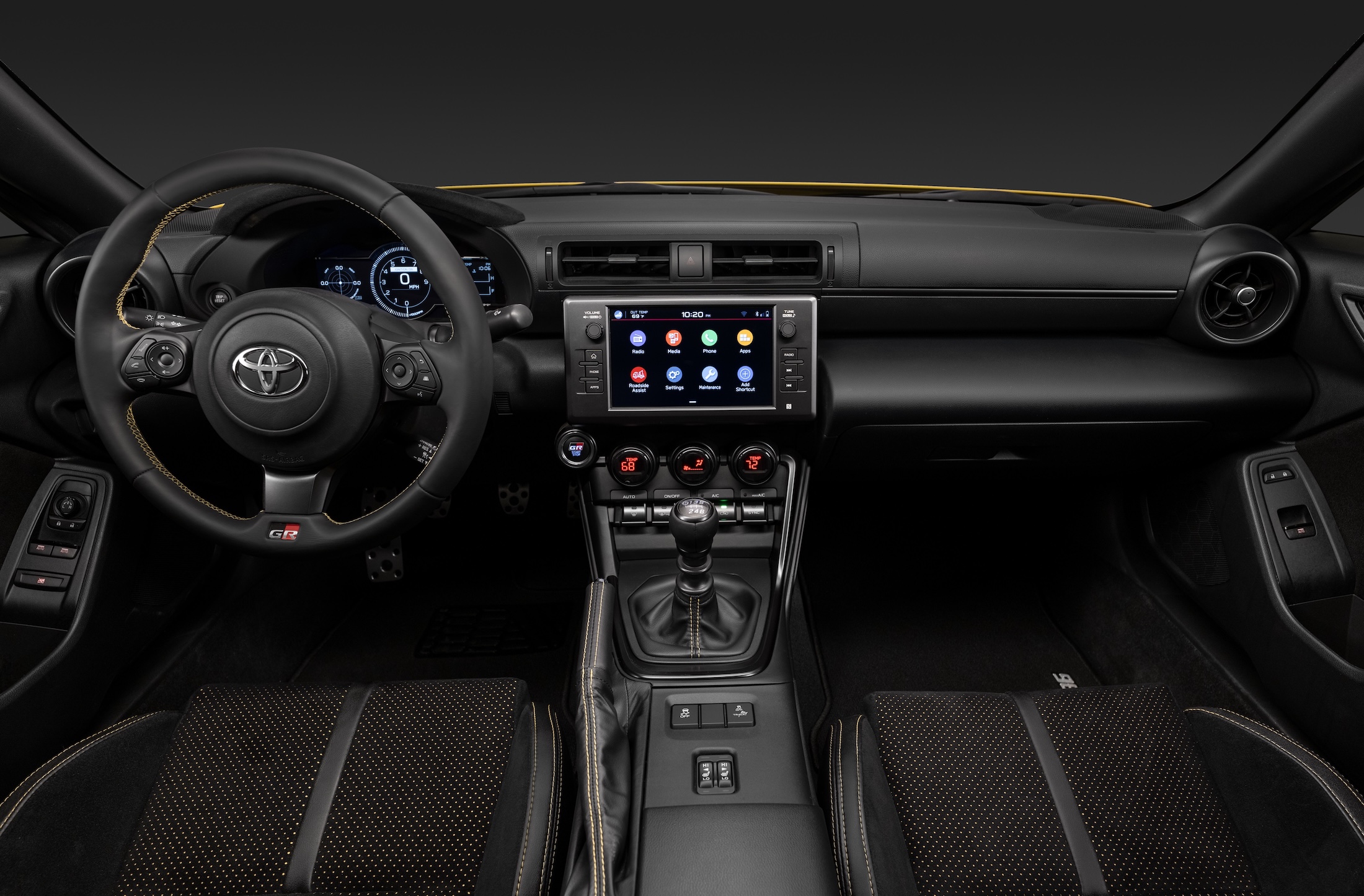
    The interior of the Toyota GR86 is snug and retro fun, unless you’re sat in the back. Then it’s snug, retro, and not at all fun.

    Driver’s seat: The cloth seats offer great support and are comfortable enough. They feel firm and a little crowded, so some people might not appreciate the big wings. The Lovely Mrs. Passenger Seat found them as nice as I did.

    The manual controls adjust height, fore-aft, and backrest simply.

    The gauges and steering wheel controls are old-fashioned, looking like last-gen Lexus dials, but I call old-fashioned a good thing these days.

    Friends and stuff: There’s a rear seat but it’s pretty cruel. Guests would have been harmed in the making of this review.

    I finally build up the nerve to try it out on Day 6. The ceiling is so low that I had to cant my head to the side. Foot room and legroom look impossible, but I could actually get my legs in there by setting the front seat a few notches up from normal. But when I did that and tried out the front, my legs were more cramped than on a Frontier flight.

    I would say only put kids in the back. Or maybe kid, singular.

    Cargo space is 6.26 cubic feet. (I didn’t round it because you’ll need every .01 cube.) The seat folds (all in one complicated-to-open piece) to create more luggage space.

    In and out: In and ouch. It’s way down there and requires a bit of undignified squatting, twisting, ducking, and scooching.

    Play some tunes: Sad. Tinny. Sound gets a C grade, probably one of the lowest I’ve ever assigned.

    Last-gen controls. You definitely won’t be distracted playing around with the touchscreen, though there is one, because it’s 2026 and I think it’s law now or something.

    Keeping warm and cool: The heater controls feature dials for temperature and fan speed and buttons inside the dials for blower choice. It’s such a small car that it runs hot; the seat heaters offer nice support when it’s not too cold out, but the switches are awkwardly built into the armrest.

    Fuel economy: I averaged about 26 mpg in spirited drives around Chester County’s old country roads every chance I could get. I would actually park and wait for certain roads to clear and then go make the most of the exhaust note. I guess the dual exhausts are worth $1,700.

    Where it’s built: Ota, Gunma, Japan

    How it’s built: Consumer Reports predicts the GR86 reliability is a 4 out of 5.

    In the end: Definitely lots of joy to be had here, and I could get behind buying a GR86. But with the Mini Cooper and Volkswagen GTI, you get fun and some practicality as well, plus the delight doesn’t diminish at highway speeds.

  • The Phillies’ Trea Turner was still the fastest man in the league at 32. And it’s not due just to ‘genetics.’

    The Phillies’ Trea Turner was still the fastest man in the league at 32. And it’s not due just to ‘genetics.’

    CLEARWATER, Fla. — The fastest man in the National League in 2015 still wears the crown, which seems impossible until Trea Turner shares his secret.

    “I pay attention to a lot of little things,” the Phillies‘ star shortstop said Wednesday, “that maybe other guys don’t.”

    OK, such as?

    “Things that happen to all of us all the time,” Turner said. “I walk down my stairs and I’m like, ‘Oh, my knee’s kind of feeling weird today,’ or I wake up and sleep wrong. Then, I’ll get to the field and ask questions in the training room.

    “Sometimes it might be annoying, where I just keep asking questions. But when something bothers me, I try to find out why so that, if it does happen again, I get rid of it real quick.

    “Like I said, I pay attention more than probably other guys.”

    And that, Turner said, explains how he hasn’t lost a step 10 years into his major league career. If anything, he may be a tick faster. As a 23-year-old rookie with the Nationals in 2016, he averaged 30 feet per second, according to Statcast. Last season, at age 32, he averaged 30.3.

    Turner also led the majors last year with 117 bolts, defined by Statcast as any run above 30 feet per second. The only other player with more than 100 bolts: Royals 25-year-old star shortstop Bobby Witt Jr.

    It’s as uncommon as it sounds. Of the 28 fastest players in baseball last season based on sprint speed, only three — Turner, Twins center fielder Byron Buxton, and Braves utility man Eli White — were in their 30s.

    “I still feel young,” said Turner, who will turn 33 on June 30. “I don’t feel as old as I am, which, I don’t think I’m old. But I don’t feel as old as I am. Hopefully I can continue that for a while.”

    As always, it will hinge on health. Turner did miss time in each of the last two seasons with hamstring strains. Ever curious, he sought the root of each injury. He believes last year’s injury, a mild strain of his right hamstring while running to first base Sept. 7 in Miami, was caused by dehydration.

    Through the years, Turner has changed his nutritional habits. He cut out soda several years ago. He eats more carefully now, taking cues from Bryce Harper, Aaron Nola, and other teammates.

    “Genetics, I’d say, is a big part of it,” said Brett Austin, Turner’s college teammate and close friend. “But I think his offseason program really allows him to optimize and maintain his speed.”

    Indeed, the biggest reason Turner has remained in the fast lane is a training routine that he has followed since he was a teenager.

    In high school, he met Ed Smith, a physical therapist and strength coach who worked with major leaguers at a facility in Wellington, Fla., near Turner’s hometown. Back then, Turner was 5-foot-4 and bony. He was taller but still skinny when he arrived on campus at North Carolina State, where coach Elliot Avent nicknamed him “Seabiscuit” after the famously undersized champion racehorse.

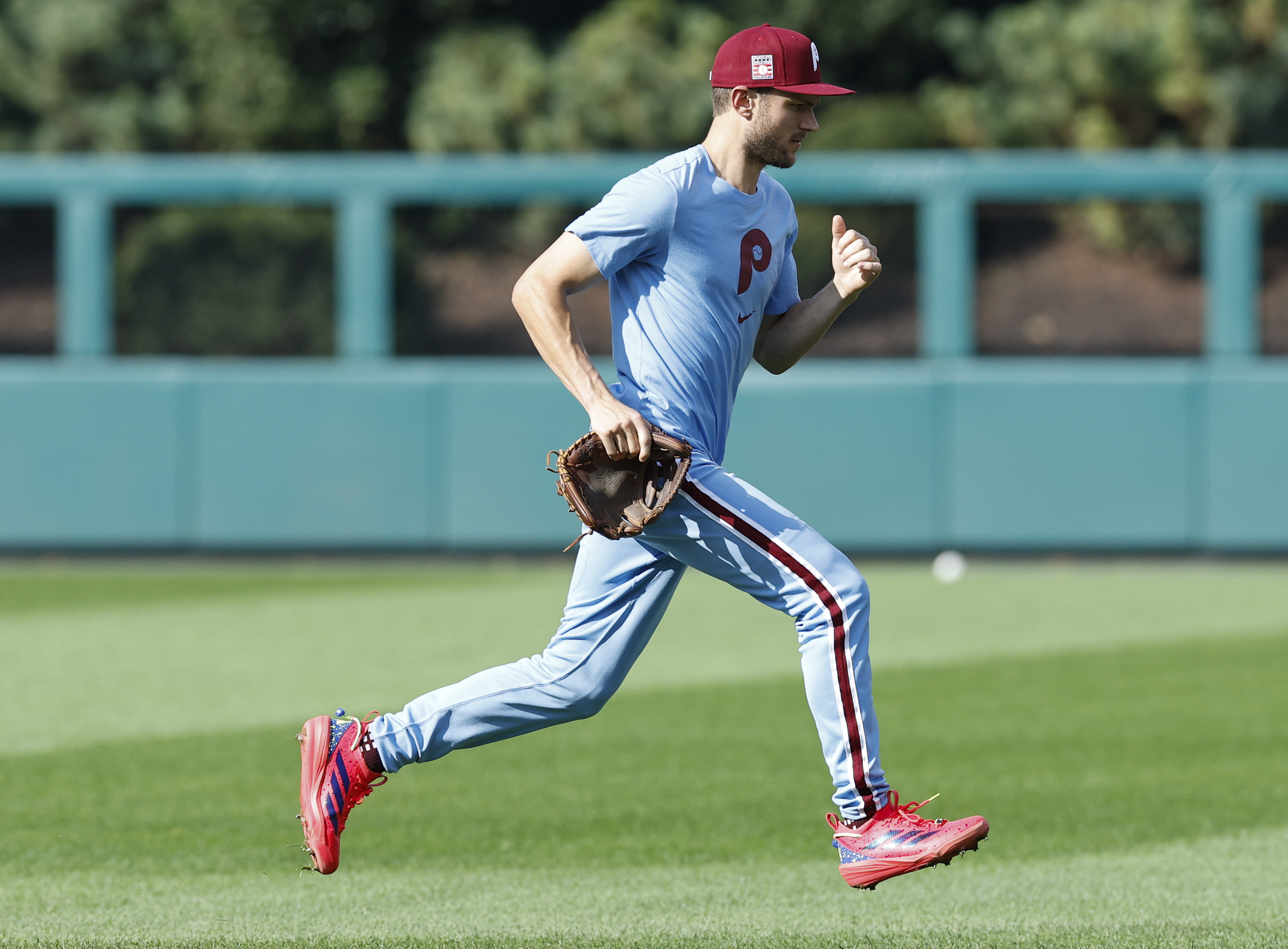
    A training routine he has followed since he was a teenager has allowed Trea Turner to remain one of the game’s fastest players at age 32.

    As a freshman, Turner led the nation with 57 stolen bases. But when he went home after the season, he asked Smith to help improve his running form.

    “He hated the weight room. Hated it,” Austin said. “I’d go, ‘Dude, you need to get big. You need to get strong.’ He was like, ‘I don’t want to lose my speed.’ And he would go see Ed and do his explosion drills, his speed and agility, his laterals.

    “They still work together every offseason. If I had to guess, that’s just allowed him to have the longevity and maintain his speed.”

    Turner works out with Smith multiple times per week in the winter. During the season, he speaks by phone with Smith at least monthly and texts him more often with questions. He takes feedback from Smith and shares it with the Phillies’ staff, notably athletic trainer Paul Buchheit and strength coaches Morgan Gregory and Furey Leva.

    Because as much pride as Turner takes in still being faster than most players, he focuses more on maintaining that speed. Since making his major-league debut, his average sprint speed has ranged from 30.6 feet per second in 2015 and 2021 to 29.6 in 2024. Only once has he not finished among the six fastest players in baseball.

    “Some guys are fast for a year or two years, and then an injury pops up and they might not be the same again,” Turner said. “I don’t want that to happen. I’ve tried to become a complete player, so if I ever lose my speed, I want to be able to contribute. But it also would change who I am.

    “If I lose a step, I lose a step. That’s OK. But if I’m running at 29 feet per second instead of 30, I can still impact the game. That’s still moving. But you’ve got to run correctly to do that.”

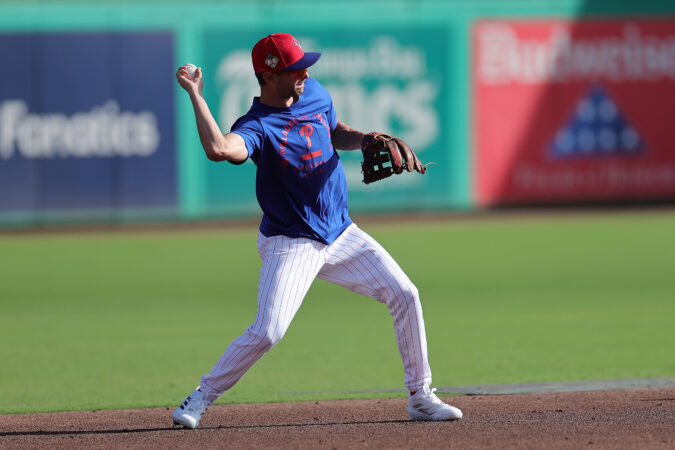
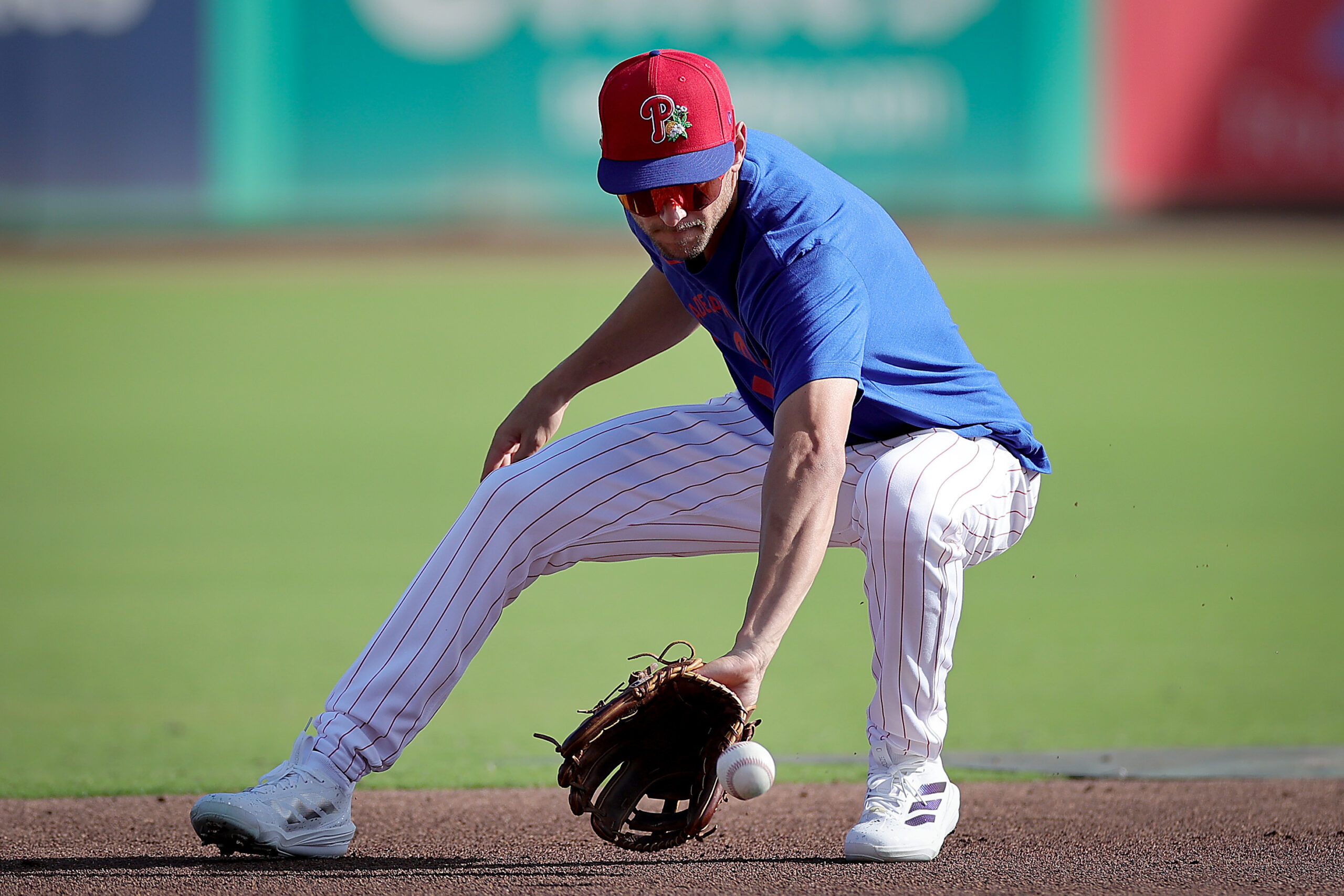
    Shortstop Trea Turner, who will be 33 in June, enters his fourth season with the Phillies.

    Turner will be challenged to remain in the pole position for the Phillies. Rookie center fielder Justin Crawford, 22, is a burner, with a top recorded speed of 31.1 feet per second in triple A last season. Johan Rojas, a candidate to make the team as a reserve outfielder, averaged 30.1 feet per second over the last two seasons.

    But the fastest man in the league in 2015 was still at the top of the leader board in 2025, with no sign of slowing down.

    “I’ve seen the numbers, and I’m proud of them,” Turner said. “Because when you look at those charts, you don’t see many 30-year-olds. And even if you do, it’s really low volume. I think it’s pretty cool. I take pride in it, and I think it’s cool for the people around me that help me do it. It’s something they should be proud of, too.”

  • In the 1940s, she was denied service at a Delco restaurant. She spent the rest of her life bridging racial divides in Media.

    In the 1940s, she was denied service at a Delco restaurant. She spent the rest of her life bridging racial divides in Media.

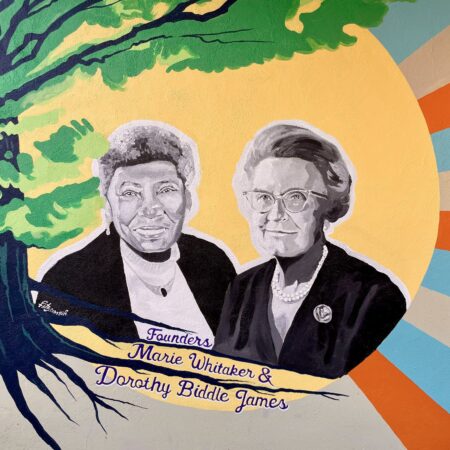
    When the Media-area NAACP was selecting a few Black figures to spotlight throughout Black History Month, adding Marie Whitaker to the list was a no-brainer, said Cynthia Jetter, president of Media’s NAACP chapter.

    Within the community, “I think most people know the story,” Jetter said.

    The story, that is, of when Whitaker sat down for a meal at the Tower Restaurant at the corner of State and Olive Streets with her baby in her arms and her sister by her side in 1943.

    No one waited on them.

    This bothered Dorothy James, a white Quaker woman who was dining at the restaurant. So she approached a worker there who explained that the waitresses did not serve Black people, James recounted in a letter she wrote a few days after the incident.

    Whitaker soon left the restaurant with her baby and sister and went elsewhere. Soon, James joined them, she wrote.

    Whitaker and James became fast friends and cofounded Media Fellowship House the following year. The goal was to bring together Media residents of all races and religions for events and meals. It grew over the course of its first decade, and in 1953, they raised enough money from community members to buy a property on South Jackson Street, where the organization flourished.

    Whitaker died in 2002, but the fellowship house lived on. In its 82 years, it has gone from hosting sewing circles and childcare events to helping Black people buy homes in restricted neighborhoods to now offering assistance to first-time homebuyers and helping those facing foreclosure.

    For Amy Komarnicki, who now runs the Media Fellowship House, the values Whitaker championed — inclusion, resilience, and courage — are always guiding her.

    “I think you have to move toward the injustice that you see and not ignore it,” Komarnicki said.

    That is especially difficult to do when you’re on the receiving end of the injustice, she added.

    “Being willing to accept an invitation to talk about it takes enormous bravery and trust,” Komarnicki said. “It’s good to be uncomfortable. It’s good to make people uncomfortable for the greater good. It opens up space for dialogue.”

    Whitaker’s legacy stretches beyond the bounds of Media. Her daughter, Gail Whitaker, once the infant with her at the restaurant where she did not get served, became the first Black woman to practice law in Delaware County and served on the Media Borough Council. She died in 2024. Her son, Bill Whitaker, is a 60 Minutes correspondent for CBS.

    Living in Media and going to Fellowship House growing up exposed him to people from all kinds of demographics and religions, Bill Whitaker said. And that was no accident; it was something his mother and Fellowship House helped lay the groundwork for.

    “She was resolute and knew what she wanted, not just for her family, but for her community and for her world,” Whitaker said. “She had a vision of what Fellowship House stands for, bringing people together and having people speak across what seems now to be a chasm of our differences — she wanted people to speak across that, to reach across that and come together.”

    As long as Fellowship House stands, that work, just as important now as then, will continue, Bill Whitaker said.

  • In a Facebook Marketplace and Depop world, Philly Craigslist still endures

    In a Facebook Marketplace and Depop world, Philly Craigslist still endures

    Every morning, Julie Parlade, a 34-year-old stylist, wakes up and does what most millennials do. She reaches for her phone and checks her apps. Instagram, Gmail, maybe the news. Then she checks one more: Craigslist.

    Yes, that Craigslist. The classified advertisement website that was popular in the early aughts and 2010s. She checks it later in the day, too, pretty much whenever she has downtime. “It’s so automatic for me,” said Parlade, who lives in Springfield, Delaware County. “I have an obsession.”

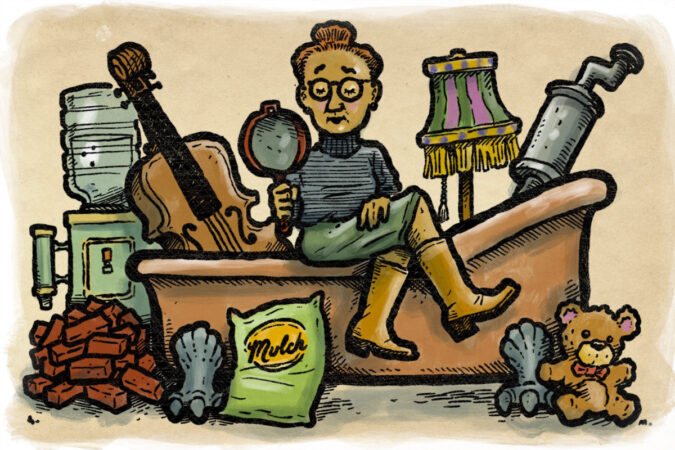
    Parlade mostly sticks to the free section, where she has scored everything from a pair of Frye boots in perfect condition to an entire set of Le Creuset cookware. Half of her house is furnished from the Craigslist free section: the claw-foot tub in the bathroom, the subway tile in the kitchen, the mid-century modern furniture in the living room.

    She started using Craigslist around 2010, first for jobs and apartments, and never really stopped. Today, it’s still her go-to source for secondhand items, despite the rise of other online marketplaces like Depop and Facebook Marketplace.

    “Everyone uses Craigslist,” Parlade said, “so I feel like I’m able to get better things. It’s a much broader net.”

    Does everyone still use Craigslist? Maybe not everyone, but more people than you might think. Despite its reputation as a digital relic, Craigslist draws more than 105 million monthly users, making it the 38th most popular website in the United States, according to internet data analytics company SimilarWeb.

    And in Philadelphia, the site remains a daily resource for people seeking work, housing, materials, and other necessities.

    University of Pennsylvania professor Jessa Lingel, 42, who interviewed hundreds of Craigslist users in Philadelphia for her book An Internet for the People: The Politics and Promise of Craigslist, says the platform functions as a kind of parallel infrastructure to more polished platforms, particularly for people with fewer financial resources.

    “Craigslist still has a role to play for a lot of Philadelphians who are just trying to live their everyday lives,” Lingel said.

    Access to affordability

    That role shows up most clearly in the kinds of jobs and housing that still circulate through Craigslist. Lingel, who lives in North Philadelphia, said many of the users she interviewed relied on the site to find warehousing shifts, construction work, and short-term gigs paying around $20 an hour — work that rarely surfaces on platforms like LinkedIn or Indeed because “those other platforms haven’t called those folks in,” she said.

    The same pattern holds for housing. Affordable apartments and private rooms for rent still appear regularly on Craigslist, posted by college students seeking temporary roommates or by landlords unwilling to pay higher listing fees. As one of Lingel’s interviewees put it, the cheap housing is on Craigslist, not Redfin. He called Craigslist the “poor people’s internet,” Lingel said.

    Craigslist does not release detailed user data, so there’s no way to know how many Philadelphians still rely on the site. But, Lingel said, given that Philadelphia is the second-poorest big city in the country, it would not be surprising if the ”poor people’s internet” remained especially relevant here. “Craigslist is gritty,” Lingel said, “and so is Philly.”

    Privacy protection and net nostalgia

    For some Philadelphians, the appeal of Craigslist isn’t affordability so much as how little of themselves it asks for in return. Unlike newer marketplaces that tether buying and selling to social profiles, Craigslist allows users to remain largely invisible — no profile photos, no friend networks, no algorithm stitching transactions back to a personal identity.

    It hearkens back to a simpler time on the internet, and, according to Lingel, holds special appeal for young tech skeptics who “are more ideologically attached to Craigslist.” .

    “The comparison that I think of is children of the ’80s going to ’50s-themed diners and getting really into Lindy Hop. It’s like, ‘Oh, this is a vision of the internet that I want to have experienced but have not.’”

    That simplicity is precisely what draws people like Raquel Glassman, a cofounder of a local kombucha company from Port Richmond, who mostly uses Craigslist to give things away. When she’s decluttering, she’ll box up items, leave them on the sidewalk with a handwritten “Free” sign, snap a photo, and post it online. “It’s always gone within the day,” she said.

    If Glassman, 31, is going to sell an item, she likes that she can do it anonymously on Craigslist. Facebook Marketplace is more efficient, she says, but it’s not a great place to go if you don’t want your aunt to know that you’re getting rid of the “ugly lamp” she gave you. “She’ll see it on my Facebook because we’re friends,” Glassman said. “You put that on Craigslist if you want to sell that.”

    IRL effects

    But the funny thing about Craigslist is that while it lets you be a stranger online, it forces you to be your full self in real life, and some people prefer that. According to Lingel, hobbyists such as musicians and car enthusiasts are among the most active Craigslist users.

    Indeed, two of the most popular “For Sale” subcategories on Philly Craigslist are auto parts and instruments — both of which benefit from face-to-face transactions. They allow sellers to avoid shipping costs and allow buyers to inspect their purchases.

    As Michael Lesco, a 33-year-old musician and marijuana dispensary manager said, “If I’m going to put $300 into something, I want to meet you in person and put the money in your hand.”

    Like Parlade, Lesco also makes good use of Craigslist’s free section. Last summer, he used it to get mulch and brick for the garden he was building in the abandoned lot next to his house in West Philly. The project could’ve easily cost $5,000. Instead, he and his wife did it for less than the cost of their West Philly Tool Library membership.

    “We could not have done it without Craigslist,” Lesco said.

    Parlade’s most recent Craigslist score was also construction-related: free drywall from a contractor. “We’re going to use it to fix my dad’s house,” she said. Craigslist, she added, is “almost like a service.”

  • Five questions about the Eagles that must be answered before the 2026 roster takes shape

    Five questions about the Eagles that must be answered before the 2026 roster takes shape

    The new league year is right around the corner, and it’s almost time for the 2026 Eagles roster to start coming into focus.

    But first, the annual NFL Scouting Combine.

    It’s the next thing on the offseason calendar, and while the focus for much of the week will be on the athletes going through performance testing, when it comes to the Eagles, it should be a big week for news related to the team.

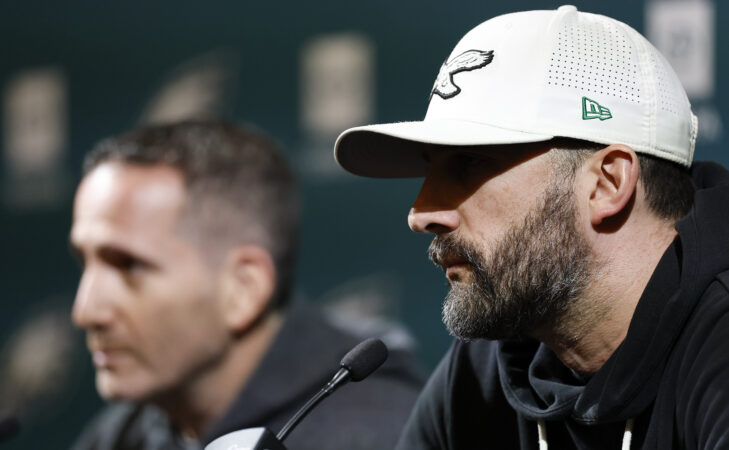
    Reporters typically get to talk to Nick Sirianni and Howie Roseman around the combine, and there are certainly plenty of questions to ask this year.

    Here’s a look at five of the most pressing Eagles topics the coach and general manager may be addressing soon:

    Why did the Eagles choose Sean Mannion, and why did they assemble this staff around him?

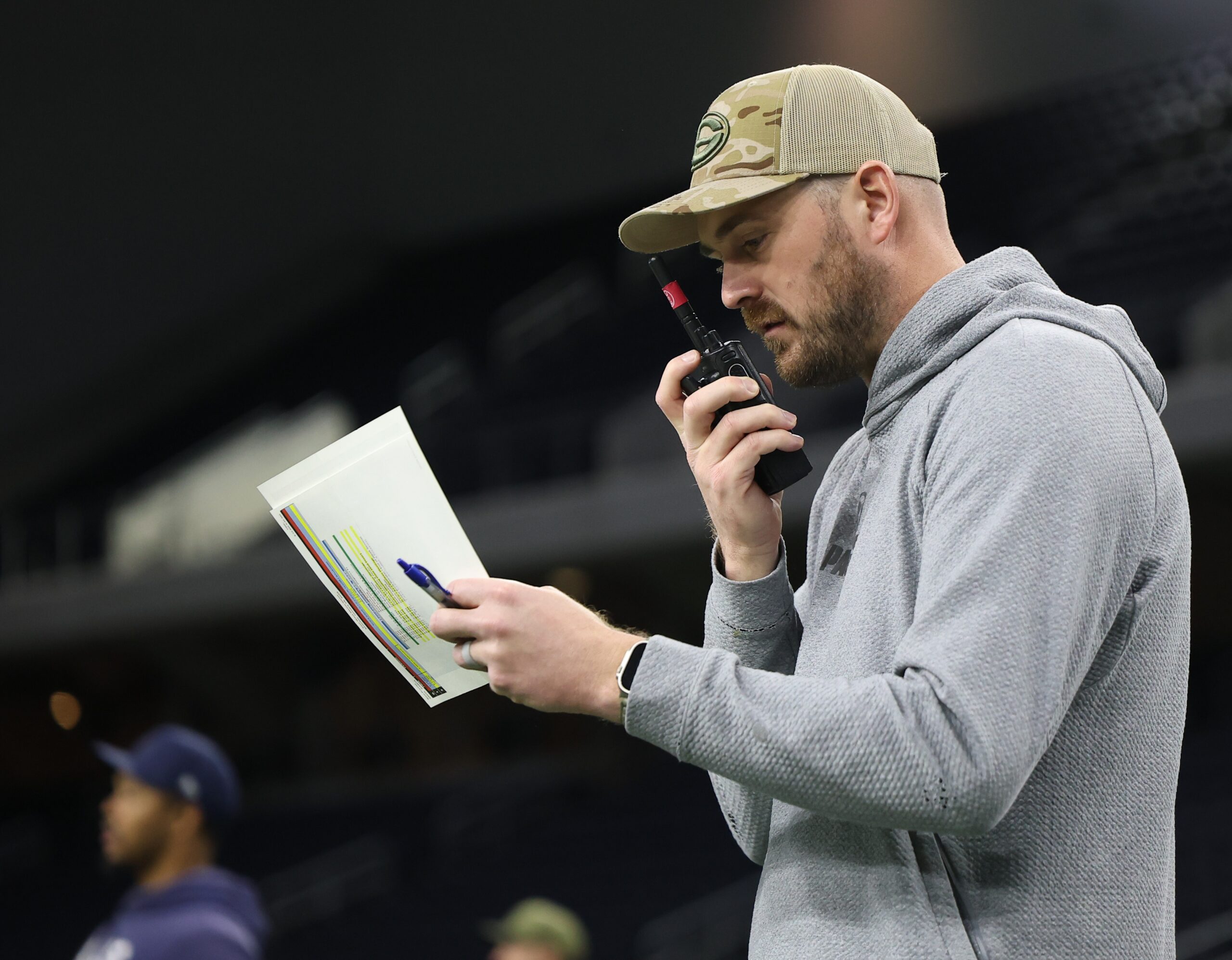
    It’s been three weeks since the Eagles filled their vacancy at offensive coordinator by hiring Green Bay Packers quarterbacks coach Sean Mannion, a 33-year-old former quarterback with only two years of coaching experience. But we’ve yet to hear from Sirianni or Roseman, besides an initial statement released by the team, on why the Eagles hired Mannion, what they liked about him, and what hiring him means for the future of the scheme.

    In the weeks since, the rest of the offensive coaching staff has been filled out. The Eagles hired one of their other coordinator candidates, former Tampa Bay offensive coordinator Josh Grizzard, as pass game coordinator. They hired Packers wide receivers coach Ryan Mahaffey to be the tight ends coach and run game coordinator. Longtime offensive line coach Jeff Stoutland left the team (more on that later), and he was replaced by Minnesota Vikings offensive line coach Chris Kuper.

    The Eagles retained wide receivers coach Aaron Moorehead and running backs coach Jemal Singleton, sources told The Inquirer, and, according to CBS Sports, plan to shift Parks Frazier, last season’s pass game coordinator, to quarterbacks coach.

    Sean Mannion will be calling plays for the first time under intense scrutiny in Philadelphia.

    The new offensive coaching staff, under a first-year play-caller, is an amalgamation of coaches with different backgrounds. What will it mean for the scheme going forward?

    Sirianni said after removing Kevin Patullo that the offense needed to “evolve.” He’ll soon have the chance to explain why and how this group can help it do that.

    What happened with Jeff Stoutland?

    The longest-tenured coach in the building, who has been widely regarded as the best offensive line coach in the sport, is no longer coaching with the Eagles.

    Why?

    The Eagles wanted Stoutland back as the offensive line coach, league sources said, but Stoutland, who also held the title of run game coordinator, wasn’t going to be as involved in the running game, and the Eagles are shifting schemes. Change is in the air. But Stoutland’s role in the running game decreased as last season went on, The Inquirer’s Jeff McLane reported recently on the unCovering the Birds podcast.

    How did it get to this, and how much of an impact will his departure have on the offensive line moving forward?

    What’s the latest on the A.J. Brown situation?

    Don’t expect Roseman to say anything that strays too far from his normal line when it comes to A.J. Brown and players like him.

    Here’s what Roseman said at the end-of-year news conference on Jan. 15 when asked if he was open to trading Brown or if trading him was a nonstarter: “It is hard to find great players in the NFL, and A.J.’s a great player. I think from my perspective, that’s what we’re going out and looking for when we go out here in free agency and in the draft is trying to find great players who love football, and he’s that guy. I think that would be my answer.”

    Still, Roseman likely will be asked about the star receiver’s future in Philadelphia in the coming days. It’s for good reason. Brown, of course, hasn’t been shy about his frustrations with the direction of the offense. But during Super Bowl week, Brown appeared on Micah Parsons’ podcast and spoke about his excitement for the future and the new offensive coaching staff. “Sometimes change is not a bad thing,” he said. He also called Philadelphia “home.”

    Does wide receiver A.J. Brown have enough love for Philadelphia to remain an Eagle?

    While he didn’t sound like someone who was about to ask for a trade, it’s still early in the offseason.

    Brown’s future with the team impacts how the Eagles approach the draft and free agency, so a decision on whether the Eagles see him in their immediate plans probably is already made. It’s complicated, however, because of the salary cap implications. The cost to trade Brown before June 1 would be $48.939 million, according to Over the Cap. If the Eagles traded him after that, they would incur a dead cap charge of $22.09 million. Much more palatable, but still a lot of dead money.

    It begs the question, too: Could the Eagles ever get good value in a trade for Brown?

    Roseman probably won’t be showing his cards in the coming days, but it’s a topic he’ll have to address.

    How much has the future outlook of the offensive line changed, and how will it impact the plans?

    The offensive line took a big step back in 2025 thanks to a slew of injuries. Lane Johnson missed half the season. Landon Dickerson was never fully healthy and may never be again. Cam Jurgens played through back pain.

    At the time of Stoutland’s departure, it wasn’t even a sure thing that Johnson and Dickerson would be back for the 2026 season. A unit that basically was plug-and-play has turned into a big question mark for the Eagles. How much longer will Johnson and Dickerson play? (Editor’s note: Johnson announced his return for 2026 on Thursday.)

    Eagles offensive tackle Lane Johnson’s health and future were in doubt before he announced his return on Thursday.

    Jurgens, meanwhile, shared a video this week on social media of him in Colombia undergoing stem cell treatments. Jurgens, via his agent, declined to comment further on what led him to go that route or how he is feeling. The center had back surgery after the Super Bowl last year and did not play to his 2024 level this past season.

    This impacts how the Eagles approach the draft and free agency. They’re due to get an eventual replacement for Johnson in the door, but they now need to think about the future of the interior.

    Who stays, who goes, and who could get extended or restructured?

    It soon will be time for the Eagles to go shopping on the free agency market, but there are some players on the current roster in line to have their contracts extended or possibly restructured.

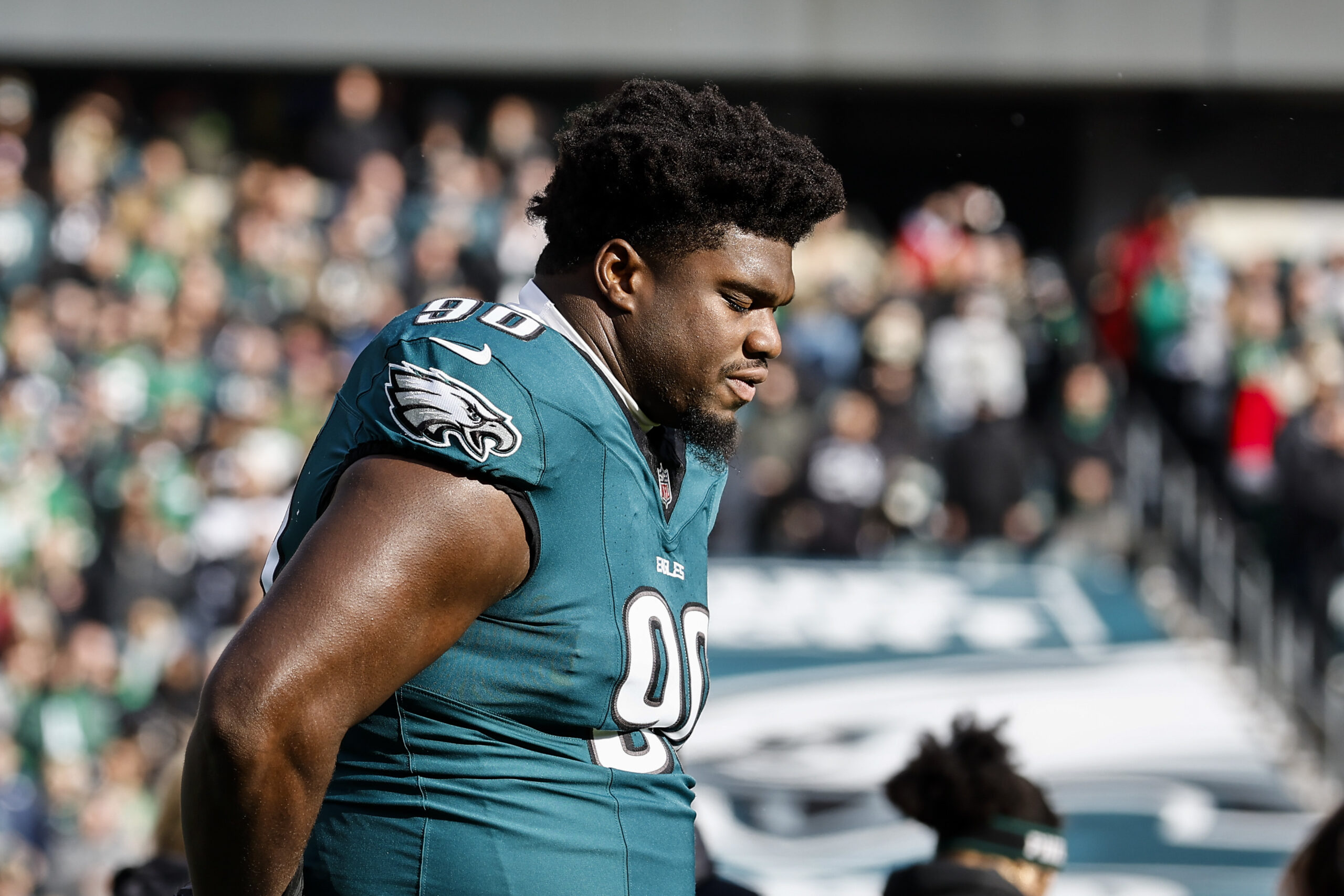
    Let’s start with Jordan Davis, who broke out in 2025 and earned himself a new contract. The Eagles picked up Davis’ fifth-year option last year, but signing him to a new deal is almost too obvious because it would free up much-needed cap space for 2026.

    Will defensive tackle Jordan Davis be first in line for a contract extension after a breakout season?

    There’s also Jalen Hurts, whose cap number jumps from nearly $22 million in 2025 to nearly $32 million in 2026. It will be more than $42 million in 2027, more than $47 million in 2028, and a whopping $97.5 million in 2029. But Hurts has no guaranteed money beyond this season. A restructure or extension could be on the table sooner than later.

    What about the free agents? Jaelan Phillips, for example, is one of the best edge rushers on the market, and the Eagles need some of those. Safety Reed Blankenship is slated to hit the market, and the Eagles need a safety.

    Roseman may not tip his hand, but he’ll certainly be asked about all of it with free agency just a few weeks away.

  • Thursday at the Olympics: Women’s figure skaters and U.S. women’s hockey go for gold

    Thursday at the Olympics: Women’s figure skaters and U.S. women’s hockey go for gold

    At any Olympics, people talk about how much influence NBC has over the schedule. But not even the IOC’s biggest bankroller of all could stop a jam that fans will run into on Thursday.

    Women’s figure skating’s free skate is at the same time as women’s ice hockey gold medal game, 1 p.m. Philadelphia time.

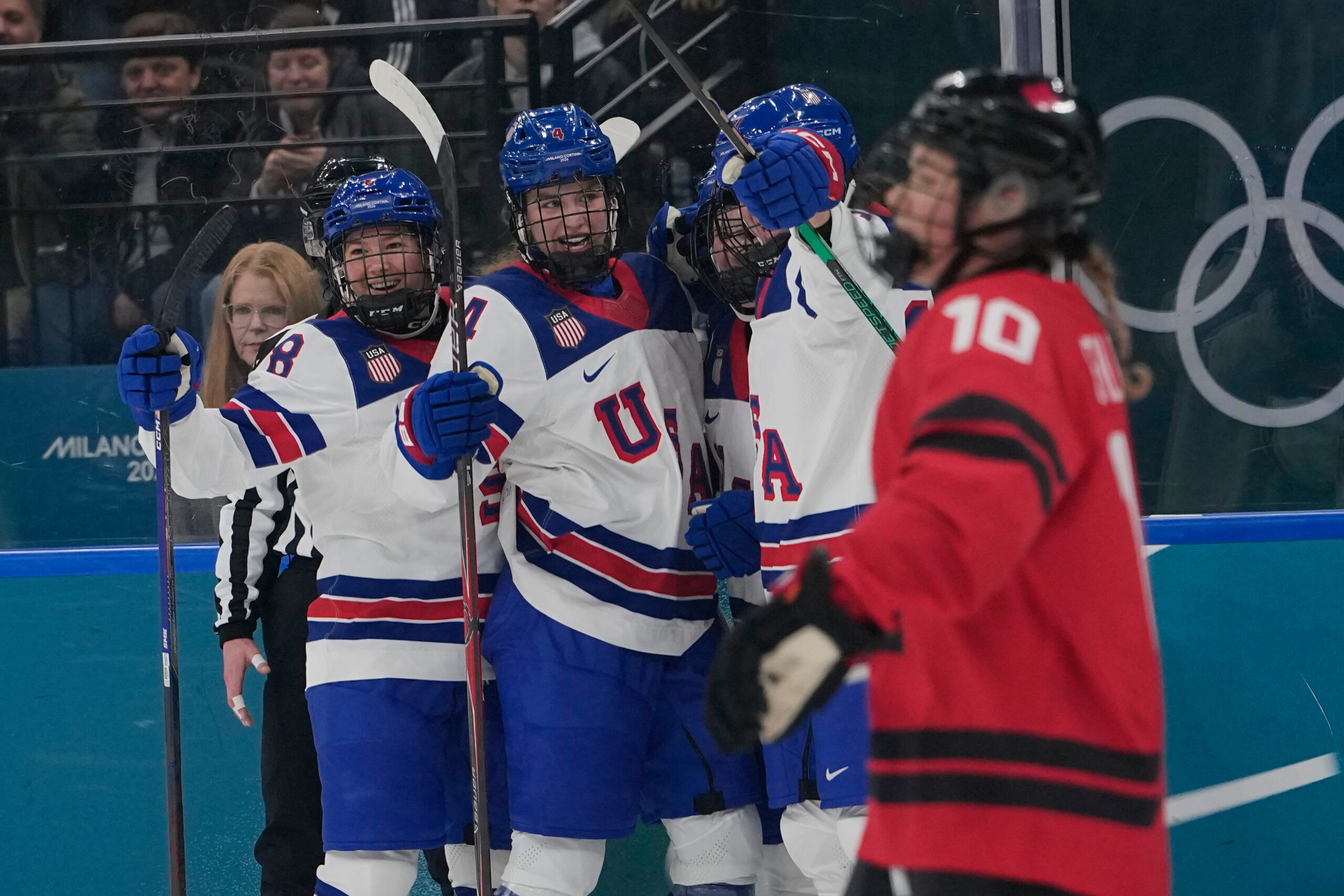
    That means Alysa Liu, South Jersey’s Isabeau Levito, and Amber Glenn will be fighting to earn medals while Hilary Knight and Kendall Coyne Schofield lead the U.S. hockey squad against perennial archrival Canada.

    NBC can’t show both events live in full at the same time — well, it could split-screen them, but that would be awkward. And the “Gold Zone” show on NBCSN and Peacock already does that anyway.

    The U.S. women’s hockey team routed Canada, 5-0, in the first round of matchups at the Olympics.

    So women’s hockey fans will be left with the short straw, as their game is on USA Network while figure skating is on NBC.

    The women’s hockey gold medal game has been on a Thursday at the last four Olympics, including at Vancouver in 2010. But it hasn’t always been at the exact same time as figure skating. Perhaps NBC will be able to put in a word about that with the IOC, whether for 2030 in France or certainly 2034 in Salt Lake City.

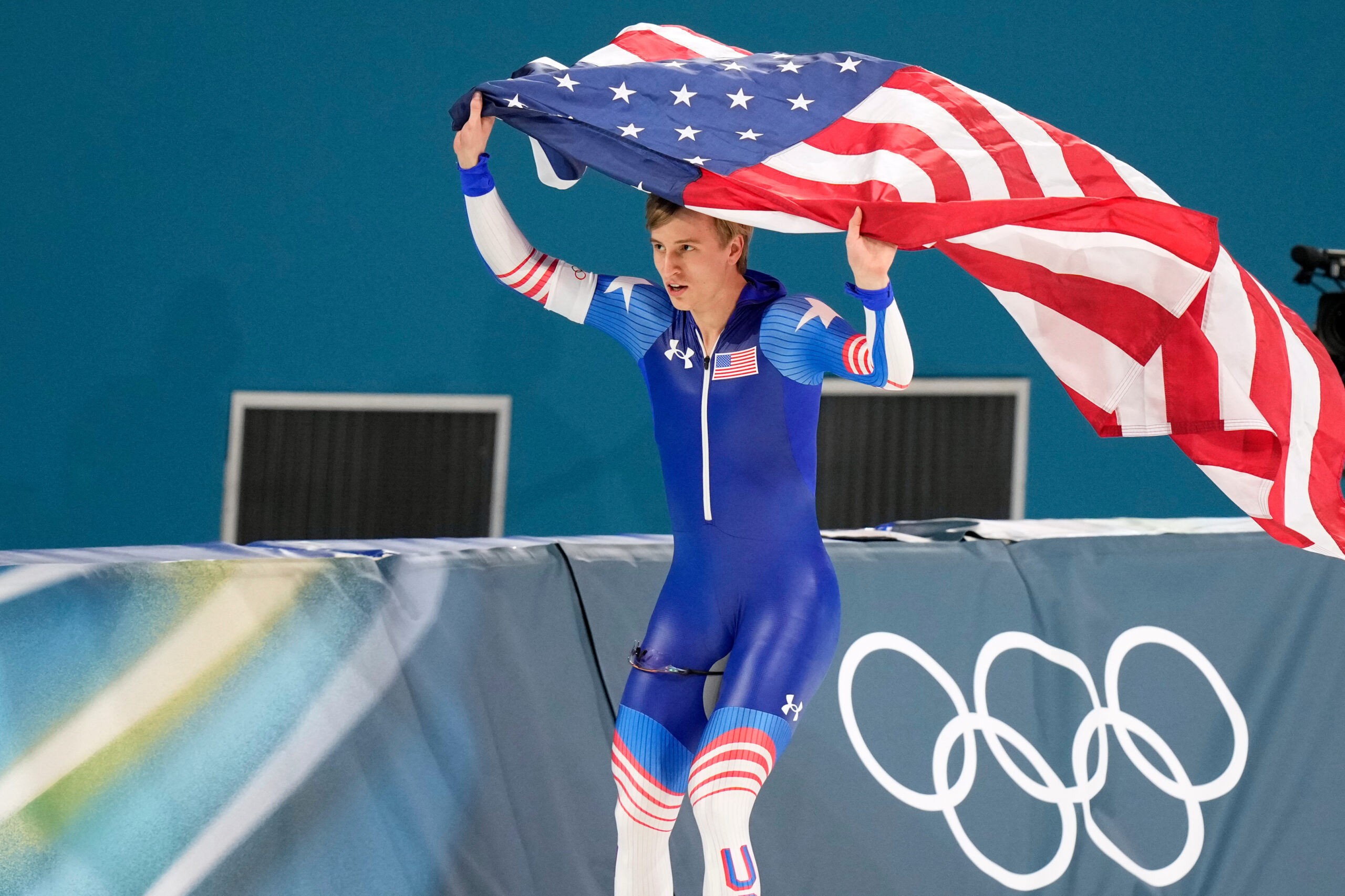
    Another big event Thursday is the men’s speedskating 1,500-meter race. American Jordan Stolz will go for his third gold medal in Milan, having swept the 500 and 1,000 so far. That’s at 10:45 a.m. on USA, with rebroadcasts on NBC at noon and in prime time. We’ll see if it runs long and NBC can catch the end live.

    Jordan Stolz of the U.S. celebrates after winning the men’s 500 meters speedskating race on Feb. 14 at the 2026 Winter Olympics in Milan, Italy.

    Thursday’s Olympic TV schedule

    NBC

    • Noon: Speedskating — Men’s 1500m
    • 1 p.m.: Figure skating — Women’s free skate
    • 8 p.m.: Prime time highlights including figure skating, speedskating, and freestyle skiing
    • 11:35 p.m.: Late night highlights including freestyle skiing and ski mountaineering

    USA Network

    • 3:50 a.m.: Ski mountaineering — Men’s and women’s sprint heats
    • 4:55 a.m.: Curling — Canada vs. Norway men
    • 6:55 a.m.: Ski mountaineering — Women’s sprint final and semifinals
    • 8:05 a.m.: Curling — United States vs. Switzerland women
    • 8:15 a.m.: Ski mountaineering — Men’s sprint final
    • 8:20 a.m.: Back to U.S.-Switzerland curling
    • 10:45 a.m.: Speedskating — men’s 1,500
    • 1:10 p.m.: Ice hockey — United States vs. Canada women’s gold medal game

    How to watch the Olympics on TV and stream online

    NBC’s TV coverage will have live events from noon to 5 p.m. Philadelphia time on weekdays and starting in the mornings on the weekends. There’s a six-hour time difference between Italy and here. The traditional prime-time coverage will have highlights of the day and storytelling features.

    As far as the TV channels, the Olympics are airing on NBC, USA, CNBC, and NBCSN. Spanish coverage can be found on Telemundo and Universo.

    NBCSN is carrying the Gold Zone whip-around show that was so popular during the Summer Olympics in 2024, with hosts including Scott Hanson of NFL RedZone. It used to be just on Peacock, NBC’s online streaming service, but now is on TV, too.

    Every event is available to stream live on NBCOlympics.com and the NBC Sports app. You’ll have to log in with your pay-TV provider, whether cable, satellite, or streaming platforms including YouTube TV, FuboTV, and Sling TV.

    On Peacock, the events are on the platform’s premium subscription tier, which starts at $10.99 per month or $109.99 per year.

    Here is the full event schedule for the entire Olympics, and here are live scores and results.

  • Inside ‘The Simpsons’ last-minute addition of late writer Dan McQuade’s likeness to its Philadelphia episode

    Inside ‘The Simpsons’ last-minute addition of late writer Dan McQuade’s likeness to its Philadelphia episode

    On the night of Feb. 4, at about 9:30, Christine Nangle received a text. It was from her boss Matt Selman, executive producer of the Fox program The Simpsons.

    He had an idea. A mutual friend of theirs, Defector writer Dan McQuade, had recently died of neuroendocrine cancer at the age of 43. McQuade was a Simpsons superfan who embraced all of Philadelphia’s quirks, from tacky boardwalk T-shirts to the comically small La Salle smoke machine.

    The Simpsons was about to air its 800th episode, set in Philadelphia. It included a litany of local references, many of them obscure to anyone outside the Delaware Valley.

    McQuade had been planning to write about it. He hoped to get together to discuss the episode with Nangle and Selman while simultaneously watching and riffing on another Philadelphia-based show — Do No Harm, a medical drama McQuade described as “weird and bad.”

    But that never happened. McQuade’s condition worsened. He died Jan. 28 at his parents’ home in Bensalem.

    The Simpsons episode seemed tailor-made for McQuade. The producers hadn’t sent the final video to Fox studios yet. So, Selman made a proposal: Why not add a Dan McQuade Easter egg?

    Nangle, a writer and producer on the show, couldn’t believe it. A few days earlier, she’d had the same thought, and almost texted it to her boss. But she assumed that it would be too late, because the episode was set to air on Feb. 15.

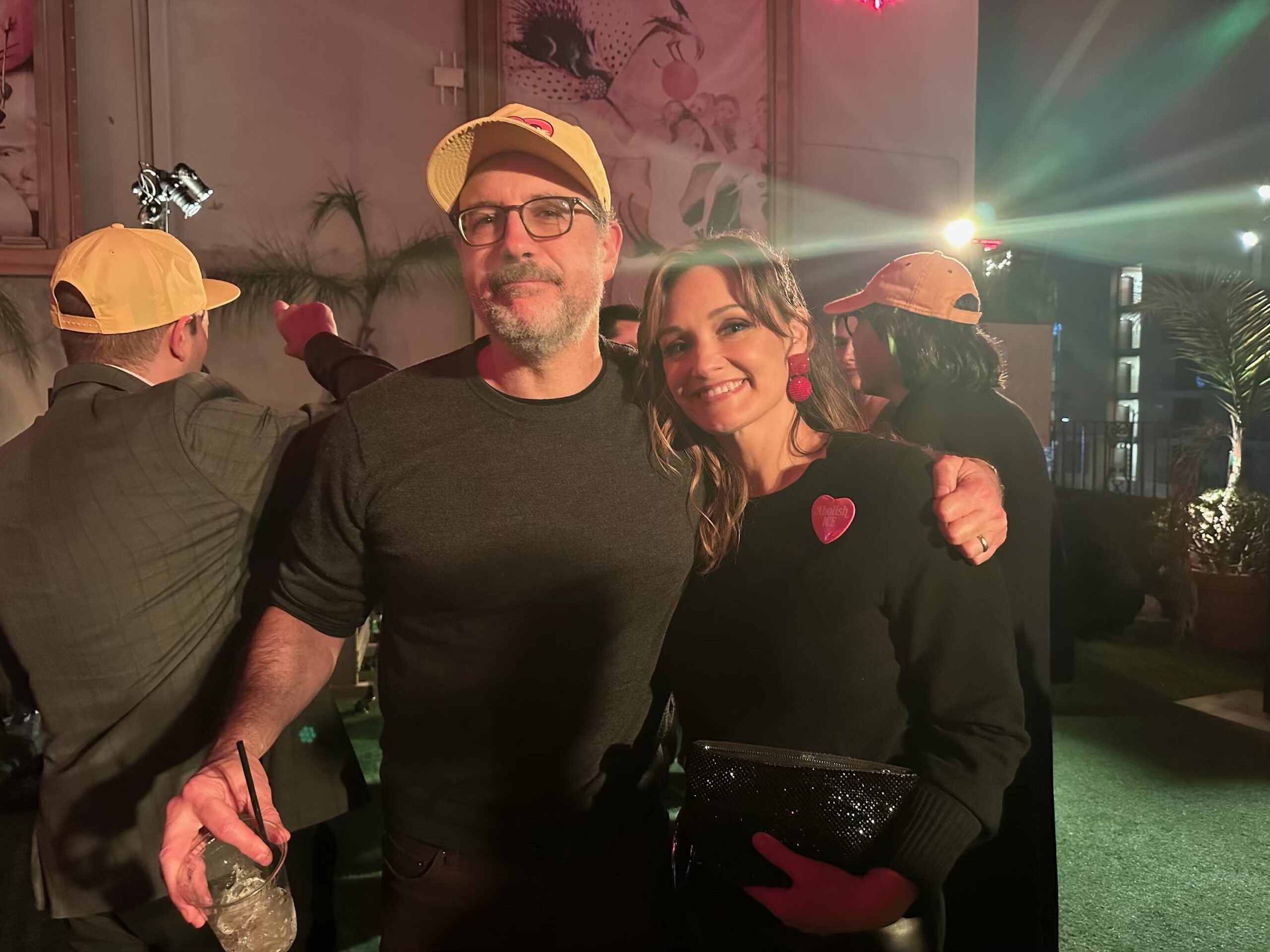
    Matt Selman and Christine Nangle pictured at “The Simpsons” 800th episode party on Feb. 6.

    The coworkers began to scour footage for any spot they could fit a Simpson-size, shaggy-bearded Philadelphian. Nangle considered putting him in the Mütter Museum, when Homer visited with a National Treasure-themed contingent.

    But that was ruled out. So was the “Philadelphia Super Bowl Riot of 2018.” Selman worried viewers wouldn’t be able to recognize McQuade among the crowd of rabid fans.

    “That was the Super Bowl when the Eagles beat my beloved Patriots, because of Bill Belichick’s inflexibility,” the executive producer said. “I thought about jamming him into that, but you wouldn’t have been able to see his cute little face. His little hairstyle.”

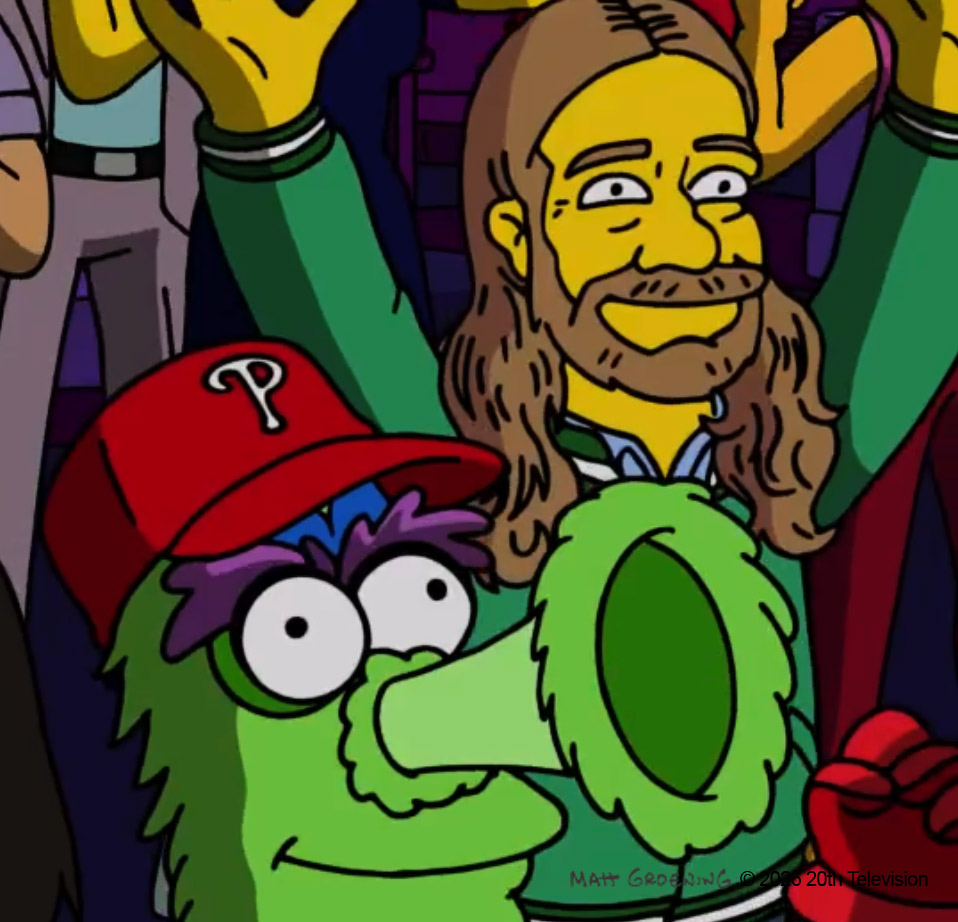
    Instead, Selman found the perfect scene. About halfway through the episode, at the 10:49 mark, Homer goes to a Roots concert. The camera pans to the front row.

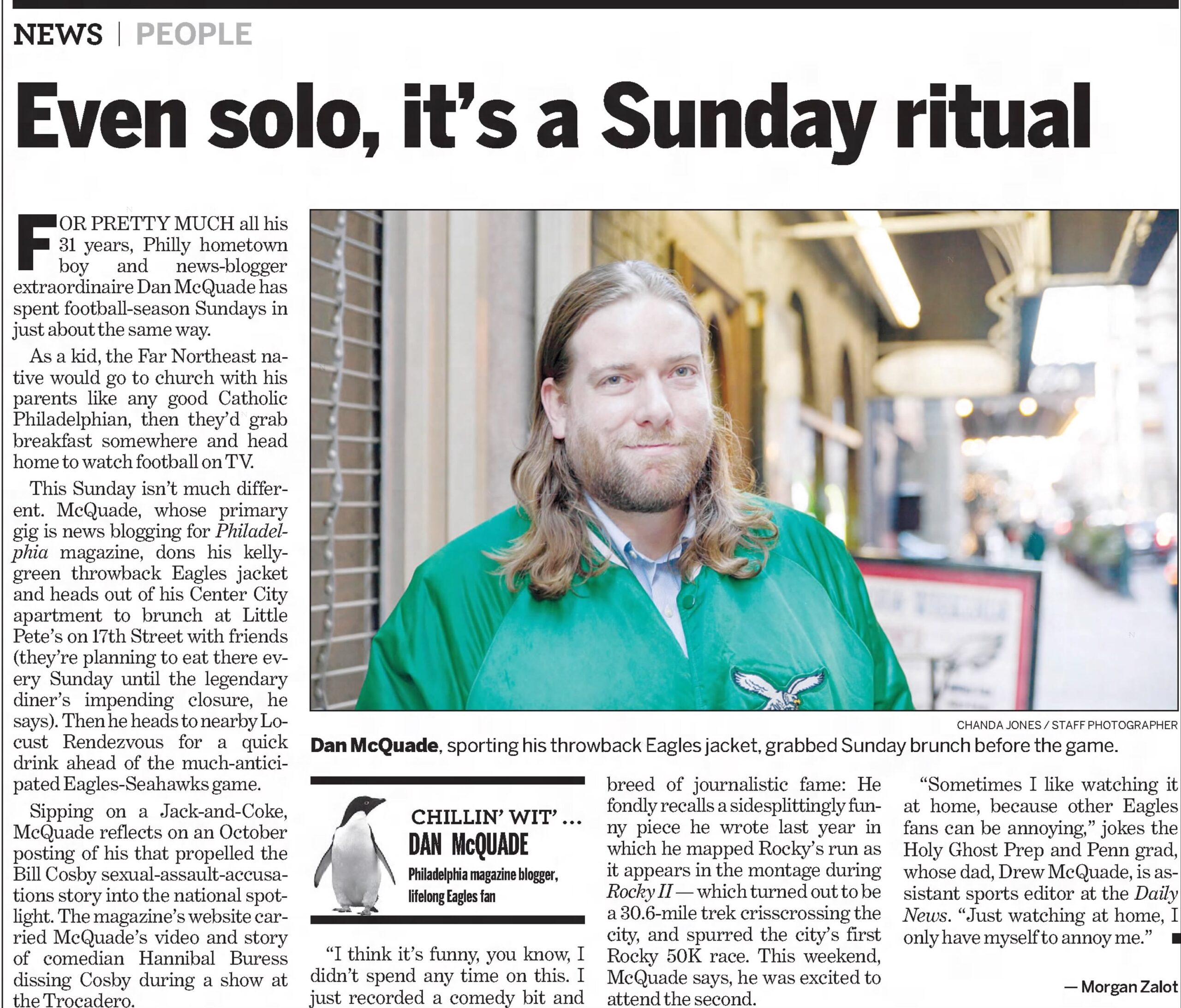
    In the upper right-hand corner, wearing a kelly green satin jacket, with his long hair parted down the middle, is Dan McQuade.

    “If it brought his family an ounce of relief, for one millisecond, then it was worth it,” Selman said.

    Dan McQuade’s likeness was utilized in a scene depicting a concert by The Roots.

    ‘This is a good idea’

    Selman had known McQuade for about five or six years. They were both alumni of the University of Pennsylvania, where they worked as editors at the Daily Pennsylvanian and 34th Street Magazine.

    McQuade was 11 years younger, so they never met on campus. But Selman developed an appreciation for his work, and an online friendship blossomed.

    Nangle, who grew up in Oxford Circle and attended Little Flower High School, met McQuade only once, when they were teenagers. But like Selman, she got to know him through his writing.

    “He did this whole piece about the Franklin Mills Mall,” she said. “Just having somebody give voice to something that you thought was a mundane, dumb part of your life, and elevate it and make it seem like it matters, is really cool. You feel really seen.”

    She added: “I barely remember meeting him in high school, but just reading his work, I was like, ‘It’s crazy that I’m not friends with this guy.’ And I was like, ‘Next time I’m in the city, we have to hang out.’”

    Long after the producers moved to Los Angeles to work on the show, McQuade remained their portal to Philadelphia’s idiosyncrasies. In a way, Nangle looked to him as a kindred spirit.

    They were both trying to bring a bit of the city’s character to a national audience. For Nangle, that meant slipping Delco accents and eccentric characters into her shows.

    Dan McQuade in the Daily News in 2014

    For McQuade, that meant figuring out how Princess Diana got her hands on a kelly green-and-silver Eagles jacket.

    Selman would often go back and forth with McQuade about general Philadelphia weirdness. But they’d also talk about The Simpsons, of which McQuade was a lifelong fan.

    A few times, the writer managed to combine his two passions.

    “He’d text me photos of bootleg Bart Simpson T-shirts that he found,” Selman said. “And mail them to me. He would always send them to me.”

    McQuade and Selman had been planning a story around The Simpsons’ 800th episode for months. In October, the writer flew out to Los Angeles, to discuss it more in person.

    (Selman characterized this as more of a “fun-hang session.”)

    They toured the Fox studio and went to the gift shop, where McQuade purchased Itchy and Scratchy toys for his son, Simon. They finished the day with lunch at Moe’s Cafe.

    “There was a Philly cheesesteak on the menu,” Selman said. “And he was like, ‘I know this is going to be terrible, but I’m going to get it anyway.’

    “He didn’t think it was that good. He was a champ about it, though.”

    At the time, McQuade seemed to be in good health and good spirits. He’d told Selman about his cancer diagnosis but said that he “was doing OK.”

    When the executive producer heard that his friend had died, he was shocked. Selman read McQuade’s obituary, and looked back on a video of Simon playing with the Itchy and Scratchy toys.

    Then, the concept came to him.

    Selman reached out to line producer Richard Chung. Chung’s job was to streamline episode production — and it was rare for The Simpsons to add a character, even a minor one, so last-minute. Selman wasn’t sure how Chung would react.

    It would cost the company money and time. Not every line producer would have approved. But Chung did.

    “This is a good idea,” he said.

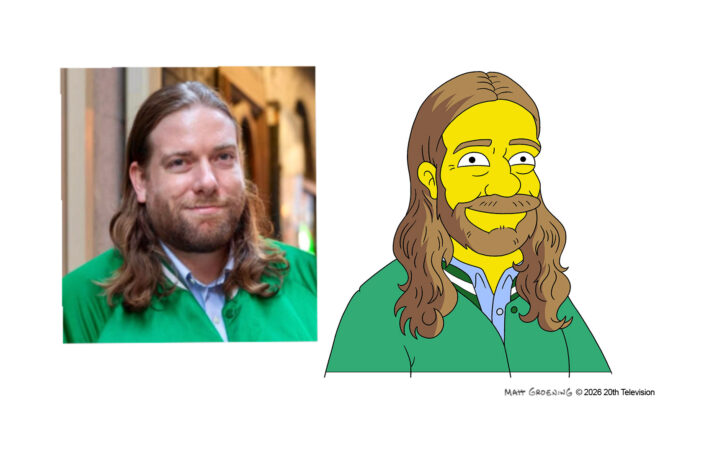
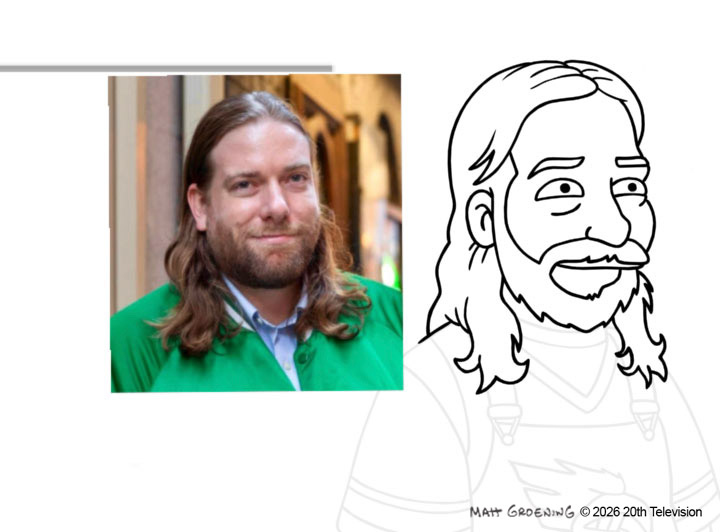
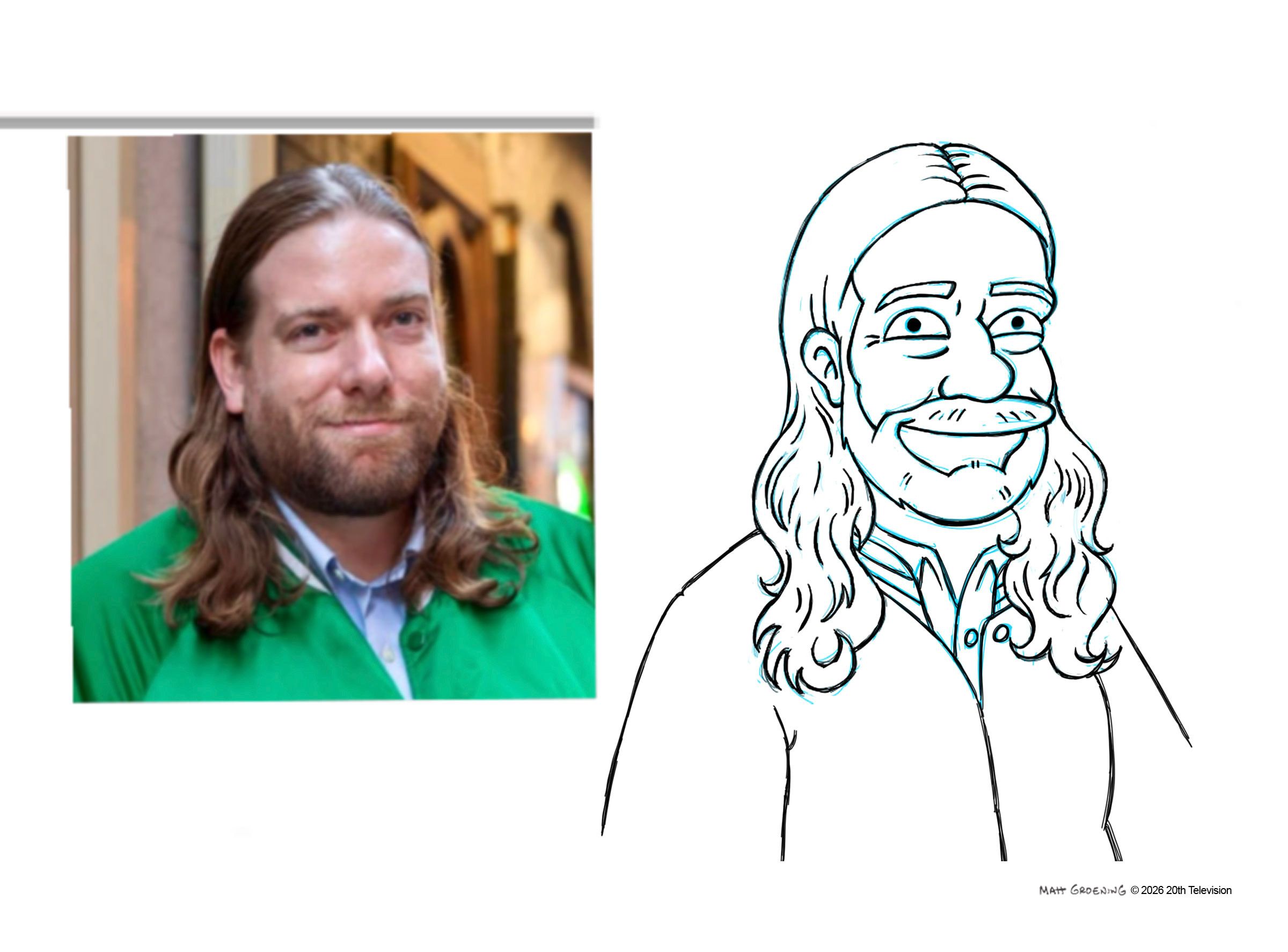
    The likeness of late writer Dan McQuade used in a recent episode of “The Simpsons” went through several iterations.

    Going ‘full Santa Claus’

    The next day, Chung started working on adding McQuade to the episode. He reached out to a character designer, who drew out a sketch.

    After it was done, Selman brought the concept to Drew Magary and David Roth at Defector. He asked what they recommended McQuade wear.

    “They said, ‘Put him in the kelly green Eagles satin jacket,’” Selman recalled. “So, we were able to put that implied jacket on him.

    “And then we just kind of looked for good pictures of his funny hair.”

    Dan McQuade’s Defector colleagues Drew Magary and David Roth recommended that the illustrators capture McQuade in his kelly green Eagles jacket.

    Selman and Nangle decided to replace a generic member of the crowd at The Roots concert with McQuade.

    It was unclear to Selman, or Magary, or Roth, if McQuade liked or disliked The Roots. But it was the best spot to include him. McQuade would be positioned right behind the Phillie Phanatic (tweaked to avoid copyright infringement).

    “I don’t know if [Dan] was or was not a Roots fan,” Selman said. “They didn’t seem to know. I think they would have known if he was a huge fan, but I hope he wasn’t an enemy.

    “Plus, legal-version of Gritty and legal-version of Phanatic are both there. So, I assumed he liked them. They all went together.”

    ‘The Simpsons’ illustrators replaced a random fan at The Roots concert with a likeness of Dan McQuade.

    Less than 48 hours after Selman and Nangle exchanged texts, McQuade was added to the show. He was included in the first-aired broadcast on Feb. 15, as well as the legacy version (on Disney+).

    The late writer’s appearance lasted only nine seconds, but fans caught on.

    Later that night, Nangle confirmed on Bluesky that it was indeed an homage to McQuade. Her post quickly went viral. She received all sorts of messages and mentions.

    One fan printed a screenshot of McQuade’s Simpsons character and pinned it to the wall of her office cubicle.

    “I guess they didn’t want to put his Mass card from the funeral [there],” Nangle said. “So, they put that image instead, which took my breath away.”

    It was a hectic process, but Selman and Nangle are grateful they could honor McQuade in their unique way. They hope this episode can provide some joy to his loved ones, when they’re missing their Simpsons-loving friend.

    “Having this job gives you magic Santa Claus powers to bring joy to people,” Selman said. “And you can’t use your Santa Claus powers all the time, to bring joy to everybody.

    “But occasionally, you can go full Santa Claus.”