Tag: topic-link-auto

  • These Philly schools are slated for big upgrades as the district works to modernize buildings

    These Philly schools are slated for big upgrades as the district works to modernize buildings

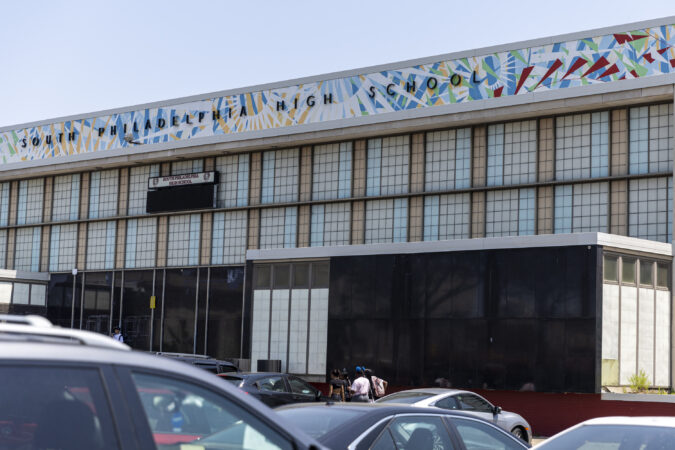
    Nearly $58 million for South Philadelphia High School. Over $27 million for Forrest Elementary in the Northeast. Almost $55 million for Bartram High in Southwest Philadelphia.

    Ahead of a Tuesday City Council hearing on the Philadelphia School District’s proposed facilities master plan, district officials have dangled the carrot that would accompany the stick of 20 school closings.

    The district released Monday morning how much it would spend on modernization projects at schools in each City Council District if Superintendent Tony B. Watlington Sr.’s plan is approved by the school board this winter.

    The totals range from $443 million in the 9th District — which includes parts of Olney, East and West Oak Lane, Mount Airy, and Oxford Circle — to nearly $56 million for the 6th District in lower Northeast Philadelphia, including Mayfair, Bridesburg, and Wissinoming.

    The district’s announcement comes as the plan has already raised hackles among some Council members, and City Council President Kenyatta Johnson has said he’ll hold up the district’s funding “if need be” if concerns are not answered to Council’s satisfaction.

    Tailoring the release to Council districts — including highlighting one major project per district — appears to be an effort to calm opposition ahead of Tuesday’s hearing.

    Details on every school that would get upgraded under Watlington’s plan — 159 in total — have not yet been released.
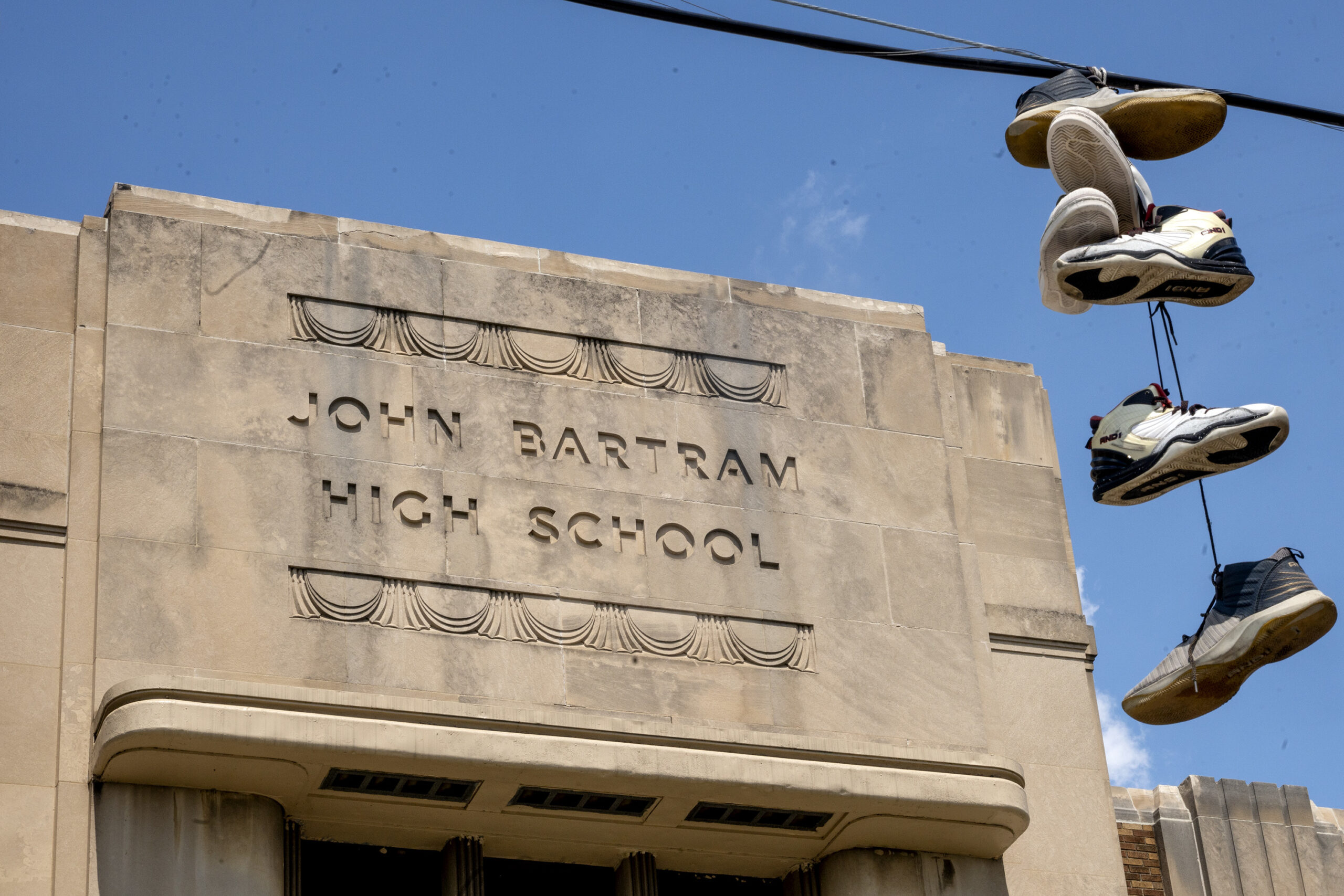
    John Bartram High School at 2401 S. 67th St in Southwest Philadelphia.

    Watlington has stressed that the point of the long-range facilities plan is not closing schools, but solving for issues of equity, improving academic programming, and acknowledging that many buildings are in poor shape, while some are underenrolled and some are overenrolled.

    “This plan is about ensuring that more students in every neighborhood have access to the high-quality academics, programs, and facilities they deserve,” Watlington said in a statement. “While some of these decisions are difficult, they are grounded in deep community engagement and a shared commitment to improving outcomes for all public school children in every ZIP code of Philadelphia.”

    But at community meetings unfolding at schools across the city that are slated for closure, Council members have expressed displeasure about parts of the plan — a preview, perhaps, of Tuesday’s meeting.

    Councilmember Quetcy Lozada, represents the 7th District, including Kensington, Feltonville, Juniata Park, and Frankford. Four schools in her district — Stetson, Conwell, Harding, and Welsh — are on the chopping block.

    “The fact that they are being considered for closure is very concerning to me,” Lozada said at a meeting at Stetson Middle School on Thursday.
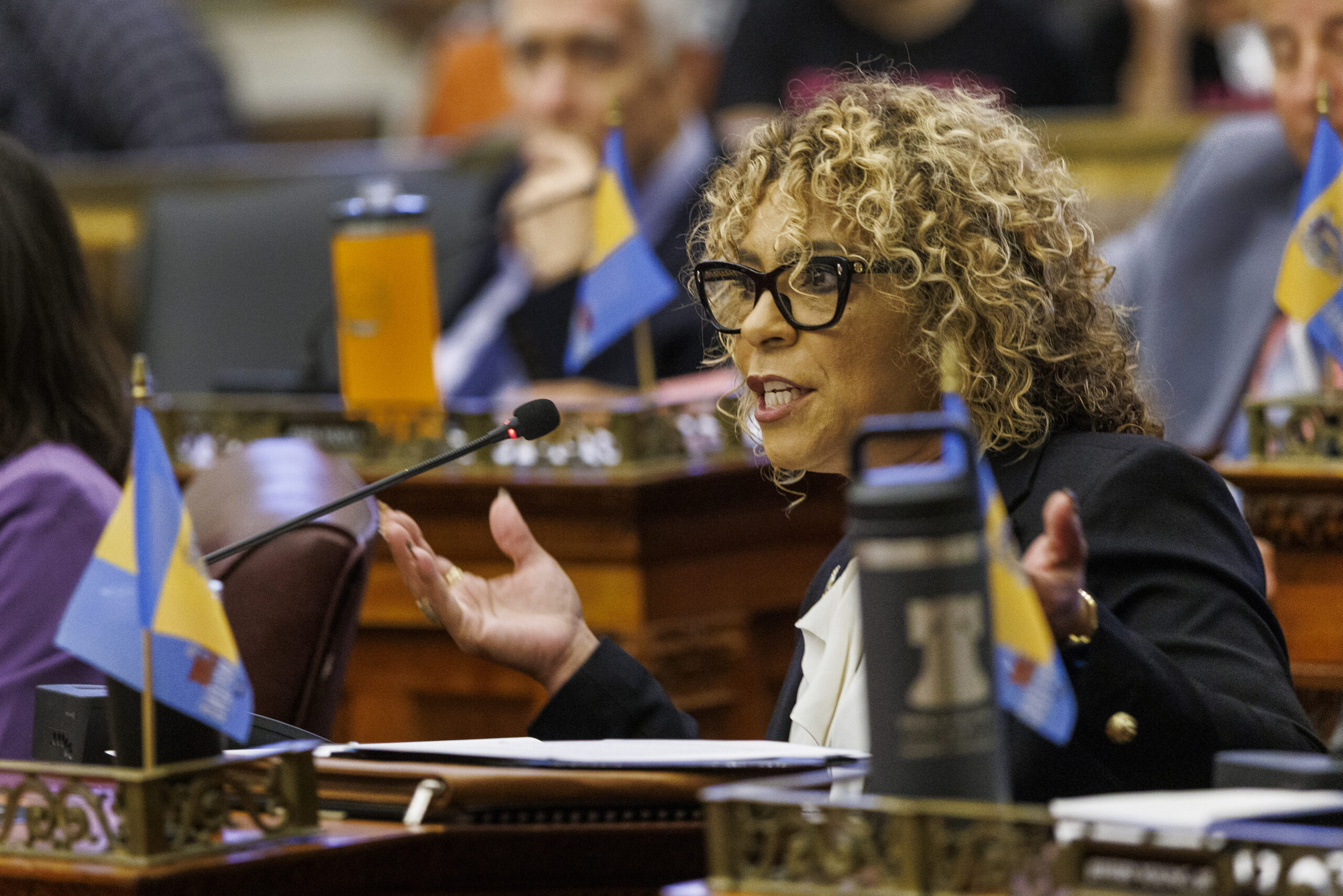
    Councilmember Quetcy Lozada is shown in a 2025 file photo.

    Councilmember Cindy Bass, speaking at a Lankenau High meeting, objected to closing schools that are working well. (Three schools in Bass’ 8th District, Fitler Elementary, Wagner middle school, and Parkway Northwest High School, are proposed for closure. Lankenau is in Curtis Jones Jr.’s district but has citywide enrollment.)

    “I do not understand what the logic and the rationale is that we are making these kinds of decisions,” said Bass.

    While Council members will not have a direct say on the proposed school closures or the facilities plan, Council wields significant control over the district’s budget. Funding for the district is included in the annual city budget that Council must approve by the end of June.

    Local revenue and city funding made up about 40% of the district’s budget this year, or nearly $2 billion. Most of that is the district’s share of city property taxes which, unlike other school systems in Pennsylvania, are levied by the city and then distributed to the district.

    (function() {
    var l2 = function() {
    new pym.Parent(‘schools_districts2’,
    ‘https://media.inquirer.com/storage/inquirer/projects/innovation/arcgis_iframe/schools_districts2.html’);
    };
    if (typeof(pym) === ‘undefined’) {
    var h = document.getElementsByTagName(‘head’)[0],
    s = document.createElement(‘script’);
    s.type = ‘text/javascript’;
    s.src = ‘https://pym.nprapps.org/pym.v1.min.js’;
    s.onload = l2;
    h.appendChild(s);
    } else {
    l2();
    }
    })();

    Where will the money go?

    Despite city and schools officials saying in the past that the district has more than $7 billion in unmet facilities needs, Watlington has said the district could complete its plan — including modernizing 159 schools — for $2.8 billion.

    Officials said further details about modernization projects and the facilities plan will be released before the Feb. 26 school board meeting, where Watlington is expected to formally present his proposal to the school board.
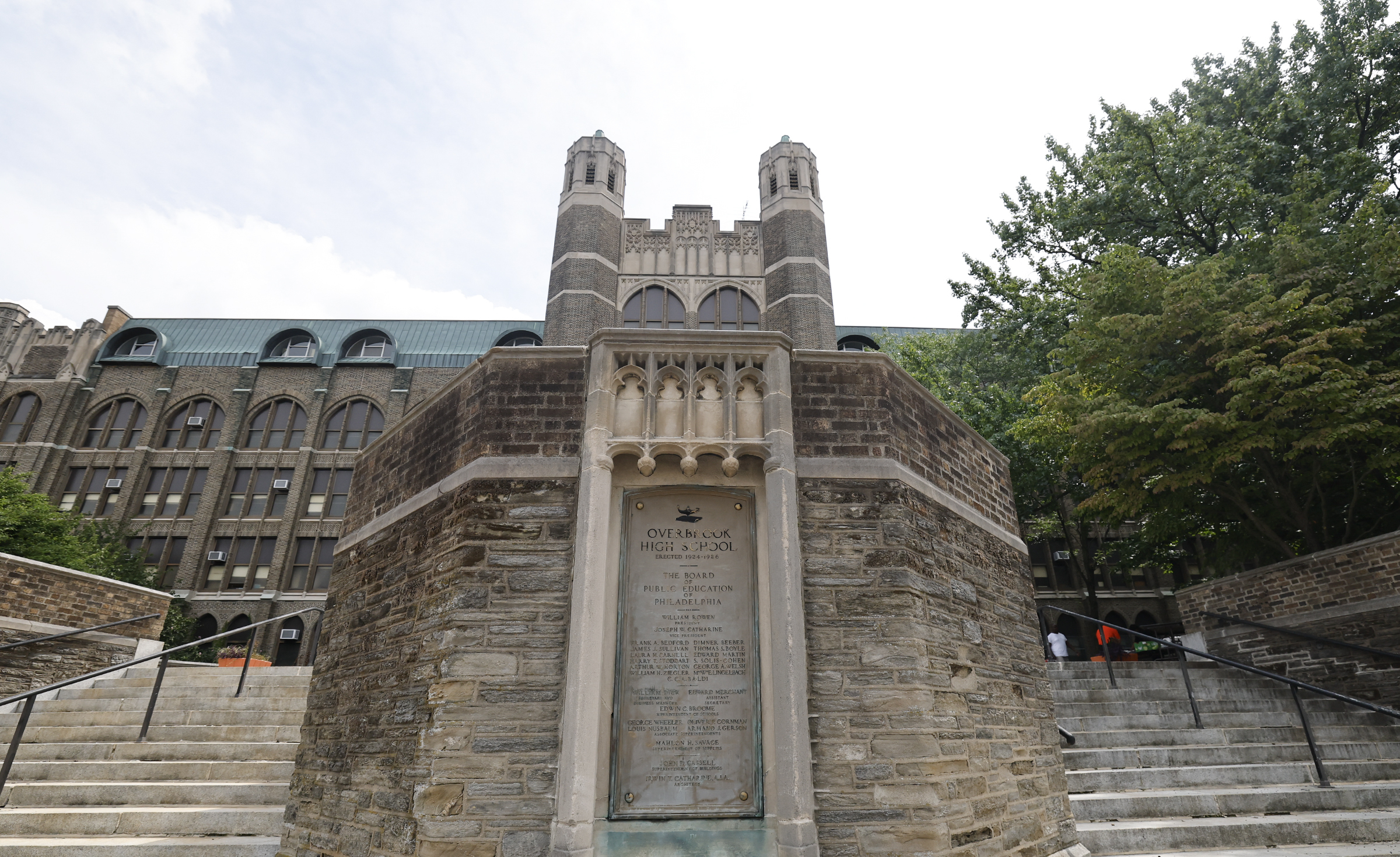
    Overbrook High School, in West Philadelphia, will get major renovations in preparation for The Workshop School, a small, project-based district school, colocating inside the building.

    Here are the total proposed dollar amounts per Council district and the 10 big projects announced Monday:

    • 1st District: $308,049,008. Key project: $57.2 million for South Philadelphia High, turning the school into a career and technical education hub and modernizing electrical, lighting, and security systems.
    • 2nd District: $302,284,081. Key project: $54.6 million for Bartram High, to renovate the school and grounds, career and technical education spaces, restroom and accessibility renovations, new painting, and new athletic fields and facilities (on the site of nearby Tilden Middle School, which is slated to close). Motivation High School would close and become an honors program inside Bartram.
    • 3rd District: $204,947,677. Key project: $19.6 million for the Sulzberger site, which currently houses Middle Years Alternative and is proposed to house Martha Washington Elementary. (It currently houses MYA and Parkway West, which would close.) Improvements would include heating and cooling and electrical systems, classroom modernizations, and the addition of an elevator and a playground.
    • 4th District: $216,819,480. Key project: $50.2 million for Overbrook High School, with updates including new restrooms, accessibility improvements, and refurbished automotive bays. (The Workshop School, another district high school, is colocating inside the building.)
    • 5th District: $290,748,937. Key project: $8.4 million for Franklin Learning Center, with updates including for exterior, auditorium, and restroom renovations, security cameras, accessibility improvements, and new paint.
    • 6th District: $55,769,008. Key project: $27.2 million for Forrest Elementary, including modernizations that will allow the school to grow to a K-8, and eliminate overcrowding at Northeast Community Propel Academy.
    • 7th District: $388,795,327. Key project: $32.3 million at John Marshall Elementary in Frankford to add capacity at the school, plus a gym, elevator, and schoolwide renovations.
    • 8th District: $318,986,215. Key project: $42.9 million at Martin Luther King High in East Germantown for electrical and general building upgrades and accommodations for Building 21, a school that will colocate inside the King building.
    • 9th District: $442,934,244. Key project: $42.2 million at Carnell Elementary for projects including an addition to expand the school’s capacity, restroom renovations, exterior improvements, and stormwater management projects.
    • 10th District: $275,829,539. Key project: at Watson Comly Elementary in the Northeast, an addition to accommodate middle grade students from Loesche and Comly, and building modernizations. District officials did not give the estimated cost of the Comly project.

    What’s next?

    The facilities Council hearing is scheduled for 10 a.m. Tuesday at City Hall. It will also be livestreamed.

    Members of the public also have the opportunity to weigh in on the facilities plan writ large at three community town halls scheduled for this week: Tuesday at Benjamin Franklin High from 4:30 to 6:30 p.m., Friday at Kensington CAPA from 4:30 to 6:30 p.m., and a virtual meeting scheduled for 2 p.m. on Sunday.

    Meetings at each of the schools proposed for closure continue this week, also; the full schedule can be found on the district’s website.

  • At Old City’s latest restaurant, a South Philly restaurant couple updates their red-sauce memories

    At Old City’s latest restaurant, a South Philly restaurant couple updates their red-sauce memories

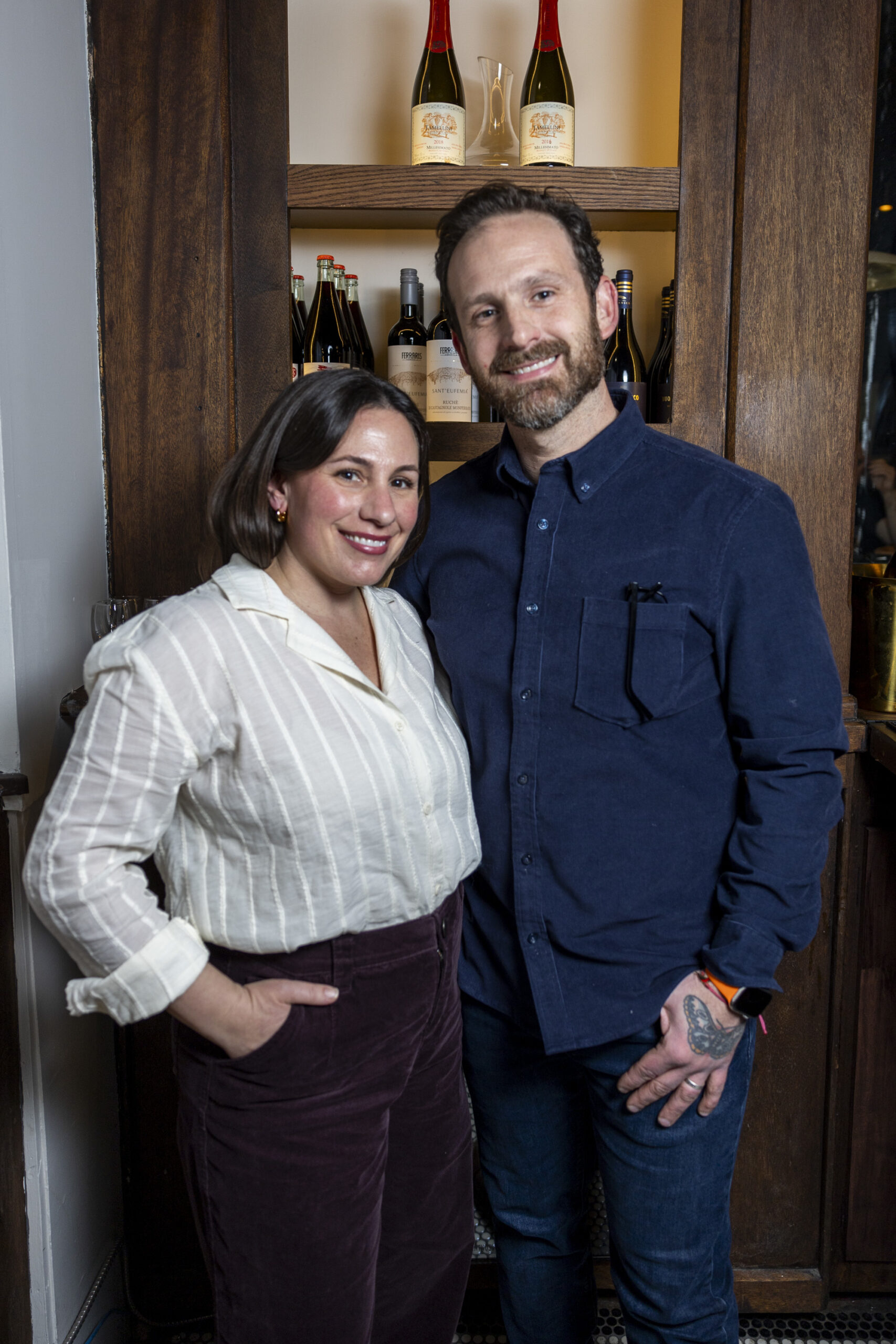
    Piccolina is the newest entry from restaurateurs Michael and Jeniphur Pasquarello, and it may also be their most personal.

    The Italian restaurant opened Monday inside the Society Hill Hotel at Third and Chestnut Streets, occupying a compact spot that was originally an oyster bar in 1830. The corner restaurant is anchored by the big-bellied, handmade brick Marra Forni pizza oven installed by the hotel’s owners, who closed their own restaurant in the space in December. At night, the bar glows against warm brick and plaster, giving the room a sense of intimacy.

    Guests dining in and at the bar at Piccolina in Philadelphia, Pa., on Friday, Feb. 13, 2026. .
    Michael and Jeniphur Pasquarello at their restaurant Piccolina in Philadelphia, Pa., on Friday, Feb. 13, 2026.

    For the Pasquarellos — whose restaurant history dates to 2003, when they opened their first Cafe Lift bruncherie in Callowhill — Piccolina marks a shift in focus. Over the years, the couple added a Cafe Lift in Haddonfield and moved the original location to 12th and Spring Garden (after closing a short-lived branch in Narberth), and opened the nearby concepts Prohibition Taproom (corner bar) and La Chinesca (Mexican). They also had a six-year run of the wood-fired pizzeria Bufad, and a decade in Fishtown with the beef-, then fish-centered Kensington Quarters.

    Piccolina is a return to the Pasquarellos’ South Philadelphia roots: He grew up near Chadwick and Shunk Streets, and she grew up two blocks away, at 17th and Ritner. Her grandparents, the Bernardinis, ran Bruno’s luncheonette — later Brunic’s. (Brunic’s lives on, under different owners.)

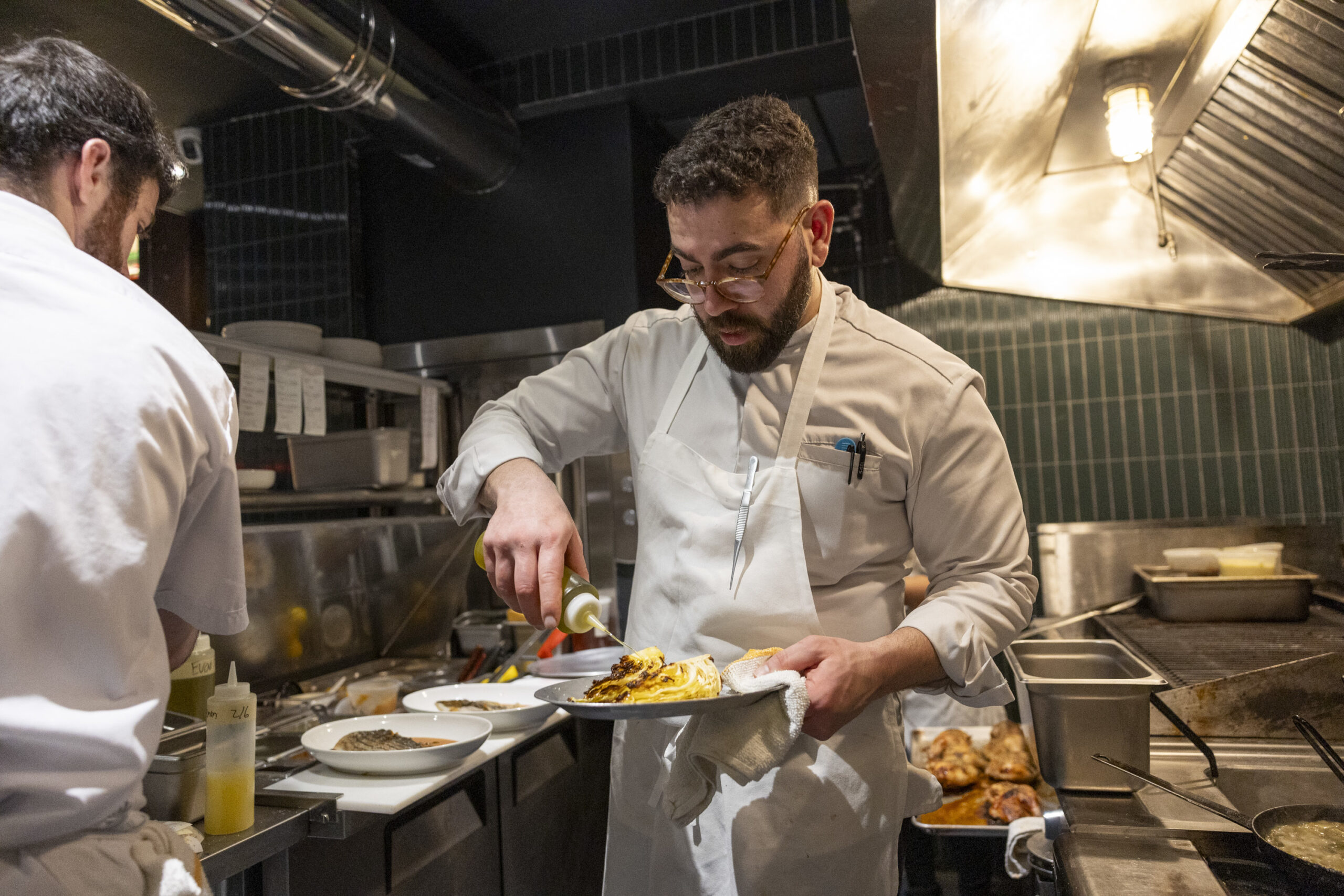
    Chef Alex Vazquez working during service at Piccolina in Philadelphia, Pa., on Friday, Feb. 13, 2026.

    “It’s tapping into memory and the feeling of where it all came from,” Michael Pasquarello said. But although the menu includes flavors they grew up with, Piccolina is not a South Philly red-gravy house. “We took all of that and then we let Alex put it through his filter.”

    Alex is chef Alex Vazquez, whose resumé includes Vernick Food & Drink and Friday Saturday Sunday, where he rose over a five-year run from garde manger to sous chef.

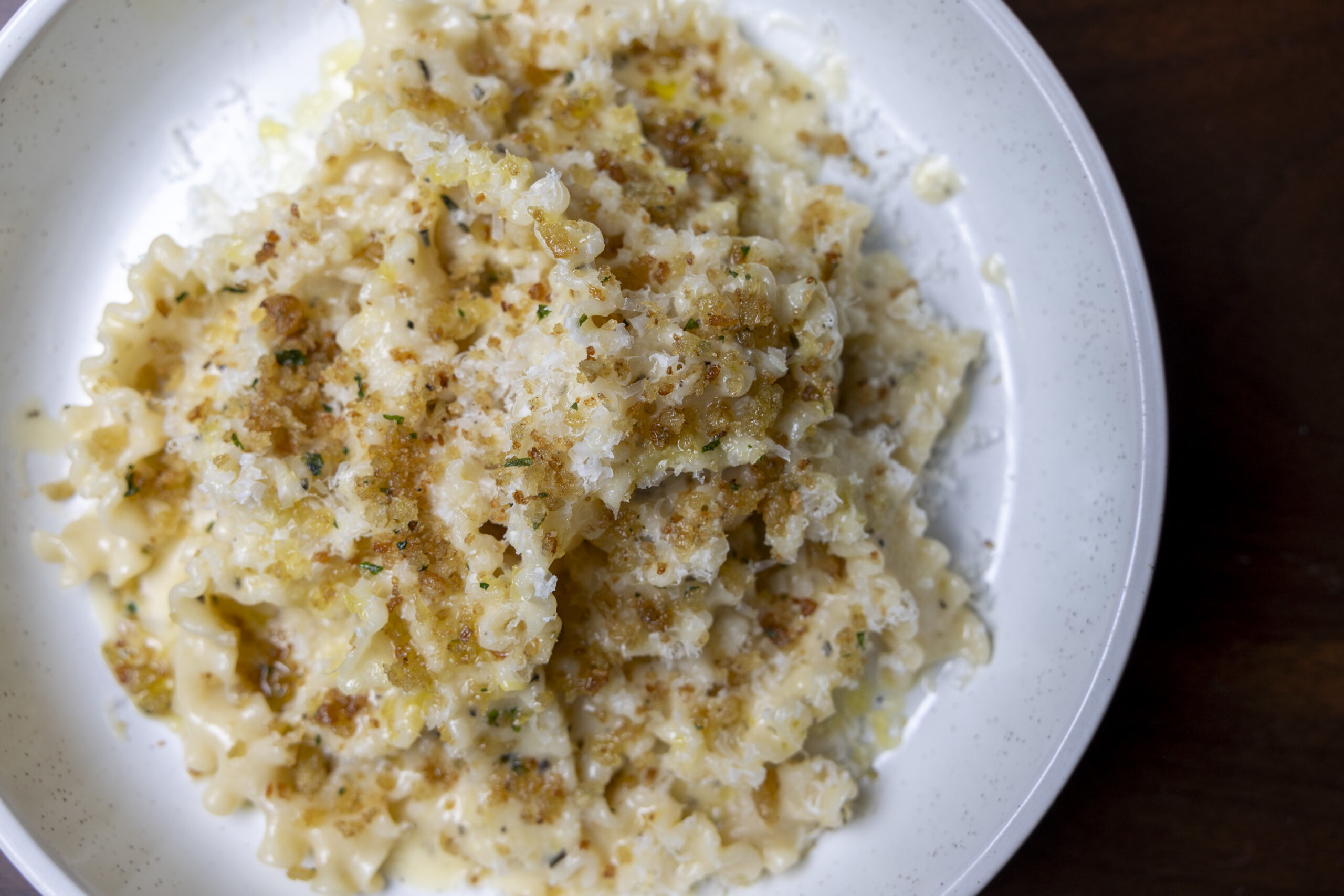
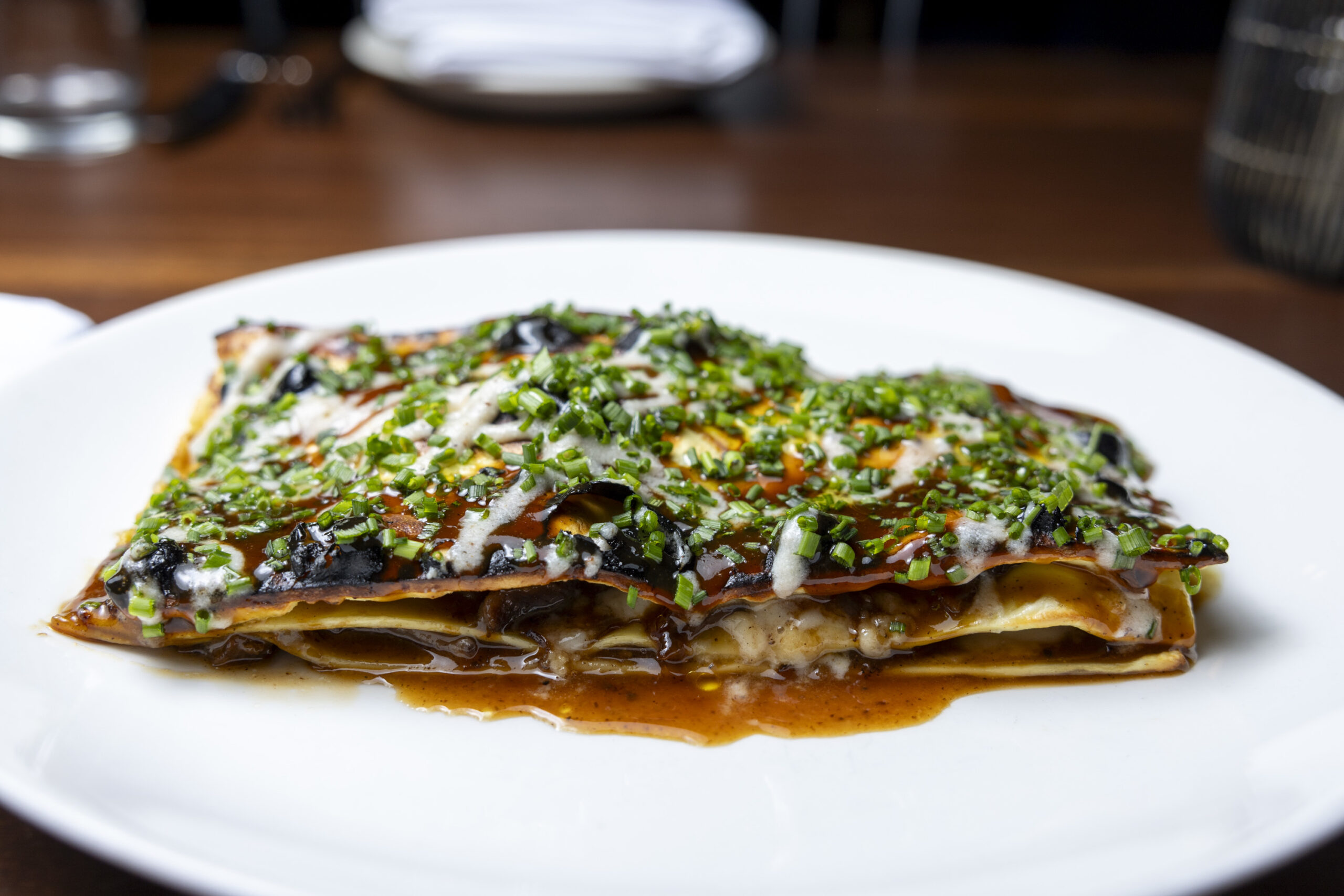
    At Piccolina, Vazquez is turning out traditional pastas like bucatini amatriciana and malfadine al limone. Stracciatella is folded into the campanelle vodka just before plating, giving the sauce a loose, creamy pull rather than a heavy coat, Michael said. There’s oxtail lasagna, too, built with just three layers of fresh pasta — a technique Pasquarello traces back to Kensington Quarters.

    The Malfadine Al Limone at Piccolina in Philadelphia, Pa., on Friday, Feb. 13, 2026.
    The Oxtail lasagna at Piccolina in Philadelphia, Pa., on Friday, Feb. 13, 2026.

    “We used to do these thin lasagnas because we wanted crispy edges,” Michael said. “Alex loved that idea. So we do braised oxtail, a really rich tomato sauce, drizzle Alfredo through it, then fire it in the brick oven so you get those crisp edges.”

    Vazquez’s Neapolitan pizzas are sturdy-crusted, all the better to keep up with a load of toppings. Inspired by Bufad, there’s a sausage pie finished with béchamel, broccoli rabe, and shaved pecorino, as well as a mushroom pizza that had developed a following before the restaurant closed at the end of 2018.

    The Sausage Pizza at Piccolina in Philadelphia, Pa., on Friday, Feb. 13, 2026.

    The larger plates push the “memory through a chef’s lens” idea most clearly, Michael said. The half-chicken marsala starts with dry-aged birds that are brined, air-dried, and cooked, then finished with a deep marsala sauce and hearth-fired mushrooms.

    “I remember my mom making chicken Marsala for us,” he said. “So the idea was, what does that look like when you take it [more] seriously?”

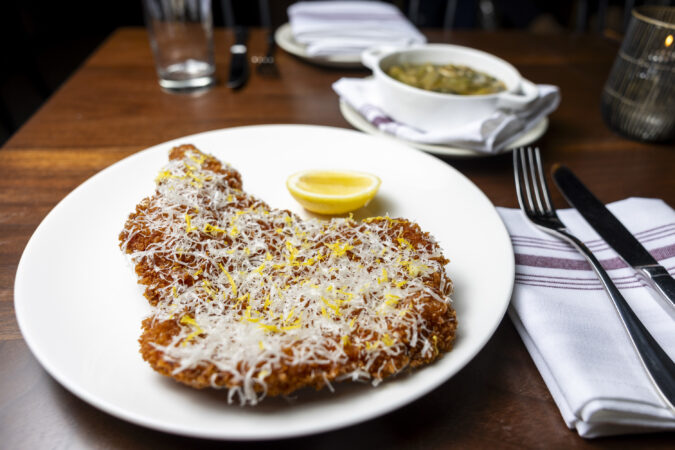
    The pork Milanese follows a similar logic. Vazquez brines the pork for 24 hours with coriander, fennel, garlic, and peppercorns before breading it in panko and frying it crisp. It’s served with a hearty crock of escarole and beans — a dish Michael describes as almost universal in South Philadelphia kitchens. “That dish is home to me,” he said.

    “I love red-sauce places,” Vazquez said. “It’s so Philly. I just wanted to put my spin on what I want to eat — a red-sauce, pizza, pasta place that’s a little nicer.”

    Piccolina serves dinner daily, with lunch and brunch expanding the menu into panini, egg dishes, and sweets like maritozzi French toast stuffed with mascarpone whip. The full bar includes six beers on draft, negroni and other cocktails, and an Italian-only wine list.

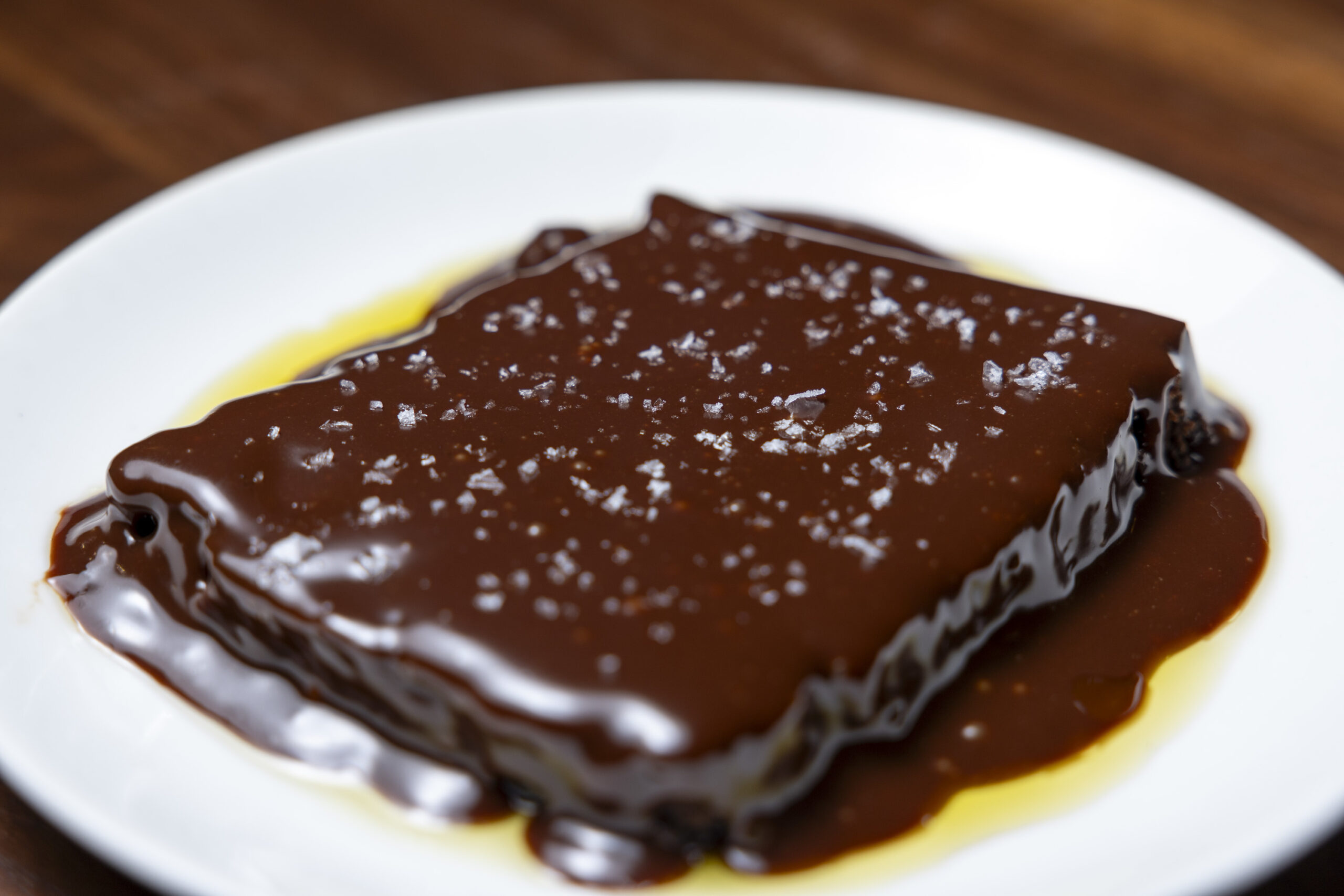
    A chocolate cake at Piccolina in Philadelphia, Pa., on Friday, Feb. 13, 2026. .

    Piccolina, 301 Chestnut St., 267-761-4120, piccolinaphl.com. Hours: 5 p.m. to 1 a.m. for dinner. Lunch (noon to 4 p.m. Monday to Friday) starts Feb. 17 and weekend brunch (11 a.m. to 4 p.m.) starts Feb. 21.

  • Why three Philly bars serve this rare Portuguese spirit

    Why three Philly bars serve this rare Portuguese spirit

    During a recent snowstorm, Philly bar owner Chris Fetfatzes dashed around the bustling bar at Sonny’s Cocktail Joint, delivering platters of burgers and fries alongside 1-ounce pours of house-made liqueurs served in tiny, cut-crystal glasses.

    One liqueur in particular glowed ruby red, and a sip showed that it had a careful balance of sweetness and tang, its fruitiness cutting through the richness of Sonny’s cracker-thin pizzas. It served as both a pick-me-up and a digestif on a bitter-cold day.

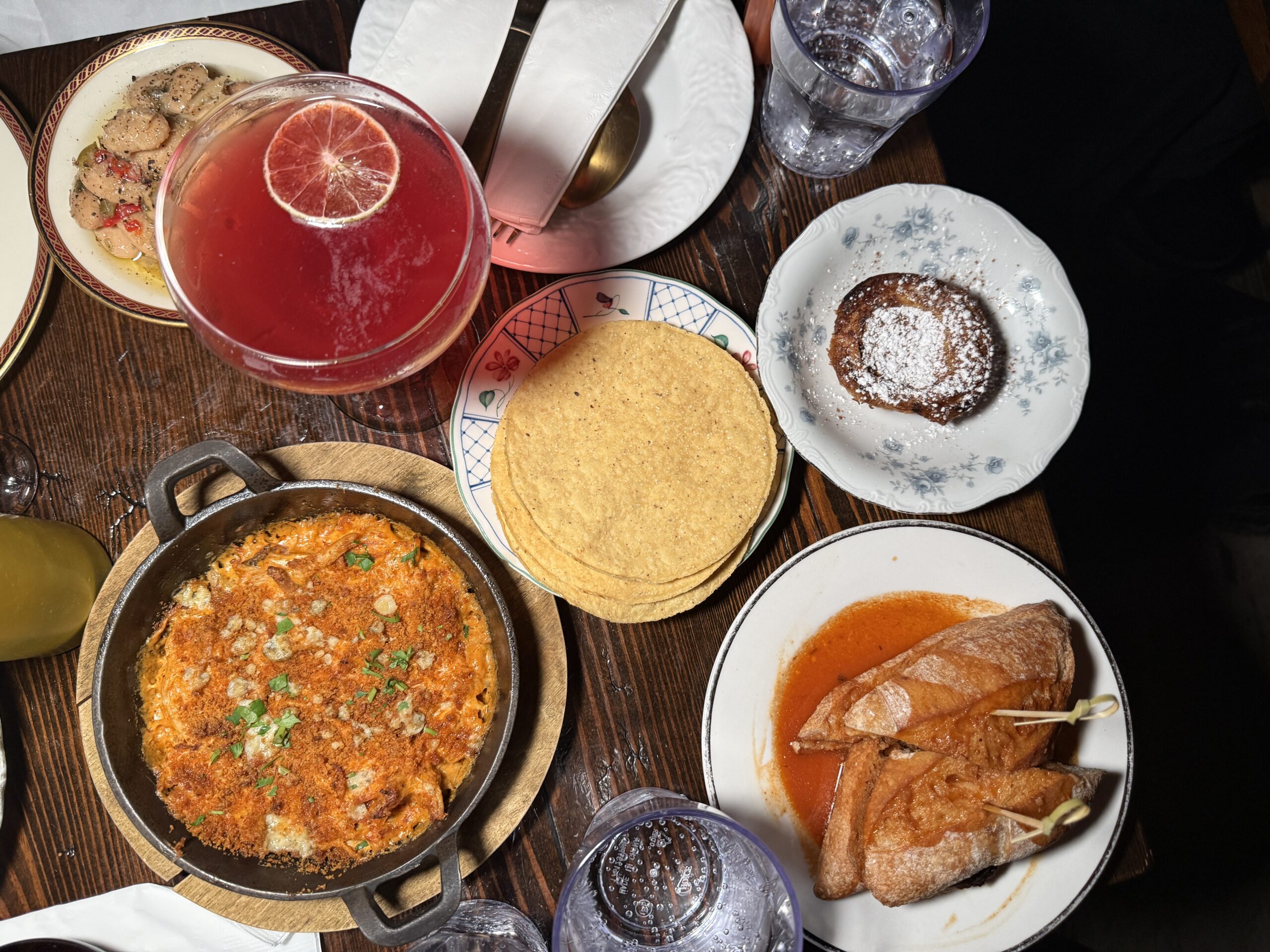
    A spread of menu items at Grace & Proper with Portuguese influences: piri piri buffalo chicken dip, a bifana, pasteis de nata, gigantes, and the pink street cocktail.

    This sunny spirit was a classic sour cherry Portuguese liqueur called ginjinha (“zhin-ZHEEN-yah”). In its home country, you can drink it at the sidewalk-facing counters of historic, pocket-sized stores scattered throughout Lisbon. In the Philly area, you’ll be hard-pressed to find it at most establishments — except for the bars owned and operated by Fetfatzes’ Happy Monday Hospitality: Sonny’s on South Street, Grace & Proper in Bella Vista, and WineDive in Rittenhouse.

    The restaurants also make their own green alpine liqueur, chocolate liqueur, coffee liqueur, falernum, fernet, Swedish punsch, and pumpkin tequila, with more to come. (As with ginjinha and house-made amari and vermouth, these all involve steeping botanicals and produce in alcohol, not distilling fresh spirits.)

    But the ginjinha is near and dear to Fetfatzes’ heart. The 44-year-old South Philadelphia native is a first-generation American whose mother was Portuguese and father was Greek, and the delicate glasses of liqueur served in his restaurant group’s establishments are part of a quiet legacy of Portuguese immigration to Northeast Philly.

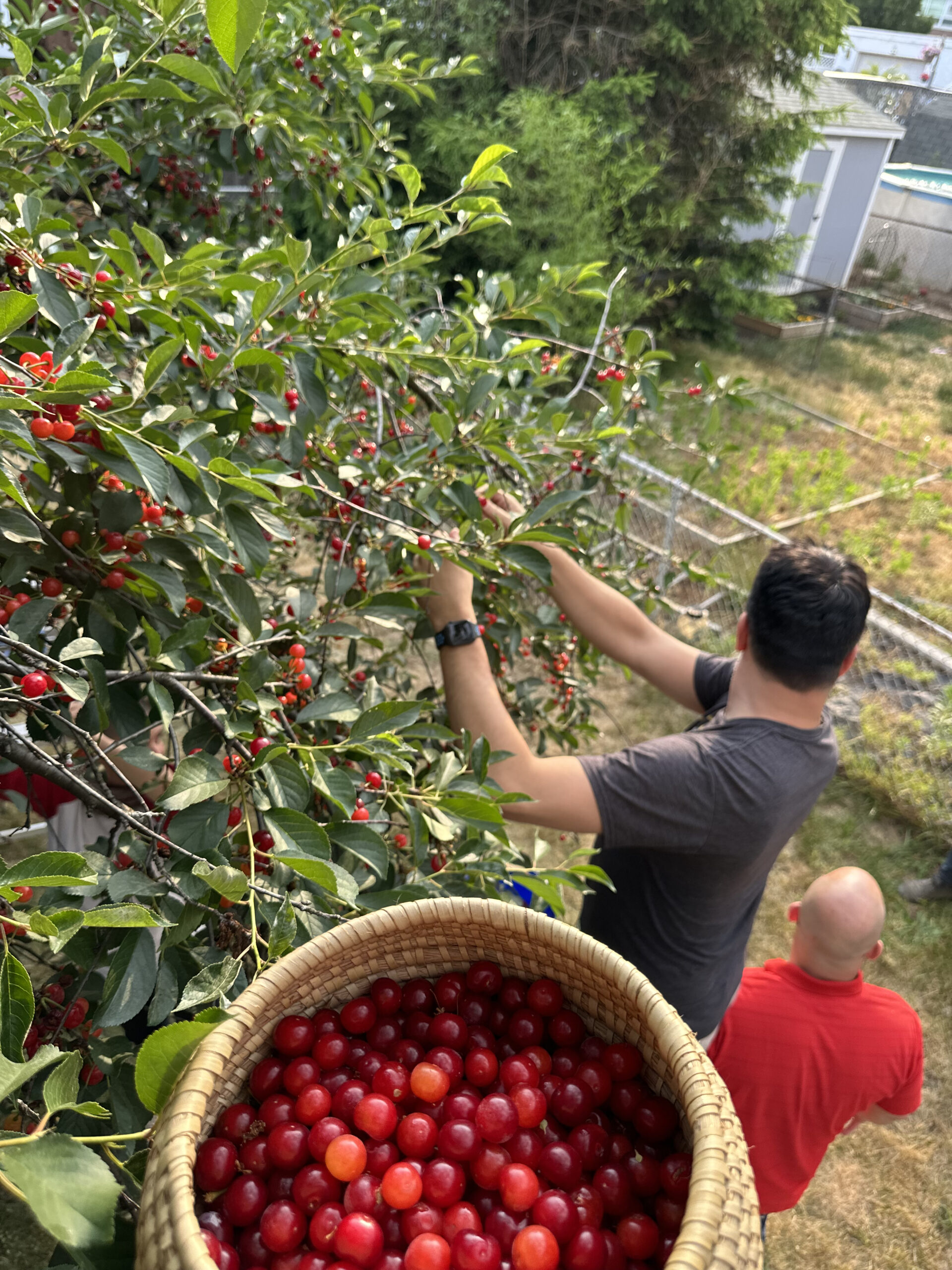
    Picking morello cherries in Philly.

    Happy Monday’s ginjinha contains the DNA of Fetfatzes’ original batch, made in 2023 from the fruit of a morello cherry tree that a Portuguese friend planted as a sapling in the Northeast after migrating to the U.S. Fetfatzes and his team harvested 20 gallons of cherries from the tree, grown specifically for ginjinha, in 2023. The fruit was macerated with sugar in a blend of young, unaged brandy and Portuguese red wine for several days, with the occasional agitation to redistribute the cherries.

    “It’s [somewhat] like a sangria, as it is a wine-based product,” said Fetfatzes, though it is much sweeter and stronger than typical, easy-drinking Spanish sangria.

    The ginjinha recipe was developed through trial and error by Fetfatzes and his beverage director, Scott Rodrigue, who is also of Portuguese descent. “We got a base, messed around with it and branched out to make it our own,” Fetfatzes said. The sour cherry liqueur conjures up the big family parties he partakes in every year when taking his own family back to his mother’s home country.

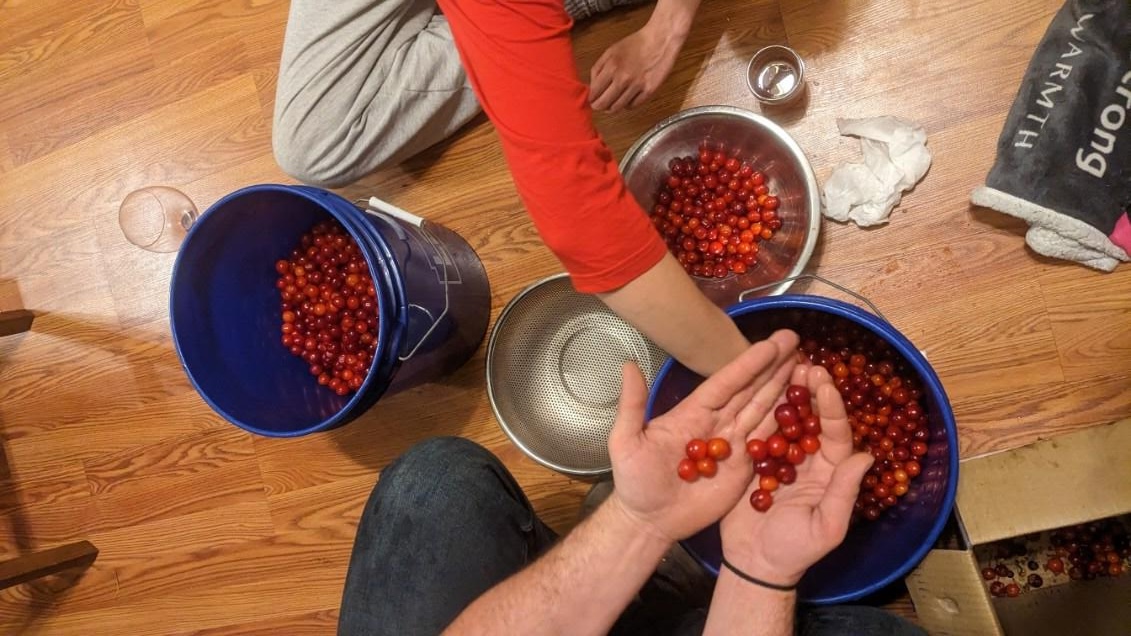
    Washing freshly picked morello cherries grown in Philly.

    After landing on a base recipe, subsequent batches of ginjinha — made every three weeks for Happy Monday’s bars — have used flash-frozen cherries sourced from wherever it’s cherry season, whether it’s California, Portugal, Central Europe, or the Middle East.

    Fetfatzes and his staff employ the solera method of fractional blending, which is also used to make Champagne and fortified wines like sherry. The 2023 batch has become a “mother” for all of Fetfatzes’ ensuing batches, “like a starter yeast for sourdough,” he explained.

    Sorting morello cherries.

    “Like the Italians, we’re peasants living off the land,” said Fetfatzes, whose own mother followed a similar migration path to that of the original batch’s tree. “My mom’s village town was Vergada in the Mozules. She came over solo as a seamstress in 1974.”

    The ginjinha is popular at Sonny’s, where several customers who’ve traveled to Portugal like to order it, but it is perhaps best enjoyed at Grace and Proper, where there’s a rotation of homesick Portuguese regulars. They come in for the tiny pours of ginjinha, or have it shaken up with vodka and fresh lime juice for a cocktail called the “Pink Street” ($12), a Portuguese interpretation of a cosmopolitan, along with a bifana sandwich ($7) — one of the best sandwich deals in town — consisting of pork marinated with white wine, garlic, and paprika, and soaking through crusty Portuguese bread.

    The ginjinha’a sweetness balances out the sandwich’s salt-kissed meatiness. The flavors, twisted together, balance one another. “Ginjinha has got this pomegranate-like tart-sweet punch that cuts through the garlicky richness of our bifana. It resets your palate, jiving with the bifana’s piri-piri heat and bite of mustard,” said Fetfatzes.

    Sonny’s Cocktail Joint, 1508 South St., sonnyscocktailjoint.com; Grace & Proper, 941 S. Eighth St., graceandproper.com; WineDive, 1534 Sansom St., instagram.com/winedivephilly

  • Tyrese Maxey’s All-Star Weekend showed he’s not merely a promising young star. Maxey has become one of the faces of the NBA.

    Tyrese Maxey’s All-Star Weekend showed he’s not merely a promising young star. Maxey has become one of the faces of the NBA.

    LOS ANGELES — While strolling through the NBA Crossover fan extravaganza inside the Los Angeles Convention Center on Friday afternoon, a young man wearing a Cooper Flagg Duke jersey suddenly realized the NBA player with whom he had randomly crossed paths.

    “That’s Tyrese Maxey!” the fan excitedly told his companion.

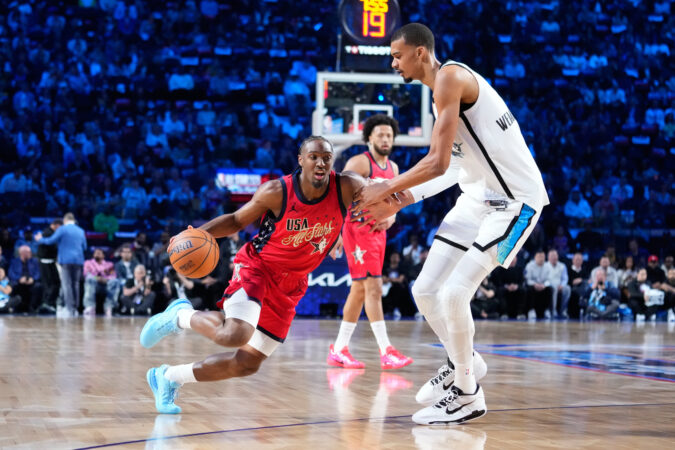
    That moment illustrated how Maxey’s popularity has ballooned beyond Philly, where he has long been beloved while rapidly ascending into a 76ers cornerstone and two-time All-Star. Before stepping inside Intuit Dome on Sunday afternoon, Maxey had already received the fourth-highest total of All-Star fan votes and was named an Eastern Conference starter for this weekend’s main event. And that status as one of league’s up-and-coming faces was showcased throughout the celebratory weekend, culminating with Maxey’s nine points and three steals for the “young and turnt” Team Stars’ victory over Team Stripes in the championship game of a surprisingly competitive round-robin tournament.

    “I feel a lot less out of place,” Maxey said when asked about how this weekend felt different from his first All-Star appearance in 2024. “[Two years ago, I] was nervous. It’s your first time. You don’t know when to talk, when not to talk. Now I walk into the locker room of my team, I was the second-oldest [at 25].

    “I played against those guys growing up as kids, and it was really fun to be in the locker room.”

    Maxey’s widespread prominence is perhaps unsurprising, given his combination of statistical production, playing style and personality.

    His numbers place him in the MVP conversation, coming out of the All-Star break ranking sixth in the NBA in scoring (28.9 points per game) while adding 6.8 assists, 4.1 rebounds, and 2.0 steals. He plays an aesthetically pleasing brand of basketball for diehards and casuals alike, as a speedy guard who explodes to the basket, launches from three-point range, and has become a legitimate defensive disruptor. And he regularly flashes a grin even in the heat of competition.

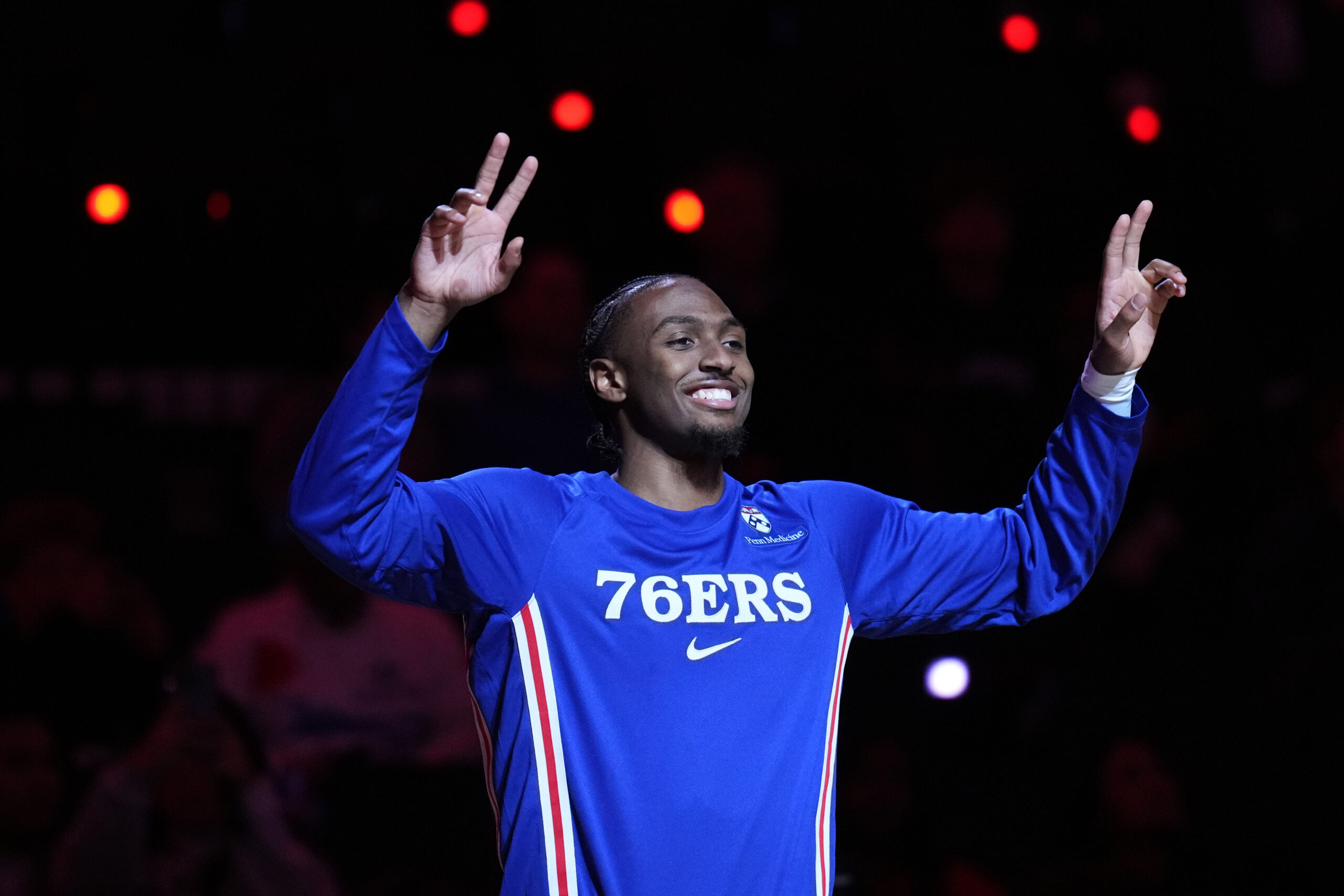
    Tyrese Maxey participated in the three-point contest and made his second All-Star Game appearance.

    The “That’s Tyrese Maxey” whispers — or exclamations — continued as he moved through the convention center on Friday. One fan who recognized him was wearing a LeBron James Cleveland Cavaliers shirt. Another was in Boston Celtics green. Others waited in line to meet Maxey inside an Xfinity pop-up digital experience — where his face was displayed all over the exterior — or as he signed blue Sixers jerseys inside a DoorDash booth.

    Back at the Intuit Dome, Maxey was on a parking garage billboard also featuring San Antonio Spurs global superstar Victor Wembanyama. And during Saturday’s media day, Maxey was assigned to a formal news conference room — which are typically reserved for the most in-demand players — instead of the mixed-zone scrums.

    As Maxey walked into the standing-room-only crowd, he uttered, “Wow.”

    “I don’t want to trip and fall,” Maxey said, walking across the stage, “and embarrass myself with all these people here.”

    Maxey first noticed his popularity had extended beyond Sixers supporters around his fourth NBA season, when he was so stunned to see his jersey in places besides Philly and his hometown of Dallas that he called his mother, Denyse. (His jersey sales this season ranked 10th in the NBA as of last month, the league announced.) And when informed last month that he had received more All-Star fan votes than any American player — yes, even topping all-time greats James, Stephen Curry, and Kevin Durant — he was taken aback.

    “Oh, thanks fellow Americans!” Maxey said, leaning back in his locker-room chair. “Appreciate y’all, man. That’s love.”

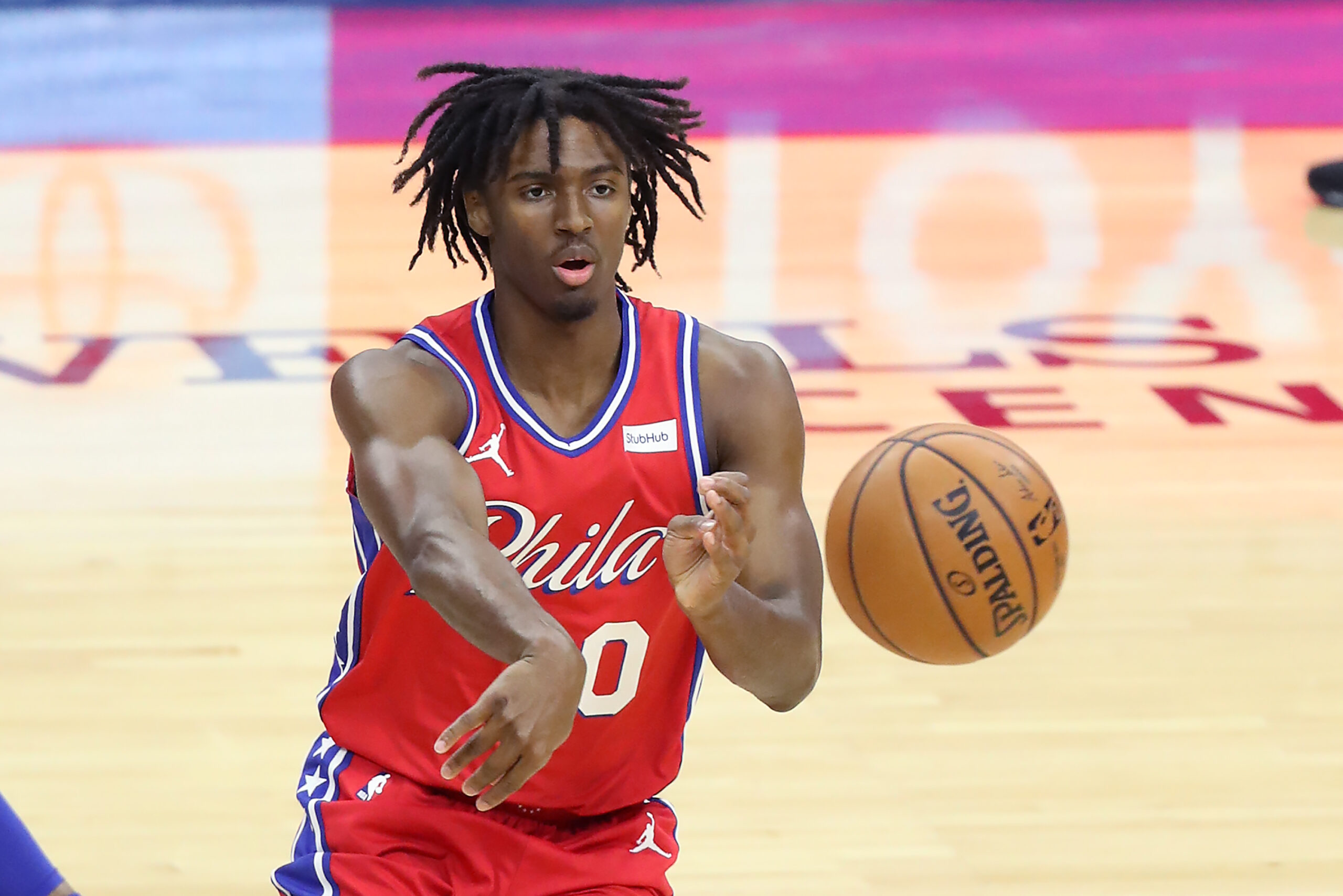
    It is all quite the rise since Maxey trained in Los Angeles in preparation for the 2020 NBA draft, when the Sixers took him 21st overall.

    Tyrese Maxey has come a long way from the surprising rookie who burst onto the scene in 2020.

    He seized the opportunity when thrust into the starting point guard job during Ben Simmons’ 2021-22 holdout. He won the NBA’s Most Improved Player Award in 2023, then became a first-time All-Star the following season. He thrived as former MVP Joel Embiid’s two-man partner. He further boosted himself on a big stage with a masterful 46-point performance at Madison Square Garden in Game 5 of the Sixers’ 2024 first-round playoff series against the New York Knicks.

    As an All-Star newbie in 2024, Maxey appreciated getting to know players from other teams in a laid-back environment. This year, he felt a sense of familiarity with Team Stars, which was also made up of All-Star MVP Anthony Edwards along with Scottie Barnes, Devin Booker, Cade Cunningham, Jalen Duren, Chet Holmgren, and Jalen Johnson. He sat courtside as Sixers teammate VJ Edgecombe won Rising Stars MVP on Friday night, then participated in Saturday’s three-point contest for the first time.

    When Holmgren, a first-time All-Star, asked Maxey for advice on what to expect Sunday, he compared it to the McDonald’s High School All American Game.

    “You don’t want nobody to have bragging rights on you,” Maxey said. “That’s how I feel about it.”

    Maxey finished Team Stars’ overtime victory over Team World with four points, three rebounds, and two assists — and a tone-setting hustle play when he saved a ball from going out of bounds by throwing it backward over his head. He added two points in his team’s loss in its first matchup against Team Stripes, which also came down to the last shot.

    In the championship rematch, Maxey took Durant off the dribble for a layup, then stole the inbounds pass and buried a three-pointer. Later, he blew past James for another finish and collected a steal and a dish to Barnes for a breakaway dunk.

    “I want to play it like a real game, anyway,” Maxey said. “It’s better for me.”

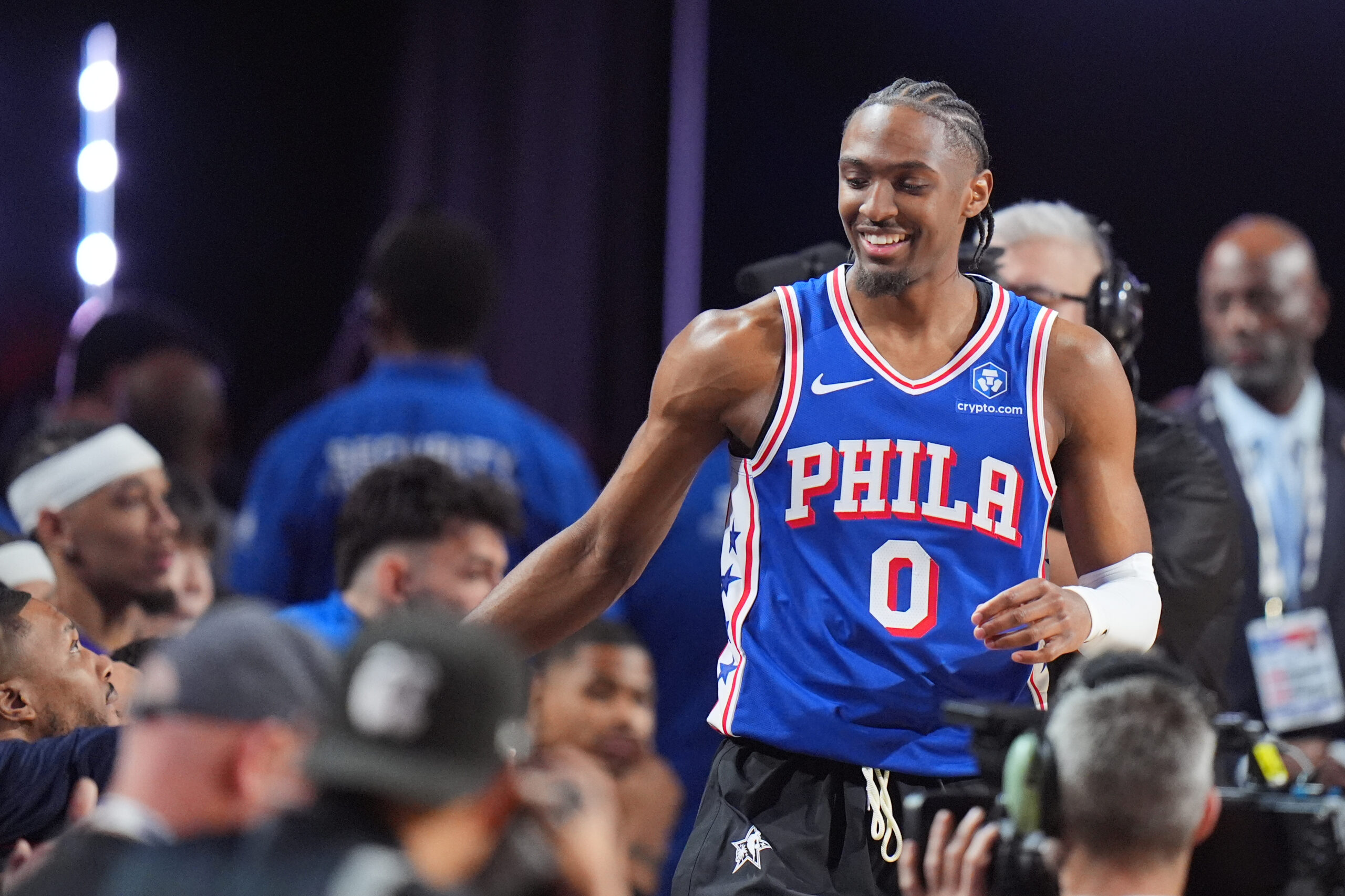
    Tyrese Maxey is one of the game’s most popular young American stars.

    Maxey arrived for his postgame media session carrying a fancy box holding his All-Star ring which, when opened, also played a video of his highlights. He was ready to get some rest during the next few days before the regular-season’s stretch run for a Sixers team in sixth place in the East standings.

    But this weekend, he lived up to his status as a leader of the NBA’s “young and turnt” American stars — and one of the up-and-coming faces of the league as a whole.

    “I definitely think that we are ready to try to step it forward,” Maxey said. “We had a lot of guys in that locker room that are ready to take the next step.”

  • Phillies spring training news: First full-team workouts underway; Mike Trout prevented from playing in WBC, Trea Turner not invited

    Phillies spring training news: First full-team workouts underway; Mike Trout prevented from playing in WBC, Trea Turner not invited


    // Timestamp 02/16/26 4:16pm

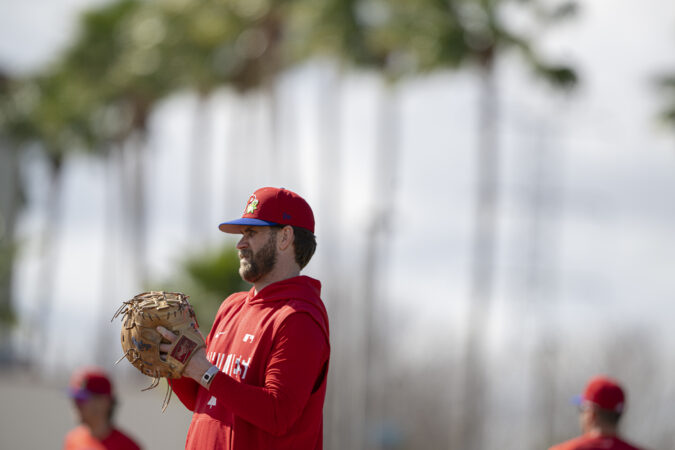
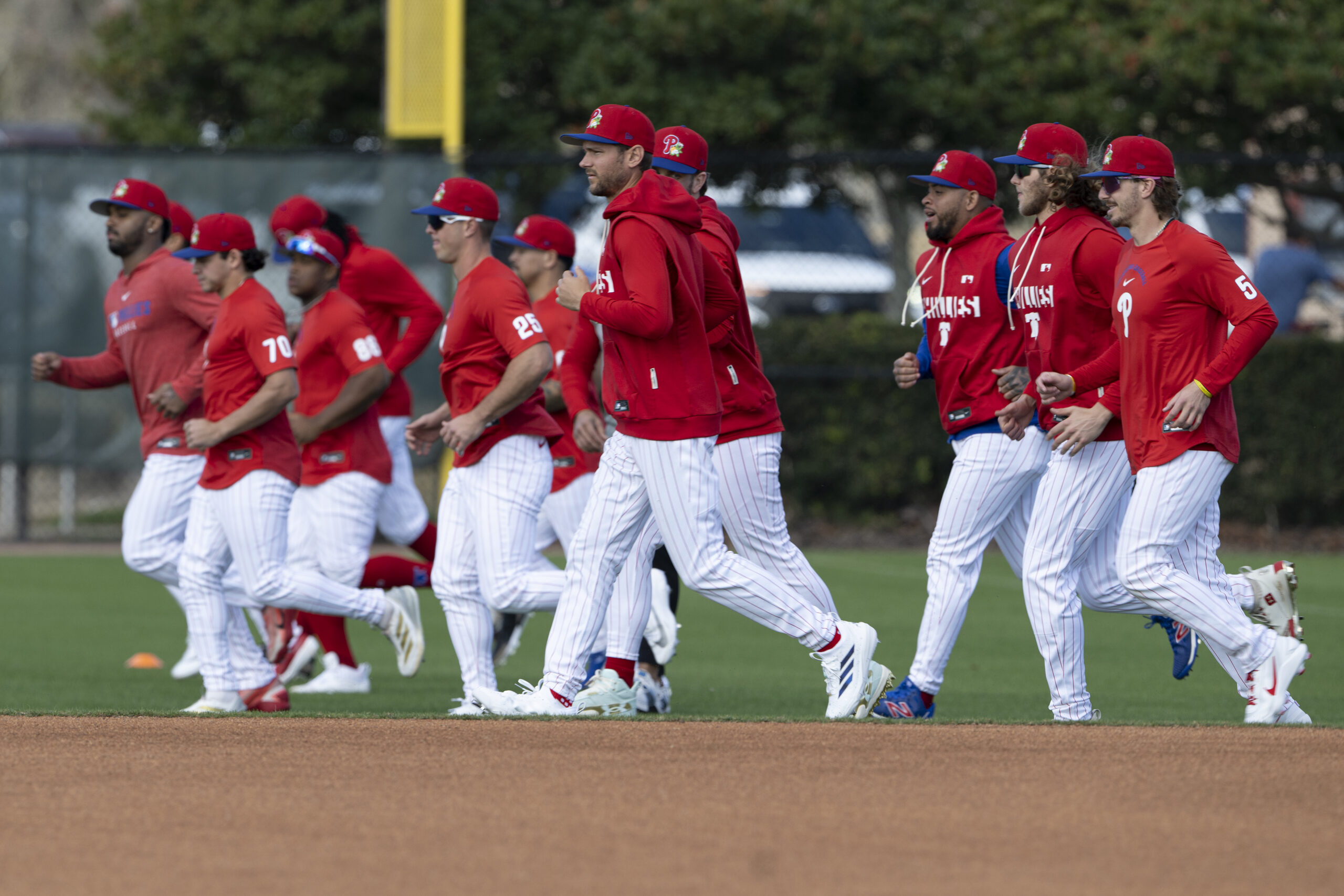
    Scenes from the Phillies first full spring training workout


    // Timestamp 02/16/26 2:02pm

    ‘He’s getting there’: Zach Wheeler continues recovery from blood clot


    // Timestamp 02/16/26 1:10pm

    Trea Turner: Team USA didn’t invite me to play in World Baseball Classic


    // Timestamp 02/16/26 1:13pm

    The surprising things Phillies players brought with them to spring training


    // Timestamp 02/16/26 12:17pm

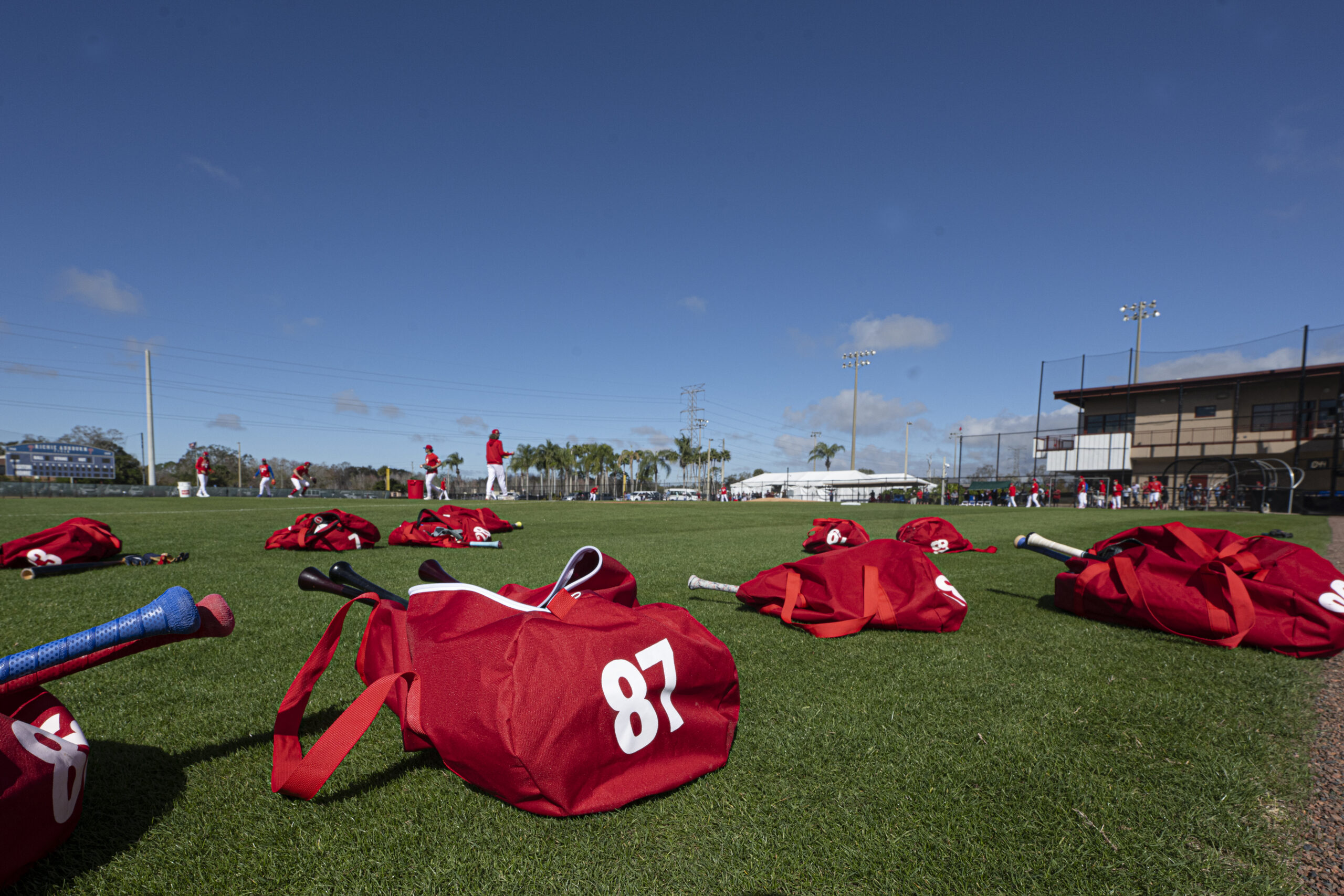
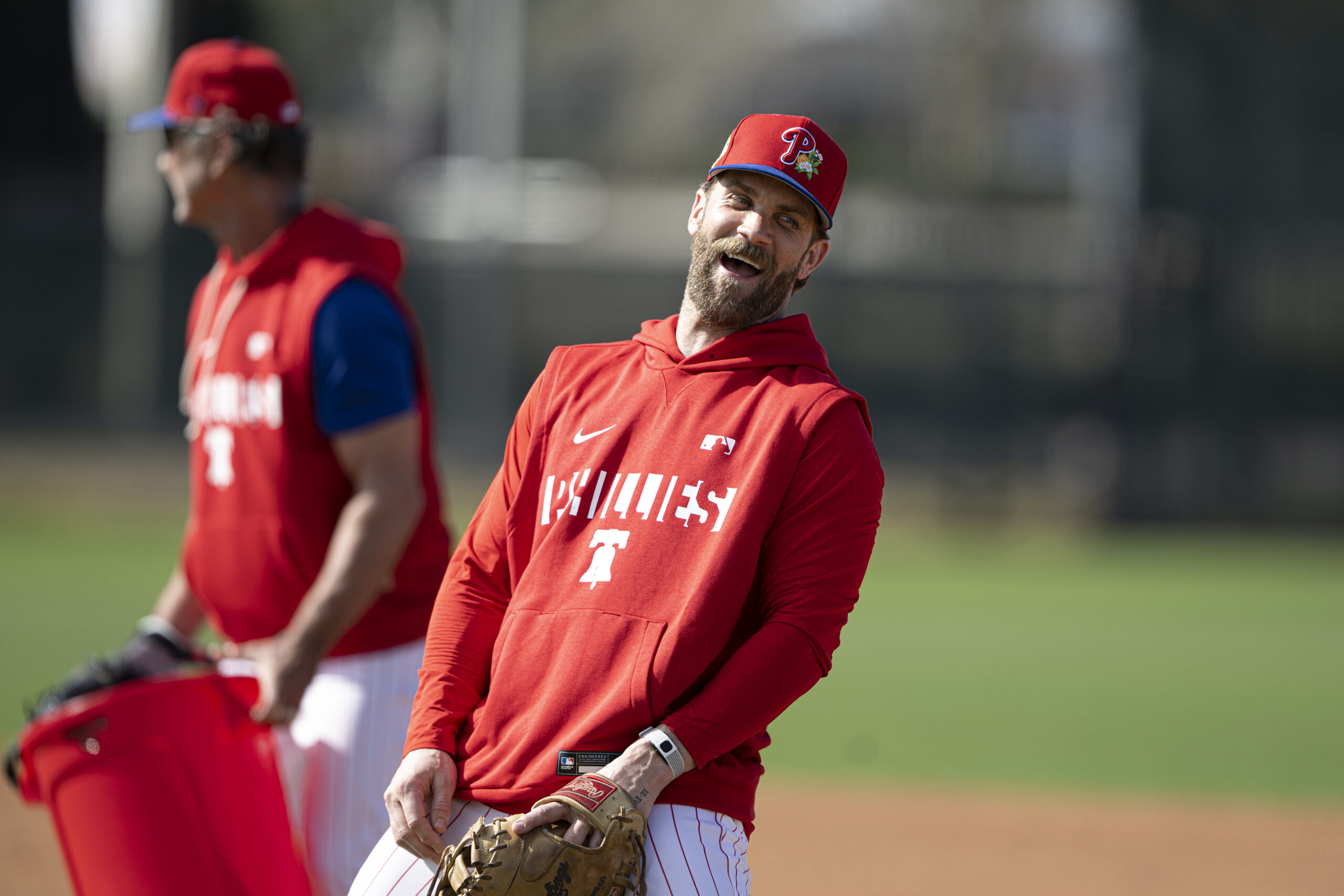
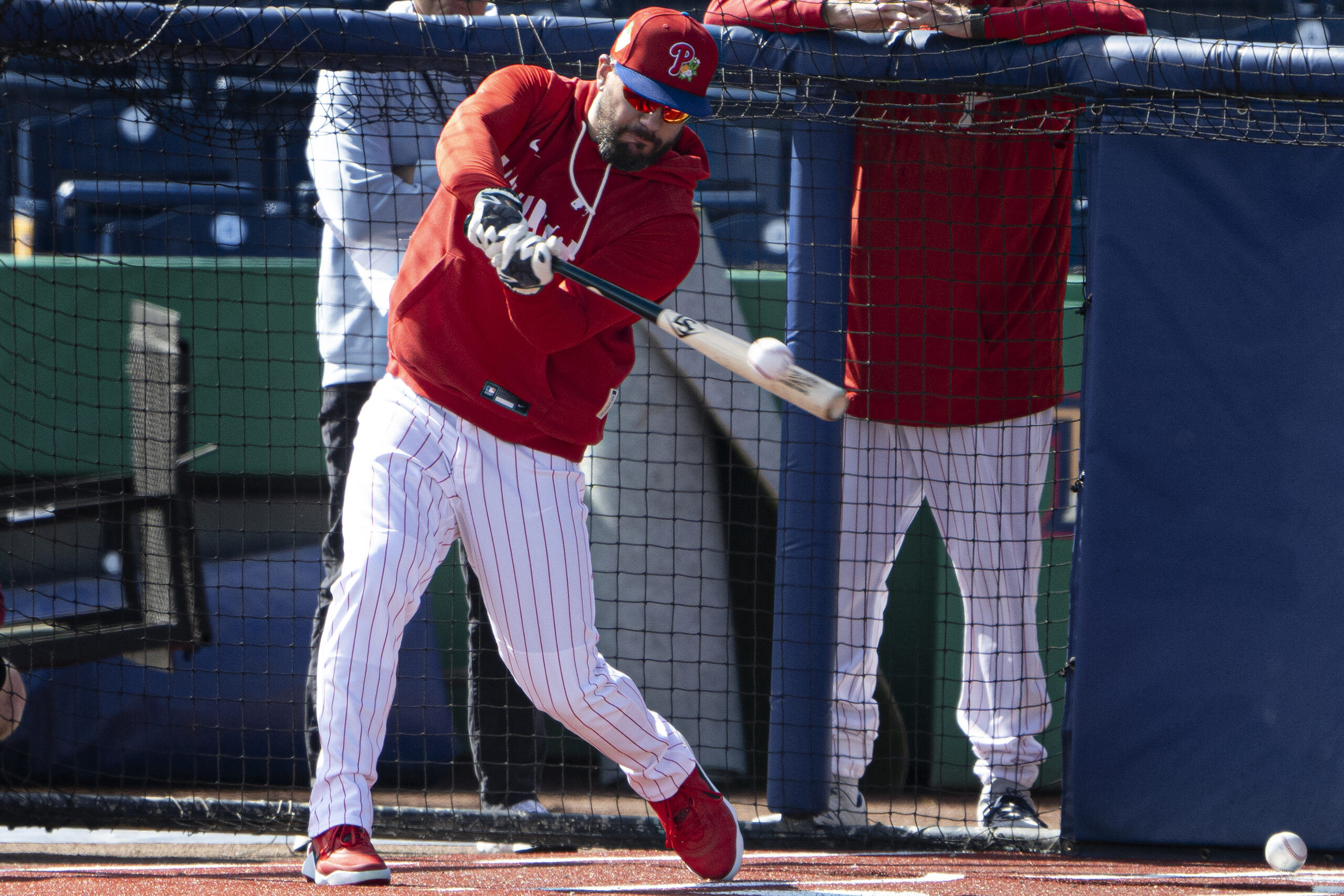
    Spring training photos: Phillies first full-squad workout

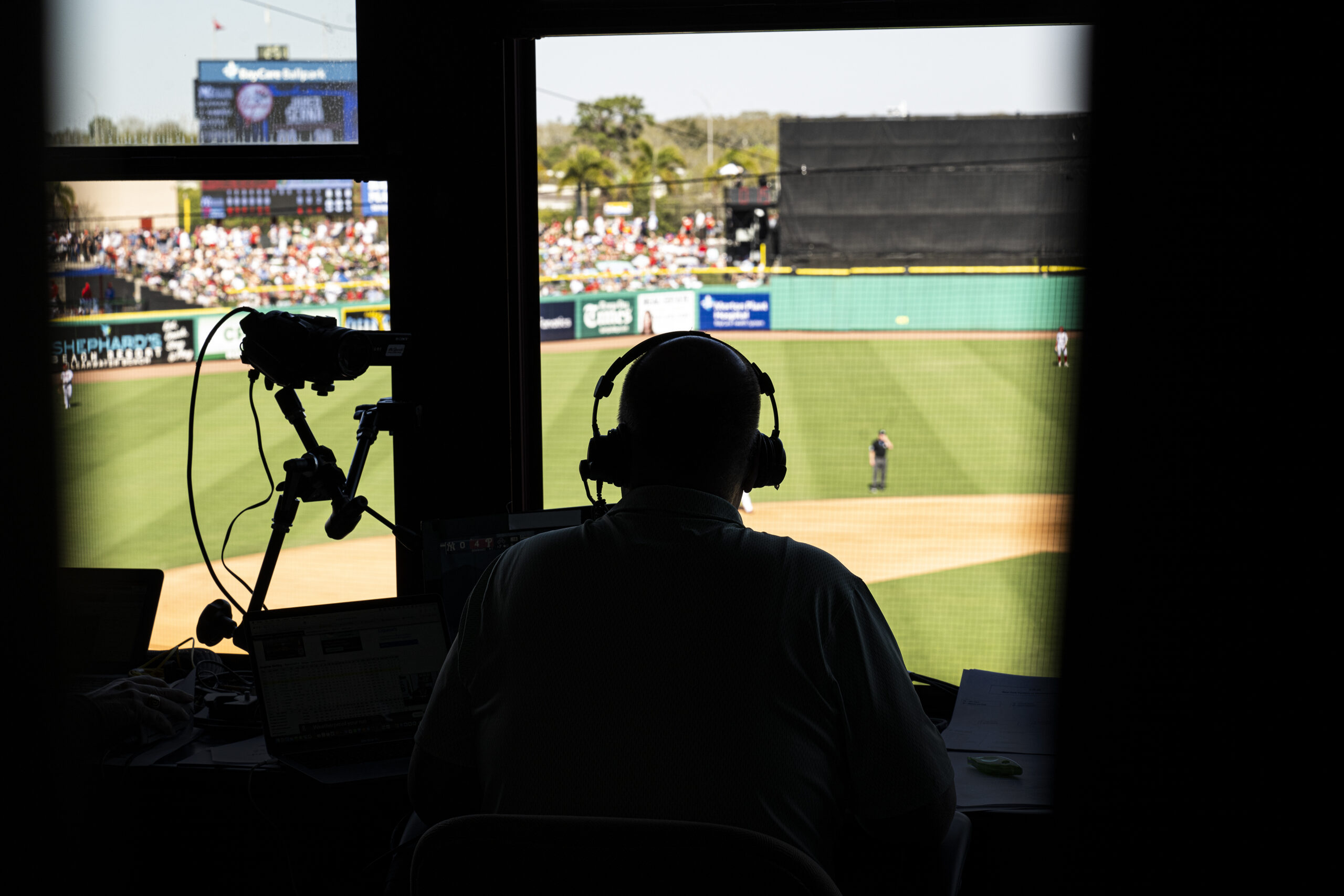
    BayCare Ballpark in Clearwater, Fla. ahead of the Phillies’ first full-squad workout.
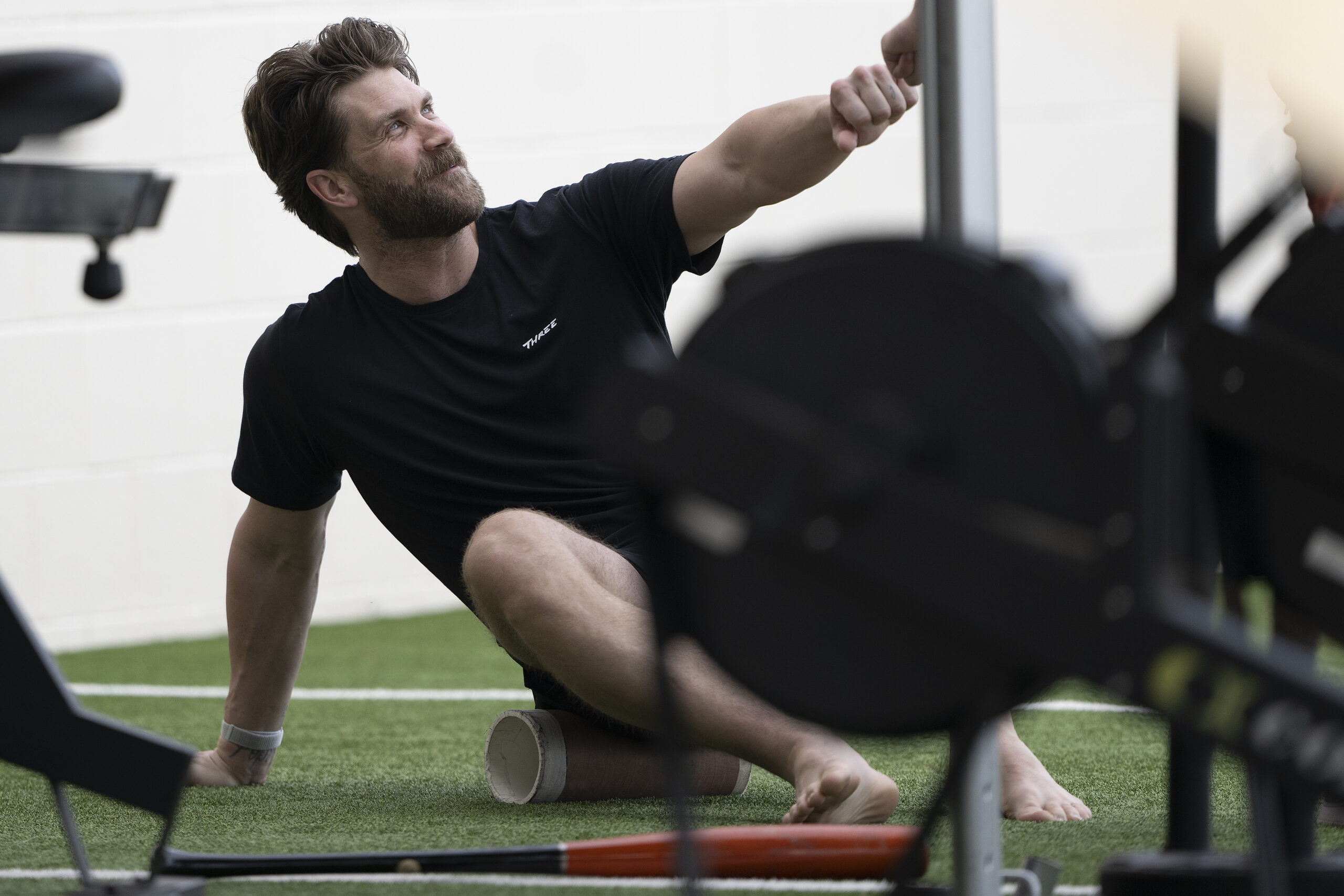
    Bryce Harper works with new bench coach Don Mattingly.
    Kyle Schwarber takes some swings during batting practice.
    The Phillies’ first spring training game is Saturday against the Toronto Blue Jays.

    // Timestamp 02/16/26 11:37am

    All eyes on Andrew Painter

    Top pitching prospect Andrew Painter will be under no limitations this spring as he competes for a spot in the Phillies’ rotation. He is set to appear in Grapefruit League games for the first time since prior to his ulnar collateral ligament injury and subsequent Tommy John elbow surgery in 2023.

    “I’m sure he’s excited. It’s really the first full year where he’s completely healthy, and where he’s got everything back,” Thomson said. “And when I’m talking about everything, I’m talking about stuff, combined with command and control. So I think he’s really excited. I would think so. I’m excited for him, because I’m thinking he’s really going to be a big piece for us.”

    Scott Lauber


    // Timestamp 02/16/26 11:18am

    Batting practice for Phillies prospect Aidan Miller


    // Timestamp 02/16/26 10:40am

    Bryce Harper practices with new bench coach Don Mattingly


    // Timestamp 02/16/26 11:00am

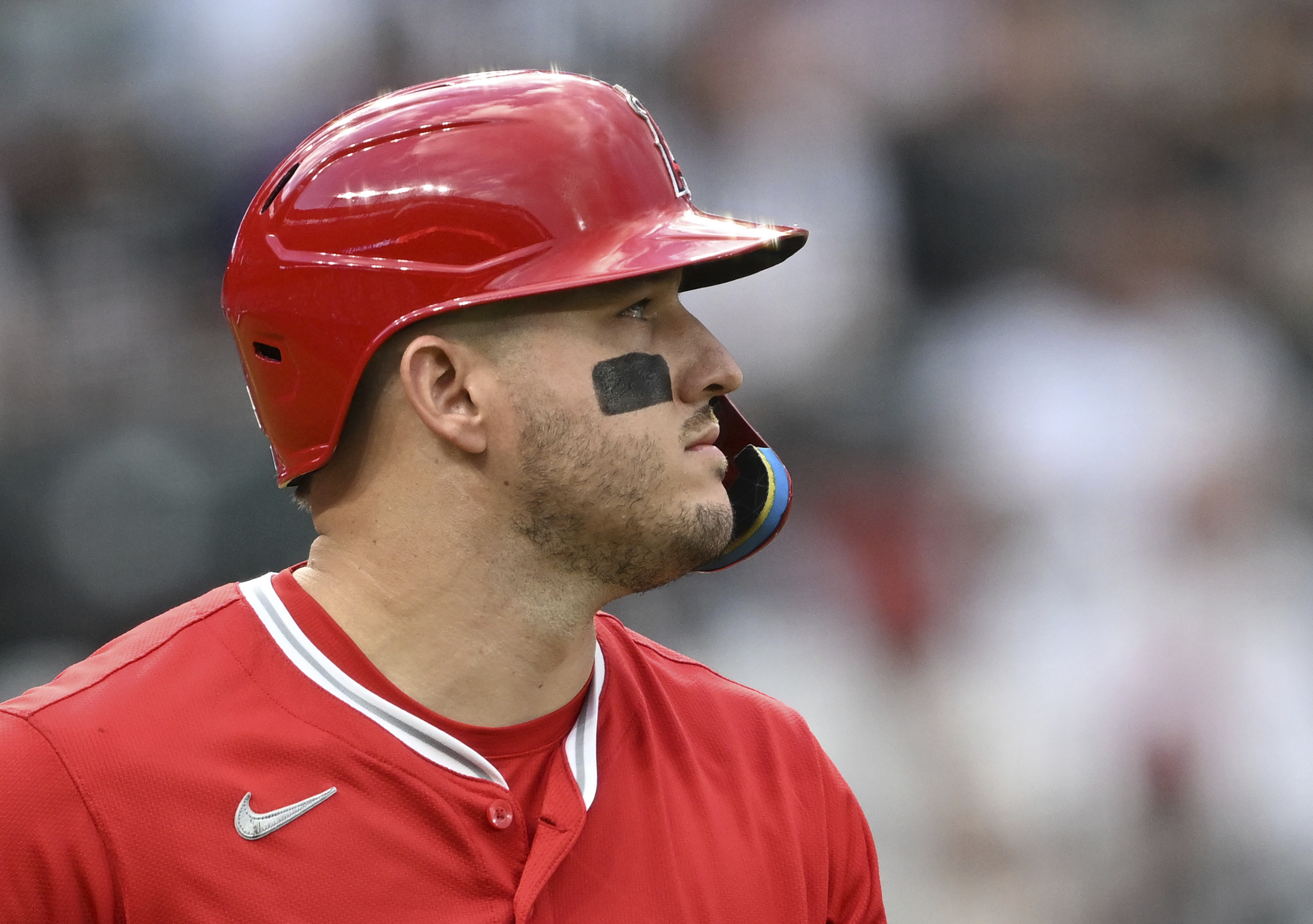
    Mike Trout talks position change, being prevented from playing in World Baseball Classic

    Mike Trout wants to move back to center field this season.

    Los Angeles Angels star Mike Trout plans to be back in center field this season, he told reporters Monday at the team’s spring training complex in Tempe, Ariz.

    Trout moved to right field last season in an attempt to keep the 34-year-old South Jersey native healthy, but in April he was sidelined for a month by a bone bruise and finished out the year as a designated hitter.

    Trout played 130 games last season, the most since 2019. But Angles general manager Perry Minasian signaled back in December he’d be open to Trout returning to center field.

    “I’m not ruling anything out,” Minasian said, according to MLB.com’s Rhett Bollinger. “We’ll see where the team looks like when we get to Spring Training and what’s in place and what gives us the best chance to win games. Might be playing center. One day might be playing left. One day might be DHing. I don’t know.”

    Trout also told reporters he wanted to play in this year’s World Baseball Classic, but was prevented due to insurance issues related to his 12-year, $426.5 million contract with the Angels that runs through the 2030 season.

    Essentially, Trout couldn’t find insurance coverage to cover the roughly $37 million he’s owed this season if he were to be injured during the global baseball tournament.

    He’s not alone. The same issue is preventing Houston Astros stars Jose Altuve and Carlos Correa from suiting up in the World Baseball Contract. Clayton Kershaw faced a similar problem in 2023.

    Rob Tornoe


    // Timestamp 02/16/26 9:11am

    New Phillies players to watch during spring training

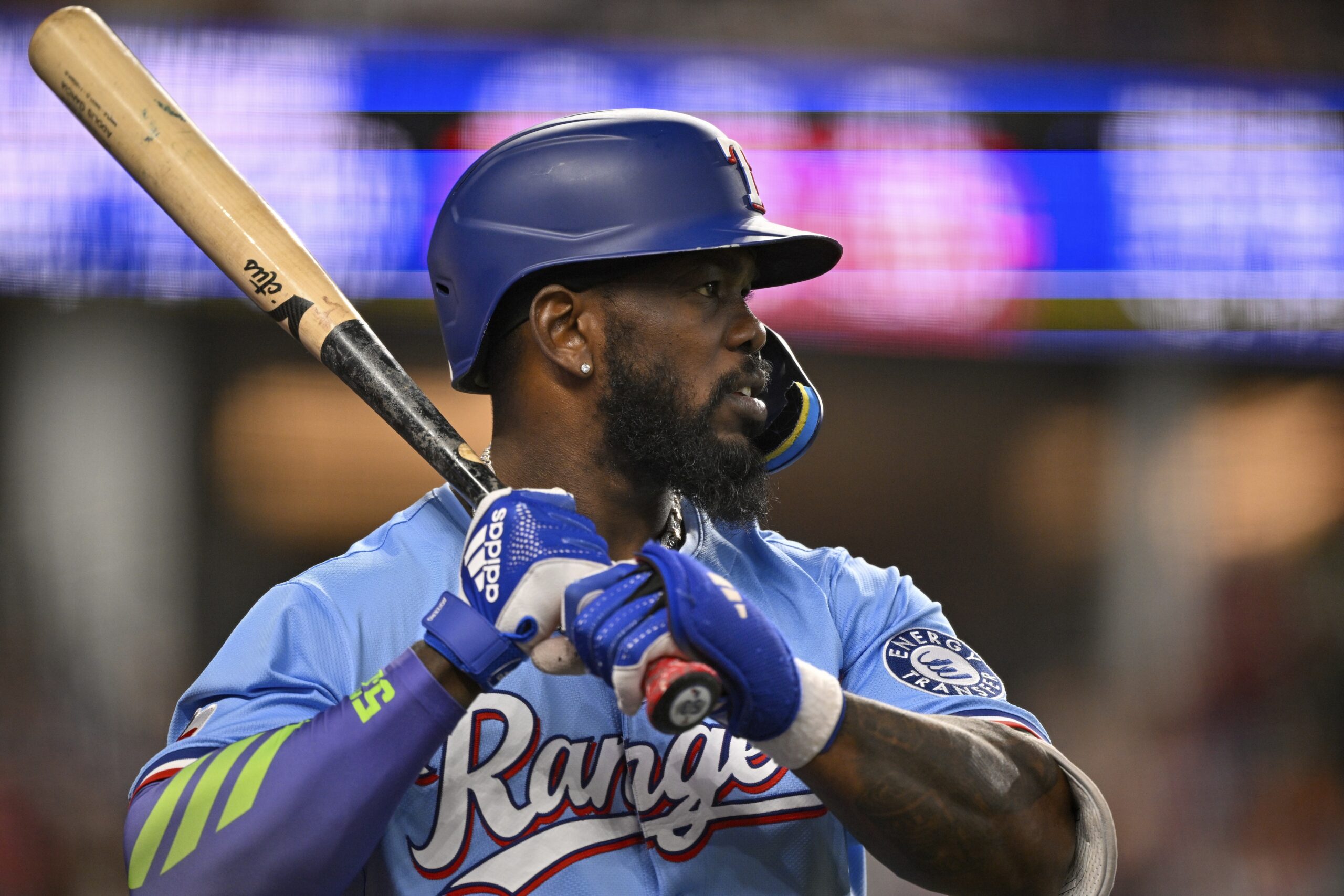
    Adolis Garcia is among the new faces Phillies fans will see in Clearwater.

    The Phillies signed right fielder Adolis García to replace new San Diego Padres first baseman Nick Castellanos and added Chicago Cubs reliever Brad Keller.

    They also sent lefty Matt Strahm to the Royals for Jonathan Bowlan in a reliever swap. And they added bullpen depth with Zach McCambley (Rule 5 draft), lefty Kyle Backhus (trade with Arizona), Yoniel Curet (trade with Tampa Bay), Chase Shugart (trade with Pittsburgh), and Zach Pop (free agent).

    The Phillies also gave manager Rob Thomson a contract extension through 2027 and hired Don Mattingly as his bench coach.

    So which new Phillies is most intriguing for 2026?

    Lauber: Does Justin Crawford count as “new?” Oh, OK, we’ll get to him later. In that case, García. In 2023, he hit 39 homers, got down-ballot MVP votes, and dominated the postseason for the World Series champion Rangers. The Phillies bet on bouncebacks last year from Max Kepler and Jordan Romano and went bust. Will their latest free-agent gamble work out better?

    March: Keller. The right-hander had been a starter for most of his career before his breakout season last year as a high-leverage reliever for the Cubs, and he has retained his starter’s arsenal of four-seam, sinker, slider, changeup, and sweeper. That, plus a jump of over 3 mph on his fastball in 2025, makes him an intriguing back-end option in the Phillies’ bullpen.

    Lochlahn March, Scott Lauber


    // Timestamp 02/16/26 7:29am

    Which Phillies players to watch at spring training

    All eyes will be on prospect Justin Crawford during spring training.

    What’s the Phillies’ biggest roster decision?

    Lauber: Although the decision to commit to Justin Crawford was made early in the offseason, it’s about to play out in real time. At 22, he would be the youngest outfielder to make a Phillies opening-day roster since Greg Luzinski and Mike Anderson in 1973. As the Phillies turn over the keys to center field, Crawford will be at the center of attention.

    March: The Phillies stocked up on potential bullpen depth this winter, making a host of minor league deals, a few trades, and a Rule 5 selection of Zach McCambley. Six reliever spots are likely spoken for, barring injury: lefties José Alvarado and Tanner Banks, and righties Jhoan Duran, Brad Keller, Orion Kerkering, and Jonathan Bowlan. There will be some stiff competition for the final two spots.

    Which prospect should fans look out for?

    Lauber: As you watch Crawford and Andrew Painter, don’t take your eyes off Aidan Miller. The Phillies intend to expose the 22-year-old shortstop to third base in spring training, but it will be interesting to see how much third he actually plays — and how fast they push him if he starts hot in triple A and/or Alec Bohm falters again in April.

    March: Gabriel Rincones Jr. made a big impression last spring with a couple of towering home runs. The outfielder was added to the Phillies’ 40-man roster ahead of the Rule 5 draft, and he could get a major league look at some point in 2026. Rincones, who will be 25 next month, struggles against left-handed pitching, so any opportunity would likely be in a strict platoon. But he has some big power potential against righties.

    Lochlahn March, Scott Lauber


    // Timestamp 02/16/26 7:25am

    New Padres first baseman Nick Castellanos

    A clean-shaven Nick Castellanos, dressed in a brown Padres hoodie, made his first public comments Sunday after signing a one-year deal with San Diego.

    The former Phillies outfielder, who was released by the organization on Thursday, met with the media at the Padres’ spring training complex in Peoria, Ariz. He also spent time taking reps at first base. He is expected to see time there as the Padres already have an All-Star rightfielder in Fernando Tatis Jr.

    Castellanos told reporters Sunday he “had a good idea” he would not be back with the Phillies following their exit in the National League Division Series. This winter, the Phillies repeatedly expressed interest in finding a change of scenery for Castellanos after he developed friction with manager Rob Thomson.

    After his release, Castellanos posted a letter on Instagram thanking members of the organization and explaining the “Miami Incident.” During the eighth inning of a June 16 game in Miami, Castellanos said he brought a beer into the dugout after Thomson replaced him for defensive purposes. He was benched for the following game as punishment.

    In his letter, Castellanos wrote that he “will learn from” the incident.

    “I think [what] I said I will learn from this is I guess just letting my emotions get the best of me in a moment,” he said Sunday. “Possibly if I see things that frustrate me or I don’t believe are conducive to winning, to speak up instead of letting things just pile up over time and pile up over time and finally when I address it, it’s less emotional.”

    Lochlahn March


    // Timestamp 02/16/26 7:20am

    Bryce Harper responds to Phillies exec ahead of Spring Training

    Bryce Harper fist-bumps Phillies teammates Sunday ahead of the team’s workout in Clearwater, Fla.

    Bryce Harper touched down in Phillies camp, pulled on a black T-shirt — no, not the black T-shirt that went viral over the holidays — and summarized one of the weirdest weeks in an offseason of his career.

    “For Dave [Dombrowski] to come out and say those things,“ Harper said, ”it’s kind of wild to me still.”

    Key word: Still. Because this was Sunday, 122 days after the Phillies’ highest-ranking baseball official gave a 90-second answer 34 minutes into a 54-minute news conference about whether Harper’s good-but-not-great 2025 season was a one-off or the start of a downward trend.

    Pardon the rehashed sound bite, but well, here goes: “Of course he’s still a quality player,” Dombrowski said, “still an All-Star-caliber player. He didn’t have an elite season like he has had in the past. And I guess we only find out if he becomes elite [again], or if he continues to be good.”

    Cue the hysteria, fomented by sports-talk radio and social media. And a candid answer to a good question exploded into unfounded speculation that the Phillies would consider trading Harper. (For what it’s worth, John Middleton is clear about wanting Harper to go into the Hall of Fame with a “P” on his plaque.)

    Harper is self-aware. He wasn’t satisfied with last season. There were factors, including an inflamed right wrist that caused him to miss 22 games. But he also swung at a career-high rate of pitches out of the zone, a problem given that Harper saw fewer strikes than any hitter in baseball. He also delivered fewer hits in the clutch than ever before.

    “Obviously,” he said after digesting it for four months, “not the best year of my career.”

    But the substance of Dombrowski’s comments didn’t bother Harper as much as the forum.

    “The big thing for me was, when we first met with this organization [in 2019] it was, ‘Hey, we’re always going to keep things in-house, and we expect you to do the same thing,’” Harper said. “So, when that didn’t happen, it kind of took me for a run a little bit. I don’t know.

    “It’s kind of a wild situation, that even happening.”

    Scott Lauber


    // Timestamp 02/16/26 7:15am

    Photos: Phillies spring training is a vibe

    Pitcher Taijuan Walker looks on while wearing his hat backward Sunday.
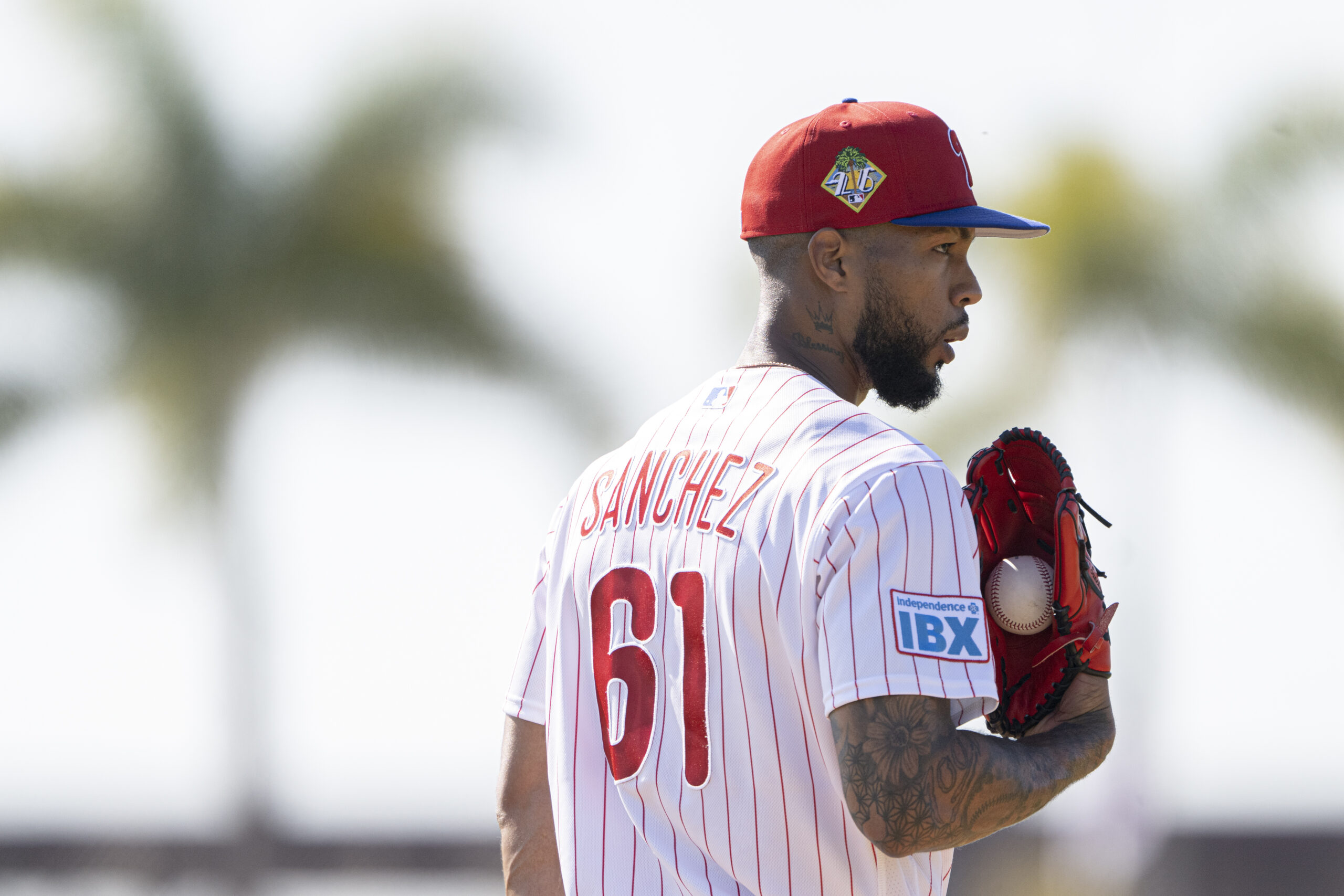
    Pitcher Cristopher Sanchez on the mound as palm trees swerve in the background.
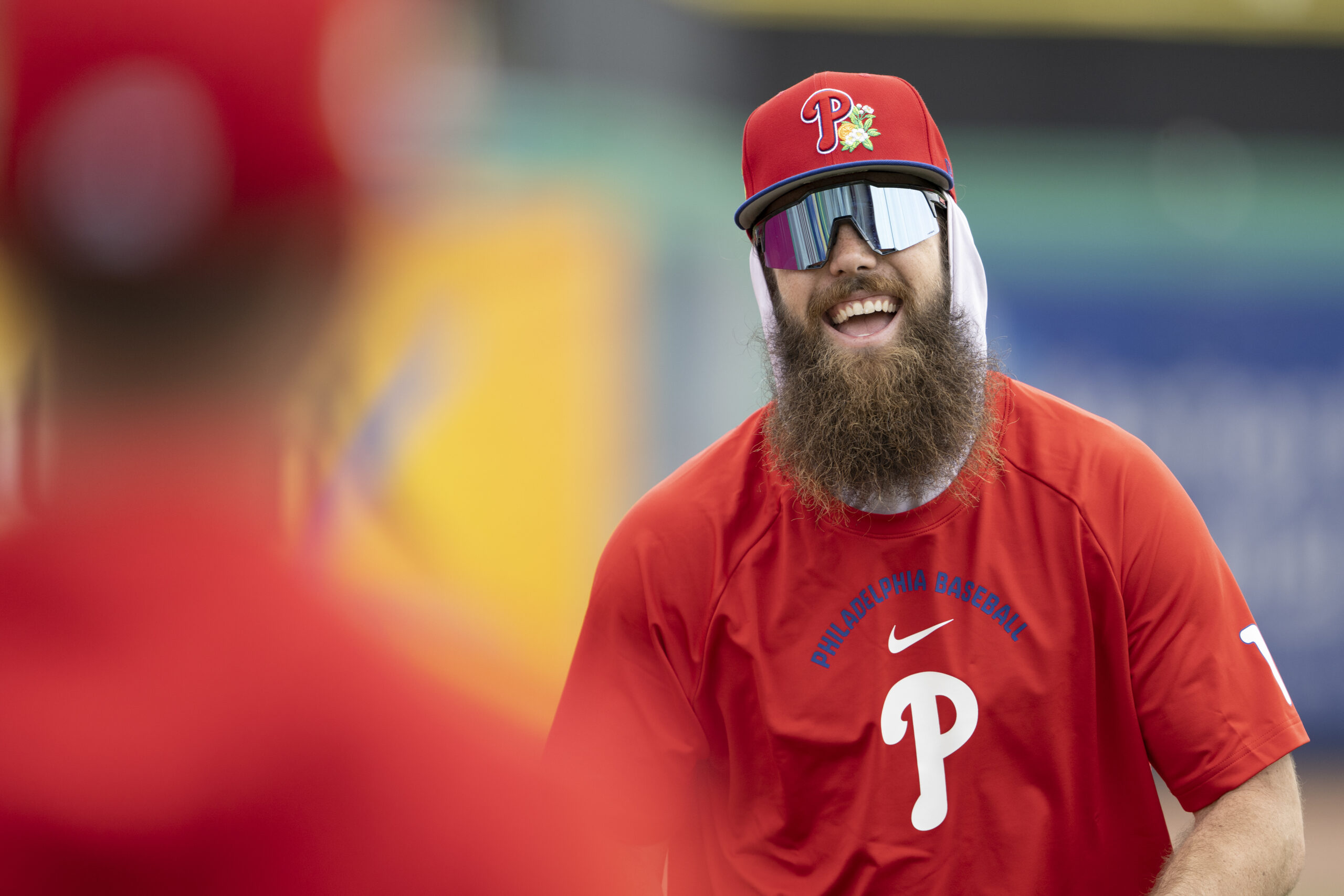
    Brandon Marsh shares a laugh during spring training workouts Thursday.
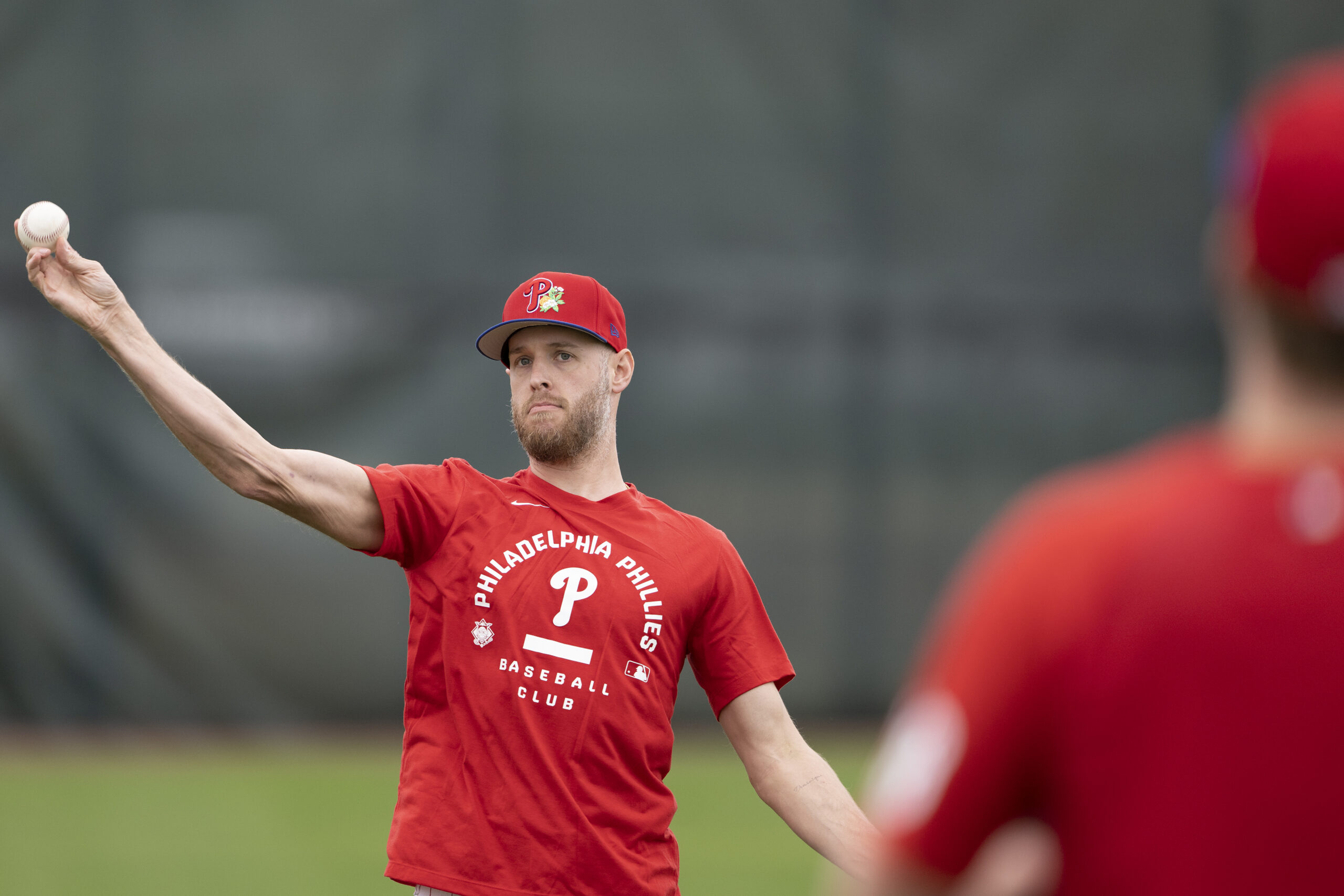
    Pitcher Zack Wheeler warms up last week.
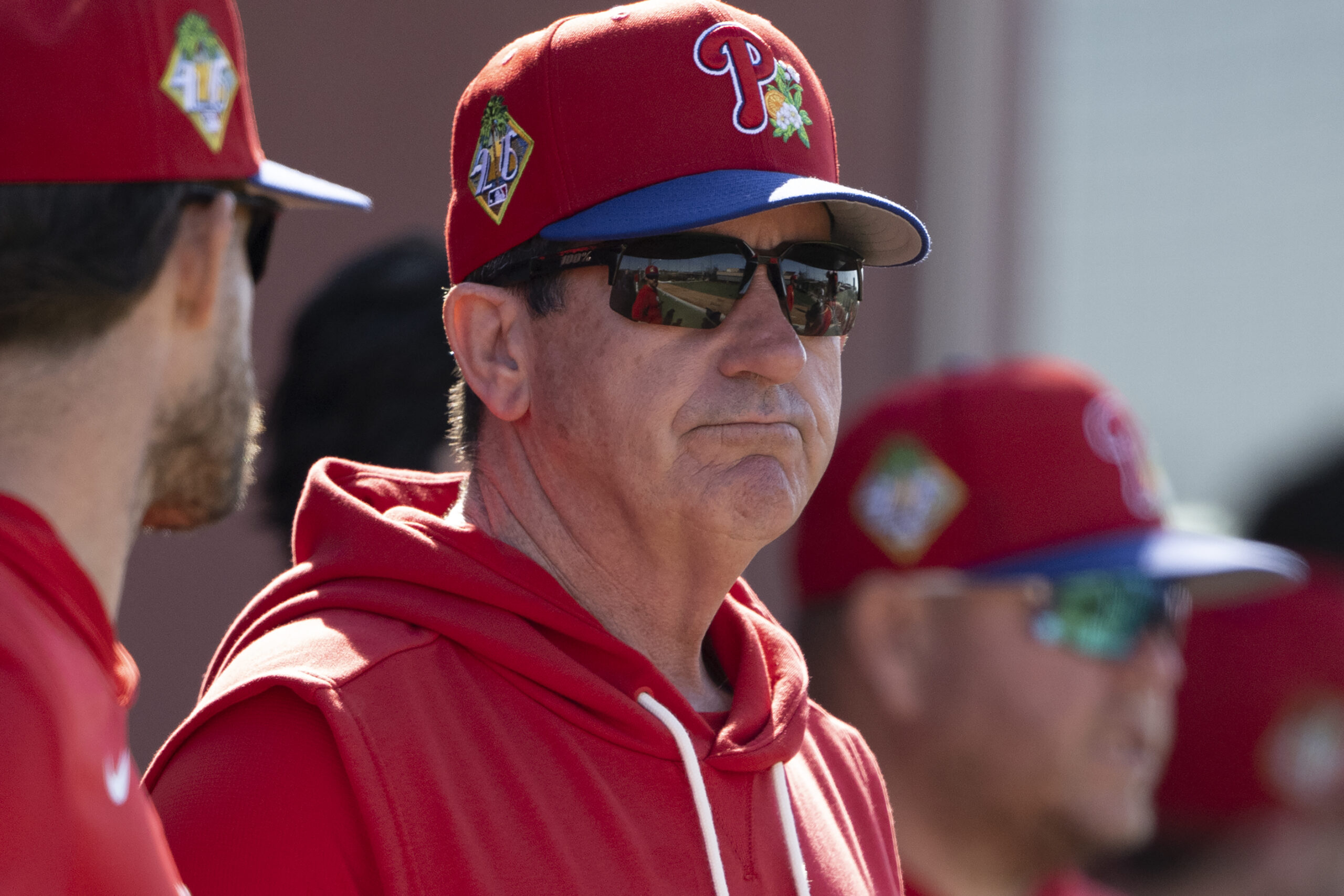
    Phillies manager Rob Thomson looks on during spring training workouts.

    // Timestamp 02/16/26 7:10am

    2026 Phillies spring training TV schedule

    Tom McCarthy is entering his 19th season as the TV voice of the Phillies.

    NBC Sports Philadelphia will once again broadcast 12 Phillies spring training games in 2026 — 10 on the main channel and two on NBC Sports Philadelphia+.

    The network’s TV schedule kicks off Sunday with the Phillies’ afternoon matchup against the Pittsburgh Pirates at BayCare Ballpark in Clearwater, Fla., where the team has played spring ball for 78 years.

    The Phillies March 4 exhibition game against Canada ahead of the World Basball classic will also air on NBC Sports Philadelphia.

    In addition, a handful of spring training games will stream live on the Phillies’ website.
    Here are all the Phillies spring training games airing on NBC Sports Philadelphia:

    • Sunday vs. Pittsburgh Pirates, 1:05 p.m. (NBCSP)
    • Feb. 25 vs Detroit Tigers, 1:05 p.m. (NBCSP)
    • Feb. 27 vs. Florida Marlins (split squad), 1:05 p.m. (NBCSP)
    • March 1 vs. New York Yankees, 1:05 p.m. (NBCSP)
    • March 4 vs. Canada, 1:05 p.m. (NBCSP)
    • March 5 vs. Boston Red Sox, 1:05 p.m. (NBCSP+)
    • March 8 at Minnesota Twins, 1:05 p.m. (NBCSP)
    • March 10 vs. New York Yankees, 1:05 p.m. (NBCSP)
    • March 13 vs. Baltimore Orioles, 1:05 p.m. (NBCSP+)
    • March 15 vs. Atlanta Braves, 1:05 p.m. (NBCSP)
    • March 17 vs. Minnesota Twins, 1:05 p.m. (NBCSP)
    • March 20 vs. Detroit Tigers, 1:05 p.m. (NBCSP)

    Rob Tornoe


    Key spring training dates for the Phillies

    Phillies players warm up during spring training workouts at BayCare Ballpark in Clearwater, Fla.
    • First full-squad workout: Feb. 16
    • First spring training game: Feb. 21 at Blue Jays (Dunedin, Fla.)
    • Spring training home opener: Feb. 22 vs. Pirates (Clearwater)
    • World Baseball Classic: March 5 – 17
    • Last spring training game: March 23 vs. Rays (Clearwater)
    • Opening day: March 26 vs. Rangers, 4:05 p.m., Citizens Bank Park

    Lochlahn March, Scott Lauber

    // Timestamp 02/16/26 7:05am

  • At Munich Security Conference, European leaders commit to protect Western values that White House abandons

    At Munich Security Conference, European leaders commit to protect Western values that White House abandons

    MUNICH — Last year, at the Munich Security Conference, where top U.S. and European leaders gather each year, Vice President JD Vance gave a shocking speech that nearly broke the NATO alliance of democracies that had kept the peace in Europe for 80 years.

    Vance claimed the threat to Europe was “not Russia, not China,” but rather came “from within” our NATO allies themselves — falsely accusing European democracies of stifling the radical, pro-Russia, and sometimes neo-Nazi parties that the Trump White House openly supports. The veep never even mentioned the threat from Russia, or its war on Ukraine.

    The acrid impact of that speech has hung over U.S.-European relations and the future of the NATO alliance over the past year.

    “Under Destruction” was the title of this year’s conference, held at the elegant Bayerischer Hof hotel. Its annual security report opened with these grim words, aimed at the “current U.S. administration”: “The world has entered a period of wrecking-ball politics. Sweeping destruction — rather than careful reforms and policy corrections — is the order of the day.”

    And yet, this year, I heard a startlingly different tone from European leaders. Stunned by Trump’s demands and disdain, awakened by Russian aggression against Ukraine and much of Europe, furious at President Donald Trump’s threats vs. NATO ally Denmark to seize its sovereign territory of Greenland, European leaders have woken up to the need for dramatic changes — though not in the way envisioned by Trump.

    “Europe has just returned from a vacation from world history,” stated German Chancellor Friedrich Merz, who like other leaders here, recognized they had depended for too long on an American ally they trusted for their postwar defense.

    Merz chose to speak first at the conference, taking a European leadership role (while insisting, with a nod to his country’s history, that Germany would “never again go it alone”).

    “The international order based on rights and rules is currently being destroyed,” he said. “But I’m afraid we have to put it in even harsher terms. This order, as flawed as it has been even in its heyday, no longer exists.”

    Merz added, “It does not mean that we accept it as an inevitable fate. We are not at the mercy of this world. We can shape it. And I have no doubt that we will preserve our interests and our values in this world if we step up together with determination, with confidence in our own strengths.”
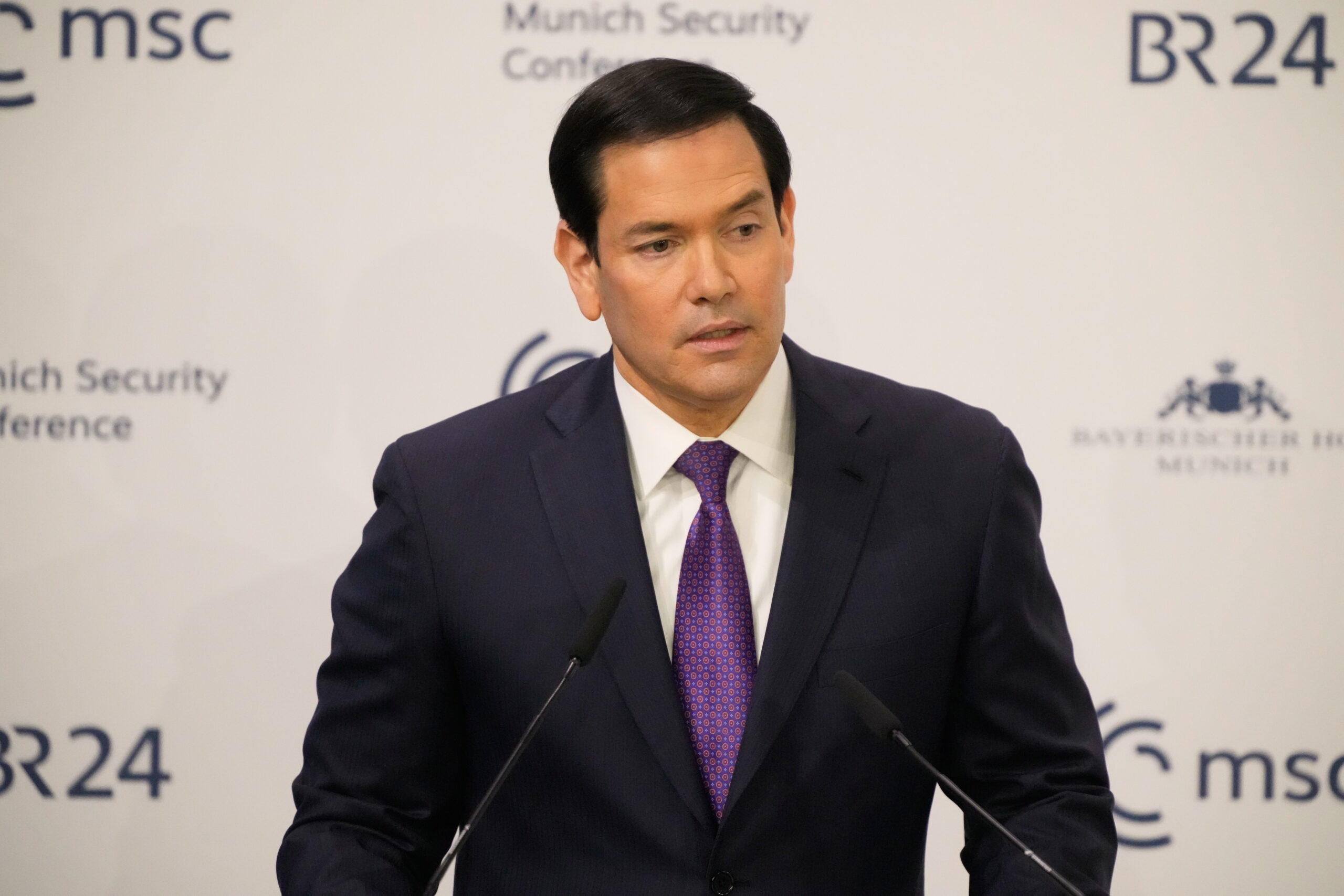
    U.S. Secretary of State Marco Rubio speaks at the Munich Security Conference Saturday.

    Indeed, the message of this European leaders meeting in Munich, in sharp contrast to European paralysis at Vance’s onslaught last year, was that they must and can organize to defend against Russia while protecting democratic values — and Ukraine — even if the United States won’t.

    Of course, skeptics, including Trumpers, will claim that Europe has become irrelevant. But what I heard this weekend is far more realistic than Trump’s fantasies about a Ukraine deal that bows to Putin and envisions big business deals with Russia.

    Pressed by Trump (and this was a good thing), NATO allies have significantly increased their defense budgets. Now that the U.S. has cut off almost all aid to Ukraine, Europe is paying for all U.S. weapons that are purchased for Kyiv, and the EU has pledged to cover most of Ukraine’s military budget for the next two years.

    But, unlike the U.S. president, the Europeans recognize that Ukraine is a symbol of the threat posed by an imperialist, aggressive Vladimir Putin.

    “With the beginning of Russia’s aggression, we entered a new phase of open conflict and wars, which changed the [security] situation more than we ever thought possible a few years ago,” Merz continued.

    The Kremlin also pushes claims of defending its “Russian civilization” to include any territory where it falsely claims that Russians are mistreated. This could include the Baltics, Poland, parts of the Arctic, all of Ukraine, Moldova. The list goes on.

    European officials are acutely aware of Russian threats, since they are the constant victims of Russian sabotage, underwater cable cutting, and political assassinations, all of which the White House downplays.

    During the conference British intelligence announced they had proof that Russia had assassinated opposition leader Alexei Navalyny in prison with a rare toxin, just as Russian agents murdered a Russian dissident on British soil.

    What I heard over and over was European astonishment that the White House ignores the massive slaughter of civilians by Putin, while pressing only for concessions by Ukraine. President Volodymyr Zelensky spoke bluntly at Munich about the need for more air defenses, but only Europe is responding.

    Indeed, Ukraine was central to the whole conference, with many speakers, warm applause, and frequent sessions featuring Ukrainian military innovations, while Europeans emphasized the importance of Ukraine’s trained army to Europe in the future.

    There was constant praise for Kyiv as the defender of Western values, holding the line between Russia and the democratic West.

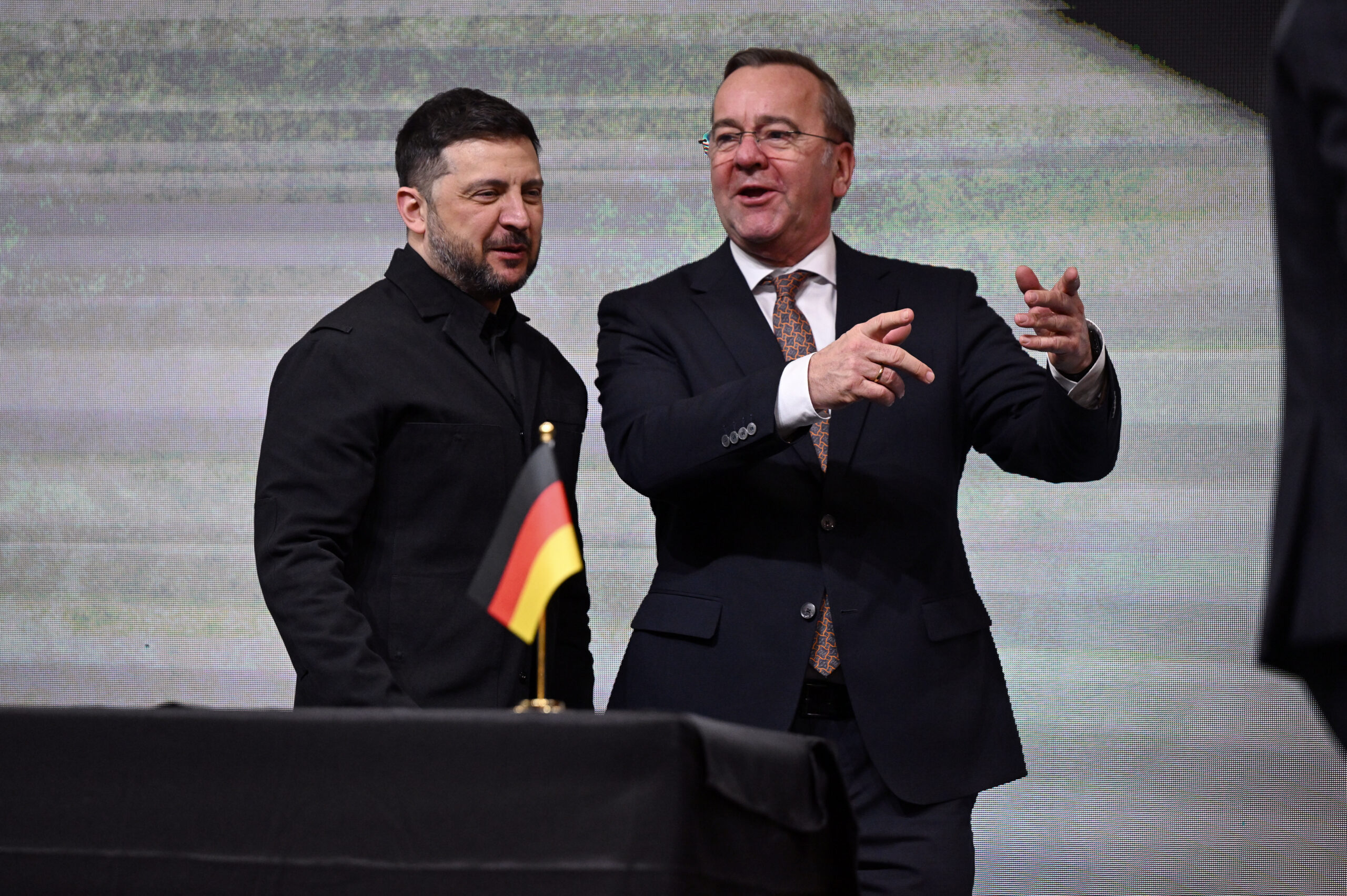
    Ukrainian President Volodymyr Zelenskyy, left, and German Defence Minister Boris Pistorius talk during their visit of drone producing company Quantum Frontline Industries near Munich Friday.

    Yet, it was clear from the American position at Munich that the administration sees the world entirely in a different light.

    No doubt aware that Vance redux would have been booed off the stage, the White House dispatched the somewhat more diplomatic (but far less powerful) Secretary of State Marco Rubio who soothed European fears slightly with an emphasis on continued U.S.-European ties. However, Rubio pointedly never mentioned the Russian threat hanging over Europe in his speech. He pushed the same nationalist MAGA line about the main threat to “thousands of years of Western civilization” coming from immigrants and multilateral ties.

    More disdainful was Deputy Secretary of Defense Elbridge Colby, who praised Secretary Pete Hegseth repeatedly and fulsomely, and insisted that the essence of Trump foreign policy was “hard-nosed common sense.”

    “You can’t base an alliance on sentiment alone,” he insisted, in a discussion held in the Bar Montez at the Rosewood Hotel, without taking any questions. “Maybe there is a difference in values.” Then he laughed that he had only heard the words “rules-based international order” once in Munich so “that is a piece of progress.”

    It is not clear whether the Europeans can achieve the weapons production goals they discussed and develop an integrated military force that takes over ground protection of Europe within NATO by the end of this decade. And leaders I spoke with recognize they can’t succeed alone without active partnership with — not subordination to — the United States.

    But what I heard in Munich made clear that they are far more aware of the threat democracies face and the values that need to be protected than is the White House.

    “We will preserve our interests and values if we step up together,” said Merz.

    That is wise advice that the White House continues to ignore.

  • Andre Blake begins his 13th season with the Union, still waiting for fate to finally smile on him

    Andre Blake begins his 13th season with the Union, still waiting for fate to finally smile on him

    CLEARWATER, Fla. — Sometimes, you don’t have to hear Andre Blake speak to know what’s on his mind.

    You can tell from looking at eyes that have seen more Union games than any other player. From hands that have stopped more shots than any goalkeeper should have to, and let more by than any goalkeeper would want to. From feet that have stood by nets across the United States, the continent, and beyond.

    You also don’t have to be a Union fan or a Jamaica fan to share the question that resonates so deeply with the 35-year-old, as he begins his 13th season with the only professional team of his career.

    Why has Blake been denied, time and again, the privilege of reaching the twin peaks he so deeply craves: winning an MLS Cup with his club and qualifying for the World Cup with his country?

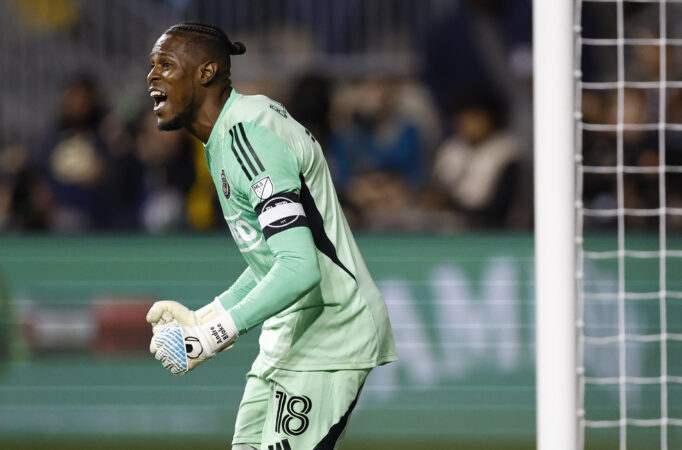
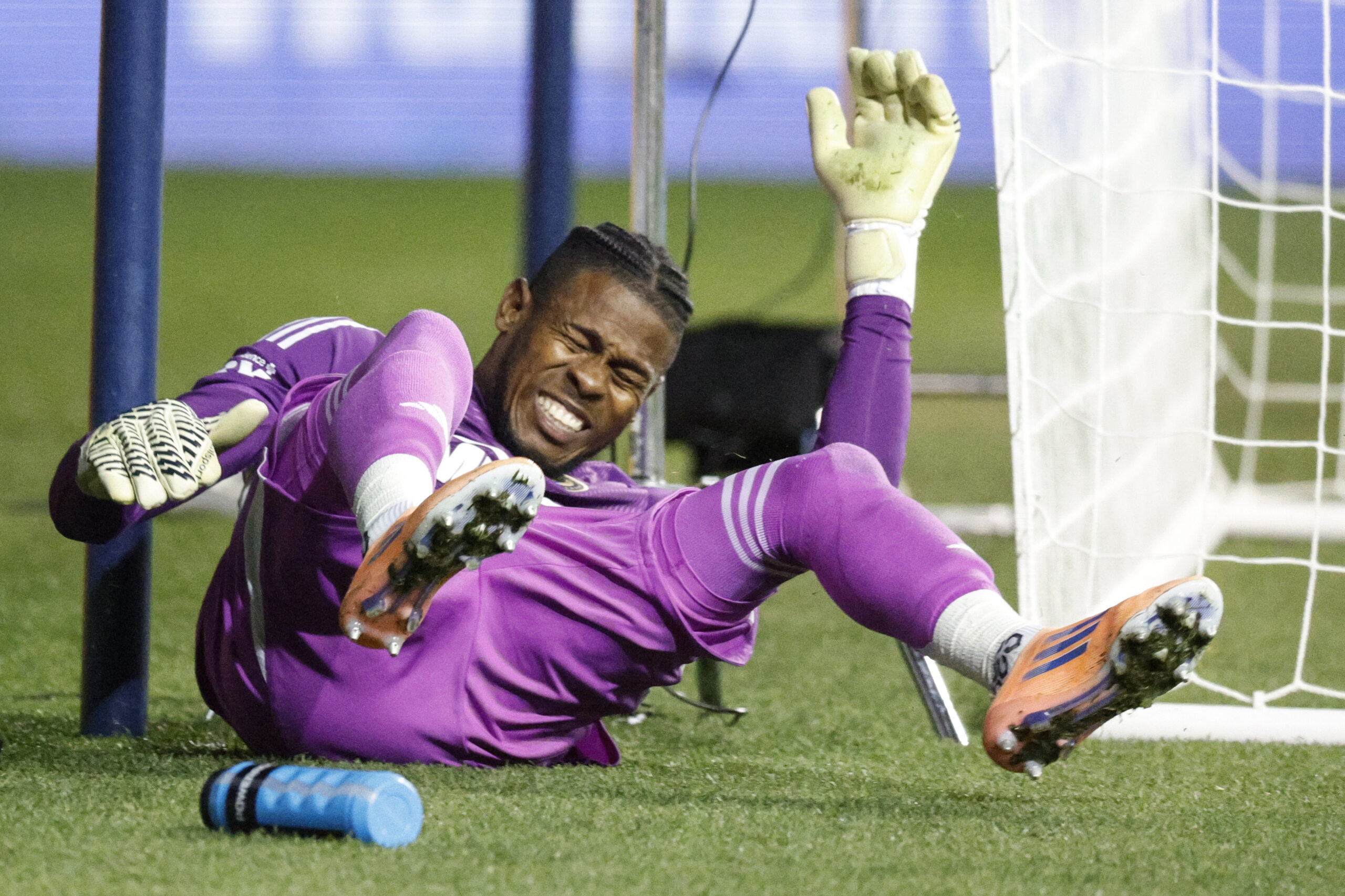
    Andre Blake suffered an injury during last year’s playoff loss to New York City FC.

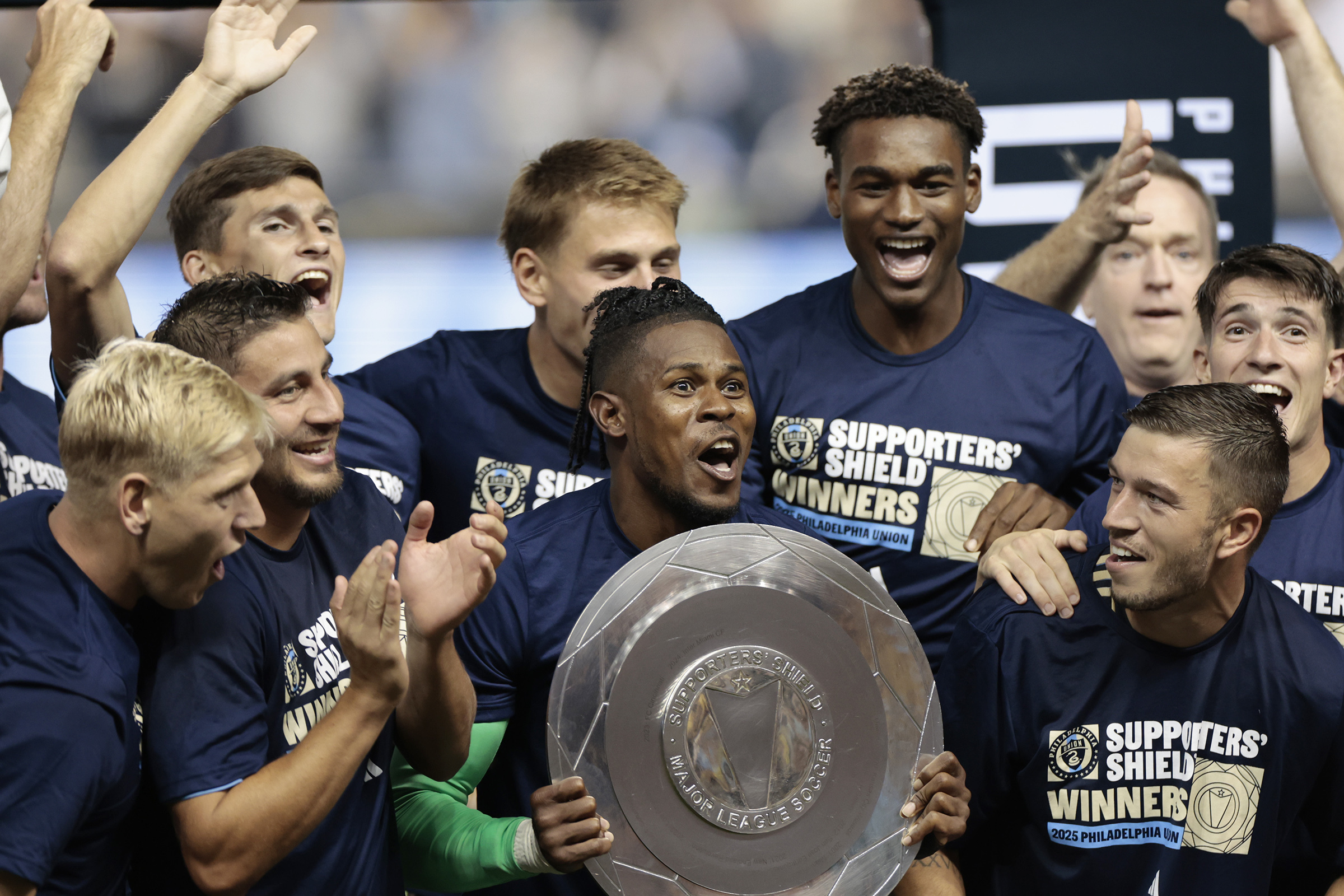
    The soccer gods can be cruel, and they have forced Blake to suffer. Yes, he has won two Supporters’ Shield titles, but all of his playoff runs — and his U.S. Open Cup runs, Leagues Cup runs, and Concacaf Champions Cup runs — have ended in defeat, often heartbreak, and most often out of his control.

    With Jamaica, the pain cuts especially deep right now. If the failures of past World Cup qualifying campaigns, Gold Cups, and Concacaf Nations Leagues weren’t hard enough, this moment seems almost unfair.

    The Reggae Boyz entered the last night of qualifying needing a win at home over Curaçao. But they were held to a scoreless tie, with Blake stuck at the other end of the field from his misfiring teammates. Curaçao took the berth and sent Jamaica to next month’s intercontinental playoffs.

    Up the hill and knocked back down, again and again.

    Curaçao players celebrating in Jamaica’s stadium after qualifying for the World Cup at the Reggae Boyz’ expense.

    ‘We need silverware’

    “I felt like we were so close again,” Blake said of the Union falling short last year. “We had it — had it where we wanted it to be. But that’s just soccer. Single-elimination games can go either way.”

    How much does he let himself use that as fuel?

    “I really thought that last year would have been it, knowing that MLS Cup would have been in Philly, but it didn’t happen,” Blake said. “But we just use that as motivation, as experience for us to know that we were that close. And just use that to give us confidence to know that hopefully this year we can go one or two steps closer and win the whole thing.”

    Will the stars finally align this year? That’s not how this works, in either Chester or Kingston, and Blake knows as well as anyone. But he’s ready to go once more.

    Andre Blake has won two Supporters’ Shields with the Union, but nothing more so far.

    “Pretty simple for me: My personal goal is to be better than I was last year,” he said. “That’s always my challenge, to be a better version of myself. And for the team, it’s always the same as well: We need silverware. And the ultimate one is the MLS Cup, so that’s got to be the goal.”

    Four years ago, the case was made in these pages that Blake is the most important player in Union history. The time since then has only proved it more. Look no further than last year’s playoffs, when he played a starring role in the first-round sweep of Chicago.

    The present moment proves it again. With Jakob Glesnes, Kai Wagner, Mikael Uhre, and Tai Baribo gone, this Union team feels like the start of a new era. As captain, Blake must help set the tone as newcomers blend in with returnees.

    “It feels new,” Blake said. “That’s the obvious [part]. But I’ve learned to control what I can control, which is my performance. And whoever is here, the goal is to get the best out of everybody.”

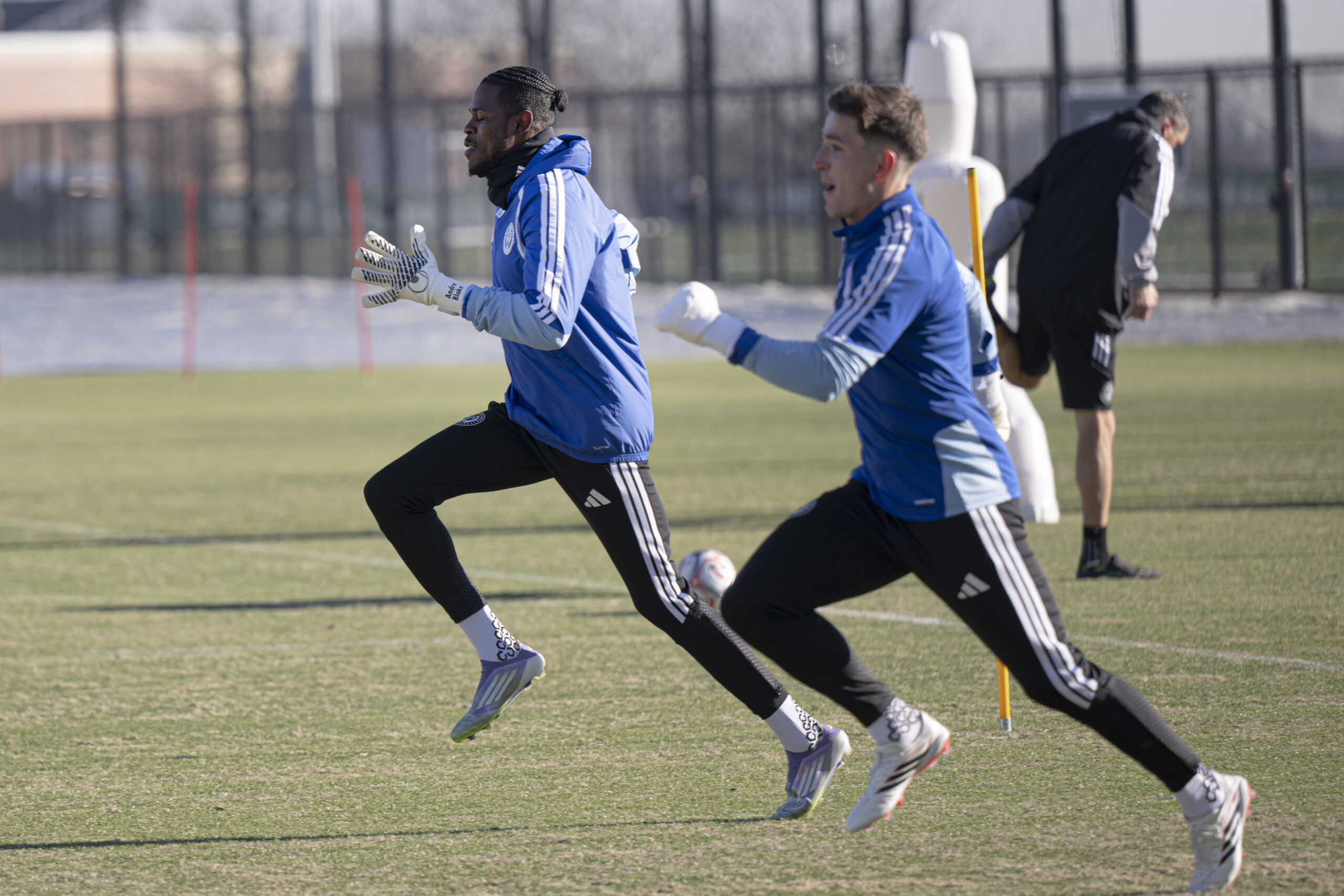
    Andre Blake (left) working out at the start of the Union’s preseason.

    For now, he continued, his aim is to “just focus on the positives, and positives are whoever is in this room. That’s what we have, and that’s what we have to work with and make the most of.”

    ‘Everybody starts at zero’

    Considering Blake’s history of criticizing the Union for a lack of ambition, what he said next might please the highest-ups — especially as he goes into the last guaranteed year of his contract.

    “It’s a new season, everybody starts at zero,” he said. “So I think it’s only fair to judge the season after the season, and not before the season. We have what we have right now, we’re going to do our best, and at the end of the year, we’ll evaluate and see how it was.”

    This team doesn’t seem to have the firepower to beat MLS’s best — Lionel Messi’s Inter Miami, Son Heung-Min’s Los Angeles FC, and Thomas Müller’s Vancouver Whitecaps — in the games that matter most. But it has made substantive moves to replace the players it cast off, signing center backs Japhet Sery Larsen and Geiner Martínez and forwards Ezekiel Alladoh and Agustín Anello.

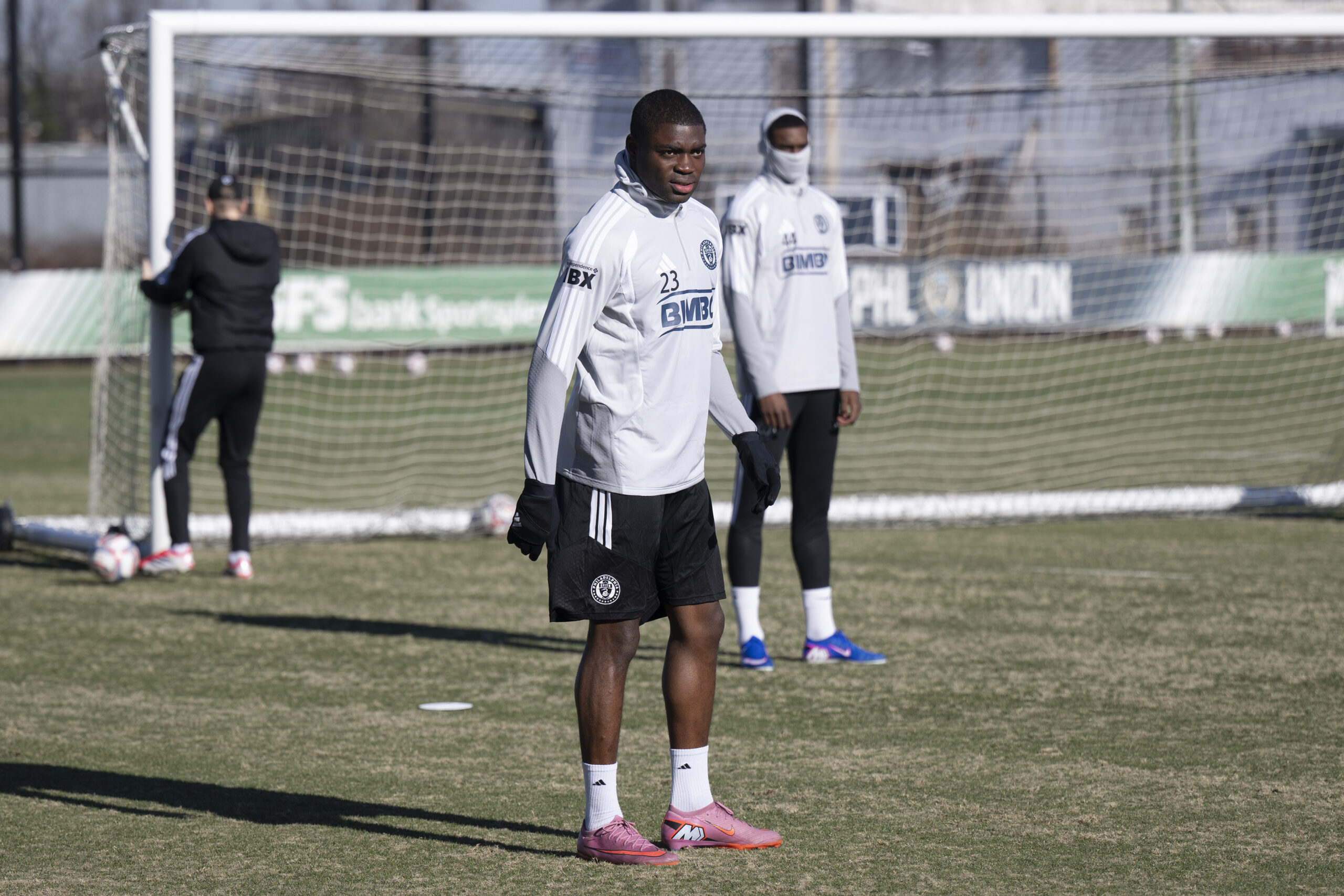
    The Union broke their transfer fee record to sign Ezekiel Alladoh.

    Sery Larsen could be especially impactful for Blake because of his track record of leadership at past clubs.

    “The most important thing coming into a new team is just the willingness to learn and to adapt, and to listen,” Blake said. “I think he came in with an open mind. He wants to learn, he’s willing to do the work.”

    The new group must build chemistry fast. The MLS season starts at D.C. United on Saturday (7:30 p.m., Apple TV), and the overall campaign starts Wednesday in the Concacaf Champions Cup at Defence Force FC in Trinidad.

    “The Champions Cup is always a different challenge,” Blake said. “Obviously, it’s a reward to be playing in that tournament. And yeah, the first game against Defence Force — for me, these days, there’s no easy game in soccer. You have to be ready to play, mentally and physically.”

    If the Union win the two-game series against Defence Force as they should, the climb will get steep fast. Not only will they face Mexican superpower Club América next, but they’ll face playing nine games from Feb. 18-March 21.

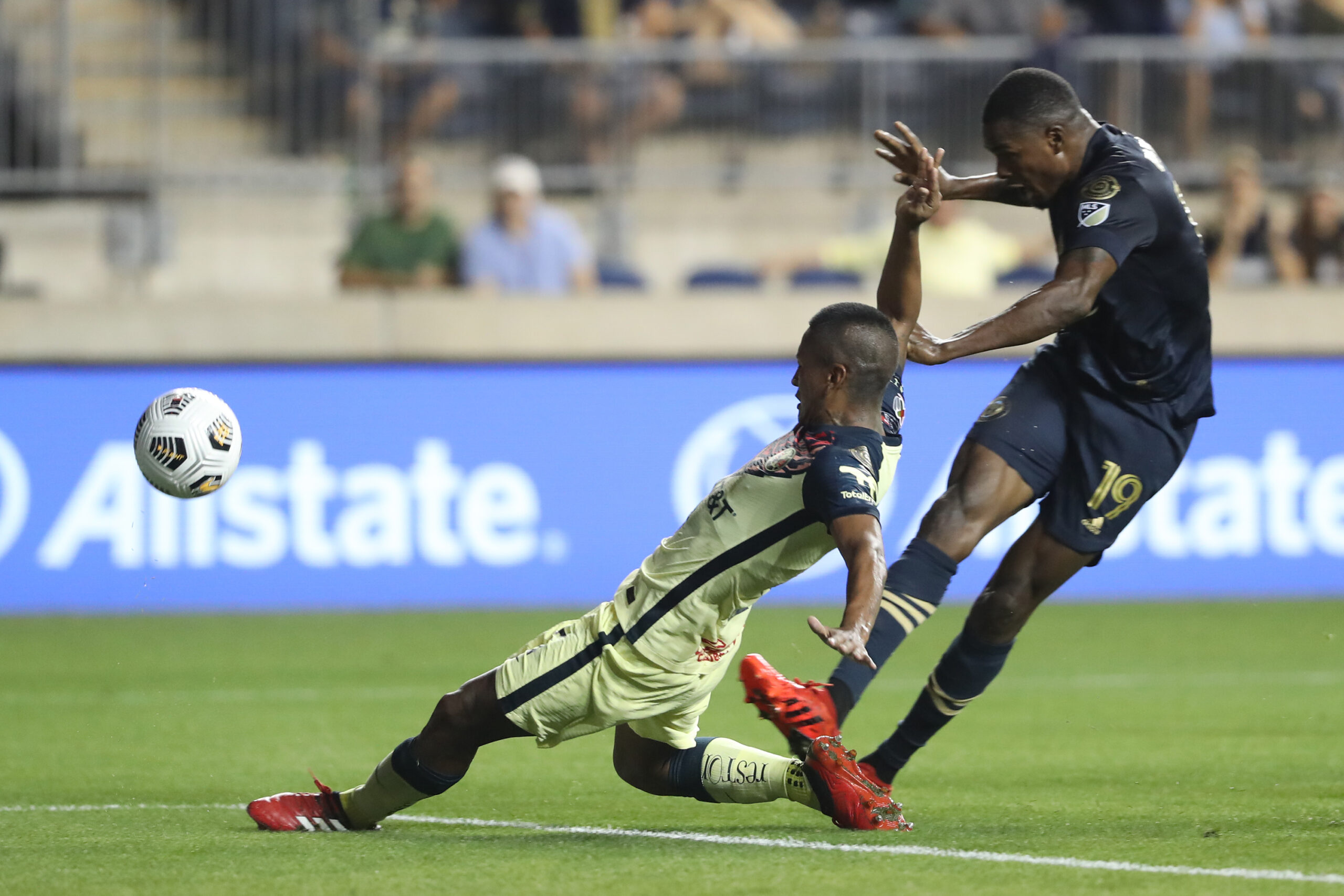
    The Union could face Club América in the Concacaf Champions Cup for the first time since the 2021 semifinals.

    “Not looking past that game, but after that it gets pretty tough,” Blake said. “We’ll prepare accordingly, and we’ll approach every game in a professional manner.”

    ‘Very angry’ about Jamaica’s struggles

    Now to the subject Blake rarely enjoys discussing, but he knows he must.

    The intercontinental playoffs are five weeks from now. Jamaica will play New Caledonia in the semifinal, then the winner will play the Democratic Republic of the Congo. Both games will be at Guadalajara’s Estadio Akron, a World Cup venue this summer.

    That task is not fully on Blake’s mind yet with so much to do before then. But it is still a presence, along with emotions from last fall that still simmer.

    “It’s been very tough for me these last couple months,” Blake said. “When you kind of invest so much into something and it doesn’t go the way you want it to go, it can get you, and that’s just kind of the phase I’m in right now as it relates to the national team.”

    The words came mixed with stretches of silence that were equally piercing.

    “It’s just trying to still process what really happened,” Blake said. “But when the time is right, I’ll do whatever I have to do, and I’ll be ready to go again.”

    He will play for the seventh manager of his national team tenure, Rudolph Speid, as famed veteran Steve McClaren resigned after the Curaçao game. The players have not changed, though, including big names like Leon Bailey and Michail Antonio.

    It’s on them to deliver.

    Jamaica has one last chance to qualify for this year’s World Cup, through FIFA’s intercontinental playoffs in March. Hockey great Wayne Gretzky was at the World Cup draw.

    “I haven’t spoken to anyone [since] after we left camp, so I don’t know what the vibe [is],” Blake said. “I know I’m very angry. I can only speak for myself, because I feel like we had an opportunity — a big, big opportunity — and we let ourselves down as players, And yeah, that’s just how I feel. I feel like it should have never gone that way.”

    He ran through a series of questions he asks himself about preparation, execution, effort, and controlling the controllable. They brought him back to a repeated answer.

    “I just feel like as players we let ourselves down,” he said, “and that’s what made me so angry.”

    The Reggae Boyz haven’t made a World Cup since 1998, and ending the drought in North America would be even sweeter. It cheers him up to know how many people are rooting for him in Philadelphia, across MLS, and worldwide.

    Jamaica is looking for its first berth in the FIFA World Cup since the 1998 edition in France.

    “I believe so,” he said. “At the end of the day I can still hold my head high. You can lose a game, you can not accomplish something, but it’s just how, if you give it your all — you did all you could, you left no stones unturned — and then you lose a game, then you can accept that, you know?”

    It’s a message he takes home to a family that enjoys calling Philadelphia home, and that four months ago welcomed a third child — a first daughter.

    “For me, whenever I go out there, I always try to make, my family, my fans, myself proud by leaving it all on the field,” he said. “So even if you don’t really accomplish what you want, it’s not going to feel good, but you can still be proud.”

    At that point, two more questions remained. Will this finally be his year? And if not now, will it ever?

    They felt best asked toward the heavens.

  • Monday’s Olympic TV schedule: U.S. vs. Sweden women’s hockey and more

    Monday’s Olympic TV schedule: U.S. vs. Sweden women’s hockey and more

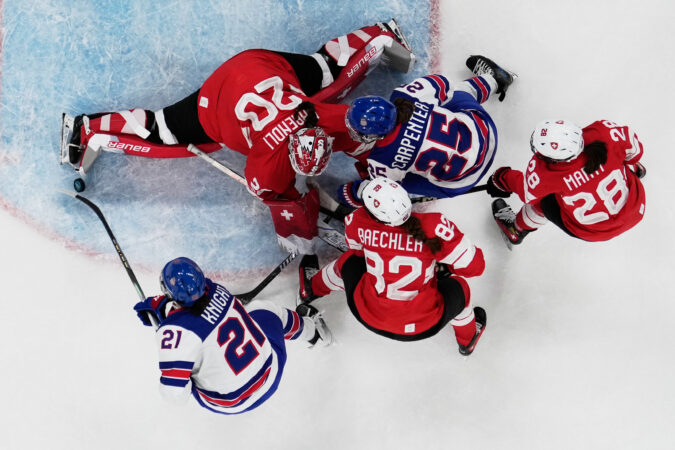
    U.S. women’s hockey highlights Day 10 of the Milan Cortina Olympics, with dominant Team USA facing Sweden in the semifinals.

    How dominant? In five games, the U.S. women’s team is undefeated, has outscored its opponents 26-1, and blanked Italy, 6-0, in the quarterfinals. Hilary Knight could also set a new Team USA points record on Monday — she’s tied with former teammate Jenny Potter with 32 career Olympic points (11 goals, 21 assists).

    U.S. vs. Sweden is scheduled to begin at 10:40 a.m. Philadelphia time, live on NBC. It will be followed by Canada vs. Switzerland in the second semifinal, which is scheduled to get underway at 3:10 p.m.

    The two winners will face off in the gold medal game on Thursday at 1:10 p.m., while the two losers will play for bronze Thursday at 8:40 a.m.

    The U.S. and Canada have faced off in the women’s ice hockey gold medal game in six of the seven Olympics featuring the sport. Team USA has won twice — 2018 in Pyeongchang, South Korea, and 1998 in Nagano, Japan. Sweden sneaked in and won silver in 2006 in Turin, Italy.

    In other Olympics action Monday:

    • Three U.S. bobsledders — Elana Meyers Taylor, Kaysha Love, and defending gold medalist Kaillie Humphries — could be racing for gold in the women’s monobob. The third run begins at 1 p.m., while the final run will start at 3:30 p.m., both set to air live on NBC.
    • Freestyle skier Eileen Gu, a San Francisco native who competes for China (her mother’s native country) will defend her 2022 gold medal in the women’s big air live at 1:30 p.m. on NBC. She won the silver medal in the slopestyle competition.
    • U.S. speedskater Kristen Santos-Griswold will challenge two-time Olympic medalist Courtney Sarault of Canada in the women’s short track 1,000 meters, live at 5 a.m. on USA Network and running again at 10 a.m. on NBC.

    Monday’s Olympic TV schedule

    As a general rule, our schedules include all live broadcasts on TV, but not tape-delayed broadcasts on cable channels. We’ll let you know what’s on NBC’s broadcasts, whether they’re live or not.

    NBC
    • 10 a.m.: Speedskating — Women’s short track 1,000-meter final (tape-delayed)
    • 10:40 a.m.: Women’s ice hockey — U.S. vs. Sweden, semifinal
    • 1 p.m.: Bobsled — Women’s monobob third run
    • 1:30 p.m.: Freestyle skiing — Women’s big air final
    • 2:45 p.m.: Alpine skiing — Men’s slalom, first and final runs
    • 3:30 p.m.: Bobsled — Women’s monobob final run
    • 4 p.m.: Figure skating — Pairs free skate
    • 8 p.m.: Prime-time highlights including freestyle skiing, figure skating, and more.
    • 11:35 p.m.: Late night highlights including Alpine skiing, bobsled, and more.
    USA Network
    • 5 a.m.: Speedskating — Women’s short track 1,000-meter preliminaries and final, men’s short track relay semifinal, and men’s 500-meter short track qualifying
    • 7:30 a.m.: Alpine skiing — Men’s slalom final
    • 8:45 a.m.: Bobsled — Two-man, second run
    • 2 p.m.: Figure skating — Pairs free skate
    • 3:10 p.m.: Women’s ice hockey — Canada vs. Switzerland, semifinal

    How to watch the Olympics on TV and stream online

    NBC’s TV coverage will have live events from noon to 5 p.m. Philadelphia time on weekdays and starting in the mornings on the weekends. There’s a six-hour time difference between Italy and here. The traditional prime-time coverage will have highlights of the day and storytelling features.

    As far as the TV channels, the Olympics are airing on NBC, USA, CNBC, and NBCSN. Spanish coverage can be found on Telemundo and Universo.

    NBCSN is carrying the Gold Zone whip-around show that was so popular during the Summer Olympics in 2024, with hosts including Scott Hanson of NFL RedZone. It used to be just on Peacock, NBC’s online streaming service, but now is on TV, too.

    Every event is available to stream live on NBCOlympics.com and the NBC Sports app. You’ll have to log in with your pay-TV provider, whether cable, satellite, or streaming platforms including YouTube TV, FuboTV, and Sling TV.

    On Peacock, the events are on the platform’s premium subscription tier, which starts at $10.99 per month or $109.99 per year.

    Here is the full event schedule for the entire Olympics, and here are live scores and results.

  • After a Philadelphia cancer patient ran out of options, a novel T-cell therapy at Rutgers kept her alive

    After a Philadelphia cancer patient ran out of options, a novel T-cell therapy at Rutgers kept her alive

    Jefferson Health oncologist Jennifer Johnson had exhausted all the standard treatment options for her 49-year-old patient with esophageal cancer, who was likely to die within months.

    Surgery, chemotherapy, radiation, and immunotherapy had kept the Northeast Philadelphia woman alive for six years after her diagnosis, but no longer were enough to stop her cancer from spreading.

    Johnson knew her patient needed something novel. She recalled a presentation several years prior at a conference for head and neck cancers, where a doctor discussed an experimental treatment called T-cell receptor (TCR) therapy.

    This type of cancer immunotherapy works by engineering the immune system to fight cancer, and falls into the same family of treatments as CAR-T, or chimeric antigen receptor (CAR) T cell therapy, an approach pioneered at the University of Pennsylvania that has revolutionized treatment for blood cancers.

    She thought TCR therapy’s clever approach could work against solid tumors, where CAR-T had not been effective.

    “I just remember sitting in the room and watching him present, thinking, I’m gonna use that one day,” the oncologist and cancer researcher recalled.

    As it would happen, the approach was being tested in a phase II clinical trial at Rutgers Cancer Institute against tumors just like her patient’s: metastatic cancers driven by a virus called human papillomavirus 16. One of the most common strains, HPV16 causes roughly half of cervical cancer cases worldwide, as well as cancers of the head and neck area, anus, and genitals.

    Cases that reach the metastatic stage like Johnson’s patient often run out of treatment options. Whether T-cell receptor therapy would work was unknown, but the alternatives were expected to fail.

    “Anything that you might offer them would definitely not be expected to make their cancer go away completely and do it for a long time,” said Christian Hinrichs, the oncologist and scientist heading the trial whose presentation Johnson saw.

    But interim results from the first half of the trial showed improvement in six out of 10 patients, whose tumors at least partially shrank. And two of them had no evidence of cancer after treatment.

    Johnson’s patient, Maria Pascale, was one of the two whose promising early results were presented at a medical conference and highlighted in a research abstract in the Journal for ImmunoTherapy of Cancer in November.

    She arrived at the health system in New Jersey in the summer of 2024 in such poor health that her lungs were starting to collapse.

    The therapy has enabled her to celebrate two birthdays, start martial arts classes, reunite with old friends visiting from Argentina, and see her 23-year-old son get engaged.

    “Imagine the wedding, then later the grandkids, I’m always thinking about [that],” she said.

    What is a T-cell receptor therapy?

    In the immune system, T cells act as frontline defenders against viruses, bacteria, and other threats.

    Sometimes, these cells aren’t great at their jobs.

    In the face of cancer, T cells can become exhausted over time, and fail to recognize invaders or mount attacks.

    The idea behind immunotherapy is to transform these regular immune cells into cancer-fighting super-soldiers.

    The Rutgers approach, an engineered TCR therapy, involves collecting T cells from a patient’s blood and genetically engineering them to better target a cancer cell for attack.

    Afterward, the scientists grow more of the enhanced T cells in the lab and infuse them back into the patient.

    The “prototype” for this style of therapy is CAR-T, a treatment that has saved tens of thousands of lives since the first FDA approval in 2017. Scientists have not yet been able to replicate the therapy’s success in blood cancers in solid cancers, although some early stage trials have shown potential.

    TCR therapy is thought to be more promising against the latter cancer type — which is what’s being treated in the Rutgers trial — due to differences in the way the engineered T cells identify cancer cells.

    CAR-T therapy uses what’s called a chimeric antigen receptor, a protein that recognizes a cell as cancer based on what’s on the outside of the cell.

    It’s like knowing you’re at your friend’s house because of a specific doormat or set of house numbers on the exterior.

    TCR therapy uses what’s called a T-cell receptor, which can recognize cancer cells based on what’s inside the cell.

    It’s like knowing you’re at your friend’s house because you can see your friend inside.

    Sometimes cancer cells have more unique identifiable elements on the outside, but other times they don’t. Imagine if multiple houses had the same doormat.

    “That target would be on other cells that aren’t cancer cells and cause lots of toxicity,” said Carl June, the pioneering cancer scientist at Penn who developed the first FDA-approved CAR-T therapy and was not involved in the Rutgers trial.

    That’s been the problem that’s held back CAR-T’s use in solid tumors.

    The target in the Rutgers trial is a protein called HPV16 E7, found inside the cell. In tumors driven by the virus HPV16, it plays a key role in turning a cell into cancer.

    “That’s like going after its Achilles’ heel,” June said.

    Swarming the cancer

    Pascale first arrived at Thomas Jefferson University Hospital in Center City in 2018 after suffering injuries in a car accident.

    Doctors found a mass in the 43-year-old’s neck that turned out to be cancer.

    Surgeons removed the mass, and she was fine until 2021 when doctors, including Johnson, found the cancer at the top of her esophagus.

    They treated her with a combination of chemotherapy and radiation, which worked until March of 2022, when the cancer started appearing in Pascale’s lungs.

    “All bets were off,” Johnson said.

    Doctors gave Pascale chemotherapy and immunotherapy over the next couple of years, but in the spring of 2024, she developed an allergy to one of her chemotherapy drugs.

    Around the same time, the cancer spread to the skin on Pascale’s back.

    That’s when Johnson transferred her care to Hinrichs’ team at Rutgers.

    Pascale started preparations for the treatment in July 2024, spending a couple weeks in the hospital.

    The Rutgers team took T cells from her blood, gave her chemotherapy to knock her immune system down, and then transfused the engineered cells back into her body.

    Within 48 hours, Pascale started feeling horrible.

    “It was painful. It was my whole body, like I had pneumonia,” she said.

    She had trouble breathing as the cells fought the cancer in her lungs. Hinrichs described it as “the T cells swarming the cancer,” leading to an inflammatory reaction.

    The same thing occurred on her back. When Pascale’s sister came over, she saw one of the tumors in her skin was suddenly the size of a lemon.

    Another one appeared red and felt like someone was burning a cigarette on her back.

    The pain continued for three days, and then she felt well enough to go home. Pascale and her sister could see and feel the nodules on her back get smaller, until eventually they were gone.

    Roughly five months later, Pascale’s scans showed no evidence of cancer. As of last month, a year and a half after she received the treatment, that was still true.

    “What’s three days of pain compared with the opportunity that I have to live a lot of beautiful things with my family and friends?” Pascale said.

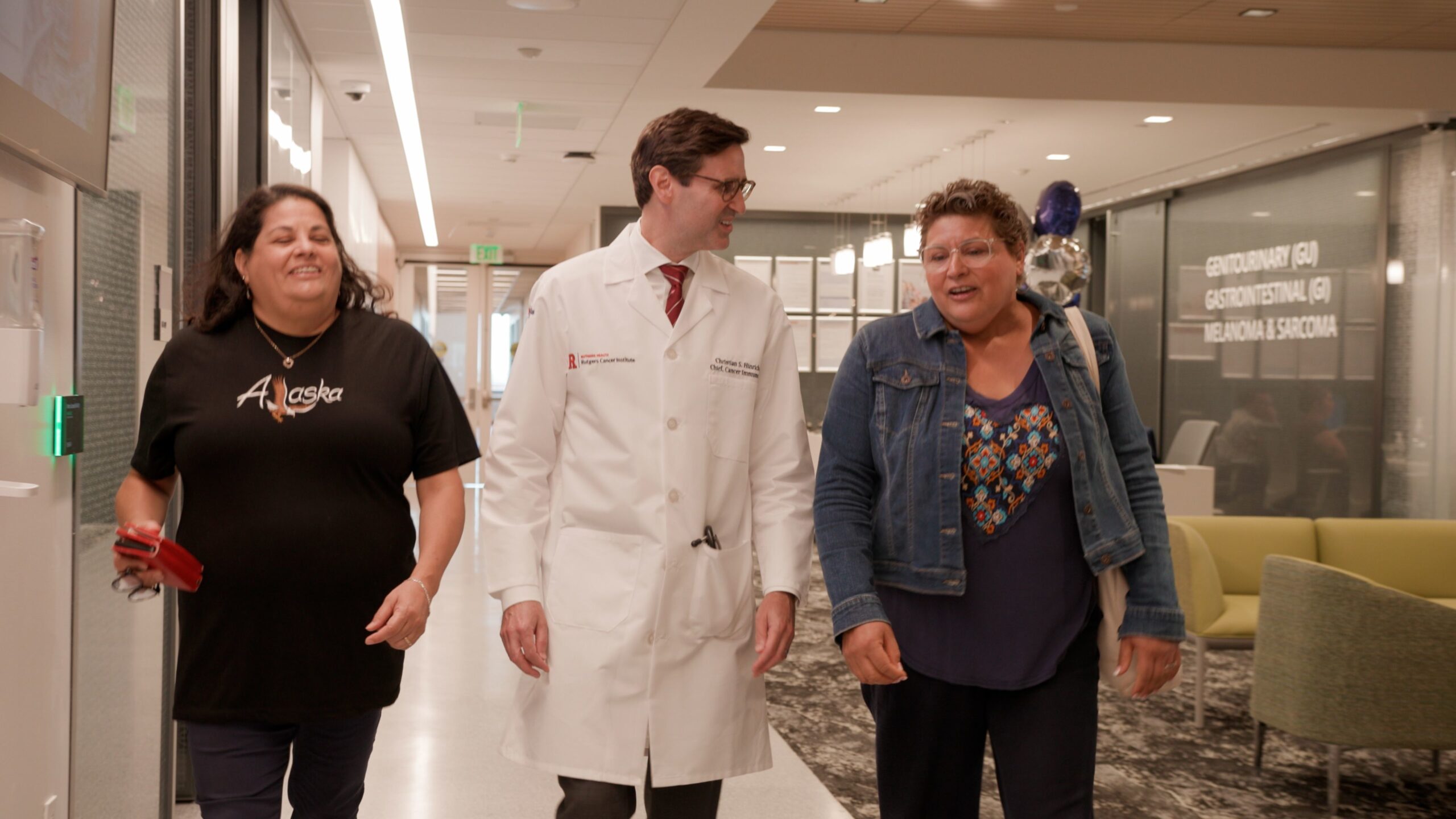
    Maria Pascale walks with her sister Maria Durante and her doctor Christian Hinrichs at Rutgers.

    The future of the treatment

    Hinrichs said his team is working to figure out why two of the patients, including Pascale and a patient with anal cancer, responded better to the treatment.

    He cautioned that it’s too early to draw sweeping conclusions since the sample size is small. (Researchers will seek to recruit another 10 patients for the ongoing trial.)

    The patients who had complete responses will need follow-up scans every few months to make sure their cancers have not returned.

    It will still take years to finish evaluating safety and efficacy. Treatments tested in clinical trials often do not advance to become standard practice.

    June, the Penn scientist, called the trial’s early results promising and noted that there weren’t any major safety problems reported.

    Adverse effects seen in the trial were mainly those caused by the chemotherapy.

    However, the drawback of using TCR therapy is that patients need a certain genetic background for it to work, June said. This is similar to how not every organ donor would be a good match for a recipient.

    The genetic profile chosen for the Rutgers therapy is the most common in America. However, it is less common in Black and Asian people compared to white people.

    Scientists hope it could one day be possible to manufacture the therapy with a warehouse approach, where TCR therapies that work across genetic backgrounds could be mixed and matched.

    “It’s a practical issue that the drug companies face,” June said.

    CAR-T, in comparison, can be used more broadly across different genetic backgrounds.

    What matters most, since the treatment is expensive to make, is that the responses hold up over time, June said.

    (The TCR therapy’s cost has not yet been set, Hinrichs said, since it is currently manufactured individually for each patient.)

    “If they’re long lasting, then it’s really going to be a huge advance because nothing else works in the patients he’s treated,” June said.

    At Jefferson, Johnson is cautiously optimistic about the treatment that has kept her patient alive.

    If the therapy makes it through the rest of the trial process and proves effective, she hopes it could become “another thing in our armamentarium against this type of cancer.” (A type that doctors would hope to see less of since the introduction of the HPV vaccine in 2006.)

    “I can’t tell you how wonderful it is to have a patient responding and living well when you saw things going the wrong way,” Johnson said.

    Editor’s note: This story has been updated to clarify where the research has been presented and a reference to the prevalence of the genetic profile used in TCR therapy.

  • Everything you need to know about the Union ahead of the 2026 season

    Everything you need to know about the Union ahead of the 2026 season

    The Union are set to begin their 2026 season on Wednesday with a Concacaf Champions Cup match at Defence Force F.C. in Port of Spain, Trinidad (6 p.m., FS2).

    Less than three months removed from their 2025 campaign, the team will look different from the squad that captured Major League Soccer’s Supporters’ Shield last season, and not just because the team has new home jerseys.

    It was a busy offseason for Bradley Carnell’s side, which set a high standard for itself with last season’s campaign. Here’s everything you need to know about the Union before they open the season:

    Which Union players left this offseason?

    The Union moved on from many of the club’s most recognizable faces from last season this winter. They sold Tai Baribo, last year’s leading goal scorer, to D.C. United for $4 million in December. After six seasons playing center-back for the club, Jakob Glesnes was traded to the Los Angeles Galaxy for $2.2 million in general allocation money.

    The MLS All-Star trio of (from left) Kai Wagner, Tai Baribo, and Jakob Glesnes departed the Union in the offseason.

    Kai Wagner, who spent seven seasons with the Union, was moved to Birmingham City in the English Championship. The Union also moved on from Mikael Uhre, who returned to his native Denmark to play for FC Midtjylland.

    The Union also declined contract options for Chris Donovan, Isaiah LeFlore, Nicholas Pariano, and Oliver Semmle.

    Who are the new players suiting up for the Union?

    The Union made a few significant acquisitions in the transfer market this winter. The most expensive was the acquisition of Ezekiel Alladoh from Swedish club IF Brommapojkarna. The forward cost the Union $4.5 million, the most the club has ever spent on an individual transfer. Alladoh, 20, is a Ghanaian national who will be under contract with the Union through 2028, with club options in 2029 and 2030.

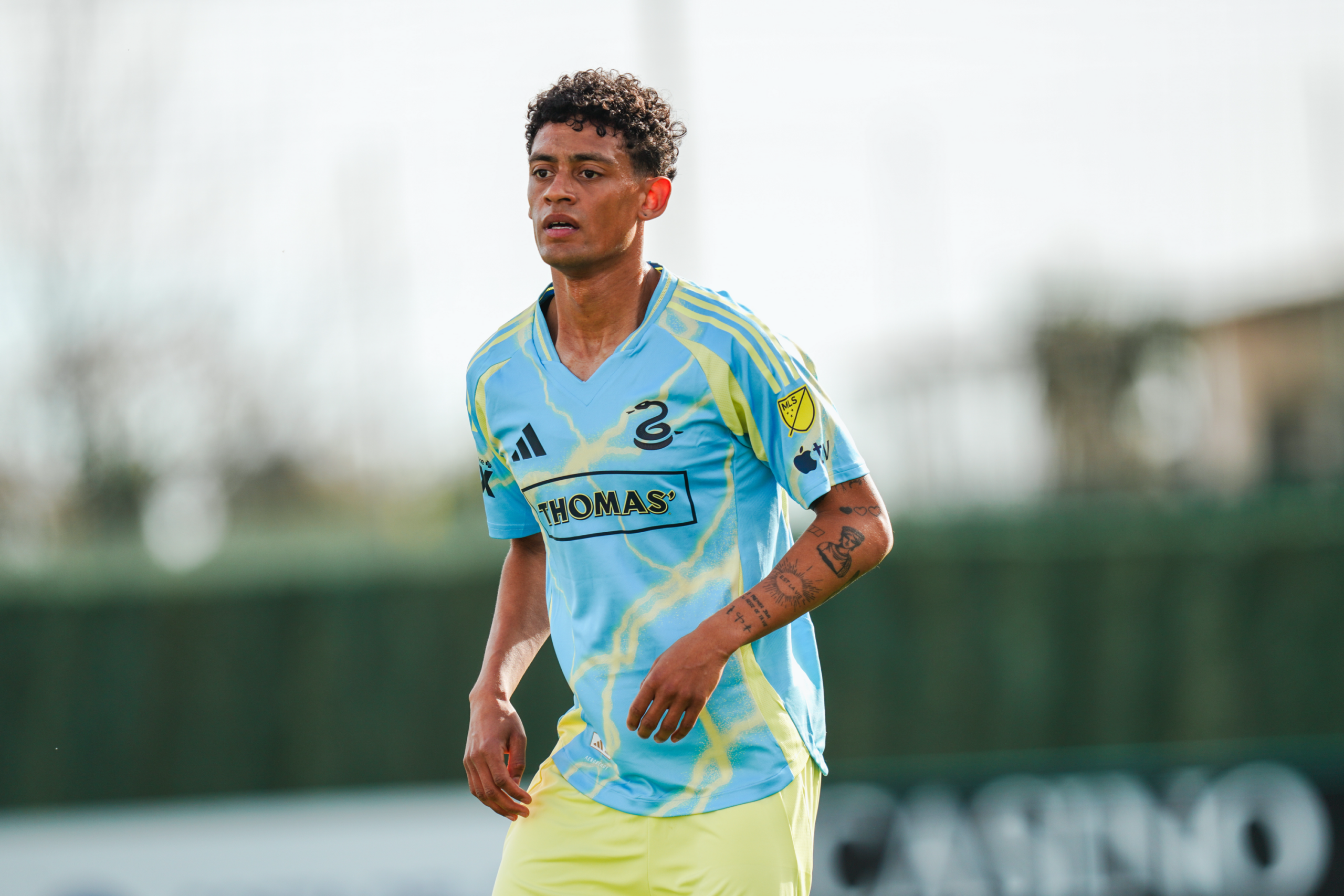
    The arrival of Japhet Sery Larsen, seen during a preseason game in Spain last month, is expected to fill the loss of Jakob Glesnes on the Union’s back line.

    The Union also brought over Japhet Sery Larsen from the Norwegian club Brann in January. At 25, the Danish national is the oldest center back on the Union’s roster entering the 2026 season. Other significant additions include Geiner Martinez, a center back whom the Union signed from Uruguay’s CA Juventud, and Agustín Anello, a forward who spent last season with Uruguay’s Boston River.

    Which players did the Union bring back?

    Club captain Alejandro Bedoya re-signed with the Union this offseason. Bedoya, who also holds a role in the club’s front office, will suit up for his 11th season in Philadelphia.

    The Union also exercised a contract option for Nathan Harriel, retaining the homegrown right back for his sixth season with the club.

    In addition, the team re-signed Ben Bender, a 24-year old midfielder the team signed off waivers in May 2025, and George Marks, a goalkeeper who has yet to appear in a game for the Union.

    What are the highlights of this year’s MLS schedule?

    The Union will play a 34-match MLS schedule, starting with a match at D.C. United on Feb. 21. The Union will play each Eastern Conference opponent twice, home and away, and six Western Conference opponents.

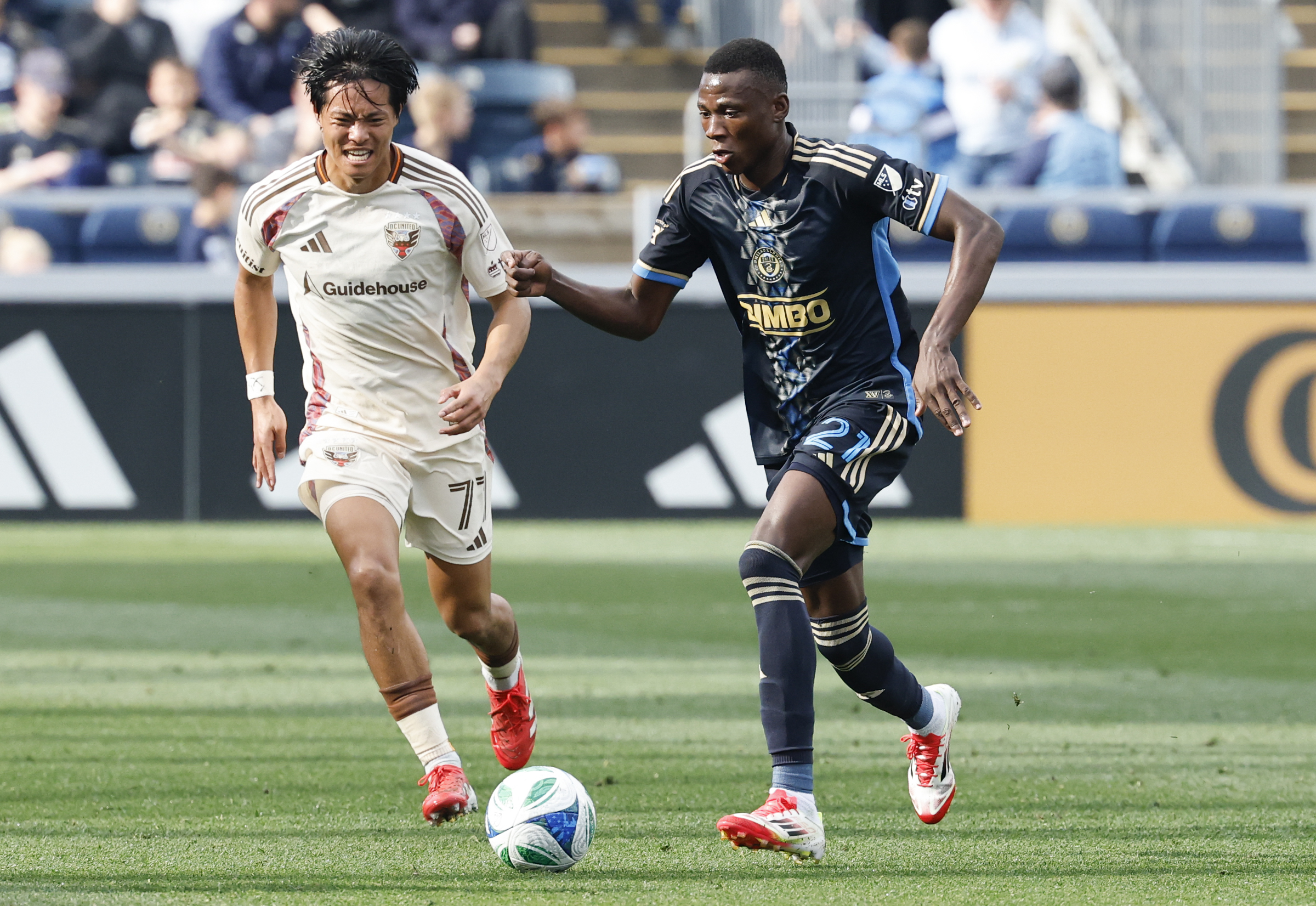
    Midfielder Danley Jean Jacques (right) and the Union open their Major League Soccer season against I-95 rival D.C. United on Feb. 21.

    The Union’s first MLS game at home will be against New York City FC on March 1. NYCFC eliminated the Union from the playoffs last season with a 1-0 win at Subaru Park in the Eastern Conference semifinals.

    Carnell’s team will host the San Jose Earthquakes, Seattle Sounders, and Real Salt Lake as Western Conference opponents and will travel to Austin FC, San Diego FC, and Sporting Kansas City. Lionel Messi’s Inter Miami team will visit Subaru Park on Aug. 19, and the Union will host rival Red Bull New York on July 22.

    What’s new at Subaru Park this season?

    The home of the Union got some upgrades in the offseason and will get another renovation when the MLS breaks for the World Cup this summer. The Union installed new theatric sport lighting in the stadium that will bring some extra flair to the club’s night games.

    The Union have a new concessions partner in locally based Aramark, which will give patrons at Subaru Park new food and beverage options. Union president Tim McDermott said in an interview on the team’s YouTube channel that the concourses of Subaru Park will look different when the club returns after the World Cup.

    Union president Tim McDermott said that the team plans to make alterations to the concourses at Subaru Park during the nearly two-month break for the FIFA World Cup.

    “Coming out of that World Cup break, when you walk into Subaru Park, the concourse is going to look massively different,” McDermott said. “Just with new food and beverage offerings, the esthetics, et cetera.”

    This season will also be the first for the Union’s new mobile app. The club debuted the app in September, but will have increased functionality this season as SeatGeek takes over as the Union’s official ticketing partner.

    What is the Concacaf Champions Cup?

    In addition to the 34 regular-season MLS games the Union will have on their calendar, they also will compete in the Concacaf Champions Cup.

    The competition is a 27-team tournament that features the top club teams from North America, Central America and the Caribbean. The Union qualified for the Champions Cup by finishing atop the MLS regular-season standings. The other MLS qualifiers for the tournament are Inter Miami, Los Angeles FC, FC Cincinnati, LA Galaxy, the Seattle Sounders, Nashville SC, and San Diego FC.

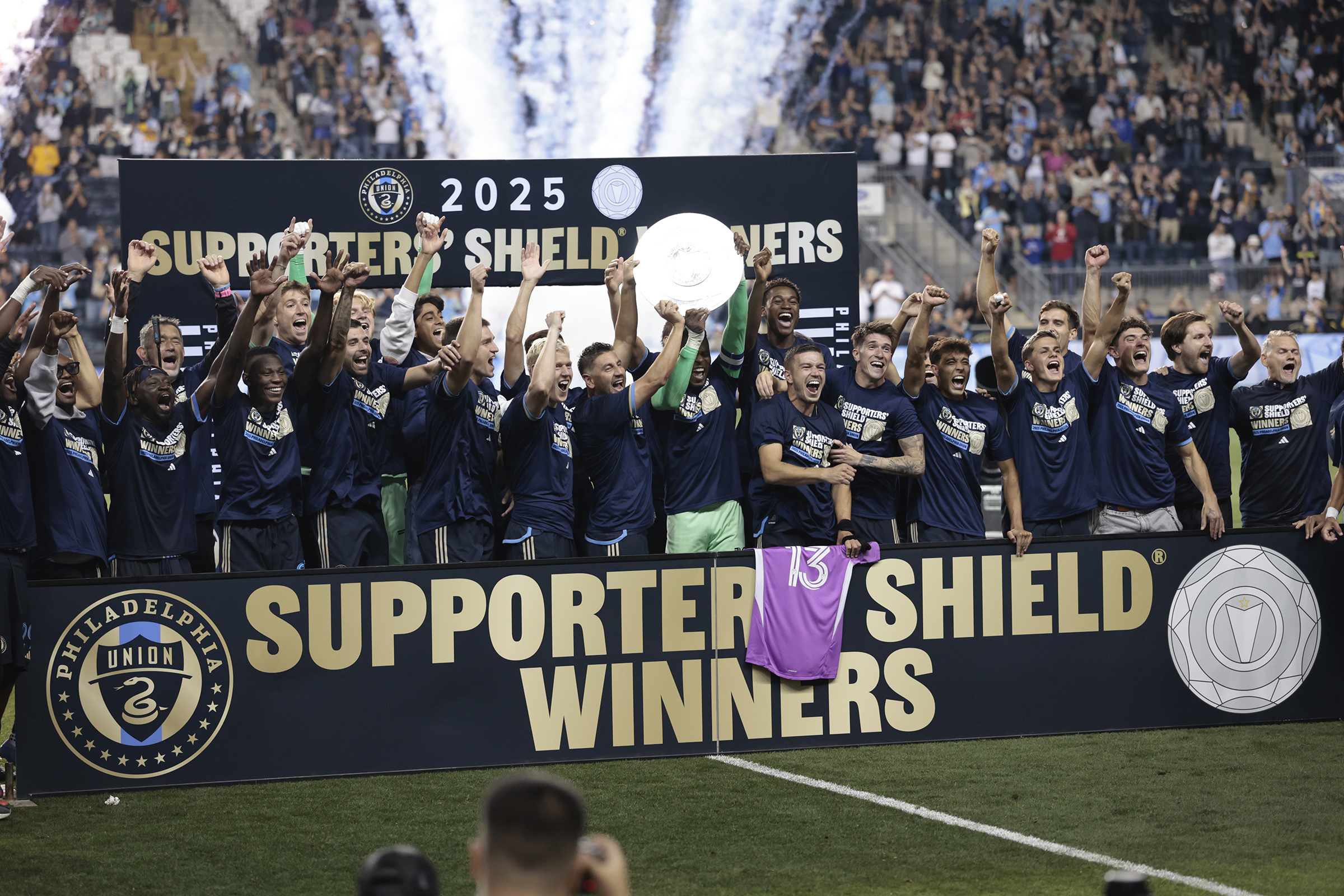
    Winning MLS’s Supporters’ Shield last season earned the Union a berth in this year’s Concacaf Champions Cup.

    The Union will face Defence Force FC in a two-match series decided on aggregate score in the first round of the tournament. After their match in Trinidad, the Union will host Defence Force for the second leg on Feb. 26.

    If the Union advance past Defence Force FC, they will face Liga MX’s Club América in the round of 16. The tournament final will be played on May 30.

    The Union’s most recent result in the Champions Cup was a round of 16 loss to Pachuca in 2024.

    Will the Union be in the Leagues Cup?

    Yes. By qualifying for the playoffs last season, the Union secured a spot in MLS’s Leagues Cup, which features 18 teams from MLS and 18 teams from Liga MX.

    The Union do not know their opponent in the competition or the date of their first match, but the competition is set to begin on Aug. 4. The 2026 Leagues Cup final will be on Sept. 6.

    The Union’s best result in the Leagues Cup was a third-place finish in 2023. The top three teams from the Leagues Cup gain entry to the following season’s Concacaf Champions Cup.

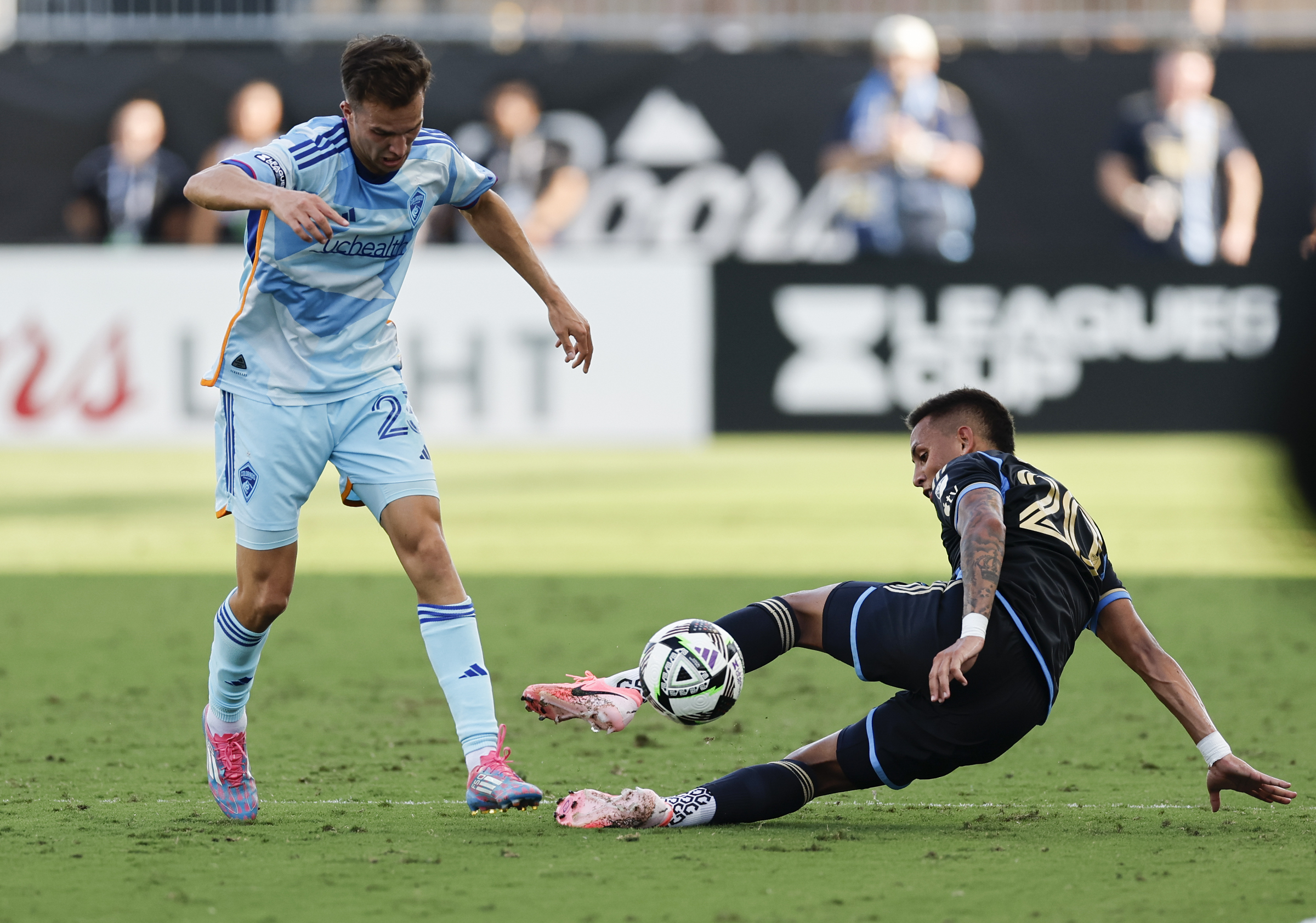
    Midfielder Jesús Bueno (right) and the Union will appear in MLS’s Leagues Cup tournament for the first time since the 2024 season.

    Will the Union play in the 2026 U.S. Open Cup?

    No. Because they are participating in the Concacaf Champions Cup, the Union are exempt from playing in the U.S. Open Cup this season. The U.S. Open Cup is an open tournament featuring teams from across all levels of the U.S. Soccer.

    The MLS limited its clubs’ participation in the tournament to 16 teams in 2025. Teams that do not qualify for other cup competitions are given priority in entering the U.S. Open Cup, and teams participating in the Concacaf Champions Cup are exempt. The Union reached the semifinal of last year’s tournament before losing to eventual champion Nashville SC, 3-1.

    Will the MLS season pause for the World Cup?

    Yes. This season’s MLS schedule includes a seven-week break for the FIFA World Cup, which will be hosted by the United States, Mexico, and Canada. The league will stop play on May 26 and resume on July 16. The World Cup will begin on June 11 and conclude on July 19.

    Lincoln Financial Field is one of 16 host venues for this summer’s FIFA World Cup.

    The Union will play their last match before the break at Miami’s new stadium, Miami Freedom Park, on May 24. They will host Red Bull New York in their first match after the break on July 22.

    This will be the last season MLS uses its current calendar. The league is switching to a summer-to-spring schedule ahead of the 2027-28 season, which will align its schedule with many of the top leagues internationally.

    How can I watch the Union?

    The Union’s MLS games will be available to all Apple TV subscribers. Before this season, Apple TV users had to subscribe to the additional MLS Season Pass to gain access to all MLS games, but the league and its broadcast partner did away with the extra paywall in November.

    Major League Soccer announced the suspension of its subscription-only MLS Season Pass, noting that every game will instead be televised by the regular version of Apple TV.

    The Union also have three games that will be televised by Fox networks. The team’s match at Atlanta United on March 14 will be on Fox, as will the Union’s game at Inter Miami on May 24. The Union have one game this season being televised by Fox Sports 1, a clash with FC Cincinnati at Subaru Park on Sept. 9.

    What else is new with the Union?

    The team got new home jerseys ahead of this season. The design is inspired by Philadelphia’s role in American independence ahead of this summer’s America 250 celebrations. The team will still wear the voltage kit it debuted as its away jersey in 2025 on the road.