Tag: topic-link-auto

  • Radnor moves to acquire 14 acres of Valley Forge Military Academy by eminent domain

    Radnor moves to acquire 14 acres of Valley Forge Military Academy by eminent domain

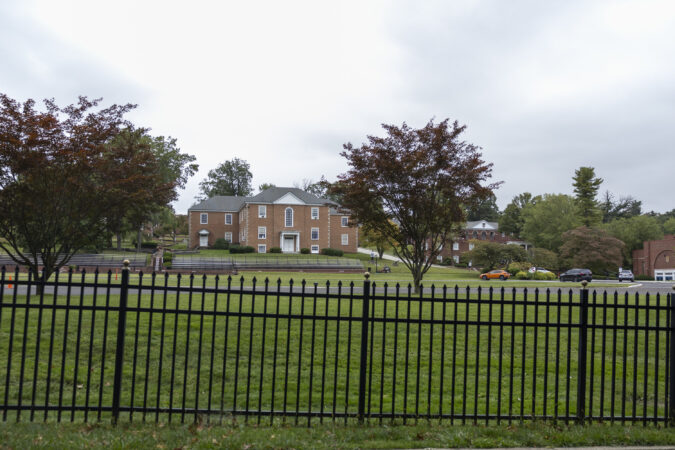
    The Radnor Township Board of Commissioners is moving to use eminent domain to take 14 acres owned by the Valley Forge Military Academy, which has said it will close this year.

    A motion Monday by the board authorized township solicitor John Rice to draw up legal paperwork to use eminent domain — a process that allows municipalities to take a property from owners, whether they want to sell or not — by paying an appraised value for the land.

    The Board expects to introduce an eminent domain ordinance at its Jan. 24 meeting. The ordinance would have to be approved after a second hearing and public reading. No date is set for that.

    It’s likely the township would use the land to build a new recreation center and park.

    Valley Forge Military Academy spans about 70 acres in Wayne in Delaware County. The board said its goal is to prevent more development in the area around North Wayne.

    Commissioner Jack Larkin cited a number of developments in recent years that have raised concern about overdevelopment and increased traffic.
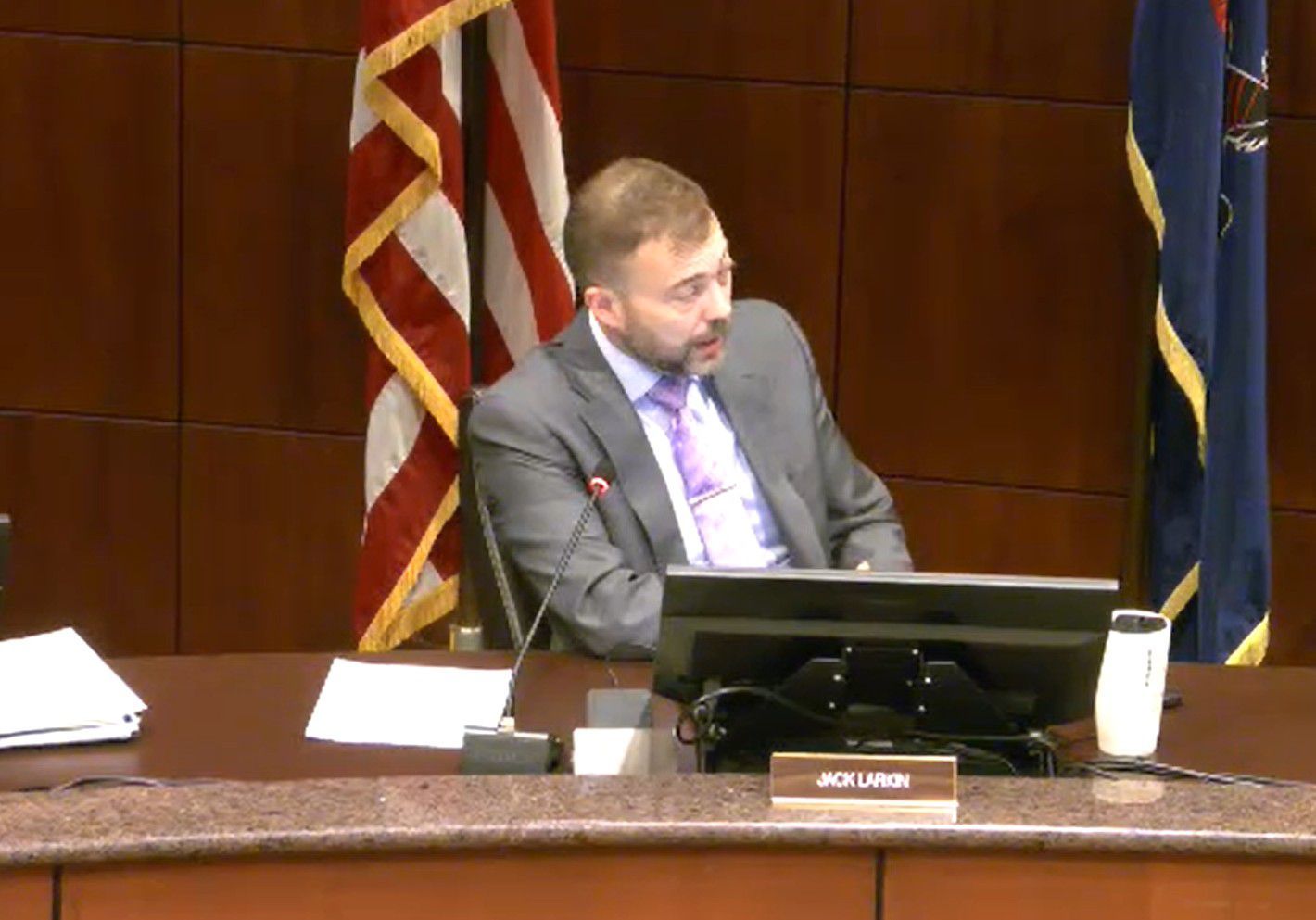
    A video still of Radnor Commissioner Jack Larkin speaking at a Jan. 5, 2026, township meeting regarding the possible taking of 14 acres of Valley Forge Military Academy through eminent domain.

    He said the township has reached out to academy officials but have not heard back.

    “We would need to get this started, to ideally negotiate in good faith, a friendly arrangement, which we started to do,” Larkin said. “And we just haven’t really heard anything back from the school.”

    He said the school has not turned down a deal or set a price.

    “They just kind of went radio silent,” Larkin said at the meeting, and added that, as a result, the township decided to move ahead with a plan that would allow it to use eminent domain.

    However, a representative of the Valley Forge Military Foundation said said Thursday the school was unaware the township planned to move so fast.

    Plans for the 14 acres

    Larkin said in a separate interview Wednesday that the township is eyeing the land as a solution to the township-run Sulkisio Gym on Wayne Avenue.

    The gym needs major repairs, and its lease will be up in coming years. So the township needs to consider whether it’s worth putting more money into the facility, given that it might not remain a tenant when the lease expires.

    As a result, the township is considering a new gym and park for the 14 acres, which are bounded by Eagle Road to the south, the Oak Hill development to the east, and the buildings of the academy’s main buildings to the west.

    “We’re on the hunt for another alternative,” Larkin said. “This would be the place we would hope to build a replacement rec center. But that’s not going to take the entire 14 acres. So we would favor the balance would have some flavor of a park.”

    Larkin said whether the park has trails, a playground, or a community garden will be subject to public input.

    He said the township knows the value of real estate in the area and has a ballpark price per acre it’s willing to pay, but he would not disclose a total figure.

    “My real hope,” he said, “is that we end up negotiating a deal and this is not an exciting process. They want to sell, and we want to buy.”

    Larkin did not believe the 14 acres would conflict with land being eyed for a charter school.

    Currently, a group seeking to open Valley Forge Public Service Academy Charter School on land at the closing military school is already equipped with a leadership team and board, but it cannot open as a publicly funded charter school without approval from the local school board.

    Radnor school board officials are now considering the plan for a charter school that could open in the fall.

    What can eventually be built on the land is restricted by the current institutional zoning to educational, medical, religious, and museum uses, although zoning variances can always be sought.

    Valley Forge Military Foundation’s responds

    John English, board chair of the Valley Forge Military Foundation, said Thursday that the academy was aware Radnor had expressed interest in buying some of the property.

    “We were not aware that the Township believes it needs to proceed as quickly as it is,” English said in an email statement. “While Valley Forge Military Academy is closing, the Valley Forge Military College is still very much active and thriving on our campus as it continues its national security mission of training and commissioning future officers for the United States Army.”

    English said the trustees are, “undergoing a thorough analysis and evaluation of the future needs of the Foundation and the College.”

    Once they establish a path forward, English said, they would be “pleased to share those plans with Radnor Township.”

    What happened to Valley Forge Military Academy

    The rush to buy the land stems from the school’s imminent closure.

    The academy announced in September that it planned to close at the end of the 2025-26 academic year amid declining enrollment, financial challenges, and lawsuits over alleged cadet abuse. Its college would continue to operate on the main campus.

    In December, Eastern University entered an agreement to buy nearly half the Valley Forge Military Academy property, which is less than a mile from the Christian university’s St. David’s campus in Delaware County.

    The planned purchase by Eastern includes 33.3 acres encompassing the football stadium, track, and athletic field house, as well as multiple apartment buildings that will be used to house students.

    In the academy’s closing announcement, school leaders cited declining enrollment and rising insurance premiums, in part tied to the school’s extensive legal battles.

    The Inquirer has reported that even with the school’s finances in a tailspin, board members in recent years personally lent $2 million to cover operating costs, financial disclosure records show.

    They tried other methods to drum up revenue, including franchising the academy’s brand to an Islamic private school in Qatar and unsuccessfully attempting to open a charter school on campus.

    They leased out their buildings for private events and authorized the sale of nearly one-third of the campus to luxury home developers, according to federal filings and emails obtained by The Inquirer.

    Even so, enrollment in 2025 fell to 88 cadets, down from more than 300 a decade ago, the school said.

  • Vineland educator is named new Camden superintendent, the first Hispanic to lead the district

    Vineland educator is named new Camden superintendent, the first Hispanic to lead the district

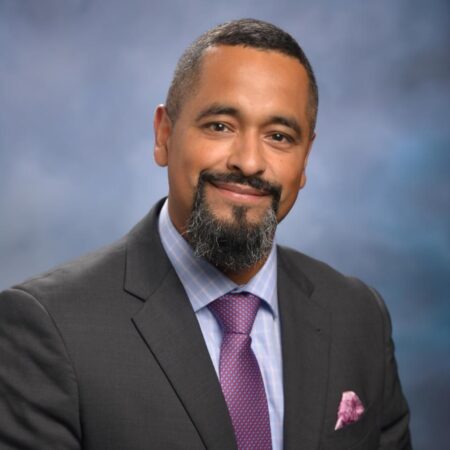
    A veteran Vineland educator has been named the state-appointed superintendent to oversee the Camden school system, state Education Commissioner Kevin Dehmer announced Wednesday.

    Alfonso Q. Llano Jr. was selected after a national search that began in June. He will begin heading the troubled South Jersey school system starting March 1.

    He will be the first Hispanic superintendent to lead the district. Demographics in Camden have shifted in recent years, and 56% of its traditional public school students are now Hispanic, 42% are Black, and 1.2% are white.

    Dehmer made the long-awaited announcement at the monthly state Board of Education meeting in Trenton. The board unanimously approved the appointment.

    “I’m honored for the opportunity to serve the Camden City School District,” Llano said. “Together, we’re going to work through transparency and tough times. We’re going to achieve great things.”

    Llano will receive an annual salary of $260,000 under a three-year contract.

    In Vineland, he was the highest-paid superintendent in Cumberland County with an annual base salary of $206,000.

    Davida Coe-Brockington, a longtime Camden educator who has served as the interim superintendent during the search, will remain in that role until Llano takes over. She was not a candidate for the job.

    Llano succeeds Katrina T. McCombs, whose contract was not renewed after a group of city leaders, including Mayor Victor Carstarphen, called for her ouster. The group said Camden schools needed “a new vision for leadership.” McCombs left Camden in July for a state role after seven years as superintendent.

    Reactions to Llano’s hiring

    Carstarphen and other officials praised Llano’s appointment in a statement released Wednesday. The mayor lauded the state “for identifying someone who will bring meaningful change for Camden’s students.”

    “I am confident he will be an excellent leader who prepares our students for the future and always puts our students’ academic interest first,” Carstarphen said.

    N’Namdee Nelson, president of the Camden City Advisory School Board, said: “We want to ensure that every child in the school district has access to a great school.”

    Others, like former longtime school board member Jose E. Delgado, wished Llano well but were less optimistic. He said the selection of a Hispanic superintendent was “long overdue.”

    “He’s stepping into a very dysfunctional environment that will require a wide array of fiscal, administrative, and educational skills,” Delgado said.

    Llano inherits a district with declining enrollment — it currently has about 5,532 students — low test scores, and a high dropout rate. There have been modest gains since the state seized control of the district in 2013.

    The changing educational landscape in Camden poses the biggest challenge. Thousands of students have left the city’s traditional public schools for Renaissance and charter schools, which are publicly funded but privately run and now lead the district’s enrollment.

    Camden is the only district in New Jersey with three school types. Charters enroll 3,236 students, and Renaissance schools have 6,664 students.

    Last spring, McCombs cited the declining enrollment in part for a $91 million budget deficit. She cut more than 100 positions and laid off teachers and support staff in a massive restructuring.

    Camden Education Association president Pamela Clark, who represents more than 1,000 teachers and support staff, said she hopes to meet with Llano soon to discuss concerns about possible layoffs and school closures.

    “I will continue to advocate fiercely to protect my members’ jobs and school closures, and I hope the new superintendent brings fairness, transparency, and unity to our city,” she said.

    Llano’s past work in Vineland and Trenton

    Llano has been superintendent of the Vineland district in Cumberland County since 2021. His five-year contract was set to expire in June.

    During a meeting in June, the Vineland board was bitterly divided over whether to renew his contract. The board must give six months’ notice if it plans to terminate a superintendent. The motion to not renew it failed, and it was unclear what direction the board would pursue.

    In Vineland, Llano oversaw a diverse district of more than 10,200 students enrolled in 16 schools. About 63% of the students are Hispanic, 14% are Black, and 18% are white. About 17.4% of its students are multilingual learners.

    Vineland has some of the same issues as Camden schools — low test scores and chronic absenteeism. The majority of the students in the sprawling 68-square-mile community are economically disadvantaged.

    Llano also spent 10 years in the Trenton school system, most recently as the interim schools chief for nearly a year prior to moving to Vineland. He previously was the district’s chief academic officer for six months. He also was an assistant superintendent and principal in Trenton.

    According to his LinkedIn profile, Llano also had stints in the Readington Township and Howell Township school districts in a career spanning 27 years.

    He is pursuing a doctoral degree in education at Seton Hall University. He holds master’s degrees from New Jersey City University and Kean University, and a bachelor’s degree from Rowan University.

    Interim State-appointed Camden school Superintendent Davida Coe-Brockington.

    Coe-Brockington said Llano’s reputation precedes him and that she was looking forward to working with him to “focus on the progress we’ve made in the district and focus on creating better outcomes for the students and families of Camden City.”

    It was unclear Wednesday whether Coe-Brockington would remain in the central office when Llano takes over or return to Creative Arts High School, where she has been principal since it opened in 1999.

  • An attempted package theft in Feltonville turned into a police shootout

    An attempted package theft in Feltonville turned into a police shootout

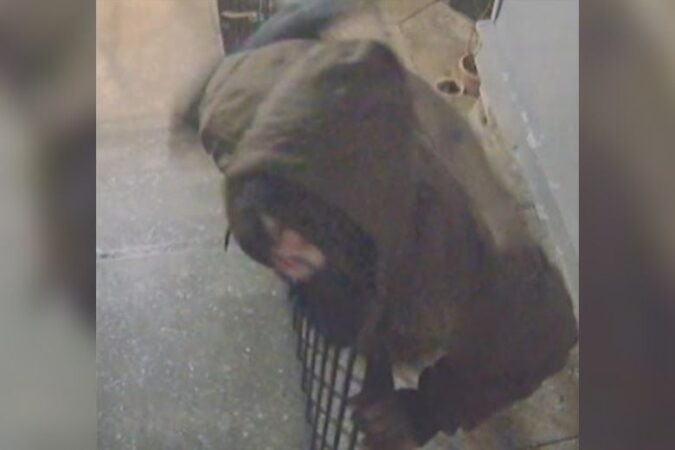
    Philadelphia police are searching for a man they say tried to steal a package from the front steps of a Feltonville home, then exchanged gunfire with both the homeowner and responding officers before fleeing Sunday evening.

    Security camera footage from a home in the 400 block of East Rockland Street shows a man approaching the front steps and attempting to take a package, police said. The homeowner, a 50-year-old man, came outside carrying a handgun and confronted him, police said.

    The homeowner fired a shot into the ground, police said, prompting the man to run. As he fled, the man fired a gun at the homeowner, they said.

    Officers who had been called to the area after reports of a crowd and a person with a weapon on the 4900 block of D Street heard the gunfire and ran toward it, police said. When they encountered the man, police said, he fired his weapon at one of the officers, and the officer fired back.

    The man escaped, police said. Officers later recovered a .40-caliber handgun and a jacket on Rockland Street.

    Police described the suspect as light-skinned with a stocky build, and a possible goatee. He was last seen wearing a brown coat, black pants, and gray sneakers.

    Police ask that anyone with information about the man or the shooting call or text police at 215-683-1866.

    The Philadelphia Fraternal Order of Police is offering a $5,000 reward for information leading to an arrest and conviction.

    The officer who fired his weapon has been placed on administrative duty, as is customary, pending an internal investigation, police said. His name has not been released.

  • Reputed Black Mafia leader Lonnie Dawson is out of prison. Here’s what to know about his case.

    Reputed Black Mafia leader Lonnie Dawson is out of prison. Here’s what to know about his case.

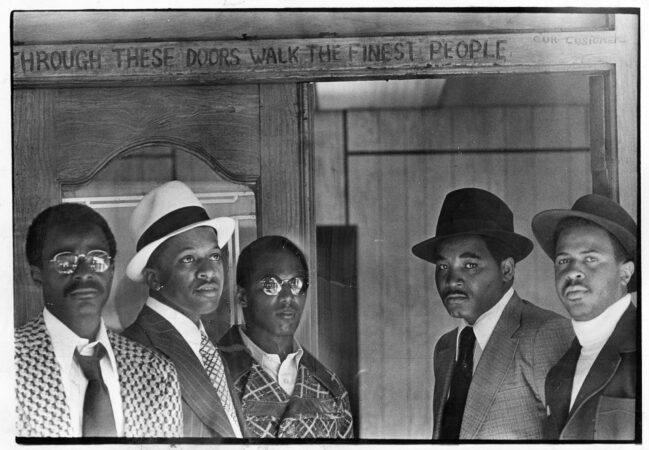
    After more than 40 years behind bars, reputed former Black Mafia leader Lonnie Dawson has been freed from prison, ending a decades-long legal drama that includes state and federal convictions for crimes, including drug trafficking and murder.

    Dawson’s release, though weeks old, went viral on social media in recent days thanks to video clips appearing to show his first moments as a newly free man. The widely shared video shows a man exiting the gates of a prison and immediately kneeling on a sidewalk in prayer.

    Dawson, also known as Abdul Salim, was freed from SCI Smithfield in Huntingdon County on Dec. 22 following a successful petition under the Pennsylvania Post Conviction Relief Act, his attorney, David B. Mischak, told The Inquirer. The Pennsylvania Department of Corrections confirmed Dawson’s release date, noting that he had been held in that state prison for three months before he was freed. The bulk of his incarceration, however, was served in federal prison.

    “Mr. Dawson has spent the majority of his adult life behind bars,” Mischak said in a statement posted to his law firm’s website. “After more than 40 years of incarceration, Lonnie Dawson is grateful for the opportunity to live out his remaining years with dignity and peace.”

    Dawson’s path to release was a long and circuitous one that stretches back to a 1975 murder of which he was twice convicted at the state level — and sentenced to life. In the 1980s, federal convictions on drug distribution and related charges followed, leading to a staggering 134-year federal sentence. Here is how The Inquirer and Daily News covered it:

    https://www.newspapers.com/article/philadelphia-daily-news/188400141/

    Article from Aug 10, 1982 Philadelphia Daily News (Philadelphia, Pennsylvania) <!— –>

    The murder of Herschell Williams

    In November 1975, a purported drug dealer and Black Mafia member named Herschell Williams — also known as the “Jolly Green Giant” due to his 6-foot-6 frame — was gunned down near his Mount Airy home. Shortly after the murder, Dawson, along with fellow reputed Black Mafia members Roy Hoskins and Joseph Rhone, were arrested in connection with the slaying while driving on the Schuylkill Expressway, reports from the time indicate.

    Investigators later linked Williams’ murder to a dispute over cocaine, and authorities alleged that Hoskins and Rhone carried out the shooting while Dawson, whom they said ordered the killing, served as the getaway driver, The Inquirer and Daily News reported. Several months later, both Dawson and Hoskins were convicted of murder in separate cases and sentenced to life in prison, while Rhone, who jumped bail following his arrest, remained a fugitive.

    The convictions stuck until July 1978, when the state Supreme Court ordered new trials due to legal errors during the initial proceedings. Following their arrests, both men had been questioned by then-Detective Michael Chitwood, and Dawson’s conviction was overturned in part because his attorney was not allowed to cross-examine Chitwood. Dawson alleged Chitwood had fabricated a confession used during the trial, according to Inquirer reports.

    The retrial, however, did not work out in either man’s favor. Dawson, for his part, was again convicted in August 1982 and later sentenced to life for a second time, despite having maintained at trial that he was busy giving one of his children a haircut about 20 blocks away at the time Williams was killed, according to Inquirer and Daily News reports.

    https://www.newspapers.com/article/the-philadelphia-inquirer/188400725/

    Article from Dec 14, 1982 The Philadelphia Inquirer (Philadelphia, Pennsylvania) <!— –>

    A federal conviction

    As Dawson awaited retrial in the Williams case, more legal issues were added to his docket. In April 1982, an FBI affidavit alleged that Dawson and Hoskins quickly took over the Black Mafia after the state Supreme Court overturned their convictions, and revealed that both had been investigated over the past year by federal authorities.

    That, however, only came to light after Dawson, Hoskins, and several others were arrested following a high-speed car chase on I-95 in which a car was riddled with bullets in an apparent attempt to kill a federal informant, Inquirer and Daily News reports from the time indicate.

    The informant, Lawrence D. Simons, who said he was a member of the Black Mafia, was unharmed in the chase, which concluded after his would-be killers crashed their vehicle into a tree, the Daily News reported.

    Federal grand jury indictments followed, with Dawson and his alleged cohorts facing a lengthy list of charges, including obstruction of justice, conspiracy, drug, and gun counts. Authorities alleged Dawson was the Black Mafia’s leader, and said the group was linked to drug trafficking throughout Philadelphia and Delaware County, The Inquirer reported.

    After a three-week trial, Dawson was found guilty on a number of counts, and sentenced to a 134-year prison sentence and $230,000 in fines — though a later appeal dropped that sentence to 65 years and $100,000. Hoskins faced a similarly stiff penalty.

    U.S. District Judge Louis C. Bechtle in his ruling referred to both men as “major drug manufacturers” who were a “danger to the community.” The sentences, the Daily News reported at the time, were the harshest ever imposed by a federal judge in the Philadelphia area for drug trafficking.

    Dawson in court denied he was involved in a major drug ring and called the charges “a bunch of malarkey,” the Daily News reported.

    https://www.newspapers.com/article/philadelphia-daily-news/188400368/

    Article from Dec 21, 1984 Philadelphia Daily News (Philadelphia, Pennsylvania) <!— –>

    ‘Ain’t calling too many shots now’

    While Dawson was imprisoned in the early 1980s, a report from the Daily News alleged that he remained in control of drug sales in Philadelphia — particularly in North Philadelphia, Germantown, and Mount Airy. An unnamed FBI source told the People Paper that despite Dawson being jailed, his drug trafficking activity did not slow down, and said he regularly met with organized crime figures to orchestrate sales.

    The Daily News later reported that Dawson was placed in administrative segregation in prison. The move, an unnamed associate told the paper, diminished Dawson’s alleged stature in the drug trade, and as a result, he “ain’t calling too many shots now.”

    In late 1984, Dawson responded to the Daily News’ reporting directly in a letter to the paper in which he denied controlling drug sales anywhere. While in prison, he said, he had never met with organized crime figures to discuss drug manufacturing or sales, and said claims were floated by reporters “in hope of getting some type of promotion and/or attention.”

    “Why must I be the sacrificial lamb?” Dawson wrote. “Why?”

  • Donkey’s Place’s walrus bone was stolen from the bar. Staff want it back.

    Donkey’s Place’s walrus bone was stolen from the bar. Staff want it back.

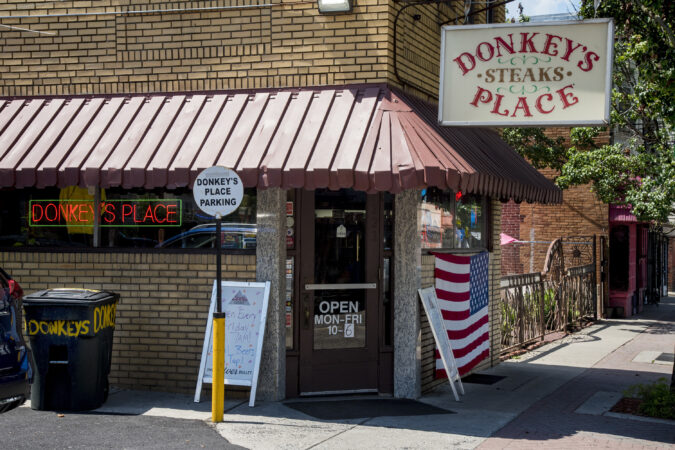
    Rob Lucas Jr. is not exactly sentimental about the 27-inch walrus penis bone that for decades has adorned the bar he inherited from his father.

    But on Dec. 29, a patron was captured on video stealing the Donkey’s Place oddity, Lucas said, and it’s not something he takes lightly.

    He wants his walrus penis bone back on his bar stat.

    “I do have a credit card, but I can’t get the information from my credit card company unless I file a police report and that would mean going down to the police station and spending hours,” he said Wednesday. “We’d rather just get it back.”

    The provenance of the bone is unknown to Lucas, third-generation owner, who grew up in the local cheesesteak spot and bar.

    His grandfather, Leon “Donkey” Lucas, a heavyweight boxing contender in the 1928 Summer Olympics, opened the bar more than 80 years ago.

    Donkey’s got a major boost in 2015 when Anthony Bourdain featured it in an episode of his travel food show Parts Unknown. Bourdain said “the best cheesesteak in the area might well come from New Jersey,” referring to the Donkey’s Place staple served on a seeded Kaiser roll.

    Donkey’s ambience has not changed much since Bourdain’s visit. It has the feel of a bar where everyone knows your name, cozy and packed to the gills with random decor, from beer memorabilia, boxing gloves, a megalodon tooth, and of course, the walrus penis bone, also known as a walrus baculum, for the citizen scientists.

    Lucas grew up with the megalodon tooth and walrus bone but never learned what they actually were until he took the bar over from his father about a decade ago and endeavored to take stock of what he had on his hands.

    Since then, the bone has been a great conversation piece — patrons guess what it is and pose for photos with it — and just another part of the local cheesesteak spot’s charm.

    It’s why the waitress working a Dec. 29 shift didn’t think anything of the three men’s interest in the bone. Lucas said they spent a few hours at the bar while the waitress juggled patrons and the grill that’s within sight of where the patrons were sitting.

    “They weren’t wasted or anything, but they had some sandwiches, bought some merchandise, and then walked out with the walrus bone,” he said.

    But after paying their tab, Lucas said security footage shows one of the men wrapped the bone in a large pashmina-like scarf and walked out.

    Little is known about the men. Lucas said they told the waitress they’d come to the area for HiJinx Fest, the two-day dubstep, electronic music festival, held at the Pennsylvania Convention Center across the river. Lucas said the man who took the bone claimed he was a traveling tattoo artist, originally from Cleveland.

    By Wednesday, Donkey’s Bar had posted a public plea on its TikTok account, asking for help in finding the bone, sharing screenshots of the trio walking out of the restaurant, bone in scarf.

    @donkeysplacecamden

    We want our “bone” back! Please help!

    ♬ original sound – Donkeys Place Camden

    The local response has been swift so far and one of downright indignation. Lucas said some tattoo friends have circulated the story and NJ Advance Media published an article about the search. Lucas imagines internet sleuths will do their own digging, though he does not want to get anyone in trouble.

    “They could mail it back if they want,” he said of the trio. No questions asked.

  • John Langdon, innovative award-winning graphic designer, has died at 79

    John Langdon, innovative award-winning graphic designer, has died at 79

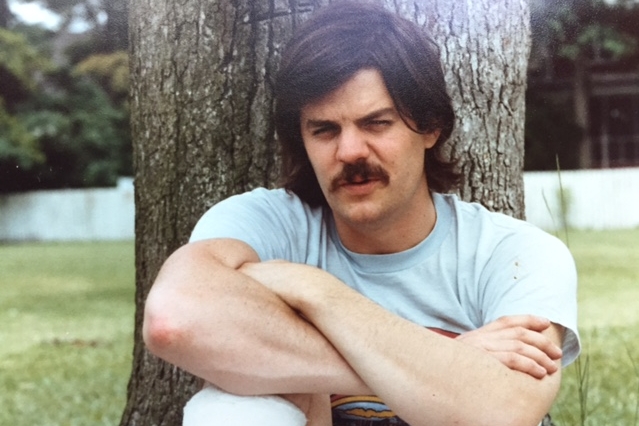
    John Langdon, 79, formerly of Philadelphia, innovative award-winning graphic designer, painter, writer, and longtime adjunct professor of typography at Drexel University, died Thursday, Jan. 1, of complications from a heart attack at French Hospital Medical Center in San Luis Obispo, Calif.

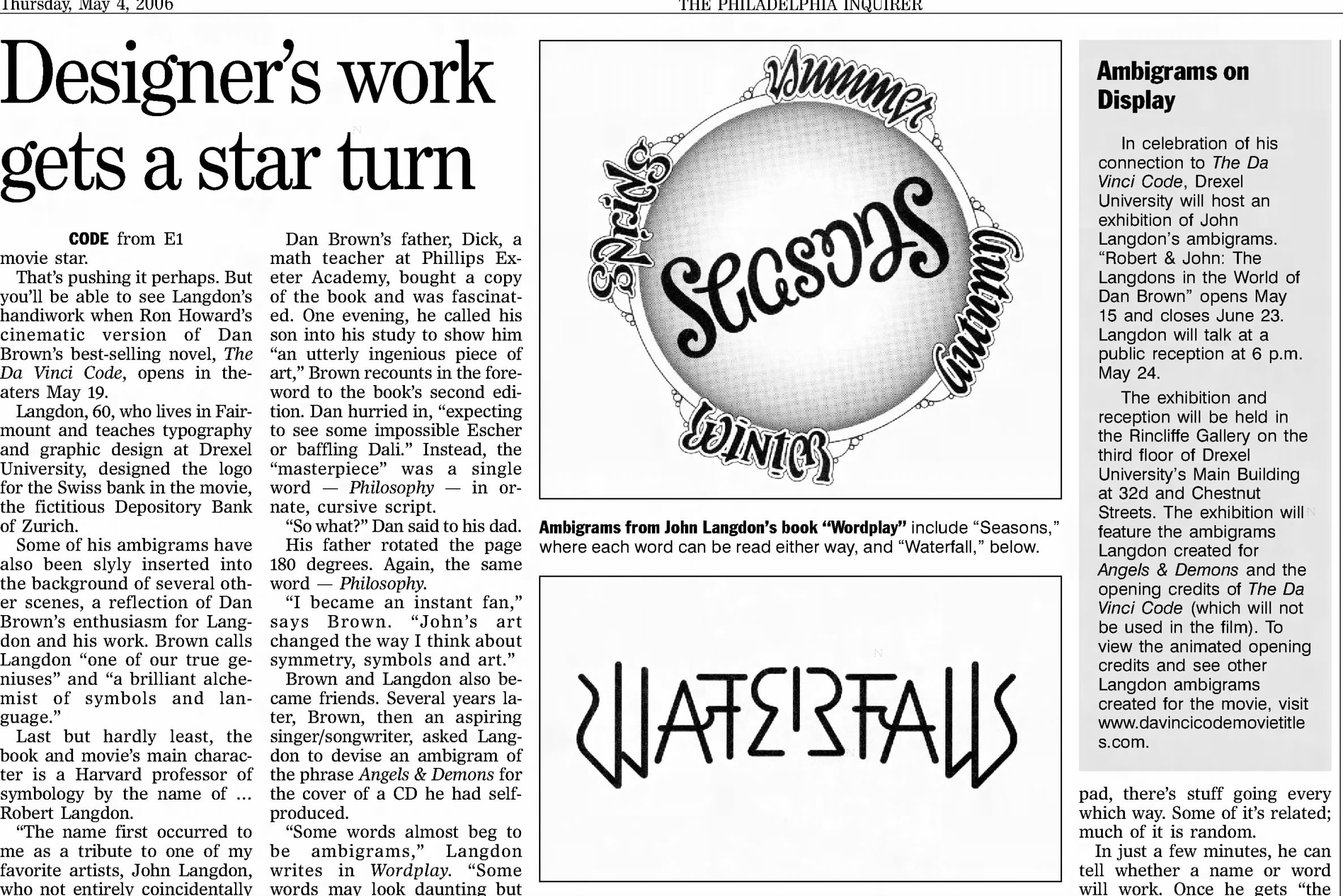
    Mr. Langdon was a lifelong artist and wordsmith. He originated ambigrams in the early 1970s and created distinctive logos for corporate clients, artists, musicians, and others. Ambigrams are words or designs that retain meaning when viewed from different perspectives, and his work influenced countless other designers and typographers who followed.

    “They also present familiar concepts in an unfamiliar way,” he told The Inquirer in 1992, “and thus stimulate the reader’s imagination.”

    On his website, johnlangdon.net, Mr. Langdon described his work as “making abstract concepts visual, almost always through the design of words, letters, and symbols.” He called it “words as art” and said: “I specialize in the visual presentation of words.”

    His designs were featured in more than a dozen solo shows in galleries and museums in Pennsylvania, New Jersey, New York, Connecticut, Maryland, and Delaware, and in more than 50 group exhibitions around the country and Europe. He created six ambigrams for author Dan Brown’s best-selling book, Angels & Demons, and Brown named his fictional protagonist, Harvard symbologist Robert Langdon, after John Langdon.

    “John’s art changed the way I think about symmetry, symbols, and art,” Brown told The Inquirer in 2006.

    Mr. Langdon’s own book about ambigrams, Wordplay, was first published in 1992 and updated in 2005. He also wrote the forwards of other books and articles for journals and newsletters. He said he had a “particular interest in word origins” in an interview on his website.

    He was featured several times in The Inquirer and wrote an op-ed piece in 2014 about the Philadelphia Museum of Art’s new logo. He opened the article with: “Please, beloved Philadelphia Museum of Art, before you print one piece of stationery or a single promotional flier, reconsider your new logo.”

    Mr. Langdon’s work was featured in The Inquirer in 2006.

    In 1996, he began painting what he called his “visual-verbal meditations and manipulations” on canvas. “My paintings still involve symmetry and illusion, a bit of philosophy, and a few puns thrown in for good measure,” he said on his website.

    He cocreated the Flexion typeface and won a 2007 award from the New York-based Type Directors Club. He spoke often about design at colleges and high schools, and to professional societies. He gave a TEDx talk about font and the future of typeface at Drexel.

    Douglas Hofstadter, a professor at Indiana University who coined the term ambigram in 1984, told The Inquirer in 2006 that Mr. Langdon had a “very strong sense of legibility but also a marvelous sense of esthetics, flow, and elegance.”

    Born in Wynnewood and reared in Narberth, Mr. Langdon graduated from Episcopal Academy in 1964 and earned a bachelor’s degree in English at Dickinson College in Carlisle, Pa. He worked in the photo-lettering department of a type house and for a design studio in Philadelphia after college, and began freelancing as a logo designer, type specialist, and lettering artist in 1977.

    He taught typography and logo design classes at Moore College of Art and Design from 1985 to 1988 and at Drexel from 1988 to his retirement in 2015. In an online tribute, one student said he was “one of my favorite teachers of all time.”

    He was interested in Taoism and inspired by artists Salvador Dalí and M.C. Escher, and authors Edgar Allan Poe and Ogden Nash. “In the early ’70s, I tried to do with words what Dali and Escher did with images,” he said in a 2006 interview posted on Newswise.com.

    John Wilbur Langdon was born April 19, 1946. He played high school and college soccer and drew caricatures of classmates for the Episcopal yearbook.

    After college, he took painting and drawing classes at the Pennsylvania Academy of the Fine Arts and the old Philadelphia College of Art. He married Lynn Ochsenreiter, and they had a daughter, Jessica. They divorced later.

    Mr. Langdon enjoyed vacation road trips and told stories of hitchhiking around the country in the 1960s. He followed the Phillies, was interested in genealogy, and traced his family back to the Founding Fathers.

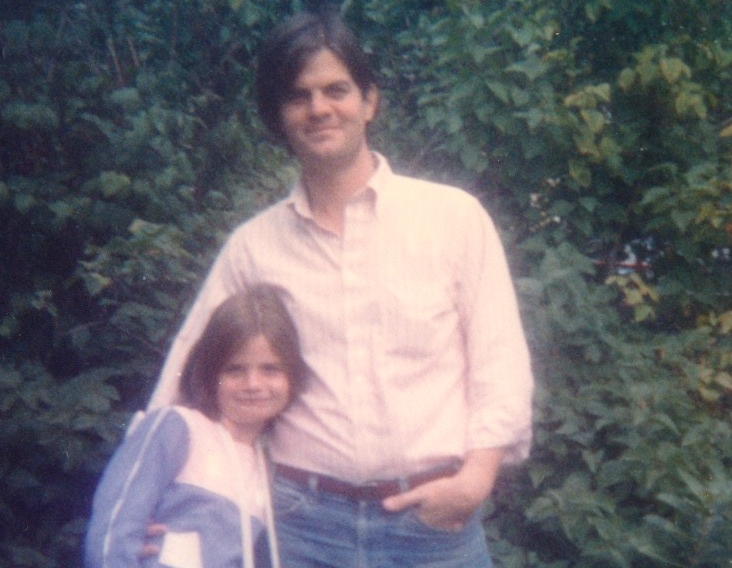
    Mr. Langdon stands with his daughter, Jessica.

    He lived in Darby, Woodbury, Wenonah, and Philadelphia before moving to California in 2016. “He was jovial, social, and amusing,” his daughter said. “People said he was clever, and everyone liked him.”

    He told The Inquirer in 2006: “It may seem counterintuitive, but the more ambiguity you invite into your life, the more things make sense and become understandable.”

    In addition to his daughter and former wife, Mr. Langdon is survived by a brother, Courtney, and other relatives.

    A memorial is to be held later.

    Mr. Langdon lived in Darby, South Jersey, and Philadelphia before moving to California in 2016.
  • The Pittsburgh Post-Gazette is shutting down

    The Pittsburgh Post-Gazette is shutting down

    The Pittsburgh Post-Gazette will fold after nearly a century. The paper will cease operations entirely — both its digital and physical versions — on May 3.

    The announcement comes on the heels of years of declining ad revenue and internal strife within the newsroom, including a yearslong labor strike.

    With the paper’s closure, there are concerns that Pittsburgh could become a news desert, leaving locals without a range of diverse and credible outlets to turn to in an age of increasing misinformation.

    The Post-Gazette was led by former Inquirer senior vice president and executive editor Stan Wischnowski. He resigned from The Inquirer in 2020 after a controversy following a headline after the murder of George Floyd.

    Block Communications, the paper’s owners, released a statement Wednesday about the shutdown, citing “continued cash losses” that were “no longer sustainable.” About 150 union, nonunion, and management employees are impacted.

    The owners added that the paper has lost more than $350 million in operational funds over the last 20 years.

    The paper’s union, meanwhile, said the closure was a result of “losing a nearly decade-long attempt to bust unions at the paper.”

    Andrew Goldstein, current president of the Newspaper Guild of Pittsburgh, said in a statement that “instead of simply following the law, the owners chose to punish local journalists and the city of Pittsburgh.”

    A Zoom announcement

    Post-Gazette staff said they found out about the paper’s closure via a companywide prerecorded Zoom announcement just moments before the news went public. Multiple reporters told The Inquirer that no company representatives spoke live during the video and that there was no opportunity provided for follow-up questions or discussion.

    In a leaked recording of the Zoom announcement obtained by Pittsburgh’s KDKA Radio, a spokesperson asked staff to continue to publish under “business-as-usual conditions” for the paper’s remaining months. The spokesperson added that Block Communications would “of course” give the Post-Gazette the opportunity to break the news of the closure first.

    News desert concerns

    Block Communications, the family-owned multimedia company based in Toledo, Ohio, owns several broadcast news stations, the Post-Gazette, and the Toledo Blade, the Post-Gazette’s sister newspaper. The Blade is unaffected by the shutdown, owners said.

    Earlier this week, the company also announced the closure of City Paper, the Pittsburgh alt-weekly that first published in 1991, “effective immediately.”

    The closure will leave the Pittsburgh Tribune-Review as the region’s last major newspaper. The Tribune-Review is a digital-only publication. Other specialized publications, including the New Pittsburgh Courier and Pittsburgh Business Times, also remain.

    Tim Franklin, the founding director of the Medill Local News Initiative, a research and development project designed to bolster local news sustainability, said the closure was “startling,” given the paper’s size and the region’s market size. Pittsburgh is considered a competitive news market.

    “Even in this economic climate, it’s unusual to see a metro daily newspaper shutter,” he said. “This may be the first metro newspaper closure since the Tampa Tribune in 2016,” which was acquired by the Tampa Bay Times on May 3, 2016, and ceased publication.

    Franklin says the Post-Gazette’s closure symbolized a deepening crisis in local news nationwide, which has led to almost 150 newspaper closures in the past year, according to Medill data, or an average of more than two closures a week.

    According to the Medill State of Local News Report, the country has lost nearly 40% of its newspapers in the past 20 years.

    “Today’s news, though, is especially troubling because it highlights a newer, growing trend — the loss of independent, largely family-owned local newspapers,” Franklin said.

    In the past, the bulk of newspaper closures were attributed to large chains closing clusters of outlets. Now, Franklin says, there’s a rising trend in independently owned papers closing. “If even longtime independent owners are hanging it up, that shows the seriousness of the challenges facing the industry.”

    Allegheny County Executive Sara Innamorato said in a statement that she was troubled by the Post-Gazette’s closure, calling it “devastating” for the region.

    “This is a major loss to the people of Pittsburgh when it comes to transparency in government, accountability from our institutions, and learning about what is happening in our communities,” she said.

    Innamorato added that she wasn’t sure if Block Communications pursued other pathways for buyers or alternatives to shutting down both the Post-Gazette and City Paper entirely.

    “But destroying two legacy papers in a week leaves a gaping hole in our local news environment,” she said.

    Block Communications could not be reached for comment as of publication time.

    On social media, readers expressed contempt toward ownership for the decision and concern regarding whom to turn to for local news.

    “This is a huge loss,” one user commented on a Reddit thread about the closure. “Who will do the work of journalism? … Will we all be going off rumors on Reddit and Nextdoor?”

    A complicated past

    The Pittsburgh Gazette Times, a weekly publication, was founded in 1786. It’s regarded as the oldest newspaper published west of the Allegheny Mountains. The paper took on its current form as the Post-Gazette in 1927 as part of a merger between the Gazette Times and the Pittsburgh Post.

    The newspaper’s shutdown comes on the heels of several internal challenges in recent years.

    In 2019, tension grew between the newsroom staff and Post-Gazette publisher and co-owner John Robinson Block regarding his “bizarre” and “violent” behavior toward employees.

    At the time, according to multiple accounts, Block entered the newsroom in an agitated state with his 12-year-old daughter on a weekend night and appeared out of control as he ranted about the newspaper’s union and its employees.

    That year, the paper cut its print edition from daily to three days a week, citing declining ad revenue.

    Then came the monumental labor strike.

    In 2022, the Post-Gazette saw significant labor disputes, leading to a Guild-approved strike that lasted three years. During the strike, many of the employees impacted established the Pittsburgh Union Progress, a strike paper that published over 4,000 stories covering community news, the strike, and more.

    In November, a federal appeals court ordered the newspaper to reinstate its 2014 union contract, forcing the return of the striking journalists. The U.S. Third Circuit of Appeals ruled that the paper had illegally removed benefits and would need to restore conditions and return to bargaining.

    Block Communications in its statement about the paper’s closure said that those recent court decisions legally requiring it to follow its 2014 labor contract would make it impossible to keep the paper running.

    Union leaders say it’s a cheap excuse after years of attempted union-busting from company owners.

    “The Pittsburgh Post-Gazette and Blocks spent millions on lawyers to fight union workers, fight journalists, and break federal labor law,” said NewsGuild-CWA President Jon Schleuss. “They lost at every level, including now at the Supreme Court. Pittsburgh deserves better and we will continue to fight to make sure all news companies follow the law and serve our communities.”

    Franklin, with the Medill Local News initiative, says it’s inevitable that some people will say the Post-Gazette’s closure is a “special case” because of its extended labor dispute that threw the paper into turmoil for years.

    “And certainly, that standoff played a role in today’s news,” he said. “But the fact that the Post-Gazette owners saw no other option but closure is chilling.”

    The company’s statement went on to say it regretted how the decision would affect Pittsburgh and its surrounding coverage area.

    The Block family said it was “proud of the service the Post-Gazette has provided to Pittsburgh for nearly a century.”

    As for what’s next, Goldstein with the local guild says readers should stay tuned for more from its journalists.

    “Post-Gazette journalists have done award-winning work for decades and we’re going to pursue all options to make sure that Pittsburgh continues to have the caliber of journalism it deserves,” he said.

  • Ardmore Lululemon burglarized for second time in two years

    Ardmore Lululemon burglarized for second time in two years

    Two burglars broke into Lululemon at Ardmore’s Suburban Square shopping center early Tuesday morning, according to the Lower Merion Police Department.

    In surveillance footage shared by 6abc, two masked suspects are seen using a sledgehammer to smash one of the storefront’s glass doors. The men grabbed an unknown amount of merchandise from the men’s section, including coats, Lower Merion Police Sgt. Ian Thornton said. One man ran out of the store before coming back in to grab more merchandise.

    Authorities told reporters the men loaded the merchandise into a U-Haul, which was last seen on Bryn Mawr and Woodbine Avenues.

    An investigation is underway.

    Lululemon is a high-end athletic-wear retailer with eight stores in the Philadelphia region. The company did not respond to written questions about the Tuesday morning burglary.

    Lower Merion Police Superintendent Andy Block told 6abc that Lululemon merchandise is a “highly sought-after item.”

    The Suburban Square store was targeted in May 2024 during a string of robberies at Lululemon locations in Ardmore and Center City.

    This suburban content is produced with support from the Leslie Miller and Richard Worley Foundation and The Lenfest Institute for Journalism. Editorial content is created independently of the project donors. Gifts to support The Inquirer’s high-impact journalism can be made at inquirer.com/donate. A list of Lenfest Institute donors can be found at lenfestinstitute.org/supporters.

  • Flyers’ Bobby Brink, Jamie Drysdale ‘still getting evaluated’ after injuries

    Flyers’ Bobby Brink, Jamie Drysdale ‘still getting evaluated’ after injuries

    Tuesday’s Flyers-Ducks game was always going to have extra emotion and intensity given the connections and bad blood between the teams after Cutter Gauthier demanded a trade from Philadelphia two years ago.

    That bad blood quickly ratcheted up another level when two Flyers were injured by blindsided hits. Bobby Brink and Jamie Drysdale each left the game and did not return.

    “Still getting evaluated, type of thing,” coach Rick Tocchet said on Wednesday. “I don’t want to say it’s a day-to-day. I don’t know yet. So it’s kind of one of those things. … I really don’t know. I talked to them today; they’re in a half-decent mood. Still being evaluated, so we’ll see.”

    Brink was blindsided by a Jansen Harkins hit just 2 minutes, 38 seconds into the first period.

    Off the rush, the Flyers winger received a pass from Nikita Grebenkin and was skating toward the slot when Harkins cut across the slot and clipped Brink up high. The Flyers winger did not return to the bench in the first period and was later ruled out with an upper-body injury.

    Noah Cates went right after Harkins, and the two dropped their gloves. Both players received five-minute majors for fighting, and Cates was handed an extra two minutes for instigating. Harkins was not assessed a penalty for the initial hit.

    According to Hockeyfights.com, it is Cates’ first pro hockey fight. The site says he logged one fight when he was with Omaha of the United States Hockey League in 2018, dropping the gloves with Paul Cotter, who now plays for the New Jersey Devils.

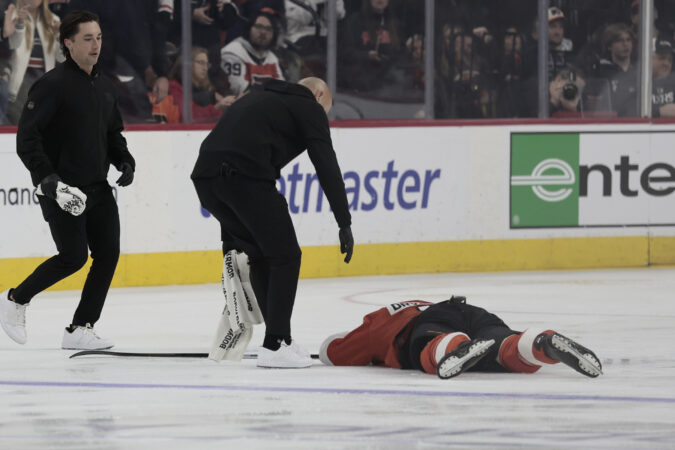
    Injury struck for the Flyers again in the second period, as Drysdale went down after a cheap hit well away from the puck by Ducks forward Ross Johnston.

    Johnston was skating into the zone and ran over an unsuspecting Drysdale, who was curling up top near the blue line. The puck was deep in the Ducks’ zone at the time. Johnston appeared to be pleading that the hit was incidental and just a collision between two players who didn’t see one another. On replay, it appeared that Johnson had enough to see and avoid Drysdale and that he even stuck out an arm and threw it into Drysdale. The two seemed to bang knee-to-knee, with Drysdale also absorbing a blow up high.

    Johnston was handed a five-minute major for interference and a game misconduct. The play by Johnston came after Garnet Hathaway drilled Olen Zellweger — cleanly — in the offensive zone. The Flyers failed to score on the five-minute power play.

    Drysdale, who was acquired in the deal for Gauthier almost two years ago to the day, laid on the ice and did not move for a considerable amount of time. The stretcher did come out, and the doctors came out of the stands, but Drysdale sat up and skated off the ice with help.

    He did not return and was officially ruled out at the start of the third period with an undisclosed injury.

    There was no supplemental discipline handed out by the NHL on any of the hits.

  • For $9.9 million, you can own this Lower Merion mansion and a bonus house next door

    For $9.9 million, you can own this Lower Merion mansion and a bonus house next door

    On Creighton Road in Lower Merion, it’s not unusual for residents to buy the house next door.

    The owners of the 3.85-acre property at 648 Creighton Rd. did just that when they purchased the home but wanted a pool. They decided to put one on the neighboring property.

    Now, the properties are being sold as a package deal.

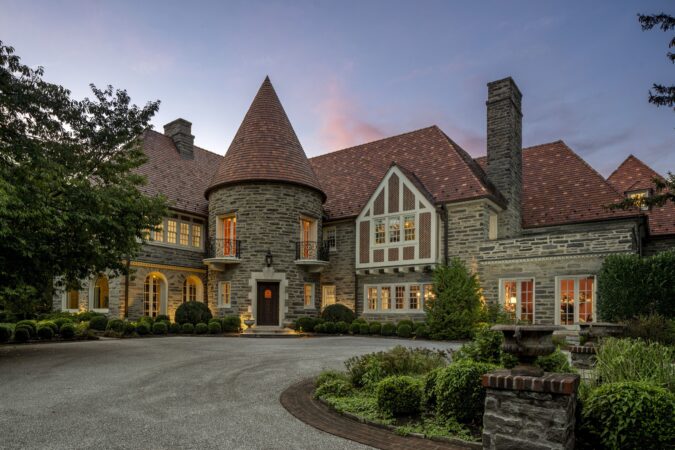
    The century-old main house with seven bedrooms, seven full bathrooms, and three half bathrooms is available for $7.9 million. And the one-bedroom, one-bathroom carriage house next door that was rebuilt in 2015 is on the market for $2 million.

    Creighton Road “has become the estate street,” said listing agent Lavinia Smerconish with Compass Real Estate.

    The property is 3.85 acres and includes a sprawling yard.

    The owners are open to selling their properties separately, but they won’t sell the carriage house before the main one in case a buyer wants both.

    The fieldstone main house is 11,418 square feet. It used to have a series of small rooms for staff and a giant entrance that looked like a banquet hall that no one knew what to do with, Smerconish said. A previous owner reimagined the home with larger rooms, more natural light, and more functional space.

    The home has a commercial kitchen with a large island with seating.

    The front door opens to an entrance tower with a chandelier and winding staircase. Living and dining rooms branch off from the foyer with the family room straight ahead.

    The home has a commercial kitchen with an island with seating. The property includes an exercise room, solarium, four fireplaces, suite above the attached garage for guests or a nanny, sprawling yard lined with trees and hedges, terraces, and detached garage. The sitting room off the primary bedroom could be kept as is or turned into a huge closet, Smerconish said.

    “It’s just an extraordinary house,” she said.

    The finished basement alone spans 1,538 square feet. According to an annual report by the National Association of Realtors, the median size of homes purchased by first-time buyers in the United States is 1,600 square feet.

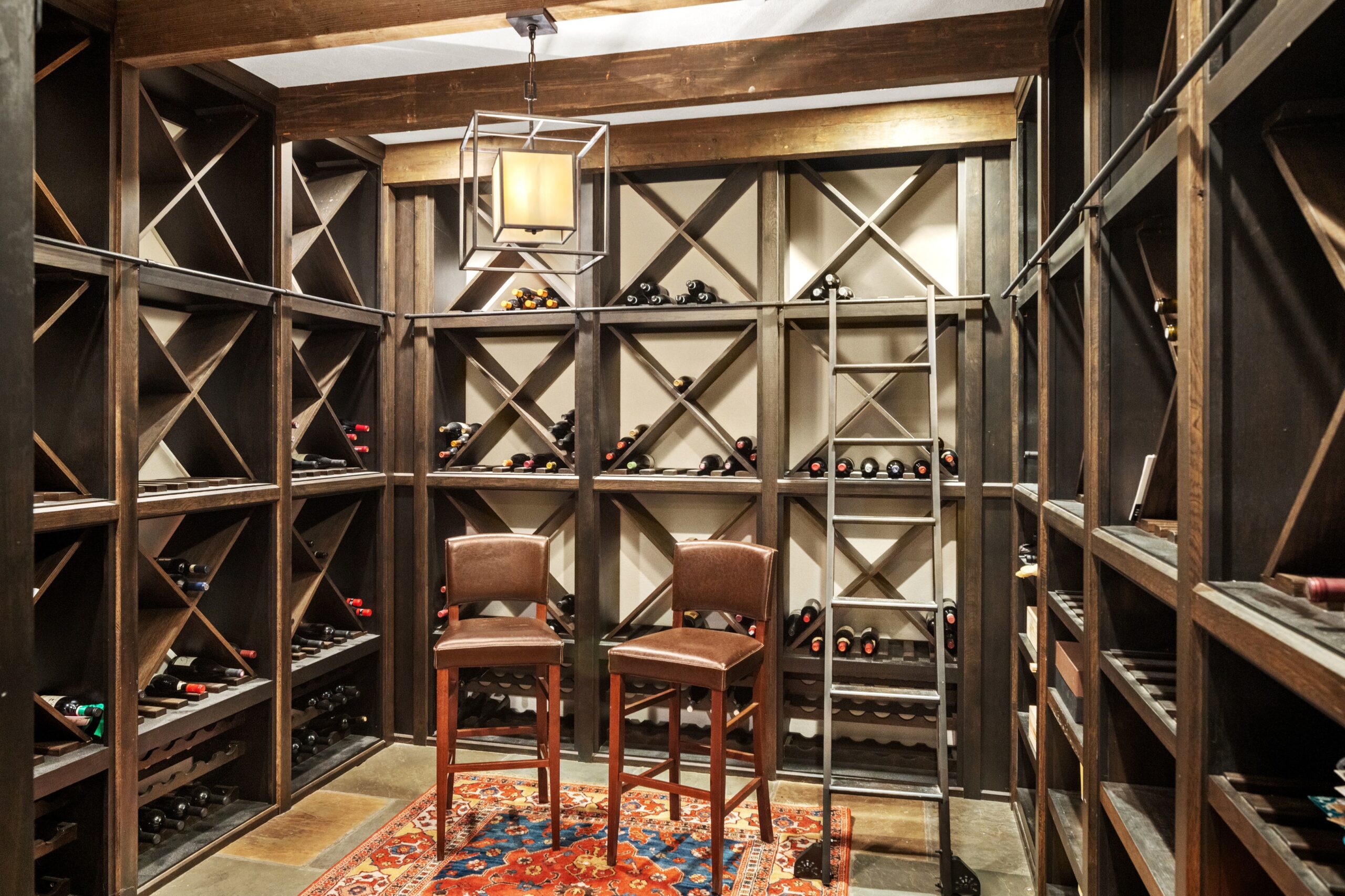
    The finished basement spans 1,538 square feet and includes a wine cellar.

    The basement includes a sports bar with TVs, wine cellar for up to 3,000 bottles, movie room, gym, and bathroom.

    The property “is both impressive and cozy at the same time,” Smerconish said.

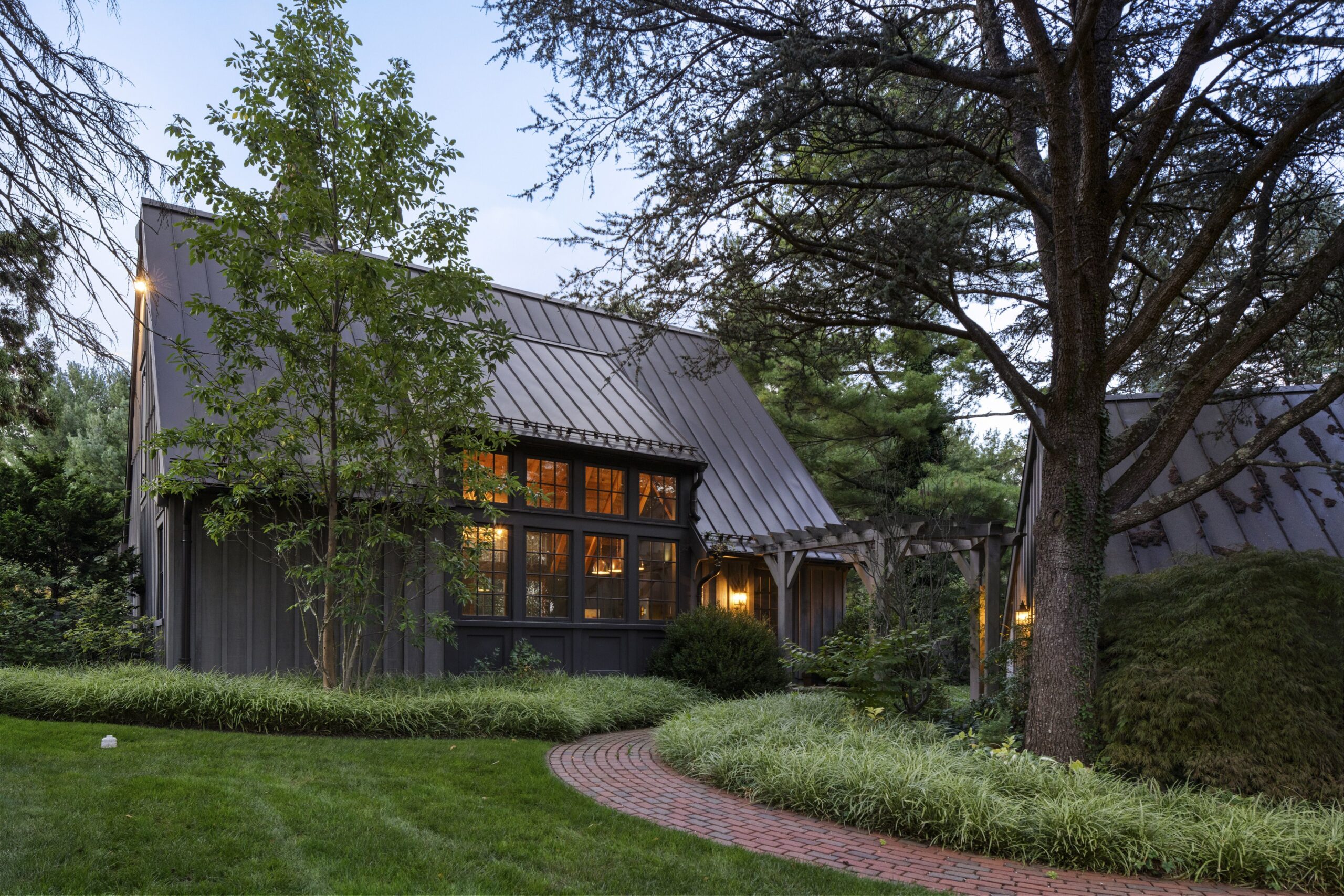
    The carriage house on the market for $2 million on Creighton Road in Lower Merion is being sold as a package along with the $7.9 million house next door.

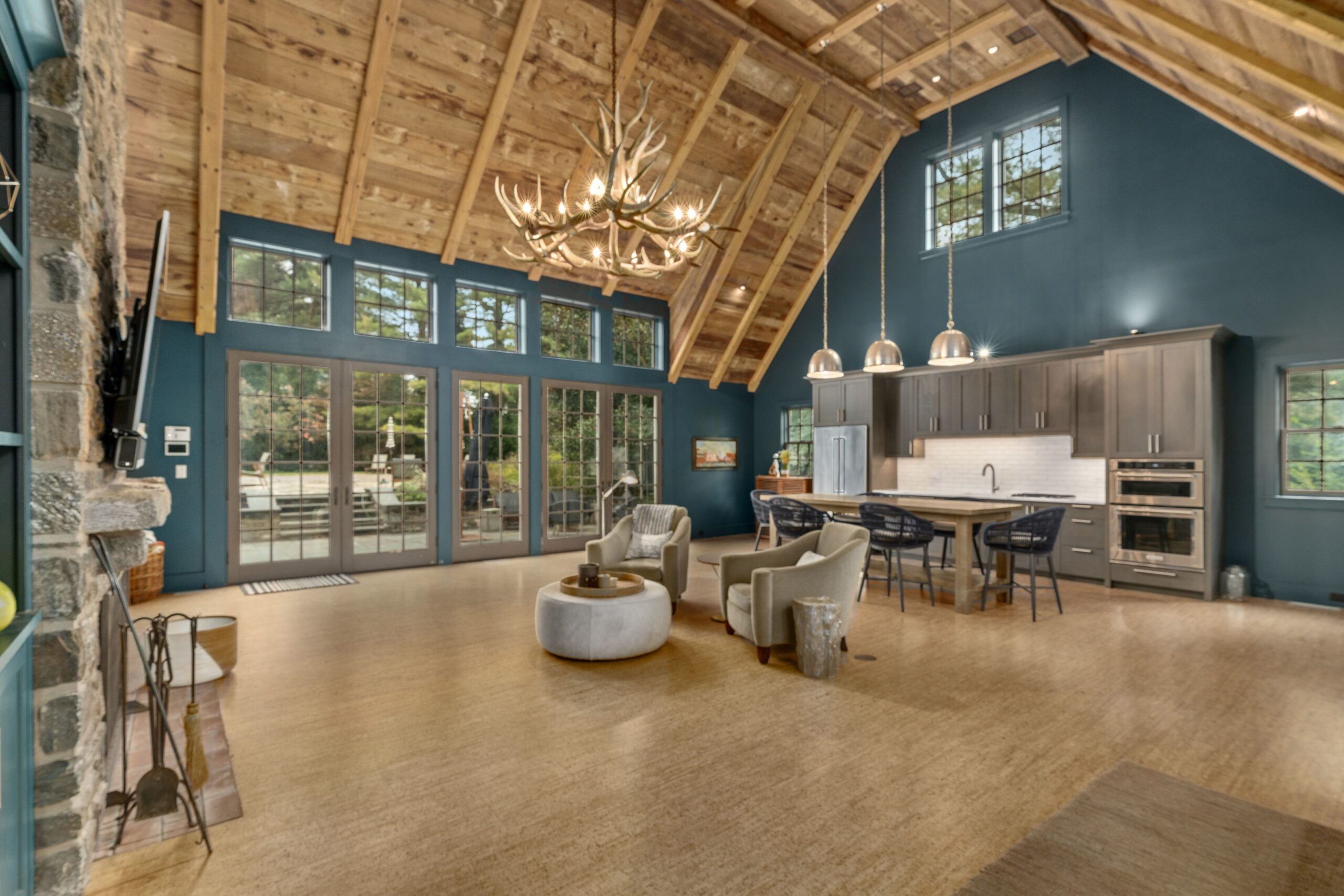
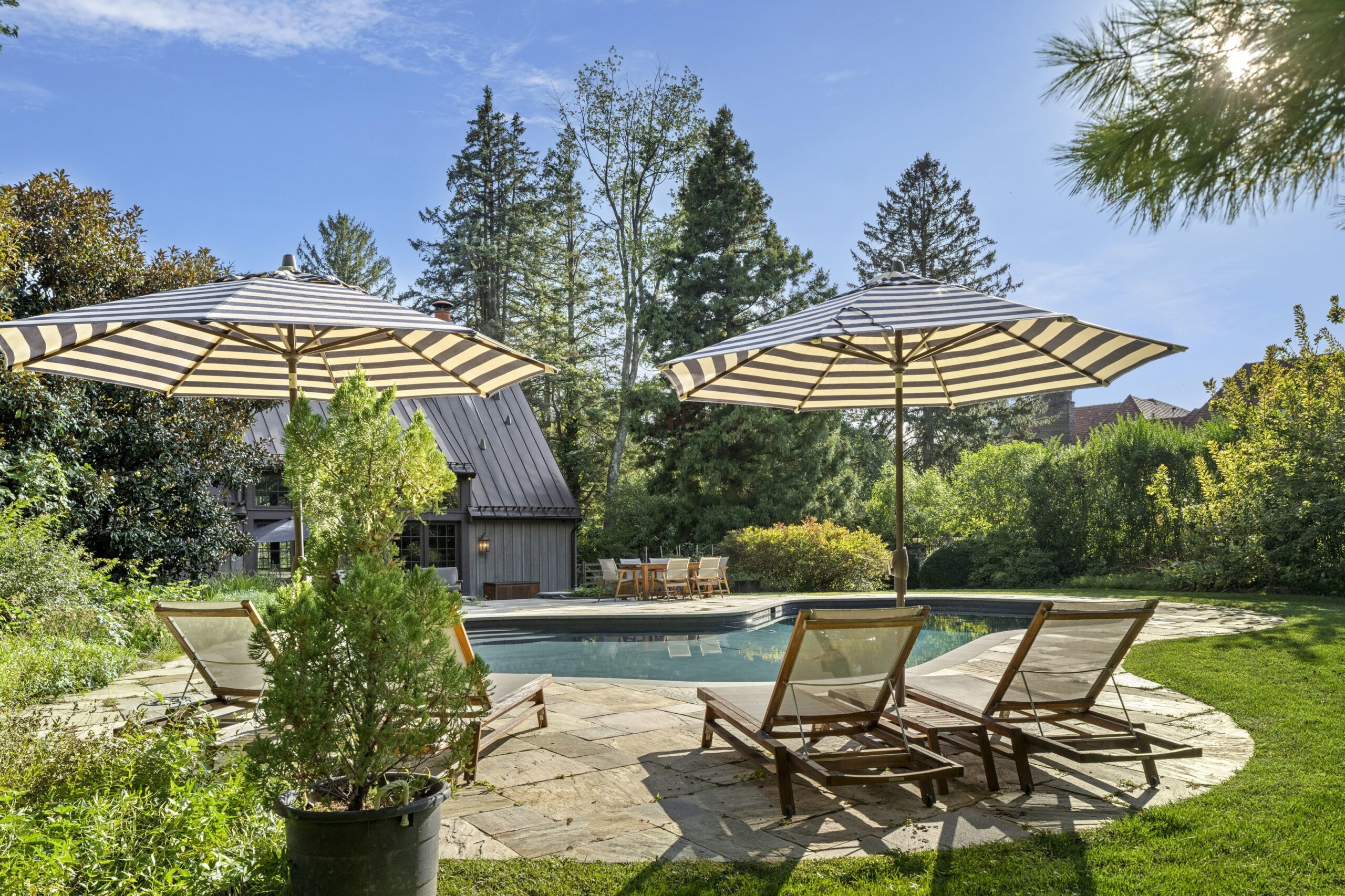
    The carriage house next door spans just over 1,000 square feet on an almost one-acre lot. It has a bedroom, bathroom, laundry room, eat-in kitchen, and living room. A flagstone patio leads to the heated saltwater pool.

    The properties are walking distance from the Appleford estate, which is an event venue, bird sanctuary, and arboretum with gardens and walking paths. They are minutes from Villanova University and Stoneleigh, a public garden of the nonprofit Natural Lands.

    And they’re also minutes from the Schuylkill Expressway and I-476.

    The carriage house includes a kitchen, bathroom, and bedroom.

    The properties were listed for sale on Dec. 5. Now that the holidays are over, Smerconish said, she will start accepting appointments to tour them. She said photos of the main house especially don’t do it justice.

    “You get more with a physical tour and experiencing it,” she said.

    Flagstone surrounds the carriage house’s heated saltwater pool.