Tag: topic-link-auto

  • Another partial government shutdown has started. Why is this one different? Here’s what we know.

    Another partial government shutdown has started. Why is this one different? Here’s what we know.

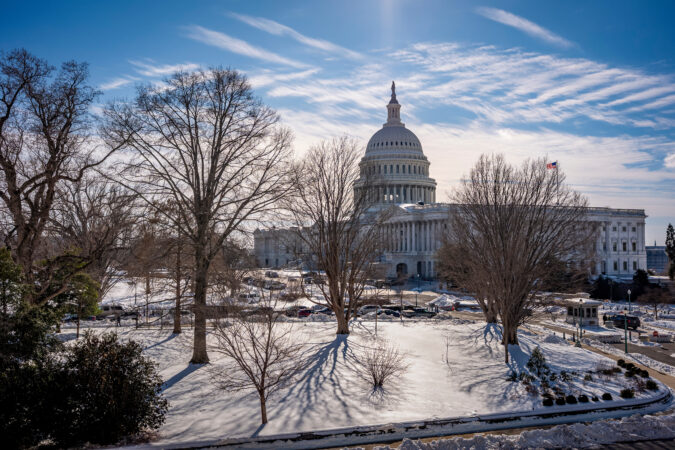
    Another partial government shutdown began Saturday, with lawmakers at an impasse. But this one is different.

    With congressional Democrats refusing to approve funding for the Department of Homeland Security, the last of that agency’s funding has run out.

    It all stems from party-line disagreements surrounding ICE and immigration enforcement.

    When a funding lapse triggered a partial government shutdown on Jan. 31, Congress made a compromise: It approved spending bills for all agencies, except for DHS.

    DHS received two weeks of funding to give Congress more time to negotiate Immigration and Customs Enforcement changes, a push Senate Democrats have repeatedly made after federal immigration and border agents fatally shot two U.S. citizens in Minneapolis last month.

    Now those two weeks are up and Congress is still in a standoff. Democrats want to see more guardrails regarding how ICE agents identify themselves, barring them from wearing masks, and requiring name badges. But Republicans say those practices would add too much risk to the job.

    Since all other government agencies have already been funded, DHS is the only one affected by the shutdown.

    Here’s what that means.

    What’s a partial government shutdown?

    A partial government shutdown happens when Congress has funded only certain federal agencies, leaving others in limbo. Some parts of the government close while others keep operating.

    In this case, it comes down to who has funding and who doesn’t. DHS is the only agency without approved funding. The agency’s fiscal year ends Sept. 30, meaning it currently stands without funding for seven months or until Congress reaches an agreement.

    When did government funding expire?

    Funding for DHS expired Friday at midnight. A shutdown began Saturday at 12:01 a.m. after Congress and President Donald Trump’s administration failed to reach an agreement.

    What changes with the partial shutdown?

    Not much in the eyes of the general public, according to CNN.

    Nearly all DHS workers remain on the job, but many won’t get paid until the shutdown ends.

    But DHS officials who testified before a House panel on Wednesday warned that a funding disruption could mean delays to states seeking reimbursements for disaster relief costs, delays in cybersecurity response, and missed paychecks for agents who screen bags at airports, which could lead to unplanned absences and longer wait times.

    DHS is home to agencies including the Transportation Security Aadministration, Coast Guard, and Federal Emergency Management Agency, which are all affected.

    What have Pennsylvania politicians said?

    Sen. John Fetterman (D., Pa.) said he “absolutely” expected a shutdown. He broke with most Senate Democrats, voting to approve funding and avoid a shutdown in a measure that failed, and arguing that delaying funding DHS won’t impact ICE since the agency has received separate funding.

    Earlier this month, some members of the Pennsylvania delegation to the U.S. House of Representatives, including Chris Deluzio, Chrissy Houlahan, Brendan Boyle, Madeleine Dean, Mary Gay Scanlon, Dwight Evans, and Summer Lee, penned a letter to Fetterman and Sen. Dave McCormick (R., Pa.) asking them to vote against passing the spending bill unless ICE reform is secured. (Both senators voted in favor, but it failed.)

    Houlahan, a Democrat from Chester County, criticized ICE last week and emphasized a need for immigration reform.

    “We are a nation of immigrants, but ICE is clearly not reform. ICE is undertrained. ICE is vastly, vastly overfunded,” she said. “They have a budget that is larger than many countries’ entire defense budgets.”

    Where does Congress stand right now?

    The House had already done its part and approved funding. The chamber is in recess until Feb. 17. But Senate Democrats are pushing back on its approval without immigration reforms. That leaves the Senate with few options if it cannot pass the current measures.

    The Senate adjourned Thursday for a Presidents’ Day recess after a motion to advance DHS funding failed 52-47, mostly along party lines. Democrats also blocked an attempt to extend funding for another two weeks.

    Lawmakers left town, some traveling to the Munich Security Conference in Germany, others to meetings nationwide and overseas.

    The chambers are not scheduled to return until Feb. 23, though that could change if a deal is reached in the meantime. But senators on each side say bipartisanship during an election year seems unlikely.

    So in short: We could be here for a while.
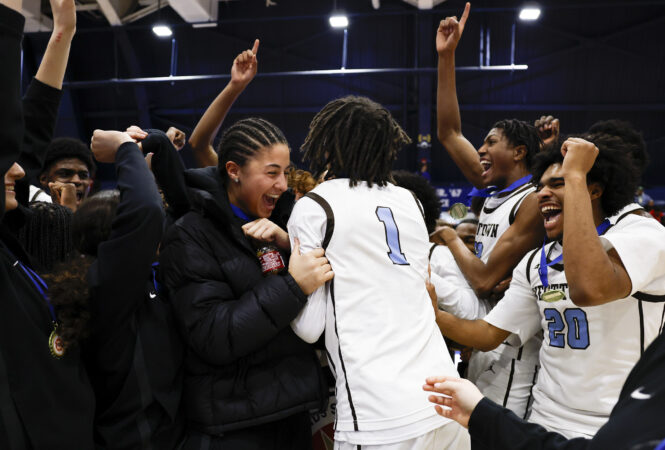
  • Westtown girls’ and boys’ basketball teams secure a Friends Schools League title

    Westtown girls’ and boys’ basketball teams secure a Friends Schools League title

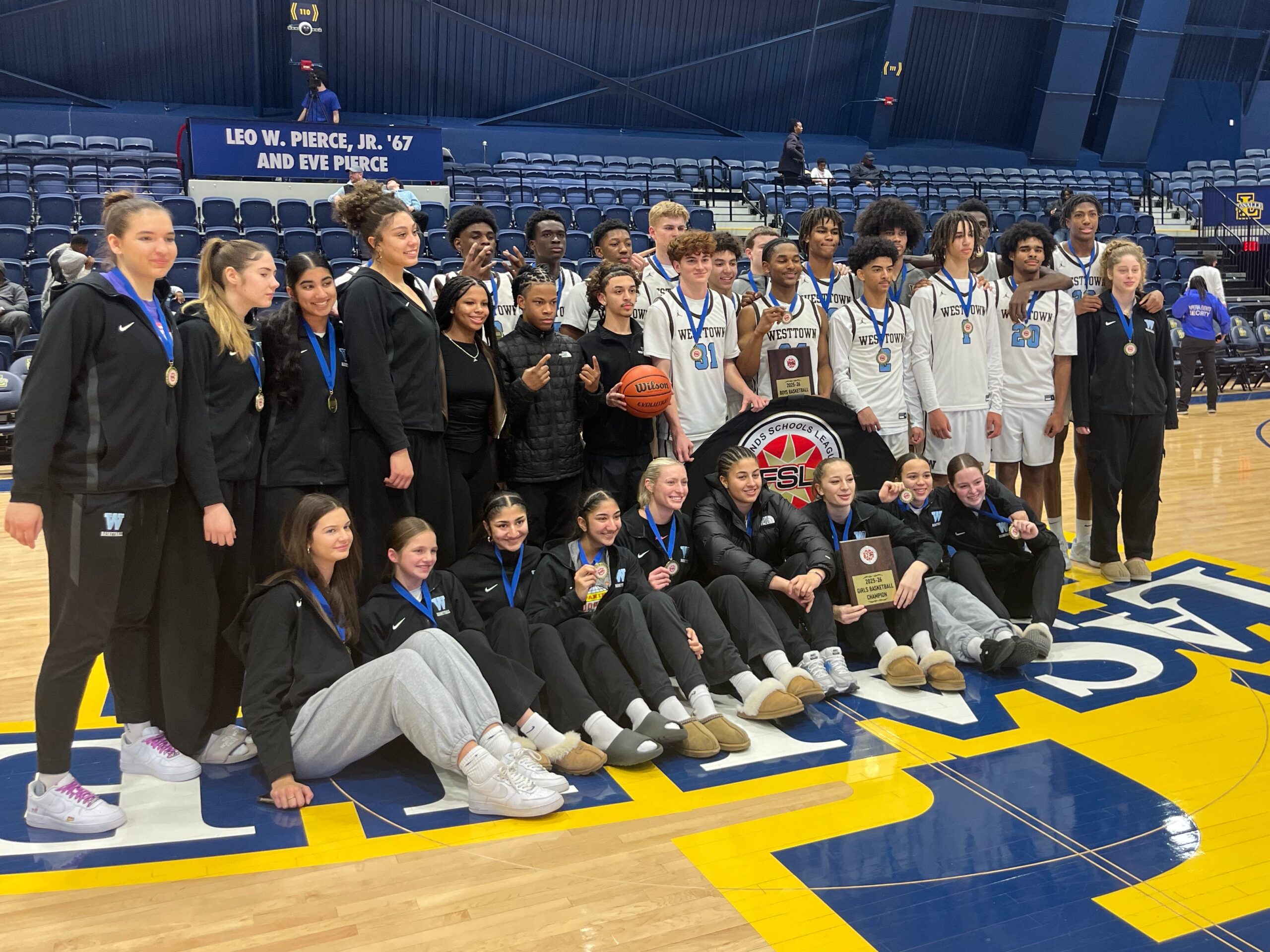
    After the Westtown boys’ basketball team claimed its first Friends Schools League title since 2022 with a 64-54 win over Academy of the New Church on Friday night, the girls’ team joined the medal ceremony at the center court.

    The Westtown girls had their own hardware to show off for a championship photo op. The Moose hung on for a 53-46 win over Friends’ Central hours earlier in the FSL’s championship doubleheader at La Salle’s Glaser Arena.

    It was the sixth consecutive FSL title for the Westtown girls and the first time the teams had shared the court as champions since 2022.

    “I think the girls and the boys teams have a great bond at Westtown,” said guard Rowan Phillips. “It was good to see us win a championship because [the girls] have been doing this for a minute. So we’re just trying to catch up to them.”

    The Westtown boys and girls basketball teams pose with their championship medals. Westtown won both FSL titles in the same year for the first time since 2022.

    Westtown girls outlast Friends’ Central

    While the final score was closer than the Westtown coaching staff would have liked, the Moose scraped by No. 2 seed Friends’ Central behind Jordyn Palmer’s 19 points.

    “I don’t think there was a lot going well for us,” coach Fran Burbidge said. “But I thought we defended and made some really good things [happen] in the second half. … We kept battling.”

    The Phoenix held a 16-8 lead at the end of the first quarter, but the Moose outscored them, 19-6, in the second to take a five-point halftime lead.

    Friends’ Central whittled Westtown’s advantage to one in the fourth, but the Phoenix could not retake the lead.

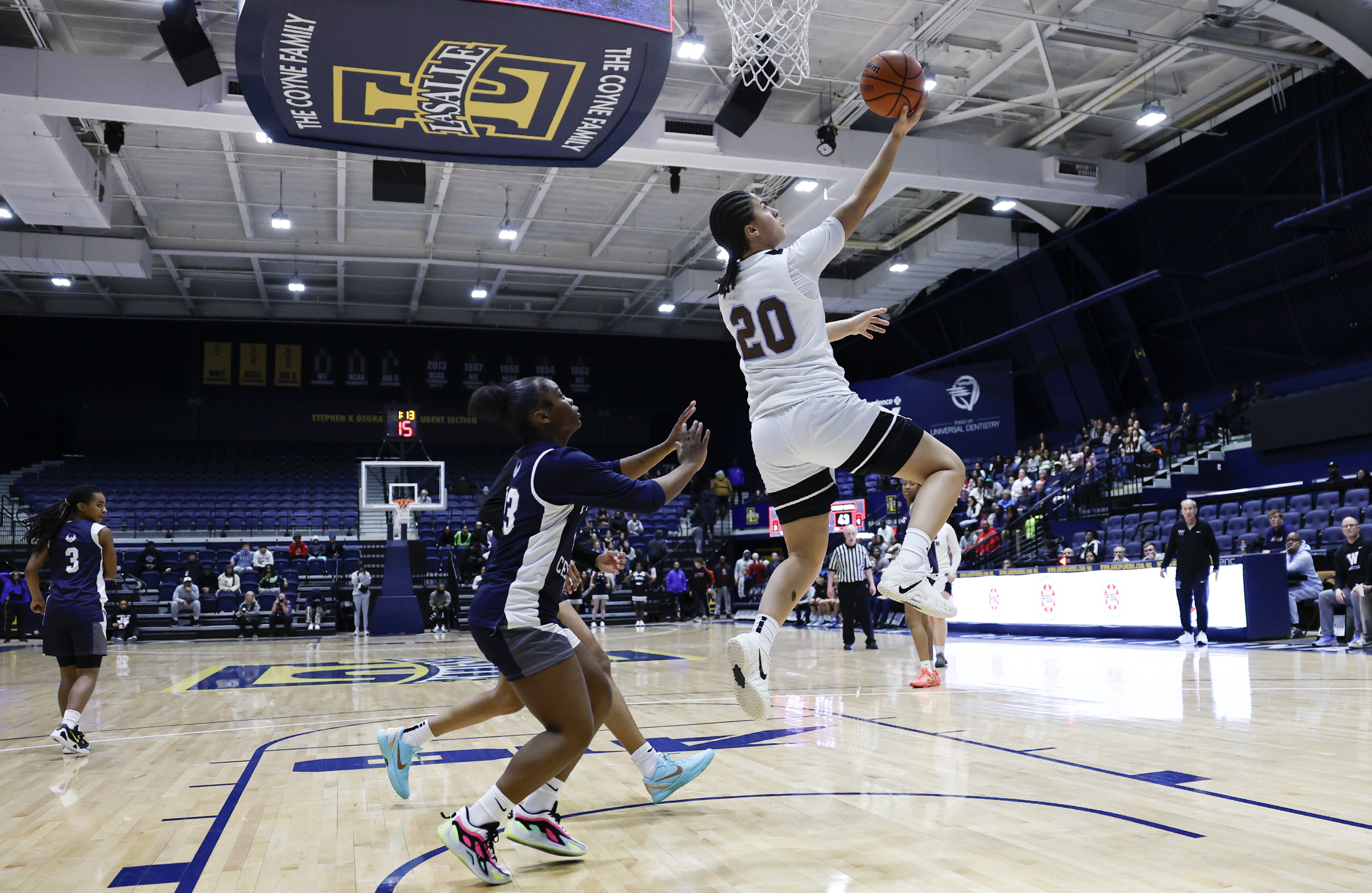
    While Palmer’s performance did not match her 34-point output from last year’s title game, the 6-foot-2 forward took command in the final minutes.

    Palmer, a nationally ranked recruit in the class of 2027, scored four of the game’s final five points, including a layup to put the Moose up, 50-46, with less than a minute remaining.

    “I think it was at the three-minute mark, I talked with Jordan,” Burbidge said. “I said, ‘All right, things haven’t gone real well up to this point, but now’s your time. … You up for that?’ She said, ‘Yeah, I got it.’”

    Westtown’s Jordyn Palmer (right) lays up the basketball in the fourth quarter on Friday.

    Westtown’s Jada Lynch scored 12 and Atlee Vanesko, a senior guard who is the No. 74 prospect in ESPN’s rankings and is committed to Ohio State, added nine.

    Ryan Carter led Friends’ Central with 16 points, while Zya Small had 15. Like Palmer (No. 6), Carter (No. 12) and Small (No. 47) are in ESPN’s top 60 prospects for 2027.

    Westtown, which is ranked eighth nationally by Sports Illustrated, is the top seed in the PAISAA state tournament. The Moose will host the winner between Agnes Irwin and Episcopal Academy in the quarterfinals.

    Second-seeded Friends’ Central will play the winner of a first-round matchup between Germantown Academy and Penn Charter in the quarterfinals.

    Westtown boys beat Academy of the New Church

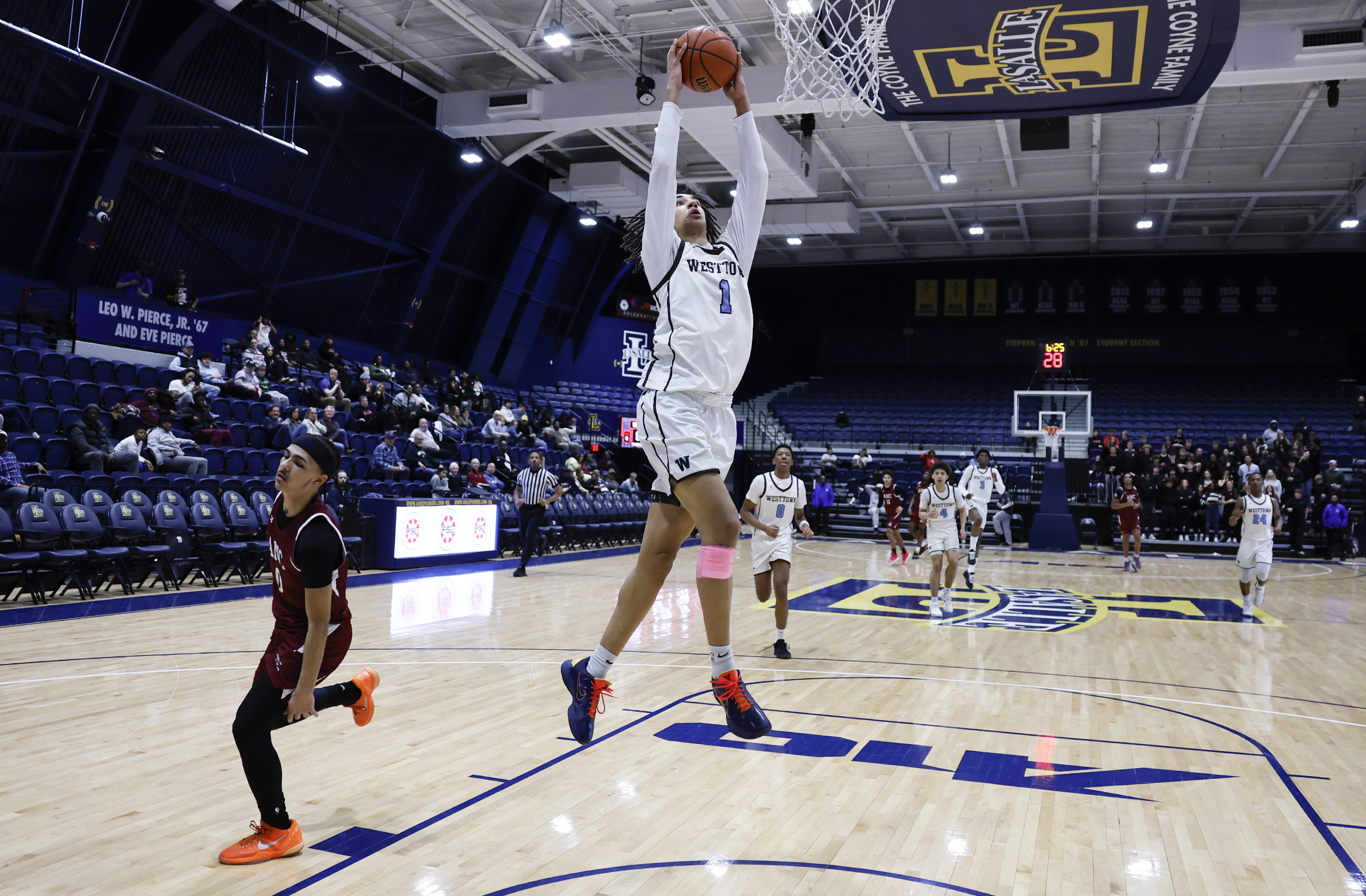
    Phillips’ 20-point performance led Westtown boys to be crowned FSL champions.

    The 6-6 sophomore guard transferred to Westtown after spending his freshman year at Archbishop Wood. The FSL title was the first high school championship of any kind for Phillips, who is a four-star prospect ranked 21st nationally in the class of 2028.

    “It feels great,” Phillips said. “It feels good to get one for the coaching staff and to see all the smiles on the guys’ faces for the first ’ship.”

    Marshall Bailey added 15 points for the Moose. Academy of the New Church’s Ryan Warren led all scorers with 22 points, but his outburst was not enough for the Lions to beat Westtown.

    Westtown School’s Rowan Phillips dunks in the fourth quarter past Academy of the New Church’s Antonio Lozada on Friday.

    Friday night’s title was far from the first for coach Seth Berger, who led Westtown to eight consecutive FSL titles from 2014 to 2022. But he noted that this season’s FSL championship was the first title for every player on his team and three of his assistant coaches.

    “I can’t tell you how ecstatic I am for them to experience what it is to be a Friends League champion,” Berger said. “This is such an incredibly tough league, and ANC is a fantastic, tough, and well-coached team. I’m super happy for everybody, and mostly for the first time champs.”

    Westtown is the top seed in the PAISAA state tournament and will host No. 16 seed Kiski School in the tournament’s opening round.

    Seventh-seeded Academy of the New Church will host No. 10 seed Penn Charter in the first round.

  • Source: Former Phillies OF Nick Castellanos agrees to deal with Padres

    Source: Former Phillies OF Nick Castellanos agrees to deal with Padres

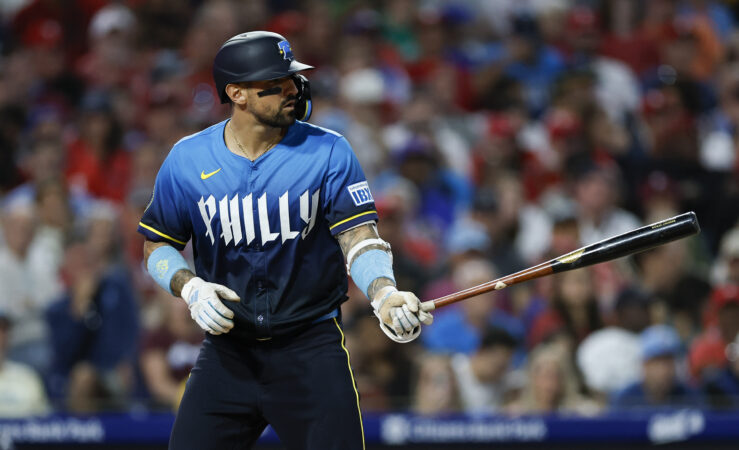
    CLEARWATER, Fla. — Nick Castellanos has a new team.

    Two days after the Phillies released him with one year left on his contract, Castellanos agreed Saturday to join the Padres, a major league source confirmed.

    The Phillies will pay all but the major league minimum ($780,000) portion of his $20 million salary for 2026.

    The Phillies were intent on moving on from Castellanos after he clashed last season with manager Rob Thomson. In response to a report that was about to be published by The Athletic, Castellanos detailed a June 16 incident in which he brought a beer into the dugout in the eighth inning of a game in Miami after Thomson replaced him for defense. Castellanos was benched for the next game.

    Castellanos, who ranked among the worst defenders in the sport, also lost his everyday role in right field in August and publicly criticized Thomson in September for “questionable” communication.

    “It was just a difficult situation,” Thomson said recently on Phillies Extra, The Inquirer’s baseball podcast. “The thing with Nick, the bottom line is, he wants to play every day. He wants to play every inning, every day, and you can’t fault him for that. I think I respect him a great deal, just for being that guy.”

    Castellanos played literally every day for most of his time with the Phillies after signing a five-year, $100 million contract in 2022. He started 236 consecutive games, including all 162 in 2024. It was the longest streak by a Phillies player since Pete Rose started 350 consecutive games from 1980 to 1983.

    A two-time All-Star with 250 career homers, Castellanos batted .260 with 82 homers and a .732 OPS for the Phillies. His OPS+ of 100 indicated league-average production relative to all major league hitters.

    Castellanos reportedly will play first base for the first time in his career for the Padres, who also intend to use him as a designated hitter. He could see time in the outfield, although San Diego is well-stocked with Fernando Tatis Jr. and Ramón Laureano in right and left, respectively, with Jackson Merrill in center field.

    The Phillies play the Padres on May 25-27 in San Diego and June 2-4 at Citizens Bank Park.

  • Daniel Hilferty: We know Philadelphia can shine on the FIFA World Cup stage. Let’s show it.

    Daniel Hilferty: We know Philadelphia can shine on the FIFA World Cup stage. Let’s show it.

    Last June, I was in my office at the Xfinity Mobile Arena when I saw sparks flying on Pattison Avenue. That’s not a metaphor. I saw literal sparks, plumes of red and black smoke, and heard a steady beat of drums. Thousands of people were marching toward Lincoln Financial Field, chanting, with all the gusto in the world, to a soccer match.

    It was 10:30 a.m.

    As a lifelong Philadelphian, I know our love of sports. I’ve witnessed my fair share of tailgates, and in the last three years, I’ve seen that devotion, up close and personal, in my role as governor of the Philadelphia Flyers. But as I stared out my office window and watched this parade of passion, I was struck by the extraordinary power and potential of the FIFA World Cup ’26 in Philadelphia this summer.

    Since 2000, we have experienced some of the largest and most significant events ever to take place in our city, from the papal visit in 2015 to the Democratic National Convention the following year, to the 2017 NFL Draft. I’ve had the privilege of helping to lead many of these civic efforts and, no doubt, 2026 promises to be a game changer with America’s 250th anniversary, PGA Championship, ArtPhilly, and Major League Baseball’s All-Star Week.

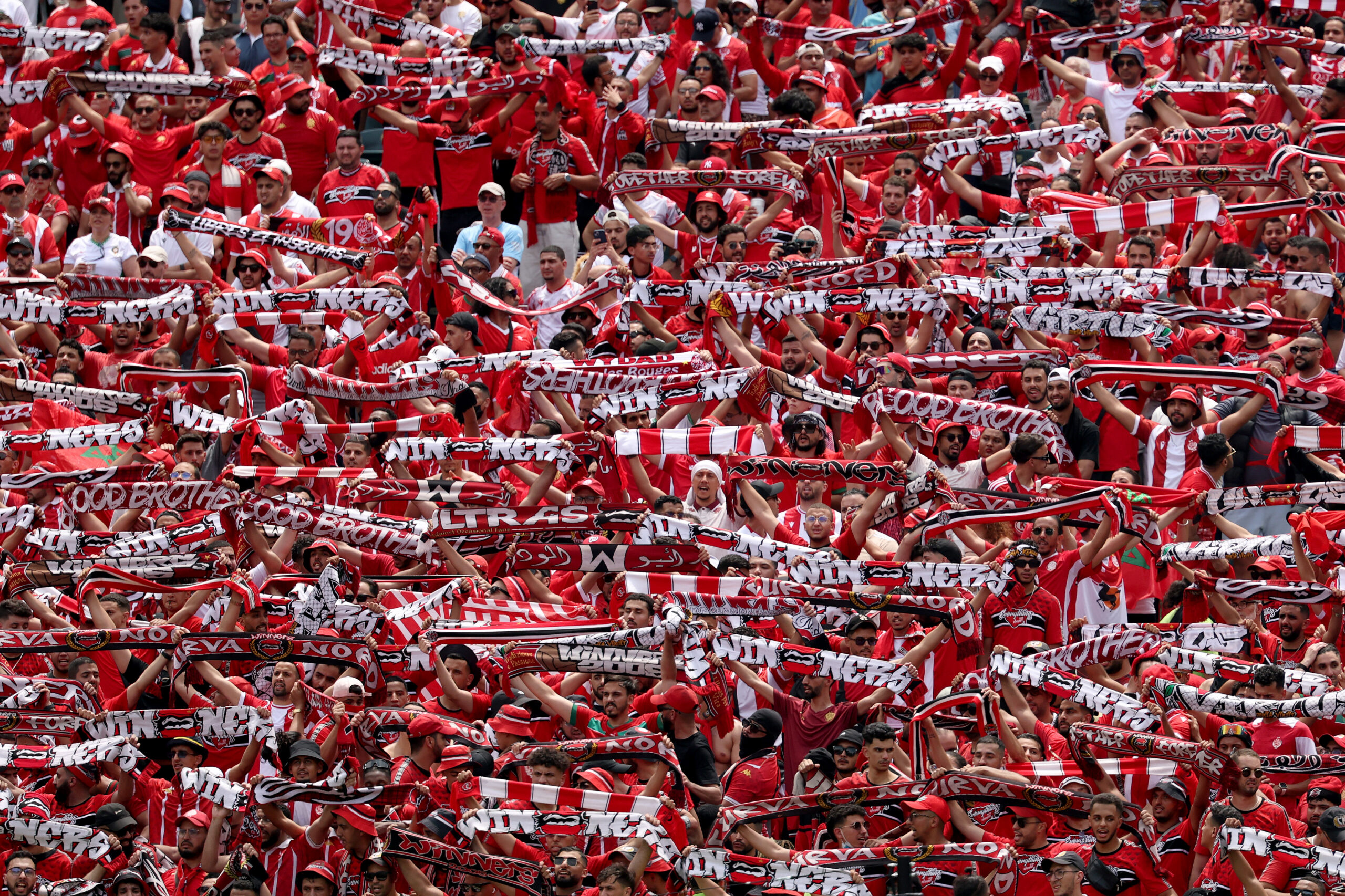
    Wydad AC fans cheer during the FIFA Club World Cup match in June against Manchester City FC at Lincoln Financial Field.

    But what I learned last summer, as Moroccan fans flooded the stadium complex, was that soccer is the world’s love language. It unites sports, culture, and national pride. Fans live and breathe every minute from opening kick through stoppage time. There is no arriving late to a match, and there is no movement from one’s seat during it.

    I’m frequently asked, “Are we ready for 2026?” The answer is yes, because Philadelphia hosts major international events so well. But what I’m not sure we are ready for is what a spectacular celebration the FIFA World Cup is.

    I’m not sure we understand just how important this sport — and this tournament — is to the world. And I’m not sure we realize there is no host city more ready to embrace the fans who will come for this party than Philadelphia.

    That’s what makes this so exciting for 2026 — and so important beyond this year.

    FIFA chose Philadelphia to host six of the tournament’s 104 matches here, including a Round of 16 match on July 4. We have been asked to play host to soccer fans from around the globe, especially those who will root for Brazil, the Ivory Coast, Croatia, Curaçao, Ecuador, Haiti, France, Ghana, and a few yet-to-be-determined national teams.

    It’s crucial we recognize that among the many reasons Philadelphia was selected by FIFA was our authentic passion for sports and our unabashed pride for this place we call home.

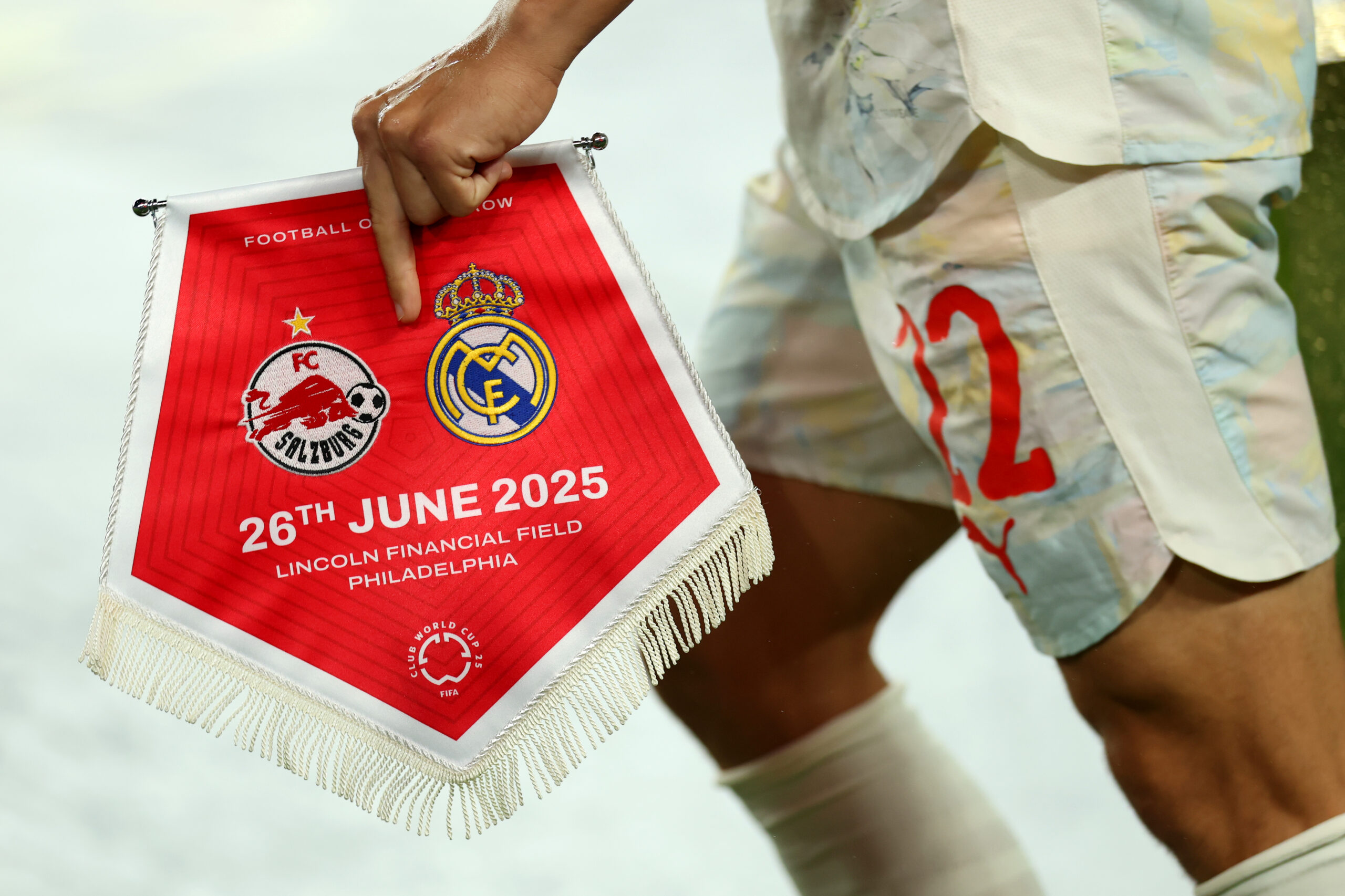
    The match pennant is held by Stefan Lainer of FC Salzburg as he walks out prior to a FIFA Club World Cup match in June against Real Madrid CF at Lincoln Financial Field.

    We know Philadelphia can shine on the world stage. We know that hundreds of thousands of visitors will walk our streets, dine in our restaurants, and experience our neighborhoods. The global media will spotlight our skyline and highlight our stories. Investment will flow into tourism and community development. But to unlock the economic, cultural, and civic potential of the FIFA World Cup, and of 2026, we need one important thing.

    We need you to be here. We need every Philadelphian to help us welcome the world.

    So, how can you do that?

    Come to the FIFA Fan Festival at Lemon Hill, which will be free to enter during the tournament. And don’t just come once!

    Adopt a rooting interest among the teams coming here, in addition to our U.S. men’s national team.

    When visitors ask where to eat (and they will!), give them your best hidden neighborhood gem.

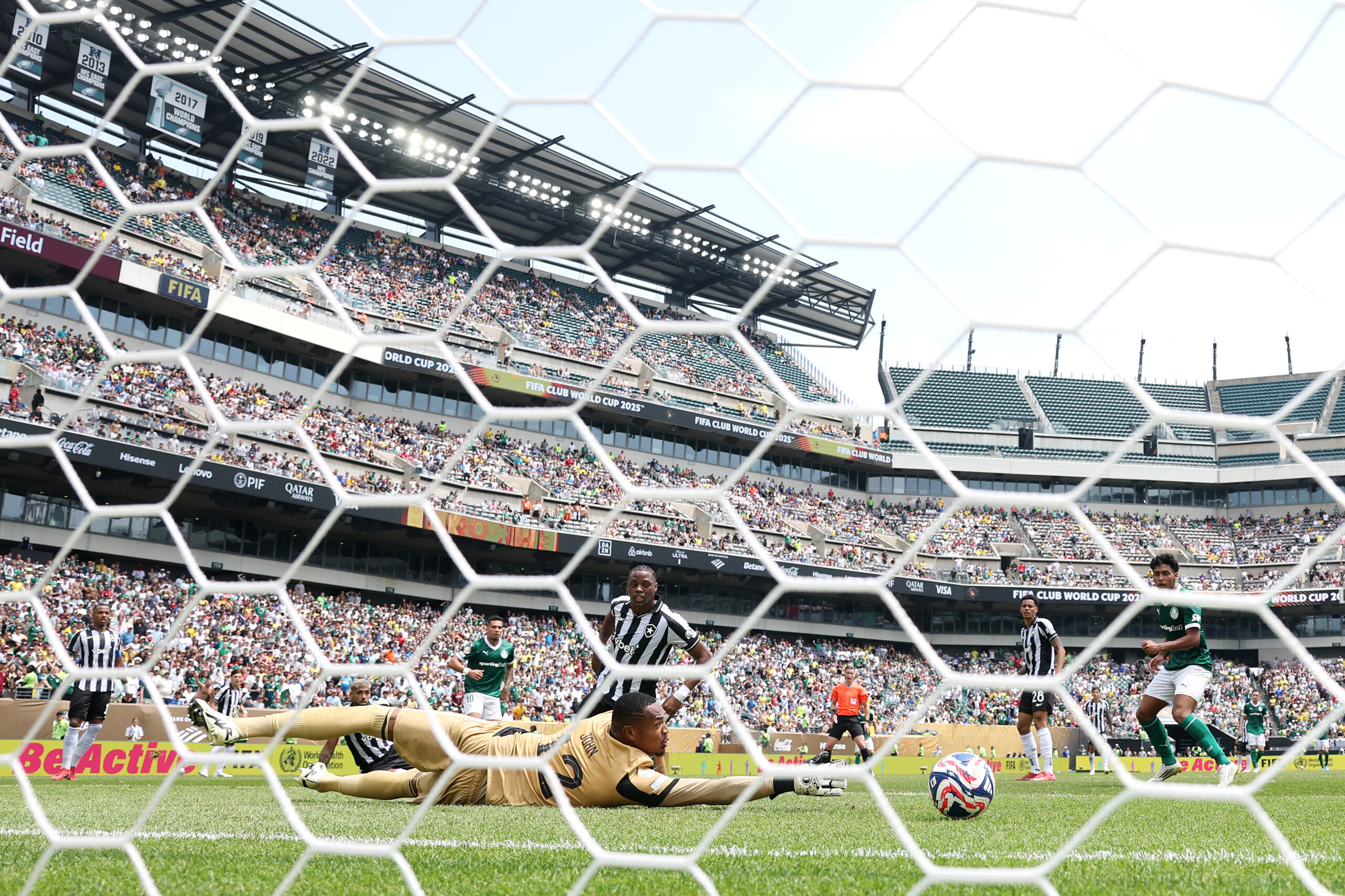
    Paulinho of Palmeiras scores his team’s first goal past John of Botafogo during a FIFA Club World Cup at Lincoln Financial Field in June.

    If someone asks what they absolutely must do or see when here, tell them your favorite experience, whether it’s in arts and culture, history, culinary, or even shopping.

    And when you’re asked to take a picture at the top of the “Rocky Steps,” happily do it!

    What makes Philadelphia special is its people. It’s why we won our bid in 2022, and it’s why this year has the potential to be a launchpad for Philadelphia as a global destination. This summer, the eyes of the world will be on us, and we want them to see the best of who we are: welcoming, inclusive, fun, proud, and united.

    But to show that, we need you to be here. We need you to be part of the action. And we need you to help us make history together.

    Daniel J. Hilferty is the chairman and CEO of Comcast Spectacor and governor of the Philadelphia Flyers. He has served as cochair of Philadelphia Soccer 2026 since 2021, alongside Michelle Singer.

  • Jersey’s historic diners keep closing. This legislation aims to keep more alive.

    Jersey’s historic diners keep closing. This legislation aims to keep more alive.

    There may be new hope for diners in New Jersey.

    In recent years, a string of the state’s iconic diners have shuttered their doors. New state legislation aims to keep the lights on at those still in business.

    The bill, which was introduced in the New Jersey Senate in January, would provide some diners and other historic restaurants with tax benefits.

    “Diners, and specifically historic diners, are a cornerstone of our great state, having served residents and visitors for many decades. They are part of our culture and our history, and we have a duty to help them thrive,” State Sen. Paul Moriarty of Gloucester County, a sponsor of the bill, said in a statement Thursday.

    The legislation, which would establish a registry of historic diners and restaurants, would give the businesses a tax credit of up to $25,000. Only diners and family-owned restaurants operating for at least 25 years will qualify.

    The bill has been referred to the Senate Budget and Appropriations Committee.

    “It has been heartbreaking to see so many of these well-known establishments close or dramatically cut their hours,” Moriarity said.

    Where have diners closed in New Jersey?

    The origin of the modern diner can be traced back to a horse-drawn lunch wagon in 19th-century Rhode Island and the model has evolved since then. New Jersey has been coined the “diner capital” of the U.S. but has seen closures in recent years due to increased operating expenses, the challenge of finding employees, and the impact of the pandemic.

    The Cherry Hill Diner closed in 2023 after 55 years in business and following the co-owner’s unsuccessful search for a buyer. South Jersey’s Gateway Diner in Gloucester County closed that same year amid construction of the Westville Route 47 Bridge and the state’s acquisition of the site. The Red Lion Diner in Burlington County also sold, making way for a Wawa.

    In January 2024, the Star View Diner in Camden County closed. Last year, the Collingswood Diner shut its doors in August, to be replaced by a marijuana dispensary.

    The trend extended in Philadelphia where the Midtown III closed in 2020. Last year, the Mayfair Diner in Northeast Philadelphia was listed for sale.

  • A Chesco man’s heart stopped. His wife’s fast response — and a steady 911 dispatcher — saved him.

    A Chesco man’s heart stopped. His wife’s fast response — and a steady 911 dispatcher — saved him.

    Bob Borzillo has a deal with his wife Terri: She puts everything in the dishwasher, but he has to unload it.

    That’s what he was doing on a night in November, after the couple had arrived back home in Willistown from Barcelona. He was putting the very last thing — a wine glass — away. That’s where the 65-year-old’s memory stops.

    But for Terri Borzillo, also 65, that’s where a terrifying ordeal began.

    She had been just a few feet away, writing in her journal as her husband unloaded the dishwasher in the background. She heard him groan and glass shatter. She got up to help him, expecting to find him picking up glass shards. Instead she found him on the floor, unresponsive.

    What they did not know then was that a piece of plaque had broken off, completely blocking his artery. He was in cardiac arrest — not breathing, no pulse. After having walked around Barcelona, averaging 18,000 steps a day, he had no symptoms, no warning signs, until he collapsed in their kitchen.

    More than 350,000 people annually experience cardiac arrest outside hospitals, and only one in 10 survives, said Jeffrey Salvatore, the vice president of community impact for the American Heart Association of Greater Philadelphia.

    The association has been leading a campaign to teach more teens and adults hands-only CPR to increase bystander response rates. Nationally, 40% of those who experience cardiac arrest each year are helped by a bystander. The rate in the Philadelphia region is significantly lower: less than 26%.

    The association also holds telecommunicator CPR training, so dispatchers can instruct people over the phone on how to provide CPR, said Salvatore.

    “Cardiac arrest is 100% fatal without any intervention. If nobody does anything for the person, there’s no chance of survival,” he said. “By just calling 911 and just doing compressions, you can still double someone’s chance of survival.”

    Terri Borzillo immediately went into action, calling 911.

    “I think my husband’s having a heart attack,” she remembers screaming to the dispatcher.

    Calmly, the Chester County dispatcher, Kayla Wettlaufer, had Borzillo describe her husband’s condition.

    “She said, ‘OK, lady, get control of yourself. We’re going to do this together,’” Borzillo recalls. “By the command in her voice, and because there was no option, I had to do this.”

    Wettlaufer led Borzillo through CPR over the phone — telling her where to place her hands, when to compress. Wettlaufer even told her when it was time to unlock the front door so the nearby first responders could get in.

    “It was horrible to watch my husband in that condition, and it was horrible to know that I had the balance of his life in my hands,” Borzillo said.

    With Wetlaufer guiding her — and, she swears, every doctor in heaven — she did compressions until the EMTs arrived, using paddles to restart his heart.

    As the EMTs wheeled Bob Borzillo out, Terri Borzillo retrieved the bottles of holy water they had picked up at Our Lady Lourdes in Barcelona. She sprayed her husband and the EMTs.

    It got her an odd look, but, she said, “For somebody who has deep faith, I know all the angels and saints were there with us, and we’re smiling today instead of crying,” she said.

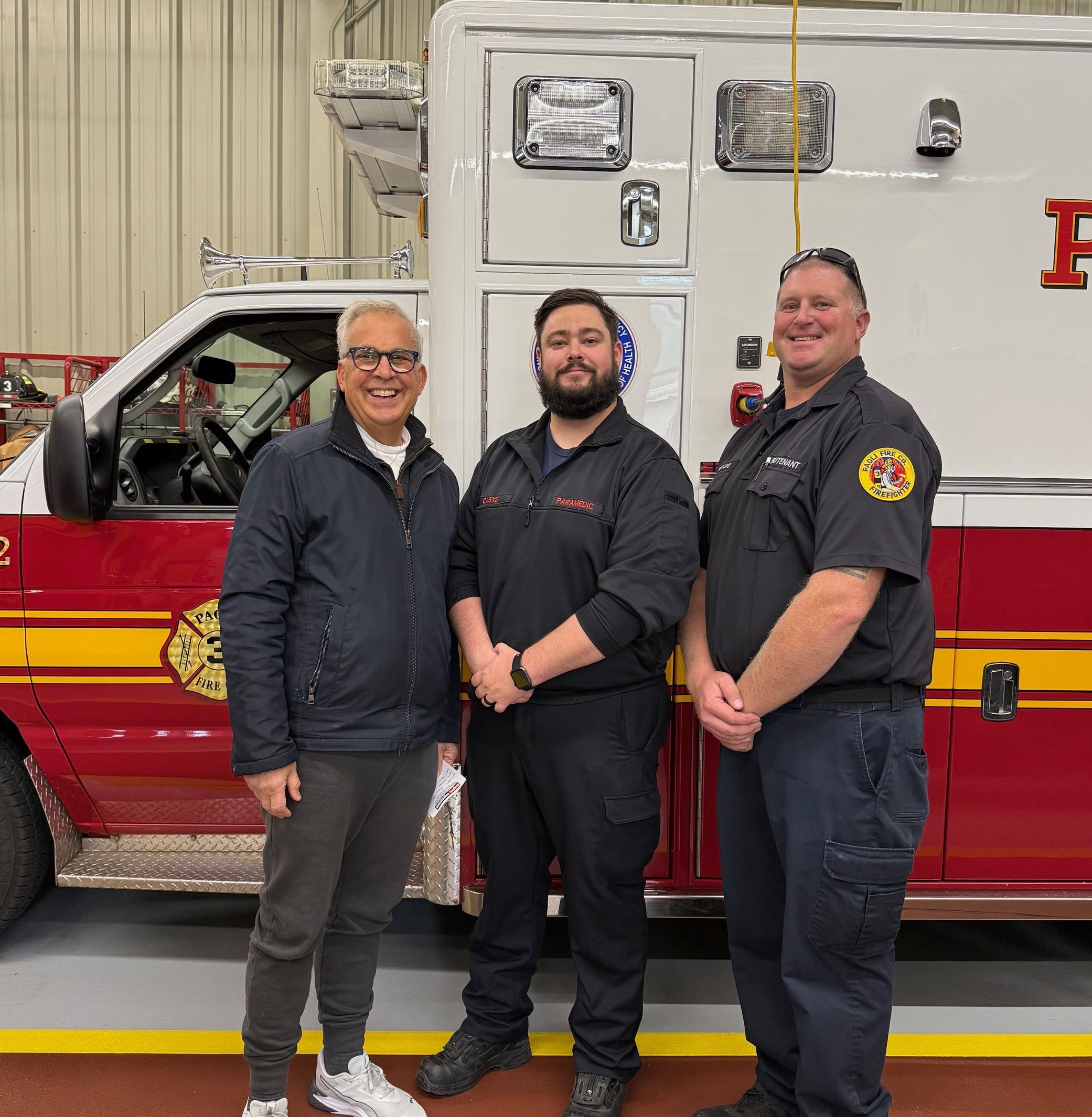
    Bob Borzillo, left, takes a photo with two first responders who arrived to his home in November when he was in cardiac arrest.

    Terri Borzillo’s faith runs back to their first date, more than 40 years ago. It was 1982, she was single, and her coworker asked her if she’d like to meet a nice guy. What do I have to lose? she thought. Acting as an intermediary, that colleague — a friend of Bob Borzillo’s family — told Bob about Terri. The young man’s father happened to know Terri’s father. He told his son, “Call that girl.” Bob listened.

    On their blind date, Terri Borzillo knew he was the one. There was something to how he talked, explaining — of all things — turbine generators.

    He really was a nice guy, she thought. (“I was a nerd,” he said.) She felt something click. Dear God, she thought, let him ask me out again.

    One big Italian wedding, three sons, and seven grandchildren later, the two have lived in Chester County for more than 40 years.

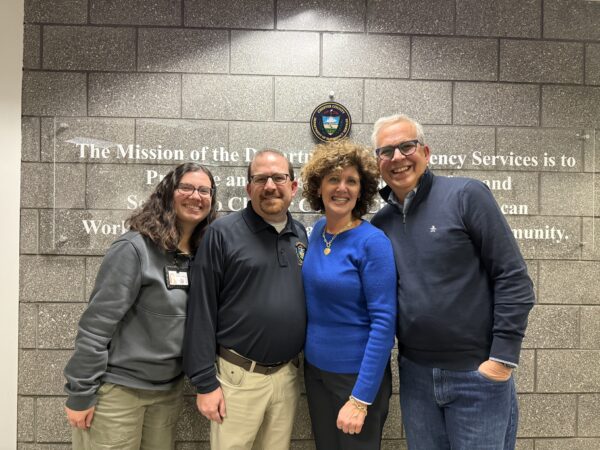
    This experience has made him proud to be a county resident, Bob Borzillo said. After he was released from the hospital a few days later, Borzillo went to the firehouse and met the first responders. He and his wife met Wettlaufer, and toured her workplace.

    Wettlaufer, an operator who has been with the county for almost five years and was honored by the county this month, was the start of a well-oiled machine, Borzillo said. Their proximity to the firehouse and Paoli Hospital helped get him professional care quickly.

    “If the Eagles offense executed that efficiently, we would have been in the Super Bowl,” he said.

    Terri Borzillo said meeting Wetlaufer helped ease the trauma of the situation.

    “She’s beautiful. And what they do there is amazing, and they get all of the credit,” she said.

    Saturday marks three months since Bob Borzillo’s cardiac arrest. He and his wife are in Florida while he recovers, and will celebrate Valentine’s Day with friends from Chester County.

    “Certainly the heart and what Valentine represents has a special meaning this year, and I am blessed to be here to celebrate it,” he said in an email.

    This suburban content is produced with support from the Leslie Miller and Richard Worley Foundation and The Lenfest Institute for Journalism. Editorial content is created independently of the project donors. Gifts to support The Inquirer’s high-impact journalism can be made at inquirer.com/donate. A list of Lenfest Institute donors can be found at lenfestinstitute.org/supporters.

  • Only 1 in 10 people survive cardiac arrest. Here’s how to help if you’re a bystander.

    Only 1 in 10 people survive cardiac arrest. Here’s how to help if you’re a bystander.

    When Bob Borzillo collapsed a few months ago, he could have become a statistic: More than 350,000 people go into cardiac arrest each year, with a 90% fatality rate. But his wife’s quick response — and a calm 911 dispatcher — saved his life.

    Bystanders could do this too, advocates say.

    But in the Philadelphia region, only 26% of people suffering cardiac arrest receive bystander intervention, said Jeffrey Salvatore, the vice president of community impact for the American Heart Association of Greater Philadelphia. That’s much lower than the national average of 40%.

    Though often used interchangeably, a heart attack and a cardiac arrest are not the same, and they warrant (slightly) different responses.

    A heart attack is a “plumbing issue,” where there’s some blockage in the arteries that supply blood to the heart, Salvatore said.

    But a cardiac arrest is an “electrical problem;” the heart pumps through an electrical system, and when something misfires or stops, that’s when a cardiac arrest occurs. It necessitates CPR.

    “When the heart stops doing its job, we have to take over, and that’s when CPR comes into play,” he said.

    That’s what happened to Borzillo.

    Someone in cardiac arrest is unresponsive, and requires immediate intervention to prevent death.

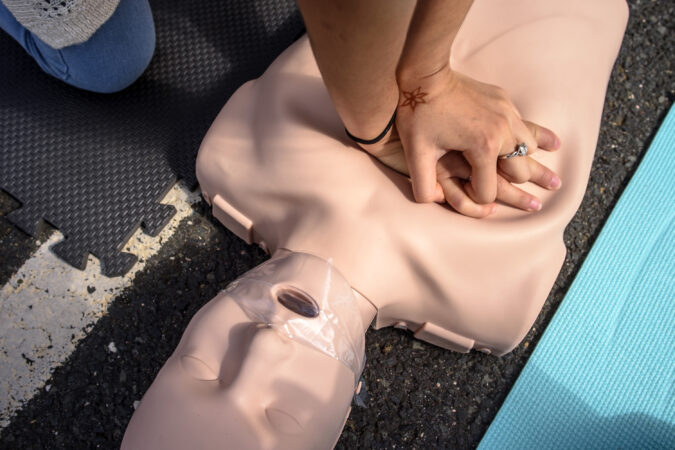
    You can check for unresponsiveness by tapping someone on the shoulder, rubbing their chest, or yelling loudly. If they don’t respond, call 911, and begin hands-only CPR, pressing hard and fast in the center of the chest.

    In many cases, 911 operators have been trained to walk callers through delivering CPR.

    A heart attack can lead to cardiac arrest, but it can also happen separately, and never result in the heart stopping, Salvatore said.

    If someone is exhibiting signs of a heart attack — chest discomfort; or discomfort in other areas of the upper body, such as arms, back, neck, jaw and stomach; shortness of breath; cold sweats; light-headedness; rapid or irregular heartbeat — call 911, Salvatore said.

    The American Heart Association is seeking to expand training in hands-only CPR for adults and teens, to increase low bystander-intervention rates.

    Just doing chest compressions — no mouth-to-mouth contact required — and calling 911 can double someone’s chance of survival, Salvatore said.

    “They are the first responder before EMS gets to the scene,” he said.

    For more information, or to get CPR certified, you can go to cpr.heart.org

  • All this talk about trading A.J. Brown is madness. Anyway, you’re talking about trading the wrong Eagle.

    All this talk about trading A.J. Brown is madness. Anyway, you’re talking about trading the wrong Eagle.

    In 2014, after one season as the Eagles’ head coach, Chip Kelly decided he’d had enough of DeSean Jackson, who’d been kind of a headache. Jeffrey Lurie had given Kelly power over the roster, and Kelly cut Jackson.

    Jackson proceeded to lead the NFL in yards per catch in three of the next five seasons, two of which were 1,000-yard seasons. The Eagles would have just one 1,000-yard wide receiver in the next eight seasons (2014-21). They later had two in the same year, 2022, and the No. 1 receiver was A.J. Brown.

    Today, 12 years after Kelly’s first foolish move — he also traded running back LeSean McCoy and he drafted disappointing receivers Nelson Agholor and Jordan Matthews — the Eagles again have a high-production receiver who’s been kind of a headache. NFL sources say they Eagles are considering trading him, even though such a trade would carry severe salary-cap ramifications; about $16 million, minimum.

    That receiver is A.J. Brown.

    Trading him would be crazy.

    The Eagles should not even entertain offers for Brown. He is 28. He is driven. He is dedicated. He is irreplaceable. He’s spent the last four years making quarterback Jalen Hurts look good. That’s got to count for something.

    Sure, he’s a diva, but then, he’s always been a diva. He was a diva when they traded for him four years ago. Brown immediately hung an “Always Open” sign above his locker. Huge diva move.

    He has, at times, looked exasperated on the field. He has argued with coach Nick Sirianni on the sideline. For the last two seasons he’s continually criticized the offense both in person and on social media. The Eagles let him get away with it because they knew he’d still play well. They also let him get away with it because they knew, when they made the trade, and when they extended his contract twice, that he was likely to act like this.

    Think about it: If you let your kid throw tantrums on the floor of the grocery store for three years, you can’t expect him to stop throwing tantrums when he’s 4. You just hope the tantrums aren’t so bad you can’t keep shopping.

    Could this behavior be a distraction? On most teams, yes. But nobody in the Eagles locker room pays much attention to Brown’s antics.

    “There is a genuine appreciation for A.J,” Jason Kelce said Wednesday on 94 WIP.

    Kelce has been retired for two seasons, but he remains well-connected to his former coaches and teammates. On Wednesday, Kelce also noted that Brown’s frustrations might be limiting the receiver’s effectiveness. Kelce certainly would know. In his final season, Kelce, himself an emotional player, counseled Brown on harnessing frustration.

    Both Kelce and Brown’s current teammates know Brown for who he is. They also know the Eagles cannot afford the luxury of sudden sanctimony.

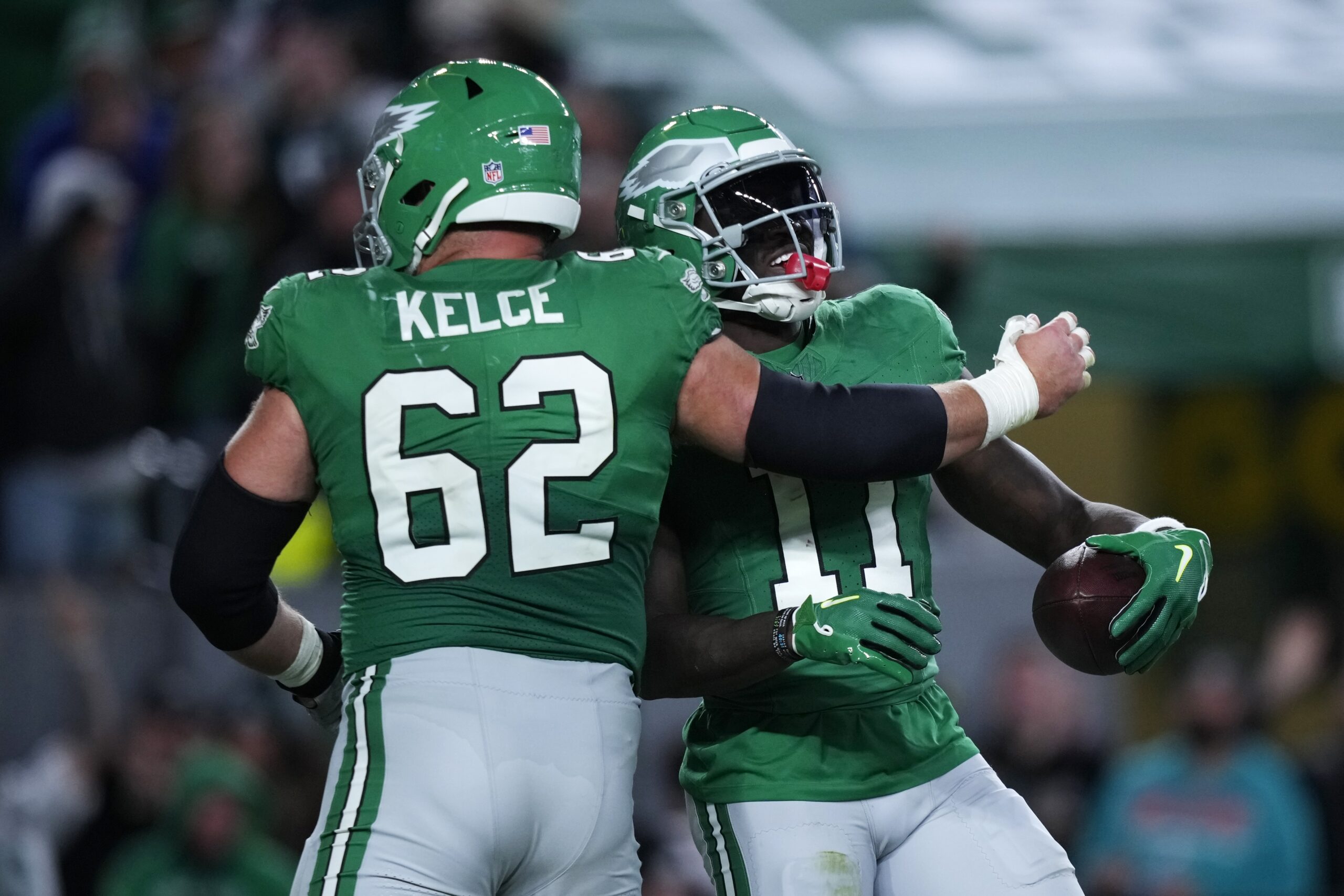
    Eagles wide receiver A.J. Brown (11) celebrates a touchdown with center Jason Kelce during the 2023 season.

    But does he really want to be here?

    Brown hinted during the season that he might want to leave Philadelphia, posting the Bible verse Mark 6:11 after Week 4 on X: “If you’re not welcomed, not listened to, quietly withdraw. Don’t make a scene. Shrug your shoulders and be on your way.”

    He then ignored the media for the season’s final two months. When he departed the locker room after the Eagles’ home playoff loss to the 49ers, he hugged several teammates in scenes that looked like permanent goodbyes.

    However, last week, Brown broke his media silence on Micah Parsons’ podcast, apparently to send the message that he’d be happy to return to the Eagles.

    “As an offense, we just come back and just really watch the tape and rediscover ourselves,” Brown said.

    Asked if he was excited about new offensive coordinator Sean Mannion, he replied, “I’m excited for the season. I’m excited for what’s to come.”

    In the bigger picture, it’s less important whether Brown wants to return than whether the Eagles can win another championship without him.

    They cannot.

    The Eagles have a shrinking window in which to reach another Super Bowl without a significant rebuild. They went to two of the last four Super Bowls. Get rid of Brown, and you can forget reaching a third any time soon.

    He just had a 1,000-yard season in only 15 games, and that was his worst season in Philly. In 2024 he had a 1,000-yard season and played in just 13 games. He gave up on a few routes this season, and he disappeared in the wild-card playoff loss, but even when he’s bad, he’s good.

    How good?

    He’s the best receiver in Eagles history.

    He’s gained 5,034 receiving yards on 339 catches in four seasons. That’s 387 more yards and 76 more catches than Mike Quick’s best four seasons, 986 yards and 104 catches than Harold Carmichael’s best four seasons, and 1,097 yards and 131 catches more than Tommy McDonald’s best four seasons as an Eagle. They played in different eras, especially McDonald, but if you think A.J. Brown wouldn’t have dominated in the 1950s and ’60s, then you need to YouTube some NFL Films.

    Why would you trade the best receiver in team history if he’s still in his prime?

    Which opens another discussion: Is Brown still in his prime?

    If you look at simple stats, then probably yes. If you look at some advanced metrics, you might think his moon is waning.

    For instance, Brown’s average separation last season, according to NFL Next Gen Stats, was 2.2 yards, eighth-lowest among qualified receivers. It also was an improvement; his 2.1 average in 2024 was third-lowest. But does it matter? After all, when he went to the Pro Bowl in 2022 and 2023 his separation averages were 2.6 and 2.4 yards, respectively.

    Brown still consistently draws coverage from the other team’s best cornerback. He still consistently draws double teams. Last season, Pro Football Focus ranked him 11th in all-around play among receivers with at least 60 targets. He was No. 2 in drop rate.

    That’s not to say he couldn’t have played better, but then, the wide receiver position is more dependent on the rest of the team than any other position.

    The Eagles passing offense has averaged fewer than 195 yards per game each of the last two seasons, which seems absurd considering the weapons at Hurts’ disposal, but nobody in their right mind would consider this issue to fall at the feet of Brown, nor DeVonta Smith, nor Dallas Goedert.

    In 2024, with defenses having discovered Hurts’ shortcomings and challenged Hurts’ arm, veteran offensive coordinator Kellen Moore leaned on running back Saquon Barkley and a historically dominant offensive line. That’s how the Eagles won the Super Bowl.

    In 2025, opposing defenses sold out to stop Barkley, which worked, since the line had deteriorated due to age and injury. Challenged again, and with a first-time coordinator in Kevin Patullo, Hurts failed.

    Not Brown. Hurts.

    Let’s be real, folks.

    You’re talking about trading the wrong damned guy.

  • Castellanos’ paper goodbye, Philly’s Super Bowl cameo, and a 40-degree heat wave | Weekly Report Card

    Castellanos’ paper goodbye, Philly’s Super Bowl cameo, and a 40-degree heat wave | Weekly Report Card

    Nick Castellanos’ notebook-paper goodbye: B

    It was probably time.

    On Thursday, the Phillies released Nick Castellanos.

    Within hours, he posted a four-page handwritten note on Instagram — wide-ruled loose-leaf paper, photographed, and shared as-is.

    Objectively? That part is funny. In a league of polished PR statements and Notes app screenshots, Castellanos went with visible margins.

    In the note, he finally filled in the blank: “Ok apparently I need to address the Miami incident.”

    For eight months, the “Miami incident” hovered over the franchise without much other information. It was a turning point, but no one outside the clubhouse knew why.

    Now we know his side of the story: After being pulled late in a June game in Miami, he brought a can of Presidente into the dugout and confronted Rob Thomson about what he saw as inconsistent standards. Teammates took the beer before he drank it. He apologized. The next day, his starting streak ended. And after that, the relationship was never the same.

    But still, this ending lands with nostalgia.

    This was the guy who turned tragic news cycles into accidental baseball folklore. The timing of his biggest hits was just uncanny. The day I-95 collapsed, or the day a president was shot at, or the day another dropped out of a race.

    Then there was Liam, and the joy of getting to experience Red October with his son in the stands. Back-to-back postseason multihomer games with his kid watching. Whatever else you thought about Castellanos, those nights felt special.

    He was never boring, and that counts for something.

    Philly still found a way onto the Super Bowl field — even without the Birds: A

    No Eagles. No midnight Broad Street mayhem. No pole-climbing debates.

    And yet … Philly was absolutely on the field.

    While the Birds watched from home, two people with Philly ties were part of one of the most-watched halftime shows in history. One was a literal blade of grass in Bad Bunny’s field-of-dreams spectacle. The other helped dismantle that same stage in under seven minutes.

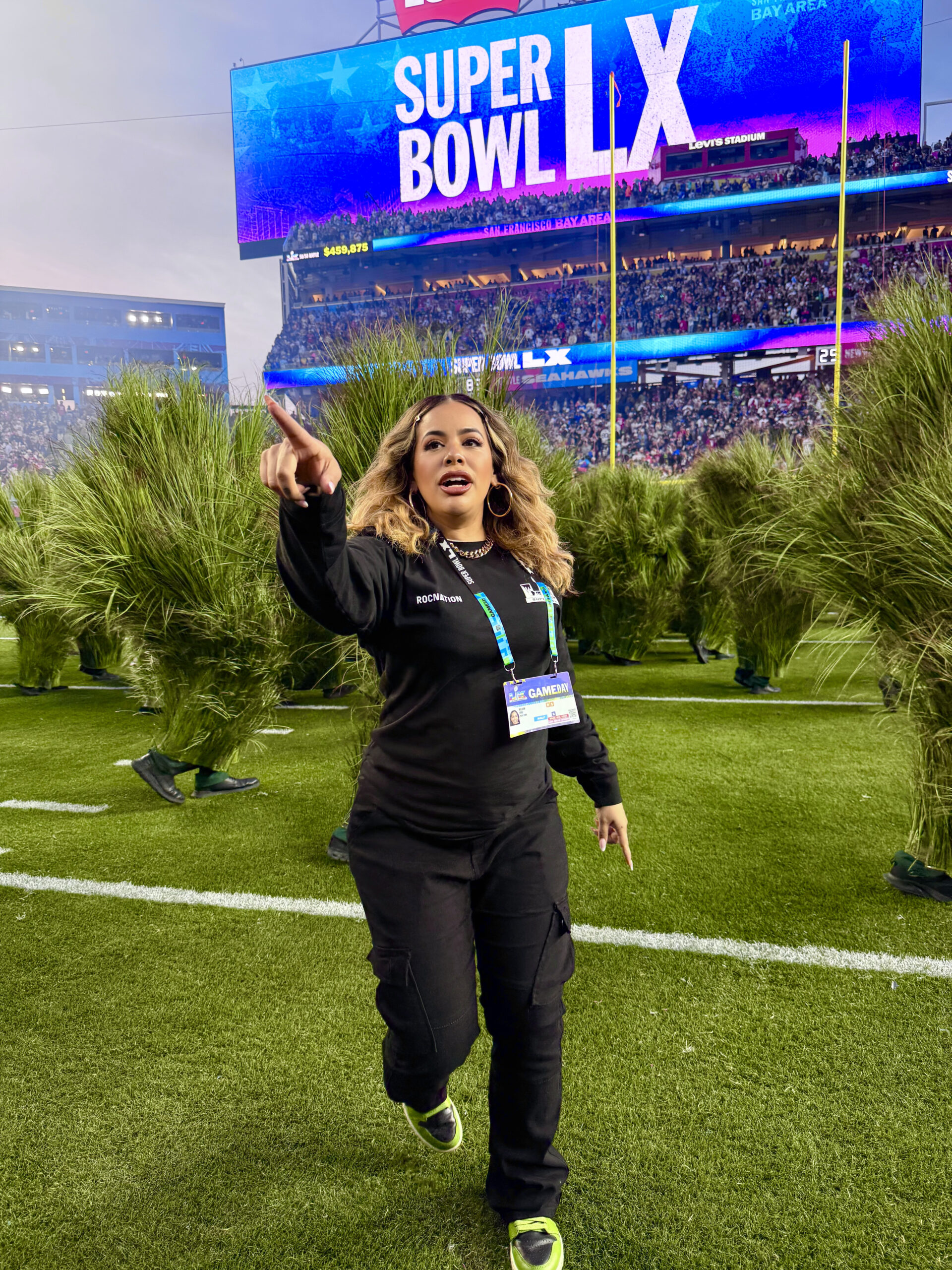
    Northeast Philadelphia’s Delilah Dee walks through Bad Bunny’s halftime show stage at Santa Clara’s Levi’s Stadium, on Feb. 8 2026

    An Eagles fan from Fishtown spent weeks rehearsing in a 50-pound grass suit, keeping the secret, grinding through 12-hour days, then waddling past Pedro Pascal and Cardi B on global television. A Northeast Philly marketing pro manifested her way onto the field crew and helped execute one of the most high-pressure seven-minute turnovers in live entertainment.

    The plant story is peak Philly optimism: “The Eagles didn’t go, so I went for them.” That’s delusional in the best way. That’s Broad Street confidence. The field-team story hits deeper. In a halftime show centered on Latino pride and visibility, a Mayfair native who’s built community through Latin culture here in Philly ends up helping pull off the mechanics of the moment.

    Would it have been better if it were an Eagle-and-Benito Bowl? Obviously. But Philly showed up anyway. Grass suit. Stage crew. Go Birds.

    It hits 40 degrees and Philly declares emotional spring: A-

    Forty degrees.

    That’s it. That’s the temperature.

    And yet across the city, sleeves are rolled up, sunglasses are out, and people are acting like they just survived a polar expedition.

    After the biggest snowfall in a decade and an Arctic stretch that froze the leftovers in place like concrete, 40 degrees feels like a personal apology from the atmosphere.

    People are planning vacations, talking about the Cherry Blossom Festival, and declaring the worst is behind us while carefully sidestepping three-foot snowbanks and skating past frozen crosswalks. Someone said, “It’s gorgeous out,” and meant it sincerely.

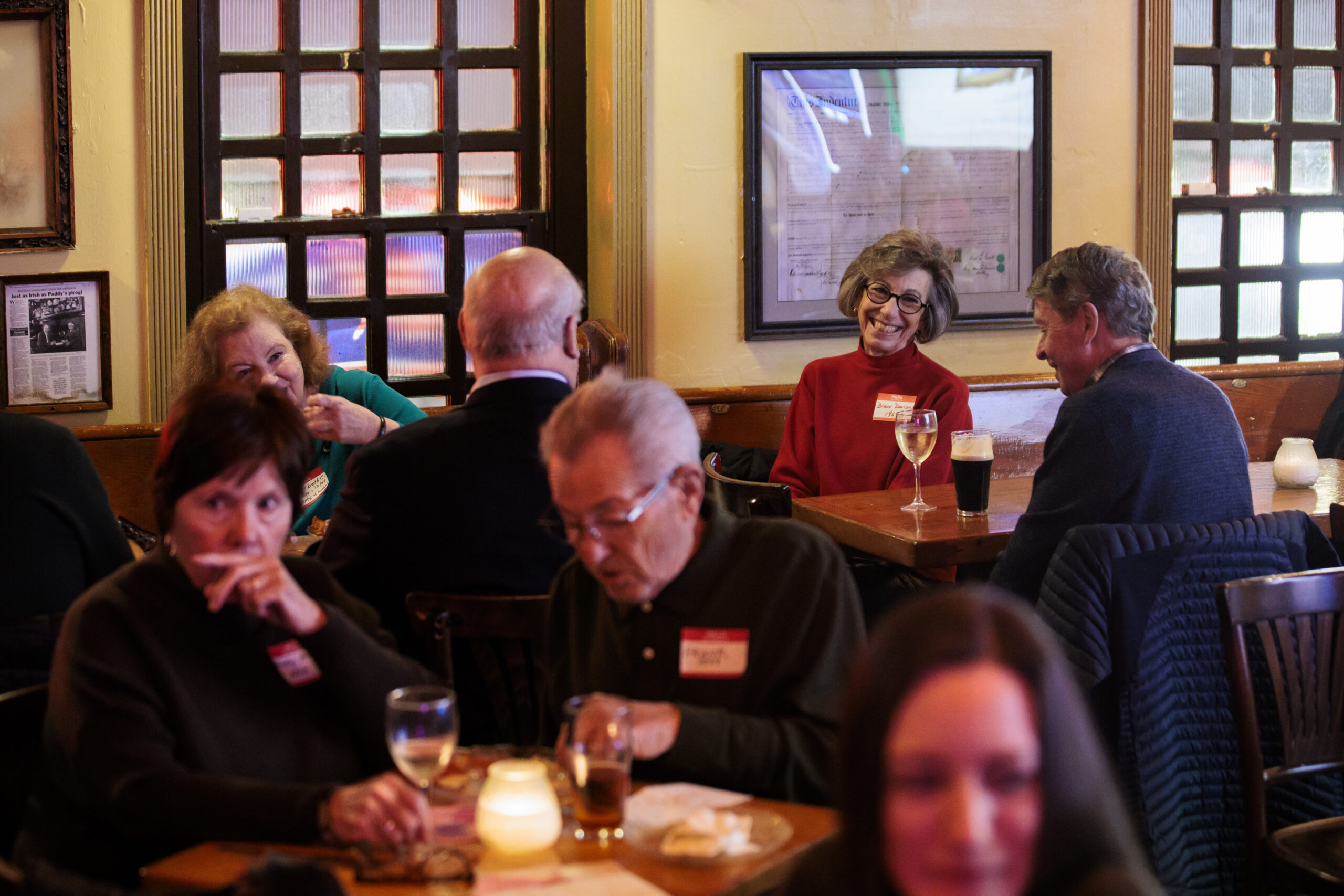
    Diane and John Davison (back, right), who met here in 1969, laugh with other attendees at McGillin’s on Feb. 3, 2026. Attendees gathered for a book talk on “Cheers to McGillin’s: Philly’s Oldest Tavern.”

    McGillin’s proves love doesn’t need an algorithm: A

    Happy Valentine’s Day, Philadelphia. While the apps are glitching, and someone you barely know is asking your “intentions,” McGillin’s Old Ale House hosts a reunion for couples who met the old-fashioned way: one bar stool over.

    The 166-year-old pub gathered dozens of couples this month who found love under its low ceilings and tinsel hearts. Some have been married 50-plus years while others are newlyweds who matched over wings and Yuenglings. The upstairs bar looked like a class reunion for romantics.

    In a city that loves to argue about everything, this one’s hard to fight: Proximity still works. (Eye contact and beer don’t hurt, either).

    There’s something deeply comforting about the idea that the most reliable matchmaker in Philly isn’t an app. It’s a place with oak tables, framed liquor licenses from the 1800s, and bartenders who’ve seen it all. At some point, the legend becomes self-fulfilling. If everyone believes McGillin’s is where love happens, eventually it does.

    Pennsylvania watching eagle eggs hatch on a livestream: A

    There is something deeply Pennsylvania about thousands of people spending their morning refreshing a live webcam of a bald eagle nest in an undisclosed Lancaster County tree.

    The content is simple: Just two bald eagles, Lisa and Oliver, sitting on three eggs. And people love it.

    More than 100 live viewers at mid-morning, with nearly 700,000 views last year. The chat section is full of viewers who are emotionally invested in avian domestic life.

    There’s something quietly moving about it. Bald eagles were nearly wiped out here with just eight known active nests in 1990. Now there are more than 300.

    Spring is coming. And until baseball starts, this is what we’ve got.

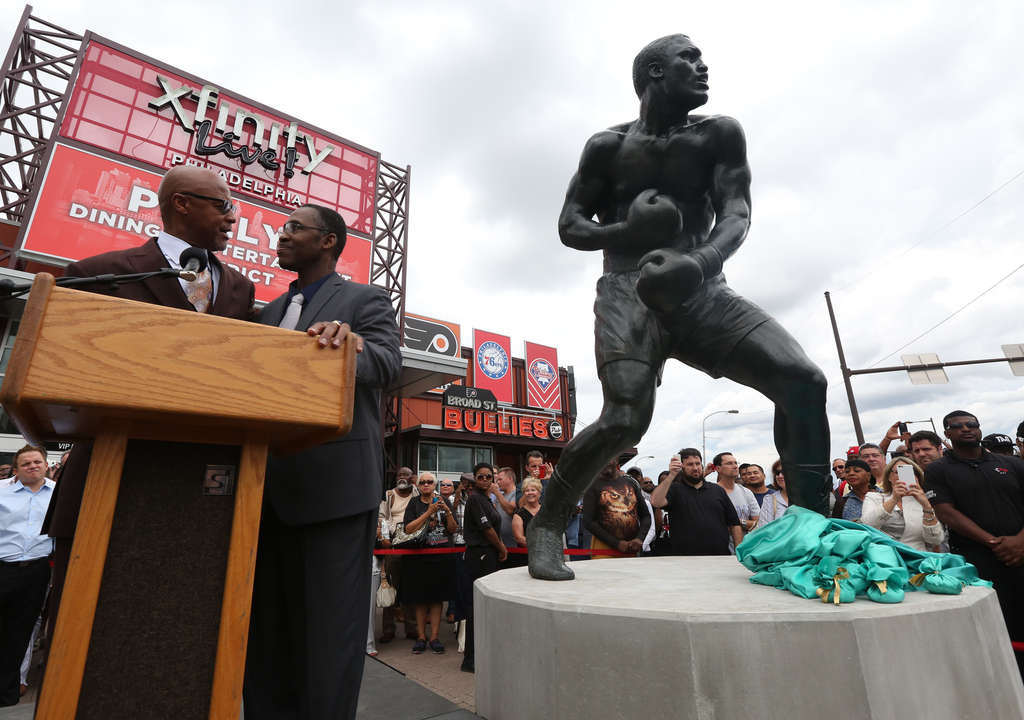
    FILE – His son, and former heavyweight boxer Marvis Frazier (right), and Rev. Blane Newberry from Enon Tabernacle Baptist Church bless a 12-foot-tall 1,800-pound bronze statue of “Smokin’ Joe” Frazier after it was unveiled Saturday, September 12.2015 at XFinity Live in South Philadelphia.

    Joe Frazier heads to the Art Museum: A

    It’s official: “Smokin’” Joe Frazier is moving to the Art Museum steps.

    The Art Commission voted unanimously to relocate Frazier’s 12-foot bronze statue from the sports complex to the base of the museum steps — the spot Rocky has occupied for two decades. Rocky, meanwhile, is headed back to the top.

    On one level, the move feels overdue. Frazier wasn’t a metaphor. He was a real Philadelphian, an Olympic gold medalist, a heavyweight champion, the man who handed Muhammad Ali his first professional loss. Meanwhile, Rocky, beloved as he is, is a fictional character who may have been inspired in part by Frazier’s life.

    There’s something quietly powerful about visitors encountering Joe first, before heading up top to take a selfie with a myth.

    Yes, there are valid conversations about symbolism, especially in Black History Month, about a real Black champion standing below a fictional white character. The city’s explanation is practical: Frazier’s statue is physically larger and not structurally suited for the top. Rocky’s footprint is smaller and easier to manage up there.

    Logistics matter, but narrative does too, and this move reshapes the narrative. You climb the steps for the movie moment, but you pass the real champion on the way.

    World Cup wants 4 a.m. last call. Philly isn’t sure it even wants 2: B-

    On paper, this is easy. The World Cup is coming, and along with it comes half a million tourists and a global spotlight. Other host cities pour until 4 a.m. Philly shuts it down at 2.

    The pitch is simple: if Brazil and Haiti kick off at 9 p.m., and knockout games can run long, why send thousands of fans back to their hotels when Miami and New York are just getting started?

    The last time Pennsylvania tried this, during the 2016 DNC, the response was tepid, reported Philly Voice. Businesses had to deal with expensive permits and confusing rules, and the result wasn’t exactly a citywide bacchanal. And even now, bar owners quietly admit the late-night crowds aren’t what they used to be.

    There’s also the Philly tension underneath this: We want to be global, but we also want to sleep. Would it be cool to say Philly partied like a World Cup city? Sure.

    But it’s also true that if bars will be pouring until sunrise, at least half the neighborhoods would immediately be on 311, complaining about all the drunk and noisy tourists.

  • Hockey, speedskating, and skiing are among many big events on Saturday’s Olympic TV schedule

    Hockey, speedskating, and skiing are among many big events on Saturday’s Olympic TV schedule

    While American viewers recover from the shock of Ilia Malinin’s falls on the skating rink, the Olympics charge on with a Valentine’s Day full of interesting events.

    From hockey to speedskating, Alpine skiing and moguls, there will be lots to watch. And since it’s a weekend, NBC will have coverage from 7 a.m. through the night on its big broadcast network.

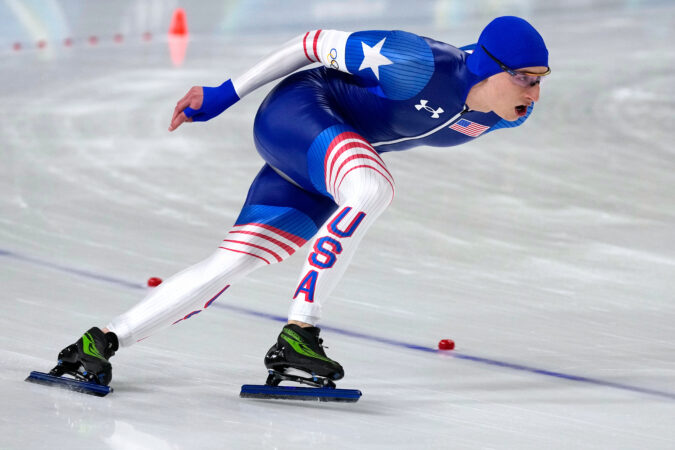
    Speedskater Jordan Stolz is the top individual American to watch, who is set to compete in the 500 meters after winning gold in the 1,000m with an Olympic record on Wednesday. NBC will show it live starting at 11 a.m.

    At 3:10 p.m., the U.S. men’s hockey team plays Denmark in its second group game. The Danes only have four players currently on NHL teams, though there are familiar names including Ottawa’s Lars Eller and veteran Carolina goaltender Frederik Andersen.

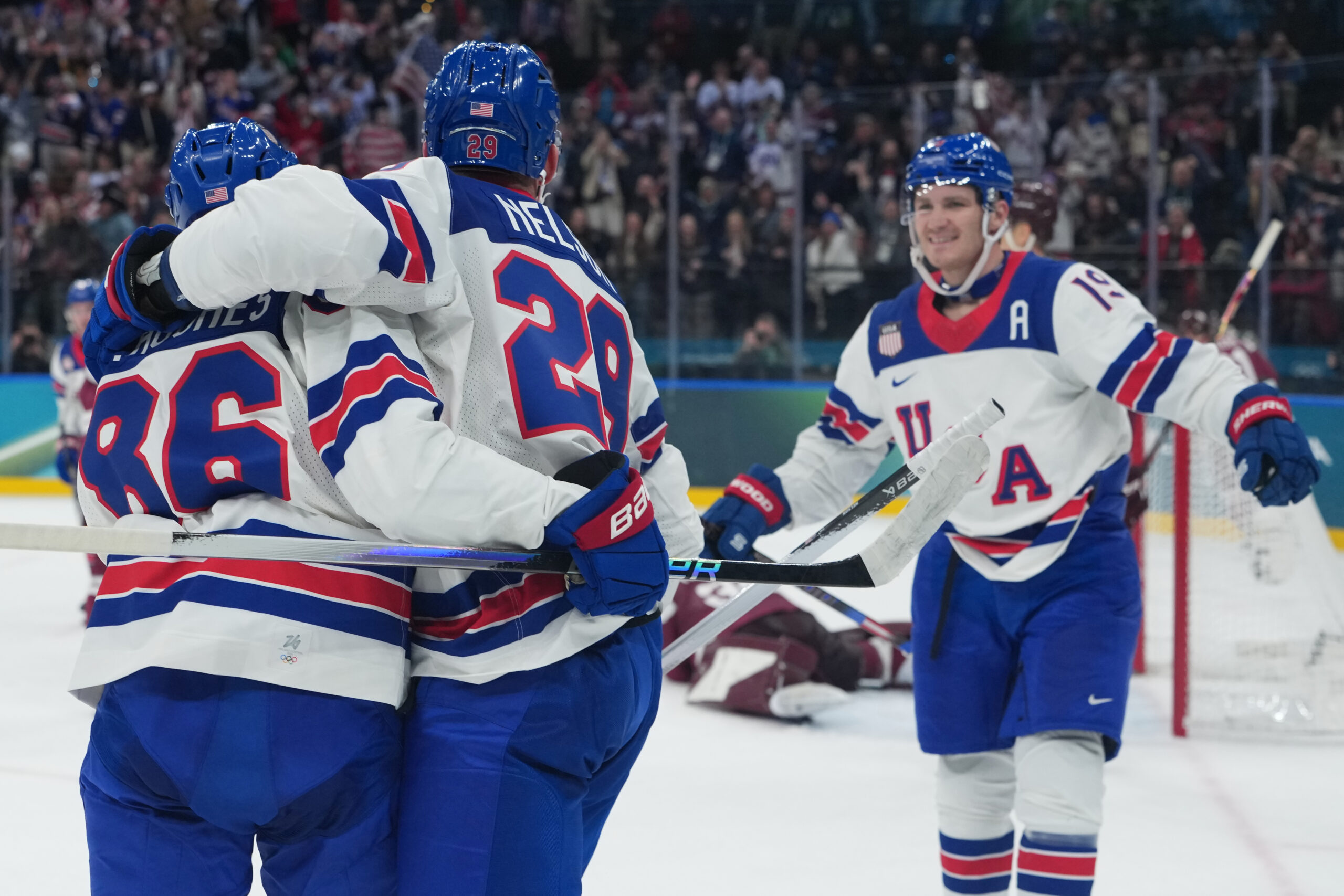
    The U.S. men’s hockey team routed Latvia, 5-1, in its Olympic opener.

    Early in the morning — as in 4:30 a.m. — the women’s dual moguls skiing final has two marquee Americans, Elizabeth Lemley and Jaelin Kauf. They won the gold and silver, respectively, in the individual freestyle event. It will air live on USA Network, replayed on NBC at 9:45 a.m., and available to stream whenever you want on Peacock.

    How to watch the Olympics on TV and stream online

    NBC’s TV coverage will have live events from noon to 5 p.m. Philadelphia time on weekdays and starting in the mornings on the weekends. There’s a six-hour time difference between Italy and here. The traditional prime-time coverage will have highlights of the day and storytelling features.

    As far as the TV channels, the Olympics are airing on NBC, USA, CNBC, and NBCSN. Spanish coverage can be found on Telemundo and Universo.

    NBCSN is carrying the Gold Zone whip-around show that was so popular during the Summer Olympics in 2024, with hosts including Scott Hanson of NFL RedZone. It used to be just on Peacock, NBC’s online streaming service, but now is on TV, too.

    Liz Lemley going airborne on the way to her gold medal in the women’s freestyle moguls event.

    Every event is available to stream live on NBCOlympics.com and the NBC Sports app. You’ll have to log in with your pay-TV provider, whether cable, satellite, or streaming platforms including YouTube TV, FuboTV, and Sling TV.

    On Peacock, the events are on the platform’s premium subscription tier, which starts at $10.99 per month or $109.99 per year.

    Here is the full event schedule for the entire Olympics, and here are live scores and results.

    Saturday’s Olympic TV schedule

    NBC

    7 a.m.: Cross-country skiing — Women’s 4×7.5km relay

    7:30 a.m.: Alpine skiing — Men’s giant slalom final run

    8:45 a.m.: Biathlon — Women’s 7.5km sprint

    9:45 a.m.: Freestyle skiing — Women’s dual moguls final (re-air)

    11 a.m.: Speed skating — Men’s 500m

    Noon: Skeleton — Women’s third run

    12:30 p.m. Cross-country skiing — Women’s 4×7.5km relay (re-air)

    2 p.m.: Skeleton — Women’s final run

    2:35 p.m.: Freestyle skiing — Women’s big air qualifying

    3:45 p.m.: Freestyle skiing — Women’s dual moguls final (re-air)

    4:30 p.m.: Speed Skating — Men’s 500m (re-air)

    5 p.m.: Ice hockey — United States vs. Denmark (for a few minutes, joined in progress)

    8 p.m.: Prime time highlights including skeleton, Alpine skiing, freestyle skiing, cross-country skiing, and speedskating

    11:30 p.m.: Late night highlights including freestyle skiing and biathlon

    USA Network

    4 a.m.: Alpine skiing — Men’s giant slalom first run

    4:40 a.m.: Freestyle skiing — Women’s dual moguls final

    6 a.m.: Cross-country skiing — Women’s 4×7.5km relay

    10 a.m.: Speedskating — Women’s team pursuit qualifying

    10:40 a.m.: Ice hockey — Italy vs. Finland men

    1 p.m.: Ski jumping — Men’s individual large hill

    2:35 p.m.: Short-track speedskating — Men’s 1500m quarterfinals

    3:10 p.m.: Ice hockey — United States vs. Denmark men

    CNBC

    6:10 a.m. Ice hockey — Sweden vs. Slovakia men

    10:40 a.m.: Ice hockey — Canada vs. Germany women’s quarterfinal

    3:10 p.m.: Ice hockey — Finland vs. Slovakia women’s quarterfinal