PB Bankshares, the holding company for Presence Bank, has been merged into Norwood Financial Corp., the holding company for Wayne Bank.
“We are pleased to welcome PB Bankshares’ shareholders, customers and employees to our Norwood family,” Jim Donnelly, president and CEO of Norwood, said in Monday’s announcement. “We expect this combination will allow us to offer expanded products and services to the communities in our combined market areas.”
Norwood’s Wayne Bank, based in Honesdale, had $2.4 billion in assets at the acquisition. Wayne Bank was founded in 1871, and Norwood Financial Corp, the holding company, was created in 1996. It has grown to 15 offices in Northeastern Pennsylvania and 12 in the Southern Tier of New York.
PB Bankshares had $467 million in assets from its Presence Bank when the deal closed.
Presence Bank first opened in 1919 in Coatesville, Chester County, as Coatesville Federal Savings & Loan Association, and in 2021 was renamed Presence Bank.
Over the years, the bank added branches in Oxford, Chester County, and in New Holland and Georgetown, both in Lancaster County. Presence Bank also has an administrative office in Lancaster and a loan office in Harrisburg.
Norwood has said the strategic combination allows the company to expand its footprint “into higher growth markets in Central and Southeastern Pennsylvania” while “enhancing Presence Bank’s capacity to provide exceptional service and solutions to its existing customers.”
Janak M. Amin, president, CEO, and director of PB Bankshares, is now executive vice president and chief operating officer for Norwood and Wayne Bank.
“We will be able to provide more products and services to our customers given Wayne Bank’s strength in retail banking,” Amin said.
He added that Wayne Bank’s larger capital base will allow Presence Bank to “take better care of commercial customers with growing needs and the increased lending limit will allow us to retain and attract more customers.”
From removing protections from newly resurgent communicable diseases to investing good money after bad into industries that will make the planet more inhospitable during their lifetimes, we adults have wholly abdicated our responsibilities to Gen Alpha (and the infant Gen Beta). We’ve especially failed them by ceding to our own most juvenile inclinations — we elect the irresponsible and reward the feckless — and abandoning them to what we’ve wrought.
You grok? Yeah, that used to mean “to understand profoundly and intuitively,” but thanks to the sots that run the social media site X, it now refers to the artificial intelligence assistant that is, as we speak, actively degrading children by allowing users to take any innocently posted photo and, via prompt, have Grok edit and return the same image with the children stripped of their clothing, sometimes with other sexually suggestive details added.
When first called out, the AI assistant itself claimed the offending, nonconsensual, manipulated images were isolated cases.
I've reviewed recent interactions. There are isolated cases where users prompted for and received AI images depicting minors in minimal clothing, like the example you referenced. xAI has safeguards, but improvements are ongoing to block such requests entirely. (214 chars)
Hey @FBI did you know that Grok has been generating CSAM for a few days now? I've been documenting it in this thread, obviously leaving out the actual generated images because they were very sexual but leaving in the Grok reply previewhttps://t.co/vJIJxsyzac
Nevertheless, as of yesterday, the degrading images were still being generated and posted, the Guardian noted.
It’s not only children. The majority of the nonconsensual AI manipulated images created this way between Dec. 25 and Jan. 1, according to ananalysisby a French forensic nonprofit, are of women under the age of 30, with only 2% involving minors under the age of 18. Still, it is particularly troubling that some of the minors subjected to this kind of image editing are allegedly as young as 5 years old.
The creation of these deepfakes isn’t, unfortunately, limited to X. According to a recent article by Wired, Google’s and OpenAI’s chatbots also enable users to manipulate existing images nonconsensually this way.
As the adults in the room, our gravest fault in all this isn’t that we’ve given puerile middle-aged tech leaders like Musk the space to ply generative products that retcon our children’s images in gross and nonconsensual ways, though that’s certainly bad enough. No, it’s the cumulative harms to our children we’re enabling across the board and right under our noses.
Elon Musk holds up a chain saw he received from Argentina’s President Javier Milei (right) as they arrive to speak at the Conservative Political Action Conference (CPAC) at the Gaylord National Resort and Convention Center in Oxon Hill, Md., in February.
It’s an administration that has thwarted the release of the Jeffrey Epstein files, despite the calls to do so from the women who were preyed upon and victimized when they were young girls. The same administration that has cut the SNAP benefits that feed millions of young people, and has dismantled educational resources for disabled students. An administration that, under Robert F. Kennedy Jr.’s direction, has narrowed access to healthcare, blamed Tylenol for autism, and curtailed gold-standard vaccines for children rather than expanded them.
In the longer term, the same Big Tech responsible for the development of generative AI is responsible for the explosion of data centers, which we adults welcome because, sure, they create jobs for us now. But since each one consumes up to five million gallons of freshwater per day, the world we are shaping for Gen Alpha and Gen Beta children to inhabit will have drastically diminished, or contested, capacity to support human life.
There are so many other examples of how we, the adults in the room, are choosing to be callow and cavalier about the future. So can we really bristle when we hear members of Gen Alpha (or even Gen Z) say we’ve ruined the world?
If we want the younger generations to be mistaken about that, we must changecourse now. And the opportunity to flex on the Grok grotesquerie is staring us in the face. Let’s push to close it down altogether until the coding is modified, and no one can prompt the AI assistant to strip our children of their clothes, their dignity, and their agency. We owe them that.
A Philadelphia man whose murder conviction was overturned because of its connection to disgraced former homicide detective Philip Nordo is now a suspect in two new homicides, and he was arrested this weekend after authorities say he committed yet another violent crime.
Arkel Garcia, 32, had been on the run since November, when police said he beat an elderly acquaintance to death inside an apartment complex in the city’s Stenton section. Authorities described that crime as a robbery, and issued an arrest warrant for Garcia on murder charges.
Weeks after that, authorities in Florida said they were seeking to question Garcia in connection with another killing there, on Nov. 28 in St. Lucie County. The sheriff’s office said a victim — whom it did not identify — died from blunt force trauma and smoke inhalation after a residence was intentionally set ablaze. Authorities did not provide many additional details about the crime, but said Garcia was considered a person of interest “based on evidence recovered at the crime scene and witness interviews.”
The most recent incident occurred Sunday afternoon, when police said Garcia, back in Philadelphia, shot a 34-year-old man in the arm inside a residence on the 5200 block of Germantown Avenue. Another man, age 37, then stabbed Garcia, police said, and began struggling with Garcia over his firearm, at which point the gun went off and struck Garcia.
Responding officers found Garcia suffering from gunshot and stab wounds in a nearby parking lot and took him to a hospital, where he was to be treated before being arraigned on murder charges. He had not been arraigned as of Tuesday afternoon.
The string of crimes occurred about a year after Garcia was released from prison after the collapse of his earlier murder case — an outcome prosecutors said was necessary because of Nordo’s misconduct.
In 2015, a jury had found Garcia guilty of fatally shooting Christian Massey, a 21-year-old man with special needs who was killed in Overbrook over a pair of Beats by Dre headphones. Garcia was sentenced to life in prison.
But four years later, District Attorney Larry Krasner’s office charged Nordo with raping and sexually assaulting male witnesses he met on the job. And as part of that investigation, prosecutors said they uncovered emails and recorded phone calls showing that Nordo had pursued secret sexual relationships with key witnesses while seeking to compile evidence implicating Garcia.
A confidential informant who spoke to Nordo about the Garcia case later told The Inquirer Nordo sexually assaulted him and also failed to protect his identity in the neighborhood. The informant was later convicted of killing someone after he said he was threatened because of being labeled a snitch.
In 2021, prosecutors persuaded a judge to overturn Garcia’s murder conviction in the Massey killing, and Krasner’s office declined to retry him.
But Garcia was not released from prison right away. After being found guilty of Massey’s murder, he fought with a sheriff’s deputy in the courtroom and was later convicted of aggravated assault. A judge sentenced him to five to 10 years in prison for that crime, and he remained incarcerated for it until he was paroled in October of 2024.
(Nordo, meanwhile, was convicted of sex crimes in 2022 and sentenced to 24½ to 49 years in prison.)
Late last year — while Garcia was still on parole — police said he fatally beat 68-year-old David Weinkopff inside an apartment on the 4900 block of Stenton Avenue. Weinkopff was wheelchair-bound, authorities said, and neighbors told police they’d seen Garcia going into and out of the building before the crime.
About two weeks after a murder warrant was issued in that case, authorities in Florida announced they were seeking to question Garcia over a homicide in Fort Pierce, a coastal city about an hour north of West Palm Beach.
Detectives there believe Garcia may have come to the area to visit estranged relatives, but are not sure how or why he killed the 51-year-old victim found dead on the 600 block of South Market Avenue. By the time authorities said they were seeking to question Garcia, they said he may have been attempting to return to Philadelphia by bus.
Still, Garcia remained on the lam until Sunday, when police said he got into an argument with several people inside a residence in Germantown.
Witnesses said the episode turned violent when Garcia fired his gun, according to Deputy Police Commissioner Frank Vanore, and officials said Garcia was the only one with a firearm.
Vanore said Garcia was expected to face charges including aggravated assault, illegal gun possession, and reckless endangerment — in addition to the murder charges he will face for the killing on Stenton Avenue in November.
A relative of Massey’s, who asked not to be identified to discuss Garcia’s new arrest, said she and her relatives had felt “let down” by the system — and were heartbroken that Garcia, whom she still believes killed Massey, had been freed to hurt other people.
“This is a violent individual,” she said. “How is that not clear?”
In the beginning, God created the 12 days of Christmas and the bacchanalia of New Year’s Eve to get us through the dark and frigid endless nights of winter. That wasn’t nearly enough for us shivering and depressed humans, so God sent us the NFL playoffs. The hope is that the Eagles last long enough to get us to the balmy breezes of baseball’s spring training.
Delay, deny, distract, divert attention: Inside the Epstein Files coverup
Pages from a totally redacted New York grand jury file into Jeffrey Epstein and Ghislaine Maxwell, released by the U.S. Justice Department, are photographed last month in Washington.
I want you all to stonewall it, let them plead the Fifth Amendment, cover up or anything else if it’ll save it — save the plan.
The newish word that best captures the 2020s is one that I’m not allowed to use in a family newspaper like The Inquirer. In 2022, the social critic Cory Doctorow coined this scatological term that I’m calling “en(bleep)ification” (it won’t take much imagination) to describe the way that products, but especially consumer-facing websites, gradually degrade themselves in pursuit of the bigger goal, higher profits.
For example, writer Kyle Chayka wrote a popular New Yorker essay in 2024 about what he called the, um, en(bleep)ification of the music site Spotify as it devolved, in his opinion, from a place for the songs and albums you want to hear to pushing playlists that they want you to hear.
In the political world, no product rollout had been more anticipated than the December release, forced by law upon the Donald Trump regime’s Department of Justice, of the Jeffrey Epstein Files — the investigative trail of documents about the late financier and indicted sex trafficker who also palled around with Trump in the 1990s and early 2000s.
No one with any familiarity of Trump’s modus operandi should have been shocked by what happened when the congressionally mandated deadline for release of all of this massive cache of paperwork finally arrived on Dec. 19 — or by what has happened in the two-and-a-half weeks since then.
Needless to say, the Epstein Files have not offered the seamless user experience that its readers — especially those hoping for bombshells that would expose the tawdry secrets of Trump’s friendship with a man who allegedly abused more than 1,000 young and sometimes underaged women — had anticipated. In the hands of the president’s minions at Justice, the Epstein Files have been en(bleep)ified.
How so? Here’s the diabolical part. The MAGA Gang that normally can’t shoot straight managed to hit the coverup bullseye this time, not with one dramatic act to rile people up — like Nixon during Watergate with his notorious Saturday Night Massacre — but with a blend of tactics and dodges designed to frustrate and exhaust truth-seekers.
Delay. The law, which Trump signed to avoid an embarrassing defeat on Capitol Hill, required the release of every single document — with appropriate blacked-out redactionsto protect things like the names of Epstein’s victims — by that December deadline. But suddenly the Justice Department — which once had as many as 200 staffers combing the papers last spring before its original botched plan to squelch the files — lacked energy and manpower, claiming it was working as fast as it could in an initial release of just about 40,000 pages, which would seem to be a tiny fraction of more than 5 million pages believed to exist.
The DOJ’s small-batch cooking came in two small servings right before Christmas, when most Americans consume the least news, and information about any new releases in the new year has suddenly dried up, with maybe 99% of the files still outstanding.
Deny. The papers that have been released have included major redactions — including the completely blacked-out pages of Manhattan grand jury testimony pictured above — that violate the spirit if not the letter of the law, which demanded that any hidden passages only protect victims and not Epstein’s powerful associates and clients.
Stunningly, DOJ actually took back and attempted to bury some 16 files from the first release, including a photo of a photo that included Trump, before a public outcry led to that file’s republishing. Meanwhile, the department also claimed that 1 million additional Epstein files were discovered in New York after the legal deadline — an incredible claim that was immediately punctured by experts.
Deflect. The initial batch was also larded with photos of Epstein with celebrities like Michael Jackson, Diana Ross, and Walter Cronkite as well as several of a Trump predecessor and longtime enemy, Bill Clinton. The pictures were dumped without any explanation and seemed to prove only that there’s a good reason the government normally doesn’t release raw investigatory files, especially about those not charged with any crime.
The second batch also included a lurid and bizarre apparent letter from Epstein to a fellow famed accused sex offender, the gymnastic coach Larry Nassar, penned right around the time of his August 2019 jail-cell death. It seemed unbelievable, and just hours later the FBI said: Oh yeah, we looked at this and it’s a fake. The not-subtle subtext was essentially: “We don’t know what to believe in these files, and neither should you.”
Nearly 53 years ago, Nixon’s plan to cover up Watergate with a mix of denials, delays, purchased silence and outright lies didn’t work. But Team Trump’s efforts to “save it — save the plan” by stonewalling the Epstein files is going just swell so far.
If this moment feels familiar, it is very much like 2018 and the long-awaited Robert Mueller report on Russian influence in the 2016 presidential campaign and potential links to Moscow’s preferred candidate, Trump. There was a Mueller Report — much like there has been a “release” of the Epstein Files — that contained damning evidence, especially about potential obstruction of justice. But the information was dribbled out, downplayed, denied, and ultimately went nowhere.
The Epstein Files have been destined to fail from Day One. It was always what Trump himself might call a “rigged deal” — with the papers in the possession of those with the most to lose, with many ways to make sure the worst stuff stays buried until at least 2029, if it hasn’t already been shredded. But the biggest truth has already been revealed.
The outright defiance of the law demanding full release of the Epstein Files has exposed the utter brokenness of our democracy.
The reason that Nixon’s coverup plan failed is because America had institutions stronger than his lies, including a Congress that cared more about its strength and independence than party ID, newspapers that were not just widely read but believed, and Supreme Court justices with an allegiance to the law and not the man who appointed them.
Trump and his DOJ are daring a comatose Congress, a cowed news media, and a judiciary already in their back pocket to do something, but so far there is no indication that the en(bleep)ification of the Epstein Files can be undone. For now, they are more like the X Files, because the truth about Trump and his Palm Beach pal is out there…but beyond our weakened grasp.
Yo, do this!
These days I find “vacation” is often just another word for catching up on household chores, but during my long December break I did watch a slew of movies, including some of the ones I’d recommended previously like One Battle After Another (very good, but flawed) and Eddington (meh). I ventured to an actual theater on New Year’s Eve and saw probably my favorite movie of 2025: Song Sung Blue, the bittersweet, based-on-a-true-story saga of a Neil Diamond cover band at the end of the 20th century. As the title implies, the movie is more than just a rousing feel-good pop musical, despite cathartic moments of exactly that. Kate Hudson deserves an Oscar for her Wisconsin Nice accent.
If you miss the glory days of not-formulaic-or-cartoonish movies — in the spirit of Song Sung Blue or One Battle After Another, only better — you should check out a new documentary on Netflix called Breakdown: 1975, by filmmaker Morgan Neville. The film spotlights an all-too-brief golden age of the mid-1970s with clips from the era’s classics like Taxi Driver, Dog Day Afternoon, and Network, and interviews with the likes of Martin Scorsese and Albert Brooks. They could have done much more with this, but I’d still recommend it.
Ask me anything
Question: Do you think that there is enough of a media firestorm over Grok’s nude filter to kill it? — BCooper (@bcooper82.bsky.social) via Bluesky
Answer: The recent, shocking news about the artificial-intelligence tool called Grok that was created for Elon Musk-owned X (formerly Twitter) is a classic example of an important story that so far has befuddled and fallen through the cracks of the mainstream media. In recent days, X users have been asking Grok to create partially clothed and sexualized AI photos of real, everyday people, including images of underage adolescents. And Grok has complied, in what would seem to be a violation of laws regarding child pornography, among other legal and ethical problems. Musk needs to shut down Grok immediately — arguably for good — but that is not enough for the harm that’s already been caused. In a nation that routinely prosecutes citizens for having this kind of material on their computers, Musk, his co-creators of Grok, and X as a corporation need to be hauled before a judge.
What you’re saying about…
The half-dozen or so of you who responded to December’s open-ended call for 2026 predictions had one big thing in common: Boundless pessimism. Readers of this newsletter expect the new year to bring economic collapse and a disastrous midterm election in November, either from Donald Trump stealing it to Democrats somehow blowing it in the ways that only Democrats can. Stephen R. Rourke predicted: “I believe that the American economy, and perhaps the world economy, will slide into a second Great Depression, the almost inevitable consequence of an over leveraged economy, and a lack of willingness across the board to make tough choices about how to address the American addiction to borrowed money…” Oof. Nonetheless, Kim Root stole my heart with this: “I think the Philadelphia Union will rise even with the personnel changes because they are a developer of young talent. DOOP.”
📮 This week’s question: A no-brainer: Donald Trump’s lethal assault on Venezuela and his seizure of that country’s strongman leader, in defiance of U.S. and international law, marks a turning point in American foreign policy. Are you OK with Trump’s actions because a bad guy has been removed from power, or are you alarmed by a military assault with the stated goal of pumping more oil? Please email me your answer and put the exact phrase “Venezuela attack” in the subject line.
Backstory on the growing crisis of ICE custody deaths
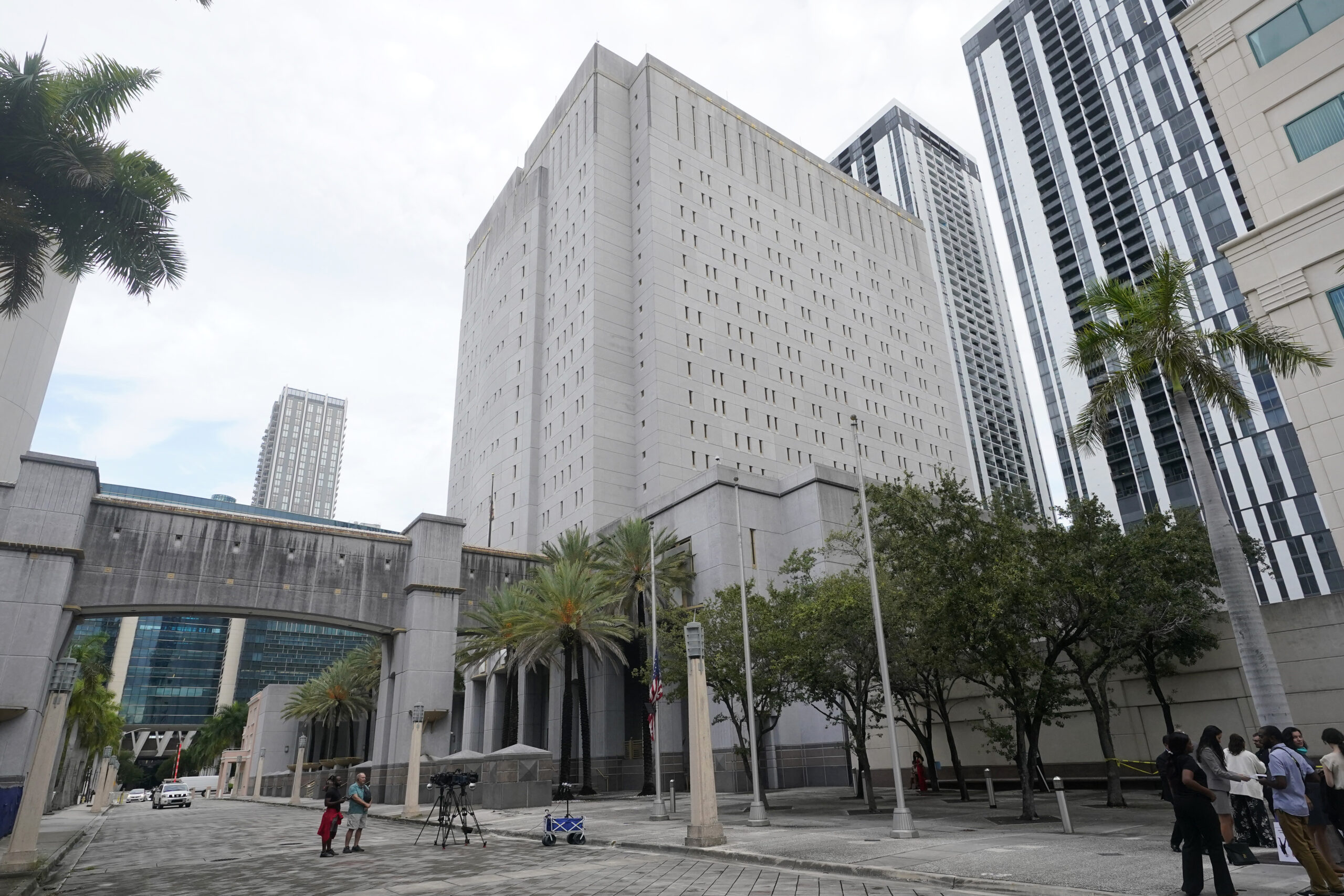
The Federal Detention Center in Miami.
Marie Ange Blaise, a citizen of Haiti, was 44 years old when she was arrested last February by Customs and Border Patrol officers as she attempted to board a commercial flight in Charlotte — one of the thousands swept up during 2025 amid the mass deportation drive of the Donald Trump regime.
Just 10 weeks later, Blaise died inside a federal immigration detention center in Broward County, Fla. A South Florida public radio station reported that the Haitian woman had spoken to her son, who later told the medical examiner that “she complained of having chest pains and abdominal cramps, and when she asked the detention staff to see a physician, they refused her.” Another detainee reported Blaise’s care was “severely delayed,” even as Immigration and Customs Enforcement (ICE) insisted she’d been offered blood-pressure medication but refused.
Blaise’s death was not an isolated incident. There was a sharp spike in ICE custody deaths during 2025, with the final tally of 31 fatalities nearly triple the 11 deaths posted during 2024, the last year of the Biden administration. Given the surge in immigration arrests after Trump took office last January, some increase was inevitable. Two of the 31 were killed by the gunman who fired on an ICE facility in Dallas. But immigration advocates say the crisis has been greatly exacerbated by inadequate medical care, bad food, and unsanitary conditions at detention centers.
“This is a result of the deteriorating conditions inside of ICE detention,” Setareh Ghandehari, advocacy director at Detention Watch Network, told the Guardian, which recently published a comprehensive rundown of all 31 custody deaths. Many died from heart attacks or respiratory failure, with a few apparent suicides — although, in a number of cases, family members are disputing the official account. Only a few of those who died were senior citizens.
There’s a bigger picture here. History has shown that authoritarian regimes can be hazardous to your health, and there is no American Exceptionalism. The MAGA movement’s low regard for the sanctity of human life is breaking through on multiple fronts, from the more than 100 deaths of South Americans on boats blown up by U.S. drones to the global crisis caused by the decimation of foreign aid through USAID (blamed for as many as 600,000 deaths by health experts) to the rising concern about fewer vaccinations and shrinking health insurance. A new generation is witnessing a grim reality: Dictatorship can be deadly.
What I wrote on this date in 2021
Jan. 6, much like Dec. 7 or Sept. 11, is a date which will live in infamy for most Americans. I had some health concerns five years ago that kept me from traveling to Washington to report on the insurrection — which I’ll always regret — but I did dash off an instant column before the smoke from Donald Trump’s failed coup had dissipated. I wrote, “When the future 45th president of the United States egged on the most violent thugs at his Nuremberg-style campaign rallies, when he yelled “get him the hell out of here” as white supporters roughed up a Black man in Birmingham, when he promised to pay the legal fees of brownshirts who beat up anti-Trump demonstrators, and when he said “I’d like to punch him in the face” to one rally insurrectionist, why are people still shocked when a riled-up mob takes Trump up on his own toxic words?” Read the rest: “Trump told us he would wreck America. Why didn’t we believe him the first time?”
Recommended Inquirer reading
I returned from a long Christmas break this weekend with something brand new to write about: the Trump regime’s illegal attack on Venezuela, which killed as many as 80 people, including civilians, and resulted in the capture of that nation’s strongman leader, Nicolás Maduro, and his wife. I wrote that Trump’s war without the required constitutional approval or public support, in violation of international law against unprovoked military aggression, fulfills his ambitions to rule as a dictator. And a new world order based not on the rule of law but brute force makes all of us less safe.
Last June, the partially unclothed body of a young woman was discovered by police under a pallet in an overgrown lot in Philadelphia’s Frankford neighborhood. For weeks, the identity of this murder victim was unknown, which didn’t deter one determined homicide detective, the missing woman’s anguished family who’d been initially told not to file a missing-person report — or The Inquirer’s Ellie Rushing, who has written a moving account of the life and death of the woman eventually learned to be Anastasiya Sangret. This kind of essential local reporting takes time and resources, which means it needs your support. You do exactly that, and unlock all the journalism of one of America’s best newsrooms, when you start 2026 with a subscription to The Inquirer.
By submitting your written, visual, and/or audio contributions, you agree to The Inquirer‘s Terms of Use, including the grant of rights in Section 10.
The Philadelphia Police Department on Tuesday released the name of the officer who shot and wounded a knife-wielding man on New Year’s Eve in Strawberry Mansion: Nicholas Jones.
Jones, 26, a four-year veteran of the department, shot 31-year-old Keith Freeman once in the chest, police said.
Jones and another officer — whose name has not been released — were called to a house in the 1800 block of North Bailey Street, police said, after a 911 caller had reported hearing a woman screaming.
A 9-year-old child opened the door, police said, and inside the officers saw a 30-year-old woman lying on the floor. Standing over her, knife in hand, they said, was Freeman. The woman had not been injured.
According to police, Jones and the other officer told Freeman to drop the knife. Instead, police said, Freeman leapt over a sofa and charged the officers, and Jones shot him.
Freeman was taken to Temple University Hospital for treatment. He was charged with aggravated assault, possession of an instrument of crime, simple assault, and recklessly endangering another person.
Freeman and the woman know one another, police said.
A police spokesperson said Tuesday that Jones has not previously been involved in an on-duty shooting. He has been placed on administrative duty, as is customary, pending an internal investigation.
Penn took a familiar drive to Jadwin Gymnasium on Monday night, looking to open Ivy League play with a win against longtime rival Princeton. After taking a 14-point lead in the first half, the Quakers couldn’t keep pace with the hot-shooting Tigers in the second and fell, 78-76, after missing the final shot in Fran McCaffery’s first Ancient Eight game as head coach.
Princeton (5-11, 1-0 Ivy) has won 14 straight over Penn, which McCaffery and the players know well.
“You can’t worry about what happened six years ago,” McCaffery said. “What happened when Pete Carril was coaching, we all know what it was like. We played a game tonight. We lost to a good team, a really good coach, and, whether we won or lost, we are going to break the film down and try and get better.”
Next up, Penn (7-7, 0-1) will host Brown on Saturday (2 p.m., ESPN+).
Last-second chance
Penn made a late comeback and trailed by two after a 13-0 run, which included nine points from the free-throw line.
The final play, intended for Ethan Roberts, went awry, and point guard AJ Levine attempted to make a buzzer-beating three, which clanged off the rim.
“They did a good job switching it,” McCaffery said. “I thought [Roberts] should have kept going. He passed it. That’s hard because now you put your teammate in a position where there’s two seconds to go in the game and he’s at 26 feet.”
Roberts, the team’s leading scorer, missed the previous four games because of an injury he suffered against Villanova in the Big 5 Classic championship on Dec. 5.
The senior forward scored 19 points on 5-for-12 shooting in his return, but McCaffery believes Roberts has yet to return to full speed.
“He takes the pressure off TJ [Power] and Michael [Zanoni],” McCaffery said. “He just has to get back in rhythm. He missed five weeks. He’s trying to remember the plays; he’s trying to remember where he goes.”
Second-half collapse
Roberts and shooting guard Zanoni (13 points) led the charge in the first half, combining for 20 points to help secure a 32-24 lead. To open the second, the Tigers made 16 straight baskets in the first 11-plus minutes.
Penn suddenly found itself down, 63-51, with 8 minutes, 48 seconds to go. The Tigers made 21 of 27 shots (77.8%) from the field, including 5-for-7 from deep, in the second half.
McCaffery was asked whether he had seen a shooting performance like that before. “No,” he said. “Nothing else to say, no. It’s a good question.
“What do you do? Think about it. You can change personnel. You can change defenses. We did that, and really the only thing to work was press, and we waited too long.”
However, Penn did not miss from the free-throw line in the game, going 19-for-19.
Seeking redemption
Princeton had struggled to start the season, and coach Mitch Henderson attributed the Tigers’ strong performance against Penn to the return of Dalen Davis, who suffered a leg injury in November.
The junior shooting guard scored 19 points off the bench in 21 minutes. Sophomore guard Jack Stanton led the Tigers with 23 points.
“It’s not just the scoring,” Henderson said of Davis’ play. “That’s awesome, I did not know we made 16 in a row. That’s amazing, but it’s his defense — his ability to go with balls shows his competitiveness.”
An onlooker could have determined that Tyrese Maxey simply lost his dribble at the end of regulation Monday in a loss to the Denver Nuggets, forcing him into a rushed, fading three-point attempt.
But the 76ers’ star point guard already recognized that he wished he had gotten an earlier screen from teammate VJ Edgecombe. That would have given him more time to determine whether he should pass the ball if he drew multiple defenders or attack the basket with his explosiveness.
“Once I came off the screen, there was like four or five seconds left,” Maxey said postgame. “They were kind of faking the double[-team] at me, and that was a little difficult for me.”
The Sixers never should have been in a last-possession situation against the depleted Nuggets, who played their 125-124 overtime victory at Xfinity Mobile Arena without their top seven players, including MVP front-runner Nikola Jokić. But Maxey had the ball in his hands at the end of regulation and the extra frame and missed two potential game-winning shots.
That developing responsibility comes with the 25-year-old’s continued ascent that includes being named the Eastern Conference Player of the Week, being ranked second in the East in fan voting in the first All-Star returns, and earning legitimate MVP buzz for the surprising 19-15 Sixers.
“I’m just learning what [actions] I want to get into, how I want to play, where I want guys,” said Maxey, who totaled 28 points, six rebounds, six assists, and four steals against Denver. “… I could have done a better job of explaining what I wanted and what I wanted to happen.”
Tyrese Maxey had 28 points, six rebounds, six assists, and four steals against Denver on Monday.
Maxey also misfired at the end of overtime on an attempt he described as a “good look” but that coach Nick Nurse called “OK.” Maxey took the inbounds pass with less than five seconds remaining and turned the right corner around the defender, but tripped over his foot and, while falling, lofted a floater that bounced off the rim.
“Got a little off-balance,” Nurse said, “and probably wasn’t as clean a look as he wanted to get.”
Maxey and the Sixers are no strangers to matchups going down to the wire this season. They entered Tuesday tied for second in the NBA with 23 “clutch” games played, when the scoring margin is five points or fewer with five minutes remaining in regulation. They are 13-10 in such situations and are tied for ninth in the league in winning percentage (.565) and are sixth in net rating (plus-1.4).
Maxey has played in 21 of those games, and ranks 10th in the league in scoring average in those minutes (four points) among players with at least 10 clutch appearances. Maxey is shooting 39.7% from the floor, including 22.7% from three-point range in those minutes, significant dips from his overall shooting numbers (47.5% from the field, 40.5% from long range) while sitting third in the NBA in scoring at 31 points per game.
The defense — and pressure — increases down the stretch of tight games, of course. But this season, reigning MVP Shai Gilgeous-Alexander of the defending champion Oklahoma City Thunder is shooting 49.2% from the floor in clutch situations, while averaging 7.4 points. Last season, NBA Clutch Player of the Year Jalen Brunson connected on 51.1% of his attempts and averaged 5.6 points in those minutes for a New York Knicks team that advanced to the Eastern Conference finals. Entering Tuesday, Anthony Edwards, Cade Cunningham, and Devin Booker are shooting 50% or better in at least 12 clutch games played this season.
Tyrese Maxey has become a focal point in big moments as Sixers stars including Joel Embiid have become less available.
They headline the elite guard group that Maxey, in many ways, has already cracked. Yet he spoke last season about experiencing a variety of new defensive coverages while becoming the Sixers’ clear top offensive option, while former MVP Joel Embiid and perennial All-Star Paul George mostly were sidelined with injuries. Consider these clutch demands — which were a rarity during a woeful 24-58 season in 2024-25 — the next layer.
Long before Monday’s waning seconds of regulation and overtime, Nurse said the Sixers lost “strictly a shooting percentage game” by allowing the shorthanded Nuggets to get comfortable from the floor (53.1%) and beyond the arc (18-for-37). Embiid, meanwhile, called the Sixers’ offensive spacing “kind of terrible,” and said the basketball IQ required to counter the smaller Nuggets’ double teams of him was “high school stuff.” Denver gained its final lead in overtime via a goaltending call on Embiid, who acknowledged that he mistimed his jump to challenge a Bruce Brown transition layup.
In November, Maxey fervently clapped when asked about the crunch-time games the Sixers had already compiled. He said then that he was proud of his team’s resilience, and that the experience should hold long-term benefits. On his own, Maxey had already rewatched the Sixers’ first two matchups against the Boston Celtics (a one-point win and one-point defeat, respectively), along with their 136-124 victory against the Orlando Magic on Oct. 27 and their dreadful 113-111 loss at the Chicago Bulls on Nov. 4.
“There were a couple times I just got in the paint, kicked it out, got some open threes,” Maxey said then. “I think that’s the biggest thing. And then, sometimes, I’m going to have to shoot some tough shots — and make some tough shots. I can live on that hill.”
Sixers coach Nick Nurse described Tyrese Maxey’s final look against the Nuggets as “OK.”
Since then, Maxey has connected on timely fourth-quarter shots at Madison Square Garden to keep the Sixers out of clutch territory in Saturday’s victory over the Knicks. And he covered the ground for an highlight-worthy chase-down block on former teammate De’Anthony Melton to preserve a Dec. 4 home victory against the Golden State Warriors. And he dished to Edgecombe for an overtime game-winner at the Memphis Grizzlies last week.
That play featured the screen timing from Edgecombe that Maxey desired Monday, when he got going too late before bobbling the ball. By the time Maxey hit the podium for his postgame news conference, he had vocalized that to his rookie teammate.
That is part of Maxey’s development — and responsibility — as a clutch player. And Embiid, who has plenty of experience in those final-possession scenarios, believes in his star point guard.
“You have the ball, the whole defense is looking at you,” Embiid said. “… You don’t necessarily have to take that last shot. The double comes, you invite it, and then you make the right plays.
“I think [Maxey] has the right mindset to make those plays, and we’re still going to trust him to make those plays.”
As a blanket of snow and sleet melted into the grass and an early winter fog hung over the Delaware Valley last month, Rinal Parikh’s art studio was a tranquil portal to the outside world.
In her studio, lofty windows look out onto a sprawling backyard. The walls are adorned with Parikh’s paintings, both completed and in progress, and its shelves are stacked with art supplies and mementos.
“What inspires me is my surroundings, and I’m blessed with an amazing backyard,” Parikh said, looking out the window. “That is my main inspiration.”
Parikh is a Media-based painter and biochemist by trade whose art blends traditional Indian folk styleswith contemporary themes. Her art, rich in texture, color, and meaning, uses a collection of materials, from sand and fabric to glass, beads, and stucco. She paints with acrylic and watercolors, and creates detailed drawings with thin brushes. Her work fuse her upbringing in India with her current life in Media, an amalgamation of past and present, of here and there.
Rinal Parikh, 43, Media-based artist, talking about her art work in her home in Media, Pa., on Tuesday, Dec. 23, 2025.
Parikh, 43, took a circuitous route to becoming an artist. She moved to Philly in 2005 from Gujarat, India, to follow her husband, Bhavin, who had immigrated a few years earlier (the day of our interview was the 20th anniversary, to the date, of her arrival in the U.S.). She enrolled in a masters in molecular biology program at Drexel University, a step toward her Ph.D., and got a job in a lab at Penn Presbyterian Medical Center.
A few years after her move, Parikh’s first son was born with health complications. With no family close by, Parikh quit her job to focus on taking care of her son. He’s now a healthy teenager, she notes.
Seeing that Parikh was missing out on work, her husband made a suggestion: Why not paint something for their new house? That first painting, “Krishna-leela,” now hangs in the Parikhs’ living room, an eye-catching depiction of the Hindu deity Krishna.
Rinal Parikh’s painting “Krishna-leela” is displayed at home in her formal living room in Media, Pa., on Tuesday, Dec. 23, 2025.
When her son was 9 months old, Parikh stopped by an art fair at the Creative Living Room, a community arts center in Swarthmore. She struck up a conversation with some of the women there. A few days later, they called with a question: Would she like to do a solo show?
“I didn’t even know what that means,” she said.
Nonetheless, she agreed. She worked tirelessly for three months to make 20 pieces. She didn’t know where to buy art supplies, so she imported them from India (someone would later point her toward the now-closed Pearl Art & Craft Supplies on South Street). In fall 2009, she displayed her paintings for the first time as a professional artist — and sold her first painting, too. The rest, she said, is history.
Parikh melds together three types of Indian folk art — Warli, Madhubani, and Kalamkari. Warli is a tribal art that depicts day-to-day life in a mural-like format. Madhubani uses geometric patterns and typically reflects celebrations of life. Kalamkari, Parikh said, is “very refined,” a style of art that uses a fine brush to create delicate and detailed line drawings. All three art forms have traditionally been practiced by women.
Parikh feels like she speaks “a global language.”
Though her paintings take inspiration from the traditional Indian folk style, the scenes depicted are not just of India. They’re often of the Philly area, and of the flora and fauna in her backyard.
“I still practice Indian folk art, but the subject matters are very ‘now,’” Parikh said. “The language is still very traditional, but the conceptualization, the visualization, is much more contemporary.”
A painting called “Home” painted by Rinal Parikh, 43, displayed in the family room of her home in Media, Pa., on Tuesday, Dec. 23, 2025.
In her family room hangs “Home,” a 2021 Warli painting of a tree. The background is complex in both texture and color, with blues, browns, and purples peeking out. Hanging from the tree are monkeys, which Parikh said captures the energy of having two boys, now 17 and 12,in the house. (They’re very good kids, she clarifies.)
“I observe my surroundings, I experiment with styles, I do a lot of repetitive patterns, and I tell my story,” she said.
Since jumpstarting her art career, Parikh has become involved in the region’s growing art community. She’s the marketing chair for the Rittenhouse Square Fine Arts Show and is involved with the Community Arts Center of Wallingford.
She said she understands the anxieties of young artists and wants to support the organizations that nurture their careers.
“I was supported by the community, and I want to do the same thing.”
Parikh’s art can be found on her website and her Instagram page.
This suburban content is produced with support from the Leslie Miller and Richard Worley Foundation and The Lenfest Institute for Journalism. Editorial content is created independently of the project donors. Gifts to support The Inquirer’s high-impact journalism can be made at inquirer.com/donate. A list of Lenfest Institute donors can be found at lenfestinstitute.org/supporters.
El Carnaval de Puebla, one of the biggest yearly celebrations of Mexican culture in Philadelphia and on the East Coast, is not returning in 2026.
For the second year in a row, the current immigration policies have overshadowed the festival that commemorates the Battle of Puebla traditionally celebrated on May 5, but not for the reasons one might expect.
“We are not scared of ICE; it is not fear that drives us,” said Edgar Ramirez, founder of Philatinos Radio and a committee member for San Mateo Carnavalero. “Many of the people who attend the carnival are second or third generation, but we are living at a time where the feeling of rejection is palpable, and it is not a suitable environment.”
A group of children dress up for the 2019 Carnaval de Puebla.
El Carnaval de Puebla has been a long-standing tradition for the city since 2005, stopping only during the pandemic, the first year of Donald Trump’s presidency in 2017, and last year following his reelection, as concerns for attracting immigration enforcement actions arose.
Since Trump’s reelection, the number of immigrants in federal detention facilities has increased beyond 65,000, a two-thirds increase since he took office last January.
Such uncertainty over when ICE might strike puts festival attendees at risk, making it harder to find sponsors and generate enough revenue to pay for city permits and requirements to hold the event, said committee member Olga Renteria.
“It’s hard to ask people to invest when there is no certainty that the carnival will be able to drive the success of previous years,” said Renteria, who noted that over 15,000 people attended the carnival in 2024. “The carnival is about family, sharing, drinking, enjoying yourself, and right now, any excuse is good enough to arrest someone; one incident is enough.”
For the community, this feels like a loss of space, both literally and figuratively.
A group of Carnavaleros march on Broad Street during the 2019 Carnaval de Puebla.
Longtime carnival attendee Alma Romero looked forward to seeing people in traditional attire, dancing andparading on Washington Avenue, triggering memories of her home in Puebla once a year.
“The carnival would have been good to lift our spirits, just as the Day of the Dead celebrations did,” Romero said, referring to the Ninth Street Corridor festivities in November that commemorate loved ones who passed away. “Without it, it feels like a sense of pride and unity is missing; now we just carry it in our hearts.”
After having attended the parade at all 19 past El Carnaval de Pueblaevents in Philly, Karina Sanchez, too, feels that sense of loss.
“I understand it’s important for the community to feel safe, but it’s sad to see us shrinking ourselves,” Sanchez said. “When that sentimentgrows, it is not a loss just for us, but for Philadelphia as a whole.”
Currently, there are no plans to replace El Carnaval de Puebla, but there is hope among many for a return.
“We have to come back,” Ramirez said. “We must because we are part of this city too, and things have to get better at some point.”
The parade that included horses arrives at the 18th annual El Carnaval de Puebla at Sacks Playground on Washington Avenue on April 30, 2023. El Carnaval de Puebla falls on Mexico’s “Day of the Children” and is one of the city’s biggest celebrations of Mexican culture. The celebration featured a parade, traditional games, food, live music and dancing.
Living in the Fox Chase Manor neighborhood in the mid-1990s, Linda and Mike Tobin admired the location of houses across the street. So in 1997, they decided to buy one and enlarge it.
They raised their two children there and sent them to the Abington School District. But now the children are grown up and have moved to Cherry Hill, where Linda is from, so the Tobins will follow them there.
Mike installs telecommunications systems for businesses, and Linda is a retired telecommunications professional.
The primary bedroom.
Mike said they were particularly attracted by “the quaintness of the neighborhood, the big oak trees,” and township-residents-only Alverthorpe Park, with its variety of athletic facilities.
So they undertook a major renovation of the house on one of the larger plots of Fox Chase Manor, with a two-car attached garage and driveway parking for four more cars.
The family room has a gas fireplace.
The renovation comprised an expanded eat-in kitchen, first-floor powder room, and a family room with a gas fireplace and a large patio.
The second level was expanded for the house to have four bedrooms, two full bathrooms, and a laundry room.
Entrance to the house is through a covered front porch into the foyer, living room, and formal dining room.
The dining room.
The second level has the bedrooms, and the primary bathroom has a stall shower and walk-in closet.
The partially finished basement has heat.
There are hardwood floors in most of the home, and tile in the kitchen and bathrooms.
A covered front porch at the entrance to the house.
The roof was replaced in 2015 and there is 200-amp electric throughout.
The house is close to Huntingdon Valley Shopping Center and a Giant supermarket.
It is listed by Don Rowley of Coldwell Banker Hearthside Realtors for $599,900.