Tag: topic-link-auto

  • America launches its 250th birthday year by becoming a rogue state

    America launches its 250th birthday year by becoming a rogue state

    Technically, the United States won’t turn 250 until July 4. But Donald Trump dictated this weekend that before the dawn’s early light of only the third day of America’s Semiquincentennial was soon enough for the bombs to begin bursting in air.

    At 1 a.m. Saturday, guided by a luminous full moon, a U.S. air armada of more than 150 planes roared over the Venezuelan capital of Caracas and far-flung military bases across the South American nation, waking up a metropolis of three million people with massive explosions.

    An 80-year-old woman, Rosa González, was killed when a U.S. bomb slammed into her three-story apartment complex in a coastal neighborhood near the Caracas airport, according to the New York Times. The dead-of-night strike wounded several of her neighbors, tore a massive hole in the side of the apartment building, and even riddled with shrapnel a family’s portrait of Simón Bolívar, the leader who liberated Venezuela from colonialism — for a time, anyway — in 1820.

    González was one of about 80 people, both security forces and civilians, killed Saturday in the first U.S. land strike in what by Trump’s own admission is “a war” — America’s latest and maybe its strangest yet. With more than 100 civilian sailors blown up in a running series of U.S. drone attacks on boats off South America, which the Trump regime claims, without offering proof, are smuggling drugs, American imperialism is growing more deadly by the day.

    It’s hard here not to echo a notorious quote from Philadelphia sports history: For who? For what?

    Demonstrators march along North Broad Street reacting to U.S. strikes on Venezuela on Saturday.

    Trump’s splendid little war in Venezuela comes drenched in so many lies, buried under layers of justifications that change almost hourly, and so far outside the boundaries of both U.S. and international law that it makes George W. Bush’s dishonest and disastrous misadventure in Iraq feel like Gettysburg by comparison.

    That Venezuela’s former ruthless strongman leader, Nicolás Maduro, and his wife are currently sitting in Brooklyn’s federal lockup, captured by Delta Force soldiers amid the bombing and facing a U.S. indictment that asserts they were also drug lords, is pretty much the only certainty in a military crusade with a future rife with unknown unknowns.

    In a stunning news conference at Trump’s Mar-a-Lago mansion in Florida — where just 59 hours earlier, guests dined from a caviar bar as the president auctioned off a painting for $2.75 million — Trump told the world that the United States now “runs” Venezuela, despite no American personnel being posted inside the country, twice the size of California. And he made it clear that the blood of González and the others was spilled for oil, as POTUS 47 talked at length about U.S. hegemony over 17% of the world’s known oil reserves, but made no mention of restoring democracy in Venezuela.

    None of this stopped a parade of retired generals from flooding cable TV news networks — even the alleged liberal one, MS Now — to talk about the tactical success in seizing Maduro and pummeling Venezuela’s defenses with no U.S. deaths, even as the bigger strategy remains a black hole. That level of commentary, backdropped by images of cheering Maduro-hating refugees in Miami and elsewhere, belied the fact that invading Venezuela was wildly unpopular with the American people.

    Just last month, a Quinnipiac University poll found that 63% of U.S. voters opposed “U.S. military action inside Venezuela,” while just 25% supported such a move. Polling questions explicitly about removing Maduro have seen similar results. This matters a lot, but then other U.S. wars that history remembers as pretty terrible polled well at first. The much bigger problem with invading Venezuela is that it’s illegal. Incredibly illegal.

    To be sure, the imperial U.S. presidency has been simmering since 1945, but Trump has utterly abandoned one of the most cherished principles of America’s founders — that the power to declare war rests with Congress. Not only did the Trump regime not seek approval on Capitol Hill — where its beyond-flimsy casus belli could have been debated in front of the American people — but the president didn’t even deem it necessary to inform key congressional leaders.

    The attack was also a blatant international law violation of the charter of the United Nations — the organization that the U.S. spearheaded in 1945 to prevent future wars and unwind colonialism — which aimed to end unprovoked aggression. Geoffrey Robertson, who once led a U.N. war-crimes tribunal in Sierra Leone, told the Guardian that the Trump regime “has committed the crime of aggression, which the court at Nuremberg described as the supreme crime — it’s the worst crime of all.”

    To repeat: For who? For what? Is Trump eager for a bombastic military op to distract voters’ attention from the ongoing cover-up of the Jeffrey Epstein files, the explosive testimony of prosecutor Jack Smith about the president’s complicity in an attempted coup on Jan. 6, 2021, and skyrocketing prices for healthcare and at the grocery store? Is this the big payback to Big Oil CEOs who responded to Trump’s demand for $1 billion in campaign cash? Is he satisfying the vain psychoses of Silicon Valley billionaires who want a warm tropical paradise for high-tech “networked cities” outside any laws? Is this all just a narcissistic power trip?

    Yes.

    A neighbor walks through an apartment building that residents say was damaged during U.S. military operations to capture Venezuelan President Nicolás Maduro, in Catia La Mar, Venezuela, Sunday, Jan. 4, 2026.

    Yes, this lethal disaster is a perfect storm of all of those things. But we can’t allow the blather of talking-head ex-generals or the cowardly passivity of the supposed opposition Democrats to blind us to the harsh reality of what just happened here. I didn’t think it could get worse than the utterly unwarranted 2003 Iraq War that inspired me to become an opinion journalist, but this is arguably worse, more akin to Vladimir Putin’s Russia invading Ukraine. On the 250th anniversary of America’s founding as a grand experiment in democracy, we are now a rogue state, a global pariah.

    We Are The Bad Guys,” the brilliant independent journalist Hamilton Nolan headlined his essay on Saturday, writing with painful accuracy that “the United States government under Donald Trump is the most dangerous force on earth, and a serious potential threat to every other nation, and the leading cause of geopolitical instability.”

    I noted above that this Venezuelan operation is largely shrouded in uncertainty and ambiguity, yet we need to acknowledge two bitter truths that can no longer be denied in the rocket’s red glare over Caracas.

    First, Donald Trump is a dictator now. To be sure, this has seemed an aspiration from the moment he stepped onto the Trump Tower escalator over a decade ago, with very mixed results, but now it’s a reality. The strike on Venezuela was a dictate, nothing more. There was zero effort to rally the American people behind him, zero effort to seek congressional input, and zero concern over the illegality of this operation, let alone its rank immorality. And if there is no meaningful opposition to his murders in Latin America, he will only consolidate his tyrannical power.

    Government supporters rip an American flag in half during a protest in Caracas, Venezuela, on Saturday, after U.S. President Donald Trump announced that U.S. forces had captured President Nicolás Maduro and first lady Cilia Flores.

    Second, the world is a much more dangerous place right now than we want to admit. As a boomer born in the aftermath of World War II, I’ve always worried that I’d live to see World War III — and I still do. But now I’m equally worried that there won’t be a global conflagration, but just a silent abandonment of the dream of a planet governed by the rule of law, with peace as its No. 1 priority.

    The real significance of what just happened in Latin America is that the world — and the disappearing liberty of its denizens — is getting carved up by amoral strongmen into “spheres of influence,” just as in Trump’s beloved Gilded Age of the 19th century. After Saturday, what is to stop China from seizing control of Taiwan, or Russia from looking beyond Ukraine to wider territorial ambition in Europe, or the Trump regime from seizing Greenland and the Panama Canal?

    Absolutely nothing. Except us.

    A dictatorial United States isn’t preordained, nor is a world where smaller nations are swallowed up by a real axis of evil. After all, 2025 ended on a surprisingly hopeful note of resistance, led by everyday folks from Minneapolis to New Orleans with their whistles and their gumption to get in the face of masked, armed goon squads.

    Let’s turn those flares of hope into a raging fire of opposition. If you’re mad today, show it in the streets, then call your member of Congress and let them know that a sternly worded letter won’t cut it. Trump’s illegal war demands nothing less than his impeachment, if not now, then after November, after the righteous flood.

    Let’s send a 250th birthday card to the diminished but still-beating heart of the true America and sign it with two words: No kings.


  • Trump attacks Venezuela, drops drug war excuse, and focuses on oil

    Trump attacks Venezuela, drops drug war excuse, and focuses on oil

    BOGOTÁ, Colombia — Even after a headlong U.S. military assault on Venezuela to topple strongman President Nicolás Maduro, President Donald Trump, in his news conference Saturday morning, offered few details about how U.S. leaders would stop drugs coming from Venezuela.

    For more than four months, that has been the justification for the U.S. armada in the Caribbean and the extrajudicial killing, without evidence of wrongdoing, of 115 people in boat strikes.

    The invasion of Venezuela this weekend is the largest U.S. military operation in Latin America since the 1989 invasion of Panama, when the U.S. seized that nation’s leader, Manuel Noriega. Noriega was convicted in U.S. courts of drug trafficking in 1992 and, after facing additional charges in France and Panama, died in 2017.

    As with Noriega, the justification now is the war on drugs, which, since the 1980s, has cost over a trillion dollars with virtually no effect on stopping the flow of illicit drugs.

    The “narco-terrorist” charge against Maduro has been a shaky pretext for his ouster, measured by the naked assertion that drugs from Venezuela pose a threat to the U.S. and its citizens. Venezuela isn’t mentioned as a source of cocaine in reports by the United Nations Office on Drugs and Crime. And deadly fentanyl isn’t produced in Venezuela.

    It’s noteworthy that protecting democracy has hardly been mentioned as an issue.

    Front and center, President Trump’s focus, post-Maduro, is on the U.S. winning the easy-to-describe prize: U.S. control of Venezuela’s oil reserves, the largest in the world. And that is why Trump’s imperial declaration was straightforward: “We are going to run the country until such time as we can do a safe, proper, and judicious transition.”

    No matter who the next president of Venezuela is, it’s already clear that Trump will choose someone willing to hand over petroleum to U.S. oil companies.

    Flare stacks release gases at the Jose Antonio Anzoategui oil complex in Barcelona, Venezuela, in January 2024.

    Current estimates are that Venezuela has around 300 billion barrels of oil in reserves. By comparison, the U.S. has the equivalent of about 55 billion barrels in reserve. Most U.S. refineries, especially Gulf Coast refineries built years ago, are designed to process Venezuela’s heavy, high-sulfur sour-quality feedstock, which makes them more efficient, with better profit margins than when running lighter, domestic crude.

    And Venezuela, in fact, is not an underdeveloped commodities country, but sits on a wellspring for both today’s energy markets and tomorrow’s green-tech supply chains — with plenty of bauxite, aluminum, gold, copper, nickel, coltan, and cassiterite — all of it too valuable in Trump’s transactional view to be locked out by growing Russian and Chinese influence.

    All of Latin America is now watching to see how the invasion and ongoing transition strategy will play out. Early condemnations have come from Brazil, Mexico, Chile, and especially neighboring Colombia, whose president, Gustavo Petro, has often been critical of President Trump.

    On Saturday, President Trump was asked about U.S. relations with Colombia. And the president — who charged in early December that, after Maduro, Petro “might be next” — stated that Petro “has cocaine mills. He has factories where he makes cocaine. So he does have to watch his ass.”

    Facts about Latin America, in this case Colombia, don’t interest Trump. While the country contends with coca harvesting and with a decades-long internal conflict, pitting government forces against a variety of criminal networks, there is no evidence of Petro’s involvement in the cocaine trade.

    There are arguments among analysts about hectares of coca under harvest and cocaine production potential from various species, and even total hectares under cultivation, but interdictions disrupting cocaine production and trafficking are at record levels. And Petro has said he can offer evidence that as many as 18,000 narcotics laboratories have been dismantled during his time in office.

    In early December, Petro invited Trump to come witness the destruction of cocaine laboratories “to prevent cocaine from reaching the U.S.”

    Trump should also come here to witness, as I have, Colombia’s innovative efforts with modern chemistry detection of illicit drugs at seaports, which is beyond easy description.

    T. Nelson Thompson was a Woodrow Wilson Fellow in international relations at Johns Hopkins University. Before recently retiring, he was a senior adviser in the Office of International Activities at the U.S. Maritime Administration (MARAD) in Washington.

  • Horoscopes: Monday, Jan. 5, 2026

    ARIES (March 21-April 19). Your success formula couldn’t be simpler: Stick close to people who live the way you want to live, and you’ll pick up their magic by osmosis. The vibes mesh, the momentum builds, and everyone gets a lift.

    TAURUS (April 20-May 20). When is confidence too much? When it makes people certain without demanding any evidence — or ignoring evidence to the contrary — of the assertion. It is better to be underconfident than to be certain of something that isn’t true.

    GEMINI (May 21-June 21). Welcome it all — even the stuff you wouldn’t choose. It’s how you stay in conversation with reality instead of wrestling it. Resistance narrows your view; acceptance opens it. Bonus: Acceptance feels a lot better, too.

    CANCER (June 22-July 22). You might be tempted to act out of spite. Check the emotional price tag. Spite is expensive. You pay twice: once in energy, once in fallout. Choose something that feels good now and later. It’s more powerful to play the long game.

    LEO (July 23-Aug. 22). You can tell your taste is changing because new things suddenly appeal to you. You’re willing to be a little adventurous with a fresh pursuit, and it’s thrilling to feel the pull of something you didn’t even know existed until now.

    VIRGO (Aug. 23-Sept. 22). When someone confuses you, don’t try to parse the details, because the answer won’t be there. Instead of zooming in, step back. Relationships will only reveal their logic at a distance. What are the human needs driving the action?

    LIBRA (Sept. 23-Oct. 23). Are the minutes and hours you’ve spent in fantasyland a waste? Your creativity is boundless. A little fantasy is fun. A lot of fantasy leads to unreasonable ideas and stratospheric possibilities that no one else would come up with.

    SCORPIO (Oct. 24-Nov. 21). The schedule is tight, but your vibe doesn’t have to be. Keep your pace even and your pulse low. The rule of cool? Everything looks cooler in slow motion. Even if you feel a bit hectic on the inside, don’t rush.

    SAGITTARIUS (Nov. 22-Dec. 21). When you say yes, things begin to happen. You’ll end up in plans you never would have dreamed up alone, and they’ll carry you into unexpected adventures. But that’s all later. For today, all you have to do is say yes.

    CAPRICORN (Dec. 22-Jan. 19). History is full of examples of people doing things that made no sense on paper. So the fact that a goal is unreasonable doesn’t automatically make it unattainable, which you will prove with today’s astonishing outcome.

    AQUARIUS (Jan. 20-Feb. 18). You may have a bit of help, but you’re the one keeping everything on track today, which is why you feel a bit of pressure. You’re leading from within the ranks, and though you’re not the figurehead this time, none of it would get done without you.

    PISCES (Feb. 19-March 20). The orange seed looks like the lemon seed, and both resemble the grapefruit seed. You can’t tell the fruit from the seed, and today’s project is similarly mysterious. These are early days. You won’t know the color of it until things ripen.

    TODAY’S BIRTHDAY (Jan. 5). Welcome to your Year of Sublime Competence. You’ll handle life with style and move through life with less friction and more serendipity. Plans come together easily, schedules cooperate, and you find exactly who or what you need. More highlights: unexpected bonuses or gifts, a viral moment that brings doors knocking and adventures with people who get you completely. Libra and Aries adore you. Your lucky numbers are: 27, 5, 6, 12 and 8.

  • True change in Venezuela requires more than Maduro’s exit

    True change in Venezuela requires more than Maduro’s exit

    As events continue to unfold in my native Venezuela, many members of the expat community are experiencing a complex mix of emotions: relief, hope, concern, and caution.

    For many Venezuelans, the removal of Nicolás Maduro represents a long-awaited moment of accountability. His rule, following that of Hugo Chávez, was marked by repression, corruption, and the systematic destruction of a once-prosperous nation.

    Millions were forced into exile, a quarter of the population fled the country, families were separated, and basic human rights were violated. The end of that chapter brings real relief.

    But relief alone does not guarantee confidence in what comes next.

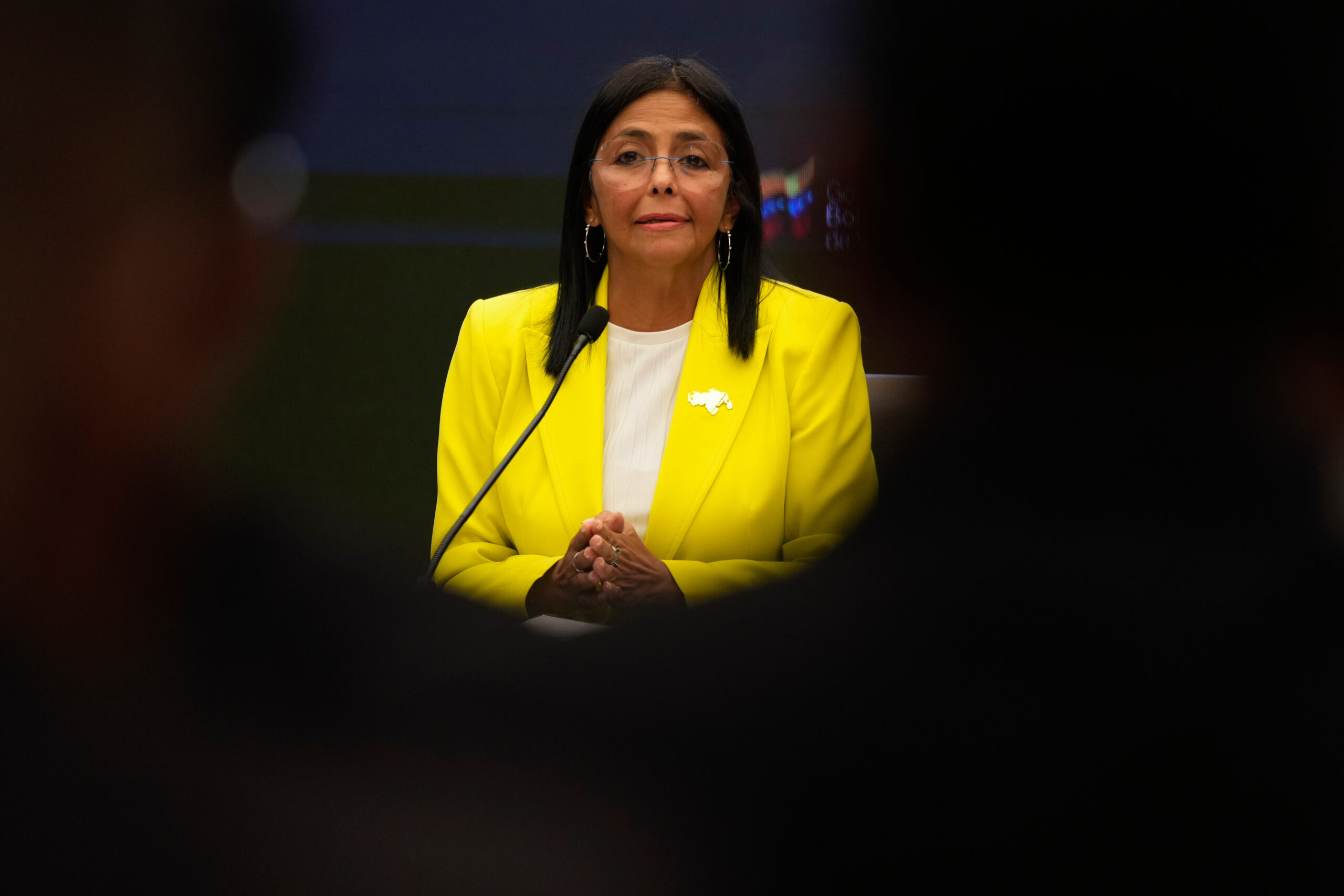
    The announcement during President Donald Trump’s news conference that Venezuelan Vice President Delcy Rodríguez has assumed control is deeply troubling to most Venezuelans.

    Venezuelan Vice President and Oil Minister Delcy Rodríguez gives a news conference at the Miraflores presidential palace in Caracas, Venezuela, in March.

    Rodríguez has been one of the architects of the system that caused Venezuela’s humanitarian, economic, and institutional collapse. She is not a neutral caretaker, but part of the inner circle that enabled abuses and dismantled democratic institutions. Replacing one figure while leaving the rest of the structure intact is not meaningful change.

    It is also important to be clear about Venezuela’s resources. Venezuela’s oil belongs to the Venezuelan people.

    While it is legitimate for the United States to seek restitution for assets unlawfully expropriated during Chávez’s presidency, including those taken from companies such as ExxonMobil and ConocoPhillips, any resolution must respect Venezuelan sovereignty and ensure future revenues benefit the population, not another authoritarian elite.

    Venezuela’s opposition leader Edmundo González, who has been recognized by several governments, including the U.S., as Venezuela’s president-elect, waves a Venezuelan flag during a meeting with supporters in Panama City in January 2025.

    Most importantly, Venezuela has already chosen change. In July 2024, voters chose to send Edmundo González to the Miraflores Palace — Venezuela’s White House — in a historic election. Despite efforts by the democratic opposition to expose and counter electoral manipulation, the regime-controlled National Electoral Council ignored the will of the people. That denial of a democratic mandate lies at the heart of today’s crisis.

    What Venezuelans at home and abroad are asking for is not chaos or vengeance, but a protected and legitimate transition — one that respects the 2024 election results and seats González as president. Without safeguards, accountability, and international oversight, Venezuela risks repeating a painful cycle or sliding into further instability.

    Many Venezuelans are also concerned by statements suggesting the United States would “run Venezuela” during a transition. International pressure and support matter, but prolonged foreign administration raises serious questions about sovereignty and accountability.

    Venezuela’s recovery must be led by Venezuelans chosen by their people.

    We welcome the possibility of change, but remain vigilant. Venezuela has suffered too much to endure another false transition. Our hope is for peace, unity, and a democratic future that finally honors the will and dignity of its people.

    Emilio Buitrago is the cofounder and former president of Casa de Venezuela Philadelphia, where he continues to serve as an advisory board member. An engineer and project manager, he also serves as an advisory board member of the Venezuelan American Caucus.

  • Sixers come out of road trip with momentum — and continuity — after beating Knicks at Madison Square Garden

    Sixers come out of road trip with momentum — and continuity — after beating Knicks at Madison Square Garden

    NEW YORK — Nick Nurse asked the assembled media to check their notes. But the 76ers coach could not recall the last time his team rolled out the same starting lineup for three consecutive games.

    “That might be a record for us in the last 18 months,” he said. “… I really don’t remember that happening for a long time.”

    This newfound continuity occurred within a tiny sample size of the 82-game regular-season grind. But the Sixers are beginning to see results, including a 130-119 victory over the New York Knicks on Saturday night at Madison Square Garden.

    The win capped a holiday-season road trip that began 0-2 before reversing into three consecutive victories. It was the second time in 16 games that the Sixers topped the Knicks — a legitimate NBA Finals contender — on their home court. And it put the 19-14 Sixers five games over .500 for the first time this season, perhaps providing a glimpse of what this team can become in a fascinating Eastern Conference pecking order.

    “The biggest difference is we just feel better as a unit,” said veteran forward Paul George, who finished Saturday with a balanced 15 points, eight rebounds, and six assists. “We trust in the process of this team. … It’s safe to say everybody in this locker room is starting to enjoy the game. We’re starting to enjoy being out on that floor, playing on both ends. And I think we’re just jelling.

    “It’s translating. Everything that we’ve been trying to connect with is translating on the court.”

    Injuries, scheduled rest days, and illness had limited the Sixers’ trio of max-contract players (George, Tyrese Maxey, and Joel Embiid) to 125 minutes over six games before Saturday, with a net rating of plus-7.2. That group combined with standout rookie VJ Edgecombe had gotten even less time together: 74 minutes over five games, with a net rating of minus-1.1.

    Yet against the Knicks, Nurse estimated his team logged about 40 minutes of “making the absolute right decision on offense.”

    Joel Embiid has been mostly available and productive during the Sixers’ recent stretch.

    Embiid recorded an efficient 26 points, 10 rebounds, and five assists in his first game in this building since the 2024 first-round playoff series. He reiterated that New York City is his “favorite place in the entire world,” yet needled Knicks supporters for being “quiet, but I guess that’s what happens when you’re losing the whole game.”

    A noteworthy sign of the former MVP’s physical progress, following multiple surgeries on his left knee and an issue with his right one: He dunked for the first time this season.

    “I wish it had been one off the backboard,” said Embiid, another playful jab after he executed such a move inside the Garden during the 2024 playoffs. “That’s the next step.”

    George, who battled numerous health issues in a disappointing first season as a Sixer, also spoke about feeling satisfaction while continuing to hit his own mental checkpoints that are morphing into production. He knocked down two key corner three-pointers in the second half, then collected a timely offensive rebound and dish to Quentin Grimes for an underneath finish to help quash New York’s final rally attempt.

    Maxey, meanwhile, amassed 36 points, eight rebounds, and four assists. He shot 14-of-22 from the floor and 6-of-9 from three-point range, looking precisely like the dude who unleashed a masterful playoff performance here in 2024 and not the one who went 0-for-10 from beyond the arc while trying to play through an injured finger last season.

    And then there’s Edgecombe, who had already been referenced to by Nurse as part of the Sixers’ “Big Four” before the rookie’s second consecutive dazzler inside basketball’s Mecca.

    He finished with 26 points on 10-of-16 shooting from the floor, fearlessly launching open three-pointers and finding space to drive while Embiid and Maxey’s lethal two-man game attracted defensive attention. He wowed onlookers with an athletic sequence when he blocked Knicks wing Mikal Bridges in one corner, then beat everybody down the floor for a transition dunk. And he flashed his beyond-his-years basketball IQ by stealing a late inbounds pass, calling timeout while falling to the floor, and, after the break, faking a pass before getting to the rim for another slam.

    “He plays like a 10-year vet with his composure,” Nurse said. “Just kind of keeps making plays and does a little bit of everything.”

    Added Edgecombe: “At the end of the day, I’m just hooping, man. … I’m just happy to see Joel and Tyrese and PG on the floor. I’m super happy, man. It’s like a little kid in me, playing alongside the superstars that I was watching.”

    The Sixers had already handled injury absences significantly better than last season, when championship aspirations instantly crashed into a 24-58 disaster. Maxey vowed at media day that they would play with the same intensity and style no matter who was on the floor for that particular game. They leaned into their guard-heavy roster by pushing the pace.

    Nick Nurse has applauded the work of his “Big Four” while expressing caution over the meaning of the 76ers’ winning stretch.

    But although the Sixers have been “making it work” with such lineup inconsistency, Maxey said, “it’s difficult with guys in, guys out” while Embiid and George slowly reacclimated.

    After the Sixers surrendered a late lead in Chicago to open this trip, then got blasted by the defending-champion Oklahoma City Thunder, Maxey said there was no massive off-court reset. They hung out in the team’s Memphis hotel, the “same stuff we always do.” They finally won a game when Maxey, Embiid, and George all played, topping the Grizzlies on Edgecombe’s overtime winner. Two days later, they won again in Dallas.

    Before Saturday’s matchup, Nurse touched on how he could continue experimenting with personnel combinations and the actions that originate from them. George now feels the growing rhythm in defensive positioning, offensive spacing, and in how teammates communicate within the game. Nurse added there even is “a little bit more to explore” between Embiid and Maxey’s already-proven two-man connection, and in how teammates complement it.

    “The first couple games, we didn’t know what to run,” Maxey added. “We didn’t know, ‘Hey, how we going to get this person the ball?’ [or] ‘How we going to do that?’ … That’s the biggest thing: knowing what to run, when to run it.”

    Added Embiid: “Everybody understands that, at some point, it will be your time. But until then, just do your job. It’s not necessarily that everybody knows their role. We’re just playing basketball, and we like each other. No one cares about taking a step back for the other.”

    Kelly Oubre Jr. could be returning soon to provide the Sixers another valuable piece.

    And the Sixers still do not have their full rotation available. Nurse said Saturday that starting wing Kelly Oubre Jr., who arguably was playing the best basketball of his career before missing more than a month with a knee injury, and versatile forward Trendon Watford, who has missed 16 games with a strained adductor muscle in his thigh, are ready for five-on-five action at the Sixers’ next practice.

    Until then, the Sixers will next host the depleted Denver Nuggets and woeful Washington Wizards before another challenging road trip to Orlando and back-to-back games in Toronto. After that, the Sixers play nine of 10 games to finish January at home.

    When asked about this finally-getting-healthier team’s ceiling, Nurse pumped the brakes. The Sixers are still digging out of last season’s disappointment as 2025-26 gets closer to its midpoint. But more roster continuity means more wrinkles in offensive sets. And more counters to opponents’ game plans. And more defensive schemes.

    A fourth consecutive game with this group — already unofficially dubbed a Big Four — would be another long-awaited step toward all that.

    “We see how good we can be when we’re jelling and everyone’s touching the rock,” said Edgecombe, echoing George. “Everyone’s playing hard. Everyone’s bought into their role and what they have to do.”

  • Bucks County agrees to pay nearly $1 million to a woman who was pepper-sprayed and restrained in jail

    Bucks County agrees to pay nearly $1 million to a woman who was pepper-sprayed and restrained in jail

    Bucks County has agreed to pay $950,000 to a woman with a serious mental illness who was pepper-sprayed and left strapped for hours in a chair while at Bucks County Correctional Facility over five years ago.

    Kimberly Stringer’s parents hope the settlement draws attention to the country’s ongoing mental health crisis, and the need for alternatives to arresting and jailing people who need psychiatric care.

    Martha and Paul Stringer of Lower Makefield Township sued Bucks County prison guards and officials in 2022, asserting that their daughter’s civil rights were violated while she was jailed for 64 days during the spring and summer of 2020.

    Martha Stringer has since become an advocate for programs to keep people with serious mental illnesses out of jails. She said that, along with the settlement, the county agreed to work to implement one such program. Known as assisted outpatient treatment, it involves regular court appearances and close supervision for people with a history of hospitalizations who struggle to follow treatment plans.

    “My only hope would be that this story resonates beyond Bucks County,” because county jails all around the country are frequently where people with mental health issues end up, she said.

    By April 2020, her 27-year old daughter already had been diagnosed with bipolar disorder with psychotic features and had been involuntarily committed twice, Martha Stringer said.

    “She was well known, particularly in Falls Township, where she was arrested,” Martha Stringer said.

    It was then, while in the midst of a rapidly worsening mental health crisis, that Kimberly Stringer struck and threatened her neighbor, according to the Stringers’ attorney, David Inscho. She was arrested and taken to Bucks County Correctional Facility, where, as a pretrial detainee, she was pepper-sprayed twice by prison guards, Inscho said.

    Stringer was also placed in a “restraint chair,” which prohibits movement, several times, for as long as four hours, Inscho said. At no point did she pose a threat to guards, and her inability to comply with orders was because she was “in a state of catatonia.”

    “In that state she was not able to process and comply with the rules of that correctional facility — and that led to uses of force” by prison guards, Inscho said.

    The settlement agreement between the Stringers and Bucks County, which was reached Dec. 17, includes a requirement that video footage of the incidents recorded by prison guards be destroyed. The agreement notes one remaining copy of the videos may be kept in a password-protected file for 10 years and then deleted.

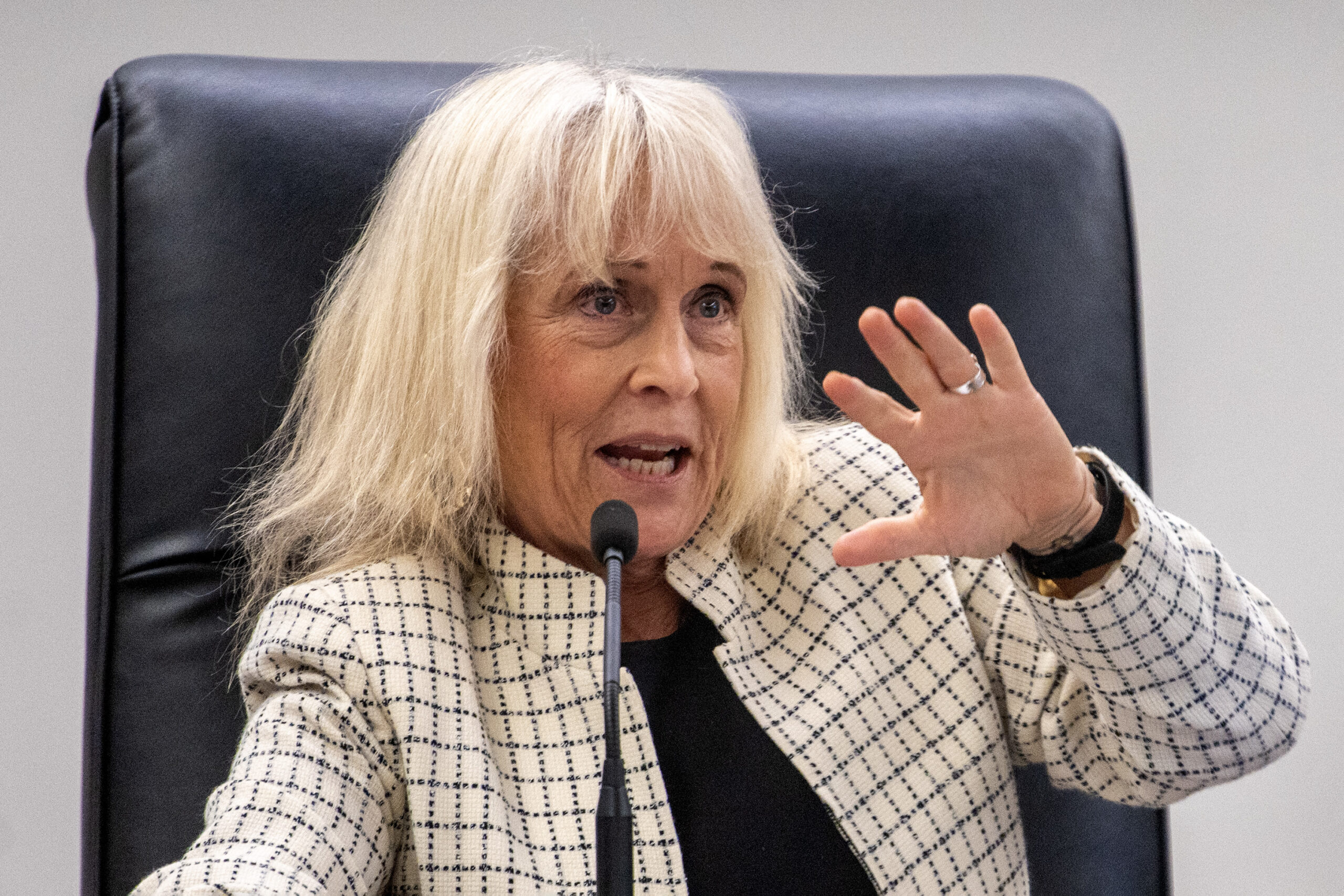
    Bucks County Commissioner Diane Ellis-Marseglia during a meeting on May 21, 2024.

    “The videos were difficult to watch,” Inscho said. “It was clear that Kim was in a mental health crisis. The tools available to the guards were clearly not the tools Kim needed.”

    Bucks County Commissioner Diane Ellis-Marseglia said she believes prison guards were trying to keep Stringer safe, but she shouldn’t have been in jail to begin with.

    “She and the millions of Americans who likewise struggle with mental illness deserve access to high-quality, intensive treatment, with intervention that begins long before they are misdirected to the criminal justice system,” Ellis-Marseglia said in a statement.

    Ellis-Marseglia said that Bucks County has made strides in helping people with serious mental illness. In 2023, the board of commissioners voted unanimously to fund a behavioral health center in Doylestown, the Lenape Valley Foundation’s Bright Path Center, Ellis-Marseglia noted. Last August, commissioners voted to add $5 million more to fund the facility, a county spokesperson said.

    Bucks County in 2023 also voted to build a Diversion Assessment Restoration and Treatment Center at the jail, which is set to open this year, the spokesperson said, and in 2021, it added a separate housing area for women and a mental health unit in the jail.

    “These programs and facilities will help bridge critical gaps in mental health services and move us in the direction of improving the mental health treatment environment,” Ellis-Marseglia said.

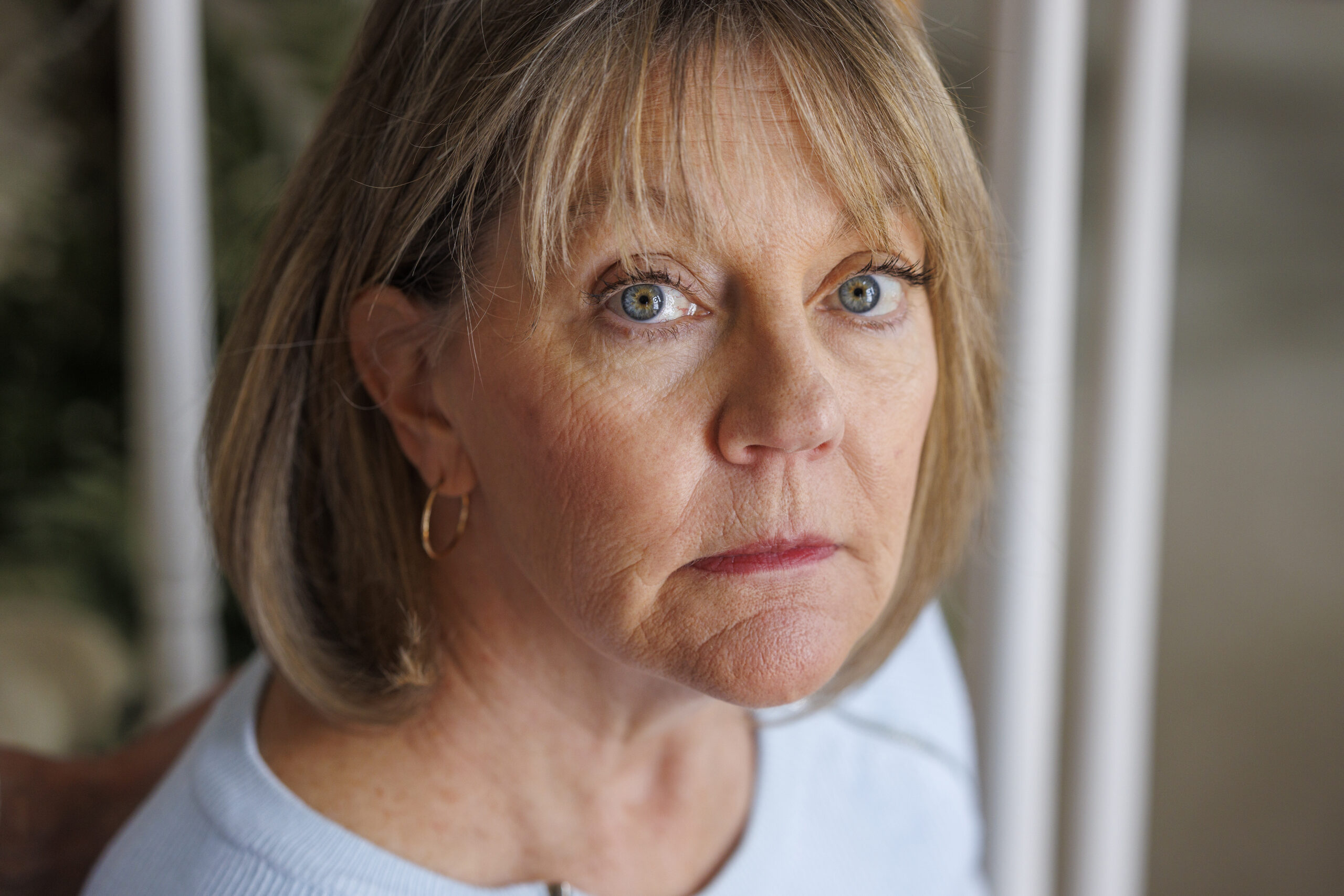
    Martha Stringer, parent of Kim Stringer, at her home in Yardley. When Kim Stringer was having an acute psychotic episode, local police charged her with harassment and placed her in the Bucks County jail. Her parents sued in 2022, and have become advocates for prison reform after their daughter’s mistreatment.

    The Stringers applauded these changes, which they attributed in part to the public outcry over their daughter’s mistreatment. Their daughter’s story became public after several inmates notified the media of Kimberly Stringer’s condition in jail; days later, the county relocated her to a state mental institution.

    Still, Martha Stringer said, most of Bucks County’s new interventions are for people who have already been arrested.

    “And that’s where we’re going to come to the table with Bucks, to see if we can implement assisted outpatient treatment,” Martha Stringer said.

    The money from the settlement will go into a special needs trust that the parents set up years ago, Paul Stringer said. The trust has strict rules on what money can be spent on, and is designed to provide for their daughter even after he and his wife, both in their 60s, have died.

    “She’s doing quite well,” Paul Stringer said. “But she requires, probably, a lifetime of supports.”

    Their now-33-year-old daughter is living in Brooke Glen Behavioral Hospital under a long-term involuntary commitment, Martha Stringer said. Their hope is that she’ll be able to move to a less-restrictive setting and gain more independence, while still getting the support she needs.

    “These past five years, she’s missed a lot,” Martha Stringer said. “She’s missed her sister’s wedding. Recently she’s become an aunt. She’s missed a lot. We struggled with that.”

    One thing that’s given some comfort, she added, is that people often reach out for advice on how they can help their children, who are in similar situations.

    “I learned so much the hard way, that I felt like, if I could give families a better understanding of what we learned, then I could help them.”

  • The Sixers’ success is dependent on Joel Embiid’s ability to make others better

    The Sixers’ success is dependent on Joel Embiid’s ability to make others better

    When the 76ers walk onto the court, they almost always have the best scorers in Tyrese Maxey and Joel Embiid.

    But the Sixers’ best chance to win comes from the effort and aggressiveness of their less-heralded players. If they move the quickest to a loose ball, if they fight the hardest for rebounds, if they work the hardest on defense, maybe it’ll be enough.

    And it’s up to Maxey and Embiid to keep others involved on offense by willingly making necessary passes.

    That’s what is happening during the Sixers’ three-game winning streak.

    They had five double-figure scorers in Saturday’s 130-119 victory over the New York Knicks at Madison Square Garden.

    But the Sixers started the winning streak off with six double-digit scorers in Tuesday’s 139-136 overtime victory over the Memphis Grizzlies at FedExForum. And the Sixers followed that with five double-figure scorers in their New Year’s Day 123-108 victory over the Dallas Mavericks at American Airlines Center.

    Embiid had 34 points, 10 rebounds, eight assists, and two blocks against the Grizzlies, while Maxey had 34 points and 12 assists. The standout point guard came back with 34 points, 10 assists, two steals, and two blocks against the Mavs, while Embiid added 22 points and six assists.

    And on Saturday, Maxey had 36 points, eight rebounds, two blocks, and a steal, while Embiid finished with 26 points, 10 rebounds, and five assists to knock off the Knicks (23-12) for the second time this season.

    Sixers center Joel Embiid has to keep VJ Edgecombe involved moving forward.

    Following Thursday’s game, Embiid noted that he was getting back to the dominant player he had been before being derailed by left knee injuries over the past two seasons. Before the injuries, the 2023 league MVP and seven-time All-Star felt like he could score 40 or 50 points every night.

    “I can be more aggressive, but I feel like I’m also smarter,” Embiid said.

    The 7-foot-2 center is starting to do what the team needs instead of looking for his own shot. Concentrating on scoring in previous games this season led to the ball becoming stagnant. As a result, his teammates, primarily VJ Edgecombe, became less impactful.

    Sometimes, the rookie guard rarely touched the ball while Embiid hoisted up shots. But against Memphis, Edgecombe, the No. 3 pick in this summer’s draft, scored 13 of his 25 points in the fourth quarter and sank the game-winning three-pointer with 1.7 seconds left in overtime.

    He followed that with 23 points on 9-for-14 shooting to go with a game-high four steals against the Mavs. And on Saturday, Edgecombe jump-started the Sixers’ rout by scoring 18 of his 26 points in the first half.

    The shooting guard has shown off his shooting progress over the past three games, in which he’s made 14 of 25 three-pointers. Previously, Edgecombe was vastly underutilized offensively when Embiid.

    The Sixers also have benefited from staggering Maxey and Embiid, allowing both to be aggressive. The tactic also allows for the offense to run through each player during specific stretches. They’ve also been successful utilizing a twin towers lineup featuring Embiid and Adem Bona at times. In that lineup, Embiid slides to power forward.

    In this pairing, the Sixers incorporate drives to the basket that end with dump-offs to Bona. They also have high-percentage scoring plays, in which Embiid receives the ball at the elbow and dishes it to Bona underneath the basket. Another option is for Embiid to drive the lane and fire to wide-open three-point shooters in the corner.

    Memphis Grizzlies forward Jaren Jackson Jr. (8) is defended by Sixers post players Joel Embiid (21) and forward Adem Bona (30) on Tuesday.

    Bona’s presence helps provide rebounding and rim protection. Meanwhile, Embiid gets to display his shooting and passing skills.

    And for them to continue to win, his passing skills must be on full display. Maxey, who’s the league’s third-leading scorer at 31.0 points per game, can shoulder the load.

    Edgecombe, Paul George, and Quentin Grimes can also help in that category. While he’s going to get his points, Embiid’s focus should be on assisting teammates to get easier shots and making sure there’s constant ball movement.

    At this moment, it would provide the Sixers with opportunities to compete with the league’s elite squads.

    No matter how prolific a scorer Embiid can be, the team’s success is dependent on his ability to create opportunities for others.

  • How a home renovation can make or break your relationship

    How a home renovation can make or break your relationship

    Jena and Brandon Fisher know they have very different decision-making styles. It was important to keep that in mind when they renovated three full bathrooms in their Wynnewood home — all at the same time.

    When making a decision, “I think about it, I look at my options, and then I decide and move on,” said Jena.

    Conversely, Brandon’s style “is very deliberate,” he said. “I want to know every single option, I want to weigh them, and take time with my decisions.”

    The home renovation project they started planning in late December 2024 involved taking each bathroom — one for Jena, one for Brandon, and one for their kids Audrey, 15, and Charlie, 11 — down to the studs. The bathrooms were out of commission for about 3½ months, with the work staggered slightly to ensure they always had a working toilet and shower.

    Jena took the lead on her bathroom and, true to her personality, she made quick decisions. Brandon’s was more of a slog, with Jena pushing him for answers.

    A photo of Brandon Fisher’s bathroom after the renovations were complete. He was resistant to the project, he says, but he loved the result.

    “My bathroom was in bad shape but it took 10 years of me saying we didn’t need to do it yet,” he recalled, until finally the plumbing started leaking and the grout was crumbling.

    Recognizing their differing styles, the Fishers managed to complete their projects with minor stress, which happened mostly when she had to push him to meet deadlines. They are both thrilled with the finished bathrooms.

    Half of couples who undertake home renovations find the process fulfilling, according to the 2025 U.S. Houzz Remodeling and Relationships Report.

    But 4% said they considered separating or divorcing during renovations, Houzz reported. That share jumps to 12% for couples together five years or less, compared with 2% for couples in relationships of 30 years or more.

    Common sources of conflict include staying on budget; deciding on products, materials, or finishes; and agreeing on the project’s scope or design, the study found.

    Planning ahead is key

    To keep the process positive, set expectations before the project starts and keep communicating throughout, said Anna Nicholaides, owner of Philadelphia Couples Therapy in Center City. Understanding how your partner makes decisions and what causes each of you stress can help guide you.

    “A renovation is a stressor, and the list of things that can trigger people during a renovation is very long,” she said.

    Perhaps you or your spouse is triggered by disruptions to your routine or having strangers coming in your home. And timelines may be exceeded, which can be difficult if your house is constantly filled with dust or if you need to extend the amount of time you must be out of your home.

    Renovations can be riddled with anxieties, starting with budget concerns. Agree on a budget, and divide your project into affordable stages. For example, perhaps you can change the kitchen cabinets this year and wait until next year to replace the countertops.

    If possible, divide responsibilities. For example, if you care deeply about the layout of the kitchen but your spouse is more concerned with the brand of appliances, divvy up those tasks.

    “Maybe one person is highly focused on beauty and the other person is focused on how things work,” Nicholaides said.

    Taking on unforeseen challenges

    As builders, Tim Ernst and Jake Taylor of Ernst Brothers have helped clients navigate many building and renovation projects. But when it came to their own venture, they got a taste of the challenges their customers face.

    In 2014, the couple bought the old Moose Lodge in Doylestown, gutted it to the studs, and created two 4,500-square-foot condos, one above the other, each with three bedrooms and three bathrooms. Taylor and Ernst live in the top unit, featuring 10½-foot ceilings and 7-foot windows.

    The living room of Jake Taylor and Tim Ernst’s home.

    “There’s got to be division of labor,” said Taylor, managing partner for the Spring House-based building company. He took charge of the financial matters and deadlines while Ernst managed the construction.

    The pair agreed on the budget, scope, and timeline, but as with most projects, there were unforeseen obstacles. Originally built in 1916, the building had water coming through the foundation. They also discovered grading issues, and that their neighbor’s deck was partially built on Taylor and Ernst’s property.

    “When you’re building, you’re selecting different finishes and tile and plumbing fixtures, and deciding to put in heated floors or not,” said Taylor. “But our biggest challenges weren’t things that were nice to have. They were things you have to fix or you’ll have a major problem.”

    No matter how complete your plan is, it’s difficult to understand all of the nuances on paper, added Ernst.

    “You have to see it in real life at times,” said Ernst, who serves as the building company’s principal project manager. “It’s inevitable that you’re going to want to make changes.”

    The added costs in both dollars and time to fix those unforeseen problems meant making sacrifices elsewhere. Though the couple wanted a heated bathroom floor, it was ultimately cut from the budget.

    The bathroom with tub and shower at the home of Jake Taylor and Tim Ernst. They ultimately had to forego plans for a heated floor due to budget constraints.

    Include a mediator

    To help settle disagreements on design elements, Ernst and Taylor brought in John Levitties, principal at JAGR Projects in Glenside.

    “Not only are you getting someone who is professionally trained, but they can also play referee between you and your spouse and offer a sounding board,” Taylor said.

    Amy Cuker, owner of down 2 earth interior design in Elkins Park, who worked with the Fishers, often plays that role for clients.

    “Design isn’t just about taste, it’s also about meeting functional outcomes, proportion, color theory, and other foundational areas of knowledge the design is based on,” Cuker said. “I will reference back to those things when I’m trying to convince a hesitant partner. Sometimes they want that third voice in the room.”

    In her initial meeting with a couple, she will talk to them about function and aesthetics to understand their goals.

    She has them create an inspiration album with pictures of rooms or pieces with the feel they want for their space.

    “If she likes modern and he likes traditional, here are a few images that are comfortable enough for both of them,” Cuker said. “It gets us quickly to a place of understanding where the middle ground is.”

    She finds the biggest challenges come with gaps in budget, neatness, and how much change each partner wants.

    In the end, most couples learn more about themselves and their partners through the process, and most are happy with the finished product. That is certainly true for the Fishers.

    “I resisted it up to the end and now I would probably live in my bathroom,” said Brandon.

  • The one really great thing about renting in Philly, according to a Boston transplant

    The one really great thing about renting in Philly, according to a Boston transplant

    The Philadelphia Superiority Complex is an occasional series of highly opinionated takes about why Philadelphia is better than other cities.

    As I began in earnest my search for a Philadelphia apartment recently, I steeled myself for a tradition I assumed to be as East Coast as unnecessary honking and an unhealthy animosity toward outsiders.

    I’m speaking, of course, about the broker fee.

    As a native Midwesterner and perpetual renter who has spent the past decade living in Boston, I’d come to view broker fees as an inescapable part of big-city life.

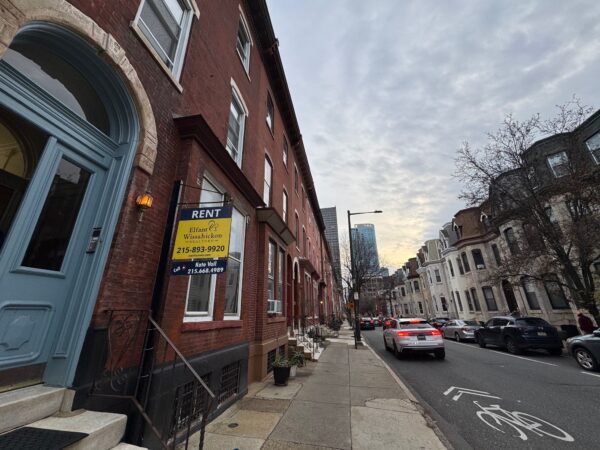
    For the uninitiated, broker fees are a lot like extortion payments. Here’s how it would go in Boston: A so-called apartment broker — to this day I couldn’t tell you what a broker actually is — meets you at an available apartment, unlocks the door, and stands there while you give yourself a brief tour of the unit. In exchange for this white-glove service, and the privilege of renting the apartment, you pay the broker a one-time, nonrefundable fee typically equal to one month’s rent. In Boston, where the average rent for a one-bedroom apartments sits at around $3,500, this is no small thing.

    Making matters worse, the Boston brokers always seem to be finance-bros-in-training, arriving to these brief showings in Lexuses or BMWs, hair meticulously styled and dressed head to toe in Brooks Brothers.

    How refreshing it has been, then, to discover that broker fees just … don’t actually exist here?

    Not once since I began responding to online apartment postings have I been asked to hand a stranger a $3,500 check in exchange for arranging a two-minute tour. I haven’t yet received a torrent of unwanted text messages from guys named Brock or Beau, demanding to know the earliest possible moment I can schedule a viewing.

    And from what I can gather, I’m not going to.

    As one longtime Philadelphian explained it to me recently, “There is a beauty in Philadelphia that no matter how cool it’s trying to be, it is never desirable enough to warrant something like brokers fees.”

    It’s been a true revelation.

    (In Boston’s defense, Massachusetts legislators recently passed a measure mandating that landlords can no longer require tenants to pay a broker fee. Of course, that doesn’t give me back the thousands of dollars I would’ve otherwise put into my retirement fund or, more likely, Uber Eats and Nerf machine guns.)

    Which is not to say, certainly, that things here are perfect. An increasing number of Philly renters are cost-burdened. And the city recently ranked among the nation’s least affordable for apartment renters, according to one online real estate brokerage firm.

    And as someone who is at the very beginning of the process, I’m sure there will be more disappointment in store.

    I’m preparing for an upcoming weekend of apartment tours in Philly, and I have no illusions about how it’s likely to go. I’m imagining a couple days of drab leasing offices and hidden-fee horrors, one-sided rental agreements and a good ol’-fashioned scam or two.

    Fine.

    If it means not handing a half-month’s salary over to a smug 25-year-old in wingtips, well, then, I’m OK with all of it.

    Good on ya, Philadelphia.

  • Shopping secondhand for kids’ stuff is getting more popular in Philly

    Shopping secondhand for kids’ stuff is getting more popular in Philly

    When Jennifer Kinka was pregnant with her first child, she stood in the aisle of Babies R Us with a registry sheet, looking over the wall of plastic consumables the company deemed required for having a baby. What she saw was waste.

    “I was just like, this is crazy that there’s no system for this,” Kinka said. “There’s no problem-solving around how this is happening and how we could do this better.”

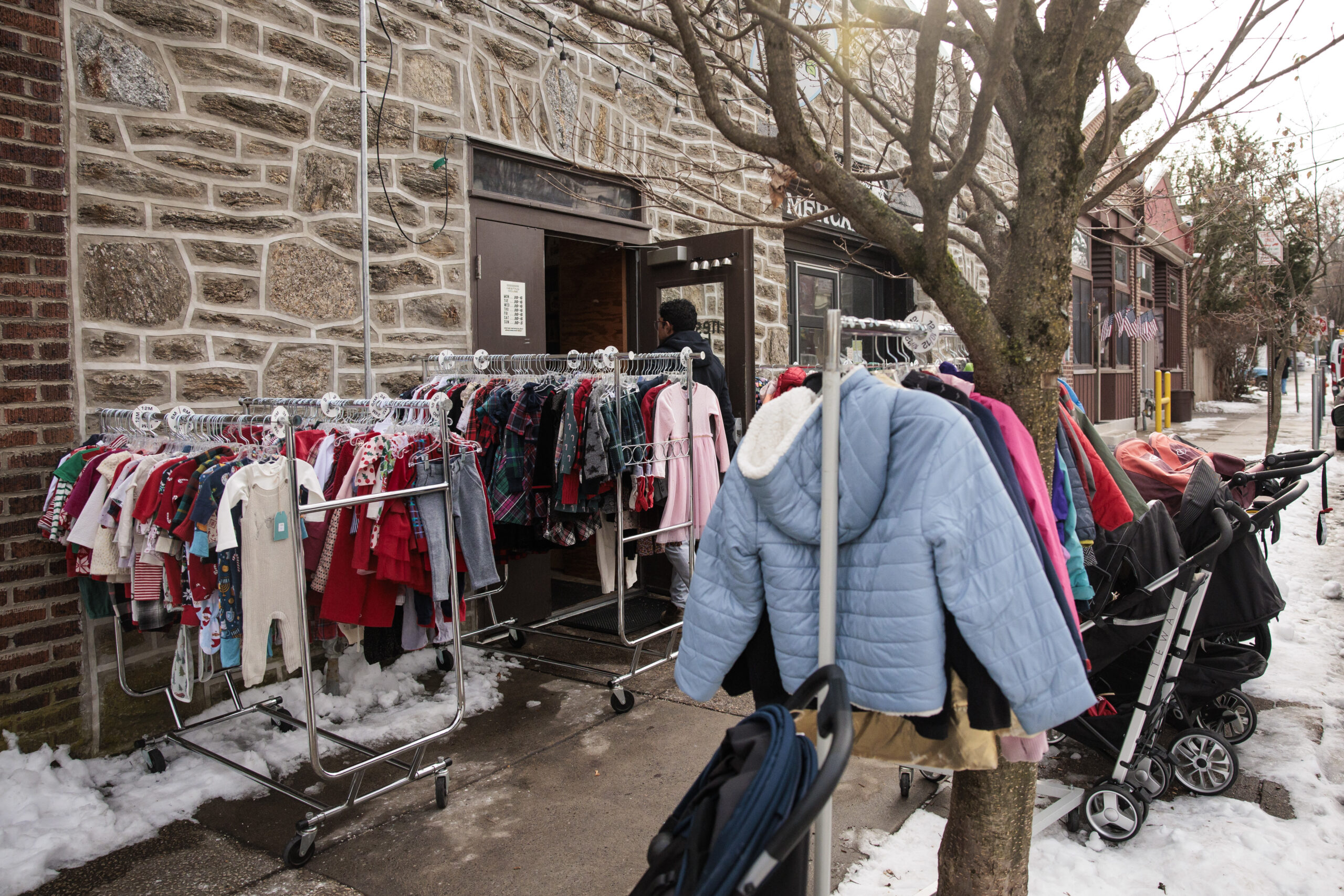
    After a few more years, her second pregnancy, and a small inheritance from the loss of her terminally ill parents, Kinka was able to implement her solution: The Nesting House, a kids’ consignment shop based in Mount Airy that she founded 15 years ago.

    Shoppers across Philadelphia, including parents buying for their children, are increasingly forgoing new items in favor of secondhand and lightly used in an effort to save money and live more sustainably.

    Chris Baeza, associate program director of Fashion Industry & Merchandising at Drexel University, asks her students each semester who shops in the secondhand market. While five years ago she might have had a single student raise a hand, now it’s nearly all of them.

    The global secondhand apparel market grew by 15% in 2024, according to online consignment store ThredUp’s annual report, and it’s expected to continue growing each year. ThredUp estimates that the resale apparel market is growing 2.7 times faster than the overall apparel market.

    For Abby Sewell, a South Philadelphia mom of two, secondhand clothing and furniture was a mainstay of her childhood, when she spent weekends trash picking and combing through yard sales to find reusable items. Her father is artist Leo Sewell, who built a replica of the Statue of Liberty’s arm and torch at the Please Touch Museum.

    “I just know how much there is out in the world,” said Sewell, who also describes herself as an environmentalist. “There’s just so much kids clothes that it kills me to buy something new when I know there’s like 50 pairs of 2T leggings in someone’s basement.”

    A dramatic shift toward secondhand not only coincided with the proliferation of social media but followed the 2013 Rana Plaza factory collapse in Dhaka, Bangladesh, that killed more than 1,000 people. People began to wonder how their clothing was being made, and the conditions laborers were under, Baeza said.

    Used baby shoes on display at the Nesting House.

    Next came the broader revelation of textile waste — pictures and video of clothing from the United States washing up on the shores of African countries — which plays into the interest in the secondhand market, she said.

    “This was stuff that we just throw away, or we put in a drop box [thinking] it’s going to a good cause,” Baeza said. “They’re actually packing stuff up, and it’s a commodity they’re selling abroad.”

    While Beaza teaches her students to scrutinize the marketing of sustainable fashion and to understand secondhand may not be the be-all-end-all of building circularity into the industry, she gets the sense they want to be part of what she describes as a renaissance period.

    “They want to be part of the solution, not the problem,” Baeza said.

    Childrens clothes on display outside the Nesting House.

    Sewell prefers to shop thrift and consignment around her neighborhood and frequents stores like Lilypad and 2A. She also goes to annual church sales in the suburbs and uses eBay for more specific items — a specific kind of sleep sack that works for her 1-year-old or an item in a specific color or fabric for her 4-year-old.

    “I’m still shocked to this day when I learn that other parents still are buying mostly new clothes for their children,” Sewell said. “I think I’m on a very different end of the spectrum, and I always have been as a consumer.”

    Lilypad, which began as a play space on Broad Street, expanded to include a small thrift shop in its basement after the COVID-19 pandemic sidelined its twice-yearly City Kids consignment events. The nonprofit sells only donated items at its shop, now located in East Passyunk, to support charging an affordable annual membership to its play space.

    Lilypad board member Maria Hughes said the number of people actively seeking out secondhand clothing for their kids, particularly babies, has increased exponentially over the last several years. The store sees more pregnant people, who don’t want to go through the process of building a registry. Hughes added that there are also more grandparents and grandparents-to-be shopping at Lilypad now.

    “They’re not going to Marshalls and buying the things,” Hughes said. Instead they’re opting for pre-owned items “either at the directive of their children or because they believe now.”

    Kinka said the early days of the Nesting House “felt like it was mission work.”

    Used baby goods and books on display at the Nesting House.

    “Nobody understood what we were doing,” Kinka said. “People would come in very confused. They would oftentimes refer to us as a thrift store.”

    Eventually people saw the store as a sound economic choice: get high-quality children’s clothing at a great price. But she has seen “a huge shift” over the last five years.

    “It’s this current generation,” Kinka said. They’re on board with the concept “before they come. They’re ready for us.”