Tag: topic-link-auto

  • A Mummers wedding on Market Street | Weekly report card

    A Mummers wedding on Market Street | Weekly report card

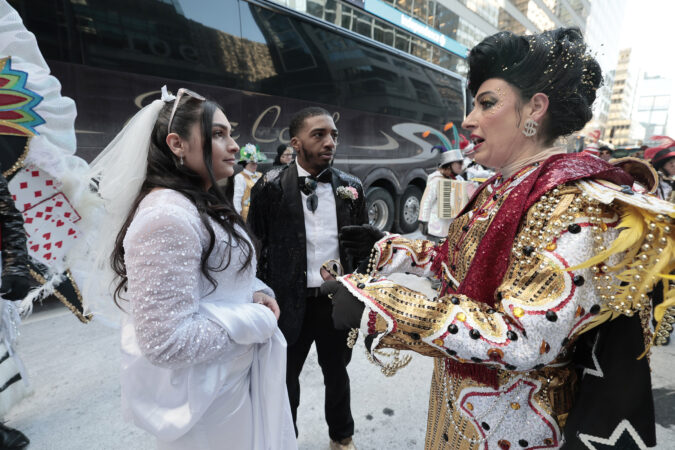
    A Mummers wedding on Market Street: A+

    If you’re going to get married in Philadelphia, this is the correct way to do it: sequins, sneakers, a string band, bitter cold, delayed schedules, and a crowd that didn’t ask for romance but got it anyway.

    A couple saying “I do” in the middle of the Mummers Parade is the purest expression of this city’s personality. Equal parts earnest and unhinged. Romantic, but only after everyone’s been standing around freezing for hours. Vegas chapel energy, but filtered through South Philly logistics and Broad Street chaos.

    This wasn’t a viral stunt or a look-at-us wedding. It was two people already marching, already committed, deciding that if they were going to wait around in the cold anyway, they might as well get married while they’re at it. Honestly? Efficient.

    The details make it sing: golden sneakers instead of heels, a flask for warmth and nerves, vows practiced on a bus, Elvis officiating, and the inevitable Philly closer, “I’m glad it’s done so I can get warm.” That’s love, but realistic.

    And of course it happened at the Mummers. The parade that routinely features feathers, fake arrests, grown adults sobbing at saxophone solos, and more sequins than dignity. If any institution could absorb a full wedding without breaking stride, it’s this one.
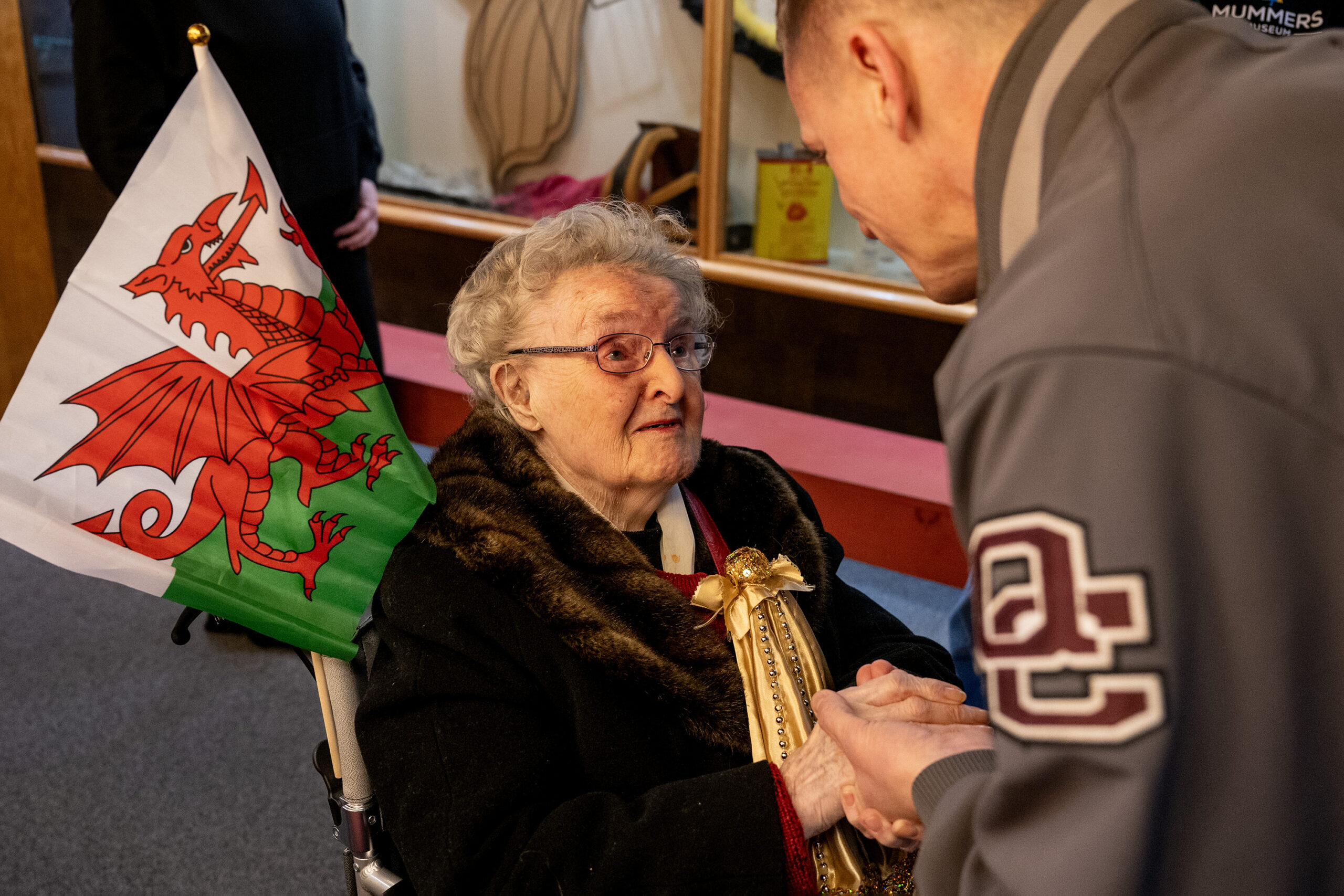
    ”Queen Mumm” Avril Davidge, a 93-year-old Welsh grandma meets Quaker City String Band Captain Jimmy Good as he surprises her at the Mummers Museum on Wednesday, Dec. 31, 2025. Davidge got to live her dream of going to the Mummers Parade, starting on New Year’s Eve morning with a tour of the museum.

    Mummers devotion, no notes: A+

    Yes, we’re grading two Mummers stories this week, and no, that’s not an accident.

    Between a couple getting married mid-parade and a 93-year-old woman flying from Wales to finally meet “her Mummers,” this New Year’s Day delivered a reminder of what this thing actually is: unshakable, irrational, deeply sincere devotion.

    Avril Davidge didn’t come to Philadelphia for irony or spectacle. She came because she fell genuinely, deeply in love with the Mummers through YouTube — learned the string bands, picked favorites, developed opinions — and decided, at 93, that she needed to see it in person. That alone clears the grading curve.

    What makes this story land isn’t just the transatlantic trip. It’s how naturally Philly met her energy. A museum tour. A surprise meeting with her favorite band captain. A golf cart to the parade. No skepticism, no gatekeeping … just, “Yeah, of course. Welcome.”

    And then there’s the wedding: sequins, sneakers, vows exchanged in the cold on Market Street, because if you’re already marching, why not also get married? It’s unhinged. It’s beautiful. It’s extremely us.

    No notes.

    Philadelphia’s cost of living vs. the suburbs: C (with math and feelings)

    On paper, this sounds like a win: It’s up to 26% cheaper to live in Philadelphia than in places like Ardmore, King of Prussia, and Phoenixville, Philadelphia Business Journal reported. Congrats to the city for clearing the extremely low bar of not being the suburbs.

    The problem is the second half of the equation: income.

    Suburban households make dramatically more money, which means they somehow pay more and end up with way more left over. Ardmore residents, for example, are apparently out here saving more than $50,000 a year, which is a number that sounds fake if you live south of Girard.

    So what we really have here isn’t a victory lap. It’s a familiar Philly paradox. The city is more affordable because it has to be. Lower costs don’t feel like a flex when they’re paired with lower wages, longer commutes, and the constant background hum of “maybe next year.”
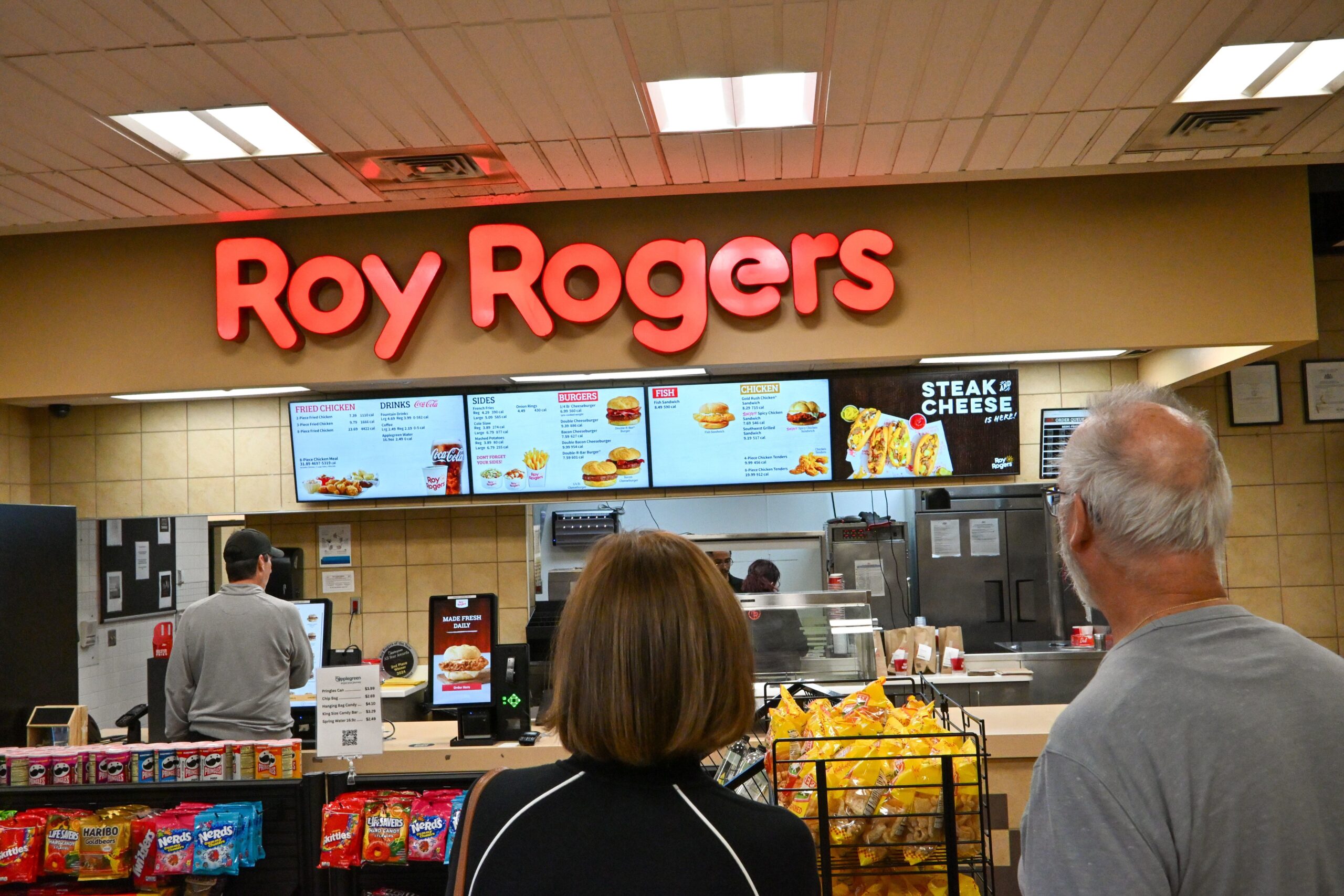
    Mary Wright and Rich Misdom of Collingswood consider their options at the Roy Rogers located in the Peter J. Camiel Service Plaza on the Pennsylvania Turnpike in late November 2025.

    Pennsylvania Turnpike food options: C+

    If you’ve ever pulled into a Pennsylvania Turnpike service plaza hoping for something modern, exciting, or even just predictable, you already know how this ends: Roy Rogers is back, Sbarro is waiting, and time is a flat circle.

    This isn’t just personal bitterness; it’s structural. The Turnpike’s dining lineup is effectively locked in by a decades-old contract, which explains why eating on one of the state’s busiest roads feels less like a pit stop and more like a museum exhibit titled Fast Food, 1998. Auntie Anne’s. Burger King. Dunkin’. Starbucks. Repeat until New Jersey.

    To be clear, this isn’t about disrespecting Roy Rogers. Roy Rogers has survived longer than many of our friendships. But when New Jersey and New York travelers are choosing between Shake Shack and Pret a Manger, and Pennsylvanians are debating whether this Sbarro feels better or worse than the last one, something has gone off the rails.

    A C+ feels right. The food won’t kill you. It will fill the void. It might even unlock a memory of your mom liking Roy Rogers, which is sweet in its own way. But if the Turnpike is going to keep charging premium tolls, it might eventually want to acknowledge that the rest of the world moved on from mall food courts, and took better rest-stop dining with it.
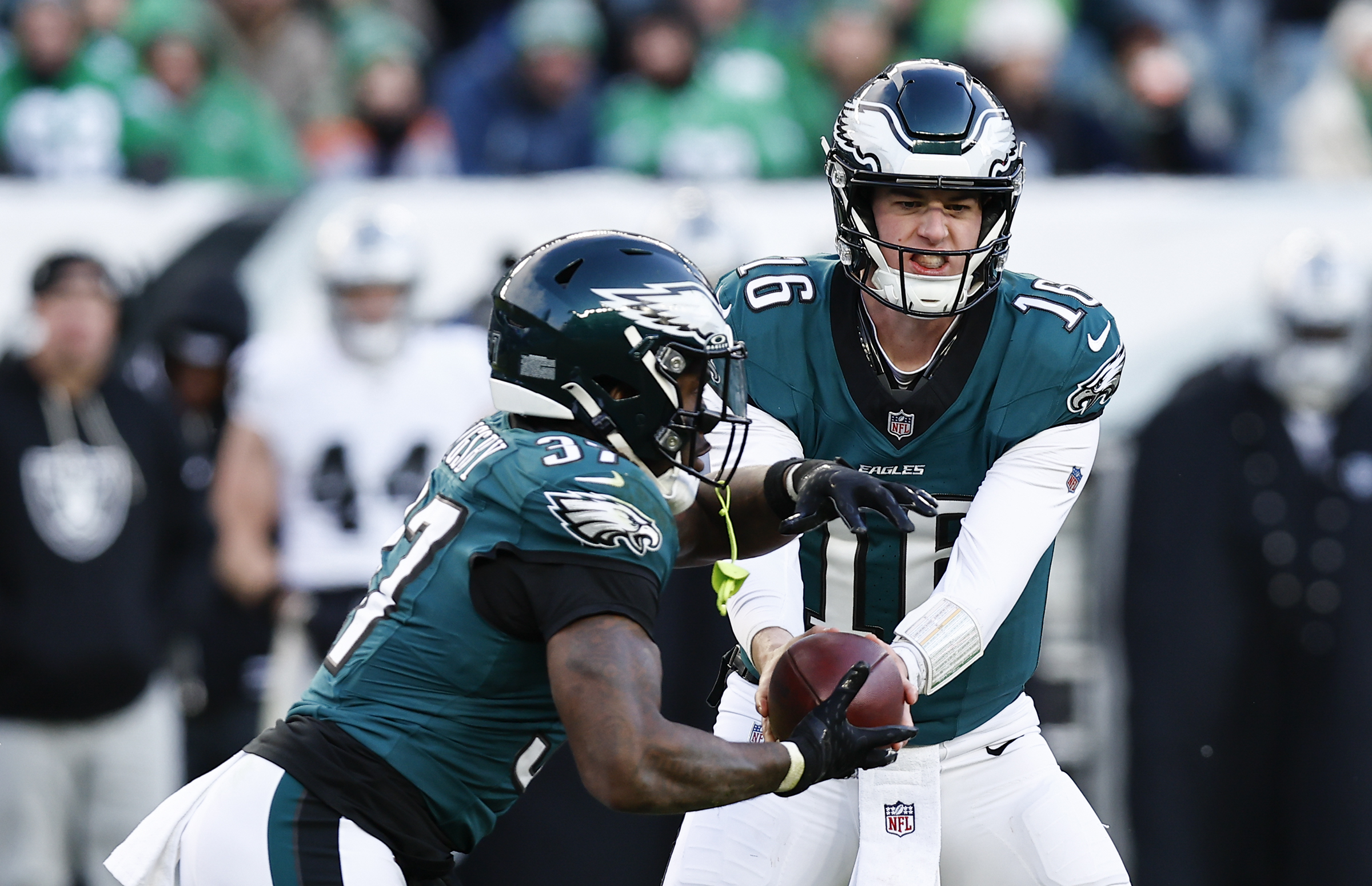
    Eagles quarterback Tanner McKee hands off the football to running back Tank Bigsby against the Las Vegas Raiders in the fourth quarter on Sunday, December 14, 2025, in Philadelphia.

    Eagles resting the starters (and trusting the vibes): B+

    This is one of those decisions that feels smart, responsible, and completely terrifying all at once … which means it’s extremely on brand for Philadelphia football.

    The Eagles are essentially turning Week 18 into a spa day for Jalen Hurts and most of the starters, handing the keys to Tanner McKee and asking the football gods to be normal about it. On paper, it makes sense. They’ve been here before. Sirianni keeps pointing out that the two Super Bowl runs came with byes, rest, and fresh legs. He’s not wrong. The scars from 2023 — A.J. Brown getting hurt in a meaningless finale, Hurts dislocating a finger — are still very much part of the group chat.

    But this is Philly, so we can’t just rest people quietly.

    Because technically, this game still matters. There’s still a path to the No. 2 seed. There’s still a chance to build offensive momentum, which has been… inconsistent, let’s say. And instead, the Eagles are choosing peace. Or at least the idea of it.

    Enter Tanner McKee, who is suddenly the most important man in South Philadelphia for one afternoon. He’s calm. He’s saying all the right things. He’s talking about “playing fast” and getting reps and embracing the moment. This is both encouraging and deeply dangerous, because Philly fans have never met a backup quarterback they didn’t immediately project into a full-blown controversy.

    If McKee plays well, WIP will combust. If he struggles, everyone will retroactively insist the starters should’ve played. There is no outcome where this doesn’t get litigated.
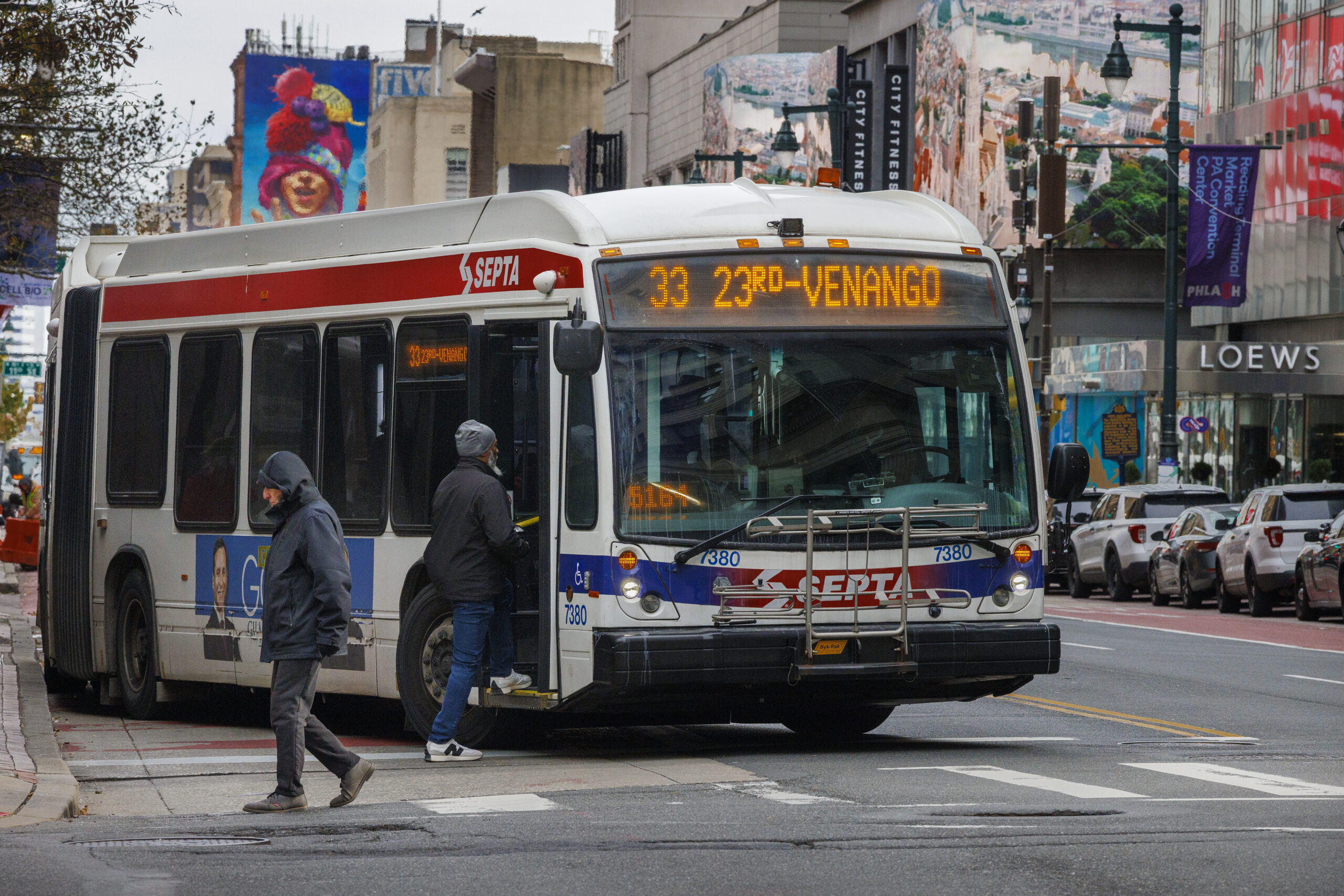
    SEPTA 33 bus picking up passengers at 13th and Market Street, Center City Philadelphia, Monday, December 8, 2025.

    SEPTA’s very bad year (again): C-

    Yes, we know. We’re grading SEPTA. Again. And no, this isn’t piling on. SEPTA did that to itself all through 2025.

    If you rode transit even semiregularly this year, you don’t need a recap. You felt it in missed connections, sudden service cuts, mystery delays, and that low-grade anxiety that comes from not knowing whether your train is late, canceled, or quietly on fire. Five Regional Rail fires. A trolley tunnel that closed, reopened, and closed again. A budget cliff so real it had a dollar amount attached to it. Near-strikes. Court-ordered service reversals. Emergency money parachuting in at the last second like SEPTA is a reality show contestant who keeps surviving elimination.

    The most Philly part? SEPTA technically survived. Barely. With duct tape, emergency funds from Gov. Josh Shapiro, and the kind of last-minute labor deal that had everyone holding their breath. There’s something almost admirable about how resilient the system is — not because it’s thriving, but because it simply refuses to collapse on schedule.

    To be fair, some things improved. Serious crime dropped. Fare evasion finally got gates and consequences. SEPTA moved hundreds of thousands of people for the Super Bowl parade without melting down, which honestly might have been the most impressive transit achievement of the year.

    But none of that erases the larger truth: SEPTA spent 2025 lurching from crisis to crisis, stuck in the same funding limbo it’s been warning about for years, with riders paying the price in time, stress, and reliability. The money fixes were temporary. The politics were familiar. And the promise for 2026 is essentially: please let us just do the basics.

    That’s a low bar… and one SEPTA hasn’t consistently cleared in a while.

    New Jersey’s minimum wage lapping Pennsylvania: D (for us)

    We love to say we’re better than New Jersey. Spiritually. Culturally. Hoagie-wise. But on minimum wage? Absolutely not. Not even close.

    New Jersey is heading into 2026 with a $15.92 minimum wage, adjusted for inflation like it’s a normal, functioning place that occasionally updates laws to reflect reality. Pennsylvania, meanwhile, is still parked at $7.25 — the same number it’s been since 2009, back when we all thought flip phones might be making a comeback.

    That gap isn’t just embarrassing; it’s structural. You can cross the bridge and make more than double per hour doing the same work. And while yes, New Jersey is more expensive overall, that doesn’t magically excuse Pennsylvania paying wages that don’t come close to covering basic needs. Even the MIT living wage calculator, which is not exactly a radical think tank, says Pennsylvanians need far more than $7.25 to survive. Shock.

    Philly has been stuck in the same frustrating loop for years. The city wants the power to set its own minimum wage. The governor supports raising it. Bills exist. Rallies happen. And yet nothing changes, leaving workers watching Jersey do the thing we keep promising to “get to.”
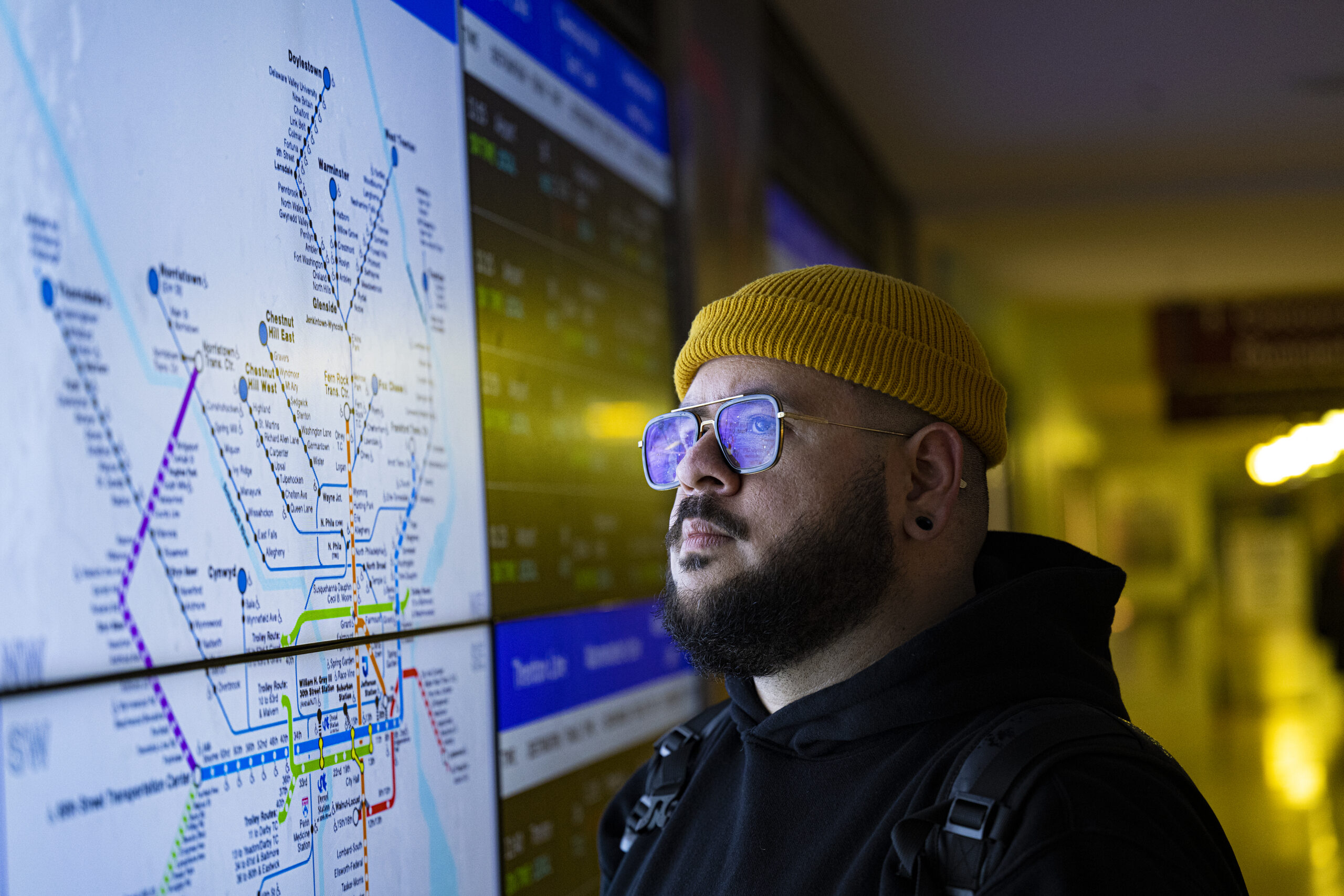
    Daniel Rodriguez travels through Philadelphia’s Suburban Station on Friday, Dec. 19, 2025, in Philadelphia. Rodriguez uses the station to commute between Philadelphia and metro Atlanta, taking a train from Center City to Philadelphia International Airport before boarding flights to and from his company’s Atlanta office.

    Philadelphia-to-Atlanta supercommute: A+ (unhinged, aspirational, deeply Philly)

    Some people complain about a 33-minute commute. Philly’s Daniel Rodriguez gets on two planes, two trains, and a bus every week, by choice, because he loves Philly too much to leave it. That’s not transportation. That’s loyalty.

    Flying to Atlanta twice a week so you can keep living in a Jewelers’ Row apartment with your wife, avoid owning a car, and still make your job work is the kind of stubborn, impractical devotion this city respects. It’s extreme. It’s exhausting. It makes no sense on paper. And yet it somehow feels more reasonable than moving to the suburbs.

    This isn’t about hustle culture or going viral (though he did). It’s about refusing to uproot your life because the job market is broken, SEPTA is unreliable, and cities don’t always make it easy to stay. Instead of leaving Philly, Rodriguez made the commute worse. Heroic behavior.

    Is it sustainable? Questionable. Is it environmentally clean? Debatable. Is it the most Philly response imaginable to a bad system? Absolutely.
  • Jeff McLane’s keys to Eagles vs. Commanders in Week 18: What you need to know and a prediction

    Jeff McLane’s keys to Eagles vs. Commanders in Week 18: What you need to know and a prediction

    The Eagles host the Washington Commanders in a Week 18 matchup at Lincoln Financial Field on Sunday at 4:25 p.m. Here’s what you need to know about the game:

    When the Eagles have the ball: It’s Tanner McKee time. Well, the Eagles will have more backups on offense than just the No. 2 quarterback, with the Eagles expected to rest their starters in the season finale. But having McKee under center will give a glimpse of how much he’s progressed in the last year and whether he can increase his value if the front office wants to entertain trade offers this offseason.

    He played well a year ago, completing 27 of 41 passes for 269 yards and two touchdowns against New York Giants starters in Week 18. McKee will be facing another comparatively poor defense, but will he have enough around him to get the job done?

    The Eagles’ offensive line, from left to right, is expected to be: Fred Johnson, Brett Toth, Drew Kendall, Matt Pryor, and Cameron Williams. McKee will have two rookies blocking for him, with Kendall and Williams at center and right tackle, respectively. Williams was activated on Thursday after spending almost the entire season on injured reserve with a shoulder injury.

    Washington isn’t strong at edge rusher. The Eagles allowed just one outside pressure when the teams played in Week 16. But Williams may need help on occasion. While McKee had returning-from-injury Dallas Goedert for about a quarter last January, and targeted the tight end on six of the 13 plays he was on the field, he will have no such luxury this season. Receiver Jahan Dotson will likely be the lone starter to play. Dotson is often the fifth option when on the field with the first offense, but the former Commander caught 7 of 11 targets for 94 yards in last season’s finale.

    I could see Nick Sirianni and Kevin Patullo leaning into their under-center offense on Sunday. The Eagles have done it more with McKee than with Jalen Hurts, although the sample may not be large enough to make any definitive claims. In the final drive of the Las Vegas Raiders blowout three weeks ago and against New York last year, McKee completed 7 of 9 passes for 80 yards and a touchdown when throwing off play-action from under center.

    The second unit offensive line will need to block better on the ground if under-center runs are to be productive. But the Commanders have one of the worst run defenses in the NFL. They rank 29th in expected points added (EPA) per rush. (Of note: Three of the league’s bottom four run defenses are the Eagles’ NFC East rivals.)

    Tank Bigsby fans should see the running back get a high volume of carries. He enters averaging 6.4 yards a carry with the Eagles and has 98 rushing yards over expected, per NextGen Stats, which is 22 more than starter Saquon Barkley, who has 238 more tries. Will Shipley will be featured in the backfield as well, more likely on passing downs. He could be a check-down favorite for McKee.

    Tight end Grant Calcaterra should also get more chances to do what he does best, which is run routes and catch the ball, vs. the run blocking that has contributed to some of the Eagles’ struggles in that regard. But mostly, it’ll be interesting to see McKee operate with Patullo at the controls.

    Washington lacks talent and is on the older side, but veteran linebacker Bobby Wagner is still a run-defending machine. And edge rusher Von Miller should have enough gas in the tank to trouble Williams.

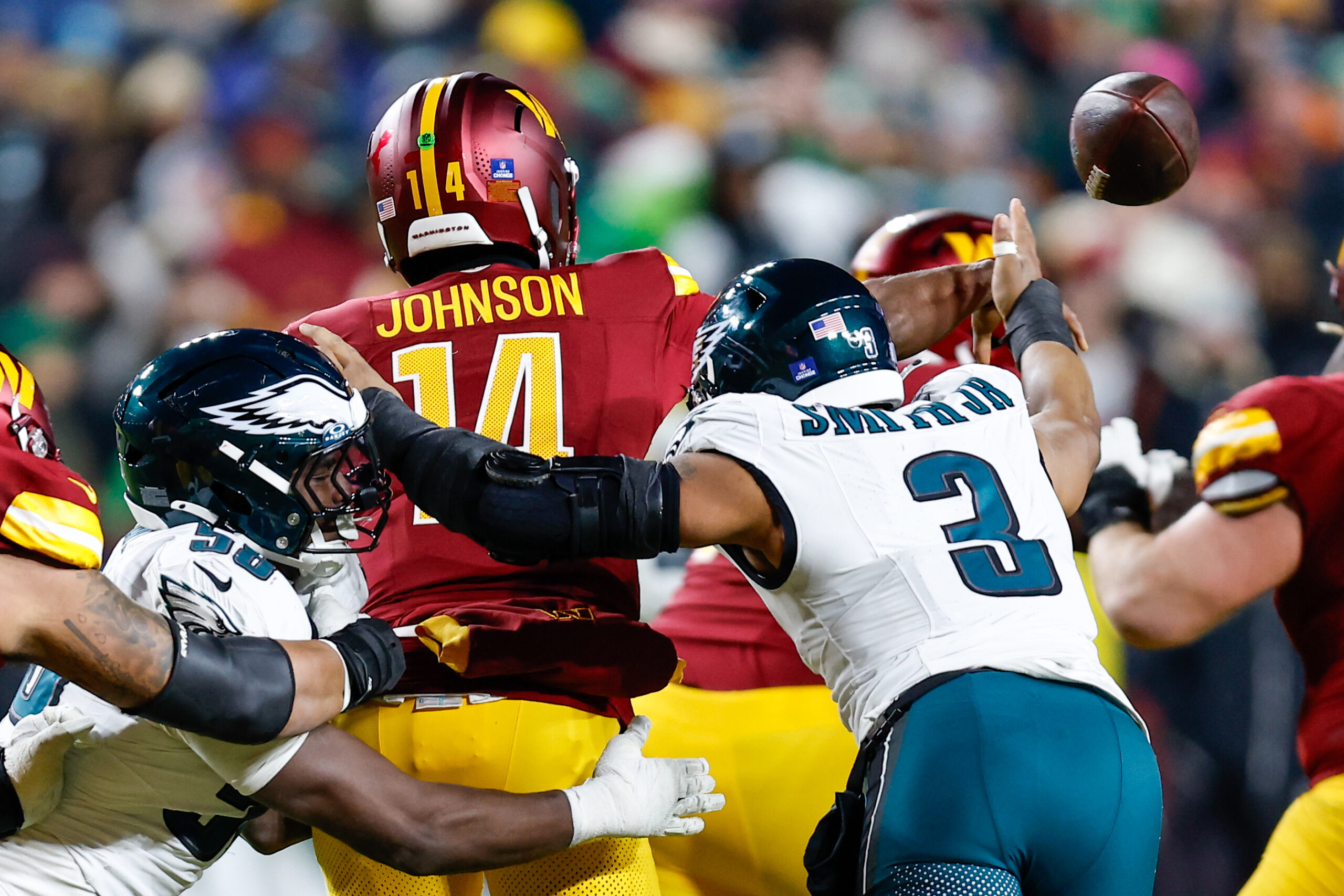
    The Eagles got after Josh Johnson when he relieved an injured Marcus Mariota in Week 16.

    When the Commanders have the ball: Speaking of old guys, 39-year-old Josh Johnson will be making only his 11th career start at quarterback since being drafted by the Bucs in 2008. It’ll be his second straight start after backup Marcus Mariota was knocked out against the Eagles two weeks ago.

    Johnson looked overwhelmed as a mid-game replacement and threw a bad interception to cornerback Cooper DeJean. He fared better with a week of preparation and completed 15 of 23 passes for 198 yards against the Dallas Cowboys. The Commanders struggled to get much going on offense and lost, 30-23, but offensive coordinator Kliff Kingsbury schemed up explosive plays on the ground and through the air to help Johnson.

    Deebo Samuel was the benefactor of a 41-yard screen pass and a 29-yard end-around. The Eagles have to always be cognizant of where Samuel lines up and how motion misdirects defenders away from him.

    Running back Jacory Croskey-Merritt ran for touchdowns of 72 and 10 yards on more traditional runs against the Cowboys. The Commanders won’t have a mobile quarterback like they normally do with Jayden Daniels or Mariota to help the rushing offense. And they’ll be without three-fifths of their starting offensive line. Left tackle Laremy Tunsil, right guard Sam Cosmi, and center dress are out.

    The Eagles will have a decidedly different look up front. A year ago, defensive tackle Jordan Davis played a bunch of snaps in the finale. He’ll likely be one of a dozen or so starters who dress on Sunday, but the Eagles will do their best to keep him off the field. He’s come a long way in 12 months.

    Byron Young and Ty Robinson will take most of the snaps in the interior. Joshua Uche, who’s been inactive the last five games, will finally get an opportunity to get some repetitions at outside linebacker. Jihaad Campbell was pressed into duty two weeks ago when Nakobe Dean suffered a hamstring injury, but the rookie linebacker is expected to start and play some. Jeremiah Trotter Jr. and Smael Mondon will likely log most of the time at off-ball linebacker.

    The Eagles could be most susceptible in the secondary. Terry McLaurin vs. most any cornerback would favor the Washington receiver. Cornerback Kelee Ringo and whoever lines up opposite him — Jakorian Bennett or rookie Mac McWilliams — may often get help from safeties Sydney Brown and Andre’ Sam against McLaurin.

    Extra point: The line hasn’t moved much, even after it was reported that Sirianni would rest his starters. The Eagles are around 4-point favorites. The news that Johnson was officially starting likely offset any advantage the Commanders might have been expected to gain. Washington coach Dan Quinn doesn’t seem like the tanking type, but it didn’t appear as if he was in any rush to get Mariota back.

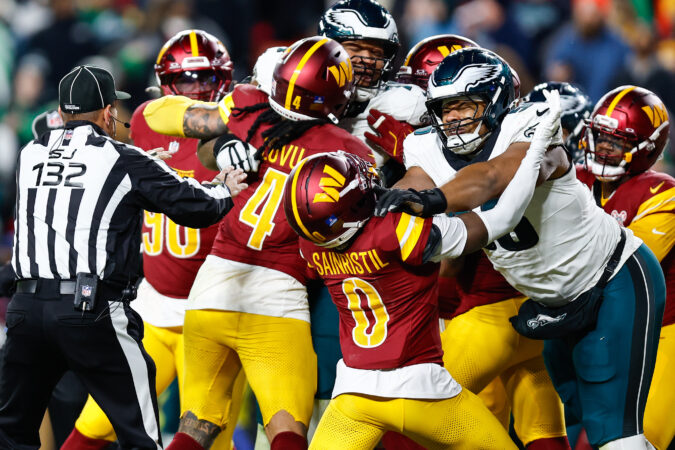
    The Commanders can improve their draft standing several slots with a loss, and I have to wonder how much the players are motivated at this stage of the season. But I thought they played hard in their last several games, and they may be looking for payback after a first meeting full of chippiness and altercations.

    The Eagles can still improve their playoff seeding with a victory coupled with a Chicago Bears loss to the Detroit Lions. I understand Sirianni’s rationale for giving his starters the game off. He can’t control getting the No. 2 seed, but he can decide who plays and who doesn’t. The Eagles aren’t exactly beat up, but it’s been a long season. A week of rest may help. Tackle Jordan Mailata spoke more about the mental benefits than the physical.

    As for the game, I think we may see Patullo use McKee at quarterback as an opportunity to dip into the playbook. That’s no knock against Hurts, but the Eagles have become predictable in certain respects, and I can see more diversity helping their cause. Sirianni has more depth than most teams, but I don’t think his squad is as deep as it was a year ago. I think what’s left of Washington’s first unit has enough to hold on.

    Prediction: Commanders 23, Eagles 20.

  • How to have a Perfect Philly Day, according to 92.5 XTU’s Nicole Michalik

    How to have a Perfect Philly Day, according to 92.5 XTU’s Nicole Michalik

    Nicole Michalik spends her afternoons talking directly to Philadelphians as they make their way home. As a host on 92.5 XTU, the city’s country music station, she’s on air from 2 to 7 p.m., juggling live breaks, listener calls, and interviews with artists like Luke Combs and Parker McCollum. Radio, she insists, is still relevant, “sexy” even. “I’m live, I’m local, I’m talking about stuff that’s going on in Philly,” Michalik said. What more could you want?

    Michalik lives in Midtown Village, but her days stretch across the city, including a trek to Bala Cynwyd, where the radio station is located. She loves her job. In fact, she loves it so much that her perfect Philly day includes a trip to the office. Here’s what else it includes.

    This interview has been lightly edited for clarity.

    7:30 a.m.

    I usually wake up somewhere between 7 and 7:30. First thing I do is check socials and email, then I make coffee at home. I need it piping hot. I use a Keurig — no judgment — with organic half-and-half.

    I take it back to bed and do my Instagram bit, “Coffee Under the Covers.” I started it during COVID and it just became a thing. I’ll take a sip and talk about whatever’s on my mind. People have sent me mugs. It’s wild.

    After that, I record my Boston radio show from home. I’m on Country 102.5 up there, so I have a whole setup — computer, mic, everything. I want it to feel as local as possible, even though I’m not physically there.

    10 a.m.

    I force myself to work out. I walk to XForce to train with James, who keeps me accountable. I hate working out, but I don’t hate it there, so that’s a win for me.

    When I cross Broad Street, I always take a photo of City Hall and post the temperature. It’s become a thing. One of my friends who lives in Portugal checks it every day. He calls me his Cecily Tynan.

    11:30 a.m.

    After the gym, I get my hair blown out at Dina Does Glam inside Sola Salons at 15th and Walnut. I go at least once a week. I love that Sola lets people in the beauty industry run their own little studios.

    From there, I walk to Gran Caffè L’Aquila for an iced coffee. It’s the best iced coffee in the city. That’s nonnegotiable.

    I try to head home after that, because if I don’t, I’ll get sucked into Sephora buying makeup I absolutely do not need.

    1 p.m.

    I get ready for work and drive to Bala Cynwyd. On the way, I stop at the Starbucks on City Avenue. I order an iced Americano with almond milk and a drizzle of caramel. They know me there.

    I don’t even know if caffeine really affects me that much. I just love the ritual. I like sipping it throughout the show.

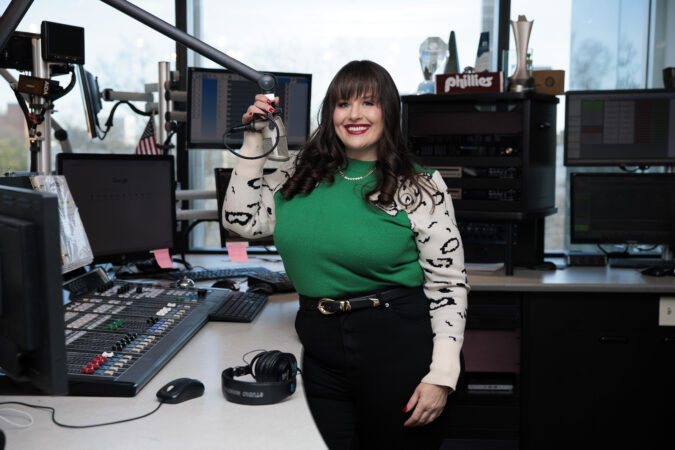
    Nicole Michalik works at 925XTU on Monday, Dec. 1, 2025 in Philadelphia.

    2 to 7 p.m.

    I’m live on the air. On my perfect day, I’m doing a Zoom interview with Luke Combs, and he finally announces he’s coming back to Philly. We’ve been mad at him for skipping us for a few years, so this would be huge.

    7:30 p.m.

    After work, I meet friends at Lark in Bala Cynwyd. It’s right across from the station, and it’s one of my favorite places. I’m ordering the gnocco fritto — they’re like little puffy clouds with lemon ricotta — and the striped bass. Nick Elmi just knows what he’s doing.

    9 p.m.

    I’m heading to a Sixers game. In my perfect world, it’s the Eastern Conference finals, Joel Embiid has great knees, and we’re winning. I live in the city and love walking everywhere, but I also love that Philly is easy to drive around — as long as the PPA doesn’t get you.

    11 p.m.

    Once 11 p.m. hits — I’m like Cinderella — I’m ready for bed. I love going home to put my pajamas on.

  • The world will be coming to Philly this year to celebrate America’s 250th birthday. We’re ready.

    The world will be coming to Philly this year to celebrate America’s 250th birthday. We’re ready.

    Nowhere will celebrate America’s 250th anniversary like Philadelphia. Because nowhere else can celebrate the national milestone like Philadelphia.

    Philly is where it happened.

    Only in Philadelphia, on July 4, 1776, did 56 sweat-soaked delegates of the Second Continental Congress stride into sweltering Independence Hall to stake their necks on an idea. In the course of human events, it had become time to declare self-evident truths. All men are created equal and endowed by certain unalienable rights.

    Some men, that is.

    This unforgivable erasure would have reverberations to this day. Nowhere are the centuries-old wounds of that betrayal more visible than in the unrelenting poverty, violence, and inequality preventing so many Philadelphians from their pursuit of happiness.

    But the manifesto was still the most revolutionary freedom document humankind ever produced. A single piece of parchment composed of elegant, unwavering prose that defied and dared an empire, forever reordered the rights of man, and drew the eyes of humanity — and judgments of history — upon our humble burg.

    Their work for the day done — and in keeping with the rest of the Founders’ stay in the City of Brotherly Love — the framers presumably dusted off their wigs, loosened up their waistcoats, and repaired to the cooling comfort of the City Tavern for a rager for the ages.

    Only in Philadelphia.

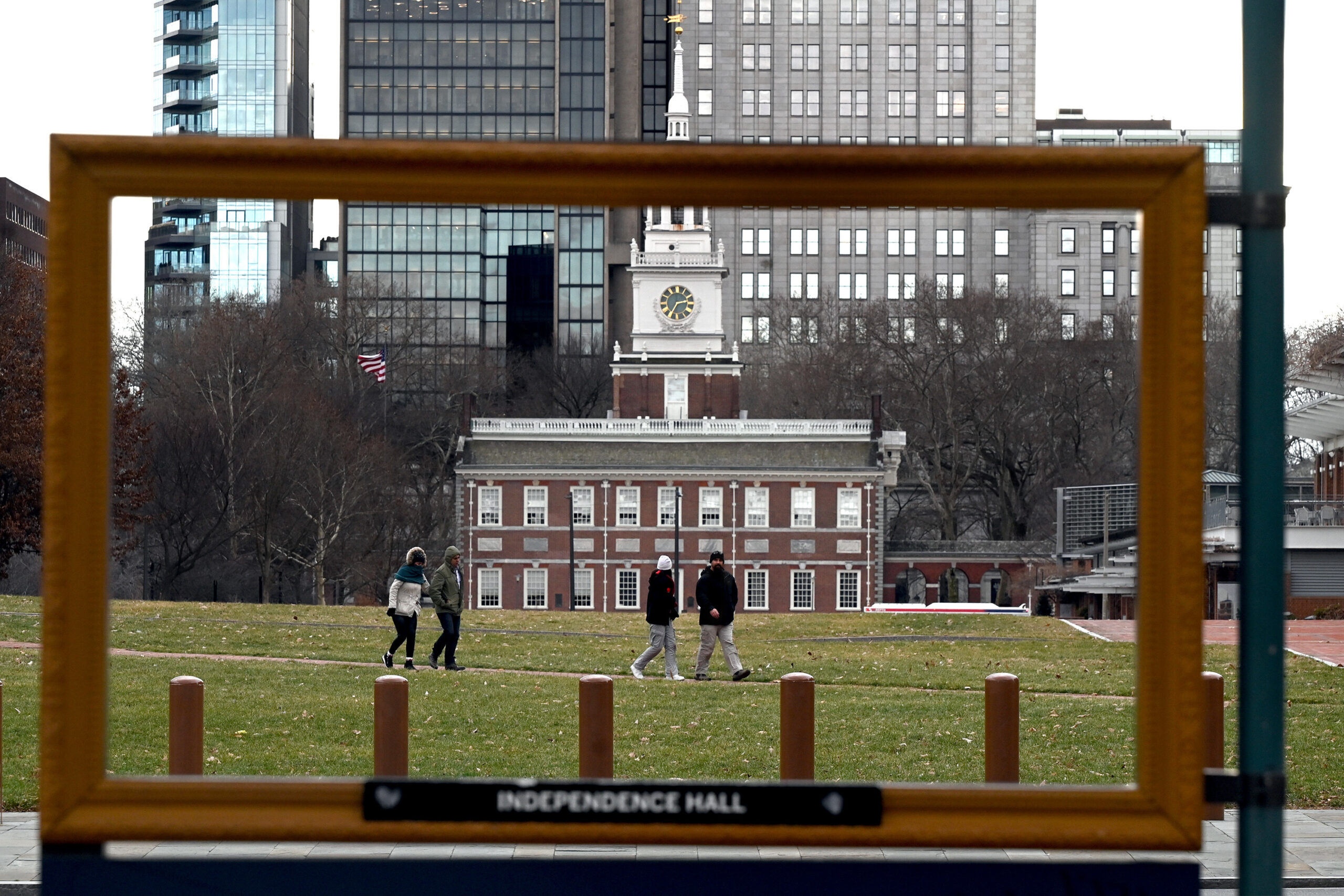
    Independence Hall in Independence National Historical Park Jan. 3, 2024. one of the Philadelphia region’s most visited areas, but the lustre has often seem faded in its grounds and buildings. But organizers say it will be different in time for 2026, the 250th birthday celebration of America.

    ‘Philly is beyond ready’

    Two-and-half centuries later, the eyes of the world again fall upon our Philly — for yet another rager for the ages.

    In Philly fashion, the city’s preparations for the 250th anniversary of the signing of the Declaration of Independence, also known as the Semiquincentennial, stumbled to a rocky start. Poor funding, a lack of leadership, and miscommunication plagued early stages of Philly’s 250th party planning.

    But in truer Philly fashion, dozens of passionate Philadelphian civil servants, cultural leaders, artists, volunteers, and philanthropies rallied to ensure the city where it happened met the moment.

    Only a year ago, during a 2026 preparedness meetings, worried planners requested $100 million from city and state coffers to fund festivities and programming worthy of democracy’s birthplace. They have received it.

    “A year ago, we were having a conversation about, ‘Are we ready?’, ‘Is the money there?’, ‘Can we pull this off?’” said Max Weisman, an aide to Councilmember Isaiah Thomas, a key planner. “Yes, yes, yes.”

    Philadelphia is ready, the planners say. Have no doubt.

    These Philly-loving patriots say they have organized a once-in-a-lifetime party equal to the city’s unparalleled role in history — and its irrepressibly proud personality.

    “Philly is beyond ready,” said Kathryn Ott Lovell, president and CEO of the Philadelphia Visitor Center Corporation and Philadelphia250, the city’s key planning partner for 2026. “Everyone is pulling out the red carpet. Every museum. Every cultural institution. Every neighborhood organization. Everyone is doing something special for the company that’s coming.”

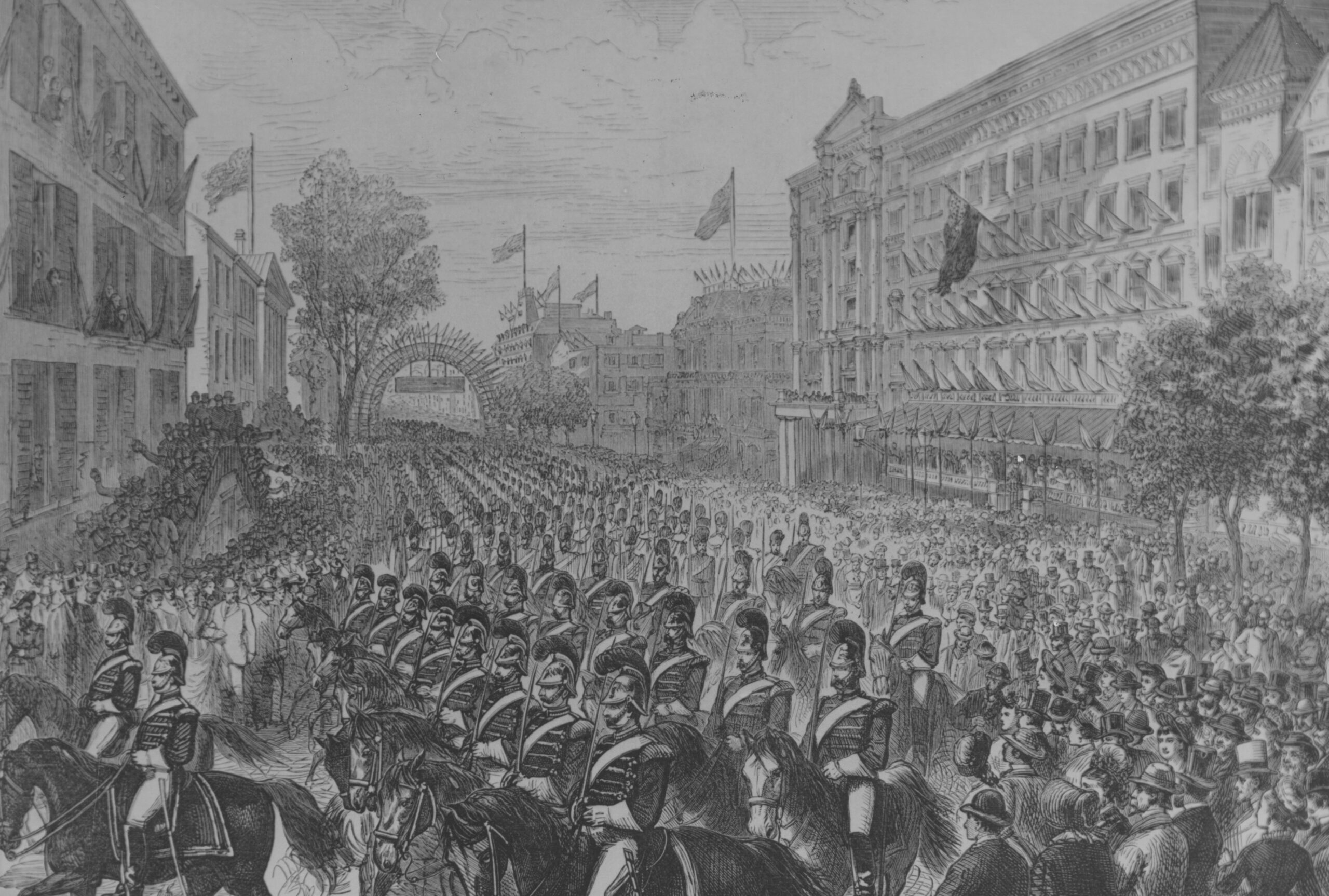
    In this depiction published in The Inquirer July 1, 1951, the first event of July 4, 1876, was a huge military parade. The celebration was held in Independence Square after the parade.

    A ‘reintroduction to the world’

    Look around. Everywhere signs abound of the already-underway party. In the scores of new museum exhibits grandly exploring every power and contradiction enshrined in the declaration bellowed out of Philadelphia 250 years ago. In the abundance of plans for neighborhood programming and beautifications that bring the party to the people in 2026. In new ventures honoring Philly diversity and pride. In the polish and paint in the works for the Historic District.

    Hey, Philly cleans up when it needs to.

    It was visible when a parade of ships sailed along the Delaware in October to kick off the 250th anniversary of the Navy, founded in Philly. And it was heard in the crisp salutes and solemn hymns of the Marines who crowded Old City in November to mark their branch’s founding, also in Philly in 1775. It builds in the excitement of clock-ticking preparations for the string of big-ticket events that will grace Philadelphia in 2026.

    Six FIFA World Cup matches, with a summer fan festival and volunteer-training campus. The MLB All-Star Game. A pumped-up Fourth of July with to-be-announced special guests. TED Democracy talks featuring citizen speakers from Philly and beyond, exploring democracy’s painful past and uncertain present.

    It rings out in the genuine excitement of Philadelphians who work in ceaseless dedication to the principle that Philadelphians know how to throw a party.

    Philadelphia is not screwing up a party, is Weisman’s mantra (except he doesn’t say, “screwing.”)

    Matthew Skic, of Morristown, N.J., Director of Collections and Exhibitions, (left), and Michael Hensinger, of Fishtown, Pa., Senior Manager of K-12 Education, (right), are dressed as Minute Men from the Massachusetts Militia at the opening of the exhibit Banners of Liberty which showcased the original revolutionary war flags at the Museum of the American Revolution in Philadelphia, Pa., on Saturday, April 19, 2025.

    Not just a party. A year-long, city-wide commemoration that delivers Philadelphia into a more prosperous future. Before city planners found their 250th footing, Philly tourism and cultural leaders banded together to seize the opportunity. With more than 500,000 visitors expected for the World Cup alone, they aim to reintroduce Philadelphia to the world.

    “Or introduce ourselves for the very first time to people who do not know Philadelphia or have a very narrow view of Philadelphia,” said Angela Val, president and CEO of Visit Philadelphia, the nonprofit that serves as the city’s official leisure-tourism marketing agency. “We don’t take these big events lightly. They are investments. This is really an opportunity to set ourselves up for success in 2026 and beyond.”

    Parties of the past

    We’ve been here before.

    Every 50 years since 1876, the nation’s Centennial year, and America’s first major birthday bash, Philly has dusted off its wig to get down. Each of these events came with larger national wounds.

    “Before every one of these fairs, there’s a scar,” said David Brigham, librarian and CEO of the Historical Society of Pennsylvania, referring to Philly’s previous national birthday parties. “There’s always been a conflict and a pain.”

    And in these moments, Philly has strove to be a salve, he said. Most of the time, anyway.

    In 1876, when America reeled from unhealed wounds of the Civil War, Philadelphia built a small city in Fairmount Park — and hosted 10 million people from 37 countries. The showcase of growing American innovation and economic prowess aimed to heal a ruptured nation. Memorial Hall, its massive art gallery, remains today as the Please Touch Museum.

    In 1926, as America emerged from the carnage of World War I, our Sesquicentennial marked the building of the Ben Franklin Bridge, the transformation of what is now FDR Park, and the construction of a temporary, gleaming, utopian metropolis in South Philly.

    The Bicentennial in 1976 led to the creation of the Mann Center and the African American Museum in Philadelphia, even if the party itself was marred by Mayor Frank Rizzo’s heavy-handed security — he summoned 15,000 National Guard members.

    We’ve been here before. And we aren’t perfect.

    As ready as Philadelphia stands, next year’s commemoration will not include the big legacy projects of past celebrations, the bridges, stadium, and new museums.

    But maybe that’s not what this moment is about, anyway.

    An unfinished journey

    Just as past planners grappled with the questions of their American moment, Philadelphia organizers wrestle with ours.

    “It’s a commemoration of why our republic was created,” Lovell said. “But also about a recommitment to the ideals that were established. We were founded on these basic principles and values that the Founding Fathers fought over. And we’re still fighting over it.”

    It’s that same theme — the grand fragility of our American experiment — that pulses though the Museum of the American Revolution’s landmark exhibit, “The Declaration’s Journey.”

    A breath-taking assemblage of rare artifacts, including Thomas Jefferson’s writing chair and Martin Luther King’s prison bench, the museum’s most ambitious show ever explores the 250-year global impact of the declaration. How words proclaimed out from Philadelphia inspired revolutions and freedom movements throughout the centuries

    “The American Revolution is not synonymous with the Revolutionary War,” said R. Scott Stephenson, president of the museum. “It is a centuries-long, ongoing experiment in liberty, equality, and self-government.”

    And that journey’s not yet over.

    The birth of democracy in Philadelphia, and the worldwide struggle to sustain it, represents the most significant event since the birth of Christ, said filmmaker Ken Burns. (And here we though it was Super Bowl LII.)

    The American war may be over, but the revolution is not, said Burns, whose 12-hour docuseries, “The American Revolution,” is streaming on PBS.

    All we were promised was the pursuit, he said. And the chance to forever make the imperfect a little less so.

    The republic the Founders forged in the Philly heat stands the most divided and tested it has been in decades, with core disagreements about its very foundations.

    It is only right, then, that Philadelphians march onto the global stage. Who else but us?

    In every way, being America’s birthplace shapes Philadelphia. Where else is its hallowed iconography such a daily staple? Where else does its symbolism so powerfully frame every civic successes — and failure? Every sports triumph and cultural happening. Every step forward; every stumble backward.

    Where else does the promise and contradictions of a proclamation that turned the world upside down so intrinsically coarse through the lifeblood of a place?

    Where is it all so still alive?

    Where else but where it all happened.

    Only in Philadelphia.

  • How a 3-legged goat is learning to use a wheelchair

    How a 3-legged goat is learning to use a wheelchair

    From losing a leg to a parasitic infection that almost took his life to getting temporarily cast out by his herd, Ray the Nubian goat had a rough 2025. Loving volunteers and a wheelchair might make for an improved 2026.

    In October, the Philly Goat Project, an East Germantown nonprofit that provides community wellness through nature connection, shared Ray’s story with The Inquirer.

    The 7-year-old goat had gone from helping people in bereavement and children with cerebral palsy at Awbury Arboretum to needing help moving around. Readers showed up for the middle-aged ruminant, donating enough for Ray to get his wheelchair and have physical therapy.

    On a recent cold Monday morning, Ray eagerly awaited his rehabilitation, standing strong on three legs and eating orange peels out of volunteer Jay Tinkleman’s hand.

    “It’s amazing what he has been through,” Tinkleman said, kissing Ray’s forehead. “He seems more confident now, a little stronger, and the other goats don’t pick on him like they used to at first, so I think they sense that he is stronger.”

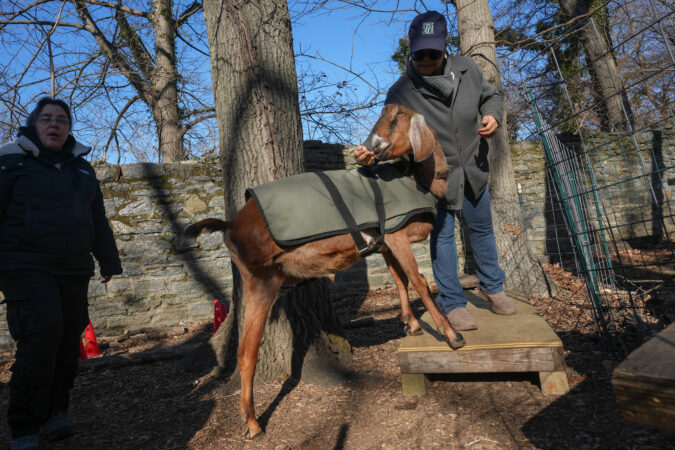
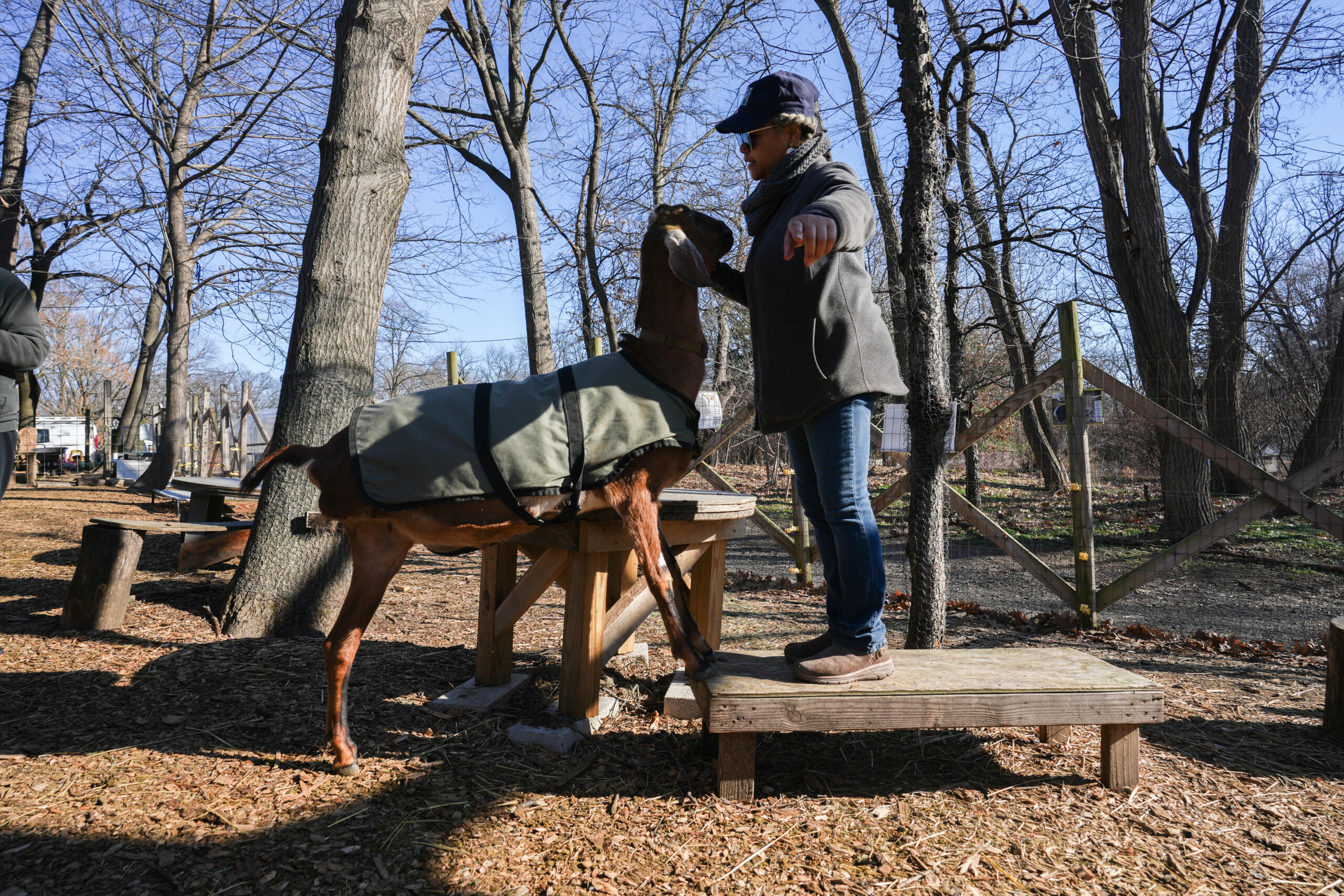
    Leslie Jackson, director of operations, works with Ray, who lost his leg due to a parasite infection.

    Casey Buckley, who runs Ray’s physical therapy, agrees with Tinkleman, but said the friendly goat still has a long way to go.

    These days, Ray is an ambulatory wheelchair user. He can move with or without a wheelchair, but needs it for long strolls, an important part of goat life.

    “His rehab is a lifelong process,” Buckley said. “The goal is that on long walks, where he might not be able to go, he can use the wheelchair, but we just have to take it day by day.”

    Ray might not fully agree. Once the first of his nine exercises began, he was ready to go.

    “Slow down!” Leslie Jackson, director of operations at Philly Goat Project, told Ray on multiple occasions.

    Neck stretches side to side, he aced it. Getting rocked back and forth to get the core strength humans get when doing crunches, no problem. Elevating his two front hooves on a table, while balancing on his third leg, to practice climbing the Philly Goat Project van “Vangoat,” easy.

    Then came the orange cone course. Ray flew through it only to be stopped by Jackson right before the ending.

    “No, no, no cheating, back, back,” Jackson told him upon realizing, in his speed, Ray had missed a line.

    He tried again and again, but his last paw kept missing a line of cones. He bumped Jackson’s arm softly, perhaps looking for a comforting treat.

    “We will do it together, teamwork makes the dream work,” Jackson told Ray, as Tinkleman and Buckley rallied around them to help line up the cones for another try. And shortly, to Ray, victory tasted like orange peels.

    After 30 minutes of PT, he was ready to practice walking around in his wheelchair.

    It took all three to get Ray into the chair. Tinkleman petted Ray’s head, keeping him calm. Jackson lifted the back of his body. And Buckley placed the metal contraption around Ray, making sure there was a wheel on each side, securing the black belt, and placing two soft sponges under the hip where his fourth leg used to be.

    “He is not afraid of it, he doesn’t run from it,” Jackson said as Ray took off walking faster than before, no hopping or dragging. A milestone for the team that had been working for Ray to walk with his chair instead of feeling like he had to drag it.

    Belly full of treats, the jolly goat led the group to the barn where his 11 goat friends and brother Teddy rested after returning from one of their long walks.

    In time, the team hopes that the chair will help Ray join in once again. They are practicing having Teddy walk next to Ray in his wheelchair, keeping enough space for the wheels not to run over Teddy’s hooves.

    Until then, Jackson feels grateful for Ray’s resilience and the big hearts that have helped him along the way.

    “You don’t give up on a teammate, you try to help them through,” Jackson said. “Without the people who responded from The Inquirer [article], and our friends and family and fans, this would not be possible; he would not be getting stronger without a trainer, without a professional wheelchair. It’s a community effort.”

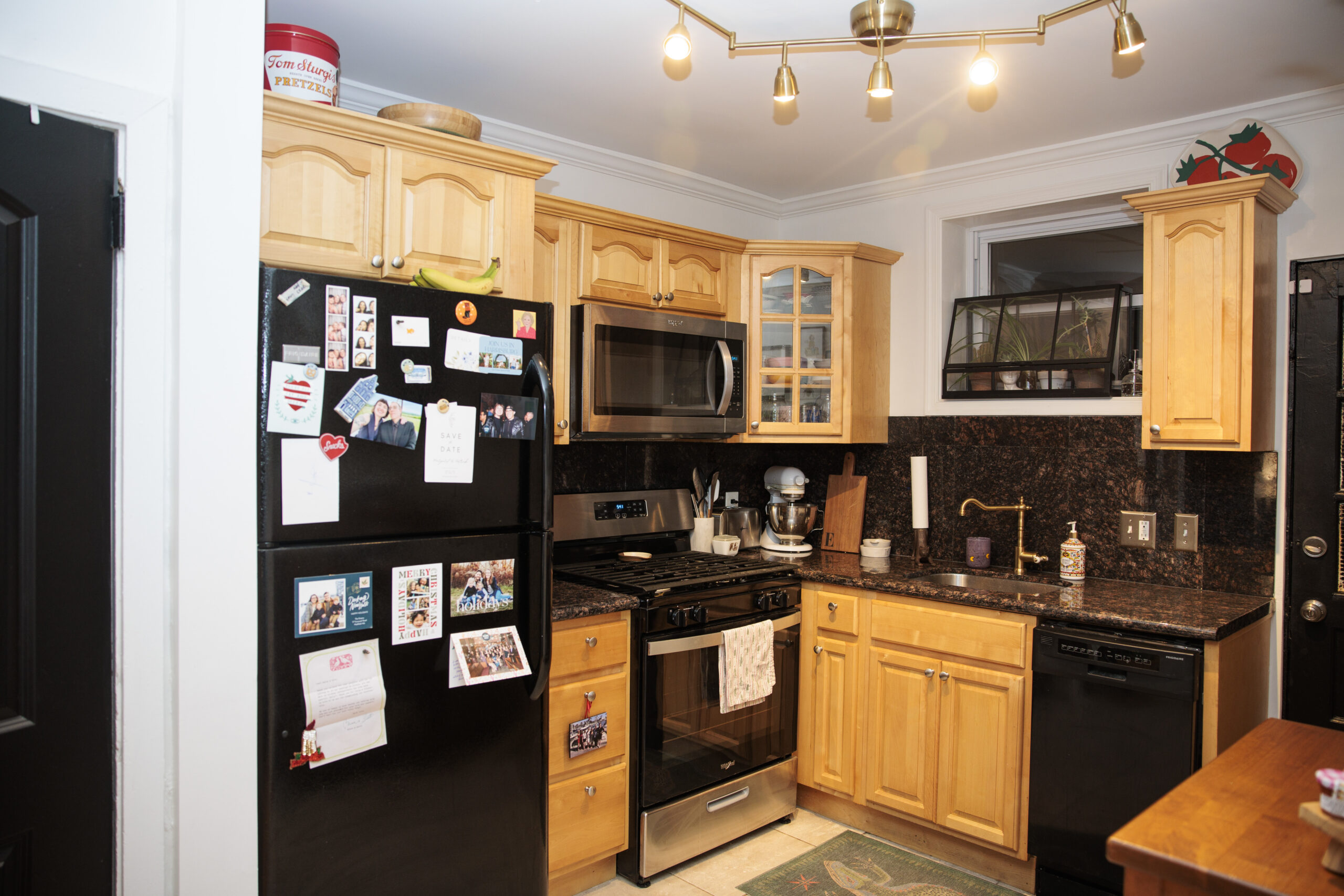
  • After walking away during an inspection, she rebounded with a two-bedroom in Newbold | How I Bought This House

    After walking away during an inspection, she rebounded with a two-bedroom in Newbold | How I Bought This House

    The buyers: Emily Miles, 34, lawyer

    The house: A 784-square-foot rowhouse in Newbold with two bedrooms and one bath, built in 1920.

    The price: Listed and purchased for $249,000

    The agent: Allison Fegel, Elfant Wissahickon

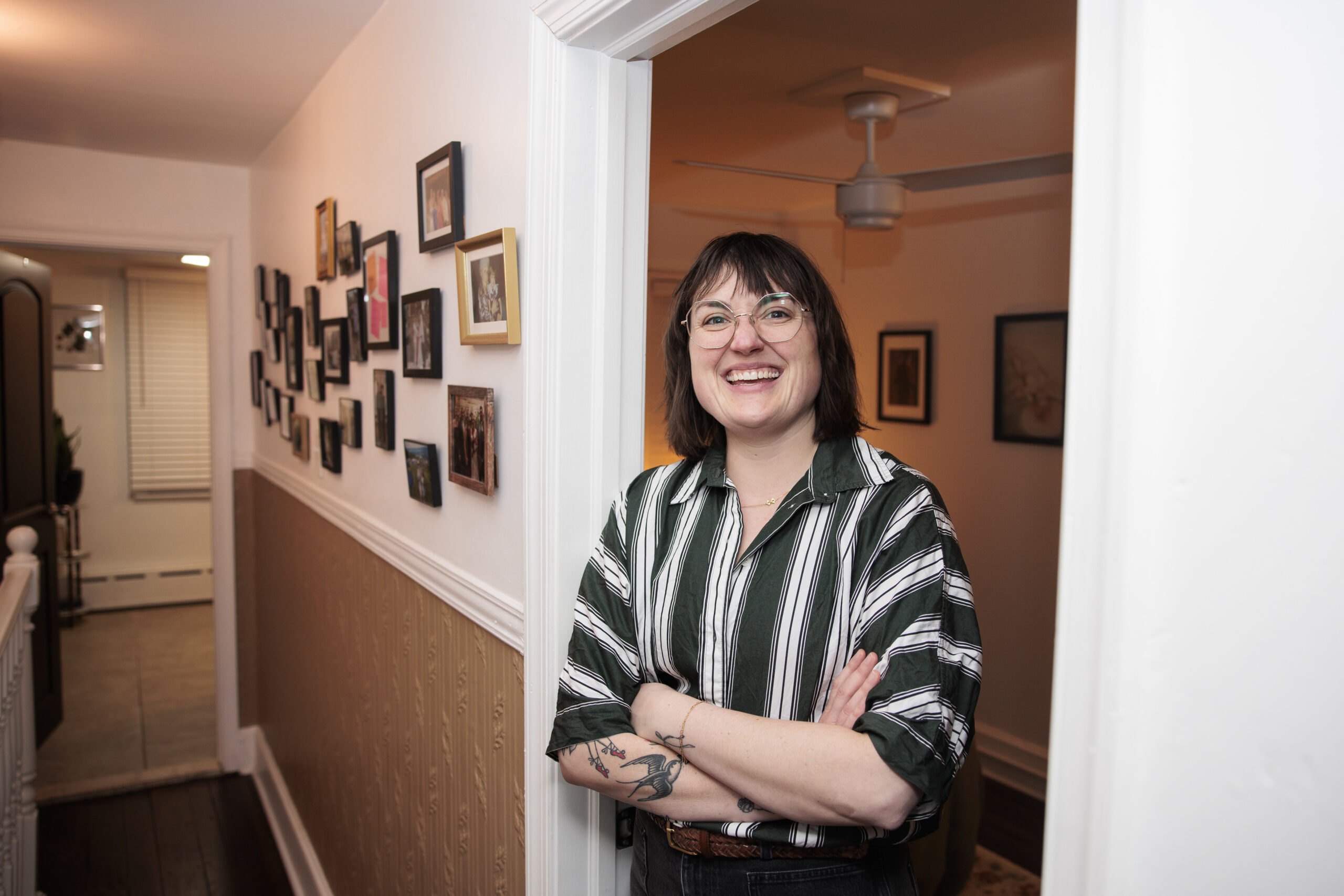
    Miles in her two-bedroom home.

    The ask: The only good thing about Emily Miles’ old apartment was the price. Miles was making a “nonprofit lawyer salary” and trying to save money. But “it was terrible,” Miles said. Disgusting even. And by November 2024, she’d had enough.

    Owning a home felt aspirational, if vague. “It was always something I wanted to do,” she said. “But I didn’t know when I’d be able to do it.”

    It didn’t seem like the right time. Miles had student loans. She was bartending in the evenings to make ends meet. Nevertheless, she decided to check out the market and searched for an agent with grant experience. She kept her house wish list short: three bedrooms, outdoor space, and central heat and air.

    The search: Miles had no sense of budget until her lender preapproved her for about $310,000. From there, her agent began sending her listings across the city, including large homes far from the neighborhoods Miles associated with Philadelphia.

    “They were still in Philadelphia County, but not really Philly as you think of it,” Miles said. West Philadelphia, where she was living, was not affordable. Other neighborhoods lacked reliable transportation.

    Between late November and January, Miles saw 30 to 40 homes. “They were a lot of flips, and I didn’t want that,” she said.

    Eventually, Miles found a place and made an offer. But during the inspection, they discovered damage to the front door that indicated someone had kicked it in, and Miles decided to walk away. She was out $1,500. “My pride was hurt a little bit,” she said.

    Miles took a brief break, then started attending open houses on her own. That’s how she found the one, a little less than a month after she backed out of the first house.

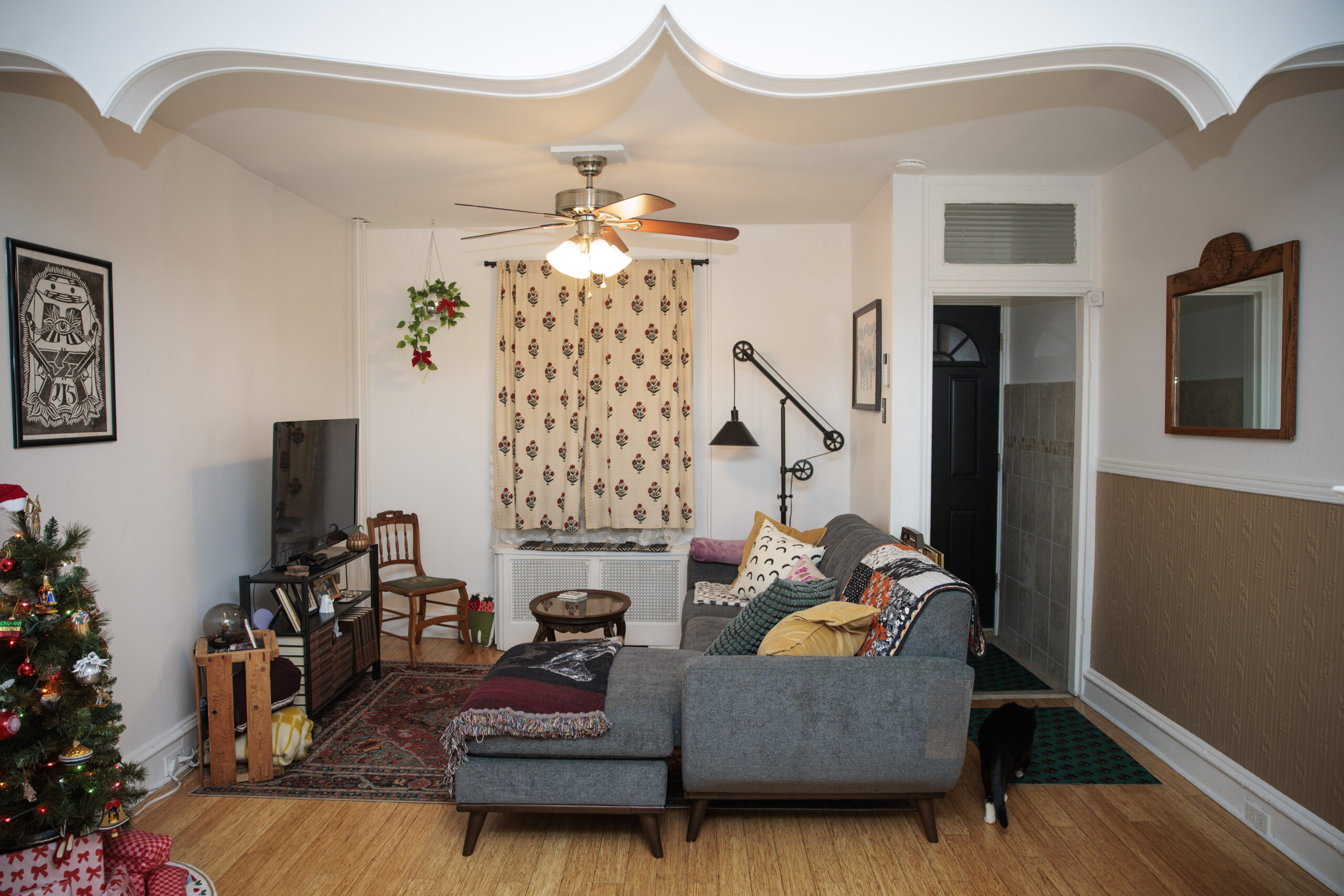
    Miles liked the house’s original features and character, such as the arched framing of the living room.

    The appeal: The house Miles ultimately bought — a two-bedroom, one-bath, 780-square-foot rowhouse in South Philadelphia — checked none of her original boxes. “The big LOL about the whole thing is that I ended up with something I didn’t want at all,” she said. It had radiator heat. No air-conditioning. Less space than she planned. The house had been a rental for more than a decade. Carpet covered original features. Paint concealed years of wear. “It was a real landlord special,” Miles said. But when she stepped inside, something clicked. “I walked in, and I could see it,” she said. “It’s full of character.”

    The deal: Miles stumbled into the house she would buy while walking to a bar with her boyfriend on a Friday night. The listing price was $249,900. She offered the asking price the following morning.

    The seller took days to respond but eventually accepted her offer after no one else made a bid.

    When the inspection revealed issues, Miles asked for $5,000 to $7,000 in credits. The seller countered with zero. “He redlined all my stuff,” she said. “So I re-redlined all of his stuff.” The back-and-forth ended with $2,000 in seller’s credit. “Which is better than zero,” Miles said. “I’m pretty proud of that.”

    Miles filled her home with vintage furniture she found at local thrift shops. Her cat, August, has his own bed.

    The money: Miles had about $20,000 saved from her time before law school, when she worked as a human resources manager in New York City. She had an additional $10,000 from the Philly First Home program, $2,000 from the seller’s credit, and $1,000 from her Realtor’s Building Equity program.

    Her lender approved her to put down only 3%, so she made a $7,500 good-faith deposit and brought $1,500 to closing. Miles’ credit score and salary qualified her for a 5.75% interest rate at a time when average rates hovered closer to 7%.

    Her monthly mortgage payment is about $1,800 and includes $120 for private mortgage insurance, which she must pay until she reaches 20%. She recently applied for a Philadelphia homestead exemption, which reduces the taxable portion of your house by $100,000 if you use it as your primary residence, and expects her monthly payment to drop closer to $1,700 as a result.

    The move: Miles closed on March 19 and moved on April 29. She broke her lease without penalty. “I had been complaining about it being a bad apartment for months,” she said, “so I think they were just happy to be rid of me.”

    Miles had to get rid of a lot of her stuff because her new house was so much smaller than her apartment. “I downsized quite significantly,” she said. She also discarded stuff that wouldn’t fit through the house’s small, 30-inch doorway, like her couch. “Luckily, I had some foresight and got rid of it before I moved it over,” she said.

    Miles installed new lighting and faucets to make her home feel less like a rental.

    Any reservations? Miles wishes she knew that refinished floors can take weeks to fully cure. She had to sleep on the living room floor while she waited for the fumes to fully dissipate upstairs. “It was just my cats and me on the ground for about a month,” she said. Still, she doesn’t have any regrets. “Live and learn,” she said.

    The bathroom in Emily Miles’ Newbold home.

    Life after close: Miles used the money her parents had saved for her wedding to make a few cosmetic updates. She fixed the back patio, refurbished the upstairs floors, and replaced light fixtures and faucets so that the house felt less like a rental. She put in a new boiler, too. And filled the house with vintage furniture she thrifted locally. “Stuff that fits the vibe of the house,” she said.

    Did you recently buy a home? We want to hear about it. Email acovington@inquirer.com.

  • Cars are essential to American life. They’re also toxic for the environment, humans, and society, these authors say.

    Cars are essential to American life. They’re also toxic for the environment, humans, and society, these authors say.

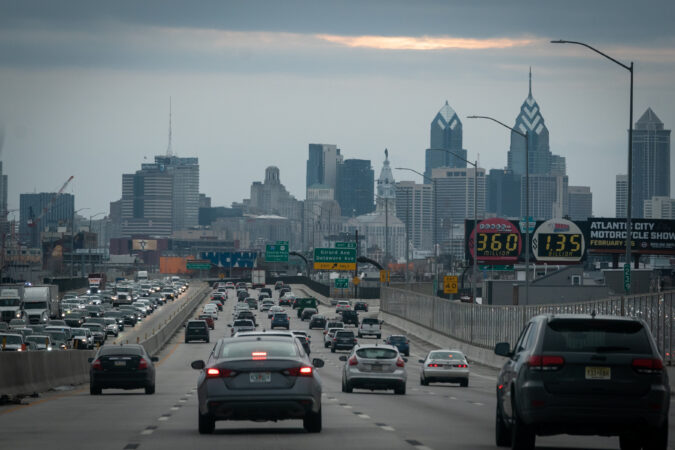
    For most Americans, driving is a normal part of everyday life. In much of the United States, a car is required for most trips to visit friends, commute to work, or go to the grocery store.

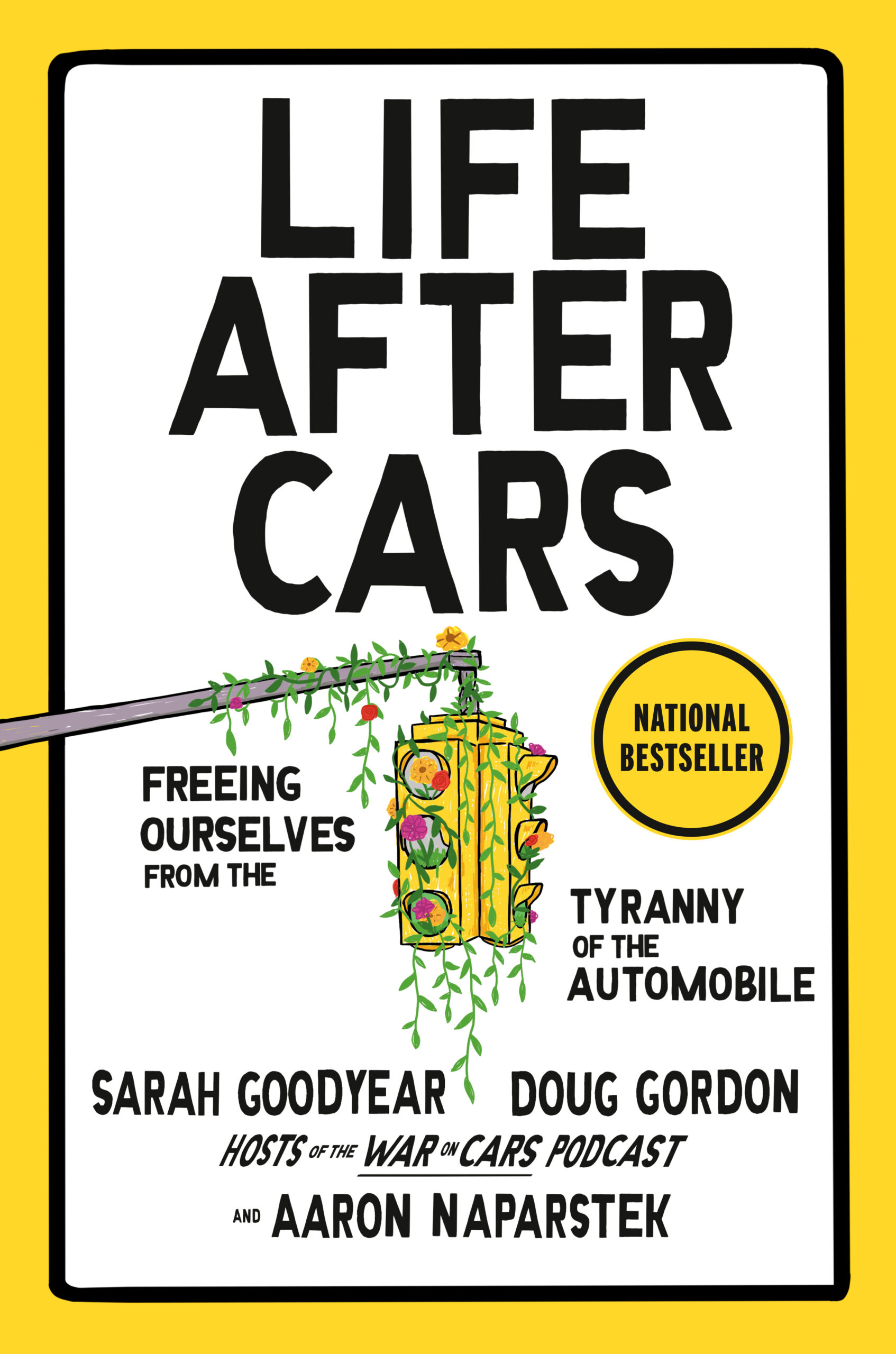
    The side effects of this auto-dependence are catastrophic, argue the coauthors of a new book called Life After Cars.

    There is the obvious danger from crashes, which kill roughly 110 Americans every day, but there’s also environmental devastation wrought by mass car ownership, social isolation engendered by the built environment, and soaring costs for American households.

    Did you know that the largest source of microplastics strangling oceans come from the tiny particles thrown off by tires? Or that in 1969, more than 40% of U.S. kids walked or biked to school while today only 11% do?

    Life After Cars is by Sarah Goodyear and Doug Gordon, hosts of a podcast called The War on Cars, a facetious name they adopted because opponents of non-car traffic infrastructure often accuse advocates of waging such a crusade.

    The conversation has been edited for length and clarity. Aaron Naparstek is a cowriter but was not featured in this Q&A.

    For most Americans, driving is part of everyday life. Why do you think that needs to be reevaluated?

    Gordon: Forced car dependency isn’t really working, even for people who love driving.

    Many Americans do love driving, but the type of driving that most Americans do is terrible. It would be great if most of the driving we did was on the open road, the camping trip, or the road trip, but most people are driving to work; they’re driving to get groceries. Those are such stressful trips that it would be great to provide alternatives.

    Goodyear: The price of real estate in walkable neighborhoods and transit-rich neighborhoods tells us that there is a real appetite for living in places where car dependence is not a given and where there are options.

    We’ve gotten to the point in this country where walkable neighborhoods have become a luxury good. We think walkable neighborhoods are something that should be available to everybody.

    You argue that America’s car culture severely limits the freedom of children. When I was a kid, I walked to school or to friends’ houses. Today, that’s rarer because of the threat of cars. And parents’ freedom is limited, too, because they have to drive their kids everywhere.

    Gordon: Cars and traffic fatalities are one of the leading causes of deaths for children in this country. You’re not wrong if you think to yourself, I don’t want my child walking to school because of the roads they might have to cross.

    Most of my friends and family who live in car-dependent suburbs have to serve as chauffeurs for their children until they’re at least 16. If they can’t afford another car, they have to continue negotiating how they’re going to get places after that.

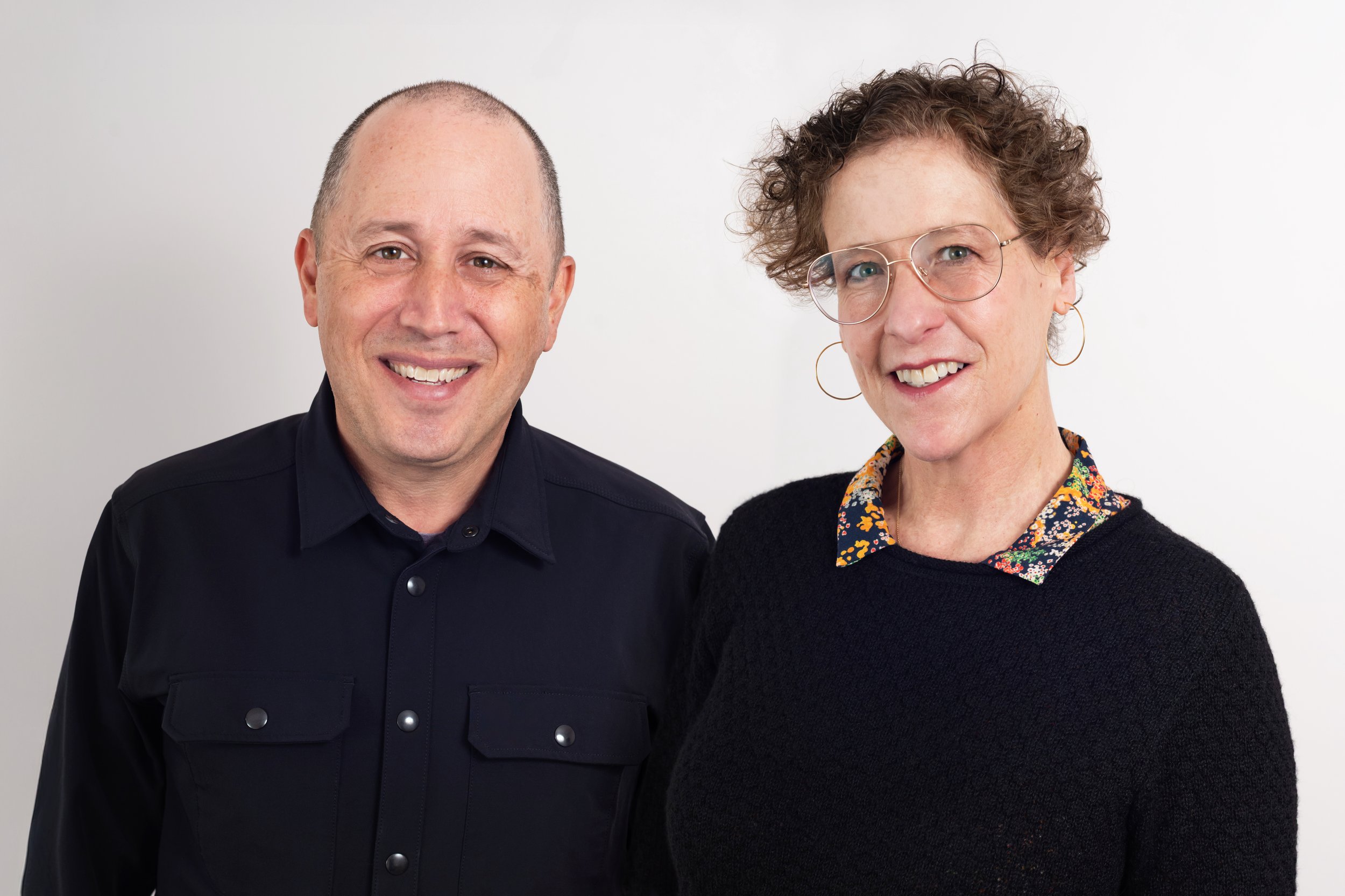
    Doug Gordon and Sarah Goodyear are coauthors of the new book “Life After Cars.”

    We live in a walkable neighborhood. My kids walk and take transit to school. There are some mornings where they get up and leave the house and I don’t see them because they’re totally independent. We want that freedom to be available to all parents.

    It’s also robbing kids of their ability to be kids, to learn about the world around them, to navigate their neighborhoods, to interact with shopkeepers and their neighbors. If we want to create better American citizens, we have to start creating walkable places for children.

    You have a chapter on the effect that cars have on the environment, a lot of which was news to me, like the fact that up to 340 million birds die every year in America from car strikes.

    Goodyear: It’s on all fronts. Transportation is a huge contributor to climate change. If SUVs globally were a nation, they would be in the top 10 for carbon emissions.

    But there’s all sorts of unintended consequences, like habitat fragmentation. Roads cut up our natural areas to the extent that animals can’t seek mates and their genetic diversity is really constrained by these islands that they’re living on between roads.

    We really don’t think about the effect of road noise, which increases stress hormones in animals that leads to them being less effective at reproducing.

    These things are happening constantly all around us, and we don’t even think about it. And as we sprawl outward, we’re not thinking about what all of the effects are on wildlife.

    I’m old enough to remember when if you were driving cross country, your windshield would be covered with bug splatter. That doesn’t happen anymore because there are not as many bugs. Cars are one of the reasons that’s true.

    You compare tech companies of today and the automobile industry in the early 20th century. Negative effects of cars have been known — and resisted — for a long time. But through media and political campaigns, the industry was able to argue that efforts to regulate the technology would undermine progress. Sounds familiar!

    Gordon: Cars were the original ‘move fast and break things’ technology. The Silicon Valley ethos is exactly the same.

    The cover for their new book.

    It was important for us in the book to document that early history [of resistance to cars] because we’ve lost sight of that outrage.

    There’s this myth building around cars that we had this love affair, and it was the inevitable march of progress that got us all behind the wheel. But at the outset, that was not the case at all.

    There was deep, deep resistance, and we’ve forgotten that because none of us know a world without cars. Getting people to understand that this was not inevitable is the first step toward changing our future trajectory.

    You try to end the book on a hopeful note. But a lot of the human-centric cities in Europe and East Asia are possible because those countries have comprehensive mass transit. The U.S. doesn’t and isn’t likely to for the foreseeable future.

    Gordon: It does boil down to transit. Almost all of this stems from density and transit and all of those things that we are lacking in the United States. It’s a long battle. We are planting trees, and we will not get to sit under their shade.

    Goodyear: We started this podcast seven years ago. I’ve been covering these issues as a journalist for 20 years, so I have had a pretty good look as issues of livable streets and reducing car dependency have gone from being fringe to being much more mainstream.

    Just the fact that this book came out from a major publisher is huge. Another metric is that in almost every city on our book tour there has been a local elected official on the panel with us. And these are younger politicians.

    What’s really been missing in the United States is leadership on these issues. The advocacy community has been there, and it’s growing. But what hasn’t been there is political leadership to make the changes that we all know are necessary. I see that changing, and that gives me hope.

  • Charm City eats, museums, and waterfront stays in Baltimore | Field Trip

    Charm City eats, museums, and waterfront stays in Baltimore | Field Trip

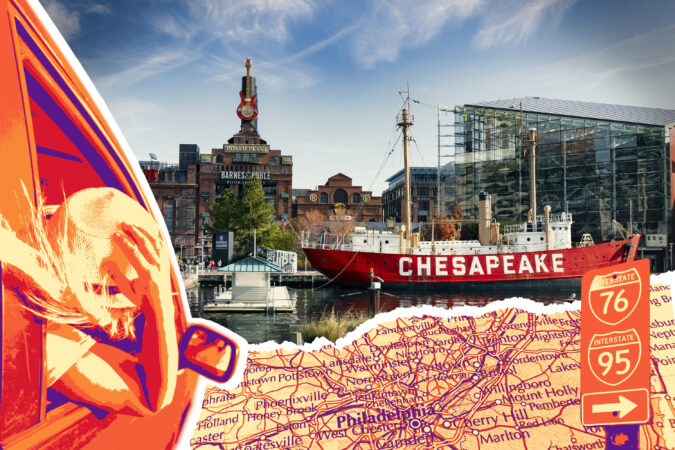
    Sometimes you take a road trip to experience something totally different from the world you inhabit — the absolute silence of a state forest, the carnivalesque majesty of the shore in full swing. A weekend in Baltimore is not that kind of trip.

    Charm City is the most Philly of the cities on the Acela corridor: smaller in size, but equally quirky, proud, and shaped by blue-collar roots. (Our accents are even passably close.) It’s also stacked with restaurants, museums, and cultural institutions that compete on a national level, all with a distinctly Baltimorean flavor, less than two hours away.

    Here’s how to spend a long weekend in Charm City.

    Snack: Café Los Sueños

    Once arriving in Baltimore proper, take I-83 up to the Remington neighborhood on the north side of the city, where Café Los Sueños roasts and brews its own beans in a peaceful, light-washed space a couple blocks off the highway exit. (The name translates to “Café of Dreams,” fitting for owner Carlos Payes, who came to the U.S. from the coffee plantations of El Salvador.) A horchata latte and croissant make for a perfectly calming start to the trip.

    📍 2740 Huntingdon Ave., Unit B, Baltimore, Md. 21211

    Sniff: Rawlings Conservatory

    If it’s not too cold — and you’re up for a walk — Los Sueños sits near the eastern edge of Druid Hill Park, the third-oldest urban park in the country and, for millennials, the namesake of Dru Hill. Follow the path along Druid Lake toward the Rawlings Conservatory, a circa-1888 botanical garden with five greenhouses. Even when it’s frosty outside, the impressive Victorian conservatories filled with tropical orchids, ceiling-skimming palms, and citrus blossoms deliver full-on summer music-video energy.

    📍 3100 Swann Dr., Baltimore, Md. 21217

    Stay: The Pendry Baltimore

    Check into the Pendry Baltimore, a moody, stylish 127-room hotel housed in a grand 1914 building on the former Recreation Pier. The Fell’s Point location is both charming and convenient, putting you within walking distance of many of Baltimore’s marquee attractions. Many of the wood-and-leather-clad rooms overlook the waterfront. The huge pool, which seems to float in the Inner Harbor, will have you booking a return visit for summer.

    📍 1715 Thames St., Baltimore, Md. 21231

    Explore: National Aquarium

    No curveball here. The National Aquarium is Baltimore’s claim to fame, and if the last time you were here was on an eighth-grade field trip, you should come back as an adult, with or without your own kids. The sprawling complex houses 2.2 million gallons of water and residents ranging from reef sharks and puffins to otters and moray eels. Don’t miss the Harbor Wetland exhibit, which opened in 2024 along a series of floating docks in the Inner Harbor and be sure to book tickets in advance. Aim for off-hours to beat the crowds.

    📍 501 E. Pratt St., Baltimore, Md. 21202

    View: American Visionary Art Museum

    The title Cap Bathing Moligator With Angelic Visitation (Dickens 44) tells you just about everything you need to know about the boundary-pushing work housed at the American Visionary Art Museum. This brick-and-mirror-clad institution in Federal Hill celebrates outsider art in all its surreal glory from landscapes to cosmological oil paintings to sculptures of a mosaic-winged Icarus and Baltimore icon Divine. The collection embodies the city’s DIY spirit and unbreakable creative streak.

    📍 800 Key Hwy., Baltimore, Md. 21230

    Drink: Charleston

    With its deep pedigree and polished service, Charleston in Harbor East possesses a sense of occasion that few restaurants have anymore. Even if you’re just passing through for drinks in its swanky little lounge, where local power brokers and big-night-out suburbanites mingle with tourists, those drinks are crafted with gravitas and élan as much as sparkling wine, passionfruit and honey (the Ipanema Fizz), or blanco tequila, Strega, and ginger (the Arandas Monk). The wine list is famously deep, which helps explain why Charleston won the James Beard Award for Outstanding Wine and Other Beverages Program.

    📍 1000 Lancaster St., Baltimore, Md. 21202

    Dine: The Wren

    From one medalist to another, the Wren, one of Bon Appetit’s best new restaurants of 2025, sits less than a 10-minute walk from Charleston in Fell’s Point. The location is an ideal spot for drink or dinner, with a much more casual silhouette with its wood paneling, pressed-tin ceilings, and no-reservations policy. It’s a pub essentially, and like the very best pubs in Ireland and the U.K. (partner Millie Powell hails from Dublin), the cooking comforts and satisfies on a cellular level. Think glazed ham, golden onion pie, sharp cheeses, honey-roasted apple cake, and the like. (Your Philly analog is Meetinghouse.) As expected, the bartenders pour a precise pint of Guinness, the perfect finale to a Baltimore weekend.

    📍 1712 Aliceanna St., Baltimore, Md. 21231

  • Robert Caputo, prolific photographer, writer, and filmmaker, has died at 76

    Robert Caputo, prolific photographer, writer, and filmmaker, has died at 76

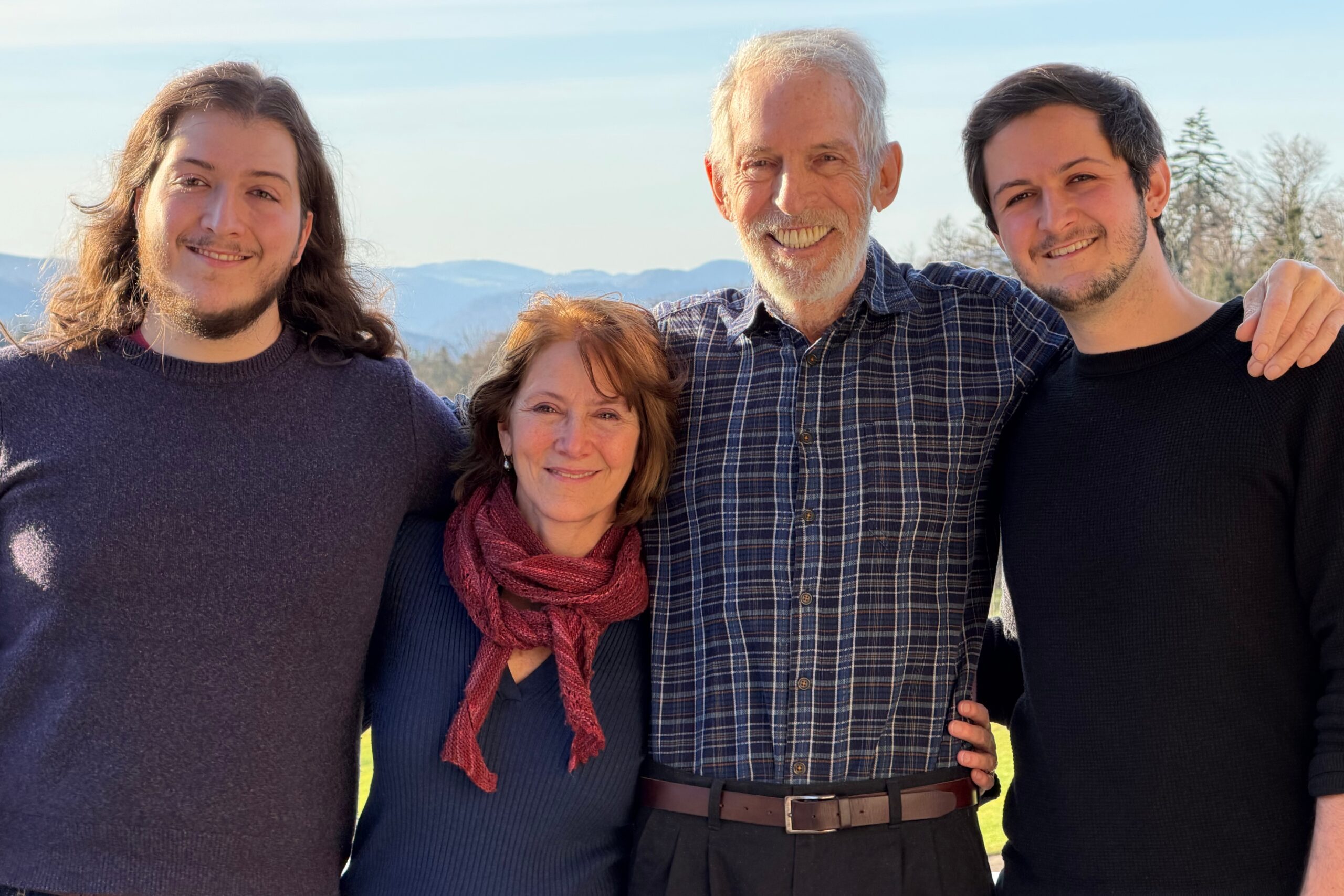
    Robert Caputo was captivated by the natural world, its animals and people. So he spent 35 years, from 1970 through 2005, traveling through Africa, Asia, and South America, taking photos, writing stories, and making films and TV shows for National Geographic magazine, Time, PBS, TNT, and other media outlets.

    From Kenya to Egypt, Venezuela to Zanzibar, in China, Cuba, New Orleans, and Boston, Mr. Caputo chronicled the beauty and tragedy of everyday life. He reported as a freelancer, with a camera and a notepad, for National Geographic for decades, covering political coups, civil wars, and famines in Sudan and Somalia, and the AIDS epidemic in Uganda.

    He worked for photographer and filmmaker Hugo van Lawick in Tanzania in the 1970s and then camera-stalked lions and leopards for National Geographic on the Serengeti Plain. He sent back striking images of the Abu Simbel Temples in Egypt and the old Kingdom of Mustang in Nepal.

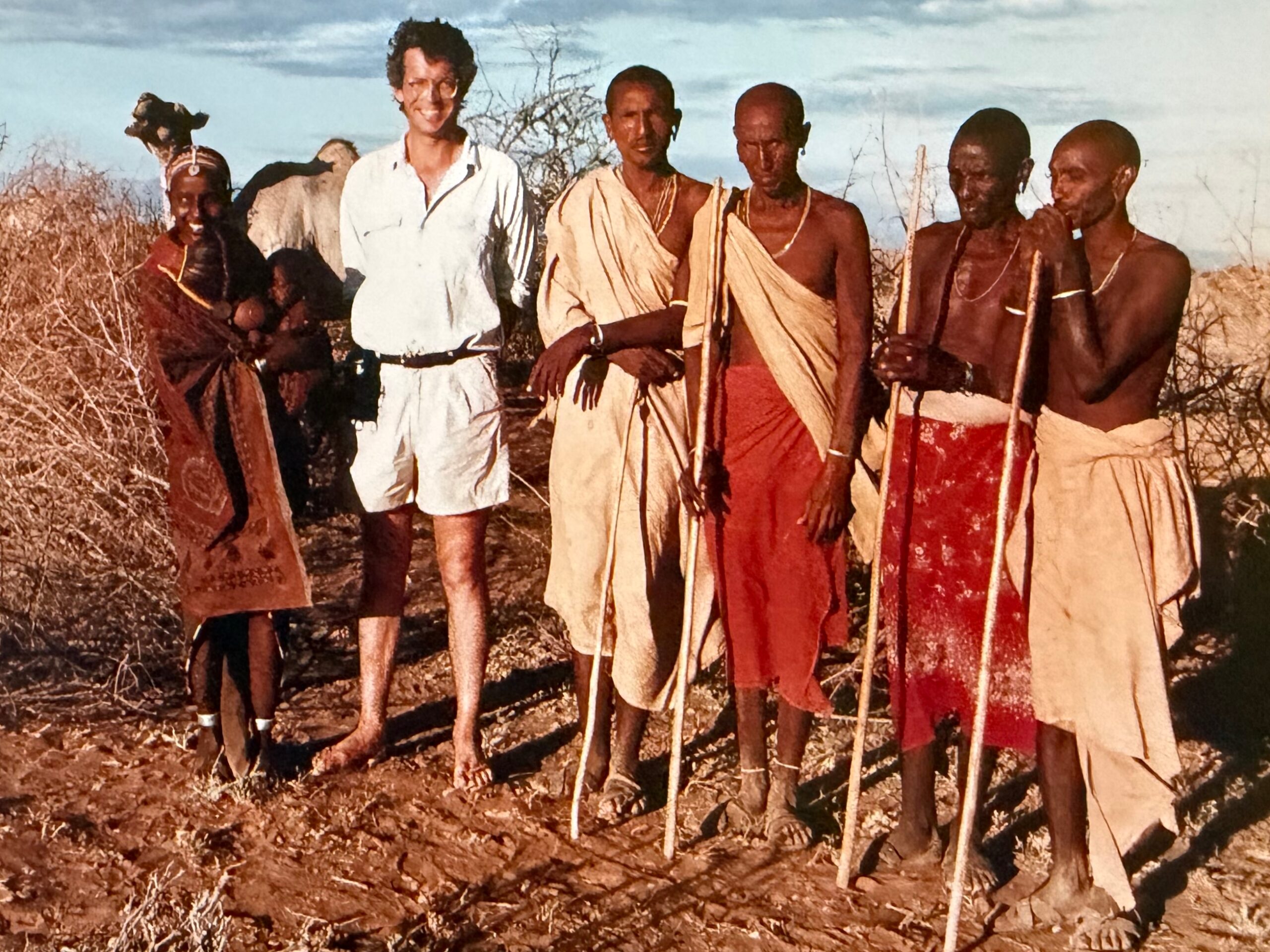
    In Sudan, he sipped tea with camel traders, slept under the stars, and posed for portraits with tribal chiefs. He trekked the Himalayas and photographed fishermen on the Congo, Nile, and Mississippi Rivers. His poignant August 1993 cover photo for National Geographic of a starving Somali woman gained worldwide attention.

    “In fact, it is a great job,” Mr. Caputo told the Washington Post in 1995, when he was featured in a TV show about the Geographic photographers. “You really do get to go places and do things others only dream about.”

    He told the New York Daily News in 1995: “I’ve always thought of my job as a license to be nosy.”

    In 2002, as he was winding down his international travel, Mr. Caputo moved from Washington, D.C., to a farmhouse in Kennett Square, Chester County. In early 2025, he was diagnosed with Alzheimer’s disease. In December, he and his family traveled to the Pegasos Swiss Association voluntary assisted dying center in Basel, Switzerland. He died Thursday, Dec. 18. He was 76.

    “Fairly early on, Bob had expressed his wishes to go out on his own terms,” said his wife, Amy. “We were able to honestly and pragmatically deal with our situation, and he remained his thoughtful self, with his sense of humor intact till the end.”

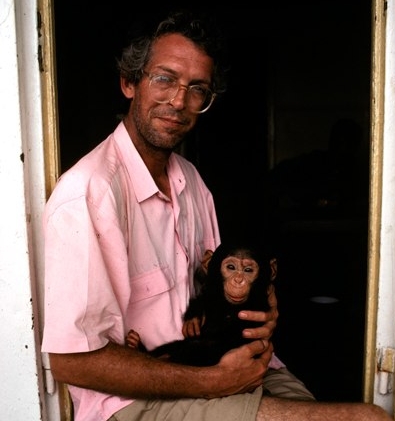
    Mr. Caputo loved spending time with animals.

    Mr. Caputo first went to Africa in 1970. He dropped out of Trinity College in Connecticut as a senior and meandered with friends across the vast continent, from Morocco to Tanzania.

    He returned to earn a bachelor’s degree in film at New York University in 1976. Then, until 1979, he lived in Nairobi, Kenya, and sold photos and stories about Africa to Time, Life, and other magazines.

    “He liked to learn about things,” said his son Nick. “He was constantly inquiring into things.”

    In 1981, National Geographic hired him to report from Sudan on the verge of its civil war, and he produced striking cover photos, dramatic picture spreads, and detailed stories about Africa. In 1984 and ’85, he spent eight months and traveled 4,000 miles on steamboats, tugboats, and all-terrain vehicles to document traditional daily life along the Nile.

    Mr. Caputo had several cover photos for National Geographic.

    “Everywhere he went,” his family said, “Bob found that the people he met were fundamentally good and generous, happy to share their often limited food with him, a perfect stranger, and excited to tell him about their lives.”

    There were challenges, too, he said in many interviews. He was detained by border guards in Uganda in 1979 and contracted malaria nine times. The monthslong assignments in search of remote Indigenous people were often lonely, and he got hungry and tired.

    But the connections he made with people he encountered were worth it, he said. “The great advantage of working for National Geographic is having time,” he told the New York Daily News. “You can go to a village in Africa and not just have to waltz in and start shooting away. You can spend time getting to know people, and they can know you.”

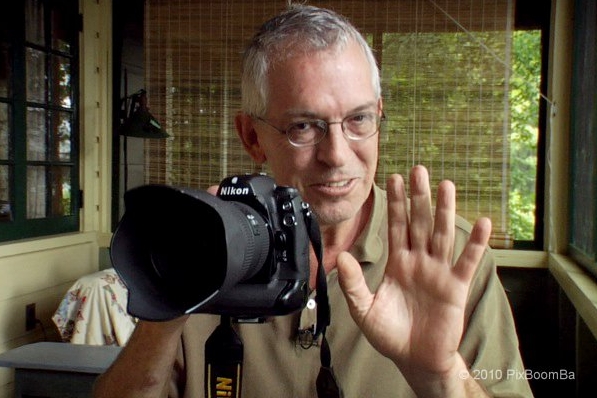
    Mr. Caputo was a natural innovator and teacher, and he organized photo workshops and lectured about photography around the world. He taught digital photography at the Center for Digital Imaging Arts at Boston University and cofounded Aurora & Quanta Productions in Maine in 1985 and the PixBoomBa.com photo website in 2010.

    National Geographic published his Photography Field Guide in 1999 and Ultimate Field Guide to Landscape Photography in 2007. He also authored photo essay books on the Nile and African wildlife, and exhibited his photos at the Delaware Museum of Nature and Science and elsewhere.

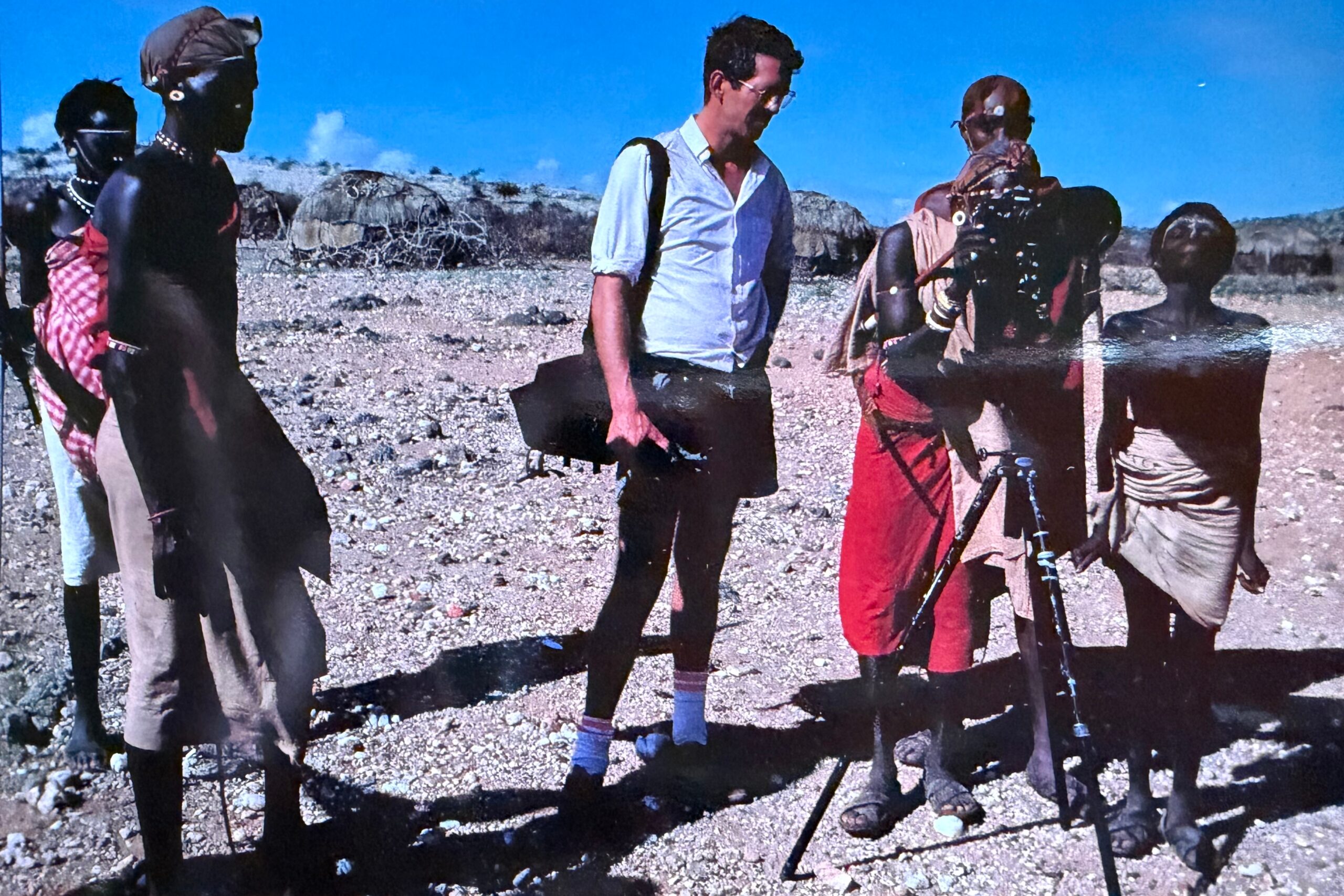
    Mr. Caputo (second from left) poses with local people in Africa.

    He wrote and appeared in wildlife shows, hosted TV programs and YouTube videos about photography, and wrote the story on which Glory & Honor, a 1998 award-winning TV film, is based. He made films about making films in Nigeria and the history of Boston’s Fenway Park.

    He earned awards from the National Press Photographers Association, the American Travel Writers Foundation, Communications Arts journal, and other groups. He was personable and energetic, colleagues said, and he cofounded the annual National Geographic Prom at the Washington office.

    “He was a tremendously caring and loving person,” his son Nick said. “He looked out for other people.”

    Mr. Caputo met TV and film producer Amy Wray on a National Geographic TV shoot in the Amazon rainforest. They married in 1997 and had sons Nick and Matt.

    This photo is featured on Mr. Caputo’s website.

    In Facebook tributes, friends and colleagues noted his “wonderful smile” and “deep love of people and animals.” They called him a “legend” and “amazing.” Robert J. Rosenthal, former Africa correspondent and former executive editor of The Inquirer, called Mr. Caputo “one of the best humans I ever knew.”

    Mr. Caputo told MainLine Today in 2009: “My personal heroes are the people who work for aid organizations and nongovernmental organizations, who go to some faraway place to help people they’re not related to and often put themselves in harm’s way.”

    Robert Anthony Caputo was born Jan. 15, 1949, at Camp Lejeune, N.C. His father was a career Marine and moved the family to bases in Virginia and then Sweden for an assignment at the U.S. embassy there.

    In a 1991 interview with the Newhouse News Service, Mr. Caputo said: “I remember as a kid going to sleep listening to artillery going off in the distance down at the range. It was kind of comforting. I wouldn’t change it for anything.”

    Mr. Caputo (second from right) doted on his wife and sons.

    He attended a Swedish middle school, learned the language, skied, and played soccer. He returned to the United States in the late 1960s to attend boarding school in Virginia and then Trinity.

    In Kennett Square, Mr. Caputo was a soccer, baseball, and basketball coach to his sons, and a Cub Scouts leader. He walked the boys to the school bus stop in the morning. He told them bedtime tales about secret agents and pirates, they said, and built a tree house in the backyard.

    He decorated his truck on Halloween and grew impressive gardens. His neighbors called him Farmer Bob.

    He took his family on trips to Kenya and Tanzania. He dabbled in experimental playwriting and literature when he was young, and enjoyed classic movies and William Blake’s poetry.

    Mr. Caputo (center) shows his camera to the locals in Africa.

    “He felt extraordinarily lucky to have lived the life he did,” his wife said, “full of adventure, family and friends. And in the end he said, ‘I’m ready.’”

    In addition to his wife and sons, Mr. Caputo is survived by a sister and other relatives.

    Services are to be at 11 a.m. Saturday, Jan. 10, at Kennett Friends Meeting, 125 W. Sickle St., Kennett Square, Pa. 19348.

    Donations in his name may be made to Doctors Without Borders, Box 5030, Hagerstown, Md. 21741.

    His family called Mr. Caputo “buttered side up” when he was young “because no matter
    how he fell he always seemed to end up the right way, and his life was full and lucky.”
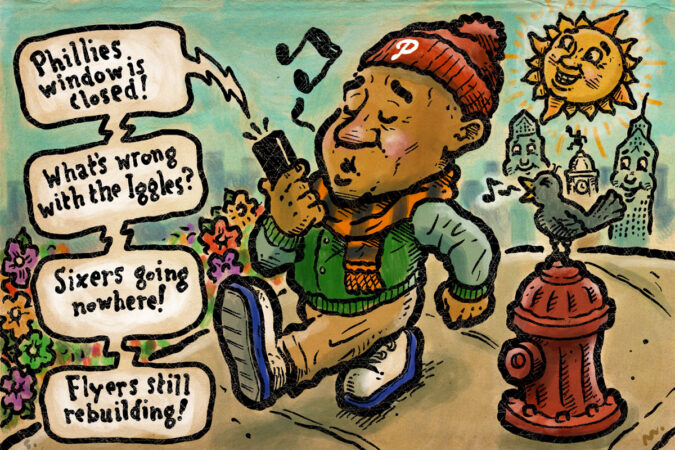
  • My New Year’s resolution is to not let Philly team losses ruin my day. Any advice?

    My New Year’s resolution is to not let Philly team losses ruin my day. Any advice?

    I opened this question up to a wider team because I knew there would be many different takes. What do you think? Email me.

    Ariane Datil, Social Video Host

    Pick a new resolution, sir.

    Ellen Dunkel, Programming Editor

    It might not be possible, but it helps not to care. Or to be a fair-weather fan. I am completely disinterested, except in a journalism way (and wanting my friends to be happy). But I enjoy when they win the big game. If they don’t, I move on immediately. It’s very relaxing to not care.

    Caryn Shaffer, Senior SEO Editor

    The most helpful piece of advice about loss I’ve received this year is to focus on what you DO have. Sure, the Eagles lost a game, and it sucks not to have that win. But do you have friends you watched the game with, and can commiserate with? A partner and family who love you? Your health, a roof over your head, and food on the table?

    When you’re feeling sad about a loss, reach out to someone you care about, go for a walk outside, get a little treat to cheer you up, or do another activity you enjoy.

    Zoe Greenberg, Features Reporter

    Be like me and be a fan who only jumps on the bandwagon when the team is winning. Then your day is never ruined, only made.

    Hira Qureshi, Food and Dining Reporter

    Like Zoe, I only become a fan when they are winning, lol.

    Matt Mullin, Senior Editor for Digital Strategy and Audience Development for Sports

    When teams are winning, the expectation is that it’ll stay that way forever, so the losses, especially season-ending ones, are unexpected and crushing. That’s the biggest problem with jumping on the bandwagon — it’s when the losses hurt the most.

    My advice is a combination of exposure therapy and resetting expectations.

    First, if you hide from defeat, of course it’s going to sting that much more when it finally arrives. All those losses, they become a part of you, they callus over, and the next time they don’t hurt as bad.

    Second — and all the losses should help with this — the lower you’re able to set your expectations, the less likely you are to be disappointed after a defeat and the more jubilant you’ll be after a win.

    When it comes to Philly sports, as is the case with most things in life, expectations can dictate your level of happiness, or in this case sadness, so set them low. Is that a miserable existence? Perhaps, but it’s the life of a Philly sports fan — and might explain why we party so hard after wins.

    Abigail Covington, Life & Culture Reporter

    Just remember it could be worse: You could be a Carolina Panthers fan.

    Felicia Gans Sobey, Deputy Editor, Content Strategy

    I make it my mission to always be eating something delicious when I’m watching a stressful sports game. So if they lose … at least I had a good meal.

    Kate Dailey, Managing Editor, Features

    I have decided that I’m only a regular-season baseball fan, because I love how slow, meditative, and calming baseball is. Baseball on the radio while you wash the dishes? Beats a spa weekend.

    I realized this year that the pressure of the playoffs ruined what I liked best about baseball, so I just decided to tune out. Figure out what you like best about the sport and double down on that, at the expense of the parts you don’t. Unless what you like best is victory. In that case, I can’t help you.

    Dan DeLuca, Arts and Entertainment Reporter

    You’re not a true Philly sports fan until you’ve suffered. You have to give yourself over to the suffering. That’s what makes the good times good. I personally suffer more when the Phillies and Sixers lose than I do when the Eagles do. That might be my way of rebelling against the dominant culture.

    Also the advice I often give myself (but don’t always follow) is it’s better to go to the show than go to the game. Because the show will reward you probably 90% of the time, and your batting average at the game will be much lower.