Tag: topic-link-auto

  • Which Philadelphia-area grocery stores offer the best prices and quality?

    Which Philadelphia-area grocery stores offer the best prices and quality?

    Over the last five years, American grocery costs have soared.

    In 2022, prices for food prepared at home jumped by a historic 11.8% from the year before, according to the Bureau of Labor Statistics’ Consumer Price Index survey. While prices didn’t drop in 2025, the rate of inflation for groceries has for the most part slowed. In July, costs for groceries were 2.2% higher than the year before.

    The nonprofit Consumers’ Checkbook’s latest evaluations of Delaware Valley grocery stores found most shoppers can save by choosing low-cost stores. Checkbook researchers shopped stores using a 150-item list to compare prices.

    To evaluate stores on quality of products and service, we surveyed our members. Here’s what we found.

    Wegmans is still a winner

    Wegmans now has 11 stores in the Delaware Valley area. Since opening its first area location in 2003, the Rochester, N.Y.-based chain has consistently earned high ratings from its customers for quality. In our latest survey, 85% of its customers judged it “superior” on each of our survey questions on produce, meat, and overall quality.

    Although Wegmans’ prices aren’t among the lowest in the region, it remains competitive. Its prices were about 2% lower than average prices at Giant and ShopRite, 4% lower than Redner’s, about 12% lower than Acme and McCaffrey’s, and 25% lower than Whole Foods.

    McCaffrey’s gets raves but isn’t low-cost

    The locally owned small chain ranked among the area’s best grocery options for quality, with 87% of its surveyed customers judging it “superior” overall, 90% rating it “superior” for produce, and 88% rating it tops for meat.

    But McCaffrey’s prices were about 12% higher than the all-store average.

    Aldi and Lidl offer the biggest savings

    Germany-based discounters Aldi and Lidl continue to expand their U.S. footprints. These chains focus on low costs, and our survey found them quite inexpensive: For our shopping list, Aldi’s prices were 35% lower than the all-store average, and Lidl’s were 26% lower. Aldi’s per-unit prices were even lower than wholesale clubs BJ’s, Costco, and Sam’s Club.

    These savings are partly explained by Aldi’s and Lidl’s smaller-format stores, which have much lower overhead costs than conventional supermarkets. Shoppers at quirky Aldi and Lidl don’t expect wide choices of brands or sizes. Instead, they’re offered comparable house-brand products in exchange for big savings.

    Other price standouts: Amazon Fresh, Food Lion, Grocery Outlet, and Walmart

    Amazon Fresh’s prices were about 16% lower than the all-store average, Walmart’s were 10% lower, and Food Lion’s 7% lower.

    Grocery Outlet, which offers a somewhat odd assortment of steeply discounted surplus national-brand products, offered prices that were about 12% lower than average.

    Amazon Fresh opened its first Delaware Valley area location in 2022, and the region now has five. These small-format stores focus on low costs and convenience. The company’s app keeps track of what you remove from shelves; when finished, you simply exit without scanning items.

    For a family that spends $300 per week at the supermarket, a 16% price difference totals savings of $2,496 per year; a 10% price difference totals $1,560 a year.

    Trader Joe’s remains popular

    Among survey respondents, 83% rated the funky-and-fun chain “superior” for “overall quality.”

    Although not a price leader in the area, TJ’s prices were about 3% lower than the all-store average and about 14% lower than Acme.

    Whole Foods remains an expensive choice

    Whole Foods built a loyal following by offering high-quality produce, meat, prepared foods, and generic staples. It continues to receive high marks in our consumer surveys, especially for produce and meat quality.

    But our price survey found that Whole Foods remains among the most expensive stores we shopped: Its overall prices were about 32% higher than the average prices at all stores we surveyed, or about 33% higher than top-rated Wegmans, 18% higher than McCaffrey’s, and 57% higher than Amazon Fresh, its corporate sibling.

    Most other large chains receive dreadful ratings from their customers for quality

    When it came to quality, Target scored lowest; Acme, Food Lion, the Fresh Grocer, Walmart, and Weis also received abysmal scores.

    Target was rated “superior” overall by only 18% of its surveyed customers; the other chains mentioned above were each rated “superior” overall by fewer than 40%.

    Although Redner’s and ShopRite did not receive stellar ratings for quality, they did get considerably higher scores than many other conventional supermarkets. Among Redner’s customers, 54% rated the store “superior” overall; ShopRite’s score was 52%.

    Within the largest chains, there is relatively little store-to-store price variation

    Prices at the Acme, Giant, and ShopRite locations we surveyed were about the same from store to store.

    MOM’s Organic Market received raves

    MOM’s, which sells only organic products, was the highest scoring chain for produce quality and overall quality.

    We’ve found that its prices are competitive with other local stores when we look only at organics.

    Warehouse clubs will save you money — if you shop there often

    The three warehouse chains all offer most shoppers significant savings. Sam’s Club, for example, beat Acme’s prices by 35%. And compared to Acme, the savings were about 33% at Costco and 32% at BJ’s.

    In addition to having low prices, Costco received high customer ratings for meat quality and overall quality. (BJ’s and Sam’s Club’s ratings were considerably lower than Costco’s.)

    While the warehouse clubs offered significant savings compared to prices offered at grocery stores, that might not justify paying their annual membership fees if you don’t visit often.

    For example, BJ’s prices were only about 14% lower than Walmart’s; you’d have to spend $429 at BJ’s on products you could buy at Walmart before breaking even on BJ’s $60 annual fee.

    Delaware Valley Consumers’ Checkbook magazine and Checkbook.org is a nonprofit organization with a mission to help consumers get the best service and lowest prices. It is supported by consumers and takes no money from the service providers it evaluates. Until Feb. 5, Inquirer readers can access Checkbook’s ratings of local grocery stores and delivery services free at Checkbook.org/Inquirer/Groceries.


  • Pancreatic cancer is among the deadliest cancers. A new drug being tested at Penn is giving patients and doctors hope.

    Pancreatic cancer is among the deadliest cancers. A new drug being tested at Penn is giving patients and doctors hope.

    Irene Blair was expected to have another six to eight months to live in June, after her pancreatic cancer rapidly advanced to stage 4 less than a year after her initial diagnosis.

    A new drug being tested in clinical trials around the world, including at Penn Medicine’s Abramson Cancer Center, was the 59-year-old grandmother from Newark, Del.’s best hope for more time.

    The drug belongs to a class of pharmaceuticals long considered the holy grail of cancer research. It is a KRAS inhibitor, capable of blocking a protein that fuels an especially deadly cancer. Only 13% of pancreatic cancer patients are still alive five years after their diagnosis, the highest mortality rate of all cancers.

    Called daraxonrasib, the drug is not considered a cure. But the results emerging from clinical trials point to the first major advancement in decades for a devastating cancer usually caught in late stages. Former Nebraska Sen. Ben Sasse last week disclosed in a blunt social media post that he was recently diagnosed with metastasized, stage-four pancreatic cancer and is “gonna die.”

    In recent months, the federal government has sped up the review timeline for the drug made by California-based company Revolution Medicines, Inc., based on early clinical trial results.

    Across 38 patients in a phase 1 trial, the drug appeared to double the survival time for at least half of patients compared to standard chemotherapy, from roughly seven months to 15.6 months.

    “In pancreatic cancer, for too long, we haven’t had effective therapies beyond just chemotherapy,” said Mark O’Hara, Blair’s oncologist who leads multiple clinical trials testing KRAS inhibitors at Penn.

    Blair started the therapy through a phase 3 trial in July. Within three weeks, her cancer-associated pain went away.

    In October, her tumors looked stable or decreasing on scans. Her most recent December scan showed her cancer had not progressed.

    Aside from occasional facial rashes, she feels normal. It’s a big improvement from how she felt previously on chemotherapy, which caused her to lose 35 pounds and become so weak she couldn’t walk.

    The question now is how long the therapy can remain effective. Blair seeks extra time to “start living life.”

    She officially retired from her job in real estate in May and wants to travel, with trips planned to see family in California and Florida.

    Holidays have been especially hard for her.

    “You just wonder, ‘Will I be here next year?’” she said.

    Irene Blair and her husband, Charles, at a beach in Delaware.

    How does the therapy work?

    Cancer researchers have worked to design a drug targeting KRAS, a protein that acts like a “gas pedal” for cancer growth when mutated, since its discovery in 1982.

    The mutant protein is like a pedal stuck in the down position, driving uncontrolled proliferation — which tumors thrive on. These mutations are found in a quarter of human cancers, mostly aggressive cancers of the pancreas, lung, and colon.

    Scientists finally succeeded in 2021, when the first drugs capable of blocking KRAS were approved by the FDA for lung cancer. Dozens of KRAS inhibitors are now in various stages of development.

    Daraxonrasib is one of the first tested for pancreatic cancer, a tumor type where nearly 90% of cases have these mutations. Also called a ‘pan-RAS inhibitor,’ it not only targets KRAS, but two other related proteins that drive cancer when mutated, HRAS and NRAS.

    More than 90% of the 83 patients in a phase 1 trial saw their pancreatic cancer stall during treatment, and roughly 30% saw shrinkage.

    While taking the drug, at least half of patients gained more than eight months before the cancer started progressing again.

    The drug comes in pill form.

    The drug comes in the form of three pills, taken daily at home.

    The most prevalent side effect is a rash — 91% of patients in a phase 1 trial experienced this symptom, with 8% having severe cases. It often shows up on the face or scalp and is similar to acne, O’Hara said.

    Diarrhea, nausea, vomiting, and mouth sores are other common symptoms.

    O’Hara said these are manageable with medications for most patients and still allow them to have a better quality of life than chemotherapy.

    “I want to be able to give KRAS inhibitors to all my patients right now,” he said.

    Irene Blair of Newark, Del., meets with her doctor, Mark O’Hara, at her December appointment.

    Looking forward

    O’Hara runs multiple trials of KRAS inhibitors at Penn.

    Some of them are testing the inhibitor as a treatment for patients with metastatic cancer after other options have stopped working. Another is evaluating its use in combination with chemotherapy as an initial approach.

    “I’m looking for more tools to put in that toolbox, and I think this provides a new tool,” O’Hara said.

    Ben Stanger, a gastroenterologist and scientist at Penn, has led experiments in mice that showed combining a KRAS inhibitor with immunotherapy may be more effective than using the former alone.

    If this approach makes it into clinical trials as well, it could still take years to evaluate the safety and efficacy of the combination.

    He believes KRAS inhibitors could be “a game-changer” for pancreatic cancer if approved, particularly if paired with other anti-cancer drugs.

    “Goal number one would be to make pancreas cancer, instead of a death sentence, into a more ‘chronic’ disease that is treated over time,” he said.

    The federal government has granted the drug Breakthrough Therapy and Orphan Drug designations.

    In October, the drug was also one of the first selected for a new program that aims to accelerate review times for drugs from one year to as short as a month, potentially putting it on a faster path to approval.

    Daraxonrasib, also known as RMC-6236, earned Breakthrough Therapy and Orphan Drug designations in 2025.

    Limited options

    When Blair first started having back pain around May 2024, she thought it was a pulled muscle from kickboxing.

    She put a heating pad on the back of her chair and went on with life.

    After her father had a stroke that July, she got it checked out at the hospital where he was admitted.

    A day later, she was diagnosed with stage 2B pancreatic cancer.

    “My first thought is, ‘I’m dying,’” she said.

    Had she been diagnosed earlier, she would have retired early, instead of worrying about saving money.

    Instead, she spent her final working year undergoing surgery to remove part of her pancreas, spleen, and several lymph nodes, followed by 12 difficult sessions of chemotherapy.

    When she finished her last session in March, Blair’s scans showed no evidence of the cancer. But by late April, her back pain returned.

    Two months later, more scans showed that the cancer was now considered stage 4, as it had metastasized to her liver, forming 10 to 15 new tumors.

    Her best option was to enter a clinical trial of daraxonrasib at Penn.

    Much to her relief, she was chosen to receive the drug in July upon enrolling in a study in which half of patients are randomized to receive chemotherapy.

    “It’s enabled me to start living again,” she said, but knows eventually the therapy will likely stop working.

    In that case, doctors may try the standard chemotherapy — which usually works for three to four months — or test a different therapy based on her cancer’s genomic profile, O’Hara said.

    For now, she described herself as “living scan to scan,” seeking as much time as possible with her son, grandchildren, and husband.

    Irene Blair and her husband Charles, son Tom, daughter-in-law Kelsey, and two of her three grandchildren, Aidan and Madilynn.

    Blair’s next evaluation is in February. She hopes it shows her disease remains stable, and she can stay in the trial.

    “The alternative, honestly, is death,” she said.

  • How Montco is addressing homelessness with an unusually bipartisan effort

    How Montco is addressing homelessness with an unusually bipartisan effort

    By the end of this year, Montgomery County will have three emergency short-term shelters with beds for 190 people in Pottstown, Lansdale, and Norristown.

    In late 2024, it had zero full-time shelters, even as homelessness soared to new heights in the county — Pennsylvania’s second wealthiest.

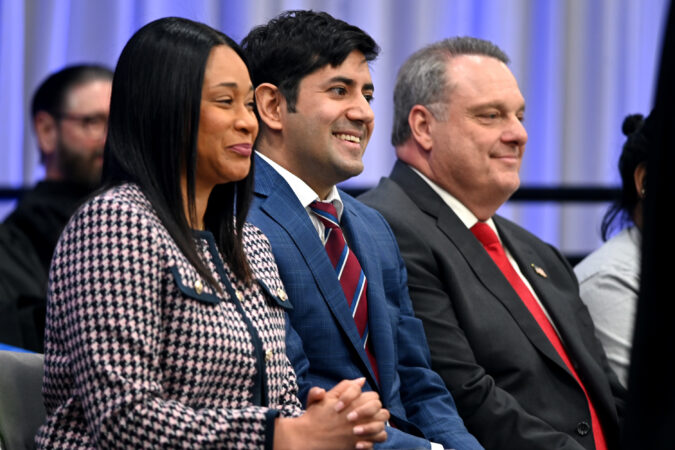
    The three-member board of commissioners is currently composed of two Democrats and one Republican, but in the past year they have operated with an unusual degree of cohesion on both the challenge of homelessness and on a county budget that included a small property tax increase.

    “We came in with similar goals around addressing the homeless problem throughout the county,” said Tom DiBello, the Republican commissioner. “We all heard it when we were campaigning [in 2023] and when we got elected, we felt that we needed to do something. We can’t continue doing it the way it’s always been done in the past, where people just kept talking about it.”

    Although the Montgomery County commissioners have formed a united front on many issues last year, housing policy issues are more likely to divide them in 2026.

    In Pennsylvania, county governments’ revenue sources are restricted to the politically sensitive property tax. And counties have no direct influence over municipal-level zoning restrictions that limit how much housing can be built.

    But the Democrat commissioners, Neil Makhija and Jamila Winder, have ideas about how to get around those limitations to directly fund more affordable housing and encourage local governments to allow more building.

    DiBello is not excited about many of the proposals being considered by the two Democrats. He opposes creating new county-level taxes and says zoning powers should be left to localities.

    Still, DiBello has further housing policy goals he would like to pursue — such as developing more affordable homes for senior citizens.

    As the county releases its 2026 housing blueprint, expected early this year, the first round of these debates will begin in earnest. This planning document, created by county government staff with commissioner feedback, lays out goals for the county based on a comprehensive housing policy — the first its seen in recent memory, Makhija says.

    “It’s going to be the first time that the entire board has had a voice and a view on what our role is to address a crisis in the cost of housing,” said Makhija. “There are things we can do to help people.”

    How the shelters got built

    Making policy to address homelessness is difficult because many municipalities and community groups fight against having shelters placed in their neighborhoods.

    The number of people in Montgomery County experiencing homelessness has grown with the cost of housing. In 2024, there were 435 people living without a roof over their heads. In 2025, the number grew to 534.

    Meanwhile, Montgomery County’s last full-service homeless shelter closed in 2022.

    Opposition to new shelters or affordable housing bloomed in Norristown, where officials said the rowhouse-dominated municipality was already asked to shoulder too many social services, and in Lower Providence where the local government denied a shelter application (the legal fallout is ongoing).

    The county commissioners decided to get involved by courting local governments and personally attending zoning hearings about potential placements. DiBello attended meetings in Pottstown, near where he lives. Winder went to hearings in Norristown, including one that stretched past midnight, then stuck around to discuss neighbors’ concerns.

    A homeless encampment near the Schuylkill River Trail and Norristown in Montgomery County.

    In some parts of the county, efforts to address the issue overcame opposition.

    Communities like East Norriton have established more code blue shelters, which only operate during freezing weather, and in wealthy Lower Merion, a new affordable housing complex for seniors and people with disabilities, called Ardmore House II, is under construction.

    “It takes political courage in these moments,” Winder said, referring to local officials who have embraced shelters and affordable housing. “Sometimes you have loud voices in the room and just have to say, well, this is the right thing to do.”

    The commissioners provided $5.3 million in county funding for the shelters. The county also provided a quarter of Ardmore House II’s $20 million budget. And as federal funding cuts loom under President Donald Trump’s administration, the commissioners have also been engaging with philanthropists and foundations.

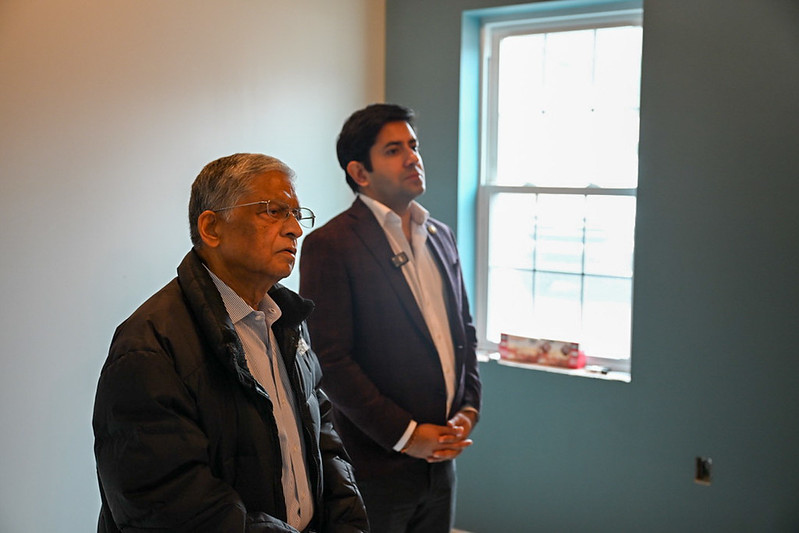
    Earlier this month, Nand Todi, president of Montgomery County-based Penn Manufacturing Industries, announced a $1 million donation to the Lansdale shelter.

    Nand Todi, president of Montgomery County-based Penn Manufacturing Industries, and County Commissioner Neil Makhija at a walk-through of the completed Lansdale shelter.

    Winder hopes this example of generosity is just the beginning.

    “I come from the private sector, so I believe in public-private partnerships,” said Winder. “We’re home to some of the largest corporations in the southeast area. We know that companies have social responsibility goals. So how do we partner with corporations?”

    What can a county government do?

    This year, the commissioners want to continue to tackle housing issues.

    But county-level politicians do not have large budgets at their command, and unlike their municipal-level counterparts, they do not set zoning policy.

    Makhija and Winder want to push those limits.

    For example, the county dispenses infrastructure grants, and Makhija says the rules around that funding could be rewritten to incentivize municipalities to reform their zoning codes, perhaps using model ordinances established by the county.

    Such ordinances could, for example, allow more transit-oriented development. Or they could legalize accessory dwelling units — small living spaces such as a garage apartment or in-law suite that can be rented out.

    “If you have a grant program and it says these are the requirements, then people are going to prioritize getting those things done,” said Makhija, though, he said, he still has to make the case to his colleagues.

    He also noted that county planning staff can help implement new municipality policies.

    DiBello is skeptical of the county getting involved in local zoning policy.

    “The governing structure in Pennsylvania is that municipalities are autonomous to county and state when it comes to zoning,” said DiBello. “It’s up to the communities.”

    The Democrats would also like to find revenue sources to pay for more housing projects without increasing the property tax, which would cut against their goal of affordability.

    But for that they would need permission from Harrisburg, which Republicans in the state Senate have denied.

    “There are opportunities for us to advocate to the state legislature, to give counties like ours other means to generate revenue,” said Winder. “It’s not sustainable to continue to burden taxpayers by increasing property taxes, and we can’t fund these programs unless we have the money to do so.”

    DiBello is also opposed to creating new taxes (if Harrisburg allows it), and doesn’t want to see more property tax increases either. But he still wants to see proactive housing investments by county government.

    These debates will unfold next year as the housing blueprint dominates the commissioners’ agenda.

    “We’re the second wealthiest county in Pennsylvania, and people struggling to find housing can be quite invisible in these communities,” said Winder. “We’ve got an embarrassment of riches, but there are people that are struggling and so we’re trying to be on the ground helping to solve these issues.”

  • N.J. will soon explicitly ban landlords from discriminating against people who use public assistance to pay for housing

    N.J. will soon explicitly ban landlords from discriminating against people who use public assistance to pay for housing

    New Jersey lawmakers passed a bill to prohibit households from being denied housing because they use public assistance.

    The legislation, which lawmakers passed on Dec. 18, makes explicit that the state’s anti-discrimination law includes protections for residents based on their source of income for housing payments, including government vouchers, child support payments, and assistance from nonprofits. And the bill affirms that protections apply both to people paying rent and those paying mortgages.

    State Sen. Angela V. McKnight (D., Hudson County), one of the bill’s sponsors, said the legislation will protect the rights of homeowners and tenants.

    “Access to stable housing should never hinge on the source of a person’s legal income, especially for vulnerable populations like single parents, veterans, or those living with disabilities who often rely on assistance to make ends meet,” she said in a statement.

    The legislation, which would take effect immediately after Gov. Phil Murphy signs it, is part of local and national efforts to prevent people from being denied housing because they use public assistance to pay for it. More than 2.3 million families use federal Housing Choice Vouchers, formerly known as Section 8 vouchers.

    In September, Democratic U.S. Sen. John Fetterman cosponsored a bill that would create federal protections for these tenants. The Fair Housing Improvement Act of 2025 would prohibit landlords from denying housing to tenants because they pay rent using Housing Choice Vouchers; Social Security benefits; payments from a trust; income from a court order, such as spousal or child support; or other legal sources of income.

    It also would expand protections in the Fair Housing Act of 1968 to prohibit discrimination based on source of income or military or veteran status.

    “It’s hard enough to find an affordable place to call home,” Fetterman said in a statement. “Every veteran and every family struggling to keep a roof over their head deserve dignity and our support, not discrimination based upon their service or if they use a voucher.”

    Chantelle Wilkinson, vice president of strategic partnerships and campaigns at the National Low Income Housing Coalition, said source of income discrimination “is far too often a main barrier for households seeking stable housing.”

    “When a landlord denies a voucher holder access to housing despite meeting all other qualifications, that ‘no’ is not just about a home: it’s denial of opportunity, equity, and stability,” she said in a statement.

    In Philadelphia, the city’s Fair Practices Ordinance bans rental property owners from discriminating against potential tenants based on the source of the income they will use to pay their rent. That includes housing vouchers and other public assistance.

    But housing denials based on voucher status still happen.

    In June 2024, City Council passed a bill to expand protections under the Fair Practices Ordinance. The legislation explicitly stated that housing providers renting or selling a property cannot advertise or communicate that they do not accept housing vouchers. It also explicitly says that Housing Choice Vouchers are an example of a protected income source.

    And it makes fighting this type of housing discrimination easier for renters.

    The Philadelphia Commission on Human Relations, the city’s official civil rights agency, began enforcing the protections last December.

  • Letters to the Editor | Jan. 2, 2026

    Letters to the Editor | Jan. 2, 2026

    Freedom of the press

    I applaud The Inquirer for last Sunday’s Opinion section, which was made up entirely of an editorial documenting the damage done by Donald Trump over the past 11 months. In 2025, we learned once again how important a free press is to inform our citizens about the path Trump’s administration is taking. The most recent episode of CBS News’ Sunday Morning disappointed me. In its year in review, no mention was made of the three large protests: “Hands Off” (three million people), “No Kings I” (five million people), and “No Kings II” (seven million people). Why were these peaceful demonstrations not mentioned? I believe CBS fears retribution by Trump. A free, informative, fact-based news media is so important to maintain our democracy. Shame on CBS for its cowardly bowing to Trump — first in suppressing the 60 Minutes report on the inhumane treatment in an El Salvadoran detention center, and then by not mentioning our peaceful protests.

    Marie Kania, Media

    . . .

    Thank you for your recent editorial that comprehensively details the most egregious of Donald Trump’s corruption. It was masterful, given the overwhelming volume of material that you had to sort through.

    Yet, Trump is only one person. Most Senate and House Republicans have done nothing to fulfill their Oath of Office to support and defend the Constitution. There are too few Republicans willing to do the right thing. Their near total obedience to this corrupt regime — and not to the Constitution — has enabled the near collapse of our democracy. Why? Most of them seem to want to hold on to their piece of the financial pie and cling to the power they have but refuse to use.

    The Constitution clearly outlines many paths to dealing with the corruption of this administration, but most Republicans continue to enable and obey MAGA Mike Johnson’s abuse of power, rules manipulation, and time wasting. Chaos enables corruption, and the majority of Republicans at the local, state, and federal levels like it. They think that if they bend the knee to Trump, they’ll be safe. They are so ensconced that even though they don’t believe the GOP rhetoric, they willingly play along and spew it to constituents.

    Let’s hope the coming elections continue to reestablish the ideals of our democracy by voting out all politicians — Republican and/or Democrat — who have lost their sense of right and wrong or played along. Let’s hope a younger, idealistic generation of politicians emerges from this chaos, because the GOP has sunk so low that it protects rich pedophiles without a thought of the victims. After these heinous crimes were exposed publicly, it finally moved a few Republicans to denounce Trump’s actions, even though they had fully enabled him up to this point. Still, too few were moved, and still others who knew the details before the public disclosures but chose to look the other way.

    We appreciate newspaper journalism. Other mainstream media outlets do not cover issues in depth, and many have capitulated to the current regime so much that they can no longer be trusted.

    H. Tunney, Huntingdon Valley

    . . .

    Dec. 26 was my 67th birthday. The weather was cold and bleak, like the year had been. Unlike during Donald Trump’s first term, the major news networks, along with many of the nation’s top newspapers, had fallen to Trump’s authoritarian bullying, or had hopped onto the oligarchy bandwagon for the goodies. Universities, top law firms, and business titans paid coin to join the gravy train, or at least not to be run over by Trump’s retribution railroad. But on my birthday, The Inquirer stood tall and published “The Damage Done” online. Maybe it is weird that an in-depth piece detailing the breadth, depth, and speed at which Trump is destroying our country and the institutions that should be protecting us felt like a gift. But Philly has grit, and our paper has gravitas. The Inquirer understands there is risk in speaking out. The risk of remaining silent is greater.

    Lynn Strauss, West Chester

    Minimum wage increase

    The Inquirer recently reported that the state of New Jersey was moving to raise its minimum wage to $15.92 per hour. A just and modest increase from $15.49 per hour.

    Recently, the city of Santa Fe, N.M., moved forward with a proposal to increase its minimum wage, as well. Something that caught my eye is that the article about it in the Albuquerque Journal mentions that Santa Fe has, since 2003, mandated an automatic increase in minimum wage, which occurs every year. I personally think this would be a fantastic policy for the city of Philadelphia to investigate.

    For decades, Philadelphia was the poorest big city in America (that honor now belongs to Houston, I believe). Nonetheless, as a city that is still fairly poor, Philadelphia still has a huge section of its population that holds positions that pay minimum wage, which is still $7.25 an hour in Pennsylvania. Now, one could debate what parameters go into determining the increase of that minimum wage, but I think it is beyond doubt that a policy that automatically increased minimum wage and tied it either to inflation, Consumer Price Index, or some other parameter would benefit literally tens of thousands of Philadelphians.

    The “Fight for 15” movement started in 2012, and every year that goes by means inflation makes that $15 an hour worth less and less. (Thankfully, New Jersey is inching toward $16 per hour.) A great deal of time and political capital is spent fighting for or against one-time increases. If a schema for automatic increases could be agreed upon, it would save our political energy (which is pulled in so many directions these days) for figuring out other problems. Perhaps an automatic system could even be considered business-friendly, as it would allow businesses to plan for and budget for small increases over time instead of lobbying against their own workers in pursuit of preventing big wage jumps.

    In New York, Zohran Mamdani was right to tap into the issue of affordability and wages as a universal problem in our great American cities. Now is the time to get creative about how to address that problem here in Philadelphia.

    Alex Palma, Philadelphia

    No one is safe

    Nick Elizalde, my grandson, was shot and killed at his high school football game on Sept. 27, 2022. That year, 516 homicides were recorded in Philadelphia, and 51 school shootings in the U.S. In 2024, we saw 84 school shootings nationwide. The U.S is the only country in the world where the leading cause of death for children is guns.

    On Dec. 13, two students were shot and killed at Brown University. Donald Trump shrugged. “Things can happen,” he said. One day later, Providence, R.I., Mayor Brett Smiley assured residents that they are safe. No, Mayor, they’re not. Americans aren’t safe. Not in Providence, Uvalde, Newtown, Blacksburg, Parkland … Not in schools, places of worship, theaters, our front porches. We’re killed at home and away. Murdered on buses. In cars. Like Trump, we shrug. We may tell ourselves, “It can’t happen here.” Friends and neighbors become statistics. By continuing to support elected officials who fail to act, we accept the carnage.

    Following rare mass shootings, New Zealand, Norway, and Canada banned assault weapons. Sweden limited access to semiautomatic weapons. After the Dec. 14 murder of 15 people on Bondi Beach, Australia will strengthen its gun laws to include limiting gun ownership. Why not here?

    In Delaware County this year, the council took bold action and banned untraceable ghost gun parts and machine gun conversion devices. Why not your county?

    In this election year, demand more from lawmakers. Vote only for those who support commonsense solutions to gun violence. Vote all others out. It’s too late for Nick, but maybe not for the folks you love.

    Marge LaRue, Aston, laruehouse@verizon.net

    Join the conversation: Send letters to letters@inquirer.com. Limit length to 150 words and include home address and day and evening phone number. Letters run in The Inquirer six days a week on the editorial pages and online.

  • Horoscopes: Friday, Jan. 2, 2026

    ARIES (March 21-April 19). It won’t be necessary to meet anyone halfway because people want what you want. So you’ll have effortless compatibility — the kind where you just understand each other and don’t have to compromise.

    TAURUS (April 20-May 20). The day asks for forgiveness, especially of yourself. Carrying old blame into a new year is like wearing too many coats for the weather. Shed it. You’ve learned what you needed to know, and today you are brand new.

    GEMINI (May 21-June 21). Forget about mistakes of the past. Compassionate integration is the way. Take the lesson, close the chapter and let the ghosts linger in history where they belong. This new day is for the living.

    CANCER (June 22-July 22). Don’t worry so much about timing. You’re not behind. It’s impossible to know other people’s process, so don’t bother comparing. You’re headed toward good things, and nothing can keep you from your destiny.

    LEO (July 23-Aug. 22). Outdated identities no longer fit? Just drop them. You don’t owe loyalty to other versions of yourself. Your self-definition is allowed to change with the times, with your circumstances and according to your latest expectations.

    VIRGO (Aug. 23-Sept. 22). They say knowledge is power, but today highlights the more accurate truth: knowledge is (SET ITAL) potential (END ITAL) power. Application is everything! The insight you pick up will be a treasure just as soon as you figure out how to use it.

    LIBRA (Sept. 23-Oct. 23). You’ll find yourself lit up by a podcast or conversation that feeds your mind in a way real-life people haven’t lately. It’ll remind you that your people are out there, even if today they’re voices through speakers.

    SCORPIO (Oct. 24-Nov. 21). You may feel like hiding your creativity until it’s “ready,” but that will slow you down. What if you opted for playful experimentation instead? Make messy drafts, weird notes and unfinished scenes, and let the process be joyful instead of secretive.

    SAGITTARIUS (Nov. 22-Dec. 21). People tend to do what’s easy for them. Those who do more aren’t necessarily working harder; they just have more skill or strength. What looks impressive is still easy for them. Those are the ones to hire, befriend and learn from.

    CAPRICORN (Dec. 22-Jan. 19). You put people first, and everything good comes from that choice. Relationships bring you opportunities that no one could have predicted. Bonus: When you’re busy making magic for others, your own life feels magical.

    AQUARIUS (Jan. 20-Feb. 18). Emotional downsides such as embarrassment, rejection or temporary discomfort will be quickly overcome and are worth risking if the upside is money, opportunity, relationships, reputation or progress.

    PISCES (Feb. 19-March 20). You’ll have one moment where you think, “Wow, I’m actually proud of how I handled that.” Whether it’s a boundary, a decision or a tiny act of self-respect, it’ll feel like a small but unmistakable shift into your next era.

    TODAY’S BIRTHDAY (Jan. 2). Welcome to your Year of the Glorious Detour. The plan changes, and the reroute is destiny. You’ll stumble into opportunities meant for you long before you thought you were ready. Finances stabilize with a clever new habit you adopt almost accidentally. More highlights: a friendship that becomes a chosen-family anchor, three professional showcase moments and a getaway that shifts how you see the world. Leo and Pisces adore you. Your lucky numbers are: 14, 30, 28, 9 and 22.

  • Dear Abby | Jealousy alienates last person in loner’s life

    DEAR ABBY: My husband and I have been together 23 years, married for almost nine. We are in our 60s. It’s the second marriage for both of us. I retired due to having to move to another state for his job. I make friends wherever I go and get involved in community activities.

    My husband has NO friends. Seriously. ZERO! He goes to work and comes home. Over the years, he has accused me of wanting relationships with my male friends (whose wives are also my friends) and tells me I should just go on and be happy with the other man. Neither my friends nor I have ever done anything to spark his pathological jealousy.

    Currently, I am on a nonprofit board of directors and must communicate often with the male president. He has become the new target. Counseling is out of the question because psychiatry is my husband’s specialty. Also, he seems to think he is always right about everything. He has never issued an apology as long as I’ve known him.

    I do not respond to his tirades because it’s pointless, but I’m sick and tired of his behavior and thought process. I understand the “why” to this behavior (his heritage and environment), but that doesn’t give him carte blanche to use it as an excuse. Any suggestions for moving forward?

    — WEARY IN FLORIDA

    DEAR WEARY: From what you have written, your antisocial husband is a bottomless vessel of insecurity. If you haven’t been able to assuage it in all these years, I doubt you ever will. Many psychotherapists use mental health professionals themselves. But unless your husband is willing to admit that perhaps he, and not you, is the problem and seeks help, nothing will change. Frankly, I am surprised your marriage has lasted this long. Is this how you want to live the rest of your life? Answering that question is the way to move forward.

    ** ** **

    DEAR ABBY: I work from home a few days a week and live a block from the local middle school. Recently, I’ve broken up a group of kids in my yard hitting and fighting with each other. I don’t know these kids, have no children in school and realize this is an ongoing issue. I’m not certain how to handle it.

    I could ignore it, but I’m afraid not only that one of the kids will get hurt, but also that a parent would be upset that this happened on my property. I could report it to the police, but that may be overkill. I could also try reaching out to the school, but without any information on who these kids are, I’m not sure that would be much help either. Any ideas?

    — WITNESS IN OHIO

    DEAR WITNESS: I do have a suggestion. You have already spoken to the children involved in these altercations. You are correct that there could be liability if one or more of them are injured on your property. Contact the principal of the middle school and explain what has been going on. Once that’s done, call or visit the police department and report that your yard is being turned into a battleground. If you do, the next time something starts happening and you call the police, they may respond quickly.

  • It’s a Mummers wedding! Braving the cold and crowds, a couple said ‘I do’ at the parade

    It’s a Mummers wedding! Braving the cold and crowds, a couple said ‘I do’ at the parade

    The bride wore a sequin silk gown with golden sneakers. The groom, a bedazzled tux. They became husband and wife in the bitter cold of Market Street — in the middle of the Mummers Parade.

    Juliana Bonilla, 25, and Stanley Wells, 32, met online three years ago. And they never envisioned their love story would include a storybook Mummers Parade wedding. But on Thursday, the pair, who marched with the Hegeman String Band, officially tied the knot as part of a Mummers Parade performance.

    The wedding was a first, said Kelliann Gallagher, captain of Hegeman. At least in the string band division, anyway, she said. At least that anyone had ever heard of.

    Julianna Bonilla (middle) and Stanley Wells (right) kiss after saying “I DO” and being officially married by Hegeman String Band captain Kelliann Gallagher (left) during the 2026 Mummers Parade in Philadelphia on Thursday, Jan. 1, 2026.

    The Mummers Day matrimony had come together by chance, explained Gallagher, who served as the officiant.

    Back in October, the South Philly string band was finalizing its parade plans when it struck Gallagher that a real wedding would be the perfect ending to their Las Vegas-themed routine.

    “Of course, one of the aspects of Vegas is the little white wedding chapel,” said Gallagher. “So we thought, ‘Wouldn’t it be cool if we can get someone to actually be married on New Year’s Day?”

    They just needed a couple.

    Evie Pastor, who serves as sergeant-at-arms for Hegeman, thought of her recently engaged daughter, Juliana. She had grown up around the Mummers, and her stepfather, Jon Pastor, plays first alto saxophone in the string band.

    After all, Bonilla, of South Philadelphia, and Wells, of North Philadelphia, who both work as home healthcare aides, had a very Philly courtship. Their first date three years ago was at a Delaware Avenue eatery, where they watched the Eagles play.

    She had fallen for him immediately.

    “He was a gentleman,” Bonilla said of Wells.

    He was drawn to her beauty and humor.

    By October, the couple who have a daughter, Kehlani, 2, had already picked out a venue. Bonilla, who is shy and nervous in front of large crowds, was hesitant when her mother asked about a Mummers wedding.

    “I don’t like all the attention on me,” she said.

    But the more she thought of it, the more the idea grew on her. It would be special. She would be marching anyway. But this year, instead of a parade marshal, she’d be the bride.

    “It was something different,” she said.

    Julianna Bonilla (left) and Stanley Wells go over wedding service details before being married by Hegeman String Band captain Kelliann Gallagher (right) during the 2026 Mummers Parade in Philadelphia on Thursday, Jan. 1, 2026.

    Her nerves grew as the parade drew close, and it had nothing to do with Wells. It was about the crowds and the television cameras that would be filming the band’s performance — and her wedding.

    She found a long-sleeve gown with a long train and a Mummers vibe. And on Thursday morning, she and Stanley posed in front of the band’s Second Street clubhouse, showing off their golden sneakers.

    They practiced their vows on the bus ride to Market Street, where the bands would perform before the judges. The bride packed a flask of Southern Comfort to warm herself against the cold — and to calm herself about the crowds.

    And then they waited on Market Street — for hours — due to delays caused when the String Band Division called off its competition because of punishing winds. Many props were destroyed, and five people were sent to the hospital Thursday morning, Mummers officials said.

    While no longer competing, the bands would still march.

    By 4 p.m., Hegemen String Band finally begun to inch toward the bright lights and crowds at City Hall. As Jon Pastor played “Can’t Help Falling in Love” on his sax, Bonilla and Wells stepped off the band’s bus.

    Taking each other’s hands before Gallagher, who would officiate in a bedazzled Elvis get-up, they wanted to at least exchange their vows in the quiet moments before the performance.

    “I promise to stand by your side, to support and cherish you in all the seasons of your life,” Wells said.

    “I promise to love you without condition or expectation, exactly as you are today and every day after.”

    Stanley Wells (left) and Julianna Bonilla kiss after being married by Hegeman String Band captain Kelliann Gallagher during the 2026 Mummers Parade in Philadelphia on Thursday, Jan. 1, 2026.

    Then, with a showman’s touch, Gallagher shouted, “Stay tuned for the rest of the wedding.”

    That took place a short while later, as the band performed its routine under the stars of Market Street. Braving the cold and the crowds, the couple strutted to the front of the line, each holding aloft signs saying, “I do.”

    With that, Gallagher pronounced them man and wife to the grandstand cheers.

    Evie Pastor began to cry.

    “That’s enough, get a room,” joked a parade emcee, as the couple’s kiss lingered.

    With that, Juliana Bonilla and Stanley Wells, now husband and wife, strutted down Broad Street, the bride’s nerves finally eased by the overwhelming emotion of the moment.

    “I’m glad its done with,” she said. “I can get warm now.”

  • 2026 Mummers Parade drew thousands to a Philly tradition despite disruptive high winds

    2026 Mummers Parade drew thousands to a Philly tradition despite disruptive high winds

    With sequins and glitter, music and pageantry, the nation’s oldest folk parade strutted through downtown Philadelphia on Thursday, delighting thousands who lined Broad Street despite fierce, damaging, and bitter winds.

    Over 125 years, there have been weather events — postponements because of cold, rain and snow and, in 2021, a COVID cancellation. But for the first time in Mummers history, one part of the parade was suspended.

    The popular String Band Division called off its competition because of punishing winds that destroyed props and sent five people to the hospital early Thursday morning during parade setup. Each of the 14 string bands marched later Thursday, playing music in costumes and makeup, but solely for entertainment purposes and not with their planned routines.

    A full string band competition, with judges and routines the clubs have spent a full year devising and practicing, will happen on a yet-to-be-determined date, after logistics and finances are worked out.

    Still, the 2026 parade was quintessentially Philadelphia — not perfect, but full of heart-on-its-sleeve scrappiness.

    Ryan Echols, president of the Hegeman String Band, said the group had shortened its performance and packed up props due to the gusty wind, but still came to play.

    “The parade still goes on, regardless,” said Echols. “We’re still here to perform for the city of Philadelphia.”

    The cancellation had thrown a wrench in the day, said Nick Magenta, captain of the Polish American String Band.

    “You get used to all these years — how the parade goes, how the morning goes,” he said. “When you have something like those, it kind of throws you off your focus.”

    Still, Mummer morale remained high, he said.

    “You can’t change it, regardless,” said Magenta. “Everyone is just looking forward to being out here and celebrating the new year.”

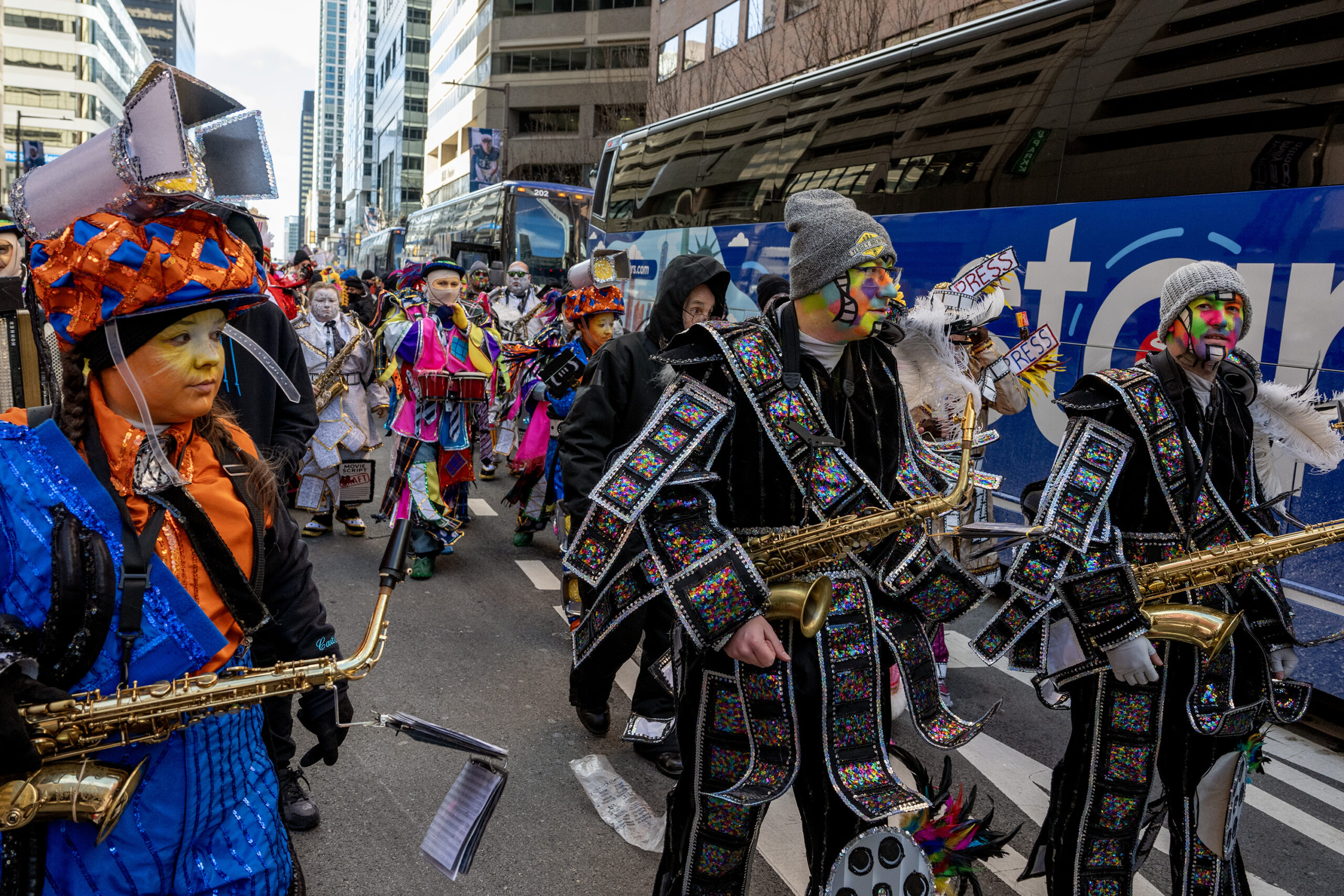
    Musicians with the Uptown String Band arrive on buses, to play for their theme of “From Script to Screen,” highlighting the golden age of Hollywood movie making.

    ‘Things were just being ripped out of our hands’

    String band officials saw the forecasts: possible snow squalls and wind gusts early Thursday morning. They monitored forecasts hour by hour.

    But in the 5 a.m. reality of readying “a mobile Broadway show,” it quickly became apparent that they were not gusts, but, on Broad Street, sustained 30-mile-per-hour winds. As clubs set up their elaborate props, five people sustained injuries that sent them to the hospital. Some clubs had important set pieces destroyed.

    “We did everything precaution-wise — sandbags and all of that,” said Sam Regalbuto, president of the Philadelphia Mummers String Band Association. “But as they were trying to assemble, things were just being ripped out of our hands.”

    Regalbuto quickly called a meeting of association delegates, and the consensus was to suspend the competition but still march. Only a little differently, not putting anyone at a disadvantage, because several bands had lost key pieces of their show.

    Sam Regalbuto, president of the Philadelphia Mummers String Band Association, pauses for a photo with Mayor Cherelle L. Parker, during the Mummers Parade Thursday. The string band competition was suspended because of high winds that destroyed props and caused injuries during morning setup. The bands still marched and played their music, but did not carry props, and would not be judged.

    Even into the afternoon, winds were still brisk, with temperatures in the 30s. (Cold temperatures are scheduled to continue into the weekend.)

    “We’ve lost sets, we’ve lost props that we’ve worked 365 days to put together to bring you the best possible string band spectacular that we do every year,” he said. “It was very hard for all of us, as a unit, to make this decision.”

    After the last Comic Divisions finished, it was showtime for the strings, with Duffy String Band leading off.

    Crowds seemed unfazed by the amended show. Some Mummers wore beanies instead of their typical elaborate headpieces.

    A jubilant Mayor Cherelle L. Parker’s spirits were undimmed by the changes.

    “I want you to remember how much time, energy, and practice and effort goes into preparing,” Parker said. “Don’t forget about the generations of families who are here. We are proud, and this is our Philly tradition.”

    ‘Our thing, together’

    Dressed in handmade, bedazzled Colonial-era costumes, Joe Bongard, 47, and his teenage daughter, Lucy, were the first Mummers to march.

    By parade time, it had almost seemed like they hadn’t slept in days, the Bongards said. Father and daughter had been preparing since September.

    Bruce Platt, a parade marshal for 17 years, holds back the rush of Froggy Carr wenches as they take off for their TV start time march,

    In the final hours before Parade Day, Lucy sewed her bejeweled and sparkled red-white-and-blue Colonial-era woman’s costume. Meanwhile, her father, who is in his first year as captain of Golden Sunrise Fancy Club, applied finishing touches to his Ben Franklin outfit and practiced his knee step for the dance routine.

    Poised in the warming glow of the television cameras, their patriotic sequins and feathers rustling in the icy wind, Joe and Lucy Bongard said this is what they love to do.

    “It’s our thing, together,” Joe Bongard said.

    Proudly watching her husband and daughter from the grandstand, Erika Bongard laughed when she said that, for her, the Mummers Parade represented something else entirely. “Honestly for me, lots of cleaning, because there is sequins and glitter everywhere for months,” she said, recording as Joe and Lucy began to strut and dance to Rocky theme song “Gonna Fly Now,” officially kicking things off.

    “Clearly, Lucy got her rhythm from me, and not Joe,” said Erika Bongard, beaming about her daughter’s smooth steps.

    McKenna Wei, 7, gets help putting on a set of beads given to her by a passing Mummer Wench as the Newtown Square family watches the Mummers Parade Thursday, the 125th anniversary of Philly’s iconic New Year’s Day celebration. From left is grandmother Qin; sister Mabel, 12; mom, Helen and dad, Michael.

    Nearby, Ellie Jozefowski, 75, fought back tears as she strutted in a sequined Flyers jacket. The tears come easily every year for Jozefowski, a parade veteran of more than three decades.

    Thursday was no different. They flowed freely as four generations of Jozefowskis marched together for Golden Sunrise, including Ellie’s 7-month-old grandson, Peter, bundled up in a cheesesteak costume and carried by his mother, Molly.

    “I’m crying because I’m happy!” shouted Ellie Jozefowski.

    Farther back in line, Mummer Brian Creamer, of South Philly, shivered over his coffee. His young daughter, Amita, also a Mummer, had helped him bejewel his pirate king costume. He would not miss it for the cold or the wind, he said.

    “It’s about spreading the new year joy,” he said.

    Even farther back, wenches Ricky Dinaro, 35, and his pal, Anthony Putnick, warmed themselves on the regenerative powers of Miller Lite.

    They’d been born into the parade, they said, and marched all their lives. They had been drinking for hours.

    “I stayed up all night,” said Putnick, of the MGK Outsiders NYB.

    Others had found their way into the longest-running continuous folk parade.

    Cheyenne Cohen, of Golden Sunrise, grew up in Northern California before joining the Mummers three years ago after she moved to Philly. There was nothing like the Mummers in Santa Cruz, she said, adding that she now also works at the Mummers Museum in South Philly.

    “Absolutely, the most welcoming community,” she said of her sequined and feathered found family.

    It was a parade of firsts for the Mummers of the Philadelphia Chinese Community Organization United troupe.

    Celebrating its inaugural year, the Chinatown Mummers danced traditional Chinese folk dances, which many members practiced late nights after their restaurant jobs.

    “We want to welcome people to Chinatown and show our culture,” said member Holly Ming.

    In the crowded grandstands, new and old fans shivered.

    Kenzie McBride thought what better year to score front-row grandstand seats for her stepmother, Jennifer Smithson, than the 125th anniversary?

    Smithson, bundled in a blanket, approved.

    “It’s been on my bucket list,” she said.

    And though some would-be parade-goers stayed home because of the string band news, plenty came out to enjoy the iconic parade anyway.

    In the grandstands as darkness fell, Patrick Finnegan, 46, of Oreland, danced with his son, Dylan, 6, on his shoulders. His 8-year-old twins, Arielle and Melody, were by his side.

    It was the first time he had brought the kids to the parade.

    The cancellations didn’t affect their fun, Finnegan said.

    “It’s all about riding the train downtown to see the Mummers,” Finnegan said, mid-strut. “My wife thinks I’m crazy.”

  • Tanner McKee is ready to ‘play fast’ in his next opportunity to start at quarterback with the Eagles

    Tanner McKee is ready to ‘play fast’ in his next opportunity to start at quarterback with the Eagles

    The Eagles were going through their ball security drills at practice Thursday when running backs coach Jemal Singleton chimed in.

    Many starters will get the day off Sunday in the season finale vs. the Washington Commanders. So Singleton wanted to offer a reminder: For some Eagles who will take the field Sunday, their last time getting hit was a while ago. His eyes quickly darted to Tanner McKee, the backup quarterback said.

    “It’s actually been a while since I’ve gotten hit,” McKee said Thursday afternoon.

    Sure, Jalen Hurts’ backup has hit the field a few times in mop-up duty this season. He handed to Tank Bigsby twice and kneeled twice during the final drive two weeks ago vs. Washington. He led a 17-play drive to the goal line in a blowout over Las Vegas a week earlier. And he handed once to Bigsby before kneeling three times to close out a Week 8 win over the Giants.

    This week is different. McKee will get the reins vs. the Commanders as the Eagles give Hurts and some other regulars a week off from game action to get ready for the playoffs. McKee and any other backup will routinely tell you about preparation being the same every week. Backups prepare to start because their number could be called at any time. But McKee said there is a slight difference.

    “You’re just more involved with making the calls on the field instead of watching somebody else make the calls,” he said. “So you’re back there and you’re doing your footwork. ‘This is what I would do; these are my reads if I were in.’ But now you’re actually in. It is just kind of getting those physical reps.”

    And he will prepare to be hit, too. McKee hasn’t gone into a game as a starter since the preseason. Prior to that it was Week 18 last year, when he completed 27 of 41 passes for 269 yards and two touchdowns in a 20-13 win over the Giants. McKee will again face a divisional foe, but the big difference this time is the game has some stakes. The Eagles were locked into the No. 2 seed last season. This time, McKee could help lead the Eagles to a win with a chance to move into the second spot in the NFC if Detroit beats Chicago.

    “I’m definitely excited for that,” McKee said. “It’s obviously fun when something is on the line.”

    Philadelphia Eagles Tanner McKee throws the football during practice at the NovaCare Complex in Philadelphia

    In that regard, McKee hasn’t played a meaningful game since he was at Stanford in 2022. And while this game does have some possible stakes for the Eagles, it definitely has stakes for McKee, who is still a 25-year-old quarterback trying to put good play on tape. Next season is the final year of his contract, and while there are surely some Eagles fans that want him to be a starter here — and will make their voices heard on radio stations heading into the playoffs if he plays well Sunday — McKee is, in a sense, auditioning for his next job. The Eagles could choose to bring him back as a reliable backup option in 2026, or they could try to flip him for draft capital this offseason.

    McKee, who had a good training camp with the Eagles, said he wasn’t thinking ahead about that part of it, but is viewing Sunday as just another opportunity to go do his job and perform. He feels more prepared to do that now than he did at this time last year just because of all the practice time he’s gotten since.

    “Obviously with more reps you get more confidence, you have that good chemistry with the guys around you,” McKee said. “I feel like I have a good feel, can play fast. As a quarterback it’s really big to be able to play and just react to the game instead of trying to think, ‘What’s my job? What’s my footwork? What’s everybody else doing?’ You can just play and react and so I feel like I’ve gotten to that point and I feel comfortable doing that.”

    A year after his last start, he’ll get a chance to show just how comfortable on Sunday.

    Williams added to active roster

    Rookie right tackle Cameron Williams was added to the active roster after being activated from injured reserve Thursday. Williams’ 21-day practice window was set to expire this week and the Eagles opted to activated him rather than end his season.

    Williams, 22, could see his first NFL action Sunday.

    Injury report

    The Eagles listed Jalen Carter (hip), Nakobe Dean (hamstring), Dallas Goedert (knee), Lane Johnson (foot), and Jalean Phillips (ankle) as non participants in practice Thursday.

    Safety Marcus Epps reported concussion symptoms to the medical staff after practice. He has a concussion and is in the concussion protocol.

    Jihaad Campbell (back/shoulder) was upgraded to a full participant after appearing on the estimated injury report after Wednesday’s walk-through as limited.