Tag: topic-link-auto

  • What I learned eating all over Philly in 2025

    What I learned eating all over Philly in 2025

    This year was a big one for eating at restaurants. I had the largest beat in scouting for The 76 this year, my first year doing so. For that list alone, I dined at 74 restaurants. For the other features, guides, and reviews I wrote, I dined at several dozen more.

    It was fascinating to look at Philadelphia’s dining scene according to the cross sections provided by eating many of the same dishes, served in different establishments. I ordered gon chao ngau ho or beef chow fun all across the city, comparing the differences between many restaurants’ versions. Some of them were drastic, some more nuanced. This past year, I spent cumulatively two whole days at omakase counters. I tracked the culinary trends and trendy ingredients that pervaded dining rooms and kitchens: Caesar salad everything, fermentation going strong, late-night menus finally emerging from their post-pandemic slumber, and the continuing rise and diversification of little treat culture.

    It was even more fascinating to look at the Mid-Atlantic as a whole (I spent the earlier part of the year splitting my time as a resident of both Washington and Philadelphia) and seeing what trends or tendencies were shared in restaurants up and down the Northeast Corridor. Most of what I noticed took place on the plate, though our dining scene was also marked by other trends: the surge of coffeehouses, the uptick in awards, and the proliferation of oyster bars.

    Trendy techniques and ingredients do not exist in isolation. Philly’s dining scene is part of a larger ecosystem of American dining and as our restaurants attract more and more out-of-town visitors and our kitchens attract out-of-town talent (the presence of Michelin in Philly ensures both), the borders of what makes dining in Philadelphia will expand and open. Social media buffets these trends around the globe, like the shades in Dante’s Inferno.

    What I learned eating all over Philly in 2025

    All green everything

    Matcha prices rose and quality fell, as farmers in Japan struggled to keep up with the global obsession with matcha that Philadelphia was not immune to. A similar trajectory happened with pistachios, as the Dubai chocolate bar maintained a chokehold on establishments from ice cream shops to smoothie shops and everywhere in between.

    After 9 p.m. is back

    Late-night menus are very much back, despite data supporting early dining as trending.

    Big treats and little treats

    Steakhouses and bakeries dominated openings (in Philly, the latter was more the case). They also developed distinct personalities, informed by the cultural backgrounds of third culture kids. We got Baby’s Kusina, Seaforest Bakeshop, a wave of Indonesian cafes with fluffy pastries, and a host of other “little treat”-forward bakeries. New York and London reported similar little treat trends.

    Nostalgia, or signs of a shifting economy?

    Recession indicator foods like burgers and baked potatoes are dominating the discourse when it comes to restaurants’ marketing. I’ve also heard my friends hotly debate which restaurants in Philly serve the best cabbage dishes. Cabbage is the epitome of recession indicator foods.

    Cocktails, both complicated and delicious

    So much in-house fermentation and liqueur-concocting continues to fuel the creativity of Philly’s bars, especially with Almanac, La Jefa, and Honeysuckle leading the way in preserving foraged ingredients and brewing amazake, traditionally made with koji applied to rice but in Philly, bartenders are making it with everything from corn to sweet potatoes.

    Hail, Caesar

    I started my tenure at The Inquirer by covering the viral kale caesar cutlet at Liberty Kitchen. Now, just over a year later, there is nothing that cannot be a Caesar, whether it’s a martini or Scampi’s take on bruschetta. The word “salad” has now been elided from the dish.

    Superb sauces, not enough rice

    There simply isn’t enough rice on the menu to sop up the incredible sauce work happening in many of our newer restaurants. Ordering a side of white rice whenever I get a crudo at Sao or Mawn has become regular practice for me. I also longed for sides of rice when dipping into Uchi’s many, very saucy crudos.

    I can’t see my food when I’m with you

    The dining rooms are getting dark. I can’t see my food. And yet, we’re in the golden age of food photography.

    Hokkaido scallops on crispy rice with vadouvan curry at Bardea, served on shells inside a box.

    No plates, no problem

    Restaurants continue to love serving food on plates that are not plates, from the jewelry boxes that bear delicate squares of crispy rice topped with raw scallops, weighed down by rocks at Bardea, to just rocks at Honeysuckle, to cleaned out parts of animals like the tuna spinal jelly served in a cleaned-out piece of tuna spine at Nakama and the scallop sashimi in shells at Ogawa. When Elwood served its venison scrapple stabbed onto deer antlers in 2019, it broke the Philadelphian internet. Nowadays, you wouldn’t bat an eye. This phenomenon is worldwide. When I get my initial “snacks” course — they’re always called “snacks” at a fine dining establishment — it would be weird if they weren’t served on ceramic orbs like at Miro in Honolulu or ceramic test tube holders at Washington’s Jont or custom pieces made by Felt and Fat that resemble the surface of the moon at Provenance.

    Break out the vinyl

    Speakeasy cocktail bars are out. Inclusive listening lounges are in.

    Every restaurant needs a hamachi crudo

    The Aged Hamachi Crudo at Sao on Wednesday, Nov. 26, 2025 in Philadelphia.

    Pickle martinis, chicken karaage, koji-aged proteins and vegetables, and hamachi crudo are on so many menus, regardless of cuisine or concept.

    Let’s call it ‘American Fusion’

    The term “New American” is so yesteryear, but the conglomeration of many different influences and dizzying collections of seemingly disparate global flavors on single menus pervade at ambitious restaurants like Wilmington’s Bardea, where muhammara and calamansi are on the same menu, to great effect, and Grad Hospital’s Banshee where, of course, there is a hamachi crudo but also patatas bravas on one menu.

    Get off the list

    Finally, we often keep going to the same places. The 76 was a great exercise in not doing that and I encourage you to dine out widely. To eat beyond the places that have endless notify lists on Resy. To only be blinded by the dark depths of current dining rooms, and not the hype that blankets hot new restaurants.


  • The thrill of victory and the exasperation of trying to feel good about it define the 2025 Eagles

    The thrill of victory and the exasperation of trying to feel good about it define the 2025 Eagles

    Quinyon Mitchell isn’t one of those cornerbacks who speaks as if he is paid by the word. That’s a good thing. Brevity is often a sign of a man with more important things on his mind. It also suffices, more often than not.

    For anybody who walked away from the Eagles’ 13-12 victory over the Bills on Sunday with an even greater sense of trepidation regarding the postseason, it might be helpful to consider the three short declarative sentences that Mitchell offered up as his interpretation of the proceedings.

    “We’re battle-tested,” the Eagles’ second-year cornerback said as he stood in the postgame swirl of a cramped visitor’s locker room at Highmark Stadium. “Just look at our schedule. Look at our opponents.”

    The sentiment is equal parts encouraging and maddening. Which is fitting, because the Eagles themselves are both of those things. It is their yin and their yang, their two mystical tadpoles, one of them midnight green, the other kelly green, chasing each other in a circle. The thrill of victory and the exasperation of trying to feel good about it.

    On the one hand, the scoreboard is the ultimate judge. On the other hand, why does the scoreboard have to say 13-12? And why does it have to feel so fitting?

    To anybody who possesses both a functioning brain and a reasonable amount of prior exposure to playoff football, the Eagles look like a team whose luck is destined to run out well before Super Bowl Sunday. The quarterback has not been good enough. Not even close. The play-calling has not been good enough to make up for the quarterback’s deficiencies. The defense has been good enough to make up for both of those things. But only barely.

    On Sunday, the result was the second time this season that the Eagles failed to complete a pass in the second half. Yet it was also the second time this season where they failed to complete a pass in the second half and still won the game.

    Yin and yang.

    Sunday was also the third time this season when the Eagles won a game in which they scored fewer than 17 points. They are just the fifth team to accomplish that feat over the last 15 seasons. Of the four teams that did it previously, three went on to lose in the wild card round. Yet the one exception was the 2012 Ravens, who went on to win the Super Bowl.

    Yin and yang.

    Defensive tackle Jalen Carter (98) and running back Saquon Barkley celebrate after the Eagles stopped the Buffalo Bills on a two-point conversion attempt late in the fourth quarter Sunday.

    “I’ve never really been on a playoff team, but I can tell the difference just in the sense of these crunch time moments, being able to bend but don’t break,” said defensive end Jaelan Phillips, who had one of the Eagles’ five sacks against the Bills. “Obviously they had a little bit of a surge toward the end, but we were able to do what we needed to do offensively, defensively, and special teams wise to come out with the win. Gritty games like that are things you need to have to prepare yourself for the long haul.”

    The Eagles may not be the most dynamic team heading into the postseason, but they will be the most prepared.

    They have faced 10 of the top 13 quarterbacks in the NFL in terms of passing yards with a 3-1 record against the top three. They are 4-1 against the top seven QBR leaders. They have won games against five of the six quarterbacks who, along with Jalen Hurts, lead the NFL in wins over the last four seasons.

    Sunday was the 10th time in 16 games that the Eagles faced a team that ranked in the top 10 in the NFL in either offensive or defensive yards per play (as of Sunday).

    They have faced four of the NFL’s five highest-scoring offenses. They’ve faced five of the six quarterbacks who entered Sunday with the most passing yards, and three of the four who entered with the highest passer ratings. They have faced five of the seven defenses that entered Sunday with the highest rating, according to Pro Football Reference’s rating system.

    These have been the Eagles’ hallmarks throughout Hurts’ tenure at quarterback and Nick Sirianni’s at head coach. Sunday’s win over the Bills only added to a road record that is the best in the NFL since Sirianni’s arrival.

    “I think that’s a product of really good players and good coaches, and so it’s everything that goes into that, but good mental toughness,” Sirianni said Monday. “I think that really signifies your mental toughness, too.

    “We experienced some highs and some lows [on Sunday], and we were able to continue to be relentless in our approach handling ups and downs. They ended up making a critical mistake in the game and we didn’t, which ended up being the difference in that game. So again, coming down to fundamentals. Just great resilience by the guys in there, and we prepare for that as coaches and players.”

    Resilience is great. But even better is playing well enough to avoid the situations that test your resilience. That tension of opposites will determine the Eagles’ ultimate fate in the playoffs.

  • Philadelphia juries awarded $3 billion less in verdicts in 2025 compared to 2024

    Philadelphia juries awarded $3 billion less in verdicts in 2025 compared to 2024

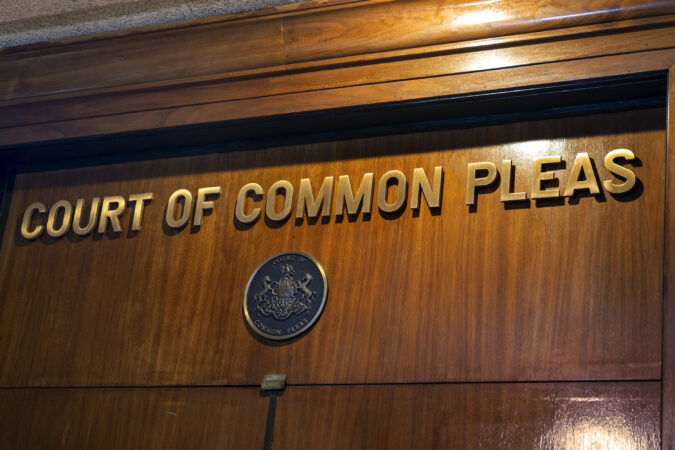
    Philadelphia juries issued only three verdicts of $10 million or more in 2025, less than a third of the so-called nuclear verdicts awarded in 2024. The decline was so pronounced, it knocked the city’s Court of Common Pleas from the top spot on an annual “judicial hellhole” list.

    The overall amount doled out by Philadelphia Court of Common Pleas jurors declined by more than $3 billion this year compared to 2024, according to court data up to Dec. 19. The nearly $120 million awarded in 74 plaintiff verdicts represents largely a return to pre-pandemic norm.

    Two 2024 verdicts explain the majority of the gap: $2.25 billion against Monsanto in a Roundup weed killer case and $725.5 million against Exxon Mobil in a trial over toxic exposure to benzene-containing products.

    Compare those figures to the largest verdicts this year, a $35 million medical malpractice verdict against the University of Pennsylvania and Main Line Health and $15.3 million against a skill game designer and manufacturer for a dispute that led to the death of a Scranton man.

    Even the American Tort Reform Foundation, a group tied to an association that advocates for reform of civil litigation and represents business interests, took notice. Last year, the foundation blasted Philadelphia Common Pleas Court, along with the Pennsylvania Supreme Court, as the nation’s top “judicial hellhole.”

    In the 2025-26 report, the Philadelphia court was dethroned and ranked fifth. (The Pennsylvania Supreme Court had its own entry this year, making the group’s “watch list.”)

    “2025 did not bring the same level of activity, but this decline is not the result of positive reforms or improved legal activity, but rather a reduction of trials,” the report says on the fewer number of large verdicts in the Philadelphia Common Pleas Court.

    <iframe title="Philly Juries Issued Fewer, Lower  Verdicts in 2025" aria-label="Column Chart" id="datawrapper-chart-CF2on" src="https://datawrapper.dwcdn.net/CF2on/1/" scrolling="no" frameborder="0" style="width: 0; min-width: 100% !important; border: none;" height="427" data-external="1"></iframe><script type="text/javascript">window.addEventListener("message",function(a){if(void 0!==a.data["datawrapper-height"]){var e=document.querySelectorAll("iframe");for(var t in a.data["datawrapper-height"])for(var r,i=0;r=e[i];i++)if(r.contentWindow===a.source){var d=a.data["datawrapper-height"][t]+"px";r.style.height=d}}});</script>
    <iframe title="" aria-label="Column Chart" id="datawrapper-chart-txfq8" src="https://datawrapper.dwcdn.net/txfq8/1/" scrolling="no" frameborder="0" style="width: 0; min-width: 100% !important; border: none;" height="455" data-external="1"></iframe><script type="text/javascript">window.addEventListener("message",function(a){if(void 0!==a.data["datawrapper-height"]){var e=document.querySelectorAll("iframe");for(var t in a.data["datawrapper-height"])for(var r,i=0;r=e[i];i++)if(r.contentWindow===a.source){var d=a.data["datawrapper-height"][t]+"px";r.style.height=d}}});</script>

    This year had roughly 70 fewer trials that went to verdict, and no mass tort trials at all.

    Mass tort is the umbrella name for how courts handle a large volume of cases that all allege similar injuries. For example, the dozens of lawsuits in Philadelphia accusing Roundup weedkiller of causing blood cancer. The cases are consolidated under one judge, and “bellwether trials” are held to get a sense of what the cost of a global settlement might be, if an agreement is ever reached.

    Verdicts in mass tort cases are often large, as plaintiff attorneys encourage jurors to award a figure that the company’s boardroom would notice. Two of Philadelphia’s largest five verdicts in 2024 came from mass tort cases.

    Mass tort trials are scheduled for 2026, starting in January, and with them large verdicts could trend up again.

    Attorneys say there is more to the story than counting trials, as the large verdicts of 2024 and 2023 shaped how cases are handled behind the scenes. And fewer large verdicts don’t necessarily mean that defendants in Philadelphia are paying less.

    Robert J. Mongeluzzi, the founder of Saltz Mongeluzzi Bendesky, said defendants and insurers are agreeing to large settlements before any verdicts are delivered.

    “Defendants and their insurance carriers have resolved catastrophic cases by offering tens of millions of dollars to resolve these cases in advance of trial,” Mongeluzzi said via email.

    John Hare, a defense attorney with Marshall Dennehey, said that the large verdicts of recent years are prompting defendants to pay more, and more often, than they otherwise would.

    “There is a correlation between a rise in nuclear verdicts and a rise in nuclear settlements,” Hare said.

    The attorney also credits the court’s effort to mediate settlements in medical malpractice cases as one driver of the decline. But the key context is the historically high verdicts in 2023 and 2024, Hare said.

    “I don’t think the era of nuclear verdicts is over,” he said.

  • Five Philly science wins of 2025: Big prizes, biotech moves, and global recognition for Baby KJ.

    Five Philly science wins of 2025: Big prizes, biotech moves, and global recognition for Baby KJ.

    Despite being one of the rockiest years yet for science — marked by millions of dollars in funding cuts and controversial shake-ups to the federal infrastructure — Philadelphia scientists still managed to celebrate many wins in 2025.

    Some institutions expanded their research with new centers dedicated to autoimmunity, HIV, Williams syndrome, and drug development. Others won big grants to develop better drugs for asthma and study the causes of autism.

    Local scientists published exciting research on treatments for type 1 diabetes and ovarian cancer, designed self-heating concrete, and proposed ways to turn toxic fungi, snake venom, and trees into medicine.

    They also won national and international honors for work in physics, cancer research, and drug repurposing. And although no local scientists won a Nobel Prize this year, two at Monell Chemical Senses Center were recognized by its satirical counterpart, the Ig Nobel Prize.

    Here are five notable Philly science wins from 2025:

    1. Baby KJ is successfully treated with personalized gene editing therapy

    Philadelphia-area child KJ Muldoon, now 16 months old, has already been called a “trailblazing baby” by the top scientific journal Nature and recognized by the publication as one of 10 people who helped shape science in 2025.

    This international recognition came after his life-threatening genetic condition was successfully treated with a personalized gene editing therapy earlier this year by doctors at Children’s Hospital of Philadelphia and the Hospital of the University of Pennsylvania.

    Baby KJ was born in August 2024 with a metabolic disorder that prevented his liver from being able to process protein. Called severe carbamoyl phosphate synthetase 1 (CPS1) deficiency, the disorder puts babies at risk of severe brain damage and is fatal more than half the time.

    With few options to treat him, the CHOP and Penn team — led by doctors Kiran Musunuru and Rebecca Ahrens-Nicklas — opted for a gene-editing technology known as CRISPR to create a customized drug for KJ that would fix the genetic mutation that was driving his disease.

    After receiving three doses, KJ was able to return home in June — ending his 307-day-long stay at the hospital. Though not a cure, the medication has dramatically improved his liver function and made the effects of his disease milder, doctors say.

    2. Penn physicists share the Breakthrough Prize in Fundamental Physics

    Penn particle physicists (from left) Joseph Kroll, Brig Williams, and Elliot Lipeles, pictured in 2011. They are part of the ATLAS research team that helped discover the Higgs boson, an elementary particle, and were honored with the 2025 Breakthrough Prize for their ongoing Higgs research.

    This year, Penn physicists shared one of science’s biggest honors: the Breakthrough Prize.

    They were among 13,000 scientists across more than 70 countries to be recognized for their involvement in particle physics experiments at the European Organization for Nuclear Research, known as CERN, in Switzerland.

    These decades-long research collaborations have explored the fundamental structure of particles that make up the universe, using CERN’s Large Hadron Collider, a 17-mile-long particle accelerator.

    The Penn team — consisting of more than two dozen scientists, including Joseph Kroll, Evelyn Thomson, Elliot Lipeles, Dylan Rankin, and Brig Williams — was specifically part of the ATLAS Experiment, which played a key role in the discovery of the Higgs boson particle, a critical particle in modern particle physics theory. The Higgs discovery helped confirm how fundamental particles acquire mass.

    3. David Fajgenbaum honored for drug repurposing research

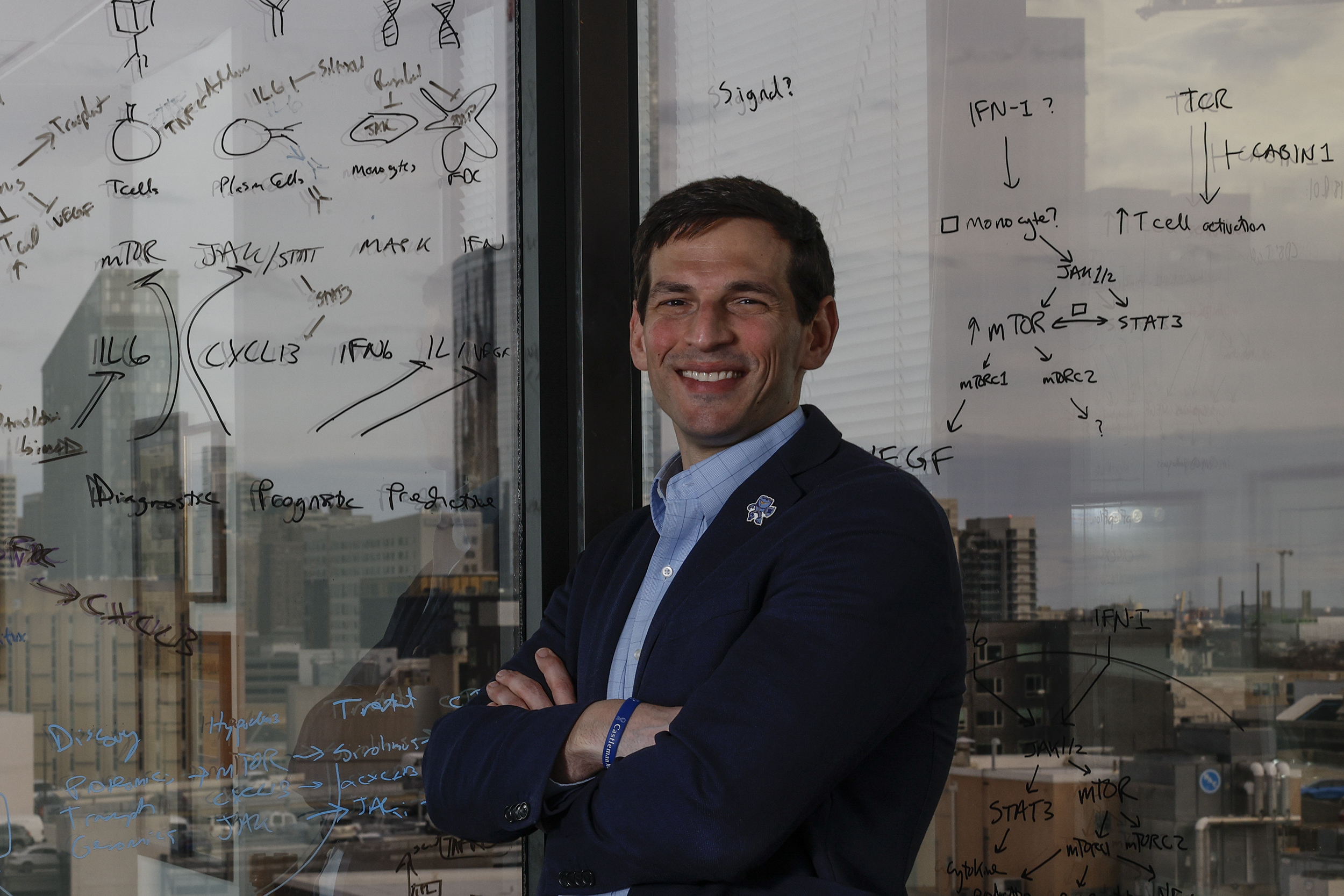
    David Fajgenbaum was diagnosed with Castleman disease, a rare lymph node disorder with limited treatment options. When chemotherapy didn’t work, the third-year medical student worked with his doctors to discover that a medication approved for preventing organ rejection in transplant patients could help him, too.

    Penn immunologist David Fajgenbaum received one of the nation’s oldest science prizes, the John Scott Award, this year for his pioneering work repurposing existing drugs for new uses.

    He entered this field 15 years ago after a rare and deadly diagnosis of idiopathic multicentric Castleman disease nearly killed him. The disease had no approved treatment nor any treatment guidelines at the time.

    Then a medical student at Penn, Fajgenbaum started collecting samples of his blood to test for abnormalities. The data helped him identify an existing drug called sirolimus — primarily given to organ transplant recipients — which has put him in remission for the last decade.

    Now through his nonprofit Every Cure, Fajgenbaum has made it his mission to use AI technology to match available medications with rare, hard-to-treat diseases.

    He published a case study in the New England Journal of Medicine in February, where his AI tool helped identify an off-label treatment for another patient with Castleman disease who, at the time, was entering hospice care after all available treatments had failed. As of that study’s publication, the patient has been in a yearslong remission.

    4. Lilly Gateway Labs biotech incubator coming to Philly

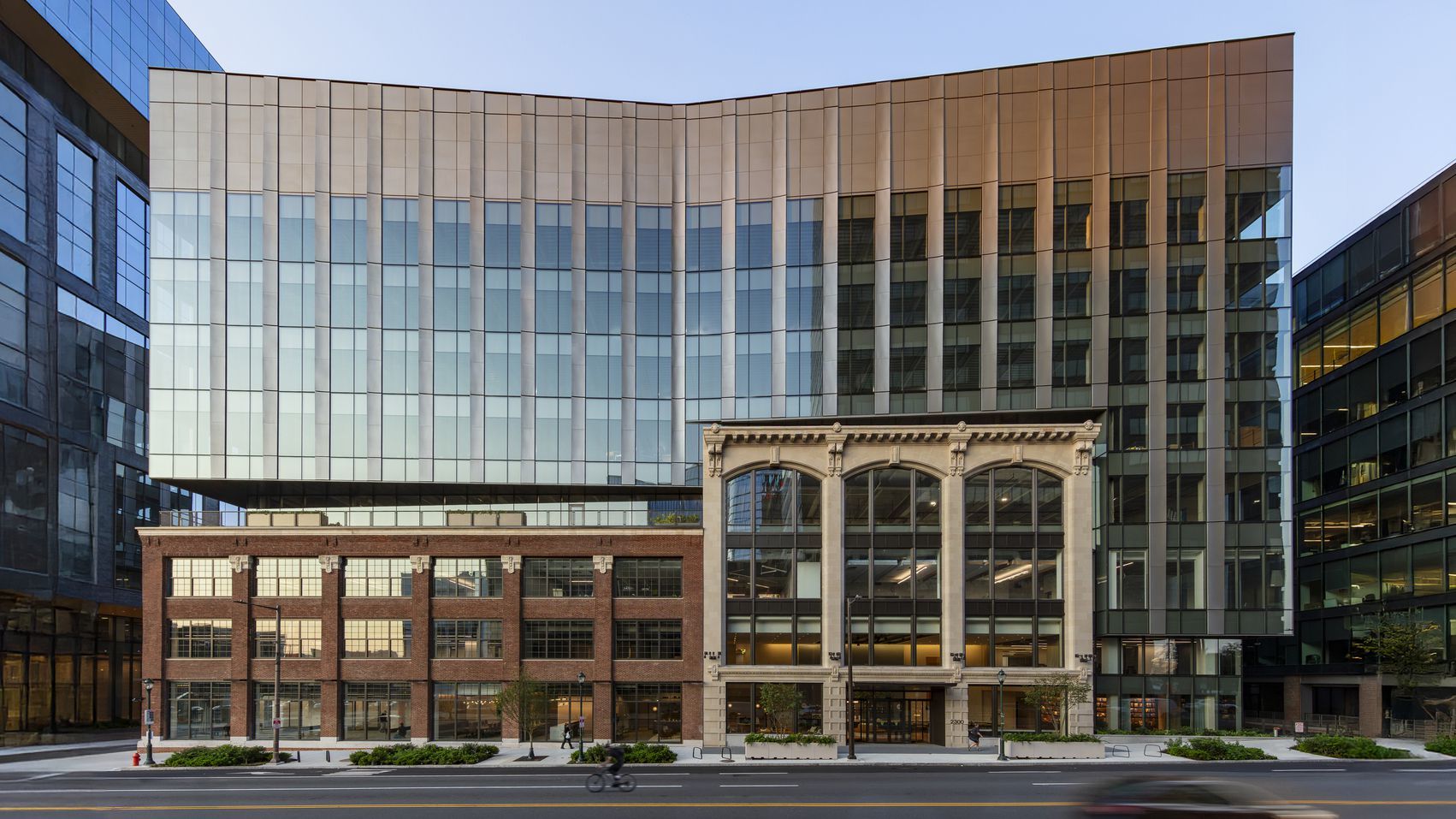
    Eli Lilly is opening a branch of Lilly Gateway Labs, an incubator for developing biotech companies, in Philadelphia, the Indianapolis company announced Wednesday. The site, in a new life sciences building at 2300 Market St. in Philadelphia, is the fifth in the United States for the pharmaceutical giant.

    Pharmaceutical giant Eli Lilly & Co announced in November its plans to open a Lilly Gateway Labs site — an incubator for early-stage biotech companies — in Center City.

    It was a positive sign for a biotech scene that otherwise lags behind other cities.

    The incubator, which will be Lilly’s fifth in the United States, will span 44,000 square feet on the first two levels of 2300 Market St. Since the program’s launch in 2019, companies at the other locations (in Boston, South San Francisco, and San Diego) have raised more than $3 billion from investors toward more than 50 therapeutic programs, according to Lilly.

    Lilly plans to house six to eight companies at the Philadelphia location, with the goal of welcoming the first startups in the first quarter of 2026.

    5. Carl June wins international honors for CAR-T research

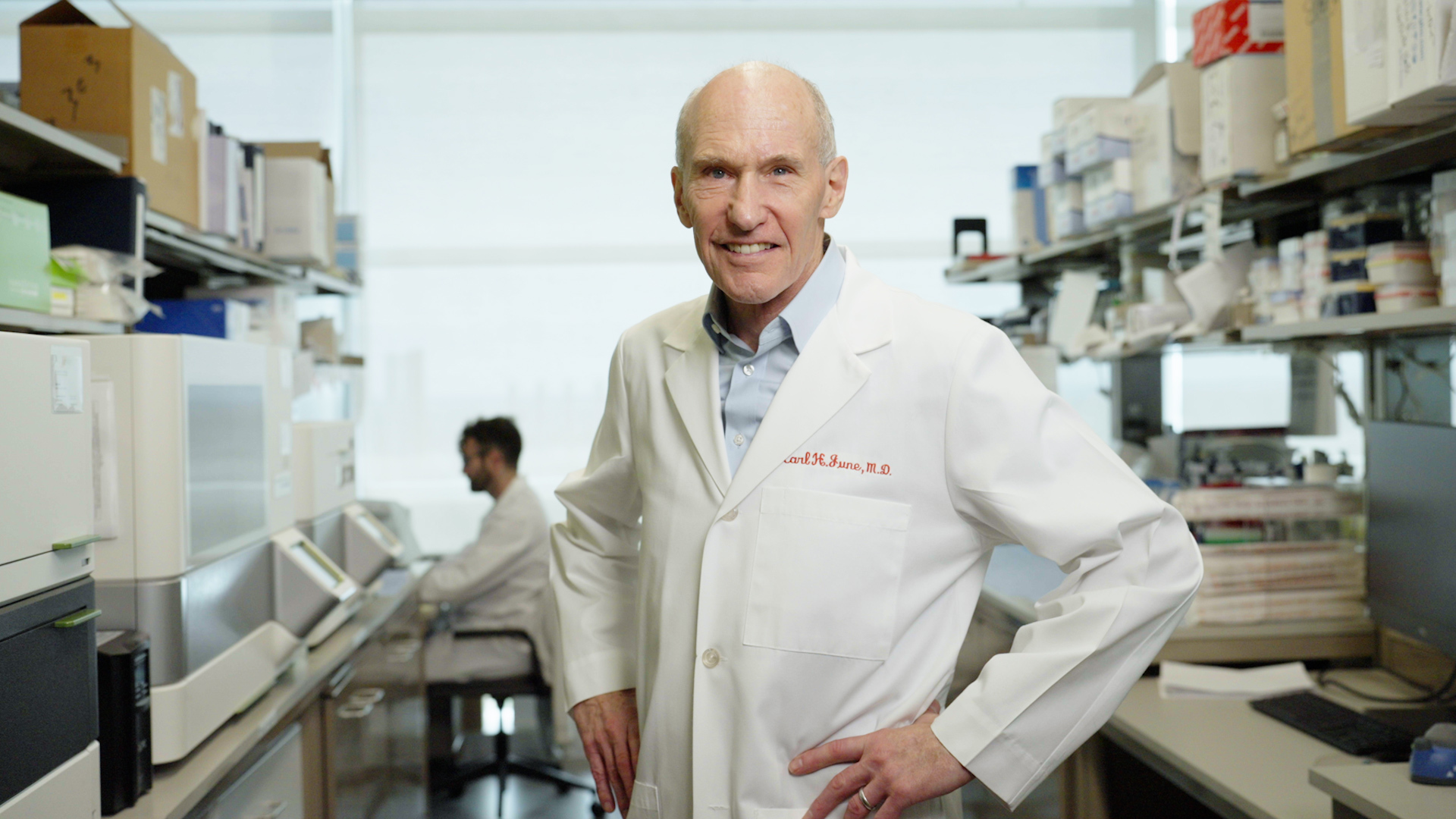
    Carl June won international prizes for his cancer research at the University of Pennsylvania.

    Penn cancer scientist Carl June added two more international prizes to his trophy case in September for his pioneering work engineering the body’s immune system to fight cancer.

    June is known for developing the first FDA-approved CAR-T therapy, an immunotherapy in which regular immune cells are genetically modified to become cancer-killing super soldiers. It has revolutionized treatment for blood cancers, saving tens of thousands of lives since its first use in a 2010 clinical trial he co-led at Penn.

    Though his past work is what won him the inaugural Broermann Medical Innovation Award and the 2025 Balzan Prize for Gene and Gene-Modified Cell Therapy this year, his lab has remained busy, working on ways to apply CAR-T to solid cancers, enhance the therapy for lymphoma, and even re-engineer cells inside the body.

    June has also made moves on the biotech front: A company he co-founded with the purpose of applying CAR-T to autoimmune diseases, Capstan Therapeutics, was bought by AbbVie this summer for $2.1 billion.

  • Term limits offer Pennsylvania rare bipartisan opportunity

    Term limits offer Pennsylvania rare bipartisan opportunity

    For decades, Congress has been the land of the permanent incumbent. Nearly nine in 10 Americans support congressional term limits, yet every attempt to impose them has failed because Washington won’t limit itself. But Pennsylvania has the power to change that.

    As I previously argued in the Hill, there’s a path forward that doesn’t require Congress to vote against its own interests, or the near-impossible task of a constitutional amendment. The answer lies in coordinated state action that could force the U.S. Supreme Court to reconsider its 1995 decision in U.S. Term Limits v. Thornton.

    In Thornton, the Supreme Court ruled that states cannot add qualifications for federal office beyond those in the Constitution. That decision effectively shut down state-led reform, even though the people overwhelmingly support it.

    But landmark Supreme Court reversals often emerge when multiple states pass laws that force the court to reexamine old precedents. From Brown v. Board of Education to Dobbs v. Jackson Women’s Health Organization, coordinated state action has repeatedly succeeded in prompting judicial reconsideration.

    The strategy is straightforward: Pennsylvania, along with states like Texas, Florida, and Tennessee, would pass identical laws establishing term limits for their members of Congress. Each law would face legal challenges and be struck down under Thornton, as expected. But with multiple states acting simultaneously, the issue would surface across several federal circuits, creating pressure for the Supreme Court to revisit the question.

    Under the Articles of Confederation, delegates were not permitted to serve more than three of any six years, a clear endorsement of rotation in office. The founders never intended public service to become a lifelong career.

    If term limits are enacted, they should apply prospectively, with current members grandfathered in and everyone’s “term clock” beginning at zero. This avoids endless lawsuits while setting a new standard for the future.

    Pennsylvania is uniquely positioned to lead this effort. While the commonwealth has a divided legislature, with Republicans controlling the Senate and Democrats holding a narrow House majority, term limits have historically drawn bipartisan support. This is precisely the kind of reform that could bridge partisan divides and demonstrate that Pennsylvania can lead on issues that matter to voters across the political spectrum.

    The state has recent experience standing up to federal overreach. In 2025, Pennsylvania Secretary of the Commonwealth Al Schmidt, a Republican, fought back against the U.S. Department of Justice’s demand for sensitive voter data, calling it “unprecedented and unlawful” federal overreach.

    Schmidt emphasized that, in America, states run elections, not the federal government. This bipartisan defense of state sovereignty, supported by officials across party lines, demonstrates Pennsylvania’s willingness to assert its constitutional authority when necessary.

    Pennsylvania voters overwhelmingly support this reform. A January poll found that 78% of Pennsylvania voters support term limits on Congress, including 79% of Republicans, 78% of Democrats, and 80% of independents. This rare consensus across party lines makes term limits legislation an opportunity for Pennsylvania’s divided government to demonstrate it can work together on reforms that voters clearly want.

    Working to pass term limits legislation would be consistent with the Pennsylvania General Assembly’s history of defending state authority against federal intrusion, writes Tanner Willis.

    The Pennsylvania legislature has shown it can take principled stands on constitutional questions when there’s sufficient public support. Passing term limits legislation, knowing it will be challenged under Thornton, would be consistent with Pennsylvania’s history of defending state authority against federal intrusion. If Pennsylvania acts alongside states like Utah, Arizona, and Kentucky, the combined pressure could succeed where individual efforts have failed.

    If Congress won’t act, and the people can’t amend the Constitution directly, Pennsylvania still has one powerful tool: coordinated challenge.

    The path forward is simple. Pass the law, invite the challenge, and let the Supreme Court decide. The only question is whether Pennsylvania has the courage to lead.

    Tanner Willis is a business operations analyst based in Arlington, Va. He is the author of the book “Smoke and Silence: The Lives of Ol’ Mort.”

  • What Joe Khan, Bucks County’s first Democratic DA, says he’ll do when he takes office in January

    What Joe Khan, Bucks County’s first Democratic DA, says he’ll do when he takes office in January

    With the election behind him and the top law enforcement job in Bucks County ahead, Joe Khan says he’s ready for his next challenge.

    In January, Khan, a former federal prosecutor and onetime Bucks County solicitor, will become the first Democrat to serve as district attorney in the county since the end of the Civil War. (That’s not counting Ward Clark, a Republican who switched parties to run as a Democrat in 1965 and immediately switched back to his GOP roots after he won.)

    Khan, 50, is also the first candidate from outside the district attorney’s office to win the top post after several decades in which voters routinely replaced outgoing district attorneys with successors from among inside the ranks of the office.

    To claim that mantle, Khan decisively beat Jen Schorn, the Republican incumbent and a career prosecutor in the district attorney’s office, winning 54% of the vote in the November election, which broke a 20-year record for voter turnout.

    County political leaders say Khan’s victory signals voters’ desire for regime change in the once GOP-dominated suburb.

    They point to Khan’s win, along with fellow Democrat Danny Ceisler’s victory over controversial Republican Sheriff Fred Harran — whose plan to have his deputies assist federal authorities in immigration enforcement sparked protests and a lawsuit — as a rebuke to President Donald Trump.

    “Democrats came out because they felt like it was necessary to push back on what Trump was doing,” said State Sen. Steve Santarsiero, the chair of the Bucks County Democratic Party. “And in the case of Joe, they recognized him as someone who is going to stand up to an administration that has shown it’s willing to flout the law.”

    Khan, for his part, says politics is in the rearview mirror as he prepares for his new job.

    “I don’t care what political party you’re from, I don’t care who you voted for president or for district attorney,” he said in a recent interview. “What I care about is that you’re here to support the mission of keeping Bucks County safe and seeking justice every day.”

    Joe Khan greets and signs a poster for supporter Phyllis Rubin-Arnold as he waits for a meeting with the Buckingham Township Police chief. Khan says that politics has no role in his plans for the district attorney’s office.

    He said he respects Schorn’s work and that of her colleagues in the office, winning prosecutions in high-profile cases, like the trial and conviction of Justin Mohn, who beheaded his father and displayed his severed head in a YouTube video that went viral. Khan also praised the improvement Schorn and her colleagues have made to diversionary programs like drug and veterans courts.

    And he said he would expand that work — Khan tapped Kristin McElroy, one of Schorn’s top deputies, to serve as his first assistant.

    Drawing on his experience in the U.S. Attorney’s Office in Philadelphia, Khan said he would pursue environmental crimes and prosecute cases involving violations of workers’ rights.

    “We have seen all kinds of advances in terms of the powers that DAs have in Pennsylvania, so I think it’s great to have an opportunity to look at things with fresh eyes,” he said.

    Khan grew up in Northeast Philadelphia, where his father settled after emigrating from Pakistan. Like his brother, State Rep. Tarik Khan (D, Philadelphia), he took an early interest in public service. He followed those aspirations to Swarthmore College and, later, the University of Chicago Law School.

    Khan said he was drawn to Bucks County later in his career, and has made it his home in the 14 years he has lived with his sons, Sam, 14 and Nathan, 11, in Doylestown Township. He and the boys’ mother are divorced but co-parent amicably, he said, and live a few doors down from each other.

    After stints in the Philadelphia District Attorney’s Office and the U.S. Attorney’s Office — where he specialized in prosecuting gun crimes and locking up child predators — Khan ran for the top prosecutor’s job in Philadelphia in 2017, losing the race to Larry Krasner.

    Joe Khan (center) is seen here in March 2023 alongside County Commissioners Diane M. Ellis-Marseglia and Robert J. Harvie Jr. as they announced a lawsuit filed against multiple social media companies for “fueling a mental health crisis among young people.”

    Three years later, Khan took over as Bucks County solicitor. He developed an interest in local politics, he said, after watching the culture-war debates over library books and allegations of abuse that embroiled the Central Bucks School District, where his kids are enrolled.

    “It’s really central to my view of what parents need from their government,” he said. “They need people in roles like this that are going to make life easier, not harder, and that are going to help them with the challenges that they’re facing.”

    Not long after taking over the office, Khan challenged Trump’s efforts to dismiss mail-in ballots during the 2020 election. He also waged legal battles, taking on companies including 3M, DuPont, and Tyco by filing lawsuits over the “forever chemicals” that had leached their way into residents’ water supplies.

    And he made headlines for joining a national lawsuit against social media giants like TikTok, bidding them to address the mental health of their young users.

    When now-Gov. Josh Shapiro left the state attorney general’s office, Khan stepped down to join a crowded primary to replace him, running in 2023 on a platform to “continue what has been a lifelong fight to keep people safe.”

    After losing that race, Khan set his sights on the top law enforcement job in his new home, challenging the long-standing Republican machine that had controlled it for decades.

    “I think that if you do a good job and you let people know why you’re doing the things that you’re doing, whether or not they agree with you on every political position, if they know that you’re honest, you got a pretty good shot at earning their vote,” he said.

    “And I think that’s a big part of how we won this election.”

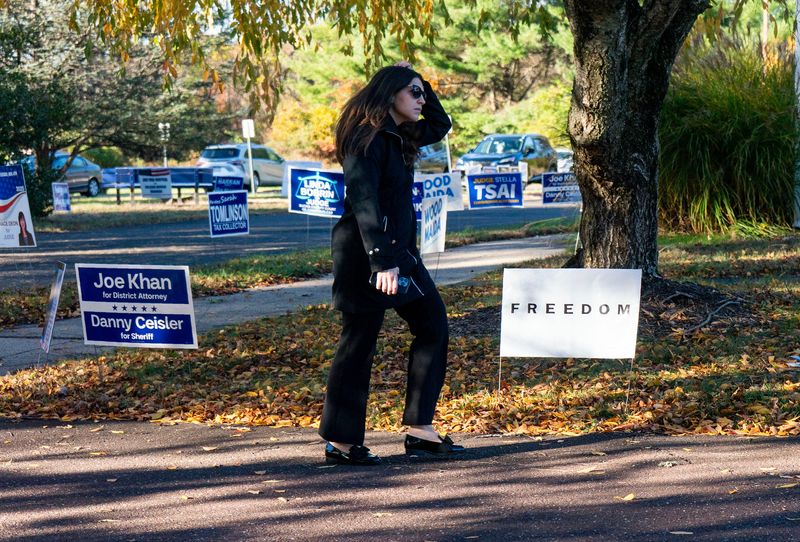
    A voter walks past the election lawn signs, including one for Joe Khan and his running mate, Danny Ceisler, outside the Bucks County Senior Citizens polling location in Doylestown on Nov. 4.

    Santarsiero, the county Democratic Party chair, said he was confident that Khan would make a fine district attorney.

    Winning the post required political prowess, of course, but he said that is a dichotomy unique to the office: Politics are required every four years to secure a position that is apolitical.

    Party affiliation aside, he said, Khan would work for the good of the county.

    Khan, for his part, says he is ready to give it his all.

    “We are here to keep people safe, and we’re going to do that in new and exciting ways,” he said. “I have my values, I wear them on my sleeve, and I’m very clear about the direction that we’re going to go to make sure that people who deserve a healthy environment for their families are getting a higher level of service than they’re used to.”

  • Philadelphia’s latest fashion craze? A coat inspired by Kalaya’s Chutatip ‘Nok’ Suntaranon. And her dogs.

    Philadelphia’s latest fashion craze? A coat inspired by Kalaya’s Chutatip ‘Nok’ Suntaranon. And her dogs.

    Chef Chutatip “Nok” Suntaranon — the culinary genius behind the James Beard Award-winning restaurant Kalaya — is known for her delicious Thai cuisine and trotting her adorable Pomeranians, Titi and Ginji, around her Queen Village neighborhood.

    That’s how Suntaranon caught the eye of sustainable fashion designer and Lobo Mau boutique founder Nicole Haddad.

    “To me, she was the lady with the restaurant and the Pomeranians,” Haddad said. “I would see her walking around Fourth Street and she’d have her Pomeranians with her. I have an obsession with Pomeranians. They are the most adorable creatures on the planet.”

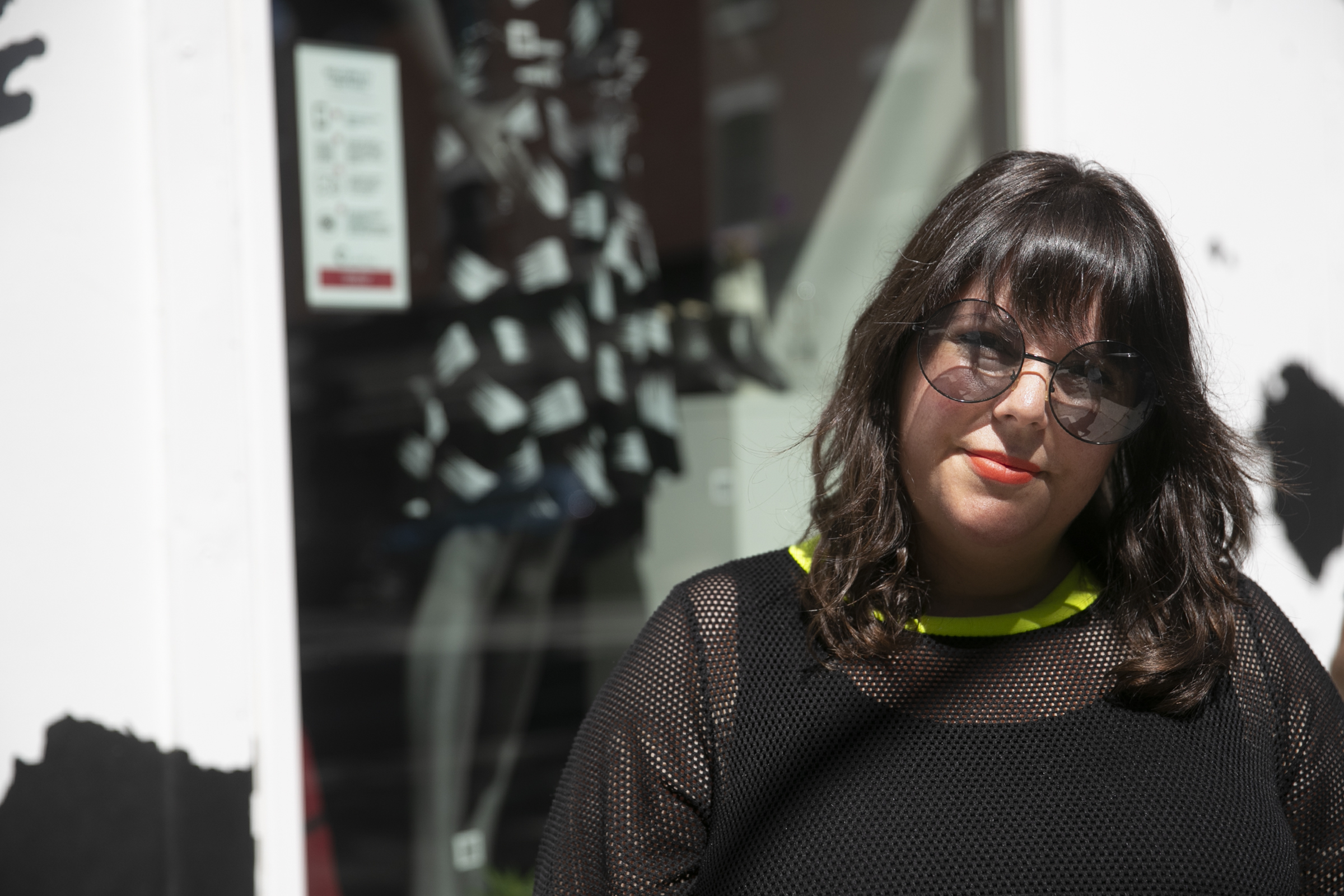
    Nicole Haddad stands in front of her boutique, Lobo Mau, in Philadelphia before it closed in 2024.

    So when a mutual acquaintance of Haddad and Suntaranon’s suggested the two entrepreneurs work together on a Philly fashion collaboration, Haddad jumped at the opportunity. She had the perfect project, a reimagining of Lobo Mau’s top-selling women’s swing coat, the Pom Jacket, named after Haddad’s favorite breed of dog.

    This new version would be called the Nok Pom.

    “It felt like kismet from the beginning,” Haddad said.

    The original

    About 15 years ago, Haddad was in Venice visiting the Peggy Guggenheim Museum when she chanced upon a black-and-white photo of the New York heiress and art collector surrounded by her beloved Lhasa apsos.

    “She was wearing a voluminous swing coat surrounded by five little dogs that reminded me of Pomeranians and I immediately thought, ‘I want to design something like this.’”

    Back in Philly, Haddad made a black-and-white swing coat just like the ones popularized in the 1930s by jazz musicians. These coats were designed by the likes of Elsa Schiaparelli and Balenciaga and sold in the world’s top specialty stores, including Philadelphia’s Nan Duskin.

    Haddad’s swing coat, the Pom Jacket, was tapered at the shoulders and flared at the waist, featuring a wide shawl collar and three-quarter-length cuffed sleeves. Priced at $398, it became a bestseller within weeks; finding a cult following, including NPR host Terry Gross, in the city.

    Model Khalil Abner wears Nicole Haddad’s original Lobo Mau Pom Jacket.

    In 2022, the Pom caught the eye of a buyer at New York’s Guggenheim Museum where it sold in the museum’s gift shop through 2024.

    “It was a full circle moment,” Haddad said.

    Meanwhile Suntaranon and Natalie Jesionka, the coauthor of Suntaranon’s 2024 book, Kalaya’s Southern Thai Kitchen: A Cookbook, had their eyes set on the Pom Jacket.

    The remix

    On a winter afternoon in 2019, Suntaranon stopped on a dime in front Lobo Mau’s then-Bainbridge Street boutique. She had to have the original black-and-white Pom Jacket in the window.

    “Within two seconds, we sold her the jacket and she left,” Haddad said.

    Suntaranon loved her jacket and has since been a supporter of Lobo Mau. It was Jesionka, a longtime Lobo Mau client who owned several iterations of the Pom, who suggested Suntaranon and Haddad collaborate.

    Haddad knew Suntaranon gravitated toward bold-hued pieces that appeared architectural but flowed like liquid over women’s curves. She also knew that Suntaranon collected origami-inspired pieces by Japanese womenswear designer Issey Miyake.

    “I’ve been collecting [Miyake] since I was 22,” Suntaranon, 57, said, mentioning the pleated teal, limited-edition Issey Miyake gown she wore to the 2025 James Beard Awards dinner in Chicago. “It’s timeless and beautiful.”

    Suntaranon arrived at Haddad’s Bok Building studio in September 2025 — she closed her Bainbridge Street store in 2024 after landlords tripled the rent — with a clear idea of her dream Nok Pom.

    She wanted a fuller silhouette that was longer in the back and had a button closure.

    “I wanted a more dramatic look,” Suntaranon said.

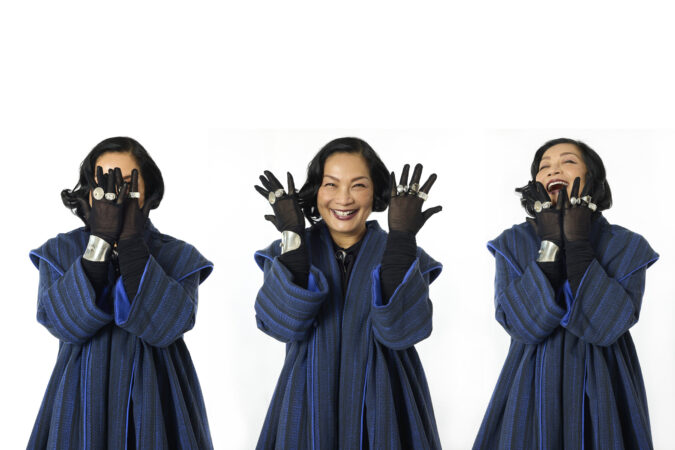
    Haddad created a print featuring a trompe-l’oeil 3D-effect that gave the illusion of Issey Miyake-style pleats. She had it digitally printed on cobalt blue sweatshirt material.

    Kalaya’s chef Chutatip “Nok” Suntaranon poses in Lobo Mau’s exclusive Pom jacket. The acclaimed chef collaborated with local designer Nicole Haddad for an updated version of Hadddad’s original Pom Jacket. Styled by Nicole Haddad and Miranda Martel; jewelry by Feast and Forge and Finish; shoes by Elena Brennan; Hair and makeup by Tarah Yoder.

    She added a box pleat in the jacket’s center back to create volume and drama, piping along the outer edge of the collar, and pockets on the inside and outside of the jacket. As a final touch, she put a big black button under the bustline.

    The Nok Pom was ready.

    “It’s beautiful,” Suntaranon said of her eponymous fashion piece. “It’s exactly how I envisioned it.”

    The Nok Pom, priced at $450, is a limited-edition item and is available to order through Jan. 10.

    In February , Haddad got a Pomeranian of her own that she named Johnny. She designed matching hoodies for Johnny, Titi, and Ginji, that are also for sale.

    Suntaranon is flattered that she — and her pooches — are a part of the city’s food and fashion scene.

    “Fashion — just like food — is a big part of my life,” Suntaranon said. “Fashion and food are an art. When the fashion industry is thriving and the food industry is thriving, the city is thriving.”

    The Nok Pom is available online through Jan. 10 on lobomau.com

  • Resolve to save a life in the new year. Register as an organ donor.

    Resolve to save a life in the new year. Register as an organ donor.

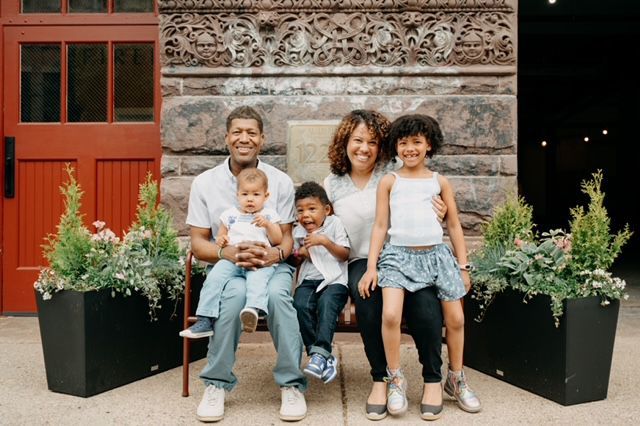
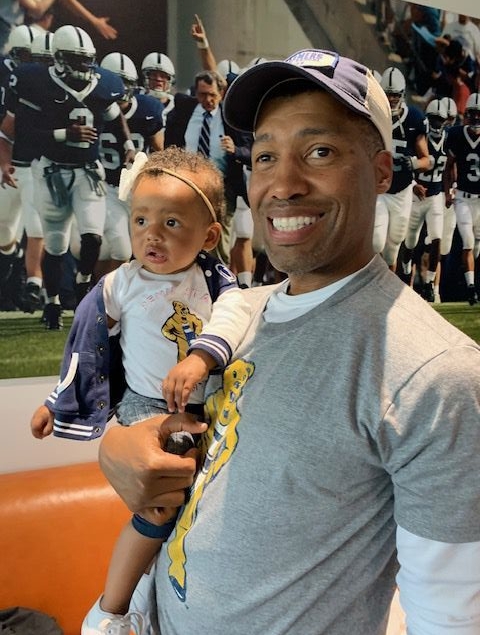
    My husband, Phil, a New Jersey native, father of three children under 7, and former Penn State University football receiver, needs a kidney.

    According to the National Kidney Registry, more than 90,000 people in the United States are currently waiting for a donor kidney. In the Philadelphia metropolitan area, that number hovers around 5,000.

    My husband suffered an acute kidney injury in December 2023 caused by liver rejection medicine, a complication that affects 4% of transplant recipients.

    Chronic kidney disease is common in the U.S., affecting one in seven adults. Most people don’t feel symptoms at first, but if it gets worse, it can lead to kidney failure and serious health problems. Dialysis is a lifesaving treatment for kidney failure, but requires the patient to be hooked to a dialysis machine for hours at a time, often for several days each week.

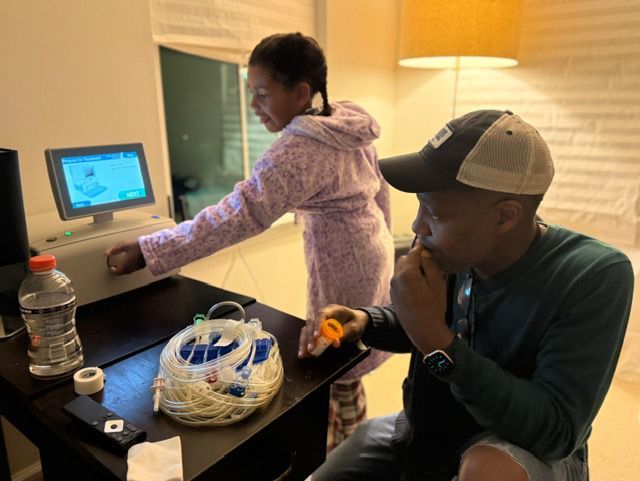
    Phil Collins and his daughter, Charlie, set up the dialysis machine.

    The small joys and normalcy of daily life quickly shift around dialysis schedules and doctors’ appointments.

    It’s been nearly two years since we were placed on the transplant list, and our three small children rely on us to keep their world from being turned upside down even more than it already is.

    Phil Collins and Morgen Perdue-Collins with their children. Collins has been waiting for a donor kidney for two years.

    They see the dialysis boxes stacked taller than they are in the front room, the catheter that we have to be careful of during playtime with their dad, and the frequent hospital visits because of a weakened immune system. Our daughter is even able to set up the peritoneal dialysis machine with help from Phil.

    As a partner of someone on the transplant list, my grief is silent and omnipresent. I find myself torn between supporting my sick husband, bringing my best self to the classroom each day, and ensuring our three little ones can simply be kids.

    When I drive to work, I see the billboards off I-95 for others who need a kidney; the wives and husbands and grandchildren and parents who are feeling just as overwhelmed and hopeful as I am. Maybe there is a match out there; perhaps someone will see their billboard, car magnet, or transplant profile and respond.

    Like so many other families with someone on the transplant list, I help the best way I can. I work to know what the weekly lab numbers mean, whether my husband’s sluggishness is due to low iron and blood count, and if there are early signs of an infection.

    Each December, his weakened immune system seems to lead him to the hospital, where he spends more time than our family would like. There is also guilt in not being able to know everything, and how best to help him in every critical time of need.

    Phil Collins with his daughter, Charlie, at a Penn State game after his liver transplant, but before he suffered an acute kidney injury in 2023 caused by the liver rejection medicine. According to his wife, Morgen Perdue-Collins, it is a complication that affects 4% of transplant recipients.

    Throughout this journey, Phil remains ever the optimist. Always looking on the positive side, while struggling to stay awake or suffering from terrible headaches and exhaustion. He remains diligently waiting and hoping things will turn around.

    But it has been two years, and we are still waiting.

    There are ways to help; for example, getting a donor match screening, as my friend, Meredith, did. She donated with extraordinary grace to a stranger last April, and this year, her family member received a kidney thanks to her advanced donation.

    To become an organ donor, you have a few options:

    • Join your state’s registry. Visit the Donate Life America website to sign up for your state’s online donation registry.
    • Use your driver’s license. Declare your intentions to be an organ donor on your driver’s license.
    • Start the donor screening process. On the Donate Life America website, you can also scroll down to “Start the donor screening process.”
    • Donate through the National Kidney Registry. If you want to donate a kidney to someone in need, you can visit the National Kidney Registry.

    Hesitation about organ donation, whether during life or after death, can stem from cultural beliefs, religious views, or medical mistrust. Many common myths about organ donation have long been disproven, but becoming a living organ donor is a demanding process, with a full return to normal taking eight weeks.

    According to the United Network for Organ Sharing, 11 people die every day waiting for a kidney.

    The truth remains simple: You have the power to save a life, to restore a family, and to give someone like Phil the most extraordinary gift of all.

    Morgen Perdue-Collins is a Philadelphia teacher, and her husband, Phil, is still looking for a match. You can visit his kidney donation page here. And visit the National Kidney Donation site here.

  • Philly’s new U.S. attorney has largely avoided the chaos swirling around other parts of Trump’s Justice Department

    Philly’s new U.S. attorney has largely avoided the chaos swirling around other parts of Trump’s Justice Department

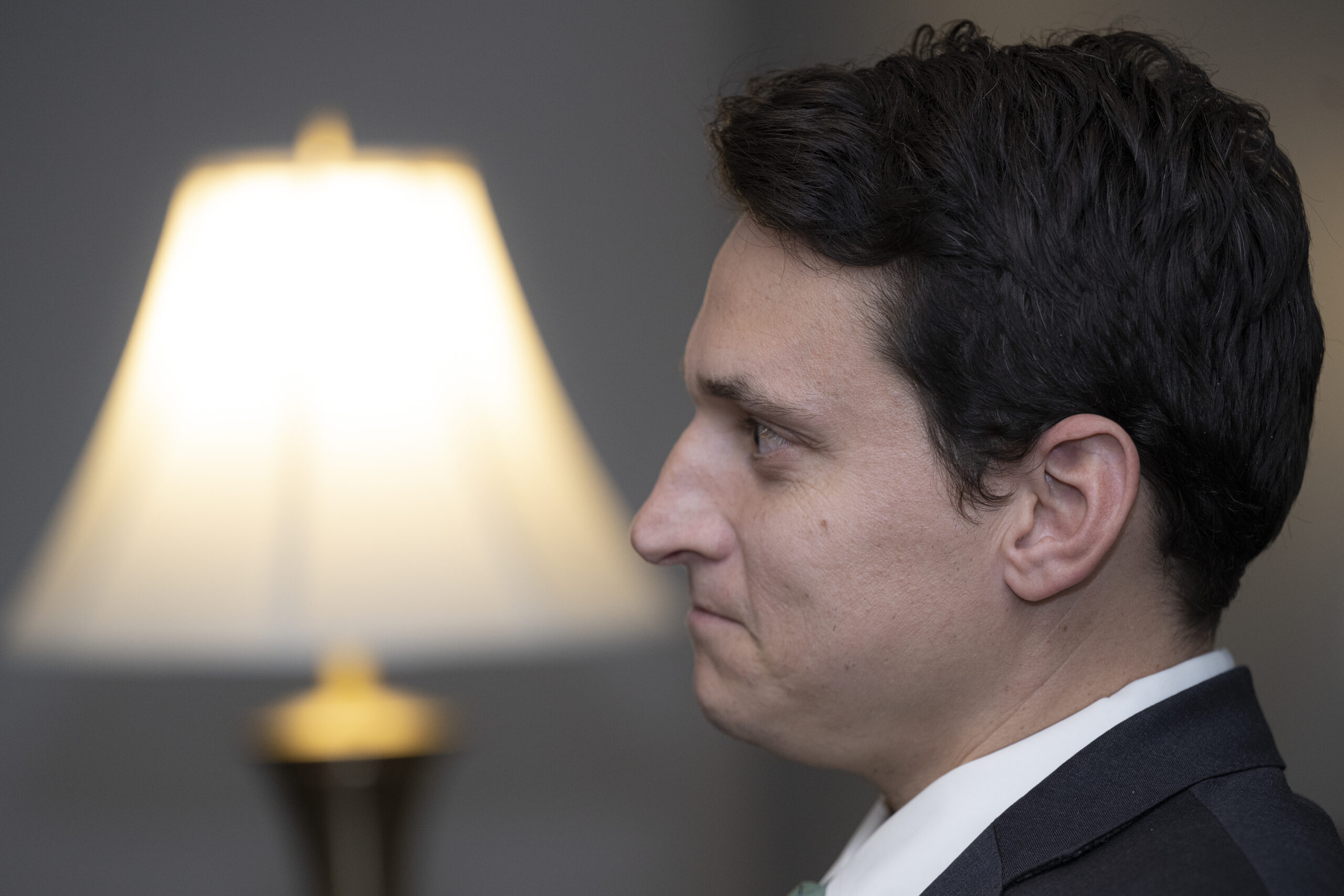
    When President Donald Trump announced earlier this year that he was nominating David Metcalf to be Philadelphia’s U.S. attorney, it initially seemed as if the move was in line with Trump’s chaotic and contentious attempt to upend the nation’s justice system.

    The decision was abrupt, apparently made without advanced input from Sen. Dave McCormick (R., Pa.), who’d set up a commission to identify candidates to serve as the region’s top federal prosecutor.

    Metcalf was 39 and, unlike many of his predecessors, didn’t have deep roots in the region — but did have some reported ties to officials who’d sought to help Trump adviser Roger Stone years earlier.

    And the appointment was announced as Trump was openly pledging to “clean house” in the Justice Department and pull the agency more directly in line with the White House.

    But in the months since Metcalf has assumed control over the office and its 140 lawyers, what has stood out so far has been the serious temperament the veteran prosecutor has brought to the role, and the relative lack of drama he’s overseen — particularly in comparison to nearby jurisdictions, where U.S. Attorney’s Offices have been embroiled in controversies over leadership appointments and whether to indict Trump critics.

    During a recent interview with The Inquirer at his Center City office, his first since being appointed in March, Metcalf said his deliberate approach toward his first few months in the job has been influenced by his decade-plus career as a Justice Department lawyer — one that included stints in Baltimore, Philadelphia, and Washington, D.C.

    He has met with a host of other local stakeholders since taking over — including Police Commissioner Kevin J. Bethel, District Attorney Larry Krasner, and federal judges — and has avoided ushering in drastic upheaval within his office.

    U.S. Attorney David Metcalf outside the federal courthouse in July, with Police Commissioner Kevin Bethel standing behind him.

    Instead, he said, a key focus has been to encourage his prosecutors to pursue large, ambitious, complex investigations targeting violent crime, synthetic opioid abuse, and healthcare fraud — subjects he said were critical to public safety in the Philadelphia region.

    “I do not feel some personal impulse to burn my brand on this office by restructuring and reorganizing it,” he said, later adding: “The greatest offices and the greatest cases come from prosecutors who are hunting them down and competing for them … and that’s the breed of prosecutor we’re trying to create here.”

    Composed and self-assured, Metcalf was uninterested in commenting on the broader political landscape surrounding his job. He instead concentrated on the work of his office, whose lawyers prosecute matters including drug trafficking, political corruption, and terrorism across nine counties from Philadelphia to Allentown and west past Reading. They also litigate civil matters on behalf of the federal government.

    “I don’t want to say that I’m … bound by precedent or a devotee to the status quo,” he said. “But I do believe in stability, and I’m certainly not going to change things just for the sake of changing them.”

    That approach has been generally well-received by many lawyers in his office, particularly given the volatile environment across other parts of the Justice Department.

    Even Krasner — an outspoken progressive Democrat who rarely misses an opportunity to criticize Trump, and who was engaged in a long-running feud with a Trump-appointed U.S. attorney four years ago — said he had a “professional and pleasant lunch” with Metcalf earlier this year.

    “We have always worked well with the career prosecutors at the U.S. Attorney’s Office, and our teams seem to be continuing to work well together,” Krasner said in an interview.

    Rod Rosenstein, who was the deputy attorney general during Trump’s first term, said in an interview that he hired Metcalf a decade ago, when Rosenstein was the U.S. attorney in Maryland. And their paths continued to intersect over the years as their careers wound through the Justice Department.

    Rosenstein said Metcalf had “superb legal skills” and “excellent judgment” — two qualities he views as critical for leading a U.S. attorney’s office.

    “I think people recognize he’s got the right qualifications,” Rosenstein said.

    U.S. Attorney David Metcalf in his Center City office.

    ‘An exhilarating vocation’

    Metcalf grew up in northern Virginia and graduated from The Wakefield School, a private prep school about an hour west of Washington, D.C. His father was once an Army colonel, he said, and his grandfather was Joseph Metcalf III, the Navy vice admiral who led the 1983 invasion of Grenada.

    Metcalf was a standout soccer player in high school, and was recruited to play by more than 80 college teams, the Washington Post reported in 2003. He used the situation to his advantage, the paper reported — making a deal with his mother that he could let his hair grow down past his shoulders once Division I colleges started sending him letters.

    He ended up attending Princeton — playing soccer all four years — and then went on to graduate from the University of Virginia’s law school.

    After clerking for U.S. Circuit Judge Albert Diaz, Metcalf spent a few years in private practice before becoming an assistant U.S. attorney in Maryland under Rosenstein.

    Metcalf said he didn’t have a single epiphany that made him realize he wanted to become a prosecutor. But he said he was quickly drawn to the work, which he found more interesting and important than other legal jobs.

    “I thought it was really just an exhilarating vocation in a profession that doesn’t always have the most glamorous applications,” he said.

    High-profile connections

    From 2015 through 2022, Metcalf worked as a line prosecutor in Baltimore and, later, in Philadelphia — the office he now leads. The two years he spent here were unusual, he said, because they unfolded during the peak of the pandemic, when many aspects of the court system were disrupted and most people were working from home.

    Metcalf also spent time during the first Trump administration in Washington, D.C. While there, he worked closely with prominent Justice Department officials including Rosenstein; Deputy Attorney General Jeffrey A. Rosen; Timothy Shea, the onetime U.S. Attorney for Washington, D.C.; and then-Attorney General William Barr.

    Attorney General William Barr and President Donald Trump in the Oval Office of the White House on Nov. 26, 2019.

    Metcalf’s name was briefly in the news in 2020, when Barr and Shea, Metcalf’s then-boss, intervened in the prosecution of Stone, Trump’s longtime ally, who had been convicted of lying to Congress. After the trial prosecutors wrote in court documents that Stone should be sentenced to at least seven years in prison, Barr and Shea ordered them to walk that back and reduce their recommendation.

    Some assigned to the case viewed that as political interference and an attempt to placate Trump. A Justice Department investigation later faulted “ineffectual” leadership by Shea for how the episode unfolded, not politics.

    In 2022, Metcalf left the public sector and went to work as a corporate counsel for Amazon. But this March — after Trump was reelected for a second term — Metcalf was suddenly thrust back into the Justice Department, as the White House announced it was nominating him to be Philadelphia’s U.S. attorney.

    From nominee to confirmation

    The decision came as something of a surprise.

    McCormick, Pennsylvania’s newly elected GOP senator, had made a point of publicly announcing that he’d formed a committee to review and vet potential candidates for federal law enforcement positions across the state. And other GOP-connected lawyers in the region had been jockeying for months to try to figure out who might be able carve a path toward the coveted position.

    When the White House named Metcalf its permanent nominee, the process was effectively short-circuited.

    Metcalf said he couldn’t speak to how or why the process played out the way it did. He said he applied for the job, and “had relationships with folks in the Trump administration” due to his time in Washington during Trump’s first term.

    He didn’t specify who those people were. And some of his former bosses — particularly Barr — had fallen out of favor with Trump after his first term.

    But Rosenstein said “it’s a mistake to think that people are the people they work for. It’s a big government, and not everyone agrees all the time.”

    And in any case, Rosenstein said, he believed Metcalf was nominated “on merit, not on connections.”

    Rod Rosenstein, deputy attorney general during President Donald Trump’s first term, says Metcalf has “superb legal skills” and “excellent judgment.”

    William McSwain, who served as U.S. attorney during Trump’s first term, said he believed Metcalf was “extremely well-qualified for the position.”

    It took the U.S. Senate six months to vote to confirm Metcalf along with a host of other Trump nominees, but by then, the Philadelphia region’s federal judges had already voted to extend Metcalf’s appointment indefinitely while the process played out.

    That move stood in contrast to several other jurisdictions, including New Jersey, where the judiciary declined to extend the tenure of Trump’s nominee, Alina Habba. For months afterward, that office was thrust into turmoil as questions swirled about who could legally serve as its leader.

    Pursuing notable cases

    During his tenure so far, Metcalf said, he’s been seeking to focus his prosecutors on finding what he called “nationally significant” cases, particularly those targeting violence, drugs, and healthcare fraud, which he views as priorities for the region.

    One of the first big indictments he announced was in October when FBI Director Kash Patel visited Philadelphia to help reveal that 33 people had been charged with being part of a Kensington-based drug gang. Metcalf said the case was the largest single prosecution in the region in at least two decades.

    FBI Director Kash Patel helping announce the arrest of dozens of suspects in a Kensington drug case.

    He also helped create a new program dubbed PSN Recon, an initiative designed to help Philadelphia Police more readily share intelligence with state and federal agencies about which groups or suspects should be investigated.

    Prosecutions overall have increased on his watch, according to the Transactional Records Access Clearinghouse (TRAC), a research organization that collects federal courts records.

    So far this fiscal year, prosecutions in the Eastern District of Pennsylvania were up 32% compared to last year, TRAC found, and were on their highest pace since 2019. The most common types of cases charged this year were immigration violations, drug offenses, and illegal firearm possession, according to TRAC.

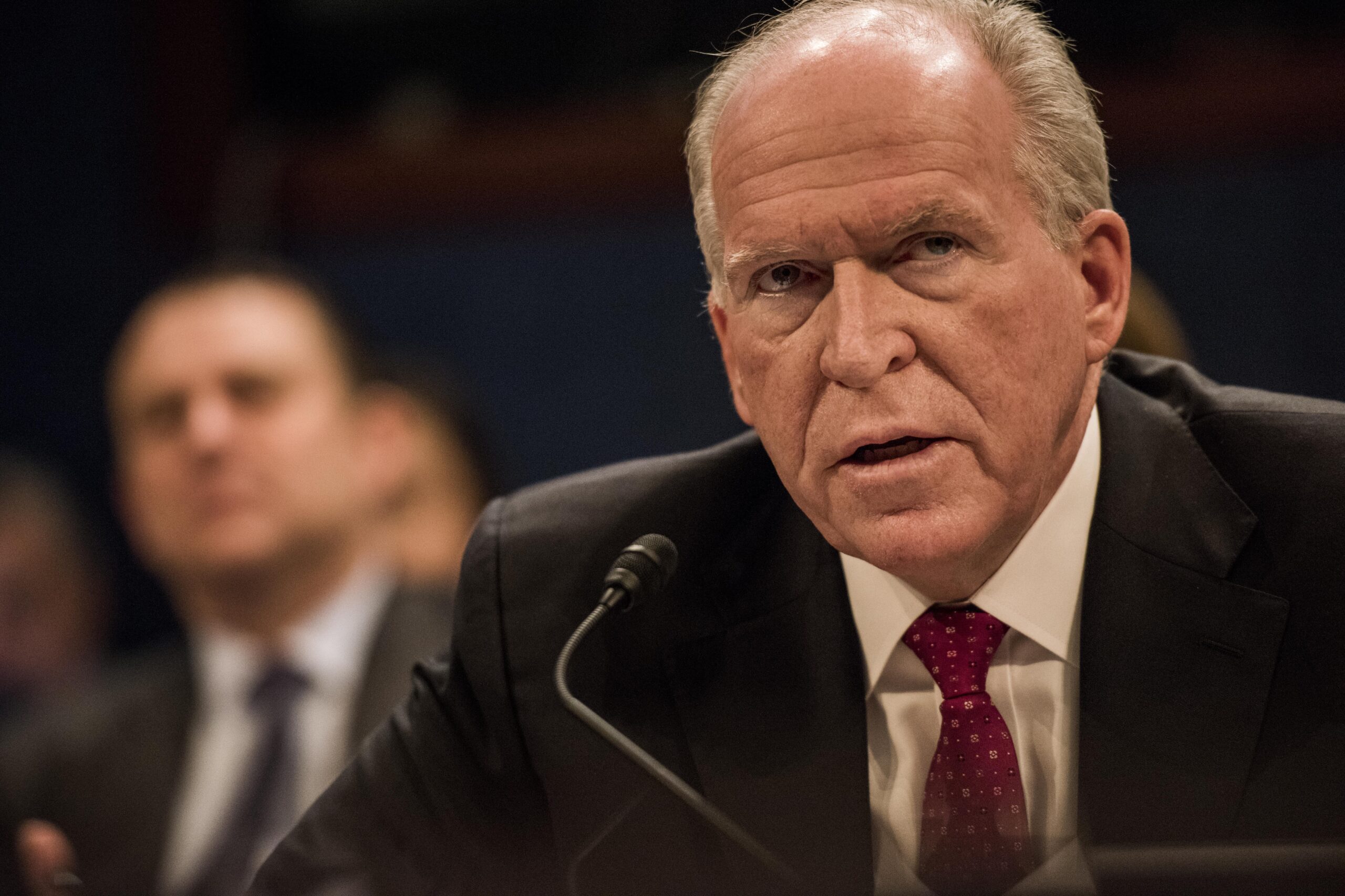
    Earlier this year, Metcalf was reportedly involved in one particularly significant case: an investigation into former CIA Director John Brennan and his role in producing an intelligence assessment about Russian interference in the 2016 election. Brennan went on to become a prominent Trump critic.

    Former CIA director John Brennan testifies before the House Intelligence Committee in 2017.

    National outlets including Axios and the New York Times reported that Metcalf had been leading the probe, and that he had concerns about its viability — a notable development given Trump’s public demands to prosecute other adversaries, including former FBI Director James Comey.

    Metcalf never commented publicly on his purported involvement in the Brennan case, and declined to do so again during his interview with The Inquirer. The investigation is now reportedly being handled by federal prosecutors in Florida.

    Metcalf did allow a short peek into his professional mindset when he was asked more broadly if he’d ever felt pressure from Washington to sign off on a decision he didn’t agree with.

    After declining to comment on any discussions he may or may not have had with Justice Department leaders, he paused for a moment and added one final point.

    “I will also say that I would be very surprised if that ever happened to me,” he said. “I don’t see it as a problem here.”

  • Letters to the Editor | Dec. 31, 2025

    Letters to the Editor | Dec. 31, 2025

    Silence replaces scrutiny

    The quiet removal of the 60 Minutes segment on the CECOT prison in El Salvador further erodes the credibility of both CBS News and Donald Trump. If there is nothing to hide — if the actions taken are defensible, lawful, and aligned with American values — then secrecy makes no sense. Transparency is not a threat to principled leadership; it is its proof.

    CBS’s explanation that the story “was not ready” strains credulity. The piece had already undergone multiple reviews and revisions. Pulling it at the last moment suggests not editorial caution, but external pressure. When a respected news organization appears to yield to political influence, it compromises the very role a free press is meant to serve.

    That role, notably, was upheld by Canada, which aired the segment in full. Americans have since circulated it widely across political lines. And in watching it, many of us — Republicans and Democrats alike — can agree on one fundamental point: Sending migrants, not terrorists, to third-country detention sites where abuse is likely or inevitable is not an American value. Suppressing that reality does not make it less true; it only makes the suppression more troubling.

    President Trump’s actions in this matter are disgraceful. CBS’s acquiescence, if that is what occurred, is deeply disappointing. A free press is not measured by comfort or convenience, but by its willingness to report what those in power would prefer remain unseen.

    Credit is due to the 60 Minutes journalists who continue to pursue rigorous, balanced reporting. An informed public is essential to democracy — and dangerous only to autocracy.

    Karan E. Guyon, Kennett Square

    Strategic gerrymandering

    A Dec. 22 letter to the editor from Larry Senour acknowledged the justifiable criticism of the Republican Party for gerrymandering congressional districts to give candidates favored by Donald Trump an advantage, but decried the Democratic response of gerrymandering some blue states that should equally be called out, according to the letter writer. Unfortunately, these are not normal times, and we have the members of one corporate-dominated political party whose lack of concern for ordinary citizens allowed Donald Trump to take power, and another now-fascist party that must be stopped at all costs. Whataboutism does not apply here.

    Bob Jantzen, retired professor, Radnor

    . . .

    Larry Senour’s recent letter purports to be “objective criticism,” but is either subjective, or Mr. Senour doesn’t understand the context when he criticizes early gerrymandering by Democrats. Customarily, any redistricting is done about every 10 years based on census results. Donald Trump implored the governors of Texas and other red states to redistrict early, in order to gain more Republican representation in Congress. Texas Gov. Greg Abbott did so almost immediately to assist in reducing the chance of Democrats becoming the majority party in the midterm elections and/or those of 2028.

    The writer criticizes the efforts by blue states responding in kind, in an effort to level the playing field. Though Mr. Senour frames the issue as one of failed bipartisanship, unbiased readers would see the efforts of Democrats as justified. Mr. Senour failed to mention that Democrats’ efforts were a direct response to Texas’ prior efforts to unfairly alter the electorate in specific districts.

    Harry Nydick, Maple Shade

    Join the conversation: Send letters to letters@inquirer.com. Limit length to 150 words and include home address and day and evening phone number. Letters run in The Inquirer six days a week on the editorial pages and online.