Tag: topic-link-auto

  • Union acquire defender Finn Sundstrom ahead of MLS preseason

    Union acquire defender Finn Sundstrom ahead of MLS preseason

    The Union added another option to their back line Tuesday in 19-year-old Finn Sundstrom.

    Sundstrom comes by way of trade from D.C. United, who initially selected him off waivers from the USL Championship side North Carolina FC. In exchange, the Union gave D.C. United their first-round pick in the 2028 Major League Soccer SuperDraft.

    Sundstrom and the Union agreed to terms on a deal that will secure his rights through the 2028 season, with club options for 2029 and 2030.

    A U.S. under-20 men’s national team player, Sundstrom was a standout for North Carolina FC, where he was named the team’s player of the month twice and was a nominee for the USL’s Young Player of the Year award.

    “Finn is a young, versatile defender who aligns well with our playing philosophy,” Union manager Bradley Carnell said. “At just 19 years old, he has demonstrated the toughness and mentality we value at the Union, as well as the ability to adapt to different styles of play. We look forward to continuing his development.”

    The 6-foot, 170-pound defender aligns seamlessly with the club’s mantra of growing the game from the youth ranks up, prioritizing development over proven star power. Upon passing a physical, Sundstrom is expected to join the Union in time to head to Marbella, Spain, to kick-start their preseason campaign on Jan. 17.

    It will be the second year in a row the club has started its preseason in Spain before returning home to embark on its second phase in Orlando.

  • As 2026 arrives, Philly is in for a cold — but less windy — New Year’s

    As 2026 arrives, Philly is in for a cold — but less windy — New Year’s

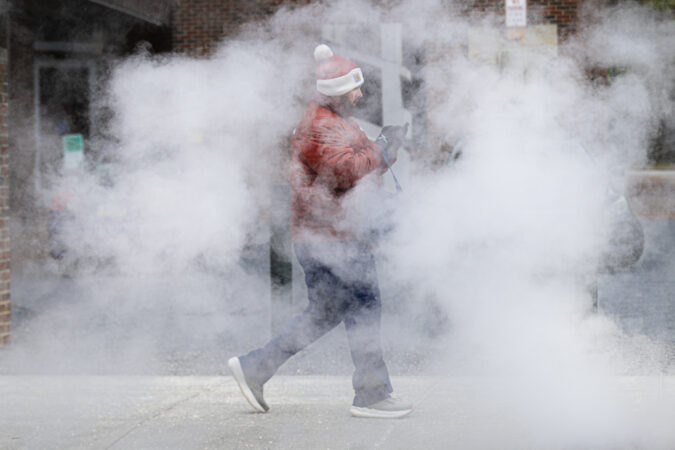
    After Tuesday’s blustery weather, the Philadelphia region is in for calmer weather on New Year’s Eve and New Year’s Day — but if you’re heading out to celebrate the holiday, be sure to bundle up.

    As 2025 gives way to 2026, temperatures are expected to top out in the low to mid-30s Wednesday and Thursday, running roughly 5 to 10 degrees below normal for this time of year, said Alex Staarmann, a meteorologist at the National Weather Service office in Mount Holly. Wind chills from expected breezy weather midweek, meanwhile, will make it feel even colder, likely down into the 20s.

    “It will be cold and breezy for the [Mummers] parade on Thursday, but nothing significant otherwise,” Staarmann said. “Just dress warmly.”

    That’s something of a relief following Monday and Tuesday’s windy weather, which saw wind gusts topping 50 mph amid a wind advisory that was extended until at least 4 p.m. The strongest winds came late Monday, with gusts hitting 60 mph at Philadelphia International Airport just after 8 p.m., according to weather service data.

    Wind on Wednesday — New Year’s Eve — is expected to abate significantly, with sustained speeds up to 15 mph and gusts topping out at 25 mph, Staarmann said. Thursday — New Year’s Day — will be similarly breezy, with gusts topping out at 30 mph on top of sustained wind in the 15- to 20-mph range.

    That cold and wind will be accompanied by slight chances of snow showers or flurries, though no accumulation is expected. The best chance for snow showers comes overnight Wednesday into Thursday, when forecasters give Philadelphia about a 40% chance of snow. But as of midday Tuesday, the possibility of any snow was somewhat unlikely.

    There was likewise a small possibility of some flurries early Wednesday morning, but Staarmann pegged the potential there at about 20%. Likewise, no accumulation was expected.

    “We could maybe get a small chance of a dusting, but there are not great chances of that, and nothing significant,” Staarmann said. “If anything, just flurries to maybe a light dusting.”

    Lacking any significant winter weather, holiday revelers heading to Philadelphia’s first New Year’s Eve concert Wednesday are likely in the clear, aside from the cold. The concert, set to begin at 8 p.m. on the Benjamin Franklin Parkway, will feature performances by LL Cool J, DJ Jazzy Jeff, Los Angeles rock band Dorothy, and Philadelphia High School for Creative and Performing Arts graduate Adam Blackstone.

    Folks heading to Thursday’s Mummers Parade are likely to see similar weather. Those festivities are set to kick off at 9 a.m., as more than 10,000 performers hit Philly’s streets for the day’s celebrations.

    As the week wears on, the weather for the first days of 2026 is expected to be “fairly uneventful,” according to weather service forecasts. Cold weather, however, is likely to stick around, with highs mostly in the 30s and lows in the teens and 20s.

  • Former Rep. Dick Schulze, who represented the Philly burbs in Congress for 18 years, has died at 96

    Former Rep. Dick Schulze, who represented the Philly burbs in Congress for 18 years, has died at 96

    Former U.S. Rep. Richard “Dick” Schulze, a Republican who represented the Philadelphia suburbs from 1975 until 1993, died last week at the age of 96.

    Mr. Schulze, who served in the Pennsylvania General Assembly before running for Congress, died of heart failure in his home in the Washington, D.C., area on Dec. 23, according to a news release from his wife, Nancy Shulze, and former chief of staff Rob Hartwell.

    During his first term in the U.S. House, Mr. Schulze led the charge to make Valley Forge, seven miles from his home at the time, a national historical park. President Gerald Ford signed the legislation Mr. Shulze authored into law on July 4, 1976, the nation’s bicentennial.

    By the time he retired from the House in 1993, Mr. Schulze was a member of the powerful House Ways and Means Committee. He spent his whole congressional career in the political minority, retiring shortly before Republicans retook the chamber in 1994 for the first time since the mid-50s.

    “He knew what he believed and he stood for what he believed but he was not, he was not partisan,” Nancy Schulze said in an interview with The Inquirer Tuesday.

    Mr. Schulze’s former employees described him as tough but fair, demanding a lot of his staff but offering them the space to achieve it.

    “You really had to be at the top of your game,” said Tim Haake, a former attorney in Mr. Schulze’s congressional office who had reconnected with him in recent years. “Overall he was a very nice man, very polite, very cordial.”

    Mr. Schulze, Hartwell said, “probably taught me more in my life than anybody.”

    Hartwell remembered his former boss as a man willing to work across the aisle in a way that is less common in today’s politics. Mr. Schulze founded the Congressional Sportsman Caucus and served on the National Fish and Wildlife Board among other posts focused on wildlife.

    Hartwell recalled that Mr. Schulze played a key role in securing the 1983 release of Romanian Orthodox priest Gheorghe Calciu-Dumitreasa who had been held as a political prisoner in the country, representing President George H.W. Bush in negotiations with the country’s communist leaders.

    Serving in the minority throughout his career, Hartwell said, Mr. Schulze was willing to make deals and work for the benefit of his district, which included portions of Montgomery, Delaware, and Chester Counties.

    “He was a man of his word and he was a man who wanted to accomplish things for his district and his constituents,” Hartwell said. “Unlike today he would reach across the aisle to get those things done.”

    Mr. Schulze unsuccessfully proposed a constitutional amendment imposing term limits of 18 years for members of the House of Representatives. Although the proposal did not advance, Mr. Schulze himself chose not to seek reelection in 1992 after serving 18 years in office. He went on to work as a lobbyist for a conservative firm.

    “He did not cling to his role as a congressman and he did not go to occupy a seat,” Nancy Schulze said.

    Nancy Schulze and Dick Schulze were married following the 1990 death of his first wife, Nancy Lockwood Schulze, after a battle with cancer, and the death of her first husband, Montana Secretary of State Jim Waltermire.

    In addition to his wife, Mr. Schulze is survived by four children, seven grandchildren, and five great-grandchildren.

    Nancy Schulze remembered her husband as a gentleman, an Eagle Scout who lived by the scouting oath and was dedicated to loving and serving his country, state, district and family.

    “He was a man of dignity,” she said.

    Services to honor Mr. Schulze are scheduled for Saturday Jan. 10 at 2 p.m. at the Great Valley Presbyterian Church in Malvern.

  • Kevin Patullo on struggles of Eagles offense: ’It never comes down to one thing.’

    Kevin Patullo on struggles of Eagles offense: ’It never comes down to one thing.’

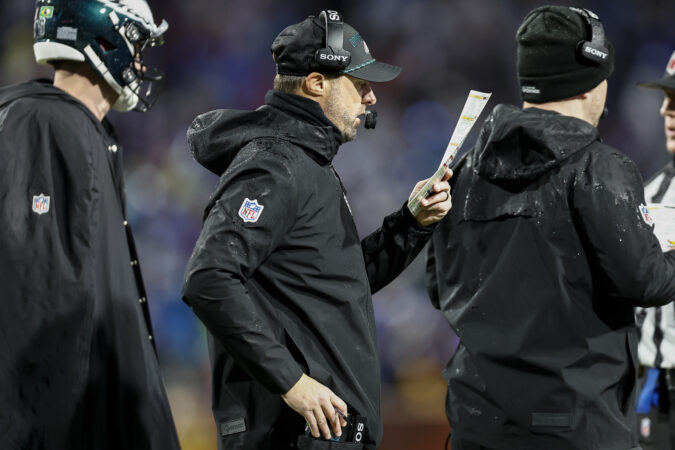
    Kevin Patullo entered Tuesday’s regularly scheduled news conference with the Eagles’ second-half performance against the Buffalo Bills top of mind.

    After a fairly efficient first half in Sunday night’s win, the offense was neutralized, mustering 17 yards on 17 plays in the second.

    The Eagles offensive coordinator said the coaching staff rewatched those 17 plays on the plane ride back to Philadelphia. The coaches went through them again on Monday, then returned to them Tuesday afternoon, all in an effort to get to the root of their issues.

    The common theme in the second half? Those persistent negative plays on early downs. Patullo acknowledged that four of the Eagles’ second-half drives featured inefficient first downs to put them in second-and-long. Those second-and-longs resulted in three third-and-longs.

    Saquon Barkley and the Eagles ground game again struggled to gain momentum against the Bills.

    “When you’re doing that, when that’s happening, it’s going to be very hard to move the ball,” Patullo said.

    Most of those early downs were running plays. Saquon Barkley averaged just 1.75 yards per carry in the second half (three first-down carries, five second-down carries). He had two rushes for negative yardage and two that went for 1 yard each.

    Patullo said in those situations, all the offense needs is a spark. It nearly had one late in the third quarter when Jalen Hurts initially completed a 17-yard pass to DeVonta Smith. After the Bills successfully challenged the ruling, the play was wiped off and the Eagles were back in third-and-long, putting them back in a rut they couldn’t escape.

    “Those are the frustrating pieces that we’re looking at as a staff,” Patullo said. “How do we get out of those? What do we need to do better as a coaching staff? How do we execute better? Because, really, it’s not just one person, one thing, one play style, one call, it’s everything. We’ve got to look at everything. So it never comes down to one thing. But it’s the whole, full picture of everybody working together, making sure we’re on the same page of getting those done.”

    Patullo said there is “something we kind of see a little bit right now” in terms of a fix, but he didn’t expand upon his findings.

    Offensive identity?

    The starting offense may not be able to work out those kinks in a game this week. Nick Sirianni said Monday that he was in the process of deciding whether the Eagles would rest their starters in the season finale against the Washington Commanders, even with the NFC’s No. 2 seed still up for grabs.

    So, if Hurts & Co. are finished with the regular season, what would Patullo consider the personality of the offense after 16 games? And what does he want to lean into heading into the playoffs?

    “I think there’s some things that we’re starting to see now that this is kind of who we want to be going forward,” Patullo said. “It’s kind of popped up as we’ve gone on throughout the season, because we’ve played such different games with different opponents that we’ve had and different styles of defenses. I think there’s certain things that Jalen’s doing a really, really nice job of, and we’ll continue to lean into that and just his exposure to things and experience in the playoffs will really help us going down the long road.”

    Patullo wasn’t clear or direct in his response. Still, it’s evident that the Eagles want to establish the running game and build passing plays off those looks, whether they’re utilizing under-center runs and play-action passes or run/pass options from the shotgun. The problem is that they’ve been inconsistent in that endeavor, as evidenced by the tale of two halves that characterized Sunday’s performance.

    Neither the stats nor the eye test reflects well on the Eagles offense this season. The Eagles average 5.26 yards per play, the worst clip in the last five seasons under Sirianni. Their 36.7% third-down conversion rate is also the lowest in that span.

    Has the Eagles offense reached its potential? Or is there a chance, with all of its talent, that it can flip the switch in the playoffs?

    “I wouldn’t say there’s a switch,” Patullo said. “I think we’ve just been a little inconsistent. We know we have it in us to do what we need to do, because we’ve done it in spots. That’s what we’ve got to really lean into and press into and be detailed and do what we have to do.”

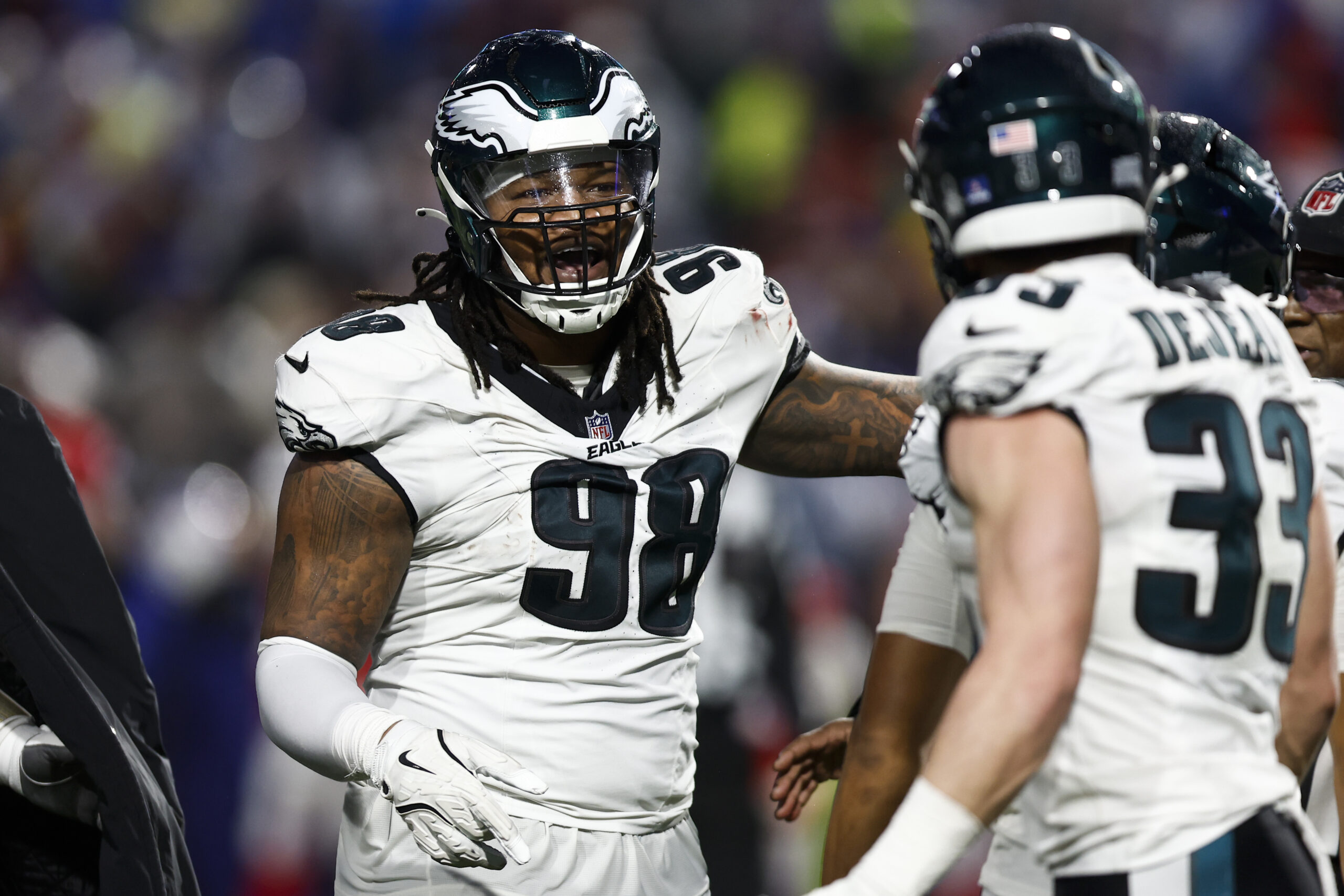
    Jalen Carter (98) shook off the rust and made a significant impact in the win over the Bills.

    Strong returns for Carter, Campbell

    Sunday’s game marked the return of Jalen Carter and Jihaad Campbell to the lineup after lengthy hiatuses.

    Carter, the 24-year-old defensive tackle, had been sidelined for three weeks while recovering from a pair of shoulder procedures. Campbell, the rookie inside linebacker, started his first game since Week 8 with Nakobe Dean out after hurting his hamstring against the Washington Commanders two weeks ago.

    Both Carter and Campbell had substantial workloads and made the most of them. Carter played 76% of the defensive snaps and posted a sack, a pass breakup, and a blocked extra point, while Campbell played 93% of the snaps and had seven tackles and a fumble recovery. Vic Fangio said Carter “played well” despite the layoff.

    “Really didn’t know how he would play, ’cause he missed three games, I believe,” the defensive coordinator said. “Didn’t practice until this past week, during that time. And I thought he played well. And I think he’s off to a good start. Hopefully he’ll build on that and play good down the stretch here and into the playoffs.”

    Similarly, Fangio spoke highly of Campbell, who could have more opportunities in the season finale.

    “I thought he did good,” Fangio said. “Obviously, there’s plays he’d like to have back and do over. But we don’t get mulligans. But I do think it will help him moving forward if he has to play again this week for Nakobe, and then if he has to be called upon in the playoff game.”

  • Jared McCain has physically healed. But he’s not rushing the on-court results.

    Jared McCain has physically healed. But he’s not rushing the on-court results.

    MEMPHIS — Quelling fear, anxiety, loss of identity, and lack of confidence often takes longer than physically healing from injuries.

    Jared McCain knows that firsthand after having his rookie season cut short because of a torn meniscus in his left knee. And on top of that December 2024 injury, he had the start of this season delayed after he suffered a torn ligament in his right thumb in September.

    How is the 76ers’ second-year guard dealing with the mental aspects of those injuries, particularly the left knee?

    “I’m doing great, probably the last step for me,” McCain said Tuesday before shootaround at FedEx Forum. “A lot of it is I like to rebound, and I have to jump as high as I can … when I’m trying to rebound. And you know, the past few games, I’ve been able to do that. I feel comfortable doing that.

    “But mentally, I’m great. I’m just trying to figure it out, still figuring it out, and it’s still a process.”

    McCain still experiences knee soreness on some days but battles through because he wants to play in as many games as he can. At the same time, he’s giving himself grace while trying to have as much fun as possible.

    McCain’s fun involves being part of the Sixers’ four-guard rotation with Tyrese Maxey, VJ Edgecombe, and Quentin Grimes. Maxey and Edgecombe are the starting backcourt, while Grimes is the team’s sixth man. The Sixers view McCain as someone who comes off the bench to provide a spark.

    Sixers guard Jared McCain McCain has averages of 7.6 points, 2.6 rebounds, 1.9 assists, and 19.8 minutes heading into Tuesday’s game against the Memphis Grizzles. However, he is shooting just 36.2% from the field and 32.9% from three-point range.

    “I want to provide a spark in any way possible, whether it’s picking up full court, whether it’s getting rebounds, making shots, of course,” he said, “any way I can provide a spark on the court when Coach calls my name, I’m ready to jump off the bench and come in the game and do whatever I can to help us get a lead or extend it.”

    McCain was averaging 7.6 points, 2.6 rebounds, 1.9 assists, and 19.8 minutes heading into Tuesday’s game against the Memphis Grizzlies. However, he was shooting just 36.2% from the field and 32.9% from three-point range.

    During a six-game stretch from Dec. 12 through Friday, McCain shot 28.8% overall and 21.1% from three. But he snapped out of his shooting slump Sunday in a road loss to the Oklahoma City Thunder. McCain had 10 points on 4-for-6 shooting, making 2 of 4 three-pointers.

    He’s not concerned about his shooting.

    “I’m not going to fix anything or change anything with my shot,” McCain said. “It’s all going to come naturally. I know how to shoot. I’ve been doing it for a long time. I know there’s times like this. Again, I’ve been out for a whole year. So it’s still going to take some time to figure it out.

    “I knocked them down forever. I’m just going to continue to shoot it.”

    McCain’s confidence comes from his success as a McDonald’s All Americanand a standout at Duke, plus his status as an NBA rookie of the year front-runner last season before his injury. At every stop of his basketball career, McCain has been a stellar shooter who has dealt with and overcome shooting slumps.

    “When I was doing my meditation this morning that came in my mind about not judging myself off my results,” he said. “It’s super hard to do that because this job is basically judged off your results and your performance.

    “So I’m just trying to go into non-judgmental and watching it. How can I make the shots easier for myself? How can I find different windows to make the shot easier, and then just knocking it down? I know how to do it, and I think it’s one of those things that’s just going to come. It’s natural.”

  • Tatiana Schlossberg, journalist and granddaughter of JFK, dies at 35

    Tatiana Schlossberg, journalist and granddaughter of JFK, dies at 35

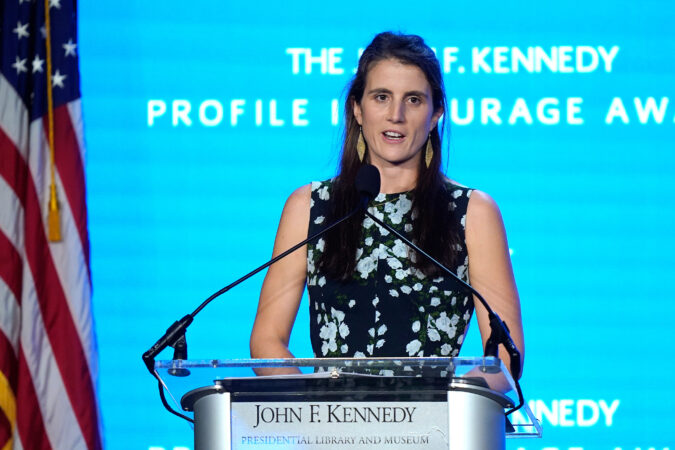
    Tatiana Schlossberg, 35, a journalist who told stories of the changing climate and the ways humans can help protect the environment, and whose terminal illness and position in the Kennedy family thrust her into the national spotlight late in life, died Tuesday.

    Her family announced the death in a social media post shared by the John F. Kennedy Presidential Library and Museum. The statement did not say where she died.

    Ms. Schlossberg published a New Yorker essay in November revealing that she had been diagnosed with a rare form of acute myeloid leukemia, a cancer of the blood and bone marrow. Between reflections on her family and mortality, she harshly criticized her cousin Robert F. Kennedy Jr., the secretary of health and human services, for his opposition to government-funded medical research and vaccines.

    “I watched from my hospital bed as Bobby, in the face of logic and common sense, was confirmed for the position, despite never having worked in medicine, public health, or the government,” she wrote.

    As an environmental journalist, Ms. Schlossberg was drawn to stories that humanized sprawling and complicated policy issues — often while offering her a chance to participate in the action herself.

    While chronicling the impact of climate change, she jumped in a cranberry bog in Massachusetts. She later spent nearly eight hours skiing the Birkebeiner, a cross-country race in Wisconsin threatened by warm weather and a lack of snow.

    “On the lake, my cross-country skis began to skate in a rhythm, something that had eluded me for much of the day,” she wrote in a dispatch for Outside magazine. “I felt like I was flying.”

    Ms. Schlossberg studied at Yale and Oxford before launching her journalism career at the Record newspaper in North Jersey, covering crime and local affairs. She joined the New York Times in 2014 as an intern and was named a staff writer on the paper’s Metro desk before moving to the science section, where colleagues regarded her as a curious, hardworking reporter who wore her privilege lightly.

    A granddaughter of President John F. Kennedy and first lady Jacqueline Kennedy Onassis, Ms. Schlossberg was the second child of Caroline Kennedy, a former U.S. ambassador to Australia and Japan, and Edwin Schlossberg, an artist and designer.

    “She was a total delight,” said Henry Fountain, a longtime climate and science reporter at the Times. Ms. Schlossberg “just researched her butt off on stories,” he added.

    After leaving the Times in 2017, Ms. Schlossberg began freelancing and, in 2019, published Inconspicuous Consumption: The Environmental Impact You Don’t Know You Have. The book examined the hidden costs of everyday activities — streaming videos, buying jeans, eating burgers — and was honored by the Society of Environmental Journalists.

    “Using history, science and a personal narrative, Schlossberg provides a better understanding of both individual and systemic drivers of ecological destruction,” the judges said in awarding her the Rachel Carson book prize. “Readers will find solace, humor and a route to feeling empowered with possibilities for positive change, rather than drained by an accumulation of bad news.”

    Ms. Schlossberg had been planning to write a second book, on the oceans, when she was found to have cancer in May 2024, while in the hospital for the birth of her second child.

    In her New Yorker essay, she wrote of her shock at getting the diagnosis — “This could not be my life” — and of the turbulent 18 months that followed, in which she received stem cell donations from her sister as well as a stranger in the Pacific Northwest; underwent chemotherapy; and participated in a clinical trial, testing a new type of immunotherapy.

    In recounting her experience, Ms. Schlossberg implicitly acknowledged that her family, and her mother in particular, had dealt with years of grief. Her mother was only 5 when her father, President Kennedy, was assassinated in Dallas in 1963. She was 10 when the same fate befell her uncle, Robert F. Kennedy, while he was campaigning for president in Los Angeles. Her younger brother, John Jr., died in a plane crash in 1999.

    “For my whole life, I have tried to be good, to be a good student and a good sister and a good daughter, and to protect my mother and never make her upset or angry,” Ms. Schlossberg wrote. “Now I have added a new tragedy to her life, to our family’s life, and there’s nothing I can do to stop it.”

    Ms. Schlossberg recalled that she was in her hospital bed when her cousin “Bobby, in the face of logic and common sense, was confirmed” as health and human services secretary, “despite never having worked in medicine, public health, or the government.”

    Kennedy had previously run for president as an independent, in what Ms. Schlossberg called “an embarrassment to me and the rest of my immediate family.” He faced blowback when he acknowledged that he had placed a dead bear in Central Park a decade earlier, a bizarre episode that — in an odd twist of fate — Ms. Schlossberg had reported on for the Times, writing in 2014 that state investigators concluded the bear had died after being struck by a car, but did not know how it ended up in the park.

    “Like law enforcement, I had no idea who was responsible for this when I wrote the story,” Ms. Schlossberg told The Times last year.

    In her New Yorker essay, Ms. Schlossberg wrote that her cousin’s health policy decisions threatened her own survival, and that of “millions of cancer survivors, small children, and the elderly.”

    “I watched as Bobby cut nearly half a billion dollars for research into mRNA vaccines, technology that could be used against certain cancers; slashed billions in funding from the National Institutes of Health, the world’s largest sponsor of medical research; and threatened to oust the panel of medical experts charged with recommending preventive cancer screenings,” she wrote.

    She also noted that the drug misoprostol, which she received to stop a postpartum hemorrhage that nearly killed her, was “part of medication abortion, which, at Bobby’s urging, is currently ‘under review’ by the Food and Drug Administration.”

    “I freeze when I think about what would have happened if it had not been immediately available to me and to millions of other women who need it to save their lives or to get the care they deserve.”

    ‘I was not just a sick person’

    Tatiana Celia Kennedy Schlossberg was born in Manhattan on May 5, 1990. She was raised on the Upper East Side with her older sister, artist and filmmaker Rose Schlossberg, and her younger brother, Jack Schlossberg, who is now running for Congress in New York.

    Ms. Schlossberg studied history at Yale University, where she received a bachelor’s degree in 2012 and served as editor in chief of the weekly Yale Herald. She later earned a master’s in American history from the University of Oxford.

    As a freelance journalist, Ms. Schlossberg contributed to publications including the Washington Post, the Atlantic, and Vanity Fair. She wrote a weekly newsletter, News From a Changing Planet, until 2024.

    Juliet Eilperin, the Post’s deputy futures editor, called her “one of the least pretentious journalists I have ever dealt with.”

    “Tatiana had an intense desire to be out in the field, immersing herself in nature and talking with scientists,” Eilperin said. “She was meticulous and exhaustive in her research, scrutinizing environmental problems and what might be done to fix them.”

    In 2017, Ms. Schlossberg married George Moran at her family’s home on Martha’s Vineyard, in a ceremony officiated by former Massachusetts Gov. Deval Patrick. Moran, a urologist, was a resident at Columbia-Presbyterian when Ms. Schlossberg was diagnosed with cancer at the hospital.

    “He did everything for me that he possibly could,” she wrote in her essay. “He talked to all the doctors and insurance people that I didn’t want to talk to; he slept on the floor of the hospital; he didn’t get mad when I was raging on steroids and yelled at him that I did not like Schweppes ginger ale, only Canada Dry.”

    In addition to her husband, survivors include their two children; her parents; and her brother and sister.

    While battling cancer, Ms. Schlossberg held her profession up as a point of pride. “My son knows that I am a writer and that I write about our planet,” she wrote. “Since I’ve been sick, I remind him a lot, so that he will know that I was not just a sick person.”

  • ICE doesn’t plan to detain Abrego Garcia again as long as judge’s order banning it stands

    ICE doesn’t plan to detain Abrego Garcia again as long as judge’s order banning it stands

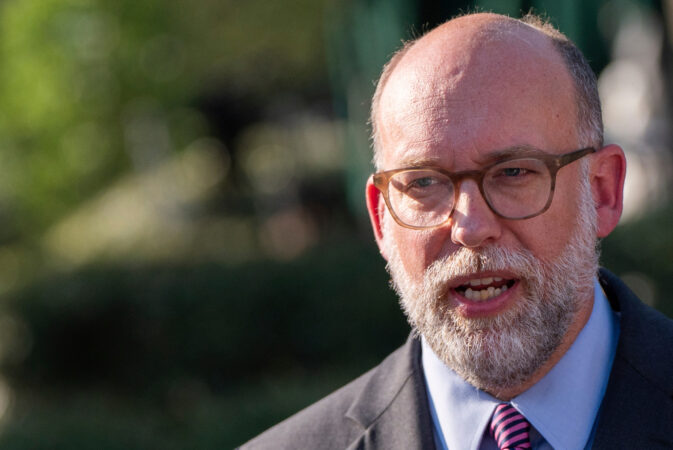
    NASHVILLE — U.S. Immigration and Customs Enforcement officials do not plan to detain Kilmar Abrego Garcia again as long as a judge’s order banning it stands, according to a Tuesday court filing.

    The Salvadoran citizen’s case has become a lightning rod for both sides of the immigration debate as he fights to remain in the U.S. after a mistaken deportation to his home country, where he was imprisoned. Officials in President Donald Trump’s administration have accused him of being a member of the MS-13 gang, but he has vehemently denied the accusations and has no criminal record.

    The government court filing comes after U.S. District Judge Paula Xinis earlier this month questioned whether government officials could be trusted to follow orders barring them from taking Abrego Garcia into immigration custody or deporting him.

    Earlier Tuesday, a newly unsealed order in Abrego Garcia’s criminal case revealed that high-level Justice Department officials pushed for his indictment, calling it a “top priority,” only after he was erroneously deported and then ordered returned to the U.S.

    Abrego Garcia has pleaded not guilty in federal court in Tennessee to charges of human smuggling. He is seeking to have the case dismissed on the grounds that the prosecution is vindictive — a way for the Trump administration to punish him for the embarrassment of his mistaken deportation.

    To support that argument, he has asked the government to turn over documents that reveal how the decision was made to prosecute him in 2025 in connection with an incident that had occurred nearly three years earlier. On Dec. 3, U.S. District Judge Waverly Crenshaw filed an order under seal that compelled the government to provide some documents to Abrego Garcia and his attorneys. That order was unsealed Tuesday and sheds new light on the case.

    Earlier, Crenshaw found that there was “some evidence” that the prosecution of Abrego Garcia could be vindictive. He specifically cited a statement by Deputy Attorney General Todd Blanche on a Fox News program that seemed to suggest that the Department of Justice charged Abrego Garcia because he had won his wrongful-deportation case.

    Rob McGuire, who was the acting U.S. attorney for the Middle District of Tennessee until late December, argued that those statements were irrelevant because he alone made the decision to prosecute, and that he has no animus against Abrego Garcia.

    Abrego Garcia was freed earlier this month from the Moshannon Valley Processing Center in Pennsylvania.

    In the newly unsealed order, Crenshaw writes: “Some of the documents suggest not only that McGuire was not a solitary decision-maker, but he in fact reported to others in DOJ and the decision to prosecute Abrego may have been a joint decision.”

    The U.S. Attorney’s Office for the Middle District of Tennessee released a statement saying: “The emails cited in Judge Crenshaw’s order, specifically Mr. McGuire’s email on May 15, 2025, confirm that the ultimate decision on whether to prosecute was made by career prosecutors based on the facts, evidence, and established DOJ practice. Communications with the Deputy Attorney General’s Office about a high-profile case are both required and routine.”

    The email referenced was from McGuire to his staff stating that Blanche “would like Garcia charged sooner rather than later,” according to Crenshaw’s order.

    The human smuggling charges stem from a 2022 traffic stop in Tennessee where Abrego Garcia was pulled over for speeding. There were nine passengers in the car, and state troopers discussed the possibility of human smuggling among themselves. However, Abrego Garcia was ultimately allowed to leave with only a warning. The case was turned over to Homeland Security Investigations, but there is no record of any effort to charge him until April 2025, according to court records.

    The order does not give a lot of detail on what is in the documents that were turned over to Abrego Garcia, but it shows that Aakash Singh, who works under Blanche in the Office of the Deputy Attorney General, contacted McGuire about Abrego Garcia’s case on April 27, the same day that McGuire received a file on the case from Homeland Security Investigations. That was several days after the U.S. Supreme Court ruled in Abrego Garcia’s favor on April 10.

    On April 30, Singh said in an email to McGuire that the prosecution was a “top priority” for the Deputy Attorney General’s Office, according to the order. Singh and McGuire continued to communicate about the prosecution. On May 15, McGuire emailed his staff that Blanche “would like Garcia charged sooner rather than later,” Crenshaw writes.

    On May 18, Singh wrote to McGuire and others to hold the draft indictment until they got “clearance” to file it. “The implication is that ‘clearance’ would come from the Office of the Deputy Attorney General,” Crenshaw writes.

    A hearing on the motion to dismiss the case on the basis of vindictive prosecution is scheduled for Jan. 28.

  • Judge blocks White House’s attempt to defund the CFPB, ensuring employees get paid

    Judge blocks White House’s attempt to defund the CFPB, ensuring employees get paid

    NEW YORK — The White House cannot lapse in its funding of the Consumer Financial Protection Bureau, a federal district court judge ruled on Tuesday, only days before funds at the bureau would have likely run out and the consumer finance agency would have no money to pay its employees.

    Judge Amy Berman ruled that the CFPB should continue to get its funds from the Federal Reserve, despite the Fed operating at a loss, and that the White House’s new legal argument about how the CFPB gets its funds is not valid.

    At the heart of this case is whether Russell Vought, President Donald Trump’s budget director and the acting director of the CFPB, can effectively shut down the agency and lay off all of the bureau’s employees. The CFPB has largely been inoperable since Trump has sworn into office nearly a year ago. Its employees are mostly forbidden from doing any work, and most of the bureau’s operations this year have been to unwind the work it did under President Joe Biden and even under Trump’s first term.

    Vought himself has made comments where he has made it clear that his intention is to effectively shut down the CFPB. The White House earlier this year issued a “reduction in force” for the CFPB, which would have furloughed or laid off much of the bureau.

    The National Treasury Employees Union, which represents the workers at the CFPB, has been mostly successful in court to stop the mass layoffs and furloughs. The union sued Vought earlier this year and won a preliminary injunction stopping the layoffs while the union’s case continues through the legal process.

    In recent weeks, the White House has used a new line of argument to potentially get around the court’s injunction. The argument is that the Federal Reserve has no “combined earnings” at the moment to fund the CFPB’s operations. The CFPB gets its funding from the Fed through expected quarterly payments.

    The Federal Reserve has been operating at a paper loss since 2022 as a result of the central bank trying to combat inflation, the first time in the Fed’s entire history it has been operating at a loss. The Fed holds bonds on its balance sheet from a period of low interest rates during the COVID-19 pandemic, but currently has to pay out higher interest rates to banks who hold their deposits at the central bank. The Fed has been recording a “deferred asset” on its balance sheet, which it expects will be paid down in the next few years as the low-interest bonds mature.

    Because of this loss on paper, the White House has argued there are no “combined earnings” for the CFPB to draw on. The CFPB has operated since 2011, including under Trump’s first term, drawing on the Fed’s operating budget.

    White House lawyers sent a notice to the court in early November in which they argued, using the “combined earnings” argument, that the CFPB would run out of appropriations in early 2026 and does not expect to get any additional appropriations from Congress.

    This combined earnings legal argument is not entirely new. It has floated in conservative legal circles going back to when the Federal Reserve started operating at a loss. The Office of Legal Counsel, which acts as the government’s legal advisers, adopted this legal theory in a memo on November 7. However, this idea has never been tested in court.

    In her opinion, Berman said the OLC and Vought were using this legal theory to get around the court’s injunction instead of allowing the case to be decided on merits. A trial on whether the CFPB employees’ union can sue Vought over the layoffs is scheduled for February.

    “It appears that defendants’ new understanding of ‘combined earnings’ is an unsupported and transparent attempt to starve the CPFB of funding and yet another attempt to achieve the very end the Court’s injunction was put in place to prevent,” Berman wrote in an opinion.

    “We’re very pleased that the court made clear what should have been obvious: Vought can’t justify abandoning the agency’s obligations or violating a court order by manufacturing a lack of funding,” said Jennifer Bennett of Gupta Wessler LLP, who is representing the CFPB employees in the case.

    A White House spokesperson did not immediately respond to a request for comment on Berman’s opinion.

  • Gluten-free bakery Flakely levels up with a new and bigger storefront in Bryn Mawr

    Gluten-free bakery Flakely levels up with a new and bigger storefront in Bryn Mawr

    A popular gluten-free bakery is coming to the Main Line.

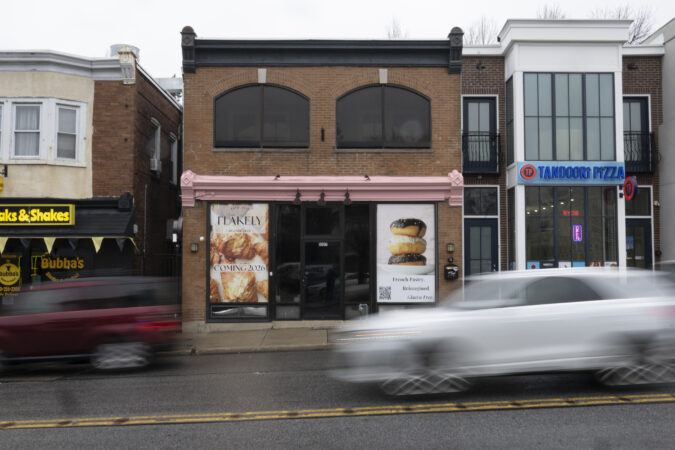
    Flakely is moving from behind the bright pink door at 220 Krams Ave. in Manayunk to a Bryn Mawr storefront in early February, said owner Lila Colello. The new takeout-only bakery will replace a hookah lounge at 1007 W. Lancaster Ave.

    “We’ve really outgrown our space,” Colello told The Inquirer. Manayunk “wasn’t ever meant to be for retail.”

    A trained pastry chef who worked for the Ritz Carlton and Wolfgang Puck Catering, Colello was afraid she’d have to give up the best things in life — bread and her career — when she was diagnosed in 2010 with celiac disease, an inflammatory autoimmune and intestinal disorder triggered by eating gluten.

    Instead, Colello spent the next seven years finding ways to get around gluten, a protein found in grains like wheat, rye, and barley (and thus most breads, bagels, and pastries). She perfected kettle-boiled bagels and pastry lamination before starting Flakely in 2017 as a wholesaler.

    Colello moved into the commercial kitchen at Krams Avenue in 2021, where customers have spent the last four years picking up buttery chocolate croissants, brown sugar morning buns, and crusty-yet-chewy bagels from a takeout window in an industrial parking lot. Inquirer restaurant critic Craig LaBan has called Colello’s bagels “the best he’s tasted outside of New York,” and in 2024, Flakely was voted one of the best gluten-free bakeries in the United States by USA Today.

    Lila Colello, owner and head baker at Flakely, helped patent a way to laminate gluten free dough for croissants.

    Flakely’s industrial Manayunk location has required some concessions, Colello said: The majority of their goodies are par-baked and frozen by Colello and three full-time employees for customers to take and bake at home. Otherwise, Colello explained, the lack of steady foot traffic would lead to lots of wasted product.

    In Bryn Mawr, Flakely will be a fully functional takeout bakery with a pastry case full of fresh-baked goods, from full-sized baguettes and browned butter chocolate chip cookies to danishes and Colello’s signature sweet-and-savory croissants. A freezer will also include packs of Flakely’s take-and-bake doughs, bagels, and eventually, custom cake orders.

    Once she’s settled in, Colello said, she hopes to run gluten-free baking classes and pop-up dinners out of the storefront — offerings (besides the ingredients) that she hopes will differentiate her from other bakeries in the area.

    While the Main Line only has one dedicated gluten-free bakery (The Happy Mixer in Wayne), Lancaster Avenue is already lined with sweet shops: Malvern Buttery opened up a coffee and pastry combo down the street from Flakely in June, and Colello’s storefront is on the same strip as The Bakery House and an outpost of popular Korean-French chain Tous Les Jours.

    “My vision is for this to be a magical space where people can come in and leave with a fresh croissant, which people can’t really do” when they’re gluten-free, said Colello, who lives in Havertown. “We offer our customers things they miss. That’s kind of our thing.”

    Flakely owner Lila Colello poses in front of one of Flakely’s pink gluten free pastry ATMs, which vend take-and-bake goods at four locations in the Philly area.

    What about the pastry ATMs?

    The permanent storefront does not mean Flakely’s signature pink pastry ATMs will disappear, said Colello. But they will move.

    Colello installed Flakely’s first pastry vending machine inside South Philly’s now-shuttered Salt & Vinegar. With the tap or swipe of a credit card, the smart freezer would open to let customers choose their own take-and-bake pack of croissants, pop-tarts, muffins, or danishes. Using it felt like a sweet glimpse into the future.

    Flakely currently operates pastry ATMs inside Collingswood grocer Haddon Culinary, the Weaver’s Way Co-op in Ambler, Ardmore smoke shop Free Will Collective, and Irv’s Ice Cream in South Philly, where enterprising customers top their pastries with scoops fresh out the freezer.

    Irv’s ATM will make the move to Reap Wellness in Fishtown on Jan. 5 when the ice cream shop closes for the season, Colello said. And come February, the smoke shop’s ATM will transition to Lucky’s Trading Co., a food hall at 5154 Ridge Ave. in Roxborough. The hope, Colello said, is to space the locations out enough so she’s not competing with herself.

    “We’re finally in the middle of where everything is,” Colello said. “And that’s kind of the goal.”

    Flakely, 1007 W. Lancaster Ave., Bryn Mawr, 484-450-6576. Hours: 9 a.m. to 4 p.m. Tuesday to Saturday.

  • Atlantic City Expressway is going cashless. Drivers without E-ZPass will be paying double.

    Atlantic City Expressway is going cashless. Drivers without E-ZPass will be paying double.

    The Atlantic City Expressway is set to become the first of New Jersey’s major toll roads to go cashless.

    Starting Sunday, drivers on the highway must pay via E-ZPass or be billed by plate, according to the South Jersey Transportation Authority (SJTA).

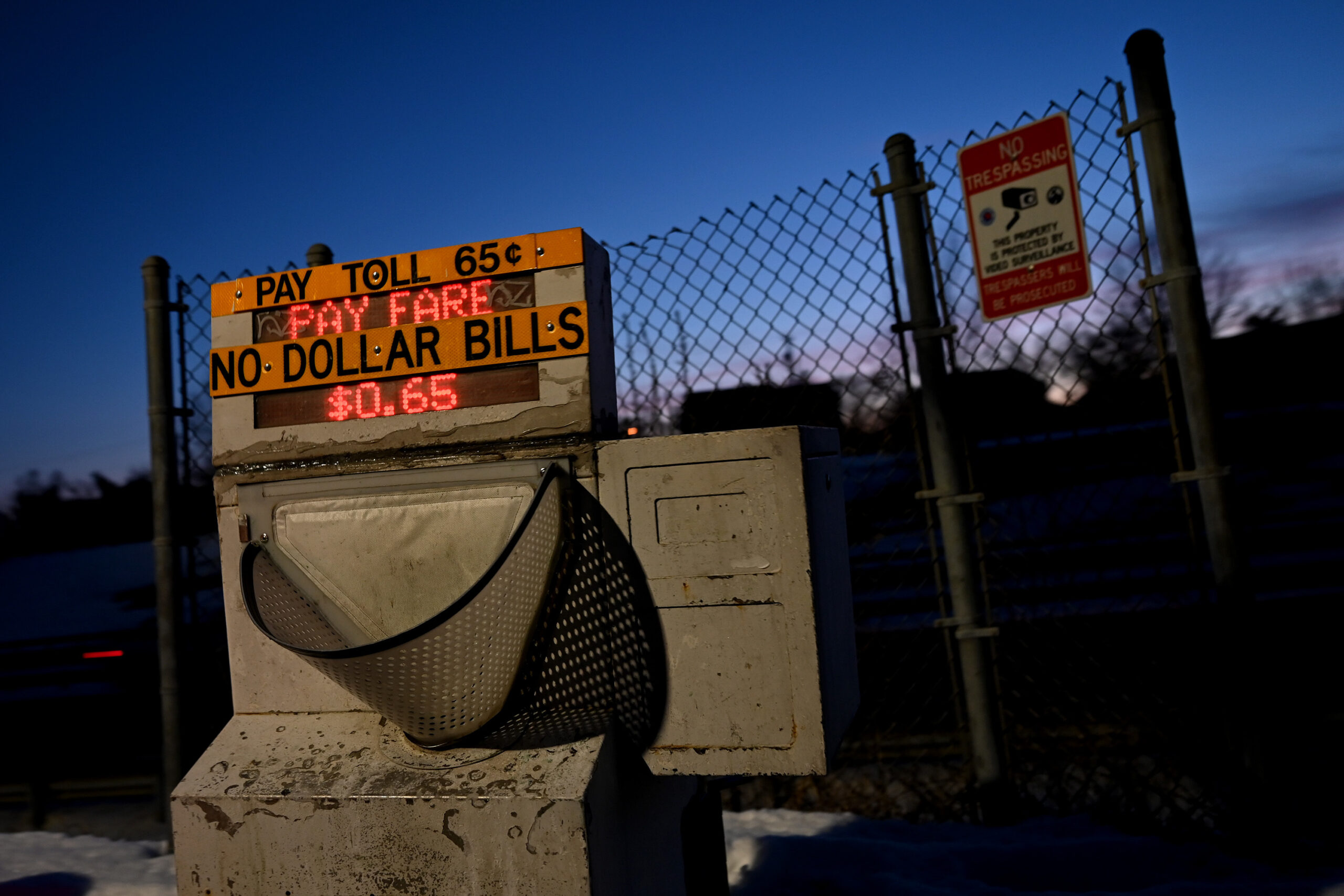
    Drivers who don’t have E-ZPass will be mailed a bill for the toll, plus a 100% surcharge and a $1 administrative fee. Driving the length of the expressway without E-ZPass would cost about $14. The SJTA says the extra charges will help “offset the administrative costs associated with the new billing process.”

    If drivers fail to pay the first bill, they will receive another with an extra $5 late fee. If they still don’t pay, it will be considered a toll violation, which can result in fines and a suspension of vehicle registration.

    The cashless system’s rollout coincides with a 3% toll rate increase for all drivers.

    The start of all-electronic tolling on the A.C. Expressway comes after a $77 million multiyear project that replaced the Egg Harbor and Pleasantville barrier toll plazas with overhead gantries that digitally read E-ZPass transponders and license plates. All ramp toll machines were also replaced with gantries.

    A cash lane at the Berlin-Cross Keys toll booth on the Atlantic City Expressway as shown in 2022.

    With the new system, drivers don’t stop to go through a toll booth; they keep moving, which state officials have said will be safer and more environmentally friendly. It may also result in quicker drives on the 44-mile highway that connects Camden County to the Shore.

    The Garden State Parkway and the New Jersey Turnpike are also set to go cashless sometime in the future.

    The New Jersey Turnpike Authority’s 2020 long-range capital plan estimated that endeavor would cost $900 million — $500 million for the parkway and $400 million for the turnpike.

    The Pennsylvania Turnpike went cashless in 2020, laying off hundreds of toll workers.

    A driver pays a toll in cash at the Egg Harbor Toll Plaza on the Atlantic City Expressway in 2022.

    Spokespeople for the South Jersey Transportation Authority could not immediately be reached for comment Tuesday regarding whether Atlantic City Expressway toll workers were losing their jobs.

    The authority, which runs the expressway, has been using its social media accounts to encourage drivers to get E-ZPass. They can do so online at ezpassnj.com, by phone at 1-888-288-6865, or by stopping at the Customer Service Center at milepost 21.3 on the expressway.

    The in-person center is open from 8 a.m. to 3 p.m. Monday, 9 a.m. to 4 p.m. Tuesday through Thursday, and 11 a.m. to 6 p.m. Friday. It is closed on weekends and holidays, including New Year’s Day.