Tag: topic-link-auto

  • A ‘Blue Wave’ will carry Curaçao’s all-time World Cup underdog story to Philly

    A ‘Blue Wave’ will carry Curaçao’s all-time World Cup underdog story to Philly

    Every World Cup has its underdogs, and this year’s edition will have more than most because it’s the first with 48 teams. But none will be quite like Curaçao.

    It’s the smallest country ever to qualify for a men’s World Cup, by both population (just over 150,000 people) and land mass (171 square miles).

    Long ago, as a Dutch territory and then part of the former Netherlands Antilles, Curaçao became its own nation in late 2010. In March 2011, it became an independent member of FIFA.

    Since then, the country has grown in soccer by leveraging its connections to the Dutch diaspora to recruit dual-national players. That started to pay off in 2017, when Curaçao qualified for the Concacaf Gold Cup for the first time. Two years later, the Blue Wave reached the quarterfinals, falling to the United States in Philadelphia.

    This summer, it’ll be back at the same stadium, this time to play on soccer’s biggest stage of all.

    Curaçao’s World Cup schedule

    (all times Eastern)

    June 14: vs. Germany in Houston (1 p.m., Fox29)

    June 20: vs. Ecuador in Kansas City, Mo. (8 p.m., FS1)

    June 25: vs. Ivory Coast at Lincoln Financial Field (4 p.m., FS1, tickets)

    Former Phillies shortstop Didi Gregorius was born in the Netherlands and grew up in Curaçao from age 5.

    Fast facts

    If you’ve never seen Curaçao on a map, you might have heard of some of its neighbors. Aruba is 75 miles west over the Caribbean Sea, and Venezuela is around 40 miles south. … The squad’s veterans include brothers Juninho and Leandro Bacuna, both of whom have played in England and now play in the Netherlands and Turkey, respectively. … Curaçao’s most famous athletes traditionally have been baseball players. Notable major leaguers include Andruw Jones, Kenley Jansen, and former Phillie Didi Gregorius.

    Coaching switch

    Manager Dick Advocaat is a legend of the sport who previously coached his native Netherlands, Russia, and a slew of club teams, including the Netherlands’ PSV Eindhoven and Scotland’s Rangers. But on Feb. 23, it was reported Advocaat would step down effective immediately due to personal reasons, which was reported to involve the deteriorating health of his daughter.

    Advocaat will be replaced by fellow Dutchman in Fred Rutten, former manager of Dutch first teams Feyenoord, Anderlecht, and PSV Eindhoven.

    Three players to watch

    Eloy Room: One of a few Curaçao stalwarts with experience in MLS, he played for the Columbus Crew from 2019 to 2023 and backstopped the team’s MLS Cup title win in 2020. Forward Jürgen Locadia played down the road in Cincinnati from 2020 to 2021.

    Ruben Kluivert: He hasn’t played for the Blue Wave yet, but the possibility that he might is big enough. His father is former Dutch superstar striker Patrick Kluivert, and one of his brothers is Justin Kluivert of English Premier League club Bournemouth. Ruben plays for French club Lyon and has considered committing to Curaçao. If he does, he’ll go right into the spotlight.

    Tahith Chong: He grew up on the books of mighty Manchester United but never made it there. In 2023, he made it to the big time when he signed for Luton Town after the Hatters’ promotion to the Premier League. Now, he plays for Sheffield United in the second-tier Championship.

    Curacao’s Roshon Van Eijma (center) guided the nation past Jamaica last year to qualify for its first-ever World Cup.

    Curaçao’s Philly connection … sort of

    It’s not direct, but if you’re a Union fan, it will matter to you. Curaçao topped Andre Blake’s Jamaica to win its World Cup qualifying group in the final game, a scoreless tie on Jamaica’s turf. If the Reggae Boyz had won that game, Blake may have gotten a World Cup homecoming after waiting so long to play in the tournament.
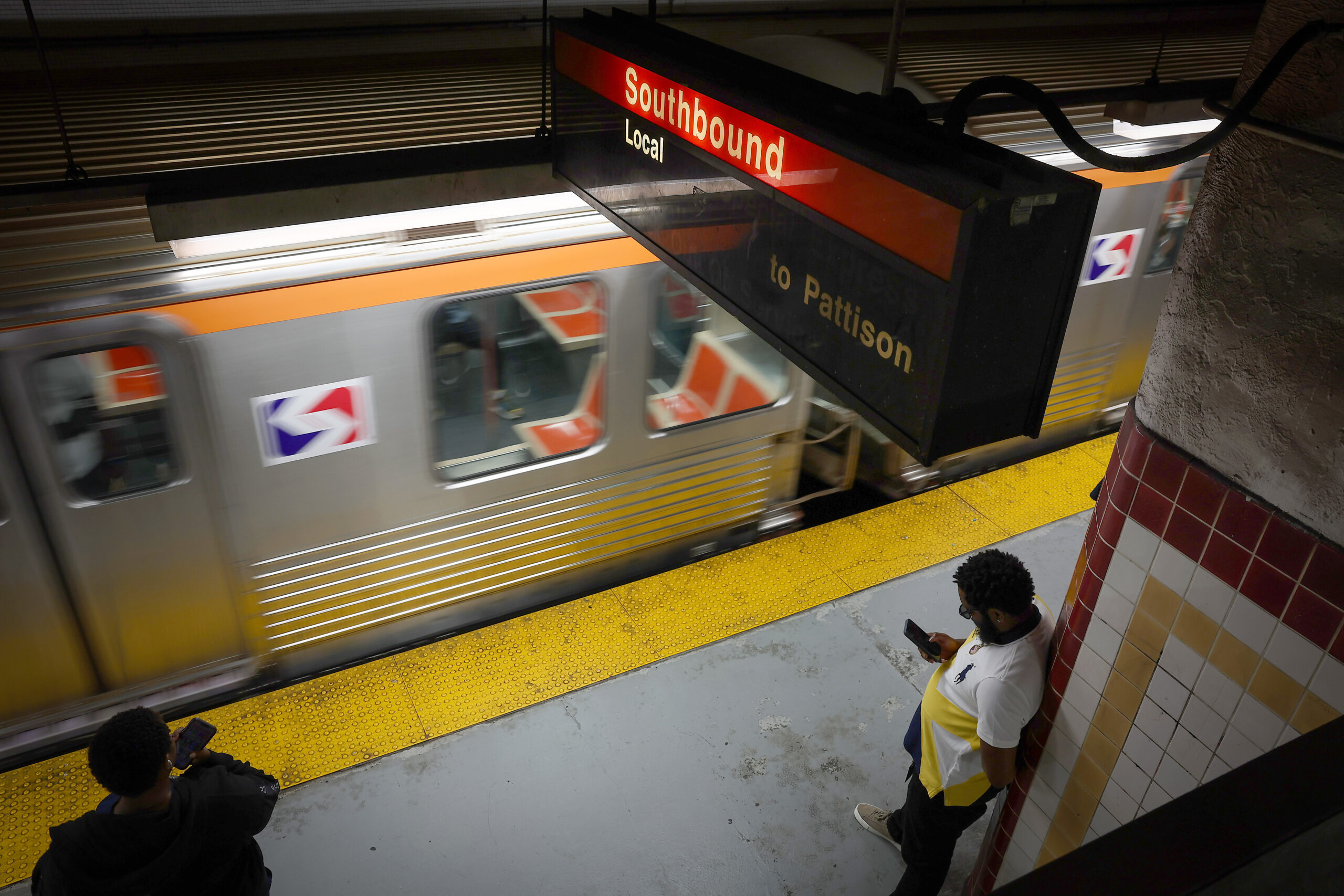
    SEPTA’s Broad Street Line train is a direct path from the city to the stadium on game day.

    Navigating Philly

    The best way to navigate getting to the stadium area where the games will be held is via SEPTA, the city’s public transportation system. The network has its own app and is fully integrated into apps, including Google Maps, Apple Maps, Transit, and CityMapper.

    Whether you’re coming in by way of Philadelphia’s international airport or its main train hub, William H. Gray III 30th Street Station, it’s easy to get around Philly’s Center City district and other neighborhoods by bus, train, or trolley.

    Don’t feel like figuring out all the schedules? Taxis or ride shares via Uber or Lyft also are quick and convenient options.

  • Monday’s Olympics TV schedule: Snowboarding, figure skating, speedskating, and more

    Monday’s Olympics TV schedule: Snowboarding, figure skating, speedskating, and more

    At any Olympics, there’s a chance you might tune in to something you rarely see and get hooked.

    For this writer, long track speedskating is one such sport. Back in the 1990s, Bonnie Blair and Dan Jansen were among the most famous Americans at the Winter Games: Blair for her many gold medals, and Jansen for coming up painfully short many times before finally triumphing in 1994.

    This year, the top U.S. speedskaters are Erin Jackson on the women’s side and Casey Dawson on the men’s side. There’s also an interesting story in Brittany Bowe, and not just because of her impressive career.

    Bowe is going for her third career Olympic medal at age 37, having won bronze in the team pursuit in 2018 and another bronze in the 1,000 meters in 2022. She has held the 1,000-meter world record three times in her career, including the current mark since 2019, and is the American record holder in the 1,500.

    But that’s only part of Bowe’s story. She’s originally from Ocala, Fla., about an hour and a half north of Tampa — not what you’d think of as fertile ground for an ice sport. She trains at the Olympic facility in Salt Lake City, where the 2002 Games were held and the 2034 Games will be. It’s one of just six long track speedskating ovals in the United States.

    On top of that, Bowe played college basketball from 2006-10 at Florida Atlantic. She didn’t play against any Big 5 teams back then, so not many people around here would be able to say they saw her before she was famous. But plenty of people have seen her in recent times, and more will at these Olympics.

    The women’s 1,000 meters will be live on USA Network from 11:30 a.m. to noon Philadelphia time, then on NBC until 12:45 p.m. Other big events Monday include two that NBC will carry live: snowboarding’s women’s big air final at 1:30 p.m. and figure skating’s ice dance at 2:40 p.m. The ice dance competition will start on USA at 1:20 p.m.

    How to watch the Olympics on TV and stream online

    NBC’s TV coverage will have live events from noon to 5 p.m. Philadelphia time on weekdays and starting in the mornings on the weekends. There’s a six-hour time difference between Italy and here. The traditional prime-time coverage will have highlights of the day and storytelling features.

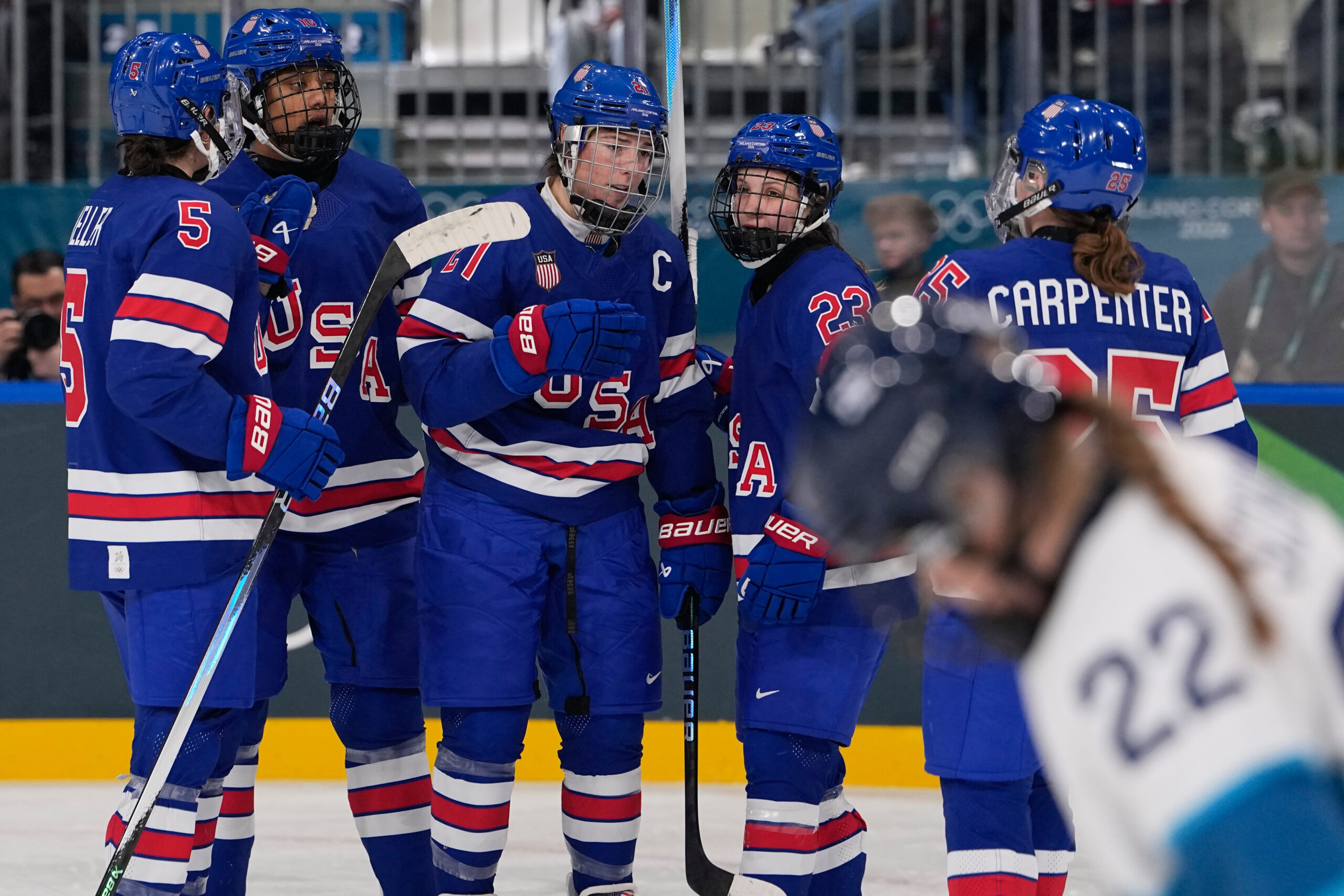
    The U.S. women’s hockey team plays its next-to-last group game on Monday, against Switzerland at 2:40 p.m.

    As far as the TV channels, the Olympics are airing on NBC, USA, CNBC, and NBCSN. Spanish coverage can be found on Telemundo and Universo.

    NBCSN is carrying the Gold Zone whip-around show that was so popular during the Summer Olympics in 2024, with hosts including Scott Hanson of NFL RedZone. It used to be just on Peacock, NBC’s online streaming service, but now is on TV, too.

    Every event is available to stream live on NBCOlympics.com and the NBC Sports app. You’ll have to log in with your pay-TV provider, whether cable, satellite, or streaming platforms including YouTube TV, FuboTV, and Sling TV.

    On Peacock, the events are on the platform’s premium subscription tier, which starts at $10.99 per month or $109.99 per year.

    Here is the full event schedule for the entire Olympics, and here are live scores and results.

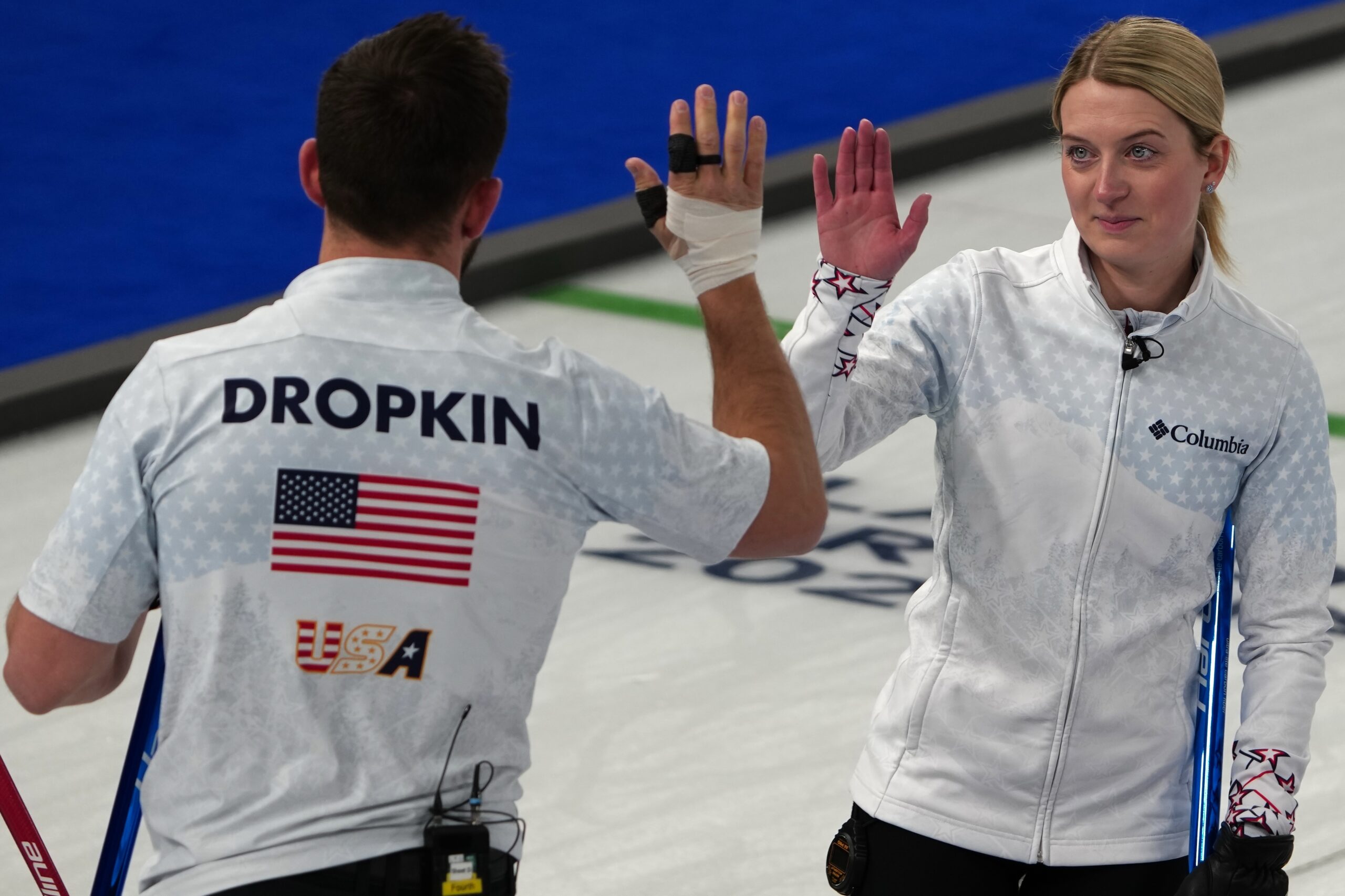
    Cory Thiesse (right) and Korey Dropkin are the first United States team to reach the curling mixed doubles semifinals. They’ll play in that round on Monday, just after noon Philadelphia time.

    Monday’s Olympics TV schedule

    NBC

    • Noon: Speedskating — Women’s 1,000 m
    • 12:45 p.m.: Alpine skiing — Men’s team combined, downhill and slalom (tape-delayed)
    • 1:30 p.m.: Snowboarding — Women’s big air final
    • 2:40 p.m.: Figure skating — Ice dance, rhythm dance
    • 8 p.m.: Prime time show replays including Alpine skiing, figure skating, and freestyle skiing
    • 11:35 p.m.: Late show replays including snowboarding and speedskating

    USA Network

    • 4:30 a.m.: Alpine skiing — Men’s team combined, downhill portion
    • 6:30 a.m.: Freestyle skiing — Women’s slopestyle final
    • 8 a.m.: Alpine skiing — Men’s team combined, slalom portion
    • 11 a.m.: Luge — Women’s singles first run
    • 11:30 a.m.: Speedskating — Women’s 1,000 meters
    • 12:05 p.m.: Curling – Mixed doubles semifinals
    • 12:35 p.m.: Luge — Women’s singles second run
    • 1:20 p.m.: Figure Skating — Ice dance, rhythm dance
    • 2:40 p.m.: Ice hockey — United States vs. Switzerland women
    • 5 p.m.: Ice hockey — Canada vs. Czechia women (joined in progress)
  • Philly native Mike Petrakis built PowerPay, a fintech company for people who think banks are too slow

    Philly native Mike Petrakis built PowerPay, a fintech company for people who think banks are too slow

    The Philadelphia region, once a banking center, is still home to financial innovators. One of the growing digital lenders based nearby is seven-year-old PowerPay, whose 225 staff members build a software platform to finance home improvement loans, personal loans for hearing aids and other medical needs, and a growing list of services, from its new offices just off U.S. 202 near King of Prussia.

    PowerPay revenues more than doubled to $200 million last year, as the company processed $6 billion in loan applications.

    The company raised its local profile last winter when it cosponsored the Christmas light show at the former Wanamakers in Center City. That got its name out to more prospective employees and borrowers.

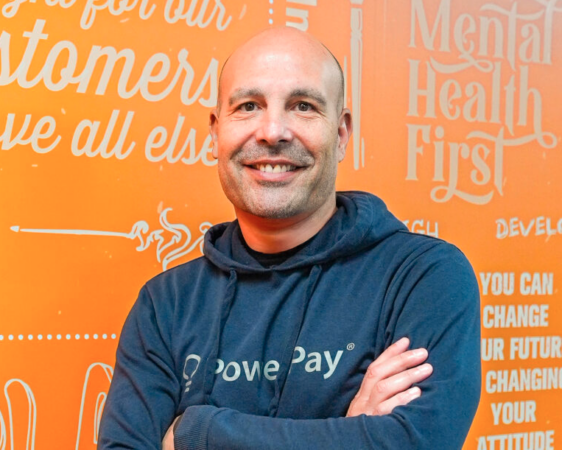
    Founder Mike Petrakis, a native of Northeast Philadelphia and Archbishop Ryan High School graduate, played varsity soccer at Drexel University and briefly went pro in England. He settled in Doylestown and a sales career, which led him to start PowerPay in 2017. Early backers included hoteliers Jay Shah and Eustace Mita.

    He agreed to talk to The Inquirer about his company’s growth and prospects. Questions and answers edited for clarity and brevity.

    What’s the difference between your company and a bank?

    A lot of people think banks are inconvenient. Their loan docs are thirty-some pages. With fintechs, someone applies in seconds, and in milliseconds you can get an offer back.

    We collect thousands of data points — email transmissions, phone checks, geotagging, information in databases that is available. Social media, not so much. We make sure we can recognize the device from which they are putting in the application. We put all this into our models.

    We are onboarding more artificial intelligence. We take a driver’s license and check — does the signature match the customer on the platform? is that image theirs? It is done in an instant.

    Lending has become an automated business. Why do you still do so much business by phone?

    You get a loan with us, you are going to be connected to us for the next 15 years, and we need to be connected to each other. We are deploying digital routing that moves them from an initial inquiry to a specialized team member without the traditional “on hold.” And we have engineers on premise and around the world.

    The goal is to work so hard to get the consumer that we can keep them in perpetuity.

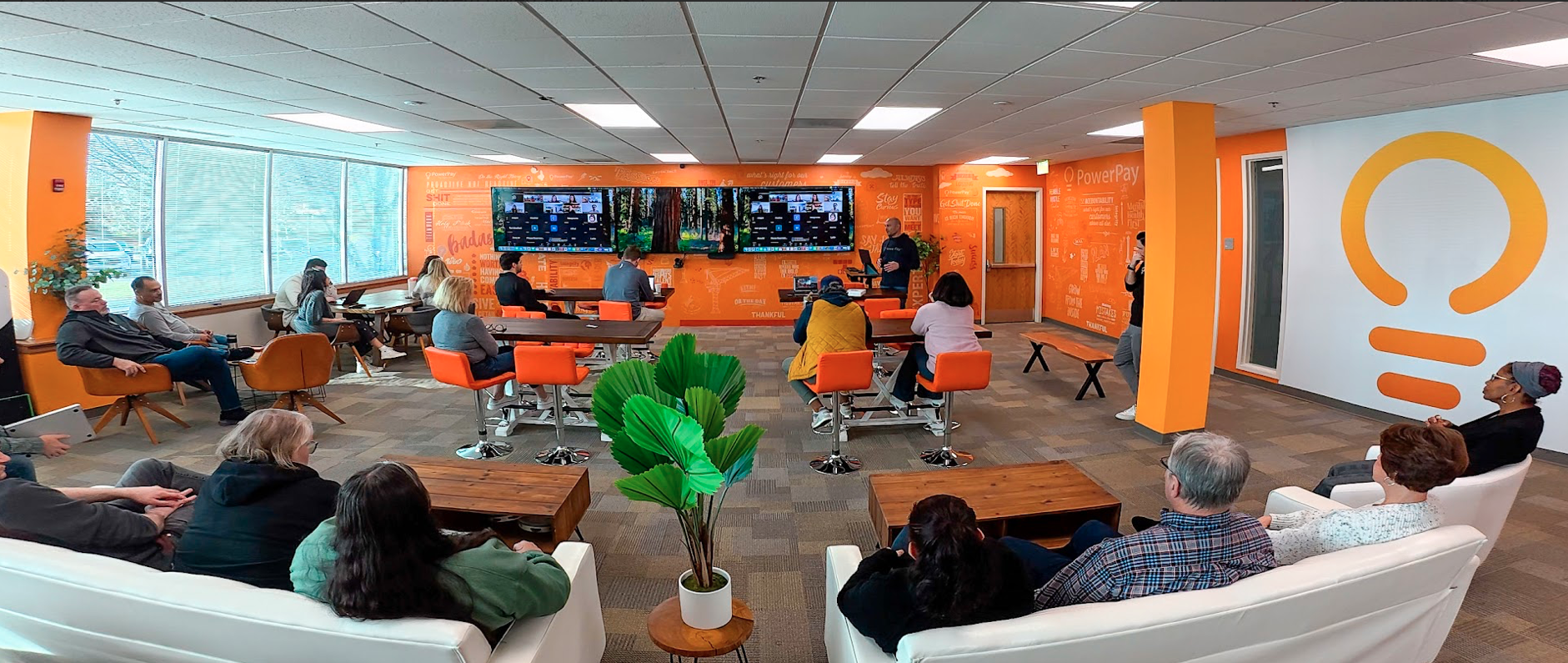
    PowerPay has its headquarters just off U.S. 202 near King of Prussia.
    Since you’re not a bank, how do you fund these loans?

    Credit unions financed our loans early on. Now we have KeyBanc and Capital One and other major lenders.

    We aren’t a bank, so we don’t have the same oversight, and we can move faster. But we work with banks, so our processes are built to be fully compatible with bank regulations. We process half a billion dollars’ worth of loans a month, which is larger than most banks.

    What do you do any better than a bank?

    We just built a new product, PowerPay 360. You pay interest only for 12 months, then interest and principal for 14 years. Leaves a little extra cash in their pocket for a year. We set that up in 30 days.

    Banks are so conservative; for them to build that, with their large, core technology systems, it would take them years to get it into the market. Apple tried to get in the consumer financial business and left within two years.

    We are adding credit card and mortgage products, and healthcare loans, too. We just opened a relationship with U.S. Bank to grow that relationship to half a billion dollars.

    Credit cards have moved from plastic into a whole digital landscape for the consumer. We are making it so [in late 2026] you can tap your smartphone or mobile device at Home Depot and not just buy supplies but also hire your installer or service provider, and get an installment loan to pay for the whole project.

    What else are you preparing to sell?

    We now have an insurance business. We sell credit-default insurance for the benefit of our financial sponsors. Our underwriter is domiciled in the Cayman Islands under their financial regulations. We aggregate the risk into asset-backed securities [and sell loans in risk-based pieces to get higher returns]. We sell those to investors, and the insurance comes off.

    We’re going to grow insurance. Involuntary unemployment, disability, credit, life. We would domicile that in the U.S. We are talking to large insurance carriers we could front for and share the risk.

    How did you get into this business?

    In 2017, I was a national contractor, [helping buyers finance] home generators for Generac, Cummins, Kohler, Briggs & Stratton. You pay $99 a month for 10 years, and we’d get them a loan with Synchrony or GreenSky [two online-lending pioneers].

    Generac came to me and said, how can we make these loans, too? I said start a national call center. It took me six months to find a software platform and a credit union to finance us.

    At first we were just a couple of people, sitting in the Whole Foods beer garden in Plymouth Meeting. We’d have breakfast, then set up our laptops that we bought at Best Buy, initiating loans and writing the code on third-party platforms. Then we grew out of Whole Foods, and we got our first office at the Life Time fitness club in Ardmore.

    We took over an auto-loan platform and converted it to make home-equity loans. We were ready to really build it up, and then Generac backed out.

    So we said, what else can we finance with this? We approached the big home improvement companies, Renewal by Andersen window installations, and others.

    What was it like, launching into the pandemic?

    The home improvement companies were sitting on millions in applications they couldn’t get funded. We underwrote those loans and got them funded, at first, by credit unions.

    We onboarded 100,000 users overnight, and we nearly blew up the software platform we were using. So we built our own, and now we own all our intellectual property.

    We went at first to many credit unions, and they shared participation with other credit unions, but then they would get scared and pull out. We still weren’t big enough for Goldman or JPMorgan. Even the second-tier banks would only lend part of the money. Finally, we found one credit union, Chartway [based in Virginia], they kept the doors open.

    In 2023, we were ready to sell loans in our first securitization. We kept servicing rights. That legitimized us in the eyes of the bankers. Capital One agreed to help us with the securitization.

    There were 50 lawyers involved! We only did a $118 million deal. But we have done much larger ones since, and now I can get it done with a lawyer on each side in a couple of days. We underwrite the loans, we insure them, and then we sell them, de-risking.

    It becomes a cost-of-funds game — the lower the cost, the less onerous the rates we can offer consumers.

    We can drive billions more through this platform.

  • Ooh la la: France’s unparalleled team of superstars will light up Philly in the World Cup

    Ooh la la: France’s unparalleled team of superstars will light up Philly in the World Cup

    There will be a lot of great teams and fun vibes in Philadelphia’s World Cup games this summer. But none will be able to match France’s array of superstar talent.

    In fact, almost no other team in the world can run with the team’s depth, except maybe Spain and England. Brazil, which also will play in Philadelphia, probably is fourth.

    It’s not just that France has all-everything forwards Kylian Mbappé and Ousmane Dembélé, the latter the current holder of the Ballon d’Or as the world’s best player. The team has astonishing depth at every position on the field and players at elite clubs around Europe.

    They span all ages, too, from 34-year-old midfield anchor N’Golo Kanté to 19-year-old playmaker Warren Zaïre-Emery. Manager Didier Deschamps, in his third and final World Cup at the helm, will have the task of trying to pick 26 players for his squad from a sea of talent.

    France’s Kylian Mbappe is hoping to pick up where he left off on what was a breakthrough performance at the 2022 World Cup in Qatar.

    Not that there’s any pressure, either, after France won the 2018 World Cup — Mbappé’s breakout on the big stage — and made the 2022 final. Just three teams in soccer history have made three straight World Cup finals: West Germany’s men in 1982, ’86, and ’90; Brazil’s men in 1994, ’98, and 2002; and the U.S. women in 2011, ’15, and ’19.

    It won’t be surprising if France joins that club this summer, but it will be quite impressive. Les Bleus have tough group games against Senegal, the newly crowned African champion, and Norway, with its own stars in Erling Haaland and Martin Ødegaard.

    In the knockout rounds, Germany could await in a round of 16 game set for July 4 in Philadelphia. Getting to see France here twice would be quite a treat for local fans, especially that matchup.

    France’s World Cup schedule

    (all times Eastern)

    Tuesday, June 16: vs. Senegal in East Rutherford, N.J. (3 p.m., Fox29)

    Monday, June 22: vs. Bolivia, Suriname, or Iraq at Lincoln Financial Field (5 p.m., Fox29, tickets)

    Friday, June 26: vs. Norway in Foxborough, Mass. (3 p.m., Fox29)

    Fast facts

    France’s opponent in Philadelphia will be determined by a UEFA playoff in March. Bolivia will play Suriname on March 28, and the winner will play Iraq on March 31, with both games in Monterrey, Mexico. … France is one of only eight nations to have won a men’s World Cup. It became that club’s seventh member in 1998, with a team led by the legendary Zinedine Zidane. … The Paris region has been renowned for nearly a decade as having the biggest pool of young soccer prospects anywhere in the world. … Six candidates to make France’s team played in Philadelphia during the Club World Cup, though Mbappé did not because he was ill when Real Madrid visited. … Local estimates say just over 71,000 people in the region claim French ancestry.

    Three players to watch

    Kylian Mbappé: The star of stars, with a personality to match his prolific scoring and creativity. One of the biggest in this tournament too, with Lionel Messi (Argentina), Cristiano Ronaldo (Portugal), and Lamine Yamal (Spain). Thousands of fans will flock to South Philly just to see him, no matter what jersey they’re wearing.

    Ousmane Dembélé: Before he led Paris Saint-Germain to last year’s Champions League title and the Club World Cup title, he was one of the most frustrating players in the sport. For all his skill, he had a track record of messing up some of the biggest scoring chances you could imagine. Something finally clicked last season, and now he’s almost unstoppable.

    William Saliba: France isn’t just stacked in its attack. Its defense also is terrific, and Deschamps cares about that a lot — he was the midfield anchor of France’s ’98 champions that won the European championship two years later. Saliba is a stalwart centerback for Les Bleus and English club Arsenal, and at 24 years old is only just starting to hit his peak.

    William Saliba (center) is a formidable force on the back line of France’s defense.

    France’s Philly connection

    There isn’t much, soccer-wise, but there have been connections outside sports for centuries. France was the first ally of the British colonies that declared independence in 1776. Benjamin Franklin led the diplomatic effort, and, in 1778, France signed the Treaty of Alliance to give its official backing.

    In the early 20th century, French architect Paul Philippe Cret designed the Benjamin Franklin Parkway, modeled on Paris’ famed Avenue des Champs-Élysées. Cret also designed the bridge named in Franklin’s honor and helped renovate Rittenhouse Square into what’s now Philly’s best-known city park.

    If you’re an art fan, Philly has two of the world’s largest collections of works by famed French artists: painter Pierre-Auguste Renoir at the Barnes Foundation, and the Rodin museum for sculptor Auguste Rodin. Fans walking from Center City to the World Cup fan fest on Lemon Hill will pass by both on the Parkway.

    Make sure you check out …

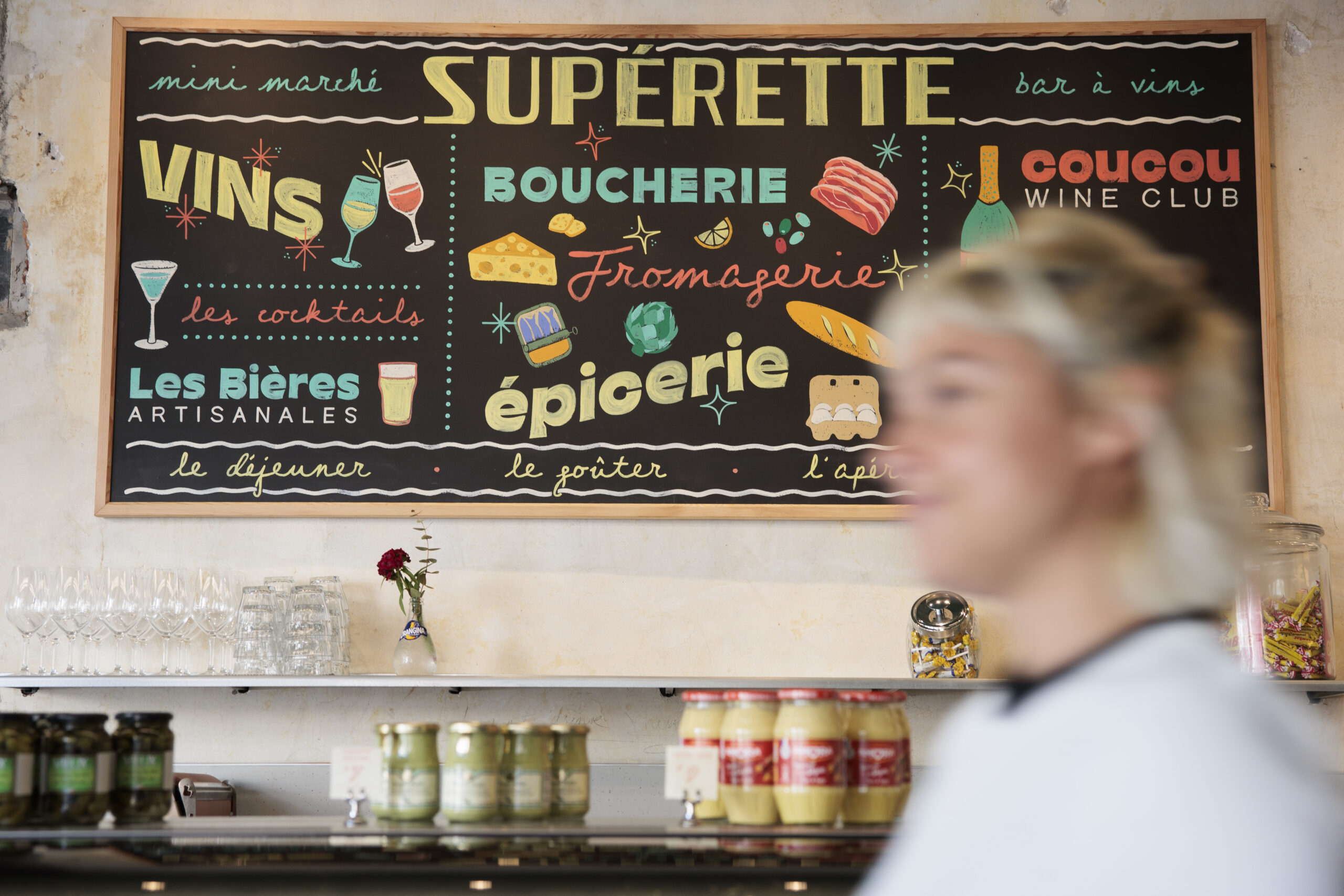
    Philly and the surrounding area claims a cherished legacy of great French restaurants — Le Bec-Fin being chief among them — but food writer Beatrice Forman recommends Supérette, a new-school but extremely legit entry to the city’s Gallic scene.

    The interior of Supérette, a market and restaurant that will be all things France in Philly during the World Cup.

    This all-day French wine bar has perfected the art of the “sip-and-nibble” with a menu of compulsively snackable light bites that range from a sheet of tiny raviolis stuffed with comté to a sandwich on pinsa bread (focaccia’s thinner sister) layered with potato chips and customizable charcuterie boards.

    The space is divided down the middle into a casual yet effortlessly trendy bar and an épicerie that sells a curated mix of meat, cheeses, prepared goods, and imported French snacks. Who’s to say you can’t enjoy a baguette straight from the bread bag at a soccer game? 📍1538 E. Passyunk Ave., superettephl.com

    SEPTA’s Broad Street Line train is a direct path from the city to the stadium on game day.

    Navigating Philly

    The best way to navigate getting to the stadium area where the games will be held is via SEPTA, the city’s public transportation system. The network has its own app and is fully integrated into apps, including Google Maps, Apple Maps, Transit, and CityMapper.

    Whether you’re coming in by way of Philadelphia’s international airport or its main train hub, William H. Gray III 30th Street Station, it’s easy to get around Philly’s Center City district and other neighborhoods by bus, train, or trolley.

    Don’t feel like figuring out all the schedules? Taxis or ride shares via Uber or Lyft also are quick and convenient options.
  • A K-8 Jewish day school is proposed for Washington Square West

    A K-8 Jewish day school is proposed for Washington Square West

    A long vacant parking garage at 510-28 S. Eighth St. sits between some of Philadelphia’s most desirable neighborhoods, and Rabbi Yochonon Goldman hopes it could soon be the site of Center City’s only Jewish day school.

    It all depends on how the Zoning Board of Adjustment rules.

    The four-story, almost 36,000-square-foot plan for the building is the third iteration of the proposed K-8 school. Goldman, who is rabbi of B’nai Abraham Chabad, and developer Masada Custom Builders are seeking neighborhood support for the project.

    The proposal has stirred controversy for its height, size, and the inclusion of several apartments. The project needs seven variances from the city’s Zoning Board of Adjustment, largely because the garage is zoned for multifamily rowhouse development, just like most of the surrounding blocks.

    The plan is more likely to succeed at a zoning hearing if it has the support of local neighborhood groups, chiefly the Washington Square West Civic Association.

    “I truly believe that this educational institution will enhance our neighborhood,” Goldman said at a neighborhood meeting last week. “It will be a tremendous asset to all residents of the neighborhood, whether you’re Jewish or not.”

    Goldman’s synagogue runs a successful nearby pre-kindergarten program at the synagogue on 527 Lombard St., and many parents are frustrated by the lack of a Jewish elementary school in the area.

    But the Lombard Mews homeowners association, which borders the site to the west, has organized to negotiate with the development team and hired veteran zoning attorney Paul Boni.

    Immediate neighbors say they are most concerned with the proposed building’s size and height, which in early iterations was five stories. They are skeptical of plans to build three apartments on top of the school, saying the apartments would bulk up the structure.

    Speakers from Lombard Mews included Aren Platt, who served as one of Mayor Cherelle L. Parker’s top advisers during her election campaign and the first year of her administration. He reiterated that his neighbors’ chief concern was with height and size, not the idea of a school in this location.

    Two of the apartments above the school would be small studios for interns who join the faculty and will need affordable nearby residences. The largest would be for the rabbi’s family: a bi-level condo with a private elevator and roof deck.

    A rendering of the Jewish day school planned for the Washington Square West neighborhood.

    At the meeting, the design team noted that the current version of the building is 52½ feet, down from over 70 feet originally. The team reduced the ceiling height of each floor and eliminated one story from the plans.

    Still, critics argued against the apartments — especially given that the classrooms have shrunk to meet neighbor demands but the living units remained intact.

    “We’re puzzled as to why the proposal includes three luxury dwelling units on the top,” Boni said at the meeting. “Eliminating that square footage would seem to go a long way toward meeting our requested building envelope.”

    Goldman argues that the apartments atop the school are essential to the project’s success.

    “A rabbi’s home is not just a private residence; it’s a communal space which builds strong relationships among community members who become like an extended family, sharing meals with the rabbi’s family,” Goldman said in an email. “It’s all part of the educational model which we envision for the school.”

    Goldman also says that having a responsible and active presence on site 24/7 will be a positive for the school building. But most important to him, the close proximity will aid in the religious practice of his community.

    “This space is not just a home. It is a vehicle for hospitality and connection,“ he said. ”Beyond the academics offered in the classroom, the school is a place where the values of Judaism come to life.”

    Some opponents thought the school should be rejected entirely for its attempt to bypass the property’s zoning. The proposal provides only 12 parking spaces, while the zoning requires twice that, and a roof deck is not allowed under current land-use rules.

    Regarding parking and potential congestion from the plan — a fear expressed by some nearby small business owners — the development team said their traffic study showed that 50% to 60% of students would walk to school, as they already do to the pre-K program. Supporters noted that many Jewish families who do not drive on Shabbat and certain holidays would prefer to live within walking distance to school.

    “Right now, we have 75 kids, and at least 60 from those kids are walking,” said Isaac Ohayon of Masada Custom Builders. “They live in the neighborhood. … They’re all no more than 10 to 15 blocks away.”

    The Washington Square West Civic Association will vote Tuesday on whether to support or oppose the project when it goes before the zoning board March 4.

  • Ghana’s plan to emerge from a crowded group of strong soccer nations runs through Philly

    Ghana’s plan to emerge from a crowded group of strong soccer nations runs through Philly

    Ghana will take the field for its fifth World Cup this summer vying to match the success of its first two tournament appearances.

    Since making their World Cup debut in 2006, the Black Stars have qualified for every tournament since, except in 2018. But Ghana has yet to match its performances in its first two World Cup appearances, a round of 16 exit in 2006 and a knockout win over the United States that led to a quarterfinal appearance in 2010.

    Ghana is in a crowded Group L alongside England, Croatia, and Panama, but with the expansion of the knockout stage from 16 to 32 teams, the Ghanaians stand a chance of making their first trip out of the group stage since 2010.

    Ghana’s World Cup schedule

    (All times Eastern)

    June 17: vs. Panama in Toronto (7 p.m., FS1)

    June 23: vs. England in Foxborough, Mass. (4 p.m., Fox29)

    June 27: vs. Croatia at Lincoln Financial Field (5 p.m., FS1, tickets)

    Fast facts

    Ghana is ranked 72nd in FIFA’s latest world rankings. … Ghana’s team gets its Black Stars nickname from the Black Star of Africa, which is featured in the center of the country’s tricolor flag. … Ghana has won the Africa Cup of Nations four times, most recently in 1982. Ghana failed to qualify for the most recent Africa Cup. … Otto Addo is in his second stint as manager for Ghana. Addo departed after coaching the Black Stars in the 2022 World Cup but returned to the position in March 2024.

    Jordan Ayew (right) is expected to be one of Ghana’s go-to players as it looks to emerge from Group L.

    Players to watch

    Jordan Ayew, son of all-time Ghanaian great Abedi Ayew, has followed in his father’s footsteps by captaining the Black Stars. Ayew, who plays his club soccer for Leicester City in the English Championship, has the second-most appearances in Ghanaian history. His 115 caps only trail his older brother, André Ayew.

    Antoine Semenyo perhaps is the most exciting player expected to be in Ghana’s World Cup squad. The winger has been in excellent form, scoring in three of his first four appearances for English Premier League side Manchester City, which acquired him from EPL rival Bournemouth for approximately $84 million in January. Semenyo, 26, suited up for Ghana at the World Cup in 2022, but only played 19 minutes across two matches.

    Joining Ayew and Semenyo to make up a fierce Ghanaian attack is Mohammed Kudus. Kudus was an important player for a struggling Tottenham squad early in the Premier League season, but a leg injury he suffered in January is expected to keep him out of play until March. Kudus should be healthy enough to star for Ghana this summer as he did at the 2022 tournament. Kudus led Ghana with two goals in three group-stage games in Qatar.

    Philly meets Ghana moment

    Ghana last visited Philadelphia for an international friendly matchup with Chile in February 2012, with the two nations playing to a 1-1 draw at PPL Park (now Subaru Park). Richard Mpong opened the scoring for the Black Stars with a goal shortly before halftime. Most of the players who took the pitch for Ghana in Chester have since retired, but a young Jordan Ayew took in the game from the bench.

    You should check out …

    Inquirer critic Craig LaBan searched for a Ghanaian-owned spot in Philadelphia but came up short. Still, he’s got advice on a close counterpart:

    If you’re planning a watch party for Ghana in the World Cup, there appears to be no local restaurant owned specifically by Ghanaians at the moment. However, Southwest Philly’s thriving Africatown along Woodland Avenue is bustling with restaurants serving cuisines from the surrounding region, including Le Baobab (Ivory Coast, Burkina Faso) and Lè Mandingue, a multilocation institution whose Liberian and Guinean ownership caters to a wide array of Philadelphians from across the West African diaspora.

    Le Mandingue makes one of my favorite renditions of jollof rice, best topped with zesty chunks of grilled lamb dibi and a potent hot sauce that will light you up. Try the spicy peanut soup with fluffy balls of fufu on the side for dipping. But don’t miss what may be Lè Mandingue’s best dish: a takeout tub of stewed sweet potato leaf greens imbued with so much flavor from smoked turkey and spice, that I literally could not stop eating it. Lè Mandingue, 📍 6620 Woodland Ave., ☎️ 215-726-0543; 📍 7186 Marshall Rd., ☎️ 484-461-2981; or University Fair Food (online ordering only); lemandingue.com

    SEPTA’s Broad Street Line train is a direct path from the city to the stadium on game day.

    Navigating Philly

    The best way to navigate getting to the stadium area where the games will be held is via SEPTA, the city’s public transportation system. The network has its own app and is fully integrated into apps, including Google Maps, Apple Maps, Transit, and CityMapper.

    Whether you’re coming in by way of Philadelphia’s international airport or its main train hub, William H. Gray III 30th Street Station, it’s easy to get around Philly’s Center City district and other neighborhoods by bus, train, or trolley.

    Don’t feel like figuring out all the schedules? Taxis or ride shares via Uber or Lyft also are quick and convenient options.
  • Doing it for Luka: Croatia’s World Cup stop in Philly has major motivation behind it.

    Doing it for Luka: Croatia’s World Cup stop in Philly has major motivation behind it.

    After finishing as runner-up in 2018 and earning bronze in 2022, Croatia will return to the World Cup stage seeking its first-ever first-place finish.

    This summer’s tournament will be the seventh for the Vatreni, who boast three top-three finishes at the World Cup since winning bronze in their first appearance in 1998.

    Croatia should have a path out of Group L, though it will have to contend with England. Can Croatia match the success of its most recent tournament appearances in this year’s expanded 48-team field?

    Croatia’s World Cup schedule

    (All times Eastern)

    June 17: vs. England in Arlington, Texas (4 p.m., Fox29)

    June 23: vs. Panama in Toronto (7 p.m., Fox29)

    June 27: vs. Ghana, at Lincoln Financial Field (5 p.m., FS1, tickets)

    Fast facts

    Croatia is ranked 11th in FIFA’s latest world rankings. … Despite three top-three finishes at the World Cup, Croatia has not advanced past the quarterfinals of the UEFA European Championship. … The Vatreni have been managed by Zlatko Dalić since 2017. … Ivan Perišić, a likely inclusion in Dalić’s squad this summer, needs eight international goals to match all-time leading goal scorer Davor Šuker’s mark of 45 goals. … Croatia will match up against England in Group L, a rematch of their semifinal meeting in the 2018 tournament, which Croatia won, 2-1, in extra time. … Croatia is the second-smallest nation, both by population and by land mass, to appear in a World Cup final.

    Andrej Kramarić (center) will be looking to improve upon his two-goal outburst in the 2022 World Cup.

    Three players to watch

    Croatia’s biggest star and captain is Luka Modrić, the midfield engine behind the team’s success in recent tournaments. Modrić, 40, will appear in his fifth World Cup this summer, a feat that has only been accomplished by eight players in tournament history. The former Real Madrid captain moved to AC Milan in July 2025, where he likely will finish his club career, but he will get one more run to try and lead the Croatian team to victory at the World Cup.

    Joining Modrić in that effort should be Andrej Kramarić, a forward who currently plays for Hoffenheim in Germany’s Bundesliga. Kramarić, 34, scored twice at the World Cup in 2022, making him the only Croatian player to find the back of the net multiple times in the team’s run to the semifinals. Kramarić, who netted six goals in eight matches during Croatia’s World Cup qualifiers, should be an important attacking piece for the Vatreni.

    Despite having played in just one World Cup match, Josip Šutalo could be the most important player in the Croatian back line. Šutalo was a first-choice defender for Dalić’s team at the Euros in 2024, starting all three of the team’s group-stage matches. The centerback may become important for Croatia this summer, as Joško Gvardiol, another top defender at the Euros, suffered a tibia fracture while playing for Manchester City in January that could keep him out of Croatia’s squad for the World Cup. Šutalo will need to be more effective than he was at the Euros, where the Vatreni allowed six goals in three matches.

    Philly meets Croatia moment

    Modrić’s last competition with Real Madrid was last summer’s Club World Cup. The midfielder got a chance to play at Lincoln Financial Field at the Club World Cup, coming onto the pitch in the 67th minute to help see through Madrid’s 3-0 win over Red Bull Salzburg. Modrić played 13 seasons with Real Madrid before joining AC Milan in July 2025, where he plays alongside Hershey native and U.S. midfielder Christian Pulisic.

    You should check out …

    There are no Croatian restaurants in Philadelphia, but you can find some Balkan comfort food at South Philly’s Two Eagles Cafe, according to Inquirer writer Kiki Aranita:

    At first glance, you might think that Two Eagles is owned by a Philadelphia Eagles fanatic, and the Karaj family owners certainly lean into the cross-cultural overlap. But the two eagles actually refer to the flag of their homeland, Albania.

    The menu here is predominantly made up of American breakfast and lunch staples — cheesesteaks, breakfast burritos, and BLTs — but Balkan hints turn up in the Russian dressing smeared on their smash burger, the Polish omelet with sliced kielbasa and mushrooms, and their Fergese, a creamy feta-and-bell pepper stew served in a mini skillet, topped with an egg, and served with slices of white toast.

    The real star of the show is their Albanian qofte, consisting of big, oblong kebabs simmered in tomato-bell pepper sauce and served with tangy, herbaceous sour cream. One thing that Croatia and Albania have in common is burek, which is served by the slice at the Point Breeze cafe. Grab one on your way out, along with a piece of baklava. 📍 Two Eagles Cafe, 1401 S. 20th St., ☎️ 267-748-2257, twoeaglescafe.square.site

    SEPTA’s Broad Street Line train is a direct path from the city to the stadium on game day.

    Navigating Philly

    The best way to navigate getting to the stadium area where the games will be held is via SEPTA, the city’s public transportation system. The network has its own app and is fully integrated into apps, including Google Maps, Apple Maps, Transit, and CityMapper.

    Whether you’re coming in by way of Philadelphia’s international airport or its main train hub, William H. Gray III 30th Street Station, it’s easy to get around Philly’s Center City district and other neighborhoods by bus, train, or trolley.

    Don’t feel like figuring out all the schedules? Taxis or ride shares via Uber or Lyft also are quick and convenient options.
  • Philly is a stop on Brazil’s path to World Cup glory. Here’s what to know about the Seleçao

    Philly is a stop on Brazil’s path to World Cup glory. Here’s what to know about the Seleçao

    Casual soccer fans, and even those who know nothing about the sport itself, know that when it comes to soccer excellence on a global scale, Brazil’s track record is unparalleled.

    As five-time World Cup champions, with one of those titles coming the last time the tournament was held in the United States in 1994, the Seleçao holds the record for the nation with the most World Cup trophies, dating back to 1930, their first appearance in the tournament, and in 2002, the last time they won it all.

    Brazil’s lore largely is propped up by its legends, players past — and even a few still present, who have put the sport on the map. However, even with a crop of natural talent, the nation has struggled over the last few years to regain its former dominance.

    Brazil has struggled in every men’s World Cup tournament since its 2002 victory, crashing out in the quarterfinals four times and the semifinals once, though that might just be the tournament many won’t soon forget: a 7-1 loss to Germany in the 2014 World Cup in Brazil.

    Now, the nation that has qualified for every World Cup since the first iteration in 1930 will return to the United States, with its tournament aspirations making a stop in Philly against Haiti in Brazil’s second game of Group C on June 19 (9 p.m., Fox29).

    Brazil’s World Cup schedule

    (All times Eastern)

    June 13: vs. Morocco in East Rutherford, N.J. (6 p.m., FS1)

    June 19: vs. Haiti at Lincoln Financial Field (9 p.m., Fox29, tickets)

    June 24: vs. Scotland in Miami Gardens, Fla. (6 p.m., Fox29)

    Lincoln Financial Field, which will be renamed to Philadelphia Stadium, will host six matches in the upcoming FIFA World Cup.

    Fast facts

    Brazil is currently ranked fifth in FIFA’s latest world rankings. … Neymar, who has been a key figure in Brazil’s attacking corps for over a decade, isn’t a guarantee to make manager Carlo Ancelotti’s team. Despite playing well for Santos in the Brazilian league, he’s still coming back from a meniscus tear. … Croatia in Group L also will be coming to Lincoln Financial Field this summer. The Vatreni knocked Brazil out on penalty kicks in the quarterfinals of the 2022 World Cup in Qatar. … According to city data, Northeast Philadelphia has one of the largest Brazilian contingencies in the city, housing the bulk of what’s an estimated 20,000 people living within the city limits.

    Brazil’s Rodrygo (left) is expected to have a breakthrough performance in this World Cup.

    Three players to watch

    It’s hard to just name three on a roster that undoubtedly will feature players competing on the top club teams in world soccer. However, the biggest name at the moment is Vinícius Jr., the 25-year-old star forward for Spanish club giants Real Madrid. Vinicius led the team to the semifinals of last summer’s FIFA Club World Cup. He’s played in 45 matches for Brazil since debuting for the first team as a 19-year-old in 2019, with eight goals.

    He’ll most likely be joined by Rodrygo, his teammate at Real Madrid, who is a danger at either inside a four-man attacking front in Brazil’s iconic 4-2-4 formation but mainly outside on the right wing, where Rodrygo, 25, has scored nine goals for his country in just 37 matches.

    Finally, there’s a case to be made for Gabriel Magalhães, who, at 28, can be considered one of the most complete defenders in the world, starring in the back for Arsenal in the English Premier League.

    Philly meets Brazil moment

    One of the biggest arrived just last year, when Vini Jr. dazzled at Lincoln Financial Field during the FIFA Club World Cup, where he scored a remarkable goal in a win over Red Bull Salzburg, and then dished out the assist with a no-look back-heel pass on the game-winner just before halftime.

    Make sure you check out …

    If you’re rooting for Brazil, food writer Beatrice Forman has not one, but two great recommendations for you, covering sweet and savory:

    Brazilian-born pastry chef-owner Mallory Santos-Cepeda has a South Philly monopoly on the country’s traditional confections. Her bakery, Kouklet & Tanda, specializes in bolo de rolo (ultrathin cake rolls from northern Brazil), plus airy sourdough doughnuts called sonhos that are stuffed with a rotating fillings, from fig butter to white chocolate custard and poached pears. Kouklet & Tanda has two locations, both of which are takeout only, so grab empanadas to snack on in the stands of the Linc or fuel up with a big focaccia sandwich on the Broad Street Line. 📍 1647 E. Passyunk Ave. and 1429 Wolf St.; ☎️ 973-664-7076, kouklet.com

    Picanha Brazilian Steakhouse: For a savory (or celebratory) option, Northeast Philly’s Picanha steakhouse is open late daily, serving up charcoal-grilled cuts of rodizio (all-you-can eat meats) that theatrically turn on skewers in the back of the dining room. Picanha is BYOB with a salad bar that’s less upscale than those Brazilian steakhouse chains, so there’s nothing stopping you from celebrating a dub with mountains of pão de queijo (cheese bread) or Brazilian-style lasagna. 📍 6501 Castor Ave., ☎️ 215-743-4647, picanhasteakhouse.com

    Support a local Brazilian small business:

    By Brazil: It may look like your average convenience store on the outside, but inside the revamped shop, you can pick up authentic Brazilian wares, food items, and more. Soccer is a passion here, too, as By Brazil has a decent selection of jerseys on the club side along with the national team. 📍6400 Castor Avenue, ☎️ 215-533-9200.

    SEPTA’s Broad Street Line train is a direct path from the city to the stadium on game day.

    Navigating Philly

    The best way to get to the stadium area where the games will be held is via SEPTA, the city’s public transportation system. The network has its own app and is fully integrated into apps, including Google Maps, Apple Maps, Transit, and CityMapper.

    Whether you’re coming in by way of Philadelphia’s international airport or its main train hub, William H. Gray III 30th Street Station, it’s easy to get around Philly’s Center City district and other neighborhoods by bus, train, or trolley.

    Don’t feel like figuring out all the schedules? Taxis or ride shares via Uber or Lyft also are quick and convenient options.

  • Philly residents thought they had a winter parking system. Then the snow stuck around.

    Philly residents thought they had a winter parking system. Then the snow stuck around.

    By the time Taylor Schuler finally freed their car, they were exhausted. It had taken five hours across two days, hacking at the wall of ice encasing their Prius’ bumper, shoveling piles of frozen snow off the tires, to complete the job. As the sun set on their afternoon of labor, they were tempted to put a piece of furniture in their hard-earned spot, a practice sometimes known as “savesies” in Philadelphia.

    But they knew better. Having just moved to Philly from Houston, the 28-year-old academic librarian wasn’t all that familiar with cold-weather etiquette, so they took to the internet ahead of January’s snowstorm to figure out what exactly Philly’s rules are. They gathered that people weren’t all that fond of the “savesies” practice, so, tempted as they were to hold onto their spot, they let it go.

    Once the spot was cleared, they circled the block, a quick trip to make sure their car was still working. Their internet research had also led them to believe no one would just take their spot immediately. As they rounded the corner toward their house, though, they saw another driver lurch into the spot they just spent hours digging out.

    “Oh jeez,” Schuler thought to themselves. “It’s like the Wild West out here.”

    In some snow-burdened cities, saving a shoveled-out parking spot is a deeply ingrained winter habit. Boston even formally acknowledges the practice by allowing residents to mark a spot they dug out for up to 48 hours after a storm. In Chicago, protecting your precious dug-out parking space with a lawn chair is called “dibs,” and it’s been a beloved and widely accepted tradition since the great blizzard of 1967.

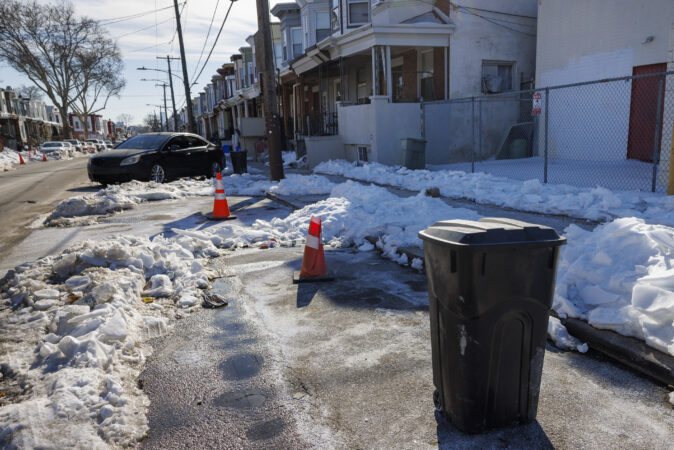
    But Philadelphia exists in a murkier middle ground. Until about two weeks ago, it snowed infrequently enough and melted fast enough that any theory about our collective approach to storm parking was never really put to the test. But the lingering snow has revealed a kind of civic chaos, with neighbors operating under wildly different assumptions and fights breaking out over who is entitled to snow-cleared parking spots.

    The divide is often generational. Older residents, who experienced harsher winters, are more likely to embrace savesies as another classic Philly tradition while younger residents and transplants see it as territorial nonsense, out of step with the values of densely populated city life.

    Schuler finds the entire debate exhausting. “I just want to be able to go to work and come home,” they said. “I didn’t ask for any of this.”

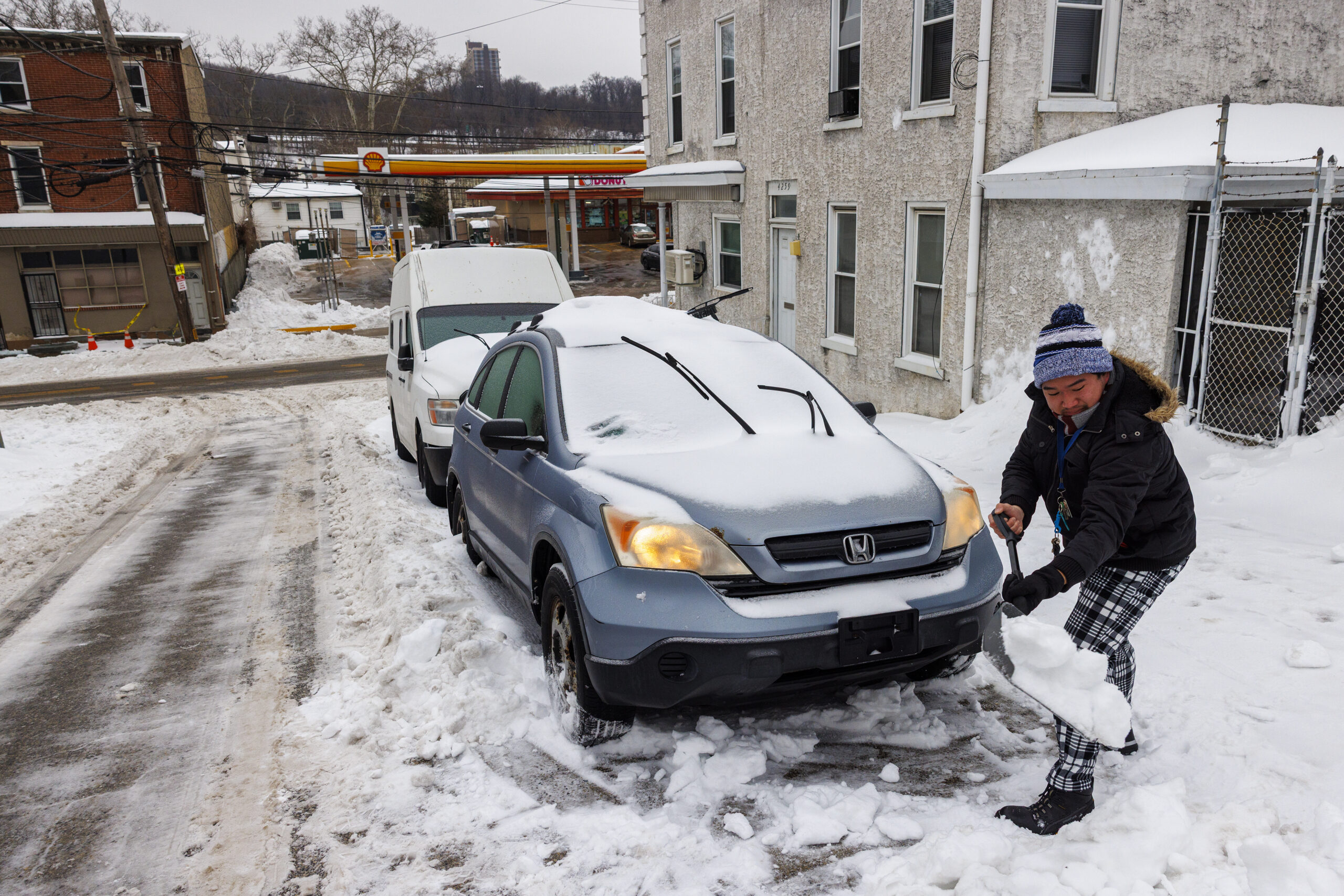
    Connor Phan digs his car out after the recent snowstorm.

    Jeff Martin, 43, who lives in South Philly, describes himself as firmly “no savesies” but with caveats. He won’t put out a chair. He won’t defend one. But he also won’t move someone else’s. “I don’t believe in the chair,” Martin said. “But I’m going to obey the chair.” His reasons are entirely practical. “I don’t want to get keyed,” he said.

    Martin argues Philadelphia’s parking wars are a symptom of the changing climate. “The fact that over the last 20 years, we haven’t gotten as much snow as we did over the previous 20 years has made us forget how to deal with it,” he said, “and the city forget how to deal with it to the point where they don’t properly fund the removal of snow.”

    For the record, the city is firmly in the “#nosavesies” camp, and the police routinely remind Philadelphians that saving parking spots is illegal. Of course, that doesn’t stop people from doing it — and other people complaining about it.

    Lucas Tran didn’t see the cinderblock in the spot he parked in on Tuesday night. It wasn’t until another driver pulled up and told him that he was in her spot that he became aware of it. She said she had dug out the spot herself, saved it with the cinderblock, and that Tran had to move.

    At first, he refused. But he backed down after she called him a liar and a “little b—.” He didn’t want things to escalate. The next day, she left a handwritten apology on his car. “Thank you for moving your car,” it read. “You are NOT a little b—.”

    Tran takes a “special exception” approach to the savesies debate. If the woman had been elderly or a first responder, or if it had been two or three days after the storm rather than a full week later, he might have been more understanding. “But the roads are drivable now, he said. “There are more options to park. You can’t keep claiming a spot that’s public property.”

    Back in West Philly, Schuler spent the week parking wherever they could. The spot they dug out remained occupied until one evening, when they pulled up, excited to reclaim what was once theirs — only to find a folding table balanced on two overturned pots in their way. Someone had “savesied” Schuler’s spot.

    Schuler snapped a photo and uploaded it to Reddit, where the response was nearly unanimous. As one Redditor put it, “that’s diabolical.”

    It was the one version of “savesies” Schuler had never seen defended. “If there’s anything people agree on,” they said, “it’s that you don’t do that.”

  • Letters to the Editor | Feb. 9, 2026

    Letters to the Editor | Feb. 9, 2026

    Kicking in doors

    MAGA Republican Speaker of the House Mike Johnson, an attorney, practiced constitutional law before getting elected as a congressman from Louisiana. Constitutional law! And yet he doesn’t seem to give a flip about the U.S. Constitution.

    The Fourth Amendment says, “The right of the people to be secure in their persons, houses, papers, and effects, against unreasonable searches and seizures, shall not be violated, and no Warrants shall issue, but upon probable cause, supported by Oath or affirmation, and particularly describing the place to be searched, and the persons or things to be seized.” Johnson says: “[I]f someone is, you know, they’re going to be apprehended, and they run behind a closed door and lock the door, I mean, what is Immigration and Customs Enforcement supposed to do at that point? ‘Oh, gee whiz, a locked door.’” Yes, exactly. U.S. Immigration and Customs Enforcement is supposed to say, ‘Oh, gee whiz, a locked door,’ not kick in the door, and get a signed judicial warrant for a legal search by describing the place to be searched and the person sought. It’s that simple. Please read the Constitution, people, and every day, after each new outrage, ask yourself: Is this constitutional?

    Ann Burruss, Newark, Del.

    . . .

    The Trump administration’s deportation policies are a disgrace. U.S. Department of Homeland Security Secretary Kristi Noem said that 70% of those detained have criminal records, ranging from speeding tickets to murder. The real figure, according to her own agency’s statistics, is about 47%. Legal immigrants, those going to court hearings about their status, those with Temporary Protected Status, and U.S. citizens who are Black or brown, are now targets for detention and deportation. The U.S. Supreme Court has ruled that racial profiling is acceptable in these cases. Rather than targeted efforts to identify the worst of the worst, Stephen Miller has given agents quotas of 3,000 a day to be met. The result is indiscriminate roundups. And these agents are using brutal force, not asking for ID, pushing people to the ground, brutalizing them, and — in the case of Renee Good and Alex Pretti — killing them because they dared to protest. If you protest, you may be detained, beaten, or shot, as well. Donald Trump’s claims that he is de-escalating are lies. Warehouses are now being bought to house detainees in poor conditions without legal representation, which will become incubators for the spread of disease. There has already been a measles outbreak at a U.S. Immigration and Customs Enforcement detention facility in Texas. Protesting against these un-American policies is one of the most effective ways of fighting for the soul of our nation.

    George Magakis Jr., Norristown

    . . .

    As a practicing attorney for more than 50 years, I have read with great trepidation the stories about U.S. Immigration and Customs Enforcement’s crackdown on illegal immigration. It often appears to be an end run around the basic Fourth Amendment protections against unreasonable searches and seizures, which I presumed applied to all people. Agents drag people out of cars and homes without search warrants that traditionally require judicial review and approval. They are then often quickly deported to foreign countries, occasionally not even their country of origin. Apparently, ICE is permitted to operate outside the traditional constitutional guarantees the rest of us enjoy.

    Now, I am astonished to read a more clandestine effort to subvert our First Amendment protections of free speech via administrative subpoenas. Are we throwing away our Constitution in the insane quest to rid a country of immigrants — a group that includes myself — of recent immigrants from developing countries? As Ben Franklin said years ago, this is a republic, if we can keep it. It’s time to speak up and stop this madness.

    Angus Love, Narberth

    Join the conversation: Send letters to letters@inquirer.com. Limit length to 150 words and include home address and day and evening phone number. Letters run in The Inquirer six days a week on the editorial pages and online.