Spotlight PA is an independent, nonpartisan, and nonprofit newsroom producing investigative and public-service journalism that holds power to account and drives positive change in Pennsylvania. Sign up for our free newsletters.
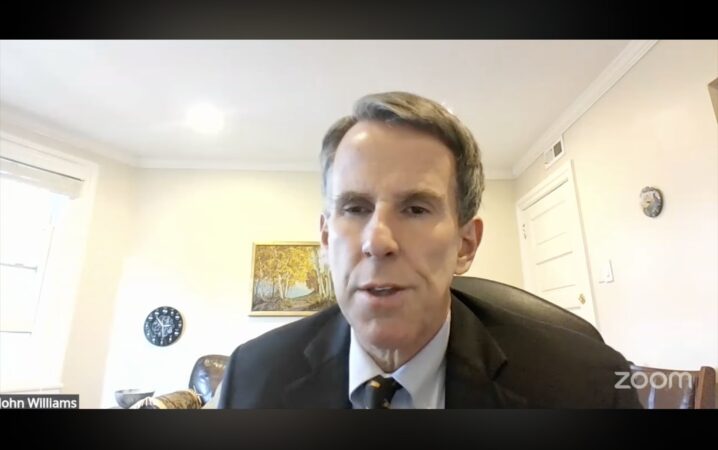
HARRISBURG — Gov. Josh Shapiro has not reappointed a longtime member of the Board of Pardons, a psychiatrist whom advocates have opposed for his votes against clemency applicants, lack of experience in criminal justice, and lines of questioning they find inappropriate.
John Williams, a child psychiatrist practicing in Montgomery County, has served on the board since former Gov. Tom Corbett appointed him in 2013. He was reappointed in 2019, under former Gov. Tom Wolf. His second six-year term expired in November, leaving a vacancy on the five-member body.
Williams did not return an email from Spotlight PA requesting comment.
A representative for Shapiro’s office said the governor is working with state Senate leadership to “restore the board to its full complement.”
Shapiro’s office would not confirm whether the governor may still nominate Williams. Spokesperson Kayla Anderson said, “No final decision regarding a nominee has been made at this time.”
The Board of Pardons makes the ultimate decision on both commutation and pardon applications from people who are seeking to either shorten a prison sentence or wipe clean a criminal history.
The board comprises two elected officials, the attorney general, and lieutenant governor, and three political appointees — a corrections expert; a medical doctor, psychiatrist, or psychologist; and a victim advocate.
Applications the board deems “meritorious” are given a public hearing, after which the body votes to either deny the application or approve it for the governor’s consideration.
While pardons are recommended by the board in a majority vote, life sentence commutations, which allow a person to get out of prison, require unanimous approval — just one no vote dooms an application.
Earlier this year, a coalition of pro-clemency groups organized the Commutation Now campaign to pressure Shapiro to replace Williams, who frequently voted against both commutations and pardons.
In a report released in June, the group criticized Williams for routinely asking “inappropriate questions reflecting ‘lurid curiosity.’”
During a public commutations hearing in September 2024, Williams asked a victim speaking against the applicant to give increasingly specific details about the sexual abuse he endured as a child. When the man wasn’t sufficiently specific, Williams pushed for additional details. After the questioning, he acknowledged the man’s discomfort.
There was no reason for the line of questioning, said Etta Cetera, a longtime board watchdog and member of the Commutation Now campaign. Williams’ single no vote would have been sufficient to deny the commutation, Cetera said, negating the need to put a victim through an invasive line of questioning.
“When you come into these cases, any of these cases for people with life sentences are extremely sensitive. Somebody lost their life, and in other situations, there was other abuse and even sexual violence involved,” Cetera said.
“And it’s irresponsible to not take seriously the trauma that comes up for people when these hearings happen. And the way that the psychiatrist questioned the victims is totally not trauma-informed.”
After a public pardons hearing in 2021, a viewer wrote to then-Lt. Gov. John Fetterman to complain about Williams’ conduct. The letter, which was also reviewed by Spotlight PA, expressed concern that “Williams questioned a pardon applicant about which sex positions he used during the commission of a decades-old sexual offense,” according to the report.
Williams then asked the applicant’s wife about her sex life with the applicant, including which sexual positions they used, the letter alleges.
Commutations interviews are not public, but attorneys interviewed for the Commutations Now study reported Williams consistently asked about an applicant’s sexual abuse “in excruciating detail,” and pursued invasive and humiliating questions.
Commutations Now hand-delivered the report to legislative leaders, including the state Senate Republicans who will have to confirm Shapiro’s new appointee.
The nomination must undergo two committee votes before the full chamber weighs in, said Kate Flessner, a spokesperson for state Senate Majority Leader Joe Pittman (R., Indiana).
Tobey Oxholm, who works with pardons applicants statewide, said in recent years the number of applications exploded, but the board held only nine days of hearings in 2025. The backlog of potential pardons keeps people with nonviolent felonies from working in roles the state needs, he said, such as home health, elder, and childcare.
“The crushing numbers really requires somebody who is a systems thinker as well as somebody who has experience with the populations that are coming before the board,” Oxholm said of the position.
The advocate community wrote a letter to Shapiro in October recommending David DeMatteo, an attorney and forensic psychologist teaching at Drexel University. State Sen. Maria Collett (D., Montgomery) wrote to the governor endorsing him as well.
In the meantime, the board will be able to proceed with four people, as four still constitutes a quorum for all votes.
But Oxholm questioned why the position was allowed to lapse.
When there are only four people on the board, a person seeking a pardon has a narrower chance to have their application receive the three votes they need to move on from their felony conviction, which can keep them from jobs and housing opportunities.
“This indicates that there isn’t a full appreciation by the governor and the senate about the importance of this position to individuals, families, and their communities,” he said.
BEFORE YOU GO … If you learned something from this article, pay it forward and contribute to Spotlight PA at spotlightpa.org/donate. Spotlight PA is funded by foundations and readers like you who are committed to accountability journalism that gets results.
That’s what Temple men’s basketball coach Adam Fisher said he wanted his team’s identity to be when he spoke during media day on Oct. 27.
Those two facets of the game proved to be Temple’s Achilles’ heel last season, but with 11 new players, Fisher was out to avoid what prompted a collapse in the second half of last season.
With nonconference play finished and Temple (8-5) opening American Conference play at Charlotte on Tuesday, the Owls seemingly have accomplished what Fisher wanted. New faces have stepped up and their defense has improved.
Temple takes down Princeton 65-61, closing the non-conference slate on a four-game winning streak.
The Owls enter American Conference play with a 6-1 record in North Philadelphia.
“We know this is a challenging league. There [are] great coaches and there [are] fantastic players,” Fisher said. “There’s a reason why people pick from our league at the end of the year. We’ll probably have the lowest retention, because people see this league and they pull from it. So we know it’s a great challenge.”
Temple’s offense has seen an influx of depth that was evident during its current four-game winning streak. The Owls set a program record of 78.8 points per game last season and that has continued in 2025-26. They are averaging 77.8 points, the fifth-highest mark in the American.
Last season, the offense went through guard Jamal Mashburn Jr. and forward Steve Settle. While Zion Stanford was a viable third option, there was still a drastic drop-off and the offense was stuck.
Temple guard Aiden Tobiason is averaging 15.1 points a game.
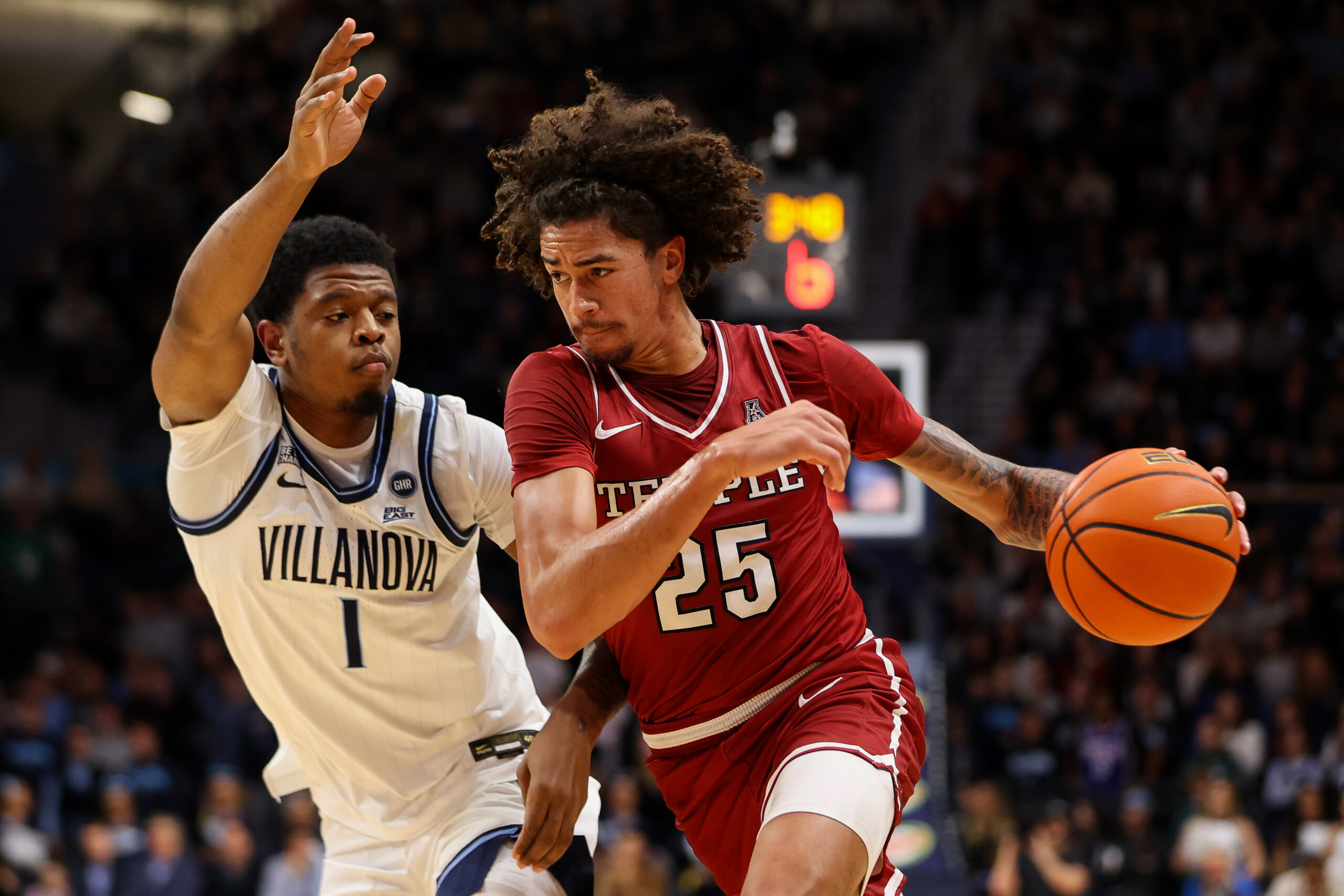
This season, Temple’s best players have been able to coexist when the ball isn’t in their hands. Derrian Ford (17.8 points per game) and Aiden Tobiason (15.1) lead the team in scoring, becoming a one-two punch in the backcourt. Point guard Jordan Mason averages 11.2 points and 4.7 assists. Guard Gavin Griffiths has seen a career resurgence on North Broad Street, averaging 10 points. He leads the team with 27 three-pointers.
“We’ve got four guys that can space the floor and four guys that can shoot, dribble, and pass,” Griffiths said. “So it’s really fun to play when you have a team like that.”
Griffiths scores his points in bunches, often pulling the Owls out of a rut. He did so by knocking down three straight threes against Boston College on Nov. 15. On Dec. 14 against St. Francis (Pa.), 14 of his 17 points came in the first half to put the game out of reach.
Mason spearheads the offense, one of the reasons the Owls average just 9.8 turnovers, the fewest in the conference. He has added scoring to his prowess, being someone who steps up when Ford or Tobiason can’t get shots to fall. His presence gives the Owls offense something that it hasn’t had in Fisher’s tenure.
“He’s fantastic. I think he just makes the right reads,” Fisher said. “But we just have trust in him. … I think when your players know we have that belief in you, our guys know to always have their eyes on him.”
Temple’s defense looked like it was revamped after a string of good performances to start the season. That was quickly erased when the defense was exposed in a November tournament in Florida, when the Owls lost, 91-76, to UC San Diego and 90-75 to Rhode Island.
However, the last four opportunities have been different, and the Owls defense comes into conference play with momentum against a 6-7 Charlotte team that scores 72.1 points per game.
“Since we got back from Florida, I think we’ve guarded much better,” Fisher said. “I think that’s been a huge point of emphasis for us, defending and rebounding.”
Questions remain
After Tuesday’s matchup against the 49ers (7 p.m., ESPN+), Temple will face two more teams with losing records before a road game against reigning American champion Memphis on Jan. 14.
The Owls offense has been able to put up points, but many of them come in bunches as they go stretches of time without scoring, often looking lost. They typically resort to hero ball and isolation, with one player trying to end the drought himself.
Temple has taken a more collective approach to the season rather than building around top talent.
The abundance of Owls guards has also been an issue.
Masiah Gilyard was brought in for his defense and rebounding skills. Cam Wallace has shown he can be a future cornerstone, but he is still developing as a freshman. Former Alabama State star CJ Hines was brought in with the expectation to bring NCAA Tournament experience and be a three-point threat, but he hasn’t played yet while the NCAA reviews his eligibility.
AJ Smith has not played since the game against Villanova on Dec. 1 because of a shoulder injury; when he might return is unknown.
“It’s to a point now if there’s conversations with his family. We thought about having it,” Fisher said. “I said to him, ‘Go home for Christmas. Let’s talk to your family. Let’s jump on a call, see how you feel,’ and then we’ll probably make that decision on what he does from there.”
As Philadelphia rings in 2026 on Thursday, Jan. 1, knowing what’s open and closed can help you plan your day. From city services and trash collection (delayed one day) to grocery stores, pharmacies, and retailers, many places will operate on modified hours or be closed.
Whether you’re knocking out errands, grabbing last-minute essentials, or easing into the new year, here’s what to know about New Year’s Day across the region.
City government offices
❌ City of Philadelphia government offices will be closed Thursday, Jan. 1.
Free Library of Philadelphia
❌ The Free Library will be closed Thursday, Jan. 1.
Food sites
✅ / ❌ Holidays may impact hours of operation. Visit phila.gov/food to view specific site schedules and call ahead before visiting.
Trash collection
❌ No trash or recycling collection on New Year’s Day, Jan. 1. Collection will be picked up one day behind the regular schedule all week. To find your trash and recycling collection day, go to phila.gov.
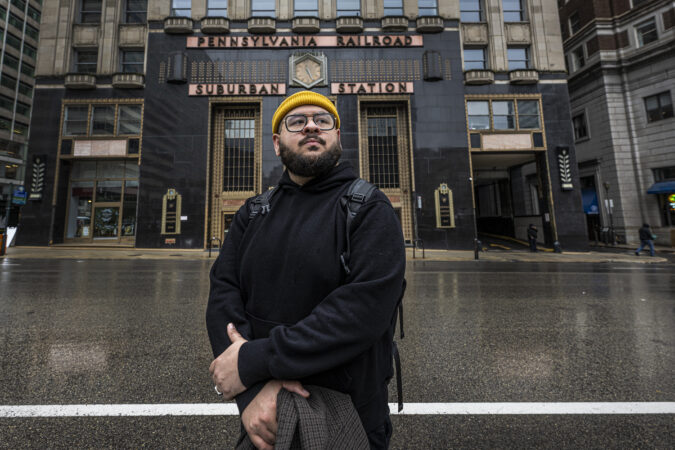
Philadelphia’s congested highways or crowded SEPTA platforms don’t get in the way of Daniel Rodriguez’s commute to work.
That’s because the Philadelphia-based urban designer’s commute between his firm’s two offices consists of two flights, two trains, and a bus between two states each week.
Rodriguez, who lives with his wife in their Jewelers’ Row apartment, ping pongs between his home (and his Center City office) in Philadelphia and his office in midtown Atlanta, twice a week.
Rather than moving to Georgia or embracing a simpler, work-life balance, Rodriguez prefers an 800-mile trek to work that doesn’t have him dealing with Philly rush hour traffic and the restrictions car owners face.
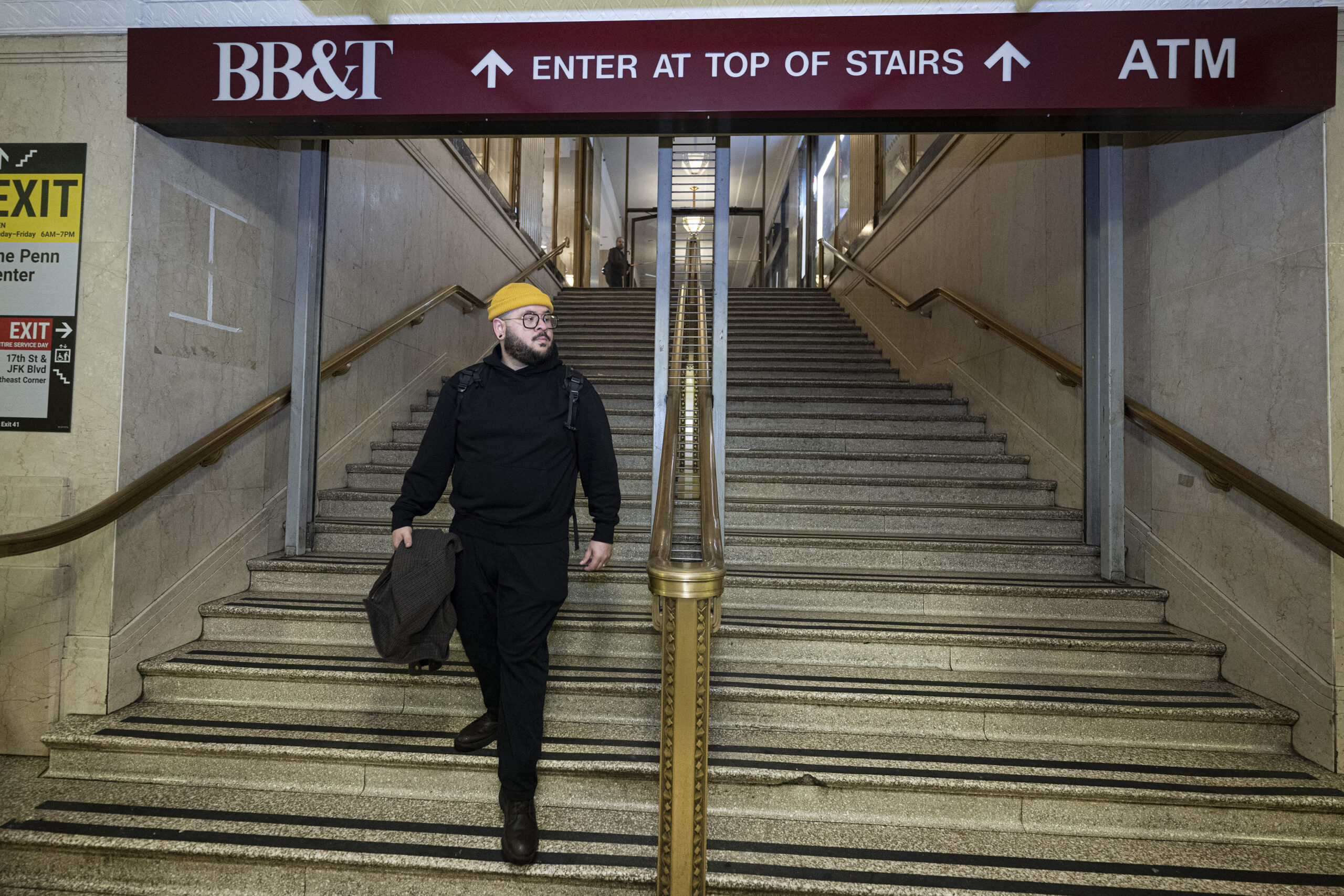
Daniel Rodriguez travels to the Philadelphia’s Suburban Station on Friday, Dec. 19, 2025. Rodriguez uses the station to commute between Philadelphia and metro Atlanta, taking a train from Center City to Philadelphia International Airport before boarding flights to and from his company’s Atlanta office.
“I want to live a life that’s intentionally, anti-whatever everybody else is doing,” Rodriguez said. “I feel like there are problems in society, and this is one of them that just trickles and affects so many things in our personal and professional lives. It’s not anti-car. It’s really about getting away from the dependency and focusing on building systems that help people move. That’s my whole philosophy.”
Rodriguez, who grew up in Bayamon, Puerto Rico, said it’s a lifestyle driven by the independence and movement he felt was missing in his youth.
The geographical barriers of the island often led to feelings of physical and mental entrapment as a child.
“Where I come from, I’ve never seen people so hungry to have something in life, with no ability to achieve it,” he said. “And I’m willing to do extreme things to do that.”
In May, the 34-year-old began posting videos of his travels to and from Philadelphia and Atlanta. His TikTok and Instagram posts have drawn millions of viewers, with hundreds of users questioning how Rodriguez balances his workload and travels.
His schedule varies each week, but he usually flies into Atlanta on Sunday nights and returns to Philadelphia on Tuesday nights. Sometimes, he will fly out on Monday mornings and return on Wednesday mornings. He also does same-day round trips a couple of times a month.
The planning for his trips to Atlanta begins the night before. Rodriguez packs his bags and puts toothpaste on his toothbrush before going to bed.
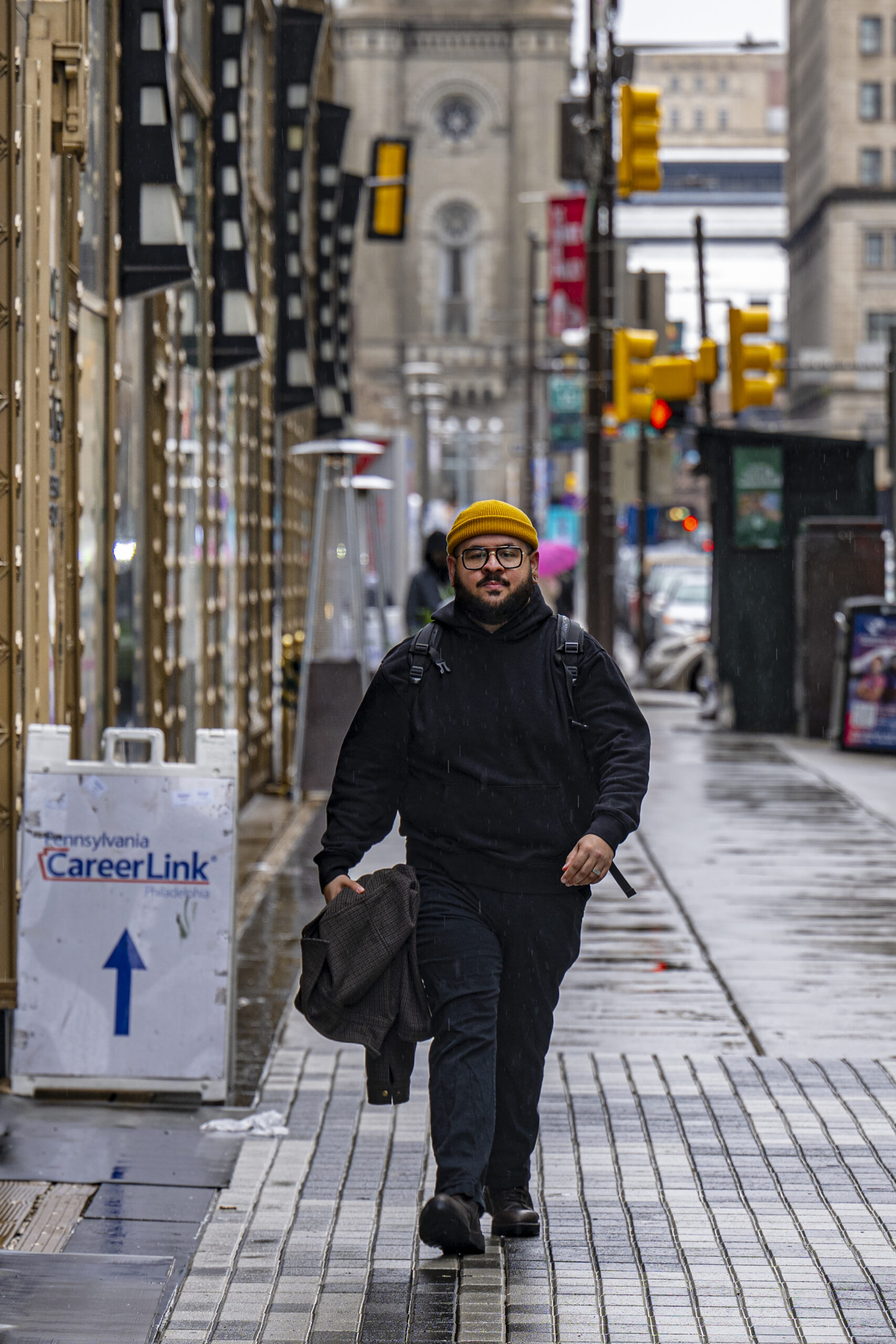
Daniel Rodriguez travels through Philadelphia’s Suburban Station on Friday, Dec. 19, 2025. Rodriguez uses the station to commute between Philadelphia and metro Atlanta, taking a train from Center City to Philadelphia International Airport before boarding flights to and from his company’s Atlanta office.
He wakes up at 4 a.m., grabs his belongings and walks to Suburban Station. Here, he boards the train to the Philadelphia International Airport and lands in Terminal F for his flight to Atlanta. He does have to factor in the regular delays.
“Terminal F is like the dingleberry of Philadelphia. It’s the last one at the airport, and really far,” he joked.
After the 90-minute flight to Atlanta, he walks over to the Metropolitan Atlanta Rapid Transit Authority platform for a 30-minute train ride to his company office in midtown Atlanta.
He’s not completely “anti-car,” he insists. He often rents a Zipcar for small errands and to explore Atlanta restaurants, art galleries, and sites that feed his architectural interests.
“I’m more along the lines of, ‘I don’t want to be dependent on a car,’” he said. “I don’t want to put my money toward that. I’d rather put that into something else, and suffer the consequences.”
Once his work day is finished, he either uses ride-share or takes a one-and-a-half-hour bus ride to a friend’s apartment in Decatur, arriving around 9 p.m. And before he rests his head for the night, Rodriguez begins his routine all over again for his return to Philly the following morning.
Rodriguez said his travel costs come out to about $180 each week, with the most significant barrier being the time and energy he spends to balance out his travels.
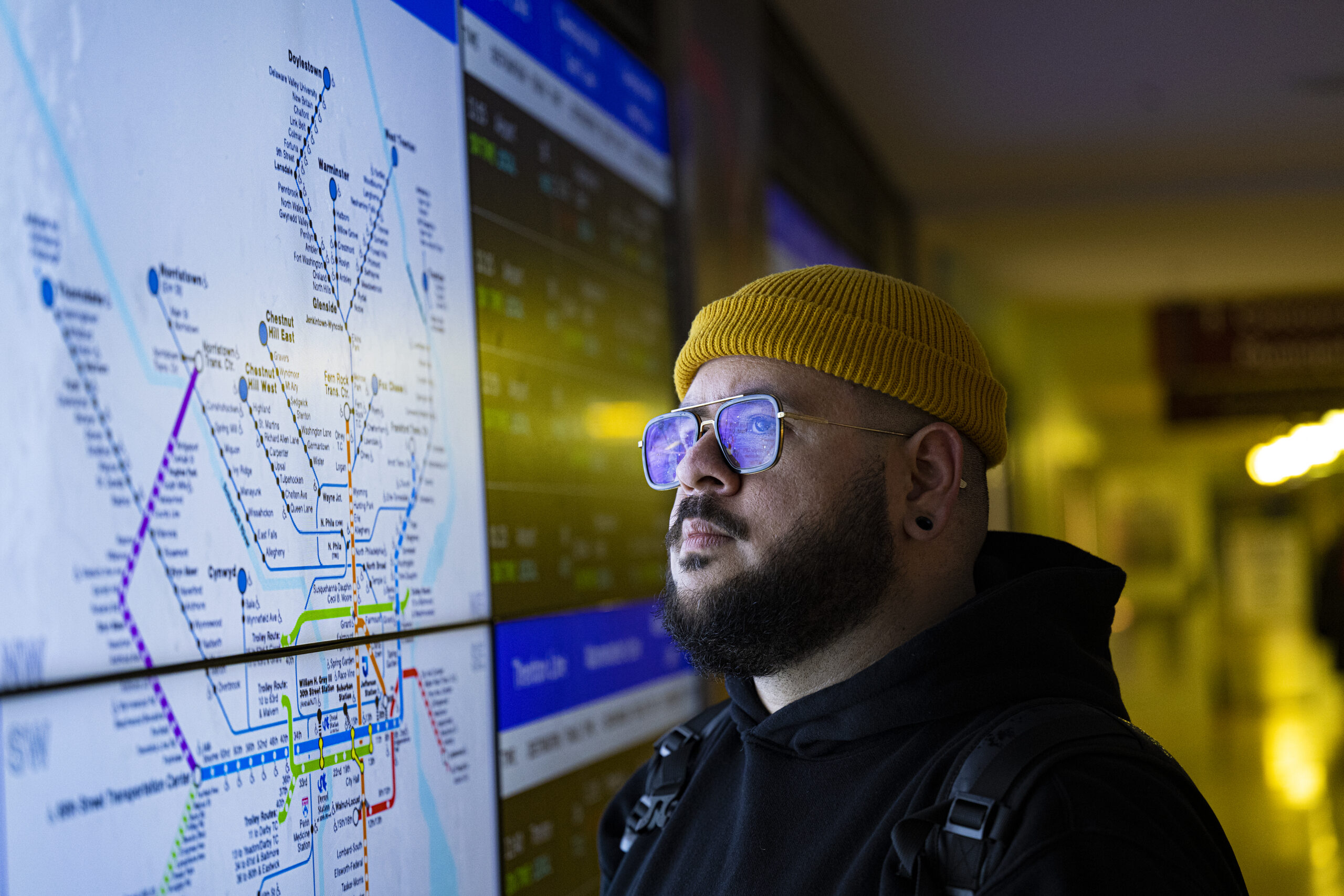
Daniel Rodriguez travels through Philadelphia’s Suburban Station on Friday, Dec. 19, 2025, in Philadelphia. Rodriguez uses the station to commute between Philadelphia and metro Atlanta, taking a train from Center City to Philadelphia International Airport before boarding flights to and from his company’s Atlanta office.
“It’s not unachievable,” Rodriguez said. “I feel like the pain point for a lot of people is the time. People don’t want to spend the time.”
Rodriguez didn’t always live like this. His super commute began after years of uncertainty. He moved to Philly in 2022 and between 2023 and 2025, Rodriguez was laid off twice and incurred thousands in debt.
“I wasn’t even paycheck to paycheck anymore. I was living in the negative,” he said.
After another eight months of job hunting, he was at a crossroads. With limited jobs in his industry in Philly, he applied for roles in other cities.
He applied to an urban design firm in Atlanta, and the week his unemployment ran out, he landed his current role in May 2025. While the company has an office in Center City, the Atlanta location was the only one hiring in his specific field.
Rodriguez consults on transportation, green space, urban design, and master planning in Atlanta and other cities along the East Coast.
While the demands of the commute were challenging at first, Rodriguez believes he has made a decision that works for him. “I have my wife here, and I don’t want to uproot her,” he said.
Since he started making videos of his commute, his world has “completely flipped,” Rodriguez said.
He’s landed brand deals with travel-based companies and has spoken in various cities across the country about how fellow millennials can traverse the country without the burden of a vehicle.
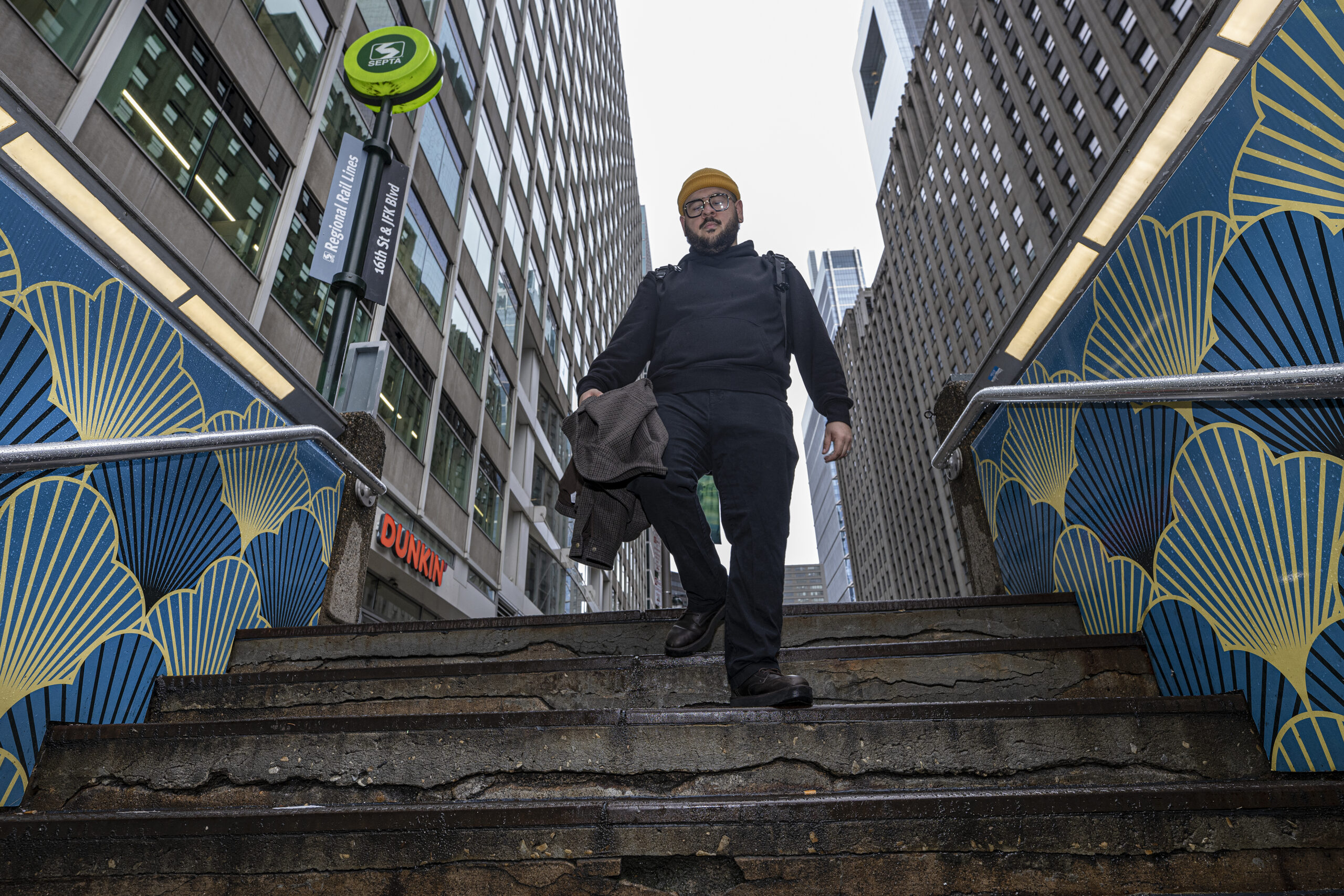
Daniel Rodriguez travels through Philadelphia’s Suburban Station on Friday, Dec. 19, 2025, in Philadelphia. Rodriguez uses the station to commute between Philadelphia and metro Atlanta, taking a train from Center City to Philadelphia International Airport before boarding flights to and from his company’s Atlanta office.
Rodriguez plans to become a content creator full-time to encourage viewers across YouTube, Instagram, TikTok, and other platforms to avoid the pitfalls of car ownership.
His ambitions haven’t gone unchecked. Environmentalists who watch his videos often point to the carbon footprint he leaves behind, despite his aversion to car ownership.
Rodriguez admits his lifestyle could be viewed as contradictory. His modes of travel contribute to gas emissions, but he contends he’s not the sole source of the issue, simply a product of a system already in place.
“I did not pass the laws that allow oil barons to drive or force corporations to fuel jets that release stored carbon,” he said. “I am a participant in society, and there is no fully ethical way to exist within it.”
While he understands people’s precaution and confusion, Rodriguez is confident his weekly commute and lifestyle will work as well for others as they do for him.
“I love to create. I love to build. And I don’t want to do anything where you’re just staying still,” he said.
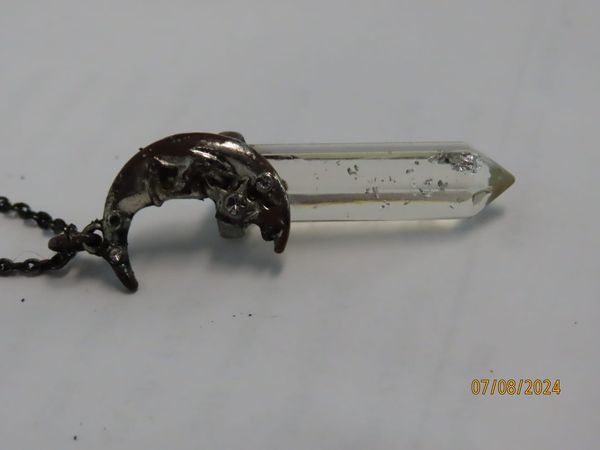
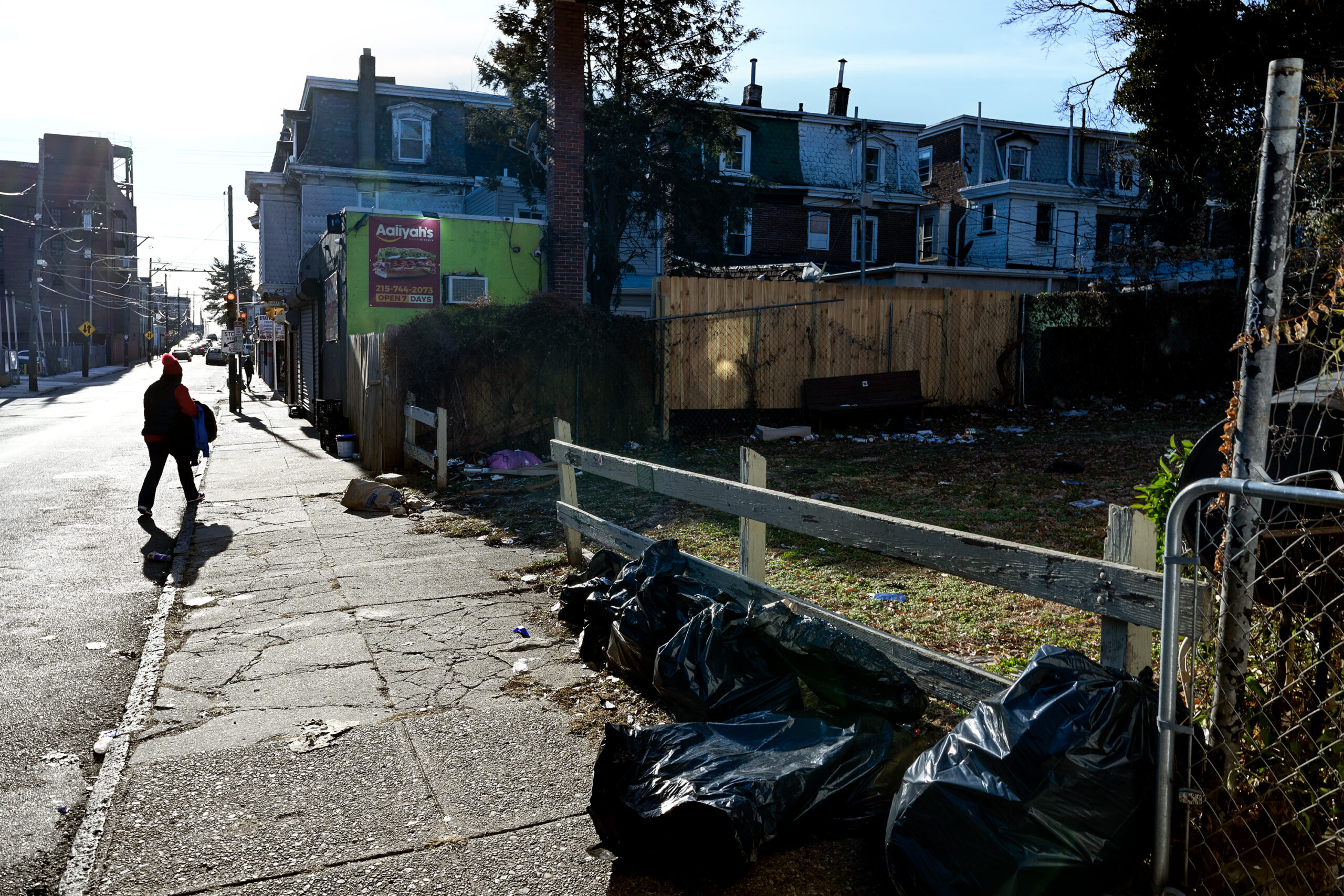
Police found the body of the woman with the crystal pendant necklace stuffed beneath a wooden pallet in an overgrown lot in Frankford one night last June. She had been shot once between the eyes, and wore only a sports bra, with her pants and underwear tangled around her ankles.
Days in the stifling heat had left her face unrecognizable, nearly mummified.
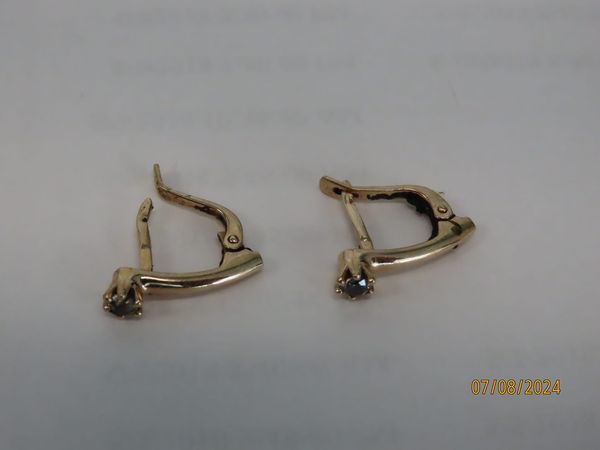
Still, Homicide Detective Richard Bova could see traces of the beautiful young woman she had been. She was small, about 100 pounds, with long dark hair tinted red at the ends. Her nails were painted pale pink. She wore small gold hoops in her ears.
But he didn’t know her name. And for 90 days, the absence of that essential fact stalled everything.
A victim’s identity is the foundation on which a homicide case is built. Without it, detectives cannot retrace a person’s final moments or home in on who might have wanted them dead and why. For three months, Bova and his partner scoured surveillance footage, checked missing-persons reports, and ran down every faint lead, eager to put a name to the woman beneath the pallet.
At the same time, in a small house in Northeast Philadelphia, a family was searching, too.
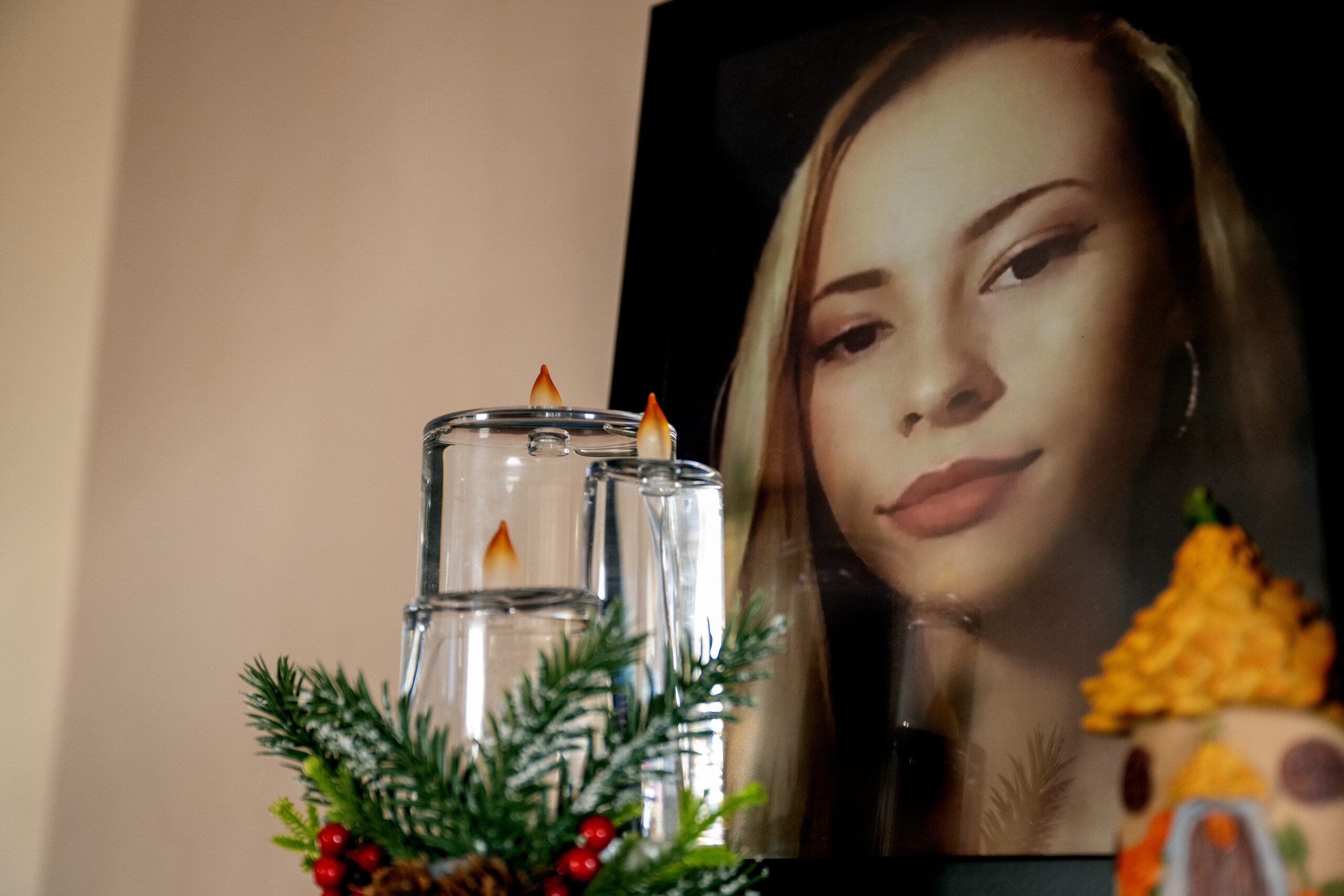
Olga Sarancha hadn’t heard from her 22-year-old daughter, Anastasiya Stangret, in weeks and was growing worried. Stangret had struggled with an opioid addiction in recent months, but never went more than a few days without speaking to her mother or sister.
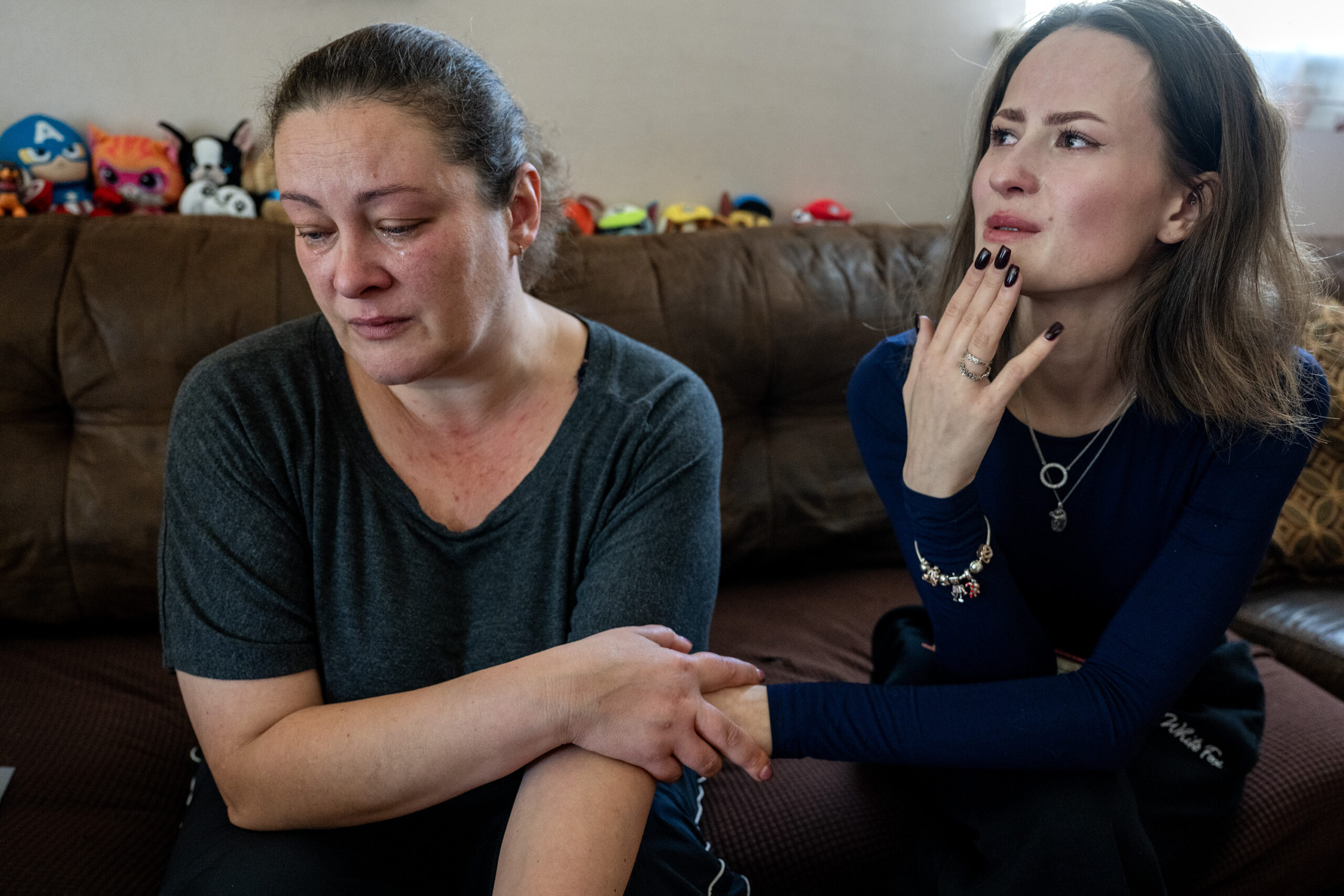
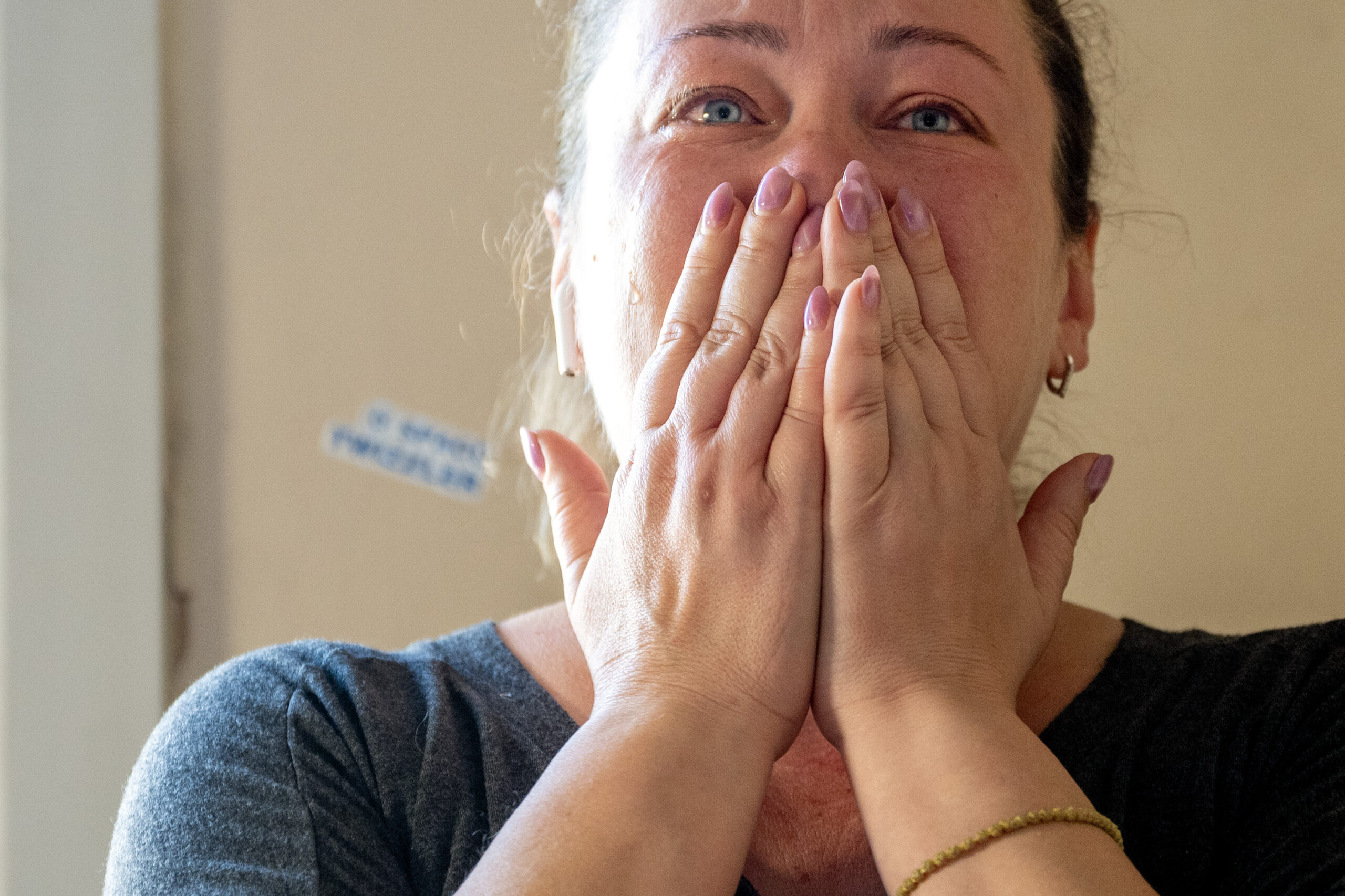
Olga Sarancha (left) and her daughter, Dasha Stangret, speak of the pain of the death of her eldest daughter, Anastasiya, at their Northeast Philadelphia home. Dasha wears a bracelet featuring Pandora charms gifted by her sister.
Through July and August that summer, Sarancha and her youngest daughter, Dasha, tried to report Stangret missing, but they said they were repeatedly rebuffed by police who turned them away and urged them to search Kensington instead.
So they kept checking hospitals, calling Stangret’s boyfriend, and driving through the dark streets of Kensington — looking for any sign that she was still alive.
It was not until mid-September that the family was able to file a missing-persons report. Only then did Bova learn the name of his victim.
But by then, he said, the crucial early window in the investigation had closed — critical surveillance footage, which resets every 30 days, was gone. Cell phone data and physical evidence were harder to trace.
Still, for 18 months, Bova has worked to solve the case, and for 18 months, Stangret’s mother and younger sister have grieved silently, haunted by the horrors of her final moments and the fear that her killer might never be caught.
Philadelphia’s homicide detectives this year are experiencing unprecedented twin phenomena: The city is on pace to record its fewest killings in 60 years, and detectives are solving new cases at a near-record high.
But those gains do not erase the reality that hundreds of killings in recent years remain unresolved — each one leaving families suspended in despair, and detectives asking themselves what more they could have done.
In this case, extensive interviews with Bova and Stangret’s family offer a window into how a case can stall even when a detective puts dozens of hours into an investigation — and what that stall costs.
Bova has a suspect: a 58-year-old man with a lengthy criminal record who he believes had grown infatuated with Stangret as he traded drugs for suboxone and sex with her. But the evidence is largely circumstantial. He needs a witness.
And Stangret’s family needs closure — and reassurance that the life of the young woman, despite her struggles, mattered.
“Everybody has something going on in their life,” said Dasha Stangret, 23. “It doesn’t make her a bad person, and it’s not what she deserved.”
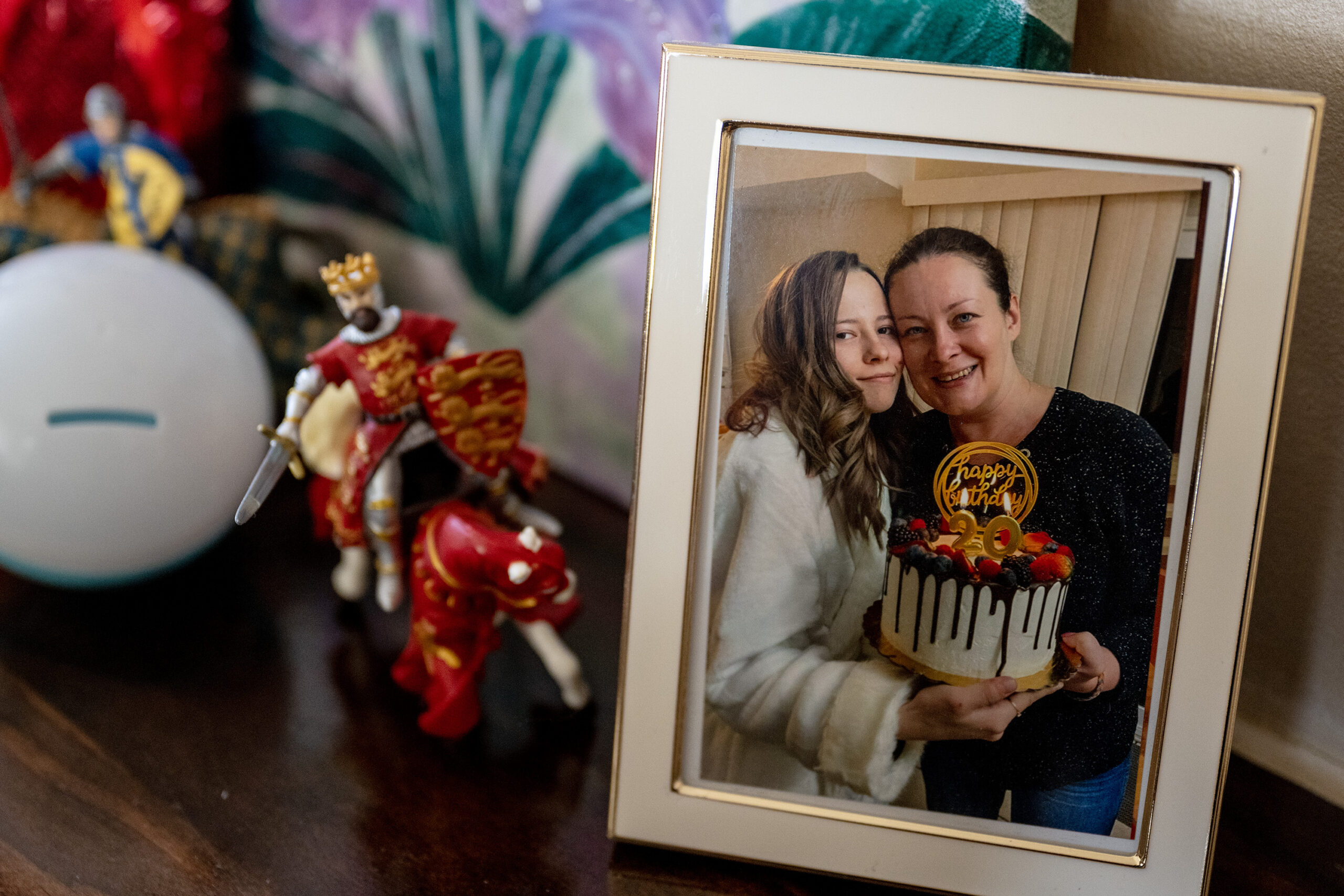
Anastasiya Stangret, left, celebrated her 20th birthday with her mother in 2022.
Becoming Anna
Anastasiya Stangret was born in Lviv, Ukraine, on Nov. 15, 2001. Her family immigrated to Northeast Philadelphia when she was 8 and Dasha was 7.
The sisters were inseparable for most of their childhood. They cuddled under weighted blankets with cups of tea. They put on fluffy robes and did each other’s eyebrows and nails.
Anna was bubbly, polite, and gentle, her family said. She enjoyed working with the elderly, and after graduating from George Washington High School, she earned certifications in phlebotomy and cardiology care. She volunteered at a nearby food bank, translated for Ukrainian and Russian immigrants, and later worked at a rehabilitation facility, where she gave patients manicures in her free time.
Sisters Dasha, left, and Anastasiya Stangret were inseparable as children. They dressed up as princesses for Halloween in 2008.Dasha, left, and Anastasiya Stangret at their first day of school in Philadelphia after emigrating from Ukraine.
“Anna always worked really hard,” Dasha Stangret said. “I looked up to her.”
But her sister was also quietly struggling with a drug addiction.
Her challenges began when she was 12, her mother said, after she was hit by a car while crossing the street to catch the school bus. She suffered a serious concussion, Sarancha said, and afterward struggled with PTSD, anxiety, and depression.
About a year later, as her anxiety worsened, a doctor prescribed her Xanax, her mother said. Not long after, she started experimenting with drugs with friends, her sister said — first weed, then Percocet.
She hid her drug use from her family until her early 20s, when she became addicted to opioids.
She sought help in January 2024 and began drug treatment. But her progress was fleeting. She returned to living with her boyfriend of a few years, who they later learned also used drugs, and she became harder to get in touch with, her mother said.
When Sarancha’s birthday, June 18, came and passed in 2024 without word from her daughter, the family grew increasingly concerned.
Anastasiya Stangret was kind, gentle, and polite.
They checked in with Stangret’s boyfriend, they said, but for weeks, he made excuses for her absence. He told them that she was at a friend’s house and had lost her phone, that she was in rehab, that she was at the hospital.
On July 27, Sarancha and her daughter visited the 7th Police District in Northeast Philly to report Anna missing, but they said an officer told them to go home and call 911 to file a report.
Two officers responded to their home that day. The family explained their concerns — Stangret was not returning calls or texts, and her boyfriend was acting strange. But the officers, they said, told them they could not take the missing-persons report because Stangret no longer lived with them. They recommended that the family go to Kensington and look for her.
Through August, the family visited a nearby hospital looking for Stangret, only to be turned away. Sarancha, 46, and her husband drove through the streets of Kensington without success. They continued to contact the boyfriend, but received no information.
They wanted to believe that she was OK.
On Sept. 12, they visited Northeast Detectives to try to file a missing-persons report again, but they said an officer said that was not the right place to make the report. They left confused. Dasha Stangret called the district again that day, but she said the officer on the phone again told her that she should go to Kensington and look for her sister.
That the family was discouraged from filing a report — or that they were turned away — is a violation of Philadelphia police policy.
“When in doubt, the report will be taken,” the department’s directive reads.
Finally, on the night of Sept. 12, Dasha Stangret again called 911, and an officer came to the house and took the missing-persons report. For the first time, they said, they felt like they were being taken seriously.
A few days later, Dasha Stangret called the detective assigned to the case and asked if there was any information. He asked her to open her laptop and visit a website for missing and unidentified persons.
Scroll down, he told her, and look at the photos under case No. 124809.
On the screen was her sister’s jewelry.
Dasha Stangret gifted this necklace to her sister for her birthday one year. Police released the image after Anastasiya’s body was found last June, in a hope that someone would recognize it and identify her. Dasha did not see the photo until September 2024.Olga Sarancha gifted these gold earrings, handmade in Ukraine, to her eldest child on her birthday a few years ago. Police released this image after they recovered the earrings on Anna’s body, hoping it could lead them to her identity.
A detective’s hunch
Three months into Bova’s quest to identify the woman under the pallet — of watching hundreds of hours of surveillance footage and chasing fleeting missing-persons leads — dental records confirmed that the victim was Stangret.
After meeting with her family, Bova questioned the young woman’s boyfriend.
He told the detective he and Stangret had met a man under the El at the Arrott Transit Center in Frankford sometime in June, Bova said, and that the man gave them drugs in exchange for suboxone and, later, sex with Stangret.
But the man had grown infatuated with Stangret, he said, and after she left his house, he started threatening her in Facebook messages, ordering her to return and saying that if anybody got in his way, he would hurt them.
The man lived in a rooming house on Penn Street — almost directly in front of the overgrown lot where Stangret’s body was found. Surveillance video showed Stangret walking inside the rowhouse with him just before 7 p.m. on June 18, Bova said, but video never showed her coming back out.
Police searched the man’s apartment but found nothing to link him to the crime — no blood, no gun, no forensic evidence that Stangret had ever been inside. The suspect had deleted most of the texts and calls in his phone from June, July, and August, Bova said, and because nearly four months had passed, they could no longer get precise phone location data.
He said that, at this point, he does not believe the boyfriend was involved with her death, and that he came up with excuses because he was afraid to face her family.
Surveillance cameras facing the lot where Stangret was found didn’t show anyone entering the brush with a body. Neighbors and residents of the rooming house said they didn’t know or hear anything, he said. And a woman seen on camera pacing the block and talking with the suspect the night they believed Stangret was killed also said she had no information.
The detective is stuck, he said.
“Is it enough for an arrest? Sure,” Bova said of the circumstantial evidence against the suspect. “But our focus is securing a conviction.”
Bova’s theory is that the man, angry that Stangret wanted to leave, shot her in the head. Because the house has no back door, he believes the man then lowered her body out of the second-floor window, used cardboard to drag her through the brush, and then hid her under a pallet.
Anastasiya Stangret’s body was found in the back of this vacant lot, on the 4700 block of Griscom Street, in June 2024.
He is sure that someone has information that could help the case — that the suspect may have bragged about what happened, that a neighbor heard a gunshot or saw Stangret’s body being taken into the lot.
There is a $20,000 reward for anyone who has information that leads to an arrest and conviction.
“The hardest part is patience,” he said. “I’m looking for any tips, any information.”
Bova has worked in homicide for five years. As with all detectives, he said, some cases stick with him more than others. Stangret’s is one of them.
“Anna means a lot,” he said. “This is a young girl. We all have children. I have daughters. For her to be thrown in an empty lot and left, to see her life not matter like that, it’s horrifying to me and to us as a unit.”
“It eats me alive,” he said, “that I don’t have answers for them and I’m not finishing what was started.”
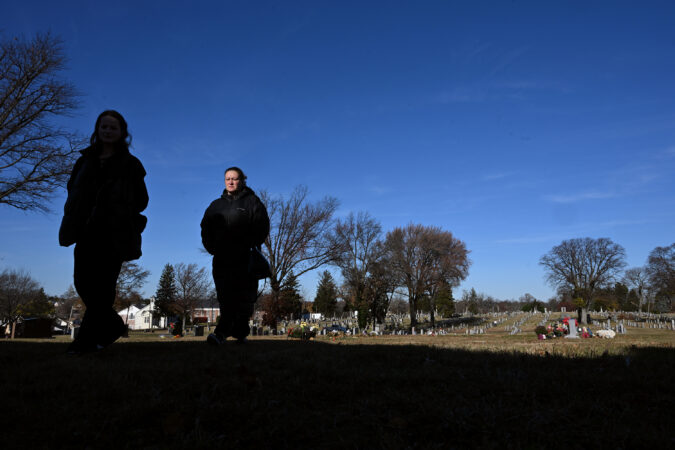
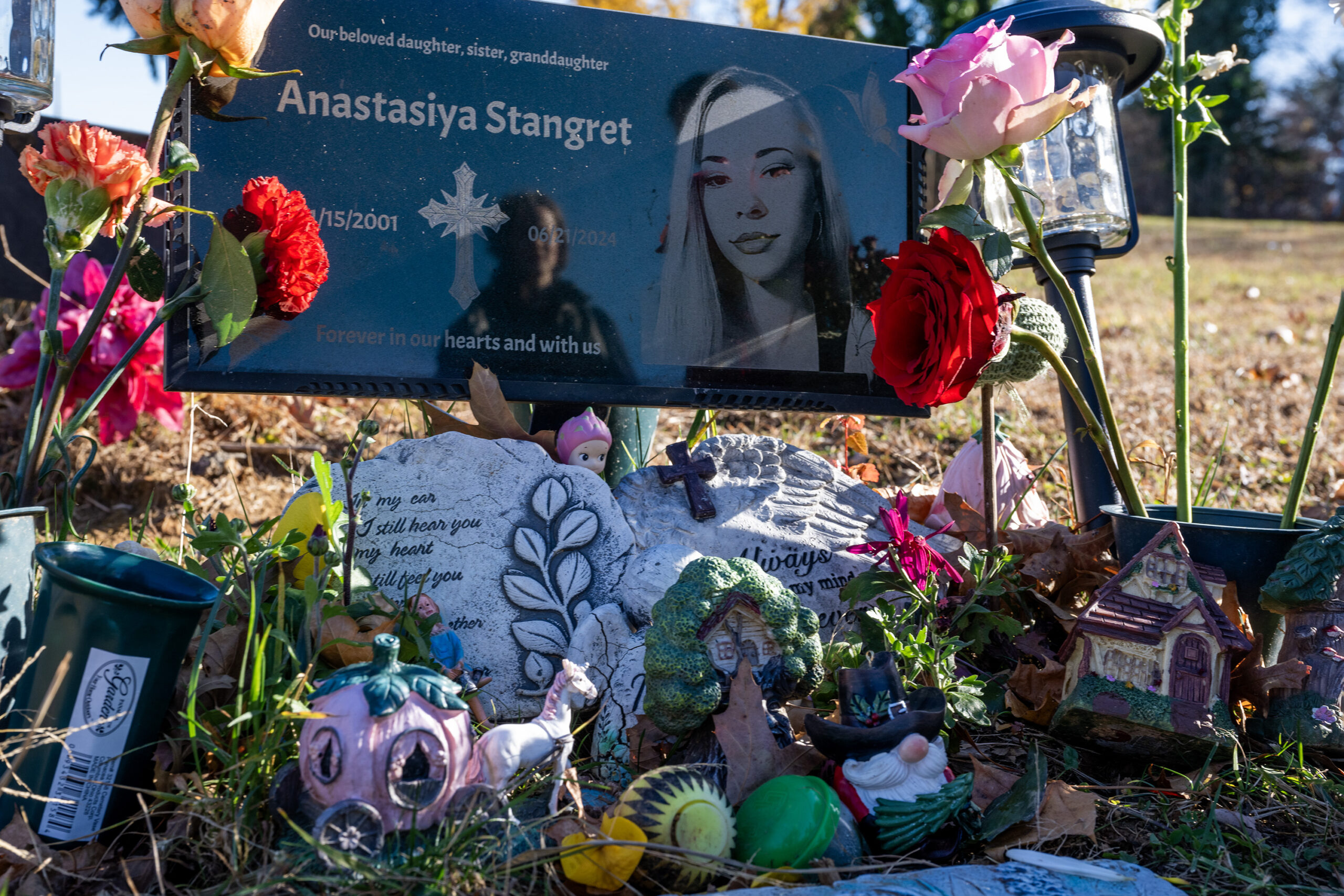
Dasha Stangret is reflected in the memorial at the grave of her sister, Anastasiya, in William Penn Cemetery.
‘I love you. I miss you’
Stangret’s family suffers every day — the guilt of wondering whether they could have done more to get her help, the anger that her boyfriend didn’t raise his concerns sooner, the fear of knowing the man who killed her is still out there.
Dasha Stangret, a graphic design student at Community College of Philadelphia, finds it difficult to talk about her sister at length without trembling. It’s as if the grief has sunk into her bones.
In July, she asked a police officer to drive her to the lot where her sister’s body was found. She sat for almost an hour, crying, placing flowers, searching for a way to feel closer to her.
“I cannot sleep, I cannot live,” Olga Sarancha said of the pain of losing her daughter.
Sarancha struggles to sleep. She wakes up early in the mornings and rereads old text messages with her daughter. She pulls herself together to care for her 6-year-old son, Max, whose memories of his oldest sister fade daily.
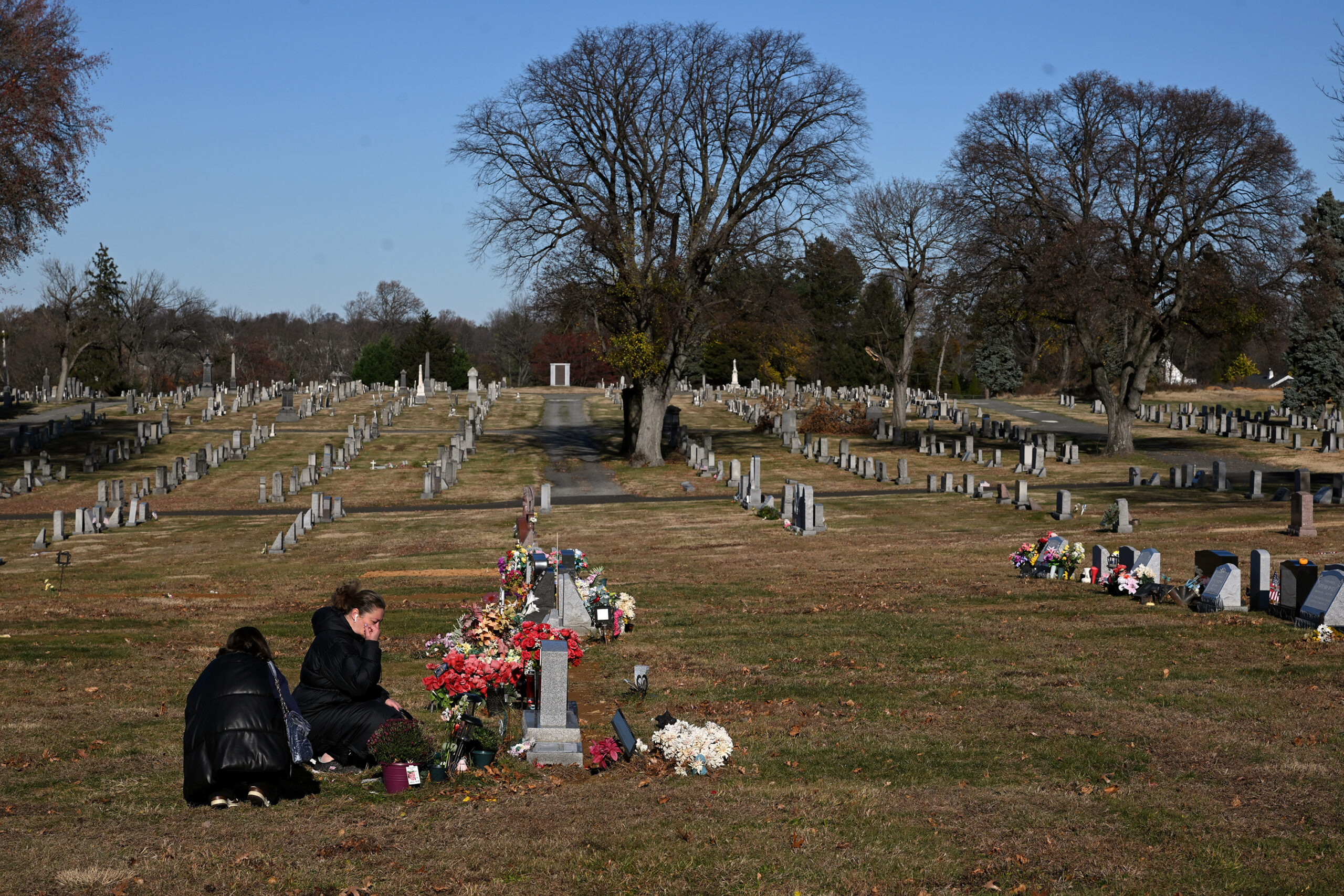
On a recent day, Dasha Stangret and her mother visited her sister’s grave at William Penn Cemetery. They fluffed up the fresh roses, rearranged the tiny fairy garden around her headstone, and lit a candle.
Stangret began to cry — and shake. Her mother took her arm.
“I love you. I miss you,” Stangret told her sister. “I hope you’re happy, wherever you are.”
And nearly 20 miles south, inside the homicide unit, Bova continues to review the files of the case, waiting for the results of another DNA test, hoping for a witness who may never come.
If you have information about this crime, contact the Homicide Unit at 215-686-3334 or submit a confidential tip by texting 773847 or emailing tips@phillypolice.com.
Olga Sarancha (right) and her daughter Dasha visit the grave of her older daughter Anastasiya Stangret in William Penn Cemetery. “It feels out of body. Like a dream, a movie, like it’s not real,” Dasha said of losing her sister.
In 1999, we simultaneously braced for a new millennium and the end of the world.
Y2K loomed ahead, a huge question mark. Best Buy convinced us that everything from air traffic to banking to the machine in your “computer room” would be affected. Chaos was to ensue.
Or maybe not. It was a curious, innocent type of fear — not the gut-punching terror that dominates today’s news.
This was before smartphones, before push alerts every five minutes. Panic traveled by television anchors, phones tethered to the kitchen wall, office rumors, and chain emails that screamed “FWD: URGENT!!”
We prepared for the chaos with zeal, clearing out Wawa like we were preparing for a decade underground. Nothing says “national crisis” like a region hoarding Shortis and Tastykakes. If the world were ending, we were not going down without one last soft pretzel.
Looking back, the panic feels almost sweet. No one knew exactly why we were worried — something about floppy disks and zeros? It was an amusing type of fear — not the adrenaline surges and terror layered across today’s news feeds.
A big crowd packed Veterans Stadium for the final opening day in its history at the start of the 2003 season.
Here in Philly, our emotion was focused wholly on saying goodbye to Veterans Stadium, beer-soaked basement jail and all. We panicked more about losing that stadium than we ever did about losing our computers. Underneath the apocalyptic preparation was a communal consciousness that understood we were safe.
Freedom Fries
A few years later, our national anxiety shifted from computers to potatoes. In 2003, “French fries” were hastily rebranded as “Freedom Fries.” Restaurants reprinted menus. Congress cafeterias complied. Late-night comics had a field day.
It was Red October at McDonald’s. The poor soul who ordered French — not freedom — fries got no potato side with disapproval to boot, writes Angela Ryan.
In an unprecedented show of unity, Americans declared a “War on Terror” and pushed for an invasion of Iraq. France wouldn’t participate, so the U.S. did the most Philly thing we’ve ever done and declared a nationwide rebranding of the French fry.
It was Red October at McDonald’s. The poor soul who ordered French — not freedom — fries got no potato side, with disapproval to boot.
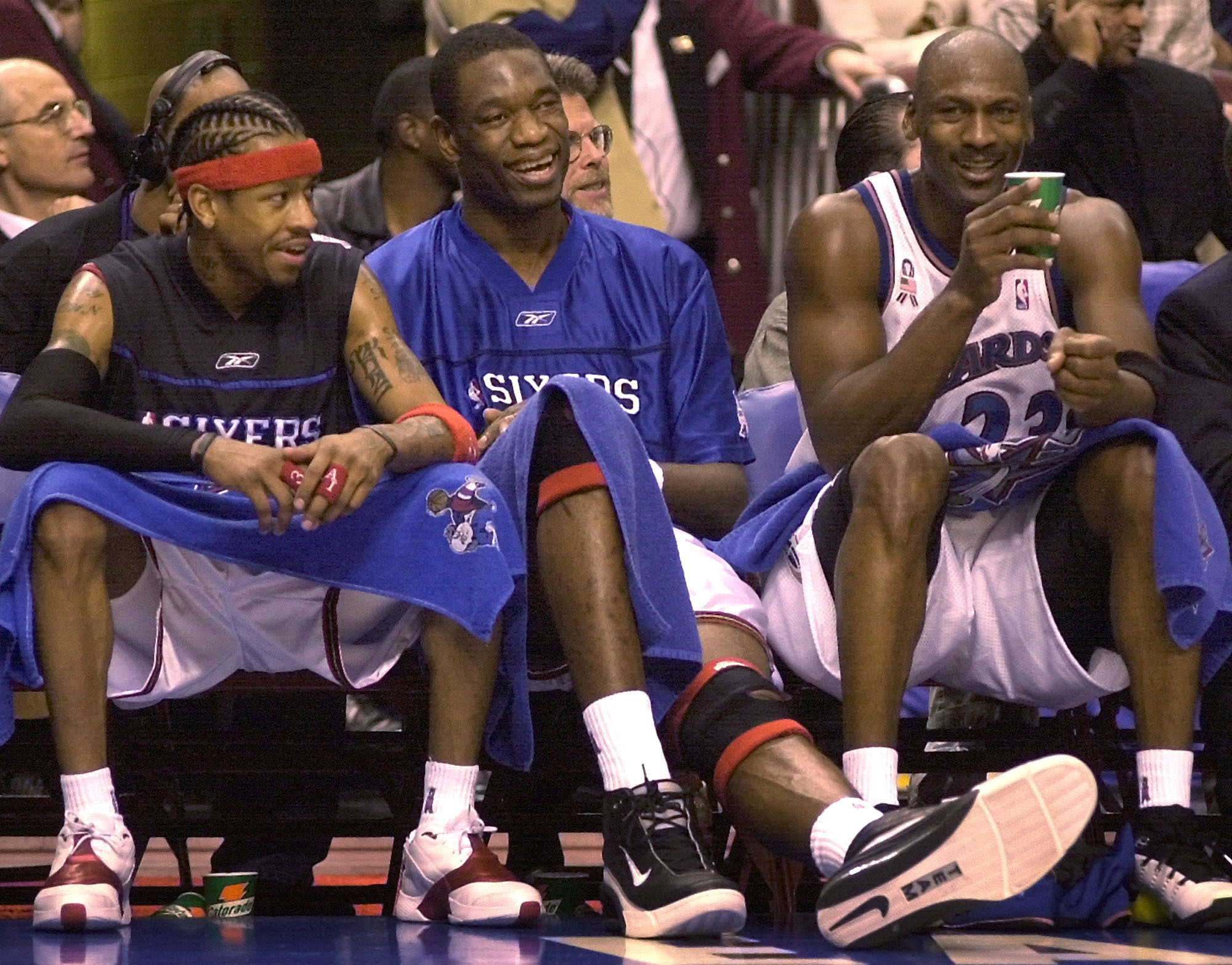
This was the norm for national crises then. They were the civic version of Dikembe Mutombo: gentle and kinda funny. We felt safe. Disagreements were just that — disagreements. They didn’t split families, and they weren’t the origin story for the latest school shooter.
National conversations were civilized (as much as they can be in Philly), respectful, and safe. Things felt steady. We felt safe. When Mutombo hugged Allen Iverson after big wins, it felt like the whole city was getting that hug. We were together. We were OK.
Eastern Conference All-Stars Allen Iverson (3) and Dikembe Mutombo (55), of the Philadelphia 76ers, and Michael Jordan (23), of the Washington Wizards, watch from the bench during the 2002 NBA All-Star game in Philadelphia, Sunday, Feb. 10, 2002.
Those were what I call vintage panics — silly enough to laugh at later, harmless enough to leave us intact.
Y2K didn’t kill us. Freedom Fries resulted in menu changes, not bloodshed. The Vet came down. Wawa expanded. This was the era of the DREAM Act. Diversity in most any form was encouraged. Panics were survivable.
Rage then vs. rage now
Today’s rage is different. It’s constant, heavy, and often deadly. Rage is in our politics, our traffic, our classrooms, our feeds. It no longer renames a side dish; it breaks communities. It divides families. Sometimes it takes lives.
Another awful headline recently made me stop and think: Maybe this is it. Maybe we’ve gone too far. The contrast with the potato wars of 2003 could not be sharper.
Back then, we funneled our fury into countdown clocks, menu edits, and worrying whether Mutombo’s knees would last through the NBA Finals. Now the stakes are so much higher.
Y2K didn’t take us out. Freedom Fries didn’t tear us apart. Sports heartbreak never broke this city’s spirit — if we survived those four straight trips to the NFC championship, we could survive anything.
What we have now? Much harder.
A call to calm
We’ve tried a call to arms. We’ve armed ourselves with anger, suspicion, conspiracy, and endless fights. It hasn’t worked.
So here’s another option: A call to calm.
To put down the rage, the hostility, the weapons, both literal and digital. To remember there was a time when our national arguments were about VCR clocks and potatoes. When even our panics were crispy, golden, and — in hindsight — almost sweet.
And maybe we should offer a long-overdue apology to the French. You gave us the Statue of Liberty. You didn’t deserve to be demoted for the sake of alliteration.
And much like that movement, this idea is so crazy it might work: a National Chicken Tender Movement.Not aimed at treating our fellow citizens with suspicion or rage — but with tenderness.
Because we don’t need bigger enemies.
We do need smaller panics.
And maybe what we all need most right now is this:
Small fries.
A little calm.
And a touch of Mutombo-level kindness.
Angela B. Ryan is a writer, lawyer, former Villanova Law professor, and mother to four under 4 based in Villanova. She started the National Chicken Tender Movement today, and she is the only person left in the country who refers to French fries as Freedom Fries.
Science teacher Michael Green wasn’t sure how his students would feel about the new assignment. Growing mushrooms for South Jersey restaurants had, after all, never been in his curriculum before.
They loved it, and three years later, the operation at Rancocas Valley Regional High School in Mount Holly is thriving. The project produces more than 1,000 pounds of mushroom varieties annually.
“It’s super fun,” said sophomore Lilly Sell, 16, an aspiring pediatric nurse or welder. “You don’t really get bored.”
In the classroom, Green teaches students in his biology and environmental science classes the fundamentals of a mushroom, the fleshy, spore-bearing fruiting body of a fungus. They learn about genetics, cell division, and the growing process.
“My goal is to do real science,” Green said.
Students are also learning about the farm-to-table movement by selling the harvest to local eateries and public service by donating mushrooms to a nearby soup kitchen and serving meals to the less fortunate.
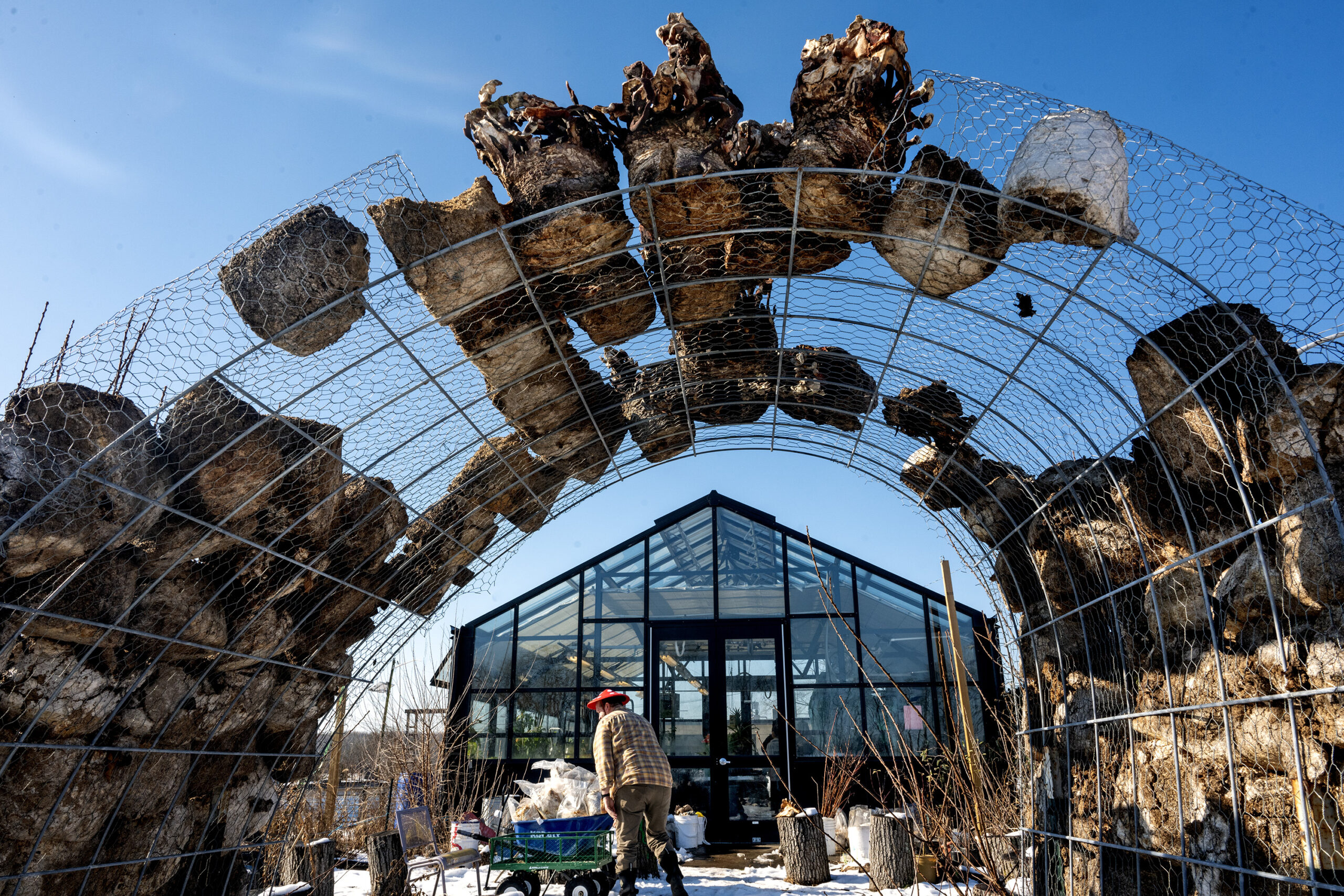
Green makes use of mushroom farming waste – spent mushroom substrate (SMS) – to decorate an archway by the greenhouse. They are producing 1,000 pounds of mushroom varieties – and almost that much waste, which they use for composting in their gardens and orchard and plan someday to sell as compost.
Outside, the students get hands-on mushroom harvesting experience inside a greenhouse located behind the annex that houses the RV PREP (Personalized Readiness and Education Program). There are also coops on the property for about 19 chickens and a handful of quail also tended by students.
Thestudentmushroom farmers harvest edible fungi varieties such as lion’s mane, blue oyster, chestnut, black pearl oyster, comb tooth, and shiitake. Their produce has become part of the supply chain for several nearby restaurants and the students’ own families, who are gifted the fungi.
Green said the operation began several years ago, when the Mycopolitan Mushroom Co. in Philadelphia was looking for a way to get rid of waste — the blocks of mycelium-laced agricultural waste where mushrooms grow. They forged a partnership and Green agreed to regularly pick up a truckload.
Three weeks after Green picked up the first load of blocks in 2022, students harvested about 20 to 30 pounds of mushrooms. The operation has grown steadily since then, Green said.
The blocks are stored in plastic bags on shelves in the greenhouse, which is temperature-controlled for the best growing conditions.After a few weeks, the bags are cut open to let in oxygen to grow the mushrooms.
Green said the blocks sit in the greenhouse in a fruiting chamber during the pinning, or growing, period. Each load of blocks yields about 200 bags of edible mushrooms, he said.
The bulk of the harvest is sold wholesale to the Robin’s Nest restaurant in Mount Holly and the Vincentown Diner in Southampton Township, Green said.
The classroom-to-table operation has been profitable for the school. It generates about $7,000 annually, which is reinvested in the school’s environmental science and biology programs, Green said.
“We use a ton of mushrooms at the restaurant,” said Robin Winzinger, who runs the family-owned Robin’s Nest. “The quality of their mushrooms are fantastic, really top-notch.”
The mushrooms are featured on the menu as “RV mushrooms,” said Winzinger, a culinary chef. They are used in the restaurant’s wild mushroom soup, quiche, and risotto, among other dishes, she said.
The school also donates about three pounds weekly to the First Presbyterian Church in Mount Holly for its community lunch program, said Jan Delgado, the director. The program serves about 300 free meals twice a week.
Delgado said the program’s chef prepares the mushrooms as a side dish sauteed with herbs. The church would not be able to offer the dish otherwise, she said.
“It’s strictly a delicacy that we are able to serve because of the school,” Delgado said. “We would never purchase mushrooms — that would be too expensive.”
Students occasionally volunteer at the church to help serve the meals prepared with the fungi — an experience Sell described as “heart-warming.”
“They love the mushrooms,” Sell said. “They go through the pans in seconds.”
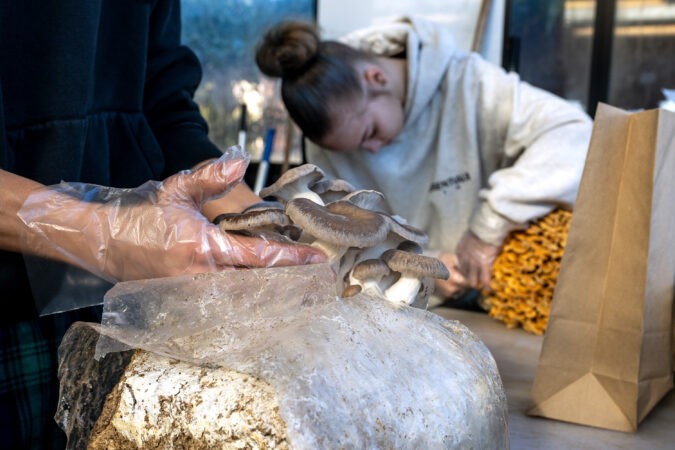
After donning plastic gloves, Sell and classmate Jordan Griffin, 18, a senior, stepped into the humid greenhouse on a recent morning to inspect the latest batch of shrooms.
They pointed out different mushroom varieties that typically grow from October to March or April. Students in the school’s Environmental Club also assist with harvesting after school.
Griffin, who plans to attend a trade school to study welding or HVAC repair, said the hands-on experience piqued his interest. He’s not too fond of sampling mushroom dishes, however.
“I’m not the biggest fan of them,” Griffin said. “I won’t go crazy over them.”
Green has asked Winzinger to conduct cooking demonstrations in class, hoping to whet students’ appetites with dishes like chicken mushroom Alfredo and mushroom soup.
“I don’t know how many students would want to eat a mushroom entree,” Green said.
Sell said that while she is no fungi fanatic, she enjoys her mother’s mushrooms sauteed with garlic butter.
“There are many ways to make it to your taste,” she said.
After opening the plastic bags, Griffin and Sell carefully cut a small harvest and packaged the mushrooms in brown paper bags. The bags would be offered that day free to students and staff.
After harvest, the spent mushroom blocks are composted on site and applied to the school’s Outdoor Learning space, which includes fruit trees, rain gardens, vegetable plants, and honeybees.
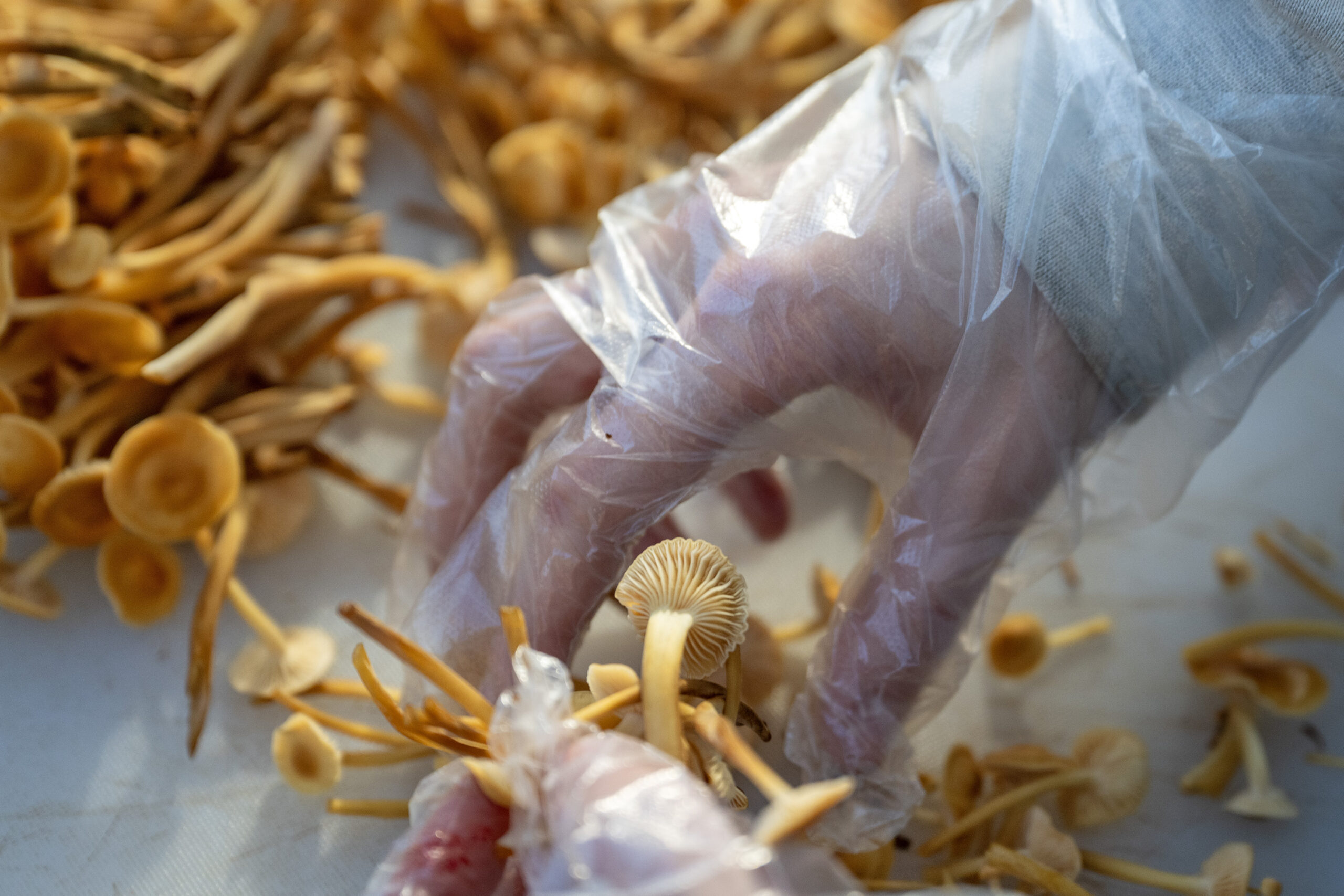
Lilly Sell harvests enoki mushrooms.
Green said most of the mushrooms are harvested in bigger quantities and sold to the local restaurants. Whatever is left over is given to the community, he said.
“My goal is just to get the mushrooms out,” Green said. “The goal is to get mushrooms into people’s hands.”
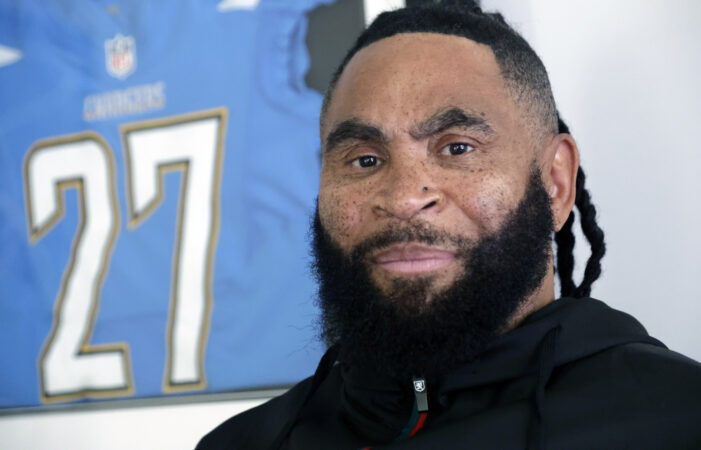
In May, Donald Frank packed a bag and left his home in Wake Forest, N.C. His destination sat about 390 miles to the south, in Georgia, where he was scheduled to undergo a series of grueling medical evaluations.
Doctors spent two days testing his memory, attention span, language comprehension, and visual-spatial perception skills, to gauge the extent of a neurocognitive illness that had gradually eroded the contours of his everyday life.
A separate consultation with a neurologist resulted in a new diagnosis: Frank, a 60-year-old former San Diego Chargers defensive back, had Parkinson’s disease.
Frank believes that his health woes can be traced to the countless brain-rattling collisions that he absorbed during his six-year professional football career. But over the last seven years, the NFL’s controversial concussion settlement program has on four occasions denied Frank’s quest to be paid for the brain trauma that he sustained.
Nevertheless, he decided to make the case once more. Frank included the results of the May neuropsychological tests, and the Parkinson’s diagnosis, in a claim that he submitted to the settlement program.
Then he waited. And worried.
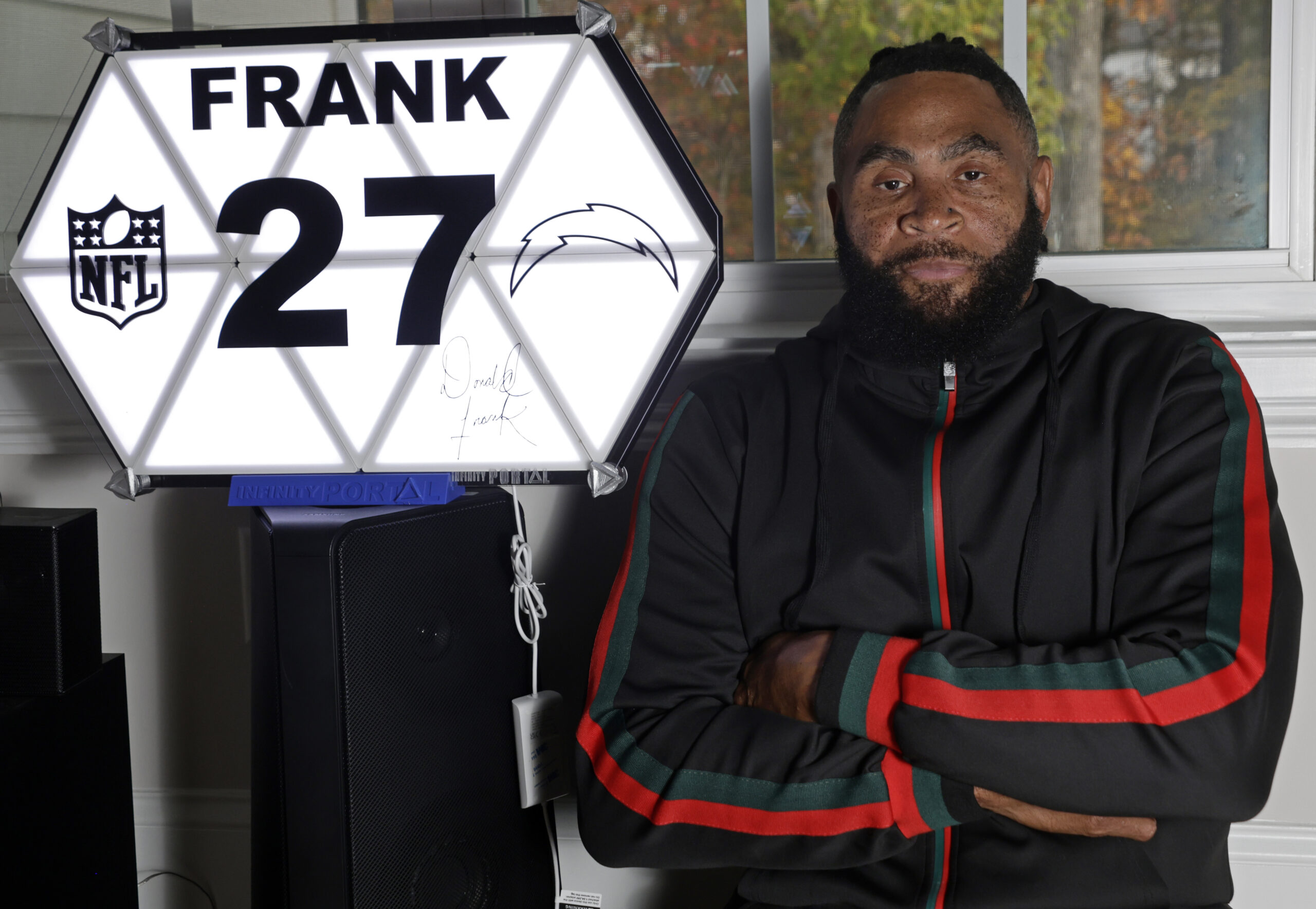
Donald Frank and his girlfriend, Deirdre Brown, learned in early November that the NFL’s concussion settlement program had agreed to pay Frank $1.4 million as he battles Parkinson’s disease.
The settlement program has doled out more than $1.6 billion, yet not every former football player who applies for a payment is compensated. Some, including members of the 1980 Philadelphia Eagles, have faced long delays and demoralizing denials.
The Inquirer found that Frank’s case is an extreme outlier. More than 4,400 ex-NFL players have submitted claims with the program, but only two others have received as many as four rejections.
On Nov. 4, Frank’s girlfriend, Deirdre Brown, opened an email from the settlement program’s claims department.
“Notice of monetary award claim determination,” read the first line.
Her eyes traced familiar details about Frank’s case and his medical history, then arrived at something new: an award for $1.4 million.
“It was a breath of fresh air,” Frank said, “considering all the years I’ve gone through this.”
From a small college to the pros
Frank followed an unlikely path to the NFL.
As a strong safety at a Division II college, North Carolina’s Winston-Salem State University, he attracted little attention from scouts. He had a bodybuilder’s physique, though, and could run the 40-yard dash in 4.4 seconds.
Those attributes persuaded the Chargers to take a flier on Frank in 1990 and sign him as an undrafted free agent. That same year, the team selected linebacker Junior Seau with their No. 1 pick in the NFL draft.
Frank made the team and quickly impressed coaches with his knack for game-changing interceptions, prompting the Los Angeles Times to liken his rise — from relative obscurity to an NFL roster — to a fairy tale.
Frank, like so many players from prior generations, didn’t realize that the violent collisions he experienced each year — during practices and in training camp, throughout the regular season and playoffs — could cause long-term neurological harm.
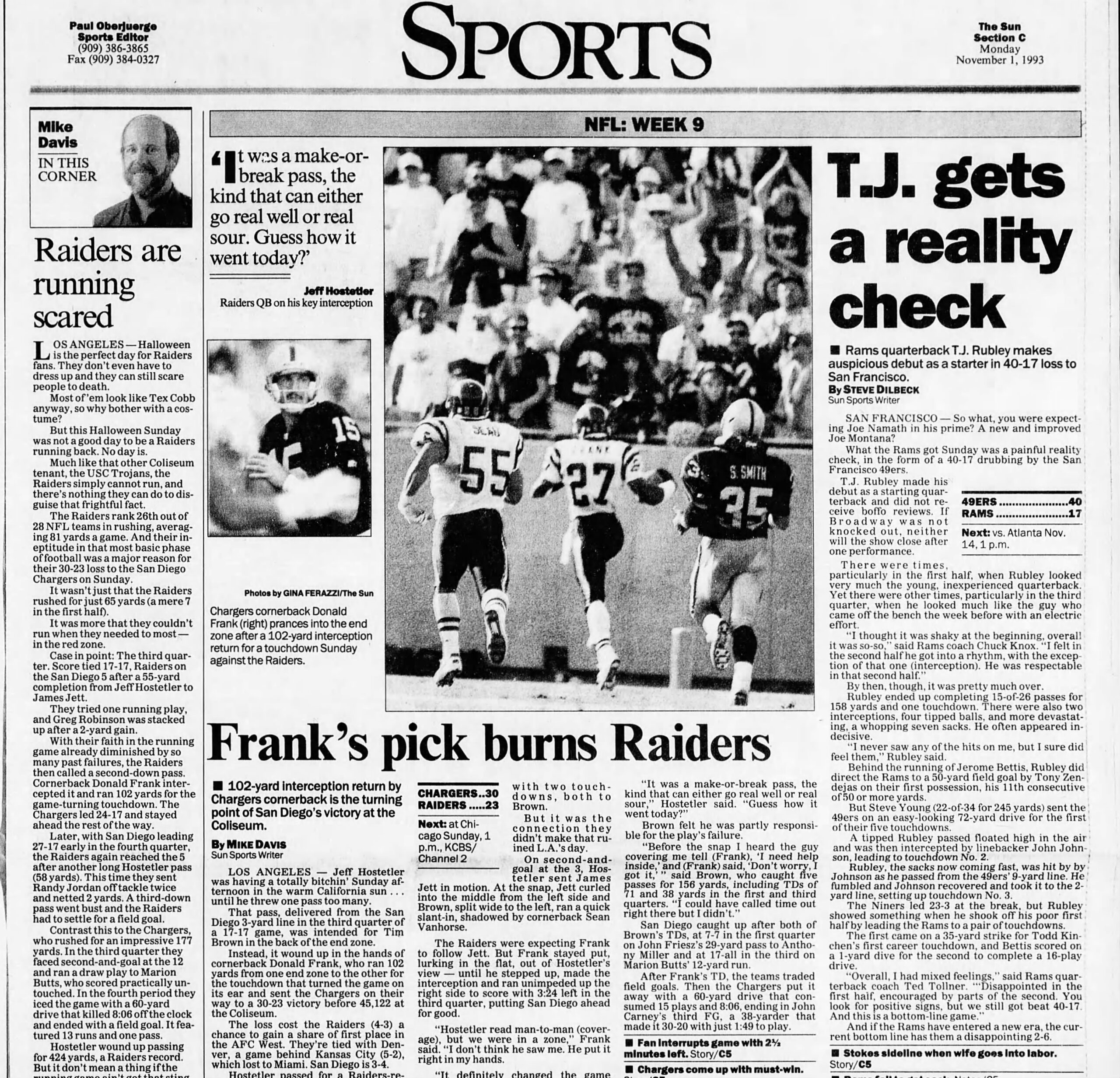
Donald Frank’s 102-yard interception return for a touchdown helped the Chargers defeat the Los Angeles Raiders on Oct. 31, 1993.
“When you got knocked out, or got your bell rung, they would put smelling salts to your nose to wake you up,” Frank previously told The Inquirer. “I don’t even remember there being an attempt to evaluate you. It was always, ‘OK, just let him sit on the bench for a minute to clear his head.’”
By 1993, Frank earned a role as a starting cornerback. That season, during a Halloween game against the Los Angeles Raiders, Frank intercepted a pass from Raiders quarterback Jeff Hostetler and returned it 102 yards for a touchdown.
For an undrafted athlete, it was a moment of remarkable personal triumph.
Just two years later, Frank reached the end of his NFL career. He was hindered by a back injury and had grown wary of hitting his head.
But there was another nagging problem that Frank initially kept to himself: On even simple defensive plays, he could no longer remember what he was supposed to do.
Confusion, then clarity
Frank’s memory problems began to deepen in 2008, according to medical records previously viewed by The Inquirer, and he grappled with depression and unpredictable mood swings.
He stopped driving and had to rely on Brown to help care for him on a daily basis.
In 2012, Seau, Frank’s old Chargers teammate, died by suicide at age 43. Researchers discovered that he had the degenerative brain disease chronic traumatic encephalopathy (CTE), which has been found in the brains of hundreds of former football players, including former Eagles Andre Waters, Max Runager, Frank LeMaster, Guy Morriss, and Maxie Baughan.
Dozens of ex-players had sued the NFL a year earlier in California and Pennsylvania, accusing the league of downplaying the risks of repeated brain injuries. The number of plaintiffs climbed into the thousands — Frank among them — and the cases were consolidated in Philadelphia federal court.
Three years later, the NFL settled the case.
The league admitted no wrongdoing but agreed to fund, for 65 years, a program that would pay retired players who developed neurocognitive impairment, Alzheimer’s disease, Parkinson’s disease, or amyotrophic lateral sclerosis (ALS, also known as Lou Gehrig’s disease).
Donald Frank signed with the Chargers as an undrafted free agent in 1990. “My attitude, coming from where I came from, was basically, ‘You got to do everything you can to stay here,’” said Frank, 60. “And I was a physical player.”
In 2016, the chair of Duke University’s Department of Neurology evaluated Frank and determined that he had a “major neurocognitive disorder,” according to the medical records.
That same year, the NFL awarded Frank a benefit through the league’s 88 Plan, which provides financial reimbursements for medical care for players who have dementia, Alzheimer’s disease, or Parkinson’s. (The league spends more than $20 million a year on such reimbursements.)
Despite the seemingly widespread agreement that Frank suffered from a serious illness, he found little success navigating the concussion settlement program.
Retired players are required to be evaluated by doctors who belong to a network managed by a third-party company, BrownGreer LLC, and to have a diagnosis that meets the settlement program’s three tiers of cognitive impairment: level 1.0 for moderate decline; level 1.5 for early dementia; level 2.0 for severe cognitive decline.
Frank submitted three claims for a diagnosis of Alzheimer’s, but an appeals panel rejected each, noting that his test results were not consistent with the disease.
The denials sank Frank into depressive spirals and made him question whether he should abandon his crusade to be paid by the settlement program.
“It felt like a big confusion,” Frank said. “[The doctors] couldn’t get a grip on what was going on with me.”
Clarity finally arrived earlier this year, when his attorney asked Frank if he had ever experienced any tremors or shakes.
“I said, ‘Yes, I do,’” Frank recalled. “I told Dee a year ago, maybe two years, that I experienced some tremors in my right hand. I just never paid it no mind.”
After a neurologist and a movement disorder specialist each confirmed that Frank had Parkinson’s, he began taking medication meant to alleviate symptoms.
“It felt like an immediate release of pressure off my brain,” he said. “I felt like the tremors weren’t bothering me as much.”
Frank has noticed something else, too: a sense of optimism and gratitude that has pierced the frustration and uncertainty that had clouded his life for so long.
The concussion settlement program is scheduled to deliver its payment to him in January, and his daughter and 6-year-old grandson have moved in with him, filling his house with the welcome sound of busy lives and laughter.
“I’m looking forward to more hours with my grandson. I’m looking forward to the future,” Frank said. “I’m thankful.”
A new 46-unit apartment building is coming to 5322-28 Germantown Ave., from longtime Northwest Philadelphia developer Ken Weinstein.
The five-story building is in Germantown’s Penn Knox area. It also will include over 1,600 square feet of commercial space and 17 parking spaces.
The project comes amid a burst of new multifamily construction in Germantown, a neighborhood that garnered little interest from few developers in the second half of the 20th century.
“The demand for housing in Germantown continues to outpace the supply so more housing, at all income levels, is needed,” Weinstein said.
“Germantown is located near good public transit and Fairmount Park and is viewed as much more affordable than hot city neighborhoods in and around Center City,” he said.
Weinstein said that he will break ground on the building during the first week of January and that funding and contracting is already secured.
The project did not require any relief from the city’s Zoning Board of Adjustment, so Weinstein was not legally required to consult with the neighborhood group, Penn Knox Neighborhood Association.
But he met with the community group anyway to hear concerns they might have with the project.
“This is not an out-of-town developer; this is a developer from the area. He’s part of the community,” said Deneene Brockington, chair of the Penn Knox Neighborhood Association. “So I think there is a level of respect, and I think willingness to do as much as possible [in response to neighborhood concerns] as long as it doesn’t compromise the project.”
Brockington said that the community group’s main concerns were about building materials and lighting and that the developer had addressed both.
Weinstein said parking wasn’t the principal concern he heard from neighbors because the building is in a commercial corridor.
The apartment building’s 17 spaces are not required by the zoning code. Weinstein said he would have liked to include more, but he was constrained by the fact that all the spaces had to be on the ground floor and that the site’s land use rules require that he include commercial space.
“Underground parking is too expensive in middle neighborhoods like Germantown,” Weinstein said. “There will always be a divide between the number of parking spaces developers want to provide and what neighbors want.”
The building will include 28 one-bedroom apartments and 18 two-bedroom units, with rents ranging from $1,450 to $2,200. There will be no subsidized or affordable units set aside.
The project is expected to be completed within 18 months of the groundbreaking next month.
There is no definite tenant for the commercial space, but Weinstein has some ideas.
“With Uncle Bobbie’s moving to a new location, I would love to see a cafe or coffee shop lease the first floor,” Weinstein said. “There would be a lot of demand from students and staff at GFS [Germantown Friends School] and from the community.”
Philadelphia theaters have weathered a difficult year as arts organizations across the region faced deep cuts in federal funding. The numbers paint a somewhat bleak picture: The state lost $1,463,000 from the National Endowment of the Arts alone, and though some attendance figures have risen from last year, the performing arts sector has struggled overall to recapture prepandemic audiences.
This year, despite challenges, Philly’s scrappy, beloved, and award-winning theater community kept showing up and showing out on local stages with incredible productions and exciting world premieres.
Here are few of our favorites from 2025.
‘La Otra’ from 1812 Productions
Written and directed by Tanaquil Márquez, this Fringe Festival world premiere from 1812 Productions was a heartwarming comedy about three estranged sisters reuniting for their father’s 80th birthday party in Colombia. The real drama all happened in the kitchen as cousins played pranks, sisters bickered endlessly, and at one point the set exploded in a burst of tropical vines that broke into the realm of magical realism. The show fired on all cylinders, from the versatile cast in multiple roles, to its engrossing production design, to the sharp trilingual dialogue that echoed the rhythm and intimacy of a big family much like my own. (The clever use of subtitles ensured that no one got lost in translation, from English to Spanish to Vietnamese.) I laughed a lot, especially thanks to the standout performance from Yajaira Paredes. We named it one of the works with a high chance of post-Fringe Fest success, so here’s hoping to see it back on our stages soon.
Valeria Diaz (Madeleine Garcia) and Professor Qiu (Justin Jain) in InterAct Theatre Company’s “Quixotic Professor Qiu.”
‘Quixotic Professor Qiu’ from InterAct Theatre Company
Another promising world premiere came from playwright Damon Chua with this tense, small InterAct production following a Chinese American mathematics professor accused of being a spy. Inspired by actual instances of academics suspected of espionage, the drama provided a provocative and chilling reflection of the U.S. government’s targeting of immigrants amid the ever-encroaching creep of censorship. As the titular Qiu, Justin Jain played a convincingly aggrieved intellectual who finds the entire investigation absurd. But he’s essentially left helpless at the whims of law enforcement hell-bent on punishing him, regardless of the facts. The minimalist set centered our attention on the high stakes he faces trying to clear his name, with moody lighting that heightened our sense of dread. By the end, Jain breaks the fourth wall to underscore the message: “That’s the world we live in. That’s the world you live in.”
‘King Hedley II’ at Arden Theatre Company
The Arden’s commitment to staging all of August Wilson’s Century Cycle plays is a laudable effort and each production is a major theatrical event. James Ijames directed this run with Akeem Davis playing the titular King, a struggling, formerly incarcerated man released at the height of the 1980s recession. The story depicts a harsh reality for the Black family at the center, played deftly by a well-rounded cast that pivots from warmth to fury to humor. It was not an easy watch — the tragic ending left me in tears — but it was a vital story that felt relevant, urgent, and timeless.
Ruby (Kimberly S. Fairbanks) and Tonya (Taysha Marie Canales) in Arden
Theatre Company’s 2025 production of August Wilson’s “King Hedley II.”
‘Back to the Future: The Musical’ at Academy of Music
At the risk of being a little corny, I had a blast seeing one of my favorite classic movies adapted into a musical — mainly because the much-hyped time-traveling DeLorean was genuinely as impressive as promised. I went in thinking that the car bit would be too gimmicky, but I was proven so wrong in the best way: The masterful production design featured illusions that (tiny spoiler) made the car fly in the air. I gasped! The show also delivered transportive scenery alternating between the 1980s and 1950s, amplified by captivating group choreography and great singing. There were certainly some questionable choices, like leaning into the whole Marty-tries-avoiding-incest plot and songs that try but fail to give depth to Marty’s family. But overall, it was a lot of fun.
‘The Goldberg Variations’ at Fringe Arts
Every year, Philly’s Fringe Fest delivers some of the strangest and most shocking productions with dazzling results. This was the craziest production I saw onstage this year and I’m still obsessed. It started as a petty PowerPoint presentation as the star/creator Clayton Lee explained that all his ex-boyfriends look like wrestler Bill Goldberg. It shifted into an interactive experience as Lee interviewed someone in the audience, flirting with him and asking sexually explicit questions. Then it evolved again into a wrestling ring, where Lee invited Goldberg doppelgängers (who were incognito in the audience) to the stage for a smackdown, complete with BDSM contraptions and a lot of body oil. It was a wild show that had the audience in sidesplitting laughter one moment and stunned silence the next.
‘Snow Queen’ at Wilma Theater
This year, the Wilma presented its first production for all ages in this adaptation of Hans Christian Andersen’s 1844 fable (from which Disney’s Frozen also draws inspiration). Seeing a weekday matinee was such a treat because the rows were filled with eager schoolchildren who responded to the actors with infectious enthusiasm. The sprawling fairy tale features a terrifying ice queen who turns hearts cold and kidnaps a young boy named Kai. His determined friend Gerda goes on a quest to save him after he has been brainwashed. Directed by Yury Urnov, the show spotlights delightful characters with an inventive and quirky production and costume design. The heartfelt, whimsical story about the power of good over evil was a visually dazzling experience, complete with musical talent and a wonderful cast.
Michael Aurelio and Ethan Check in Quintessence Theatre Group’s “Giovanni’s Room.”
‘Giovanni’s Room’ from Quintessence Theatre
It may surprise people to learn that the first-ever authorized stage adaptation of James Baldwin’s classic 1956 novel Giovanni’s Room held its world premiere right here in Philadelphia. It’s certainly something to brag about: It took nearly 20 years, two rejections, and several rewrites, but actor/playwright Benjamin Sprunger and director/playwright Paul Oakley Stovall made it happen at Quintessence Theatre. The story centers on a closeted gay American who falls in love with a brash Italian bartender in Paris — and it’s no spoiler to say it ends in tragedy. The slim novel was one of Baldwin’s most popular and groundbreaking works, providing rich source material for a play. Onstage, it was a lyrical production with spellbinding light design and fascinating choreography; it was an excellent first run and I hope to see it progress in future productions, too.