Tag: topic-link-auto

  • At Munich Security Conference, European leaders commit to protect Western values that White House abandons

    At Munich Security Conference, European leaders commit to protect Western values that White House abandons

    MUNICH — Last year, at the Munich Security Conference, where top U.S. and European leaders gather each year, Vice President JD Vance gave a shocking speech that nearly broke the NATO alliance of democracies that had kept the peace in Europe for 80 years.

    Vance claimed the threat to Europe was “not Russia, not China,” but rather came “from within” our NATO allies themselves — falsely accusing European democracies of stifling the radical, pro-Russia, and sometimes neo-Nazi parties that the Trump White House openly supports. The veep never even mentioned the threat from Russia, or its war on Ukraine.

    The acrid impact of that speech has hung over U.S.-European relations and the future of the NATO alliance over the past year.

    “Under Destruction” was the title of this year’s conference, held at the elegant Bayerischer Hof hotel. Its annual security report opened with these grim words, aimed at the “current U.S. administration”: “The world has entered a period of wrecking-ball politics. Sweeping destruction — rather than careful reforms and policy corrections — is the order of the day.”

    And yet, this year, I heard a startlingly different tone from European leaders. Stunned by Trump’s demands and disdain, awakened by Russian aggression against Ukraine and much of Europe, furious at President Donald Trump’s threats vs. NATO ally Denmark to seize its sovereign territory of Greenland, European leaders have woken up to the need for dramatic changes — though not in the way envisioned by Trump.

    “Europe has just returned from a vacation from world history,” stated German Chancellor Friedrich Merz, who like other leaders here, recognized they had depended for too long on an American ally they trusted for their postwar defense.

    Merz chose to speak first at the conference, taking a European leadership role (while insisting, with a nod to his country’s history, that Germany would “never again go it alone”).

    “The international order based on rights and rules is currently being destroyed,” he said. “But I’m afraid we have to put it in even harsher terms. This order, as flawed as it has been even in its heyday, no longer exists.”

    Merz added, “It does not mean that we accept it as an inevitable fate. We are not at the mercy of this world. We can shape it. And I have no doubt that we will preserve our interests and our values in this world if we step up together with determination, with confidence in our own strengths.”
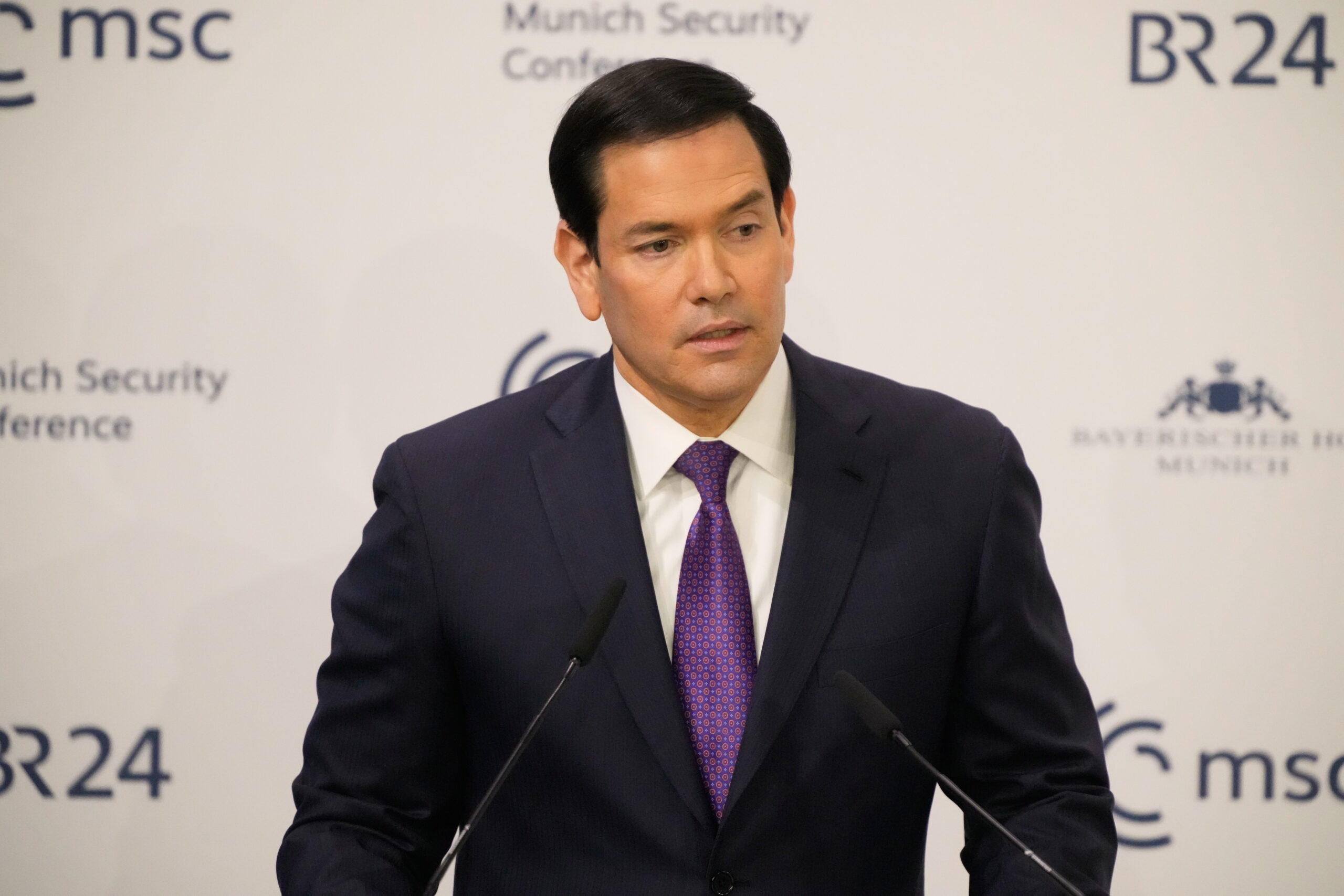
    U.S. Secretary of State Marco Rubio speaks at the Munich Security Conference Saturday.

    Indeed, the message of this European leaders meeting in Munich, in sharp contrast to European paralysis at Vance’s onslaught last year, was that they must and can organize to defend against Russia while protecting democratic values — and Ukraine — even if the United States won’t.

    Of course, skeptics, including Trumpers, will claim that Europe has become irrelevant. But what I heard this weekend is far more realistic than Trump’s fantasies about a Ukraine deal that bows to Putin and envisions big business deals with Russia.

    Pressed by Trump (and this was a good thing), NATO allies have significantly increased their defense budgets. Now that the U.S. has cut off almost all aid to Ukraine, Europe is paying for all U.S. weapons that are purchased for Kyiv, and the EU has pledged to cover most of Ukraine’s military budget for the next two years.

    But, unlike the U.S. president, the Europeans recognize that Ukraine is a symbol of the threat posed by an imperialist, aggressive Vladimir Putin.

    “With the beginning of Russia’s aggression, we entered a new phase of open conflict and wars, which changed the [security] situation more than we ever thought possible a few years ago,” Merz continued.

    The Kremlin also pushes claims of defending its “Russian civilization” to include any territory where it falsely claims that Russians are mistreated. This could include the Baltics, Poland, parts of the Arctic, all of Ukraine, Moldova. The list goes on.

    European officials are acutely aware of Russian threats, since they are the constant victims of Russian sabotage, underwater cable cutting, and political assassinations, all of which the White House downplays.

    During the conference British intelligence announced they had proof that Russia had assassinated opposition leader Alexei Navalyny in prison with a rare toxin, just as Russian agents murdered a Russian dissident on British soil.

    What I heard over and over was European astonishment that the White House ignores the massive slaughter of civilians by Putin, while pressing only for concessions by Ukraine. President Volodymyr Zelensky spoke bluntly at Munich about the need for more air defenses, but only Europe is responding.

    Indeed, Ukraine was central to the whole conference, with many speakers, warm applause, and frequent sessions featuring Ukrainian military innovations, while Europeans emphasized the importance of Ukraine’s trained army to Europe in the future.

    There was constant praise for Kyiv as the defender of Western values, holding the line between Russia and the democratic West.

    Ukrainian President Volodymyr Zelenskyy, left, and German Defence Minister Boris Pistorius talk during their visit of drone producing company Quantum Frontline Industries near Munich Friday.

    Yet, it was clear from the American position at Munich that the administration sees the world entirely in a different light.

    No doubt aware that Vance redux would have been booed off the stage, the White House dispatched the somewhat more diplomatic (but far less powerful) Secretary of State Marco Rubio who soothed European fears slightly with an emphasis on continued U.S.-European ties. However, Rubio pointedly never mentioned the Russian threat hanging over Europe in his speech. He pushed the same nationalist MAGA line about the main threat to “thousands of years of Western civilization” coming from immigrants and multilateral ties.

    More disdainful was Deputy Secretary of Defense Elbridge Colby, who praised Secretary Pete Hegseth repeatedly and fulsomely, and insisted that the essence of Trump foreign policy was “hard-nosed common sense.”

    “You can’t base an alliance on sentiment alone,” he insisted, in a discussion held in the Bar Montez at the Rosewood Hotel, without taking any questions. “Maybe there is a difference in values.” Then he laughed that he had only heard the words “rules-based international order” once in Munich so “that is a piece of progress.”

    It is not clear whether the Europeans can achieve the weapons production goals they discussed and develop an integrated military force that takes over ground protection of Europe within NATO by the end of this decade. And leaders I spoke with recognize they can’t succeed alone without active partnership with — not subordination to — the United States.

    But what I heard in Munich made clear that they are far more aware of the threat democracies face and the values that need to be protected than is the White House.

    “We will preserve our interests and values if we step up together,” said Merz.

    That is wise advice that the White House continues to ignore.

  • Andre Blake begins his 13th season with the Union, still waiting for fate to finally smile on him

    Andre Blake begins his 13th season with the Union, still waiting for fate to finally smile on him

    CLEARWATER, Fla. — Sometimes, you don’t have to hear Andre Blake speak to know what’s on his mind.

    You can tell from looking at eyes that have seen more Union games than any other player. From hands that have stopped more shots than any goalkeeper should have to, and let more by than any goalkeeper would want to. From feet that have stood by nets across the United States, the continent, and beyond.

    You also don’t have to be a Union fan or a Jamaica fan to share the question that resonates so deeply with the 35-year-old, as he begins his 13th season with the only professional team of his career.

    Why has Blake been denied, time and again, the privilege of reaching the twin peaks he so deeply craves: winning an MLS Cup with his club and qualifying for the World Cup with his country?

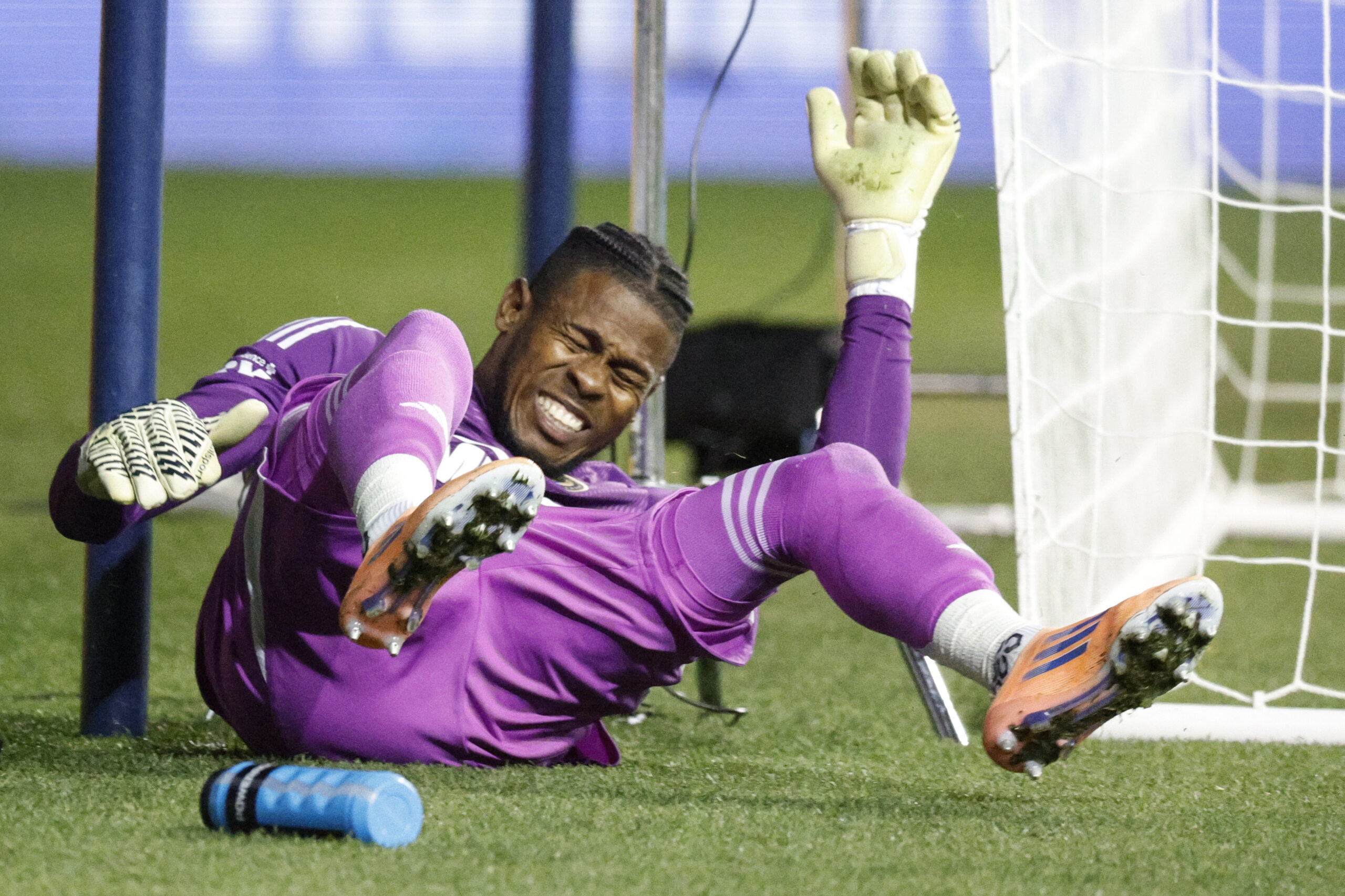
    Andre Blake suffered an injury during last year’s playoff loss to New York City FC.

    The soccer gods can be cruel, and they have forced Blake to suffer. Yes, he has won two Supporters’ Shield titles, but all of his playoff runs — and his U.S. Open Cup runs, Leagues Cup runs, and Concacaf Champions Cup runs — have ended in defeat, often heartbreak, and most often out of his control.

    With Jamaica, the pain cuts especially deep right now. If the failures of past World Cup qualifying campaigns, Gold Cups, and Concacaf Nations Leagues weren’t hard enough, this moment seems almost unfair.

    The Reggae Boyz entered the last night of qualifying needing a win at home over Curaçao. But they were held to a scoreless tie, with Blake stuck at the other end of the field from his misfiring teammates. Curaçao took the berth and sent Jamaica to next month’s intercontinental playoffs.

    Up the hill and knocked back down, again and again.

    Curaçao players celebrating in Jamaica’s stadium after qualifying for the World Cup at the Reggae Boyz’ expense.

    ‘We need silverware’

    “I felt like we were so close again,” Blake said of the Union falling short last year. “We had it — had it where we wanted it to be. But that’s just soccer. Single-elimination games can go either way.”

    How much does he let himself use that as fuel?

    “I really thought that last year would have been it, knowing that MLS Cup would have been in Philly, but it didn’t happen,” Blake said. “But we just use that as motivation, as experience for us to know that we were that close. And just use that to give us confidence to know that hopefully this year we can go one or two steps closer and win the whole thing.”

    Will the stars finally align this year? That’s not how this works, in either Chester or Kingston, and Blake knows as well as anyone. But he’s ready to go once more.

    Andre Blake has won two Supporters’ Shields with the Union, but nothing more so far.

    “Pretty simple for me: My personal goal is to be better than I was last year,” he said. “That’s always my challenge, to be a better version of myself. And for the team, it’s always the same as well: We need silverware. And the ultimate one is the MLS Cup, so that’s got to be the goal.”

    Four years ago, the case was made in these pages that Blake is the most important player in Union history. The time since then has only proved it more. Look no further than last year’s playoffs, when he played a starring role in the first-round sweep of Chicago.

    The present moment proves it again. With Jakob Glesnes, Kai Wagner, Mikael Uhre, and Tai Baribo gone, this Union team feels like the start of a new era. As captain, Blake must help set the tone as newcomers blend in with returnees.

    “It feels new,” Blake said. “That’s the obvious [part]. But I’ve learned to control what I can control, which is my performance. And whoever is here, the goal is to get the best out of everybody.”

    Andre Blake (left) working out at the start of the Union’s preseason.

    For now, he continued, his aim is to “just focus on the positives, and positives are whoever is in this room. That’s what we have, and that’s what we have to work with and make the most of.”

    ‘Everybody starts at zero’

    Considering Blake’s history of criticizing the Union for a lack of ambition, what he said next might please the highest-ups — especially as he goes into the last guaranteed year of his contract.

    “It’s a new season, everybody starts at zero,” he said. “So I think it’s only fair to judge the season after the season, and not before the season. We have what we have right now, we’re going to do our best, and at the end of the year, we’ll evaluate and see how it was.”

    This team doesn’t seem to have the firepower to beat MLS’s best — Lionel Messi’s Inter Miami, Son Heung-Min’s Los Angeles FC, and Thomas Müller’s Vancouver Whitecaps — in the games that matter most. But it has made substantive moves to replace the players it cast off, signing center backs Japhet Sery Larsen and Geiner Martínez and forwards Ezekiel Alladoh and Agustín Anello.

    The Union broke their transfer fee record to sign Ezekiel Alladoh.

    Sery Larsen could be especially impactful for Blake because of his track record of leadership at past clubs.

    “The most important thing coming into a new team is just the willingness to learn and to adapt, and to listen,” Blake said. “I think he came in with an open mind. He wants to learn, he’s willing to do the work.”

    The new group must build chemistry fast. The MLS season starts at D.C. United on Saturday (7:30 p.m., Apple TV), and the overall campaign starts Wednesday in the Concacaf Champions Cup at Defence Force FC in Trinidad.

    “The Champions Cup is always a different challenge,” Blake said. “Obviously, it’s a reward to be playing in that tournament. And yeah, the first game against Defence Force — for me, these days, there’s no easy game in soccer. You have to be ready to play, mentally and physically.”

    If the Union win the two-game series against Defence Force as they should, the climb will get steep fast. Not only will they face Mexican superpower Club América next, but they’ll face playing nine games from Feb. 18-March 21.

    The Union could face Club América in the Concacaf Champions Cup for the first time since the 2021 semifinals.

    “Not looking past that game, but after that it gets pretty tough,” Blake said. “We’ll prepare accordingly, and we’ll approach every game in a professional manner.”

    ‘Very angry’ about Jamaica’s struggles

    Now to the subject Blake rarely enjoys discussing, but he knows he must.

    The intercontinental playoffs are five weeks from now. Jamaica will play New Caledonia in the semifinal, then the winner will play the Democratic Republic of the Congo. Both games will be at Guadalajara’s Estadio Akron, a World Cup venue this summer.

    That task is not fully on Blake’s mind yet with so much to do before then. But it is still a presence, along with emotions from last fall that still simmer.

    “It’s been very tough for me these last couple months,” Blake said. “When you kind of invest so much into something and it doesn’t go the way you want it to go, it can get you, and that’s just kind of the phase I’m in right now as it relates to the national team.”

    The words came mixed with stretches of silence that were equally piercing.

    “It’s just trying to still process what really happened,” Blake said. “But when the time is right, I’ll do whatever I have to do, and I’ll be ready to go again.”

    He will play for the seventh manager of his national team tenure, Rudolph Speid, as famed veteran Steve McClaren resigned after the Curaçao game. The players have not changed, though, including big names like Leon Bailey and Michail Antonio.

    It’s on them to deliver.

    Jamaica has one last chance to qualify for this year’s World Cup, through FIFA’s intercontinental playoffs in March. Hockey great Wayne Gretzky was at the World Cup draw.

    “I haven’t spoken to anyone [since] after we left camp, so I don’t know what the vibe [is],” Blake said. “I know I’m very angry. I can only speak for myself, because I feel like we had an opportunity — a big, big opportunity — and we let ourselves down as players, And yeah, that’s just how I feel. I feel like it should have never gone that way.”

    He ran through a series of questions he asks himself about preparation, execution, effort, and controlling the controllable. They brought him back to a repeated answer.

    “I just feel like as players we let ourselves down,” he said, “and that’s what made me so angry.”

    The Reggae Boyz haven’t made a World Cup since 1998, and ending the drought in North America would be even sweeter. It cheers him up to know how many people are rooting for him in Philadelphia, across MLS, and worldwide.

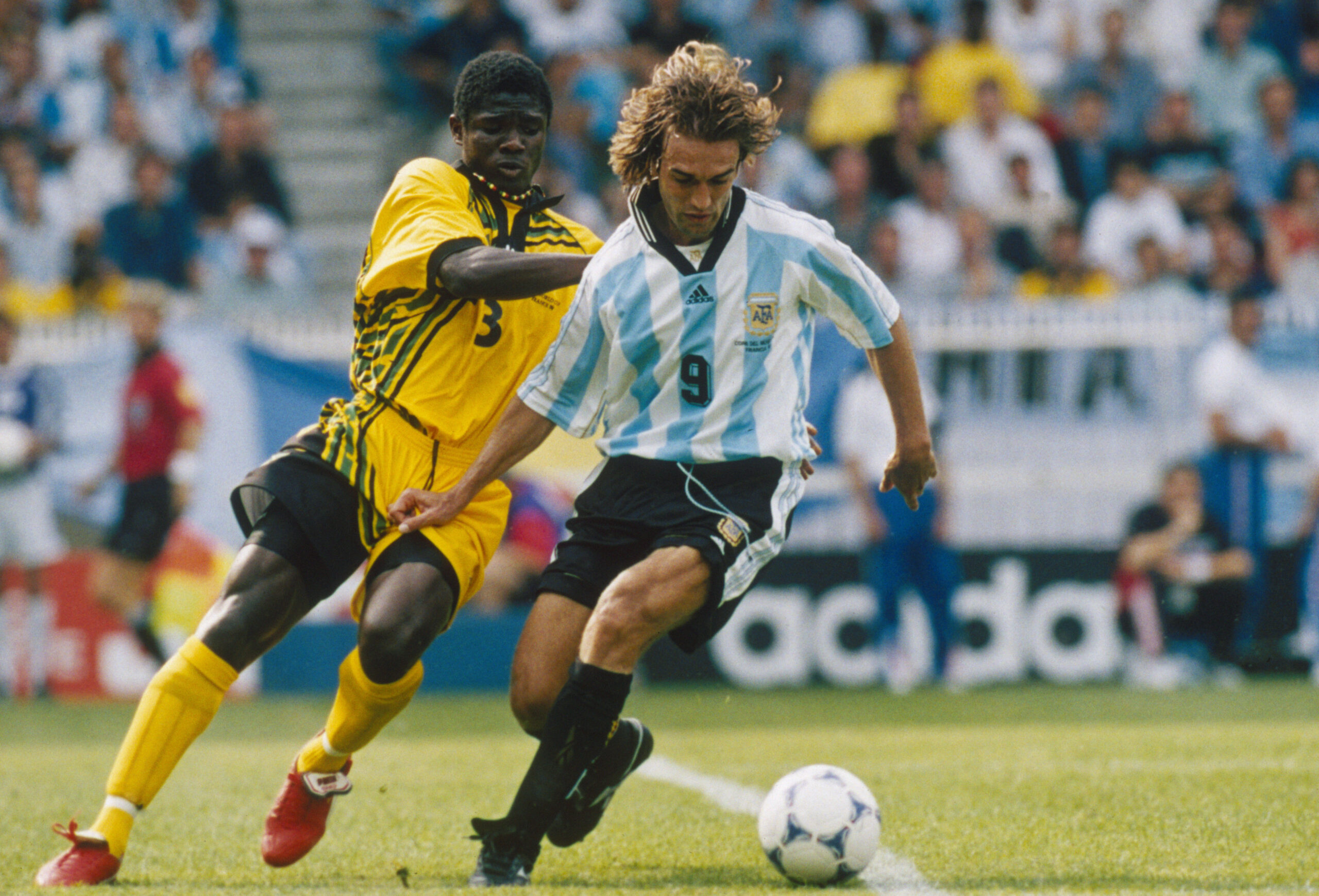
    Jamaica is looking for its first berth in the FIFA World Cup since the 1998 edition in France.

    “I believe so,” he said. “At the end of the day I can still hold my head high. You can lose a game, you can not accomplish something, but it’s just how, if you give it your all — you did all you could, you left no stones unturned — and then you lose a game, then you can accept that, you know?”

    It’s a message he takes home to a family that enjoys calling Philadelphia home, and that four months ago welcomed a third child — a first daughter.

    “For me, whenever I go out there, I always try to make, my family, my fans, myself proud by leaving it all on the field,” he said. “So even if you don’t really accomplish what you want, it’s not going to feel good, but you can still be proud.”

    At that point, two more questions remained. Will this finally be his year? And if not now, will it ever?

    They felt best asked toward the heavens.

  • Monday’s Olympic TV schedule: U.S. vs. Sweden women’s hockey and more

    Monday’s Olympic TV schedule: U.S. vs. Sweden women’s hockey and more

    U.S. women’s hockey highlights Day 10 of the Milan Cortina Olympics, with dominant Team USA facing Sweden in the semifinals.

    How dominant? In five games, the U.S. women’s team is undefeated, has outscored its opponents 26-1, and blanked Italy, 6-0, in the quarterfinals. Hilary Knight could also set a new Team USA points record on Monday — she’s tied with former teammate Jenny Potter with 32 career Olympic points (11 goals, 21 assists).

    U.S. vs. Sweden is scheduled to begin at 10:40 a.m. Philadelphia time, live on NBC. It will be followed by Canada vs. Switzerland in the second semifinal, which is scheduled to get underway at 3:10 p.m.

    The two winners will face off in the gold medal game on Thursday at 1:10 p.m., while the two losers will play for bronze Thursday at 8:40 a.m.

    The U.S. and Canada have faced off in the women’s ice hockey gold medal game in six of the seven Olympics featuring the sport. Team USA has won twice — 2018 in Pyeongchang, South Korea, and 1998 in Nagano, Japan. Sweden sneaked in and won silver in 2006 in Turin, Italy.

    In other Olympics action Monday:

    • Three U.S. bobsledders — Elana Meyers Taylor, Kaysha Love, and defending gold medalist Kaillie Humphries — could be racing for gold in the women’s monobob. The third run begins at 1 p.m., while the final run will start at 3:30 p.m., both set to air live on NBC.
    • Freestyle skier Eileen Gu, a San Francisco native who competes for China (her mother’s native country) will defend her 2022 gold medal in the women’s big air live at 1:30 p.m. on NBC. She won the silver medal in the slopestyle competition.
    • U.S. speedskater Kristen Santos-Griswold will challenge two-time Olympic medalist Courtney Sarault of Canada in the women’s short track 1,000 meters, live at 5 a.m. on USA Network and running again at 10 a.m. on NBC.

    Monday’s Olympic TV schedule

    As a general rule, our schedules include all live broadcasts on TV, but not tape-delayed broadcasts on cable channels. We’ll let you know what’s on NBC’s broadcasts, whether they’re live or not.

    NBC
    • 10 a.m.: Speedskating — Women’s short track 1,000-meter final (tape-delayed)
    • 10:40 a.m.: Women’s ice hockey — U.S. vs. Sweden, semifinal
    • 1 p.m.: Bobsled — Women’s monobob third run
    • 1:30 p.m.: Freestyle skiing — Women’s big air final
    • 2:45 p.m.: Alpine skiing — Men’s slalom, first and final runs
    • 3:30 p.m.: Bobsled — Women’s monobob final run
    • 4 p.m.: Figure skating — Pairs free skate
    • 8 p.m.: Prime-time highlights including freestyle skiing, figure skating, and more.
    • 11:35 p.m.: Late night highlights including Alpine skiing, bobsled, and more.
    USA Network
    • 5 a.m.: Speedskating — Women’s short track 1,000-meter preliminaries and final, men’s short track relay semifinal, and men’s 500-meter short track qualifying
    • 7:30 a.m.: Alpine skiing — Men’s slalom final
    • 8:45 a.m.: Bobsled — Two-man, second run
    • 2 p.m.: Figure skating — Pairs free skate
    • 3:10 p.m.: Women’s ice hockey — Canada vs. Switzerland, semifinal

    How to watch the Olympics on TV and stream online

    NBC’s TV coverage will have live events from noon to 5 p.m. Philadelphia time on weekdays and starting in the mornings on the weekends. There’s a six-hour time difference between Italy and here. The traditional prime-time coverage will have highlights of the day and storytelling features.

    As far as the TV channels, the Olympics are airing on NBC, USA, CNBC, and NBCSN. Spanish coverage can be found on Telemundo and Universo.

    NBCSN is carrying the Gold Zone whip-around show that was so popular during the Summer Olympics in 2024, with hosts including Scott Hanson of NFL RedZone. It used to be just on Peacock, NBC’s online streaming service, but now is on TV, too.

    Every event is available to stream live on NBCOlympics.com and the NBC Sports app. You’ll have to log in with your pay-TV provider, whether cable, satellite, or streaming platforms including YouTube TV, FuboTV, and Sling TV.

    On Peacock, the events are on the platform’s premium subscription tier, which starts at $10.99 per month or $109.99 per year.

    Here is the full event schedule for the entire Olympics, and here are live scores and results.

  • After a Philadelphia cancer patient ran out of options, a novel T-cell therapy at Rutgers kept her alive

    After a Philadelphia cancer patient ran out of options, a novel T-cell therapy at Rutgers kept her alive

    Jefferson Health oncologist Jennifer Johnson had exhausted all the standard treatment options for her 49-year-old patient with esophageal cancer, who was likely to die within months.

    Surgery, chemotherapy, radiation, and immunotherapy had kept the Northeast Philadelphia woman alive for six years after her diagnosis, but no longer were enough to stop her cancer from spreading.

    Johnson knew her patient needed something novel. She recalled a presentation several years prior at a conference for head and neck cancers, where a doctor discussed an experimental treatment called T-cell receptor (TCR) therapy.

    This type of cancer immunotherapy works by engineering the immune system to fight cancer, and falls into the same family of treatments as CAR-T, or chimeric antigen receptor (CAR) T cell therapy, an approach pioneered at the University of Pennsylvania that has revolutionized treatment for blood cancers.

    She thought TCR therapy’s clever approach could work against solid tumors, where CAR-T had not been effective.

    “I just remember sitting in the room and watching him present, thinking, I’m gonna use that one day,” the oncologist and cancer researcher recalled.

    As it would happen, the approach was being tested in a phase II clinical trial at Rutgers Cancer Institute against tumors just like her patient’s: metastatic cancers driven by a virus called human papillomavirus 16. One of the most common strains, HPV16 causes roughly half of cervical cancer cases worldwide, as well as cancers of the head and neck area, anus, and genitals.

    Cases that reach the metastatic stage like Johnson’s patient often run out of treatment options. Whether T-cell receptor therapy would work was unknown, but the alternatives were expected to fail.

    “Anything that you might offer them would definitely not be expected to make their cancer go away completely and do it for a long time,” said Christian Hinrichs, the oncologist and scientist heading the trial whose presentation Johnson saw.

    But interim results from the first half of the trial showed improvement in six out of 10 patients, whose tumors at least partially shrank. And two of them had no evidence of cancer after treatment.

    Johnson’s patient, Maria Pascale, was one of the two whose promising early results were presented at a medical conference and highlighted in a research abstract in the Journal for ImmunoTherapy of Cancer in November.

    She arrived at the health system in New Jersey in the summer of 2024 in such poor health that her lungs were starting to collapse.

    The therapy has enabled her to celebrate two birthdays, start martial arts classes, reunite with old friends visiting from Argentina, and see her 23-year-old son get engaged.

    “Imagine the wedding, then later the grandkids, I’m always thinking about [that],” she said.

    What is a T-cell receptor therapy?

    In the immune system, T cells act as frontline defenders against viruses, bacteria, and other threats.

    Sometimes, these cells aren’t great at their jobs.

    In the face of cancer, T cells can become exhausted over time, and fail to recognize invaders or mount attacks.

    The idea behind immunotherapy is to transform these regular immune cells into cancer-fighting super-soldiers.

    The Rutgers approach, an engineered TCR therapy, involves collecting T cells from a patient’s blood and genetically engineering them to better target a cancer cell for attack.

    Afterward, the scientists grow more of the enhanced T cells in the lab and infuse them back into the patient.

    The “prototype” for this style of therapy is CAR-T, a treatment that has saved tens of thousands of lives since the first FDA approval in 2017. Scientists have not yet been able to replicate the therapy’s success in blood cancers in solid cancers, although some early stage trials have shown potential.

    TCR therapy is thought to be more promising against the latter cancer type — which is what’s being treated in the Rutgers trial — due to differences in the way the engineered T cells identify cancer cells.

    CAR-T therapy uses what’s called a chimeric antigen receptor, a protein that recognizes a cell as cancer based on what’s on the outside of the cell.

    It’s like knowing you’re at your friend’s house because of a specific doormat or set of house numbers on the exterior.

    TCR therapy uses what’s called a T-cell receptor, which can recognize cancer cells based on what’s inside the cell.

    It’s like knowing you’re at your friend’s house because you can see your friend inside.

    Sometimes cancer cells have more unique identifiable elements on the outside, but other times they don’t. Imagine if multiple houses had the same doormat.

    “That target would be on other cells that aren’t cancer cells and cause lots of toxicity,” said Carl June, the pioneering cancer scientist at Penn who developed the first FDA-approved CAR-T therapy and was not involved in the Rutgers trial.

    That’s been the problem that’s held back CAR-T’s use in solid tumors.

    The target in the Rutgers trial is a protein called HPV16 E7, found inside the cell. In tumors driven by the virus HPV16, it plays a key role in turning a cell into cancer.

    “That’s like going after its Achilles’ heel,” June said.

    Swarming the cancer

    Pascale first arrived at Thomas Jefferson University Hospital in Center City in 2018 after suffering injuries in a car accident.

    Doctors found a mass in the 43-year-old’s neck that turned out to be cancer.

    Surgeons removed the mass, and she was fine until 2021 when doctors, including Johnson, found the cancer at the top of her esophagus.

    They treated her with a combination of chemotherapy and radiation, which worked until March of 2022, when the cancer started appearing in Pascale’s lungs.

    “All bets were off,” Johnson said.

    Doctors gave Pascale chemotherapy and immunotherapy over the next couple of years, but in the spring of 2024, she developed an allergy to one of her chemotherapy drugs.

    Around the same time, the cancer spread to the skin on Pascale’s back.

    That’s when Johnson transferred her care to Hinrichs’ team at Rutgers.

    Pascale started preparations for the treatment in July 2024, spending a couple weeks in the hospital.

    The Rutgers team took T cells from her blood, gave her chemotherapy to knock her immune system down, and then transfused the engineered cells back into her body.

    Within 48 hours, Pascale started feeling horrible.

    “It was painful. It was my whole body, like I had pneumonia,” she said.

    She had trouble breathing as the cells fought the cancer in her lungs. Hinrichs described it as “the T cells swarming the cancer,” leading to an inflammatory reaction.

    The same thing occurred on her back. When Pascale’s sister came over, she saw one of the tumors in her skin was suddenly the size of a lemon.

    Another one appeared red and felt like someone was burning a cigarette on her back.

    The pain continued for three days, and then she felt well enough to go home. Pascale and her sister could see and feel the nodules on her back get smaller, until eventually they were gone.

    Roughly five months later, Pascale’s scans showed no evidence of cancer. As of last month, a year and a half after she received the treatment, that was still true.

    “What’s three days of pain compared with the opportunity that I have to live a lot of beautiful things with my family and friends?” Pascale said.

    Maria Pascale walks with her sister Maria Durante and her doctor Christian Hinrichs at Rutgers.

    The future of the treatment

    Hinrichs said his team is working to figure out why two of the patients, including Pascale and a patient with anal cancer, responded better to the treatment.

    He cautioned that it’s too early to draw sweeping conclusions since the sample size is small. (Researchers will seek to recruit another 10 patients for the ongoing trial.)

    The patients who had complete responses will need follow-up scans every few months to make sure their cancers have not returned.

    It will still take years to finish evaluating safety and efficacy. Treatments tested in clinical trials often do not advance to become standard practice.

    June, the Penn scientist, called the trial’s early results promising and noted that there weren’t any major safety problems reported.

    Adverse effects seen in the trial were mainly those caused by the chemotherapy.

    However, the drawback of using TCR therapy is that patients need a certain genetic background for it to work, June said. This is similar to how not every organ donor would be a good match for a recipient.

    The genetic profile chosen for the Rutgers therapy is the most common in America. However, it is less common in Black and Asian people compared to white people.

    Scientists hope it could one day be possible to manufacture the therapy with a warehouse approach, where TCR therapies that work across genetic backgrounds could be mixed and matched.

    “It’s a practical issue that the drug companies face,” June said.

    CAR-T, in comparison, can be used more broadly across different genetic backgrounds.

    What matters most, since the treatment is expensive to make, is that the responses hold up over time, June said.

    (The TCR therapy’s cost has not yet been set, Hinrichs said, since it is currently manufactured individually for each patient.)

    “If they’re long lasting, then it’s really going to be a huge advance because nothing else works in the patients he’s treated,” June said.

    At Jefferson, Johnson is cautiously optimistic about the treatment that has kept her patient alive.

    If the therapy makes it through the rest of the trial process and proves effective, she hopes it could become “another thing in our armamentarium against this type of cancer.” (A type that doctors would hope to see less of since the introduction of the HPV vaccine in 2006.)

    “I can’t tell you how wonderful it is to have a patient responding and living well when you saw things going the wrong way,” Johnson said.

    Editor’s note: This story has been updated to clarify where the research has been presented and a reference to the prevalence of the genetic profile used in TCR therapy.

  • Everything you need to know about the Union ahead of the 2026 season

    Everything you need to know about the Union ahead of the 2026 season

    The Union are set to begin their 2026 season on Wednesday with a Concacaf Champions Cup match at Defence Force F.C. in Port of Spain, Trinidad (6 p.m., FS2).

    Less than three months removed from their 2025 campaign, the team will look different from the squad that captured Major League Soccer’s Supporters’ Shield last season, and not just because the team has new home jerseys.

    It was a busy offseason for Bradley Carnell’s side, which set a high standard for itself with last season’s campaign. Here’s everything you need to know about the Union before they open the season:

    Which Union players left this offseason?

    The Union moved on from many of the club’s most recognizable faces from last season this winter. They sold Tai Baribo, last year’s leading goal scorer, to D.C. United for $4 million in December. After six seasons playing center-back for the club, Jakob Glesnes was traded to the Los Angeles Galaxy for $2.2 million in general allocation money.

    The MLS All-Star trio of (from left) Kai Wagner, Tai Baribo, and Jakob Glesnes departed the Union in the offseason.

    Kai Wagner, who spent seven seasons with the Union, was moved to Birmingham City in the English Championship. The Union also moved on from Mikael Uhre, who returned to his native Denmark to play for FC Midtjylland.

    The Union also declined contract options for Chris Donovan, Isaiah LeFlore, Nicholas Pariano, and Oliver Semmle.

    Who are the new players suiting up for the Union?

    The Union made a few significant acquisitions in the transfer market this winter. The most expensive was the acquisition of Ezekiel Alladoh from Swedish club IF Brommapojkarna. The forward cost the Union $4.5 million, the most the club has ever spent on an individual transfer. Alladoh, 20, is a Ghanaian national who will be under contract with the Union through 2028, with club options in 2029 and 2030.

    The arrival of Japhet Sery Larsen, seen during a preseason game in Spain last month, is expected to fill the loss of Jakob Glesnes on the Union’s back line.

    The Union also brought over Japhet Sery Larsen from the Norwegian club Brann in January. At 25, the Danish national is the oldest center back on the Union’s roster entering the 2026 season. Other significant additions include Geiner Martinez, a center back whom the Union signed from Uruguay’s CA Juventud, and Agustín Anello, a forward who spent last season with Uruguay’s Boston River.

    Which players did the Union bring back?

    Club captain Alejandro Bedoya re-signed with the Union this offseason. Bedoya, who also holds a role in the club’s front office, will suit up for his 11th season in Philadelphia.

    The Union also exercised a contract option for Nathan Harriel, retaining the homegrown right back for his sixth season with the club.

    In addition, the team re-signed Ben Bender, a 24-year old midfielder the team signed off waivers in May 2025, and George Marks, a goalkeeper who has yet to appear in a game for the Union.

    What are the highlights of this year’s MLS schedule?

    The Union will play a 34-match MLS schedule, starting with a match at D.C. United on Feb. 21. The Union will play each Eastern Conference opponent twice, home and away, and six Western Conference opponents.

    Midfielder Danley Jean Jacques (right) and the Union open their Major League Soccer season against I-95 rival D.C. United on Feb. 21.

    The Union’s first MLS game at home will be against New York City FC on March 1. NYCFC eliminated the Union from the playoffs last season with a 1-0 win at Subaru Park in the Eastern Conference semifinals.

    Carnell’s team will host the San Jose Earthquakes, Seattle Sounders, and Real Salt Lake as Western Conference opponents and will travel to Austin FC, San Diego FC, and Sporting Kansas City. Lionel Messi’s Inter Miami team will visit Subaru Park on Aug. 19, and the Union will host rival Red Bull New York on July 22.

    What’s new at Subaru Park this season?

    The home of the Union got some upgrades in the offseason and will get another renovation when the MLS breaks for the World Cup this summer. The Union installed new theatric sport lighting in the stadium that will bring some extra flair to the club’s night games.

    The Union have a new concessions partner in locally based Aramark, which will give patrons at Subaru Park new food and beverage options. Union president Tim McDermott said in an interview on the team’s YouTube channel that the concourses of Subaru Park will look different when the club returns after the World Cup.

    Union president Tim McDermott said that the team plans to make alterations to the concourses at Subaru Park during the nearly two-month break for the FIFA World Cup.

    “Coming out of that World Cup break, when you walk into Subaru Park, the concourse is going to look massively different,” McDermott said. “Just with new food and beverage offerings, the esthetics, et cetera.”

    This season will also be the first for the Union’s new mobile app. The club debuted the app in September, but will have increased functionality this season as SeatGeek takes over as the Union’s official ticketing partner.

    What is the Concacaf Champions Cup?

    In addition to the 34 regular-season MLS games the Union will have on their calendar, they also will compete in the Concacaf Champions Cup.

    The competition is a 27-team tournament that features the top club teams from North America, Central America and the Caribbean. The Union qualified for the Champions Cup by finishing atop the MLS regular-season standings. The other MLS qualifiers for the tournament are Inter Miami, Los Angeles FC, FC Cincinnati, LA Galaxy, the Seattle Sounders, Nashville SC, and San Diego FC.

    Winning MLS’s Supporters’ Shield last season earned the Union a berth in this year’s Concacaf Champions Cup.

    The Union will face Defence Force FC in a two-match series decided on aggregate score in the first round of the tournament. After their match in Trinidad, the Union will host Defence Force for the second leg on Feb. 26.

    If the Union advance past Defence Force FC, they will face Liga MX’s Club América in the round of 16. The tournament final will be played on May 30.

    The Union’s most recent result in the Champions Cup was a round of 16 loss to Pachuca in 2024.

    Will the Union be in the Leagues Cup?

    Yes. By qualifying for the playoffs last season, the Union secured a spot in MLS’s Leagues Cup, which features 18 teams from MLS and 18 teams from Liga MX.

    The Union do not know their opponent in the competition or the date of their first match, but the competition is set to begin on Aug. 4. The 2026 Leagues Cup final will be on Sept. 6.

    The Union’s best result in the Leagues Cup was a third-place finish in 2023. The top three teams from the Leagues Cup gain entry to the following season’s Concacaf Champions Cup.

    Midfielder Jesús Bueno (right) and the Union will appear in MLS’s Leagues Cup tournament for the first time since the 2024 season.

    Will the Union play in the 2026 U.S. Open Cup?

    No. Because they are participating in the Concacaf Champions Cup, the Union are exempt from playing in the U.S. Open Cup this season. The U.S. Open Cup is an open tournament featuring teams from across all levels of the U.S. Soccer.

    The MLS limited its clubs’ participation in the tournament to 16 teams in 2025. Teams that do not qualify for other cup competitions are given priority in entering the U.S. Open Cup, and teams participating in the Concacaf Champions Cup are exempt. The Union reached the semifinal of last year’s tournament before losing to eventual champion Nashville SC, 3-1.

    Will the MLS season pause for the World Cup?

    Yes. This season’s MLS schedule includes a seven-week break for the FIFA World Cup, which will be hosted by the United States, Mexico, and Canada. The league will stop play on May 26 and resume on July 16. The World Cup will begin on June 11 and conclude on July 19.

    Lincoln Financial Field is one of 16 host venues for this summer’s FIFA World Cup.

    The Union will play their last match before the break at Miami’s new stadium, Miami Freedom Park, on May 24. They will host Red Bull New York in their first match after the break on July 22.

    This will be the last season MLS uses its current calendar. The league is switching to a summer-to-spring schedule ahead of the 2027-28 season, which will align its schedule with many of the top leagues internationally.

    How can I watch the Union?

    The Union’s MLS games will be available to all Apple TV subscribers. Before this season, Apple TV users had to subscribe to the additional MLS Season Pass to gain access to all MLS games, but the league and its broadcast partner did away with the extra paywall in November.

    Major League Soccer announced the suspension of its subscription-only MLS Season Pass, noting that every game will instead be televised by the regular version of Apple TV.

    The Union also have three games that will be televised by Fox networks. The team’s match at Atlanta United on March 14 will be on Fox, as will the Union’s game at Inter Miami on May 24. The Union have one game this season being televised by Fox Sports 1, a clash with FC Cincinnati at Subaru Park on Sept. 9.

    What else is new with the Union?

    The team got new home jerseys ahead of this season. The design is inspired by Philadelphia’s role in American independence ahead of this summer’s America 250 celebrations. The team will still wear the voltage kit it debuted as its away jersey in 2025 on the road.

  • The Philly School District tried to close Paul Robeson HS before. Now, it’s back on the chopping block.

    The Philly School District tried to close Paul Robeson HS before. Now, it’s back on the chopping block.

    In 2022, the governor of Pennsylvania stood on a stage at Paul Robeson High in West Philadelphia and hailed the small school as “a model for what can happen in Pennsylvania.

    But four years later, the Philadelphia School District has recommended closing Robeson, suggesting its small size limited students’ opportunities. Superintendent Tony B. Watlington Sr. wants its students to attend Sayre High, where Robeson would become an honors program, losing its separate identity, administration, and staff.

    A hallway at Paul Robeson High School, which the district is attempting to close for the second time.

    Having Robeson listed among 20 schools slated for closure was the worst kind of déjà vu for some in the Robeson community: In the last round of large-scale Philadelphia school closures, district officials recommended closing Robeson and sending students to Sayre, which is about two miles away.

    “This is the exact same plan,” said Andrew Saltz, who helped organize the Robeson community against closure in 2013 and who is doing it again 13 years later. “We need a different plan.”

    The community is speaking out, hoping to persuade the school board to save Robeson again when it votes on Watlington’s recommendations later this winter.

    An upward trajectory

    Robeson soared after successfully fending off its last attempted shutdown.

    By 2017, it was named the district’s most-improved high school. It built upon its core of dedicated teachers and students; though most Robeson students come from its own West Philadelphia neighborhood, it is a citywide school, meaning they have to apply to be there.

    Robeson expanded existing partnerships and formed new ones that gave students opportunities to get onto nearby college campuses. Richard Gordon, who came to lead the school in 2013, was recognized as national principal of the year. (Gordon has since been promoted to assistant superintendent in the district.)

    Multiple Robeson teachers have been honored as among the district’s best.

    The school sent a student to Harvard, a coup for any district high school, let alone one without strict academic criteria. Its students successfully pushed to get their school air-conditioned. School staff secured outside funding to renovate the cafeteria.

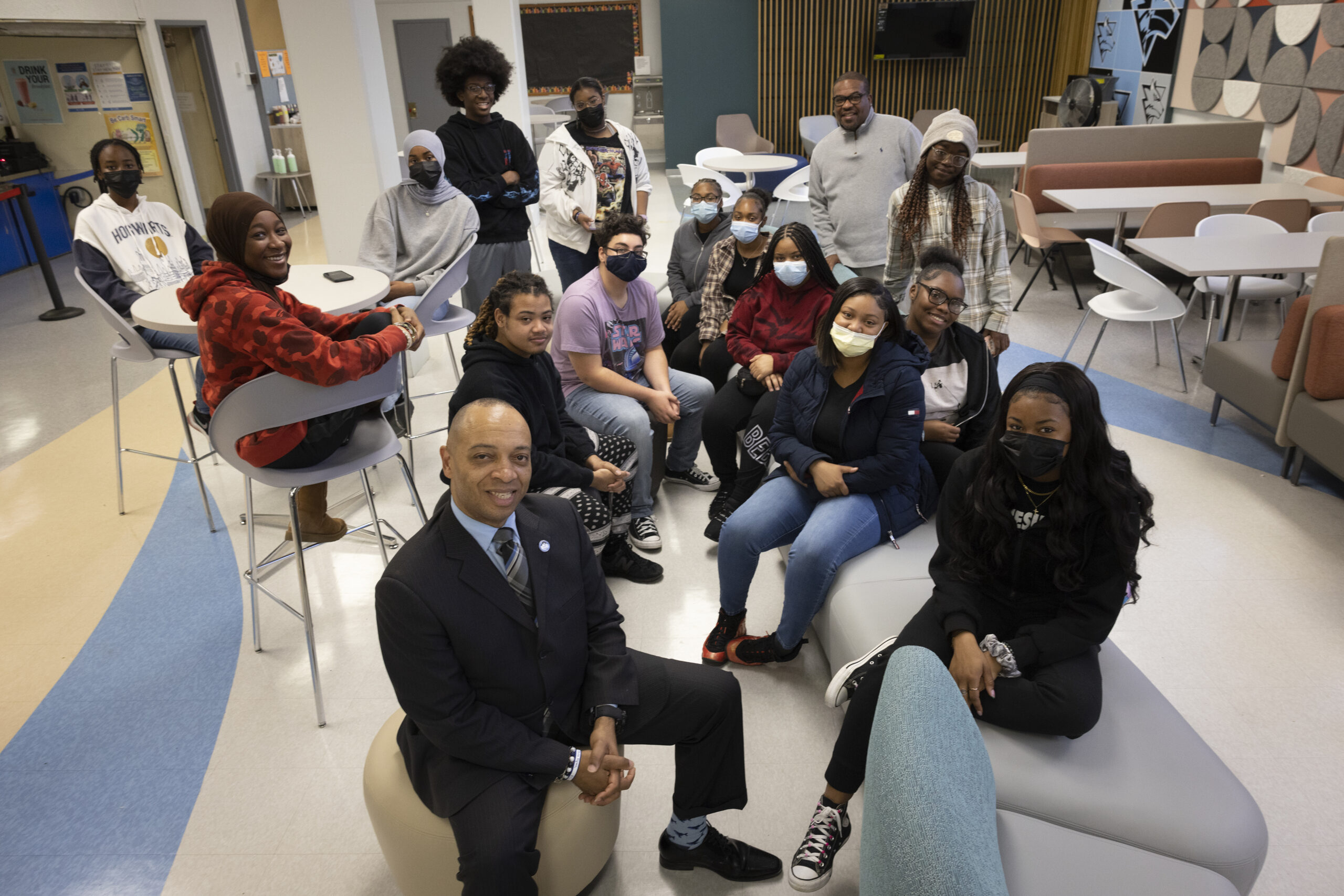
    Then-Principal Richard Gordon (front, tie), then-assistant principal Lawrence King (rear, gray sweater) and members of the Robeson High student body in the newly renovated cafeteria in this 2022 file photo.

    Then-Mayor Jim Kenney visited Robeson to tout its success. So did then-Gov. Tom Wolf.

    Elana Evans, a beloved Robeson teacher and the school’s special education compliance monitor, has already weathered one school shutdown — she taught at the old University City High School, closed in 2013

    That loss was brutal, Evans said. But she is proud of what the community has built at Robeson.

    “It’s an amazing story that continues to stay amazing because we still keep growing,” Evans said. “To say, ‘OK, you’re going to merge with this school, and your name is just going to fade to nothing,’ is, to me, disrespectful.”

    District officials are pitching Robeson’s closure — and the closings writ large — as a move to expand opportunities for all students.

    Sayre, with Robeson as a part of it, would get modernized career and technical rooms and equipment in the facilities plan, Sarah Galbally, Watlington’s chief of staff, told the Robeson community. Sayre would get more accessibility features; renovated stormwater management, roof, and restrooms; and new paint.

    But that didn’t convince Evans.

    “You say one thing, ‘This is how it’s going to look like,’ but for real for real, stop gaslighting me,” Evans said.

    ‘They needed something small’

    Samantha Bromfield homeschooled her twins for seven years, and was wary when she enrolled her children in public school — until Robeson made her believe.

    The move to shut the school frustrated and saddened her, Bromfield said. She and many other Robeson parents said they would not send their children to Sayre.

    “If you as a board choose to close Paul Robeson, I choose to pull my children from the public school system,” Bromfield said at meeting held at Robeson on Saturday. “They needed something small. They needed a family. They needed someone who could hold their arms around the children and say, ‘Hey, are you having a bad day?’”

    Multiple parents echoed Bromfield’s statements.

    The district is choosing to invest in some schools but not others under the facilities proposal, they said.

    Cassidy got a new school, why not us?” one parent told district officials, referring to a $62.1 million new building for a West Philadelphia elementary school.

    ‘Y’all don’t know’

    Ahrianna DeLoach, a Robeson ninth grader, struggled in middle school but is soaring at Robeson, she said, because of the nature of a place where teachers know every student’s name.

    “I don’t want it to close down,” DeLoach said. “I was looking forward to graduating from this school. It would devastate me if I couldn’t.”

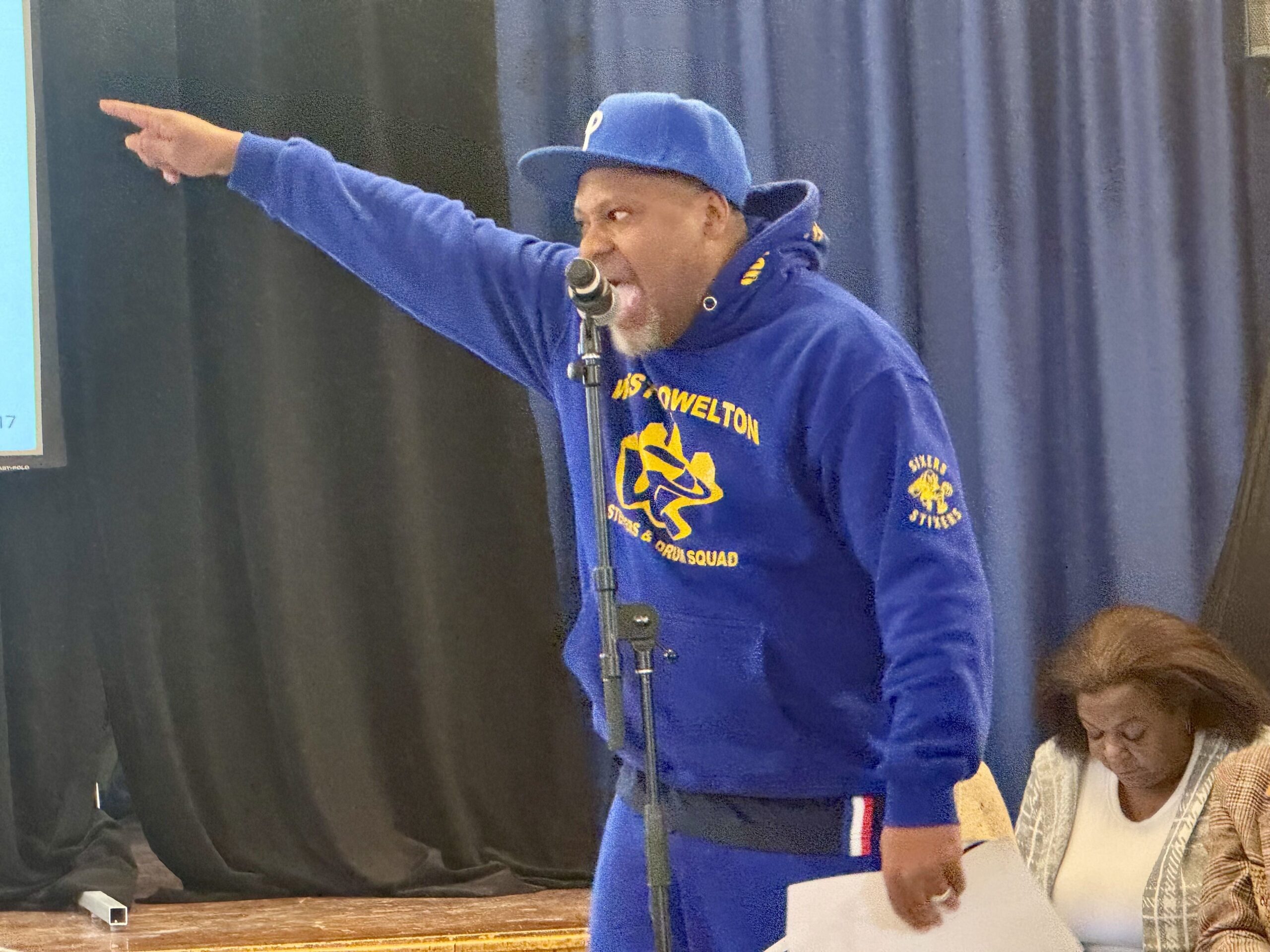
    Antoine Mapp Sr., a West Philadelphia resident, expresses frustration that the Philadelphia School District is attempting to close Paul Robeson High School. Mapp spoke at a district meeting on the subject.

    West Philadelphia resident Antoine Mapp Sr. graduated from University City High, but has been spending time at Robeson since he was 11. Mapp’s West Powelton Steppers and Drum Squad rehearses inside the Robeson gymnasium.

    It feels especially cruel to lose Robeson as gentrification creeps in, Mapp said, and with gun violence still plaguing Philadelphia. He worries about the routes children would have to take to get to Sayre, and about neighborhood rivalries.

    “You guys don’t understand what it’s like living in the community or our neighborhood, or what we go through,” Mapp said. “Y’all don’t know how hard it is just to go to the store in our community. Y’all don’t know what it’s like trying to go to an activity in our neighborhood. We have none of those things. Now you want to take this school away from us and send our kids to different communities. I want you to know that the crime rate and the murders are going to increase and there’s nothing y’all can do about it.”

  • This is the moment 18-year-old South Jersey figure skater Isabeau Levito has been waiting for: The Olympics

    This is the moment 18-year-old South Jersey figure skater Isabeau Levito has been waiting for: The Olympics

    Even as a tiny child in her car seat, Isabeau Levito talked about how much she wanted to go to the Olympics.

    At 3, she had watched the 2010 Winter Games on TV and was charmed by the figure skating, mimicking Coatesville native Johnny Weir’s movements on the screen. Her mother, Chiara Garberi, thought they’d try skating and brought her to the Igloo Ice Rink in Mount Laurel. Levito quickly took to it.

    The next year, she skated in her first event, the Philadelphia Areas Figure Skating Competition. She won. It was the first of many victories as she moved up the levels.

    About five years ago, the 2023 U.S. champion said, it all came into focus. The Olympics could be a reality, and the 2026 Games in Milan and Cortina could be her Games.

    With Italy in her sights, both of her programs this year were set to Italian music. The short is to a compilation of sassy songs from Sophia Loren movies. The free skate, or long program, is to “Cinema Paradiso” by Ennio Morricone.

    In January, at the U.S. Figure Skating Championships in St. Louis, that goal became a reality. She skated two clean programs with her signature beautiful footwork and spins and won the bronze medal.

    “Isabeau Levito is the skater in the snow globe,” NBC commentator and 1998 Olympic gold medalist Tara Lipinski said on the Today show.

    Two days after she competed at nationals, Levito was named to the Olympic team.

    “The Olympics is [always] in the back of your mind,” Levito said last month. “Because, technically, everything gets you there — slowly. But the next stop is actually the Olympics. It’s insane.”

    Not that she has any plans to retire after this season. Levito said she already is looking forward to the offseason, when she can work on some of the hardest jumps. This season was all about consistency and her best elements.

    But as she grew up, these Olympics seemed like the Games to aim for. Her mother grew up in Milan. Her grandmother and other relatives still live there. She knew she would be 18 and would have a few years as a senior competitor under her belt.

    Except for some minor bumps in the plans, including an injury that took her out for much of last season, Levito’s timeline worked out. All along the way, her elegant skating earned her medals at almost every important event leading up to this month’s Olympics.

    Born in Philadelphia, Levito grew up in Mount Holly and now lives closer to the rink in Mount Laurel, which has been her second home for nearly her entire life.

    She was named after Michelle Pfeiffer’s character in Ladyhawke, her mother’s favorite movie.

    “As a young, young kid, I was like, ‘Why is this my name?’” Levito said. “I always have to explain it.”

    The pronunciation is “ease-a-bow,” Levito said, but she’s fine with people calling her “izz-a-bow.”

    Isabeau Levito’s programs this season are set to Italian music, a nod to the Olympics’ location and her mother’s homeland.

    She never had to move away from South Jersey to train (“We love Wawa” and she doesn’t love pumping gas, she told Team USA).

    She has had the same coach — Yulia Kuznetsova — the whole time. She also works with Kuznetsova’s husband, Slava Kuznetsov, as well as Otar Japaridze, a former Georgian ice dancer, who competed in those 2010 Olympics that caught Levito’s attention. (Japaridze‘s partner was Allison Reed, who now skates with Saulius Ambrulevicius and finished sixth in ice dance, representing Lithuania.)

    “I have a really, really good coaching team,” Levito said, “they kind of hit all the spots with me, and I’ve been working with them since the very beginning. I feel like they made me such a well-rounded skater.”

    South Jersey figure skater Isabeau Levito skates after being named an Olympian at the 2026 U.S. Figure Skating Championships in St. Louis.

    In 2018, at just 10, Levito won her first national championship, at the juvenile level. That’s the beginning of the competitive track, and most skaters are landing all double jumps and some triples.

    The next year, she won silver in intermediate.

    In 2020, she was one of the top two skaters in the eastern sectional at the novice level, so she was invited to skate in juniors at nationals. Most skaters who do that don’t place and need to change their programs midseason to accommodate different requirements. But Levito earned silver that year as well.

    In 2021, she won junior.

    After that, she competed as a senior. Her first year, she earned the bronze medal at nationals but, at 14, was too young to make the Olympic team. (That year, both of her 2026 Olympic teammates had to sit out nationals because they had COVID-19. Alysa Liu already was a two-time national champion, so she made the team anyway. Amber Glenn had been the silver medalist the year before, but she was not chosen.)

    Instead, Levito was sent to the World Junior Championships — which she won.

    Over the years, she won six Grand Prix series medals, including the silver at the Grand Prix Final in 2022 and the gold at the Grand Prix of France in 2023. She also was the 2024 World Figure Skating Championships silver medalist.

    When she’s not on the ice, she’s decorating her apartment, reading, crocheting, bedazzling her makeup cases, and taking care of her cat.

    She graduated from her online high school last year and wants to go to college. But after leaving traditional school in fourth grade, she’s had enough of online learning.

    “I wouldn’t want to do [college] online,” Levito said last March. “I would want to go in person.”

    But the run-up to the Olympics has been extra busy.

    “I‘m aware that if I want to go to university next year, I need to do the SATs, the college admissions,” she said in December. “So it makes me think that maybe I might wait another year.”

    But first comes her Olympic debut. There is talk that the U.S. women — who named themselves Blade Angels — could sweep the podium.

    The three are good friends. In December, Liu called Levito “the wittiest person I ever met.”

    Glenn is the three-time U.S. champion and 2024 Grand Prix Final champion. Along with her two national wins, Liu is the reigning world and Grand Prix Final champion.

    But they’re not the only stars. The Japanese team includes three-time world champion and 2022 Olympic bronze medalist Kaori Sakamoto. Her two teammates also are serious contenders.

    Another contender is Adeliia Petrosian, from Russia, who is the only woman competing who is likely to attempt quadruple jumps.

    But Levito has her eye on the prize, which means enjoying the Olympics to the fullest.

    “And obviously skating my best,” she said, “but I can already feel like I will. So that’s really what I’m really striving for.”

    How to watch

    Women’s short program: Tuesday, Groups 1 and 2, 12:45 p.m. on USA and Peacock. Groups 3, 4, and 5, 2:40 p.m. on NBC Sports Network (NBCSN) and Peacock. (Levito will skate in Group 4 or 5.)

    Women’s free skate: Thursday, 1 p.m., on NBC and Peacock, 1:30 p.m. on USA.

  • Letters to the Editor | Feb. 16, 2026

    Letters to the Editor | Feb. 16, 2026

    Get active

    Primary election season is approaching, but for some reason, most Americans do not bother to participate. Typically, in nonpresidential election years, somewhere around 20% of voters take part. So often, because of the poor turnout in the primaries, a tiny fraction of the population decides which candidates will represent the two parties in the general election. This often leads to a situation in which many voters complain that neither candidate excites them. You should keep in mind that about 95% of elected offices are held by either a Republican or a Democrat, and they were all nominated in a primary election. And for those who have decided to register as independent, be aware that in Pennsylvania, New Jersey, and Delaware, the primaries are closed, meaning only Republicans can vote in the Republican primary, and only Democrats in the Democratic primary. Rather than bemoan the system, why not take 10 minutes, look at the party platforms, decide which one comes closer to your worldview, and change your registration so that you can be part of the solution? Registration can be done online in two minutes, and it is free of charge. This year, why not make an effort to get back in the habit of being part of our great democratic process? Your country needs you.

    Patrick J. Ream, Millville

    Opposing ICE

    I am grateful that Sen. John Fetterman has voiced his opposition to the planned immigrant detention centers in Berks and Schuylkill Counties. His reasons, which focus primarily on the strain to the local communities, are valid. But he doesn’t talk about the effect on the people who might be sent to those centers. Since Donald Trump became president, at least 30 people have died in U.S. Immigration and Customs Enforcement custody. Centers have been reported to have inadequate food and housing, and now that the government won’t reimburse for it, medical care is almost nonexistent. Most of these detainees are not dangerous criminals. Most make valuable contributions to our communities. They are our neighbors.

    Almost as troubling is the profit made by the wealthy, well-connected few. For example, records show a Berks County family sold a property for $1.5 million in 2021. It was sold again, in 2024, with a warehouse on it for $57.5 million, and ICE bought it for $84.5 million. Then, there are the profits of the private companies that run the centers and often have no demonstrated capacity to do so.

    Trump’s Environmental Protection Agency established last month that a human life has no value. ICE confirms it.

    Emily Davis, Philadelphia

    Closed schools — or closed minds?

    Twenty public schools are scheduled for closure in Philadelphia, where 90% of the student population is African American and where half the seats are empty. This may seem like a problem, but with imaginative thinking, it can present a great opportunity. Educators should continue to teach in one half of the buildings and use the other half for community services that support building skills for young people, such as operation of retail stores run by students, teaching them about businesses and financial literacy, spaces for town watches and police, protecting the schools and the community, and spaces for the homeless. With hundreds of seats in these school buildings closed, hundreds of minds in our school administration may be opened.

    Leon Williams, Philadelphia

    Truth hurts

    In a recent letter to the editor, Mark Fenstermaker took offense to what he believes is the left-handed slant of The Inquirer. Without citing any factual support, he says that 95% of viewpoints in The Inquirer are slanted to the left. He writes that he hopes the paper would strive to present “unbiased, factual reporting and opinion.” That does not mean the editors at The Inquirer should abandon reality in favor of artificially balancing the number of left vs. right-sided opinions. It seems to me that, like the current herd of Donald Trump followers, truth and facts are your kryptonite. If you don’t like the truth, demean it. If facts get in the way, ignore them. Yes, U.S. Immigration and Customs Enforcement has a legitimate goal in policing illegal immigration. Dressing up like Nazi brownshirts and wearing face masks does not advance that goal or engender public support. And killing two innocent people is “slaughter” under any reasonable definition. By the way, the writer’s MAGA hat is showing: neither of these victims “chose to put themselves in danger.” I find the letters policies of The Inquirer quite fair. If not, why was I subjected to the opinion of Mark Fenstermaker?

    Jim Lynch, Collegeville

    . . .

    In a recent letter to the editor, Mark Fenstermaker asks why The Inquirer does not cover the “tens of thousands” of migrants who have committed violent crimes.

    It’s a fair question in the current climate, where our top officials falsely accuse Haitians of eating dogs and where the president’s comment about “shithole” countries echoes years later. The fact of the matter is, according to the American Immigration Council, violent crime among immigrant populations — both documented and undocumented — is about half what it is among the native-born population. There are not “tens of thousands” of cases to cover.

    During times of economic unrest, immigrant populations have become scapegoats for larger social issues. In fact, during the late 19th and early 20th centuries, the scapegoats were often Southern Europeans, particularly Italians. Earlier, Irish immigrants were assumed to bring increased crime to the U.S. During this time period, fear of Catholicism was baked into the anti-immigrant propaganda, much like fear of migrants today targets Muslims.

    Considering the historic pattern of attacks on migrants helps us understand the propaganda currently promoted by the White House and circulating on social media.

    Ann E. Green, Bala Cynwyd

    . . .

    To rebut statements by the obviously biased person from Warminster: “Tens of thousands of violent, criminal, illegal immigrants” removed from our streets? A gross, unproven exaggeration. About 30% of those arrested have criminal charges pending. Speaking as a retired Philadelphia police sergeant, the two killings by ICE personnel were both manslaughter. The shots were fired by agents who were in no danger, thus making it unnecessary to take innocent lives.

    Words of exaggeration and gross generalization matter.

    Larry Stroup, Warwick

    Toxic brew

    In response to the article about the city no longer dumping snow in the Schuylkill: Granted, the snow piled up on the side of our roads does contain a toxic brew of chemicals, but where does one think those chemicals go when the snow is collected and moved to land-based locations? Do they magically evaporate, never to be seen again? Of course not. The snow melts, and those chemicals are released to either wash into the river or soak into the ground, where they, too, will most likely end up in the river. That part of the argument against dumping accumulated snow into the river doesn’t hold water. Pun intended?

    Tim Reed, Philadelphia

    Learn all history

    I write this having just finished reading the Feb. 8 Opinion section of The Inquirer, which was entirely made up of essays about the 100th anniversary of Black History Month. What a treat to learn about the evolution of what was Negro History Week in 1926 into what became Black History Month in 1976 — and to learn, from the seven essayists, Philadelphia’s role in its growth until now. I concur that “studying the history of Black achievement is integral to understanding the American Experiment.” I am a “Johnny come lately” in learning about the heritage of our African American brothers and sisters. I was studying at Bennett College in Greensboro, N.C., and was able to take an Afro-American studies six-credit course in 1970. It was quite an opportunity for this young white woman from suburban Philadelphia to become someone “ahead of her times” in learning the names, achievements, and obstacles of prominent African Americans such as Alain Locke, W.E.B. Du Bois, Phillis Wheatley, James Weldon Johnson, and Mary McLeod Bethune. As one of the writers in the section, Harold Jackson, pointed out, now, “instead of celebrating individuals, Black History Month should focus more on the events and ideas that continue to impact how Black and White people coexist in an America that continues to struggle with covert and subtle racism.” Black History Month is a good time to reflect on “the uncomfortable reminders of what America was, and to take the steps to avoid slipping into a past we need to remember but not repeat.” We are still being called to a “more perfect union.”

    Mary A. McKenna, Philadelphia

    Join the conversation: Send letters to letters@inquirer.com. Limit length to 150 words and include home address and day and evening phone number. Letters run in The Inquirer six days a week on the editorial pages and online.

  • Dear Abby | Friendly professional tired of getting hit on at work

    DEAR ABBY: I work in a place where being friendly to customers is part of my job requirement, but I feel like many guys interpret this the wrong way. It seems I am a “jerk attractor,” and I don’t know how to make it stop. The worst of these jerks can’t take a hint that I’m not interested. One of them is a coworker who sexually harasses me all day. Please help me so I stop attracting these losers.

    — FRIENDLY IN MASSACHUSETTS

    DEAR FRIENDLY: While this is certainly not your fault in any way, many women in the hospitality industry wear a wedding ring to discourage the kind of unwelcome attention you have described. However, a coworker doing this is a different story. There are workplace rules to protect women and men, and they should be listed in your employee handbook.

    Start documenting what this person has been doing and warn the other female employees. The next time it happens, inform him that the name for what he’s doing is harassment, it’s unwelcome and you will report it to your boss. If that doesn’t discourage him, follow through, because it could cost him his job.

    ** ** **

    DEAR ABBY: I have a longtime friend with whom I had a wonderful relationship. Over the last couple of years, he has made some bad life decisions. He is now without a job, without a girlfriend and in an apartment that’s less than desirable. For a long time, I kept my opinions to myself. But, finally, I started offering advice with the hope he’d see that his decisions are causing him grief and hardship. I always do it with love, but he becomes very upset when I try to help him. Am I wrong for trying to guide a dear friend toward a better path?

    — IN A DILEMMA IN NEW JERSEY

    DEAR DILEMMA: Your friend may not be ready to listen to someone telling him he has chosen the wrong path. Because the guidance you have so generously offered has fallen on deaf ears, recognize you are wasting your time and turn off your fountain of wisdom.

    ** ** **

    DEAR ABBY: My husband and I are seniors. We got married in 2020. When we were dating, things were fun and good. Now, however, I’m in a no-talk, no-response nightmare. After the first two years, he changed. He never starts conversations and never says “thank you” for anything. He simply doesn’t talk. If I ask questions, he won’t respond or acknowledge me in any way. If someone calls, he talks and talks with them. Does he hate me? I speak my mind and voice my disappointment. Should I still try to fix it or get out?

    — STUCK IN SILENCE

    DEAR STUCK: You can’t fix something that may not be your fault. However, before calling it quits, you can offer your husband the opportunity to get your marriage back on track with the help of a licensed marriage and family therapist. Schedule an appointment with one, and if your husband refuses to go with you, go alone.

  • Horoscopes: Monday, Feb. 16, 2026

    ARIES (March 21-April 19). The thing you used to do for fun may seem to lack luster. Ask the silver spoon — exposure tarnishes shiny things. So you venture out, open to the gleam of new interests. Give this one a rest for now.

    TAURUS (April 20-May 20). Step back from the things or people that consistently stress or destabilize you. It’s self-protection if it’s purposeful and reflective. In your heart, you know the difference between conserving energy and avoiding discomfort.

    GEMINI (May 21-June 21). Be cautious of anyone who profits by convincing you that a complex human problem has a simple, purchasable fix. If the thing you’re struggling with could truly be solved by a product, the fix wouldn’t be secret. It would already be everywhere.

    CANCER (June 22-July 22). Self-esteem isn’t inflated self-regard. It’s realistic self-regard plus self-acceptance. Today, your super talent is seeing yourself clearly, strengths and limits included, and staying on your own side anyway. Positive interactions help, but it’s how those interactions are interpreted that matters most.

    LEO (July 23-Aug. 22). It feels like you’re too busy to ask a lot of questions of the moment. But it’s worth it to be a little curious today because one good question is the difference between routine and fun. Learning a bit more gives the task (and the people involved) texture. Life becomes vivid.

    VIRGO (Aug. 23-Sept. 22). The long story and the short story are essentially the same, except one is harder to follow as it meanders, repeats and requires a nearly saintly level of patience. Your way of asking for and delivering brevity is effective, respectful and attractive.

    LIBRA (Sept. 23-Oct. 23). You’re preparing for an event that will inevitably come, though perhaps you don’t yet know when. Time for another round of practice. Challenges are training moments. Experiments are thrilling gambles with knowledge as the prize.

    SCORPIO (Oct. 24-Nov. 21). Moving takes effort, but some actions wake and energize you. Thinking takes effort, too, but exciting thoughts give back. The trick to staying light, bright and buoyant is to choose actions and thoughts that leave you with a surplus.

    SAGITTARIUS (Nov. 22-Dec. 21). Sometimes it takes crossing a line to realize where it is. It’s the inspiration for building better rules, methods, fences, checklists, schedules and maps. You will come up with new ways to keep yourself in line and act in your own best interest.

    CAPRICORN (Dec. 22-Jan. 19). Your work will be most effectively aimed at one person. After all, there is no such thing as mass appeal. The appeal is to one person, many times over. And what’s “for all” is more often “for none.”

    AQUARIUS (Jan. 20-Feb. 18). You say what you want to do, and then you do it. Sure, there are thoughts that drift through — fear and doubt, fantasies about the options not taken — all along for the ride as the tide of courage surges, and forward you go.

    PISCES (Feb. 19-March 20). Your mind is an ally. Helpful thoughts only. Good sleep and nutrition make it easier. And if, for some reason, your thoughts won’t behave, write out some good ones and feed them to yourself. It’s forced but effective.

    TODAY’S BIRTHDAY (Feb. 16). It’s your Year of Spirited Adventures, when you feel guided by invisible forces to experience the improbable, exhilarating and transformative. Some of it takes money, which arrives in perfect timing, not as a gift but as an opportunity to gain knowledge and skill you can keep cashing in on. More highlights: A playful companion changes your life for the better. Fitness victories. A happy ending to a long story. Leo and Libra adore you. Your lucky numbers are: 19, 2, 33, 16 and 42.