Tag: topic-link-auto

  • Dear Abby | Babysitting grandkids brings marriage to the brink

    DEAR ABBY: My wife and I stopped having sexual relations eight years ago. She keeps our two grandchildren 11 to 12 hours a day, five (and sometimes six) days a week. (That’s 60 to 70 hours.) By the time they’re picked up, she’s irritated, agitated, frustrated and wants to be left alone. She doesn’t want to talk or spend any time with me. She can’t see that keeping the grandkids that much has interfered with our relationship with each other.

    We are about to separate because I don’t want to live my last few years with someone I can’t hold or kiss and who doesn’t want to hold or kiss me because she’s so irritated and frustrated by the time the kids leave. She doesn’t want to be bothered. She just sits in her recliner and goes to sleep.

    There’s plenty of love, loyalty and trust between us, but after eight years of no intimacy, I think I have waited long enough. I have tried talking to her about it many times. She says she has lost her desire, but she can’t see the reason is because she’s having that same bad day, every day. Any advice before I finalize this?

    — HAD IT IN ALABAMA

    DEAR HAD IT: I am glad you wrote. There may be more than one reason your wife’s energy and sex drive have disappeared. You state that there is plenty of love, loyalty and trust between you. Please suggest to her that she consult her doctor and ask to have her hormone levels checked.

    I can’t help wondering how old your grandchildren are and why she is expected to take care of them for 11 to 12 hours a day. It may simply be too much for her. However, a thyroid issue or a decrease in estrogen may also be contributing to her exhaustion. If that’s the case, there are medical solutions available if your wife is willing to explore them.

    Your marriage is worth fighting for, and I hope your wife will see the wisdom before she or your relationship collapses under the weight of the responsibility she has taken on.

    ** ** **

    DEAR ABBY: I am a 74-year-old woman who has no surviving immediate family. I have two cousins who are still living. One of them is my age and, to this day, may not know he was adopted as a baby. I discovered it when I was very young and snooped through my mother’s nightstand drawer. I mentioned it to my aunt (his adoptive mother) 30 years ago, and she made me promise not to ever tell him. Is it best to let him live his entire life not knowing, or should I somehow bring it up to him?

    — COUSIN WHO WANTS THE BEST FOR HIM

    DEAR COUSIN: I will assume that both of your cousin’s parents are deceased. How do you think he will feel when you announce that his entire life has been a lie? Do you think he will be warmly greeted and accepted by siblings who never knew he existed? I know you are eager to tell him the truth, but “the truth” is that his parents are the people who raised him. At this late date, I think it would be better to keep the promise you gave to your aunt rather than disrupt your cousin’s life.

  • Horoscopes: Wednesday, Dec. 17, 2025

    ARIES (March 21-April 19). The destination mindset might work for a vacation or a game, but it doesn’t work for the things that matter. Important things need a mindset of practice. Love, relationships, health — it’s built over again every day.

    TAURUS (April 20-May 20). The way you show up becomes what people remember about you. Your mood reads, your kindness makes an impression, and your attitude changes the plot. It matters today because someone chooses a path based on an interaction with you.

    GEMINI (May 21-June 21). Knowledge, compliments and skin cream are all things that must be absorbed before they start to work for you. Today, you’ll soak in your experiences, giving each moment a second to settle before you sprint ahead.

    CANCER (June 22-July 22). Something in your world feels off. That’s your aesthetic intuition talking. It’s the part of you that cares about harmony, beauty and intention. Adjust what needs adjusting. You’re the artist here. Make your world match your vision.

    LEO (July 23-Aug. 22). You’re facing a high-quality dilemma. It’s the kind of problem that only shows up when life has improved — all these quality options to choose from. Some might call it an embarrassment of riches. You’ll sort it with gratitude in your heart.

    VIRGO (Aug. 23-Sept. 22). The value you offer doesn’t have to come only from you. Your network is a treasure you can share, too. Today, you’ll connect people who need each other, helping expertise and opportunity flow in the right direction.

    LIBRA (Sept. 23-Oct. 23). Be careful who you involve at this tender point in the creative process. When your idea is brand-new, it’s fragile, and you don’t want it to be changed by someone else’s doubts or enthusiasm. It’s too early for outside influence.

    SCORPIO (Oct. 24-Nov. 21). Having to be right all the time is exhausting and very boring. It keeps one living defensively and, in the past, scrambling for evidence to support stances and claims instead of living and learning in the moment. You’ll liberate yourself.

    SAGITTARIUS (Nov. 22-Dec. 21). There are many things that can expand your sense of what’s possible. Conversations, brilliant media, travel and even your own dreams. You’re ready for an experience that broadens your mind, sharpens your perception and delights your spirit. Here it comes!

    CAPRICORN (Dec. 22-Jan. 19). People who signal superiority are usually showing insecurity instead. Try to meet it with patience. They need extra care, not confrontation. What looks like a problem could actually be an opportunity to build a meaningful and unexpected bond.

    AQUARIUS (Jan. 20-Feb. 18). Do enough people know what you do? Are they the ones who’ll truly benefit from it? Today, you’ll ask the right questions about your audience, make a few adjustments and see a real boost in what comes back to you.

    PISCES (Feb. 19-March 20). Each person brings out a different side of you. Today, people will not do what you expect, and your reactions will surprise you. It’s exciting to realize that each new person is a chance to know yourself more completely.

    TODAY’S BIRTHDAY (Dec. 17). Welcome to your Year of Beautiful Audacity. You’ll take calculated leaps that pay off spectacularly. There’s nothing loud in your performance, just an inner certainty that makes rooms go silent when you speak. More highlights: Financial opportunities appear from unexpected corners. You’ll have front-row seats to something extraordinary. A mentor will see your potential before you do. Gemini and Capricorn adore you. Your lucky numbers are: 8, 19, 20, 1 and 11.

  • The Trump administration’s immigration raids are testing this sanctuary city

    The Trump administration’s immigration raids are testing this sanctuary city

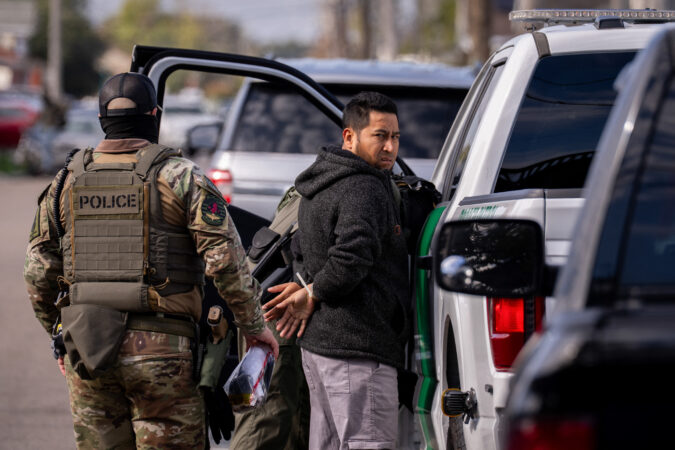
    GRETNA, La. — Siomara Cruz was not troubled when she saw two Latina immigrants handcuffed earlier this month by masked immigration agents outside a restaurant in this New Orleans suburb.

    “They need to do things the proper way,” said Cruz, 59, a housewife whose parents emigrated from Cuba. “The law is the law. Every country has their law, and you’ve got to respect it.”

    Across the street, Tracey Daniels said it was “awful” to see immigration agents in an unmarked SUV detain a Latino man outside the gas station kitchen where she was preparing lunch plates of red beans, rice, and fried catfish.

    “They’re just snatching these people, snatching them away from their families,” said Daniels, 61. “Now they got people afraid to come outside, businesses closing.”

    The immigration operation, dubbed Catahoula Crunch by the Department of Homeland Security, follows similar crackdowns in Chicago, Los Angeles, Charlotte, N.C., and other cities. DHS Assistant Secretary Tricia McLaughlin said in a statement earlier this month that 250 people had been arrested since the start of the operation.

    The mission is exposing stark divides in and around New Orleans that reflect broader national reactions to the administration’s immigration raids — and who should help enforce them.

    Across 10 national polls in November and early December, 43% approve of President Donald Trump’s handling of immigration, while 55% disapprove. The share of people who approve of Trump’s handling of immigration has dropped from about 50% in March. Last week, Illinois Gov. JB Pritzker, a Democrat, signed a law seeking to limit immigration enforcement in his state as he continues challenging the administration’s aggressive campaign there.

    New Orleans is a “sanctuary city,” where officials have historically refused to support federal immigration sweeps. But new state laws designed to penalize those who impede immigration enforcement could put officials and officers at risk if their departments do not cooperate with federal operations.

    And some surrounding police departments, including in Gretna, have signed 287(g) agreements to work with U.S. Immigration and Customs Enforcement to deport people who authorities say entered the country illegally.

    Those agreements have also divided residents. Some said that immigration enforcement should fall exclusively to federal agents — that having local officers partner on the issue risks alienating immigrant communities or violating people’s rights. But police supporting the operations said they get more complaints about crime in their communities than they do about Catahoula Crunch.

    Gretna Deputy Police Chief Jason DiMarco said his 150-person force needs to serve everyone in its diverse community, but added that having so many undocumented residents in the city makes it harder to identify suspected criminals. Last month, he said, local police accompanied ICE agents on a raid that picked up four suspects, including an alleged MS-13 gang member. DiMarco noted that within the last year, Gretna police have investigated several serious crimes committed by undocumented suspects, including one who fled the country after allegedly killing an immigrant who had come to the United States legally.

    Now, because of the 287(g) agreement, officers can coordinate directly with ICE.

    “If they run across an illegal immigrant in their day-to-day patrol activities … they can actually detain the person, check their legal status, and if they aren’t here legally, we can contact ICE and they’ll come and get them,” DiMarco explained of the partnership during an interview at his office earlier this month.

    DiMarco, who is from Gretna, has watched the city of nearly 18,000 grow more diverse, to include a member of his own family who emigrated from Honduras. Like many in the New Orleans area, his family tree includes immigrants from several countries, including France, Italy, and Cuba.

    “New Orleans is the original melting pot of the world,” he said. “… People from every walk of life lived in this city. And they intertwined and managed to live together cohesively.”

    So far, DiMarco said, he hasn’t fielded any complaints about his department’s work with ICE. Even if people don’t agree, he said, officers have a duty to enforce the law, including one signed in June by Gov. Jeff Landry, a Republican, that criminalized “any act intended to hinder, delay, prevent, or otherwise interfere with or thwart federal immigration enforcement efforts.”

    Anyone in violation could face jail time or fines.

    “We don’t get to pick and choose which you can and can’t enforce,” DiMarco said.

    But DiMarco also worries the ongoing raids may make immigrants even more hesitant to report crime.

    “We don’t want somebody to get victimized and get picked on, whether they be illegal or not,” he said. “Nobody deserves to be a victim of a crime.”

    Most Catahoula Crunch activity has been to the west of New Orleans in Jefferson Parish, which includes Gretna and other towns where law enforcement agencies signed 287(g) agreements. In last year’s presidential election, 55% of Jefferson Parish voted for Trump, while 82% of neighboring Orleans Parish voted for Democratic nominee Kamala Harris.

    Kenner, Jefferson Parish’s most populous city, has more than 64,000 residents — about one-third of whom are Latino, according to U.S. Census Bureau data. Police Chief Keith Conley said Kenner partnered with ICE at the request of local business owners, including immigrants.

    “We had members of our community pleading with us to keep our community safe,” Conley said, describing gang activity that he said had its roots in Central American countries that residents of Kenner had fled. “They saw the ways of their home countries coming here. When I have business leaders coming to me, I have to respond.”

    Conley said his city has experienced “some pretty heinous crimes” in recent years, including murder and child sexual assaults.

    “And we weren’t getting much cooperation” from federal officials, he said. “It was a failure at the top.”

    Landry requested a National Guard deployment to New Orleans in September, citing an alleged increase in violent crime, even though police and city leaders say crime has decreased and federal support is not needed. The city’s homicide rate is nearly the lowest in 50 years. Violent crimes — including murders, rapes, and robberies — have all decreased 12% through October compared with a year ago, according to New Orleans police.

    Conley and some Jefferson Parish residents, however, said they are grateful the Trump administration has sent federal agents into their region. Outside a Lowe’s hardware store in neighboring Metairie, where immigration agents were spotted this month, Howard Jones, 71, said he was supportive of local law enforcement agencies joining the operation.

    “I’m all for people being deported who are not here legally,” said Jones, a retired data warehouse analytics consultant and self-described moderate conservative who voted for Trump the last three presidential elections.

    But Gloria Rodriguez, 38, a Mexican immigrant who works in construction, said she did not like seeing local police involved. Though she is a legal permanent resident and her husband and 18-year-old son who were in the truck with her are U.S. citizens, they carried their passports and immigration paperwork in case they were stopped by federal agents.

    “They should not cooperate with immigration, just do their job and get criminals out of the streets instead of hardworking people,” Rodriguez said, adding that she has been troubled by reports of U.S. citizens being caught up in the immigration crackdown.

    “What if they take us?” she said.

    Unlike their counterparts in Gretna, Kenner, and other cities with 287(g) agreements, New Orleans officials have resisted cooperating with the Trump administration’s efforts.

    New Orleans police adopted a policy that prohibits officers from assisting federal immigration enforcement except under certain circumstances, such as a threat to public safety. The policy resulted from a 2013 federal consent decree to address a history of unconstitutional practices, including racial profiling. Last month, a federal judge ended the consent decree, but Police Superintendent Anne Kirkpatrick said last month that immigration remained a civil issue, adding that police would not enforce civil laws but instead ensure that immigrants “are not going to get hurt and our community is not in danger.”

    Louisiana Attorney General Liz Murrill, a Republican, has since encouraged Kirkpatrick to have officers “fully cooperate” with federal immigration officials.

    Murrill warned that New Orleans police policies “appear to conflict with current state law,” referencing this year’s statute that says thwarting federal immigration efforts could be considered obstruction of justice.

    Kirkpatrick did not respond to a request for comment, but a department spokesperson said in a statement this month that “NOPD is not involved in, informed of, or responsible for any enforcement activity conducted by ICE, DHS, or U.S. Border Patrol.”

    The police department’s role, the statement added, “is to enforce state and municipal criminal laws. We do not handle or participate in federal immigration enforcement.”

    Murrill is also embroiled in a legal battle with the Orleans Parish Sheriff’s Office, which operates city jails under a federal consent decree and has refused to cooperate with ICE.

    Chief Border Patrol Agent Gregory Bovino has appeared in the French Quarter of New Orleans, Kenner, and other areas with agents, where he has been met with protests and signs of support. Anti-ICE protesters confronted Bovino and temporarily shut down a New Orleans City Council meeting this month, but other residents posed for photos with Bovino while holding a homemade sign that read: “Thank you ICE.”

    New Orleans Mayor-elect Helena Moreno is already pressing federal officials to prove they are targeting only immigrants with violent criminal histories. Moreno, a Democrat who will be the city’s first Latina mayor, will not take office until Jan. 12. But she said she is concerned Catahoula Crunch is creating a “culture of fear” and forcing businesses to close and workers to stay home. She created a website advising residents of their rights, and the city council launched an online portal where they can report alleged abuse by federal officers.

    Some New Orleans business owners posted “ICE Keep Out” signs this month, while others said they worried that doing so could make them targets. Antoine’s Restaurant in the French Quarter held meetings with employees — all documented — to address their fears after seeing reports of masked immigration agents conducting raids in armored vehicles.

    “It’s giving a lot of people anxiety, including our employees,” said Lisa Blount, whose family owns the restaurant, as she stood near the packed bar. “We are in a busy season, an important, celebratory time in New Orleans. We’re not going to let them bully their way in.”

    A few streets away, Dominican immigrant Diomedes Beñalo was unloading gold chairs for a wedding and said he wished local police would do more to protect residents’ rights. He questioned why federal agents are hiding their faces.

    “That seems like a thing that can make them violate people’s rights,” said Beñalo, 40, adding that undocumented immigrants’ civil rights should not be violated.

    “The police should make sure that doesn’t happen,” he said. “That’s what we pay police to do.”
  • Coast Guard enacts policy calling swastikas, nooses ‘potentially divisive’

    Coast Guard enacts policy calling swastikas, nooses ‘potentially divisive’

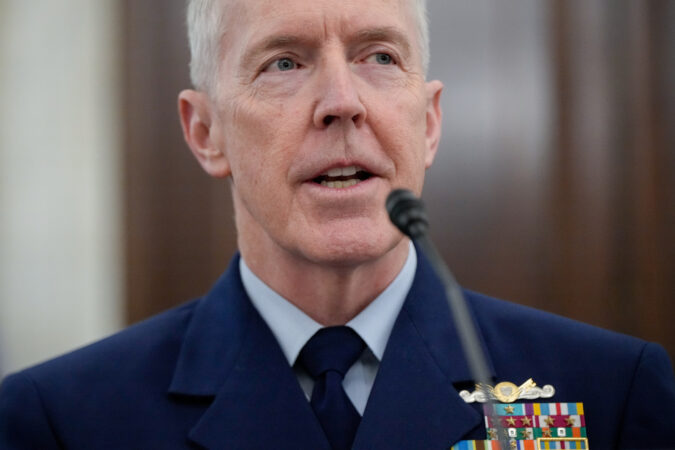
    The U.S. Coast Guard has allowed a new workplace harassment policy to take effect that downgrades the definition of swastikas and nooses from overt hate symbols to “potentially divisive” despite an uproar over the new language that forced the service’s top officer to declare that both would remain prohibited.

    The new policy went into effect Monday, according to written correspondence that the Coast Guard provided to Congress this week, a copy of which was reviewed by the Washington Post. The manual is posted online and makes clear that its previous version “is cancelled.”

    Spokespeople for the Coast Guard and the Department of Homeland Security, which oversees the military service, did not immediately respond to requests for comment. The symbols issue was expected to come up at a House committee hearing Tuesday.

    The Post was first to report on the Coast Guard’s plan to revise its workplace harassment policy last month. The Trump administration called the article “false,” but within hours of its publication the service’s acting commandant, Adm. Kevin Lunday, issued a memo forcefully denouncing symbols such as swastikas and nooses, and emphasizing that both remain prohibited.

    Lunday said at the time that his Nov. 20 memo would supersede any other language. It was not immediately clear Tuesday why publication of the new harassment policy was not paused so the “potentially divisive” language used to describe swastikas and nooses could be removed to align with Lunday’s directive.

    Lunday has been the Coast Guard’s acting commandant for several months. He was elevated to the role after the Trump administration ousted his predecessor, Adm. Linda Fagan, citing among other things her “excessive focus” on “non-mission-critical” diversity and inclusion initiatives. The Senate is expected to hold Lunday’s confirmation vote later this week.

    The Coast Guard’s policy softening the definition of a swastika — an emblem of fascism and white supremacy inextricably linked to the Nazis’ extermination of millions of Jews and the deaths of more than 400,000 U.S. troops who died fighting in World War II — comes as antisemitism is on the rise globally. At least 15 people were killed over the weekend at a Hanukkah celebration in Australia.

    Deborah Lipstadt, a historian who served as President Joe Biden’s special envoy to monitor and combat antisemitism, said the Coast Guard’s decision to approve the change was “terrifying.”

    “What’s really disturbing is, at this moment, when there is a whitewashing of Nazis amongst some on the far right, and Churchill is painted as the devil incarnate when it comes to World War II, to take the swastika and call it ‘potentially divisive’ is hard to fathom,” Lipstadt said. “Most importantly, the swastika was the symbol hundreds of thousands of Americans fought and gave their lives to defeat. It is not ‘potentially divisive,’ it’s a hate symbol.”

    Citing court documents, Lipstadt noted that Unite the Right marchers in Charlottesville, Va., while planning a 2017 demonstration that left a woman dead and 19 others injured, had urged one another not to use swastikas “because it will paint us as Nazis.”

    “When far-right protesters in Charlottesville were strategic enough to recognize the swastika would do them no good and now we have an arm of the U.S. military saying, ‘It’s not so bad,’ that’s frightening,” Lipstadt said.

  • 10-year-old boy severely burned in Northeast Philadelphia plane crash comes home from hospital

    10-year-old boy severely burned in Northeast Philadelphia plane crash comes home from hospital

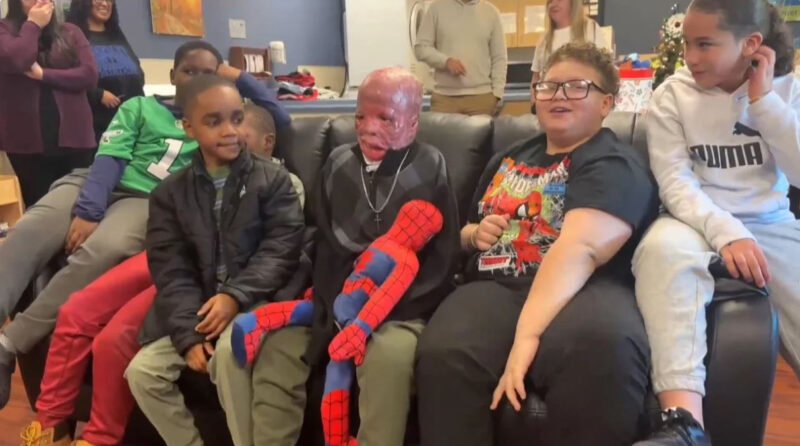
    The 10-year-old boy who was severely burned in the Northeast Philadelphia plane crash was headed home on Tuesday after spending nearly a year in the hospital, his grandmother, Alberta “Amira” Brown said.

    “It’s the best thing ever that he’ll be home for the holidays,” Brown said in the morning as the boy prepared to leave Weisman Children’s rehabilitation hospital in South Jersey. “He is truly happy to be coming home.”

    Ramesses Vazquez Viana, then 9, suffered burns to 90% of his body on Jan. 31 when a Learjet medical transport crashed on Cottman Avenue near the Roosevelt Mall, killing all six people on board.

    Ramesses had been riding in a car with his father, Steven Dreuitt Jr., and Dreuitt’s fiancée, Dominique Goods Burke. Dreuitt, 37, died in the blaze. Goods Burke, 34, died in April from her injuries after spending nearly three months at Thomas Jefferson University Hospital.

    A bystander saw Ramesses after he escaped from the car; the boy’s back was on fire, and his shirt was burned away.

    Police took Ramesses to St. Christopher’s Hospital for Children, and he was later airlifted to Shriners Children’s hospital in Boston. He underwent more than 40 surgeries, including multiple skin grafts. He spent months in physical therapy relearning how to get out of bed, walk and climb stairs, according family interviews with CBS News.

    His classmates from Smedley Elementary School in the Philadelphia’s Frankford neighborhood cheered him on from afar, writing him cards and sending videos.

    Ramesses celebrated his 10th birthday in October at the Boston hospital.

    “No matter how many times you knock him down, he’s strong,” his mother, Jamie Vazquez Viana, told CBS News last month.

    A few weeks ago, Ramesses was moved closer to his Philadelphia home to Weisman Children’s in Marlton, N.J.

    During a phone interview with The Inquirer, Brown said her grandson “has a long road ahead of him” and would need additional surgeries.

    During a visit with him Saturday, he kicked a soccer ball around with her.

    Brown confirmed a CBS report that Ramesses was being released from Weisman sometime Tuesday, but declined to provide specifics.

    Brown said her grandson has chilling memories from that night: He was in the car’s backseat texting with Brown at about 6 p.m. when the plane exploded in a giant fireball, and he heard loud booms.

    As flames engulfed the car, Ramesses tried to help his father, who couldn’t move his legs. The child heard his father yell to get out, and that he loved him. Ramesses told his father he loved him back. He could hear Goods Burke screaming.

    Steven Dreuitt Jr. and Goods Burke shared a teenage son, Dominick Goods, who is now a junior at Imhotep Institute Charter High School. Brown said her older grandson is “really struggling” with his parents’ deaths.

    The six passengers killed on the medical transport jet were Mexican nationals. They included the pilot and copilot, two medical personnel, an 11-year-old girl, and her mother. The girl was headed home to Mexico after undergoing treatment for a spinal condition at Shriners Children’s Philadelphia.

    More than a dozen people on the ground were injured, and 16 homes were badly damaged, temporarily or permanently displacing several families.

    Investigators with the National Transportation Safety Board haven’t yet determined why the plane crashed. A preliminary report, released earlier this year, found the cockpit voice recorder “had likely not been recording audio for several years.” No distress calls were made by the pilot or copilot.

  • In Marty Small Sr. trial, jurors will decide whether A.C. mayor is guilty of child abuse

    In Marty Small Sr. trial, jurors will decide whether A.C. mayor is guilty of child abuse

    MAYS LANDING, N.J. — After a week in court, attorneys delivered closing arguments Tuesday in the child abuse trial of Atlantic City Mayor Marty Small Sr.

    Defense lawyers for Small, a 51-year-old Democrat who was reelected this year, said the allegations that he and his wife had abused their teenage daughter multiple times in late 2023 and early 2024 were false.

    “We are not guilty,” his attorney, Louis Barbone, told jurors in New Jersey Superior Court.

    Small faces charges of endangering the welfare of child, aggravated assault, making terroristic threats, and witness tampering. He has denied the charges, and testifying in his own defense last week, he told jurors he “would do anything to protect” the girl and said he did not strike her with a broom as she has alleged.

    More than 40 people testified on behalf of Small in the trial’s final days. It comes as Atlantic City ends the year in struggles both political and financial.

    Prosecutors say Small not only struck his daughter but also attempted to cover up the abuse as he and his wife, La’Quetta, grew increasingly in conflict with the teen over a relationship with a boy they did not approve of.

    They said he punched her and beat her with a belt in addition to hitting her with a broom, and later told her to “twist up” her account of the incidents to investigators to minimize his involvement.

    “Violence is not a solution,” Assistant Prosecutor Elizabeth Fischer told the panel. “Abuse is not parenting.”

    But Small’s lawyer, Barbone, told jurors prosecutors lacked sufficient evidence to make their case and said they had inappropriately interceded in a private, family matter in the Small household.

    “Why have we taken this man’s life and made a spectacle of it?” Barbone asked. “Because they can.”

    He scoffed at prosecutors’ idea that the teen had been intimidated by her father’s political power, calling the trial “extortion by the child.”

    The girl, Barone said, had lied about her injuries to both doctors and investigators, conspiring with her boyfriend to secretly record her father and compromise him.

    Much of the attorney’s attention fell on the January 2024 incident in which Smalls’ daughter said he struck her multiple times in the head with a broom during an argument over her attending the Atlantic City Peace Walk.

    Barbone said the girl had also been holding a butter knife and that as the mayor struggled with her over the broom, the teen fell and hit her head.

    The attorney said the teen then exaggerated her injuries, and he said the bristle side of a broom couldn’t do damage. He told jurors to look no further than the testimony of the girl’s nurse, who could not rule that the teen suffered a concussion as she contended.

    And Barbone returned to the topic of Small’s daughter’s sexually explicit messaging with her boyfriend, which prosecutors called a “shining ball in the corner” meant to distract jurors from both the teen’s testimony of the alleged abuse and the photos of her bruises.

    Barbone said the conflicts began after the Smalls discovered their daughter had sneaked the boy into the family home and had sex without their knowledge. He later displayed an emotionally charged text chain between the girl and her mother in which the teen threatens to go off birth control.

    Meanwhile, Fischer, the prosecutor, asked jurors to remember the “truth” of what Small’s daughter had endured. .

    Fischer said the teen had been brave to testify against her father — arguably the most powerful figure in Atlantic City government — as well as her mother, who is the superintendent of Atlantic City Public Schools. La’Quetta Small also faces a child endangerment charge in a case scheduled for trial in January.

    It was “the most difficult thing a person can do,” Fischer said of the girl’s decision to testify against her parents, giving her little incentive to lie.

    The prosecutor said a nurse who tended to the girl’s injuries had diagnosed the teen with a head injury, and that it was impossible to tell if she was concussed through a CT scan alone.

    And a pediatrician who specializes in child abuse testified that the girl’s injuries were “nonaccidental,” Fischer added.

    Prosecutors said the girl first reported the abuse to her principal, Candace Days-Chapman. They say Days-Chapman, who previously served as Marty Small’s campaign manager, did not file a report with child welfare authorities. She instead told Smalls herself, and staff at the school only learned of the abuse after the teen reported it a second time after watching a mental health presentation. Chapman was later charged with official misconduct and related crimes.

    Fischer, her voice swelling with emotion, expressed disbelief that Small had allowed his attorney to characterize his daughter as both an “animal” and “Tasmanian devil” in describing their conflicts at home.

    “This is offensive at its highest level,” she said.

    And she told jurors that some of those who testified on behalf of the mayor had strong ties to Atlantic City government and stood to gain from the mayor’s success. And in the end, she said, they had not witnessed the conflicts between Small and his daughter.

    “Character,” the prosecutor said, ”is how you act when no one is watching you.“

  • ‘Charles Manson,’ a shot at federal workers and a response to Vanity Fair. Here are the highlights from JD Vance’s Pa. visit.

    ‘Charles Manson,’ a shot at federal workers and a response to Vanity Fair. Here are the highlights from JD Vance’s Pa. visit.

    With the midterm elections 11 months away, Vice President JD Vance visited one of the most closely watched swing districts in the country to ask Pennsylvania voters to aim their anger over the economy at Democrats rather than the Trump administration.

    During a speech at Uline Shipping Supplies in Alburtis in the Lehigh Valley, Vance blamed immigrants for the housing shortage and invoked the name of notorious killer and cult leader Charles Manson as he doubled down on President Donald Trump’s rhetoric from the week before in the Poconos.

    Vance’s visit was to U.S. Rep. Ryan Mackenzie’s district, while Trump’s speech last week at the Mount Airy Casino Resort was in U.S. Rep. Rob Bresnahan’s district. Both freshman Republicans won their seats by roughly a percentage point last year and are among the most vulnerable incumbents in Congress headed into 2026.

    Both speeches were billed as being focused on the economy — as Trump and Vance seek to counter Democrats’ message on affordability ahead of next year’s election. But both delved into an assortment of topics.

    Though Vance’s remarks were wide-ranging, the vice president hewed to the White House message that while the price of eggs might still be high, the administration is working to improve pocketbook issues and restore confidence in the economy.

    “Even though we’ve made incredible progress, we understand that there’s a lot more work to do, and the thing that I’d ask from the American people is a little bit of patience,” Vance said.

    Affordability

    Vance didn’t say the affordability crisis is a “Democratic hoax,” as Trump did.

    He just said it’s the Democrats’ fault.

    “When I hear the Democrats talk about the affordability crisis they created,” Vance said, “it’s a little bit like … Charles Manson criticizing violent crime. Look in the mirror, my friend, you are the cause of the problem.”

    It’s a variation of Trump’s line from last week that “Democrats talking about affordability is like Bonnie and Clyde preaching about public safety.”

    Democrats started criticizing the price of eggs when Trump was in office for less than a week, Vance said.

    A woman asked Trump about it, and according to Vance, the president responded, “’Lady, we’ve been here for three days. It takes a little bit of time to fix something that was so fundamentally broken.’”

    Every “single affordability crisis” in the United States — food, housing, medicine, gas — is because we “inherited a nightmare of an economy from Joe Biden,” Vance told the crowd.

    In an unusual explanation of how Biden sent housing costs soaring, for example, Vance explained that the previous administration’s immigration policies were to blame.

    Vance said “20 million illegal immigrants … took homes that, by all rights, go to American citizens, and to the people of this great state.”

    It’s a line that he’s used before, which fact-checkers have flagged. Politifact pointed out that there are around 12 million to 14 million undocumented immigrants living in the United States. And the housing shortage comes from a lack of construction of a sufficient supply of affordable homes, experts say.

    Beyond that, Politifact said, immigrants often share housing with friends or relatives, making their average housing consumption “far smaller than is typical.”

    Democratic Gov. Josh Shapiro, who is up for reelection next year, hit back at Vance on social media and made the case that Trump’s policies, including cuts to Medicaid and tariffs, are exacerbating the cost-of-living headaches for Pennsylvanians.

    “Donald Trump and JD Vance’s economic policies are hurting Pennsylvania. They have raised prices at the grocery store, screwed over our farmers, and gutted healthcare funding,” Shapiro said on X. “I know this Administration thinks the cost of living is a ‘hoax’ — but it’s not, and Pennsylvania families know it.”

    Firing federal workers

    In his speech, Vance made much of the just-released November jobs report, delayed by the government shutdown. Around 64,000 jobs were added to the economy, an improvement over the more than 100,000 jobs lost in October.

    Putting a good face on the big October job loss, Vance told a reporter after his speech that those were federal government jobs eliminated by the Trump administration — with a plan in mind.

    “That is, in a lot of ways, what we’re trying to do under President Trump’s leadership,” Vance said. “We wanted to fire bureaucrats and hire these Americans out here,” Vance said to applause.

    As he spoke, Vance praised Mackenzie for his “dedication to American workers.”

    Asked about the 4.6% November unemployment rate, the highest since 2021 during the pandemic, Vance was able to put a good spin on that as well.

    Many of the unemployed may have lost their jobs two years ago, under Biden, and stopped looking for work, Vance said. Those people aren’t counted in the official unemployment statistics. Now, however, as we see wages rise and more investment into the United States, Vance said, the people sitting out the job search under Biden are getting “off the sidelines” and once again seeking jobs. As they do, they’re being counted as unemployed.

    The high unemployment rate, then, is “exactly what we want,” Vance said. “That is happening under President Trump’s leadership.”

    As he spoke, Vance explained Trump’s ideas to help Americans get by, including omitting taxes on tips and overtime, as well as creating a tax deduction for interest on auto loans.

    These will lead to significant tax refunds, Vance said, adding that middle-class Pennsylvanians will see “the best tax season in 2026 that you’ve ever had.” That’s a result of Americans having “a president and Congress fighting for you for a change,” Vance said.

    Vance responds to Vanity Fair article

    In a tough question from a reporter, Vance was asked about a Vanity Fair article in which Trump’s chief of staff, Susie Wiles, described some of the people in the administration in less-than-flattering ways.

    She said Trump has an “alcoholic’s personality”; Elon Musk is an ”avowed ketamine user” and an ”odd, odd duck”; Budget Director Russell Vought is “right-wing, absolute zealot”; and that Attorney General Pam Bondi ”completely whiffed” in handling the Epstein files.

    As for Vance, Wiles said he’s “been a conspiracy theorist for a decade,” and that Vance’s crossover from a Trump critic to an ally was based on political expediency.

    While Vance didn’t address the latter description, he agreed that he “sometimes” is a conspiracy theorist, but that he only believes “in conspiracies that are true.”

    As an example, he said, he believed in “this crazy conspiracy theory that the media and government were covering up the fact that Joe Biden was clearly unable to do the job.”

    Vance said it turns out that such conspiracy theories are just things that he discovered to be true “six months before the media admitted it.”

    He hastened to add that if anyone in the Trump administration learned a lesson from the Vanity Fair article, it’s that “we should be giving fewer interviews to mainstream media.”

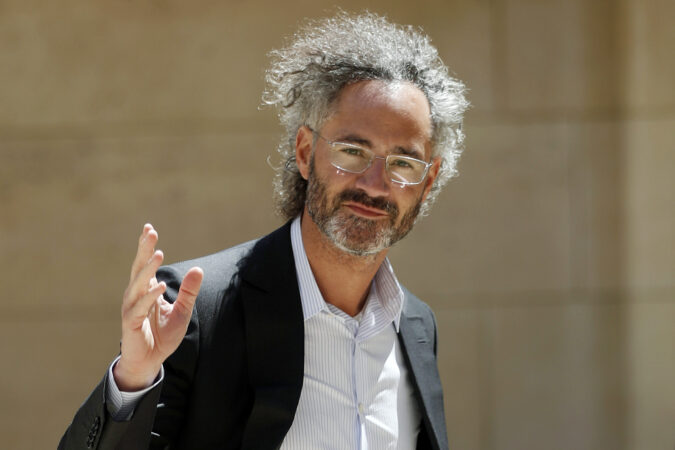
  • Palantir CEO Alex Karp was raised in a liberal household outside Philly. Now he’s a top Trump administration contractor

    Palantir CEO Alex Karp was raised in a liberal household outside Philly. Now he’s a top Trump administration contractor

    In the first year of President Donald Trump’s administration, Palantir Technologies has secured major contracts to compile data on Americans, assist the president’s federal immigration enforcement, and play a key role at the height of the Department of Government Efficiency’s efforts to shrink the federal government.

    But just a few years ago, it seemed unlikely that billionaire Alex Karp, CEO of Palantir — a publicly traded data software company that Karp described in 2011 as “deeply involved in supporting progressive values and causes” — would ever strike such deals with Trump.

    Karp grew up in the Philadelphia area in a politically left-leaning household and was critical of Trump during his first White House term. But over time, and catalyzed by Hamas’ Oct. 7, 2023, attack on Israel, his opinion and habits shifted. Quickly, he went from being a major Democratic Party donor to writing a big check to Trump’s 2024 inaugural committee.

    As of May, Palantir has received more than $113 million in federal spending. The company, which builds software to analyze and integrate large data streams for major companies, including defense contractors, sees itself as a beneficial power, but critics are concerned about data being misused or people being surveilled in violation of civil liberties, according to the New York Times’ The Daily podcast.

    And some employees are opposed to the optics of Palantir carrying out the president’s controversial political agenda.

    Here’s what to know about Karp and Palantir.

    What is Palantir?

    Palantir is a publicly traded data analytics software company that was cofounded by Karp, Joe Lonsdale, Nathan Gettings, Stephen Cohen, the company’s president, and Peter Thiel, a billionaire tech investor and cofounder of PayPal. Thiel is a libertarian and is a staunch supporter of right-wing ideology.

    Palantir, based in Denver, grew out of the Sept. 11, 2001, terrorist attacks on the United States and a desire to help improve national security.

    According to The Daily podcast guest Michael Steinberger, who spent six years interviewing Karp for a book, one of Palantir’s major contractors has been the CIA, which was also one of its early investors. Palantir’s technological products also played a key role in assisting Ukraine during the early months of Russia’s war on the country.

    The company started its partnership with U.S. Immigration and Customs Enforcement during former President Barack Obama’s administration, but that contract did not draw controversy until Trump’s first term in the White House, when his immigration crackdown became a key priority, Steinberger, a contributing writer to the Times, said.

    This summer, it was reported that Palantir landed a $10 billion software and data contract with the U.S. Army, months after reports showed Trump tapped the company to compile data on Americans, prompting scrutiny from privacy advocates, labor rights organizations, and student unions.

    Alex Karp, Palantir CEO, has roots in Philadelphia

    Karp was born in New York but grew up in the Philadelphia suburbs, he told the World Economic Forum in 2023. He went on to attend Central High School.

    As Steinberger describes it, “He’s a Philly kid. He grew up in Philadelphia. Grew up in a very left-wing household.” Karp is the son of a Jewish pediatrician and a Black artist. And he’s dyslexic, Steinberger said.

    “It’s like I have this weirdly structured brain,” Karp said in an interview with Steinberger. “The motor is just structured differently.”

    Karp and his younger brother spent time going to antiwar and antinuclear protests, and the older Karp attended Haverford College, Steinberger said. There, he closely identified with his Black heritage, getting involved with Black student affairs and organizing an antiracism conference at Yale University.

    Karp insists that he did not put much effort into his schooling at Haverford, but Steinberger, who was a classmate of Karp’s in college, appears to think otherwise.

    “I think his path in life would suggest otherwise. I think the library saw a lot more of him than it did of me, which may go some way to explaining why he became a billionaire and I did not,” Steinberger said.

    After Haverford, Karp attended Stanford Law School, where he met and became close with Thiel — whose political views were the opposite of Karp’s. Years later, Karp and Thiel reunited after 9/11. Thiel was looking for a CEO for Palantir.

    “Thiel interviews a couple of people for the CEO position, but then he and the other people involved in founding Palantir realized Karp is probably the right guy for the job,” Steinberger said.

    In an interview with Steinberger, Karp admitted that his background made him an unlikely choice for CEO.

    “I wasn’t trained in business. I didn’t know anything about start-up culture. I didn’t know anything about building a business. I didn’t know anything about financing a business,” Karp said.

    From a Philly liberal to a staunch Trump defender

    In Steinberger’s telling, Hamas’ terrorist attack on Israel on Oct. 7, 2023, gave rise to a political environment that would solidify Karp’s rightward shift.

    Over time, Karp had become discouraged with the left’s criticisms of Palantir, but that reached a fever pitch when Palantir offered its services to Israel as the country began its military invasion of Gaza amid protests, including internal dissent from employees, Steinberger said.

    Steinberger said Karp — once a protester himself — became increasingly troubled by college campus protests against Israel’s war in Gaza.

    “He thinks the protests are riddled with antisemitism,” Steinberger said. “They’re very dangerous and he sees this as reflective of a broader rot in his mind on the left.”

    Karp continued to back then-President Joe Biden, who was supportive of the Israeli government, but in December 2023, Karp posed a sort of ultimatum at the Reagan National Defense Forum in California regarding liberals’ stance on Israel and a desire for the Democratic Party to denounce the college campus protests.

    “I’m one of the largest donors to the Democratic Party and, quite frankly, I’m calling it out, and I’m giving to Republicans. If you keep up with this behavior, I’m going to change. A lot of people like me are going to change. We have to really call this out. It is completely beyond the bounds,” Karp said.

    Over time, Karp started donating more “aggressively” to Republicans, Steinberger said, and made clear his support for Trump. Karp wrote a $1 million check to the Trump-Vance Inaugural Committee and later began publicly praising Trump on national security.

    Karp, for his part, still thinks of himself as a progressive.

    “I didn’t shift my politics,” Karp said. “The political parties have shifted their politics. The idea that what’s being called progressive is any way progressive is a complete farce.”

  • Rob Reiner’s son Nick charged with 2 counts of murder in killing of his parents

    Rob Reiner’s son Nick charged with 2 counts of murder in killing of his parents

    LOS ANGELES — Rob Reiner’s son Nick Reiner was charged Tuesday with two counts of first-degree murder in the killing of his parents, which stunned their communities in Hollywood and Democratic politics, where both were widely beloved.

    Nick Reiner, 32, is charged with killing Rob Reiner, the 78-year-old actor and director, and his wife, Michele Singer Reiner, District Attorney Nathan Hochman announced at a news conference with Los Angeles Police Chief Jim McDonnell.

    “Their loss is beyond tragic and we will commit ourselves to bringing their murderer to justice,” Hochman said.

    Along with the two counts of first-degree murder, prosecutors added special circumstances of multiple murders and a special allegation that the defendant used a dangerous weapon: a knife. The additions could mean a greater sentence.

    Hochman said his office had not decided whether to seek the death penalty.

    “This case is heartbreaking and deeply personal, not only for the Reiner family and their loved ones but for our entire city,” McDonnell said. “We will continue to support the Reiner family and ensure that every step forward is taken with care, dignity, and resolve.”

    The announcement came two days after the couple were found dead with apparent stab wounds in their home in the upscale Brentwood neighborhood on the west side of Los Angeles. Nick Reiner did not resist when he was arrested hours later in the Exposition Park area near the University of Southern California, about 14 miles from the crime scene, police said.

    Nick Reiner had been expected to make an initial court appearance Tuesday, but his attorney Alan Jackson said he was not brought from the jail to the courthouse for medical reasons and the appearance would not come before Wednesday.

    An email sent to Jackson seeking comment on the charges was not immediately answered. Nick Reiner has not entered a plea.

    Rob Reiner was the Emmy-winning costar of the sitcom All in the Family who went on to direct films including When Harry Met Sally … and The Princess Bride. He was an outspoken liberal activist for decades. Michele Singer Reiner was a photographer, a movie producer, and an advocate for LGBTQ+ rights. They had been married for 36 years.

    Representatives for the Reiner family did not respond to requests for comment. Police have not said anything about a motive for the killings.

    Nick Reiner is being held in jail without bail. He was arrested several hours after his parents were found dead on Sunday, police said.

    Jackson is a high-profile lawyer who represented Harvey Weinstein at his Los Angeles trial and Karen Read at her trial in Massachusetts. He was a central figure in the HBO documentary on the Read case.

    Investigators believe Rob and Michele Singer Reiner died from stab wounds, a law enforcement official told the Associated Press. The official, who was briefed on the investigation, could not publicly discuss the details and spoke on condition of anonymity.

    The killings were especially shocking given the warm comic legacy of the family. Rob Reiner was the son of comedy legend Carl Reiner, who died in 2020 at age 98.

    Kathy Bates, who won an Oscar as the star of Rob Reiner’s 1990 film Misery, was among those paying tribute to the couple.

    “I loved Rob,” Bates said in a statement. “He was brilliant and kind, a man who made films of every genre to challenge himself as an artist. He also fought courageously for his political beliefs. He changed the course of my life. Michele was a gifted photographer.”

    Former President Bill Clinton called the couple “good, generous people who made everyone who knew them better.”

    “Hillary and I are heartbroken by the tragic deaths of our friends Rob and Michele Reiner,” he said in a statement. “They inspired and uplifted millions through their work in film and television.”

    Three months ago, Nick Reiner was photographed with his parents and siblings at the premiere of his father’s film Spinal Tap 2: The End Continues.

    He had spoken publicly of his struggles with addiction, cycling in and out of treatment facilities with bouts of homelessness in between through his teen years. Rob and Nick Reiner explored — and seemed to improve — their relationship through the making of the 2016 film Being Charlie.

    Nick Reiner cowrote and Rob Reiner directed the film about the struggles of an addicted son and a famous father. It was not autobiographical but included several elements of their lives.

    “It forced us to understand ourselves better than we had,” Rob Reiner told the AP in 2016. “I told Nick while we were making it, I said, ‘You know, it doesn’t matter, whatever happens to this thing, we won already.’”

    Rob Reiner was long one of the most prolific directors in Hollywood, and his work included some of the most memorable and endlessly watchable movies of the 1980s and ’90s, including This is Spinal Tap and A Few Good Men.

    He met Michele Singer Reiner on the set of When Harry Met Sally …, and their meeting would inspire the film’s shift to a happy ending, with stars Billy Crystal — one of Reiner’s closest friends for decades — and Meg Ryan ending up together on New Year’s Eve.

    The Reiners were outspoken advocates for liberal causes and major Democratic donors.

    President Donald Trump on Monday blamed Rob Reiner’s outspoken opposition to the president for the actor-director’s killing, delivering the unsubstantiated claim in a social media post that seemed intent on decrying his opponents even in the face of a tragedy.

  • Investigators release video timeline of the Brown campus shooting suspect’s movements

    Investigators release video timeline of the Brown campus shooting suspect’s movements

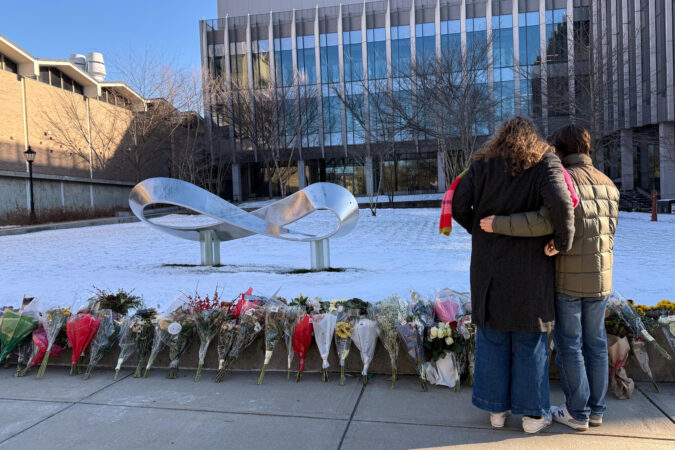
    PROVIDENCE, R.I. — Authorities on Tuesday released a new video timeline and a slightly clearer image of the man suspected in the Brown University shooting, though investigators provided no indication that they were any closer to zeroing in on his identity.

    Investigators have been canvassing Providence homes, yards, and dumpsters in search of videos or other clues that might help them figure out who was behind Saturday’s campus shooting, which killed two students and wounded nine others.

    In all of the videos made public, the suspect’s face was masked or turned away, and authorities have been able to give only a vague description of him as being stocky and about 5 feet, 8 inches tall.

    The FBI’s video timeline includes new footage of the man that was recorded before the attack. It shows him running at times along quiet and empty residential streets near campus. Authorities believe he was casing the area, Col. Oscar Perez, the Providence police chief, said in a news conference Tuesday.

    Perez asked residents to look at their camera systems in the area to see if they have any footage that might help officials identify him.

    “We’re looking for a moment that is shorter than someone taking a breath,” Perez said.

    Perez said there was no clear video of the gunman from inside the engineering building where the shooting took place. Attorney General Peter Neronha said there were cameras in the newer part of the building but “fewer, if any, cameras” where the shooting happened “because it’s an older building.”

    The Brown University president said the campus is equipped with 1,200 cameras.

    Neronha said that from his perspective, the investigation was going “really well.” He pleaded for public patience in locating the suspected killer.

    Providence is understandably tense, and additional police were sent to city schools on Tuesday to reassure worried parents that their kids will be safe. Ten state troopers were assigned to support the local police sent to beef up security at schools, district Superintendent Javier Montañez said.

    “We recognize that the tragic incident at Brown University, occurring so close to where many of our students and families live and learn, is deeply unsettling and frightening,” he wrote in an email to parents.

    Alex Torres-Perez, a spokesperson for the Providence Public School District, said the district canceled all after-school activities and field trips for the week “as a precaution.”

    A city on edge

    Locals expressed fear as well as defiance as the investigation continued Tuesday.

    “Of course it feels scary. But at the same time, I think that if the person really wanted to scare us, we shouldn’t allow him or her to win,” said Tatjana Stojanovic, a Providence parent who lives next door to the Brown campus. ”Despite all of that, we should just go about our lives. I mean, obviously, you cannot forget this. But I think we shouldn’t cower and just sort of stop living despite what has happened.

    The attack and the shooter’s escape have raised questions about campus security, including a lack of security cameras, and led to calls for better locks on campus doors. Others pushed back, though, saying such efforts do little to address the real issue.

    “The issue isn’t the doors, it’s the guns,” said Zoe Kass, a senior who fled the engineering building as police stormed in Saturday. “And all of this, like, ‘Oh, the doors need to be locked.’ I get it, parents are scared. But any of us could have opened the door for the guy if the doors had been locked.”

    After spending of her life in schools where every door was locked and school shootings persisted, Kass said, such security measures only created “the illusion of safety.”

    FBI Boston special agent in charge Ted Docks said the bureau had 30 people in the city to support survivors, victims, and loved ones, noting that the toll a tragedy like this takes on them is “immeasurable.”

    A fuller picture of the victims emerges

    Meanwhile, details have emerged about the victims, who were in the first-floor classroom in the school’s engineering building studying for a final.

    Two of the wounded students had been released as of Tuesday, Brown spokesperson Amanda McGregor said. Of the seven people who remained hospitalized, Mayor Brett Smiley said, one remained in critical condition, five were in critical but stable condition, and one was in stable condition.

    One of the wounded students, 18-year-old freshman Spencer Yang of New York City, told the New York Times and the Brown Daily Herald that there was a mad scramble after the gunman entered the room. Many students ran toward the front, but Yang said he wound up on the ground between some seats and was shot in the leg. He expected to be discharged within days.

    Jacob Spears, 18, a freshman from Evans, Ga., was shot in the stomach, “but through sheer adrenaline and courage, he managed to run outside, where he was aided by others,” according to a GoFundMe site organized for him.

    Ella Cook, a 19-year-old sophomore who was one of the two students killed, was vice president of the Brown College Republicans and was beloved in her church in Birmingham, Ala. In announcing her death Sunday, the Rev. R. Craig Smalley described her as “an incredible grounded, faithful, bright light” who encouraged and “lifted up those around her.”

    The other student killed was MukhammadAziz Umurzokov, an 18-year-old freshman from Brandermill, Va., who was majoring in biochemistry and neuroscience. His family immigrated to the U.S. from Uzbekistan when he was a kid.

    As a child, Umurzokov suffered a neurological condition that required surgery, and he later wore a back brace because of scoliosis, his sister Samira Umurzokova told the Associated Press by phone. He knew from an early age that he wanted to be a neurosurgeon to help others like him.

    “He had so many hardships in his life, and he got into this amazing school and tried so hard to follow through with the promise he made when was 7 years old,” she said.