The news that the Pittsburgh Post-Gazette will soon cease publishing has, justifiably, sounded alarms across the media landscape. The end of a storied organization with deep local roots and a legacy of strong journalism should concern all who believe that a free and thriving press is fundamental to a functioning civic society.
Among the questions clamoring for answers in light of the news: What will fill the void in Pittsburgh? Will the deep pockets of the city’s many notable philanthropies provide the funds needed to support a new news organization? Will the remaining media outlets — Pittsburgh is not a news desert by any stretch — have the capacity to grow and expand? And the existential question: Will the citizens of the Steel City see the need to support local news now that it is, to an extent, imperiled?
As publisher of The Philadelphia Inquirer, I believe that our own experience over the past decade offers a template for success. It was only a little more than a decade ago that we were a struggling news organization, with an impressive history of notable journalism, but beset by warring owners, threatened by bankruptcy, and, in May 2014, up for sale on the auction block.
Redemption began with a visionary philanthropist, H.F. “Gerry” Lenfest, who set out to save The Inquirer and provided the wherewithal to do it. He established the Lenfest Institute for Journalism, our nonprofit owner, and pursued an innovative tax structure that created a for-profit Inquirer with a separate board. Both are the indispensable keys to our stability and success.
Lenfest’s generosity planted the news philanthropy seed in Philadelphia and, through the institute, established a funding mechanism that supports our journalism. His donation, in cash, allowed The Inquirer to modernize and transform from a legacy print shop to a modern multiplatform news organization.
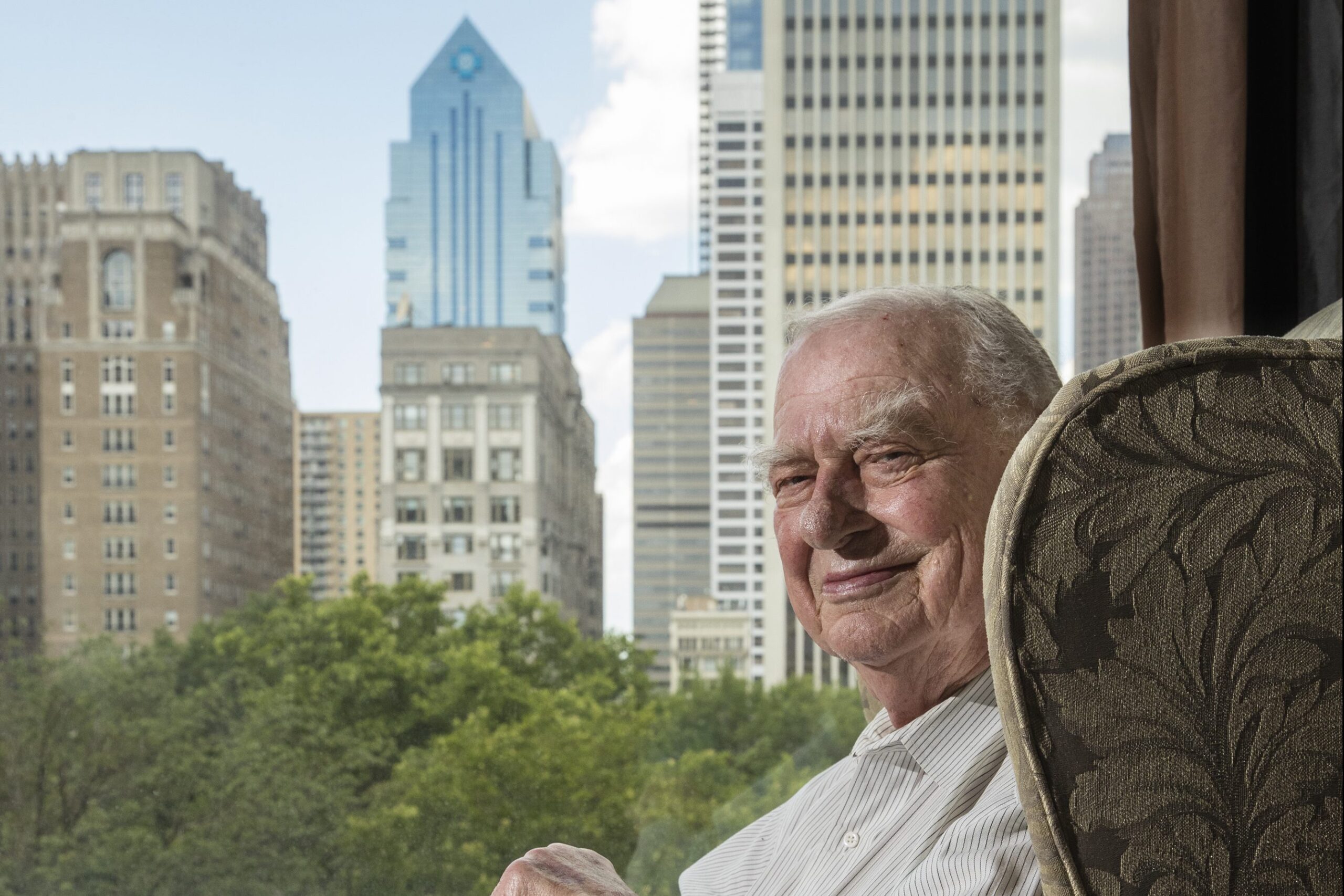
The late H.F. “Gerry” Lenfest’s generosity planted the news philanthropy seed in Philadelphia, writes Elizabeth H. Hughes.
But we have also known that The Inquirer’s long-term stability — and the ability to consistently provide quality journalism — depended on building a successful and integrated business. And that meant forging a new identity through a modern brand campaign, developing a robust marketing strategy, engineering our own path to success by building our own products, and creating new and compelling opportunities for advertisers. Significantly, it also required meeting and convincing civic and business leaders that The Inquirer was a vital asset worth investing in.
There are 200 journalists in our newsroom, and the journalism produced every day is impressive and innovative, deep and local. In the end, that is what people will pay for. And the business results? The Inquirer in 2025 had its first year-over-year increase in revenue since 2004, and an operating profit of several million.
The majority of our revenue, 70%, comes from consumer marketing, which means people are paying for our journalism; 19% is from advertising, which signals that local businesses and institutions find merit in supporting us; and 5% from syndication and other partnerships. Philanthropy accounted for 6% of revenue in 2025, and we project donor contributions ranging from 6% to 10% going forward.
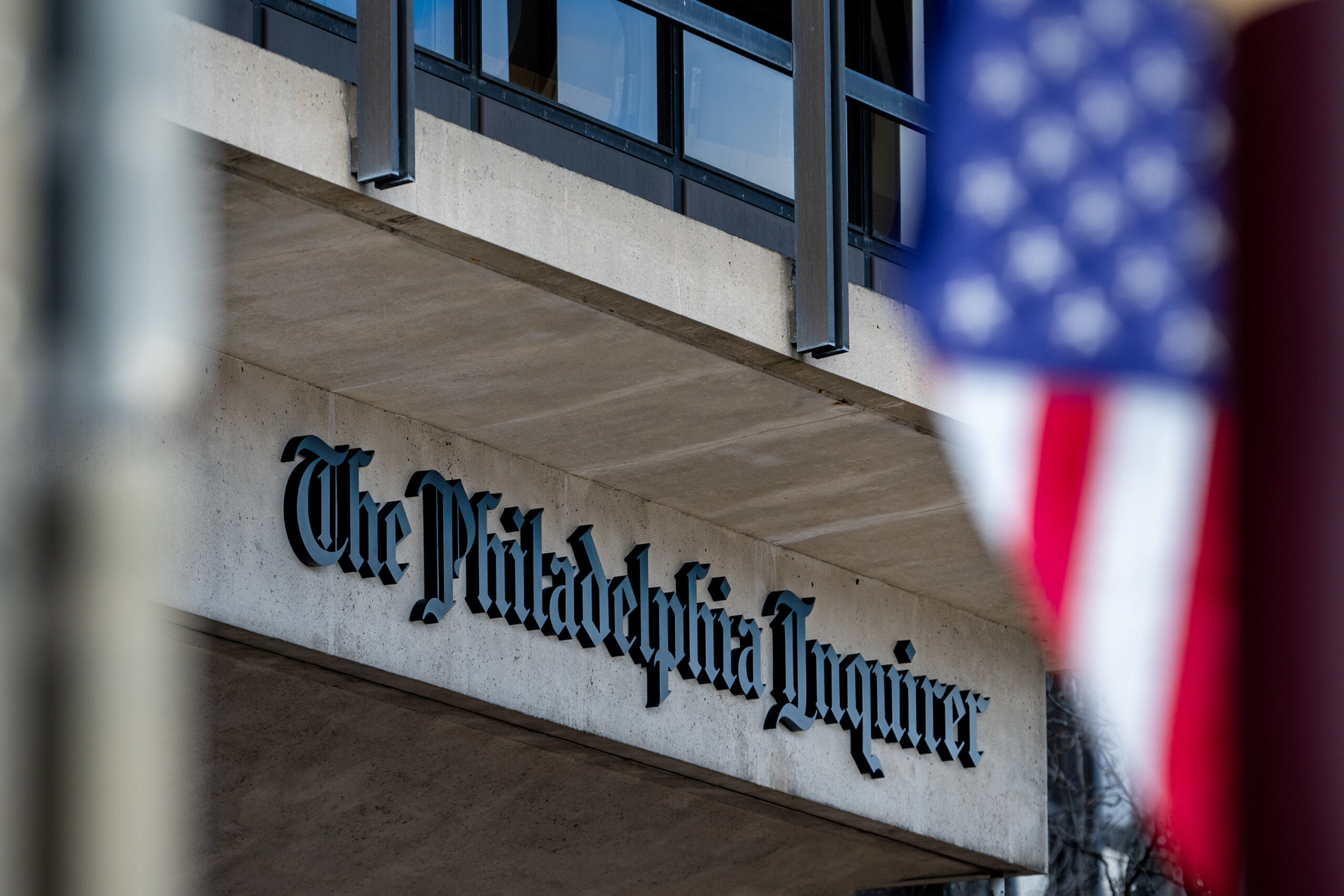
The facade of The Inquirer’s offices on Independence Mall West. The Inquirer in 2025 had its first year-over-year increase in revenue since 2004.
Lenfest, who died in 2018, was a successful businessman before he became an influential philanthropist. He left his mark on civic and cultural institutions throughout Philadelphia. But his last great effort was to save The Inquirer — to give it the runway it needed because he believed in the importance of local journalism.
There is much work to be done, and challenges to be met, but the lasting legacy of H.F. “Gerry” Lenfest is an Inquirer that is stable and succeeding as a business.
Elizabeth H. Hughes has been the publisher of The Philadelphia Inquirer since 2020.
Most people hear the phrase “juvenile probation” and think of second chances. They imagine a young person avoiding detention and getting the support they need to stay on track. It sounds compassionate, reasonable, and like progress. But for thousands of young people in Philadelphia and hundreds of thousands across the country, juvenile probation is not freedom; it’s a trap.
For many youths, probation is not an opportunity to grow, but feels like walking through life with a countdown clock. Every interaction carries risk. Every mistake, no matter how small, can be interpreted as defiance or as a violation of probation. Instead of stabilizing young people, probation often destabilizes them, pulling them deeper into systems that punish rather than support.
What is described as a “community-based alternative” becomes a constant reminder that freedom is conditional and fragile.
Juvenile probation places youth under a long list of conditions that most adults couldn’t realistically follow. There are weekly check-ins, strict curfews, school mandates, drug tests, random home visits, and the constant threat of detention if they mess up.
Missing an appointment, being late, skipping school during a crisis, or being around a family member who is also under supervision can all be labeled “technical violations.” These violations, while not new crimes, can send a young person straight to juvenile detention or state secure placement.
The public rarely sees this reality, but young people and their families do.
We both work at YEAH Philly (Youth Empowerment for Advancement Hangout), which has worked with more than 300 Philadelphia youth involved in the legal system, and we see the harm every single day.
Probation doesn’t work the way people think
A common narrative around juvenile probation is that it was designed to divert youth from incarceration and connect them to guidance and resources. The reality is different.
Instead of being a short-term intervention, probation has become a default response applied broadly, regardless of a young person’s actual risk or needs. What was meant to be rehabilitative has become expansive, punitive, and deeply entangled with punishment.
Across the country, more than 150,000 kids are on juvenile probation, many for minor or “status” offenses like skipping school or missing curfew, not violence. Black youth are disproportionately targeted, placed on probation more often, kept on longer, and violated more quickly.
In a large study of over 18,000 youth placed on probation for the first time, about 15% broke a probation rule without committing a new crime. Black youth, who made up just over half of the group, were written up sooner than white youth and were more likely to be violated at any point during supervision.
The system claims to be rehabilitative, but the numbers tell a different story. In many states, more young people are punished for technical violations than for new offenses.
Youth on probation often remember only a fraction of the rules they are expected to follow, yet remain under court supervision for months or years after any public safety benefit exists.
A Pew Charitable Trusts study found that in one state, after the first 10 months of probation supervision, there were more arrests for technical violations than for new offenses, and Black youth were more likely to be placed on probation rather than diverted to non-court services, even when offense severity was comparable.
This is what researchers describe as “net-widening,” where more youth are pulled into the system, more rules are imposed, more pipelines to jail and prison, and more opportunities for failure without improved outcomes.
What we see at YEAH Philly
(From left) Tayanna Hubbard, Jasmine Brown, and Kendra Van de Water walk during a YEAH Philly nature walk at Bartram’s Garden in Philadelphia in April 2021.
Every week, young people come to us terrified of making a mistake. They are trying to navigate a system built on compliance while also surviving poverty, school instability, community violence, and unmet mental health needs.
We work with teenagers who miss appointments because SEPTA was delayed, or because they have no reliable way to travel across the city. We see youth violated for missing school when the real issue was a lack of clean clothes, food insecurity, or an unsafe home environment.
We support young people placed on probation not because they caused harm, but because they needed help; help that juvenile probation was never designed to provide.
These are not failures of individual responsibility; they are failures of a system that confuses surveillance with support and punishment with accountability. Juvenile probation wears the mask of care, but it operates through control and coercion.
Why probation can’t be ‘reformed’
Cities have tried for decades to tweak juvenile probation with fewer conditions, shorter terms, or trauma-informed training. While these reforms may reduce some harm, they do not change the core structure of probation itself.
Juvenile probation still polices adolescence instead of supporting it. It punishes normal teenage behavior, responds to trauma with surveillance, and relies on the constant threat of incarceration to enforce compliance.
A system built on control cannot be transformed into one rooted in care through policy tweaks alone. There must be a complete overhaul to create something better.
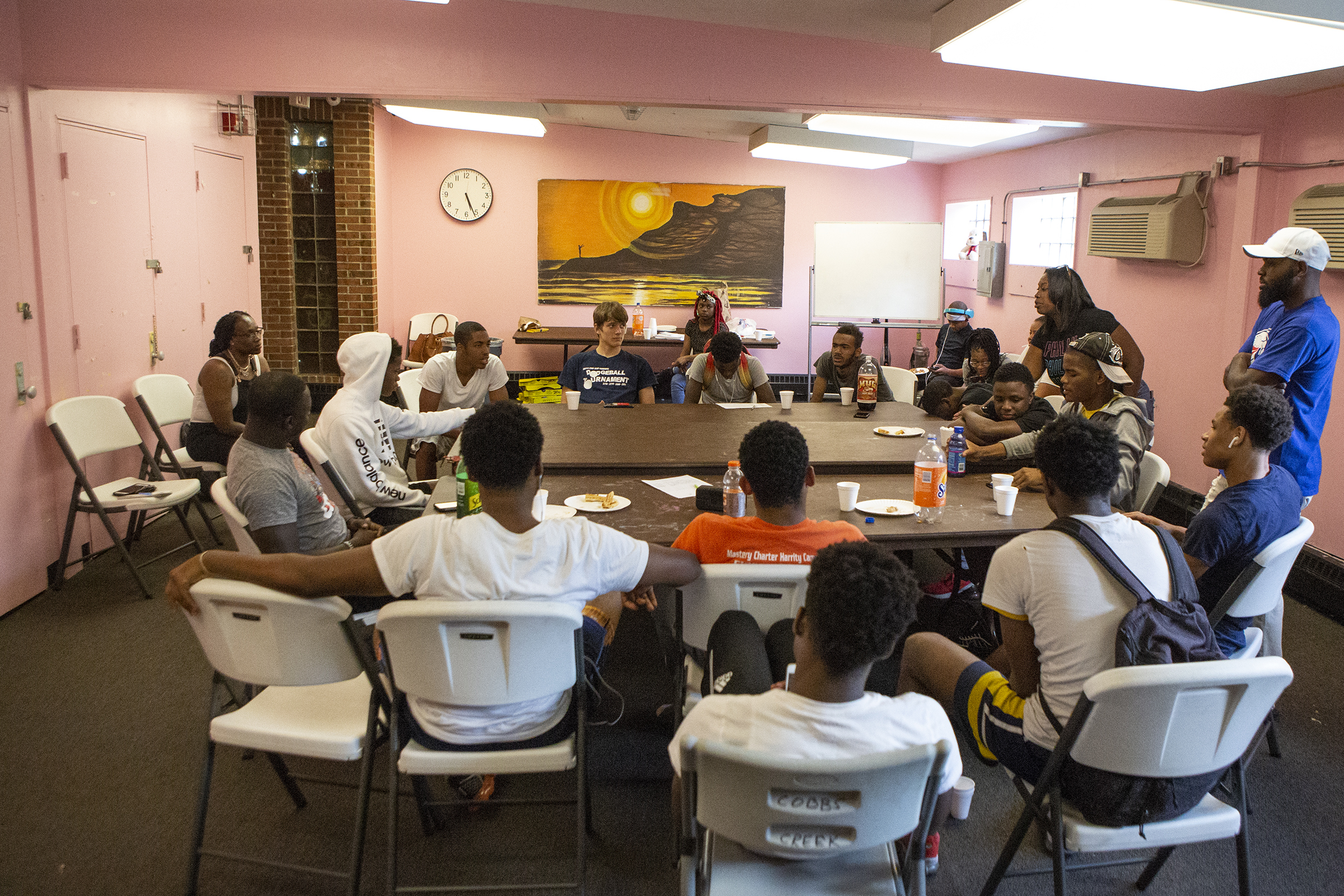
A group of teens and two police officers meet during the final session of a YEAH Philly pilot program at the Cobbs Creek Recreation Center in June 2019.
YEAH Philly’s approach through our Violent Crime Initiative and healing-centered youth support model shows what is possible when young people are surrounded by genuine care rather than constant monitoring.
When youth have trusted adults, access to transportation, meals, basic needs, job opportunities, therapy, mediation, and a safe place to go every day, they grow. They build accountability because they feel connected, not controlled.
Community-based models across the country show the same results, where healing and restorative approaches reduce reoffending more effectively than supervision ever has.
People hear “end juvenile probation” and fear it means“end safety.” But abolition does not mean abandoning young people. It means abandoning systems that have consistently failed them.
Abolition means replacing surveillance with support, punishment with opportunity, control with care, and isolation with belonging.
Crafting a new vision
In the coming months, YEAH Philly and the Gault Center, alongside youth, families, and researchers, will launch the Juvenile Probation Accountability Coalition.
The coalition will expose the harms of juvenile probation through youth-led research, hold systems accountable for the trauma they create, elevate community-based accountability models, and push for policies and models that move us beyond probation.
Our goal is a national blueprint for real public safety rooted in dignity and care.
Philadelphia has an opportunity to lead the nation in redefining accountability and safety for young people. We can build systems that help youth grow instead of continuing to invest in systems that wait for them to fail.
Ending juvenile probation is not a radical idea. It is an overdue commitment to young people’s futures.
It is time to move from supervision to support, and from punishment to possibility.
The Juvenile Probation Accountability Coalition is coming — and this is just the beginning.
Kendra Van de Water is the cofounder and co-CEO and Mona Baishya is the Violent Crime Initiative research director at YEAH Philly. For more information about the Juvenile Probation Accountability Coalition and the forthcoming work, please contact Van de Water (kvandewater@yeahphilly.org) or HyeJi Kim (hkim@defendyouthrights.org).
If the Sixers are wise, the answer is at least through the end of the season.
The 30-year-old swingman’s contract expires at the end of June. However, his name has been repeatedly mentioned in recent trade reports. And that could continue ahead of the Feb. 5 trade deadline as teams look to upgrade rosters and slash salaries.
But at this point, the Sixers will be hard-pressed to find someone able to do what Oubre provides.
The squad is starting to show glimpses of why it has received Eastern Conference championship-contender hype. And Oubre’s ability to adjust to his ever-changing role is a reason for that.
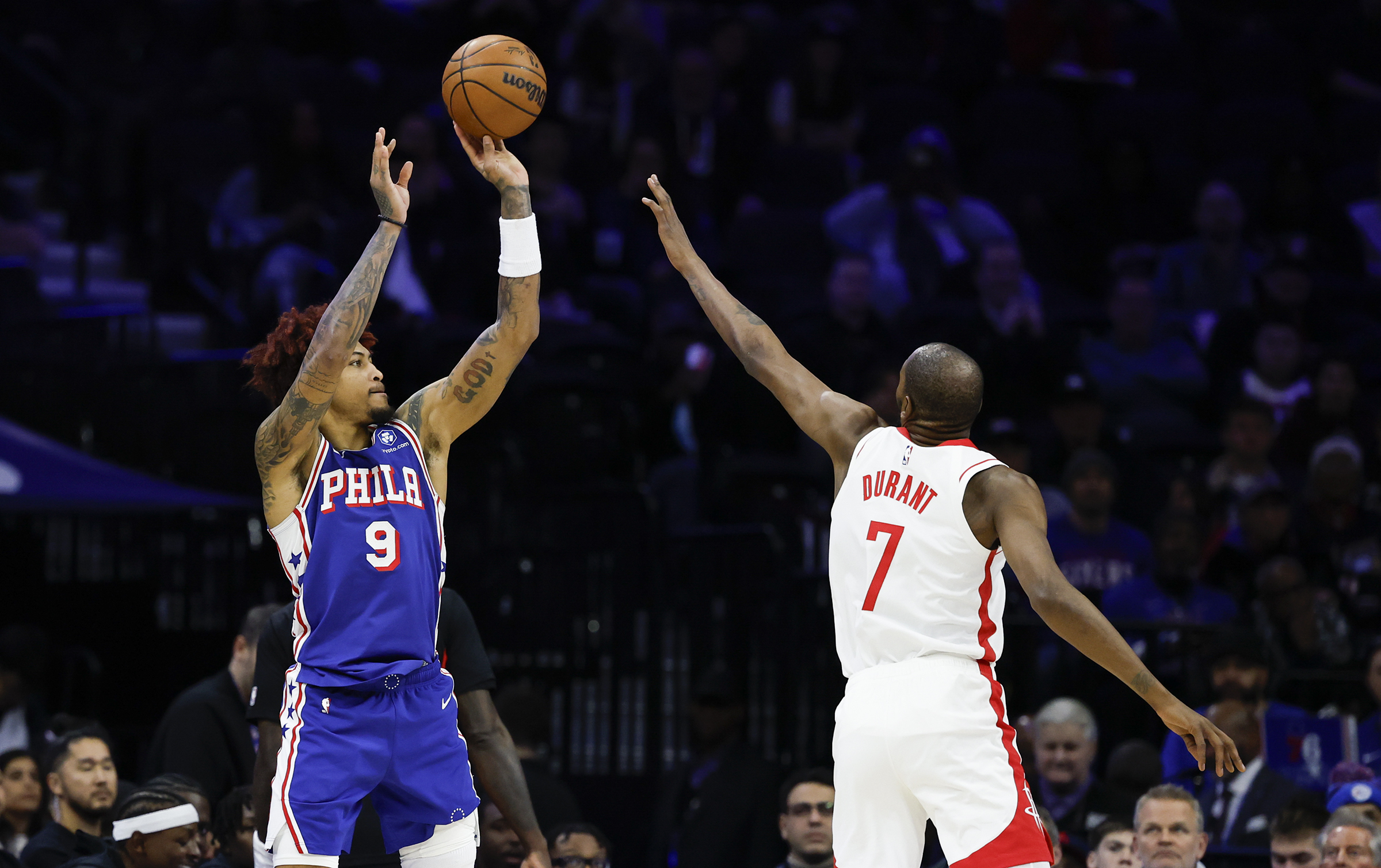
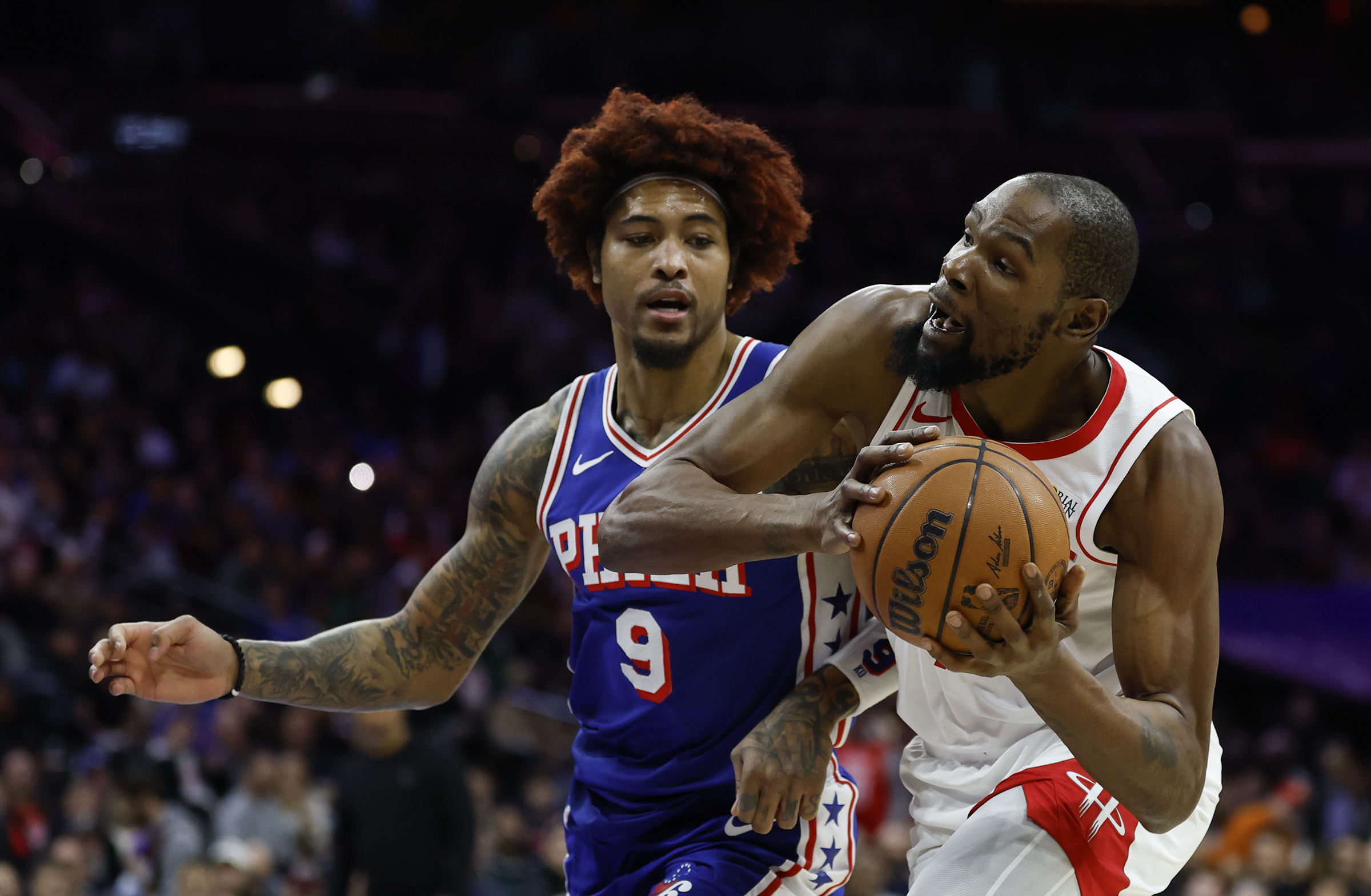
Before that tilt, they defeated the Houston Rockets, 128-122, in overtime Thursday night at home. Oubre played a significant role in the victory, finishing with 26 points on 10-for-14 shooting along with four rebounds, three assists, and one block while starting alongside Paul George, Joel Embiid, VJ Edgecombe, and Tyrese Maxey.
It was the first time the Sixers employed that starting lineup.
Coach Nick Nurse said before Sunday’s game that they would stay with it for a while. And had another solid performance, finishing with 14 points on 5-for-10 shooting, along with seven rebounds, three assists, and two steals.
His remaining as a starter is understandable, given that it was a lineup they were expected to unveil at the beginning of the season. But George missed the first 12 games with left knee injury management. Then Oubre was sidelined 22 games from Nov. 17 to Jan. 5. While those two were injured, power forward Dominick Barlow proved to be a solid fifth starter.
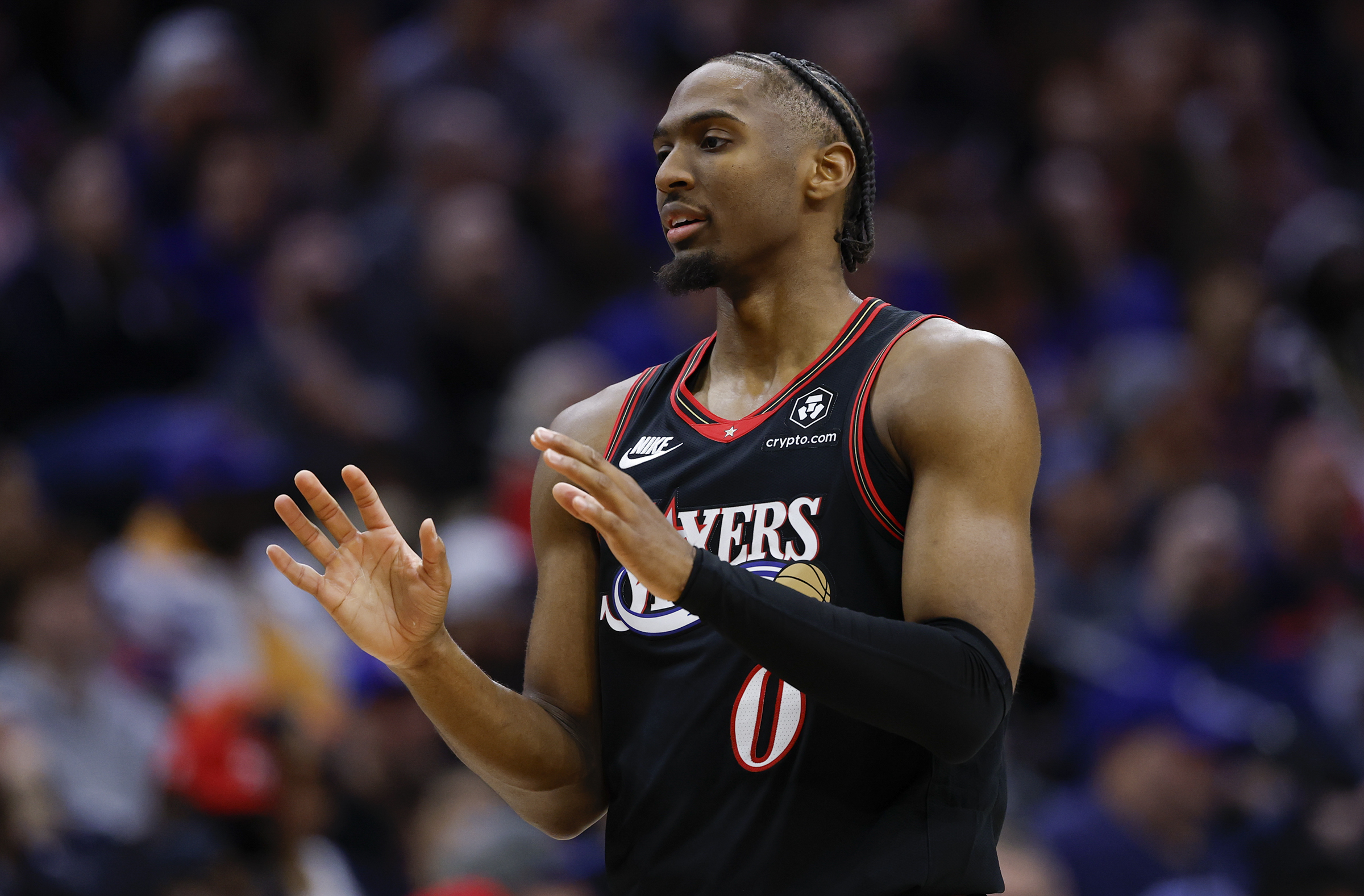
But Oubre is a more experienced, more versatile player, and has been noted several times before as the team’s X factor. His ability to play shooting guard, small forward, and small-ball power forward gives the Sixers a variety of rotation options.
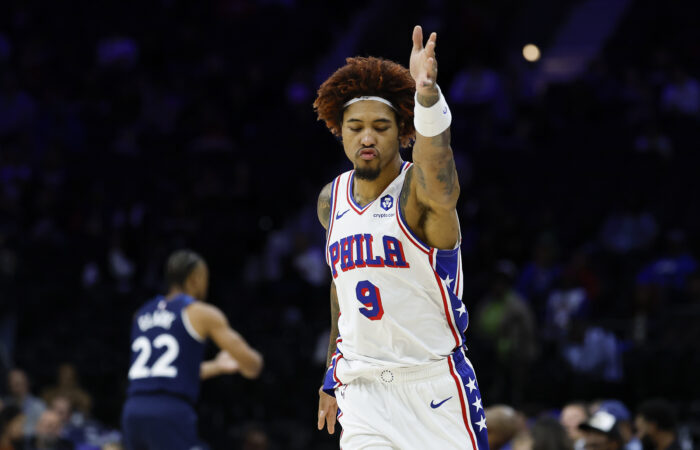
Sixers guard Kelly Oubre Jr. has been noted several times before as the team’s X factor.
While he starts at small forward, Oubre moves to shooting guard in a lineup that features George, Barlow, Embiid, and Maxey when Edgecombe is out of the game. And in his first game back from a sprained left knee ligament on Jan. 7, he played power forward in a small-ball lineup with Maxey, Quentin Grimes, Jared McCain, and Adem Bona.
“He plays both ends, right?” Nurse said of his impact as a versatile player. “I think that’s the main thing. He’s been pretty effective on both ends, and the other probably main thing is he’s in about his 10th year. He’s got a lot of stuff under his belt. A lot of minutes. A lot of games, too. That helps, too. ”
All-Star cornerstones, Embiid, Maxey, and George, along with rookie-of-the-year candidate Edgecombe, have deservedly received a lot of credit for the team’s being viewed as a contender.
Embiid had scored at least 30 points in four consecutive games. While the 7-2 center is not where he once was defensively, he’s showing glimpses of being a 2023 MVP and seven-time All-Star. Embiid is averaging 33.3 points, 10 rebounds, 5.5 assists, and 0.7 blocks while shooting 58.3% on three-pointers in those games.
Meanwhile, Maxey, who was named an All-Star starter on Monday, is averaging a league-third-best 29.9 points, a second-best 2.1 steals, and 12th-best 6.8 rebounds this season. He was also fourth (147) in made three-pointers.
George’s average of 15.4 points is below his career average of 20.5 points. But the nine-time All-Star has thrived at times as a facilitator and an elite defender. And it’s not uncommon for him to provide the bulk of the scoring during third-quarter stretches.
Edgecombe is averaging 15.6 points, a league 11th-best 1.5 steals, 5.3 rebounds, and 4.2 assists. The 20-year-old shooting guard’s elite potential was on full display in the Sixers’ season-opening victory over the Boston Celtics.
That night, he scored 34 points to help lead the Sixers to victory. It was the third-highest scoring debut in NBA history behind Chamberlain’s 43 points on Oct. 24, 1959, and Frank Selvy’s 35 on Nov. 30, 1954.
Concurrently, Oubre averaged 14.6 points, 4.5 rebounds, 1.1 steals, and shot 38.3% on three-pointers while continuously adjusting his role depending on who was playing or who the Sixers were playing against. The one constant thing is his defending the opposing team’s best perimeter player.
Championship-caliber teams are built with players like Kelly Oubre Jr.
Nurse was asked before Saturday’s game where he thinks Oubre has improved the most as a defender.
“Listen, I think there are a couple of things, but probably at the top would be just his overall reading of situations,” Nurse said. “Just having a feel for anticipating what might happen next and getting involved in that and breaking that up. But he’s also been much better on the ball. He’s been much better in screen-and-roll. Stuff like that.”
The New Orleans native has starred in all of his roles in addition to doing countless other things that go unnoticed on a stat sheet.
As good as Embiid, George, Maxey, and Edgecombe are, championship-caliber teams are built with players like Oubre.
The only benefit of trading him at this time is perhaps shedding his salary. Oubre’s expiring $8.3 million contract would help them gain salary cap relief and avoid the luxury tax. The squad is currently more than $7 million over the luxury-tax threshold. That’s why his name has been mentioned in reports.
But, night now, they can’t afford to let him go if contending for a title this season is truly the goal.
The number of realistic available better options is slim. Even if they find a player as good, it will take the new person a while to adjust to the Sixers’ system. And Oubre’s ability to adapt is a primary reason why the team is starting to live up to expectations.
With Embiid’s extension kicking in next season and Grimes becoming an unrestricted free agent, it may make sense for Oubre and the Sixers to part ways after the season.
The way he’s been playing this season and elevated his stock during his Sixers’ three-year tenure, Oubre could become too costly to re-sign.
It may make sense for the sides to part ways after the season.
When Mayor Cherelle L. Parker unveiled her much-anticipated plan to address Philadelphia’s housing crisis last year, there was predictable criticism from the political left. Activists said the proposal drafted by the moderate Democrat would not do enough for the city’s poorest residents.
Less predictable was that a majority of City Council stood with them.
Even the Council president, a centrist ally of the mayor, sided with a progressive faction that just two years ago had been soundly defeated in the mayor’s race — but whose new de facto leader in City Hall has proven adept at building alliances across the ideological spectrum.
At the center of that shift was Jamie Gauthier.
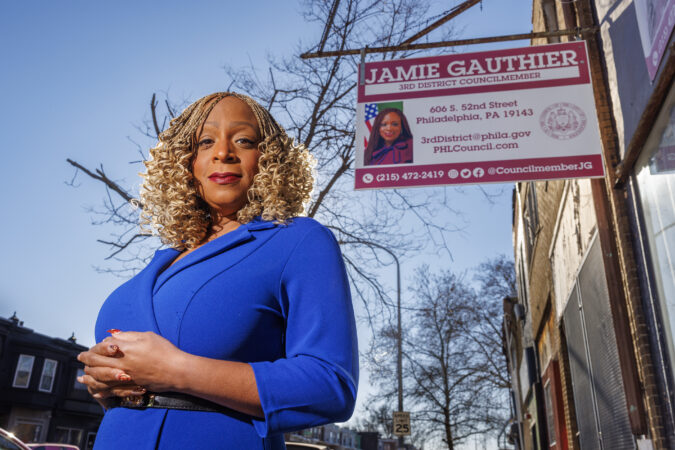
The second-term Democratic lawmaker from West Philadelphiahas solidified herself over the last year as a leading voice on Council and a counterweight to Parker. She has worked within the system as opposed to trying to break it, maintaining relationships with power players who disagree with her on policy.
She counts Ryan N. Boyer — the labor leader who is Parker’s closest political ally — among those who consider her a “thought leader.”
“Over the last year, what you saw,” Boyer said, “is her modulate her positions to become more practical.”
Gauthier has generally voted with progressives, including last year when she opposed the controversial Center City 76ers arena proposal. But she has also endeavored to be a team player, at times compromising on ideological battles to focus on priorities in her district.
Last year, she voted for Parker’s plan to cut taxes for businesses and corporations when other progressives opposed it, because her main priority was securing housing funding. She has not opposed some tough-on-crime efforts in the Kensington drug market, instead allowing her colleagues who represent that area to dictate the policy there.
She says she is trying to use her political capital where it matters.
“Why would I take a protest vote and tank a relationship with a colleague when I’m going to need them later?” she said. “I want to win.”
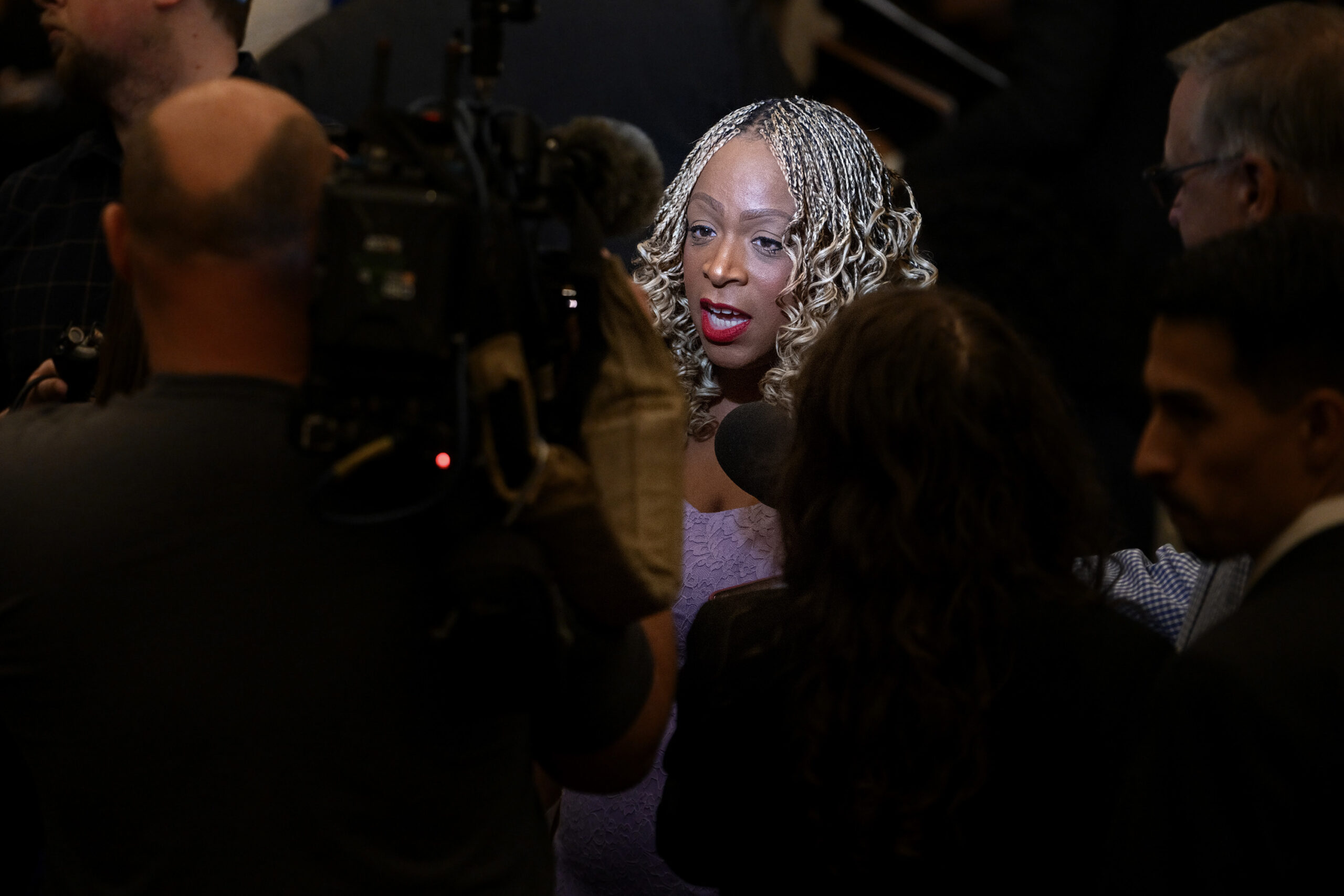
Councilmember Jamie Gauthier talks with news media following a special session of City Council on March 24, 2025.
The fact that Gauthier is a district Council member who represents a large swath of the city west of the Schuylkill also gives her cachet with colleagues. Council has a long tradition of honoring how members want their own neighborhoods to be governed.
Gauthier, who leads Council’s housing committee, has used the influence to make West Philadelphia something of a testing ground for left-of-center policy. Plenty oppose what they see as draconian restrictions on real estate development in her district.
Others see a progressive champion, and some political observers think Gauthier could amass enough support to run for mayor one day. She doesn’t deny that she has thought about it.
But for whatever politics Gauthier can navigate in City Hall, she knows she can rise only if she is successful at home.
‘Not just a lone actor’
When Parker took office, Council was in a moment of upheaval. Council President Kenyatta Johnson was the new leader of the chamber, and several prominent voices were gone after they had resigned to run for mayor themselves.
One was Helen Gym, who was seen as the leader of Council’s left flank. There were questions about who would fill the void once Gym was gone.
Gauthier, 47, an urban planner by trade, did not come up through an activist movement in the same way Gym did, and was a bit more reserved in her style.
But she carries the mantle for the same theory of governance: that lawmakers should prioritize the vulnerable, and that what is good for business is not necessarily good for everyone else.
That set Gauthier on an ideological collision course with Parker, a former Council member who ran for office on a promise to uplift the middle class, a group the mayor believes has been too often ignored.
It came to a head in the fight over Parker’s Housing Opportunities Made Easy, or H.O.M.E., initiative.
Parker wanted to set unusually high income eligibility thresholds for some of the programs so that middle-class families could unlock government subsidies they may not otherwise qualify for. A significant portion of Council, meanwhile, wanted the money to go initially to Philadelphians most vulnerable to displacement.
Parker was clear-eyed about who was leading the charge.
“Councilmember Jamie Gauthier, she may be comfortable and OK with telling Philadelphia homeowners, working-class Philadelphians, that they have to wait and there is no sense of urgency for them,” Parker said in a December interview on WHYY. “But that is not a sentiment that I support or agree with.”
Gauthier is quick to point out that she did not work alone, and that one member of a 17-member body cannot accomplish much. Alongside Councilmember Rue Landau, a fellow Democrat and a housing attorney by trade, Gauthier worked for months to win over her colleagues.
Gauthier didn’t think Parker helped her own cause. A “line was crossed,” she said, when Parker took the fight outside City Hall and to the pulpit. Amid negotiations with Council, the mayor went to 10 churches on one Sunday in December to lobby for support, saying her vision was to not “pit the ‘have-nots’ against those who have just a little bit.”
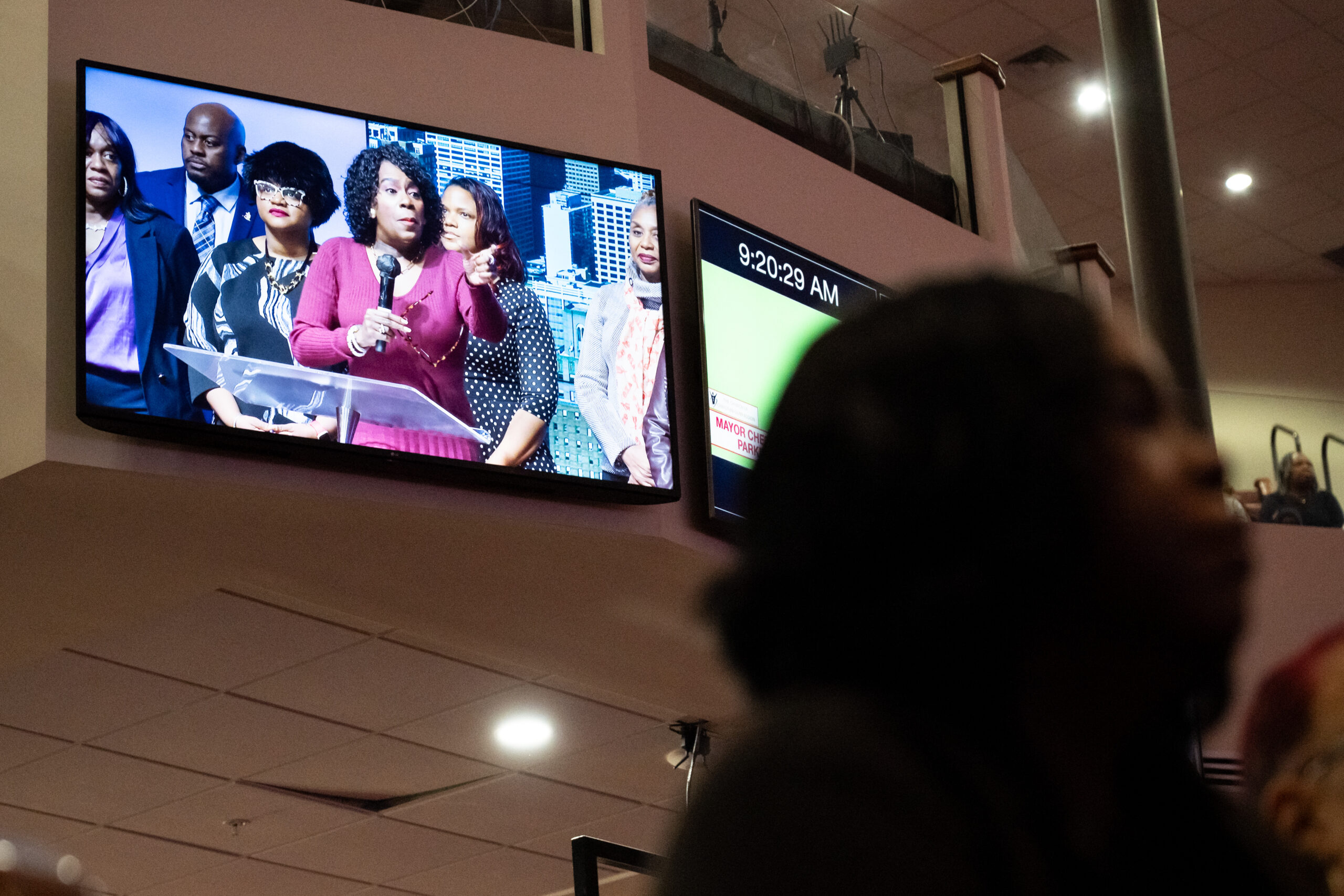
Mayor Cherelle L. Parker speaks to the crowd at The Church of Christian Compassion in the Cobbs Creek neighborhood of West Philadelphia on Sunday, Dec. 7, 2025. Parker visited 10 churches in Philadelphia on Sunday to share details about her HOME housing plan.
To Gauthier, the divisiveness was coming from the mayor’s office.
“I wish the mayor and her administration were more open to other people’s ideas, were more OK with disagreement on policy issues, and more aware of Council as a completely separate chamber of government,” Gauthier said, “as opposed to a body that works for her.”
That is a candid assessment of the relationship between Parker and City Council from Gauthier. Few lawmakers from the mayor’s own party have criticized her publicly.
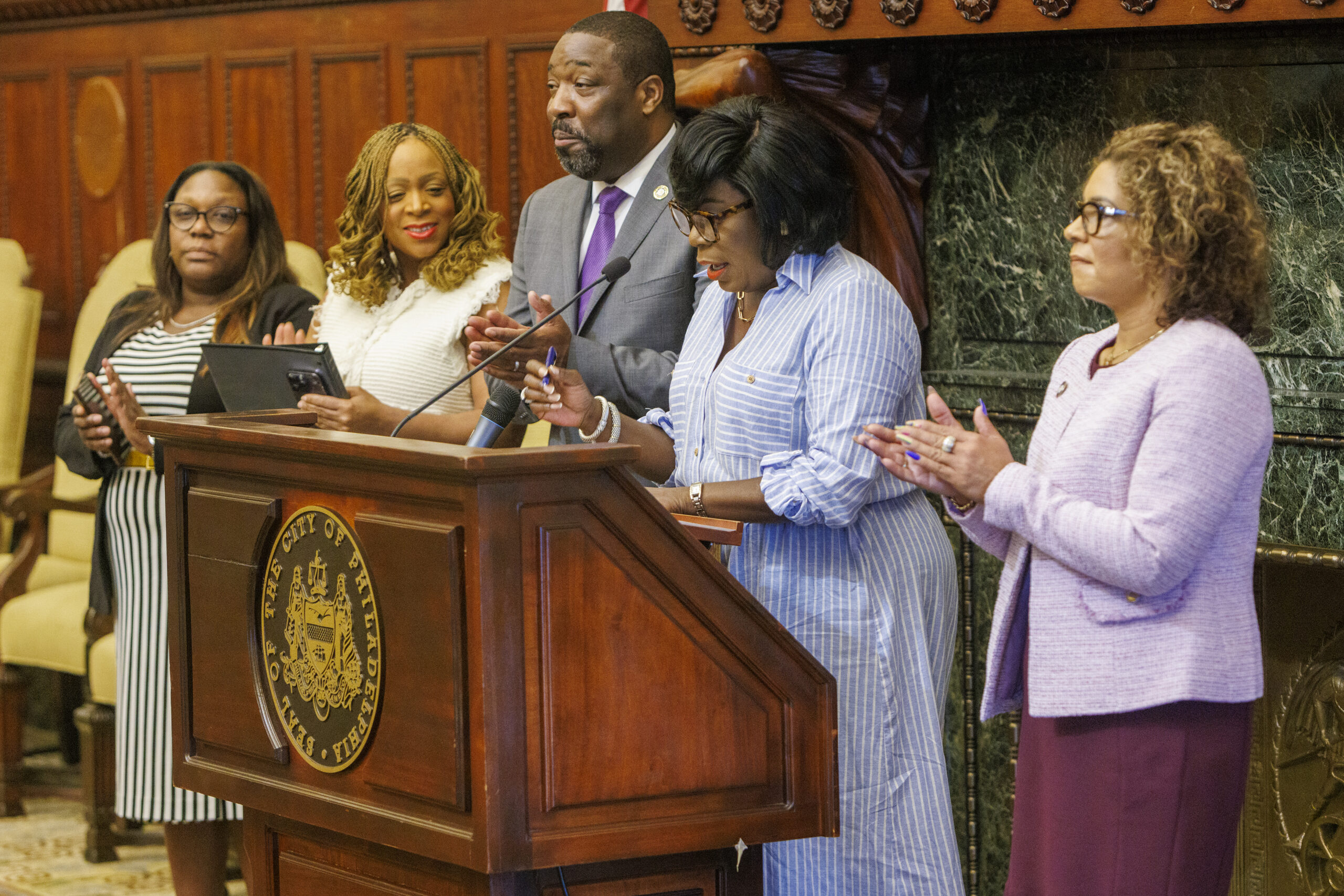
Philadelphia Mayor Cherelle Parker holds a press conference regarding her first budget flanked by members of city council in her reception room, Philadelphia City Hall on Thursday, June 6, 2024. Council members from left are Kendra Brooks, Jamie Gauthier, council president Kenyatta Johnson, and Quetcy Lozada.
State Rep. Rick Krajewski, a West Philadelphia Democrat and a progressive who has worked closely with Gauthier, said the fight over H.O.M.E. showed that Gauthier has learned “the diplomacy required to be an effective legislator.”
“It was a good example of not being afraid of a conflict that felt important to stand up for,” he said, “but then to not just be a lone actor, but organize with other colleagues and allies.”
Gauthier’s most important ally was Johnson, who negotiated directly with Parker through the process and controls the flow of legislation in the chamber.
The two go back years. Before Johnson was Council president, he made a point of welcoming new members, a gesture that has always stuck with Gauthier. They worked closely to secure funding for gun violence prevention. And Gauthier said that since Johnson took the gavel, he has been more open to working with progressives than his predecessor was.
He does not talk about that publicly. What he will say is that he works in partnership with Gauthier because she understands “the bigger picture in terms of how we move forward as the institution.”
“I consider her to be a pragmatic idealist,” Johnson said. “She wears her heart on her sleeve, and she really believes in actually doing the work.”
She was also supported by real estate interests, some of whom now have buyer’s remorse.
After Gauthier pulled off a shock win, she arrived in Council and quickly aligned with the progressive bloc. Through her first two terms, she has used councilmanic prerogative often, and has voted with her district Council colleagues so that they can do the same.
She admits that it is an effective tool for accomplishing her goals quickly.
Carol Jenkins, a Democratic ward leader in West Philadelphia, said Gauthier’s use of councilmanic prerogative is “part of her maturation.”
“That’s the power you have,” Jenkins said.
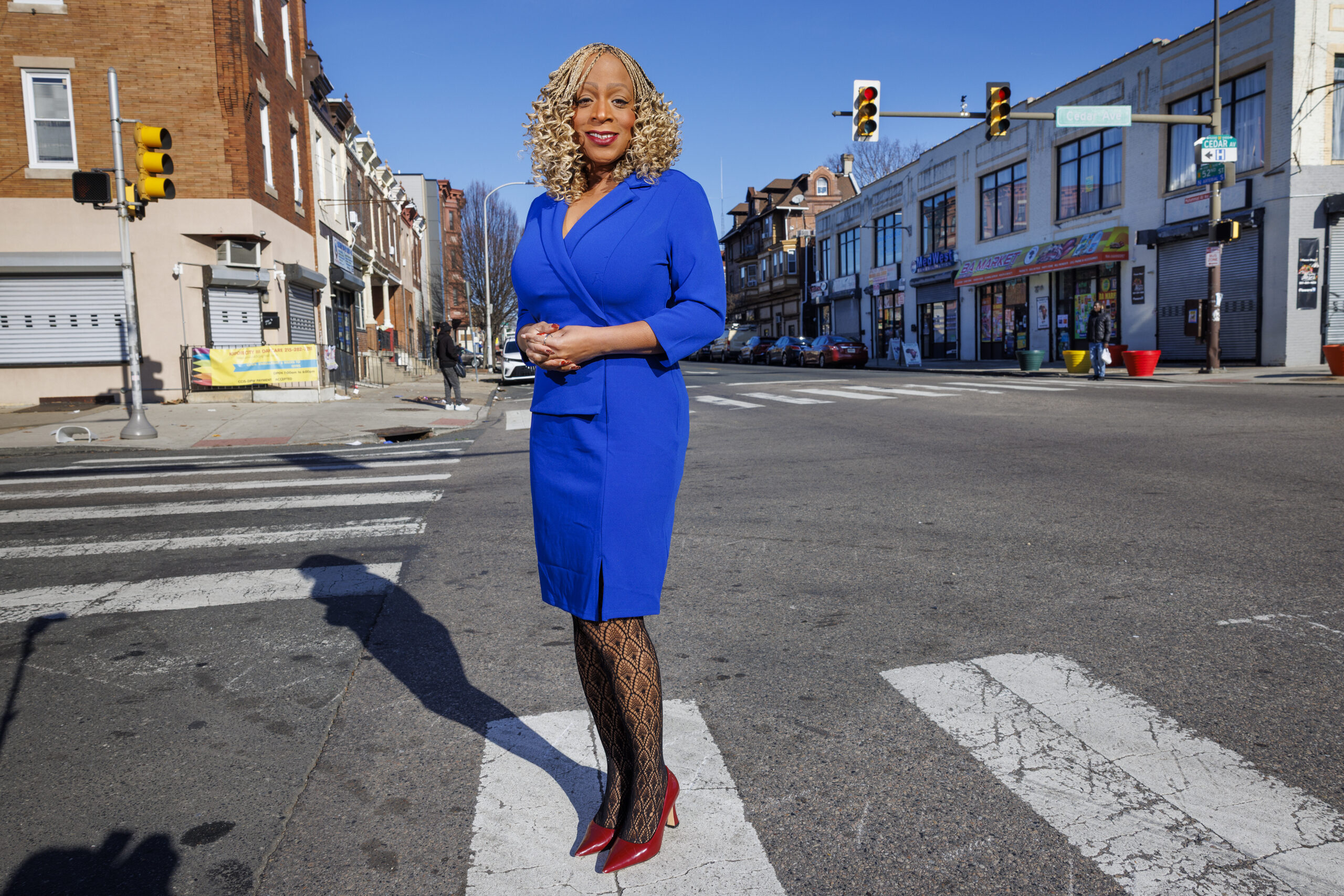
City Councilmember Jamie Gauthier in her district near 52nd Street and Cedar Avenue in Philadelphia on Monday, Dec. 22, 2025.
However, her most notable use of councilmanic prerogative has been in housing policy, and some developers say her district is now the most hostile to growth in the city.
In Gauthier’s first term, she championed legislation to create what is known as a Mixed Income Neighborhood overlay. In essence, it requires that developers building projects with 10 or more units in certain parts of her district make at least 20% of their units affordable. That is defined as accessible for rental households earning up to 40% of the area median income.
For Gauthier, it’s a tool to slow the rapid gentrification of her majority-Black district.
But developers say that growth has slowed significantly in the areas covered by the overlay since it took effect in 2022. Some have said they avoid seeking to build in the 3rd District entirely. The only major project currently in the works in the area is a parking garage.
Ryan Spak, an affordable housing developer who said he considers Gauthier a friend, has been among the most outspoken critics of the overlay. He said while Gauthier’s “moral compass is pointed in the right direction, her policies don’t math.”
“You would never ask a restaurant to give away its ninth and 10th meal for 40 cents on the dollar, with no additional discounts or benefits,” he said, “and expect that restaurant to survive.”
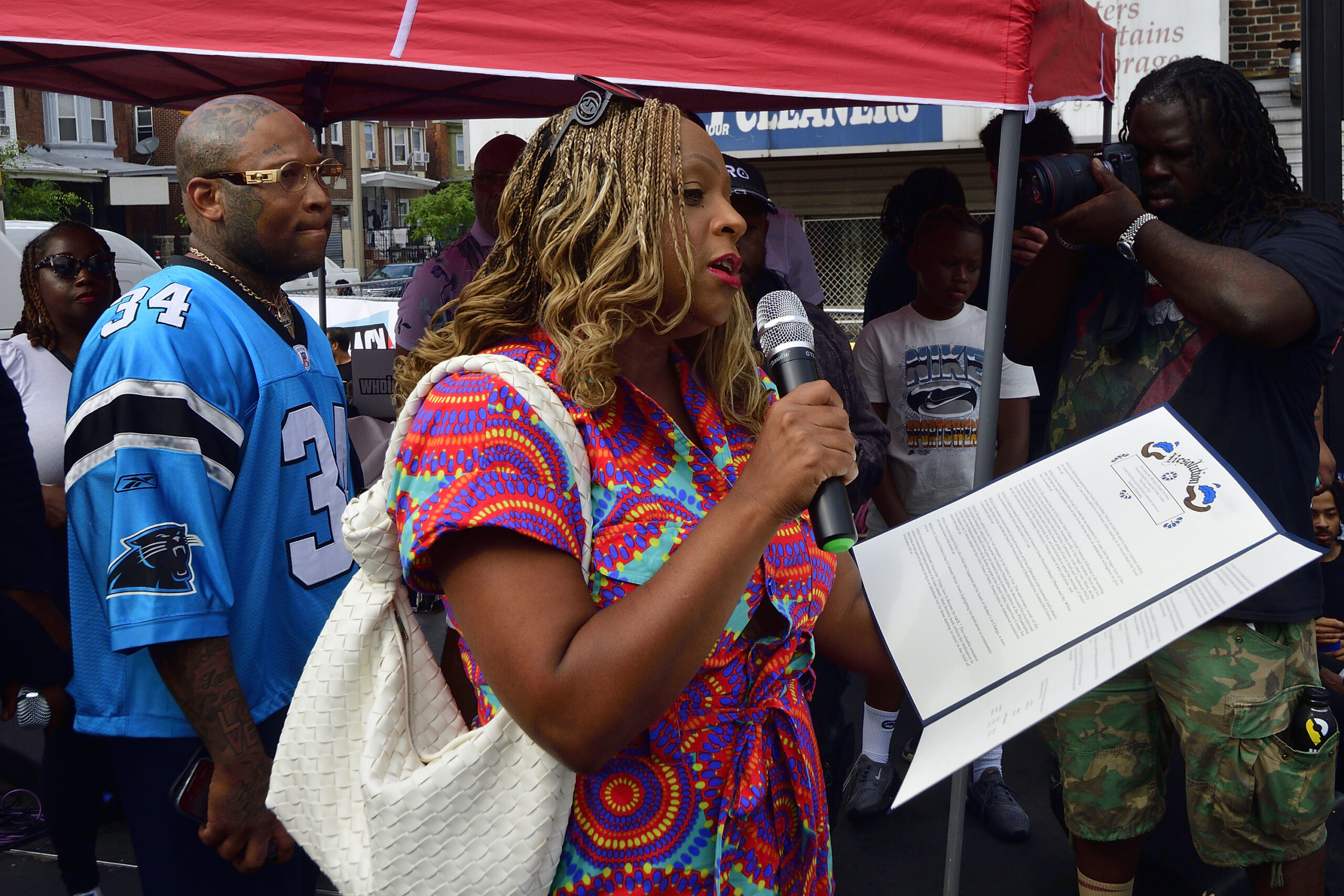
Councilmember Jamie Gauthier reads out a citation honoring Rapper Mont Brown during a street naming ceremony for the Southwest Philadelphia native at the 13th Annual Stop the Violence Kickback Block Party at 55th Street and Chester Avenue, in Southwest Philadelphia on August 17, 2024.
Gauthier said she has made adjustments, and she championed legislation to accelerate permitting and zoning approvals. The mandate, she said, is necessary because the market won’t build enough affordable housing on its own.
“As untenable as it is to them that they can’t make the numbers work, it’s untenable to me that people can’t afford to live here,” Gauthier said. “So we can come together and we can fix that. But I’m not going to move from my position that we have to demand affordability.”
Mayoral buzz, but no ‘stupid campaigns’
Gauthier is one of several names that have been floated in political circles as potential candidates for mayor in 2031, which would be Parker’s final year in office if she runs for and wins a second term. Several of her Council colleagues, including Johnson, are seen as potential contenders.
“I’d be lying if I didn’t say that mayor could be interesting one day,” Gauthier said. “I also don’t believe in stupid campaigns. So I would never do that if I didn’t think I had a path.”
Boyer said he has counseled Gauthier to pursue moderate policy and avoid being “label-cast” as far left. He said Philadelphia is not Chicago or New York, and he doesn’t see the city electing an uber-progressive to be the mayor any time soon.
“Philadelphia has always been a real center-left community,” Boyer said, “and just because you’re the loudest isn’t the most popular.”
The left may have other plans. Robert Saleem Holbrook, a progressive activist, said that Gauthier would be an “ideal candidate” for higher office and that the city’s leftists would back her.
Probably.
“So long as she stays true and supportive of progressive ideals,” Holbrook said. “You can’t compromise on your way up.”
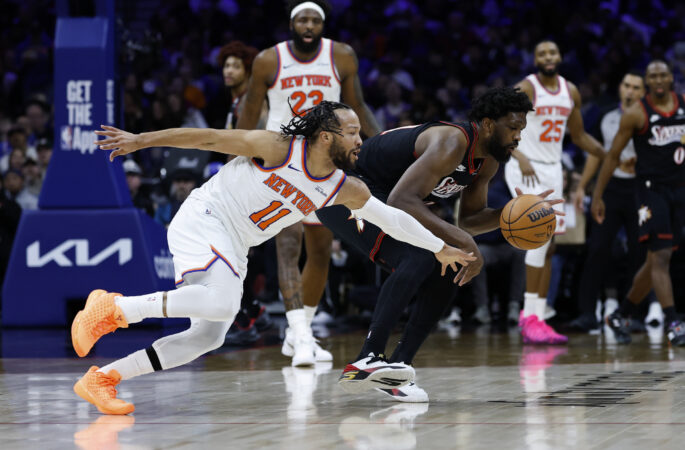
Nick Nurse assumed Tyrese Maxey felt contact from the New York Knicks’ Landry Shamet and tried to draw a whistle in the shooting motion.
But Maxey would not bite when asked if he believed he was intentionally fouled when he hoisted an off-balance three-pointer with the 76ers trailing by three points and 5.8 seconds remaining Saturday.
“Nope,” the Sixers’ All-Star guard said. “I should have just taken one more dribble and shot it regular.”
For the second game in a row, it appeared the Sixers were on the unlucky side of crunch-time officiating. That Maxey moment — plus three others — helped create a finish that was both frenetic and interrupted by multiple stoppages in play for review.
Although the Sixers overcame a missed goaltending call in Thursday’s overtime victory over the Houston Rockets, Saturday’s calls (or no-calls) remained under the microscope in the aftermath of the Sixers’ wild 112-109 loss to the rival Knicks in a nationally televised game at Xfinity Mobile Arena.
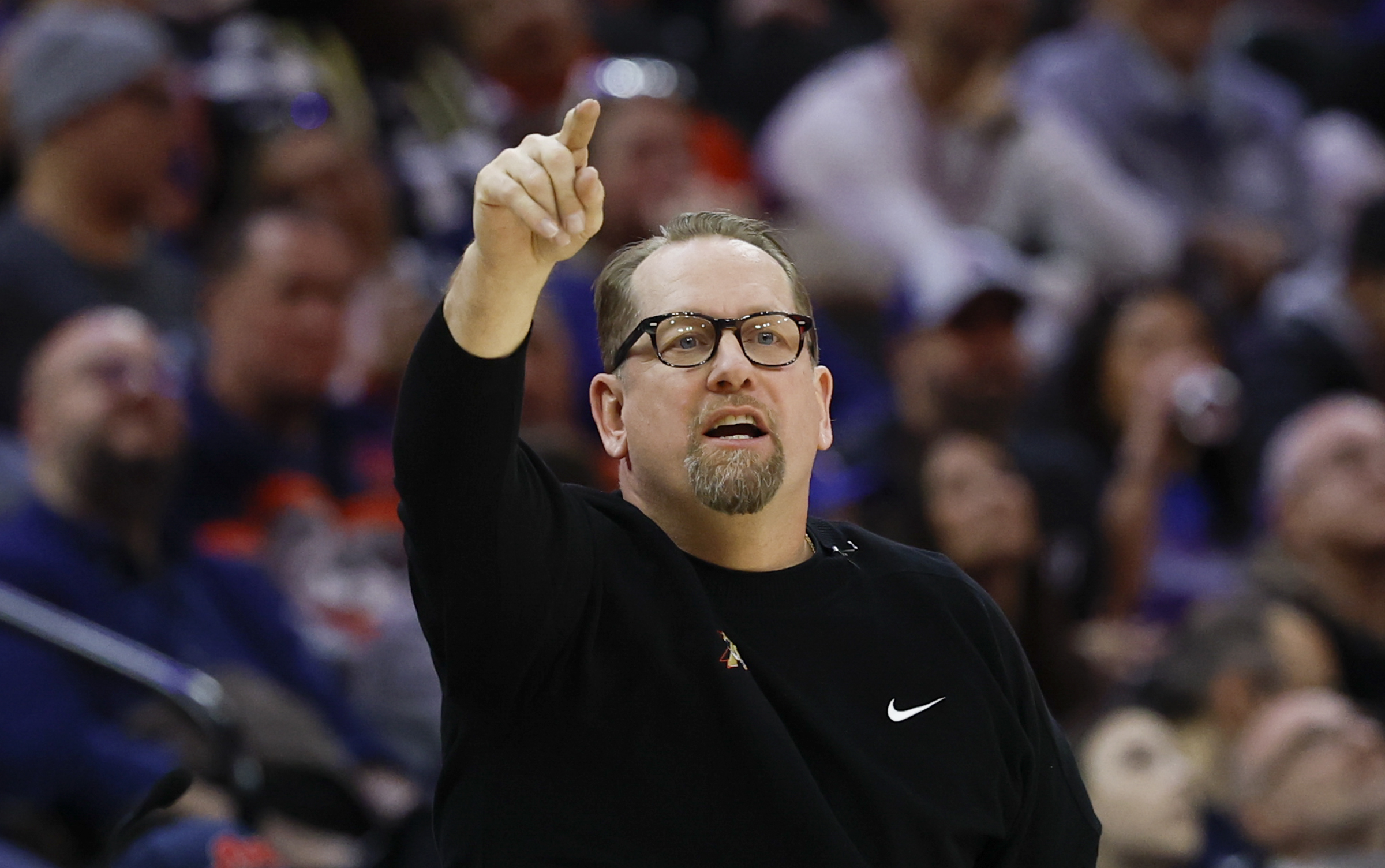
Sixers coach Nick Nurse says he believed there could have been a foul call on the errant three-point shot attempt from Tyrese Maxey in the waning seconds of the game.
“I think he was [fouled],” Nurse said when asked about the Maxey play. “No big deal. … Usually when [the opponent is] up three and you need three, teams are going to foul. But they didn’t [call it].”
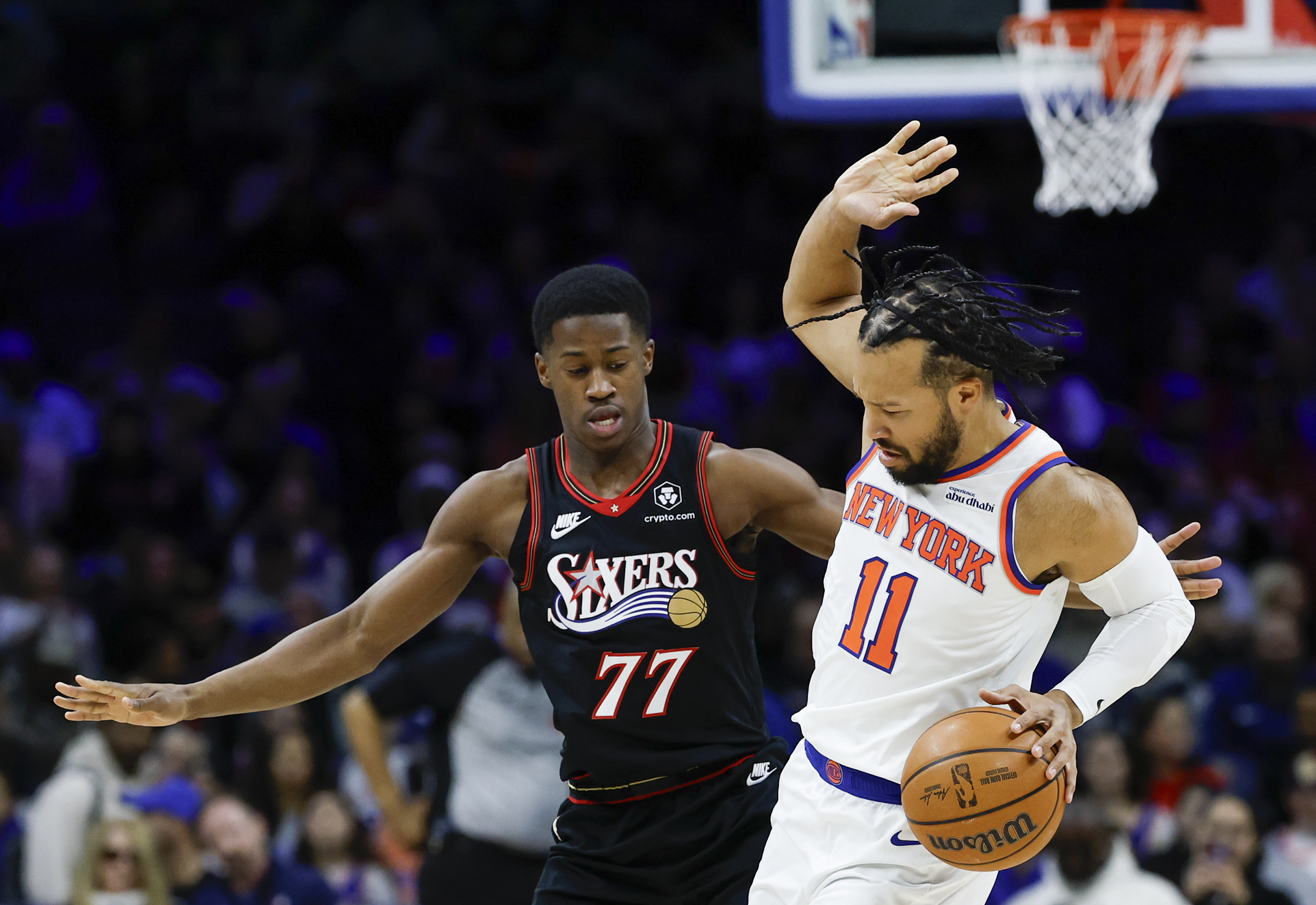
Joel Embiid, meanwhile, was not afraid to speak his mind at his locker following the game. He believed he also had been intentionally fouled upon collecting the rebound after Knicks All-Star Jalen Brunson missed two free throws with five seconds to play, keeping the Sixers’ deficit at three points. Embiid threw his arms up in disbelief when Brunson knocked the ball free, and New York’s OG Anunoby collected it as the final six-tenths of a second ticked off.
“I got fouled, for sure,” Embiid said. “Thought Tyrese got fouled, too. Two games in a row, but it’s whatever.”
When asked about both potential intentional fouls, crew chief Tony Brothers told pool reporter Noah Levick of NBC Sports Philadelphia that “During the game, we did not observe any illegal contact on the play.”
Those were not the only instances when the officiating became a storyline. With the Sixers trailing, 110-107, and 33.3 seconds remaining, Brunson was initially called for an off-ball foul for making contact with Sixers rookie VJ Edgecombe ahead of an inbounds pass. Edgecombe flexed and screamed in celebration, but a coach’s challenge by the Knicks’ Mike Brown overturned the call to a foul on the Sixers rookie — a result Brunson acknowledged was “very satisfying.”
Sixers guard VJ Edgecombe (left) thought he received a foul call which was later determined to be Knicks ball in the fourth quarter.
“They [said] you can’t play defense with your hands on nobody,” Edgecombe said of the explanation he received following the video review. “I guess I’ve got to play defense with my ‘eagles’ out and stand like this [with arms spread] the whole time. … I can’t touch nobody.”
Then, with 9.9 seconds to play, Sixers veteran forward Paul George was called for a foul at the rim that was overturned by a coach’s challenge by Nurse. Had the no-call on George been correct within the flow of the game, however, the Sixers could have immediately initiated their offense against a Knicks defense that was not set. There was also apparent contact from Embiid on Shamet away from the play, although Brothers said officials “did not observe any proximate foul during replay review.”
Those officiating moments arrived after a chaotic basketball sequence when the Sixers scored five points in less than five seconds to make it a one-possession game. Maxey hit a pull-up three-pointer with 37 seconds remaining before Edgecombe got tied up with Brunson to force a jump ball. Brunson then fouled Edgecombe, who hit both free throws to make the score 110-107 ahead of those players’ collision before the ensuing inbound pass.
Tyrese Maxey was the subject of a pair of questionable calls by officials in back-to-back games last week.
And those whistles — or, non-whistles — came less than two days after a different officiating crew missed a goaltending call on a Maxey layup attempt off the backboard against Houston, which would have given the Sixers a lead in the final seconds of regulation.
After the game, crew chief John Goble said, “By rule, a goaltending would have to be called on the floor in order for that play to be reviewed. In real time, the officiating crew felt it was a good blocked shot.”
“It happens, man,” Maxey said after that game. “We’re all human.”
It surely was much easier for Maxey to be forgiving when the Sixers still pulled off the overtime victory. Yet after Saturday’s defeat, Maxey’s team could not solely blame the officiating.
Nick Nurse expressed frustration after two no-calls in the final seconds of the Sixers' loss to the Knicks. | @Kiapic.twitter.com/QGNU7Thb1S
They stumbled through another third quarter, when a stagnant offense allowed the Knicks to build a 17-point lead. The Sixers were outrebounded, 53-38, leading to a 26-4 Knicks edge in second-chance points in a direct callback to the 2024 first-round playoff series between these two teams. And down the stretch, the Sixers allowed Shamet and Anunoby to get free for clutch three-pointers to quell their rally attempt.
Still, the NBA’s Last Two Minute report from Thursday’s game revealed that the officials were incorrect in not calling goaltending on that driving Maxey attempt against the Rockets.
One of Kennett Square’s last remaining sizable undeveloped parcels could get hundreds of townhomes and apartments — once contamination cleanup of a former industrial site passes muster.
But even with the OK from state and federal environmental officials, it would be years — and require more sign-offs at the municipal level — before the developer eyeing a residential complex at the former National Vulcanized Fiber site could break ground.
And the site’s owners face headwinds beyond the governmental approval, as some borough residents worry that the site is not safe for homes.
Officials from the U.S. Environmental Protection Agency and the Pennsylvania Department of Environmental Protection, agencies that have to ultimately green-light the land as safe for people to live on, sought to assuage those concerns Tuesday during a town hall that explained the processes for cleanup and the standards the developer would have to meet for any homes to be built.
It was the latest update regarding a proposed residential complex that would feature 246 townhomes and 48 apartments, located at the 22-acre lot on 400 W. Mulberry St., not far from the historic district of the borough, on a plot of land that has languished for almost 20 years.
It’s one of the largest untouched parcels in the borough, making up at least 10% of Kennett Square, which is one square mile. Developers project the residential complex would increase the population of the 7,000-person borough by 15%.
The site, which housed National Vulcanized Fiber from the late 1890suntil it shut down in 2007, was purchased by its current owner in 2009 and has been the subject of cleanup efforts for more than a decade after the land was found to be contaminated with so-calledforever chemicals.
“It feels like the cart was put before the horse for the public,” one resident, Sarah Hardin, said during Tuesday’s meeting. “I think it’s the fact that we’re all feeling like this was guns a-blazing forward, and we would like to know that all the proper environmental steps are taken.”
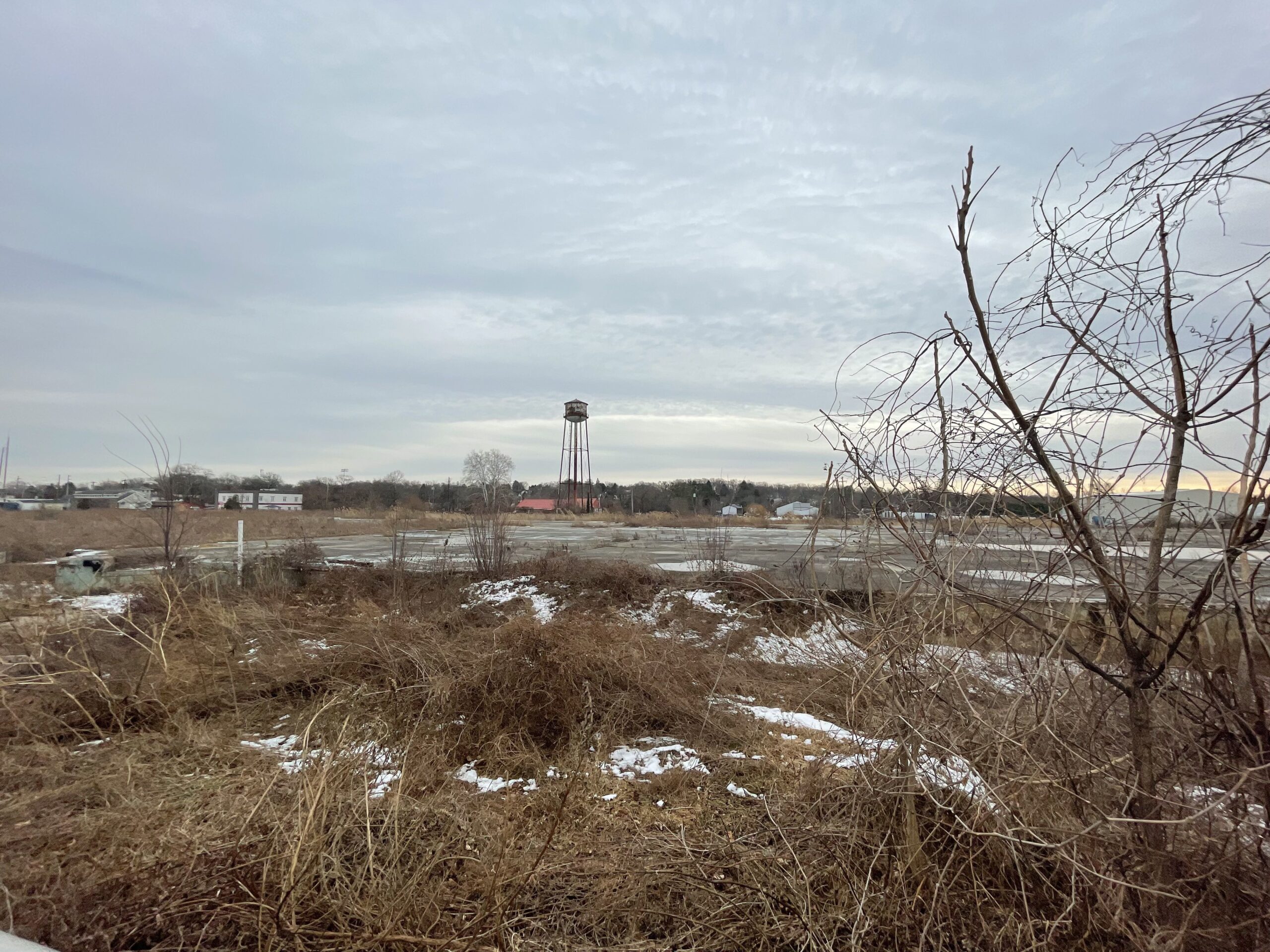
The former National Vulcanized Fiber in Kennett Square on Friday, Jan. 23, 2026. Once an industrial site, the property’s current owner is seeking to eventually turn it into a residential development. But first, the property has to be decontaminated that satisfy state and federal requirements.
What’s the history of the site?
For more than 100 years, National Vulcanized Fiber ran operations on the property, creating a slew of products with vulcanized fiber — a durable, flexible, lightweight plastic-like material that was used to make anything from trash cans to computer circuit boards.
Production of those items led to contamination of the site; polychlorinated biphenyls (PCBs) were identified in the 1980s, after contamination spread into Red Clay Creek. That prompted the EPA to become involved, said Amanda Michel, the agency’s PCB coordinator for the region.
The chemicals are probable carcinogens, linked to liver and breast cancer, melanoma, and non-Hodgkin lymphoma. The chemical is also associated with birth defects, developmental delays, and immune system dysfunction.
Remediation began after the chemicals were found in the 1980s, and NVF folded in 2007. Rockhopper LLC purchased the property two years later and began cleaning the site, eyeing future residential development.
Along with the federal cleanup, in 2010 the owners began a voluntary state cleanup process — which is aimed at redeveloping contaminated, vacant, and unused parcels into productive uses — to target the other chemicals found on the site.
In both cases, the owners have to demonstrate, through sample testing, that contamination has been lowered to a threshold acceptable for human health or that they have the proper barriers in place to prevent exposure.
“Until that happens, there will not be a residential occupant at this property,” said Jonathan Spergel, an environmental lawyer representing Rockhopper.
What is the developer proposing?
Under the proposed development, the property would have 104 stacked and 38 unstacked townhomes, along with 48 one-, two-, and three-bedroom apartments. The owners said the project would comprise affordable and market-value units. A proposed rezoning ordinance would require15% of the homes to be affordable.
That component was critical forKennett Square officials, Mayor MattFetick said in an interview last week.
“It’s our best opportunity to have an affordable component,” he said.
Alongside those homes, the property would have roughly 732 parking spaces, and 50 would be added to Mulberry Street.
To offset feared bottlenecks, the property’s proposed plan would have five driveways todistribute traffic flow.
The site’s developers estimate that the property would bring in $382,000 for the borough and more than $830,000 for the school district each year.
Another portion of the site serves as a baseball field at the high school, and no further development is planned there, the property’s owners said in 2024.
The project is helmed by Rockhopper LLC, which is led by two development firms, Delaware Valley Development Corp. and Catalyst City. They brought in Lennar, a home-building company, in 2021. Lennar has done at least two similar projects, remediating industrial lots in Phoenixville and in Bridgeport for residential use, a representative said previously.
What are residents’ concerns?
On Tuesday, residents shared stories of loved ones who lived near the site who have been diagnosed with cancer. They worried that the developer could skew data to move the project forward. They wondered why there had been no urgency to clean it up before.
Officials said the developer has to work with an independent environmental professional and their agencies had been on site throughout the cleanup process.
Corey Barber, who lived near the site for 20 years and moved out of the area after her cancer diagnosis in 2021, worried what construction on the site would bring.
“People are going to believe that they’re going to get cancer from the dust kicking up,” she said.
Charla Watson, who lives right by the property, said there was distrust because the community has not seen the work the developer says is happening.
“It’s just been a wasteland,” she said. “Everything looks the same the day they moved out of there.”
What comes next?
The developer is going through two processes simultaneously. As it cleans up the property to get the necessary state and federal approvals for residential development, it is also working at the municipal level for the land to be rezoned so it can build the residences.
The borough is advertising a change to the ordinance that would rezone the land.
If the ordinance is approved, the developer could formally start developing the land — which would come with at least another year of planning and meetings.
This suburban content is produced with support from the Leslie Miller and Richard Worley Foundation and The Lenfest Institute for Journalism. Editorial content is created independently of the project donors. Gifts to support The Inquirer’s high-impact journalism can be made at inquirer.com/donate. A list of Lenfest Institute donors can be found at lenfestinstitute.org/supporters.
These are the buzzwords surrounding the automobile industry as 2025 gives way to 2026. But you probably won’t hear too much about them at the 2026 Philly Auto Show, where beginning Saturday the Auto Dealers Association of Greater Philadelphia shines up the best and lets thousands of visitors check everything out, with only the pressure of other visitors waiting for their turn.
Show enthusiasts who’ve been missing the big events from pre-pandemic days will have a reason to smile. The show will cover almost 700,000 square feet, five more brands are joining in at the Pennsylvania Convention Center, and the electric vehicle ride program will have doubled.
“It’s wonderful to be able to fill the building again,” said Mike Gempp, executive director of the dealers association, which puts on the show. “You gotta wear comfortable shoes, for sure.”
The added nameplates you’ll see will be Genesis, Lincoln, Lucid, Polestar, and Volvo. This allows the footprint to grow quite a bit since all of last year’s makes are back, making the largest number (27) since 2020.
The redesigned 2027 Kia Telluride three-row SUV is one of the main attractions among new vehicles at the 2026 Philly Auto Show.
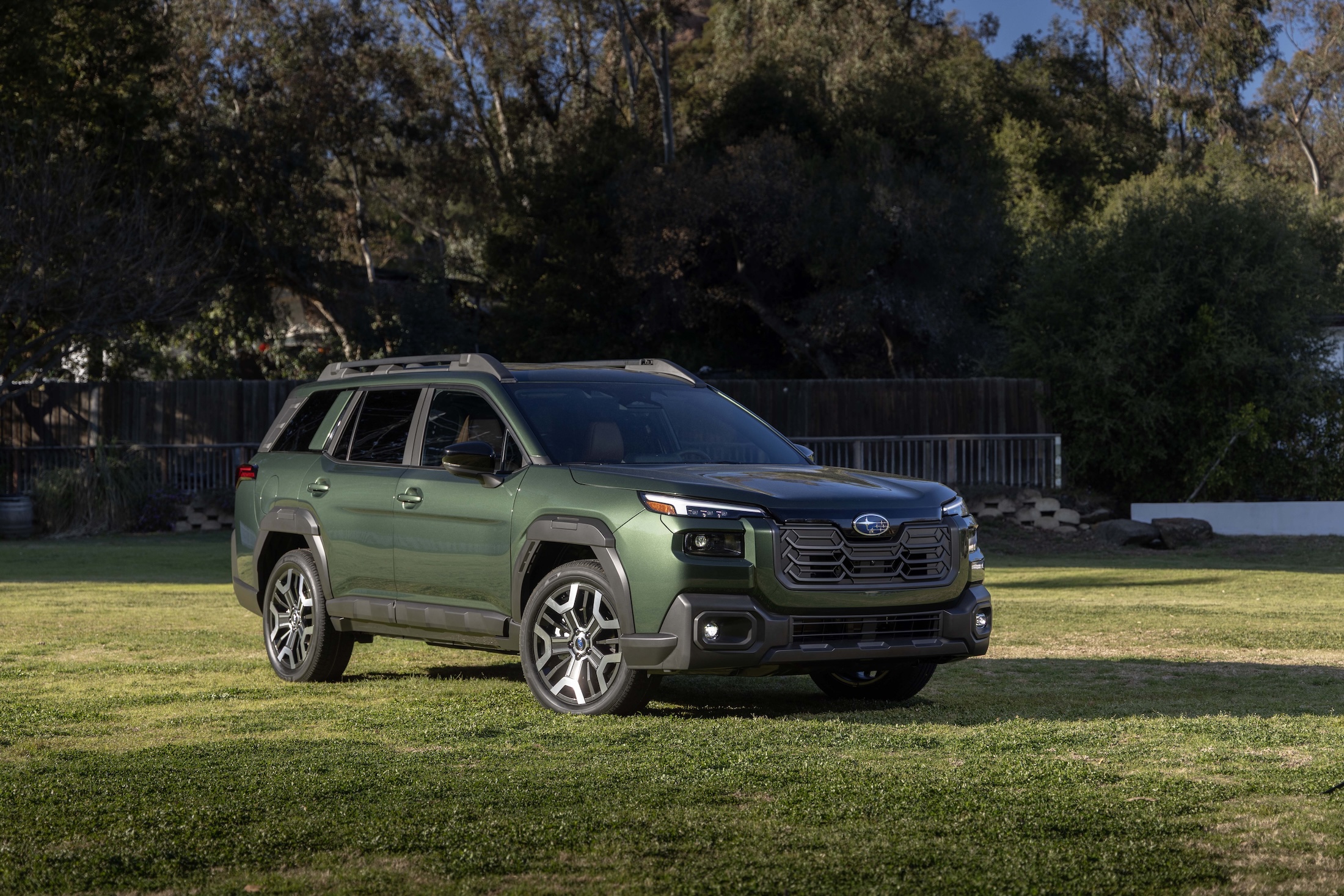
The latest vehicles are the main draw, of course. Some that are attracting interested buyers, Gempp says, are: the redesigned 2026 Subaru Outback SUV; the reborn 2026 Honda Prelude Hybrid sports coupe, last seen long before hybrids were a big thing, in 2001; the redesigned Ford Maverick hybrid small pickup; and the 2027 Kia Telluride.
Other attention-getting vehicles expected at the show include the Chevrolet Corvette, Ineos Grenadier, Jeep Recon, Lotus Emira, McLaren 750S, and Subaru BRZ tS.
Coming off a steady rise in sales — up 3.3% in the nation and 1.2% in the region, Gempp said — the industry has been fighting tariff and EV rebate uncertainty since the Trump administration took office. But just over 16.3 million vehicles were sold in 2025, according to Cox Automotive, the highest number since the pandemic arrived.
The Subaru Outback has become an iconic SUV in the United States. The redesigned 2026 model will be on display at the Philly Auto Show Saturday, Jan. 31, through Sunday, Feb. 8.
EVs: The future and the present
Despite the end of rebates, electric vehicles may still be an attractive proposition in 2026. Manufacturers have new EV models coming to market, Cox Automotive executive analyst Erin Keating said, and without rebates to lower the prices, dealers will have to make them attractive to consumers.
“I really wouldn’t count EVs out,” Keating said, especially as more are coming to the used market.
EVs will figure into the show heavily. The indoor E-Track allowing visitors to ride in 20 different kinds of EVs is doubled in size and now features eight brands: Cadillac, GMC, Lucid, Kia, Polestar, Tesla, Toyota, and Volvo.
But the E-Track is not all EVs, as there will be plug-in hybrids to ride in as well, like the Kia Sportage, Toyota RAV4 and Prius, and Volvo XC60.
Gempp sees the E-Track as a chance to teach visitors about the different kinds of powertrains available in modern vehicles.
Now that EVs are not as big a focus for manufacturers, Gempp sees technological innovations as a major area of industry attention. He points to the Lincoln Nautilus, with a 48-inch screen running pretty much the width of the entire dashboard.
The Lincoln Nautilus shows how far screens have come in modern vehicles, with a 48-inch touchscreen spanning the dashboard. It will be on display at the 2026 Philly Auto Show, now that Lincoln is back at the show.
Switch to hybrids
Gempp sees hybrids drawing renewed attention from manufacturers. There’s no plugging in these models, just electric motors and batteries that supplement the engine, taking advantage of braking energy and adding that back into the power supply, saving fuel in the process.
“The manufacturers are refocusing on hybrids, and pulling away from concentration on EVs that we saw in the last few years because the incentives have gone away, because the penalties for carbon credits have gone away, there’s very little incentive for manufacturers to introduce or sell EVs” said Sam Fiorani, vice president of global vehicle forecasting for AutoForecast Solutions in Chester Springs.
All that refocusing is needed as the industry outlook grows cloudy. With tariffs and subsequent price adjustments, along with general economic uncertainty, Keating expects sales to fall to 15.8 million, while Fiorani is a little more optimistic that they’ll be just under 16.2 million.
Affordability remains as the final question mark.
“The biggest thing weighing down the economy going forward is how tariffs of ’25 will affect pricing in ’26,” Fiorani said. “We’ve already seen the manufacturers of all products absorb these costs as much as they can so we’re going to start seeing some of these costs being pushed onto the consumer.”
Show events
But we can take our minds off all that at the auto show, enjoying some of the exhibits that take the event beyond sitting inside stationary vehicles.
Here are some of the other attractions planned:
Camp Jeep will be back
The lines are generally long at the 30,000-square-foot space, where visitors can ride in a Jeep Wrangler Unlimited, Grand Cherokee Trailhawk, Grand Cherokee L, Compass, or Gladiator over a track that adds a breakover log crawl and a 25-degree wedge to an 18-foot mobile hill and stair climber. Nearby, Kiddie Camp Jeep will give future customers a chance to maneuver mini Jeep ride-on toys.
Stellantis will host outdoor drive events
Unlike the indoor tracks, here licensed drivers 18 and up are able to choose from 10 Stellantis vehicles to test drive around Philly: Alfa Romeo Giulia and Tonale PHEV, Dodge Durango SRT, Ram 1500 and 2500, Chrysler Pacifica, FIAT 500e, and Jeep Wrangler, Gladiator, and Grand Cherokee.
The Antique Automobile Club of America display at the 2023 Auto Show at the Pennsylvania Convention Center.
Unusual autos and antique cars draw fans
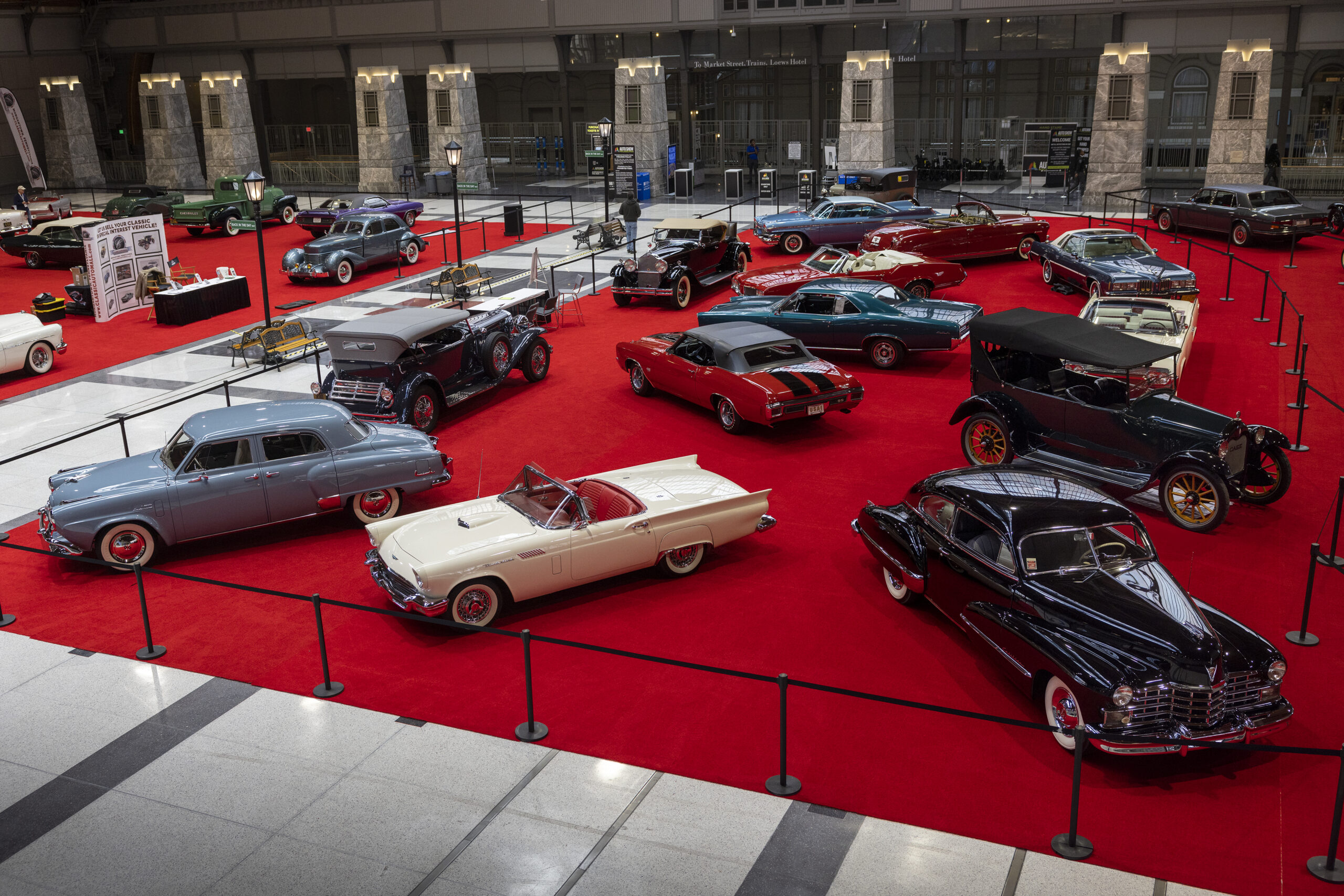
Exotics Row will feature the kinds of cars most of us only dream about, and classics displays from Antique Automobile Club of America and Delaware Valley Triumphs bring back memories of what neighborhood streets once looked like.
Buick will showcase the first-ever concept vehicle, the Y Job, built in 1938. It premiered plenty of groundbreaking features, like a power convertible top, power door locks, automatic transmission, and retractable headlights.
Heroes Highway is added this year
In this new area, meantto celebrate first responders, kids of all ages can enjoy an interactive display of police, fire, and rescue vehicles. Qualified first responders will be able to enter the show for free on Feb. 6.
A big year for Philly history
Route ’26 showcases the events surrounding Philadelphia and American history, marking the 250th anniversary of the signing of the Declaration of Independence. Events on display include Wawa Welcome America, the 2026 MLB All-Star Game and All-Star Week festivities, and TED Democracy: Founding Futures at the Kimmel Center for the Performing Arts.
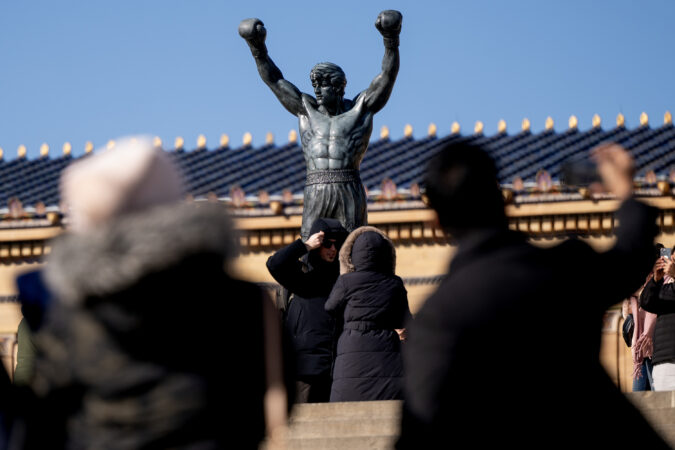
F. Eugene Dixon, former chair of the Philadelphia Art Commission, was asked in the early ’80s whether the Rocky statue should be placed atop the steps of the Philadelphia Museum of Art. Mr. Dixon responded, “Surely you jest.”
City officials had argued that the statue was “not art but a movie prop,” and it was moved to the old Spectrum arena. For the filming of Rocky V, the statue was temporarily moved to the top of the steps at the Philadelphia Museum of Art. For many years, it has been at the bottom of the steps. The Philadelphia Art Commission, not jesting, recently voted 4-1 to move the statue back to the top of the steps.
The kerfuffle over the Rocky statue is as artificial as the celluloid boxer. If a Rocky statue defining grit belongs at the Art Museum, cast it in the image of the real Rocky Balboa who fought the real Apollo Creed. Chuck Wepner lost a 1975 bloodbath to Muhammad Ali when he was knocked out in the 15th round. Sylvester Stallone used the fight (and much of Wepner’s persona) to create a billion-dollar franchise. Wepner sued Stallone, claiming he was unjustly enriched by Wepner’s story, settling out of court.
Philadelphia produced many great fighters who demonstrated grit and courage. Harold Johnson, Joey Giardello, and Bernard Hopkins come to mind. Matthew Saad Muhammad — abandoned at the Benjamin Franklin Parkway at age 5 — began boxing as Matt Franklin, changing his name when he converted to Islam. He was a champion who fought the best of his generation with power and determination. After winning the championship, he defended it eight times. He remained in Philadelphia after retiring, where he died broke, homeless, and largely forgotten.
Joe Frazier had an equally difficult upbringing. After moving to Philadelphia alone at age 15, he became an Olympic gold medalist and heavyweight champion. He fought Ali three times, beating him in the 1971 title bout that riveted a nation.
Rocky’s sculptor stated that “Rocky is the DNA” of Philadelphia. Nope. Fighters such as the above, and many others who worked in gritty blue-collar jobs, provided the DNA, giving Philadelphia the tough, hardworking ethic it claims, not a celluloid fighter. If the Rocky statue belongs anywhere, it would be near the shuttered Blue Horizon boxing venue in North Philadelphia, which Ring magazine once called the greatest boxing venue in the world. The fictional Rocky is tied to boxing far more than to art.
Stewart Speck, Wynnewood
Expensive ICE
As a lifelong Democrat, I am profoundly disappointed in my party’s apparent capitulation on U.S. Immigration and Customs Enforcement funding. $10 billion? People not making half of any Congress member’s salary are out in the cold in Minnesota, peacefully registering outrage at the city’s brutal occupation by ICE, and my party is compromising on $10 billion so ICE can have a fleet of Boeing airliners, too. No budget cut for ICE, no congressional imposition of policing standards common in every city in America to protect due process and privacy rights. Democrats had better put up some real opposition now — or they may fail to convince voters later this year that they are a true alternative. Congress, please stand up for the poor folks in Minnesota.
William Culleton,Philadelphia
Join the conversation: Send letters to letters@inquirer.com. Limit length to 150 words and include home address and day and evening phone number. Letters run in The Inquirer six days a week on the editorial pages and online.
DEAR ABBY: It seems that everywhere I go, people expect tips. Yesterday, I pulled up to the drive-through at a cookie store, and before I paid or was handed my cookies, the clerk asked, “Would you like to leave a tip?” My niece recently told me that after she left a tip at a restaurant, the server followed her outside and asked if she hadn’t been a very good server because the tip was small. I can give you more examples just from my family regarding their experience with tipping.
In this economy, I don’t feel the 20% rule should apply. For the price of a lunch for two at a sit-down restaurant these days, the tip costs as much as a small entree. When I go through a drive-through, I don’t feel I need to tip because I’m not inside using their facility. But if I don’t, I get a disappointed look from the gal who gets paid to make and hand me my drink. What are your thoughts?
— TIPPED OUT IN IDAHO
DEAR TIPPED OUT: The server you mentioned may need tips to survive on her subminimum or minimum wage income. However, a tip should never be requested, and for a server to follow your niece out of a restaurant to discuss a small tip is beyond the pale. Although some establishments “suggest” tips that can go as high as 35%, most customers give 15% or 20% of the total bill.
Since you asked for my opinion, here it is: Quit complaining. If you think you received adequate service, leave a tip, and you will be warmly welcomed at whatever eatery you choose to patronize.
** ** **
DEAR ABBY: Once a month, my wife and I play music trivia with my brother and his wife at our local pub. We invited them, thinking it would be a great way for us to get closer. (I have an older brother we are closer to.) As it turns out, my sister-in-law belittles my brother in front of us if he questions an answer someone might give (which we all do at one point or another).
At first, we laughed and considered it to be playful banter, but now it has become really uncomfortable. My brother doesn’t say anything back because he doesn’t want to create a scene, so the night always ends on a sour note for me and my wife.
Abby, we’re to the point of telling my brother we no longer want them as partners on our team, but I’m not sure how to go about it. What can we say without creating a major blowup? Help, please.
— SOUR NOTE IN MICHIGAN
DEAR SOUR NOTE: Tell your brother and sister-in-law privately, together, that if she has any criticisms to make about your brother, you would prefer that it not be in public or in front of you because it makes you UNCOMFORTABLE. It is the truth. It may cause them to stop playing music trivia with you, which will solve your problem. However, if they show up and she does it again, end your participation, with no additional explanation needed.