Tag: topic-link-auto

  • After the Gillian’s closure, boardwalk merchants agree it will never be the same. They want a say in what comes next.

    After the Gillian’s closure, boardwalk merchants agree it will never be the same. They want a say in what comes next.

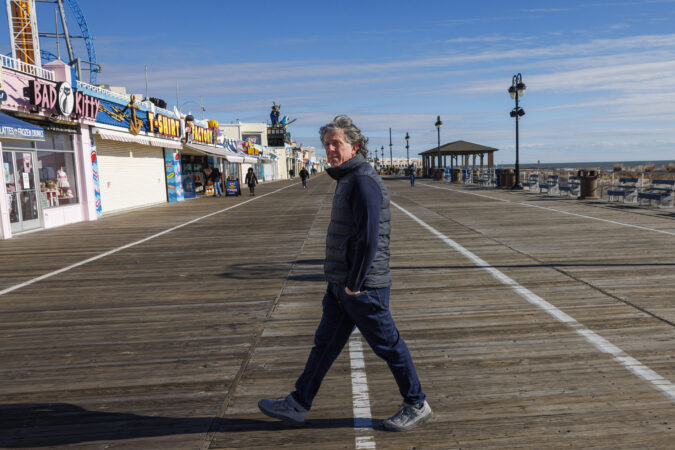
    OCEAN CITY, N.J. — Along the commercial stretch of Ocean City’s boardwalk, from Sixth to 14th Streets, there are 167 storefronts, including four Kohr Bros. Frozen Custards, three Johnson’s Popcorns, three Manco & Manco Pizzas, and eight Jilly’s stores of one type or another.

    There are eight mini-golfs, nine candy shops, 18 ice cream places, 10 pizza shops, 18 arcades or other types of amusements, five jewelry stores, three surf shops, five T-shirt shops, and 47 clothing or other retail shops. There is one palm reader.

    Even without Gillian’s Wonderland Pier, the iconic amusement park at Sixth Street that famously closed in October 2024, it still adds up to a classically specific, if repetitive, Jersey Shore boardwalk experience. Many of the shops are owned by the same Ocean City families, some into their third generation.

    But now these very shop owners are sounding the alarm.

    “This is a group that’s been hanging on for a long time,” Jamie Ford, owner of Barefoot Trading Co., at 1070 Boardwalk, said in an interview last week. “These places are hanging in there. They’re not going anywhere, but we’re nervous.”

    The merchants have urged city officials to green-light a proposal by Icona’s Eustace Mita to build a seven-story hotel on the Wonderland site. But officials have twice balked at starting the process.

    Chuck Bangle, owner of the storied Manco & Manco Pizza, warned planning officials he might close one of his three locations if business did not pick up. Other boardwalk property owners said longtime tenants were not returning.

    “It’s the 70th year of our family business, the 34th year on the boardwalk,” Bangle told the planning board Jan. 7, before it eventually deadlocked 4-4 on whether the Wonderland site should be declared in need of rehabilitation. “I wrestled with closing the Eighth Street location. I don’t want to close. The impact of Wonderland’s closing on all the merchants has been substantial.”
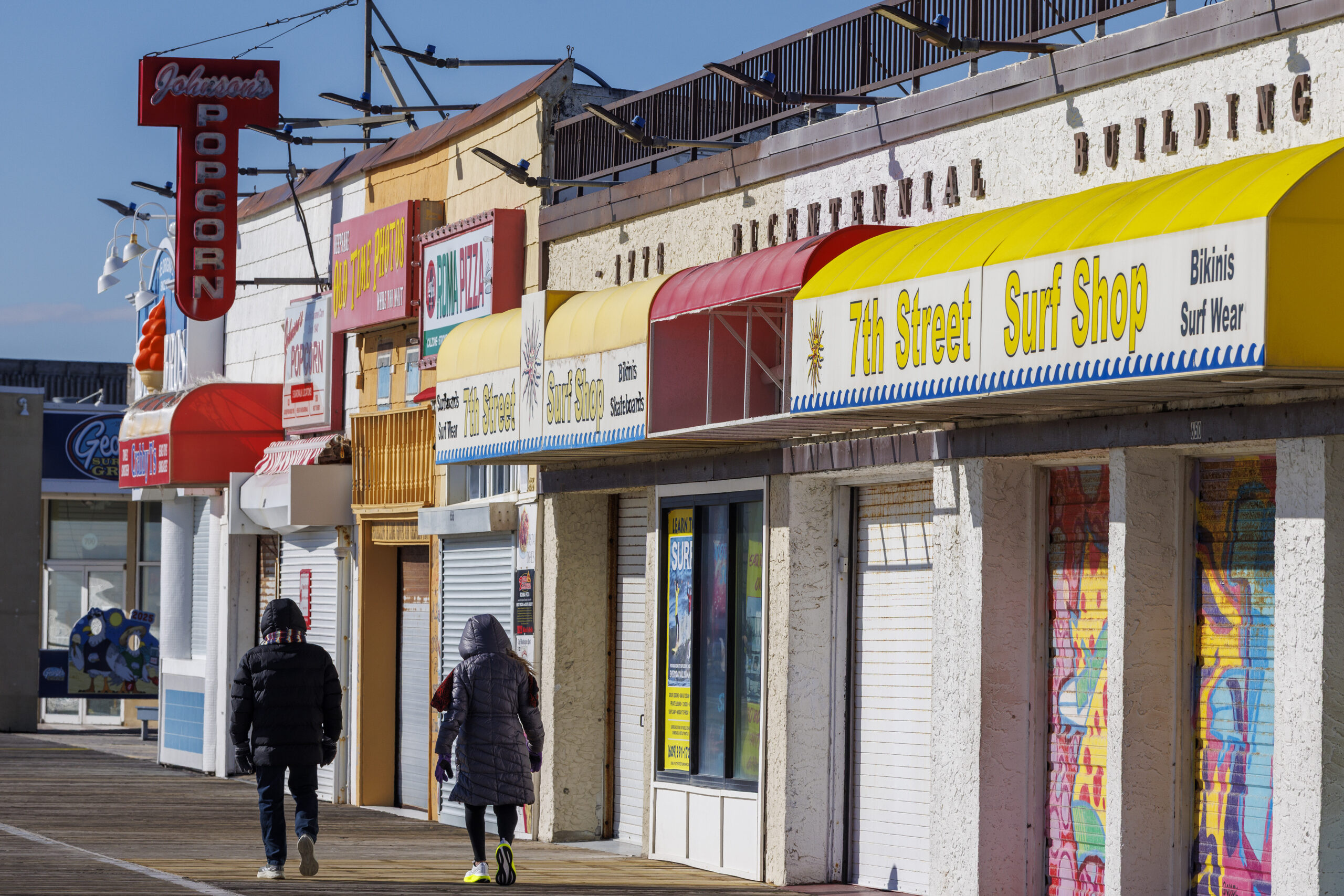
    Business along Boardwalk near 7th Street, Ocean City, NJ., Thursday, Jan. 15, 2026.

    Gillian’s, which was last operated by Ocean City Mayor Jay Gillian under a lease from Mita, had anchored the north end of the boardwalk at Sixth Street with its signature Ferris wheel, historic carousel, and beloved kiddie rides since 1965. Mayor Gillian recently declared personal bankruptcy, and has been sued for $600,000 in Wonderland debt.

    Into blustery January, the debate has raged about whether a luxury hotel, even one that would save the Ferris wheel, would bolster or undermine the essential character of this dry town and its beloved boardwalk.

    At this point, even the most ardent members of the Save Wonderland faction seem resigned to the reality that, as Will Morey of Morey’s Piers himself came up from Wildwood to say to the planning board, the odds of Wonderland coming to life again as an amusement park are slim to none.

    A rendering of the proposed new Icona in Wonderland Resort, to be built on the site of the old Wonderland Pier. The proposal for a 252-room resort includes saving the iconic Ferris wheel and carousel.

    It’s the rest of the boardwalk that now wants to be heard: merchants with the voice of their ancestors ringing in their ears.

    “This is an incredible opportunity,” said Ocean City Councilman Jody Levchuk, a member of the family that owns the Jilly’s stores on the boardwalk. He is also a member of a boardwalk subcommittee that will report its findings on Feb. 7. “My grandfather — who’s a big boardwalk guy — he’d walk up and he’d say this man wants to spend $170 million and you’re ignoring him.”

    Plummeting parking revenue

    A season without Wonderland took its toll. Parking figures from municipal lots tell the story.

    The 249-spot lot at Fifth and the boardwalk across from Wonderland brought in $483,921 in parking fees in 2024 (people paid an average of $21 to park there during the summer season), but dropped to $290,895 in 2025, a 40% decrease. Overall, parking revenue dropped by about a half-million dollars, from $2.46 million in 2024 to $1.95 million in 2025.

    At the end of 2025, there were a half-dozen empty storefronts, according to boardwalk merchants who keep track, mostly in the 600 block adjacent to Wonderland, though there is inevitable churn during the offseason.

    Becky Friedel, owner of 7th Street Surf Shop, said in an interview that the shop is planning to expand and take over two of the vacant boardwalk storefronts for a new breakfast and lunch spot and a clothing boutique.

    She said that while businesses have seen the loss of some of the younger clientele who used to fill Ocean City rooming houses and group Shore houses, the newer second-home owners come “with a fair amount of money.” The boardwalk also has a handful of higher-end boutiques, including the Islander. The downtown saw the opening of a Lululemon last year. Some envision a boardwalk that might include more boutiques in the mix, and fewer repeating sequences of ice cream-french fries-pizza-beachwear.

    “We’re optimistic,” Friedel said. “Obviously [Wonderland closing] hurt us a little bit, especially in the evening. Our night business isn’t as strong as it was. We’re taking over the french fry place to focus on breakfast and lunch.”

    Taking on the boardwalk

    Also optimistic are the partners behind Alex’s Pizza, the Roxborough stalwart dating to 1961 that is opening up this summer at 1214 Boardwalk, next to Candyland. Coming in hot with a tomato sauce swirl atop the pizza not unlike the Manco’s staple, Alex’s partner Rich Ennis said, “We’re more of a thin-crust pizza.”

    The enthusiasm of Ennis and partner Dylan Bear to take on the boardwalk also raises the question of whether the center of gravity will continue to shift southward, away from the no-longer-Wonderland end.
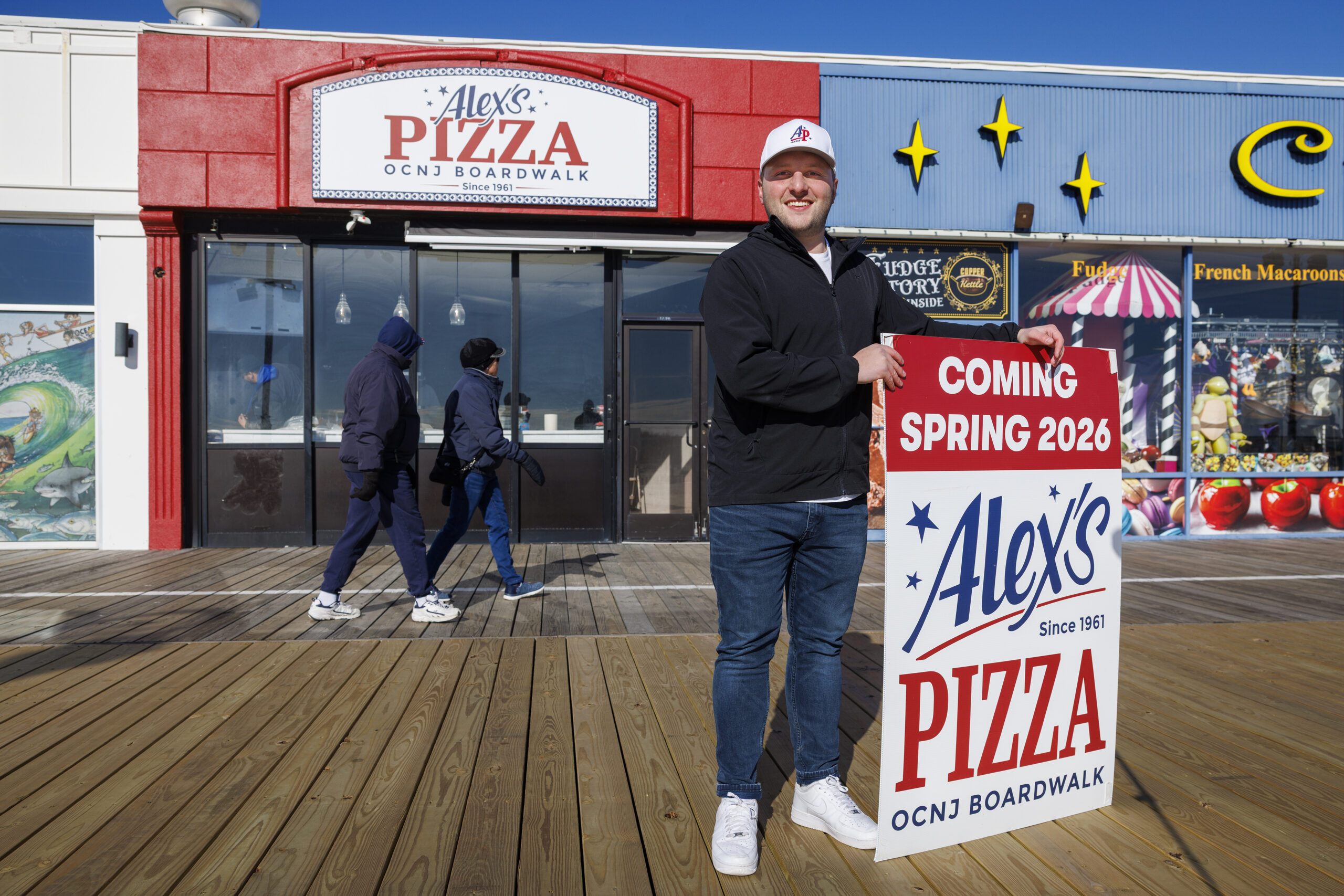
    Dylan Bear, owner of Alex’s Pizza, 1214 Boardwalk, Ocean City, NJ., Thursday, Jan. 15, 2026.

    “If you don’t have an anchor down there, people are not going to walk down there,” said Mark Benevento, owner of Congo Falls golf at 1132 Boardwalk, among other properties he rents out. “They will turn around at the music pier.”

    Rather than seeing the hotel proposal as a threat to the character of the town, the merchants have united to stress that they view it as essential to Ocean City’s preservation. In other Shore towns, it has been the push of residential development that has eaten away at commercial zones. The parcel is currently zoned for amusements.

    In places like Seaside Heights, Long Beach Island, and Avalon, condo and new residential construction has chipped away at the essential character of the places, replacing some of their most distinctive destinations, from restaurants to motels to bars and nightclubs.

    Mark Raab, a local pediatric dentist whose family owns five boardwalk properties in Ocean City, called the closing of Wonderland “devastating” in remarks to the planning board.

    “People don’t know what’s going on,” he said. “This year we had three businesses that closed, longtime tenants that did not renew their leases. Six years ago we had a waiting list for these properties.

    “The boardwalk is not thriving,” he said. “The boardwalk is slowly going down. It’s going down piece by piece. It is rapidly becoming a snowball effect.”

    ‘Now they have galvanized us’

    Ford, of Barefoot Trading, thinks the time has come for the view of the merchants to be heeded. The 4-4 tie at the planning board is being seen not as an outright rejection of a rehabilitation designation, which would expedite zoning allowances and possible tax abatements, but as a pass back to the city council.

    The families, he said, are “the backbone of it. What we’re speaking in favor of should carry a little bit of weight.”

    In a usually sleepy Jersey Shore January, there has been an awful lot of intrigue, and packed meetings, with the latest talk of perhaps a limited zoning change that would allow a hotel, though perhaps one not as grand (252 rooms, seven stories) as Mita is seeking.

    There is also talk of allowing residential units above boardwalk storefronts. And many believe the city council will essentially give the tie to the nonvoting planner, Randall E. Scheule, who told his deadlocked board he believed the Wonderland site did meet two needed criteria — significant deterioration and a pattern of underutilization — and to go ahead and approve the rehabilitation zone.

    Mita has said that time is of the essence. He said he has been shocked at the way the town has stymied his plan twice.

    Councilman Keith Hartzell, who twice voted against advancing Mita’s development plan, said he still wants to negotiate with Mita over height, parking, and other issues. One possibility, in conjunction with the boardwalk subcommittee, is rezoning just the 600 block of the boardwalk to allow a hotel. Hartzell has also been trying to bring a playground to that end in the meantime.

    “I’m not anti-hotel at all,” Hartzell said. “Our job is to come up with something [Mita] can do that he can make money with and be happy with.”

    For Ocean City’s merchants, the Wonderland saga, and Mita’s difficulty in getting his hotel off the ground, has prompted them to step out from behind the counter or out of the ticket booths and speak up.

    Said Benevento, the Congo Falls owner: “Maybe we have never gotten political. Now they have galvanized us.”
  • A former nun and her husband give $5 million to Neumann University for its nursing program

    A former nun and her husband give $5 million to Neumann University for its nursing program

    When Jackie Fegley, a former nun, got married 51 years ago, money was tight. So she borrowed a dress from a friend.

    And when her husband looked at her nurse’s salary the first year he did her taxes, he said: “Do you know you’re borderline poverty?”

    But all that changed over the ensuing decades, and on Friday, Jackie and her husband Bill Fegley Jr., who made his career in accounting, gave a $5 million gift to Neumann University. Jackie is a 1971 graduate of Neumann — then called Our Lady of Angels College.

    She also spent 10 years as a nun with the Sisters of St. Francis of Philadelphia, which founded Neumann in 1965.

    It’s the largest single gift Neumann — a Catholic university in Aston, Delaware County — has received from an individual, and the university in recognition named its nursing college The Jacquelyn Wilson Fegley ’71 College of Nursing.

    “Bill and I were both lucky to receive a good education,” said Jackie, 81, who lives in Blue Bell with her husband, a Drexel University graduate. “So we decided that’s where we’d really like to give our money.”

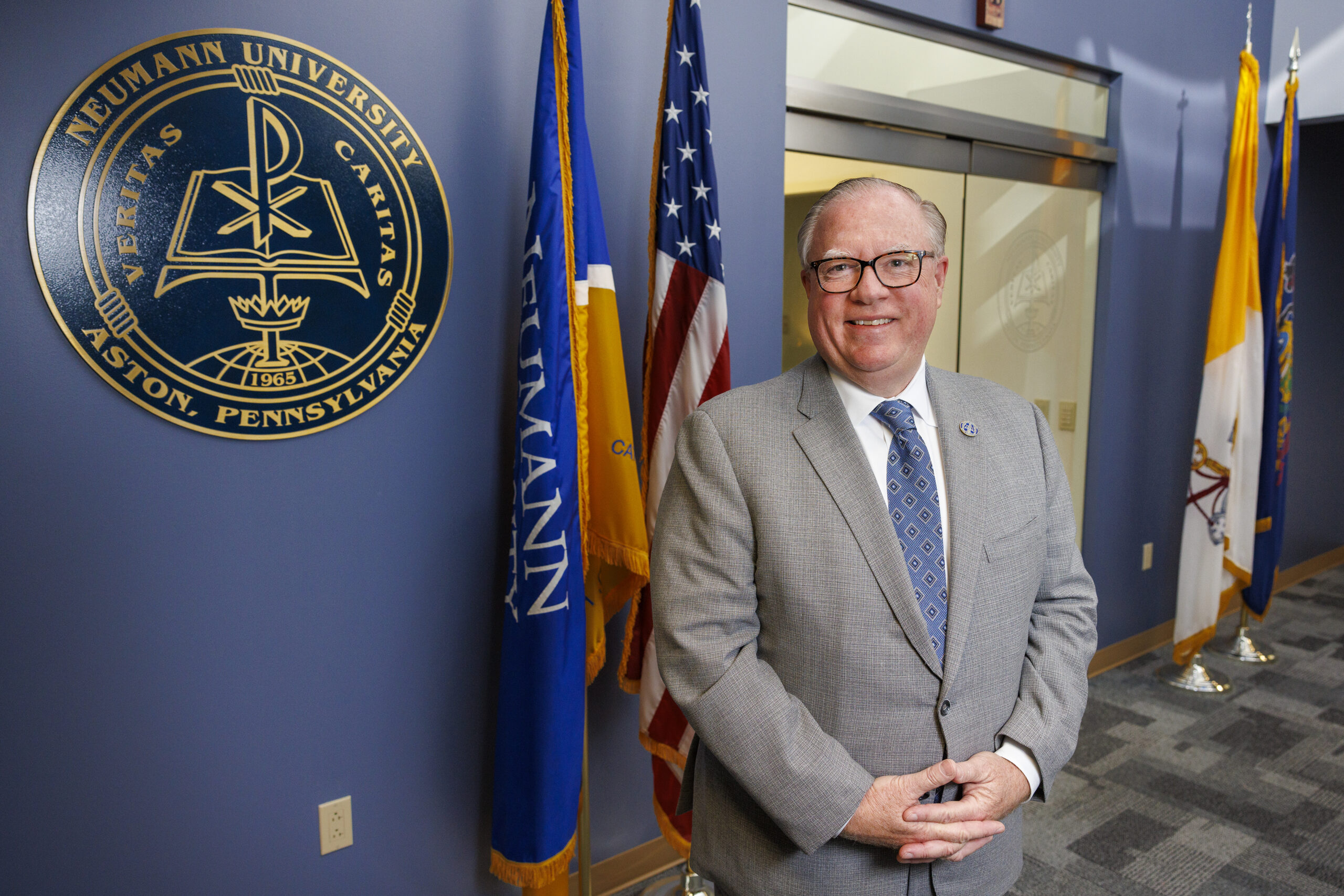
    Chris Domes, president of Neumann University

    Neumann President Chris Domes said $4.5 million will be used for undergraduate nursing scholarships for students with the most need and highest achievement, and the other $500,000 for lab equipment. The scholarships will begin to be awarded in the fall, with 22 to 25 students benefiting each year and continuing to get the funds over four years.

    Nursing is the largest major at Neumann, with 368 undergraduate and graduate students enrolled. That’s about 17% of the 2,174-student body.

    “If the scholarships give somebody an opportunity to change their life, it’s amazing,” said Bill, 78, who started his public accounting career with Arthur Young and then founded his own firm, Fegley & Associates, in 1975.

    Domes said he hopes the gift encourages others to invest in higher education.

    “It sends a signal that Neumann is a place that is financially strong and getting stronger,” he said. “It’s a real sign from Bill and Jackie that they believe in what we are doing here.”

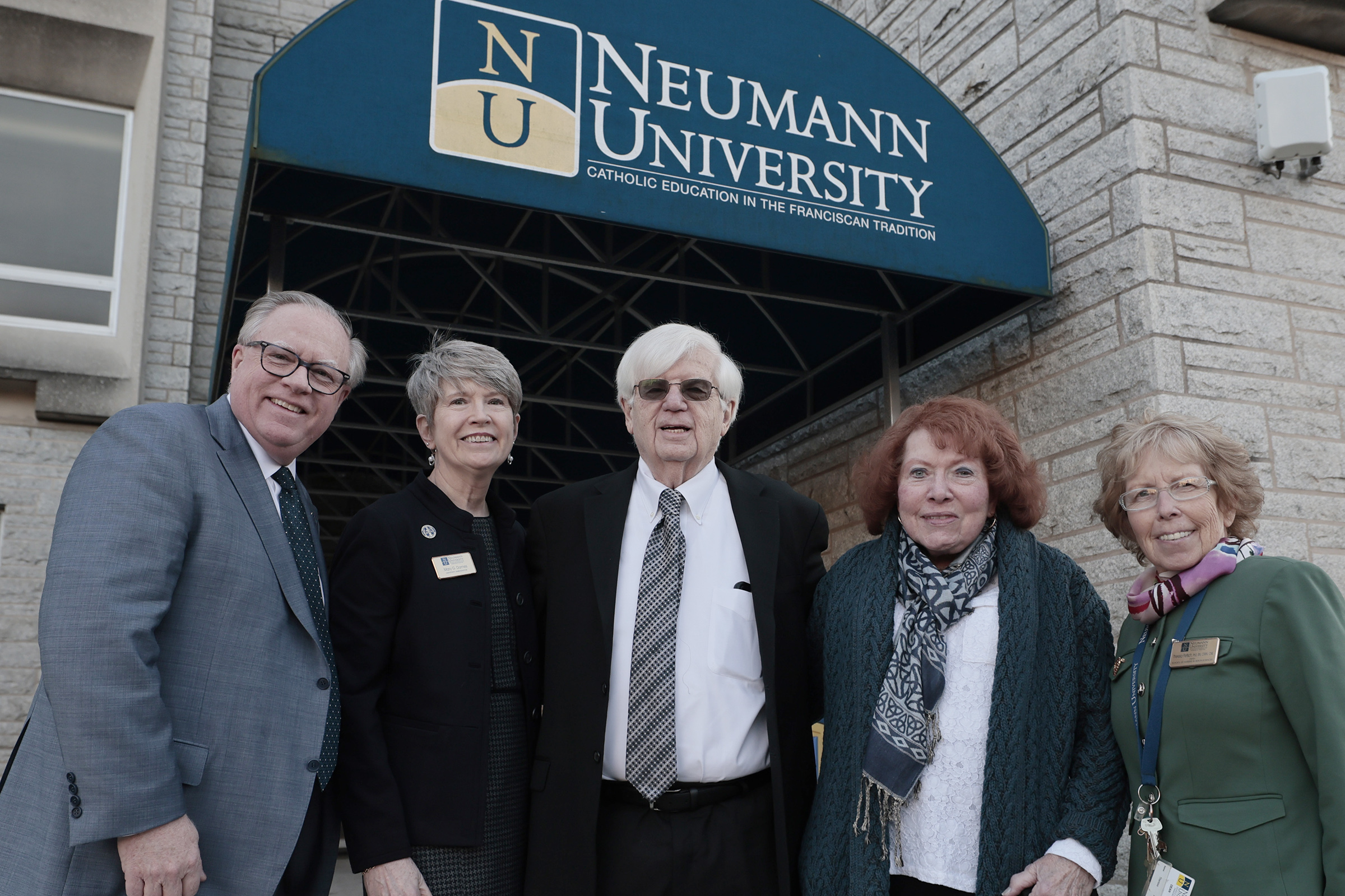
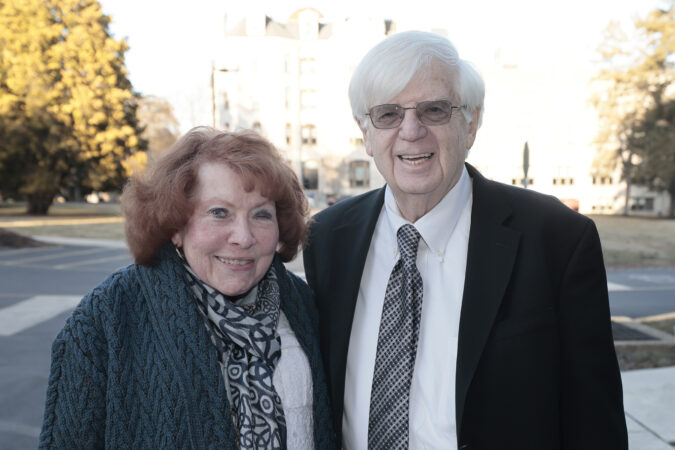
    Neumann University President Chris Domes (from left) and his wife Mary Domes, William Fegley Jr. and his wife Jacquelyn Fegley, of Blue Bell and Neumann’s Nursing Health Sciences Dean Theresa Pietsch at Neumann University in Aston, Pa. on Friday, Jan. 16, 2026.

    Born in Chester, Jackie said she grew to admire the Franciscan sisters at her local parish and stayed in touch with them through high school. When she graduated from Notre Dame High School in Moylan in 1962, she joined the order.

    During her decade there, she taught grade school, including one year at an orphanage where the children ranged in age from 3 to 9. She said that’s when she started to think she wanted a family.

    She got her bachelor’s degree while in the order, first taking classes at St. Joseph’s University and then moving over to Our Lady of Angels when it opened. She was part of the college’s second nursing graduating class.

    “I think there were 10 of us in the class,” she said, including other nuns and lay people. “It was a wonderful experience integrating everyone together.”

    After leaving the convent, she worked as a nurse at Holy Redeemer Hospital in Meadowbrook and Nazareth Hospital in Northeast Philadelphia. In January 1974, she met Bill, who grew up in Tamaqua, at a dance at a local pub. In September of that year, they married.

    They have five children, now ages 40 to 50, who work as accountants, a personal trainer, a doctor, and a minimart operator.

    Jackie has remained in contact with the sisters through the years.

    “I love the sisters,” she said. “I still consider myself a Franciscan, just not a Franciscan sister.”

    Bill — whose accounting firm has since merged with Morison Cogen LLP, where he continues to serve as a partner — has served on the foundation board for the Sisters of Saint Francis and has chaired it for about four-and-a-half years. And nine months ago, he joined Neumann’s board of trustees. He also has served as a lecturer at the University of Pennsylvania and an adjunct professor at Drexel and Pennsylvania State University.

    The couple has visited Neumann to see how the educational program has grown and were pleased to see its Franciscan spirit thriving.

    “I was really thrilled to see that this was how it was progressing,” Jackie said.

    The couple attended the naming celebration and gift announcement at Neumann on Friday.

    “We’re just pleased that God put us in a position that we’re able to do this,” Bill said.

  • Baseball Hall of Fame: Cole Hamels’ prospects, Ryan Braun’s PED problem, and Manny Ramirez’s last ride

    Baseball Hall of Fame: Cole Hamels’ prospects, Ryan Braun’s PED problem, and Manny Ramirez’s last ride

    Compared with the rest of the tribe of baseball writers, my criteria for Hall of Fame inclusion are undemanding. The most controversial element: I do not discriminate against the PED crowd.

    I consistently have voted for Barry Bonds, Alex Rodriguez, and Manny Ramirez, titanic talents of their era who are shunned by a voting bloc — us writers — that ignored and profited from rampant steroid use. Further, I know there are plenty of players who juiced and didn’t get caught, so banning the BALCO boys never made sense.

    Which brings us to Ryan Braun, the best of a weak first-year class of Hall of Fame candidates — no offense, Cole Hamels. Inductees will be announced Tuesday. Don’t expect either to be on the list.

    Hamels doesn’t deserve it.

    Braun does, but with a generous dollop of ick.

    Between 2008 and 2016, a nine-season span, Braun was, without question, one of baseball’s best players. He was a five-tool player. He twice hit at least 30 home runs and stole at least 30 bases. His .902 OPS ranks fifth in that period among players with at least 4,000 plate appearances. Ahead of him: future Hall of Fame locks Miguel Cabrera and Albert Pujols, Hall of Famer David Ortiz, and, at No. 2, Joey Votto.

    Braun was Rookie of the Year in 2007 and National League MVP in 2011.

    From 2008 to 2016, Ryan Braun was one of baseball’s best players with a .902 OPS that ranks fifth in that period among players with at least 4,000 plate appearances.

    You know what else happened in 2011? Braun tested positive for synthetic testosterone, and ruined his reputation in the aftermath. He challenged the test, smeared one of the testers as being antisemitic (Braun is Jewish), and had his record cleared on a technicality involving the handling of the sample.

    Then, in 2013, later, Braun tested positive again. That invalidated all of his protestations.

    This time, he served a 65-day suspension. Despite excellent production over the next three seasons and despite an effort to rehabilitate his image through varied good works, he never recovered.

    There’s no way Braun will get the 75% of the vote he needs to qualify for induction; not this year, and probably not for five years or so. He’ll be the next Carlos Beltrán, the scapegoat for the Astros’ signal-stealing scandal in 2017 who should have been inducted years ago.

    Braun certainly belongs in the Hall of Shame, right next to Rodriguez, who once indignantly denied that he’d ever taken steroids then later admitted to juicing as a younger player. A-Rod’s image has never recovered, either. Both belong in the Hall of Fame, too.

    I vote for A-Rod every year. In fact, this is the third consecutive year he’s my No. 1 pick. The only time he wasn’t No. 1 was in 2022, when he was No. 2. Bonds was No. 1.

    Braun’s situation is different. For one thing, he tested positive twice. For another, he was an absolute tool about it. For a third, PED use had plummeted by the time Braun arrived on the scene, so it’s not as if he needed to cheat to keep up. Finally, Braun tested positive in an era in which players knew the likely penalty for testing positive. Mark McGwire, who was first eligible in 2007, was being blackballed every year of Braun’s Hall of Fame run.

    It is a penalty with which I always have disagreed. And, while I acknowledge that Braun’s candidacy is tainted more than any other PED user, I would be as hypocritical as my colleagues if I excluded him purely on the basis of PED use.

    I will vote for him, but, more so than with A-Rod or Bonds or Roger Clemens, I will hold my nose as I check his box.

    And I will think slightly less of myself for doing so.

    The criteria

    I not only divulge my votes, as I believe every writer should do, I also rank my votes and defend them.

    I don’t vote for designated hitters because they don’t play the whole game. That included Ortiz in 2022, and it would have included Harold Baines and Edgar Martinez if I’d had a vote in 2019. Kyle Schwarber one day might make me eat those words.

    I don’t vote for relievers. Traditionally, they’ve been failed starters. I backslid on that criterion in 2025 because I didn’t want to be the reason Billy Wagner didn’t get enough votes in his final year of eligibility. Thankfully, I didn’t have a vote in 2019, when Mariano Rivera was a unanimous selection. I don’t exactly know what I’d have done that year, when two designated hitters also made it. I probably would have abstained. My antireliever stance will further soften as more players who were drafted and groomed as relievers become eligible.

    I use all 10 ballot slots, which means I’ve helped keep Omar Vizquel on the ballot.

    I weigh defense more heavily than most voters, to Jimmy Rollins’ benefit.

    I vote for players nearing the end of their 10-year candidacy limit over players who still have time left.

    The last few players are usually interchangeable: This year, that interchangeability begins at No. 7, with Chase Utley.

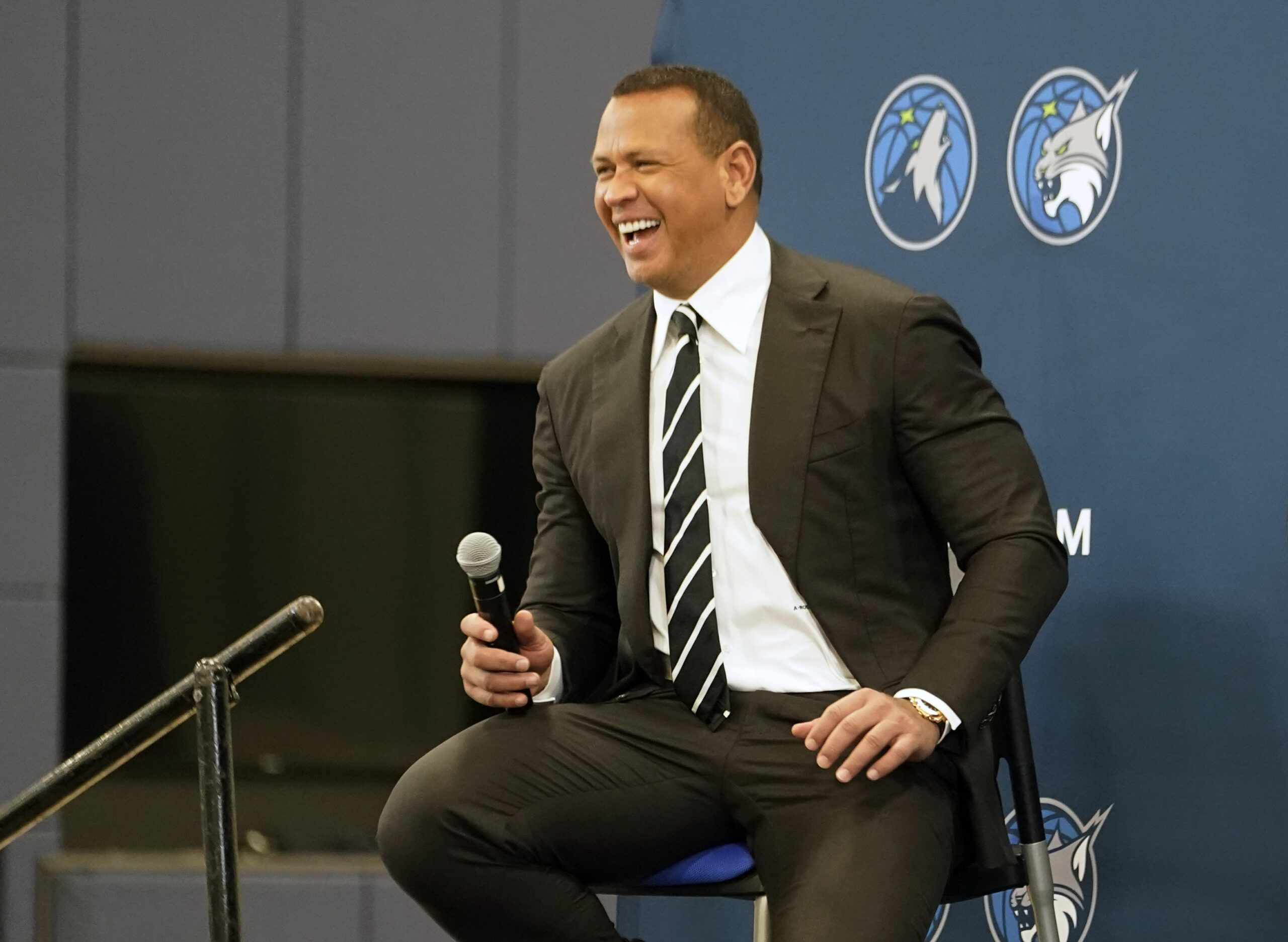
    Alex Rodriguez, here in a 2021 event as co-owner of the Minnesota Timberwolves, was one of the great players of his era.

    The vote

    1. Alex Rodriguez, fifth year

    Hit .302 with 642 home runs from 1996 to 2012, the most homers by a margin of 85 (Jim Thome had 557). Hot or cold in his postseasons. Elite fielder. Smug, condescending, weirdo, Yankee. But still.

    2. Manny Ramirez, 10th year

    In his final HOF run, Ramirez will be remembered less as the most important player on the Red Sox teams that broke the Curse of the Bambino than as a juicer. He led baseball with 1,660 RBIs from 1995 to 2008. He led Cleveland in aggregate OPS from 1995 to 2000 and was fourth in baseball behind McGwire, Bonds, and Martinez among players with at least 3,000 plate appearances. He led Boston in OPS from 2001 to 2006 and was third in baseball behind Pujols and Todd Helton, again among players with 3,000 or more plate appearances. He was the best hitter on loaded teams in Cleveland, Boston, and Los Angeles. He might have been juicing the whole time — he tested positive three times — but, again, PED use was rampant during his prime years.

    3. Carlos Beltrán, fourth year

    In a game rife with cheating, it astounds me that so many people hold the sign-stealing scandal against him, a scandal perpetrated when he was 40, in his final season, after an 18-year run of excellence. That included the 1999 AL Rookie of the Year as a Royal; nine All-Star Game appearances, his ninth at the age of 39; three Gold Glove awards; and incredible playoff production: a 1.021 OPS, a .307 batting average, 16 home runs, 42 RBIs, and 11 steals (never caught) in 65 playoff games.

    That said, he got 70.3% of the vote last year, 57.1% in 2024, and 46.5% in his first year of eligibility. Independent preannouncement polling indicates that Beltrán will cruise into the Hall this year as effortlessly as he played the game itself.

    4. Ryan Braun, first year

    See above.

    5. Jimmy Rollins, fifth year

    I understand why, independent of their controversies, Beltrán and Braun aren’t slam-dunk Hall of Famers. I understand why Rollins isn’t, either. J-Roll is my best example of why defense, baserunning, and availability don’t get enough respect from voters. His 2007 MVP season was the best of an eight-year run in which his most consistent contributions involved superb shortstop play, base stealing, and baserunning, which helped account for his 292 stolen bases and the 395 combined doubles and triples he hit from 2001 to 2008, a league high among players with at least 5,000 plate appearances.

    Rollins also played in 1,237 games in that span, second-most among shortstops (Miguel Tejada) and seventh-most among all players, including the next guy on this list, one of Rollins’ best friends.

    Bobby Abreu had a great career offensively, and he was a good outfielder, but his chances of making the Hall of Fame aren’t good.
    6. Bobby Abreu, seventh year

    Abreu was one of baseball’s best hitters from 1998 to 2009; his .902 OPS is third among players with at least 7,500 plate appearances, behind Helton and A-Rod. He averaged more than 28 stolen bases with a .301 batting average. He was an elite offensive player with one Gold Glove and a golden arm to boot. He got 19.5% last season, but he’s a lost cause.

    Chase Utley is expected to get closer than last year to the needed 75% of Hall of Fame votes.
    7. Chase Utley, third year

    He was a profoundly productive second baseman from 2005 to 2013, so why isn’t “Ut” higher? Because he was a profoundly poor second baseman who played out of position. He should have been at first base. Yes, his .881 OPS in that span ranks 11th among players who played at least 1,000 games, but he missed an average of 30 games per season in that span. He’s compared to Jeff Kent, who peaked at 46.5% in his final year of eligibility, though the new Contemporary Baseball Era Committee wrongmindedly slid him in instead of PED poster children Bonds and Clemens. However, Utley’s current popularity campaign as MLB’s ambassador to Europe — the most unlikely ambassadorship this side of Woody Johnson’s former gig in the United Kingdom — will surely help Utley blast past his 39.8% mark from last year.

    8. Torii Hunter, sixth year

    Hunter’s 5.1% last year barely met the 5% minimum for ballot retention, and he probably won’t be on the ballot after this year, but he was the best center fielder in baseball from 2001 to 2013 and a better player than Dustin Pedroia, Andy Pettitte, Hamels, and maybe even Utley.

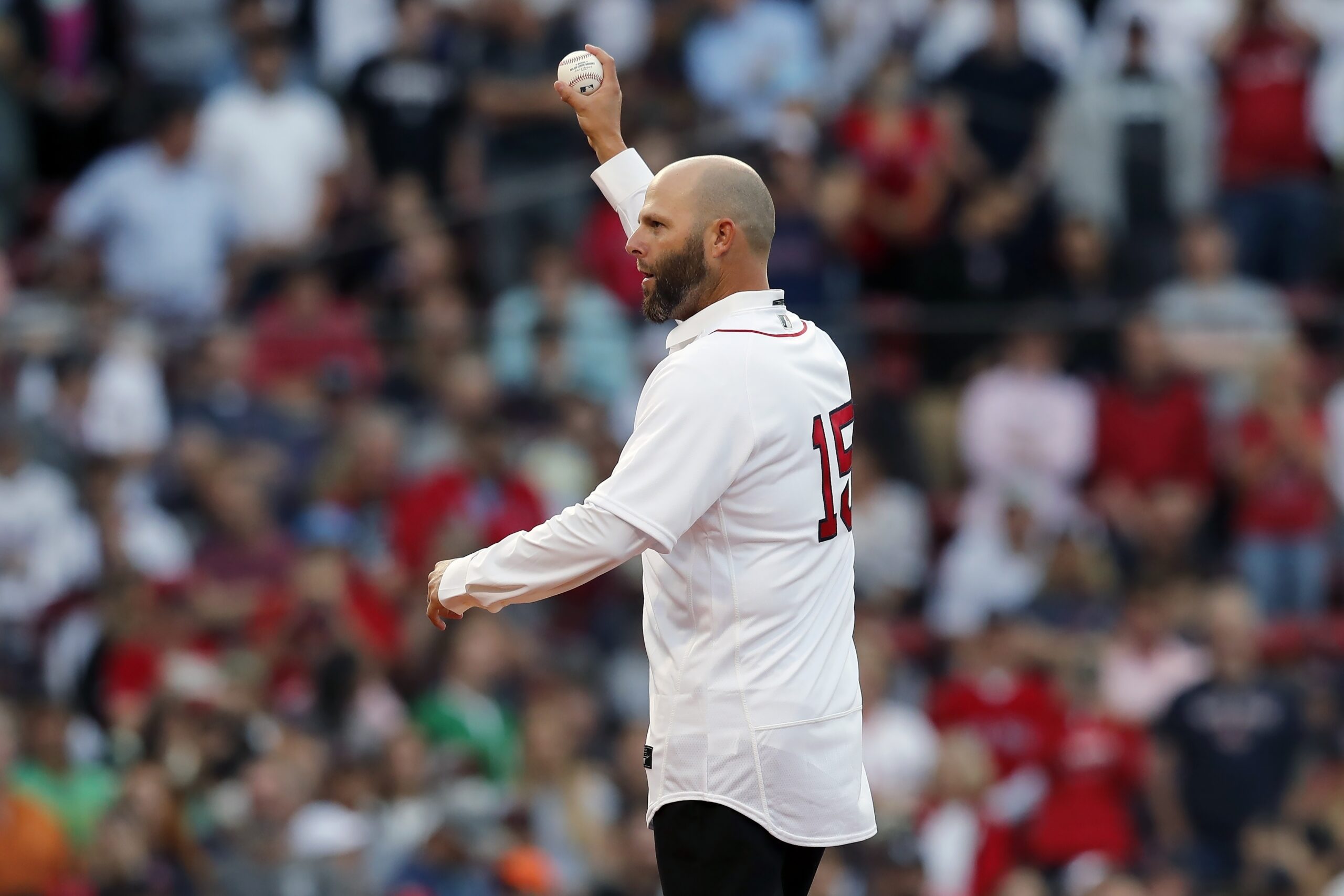
    Dustin Pedroia’s career compared favorable to Chase Utley’s, except in home run power.
    9. Dustin Pedroia, second year

    There’s an excellent argument that, if you’re in on Utley, you should be in on Pedroia. His 10-year peak was slightly less homer-heavy than Utley’s, but his overall play probably was better, considering his four Gold Gloves. He also won AL Rookie of the Year in 2007 and was AL MVP in 2008. He won two World Series with the Red Sox, but after his first playoff run in 2007 he hit .212 with a .628 OPS in his next 37 playoff games.

    10. Omar Vizquel, ninth year

    He’s the best defensive shortstop of the modern era after Ozzie Smith. However, his candidacy cratered when, in 2021, he was sued and accused of sexually harassing an autistic adult batboy while managing the White Sox’s double-A affiliate in 2019. No charges were brought, and the sides settled in 2022, but the incident, combined with previous, unproven accusations of domestic violence accusations by an ex-wife, effectively ended Vizquel’s Hall of Fame campaign.

    He peaked at 52.6% in 2020, his third year of eligibility, but hasn’t broken 25% in the past four years, and almost certainly won’t again this year.

    Honorably mentioned

    If I had an 11th vote, I would throw Hamels, Pettitte, and Félix Hernández in a barrel, pick one out, and he would get that vote. None is especially Hall of Fame unworthy, and all were very good long enough to warrant consideration. Pettitte won’t make it this year, his eighth, so, in the spirit of my expiring candidacy criterion, I might vote for him in a couple of years, after some candidates drop off and after Buster Posey gets in next year as a first-ballot candidate.

    Finally, Braves fans: Miss me with Andruw Jones.

  • She saved $100,000 for a house in Port Richmond | How I Bought This House

    She saved $100,000 for a house in Port Richmond | How I Bought This House

    The buyers: Mercedes Murphy, 33, healthcare worker

    The house: a 1,710-square-foot townhome in Port Richmond with three bedrooms and two baths, built in 1925.

    The price: listed for $289,000; purchased for $291,000

    The agent: Emily Terpak, Compass

    The exterior of Mercedes Murphy’s home in Port Richmond.

    The ask: Murphy had a strategy for maximizing her savings: never pay more than $850 in rent. If it went above that, she would simply move, which she did several times over five years. But eventually, what started as a strategy began to feel like a trap. “The quality of the places I was willing to pay for kept dropping,” Murphy said. When her small, rat-infested apartment in Point Breeze flooded — the second place she’d lived in that had flooding issues — she decided she’d had enough and set out to find a two-bedroom house with an updated kitchen for $350,000 or less.

    The search: Murphy looked across the city, including in Mt. Airy, Fishtown, and South Philly. Some houses looked good in photos, but looked worse once she saw the surroundings. A Northwest Philly rowhouse made a great impression inside, thanks to its sparkling wood floors, but not outside. “It was just parking lots, and nobody was around,” Murphy said. “It wasn’t very safe.”

    She saw a promising place in Fishtown — a beautiful house with updated appliances, right by Girard Avenue. But it was small and had only one bathroom. Murphy debated the pros and cons with her then-fiancé (now husband), Stefan Walrond, for a few days, then made an offer. Almost immediately, she regretted it. She pulled her offer less than 24 hours later. “They had so many offers already,” Murphy said, “I didn’t feel like fighting for it.”

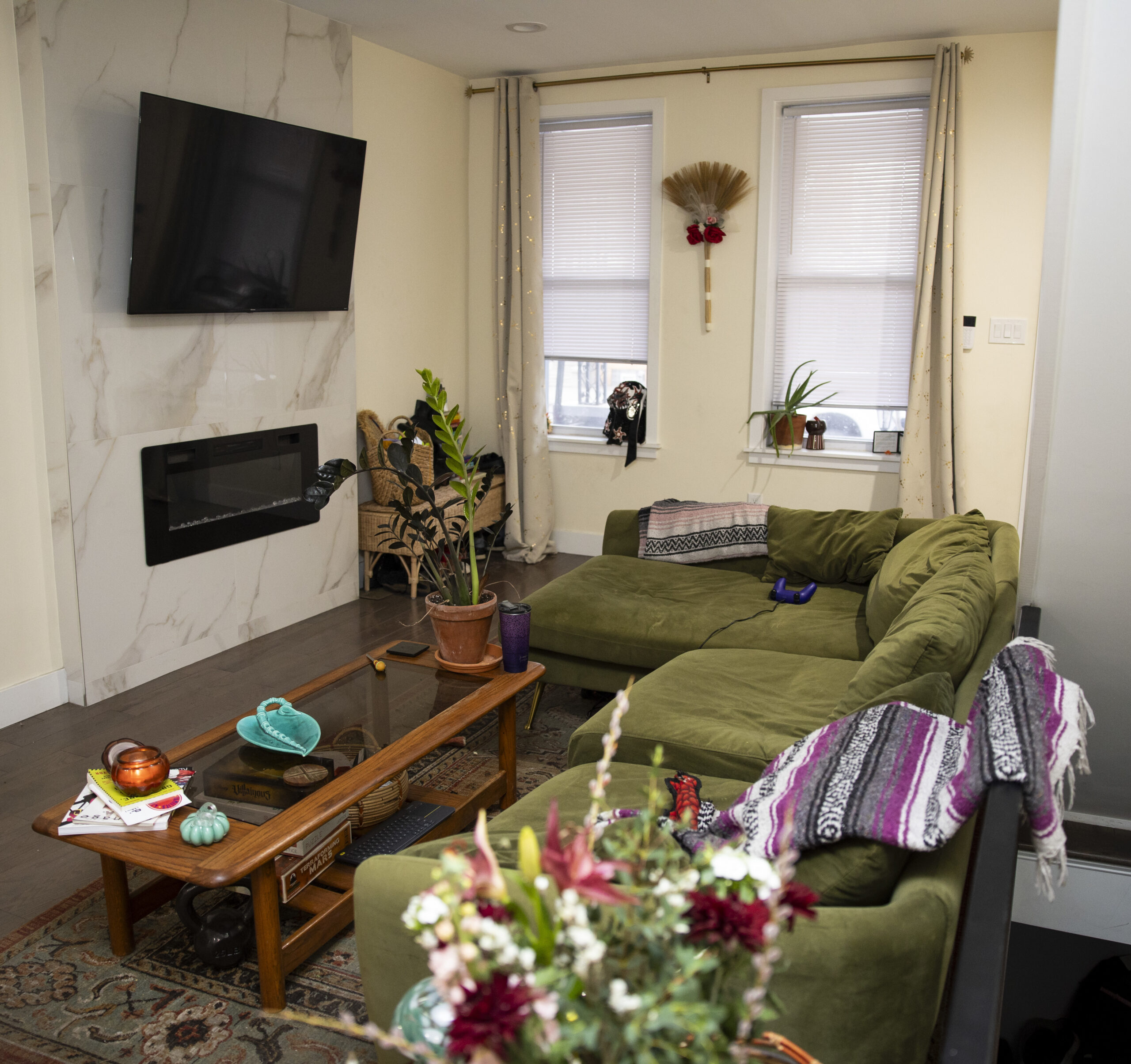
    The living room in Murphy’s Port Richmond home. She liked how large it was compared to others that she had seen.

    The appeal: A week after she pulled her offer, Murphy got COVID and couldn’t attend showings. Her fiancé went to see a house in Port Richmond without her. “He did the tour,” she said. “He sent me photos and did a little video walk-through.”

    Murphy could tell that this might be the one. It had everything she wanted, including lots of space, two full bathrooms, and an updated kitchen. It even had a backyard with a cherry tree and enough room for their dog. What ultimately sold her, though, were the finishes in the kitchen and upstairs bathroom: the gold faucets, the marble countertops, the built-in bench in the shower. “I loved the modern aesthetic,” Murphy said.

    The deal: Murphy wanted to avoid a bidding war, so she offered $291,000, $2,000 over the asking price.

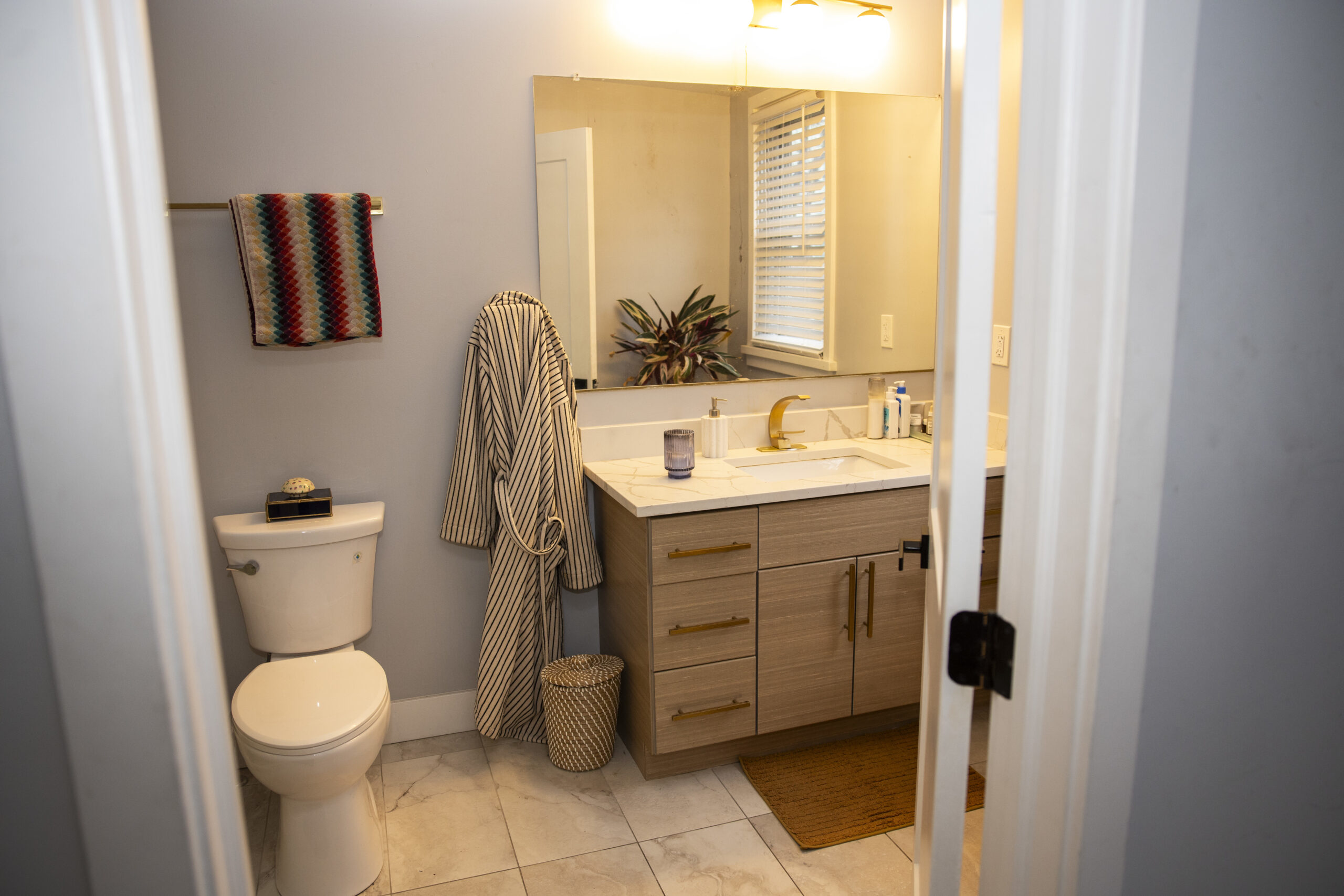
    Murphy fell in love with the modern finishes, like the gold faucet, in the bathroom.

    The inspection was straightforward. The only major issue was the roof. It would need to be replaced in a few years. A few of the appliances looked like they wouldn’t last very long either. Murphy didn’t ask for any concessions or credits. She just made sure she had enough money saved to pay for replacements down the line. Sure enough, the fridge broke one week after she moved in, and the roof started leaking within the year.

    The money: Murphy, a self-described “huge saver,” started aggressively saving money in 2015, the year she got her first “major job.” When she went to buy a house seven years later, she had just over $100,000 in savings. “I always lived really below my means,” Murphy said. She drove an old used car, lived with roommates, and didn’t have any “crazy expenses, like video games or makeup.”

    “I’m just not a big spender,” she said. Not having student loans helped too.

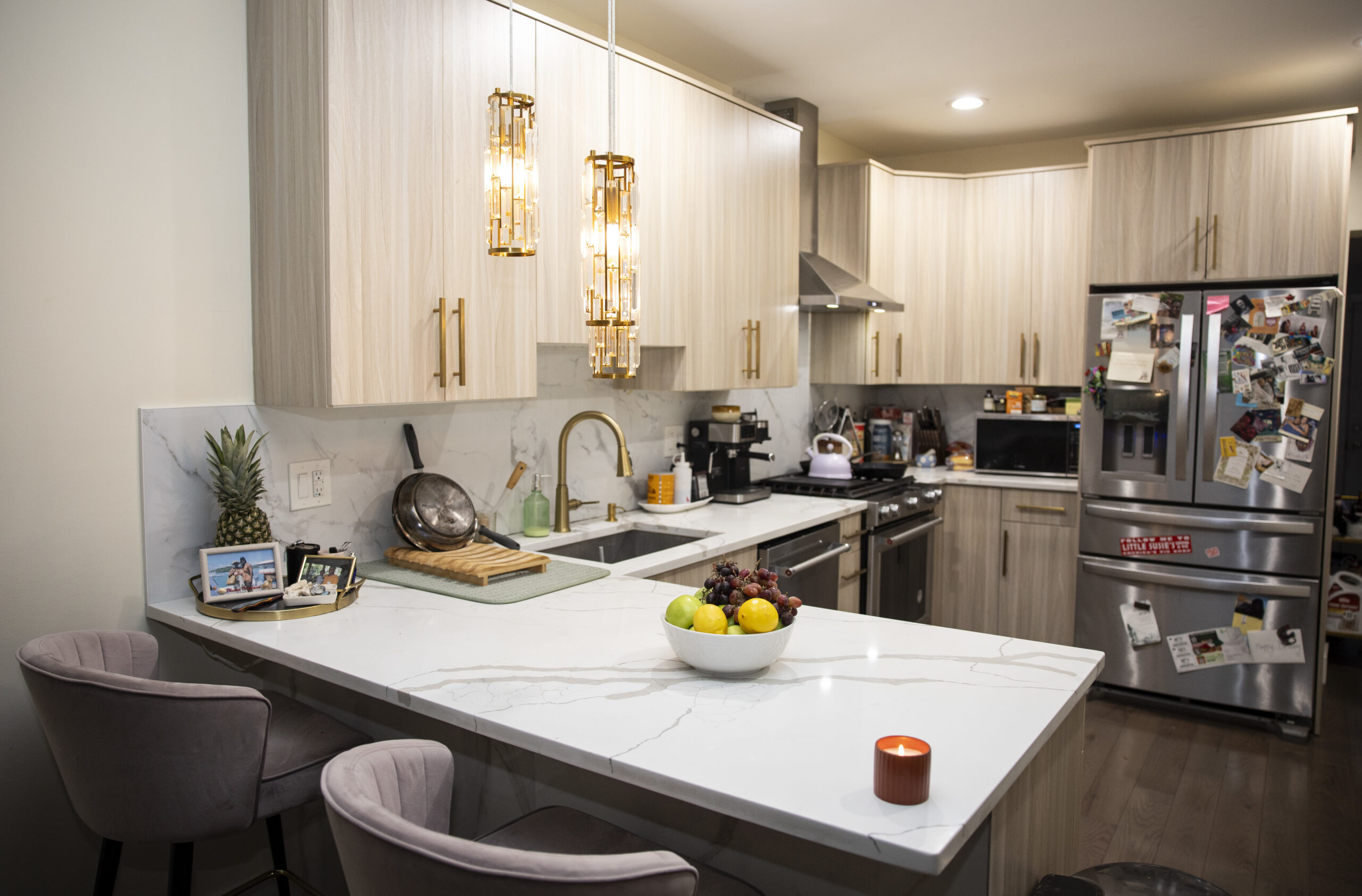
    Murphy loved the modern aesthetic of the kitchen.

    Murphy used $70,000 for a 20% down payment. She tapped into her remaining $30,000 to pay for the new roof, which cost $6,000, and a new washing machine, which cost $1,700. Her parents bought her a new fridge for $2,000.

    The move: Murphy’s landlord allowed her to break the lease she shared with her fiancé due to the flooding. She hired movers for the first time ever. “I moved so much in Philly before that I knew this time I definitely wanted movers,” Murphy said. It only cost $400. “We didn’t have that much stuff,” she said, “and we weren’t going very far.”

    Any reservations? Murphy and Walrond love their neighborhood and their neighbors, but they wish they lived on a quieter street. “Aramingo is a main thoroughfare,” Murphy said. “So we have a lot of emergency vehicles come by.”

    Other than that, Murphy wishes she negotiated more. If she could do it all over again, she wouldn’t offer $2,000 over the asking price. She would also ask for more concessions from the seller to address the aging appliances. “I didn’t even think to do it,” Murphy said. “I was just so happy to get a house.”

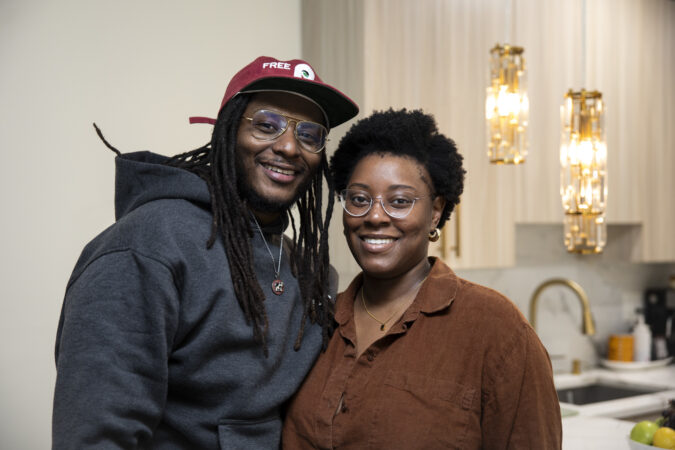
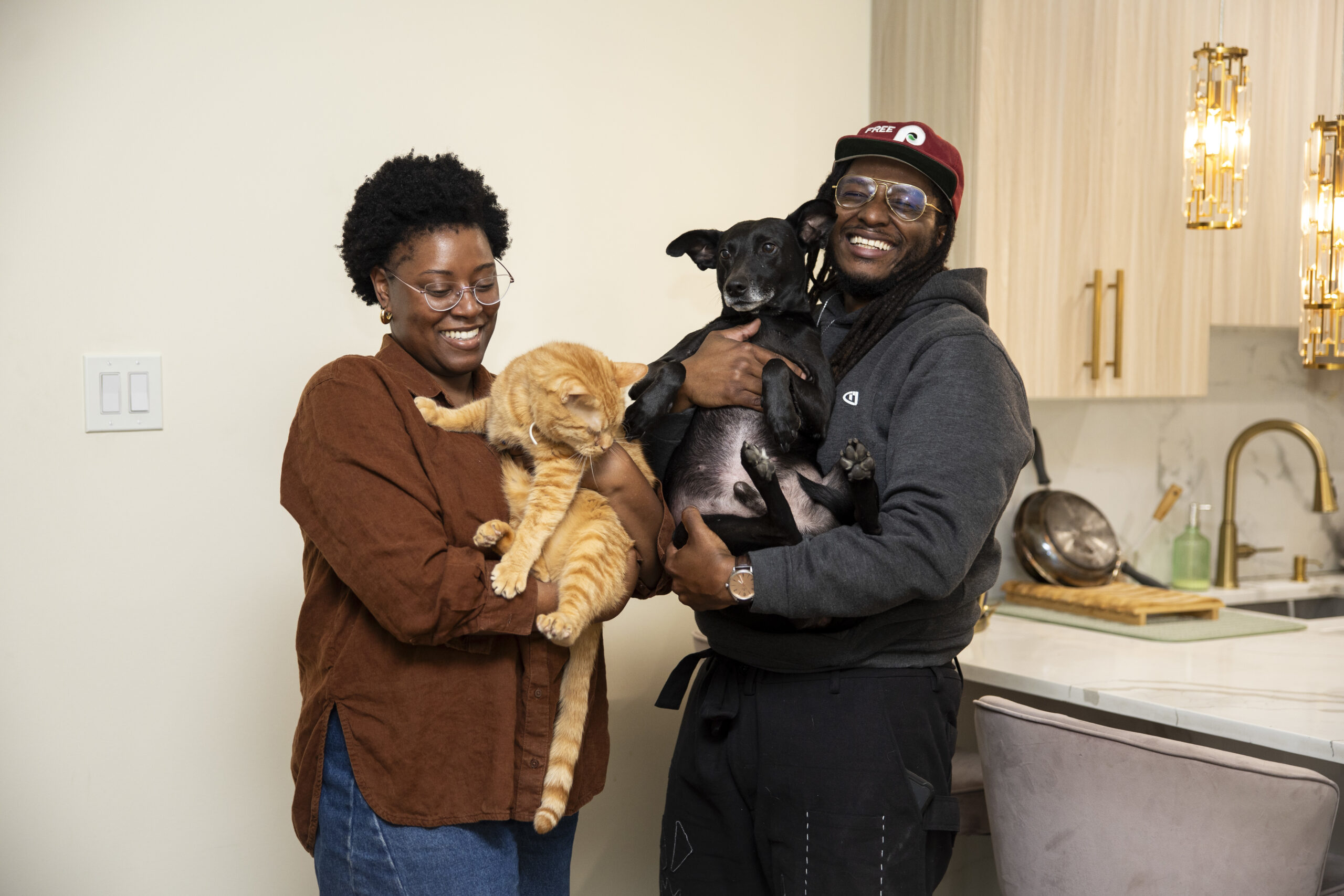
    Mercedes Murphy and Stefan Walrond pose with their pets Archie (left) and Onyx at their Port Richmond home on Tuesday, Jan. 13, 2026, in Philadelphia.

    Life after close: Murphy hasn’t changed anything since moving in, just repaired things. The leak in the roof damaged the bedroom drywall, which she is now in the process of fixing. And she had to replace a leaky window in the office. Despite the minor inconveniences, she’s happy with her purchase. Now she’s focused on rebuilding her savings. She wants to get back to $100,000. “Let’s see if I can do it again,” she said.

    Did you recently buy a home? We want to hear about it. Email acovington@inquirer.com.

  • The Philadelphia Inquirer will make an appearance in the next ‘Abbott Elementary’ episode. Here’s what we know.

    The Philadelphia Inquirer will make an appearance in the next ‘Abbott Elementary’ episode. Here’s what we know.

    Abbott Elementary is making news this week — literally.

    Since premiering in 2021, the Emmy-winning sitcom from West Philly-raised comedy star Quinta Brunson has regularly featured local organizations like the Franklin Institute, Please Touch Museum, and the Phillies.

    In the upcoming episode, airing Wednesday, Brunson will spotlight another hometown institution: The Philadelphia Inquirer.

    For now, the details of the plot are still under wraps but we can confirm that the episode, titled “Mall Part 3: Heroes,” will include a character who is an Inquirer reporter. We can also confirm that the actor in that role is not an actual Inquirer reporter.

    This season, the titular Philly public school has been thrown into chaos. The building’s furnace broke before winter break so the school district moved Abbott into an abandoned mall, where teachers need to create classrooms out of vacant stores.

    The titular school temporarily relocates to an abandoned mall in Season 5 of “Abbott Elementary.”

    The mall building has had its own problems — including a ludicrously large Benjamin Franklin head that routinely announced shop discounts before plummeting to its destruction — but the Abbott crew tries valiantly to keep teaching.

    “After the faculty finds surprising success operating the school in the mall, they quickly realize they are being taken advantage of,” reads the description of the upcoming episode. “Meanwhile, a new custodian arrives to join Mr. Johnson.”

    There are few details about the new custodian character. But, on Thursday, Deadline reported that Abbott Elementary has cast actor Khandi Alexander (the unforgettable scene-stealer who played Olivia Pope’s fearless mom on Scandal) in an undisclosed recurring role.

    Actor William Stanford Davis plays the eccentric and beloved Mr. Johnson, who famously runs a tight ship when it comes to his janitorial responsibilities.

    “Mr. Johnson gets overwhelmed because this mall is huge, and he has to clean it up, so they bring some help in. That’s all I’m gonna tell you about that part,” Davis told The Inquirer in a recent interview. “The help, they don’t get along — he doesn’t like anyone in his territory.”

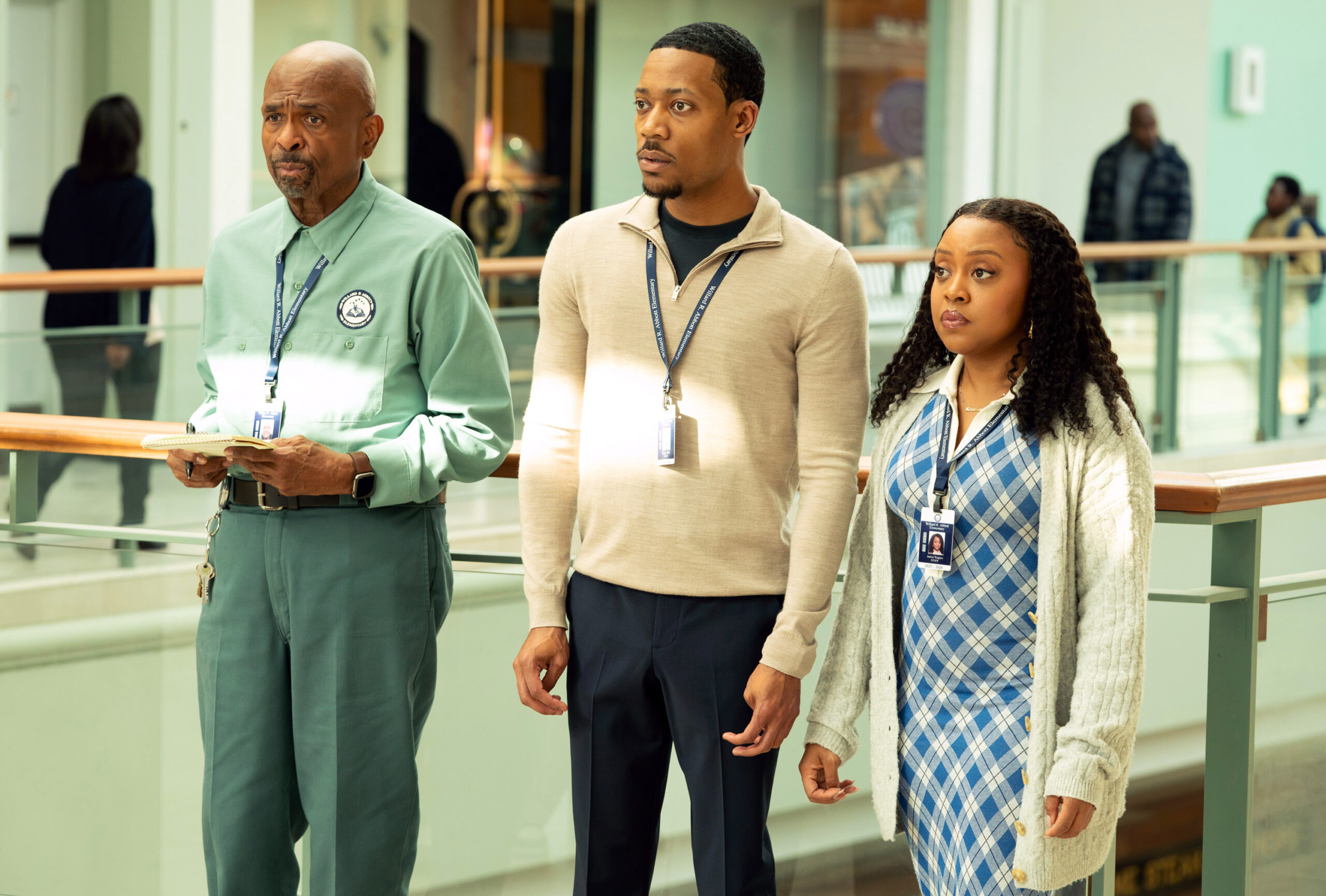
    William Stanford Davis (Mr. Johnson), Tyler James Williams (Gregory Eddie), and Quinta Brunson (Janine Teagues) in ‘Abbott Elementary.’

    His character faced a similar personality challenge in the crossover episode with It’s Always Sunny in Philadelphia, when the Paddy’s Pub misfit crew came to the school to fulfill their court-ordered community service. Danny DeVito’s character, Frank, was tasked with helping Mr. Johnson with a raccoon infestation and the two feuded the entire time.

    Off-screen, though, Davis remembered that collaboration with DeVito fondly.

    “There’s a scene where he’s in the cage. [DeVito] was already out there in the cage, in the mud, eating the chum before Tyler [James Williams, who plays Gregory Eddie] and I even got on the set,” Davis recalled. “I was like, ‘Tyler, I gotta up my game, man.’ This guy, he’s 10 years older than me — and I’m not a spring chicken — and he’s out here laying in the mud ready to go. It was so much fun.”

    (Always Sunny also once featured an Inquirer reporter character, who called the pub “the worst bar in Philadelphia,” a claim not backed by the real Inquirer.)

    Another fun highlight for Davis’ character this season was in the “Ballgame” episode. The cast and crew of Abbott Elementary took over Citizens Bank Park in August and filmed live at the game where Kyle Schwarber made history.

    The “Abbott Elementary” cast meet Kyle Schwarber and the Phanatic on the field at Citizens Bank Park.

    “The fact that Schwarber hit four home runs out of the park that night, that was historic, and he was going to be a guest on our show — you can’t ask for a better story,” said Davis.

    On screen, one character suspects Mr. Johnson is secretly the Phanatic. It’s not totally far-fetched, given the custodian’s many hilarious backstories, from senator to mobster.

    Will The Inquirer reporter uncover something new about Mr. Johnson’s mysterious past? We’ll have to tune in to find out.

    “Abbott Elementary” airs weekly on Wednesdays at 8 p.m. on ABC.

  • How to have a Perfect Philly Day, according to ‘RuPaul’s Drag Race’ star Mandy Mango

    How to have a Perfect Philly Day, according to ‘RuPaul’s Drag Race’ star Mandy Mango

    Local fans of RuPaul’s Drag Race are bummed this morning after seeing Philadelphia drag queen Mandy Mango — just the second contestant to represent the city in the show’s history — get eliminated last night.

    For the third week in a row, Mango landed in the bottom. She failed to impress the judges with her sketch comedy act playing an Amish woman competing in a butter churning competition; her overly sexual take wound up being a bit too outlandish, and her runway look as a dashing deer couldn’t save her.

    “I can’t say I’m too surprised, I’m not delusional,” Mango said on Untucked: RuPaul’s Drag Race following the episode. “I accept this with grace but I’m extremely sad.”

    Despite the loss, of course, Mango remains a star at home in Philadelphia.

    An HIV nurse by day, Mango (aka Sigfried Aragona) grew up in Lansdale and attended West Chester University before moving to Center City, where she lives with a roommate and their four cats named Wasabi, Miso, Soy, and Sriracha. The 29-year-old performer frequently appears at Frankie Bradley’s, her home bar.

    Competing on Drag Race was an exciting challenge for Mango, who says she’s received an outpouring of support from fans in Philly and as far as the Philippines, where her family is from. She’s thrilled to spotlight Philly’s drag scene for a national audience, following Season 16 runner-up and Miss Congeniality winner Sapphira Cristál. (Cristál helped Mango prepare her audition tapes.)

    “Especially in the context of Drag Race, Philly hasn’t been [seen much]. I feel like we’re kind of on the up-and-up of people really recognizing our drag and seeing what we’re about,” said Mango. “Hopefully I got to show off that Philly is full of fighters. We’re full of performers, and we all have a little bit of quirkiness and silliness to us.”
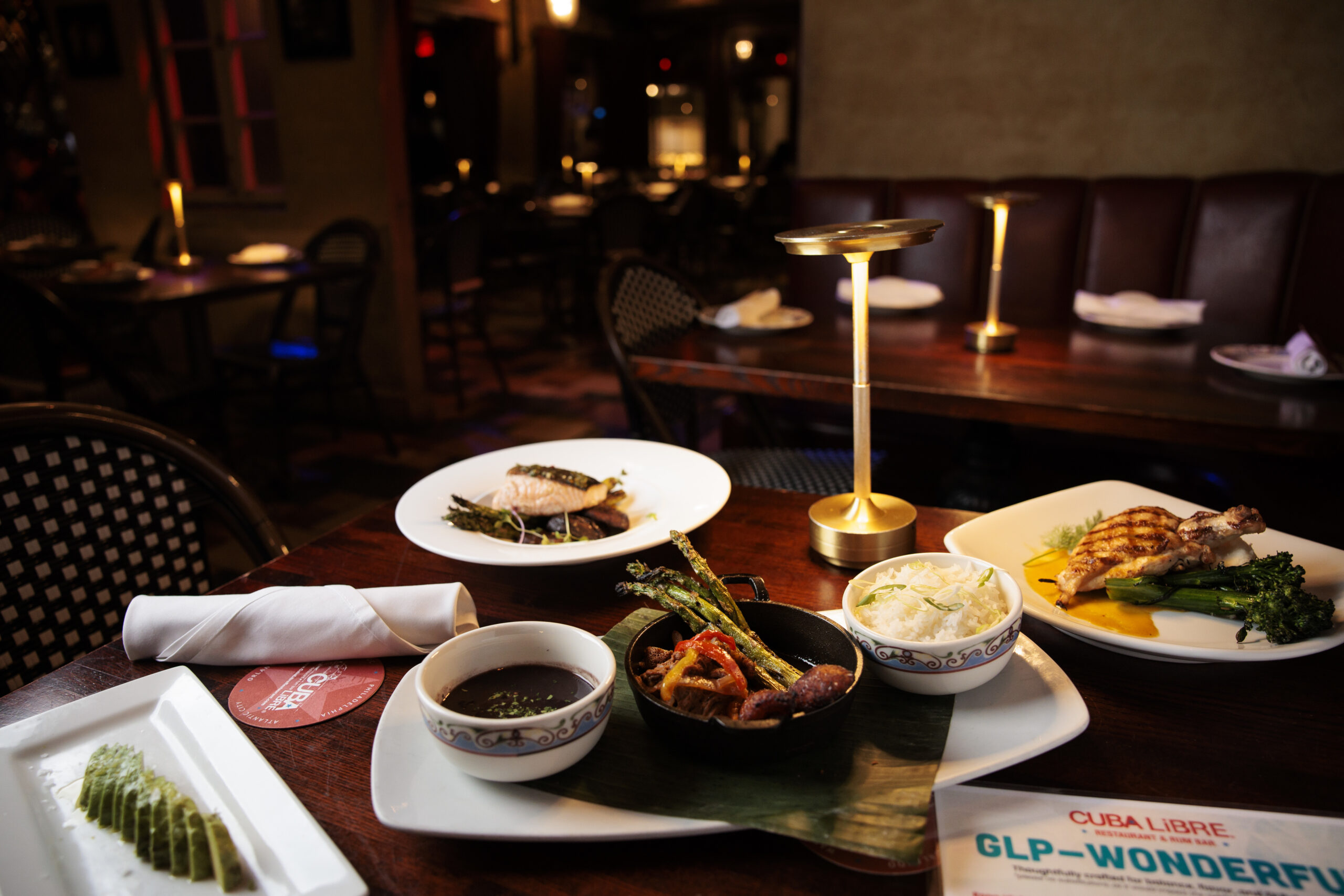
    We asked Mango about her perfect Philly day.

    9 a.m.

    I’d probably start off by going to Planet Fitness, ideally, to get my little morning workout in. That’s all I need. And then I will get breakfast, probably over at the Reading Terminal. I love Beiler’s Doughnuts, a great post-workout meal [laughs], or honestly, Miller’s Twist with the pretzels.

    Mandy Mango and DD Fuego face off in a lip synch battle on episode two of ‘RuPaul’s Drag Race’ Season 18. Mango stunned the judges with her energetic dance skills.

    Noon

    Come home and watch TV, catch up on my day, take a nap. Love a nap. But a lot of my friends are foodies, so on a nice day we like to be out and about.

    1 p.m.

    Just walk around Chinatown and get bubble tea. Tea Do is my usual spot. I like to get a little taro bubble tea, but if I need a pick-me-up, I’ll get the Zen’s Awakening. It’s a little chocolatey, really sweet, with coffee in it.

    We like to explore the little cute shops in Chinatown, like Ebisu and Little Seven House. Check out the little toys, see if my friend needs another Labubu.

    Ebisu Life Store in Chinatown.

    Then we’ll probably eat somewhere in Chinatown. We’re always checking out different spots, but a go-to for us is definitely Ocean Harbor for dim sum and Pho 20. There’s something about pho restaurants, when it’s just “pho” and the number after it, you know it’s legit. Also Pho 75 in South Philly is one of our faves. Philly has some of the best Vietnamese food.

    3 p.m.

    I probably will go ahead and get back home, go over the little pictures that I took with my friends around the city and make sure we post those, and then take a nap.

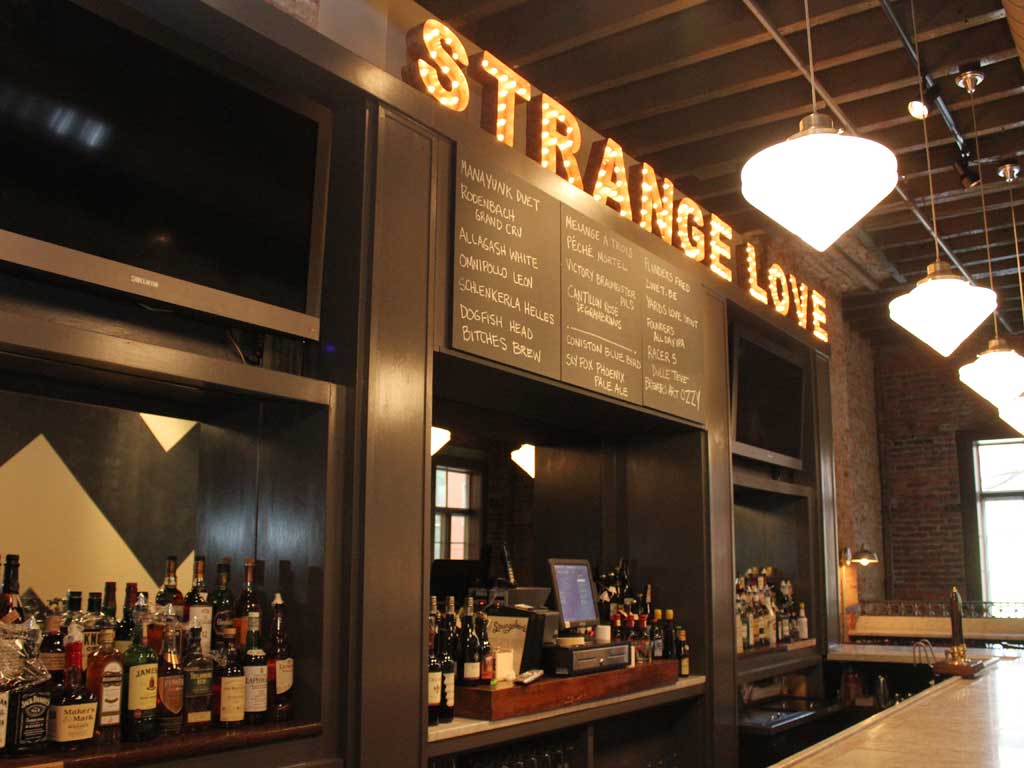
    Upstairs bar at Strangelove’s, 216 S. 11th St.

    6 p.m. to midnight

    I like to go out in drag sometimes, if I have the time. So I probably get mug and get ready to go out. I really love Strangelove’s, that’s probably where I start and get a drink and some food. They have arcade games in the back, which I recently played — I got into a really heated Mortal Kombat tournament. I made it past the first round then one of my designer friends [who helped with my Drag Race submission] Elias [Gurrola] surprisingly hustled me! I will come back and avenge myself.

    Mandy Mango on the runway on ‘RuPaul’s Drag Race’ Season 18, episode two.

    I’ll eat dinner at Strangelove’s, get some of the flatbread. I love a finger food when I’m in drag, so pizzas or chicken tenders are great. It’s gonna sound basic but their fries are actually so good.

    Then I’ll bop around to U Bar, it’s a nice place to get another little drink. Then we’ll make our way down the alley to Tavern [on Camac] to really get dancing and start the night. You can usually catch me on the upper floor. I love it especially if Carl Michaels or Chris Urban are DJing.

    Midnight

    Around midnight, we move to Frankie Bradley’s, and check out the disco side and the upstairs club side. Catch [DJs] Drootrax or Gina. I usually end up dancing a little too hard because they’re always killing it.

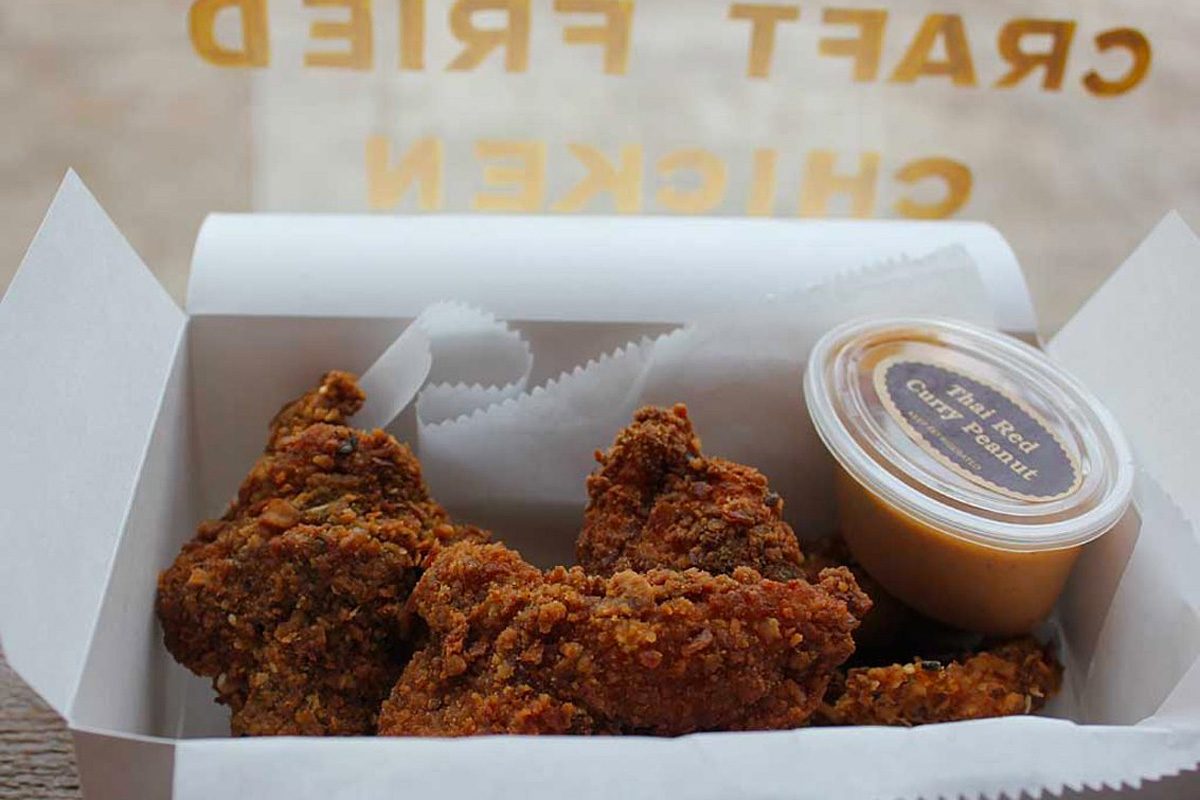
    Boneless, skinless, pretzel-encrusted chicken from Wishbone.

    2 a.m.

    I get my little post, post-club meal at Wishbone. They’re open till 4 a.m. They have pretzel-breaded chicken and baked mac and cheese. I get one white, one dark, half a pound of mac, and a biscuit.

    My schedule sounds chaotic, but it’s sort of ideal for me.


    “RuPaul’s Drag Race” airs every Friday on MTV.

  • ‘Sex to me is like having anchovies — yeah, I suppose I could, but I’d really rather not.’

    ‘Sex to me is like having anchovies — yeah, I suppose I could, but I’d really rather not.’

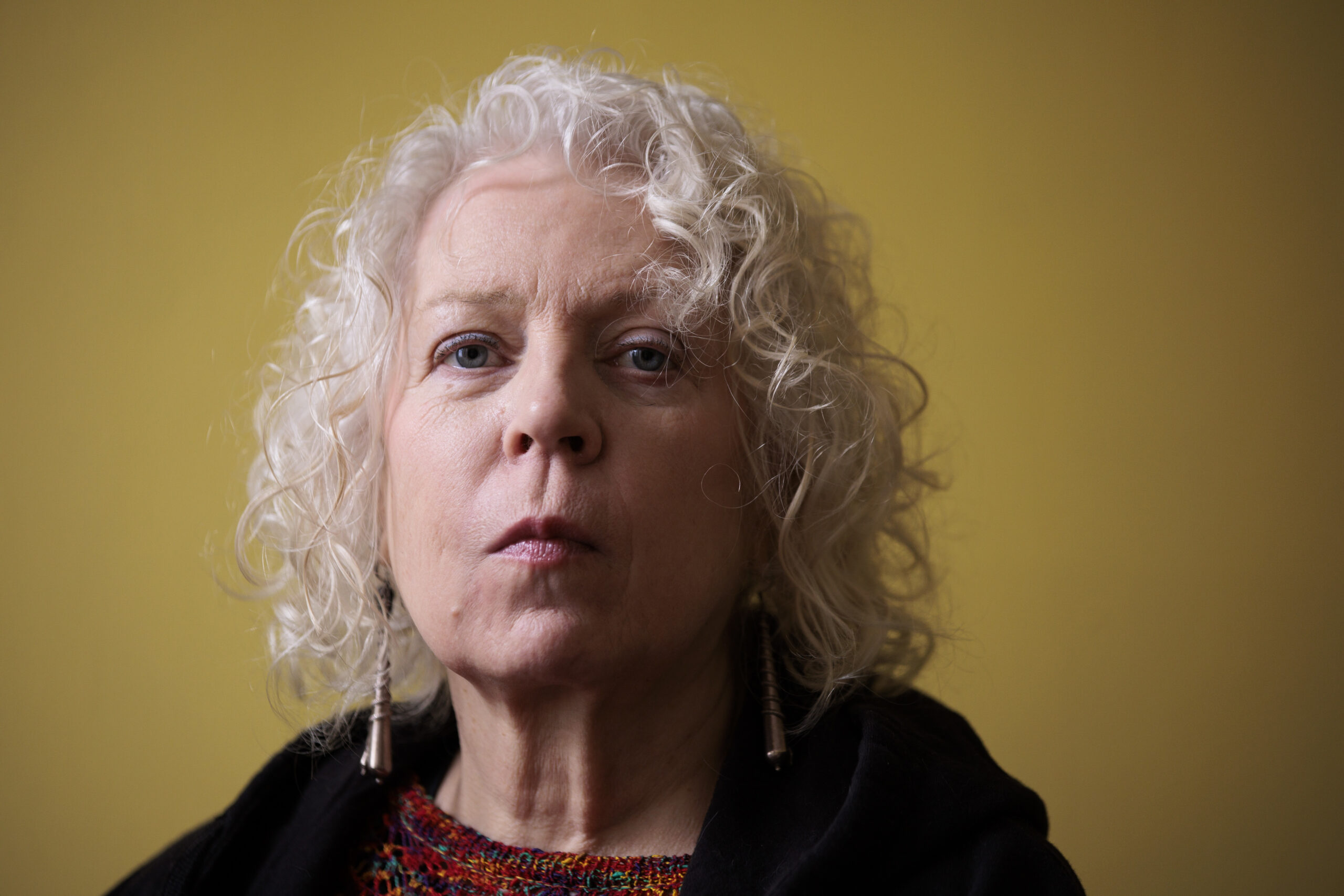
    Chris Summers was born in South Philly and raised by her grandmother and her mother. She knew she was supposed to get married, but she never felt exactly like the people around her.

    The main sticking point was sex: She didn’t want to have it, yet she still longed for romantic companionship.

    “I really crave connection and spending time with somebody. I would be happy to spend a romantic weekend where we didn’t have to sleep together,” said Summers, 73. ”We would stay up talking and drinking tea and drawing and reading to each other.”

    Summers married Fred, whom The Inquirer is referring to by his first name to protect his privacy, in 1975. The two had sex throughout their marriage, because Summers figured that was what a wife was supposed to do, but she never cared about it. They divorced in 1980 after Fred had a series of affairs, she said.

    She continued to date men, all the while wondering if she might be a lesbian. Above all, she was attracted to people’s minds; she wanted a connection that had nothing to do with the “groping, kissing, fumbling, and activity that led to orgasms,” as she described it.

    “At that time, there was no vocabulary for that. There was no saying: Sex does not interest me at all. Sex is not part of my reality,” she said. It wasn’t until the 2010s that she began reading about asexuality — the term for people who do not experience sexual attraction.

    About 1.7% of lesbian, gay, or bisexual adults identify as asexual, according to the Williams Institute, a research center focused on sexual orientation and gender identity at UCLA. The vast majority are young, under 27; a Williams Institute scholar noted that asexuality is an “emerging identity,” and probably likely to become more widespread in the future.

    Summers, who describes herself as neuroatypical, now lives with her two cats in Wissahickon. She has posted personal ads on Craigslist and forums for asexual people, but at this point has mostly resigned herself to being alone.

    The following, as told to Zoe Greenberg, has been edited for length and clarity.

    On meeting her husband

    I put an ad in the personals in 1972. I was definitely hoping for romance, but also I was just looking for somebody to hang out and smoke dope with. Fred answered the ad, and he showed up at my house on his Honda 350 motorcycle. He was kind of like my knight in shining armor. We dated for a few months, and then I moved in with him.

    On a less-than-romantic proposal

    There was no real romance involved in getting married. We were living in West Philly, and I was setting the table for dinner. He came into the kitchen and said, “What do you think about getting married?” I hadn’t really thought about it at the time, and I just said, “Yeah, OK, that’s a cool idea.” I didn’t realize that was a proposal. He said, “I’ll call my parents and let them know we’re going to get married.” I thought, This is what it’s like?

    Fred’s a Libra, and he likes to be doing what other people are doing. Friends and people in our age group were getting married. I guess he thought, Everybody else is doing this. So this should be something that we’re doing.

    On her mother offering her husband-to-be cash to marry her

    Fred and I had been married for several months, and we were having dinner one night. I was complaining about my mother; I always had a troubled relationship with her.

    He said, “Did you know that your mother offered me money to marry you?” I thought he was kidding. I said, “What did she offer?” He said, “$1,000.” I said, “Did you take it?” And he said, “Of course not.”

    I was horrified. I was raised by my mother to think I better get married, because that way I would have somebody to take care of me. She didn’t believe I could navigate life on my own. I think that on some level, my mother meant well. She thought, I’m going to offer a guy money to marry my daughter, and that way I’ll feel that I’ve done my part.

    Summers at home in Philadelphia this month.

    On her husband’s (“pedestrian”) fantasies and her evolving sexuality

    Fred was into fantasizing. One of his favorites was: you work in a massage parlor, and you’re really a hooker. I like playing, and I like fantasy and dressing up, and I just thought that was so pedestrian. I mean, if he had said, “Let’s dress up like aliens,” I would have thought, This could be fun.

    I still thought that it was quite possible that I was a lesbian. I liked looking at women, I found women attractive. When I was in 8th grade, I had a serious crush on my best friend. But in a working-class, blue-collar family, it was not something that you talked about.

    On her husband’s infidelities

    I thought we were happy. But Fred was a philanderer. He always had a little something on the side, and one of his big things that he really enjoyed doing was confessing his sins later.

    For our first wedding anniversary, we saved money so we could take our honeymoon, and we went all the way up through the Eastern Seaboard.

    We were at a lovely restaurant having a nice meal. Fred leaned over and said, “Um, there’s something I have to tell you.” I thought, Oh, God, no.

    I knew he was going to confess something, and he told me that he had been having an affair with the woman who was our matron of honor. I said, “Why did you have to tell me this on our wedding anniversary?”

    On life after divorce and discovering asexuality

    I initiated the divorce in 1980 because I was tired of Fred not being faithful. I made sure that he was served at work with the divorce papers, to embarrass him.

    After that, I was in California and I was looking for a partner. But I was not looking for somebody to sleep with. Sex to me is like having anchovies — yeah, I suppose I could, but I’d really rather not.

    I was always attracted to people who were very intelligent and on the quirky side. For me, it was never about: I want to get in their pants. It was more like, I want to get in their brain.

    In the last 10 years, I was trying to figure out, what is different about me? I started seeing things about asexuality. It made me feel like less of a freak, realizing: OK, this me. This is where I fit.

    On searching for love but not sex

    I’d always been homesick for Philadelphia, and returned in 2015.

    At one point I was part of a now-defunct Meetup group for alternative sexualities. I was an old lady in the midst of these 20- and 30-year-olds. They were very dear, they were very accepting. But I was not really considered dating material due to my age.

    Since I’ve been back, I have not really had much of a romantic life. I dated a few guys, a few women. But when you say “I really don’t want to have sex with you” — there’s no nice way to say that.


    This story is part of a series about life partners across the Philadelphia area. See other stories in the series here and here.

    If you want to share your story about who you’re navigating life with romantically or otherwise, write to lifepartners@inquirer.com. We won’t publish anything without speaking to you first.

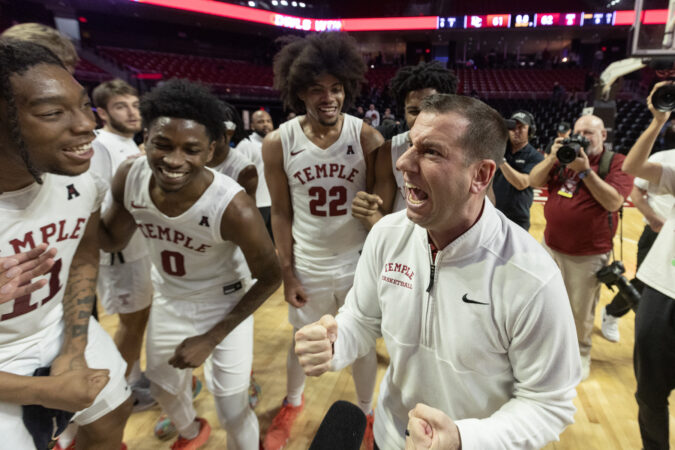
  • Adam Fisher is fulfilling a dream as Temple’s coach. He hopes to be ‘here for a long time.’

    Adam Fisher is fulfilling a dream as Temple’s coach. He hopes to be ‘here for a long time.’

    When Adam Fisher was in the second grade, he was asked to write down things about himself.

    Most of the questions were simple, like his favorite food. Then there was the question, “What do you want to be when you grow up?”

    While most kids jotted down doctor or chef, he said, Fisher proudly wrote that he wanted to be a college basketball coach.

    “Why? I have no idea,” Fisher said. “I love college basketball. I love the students when you pack an arena, I love the band, and the comradery of bringing people together that are at the university currently and then you want to go back as an alumni.”

    Nearly three decades later, the Bucks County native, who graduated from Penn State in 2006 and immediately dove in the coaching world, has been living out his dream. Fisher worked under former Penn State and current Florida Gulf Coast coach Pat Chambers and Hall of Famers Jay Wright and Jim Larrañaga at Villanova and Miami, respectively.

    At each stop, he grew and learned from other coaches, as he waited for the chance to lead his own team. That finally came in 2023, when he became Temple’s head coach.

    Now, Fisher is in his third year, and has Temple (11-6, 3-1 American) trending in the right direction. In November, he received a two-year extension through 2030. While the program has expressed its faith in Fisher, he hopes to build the team back into an NCAA tournament contender.

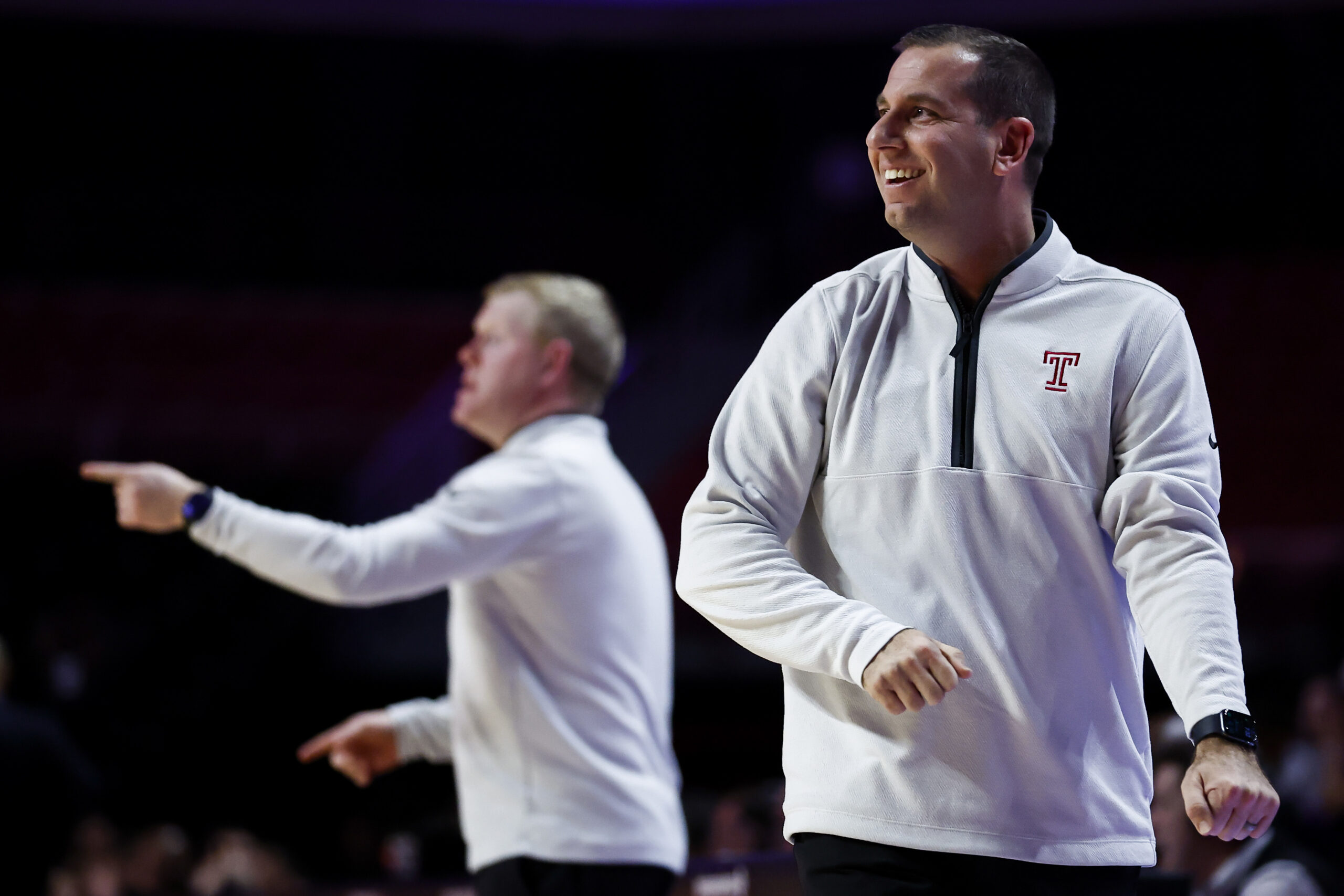
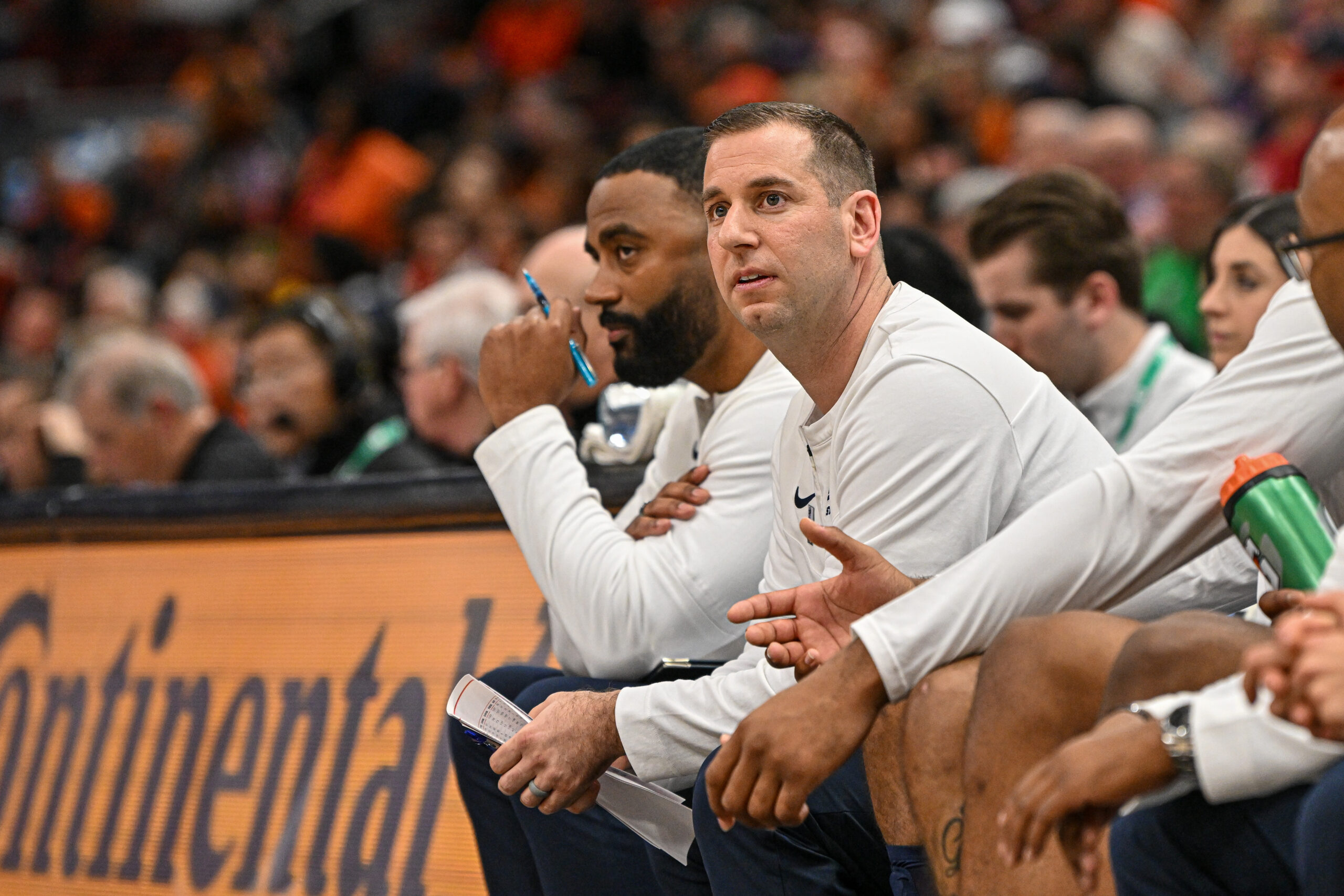
    Adam Fisher during a game against East Carolina at the Liacouras Center on Jan. 7.

    “Every job has pressure no matter what your profession is,” Fisher said. “With this job, the pressure is the great history, the rich tradition that comes with taking over a program like Temple. For me, you got to fuel yourself on the pressure and it’s something that is there and it kind of helps motivate, to get back to where Temple basketball was … it helps fuel you to not ever be outworked, to make sure you’re doing everything you possibly can for the program and put yourself in the best situation possible.”

    ‘You can win and have fun’

    Fisher credits his father Neil for giving him the itch to coach. Neil was he and his brother’s first coach while they played basketball, among other sports, in the Warrington Athletic Association.

    Fisher’s friends still bring up the times they had Fisher’s father as a coach. Neil’s impact went beyond sports as well, as Fisher’s family owned a restaurant. He watched his father run it on his own.

    “All our friends still to this day will talk about playing for my dad, and that’s really cool when you know that somebody makes that impact,” Fisher said. “I think that was when I learned I want to coach, I want to impact lives the way he did in the way he helped change people for the better. And bring people together and show that you can win and have fun and all those things.”
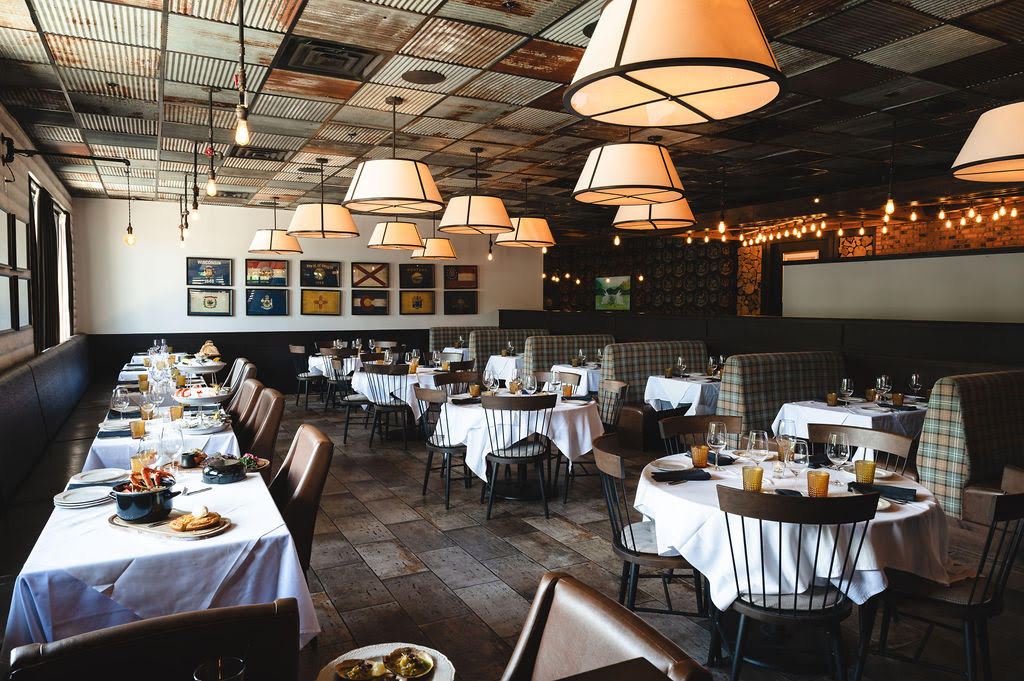
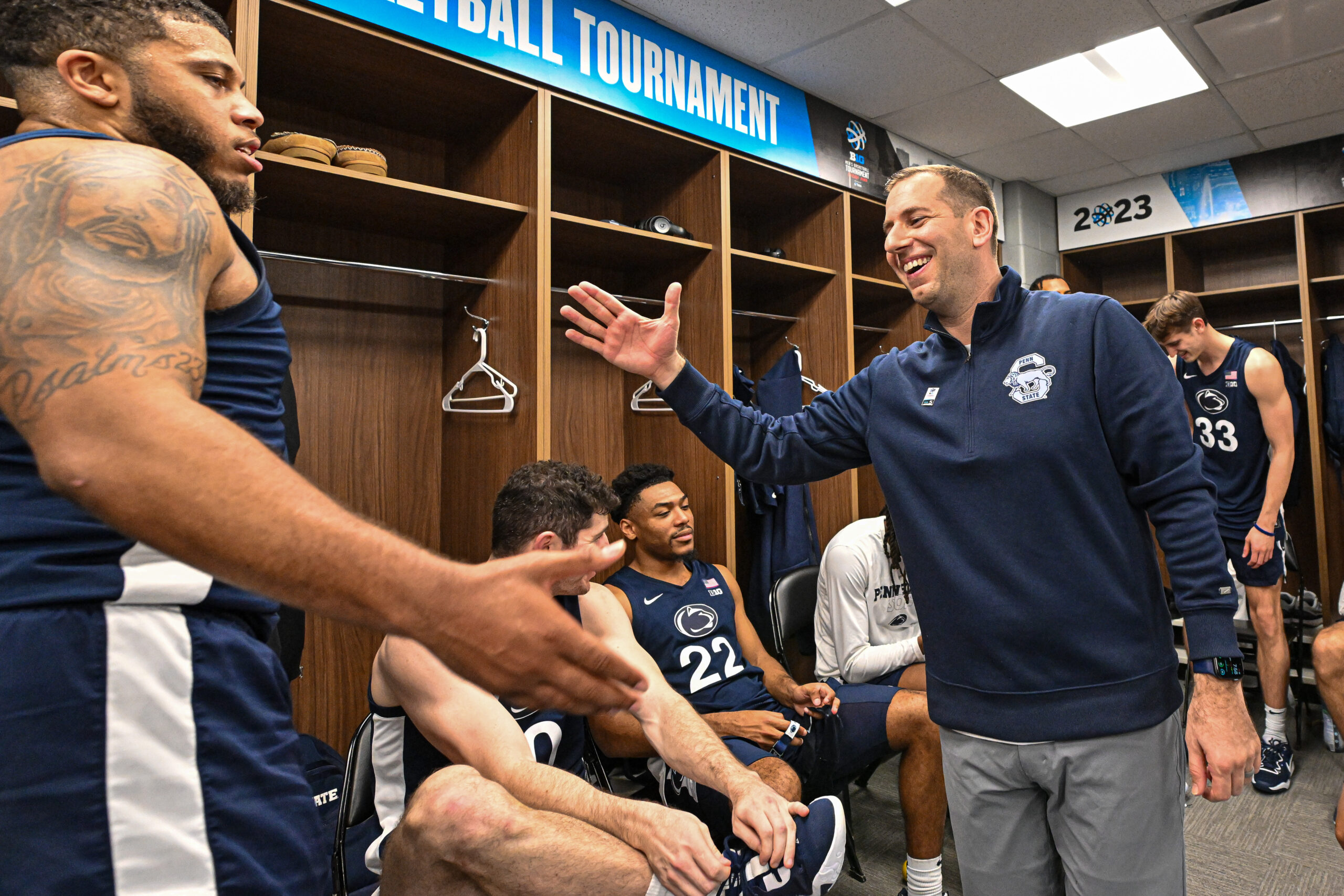
    Adam Fisher was an associate head coach at Penn State prior to being hired as Temple’s next head coach.

    Fisher bounced between schools after graduating with a kinesiology degree from Penn State. He served as a graduate assistant at Villanova under Wright, where he eventually followed then assistant coach Chambers to Boston University and Penn State, when Chambers took over those programs.

    He held various roles; director of operations, video coordinator, and director of player personnel. But in 2013, he got his break.

    A father figure

    Former Miami assistant coach Michael Huger got in Larrañaga’s ear about a coach at Boston University. The Hurricanes had an open spot for a director of player operations and hired Fisher, who learned under Huger and Larrañaga’s tutelage.

    Huger let Fisher join his recruiting visits and even let him crash in his office while he worked. Larrañaga became a father figure for the budding coach, whom he called the best director of player operations he’s ever had.

    He wasn’t a bench coach yet, but he coached 35-year-olds during the summer in a fantasy camp, where he impressed with his ability to build relationships, something that would come in handy down the line.

    But Fisher wasn’t someone Larrañaga could let go.

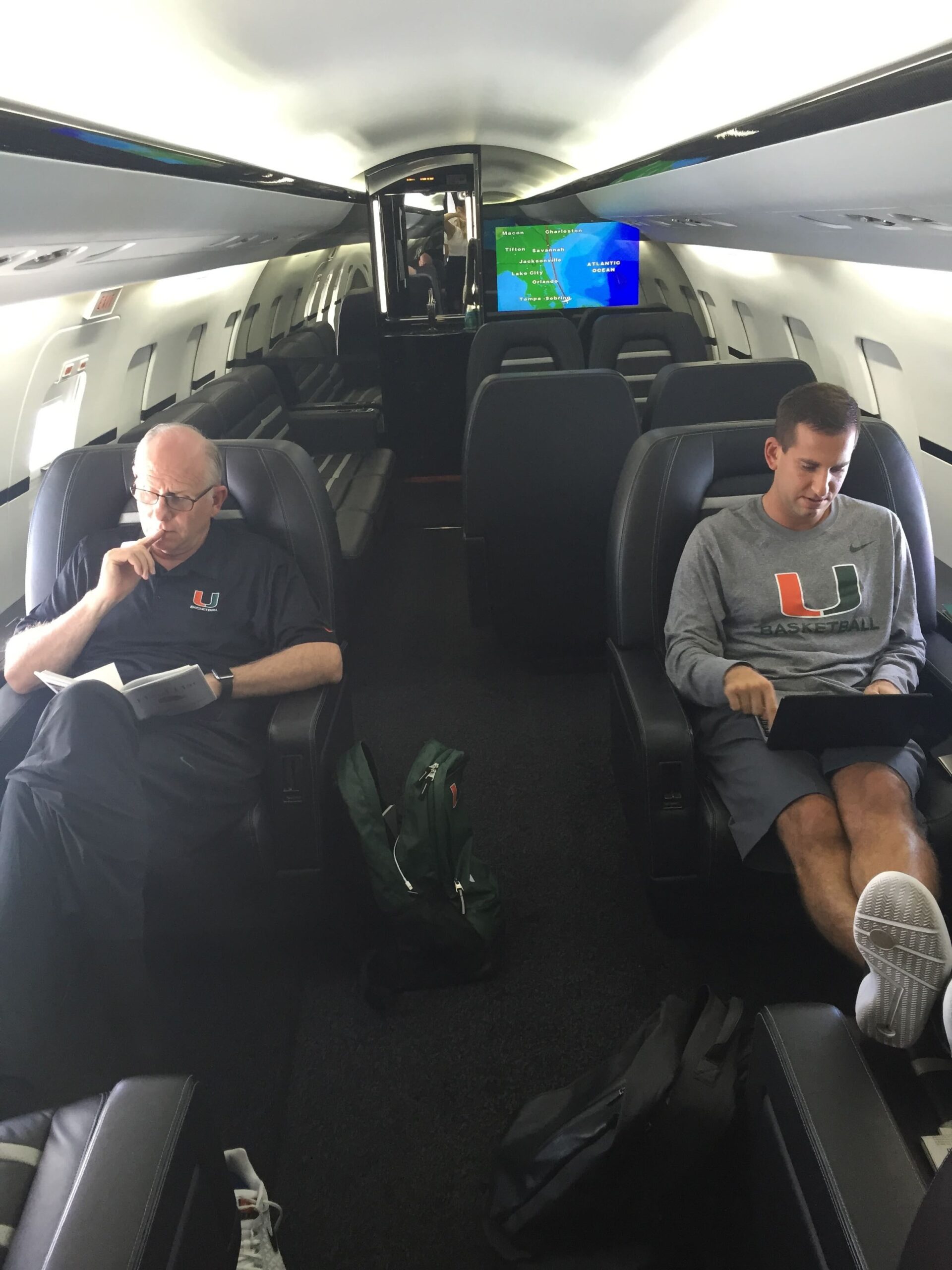
    Former Miami coach Jim Larrañaga and Adam Fisher on a plane together.

    “He was going to go to Bowling Green State University with Michael Huger. My wife said to me, ‘You can’t lose Adam. You speak so highly of him and you need to figure out a way to keep him,’” Larrañaga said. “So I called Adam back and said, ‘Instead of going to Bowling Green, I’d like you to stay here as the ops, but I’ll promise you, the first time one of my assistants leaves, I’ll elevate you.’”

    His tenure as director of player operations didn’t last long. Assistant coach Eric Konkol was hired as the head coach of Louisiana Tech. Larrañaga stuck to his word and promoted Fisher to a bench coach, where he stayed for seven seasons.

    Fisher began looking at Larrañaga as a father figure as their families became friends. When he married his wife Rebecca, Larrañaga was at the wedding. He even showed up a few days early to avoid a hurricane in Miami, while other staff members had to miss it because of the storm.

    “That just shows you who he is,” Fisher said. “That’s the guy he is. I’m interviewing for the Temple job and he’s getting ready to play in the Elite Eight and he has time out of his day to call Arthur Johnson the day of an elite eight game. That’s why I think he’s the greatest. He’s a Hall of Fame coach and Hall of Fame person.”
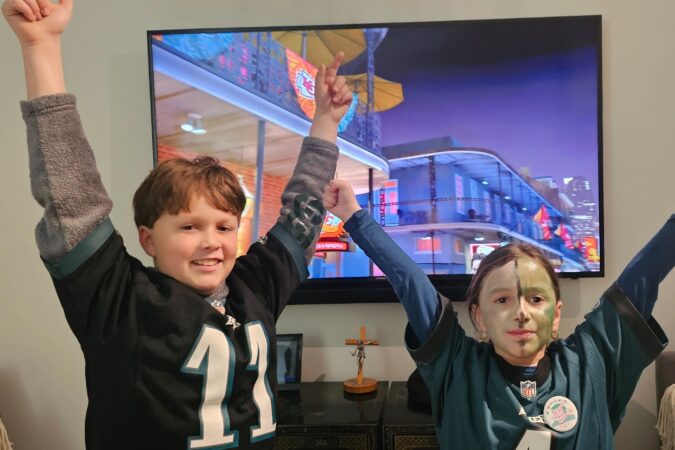
    Even after he left for Penn State in 2021 to work under Micah Shrewsberry, the two stayed in contact.

    Continue to build

    While at Happy Valley, it was Fisher’s job to handle recruiting in the Philadelphia area. He added players such as Jameel Brown, Demetrius Lilley, Cam Wynter, and Andrew Funk to the team, and helped the Nittany Lions reach the NCAA Tournament in 2023.

    Fisher later took the head coaching job at Temple. While he began building a foundation with the Owls, he tapped back into the relationships that he made during his career.

    Huger had been fired by Bowling Green that offseason, and his protégé hired him as the Owls’ associate head coach. Jimmy Polisi, who had spent a season with Fisher in Miami, was hired as the director of player operations, the same role that gave Fisher his start.

    Adam Fisher, while serving as Penn State’s associate head coach, helped the team reach the NCAA tournament in 2023.

    When guard Jamal Mashburn Jr. was heading into his junior season of high school, Fisher and Larrañaga camped out in a movie theater parking lot to wait for July 1 to offer Mashburn Jr. a scholarship.

    Mashburn Jr. never committed to Miami, instead he went to the University of Minnesota and then New Mexico, but when he entered the transfer portal in 2024, he had a familiar face reach out — Fisher. He only spent a year with the team, but the two still talk.

    “I was reaching out to him about a lot of stuff, just keeping my mind right. And, you know, he’s a positive person,” said Mashburn Jr., who competes on the Grand Rapids Gold of the NBA G League. “He’s someone who believes in me.”
    Fisher still has players reach out that are no longer in the program, like Mashburn Jr. and forward Steve Settle III. Settle tries to watch every Temple game when he can.

    Fisher’s first year at the helm saw Temple make a Cinderella run to the American championship game. While Temple got blown out of the tournament in the first round of the 2024-25 season, the Owls are making strides this season.

    The roster looks well connected compared to the last two season. A defense that needed fixing has improved and the offense has been multidimensional.

    The Owls have more than a month until the American tournament in March, and were riding a seven-game winning streak before falling to Memphis on Wednesday.

    Fisher is hopeful that his team will continue to have success, and he’s committed to get there.

    “This is where my family and I want to be,” Fisher said. “We’re excited to be here and continue to build this thing. We knew it was going to take time, taking over the job and where we were in the state of college athletics, we knew this was going to be a challenge early on.

    “We’re excited to be here for a long time.”

  • Smaller portions, fewer second drinks: How restaurateurs are adapting to changing consumer trends

    Smaller portions, fewer second drinks: How restaurateurs are adapting to changing consumer trends

    In October, Cuba Libre became one of the country’s first full-service restaurants to unveil a GLP-1 menu, available at the request of diners on the increasingly popular weight-loss medications.

    Next month, the Old City establishment will also roll out a “lighter portions, lighter prices” section of its regular menu.

    This is all to keep up with the evolving preferences of Philly-area diners, said Barry Gutin, cofounder of Cuba Libre.

    “We said, ‘We should put something on the menu for all sorts of people watching their diet and their money,’” said Gutin, whose staff has noticed GLP-1 users and nonusers alike requesting these options more over the past year. This trend has also been seen at Cuba Libre restaurants in Atlantic City, Washington, and Orlando, as well as at its Paladar Latin Kitchen and Bomba Tacos locations in the Philadelphia suburbs.

    For customers, an added perk is that they pay less for these smaller-portioned menu items, Gutin added. He said diners have become more focused on value amid broader financial uncertainty.

    “The economy dictates that we have a diversity in pricing that meets more people’s needs,” Gutin said. “You think about the way people look at menus online. They’re scanning through prices as well.”

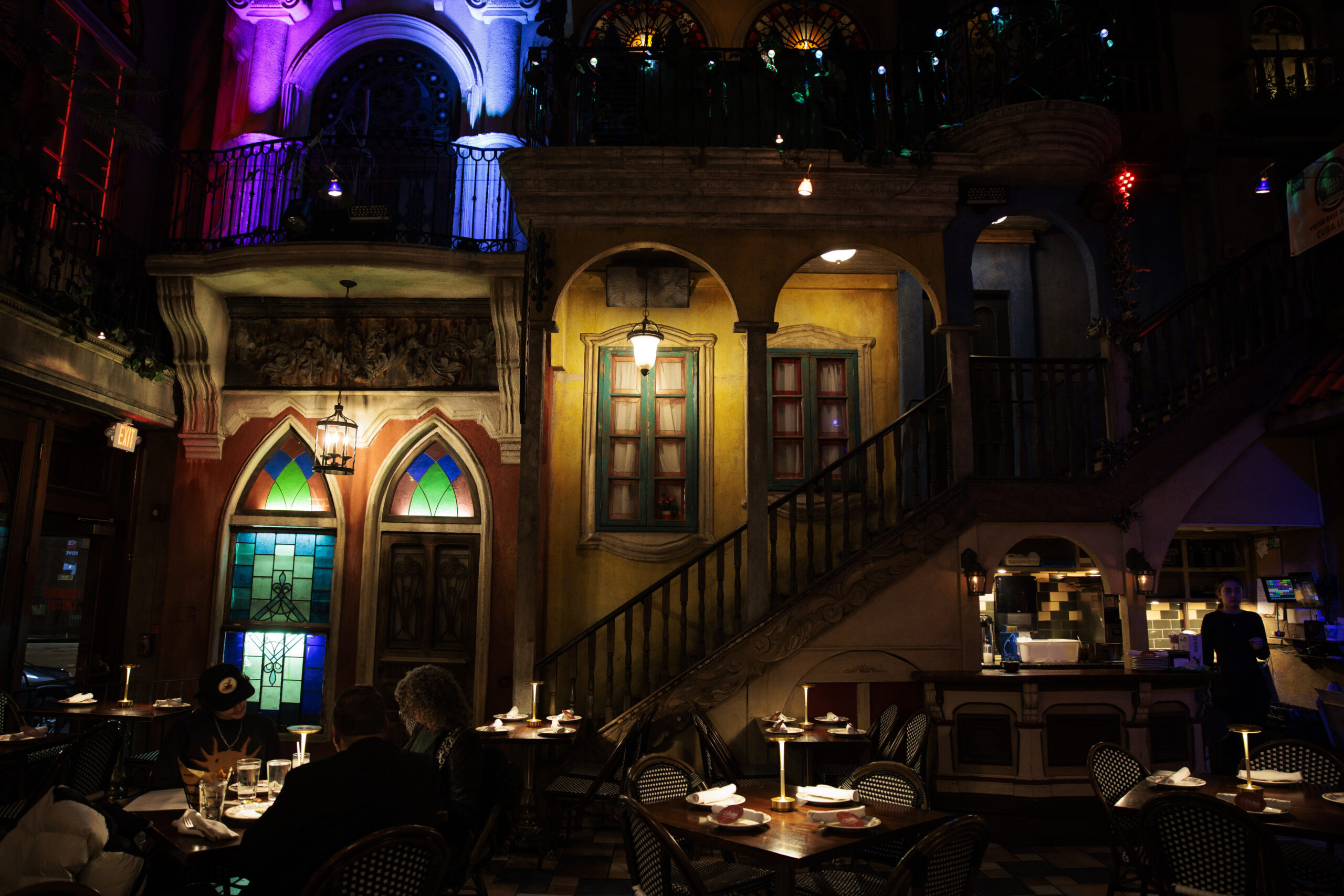
    The dining room at Cuba Libre in Philadelphia. A cofounder says staff has noticed GLP-1 users and nonusers alike requesting smaller-portioned, less expensive options more over the past year.

    In August, more than a third of U.S. diners said they were dining out less frequently than they did a year ago, according to a survey from YouGov. Of the less-frequent diners, 69% said they were eating out less in part because of the perceived cost of restaurant meals, the survey found.

    Lower-income consumers were most likely to have cut back on dining out, according to the survey, while middle- and higher-income folks hadn’t changed their habits substantially.

    This jibes with what executives at the Federal Reserve Bank of Philadelphia are hearing, too.

    “Even individuals with discretionary income to spend are being careful,” Anna Paulson, president of the Federal Reserve Bank of Philadelphia, said Wednesday. “For example, although people are still eating out in Philadelphia, contacts tell us that less expensive options on the menu are becoming more popular.”

    “The only exception to this trend is at more upscale restaurants,” Paulson added. “High-income households, bolstered by a strong stock market, appear to be driving elevated consumption growth.”

    The Ropa Vieja meal from the GLP-Wonderful menu at Cuba Libre as shown on Jan. 14.

    At the same time, restaurants nationwide are rethinking their menus amid a rise in the use of GLP-1 medications like Ozempic and Wegovy, which suppress appetite. In recent weeks, Olive Garden, Shake Shack, and Chipotle are among chains that have rolled out special menus with higher-protein, smaller-portioned meals. Smoothie King launched a GLP-1 Support Menu in October 2024.

    As of November, about 1 in 8 U.S. adults were taking a GLP-1, according to a survey from the nonprofit Kaiser Family Foundation. GLP-1s can be used for weight loss and to treat chronic conditions such as diabetes.

    At the bar, consumer habits have also changed.

    Alcohol use among adults has plummeted, with just 54% of respondents saying they drink in a July Gallup survey. That’s the lowest percentage in at least 90 years. It likely drops even lower this month as some people abstain from alcohol as part of the Dry January trend.

    Philly-area diners are spending ‘differently’

    All of these trends are on display at Philly-area bars and restaurants. And owners are trying to keep up.

    “We’re definitely at a time of dramatic shift in people’s preferences and tastes,” said Avram Hornik, owner of FCM Hospitality, which runs about a dozen venues in the region. They include Morgan’s Pier, Harper’s Garden, Craft Hall, and Concourse Dance Bar, as well as seasonal cocktail and beer gardens such as the traveling Parks on Tap.

    “I don’t think people are spending less or going out less,” Hornik said, “but I just think they are doing it differently.”

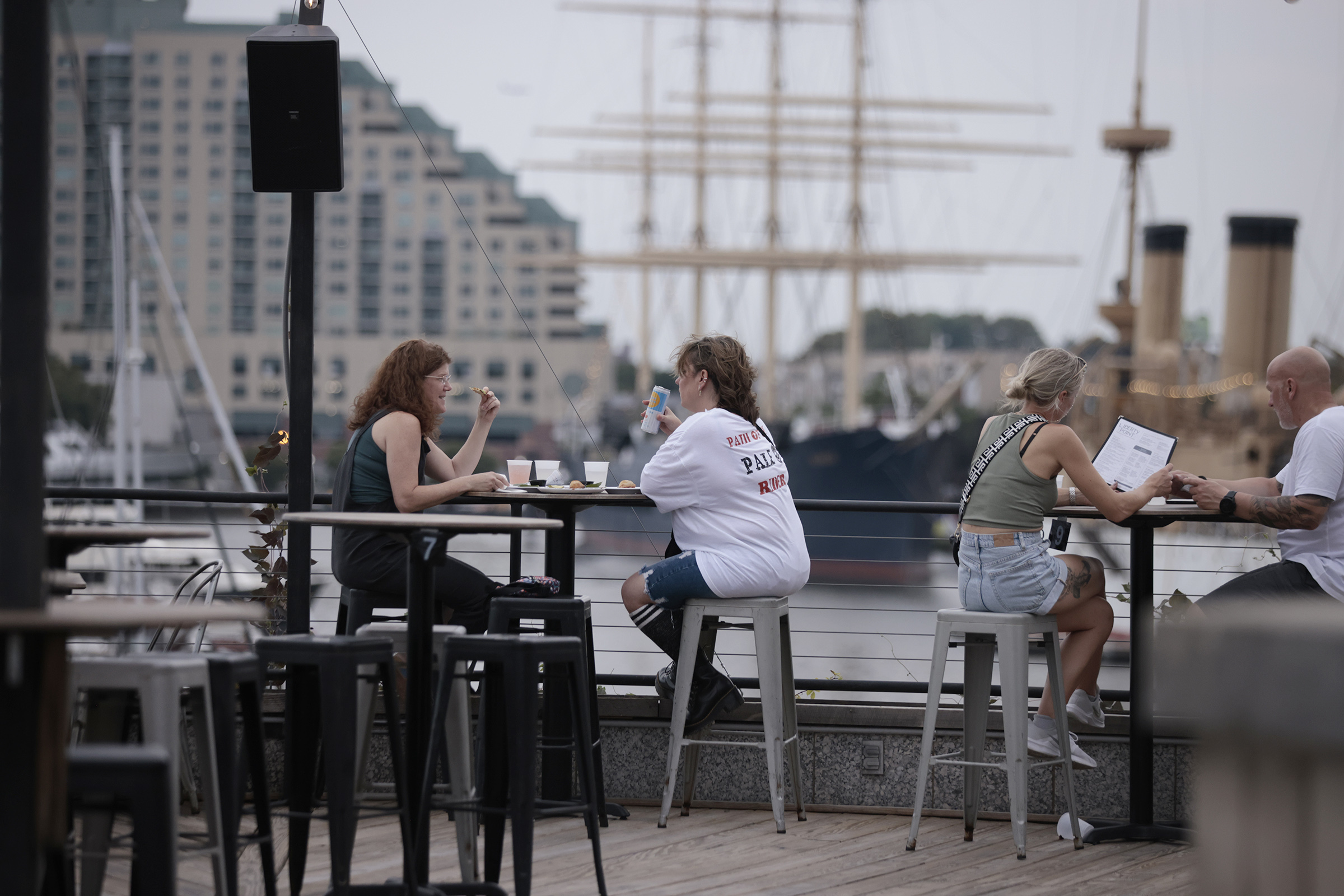
    Customers dine at Liberty Point, one of Avram Hornik’s restaurants, in 2023.

    At Hornik’s restaurants, overall sales have been consistent year over year, he said. Some customers are looking for smaller portions, he said, and late-night business has dropped precipitously. But group dining and special events have made up for losses in other areas, he said.

    When customers decide an outing is worthwhile, Hornik said, they generally aren’t sparing expenses.

    People are “looking for more of an experience when they go out to eat,” Hornik said. “It’s really about value: Am I getting a good value for the money that I’m spending?”

    To retain customers, Hornik said his restaurants are leaning into weekly specials, such as $1 tacos at Rosy’s, and happy-hour deals.

    At Cuba Libre, Gutin said he sees the GLP-1 menu, as well as the forthcoming lighter-portions menu, as a way to make his restaurants as appealing as possible for all diners.

    At each location, only about a dozen people request the GLP-1 menu each week, he said. But if a group is considering dining at Cuba Libre and one person is on a GLP-1, the special menu could make or break their decision. He said it could keep the GLP-1 user from exercising their “veto vote,” sending the entire group to dine elsewhere.

    Dining trends differ by location

    In the Philadelphia suburbs, restaurateurs said dining trends vary depending on location and type of restaurant.

    The dining room at Joey Chops, the Malvern steakhouse that Stove & Co. restaurants co-owner Joe Monnich said has been least impacted financially by changing consumer habits.

    Joe Monnich, co-owner of Stove & Co. restaurant group, said food sales are up at his higher-end restaurants, including Joey Chops steakhouse in Malvern. But farther from the Main Line, in more “blue-collar” Lansdale, he said, Stove & Tap’s business is less steady of late.

    There, “I feel more economic up and downs,” Monnich said. He felt similarly about his Al Pastor restaurant in Havertown, which is now closed after a local buyer came in last month and offered Monnich cash on the spot for the building.

    At his more casual concepts all over the region, people are spending less on average, he said, and about the same at the higher-end spots. Recently, he added, staff have noticed diners being more mindful of how much they’re consuming.

    “People aren’t getting that second drink,” Monnich said. “People aren’t getting dessert. People aren’t getting that appetizer.”

    Changing drinking habits have hurt alcohol sales, too, Monnich said. In recent years, many customers have turned away from local microbrews and gravitated toward canned cocktails and “macro beers” like Michelob Ultra and Miller Lite.

    “Three years ago I barely sold Michelob Ultra and right now it’s one of my top sellers,” Monnich said. As are canned cocktails. “Surfsides are expensive, and I don’t make a lot of money off them.”

    Stove & Co. executives have talked about creating special menus catering to these evolving consumer preferences, Monnich said, but he gets anxious about making portions smaller. So for now, he too is leaning into happy-hour deals and other value-focused items.

    “I try not to be too focused on trends because trends come and go,” Monnich said. “I do see the current trend, these weight-loss drugs, I don’t see that going anywhere … [and] people are going to be drinking less-octane alcohol.”

    Staff writer Ariana Perez-Castells contributed to this article.

  • An 11-year-old said the Eagles should fire Kevin Patullo. Then they did. Coincidence? | Weekly Report

    An 11-year-old said the Eagles should fire Kevin Patullo. Then they did. Coincidence? | Weekly Report

    An 11-year-old Eagles fan accidentally runs the coaching search: A+

    Philadelphia spent months debating offensive schemes, internal hires, and whether continuity was actually just stubbornness. Then an 11-year-old was handed a microphone and solved it in one sentence.

    Sam Salvo didn’t deliver a nuanced breakdown of route trees or personnel groupings. He didn’t cite EPA or All-22 tape. He simply announced — with the confidence of someone who has never had to answer a follow-up question — that Kevin Patullo should be flipping burgers at McDonald’s. Philly nodded in unison.

    The funniest part isn’t that it went viral. It’s that a day later, Patullo was gone, and the city collectively decided the kid deserved at least partial credit. In a town where people once egged an offensive coordinator’s house (too far), this somehow felt like the healthier outlet.

    Sam’s rant worked because it was pure, unscripted Philly logic: blunt, emotional, metaphor-heavy, and somehow accurate. “One-half cooked, one-half raw” is not just a roast, it’s a season recap. And when he popped back up afterward saying, “I just wanted to say anything that could get him fired. And it worked,” it sounded less like a joke and more like a performance review.

    The follow-up reactions only added to the lore. Fans celebrated. Former players debated scapegoating. Someone somewhere probably floated Big Dom calling plays. And the Eagles, intentionally or not, let the internet believe that an 11-year-old helped nudge a major coaching decision.

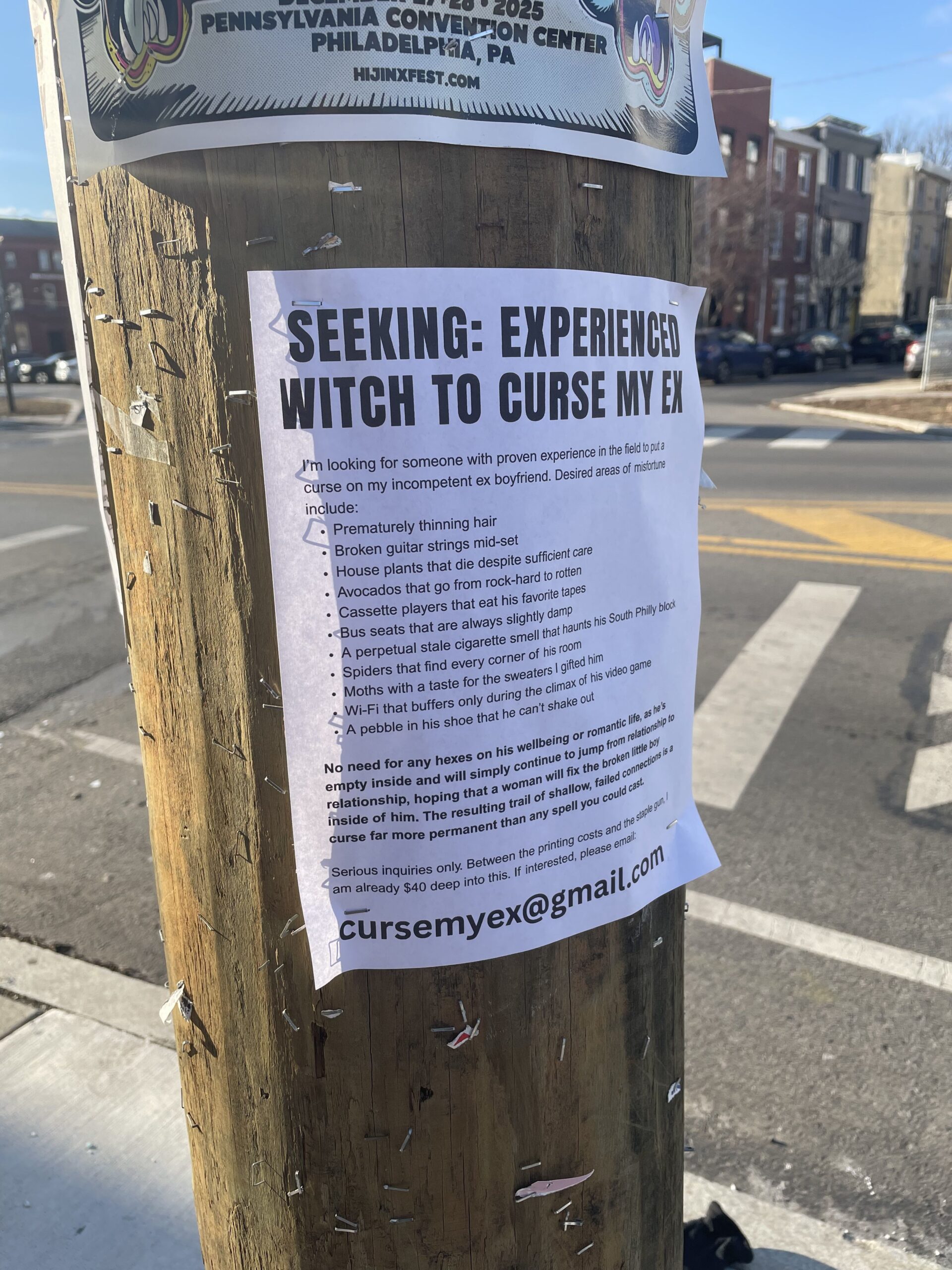
    One of the witch-seeker’s fliers hangs in Fishtown on Sunday, Jan. 4. After ending a two-year relationship, a Philadelphia woman posted the fliers around the city and in Phoenixville as a way to channel her emotions over the breakup.

    Philly collectively supports hexing an ex (with rules): A

    At some point this winter, Philadelphia decided that asking a witch to curse your ex (politely, creatively, and without touching his health or love life) was not only acceptable, but deeply relatable.

    The flier itself did most of the heavy lifting. “Seeking: Experienced Witch to Curse My Ex,” stapled to poles from Phoenixville to Fishtown, with a list of curses so specific and mild they felt less like dark magic and more like emotional Yelp reviews: thinning hair, damp bus seats, buffering Wi-Fi, eternally pebbled shoes. Nothing fatal. Nothing irreversible. Just inconvenience with intention.

    Instead of pearl-clutching, the city leaned in. The flier spread through neighborhood Facebook groups and socials, where strangers did what they do best: offered commentary, solidarity, jokes, and unsolicited advice. Some people cheered her on. Some defended the ex. Others asked how it ended. And plenty of women recognized the feeling immediately: that moment after you’ve done the therapy, the journaling, the “being mature,” and still need somewhere for the anger to go. This wasn’t about actually ruining someone’s life. It was about yelling into the city and having the city yell back, “Yeah, that sucks.”

    The rules mattered, too. No curses on his health. No messing with his love life. Philly rage has boundaries. Even our hexes come with ethics.

    Wawa learns Philly does not want a vibes-only convenience store: C-

    Philadelphia has many hard rules, but one of the hardest is this: If you remove the shelves from a Wawa, you are no longer operating a Wawa.

    The 34th and Market Street location near Drexel didn’t close because people stopped loving hoagies. It closed because Wawa tried to outthink the entire point of its existence. The fully digital, order-only format asked customers to interact with a screen for everything. No wandering, no impulse grabs, no staring at the Tastykake rack while deciding whether you’re hungry or just bored.

    And in Philly, that’s not innovation. That’s friction.

    This was once one of the company’s highest food-service locations before the pandemic, which makes the experiment feel even more puzzling in hindsight. People weren’t avoiding this store because they didn’t want Wawa. They were avoiding it because it stopped functioning like one. A convenience store that requires commitment, planning, and patience defeats the entire concept.

    The grade isn’t lower because this wasn’t malicious or careless. It was a genuine attempt to test something new. But Philly answered clearly, quickly, and repeatedly: We don’t want a Wawa that feels like an airport kiosk. That’s what will get your store closed.

    Phillies pitcher Ranger Suárez throws against the Cincinnati Reds on Saturday, July 5, 2025, in Philadelphia.

    Saying goodbye to Ranger Suárez hurts, even if it makes sense: B+

    This one lands softly and hard at the same time.

    Ranger Suárez leaving Philadelphia was never shocking, just quietly devastating. Signed by the Phillies as a teenager, developed patiently, trusted in big moments, and forever tied to the pitch that sent the city to the World Series in 2022, Suárez felt less like a roster spot and more like a constant. You looked up in October and there he was, calm as ever, getting outs without drama.

    Now he’s on the Red Sox.

    The Phillies weren’t wrong to hesitate on a five-year, $130-million deal for a pitcher with mileage, injury history, and a fastball that succeeds more on craft than velocity. Andrew Painter is coming. The rotation math is real. This is how smart teams stay competitive.

    But Philly doesn’t grade purely on spreadsheets.

    Suárez embodied a certain Phillies ideal: unflashy, durable when it mattered, unfazed by the moment, and always a little underestimated. He wasn’t the loud ace. He was the steady one. The guy you trusted to calm everything down when the season felt like it might tip.

    That’s why this stings. Not because it was reckless to let him go, but because losing someone who felt like a Phillie is different than losing someone who just wore the uniform. Watching him head to Boston is one of those reminders that the version of the team you emotionally commit to is always a few contracts behind the one that actually exists.

    OpenTable adds a 2% fee, and Philly sighs deeply: C

    Philadelphia understands restaurant math. We’ve lived through inflation menus, pandemic pivots, staffing shortages, reservation deposits, and the great “please cancel if you’re not coming” era. What we don’t love is when the bill quietly grows another line item after we thought we were done reading it.

    That’s why OpenTable adding a 2% service fee to certain transactions (no-show penalties, deposits, prepaid dining experiences) landed with more fatigue than outrage. Not rage. Just tired acceptance.

    The logic isn’t wrong. No-shows are brutal for small dining rooms, especially in places like South Philly where a missed table can knock a whole service sideways. Restaurants can absorb the fee or pass it on, and in many cases, the platform is genuinely helping places protect their bottom line.

    But from a diner’s perspective, this is yet another reminder that convenience now comes with micro-costs layered so thin you barely notice them, until you do. The reservation is free … unless you’re late. Or cancel. Or book a special dinner. Or blink wrong. It’s another reminder that each new surcharge chips away at the simple joy of making dinner plans without feeling like you’re navigating airline baggage rules.

    Philly draws the line at selling dinner reservations: A-

    Philadelphia has tolerated a lot in recent years: prix-fixe creep, credit card holds, cancellation windows measured in hours, and now, yes, platform fees (see above). But selling a free dinner reservation for profit? That’s where the city finally says no.

    The attempted resale of coveted tables at Mawn didn’t just irritate the restaurant’s owners, it offended a basic Philly value system. You can love a place. You can hustle for a table. You can brag that you got one. What you can’t do is turn access into a side hustle and expect people to shrug.

    The reaction was swift and very local: public call-out, canceled reservations, and a clear message that this isn’t New York, Miami, or a StubHub-for-dinner experiment. Yes, reservation scalping exists elsewhere, powered by bots and platforms like Appointment Trader. And yes, Philly has passed laws trying to shut that down. But what made this moment resonate wasn’t legislation. It was cultural enforcement. A collective agreement that making money off a free reservation crosses from clever into gross.

    Put simply: Waiting your turn is still the rule here. And if you try to flip your way around it, don’t be surprised when the city flips right back.

    Amanda Seyfried gives Colbert a very real Allentown community calendar: A

    Stephen Colbert has a recurring bit where he asks celebrity guests to promote actual events from their hometowns. When Amanda Seyfried, who grew up in Allentown, took her turn this week, she didn’t try to punch up the material.

    She didn’t have to.

    Seyfried read through a lineup of events that sounded exactly like a Lehigh Valley bulletin board: all-you-can-eat pasta night, speed dating for seniors, board games at a funeral home, a pirate-themed murder mystery, and Fastnacht Day donuts heavy on lard and tradition. No setup. No apology. Just listings.

    That restraint is what made it land. Seyfried treated the segment like she was helping out a neighbor, not auditioning for a tourism campaign.

    For viewers around Philly and the surrounding counties, it was immediately recognizable. This is the kind of stuff you scroll past in a local Facebook group or see taped to a coffee shop door without a second thought. Put it on national TV, though, and suddenly it becomes comedy.