Tag: topic-link-auto

  • Will A.J. Brown and Lane Johnson be back? Those are key questions facing the Eagles and Howie Roseman.

    Will A.J. Brown and Lane Johnson be back? Those are key questions facing the Eagles and Howie Roseman.

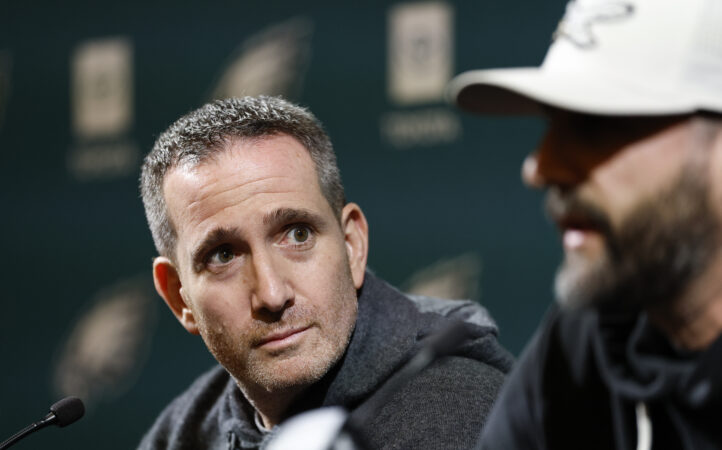
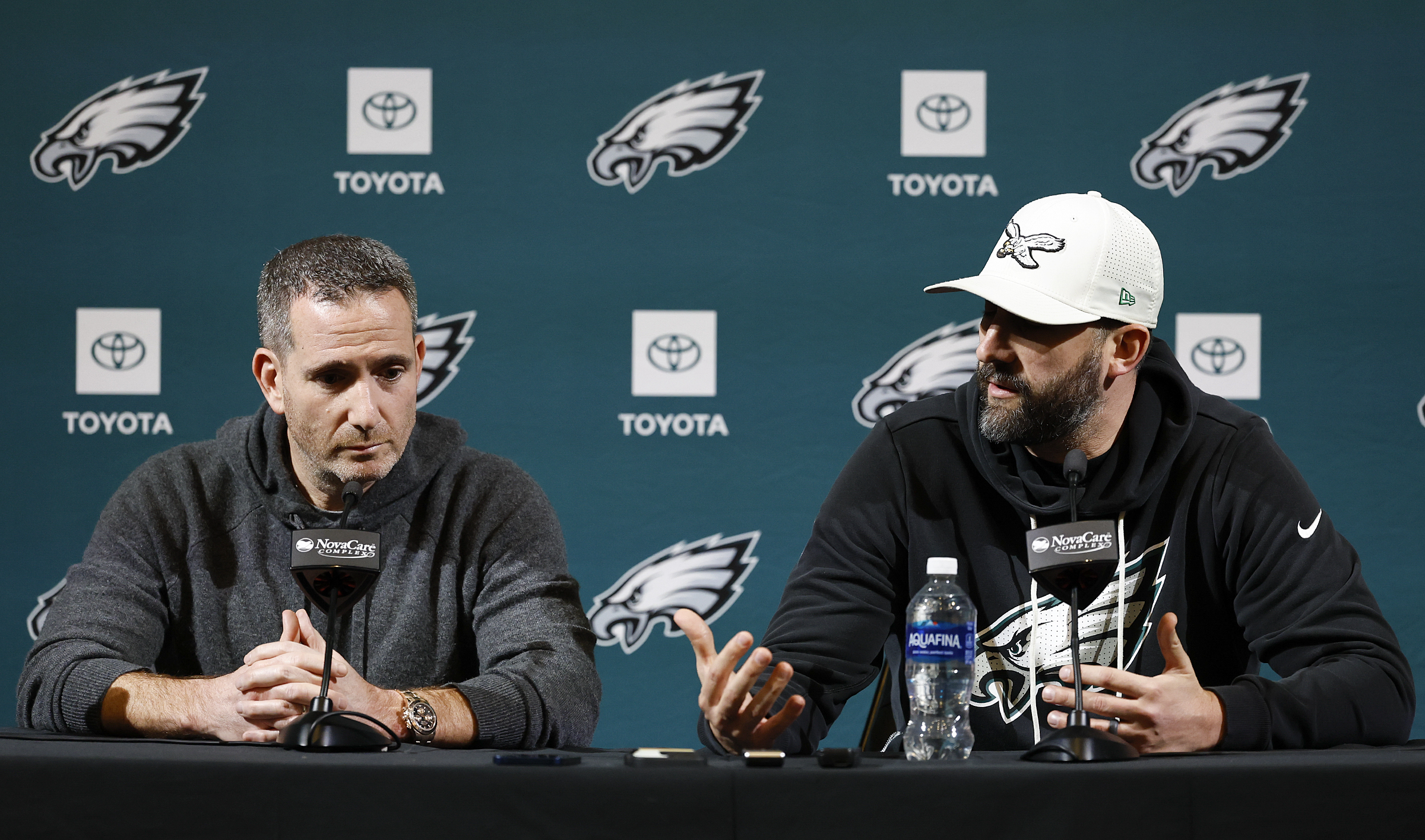
    The main topics at the end-of-year news conference Thursday afternoon at the NovaCare Complex mainly centered on why Kevin Patullo was no longer the offensive coordinator of the Eagles, what Nick Sirianni and Howie Roseman wanted in his replacement, and the evolution of the team’s offense.

    But two additional questions during the 24-minute session will have an impact on that next coordinator and the Eagles overall.

    A.J. Brown’s future in Philadelphia is a major offseason storyline, as is Lane Johnson’s future playing football in general.

    Brown’s frustrations this season and last have been well-documented. The star receiver expressed his frustrations with the offense and his involvement in it via cryptic social media posts, on a video game livestream, and in media interviews. He declined to make himself available to the media after the Eagles’ postseason exit, both postgame and the following day as the team cleared its lockers.

    Would Roseman be open to trading Brown, or is that a nonstarter?

    “It is hard to find great players in the NFL, and A.J. is a great player,” Roseman said. “I think from my perspective, that’s what we’re going out and looking for, when we go out here in free agency and in the draft, is trying to find great players who love football, and he’s that guy. So that would be my answer.”

    It was not a yes, and it was not a no. Reading between the lines, trading Brown would require the Eagles to get a haul in return.

    A.J. Brown’s unhappiness was apparent during the 2026 season.

    There also are salary cap implications.

    Brown signed a three-year extension in 2024 that carries through the 2029 season. If the Eagles traded Brown before June 1, they would take on a dead cap hit of $43.5 million. Keeping Brown would mean a $23.4 million hit. Trading him would offer cap savings in 2027 and beyond. The Eagles have been open to taking on dead cap in the past, and Roseman has been a savant at gaming the NFL’s salary cap system to the Eagles’ advantage.

    Johnson’s future also is a big factor in the cap math next season and beyond. The future Hall of Fame right tackle missed the final seven regular-season games as well as Sunday’s playoff loss with a Lisfranc injury in his right foot. Johnson has talked publicly last season and before this season about his career timeline.

    “My goal is to play well throughout my middle to maybe my upper 30s,” Johnson, who will be 36 in May, said last March. “I love the challenge of being an older player and the routine you got to keep up with.”
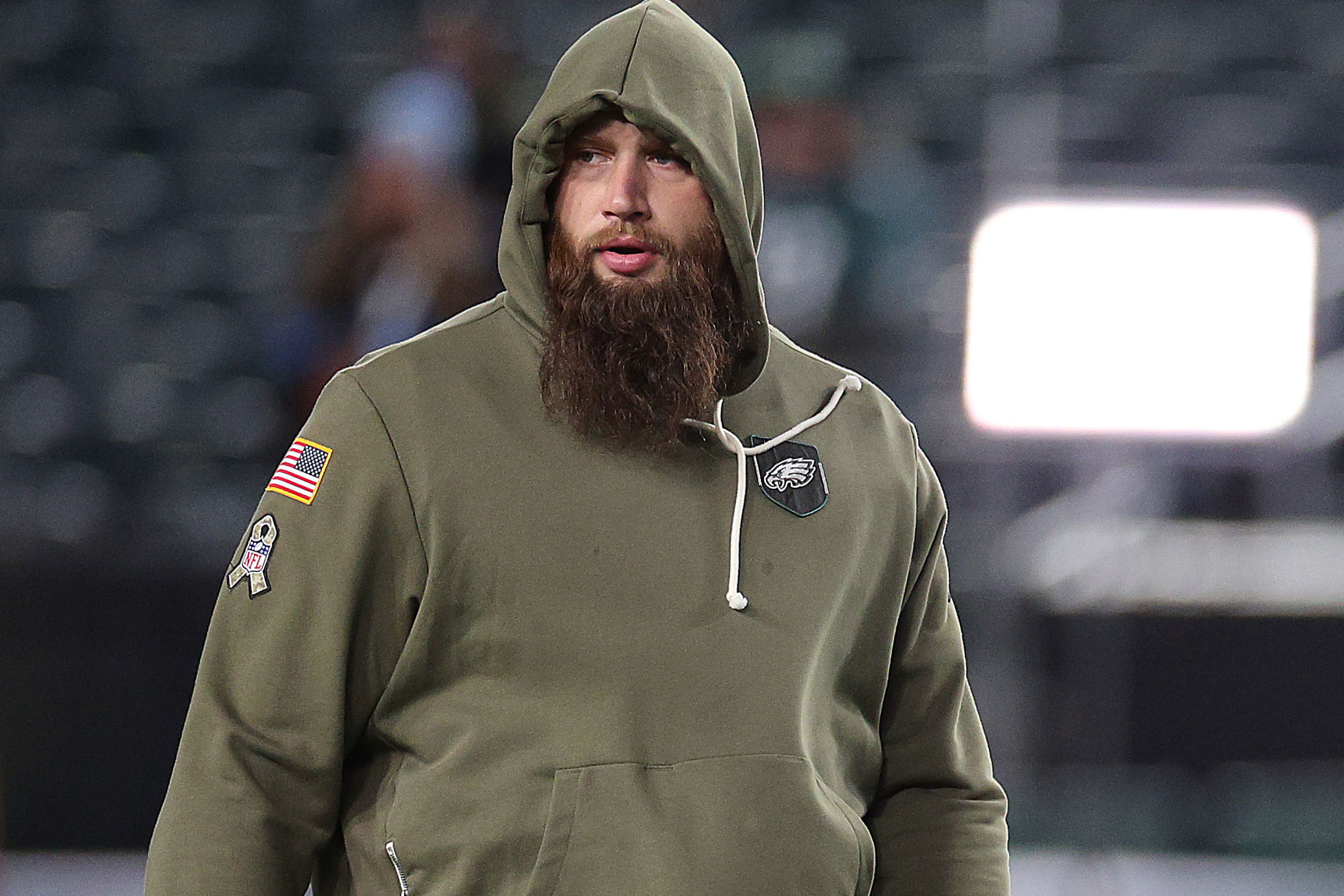
    Lane Johnson’s injury-related absence in 2025 had a material effect on the offense’s production.

    That was, however, before he suffered another injury. Johnson, like Brown, was not available to reporters as the season wrapped.

    Did he give any indication to Roseman whether he’ll be back?

    “I think all those conversations that we have with our players are between us, and anything they’re doing — I’m not saying that negatively or positively — but anyone you ask about, I think that’s their business to discuss,” Roseman said. “Obviously, you’re talking about a Hall of Fame player who has been a huge, huge part of any of our success we’ve had. And when you watch him play, he’s still playing at an elite level.”

    Not a yes. Not a no.

    The ‘natural arc’

    The futures of those Eagles stars are pivotal because their status impacts how the Eagles approach free agency and the draft. They also make up a large chunk of the team’s high-priced offense.

    The Eagles are at an interesting point in the state of their roster. They have an aging and expensive offense that is underperforming relative to its cost and a young and inexpensive defense. That will change soon. Jalen Carter and Jordan Davis are in line for extensions. Quinyon Mitchell and Cooper DeJean are right behind them. The Eagles need to improve at edge rusher and have other holes to fill.
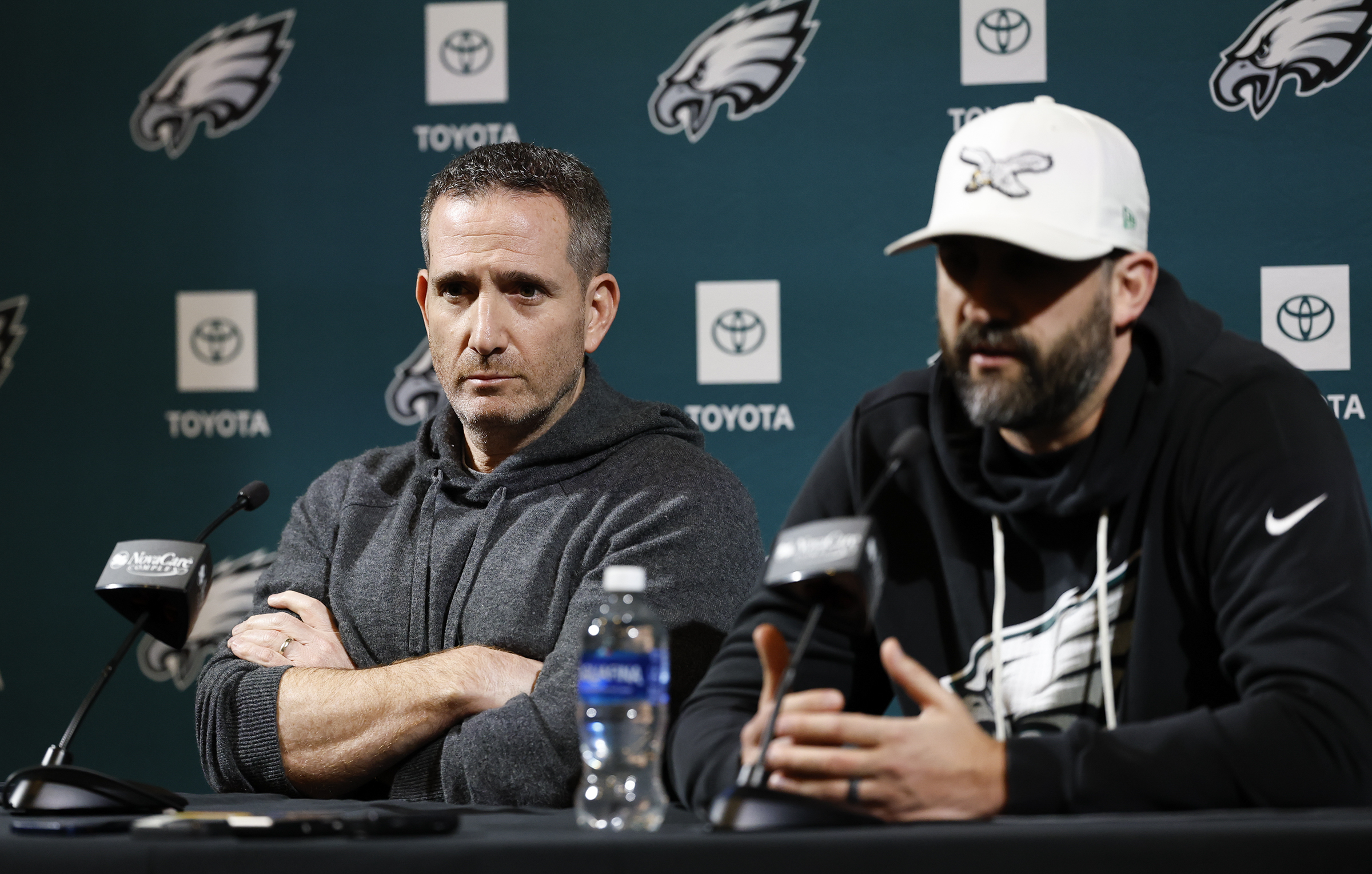
    Howie Roseman and Nick Sirianni will have to balance the team’s roster needs with financial pragmatism.

    “As you get better, you have a natural arc of the team, and I think that, when you look at our team, we drafted a lot of offensive players, we re-signed a lot of offensive players,” Roseman said when asked if the team had the resources to keep the players it wants to. “We drafted a lot of defensive guys that were young and on rookie contracts. There’s natural transition in what we do … in terms of where you’re paying your guys, which side of the ball you’re paying your guys who are coming up.

    “The important thing for us is there are players we can’t lose — obviously, we’re going to do what’s best for us … but within reason — and that we want to keep around here because they’re really good players, homegrown players that are really good people, that are part of our core. With that, you’re going to have to make sacrifices. That’s on me to make sure the sacrifices we make are filled in with really good players again.”

    ‘Not good enough’

    How would Roseman assess the 2025 season?

    “Not good enough,” he said.

    “If it doesn’t end with confetti falling on our head, I don’t feel like it’s good enough,” he added. “I know we’re not going to win the Super Bowl every year. I think I know that from a broad perspective, but I believe we can. I go into every offseason thinking we’re going to do whatever it takes to win a Super Bowl and when we fall short I look at myself. I look at the things that I could have done different and I look to improve.”

    It was not Roseman’s best offseason coming off last year’s Super Bowl. The Eagles did not get great production from their 2025 draft class, though they also had a roster without many openings. It’s worth noting that their first two picks in 2024 were All-Pro selections this season, and the jury is still out on their first two picks from the most recent drafts. They did not, however, make adequate upgrades on the edge and twice had to lure players off their couches to join the team before being forced to use a draft pick to acquire Jaelan Phillips. They don’t have obvious answers for what’s next for an aging and declining offensive line.

    They need to get younger and cheaper at some positions, but they also have the talent to try to push for another championship. Finding the next offensive coordinator is a big part of that, but roster construction is critical. Roseman’s offseason task is to balance it all.

    “You can do whatever it takes to win now and still build for the future and still have those parallel paths,” he said. “I just don’t want it to get confused that we can’t do whatever it takes to build a championship-caliber team next year and also continue to have really good players on this team for the future.”

    That work is underway.

  • Gov. Josh Shapiro sued a vendor for failing to deliver 3.4 million letters from state agencies, calling it ‘unacceptable’

    Gov. Josh Shapiro sued a vendor for failing to deliver 3.4 million letters from state agencies, calling it ‘unacceptable’

    HARRISBURG — Gov. Josh Shapiro’s administration has sued a former vendor for failing to deliver 3.4 million pieces of state agency mail to residents, resulting in a statewide debacle with some residents losing access to their public benefits.

    Shapiro called the situation “absolutely unacceptable” in his first public remarks on the matter during a Wednesday appearance at the Pennsylvania Farm Show.

    The Pennsylvania Department of General Services earlier this month filed suit in Dauphin County Court against the Harrisburg-based Capitol Presort Services, a mail presort company, for damages totaling more than $220,000 for its failure to deliver critical state agency communications from the Department of Human Services, Department of Transportation, and more.

    The lawsuit alleges that the owner of Capitol Presort Services told the state he had been forced to reduce staff due to the 135-day state budget impasse, during which outside vendors were not paid. But the owner, Phil Gray, never told the state his company could not fulfill its contractual obligations, according to the state’s filing.

    Gray “systematically reviewed the mail entering his facility and elected to process the mail that was most easily traced, to hide that he was falling behind,” according to a letter sent to lawmakers last week by DGS Secretary Reggie McNeil.

    The unsent mail went undetected by the state for one month before it was discovered, and Capitol Presort Services was swiftly fired. The state found another vendor through an emergency contract with technology solution company Pitney Bowes for $1 million.

    Shapiro said his administration has been “working overtime” to ensure no benefits were lost, and if they were, “we’re going to make it right.”

    “The vendor failed. It was caught, it was addressed, we’re suing them, and we’re going to do everything we can to recover for the people of Pennsylvania,” Shapiro said. “It’s not OK.”

    The mail delay has become an early point of attack against Shapiro as he runs for reelection and is likely to face Treasurer Stacy Garrity, the Pennsylvania Republican Party’s endorsed candidate. Following Shapiro’s reelection campaign announcement last week, the state GOP claimed that Shapiro has “even failed at the easy stuff, like sending out millions of letters from state agencies, causing vulnerable residents to lose their healthcare without notice.”

    Why the state sued

    The state hired Capitol Presort in 2021 to tray and sort some of the state’s mail, in order to save money on postage. Its latest purchase order for 2024-25, according to the suit, totaled nearly $5.3 million to deliver millions of state agency communications to residents.

    The state alleges in the suit that the vendor continued to deliver trackable mail while not delivering untracked mail, arguing that this was evidence of an “active and fraudulent concealment and an affirmative misrepresentation that it was performing its obligations under the contract.”

    Capitol Presort Services allegedly continued to pick up mail daily throughout the month of November, and Gray did not communicate to the state when asked on Dec. 4 that he could not meet his contractual obligations, McNeil said in his letter to lawmakers.

    However, Gray allegedly told the state that he had reduced his staff since July due to the impact of the budget impasse, which lasted 135 days, or nearly five months. Outside vendors are not paid during budget impasses but are expected to meet their contractual obligations.

    “Many critical contractors continued to provide services to the commonwealth, without payment, throughout the lengthy budget delay, but this vendor hid the problem and at no point advised DGS or worked cooperatively to resolve it,” McNeil told the lawmakers.

    Gray could not be reached for comment Thursday and did not have an attorney listed on the lawsuit.

    Ongoing impact

    Community Legal Services reported last month that the failure to deliver state agency mail, which went undetected from Nov. 3 to Dec. 3, had resulted in approximately two dozen clients losing access to their benefits. The total number of residents affected by the mail delay remains unclear.

    The Pennsylvania Department of Human Services has said it is extending its appeal deadlines by 45 days, while any Medicaid, CHIP, or TANF cash assistance recipients whose benefits were reduced or ended are getting their cases reopened.

    SNAP recipients who lost access to their food assistance due to the mail delay must file an appeal, submit missing documents, or reapply to become eligible again under federal rules.

    PennDot, for its part, has received few reports of issues due to the mail delay and does not anticipate much of an impact on residents, Transportation Secretary Mike Carroll said in a letter to legislators sent last week. All of its legal and time-sensitive mailings, like suspension notices, were not affected.

    The state will likely ask for more than $220,000 in damages, adding in the suit that the full cost for the failure to deliver a month’s worth of agency mail cannot yet be determined. As of last week, DHS alone has spent that much on unplanned communications and mailing costs to notify affected Pennsylvanians, according to a letter from DHS Secretary Val Arkoosh to state lawmakers.

  • Temple bought the site of a former McDonald’s for $8 million

    Temple bought the site of a former McDonald’s for $8 million

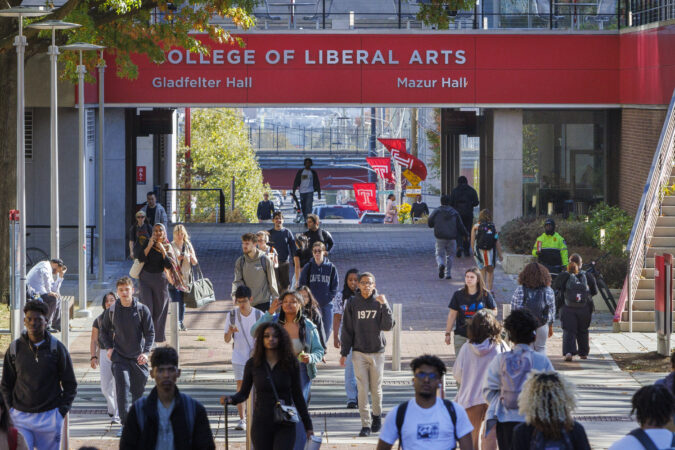
    Temple University last month bought a vacant property at the site of a former McDonald’s near its North Philadelphia campus for $8 million, according to property records.

    The university is still developing plans for the 48,640 square-foot lot at 1201-1219 N. Broad St., by Girard Avenue, a spokesperson said.

    It’s adjacent to the Temple Sports Complex, which features two fields for soccer, lacrosse, and field hockey. That location “provides an opportunity to implement the vision of our campus safety and physical environment plan,” Steve Orbanek said.

    The transaction was earlier reported by the Philadelphia Business Journal.

    The restaurant franchise was demolished in 2023.

    Temple’s latest acquisition comes as the university has expanded its footprint in recent months along Broad Street.

    In early 2025 the university paid $18 million for Terra Hall, a former University of the Arts building on South Broad Street. The building will be Temple’s Center City campus. And last fall Temple bought jazz bar New Barber’s Hall on Oxford Street for $2.3 million, the Business Journal reported.

  • Nick Sirianni’s forceful vote of confidence from Howie Roseman, and some A.J. Brown trade talk highlight Eagles news conference

    Nick Sirianni’s forceful vote of confidence from Howie Roseman, and some A.J. Brown trade talk highlight Eagles news conference

    There isn’t a whole lot of literal truth you can glean in most press conference settings. That’s especially true in the NFL, where the shield on the logo carries more than a little metaphorical weight. They are messaging platforms, not intelligence briefings. It can be frustrating. It can also be instructive, in certain moments.

    Take Howie Roseman, for instance. On Thursday afternoon, the Eagles general manager was sitting next to Nick Sirianni listening to the head coach wind down an answer to a question about the team’s search for a new offensive coordinator. As soon as Sirianni finished speaking, several reporters began talking over each other to ask the next question. But Roseman had something he wanted to add, and jumped in.

    “I’ve got a lot of things I could say about coach and the job that he’s done here,” the general manager said. “I’m incredibly proud of him. He’s shown that when we bring people in he’s open to doing whatever’s best for this football team. That’s all he cares about is winning. When he’s brought in people he’s given them the flexibility to put their own spin on things. Obviously I sit here and I feel incredibly grateful that I’m working with someone who as a head coach is elite at being a head coach, elite at building a connection with our team, elite about talking about fundamentals, game management, situational awareness, bringing the team together, holding people accountable, and when you’re looking for a head coach those are really the job descriptions.”

    The strongest votes of confidence are usually the unsolicited ones. It would be hard to interpret Roseman’s statement as anything else. Two years ago, the Eagles did Sirianni a disservice with the way they handled the fallout from their late-season collapse and one-and-done showing in the 2023 playoffs. From their decision to wait nine days to announce that Sirianni would return amid rampant speculation that his job was in jeopardy, to their external hunt for an offensive coordinator, the Eagles left the impression that the coach was being Office Spaced out of power. Not only was it an indignity, it led to an offseason full of distractions that easily could have metastasized during the Eagles’ 2-2 start to the 2024 season.

    This time, Roseman made it a point to eliminate any doubt. As he should have. The Eagles are about to embark on an offensive coordinator search that could see them bring in any of a number of big name former head coaches who have their own schemes and, potentially, their own assistant coaches. During Thursday’s press conference, there were several questions about the level of autonomy the new offensive coordinator will have, including the one that prompted Roseman’s unsolicited amicus brief. If the Eagles felt like a clarification of the record was in order, now was the time to provide it.

    It speaks volumes that Roseman took advantage of the opportunity, and that he did it forcefully. A coach needs all the political capital he can get, especially a coach who suffers from perception problems. Sirianni has brought some of those on himself with his occasional emotional regulation issues on the sidelines. But it was always a silly and unrealistic narrative to suggest he was the NFL coaching equivalent of a guy who stayed at a Holiday Inn Express last night. It was also willfully ignorant in a league where John Harbaugh and Mike Tomlin had been two of the most successful coaches of the modern era.

    Howie Roseman and Nick Sirianni are charged with finding answers after the team fell short of its Super Bowl goal.

    As for the exact nature of the Eagles coaching search, and their offseason personnel strategy, you’ll have to rely on your own deductive reasoning. There was little in the way of concrete answers from either Roseman or Sirianni regarding their vision for the Eagles offense.

    Roseman said the Eagles won’t necessarily be targeting an OC who they think could remain with the team for an extended period of time.

    “It’s a great compliment when guys get head coaching jobs from here because it means that we’re having success,” he said.

    Sirianni was noncommittal when asked about his role — and his current assistants’ roles — in the future offense. Which is common sense. If the Eagles hire Mike McDaniel, in whom they reportedly have some interest, they will clearly hire him to be Mike McDaniel the same way they hired Vic Fangio to be Vic Fangio. That said, in most cases, game-planning and play-calling is a far more collaborative process than a lot of people seem to think. The Eagles have always valued that collaborative spirit, especially in the wake of the Chip Kelly era.

    “I know that I want to be the head football coach and I think that’s what the team needs,” Sirianni said. “Everything that I’m doing isn’t because it’s what I want to do, it’s because it’s what’s best for the football team and I think it’s best for the football team when I’m the head football coach.“

    Speaking of reading between the lines, I’ll leave it to you, dear reader, to evaluate Roseman’s comments when asked about the possibility of trading star wideout A.J. Brown.

    “It’s hard to find great players in the NFL and A.J.’s a great player,” Roseman said. “That’s what we’re going out and looking for, when we go out in free agency and the draft, is trying to find great players who love football and he’s that guy. So that would be my answer.”

    I would qualify that wording as “careful” rather than explicit and definitive. But I do think it points to a general truth about the situation. It wouldn’t make a whole lot of sense for the Eagles to trade Brown unless they can somehow do it in a way where they replace him with an equal or better talent. The cost savings and draft pick return almost certainly won’t be enough to legitimize the move on that front. But if they can reap some sort of asset in a deal and also use the $7 million or so they’d clear with a post-June 1 move to add some other pass-catcher, it could make sense. But those are my words, not Roseman’s.

  • Dilys E. Blum, senior curator emeritus at the Philadelphia Art Museum, has died at 78

    Dilys E. Blum, senior curator emeritus at the Philadelphia Art Museum, has died at 78

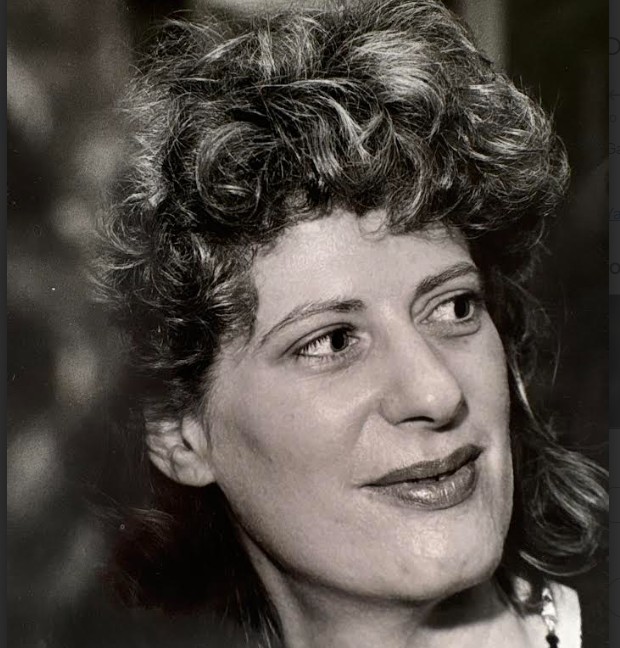
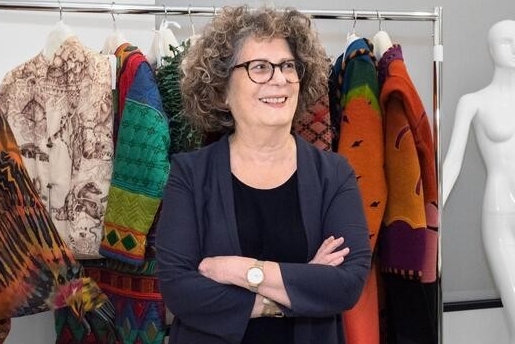
    Dilys E. Blum, 78, of Philadelphia, senior curator emeritus of costume and textiles at the Philadelphia Art Museum, author, lecturer, mentor, and world traveler, died Saturday, Dec. 27, of complications from cancer at Thomas Jefferson University Hospital.

    For 38 years, from 1987 to her retirement in 2025, Ms. Blum served as the museum’s curator of costume and textiles. In that role, she organized the museum’s vast treasure trove of textile artifacts, traveled the world to research noted fashion designers and eclectic collections, and created more than 40 memorable exhibitions about Renaissance velvets, contemporary fashion, Asian textiles, carpets, African American quilts, and dozens of other curios.

    Among her most popular presentations were 1997’s “Best Dressed: 250 Years of Style,” 2011’s “Roberto Capucci: Art into Fashion,” and 2025’s “Boom: Art and Design in the 1940s.” She organized two displays simultaneously in 2007, and The Inquirer said: “One exhibit is elegant, one’s eccentric, both are impressive.”

    She was cited as the world’s foremost authority on avant-garde Italian fashion designer Elsa Schiaparelli, and her 2003 exhibition “Shocking! The Art and Fashion of Elsa Schiaparelli” drew 83,000 visitors. Francesco Pastore, the heritage and cultural projects manager at the House of Schiaparelli in Paris, said: “Her remarkable research, her generosity in sharing knowledge, and her contribution to fashion studies have deeply enriched our field.”

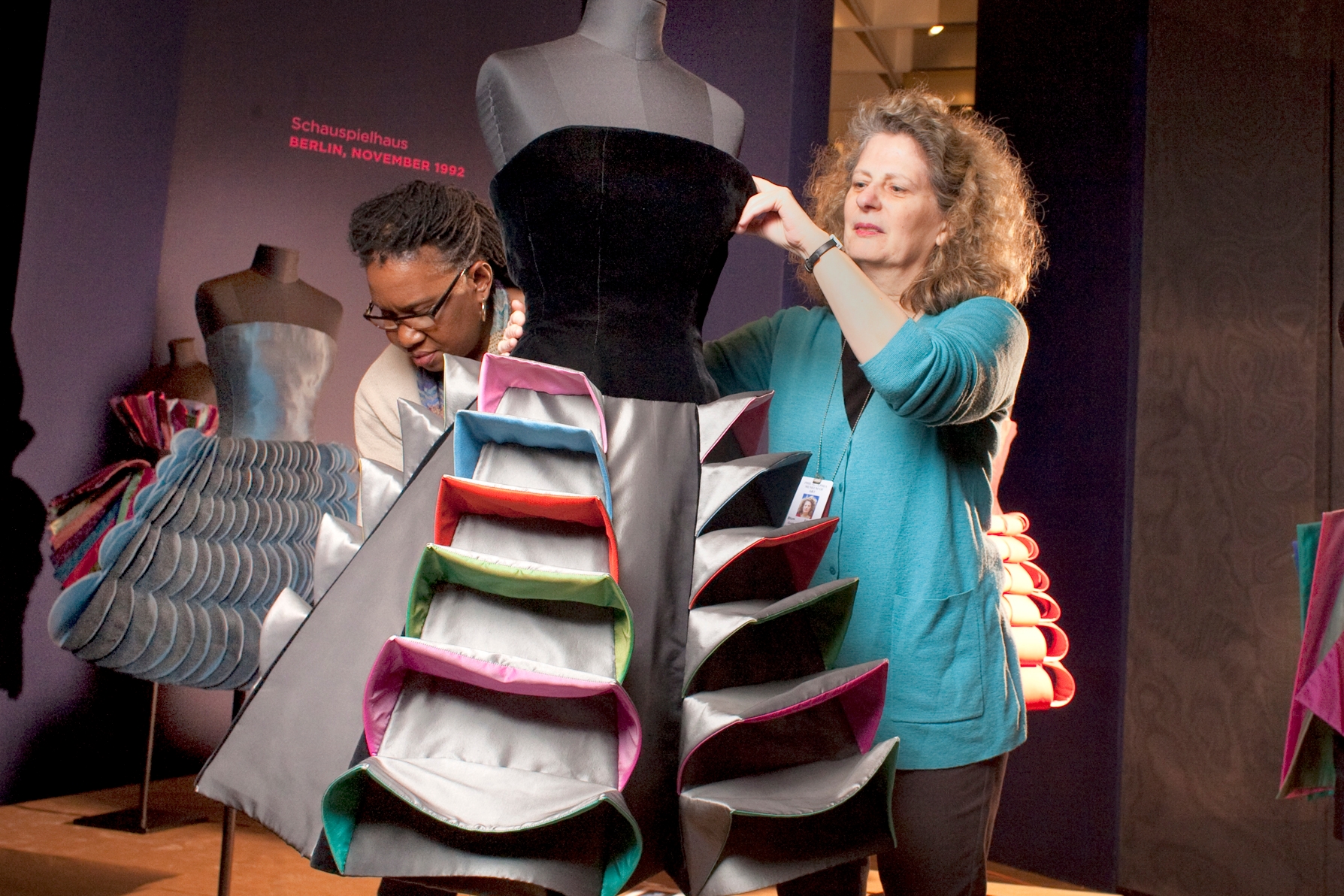
    Ms. Blum (right) and colleague Monica Brown tend to a museum exhibit in 2011.

    In a recent tribute, former museum colleagues marveled at her “technical expertise and cultural insight,” and credited her for reinvigorating the once-neglected textiles collection. Daniel Weiss, director and chief executive officer of the museum, said: “She transformed this museum’s costume and textiles department into a program respected around the world.”

    She told The Inquirer in 1990: “We wanted to remind them that we were here.”

    Before Philadelphia, Ms. Blum was a textile conservator at the Chicago Conservation Center and the Brooklyn Museum, and senior assistant keeper of the costume and textile department at the Museum of London. She earned a bachelor’s degree in art history at Connecticut College and studied afterward at the University of Manchester in England and the Courtauld Institute of Art at the University of London.

    “She was fearless in her pursuit of perfection in her work,” said her sister Galen. Her sister Sydney said: “She was dedicated to her craft and scholarship.”

    Ms. Blum (left) was close to her sisters Sydney (center) and Galen.

    An avid reader and writer, Ms. Blum wrote and cowrote several books about textiles and designers, and 2021’s Patrick Kelly: Runway of Love, coauthored with former colleague Laura L. Camerlengo, earned a 2023 honorable mention publication award from the Costume Society of America. She also wrote essays for exhibition catalogs, served on editorial boards for journals, lectured around the world, and was active with the International Council of Museums, the Association of Art Museum Curators, and other groups.

    In 2025, to celebrate Ms. Blum’s retirement, Camerlengo praised her “deep knowledge, creative vision, and contagious passion for the field.” She said: “Dilys is one of the most influential figures in the world of fashion and textile arts.”

    Ms. Blum’s work and fashion viewpoints were featured often in The Inquirer. In 1997, she said: “People don’t dress up anymore.” In 1999, she said: “I think we’ve lost the joy in dressing. There’s this trend away from clutter in dress and decorating. It’s pared down to the point of visual boredom.”

    In 2001, she said it was easy to differentiate between New Yorkers and Philadelphians. “New Yorkers,” she said, “will invariably be wearing the accessory of the moment, a pashmina shawl, a Kate Spade bag, a Prada loafer.”

    Ms. Blum left “an enduring legacy woven through the art museum and the generations of scholars and visitors who now see costumes and textiles as central to the story of art,” former museum colleagues said.

    Dilys Ellen Blum was born July 11, 1947, in Ames, Iowa. She and her parents moved to Hamilton, N.Y., when she was 1, and the family traveled with her father, an economics professor at Colgate University, on teaching sabbaticals abroad. When she was 12, Ms. Blum spent a year with her parents and sisters living in Norway and touring Europe in a Volkswagen Beetle.

    Her mother was an artist and seamstress, and she and Ms. Blum spent many nights poring over clothes patterns on their dining room table. She enjoyed reading murder mysteries and traveling the world in search of new museum-worthy artifacts.

    She lived in South Philadelphia, was diagnosed with cancer three years ago, and talked often with her sisters on the telephone. “I admired her seriousness and humility,” Sydney said. Galen said: “From my perspective, I was in awe of her.”

    In addition to her sisters, Ms. Blum is survived by a niece, Juniper, and other relatives.

    A memorial service is to be held later.

    Former museum colleagues said Ms. Blum’s writing “consistently amplified the makers and wearers of extraordinary objects, and their intertwined relationships.”
  • After backlash, an Allentown GOP senator stands by the expletive he used to describe Philly

    After backlash, an Allentown GOP senator stands by the expletive he used to describe Philly

    A Pennsylvania Republican state senator doubled down Thursday on remarks denigrating Philadelphia, despite backlash from prominent Philly Democrats.

    “Philadelphia wouldn’t be such a shithole” if District Attorney Larry Krasner prosecuted more crimes, State Sen. Jarrett Coleman, a Republican from Allentown, told Fox News on Wednesday.

    Asked to elaborate Thursday, Coleman cited Philadelphia’s crime rates, which are higher than the national average.

    “My statement stands. The people of Philadelphia deserve better,” Coleman said in a written statement.

    He was met with condemnation from Democrats who defended the city, which last year recorded its lowest number homicides in more than half a century.

    “Now just imagine the outcry if I, a Democrat from an urban area, said exactly the same thing about a rural area?” U.S. Rep. Brendan Boyle, a Philadelphia Democrat, posted to X Thursday morning. “But I wouldn’t because I believe all in our society are of equal worth and deserve our respect.”

    Coleman’s comments came in a broader piece in which he threatened to use a Senate committee he chairs to push back against Krasner and Philadelphia Sheriff Rochelle Bilal if they interfered with President Donald Trump’s administration’s immigration enforcement.

    Last week Krasner and Bilal promised to prosecute any U.S. Immigration and Customs Enforcement agents who committed crimes in the city. Bilal’s comments, made after an ICE agent fatally shot Renee Nicole Good in Minneapolis, went viral and earned the ire of Trump-aligned social media accounts and public officials across the country.

    Coleman criticized the Philadelphia officials Wednesday, narrowing in on Krasner, a progressive who has been a frequent target of Republican ire since he was first elected in 2017.

    His comments were reminiscent of Trump’s notorious remarks in his first term when he was reported to have used the same term to describe some countries in Africa, the Caribbean, and Central America during a meeting. Trump confirmed his use of the term nearly eight years later during a recent visit to Pennsylvania, where he recounted it a cheering crowd in Mount Pocono.

    State Sen. Tony Williams, a Democrat from Philadelphia, echoed Boyle’s criticism and demanded an apology from Coleman, arguing the senator’s comments had degraded not just Philly but the country.

    “He should unfortunately be ashamed of the manner in which he described Philadelphia,” Williams said.

    “I have that part in me as well, I just don’t think it’s productive in these times to add fuel to the fire of stupidity,” he added.

    State Sen. Nikil Saval, a Philadelphia Democrat, said he would be happy to give Coleman a tour of Philly, which he described as “safe, connected, vibrant.”

    “The biggest threat to the safety of Philadelphians is the chronic underfunding perpetuated by Pennsylvania Senate Republicans,” he said.

  • ⭐ MLK Day, Restaurant Week deals, and new Mummers band competition|Things to do

    ⭐ MLK Day, Restaurant Week deals, and new Mummers band competition|Things to do

    I’ll be candid. The Eagles’ loss to the San Francisco 49ers was a sting to my winter plans. I looked forward to the crazed tailgates outside the Linc and the wave of excitement each tush-push touchdown generated among our rabid fanbase.

    We were all hoping for a back-to-back Super Bowl run, even when the glaring holes in our offense signaled something far different. Unfortunately, we’ll have to see how things shake up next season. But that doesn’t mean our winter plans should be in the gutter. There are still plenty of things to do this weekend (and beyond) to mend our broken hearts and fill our typical Eagles Sundays.

    Along with Martin Luther King Jr. celebrations throughout the city, restaurant week specials will be in full swing, plus the return of a Wilma Theater favorite, a toast to Ben Franklin’s 320th birthday, and more.

    Read below to see what’s in store this week and beyond.

    — Earl Hopkins (@earlhopkins_, Email me at thingstodo@inquirer.com)

    If someone forwarded you this email, sign up for free here.

    Sporting a face that sums up the magnetism of mummery Robbie Reid (top), a member of the Froggy Carr comic club, pauses for a moment along the parade route yesterday. At left, the Fralinger String Band performs during the competition judging – it won – at City Hall. And at right, Mayor Nutter appears to be doing a version of the mummers’ strut as he kicks off the string band division yesterday with the Greater Overbrook String Band leading off.

    Mummers string band competition will duke it out at the Linc

    Thirty to 60 mph winds led to a postponement of the Mummers’ string band competition, and put a momentary damper on what was otherwise an extraordinary New Year’s Day. But the string bands may have gotten an even sweeter prize out of the ordeal, according to my colleague Henry Savage.

    The judged string band competition will now take place at 2 p.m. on Jan. 31 at the Linc, parade officials announced last week. The annual competition is still open to the public, with tickets available on Ticketmaster for $12 to $25. It will also be broadcast on WFMZ-TV.

    The best things to do this week

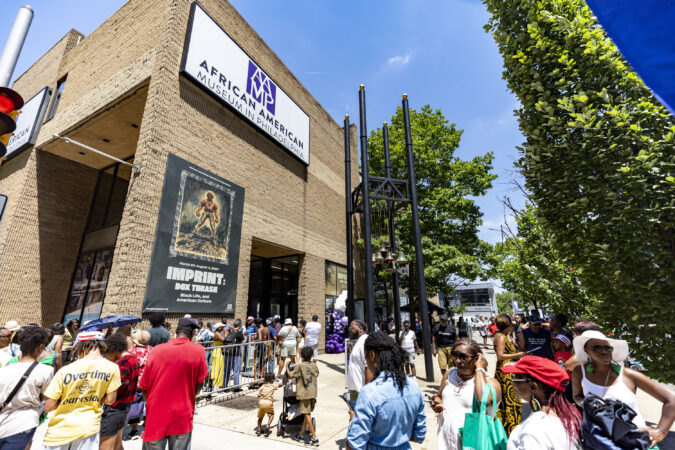
    ⭐ Celebrate MLK: Celebrate civil rights icon, and my dear fraternity brother, Dr. Martin Luther King Jr., at the African American Museum in Philadelphia starting Saturday. AAMP’s “Celebrating MLK 2026: Radical Peace and Public Memory” offers a screening of Selma, art-making, gallery talks, and other family-friendly activity through Jan 19.

    🎉 Ben’s Birthday Bash: Stop by the Franklin Institute to celebrate Ben Franklin’s 320th birthday. The birthday bash for the founding father will be packed with games, music, and a few surprises. Visitors can even hear the song “Happy Birthday” being played on one of Franklin’s own inventions: the glass harmonica.

    🦸🏼‍♂️ Unleash your inner superhero: The Bingo Verifying Divas will step out donning superhero ensembles for Superhero Smash GayBINGO at the Congregation Rodeph Shalom. The crew will bring its typical brand of entertainment and laugh-out-loud comedy, plus some prizes between each round.

    🔍 A watchful eye on this famed detective: For theater-lovers and inquiring minds, Sherlock Holmes: The Great Detective, directed by Bill Van Horn, now runs through Feb. 15 at Walnut Street Theatre.

    📅 My calendar picks this week: Trestle Night Fever Happy Hour Dance Party and Tramp Stamp: Trashy 2000s Party at Kung Fu Necktie.

    Pig Iron Theatre Company’s ‘Poor Judge’ premieres at the 2024 Fringe Festival, running Sept. 11-22 at the Wilma Theater.

    The thing of the week: ‘Poor Judge’ is back

    The brainchild of beloved performer Dito Von Reigersberg (aka Martha Graham Cracker) is now back on stage.

    Pig Iron Theatre Company’s Poor Judge, a story of love, Hollywood ambition, and the darkness of the American success story, returns to Wilma Theater for the first time since its debut two years ago.

    The show, brought to life by the music of Aimee Mann, is running through Jan. 25. Tickets are available at wilmatheater.org.

    Winter fun this week and beyond

    🎭 Final curtain call: Catch the Tony Award-winning musical Suffs, a story chronicling women’s struggles for the right to vote, at the Academy of Music before it closes on Jan. 18.

    🍜 Restaurant Week in Center City: Center City District Restaurant Week returns with a bevy of prix-fixe dinner menus, ranging from $45-$60 at select restaurants, plus two-course lunches for $20 at other nearby eateries. Visit the official website for the full list of participants.

    🥘 Bucks County bites: New Hope and Lambertville join forces for a PA-NJ-style restaurant week through Jan. 25, which includes two dozen restaurants along both sides of the Delaware River.

    🍻 Philly Flurry in Fairmount: Small business in Fairmount, Brewerytown, Francisville, and Spring Garden are offering limited-time promos and discounts on drafts, cocktails, ice cream pints, and food orders through Feb. 1. Here’s a full list of participants.

    Staffer picks

    Pop music critic Dan DeLuca lists the top concerts this weekend and a few holiday pop-up jams happening this month.

    🎸 Thursday: Singer and guitarist Bill Kirchen, best known for their 1972 hit “Hot Rod Lincoln, stops at Sellersville Theater on Thursday. He will perform one set with his band Commander Cody and His Lost Planet Airmen, and another set with his Bob Dylan tribute band.

    🎤 Friday: Long-time soul balladeer Peabo Bryson is on tour, 35 years since his Grammy-winning duet with Celine Dion on the title song for 1991’s Beauty and the Beast. He will be at City Winery on Friday.

    🎤 Saturday: Chuck D and Flavor Flav will be joined by fellow hip-hop legends and R&B acts on Saturday at the Jim Whelan Boardwalk Hall in Atlantic City. Other veteran performers include Montel Jordan of “This Is How We Do It” fame, KRS-One, Sugarhill Gang, Philly’s Schoolly D, and the Furious Five – minus the group’s leader Grandmaster Flash.

    Thanks for sticking with me for another newsletter entry. As I said at the top of the year, some amazing things are happening in 2026, even if our Birds came up short in the playoffs. I’ll do my best to capture the highlights. so tay tuned for more.

    – Earl Hopkins

    Courtesy of Giphy.com
  • Jewish students and faculty at Penn ask that their names not be turned over in federal antisemitism investigation

    Jewish students and faculty at Penn ask that their names not be turned over in federal antisemitism investigation

    Several groups at the University of Pennsylvania representing Jewish students, faculty, and staff are seeking to protect their names and personal information from being turned over to the U.S. Equal Employment Opportunity Commission, which is suing Penn for the data.

    The EEOC filed suit in November after the Ivy League university refused to comply with a subpoena seeking information for an investigation it began in 2023 over the school’s treatment of Jewish faculty and other employees regarding antisemitism complaints.

    In its quest to find people potentially affected, the commission demanded a list of employees in Penn’s Jewish Studies Program, a list of all clubs, groups, organizations, and recreation groups related to the Jewish religion — including points of contact and a roster of members — and names of employees who lodged antisemitism complaints.

    In a legal filing in federal court this week, several groups argued that their personal information should be kept private.

    “In effect, these requests would require Penn to create and turn over a centralized registry of Jewish students, faculty, and staff — a profoundly invasive and dangerous demand that intrudes deeply into the freedoms of association, religion, speech, and privacy enshrined in the First Amendment,“ the groups charged in the filing.

    The motion was filed on behalf of the American Academy of Jewish Research — the oldest organization of Jewish studies scholars in North America — Penn Carey Law School’s Jewish Law Students Association, the national and Penn chapters of the American Association of University Professors, and the Penn Association of Senior and Emeritus Faculty. All the groups include Jewish students, faculty, and staff whose information could be affected, according to lawyers involved in filing the motion.

    No matter the EEOC’s motives, “creating a list of Jews in an era where data security is questionable, against the backdrop of rising antisemitism … and white supremacy, is terrifying,“ Amanda Shanor, a Penn associate professor of legal studies and business ethics and one of the lawyers who filed the motion, said in an interview.

    The groups argued that providing the personal information to the commission could harm future membership.

    “The prospect that the subpoena or a similar future subpoena could be enforced will chill the Jewish community members’ willingness to join and participate in these organizations for years to come,” the filing said.

    And while Penn has resisted compliance, the groups worry that could change if President Donald Trump’s administration applies financial or other pressure, according to the filing.

    Penn last summer entered into an agreement with the Trump administration over transgender athletes after $175 million in federal funding was paused. Penn agreed to apologize to members of its women’s swim team who were “disadvantaged” by transgender swimmer Lia Thomas’ participation on the team in the 2021-22 season and remove Thomas’ records, giving them instead to swimmers who held the next-best times. The school also agreed to abide by Title IX — the civil rights law that prohibits sexual harassment and discrimination — “as interpreted by the Department of Education” in regard to athletics and state that all its practices, policies, and procedures in women’s athletics will comply with it.

    Lawyers for the groups in the EEOC case pointed to that settlement in their filing.

    “The proposed intervenors cannot leave their rights to chance and must be permitted to protect their rights,” lawyers for the groups said in their filing this week.

    Shanor said while Penn “has been very firm on this in a way that I am very struck by and impressed with,” it is important for the faculty and students to “assert those interests directly and explain to the court from the people who actually would be harmed by this why this is unconstitutional.”

    Steven Weitzman, a professor of religious studies at Penn, said he got involved in part because the EEOC was seeking the names of faculty and staff who participated in confidential listening sessions as part of Penn’s task force on antisemitism.

    “We promised the participants it would be confidential,” said Weitzman, who, as a member of the task force, helped set up the listening sessions.

    Penn provided notes from the sessions, but not participants’ identities, he said.

    As part of the Jewish studies program, his information also would have been vulnerable to the EEOC’s demand. He said even though Penn did not provide the information, the commission somehow got his personal cell number and called last week. He does not intend to call back, he said.

    Asking the university to compile a list of Jewish faculty and staff is wrong, he said.

    “Even if their motives are perfectly benign, they can’t guarantee they will always control that information, and it’s setting a dangerous precedent,” he said.

    Penn declined to comment on the groups’ filing, but in a statement in November, the school said it had cooperated extensively with the EEOC, including providing more than 100 documents and over 900 pages.

    But the private university refused to disclose the personal information.

    “Violating their privacy and trust is antithetical to ensuring Penn’s Jewish community feels protected and safe,” Penn said.

    Penn provided information on employees who complained and agreed to be contacted, the school said, and offered to reach out to employees and make them aware of the EEOC’s request to speak with them.

    The original complaint was launched by EEOC Commissioner Andrea Lucas, now chair of the body, on Dec. 8, 2023, two months after Hamas’ attack on Israel that led to unrest on college campuses, including Penn, and charges of antisemitism. It was also just three days after Penn’s then-president, Liz Magill, had testified before a Republican-led congressional committee on the school’s handling of antisemitism complaints; the testimony drew a bipartisan backlash and led to Magill’s resignation days later.

    Lucas, whom Trump appointed chair last year, also brought similar antisemitism charges against Columbia University that resulted in the school paying $21 million for “a class settlement fund.”

    EEOC complaints typically come from those who allege they were aggrieved. Lucas, according to the complaint, made the charge in Penn’s case because of the “probable reluctance of Jewish faculty and staff to complain of harassing environment due to fear of hostility and potential violence directed against them.“

    The EEOC’s investigation ensued after Lucas’ complaint to the commission’s Philadelphia office that alleged Penn was subjecting Jewish faculty, staff, and other employees, including students, “to an unlawful hostile work environment based on national origin, religion, and/or race.”

    The allegation, the complaint said, is based on news reports, public statements made by the university and its leadership, letters from university donors, board members, alumni, and others. It also cited complaints filed against Penn in federal court and with the U.S. Department of Education over antisemitism allegations and testimony before a congressional committee.

    “Penn has worked diligently to combat antisemitism and protect Jewish life on campus,” Penn said in its November statement about the EEOC lawsuit.

  • Judicial district says decisions on ICE presence at Philly courthouse are the sheriff’s ‘sole responsibility’

    Judicial district says decisions on ICE presence at Philly courthouse are the sheriff’s ‘sole responsibility’

    The judicial district that oversees the Philadelphia court system says that the authority for managing ICE’s controversial presence at the Criminal Justice Center rests on Sheriff Rochelle Bilal and that decisions around that are her “sole responsibility.”

    That follows a Wednesday morning news conference where the sheriff joined local elected and community leaders who suggested that court officials or legislators needed to address the ongoing turmoil around courthouse immigration arrests. They called for meetings with court leaders to discuss how to set guardrails on ICE activity.

    The First Judicial District responded with a statement late Wednesday:

    “The First Judicial District is always willing to discuss matters of mutual concern with our justice partners, but managing security in court buildings ― which includes managing ICE’s presence ― is the sole responsibility of the sheriff. These decisions are the sheriff’s to make.”

    The Philadelphia Sheriff’s Office responded Thursday that it was “ready to execute all lawful judicial orders.”

    “To be clear,” its statement said, “security inside court facilities is the responsibility of the Sheriff’s Office. … Areas outside of court facilities are public spaces, where individuals retain their First Amendment rights, including the right to assemble and protest. Those areas are not under the operational control of the Sheriff’s Office.”

    The sheriff’s office added that it is committed to maintaining order and safety while upholding the rights of all who enter, and that it remains open to dialogue to ensure “clarity, coordination, and public safety.”

    The sheriff has said her office does not cooperate with ICE, does not assist in ICE operations, and does not share information with the agency. She has not directly addressed whether she believes she has authority to bar ICE agents from the property.

    Her supporters have defended the sheriff by insisting that she does not have that power, that she could only carry out orders issued by a judge or legislature.

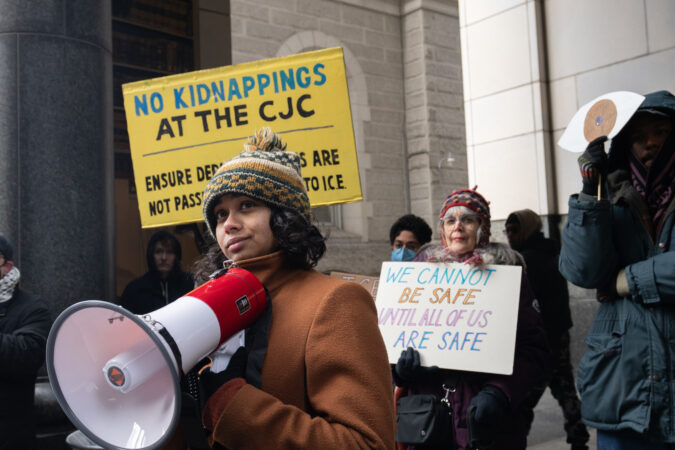
    Meanwhile, the presence of ICE in and around the Criminal Justice Center has provoked demonstrations and controversy, with activists charging that the sheriff has allowed ICE to turn the property into a “hunting ground” for immigrants.

    U.S. Immigration and Customs Enforcement officials did not reply to a request for comment on Thursday.

    The group No ICE Philly has castigated the sheriff, saying that by not barring ICE — as judges and lawmakers in some other jurisdictions have done — she has helped enable the arrest of 114 immigrants who were trailed from the courthouse and arrested on the sidewalk.

    That group and others say ICE agents have been allowed to essentially hang out at the Center City courthouse, waiting in the lobby or scouring the hallways, then making arrests outside.

    Many people who go to the courthouse are not criminal defendants ― they are witnesses, victims, family members, and others in diversionary programs. But they have been targeted and arrested by ICE, immigration attorneys and government officials say, causing witnesses and victims to stay away from court and damaging the administration of justice in Philadelphia.

    Aniqa Raihan, a No ICE Philly organizer who has helped lead courthouse protests, said she was not encouraged by the First Judicial District’s statement.

    “We already know that Sheriff Bilal is not doing all she can to protect people at the courthouse,” she said Thursday. “However, the First Judicial District is not powerless. The court can make its own policy, like the court in Chicago did, barring civil arrests on and around the courthouse. … What we’re seeing is a lot of blame-shifting and finger-pointing from our leaders at a time when we desperately need teamwork.”

    The issue around ICE access is complicated by the fact that courthouses are public buildings, generally open to everyone. And sidewalks outside the buildings are generally considered public property.

    Last week the sheriff garnered national headlines ― and condemnation ― for calling ICE “fake, wannabe law enforcement” and for sending a blunt warning to agency officers.

    “If any [ICE agents] want to come in this city and commit a crime, you will not be able to hide,” Bilal said in viral remarks. “You don’t want this smoke, ’cause we will bring it to you. … The criminal in the White House would not be able to keep you from going to jail.”

    On Wednesday, at the news conference at the Salt and Light Church in Southwest Philadelphia, Bilal said her office follows the law and would obey judicial orders and legislative statutes around courthouse security.

    District Attorney Larry Krasner ― whose office led the event, and who reiterated his pledge to prosecute ICE agents who commit crimes ― said victims and witnesses are not showing up for cases due to fear of ICE.

    About half a dozen elected officials and community leaders gathered, with some calling for ICE to get out of Philadelphia.

    They asked for the court system to establish rules and protections for immigrants seeking to attend proceedings at the Criminal Justice Center, and for state court administrators to meet with the district attorney, the sheriff, the chief public defender, City Council members, and others.

    Krasner said Thursday that his office and the other parties “look forward to meeting with the leadership of the courts to discuss lawfully regulating ICE activity in and around the Criminal Justice Center. We will be corresponding with the courts to schedule monthly meetings immediately.”

    At the same time, “we will continue to do all we can to prioritize safety and justice for victims, witnesses, and families who are navigating the criminal justice system,” he said. “Unlawful and unnecessary ICE activity in and around the CJC is deeply traumatizing to those who are already navigating pain and unfortunate circumstances.”

  • David Lynch called Philadelphia one of ‘the sickest, most corrupt, fear-ridden’ cities. That’s what makes it Lynchian.

    David Lynch called Philadelphia one of ‘the sickest, most corrupt, fear-ridden’ cities. That’s what makes it Lynchian.

    When filmmaker David Lynch moved to Philadelphia in 1965 to attend the erstwhile Pennsylvania Academy of the Fine Arts, he was instantly moved by the city. Though not exactly charmed.

    The city’s crime, corruption, and urban blight impressed themselves on the young artist’s mind and lent to his uncanny vision combining the sinister and the absurd. The Twin Peaks creator, however, only spent a short time living in the city.

    By 1970, he had decamped to Los Angeles to study at the American Film Institute and work on his first feature, the cult classic Eraserhead.

    But Lynch’s relatively abridged tenure as a Philadelphian has had an outsized impact. Consider him the Terrell Owens of Philly weirdo transplant artists.

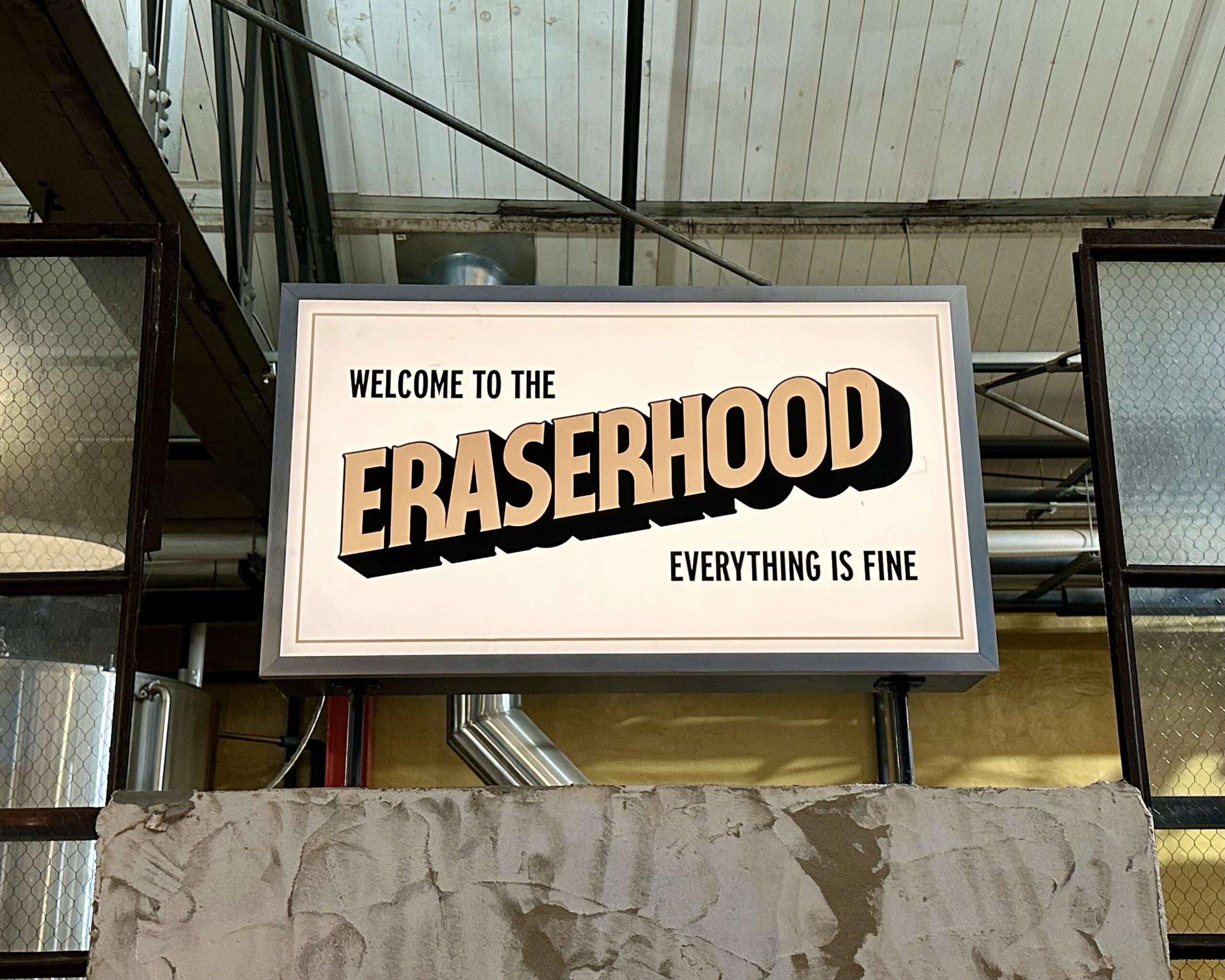
    A sign at Callowhill’s Love City Brewery nods to David Lynch’s film “Eraserhead.”

    In the year since his passing, retrospectives of his films have dominated programming at Philadelphia rep cinemas and art houses, Callowhill (where Lynch used to live and work) got a makeover as “Eraserhood,” and the neighborhood’s Love City Brewing’s hazy “Eraserhood IPA” grew in popularity.

    Now, a new podcast is digging deeper into Lynch’s influence on Philadelphia, exploring the extent to which the city impressed itself upon his life and work — from PAFA to Hollywood to the soapy subterfuges of the Twin Peaks universe.

    Launched Jan. 15 (the first anniversary of the filmmaker’s passing), Song of Lynchadelphia explores, in the words of host Julien Suaudeau, “the encounter of the 1950s American innocence with a place where the dream had already, and very concretely, turned into a nightmare.”

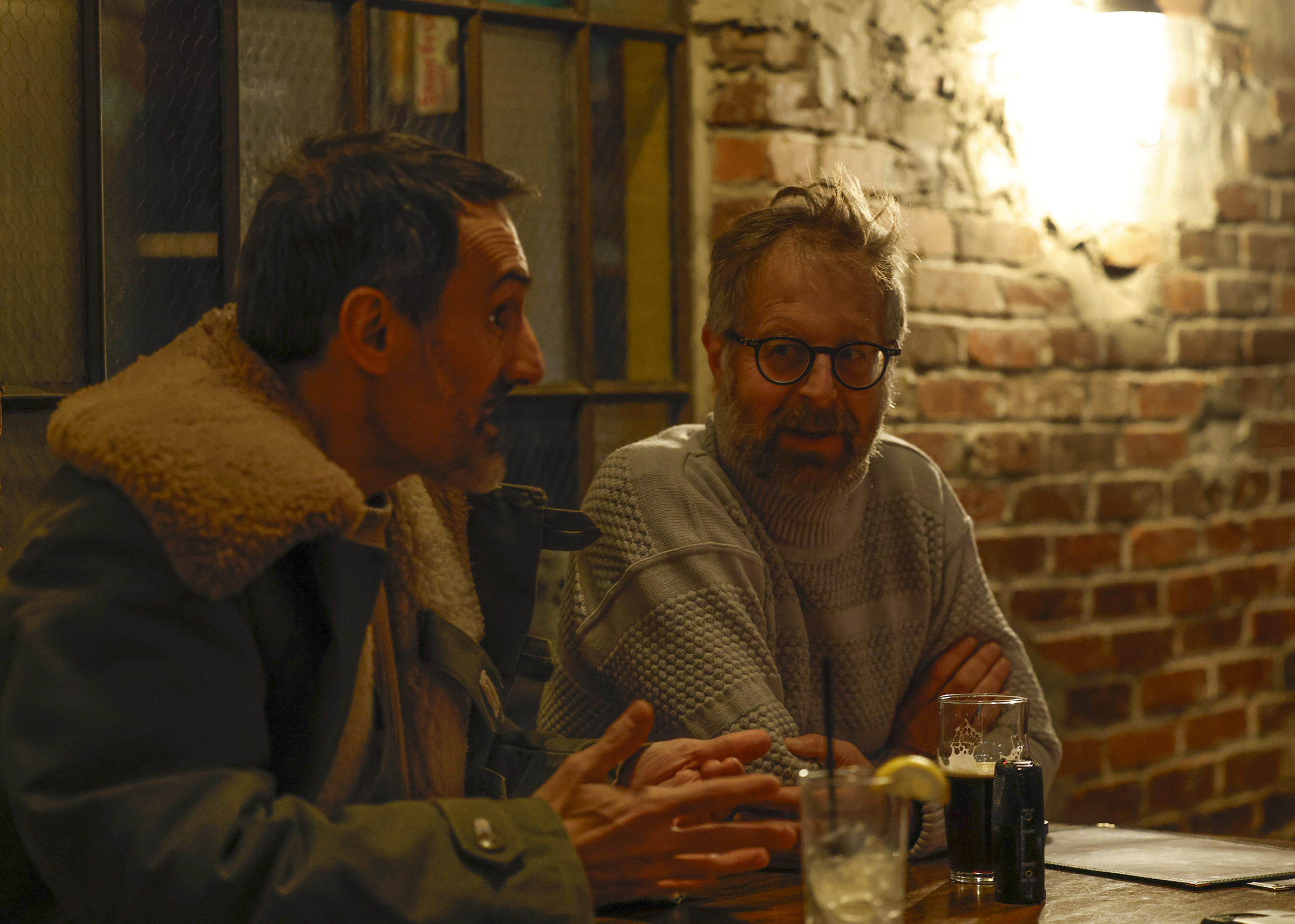
    Hidden City supervising producer Nathaniel Popkin (right) and Julien Suaudeau discuss their podcast investigating how David Lynch invented a “cinematic language of fear and strangeness in Philadelphia” on Monday, December 15, 2025.

    For Suaudeau, a writer and scholar who teaches film at Bryn Mawr College, Philadelphia served as a creative catalyst for Lynch. Many great cities inspire, whether in their beauty, their scale, or deep history. Philadelphia, which Lynch called “one of the sickest, most corrupt, decadent, fear-ridden cities that exists.” The filmmaker was enamored with its crime and filth in the mid-1960s.

    “He was traumatized by Philly,” Suaudeau said, over drinks at Love City Brewing. “And he turned that trauma into art, something both beautiful and strange.”

    A Parisian native who moved to the region to teach, Suaudeau felt drawn to Philadelphia, and to Lynch, early in life. As an adolescent living in France, he responded to the anxious, hysterical, at-times deeply disturbing depiction of teenage life offered by Twin Peaks.

    At the same time, he fell in love with the ‘70s Philly Soul sound, and admired (then) 76er Charles Barkley. (Suaudeau played power forward in high school and, like Barkley, was also considered undersized.)

    “I didn’t know about Lynch’s foundational years in Philly,” he said, “but that convergence feels so meaningful to me today.”

    Song of Lynchadelphia grows out of Song of Philadelphia, a podcast produced by the local public history project Hidden City, which curates the “Eraserhood Tours” in Callowhill.

    Audience members watch “Eraserhead” by David Lynch at the Film Society Center, in Philadelphia, Oct. 5, 2025.

    The new series explores the city’s secret stories through a distinctly warped Lynchian lens.

    The first episode looks into Lynch’s rather despairing comments on the Philadelphia of his artistic adolescence, a place of “insanity” possessed by a “beautiful mood.” Through interviews with local fans, historians, and Lynch’s collaborators (including production designer Jack Fisk, one of Lynch’s longtime collaborators and a PAFA classmate), archival clips, and distinctly Lynchian soundscapes, Suaudeau guides the listener through Lynch’s relationship with the city.

    “We’re always interested in origins, especially among creative people,” said author and Hidden City cofounder Nathaniel Popkin, who serves as Song of Lynchadelphia’s supervising producer. “There is a darkness that is particularly important [in Philadelphia]. It was a place imagined to have brought light in the 18th century. And it got dark, real fast.”

    A historian interviewed in the series’ first episode cites deindustrialization, white flight, racism, rioting, and rising crime as sources of that creeping darkness.

    This curdling of the so-called American dream, so key to Lynch’s filmography, also defines Philadelphia in the period of the director’s artistic awakening. Popkin notes Lynch was living in Philly around the same time as Ira Einhorn, the rabble-rousing environmental activist who was arrested after his former girlfriend’s remains were found decomposing in a suitcase in his closet.

    In this Jan. 9, 2017, file photo, filmmaker David Lynch attends the “Twin Peaks” panel at the Showtime portion of the 2017 Winter Television Critics Association press tour in Pasadena, Calif. (Photo by Richard Shotwell/Invision/AP, File)

    Einhorn would claim he was set up by the CIA, because he knew too much about their top secret paranormal mind-control experiments, a defense that could be ripped from a Twin Peaks episode.

    This very “Philly” feeling of weirdness and unease, Suaudeau said, permeates Lynch’s work, well beyond the early shorts he made here.

    A character in Twin Peaks calling a cadaver a “smiling bag” dates back to a late-night tour a young Lynch took of a Philadelphia morgue. Visions of soot-covered buildings reveal themselves, decades later, in a particularly nightmarish encounter in Mulholland Drive. Laura Dern’s hard-drinking, no-nonsense character Dianne in The Return lives in Philly and, as Suaudeau puts it, “is the kind of person you would meet in a Philadelphia bar.”

    In Twin Peaks, Suaudeau believes that Lynch reveals the city as a kind of dreamscape. In the series and accompanying 1992 feature film, Lynch casts himself as a good-natured (and doornail-deaf) FBI director, operating out of the bureau’s Philadelphia offices.

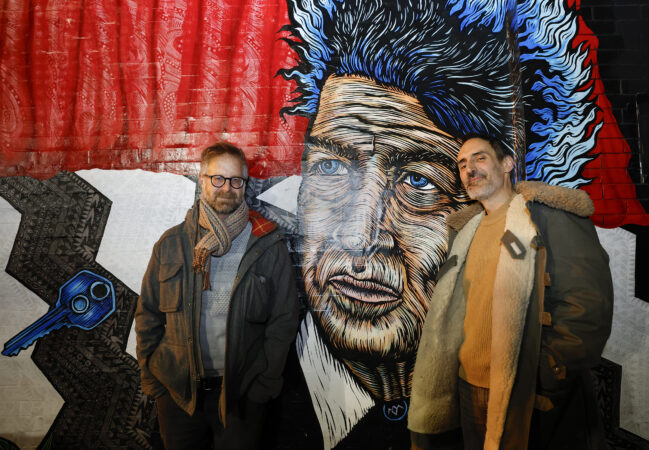
    Julien Suaudeau (left) takes a selfie with Hidden City supervising producer Nathaniel Popkin at the David Lynch mural outside of Love City Brewing on Monday, December 15, 2025.

    “Philadelphia is the head space of the director,” Suaudeau said. “It’s the room to dream.”

    The idea of Philadelphia as a great American city, once shining like a beacon-on-the-hill, that had gone to seed by the time of Lynch’s arrival, is itself Lynchian, as a metropolis perched on the porous boundary between dream and nightmare.

    “He’s interested in crawling beneath the veneer, beneath the surface,” Suaudeau said. “It’s a mood, it’s an atmosphere, it’s an aura in his work.”

    “Song of Lynchadelphia” launched Jan. 15. “Dreams & Nightmares: A David Lynch Marathon,” an eight-hour Lynch marathon will take place in Phoenixville’s Colonial Theatre on Jan. 18, 11 a.m., thecolonialtheatre.com. A screening of “Eraserhead” followed by a talk-back with Julien Suaudeau is Feb. 21 at the Bryn Mawr Film Institute, 824 W. Lancaster Ave., Bryn Mawr. brynmawrfilm.org