As soon as De’Andre Hunter had dropped his bags at the Cleveland Cavaliers’ hotel in Philly on Tuesday, he headed to Dalessandro’s Steaks.
“That’s mandatory any time I’m here,” Hunter said of visiting the local cheesesteak giant.
Spoken like a true Philly native. And one who, because of unfortunate scheduling around an in-season trade, never played in his hometown in 2024-25.
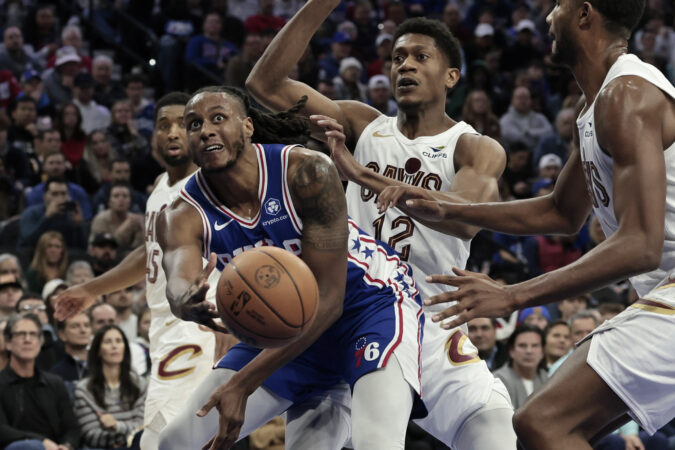
Hunter relished finally being back in front of family and friends inside Xfinity Mobile Arena Wednesday night. That “love in the air,” he said, powered his 17 points, four rebounds and four assists off the bench in the Cavaliers’ 133-107 thrashing of the 76ers. The performance also helped rebalance shooting struggles that have hindered Hunter’s first full season with Cleveland.
“When he plays like that,” Cavaliers coach Kenny Atkinson said of Hunter’s outing, “we’re tough to beat.”
Entering Wednesday, Hunter was shooting a career-worst 30.3% from three-point range, while his percentage from the floor (42.5%) was the lowest since his rookie year. Those dips somewhat mirror the disappointment so far surrounding the 23-19 Cavaliers. They were expected to be a Finals contender after boasting the Eastern Conference’s best regular-season record last season, but exited Wednesday as the seventh seed (a half-game behind the fifth-seeded Sixers, who are 22-17).
When the Cavaliers acquired Hunter, a Friends’ Central School graduate, from the Atlanta Hawks at last February’s trade deadline, they envisioned him as the final player needed to make a championship push. The 28-year-old wing possessed the 6-foot-7, 220-pound frame to guard multiple positions, and was thriving as an off-ball, catch-and-shoot offensive player.
Hunter’s initial transition was described in March by Atkinson as “seamless” and “as quickly as I’ve seen anybody acclimate.” As a key reserve, Hunter averaged 14.3 points on 48.5% shooting from the floor — and an eye-popping 42.6% from beyond the arc — in 27 regular-season games with the NBA’s most efficient offense, while adding 4.2 rebounds and 1.3 assists.
After Cleveland fizzled in a second-round playoff loss to the Indiana Pacers, however, Atkinson said he looked forward to getting to know Hunter better during offseason visits. Today, the coach says he has learned even more while Hunter has faced personal adversity through the regular season’s first half.
“It’s like your kid, right?” Atkinson said before Wednesday’s game. “One that’s struggling a little or things aren’t going perfect, you probably spend more time with him.”
Through those conversations, Atkinson said, Hunter has reiterated he cares most about winning. After Cleveland’s home loss to the Utah Jazz on Monday — which was part of a 2-for-10 shooting slump from Hunter — the coach said he needed to do a better job of putting Hunter in his comfort zone on the floor. And Atkinson appreciates that the struggles have not sent Hunter “into a shell” or affected the rest of the Cavaliers’ locker room.
“It’s been the opposite with him,” Atkinson said. “His body of work speaks for itself. He’s done it for a long time in this league, and it’ll come back.”
Hunter, meanwhile, has leaned into his work habits. To try to regain rhythm, he recently completed individual workouts that were deliberately intense — “despite how your body’s feeling” — and simulated game-like scenarios.
“Keep doing what I know how to do,” he said. “I’ve been shooting for years.”
It took multiple bounces on the rim for Hunter’s first three-point make to fall through the net Wednesday. But then he scored in the lane, and splashed another deep shot. Though a three-point try at the first-quarter buzzer rimmed out, he let the ball fly again just before halftime to give Cleveland a 60-47 advantage.
Hunter then helped cool the Sixers’ rally attempt in the third quarter, when twice he got free in transition for a layup and one-handed dunk. Shortly after hitting a turnaround jumper early in the final period, Hunter got to enjoy the rest of the night from the bench as the Cavaliers finished off a dominant victory.
“His aggression was the biggest thing,” star guard Donovan Mitchell said of Hunter’s impact after the game. “ … That’s the ‘Dre that we all know, and it’s great to see. He puts the time in. He puts the work in.
“So the biggest thing now is just keep going. Keep doing it. We believe in him.”
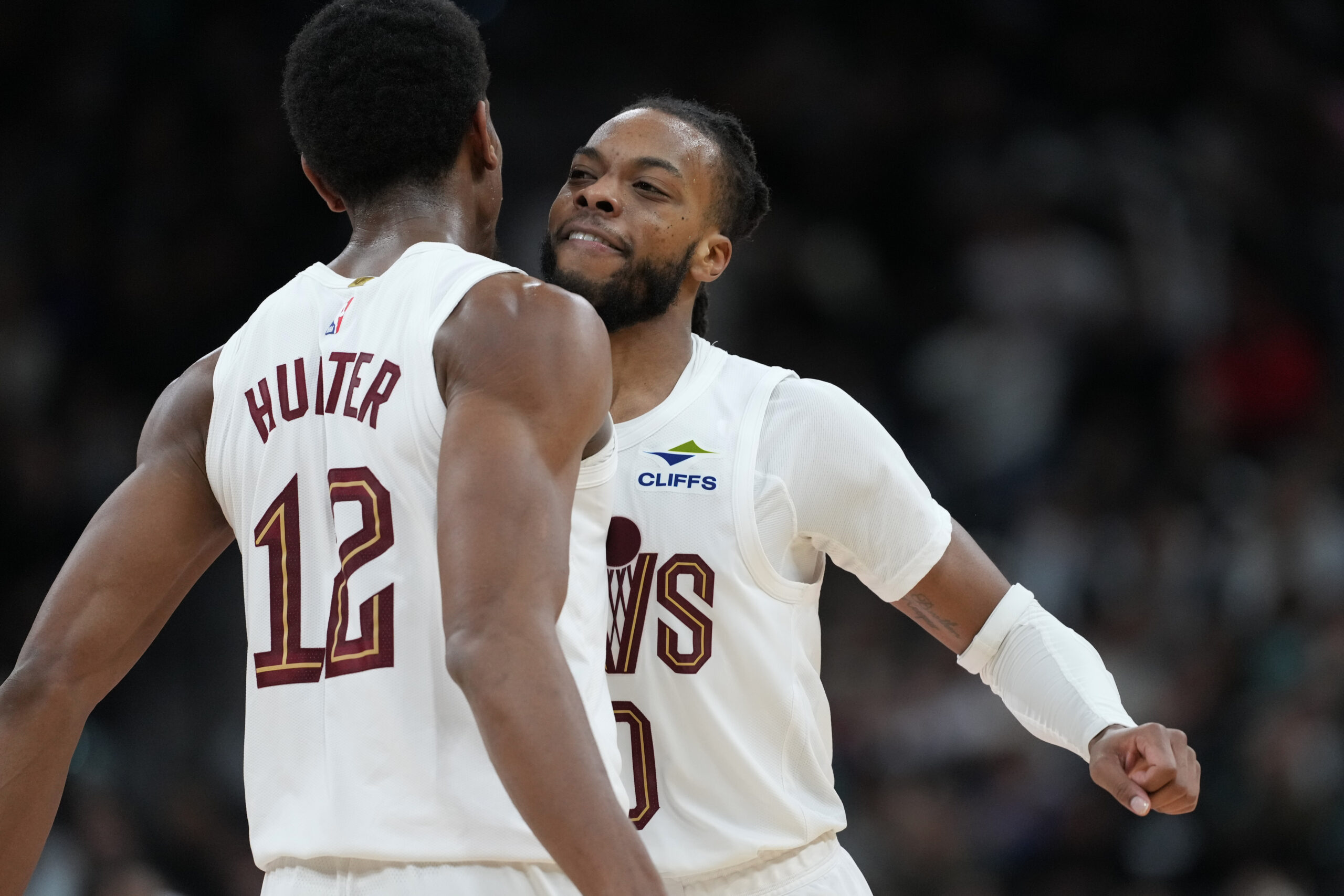
De’Andre Hunter (left) has struggled from the field to start his season, shooting a career-worst 30.3% from three-point range.
The Cavaliers and Sixers will square off again Friday, giving Hunter a longer-than-usual regular-season visit to Philly. That means there is time for another Dalessandro’s trip.
Then, he gets the opportunity to finally generate some on-court consistency in his first full season with the Cavaliers — while again playing in front of family and friends.
“That’s something I’m working on, and something I’m looking to do,” he said. “… What they expect from me, just providing that every night.”
Let’s be clear: The primary reason to be vaccinated against shingles is that two shots provide at least 90% protection against a painful, blistering disease that a third of Americans will suffer in their lifetimes, one that can cause lingering nerve pain and other nasty long-term consequences.
The most important reason for older adults to be vaccinated against the respiratory infection RSV is that their risk of being hospitalized with it declines by almost 70% in the year they get the shot, and by nearly 60% over two years.
And the main reason to roll up a sleeve for an annual flu shot is that when people do get infected, it also reliably reduces the severity of illness, though its effectiveness varies by how well scientists have predicted which strain of influenza shows up.
But other reasons for older people to be vaccinated are emerging. They are known, in doctorspeak, as off-target benefits, meaning that the shots do good things beyond preventing the diseases they were designed to avert.
The list of off-target benefits is lengthening as “the research has accumulated and accelerated over the last 10 years,” said William Schaffner, an infectious disease specialist at Vanderbilt University Medical Center in Nashville, Tenn.
Some of these protections have been established by years of data; others are the subjects of more recent research, and the payoff is not yet as clear. The first RSV vaccines, for example, became available only in 2023.
Still, the findings “are really very consistent,” said Stefania Maggi, a geriatrician and senior fellow at the Institute of Neuroscience at the National Research Council in Padua, Italy.
She is the lead author of a recent meta-analysis, published in the British journal Age and Ageing, that found reduced risks of dementia after vaccination for an array of diseases. Given those “downstream effects,” she said, vaccines “are key tools to promote healthy aging and prevent physical and cognitive decline.”
Yet too many older adults, whose weakening immune systems and high rates of chronic illness put them at higher risk of infectious diseases, have not taken advantage of vaccination.
The Centers for Disease Control and Prevention reported last week that about 31% of older adults had not yet received a flu shot. Only about 41% of adults 75 and older had ever been vaccinated against RSV, or respiratory syncytial virus, and about a third of seniors had received the most recent COVID-19 vaccine.
The CDC recommends the one-and-done pneumococcal vaccine for adults 50 and older. An analysis in the American Journal of Preventive Medicine, however, estimated that from 2022, when new guidelines were issued, through 2024, only about 12% of those 67 to 74 received it, and about 8% of those 75 and older.
The strongest evidence for off-target benefits, dating back 25 years, shows reduced cardiovascular risk following flu shots.
Moreover, many of these studies predate the more potent flu vaccines now recommended for older adults.
Could the RSV vaccine, protective against another respiratory illness, have similar cardiovascular effects? A recent large Danish study of older adults found a nearly 10% decline in cardiorespiratory hospitalizations — involving the heart and lungs — among the vaccinated versus a control group, a significant decrease.
Lowered rates of cardiovascular hospitalizations and stroke did not reach statistical significance, however. That may reflect a short follow-up period or inadequate diagnostic testing, cautioned Helen Chu, an infectious disease specialist at the University of Washington and co-author of an accompanying editorial in JAMA.
“I don’t think RSV behaves differently from flu,” Chu said. “It’s just too early to have the information for RSV, but I think it will show the same effect, maybe even more so.”
Vaccination against still another dangerous respiratory disease, COVID, has been linked to a lower risk of developing long COVID, with its damaging effects on physical and mental health.
Probably the most provocative findings concern vaccination against shingles, aka herpes zoster. Researchers made headlines last year when they documented an association between shingles vaccination and lower rates of dementia — even with the less effective vaccine that has since been replaced by Shingrix, approved in 2017.
Nearly all studies of off-target benefits are observational, because scientists cannot ethically withhold a safe, effective vaccine from a control group whose members could then become infected with the disease.
That means such studies are subject to “healthy volunteer bias,” because vaccinated patients may also practice other healthy habits, differentiating them from those not vaccinated.
Although researchers try to control for a variety of potentially confounding differences, from age and sex to health and education, “we can only say there’s a strong association, not a cause and effect,” Maggi said.
But Stanford researchers seized on a natural experiment in Wales in 2013, when the first shingles vaccine, Zostavax, became available to older people who had not yet turned 80. Anyone who had was ineligible.
Over seven years, dementia rates in participants who had been eligible for vaccination declined by 20% — even though only half had actually received the vaccine — compared with those who narrowly missed the cutoff.
“There are no reasons people born one week before were different from those born a few days later,” Maggi said. Studies in Australia and the United States have also found reductions in the odds of dementia following shingles shots.
In fact, in the meta-analysis Maggi and her team published, several other childhood and adult vaccinations appeared to have such effects. “We now know that many infections are associated with the onset of dementia, both Alzheimer’s and vascular,” she said.
In 21 studies involving more than 104 million participants in Europe, Asia, and North America, vaccination against shingles was associated with a 24% reduction in the risk of developing dementia. Flu vaccination was linked to a 13% reduction. Those vaccinated against pneumococcal disease had a 36% reduction in Alzheimer’s risk.
The Tdap vaccine against tetanus, diphtheria, and pertussis (whooping cough) is recommended for adults every 10 years, with vaccination among older adults often prompted by the birth of a grandchild, who cannot be fully vaccinated for months. It was associated with a one-third decline in dementia.
What causes such vaccine bonuses? Most hypotheses focus on the inflammation that arises when the immune system mobilizes to fight off an infection. “You have damage to the surrounding environment” in the body, “and that takes time to calm down,” Chu said.
The effects of inflammation can far outlast the initial illness. It may allow other infections to take hold, or cause heart attacks and strokes when clots form in narrowed blood vessels. “If you prevent the infection, you prevent this other damage,” Chu said.
Hospitalization itself, during which older patients can become deconditioned or develop delirium, is a risk factor for dementia, among other health problems. Vaccines that reduce hospitalization might therefore delay or ward off cognitive decline.
Health officials in the Trump administration have assailed childhood vaccines more than adult ones, but their vocal opposition may be contributing to inadequate vaccination among older Americans, too.
Many will not only miss out on the emerging off-target benefits but will remain vulnerable to the diseases the vaccines prevent or diminish.
“The current national policy on vaccination is at best uncertain, and in instances appears anti-vaccine,” said Schaffner, a former member of the CDC’s Advisory Committee on Immunization Practices. “All of us in public health are very, very distressed.”
“The New Old Age” is produced through a partnership with The New York Times.
KFF Health News is a national newsroom that produces in-depth journalism about health issues and is one of the core operating programs at KFF — the independent source for health policy research, polling, and journalism.
Television characters who experience cardiac arrest outside a hospital are more likely to receive CPR than people in real life. But the CPR on these shows often depicts outdated practices and inaccuracies about who is most likely to experience cardiac arrest and where, according to newly published research from my team at the University of Pittsburgh.
During the CPR training we held at Pittsburgh area middle schools and college athletic programs, participants frequently asked whether they should check for a pulse or give rescue breaths. Many mentioned seeing CPR on television shows like “Grey’s Anatomy.” While these are steps that medical professionals do when giving traditional CPR, hands-only CPR is an effective version recommended for untrained bystanders. After determining the person needs help and the scene is safe, hands-only CPR has just two steps: Calling 911 and giving hard and fast chest compressions.
As someone who researches how medical topics on screen influence viewers, this piqued my curiosity. I wondered whether participants asked about checking a pulse or giving breaths in part because they saw these practices on screen.
However, we hadn’t found any studies examining how seeing CPR on screen influences viewers. While previous studies on in-hospital cardiac arrest and CPR found inaccuracies with chest compression technique and survival rates in media, none had looked at portrayals of cardiac arrest that occur outside of hospitals and CPR conducted by a lay rescuer.
Performing CPR on TV
My team searched the internet Movie Database to identify episodes in American TV shows that depict out-of-hospital cardiac arrest or hands-only CPR. We limited our results to episodes released after 2008 — the year the American Heart Association first endorsed hands-only CPR. Of the 169 episodes that fit our criteria, we documented the sociodemographic characteristics of the character experiencing cardiac arrest and the primary witnesses, as well as whether, how, and where hands-only CPR was administered.
On a positive note, we found that over 58% of on-screen characters who experienced cardiac arrest outside a hospital had a layperson perform CPR. But in real life, fewer than 40% of people who suffer cardiac arrest outside a hospital receive CPR. Seeing such high rates of CPR being performed on screen could motivate viewers to act, as in the case of a 12-year-old boy who saved a life in 2023 using the CPR techniques he saw on “Stranger Things.”
However, fewer than 30% of episodes showed hands-only CPR being performed correctly. Almost 50% of episodes showed characters giving rescue breaths, and 43% of episodes had characters checking for a pulse. While we didn’t directly assess whether these episodes influence how viewers behave, based on our observations while conducting CPR training, it’s clear that these depictions may mislead viewers about how to administer hands-only CPR.
Who gets CPR and where on screen
Our findings also raise concern that how cardiac arrest is depicted on TV may mislead viewers about where cardiac emergencies happen and who may need CPR the most.
Of the on-screen cardiac arrests that didn’t occur at a hospital, we found that only 20% happened at home. In real life, over 80% of nonhospital-based cardiac arrests occur at home.
Additionally, those experiencing cardiac arrest on screen were younger than those in real life, with over 50% of characters under age 40. In real life, the average age is about 62.
Lastly, we found that almost 65% of the people receiving hands-only CPR and 73% of rescuers performing CPR were white and male. This is consistent with real-world statistics, where people of color and women who experience cardiac arrest outside the hospital are less likely to receive CPR from a layperson.
Accurate TV to save lives
The American Heart Association’s 2025 guidelines for CPR and emergency cardiovascular care emphasized the need to help the general public envision themselves performing hands-only CPR and improve CPR education to ensure all people who need CPR receive it.
Our team is working to understand what viewers take away from TV depictions of CPR, with the goal of collaborating with public health and medical professionals to improve how CPR is portrayed in Hollywood.
Previous research has shown that entertainment narratives have the power to inspire altruistic behavior, and news reports have documented instances of people who perform CPR after seeing it on screen. Similarly, I believe scripted, compelling television may be a powerful, cost-effective way to improve CPR education and ultimately save lives.
Beth Hoffman is an assistant professor of behavioral and community health sciences at the University of Pittsburgh.
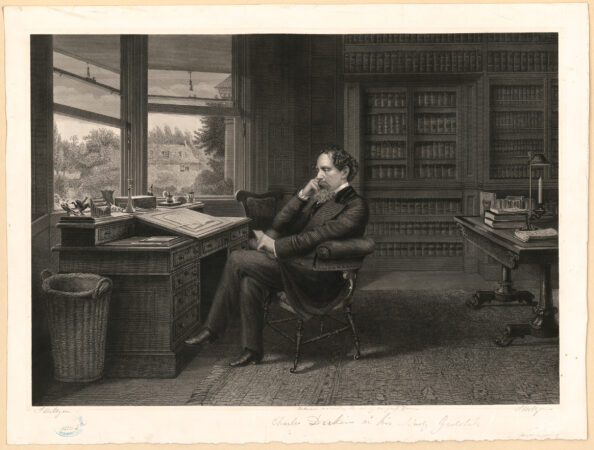
CharlesDickens, a few weeks away from his 56th birthday, arrived near midnight in Philadelphia on Jan. 12, 1868.
He would stay at the Continental Hotel, and most notably, would give readings at the Concert Hall on Chestnut Street to sold-out audiences.
His first visit here, in March 1842, Dickens had mixed feelings.
He was horrified of how prisoners were treated at the “solitary prison” Eastern State Penitentiary, but delighted at meeting Philly’s other literary hero, Edgar Allan Poe.
He also called Philly “distractingly regular” in his 1842 memoir, American Notes.
He also called the city “handsome,” and “What I saw of its society, I generally liked.”
In December 1843, he would publish his most seminal work, A Christmas Carol, in England. Philadelphia publisher Carey & Hart would publish the first notable U.S. edition of the story, which could help explain why the city fell in love with the author and his penchant for highlighting working-class and underdog characters.
Dickens’ second visit was most notable for his readings from A Christmas Carol and his first novel The Pickwick Papers to “unbounded enthusiasm and loud applause,” according to an Inquirer report from the time.
“The rude and boisterous mob which, with flaunting banners, tossing hats and loud cries, follows the horse of some victorious general,” The Inquirer wrote.
Dickens died in 1870, at age 58. And while the whole world mourned his death, the city he so enraptured would take it a step further.
In 1905, Philadelphia became the first city to build a statue of him, despite explicit wishes written into Dickens’ will against the honor.
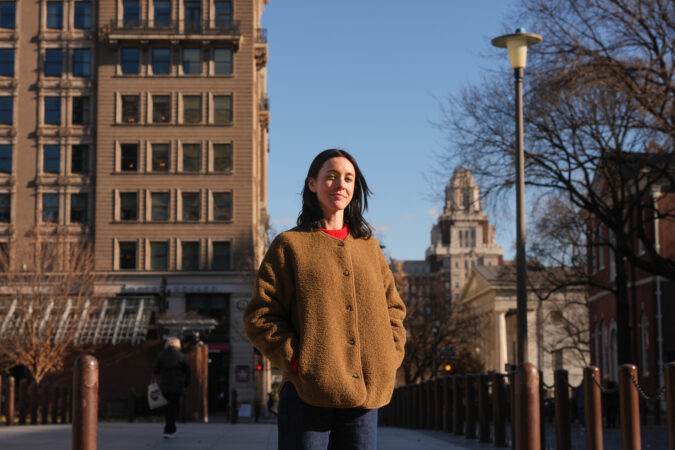
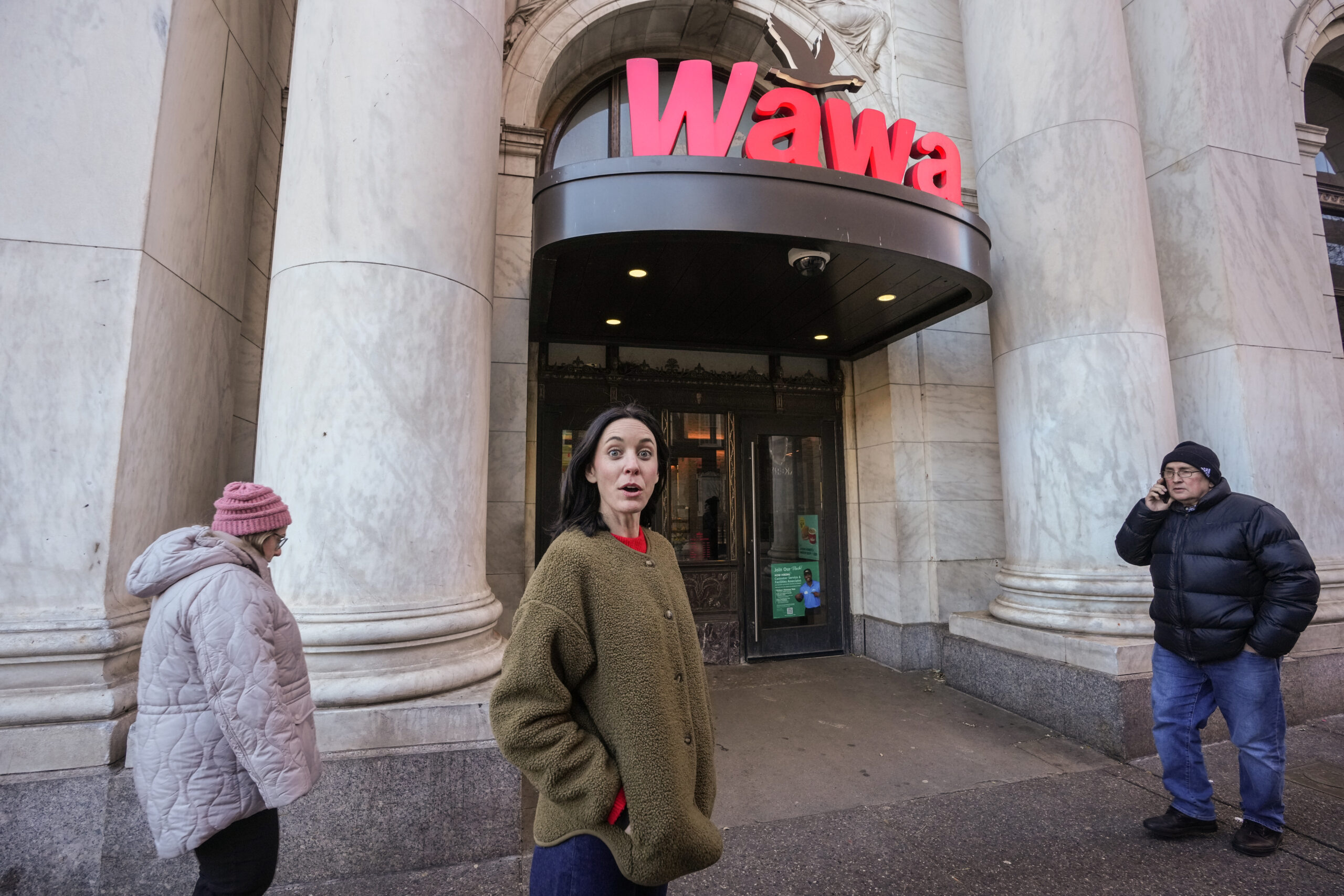
Of all the things Betsy Kenney thought she might go viral for, whispering about Wawa wasn’t one of them. But the 38-year-old comedian’s Philly “ASMR” videos have taken off on TikTok and Instagram, turning Kenney — who spent more than a decade pursuing a comedy career in New York City — into an unlikely local celebrity.
If you aren’t familiar with ASMR, which stands for Autonomous Sensory Meridian Response, it’s a relaxing sensation triggered by soft sounds or repetitive patterns. People watch ASMR videos of soft tapping, scratching, whispering, or crinkling to unwind. A video of someone getting a scalp massage? Pure bliss. A video of someone with a strong Philly accent asking if you know their cousin while scraping a spoonful of Rita’s water ice? Less so. And therein lies the joke. “People find the Philly accent to be like nails on a chalkboard,” Kenney said. “And I thought it would be funny to combine the two.” The contrast clicked immediately.
Kenney’s videos have racked up millions of views, circulating through group chats and comment sections thick with recognition and debate. They’ve drawn fans far beyond the region and even earned an endorsement from Kylie Kelce, who rated Kenney’s Philly accent an 11. For Kenney, the sudden attention has been somewhat surreal, considering it only arrived after she stopped chasing it.
Betsy Kenney, the woman behind Philly ASMR, in Philadelphia, December 11, 2025.
For years, she had been grinding through the familiar comedy circuit in New York. She took improv classes at the Upright Citizens Brigade, acted in commercials to stay afloat, and wrote constantly. “I really wanted to do comedy as a living,” Kenney said. “And it turns out it’s really hard.” There were moments of traction. Kenney and her writing partner had a short film debut at the Tribeca Film Festival. They created a web series that was acquired by IFC. They hosted a podcast that found a sizable audience. “That was big,” she said. But none of it added up to stability. Then came COVID, two babies, and a move to Kenney’s hometown of Philadelphia, a return that quietly reshaped how she worked.
Back home, the pressure shifted. Kenney was no longer measuring every idea against an imagined career outcome. She was tired, busy, and short on time, and that looseness made room for something new. In September, she posted her first TikTok: an impression of “Phillies Karen,” aka the lady who stole a baseball from a kid at a Phillies game. It went viral. Before that, she said, she’d always been too self-conscious to post comedy online. Now, with less to prove and less time to overthink, she kept going.
She began posting whenever inspiration struck. Ideas surfaced in the slivers of time she had to herself, like in her car after school drop-off, or before pickup. Some of her best brainstorming happens in the shower, which is why her hair is often still wet in her videos. “I’m not trying to do a soaking wet Kim K thing,” Kenney said. “It’s literally the only time I have.” (Kenney is a full-time parent.)
A few days after “Phillies Karen” took off, she posted her first Philly ASMR video. Then came her impression of Ms. Rachel if she were from Philly. She tried non-Philly bits, too, but they didn’t land the same way. Viewers were clearly responding to the specificity of her hometown voice.
Betsy Kenney, the woman behind Philly ASMR, in Philadelphia, December 11, 2025.
Kenney isn’t the only creator to build a fan base on the back of the Philly accent. There’s also Olivia Herman, whose no-nonsense impression of a Philly mom has attracted over 200,000 followers and a brand deal with Burlington Coat Factory. But where Herman leans into parody, Kenney aims for recognition. The humor doesn’t come from exaggerating the accent, but from treating it as ordinary. That’s no small task considering how difficult the Philly accent is to fake. “It has one of the most complex vowel systems of American English dialects,” said Betsy Sneller, a professor of linguistics at Michigan State University, which makes it difficult to imitate if you didn’t grow up with it.
Kenney did. She was born and raised in Northeast Philadelphia by two parents from the area. “Philly is all I knew,” she said. Sneller said that familiarity is evident in Kenney’s use of Philly-specific phrasing — “it’s so expensive anymore,” “youse” — and regional slang and cultural references like Mom-moms, bo-bos, and the Roosevelt Mall. “There’s such an identifiable feeling of place,” Sneller said. “It feels so specific.”
In fact, Kenney has found that the more specific she is, the more people connect with her work. In the comments section of a video where she asks which parish “Father John ended up at,” viewers pile on with recognition. “Wow, so we all had a Father John then, lol,” wrote one. “We all Father John in eastern PA,” wrote another. Even the Eagles chimed in: “My kinda ASMR.”
Now that she’s back in Philadelphia, the specific details her audience loves are easier to access. Kenney improvises most of her videos, following associations as they surface. So a trip to Franklin Mills might trigger a memory about a childhood birthday, which turns into a video about Stock’s pound cake. Her family is another steady source of material, especially her father, who works in a Philly courtroom as a stenographer and comes over every week with fresh stories. “If I ever need inspiration,” Kenney said, “there it is.”
Back home, surrounded by the people and places that fuel the work, Kenney isn’t in a hurry to turn her TikTok success into something bigger. She isn’t chasing the next step the way she once did in New York. “This is the first time in my comedy career that I’m just having fun,” she said. “And now that I’m back in Philly, and that’s what’s blowing up, I’m just really happy.”
At local colleges with major sports programs, some student athletes are now getting paychecks — from their athletic departments.
Pennsylvania State University, Temple, Villanova, St. Joseph’s, Drexel, and La Salle are among the Pennsylvania schools that have begun to directly pay athletes following a settlement last year in federal class-action lawsuits over student athlete compensation.
The move arguably ends college athletes’ status as amateurs and begins to address long-standing concerns that players haven’t fairly profited from the lucrative business of some college sports.
It also raises questions about how schools will fund the athletes’ pay and whether equity complaints will arise if all athletes are not comparably awarded. Some also question how it will impact sports that are not big revenue makers.
Locally, most colleges have been mum on how much they are paying athletes, and some have also declined to say which teams’ athletes are getting money through revenue sharing, citing competitive and student privacy concerns. Villanova, a basketball powerhouse that has 623 athletes across 24 sports, said it will provide money primarily to its men’s and women’s basketball teams.
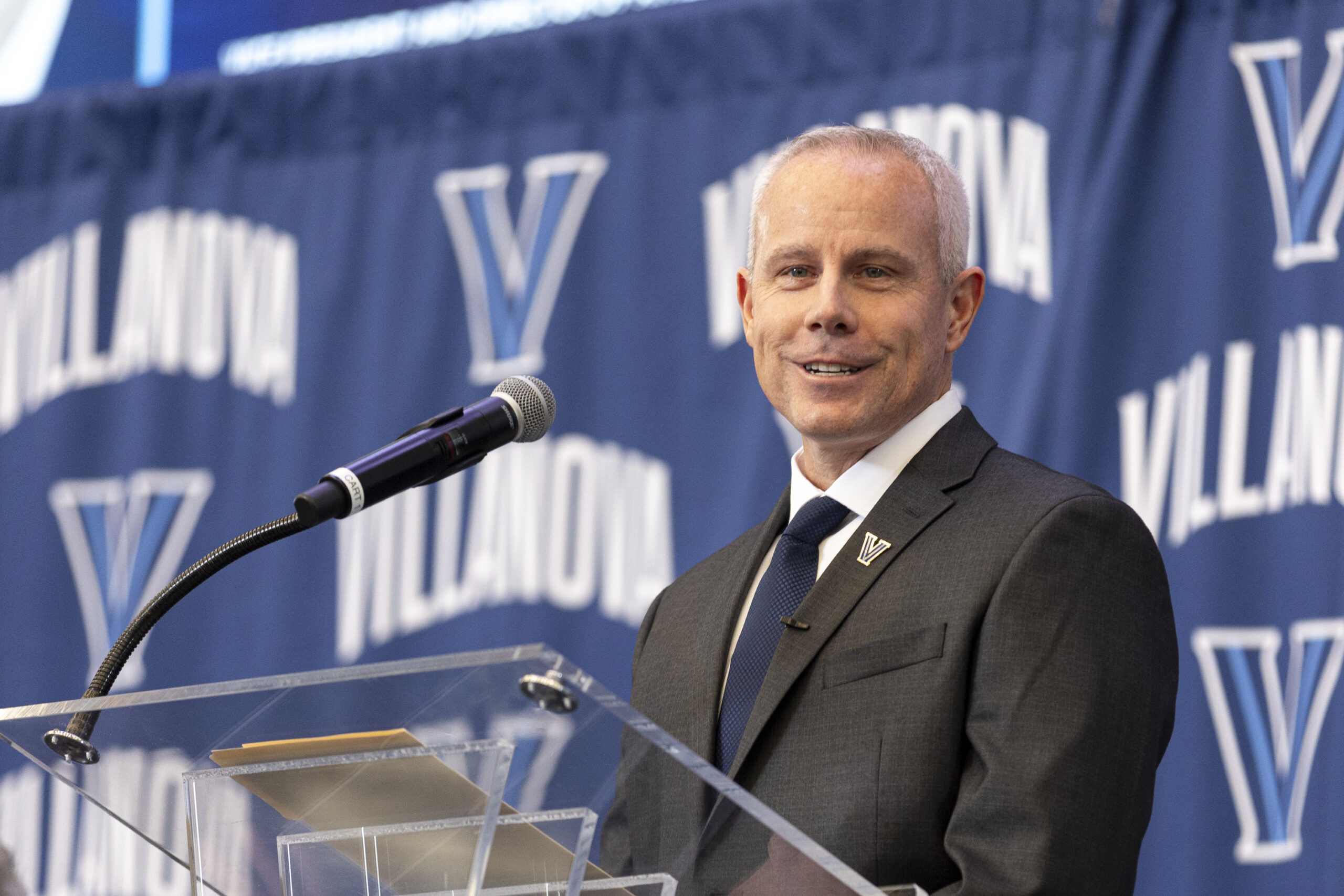
Erica Roedl, Villanova’s vice president and athletic director, speaks during a news conference at the school’s Finneran Pavilion in 2024.
“Our objective is to share revenue at levels which will keep our basketball rosters funded among the top schools in the Big East [Conference] and nationally,” Eric Roedl, Villanova’s vice president and director of athletics, said in a June message after the court settlement.
St. Joe’s, another basketball standout, said its arrangement is also with men’s and women’s basketball athletes, like its peers in the Atlantic 10 Conference.
Temple University established Competitive Excellence Funds that allow all of its 19 teams to raise money for revenue sharing, but declined to say which teams are currently distributing money to athletes.
“Donors could, if they wanted to, make sure their money went to a certain sport,” said Arthur Johnson, Temple’s vice president and director of athletics. “They have that ability.”
Other local colleges, including St. Joseph’s and Villanova, also launched funds to help raise money for revenue sharing. And all three schools also plan to use athletic revenue.
Under the revenue-sharing framework established by the court settlement, each college can pay its athletes up to a total of $20.5 million this academic year. Football powerhouse Penn State, which has about 800 athletes, has said it intends to reach the cap, according to a June 7 statement from athletic director Pat Kraft.
“This is a rapidly evolving environment that we are monitoring closely to ensure our approach remains consistent with applicable rules, while supporting the well-being and academic success of our student-athletes,” said Leah Beasley, Penn State’s deputy athletic director for strategic engagement and brand advancement.
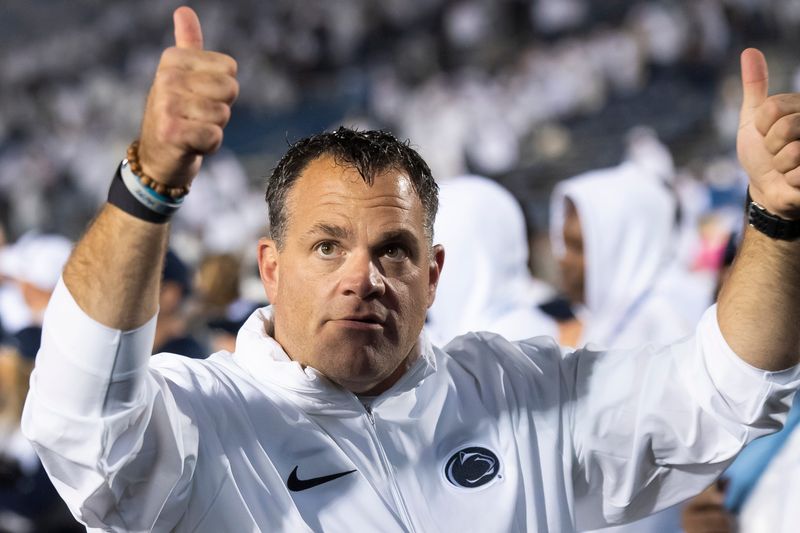
Penn State athletic director Pat Kraft gives two thumbs up to the student section following a 31-0 win in a football game against Iowa in 2023.
‘It’s a job’
To athletes, revenue sharing seems only fair, given many are so busy practicing and playing through summers and other breaks that they don’t have time to work.
“It is a job at the end of the day,” said former Villanova University basketball player Eric Dixon, who holds the Wildcats’ record as all-time leading scorer. “You put a lot of time into it every single day, every single week.”
Players get hurt and can see their sports careers harmed or halted, said Dixon, who grew up in Abington and played at Villanova from 2020 to 2025. College may be their only time to earn money for their sports prowess.
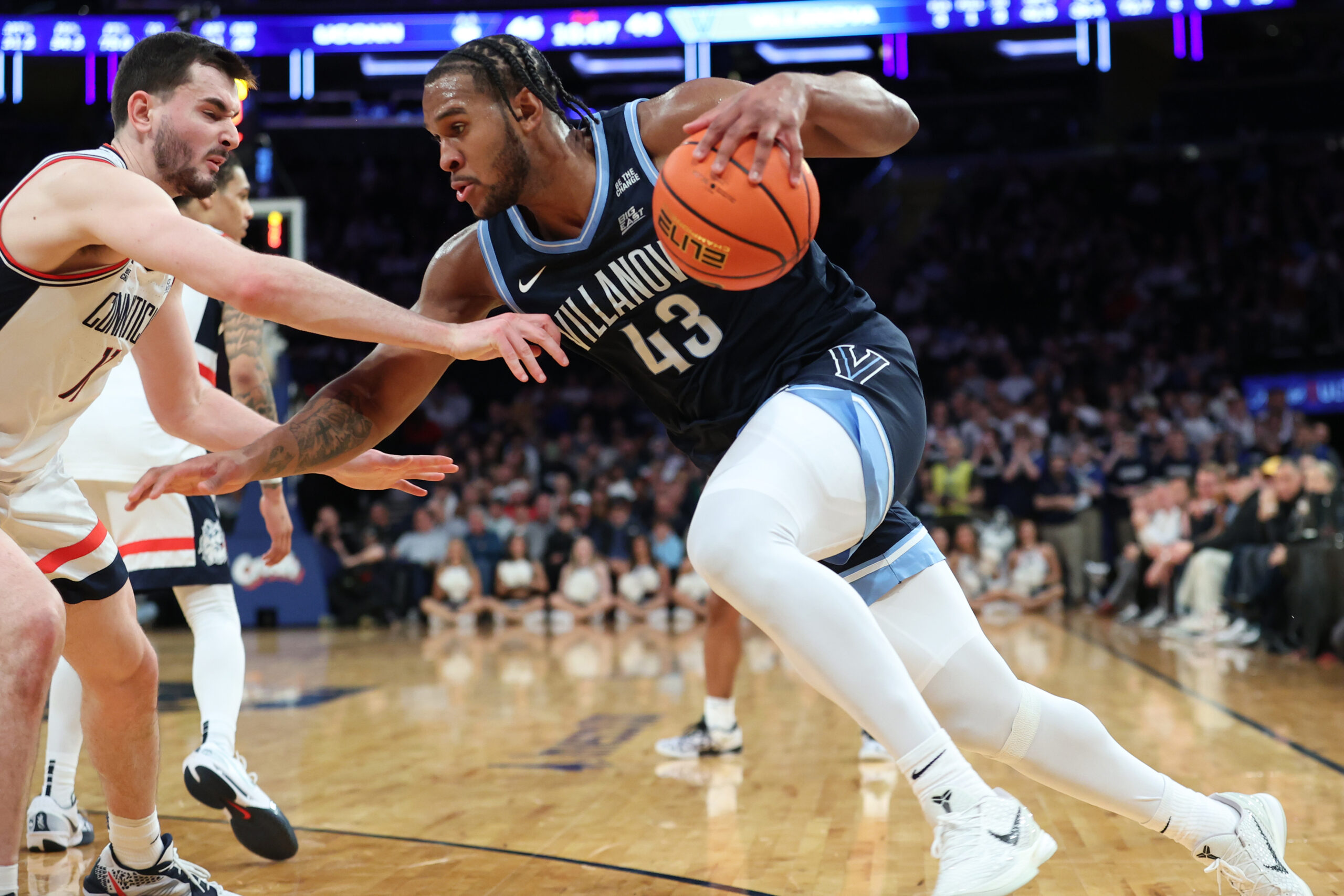
Villanova’s Eric Dixon drives against Alex Karaban of UConn during the 2025 Big East Tournament at Madison Square Garden in New York.
Dixon didn’tbenefit from revenue sharing. But he got money through external name, image, and likeness (NIL) endorsements and sponsorships that the NCAA began allowing in 2021. Dixon declined to specify how much he received, but said it was “seven figures” over four years and allowed him to help his family.
Like some other schools, Villanova, he said, provided players with financial guidance so they could make wise decisions on how to use their money.
External NIL arrangements, though, he said, were a little “like the Wild West.”(NIL compensation is allowed to continue under the lawsuit settlement, but deals of more than $600 have to be reported.) Revenue sharing from colleges will offer athletes more predictable income, said Dixon, who now plays for the Charlotte Hornets’ affiliated team in the G League.
Tyler Perkins, a Villanova junior from Virginia, currently plays for the Wildcats, who won national championships in 1985, 2016, and 2018. While he declined to say how much he is receiving, he said revenue sharing is helping him prepare for his future and “set up for the rest of my life.”
Maddy Siegrist, also a former Villanova basketball player who now plays for the Dallas Wings in the WNBA, is pleased universities are able to share revenue directly with athletes.
“It will be interesting to see how it all plays out,” said Siegrist, the Big East’s all-time leading scorer in women’s basketball and Villanova’s overall highest scorer, of men’s and women’s basketball.
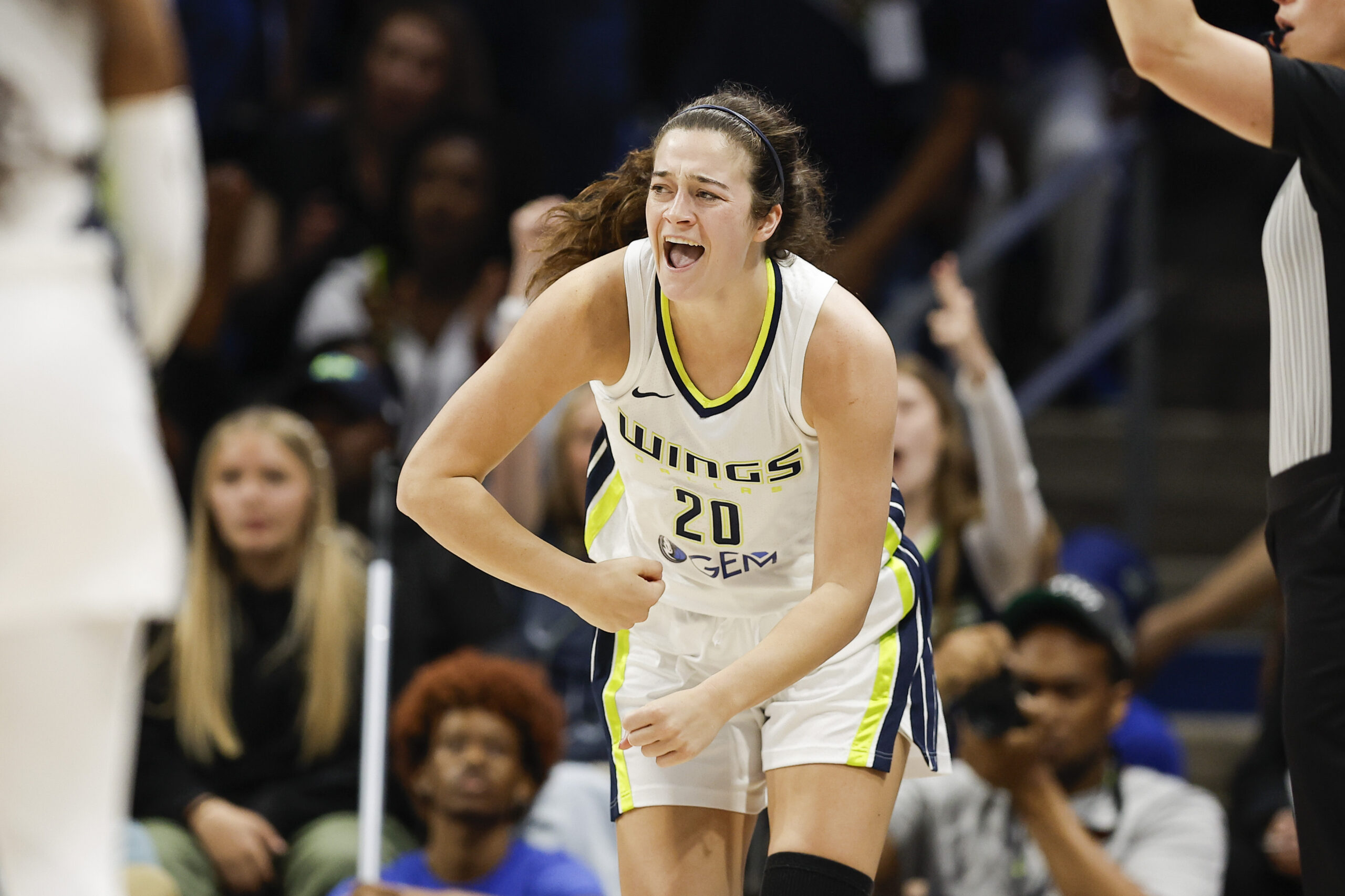
Dallas Wings forward Maddy Siegrist celebrates a three-point shot during a WNBA basketball game against the Chicago Sky in 2024 in Arlington, Texas.
While the big revenue sports are likely to see the money first, she said, “I would hope there will be a trickle-downeffect where almost every sport is able to benefit.“
A lawsuit spurs changes
For years, there have been growing concerns that athletes were not getting their fair share of the profits from college sports, which make money onbroadcast rights, ticket sales, and sponsorships. Meanwhile, coaches can be among the highest paid in a university’s budget.
In 2020, former Arizona State swimmer Grant House became the lead plaintiff in House vs. NCAA, a class-action antitrust lawsuit that argued athletes should be able to profit from the use of their name, likeness, and image and schools should not be barred from paying them directly.
The settlement approved in June of that suit and two others against the NCAA requires the NCAA and its major conferences to pay $2.8 billion in damages to current and former Division 1 athletes. Another provision gave rise to the revenue sharing.
It initially applied to the major sports conferences: the Big Ten, Atlantic Coast Conference, Southeastern Conference, and the Big 12. Penn State belongs to the Big Ten and the University of Pittsburgh to the Atlantic Coast.
But other athletic conferences, along with many of their members, decided to opt in to the agreement to remain competitive in select sports. St. Joseph’s, La Salle, Villanova, Drexel, and Temple all are part of conferences participating in revenue sharing with athletes this year.
“We support student-athletes’ ability to pursue value among their peers and to leverage commercial opportunities that may benefit them or the institution,” said Maisha Kelly, Drexel’s vice president and director of athletics and recreation.
Temple belongs to the American Athletic Conference, which said its members must agree to pay at least $10 million over three years to its athletes. Johnson, Temple’s athletic director, noted that total also includes new scholarships, not just pay.
No tuition, state dollars to be used
Pitt alumnus J. Byron Fleck has called on the Pennsylvania State Board of Higher Education to advise three state-related colleges — Penn State, Temple, and Pitt — not to use tuition dollars, student fees, or state appropriations to fund athlete payments.He also asked lawmakers to take action.
“It doesn’t relate to any educational or academic purpose,” said Fleck, a 1976 Pitt alumnus and lawyer in California.
Karen Weaver, an expert on college athletics, higher education leadership, and public policy, said the same concerns about public funds being used to pay athletes have risen in other states, including Michigan and Washington.
But Penn State, Temple, and Pitt all said in statements that they would not use tuition, student fees, or state appropriations to fund revenue sharing with athletes.
“Penn State Intercollegiate Athletics is a self-sustaining unit of the university,” said Beasley, Penn State’s deputy athletic director.
Pitt said it would use athletic revenues.
In addition to donations, Temple, too, is using athletic department revenues, such as ticket sales, but it is also looking at other “nontraditional ways” to raise money, Johnson said.
“We’re turning over every stone,” he said.
Weaver, an adjunct professor at the University of Pennsylvania, said she worries that as the caps on revenue sharing get higher and costs grow, schools, especially those tight for cash, may start raising recreation and other student fees. The University of Tennessee added a 10% student talent fee for season ticket renewals, according to the Associated Press, while Clemson is charging a $150 per semester student athletic fee, according to ESPN.
Roedl, the Villanova athletic director, said in a statement that it had launched the Villanova Athletics Strategic Excellence (VASE) Fund to raise money for the payments.
“Additionally, we are looking for other ways to maximize revenue through ticketing, sponsorships, and events, and identifying cost efficiencies throughout our department,” he said.
St. Joe’s, which has about 450 student athletes, said that it started a Basketball Excellence Fund to raise revenue and that payments also are funded by the basketball program. Athletes that receive funds “serve as brand ambassadors for the university,” the school said in a statement. “… These efforts have included community engagement — particularly with youth in the community — and marketing initiatives that directly support the Saint Joseph’s University brand.”
La Salle declined to say how much student athletes receive or in what proportion.
“We can share that any funds provided to students come from external sources and not tuition dollars,” said Greg Nayor, vice president for enrollment management and marketing.
Weaver, author of a forthcoming book, Understanding College Athletics: What Campus Leaders Need to Know About College Sports, said plans that call for the bulk of revenue sharing to go to football and basketball players would lead to legal action, charging that female athletes are not being treated equally.
“Any day now I expect we’ll see a huge Title IX lawsuit,” she said.
A punter is like someone’s breath — you likely only notice it if it stinks.
The Eagles have taken whiffs of poor punters in the past. Just a few years ago, one of the team’s biggest concerns entering the offseason was Arryn Siposs, who struggled in Super Bowl LVII with his botched punt in the fourth quarter that contributed to the Eagles’ loss.
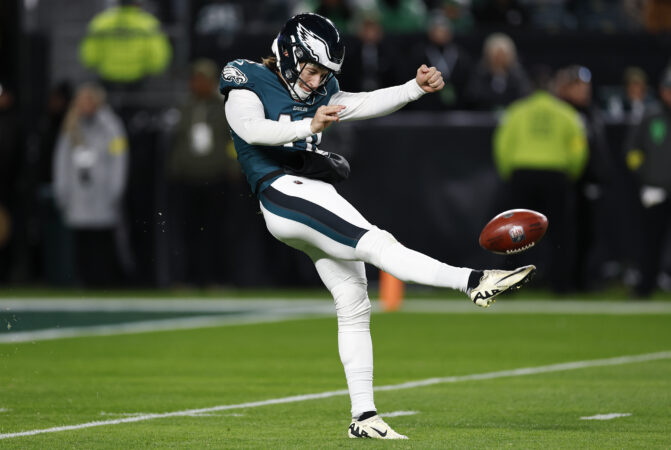
The Eagles don’t have to have that concern anymore. Siposs’ successor, Braden Mann, is fresh off his third season with the Eagles, from which he emerged as the most consistent of the team’s specialists. Mann registered a franchise-best 49.9 yards per punt in 2025 and has averaged 49.5 yards in his Eagles career, the best mark in team history.
Will he have a chance to continue that dominance? Mann, 28, is one of the team’s 19 pending unrestricted free agents. On Monday, even with the season’s demise still fresh, he wasn’t hiding his hopes for the future.
“I’ve loved my time in Philly, and hopefully that continues,” Mann said. “It’s just been a blast for me, personally, just kind of working my craft and seeing what happens. Excited to see any opportunities here or anything that comes.”
A Houston native, Mann said he has spent the last few offseasons living in Dallas, the hometown of his wife, Kylie. He prefers training in Dallas in the spring because of the windy conditions, which are standard in the Northeast during the football season.
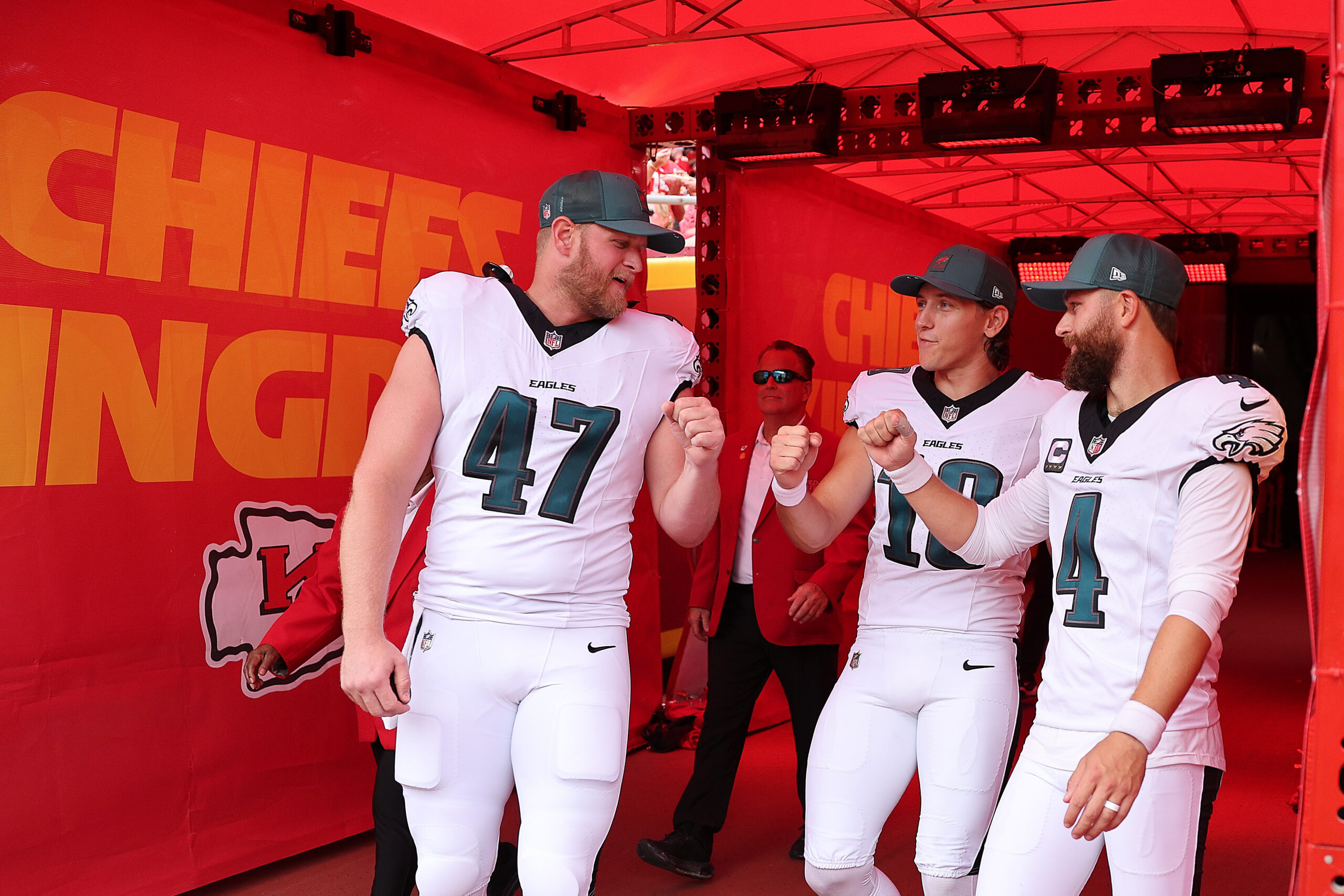
Braden Mann (center) said this year’s Eagles, including long snapper Charley Hughlett (left) and kicker Jake Elliott (right), were close-knit despite the way things ended.
The veteran punter noted that purposely practicing on bad-weather days in the offseason translated to better punts during the season, especially in Philly and on the road vs. Buffalo. Mann had to punt through it all — rain, wind, and snow.
“I worked really hard to try and improve on punting in less-than-ideal conditions, which obviously we had a lot of this year,” Mann said. “I used to go out on good-weather days, and now I purposely go out in the offseason on days where it’s raining or cold or windy. I think it’s really helped me, just being able to control the ball a bit better.”
Mann ranked sixth in the league this season in yards per punt, with his longest attempt hitting 70 yards in Week 2 against the Kansas City Chiefs. But just 27.8% of his punts were downed inside the opponent’s 20-yard line, below the league average of 39.3%.
That’s not all on Mann, but he noted that he wants to get better at some of those deeper punts this offseason.
“Going forward, just trying to improve on maybe some of the weird punts,” Mann said. “Like the ones where you get really close to the end zone or trying to get aggressive with pinning the other team deep and not getting too aggressive, I guess, is the best way of putting it.”
Mann has a special perspective, joining the Eagles during a trying 2023 season and reaching the pinnacle with a Super Bowl last year. After another early playoff exit, the punter acknowledged the team has the potential to rebound once more. He called the 2025 team “one of the closest groups I’ve been with” in his six-year NFL career, which began with the New York Jets.
“I think it’s just the time we spent,” Mann said. “I think everybody’s wanting to reach toward the end goal, but you’ve got to enjoy the days on the way there. Even last year, we went so long and it wasn’t so much the actual Super Bowl. It was the daily stuff to get there that made us so tight. So it was kind of similar this year. I think it’s a culture thing, which has been really good here.”
Once the dust settles on the season, Howie Roseman will determine whether Mann will continue to be a part of that culture for years to come.
Mac Mart, the mac-and-cheese cafe, has left its Rittenhouse storefront location of nearly a decade in favor of a kiosk three blocks away.
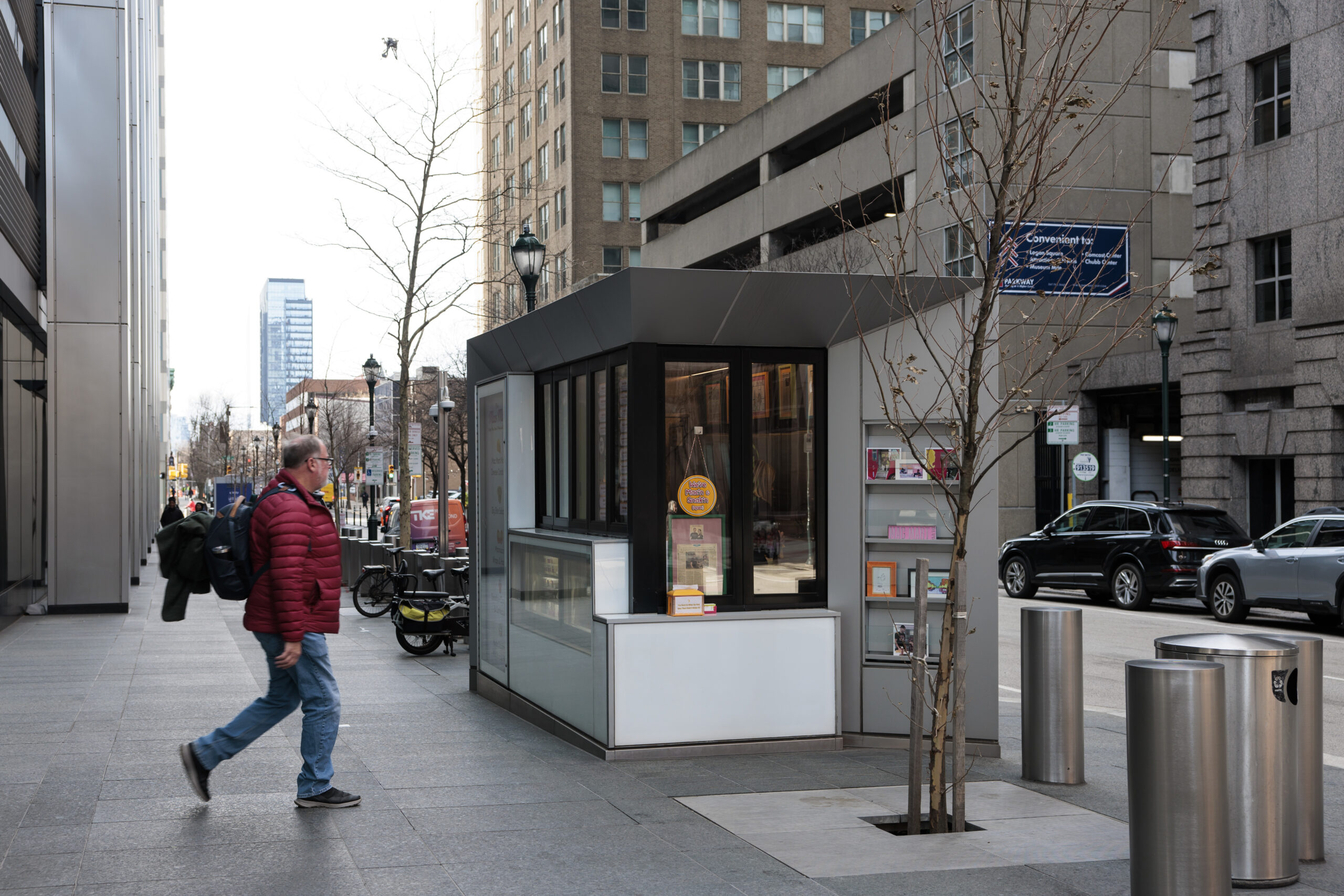
Mini Mac Mart — as sisters Marti Lieberman and Pam Lorden call their Center City stand — soft-opened Thursday at 18th and Arch Streets, outside the Comcast Technology Center and down the block from Biederman’s caviar kiosk.
Marti Lieberman (left) and Pam Lorden outside the Mini Mac Mart kiosk on Arch Street near 18th.
Although they’re working in a smaller space, Lieberman and Lorden have expanded their product line beyond their various mac-and-cheese bowls to include snacks and foods from local businesses, such as cinnamon milk buns from Huda, cupcakes and sweets from Sweet Box, fresh fruit lemonades from Dillonades, hoagies and wraps from Marinucci’s Deli, and salads from Big Bite Salad Co. (the sisters’ in-house brand). The lineup will vary depending on availability.
Lieberman, 36, launched Mac Mart in January 2013 as a food truck on the Drexel University campus, and Lorden, 39, joined her soon after. The store opened in May 2016 in a former shoe-repair shop on 18th Street near Chestnut; it closed last month.
Assorted refrigerated items are available at the Mini Mac Mart kiosk.
Lieberman said challenges on 18th Street forced them to rethink the storefront. Since the pandemic, she said, foot traffic and catering orders from offices had dropped. With fewer people on the street at night, she said, the business’ front door and window became a frequent target of vandals.
Besides, Lieberman acknowledged, “we’re very niche. People have to really want a one-pound bowl of mac and cheese, and that narrowed our audience.”
A BBQ Bacon Bowl and Mart’s Mac (plain) at the Mini Mac Mart kiosk.
In response, Lieberman and Lorden launched Munch Machines, a vending-machine operation that stocks with food from local small businesses.
The machines are located at Evo at Cira Centre South, an apartment complex near 29th and Chestnut Streets, and at Motto by Hilton in Rittenhouse.
“That model has continued to grow for us over the past 4½ years,” Lieberman said. “So when it came time to close Mac Mart, rebrand it, or pivot, we leaned into what we knew worked.”
Mini Mac Mart draws directly from that vending-machine approach, combining Mac Mart’s core product with a broader mix of ready-to-eat food in a kiosk that can be buttoned up tightly after hours. Customers can see items through the front window and order off the side window.
Mini Mac Mart kiosk near 18th and Arch Streets, as seen on Jan. 12, 2026.
Over the next year, Lieberman and Lorden plan to focus on refining the kiosk model while continuing catering, market pop-ups, and Munch Machines.
“If this small model works, which we’re confident it will, we could bring it into other small spaces — airports, amusement parks, college campuses,” Lieberman said. “This time, we know we don’t need 400 square feet or more. We can operate efficiently in a very small footprint and still serve a quality product.”
Mini Mac Mart, 18th and Arch Streets. Hours: 10 a.m. to 7 p.m. Monday to Friday.
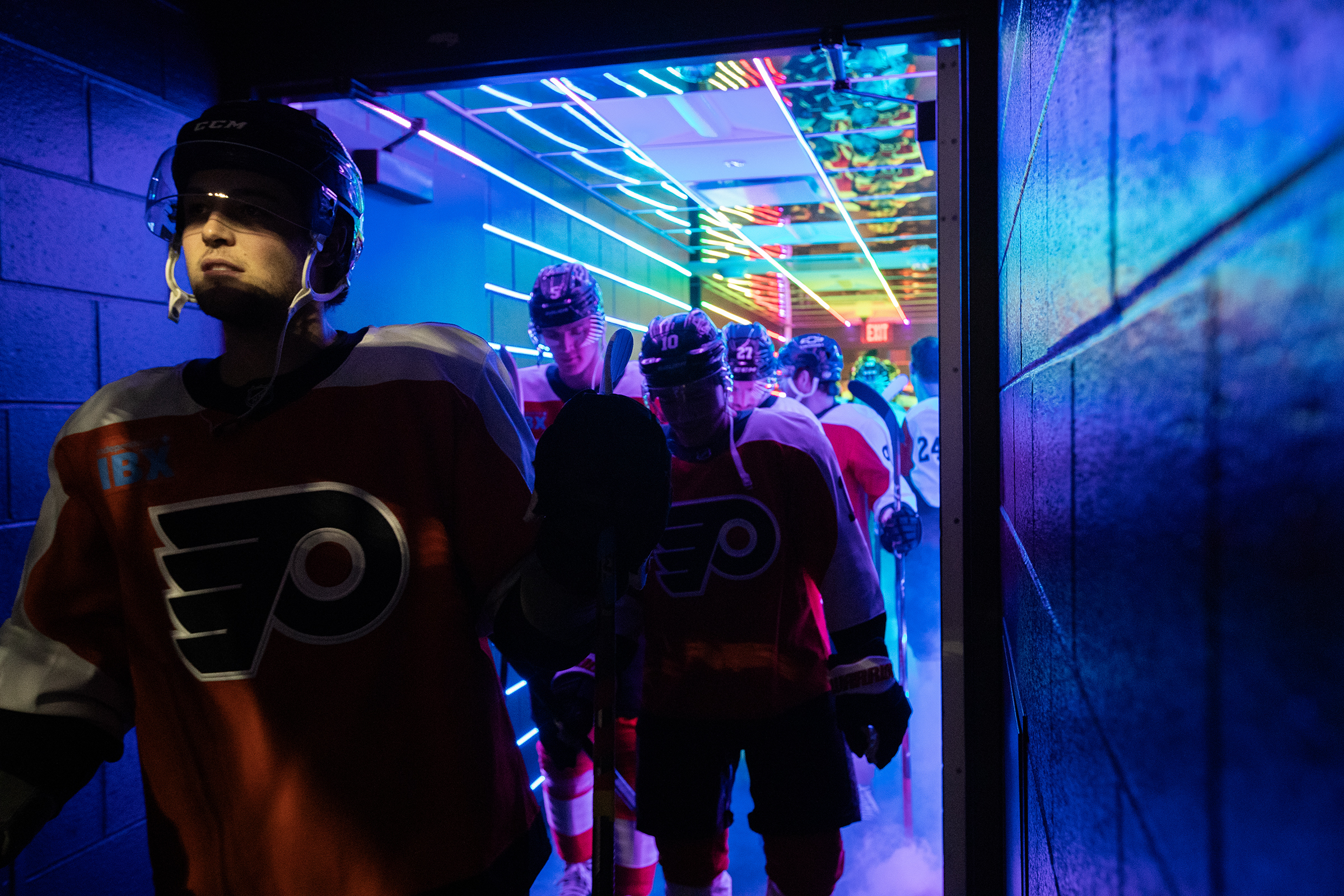
The biggest crowd pop at Xfinity Mobile Arena during Monday’s Pride Night was for Christian Dvorak’s breakaway goal, the Flyers’ only goal of the game.
But the second-biggest was for “All the Things She Said,” a song that, only two months ago, was just another early 2000s club hit — until Heated Rivalry turned it into a phenomenon.
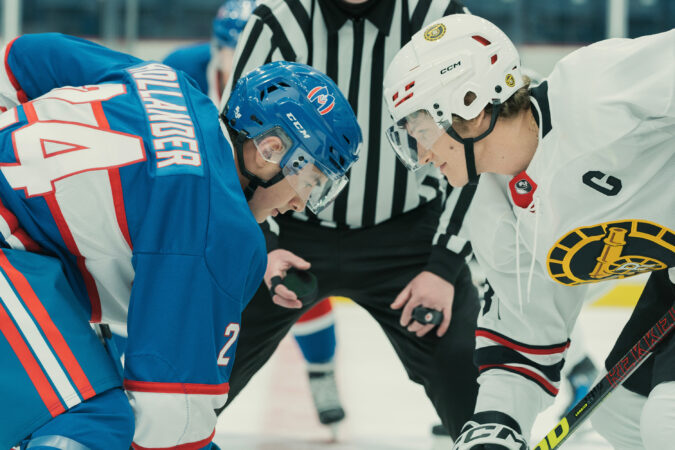
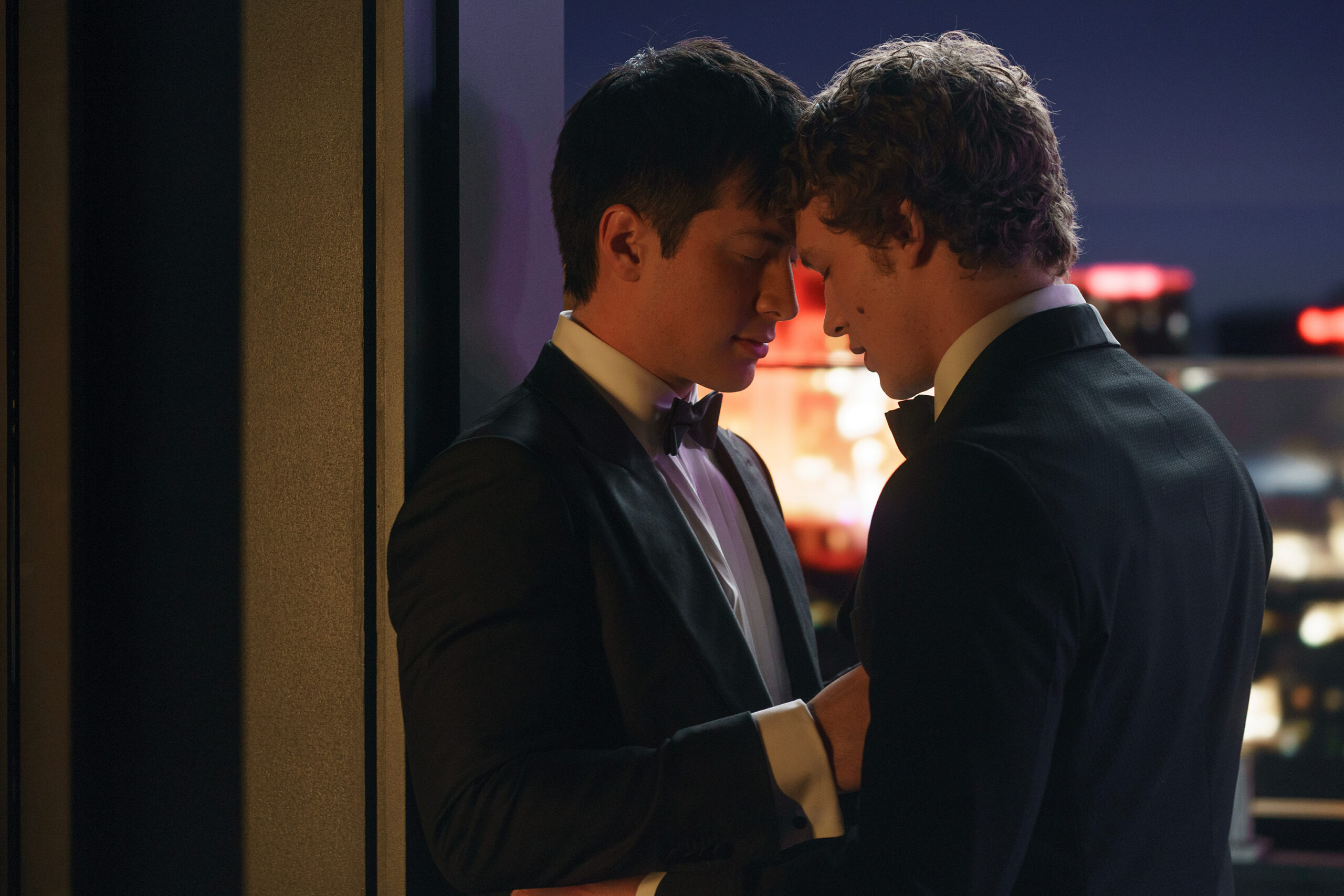
Heated Rivalry, the hit Crave original series that quickly became an international sensation during its six-episode run on HBO Max, is an adaptation of a novel by the same name, written by Rachel Reid. It’s the love story of two fictional hockey superstars, Canadian Shane Hollander and Russian Ilya Rozanov, who were the top two picks in the same draft.
The show has become one of HBO Max’s top series in the two months since its first episode aired, jumping from 30 million streaming minutes in its opening week to 324 million streaming minutes by its sixth. Casey Bloys, HBO Max’s CEO, described the show as a “word-of-mouth sensation” to the New York Times.
“There are so many ways to get hooked on hockey and, in the NHL’s 108-year history, this might be the most unique driver for creating new fans. See you all at the rink,” an NHL spokesperson said in a statement to the Hollywood Reporter.
A small cottage industry of hockey podcasts analyzing the show has emerged, with What Chaos! and Empty Netters earning hundreds of thousands of views on episodes about the show, including interviews with the cast and creators.
But has the show — which wouldn’t exactly win awards for an accurate on-ice depiction of the game — led to real growth in hockey fandom?
According to StubHub, it has. The ticketing site said last week that it saw a 40% increase in interest in hockey tickets during the show’s run and there’s no shortage of fans online who claim they found the game through Heated Rivalry, which has already been renewed for a second season.
The LGBTQ+ community has had a challenging relationship with the NHL over the last several years, following former Flyer Ivan Provorov’s decision to opt out of wearing a specialty jersey on Flyers’ Pride Night in 2023, which led to a brief ban on optional Pride tape and a ban on wearing any specialty jerseys on the ice.
The Flyers hosted their annual Pride Night on Monday.
But other former Flyers, like Scott Laughton, were extremely involved in Pride initiatives, something Philly natives Trish Grow and Autumn McCloskey, both lifelong Flyers fans, said helped them feel like the Flyers community was inclusive. The explosion of the show helped draw in more of their friends.
“I have people who would never come near a hockey rink texting me like, ‘You’ve watched this, right?’” Grow said. “I’m like, ‘Oh, honey, do you want to come to a game? You can see them do the stretches, but you’ve got to learn the rules.’”
One of their friends took them up on their offer, and, after reading the book and watching the show, attended his first-ever hockey game for Pride Night.
He wasn’t the only one. Dale Lyster, who is from Coatesville and came to the game wearing a Rozanov jersey, said he’d attended a few games over the years, but after hearing friends talk about Heated Rivalry on social media, he decided to tune in and quickly fell in love with the show — and then with hockey.
“I’ve always liked it, but I’ve never really been into it,” Lyster said. “Now, seeing more representation in the hockey world, it opened my eyes more.”
Newlyweds Kary and Kate Van Collins of Fairmount feel similarly. Their last hockey game was Flyers Pride Night a year ago, and Heated Rivalry renewed their interest in the sport. Kary made them custom Hollander and Rozanov sweatshirts to wear to the game.
“I am a queer, neurodivergent, half-Asian person, so I really saw myself in the character of Shane Hollander,” Kary said. “I think it’s just very needed right now, especially in the political climate, to have these positive stories surrounding queer love.”
Added Kate: “It’s also reassuring that queer people belong in sports. I think a lot of people in the community maybe don’t feel welcome in the sports scene, so maybe it’s a door that’s open so people feel more welcome.”
The show’s viral success has even caught its stars off guard. Connor Storrie, who plays Rozanov, said Tuesday on Late Night with Seth Meyers that one of the biggest surprises was the show’s reach, and how it hasn’t just been gay men who have enjoyed it.
“You think of male romance, you think it’s for gay men,” he told Meyers. “But there’s been all walks of life, predominantly women, who enjoy it.”
Groups are even popping up to help bring fans together. Shannon Herbst of Mount Laurel has loved hockey and been a Flyers season ticket-holder for years, so she knew Heated Rivalry would be right up her alley.
“There’s actually a group of us through Threads that got together that are from Philly and South Jersey, and there’s so many people on there that really want to get into hockey, specifically the Flyers, and really want to learn more about the game from the show,” Herbst said.
Hudson Williams (left) and Connor Storrie star as hockey players who fall in love in “Heated Rivalry.”
Heated Rivalry also has reached the world of professional athletes. Hudson Williams, who plays Hollander, told Andy Cohen on his radio show that multiple closeted athletes have reached out to him and to Reid since the show’s premiere to share how the show has impacted them. No NHL player has ever come out as gay, although NHL draft pick Luke Prokop, who came out in 2021, currently is playing in the American Hockey League with the Edmonton Oilers’ organization.
That might not change any time soon, but fans felt that the success of Heated Rivalry was a first step for improving inclusion in the sport for players and for fans.
“It’s definitely opened the door,” Herbst said. “Obviously, there’s still more work that needs to be done, but I think it really planted that seed and made more people comfortable with having that conversation within the NHL and the sport itself.”
The Eagles don’t just need an offensive coordinator. They need a quarterback whisperer.
They need Josh McCown. Or maybe Cam Turner.
Kevin Patullo wasn’t ready for the OC job in Philly, but then, Bill Walsh and Sid Gillman wouldn’t have won a Super Bowl the way Jalen Hurts played in 2025.
Hurts’ development has stalled. He might even be broken. He’s largely the same quarterback at the end of the 2025 season as he was at the end of 2022. Defenses know that, and they exploit it. As the offensive line deteriorated, and as Saquon Barkley and A.J. Brown started to show their age, more was asked of Hurts, who delivered ever less.
They need an offensive coordinator who can invigorate a veteran quarterback whose career is idling. Both McCown, a former Eagles backup quarterback, and Turner, who has the bluest of NFL bloodlines, have done just that.
Fire starters
The most compelling story of the 2024 season involved Sam Darnold, the No. 3 overall pick in the 2018 NFL Draft and a bust with the New York Jets, Carolina Panthers, and San Francisco 49ers, who made the Pro Bowl in his seventh season and led the Minnesota Vikings to a 14-3 record.
The most compelling story early in the 2025 season involved not only Darnold’s continued ascendance, now in Seattle, but also Daniel Jones. He was the No. 6 overall pick in 2019 but turned out to be such a bust with the New York Giants in his first six seasons that they released him.
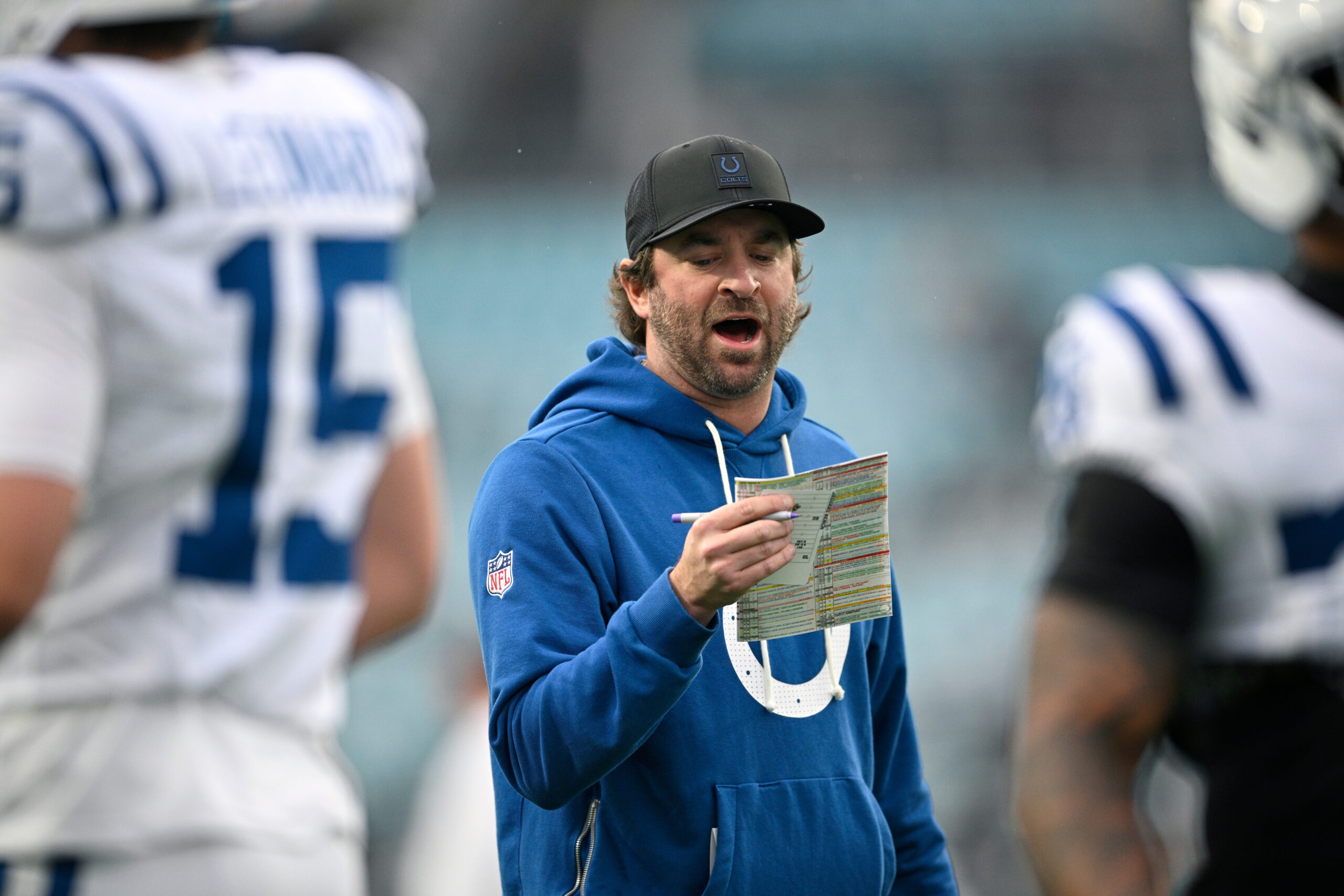
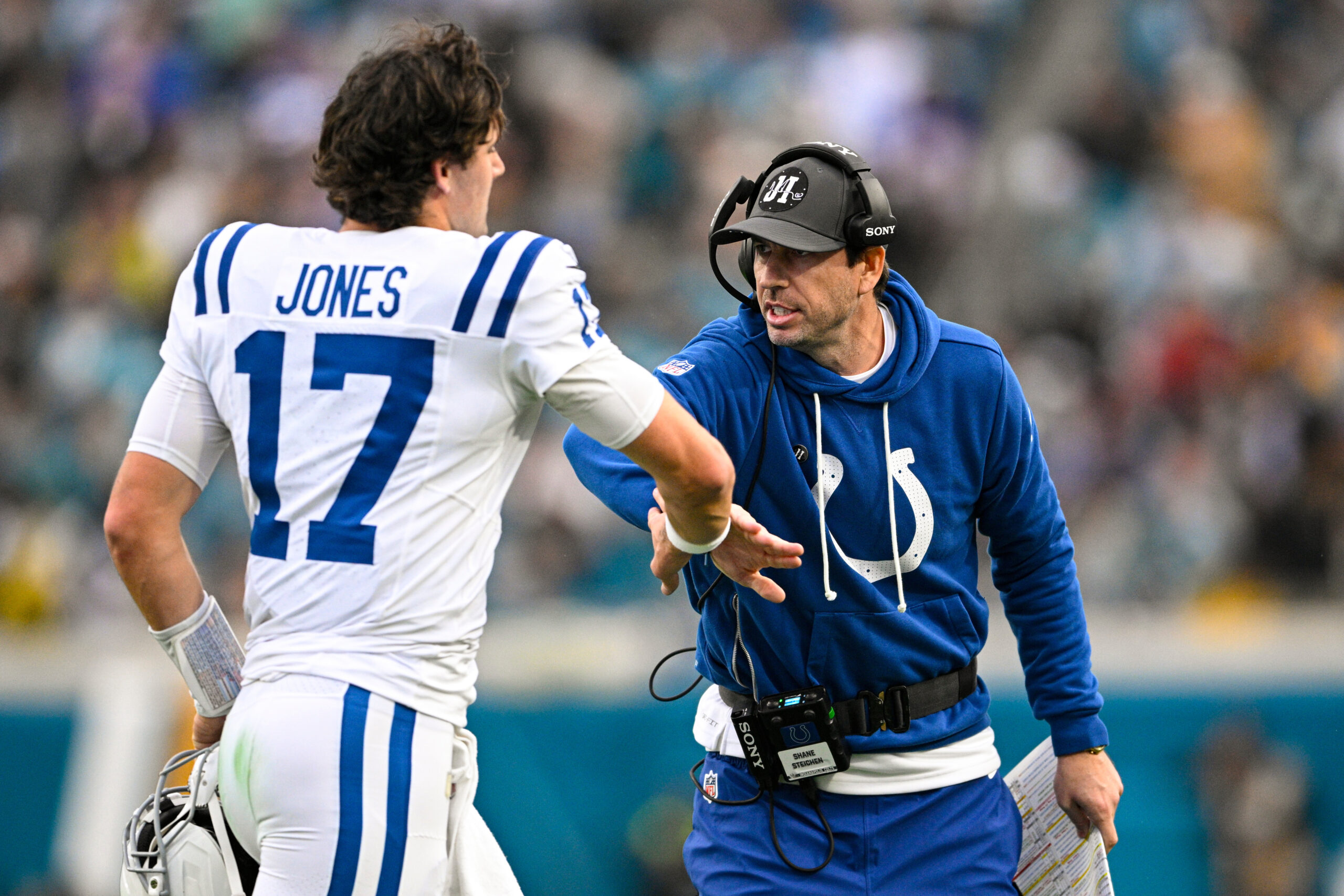
Jones signed with Indianapolis, where Turner, as quarterbacks coach, had been developing Anthony Richardson, the No. 4 overall pick in 2023, while helping veterans Joe Flacco and Gardner Minshew squeeze out a few more NFL starts. When given an established talent like Jones, though, Turner made hay. Turner convinced head coach Shane Steichen to bench Richardson in favor of Jones, and Turner was right. The Colts were 8-2 and Jones was a dark-horse MVP candidate with a career-high 101.6 passer rating when he broke his leg in Game 11. Jones suffered a torn Achilles tendon two games later.
Colts quarterbacks coach Cam Turner played a big role in Daniel Jones’ resurgence before the quarterback suffered a season-ending injury.
So, amid all the flashy possible candidates — fired Miami Dolphins head coach Mike McDaniel, fired Giants head coach Brian Daboll, fired Washington Commanders coordinator Kliff Kingsbury, figurehead 49ers OC Klay Kubiak — you have, in McCown and Turner, two position coaches who played the position, who possess credible pedigrees, and, within the past two years, have salvaged the careers of quarterbacks who were in even worse shape than Hurts.
Granted, they wouldn’t be acting as Hurts’ position coach. However, if head coach Nick Sirianni — also never a QB, and only briefly a QB coach — will assume more of a role in scheme construction and game-planning, which he’s going to help with anyway, McCown or Turner could spend more time with Hurts than would a normal OC.
Granted, they haven’t called plays. But then, neither had Ben Johnson when he became offensive coordinator in Detroit in 2022. He’d never even coached quarterbacks. He still turned out to be excellent at running an offense, both with the Lions through 2024, as well as in 2025, his first season as head coach with the Chicago Bears, who are two wins from making the Super Bowl.
The team desperately needs some QB IQ in the building after the caliber of coaching Hurts received this season. And no, we’re not referring to Patullo.
Scot who?
There was a lot of head-scratching last winter when Sirianni hired career college coach Scot Loeffler as quarterbacks coach. Loeffler’s only season in the NFL was as quarterbacks coach for the Lions in 2008, when Daunte Culpepper, Jon Kitna, and current ESPN analyst Dan Orlovsky combined for an 0-16 record. Loeffler coached on the first 0-16 team in NFL history, a season best remembered for Orlovsky, while facing modest pressure, unwittingly scrambling out of the back of the end zone (the Lions lost by two points).
No matter what happened the rest of the game, this Dan Orlovsky safety would be one of the most memorable bloopers in NFL history.
What made it even worse: the Lions went on to lose by two points…
Unlike Loeffler, McCown and Turner bring significant NFL bona fides.
McCown played for 10 NFL teams over a 16-year career. He only approached being a full-time starter four times, but at his last eight stops, he was credited with making the other quarterbacks better as a sort of extra coach. In 2006, with the Lions, he actually played wide receiver, and caught both passes thrown to him. In 2019, he came out of retirement and served as Carson Wentz’s backup and mentor. Not coincidentally, Wentz’s career cratered after 2020.
Even if he doesn’t get the OC job, McCown always will have a home in Philly. Eagles owner Jeffrey Lurie loves him. He offered McCown a coaching job after the 2019 season, which McCown, then 40, declined, hoping to take one more shot as a player. Lurie then signed McCown to the practice squad in 2020 but still let McCown live at home in Texas until the Houston Texans signed McCown onto their active roster in November.
Other than recently redeeming failed quarterbacks, McCown and Turner share little else in their backgrounds.
Depending on how you view things, either Turner is one of the NFL‘s most egregious proliferate examples of nepotism, or he has impeccable NFL coaching DNA.
His uncle, Norv Turner, won two Super Bowls in the early 1990s as Jimmy Johnson’s offensive coordinator in Dallas. His cousin and Norv’s son, Scott Turner, has spent 14 seasons coaching in the NFL, and he’s the Jets’ passing game coordinator now, but that shouldn’t count against Cam.
Independent of his connections, Cam has proved himself worthy of his appointments. He was the assistant QB coach in Arizona in 2020, when Kyler Murray went to his first Pro Bowl, and was the head QB coach in 2021, when Murray went to his second.
Turner also has the benefit of working with Steichen in Indy. Steichen, of course, was the OC when the Eagles made it to the Super Bowl after the 2022 season.
Colts coach Shane Steichen, the former Eagles offensive coordinator, started the 2025 season 8-2 with Daniel Jones as his starter and Cam Turner coaching quarterbacks.
Turner also worked in Arizona under Kingsbury, one of the retread candidates everyone has been sniffing around since Black Monday began claiming victims last week.
“Sniffing around.”
Sounds about right.
The names
With a $128 million offense like the Eagles’, why risk a season on lesser-known candidates like McCown and Turner?
Because being lesser-known doesn’t necessarily equate to lesser ability.
McDaniel is a big name, but the awkward departure of Vic Fangio as his defensive coordinator after their 2023 season together would cause instant friction if McDaniel joined a franchise and moved to a city where Fangio is worshipped. Anyway, McDaniel seems certain to get another head coaching gig during this hiring cycle. If he doesn’t, he’d be foolish to turn down the Lions OC job if offered, since, in this moment, Jared Goff is a better quarterback than Hurts.
Daboll was hired by the Ginats to develop Jones. He did the opposite. Also, his combustible personality is likely to clash with Sirianni’s.
There isn’t a universe in which Ravens offensive coordinator Todd Monken doesn’t accompany John Harbaugh to Harbaugh’s next stop, since Harbaugh’s refusal to fire Monken apparently influenced his firing in Baltimore.
and got fired by the Cowboys as QB coach after 2022, failed as Kellen Moore’s QB coach with the Chargers in 2023, and was the QB coach in Philly during Hurts’ mediocre 2024 season. Not exactly a sterling resumé.
Frank Reich, the OC in 2016-17 under Doug Pederson, is Lurie’s favorite employee ever, and, at 64, he’s unlikely to be poached by any other team if the Eagles thrive with him as coordinator. But Reich was less responsible for Wentz’s development than hard-nosed quarterbacks coach John DeFilippo. As for “Flip” himself, team sources have said in the past that DeFilippo long ago burned any bridge that might ever bring him back to Philadelphia, and there have been plenty of opportunities to do so.
Rams passing game coordinator Nate Scheelhaase has never coached NFL quarterbacks, has one year as a college offensive coordinator, and with all due respect, seems to be this year’s long-shot assistant who gets the Duce Staley Treatment — that is, token interviews for head-coaching jobs with NFL teams trying to fulfill Rooney Rule requirements.
Still, Scheelhaase seems far more qualified than Klay Kubiak. He spent seven of his first eight years out of college coaching high school, and only three of those as a head coach. He joined the Niners in 2021, and he has been offensive coordinator for just one year, but he doesn’t even call plays. Kyle Shanahan does.
Maybe it won’t matter who they hire. Considering how so many podcast pundits and online experts spend their Monday mornings eviscerating folks like Kevin Patullo, game planning, sequencing, adjusting, and play-calling can’t be all that hard. Can it?