Tag: topic-link-auto

  • Reservation scalpers are headed for Philly. Can restaurants clap back?

    Reservation scalpers are headed for Philly. Can restaurants clap back?

    Flip a reservation and find out — or at least that’s how the warning goes at South Philly’s acclaimed Cambodian restaurant Mawn.

    Last week, the restaurant’s owners, Phila and Rachel Lorn, took to Mawn’s Instagram to lambaste a woman attempting to sell coveted dinner reservations on the “Buy, Sell, Trade” section of Philaqueens, a private Facebook group with 75,000 members.

    “Selling a Mawn dinner reservation for this month and February if anyone is interested,” read the since-deleted post, which did not specify a price. Commenters were split on the unorthodox offering. Three people immediately replied to say they were interested, while another didn’t mince words.

    “Selling a free reservation?” she wrote. “Horrible.”

    The Lorns agree.

    “Eww. Gross … Don’t play with us,” they wrote, sharing a screenshot of the Facebook post that included the seller’s name. “All 11 of this person’s reservations are canceled.”

    The “all star seafood rice” at Mawn, an acclaimed South Philly restaurant targeted by reservation scalpers.

    The interaction was a glimpse into the burgeoning underbelly of restaurant reservation scalping, in which enterprising individuals can make a lucrative side hustle using bots and other means to snap up free reservations at in-demand restaurants, then selling them at a premium.

    The reservation black market is more established in New York City, Chicago, and Miami, where tables at celebrity-favorite Italian restaurant Carbone or Ralph Lauren’s notoriously exclusive Polo Bar can fetch between $350 and $1,700 on the third-party website Appointment Trader. One Brown University student told the New Yorker in 2024 that he made $70,000 just by using fake phone numbers and aliases to book reservations to flip on Appointment Trader. The website itself claims that sellers average $172 per reservation.

    The practice has spread to smaller cities, too: During Super Bowl LIX weekend in New Orleans, a once-free reservation for a table at the French Quarter restaurant Antoine’s went for $2,138.

    As reservation scalping becomes more widespread, so has legislation attempting to guard against it. Philadelphia City Council unanimously passed a law in December that would prohibit third-party websites from selling reservations without a restaurant’s consent, fining platforms such as Appointment Trader $1,000 per violation. The bill was signed last week by Mayor Cherelle L. Parker, who joined leaders in New York, Louisiana, and Illinois in banning the practice.

    Still, these bills do not prevent savvy foodies from making under-the-table reservation deals in, say, a Facebook group.

    ‘Nobody should be making money off a free reservation’

    Rachel Lorn said that she and husband Phila found out about the offending Facebook post from several back-to-back direct messages tipping her off.
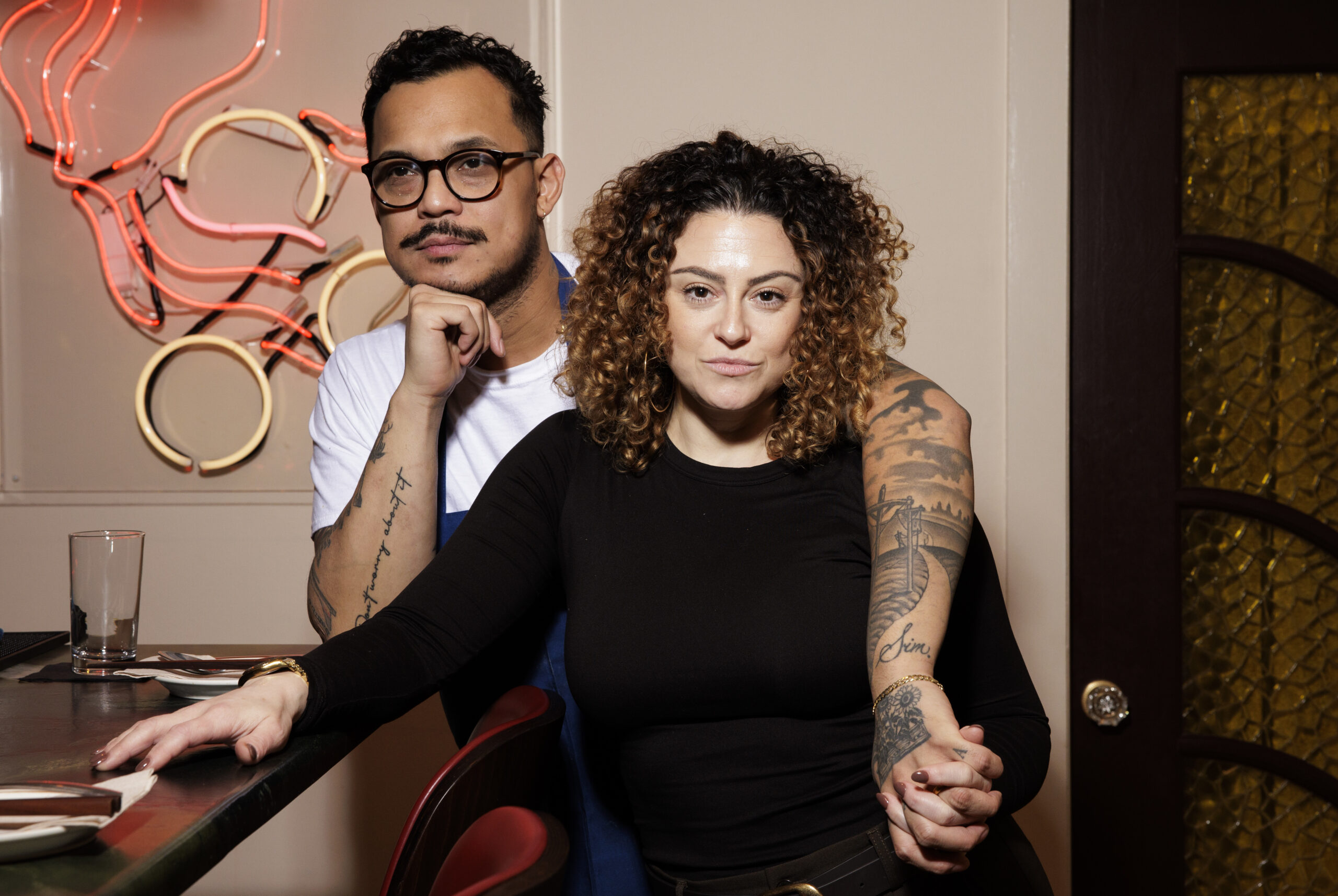
    Mawn co-owners Phila (left) and Rachel Lorn, who say reservation scalpers are unwelcome at their James Beard-award winning restaurant.

    “It’s disrespectful. Nobody should be making money off a free reservation. … We felt like we had a responsibility to [say to] all the people who can’t get a reservation, ‘This is not OK,’” said Rachel Lorn, who oversees front-of-house operations for Mawn, including the restaurant’s packed guest book.

    Nowadays, scoring a Mawn reservation is about as hard as getting off the wait list for Eagles season tickets. The Lorns, who met while working at Zama, opened the cozy, 28-seat restaurant at 764 S. Ninth St. in 2023 as an ode to Phila’s parents. It was an immediate hit and has only gathered steam, garnering accolades from the James Beard Foundation, Food & Wine magazine, and the New York Times in 2025 alone.
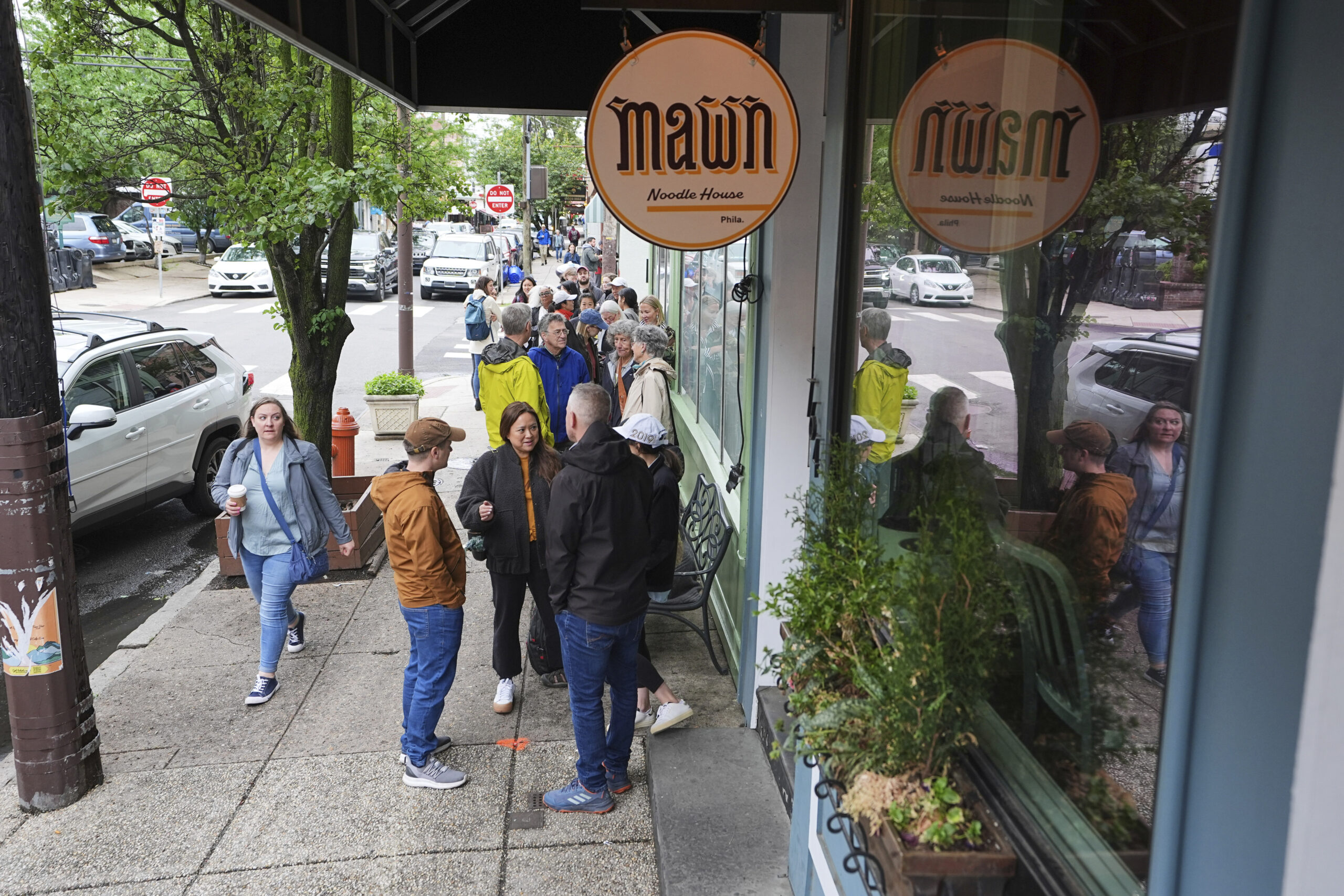
    Customers wait in line for Mawn to open for lunch.

    Mawn draws lines that wrap around the block for its first come, first served lunch service, but dinner reservations are the hotter commodity. Rachel Lorn uses OpenTable to drop reservations at noon on the first of every month, making roughly 650 total tables available at once. Customers are allowed to book multiple reservations, Lorn said, and many regulars manage to do so. It’s a pain point for would-be diners who miss out, whom Lorn said she hears from nonstop.

    “I watch [the reservation drops] from our computer. They sell out in seconds,” she said. “We never imagined that this would be the response to our restaurant. … It’s amazing, but it’s also a really tough position to be in. There isn’t much I can do with our small restaurant and how many seats we have.”

    Upon learning of the attempted black market deal, Rachel Lorn checked OpenTable and found that the Philaqueens poster had dined at Mawn six times prior and had 11 dinner reservations booked on different days throughout January and February. Lorn canceled them all immediately.
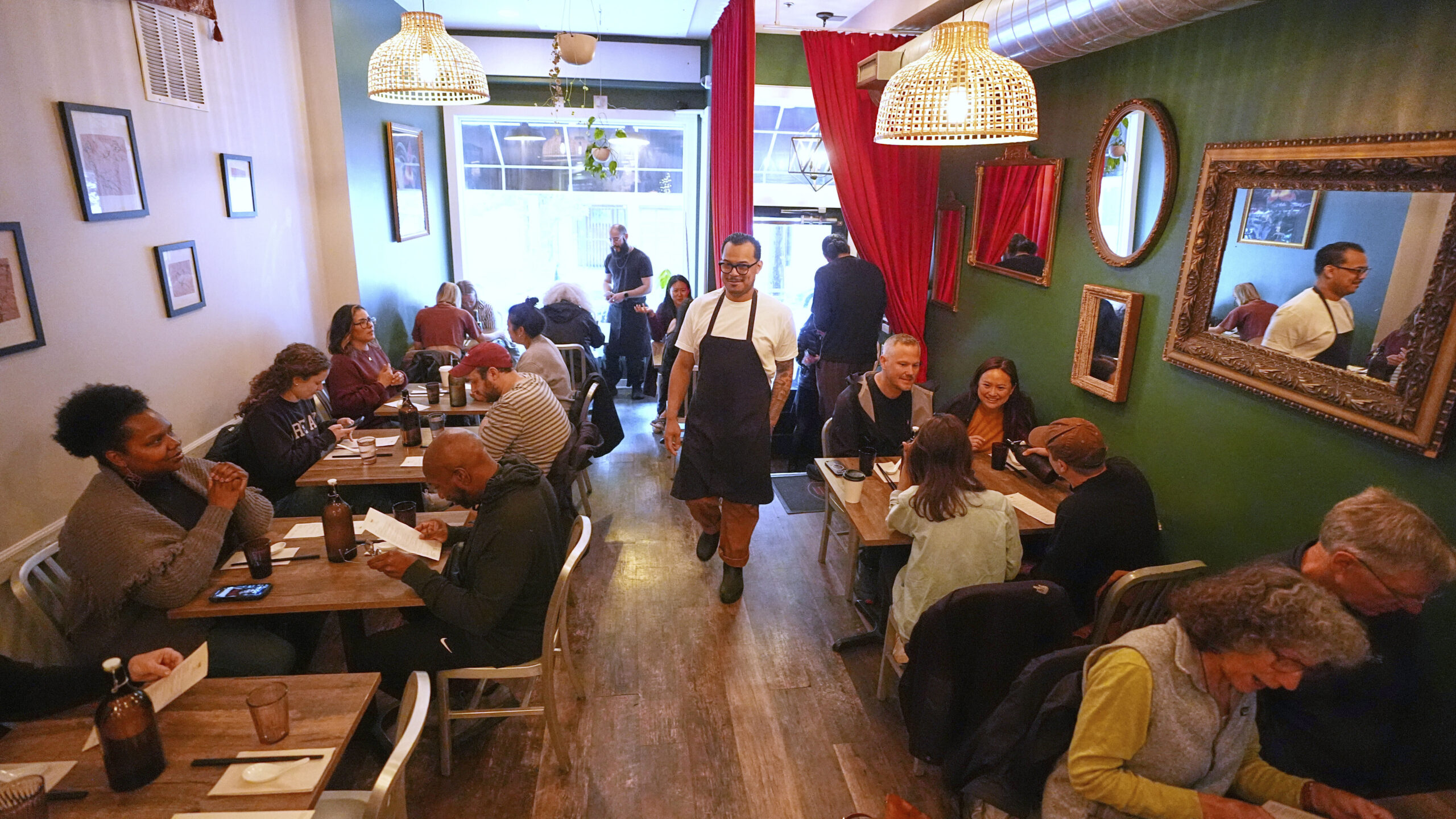
    Mawn’s dining room, which has only 32 seats. The restaurant is first come, first served for lunch, but dinner reservations are snapped up in seconds.

    She also reached out to the seller directly, who Rachel Lorn said didn’t respond but did manage to change the name and email associated with her OpenTable account. The Lorns said they would ban the seller, if only they could figure out a way to do so; OpenTable currently does not allow for restaurants to prevent specific users from making reservations.

    “It felt like she was trying to trick us further,” Rachel Lorn said. “She shouldn’t be coming to our restaurant.”

    The reservation seller declined to comment to The Inquirer, citing privacy concerns. She said only that she “meant no harm and there was no ill intent,” and declined to answer questions about why she was selling the reservations. The Inquirer is not releasing her name since the attempted sale happened in a private Facebook community.

    $221 for a table at Barclay Prime?

    For the most part, the Mawn incident is an anomaly in Philly. Reservation scalping has yet to take off here, according to Ben Fileccia, the senior vice president of strategy for the Pennsylvania Restaurant and Lodging Association, which worked with at-large Councilmember Isaiah Thomas to draft Philly’s anti-reservation scalping bill.

    Fileccia said that this was the first time he had ever seen someone try to sell a reservation on Facebook, and that he had only seen a smattering of reservations for Philly restaurants on third-party platforms before working on the bill. Free trades are more common, he said, likely because cost is more top of mind for diners in Philly, a city with large wealth inequality.

    “When you have an audience of folks to which prices are no object, [reservation scalping] becomes more of a problem,” Fileccia said. “Whereas when I discuss this issue and ask people [in Philly], ‘Would you pay $500 for reservation at 7:30 p.m. at X restaurant?’ … They usually laugh and roll their eyes.”
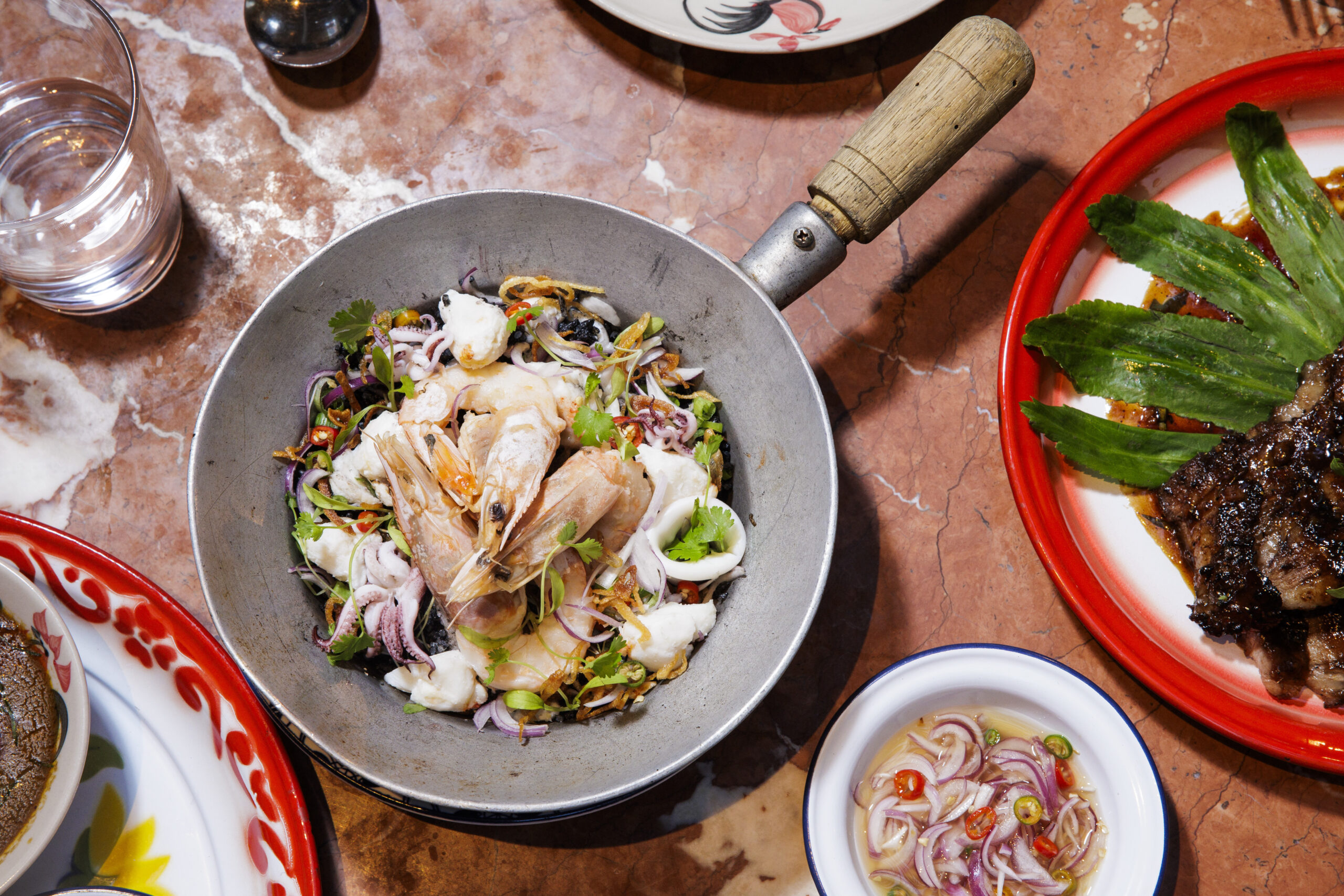
    The gaeng pae, khao mun klone, and moo yaang prik at Kalaya, one Philly restaurant featured on reservation resale platform Appointment Trader.

    That doesn’t mean scalping doesn’t happen here.

    A recent search on Appointment Trader found prime-time Saturday night reservations at Kalaya averaging $113 and 9 p.m. reservations for any day at raw bar Tesiny for between $107 and $360. A 7 p.m. Saturday table for six at Stephen Starr’s Barclay Prime steakhouse, or a reservation for two for literally any day or time at Pine Street Grill, Amanda Shulman and Alex Kemp’s new spot? That will cost at least $241 or $124, respectively, on Appointment Trader.

    Until recently, Appointment Trader functioned similarly to StubHub, where buyers could purchase reservations that scalpers had already acquired. Now, founder Jonas Frey is shifting the model to a concierge system: Buyers request a certain reservation and an algorithm spits out an average price based on demand. Once a bid is placed, Appointment Trader matches you with a seller whose job it is to secure the reservation by any means possible. There’s a 100% refund guarantee if the request goes unfulfilled.

    Representatives for the restaurants The Inquirer recently found on Appointment Trader were initially unaware they were listed on the platform.

    “We do not have experience with guests utilizing this platform,” said Kalaya chef and co-owner Chutatip “Nok” Suntaranon. “All reservations for Kalaya run through Resy.”

    Tesiny owner Lauren Biederman called the discovery “concerning.”

    “There isn’t too much we can do in terms of figuring out if the reservation is scalped really, though,” she said, noting that Tesiny requires customers provide a credit card upon booking and charges $25 per person for late cancellations and no-shows.
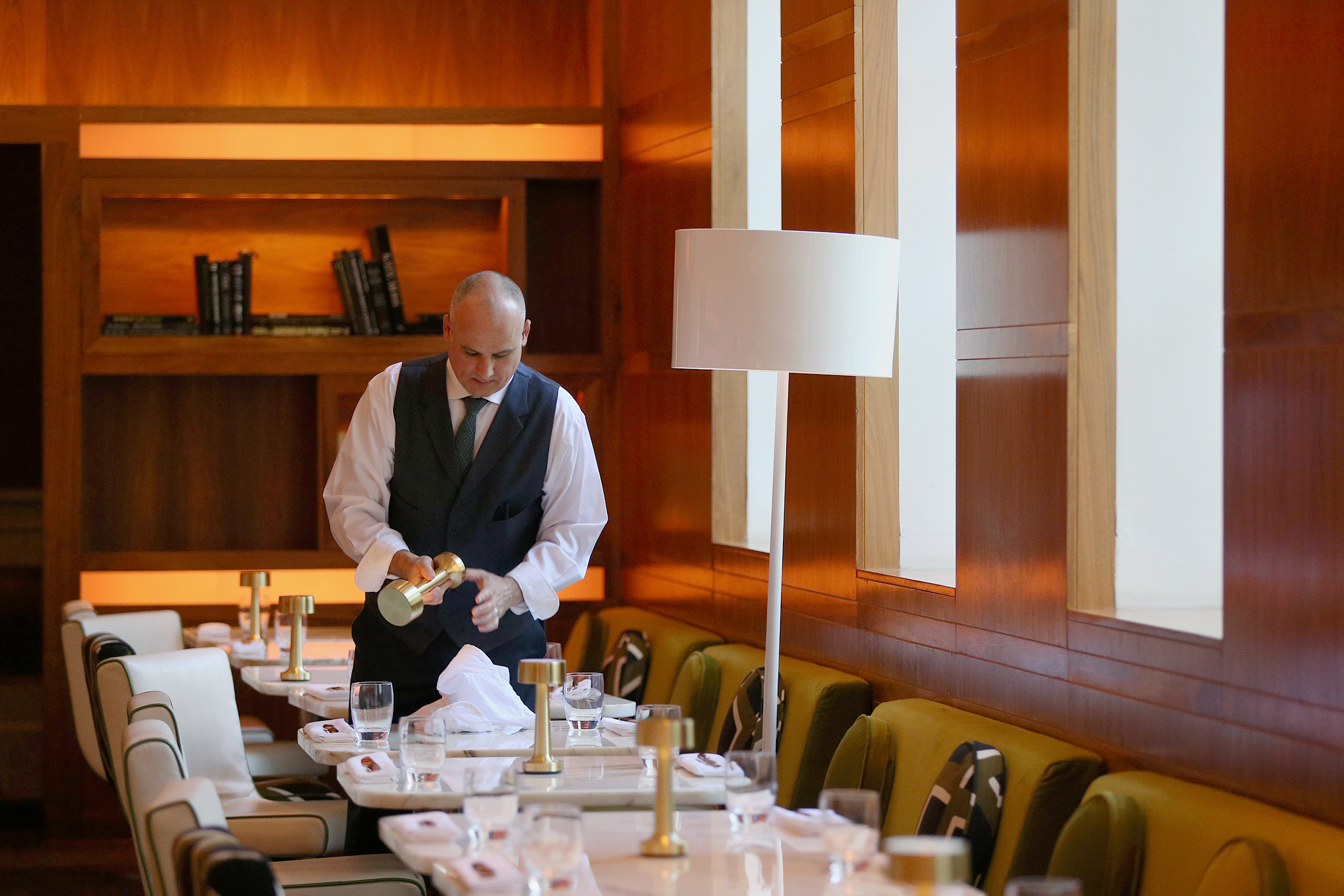
    Longtime server Matthew Penn prepares for dinner service at Barclay Prime, Stephen Starr’s steakhouse, where a table can go for upwards of $221 on Appointment Trader.

    When Shulman and Kemp opened Pine Street Grill last month, they designated half the nightly seats for walk-ins, in part to keep it a neighborhood restaurant. “We were especially surprised to see Pine Street listed for such a hefty price since it’s by far our most casual restaurant,” the couple wrote in a statement. “Oftentimes a dinner for two at Pine Street is less than the reservation cost you shared.”

    Rachel Lorn said she feels “powerless” against platforms like Appointment Trader. She often finds out after the fact when a reservation has been resold. She also tries to hide her suspicion when a guest shows up and struggles to recall the name a table is under.

    “What am I going to do in that moment?” she asked, exasperated. “Accuse them?”

    Why exactly is reservation scalping bad?

    Chief among the concerns reservation scalping has raised in the restaurant industry: It overinflates the demand for a restaurant.

    Often, scalpers will sit on hundreds of reservations that go unused, leading to no-shows that can hurt a restaurant’s bottom line and lead to less tips for servers. At COQODAQ, an upscale fried chicken joint in New York that’s popular on Appointment Trader, the no-show rate more than tripled after the website took off, Fox Business reported.

    Fileccia said it’s hard for some establishments to make that business back.
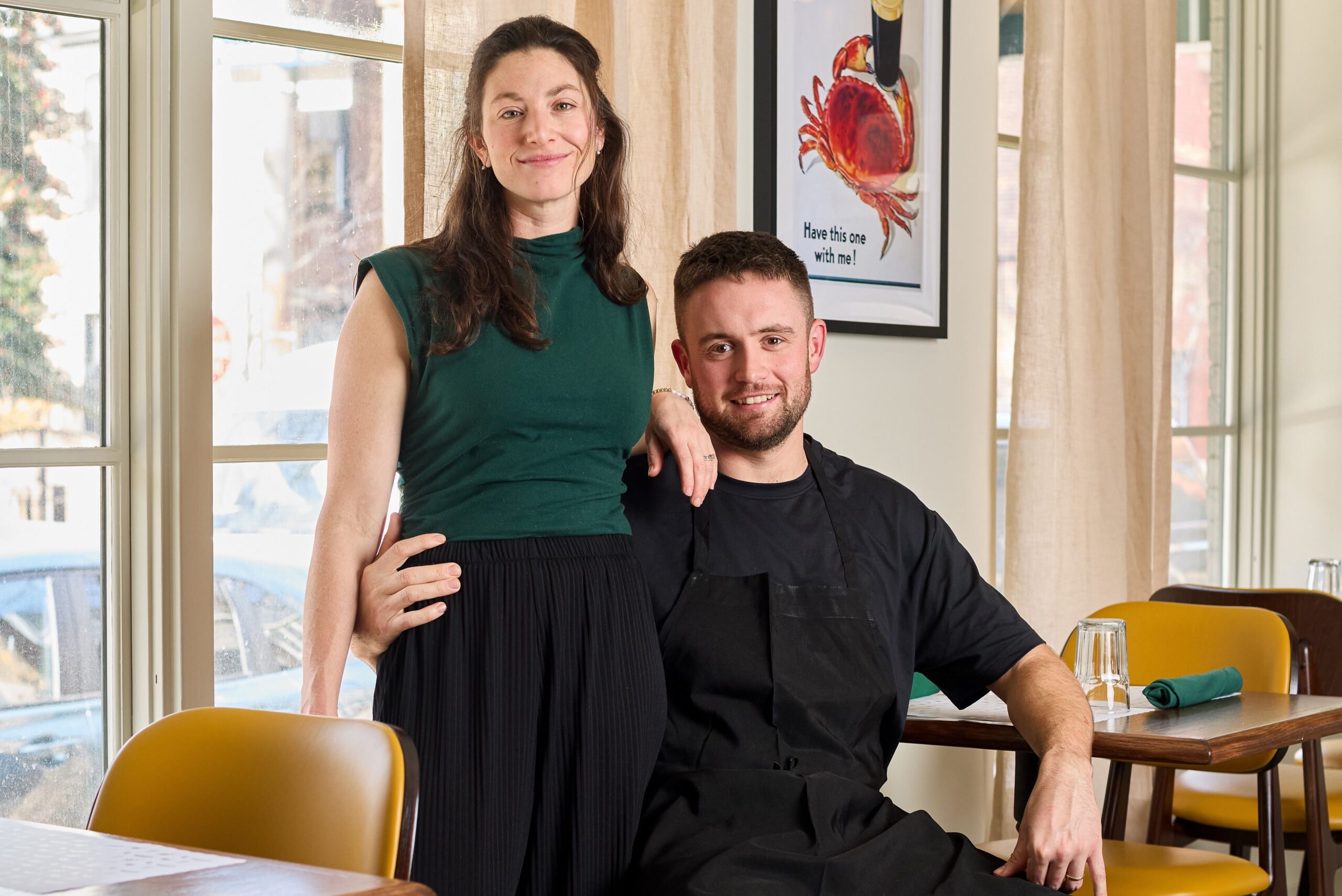
    Chefs Amanda Shulman and Alex Kemp at Pine Street Grill, another Philly restaurant that has appeared on Appointment Trader.

    “The types of restaurants that have reservations being sold are not restaurants that are going to get walk-ins to refill those seats,” he said. “These are places that people know they need a reservation for.”

    Frey, who founded Appointment Trader in 2021 after he struggled to get an appointment at the DMV, has pushed back against that narrative repeatedly in interviews. He argues that the site has gone to great lengths to tamp down on no-shows by penalizing reservation sellers for a low “sell-through rate.” If less than 50% of an account’s reservations go unsold, he has said, those accounts can no longer upload new reservations; if that rate dips below 25%, those accounts are banned altogether. (Between 2023 and 2024, Frey reported Appointment Trader did $6 million in reservation sales.)

    It’s unclear if reservation scalping will find a foothold in Philly. But at Mawn, at least, it’s deeply unwelcome.

    Rachel Lorn said the practice reminds her “of when everyone went and bought up all the toilet paper during COVID. There was nothing left for anyone else,” she said. “It boils down to a human decency thing.”

    Correction: An earlier version of this article stated City Council’s unanimously passed bill banning reservation scalping had yet to be approved by Mayor Cherelle L. Parker. Mayor Parker signed the bill into law on Friday, Jan. 9.
  • The Jalen Hurts roller coaster just lost Kevin Patullo. How will the next rider fare?

    The Jalen Hurts roller coaster just lost Kevin Patullo. How will the next rider fare?

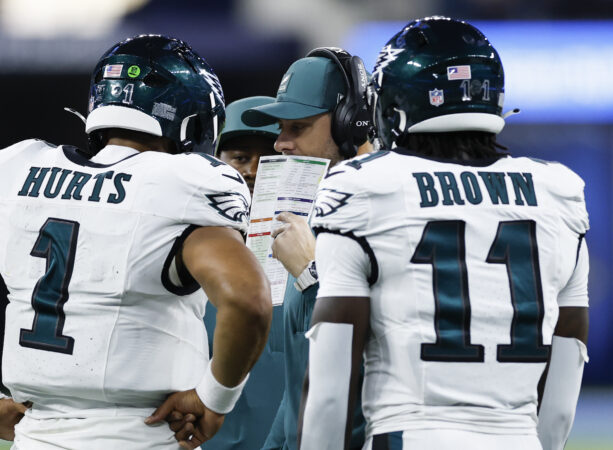
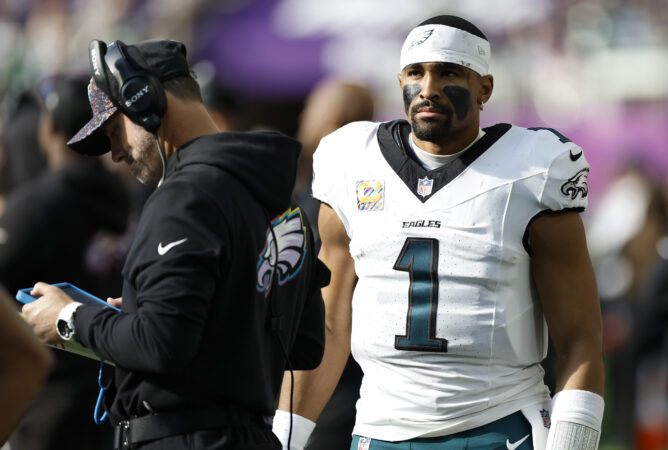
    Jalen Hurts knew the score. He knew Kevin Patullo was done. It made zero sense for the Eagles quarterback to say he wanted the offensive coordinator to return, knowing it was a fait accompli.

    “It’s too soon to think about that,” Hurts said Monday when asked about wanting Patullo back. “I put my trust in Howie, Nick, and Mr. Lurie.”

    The Eagles haven’t officially fired or demoted Patullo as of this writing, but it’s only a matter of time before Howie Roseman, Nick Sirianni, and Jeffrey Lurie come to that conclusion after a once-banging offense ended a calamitous season with a whimper on Sunday. (Editor’s note: Patullo was removed from his position Tuesday).

    It was hard to find any source within the NovaCare Complex who expected otherwise. And if you listened closely to Hurts’ comments at his locker stall the day after the Eagles lost to the San Francisco 49ers, you could hear in his tone an elegy for Patullo.

    “I hate that, you know … [pause] … I hate that,” Hurts said before another pause. “I hate that it ended this way, but I know we’ll be better from it.”

    Hurts was talking about how the season ended, but he just as easily could have been talking about Patullo’s fate.

    He could have also, of course, stood up on his stool and defended the coach. He could have taken accountability for his role in the first-time play-caller’s struggles. He could have pointed to specific plays he failed to make and specific ways he limited the offense.

    But it really made no sense. Patullo will be the latest coordinator to exit the annual roller coaster that is having Hurts as your quarterback. From the highs of getting head coaching promotions (see: Shane Steichen and Kellen Moore) to the lows of getting canned (see: Brian Johnson and eventually Patullo).

    Hurts, meanwhile, will remain and have a fifth different coordinator and sixth play-caller since Sirianni became head coach in 2021. And if you want to go all the way back to college — as Hurts has noted before — he’ll have his 14th different play-caller in the last 11 years.

    That’s a lot of change and most of it out of his control, especially in Philadelphia after Sirianni gave up play-calling during his first year. But Hurts isn’t a pup anymore. And even he seemed to acknowledge that play-caller turnover isn’t a credible excuse after he won a Super Bowl in his first season with Moore.

    “I accept the change,” Hurts said when asked about areas he wanted to work on this offseason. “I accept that those things come, whether expectations are met or whether we’re making Super Bowl runs. I’ve experienced both ends of it, and so I have a unique perspective on that.

    “So I’m not going to allow that to be an excuse for us not to make championship runs and for us to not have the success that we desire and that I desire.”

    Hurts is just one piece of the puzzle, just as Patullo was. They’re major parts of the machinery, so they rightfully get the most attention. But too much outside blame was placed on the coordinator because he was new, while not enough was directed toward the quarterback because of his previous success.

    It’s understandable. Doesn’t make it accurate.

    Inside the Eagles, most understood that there were myriad reasons for the offense’s decline. The personnel wasn’t as good. The offensive line wasn’t as healthy. The coaching staff wasn’t as sharp. And it’s damn hard to repeat as champions. The margin for error is slim in the NFL.

    The Eagles’ best leaders looked internally at themselves and what they could improve and refused to point fingers. But there was definitely some redirecting of criticism, with the split about evenly distributed between Hurts and Patullo.

    The Hurts critics just seemed louder. Some of the gripes were performance-based. Like the offense isn’t exotic and moves slowly because Hurts can’t read complex defenses or doesn’t want pre-snap motion. Or his inability to process post-snap limits middle-field throws. Or he doesn’t want to run as much anymore.

    All claims can have some semblance of truth, but the first two didn’t seem to hinder the offense when the going was good. The scheme, as wide receiver DeVonta Smith said Sunday, was essentially the same since 2021.

    There was more nuance than that. The system evolved to become more run-based. Moore brought in some new passing concepts in 2024, but some were never used. The Eagles could rest on their talent more than most.

    But they rolled it back again in 2025 as running back Saquon Barkley said on Monday — similar to how they did in 2023 — and defenses caught up. And Patullo, as it increasingly became clear, wasn’t able to consistently dial up sustainable drives. He showed his acumen in the red zone, but getting there was often a battle.

    If there was a conflict between Hurts and Patullo that went public, it was over designed quarterback runs. Hurts didn’t originally deny reports that he didn’t want to run as much, but when asked last week about how that factored into his good health this season, he suggested that it wasn’t his doing.

    “The approach this year, and the way the games have been called with this coordinator — with Coach KP — it’s just kind of gone that way,” Hurts said. “I’ve taken it in stride and [am] giving my best with the position they’ve put me in.”

    It’s hard to believe that Hurts doesn’t have a say in those conversations. He has said his influence has steadily increased. Some team sources have said it’s much greater than has been conveyed. But if he has been overpowering coaches, isn’t that as much of an indictment of Sirianni and Patullo as it is the quarterback?

    Hurts was asked Monday how comfortable he had been with being uncomfortable in the offense.

    “I think that’s the essence of what my career has been,” Hurts said. “Can’t say that every situation I’ve been in has been the most comfortable, but I’ve been able to find my way out of it and find ways to win and find ways to success. And so that’s a part of growth, and I’ve never run away from growth.”

    Hurts has progressed. He’s better as a drop-back passer. He’s better at reading coverages. He’s better vs. the blitz. But in his growth as an NFL quarterback, he may have lost sight of how his mobility made him dynamic.

    “He is not who he thinks he is,” an Eagles source said.

    Teammates openly call him “Lil Jordan” in reference to his relationship with Michael Jordan, being one of the faces of the Air Jordan brand, and wanting to emulate and be the NFL version of the iconic basketball player. It’s a slight tease and Hurts rolls with it, several players said.

    He is an easy target. No one faces as much scrutiny. And some of the internal forces against him seem to be holding his famously stoic demeanor against him. He isn’t the most cuddly creature.

    But he has taken steps in that regard, as well. When A.J. Brown made it apparent he was frustrated with Hurts earlier in the season, he went to the receiver first to clear the air, two sources close to the situation said.

    “That was mostly about not being on the same page,” one source said.

    It took a while, but Hurts and Brown, whose friendship dates back almost a decade, have smoothed things over off the field. It’s unclear if they’ll be on the field together next season, although the quarterback intimated that he wants the receiver back.

    “A.J. and I have talked. We’re in a good, great place,” Hurts said. “I know you all can talk to him and ask.”

    The last sentence was a sly reference to Brown not talking to reporters in over a month. He again wasn’t available during locker clean-out day.

    Hurts, meanwhile, didn’t miss a media requirement all season. He’s heard the criticisms and he’s hardly ever thrown shade toward a teammate, coach, or otherwise. Maybe he could have taken some of the arrows for Patullo.

    But that stagecoach has departed. There will be a new coordinator in town soon enough. Hurts wouldn’t say how much influence he’ll have over the decision. He still may not be especially approachable, but Roseman, Sirianni, and Lurie have his number.

    “Overall, my line is always open,” Hurts said. “And so however involved or whatever level of inquiry I [have], I’ll definitely be available. Ultimately, I put my focus on controlling the things I can.”

  • Meet the local producer taking you behind the scenes of the Eagles season on HBO’s ‘Hard Knocks’

    Meet the local producer taking you behind the scenes of the Eagles season on HBO’s ‘Hard Knocks’

    On Tuesday, the final episode of HBO’s in-season Hard Knocks show following the NFC East will debut, which will encompass the Eagles’ season-ending loss to the San Francisco 49ers in the wild-card round.

    The season didn’t end the way that Eagles producer Shannon Furman may have hoped, but the final episode is a 50-minute look inside the Birds’ final game.

    Furman is the mastermind behind the Eagles’ segments of the show. Because the in-season Hard Knocks is released on the Tuesday the following week, Furman said it’s important for the film crew to come in with a plan each week on which players to spotlight.

    Unlike the training camp edition, this year’s in-season Hard Knocks covered the entire division, leaving the Eagles with approximately 12 minutes to fill on the show every week, edited down from several dozen hours of footage per week.

    “It’s so tough with the Eagles, because there’s so many guys and there are so many choices,” Furman said. “It ends up happening, like, ‘Who has an event this week? Who’s doing something?’ Week 1, it was like, ‘Let’s follow the quarterback,’ and then we had heard everybody saying Jordan Davis was a big personality.”

    The team filming the footage sent it in batches to the editing team in Mount Laurel each day leading up to Tuesday’s release date, flagging segments it particularly liked or thought would be good to include. Sometimes, like after the Monday Night Football loss to the Chargers in November, the filming crew submitted the last of the footage after midnight, less than 24 hours before the episode aired.

    There’s so much footage that often gets cut for time or is reused later. Furman said the Hard Knocks team shot a lot of footage of Davis for the first episode, which was released on Dec. 2, that got cut because of time restraints. But she loved the segment so much that they eventually worked him into a later episode.

    Hard Knocks also mics up players during games, and the game footage caps the episode. Furman quickly learned that some players were much better mic’d up than in an interview setting, like DeVonta Smith.

    “He’s a quiet guy off the field, and then he gets on the field and he turns into a completely different person,” Furman said. “Everybody is a little bit different. Some people stay completely the same. Some people get more quiet when they’re on the field than they are when they’re off, so you just get to see all different sides of people.”

    Furman hoped that the show provided a new look into the team beyond what spreads on social media. She was struck most by the passion the players had for coach Nick Sirianni, and how much they respected and related to him personally.

    “As a person who grew up in Philadelphia, learning about Nick, he is Philadelphia,” Furman said. “Everyone should love this guy, because he is the definition of our city, the fiery, where maybe it comes across as arrogance at times, but at the same time you still love him. It’s like a lovable arrogance. He’s perfect for this city.”

  • Free-agent moves? Stars moving on? Answering all of the Eagles’ biggest offseason questions

    Free-agent moves? Stars moving on? Answering all of the Eagles’ biggest offseason questions

    The Eagles’ 2025 season came to an end sooner than many expected Sunday night, with an underwhelming 23-19 loss to the San Francisco 49ers ending the dream of a Super Bowl repeat.

    With the offseason officially here, The Inquirer has identified the most significant questions the team will face as it attempts to avoid the sting of a premature exit at this time next year.

    Do you expect a change with embattled offensive coordinator Kevin Patullo?

    (Editor’s note: Patullo was removed from his position on Tuesday).

    The offense’s performance this season did not reflect well on Patullo. The unit finished the year 19th in the league in scoring, 24th in total yards, and 13th in expected points added per play, which measures the average points added by the offense on each play.

    For comparison’s sake, here’s how the 2023 Eagles offense fared under former offensive coordinator Brian Johnson, who was fired in the offseason: No. 7 in scoring, No. 8 in yards, and No. 9 in EPA per play.

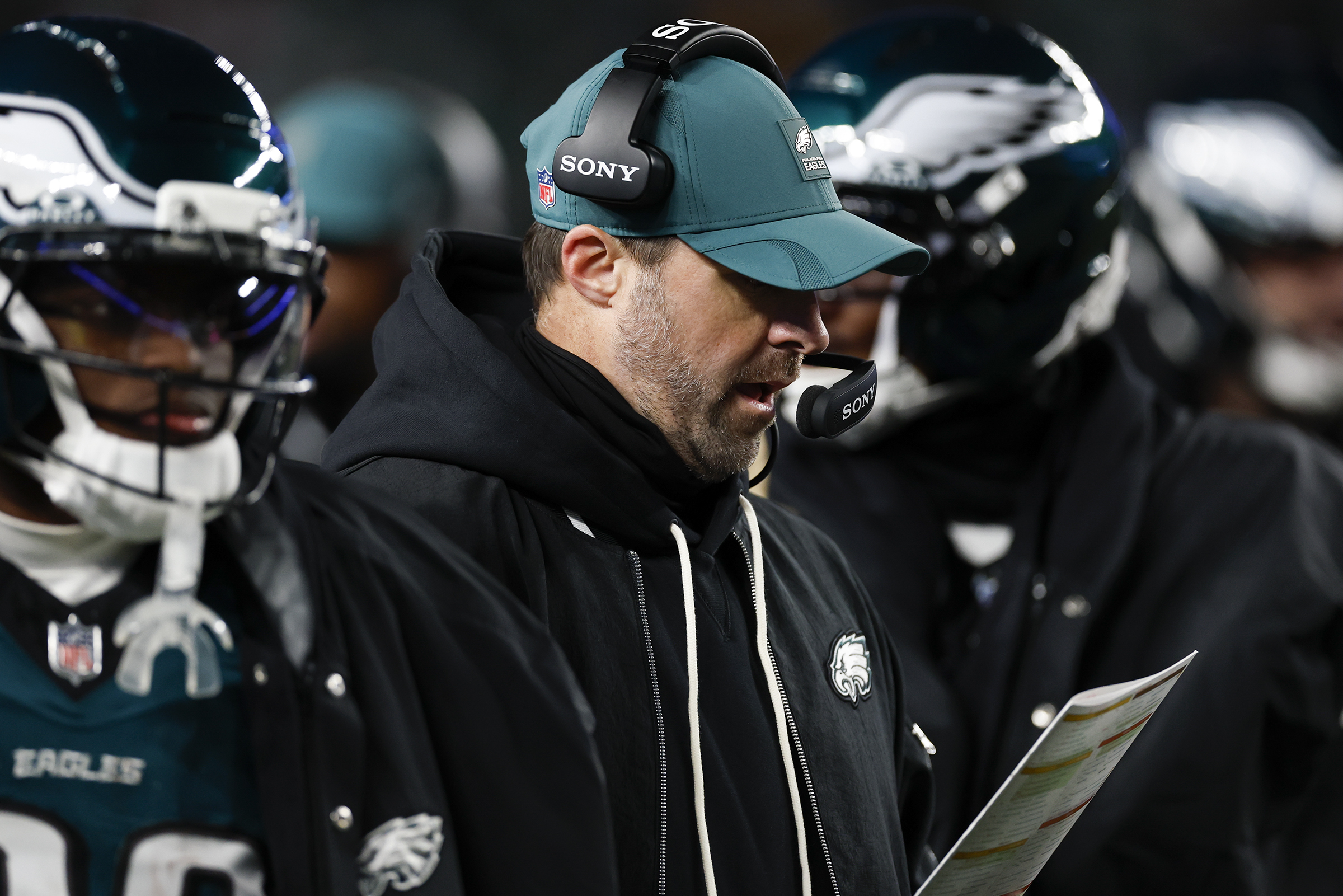
    The Eagles seem certain to move on from Kevin Patullo as the play caller.

    Yes, that season was different, as the Eagles lost six of their last seven games. But both the 2023 and 2025 offenses regressed substantially following Super Bowl appearances. The 2025 Eagles returned 10 of 11 offensive starters from the Super Bowl-winning team, and yet the most expensive offense in football couldn’t make it past the wild-card round.

    While all of the offense’s shortcomings this season can’t be pinned exclusively on Patullo, something has to change. If the Eagles fire a coordinator and decide to hire an external replacement, there’s always a chance that person would want to handpick his own assistants. In 2024, Kellen Moore brought in former quarterbacks coach Doug Nussmeier. Vic Fangio overhauled the defensive staff. — Olivia Reiner

    Is there any reason to expect changes with A.J. Brown or any of the other skill-position stars?

    Four of the offense’s big five skill players — Jalen Hurts, Saquon Barkley, Brown, and DeVonta Smith — are under contract through at least 2028. Brown is under contract through 2029. Dallas Goedert, meanwhile, is set to become an unrestricted free agent at the start of the new league year.

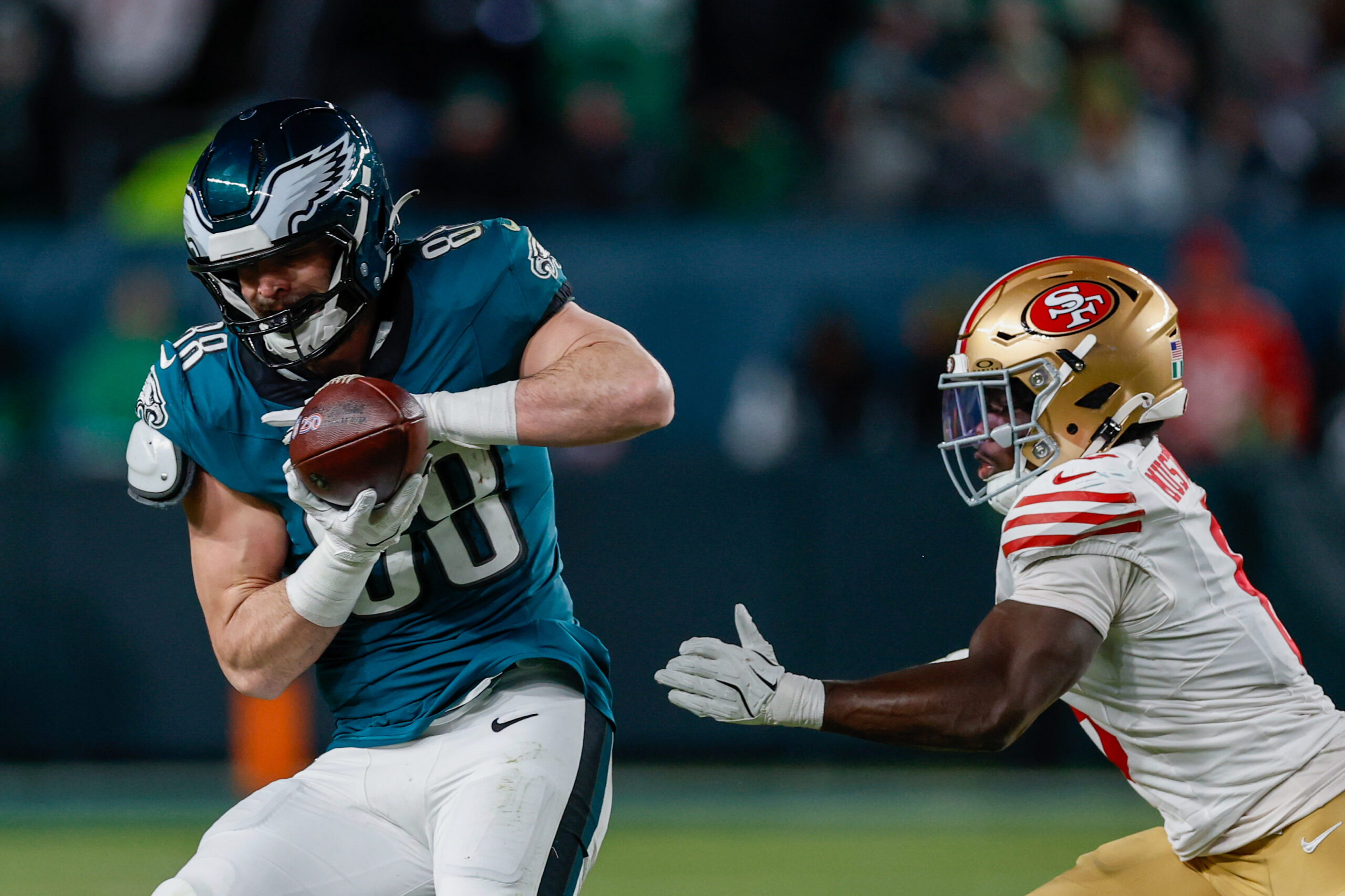
    Given Goedert’s status as a pending free agent, his future as an Eagle is in question. The 31-year-old tight end had a career year with 11 touchdowns, plus two more in the postseason. After an injury-riddled 2024 season, he stayed mostly healthy and started 15 games in 2025. But he’s an aging — and potentially expensive, given his touchdown output — tight end who took a step back as a run blocker this year.

    It would be expensive for the Eagles to move on from A.J. Brown.

    Then, there’s the elephant in the room. Will Brown be back in 2026, let alone finish out his contract in Philadelphia? He voiced his frustration with the offense’s inconsistency earlier in the season. While he made an impact on paper during the regular season and eclipsed 1,000 receiving yards for a fourth straight year, he also was part of the problem at times, especially in the wild-card loss to the San Francisco 49ers. He finished with three receptions on seven targets for 25 yards.

    Brown’s contract would be very difficult to move. Cutting him before June 1 would incur $72 million in dead money in 2026. The Eagles would still be on the hook for $43 million in 2026 if they traded him, too. But, as our colleague Jeff McLane wrote, would a change of scenery benefit the 28-year-old wide receiver, send a message to the locker room, and eventually clear some salary-cap space? — Reiner

    Besides Goedert, which Eagles are scheduled to become free agents? Which members of that group will be the highest priorities for the team to re-sign?

    As Reed Blankenship noted Sunday in the locker room: “It’s not going to be the same.”

    “Who knows where we all end up?” the safety said. “That’s just part of the business side of it. They can’t keep us all. I wish they could.”

    Blankenship is one of the Eagles’ nearly two dozen free agents. Like Blankenship, a few are notable players who may not be back.

    Will the Eagles be willing to pay 31-year-old Dallas Goedert?

    Let’s start with Goedert, who had a career year — the most prolific touchdown season in the history of Eagles tight ends. There are zero tight ends on next season’s roster as it stands. Along the offensive line, reserves Fred Johnson, Brett Toth, and Matt Pryor are free agents. So is wide receiver Jahan Dotson. Deeper reserves like running back AJ Dillon, quarterback Sam Howell, and injured fullback Ben VanSumeren are set to hit the market, too.

    Blankenship, linebacker Nakobe Dean, and edge rusher Jaelan Phillips are the marquee names among the defensive free agents. Two more starters from Sunday’s game are also scheduled to be free agents: safety Marcus Epps and cornerback Adoree’ Jackson. Other free agents include edge rushers Brandon Graham, Joshua Uche, Azeez Ojulari, and Ogbo Okoronkwo. Punter Braden Mann’s contract also is up.

    As for which players the Eagles will prioritize, it’s not hard to imagine them wanting to rework something with Goedert before they look elsewhere for a tight end. Phillips will be at or near the top of the priority list, too. The Eagles are thin at edge rusher and could use an impact player like Phillips at the top of the depth chart to pair with Jalyx Hunt and Nolan Smith. Blankenship’s position is a priority, but it remains to be seen what his market looks like and what the Eagles decide to do at safety. Rookie Drew Mukuba will be coming off a season-ending injury at one of the safety spots.

    As for Dean, he may be the most expendable among the top free-agents-to-be with Jihaad Campbell waiting in the wings. — Jeff Neiburg

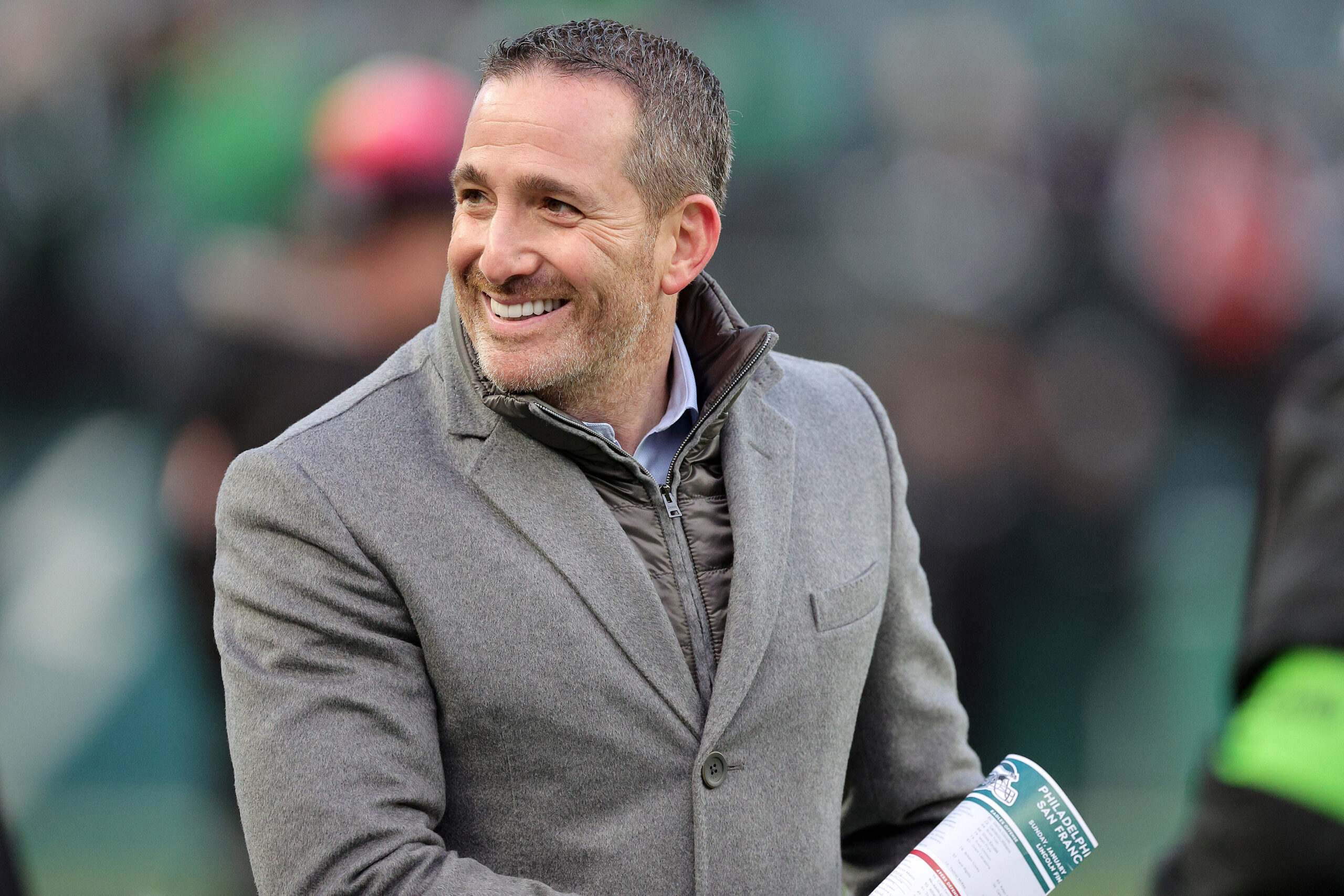
    Howie Roseman has a reputation for being aggressive in all aspects of the Eagles’ business.

    What is the Eagles’ salary-cap situation heading into the offseason? What does history say about their willingness to be aggressive on the free-agent front?

    According to Over the Cap, the Eagles have $20.3 million in cap space for 2026. It is not a lot, partially because some Eagles have increases in their cap hit. Jalen Hurts’ cap number, for example, jumps from $21.87 million this past season to $31.97 million next season.

    The Eagles have 40 players under contract and have eight draft picks. As it stands, they again will have a high-priced offense. Seven of the eight players with cap hits of at least $9 million are offensive players.

    While there isn’t a ton of money available for Howie Roseman to play with, history shows us he is willing to be aggressive to create more room and to improve his roster to compete for a Super Bowl. He also has mastered the art of structuring contracts to game the NFL’s salary-cap system. — Neiburg

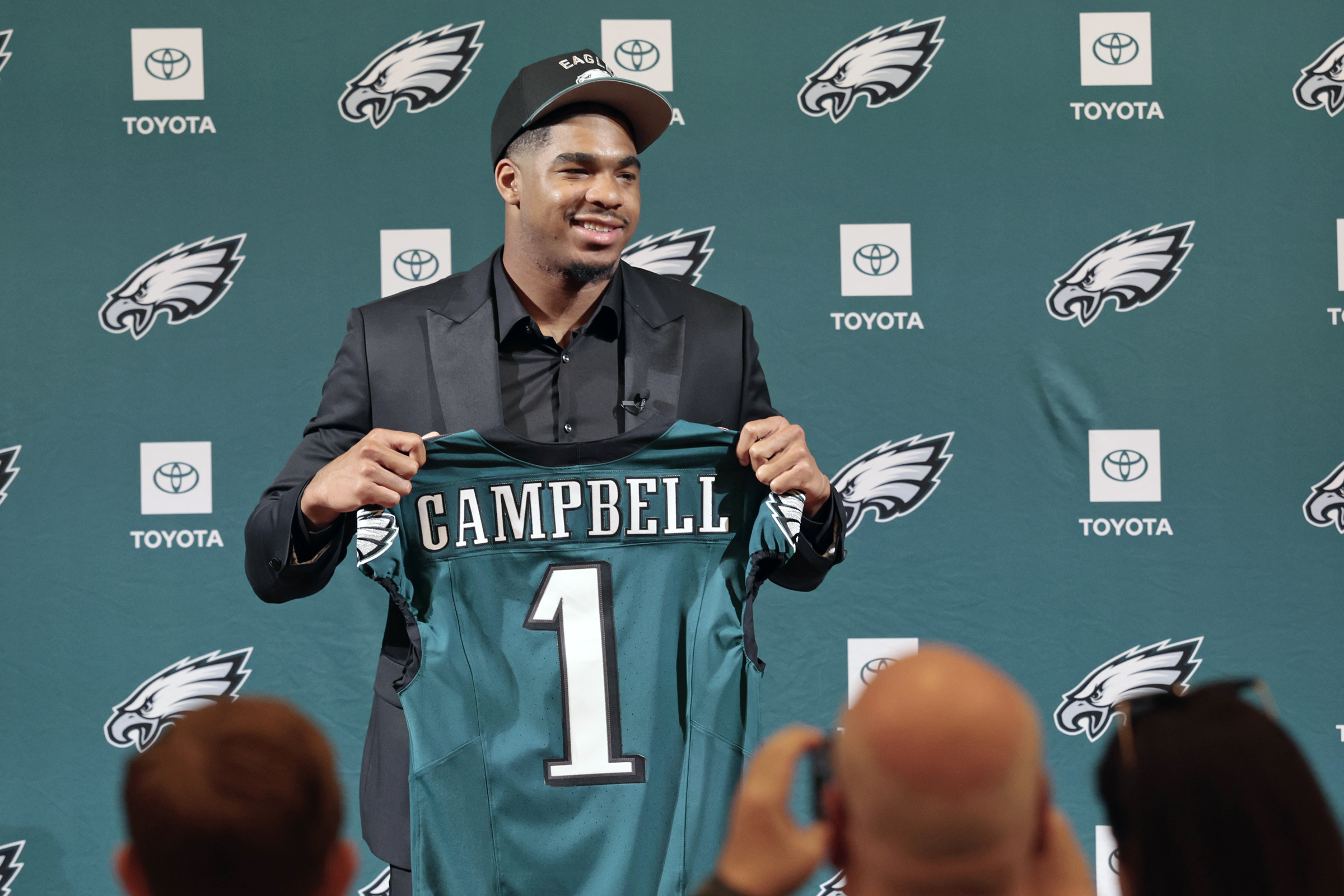
    The Eagles moved up to select Jihaad Campbell in the 2025 draft.

    How many draft picks are the Eagles scheduled to have in 2026? How aggressive do you expect them to be in moving draft capital to address other needs (or to move up in the draft)?

    The Eagles are set to have eight draft picks, including three projected compensatory picks, in 2026:

    • Round 1
    • Round 2
    • Round 3 (from the New York Jets in the Haason Reddick trade)
    • Round 3 (projected compensatory pick for Milton Williams)
    • Round 4
    • Round 4 (projected compensatory pick for Josh Sweat)
    • Round 5
    • Round 5 (projected compensatory pick for Mekhi Becton)

    Roseman has a track record of moving up in the draft, even if it’s just a couple of spots, to go get a player on the team’s short list. His most significant jump came in 2016 when he moved up six spots from No. 8 to No. 2 to select Carson Wentz. Last year, Roseman moved up one spot from No. 32 to No. 31 to get Campbell.

    He goes after what he wants in veterans, too, with his most prominent example occurring in 2022 with his draft-day acquisition of Brown from the Tennessee Titans. Given that the Eagles have eight picks, Roseman has plenty of ammo to make moves and address the team’s needs. — Reiner

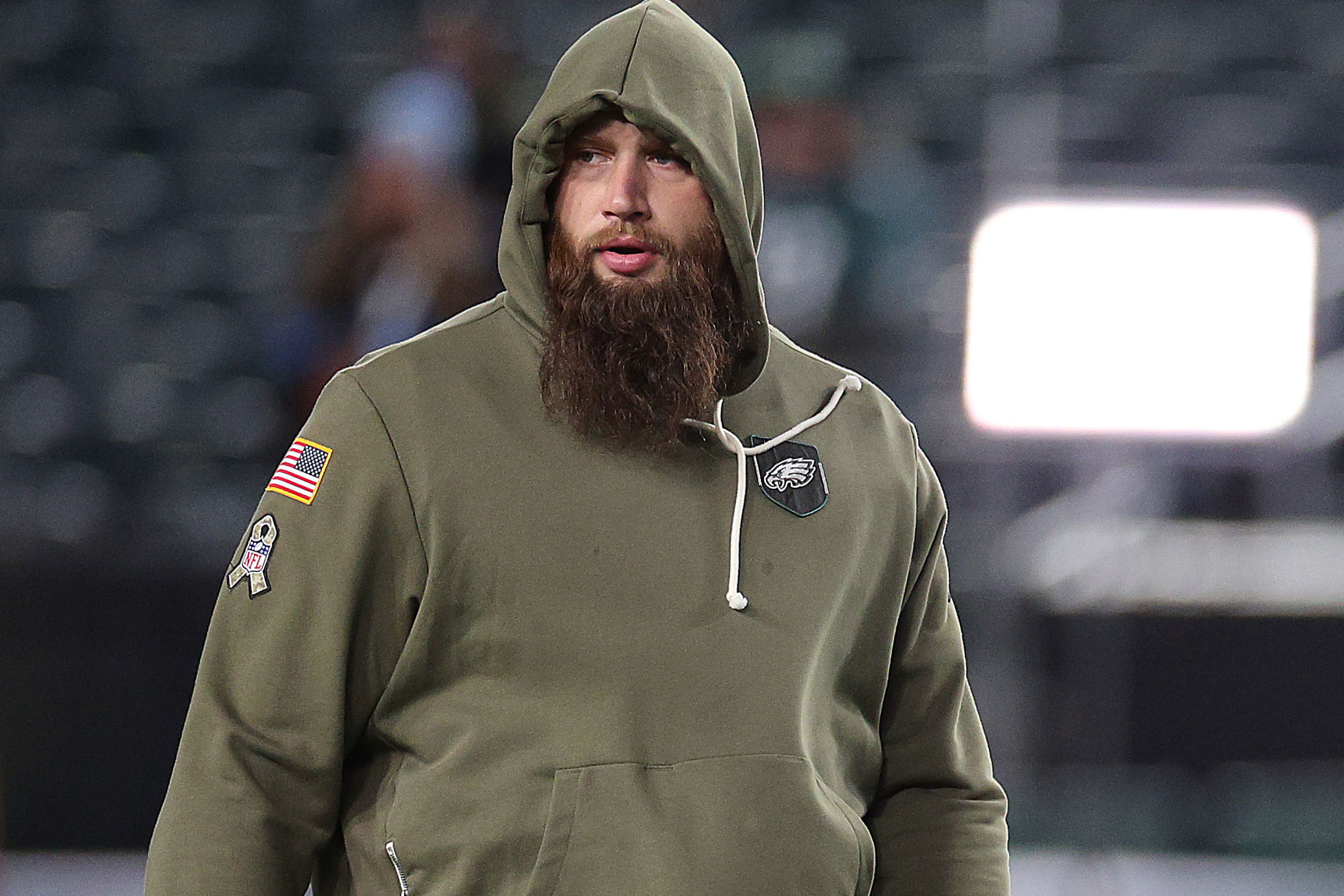
    The limited availability of tackle Lane Johnson this season means the Eagles must consider the future along the offensive line.

    Which personnel groups do you expect Howie Roseman to concentrate most on upgrading heading into 2026?

    Where to begin? The Eagles still have a pretty solid roster, but they do have some flaws and are set to have a few holes.

    They have no tight ends. They have no obvious answer yet for a Lane Johnson replacement. How long is Landon Dickerson going to hold up? They went heavy at offensive line toward the end of the draft last season, but they could soon need top-end talent.

    They are in the market for wide receiver help, regardless of where the Brown saga leads them. They need edge rushers. They need cornerbacks. They may need a new kicker.

    A high-impact edge rusher, like Phillips, should be high on the list of most important personnel groups to upgrade the talent level, and it will be interesting to see how the Eagles go about addressing tight end. They obviously will sign a few in free agency and could draft one. Could Goedert return?

    There are a lot of unanswered questions right now. It’s that time of year.

    The Johnson replacement is a tricky one, too. He still is very good when he’s on the field, but the clock is ticking. Same for Dickerson, who has had multiple surgeries and has played through plenty of pain. — Neiburg

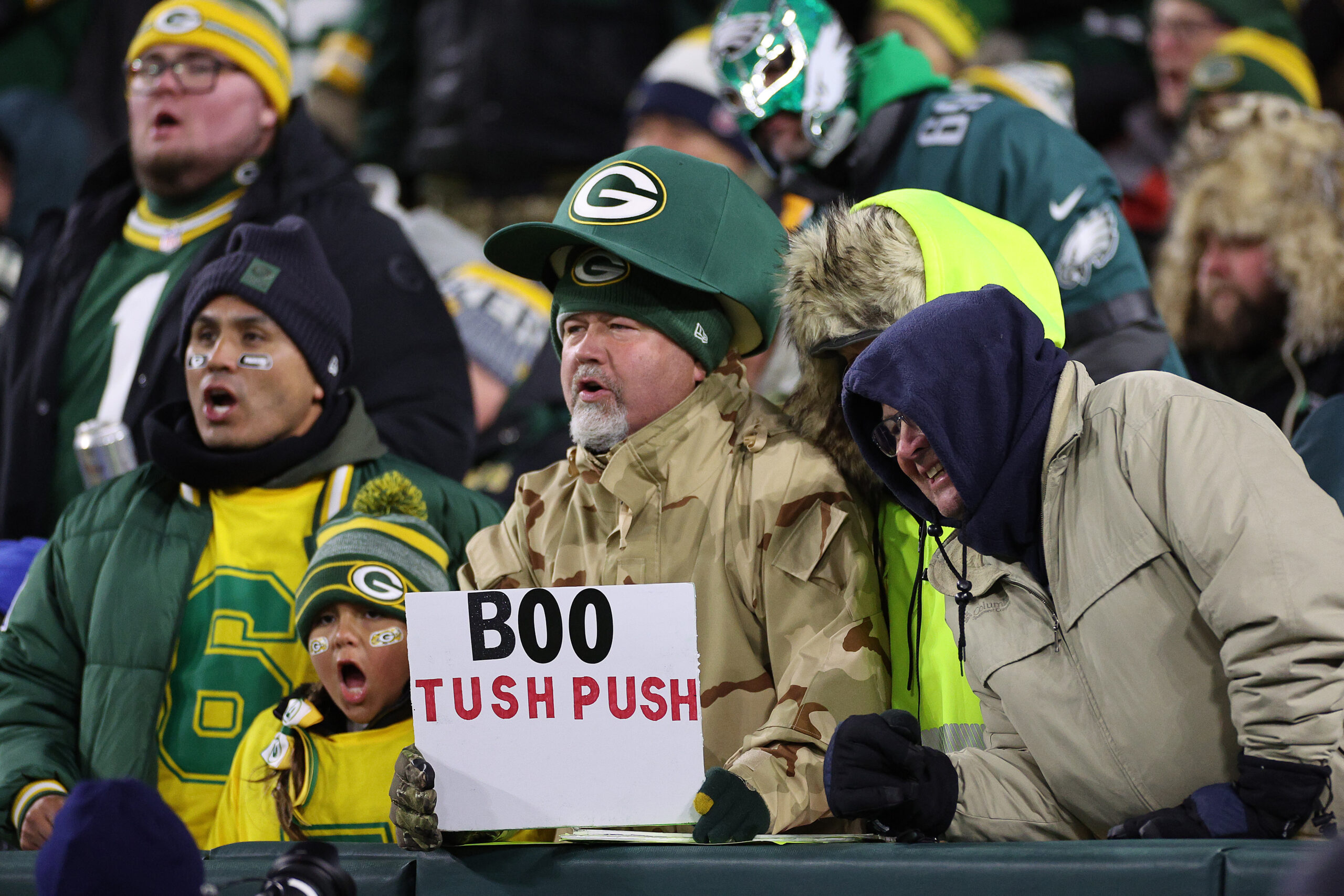
    Will another NFL team lead the charge to ban the Tush Push, as the Packers did last offseason?

    Will the Tush Push be in the spotlight again this offseason? What are the mechanics of a potential rule change from a league/competition committee standpoint?

    Earlier in the season, it seemed like a foregone conclusion that the Tush Push was getting banned in the spring. This year, instead of detractors fixating on its aesthetics and its player safety risks, its officiating was called into question.

    But false-start penalties mounted on the Eagles as the season progressed. Defenses improved at stopping the play, too. The Eagles grew less effective on the Tush Push and eventually, in short-yardage situations, stopped running it entirely. The last Tush Push the Eagles ran in the regular season occurred in Week 16 against the Washington Commanders. It failed, just like four of their previous six attempts.

    The public outcry against the Tush Push seems to have dissipated with the Eagles’ waning efficiency. In fact, fans seemed to love the Buffalo Bills’ 10-yard push sneak for a touchdown in their wild-card win over the Jacksonville Jaguars. The Bills were among the teams that voted to effectively ban it in the offseason, too.

    Unless there is new injury data that suggests the play is dangerous, the path to a ban is unclear. The officiating of the play still would be an issue on a traditional quarterback sneak. Perhaps the league again would seek to eradicate an offensive player pushing the runner downfield on any play, which was illegal in the NFL before 2005. Ironically, it was legalized because it was difficult to officiate.

    A rule proposal, either submitted by the competition committee or by one of the 32 clubs, would be the first step to getting rid of the play. That proposal would need at least 24 “yes” votes from the 32 owners at the spring league meeting to pass. Last year, the Green Bay Packers submitted an assisting-the-runner proposal, but it didn’t garner the requisite support. — Reiner

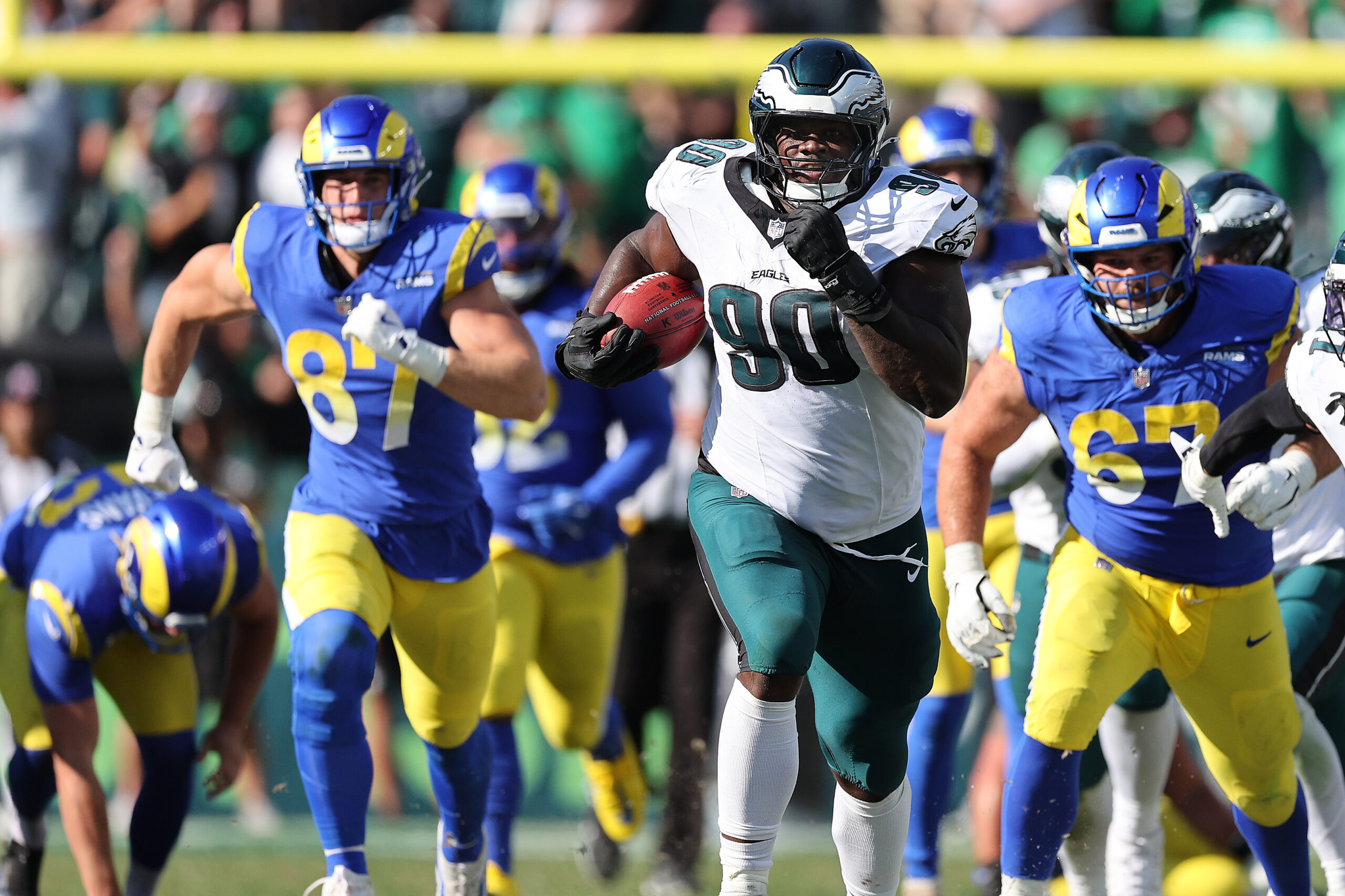
    The Rams’ return trip to Philly next season should be among the highlights of the 2026 home schedule.

    Who are the Eagles’ 2026 opponents?

    In addition to their six division games, the Eagles will face the 2025 winners of the NFC North (Chicago Bears on the road), NFC South (Carolina Panthers at the Linc) and AFC North (Pittsburgh Steelers at the Linc); they’ll face the entire NFC West (Los Angeles Rams and Seattle Seahawks at the Linc, 49ers and Arizona Cardinals on the road) and the entire AFC South (Houston Texans and Indianapolis Colts at the Linc, Jaguars and Tennessee Titans on the road).

    The Eagles are scheduled to play nine home games in 2026. Dates are expected to be announced as part of the NFL schedule release in May.

    Compiled by The Inquirer staff.

  • House of the week: A six-bedroom in Upper Roxborough for $725,000

    House of the week: A six-bedroom in Upper Roxborough for $725,000

    For Jennifer Rodier, it was “a wonderful place to grow up.”

    The six-bedroom, 2½-bathroom stone house is on a wide Upper Roxborough street, perched high above a valley.

    Her father, Walter D’Alessio, bought the house in 1969, and “he never wanted to let go of it,” Rodier said.

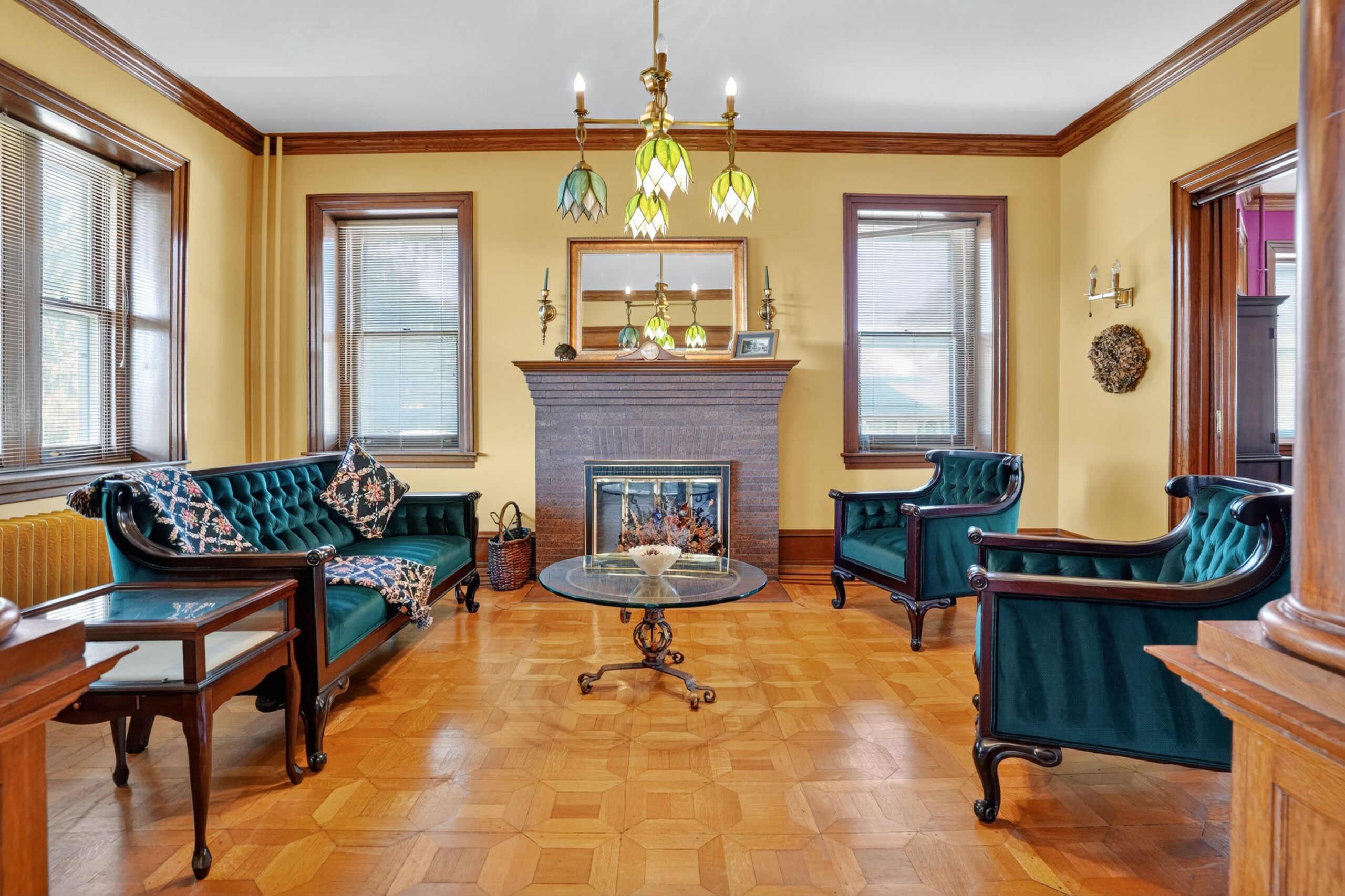
    The formal living room has a working wood-burning fireplace.

    D’Alessio headed the Philadelphia Redevelopment Authority and Philadelphia Industrial Development Corp. and served under five Philadelphia mayors. He died in 2024.

    Rodier, a nonprofit executive who lives in Lafayette Hill, is selling the place where she and her friends played hide-and-seek or cavorted in the large yard.

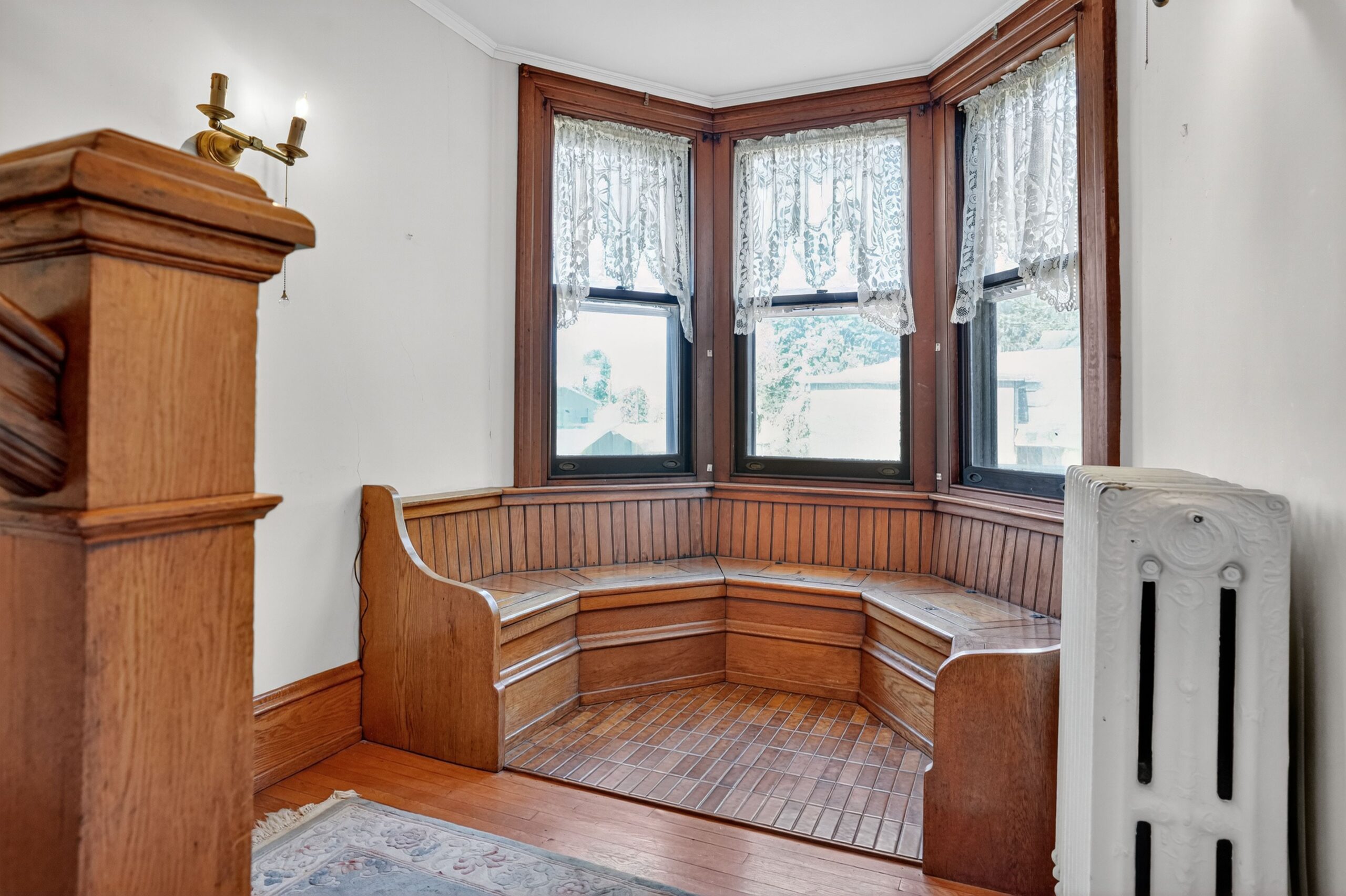
    Window seat off the grand staircase.

    She said the D’Alessios did extensive renovations on the house in their time there.

    It is 4,406 square feet, and Rodier says it was built around 1910, with her parents only the second owners.

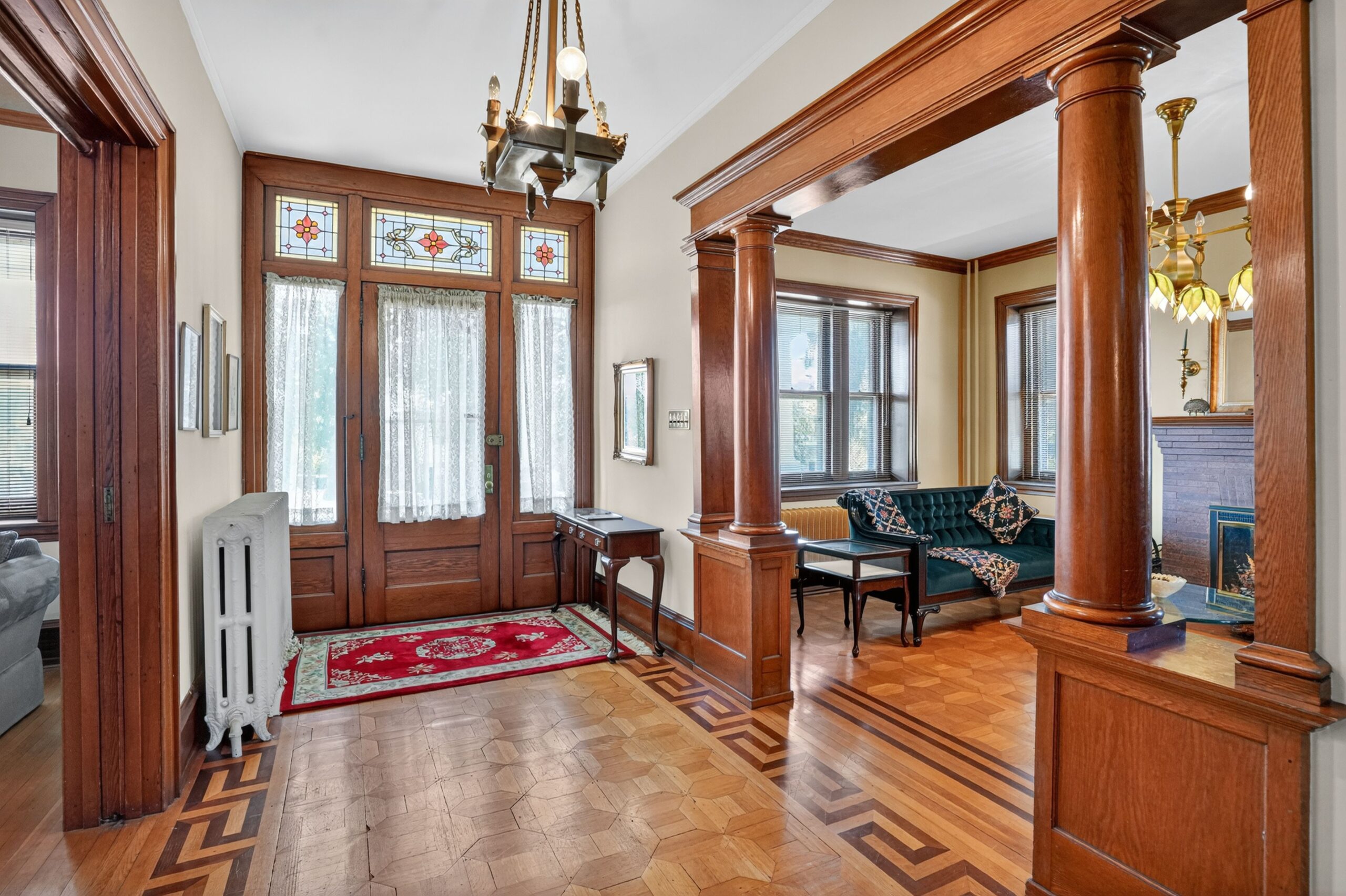
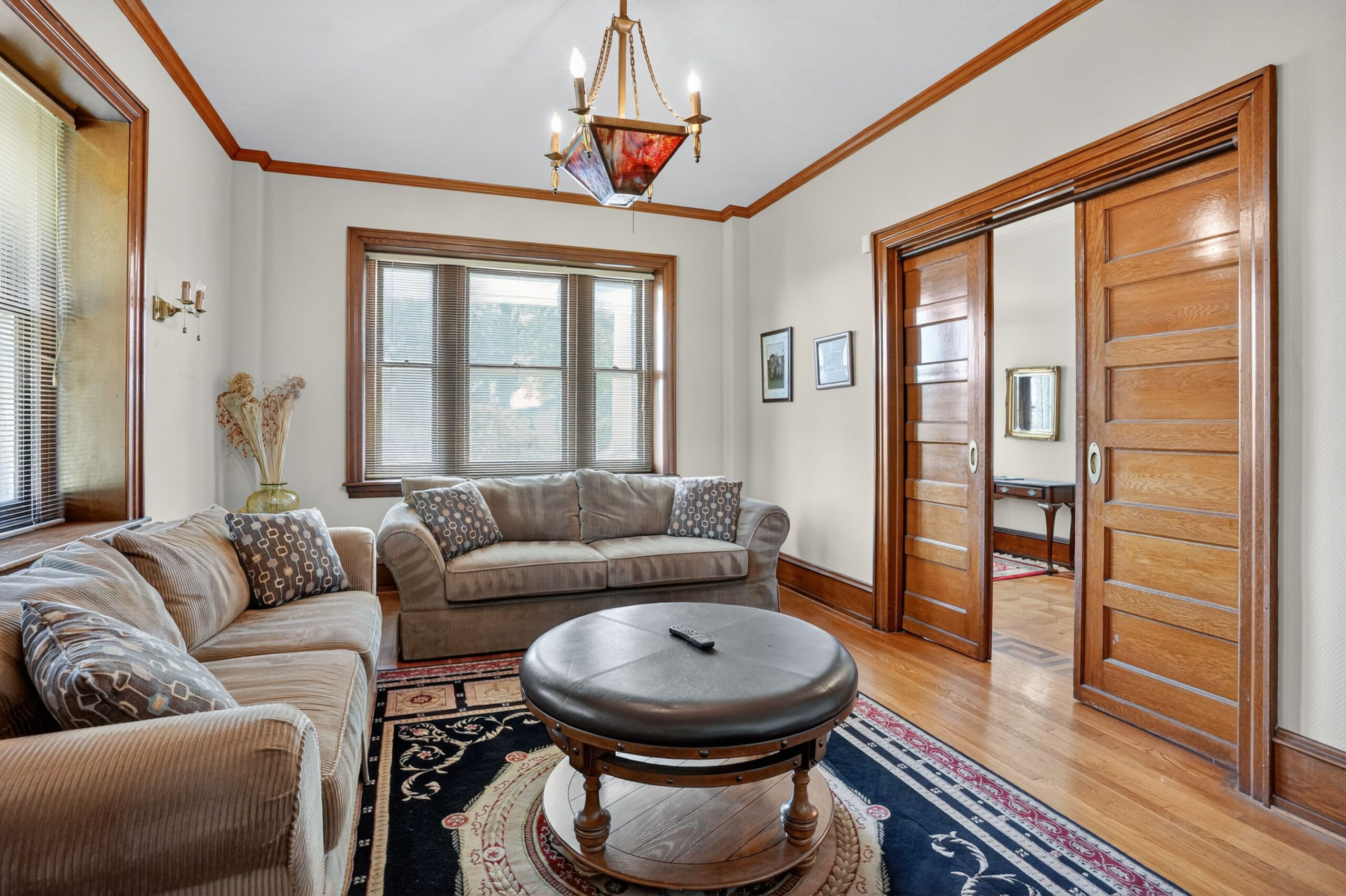
    The house has a center-hall Colonial foyer, its original wide entry door with a leaded glass transom, original exposed ribboned hardwood floors, a grand staircase with a window seat, original wall light sconces and pocket doors, and a wraparound front porch.

    The foyer’s original wide entry door has a leaded glass transom.

    The formal living room has a working wood-burning fireplace, and the first floor includes the kitchen, breakfast room, powder room, and pantry.

    The second floor has four bedrooms with large closets and a hall bath.

    The third floor has the other bedrooms, including a large front bedroom that could be used for a primary suite, and bath with a claw-foot tub.

    Reading nook with pocket doors.

    The house has a full basement with a workshop and a storm door to the rear yard.

    The sale could include some of the original furnishings, Rodier said.

    The house is minutes from the Ivy Ridge Regional Rail station, Route 309, and the Schuylkill Expressway.

    It is listed by Dennis McGuinn of Realty Broker Direct for $725,000.

  • Hungry for nostalgia? Visit this rare ‘classic’ Pizza Hut in Northeastern Pa.

    Hungry for nostalgia? Visit this rare ‘classic’ Pizza Hut in Northeastern Pa.

    Imagine it’s a Friday night in 1985.

    You just finished watching Back to the Future with your parents and cousins at the multiplex, and now it’s time to pile into the Chevy Caprice wagon with faux wood-paneled sides. You beg your dad to put in the Wham! cassette, one more time.

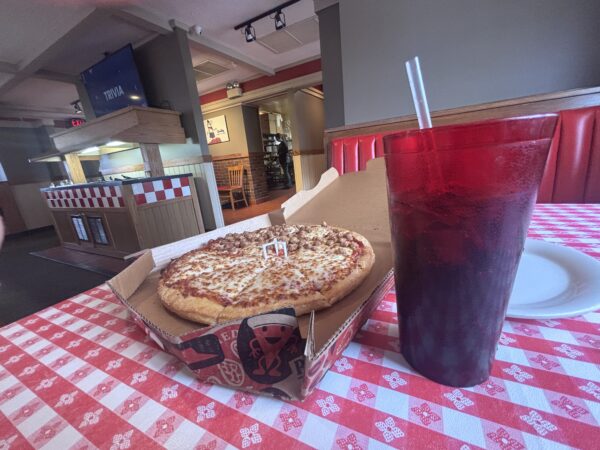
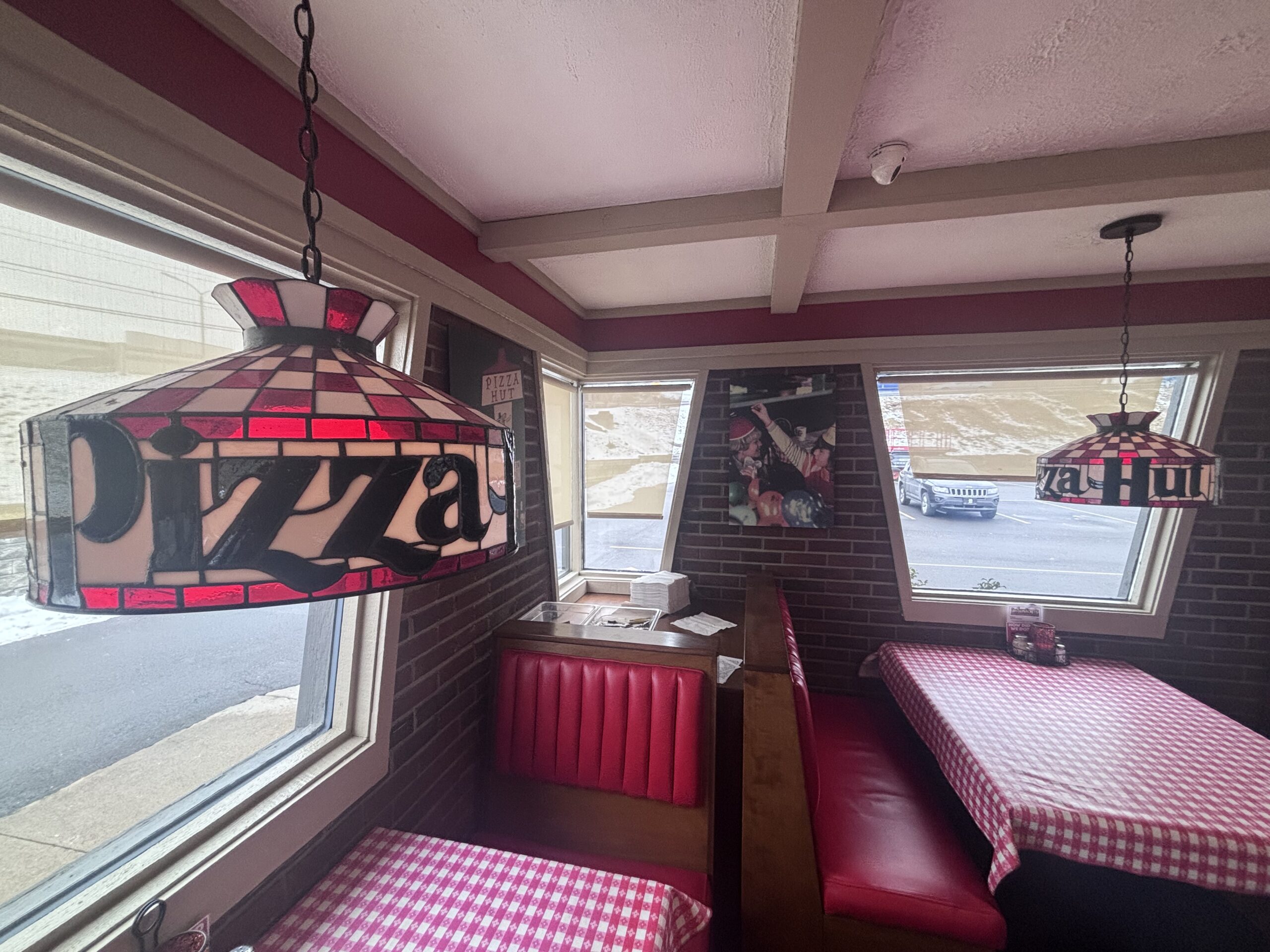
    You’re going to Pizza Hut, of course, and the parking lot is packed. Inside, there are stained-glass lamps hanging over the checkerboard tables, a salad bar, and those red plastic cups.

    The server brings out your deep-dish pies. They smell almost buttery. You grab your fork and knife because, well, that’s how you eat at Pizza Hut.

    Can you smell it? Taste it? Ah, nostalgia.

    A Pizza Hut location in Wyoming County, Pennsylvania, was remodeled into a “classic” location, featuring the salad bar, red, plastic cups and other vintage touches.

    If you’re hankering for Pizza Huts of bygone days or places like the “birthday room” at McDonald’s, you often have to travel back into your memory. Not anymore.

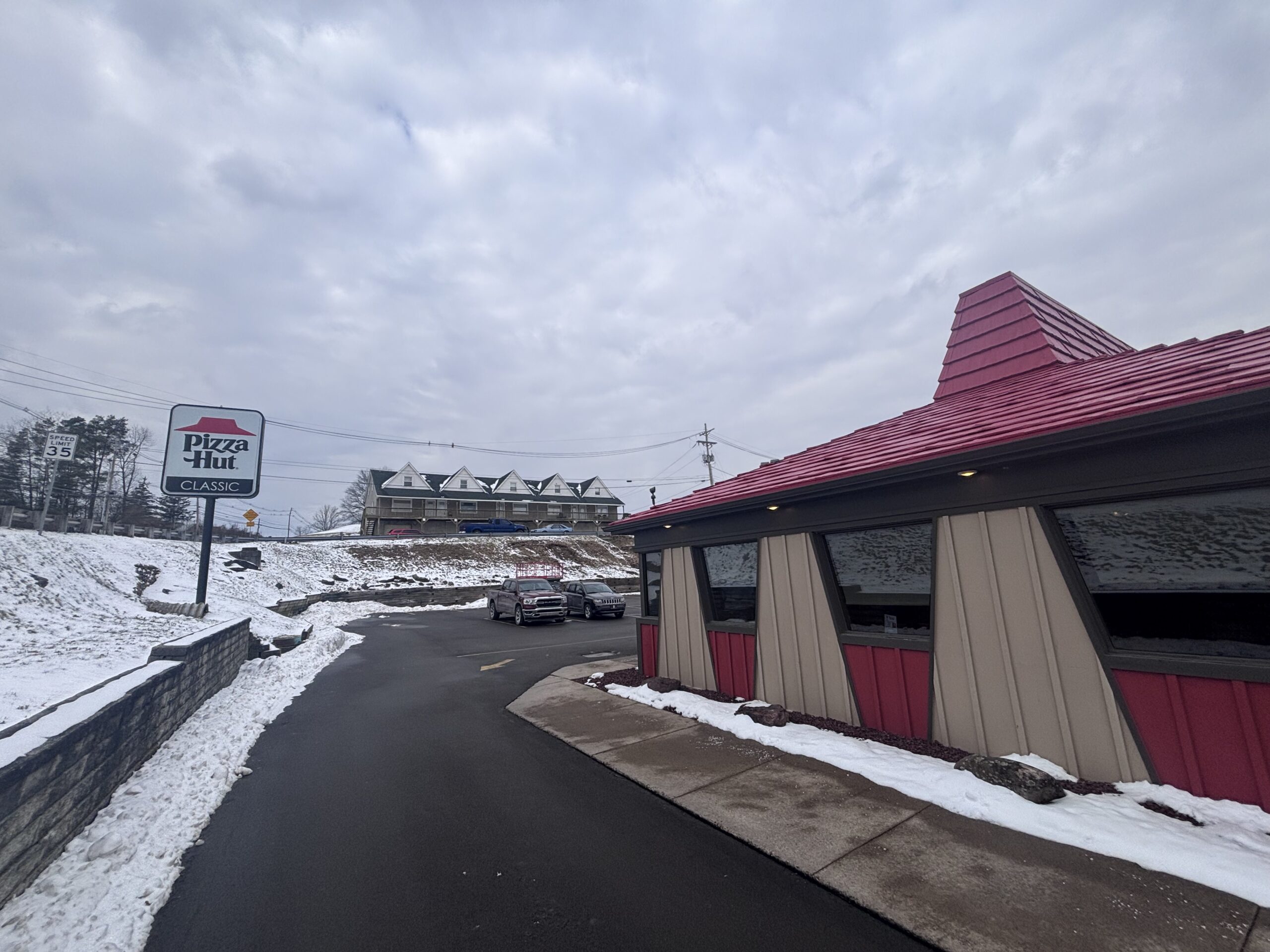
    Pizza Hut has tapped into the power of nostalgia across the United States by resurrecting some “classic” restaurants. There’s one in Tunkhannock, a small town in the Endless Mountains of Wyoming County, about 140 miles northeast of Philadelphia.

    The Pizza Hut, which has been in a shopping center parking lot for decades but was totally revamped — restored? — into a classic location, complete with the red, angled roof.

    A Pizza Hut location in Wyoming County, Pennsylvania, was remodeled into a “classic” location, featuring the salad bar, red, plastic cups and other vintage touches.

    “No touchscreen kiosks, no sleek redesign, just the classic dine-in Hut experience you thought was gone forever. It’s more than pizza. It’s a full-blown childhood flashback served with breadsticks and a plastic red cup!” the Just Pennsylvania Facebook page wrote in May in a post that received 7,500 shares.

    It’s not clear how many Pizza Hut Classic locations exist in the United States, and, oddly, the company did not return multiple requests for comment. According to the Retrologist website, the Tunkhannock location is the only one in Pennsylvania. There appears to be about two dozen in the United States, according to the site, though none in New Jersey or Delaware. The only New York location is in Potsdam, which is closer to Canada than to Pennsylvania.

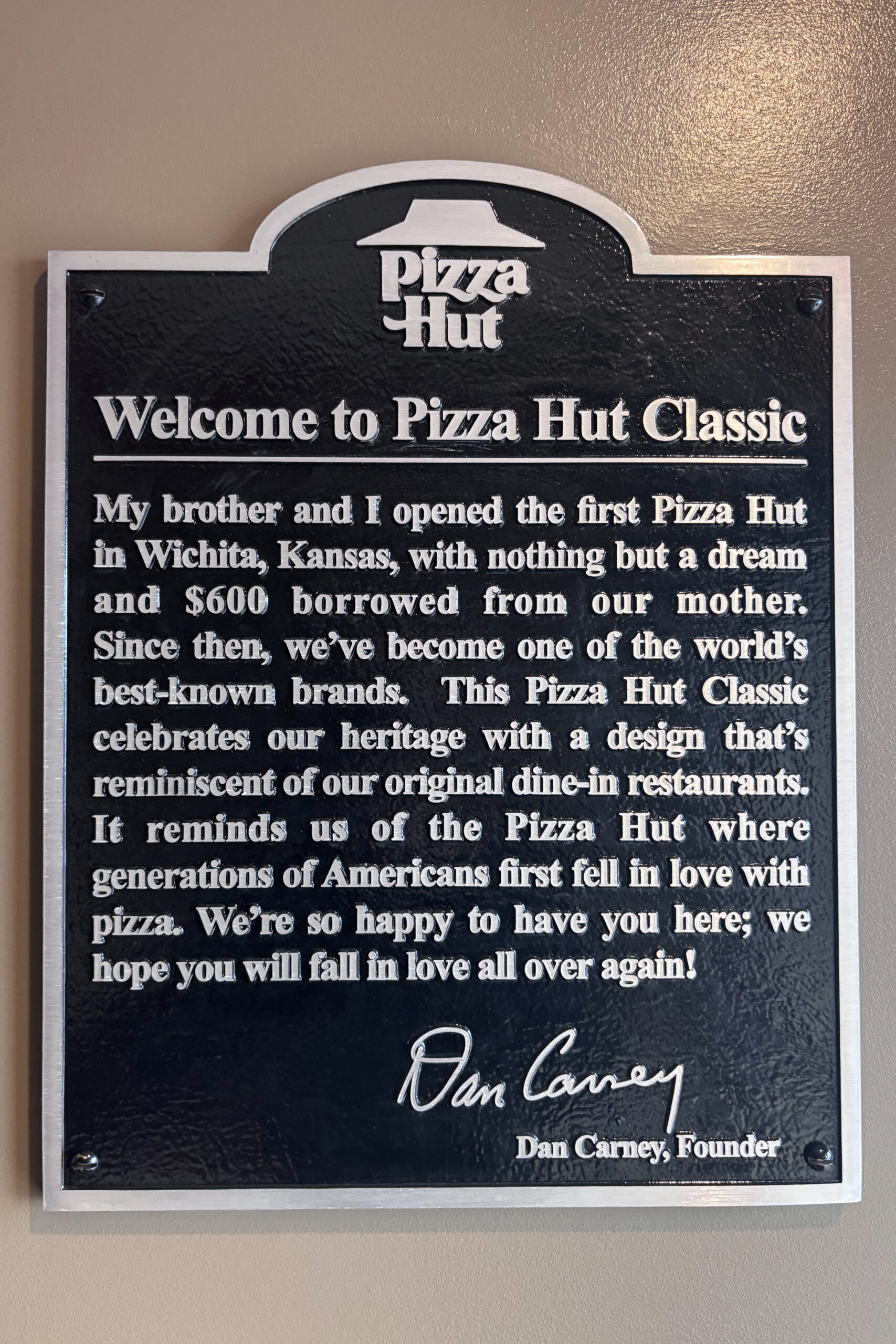
    A plaque on the wall of the Tunkhannock location, written by Pizza Hut founder Dan Carney, explains the concept.

    “It reminds us of the Pizza Hut where generations of Americans first fell in love with pizza,” Carney wrote.

    When The Inquirer visited early on a recent Monday, a lunch crowd was beginning to file in.

    “It was probably 10 years ago that they turned it into a classic, and our business has really exploded in the last year,” said Paul Bender, a shift leader at the Tunkhannock location. “I don’t know how it happened, but people really began to notice. I’ve had customers come in from Wisconsin, Oregon, Michigan, and, obviously, Pennsylvania and New Jersey. We get a lot of people in the parking lot making videos.

    Bender said the Tunkhannock location is still hoping for a jukebox and old-style video games, like the tabletop Ms. PAC-MAN.

    “That would seal the deal,” Bender said.

    Bender has wondered why more iconic chains haven’t created throwback locations, like Pizza Hut. He’s seen the power of nostalgia firsthand.

    “Instead, it seems like more and more are getting rid of dine-in altogether, ” Bender said. “But I’ve seen grown men, in tears here, saying they came here with their father and mother.”

    Last year, it was reported that a Pittsburgh-area Pizza Hut was bringing back dine-in service, though videos show that it’s only gone half-classic so far.

    A Pizza Hut location in Wyoming County, Pennsylvania, was remodeled into a “classic” location, featuring the salad bar, red, plastic cups and other vintage touches.
  • ‘Phillies Extra’ Q&A: Adam Lind on working with Justin Crawford, Aidan Miller, Gabriel Rincones Jr., and more

    ‘Phillies Extra’ Q&A: Adam Lind on working with Justin Crawford, Aidan Miller, Gabriel Rincones Jr., and more

    For most of last summer, observers of the Phillies wondered impatiently about when they would call up outfield prospect Justin Crawford.

    But Crawford stayed put in triple A.

    Now, with president of baseball operations Dave Dombrowski signaling that Crawford has the inside track on being the opening-day center fielder, many of those same observers are nervous about the Phillies turning over the keys to a 22-year-old rookie.

    It felt timely, then, to invite Crawford’s triple-A hitting coach as a guest on Phillies Extra, The Inquirer’s baseball podcast. Adam Lind obliged, and discussed Crawford’s approach at the plate, which has yielded a .322 batting average in the minor leagues but also a high ground ball rate that leaves critics wondering about his ability to hit major league pitching.

    Lind, 42, had a 12-year major league career, mostly with the Blue Jays, and finished with 200 home runs and a 112 OPS-plus. In 2017, his last season in the majors, he played with Bryce Harper and Trea Turner with the Nationals. Lind recalled the experience of teaming with Harper, in particular.

    Watch the full interview below and subscribe to the Phillies Extra podcast on Spotify or Apple Podcasts.

    Q: What was it like in 2017 to be teammates with a 24-year-old Harper at that stage of his career?

    A: It was interesting to be around. Even with José Bautista and Félix Hernández, Ryan Braun — those were superstars — but Bryce takes it to another level. So, it was wild to be in his environment. The talent immediately was like, I’ve never seen a player like that. And then I thought his personality was really interesting. He was actually very funny, a very funny character. I enjoyed being around him. It was a good experience, and it was a great year, a great way to end my career, that 2017 summer with the Washington Nationals.

    Q: What did Aidan Miller look like when he got to you at [single-A] Jersey Shore two years ago, and then what did he look like when he left Lehigh Valley after spending the last week of the season with you there last year?

    A: The first thing I want to compliment Aidan on is his character. It was a tough stretch [in 2024]. We had some deep talks. I learned about him; he learned about me. But the thing is, he worked hard. He gave 110% every single day, and I think more than his hitting or his approach or what I saw, what I witnessed was the type of kid he is and the character he has. And I think that will benefit him hopefully for as many years as he can play. But again, more so than his hitting, his character stands above his work ethic. They’re second to none.

    Q: What do you see as the biggest growth for Miller as a hitter?

    A: His physicality. He looks the part. He has the size, he has the tools. But one thing that happened to him was, my older players, when they were on deck, or when he was hitting or whatever the case might be, they were complimenting him to me. And when you have 29-, 31-year-olds noticing his talent, that means he’s got a real future in the game. Because a lot of times there’s doubt from those types of players. They don’t believe it until they see it. Day 1, he ignited our team. I know it’s triple A, the minor leagues. We had a big series against Scranton, and without him in our lineup that week, we probably wouldn’t have won that series. And he just ignited our lineup for what we needed at that moment in that part of the season.

    Q: Where do you come down on the question of whether Justin Crawford hits enough balls in the air to be successful in the big leagues? And with his speed, does it even really matter?

    A: Hopefully it doesn’t matter. I have to give a big shout-out to player acquisition and our amateur scouting. Between Aidan and between Justin, the type of kids they are, the type of adults they will be, their work ethic, they’re second to none. So, in terms of how [Crawford] is going to succeed in the major leagues, you can never forecast the future, but he’s got the right mentality. He’s got the right work ethic. He’s even-keeled. As far as hitting too many balls on the ground, his approach works right now. He’s super fast. His swing works to where he can hit the ball all over the yard. And when you’re left-handed, it’s a big asset to be able to hit the ball on the ground to the left side of the infield. And whenever a defender has to take one step away from first base, that usually means he’ll be safe.

    Gabriel Rincones Jr. hit 18 home runs with a .799 OPS in 506 plate appearances at triple-A Lehigh Valley in 2025.
    Q: Where did you leave things with Gabriel Rincones Jr., in terms of what he needs to do to take that next step this season?

    A: Well, I think the first two months were good for Gabriel. It forced him to learn about himself and learn about the game. We had discussions about, what have you learned so far in your career? And there weren’t really great answers yet. But through the struggle, he matured a lot. He learned a lot about his swing. He learned a lot about approach, and I think it was just the level. And I say this a lot, baseball will tell you when you need to make an adjustment, and that was his calling. Triple A was another level for him. He hadn’t played a whole lot even at double A, so it was a good challenge for him, and he responded well in the second half.

    As far as left-handed pitching, I tried to give him some tools. We worked a lot, somewhat a lot, with him in [high-performance] camp [in the fall] on left-handed pitching. But again, his calling card will be to do well against right-handed pitching. He’s immensely talented. In my heart, I think he can hit left-handed pitching, but he just needed some tools and some approach adjustment and just some outside-the-box thinking. Because I had to try and do it — how to survive against left-handed pitching. And you look at Kyle Schwarber, he wasn’t very good [against lefties] at the beginning of his career. He made adjustments. And it’s not usually [about the] swing; it’s an approach thing, and hopefully he will improve. The numbers are kind of low against lefties, so it should be easy to make improvements with just simple approach adjustments.

  • Philadelphia is a top place to launch a start-up — but success requires more than passion | Expert Opinion

    Philadelphia is a top place to launch a start-up — but success requires more than passion | Expert Opinion

    It seems that Philadelphia’s reputation as a good place to start a business got a boost this past year.

    The city ranked 13th among 350 “start-up ecosystems” worldwide in Startup Genome‘s 2025 Global Startup Ecosystem Report, which considers educational resources, labor, taxes, and funding opportunities.

    The region attracted over $900 million in equity funding and acquisitions in 2024-25, according to the Greater Philadelphia Chamber of Commerce; expanded biotech and robotics facilities; and launched AI education initiatives — all supported by public-private partnerships and university-led R&D.

    Chamber CEO Chellie Cameron said the Startup Genome ranking “affirms our region’s emergence as a global destination for innovation, business, and opportunity.”

    From 2019 to 2024, the U.S. saw more than 21 million new business applications, marking the largest-ever spike.

    Software giant Intuit recently reported that and “33% of U.S. adults plan to start a business or side hustle next year — a 94% year-over-year increase.” LinkedIn says the number of “founders” listed on the platform grew 69% last year.

    Are you thinking of starting a business this year? Before you quit your job, here’s some practical advice.

    Get your finances in order

    When I started my business, I did so while having a full-time job. I worked a lot of hours. But that’s because I needed to build up an income stream to support me for when I eventually left the corporate world.

    Smart entrepreneurs know their finances. They’re good at math or have advisers that help them. They recognize the importance of accounting.

    Gabriella Daltoso, a founder and CEO of Philadelphia-based medical device start-up Sonura, recognized the importance of understanding her numbers and embarked on a program to learn the basics of accounting. A trained scientist, she sought out help from people with business expertise at the University of Pennsylvania, where she spun out the business.

    “I got a freshman finance textbook, learned the terms, and then learned from other founders’ experiences,” Daltoso said. “I found mentors and professors who would help me at Penn. People can be incredibly helpful when you reach out.”

    Sonura founders Gabriella Daltoso (left) and Sophie Ishiwari at the Hospital of the University of Pennsylvania in November.

    Start-ups need capital, and for financing, it’s important to have a solid business plan with realistic projections of revenues and expenses. You need to establish relationships with banks, investors, family members, friends, venture capitalists, or anyone else that could be a source of financing. You should have enough money in the bank to support yourself and your family for at least two years because it will likely take that long to get your business cash positive.

    James Massaquoi, a board member at the Seybert Foundation and former analyst at Philadelphia venture capital firm Osage Partners, emphasizes planning capital needs early, ideally before launching. Massaquoi urges founders to deeply understand their cost structure and assumptions before getting in too deep.

    “Talk to bankers and other sources of capital before you really start the business, so it’s a conversation — not another checklist,” he said. “Spend more time modeling out costs than forecasting profits because costs fluctuate dramatically, especially in the first two years.”

    Make sure your family is on board

    Think you’re busy now? Wait until you start a business.

    You will spend much more time launching, running, and growing your enterprise than you expect. You will work nights, weekends, and crazy hours. People will be happy for you and supportive, but in the end, it’s all on your shoulders.

    This kind of stress could put a strain on your personal life. You will not succeed unless your family members understand this and are ready to support you.

    “Work-life balance is really about how much work you need to do for this to be successful — and how much pressure you feel to make it succeed,” Massaquoi said.

    Be realistic

    Passion for your business venture is important, but profits are just as important. Your model needs to be satisfying a market need if it’s going to have a legitimate chance.

    The typical life span of a start-up is two to five years, with 70% going out of business before reaching their fifth year. The odds are against you.

    The ones that do survive fix problems and do so better than their competitors. They watch their pennies and are open to change based on what their customers need.

    Take your business seriously

    Talk to a tax and legal adviser and form a company — maybe a corporation, partnership, or limited liability company. Use these advisers to help you register your business with the state and the federal government.

    Create a professional website. Establish a commercial mailing address (not your home) and a toll-free phone number.

    Pay in your estimated taxes, and file your tax returns on time.

    As you hire employees, create policies and procedures and try to offer the types of benefits that established businesses provide like health insurance, retirement plans, and flexible time off.

    If you are truly running a business (and not just a hobby), you need to act like a business.

    Lean on local resources

    As a start-up founder in Philadelphia, you’re not alone. The area has a number of great resources to help your small business get funding and grow.

    Introduce yourself to the Small Business Development Center at Temple University’s Fox School of Business. Reach out to SCORE, which is part of the Small Business Administration. Get involved with nonprofits that provide education, financing help, and mentorship to start-ups, such as: the Philadelphia Alliance for Capital and Technologies, Venture Lab (University of Pennsylvania), Broad Street Angels, Startup Leaders, Entrepreneur Works, and Urban League Entrepreneurship Center.

    Take advantage of the free space and other resources offered by the Free Library of Philadelphia.

    Also, surround yourself with as many experts as you can afford. Have a good accountant, lawyer, coach, and advisers on hand to help you make decisions. Build these costs into your business plan and projections because these people are critical for your business success.

    “Your expertise isn’t having all the answers; it’s learning from anyone who’s willing to share,” Daltoso said. “It’s really important to hear everyone, synthesize what’s useful, and move forward with confidence.”

  • A Montgomery County office that’s ‘outlived DOGE’ has helped save the suburb $14 million

    A Montgomery County office that’s ‘outlived DOGE’ has helped save the suburb $14 million

    A Montgomery County office — which one county commissioner described as a far less controversial version of Elon Musk’s Department of Government Efficiency — has helped the county find $14 million in savings within the past year and reduce the deficit by half.

    Montgomery County’s Office of Innovation, Strategy, and Performance (OISP), announced in February 2025, spent the last year meeting with department heads to identify areas for cost cutting and streamlining services, such as eliminating almost a dozen vacant positions worth hundreds of thousands of dollars, saving $1.5 million on a prescription benefits provider, and conserving half a million dollars by bringing some county legal services in house.

    In 2026, the office could consider integrating artificial intelligence into county services, with the support of all three commissioners, aimed at cutting red tape for residents and county employees.

    “It’s kind of like DOGE,” said Commissioner Vice Chair Neil Makhija, a Democrat, noting that the office has “outlived” DOGE’s period of high activity when Musk was in charge before he stepped away last spring.

    “We didn’t just take the richest person in the county and tell them to cut, you know, benefits for poor people, which is what the federal DOGE was,” Makhija said.

    Also unlike DOGE — which under Musk’s leadership was responsible for the haphazard slashing of thousands of federal workers’ jobs during the first year of President Donald Trump’s second term — the office does not envision layoffs becoming part of its mission.

    The office’s work comes on the heels of the county’s $632.7 million operating budget and a roughly $25.5 million deficit, resulting in a 4% property tax increase for residents.

    Republicans have made looking for inefficiencies in government part of their brand. But Democratic leaders in Pennsylvania have also started taking on streamlining government. Gov. Josh Shapiro has touted how he’s cut processing time for licenses and accelerated the permitting process for building projects.

    And in blue Montgomery County, a bipartisan group of leaders says that responsible government efficiency should be a pillar of good government, regardless of political party.

    “What happened with DOGE at the federal level was hard to watch and certainly not the approach that we’re going to take in Montgomery County, but, any leader … has to go through this exercise of are we optimizing our resources?
Are we leaving money on the table? Are there opportunities to improve the performance of our people?” said County Commissioner Chair Jamila Winder, a Democrat.


    “Like all of those are just disciplines that are industry agnostic, and so I don’t think it’s a Republican or a Democrat thing,” Winder added.

    Commissioner Tom DiBello, the only Republican on the board, agrees, saying that he has high expectations for the office and its ability to oversee the adequate spending of taxpayer dollars.

    “I mean, that’s our job. It has nothing to do with Republican or Democrat. My feeling, it has to do with taxpayer money,” DiBello said. “We’re supposed to be stewards of taxpayer money.”

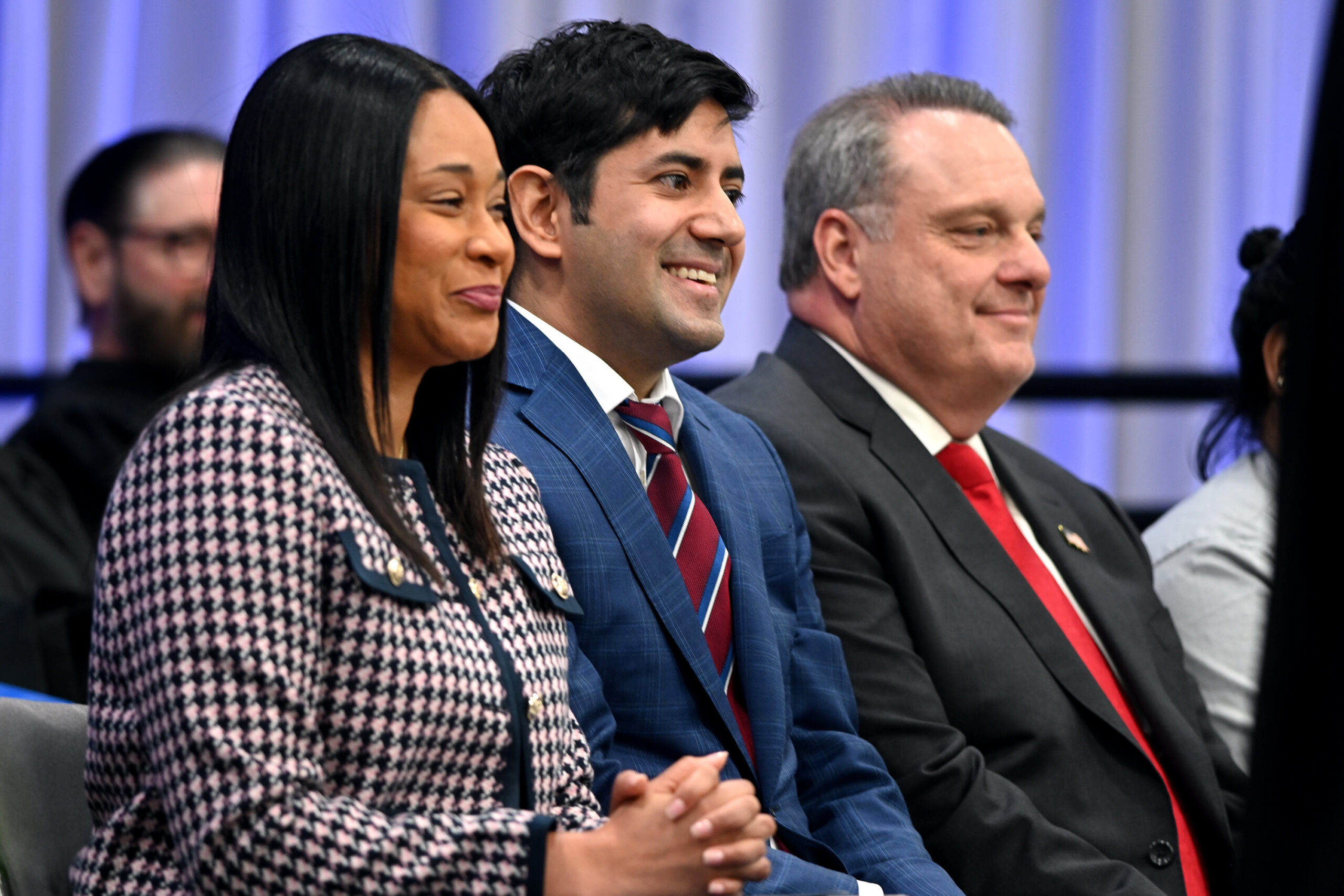
    Jamila H. Winder (from left), Neil Makhija, and Thomas DiBello are seated together on stage at the Montgomery County Community College gymnasium Wednesday, Jan. 3, 2024, during ceremonies before they were sworn in as Montgomery County’s new Board of Commissioners.

    Is artificial intelligence the next step?

    The OISP was launched in February 2025 after the office previously served as the county COVID-19 pandemic “Recovery Office,” ensuring approximately $161 million in funds from the American Rescue Plan Act were being used appropriately.

    When Stephanie Tipton, deputy chief operating officer, was hired in Montgomery County in September 2024 after more than 16 years in leadership in Philadelphia, county officials started discussing how to translate that oversight practice at the “Recovery Office” to every facet of county spending and performance.

    That mentality helped the OISP cut the county deficit in half and focus on ways to reduce it in the long term, such as eliminating longstanding vacant positions around the county, including on the board of assessment, which does real estate evaluations. The office also helped develop performance management standards for departments.

    “What we were really interested in is finding things that we could make repeatable year after year, and that would move forward, whether that was restructuring positions and eliminating vacancies that we don’t carry forward” to doing a trend analysis on spending, said Eli Gilman, project director of the 11-person office. He noted that the team was “kind of building a plane while we were flying.”

    County governments are always trying to be efficient with taxpayer dollars, said Kyle Kopko, executive director of the County Commissioners Association of Pennsylvania, especially in the aftermath of last year’s state budget impasse. But Montgomery County’s decision to have a dedicated office for efficiency is fairly unique, he said.

    “This is something that has become more and more of a focus of counties everywhere just because we’re not sure if we’re going to have the consistency of on-time state funds,” Kopko said.

    The next phase for the office? Cutting red tape for residents. And part of that may be through enlisting artificial intelligence, something the county has been examining through the commissioners’ “Advisory Council on Artificial Intelligence for Public Good” established in April 2025.

    “The goal here is like, how can we leverage this new and emerging technology to help us make it easier for residents to access services,” Tipton said. “Make it easier, reduce the burden on our frontline staff, so they can spend more time in sort of customer-facing, client-facing activities.”

    AI will be something that many counties across Pennsylvania will be grappling with moving forward, Kopko said. Though some counties are wary of using it for sensitive information.

    Everyone has a different idea as to what they would want to see AI used for in Montgomery County.

    Makhija wants to make court documents accessible by chatbot. Winder says she wants to see AI help county employees be more efficient in their roles. And DiBello, who worked in tech software, said as long as accuracy is prioritized, AI could one day be used in situations where residents don’t have to speak directly to someone.

    But first, Tipton said, the county wants to internally test AI tools to “make sure that we have the right sort of governance and guardrails” before launching it to the public.

    When Tipton joined Montgomery County she said she had a “clear mandate from the commissioners” to look at department spending. She also wants it to be a transparent process for residents and the office plans to launch an open data site to the public in the second half of 2026.

    “We want to make sure that moving forward, when we are making investments in the budget we can really understand more clearly how that is impacting service delivery, so we can tie that more directly to work that we’re doing,” Tipton said.

  • Her youngest son was killed in a mass shooting. Now, her eldest is charged with committing one.

    Her youngest son was killed in a mass shooting. Now, her eldest is charged with committing one.

    Two mass shootings, just years apart, forever altered Nyshyia Thomas’ life.

    In July 2023, her 15-year-old son, DaJuan Brown, was shot and killed when a mentally ill man dressed in body armor gunned down five people at random on the streets of Kingsessing.

    Then, two years later, almost to the day, police say Thomas’ son, Daquan Brown, was one of at least 15 people who fired guns aimlessly down the 1500 block of Etting Street, leaving three dead and 10 others wounded.

    It’s a symmetry almost too painful for the mother to reconcile: one son killed in a mass shooting, another behind bars, charged with committing one.

    Last month, Thomas, 37, sat inside the Philadelphia courthouse and faced the man who killed her youngest son and set in motion the crumbling of her family.

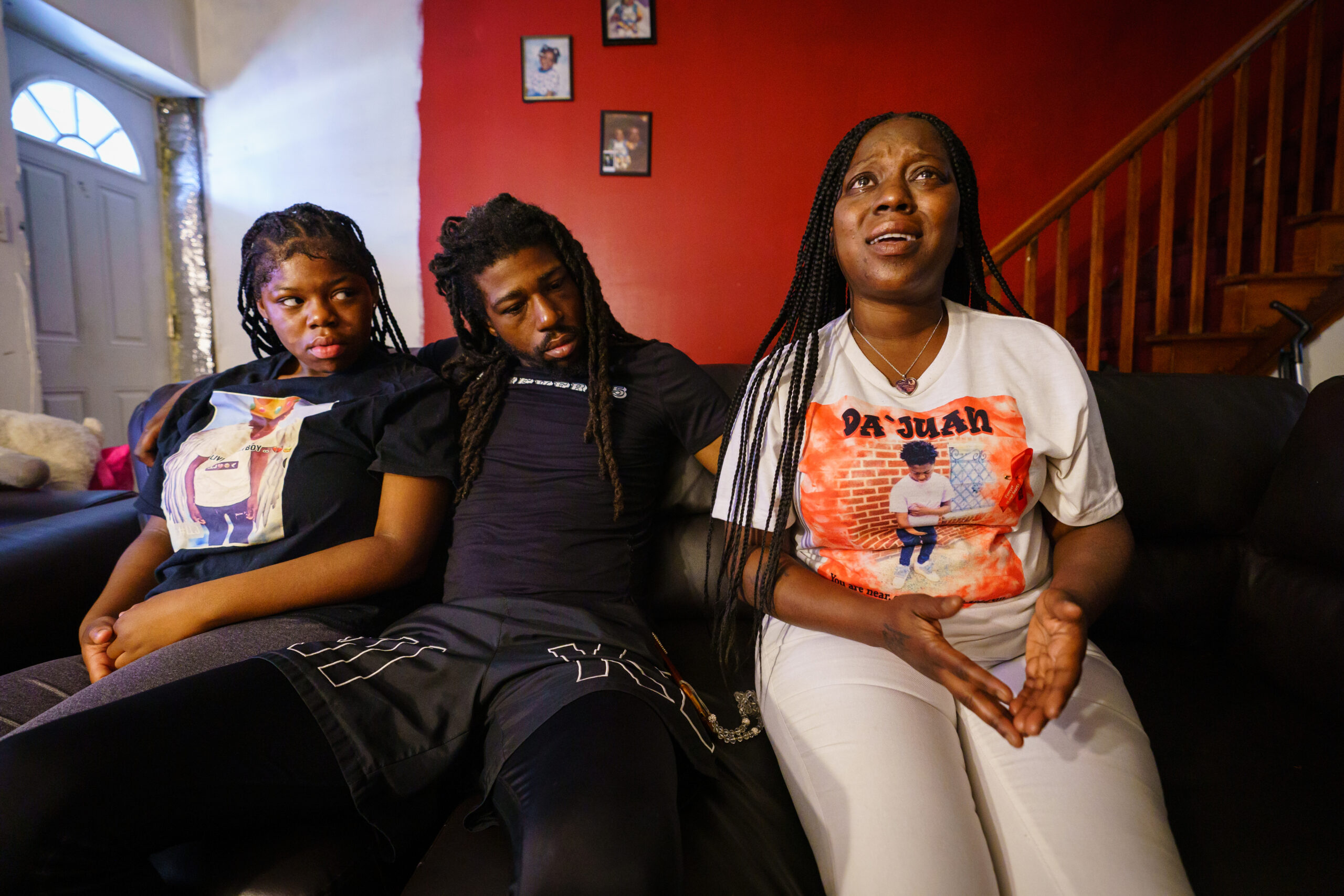
    From left to right: Daquan Brown, Nyshyia Thomas, Tyejuan Brown, and Nesiyah Thomas-Brown, at the funeral for 15-year-old DaJuan Brown in July 2023.

    This week, she will return, but to sit on the other side of the room — to see her eldest son in shackles, seated behind plexiglass, charged with three counts of murder, nine counts of attempted murder, and causing a catastrophe and riot.

    She said her 21-year-old son feared for his life when he fired his legally owned gun twice down Etting Street the night of July 7, and that prosecutors have charged him with killings he didn’t commit.

    But she also feels for the families of the victims — one of them her son’s close friend — and imagines that, if she were in their shoes, she would want everyone who fired a gun to face consequences.

    “From being on both sides of this, it’s overwhelming, it’s unfair,” she said. “But I understand.”

    Nyshyia Thomas (right) with Tyejuan Brown and Nesiyah Thomas-Brown inside their South Philadelphia home.

    The July 7 party on Etting Street was one of two on the block that weekend celebrating the July Fourth holiday and the lives of some young men from the neighborhood who had been killed in recent years. Daquan Brown grew up about a block away and went to see childhood friends, his mother said.

    Shortly after 1 a.m., police said, gunfire erupted. Officers responded to find that more than 120 bullets had been fired down the street in nearly all directions, striking neighbors’ homes and cars — and 13 partygoers.

    Three men died. Zahir Wylie, 23, was struck in the chest, and Jason Reese, 19, was shot in the head. Azir Harris, 27, who used a wheelchair after being paralyzed in an earlier shooting, was struck in the back.

    Initially, police thought someone had shot up the party in a targeted attack. But after reviewing video footage, interviewing witnesses, and analyzing ballistics, detectives now believe the partygoers may have unintentionally shot each other.

    Police investigate a mass shooting on the 1500 block of South Etting Street on July 7, 2025.

    After people heard what they thought was the sound of gunfire — someone at the gathering may have shot once into the air or a car passing by may have backfired — at least 15 people pulled out their weapons and sprayed dozens of shots down the block, police said.

    Brown, police said, was among them. As gunfire erupted, he took cover between cars and fired two shots down the block, according to two law enforcement sources who asked not to be named to discuss an ongoing investigation.

    Investigators don’t know whether any of the shots Brown fired struck or killed anyone, the sources said. A full ballistics report is still pending, though it may never be able to determine whose bullets struck each victim.

    Four other men have also been charged with murder and related crimes.

    Thomas has tried to come to terms with the police narrative. She is adamant that her son, having fired only two shots, shouldn’t be charged with three counts of murder and 10 counts of attempted murder. He feared for his life and acted in self-defense, she said.

    At the same time, she said, had it been her son who was shot and killed that night, she would not want to hear from anyone trying to make sense of it.

    Tyejuan Brown and a family member hold Nyshyia Thomas at the funeral of their son, DaJuan Brown, on July 15, 2023. DaJuan’s brother, Daquan, stands to right of Tyejuan.

    Still, she finds herself doing that. Brown, who worked as a security guard and has no criminal record, only started carrying the 9mm handgun because of what happened to his brother, she said.

    She remembered talking to him before he bought the weapon last year.

    “Mom, I lost my brother,” Thomas said he told her. “Y’all not burying me.”

    “I kissed him,” she said. “I told him I respect it.”

    Brown’s father, Tyejuan, is also jailed with him.

    On the night of July 7, she and Tyejuan, the father of her three children, were talking on the porch of her home when they heard dozens of gunshots coming from Etting Street. Tyejuan Brown, she said, took off running toward the party where his son was gathered.

    When Thomas reached the block, she said, she found Tyejuan and Daquan covered in blood from carrying bodies to police cruisers.

    But police said that when they reviewed surveillance footage from that night, they saw Tyejuan Brown rushing down the street holding a gun, which he is barred from owning because of drug, gun, and assault convictions.

    He was arrested in early August and charged with illegal gun possession.

    Nyshyia Thomas holds Tyejuan Brown during an interview in 2023 about the loss of their youngest son, DaJuan.

    Four days later, they came for his son.

    Until recently, Daquan Brown and his father were housed in the same block at Curran-Fromhold Correctional Facility and would speak to each other through a shared cell wall.

    Brown is held without bail. Thomas said her family has gathered the $25,000 necessary for the father’s bail, but he has told them not to post it.

    “I’m not coming out without my son,” Thomas said he told her.

    On the outside, Thomas and her 15-year-old daughter, Nesiyah, are left to grapple with the absence of the three men in their lives they love most.

    “I lost one son to gun violence,” Thomas said. “I’ll be damned if I let the system take my other one from me.”

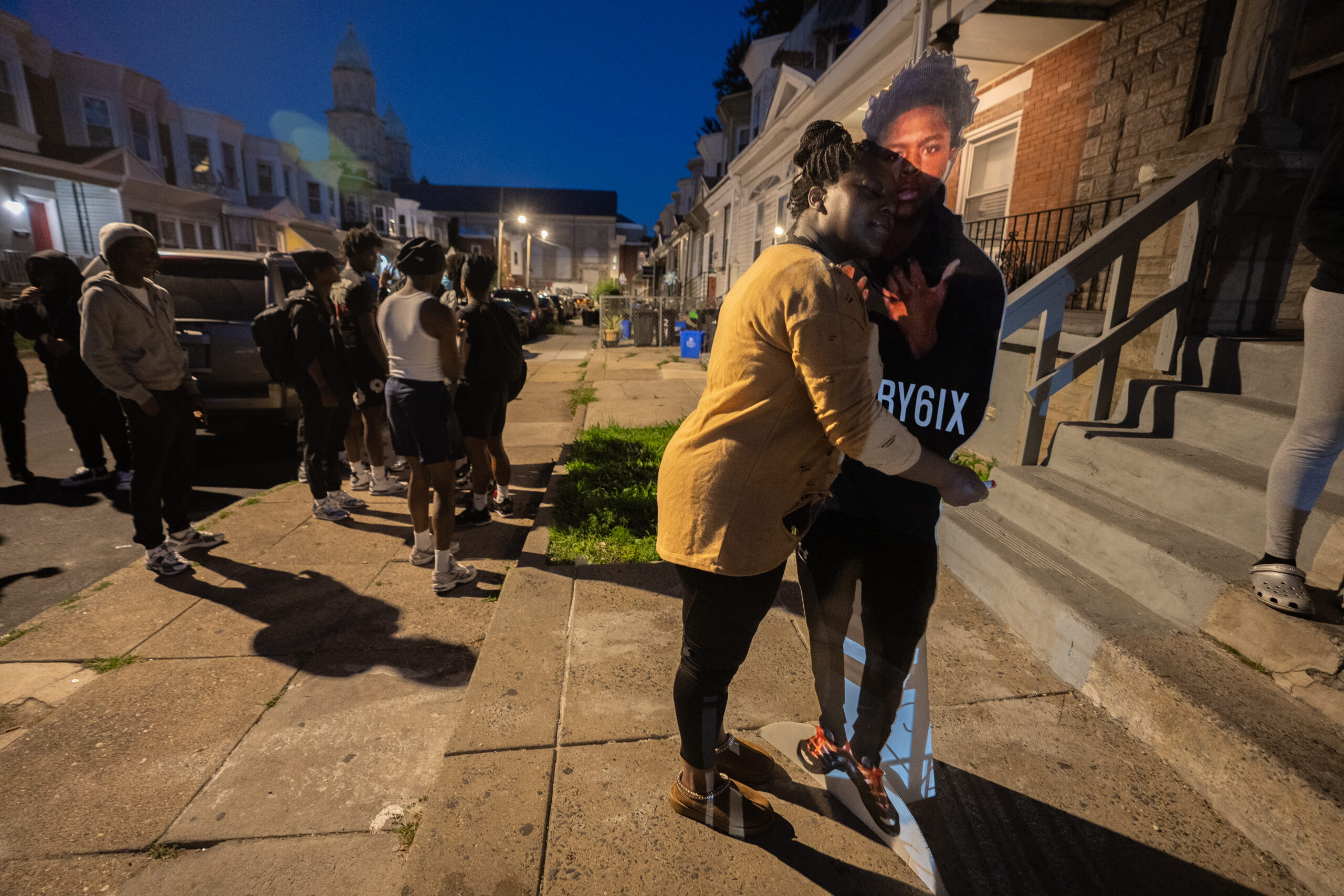
    Nyshyia Thomas hugs a photo of her son, DaJuan Brown, on what would have been his 18th birthday in September. Brown was shot and killed in a random mass shooting in July 2023.