Tag: topic-link-auto

  • How a switch to a Philly-area club helped Jocelyn Nathan’s journey to Penn State volleyball

    How a switch to a Philly-area club helped Jocelyn Nathan’s journey to Penn State volleyball

    STATE COLLEGE, Pa. — Jocelyn Nathan, a defensive specialist in her third season with Penn State women’s volleyball, is from Delaware, a state not known for its volleyball prowess.

    Her graduating class at Wilmington Friends had just 50 students, a “second family” she had attended classes with since elementary school.

    “I think that [family-like] dynamic is something that I really wanted to bring to the rest of my life,” said Nathan, a Wilmington native. “Penn State is huge, but I wanted to bring a close-circle vibe to campus. I wanted to bring that small-town aspect to a bigger stage. And I feel like I’ve done a really good job of it.”

    Nathan enjoyed her upbringing, but it didn’t help her gain traction on the recruiting trail. She wasn’t on a top club team, which meant she wasn’t invited to U.S. training sessions and didn’t attend nationals every year like most high-profile recruits.

    So, the 5-foot-6 defensive specialist took charge.

    She switched club teams to Conshohocken-based East Coast Power, an uncomfortable change for a then-15-year-old who went from knowing nearly everyone in her hometown to knowing none of her teammates or coaches.

    But that move set Nathan up for success she never dreamed of.

    “When I set my hopes out, I was like, ‘Maybe I’ll get noticed by some lower Division I teams,’” Nathan said. “And it never had anything to do with not believing I could get to that level. It was just, you see what you are working with because not many people knew who I was.”

    Her father, Len, who played soccer and baseball at Swarthmore College, compiled highlight tapes to send to college coaches. Nathan sent countless emails to schools in search of offers.

    And with the help of Roberta McGuiney (née Holehouse), who played volleyball at Penn State from 2005 to 2008 and coached Nathan with East Coast Power, Nathan secured an offer from the Nittany Lions.

    She appeared in just two sets during her freshman year. She said she spoke “maybe 100 words” all season as she acclimated to a her new, environment.

    But during her sophomore campaign, Nathan broke out. Penn State coach Katie Schumacher-Cawley lauded Nathan’s “fiery” personality, one she noticed during the recruiting process and has only grown since.

    “I think [Nathan] is one of the best teammates around,” Schumacher-Cawley said. “I never question if she’s ready or if we should put her in. She knows the game well. She competes hard. She’s a great teammate. And I’m really happy for her success.”

    Nathan tallied 69 digs in 59 sets across 22 matches as a sophomore. And she saved her best for last.

    In the national championship match against Louisville, she totaled a season-high-tying 10 digs as Penn State won its eighth NCAA title. Nathan believes she’s the first Delaware native to win a national championship in women’s volleyball.

    “It gives me goose bumps to think about it, just knowing where I came from,” Nathan said. “I think it just made everything feel so great. Not only could I represent Delaware, but [I could] also be a symbol for the little girls who are trying to get to a Division I school.”

    One year after adding an eighth star to their uniforms, the Nittany Lions are back in the NCAA Tournament for a 45th straight season. As the No. 8 seed in the Texas Region, Penn State will face South Florida at 5:30 p.m. Friday in Austin, Texas. If the Nittany Lions advance, they will face the winner of No. 1 Texas and Florida A&M.

    Nathan is having another strong season in Happy Valley. She has appeared in all 30 matches and tallied career-highs in digs (130), sets played (94), and assists (17).

    And through her success at the national level, she has remained grounded in her roots.

    “I’ve always wanted to make people feel welcome,” Nathan said. “And I strive to do that with one new person every single day. That was something I wanted to carry with me, not just to the volleyball court, but to school and to everyday life.”

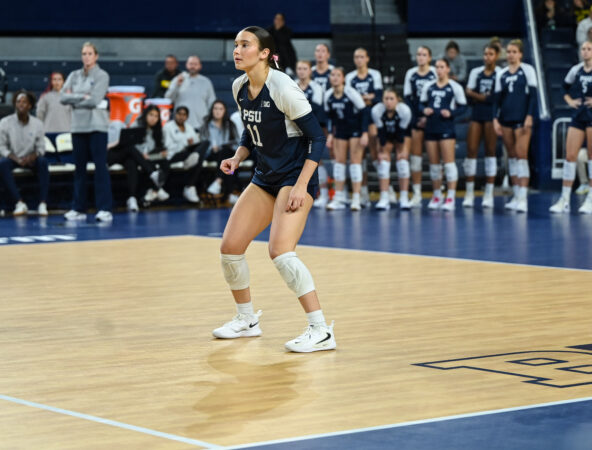
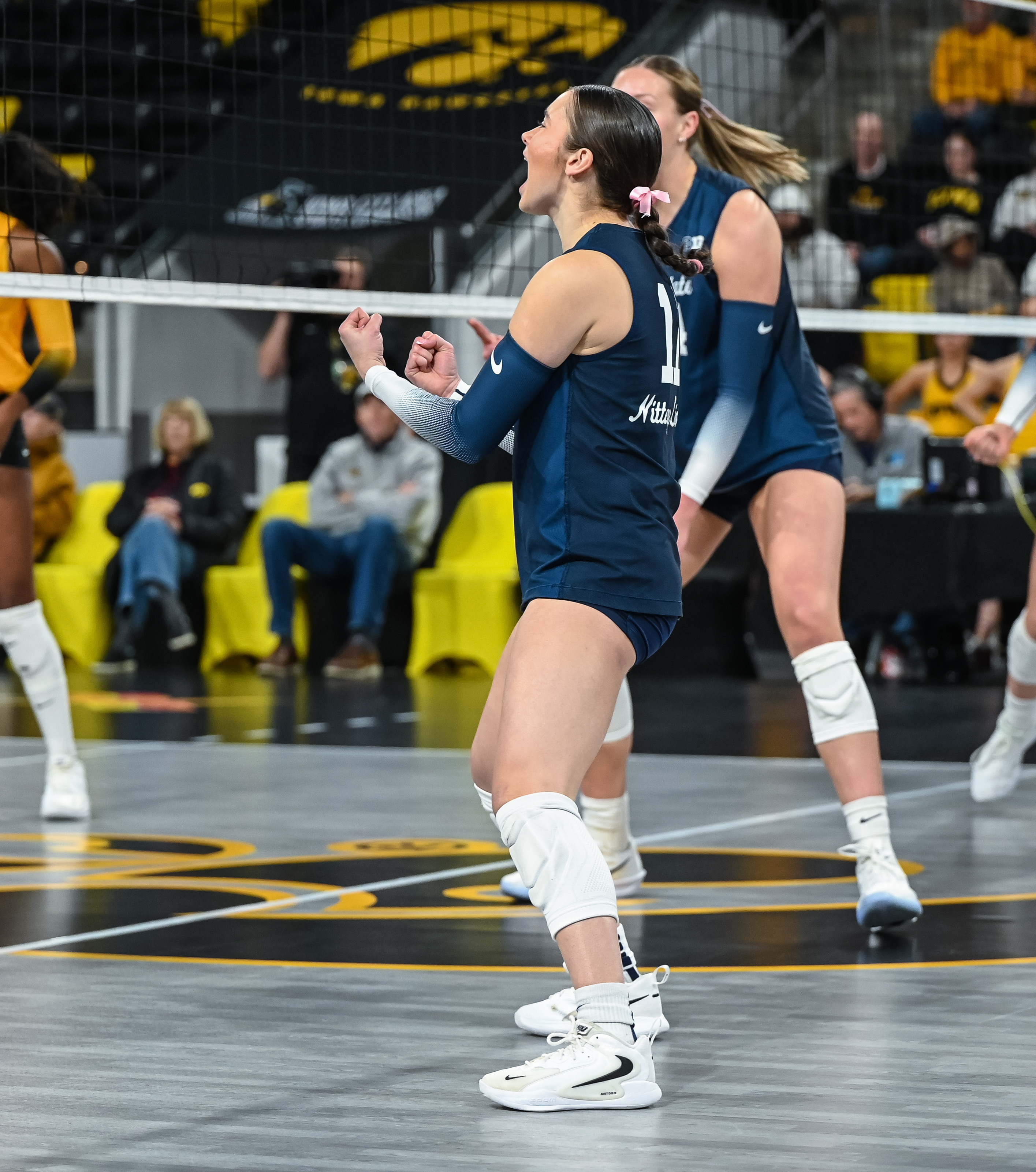
    Penn State’s Jocelyn Nathan celebrates during a game against Iowa.
  • 🎄It’s time to soak up the holiday spirit | Things to do

    🎄It’s time to soak up the holiday spirit | Things to do

    If you didn’t already know from the Christmas lights or weather temps, the fall season has passed, and winter has arrived.

    While the concerts, comedy shows, and other events may slow down toward the end of the year, there’s still plenty to do. Between holiday shopping and your hunt for a Christmas tree, stop by a holiday pop-up concert, a glimmering light show, or enjoy some Philly-style comedy at nearby venues.

    I would be remiss not to mention some holiday-themed happenings, especially the City Hall Christmas lighting ceremony. But just like my Christmas shopping to-do list, there’s plenty of variety. Consider this the beginning of your late-year guide to what’s happening both in and outside your typical holiday ritual.

    — Earl Hopkins (@earlhopkins_, Email me at thingstodo@inquirer.com)

    If someone forwarded you this email, sign up for free here.

    Philadelphia’s Holiday Tree as see through the northern archway at City Hall on Dec. 12, 2024

    Philadelphia’s Christmas tree lighting at City Hall

    Tonight’s Center City tree lighting ceremony will be a spectacle.

    A 50-foot-tall tree, gleaming with thousands of colorful lights, will illuminate the north side of City Hall, at North Broad Street and John F. Kennedy Boulevard, for the first time of the season on Thursday night.

    The tree lighting will feature a performance by Lalah Hathaway and Grammy-winning singer Ashanti. On offer will be free hot chocolate and warm apple cider, plus gift giveaways. If you can’t make it to tonight’s lighting, you can enjoy 6ABC’s live broadcast online, or on the mobile app.

    The best things to do this week

    🎄Lights in Delco: Starting Thursday, 300,000 lights will adorn over 125 trees at the center of Media’s Rose Tree County Park for the 50th annual Festival of Lights.

    🎭 A transformative musical leaves soon: Catch the acclaimed, eight-Tony Award-winning musical Hadestown at the Forrest Theatre before the show’s final show on Sunday.

    😂 Laughs and brews: Stop by the Next In Line Comedy Club in Spring Garden to see headliners Chris Aileo and Josh Martier work their comedic magic on Thursday night. Drinks by Love City Brewing are available in the venue’s showroom bar.

    🪕 Country Christmas carols: Among the list of exciting holiday pop-up concerts this month, veteran country singer LeAnn Rimes will hit the Keswick Theatre stage for her Greatest Hits Christmas Tour. Before you go, make sure to clear your throat. You will probably sing Christmas songs from her holiday albums in no time.

    🎵 Tindley Temple’s organ recital: Tindley Temple’s presentation of Handel’s The Messiah is accompanied by organ and includes just music from Part I (plus the “Hallelujah Chorus”), but there’s no warmer, more joyous appearance of the piece than the one at Tindley, on South Broad Street. The Sunday concert features conductor Jay Fluellen, organist Luke Staisiunas, and vocal soloists Tessica McClendon, Kaitlyn Tierney, Perry Brisbon, and Shango Lewis.

    📅 My calendar picks this week: Art & Eats Chestnut Hill, Holiday Lights on Boathouse Row, and the Santa Stroll block party on East Market.

    Ross Varanyak helps prepare Christmas trees for customers at Yeager’s Farm in Phoenixville, Pa. on Friday, Dec. 2, 2022.

    The thing of the week: Time to get your Christmas tree

    In the words of my colleagues Michelle Myers, Henry Savage, and Rosa Cartagena, the debate this Christmas isn’t whether Santa Claus exists. It’s whether to display a real or fake Christmas tree.

    While many households have switched to artificial ones, holiday purists are sticking to the real thing. Lucky for them, Philadelphia is home to several Christmas tree farms and lots, offering a wide selection of pre-cut varieties and even delivery options.

    From Montgomery County to South Jersey, there are options for all kinds of holiday Christmas tree shoppers. Read the list of tree farms and lots around the region.

    Winter fun this week and beyond

    🎁 From Center City’s Christmas Village and Dilworth Park’s Made in Philadelphia market to Bucks County’s Peddler’s Village and Bethlehem’s iconic Christkindlmarkt, these holiday markets are worth a look.

    🩰 The ‘Nutcracker’ to grace the stage: The classic George Balanchine Nutcracker, featuring a cast of talented children and some of the best professional dancers in the city, kicks off at the Academy of Music on Friday. The ballet will run through Dec. 31.

    🎅 Hop on Manayunk’s Jolly Trolley: As part of Manayunk’s Get Lit weekends, the neighborhood is offering free Jolly Trolley rides through Dec. 20. The trek will include live music, performances, and plenty of holiday season characters on board for the ride down Main Street.

    🎵 Holiday organs will blare: Live organists play Longwood Gardens every day of the holiday season (including Christmas and New Year’s days) — among them, Luke Staisiunas, Thomas Gaynor, Andrew Paulson, and Dylan Shaw.

    🙆🏽 Pirouettes and orchestral tunes: The most popular ballet in the world would be nothing without Tchaikovsky’s evocative score, and the city is fortunate to have the Philadelphia Ballet Orchestra in the Academy of Music pit live for all 34 performances of The Nutcracker from Friday through noon on New Year’s Eve.

    Staffer picks

    Pop music critic Dan DeLuca lists the top concerts this weekend and a few holiday pop-up jams happening this month.

    🎤 Friday: After making a cameo at the Playboi Carti concert last month, Meek Mill will headline a show of his own at Xfinity Mobile Arena on Friday. The Philly native and Grammy-nominated rapper will be joined by special guests for the one-night-only bash.

    🎸 Saturday: Philly songwriter Don McCloskey, known for the 2008 Phillies fight song, “Unstoppable,” and his link to the It’s Always Sunny in Philadelphia crew, will perform with his eight-piece band for the annual “Holiday Office Party” at Brooklyn Bowl.

    🎤 Sunday: In line with the city’s string of holiday pop-up performances, Philly jazz vocalist V. Shayne Frederick will play two “A Very V. Shayne Frederick Holiday” at South Jazz Kitchen on Saturday and Sunday.

    Plus:

    🪕 Virtuoso banjoist Bela Fleck and band mates Howard Levy, Roy “Future Man” Wooten, and Victor Wooten will perform at Miller Theater on Dec. 12, alongside saxophonist Jeff Coffin and throat singing ensemble Alash.

    🎤 Jingle Ball, the annual holiday season pop star cavalcade, includes pop-rock sibling band AJR, jazz singer Laufey, Alex Warren, and Texas country rapper BigXthaPlug, and others at Xfinity Mobile Arena on Dec. 15.

    Here’s the full list of December holiday concerts.

    I hope this guide is helpful as you plan your month. Consider it an early Christmas gift for you and a treat for me. Now, go out and enjoy.

    – Earl

    Courtesy of Giphy.com
  • Under Robert F. Kennedy Jr., America’s health department is in the business of promoting Kennedy

    Under Robert F. Kennedy Jr., America’s health department is in the business of promoting Kennedy

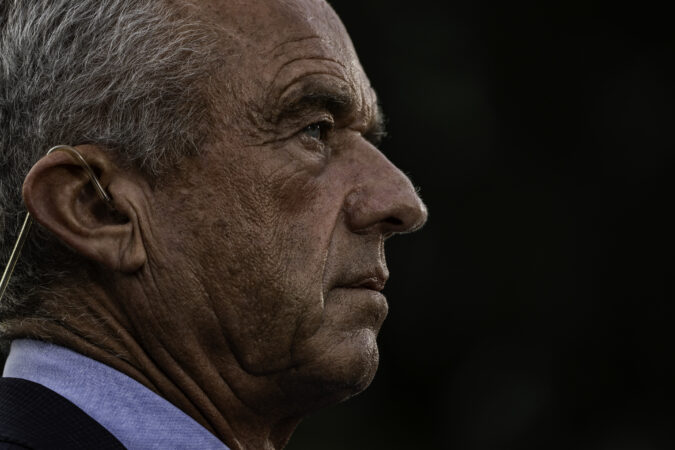
    As health and human services secretary, Robert F. Kennedy Jr. wields one of the louder megaphones the federal government has. Yet he insists he doesn’t want to impose his opinions on Americans.

    “I don’t think people should be taking medical advice from me,” Kennedy told a Democratic congressman in May.

    Kennedy once expressed different views — for example, about the need to proselytize about exercise. As he said on a podcast, he wants to use the “bully pulpit” to “obliterate the delicacy” with which Americans discuss fitness and explain that “suffering” is virtuous.

    “We need to establish an ethic that you’re not a good parent unless your kids are doing some kind of physical activity,” Kennedy told the podcaster in September 2024.

    The Department of Health and Human Services is tasked with communicating information to protect and improve the health and well-being of every American. It provides reminders about vaccinations and screenings; alerts about which food is unsafe; and useful, everyday tips about subjects such as sunscreen and, yes, exercise.

    Under Kennedy’s watch, though, HHS has compromised once-fruitful campaigns promoting immunizations and other preventive health measures. On Instagram, the agency often emphasizes Kennedy’s personal causes, his pet projects, or even the secretary himself. Former agency employees say communications have a more political edge, with “Make America Healthy Again” frequently featured in news releases.

    Interviews with over 20 former and current agency employees provide a look inside a health department where personality and politics steer what is said to the public. KFF Health News granted many of these people anonymity because they fear retribution.

    One sign of change is what is no longer, or soon will not be, amplified — for instance, acclaimed anti-smoking campaigns making a dent in one of Kennedy’s priorities, chronic disease.

    Another sign is what gets commemorated. On the official HHS Instagram account this year, out were posts saluting Juneteenth and Father’s Day. In, under Kennedy, were posts marking President Donald Trump’s birthday and Hulk Hogan’s death.

    Commenting on such changes, HHS spokesperson Andrew Nixon said in an email that “DEI is gone, thanks to the Trump administration.”

    Some elected officials are pointedly not promoting Kennedy as a source of healthcare information. Regarding the secretary’s announcement citing unproven links between Tylenol and autism, Senate Majority Leader John Thune (R., S.D.) told MSNBC (now called MS NOW) that, “if I were a woman, I’d be talking to my doctor and not taking, you know, advice from RFK or any other government bureaucrat, for that matter.” (Thune’s office did not respond to a request for comment.)

    At least four polls since January show trust in Kennedy as a medical adviser is low. In one poll, from the Economist and YouGov, barely over a quarter of respondents said they trusted Kennedy “a lot” or “somewhat.”

    The department’s online messaging looks “a lot more like propaganda than it does public health,” said Kevin Griffis, who worked in communications at the CDC under President Joe Biden and left the agency in March.

    Transition to a new administration

    The new administration inaugurated dramatic changes. Upon arrival, political appointees froze the health agency’s outside communications on a broader scale than in previous changeovers, halting everything from routine webpage updates to meetings with grant recipients. The pause created logistical snafus: For example, one CDC employee described being forced to cancel, and later rebook, advertising campaigns — at greater cost to taxpayers.

    Even before the gag order was lifted in the spring, the tone and direction of HHS’ public communications had shifted.

    According to data shared by iSpot.tv, a market research firm that tracks television advertising, at least four HHS ads about vaccines ended within two weeks of Trump’s inauguration.

    “Flu campaigns were halted” during a season in which a record number of children died from influenza, Deb Houry, who had resigned as the CDC’s chief medical officer, said in a Sept. 17 congressional hearing.

    Instead of urging people to get vaccinated, HHS officials contemplated more-ambivalent messaging, said Griffis, then the CDC’s director of communications. According to Griffis, other former agency employees, and communications reviewed by KFF Health News, Nixon contemplated a campaign that would put more emphasis on vaccine risks. It would “be promoting, quote-unquote, ‘informed choice,’” Griffis said.

    Nixon called the claim “categorically false.” Still, the department continues to push anti-vaccine messaging. In November, the CDC updated a web page to assert the false claim that vaccines may cause autism.

    Messaging related to tobacco control has been pulled back, according to Brian King, an executive at the Campaign for Tobacco-Free Kids, as well as multiple current and former CDC employees. Layoffs, administrative leaves, and funding turmoil have drained offices at the CDC and the Food and Drug Administration focused on educating people about the risks of smoking and vaping, King said.

    Four current and former CDC employees told KFF Health News that “Tips From Former Smokers,” a campaign credited with helping approximately a million people quit smoking, is in danger. Ordinarily, a contract for the next year’s campaign would have been signed by now. But, as of Nov. 21, there was no contractor, the current and former employees said.

    Nixon did not respond to a question from KFF Health News regarding plans for the program.

    “We’re currently in an apocalypse for national tobacco education campaigns in this country,” King said.

    Kennedy’s HHS has a different focus for its education campaigns, including the “Take Back Your Health” campaign, for which the department solicited contractors this year to produce “viral” and “edgy” content to urge Americans to exercise.

    An earlier version of the campaign’s solicitation asked for partners to boost wearables, such as gadgets that track steps or glucose levels — reflecting a Kennedy push for every American to be wearing such a device within four years.

    The source of funds for the exercise campaign? In the spring, leadership of multiple agencies discussed using funding for the CDC’s Tips From Former Smokers campaign, employees from those agencies said. By the fall, the smoking program had not spent all its funds, the current and former CDC employees said.

    Nixon did not respond to questions about the source of funding for the exercise campaign.

    Food fight

    At the FDA, former employees said they noticed new types of political interference as Trump officials took the reins, sometimes making subtle tweaks to public communications, sometimes changing wholesale what messages went out. The interventions into messaging — what was said, but also what went unsaid — proved problematic, they said.

    Early this year, multiple employees told KFF Health News, Nixon gave agency employees a quick deadline to gather a list of all policy initiatives underway on infant formula. That was then branded “Operation Stork Speed,” as if it were a new push by a new administration.

    Marianna Naum, a former acting director of external communications and consumer education at the FDA, said she supports parts of the Trump administration’s agenda. But she said she disagreed with how it handled Operation Stork Speed. “It felt like they were trying to put out information so they can say: ‘Look at the great work. Look how fast we did it,’” she said.

    Nixon called the account “false” without elaborating. KFF Health News spoke with three other employees with the same recollections of the origins of Operation Stork Speed.

    “Things that didn’t fit within their agenda, they were downplayed,” Naum said.

    For example, she said, Trump political appointees resisted a proposed news release noting agency approval of cell-cultured pork — that is, pork grown in a lab. Similar products have raised the ire of ranchers and farmers working in typically GOP-friendly industries. States such as Florida have banned lab-grown meat.

    The agency ultimately issued the news release. But a review of the agency’s archives showed it has not put out news releases about two later approvals of cell-cultured meat.

    Wide-ranging layoffs have also hit the FDA’s food office hard, leaving fewer people to make sure news gets distributed properly and promptly. Former employees say notices about recalled foods are not circulated as widely as they used to be, meaning fewer eyeballs on alerts about contaminated ice cream, peaches, and the like.

    Nixon did not respond to questions about changes in food recalls. Overall, Nixon answered nine of 53 questions posed by KFF Health News.

    Pushing politics

    Televised HHS public service campaigns earned nearly 7.3 billion fewer impressions in the first half of 2025 vs. the same period in 2022, according to iSpot data, with the drop being concentrated in pro-vaccine messaging. Other types of ads, such as those covering substance use and mental health, also fell. Data from the marketing intelligence firm Sensor Tower shows similar drops in HHS ad spending online.

    With many of the longtime professionals laid off and new political appointees in place atop the hierarchy, a new communications strategy — bearing the hallmarks of Kennedy’s personality — is being built, said the current and former HHS employees, plus public health officials interviewed by KFF Health News.

    Whereas in 2024, the agency would mostly post public health resources such as the 988 suicide hotline on its Instagram page, its feed in 2025 features more of the health secretary himself. Through the end of August, according to a KFF Health News review, 77 of its 101 posts featured Kennedy — often fishing, biking, or doing pull-ups, as well as pitching his policies.

    By contrast, only 146 of the agency’s 754 posts last year, or about 20%, featured Xavier Becerra, Kennedy’s predecessor.

    In 2024, on Instagram, the agency promoted Medicare and individual insurance open enrollment; in 2025, the agency has not.

    In 2024, the agency’s Instagram feed included some politicking as Biden ran for reelection, but the posts were less frequent and often indirect — for instance, touting a policy enacted under Biden’s signature legislation, the Inflation Reduction Act, but without mentioning the name of the bill or its connection to the president.

    In 2025, sloganeering is a frequent feature of the agency’s Kennedy-era Instagram. Through the end of August, “Make America Healthy Again” or variants of the catchphrase featured in at least 48% of posts.

    Amid the layoffs, the agency made a notable addition to its team. It hired a state legislative spokesperson as a “rapid response” coordinator, a role that employees from previous administrations could not recall previously existing at HHS.

    “Like other Trump administration agencies, HHS is continuously rebutting fake news for the benefit of the public,” Nixon said when asked about the role.

    On the day Houry and Susan Monarez, the CDC leader ousted in late August, testified before senators about Kennedy’s leadership, the agency’s X feed posted clips belittling the former officials. The department also derisively rebuts unfavorable news coverage.

    “It’s very interesting to watch the memeification of the United States and critical global health infrastructure,” said McKenzie Wilson, an HHS spokesperson under Biden. “The entire purpose of this agency is to inform the public about safety, emergencies as they happen.”

    ‘Clear, powerful messages from Bobby’

    Kennedy’s Make Our Children Healthy Again report, released in September, proposes public awareness campaigns on subjects such as illegal vaping and fluoride levels in water, while reassuring Americans that the regulatory system for pesticides is “robust.”

    Those priorities reflect — and are amplified by — cadres of activists outside government. Since the summer, HHS officials have appeared on Zoom calls with aligned advocacy groups, trying to drum up support for Kennedy’s agenda.

    On one call — on which, according to host Tony Lyons, activists “representing over 250 million followers on social media” were registered — famous names such as motivational speaker Tony Robbins gave pep talks about how to influence elected officials and the public.

    “Each week, you’re gonna get clear, powerful messages from Bobby, from HHS, from their team,” Robbins said. “And your mission is to amplify it, to make it your own, to speak from your soul, to be bold, to be relentless, to be loving, to be loud, you know, because this is how we make the change.”

    The communications strategy captivates the public, but it also confuses it.

    Anne Zink, formerly the chief medical officer for Alaska, said she thought Kennedy’s messaging was some of the catchiest of any HHS director.

    But, she said, in her work as an emergency physician, she has seen the consequences of his health department’s policies on her puzzled patients. Some question vaccines. Children show up with gastrointestinal symptoms Zink says she suspects are related to raw milk consumption.

    “I increasingly see people say, ‘I just don’t know what to trust, because I just hear all sorts of things out there,’” she said.

    KFF Health News is a national newsroom that produces in-depth journalism about health issues and is one of the core operating programs at KFF — the independent source for health policy research, polling, and journalism.
  • This graphic designer is creating a new art piece after all 82 Sixers games

    This graphic designer is creating a new art piece after all 82 Sixers games

    Lydia Hope Victor often jokes about how much worse off she’d be if she’d grown up in Ohio instead of Philadelphia.

    Her parents arrived there from India before settling in Philly. Her father learned about American culture through Ohio State and then Eagles football. He came to love the brutal sport and passed his fandom down to his children, but who knows what would have happened if the family had been forced to root for the Cleveland Browns.

    “Obviously, thankfully [he] became a Birds fan,” she said.

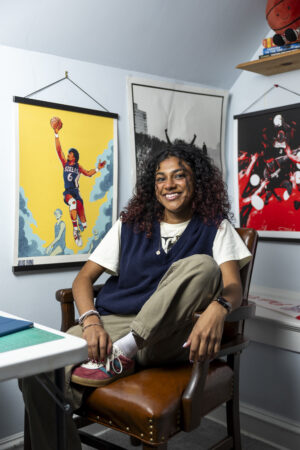
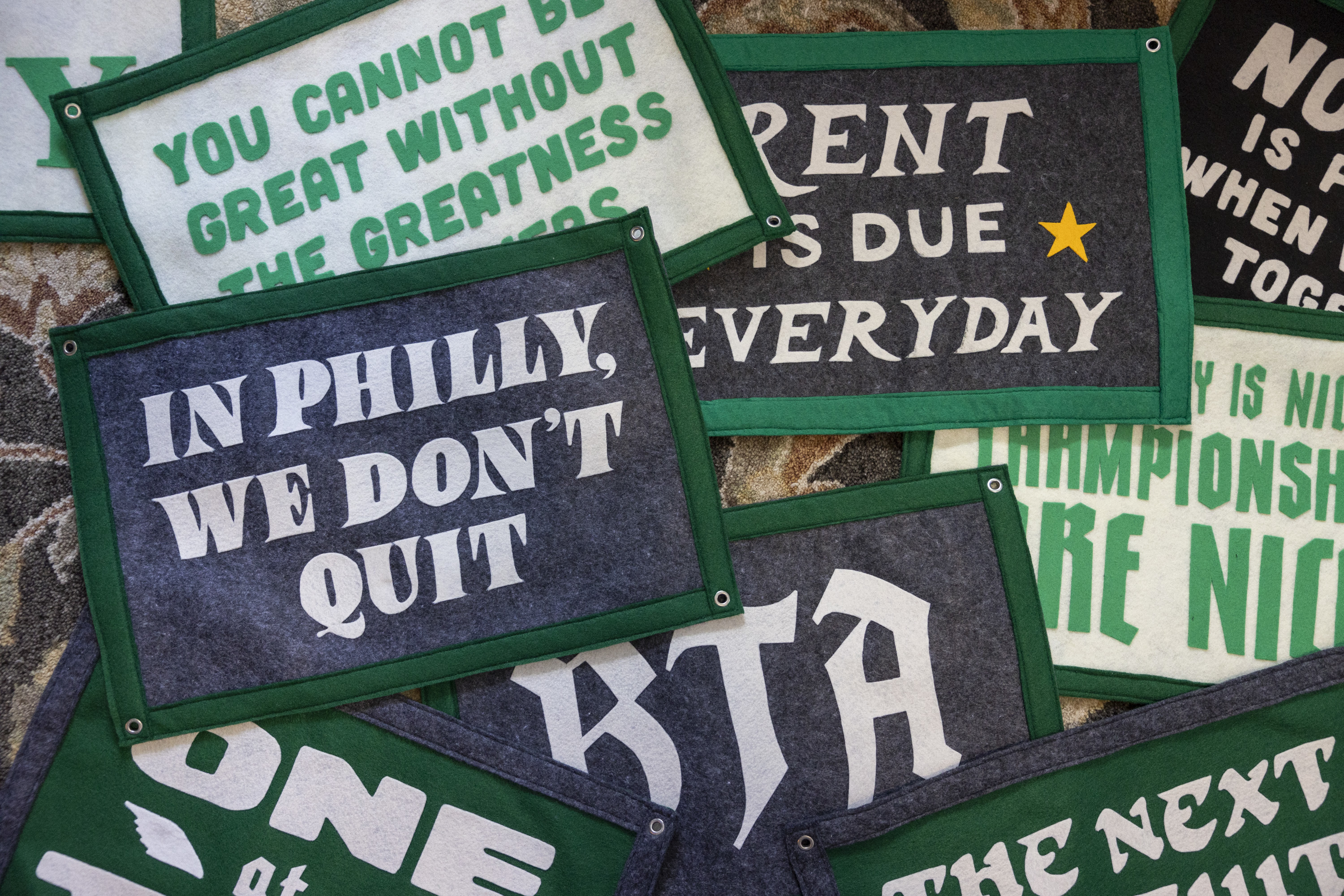
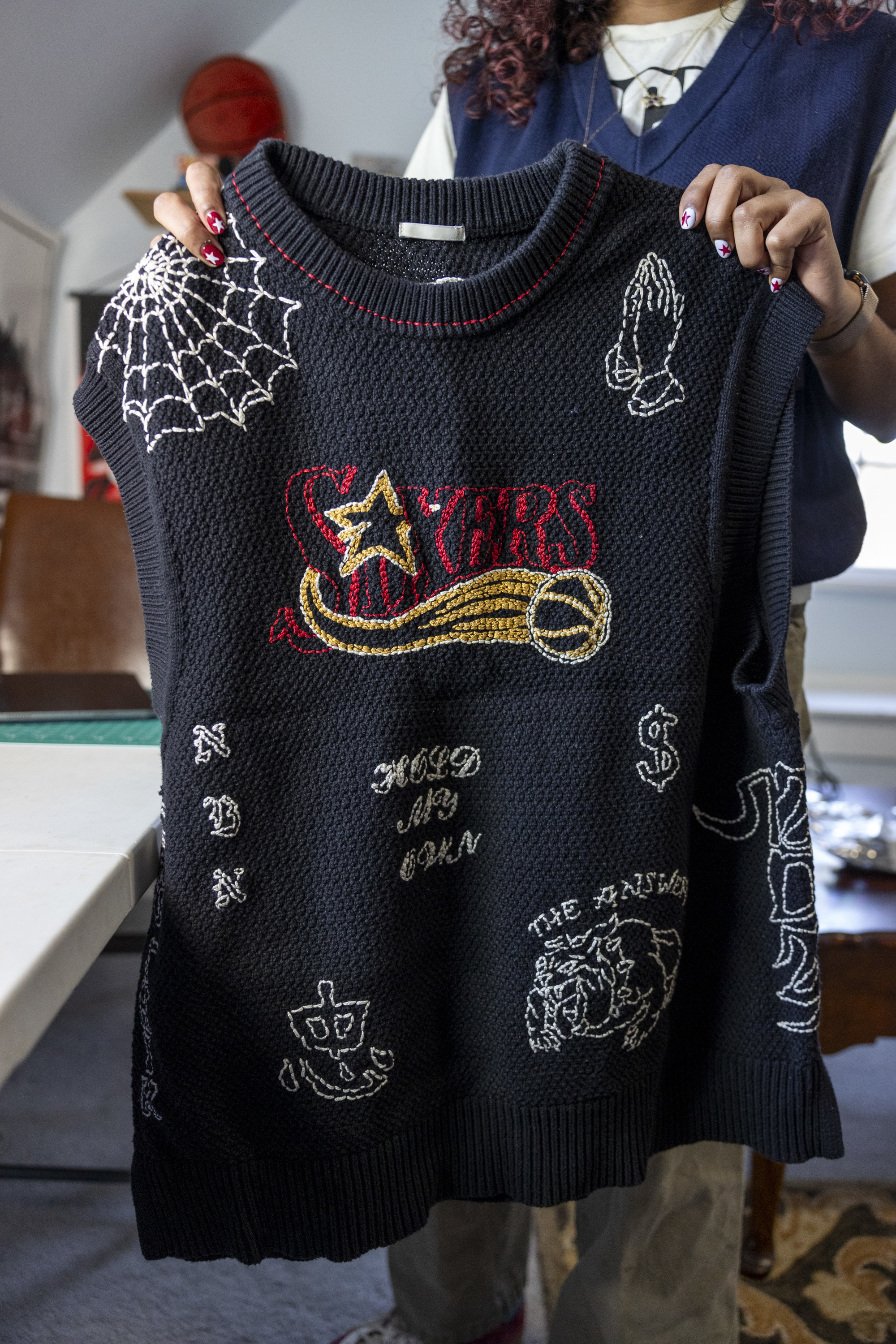
    Victor, 22, is a graphic designer and multimedia artist based in Elkins Park whose work is focused on sports and the overlooked elements that shape them. Her work across mediums is for the casuals and diehards alike, including an Allen Iverson sweater vest, fan zines, and banners reading, “Find a New Slant” and “I’m Sorry I Just Wanted a Frosty”.

    She’s in the middle of a season-long Sixers project that she’s sharing on social media called 82 Games. After every contest, Victor is creating an illustration based upon what happened on the court, with easter egg references, too.

    @thisislydia

    ummm trust the process ?? game sixteen of illustrating every @Philadelphia 76ers game this szn 🙂‍↕️🙂‍↕️ #nba #sixers #76ers #basketball #basketball

    ♬ Cozy Day (Lofi) – The Machinist Beats

    Victor’s passion for basketball was molded by post-The Process-era Sixers and Allen Iverson YouTube highlights, despite being born after his 2001 MVP season. She was raised on Philly talk radio car rides with her dad, and her fondest sports memory is watching people flood the streets from her brother’s Temple University dorm after the Eagles’ first Super Bowl win.

    “It’s hard to live in Philly and not be an insane Philly sports fan,” she said.

    Victor spoke with The Inquirer about her 82 Games project and how it represents relentless Philly fandom and community, being a Joel Embiid truther, and aspiring to consume sports a little more healthily.

    This conversation has been edited for length and clarity.

    This is an endurance art project. How do you come up with a new design every game? And how do you stay committed to it, even when the Sixers are more or less a fringe playoff team?

    I think that’s the fun of it, pushing myself to think of new ways to interpret the story. Some of the joy of it is also being able to look back and be like, I committed to doing that, I was able to finish it.

    I originally did this project in high school, it was honestly to teach myself how to draw. [Now] I have a lot more experience in design and illustration, and I’m just seeking out some of the community again. I think that’s what really brought me back to it. Even the most niche reference I try to make in games, someone will understand it somewhere.

    Victor shows off one of her illustrations for the 82 Games series, featuring Tyrese Maxey.

    That fandom is so important to finding a community of people.

    Philly fans are all a little crazy, we’re all so committed to support our teams. Even if we’re in a slump. I think Philly fans have a reputation — oh we booed Santa. But it’s coming from a place of — I’m still here and I’m gonna show up no matter what.

    A through-line of your work is holding a player-centric point of view. Why do you feel like that’s an important perspective to emphasize? What do you think of the way sports are typically covered in media or online?

    It’s kind of just rage-baiting. They want people to engage, but there’s no intention to do it through healthy conversation. People watch sports because they enjoy it at some level and sometimes those perspectives take away from that joy.

    It’s easy to center the fan, but none of these things would exist without the player, too.

    Victor’s custom-made banners with various Jalen Hurts quotes made after the Eagles’ Super Bowl victory.

    I’m a Joel Embiid truther ‘til the day I die. People give him a lot of flack for not giving his all for the team, and I don’t think you can really point to his history and in good faith say that about him. He was playing with a mask. He was playing with [Bell’s palsy].

    You made a sweater vest inspired by Allen Iverson and his tattoos. How did that project come to be?

    I’m 4’11, so I immediately connected to Allen Iverson and his story and just the way he played. I remember watching his Hall of Fame speech and crying. When you think about how the media treated him or general narratives about him as a player, it all seemed negative. And I think it’s exciting to see him get his flowers.

    I just love experimenting with different mediums. If I have an idea in my head, I wanna get it out into the world. Last season I was like, a jersey looks just like a sweater vest, what is something I could do to explore that? I immediately was like, do something about Allen Iverson.

    Victor displays her Allen Iverson sweater vest, modeled after his iconic Sixers jersey. The embroidered designs mimic several of A.I.’s tattoos.
    What are some of other ways you’ve focused your work on player perspectives and other overlooked parts of sports?

    I try to think of things from systems point of view. I think there’s really a story behind every single thing in sports.

    The project I’m working on right now is about the Women’s Basketball League, which was the first women’s basketball league in America in the 1970s. It only lasted for three seasons, but there was a team that was based in Philadelphia called the Philadelphia Fox, which only lasted for 10 games.

    Victor is working to tell more multimedia stories about the subtle structures that impact sports.

    Some of those people are doctors and lawyers and basketball coaches, their lives took such a different turn. Title IX was just starting, so there weren’t a lot of [opportunities] for women to play sports in general. I’ve been interviewing some of those women which is pretty cool, getting to hear their stories.

    So just thinking about how these systems exist and operate and how to make them more equitable. Understanding where we started is so important.

    Who are your Letterboxd-style four favorite Philly athletes of all time?

    Allen Iverson, Nick Foles, Joel Embiid, and Michael Vick.

  • David E. Loder, longtime attorney, multifaceted board member, and education advocate, has died at 71

    David E. Loder, longtime attorney, multifaceted board member, and education advocate, has died at 71

    David E. Loder, 71, of Flourtown, longtime attorney at Duane Morris LLP, multifaceted trustee and board member, education advocate, mentor, and volunteer, died Thursday, Oct. 23, of complications from lymphoma and scleroderma at his home.

    A graduate of Germantown Friends School and what is now the University of Pennsylvania’s Carey Law School, Mr. Loder spent 43 years, from 1982 to his retirement in 2024, as an associate, partner, and chair of the health law group at the Duane Morris law firm. He became partner in 1989 and helped the health law practice gain national recognition for its success.

    Mr. Loder and his team represented the Hospital and Healthsystem Association of Pennsylvania, the Pennsylvania Trauma Systems Foundation, and other medical providers in all kinds of consequential litigation. In 2006, he helped local hospitals win a multimillion-dollar settlement with an insurance company. In 2010, he supervised a case that successfully revived a state abatement program that alleviated medical malpractice costs for physicians and hospitals.

    In a tribute, former colleagues at the Pennsylvania Trauma Systems Foundation praised “his ability to see both the legal complexities and the human dimensions of every situation.”

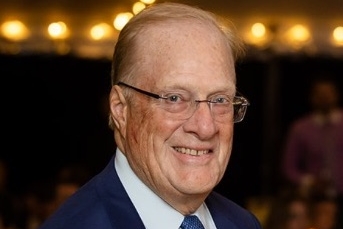
    Mr. Loder stands with Blanka Zizka , the Wilma Theater’s artistic director, at an event in 2018.

    He was adept in vendor contract law, board governance, policy development, and human relations issues. He took special interest in doctor-patient relations and told the Daily News in 2016: “While it is critical that the healthcare provider convey necessary and accurate information to patients concerning their health condition, it is also important to remain sensitive to the patient’s interest and willingness to hear such information.”

    Matthew A. Taylor, chair and chief executive officer at Duane Morris, said in a tribute: “He was one of the nation’s most respected healthcare lawyers.”

    Mr. Loder also represented the Philadelphia Zoo, homeowners fighting increased property assessments, participants in gestational-carrier programs, and other clients. “He was a shrewd judge of character,” said his son Kyle. “He was thoughtful and strategic. He became a confidant and adviser to many of his clients.”

    John Soroko, chair emeritus at Duane Morris, said in a tribute: “Dave had a unique ability to turn friends into clients. But, even more importantly, to turn clients into friends.”

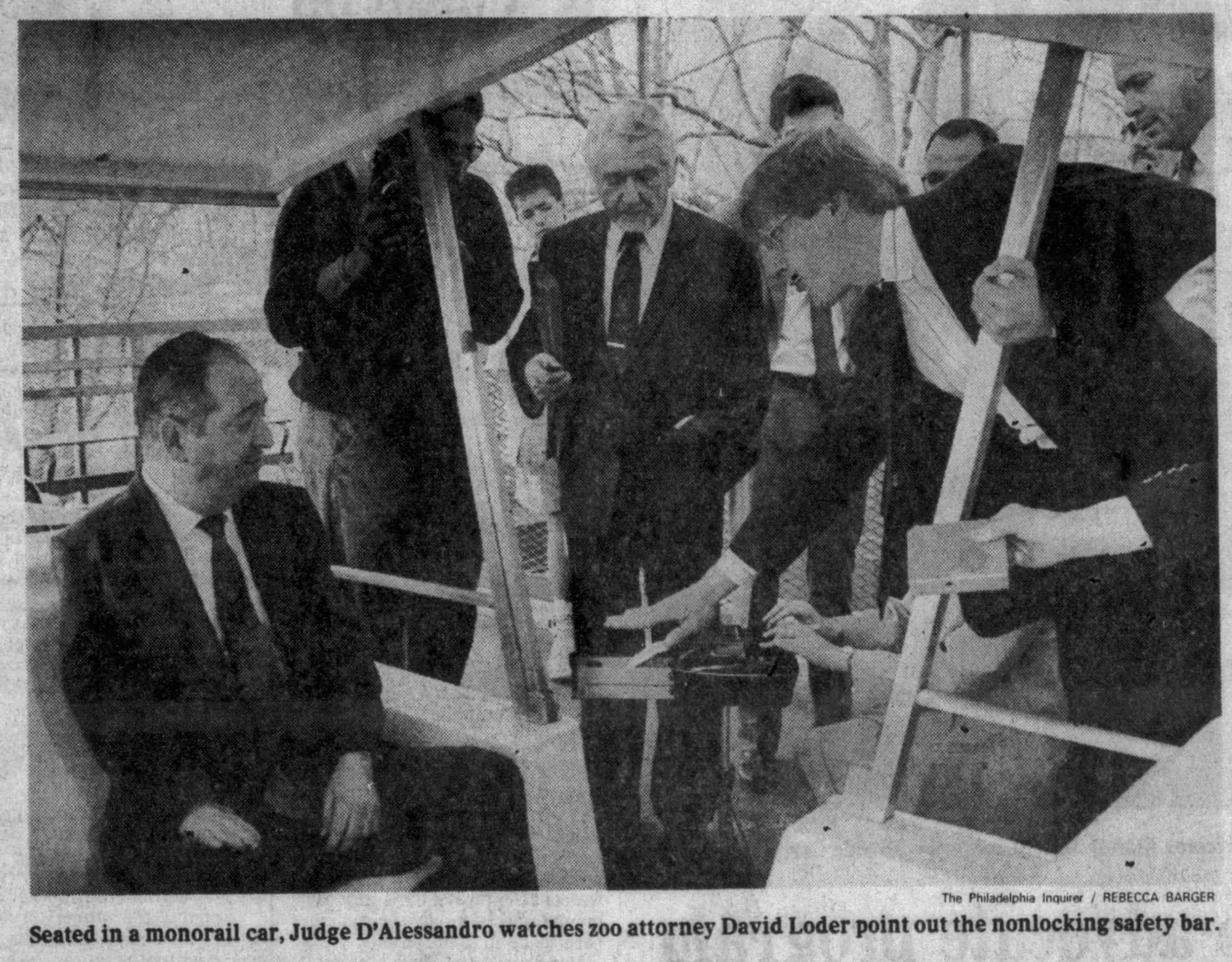
    This photo of Mr. Loder (right) representing the Philadelphia Zoo appeared in The Inquirer in 1989.

    Away from the law firm, Mr. Loder was chair of the board for the Wilma Theater and served on boards at Germantown Friends, the old University of the Sciences, the World Affairs Council of Philadelphia, and other groups. He was a trustee at the Dolfinger-McMahon Foundation and the Christian R. and Mary F. Lindback Foundation, and represented the Lindback regularly at its annual distinguished educators awards ceremony.

    “There’s a firm belief in the importance of excellence in education in the public schools,” he told The Inquirer at the 2016 Lindback ceremony. In 2017, he said: “All of us need to recognize that the Philadelphia public schools are serving an incredibly important function.” In 2018, he said: “People need to know that there are some exceptional educators in Philadelphia public schools.”

    He mentored many other lawyers and volunteered to help students in need. In online tributes, friends noted his “kind advice,” “voice of reason and compassion,” and “sense of humor, keen intellect, love of sports, and limitless knowledge on so many topics.”

    In 1998, he was featured in an Inquirer story about the challenges parents face when dealing with young children stuck inside during the cold winter months. He said: “I find that if you can get the kids down by 6 p.m. and have a glass of wine in front of the fireplace, it gets you through.”

    Mr. Loder enjoyed sports and the outdoors.

    His family said in a tribute: “He took life seriously but never too seriously, and his warmth, humor, guidance, and generosity will be remembered.”

    David Edwin Loder was born April 22, 1954, in Yalesville, Conn. His father, noted theologian Theodore Loder, moved the family to West Mount Airy when Mr. Loder was a boy, and he graduated from Germantown Friends in 1972.

    He starred in football, basketball, and baseball in high school, and went on to play basketball and earn a bachelor’s degree in political science at Wesleyan University in Connecticut in 1977. He worked briefly after college as a high school history teacher, served an independent study fellowship in Poland, earned his law degree at Penn in 1981, and studied international law at the London School of Economics and Political Science.

    He married Nadya Shmavonian, and they had sons Marek and Kyle, and a daughter, Julya, and lived in Philadelphia and Flourtown. After a divorce, he married Jennifer Ventresca and welcomed her children into the family.

    Mr. Loder liked hiking in New York’s Adirondack Mountains and relaxing at his getaway home on Long Beach Island.

    Mr. Loder enjoyed tennis, squash, and golf at the Philadelphia Cricket Club. He liked hiking in New York’s Adirondack Mountains and relaxing at his getaway home on Long Beach Island, N.J.

    He doted on his family and Labrador, and played cards every month for years with an eclectic group of old friends.

    “David embodied the values of faith, service, and integrity,” his family said. His son Kyle said: “He was magnetic, gracious, thoughtful, and curious. He was easy to talk to.”

    In addition to his wife, children, and former wife, Mr. Loder is survived by a granddaughter, a sister, two brothers, and other relatives.

    Mr. Loder “was magnetic, gracious, thoughtful and curious,” his son Kyle said.

    A memorial service and celebration of his life were held earlier.

    Donations in his name may be made to the Penn Medicine Scleroderma Center, Attn: Amanda Hills, 3535 Market St., Suite 750, Philadelphia, Pa. 19104.

  • Pennsylvania’s $80 billion school pension fund gets a new director

    Pennsylvania’s $80 billion school pension fund gets a new director

    Uri Monson, Gov. Josh Shapiro’s longtime confidant and Pennsylvania’s budget secretary, is the new executive director of the $80 billion-asset Pennsylvania school pension and investment system, known as PSERS.

    The move puts Monson, a former top finance officer for the School District of Philadelphia and for Montgomery County government while Shapiro was its top elected official, atop the agency responsible for paying retirement checks to half a million current and retired school employees.

    Monson has shown “exceptional financial leadership and integrity,” Shapiro said in a statement, citing Monson’s bond refinancing work that shaved state interest costs and helped boost its credit ratings so they are no longer among the lowest of the 50 states.

    He is making the move to PSERS following a 135-day state budget impasse that resolved last month with a $50.1 billion budget deal between Shapiro and the divided legislature.

    Zachary Reber, a deputy secretary in Monson’s office with 30 years of state government experience, will become the state’s new budget secretary. Shapiro credited Reber as a top negotiator for the 2025-26 budget, helping clinch the deal with legislators.

    At PSERS, Monson will lead a staff of 350. The board picked Monson “because of his extensive public-sector financial experience,” board chair Richard Vague said in a statement that also said Monson’s hiring followed “a nationwide search.”

    The new executive director “understands both the financial demands of a pension system and the responsibility” to school staff and retirees, said vice chair Sue Lemmo, a retired teacher.

    Monson pledged to work with the board, staff, and other stakeholders — who include taxpayers and pension system members — to ensure “retirement security.”

    He holds both a master’s degree in public policy and a bachelor’s degree from Columbia University and a second bachelor’s from the Jewish Theological Seminary of America.

    PSERS is one of the most expensive state programs, consuming $5.5 billion directly from public revenues last year, including both state and local property tax funds, plus $1.2 billion routed through school workers’ paychecks.

    The system also collects profits from its wide-ranging investments, totaling $5.7 billion last year.

    The switch will likely mean a significant pay raise for Monson, who earned $211,000 a year as budget czar, the most of any Pennsylvania cabinet officer and more than the lieutenant governor.

    While working as the top budget officer in the state since 2023, Monson oversaw Shapiro’s annual state budget proposals, which guide spending for the next five years.

    Republican lawmakers criticized Shapiro’s 2025-26 budget proposal for counting on new revenue streams, such as marijuana taxes, that had yet to be approved by the General Assembly.

    Pennsylvania faces a tough fiscal outlook, as the state will spend more than it brings in this year, led by ballooning Medicaid expenses and pension costs.

    Monson’s predecessor at PSERS, Terrill Savidge Sanchez, was paid $317,000 in fiscal 2024. A longtime PSERS employee who also headed the smaller Pennsylvania state workers’ pension system (SERS), Sanchez announced her retirement earlier this year. Chief investment officer Ben Cotton stepped in as interim director after she left.

    Sanchez was tapped for the top PSERS job in 2022 after the departure of Glen Grell, a former state representative and lawyer who tripled his legislative paycheck by joining PSERS in 2015.

    Grell and other top staffers retired during a federal investigation into the system’s exaggerated earnings and secretive land deals, which was followed by changes in pension investment, financial reporting, audit, and travel practices.

    Monson worked closely with Shapiro, then a county commissioner, in Montgomery County’s 2013 decision to fire dozens of Wall Street money-management firms and turn its pension funds over to locally based Vanguard Group and SEI Investment Corp., cutting fees and reporting better returns over the next 10 years.

    As governor, Shapiro has not attempted such a purge, either at PSERS, where he controls three of 15 trustee seats, or at the SERS state employee pension system, where the governor appoints six of the 11 trustees.

    PSERS trustees on their own have scrapped hedge funds and cut back on private-equity funds in recent years, citing high fees and poor returns compared to the rising U.S. stock market.

    PSERS, like the state workers’ pension system, was among the first state pension systems to invest heavily in private assets in the late 1990s and 2000s.

    PSERS’s private investments underperformed U.S. stocks during the 2010s bull market. Those investment returns, plus rising retirements and pension underfunding in the early 2000s, required higher taxpayer payments in recent years to keep the fund from growing less solvent.

    Pennsylvanians now pay 34 cents into the PSERS plan for every $1 in school staff wages.

    Some owners of private money managers who solicit top leaders of PSERS and other state pension funds for investments are major political donors at the national level, though an SEC rule has barred them from collecting state and local pension fees after donating to state or local candidates.

    U.S. Sen. David McCormick (R., Pa.) was chief executive of hedge fund Bridgewater Associates when it was PSERS’s largest money manager. It oversaw about one-tenth of the state’s investments and collected more than $750 million in Pennsylvania investment fees over the 20 years before PSERS trustees voted to drop hedge funds in 2021.

    Staff writer Gillian McGoldrick contributed to this article.

  • Life during wartime in New Orleans as feds terrorize Latinos who saved a city

    Life during wartime in New Orleans as feds terrorize Latinos who saved a city

    KENNER, La. — When the day New Orleans had feared for weeks finally came on Wednesday, it began with a lie as wide as the meandering Mississippi River.

    A port city somehow dubbed the Big Easy despite its centuries of big trouble woke up to a frigid blast of Arctic air and a claim from the U.S. Department of Homeland Security that local immigration raids it’s named the “Catahoula Crunch” would narrowly target “criminal illegal aliens roaming free thanks to sanctuary policies …”

    Within a couple of hours — in raids that were, in fact, wildly untargeted — SUV caravans bearing masked, green-uniformed U.S. Customs and Border Protection (CBP) agents stormed into parking lots and at suburban Home Depots and Lowe’s, blitzkrieged Latino restaurants and a car wash on a busy strip near the airport, and cruised neighborhoods looking for roofers to arrest.

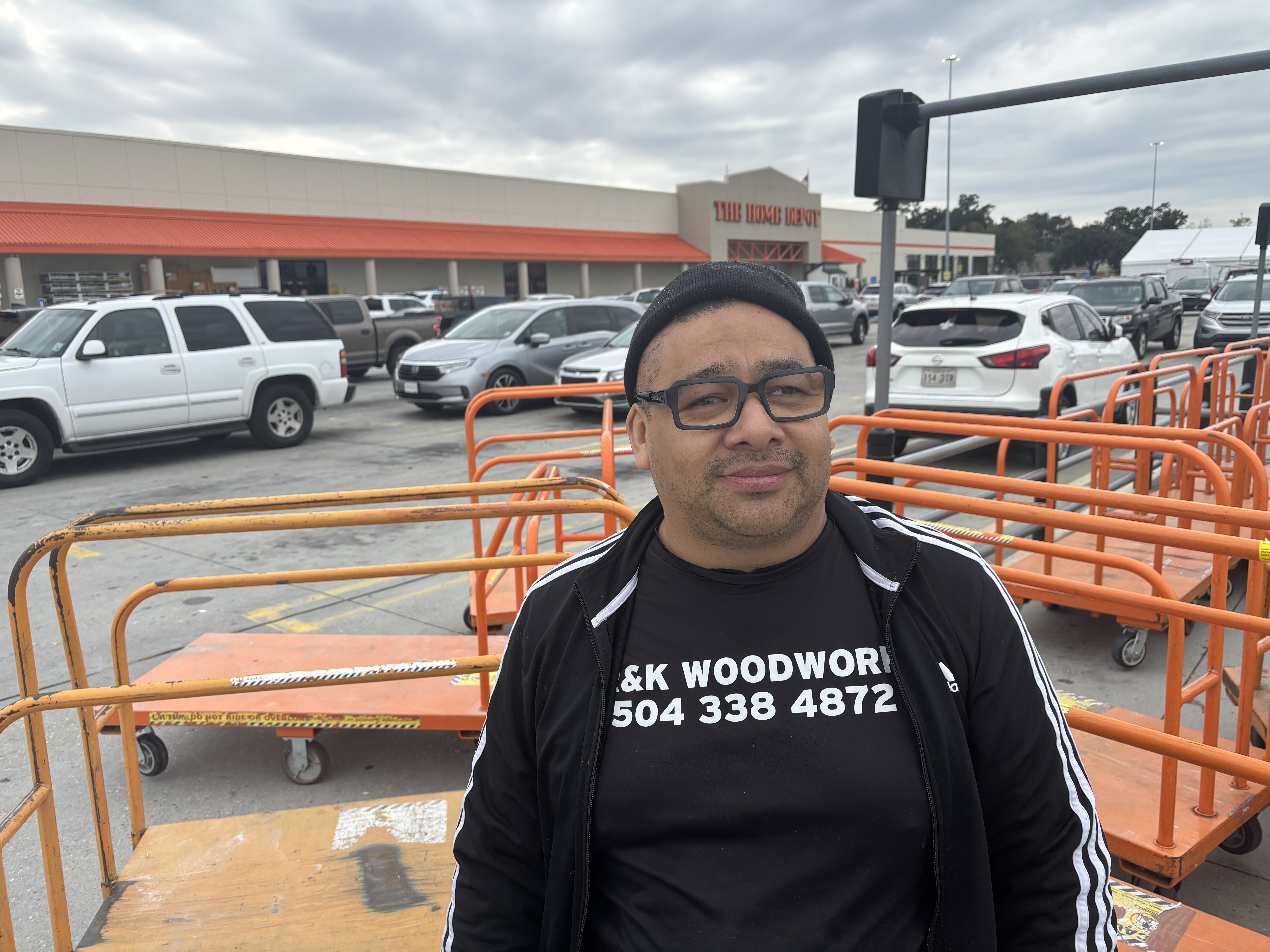
    On a hunch, I drove to a Home Depot here in Kenner at lunchtime and found them: a platoon of maybe 15 masked Border Patrol officers in olive-drab uniforms and dark baseball caps wrapping up a sweep of the parking lot, strutting past the piled-up orange shopping carts and ignoring a film crew shouting, “Why are you here?”

    Ricardo Ramírez, a 50-year-old construction worker and a U.S. citizen, had just pulled into the Home Depot lot to return some items when, as he told me a few minutes later, one of the officers came up to him and barked, “Which country? Are you a citizen?” Ramírez carries his passport because “it’s so crazy what’s going on that I have to, just because I look Spanish” — and was surprised when the officers moved past without asking to see it.

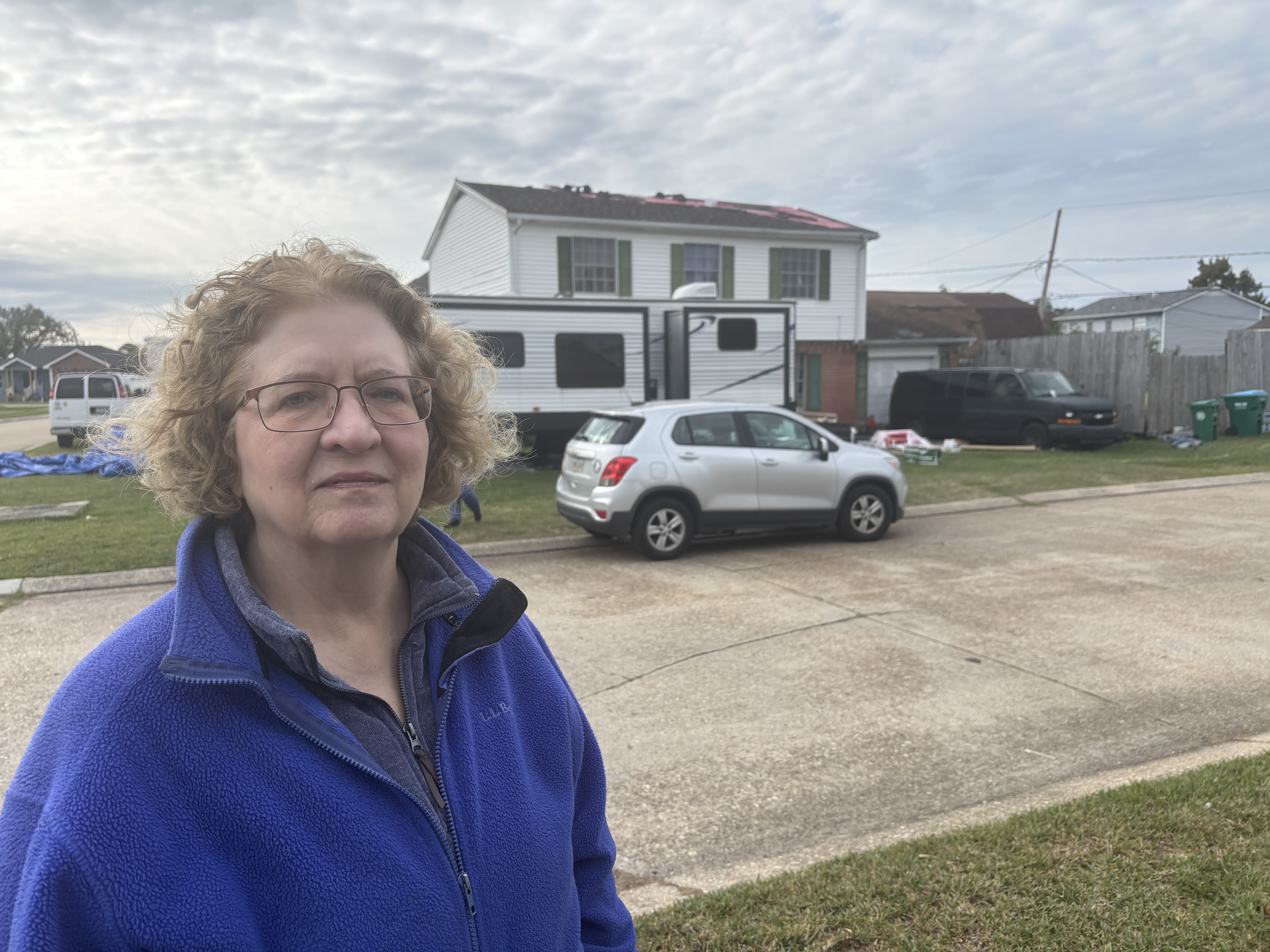
    But at that moment, just two miles away in a suburban subdivision in North Kenner, citizen volunteers raced to find another 12-agent Border Patrol team raiding a two-story home with white siding and green shutters. As an agent trained a sniper rifle on them, two Latino workers who’d been replacing a metal roof damaged in a recent hurricane stood atop the home, hands in the air.

    Zoe Higgins, a 33-year-old social worker who volunteered with the group Unión Migrante to track the immigration raids and watched the tense drama, told me, “I could only imagine how they were feeling, and I was filled with anger.” But as more and more citizens and some journalists crowded the narrow, one-way Louisiana State Drive, they saw the agents leave — the rooftop workers spared, but two other crew members handcuffed and whisked away, destination unknown.

    This is life during wartime in America in 2025, as an iconic U.S. city that celebrates itself as a boiling gumbo pot of Spanish-style architecture, Louisiana French, and spicy Creole culture suddenly finds itself under a terrorizing siege from the same federal government that promised billions so “New Orleans will rise again” after the devastation of Hurricane Katrina 20 years ago.

    Heard about Los Angeles? Heard about Chicago? Heard about Charlotte, N.C.? The 10-month-old Donald Trump regime has stumbled into a playbook for the xenophobic mass deportation drive it promised voters in 2024 — an “American Counter-Revolutionary Guard” of around 250 masked Border Patrol officers, led by the arrogance and telegenic evil of their commander, Greg Bovino, rampaging the Lowe’s parking lots and back alleys of one U.S. city before caravanning in their black SUVs to terrorize the next.

    Ricardo Ramírez, a 50-year-old construction worker, talks about being questioned by Border Patrol agents at a Home Depot parking lot in Kenner, La., on Wednesday.

    I flew from Philadelphia into Greater New Orleans Tuesday afternoon, just in time for the launch of the so-called Catahoula Crunch, because I wanted to see what it looked and felt like when the U.S. government sends a commando squad to wage war on one of its own cities. That meant spurning the beignets and darkened French Quarter jazz clubs of my 10 prior visits here and instead embedding on Williams Boulevard in Kenner, where former Pizza Huts are now taquerias with twinkling white lights and mariachi-style music is pumped into the markets.

    This is the New Orleans tourists only see speeding past in their airport Ubers, where in low-slung brick homes under the constant roar of jet engines, the Latino community has nearly tripled since 2000 — swelled by Mexican and Central American workers who labored around-the-clock on the massive post-Katrina reconstruction. That narrative of communal pride has been swamped by a palpable fear that this week pervades Kenner, where nearly a third of residents are Latino, yet the police chief is pro-immigration raids.

    By the end of the day, observers tallied around 12 to 14 apparent arrests. There was no evidence that any of these people were on the list of 10 most-wanted actual criminals Homeland Security pictured along with Wednesday’s launch — catnip for the Fox News audience clinging to the delusional Big Lie that Team Bovino is only targeting bad guys.

    Instead, his secret police just swarmed wherever they could find the most brown-skinned people — the Home Depot lot, a white van filled with contractors, Mexican restaurants — and acted like the gun-toting officer in the recent movie Civil War who famously asked, “What kind of American are you?”

    In Bovino’s past operations, only a fraction of those arrested and facing deportation had criminal records — just 44 out of 370 in last month’s Charlotte op — and there was no evidence that Louisiana’s “Catahoula Crunch” would be any different.

    The Rev. Jane Mauldin, a Unitarian minister and immigration watchdog, outside a home worksite that was raided by Border Patrol agents on Wednesday.

    Yet, the real terror in Kenner is what you don’t see — a vibrant community that overnight has vanished underground.

    Shoppers who enter the Latino-oriented Ideal Market on the Williams strip are greeted with a sign: “STOP: NO ICE ACCESS IN THIS BUSINESS.” Yet, at midmorning Wednesday, there was just one shopper in the entire supermarket, outnumbered by workers stocking bins of green and yellow plantains and glistening produce that looked utterly untouched.

    “A lot of people are staying home, not going out,” Ramírez, the worker questioned by Border Patrol, told me. “We work in construction, and we are shorthanded. We know people don’t want to go to work. They are afraid.”

    Several local volunteers shared the same thought: that these “papers, please” random raids and the families hiding behind closed blinds and locked doors remind them of the stories they’ve read about Jews who lived in constant fear of Nazi raids in the 1930s and ‘40s.

    “I keep thinking about Anne Frank, who was kept alive with her family by a good friend named Miep,” said the Rev. Jane Mauldin, a Unitarian minister who was one of the volunteers who raced to the North Kenner raid on the roofers, referring to the Jewish teen who eventually died in a German concentration camp in 1945, and her Dutch protector. “I keep in my head saying, ‘What would Miep do?’”

    School attendance is down, and church pews are empty. Volunteers are collecting food for families that have suddenly gone into a COVID-level lockdown, and almost everyone who is out and about has a friend or coworker who abruptly went into hiding when they heard Border Patrol had targeted New Orleans.

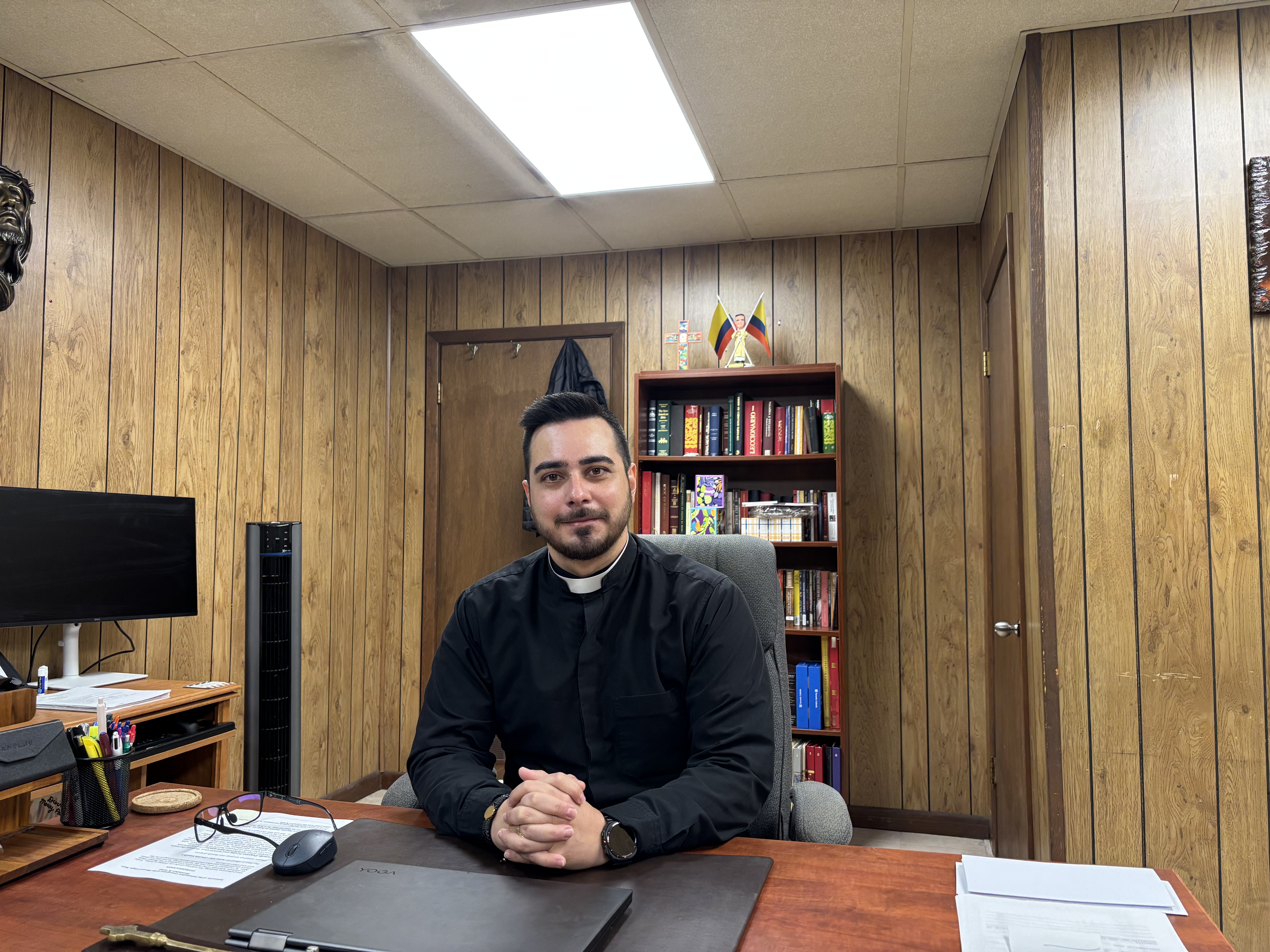
    Father Luis Duarte, a 33-year-old immigrant from Colombia, talks about plunging attendance at St. Jerome Catholic Church, in Kenner, La., where he is pastor, as federal immigration raids begin on Wednesday.

    “There is a good friend of mine who hasn’t left her house in a week,” Mauldin said. “Her children are not going to school because of the fear … And she has all the right papers, but she’s not a citizen, so there is a possibility that she could be kidnapped and taken away and never see her children again.”

    The Rev. Luis Duarte, the 33-year-old Colombian-born priest at St. Jerome Roman Catholic Church in Kenner, told me that attendance at weekend Masses offered in Spanish has plunged, and a family that for weeks had been planning a joyous quinceañera for their daughter’s 15th birthday called it off. “They are fearful,” he told me, adding, “Not fearful because they are criminal, but because they are Hispanics.”

    Duarte was one of many who spoke of the unbelievable irony that the very people who came to the United States with hammers and 16-hours-a-day energy to rescue New Orleans in its darkest hour, after flooding from 2005’s Hurricane Katrina swamped thousands of homes and killed 1,833 people, are now seeing their new world turned upside down by the same U.S. government that vowed to rebuild the Crescent City.

    Duarte said his parishioners have told him of yard signs that welcomed the 2005 influx in Spanish — the same language government agents are now using to profile those they seek to handcuff and whisk away. “So when I see what’s going on now …” the priest said, then paused. “Yeah, why?”

    Yeah, why? This feels like a domestic Vietnam in reverse: We saved the town in order to destroy it. You can glean clues from the way Bovino and his cosplay tin soldiers preened for the prearranged cameras on Canal Street Wednesday afternoon, or the twisted name for his operation. The Catahoula leopard dog is the official state canine, revered by Louisiana’s early settlers for their ability to herd cattle and hunt down wild boars. The “crunch” is the sound of jaws ripping flesh. It’s a terrible echo for a place that once sicced bloodhounds on its enslaved people.

    The cruelty was the point in 1825. The cruelty is the point in 2025. The day laborers outside Lowe’s, just wanting to hammer shingles onto your roof, are the modern-day Christians thrown to Bovino’s cowardly lions in a Roman circus for Fox News couch potatoes. Same as the Somali Americans in Minneapolis, whom Trump was slandering on Wednesday as “garbage.” The worst Americans can revel in the latest model of white supremacy while their Dear Leader is robbing them blind and stashing the profits in crypto or the Trump Plaza Kazakhstan or whatever.

    But every day, more and more people are catching onto the scam and asking what Miep would do. “This hits very deep and very personal for many of us — in my neighborhood, almost every roof had to be replaced,” Mauldin said. “The men who were willing to go on the roof in 100-degree heat in September 2005 were not white, not Black — mostly, they were the Latino men who rebuilt this city.”

    Hours later, I stood at the busy corner of Elysian Fields and St. Claude with a dozen protesters amid a nonstop cacophony of cars responding to one of their signs: “Honk If Your Ancestors Were Immigrants.”

  • With Jalen Carter out, the Eagles’ defense faces an ‘accountability’ test at a critical juncture

    With Jalen Carter out, the Eagles’ defense faces an ‘accountability’ test at a critical juncture

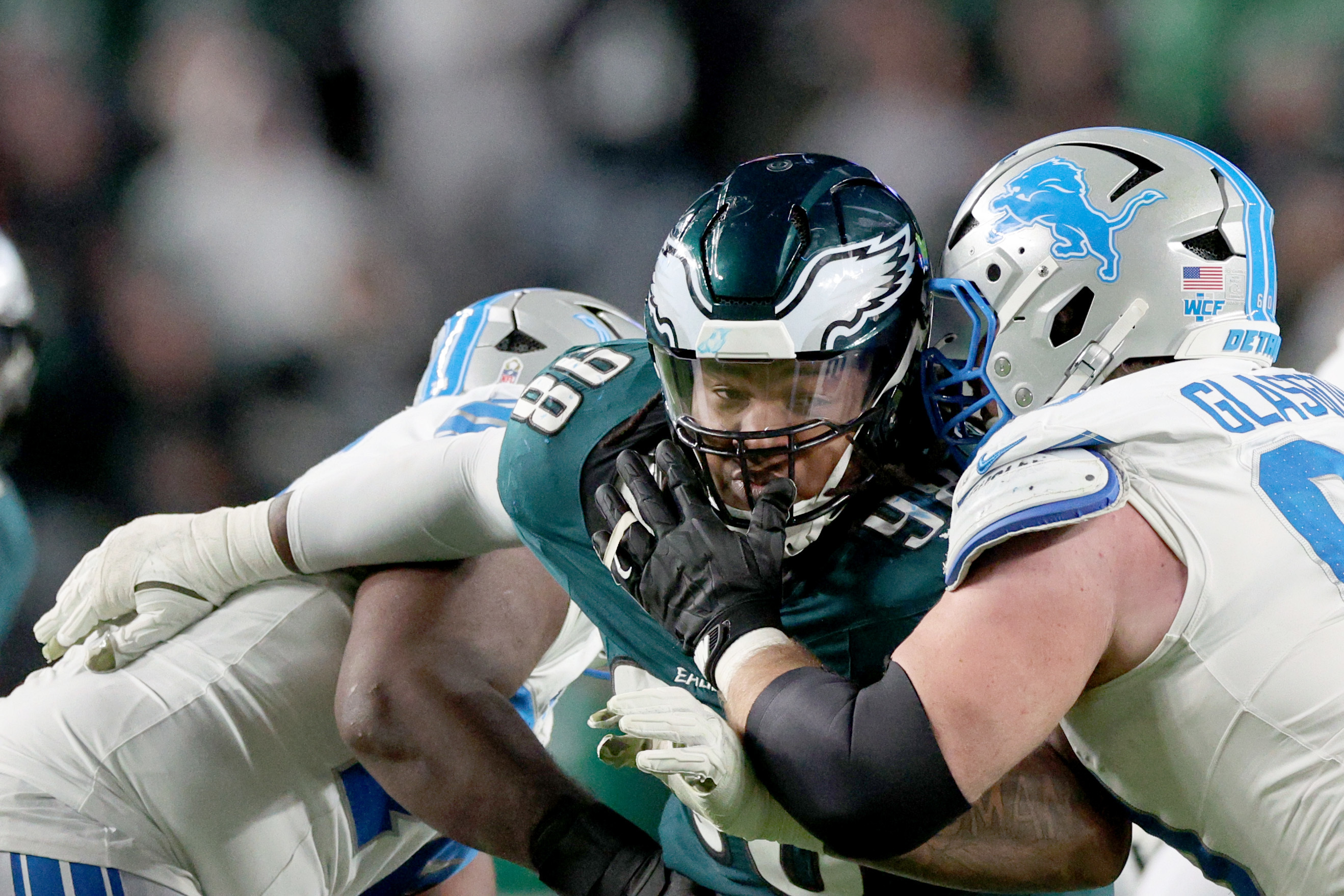
    Eagles defensive tackle Jalen Carter will miss Monday’s game in Los Angeles and be considered week to week after undergoing a procedure on both of his shoulders, a source confirmed to The Inquirer on Thursday.

    ESPN was first to report the news on Carter, who has been dealing with a shoulder injury since the beginning of training camp. It has bothered him at times during a season that has featured a slight decline in production.

    “He does have a shoulder issue,” defensive coordinator Vic Fangio said Wednesday. “He has been playing with it.”

    The Eagles were dominated by the Chicago Bears’ rushing attack Friday, and Carter was ineffective at times. He was removed from the field on some first- and second-down plays.

    “There was some runs out there I got drove back or I wasn’t making an effect on the play,” he said.

    “It’s my problems to deal with. I ain’t fitting to tell y’all what I’m going through.”

    Apparently the shoulder injury reached a breaking point.

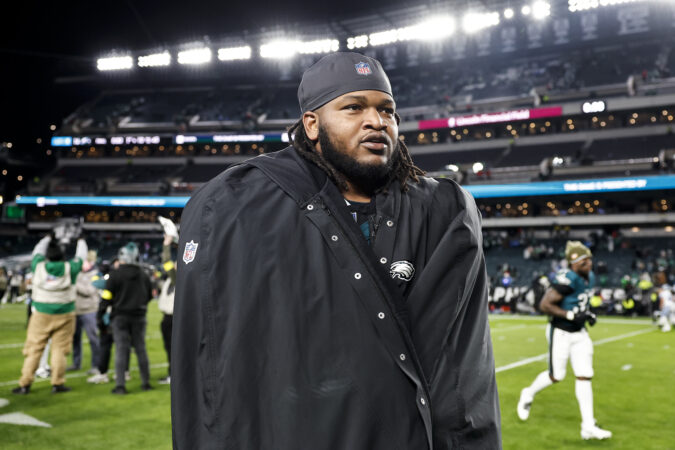
    Jalen Carter has been dealing with a shoulder injury since training camp.

    In October, Carter described the injury as “a little serious, but I’m working through it, fighting through it.” That came after a game at Tampa Bay in which he was forced to the sidelines for some defensive snaps because of the injury.

    “Everybody has injuries, depending on if it’s small or if it’s big, but when the right time comes, if I need to stop and take a little break to work more on my shoulder, that time is going to come,” Carter said.

    Two months later, his words were proven true.

    “It’s always hard when you don’t feel 100% or not healthy,” defensive tackle Moro Ojomo said. “I think that it’s most important to get your body right. This is a sport that wears and tears on you, so that was kind of the whole idea.”

    It does not appear that Carter is heading toward a stint on injured reserve, which would force him to miss at least four games. The Eagles play the Chargers on the road Monday before returning home for a game vs. the Las Vegas Raiders on Dec. 14. The Eagles’ priority probably will be getting Carter as healthy as possible before the postseason begins, but they’re still trying to clinch a trip to the playoffs.

    “I think he should get right and get his body feeling as good as possible, and we’re going to be ready when he gets back,” Ojomo said.

    Carter had a breakout 2024 season and emerged as one of the better interior defensive linemen in the NFL. He was selected to his first Pro Bowl and was named second-team All-Pro.

    Fangio was critical of the shape Carter was in earlier this season, but Carter had worked his way back to a large workload after playing more snaps last season than any other interior defensive lineman. Carter has missed two games this season. He was ejected before the first snap of the Eagles’ Week 1 game vs. Dallas after spitting at Dak Prescott, and he missed a Week 6 loss to the New York Giants with a heel injury.

    While his pressure rate has dropped (8.9% to 7.8%, according to Next Gen Stats) and he has at times not been as effective against the run, Carter’s presence is still a key factor for the Eagles. They are a much better defense with him on the field than with him off.

    With Carter out, expect to see rookie defensive tackle Ty Robinson, who has at times been a healthy scratch, in the rotation for depth. Jordan Davis, Moro Ojomo, and Byron Young likely will see an uptick in snaps. The Eagles could also use Brandon Graham on the interior, especially on obvious passing downs.

    Ojomo, who is playing nearly 65% of the snaps on defense, said he was expecting to see more time on the field with Carter out. Since Carter likes to line up on the left side of the ball, Ojomo said there are “little nuances” and different things to study to prepare for a bit of a change.

    The Eagles entered the 2025 season with limited depth on the interior after losing Milton Williams to free agency. They drafted Robinson to backfill, but he has played just 35 snaps. Gabe Hall made the initial 53-man roster after spending last season on the practice squad, but he has played 13 snaps and has spent most of the 2025 season back on the practice squad.

    The Eagles also in August traded Thomas Booker, who could have been a rotational piece, to the Raiders for cornerback Jakorian Bennett, who has been used sparingly and also missed time because of an injury.

    The depth will be tested greatly with Carter out. Davis and Ojomo have made improvements, but Young hasn’t been consistently effective when he’s on the field.

    The Bears racked up 281 rushing yards on the Eagles last Friday. That happened partially because of Carter’s weakened shoulder, but there were other factors. Ojomo said the mistakes were seen on film.

    “As a defense, we just have to have accountability,” he said. “Everybody look themselves in the mirror and realize, ‘OK, we have to be more accountable. I’m not going to mess up here, take this chance here,’ and get back to the defense we know we can play.”

    That won’t be as simple without Carter, and it comes at a critical juncture in the Eagles’ season.

  • Temple lands a hidden gem in Roman Catholic’s Ash Roberts: ‘Everyone is going to see soon’

    Temple lands a hidden gem in Roman Catholic’s Ash Roberts: ‘Everyone is going to see soon’

    Ash Roberts remembers the dark. Some nights he would sob in a pillow, wondering if he lost his one love, football.

    The 5-foot-10, 175-pound senior receiver at Roman Catholic never wanted anyone to hear or see him during those restless moments alone that kept him up burdened by self-doubt. He was the only one, he thought, who would forge through it.

    Three years ago, major college recruiters would flock to see Tyseer Denmark, now at Penn State, work out when he was with Roman. But someone else also caught the scouts’ attention — a skinny, fast-twitch freshman. That’s when Roberts began receiving scholarship offers from programs such as Penn State, Alabama, Pittsburgh, and Michigan.

    Something happened along the way. He broke his left collarbone before playing a down his freshman year, wiping out the season. Six games into his sophomore year, he snapped the same collarbone again. After 10 months of recovering, looking forward to a breakout junior season, he lost another year when he tore a meniscus in his right knee. The attention slowly dissipated. He found himself in a recruiting wasteland.

    Roberts had only his senior year to prove himself — and he did just that. In Roman’s second game, Roberts scored three touchdowns in the Cahillites’ 49-35 victory over Cardinal Newman (Fla.). Against Catholic League champion and PIAA Class 6A state finalist La Salle College High School, he scored three touchdowns on two TD receptions and an 81-yard kickoff return. In Roman’s 39-36 win, he had 225 all-purpose yards, 130 yards receiving, and 95 return yards, looking arguably like the best player on a field filled with Power 5 recruits like La Salle’s Joey O’Brien, a Notre Dame signee, and Gavin Sidwar, who is heading to Missouri. In Roman’s 48-20 Class 5A state semifinal victory over Springfield (Delco) last Saturday, he had two touchdowns and a game-high five catches for 114 yards.

    Temple football coach K.C. Keeler was not about to let a talent up Broad Street slip away from him, and on Wednesday, Roberts signed to play for Keeler and the Owls.

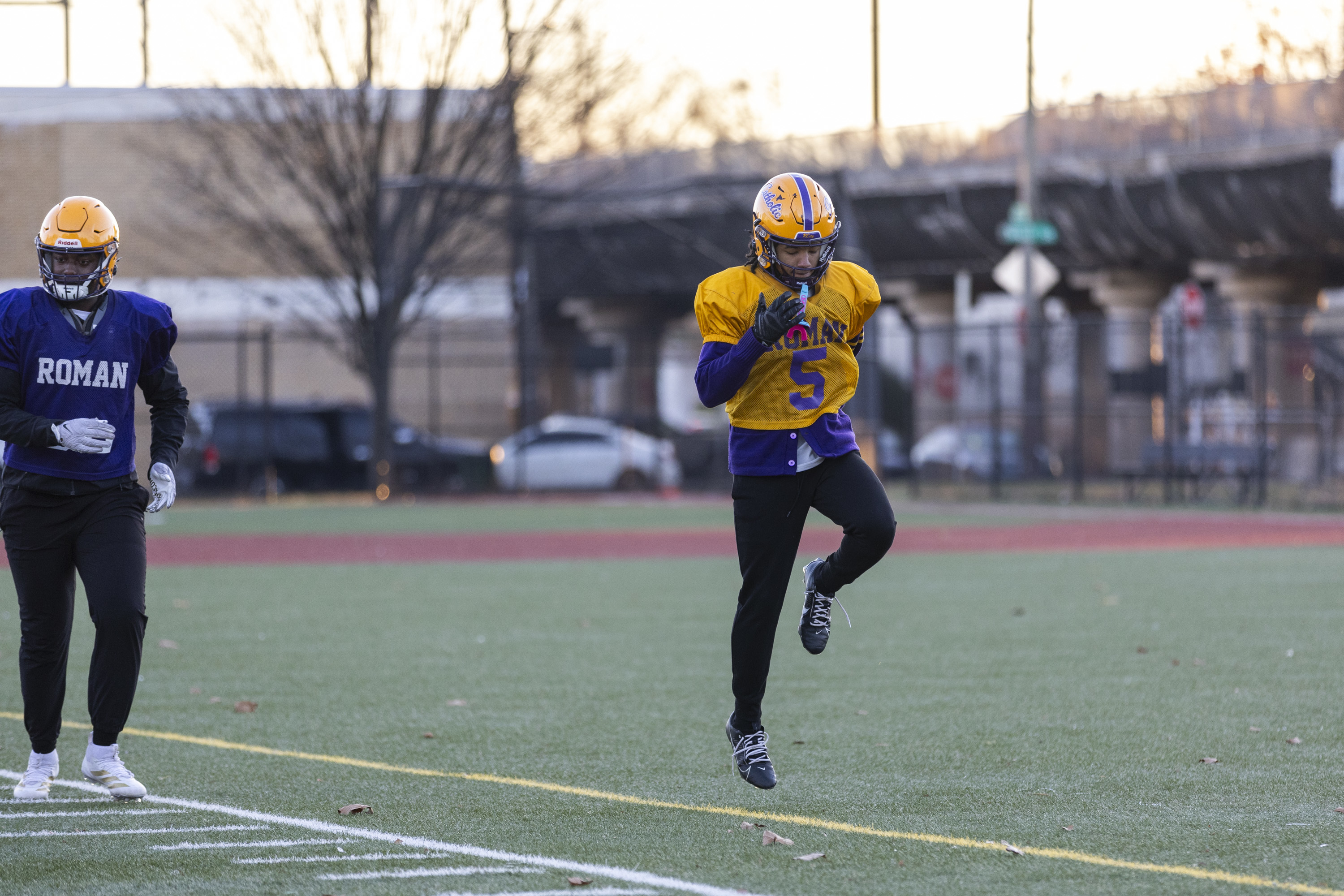
    Roman Catholic receiver Ash Roberts doing some drills during practice on Wednesday.

    , Roberts will play a vital role Friday in Roman’s quest toward its first PIAA state football championship. The Cahillites (11-3) face District 3 and defending state champion Bishop McDevitt (12-2) at Cumberland High School in a rematch of last year’s Class 5A title game, won by McDevitt in overtime, 34-31.

    As the days wind down toward his final high school game, Roberts said his injury ordeal sometimes causes him to pause and reflect on where he might have been if he did not encounter adversity.

    “There were a lot of nights I was up and emotional, where I would question myself, ‘Why me, why is this happening to me?’” Roberts said. “I didn’t want anyone to hear me or see me like that. I had to stop feeling sorry for myself. I was not about to quit. I had people there for me, but you can only do the work and get through it yourself.

    “I kept telling myself, ‘Everyone is going to see soon, everyone is going to see soon.’”

    They are seeing.

    Once a 5-foot-7, 140-pound freshman, Roberts found the weight room — with a little push from former teammate and current Duke freshman linebacker Will Felder, one of the Cahillites’ team captains last season.

    “I couldn’t even lift 95 pounds when I started,” Roberts said, laughing. “I can hit 245 pounds for a couple of reps now. I never liked lifting. Being around Will, I wanted to put in the work and gain that confidence. I would do anything to get out lifting. I would go in there and just do leg presses and try to avoid the coaches.

    “I wanted to play football and didn’t think I needed to lift. I would lock myself in the bathroom stall and get on my phone. The times I got caught in the bathroom, I would tell my coaches, I’m studying plays on my phone. They never believed me.”

    He’s added three inches and 35 pounds.

    Roman Catholic receiver Ash Roberts only had his senior season to prove himself on the field.

    In March 2024 when he was working out, he felt discomfort in his right leg. He had a torn meniscus, which could heal through rest, doctors told him.

    It was another setback, after building himself up to squat 405 pounds, and power clean 265 pounds.

    “Ash always had the talent, he needed to put the work behind it,” said Felder, who is getting playing time as a true freshman and carrying a 3.6 GPA at Duke. “We only live about five minutes away from each other, and I would take him to school every day. We would have long talks, and I think that helped him. Ash is like my little brother. I’m really proud of him, because he hated to lift. The biggest thing I wanted to reinforce to Ash was he’s still ‘that guy,’ and God would not put him in a situation he could not handle.

    “Ash was so talented [that] he did not feel he had to lift. I stressed to him that if he got bigger and stronger, he would be a better player. I finally convinced him to do the work. Now look at him.”

    Roman coach Rick Prete said he could have played Roberts late last season, but knowing he would be back his senior year, he was not about to risk Roberts’ future. Prete saw him tiptoeing around the weight room to become one of the team leaders there.

    “It all came together, and a lot of college coaches are beginning to see what we knew about Ash here at Roman,” Prete said. “I think Ash is a great fit for Temple and Coach Keeler. Coming out of high school, considering Ashdan’s path, this has been great for him. Ash is on the quiet side, but with his teammates, that changes and he is outgoing. Beyond the shadow of doubt, Ash is the best wide receiver in Pennsylvania. He is bringing a level to his game that I love to see, adding something physical to the receiving room.”

    That manifested in the state semifinal game when Roberts caught a pass on the sideline, lowered his shoulder and rammed through a couple of Springfield defenders during the second quarter. That showed the trust Roberts has in himself. It showed he conquered the doubts of whether he could withstand a hit. He woke up at 5 a.m. three days a week throughout the summer and into September to work out, a routine he built with Felder.

    Ash Roberts and Roman Catholic will compete in the PIAA Class 5A final on Friday night.

    Though he sat out his junior season, Roberts was on the sideline last December when Roman lost to McDevitt in overtime. He remembers seeing the tears stream down the senior’s faces, strengthening his resolve to come back the next season and make an impact.

    “I know what it is like having football taken away from me,” he said. “It’s something I took for granted. I took my talent for granted. I took my health for granted. I don’t take anything for granted anymore. With the breaks and tears, I learned something you love can be taken away from you in a split second. I want more. If I didn’t go through the injuries, I would not be as hungry as I am. I’m looking forward to working out with Will this summer. I want this state championship for him, for every senior who lost last year.

    “Winning this state championship will be for them. We’re going to get the job done. We cannot let the work we put into this season go to waste.”

  • In search of a crafty holiday gift? Here’s where to look in Lower Merion.

    In search of a crafty holiday gift? Here’s where to look in Lower Merion.

    The jingle bells are ringing, the Hanukkah party guest list is filling up, and you still don’t have a present for the coolest, artsiest person on your shopping list.

    Looking for a kooky snow globe? Bespoke Eagles memorabilia? An art print unlike any other? Don’t worry! If you’re living on (or traveling to) the Main Line, here’s where you should be shopping for crafty presents.

    Sweet Mabel Gallery

    Narberth’s Sweet Mabel Gallery is an iconic local business, run by husband-and-wife duo David Stehman and Tracy Tumolo. Sweet Mabel got its start in 2005 when Tumolo took over her grandfather’s former barbershop in Narberth. She and Stehman, who were graphic designers, decided to turn the barbershop into a local gallery and store stocked with colorful American and Canadian folk art.

    To celebrate the shop’s 20th anniversary, Sweet Mabel is displaying and selling works from local artists, all under $100. An anniversary ceremony will be held on Dec. 5 from 6-9 p.m. at the storefront on Haverford Avenue. Plus, if you find the perfect gift, Sweet Mabel will wrap it for free.

    Ardmore Holiday Market

    Art Star, a Philadelphia gallery and boutique, is bringing a collection of bespoke craft vendors to Ardmore for two weekends this month. The Ardmore Holiday Market, organized in partnership with the Ardmore Initiative, will take place Dec. 6 and 13 from 11 a.m. to 3 p.m. at Schauffele Plaza.

    Ardmore Holiday Market attendees can look out for Philly-area artists like Lauren Delk Ceramics, Mahika Market, Fwens, and Leann the Illustrator. Peruse the booths, listen to live music, and, if you have time, stop by Suburban Square for a free photo with Santa from 11 a.m. to 2 p.m.

    Past Present Future

    Looking for a funky snow globe? A one-of-a-kind charm necklace? Day of the Dead inspired earrings? Ardmore’s Past Present Future is a portal into the world of eclectic antiques and crafts, from embroidered cat-themed pillows to hand-painted ceramic dishes. Sherry Tillman started Past Present Future in Philadelphia in 1976, drawing on her “long-held ties to the local arts and crafts community” to procure unique goods.

    Past Present Future is open Mondays through Saturdays from 11 a.m. to 6 p.m. and Sundays from noon to 4 p.m. (or later — “If we are still standing, we are still open,” the shop’s Facebook page reads).

    Something Different by Eric

    Eric Wells‘ store, Something Different by Eric, isn’t just a gift shop, it’s a hub for people with disabilities on the Main Line.

    Wells and his mom, Bernadette Wheeler, started the Bryn Mawr store in 2015. The nonprofit shop is staffed entirely by volunteers, including Haverford College students and special education advocates. Wheeler has said Something Different by Eric is part of a larger effort to “educate the community” and help people “see disabled individuals in action.”

    In addition to selling unique housewares, Philly- and Main Line-themed trinkets, sports memorabilia, baby gifts, and greeting cards, Something Different by Eric is stocked with books about mental and physical disabilities.

    The shop is open from noon to 8 p.m. on Fridays and Saturdays and from 1 to 5 p.m. on Sundays.

    This suburban content is produced with support from the Leslie Miller and Richard Worley Foundation and The Lenfest Institute for Journalism. Editorial content is created independently of the project donors. Gifts to support The Inquirer’s high-impact journalism can be made at inquirer.com/donate. A list of Lenfest Institute donors can be found at lenfestinstitute.org/supporters.