Tag: topic-link-auto

  • Harrisburg just can’t quit the sketchy tax revenue from skill games

    Harrisburg just can’t quit the sketchy tax revenue from skill games

    When Josh Shapiro first ran for state attorney general in 2016, I asked him during a meeting with The Inquirer Editorial Board what he thought about the spread of legalized gambling in Pennsylvania.

    He gave a thoughtful and passionate response detailing the reasons why he hated gambling and thought it was bad public policy. It was music to my ears, which is why I still remember it nearly 10 years later.

    So it is sad to see now-Gov. Shapiro roll out another state budget that proposes taxing skill games. For two decades, lawmakers in Harrisburg have turned to new ways to boost gambling tax revenues.

    Funding the government with billions of dollars in gambling losses from individuals is beyond scuzzy. And of all the exploitative and predatory forms of gambling that exist, skill games are among the scuzziest.

    Shapiro said as much years ago, but Harrisburg is hooked on gambling. It is a problem Shapiro inherited, but now he’s helping to fuel more gambling. Last year, Shapiro signed a bill designed to grow the lottery, and an agreement that allowed online poker players in Pennsylvania to compete with those in other states.
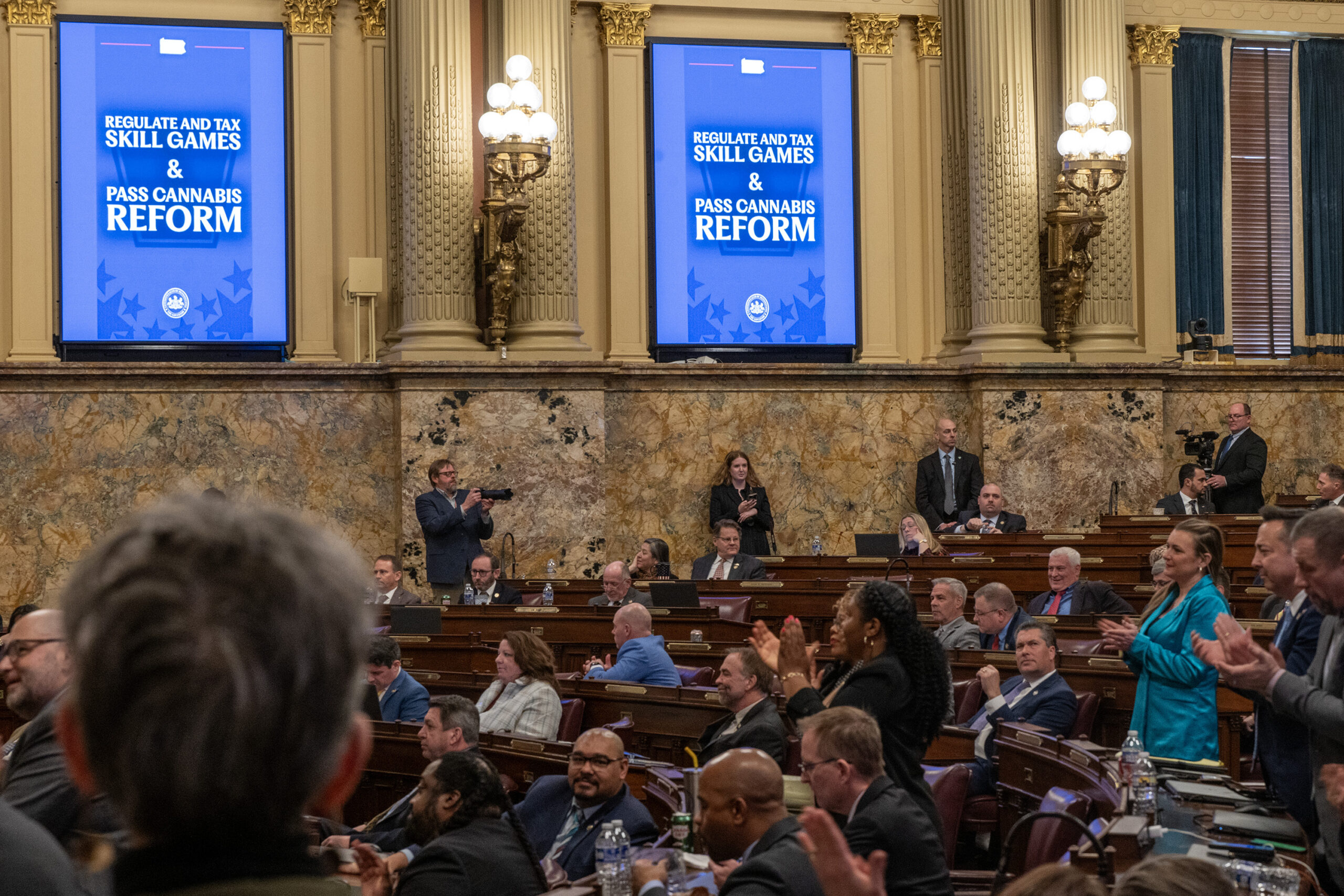
    Screen shows skill games and cannabis regulation and reform as Gov. Josh Shapiro makes his annual budget proposal in the state House chamber in Harrisburg Tuesday, Feb. 3, 2026.

    Here is why the gambling monster keeps growing: Gambling interests are among the biggest donors in Harrisburg and hold huge sway over lawmakers. Meanwhile, lawmakers reluctant to raise taxes find it easier to bleed more gamblers.

    The latest golden goose is skill games.

    Despite the name, there is not a lot of skill involved. The games are similar to slot machines, but only worse because of how they disproportionately target poor and working-class communities.

    Like slots, skill games can be addictive. The Pennsylvania Council on Compulsive Gambling has received more than 400 calls about skill games since 2021, including from many already enrolled in casino self-exclusion programs, according to Josh Ercole, the gambling council’s executive director.

    Skill games operate in a gray area. They are not taxed or regulated, but they have proliferated to nearly every corner of the state.

    Unregulated gaming devices known as “skill games” in a gas station connivence store in Philadelphia in August.

    There are more than 70,000 skill game machines in Pennsylvania. They can be found in bars, restaurants, gas stations, truck stops, VFW halls, and even at the end of a food aisle in a convenience store. By comparison, Pennsylvania has about 25,000 slot machines in 17 casinos.

    The tax rate on slot machine revenues is 54%. Shapiro proposed a 52% tax on skill game revenues, while Senate Republican leaders backed a plan to tax skill games at 35% of gross revenue.

    It is mind-boggling that Harrisburg is trying to tax and regulate skill games after allowing them to spread across the state. If lawmakers cared about protecting vulnerable communities, a better policy would be to ban skill games. That is what Kentucky did in 2023.

    But Harrisburg has long turned a blind eye to the unsavory aspects of gambling.

    Some of the initial slots licenses were awarded to politically connected operators who had never run casinos, including one man who had pleaded guilty to fraud and was later charged with lying about ties to mob figures. The charges were dropped.

    Meanwhile, skill games have been allowed to operate in the shadows, even as they attract crime that has led to killings and a recent police shooting. Philadelphia City Council banned skill games in 2024, but the court lifted the measure while it is on appeal.

    Pace-O-Matic, the leading developer of skill games, spends millions of dollars lobbying lawmakers in Harrisburg. The company’s former compliance director, who was also an ex-state police corporal, recently pleaded guilty to accepting hundreds of thousands of dollars in kickbacks in return for quashing complaints about illegal gaming machines.

    Despite the sleaze and legal trouble, Harrisburg remains addicted to gambling. Since 2004, the state has legalized more and more gambling, starting with slot machines, then adding table games in 2010, and online gambling, sports betting, and mini casinos in 2017.

    Pennsylvania rakes in more tax revenue from gambling than any other state in the country. In the last fiscal year, Harrisburg collected a record $6.4 billion from gambling.

    The state celebrates the record tax haul as if it were a public good. The sad reality is that people lost billions of dollars. State lawmakers helped make their constituents poorer.

    Casinos add little value to the local economy. In fact, they subtract dollars that could be spent on other goods and services.

    Las Vegas, at least, attracts tourists who spend money on other things. Most of the gambling losses in Pennsylvania come from locals. Few tourists plan getaways to the casino in Chester or King of Prussia.

    But here is the worst part: The business model for all forms of gambling largely depends on addiction. Casual players are not the target audience.

    Casinos actively try to lure customers back with incentives, from free meals to free play certificates. Slot machines, which generate the majority of profits for casinos, are designed to addict users, research professor Natasha Dow Schull found.

    A study in Massachusetts found 90% of casino revenues came from problem and at-risk gamblers. The industry argues addiction rates are low, but that is for the general population, not the customer base.
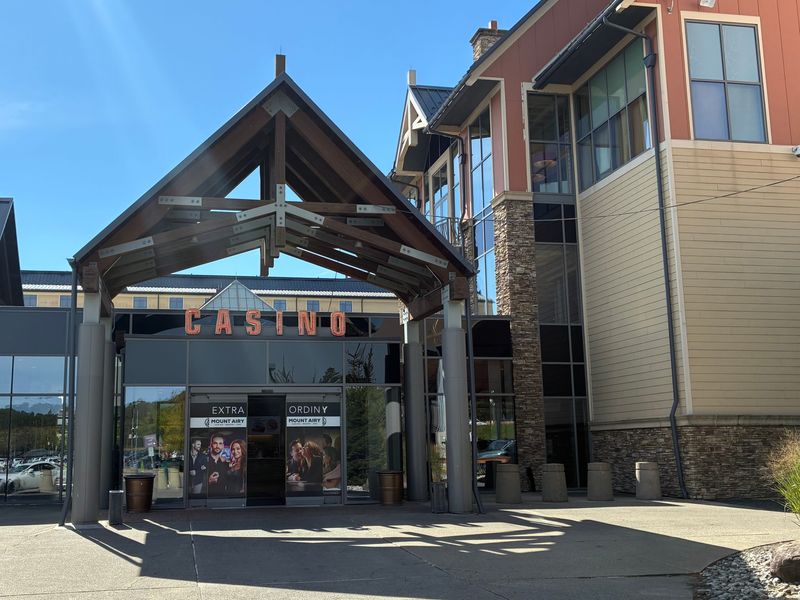
    An entrance at Mount Airy Casino Resort in Mount Pocono, Pa. One study found that 90% of casino revenues came from problem and at-risk gamblers.

    Years ago, an executive at the Parx Casino in Bensalem boasted that many of its customers visited more than 200 times a year — or five times a week.

    That is quaint compared with online gambling. Smartphones allow people to bet 24/7. Gambling sites are engineered with sophisticated and predatory techniques, including frequent notifications, designed to keep users betting.

    This has resulted in a surge of addicted gamblers, including many young people. The rise in sports betting has led to efforts to fix games, which has tarnished the integrity of sports.

    The Philadelphia region is the No. 1 market for online gambling companies, topping Las Vegas and New York. Since 2021, the number of calls about online gambling problems has increased 180% in Pennsylvania and 160% in New Jersey.

    Harrisburg lawmakers are too busy counting the tax revenues and campaign contributions to consider the lives destroyed by legalized gambling.

    Tragic stories abound.

    An executive who helped run a large Black fraternity headquartered in Philadelphia pleaded guilty in 2022 to charges after embezzling nearly $3 million to fuel his gambling addiction.

    That same year, a bookkeeper at the Delaware River Waterfront Corp. was sentenced to more than four years in prison for stealing more than $2.6 million to pay for her gambling addiction and trips.

    A former judge in Chester County pleaded guilty in 2021 to stealing thousands of dollars in campaign funds to fuel a “six-figure” gambling habit at area casinos.

    An attorney at a major Philadelphia firm who had a gambling problem was convicted in 2019 of stealing $100,000 from an 88-year-old client. A priest in Delaware County was sentenced to eight months in prison in 2018 after stealing $500,000 from a fund to care for aging priests that was used to cover gambling losses and pay for trips.

    Most stories don’t make the police blotter, as thousands of other gamblers struggle in silence. Studies show that gambling problems lead to increased bankruptcies, suicide, and divorce.

    The state Gaming Control Board website has a special section dedicated to the hundreds of people a year who leave their kids locked in cars or hotel rooms while they gamble for hours at a time. That is not entertainment; that is a problem.

    Has anyone in Harrisburg ever wondered if the tax dollars are worth the harm?

    Obviously, each person is responsible for their actions. But state lawmakers take an oath to protect the citizenry. Yet, they enabled the proliferation of gambling that has ruined many lives.

    The same goes for the online sites and casinos that actively market to keep people gambling.

    Just listing a toll-free number for people to call to get help is as disingenuous as the latest effort to tax predatory skill games.
  • As nonprofits face growing pains, the city must be careful with taxpayer money | Editorial

    As nonprofits face growing pains, the city must be careful with taxpayer money | Editorial

    Amid the surge in murders and shootings that plagued Philadelphia following the pandemic, City Hall directed millions of dollars to dozens of nonprofits to try to stem the violence.

    But an Inquirer investigation in 2023 found the city’s $22 million anti-violence program devolved into a politicized process that steered funding to nascent nonprofits that were unprepared to manage the funds. A city controller’s report the following year backed the reporting.

    Now, along comes another Inquirer investigation, this time detailing the rapid rise and financial struggles of a nonprofit that received millions in taxpayer funds from the same program.

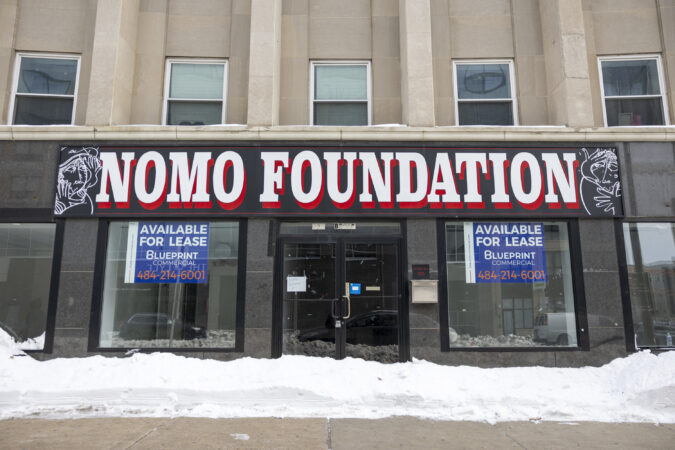
    Soon after the nonprofit New Options More Opportunities, known as NOMO, received a $1 million grant to combat gun violence in 2021, city grant managers raised red flags about the lack of financial records and controls, the recent investigation by Inquirer reporters Ryan W. Briggs and Samantha Melamed found.

    The story detailed a number of issues surrounding NOMO, including multiple eviction filings, an IRS tax lien, and five lawsuits regarding unpaid rent. But even as problems mounted, money from city, state, and federal sources continued to flow.

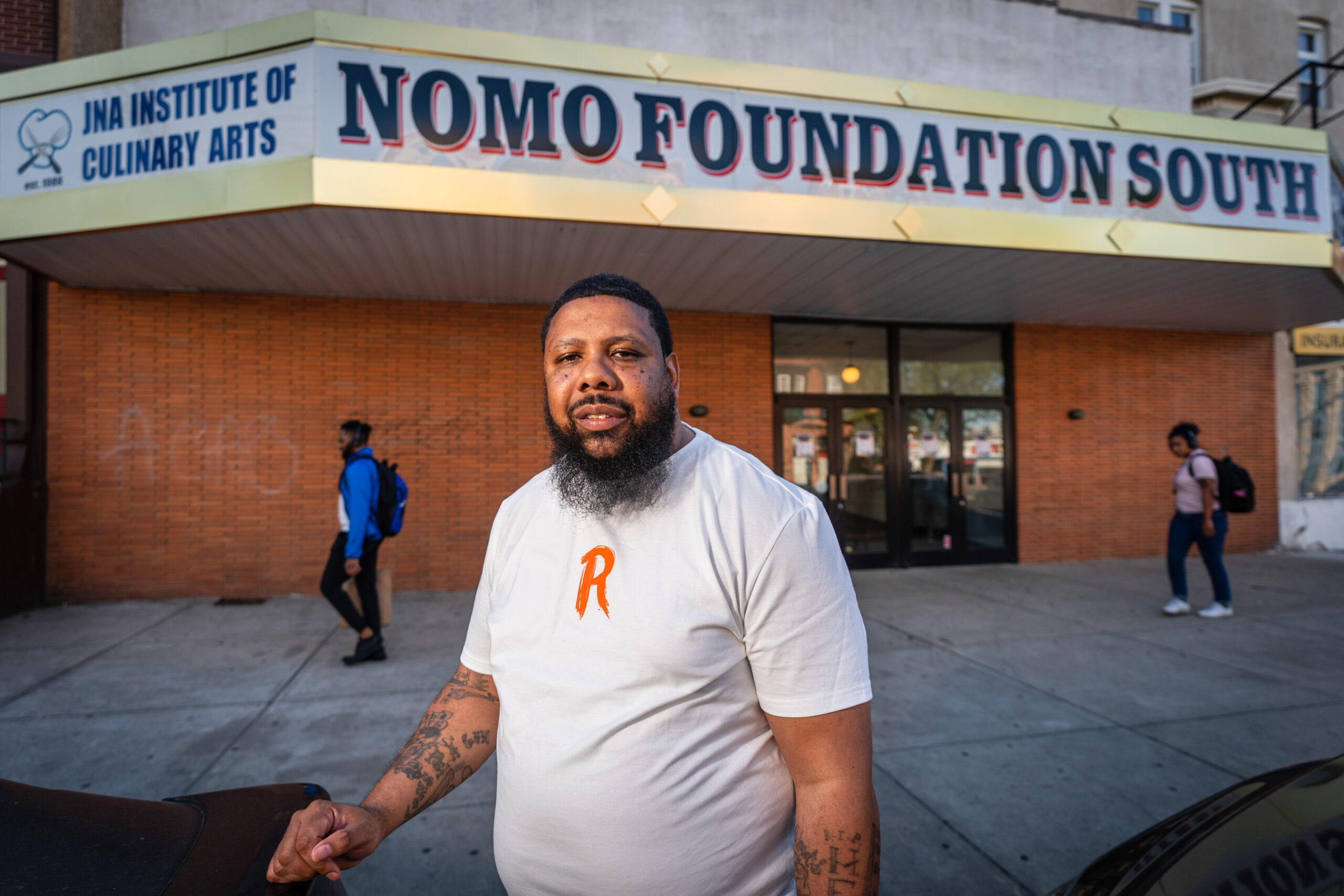
    In a lengthy statement to the Editorial Board, Rickey Duncan, NOMO’s executive director, denied any wrongdoing. He said that NOMO “faced difficulties” several years ago, but they have been addressed. He stressed that all the funds received by his organization had been properly spent.

    Rickey Duncan, the CEO and executive director of the nonprofit New Options More Opportunities, or NOMO, on South Broad Street, in 2023.

    Since 2020, NOMO has received roughly $6 million in city, state, and federal funds. Duncan’s salary has increased from $48,000 to $145,000. His profile grew, as well: In November 2023, Mayor-elect Cherelle L. Parker named Duncan, a former volunteer at NOMO before he began leading the group, to her transition team.

    According to The Inquirer investigation, NOMO was one of only two organizations in 2021 to get the maximum grant of $1 million, which was roughly triple its operating budget. The report found that a nonprofit the city contracted to manage the grant program raised immediate concerns that NOMO provided no balance sheet or audited financial statement.

    Over the years, NOMO expanded its gun violence prevention efforts to include youth after-school programs and a short-lived affordable housing initiative.

    At one point, NOMO leased an apartment complex near Drexel University’s campus at a cost of more than $500,000 a year. But it appears no one questioned how the housing plan fit with the organization’s core anti-violence mission, according to The Inquirer report.

    In fact, the city tried to give NOMO more money. Last year, the city wanted to award NOMO a $700,000 contract for homelessness prevention, but the organization couldn’t meet the conditions, so the funds were not disbursed.

    In January 2025, the city drew the line when Duncan tried to get reimbursed $9,000 for season tickets to the Sixers. He said the tickets were “an innovative tool for workforce development.”

    But a grant program manager responded: “Season tickets to the Sixers are not an acceptable programmatic expense.”

    From left, Rickey Duncan, Dawan Williams, and Rasheed Jones discuss a T-shirt design during a workshop on how to create clothing designs hosted at the NOMO Foundation in October 2021.

    The entire saga may underscore the need for stronger vetting and oversight of fledgling organizations that are well-intended but lack the practical experience to manage a program entrusted with hundreds of thousands of taxpayer dollars.

    Adam Geer, Philadelphia’s chief public safety director, stressed in an interview with the Editorial Board that the Parker administration has implemented stronger oversight and support systems that did not exist when the initial anti-violence grants began.

    He said those safeguards helped flag problems and put a stop to some of the spending that concerned city officials. Geer conceded there were “growing pains” when the anti-violence program launched, but he argued that nonprofits like NOMO played a key role in the steep drop in shootings in Philadelphia.

    Duncan defended his organization’s anti-violence track record.

    “There’s a reason why the city has continued to support the work NOMO is doing,” he wrote. “We are having a real, positive impact on people’s lives.”

    Indeed, gun violence prevention programs can work — but the organizations charged with putting them in place must have the proper screening, support, and oversight.

  • Inaugural NFL draft was held at the Ritz-Carlton Hotel on this week in Philly history

    Inaugural NFL draft was held at the Ritz-Carlton Hotel on this week in Philly history

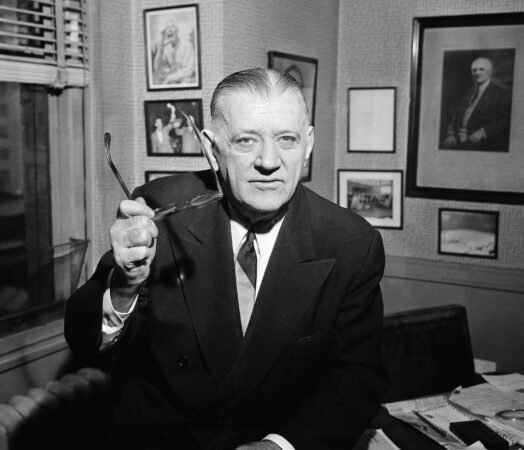
    More than 20 men crowded into a hotel room at the Ritz-Carlton on South Broad Street in the winter of 1936.

    They faced a blackboard listing 90 names of college football players from around the country.

    They took seats on the bed and on the bureau and passed around bottles as they kicked off the first draft in NFL history.

    Philly’s other famous Bell

    Bert Bell pulled the defunct Frankford Yellow Jackets out of bankruptcy, and started a new NFL franchise in Philadelphia in 1933.

    His wife, actress Frances Upton Bell, paid her husband’s share of $2,500 (more than $60,000 in today’s money) to seal the deal.

    Bell spotted a billboard for Franklin D. Roosevelt’s New Deal, which included the insignia of a bald eagle, and decided this new team should be called the Philadelphia Eagles.

    The NFL back then was a nine-team league. And for players it was a free market. The best and brightest could join whichever team they saw fit.

    Teams in Green Bay, Chicago, New York, and Washington were the winningest franchises, so that’s where the best players usually signed.

    The Eagles were the worst. And in 1935, Bell tried to sign Stan Kostka, a 6-foot-2 fullback from the University of Minnesota. After failing to close the deal, he decided there had to be another way.

    Bell came up with an idea whereby each team had a fair shot at the top players. His solution was a draft, in which teams would select from a pool of new players entering the league.

    And the key idea: The order of player selection would be in reverse order of the previous year’s standings. So the worst-performing franchise would pick first, and the league champions would pick last.

    They called it “the selection of players.” And the first iteration would be held during the owners’ meetings, Feb. 8 and 9, 1936.

    It made sense to hold the event in Philadelphia. It was a midway point among the nine cities, and Bell’s father owned the hotel.

    On the clock

    The Eagles held the first-ever pick in the NFL draft.

    They selected Jay Berwanger, Heisman Trophy-winning halfback from the University of Chicago. But his salary demands were high, reported at $1,000 per game. (That would be $25,000 per game today.)

    So immediately the team traded him to the Bears for veteran tackle Art Buss.

    Berwanger, unimpressed with the Bears’ contract offer, took a job with a rubber company instead.

    He never played a minute in an NFL game.

    In that hotel room, the nine owners drafted 81 players over nine rounds, kicking off what would become an industry unto itself and the league’s third marquee event, behind the NFL’s opening weekend and the Super Bowl.

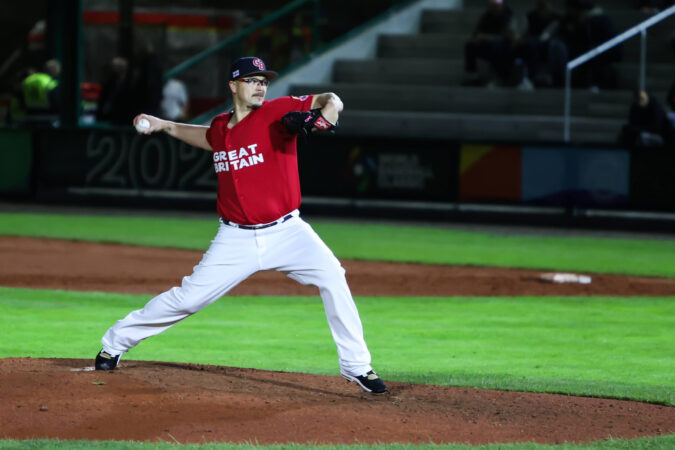
  • Ex-Phillie Vance Worley will pitch for  Britain (again) in the WBC. At age 38, he’s embracing the role of team ‘grandpa’

    Ex-Phillie Vance Worley will pitch for Britain (again) in the WBC. At age 38, he’s embracing the role of team ‘grandpa’

    In December of 2021, Vance Worley received an unexpected email. He’d recently played parts of the minor league season with the Mets’ triple-A affiliate in Syracuse and heard from one of the organization’s scouts, Conor Brooks.

    Brooks had ties to Britain’s national baseball team. The organization was interested in adding Worley to its roster ahead of the World Baseball Classic qualifier in Germany in September and told him that he was eligible to pitch.

    As the former Phillie read the message, he started to laugh.

    “I’m like, ‘How?’” he said. “‘Where is my lineage to Great Britain?’”

    Worley had never been to England, Scotland, or Wales. Neither had anyone in his immediate family. But the team was able to find an unconventional loophole.

    Worley’s mother, Shirley, was born in Hong Kong while it was under British rule. All Brooks needed was a birth certificate.

    The right-handed pitcher called his parents. A few minutes later, he texted a screenshot of Shirley’s birth certificate to the scout.

    By September, he was on a flight to Germany for a game against Spain. Great Britain won in a 10-9 walk-off, punching a ticket to the 2023 World Baseball Classic.

    Vance Worley’s 3.3 WAR in 2011 was better than both Craig Kimbrel (2.5) and Freddie Freeman (1.5), two probable Hall of Famers who finished ahead of him in Rookie of the Year voting that season.

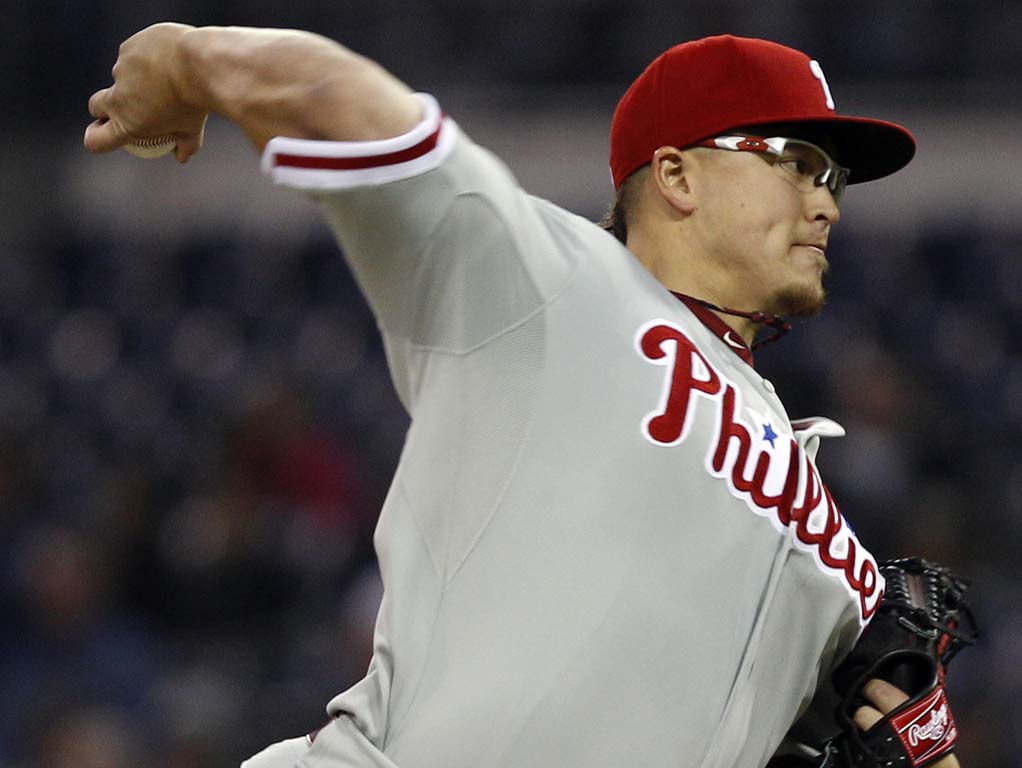
    For Worley, the timing was perfect. The swingman made his big league debut with the Phillies in 2010. He earned a spot on the team’s roster in 2011, when he pitched to a 3.01 ERA across 131 innings and finished third in National League Rookie of the Year voting behind Craig Kimbrel and Freddie Freeman.

    But he bounced around after that. The Phillies traded him to the Twins in 2012. Minnesota placed him on waivers in March 2014, and outrighted him to triple A once he cleared.

    At this point, Worley says he was in a dark place. He texted former Phillies teammate John Mayberry Jr. and said he was ready to quit. Mayberry quickly convinced him otherwise.

    “You play until they rip that damn jersey off your back,” the outfielder told his friend.

    Worley has been pitching ever since. He’s now 38, teaching baseball lessons out of a gym in South Jersey. He hasn’t thrown an MLB inning in nine years, but that doesn’t faze him.

    The right-handed pitcher loves the game and has found a home with Britain’s baseball federation. Since 2024, he’s worked on the side as a pitching coach for the under-23 national team. In March, he’ll suit up for the WBC in what his could be his last appearance on the mound.

    “This program has given to me,” Worley said. “So I said, ‘I’m going to stick around. I’m going to help you guys out, and I’m going to coach with you guys. And as long as you let me play, I’m going to keep playing.’”

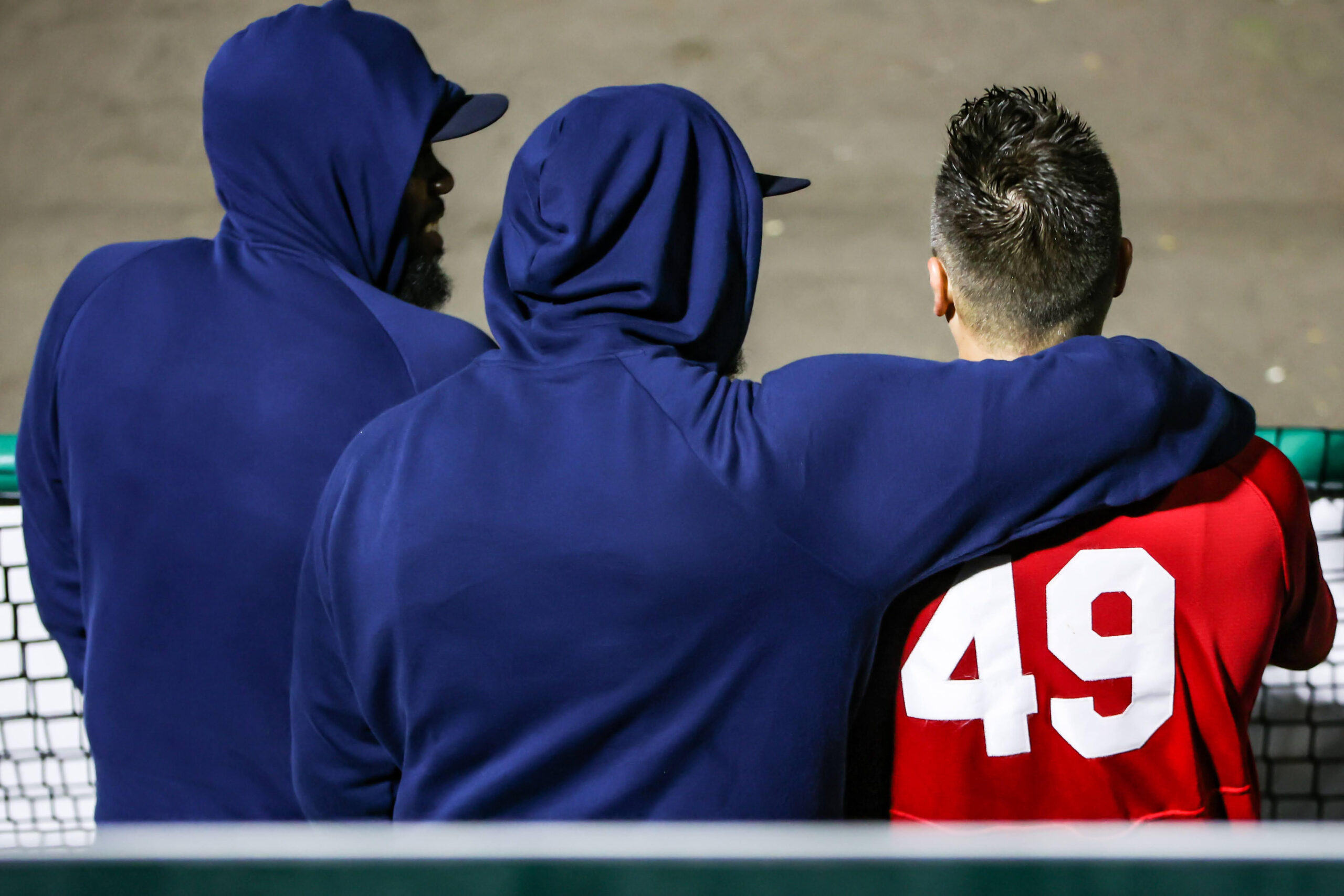
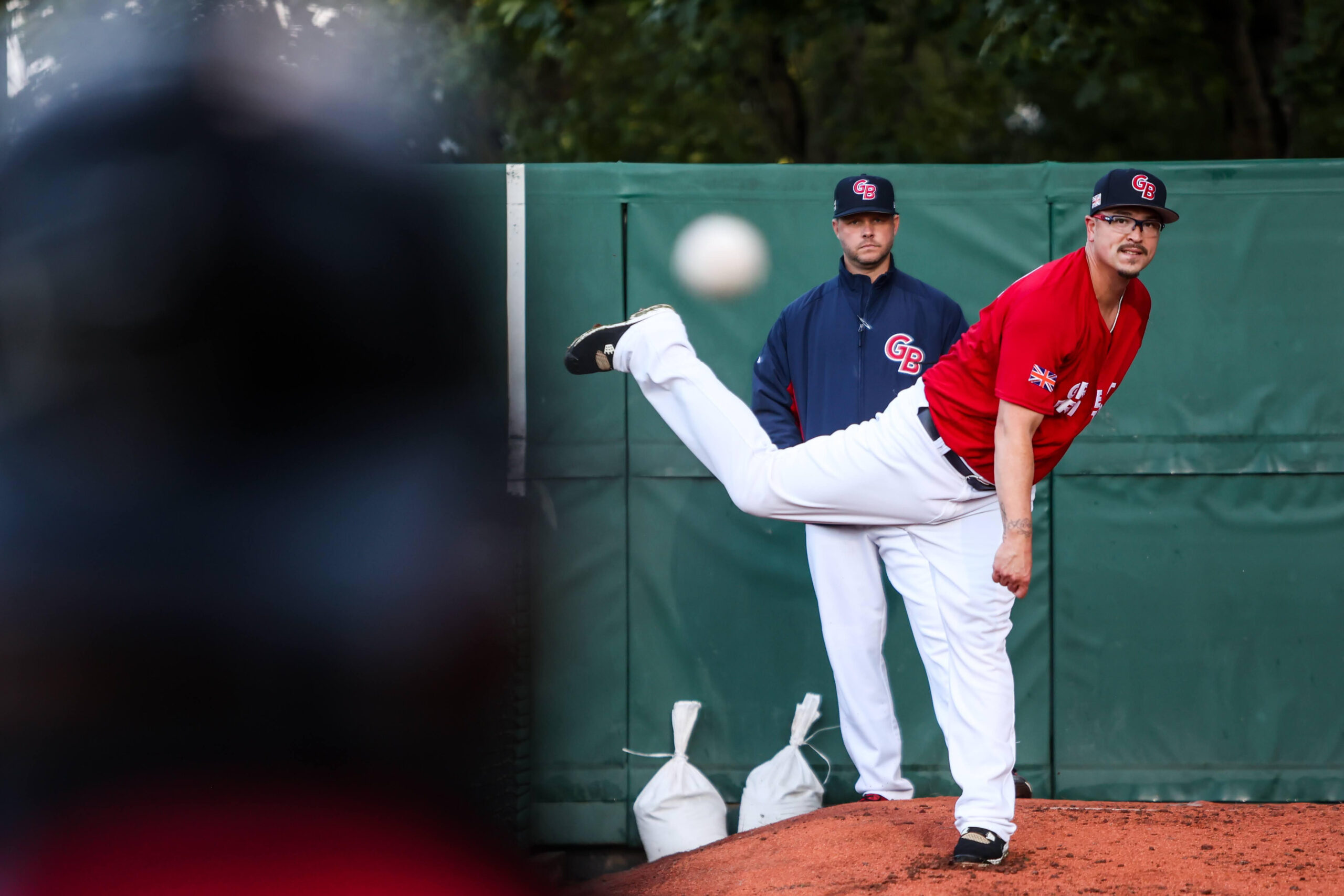
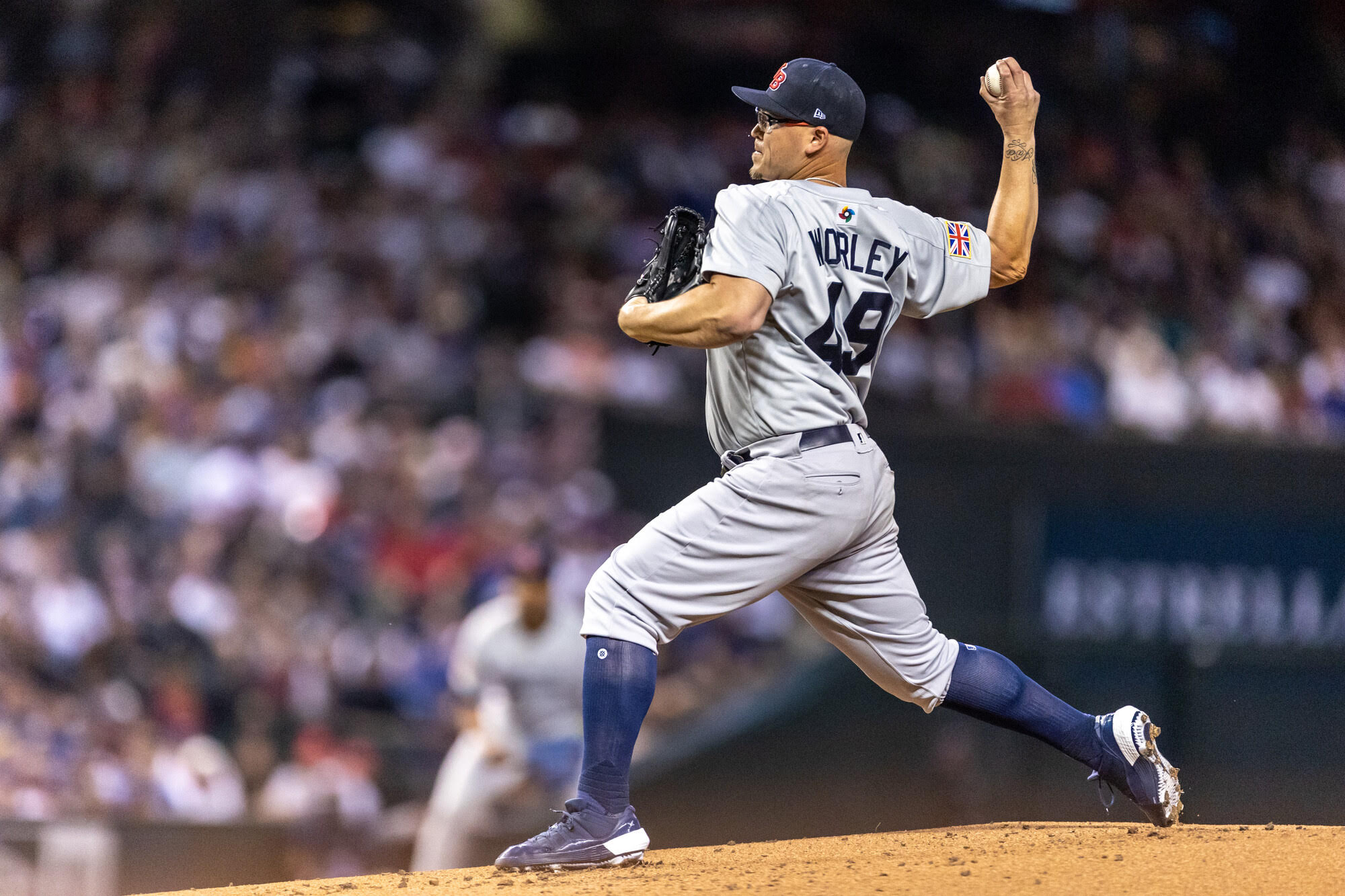
    Vance Worley (49) has been embraced by Great Britain teammates young and old.

    ‘I’ve been called Grandpa’

    Worley still remembers stepping into the visitors’ clubhouse at Busch Stadium in St. Louis on a hot July day. It was 2010, and he’d recently been called up by the Phillies.

    The right-handed pitcher arrived early and watched as his new teammates filtered on and off the field. He was starstruck, especially when he saw Joe Blanton, a player Worley rooted for as an A’s fan growing up in Sacramento, Calif.

    He decided to introduce himself.

    “I was like, ‘Hey Joe, it’s nice to meet you,’” Worley recalled. “‘I remember watching you when I was in high school.’

    “[Blanton] just goes, ‘God, I’m getting old.’”

    Worley had a similar experience when he joined Great Britain in 2022. One of his new teammates was Nick Ward, a longtime minor league infielder who was born and raised in Kennett Square.

    Ward was brought up on the Phillies teams of Jimmy Rollins, Chase Utley, and Ryan Howard. But he’d had a special affinity for “The Vanimal,” a pitcher who’d never thrown the hardest but was a fierce competitor.

    Vance Worley’s performance for Great Britain in the 2026 World Baseball Classic could be his last hurrah on the mound.

    Similar to how Worley was with Blanton, Ward was in awe. The righty looked the same as he did on TV, back when he was donning black-rimmed glasses and a Phiten necklace.

    “It was like, ‘Holy crap. That’s Vance Worley,’” Ward said. “I had to pinch myself. It was just really cool that one of the guys that I loved to watch play was actually a super good dude.”

    Just as it did with Blanton, this reaction made Worley feel a bit old. But he has embraced his role as the team’s elder statesman.

    “I’ve been called Uncle,” Worley said. “I’ve been called Grandpa. And I’m just like, ‘Whatever man, your uncle and grandpa, think about them barbecues, out there playing Wiffle ball. I’d be punching you out right now. I see things you don’t know yet.’”

    After he returned from Germany, Worley continued to throw. He used his day job, teaching baseball at Powerhouse Sports Arena in Sewell, Gloucester County, to help him stay in shape.

    Once he arrived in Arizona for the WBC in 2023, he mentored the younger players around him. One was Harry Ford, Britain’s catcher, who was drafted by the Mariners in 2021 but has since been traded to the Nationals.

    Worley asked his coaches if he could work with Ford one-on-one, and he started teaching the young backstop the minutiae: how to set up early, how to set up late, how to work quick.

    Vance Worley

    He showed him different pitch shapes, how they moved, and the strategy behind calling a game. The veteran pitcher served as a pseudo player-coach for the entire team, giving them words of encouragement on the field and off.

    For Ward, this instruction made a big impact. Like Worley, he’d bounced around a lot in the lead-up to the 2023 WBC. But unlike Worley, he’d never played a big league inning.

    Great Britain’s first game was scheduled on March 11 against Team USA, a roster stacked with prominent major leaguers. Worley was scheduled to start, which, years removed from MLB, was a daunting feat.

    He threw 2 innings, allowing three hits and no runs with three walks and a strikeout. While Worley was on the mound, Ward made a few big defensive plays at first base. The right-handed pitcher made his appreciation known, giving Ward a fist-bump or a point or a smile.

    “It was just like, ‘Wow, if this guy that I used to really look up to is doing that … I’m good enough,’” Ward said. “And it wasn’t just me that he was doing this to. He was making all of us feel like we belong here.”

    Worley exited the game early due to pain in his elbow. Great Britain lost, 6-2, and when he picked up his bag to get onto the bus, he felt the pain again. He would need bone chip surgery (the third of his career).

    Worley thought this would be the last time he’d step on a mound. He was despondent that his time in baseball would come to such an unceremonious end.

    Vance Worley’s passion for the game has not changed since his days with the Phillies, and has rubbed off on his young Great Britain teammates.

    Before Great Britain’s game against Colombia on March 13, Ward noticed Worley standing alone on the top step of the dugout.

    It was just before first pitch. The minor leaguer gave the big league veteran a hug.

    “Thank you,” Ward told him. “I got to be your fan, first. Getting to share the field with you was one of the coolest moments that I could have ever dreamed about.”

    A new chapter

    Great Britain ended up defeating Colombia, 7-5, before falling to Mexico, 2-1, on March 14. Before they left Arizona, the players reminisced over what they’d done.

    Worley reminded them that the British team wasn’t expected to be in the tournament in the first place. The players had come from all walks of life and had shown they deserved to be there.

    “A lot of them were never in pro ball, or didn’t get an opportunity, or had an injury that shut them out,” Worley said. “And for them to be able to play in a big league stadium, playing big leaguers … I was like, ‘Hey, man, no matter what anybody says to you, you’re a big leaguer today.’”

    The win over Colombia secured Great Britain’s berth for the 2026 tournament, which Ward and Worley will both be participating in.

    Worley has gotten creative in his preparation. He’s integrated it into his day-to-day life, throwing in neighborhood sandlot games with his kids and also at the gym where he gives lessons.

    He’ll report to camp in Arizona on Feb. 26. He has not officially retired and is unsure if this will be his last outing in a baseball game.

    But the former Phillie is going to treat it that way, just in case.

    “I’ve been through pretty much every situation as a player,” Worley said. “Trade, waive, claim, release, DFA. And I’m relentless. I’m not going to let something that should sidetrack me, or take me off the track, [prevent me from] being a baseball player, and what I enjoy.”

  • ‘It was all God’s plan’: Tyrese Maxey, Mike Muscala, and the unlikely road that landed an All-Star in Philly

    ‘It was all God’s plan’: Tyrese Maxey, Mike Muscala, and the unlikely road that landed an All-Star in Philly

    As the 76ers entered 2020 draft night, Doc Rivers and Sam Cassell had become enamored with Tyrese Maxey.

    The two Sixers coaches at the time — both NBA points guards in a past life — sat together in a “silent panic” as the picks unfolded, hoping Maxey would continue slipping to No. 21.

    “It really just fell right into our hands,” said Rivers, now head coach of the Milwaukee Bucks.

    That was the final piece that needed to align — amid some bizarre basketball and societal circumstances — for Maxey to become a Sixer.

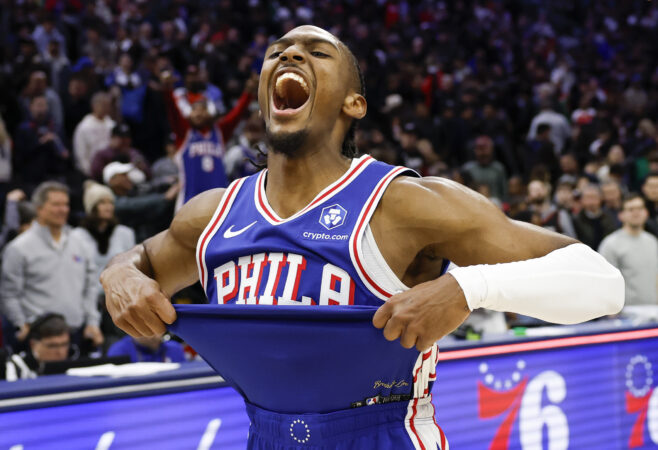
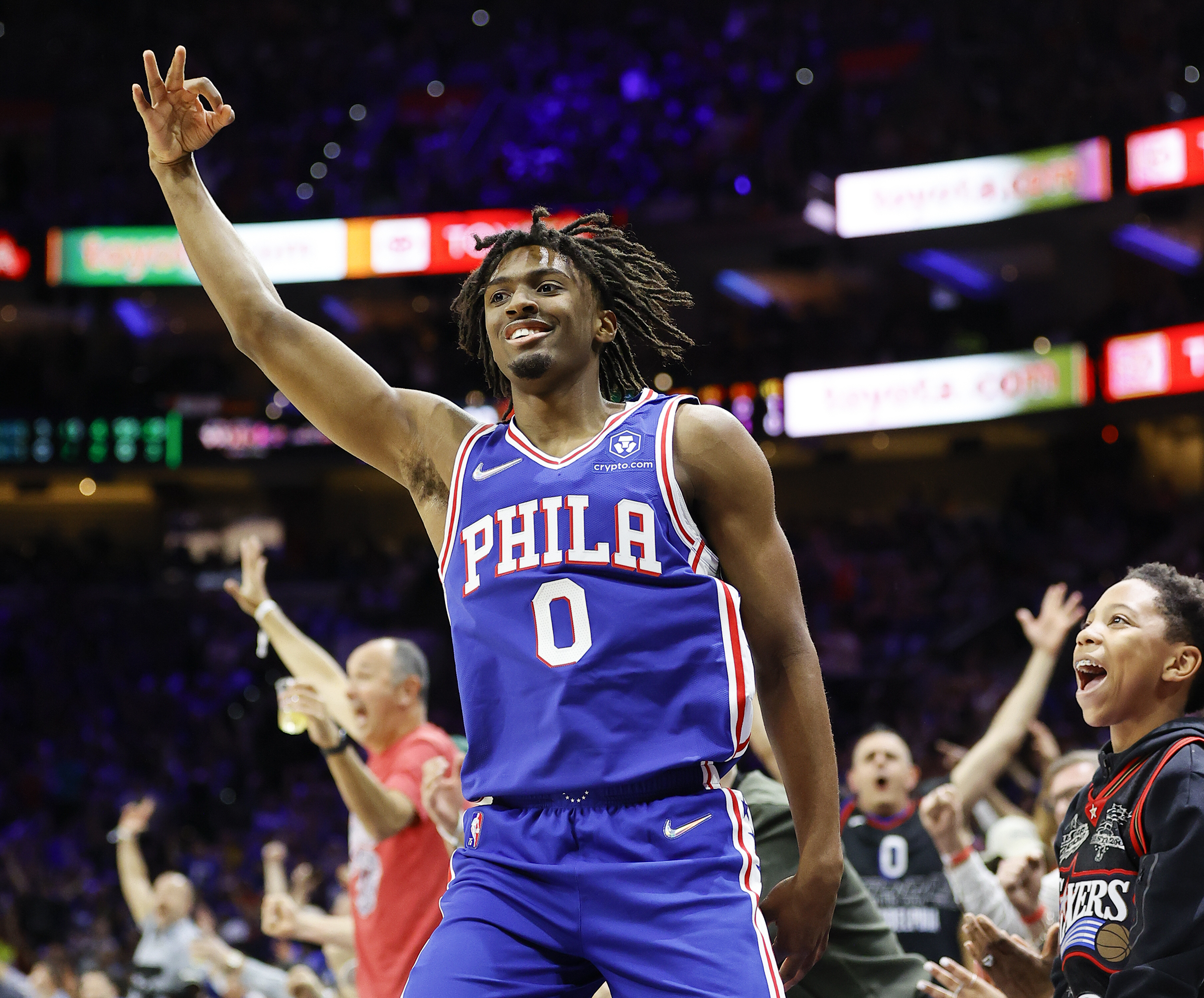
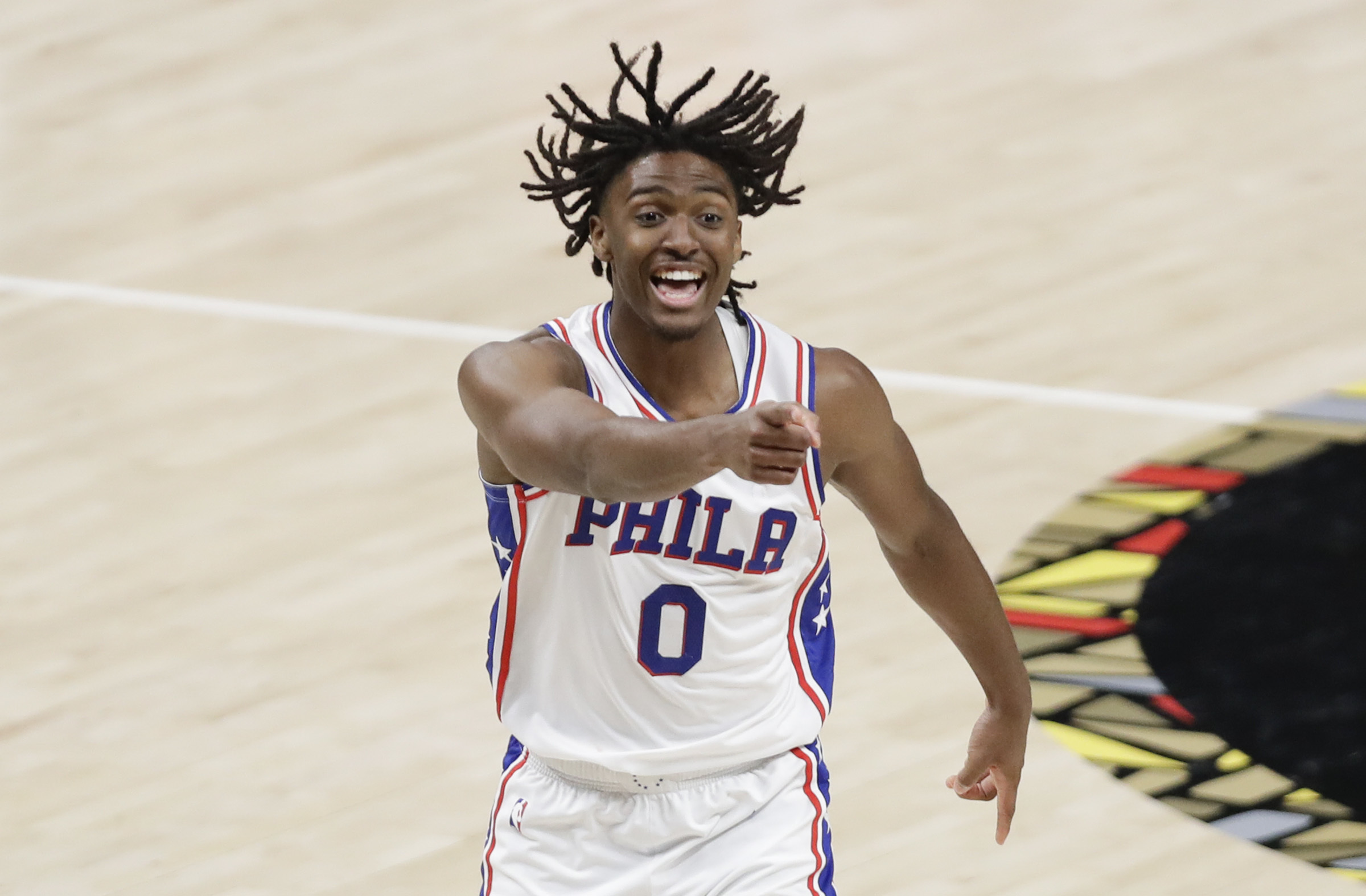
    Tyrese Maxey signed a four-year, $204 million extension with the Sixers in 2024.

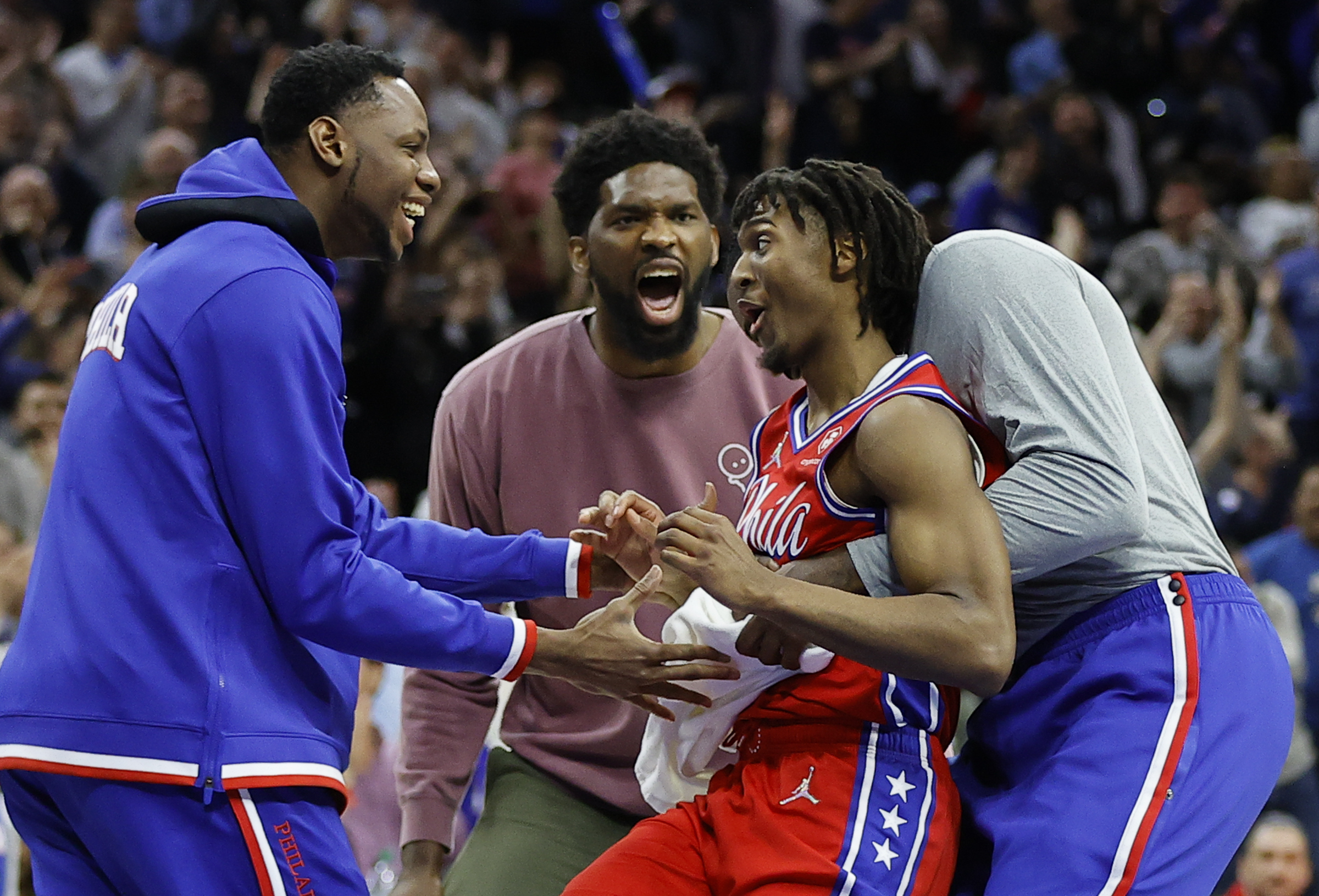
    The COVID-19 pandemic canceled the 2020 NCAA Tournament, swapping a potential final on-court showcase for Maxey with Kentucky for “working out for, like, [eight] months straight.” Several pre-draft interviews with teams were via videoconference, preventing decision-makers from witnessing Maxey’s work ethic and joyful demeanor in person and making that year’s overall talent evaluation an even more inexact science. And the only reason the Sixers had the 21st overall selection in the first place was because of a game-winning shot in the Orlando restart bubble by the Oklahoma City Thunder’s Mike Muscala, which officially conveyed a traded top-20-protected draft pick to the Sixers.

    “People will remember that number [21],” Indiana Pacers coach Rick Carlisle said when asked recently about Maxey. “Because if you redraft that draft, he’s at the very top somewhere, for sure.”

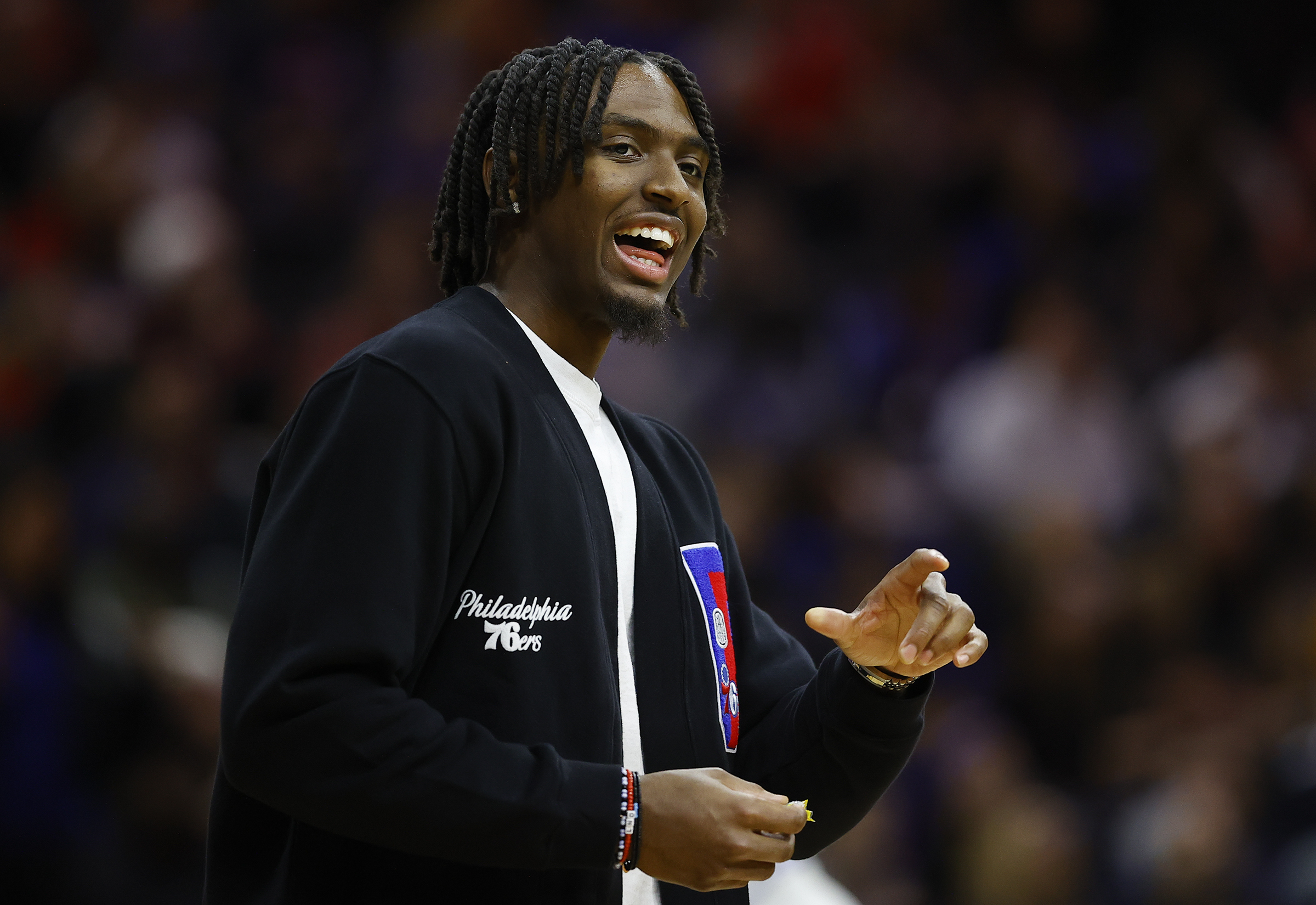
    Now Maxey is an All-Star starter, living up to “The Franchise” nickname bestowed upon him by teammate Joel Embiid, a former MVP. The explosive guard entered Thursday ranked sixth in the NBA in scoring average (28.9 points), leading the league in minutes played (38.6), and adding 6.8 assists, 4.1 rebounds, and 2 steals per game. He signed a five-year, $204 million max contract in the summer of 2024.

    Does he ever think about the specific series of events needed for his Philly origin story to occur? Yes.

    “I’m blessed,” Maxey told The Inquirer last month. “I really got lucky.”

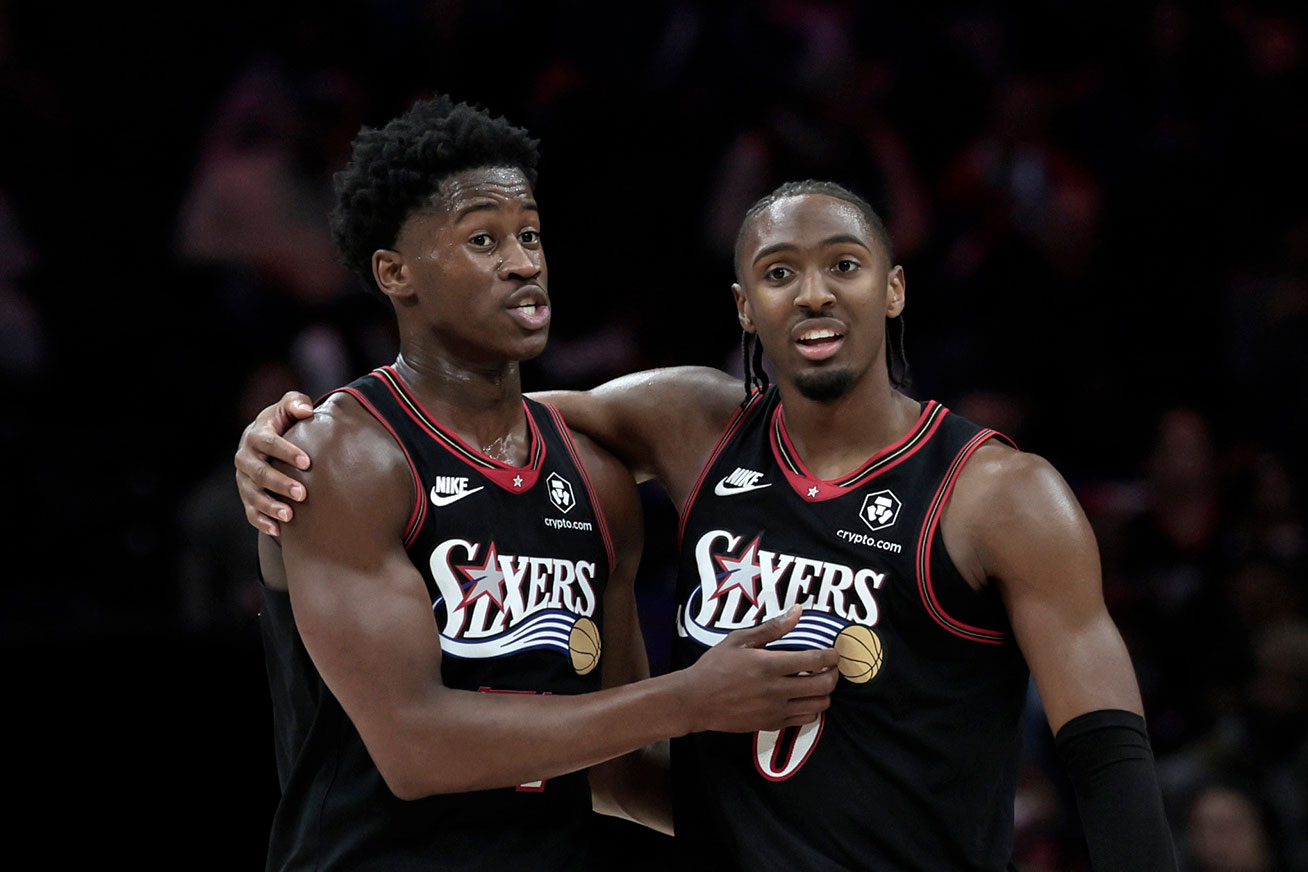
    Sixers guards VJ Edgecombe and Tyrese Maxey will travel together to All-Star Weekend to partake in the Rising Stars game and All-Star Game, respectively.

    Maxey and his family were at the SEC Tournament in Nashville in March 2020 when the remainder of the college basketball season was canceled because of the pandemic’s onset.

    Fueled by Maxey and fellow future NBA guard Immanuel Quickley, Kentucky was a threat to make a deep NCAA Tournament run. March Madness can become a prime stage for an NBA prospect’s draft stock to soar, and missing out left Maxey with a sour “What did you come to college for?” taste.

    “I was like, ‘I’m ready to go home and be with my family,’” Maxey said. “My mom came and got me that night.”

    Tyrese Maxey fell to the Sixers partly because he couldn’t workout or interview in front of NBA teams.

    Maxey went back to his hometown of Garland, Texas, near Dallas and trained with his father, Tyrone, his longtime coach. After signing with Klutch Sports agency, Maxey then went to Los Angeles to work with personal trainer Chris Johnson.

    When Maxey learned that Rajon Rondo, a standout NBA point guard and Johnson client, arrived at the gym at 5:30 a.m., Maxey told Johnson, “I’m there.” That daily workout fed into a weightlifting session with performance coach Al Reeser, who today accompanies Maxey with the Sixers. Maxey would return to the gym for a 10 a.m. shooting session with various players, including all-time great LeBron James, before a third workout at 12:30 p.m. With no guidance yet from an NBA team or system he would be stepping into, Maxey drilled all aspects of his game, including shooting touch, passing reads, and three-point accuracy.

    Maxey has kept that early-morning routine ever since, believing it now gives him a psychological advantage over competitors.

    “I knew then he had everything that it took for him to have a very promising career in the NBA,” Johnson told The Inquirer in 2021. “Whatever franchise was going to get him was going to get somebody that, No. 1, could be coached. No. 2, would be prepared. No. 3, not afraid of hard work — but not just regular hard work. We talk about elite training when your body [doesn’t] feel like it.

    “I knew right away, ‘Oh, he’s going to be pretty special.’”

    Then Maxey’s parents made him put on a polo shirt for video interviews with team executives, where he hoped his authenticity would pierce through the “kind of awkward” digital setting. Tyrone reminded his son to make sure he conveyed that he had been trained as a point guard, even though he played off the ball at Kentucky.

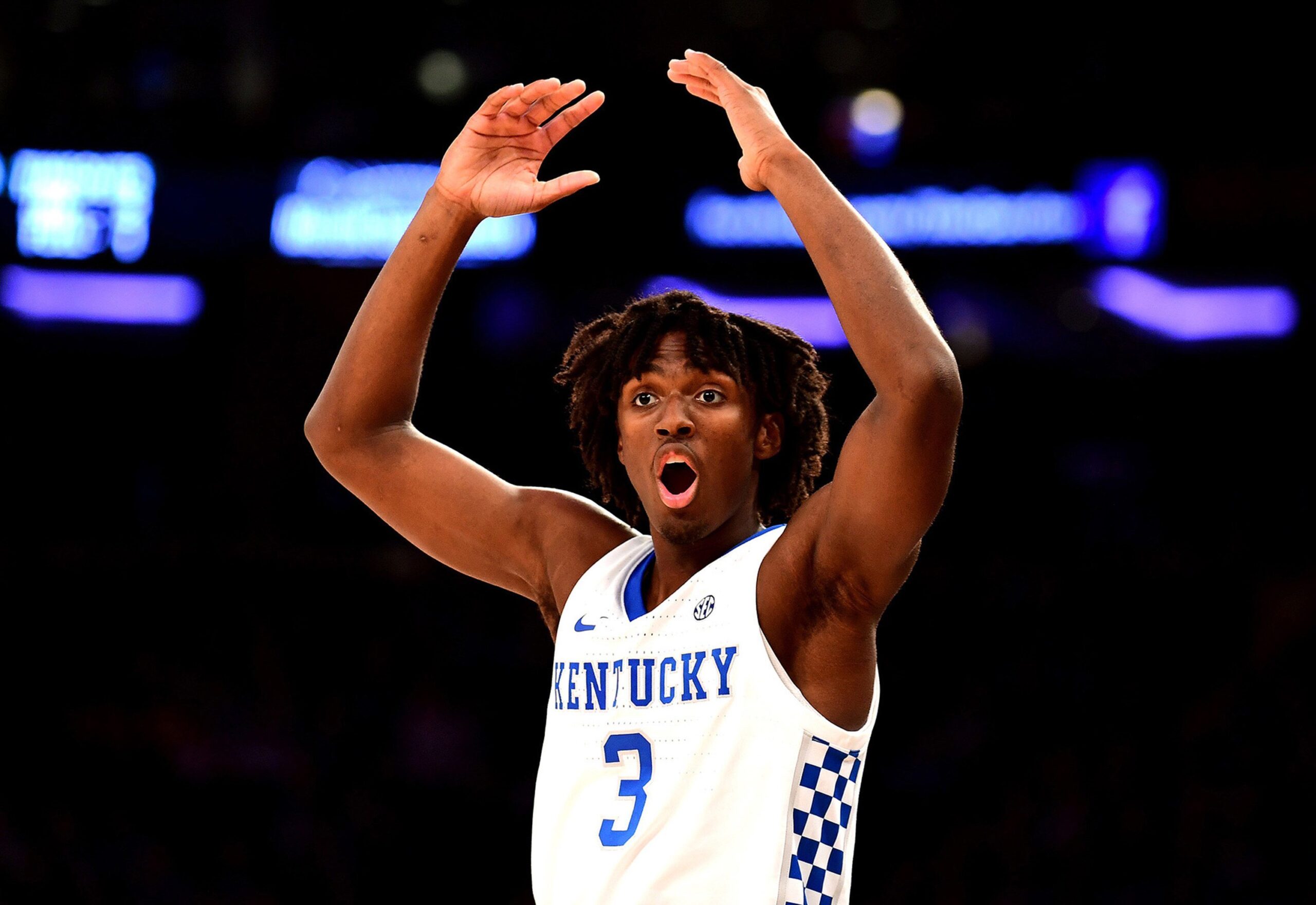
    Tyrese Maxey played well at Kentucky but NBA teams believed he wasn’t a great shooter.

    The most common feedback Maxey remembers receiving from teams back then was he “can’t shoot,” after he made 29.2% of his three-point attempts at Kentucky. He attempted to change that narrative during a workout with an unnamed team, when Tyrone said Tyrese made 33 consecutive three-pointers and “and they still passed on him” on draft night.

    “He was proving he could shoot in front of this team,” said Tyrone, who will watch Maxey compete in the All-Star three-point contest on Saturday. “ … And it’s like, ‘Man, this is crazy.’”

    One team Maxey believed had “no chance” to join? The Sixers.

    He had “zero” contact with the organization before the draft. But that front office was studying him behind the scenes.

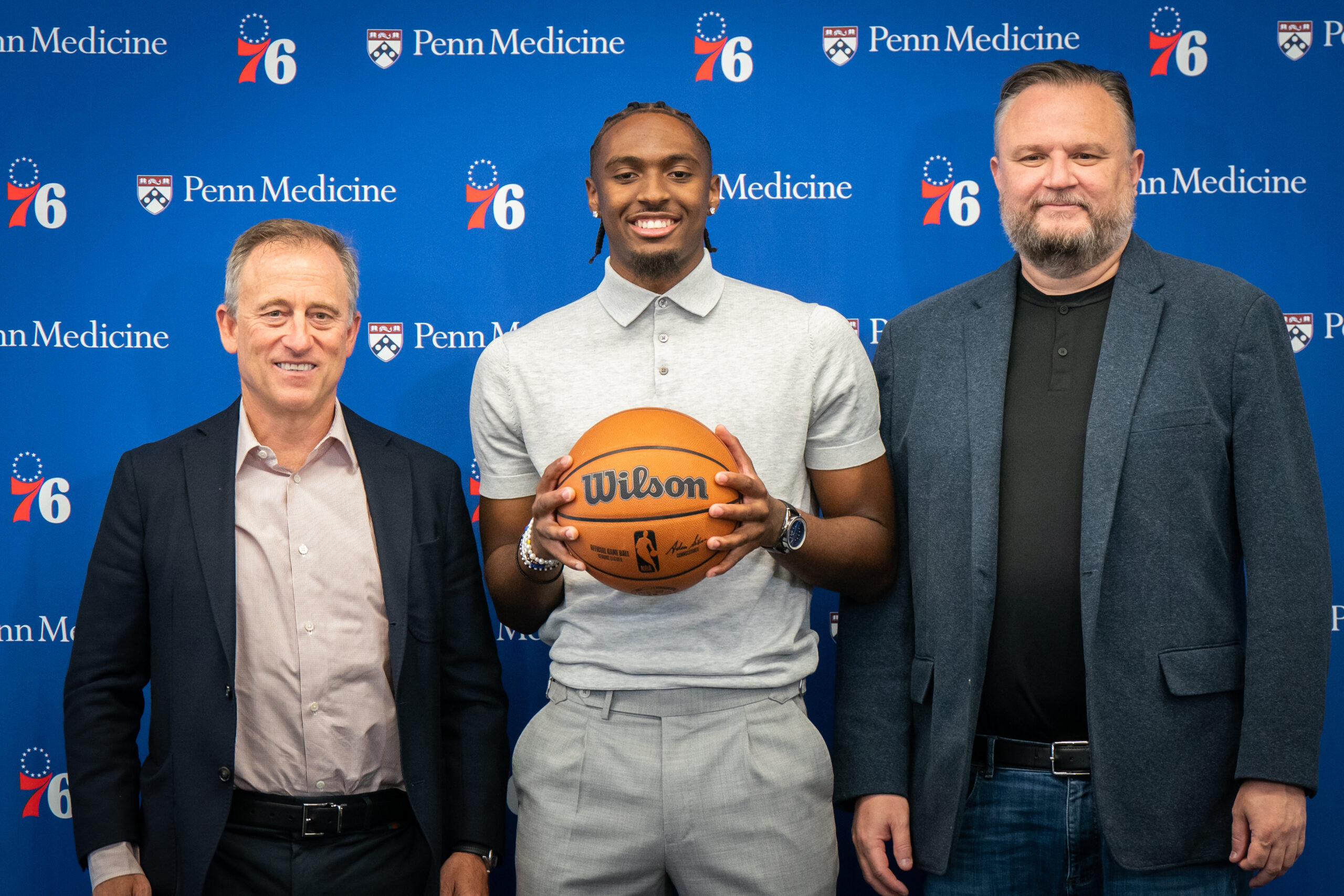
    President of basketball operations Daryl Morey credits general manager Elton Brand and the scouting staff for doing the bulk of the evaluation on Maxey before Morey joined the organization from the Houston Rockets in November 2020.

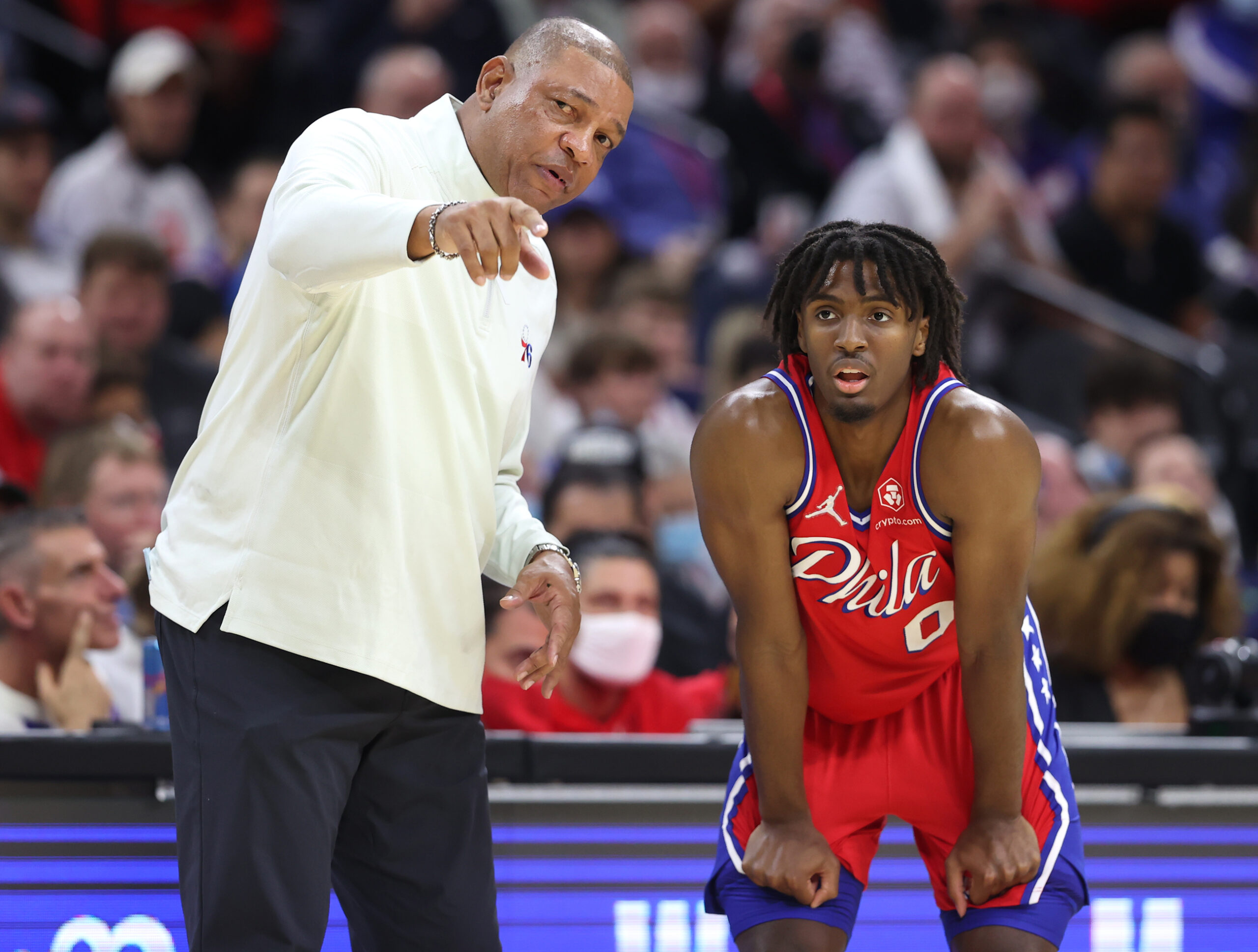
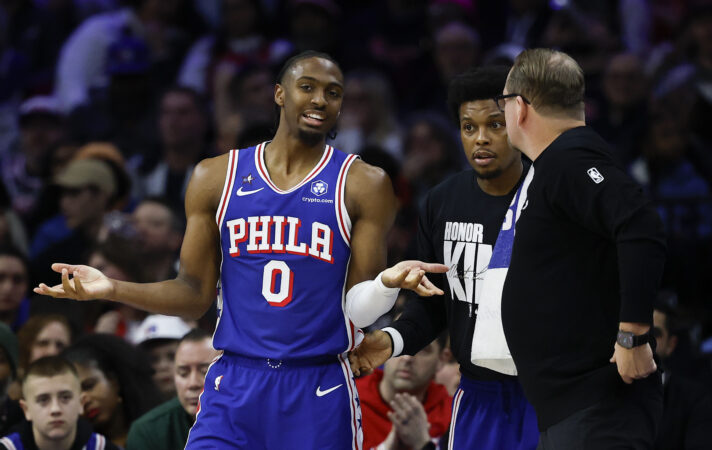
    Former Sixers coach Doc Rivers placed trust in Tyrese Maxey when Ben Simmons stepped away from the team.
    Tyrese Maxey is now an All-Star starter and the top American vote-getter in the All-Star Game.

    Maxey’s quickness and finishing around the rim immediately stood out. Morey believed in Maxey’s perimeter shooting mechanics and “secondary indicators” of NBA potential, despite the low three-point percentage in college. Morey also picked up on the pride Maxey took in improving his defense, which has turned him into a legitimate disruptor on that end of the floor in his sixth NBA season.

    Morey told The Inquirer in 2021 that Maxey was ranked around 10th on the Sixers’ big board entering the draft.

    “A lot of his on-the-surface things didn’t pop at Kentucky,” Morey said, “which is why I think the scouts get a lot of credit on this one.”

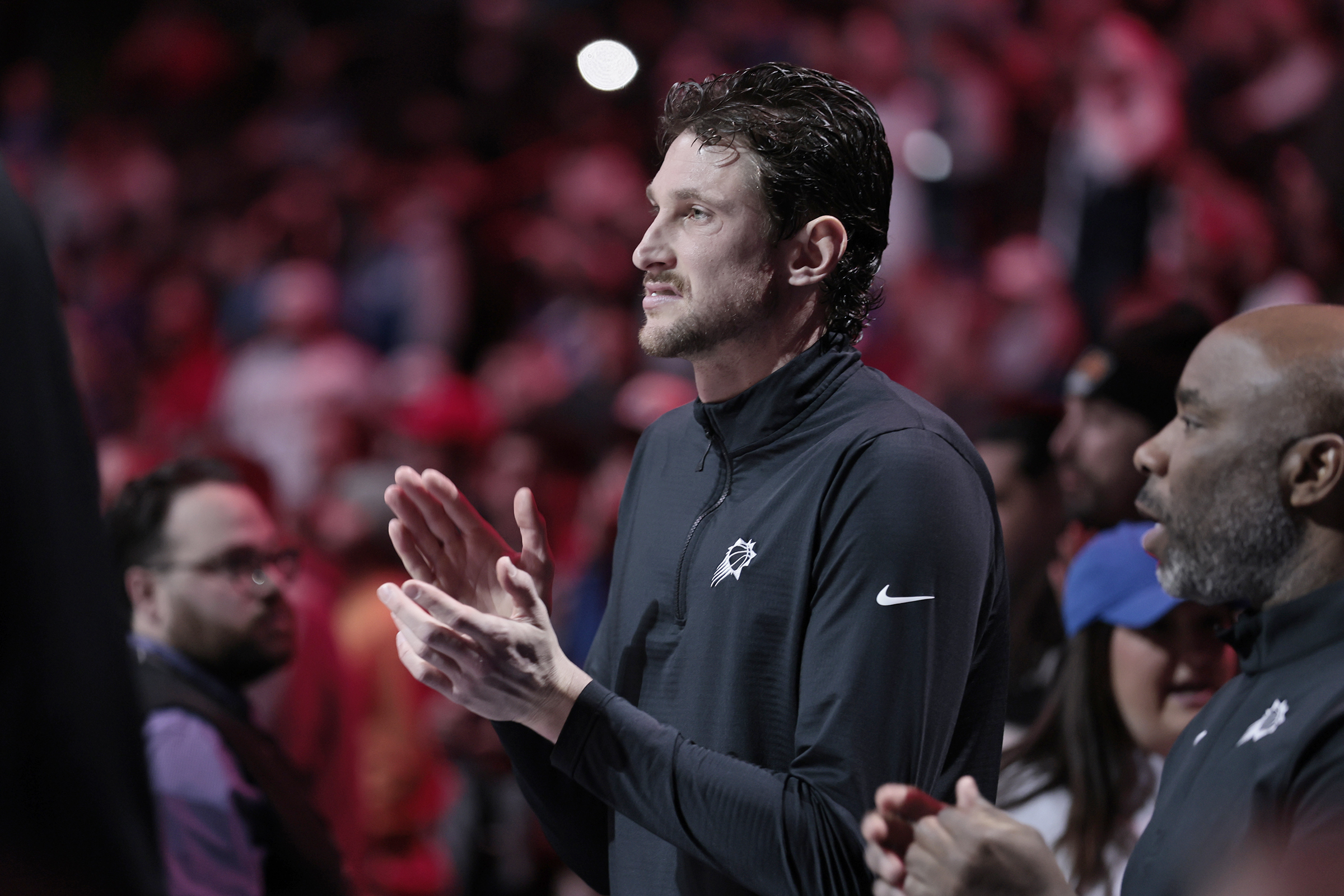
    Mike Muscala, a former player with the Sixers and Thunder, is now a Phoenix Suns assistant coach.

    To even possess that pick, however, the Sixers needed two fortuitous 3-pointers at Disney World by Muscala, the former Sixer who at that time was a role player for the Thunder.

    Those shots beat the Miami Heat in their second-to-last regular-season bubble game, which configured the standings so that the top-20-protected draft pick that Oklahoma City owed the Sixers would convey that year. Muscala told The Inquirer that, as Maxey began his NBA ascension about a year or two later, he began to catch wind from the most-tapped-in Sixers fans of the roundabout impact he had on the team landing its future All-Star.

    “It is interesting when you start thinking about different dominoes that fall,” said Muscala, who is now an assistant coach with the Phoenix Suns and said he does not know Maxey.

    Tyrese Maxey’s energy and joy have endeared him to the city of Philadelphia.
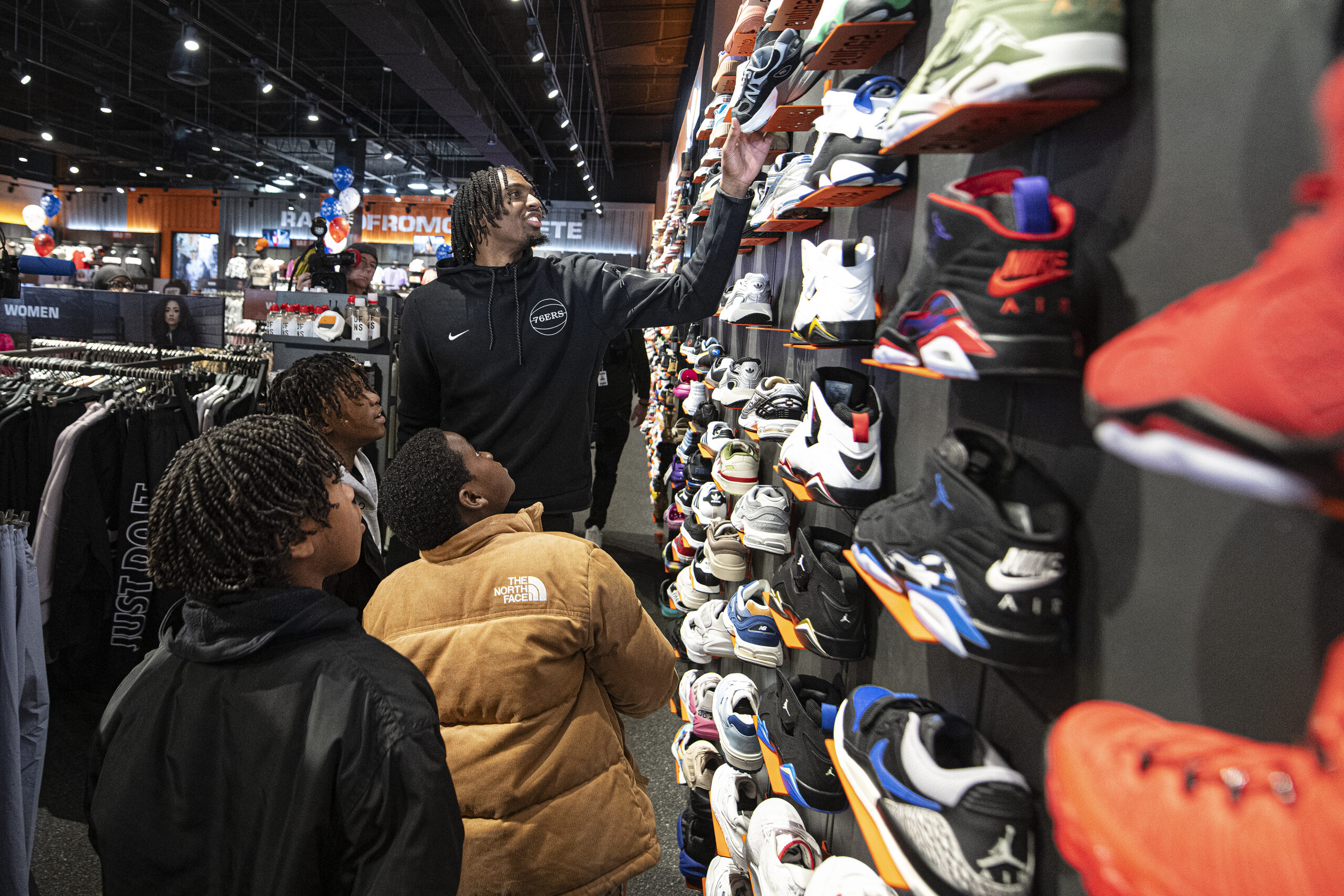
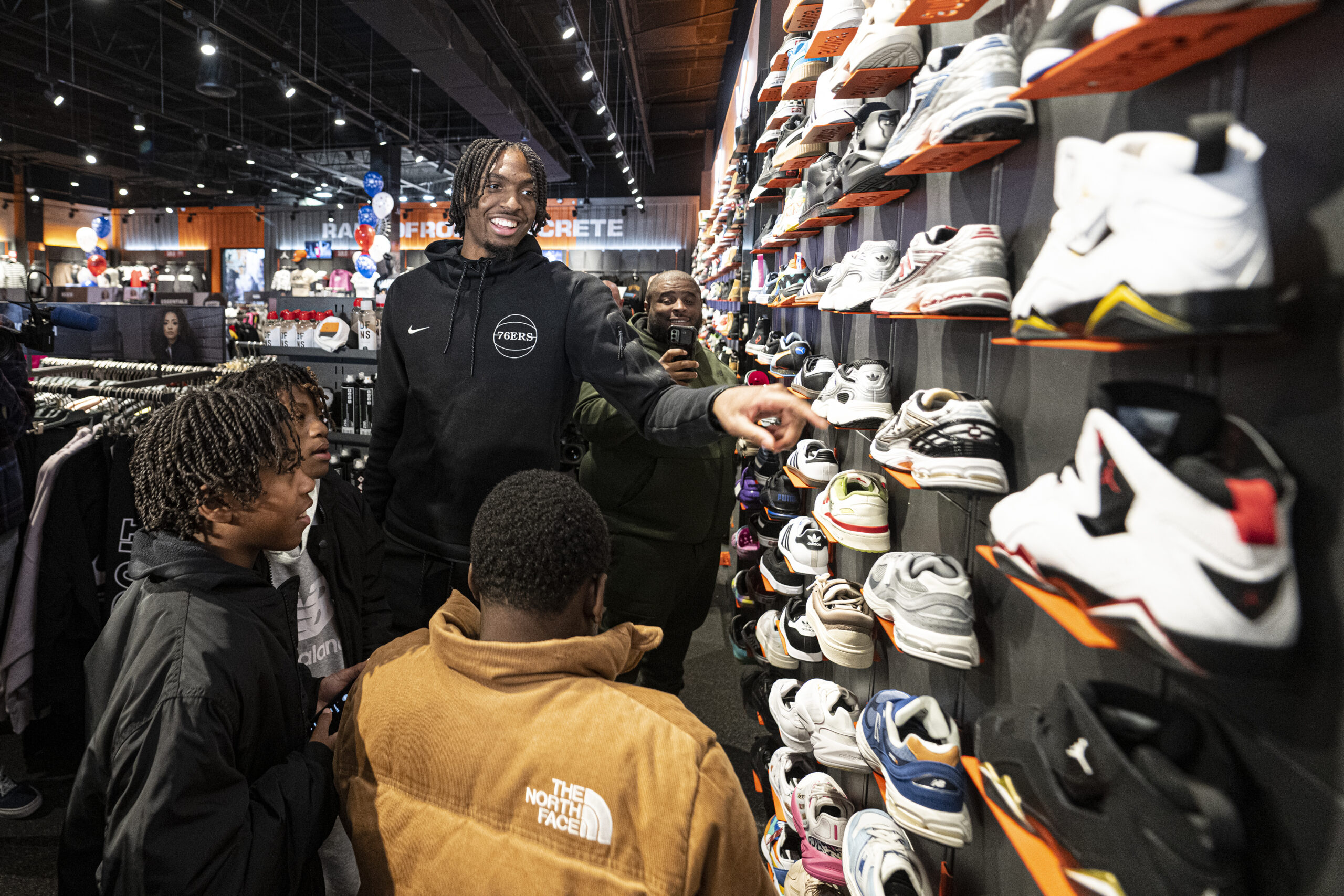
    Tyrese Maxey has routinely made himself available for Sixers charity events.

    “Big shot, thanks!” Maxey said when Muscala’s name resurfaced earlier this week. “Without Mike, I’m not here.”

    As the draft approached, Maxey said he believed he would go somewhere in the middle of the first round. That perplexed Tyrone, not only as a proud father but as Maxey’s former AAU coach who “knew everybody in that draft.”

    Prominent mock drafts slotted LaMelo Ball and Tyrese Haliburton, who have both become All-Stars, ahead of Maxey. Ditto for Killian Hayes, who quickly flamed out of the NBA. Though those outside evaluations regularly praised Maxey’s crafty finishing and expressed belief in his shooting form, The Ringer’s draft guide also critiqued that he “lacked top-end quickness and acceleration.”

    When draft night arrived, Maxey’s mother, Denyse, re-created a green room at their Texas home and asked attending loved ones to take a rapid COVID test at the door. Ball, Haliburton, and Hayes all went off the board in the top 12. When the San Antonio Spurs took Devin Vassell at No. 11 and the Orlando Magic selected Cole Anthony 15th, Maxey “knew I was going to sit for a minute.”

    Sixers guard Tyrese Maxey has become a leader for the team in his sixth NBA season.
    Sixers guard Tyrese Maxey was knighted as “The Franchise” early in his career by former MVP Joel Embiid.

    Agent Rich Paul called just before the 20th pick, predicting Maxey would be selected by the Miami Heat or the Sixers.

    Morey told The Inquirer in 2021 that the Sixers were considering trading down. But when the Heat took Precious Achiuwa of Memphis and Maxey was still available, Morey wanted to shoot for a high-ceiling player instead of settling for a “solid” one.

    “We chose not to [trade back] just because we believed in Tyrese so much,” Morey said then. “ … We were surprised he was there, and really thrilled he was there.”

    Maxey joined a team that finished with the Eastern Conference’s best record in his rookie season, making early playing time spotty until a couple of breakout playoff performances. Then the opportunities to flourish began.

    Ben Simmons’ holdout forced Maxey into starting point guard duties as a second-year player. He got to learn from future Hall of Famer James Harden, then he took over lead ballhandling duties when Harden forced his way out of Philly early in the 2023-24 season.

    Maxey formed a dynamic two-man partnership with Embiid, becoming the NBA’s Most Improved Player and a first-time All-Star in 2024. Embiid’s multiple knee surgeries in recent seasons elevated Maxey into the top offensive role, with the electric skill and playing style that made him the top American vote-getter among fans in this year’s All-Star balloting.

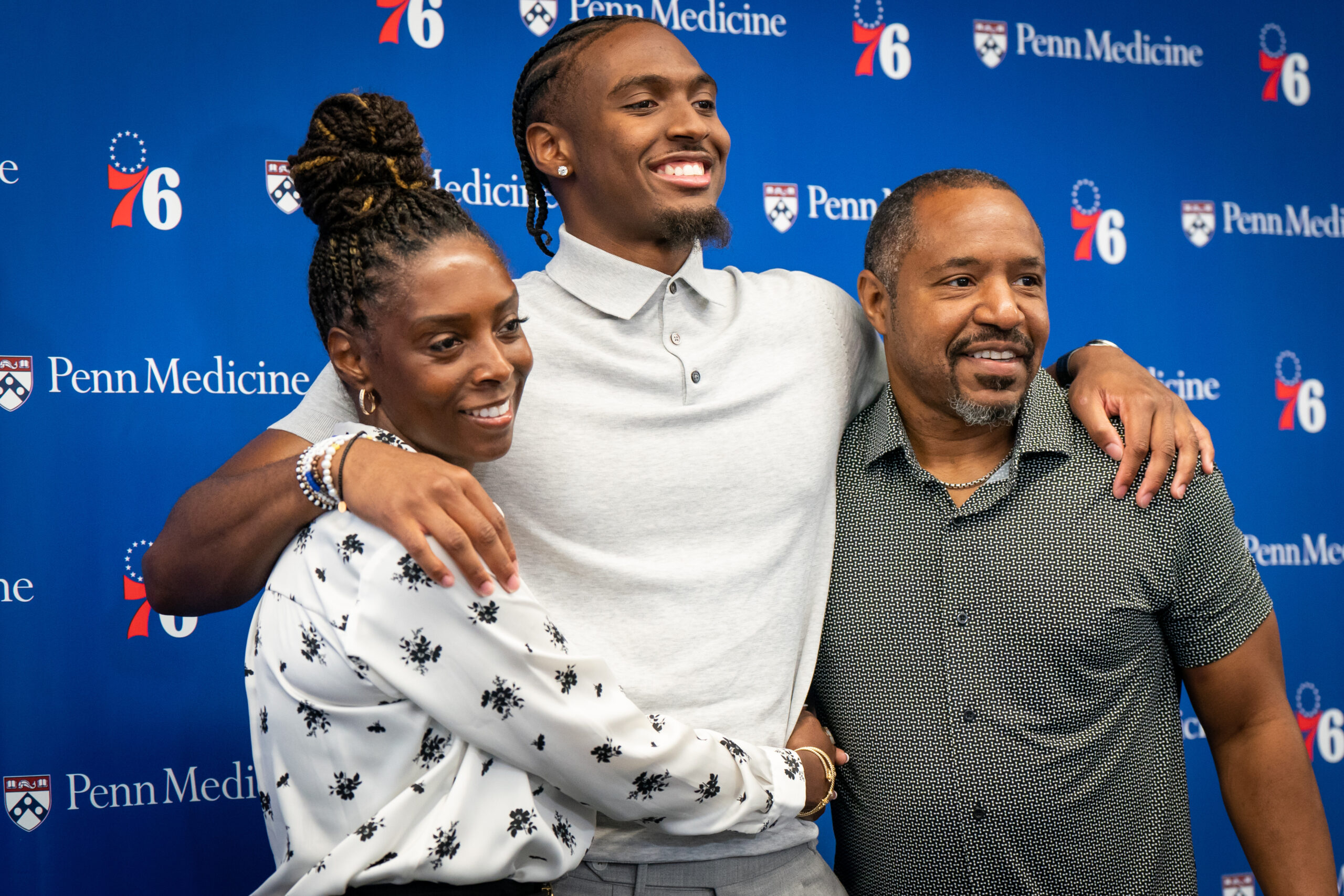
    Tyrese Maxey’s parents, Denyse and Tyrone, played a major role in his basketball development.

    That all leads to this weekend, when Maxey will be introduced as an All-Star starter on Sunday.

    When Maxey was asked earlier this week if he still looks back on the players who went ahead of him in the 2020 draft, an eavesdropping Trendon Watford — Maxey’s teammate and longtime close friend — vigorously nodded.

    “I’ve got to let it go,” Maxey conceded. “It’s over.”

    Because all of those bizarre basketball and societal circumstances — a pandemic, a Muscala shot, and a slip down draft boards — aligned to make him a Sixer.

    “He landed in the right spot,” Tyrone said. “It was all God’s plan.”

  • How the Sixers landed Tyrese Maxey, from Sam Hinkie’s Process trades to the NBA bubble to some draft-night luck

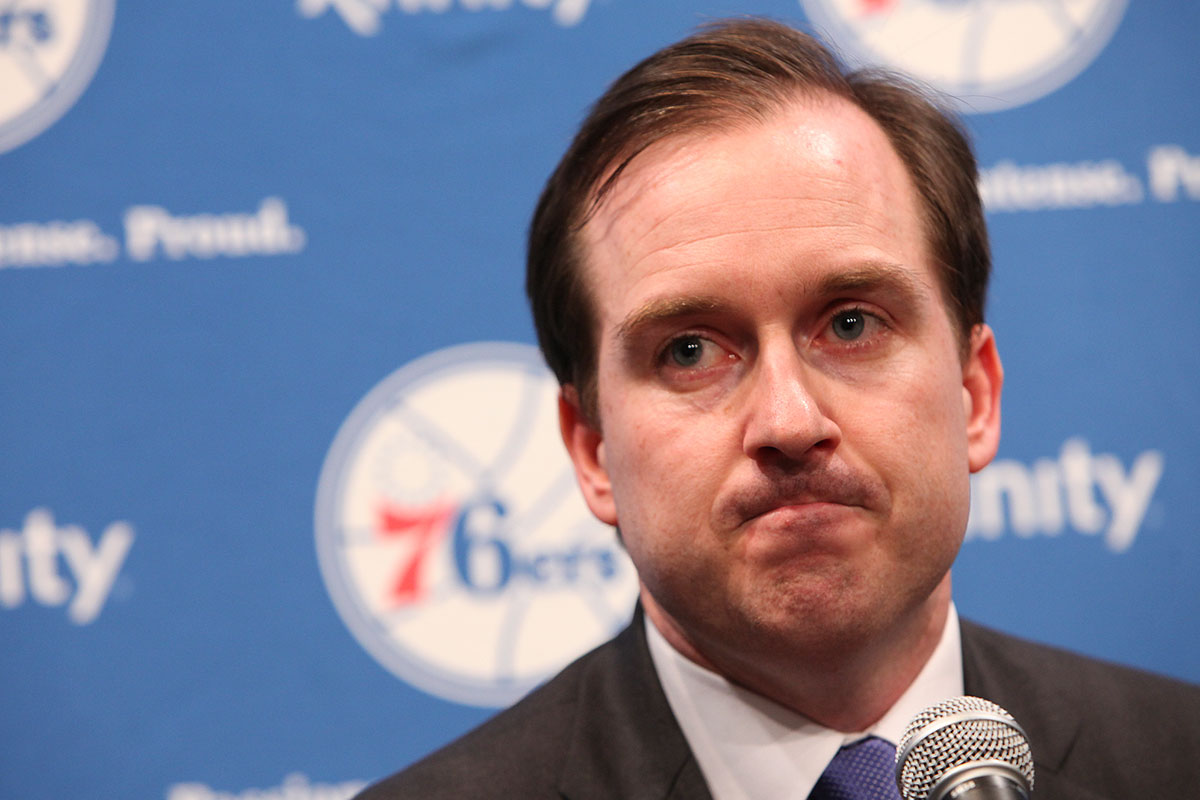
    How the Sixers landed Tyrese Maxey, from Sam Hinkie’s Process trades to the NBA bubble to some draft-night luck

    The life of an NBA draft pick can be a long and winding road — long before a team ever considers which player they might take with that selection. Picks are traded years in advance, and by the time draft night actually comes around, many have changed hands two or even three times.

    One of those long and winding roads led the Sixers to young superstar Tyrese Maxey, who will make his first NBA All-Star Game start and second appearance on Sunday. Maxey is having a career-best season, leading the Sixers firmly back into the playoff race as he’s become the team’s No. 1 scoring option.

    But the journey to acquire Maxey started long before Adam Silver called his name on that stage in 2020, five months after the draft was originally supposed to take place — and more than six years after the wheels were initially set in motion by the Spencer Hawes trade.

    Here’s everything that happened in order for the Sixers to ultimately draft Maxey …

    Feb. 20, 2014: The Sixers were in the early stages of The Process, selling off players to stockpile as many draft picks as possible. In one of those moves, then general manager Sam Hinkie acquired Earl Clark, Henry Sims, and two second-round picks (Cleveland’s and Memphis’) from the Cavaliers for Hawes.

    Sam Hinkie was the Sixers general manager from 2013 to 2016.

    June 26, 2014: The Sixers used one of those picks to draft Jerami Grant with the No. 39 overall pick (initially Cleveland’s pick). Grant was a role player for the Sixers for a little over two seasons, averaging 8.2 points in 24.2 minutes, but went on to have a long NBA career — he’s still playing — and turned into a starter that has eclipsed the 20-point per game mark three times.

    Nov. 1, 2016: Two games into the 2016-17 season, the Sixers traded Grant to acquire veteran forward Ersan Ilyasova and Oklahoma City’s 2020 first-round pick. The pick was top-20 protected, meaning it would only convey if the Thunder finished with the 21st draft pick or lower.

    June 22, 2017: The Sixers traded that 2020 pick and Brooklyn’s 2020 second-round pick to Orlando for the draft rights to Latvian center Anžejs Pasečņiks. Pasečņiks, now 30, played just 28 games in the NBA with Washington.

    Feb. 7, 2019: The Sixers reacquired the 2020 first-round pick from Orlando — along with Jonathon Simmons and the rights to Cleveland’s second-rounder — for Markelle Fultz. The Sixers had traded up to first overall in 2017 to draft Fultz, who struggled with injuries and played just 33 games across two seasons for the team.

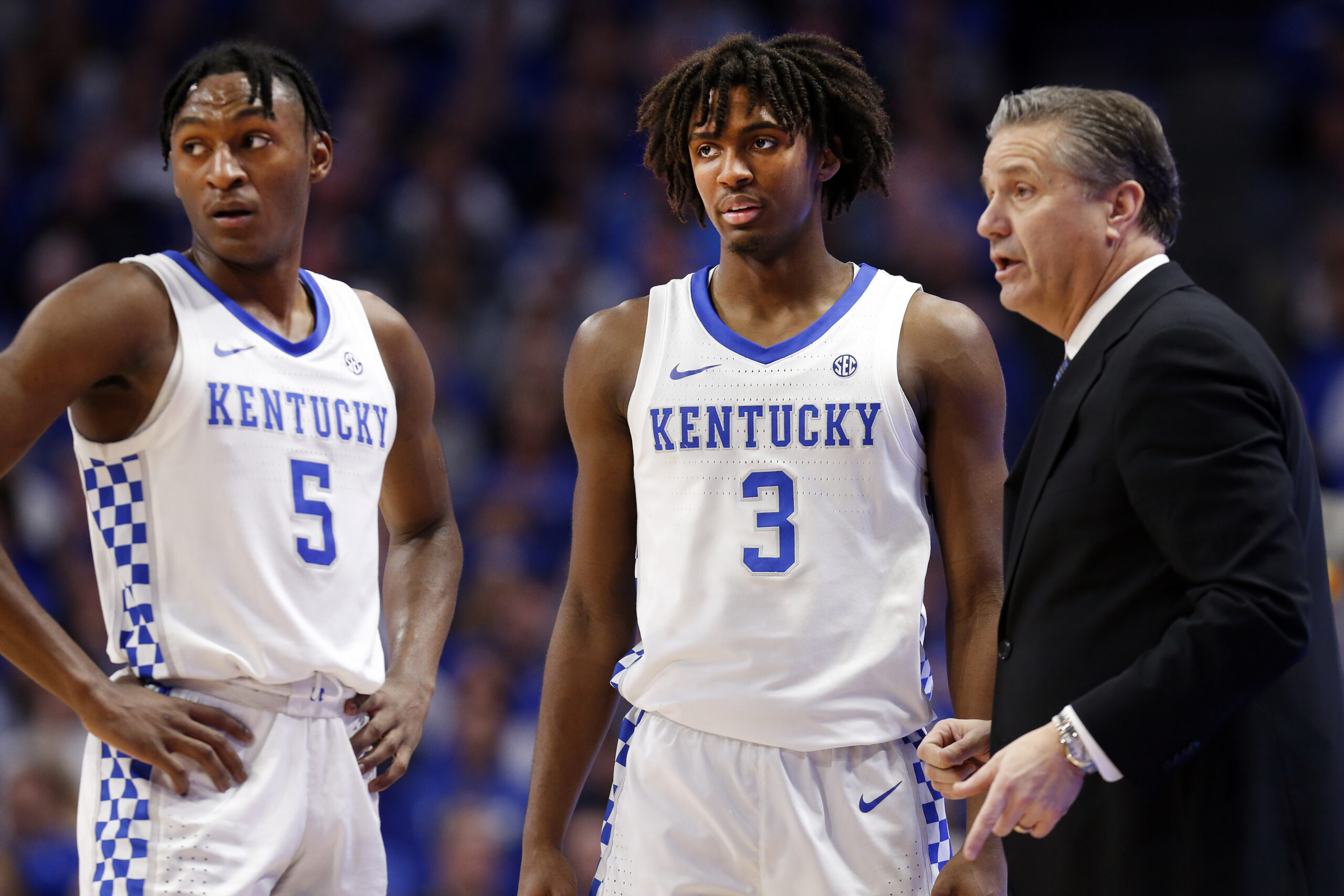
    Kentucky’s Immanuel Quickley (left) and Tyrese Maxey (center) were two of the stars of the Wildcats’ 2020 team under head coach John Calipari.

    March 2020: COVID-19 canceled the NCAA Tournament. Maxey was playing for John Calipari at Kentucky, who won the regular season SEC championship and was poised to earn a top-2 seed in the NCAA tournament. That meant Maxey, who averaged 14 points in the regular season, wouldn’t get a chance to showcase his skills on college basketball’s biggest stage. The shutdown also impacted Maxey’s opportunity to meet in person with NBA teams during the pre-draft process.

    Aug. 12, 2020: Former Sixer Mike Muscala hit a pair of late three-pointers to lift the Thunder over the Heat in Oklahoma City’s penultimate game in the NBA’s “COVID bubble.” The win pushed the Thunder ahead of the Heat in the standings and out of the top 20 in the draft order, ensuring the Sixers would secure the first-round pick that originally belonged to OKC.

    Nov. 18, 2020: Maxey falls to the Sixers with the 21st pick after 19 other teams — including the Timberwolves twice — passed on the Kentucky guard.

  • Big 5 hoops: Why Kevin Willard doesn’t mind a Villanova shot clock violation, predicting award winners, and more

    Big 5 hoops: Why Kevin Willard doesn’t mind a Villanova shot clock violation, predicting award winners, and more

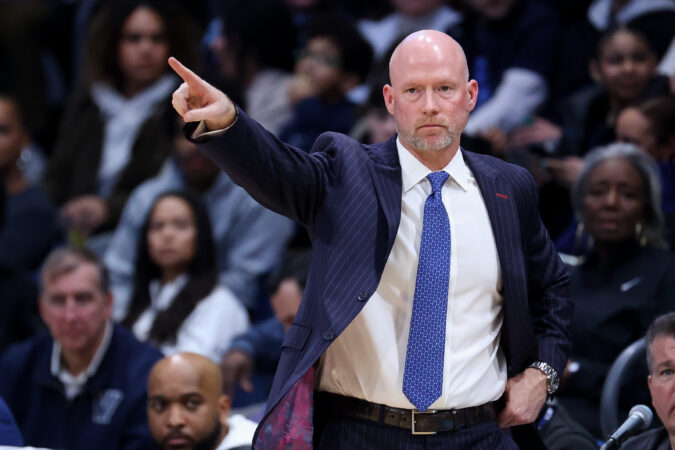
    Every once in a while, Kevin Willard loves when the shot clock expires before a Villanova shot attempt.

    There really is a time and place for everything.

    “Everyone will say, ‘You’re nuts,’” Willard said Tuesday night after Villanova rallied late to beat Marquette. “It takes 30 seconds; it sets up our defense. The worst thing you can do is come down and jack up a shot with 2 seconds on the shot clock, long rebound, your defense isn’t set. I’d rather have a shot-clock violation, set my defense up, have them work for 25 seconds, and then take 30 seconds and the game’s over.”

    Villanova has taken its share of violations in the second half of victories this season. There were two during a 12-point win over Seton Hall on Feb. 4 while the Wildcats held leads of 14 and 12 inside of five minutes. They took one vs. Providence up by 19 points with four minutes left. They took one vs. Butler while ahead by 12 with 2½ minutes to go. And they had three during their Big East opener on Dec. 23, when they built a big lead over Seton Hall on the road and won by eight.

    To be clear, there were no such violations during Tuesday’s win. So how did we get to this topic? Willard was asked after the game about tempo and whether he thought the team could play a little faster. The Wildcats are ranked 337th by KenPom’s adjusted tempo metric and 296th in average possessions per game (68.4).

    Willard, who has the Wildcats at 19-5 overall and 10-3 in the Big East entering Saturday’s game at Creighton, is a passionate talker of tempo. He went on a mini rant about the subject in April at his introductory news conference at Villanova. He focuses on defensive tempo, he explained then, the amount of time it takes for an opponent to get off a shot. On the offensive side, the difference between shot speed from top to bottom is only a matter of a few seconds, he said.

    “You know the difference between the 20th fastest team and us?” Willard asked Tuesday. “1.6 seconds.”

    By average number of possessions, the difference between Villanova at 297th and the 100th-ranked team (Miami) is just four possessions.

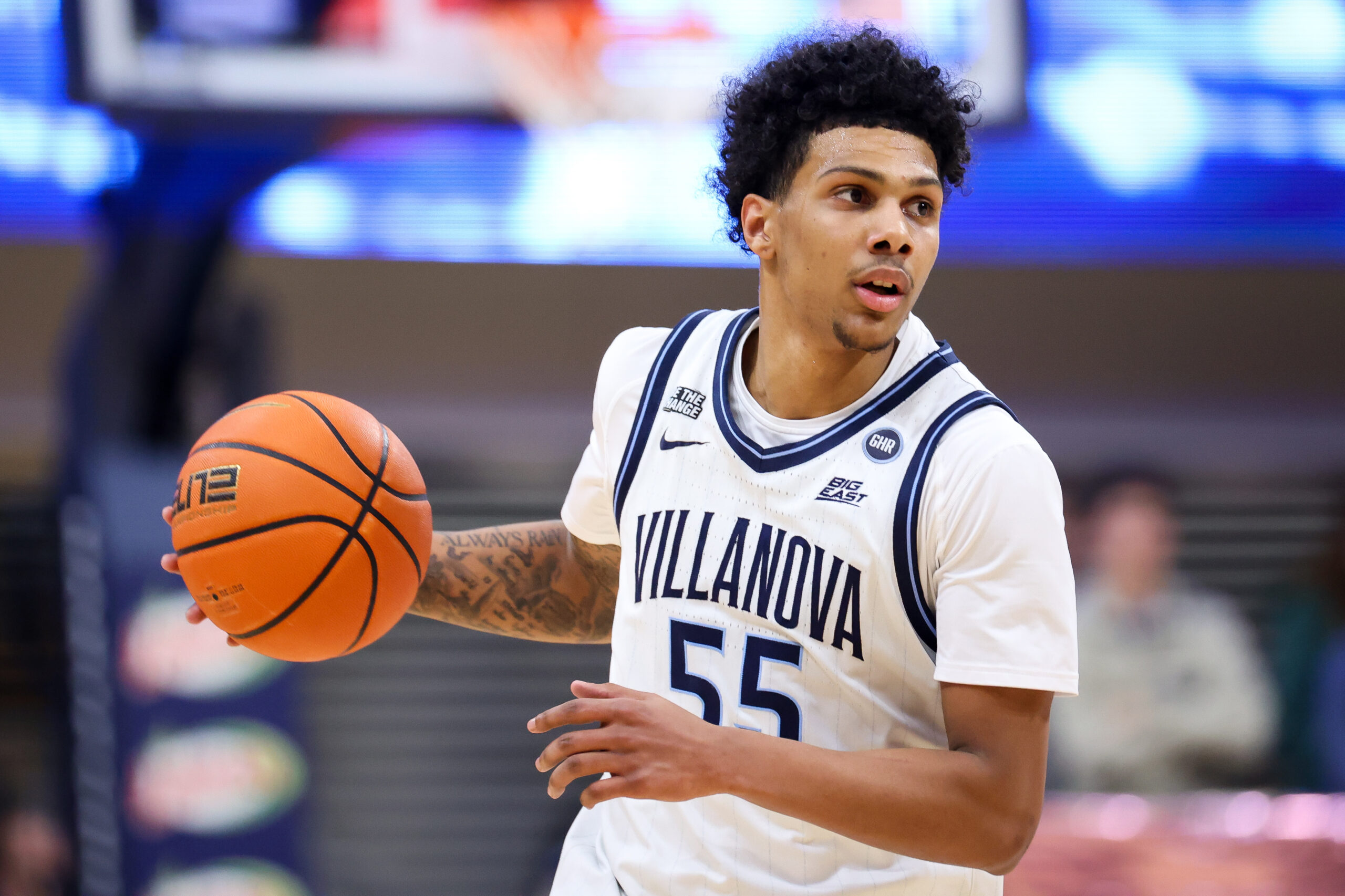
    Freshman point guard Acaden Lewis is charged with setting Villanova’s tempo on offense.

    “I have a young team, and when we get up I’m going to control the ball and take the air out of the ball,” Willard said. “That’s one of the reasons why our tempo is so low is if you watch any time we’ve gotten up more than 12, I’ve taken the air out of the ball and we have run the clock down. One of the easiest ways to lose leads is to take quick shots.

    “I think we play pretty fast. It’s not like he walks the ball up,” Willard said, pointing to freshman point guard Acaden Lewis. “It’s not like we’re ever walking the ball up. It’s 1.6 seconds. Everyone gets stuck on that tempo s—.”

    Award season approaching

    Less than a month of regular-season basketball remains, so it feels like a good time to round up who could win Big 5 awards.

    Let’s start with the coaches. The easy answer here is Villanova sweeping. Willard is on his way to stopping the three-year NCAA drought on the men’s side. Denise Dillon has her fifth 20-win season in six years as Wildcats coach. But those are the obvious answers partially because they coach teams that entered the season with at-large NCAA Tournament chances.

    But how about Mountain MacGillivray, the La Salle women’s coach? The Explorers went 4-15 in the Atlantic 10 last season. They’ve nearly doubled that total so far in 2025-26 and still have five games left. And what about Adam Fisher? The Temple men’s coach had to rebuild another roster in the offseason and has the Owls at 7-4 in the American Conference and in the mix. Or Steve Donahue, who stepped into a weird situation at St. Joseph’s, got off to a slow start, and has the Hawks in fourth place in the A-10?

    La Salle’s Ashleigh Connor is guarded by St. Joseph’s Rhian Stokes on Jan. 28.

    As for player of the year on the men’s side, Villanova’s Tyler Perkins and Lewis have good arguments, as do Penn’s Ethan Roberts, Derek Simpson of St. Joe’s, and Temple’s Derrian Ford. On the women’s side, it might be Villanova sophomore Jasmine Bascoe’s award to lose. But La Salle’s Ashleigh Connor is having a great season, as is Drexel’s Amaris Baker and Gabby Casey of St. Joe’s.

    Dillon’s Wildcats on the bubble

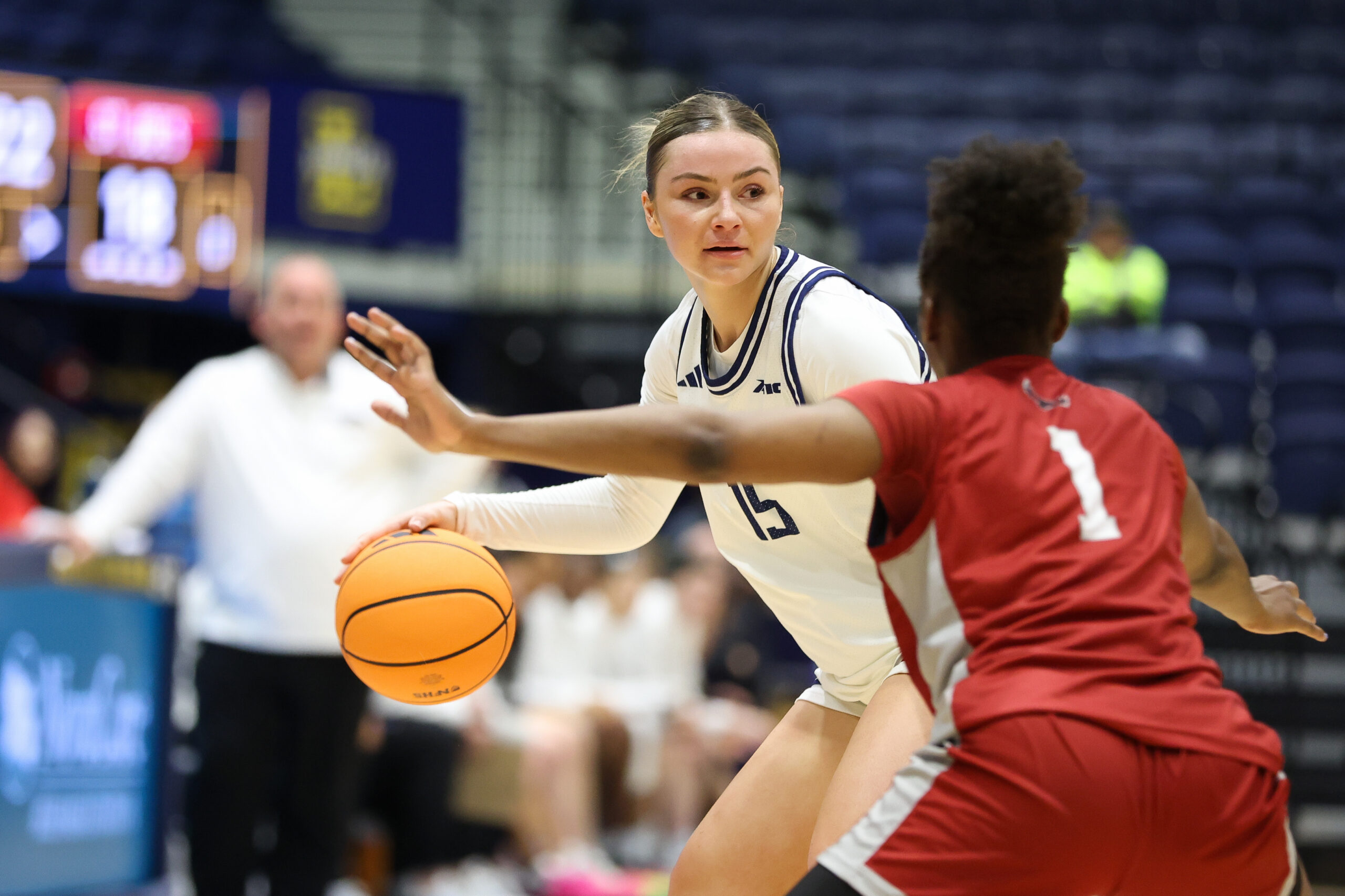
    The Villanova women won by 40 Wednesday night at Xavier and Bascoe reached the 1,000-point plateau in less than two full seasons. The Wildcats are rolling. They’re 13-3 in the Big East and firmly in second place, two games clear of Seton Hall in the loss column.

    But they’re also firmly on the NCAA Tournament bubble. ESPN’s latest bracketology had the Wildcats as a No. 10 seed and in the “last four byes” group. The projected field capped just six spots behind them.

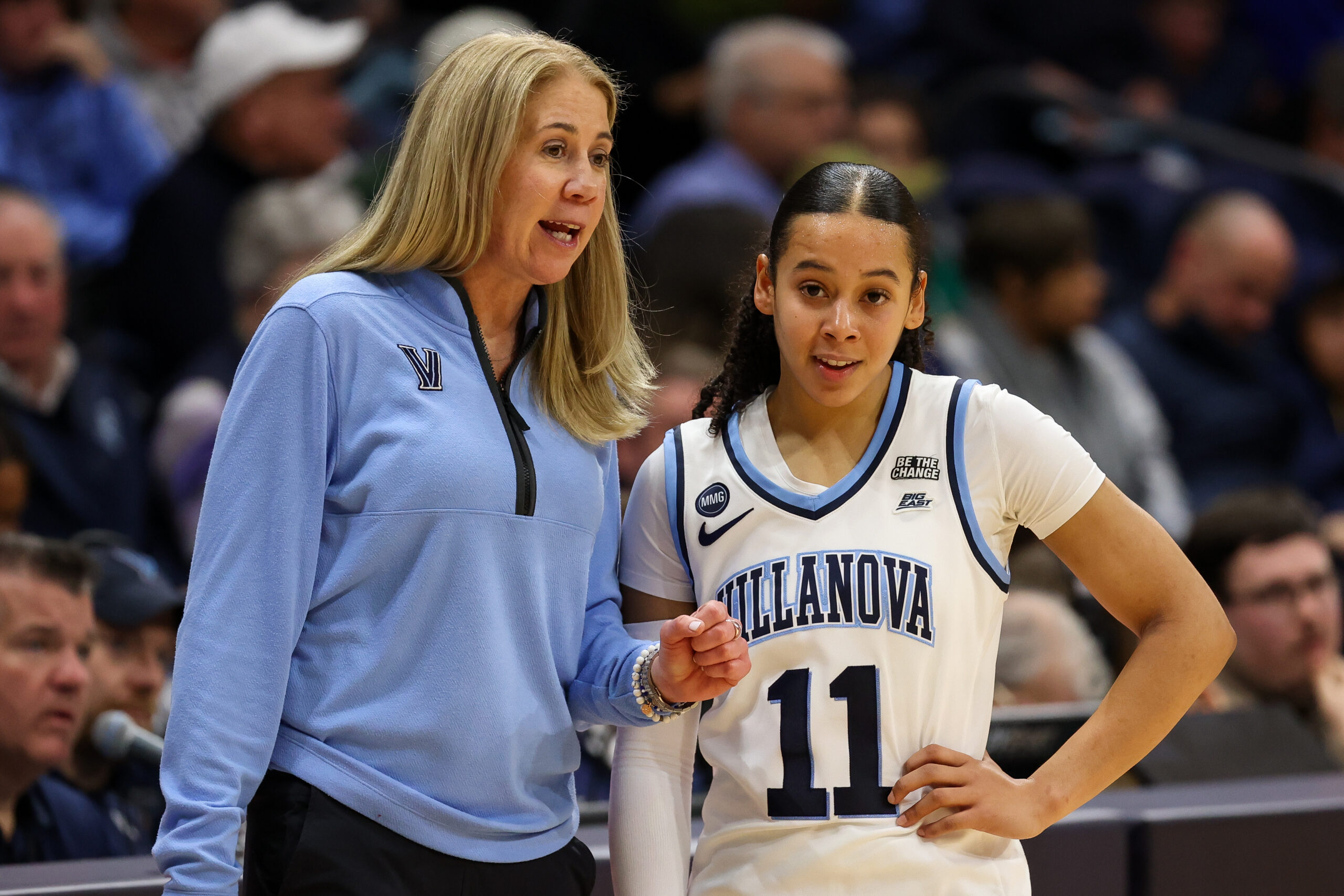
    Villanova coach Denise Dillon with her star guard, Jasmine Bascoe.

    Like the men, the women are in Omaha, Neb., this weekend. They play a Creighton team on Sunday that they already beat by 10 at home. It’s not a great time to have a slip-up, because after that it’s the annual home game vs. No. 1 UConn, which is undefeated and already beat Villanova by 49. Just two games are on the schedule after that: a home game vs. fourth-place Marquette and a road showdown at Seton Hall. Then comes the conference tournament.

    It’s crunch time for the Cats.

    Speaking of the NCAA Tournament

    We’ve mentioned a few times in recent weeks that the Villanova men are closing in on locking up an at-large NCAA Tournament bid. The Wildcats are at 99.1% to make the NCAA Tournament, according to Bart Torvik’s analytics site.

    Since we last took stock of the Big 5 men’s teams, a few more got on the positive side of .500 in league play, which brings a better possibility of running the table come conference tournament time.

    What’s Torvik’s math — which is based on thousands of simulations — for the rest of the pack?

    • Penn: 10.1%
    • Drexel: 3%
    • Temple: 2.9%
    • St. Joe’s: 2.6%
    • La Salle: 0.1%

    The Big 5’s streak of no men’s teams looks like it’s ending. Just don’t count on Villanova having any company at the dance.

  • Ilia Malinin’s biggest moment of all headlines Friday’s Olympic TV schedule

    Ilia Malinin’s biggest moment of all headlines Friday’s Olympic TV schedule

    If you’ve watched any of the Winter Olympics so far, even just a little, you’ve likely heard about Ilia Malinin.

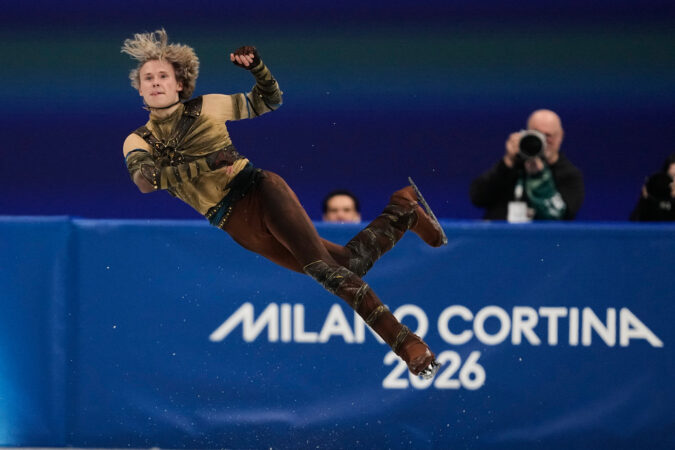
    The 21-year-old figure skater from Fairfax, Va., is no doubt among the biggest superstars of these Games. Each time he has gotten on the ice, he has commanded the spotlight — and delivered.
    First, it was clinching gold for the United States in the team event with the next-to-last free skate of the competition. Then, when the men’s individual event started, he easily topped the field in the short program on Tuesday.

    Now comes the free skate on Friday, and the expectations will be as big as the roars the “Quad God” gets for his breathtaking moves. If he delivers as expected, Malinin will officially arrive as a superstar.

    Coverage of the free skate event starts at 1 p.m. on USA Network, then shifts to NBC at 3:05 p.m. Malinin will go last, so expect plenty of hype and buildup.

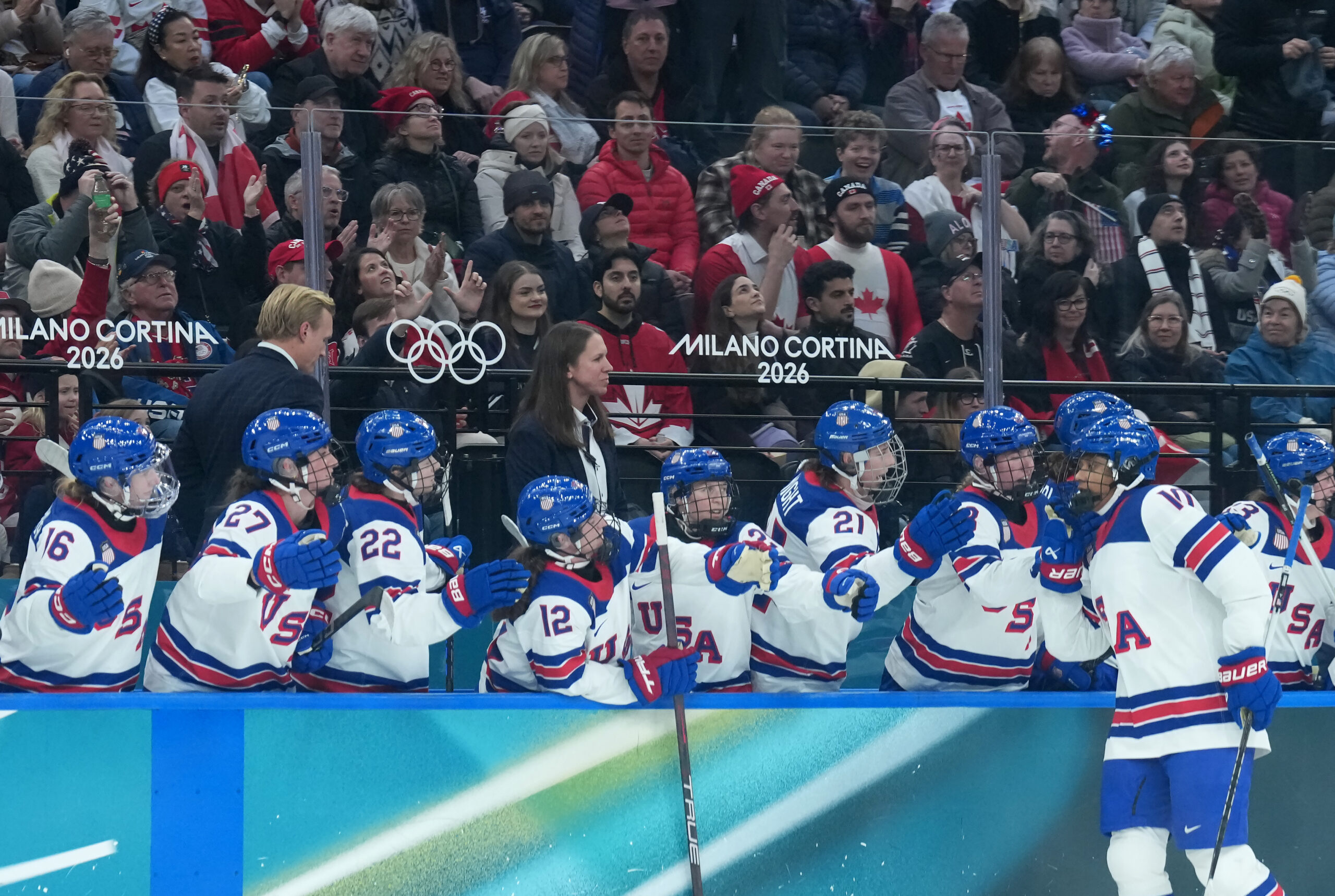
    Elsewhere around the Games on Friday, the U.S. women’s ice hockey team plays Italy at 3:10 p.m. on USA Network. If you’re up early, the Sweden-Finland men’s hockey game is a classic and star-studded rivalry. The puck drops at 6:10 a.m. on Peacock.

    If you want to check something different from the usual, there’s speedskating’s men’s 10,000-meter race at 10:30 a.m. on USA. It’s the longest race of any speedskating competition. American Casey Dawson is in the 12-competitor field, and Norway’s Sander Eitrem will be going for a gold medal double after winning the 5,000.

    How to watch the Olympics on TV and stream online

    NBC’s TV coverage will have live events from noon to 5 p.m. Philadelphia time on weekdays and starting in the mornings on the weekends. There’s a six-hour time difference between Italy and here. The traditional prime-time coverage will have highlights of the day and storytelling features.

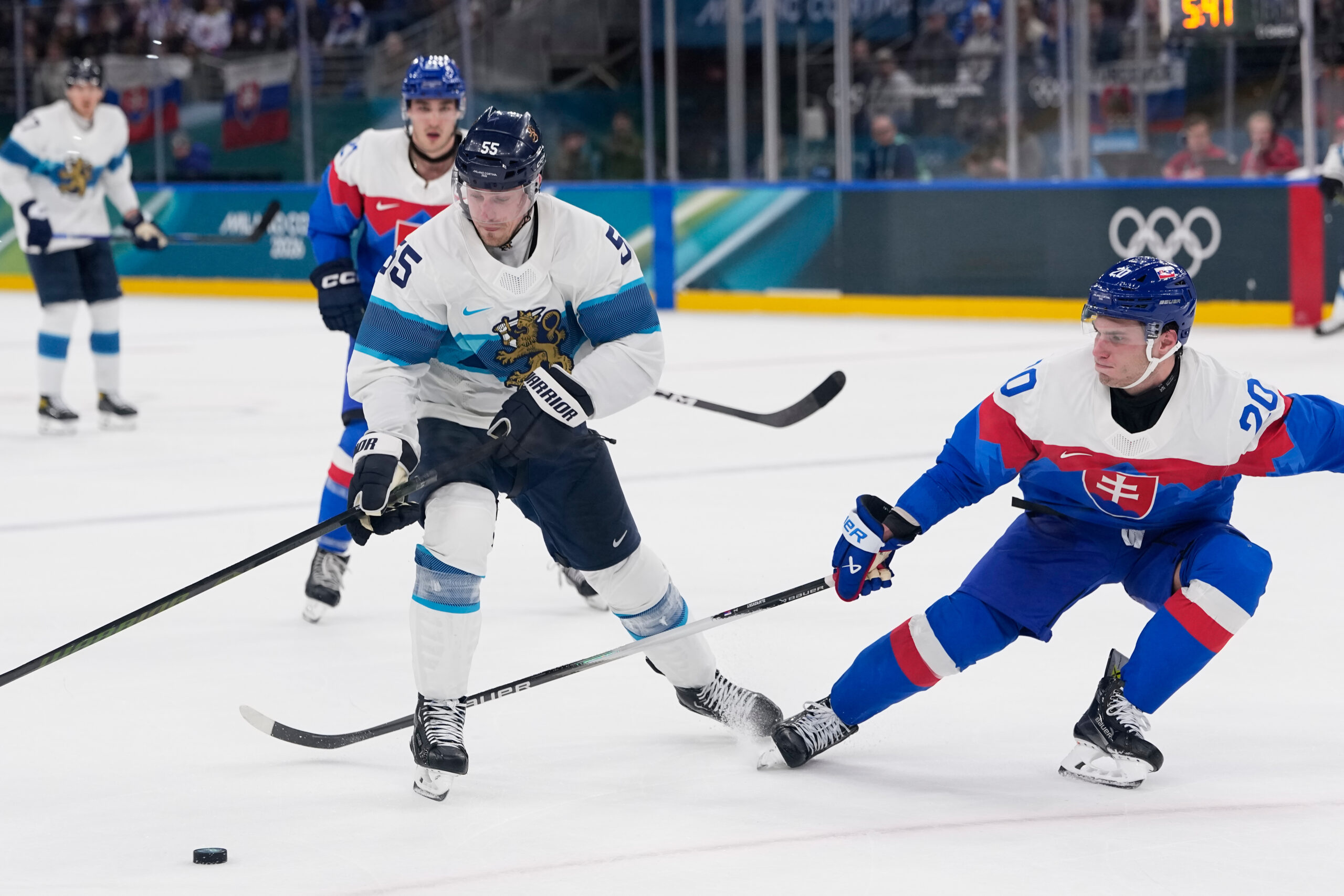
    The Flyers’ Rasmus Ristolainen (left) playing for Finland against Slovakia in the teams’ Olympic opener in Milan.

    As far as the TV channels, the Olympics are airing on NBC, USA, CNBC, and NBCSN. Spanish coverage can be found on Telemundo and Universo.

    NBCSN is carrying the Gold Zone whip-around show that was so popular during the Summer Olympics in 2024, with hosts including Scott Hanson of NFL RedZone. It used to be just on Peacock, NBC’s online streaming service, but now is on TV, too.

    Every event is available to stream live on NBCOlympics.com and the NBC Sports app. You’ll have to log in with your pay-TV provider, whether cable, satellite, or streaming platforms including YouTube TV, FuboTV, and Sling TV.

    On Peacock, the events are on the platform’s premium subscription tier, which starts at $10.99 per month or $109.99 per year.

    Here is the full event schedule for the entire Olympics, and here are live scores and results.

    The U.S. women’s hockey team plays Italy in the quarterfinals on Friday.

    Friday’s Olympics TV schedule

    NBC

    • Noon: Cross-country skiing — Men’s 10km (tape-delayed)
    • 1 p.m.: Snowboarding — Women’s snowboardcross final (delayed)
    • 1:30 p.m.: Snowboarding — Men’s halfpipe final
    • 3:05 p.m.: Figure skating — Men’s free skate
    • 8 p.m.: Prime time replays including snowboarding, figure skating, and skeleton
    • 11:35 p.m.: Late night replays including biathlon and skeleton

    USA Network

    • 3:05 a.m.: Curling — United States vs. Canada men
    • 5:45 a.m.: Cross-country skiing — Men’s 10km
    • 8 a.m.: Biathlon — Men’s 10km sprint
    • 10 a.m.: Skeleton — Women’s first run
    • 10:30 a.m.: Speedskating — Men’s 10,000 meters
    • 11:55 a.m.: Skeleton — Women’s second run
    • 1 p.m.: Figure skating — Men’s free skate
    • 3:10 p.m.: Ice hockey — United States vs. Italy women’s quarterfinal
  • A Delco restaurant gem is born, fueled by Mexican family flavors

    A Delco restaurant gem is born, fueled by Mexican family flavors

    There is something magical about the mole poblano at Tlali in Upper Darby, but it took me a moment to register what it is.

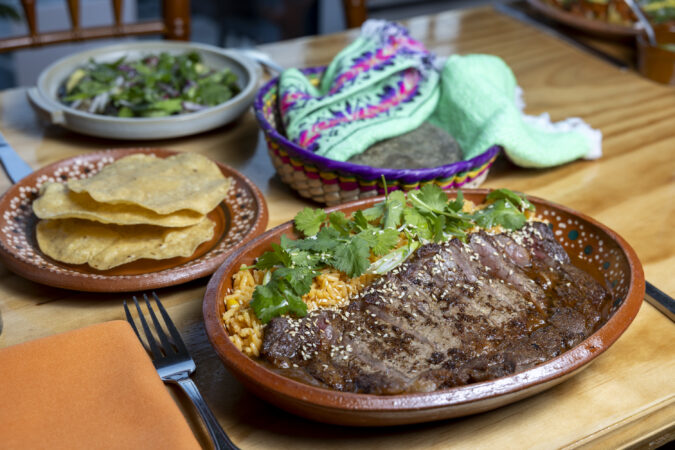
    The Sandoval family’s mole, at first glance, is as deep a brown as any other you might have encountered from the state of Puebla, the result of a blend of dried chilies, fruits, and bittersweet Mexican chocolate. But when I swipe a juicy morsel of prime seared rib eye through the luxuriously dark puree, what I’m struck by is its ethereal lightness, both of the texture and the complexity of flavors. It’s so elegantly balanced, I taste each note — the smoky dry heat of chipotle meco peppers in the background, the fruity sweetness of ripe plantains and raisins, the nutty richness of walnuts and sesame seeds, a whiff of canela and bay leaf — all flowing into one earthy harmony of measured sweetness and spice.

    What I’m tasting here, in fact, is Alberto Sandoval’s memory as a 10-year-old come to life. He vividly recalls the moment when his mother, Teresa Hernandez, was cooking that same mole for his father’s birthday in San Mateo Ozolco and held up a spoonful for Alberto to see.

    “Your mole has to be this consistency — really light, not too thick, not too spicy. This is a good mole.”

    Decades later, after a career rising through the ranks of some of Philadelphia’s most vaunted kitchens, including Striped Bass, Lacroix at the Rittenhouse, Le Bec Fin 2.0, Volvèr, Suraya, and Condesa, he and his brother, Efrain, are leaning into those memories of home for the menu at Tlali.

    “These recipes represent who we are and where we came from,” says Alberto.

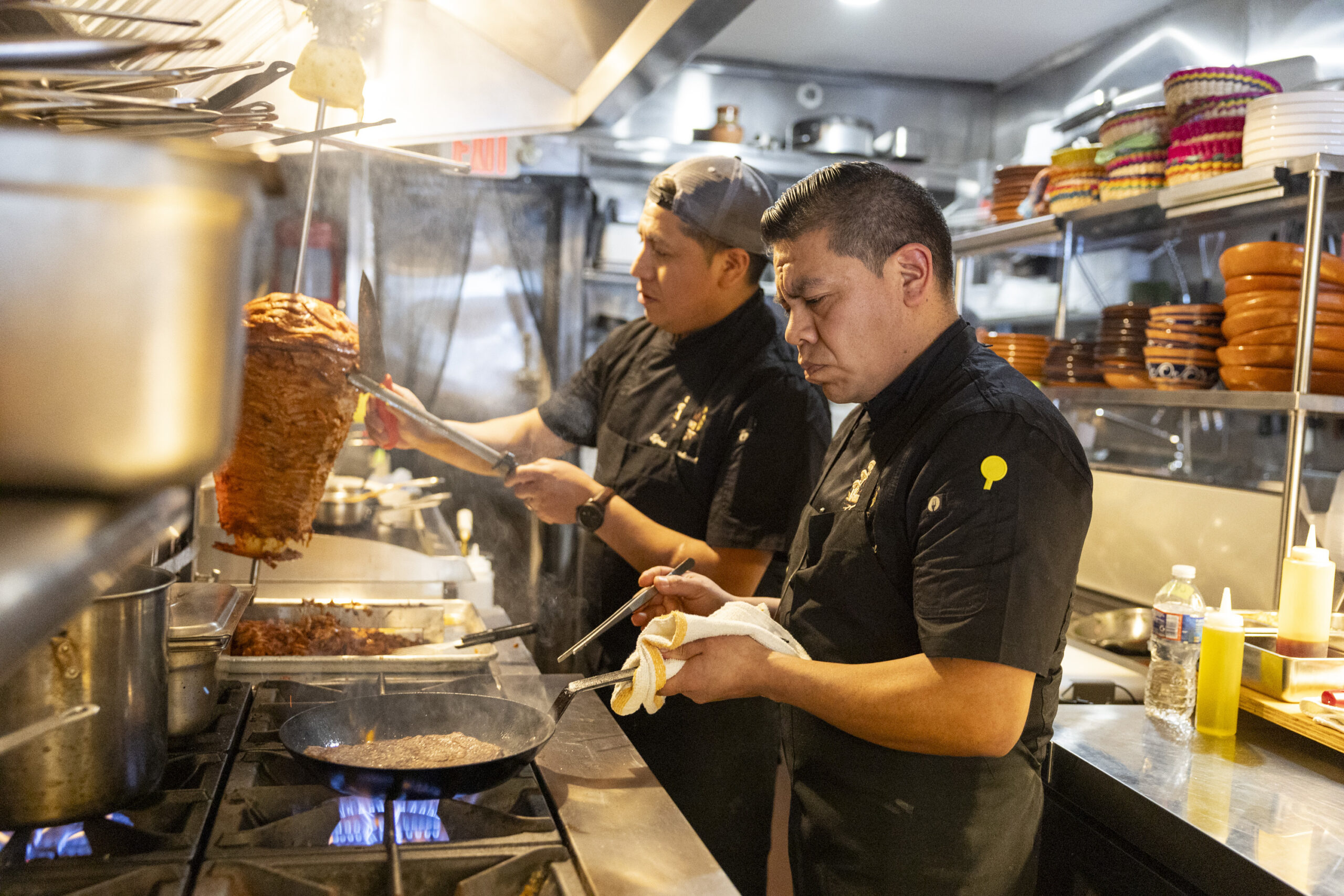
    Alberto Sandoval (right), chef and co-owner of Tlali, and his brother and partner, Efrain Sandoval, working in the kitchen preparing a dish in Upper Darby Pa., on Thursday, Feb. 5, 2026.
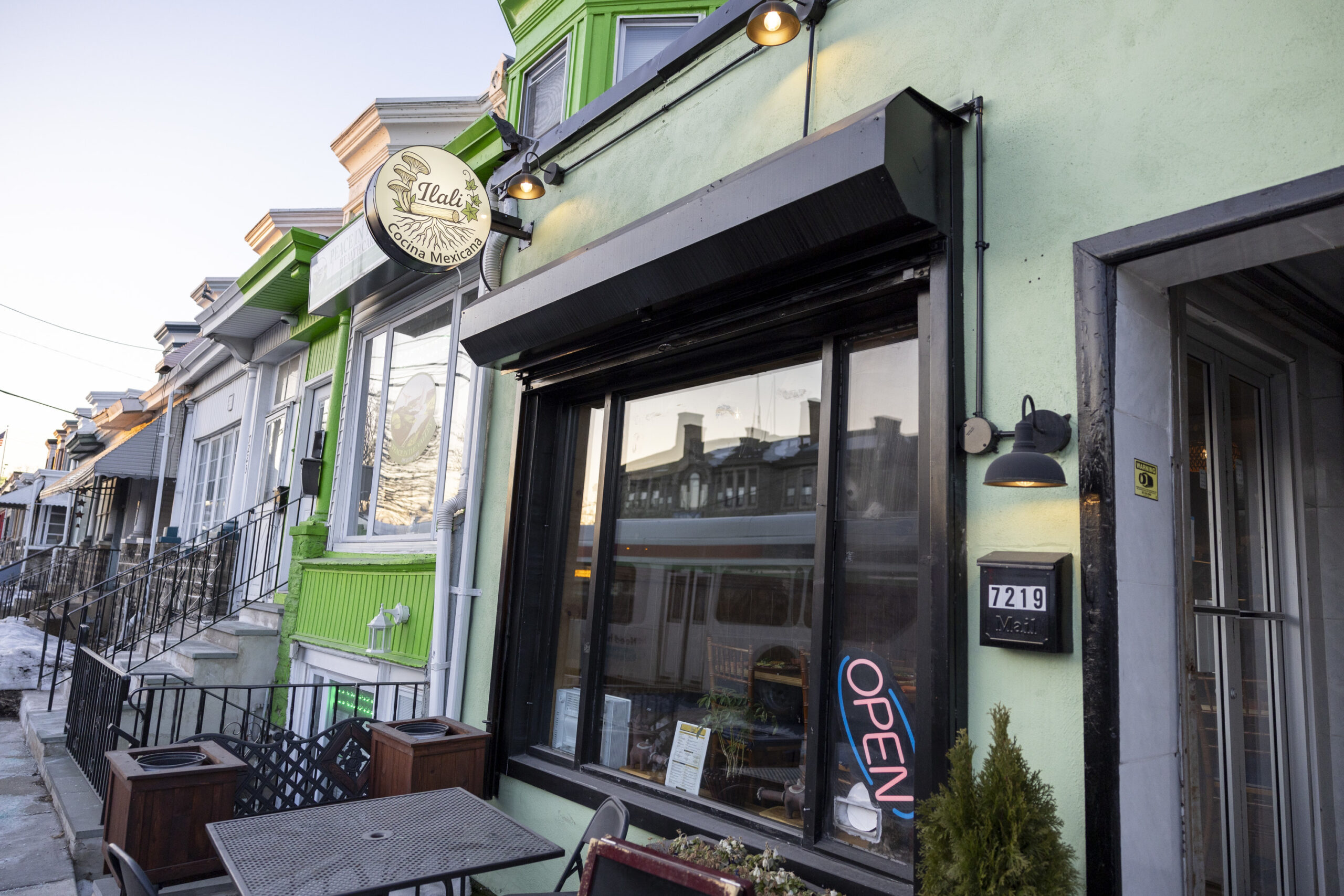
    The outside of Tlali in Upper Darby Pa., on Thursday, Feb. 5, 2026.

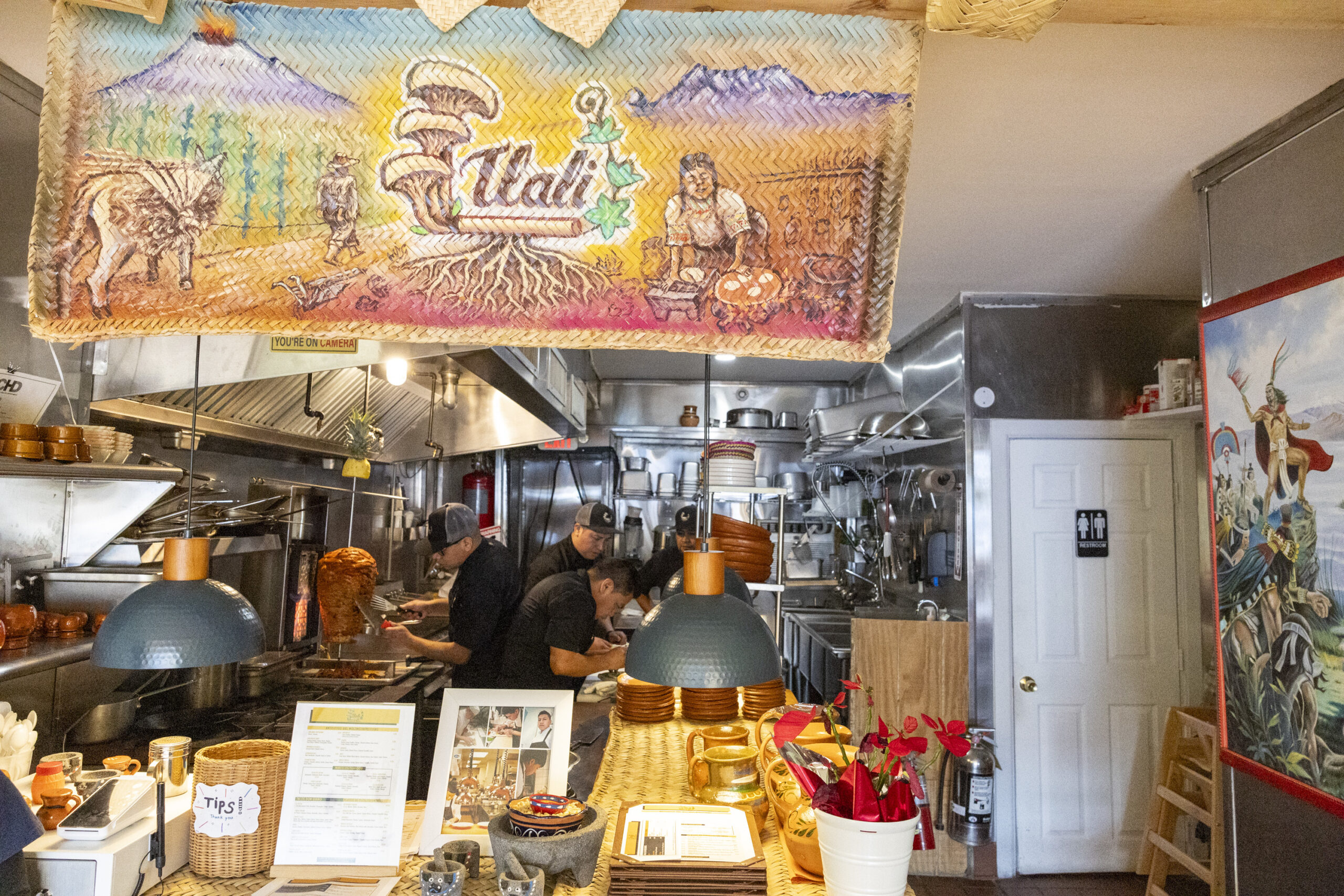
    The base of that mole — which their mother still makes over the course of two days in Mexico and sends to her sons, who rehydrate and simmer it to completion with chicken stock — is only the beginning. Everything about this charming 18-seat BYOB the brothers opened in August inside a renovated pizzeria is a tribute to their birthplace in San Mateo Ozolco, the tiny town on the side of an active volcano in Puebla from which much of South Philly’s Mexican population immigrated. There’s an image of Popocatépetl, its volcanic peak ever fuming, depicted on a colorful woven mat that hangs above the open kitchen here. The hand-painted terra cotta ceramics that decorate the walls and deliver the food were all imported from Puebla.

    The brothers have cut no corners in crafting the flavors on this menu, especially with another key building block: the tortillas. They are patiently made from blue and yellow heirloom Mexican corn that’s nixtamalized overnight then ground into fresh masa, resulting in pressed tortillas that have a velvety suppleness when cooked to order off the plancha.

    Alberto Sandoval, Chef and Owner of Tlali, is with his brothers working at their restaurant in Upper Darby Pa., on Thursday, Feb. 5, 2026.

    You can taste this in the enmoladas, in which the tortillas are coated in that mole before being folded into half-moon bundles over tender shreds of chicken. The tortilla’s toasty corn flavor also powers the bright orange puree of Tlali’s tortilla soup. They’re fried into shatteringly crisp rounds for antojito starters like the irresistible mashed-to-order guacamole and tostadas topped with chipotle-stewed chicken tinga.

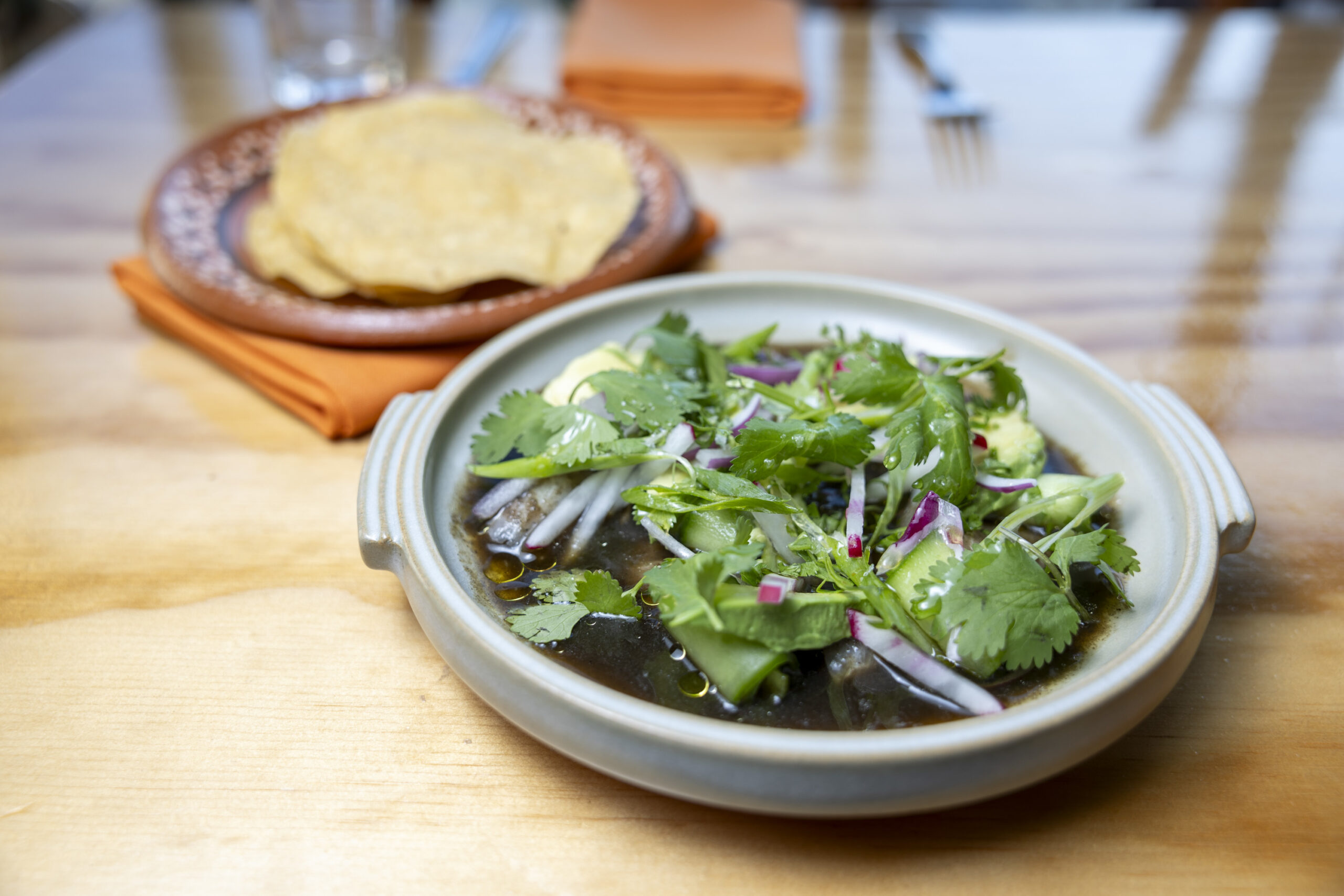
    Those crispy discs also accompany the striking aguachile negro, making the perfect cracker on which to layer slices of raw kanpachi that have been bathed in a spicy brew of citrus and olive oil tinted black with charred habaneros and onions. Scattered with green tufts of cilantro and crunchy matchsticks of radish, it’s the single most refreshing starter on a list of other seafood cocktails that are solid but lack a little spark. A notable exception was Dorito Nayarit, in which poached shrimp striped with Valentina hot sauce and crema are served atop crispy pork belly crackers known as chicharrónes preparados. (A tuna tostada topped with a spoonful of frumpy poached tuna salad, though, was the one dish at Tlali where the extra-homey approach left me truly underwhelmed.)

    The aguachile negro at Tlali in Upper Darby Pa., on Thursday, Feb. 5, 2026.

    Tlali, which means “land” in Nahuatl, the Indigenous language of Puebla, occupies a simple space on West Chester Pike that took a significant investment to completely rehab. It lacks the design frills of the high-style dining rooms where the brothers have largely worked, including Stephen Starr’s LMNO, where Alberto is still the chef de cuisine. There is nonetheless a comforting warmth to the pale green walls and natural wood wainscoting in Tlali’s dining room, bolstered by hospitality from the restaurant’s single server, Melanie Ortiz. She deftly sorted out a sticky situation by convincing a couple to move to a two-top after she’d accidentally sat them at the only remaining table reserved for a party of four (which happened to be us).

    It’s clear from the many emails and messages I’ve received since this restaurant opened in Upper Darby — a multicultural nexus of international dining, but not previously known for Mexican food — that Tlali has a devoted clientele rooting for it to succeed.

    Alberto Sandoval, chef and owner of Tlali, with his family members in Upper Darby Pa., on Thursday, Feb. 5, 2026.

    After diving much deeper into the menu, it’s easy to see why. Tlali is in many ways a sequel to the small restaurant the two brothers used to co-own in South Philadelphia, La Fonda de Teresita, which closed during the pandemic. But the Sandovals have both since continued to grow as chefs and have taken their pursuit of family flavors to the next level. That includes a tribute to their father, Don Guero, who ran a taqueria in Mexico City by the same name where Alberto got his first taste of kitchen life as a teen mincing mountains of onions and cilantro.

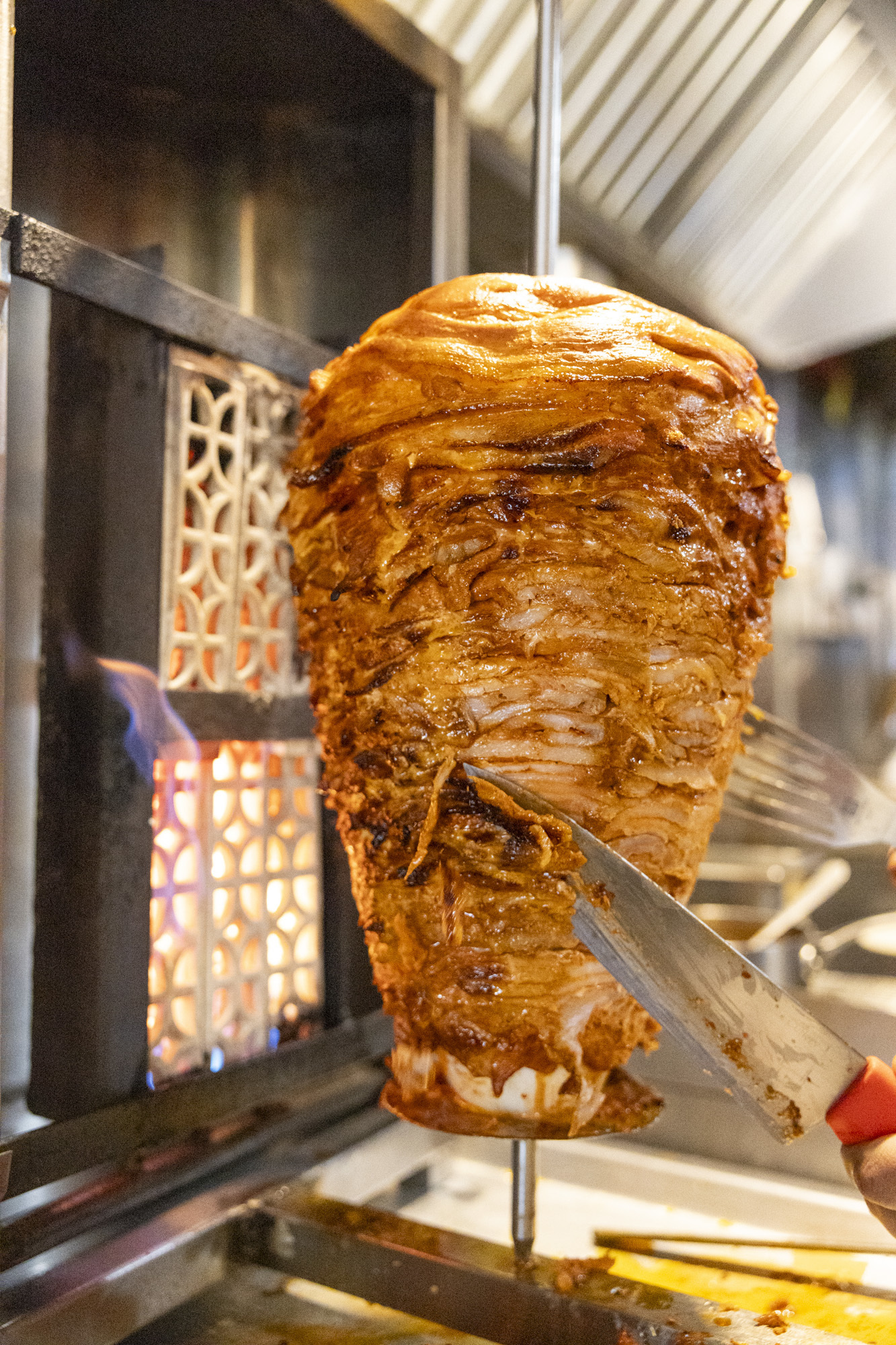
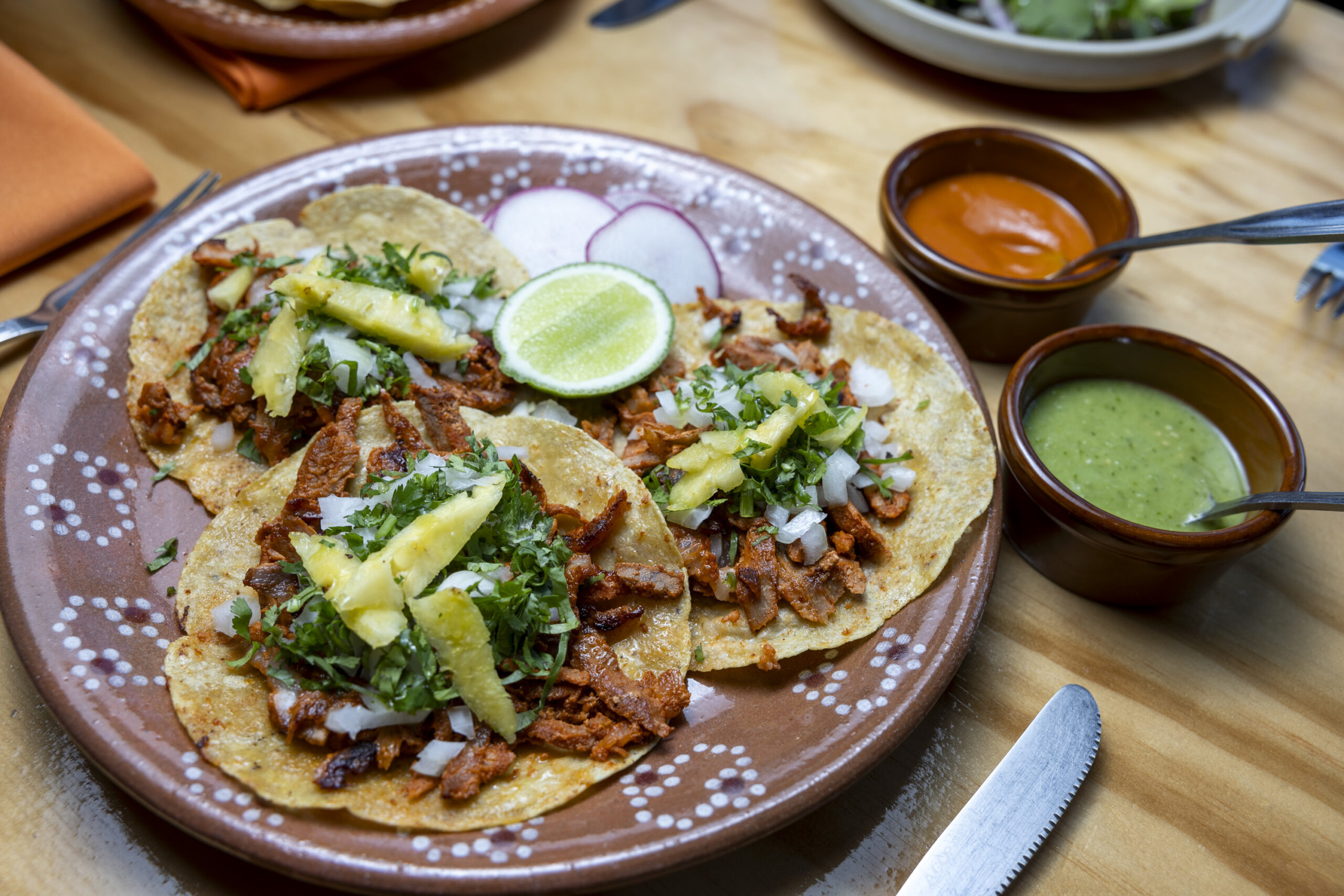
    Don Guero’s recipe for Chilango-style carnitas — whose pork belly and shoulder are simmered for hours in a large copper cazo pot bubbling with lard, orange juice, Coca-Cola, and herbs — produces meltingly soft, flavorful carnitas that are among the best I’ve had. But even that takes second place to the al pastor, a vertical spit of stacked pork shoulder marinated with three kinds of chilies, pineapple juice, achiote, and bay leaves; the pork roasts on a turning trompo fueled by real fire that flows through the perforated bricks that Don Guero himself gifted them from Mexico shortly before he died two years ago. The family taqueria lives on here.

    The al pastor used for the tacos at Tlali in Upper Darby Pa., on Thursday, Feb. 5, 2026.
    The al pastor tacos at Tlali in Upper Darby Pa., on Thursday, Feb. 5, 2026.

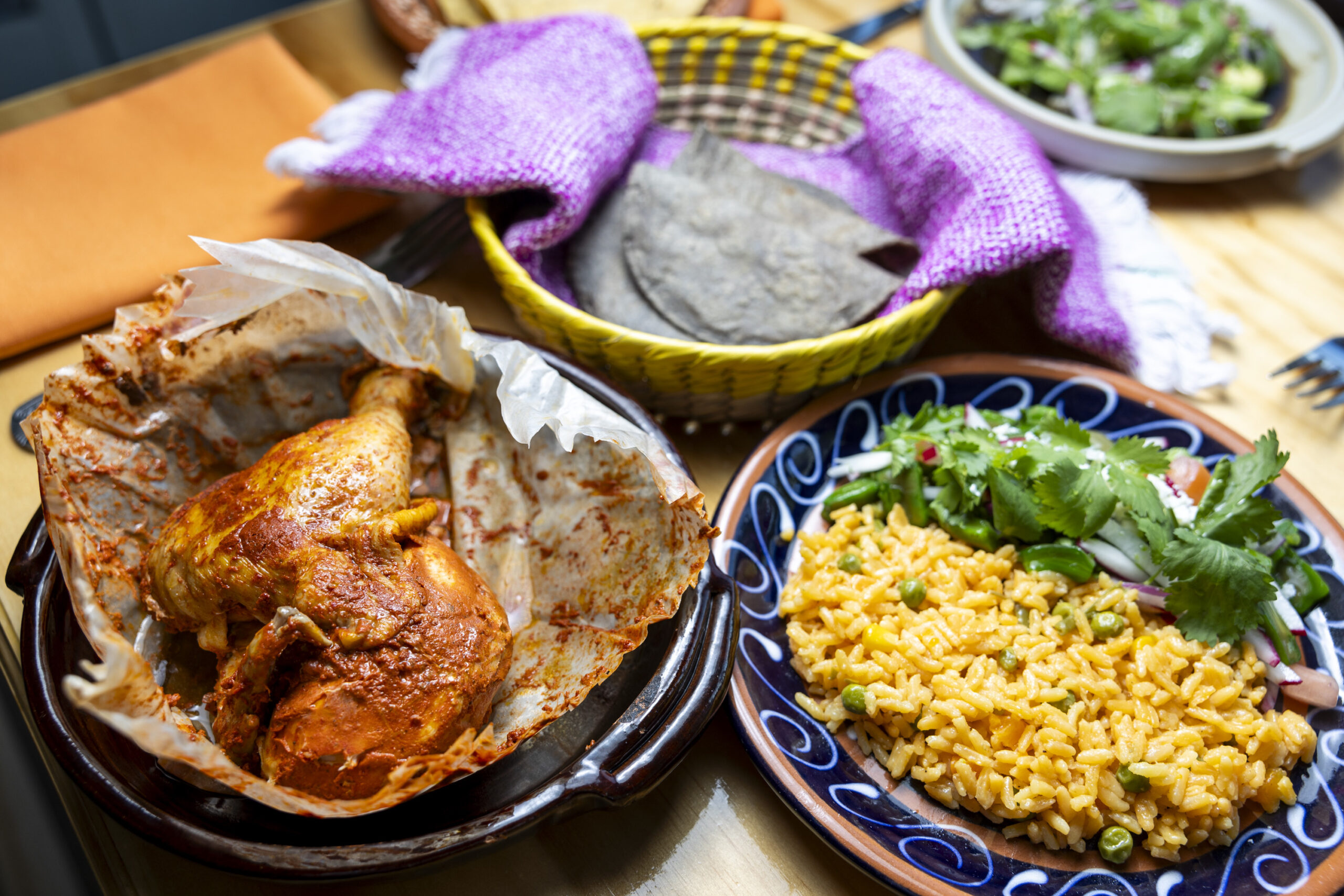
    The entree section of the menu noted as “Platos de Ozolco” offers a handful of other standout dishes that showcase the brothers’ hometown flavors in both traditional and modern ways. I was especially fond of the classic mixiote: When the maguey leaf-wrapped bundle of steamed chicken rubbed in adobo spice was cut open tableside, the fragrant cloud of guajillo-scented steam that enveloped us brought me straight back to my own 2023 visit to San Mateo with chef Dionicio Jiménez of Cantina La Martina, where mixiote was the first thing we were served at his mother’s home — the ultimate dish to welcome a special guest.

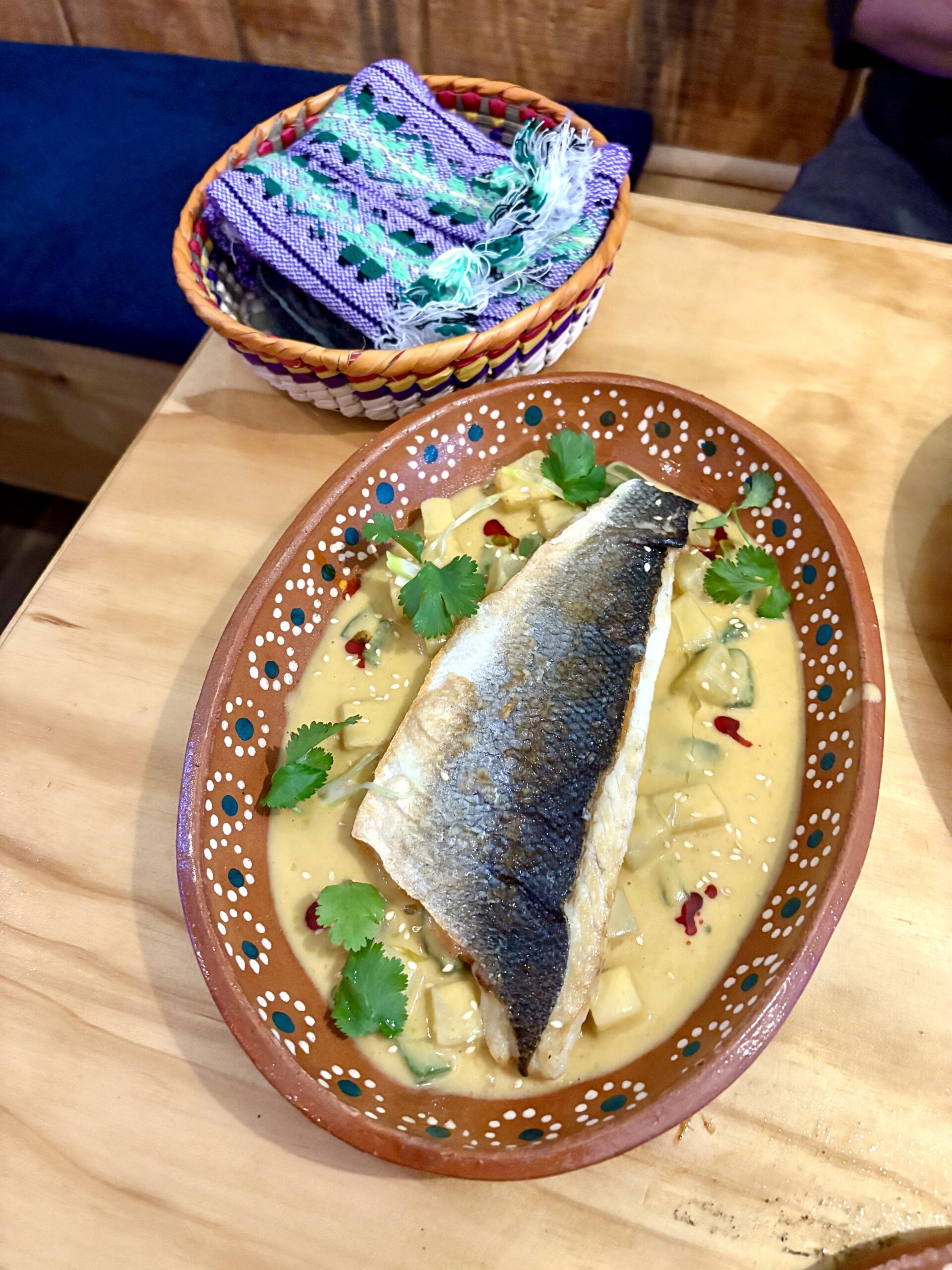
    I was also intrigued to see Alberto and Efrain stretch their chef chops to reinterpret traditional flavors in inventive ways. That includes the michmole, which steeps a dried fish from Puebla in a tomatillo-chile salsa for deep marine flavor, then discards the bony remains for a golden sauce that gets topped with nopales and a gorgeous fillet of pan-roasted branzino (also lightly brined) to retain just enough of the traditional dish’s brackish edge.

    A fillet of branzino is served over a seafood michmole sauce with cactus and potatoes at Tlali in Upper Darby.

    Another distinctive offering pairs the chefs’ love of fresh pasta with head-on shrimp and a zesty ragù of house chorizo simmered in a lightly creamed chipotle salsa. It’s a unique dish that bridges the Sandoval brothers’ origin story with their current status as longtime contributors to Philadelphia’s contemporary dining scene. As they continue to grow their audience in this tiny Upper Darby dining room, I wouldn’t be surprised if more such creations appear.

    I have no doubt that those future plates will remain somehow rooted in the memories of their mother’s table in San Mateo Ozolco, which not only give Tlali’s owners a proud reservoir of traditions, but an elusively distinctive and delicate family touch that will always be their own.

    The mixiote at Tlali in Upper Darby Pa., on Thursday, Feb. 5, 2026.

    Tlali

    7219 West Chester Pike, Upper Darby Township, 484-466-3593, instagram.com/tlalirestaurante

    Full menu served daily, noon to 10 p.m.

    Entrees, $12-$38

    BYOB

    Street parking only.

    Not wheelchair accessible. There are two steps at the entrance and the narrow bathroom is not accessible.

    Almost the entire menu is gluten-free, except for the cemita sandwiches.

    Menu highlights: guacamole; empanadas; albóndigas; sopes; sopa de tortilla; aguachile negro; coctel de campechano (shrimp and octopus); tacos al pastor; carnitas tacos al estilo Chilango; res en mole Poblano; huarache Teresita; mixiotes de pollo; michmole; pappardelle with shrimp en chorizo ragù.

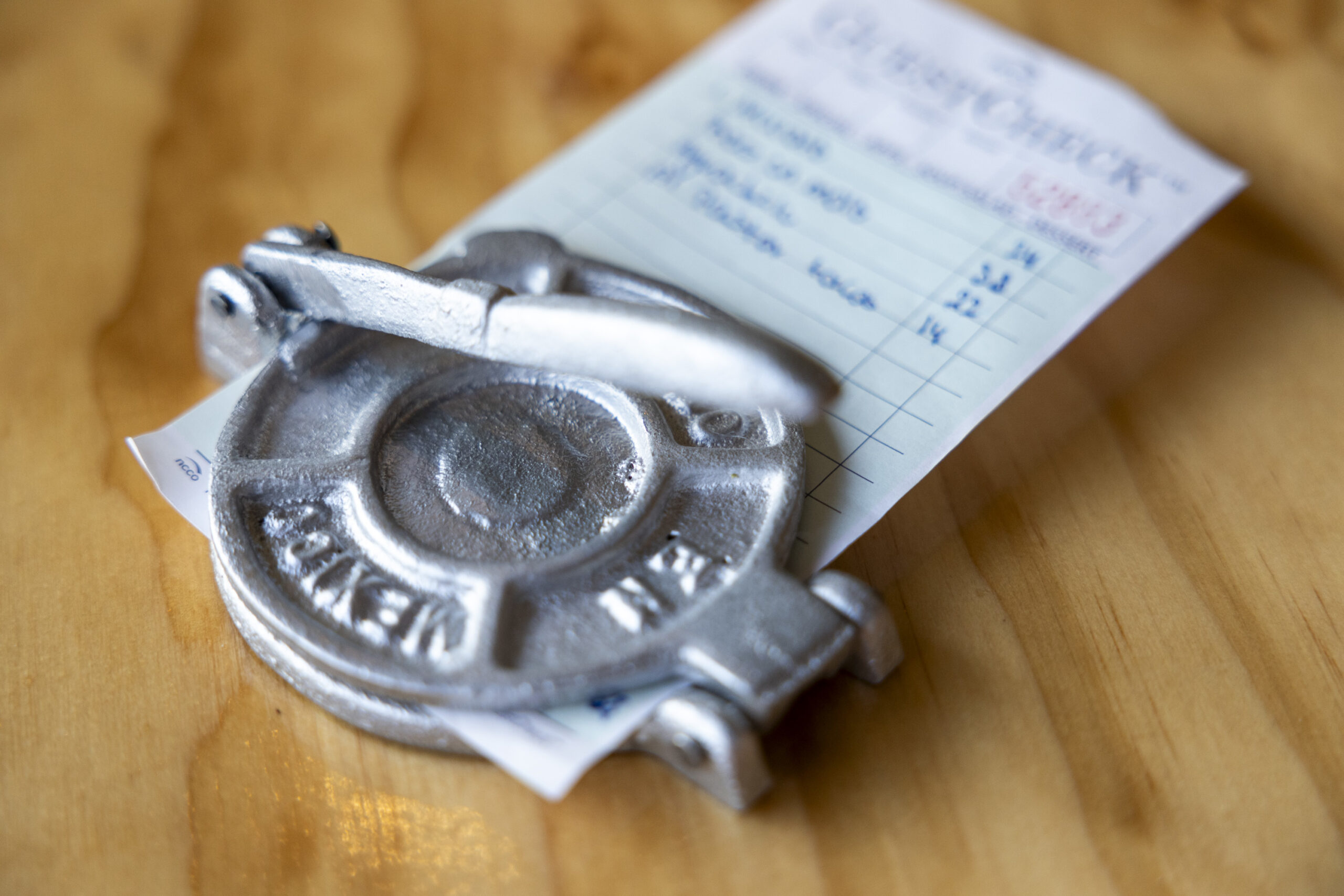
    A tiny tortilla press used for the dinner checks at Tlali in Upper Darby Pa., on Thursday, Feb. 5, 2026.
  • How Inquirer staffer Mel Greenberg’s poll changed women’s college basketball forever

    How Inquirer staffer Mel Greenberg’s poll changed women’s college basketball forever

    When the NCAA decided to go all-in on Division I women’s college basketball by adding a national championship tournament in 1981-82, it marked a fascinating turnaround. By grabbing the reins from the Association for Intercollegiate Athletics for Women — the longtime governing body of women’s hoops — the NCAA set out to make the game bigger and better forever.

    The sport did change, vastly. Television exposure finally found big-name programs. Title IX brought more girls and women into play, literally and figuratively. All-American players and Hall of Fame-worthy coaches promulgated. What should not be lost is this: the roots of the game were plentiful, but none more important than what grew strong at schools throughout this tri-state region.

    Here, programs and players were so impactful that to ignore the flood of talent became indefensible by 1982. So, the NCAA bit.

    Why? One needed to look no further than the locals that dotted the all-important 50-year-old Mel Greenberg national poll early on.

    Think back …

    Before the dynasties at UConn and Tennessee, there were giant-killers on the courts of tiny Immaculata and Cheyney State.

    Before there was a Geno Auriemma or Pat Summitt, there were legendary coaches like the Mighty Macs’ Cathy Rush and Cheyney’s C. Vivian Stringer. Rush’s and Stringer’s reputations and extraordinary programs surely caught the attention of the NCAA as they traveled the path to the Naismith Basketball Hall of Fame.

    Before there were all-Americans like Dawn Staley, Maya Moore, and Caitlin Clark, future Hall of Famer Theresa Shank-Grentz and the fabulous talent, Yolanda Laney, were dealing here in the Delaware Valley.

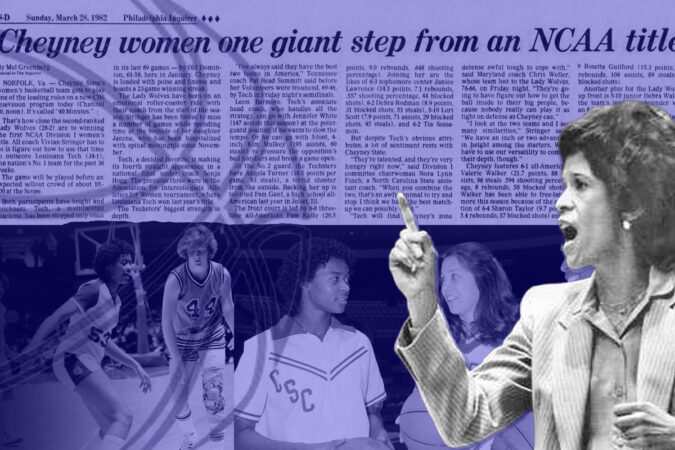
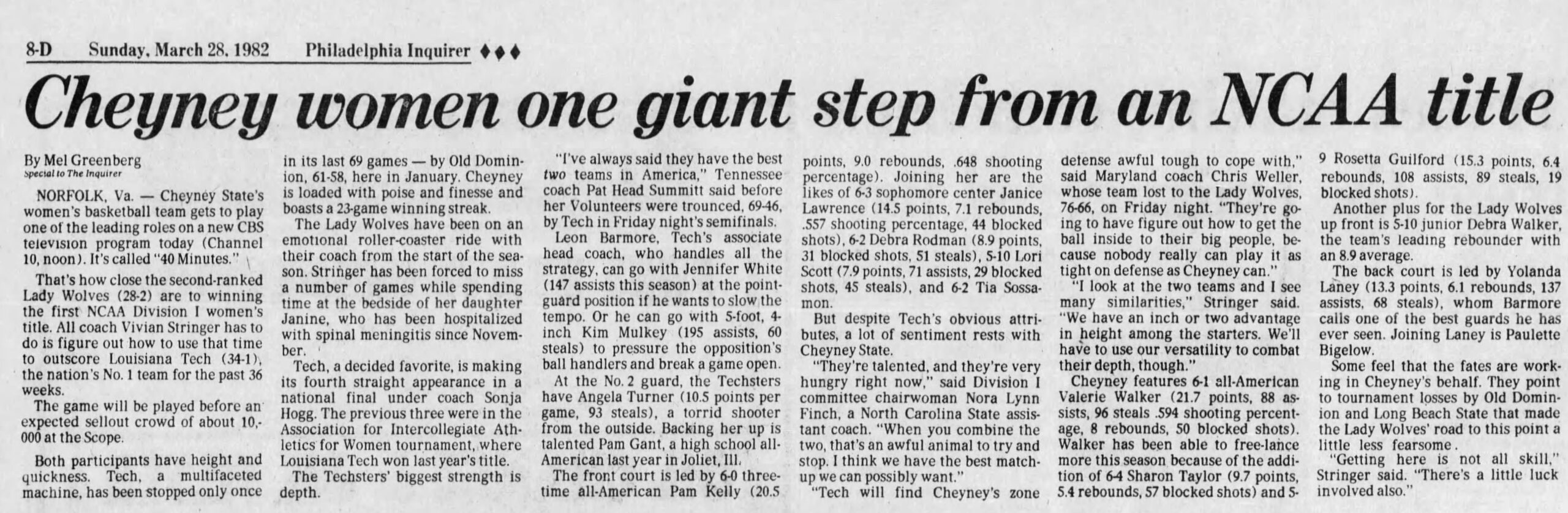
    A clipping from The Philadelphia Inquirer’s sports section on March 28, 1982, when Yolanda Laney, C. Vivian Stringer, and the Cheyney State women’s basketball team was headed to the championship game of the first NCAA women’s basketball tournament.

    Shank-Grentz, star of the Mighty Macs’ improbable AIAW championships, helped put a school of fewer than 3,000 students on the map. The Macs ruled the game for a near decade, winning three AIAW crowns while reaching five consecutive AIAW Final Fours.

    At even tinier Cheyney State, the All-American Laney and other talents who desired to play for Stringer helped the nation’s oldest historically Black college or university become the first HBCU to play in an NCAA Division I national championship game. Stringer’s team, with not one athletic scholarship to give, made that possible in 1982.

    “When you look at our team, we were part of God’s plan … a team of All-American, all-state players turning down scholarships [from larger schools] but we had one common denominator, and that was the great Vivian Stringer,” the team’s star center, Valerie Walker, said in her acceptance speech at the Women’s Basketball Hall of Fame ceremony in 2024. The Lady Wolves were enshrined as “Trailblazers of the Game.”

    The NCAA certainly was watching and calculating how to build off the growing women athletes’ import. But it arguably would not have had the curiosity or the vision if Greenberg had not provided the cohesiveness and foresight to champion programs, big and small.

    The Philadelphia Inquirer’s women’s basketball savant did so by founding his national poll 50 years ago. By connecting the dots of powerhouses across the country, the poll allowed teams, whether big, small, or minuscule, to bring into focus what previously had been a guessing game of who, what, and why which teams and trends mattered. The clarity benefited not only the programs, but the players, recruits, fans, and media from coast to coast.

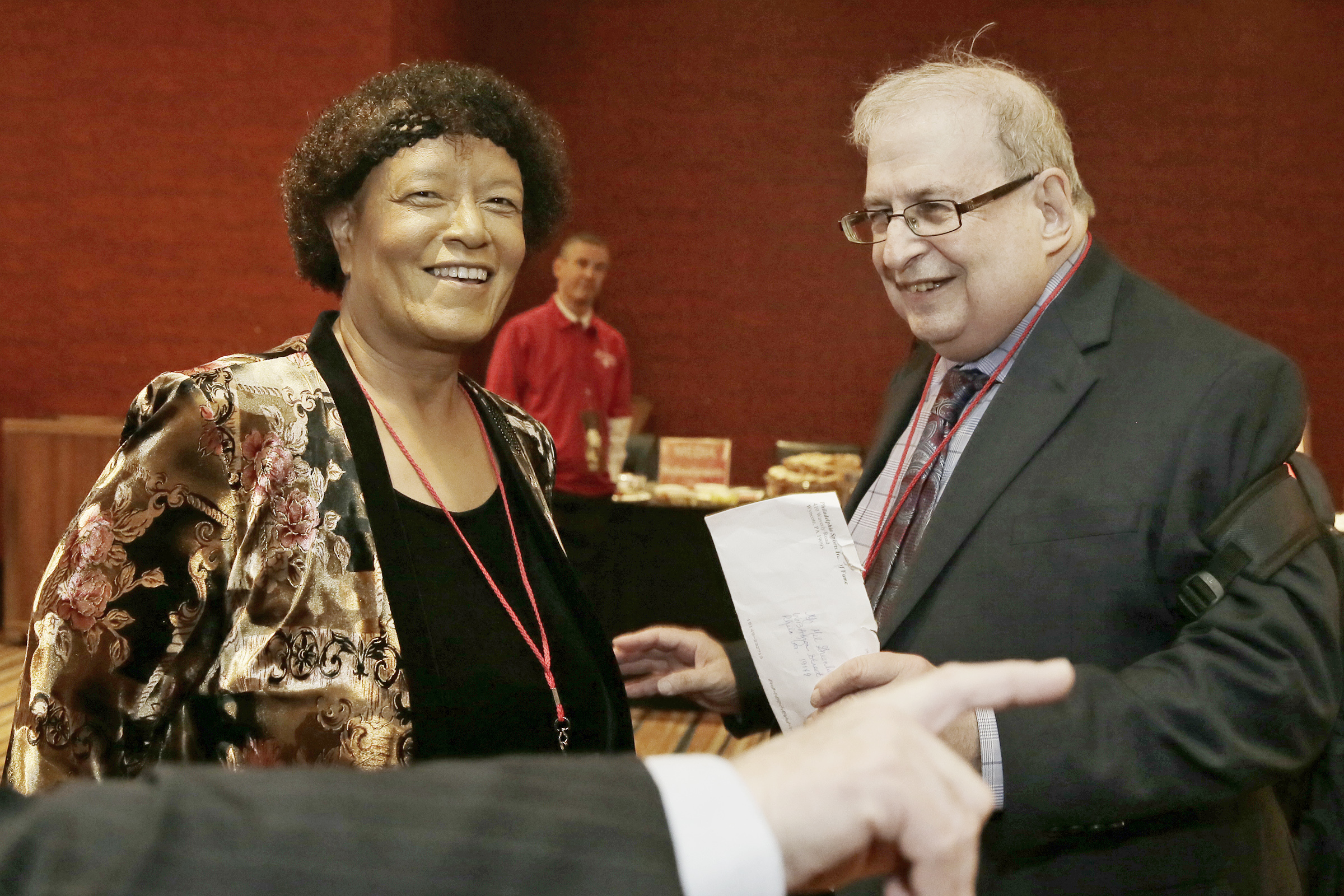
    Claire Smith and Mel Greenberg, Hall of Famers and former Inquirer writers.

    Greenberg gave even the most accomplished chroniclers of women’s hoops — as well as newbies such as this reporter — a divining rod. His informative and increasingly powerful poll beautifully grew in strength alongside the game. Local teams certainly benefited, as Greenberg shone a light on both with his polling and prose.

    He helped me, a frenemy at the late, great Philadelphia Bulletin, appreciate the bushels of all-American players, future Hall of Fame coaches, and prominent teams that dominated the AIAW right in our own backyards. From Rutgers to Maryland, Cheyney State to Penn State, and rising Big 5 women’s teams, it fascinated me to see the seeds that one day sprouted so prominently.

    To say that I saw the important contributions of the local teams growing the women’s game as clearly as did Greenberg would be beyond impudent. Rather, following the game in and around the immediate area as well as following the pollmeister was an education, one I and others needed to appreciate why the NCAA move was inevitable.

    I missed seeing the Mighty Mac era by mere years. Still, I often was reminded of the footprints left during their legendary run through the ’70s. Greenberg, a walking encyclopedia of the sport, can to this day bring to life any tale about the Macs, starting with the 1972 team that won the first women’s national basketball championship.

    Though I came to the job too late to witness the Mighty Macs magic, I saw what followed in their footsteps. For a similar miracle was unfolding at Cheyney State where Stringer was building a national behemoth at the tiniest of schools (today’s enrollment at Cheyney, which is now known as Cheyney University, is less than 1,000 students).

    John Chaney, the Hall of Famer and Philly legend who was the coach of the men’s team at Cheyney when Stringer was leading the women there, knew which team was the stronger draw. “We were ranked No. 1 in Division II, but we’d play the first game so that we would have somebody there by halftime,” Chaney, laughing, told me for a column written for the New York Times. “The real show was our women’s team. They didn’t come to see me; they came to see Vivian!”
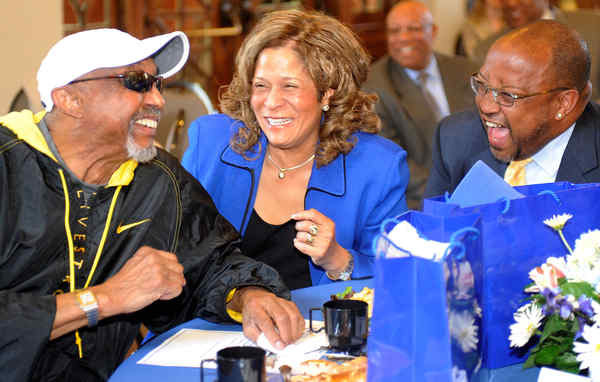
    Former Temple coach John Chaney (left) shares stories with Rutgers coach C. Vivian Stringer and Nike executive Ralph Greene. Chaney and Stringer coached the men’s and women’s teams at Cheyney State in the 1980s.
    It always was standing-room-only in Cheyney’s compact Cope Hall, for the scribes and fans had a sense that what they were watching was special: Two Hall of Fame coaches in the making. Oh, and one Hall of Fame team. For Stringer’s 1981-82 team that finished the season ranked No. 2 in the nation.

    That final standing in the polls reflected Cheyney’s having come within one win of claiming the first-ever women’s NCAA championship. Though the team lost to Louisiana Tech in the final, just getting there was the ultimate victory.

    In those days, Stringer spoke of how her Lady Wolves had to sell cookies, cakes, and sandwiches to raise funds to travel to Norfolk, Va., for that first Final Four.

    That Cheyney team finished 28-3. The 11 players and coaching staff were honored years later by the Women’s Basketball Hall of Fame in 2024. The team also was nominated for the Naismith Basketball Hall of Fame in 2025.

    Alas, those David and Goliath stories no longer happen in a world where a Cheyney State or Immaculata wouldn’t even dream of being allowed to compete at a Division I championship level. Big universities and programs awash with NIL money now gobble up the best players in the land. The little guys play in lower divisions, noses pressed against windows of the massive arenas holding tournaments made possible by the Immaculatas and Cheyney States, the Cathy Rushes and Vivian Stringers … and Mel Greenberg’s vision of what could be.