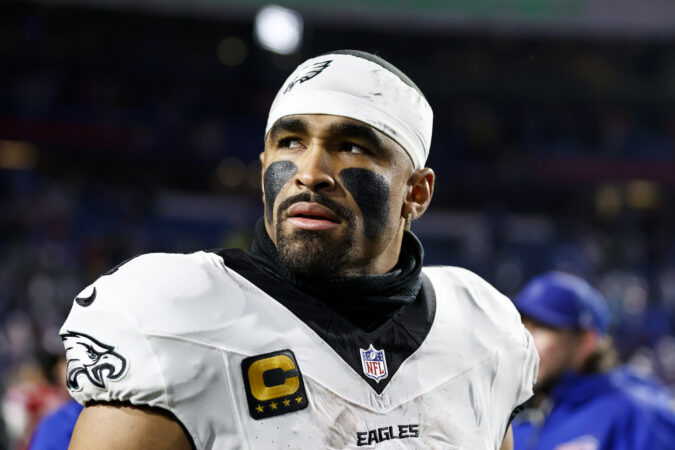
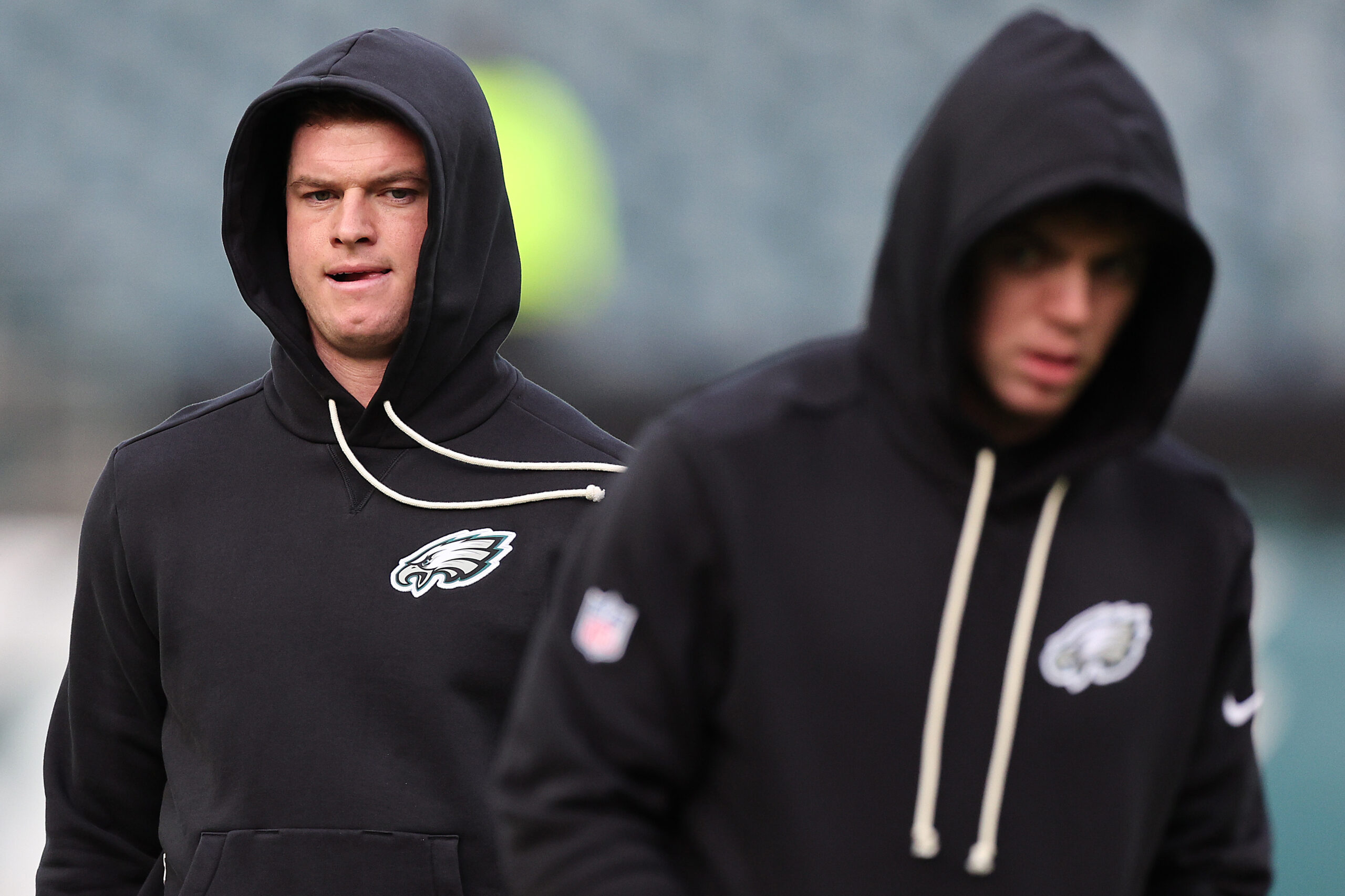
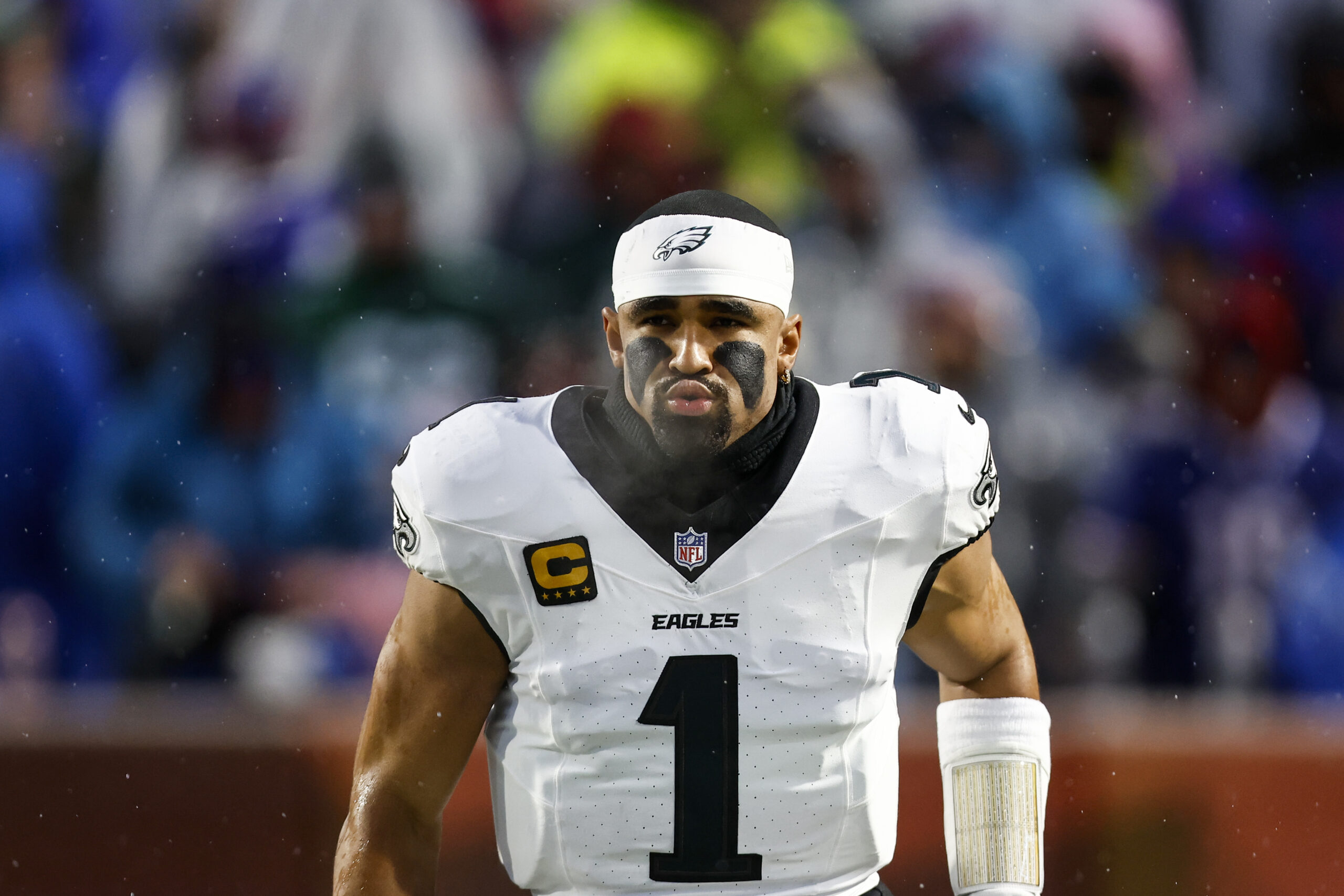
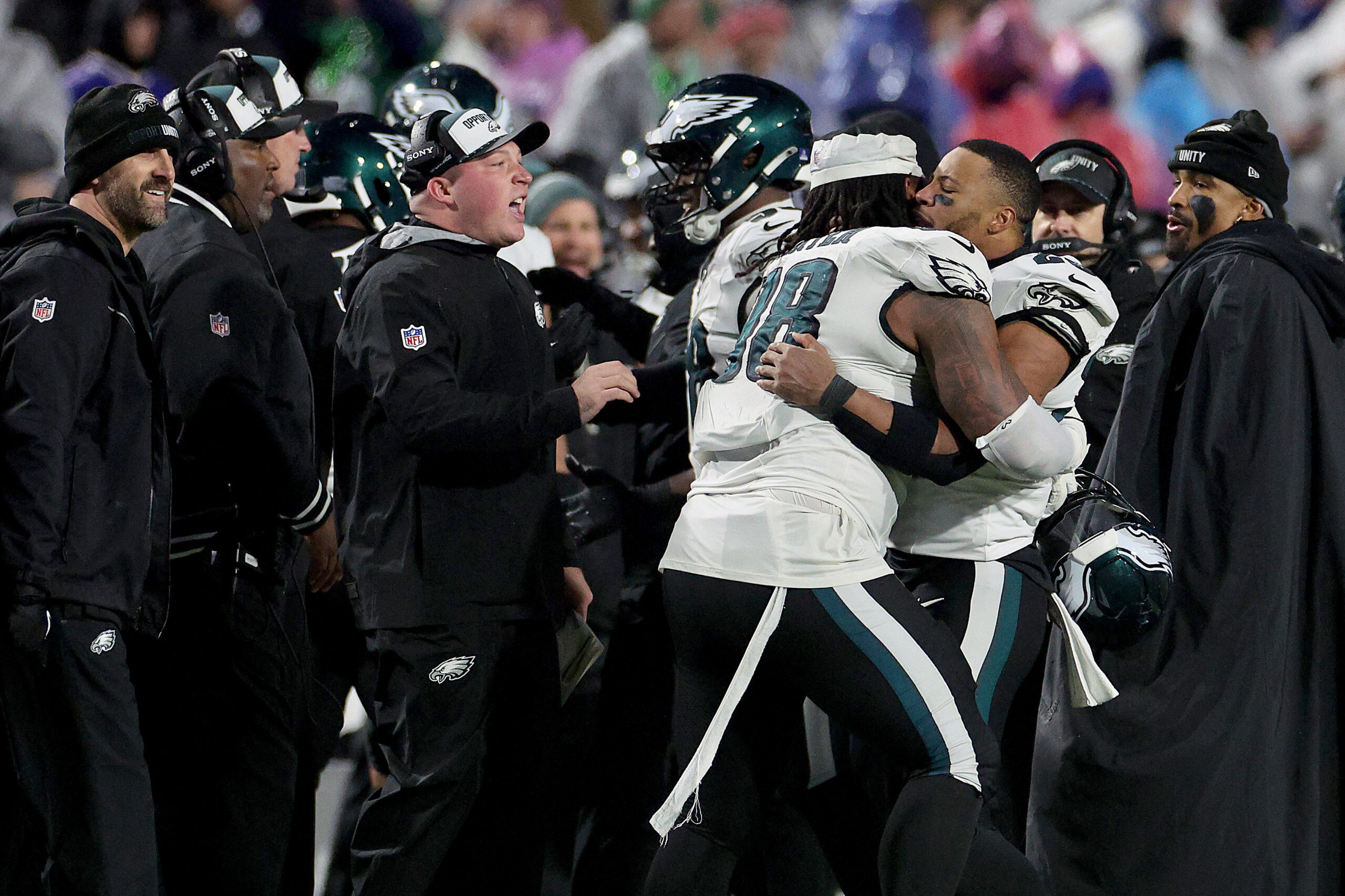
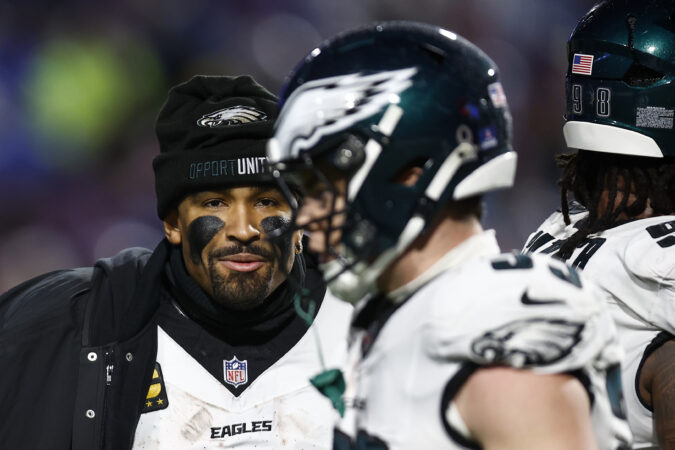
The Eagles are expected to rest quarterback Jalen Hurts and most of their starters against the Washington Commanders on Sunday, NFL sources said Wednesday.
Eagles coach Nick Sirianni declined to say whether he was resting his starters or not when asked during his Wednesday news conference. He said he wanted to first inform his players of his decision during a later team meeting before making it public.
But the team later confirmed that some key starters will get the game off, some will play on a limited basis, and some will dress but not play. The Eagles will need to have a certain amount of players active to meet the league requirement.
The decision to use the season finale as a “bye” week heading into the playoffs shouldn’t come as a surprise based on Sirianni’s other recent comments. The NFC East champion Eagles can still improve their seeding, but he emphasized on Monday the importance of giving players a week off.
“If I look back and how beneficial some of the byes that we’ve had have been, that’s part of the reason why you think through it,” Sirianni said, a day after the Eagles beat the Bills, 13-12. “It’s a marathon of a season. You give your guys some rest, you get some time to think through some different things, even though you’re preparing for an opponent as you go.
“Both times that I’ve been here that we’ve been to the Super Bowl, we’ve had that opportunity for a bye, and that’s ’22 and obviously ’24.”
Sirianni took advantage of resting starters in those seasons, while in 2023, he did the opposite and played Hurts and most of his starters with the NFC East still on the line. The Eagles performed poorly in the first half at the Giants. Most of the starters were eventually pulled when it became apparent the Cowboys would win the division.
The Eagles also suffered a significant injury in that game when wide receiver A.J. Brown left with a knee injury. He missed the first-round game at Tampa Bay, which the Eagles lost, 32-9. Hurts also dislocated a finger on his non-throwing hand in the Giants game.
The Eagles offense has been struggling for most of this season, but it had more success in wins earlier this month over the Raiders and Commanders — two of the worst teams in the NFL.
They had a solid first half at the Bills on Sunday but could do almost nothing in the second half and gained only 17 yards. Sirianni could use a rematch vs. Washington as an opportunity to give his offense some momentum heading into the postseason. Or it could backfire like it did two years ago.
The 11-5 Eagles are the No. 3 seed and would host the 11-5, No. 6 seed Los Angeles Rams or the 12-4 San Francisco 49ers in the wild-card round. If they were to beat the Commanders and the 11-5 Bears were to lose to the eliminated Lions at home, the Eagles would be the No. 2 seed and would host the 9-6-1 Packers in Round 1.
Sirianni may believe that No. 2 quarterback Tanner McKee and his backups can still beat the 4-12 Commanders. Washington is expected to start third-string quarterback Josh Johnson, who entered the first meeting with the Eagles when backup Marcus Mariota was knocked from the game.
McKee and the Eagles reserves beat a poor Giants team playing most of its starters in last season’s finale.
The latest episode of Hard Knocks featured Christmas presents for the NFC East, with none bigger than the Eagles’ 13-12 win over the Buffalo Bills.
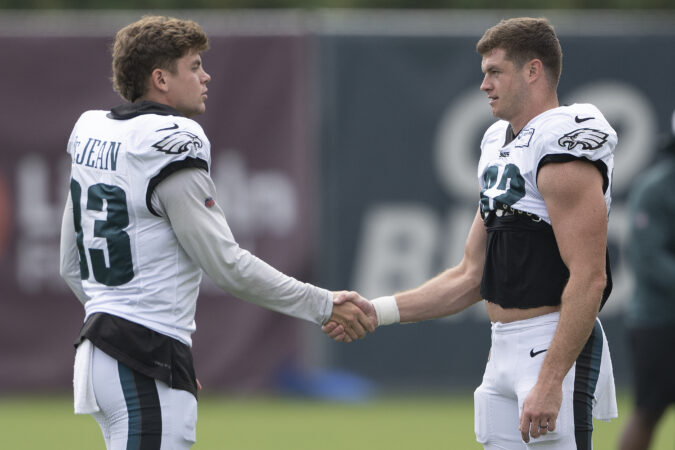
The HBO documentary series, which releases new episodes every Tuesday, took a long look at Cooper DeJean, his relationship with Reed Blankenship, and the Birds’ preparation for their nail-biter win on Sunday.
Here’s everything you may have missed from the latest episode of Hard Knocks:
Jaxson Dart did not mince words about which team he considers the Giants’ biggest rival.
A Giant pain
Fans in Philadelphia might not be aware of it, but the Giants consider the Eagles their biggest rivals.
During a fan holiday meet-and-greet labeled “Dart the Halls,” rookie quarterback Jaxson Dart was asked by a young fan which team he considers the Giants’ “most rivalrous team.”
“The Eagles, for sure,” Dart responded to a chorus of oohs and ahhs.
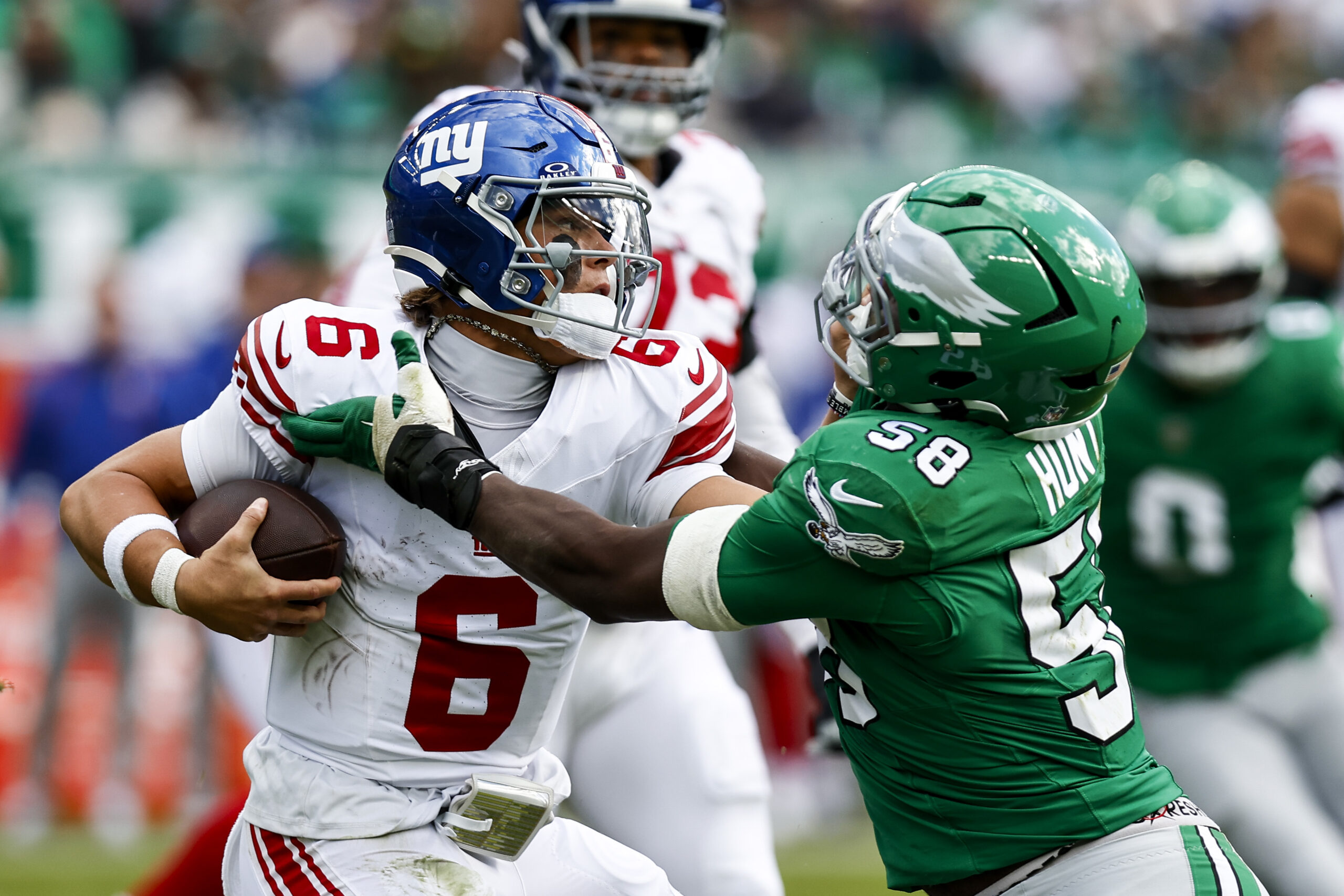
The Birds went 1-1 this season against their competition up north and lost at MetLife Stadium for Dart’s first win against an NFC East opponent on Oct. 9. Dart is a candidate for NFL Offensive Rookie of the Year, and Eagles fans can expect to see the former Mississippi star for years to come.
Cooper DeJean’s Pro Bowl citation got some airtime in the latest episode of “Hard Knocks.”
Who cares about the Pro Bowl?
Hard Knocks began in a festive mood, showcasing the Giants, Dallas Cowboys, and Washington Commanders exchanging gifts and celebrating Pro Bowl nominations — which the teams had extra time to focus on after being eliminated from postseason contention.
The playoff-bound Eagles, however, weren’t shown celebrating their five Pro Bowlers: DeJean, Quinyon Mitchell, Cam Jurgens, Zack Baun, and Jalen Carter. What was shown was the practice field, with some players congratulating one another in comical fashion.
“Pro Bowler, Cooper DeJawn,” Blankenship said at practice. “Anything you want to say to the people?”
“DeJean … It’s DeJean,” DeJean responded.
Safety Reed Blankenship (left) warming up before the Eagles played the Bears at Lincoln Financial Field on Nov. 28.
The Secon-dairy
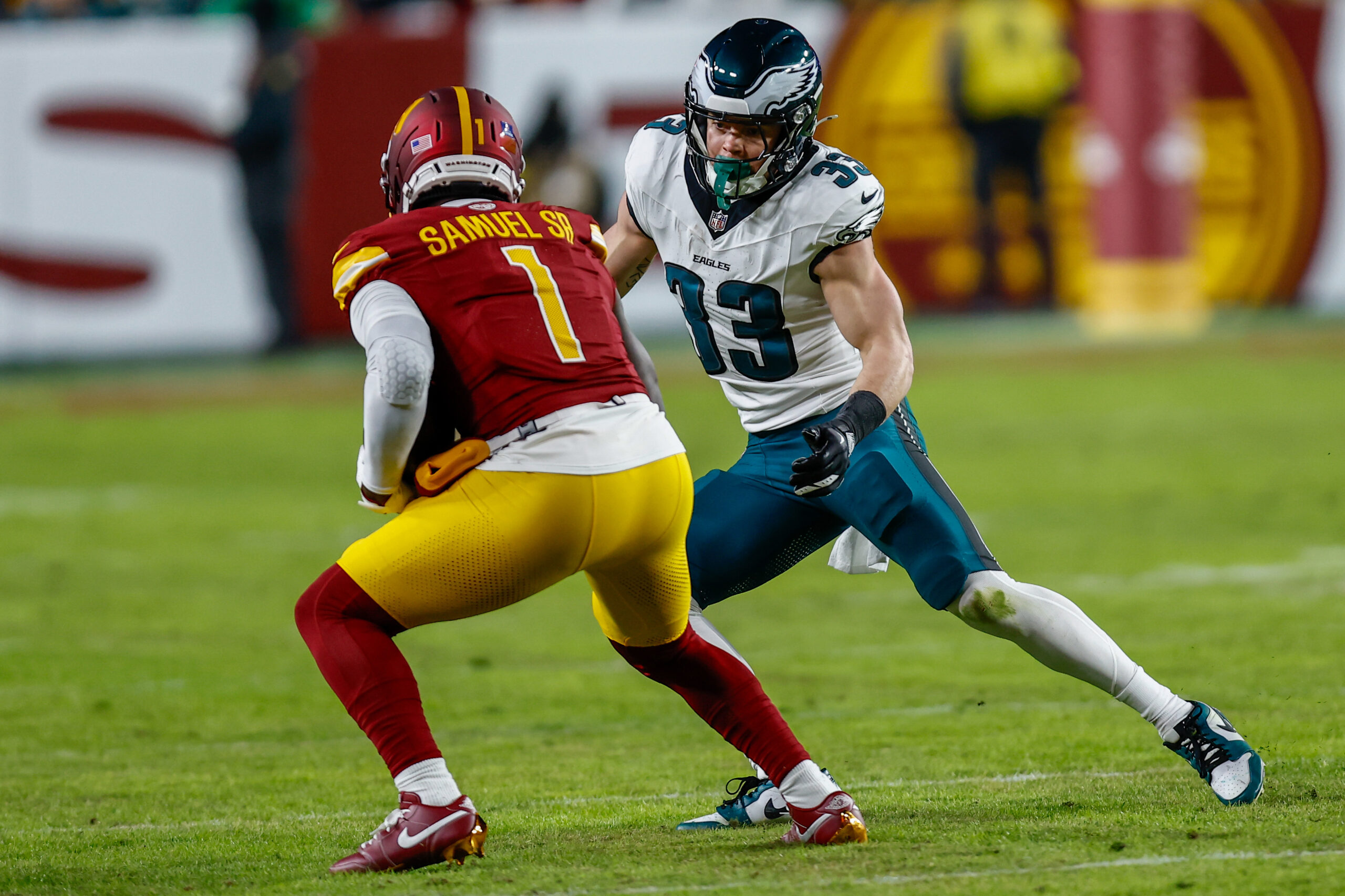
DeJean and his partner-in-crime, Blankenship, took center stage in the episode, with their blossoming bromance on and off the field. From ripping the ball away from each other through WWE-style takedowns to practicing dance routines, the Eagles’ defensive stars appeared inseparable.
“He’s an awesome teammate,” DeJean said. “He’s an awesome person to be around. Really welcomed me in and helped me learn the defense when I got here. It’s fun to watch him play and do his thing. I think our connection and our friendship has helped us play well together on the field.”
Said Blankenship: “I’m so proud of him. We sit beside each other in meetings, and I feel like I’m the older brother. There’s not a lot of people like him. He is the best nickel in the league, and just having that communication allows us to play better.”
The tandem started a podcast called Exciting Mics in June, a reference to the duo’s “Exciting Whites” nickname.
Other nicknames have followed the pair, including “Secon-dairy,” which came after DeJean and Blankenship leaned into a new celebration.
“We do have a milk-the-cow celly,” DeJean admitted.
“We usually do our normal thumbs-down,” Blankenship said. “And I was like, ‘Dude, it’s like udders from a cow …’”
Some observers have confused them for each other on the field — with Fox announcer Kevin Burkhardt and Bills safety Sam Franklin Jr. referring to Blankenship as Coop or DeJean during the game.
“What up, Coop,” Franklin said.
“I’m the other one, bruh,” Blankenship answered.
The Eagles spent time last week addressing Josh Allen’s propensity for running up the middle.
Getting ready
Eagles coaches took great care in preparing the defense for the Bills offense, with Hard Knocks providing a glimpse into each defensive unit ahead of last Sunday.
Bobby King, the Eagles’ inside linebackers coach, showed sumo wrestling clips to inspire his players to play physically, while Jeremiah Washburn, the inside linebackers and defensive line coach, focused on Bills quarterback Josh Allen’s ability to escape up the middle — something the defense effectively prevented on Sunday.
“Lot of middle escapes,” Washburn said. “And he’s tough. But this is where most of his explosive runs come, is up the middle. It takes a group, fellas. It’s going to take a group because he doesn’t hit the ground easy, and so it’s just going to take a collective effort right there, fellas.
“You can see again,” Washburn added, referring to a clip of Allen throwing on the run. “He’s got an arm, that’s what he does right there.”
Defensive backs coach Christian Parker stressed the Bills’ versatility, with Allen leading the charge through the air and James Cook, the league’s leading rusher, dominating on the ground.
“The key is going to be tackling in space,” Parker said. “Weather could be significant, but we’ve got to take great angles and we’ve got to rally to the football all night long.”
As coaches worked to prepare the team, defensive coordinator Vic Fangio had a different approach to explaining the matchup when addressing the media.
“You got Josh Allen,” Fangio said. “That’s all you need to say. You got Cook, that’s all you need to say. But once he gets in the open field, he’s got the speed to hit the home run. He’s patient, but once he sees it he hits it, and he’s really good, he’s elusive.”
The Eagles held the reigning MVP without a touchdown and Cook to less than 100 rushing yards, and also recovered an Allen fumble and blocked an extra point in the win.
Jalen Hurts warms up in the rain on Sunday.
Offensive frustration
You rarely hear Jalen Hurts speak vehemently, so when he does, it means more.
When Hard Knocks featured a quick interaction between the reigning Super Bowl MVP and quarterbacks coach Scot Loeffler, it got viewers’ attention.
“It’s going to rain,” Loeffler said. “Like there’s no if and … it’s going to rain. I don’t give a [expletive] if there’s bad weather or not, we need to get this going.”
“We need to do that [expletive] 1,000%,” Hurts responded.
Hurts, like many fans, seems to have grown frustrated with the production of the offense, which has failed to live up to last year’s standard and leads the league in three-and-out percentage.
The Eagles had a lot to celebrate despite the low-scoring nature of Sunday’s contest.
Highlight central
The game had plenty of impressive plays, despite its low scoring, starting with A.J. Brown’s deep reception, followed by a Dallas Goedert score a few plays later.
“The night is still young,” Hurts said from the sideline.
“Yes sir,” Goedert responded.
Despite the offense’s confidence, the Eagles failed to notch a touchdown for the rest of the game and were shut out in the second half as punter Braden Mann and the defense did the heavy lifting.
DeJean and Blankenship continued to catch the eye of Hard Knocks cameras and were mic’d up throughout the game.
“We’re a married couple, baby,” Blankenship said of himself and DeJean. “We are in a relationship.”
The Eagles left victorious as Allen walked off the field with his head down following a failed two-point conversion. The episode ended with Nick Sirianni’s postgame speech, which pointed out the offense’s ineptitude.
“Going on the road in the NFL and winning a game like this, that is [expletive] hard to do,” Sirianni said. “It’s a good football team. Defense, wow, wow. Offense, really good first half, right, we’ve got to figure out that second half. A lot to be thankful for. Let’s pray.”
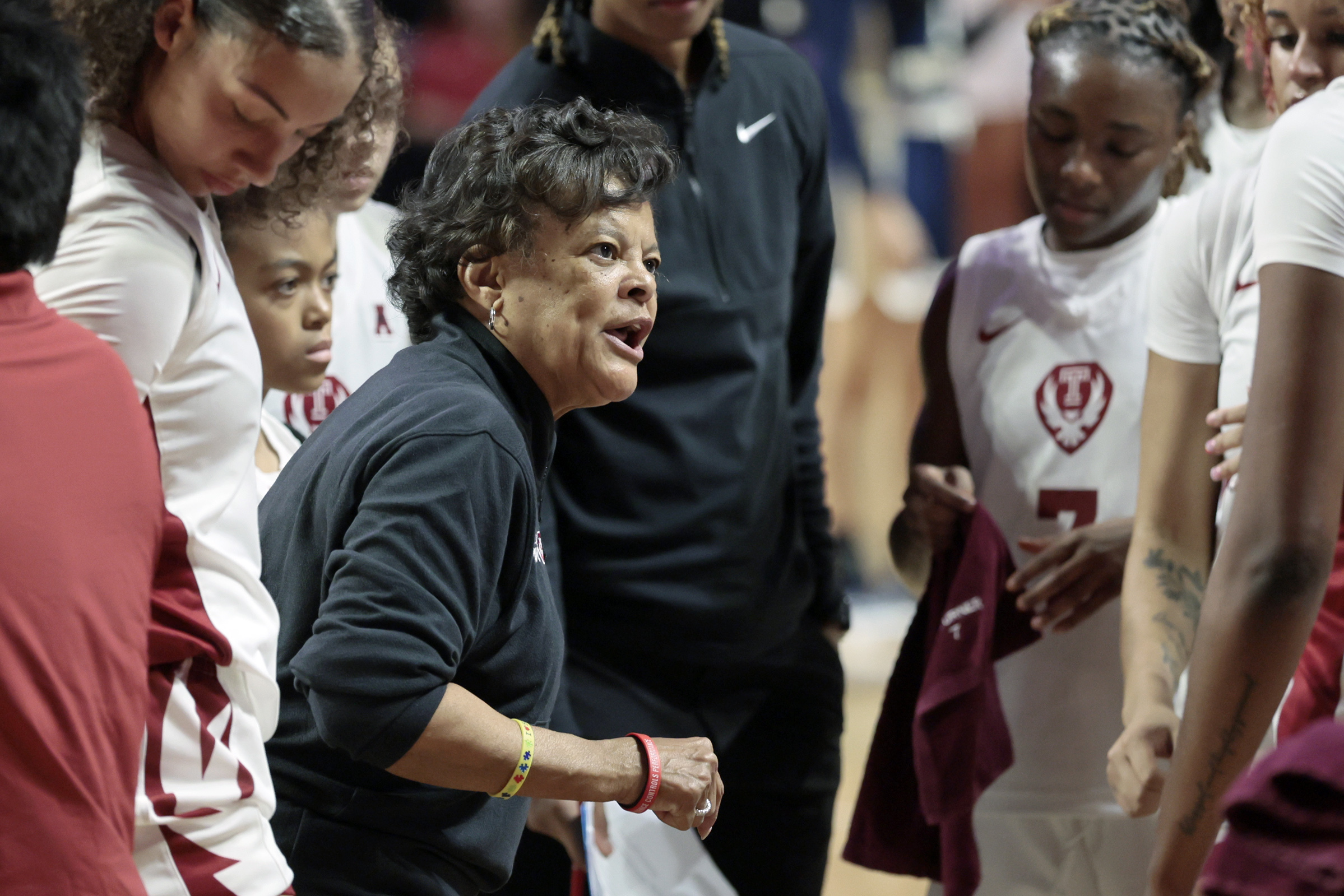
Temple coach Diane Richardson knew she wanted her team to be battle-tested for American Conference play and crafted the Owls’ nonconference schedule to reflect that.
Richardson lined up five teams coming off NCAA Tournament appearances. The Owls went 1-4 in those games, with their lone win coming at home against George Mason in the season opener on Nov. 3.
The difficult schedule leaves Temple with a 6-6 record that does not scream conference title contender. However, with a similarly difficult slate at this time last year, the Owls were 6-5 but went on to win 13 conference games and finished fourth in the American.
Now Richardson is hoping to see similar results. Temple has displayed more offensive firepower and improved rebounding numbers, but the key to success for the coach will be defense and starting games strong. The Owls’ quest for an American championship starts Saturday at home against the reigning regular-season champion, UTSA (2:30 p.m., ESPN+).
“I’m feeling pretty good,” Richardson said. “I know our last outing with Princeton kind of showed us that we have the resiliency that we’ll need. I just wish that we would start out like that. But I’m feeling pretty good. We’ve gotten the tough part behind us, and now we enter into the second season, which is the most important.”
Coach Diane Richardson’s Temple squad opens American Conference play on Saturday against the reigning regular-season champion, UTSA.
Showing resilience
Temple’s four losses against 2025 NCAA Tournament teams came by double digits, with its closest result an 87-77 loss at Princeton on Dec. 22. The Owls also showed flashes of fight and the ability to remain competitive in those games.
In their 72-57 loss to Atlantic 10 favorite Richmond on Nov. 18, the Owls were down double digits early in the second quarter but battled back and were within striking distance until the final five minutes. Temple trailed by as many as 26 points in the fourth quarter against Princeton but cut the deficit to nine in the final minute.
“Early on, we weren’t responding really well,” Richardson said. “… But I think as we got into the season, we started understanding that this is tough, and we have to be tougher. Coming toward the end of the nonconference season, I thought we played better, which is a plus for us going into conference play.”
Before the season, Richardson wanted her team to play faster, but during nonconference play, she felt the Owls were not assertive on offense to begin games or played out of control, which led to an increase in turnovers.
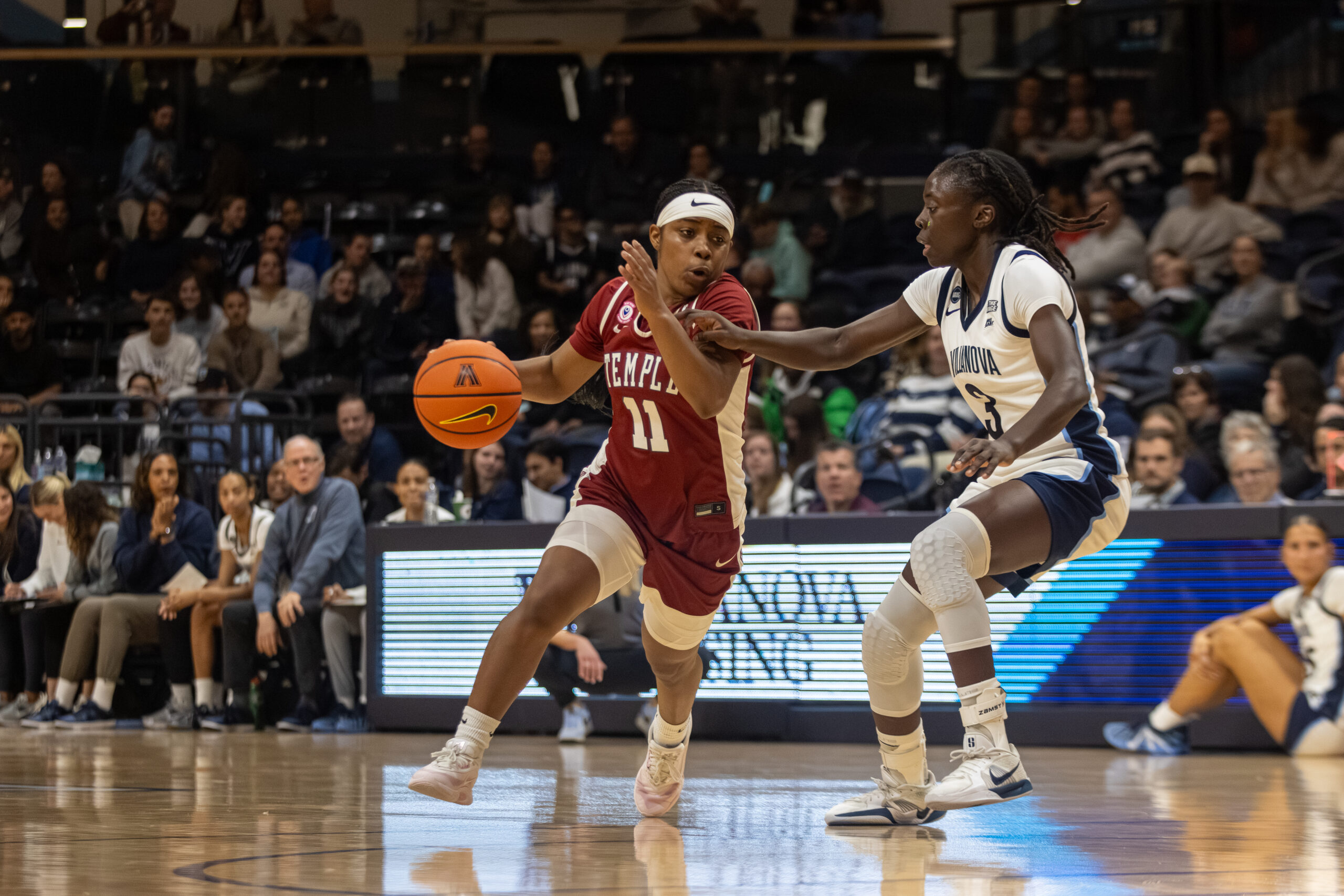
Temple also had to play its final four nonconference games without starting point guard Tristen Taylor, who suffered an ankle injury on the road trip to the Bahamas at the end of November. The Owls were 2-2 without her.
Taylor was the Owls’ second-leading scorer at the time of her injury, averaging 10.1 points and leading them in assists (4.6). She also was second in the American in assist-to-turnover ratio at 2.1. Without its main ballhandler, Temple looked out of sync at times, especially in its 59-52 loss to Drexel in the Big 5 Classic on Dec. 7.
The Owls leaned on guard Kaylah Turner, who ascended to one of the best players in the conference in Taylor’s absence.
She averaged 23 points in the four games Taylor missed, including a career-high 36 points against Princeton. Turner, who is averaging 17.8 points this season, took on point guard duties and struggled with turnovers, but she still offered a steady presence at the top of the offense. Richardson expects Taylor back within the first two games of conference play. She believes Taylor and Turner can form the best backcourt in the conference.
“In the scoring aspect, I do think I did well, but I feel like I could have done way better,” Turner said. “With playmaking and passing, that’s something I’m still working on. So I feel like I definitely could have improved that.”
Tristen Taylor was averaging 10.1 points and 4.6 assists at the time of her injury.
By the numbers
Richardson was keen on her team playing faster on offense and improving its rebounding in the offseason. Nonconference play has shown offensive improvement and major strides on the glass for the Owls.
Temple is averaging 70.1 points, a 3.4-point increase from its mark last year. Three players — Turner, Taylor and forward Jaleesa Molina — are averaging at least 10 points. Turner leads the American in scoring (17.8) and three-point percentage (.460) and is second in field-goal percentage (.450).
The most notable improvement for the Owls has been their rebounding. Last season, Temple averaged 38.8 rebounds and had a rebounding margin of 0.8. This season, the Owls are averaging 39.8 rebounds but holding opponents to 33.9. The Owls give up the second-fewest rebounds in the conference and are fourth in rebounding margin.
Molina and transfer forward Saniyah Craig have spearheaded the Owls’ efforts on the glass. Craig, who was the ninth-leading rebounder in the country last season while at Jacksonville, is averaging 8.9 rebounds, and Molina averages 8.4.
“We’ve got to be hungry, and we’ve got to get every rebound,” Richardson said. “We’ve concentrated on that this week as well. So that’s going to be something that hopefully we’re good at.”
Temple has struggled taking care of the ball. The Owls are averaging 19.6 turnovers, four more than last season, and have turned the ball over at least 20 times in five games, including their last three.
Richardson knows the turnover numbers have to come down, but she believes that the key to a conference banner being raised in the Liacouras Center will come on defense.
“You can miss shots, but you can always play defense,” Richardson said. “I think that oomph, that extra adrenaline turning people over defensively helps us offensively because it gives them more confidence. We want to compound our defense and make that our No. 1 thing.”
Behind every statistic is a patrol officer, detective, analyst, supervisor, or civilian professional who showed up day after day, determined to protect this city. Lives have been saved, neighborhoods strengthened, and trust rebuilt because of their work.
Philadelphia is safer today than it has been in a generation, and that progress deserves recognition.
Changing threats
But public safety is not defined solely by addressing violent crime. Some of the most damaging threats we face today are quieter, more personal, and increasingly digital.
Across Philadelphia and the surrounding region, criminals continue to target the most vulnerable among us. Elderly residents are being deceived out of their life savings through increasingly sophisticated fraud schemes. Young people are being exploited through sextortion, often by offenders operating overseas who use fear, manipulation, and anonymity to cause devastating harm. Businesses of every size are facing ransomware attacks that can cripple operations, disrupt critical services, and threaten livelihoods.
At the same time, our business community and world-class academic institutions face persistent threats from nation-state actors seeking to steal intellectual property, sensitive data, and cutting-edge research. These efforts target innovation, economic competitiveness, and national security itself, and they often unfold silently over months or years before being discovered.
Such crimes leave deep scars. They are often underreported, emotionally devastating, and constantly evolving. Addressing them requires persistence, adaptability, and a willingness to confront threats that do not always fit traditional definitions of crime.
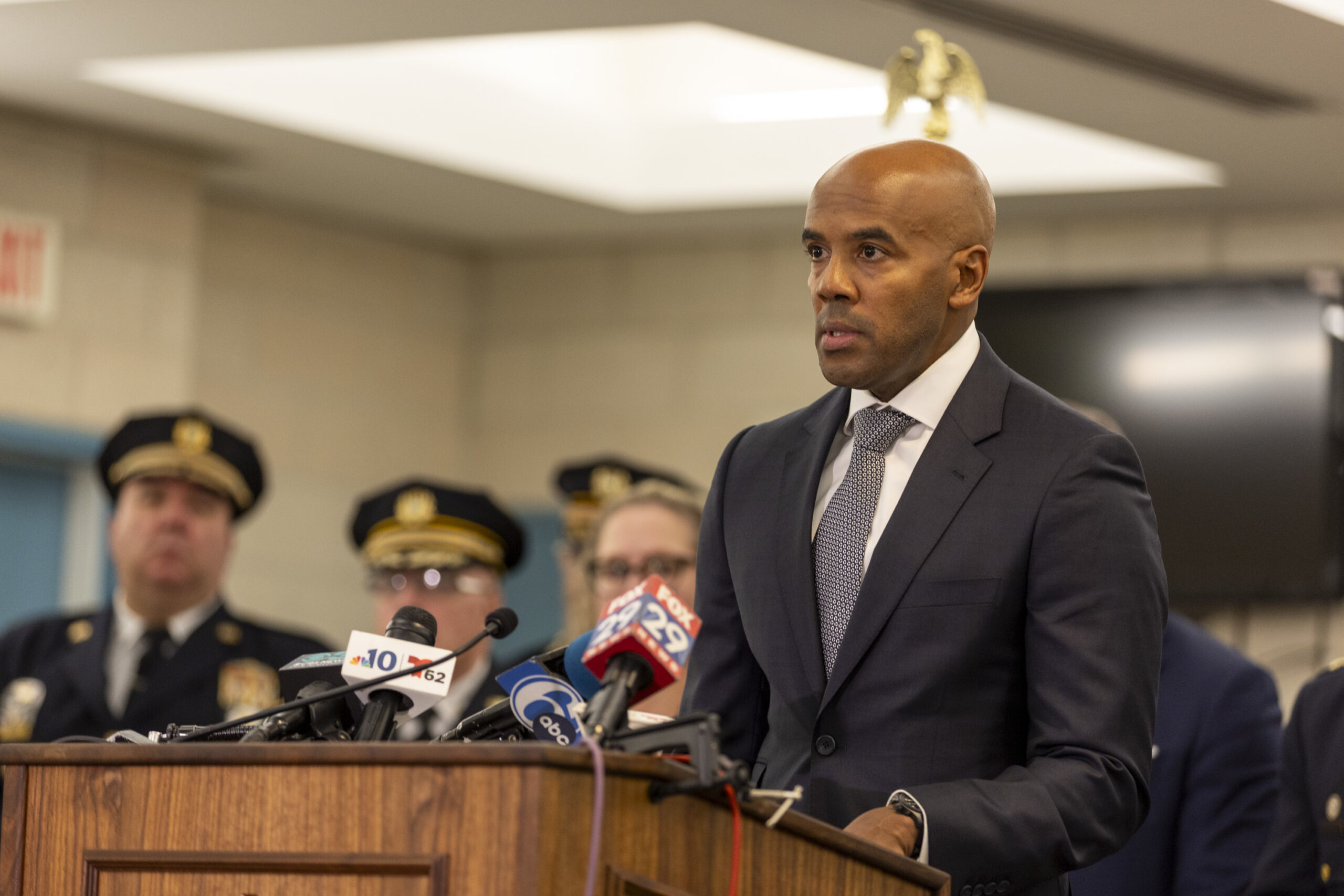
Special Agent in Charge Wayne A. Jacobs at a news conference at the 24th Police District Headquarters in Philadelphia in October
Every day, the men and women of the FBI show up with a clear purpose: to protect people and hold perpetrators accountable. Our agents, intelligence analysts, and professional staff work tirelessly to identify offenders, dismantle criminal networks, prevent acts of terrorism, disrupt foreign intelligence threats, and bring those responsible to justice, whether they operate across the street or across the world.
But enforcement alone is not enough. Preventing harm before it occurs is one of the most powerful tools we have.
Through partnerships with schools, senior centers, businesses, universities, and community organizations, we work to raise awareness, share intelligence, and empower people to recognize threats early. Helping a senior avoid a scam, a teenager seek help before harm escalates, or an institution protect sensitive research can be just as impactful as an arrest.
None of this work happens in isolation. The progress Philadelphia has made, both in reducing violent crime and in confronting complex threats like fraud, sextortion, ransomware, and foreign intellectual property theft, is rooted in strong partnerships. Federal, state, and local law enforcement, prosecutors, private-sector leaders, and academic institutions are aligned around a shared responsibility to keep this city safe.
Those partnerships will be more important than ever as Philadelphia prepares for a historic year in 2026. With global events, national celebrations, and millions of visitors expected, success will depend on seamless coordination, shared intelligence, and a unified approach to prevention and preparedness.
We are ready because we have built this foundation together.
Philadelphia’s progress is real. The challenges ahead are serious. And by continuing to work side by side, guided by intelligence, driven by prevention, and grounded in partnership, we will keep this city safe in 2026 and beyond.
Wayne A. Jacobs is the special agent in charge of the FBI’s Philadelphia Field Office, a position he’s held since November 2023.
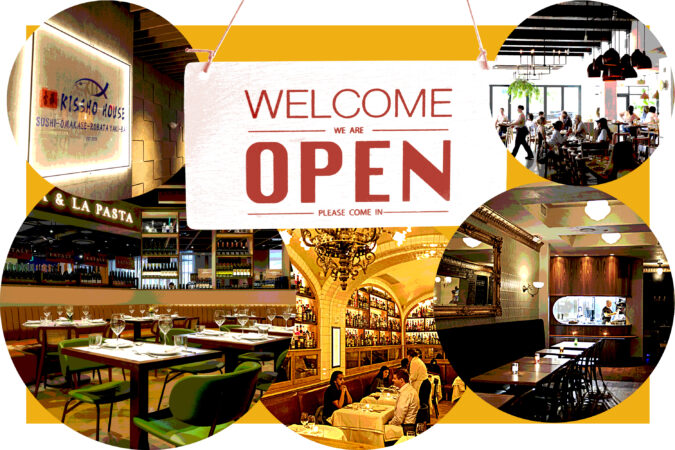
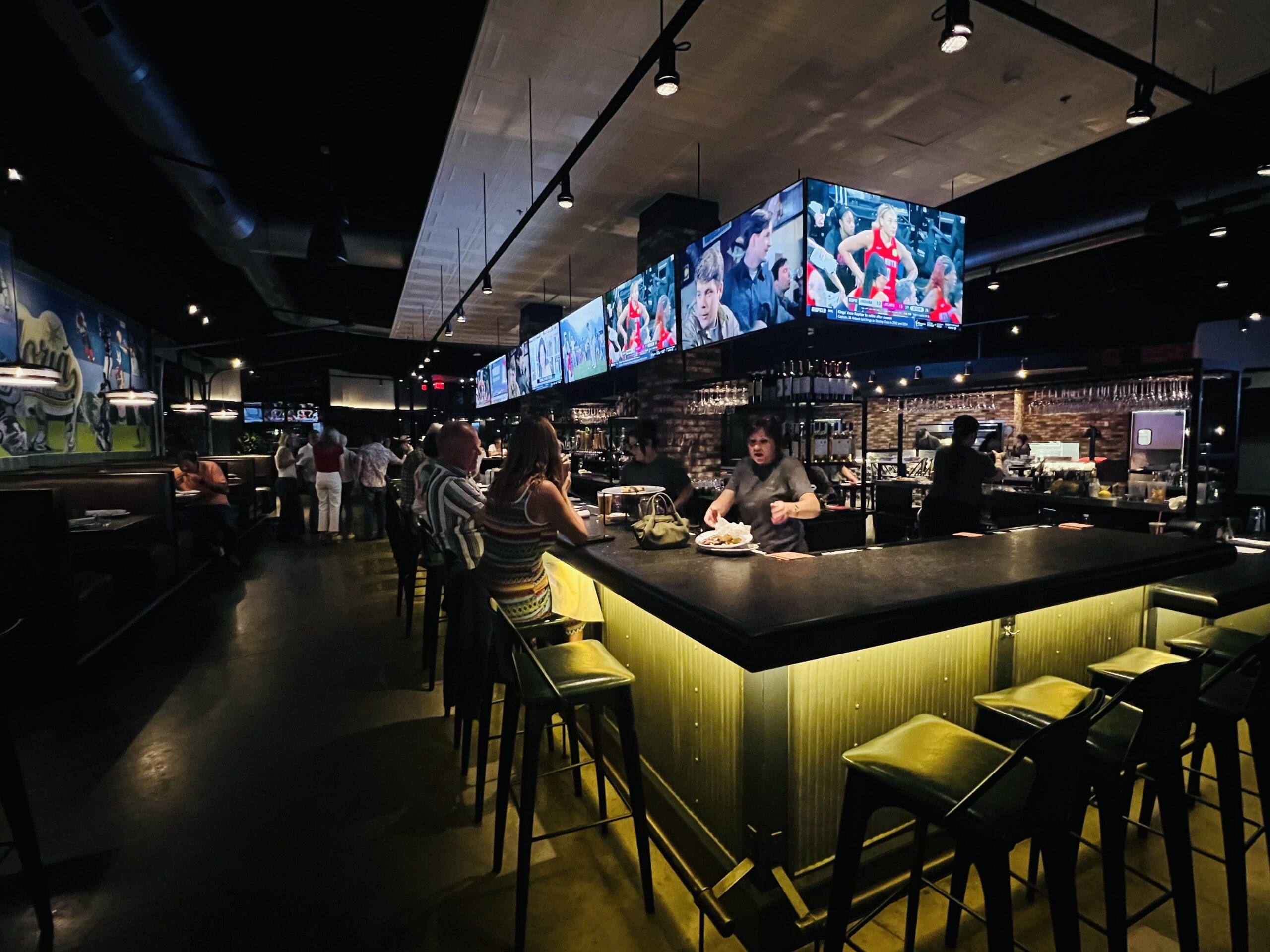
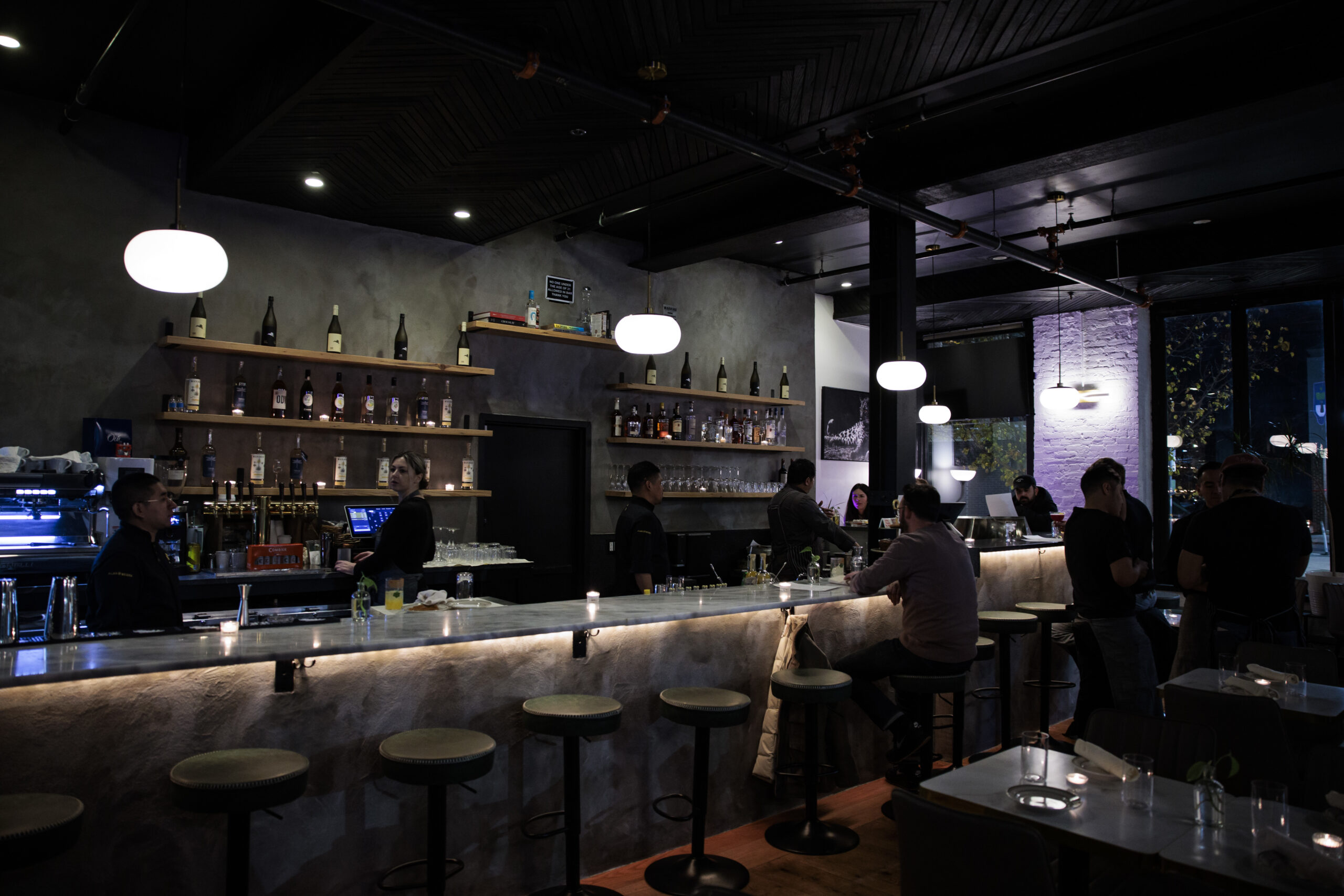
Philadelphia’s restaurant landscape in 2025 was shaped by a combination of ambition and depth: large, market-moving openings at the top end (Borromini, Dancerobot, Uchi, Honeysuckle, Tequilas/La Jefa); suburban newcomers that mattered (Michael, Neos Americana, Salt & Stone); and dozens of smaller additions that boosted neighborhood options.
All told, I count more than 125 newcomers, not including the ubiquitous Wonder locations and multiunit bakery franchises like Paris Baguette and Tous les Jours.
The hottest areas were Rittenhouse and Kensington in the city, and Conshohocken in the suburbs.
Top Openings: Philadelphia
Center City / Rittenhouse / Fitler Square / North Philadelphia
Amma: The polished South Indian restaurant has relocated about two blocks away into more sumptuous quarters at 15th and Walnut, picking up a glassed-in bar.
The Bread Room: A bakery-cafe hybrid from High Street Hospitality on Chestnut Street, around the corner from High Street and Jefferson Hospital, that focuses on laminated pastries, breads, and other daytime fare.
Dancerobot: Chefs Jesse Ito and Justin Bacharach’s sequel to Royal Izakaya is a sultry hideaway on Sansom Street in Rittenhouse.
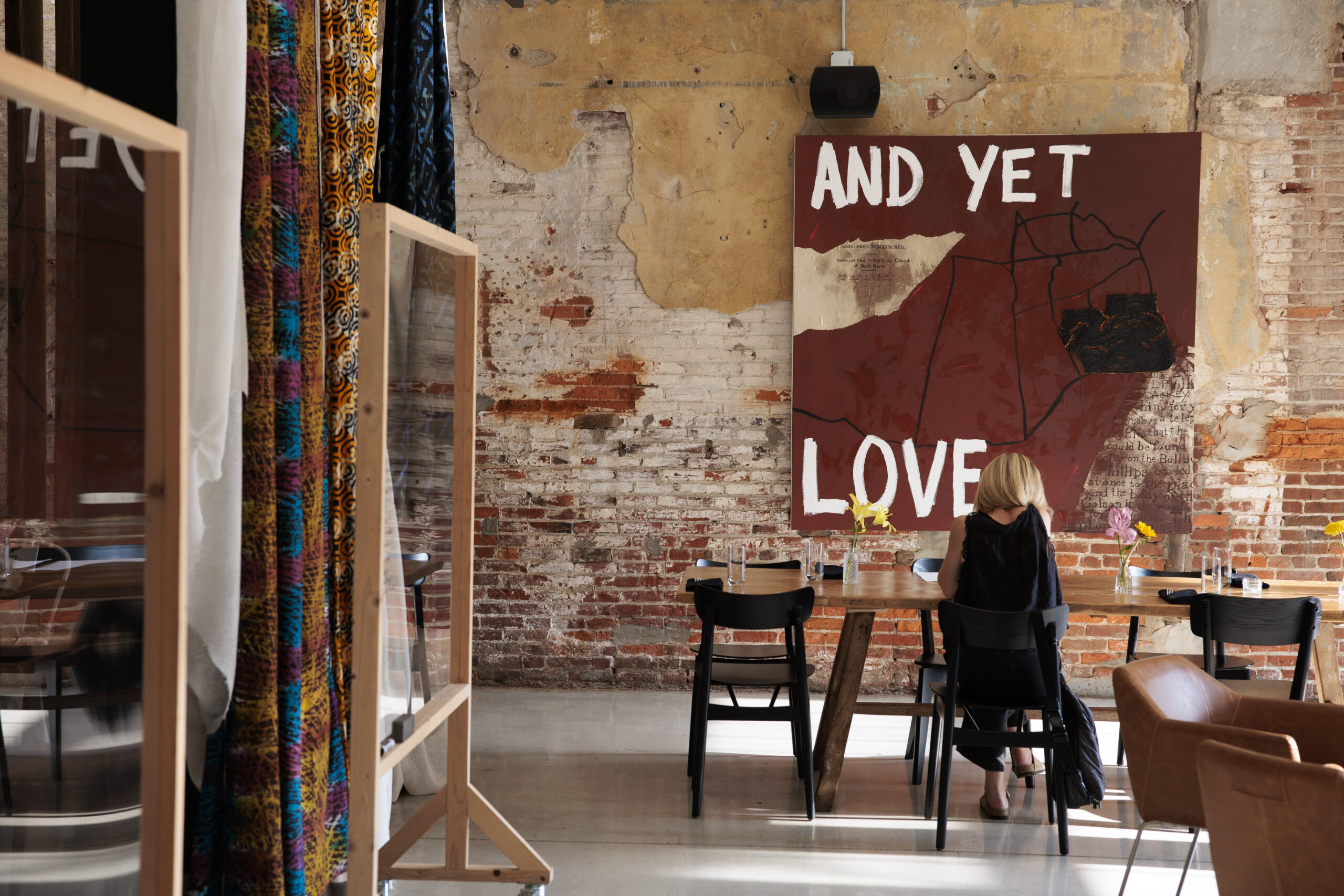
The dining room at Honeysuckle.
Honeysuckle: Chefs Omar Tate and Cybille St. Aude-Tate have a new stage for Southern cooking rooted in Black culinary traditions on North Broad Street, building on what they started with West Philly’s Honeysuckle Provisions.
Kissho House: Chef Jeff Chen’s refined, two-level Japanese experience in Rittenhouse offers omakase downstairs and an izakaya on street level on Locust.
Uchi Philadelphia: The national Japanese restaurant raises the bar for luxury sushi on Sansom Street in Rittenhouse.
Fishtown/Kensington/Northern Liberties
Amá: Chef Frankie Ramirez’s modern Mexican restaurant on Front Street showcases regional cooking with a serious mezcal and tequila program.
El Chingón Fishtown: Chef Carlos Aparicio’s second location of his acclaimed South Philadelphia taqueria is a beer-garden setting on Frankford Avenue.
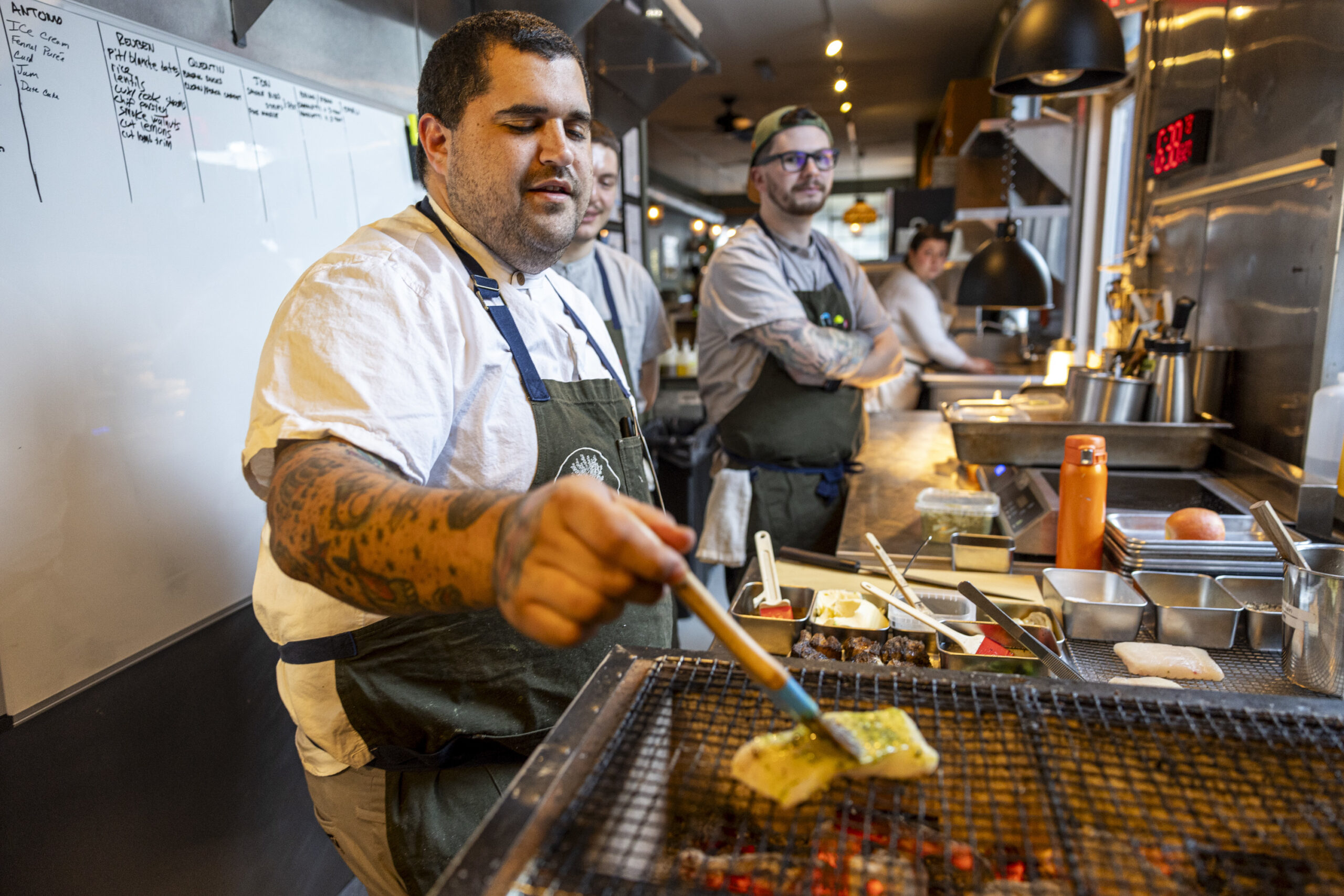
Evan Snyder grilling a halibut at Emmett.
Emmett: Chef Evan Snyder is winning plaudits for his Levantine-inspired cooking at the former Modo Mio/Cadence/Primary Plant Based space on Girard Avenue.
Fleur’s: Chef George Sabatino cooks French dishes in an intimate setting in a former furniture store on Front Street.
Forest & Main Fishtown: The Ambler brewery’s first city tasting room, in the former Cheu Fishtown on Frankford, features creative bar food from chef Dane DeMarco (Gass & Main).
Mana Modern Chinese: Modern Chinese BYOB on Second Street in Northern Liberties blends playful dim sum and inventive takes on classics in a mod setting.
Fairmount / Francisville
Javelin: This low-key Fairmount Avenue sushi bar offers a full cocktail bar.
Stephen’s Cafe: This kosher dairy cafe attached to the Chabad of Fairmount, in the former Rembrandt’s, features baking by Shevy Sputz, who also sells her babka, knishes, and other Eastern European baked goods at the local farmer’s market.
South Philadelphia / East Passyunk / Graduate Hospital
Bomb Bomb Bar: Zeppoli/Palizzi chef Joey Baldino revived a classic South Philly corner bar, infusing it with an Italian seafood menu and plenty of downtown energy.
Sao: Chef Phila Lorn and his wife, Rachel, are behind this snug Cambodian-inspired seafood bar on East Passyunk, a sequel to their hit no-rules noodle spot, Mawn.
Supérette: This chill European-style wine bar/cafe/bottle shop on East Passyunk from Chloé Grigri, Vincent Stipo, and Owen Kamihira emphasizes simple plates and easy elegance.
Namaste Indian Bistro: This Indian-Himalayan bistro at 46th and Lancaster is an offshoot of the original in Warminster; there’s also a new location in Collingswood.
Out West: Down North Pizza’s sequel at 52nd and Walnut combines an ambitious coffee program with breakfast and lunch sandwiches in a community-friendly space.
Northwest Philadelphia
The Borscht Belt: The Bucks Jewish deli has opened a counter at Chestnut Hill’s Market at the Fareway.
Burtons Grill & Bar (Wayne): This polished, New England-rooted American grill features a long cocktail list and an unusually thorough gluten-free/allergy-friendly playbook.
Eataly (King of Prussia Mall): The giant Italian marketplace combines multiple restaurants, retail counters, and specialty grocery under one roof.
Hank’s Place (Chadds Ford): Rebuilt after a devastating 2021 flood, this Brandywine mainstay is a cozy diner known for old-school favorites and Wyeth sightings.
Michael Coastal Italian Grille (Collingswood): Chef Michael DeLone leans harder into coastal Italian cuisine after rebranding the upscale Nunzio’s and freshening the environs with new hardwood.
Neos Americana (Conshohocken): Kurt Benkurt and Annalise Long have upgraded their Daniel’s into a refined Mediterranean-leaning dinner destination and bar focusing on mezze, grilled meats, and seafood.
Peter Chang (King of Prussia): Peter Chang, once chef for the Chinese Embassy in Washington, D.C., offers Sichuan classics.
Revell Hall (Burlington): Chef Joey Sergentakis is behind this modern restaurant on the Delaware riverfront, the former Cafe Gallery, billed as “semifine dining.”
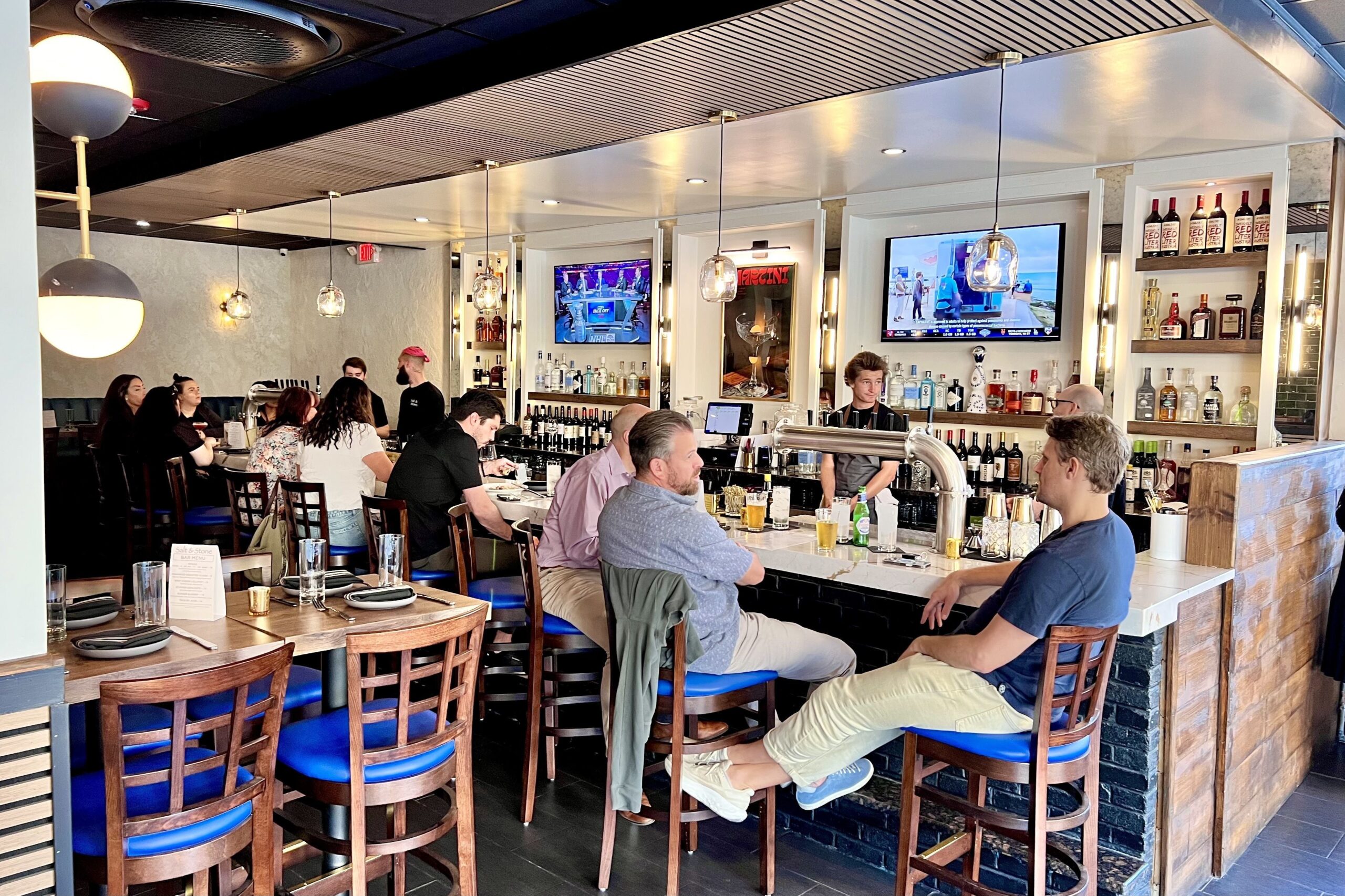
Salt & Stone (Conshohocken): Demetrios Pappas is behind this polished restaurant emphasizing seasonal Greek-American cooking and craft cocktails.
Thymari Mediterranean Gastro-Taverna(Swedesboro): This Greek-inspired BYOB offers taverna-style dishes, with a wine list sourced through Kennedy Cellars.
Triple Crown (Radnor): Fearless Restaurants has gone with an equestrian theme for its restaurant/event space at the Radnor Hotel.
Other Noteworthy Openings
Philadelphia
Amina (Northern Liberties): Felicia Wilson and chef Darryl Harmon moved their West African-inspired Southern spot from Old City into the former SIN.
Avana (Center City): Comfort food and American classics from Felicia Wilson and chef Darryl Harmon at Park Towne Place on the Parkway.
Casa Borinqueña(Kensington): Lourdes “Lulu” Marquez-Nau owns this casual Puerto Rican spot serving plant-based versions of classics like pinchos, arroz con gandules, and maduros.
Casa Oui in Queen Village.
Casa Oui(Queen Village): Chef Isabel Nocelo and C.J. Cheyne’s all-day café-restaurant blends French pastry energy with a nighttime menu that leans Mexican, plus a full bar.
Céline(Center City): It’s a cocktail lounge and nightlife-focused venue built around DJ-driven vibes and a reservation-led bar program; a Korean barbecue restaurant counterpart, HYO, is on the way upstairs.
Cerveau (North Philadelphia): Pizza Brain cofounder Joe Hunter created this roomy space at the 990 Spring Garden building to focus on sourdough pizza, handmade pastas, and small plates, with a full bar.
Cormorant (Kensington): This corner bar from the partners behind Vintage and Garage offers an amaro-leaning cocktail list, classic drafts, and no-proof options.
DaVinci & Yu (South Philadelphia): Marc Grika offers a playful mashup of Italian American and Chinese American comfort food on East Passyunk.
The bar at Doho in Mount Airy.
Doho(Mount Airy): This cozy bistro, inside Catering by Design, fuses Latin American and East Asian flavors, with a full bar.
Fetch (Manayunk): A dog park with a bar and a light food menu has succeeded Bark Social on Main Street.
First Daughter Oyster & Co. (Old City): Felicia Wilson and chef Darryl Harmon offer New England-style seafood at the Renaissance Philadelphia Downtown Hotel.
Good Hatch Eatery (West Philadelphia): The popular South Philly bruncherie has expanded to 48th and Pine.
Newsroom Philadelphia (Northern Liberties): A bar-restaurant concept blends media themes with late-night energy, tucked behind an ersatz soda machine.
Olive Roots Cafe (Queen Village): A Mediterranean cafe emphasizes coffee/matcha drinks and croissant sandwiches.
Percy (Kensington): The team behind Forîn Cafe runs this unfussy but stylish diner with a bar and late-night lounge under the El.
A feast at Pinolero.
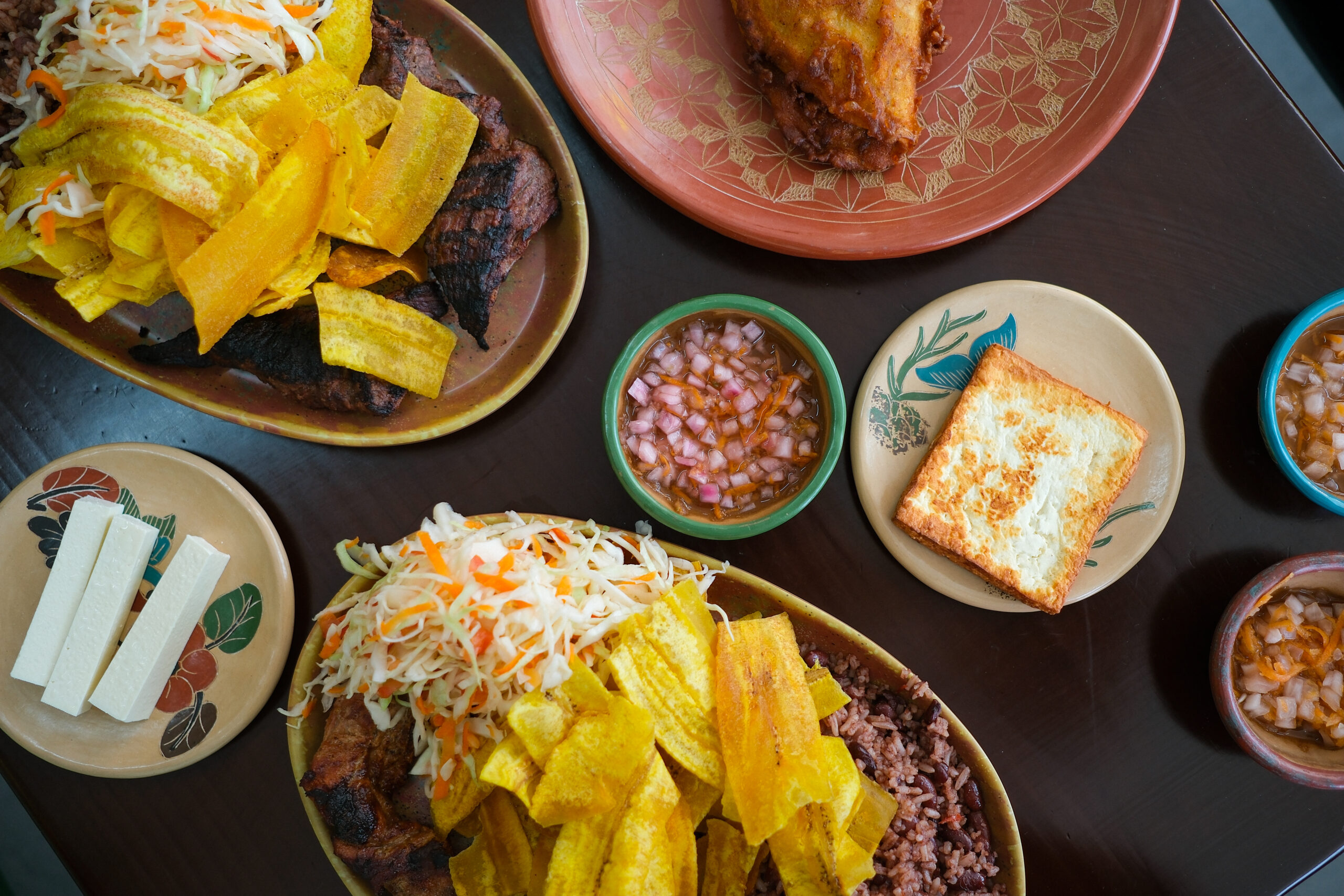
Pinolero (Kensington): Lilliam Orozco and daughter Sarah are behind this stylish Nicaraguan restaurant in Harrowgate highlighting wood-fire cooking and Central American beverages.
Rhythm & Spirits (Center City): This music-theme bar and restaurant combines cocktails and Spanish-Italian food at One Penn Center (aka Suburban Station).
Rival Bros Coffee(Washington Square West): The Philly coffee chain debuted a swank spot in the Jessup House.
Rockwell & Rose (Center City): This stylish steakhouse has taken half of P.J. Clarke’s footprint in the Curtis Building, across from Washington Square.
Say She Ate Cafe (Center City): There’s great name wordplay and Mumbai-influenced, vegan food on the menu at this fast-casual cafe on South Street just off Broad, carrying on the Govinda’s tradition.
Scusi Pizza (Northern Liberties): Chef Laurent Tournodel’s colorful pizzeria/cocktail spot opened at the Piazza Alta, in advance of a luxe concept called Terra Grill.
The Fulton(Conshohocken): This contemporary Irish tavern serves hearty classics at the former Old Mansion House.
Kaede Sushi & Noodle Co. (Conshohocken): “Sushi speakeasy” is the theme of this stylish room upstairs from Guppy’s Good Times, with food from the team behind Kooma.
The Local (Phoenixville): A breakfast-and-lunch newcomer from the Lock 29 team leans into scratch-made classics and rotating specials.
Maison Lotus (Wayne): This refined Vietnamese coffee bar/restaurant from Win Signature Restaurants (Azie, the Blue Elephant, Teikoku, Mikado Thai Pepper, Mama-San) subsumed the former Margaret Kuo.
Mama Chang(Colmar): A family-style Chinese dining room from chef Peter Chang features Sichuan heat.
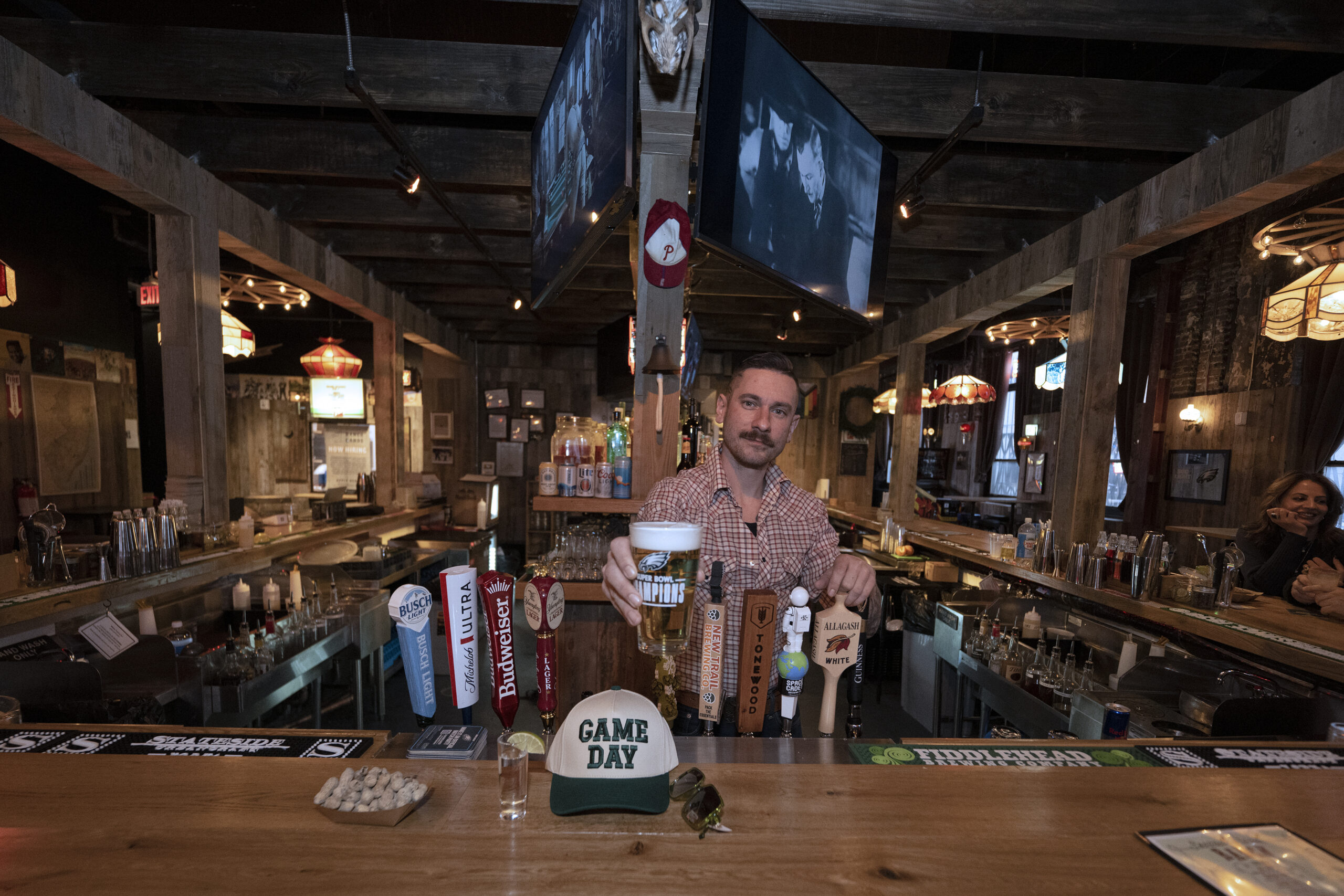
Tommy’s Tavern & Tap(King of Prussia): The New Jersey sports bar has set up an outpost outside the mall.
Toastique (Newtown Square): This all-day cafe turns “gourmet toast” into the main event, backed by juices and grab-and-go bowls.
Vanilla Café (New Hope): A sweets-forward cafe does coffee, pastries, and desserts with Instagram-friendly polish.
New Jersey Suburbs
Feed Mill Eatery (Medford): Five brands — Crumb Sandwich Joint, Casa Blanca Taqueria, Davey Stacks Burgers & Cheesesteaks, Mattarello Pizza, and Walterhaus German Fare — have set up at the historic Feed Mill complex, per early word from South Jersey Food Scene.
Flying Pig Tavern & Tap (Riverside): This new outpost of the Bordentown sports bar replaces Towne Tavern.
Julio’s Casa de la Birria (Sewell): The family behind Vineland’s Julio’s on Main has opened a sequel in Echo Plaza: a quick-service taqueria.
Lula’s Empanadas (Haddon Heights): Yaslyn Lora has made the leap from takeout window to full storefront dining room.
Magnify Brewing (Medford): An Essex County craft brewery has opened a laid-back taproom with a beer garden.
Main Street Tacos (Maple Shade): This strip-mall taqueria from David and Israel Morales emphasizes bold flavors.
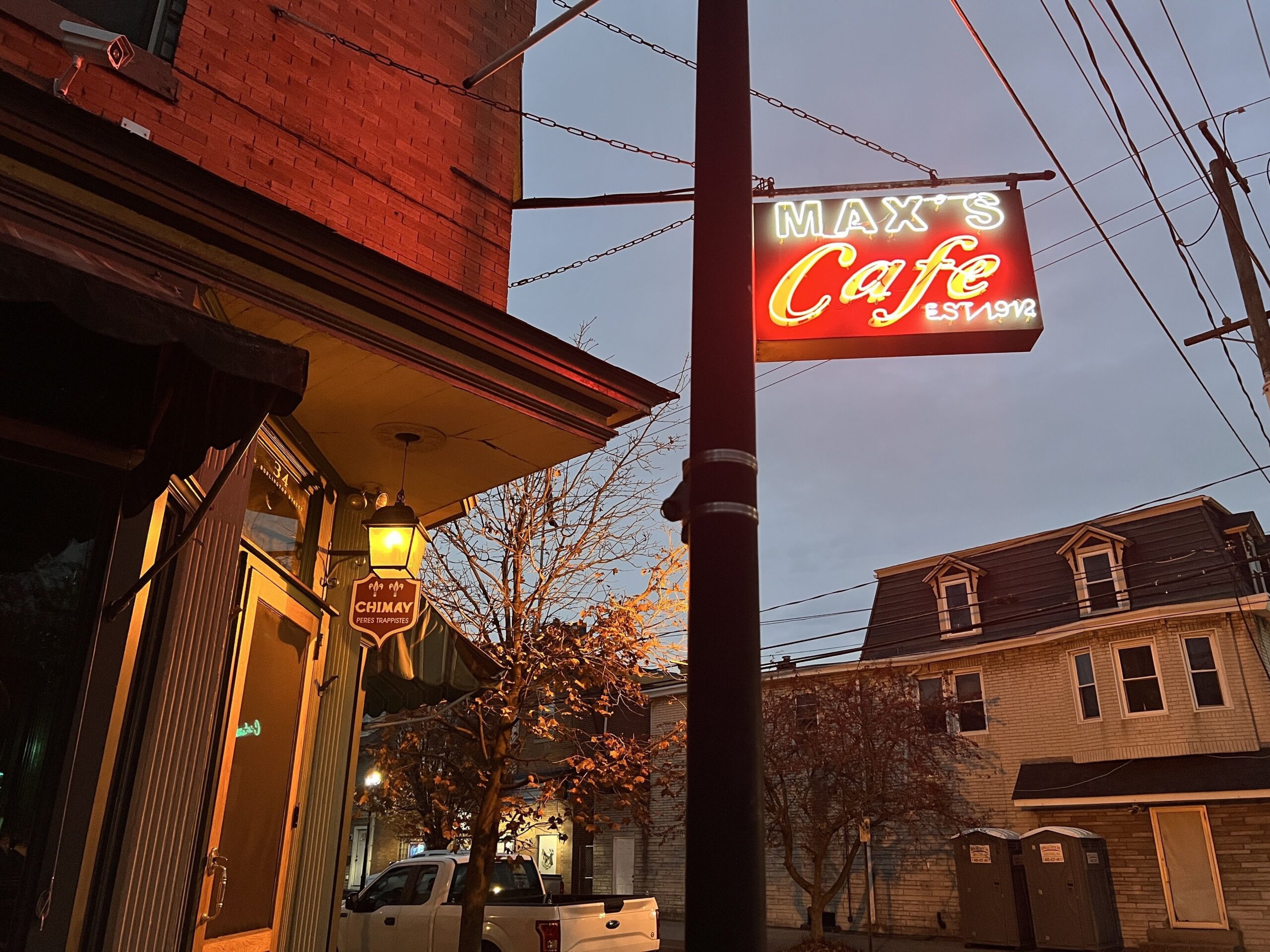
Max’s Cafe’s neon sign still shines over Pudge’s Pub in Gloucester City.
Pudge’s Pub (Gloucester City): The former Max’s Seafood Cafe has been reconceptualized as an everyday tavern featuring cheesesteaks inspired by Pudge’s Steaks of suburban Philadelphia renown.
Just one game separates the Eagles from their playoff opener in what will be their fifth consecutive postseason appearance.
Sunday’s game vs. Washington has potential for both intrigue and boredom with the Eagles resting most of their starters and the NFC’s second or third seed in play.
The Eagles may just be looking ahead to the playoffs, so we’ll follow that path and focus our weekly glance at the numbers on what’s ahead.
The confounding Eagles season continued with a 13-12 win against the Bills in Western New York. The Eagles seem simultaneously good enough to win it all and bad enough to score 11 points in a home loss in the wild-card round.
There is reason to be confident the Eagles can make a run, and reason to believe this playoff appearance will be short-lived. Here are a few reassuring stats, and some concerning stats ahead of the postseason.
Let’s start with the good stuff. It’s the holiday season …
4
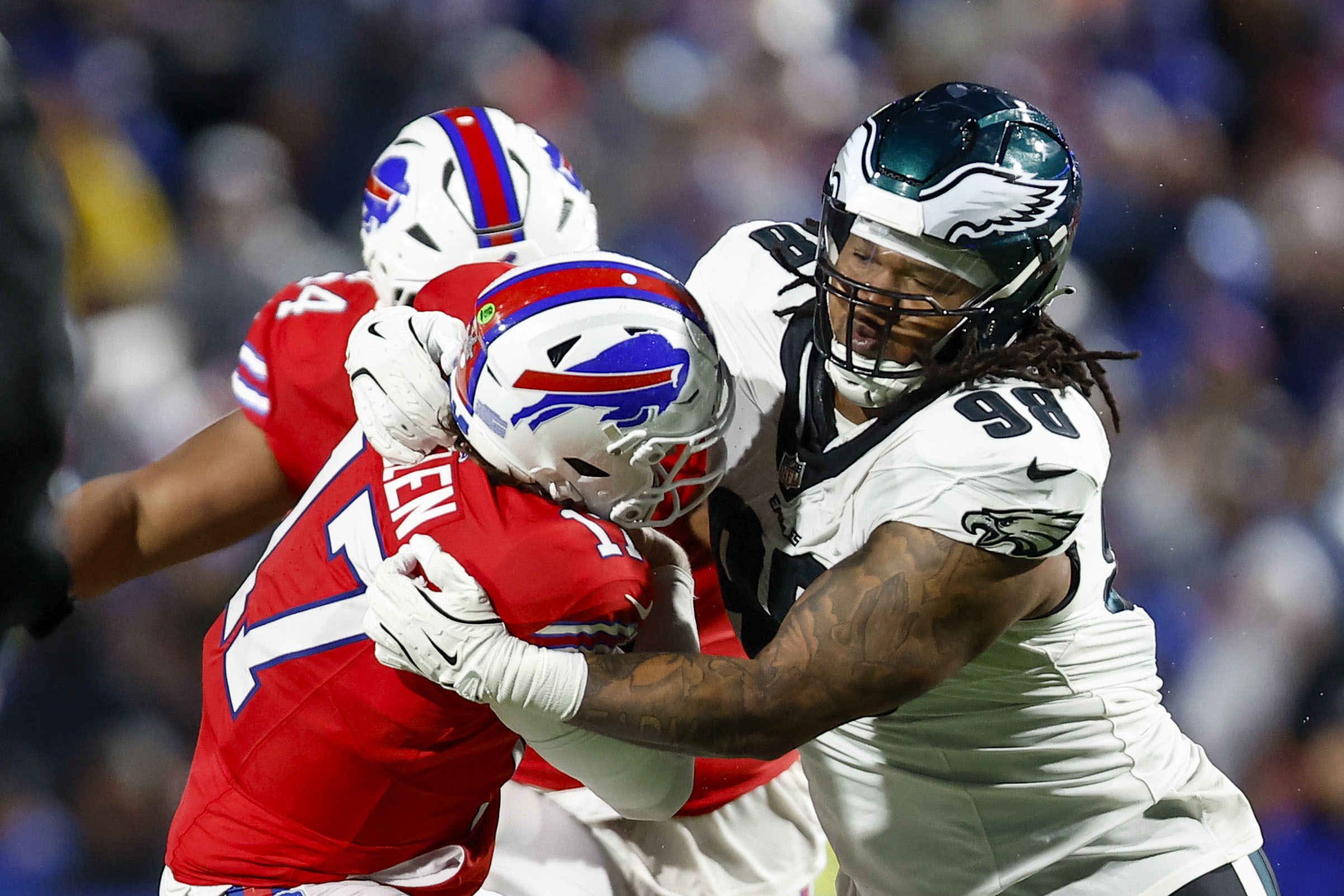
That’s the amount of rushers the Eagles sent at Josh Allen each of the five times they sacked him Sunday at Highmark Stadium. This has been a trend of late. Sunday marked the third game in the last four that the Eagles had at least four sacks with a four-man rush.
The Eagles, according to Next Gen Stats, have 18 sacks over their last four games utilizing four rushers. That was seven more than any other team in the NFL at the time Sunday’s game ended.
Let’s couch the excitement a little bit and add the context that two of those games were against the Raiders and Commanders, and the previous contest came against a good Chargers team with a really bad offensive line. But doing what the Eagles did against the Bills with four rushers is remarkable. Only five teams allow pressure to the quarterback at a lower clip than the Bills’ 29.4% for the season.
Eagles defensive tackle Jalen Carter sacks Bills quarterback Josh Allen on Sunday.
The Eagles’ success with four is a big deal, as we saw last year. Vic Fangio doesn’t dial up blitzes. The Eagles send extra rushers on just 19.5% of their defensive plays, the third-lowest rate in the NFL.
If Jalen Carter is back back from his shoulder injuries, the Eagles, with the deadline acquisition of Jaelan Phillips, might just have a versatile pass-rushing front that can take them pretty far. The Eagles have one of the best outside corners in the league in Quinyon Mitchell, one of the best nickel players in Cooper DeJean, linebackers who can cover, and adequate safeties.
This type of success rate with four gives the Eagles a numbers advantage beyond the line of scrimmage that works in their favor.
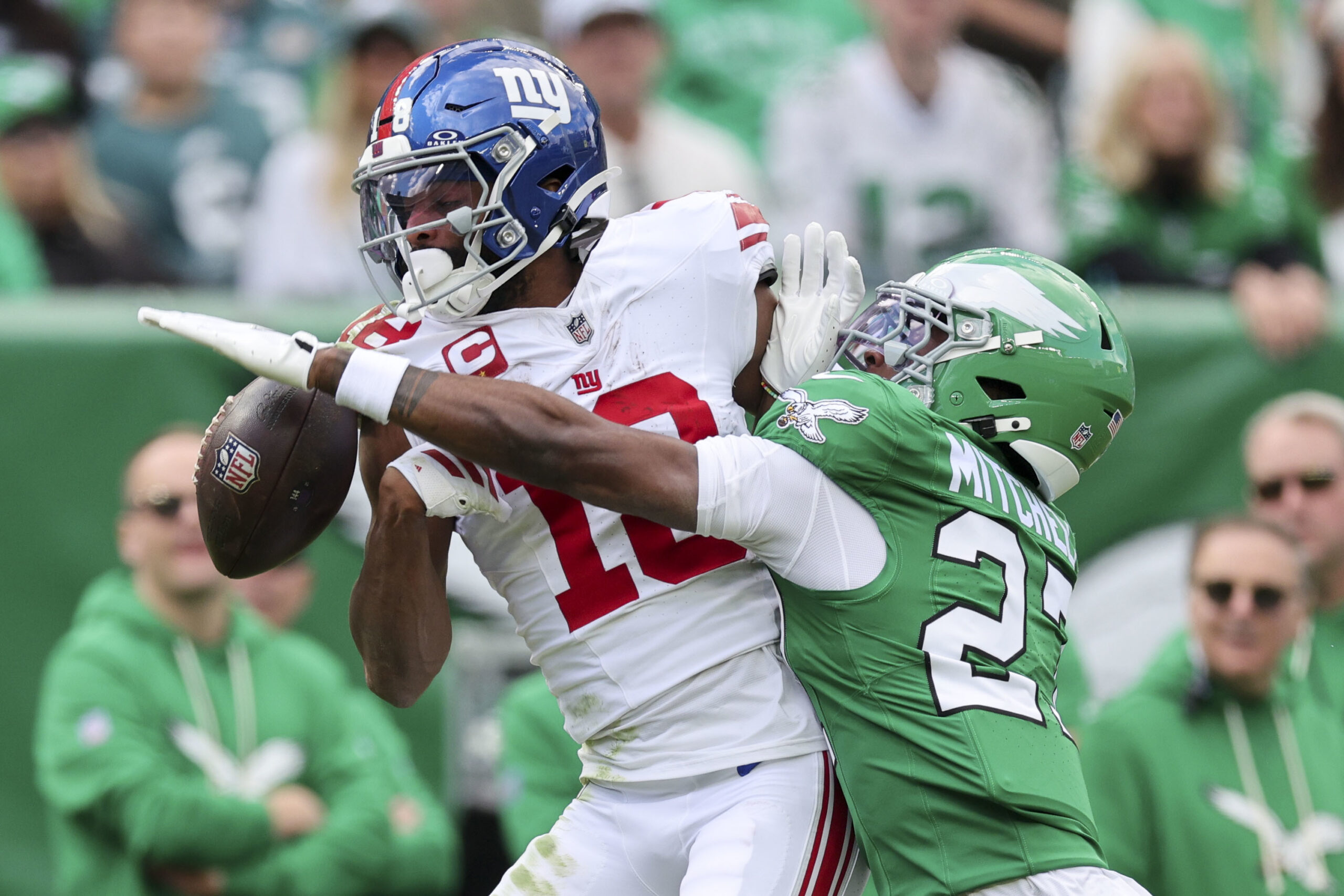
Quinyon Mitchell breaks up a pass intended for New York Giants wide receiver Darius Slayton during the second quarter against the Giants on Oct. 26.
42.4%
So, the Eagles are humming up front, but let’s focus on the aforementioned Mitchell, who is having one heck of a second NFL season. He deserves his own section here because he will have the ability to take opposing receivers out of the game throughout the playoffs, and his coverage chops help the guys up front, too.
Among all defensive backs with at least 10 games played, Mitchell leads the NFL in catch rate allowed (42.4%). According to Next Gen, Mitchell has been in coverage on 576 defensive snaps and has allowed just 36 catches on 85 targets for 451 yards. He has allowed one touchdown.
Mitchell also leads qualified players in average target separation (1.8 yards).
A dangerous Rams passing attack could be up first next week, and Mitchell and the Eagles front will be waiting.
8-0
There was one turnover in the game Sunday, a crucial and controversial fumble by Allen that flipped the field and led to an Eagles touchdown.
That helped the Eagles improve to a league-best 8-0 when they win the turnover margin. They’re now 42-2 in the Nick Sirianni era when the turnover margin is in their favor.
This is one way of sneaking an offensive stat in here from a unit that hasn’t provided a lot of reassurance this season. But even in doing so, it’s a stat the offense shares with the defense. The Eagles have forced a turnover in eight consecutive games and are tied with Chicago for the longest active streak.
Jalen Hurts, meanwhile, has recovered nicely from his five-turnover disaster vs. the Chargers. He has six touchdown passes and no interceptions since that game.
The offense lacks an identity, but taking care of the ball is one it can hang its helmet on. That’s not nothing when the defense is playing like it is.
Reasons to worry
We’re not going to sneak a defensive stat in here.
40.1%
The Eagles were shut out by the Bills in the second half. They ran 17 plays and netted 17 yards before Hurts took a knee to end the game. It wasn’t pretty.
For the second time this season, Hurts didn’t complete a pass (in seven attempts) in the second half, and somehow the Eagles are 2-0 in those games. No other team has failed to complete a pass in the second half this season.
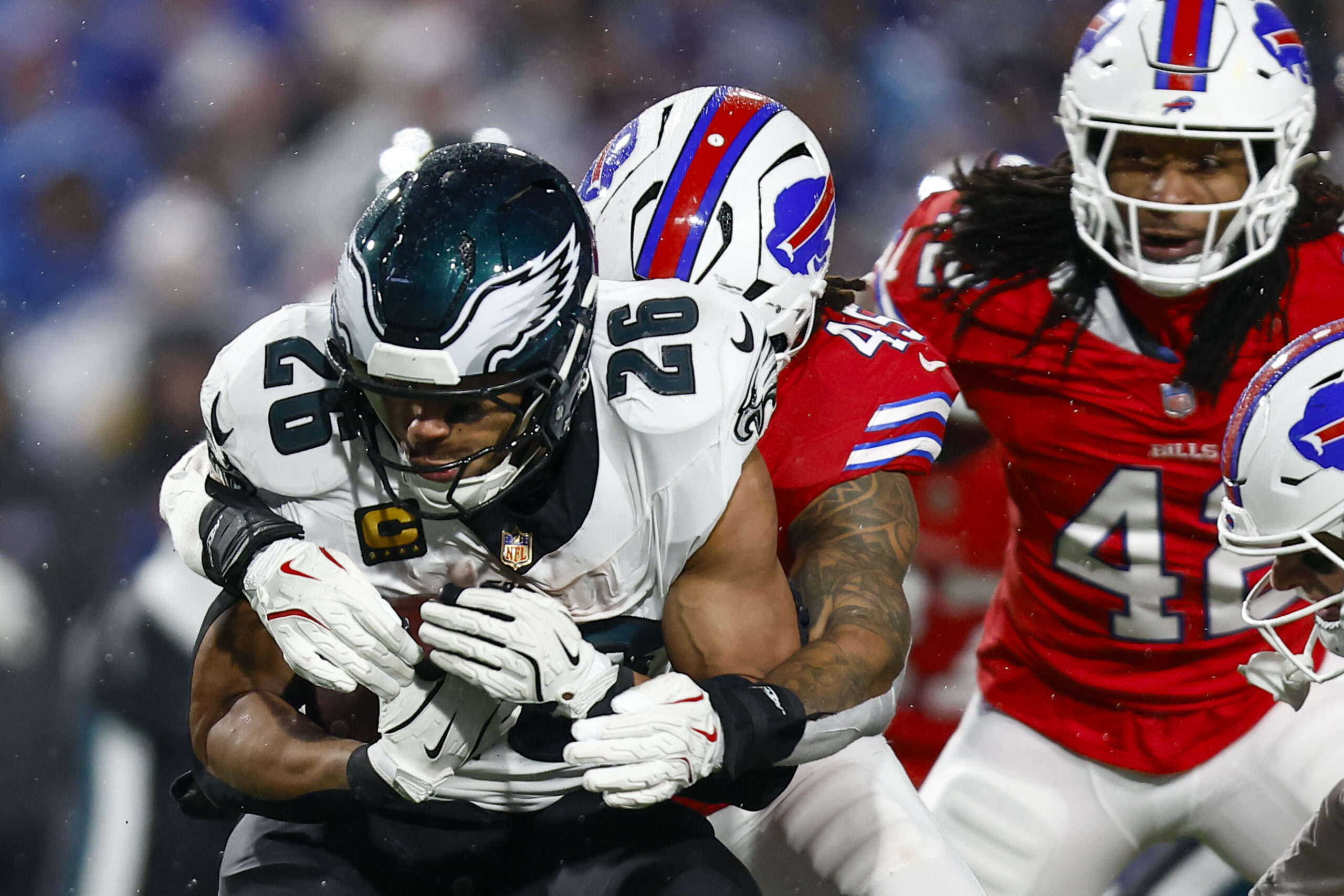
The Eagles were often in third-and-long because they again couldn’t get their running game going — this time against one of the worst run defenses in the NFL. Saquon Barkley barely had space to move thanks to missed assignments from the offensive line and tight ends. The Eagles often ran into stacked boxes (they face the fourth-highest stacked-box rate in the league). Dallas Goedert playing fullback was an experiment that failed. Barkley had just 1.75 yards per carry in the second half.
The Eagles’ success rate on the ground is 40.1%, which ranks 24th in the NFL. It’s been the root of the offense’s issues all season.
Saquon Barkley is stopped by Bills outside linebacker Shaq Thompson in Week 17.
Barkley had encouraging performances recently vs. the Commanders and Chargers, but Sunday was a step back, and considering there’s a real chance the starters rest Sunday, it’s a sour taste to enter the postseason with.
The Eagles are probably going to need to be able to run the ball to win in the playoffs, and the lack of a running game makes them so much easier to defend.
Since their Week 9 bye, the Eagles have scored more than 21 points just twice in eight games, and those were against two of the worst teams in football (Commanders and Raiders).
This isn’t a high-powered offense, and it’s one that particularly has trouble scoring in the second half. Sunday wasn’t an outlier. The Eagles average just 9.9 second-half points. That’s good for 25th in the NFL. The combined record of the teams below them: 32-80.
Scoring in the second half might come in handy in the postseason.
73.1%
Jake Elliott went 2-for-2 Sunday, with field goal makes from 28 and 47 yards. He also made his lone point-after attempt.
It was a nice rebound performance in bad weather from Elliott after a game against the Commanders in which he missed two field goals (plus a third that was negated by a penalty).
But saying it’s been a shaky season from Elliott is probably putting it mildly. His conversion rate of 73.1% on field goals is the lowest of his nine-season NFL career. This, on the heels of a 77.8% campaign in 2024.
An inept offense will make the margins slim, and the Eagles’ playoff life could at some point come down to a single kick.
The College Football Playoff continues with four more games this week, beginning with a New Year’s Eve matchup between Ohio State and Miami at the Cotton Bowl. The Buckeyes-Hurricanes showdown is the game in this round that will likely yield the most combined NFL draft prospects.
On New Year’s Day, Alabama plays Indiana in the Rose Bowl, Ole Miss takes on Georgia in the Sugar Bowl, and Oregon and Texas Tech face off in the Orange Bowl.
With plenty of draft hopefuls playing on big stages, here are the prospects the Eagles should be keeping an eye on from the top four seeds — Indiana, Ohio State, Georgia, and Texas Tech — who are set to make their 2025 CFP debuts.
The Georgia-to-Eagles pipeline could get another addition with the Bulldogs’ left tackle Freeling, who is an outstanding athlete at 6-foot-7, 315 pounds. The tackle, who is only a junior, is light on his feet in pass protection, moves well in space to block smaller and faster players, and is hard to get around in pass protection. According to Pro Football Focus, Freeling has allowed just nine pressures and two sacks in 423 pass blocking snaps this season.
#UGA LT Monroe Freeling moves incredibly well in space, does a nice job framing up his blocks in the run game, and rarely gets beat in pass protection. Has only allowed 9 pressures and 2 sacks in 423 pass blocking snaps.
Freeling was banged up midway through the season and his play balance isn’t consistent from down to down, but the left tackle has a desirable skill set to contend with some of the best athletes at the NFL level, especially in pass protection. Should he declare, he will be in high demand for teams that need an offensive tackle — whether it’s next season or a few years from now.
Kenyatta Jackson, edge rusher, Ohio State
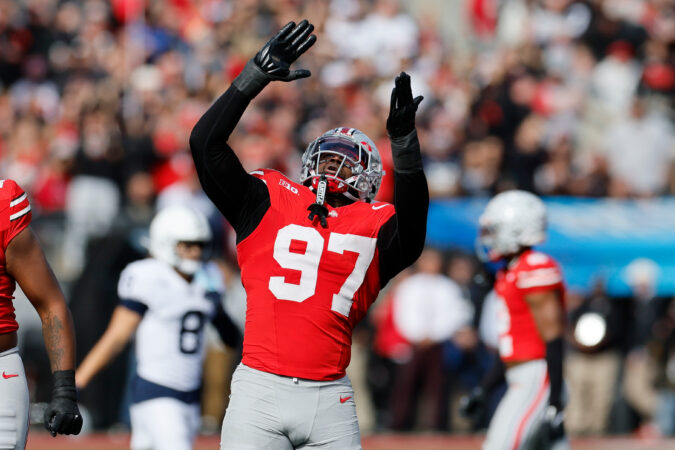
Part of a fearsome Ohio State defense, Jackson is having a breakout season in his fourth year in the program. At 6-6, 265 pounds, Jackson has a noticeable arm length advantage and uses it to challenge opponents. He plays multiple roles along the defensive line, lining up primarily at 4i (inside shoulder of tackles) and can wreak havoc as both a pass rusher and run defender.
#OSU EDGE Kenyatta Jackson is the prospect I'm looking forward to seeing most in the CFP quaterfinals. Outstanding utilization of his length, closing speed off the edge, impact as a run defender, and driving offensive linemen back. Should be a fun watch against Miami's O-line. pic.twitter.com/6UGca0qWfV
Jackson is at his best, though, from a standing alignment as a pass rusher, allowing him to get a running start and to create physical separation from offensive tackles. He projects as a Day 2 pick if he declares this year and would be a welcome addition to a talented Eagles edge rusher room.
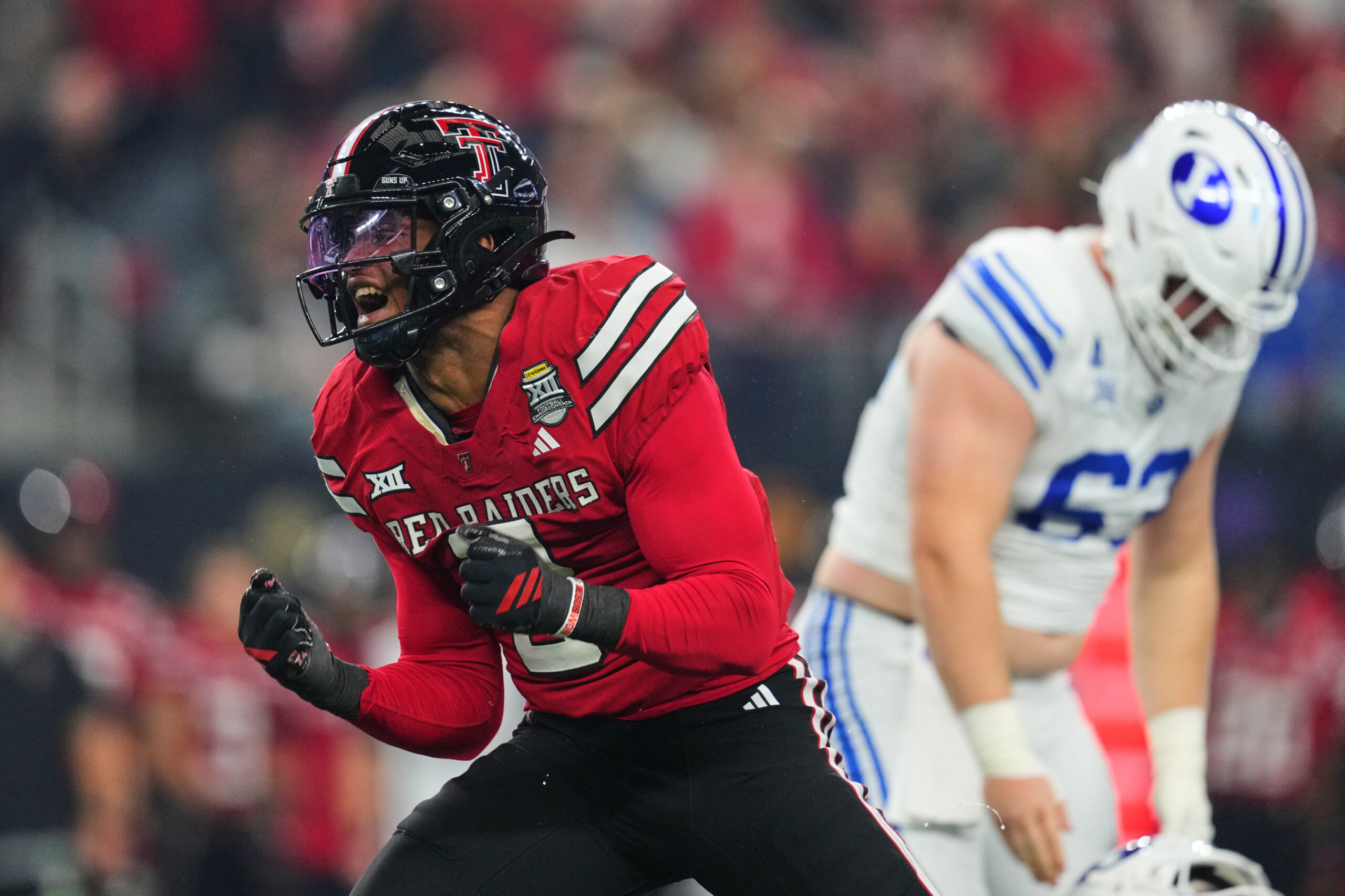
Texas Tech defensive end Romello Height celebrates a defensive stop against BYU in the Big 12 Championship.
Romello Height, edge rusher, Texas Tech
At his fourth school in six years (Auburn, USC, Georgia Tech), Height is having the best season of his career with nine sacks and 10½ tackles for losses in 13 games. A high-effort, high-motor pass rusher, Height uses his length and ankle flexion to win on the outside shoulder of offensive tackles, and has a nice toolbox of pass-rush moves that includes a spin, an inside swim move, and a cross-chop.
Height has a 23% pass-rush win rate, according to PFF, but struggles as a run defender holding his gap against offensive linemen. He’ll likely command a designated pass rushing role early in his NFL career. Despite being an older prospect, there’s a chance Height can go within the first two rounds, and he would be a nice addition to an Eagles pass rush that is already much stronger since trading for Jaelan Phillips.
Mathews, who plays both outside corner and nickel for Ohio State, is just a junior who could return to school, but his versatility and ball skills make him an early-round candidate should he enter the draft. At 5-11, 190 pounds, Mathews excels in off man coverage and zone coverage looks, closing on the football with quickness while playing through the hands of receivers.
#OSU DB Jermaine Mathews Jr. has inside-out versatility, undercuts timing routes, and is an excellent blitzer from the secondary. The junior has 2 INTs and 3 PBUs this season and does a nice job playing through receiver's hands. pic.twitter.com/I2wkreHzzd
According to PFF, Matthews has 398 snaps at outside corner vs. 159 at nickel. He struggled with penalties down the stretch and is susceptible to getting beaten deep without safety help, but he projects as a nickel who can eliminate timing routes over the middle of the field and into the boundary. His physicality in the running game could improve, too.
Omar Cooper, WR, Indiana
Quarterback Fernando Mendoza is the potential top pick in the 2026 draft and one of his weapons is Cooper, who has the speed to run by a secondary and is hard to bring down in the open field. Primarily operating from the slot, Cooper has strong hands at the catch point and terrific body control, evidenced by his clutch game-winning touchdown against Penn State in November.
You’d think it’d get old to keep posting about Indiana WR Omar Cooper Jr. (@TheOmarCooper), but it doesn’t—this dude is just that good!
His ability to win in contested catch situations — he has made 6 of 12 catches while tightly defended, according to PFF — and vertical speed make him an ideal second or third receiver option in the NFL. For the Eagles, he could be a much-needed field stretcher who has the ability to create big gains with the ball in his hands and win in one-on-one situations.
Terrance Carter Jr. TE, Texas Tech
Tight end will eventually become a need for the Eagles, perhaps as soon as this offseason with Dallas Goedert set to become a free agent in the spring. Outside of Round 1, there will be a few players who interest the Eagles, and among them is Carter, the Louisiana-Lafayette transfer who is dynamic after the catch.
Of his 552 receiving yards this season, 334 have come after the catch, according to PFF, and Carter is a matchup nightmare for linebackers and safeties. Though he’s not quite the same caliber of athlete as Georgia’s tight end duo of Lawson Luckie and Oscar Delp, or Oregon’s Kenyon Sadiq, Carter can still separate from secondary and second-level players.
#TexasTech TE Terrance Carter Jr. is at his best making players miss in the open field and creating big gains with the football in his hands. The Louisiana Lafayette transfer has had 344 of his 552 receiving yards come after the catch and is a matchup nightmare for LBs. pic.twitter.com/6CPvRjrusX
The tight end prospect, who could return to school, must clean up his drops — he has five in 2025 — and doesn’t add much as a blocker, but is a big-time receiving threat.
Davison Igbinosun, DB, Ohio State
There may not be a more improved player in Ohio State’s secondary this season than Igbinosun, the physical outside corner who makes life difficult for opposing receivers. Igbinosun, listed at 6-2, 193 pounds, likes to disrupt the timing of wide receivers in man coverage, and has the length and speed to defend vertical passes downfield.
#OSU DB Davison Igbinosun is a physical corner who disrupts the timing of WRs at the line of scrimmage and the catch point. Can turn and run downfield on vertical throws and has the closing speed to get underneath routes attacking the MOF and the boundary. pic.twitter.com/ybTs8zFnop
According to PFF, Igbinosun hasn’t allowed a touchdown across 331 coverage snaps and just 42.9% of his targets in coverage have been caught. He is feisty, competes at the catch point, and has excellent ball production this season (six pass breakups, two interceptions). Penalties continue to be a negative for him (21 over the last two years), but they have become far less of an issue in 2025.
Though Adoree’ Jackson has held up much better down the stretch of this season manning the cornerback spot alongside Quinyon Mitchell for the Eagles, Igbinosun would be an upgrade from a ball production standpoint, though the team would have to be comfortable with his tendency to get too physical in man coverage situations.
In the backdrop of the excitement surrounding the FIFA World Cup coming to Philadelphia is the question of what impact the tournament will have on soccer in the region.
World Cups have long had the potential to be transformative for the hosting nations. The last men’s edition in the United States, in 1994, helped spur Major League Soccer. The women’s editions in 1999 and 2003 also spawned leagues, but more importantly, they fueled the grassroots growth of the game, benefiting both girls and boys.
Over the course of those years, the youth game has morphed into a pay-for-play structure in which the best clubs are generally the ones that come at a high price, giving youth athletes whose parents have expendable cash — many times in the thousands — the opportunity to play consistently and thus reap the benefits of year-round exposure through tournaments and showcases.
U.S. Youth Soccer is a network that oversees more than 10,000 such clubs, with local branches such as the Eastern Pennsylvania Youth Soccer Association, which govern clubs and leagues across regions under the umbrella of USYS. The thing is, many of those clubs and leagues don’t come from inner-city areas like Philadelphia, where the next great American star could be waiting to be discovered.
But to find that kid, they need a place to play, and in Philadelphia, finding a spot to play organized soccer at times can be equally as tricky.
It is a need that the city, alongside several foundations and organizations, is working to address, recognizing that the World Cup’s visit to Philadelphia may lead more kids to give futból a try.
If you build it …
Ahead of the World Cup, Philadelphia Soccer 2026 committed $2 million to the U.S. Soccer Foundation to support youth soccer initiatives, including the development mini pitches across the state.
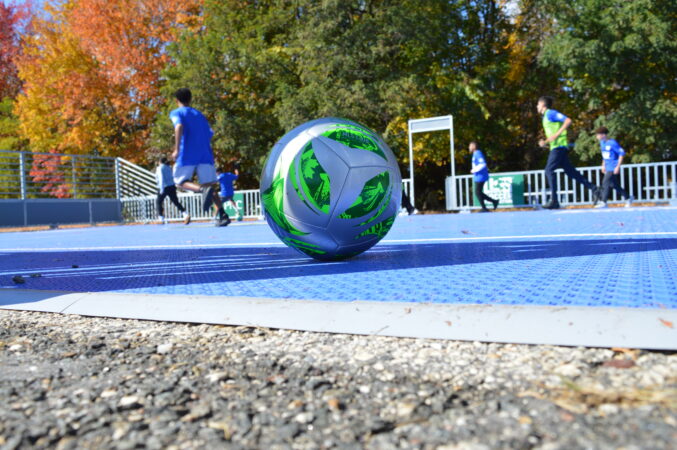
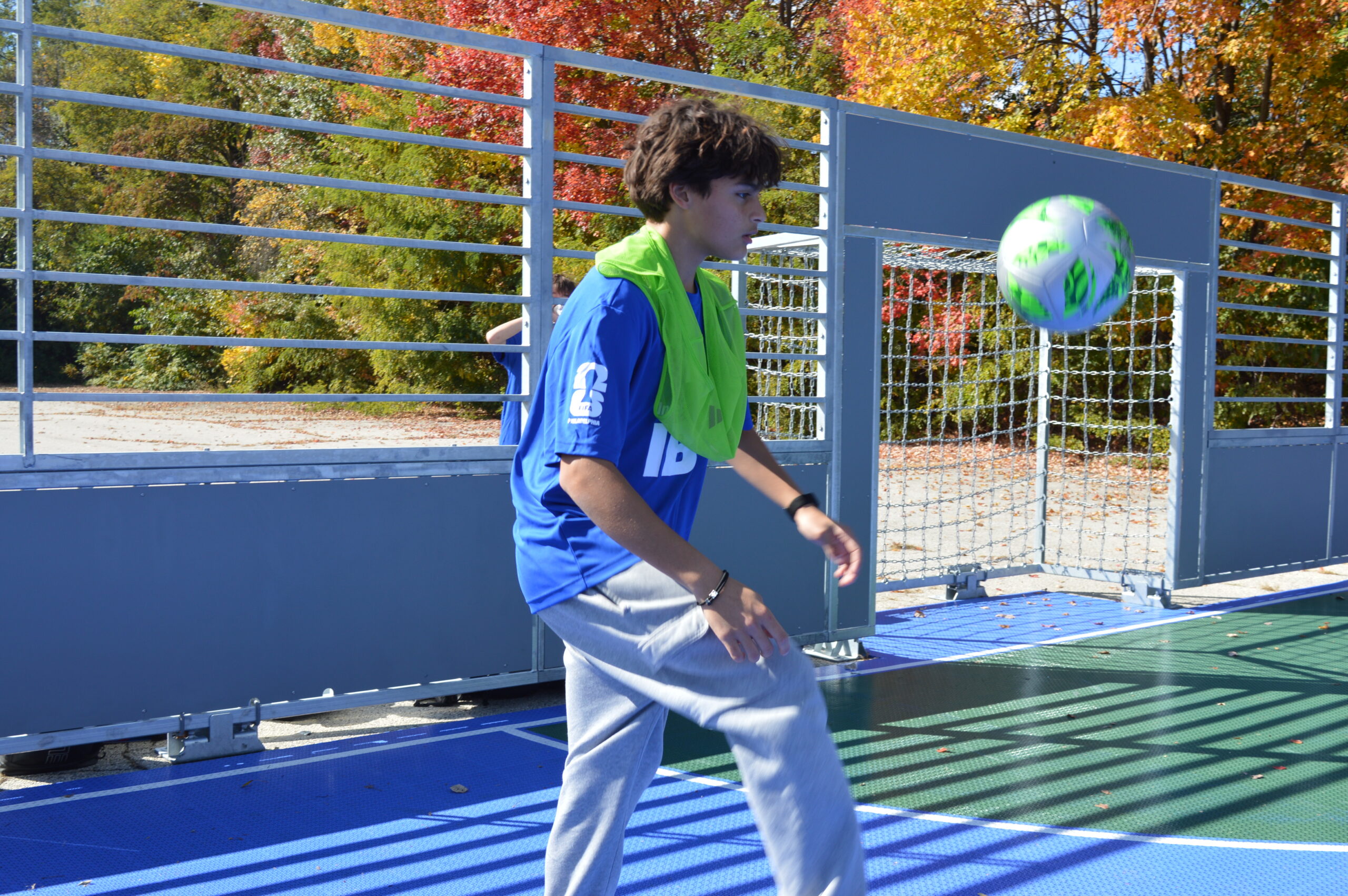
In late fall, U.S. Soccer Foundation installed a pair of those mini-pitches in Philadelphia. The foundation, which was also created after the 1994 World Cup, has a goal to leave a lasting legacy in inner cities. It believes these mini-pitches offer not just a place to play but a place for local organizations to host programs.
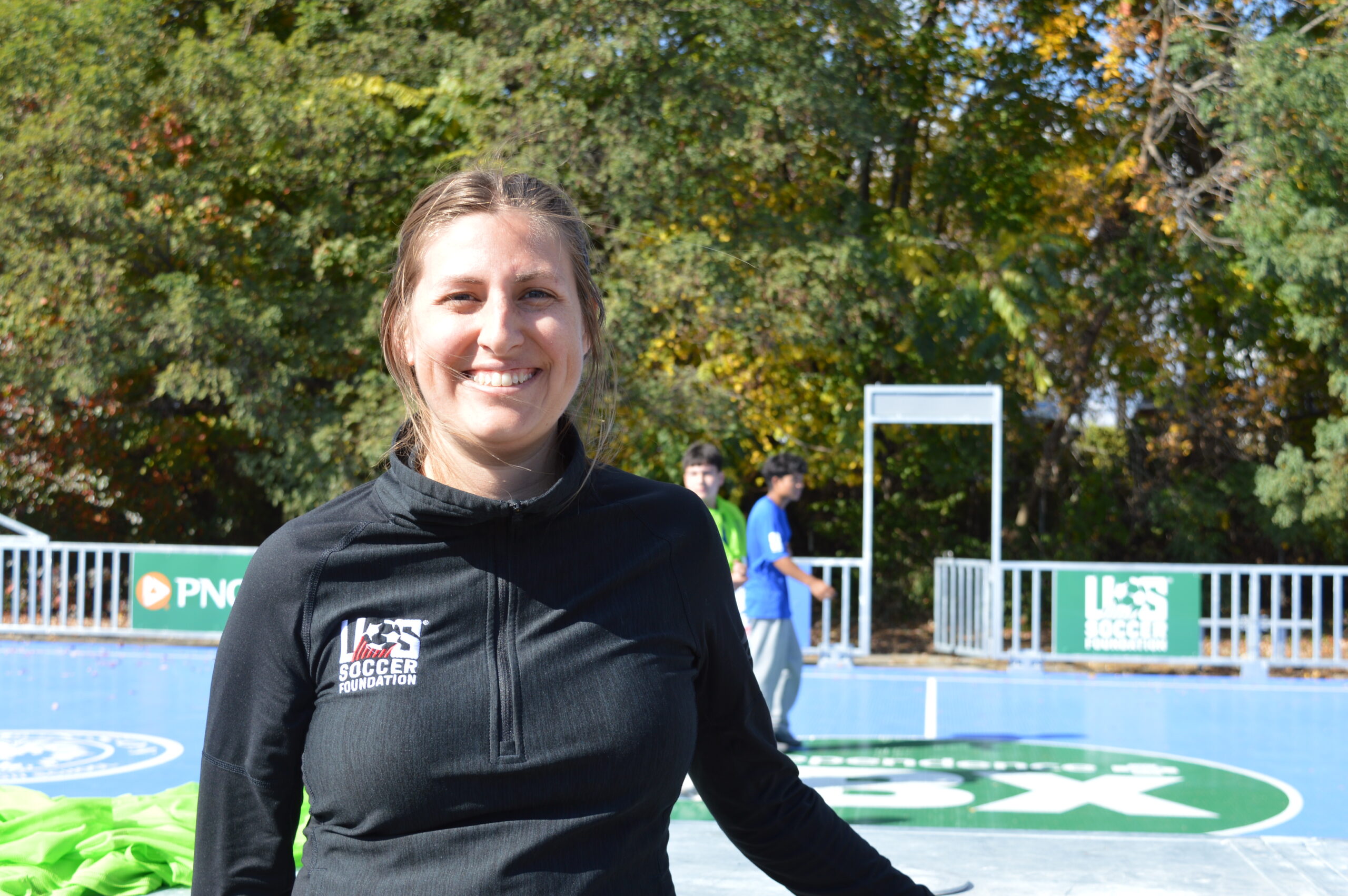
Jen Arnold, vice president of communications and marketing at the U.S. Soccer Foundation, says that the foundation has a commitment to introducing the sport to more children in underserved areas.
“When our current president and CEO [Ed Foster-Simeon] came into the role in 2008, he did a landscape analysis and showed it had grown … but in the suburbs and more affluent communities,” said Jen Arnold, vice president of communications and marketing for the U.S. Soccer Foundation.
“So from the foundation standpoint, we want to make sure it’s growing equally across the ground. We’re here for the under-resourced communities, communities that might not have been part of that boom after 1994. We’re here to make sure that everyone can access the game.”
Arnold spoke after the installation of one of the latest mini-pitches added to Philly’s soccer landscape, behind Swenson Arts and Technology High School in the Far Northeast. The installation was in collaboration with Independence Blue Cross, the School District of Philadelphia, and FIFA Philly 26, the local collective tasked with organizing Philly’s place in this summer’s World Cup.
The fields, which cost $150,000 apiece to install, according to Arnold, are the latest additions to Philly’s sports landscape. They could be considered an addition to the city’s massive Rebuild program, a reported $500 million restoration project for area parks and playgrounds, of which $3.5 million was allocated to create 15 mini-pitches and two signature soccer fields across the city.
Many recreation centers across the city are fenced off, only to be used under permit, which restricts the idea of open play, a key component of soccer.
The idea is that these mini-pitches offer an opportunity for more children to be introduced to the game. They also offer a welcoming environment, unlike the scores of fields around the city that are fenced and kept under lock and key. Or recreation centers in which both indoor and outdoor surfaces get gobbled up often by other sports, or even pay-to-play youth and adult league soccer organizations, which serve to add to city coffers in exchange for monopolizing much-needed field time.
But soccer organizers across the region believe that it’s not simply “If you build it, they will come.” It’s more like: “Build it and add programs and they might come.”
That’s where the big challenge lies when it comes to introducing more city kids to soccer.
… Will they come?
For the better part of a decade, Dom Landry has made it a mission to bring soccer to North Philadelphia. A Philly native who played at St. Joseph’s University, Landry has dedicated time, intuition, and even his own dollars to introduce the sport to as many children in the city’s Fairhill section as possible.
Landry founded AC Fairhill, the neighborhood club created in 2015 with just “three kids and an old bag of balls,” according to Landry. It has since become a recognized club that competes in tournaments across the region. His is one of a few clubs directly from the inner city that have funneled children from North Philly streets to top clubs and academies.
His desire mirrors what the U.S. Soccer Foundation says it’s looking to do in developing the infrastructure, but Landry notes that it goes way beyond plopping a shiny new field in the middle of an underserved neighborhood.
Students at Swenson Arts and Technology School were the first to test out the new soccer mini-pitch that was installed at the rear of the school earlier this fall.
“Putting infrastructure in for play is critically important, but it’s not the United States Soccer Federation or its foundation’s job to provide programming,” Landry said. “I know it’s part of their mission [at the U.S. Soccer Foundation], too, but it’s really the job of local organizations to bring the programming to those fields.
“We don’t have the soccer culture here in America where kids are just going to grab a soccer ball and go to a soccer pitch because it was made; there has to be enough people to bring in that level of interest to them. It’s very much a multiprong approach, and these mini-fields are great, but they’re only scratching the surface.”
Unlike other countries where soccer reigns supreme, in America it’s viewed as a sport for children, residing in the backdrop of football, baseball, and basketball. In other parts of the world, all that’s needed is a ball to get a game going, but here, it’s rare to see the sport being played without an organization tied to it.
Having safe places to play is one thing, but experts say developing a love for the game in area children is up to organizers.
‘We need to do more’
For Landry, it’s a simple thing that has been made to feel quite complex.
“We have to teach kids how to love the sport,” Landry said. “Not necessarily just, like, go get cones and train, but have fun with the sport. Who’s going to be that coach, that parent who’s going to show a kid how to have fun with the sport, so they can go out with their friends and play it? To me, if anything, that’s the next step in the legacy and evolution of soccer here. But that ideology also tends to upset these clubs who spend a great deal of time in generating a living from it.”
A host of organizations, both in the city and out, have taken soccer programming into schools, taking over gym classes or creating after-school outlets.
To introduce the sport directly to more Black and brown youth, the annual Odunde Festival created a soccer pitch in the middle of South Street at this past summer’s event to get children and their families playing soccer, coupled with education on where they could find programs close to home.
Jeremiah White III, a former professional soccer player turned entrepreneur, says he presented the idea to Odunde leadership and already has plans to grow Odunde Sports to align with this summer’s World Cup.
Jeremiah White Jr. (right), with his son, Jeremiah III, kick-started Odunde Sports this past summer, a deriative of the larger Odunde Festival, designed to foster connection between community and sports, like soccer.
“A big thing missing from soccer programming here is the importance of connection,” White said. “[When it comes to soccer in America], we tend to overvalue structural training, and in some cases disconnect training from culture entirely. It makes the game robotic and sucks out all of the passion. What kid is going to want to pick up a soccer ball over a basketball or a football, when that’s what they’re walking into?”
It’s a well-known challenge, even one recognized by top youth organizations as a change agent.
“The fields are great, but yeah, we need to do more,” said Chris Branscome, president and CEO of EPYSA, the organization that oversees club programming in the area. “Once they are built, you’ve got to get the kids there, you’ve got to program them. That’s perhaps the bigger piece of the puzzle: ensuring we have the opportunity to train more coaches and to deliver regular, consistent programming at these locations.
“To me, that’s the big challenge we have over the next year.”
It’s one that feels pretty integral once the noise the World Cup brings finally fades.
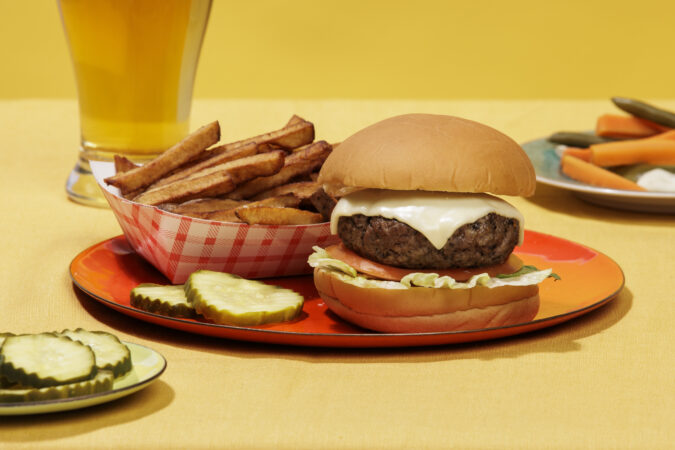
The gourmet burger is a familiar trope that has been reinvented for years. Burgers lure you in, they comfort you when you need something familiar, splashed with a little sparkle of indulgence, whether that’s foie gras, a rainfall of truffles, or an extra special patty made of wagyu or dry-aged beef.
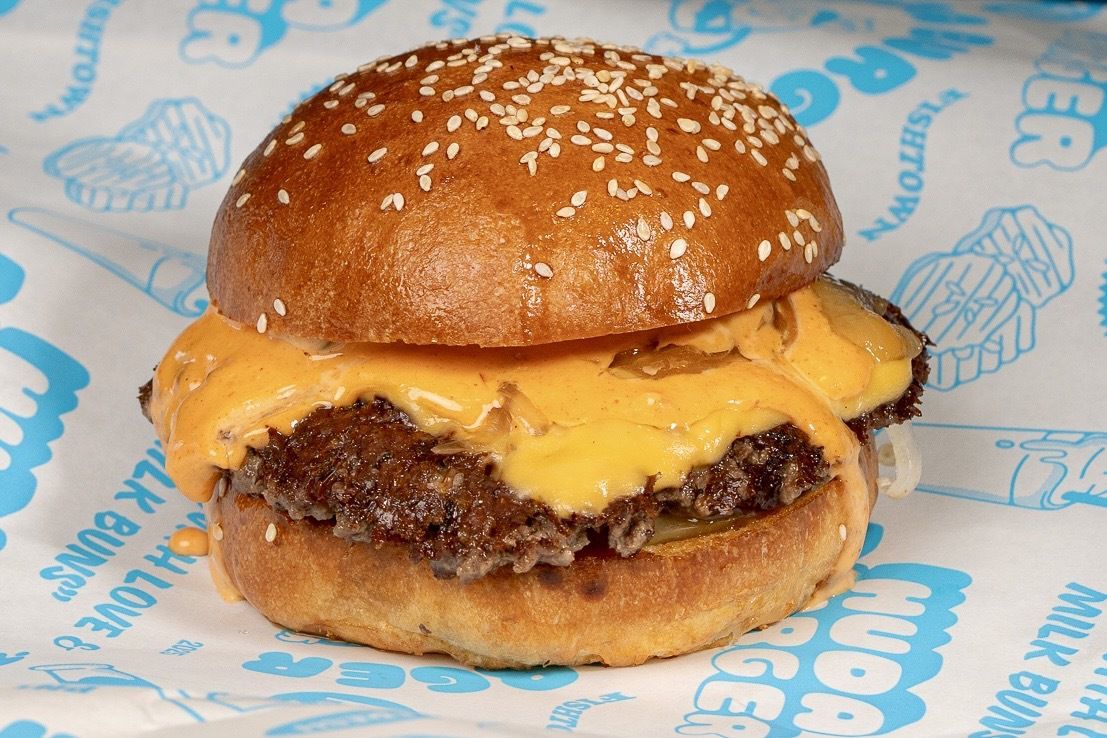
River Twice’s double-pattied Mother Rucker burger was once bestowed upon diners in the middle of their tasting menus. They’re now available only on Monday nights.
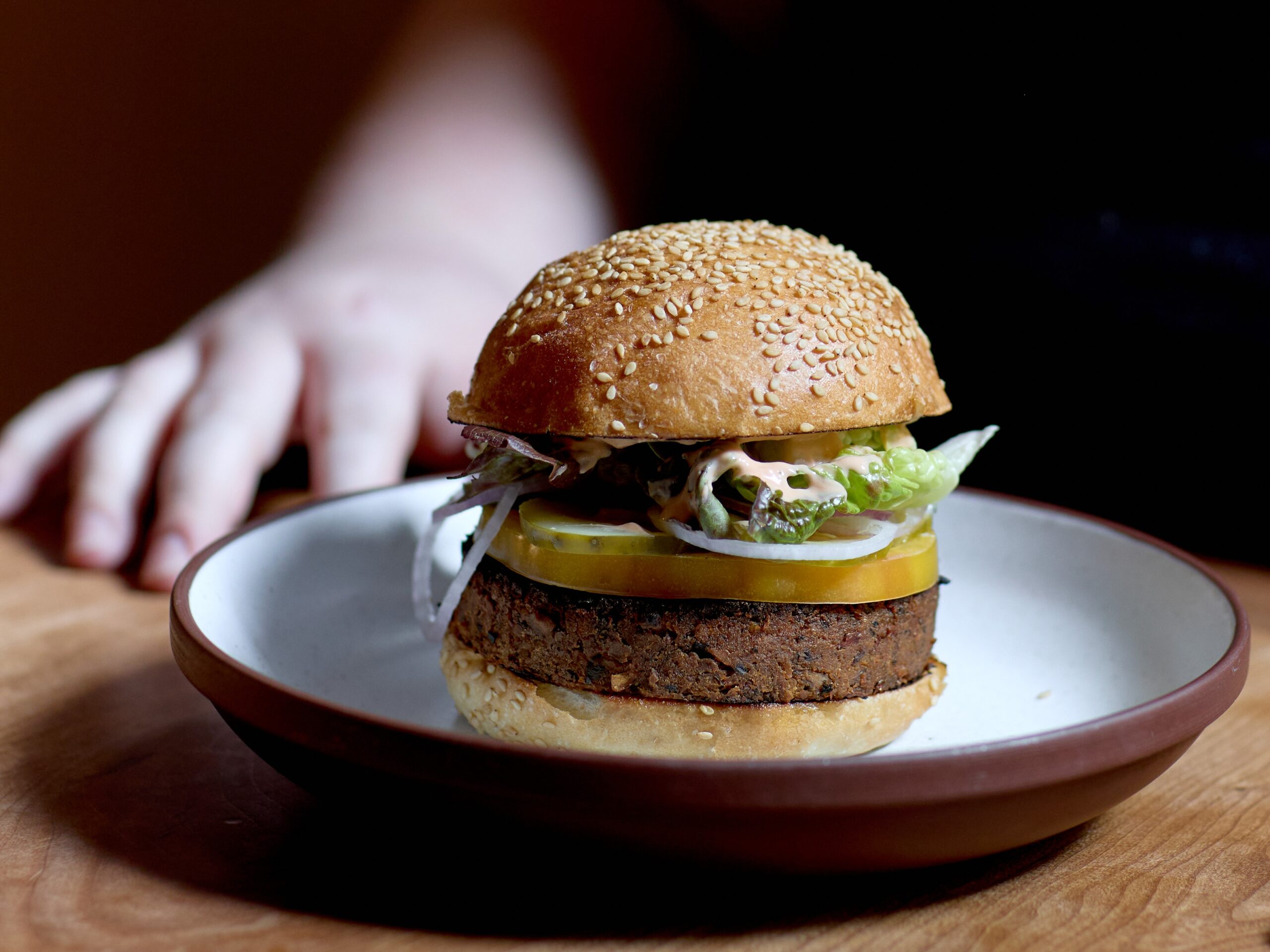
Pietramala’s vegan burger, made from vegetables, Mycopolitan mushrooms, and repurposed ingredients left over from their other menu items, and which takes three days of preparation, instigates lines around their block when they’re served one Sunday every month.
The vegan bean and smoked mushroom burger at Pietramala in Northern Liberties.
The limited edition burger thrives in our post-pandemic search for comfort and the notion that everything is a steakhouse now (a nationwide trend that hasn’t quite reached Philly, but it’s coming for us. It’s only a matter of time).
The restaurants and cocktail bars beckon you with proclamations: Come in for our burger! Only 12 per night! Come in for our burger! But line up around the block!
The limited edition burger is a trend that crops up periodically in New York, like it did in 2014, to the reluctance of chefs who noted that burgers are simply not profit drivers, and that they would bring the potential of a $45 check down to $25. Today’s limited edition burgers are unlikely to do the same in terms of numbers. Even Pine Street Grill’s almost no-frills burger costs $26.
The phenomenon of the limited edition burger marks a uniquely 2025-era blend of a comforting, recession-indicator food (at the end of the day, it’s ground meat in a hunk of bread) with the scarcity principle frequently wielded by marketers and businesses. Limited editions trigger FOMO. Get one of these burgers and it’s like getting an Hermes Birkin bag, or the latest Supreme drop. They’re rare, you have to go through some sort of gauntlet to attain one, you feel lucky when you do.
This year was a big one for eating at restaurants. I had the largest beat in scouting for The 76 this year, my first year doing so. For that list alone, I dined at 74 restaurants. For the other features, guides, and reviews I wrote, I dined at several dozen more.
It was fascinating to look at Philadelphia’s dining scene according to the cross sections provided by eating many of the same dishes, served in different establishments. I ordered gon chao ngau ho or beef chow fun all across the city, comparing the differences between many restaurants’ versions. Some of them were drastic, some more nuanced. This past year, I spent cumulatively two whole days at omakase counters. I tracked the culinary trends and trendy ingredients that pervaded dining rooms and kitchens: Caesar salad everything, fermentation going strong, late-night menus finally emerging from their post-pandemic slumber, and the continuing rise and diversification of little treat culture.
Trendy techniques and ingredients do not exist in isolation. Philly’s dining scene is part of a larger ecosystem of American dining and as our restaurants attract more and more out-of-town visitors and our kitchens attract out-of-town talent (the presence of Michelin in Philly ensures both), the borders of what makes dining in Philadelphia will expand and open. Social media buffets these trends around the globe, like the shades in Dante’s Inferno.
What I learned eating all over Philly in 2025
All green everything
Matcha prices rose and quality fell, as farmers in Japan struggled to keep up with the global obsession with matcha that Philadelphia was not immune to. A similar trajectory happened with pistachios, as the Dubai chocolate bar maintained a chokehold on establishments from ice cream shops to smoothie shops and everywhere in between.
Steakhouses and bakeries dominated openings (in Philly, the latter was more the case). They also developed distinct personalities, informed by the cultural backgrounds of third culture kids. We got Baby’s Kusina, Seaforest Bakeshop, a wave of Indonesian cafes with fluffy pastries, and a host of other “little treat”-forward bakeries. New York and London reported similar little treat trends.
Nostalgia, or signs of a shifting economy?
Recession indicator foods like burgers and baked potatoes are dominating the discourse when it comes to restaurants’ marketing. I’ve also heard my friends hotly debate which restaurants in Philly serve the best cabbage dishes. Cabbage is the epitome of recession indicator foods.
Cocktails, both complicated and delicious
So much in-house fermentation and liqueur-concocting continues to fuel the creativity of Philly’s bars, especially with Almanac, La Jefa, and Honeysuckle leading the way in preserving foraged ingredients and brewing amazake, traditionally made with koji applied to rice but in Philly, bartenders are making it with everything from corn to sweet potatoes.
Hail, Caesar
I started my tenure at The Inquirer by covering the viral kale caesar cutlet at Liberty Kitchen. Now, just over a year later, there is nothing that cannot be a Caesar, whether it’s a martini or Scampi’s take on bruschetta. The word “salad” has now been elided from the dish.
Superb sauces, not enough rice
There simply isn’t enough rice on the menu to sop up the incredible sauce work happening in many of our newer restaurants. Ordering a side of white rice whenever I get a crudo at Sao or Mawn has become regular practice for me. I also longed for sides of rice when dipping into Uchi’s many, very saucy crudos.
I can’t see my food when I’m with you
The dining rooms are getting dark. I can’t see my food. And yet, we’re in the golden age of food photography.
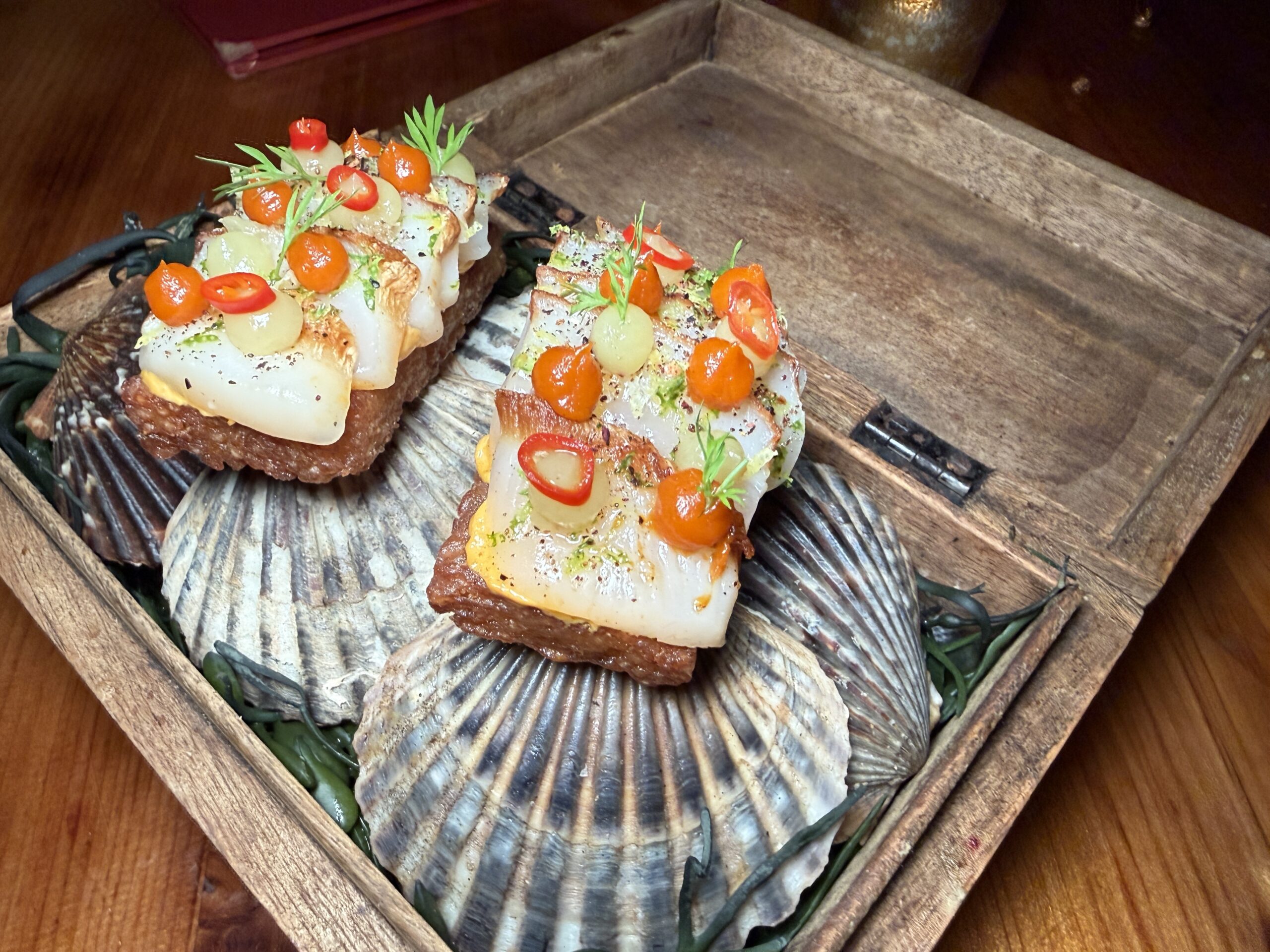
Hokkaido scallops on crispy rice with vadouvan curry at Bardea, served on shells inside a box.
No plates, no problem
Restaurants continue to love serving food on plates that are not plates, from the jewelry boxes that bear delicate squares of crispy rice topped with raw scallops, weighed down by rocks at Bardea, to just rocks at Honeysuckle, to cleaned out parts of animals like the tuna spinal jelly served in a cleaned-out piece of tuna spine at Nakama and the scallop sashimi in shells at Ogawa. When Elwood served its venison scrapple stabbed onto deer antlers in 2019, it broke the Philadelphian internet. Nowadays, you wouldn’t bat an eye. This phenomenon is worldwide. When I get my initial “snacks” course — they’re always called “snacks” at a fine dining establishment — it would be weird if they weren’t served on ceramic orbs like at Miro in Honolulu or ceramic test tube holders at Washington’s Jont or custom pieces made by Felt and Fat that resemble the surface of the moon at Provenance.
Break out the vinyl
Speakeasy cocktail bars are out. Inclusive listening lounges are in.
Every restaurant needs a hamachi crudo
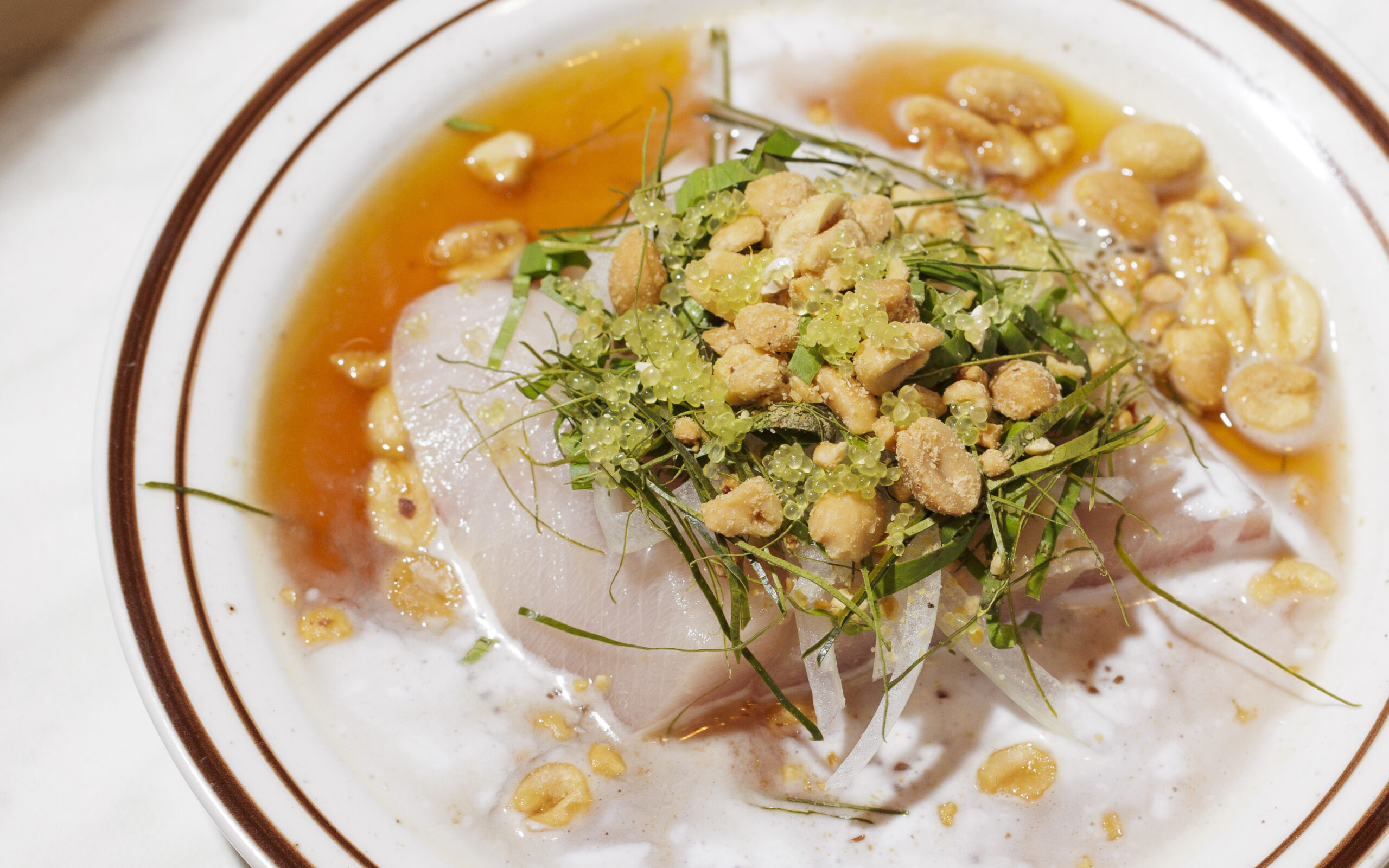
The Aged Hamachi Crudo at Sao on Wednesday, Nov. 26, 2025 in Philadelphia.
Pickle martinis, chicken karaage, koji-aged proteins and vegetables, and hamachi crudo are on so many menus, regardless of cuisine or concept.
Let’s call it ‘American Fusion’
The term “New American” is so yesteryear, but the conglomeration of many different influences and dizzying collections of seemingly disparate global flavors on single menus pervade at ambitious restaurants like Wilmington’s Bardea, where muhammara and calamansi are on the same menu, to great effect, and Grad Hospital’s Banshee where, of course, there is a hamachi crudo but also patatas bravas on one menu.
Get off the list
Finally, we often keep going to the same places. The 76 was a great exercise in not doing that and I encourage you to dine out widely. To eat beyond the places that have endless notify lists on Resy. To only be blinded by the dark depths of current dining rooms, and not the hype that blankets hot new restaurants.