Tag: topic-link-auto

  • My opioid addiction-related weight loss drew praise. Regaining during recovery? Not so much.

    My opioid addiction-related weight loss drew praise. Regaining during recovery? Not so much.

    A normal, healthy weight for me was 120 pounds. In the late 1990s, before addiction reshaped the course of my life, I was a model — someone whose world revolved around silhouettes, styling, and self-expression through fashion.

    My metabolism kept me effortlessly consistent in size, my confidence steady, my presence bold. In Philadelphia, style carried currency, and I spent mine generously. I was known — and crowned — as the “Queen of Fashion,” a title that suggested a life stitched together with glamour, ease, and admiration.

    I hired two of my very own fashion designers, and they made leather tops and pants specifically for me. I shopped at the most exquisite stores on South Street for shoes, clothes, and designer sunglasses. I kept my hair done and went to a nail salon in Center City on a regular basis — all part of the architecture of how I showed up.
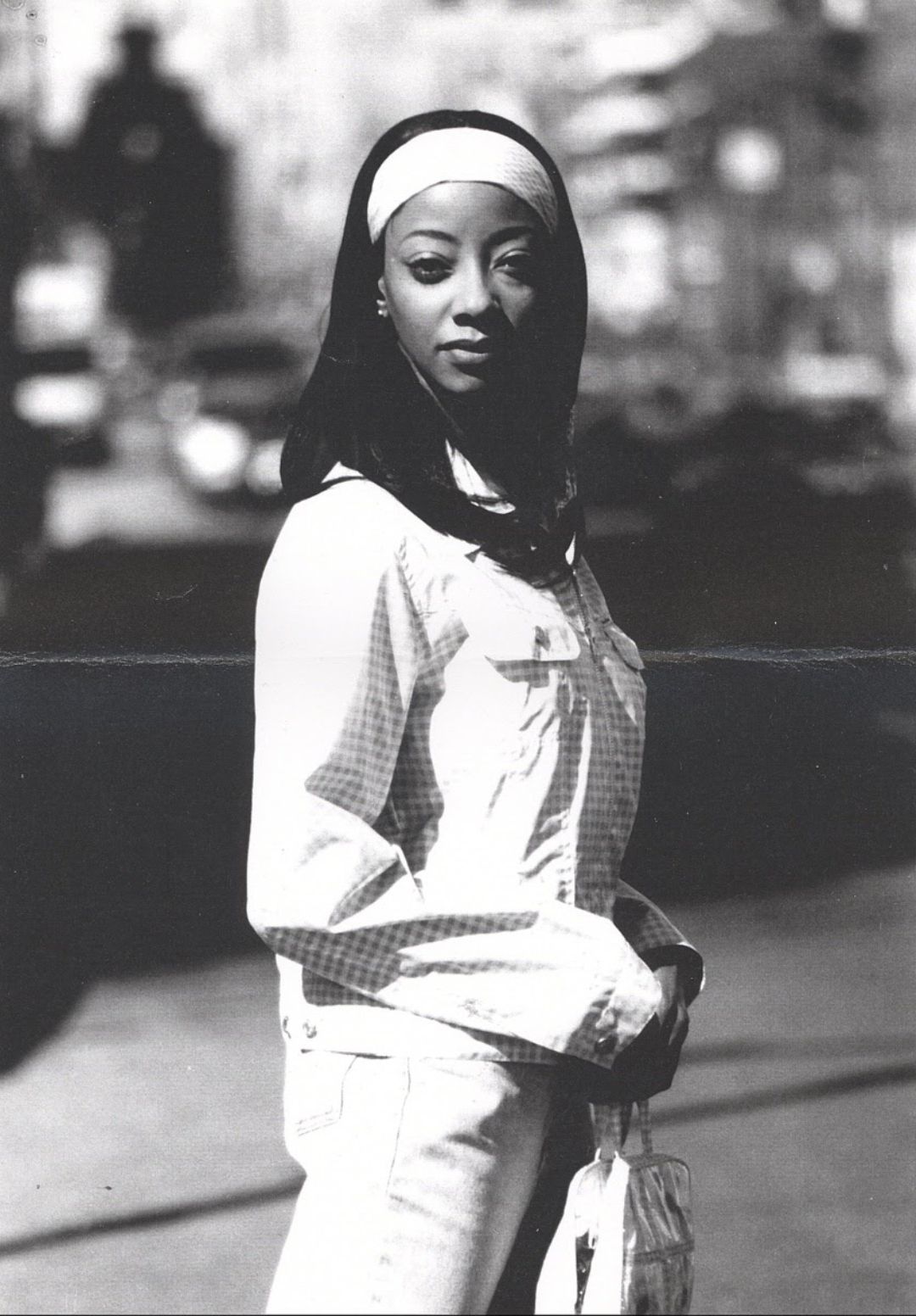
    Chekesha Lakenya Ellis was a 29-year-old model in 2000, the year her addiction to opioids began.

    I looked healthy, controlled, and admired, even as addiction was quietly taking hold. I looked like someone who had mastered the runway. No one knew that soon I would be fighting a battle that fashion couldn’t tailor, metabolism couldn’t manage, and praise couldn’t heal.

    No one knew the story would shift from being known for how well I wore clothes to how bravely I rebuilt the body inside them.

    By 2001, that admiration extended beyond aesthetics. I worked as therapeutic support staff — a job that demanded attentiveness, emotional intelligence, and care. I delivered it well. My clients felt seen. My coworkers felt supported. Respect followed me into rooms before I even sat down.

    On the surface, my life looked like momentum — until prescription opioids quietly stepped in and dismantled the foundation beneath it.

    I became what many called “functional” — a person whose addiction was masked by productivity, routine, and public reliability. But functionality is not the absence of illness. It is often the art of hiding it. And I practiced that art for nearly a decade.

    Chekesha Lakenya Ellis during the self-described “party era” at the beginning of her opioid addiction in 2001, after a dramatic weight loss when she went from a size 5/6 to a 1/2 very quickly. The weight disappeared, she said, and the applause appeared.

    I went from a size 5/6 to a 1/2 very quickly — a dramatic drop that unfolded faster than most narratives could keep up. The weight disappeared. The applause appeared. The concern stayed absent. People praised the result without recognizing the cause.

    Compliments met me at the door before questions ever did: You look amazing. You’re so small now. What are you doing?

    Chekesha Lakenya Ellis in 2008 in active addiction at a party. “I was very frail,” she remembered.

    But I wasn’t doing anything admirable. I was enduring something dangerous. The shrinking they celebrated was not transformation. It was toxicity — a body under neurological attack, nutritional depletion, depression, and a decade-long prescription opioid addiction that pulled more from me than pounds. It eventually cost me my hearing.

    As my body grew smaller, the praise grew louder. At the same time, as I declined medically, physically, mentally, and emotionally, the world grew quieter about the part that mattered. They applauded the appearance of wellness while I was privately collapsing.

    Skinny equaled praise to them.

    To me, it was evidence that I was fading.

    In 2010, recovery finally became my rescue. It demanded rebuilding, not shrinking — a process slower, quieter, and far less visible than what the world celebrates.

    Chekesha Lakenya Ellis in 2010, her first year in recovery. Weight gain can mean restoration, healing, and survival, Ellis says. It deserves compassion and applause, but is rarely celebrated the way weight loss is.

    As my brain healed from the damage of long-term opioid use, my body began reclaiming the signals addiction had silenced: appetite, rest, regulation, safety, nourishment. The pounds I regained were not a reversal of progress. They were proof of it.

    There was no applause for that rebuilding. No celebration for the return of sleep, nourishment, or neurological stabilization. The world didn’t honor restoration because restoration didn’t look like reduction. It looked like progress that challenged how we measure wellness.

    At times, rebuilding invited commentary that echoed the same shallow math that once praised me: You used to be so small. Are you OK? The irony was painful. The same shrinking that was celebrated when it was harming me was questioned when it was saving me.

    Today, the cultural conversation around weight has grown louder, faster, more pharmaceutical, and more celebrated. Medications that promise shrinking have become shorthand for “wellness” in the public imagination.

    But in recovery communities — including those quietly healing in our own region — weight gain often signals restoration. It signals life returning to a body that nearly didn’t survive the war addiction waged on it.

    Bodies in crisis don’t need applause for shrinking. They need care for surviving. And bodies in recovery don’t need shame for rebuilding. They deserve compassion.

    Recovery doesn’t always show up as loss. Sometimes it shows up as strength. Sometimes it shows up as nourishment. Sometimes it shows up as life returning to places addiction tried to erase.

    Chekesha Lakenya Ellis in 2024. As she recovered from addiction and regained weight, she says people would say: You used to be so small. Are you OK? The irony was painful. The same shrinking that was celebrated when it was harming me was questioned when it was saving me.

    If you or someone in your life is walking the path of recovery, understand this: Healing does not always match what society rewards. Progress may look unfamiliar or misunderstood. A body that is stabilizing is not disappearing — it is reclaiming itself.

    Culture may applaud reduction. Recovery teaches something different: renewal, resilience, and the quiet work of staying alive.

    That work matters. And it deserves dignity and recognition.

    Chekesha Lakenya Ellis is a certified peer recovery specialist. The Burlington County resident uses Facebook to raise awareness about addiction and recovery.


  • Brandywine Realty Trust is opening a $60 million hotel in Radnor

    Brandywine Realty Trust is opening a $60 million hotel in Radnor

    Brandywine Realty Trust plans to open a 121-room Marriott Tribute Portfolio hotel this spring in Radnor.

    The company is the region’s largest office building owner, and the five-story project at 165 King of Prussia Rd. is meant to cater to their tenants in the suburbs.

    Dubbed The Brandywine, it cost $60 million to develop and will include an expansive roof deck and two restaurants with almost 260 seats between them.

    The 80,000-square-foot hotel will be in the midst of the company’s 2.1 million square feet of holdings in Radnor, its largest suburban cluster.

    “We were constantly hearing from our tenant base that as they were bringing people in from out of town, there was no real high-end, luxury hotel for them to spend time in,” said Jerry Sweeney, Brandywine’s CEO.

    Brandywine’s other large suburban office holdings are in King of Prussia and Conshohocken.

    “We saw a real window of opportunity to really upscale the hospitality experience available on the Main Line,” Sweeney said. “That’s very important to us because we have 3 million plus square feet of office space in the Pennsylvania suburbs, and over 2 million is concentrated within walking distance of this hotel.”

    Sweeney estimates that over a quarter of the hotel’s business will come from Brandywine’s tenants in their Radnor office buildings, which include Lincoln Financial Group, Arkema, and Penn Medicine among many others.

    In Brandywine’s second-quarter earnings call last year, Sweeney said he anticipates additional demand will be drawn from the seven colleges, including Villanova University, that are within a five-mile radius and from nearby healthcare facilities.

    The Brandywine is expected to be open in time for graduation this year, and the company anticipates a boost from sporting events and celebrations this summer, which include World Cup games, a PGA tournament, the MLB All-Star Game, and the 250th anniversary of the United States.

    The hotel’s ground floor will include the 114-seat Merrick’s Tavern, serving regional American dishes, a cocktail list anchored by bourbon and rye, local beer, and what is billed as a wine program. It’s intended for everyday dining and groups.

    The 145-seat Pomelo Rooftop Terrace will operate year-round, serving botanical-forward cocktails and a locally sourced menu.

    Merrick’s Tavern is named after Samuel Vaughan Merrick, the first president of the Pennsylvania Railroad and a founder of the Franklin Institute.

    “With this hotel we really used the historical evolution of the Main Line as a theme, which is tied to the history of the Pennsylvania Railroad,” Sweeney said. “Even some of the motif and interior space designs we have are very reminiscent of the great age of American railroads, where travel was upscale.”

    A rendering of Merrick’s Tavern within Brandywine Realty Trust’s new hotel, opening this spring in Radnor.

    The hotel is next to the Radnor stop on SEPTA’s Norristown High Speed Line and close to two Regional Rail stations.

    The building’s architect is the DLR Group, while interior design is by Restoration Hardware and Bergmeyer. The Brandywine will be operated by Aimbridge Hospitality.

    As part of the Marriott Bonvoy Tribute portfolio, the brand is a boutique hotel within the larger chain, which allows more flexibility for decor and furnishings.

    Brandywine Realty Trust has developed hotels before, notably the AKA University City in the FMC Tower, in partnership with Korman Communities.

    “For us, it was really brand building, expanding our tenant service program to our tenants and creating more connective tissue between us and our customers,” Sweeney said.

    “We saw a great window of economic opportunity to build a high-end hotel that was positioned along two interstates, two train lines that would appeal to a much broader base of customers beyond just the Brandywine universe,” he said.

    The Brandywine will be just the latest hotel added to the Main Line.

    New venues have been opening in recent years in municipalities like Newtown Square and Conshohocken.

    “It wasn’t all that long ago when you just had the [65-year-old] Radnor hotel, but wherever there’s a big business presence, you’re going to need hotel rooms,” said Ed Grose, CEO of the Greater Philadelphia Hotel Association. “These aren’t your typical limited-service hotels. They’re nice. They’re hotels that cater to businesses that are also growing in that area.”

  • Philadelphians deserve safe and healthy homes

    Philadelphians deserve safe and healthy homes

    The Department of Licenses and Inspections didn’t mince words when it declared the 144-unit Upsal Gardens complex an “unsafe structure.”

    Foundation separation. Cracked masonry. Failing floor joists. A building so compromised that city officials said it posed “immediate danger” to human life.

    That violation is just the tip of the iceberg. I know this because I have lived it. On Aug. 23, my wife noticed a large crack forming in our living room ceiling. We alerted management through their portal, and I went to their on-site office to report it. Less than 24 hours later, at 12:06 a.m., the entire ceiling collapsed.

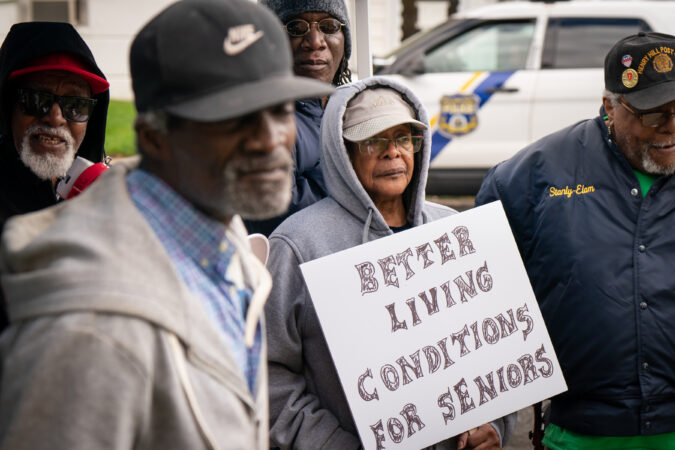
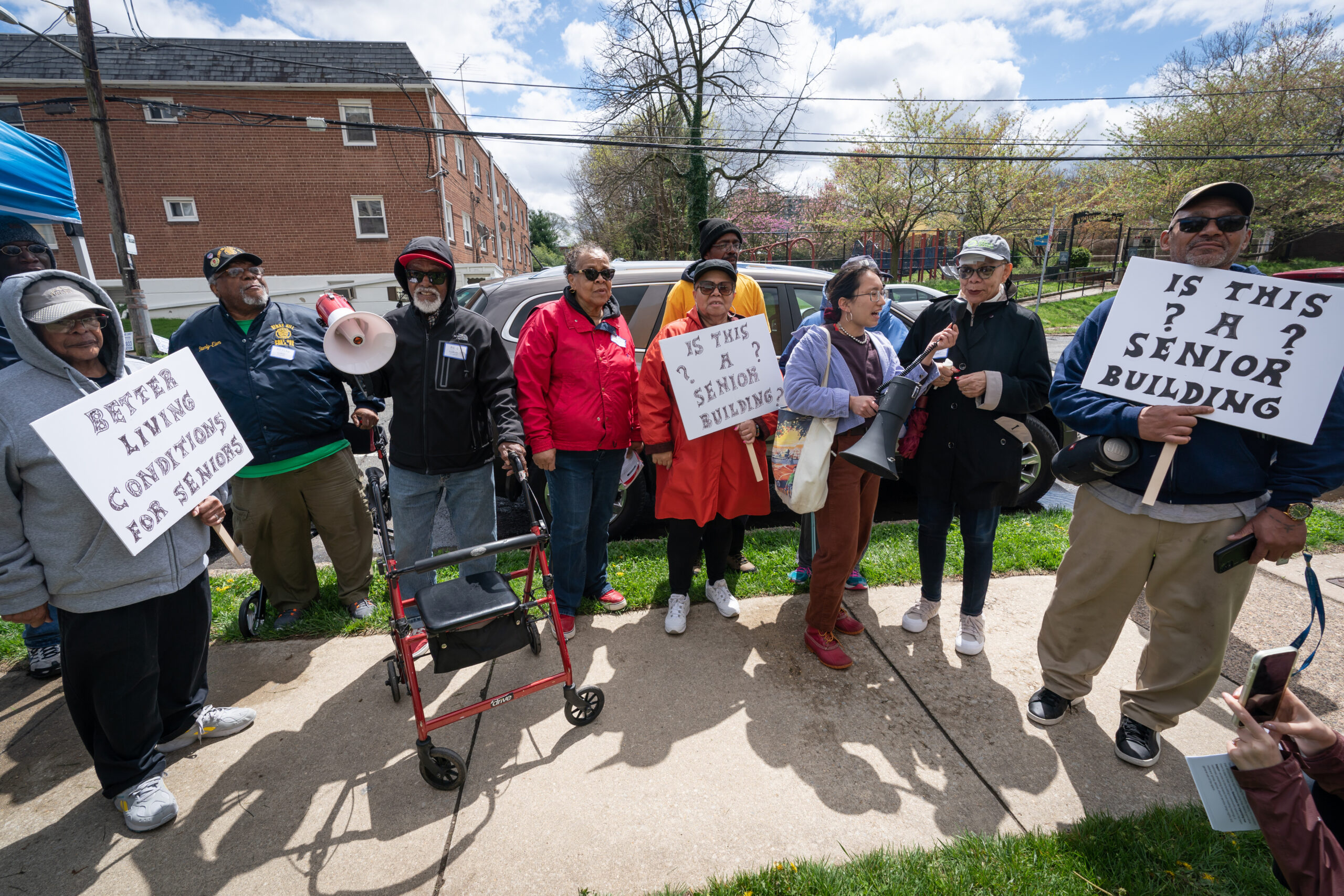
    Residents speak during a demonstration organized to protest against the living conditions at Brith Sholom House apartments in Philadelphia in April 2024.

    Fortunately, we had renters’ insurance. While management took their time deciding what to do, we stayed in the apartment under the exposed ceiling until our insurance finally booked us a hotel. After two days of waiting, we were moved temporarily so repairs could be made. But that displacement came with costs: For eight days, we paid out of pocket for meals and essentials while living in the hotel.

    Nevertheless, when we returned home, a notice was taped to our door: “Overdue rent.”

    Management knew we were displaced because of conditions they failed to address. And still, they badgered us for late rent — as though the collapse was an inconvenience to them, rather than a danger to us.

    A citywide crisis

    Unfortunately, my story isn’t unusual. My neighbors have filed a class-action lawsuit against the owners and managers of the property due to the complex-wide dangerous conditions described in an “unsafe structure” L&I violation. This lawsuit reflects a mounting rental safety crisis across Philadelphia.

    In West Oak Lane, tenants at Bentley Manor filed a similar lawsuit after their building was deemed unsafe while rent was still being collected. Upsal Gardens, Bentley Manor, Brith Sholom, Phillip Pulley and SBG Management, 8500 Lindbergh Blvd., ABC Capital. These are different buildings with different owners, managers, and business models, but nonetheless an all too similar story: Tenants forced to live in deplorable conditions while predatory landlords keep turning a profit.

    Philadelphians deserve safe and healthy homes, tenants deserve roofs and ceilings that are secure, floors that don’t buckle, and air that doesn’t make their children sick. We have laws on the books intended to address these issues.

    But a combination of loopholes, insufficient funding, and lack of enforcement leaves renters without a clear means to enforce those laws, placing many renters between a rock and a hard place: pay for unsafe housing, risk retaliation for withholding rent, or absorb the costs of displacement.

    Renters aren’t completely powerless, though. This year, we’ve seen that when renters come together, they win. This spring, City Council took the first steps toward addressing the city’s rental safety crisis by creating a fund for tenants displaced because of unsafe conditions. But that fund sat empty for months, until a coalition of housing justice advocates successfully lobbied for Mayor Cherelle L. Parker’s H.O.M.E. Plan to fund it.

    Dangerous, uninhabitable

    Still, there is much more work to be done. The vast majority of renters continue to live in units that have never been inspected. Landlords continue to demand rent for rental units with dangerous, uninhabitable conditions. Renters continue to acquiesce to those conditions out of fear of retaliation.

    The Safe Healthy Homes (SHH) campaign, led by OnePA, Renters United Philadelphia, Philly Thrive, and the office of Councilmember Nicolas O’Rourke, provides commonsense answers to these issues: protecting renters who speak up about unsafe conditions from landlord retaliation, authorizing proactive L&I inspections, and requiring proof of code compliance to evict or collect rent. These are all things we would assume are happening already, but this package adds the critical enforcement provisions that have been missing.

    Safe housing is not a perk — it is the bare minimum, and City Council’s Housing Committee had a long-overdue hearing for the SHH package tentatively scheduled for Tuesday.

    I encourage you to let the members of the committee know how you feel about having safe and healthy homes for tenants across our city.

    B. Cincere Wilson is the chief operations officer of Myra’s Kids Inc., a nonprofit serving justice-impacted and high-risk youth. He lives in Philadelphia and works in New York City.

  • Philly DA Larry Krasner casts doubt on running against Mayor Cherelle Parker

    Philly DA Larry Krasner casts doubt on running against Mayor Cherelle Parker

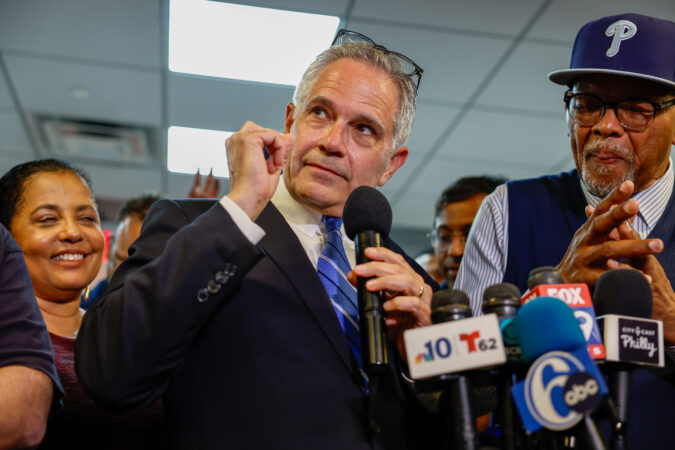
    Philadelphia District Attorney Larry Krasner on Wednesday dismissed rumors that he may challenge Mayor Cherelle L. Parker when she will face reelection next year, and he said in a statement that he is focused on his job as the city’s top prosecutor.

    Krasner, who last year won his third term as district attorney and has cultivated a national brand, told The Inquirer that talk he might challenge the incumbent divides the city’s leadership.

    His statement came after the news website Axios Philly reported that some political insiders were floating Krasner’s name as a potential mayoral contender.

    “Especially in these times, all Philadelphia residents need to stand together and work together for Philly,” Krasner said. “Not sure whose agenda this narrative serves, but there’s nothing new about insiders stirring things up to benefit themselves at the expense of everyone else.”

    Talk of Parker facing a potential primary challenge ramped up in recent days after the mayor’s political action committee filed a campaign finance report showing she had raised $1.7 million last year, a striking sum for a sitting mayor two years out from a reelection bid.

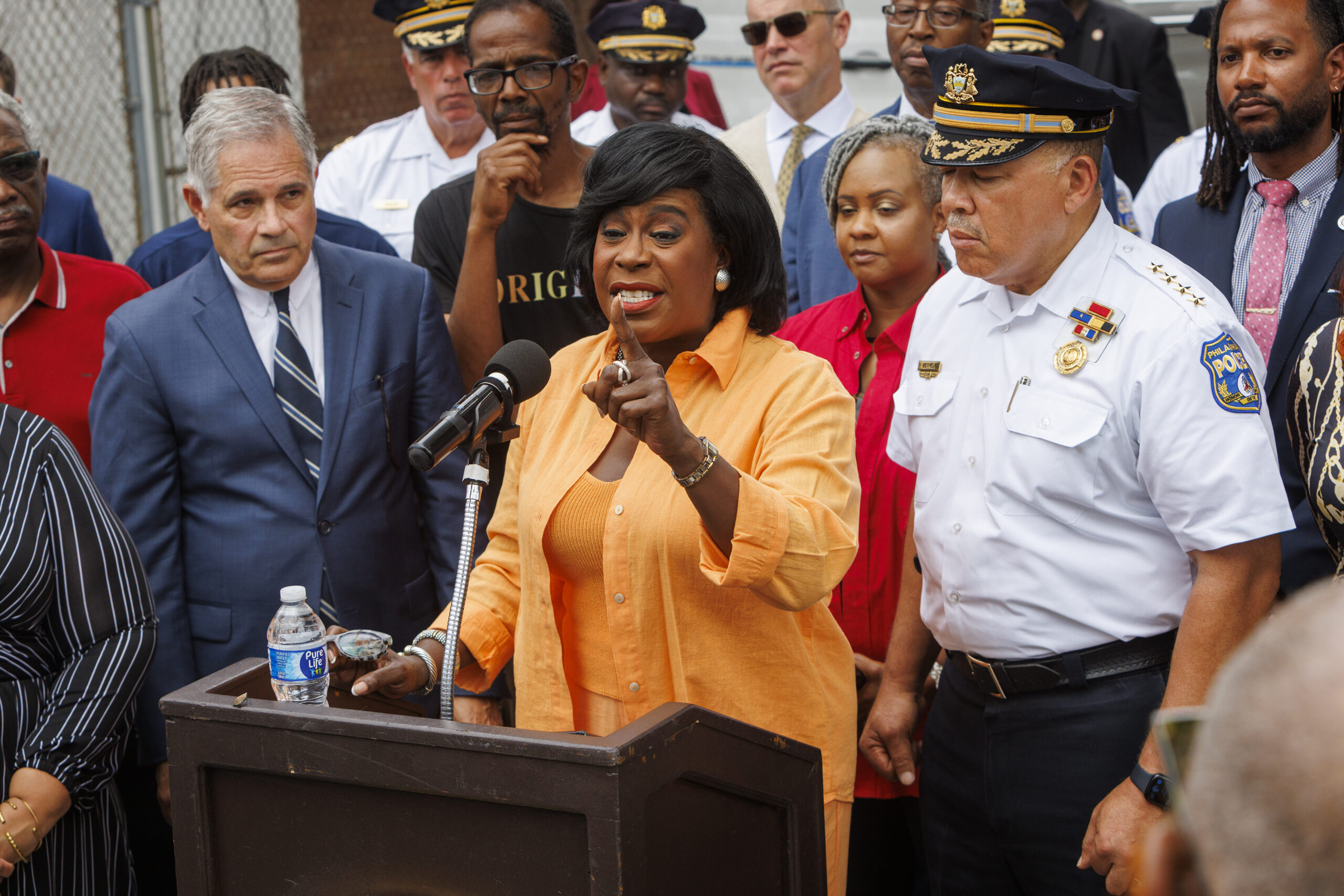
    In this 2024 file photo, Philadelphia Mayor Cherelle L. Parker is flanked by Police Commissioner Kevin Bethel and District Attorney Larry Krasner during a news conference.

    The fundraising report fueled speculation among the city’s political class that Parker, a centrist Democrat who is backed by much of the party establishment, may be expecting a challenge in the primary.

    A progressive would be a natural fit for a challenger. The city’s left has opposed some of Parker’s initiatives, including her law enforcement-driven plan to address the Kensington drug market. Activists have also been critical of Parker’s cautious approach to President Donald Trump, whom she generally avoids attacking directly.

    Krasner, 64, is the most prominent progressive in the city. He won reelection last year in landslide fashion, and he has positioned himself as the city’s most vocal Trump opponent, often drawing comparisons between the federal government and 20th-century fascism.

    And several past district attorneys have run for mayor, including Ed Rendell, who went on to serve two terms in City Hall and then was elected governor of Pennsylvania.

    But for Krasner, any run at Parker would be tricky.

    Krasner, who is white, has been successful in electoral politics in large part because of support from the city’s significant bloc of Black voters, politicians, and clergy. Those groups are also key to the base of support that has backed Parker, who comes from a long line of Black politicians hailing from the city’s Northwest.

    Allies of the district attorney say a better fit — if he decided to seek higher office — could be running for a federal seat.

    Political observers have suggested a handful of Democrats, including Krasner, could run for the U.S. Senate seat currently occupied by Sen. John Fetterman. The Democratic senator, who will be up for reelection in 2028, has an independent streak and has angered many in the party for at times siding with Republicans.

    Several other Democrats have been floated as potential contenders for the seat, including U.S. Reps. Brendan Boyle, of Philadelphia, and Chris Deluzio, whose Western Pennsylvania district includes Allegheny County. Some have also speculated that former U.S. Rep. Conor Lamb, also of Western Pennsylvania, could run.

    Fetterman has not said whether he intends to run for reelection. Left-leaning organizations have already pledged to back a primary challenger against him.

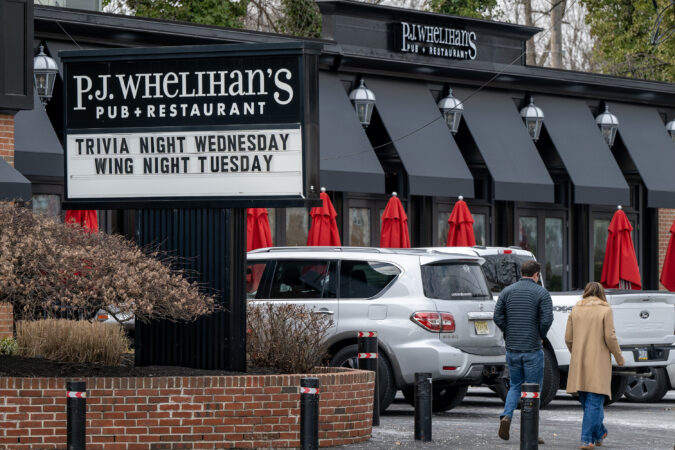
  • Closed Iron Hill Brewery in Newtown is officially becoming a P.J. Whelihan’s franchise

    Closed Iron Hill Brewery in Newtown is officially becoming a P.J. Whelihan’s franchise

    The company behind P.J. Whelihan’s is officially moving into a shuttered Iron Hill Brewery.

    The Haddon Township-based PJW Restaurant Group has signed a lease for Iron Hill’s former location at the Village at Newtown, according to Brian Finnegan, the CEO of Brixmor Property Group, which owns the Bucks County shopping center.

    PJW marketing director Kristen Foord confirmed the lease signing, saying in an email that the company was “not in a position to share additional specifics” at this time.

    The move was approved by a federal judge last month as part of Iron Hill’s bankruptcy proceedings.

    Like more than a dozen other former Iron Hills throughout the region, the nearly 8,000-square-foot space in Newtown has sat empty since the Exton-based brewpub chain closed all locations and filed for liquidation bankruptcy last fall.

    Iron Hill opened in the affluent suburb in 2020. The restaurant moved in after Brixmor refurbished the more than 200,000-square-foot complex on South Eagle Road.

    As part of the revamp, the developer added new buildings, allowing it to bring in shops and restaurants like Iron Hill, Harvest Seasonal Grill, and Turning Point. The 30-acre complex is anchored by the high-end grocer McCaffrey’s Food Markets.

    In Newtown, “we’ve got Free People and Lululemon and Ulta that we added to the shopping center,” Finnegan said Wednesday in an interview. “We’ve got a lot of strong service tenants. We also have Capital Grill and Harvest, so some great food and beverage options.”

    And soon, he said, that list will also include P.J. Whelihan’s.

    PJW’s most well-known restaurant is P.J. Whelihan’s, which started in the Poconos in 1983 and has expanded to include 25 P.J. locations, the majority of which are in the Philly region.

    PJW also owns the Pour House in Exton, North Wales, and Westmont, Haddon Township; the ChopHouse in Gibbsboro; the ChopHouse Grille in Exton; Central Taco & Tequila in Westmont; and Treno, also in Westmont.

    While the Newtown restaurant will get new life soon, many other former Iron Hills still sit vacant.

    Some landlords are actively looking for tenants, with West Chester’s John Barry saying he hopes to have a lease signed by the end of this month.

    “We have a number of groups interested in the space and a few [letters of intent] have been submitted,” Barry said in an email last month.

    In other places, such as Voorhees, township officials and community members remain in the dark about whether another tenant will move in soon, and landlords can’t be reached.

    A few of the closed breweries may be revived under new owners, though details are slim.

    A federal judge last month approved the acquisition of Iron Hill’s trademark and intellectual property in conjunction with the transfer of restaurant leases in Center City, Huntingdon Valley, Hershey, Lancaster, and Wilmington.

    Representatives of the potential new owner, Rightlane LLC, have been unable to be reached. Contacted through the owner of Iron Hill’s building in Center City, Rightlane declined to comment to the Philadelphia Business Journal earlier this month.

  • Tyrese Maxey: The hero Philadelphia needs

    Tyrese Maxey: The hero Philadelphia needs

    There is no Philadelphia sports figure without blemish.

    The Phillies’ hitters failed again, and Zack Wheeler is hurt. The Eagles collapsed en masse after winning their second Super Bowl; even Saquon Barkley took hits before and during the season. The Flyers remain mired in a rebuild. And no team has engendered as much disappointment, if not disgust, as the Sixers over the past 14 years.

    With one exception.

    Tyrese Maxey.

    With his incandescent smile, his irrepressible joy, his boundless energy, and what has turned into a sterling set of skills and talents, Maxey is a beacon among the blurred and foggy landscape of Philadelphia sports.

    Everybody loves Maxey. He’s the breath of fresh air Philly sports needed. He’s never worried about the score of the game. You never see him dog it. He’s Pete Rose with a jump shot.

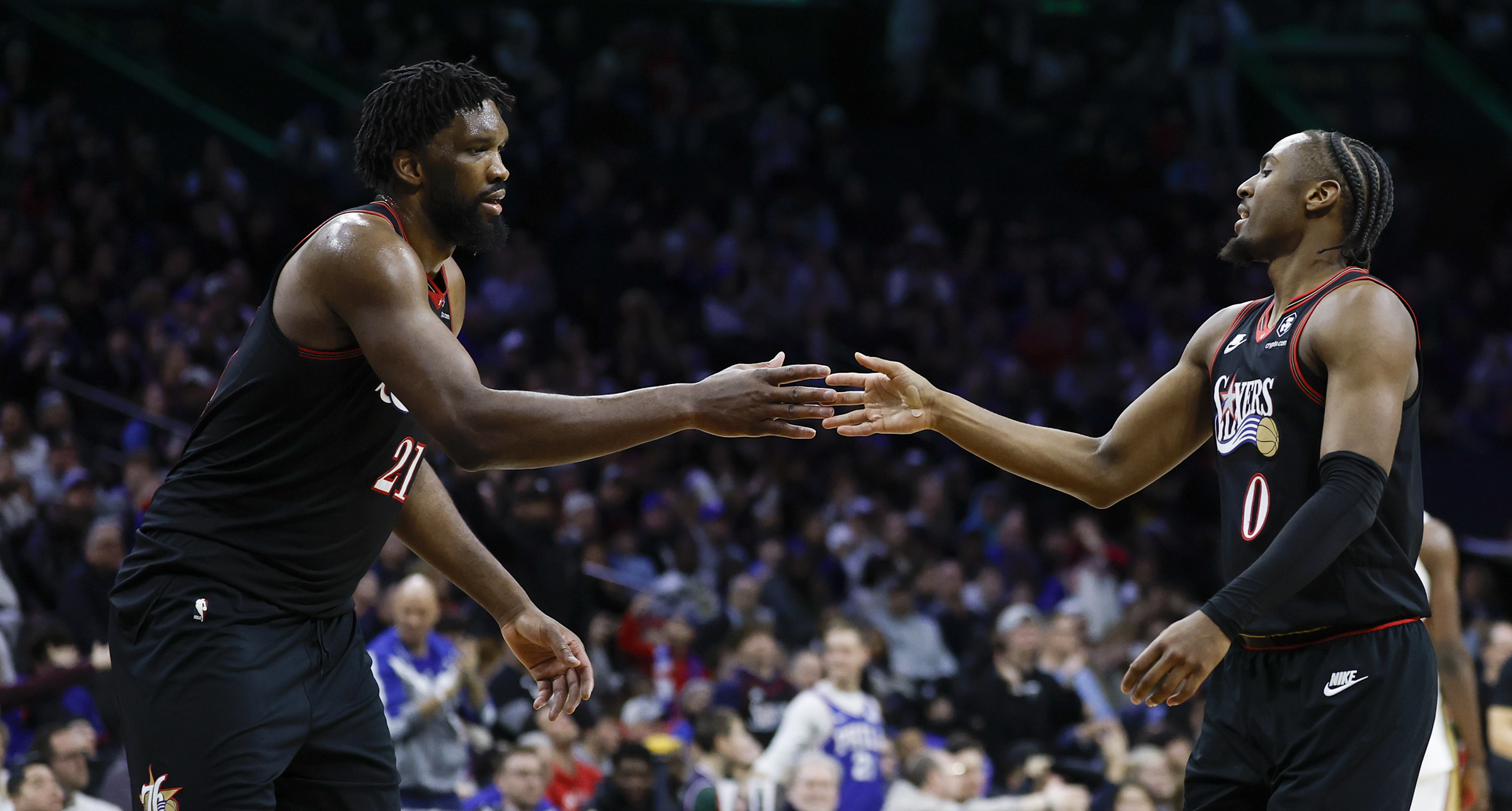
    Sixers guard Tyrese Maxey (right) no longer has to play second fiddle to Joel Embiid.

    Maxey will represent the Sixers as an NBA All-Star Game starter in Los Angeles on Sunday. This is fitting, since he’s the embodiment of what the Sixers hope to be and emblematic of how Philadelphia sees itself.

    Joel Embiid represents “The Process,” has been diminished as a part-time role player, and is a reminder of the disastrous slash-and-burn rebuild that began in 2013.

    Paul George represents the failed philosophy of Sixers president Daryl Morey, who bet everything on James Harden both in Houston and Philadelphia and made a similarly bad bet on George, addled by injury and seven games into a 25-game drug suspension.

    Rookie guard VJ Edgecombe was the MVP of the Rising Stars All-Star competition Friday night and represents the future, but it is a future that depends on working in harness with Maxey.

    Maxey represents the Philly of today: a city that sees itself as a collection of hardworking, well-meaning, decent, and spirited underdogs.

    Philly guy

    From Vince Papale to Rocky Balboa to the 2017 Eagles, Philly loves an underdog.

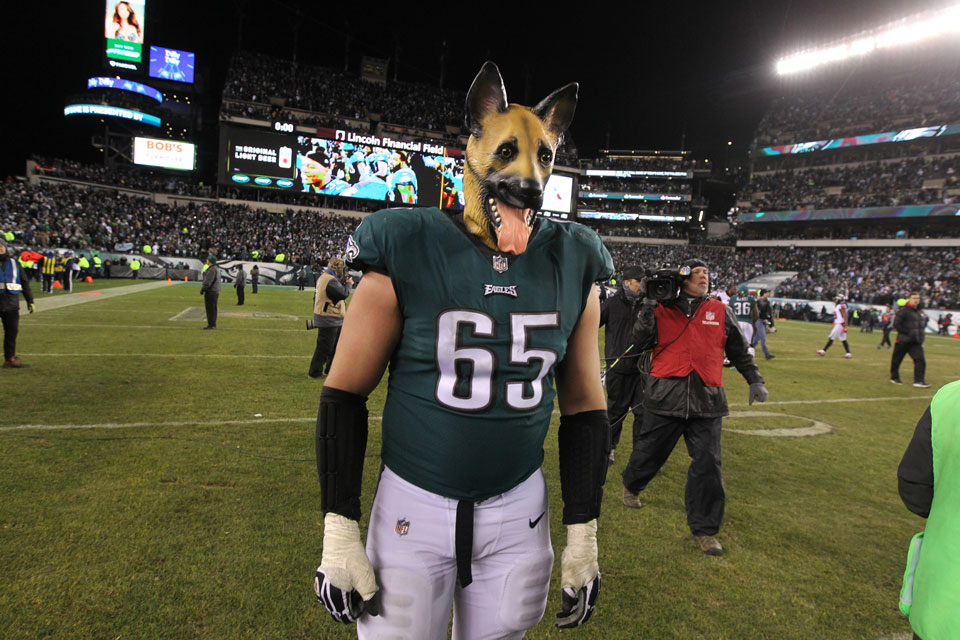
    Eagles tackle Lane Johnson dons a dog mask after a playoff victory against the Atlanta Falcons on Jan. 13, 2018.

    Maxey has always been an underdog.

    He was never touted as an AAU player. He played for Kentucky for one uninspired season. He then was the 21st overall pick of the COVID-19 draft in 2020, behind the likes of Killian Hayes (seventh) and Kira Lewis (13th). A poor shooter, he started just eight games as a Sixers rookie. The Sixers hoped he’d be Dario Šarić or Landry Shamet, players drafted outside of the top 10 who have become dependable, if limited, NBA performers.

    As it turns out, Maxey has no limit.

    His maniacal offseason workout regimen focused on shooting and turned him from a 30.1% three-point shooter as a rookie into a 42.7% bomber in his second season. His scoring average over the years went from 8 points to 17.5 to 20.3 to 25.9, which made him the 2023-24 Most Improved Player and an All-Star reserve. He missed much of last season with injuries and still averaged 26.3 points, and now he’s at nearly 29 points per game, an All-Star starter, and an MVP candidate.

    Like former Eagles offensive line coach Jeff Stoutland said: Hungry dogs run faster.

    Maxey stays hungry. Hungry for wins.

    “I just want everybody to know I try extremely hard, I work extremely hard, and I leave it all out there on the court every single night. I play through whatever,” he said recently. “That’s the legacy I want to leave behind. But the main thing is to win.

    “This is a town that believes in winning. And I believe in winning.”

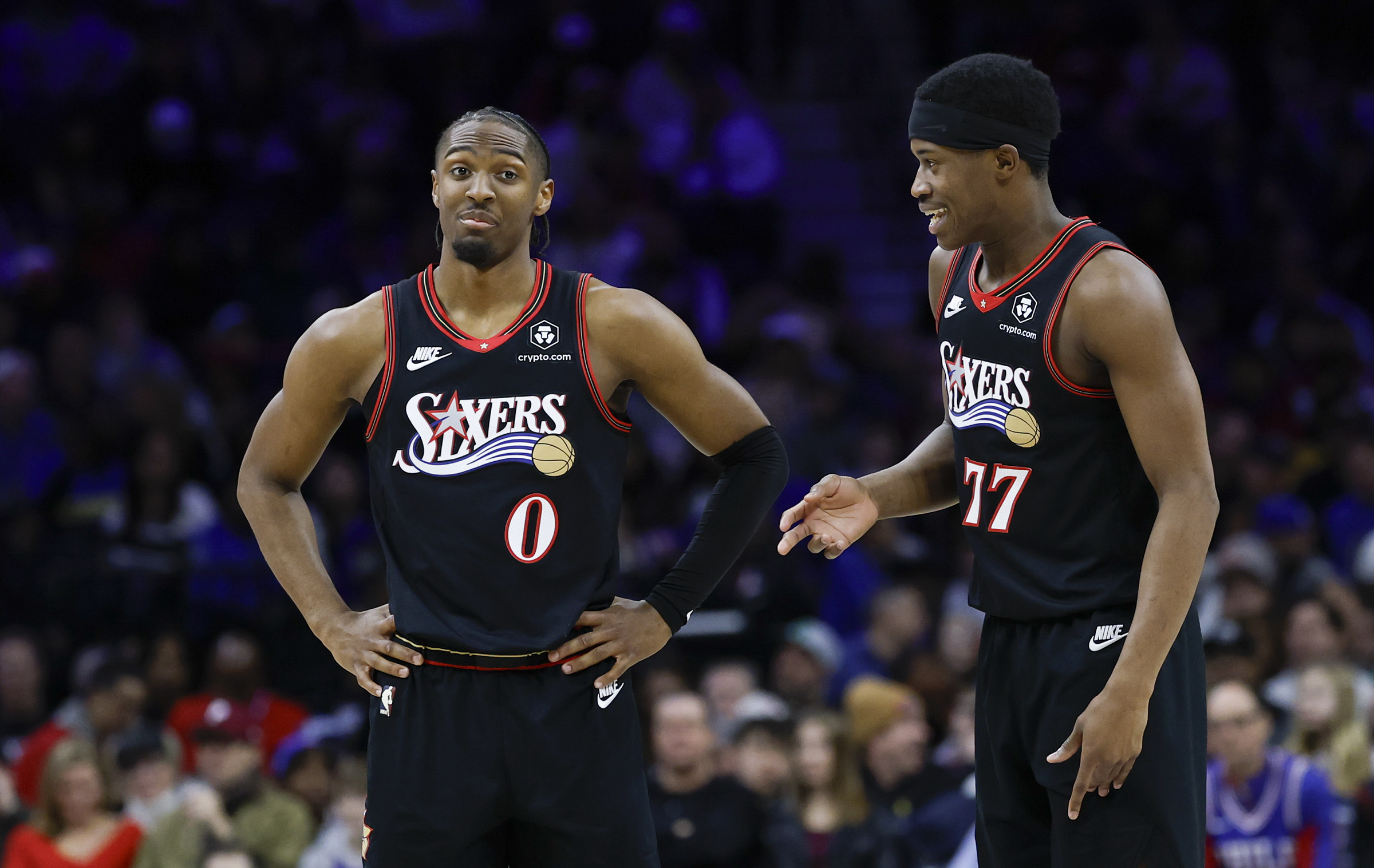
    Tyrese Maxey (left) and VJ Edgecombe form a potent combination at guard for the Sixers.

    Ravenous

    Maxey used to practice so much they had to take away his keys to the gym.

    He never was expected to play point guard. The Sixers drafted Maxey while Ben Simmons was on the team, then traded Simmons for Harden, then, when Harden forced a trade in 2023, Maxey took over the point. It was not pretty. He went to work.

    He’s a complete point guard today. His ballhandling and passing have advanced so much that his Player Efficiency Rating this season is 22.72, about three points higher than his last All-Star season and fifth among point guards. He trails reigning MVP Shai Gilgeous-Alexander, five-time top-10 MVP candidate Luka Dončić, two-time MVP Steph Curry, and 2026 All-Star and NBA champ Jamal Murray. Which is why Maxey is an MVP candidate himself.

    His game has blossomed.

    “I play three different roles on this team,” he said. “Sometimes I’ve got to shoot 30 times. Sometimes I’ve got to get Joel the ball. Sometimes I have to play full-time point guard and guard [elite] people. That’s OK. Whatever it takes to win.”

    He didn’t just develop a three-point shot, he developed Harden‘s three-point shot after pestering Harden to teach him during the Beard’s 1½ seasons with the Sixers. The result: a lethal, sidestep-stepback, coil-and-release mortar shell whose range knows no limit.

    This season, he mastered the most important skill of any backcourt scorer: the pull-up jumper, the most lethal weapon in basketball, from Jerry West to Michael Jordan to Kobe Bryant to Kevin Durant.

    How far has he come? He’d dropped in the draft because he couldn’t shoot. Now, on Saturday, he’ll be the first Sixer to compete in the three-point shooting contest since Kyle Korver in 2005.

    He remains driven by that disrespect, but he isn’t disrespectful, and that endears him to Philly even more. Sure, Philly’s a rough place. Some people got a kick out of Embiid and his Twitter-beefing with players like Karl-Anthony Towns. Some people loved it when Bryce Harper stared down mouthy Atlanta Braves shortstop Orlando Arcia in the 2023 playoffs.

    But those incidents also rubbed some people the wrong way. Maxey seems to always rub folks the right way.

    What’s not to like? After all, Maxey is the No. 1 dog dad in a canine-crazed city.

    Maxey owns three dogs. His first is named Apollo, after the Apollo Creed character in Rocky. Then he got Aries and Arrow. They are his family. Maxey told Sixers videographers that when he bought a house in South Jersey, he insisted it have lots of land: “Try to create a happy home for my dogs. Let them run around in this big backyard.”

    He made a cameo appearance at the National Dog Show when it visited the Philadelphia area in November.

    So, he loves dogs. He loves kids, too.

    Maxey won the Bob Lanier Community Assist Award in 2024 for his offseason work with youths in Philadelphia and his native Dallas.

    With Tyrese Maxey, it’s never about Tyrese Maxey.

    I ran an informal Twitter/X poll Tuesday into Wednesday that asked, “Who’s your favorite Philly athlete?” I listed Harper, Kyle Schwarber, Saquon Barkley, and Maxey. (X only allows four entries.) Maxey won with 38% of the votes. Schwarber got 23%, Harper got 15%, and Barkley got 24%.

    No, it’s not a scientific poll, and yes, it drew only about 400 respondents, but it makes sense nevertheless.

    When the local TV broadcast spotted Maxey’s parents, Tyrone and Denyse (his name is a combination of theirs) at the Sixers’ game Saturday in Phoenix, play-by-play announcer Kate Scott called them “the Royal Family of Philadelphia.”

    That’s because, at this moment, their son is king.

    Always ‘us,’ never ‘me’

    In an era of shameless self-promotion, Maxey never lobbies for personal accolades. He has never deemed himself an All-Star or an MVP until somebody else deemed him thus.

    He’s always accountable, but he spreads the love. When Embiid dropped 40 on Jan. 31, Maxey detailed how the big guy’s game had developed to the point that Embiid found Maxey late in the game instead of forcing his own shot: “He played the right way.”

    When George got suspended in the middle of a playoff push, Maxey never wavered: “We stand with Paul.”

    He plays a child’s game with a child’s glee. It isn’t perfect, but Maxey has the most recognizable Philly smile since Flyers legend Bobby Clarke, and he flashes it all the time.

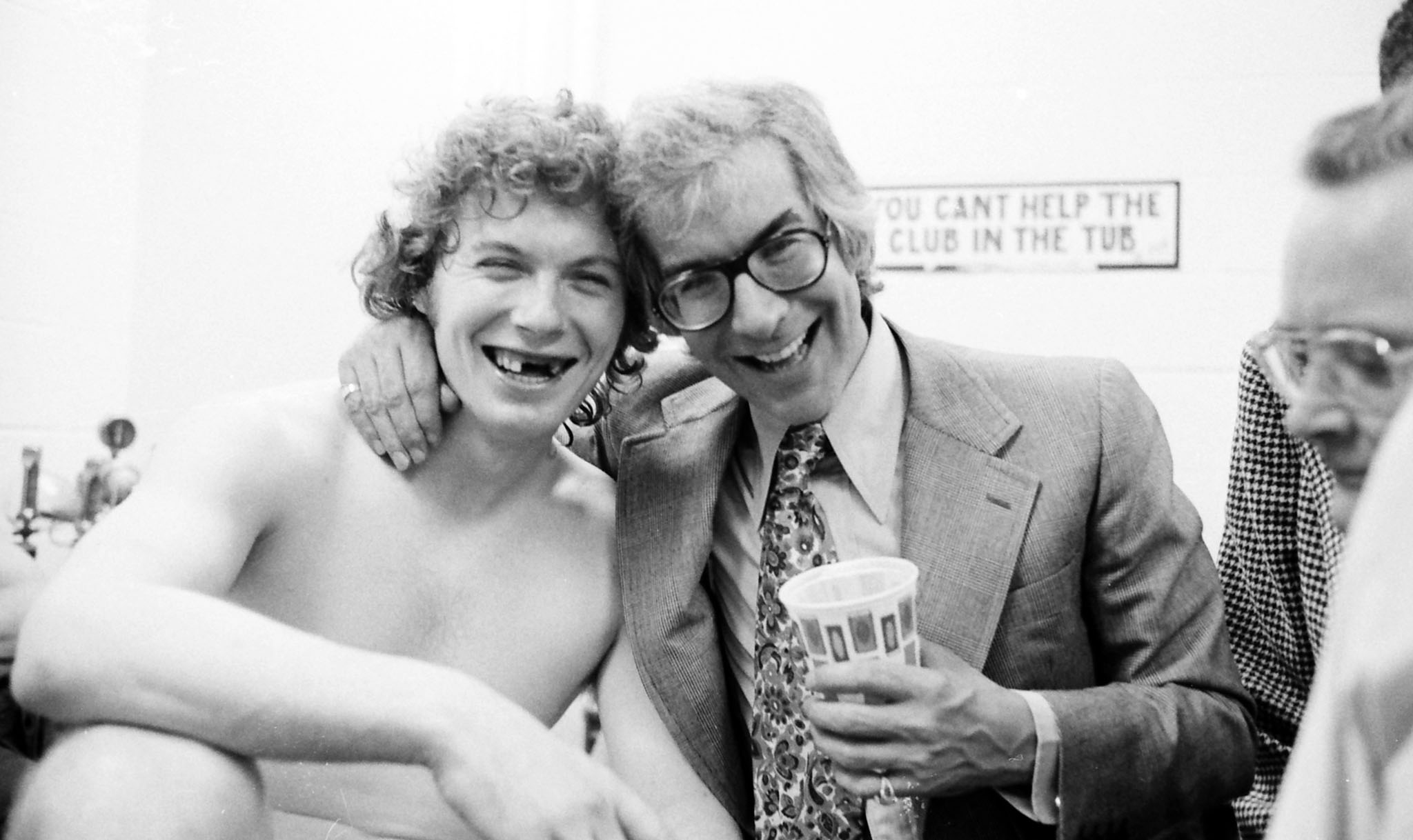
    Bobby Clarke and Ed Snider in the Flyers’ locker room in 1974. (Spectrum Archives)

    From diet to conditioning to practice to rest, he adores the process and the progress as much as he relishes the result.

    It was Maxey who, in a team meeting last season, finally confronted Embiid about his selfishly tardy habits: how he kept teammates waiting at meetings, on buses, and on planes.

    Maxey just shows up on time, pays attention, and plays his hardest every second. He’s the type of player Philadelphians swear they would be if they had the chance. He understands that he has a gift, and that he should rejoice in his gift, even if it doesn’t take him to the top of the mountain.

    This weekend, that gift took him to L.A.

  • Traveling to Southern Europe? Here’s what to know about a deadly parasite active there.

    Traveling to Southern Europe? Here’s what to know about a deadly parasite active there.

    Are you planning a vacation to Spain, Italy, France, Greece, or another country along the Mediterranean?

    If so, you should know about a parasite that puts travelers at risk of a rare disease, called “visceral leishmaniasis,” that can be deadly when untreated. The parasite — leishmania — is transmitted by a bite from an infected sandfly. It can lie dormant in the body for years, then later cause severe illness, including persistent high fever.

    A 34-year-old South Jersey resident, Louis-Hunter Kean, died from it in late 2023 after doctors at two South Jersey medical systems and later at Penn Medicine missed the diagnosis. His symptoms developed about a year after he vacationed in Tuscany, where parasitic disease experts now believe he was infected.

    “Leishmania in the U.S. is underappreciated,” said Joshua A. Lieberman, assistant director of the molecular microbiology clinical laboratory at University of Washington in Seattle. “We want to get the word out that there’s a lot more of it than we think.”

    Parasitic disease experts say most American doctors don’t know enough about leishmania. Here’s what you should know about leishmania:

    Where is the parasite active and who’s at risk?

    Worldwide, there are more than a dozen species of leishmania that cause three different diseases in humans.

    Visceral leishmaniasis is caused by the most deadly species. At risk are travelers to Southern Europe, Brazil, East Africa, India, and military personnel who were deployed to Afghanistan and Iraq. Its primary symptom is fever, along with an enlarged liver and spleen, weight loss, and a low blood cell count. Each year, an estimated 50,000 to 90,000 new cases are reported globally, according to the World Health Organization (WHO).

    The majority of healthy people who get infected never experience symptoms or sickness. However, the parasite can cause severe illness in small children, senior citizens, and people who are malnourished or immunocompromised. It can activate decades after exposure.

    Cutaneous leishmaniasis is the most common and less dangerous form of the disease. This species is present in the countries that also have visceral leishmaniasis, as well as in Israel, Mexico, Central and South America — and in a few U.S. states, including Texas, Oklahoma, and Arizona. More than 80 cases have been reported in the U.S. since 2017, though experts believe that’s an undercount, according to a recent study published in the digital journal JMIR Dermatology.

    People with active cases first see small, red bumps on the skin that can develop into skin ulcers, which may ooze or scab. These symptoms typically appear within weeks or months after exposure, but ulcers can surface years later. Worldwide, an estimated 600,000 to 1 million cases occur each year, according to the WHO.

    “If you’re traipsing through the rain forest in Central America, you’re at huge risk,” said leishmania expert David L. Sacks, an immunologist and senior investigator with the National Institutes of Health (NIH). “We see patients all the time at the NIH hospital who have the cutaneous form from traveling.”

    Mucosal leishmaniasis is most commonly found in parts of the Amazon basin, specifically Bolivia, Peru, and Brazil. Symptoms usually start as a skin sore, which can advance to the nose, mouth, or throat and cause severe facial disfigurement. It can be life-threatening.

    Can leishmaniasis be treated?

    All three types are treatable with antiparasitic and antifungal medications.

    Some forms of cutaneous leishmaniasis will heal on their own.

    More than 90% of patients with visceral leishmaniasis will die without treatment. An estimated 20,000 to 50,000 people die from it each year, according to research published in the academic journal Tropical Diseases, Travel Medicine and Vaccines.

    How prevalent is leishmaniasis in the U.S.?

    An exact number of cases is unknown. The federal government does not require doctors to report the disease to the Centers for Disease Control and Prevention. Texas is the only state that requires medical providers to report cases to the state health department.

    The CDC identified 1,222 cutaneous leishmania cases in the U.S. from 2005 to 2019.

    How can you protect yourself against leishmaniasis?

    There are no vaccines or drugs for prevention, but people can take steps to protect themselves when visiting areas where the parasite is circulating.

    Sandflies are most active from dusk until dawn, so consider staying indoors during that time. Wear long-sleeved shirts and long pants, and socks that cover ankles. Apply insect repellent, preferably with DEET, to clothing and exposed skin. Sandflies can slip through window and door screens, so it’s best to stay in accommodations with air-conditioning or sleep under insecticide-treated bed nets.

    People who are immunocompromised may want to avoid travel to regions with leishmania.

    Also, if you experience symptoms, especially a high fever that won’t go away, provide your doctor with a thorough travel history, going back decades.

  • Thursday’s Olympic TV schedule: U.S. men’s hockey, Chloe Kim bids for a three-peat, and more

    Thursday’s Olympic TV schedule: U.S. men’s hockey, Chloe Kim bids for a three-peat, and more

    NHL players are playing in the Winter Olympics for the first time in 12 years, going back to the 2014 Sochi Games. The United States will open Group C play at the Milan Cortina Olympics on Thursday against Latvia. Live coverage is scheduled to begin at 3:10 p.m. Philadelphia time (USA Network).

    Because of that 12-year gap, forced by scheduling issues and the COVID-19 pandemic, a number of NHL All-Stars will be making their Olympic debuts for Team USA. Among them are Auston Matthews (Toronto Maple Leafs), Jack Hughes (New Jersey Devils), and Jack Eichel (Vegas Golden Knights).

    After Latvia, the U.S. will face Denmark and Germany in Group C games. Out of 12 teams, the top four (three group winners and the best second-place team) will advance to the quarterfinals. Then eight teams will face off in qualification games to fill the remaining four quarterfinal spots.

    Here’s the full U.S. men’s hockey schedule:

    • Thursday: Latvia vs. U.S., 3:10 p.m.
    • Saturday: U.S. vs. Denmark, 3:10 p.m.
    • Sunday: U.S. vs. Germany, 3:10 p.m.
    • Tuesday: Qualification playoff (if necessary)
    • Wednesday: Quarterfinals
    • Friday, Feb. 20: Semifinals
    • Saturday, Feb. 21: Bronze medal game
    • Sunday, Feb. 22: Gold medal game

    Three Flyers players are competing in the Olympics for other countries — Travis Sanheim (Canada), Rasmus Ristolainen (Finland), and Dan Vladar (Czechia).

    Princeton grad Chloe Kim goes for Olympic three-peat

    Chloe Kim of the United States during women’s snowboarding halfpipe qualifications on Wednesday.

    U.S. snowboarder and Princeton grad Chloe Kim is hoping to join elite Olympic company Thursday, going for her third straight gold medal in the halfpipe competition.

    The halfpipe finals begin at 1:30 p.m. and will air live on NBC.

    Kim is looking to become the first snowboarder to win three straight Olympic gold medals, a feat she would accomplish while still recovering from a torn labrum in her shoulder she suffered last month.

    It didn’t slow her down during the qualifiers, when she was the only snowboarder out of two dozen to post a score higher than 90 (out of 100).

    “Honestly, I’m just happy to be here because for a little bit a couple months ago, it wasn’t looking too certain,” Kim said after Wednesday’s qualifier.

    She will be joined in the halfpipe final by American teammates Maddie Mastro and Bea Kim.

    Other Olympics events to catch Thursday

    • Speedskating: Julie Letai and Kristen Santos-Griswold will attempt to become the first Americans to win gold in the 500-meter short track since 2010. The event will air live on NBC beginning at 2:15 p.m.
    • Cross-country skiing: Three-time Olympic medalist Jessie Diggins, who bruised her ribs during a crash in the biathlon on Saturday, will compete in the 10-kilometer race live at 7 a.m. on USA Network.
    • Other gold medal events: Women’s super-G (5:30 a.m.), men’s moguls (6:15 a.m.), women’s speedskating, 5,000 meters (10:30 a.m.), luge team relay (12:30 p.m.), men’s short-track speedskating (3:43 p.m.)

    How to watch the Olympics on TV and stream online

    NBC’s TV coverage will have live events from noon to 5 p.m. Philadelphia time on weekdays and starting in the mornings on the weekends. There’s a six-hour time difference between Italy and here. The traditional prime-time coverage will have highlights of the day and storytelling features.

    As far as the TV channels, the Olympics are airing on NBC, USA, CNBC, and NBCSN. Spanish coverage can be found on Telemundo and Universo.

    NBCSN is carrying the Gold Zone whip-around show that was so popular during the Summer Olympics in 2024, with hosts including Scott Hanson of NFL RedZone. It used to be just on Peacock, NBC’s online streaming service, but now is on TV, too.

    Every event is available to stream live on NBCOlympics.com and the NBC Sports app. You’ll have to log in with your pay-TV provider, whether cable, satellite, or streaming platforms including YouTube TV, FuboTV, and Sling TV.

    On Peacock, the events are on the platform’s premium subscription tier, which starts at $10.99 per month or $109.99 per year.

    Here is the full event schedule for the entire Olympics, and here are live scores and results.

    Thursday’s Olympic TV schedule

    As a general rule, our schedules include all live broadcasts on TV, but not tape-delayed broadcasts on cable channels. We’ll let you know what’s on NBC’s broadcasts, whether they’re live or not.

    NBC

    • Noon: Freestyle skiing — Men’s moguls final (tape-delayed)
    • 12:30 p.m.: Luge — Team relay
    • 1:30 p.m.: Snowboarding — Women’s halfpipe final
    • 2:15 p.m.: Speedskating — Men’s 1,000 meter short track, women’s 500 meter short track
    • 4 p.m.: Cross-country skiing — Women’s 10-kilometer freestyle, interval start (tape-delayed)
    • 8 p.m.: Prime time in Milan, with replays including luge, Alpine skiing, and snowboarding
    • 11:35 p.m.: Late show replays including freestyle skiing and snowboarding

    USA Network

    • 5:30 a.m.: Alpine skiing — Women’s super-G
    • 6:15 a.m.: Freestyle skiing — Men’s moguls final
    • 7 a.m.: Cross-country skiing — Women’s 10 kilometer freestyle, interval start
    • 7:45 a.m.: Snowboarding — Men’s snowboardcross
    • 10:40 a.m.: Men’s ice hockey — Czechia vs. Canada
    • 3:10 p.m.: Men’s ice hockey — Latvia vs. United States
  • A bald eagle laid three eggs in Lancaster County. You can watch them hatch live online.

    A bald eagle laid three eggs in Lancaster County. You can watch them hatch live online.

    Lincoln, the 26-year-old bald eagle that performs at Eagles home games and recently starred in a heartwarming Super Bowl commercial for Budweiser, isn’t the only local bird getting prominent airtime this week.

    A pair of Lancaster County bald eagles are currently the subject of a popular livestream presented by the Pennsylvania Game Commission and HDOnTap — one of two active eagles nests being livestreamed by the state at the moment.

    E-L-G-S-E-S!

    The two eagles — nicknamed “Lisa” and “Oliver” — have captured the imagination of onlookers as they preside over three eggs expected to hatch next month.

    At mid-morning Wednesday, the livestream had more than 100 live viewers. On Facebook, commenters leave by-the-hour updates on the birds’ comings and goings (“Oliver brought a nice size fish for Lisa’s dinner,“ wrote one Facebook commenter.. Last year, the Lancaster County nest alone saw nearly 700,000 viewers over the course of the year.

    It’s a popularity that Jason Beale, the game commission’s conservation education and social science chief, attributes to the bald eagle’s mythic status, its position as a national emblem, and the animals’ history of near-extinction.

    The bald eagle, in fact, has made a stunning comeback in recent years, “one of the great wildlife conservation stories in the history of both the state and the nation,” according to the Pa. Game Commission.

    In 1990, the number of known active nests in the state had dwindled to just eight. Today, that number stands at more than 300.

    The Lancaster County eagle cam is one of two livestreams of active eagles nests in the state, the locations of which are undisclosed to protect the animals and their nests. The state also operates an elk cam (1,151,559 views in 2025) and a snow goose cam (which has been a bit of a bust this year, Beale admits).

    But the eagle cam is where the interesting stuff seems to happen, says Beale.

    Once, he said, a livestream caught an eagle carrying a cat up to the nest. Another time, a turtle.

    All of it can make for good TV.

    “Generally, if you watch it for a few minutes, you’re going to see something,” Beale said.

    As for the enduring popularity of the eagle cam?

    Said Beale, “It’s happening when people are cooped up inside, they’re ready to get out in the spring, and it’s a way to connect with nature at a time when not a lot of us are connected with nature.”

    Find the Lancaster County eagles nest livestream at bit.ly/4rdfTU1.

  • At 91, Joe Pagliei is believed to be the oldest living Eagle. It’s made him popular at his South Jersey retirement home.

    At 91, Joe Pagliei is believed to be the oldest living Eagle. It’s made him popular at his South Jersey retirement home.

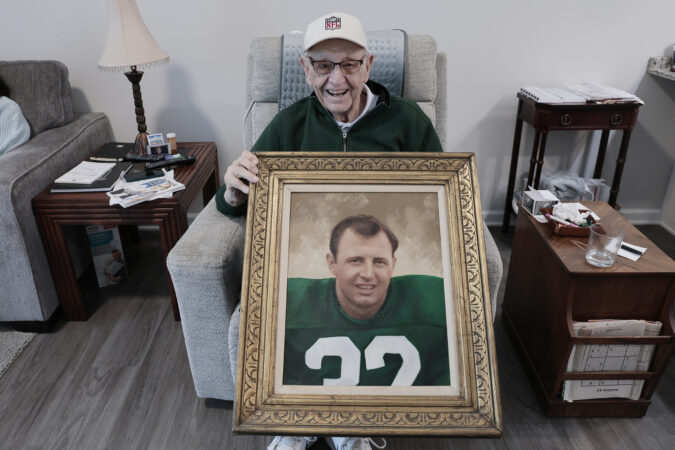
    When Joe Pagliei moved to the Azalea senior living facility in September of 2023, word spread quickly. This was not just because he spent a season playing for the Eagles.

    It was also because of his unabashed personality.

    Pagliei would walk the halls of the Cinnaminson retirement home practicing his golf swing. If he lost a game of bingo, he’d throw the cards into the air and accuse his neighbors of “cheating.”

    Every day, at 3 p.m., he’d sit at the bar, nursing a ginger ale, with copies of a book about his life stacked beside him. Before long, residents began to ask for some.

    This wasn’t your average nonagenarian, after all. Pagliei spent parts of the 1950s and 1960s as a pro football player, first in Canada in the CFL, then in the NFL, and eventually, the AFL.

    He played the 1959 season as a fullback and punter with the Eagles. Pagliei was the last cut in training camp before the 1960 season. The Eagles called him back, asking if he’d want to rejoin the team, but it was too late.

    The fullback had already signed with the New York Titans, later to become the New York Jets. Pagliei ended up missing out on a championship.

    “Big mistake,” joked his daughter Vicki.

    It didn’t hamper Joe’s confidence. The former football player worked in auto sales and real estate for a few years, and became a jockey agent in 1970 out of Garden State Park Racetrack.

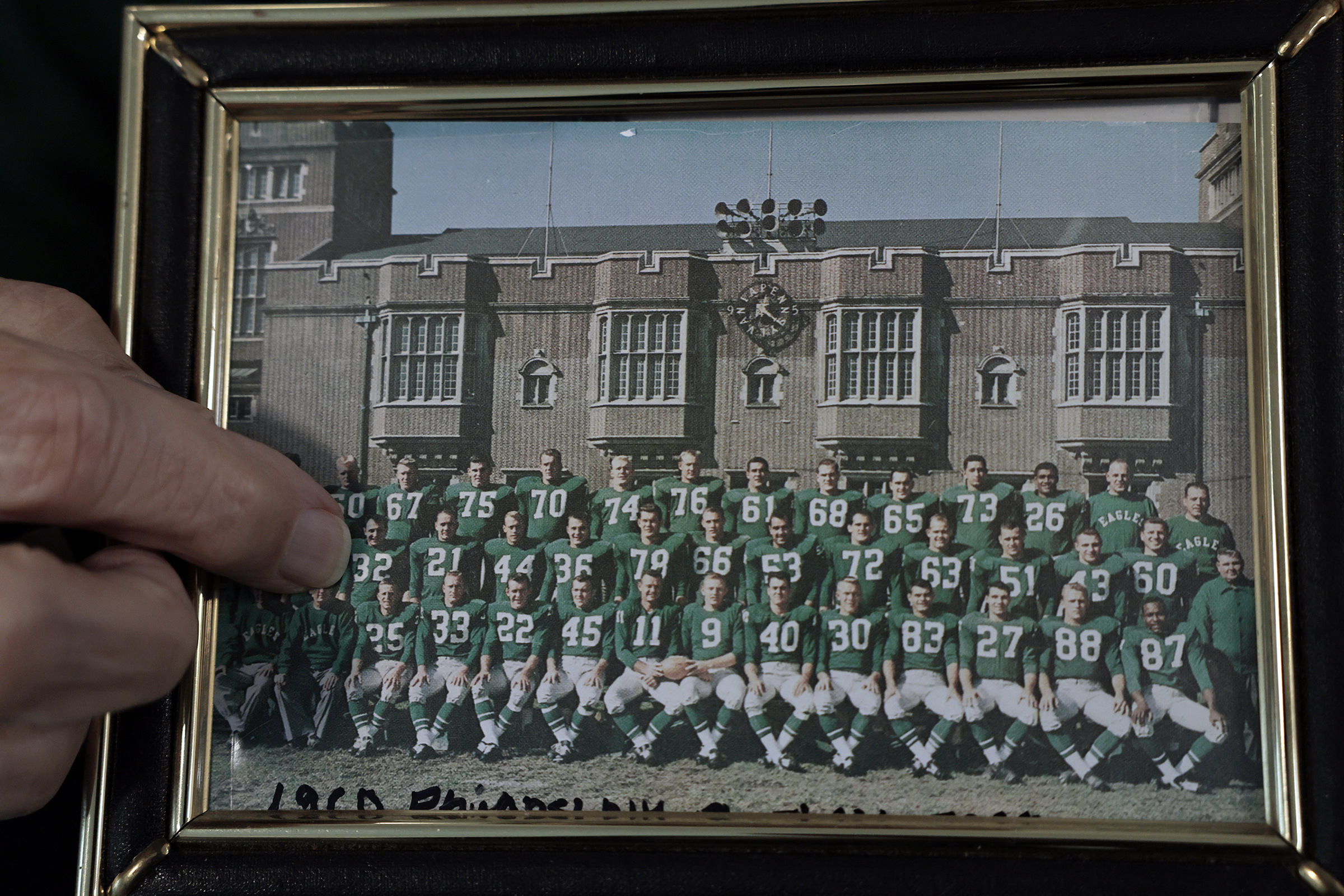
    Joe Pagliei points to himself, wearing No. 32, in the 1960 Eagles team photo taken at Franklin Field.

    When the track burned down in 1977, Pagliei headed to Atlantic City, where he became a casino host, crossing paths with everyone from Mickey Mantle to Joe Frazier to Sammy Davis Jr.

    He moved to Mount Laurel with his wife of 62 years, Rita, and four children in 1991. He sold cars for a few years, retired in 2000, and moved to Azalea after Rita died in 2023.

    At 91, Pagliei is believed to be the oldest living former Eagle. It is not a title he takes lightly. Last year, before the Super Bowl, his senior facility arranged for a visit from an Eagles-themed bus.

    Dressed in his kelly green jersey, Pagliei signed one of the bus panels: “Joe Pagliei, #32.”

    When he’s not lifting weights, or playing poker, he is watching Eagles games in his apartment, often with critiques of his own. Philadelphia will always be his favorite team, but he does have some misgivings about how he was used back in the day.

    “I was awfully good to be sitting down,” the 91-year-old said. “Not enough [playing time].”

    ‘I’m going to make you famous, buddy’

    Pagliei grew up in Clairton, Pa., a small town southeast of Pittsburgh, full of hard-nosed steel mill workers. His father, Alberto, emigrated from Italy and spent 48 years working as a janitor at the local plant.

    The elder Pagliei, a pragmatic man who saved every dollar, didn’t see the benefit in his son joining the football team. He refused to let him play until the 11th grade.

    Despite missing a few seasons, the younger Pagliei was not short on confidence. On the first day of practice, he walked straight up to his new coach.

    “I said, ‘I’m going to make you famous, buddy,’” Pagliei recalled. “He said, ‘You’re full of [expletive].’ And I said, ‘Oh really?’

    “I didn’t know the plays. I went out on a Wednesday. I ran two touchdowns. He said, ‘Wow.’ I said, ‘You just put my [butt] in there. Don’t worry about it.’”

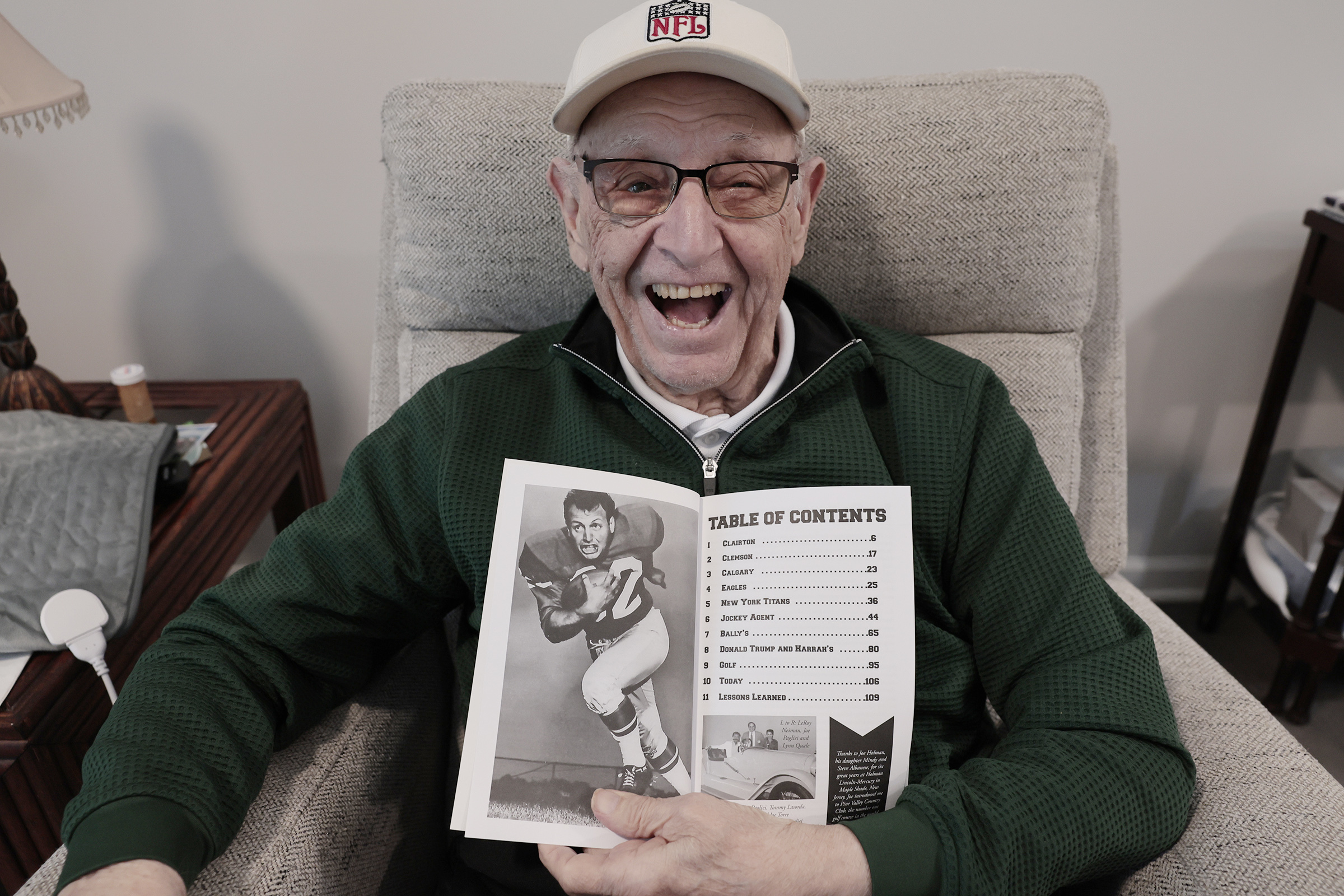
    Famous might have been an exaggeration, but Pagliei did catch the attention of some big-name schools. According to his 2017 self-published book, The Roast Master, he received more than 100 recruitment letters.

    The fullback chose Clemson University in South Carolina. His arrival on campus in 1952 marked the first time he’d ever traveled outside of Western Pennsylvania. He played both football and baseball, and separated himself on the gridiron.

    Joe Pagliei came to football later than most, but he made up for lost time as a dual-position standout.

    In 1954, he led the Atlantic Coast Conference in punting, averaging 37.8 yards on 26 kicks. In 1955, his senior year, he topped the conference again, averaging 39.1 yards on his punts. He also made a dual-threat impact for the Tigers on offense, rushing for 476 yards and catching 10 passes for 233 yards.

    Clemson’s 1955 team program referred to the fullback as a “flashy performer,” a characterization that seemed apt, though perhaps insufficient in retrospect.

    “I did a number on ’em when I went to Clemson,” Pagliei said. “I just ran everybody the hell out. They had me as number five. I said, ‘I’m number uno.’ They said, ‘You’re five.’ I became the best one.”

    After going undrafted in 1956, Pagliei received free-agent invitations from the Green Bay Packers and Washington, but said neither came “with any form of guarantee.”

    He ended up getting a better contract outside the NFL, with the Calgary Stampeders of the CFL, where he played the 1956 season. Pagliei was drafted into the U.S. Army in 1957.

    He joined the football team on the base while serving at Fort Knox in Kentucky, and the Eagles offered him a contract for the 1958 season. Because of his military commitment, he was unable to suit up until May 1959, when he was discharged from the Army.

    The Eagles had a deep backfield, and as Pagliei noted, he didn’t get much playing time (only two carries for minus-5 yards and two catches for 9 yards). He didn’t get much time as a punter, either, because he was the backup for Hall of Fame quarterback Norm Van Brocklin.

    But Pagliei did emerge with one stat to be proud of. According to The Roast Master, on Dec. 6, 1959, in the middle of a rainy game against Washington, Van Brocklin suggested that Pagliei take the kick.

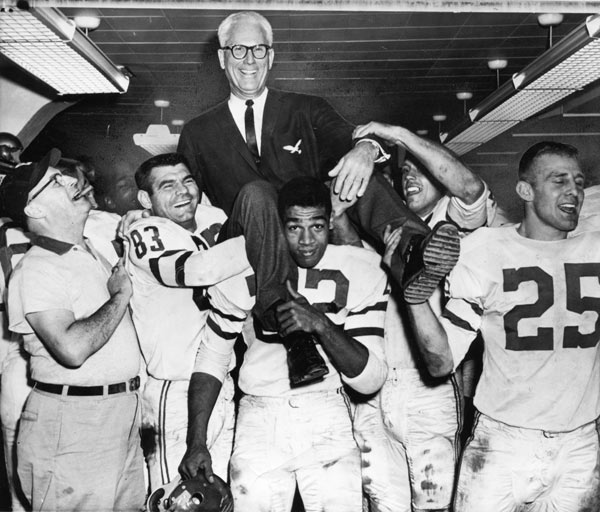
    Joe Pagliei was not officially a part of Buck Shaw’s 1960 title team, but he was considered an honorary part of it by his former Eagles teammates.

    He did, for 45 yards. It was the NFL rookie’s only punt of the 1959 season, giving him a yearly average of 45 yards (for his one attempt) while Van Brocklin had only 40.8 (for his 53).

    “I always rubbed that in with Van Brocklin,” Pagliei wrote. “And he’d say to me, ‘You son of a [expletive]. One punt and you lead the team.’”

    Pagliei again faced stiff competition in training camp the following year. He was cut on the day the Eagles took their team photo, Sept. 19, 1960, thereby capturing his final moment on the future championship-winning squad.

    After he signed with the Titans of the AFL, the Eagles contacted Pagliei again. Fullback Theron Sapp had broken his leg in a preseason game and would be out longer than the team had expected.

    They asked Pagliei if he’d like to return to Philadelphia, but he’d already signed his Titans contract. While missing out on history was bittersweet, the 91-year-old always felt like he was a part of the 1960 Eagles group.

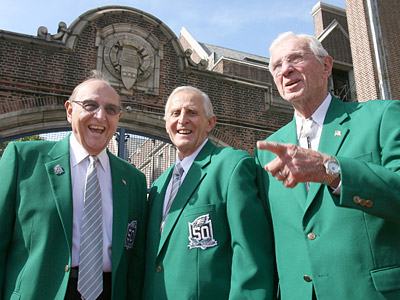
    Joe Pagliei (left) with Tommy McDonald (center) and Chuck Bednarik at an event honoring the 1960 team.

    It included some of his closest friends. Defensive tackle Jesse Richardson was the best man at Pagliei’s wedding. Wide receiver Tommy McDonald was like a family member. McDonald’s wife, Patty, was the godmother to Pagliei’s daughter Lizanne and the confirmation sponsor for Vicki.

    Pagliei left professional football in 1961 but continued to stay a part of that fraternity. His kids would play with McDonald’s kids, and linebacker Bob Pellegrini’s kids. The team always invited Pagliei to reunions and celebrations of the 1960 championship.

    In 2018, after the Eagles won their first Super Bowl, former players and their families were invited to the NovaCare Complex to see the Lombardi Trophy up close.

    McDonald had been diagnosed with dementia. He attended the event in a wheelchair, donning his gold Hall of Fame jacket. The former receiver’s recall was shaky, but when he saw Pagliei, his face lit up.

    “He knew who my dad was,” Vicki said. “He didn’t know too many people, but he knew who my dad was. He used to call him his brother.”

    The mayor of Azalea, senior living

    The staffers at Azalea of Cinnaminson say that Pagliei is something akin to a mayor. He knows everyone in the building. He also knows everything going on in the building, for better or for worse.

    The 91-year-old goes to the gym once a day, where he rides a bike, and does “40 reps of each weight.” On Tuesday and Thursday nights, he plays poker, a game that he might take more seriously than any other.

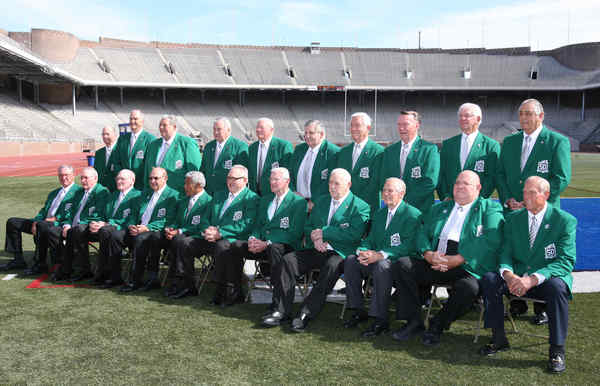
    Members of the 1960 Eagles NFL championship team pose for a team photo at Franklin Field, the site of their 17-13 win over Green Bay in the title game.

    “I make a lot of money,” Pagliei said, pointing to a stack of bills totaling $21 on a nearby counter. “Big time. Big time.”

    The former Eagle is 66 years removed from his last NFL season, but he has not lost his competitive spark. The Azalea staff learned this the hard way.

    Gracie Pouliot, a guest services manager, has had to intervene in a few contentious games of bingo.

    “He’s not a very good loser,” she said. “Everyone is cheating if he loses. He’s like, ‘This is [expletive]! They cheated!’

    “And we’re like, ‘No!’ He’ll throw the cards. He just cracks us up. He’s so funny.”

    Linda Bryant, a life enrichment assistant, said that Pagliei used to make fun of how she’d play pool.

    “He was joking around,” she said. “‘You guys don’t know how to do it.’”

    Bryant and Pouliot wouldn’t have it any other way. Pagliei might not be able to punt the ball, or run the length of a field, but he still has the spirit of a teenager.

    “He’s our little, fun-loving guy,” Bryant said.