Tag: topic-link-auto

  • Courtroom recordings raise questions about Judge Scott DiClaudio’s testimony in probe of whether he tried to influence case

    Courtroom recordings raise questions about Judge Scott DiClaudio’s testimony in probe of whether he tried to influence case

    When Common Pleas Court Judge Scott DiClaudio sat before the Court of Judicial Discipline in October and answered questions under oath about whether he sought to influence a colleague’s decision in a case, he denied having summoned the fellow judge to his Philadelphia courtroom.

    DiClaudio said he did not ask Judge Zachary Shaffer to come see him that day in June. Shaffer, he said, showed up unannounced.

    “I was unaware that day he was going to walk in,” DiClaudio said. “He was unannounced and unexpected.”

    But a recording captured by digital audio systems inside DiClaudio’s and Shaffer’s courtrooms and obtained by The Inquirer calls that account into question.

    According to the recording, DiClaudio asked his assistant, Gary Silver, to contact Shaffer on the morning of June 12.

    “Is Judge Shaffer on the bench right now?” DiClaudio asked his court staff around 11 a.m., according to the recording. “Can you call down there and see if he’s still on the bench, please?”

    A few minutes later, according to a recording from the digital system inside Shaffer’s courtroom, Silver visited Shaffer.

    “1001 wants to see you,” Silver told the judge, referring to the number of DiClaudio’s courtroom, according to the audio.

    The recordings raise questions about DiClaudio’s sworn testimony before the disciplinary panel as he faces charges from the Judicial Conduct Board that he sought to influence Shaffer’s handling of a gun case involving a defendant with ties to Philadelphia rapper Meek Mill.

    Elizabeth Hoffheins, deputy counsel for the Judicial Conduct Board, said during the hearing that DiClaudio’s conduct was so egregious that it brought the judiciary into disrepute.

    DiClaudio has denied that he sought to influence Shaffer’s decision-making and said his colleague misunderstood his words and intentions on that day. He has been suspended without pay as the disciplinary case proceeds.

    DiClaudio’s attorney, Michael van der Veen, declined to comment on the recordings and said the judge had done nothing wrong.

    “It would not be appropriate to comment about alleged secondhand partial evidence in an ongoing matter,” van der Veen said in a statement Monday. “It remains very concerning that there are continual leaks of information somewhere in this process. As from the beginning, my client professes his innocence.”
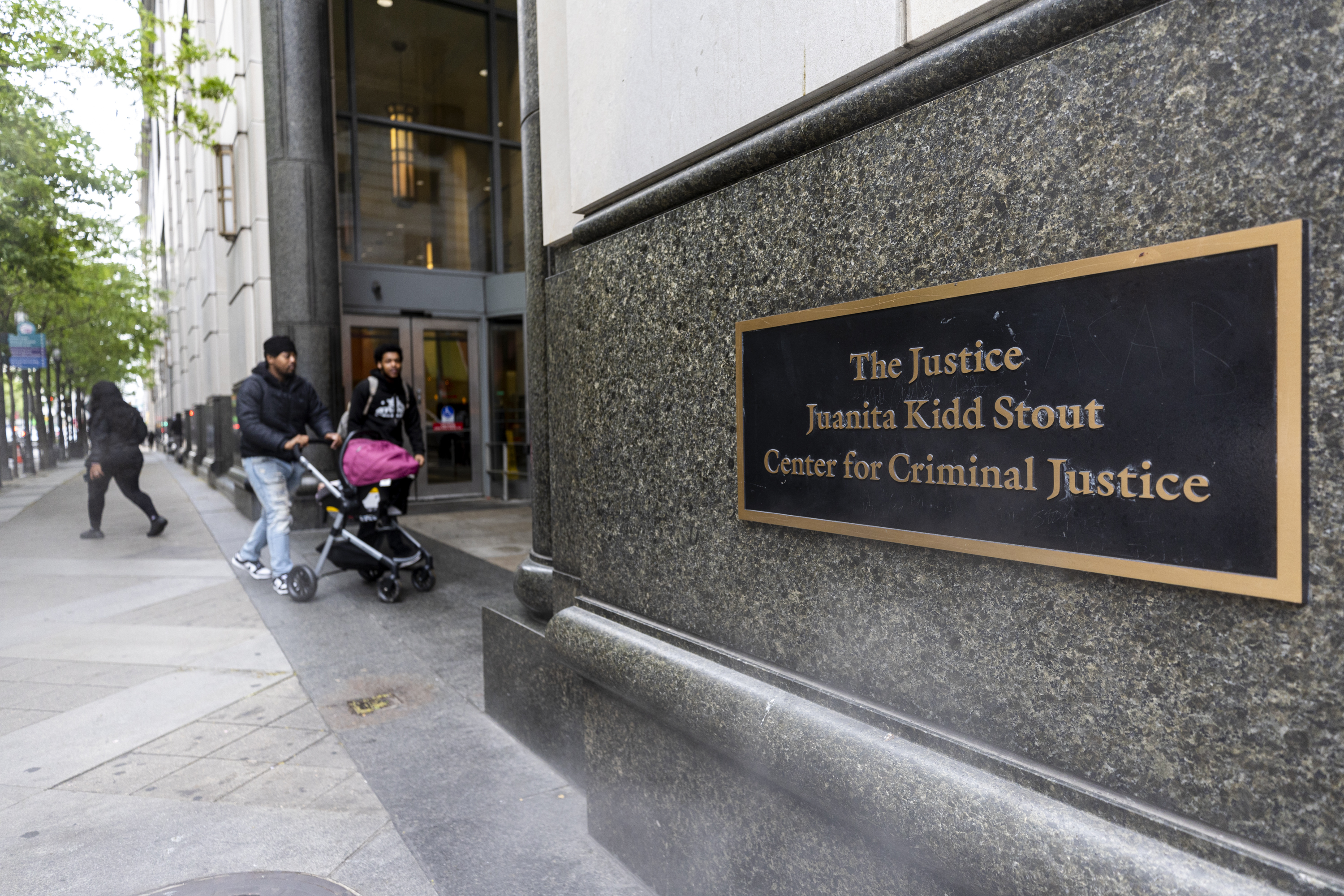
    Common Pleas Court Judge Zachary Shaffer testified that Judge Scott DiClaudio’s assistant came to his courtroom on the ninth floor of the city’s criminal courthouse and said DiClaudio wanted to see him on the morning of June 12.

    The conversations were captured on a digital audio recording system embedded in dozens of courtrooms across Philadelphia to aid in the transcription of testimony and proceedings. The systems, which have been in city courtrooms since 2003, can be turned on and off between hearings at the discretion of court reporters, who transcribe hearings.

    On the morning of June 12, inside courtrooms 1001 and 905, the systems captured the brief side conversations of the judges and their staff.

    At the hearing in the Court of Judicial Discipline, Shaffer testified that he was seated in his ninth-floor courtroom when Silver, DiClaudio’s assistant and a former defense attorney, came in and said DiClaudio wanted to see him.

    Shaffer said that during that week in June, he and his court clerk, Nicole Vernacchio, had been in touch with DiClaudio about buying T-shirts from DiClaudio’s wife’s cheesesteak shop.

    About 45 minutes after Silver came by, he said, they went up to DiClaudio’s 10th-floor room, assuming the shirts were ready to be picked up.

    They met in DiClaudio’s robing room and talked for about 10 minutes before DiClaudio asked Vernacchio to leave the room, he said. Vernacchio also testified that the judge asked her to step out.

    After she left, Shaffer said, DiClaudio pulled out a piece of lined paper with “Dwayne Jones, courtroom 905, and Monday’s date” written on it.

    DiClaudio held it out at his side, he said, then looked at him and said, “OK?”

    Shaffer said he was confused, and hesitantly said, “OK.”

    Then, he said, DiClaudio ripped up the paper and threw it away.

    The judges then spoke casually about unrelated topics for a few minutes, he said. As he started to leave, Shaffer said, DiClaudio told him, “‘You probably would have done the right thing anyway.’”

    Shaffer said he was shocked. He believed DiClaudio was suggesting that he should give a favorable sentence to Jones, who was scheduled to appear in front of him in a few days on illegal gun possession charges connected to a fatal shooting.

    The next morning, Shaffer said, he reported the conversation to his supervisors, and they referred the matter to the Judicial Conduct Board. He recused himself from Jones’ case.

    Court administrators placed DiClaudio on administrative leave amid an investigation into the matter.

    In September, the Judicial Conduct Board charged DiClaudio with multiple ethical violations, saying his actions on that day represented “conduct that was so extreme that it brought the judicial office itself into disrepute.”

    At the October hearing, held to determine whether DiClaudio should be suspended without pay amid the ongoing inquiry, DiClaudio took the stand and vehemently denied Shaffer’s version of events.

    He said he had met Jones at The Roots Picnic on June 1. During a brief conversation, he said, Jones mentioned that he had a gun case in front of Shaffer, and gave DiClaudio his business card.

    “I eventually say, ‘Judge Shaffer is a good judge. He does the right thing,’” DiClaudio said he responded. “He gives me his card. I put it in my cell phone case. Then he leaves, never to be seen again.”

    He’d forgotten about the conversation, he said, until he saw Shaffer on June 12 and remembered he still had Jones’ business card. He took out the card and relayed the conversation he’d had with Jones before tossing it into the trash, he said.

    “I was relating the story to Judge Shaffer to give him a compliment,” DiClaudio said. “I wasn’t trying to influence a case.”

    He also denied asking Vernacchio, the clerk, to leave the room.

    Van der Veen asked DiClaudio whether he asked Shaffer to come to his courtroom.

    “Never,” he said.

    Van der Veen told the disciplinary panel that he and DiClaudio had never before heard Shaffer’s contention that his fellow judge had summoned him for a conversation and said it was “shocking.” And he noted that there was no mention of such a request in the summary of Shaffer’s interview with the investigator from the disciplinary board.

    (Shaffer, for his part, insisted that he told the investigator DiClaudio had asked him to come to his courtroom. He said he did not review the summary of his conversation with the investigator before it was shared with the board and DiClaudio and his lawyer, and said the report was incomplete and in some ways inaccurate.)

    Van der Veen seized on the omission. He suggested that the assertion that DiClaudio had called Shaffer to his courtroom was a “new fact” belatedly raised to support his contention that DiClaudio had sought to influence him.

    “Otherwise‚” the lawyer said, “it is completely nonsensical. If you’re going to come to the theory of the prosecutors, that this was … clandestine, premeditated, and designed by Judge DiClaudio, that’s completely false if Judge DiClaudio didn’t call for the meeting.”

    Hoffheins, the attorney for the Judicial Conduct Board, told the disciplinary panel DiClaudio orchestrated the meeting with Shaffer to seek a favorable sentence for Jones. The judge did so, she said, because Jones is a friend of Meek Mill. DiClaudio is also a friend of Mill’s, and has worked with him on criminal justice reform issues related to the rapper’s nonprofit.

    “The nature of misconduct here is not a technical misstep. It is an abuse of judicial privilege,” she said of DiClaudio’s actions. “It was made behind closed doors, and it was an attempt to tilt the scales of justice for a personal acquaintance.”

    The judicial officers on the disciplinary court agreed that the allegations were consequential. In November, they suspended DiClaudio without pay.

    The case now awaits a trial before the disciplinary tribunal. If the panel finds that DiClaudio violated judicial ethics or constitutional rules, he could be censored, fined, or removed from office.

    DiClaudio was elected to Philadelphia’s Court of Common Pleas in November 2015, and took the bench in January 2016. In recent years, he has mostly heard cases filed by people seeking to have their murder convictions overturned.

    He has presided over many high-profile exonerations and wrongful-conviction cases and approved the release or resentencing of dozens of people who had been serving life in prison.

    Over the last decade, he has faced multiple inquiries from the Judicial Conduct Board.

    In 2020, the Court of Judicial Discipline determined that he violated the code of conduct for judges when he failed to report debts on annual financial disclosure forms and repeatedly defied a judge’s orders to pay thousands of dollars in overdue bills to a Bala Cynwyd fitness club. He was suspended for two weeks, and placed on probation through 2026.

    Then, in April of this year, the board filed charges against DiClaudio for allegedly using his position as a judge to promote his wife’s cheesesteak shop. In so doing, the board said, he had eroded public trust in the judiciary and abused the prestige of the office for personal gain. DiClaudio has denied the allegations, and the case is pending before the disciplinary court.

    DiClaudio was reelected to another 10-year term last month, though he has publicly discussed retiring after the New Year.

  • As we search for autism’s cause, we ignore those living with it

    As we search for autism’s cause, we ignore those living with it

    Top federal officials talk about finding a cause for autism, generating more buzz by the day. More substantively, the owner of the Philadelphia Eagles gave an extraordinary sum — $50 million — to a local hospital to discover its cause and develop new treatments.

    While such gifts deserve praise, another urgent crisis goes largely unnoticed: how to care for the millions of adults already living with autism.

    Each year, more than 120,000 young people with autism turn 18 and “age out” of pediatric medicine. They enter an adult system that is unprepared to help them. They enter a world with no standardized guidelines for care, no specialized training for physicians, and far less support. Families must navigate a cliff, not a bridge. More than five million adults now push past herculean obstacles for what is often worse care.

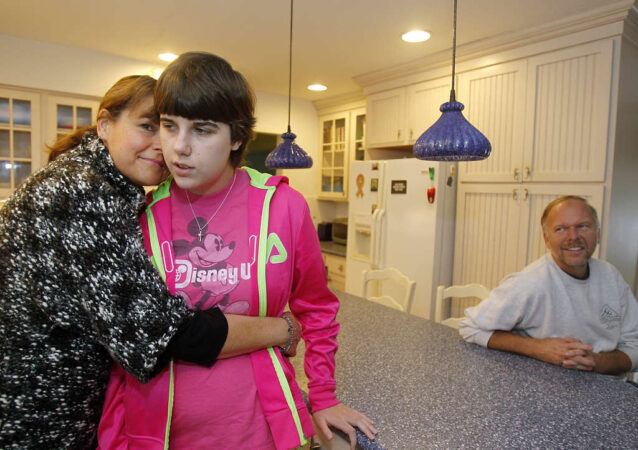
    I view this crisis as a pediatric emergency medicine doctor and as the mother of a transition-age autistic son.

    Fear for the future

    We parents are terrified by what will happen to our adult children when we are no longer around to care for them. Parents weep — and sometimes wail — when I refer them to an alternate site for adult care. Our system can no longer remove an appendix or mount a crisis intervention once these children cross over.

    As a doctor, I know how this change can cause unnecessary admissions and a loss of social work and case management. Caregivers must suddenly educate the provider on the patient’s basic needs. As a parent, I watch my son Alexander and others hop from one tiny island of support to another.

    When Alexander broke his arm at age 6, surgeons were called in to pin his shattered bone and clean the wound where the disrupted muscle had burst through the skin. Alexander was ridiculously compliant and poised; I was less so.

    His surgeons accidentally cut one of the three main motor nerves in the arm when they tried to stabilize his floppy elbow. It took many visits over eight weeks to get proper attention. By then, his arm was floppy from a medical error.

    In our home, we work hard to protect him: Trampolines are forbidden, helmets always on, seat belts firmly buckled. Yet, I failed to anticipate how Alexander’s autism could hurt him. This label — his scarlet letter “A” — kept his surgeons at a dangerous distance.

    Could it happen again when I am no longer around?

    We know autistic adults suffer more illness and death compared to their peers. They are more likely to be misunderstood, dismissed, or undertreated. The data are abundant — and damning. We fail these people.

    Deserve tailored care

    I continue to teach Alexander to be responsible for his care so he will thrive when I cannot be beside him. In 2023, the National Institutes of Health formally designated people with disabilities as disadvantaged. I am relieved to see a growing acknowledgment of autistic people as a vulnerable group, at risk for health disparities, deserving of tailored care.

    Justin Pierce (center), who has autism and is an account support associate, meets with his team at Ernst & Young offices in Chicago.

    I have also gained confidence in my voice as an advocate for Alexander. I’ve become a “gang member.”

    Senior staffers for Gov. Josh Shapiro respectfully dubbed my fellow autism advocates as “the mom gang.” It is reassuring only in this context that I present as intimidating. Our band of six wants to make sure that half-baked federal plans to create a national autism registry never happen in Pennsylvania without privacy safeguards.

    Meanwhile, the autism community holds diverse opinions on what to do. Should profound autism be classified separately from other presentations? Is “cure” the right goal? Is Tylenol a risk factor?

    While these conversations pull us in different directions, we must not lose sight of a common purpose to create a better system.

    Autistic adults deserve accessible and affirming change. There are models, tools, and innovations in which to invest:

    • Training emergency, inpatient, and outpatient teams to recognize how autism presents in adults
    • Designing calming public environments that ease communication
    • Creating dedicated consult services — including behaviorists, communication specialists, and caregivers — available in person and via telehealth
    • Prioritizing prevention and de-escalation over restraint
    • Highlighting the voices of autistic individuals in policy decisions that affect them
    • And, critically, funding and scaling programs that treat autism across the lifespan

    Lack of resources

    Resources are scarce. Historic gifts fill some gaps from interrupted government funds pulled from disability and diversity programming. Casualties include the Department of Education’s “Charting My Path for Future Success” transition program, a research-based effort to help high school students with disabilities enter the workforce or higher education.

    We may all agree there is an immediate need to build better supports for adults with autism.

    I worry for my son. I need to know I have pushed every edge of possibility to smooth his way forward. I do this for my daughters, too, who learned from their earliest days their brother needs the same supports they are accustomed to, but he is often denied.

    One day, they will take my place slaying this dragon.

    Eron Friedlaender is a public health investigator, an emergency medicine physician at Children’s Hospital of Philadelphia, and a board member of the Institute for Human Centered Design.

  • Letters to the Editor | Dec. 16, 2025

    Letters to the Editor | Dec. 16, 2025

    Check and balances

    When any one branch of our federal government gains power, another loses some. For several years, the Supreme Court has expanded the power of the executive branch to the detriment of the legislative. President Donald Trump’s implementation of tariffs and his refusal to provide information to Congress about the military operations in the Caribbean, the Pacific, and off the Venezuelan coast are recent examples in which the White House has pushed the limits of its authority and sidestepped lawmakers.

    The Supreme Court seems poised to expand the president’s power even further early next year by giving the Oval Office control over government agencies that have always been independent.

    A 90-year-old Supreme Court decision in Humphrey’s Executor v. United States upheld the independence of these executive branch agencies, the justices seem to be signaling that they intend to reverse this long-standing precedent.

    Our founders wanted governing and decision-making to be done collaboratively with Congress, where the three branches work together, and no single individual wields too much control. We need to resist this ongoing shift in power and demand a return to a balance that best serves our ability to self-govern.

    Joseph Goldberg, Philadelphia

    Questionable buzzwords

    There are many flaws in Rabbi Linda Holtzman’s op-ed which advocates limiting military aid to Israel, but the overriding flaw in this piece is its dishonesty. By using the buzzwords “Palestinian liberation” and “anti-Zionist,” she is cleverly avoiding stating the real aim of her organization and its allies, namely, the destruction of the state of Israel as a homeland for the Jewish people.

    She recognizes, of course, that saying this out loud would not fly with most readers of the Inquirer, Jewish and non-Jewish alike. The fact that the author is a rabbi and teacher at a Jewish institution gives no special credence to this extreme position, but may fool some readers to think that she speaks for mainstream Jewish opinion.

    And speaking of liberation, my hope is that the Palestinian people will be liberated from the corrupt and hateful leaders whose rejectionist position over the years has denied them the opportunity to have a state of their own.

    Henry Maurer, Cherry Hill

    The stories of our neighbors

    Thank you for your continuing commitment to publishing news reports and op-eds about what is happening to our immigrant communities locally and across the nation. Your news articles, such as the one about activists in Montgomery County, as well as your broad-based Opinion coverage — with Will Bunch covering ICE raids in Louisiana and Luis Carrasco writing from the border — are very much appreciated.

    In the face of a fractured Congress and a seemingly complicit Supreme Court, it’s up to the free press to inform and empower everyday people to step up and denounce the inhuman and unjust treatment of our immigrant neighbors. Citizens have an important role to play in defending neighbors who contribute so much to our communities and our economy. Let us hope our fellow Americans will become as concerned with the deplorable treatment of other human beings as they are about the economy.

    Sister Veronica Roche, Westmont

    Join the conversation: Send letters to letters@inquirer.com. Limit length to 150 words and include home address and day and evening phone number. Letters run in The Inquirer six days a week on the editorial pages and online.

  • Horoscopes: Tuesday, Dec. 16, 2025

    ARIES (March 21-April 19). You may be compensated in gratitude, love and growth, yet it’s the money that makes a situation sustainable. Anyone who acts like dollars don’t matter is suspect. Practical abundance is part of the ecosystem of happiness.

    TAURUS (April 20-May 20). You needn’t look back to move forward. Also, it’s not necessary to completely understand what’s holding you back to conquer it. Today, you will decide you know enough to continue in strength, and you’ll keep it pushing.

    GEMINI (May 21-June 21). The future always looks shinier than the present because it hasn’t been touched by reality yet. But there’s a lot to enjoy right where you are. So be careful not to romanticize the next chapter while overlooking the good parts of the current one.

    CANCER (June 22-July 22). New beliefs may contradict the previous ones. You can take that as a sign of your intelligence. You’re willing to question yourself, admit you might not know yet and let experiments reveal truth. You’re learning as you go.

    LEO (July 23-Aug. 22). Stress can have various causes, like sensory overload, relationship conflict or the unpredictability of life. But in a psychological sense, a lot of stress is caused simply by thinking. You’ll eliminate suffering by distracting yourself away from certain thought spirals.

    VIRGO (Aug. 23-Sept. 22). The unknown isn’t the problem, but your predictions about it might be. “What if it goes wrong?” “What if I fail?” Your thoughts can create more stress than the situation itself. Notice thoughts, but don’t become them. Let them pass. No need to build stories around sensations.

    LIBRA (Sept. 23-Oct. 23). Your confidence has a way of drawing people in without you having to say a word. No puffing up, no posturing, no dancing to get attention — your presence does all the work necessary to make an impact.

    SCORPIO (Oct. 24-Nov. 21). Living by your charisma feels like a cheat. You’d like for things to get better because you actually did something, not because you charmed the room. Maybe you’re a bit serious today as you concentrate on creating tangible results.

    SAGITTARIUS (Nov. 22-Dec. 21). You’ve learned all you can from someone, and now you’re applying it to beautiful effect. Your work goes to the next level. Now it’s all about what you bring to it — your perception, ability, style and more. Everything is falling together for you.

    CAPRICORN (Dec. 22-Jan. 19). You request things of yourself, then discover your inner rebel who doesn’t like to be bossed around. Maybe your ask is too much right now. Cut it in half. Then what does the rebel say?

    AQUARIUS (Jan. 20-Feb. 18). Whoever suggested “familiarity breeds contempt” didn’t know your clan. They’re quirky, so they know how to tolerate quirks. You can be yourself around your people, and this comfort will feel good today. It’s natural. It’s healing.

    PISCES (Feb. 19-March 20). Some of the things you like are so costly that it’s just not practical to have them very often. But there are new, more affordable options around now. You’ll find them with a little research. Ask around.

    TODAY’S BIRTHDAY (Dec. 16). The fog lifts, and you enter your Year of Crystalline Clarity. You’ll make decisions quickly and correctly, trusting yourself implicitly to excellent effect. People notice your new energy and want to collaborate, invest or simply be near it. Your social calendar becomes enviable because you’re magnetic. More highlights: found money, a creative breakthrough and a relationship upgrade that’s like coming home. Leo and Aquarius adore you. Your lucky numbers are: 33, 5, 22, 8 and 49.

  • Dear Abby | Bad manners have spread throughout large family

    DEAR ABBY: My husband and I are retired and happy. Each of us was married before. We’re not rich, but we get by without help from anyone. We have been blessed with a big family. Between us, we have six children, 15 grandchildren and a great-grandchild. This does not include the in-laws, because quite a few of these offspring are now married.

    I am bothered by the sense of entitlement that seems to run rampant in this group. We never receive a “thank you” for anything we do for some of them, whether it’s a birthday, graduation, shower gift, wedding, or an acknowledgment for a funeral. Most of them are old enough to have better manners than that, but it doesn’t seem to matter.

    I have bitten my tongue on more than one occasion. When we tried to stop sending gifts, we were called out on it by the two worst offenders. We don’t want to give because “we have to.” We want to give because we WANT to. And while we may want to give, we don’t want to feel underappreciated either. Any advice?

    — UNAPPRECIATED IN INDIANA

    DEAR UNAPPRECIATED: Just this. Feel free to unburden yourselves to the worst offenders. Tell them in plain English that when a gift goes unacknowledged, it makes the giver feel the gesture is unappreciated, and you don’t like feeling that way. Make it clear that if they cannot summon up the energy to practice basic good manners, you will find another way to spend your money. I cannot make your relatives change, but if you do this, you may be able to wake them up.

    ** ** **

    DEAR ABBY: My husband of 20-plus years received a Facebook message from an old high school girlfriend. The message was wildly inappropriate (extremely risque) and ended with her offering to fly out and “meet up” if he ever wanted to. When my husband saw the message, he read it to me and to his best friend, who happened to be in town visiting. Those two guys were laughing so hard they were crying. They thought it was the funniest thing ever, while I was thinking she has a lot of nerve.

    My husband wrote back and declined her proposition. But later that night, I was doing some internet sleuthing. (Who wouldn’t?) Abby, she is a marriage counselor! Her message went from being a former flame’s cliche message to repulsive on so many levels. She of all people should know better. I’m itching to give her a piece of my mind. What do you think?

    — PERPLEXED IN PORTLAND, ORE.

    DEAR PERPLEXED: IF you really feel inclined to contact your husband’s old girlfriend, choose your words carefully. Tell her that when your husband received her message, he read it to you and his best friend, who happened to be in town visiting, and although the two of them were howling with laughter, you didn’t find it funny. Then close by saying you are disappointed that someone who is in a helping profession would stoop that low. (Mic drop.)

  • Judge dismisses lawsuit by Villanova’s Kris Jenkins against NCAA

    Judge dismisses lawsuit by Villanova’s Kris Jenkins against NCAA

    A federal judge in New York ruled Monday to dismiss the antitrust suit brought earlier this year by former Villanova basketball player Kris Jenkins against the NCAA and some of its member conferences.

    Judge Denise Cote of the U.S. District Court for the Southern District of New York said Jenkins’ suit against the NCAA and conferences, including the Big East, which he played in, was brought too late and is barred by the 2017 Alston v. NCAA class action settlement.

    “It is undisputed that Jenkins was a member of the Alston class and did not opt out of that litigation,” Cote wrote.

    Jenkins did not immediately reply to a request for comment. His attorney, Kevin T. Duffy Jr., said they planned to appeal but declined to comment further.

    Jenkins, whose three-point buzzer-beater lifted Villanova to the 2016 national title over North Carolina, filed the lawsuit in April and sought damages for the name, image, and likeness compensation he was unable to receive while at Villanova. In addition to the NCAA, Jenkins sued several conferences: the Atlantic Coast, Big 12, Big East, Big Ten, Pac-12, and Southeastern.

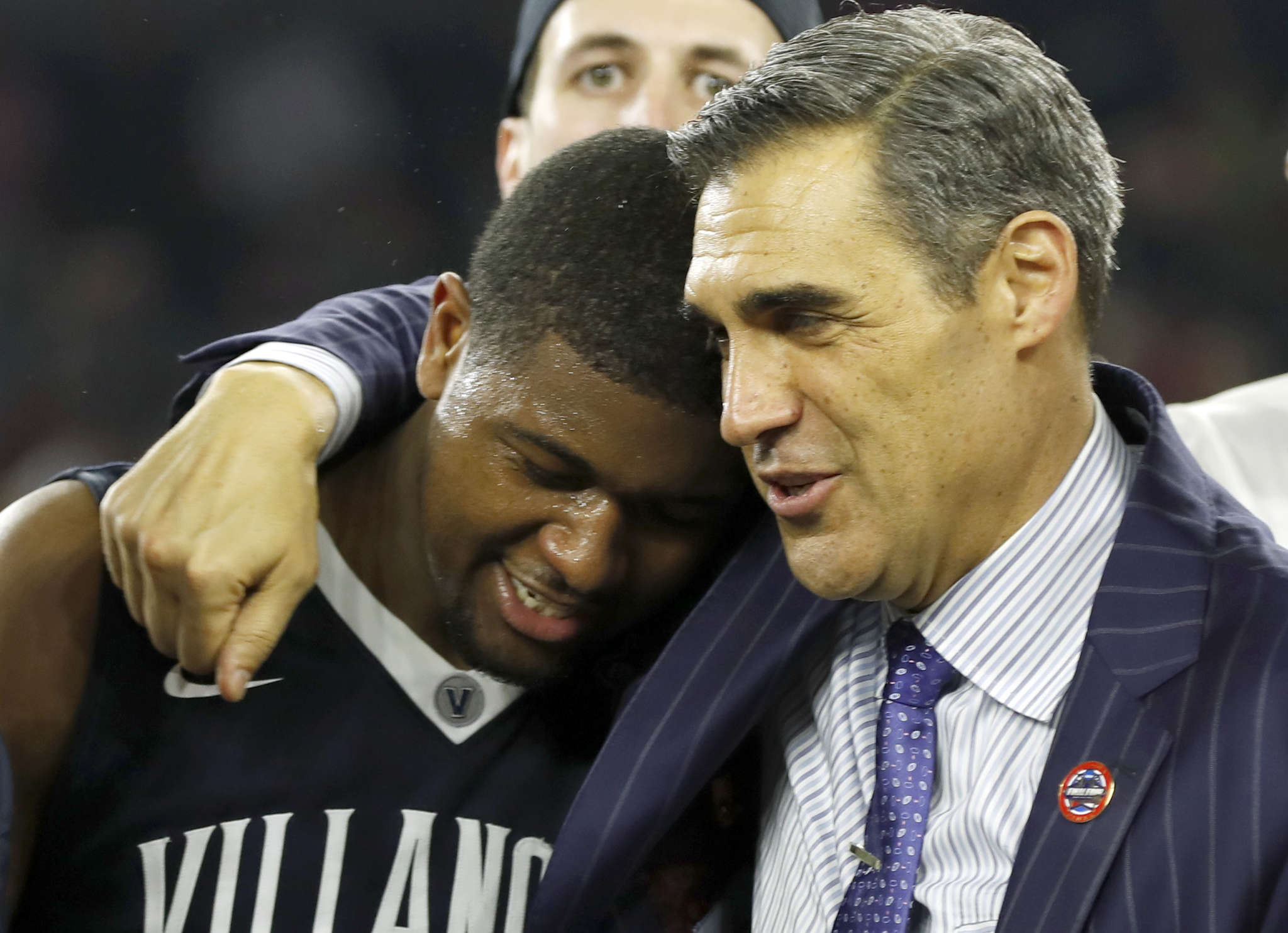
    Villanova coach Jay Wright with Kris Jenkins, who hit the buzzer-beating shot to win the national title in 2016.

    The suit argued that the named parties violated “antitrust laws and common law by engaging in an overarching conspiracy” that fixed the amount student-athletes could be paid and cut them out of the market.

    Jenkins wanted the money he “would have received” if not for the NCAA and its conferences’ “unlawful restraints on pay-for-play compensation,” a share of television revenue and media broadcast uses of his name, image, and likeness, and money he may have received from other third-party opportunities, according to the initial suit.

    “You want your respect as a man, as a human being,” Jenkins told The Inquirer in April. “Obviously all the other stuff that comes with it. More importantly, to just continue to fight for what’s right.”

    Monday’s ruling stands to make that more difficult. Judge Cote wrote that because Jenkins was a member of the Alston class action, he was barred by that December 2017 settlement from pursuing legal action.

    Alston v. NCAA, which challenged the “interconnected” set of NCAA rules that capped the amount of compensation an athlete could receive for his or her athletic services, went all the way to the Supreme Court. Along with the O’Bannon v. NCAA case, it was among the groundbreaking proceedings that eventually laid the groundwork for the landmark House v. NCAA settlement that forever changed college sports.

    Villanova’s Kris Jenkins celebrates his game-winning three-point basket against North Carolina in the national championship game on April 4, 2016.

    Jenkins argued that his claims were not barred because he challenged some rules not raised in the Alston case, but his suit relied on “facts that post-date Alston,” Cote wrote, such as when the NCAA in 2021 suspended its bylaw that prohibited athletes from receiving payments for their name, image, and likeness.

    “None of these arguments permits Jenkins to escape the effect of the Alston release and judgment,” Cote wrote. “Jenkins was a student-athlete from 2013 to 2017. Therefore, any claims that he may have had are claims that arise from anticompetitive conduct that occurred during that period. The NCAA’s suspension of a Bylaw in 2021 did not alter either the substance of his claims [nor] the breadth of his release of those claims.

    “The fact that Jenkins may have identified components of that framework, specifically two NCAA rules, that may not have been the specific focus of the Alston class pleading is immaterial.”

    Cote also ruled in favor of the NCAA and the conferences named in the suit when they motioned to dismiss the case based on the grounds of timeliness, saying Jenkins’ suit was barred by a four-year statute of limitations.

    The House v. NCAA settlement was at the crux of why Jenkins filed his suit. The settlement left the Big East out of the lion’s share of back payments dating to 2016. Jenkins, whose career at Villanova ended in 2017, would have been in an “additional sports class” that would receive minimum payment compared to football players and men’s and women’s basketball players from the power schools. He decided to opt out of the House class.

    It is difficult to quantify exactly how much money Jenkins’ championship-winning shot was worth, although his initial 127-page filing made an effort to. It said Jenkins’ shot, literally nicknamed “The Shot,” and Villanova’s championship victory were the reason behind William B. Finneran’s $22.6 million gift to renovate the now-named Finneran Pavilion and support the men’s basketball program. The filing notes that Villanova received an uptick in applications to the university. The campus footprint has greatly expanded since 2016.

    The NCAA and Big East, the suit said, have benefited greatly from the shot and continue to use it in promotional videos.

    “Everybody can see the value,” Jenkins, 32, said earlier this year. “Everybody knows the value.”

    Jenkins had a brief professional career before a hip injury forced him to stop playing in 2020. He rejoined the Villanova basketball program in a support staff role that year and has been around the program off and on at times since then.

  • Penn State’s Kaytron Allen and Olaivavega Ioane named to AP All-American teams

    Penn State’s Kaytron Allen and Olaivavega Ioane named to AP All-American teams

    Four players from Ohio State are among 10 first-team picks from the Big Ten on The Associated Press All-America team released Monday, a group headed by repeat selection Caleb Downs of the Buckeyes and AP Player of the Year Fernando Mendoza of Indiana.

    The AP has named an All-America team every year since 1925, and Notre Dame’s two first-team picks this season increased its all-time lead to 87.

    Downs, the Big Ten defensive player of the year, has made the first team each of his two seasons at Ohio State after landing on the second team as a freshman at Alabama in 2023. He is one of 12 players on the 27-man first team who did not start their careers at their current school. Downs is joined on the first team by fellow Buckeyes Jeremiah Smith, Kayden McDonald and Arvell Reese.

    Mendoza, who won the Heisman Trophy over the weekend, led the top-ranked Hoosiers to a 13-0 record and the No. 1 seed in the College Football Playoff after transferring from California. He has thrown a nation-leading 33 touchdown passes and is the catalyst of one of the most productive offenses in the country.

    A total of 18 schools are represented on the first team, including seven of the 12 in the CFP.

    Iowa has had at least one first-team player seven straight years and in 10 of the last 12. This is the fourth year in a row Miami, Notre Dame and Ohio State have had at least one.

    Punter Cole Maynard gave Western Kentucky its first-ever first-team pick. Defensive lineman Landon Robinson is Navy’s first since 1975 and kicker Kansei Matsuzawa is Hawaii’s first since 1986.

    First-team All-Americans (by conference)

    Big Ten — 10

    SEC — 6

    Big 12 — 3

    ACC — 1

    Independent — 3

    Conference USA — 2

    American — 1

    Mountain West — 1

    ___

    The AP All-America team was selected by a panel of 52 college Top 25 poll voters.

    First-team offense

    Wide receiver — Makai Lemon, Southern California, junior, 5-11, 195, Los Angeles.

    Wide receiver — Jeremiah Smith, Ohio State, sophomore, 6-3, 223, Miami Gardens, Fla.

    Wide receiver — Skyler Bell, Connecticut, senior, 6-0, 185, New York, N.Y.

    Tackle — Francis Mauigoa, Miami, junior, 6-6, 335, Ili’ili, American Samoa.

    Tackle — Spencer Fano, Utah, junior, 6-6, 308, Spanish Fork, Utah.

    Guard — Emmanuel Pregnon, Oregon, senior, 6-5, 318, Denver.

    Guard — Beau Stephens, Iowa, senior, 6-5, 315, Blue Springs, Mo.

    Center — Logan Jones, Iowa, graduate, 6-3, 202, Council Bluffs, Iowa.

    Tight end — Eli Stowers, Vanderbilt, graduate, 6-4, 235, Denton, Texas.

    Quarterback — Fernando Mendoza, Indiana, junior, 6-5, 225, Miami.

    Running back — Jeremiyah Love, Notre Dame, junior, 6-0, 214, St. Louis.

    Running back — Ahmad Hardy, Missouri, sophomore, 5-10, 210, Oma, Miss.

    Kicker — Kansei Matsuzawa, Hawaii, senior, 6-2, 200, Tokyo.

    All-purpose — KC Concepcion, Texas A&M, junior, 5-11, 190, Charlotte, N.C.

    First-team defense

    Edge rusher — David Bailey, Texas Tech, senior, 6-3, 250, Irvine, Calif.

    Edge rusher — Cashius Howell, Texas A&M, senior, 6-2, 248, Kansas City, Mo.

    Interior lineman — Kayden McDonald, Ohio State, junior, 6-3, 326, Suwanee, Ga.

    Interior lineman — Landon Robinson, Navy, senior, 6-0, 287, Fairlawn, Ohio.

    Linebacker — Jacob Rodriguez, Texas Tech, senior, 6-1, 235, Wichita Falls, Texas.

    Linebacker — Arvell Reese, Ohio State, junior, 6-4, 243, Cleveland.

    Linebacker — CJ Allen, Georgia, junior, 6-1, 235, Barnesville, Ga.

    Cornerback — Leonard Moore, Notre Dame, sophomore, 6-2, 195, Round Rock, Texas.

    Cornerback — Mansoor Delane, LSU, senior, 6-0, 190, Silver Spring, Md.

    Safety — Caleb Downs, Ohio State, junior, 6-0, 205, Hoschton, Ga.

    Safety — Bishop Fitzgerald, Southern California, senior, 5-11, 205, Woodbridge, Va.

    Defensive back — Jakari Foster, Louisiana Tech, senior, 6-0, 211, Piedmont, Ala.

    Punter — Cole Maynard, Western Kentucky, senior, 6-1, 180, Mooresville, N.C.

    Second-team offense

    Wide receiver — Carnell Tate, Ohio State, junior, 6-3, 195, Chicago.

    Wide receiver — Malachi Toney, Miami, freshman, 5-11, 188, Liberty City, Fla.

    Wide receiver — Danny Scudero, San Jose State, sophomore, 5-9, 174, San Jose, Calif.

    Tackle — Kadyn Proctor, Alabama, junior, 6-7, 366, Des Moines, Iowa.

    Tackle — Carter Smith, Indiana, junior, 6-5, 313, Powell, Ohio.

    Guard — Olaivavega Ioane, Penn State, junior, 6-4, 323, Graham, Wash.

    Guard — Ar’maj Reed-Adams, Texas A&M, graduate, 6-5, 325, Dallas.

    Center — Jake Slaughter, Florida, senior, 6-4, 303, Sparr, Fla.

    Tight end — Kenyon Sadiq, Oregon, junior, 6-3, 245, Idaho Falls, Idaho.

    Quarterback — Diego Pavia, Vanderbilt, graduate, 6-0, 207, Albuquerque, N.M.

    Running back — Emmett Johnson, Nebraska, junior, 5-11, 200, Minneapolis.

    Running back — Kewan Lacy, Mississippi, sophomore, 5-11, 210, Dallas.

    Kicker — Tate Sandell, Oklahoma, junior, 5-9, 182, Port Neches, Texas.

    All-purpose — Wayne Knight, James Madison, junior, 5-7, 190, Smyrna, Del.

    Second-team defense

    Edge rusher — Rueben Bain Jr., Miami, junior, 6-3, 270, Miami.

    Edge rusher — John Henry Daley, Utah, sophomore, 6-4, 255, Alpine, Utah.

    Interior lineman — A.J. Holmes Jr., Texas Tech, junior, 6-3, 300, Houston.

    Interior lineman — Peter Woods, Clemson, junior, 6-3, 310, Alabaster, Ala.

    Linebacker — Sonny Syles, Ohio State, senior, 6-5, 243, Pickerington, Ohio.

    Linebacker — Anthony Hill Jr., Texas, junior, 6-3, 238, Denton, Texas.

    Linebacker — Red Murdock, Buffalo, graduate, 6-1, 240, Petersburg, Va.

    Cornerback — D’Angelo Ponds, Indiana, junior, 5-9, 173, Miami.

    Cornerback — Chris Johnson, San Diego State, senior, 6-0, 195, Eastvale, Calif.

    Safety — Dillon Thieneman, Oregon, junior, 6-0, 205, Westfield, Indiana.

    Safety — Louis Moore, Indiana, senior, 5-11, 200, Mesquite, Texas.

    Defensive back — Hezekiah Masses, California, senior, 6-1, 185, Deerfield Beach, Fla.

    Punter — Brett Thorson, Georgia, senior, 6-2, 235, Melbourne, Australia.

    Third-team offense

    Wide receiver — Eric McAlister, TCU, senior, 6-3, 205, Azle, Texas.

    Wide receiver — Chris Brazzell II, Tennessee, junior, 6-5, 200, Midland, Texas.

    Wide receiver — Jordyn Tyson, Arizona State, junior, 6-2, 200, Allen, Texas.

    Tackle — Keagen Trost, Missouri, graduate, 6-4, 316, Kankakee, Ill.

    Tackle — Brian Parker II, Duke, junior, 6-5, 305, Cincinnati.

    Guard — Keylan Rutledge, Georgia Tech, senior, 6-4, 330, Royston, Ga.

    Guard — Evan Tengesdahl, Cincinnati, sophomore, 6-3, 320, Dayton, Ohio.

    Center — Iapani Laloulu, Oregon, junior, 6-2, 329, Honolulu.

    Tight end — Michael Trigg, Baylor, senior, 6-4, 240, Tampa, Fla.

    Quarterback — Julian Sayin, Ohio State, redshirt freshman, 6-1, 208, Carlsbad, Calif.

    Running back — Cam Cook, Jacksonville State, junior, 5-11, 200, Round Rock, Texas.

    Running back — Kaytron Allen, Penn State, senior, 5-11, 219, Norfolk, Va.

    Kicker — Aidan Birr, Georgia Tech, junior, 6-1, 205, Kennedale, Texas.

    All-purpose — Jadarian Price, Notre Dame, junior, 5-11, 210, Denison, Texas.

    Third-team defense

    Edge rusher — Caden Curry, Ohio State, senior, 6-3, 260, Greenwood, Ind.

    Edge rusher — Nadame Tucker, Western Michigan, senior, 6-3, 250, New York.

    Interior lineman — Tyrique Tucker, Indiana, junior, 6-0, 302, Norfolk, Va.

    Interior lineman — Lee Hunter, Texas Tech, senior, 6-4, 330, Mobile, Alabama.

    Linebacker — Aiden Fisher, Indiana, senior, 6-1, 231, Fredericksburg, Va.

    Linebacker — Caden Fordham, North Carolina State, graduate, 6-1, 230, Ponte Vedra, Fla.

    Linebacker — Owen Long, Colorado State, sophomore, 6-2, 230, Whittier, Calif.

    Cornerback — Avieon Terrell, Clemson, junior, 5-11, 180, Atlanta.

    Cornerback — Treydan Stukes, Arizona, senior, 6-2, 200, Litchfield Park, Ariz.

    Safety — Michael Taaffe, Texas, senior, 6-0, 189, Austin, Texas.

    Safety — Emmanuel McNeil-Warren, Toledo, senior, 6-2, 202, Tampa, Fla.

    Defensive back — Bray Hubbard, Alabama, junior, 6-2, 213, Ocean Springs, Miss.

    Punter — Ryan Eckley, Michigan State, junior, 6-2, 207, Lithia, Fla.

  • The snow and ice are sticking around the Philly region after an unusual storm

    The snow and ice are sticking around the Philly region after an unusual storm

    What have become the glacial remnants of a picturesque and a meteorologically unusual snowfall that tufted the trees and bushes with a cottony whiteness are likely to stay around for a few more days.

    In what has been quite a chilly December, with not a single day of above-normal temperatures, readings tumbled into the teens for the second consecutive morning on Tuesday and not make it out of freezing in the afternoon.

    Expect more ice and stealth “black ice,” re-frozen snow melt that forms on driveways, sidewalks and other surfaces, again Wednesday morning.

    But if you’re getting tired of salting and chipping ice after those overnight freeze-ups, you’re about to get some help.

    A warm-up is forecast to get underway Wednesday, and come Thursday, which is slated to be the warmest day since before Thanksgiving, the atmosphere is expected to train its snow-removal guns on the region.

    Forecasters see a surge of snow-erasing warmth and a significant — and badly needed — rainfall Thursday night that should restore the landscape to a condition more familiar to Philadelphians and ease precipitation deficits.

    As for the prospects of a winter-wonderland encore, nothing is on the horizon in the near term, said Nick Guzzo, meteorologist with the National Weather Service in Mount Holly.

    Said Matt Benz, senior meteorologist with AccuWeather Inc, “For folks looking for more snow, this might have been it.”

    At least for now and perhaps until after Christmas, or later. But, “Winter’s not done yet,” Benz said.

    Willow, a West Highland, is with Amanda and David York on a walk in Maria Barnaby Greenwald Memorial Park in Cherry Hill on Sunday morning.

    The warmup in Philly is expected to be brief

    Temperatures could go as high as 55 degrees Thursday, Benz said. Then after a cold front passes through, temperatures will fall during the day Friday.

    This won’t be an Arctic front like the one that gave Philly its coldest day of the season on Monday, with a high of 28. However, the forecasts call for readings to be no higher than the 30s on Saturday, and mid-40s on Sunday, which is close to the longer-term normal high, followed by several degrees chillier on Monday.

    What’s expected for the next two weeks

    In its updated extended outlooks on Monday, NOAA’s Climate Prediction Center had just about the entire country with above-normal temperatures through Dec. 29, with a notable exception — the Northeast, including Philadelphia.

    Predicted upper-air conditions in the Arctic and the North Atlantic would argue against above-normal temperatures around here during the period, climate center forecaster Thomas Collow said.

    The center wisely eschews the snow-forecasting business.

    Philly just had quite the unusual snow event

    Regardless of what happens the rest of the way, the winter of 2025-26 will be snowier than at least seven others in the period of snow records that date to the winter of 1884-85.

    The 4.2 inches measured officially at Philadelphia International Airport Sunday is a half-inch above the long-term average for the season to date.

    Granted almost any substantial snowfall would seem exceptional these days around here, but this one truly was, said the weather service’s Zach Cooper, a meteorologist in the Mount Holly office.

    Most of Philly’s significant snows are the result of coastal storms that mine moist air from the ocean.

    That wasn’t the case Sunday.

    ”In some ways it was a bit of a unique situation for us, especially to get the amounts that we did,” he said.

    The snow was generated by a weak “clipper system,” a storm that dives out of southwestern Canada and usually has minor impacts around here, and a disturbance in the upper atmosphere.

    Totals generally ranged from 4 to 8 inches across the region. Totals were less around the city in part because temperatures took their good, old time dropping below freezing.

    Marginal temperatures also were a factor in the spread of accumulations. They added some extra weight and heft to the flakes that glommed on the branches and what remains of the foliage with tenacity.

    While the show will have a limited run, the region learned anew that snow and ice may be a pain, but nothing decorates like nature.

  • Crash caused by man fleeing warrant kills 63-year-old woman in Uber, police say

    Crash caused by man fleeing warrant kills 63-year-old woman in Uber, police say

    A 63-year-old woman riding as a passenger in an Uber vehicle was killed Monday morning when a man allegedly fleeing a warrant crashed a car into the Uber in North Philadelphia, police said.

    Just before 7:15 a.m., the Philadelphia Sheriff’s Office attempted to serve a domestic-assault warrant for Joseph Cini, 35, on the 900 block of North Watts Street.

    Police said Cini fled the scene in a Nissan Maxima heading east on Girard Avenue from Watts. The Maxima crashed into a red Jeep Patriot at the intersection of Ninth Street and Girard Avenue, and Cini allegedly got out of the car and ran north on Eighth Street.

    The female Uber passenger was pronounced dead at the scene, police said. The 51-year-old driver was taken by medics to Temple University Hospital, where he was listed in stable condition.

    Cini is now also wanted for leaving the scene of a fatal accident, and anyone who knows his whereabouts is asked to call the police Crash Investigation Division at 215-685-3181.

    Tips can also be submitted anonymously by calling or texting the police department’s tip line at 215-686-TIPS (8477).

    A spokesperson for the Sheriff’s Office said in an email that the agency was “fully cooperating with all investigative authorities.”

    The spokesperson added: “The Office extends its deepest condolences to the victim’s family. Support services have been made available to the deputies involved.”

  • Top Pennsylvania Republicans are projecting relative calm amid 2026 national party panic

    Top Pennsylvania Republicans are projecting relative calm amid 2026 national party panic

    The same week Republican National Committee chair Joe Gruters said history predicted “almost certain defeat” for his party in the 2026 midterms, Pennsylvania Republicans partying in Midtown Manhattan projected relative calm about the election cycle.

    Gruters, President Donald Trump’s handpicked chair to run the party, said on a conservative radio station last week: “It’s not a secret. There’s no sugarcoating it. It’s a pending, looming disaster heading our way. We are facing almost certain defeat.”

    He added that the goal is to win and he “liked our chances in the midterms,” but noted “only three times in the last hundred years has the incumbent party been successful winning a midterm.”

    Pennsylvania could decide which party controls the U.S. House next year, as Democrats eye four congressional districts that Republicans recently flipped while the GOP fights to maintain its majority.

    But Pennsylvania Republicans in New York City for the annual Pennsylvania Society glitzy gathering of politicos last weekend had a less hair-on-fire view.

    “At this point when I was running [for Senate in 2024], the betting market said there was a 3% chance I was going to win,” Sen. Dave McCormick (R., Pa.) said after addressing a bipartisan audience at the Pennsylvania Manufacturer’s Association luncheon on Saturday.

    “We’re a million miles from Election Day, and we’ve got a great track record of things to talk about and a great vision for how the president’s policies are going to make life better for working families,” McCormick said. “We just got to go out and make that message happen, but also continue to make the policies that are going to make that a reality happen.”

    The political environment was, of course, far more favorable to Republicans in 2024, when Trump won Pennsylvania by a larger margin than he did in 2016. But with Republicans in power and popular Democratic Gov. Josh Shapiro on the ballot for reelection, the headwinds in 2026 in the Keystone State are different.

    Pennsylvania GOP chair Greg Rothman, in an interview outside the PMA event on Saturday, called Shapiro “one of the greatest politicians of my generation” but noted that upsets have happened across various political environments in state history.

    “Anything can happen and the voters are smart, and all I can do is prepare the party to ride the waves and ignore the crashes, but I’m optimistic,” he added.

    Shapiro will likely face a GOP challenge from State Treasurer Stacy Garrity, who is a popular politician in her own right and holds the record for receiving the most votes of any candidate for statewide office in Pennsylvania.

    Meanwhile, Rothman predicted that the four Pennsylvania congressional incumbents running for reelection in swing districts will sink or swim based on how Trump and his policies land with voters come November.

    “They will be judged by the national economy and by immigration,” he said, and by Trump’s ability to end some international conflicts.

    But U.S. Rep. Rob Bresnahan, a GOP incumbent running for reelection in Pennsylvania’s Eighth Congressional District, which includes Scranton, had a more local view of how to win in 2026.

    “Everything about our job as a member of Congress is about northeastern Pa.,” Bresnahan said.

    “Northeastern Pennsylvania has always been our North Star. We know our district. We are out in our district. We’ve done over 250 public events. Our constituency case work is, in my opinion, one of the best offices in the country.”

    Bresnahan appeared at a rally with Trump in Mount Pocono last week. He was also one of just 20 House Republicans to sign a successful discharge petition to force a vote for collective bargaining to be restored for federal workers.

    “At the end of the day that might have been going against party leadership, but it was what’s right for northeastern Pennsylvania,” he said.

    Democrats have begun a full court press. That was evident at the Pennsylvania Society, where attendees seen mingling with other politicians included: Janelle Stelson, who is running for a second time against U.S. Rep. Scott Perry in the 10th Congressional District, as well as firefighter Bob Brooks and former federal prosecutor Ryan Croswell, both of whom are running for the Democratic nomination to take on U.S. Rep. Ryan Mackenzie in the Seventh.

    Bresnahan’s challenger, Scranton Mayor Paige Cognetti, also attended the soiree and walked through the Rainbow Room atop Rockefeller Center with U.S. Sen. Chris Coons (D., Del.) on Friday night. Coons said the time is now for Democrats to get involved in these races.

    “Given the margin, if there were to be four new Democrats in the House this cycle, as there were in 2018, that’d be the difference maker for the country,” Coons added.

    Staff writer Gillian McGoldrick contributed to this article.