Tag: topic-link-auto

  • As clashes with ICE heat up, Trump’s cold war against immigration rages on

    As clashes with ICE heat up, Trump’s cold war against immigration rages on

    Clashes between U.S. Immigration and Customs Enforcement agents and members of targeted communities continue to intensify as the Trump administration gleefully condones a dangerous mix of heavy-handed enforcement tactics and zero accountability.

    Recent examples of intimidation, harassment, and excessive use of force by ICE and U.S. Customs and Border Protection agents have been piling up, ranging from a praying minister being shot in the head with a pepper ball to a woman allegedly taunted to “do something” before an officer opened fire.

    Americans who care about the rule of law — whether they support mass deportations or not — must speak out against the inhumane theater of cruelty put on by Donald Trump’s secret police.

    Yet, beyond the daily outrage of immigrants being disappeared off the street, or citizens detained without reason by jeering masked thugs, there is another insidious level to the administration’s anti-immigrant efforts.

    From the moment Trump came into office, he has shut down or obstructed the country’s legal immigration pathways. No shots have been fired in this cold war, but the long-term economic damage will leave most Americans worse off.

    Starting in January, the administration froze the U.S. Refugee Admissions Program, leaving more than 100,000 highly vetted immigrants who had already been approved for resettlement stuck in limbo.

    According to reports, the program will restart in 2026, but the cap will be lowered from the 125,000 set under President Joe Biden to 7,500. Not only that, but many of those limited slots will be reserved for white South Africans.

    You have to give it to white supremacists in the administration; they are not subtle.

    The refugee freeze may not be the largest cut to legal immigration, but it is the most significant, said David J. Bier, director of immigration studies at the libertarian Cato Institute.

    “All these people who would have been here with a path to permanent residence and citizenship — it’s just gone,” he told me. “Over the next four years, it’s basically the equivalent of half a million people who are going to be lost as a result of that decision.”

    Refugees are fleeing from persecution, have gone through extensive background checks, and likely waited for years for a chance to come to the U.S. — all of which is meaningless to an administration for whom a foreigner is just an “illegal” who hasn’t overstayed their visa yet.

    Federal agents from U.S. Immigration and Customs Enforcement and U.S. Customs and Border Protection walk north on North Clark Street in the River North neighborhood of Chicago in September.

    And, if and when Trump leaves office, the system itself will be damaged, atrophied after years of disuse and partner agencies that have moved on.

    The administration has also ended all humanitarian parole initiatives launched during the Biden years, which allowed some immigrants who had a sponsor in the U.S. and who passed a background check to come to America for a period of two years to live and work lawfully.

    International students, long a wellspring for high-skilled workers in the U.S. and a major revenue driver for colleges and universities, have also been targeted by the administration. As the new academic year began in August, the number of international students declined by almost 20% from 2024. Difficulties getting visas, fears of getting caught up in the wider immigration crackdown, or ending up in jail for saying the wrong thing played a part in the drop, according to reports.

    These are no idle concerns. The best and brightest around the world can quickly find validation for their worries in what happened to Columbia graduate student Mahmoud Khalil, who was detained after leading pro-Palestinian protests, or Tufts doctoral candidate Rumeysa Öztürk, who spent six weeks in custody over an op-ed she wrote for her student newspaper.

    There are also travel bans targeting 19 countries and a proposal to charge a $100,000 fee for H-1B visas for skilled workers. Meanwhile, U.S. Citizenship and Immigration Services — the agency tasked with overseeing legal immigration, including legal permanent residence and citizenship applications — is being weaponized against the people it’s meant to serve.

    The agency will now have armed special agents engaged in immigration enforcement, even as its backlog hits an all-time high and fee-paying applicants face worsening delays for USCIS services.

    It’s going to be some time before the full economic effects of mass deportation, plus legal immigration being throttled so aggressively, manifest themselves, but the math is clear. The consequences of Trump’s legal immigration crackdown will not play out in the streets, but around people’s kitchen tables.

    “It’s going to mean less economic growth for the United States,” the Cato Institute’s Bier said. “You’re reducing business creation and entrepreneurship and innovation, which drives improvements in economic growth over the long term.”

    With less economic growth, it means lower living standards for the U.S. population, Bier added. “It’s a bleak picture.”

    Much as the reality of who’s being targeted for deportation puts the lie to the administration’s claims that they are focusing on “criminal” immigrants and “the worst of the worst.” So the gutting of legal immigration removes all doubt over what this is really about, or for whom it’s really for.

    As I said, these folks are not subtle.

  • Ray the goat needs a wheelchair. The Philly Goat Project hopes its fundraiser will get him one.

    Ray the goat needs a wheelchair. The Philly Goat Project hopes its fundraiser will get him one.

    Ray the Nubian goat has come a long way since a parasite threatened to take his life, leaving him with three legs but not dampening his spirit. Now he’s in need of a wheelchair.

    As a jolly middle-aged goat, 7-year-old Ray loved taking long strolls around Awbury Arboretum, supporting people in bereavement with hoofshakes and kisses, and taking children with cerebral palsy on rides.

    The wagon was his biggest job, and he took it seriously, said Karen Krivit, the director of Philly Goat Project, an East Germantown nonprofit that provides community wellness through nature connection. So much so that he hid his pain.

    “Goats tend to hide their injuries,” Krivit said. “Ray was determined to keep from showing any pain and just trying to pull his head high and be with everybody else.”

    Philly Goat Project’s annual Christmas Tree-Cycle feeds old trees to goats.

    Ray had been battling a parasite infection common among outdoor animals, Krivit said. But, as often happens for his breed, he was resistant to the medication. As his veterinarian team continued trying for a cure, a slight limp alerted the Philly Goat Project staff that his condition had worsened.

    The parasite affected his bone density, causing one of his femurs to break in three places. A big problem for any goat due to their rough-and-tumble nature.

    The place Ray had called home since he was 3 months old rallied around him, raising money for a titanium plate to secure the bone in place. But his anatomy once again worked against him.

    With Ray standing at a little over 3 feet tall, his natural lanky composition would have made it hard for the plate and the screws to hold onto the bone. The titanium plate could have collapsed his bone in another area, causing additional damage, Krivit said.

    “We were able to eliminate the parasite, but not in time enough to save his leg,” she added. “The safest long-term plan was amputation.”

    For tall animals in particular, it’s hard to thrive on three legs, Krivit explained. The biggest challenges since the amputation in May have been teaching him how to move around by himself and reintegrating him into his herd of 13 goats.

    “Humans tend to be mean to each other if you look different or act differently; it’s the same with goats,” Krivit said. “But humans can use their voices and talk about it; goats can only be mean and exclude another goat. Not being rejected is vital to his survival.”

    Ray was placed in a nearby separate stall. His brother Teddy never stopped looking out for him.

    Ten thousand dollars and months of rehabilitation later, Ray has a severe limp, but can now stand up and lie down by himself. The herd has accepted him back, but he seems to feel left behind when they go on long walks, often bellowing as the other goats head out without him.

    “Because he is moving his body in three legs instead of four, he is at risk for hurting himself further if he goes on a long walk, making it harder for him to stay connected to the herd,” Krivit said.

    So Ray needs a wheelchair.

    For goats, that involves a metal harness with a wheel on each side of the goat, mimicking a leg. But they are expensive.

    The Goat Project needs $2,000 for a custom-made wheelchair for Ray, physical therapy, and proper fitting.

    For Krivit, leaving her beloved otherwise-healthy goat without a wheelchair is not an option. She is hoping to raise enough money at the group’s annual GOAToberFest to get him a chair.

    The Oct. 18 event will take place at the Conservatory at Laurel Hill West Cemetery, and tickets run for $75, with free snacks, drinks, and goodie bags.

    Until then, she hopes folks can see in Ray a symbol of resilience.

    “A wheelchair is the missing link for him to safely go on walks that will support his body and his spirit to not be left behind,” Krivit said. “If Ray can be resilient and he can survive this, I hope that gives people hope in their times of adversity.”

    Krivit hopes their upcoming annual GOAToberFest can help get Ray a wheelchair.
  • Pennsylvania court tells Lower Merion it can’t use zoning to regulate how gun shops do business

    Pennsylvania court tells Lower Merion it can’t use zoning to regulate how gun shops do business

    Lower Merion Township’s effort to limit where guns are sold violates state law, Commonwealth Court ruled Thursday.

    In a case that holds major implications for the power of local governments across Pennsylvania, the court threw out the township’s zoning ordinance that sought to block holders of federal firearms licenses from operating in walkable downtown areas and residential neighborhoods.

    The question at the heart of the case was whether the ordinance regulated land-use decisions, the bread and butter of local government, or the sale of firearms, which only the state can do.

    A majority opinion, signed by five judges, said the township’s ordinance violated state law that prohibits local governments from regulating guns because its requirements went beyond geographic limits.

    “The Township’s ordinance here is clearly intended to regulate the sale of firearms, rather than to regulate zoning,” wrote Judge Matthew Wolf in the opinion. “It is a gun regulation, not a zoning regulation.”

    In a statement, Todd Sinai, the Democratic president of the Lower Merion Board of Commissioners, said the township was considering its legal and legislative options.

    “We, of course, are disappointed in the Commonwealth Court’s decision today. It is a fundamental and important right of municipalities to be able to zone the location of uses to best serve their residents and property owners,” Sinai said.

    Frustrated with the lack of gun-control measures out of Harrisburg, advocates and officials have sought to use local ordinances to limit gun sales and where guns can be carried, and to ban certain firearms. Philadelphia has fought for years for the ability to enact gun laws. But ordinances passed by Philly and other cities, including Pittsburgh, have largely been struck down by courts.

    One strategy that has had limited success is the use of zoning ordinances to limit the locations of firearms-related activities, such as shooting ranges or gun stores. The Lower Merion case was seen by some as a test on how far zoning can go to bypass state preemption.

    “The Commonwealth Court has reaffirmed once again that local forms of government cannot regulate firearms and ammunition in any manner,” said Joshua Prince, an attorney with Civil Rights Defense Firm who filed the lawsuit.

    Lower Merion can appeal the decision to the Pennsylvania Supreme Court, which would have to agree to hear the case, but the ruling delivered a blow to gun-control advocates who had hoped Lower Merion’s ordinance could be replicated elsewhere in the state.

    “The decision to treat firearm operations as different within zoning than any other business is unusual and concerning,” said Adam Garber, the executive director of CeaseFire PA.

    The ruling, he said, creates a road map for how municipalities can zone firearm stores but also puts the impetus on the state to address gun regulations, something lawmakers in Harrisburg have refused to do.

    The township approved the zoning rules for firearms dealers in 2023 after the opening of Shot Tec, a gun training facility and seller in Bala Cynwyd, sparked community outrage. The zoning rules established a set of criteria for sellers to operate under and said they could open only in strip malls and industrial-use areas.

    The township argued that, while local governments are not allowed to regulate firearms, they have broad power over zoning and land use.

    Grant Schmidt, the owner of the Bala Cynwyd shop, sued after the zoning ordinance impeded his ability to open a second location in his home.

    He responded to the news of the ruling Thursday with a gif of Ric Flair cheering. His business, which offers training and education on firearms in addition to buying, selling, and storing them, has had four locations in five years. He said he hoped he could now focus on expanding his business rather than fighting local policies.

    “Now I’m looking to just grow and be normal and invest in my staff more,” Schmidt said.

    The litigation focuses on the requirements Schmidt had to adhere to for his most recent Rock Hill Road location, which is within one of the four districts that were zoned for businesses that require a federal gun license. The ordinance went beyond restricting place and imposed 12 additional requirements, such as installing smash-resistant windows, an alarm system, and internal video surveillance.

    Montgomery County Court found that all but three requirements were preempted by state law. Following Schmidt’s appeal, Commonwealth Court struck down the remaining requirements and the place restrictions.

    Lower Merion argued that other businesses, such as medical marijuana dispensaries, animal hospitals, and funeral homes, are subject to compatible conditions to operate. These types of requirements are “traditional local land use control not specific to firearms,” the township argued, according to the majority opinion.

    To make its case, Lower Merion cited a previous, non-precedential decision by Commonwealth Court that allowed Philadelphia to limit gun shops to specific zoning districts.

    The difference between the cases, Wolf wrote, is that Philadelphia limited the location of the gun shops but said nothing about how they need to operate. Lower Merion went a step further to restrict how gun shop owners “conduct their business.”

    Two judges, Renee Cohen Jubelirer and Lori Dumas, disagreed with the majority’s analysis, saying the decision “strips the Township of its traditional power over land use and zoning.”

    “Contrary to the Majority’s conclusion, none of the provisions of the ordinance at issue here regulate the ownership, transportation, or transfer of firearms, ammunition, or ammunition components,” Jubelirer wrote in the dissent.

    Correction: An original version of this story incorrectly identified the gif sent by Schmidt. It featured Ric Flair.

    This suburban content is produced with support from the Leslie Miller and Richard Worley Foundation and The Lenfest Institute for Journalism. Editorial content is created independently of the project donors. Gifts to support The Inquirer’s high-impact journalism can be made at inquirer.com/donate. A list of Lenfest Institute donors can be found at lenfestinstitute.org/supporters.

  • Apartment tower planned for Columbus Boulevard could be the first of three

    Apartment tower planned for Columbus Boulevard could be the first of three

    New York’s Brevet Capital Management revealed its vision for 1341 S. Christopher Columbus Blvd. to the Pennsport Civic Association on Wednesday night, showing a soaring tower on Delaware River with 620 units and promising a dramatic revision of public space in the area.

    In addition to the tower and small retail building just to its west, the developer’s representatives outlined possible future phases that could include two additional towers.

    “The retail building is constructed as a placeholder,” Meredith Trego, a zoning lawyer with Ballard Spahr, said at the Pennsport Civic Association meeting. “But the idea is in a future phase that a one-story building would go away, and a new tower could go in its place.”

    The towering project, with its limited parking, is legally possible due to the unique zoning incentives available along the central Delaware riverfront.

    In exchange for building as high as they want, the developers must meet a variety of requirements including paying into the city’s housing trust fund, providing public space, and upgrading, maintaining, and extending a rundown stretch of the Delaware River Trail down to Reed Street.

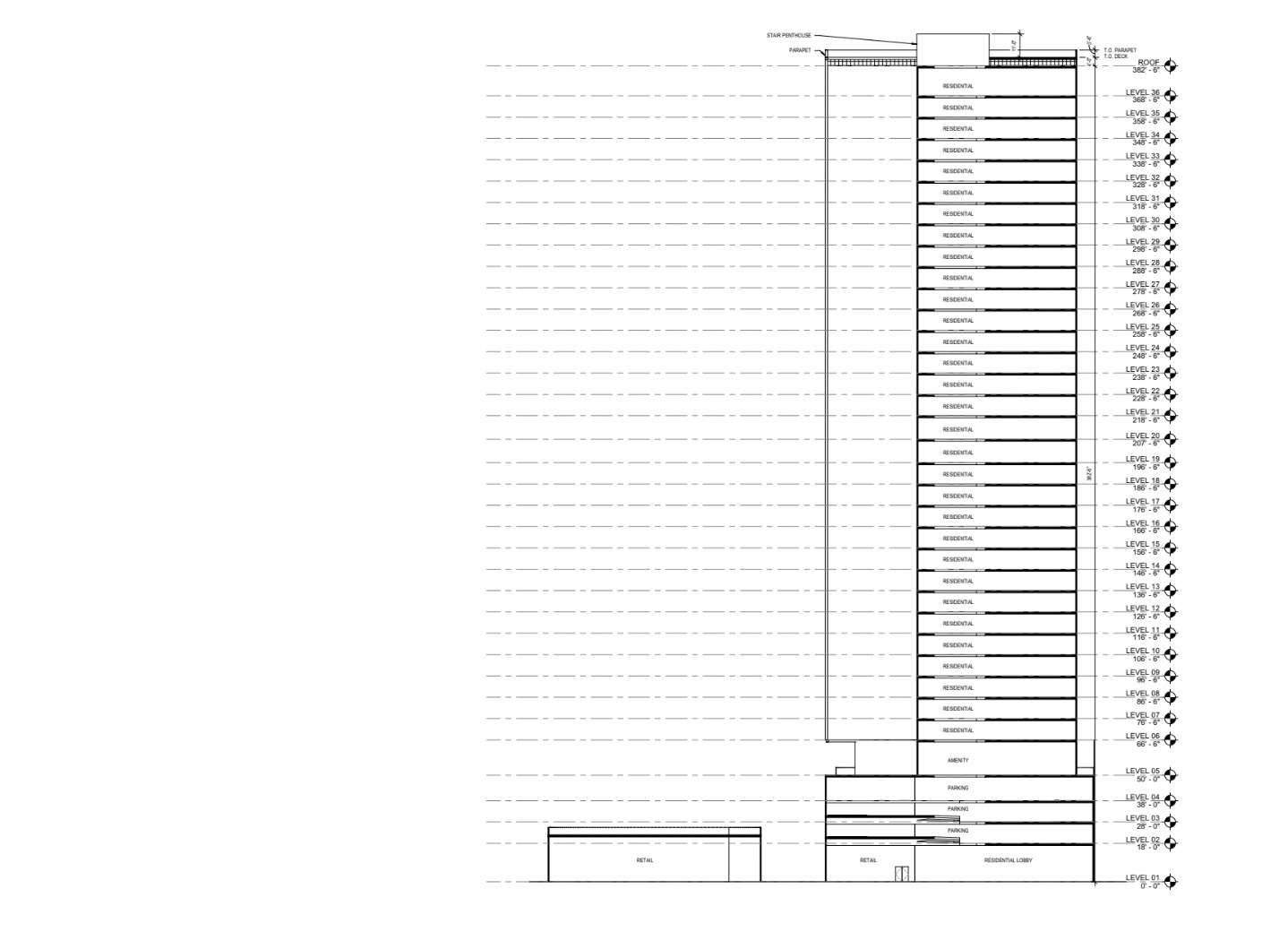
    The first tower would be more than 380 feet tall, and renderings show possible future towers that would be even taller. To be allowed to build that high for future buildings, the developer would have to meet the city’s exacting requirements again, including by paying more into the housing trust fund (and they could not encroach on trail space).

    Conditions on the pedestrian- and bike-friendly river trail have deteriorated below Washington Avenue. The infrastructure has not been maintained to the level it is farther north.

    An encampment of homeless people has settled along this portion of the trail, although its residents have been moved around several times in sweeps orchestrated by the city, Delaware River Waterfront Corp., and property owners.

    Another sweep is planned for Tuesday, the developer’s representatives said at the Pennsport meeting, and additional signage and fencing are planned to limit access to the property.

    But currently the encampment is largely along the public access bike and pedestrian trail itself, not private property.

    “Everyone knows that’s only going to last so long until we get density back there, people [will probably be] living back there,” said Matt McClure, a zoning lawyer representing Brevet. “That’s why we need an active use.”

    A rendering of the proposed tower discussed at the Pennsport Civic Association meeting Wednesday night.

    Brevet’s team said they would provide additional public space with the initial tower, including on disused piers that jut into the river. Currently they do not plan to build structures on the piers but turn them into publicly accessible green space.

    Residents also asked that the developer address traffic conditions on Columbus Boulevard, which is a high-speed roadway that is unsafe for pedestrians.

    “Big projects generate focus on improvements,” McClure said. “Hopefully it generates dialogue on making things better” on the boulevard.

    The biggest applause of the night came when an attendee urged the developer to add more parking than the 187 spaces currently proposed within the tower. Another 100 spaces are available in an existing surface lot, although that is also the site for a possible third future residential tower.

    The developer’s representatives tempered hopes for a greater share of parking in future development, while not ruling it out.

    “So for future phases, if there’s a need for additional parking, we could incorporate that,” Trego said. Based on what they’re seeing in developments throughout the city, she added, garages are not as full as expected.

    A rendering of the highly theoretical future two towers the developer has discussed as a possibility for the site.

    Plans for the first tower have mostly smaller units — 50% one-bedroom units and 35% studios — but the developer said that could change.

    “As we study this further, if there is desire for larger units, we can always make room for that,” said Milton Lau, a project architect with the firm Perkins Eastman.

    Brevet expects to begin building in summer 2026, with an 18- to 24-month construction timeline for the first tower.

    This is Brevet’s first real estate project in Philadelphia, although the company has built other developments in Florida, Texas, and California.

  • New York developer plans 620 apartments on Columbus Boulevard and an extension of Delaware River Trail

    New York developer plans 620 apartments on Columbus Boulevard and an extension of Delaware River Trail

    A New York developer is planning a 620-apartment development at 1341 S. Christopher Columbus Blvd. in South Philadelphia.

    The 36-story project from Manhattan-based Brevet Capital Management makes use of multiple zoning bonuses to allow a taller, denser project than would otherwise be legal.

    In exchange for those development benefits, the developer will pay into Philadelphia’s Housing Trust Fund and upgrade and maintain the Delaware River Trail below Washington Avenue, where its conditions currently get much rougher.

    The zoning was changed before the pandemic to allow developers to build taller in exchange for extending the trail, but Brevet would be the first to do so.

    “To me the most exciting aspect of this project is that they will be paying for and constructing the waterfront trail along their property,” said Matt Ruben, chair of the Central Delaware Advocacy Group, which has long pushed for responsible development on the riverfront.

    “That’s one of the most important and consequential public benefits a developer can provide” in this area, said Ruben, who has not seen renderings of the buildings.

    Jack O’Brien, who posts in JackPhillyRE’s Substack, first reported the latest project for this parcel in advance of a Wednesday night meeting with the developers before the Pennsport Civic Association. The permit with Brevet executives listed as owners was pulled on July 3 of this year.

    “We are pleased to see the first major investment in Pennsport’s historically underutilized waterfront,” said Patrick Fitzmaurice, president of the Pennsport Civic Association. “We look forward to neighbors safely enjoying the waterfront with the proposed retail and recreational plans.

    The project is designed by the international architecture firm Perkins Eastman, with its Philadelphia office listed, and is called Wharton Piers in plans filed with the city. The developer is represented by Matt McClure and Meredith Trego of the law firm Ballard Spahr.

    Although no parking is required, the developer is providing 187 parking spaces on floors two to four of the housing tower. Over 10,000 square feet of commercial and office space will be on the ground floor, with amenity space on level five.

    A small, neighboring one-story building will include 20,650 square feet of retail space.

    A screenshot from plans filed with the city shows how the housing tower proposed on the right dwarfs the small retail building proposed on the left.

    Previous proposals for the property

    The property at 1341 S. Christopher Columbus Blvd. has had multiple development proposals over the years. Most recently, in 2023, New York-based Silverstein Properties proposed 612 apartments and 500 parking spaces across two towers.

    Before the pandemic, it was the site of a 2,000-unit project that would have spanned 10 buildings. That plan, from Maryland-based developer Jeffery Kozero called Liberty on the River, drew widespread skepticism and went nowhere.

    Kozero’s company at that time, K4 Associates LLC, is still listed as the permit holder. His proposal was met by backlash from the Central Delaware Advocacy Group and other neighborhood organizations.

    They felt that the developer was taking advantage of zoning incentives put in place during former Mayor Michael Nutter’s administration. The overlay along the Delaware was meant to encourage smaller developments on the waterfront — not the mega projects frequently proposed by big developers, including one involving President Donald Trump, who often failed to follow through.

    K4 “tried to warp the entire overlay to allow the construction of 10 huge towers that many of us knew would never get built,” Ruben said.

    Following the backlash, City Council changed the zoning overlay covering the waterfront in part by allowing developers to build taller in exchange for growing and maintaining the bike path, part of a larger plan.

    “It’s ironic that this [new proposal] is the first project that will make use of the new density bonus system,” said Ruben, given that the old K4 project on the same site is the reason the zoning incentive exists at all.

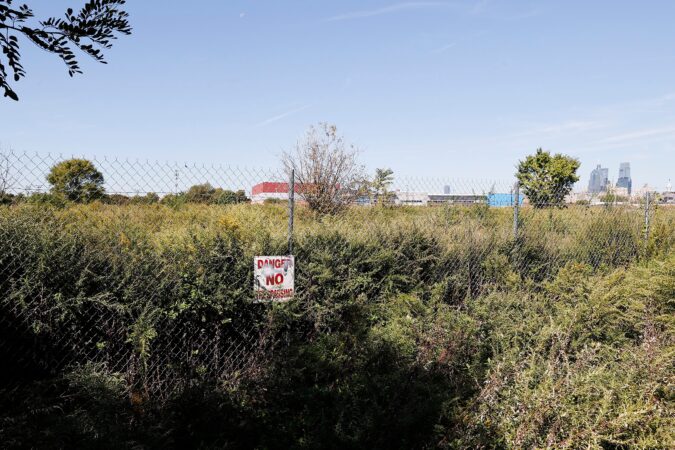
    Until recently, the vast vacant lot at 1341 S. Christopher Columbus had been used as an encampment by people who are homeless. Last December, The Inquirer reported that the property was being swept, with the tents and residents removed, at the behest of the property owners.

    Today, an established encampment instead lines much of the bike and pedestrian trail below Washington Avenue.

    This story has been corrected to make clear that the river bike trail does extend below Washington Avenue and that the developer promises to upgrade and maintain that part of the path.

  • Gloria Del Piano, celebrated silk clothing and jewelry designer, has died at 72

    Gloria Del Piano, celebrated silk clothing and jewelry designer, has died at 72

    Gloria Del Piano, 72, of Philadelphia, celebrated designer of silk clothing, fashion accessories, and jewelry, former Italian TV producer and public relations director, energy therapist, Italian translator, voice-over actor, and community volunteer, died Wednesday, Oct. 1, of complications from cancer at the Hospital of the University of Pennsylvania.

    Energetic, artistic, and indomitable, Ms. Del Piano was 31 when she arrived in Philadelphia from Rome in 1984. She had little money and knew little English. But she discovered her skill for silk painting in a do-it-yourself class, and the colorful hand-painted silk scarves, evening wraps, handkerchiefs, handbags, and original jewelry she went on to create turned Gloria Del Piano Accessories LLC into a fashion powerhouse.

    In just a few years, she opened a store on Bainbridge Street and contracted with Bergdorf Goodman, Neiman Marcus, Nan Duskin, Nordstrom, and hundreds of other fashion outlets to carry her designs in Philadelphia, New York, Los Angeles, San Francisco, Detroit, Minneapolis, and elsewhere around the country. Locally, her signature scarves and earrings were featured at gallery exhibits, charity benefits, private homes, and fashion shows at Penn’s Landing, Fairmount Park, the Wayne Art Center, and elsewhere.

    Many of Ms. Del Piano’s designs were colorful.

    Her line of accessories won awards for excellence and creativity at the Philadelphia Dresses the World fashion expos in 1986 and ’87, and she was inducted into the Philadelphia Get to Know Us Fashion Hall of Fame in 1988. The Inquirer, Daily News, Los Angeles Times, and other outlets publicized her exhibits, and a fashion writer for Newsday called her scarves, with flower and bird patterns, “exquisite” in a 1986 story.

    Some of her scarves were priced between $220 and $300 in 1986, and a black cape listed in 1988 at $495. In 1993, a gold lace-trimmed handkerchief was $45. A fellow artist exhibited with Ms. Del Piano at a Philadelphia festival and said in a fashion blog: “We watched her tie a scarf so many ways so fast it was like a magic act.”

    Earlier, from 1976 to 1984, Ms. Del Piano worked as a program producer and public relations director at GBR-TV in Rome during the station’s glory years. She also did Italian voice-overs, interpretations, and translations for clients of all kinds.

    Ms. Del Piano (right) smiles at a model wearing her designs at an event at Memorial Hall in Fairmount Park.

    She served on the board of the nonprofit Enabling Minds, volunteered in Philadelphia as a Court Appointed Special Advocate for Children, and raised funds for other organizations she championed. In a Facebook tribute, a friend said she was “bigger than life itself” with “a flare of the Italian opera star and the warmth of the Mother Earth itself.”

    Her partner, Wainwright Ballard, said: “She was generous and empathetic. She took care of everyone, including those abandoned or forgotten by others.”

    Gloria Del Piano was born Jan. 20, 1953, in Rome. She was artistic as a girl and always interested in spiritual growth and personal transformation. She studied sociology and business administration after high school in Italy, was certified by the Florida-based Barbara Brennan School of Healing in 2000, and led seminars in healing therapy for years.

    Ms. Del Piano and her partner, Wainwright Ballard, met in Chestnut Hill.

    She married Roberto Borea in 1985, and they divorced in 1992. She met Ballard at the Mermaid Inn in Chestnut Hill, and they spent the last eight years dancing, traveling, and enjoying life together.

    Ms. Del Piano doted on her family and friends in the United States and Italy, and returned often to Rome for reunions. She lived in Mount Airy and then a 20-room house in Germantown, and visitors marveled at her eclectic collection of art and antiques.

    She enjoyed music, gardening, thrift shopping, and chatting with friends. Friends called her “a philosopher,” “a noble soul,” and “a magician in the kitchen.” She delighted in cooking and entertaining, Ballard said, and always sent guests home with armloads of leftovers.

    Ms. Del Piano receives an award from then-Mayor Wilson Goode at a fashion expo in Philadelphia.

    Her “fabulous parties” were “fun and adventurous,” a friend said. Ms. Del Piano said on Facebook: “You never know how wonderful what you have is when you have it. It is when you miss it that we realize how lucky we were.”

    A friend said her “optimism, tenacity, enthusiasm, kindness, beauty, and elegance will always be with us.” Another friend said: “My life has been made richer having known Gloria Del Piano.”

    In addition to Ballard, Ms. Del Piano is survived by a brother, two sisters, and other relatives. Her former husband died earlier.

    A funeral mass is to be held at 9:30 a.m. on Tuesday, Nov. 4, at St. Vincent de Paul Church, 109 E. Price St., Philadelphia, Pa. 19144.

    Donations in her name may be made to Unite for Her, 22 E. King St., Malvern, Pa. 19355.

    Many of Ms. Del Piano’s designs featured flowers and birds.
  • Temple’s College of Public Health has a new building where students can simulate patient interactions in a restaurant, ER, or rowhouse

    Temple’s College of Public Health has a new building where students can simulate patient interactions in a restaurant, ER, or rowhouse

    For years, students at Temple University’s College of Public Health trekked to classes and met professors across two campuses and 10 buildings in North Philadelphia.

    That changed this school year when the college finally moved into its own building, the first dedicated to public health since its founding in 1966.

    Paley Hall is an expansion and renovation of the former Samuel L. Paley Library, which sat at the heart of Temple’s main campus on North Broad Street.

    Jennifer Ibrahim, the college’s dean, spoke with The Inquirer about the new building and amenities designed for public health studies, including a “simulation” space with a replica park, restaurant, emergency room, and even a rowhouse where students can act out interactions with patients. The interview was lightly edited for length and clarity.

    Why did Temple pick the former Paley library for the new College of Public Health building?

    About eight years ago, we started the conversations about renovating Paley to become the new home of the School of Public Health. It’s at the center of campus, and public health has so many collaborations with medicine, with dentistry, with public policy, with law, that it felt really special and appropriate, given how collaborative and interdisciplinary we are.

    Once Paley Hall was gutted, the beauty of the building was that it was created to hold books — to bear the weight of books. That allowed us to add two more floors and extend an east wing and a west wing, significantly increasing the square footage, and that made the building large enough for our different academic units to move into.

    How does consolidating academic departments into one space help students and faculty?

    We have so many different disciplines — public health, social work, nursing, speech, physical therapy, occupational therapy, athletic training, recreational therapy. And we have been in as many as 11 buildings over the history of the college on the main campus, but also on the health science campus [farther north on Broad Street]. It’s not that far, but it does create challenges for collaboration.

    Jennifer Ibrahim, dean of Temple University’s College of Public Health, spoke with The Inquirer about the college’s new headquarters on Temple’s main campus.

    That ability to bump into one another in the same physical space — just having those impromptu conversations brings a warmer human element to the interactions that we have.

    What are some of the amenities in the new building?

    There’s a couple of interesting spaces in the building. We have four classrooms in the building, and then we have the Aramark Community Teaching Kitchen, which is a kitchen space with capacity for 24 students to be learning.

    The simulation center is at the heart of it. This was a collaboration from faculty across all of our disciplines.

    When individuals have an acute injury, or a chronic condition, what we aim to do is get them back into the community and back into their social support system.

    So about 40% of our simulation center is a community. There’s an ambulance bay, there’s a park, there’s a restaurant, there’s a corner grocery store, there’s a replica rowhouse, there’s a street, there’s a sidewalk — all of that allows students to practice safely before they go out and work with our community partners, to learn and to receive feedback.

    The other half of our simulation center is more traditional. We have an inpatient and an outpatient area where students will be interacting with simulated patients as well as mannequins to help them learn [bedside manner].

    We’re really excited for our disciplines to come together and get creative about ways that we can better prepare students for what it’s going to be like when they enter the workforce. We also feel that we have an obligation to our local and regional workforce, that we are putting out the best-prepared students to hit the ground running.

    What does Temple’s investment in a project like Paley Hall say about its commitment to public health as a profession?

    We know that there is an evidence base for what works and what doesn’t work.

    We have an obligation to educate the public.

    We have an obligation to conduct research to advance the evidence of what we know does and does not work.

    We have an obligation to develop policy with our elected officials to figure out what can we do to protect the population in any way that we can.

    I think Temple’s investment in this space is a statement about the importance of public health and health professionals more broadly.

    Now is the time that we have to double down on our investments in public health, and Temple has done just that.

  • Josh Shapiro’s GOP opponent Stacy Garrity steps in to offer counties $500 million in loans as Pa. budget remains at an impasse

    Josh Shapiro’s GOP opponent Stacy Garrity steps in to offer counties $500 million in loans as Pa. budget remains at an impasse

    HARRISBURG — Pennsylvania Treasurer Stacy Garrity stepped in on Wednesday to offer counties and early education programs $500 million in low-interest loans to hold them over until a final state budget deal is complete, sidestepping the General Assembly and Gov. Josh Shapiro as they near the start of a third month at an impasse.

    Garrity, a Republican who last month announced her bid to challenge Shapiro in next year’s gubernatorial election, announced the unprecedented move to allow the state Treasury to offer the loans to county human service departments for the many social services they provide, as well as for early education Head Start programs, at a 4.5% interest rate.

    Counties, schools, and social service providers have pleaded for months with the legislature to finalize a budget so they can begin receiving their expected state payments, which have been on hold since the beginning of the fiscal year on July 1. Some counties have had to secure private loans to hold them over until state payments begin, while others — including those around the Philadelphia region — have relied on their reserves. Other counties have frozen hiring and spending as they await a resolution to the budget stalemate.

    The move would allow counties to access millions of dollars for early education programs serving 35,000 children across the state, as well as for county social services — all of which have been operating for months without their state appropriation, with no end to the budget impasse in sight.

    Garrity’s decision to act unilaterally without the action of the General Assembly allows her to capitalize politically on the ongoing budget crisis over Shapiro, challenging his image as a moderate Democratic governor of a politically “purple” state willing to work across the aisle in a divided legislature. That brand, which he has built nationally as he is rumored to have interest in running for president in 2028, has been tested as he has so far been unable to secure a budget deal or a recurring funding stream for the state’s beleaguered mass transit agencies, including SEPTA.

    Shapiro, for his part, has described his role in budget negotiations as being a go-between for Senate Republicans and House Democrats, who control their respective chambers, and has said that the two caucuses remain “diametrically opposed” on some issues.

    A spokesperson for Shapiro said in a statement Wednesday that the real solution to the budget impasse is for Senate Republicans, whose leaders endorsed Garrity last week, to return to work in Harrisburg to finalize a budget deal with House Democrats. A spokesperson for House Majority Leader Matt Bradford (D., Montgomery) echoed the sentiment, arguing that Senate Republicans “refuse to negotiate on a realistic budget agreement.”

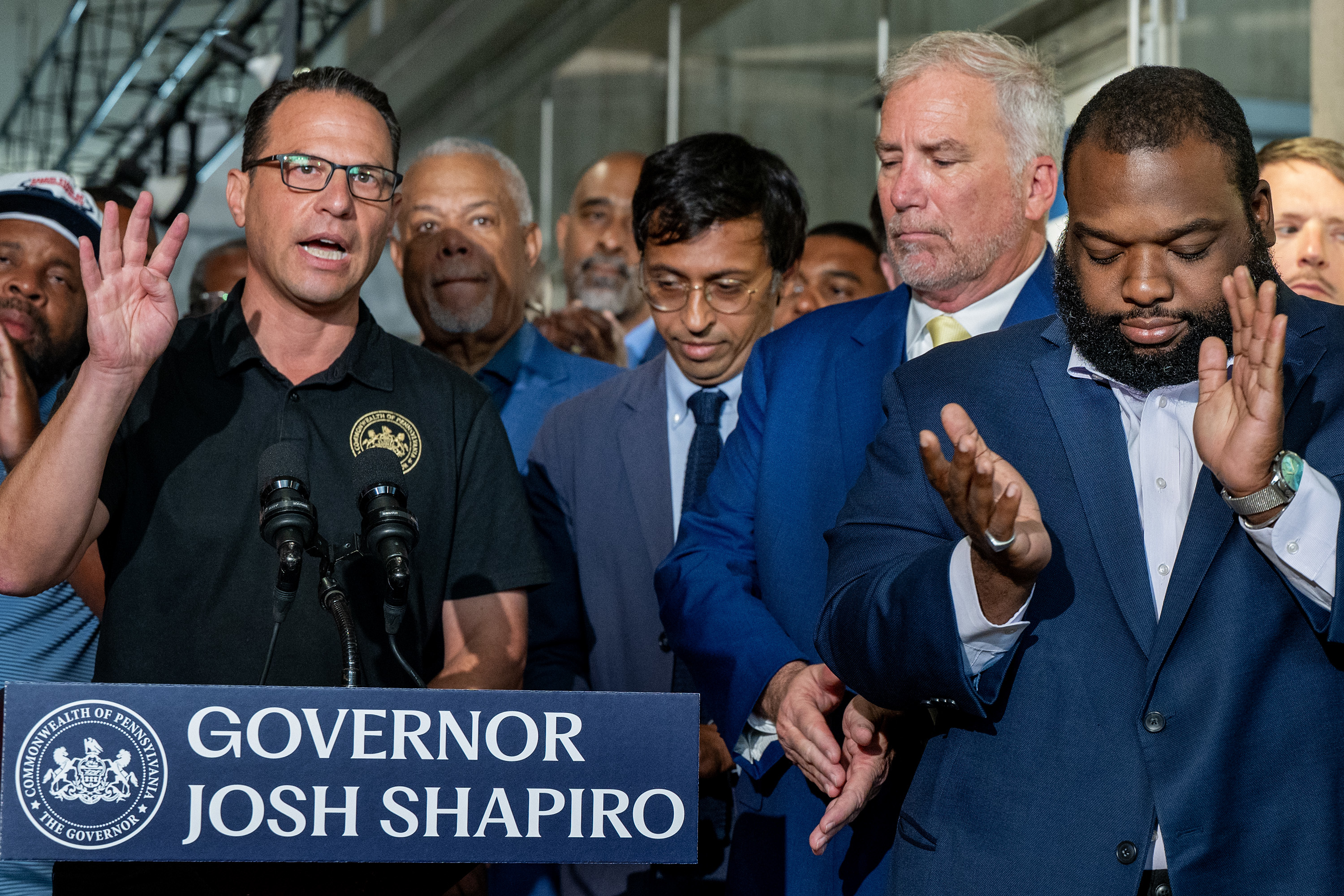
    Gov. Josh Shapiro visits SEPTA headquarters Sunday, Aug. 10, 2025 to discuss funding for the transit agency and to pressure Senate Republicans as planned service cuts are pending because of a budget shortfall. To his right, from left, are state Democratic legislators Sen. Anthony H. Williams; Sen. Nikil Saval; Rep. Ed Neilson; and Rep. Jordan Harris.

    Senate Majority Leader Joe Pittman (R., Indiana), the Senate’s top negotiator, who has met for months in closed-door budget talks with Bradford and Shapiro, said in a statement that it was Democrats who caused the prolonged impasse while demanding they include mass transit funding in the state budget. After mounting pressure as SEPTA enacted major service cuts, Shapiro ultimately sought to fund the agency on his own, and the issue will need to be revisited in two years.

    Garrity, who kicked off her “Help Is on the Way” introductory campaign tour around the state earlier this week, said Wednesday her decision to intervene in the state budget stalemate was not political, despite her burgeoning run against Shapiro. Rather, she said that she had been thinking about a way to do so for months, including ahead of her announcement of her run for governor, and that most Pennsylvanians don’t even realize the state budget is late. She argued that if she wanted to be political, she would not intervene and would “keep the pressure” on Shapiro over the late state budget.

    “I’m standing up here as Pennsylvania’s state treasurer, not as a candidate for governor,” Garrity said from a podium in the Harrisburg building that houses the state Treasury. “I think I have a responsibility to serve Pennsylvanians, that if I have something that I can do to provide some relief, then I should do it.”

    However, that didn’t stop Garrity from inviting Montgomery County Commissioner Tom DiBello — the lone Republican on the board where Shapiro once served — to the podium at the news conference to deliver some direct criticisms of Shapiro and to praise Garrity’s intervention as a “lifeline” for counties, alongside two other GOP county commissioners from south-central Pennsylvania. While Montgomery County remains one of the wealthiest counties in the state, the late budget has required Pennsylvania’s third-most-populous county to spend down its reserves, money that it usually relies upon to continue earning interest as part of its annual revenue, DiBello said.

    Pennsylvania Treasurer Stacy L. Garrity gives her acceptance speech after receiving the PA GOP’s endorsement for her campaign for governor during the Republican Party of Pennsylvania’s 2025 Fall Meeting at the Penn Stater Hotel & Conference Center in State College on Sept. 20.

    “It starts at the top. The governor is responsible,” DiBello said. “He’s got to pull it together. It’s his signature at the end of the day.”

    In response to Garrity’s announcement Wednesday, Montgomery County Commissioners Neil Makhija and Jamila Winder, both Democrats, said in a statement that the county needs a final state budget instead of a short-term loan program, urging Senate Republicans to “do their job.”

    “A short-term loan at 4.5% interest is the state profiting from a problem of their own making, at the expense of the taxpayers,” the two commissioners added.

    DiBello said he did not believe his invitation to Wednesday’s event had political motivations, adding: “I didn’t even think of that.” He also noted that he has come to Harrisburg to advocate on behalf of counties multiple times before.

    Senate President Pro Tempore Kim Ward (R., Westmoreland), who has been one of Shapiro’s biggest critics since his first budget in 2023 and was quick to support Garrity’s candidacy, prodded at Shapiro’s pledge to “get stuff done” while praising Garrity’s leadership.

    “Today, Treasurer Stacy Garrity made a bold move that shows what ‘get stuff done’ actually looks like,” Ward said in a statement. “Treasurer Garrity’s leadership is on display as her solution-driven option is exactly what we need, but has been glaringly missing from the present administration.”

    Garrity said at the news conference Wednesday that she offered the loan program specifically to Head Start programs and county governments’ human service departments because both had asked her to help them get through the budget impasse. The state budget was due by July 1, and Pennsylvania is the only state besides Michigan that has not yet passed its budget. She said she is willing to offer similar loans to schools or other state-subsidized or funded programs as requested.

    The Pennsylvania General Assembly can forgive the interest accrued by counties taking out loans during the budget impasse, Garrity said, adding that she would support legislation that does so.

    This suburban content is produced with support from the Leslie Miller and Richard Worley Foundation and The Lenfest Institute for Journalism. Editorial content is created independently of the project donors. Gifts to support The Inquirer’s high-impact journalism can be made at inquirer.com/donate. A list of Lenfest Institute donors can be found at lenfestinstitute.org/supporters.

  • Delco’s Taylor Hospital sells to local investors aiming to offer medical services

    Delco’s Taylor Hospital sells to local investors aiming to offer medical services

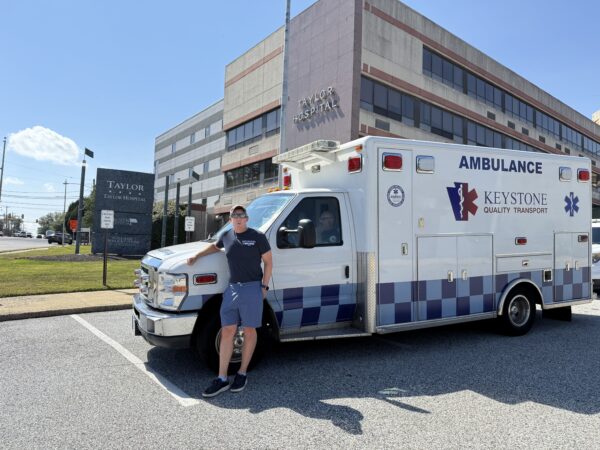
    Crozer Health’s shuttered Taylor Hospital in Ridley Park will be sold to a group of local healthcare executives for $1 million, according to an agreement filed Friday in bankruptcy court proceedings for its owner, California-based Prospect Medical Holdings.

    The buyer is a partnership led by Delaware County business owner Todd Strine. The group’s goal is to refill the empty property with medical services, Strine said.

    “The ideal thing that could happen is we reopen an emergency room, because that’s what Delaware County needs,” said Strine, who is the majority owner of medical transport company Keystone Quality Transport.

    Prospect closed Taylor in late April after the failure of a state-led effort to find a new operator that would return the Crozer health system to nonprofit ownership. Shortly thereafter, Crozer-Chester Medical Center also closed.

    Crozer was Delaware County’s largest healthcare system and a provider of critical safety-net services. For-profit Prospect had previously closed Springfield Hospital and Delaware County Memorial Hospital in 2022.

    “It’s a fact that Delaware County is less safe today than it was when these hospitals were operating,” Strine said.

    He said it seems unlikely that a full-blown hospital would return to Taylor.

    Ridley Park Council president Dane Collins said he’s hopeful that an emergency department and doctors services will return to the site. “It’s no secret. The area’s in desperate need of it,” he said.

    As part of the agreement, Delaware County, Ridley Park Borough, and the Ridley School District agreed to reduce the taxable value of the property from its assessed value of $60 million to a fair market value of $1 million for the next two years.

    The inflated $60 million assessment was tied to financial deals Prospect undertook with a real estate investment firm in 2019 and 2023.

    The reduced value slashes the amount of property taxes that can be earned on the property for the next two years. However, beginning in 2027, the taxing authorities would be permitted to appeal the value of the building.

    The decision to reduce the building’s value so dramatically in tax rolls was opposed by some members of Ridley School District’s board of education, which only narrowly approved the measure on a 5 to 4 vote last week.

    Prospect hasn’t paid property taxes on the property since 2022, according to public records.

    Delaware County councilmember Christine Reuther called the new value a “tough pill to swallow” in an interview. The property was worth more than the “fire sale price” it had gone for, she said.

    The building would be worth less than many homes on the county’s tax rolls, Reuther noted, at a time when property values and home costs are increasing.

    She called the resolution yet another example of the negative fallout from Prospect’s abandonment of healthcare resources in the community.

    “There’s literally nothing we can do that isn’t going to resolve in a worse result, and that’s wrong,” Reuther said.

    Strine acknowledged that the price seems cheap, but noted the building is empty, and it’s a special-use building, making it harder to find tenants. “There’s a ton of carrying costs and a lot of uncertainty about how long it’s going to take to fill up,” he said.

    The investment needed to bring the building back to life is going to be many times the price, Stine said.

    “It’s positive movement to have an experienced local businessperson purchase the property instead of allowing the property to become abandoned,” said Frances Sheehan, president of the Foundation for Delaware County, whose mission is promoting health and welfare in the county.

    Taylor is the second shuttered Crozer hospital to be sold in less than a month. Upper Darby School District bought the former Delaware County Memorial Hospital for $600,000 on Aug. 14. It plans to use the property for expansion of its neighboring high school.

    In both cases, U.S. Bankruptcy Judge Stacey Jernigan said Prospect could abandon the properties, which means that local authorities would have had to put the real estate up for a tax sale.

    Prospect had told the judge that the top offers it had received were $1.25 million for Delaware County Memorial, which closed in 2022, and $575,000 for Taylor.

    Given the risk of abandonment by Prospect, county and local authorities risked a total loss to tax rolls if Prospect abandoned the property entirely.

    Robert Strauss, an economics professor at Carnegie Mellon University who studies property tax, noted that the buyers may have backed out of a deal if they couldn’t obtain the reductions in property taxes.

    “It’s hard to envision anything easy happening in the short run that would bring it back onto the tax rolls and be profitable,” he said. “The reduction in revenues seems to me to be inevitable in the next couple of years, regardless.”

    This suburban content is produced with support from the Leslie Miller and Richard Worley Foundation and The Lenfest Institute for Journalism. Editorial content is created independently of the project donors. Gifts to support The Inquirer’s high-impact journalism can be made at inquirer.com/donate. A list of Lenfest Institute donors can be found at lenfestinstitute.org/supporters.

  • From rollerblading in California to college in the desert, Ty Murchison has taken a unique path to the Flyers

    From rollerblading in California to college in the desert, Ty Murchison has taken a unique path to the Flyers

    Ty Murchison rubbed out Jack Nesbitt along the wall during a drill on the first day of Flyers development camp last month

    The 2021 fifth-rounder, who is 6-foot-2 and 205 pounds, made sure he did it with noticeable authority. And not just because he was taking out Nesbitt, the 6-5 and 185-pound center who was drafted 12th overall four days before.

    Murchison’s game is predicated upon his size and physicality, and he has quietly developed into a left-shot prospect on defense whom the organization is watching closely.

    “He’s a late-round pick, but maybe he just has a little bit longer of a runway to get to where he’s going,” Flyers director of player development Riley Armstrong told The Inquirer in April. “And I think when you do a rebuild, you can’t just sit back, in my mind, can’t just sit there and be like, OK, we’re only going to focus on our high-end picks.

    “You have to go in there and say we’ve got to focus on the fifth, the sixth. … And I really do think that just because you’re a sixth-, seventh-round pick, or not even drafted … if you work your butt off, and you do the little stuff, you never know what can happen.”

    Murchison, now 22, did that.

    Murchison wrapped up his four-year career at Arizona State last season as the National Collegiate Hockey Conference’s defensive defenseman of the year. Skating against schools like Western Michigan — and Alex Bump — and national semifinalist Denver, which the Sun Devils finished ahead of in the standings, the assistant captain snagged the award after blocking 98 shots.

    Those 98 blocks were a program record and also led all NCHC players. He recorded seven against Bump’s Broncos, two shy of the career high he set against Boston University as a sophomore.

    “He’s great,” ASU teammate and Calgary Flames draft pick Cullen Potter told The Inquirer at the NHL scouting combine. “He puts his body out there for the team, in any way he can, blocking shots. … So he’s just a great team guy, and I love having him around the rink, keeps it light, and has some fun with it, which I think hockey should be.”

    The Flyers selected Ty Murchison, who played collegiately for Arizona State, in the fifth round of the 2021 NHL draft.

    Ready to roll(er)

    Maybe it’s the California vibes that help him keep it light. Maybe it’s that Murchison, who will play with Lehigh Valley of the American Hockey League this season, wasn’t twirling around rinks as a wee tyke.

    Correction: Ice hockey rinks.

    “I played roller hockey, pretty much since I could walk. I had no intentions of really getting into ice hockey until I was probably like 14, just for fun,” Murchison said in April. “But I got a coach from ice hockey who kind of saw me play roller and asked me to join their team. That’s how I got into it, and kind of just took off from there. But, yeah, roller hockey is really my roots, for sure.”

    Murchison’s parents moved to California from Canada so his father, Ken, could play in the Roller Hockey International, a professional inline hockey league that ran from 1993 to 1999. Ken Murchison, who played at the University of New Brunswick and in the East Coast Hockey League, also worked for the Anaheim Ducks and managed inline rinks around the state.

    Ty Murchison didn’t swap his wheels for blades until he was 11.

    “The adjustment was really the edges and the skating. I couldn’t stop when I first started playing,” the younger Murchison said with a big laugh. “So that’s kind of how I got my physical aspect. I was blowing kids up because I couldn’t stop. I was just running into kids.”

    After doing “a ton of skating lessons,” Murchison began to excel, and at 16, he moved to Michigan to join the U.S. National Team Development Program. But roller hockey was never far from his mind, and while at Arizona State, he and his dog Penny would rollerblade around Tempe Town Lake.

    Ty Murchison grew up playing roller hockey in California.

    NHL prospects?

    Murchison’s skating has drastically improved through the years, and “he’s physical, keeps it simple,” and is “in your face.” He also does “all the little things that you need guys like that to do when you want to go far,” as noted by former Phantoms coach and current Flyers hockey operations adviser Ian Laperrière.

    Now, Murchison and Armstrong are working on his hands.

    “He is a high-end skater, really competitive and physical,” Armstrong said of Murchison, whom he compared to Nick Seeler. “Right now, we’re just working on his puck plays and his decision-making. At the junior level, maybe he runs the power play, and he gets that little bit of confidence on the blue line about doing stuff and things like that; I think it goes a long way.

    “So we’re working at that with him right now, and who knows? We’ll see where it goes.”

    Ty Murchison participated in the recent Flyers’ development camp.

    This summer, Murchison is spending time working on getting stronger and putting on weight because “at the next level, everybody’s strong, and the way I play, I need to be stronger than most guys.”

    The blueliner got a taste of what’s to come, skating in four games for the Phantoms in April after the conclusion of his college season.

    He’s also working on those hands and upping his offensive game after collecting nine goals and 14 assists in 145 career games for the Sun Devils. And of course, he’s playing roller hockey. Recently, Murchison skated in the North American Roller Hockey championships in California.

    But now he has his sights set on bigger goals.

    “I’m very proud of it, it’s been a blessing,” Murchison said of playing pro ice hockey. “I’m happy to be here. It’s what I’ve been dreaming of — even though I played roller hockey — I always dreamed of playing in the NHL when I was a little kid. So, yeah, I’m hoping to take the next step and get there one day.”