Tag: topic-link-auto

  • Man in addiction who died in jail was labeled an ‘emergency’ case and should have been given one-on-one support, records show

    Man in addiction who died in jail was labeled an ‘emergency’ case and should have been given one-on-one support, records show

    The 42-year-old man in addiction who died inside a Philadelphia jail days after his arrest in Kensington had been flagged as an “emergency” case by an intake worker at the jail, and should have received one-on-one supervision in the hours before he collapsed, according to records from the Department of Prisons.

    But that didn’t happen, and instead, Andrew Drury died alone inside the holding cell, without having received a formal behavioral health evaluation by the prison staff, according to the records obtained by The Inquirer. His cause of death remains under investigation, though when he was jailed in the fall, he had been hospitalized multiple times from withdrawal-related health complications.

    A spokesperson for the Philadelphia Department of Prisons declined to comment Friday.

    Drury had been picked up by Philadelphia police on the night of March 6, after officers encountered him at Kensington Avenue and Somerset Street, and learned he had outstanding bench warrants related to a drug case in Maryland and a 2022 violation of a protection-from-abuse order filed in Philadelphia.

    Police said Drury received off-site medical treatment over the next day before he was transferred to Curran-Fromhold Correctional Facility around 2:15 a.m. on March 8. Police declined to say what kind of treatment he received, where he was treated, or how he was cleared for transfer to the jail.

    Drury remained in an intake room at the jail until the next afternoon, waiting to be medically evaluated and assigned to a cell block. On March 9, around 9:30 a.m., an intake worker for the prisons assessed Drury and wrote that he was experiencing a range of physical and behavioral health issues and described him as extremely agitated and confused, according to the records.

    Andrew Drury, left, and Jennifer Barnes had been homeless and struggling with addiction in Kensington for about two years. Drury died on March 9 inside a Philadelphia jail.

    The employee labeled Drury as an emergency case, which, according to the records, should have required that he receive one-on-one supervision until he could be evaluated by a behavioral health worker.

    Instead, Drury remained in his intake cell for another six hours. A jail guard walking through the area found him unresponsive at 1:45 p.m., and despite administering two doses of Narcan and other lifesaving measures, he was pronounced dead at 2 p.m., according to a spokesperson for the prison.

    The Philadelphia Medical Examiner’s Office said Wednesday that doctors are awaiting toxicology results to determine his cause of death.

    Drury had long struggled with an opioid addiction, and had been experiencing homelessness in Kensington for about two years, said his longtime girlfriend, Jennifer Barnes.

    In an interview this week, Barnes, 44, said she believes he died from health complications related to withdrawal — something that he has been hospitalized for in the past.

    When Drury was arrested in October on bench warrants related to the same cases, he was hospitalized multiple times, including for more than a week, after suffering a mild heart attack and other issues while going through withdrawal in jail, according to Barnes and a source familiar with Drury’s care at the time.

    After Drury was released in November, Barnes said he was in and out of the hospital because of ongoing chest pains and shortness of breath.

    Barnes said she worried about his health as she watched police arrest him that night.

    “The withdrawal, it’s not good for him,” she said she told the officers. “He needs medical attention.”

    Jennifer Barnes, whose fiancee Andrew Drury died while in jail, shown here in Philadelphia on Tuesday.

    Drury’s death comes as the city ramps up enforcement efforts in Kensington, a section of the city that has long experienced concentrated violence, homelessness, and drug use in and around its massive open-air drug market. Mayor Cherelle L. Parker has said her administration would shut down the drug activity in the area and return a quality of life to the neighborhood’s residents.

    But some advocates have warned city and law enforcement officials that the withdrawal effects for people who use opioids can be life-threatening, and that the understaffed jails might struggle to respond to people’s health needs in those circumstances.

    Barnes said she and Drury were both from South Philadelphia, and had been dating since 2012 after meeting in a luncheonette in the neighborhood. They were not married, she said, but wore rings as if they were.

    Andrew Drury and Jennifer Barnes in a photo before they became homeless in Kensington.

    Barnes said she has struggled with addiction since about 2008. Drury also used drugs by the time they had met, she said, his troubles beginning after he underwent a weight loss surgery and got hooked on pain killers. For many years, they were both able to hold jobs and hide their addiction.

    They bounced between friends’ and families’ homes, she said, until they were kicked out of Drury’s mother’s house in 2021 and she got a Protection From Abuse order against him. They’ve been on the streets of Kensington since about the summer of 2023, she said.

    Drury was funny and loving, she said, and helped protect her from the dangers of living on the streets. They had both recently talked about wanting to go to rehab and getting their lives back on track.
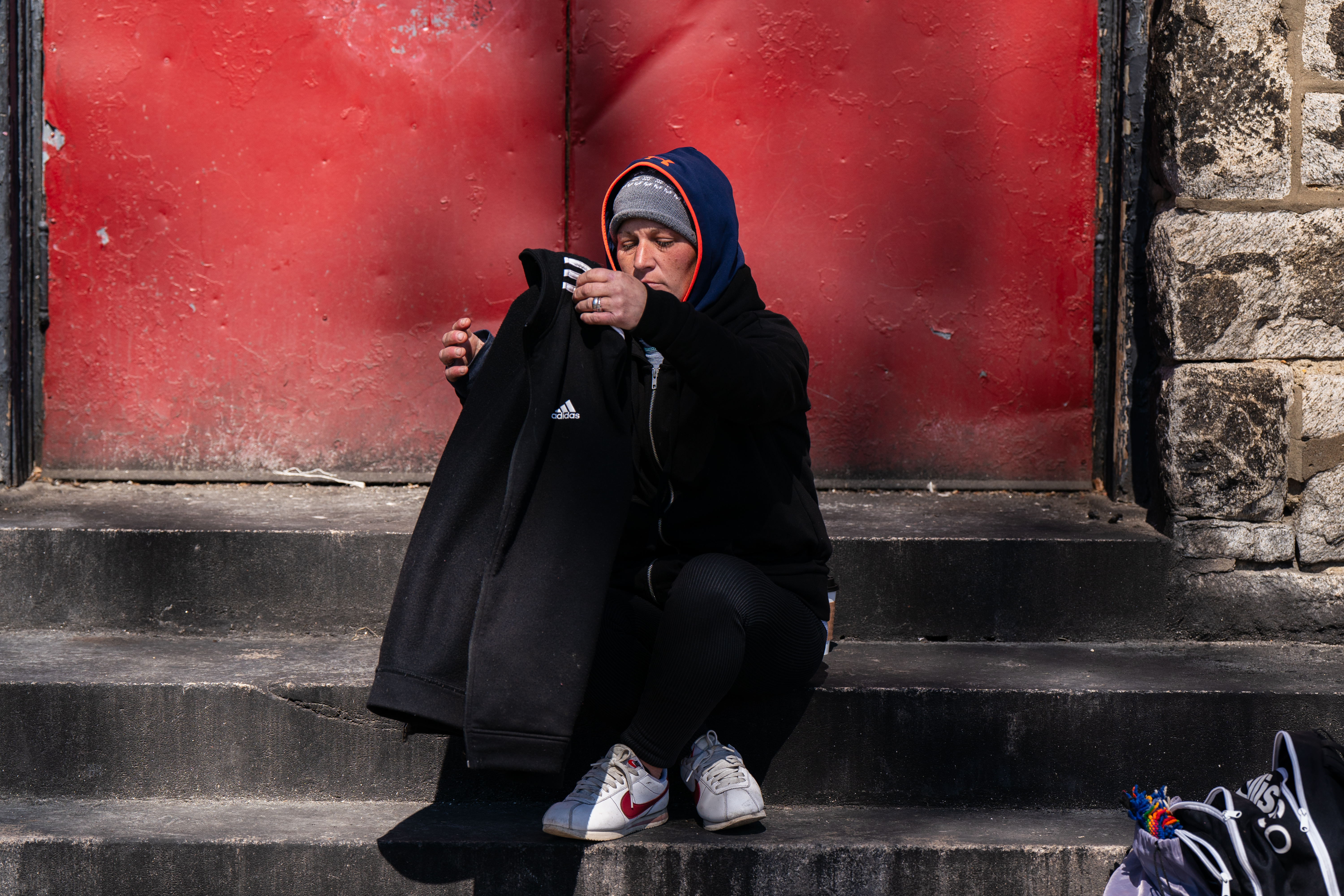
    Jennifer Barnes holds the sweatshirt of her longtime boyfriend, Andrew Drury, who died in jail on March 9.

    Since his death, she said, she feels in a fog. She has connected with a friend who found a bed for her at a recovery house in South Jersey, and she hopes to go next week.

    “For myself, and for him, it’s the best thing to do,” she said. “This way he won’t have to worry anymore.”
  • A man in addiction who was arrested in Kensington last week died in jail days later

    A man in addiction who was arrested in Kensington last week died in jail days later

    A 42-year-old man with a history of addiction died inside a Philadelphia jail over the weekend just days after he was arrested in Kensington, officials said.

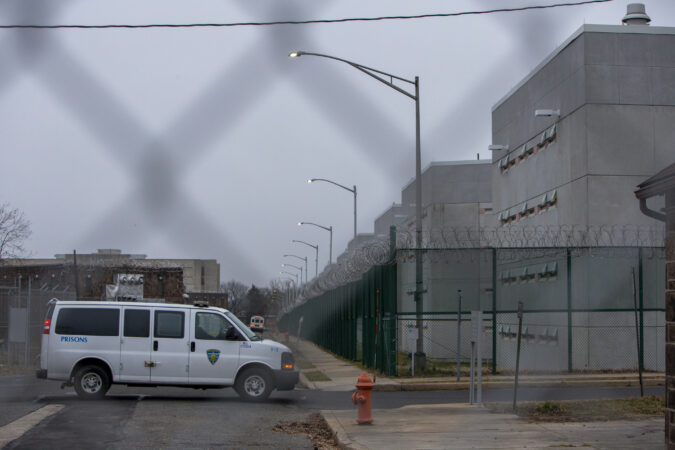
    Andrew Drury was picked up on a bench warrant by Philadelphia police near Kensington and Lehigh Avenues on Thursday night and was found collapsed inside the intake room at Curran-Fromhold Correctional Facility on Sunday afternoon, according to police and prison officials. Officers who found Drury administered two doses of Narcan, among other lifesaving measures, but he did not regain consciousness, officials said.

    Drury, whose cause of death remains under investigation, was addicted to opioids and had been hospitalized multiple times for withdrawal-related complications when he was jailed in the fall on similar warrant issues, according to a source familiar with his care who was not authorized to speak publicly.

    Philadelphia police arrested Drury in Kensington around 10:30 p.m. Thursday on outstanding bench warrants related to a drug case in Maryland and a 2022 violation of a protection-from-abuse order filed in Philadelphia.

    Sgt. Eric Gripp, a spokesperson for Philadelphia police, said Drury was evaluated and “received off-site medical treatment” before he was transferred to the jail on State Road around 2:15 a.m. Saturday.

    People who use drugs are often gathered near Kensington and Somerset Avenues, an intersection at the heart of Philadelphia’s opioid crisis.

    Drury had been in an intake room at the facility for nearly 36 hours, waiting to be assigned to a cell block, when a jail guard found him unresponsive around 1:45 p.m. Sunday, according to John Mitchell, a spokesperson for the Philadelphia prisons. He was pronounced dead at 2 p.m., Mitchell said.

    The cause of Drury’s death was under investigation, he said, but no foul play was suspected. Gripp declined to say where and under what circumstances Drury was treated medically while in police custody, citing an ongoing investigation. It is not clear whether Drury was medically evaluated once he arrived at the jail.

    Drury is the first person to die in the custody of the Philadelphia Department of Prisons this year, and his death comes as the city ramps up drug enforcement in Kensington and arrests more people in addiction. Advocates have warned city and law enforcement officials that the withdrawal effects for people who use opioids can be life-threatening, and that the understaffed jails might struggle to respond to people’s health needs in those circumstances.

    His death follows that of Amanda Cahill, 31, who died inside a cell at the Philadelphia Industrial Correctional Center in September, days after she was arrested in Kensington on charges related to drugs and open warrants. The Philadelphia Medical Examiner’s Office said Tuesday that an autopsy showed Cahill died from drug intoxication.

    At least 29 people in addiction have died in Philadelphia jail or police custody since 2018 for reasons that appear connected to drug intoxication or withdrawal, according to medical examiner records reviewed by The Inquirer.

    Amanda Cahill, 31, is seen here in a photo provided by her family. She died in Philadelphia Industrial Correctional Center in September.

    Drury’s legal troubles go back to at least July 2021, when he was arrested for possession with intent to distribute drugs in Maryland, according to court records. Then, in July 2022, he was arrested in Philadelphia for violating a protection-from-abuse order that his mother had filed against him. He was later released on bail.

    After Drury failed to appear in court in Maryland and Philadelphia, warrants were issued for his arrest. He was picked up by police on Oct. 1, 2024, in connection with those pending cases.

    While in custody, Drury was hospitalized at least twice, including for more than a week, after experiencing health issues related to withdrawal, said the person familiar with his care, who had reviewed the records related to Drury’s earlier cases.

    He was released from jail in November after authorities in Maryland declined to extradite him, the source said. Because he did not return to Maryland to resolve his case, there was still an outstanding warrant for his arrest. And when Drury did not appear for a December hearing in his Philadelphia case, a second warrant was issued.

    The warrants landed him back in police custody on Thursday.

    Two of Drury’s relatives, who asked not to be identified for privacy reasons, said they did not know he was struggling with addiction. They described him as a warm and generous person, a good listener, and a helping hand.

    “I feel that something is not right,” one relative said. “I don’t know, and I won’t know, I guess, until I can get the coroner’s report. I’m in the dark right now.”

    Andrew Pappas, pretrial managing director of the Defender Association of Philadelphia, said Drury’s death underscores the dangerous conditions inside Philadelphia’s jails, which face an ongoing staffing shortage.

    “We continue to see the effects of that with yet another death in custody,” he said.

  • Temple’s been part of several high-profile crime incidents recently. President John Fry is getting high marks for communication.

    Temple’s been part of several high-profile crime incidents recently. President John Fry is getting high marks for communication.

    It was a tough two-and-a-half-week period: Students accused of impersonating ICE agents. One student accused of shooting and killing another. A student stabbing a former student 13 times. And a student falling from a light pole during a post-Eagles celebration and dying from his injuries.

    These high-profile incidents involved Temple University students and three of the four occurred on or near campus, posing another test for new president John A. Fry.

    Some say they are gratified that the administration communicated swiftly and thoroughly about the incidents, which wasn’t always the case in the past.

    “That’s been really great to have such a quick turnaround time,” said Ray Epstein, president of student government. “Even if it is the middle of the night, we are getting an email immediately.”

    After Chase Myles, a 20-year-old student from Maryland was shot and killed at about 11 p.m. Feb. 6, Fry notified the campus in an email at 3:46 a.m., and just hours later was on a plane back to campus from an alumni event in Florida so he could be on the ground to talk to the victim’s parents and help coordinate the response.

    By contrast, it took nearly twice as long for the university to get out an email about the shooting death of Samuel Collington outside his off-campus residence in November 2021 even though that happened in the daytime. The email did not come from then-president Jason Wingard, but rather from then-safety chief Charles Leone. The attack put the campus on edge and stirred fear in the Temple community among students, parents, and staff — and social media posts circulated with the hashtag “Where’s Wingard,” who later resigned after less than two years on the job.

    Donna Gray, Temple’s campus safety services manager for risk reduction and advocacy services, greets Temple president John A. Fry during his first day of work Nov. 1.

    That incident ― which happened as part of an attempted robbery and carjacking ― was different in that it involved random violence by a stranger in the neighborhood.

    But even the Temple police officers’ union, which has been critical of university leadership in past years, has noted Fry’s efforts in dealing with the recent multiple incidents.

    “He seems to be handling it well,” said Sean Quinn, president of the Temple University Police Association. “Without a doubt, as soon as these things happen, he’s right on top of it.”

    Fry, who became Temple’s president Nov. 1, said his approach is two-pronged.

    “It is up to us to tell the bad news first, personally to all of our community,” he said. “Number two is just to keep a steady stream of communications following that even when there is not a whole lot to say. It’s worth checking in.”

    Parents on the university’s family council said they are confident in the university leadership’s handling of the incidents, too.

    “It seems like there are the right people in place,” said Allison Borenstein, a Temple alumna whose son, a sophomore, attends the university. “They handled it well, and I think they are on it.”

    Borenstein, an event planner at a synagogue who lives in Cherry Hill, noted such incidents could happen near any college campus and said she feels that Temple sometimes gets an unfair rap.

    “There’s nothing that the school could have done in advance,” she said.

    Emma Legge, an alumna and parent of a senior who lives in New York, said she feels she is kept informed, and she checks in with her son after receiving a communication.

    “I do feel as a parent that Temple is doing what it can within the city of Philadelphia to manage what happens,” said Legge, who got both her bachelor’s and master’s degrees at Temple and met her husband, also a twice Temple alumnus, there. “I have a lot of confidence in the university and the people who are on board.”

    Philadelphia Police Commissioner Kevin J. Bethel and Jennifer Griffin, Temple University vice president for public safety, after graduation ceremonies for the Police Academy Class #402, new officers of the Philadelphia Police Department and Temple University Police Department, at Temple’s Performing Arts Center in June.

    That includes Jennifer Griffin, vice president for public safety, she said.

    “I feel very reassured by the measures police are undertaking to be involved in the neighborhood and be involved with students,” said Legge, who works in student affairs administration at a New York college.

    Griffin said after the recent incidents, she met with the student safety advisory committee and its members said they appreciated the accurate and timely information, which she said she has always aimed to provide since starting at Temple about two and a half years ago.

    “We hope it decreased anxiety,” she said.

    Of Fry, she said, “I thought he handled all the incidents with thoughtfulness and decisiveness and direction that I would expect from somebody with his level of experience.”

    The police union has been critical of Griffin, even calling for her to resign or be fired over staffing issues. University leadership has backed Griffin.

    Quinn said the union now is trying to work things out, noting that the university is amid a police staffing study conducted by an external company.

    “I just don’t want to come to work every day feeling like I’m butting heads,” he said. “I actually would like to work with whoever I have to work with to see if we can accomplish things.”

    Fry said he expects to have the results of the staffing study in a couple months. He said he’s pleased with the work campus police do, noting he had gone on ride alongs with them and wants to make sure they have enough help.

    Ray Epstein, Temple student government president.

    While Epstein, the student government president, endorsed the university’s handling of communication about the recent shooting, she said it also should have issued an alert after a report about a student placing hidden cameras in a fraternity bathroom in late November and recording people without their knowledge. Instead the campus learned of it through social media earlier this month, she said. The student has been arrested and charged in that case.

    “I was not sure when or if the fraternity/university would ever disclose this incident, but I wanted to inform everyone in case this was never announced,” someone posted on a Temple Reddit page, with court documents about the case.

    “Maybe it’s perceived by campus safety as not being an ongoing threat,” Epstein said. “I’d argue that it is because when these things happen in a house, you can’t possibly know until an investigation is concluded who all was involved.”

    Griffin countered that the investigation was handled swiftly, the individual was identified and arrested, and there was no ongoing threat to the community. A Temple alert is sent when there is an immediate threat to the community, she said.

    In this case, people who lived in the house notified law enforcement after the equipment was found, the equipment was taken and the individual who put it there was identified, she said.

    “The people who called in the cameras were cooperative,” she said. “It was an isolated incident at an off-campus residence … and student affairs reached out to those who were impacted.”

  • What will the Flyers do ahead of the trade deadline? Here’s where Scott Laughton, Rasmus Ristolainen, and others stand.

    What will the Flyers do ahead of the trade deadline? Here’s where Scott Laughton, Rasmus Ristolainen, and others stand.

    PITTSBURGH — And just like that the NHL’s trade deadline is almost here.

    After a rambunctious two weeks focused on the 4 Nations Face-Off, all eyes are now turned to the league’s annual wheelin’ and dealin.’

    Flyers general manager Danny Brière could be busy before the clock strikes 3 p.m. on March 7 as he continues to shape the roster in his long-term vision. He already traded homegrown forwards Joel Farabee and Morgan Frost at the end of January, as he, and the brass, decide who is on the bus.

    So who is next to go, if anyone? We broke down the Flyers roster one week out from the trade deadline.

    Which Flyers are likely to be traded?

    Scott Laughton, C/LW: Every year Laughton is rumored to be on the trade block. The forward is well-equipped to handle the chatter by now, but could this be the year he is finally moved? A reliable two-way center who can also be productive on the wing and as a penalty killer, Laughton has versatility that is attractive to teams looking to make a Stanley Cup run. He also has one year left after this season at a $3 million cap hit and would not just be a rental for rumored landing spots, including Winnipeg, which the Flyers play on Saturday, and his hometown Toronto Maple Leafs. He also would bring value to any locker room.

    Rasmus Ristolainen, D: If coach John Tortorella had his way, the Flyers would keep the blueliner because, “If you trade him Friday, then on Saturday, you say, [expletive], I need a big, right-handed defenseman.” Ristolainen also has term — two years beyond this season at a $5.1 million clip — and, what Tortorella considers, a favorable contract. But there is no denying Ristolainen is a marquee trade chip for the Flyers as teams look to get bigger for the postseason.

    Erik Johnson, D: Johnson, who turns 37 next month, is a pending unrestricted free agent and could be a good option for a playoff team looking to add depth to its defensive core. Although he hasn’t played much this season, he has looked steady when called upon and has the postseason experience — i.e., a Stanley Cup — teams look for in a sixth or seventh blueliner.

    The Flyers have a decision to make with Rasmus Ristolainen, who is signed for two seasons beyond this one.

    Which Flyers could be traded if the price is right?

    Bobby Brink, RW: Tortorella recently said Brink, in a good way, “plays every game worrying about … just staying in his spot.” The forward has played well and is setting career highs while playing a better defensive game. He shouldn’t get moved, but his stock is on the rise.

    Nick Deslauriers, LW: The veteran enforcer has one more year after this season at $1.75 million. A good guy in the room, he hasn’t played much this season — he did miss a good chunk with an injury — but could be utilized for a team as a fourth liner who protects guys during the rough-and-tumble postseason.

    Garnet Hathaway, RW, and Nick Seeler, D: Every team, including the Flyers, wants guys like this. Should they be moved? No, but it may make sense if the return is well above the asking price.

    Andrei Kuzmenko, LW: Now on his third team in three years, the Russian winger comes with question marks. He has the skill but seems to start strong with clubs before stalling. Tortorella likes what he has seen in a few short weeks, and Kuzmenko’s coachability. But there could be suitors for a guy who can find the back of the net, so the Flyers could flip him. If they do, he is an unrestricted free agent this summer and could always return on a cheaper deal if both parties were so inclined.

    Egor Zamula, D: Is the defenseman going to be on the bus? That is the big question right now. He has shown growth at times but is still struggling to find his game and could be a good fit for a team looking to rebuild its blue line.

    Ivan Fedotov/Aleksei Kolosov, G: Although there is rampant speculation as to why Kolosov is still on the NHL roster, the Flyers cannot persist with the three-headed monster in net. One of the guys should either get sent down to the American Hockey League — Kolosov is waiver-exempt — or one should be traded.

    Which Flyers are unlikely to get traded?

    Sean Couturier, C: It’s no secret the former Selke Trophy winner hasn’t been the same since undergoing two back surgeries in 2022. The injuries came just after he had signed an eight-year, $62 million ($7.75 million average annual value) contract to become the face of the Flyers. Couturier is still a responsible defensive center, but no team is trading for a 32-year-old whose best hockey looks to be behind him, and who has five years remaining at his hefty cap hit.

    Emil Andrae, D: Limited in stature but not in heart and drive, Andrae is ready to become an NHL regular now. It should be with the Flyers, who need his puck-moving ability. The one exception would be if he’s part of a larger package to land the big-time center the Flyers need.

    Jamie Drysdale, D: Teams need guys like Drysdale, with his ability — like Andrae — to move the puck and generate offense from the back end. That said, he is still very much a work in progress. If they were to move him, the only positive for the Flyers is that he looked fantastic against the Pittsburgh Penguins on Tuesday night, especially when he broke up a pass intended for Sidney Crosby and then delivered the primary assist up the ice.

    Could Cam York be a surprise trade candidate ahead of March 7?

    Cam York, D: He was once thought to be untouchable, but York’s status is not as defined with the Flyers. After a stellar 2023-24, in which Tortorella called him the team’s best defender, he has struggled to find that level this season. He did deal with a shoulder injury early in the year that seemed to stunt his growth but has played better of late.

    Noah Cates, C, and Tyson Foerster, LW/RW: Highly unlikely, but they are both restricted free agents who are expected to earn big raises this summer after the seasons they are having. The Flyers need centers and Cates has finally emerged as a top-three pivot, so there’s a low probability he will be moved. Foerster’s chances are a bit higher as teams would love his defensive game with a big shot brimming under the surface.

    Ryan Poehling, C, and Owen Tippett, LW/RW: Very unlikely. When confident, Tippett is becoming the guy everyone expected with his speed and skill. He should score 30 goals consistently. Like Tippett, Poehling adds speed to the lineup and is the solid bottom-six center the Flyers have use for, especially if Laughton dealt.

    Jakob Pelletier, LW: The Flyers just got the winger, who has some upside as a former first-round pick. He’s a restricted free agent this summer and will be signed for cheap, so no reason to make a rash move — unless he’s part of that big center package we talked about it.

    Who on the Flyers is untouchable?

    Travis Konecny, RW: Signed to an eight-year extension last summer, the All-Star winger is just hitting his prime and his stride. Konecny has established himself as a bona fide top-line player and is on pace for a career-high 86 points.

    Matvei Michkov, RW: Obviously.

    Travis Sanheim, D: The other half of “The Travii” is having a breakout season, becoming one of the NHL’s top defensemen in terms of stamina and versatility. The top-pair blueliner boasts a rare combination of size (6-foot-4, 222 pounds) and skating ability, which he just showcased on the international stage. Sanheim, who turns 29 next month, also has a full no-trade clause through the 2026-27 season.

    Sam Ersson, G: People want to question whether he is a No. 1 goalie. Why? The Swede continues to prove he can carry the load of games and the weight of being among the NHL’s best. Just look at his stats since the Christmas break — 11-4-2 with a .912 save percentage — and that doesn’t include his stellar performance vs. the United States at the 4 Nations Face-Off.

    Goalie Samuel Ersson has played himself into untouchable status, according to Jackie Spiegel.