Tag: topic-link-auto

  • Trump says he’ll ask Supreme Court to rehear citizenship case, an unlikely event

    Trump says he’ll ask Supreme Court to rehear citizenship case, an unlikely event

    WASHINGTON — President Donald Trump said on Wednesday that he would ask the Supreme Court to reconsider its decision to strike down his executive order that aimed to revoke birthright citizenship, a request that the justices are highly unlikely to take up.

    The declaration, made in a social media post, showed the president’s continued frustration with the court’s decision last week, when a majority of justices ruled that the citizenship given to nearly all children born on U.S. soil was enshrined in the Constitution.

    Trump claimed that signs and billboards were being placed along the southern border and in Mexico advertising the right, and that citizenship would be granted to “anyone willing to pay.”

    The president appeared to be referring to a Fox News report that identified a hospital in Texas that had advertised paying for “Birth Packages in South Texas” on billboards in Mexico. The outlet reported that Gov. Greg Abbott of Texas, a Republican, had ordered an investigation into the hospital, which told Fox News that “marketing materials regarding maternity services are no longer in use due to any unintended misunderstanding.”

    “We do not support or facilitate any unlawful activity and work to comply with all applicable federal and state laws and regulations,” the hospital added in a statement to the outlet.

    On Wednesday, Trump said that he would ask for a “rehearing” of the case “IMMEDIATELY,” and that the justices would “destroy America if they don’t change their absolutely insane decision.” As of Wednesday evening, administration lawyers had not filed a request with the court.

    Under Supreme Court rules, parties can ask the justices to rehear a so-called merits case after it has already been decided. But it is exceptionally rare for the court to grant such requests.

    The last time the court granted a rehearing request after it had announced a decision in an argued case was in 1965. The court has only once reversed itself after rehearing a case, according to Stephen I. Vladeck, a professor at Georgetown University Law Center. That reversal happened in a 1956 case examining military tribunal jurisdiction for civilian spouses of service members.

    Trump, who attended the oral arguments in the Supreme Court citizenship case, has continued to lash out at the court over its ruling, which was delivered by Chief Justice John Roberts.

    “Citizenship, then and now, was the right to have rights — to freely participate in our political community,” Roberts wrote in the decision. “The framers of the 14th Amendment extended that promise to ‘every freeborn person in this land.’”

    The 6-3 decision capped a more than decadelong effort by Trump to use the issue as a political tool. In the immediate aftermath, he urged Congress to take up the issue with legislation, incorrectly asserting that “no long and unwieldy Constitutional Amendment is necessary.”

    Several days later, the decision received renewed attention after Trump intervened in an officiating decision in the men’s World Cup on behalf of a U.S. player with foreign-born parents.

    He called Gianni Infantino, the president of the body overseeing the tournament, to protest a red card that was given to Folarin Balogun, a star player who was born in the United States while his parents, who were born in Nigeria and lived in London, were on a trip.

    FIFA, the World Cup governing body, reversed the referee’s decision, which would have prohibited Balogun from playing in a match against Belgium; the United States lost the game, 4-1, on Monday.

    Trump said that he had decided to act when he learned of the implications of the red card, saying that “when they take your best player, or just about,” it is “very unfair.”

    This article originally appeared in The New York Times.
  • The state system that runs West Chester and 9 other Pa. colleges votes to raise tuition 4.3%

    The state system that runs West Chester and 9 other Pa. colleges votes to raise tuition 4.3%

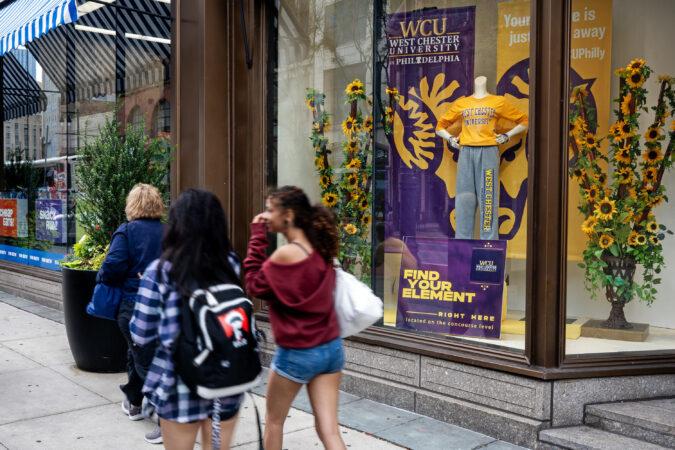
    Students in the Pennsylvania State System of Higher Education will face a 4.3% tuition hike — the largest percentage increase in a decade — if the system does not get a boost in state funding.

    PASSHE’s board of governors voted unanimously Thursday on the plan, which would enact the tuition increase if the system does not receive a 5%, or $31 million, increase in its state appropriation, which currently stands at $625 million. Gov. Shapiro has proposed flat funding for the system, and budget negotiations are continuing.

    Tuition would rise to $8,338 annually, up $344 from $7,994.

    “We’re all disappointed to … have to make this motion,” board chair Cynthia Shapira said. “We hope we do get the increase.”

    The 10 universities in the system are Cheyney, West Chester, Commonwealth, East Stroudsburg, Indiana, Kutztown, Lock Haven, Millersville, Penn West, and Shippensburg. Collectively, they enrolled 83,005 students last academic year, when the system experienced its first enrollment increase in 15 years. About 90% of students are Pennsylvania residents.

    The vote to increase tuition came one day after Temple University approved a budget that increased tuition an average of 3.4% for next year.

    Rutgers University also on Thursday voted to increase tuition 3% for in-state and out-of-state students, which the school touted as its lowest increase in four years. Tuition for a typical in-state, full-time arts and sciences undergraduate will increase on average $448 for the year, rising from $14,933 to $15,381, the school said. Meals and housing on average will rise 4%, from $15,332 to $15,945.

    Earlier this year, the University of Pennsylvania increased its total costs by 3.8% for 2026-27. Pennsylvania State University, which approves tuition increases a year in advance, hiked tuition 2% for in-state students at University Park for 2026-27 and froze it for those attending Commonwealth campuses.

    The resolution approved by the PASSHE board calls for the increase to be rolled back “if sufficient funding in state appropriation is received.”

    System chancellor Christopher Fiorentino said the tuition increase would cover the $31 million gap if the system does not get the increase. The board of governors took the same action last year and did not roll back a 3.6% tuition hike because the state held its funding flat.

    “We’re still really the most affordable four-year option that’s out there,” Fiorentino said in an interview before the meeting, comparing PASSHE schools to state-related universities like Temple and Penn State where tuition is more than twice that amount.

    Until 2025, the system had kept tuition at the same rate for seven years; if it had enacted inflationary increases, tuition would be $1,800 higher now, Fiorentino said. Preceding the freeze, tuition hikes were 2.5% in 2016-17, 3.5% in 2017-18, and 3% in 2018-19.

    Fiorentino said he continues to make the system’s case to legislators for more funding.

    “Our graduates earn 65% more over their careers than people without college degrees, which is about a million dollars in lifetime earnings,” he said. “Ninety percent of our students are from Pennsylvania, and 80% of them take their first job in Pennsylvania after they graduate. Investing in the PASSHE system … is truly an investment in the workforce of the Commonwealth of Pennsylvania.”

    System to launch new ‘last dollar’ scholarships

    The system also announced that beginning in fall 2027, it would provide “last dollar” scholarships to all Pennsylvania students who receive federal Pell and state Pennsylvania Higher Education Assistance Agency grants. For many students from the lowest-income families, the grants cover full tuition, but some families in the middle range who receive smaller amounts of aid are still on the hook for part of the cost, the chancellor said.

    “They’re the ones that tend to get caught in a bind, and they’re the ones that we’ve been worried about,” he said. “We’re going to cover the balance of their tuition” and make sure they are not affected by future tuition increases.

    Fiorentino said he hopes that donors will want to contribute to the effort so the level of aid can be expanded.

    The new scholarship program, called the PASSHE Pledge, will not cover room and board or fees.

    He did not have an estimate of how many students would qualify, but said system officials have been worried about losing them. And that would add to the enrollment decline at a time when the system, like other colleges, already is challenged by a shrinking pool of available high school students.

    “We’re hoping this is going to increase our enrollment numbers,” Fiorentino said.

    It is too early to predict fall enrollment, he said, but some of the system’s 10 universities are doing better with deposits than last year, some the same, and some a little worse.

    “We’re cautiously optimistic that we’re going to be stable,” he said.

    The system is partnering with community colleges to streamline the transfer process and concentrating on bringing students with some college credits and no degree back into the system, he said.

    “We will continue to work hard to maintain and grow our enrollments,” he said.

  • Kylian Mbappé condemns Paraguayan senator over racist remarks after World Cup match in Philly

    Kylian Mbappé condemns Paraguayan senator over racist remarks after World Cup match in Philly

    France star Kylian Mbappé on Monday condemned a Paraguayan senator over racist remarks she made following Paraguay’s loss to France in the round of 16 at the World Cup.

    Mbappé called Celeste Amarilla, a senator from Paraguay’s Liberal Radical Party, a “despicable woman” who was “unworthy” of serving in Paraguay’s Congress.

    “Through your recklessness and your brazen racism, the entire world has already forgotten the journey and the historic effort that your players accomplished during this World Cup,” Mbappé wrote on X.

    Amarilla posted a series of racist comments on X after Mbappé converted the winning penalty in France’s victory over Paraguay on Saturday, mocking the French captain’s origins, upbringing, education and appearance. France advanced to the quarterfinals, where it will face Morocco on Thursday.

    Late Monday, Amarilla issued an open letter in French and Spanish to Mbappé on social media, in which she said her problem was with the player, not the country of France. She wrote that she regretted mistreating Mbappé with “the same insults” she’s received as a mixed-race person and that she had deleted her post.

    But she also demanded an apology from Mbappé, accusing him of gender-based violence in his comments about her, and threatening legal action if he didn’t retract them.

    The Associated Press emailed France’s team media officers for comment on Amarilla’s letter.

    The Paraguayan government released a statement Monday afternoon condemning Amarilla’s remarks as “contrary to the values and principles that inspire peaceful coexistence and respect for human dignity that our country promotes.” It added that the senator’s comments do not represent either the Paraguayan government or the Paraguayan people.

    The French Football Federation on Monday denounced Amarilla’s comments as “utterly abhorrent” and “unacceptable,” adding that it would refer the matter to prosecutors.

    France’s president, Emmanuel Macron, and sports minister Marina Ferrari voiced support for the national team’s captain.

    “By targeting Kylian Mbappé, the senator is attacking everything our captain embodies and everything our country stands for: liberty, equality and fraternity,” Ferrari wrote on X.

    “One more goal for Kylian Mbappé. This time against racism,” Macron wrote on X, adding the captain had his “full support.”

    France’s assistant coach Guy Stéphan also condemned the remarks on Monday.

    “In three words, it’s indignant, abject, scandalous,” he said.

    Before Saturday’s match, former Paraguay goalkeeper José Luis Chilavert referred to France as “a squad from Africa.” Philippe Diallo, president of the FFF, said Chilavert “was once a great goalkeeper” who had now “fallen into disgrace.”

  • Proposed rule could gut American science, Penn researcher warns

    Proposed rule could gut American science, Penn researcher warns

    As an undergraduate researcher at the University of Pennsylvania, I spend my time outside of class studying how a protein called tau destroys the brain cells of Alzheimer’s patients. This research happens at Penn’s Center for Neurodegenerative Disease Research (CNDR), it is funded by the National Institutes of Health, and it is the reason I want to spend my life as a physician-scientist.

    It is also exactly the kind of research a new federal proposal could quietly undermine.

    On May 29, the White House’s Office of Management and Budget (OMB) published a 100-page proposed rule that would fundamentally restructure how the federal government administers research grants. The comment period closes July 13.

    Most Americans have never heard of it. That needs to change.

    The rule has several alarming impacts. For instance, it would allow political appointees to override scientific peer review in grant decisions, upending the meritocratic, rigorous system that has pushed American science forward since World War II.

    Perhaps most critically, it would permit the government to terminate any active federal grant at any time, for any reason — including the vague, undefined justification that a study is no longer in the “national interest.” Furthermore, it would effectively ban federal funding for research into health disparities across racial populations, with a stated exception so narrow it is meaningless in practice.

    Let me put that in perspective with specific examples. Over seven million Americans currently live with Alzheimer’s disease, and that number will nearly double by 2050. The research that underpins our understanding of this disease — including discovery of biomarkers, assembly of databases, and clinical trial frameworks — took decades of sustained, longitudinal federal investment to build. The Alzheimer’s Disease Neuroimaging Initiative, launched in 2004, required over 20 years of continuous funding and investment prior to producing any comprehensive datasets that now drive clinical trials.

    Under the proposed rule, however, a political appointee or administrator with no scientific background could have decided at any point in that 20-year window that the study was no longer in the “national interest” and ended the study. The harm this vague, sweeping rule would do is not hypothetical. Much biomedical and clinical research, including in the field of neurodegenerative diseases, is longitudinal, and progress is not always immediately visible.

    I’m reminded of what the late John Trojanowski, a former leader of the lab I now work in, said in regard to his research on the proteins behind Alzheimer’s:

    “We asked our mentors, ‘Is this something we should do?’ They all said, ‘No. It’s a swamp, and you’ll ruin your careers because so little is known.’ What they saw as a swamp, we saw as a huge challenge and opportunity that has led to an engaging career.”

    Trojanowski’s partner in that research was Virginia Lee, whose work on tauopathies I have the privilege of contributing to today.

    Their “swamp” turned out to be an oasis of discovery that likely would’ve remained untouched if these two experts in their field had not trusted in themselves and decades of training. If even their mentors — senior scientists in their own right — had dismissed these field-defining ideas, imagine the damage administrators and political appointees can inflict on similar revolutionary discoveries simply because they deem them “not in the national interest.”

    The ban on research into racial disparities will compound this harm. Black Americans are diagnosed with Alzheimer’s at roughly twice the rate of white Americans. Population differences in disease risk, progression, and biomarkers are not ideological claims, but instead are observed, replicated findings in the scientific literature.

    For example, research has found that the relationship between the APOE4 gene (a major genetic risk factor for Alzheimer’s disease) and brain pathology inherently differs across racial groups. More specifically, some studies have found different patterns of tau protein markers in Black and Hispanic populations compared with the predominantly white cohorts that comprised much of the foundational, preexisting literature.

    As currently written, this provision reaches much further than OMB’s framing of eliminating unlawful DEI policies suggests, and instead directly threatens legitimate biomedical research.

    From a student perspective, I also want to acknowledge something that institutional press releases may not: This rule falls hardest on the people least able to absorb the blow.

    If a principal investigator or faculty member loses a grant, it is by all means a loss, but they are more likely to have tenure, salary, or institutional support. If a graduate or doctoral student loses a grant mid-project, they potentially lose their publication, graduation timeline, and may face an altered career trajectory. And yet, trainees are never once mentioned in this proposal.

    Doctoral students at the Delaware Center for Cognitive Aging study the impact of cardiovascular function on brain tissue integrity and cognitive aging.

    So what can those of us who want to ensure we have the tools to effectively treat future pandemics and that our children benefit from world-class health research do?

    Congress has little practical recourse here. The Congressional Review Act exists, but in the current political climate, a veto-proof majority to overturn an OMB rule is a fantasy.

    Yet, our voice still matters.

    I do not say this as a mere platitude. The Federal Register, where this document was published, contains a form for anyone to leave a comment for OMB. Unlike the “contact me” forms on senators’ and representatives’ pages that you rarely receive a response from, the comments here are public — and they also carry legal weight. When this proposal gets challenged in court — and it almost certainly will — judges will look at the administrative record, which includes every single comment.

    If OMB does not meaningfully engage with a substantive objection raised during the comment period, that provides grounds to vacate the rule. Your comment doesn’t just go into a void. It becomes part of the legal ammunition.

    Physicians and healthcare workers: Share the stories of your patients who benefited from federally funded studies. Scientists and students: Explain your research and the progress made from it. Attorneys and legal scholars: Challenge the principles and wording in this sweeping, overarching proposal.

    To those whose careers do not directly involve science, this is your fight, too.

    Comment on your medical condition that’s been treated. Chances are that treatment was only possible due to federally funded basic science. And if you or a loved one suffers from a disease or illness for which we do not yet have a cure, it is all the more important that you speak up with us.

    Stable and comprehensive funding allows scientists to develop treatments for both rare illnesses and widespread ones like neurodegenerative diseases.

    This is also a fight for our underrepresented racial and ethnic populations, the LGBTQ+ community, and the marginalized in our city. The decision to fund research on medical disparities is a decision to invest in the people who need it most.

    As we in Philadelphia celebrate our nation’s Semiquincentennial, America’s first hospital and medical school, and the great scientific advancements of our city, it would be wrong not to recognize the benefit biomedical research has received from federal funding.

    This legacy is now in danger. If we want to see another 250 years of great American science, now is the time to act.

    Ayaan Shah is a sophomore at the University of Pennsylvania studying neuroscience and an undergraduate research assistant at Penn’s Center for Neurodegenerative Disease Research.

  • How Washington state beats California when it comes to merlot

    How Washington state beats California when it comes to merlot

    Red wines may look dark as night in the glass, but they taste like bottled sunshine. That’s because it takes extra sunlight during the summer months to fully ripen dark-skinned grapes. Plants use photosynthesis to turn light into energy, and this process helps explain why Washington state has a natural advantage over California when it comes to making bold and concentrated merlots, like this value-priced example.

    During this time of year, Philadelphia gets the same amount of sunlight per day as Napa in California’s wine country — roughly 15 hours per day. Washington’s Columbia Valley is more than 700 miles north, which adds up to almost 10 degrees of difference in latitude. This differential provides Washington vineyards with an extra hour of sunlight in the critical weeks of the summer growing season.

    With more sun, vines don’t just ripen faster. They also produce more of the dark phenolic compounds in grape skins, which add color, flavor, and antioxidant properties to wine. The resulting difference is quite subtle in wines made using the very thickest-skinned red wine grapes — like cabernet sauvignon and syrah — but the effect is more noticeable in wines made using merlot.

    It would be difficult to find a California merlot that delivers this much concentration and substance for the dollar, with enough tannic grip on the palate to handle a juicy steak off the grill. Its flavors of blackberries and black plums taste fresh with only a hint of oak influence, similar to a light dusting of cocoa.

    14 Hands Merlot

    14 Hands Merlot

    Washington; 13.5% ABV

    PLCB Item #98025 — $10.99 through Aug. 2 (regularly $13.99)

    Also available at: Moorestown Super Buy Rite in Moorestown ($9.49; moorestownbuyrite.com), WineWorks in Marlton ($9.98, wineworksonline.com), and Total Wine & More in Claymont and Wilmington, Del. ($9.99, totalwine.com).

  • Philly traded one Brown for another: Jaylen Brown reveals he and former Eagle A.J. Brown are ‘cousins’

    Philly traded one Brown for another: Jaylen Brown reveals he and former Eagle A.J. Brown are ‘cousins’

    Think of a star player who was involved in a highly publicized trade between Philly and Boston.

    If you’re thinking about a member of the Brown family, you’re correct.

    Jaylen Brown, who was traded to the Sixers from the Boston Celtics in exchange for Paul George and draft picks last Wednesday, and A.J. Brown, who was traded from the Eagles to the New England Patriots for draft picks on June 1, have a lot more in common than their trade similarities and last name — or rather, their family name.

    Jaylen revealed on Tuesday that the two are connected through their respective grandfathers who are brothers, making them second cousins.

    “I didn’t know that, my grandpa just told me,” Jaylen said in the clip. “I don’t think [A.J.] knows that, either.”

    But if A.J. didn’t know before, he does now. He responded on Instagram by posting a clip from the movie Poetic Justice on his story with the caption “Big Cuz hit me!”

    While Jaylen grew up in Marietta, Ga., A.J. grew up in Starkville, Miss., about 300 miles away. But despite their different upbringings, there are still a few things that clearly run in the family, starting with their elite athleticism.

    They also went back-to-back in winning their championships, with Jaylen winning an NBA championship in the 2023-24 season with the Celtics and A.J. following with a Super Bowl win in the 2024-25 season.

    Fans also pointed out that the colors surrounding the teams involved in each trade is similar with both Jaylen and A.J. originally wearing green and white before going to a team with a red, white, and blue colorway.

    Jaylen shared the details of the Brown family tree during an event at Massachusetts Institute of Technology for his 7uice Foundation, which focuses on bridging the gap for opportunities for underserved youth.

    Massachusetts Gov. Maura Healey proclaimed that July 7 will now be known as 7uice Foundation day in the state going forward.

    During the same event, Jaylen met with a young Celtics fan who went viral for his reaction following his trade to Philly.

    Known on social media as “Gio the Tiger,” the young fan went viral after video showed him crying over the trade with his Celtics jersey on and what read “Filla” written over the Boston team’s name. The text on the video said that the 6-year-old was experiencing his “first heartbreak” after learning the news of his favorite player’s trade.

    After Jaylen commented on the original post reminding Gio they’d “always be friends,” the duo connected in person where he was also able to deliver a hand-written note to Jaylen and interview him as well.

    At least now, Gio will have another Brown to root for in New England.

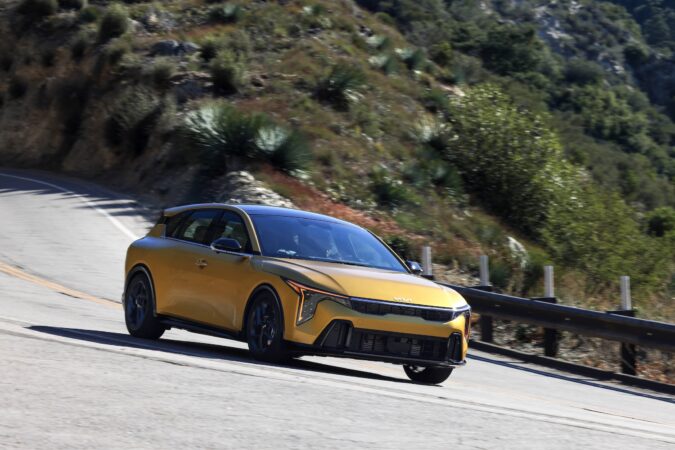
  • 2026 Kia K4 Hatchback: Bigger and better than you’d think

    2026 Kia K4 Hatchback: Bigger and better than you’d think

    2026 Chevrolet Trax 1LT vs. 2026 Kia K4 Hatchback GT-Line Turbo: Battle of the low(ish)-payment models.

    This week: Kia K4 Hatchback

    Price: $32,770 as tested. A GT-Line tech package adds ventilated front seats, various collision avoidance features, surround-view camera, and more for $2,395. Heated front seats come standard.

    What others are saying: “Highs: Attractively modern styling, adult-friendly back seat, high-value standard features list. Lows: Ho-hum handling, base engine lacks oomph,” says Car and Driver.

    What Kia is saying: “Sculpted, sophisticated, and made to be seen.”

    Reality: It’s attractive and does many things quite well, but does it beat the Trax?

    What’s new: After the introduction of the K4 sedan for 2025, the hatchback joins the lineup this year.

    The GT-Line has a turbocharged engine available that we tested here.

    Competition: A surprising number of contenders still ride in the small-car club. In addition to the Trax, there’s the Buick Envista, Honda Civic, Hyundai Elantra, Kia Niro, Mazda3, Nissan Versa, Subaru Impreza, Toyota Corolla, and Toyota Prius.

    Safety equipment: While the Trax offers forward collision alert, lane keeper with departure warning, automatic emergency braking, and following distance indicator, the K4 website only mentions the last three. It does note rear cross-traffic collision avoidance, so both are well stocked with features.

    Up to speed: In lieu of the 2.0-liter four-cylinder engine in the standard GT-Line, this version gets a 1.6-liter four married to a turbocharger, giving the little hatchback 190 horsepower, 43 more than standard.

    A 2025 model reached 60 mph in 7.3 seconds, according to Car and Driver. This is 1.5 seconds faster than the Trax.

    But life on the road was quite nice, at least when minding your own business. The little hatchback kept up over hill and dale. But in passing maneuvers and in pulling into traffic, the K4 still fell a little short.

    Shifty: Instead of the CVT in the basic model, this one gets an eight-speed shiftable automatic. It can be a little balky before the vehicle is warmed up, hanging onto lower gears for a concerning amount of time at first. Use that snazzy T-bar shifter if needed. Score one for Kia.

    On the road: The K4 was bright and cheerful on country roads, nice even for a small front-wheel-drive car. It didn’t offer the kind of zig you might get from a Mazda or a Volkswagen, but it’s easy to go where you point it. This is a tie with the Trax.

    Set speed: Kia and Hyundai cruise-control systems can occasionally have a mind of their own. On highways with concrete barriers and some traffic, the sensors hallucinate reasons to slow down, likely as annoying to other drivers as to Mr. Driver’s Seat. I’d be requesting a long demonstration with a salesman on this topic before I signed the papers.

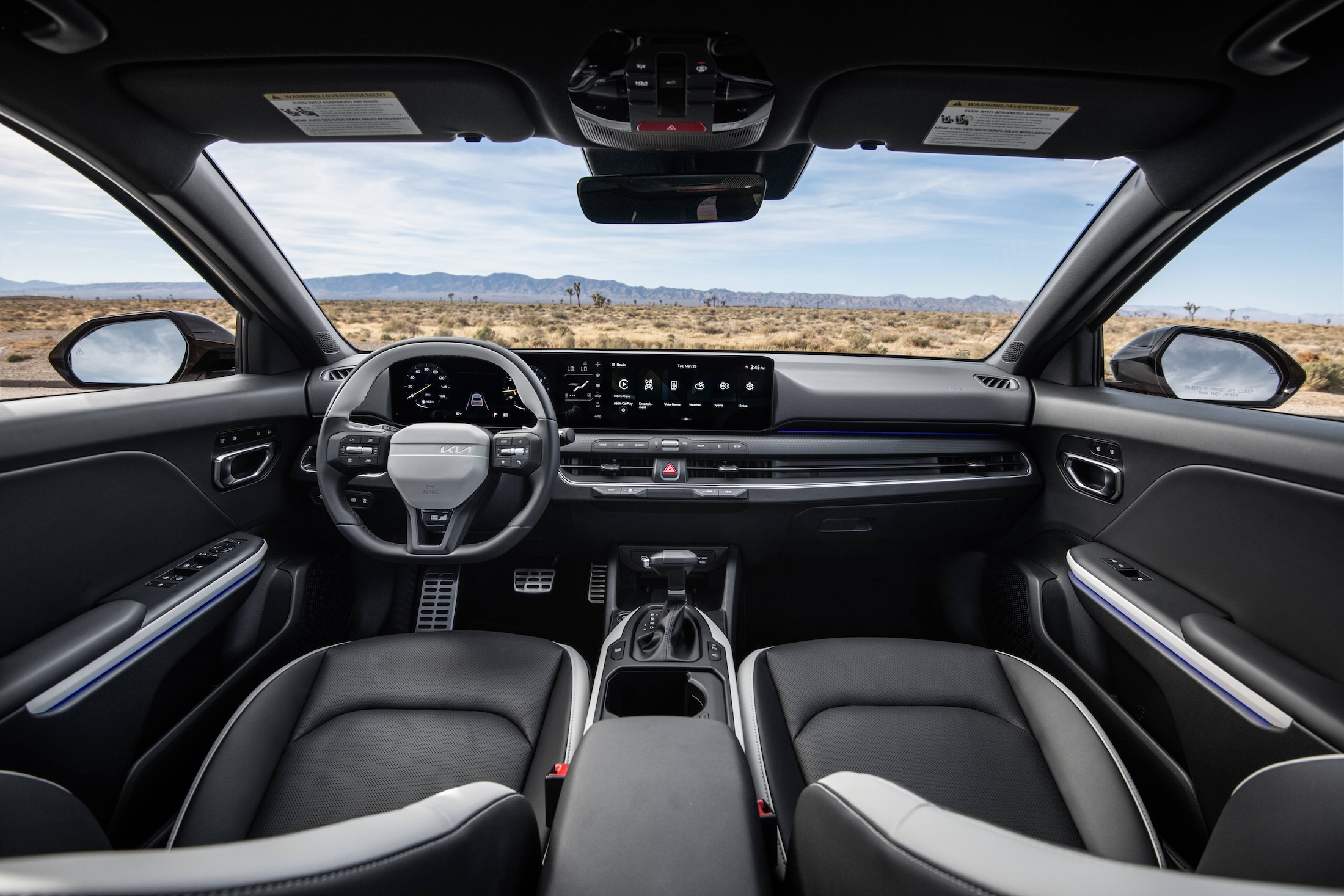
    The interior of the 2026 Kia K4 Hatchback offers plenty of comfort and good looks for the money spent, and rear-seat passengers will especially appreciate the accommodations.

    Driver’s Seat: The seat feels a little on the small side. At about 5-foot-10, I’m fairly average, and I’ve driven a lot of small cars over the years, so the fact that I noticed this one is telling. Otherwise it’s quite comfortable and supportive, surprisingly so for the price point.

    The dashboard is standard Kia, easy to use the steering wheel controls to scroll through your choices. This I’d call a tie as well.

    Friends and stuff: Rear passengers get a comfortable seat that’s perfectly angled (but no recline). Headroom is good, legroom is really good for the size, and only foot room is a little snug. Strong advantage Kia.

    Cargo space is 22.2 and 59.3 cubic feet, putting the Trax’s numbers in the middle of that. Kia wisely gives more space to the rear passengers.

    In and out: It’s a bit of a step down into the K4, almost to sports car levels, so be prepared when you sit.

    Play some tunes: The standard 12.3-inch touchscreen is a generous size for a small car, about half an inch bigger than the Chevrolet, and has the added bonus of a row of buttons across the dashboard underneath, allowing for easy maneuvering. A side row of icons and the home screen’s large icons help the process.

    Sound from the Harman Kardon system (standard in the GT-Line) is OK, about a B+ or an A-. Kia would do well to put some more effort into their sound systems. A tie; Kia for size and usability, Chevy for sound.

    Keeping warm and cool: The controls are a combination of simplistic and advanced that kind of works when you figure it out. A row of cheap-feeling plastic toggles blends into the cheap-feeling dashboard curves and those toggles adjust the temperature, fan speed, and blower setting.

    Except … if you want all defroster, you have to hit the nifty, premium touch pad next to the infotainment screen. Same for the rear defroster. This extra touch pad pushes the dashboard blower down a bit, interfering with cooling. Trax wins this category.

    Fuel economy: The K4 Turbo reported about 26 mpg in a mix of highway and secondary road trips, about par for the small-fast-car course. I thought this would beat the Trax by more than one tick, but alas, there’s a turbo to feed.

    Where it’s built: Pesqueria, Mexico

    How it’s built: Consumer Reports predicts the K4 reliability to be a 3 out of 5, a notch lower than the Trax.

    In the end: Really, with two models that actually get you from point A to point B for under $30,000, either of these is a real winner. And even though the two mostly tied, the K4 does so many things better.

    In the category, though, a little more scratch gets you a Corolla or a Prius, which are probably better bets in the long run.

  • Norristown’s Jimmy Amplo will bring a ‘Rocky mentality’ to MLB’s High School Home Run Derby

    Norristown’s Jimmy Amplo will bring a ‘Rocky mentality’ to MLB’s High School Home Run Derby

    When Jimmy Amplo’s high school baseball coach told him the news, the 17-year-old couldn’t believe it. At the start of the week, Amplo was playing travel ball with the Philly Bandits. This weekend, he will be batting in his hometown team’s stadium, Citizens Bank Park.

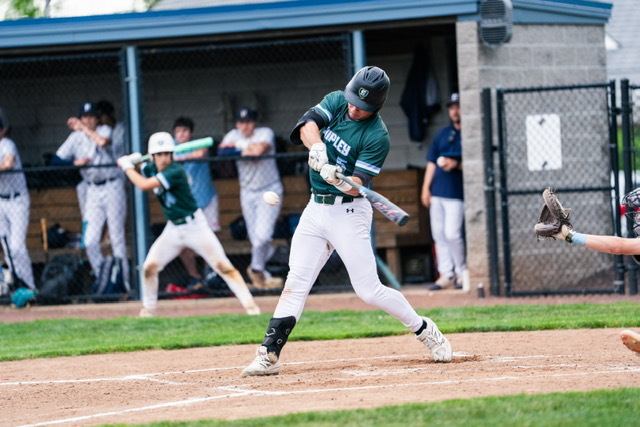
    Amplo, a rising senior at The Shipley School from Norristown, was selected as one of eight high school players from across the nation to compete in the MLB All-Star High School Home Run Derby.

    “I thought it was a joke almost,” Amplo said. “Later that day, when I found out that it was actually real and that they had a spot for me, I was so excited.”

    The 14th annual High School Home Run Derby is Friday (2 p.m. MLB.com) and has featured future major leaguers. Past participants include Phillies prospect Aidan Miller and major league stars Jordan Walker, Riley Greene, and Bobby Witt Jr., who won the high school derby in 2018 and will play in his third All-Star Game on July 14.

    Amplo earned an invitation to the derby in June, after hitting a 106.9 mph max exit velocity at Prep Baseball’s Pennsylvania showcase last month. The left-handed hitter posted a 1.295 OPS and .750 slugging percentage while notching 35 hits and five homers this season. He also helped lead the Gators to their second consecutive Friends Schools League championship in May.

    “Jimmy was a huge part of those wins,” said Shipley coach Bryan Bendowski. “He was our starting center fielder/right fielder, and he is somebody who was very instrumental in the success of those two seasons.”

    Entering the derby, Amplo has been refining his swing by focusing on timing. Still, he knows he’ll be an underdog among the other seven competitors.

    Amplo is the only player in the contest who is not committed to a college program, and many of the others are nationally ranked prospects.

    The field includes Kinon Bastian (Winter Garden, Fla.), who is committed to Florida; Brady Cunningham (Mokena, Ill.), who is bound for Texas A&M; Tavis Honeycutt (Newberry, Fla.), also a Florida recruit; Graham Keen (Pittsburgh, Mt. Lebanon High School), a Vanderbilt pledge and ranked No. 10 nationally in the class of 2027 by Prep Baseball Report; Sullivan Reed (Meridian, Miss.), who is committed to Mississippi State; Lubin Rincon (Pearland, Texas), who is bound for Texas and is No. 7 in PBR’s class of 2027 rankings; and Grant Westphal (Leawood, Kan.), who’s ranked fourth and also is committed to Texas.

    Amid the big names, Bendowski is working to bolster Amplo’s confidence.

    Jimmy Amplo is a rising senior at the Shipley School.

    “I’ve been sort of preaching the Rocky mentality to him,” Bendowski said. “The underdog can always come out on top, so give it your best effort and let it fly.”

    Amplo added: “I’m definitely a bit nervous, but I’m really excited, too. I’ve been looking up to players like Bryce Harper. I definitely like that he’s a great left-handed hitter and generates a lot of power and bat speed.”

    The lifelong Phillies fan said many of his teammates, family, and coaches will be in the stands to watch him on Friday.

    “This is what I’ve worked for and why I’ve trained my swing,” Amplo said. “Just being able to play at a ballpark that you grew up going to feels pretty cool, and to actually be able to bat on that field is special.”

  • Bonnie Tyler, who topped the charts with epic ‘Total Eclipse of the Heart,’ has died at 75

    Bonnie Tyler, who topped the charts with epic ‘Total Eclipse of the Heart,’ has died at 75

    Bonnie Tyler, the gravelly voiced, Grammy-nominated Welsh pop star best known for singing the chart-topping power ballad “Total Eclipse of the Heart” in 1983, and seeing new generations succumb to its bombastic charms during solar and lunar eclipses, has died. She was 75.

    Tyler died unexpectedly in a hospital in Portugal where she was being treated for an illness, her family said Thursday in a statement on her website. She was hospitalized in May in Faro, where she had a home, for emergency intestinal surgery. She had been placed in an induced coma for a period but was reportedly improving last month and expected to make a good recovery.

    “Bonnie’s family and team are heartbroken to announce that Bonnie unexpectedly passed away last night in hospital in Portugal as a result of the illness that she was being treated for,” her family said.

    Tyler earned three Grammy nods, represented Britain at the Eurovision Song Contest 2013, where she came in 19th. She was honored as a Member of the Order of the British Empire for her services to music by Queen Elizabeth II in 2022, all largely thanks to “Total Eclipse of the Heart,” which has had more that 1 billion streams, boosted by real eclipses in 2017 and 2024.

    The song spent four weeks at No. 1, and when Stereogum reevaluated it in 2020, the music outlet declared it an “extinction-level event rendered in musical form.”

    “It’s pop music as heart-pounding, chest-thumping, blood-gargling, heavens-falling passion explosion. It’s sheer spectacle. It’s fireworks and lasers and lightning and thunder. It soars and swoops and barrel-rolls,” the site said.

    The song has never really gone away, covered by the English singer Nicki French in 1995, and the band Westlife in 2006. Cate Blanchett sang it while hitting Billy Bob Thornton with her car in 2001’s “Bandits,” it appeared in a wedding scene in 2003’s “Old School” and One Direction sang it in 2010 on a U.K. version of “The X Factor.”

    Early life

    Tyler was born — as Gaynor Hopkins — a coal miner’s daughter in public housing with an outside toilet in Skewen, Wales, about 7 miles (11 kilometers) outside Swansea. She grew up with three sisters and two brothers.

    She adored the Beatles and her first album was “A Hard Day’s Night.” The first song she bought was “Hippy Hippy Shake” by the Swinging Blue Jeans at 13 and watched “Top of the Pops” religiously, according to her memoir, “Straight From the Heart.”

    She would record “Top of the Pops” on a reel-to-reel two-track recorder and write down the lyrics of songs she loved. Her favorites were songs by Janis Joplin, Nina Simone, Tina Turner, Wilson Pickett and Otis Redding.

    “I used to sing them into my hairbrush for hours and hours, and that’s how it all started for me. I fell in love with singing just from doing that. Looking back, even then my voice had a husky tone to it, but I didn’t think much of it. I thought everyone’s voices were different from each other’s,” she wrote.

    In 1976 she had to have surgery to remove nodules on her throat, leaving her with that trademark vocal sound. Changing her name to Sherene Davis, she was fronting a soul band when she was discovered by talent scout Roger Bell, who brought her to London for demo sessions. Then she waited for a label until RCA said it was interested.

    Under her new RCA-sanctioned name Bonnie Tyler, her debut album “The World Starts Tonight” in 1977 contained her first chart hit, “Lost in France,” and she was nominated for a breakthrough artists award at the Brits Awards. She then had a No. 3 hit in 1978 with “It’s a Heartache,” but soon drifted. She then signed with Sony and saw Meat Loaf perform “Bat Out of Hell” on the BBC. Impressed, she requested to work with Meat Loaf songwriter and producer Jim Steinman.

    ‘Total Eclipse of the Heart’

    Steinman introduced her to his song “Total Eclipse of the Heart,” which would become the debut single for her fifth studio album, “Faster Than the Speed of Night.” He borrowed one of the song’s lyrics — “Turn around, bright eyes” — from his 1969 musical “The Dream Engine,” written as a student at Massachusetts’ Amherst College. He told her the song was from a prospective musical version of “Nosferatu.”

    “Jim liked to put down a basic rhythm track, do nine takes of the song, choose the best one and then put the kitchen sink on there, like Phil Spector used to,” Tyler told The Guardian in 2023. “He gave me a cassette to listen to in my hotel and we both preferred take two.”

    Featuring E Street Band members Roy Bittan on piano and Max Weinberg on drums, “Total Eclipse” is a rumination on lost love: “Once upon a time there was light in my life/But now there’s only love in the dark,” she sings.

    The video, a staple of early-days MTV, was shot in a frightening gothic former asylum in Surrey, where the guard dogs apparently wouldn’t set foot in the rooms downstairs where they used to give people electric shock treatment. The visuals included slow-motion tossed doves, candles, dancing ninjas, dancing greasers, Tyler in frighteningly big shoulder pads, fencers, gymnasts, wind machines and shirtless boys wearing swim goggles being doused with water.

    “Faster Than the Speed of Night” earned a Grammy nomination for best rock vocal performance — losing to Pat Benatar’s “Love Is a Battlefield” — and Tyler got another nod for “Total Eclipse of the Heart” in the best pop vocal performance category, losing to Irene Cara’s “Flashdance — What a Feeling.”

    After the ‘Eclipse’

    Tyler never reached such dizzying heights again but stayed current with such movie soundtrack singles as “Holding Out For a Hero” — from 1984’s “Footloose” — and “Here She Comes” from “Metropolis” also in 1984.

    Her 2019 disc “Between the Earth and the Stars” featured duets with Rod Stewart, Cliff Richard and Status Quo’s Francis Rossi, and she ended that year performing a Vatican Christmas concert before Pope Francis.

    In 2013, she switched gears to make a country-flavored record in Nashville, “Rocks and Honey,” which included the Vince Gill duet “What You Need From Me” and a little ballad called “Believe in Me,” written by American songwriter Desmond Child and British songwriters Lauren Christy and Christopher Braide. “Believe in Me” was picked to represent the United Kingdom at that year’s Eurovision Song Contest in Sweden.

    “It was an absolutely wonderful atmosphere there,” she told the San Francisco Examiner in 2023. “I was being interviewed every 15, 20 minutes, and when I walked out onstage behind the British flag, I thought the roof was going to come off! It was awesome, just awesome!”

    In 2017, she joined Joe Jonas’ band DNCE for a performance on the cruise ship Oasis of the Seas as part of a “Total Eclipse Cruise.” When the moon passed in front of the sun, they played “Total Eclipse of the Heart.”

    Tyler was married to property developer and former Olympic judo competitor Robert Sullivan.

  • Medford approves four housing projects with more than 200 affordable units to meet state mandate

    Medford approves four housing projects with more than 200 affordable units to meet state mandate

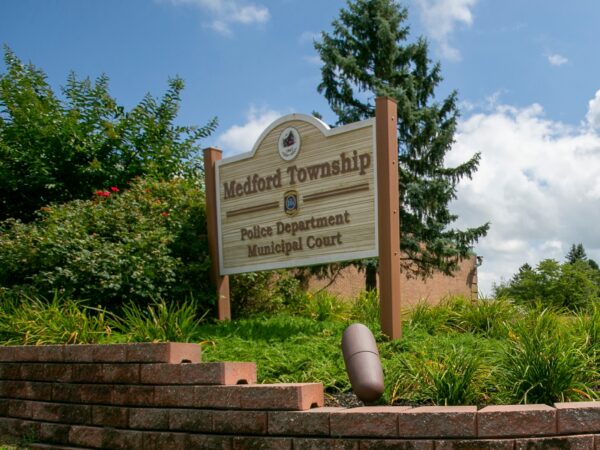
    Tackling what local officials called “one of the most significant matters” facing the Medford community, township council approved four redevelopment projects Tuesday night that will bring hundreds of affordable units to the township.

    All of the projects are part of Medford’s effort to meet their state-mandated affordable housing requirements. The housing obligations stem from a 1975 New Jersey Supreme Court ruling requiring that all municipalities develop a certain amount of affordable housing.

    Every 10 years, each municipality in the state is given a specific quota of affordable units to plan for over the next decade based on considerations that include population, income, and land capacity.

    The U.S. Department of Housing and Urban Development generally follows the 30% rule to determine affordability — any dwelling that costs 30% or less of a household’s gross income is deemed affordable.

    In New Jersey, affordable housing is restricted to households with earnings that must be at or below 80% of the area median income for the area. In Medford, the median household income is $157,969, according to the most recent data from the U.S. Census Bureau. That would mean any household earning less than roughly $126,375 per year would be eligible for the new affordable units.

    The state most recently determined Medford must build a total of 240 affordable units by 2035.

    The four development proposals that were approved would collectively add 226 affordable housing units as part of approximately 1,067 total new residential units within the township. All of the projects also plan for some type of on-site recreational amenity like playgrounds, pavilions, or picnic areas.

    As part of the agreements, builder D.R. Horton will pay the township a $3 million redeveloper’s fee and a $1.7 million recreational and community benefit contribution that will be split between local nonprofits and the Medford Youth Athletic Association.

    While the township has enough water infrastructure capacity for the new developments, D.R. Horton has also agreed to construct a water tower through the use of a $5 million special assessment bond with no cost to the township if it’s determined that water pressure is insufficient, Township Solicitor Patrick Varga said.

    Large housing developments are often contentious in South Jersey, especially in places like Medford where residents value open space and are concerned more families will overburden an already cash-strapped school district.

    In response to resident concerns about overbuilding, Medford Mayor Mike Czyzyk said Tuesday that the only residential communities that the township has approved in recent memory were related to the township’s affordable housing requirements.

    “Medford has had a history of not building residential unless it’s required by the state,” Czyzyk told attendees during the meeting. “So as it stands today, there are no large or small-scale residential tracts being developed. There may be parcels being developed for residential use, like on Mill Street and in different areas, but there’s no communities coming to Medford outside of the ones required to be built to satisfy our affordable housing need.”

    During Tuesday’s meeting, one resident questioned the township’s need to move forward with all of the projects at once, especially given that it is still so early in the 10-year window. But officials said that the timeline was out of their hands and they had a state deadline to meet.

    “Every town in the state of New Jersey was required to adopt and finalize how it was going to comply with its Housing Element and Fair Share Plan for the Fourth Round by March 15,” Varga said. “The Township of Medford was one of a handful of towns that received an extension.”

    Now that council has approved the redevelopment agreements, the township will be taking the plans before a judge who will determine if Medford is in compliance with their housing requirements.

    Here’s what’s included in each of the redevelopment plans:

    The Reserve at Ironbridge

    Located on a 64-acre parcel at the intersection of Church and Eayrestown Roads, the Reserve at Ironbridge will include up to 287 total units, 48 of which will be designated as affordable.

    Landing at Kirby’s Mill

    Not far away, a 61-acre lot at Church and Fostertown Roads will become the 198-unit Landing at Kirby’s Mill. Forty of these units will be affordable.

    Trollinger-Stonebridge

    The largest of the four projects, the Trollinger-Stonebridge project will total more than 164 acres northeast of Church Road and County Route 541. The project includes up to 48 affordable units out of a total of 300 new residences. This project also includes plans for a bike trail to be constructed and paid for by the builder, pending state approval.

    Flying W

    Planned for a 114-acre lot on Fostertown Road, Flying W includes the greatest affordable housing contribution among the four projects. With 90 affordable units, 31% of the 282 total units will be set aside for low-income residents. All market-rate units in the development will be age-restricted.