Thinking of selling your business? Or starting a business? You may want to consider a worker cooperative.
This type of business structure is different from a consumer cooperative, where customers each own a piece of the organization in exchange for a membership. It’s also different from an employee stock ownership plan where ownership is assigned to employees based on other factors such as compensation, responsibility, and tenure; retirement value builds up; and day-to-day control is given up to management.
A worker cooperative is a form of business organization where all workers equally own the business. There are no majority shareholders. Management is elected by the workers and reports to the workers. All profits are shared equally.
One example is Home Care Associates of Philadelphia, a worker-owned, women-led cooperative providing in-home personal care, mobility support, and household assistance to seniors and people with disabilities in the Philadelphia region. Employees can buy one share of the company for $500 via payroll after a probationary period.
“You have full rights at that point to run for a seat on the board, to participate in the worker-owner meetings, and to vote,” said CEO Tatia Cooper. “If anyone decides not to be a worker-owner anymore, they get the full amount back that they invested.”
Pennsylvania is one of the easier places in the country to form a worker’s cooperative, according to Kevin McPhillips, the CEO of the Havertown-based nonprofit Pennsylvania Center for Employee Ownership, because the commonwealth has designated this type of organization separately from other business forms like corporations and partnerships. New Jersey also has specific regulations enabling the formation of worker cooperatives.
Why should a business consider the worker cooperative structure?
For many it builds stronger retention and loyalty to the organization. When people are owners, they have more devotion to the company, so turnover is generally lower, resulting in lower costs for recruiting, hiring, and onboarding.
Some believe worker cooperatives are more apt to deliver better service because the employees care more about their end work product. They’re more devoted to safety, quality, and minimizing waste.
“Home care agencies struggle with retention and providing consistent care,” says Cooper. “For the simple fact that you have workers who stay longer, it really impacts your bottom line.”
Cooper also believes that when workers have a say in how the business is run and the work that they do, they feel more empowered and that then translates to better care.
Scott Moon, the executive director at Baker Project, an employee ownership advocacy group related to the Pennsylvania Center for Employee Ownership, says that while worker cooperatives can be a good vehicle for succession planning, owners will need to make some hard decisions about their objectives if they’re looking to sell their business.
“Business owners who are having a difficult time finding a buyer for their company but want to see it continue to exist and support their employees can use a worker cooperative as a way to pass their work to a new generation of owners,” he said.
Jobs and the company’s brand can be kept in place and the owner can be paid for the value of their company by the workers via a seller’s note or through a bank loan, which is serviced by the company.
“There are many owners who feel it’s not just about selling and that their business has an ongoing responsibility to their employees, their customers, and their community,” Moon said. “So this type of strategy best fits those goals.”
Cooper has found that their organization has a unique culture because of their employee ownership structure.
“It’s the kind of environment where workers can say, ‘Hey, listen, I see a problem, I see a gap. Here’s how I think we should solve it. What do we need to do to make it happen?,” she said. “We have a happiness committee, we have a policy action group, we have a safety committee all led by board members who are worker-owners.”
Downsides of worker cooperatives
Worker cooperatives have their drawbacks. Owners need to understand that they’re giving up complete control.
Because decisions are being made by elected groups of managers that need approval from employees, processes can be slower and potentially messier. Everything is open for scrutiny, and sometimes this level of transparency can hinder decision-making. Some employees may be enthusiastic about attending meetings and paying attention to the organization’s management, but others may not be up for the time and responsibility it takes.
Financing is also harder. According to Cooper, banking is a “real challenge” because, in her experience, worker cooperatives can’t apply for typical small-business loans.
“Most financial entities are looking for someone who owns 5% or more of the company, and we’re constantly explaining to banks and other institutions that this is a different model,” she said. “This is something that we’ve been advocating for with legislators, but it still continues to be a struggle.”
Kevin Bean was a frail 125 pounds last February when he entered a brand-new recovery house, a facility where he landed after spending four years in the throes of addiction — at times on the streets of Kensington, the epicenter of the city’s drug crisis.
The Frankford native was one of the first residents to enter the Riverview Wellness Village, the 20-acre recovery facility that Mayor Cherelle L. Parker’s administration opened in Northeast Philadelphia nearly a year ago as part of City Hall’s efforts to address opioid addiction and the Kensington drug market.
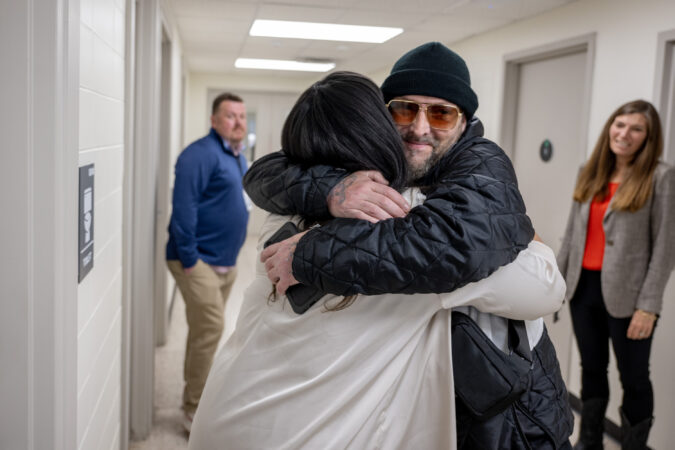
Bean, now 46 and boasting a healthier frame, just celebrated one year of sobriety and is preparing to move out of Riverview early next year.
He described his transition simply: “whole new life.”
Much of the mayor’s agenda in Kensington has been visible to the neighborhood’s residents, such as increased law enforcement and a reduction in the homeless population. But the operations and treatment outcomesat Riverview, located down a winding road next to the city’s jail complex, happen largely outside of public view. Last spring, some city lawmakers complained that even they knew little about the facility operations.
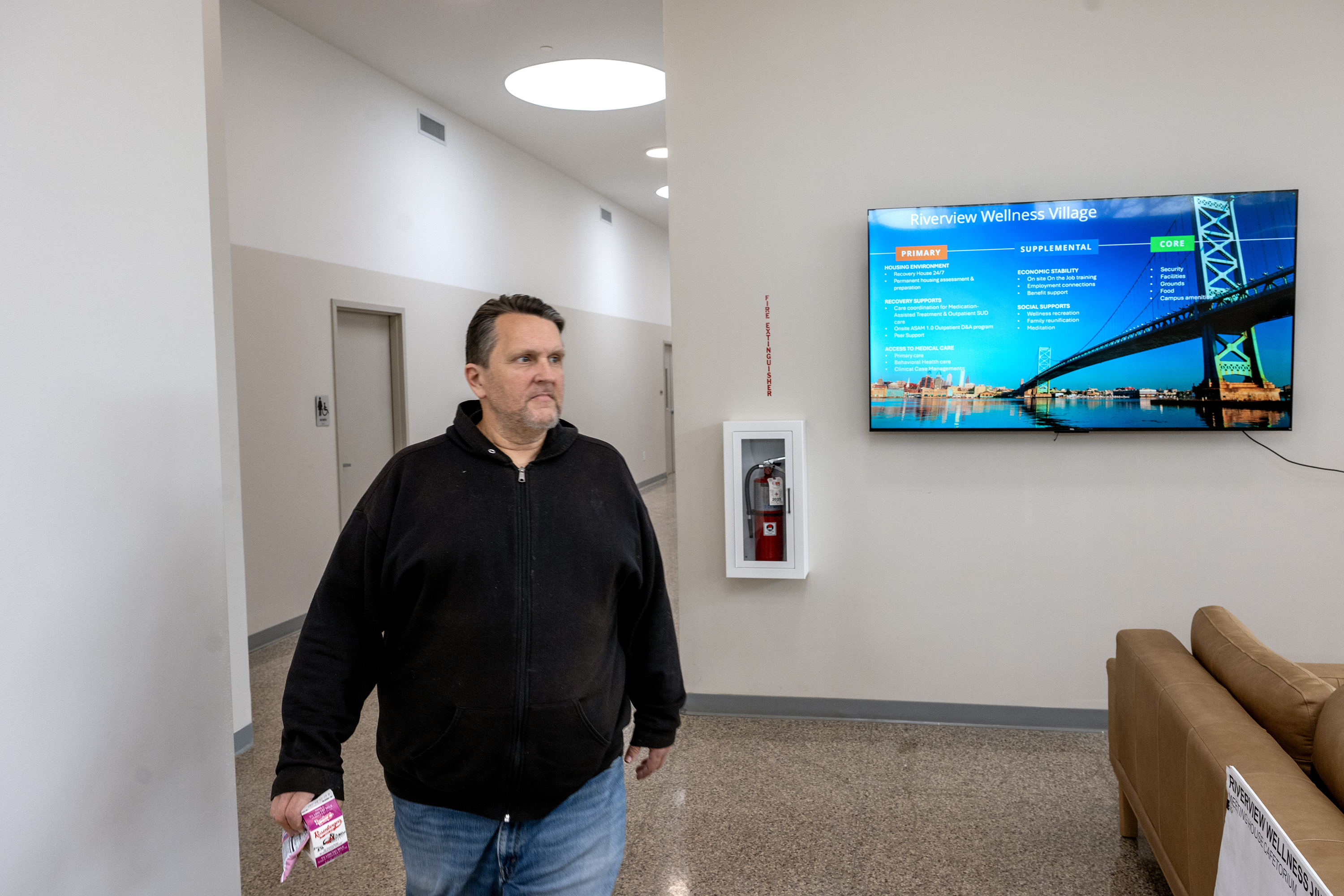
An inside look at the Riverview complex and interviews with more than a dozen residents and employees showed that, over the last year, the city and its third-party healthcare providers have transformed the facility. What was recently a construction zone is now a one-stop health shop with about 75 staff and more than 200 residents, many of whom previously lived on Kensington streets.
Those who live and work at Riverview said the facility is plugging a hole in the city’s substance use treatment landscape. For years, there have not been enough beds in programs that help people transition from hospital-style rehab into long-term stability. The recovery house industry has been plagued with privately run homes that are in poor condition or offer little support.
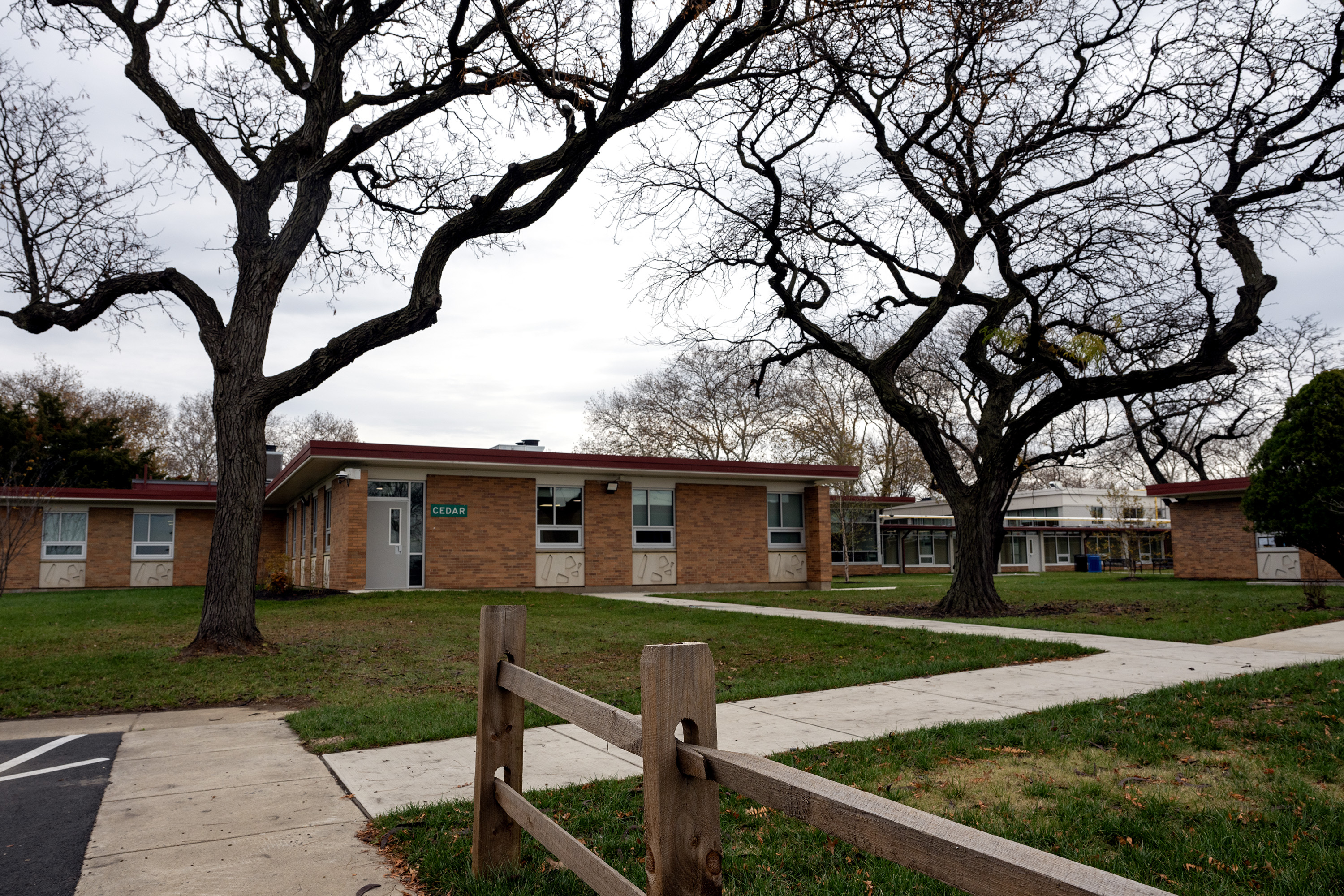
The grounds and residence buildings at Riverview Wellness Village, a city-owned drug recovery home in Northeast Philadelphia.
At its current capacity, Riverview has singularly increased the total number of recovery house beds in the city by nearly 50%. And residents — who are there voluntarily and may come and go as they please — have much of what they need on the campus: medical care, mental health treatment, job training, and group counseling.
They also, as of last month, have access to medication-assisted treatment, which means residents in recovery no longer need to travel to specialized clinics to get a dose of methadone or other drugs that can prevent relapse.
Arthur Fields, the regional executive director at Gaudenzia, which provides recovery services to more than 100 Riverview residents, said the upstart facility has become a desirable option for some of the city’s most vulnerable. Riverview officials said they aren’t aware of anywhere like it in the country.
“The Riverview Wellness Village is proof of what’s possible,” Fields said, “when we work together as a community and move with urgency to help people rebuild their lives.”
While the facility launched in January with much fanfare, it also faced skepticism, including from advocates who were troubled by its proximity to the jails and feared it would feel like incarceration, not treatment. And neighbors expressed concern that the new Holmesburg facility would bring problems long faced by Kensington residents, like open drug use and petty theft, to their front doors.
But despite some tenets of the mayor’s broader Kensington plan still facing intense scrutiny, the vocal opposition to Riverview has largely quieted. Parker said in an interview that seeing the progress at Riverview and the health of its residents made enduring months of criticism “well worth it.”
“I don’t know a Philadelphian who, in some way, shape, or form, hasn’t been touched by mental and behavioral health challenges or substance use disorder,” said Parker, who has spoken about how addiction shaped parts of her own upbringing. “To know that we created a path forward, to me, I’m extremely proud of this team.”
Mayor Cherelle L. Parker places a new block on the scale model of the Riverview Wellness Village on Wednesday, Jan. 8 during the unveiling of Philadelphia’s new city-operated drug treatment facility. At left is Managing Director Adam Thiel. City Councilmember Michael Driscoll is at right.Isabel McDevitt, executive director of the Office of Community Wellness and Recovery, points to a model with upcoming expansion at Riverview Wellness Village, a city-owned drug recovery home in Northeast Philadelphia on Nov. 25.Staffers move photos into place at the Riverview Wellness Village on Jan. 8 before the unveiling of Philadelphia’s new city-operated drug treatment facility.
Meanwhile, neighbors who live nearby say they have been pleasantly surprised. Pete Smith, a civic leader who sits on a council of community members who meet regularly with Riverview officials, said plainly: “There have been no issues.”
“If it’s as successful as it looks like it’s going to be,” he said, “this facility could be a model for other cities throughout the country.”
Smith, like many of his neighbors, wants the city’s project at Riverview to work because he knows the consequences if it doesn’t.
His son, Francis Smith, died in September due to health complications from long-term drug use. He was 38, and he had three children.
Getting a spot at Riverview
The sprawling campus along the Delaware River feels more like a college dormitory setting than a hospital or homeless shelter. Its main building has a dining room, a commercial kitchen, a gym, and meditation rooms. There are green spaces, walking paths,and plans for massive murals on the interior walls.
Katherine Young, director of Merakey at Riverview Wellness Village, talks with a resident at the city-owned drug recovery home in Northeast Philadelphia on Nov. 25.
Residents live and spend much of their time in smaller buildings on the campus, where nearly 90% of the 234 licensed beds are occupied. The city plans to add 50 more in January.
Their stays are funded through a variety of streams. The city allocated $400 million for five years of construction and operations, a portion of which is settlement dollars from lawsuits against pharmaceutical companies that manufactured the painkillers blamed for the opioid crisis.
(function() {
var l2 = function() {
new pym.Parent(‘RIVERVIEW_MAP2.html’,
‘https://media.inquirer.com/storage/inquirer/projects/innovation/arcgis_iframe/RIVERVIEW_MAP2.html’);
};
if (typeof(pym) === ‘undefined’) {
var h = document.getElementsByTagName(‘head’)[0],
s = document.createElement(‘script’);
s.type = ‘text/javascript’;
s.src = ‘https://pym.nprapps.org/pym.v1.min.js’;
s.onload = l2;
h.appendChild(s);
} else {
l2();
}
})();
To get in to Riverview, a person must complete at least 30 days of inpatient treatment at another, more intensive care facility.
(function() { var l = function() { new pym.Parent( ‘riverview-flowchart__graphic’, ‘https://media.inquirer.com/storage/inquirer/ai2html/riverview-flowchart/index.html’); }; if(typeof(pym) === ‘undefined’) { var h = document.getElementsByTagName(‘head’)[0], s = document.createElement(‘script’); s.type = ‘text/javascript’; s.src = ‘https://pym.nprapps.org/pym.v1.min.js’; s.onload = l; h.appendChild(s); } else { l(); } })();
Still, residents at Riverview have come from more than 25 different providers, according to Isabel McDevitt, the city’s executive director of community wellness and recovery. The bulk were treated at the Kirkbride Center in West Philadelphia, the Behavioral Wellness Center at Girard in North Philadelphia, or Eagleville Hospital in Montgomery County.
They have ranged in age from 28 to 75. And they have complex medical needs: McDevitt said about half of Riverview’s residents have a mental health diagnosis in addition to substance use disorder.
She said offering treatment for multiple health conditions in one place allows residents to focus less on logistics and more on staying healthy.
“Many of the folks that are at Riverview have long histories of substance use disorder, long histories of homelessness,” she said. “So it’s really the first time a lot of people can actually breathe.”
When new residents arrive, they go through an intake process at Riverview that includes acute medical care and an assessment for chronic conditions. Within their first week, every resident receives a total-body physical and a panel of blood work.
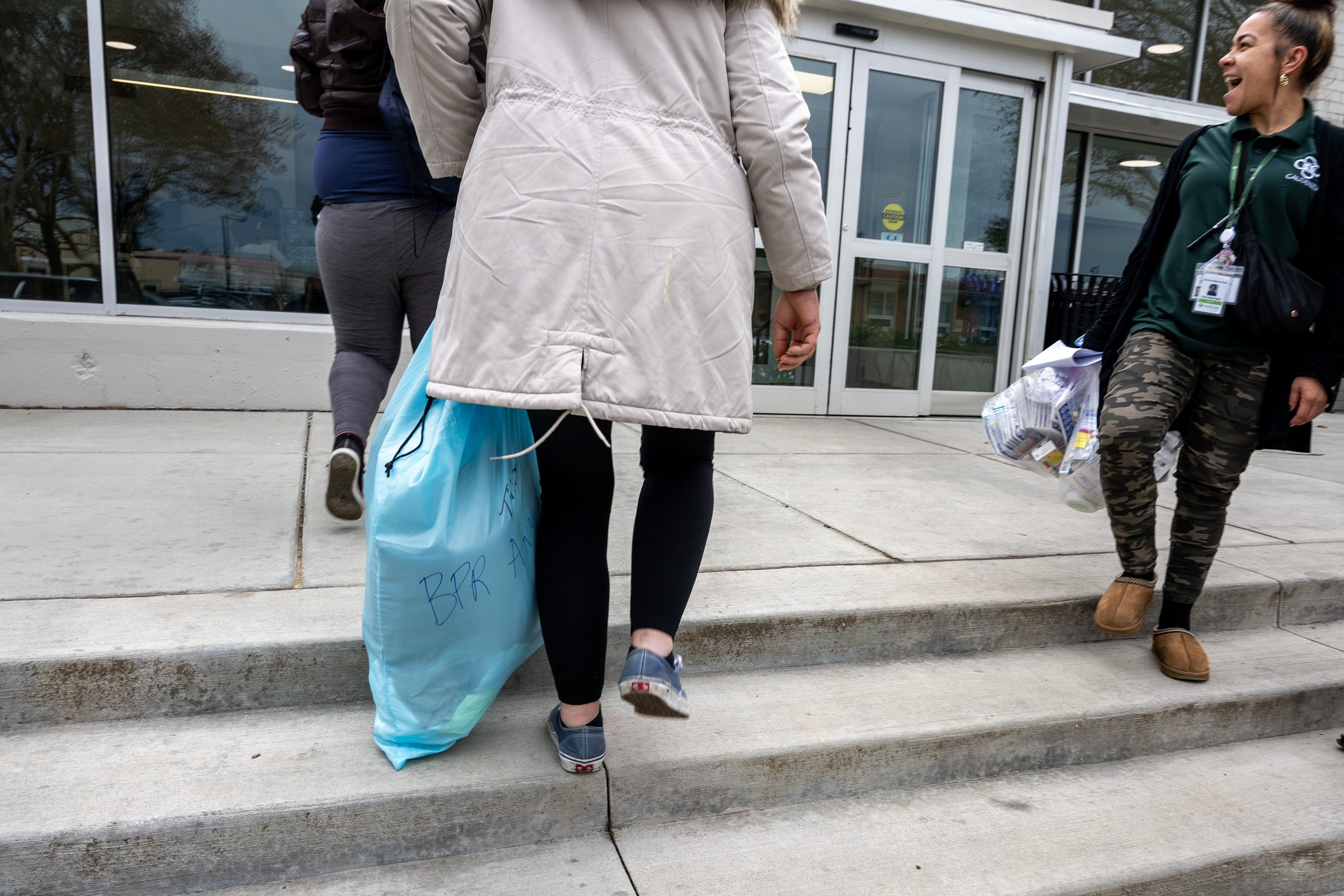
“They literally arrive with all of their belongings in a plastic bag and their medications and some discharge paperwork,” said Ala Stanford, who leads the Black Doctors Consortium, which provides medical services at Riverview. “We are the ones who greet them and help get them acclimated.”
Stanford — who this fall announced a run for Congress — said doctors and nurses at Riverview have diagnosed and treated conditions ranging from drug-related wounds to diabetes to pancreatic cancer. And patients with mental health needs are treated by providers from Warren E. Smith Health Centers, a 30-year-old organization based in North Philadelphia.
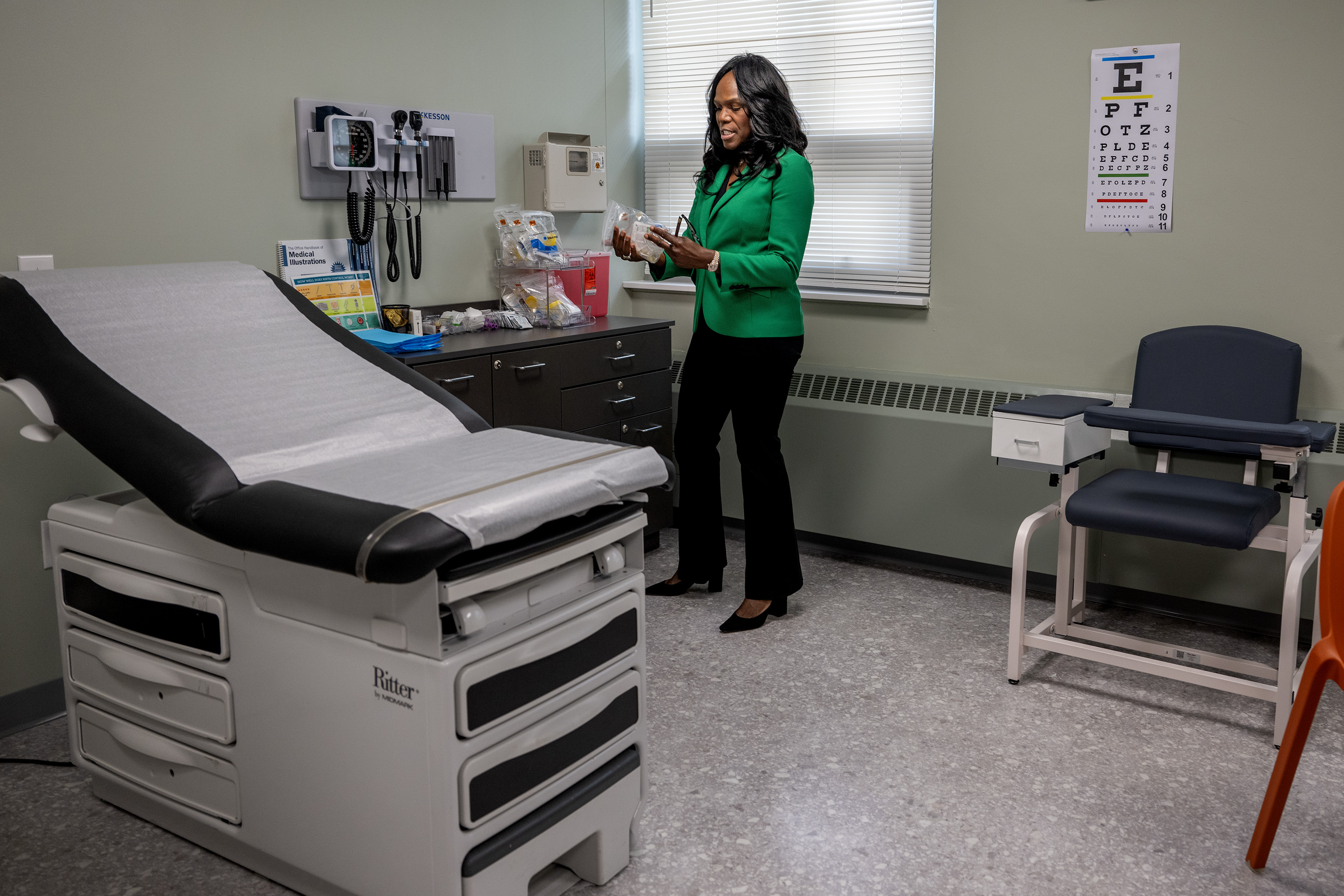
Physician Ala Stanford in an examination room at the primary medical care center run by her Black Doctors Consortium at Riverview Wellness Village, a city-owned drug recovery home in Northeast Philadelphia, on Nov. 25.Francesca Colon (right), a recovery support professional with Gaudenzia, brings people in recovery to the main entrance of the Meetinghouse at Riverview Wellness Village on Nov. 25.
Residents’ schedules are generally free-flowing and can vary depending on their wants and needs. About 20% have jobs outside the campus. Culinary arts training will be available in the next month or so. And residents can meet with visitors or leave to see family at any time.
They also spend much of their time in treatment, including individual, family, and group therapy. On a recent day, there were group sessions available on trauma recovery, managing emotions, and “communicating with confidence.”
Vernon Kostic, a 52-year-old Port Richmond native who said he has previously been homeless, has been in and out of drug treatment facilities for years.
He said he’s been content as a Riverview resident since July, and called it “one of the smartest things that the city has ever done.”
“We have the doctor’s office right over here,” he said. “They’ve got counseling right here. Everything we need. It’s like a one-stop recovery place.”
Resident Vernon Kostic heads to a group meeting at Riverview Wellness Village on Nov. 25.The dining room and meeting room in the Meetinghouse at Riverview Wellness Village. At rear left is a brand-new, industrial, restaurant-quality kitchen that was not operational yet on Nov. 25.
Finding ways to stay at Riverview
Finding success in recovery is notoriously hard. Studies show that people who stay in structured sober housing for at least six months after completing rehab see better long-term outcomes, and Riverview residents may stay there for up to one year.
But reaching that mark can take multiple tries, and some may never attain sobriety. McDevitt said that on a monthly basis, about 35 people move into Riverview, and 20 leave.
Some who move out are reunited with family and want to live at home. Others simply were not ready for recovery, McDevitt said, “and that’s part of working with this population.”
Fields said a resident who relapses can go back to a more intensive care setting for detoxification or withdrawal management, then return to Riverview at a later time if they are interested.
“No one is punished for struggling,” he said. “Recovery is a journey. It takes time.”
Providers are adding new programming they say will help residents extend their stays. Offering medication-assisted treatment is one of the most crucial parts, said Josh Vigderman, the senior executive director of substance use services at Merakey, one of the addiction treatment providers at Riverview.
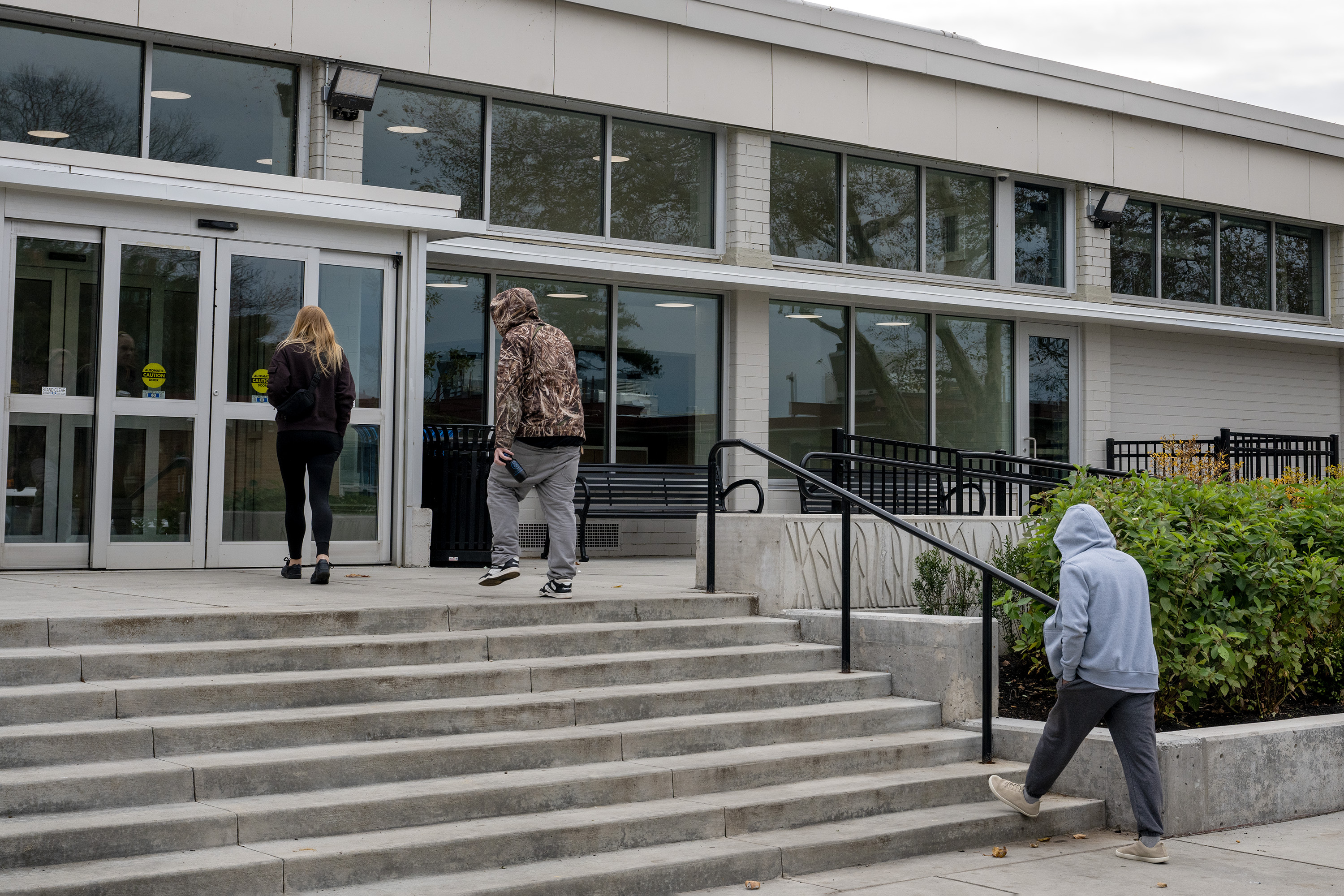
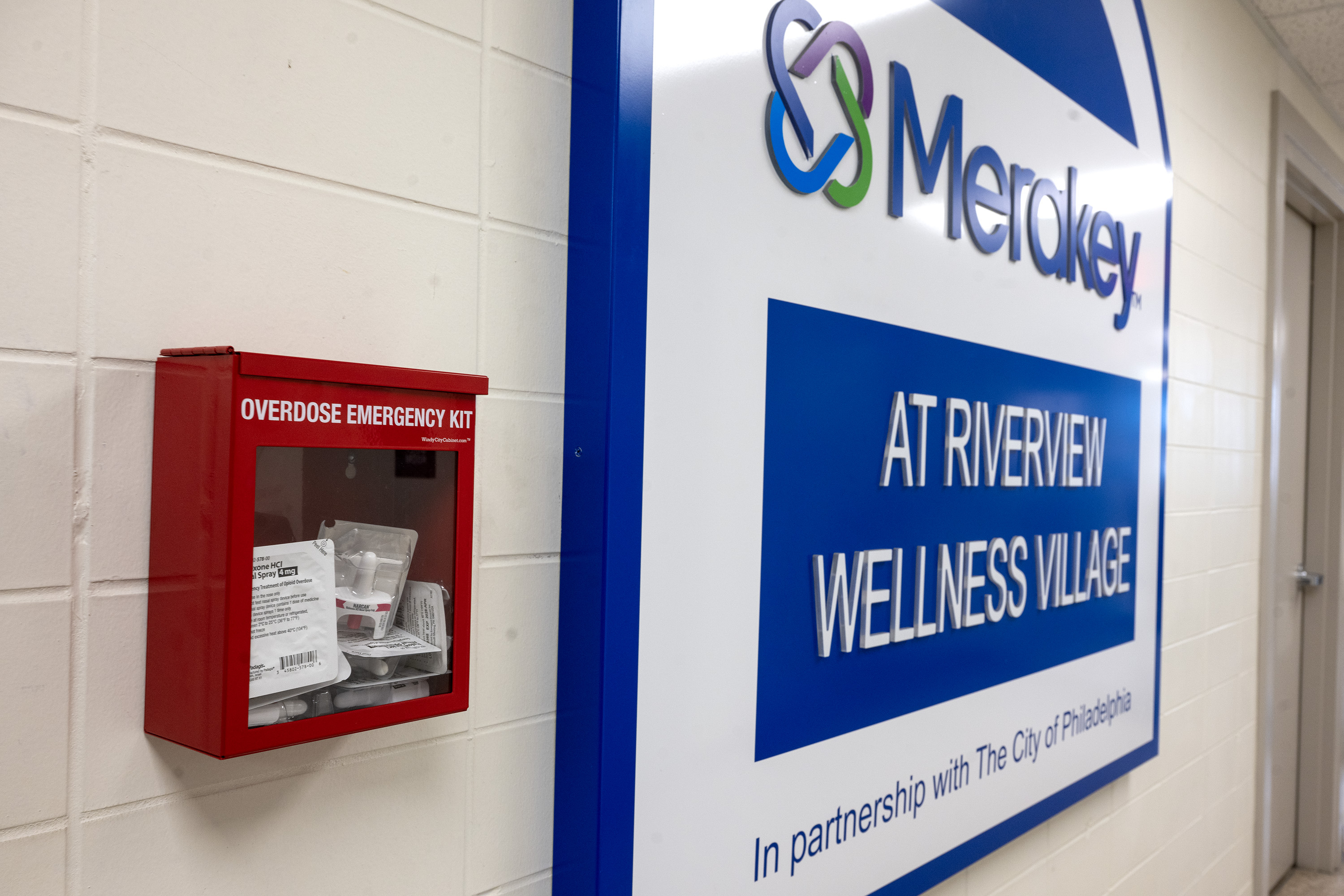
Entry to the primary medical care center run by the Black Doctors Consortium at Riverview Wellness Village.The main entry Meetinghouse at Riverview Wellness Village.Naloxone (Narcan) in an “overdose emergency kit” at Riverview Wellness Village.
In the initial months after Riverview opened its doors, residents had to travel off campus to obtain medication that can prevent relapse, most commonly methadone and buprenorphine, the federally regulated drugs considered among the most effective addiction treatments.
Typically, patients can receive only one dose of the drug at a time and must be supervised by clinicians to ensure they don’t go into withdrawal.
Vigderman said staff suspected some residents relapsed after spending hours outside Riverview, at times on public transportation, to get their medication.
This fall, Merakey — which was already licensed to dispense opioid treatment medications at other locations — began distributing the medications at Riverview, eliminating one potential relapse trigger for residents who no longer had to leave the facility’s grounds every day.
Interest in the program has been strong, Vigderman said, with nearly 80 residents enrolling in medication-assisted treatment in just a few weeks. Merakey is hiring more staff to handle the demand.
What’s next at Riverview
The city is eying a significant physical expansion of the Riverview campus, including a new, $80 million building that could double the number of licensed beds to more than 500. That would mean that about half of the city’s recovery house slots would be located at Riverview.
Parker said the construction is “so important in how we’re going to help families.” She said the process will include “meticulous design and structure.”
“The people who come for help,” she said, “we want them to know that we value them, that we see them, and that we think enough of them to provide that level of quality of support for them.”
In the meantime, staff are working to help the center’s current residents — who were among the first cohort to move in — plot their next steps, like employment and housing.
A rendering of the new, $80 million five-story building to be constructed on the campus of Riverview Wellness Village. It will include residences and medical suites.
That level of support, Vigderman said, doesn’t happen in many smaller recovery houses.
“In another place, they might not create an email address or a resumé,” he said. “At Riverview, whether they do it or not is one thing. But hearing about it is a guarantee.”
Bean is closing in on one year at Riverview. He doesn’t know exactly what’s next, but he does have a job prospect: He’s in the hiring process to work at another recovery house.
“I’m sure I’ll be able to help some people,” he said. “I hope.”
INGLEWOOD, Calif. — So we know what kind of team the Eagles are now. It took 13 games, and to watch most of them was to experience the same amount of pleasure as when you slam your fingers in a door. But they have revealed themselves, and there’s no use disputing the diagnosis.
The Eagles are an excellent defensive team, and that is all, and that is not enough, not even close. Not with an offense like this. Not with this team’s tendency to commit untimely and inexcusable penalties. Not with so many questions that don’t get answered and so many problems that don’t get solved.
They lost Monday night to the Los Angeles Chargers, 22-19 in overtime, and we know now that the most basic assessment of their status is deceiving. They still are 8-5, still in first place in the NFC East, still on track to make the playoffs and, in theory, have a shot at winning another Super Bowl in a conference without a dominant team. But anyone who has watched them can see through that spin, that false representation of who they are and how the rest of this season could play out.
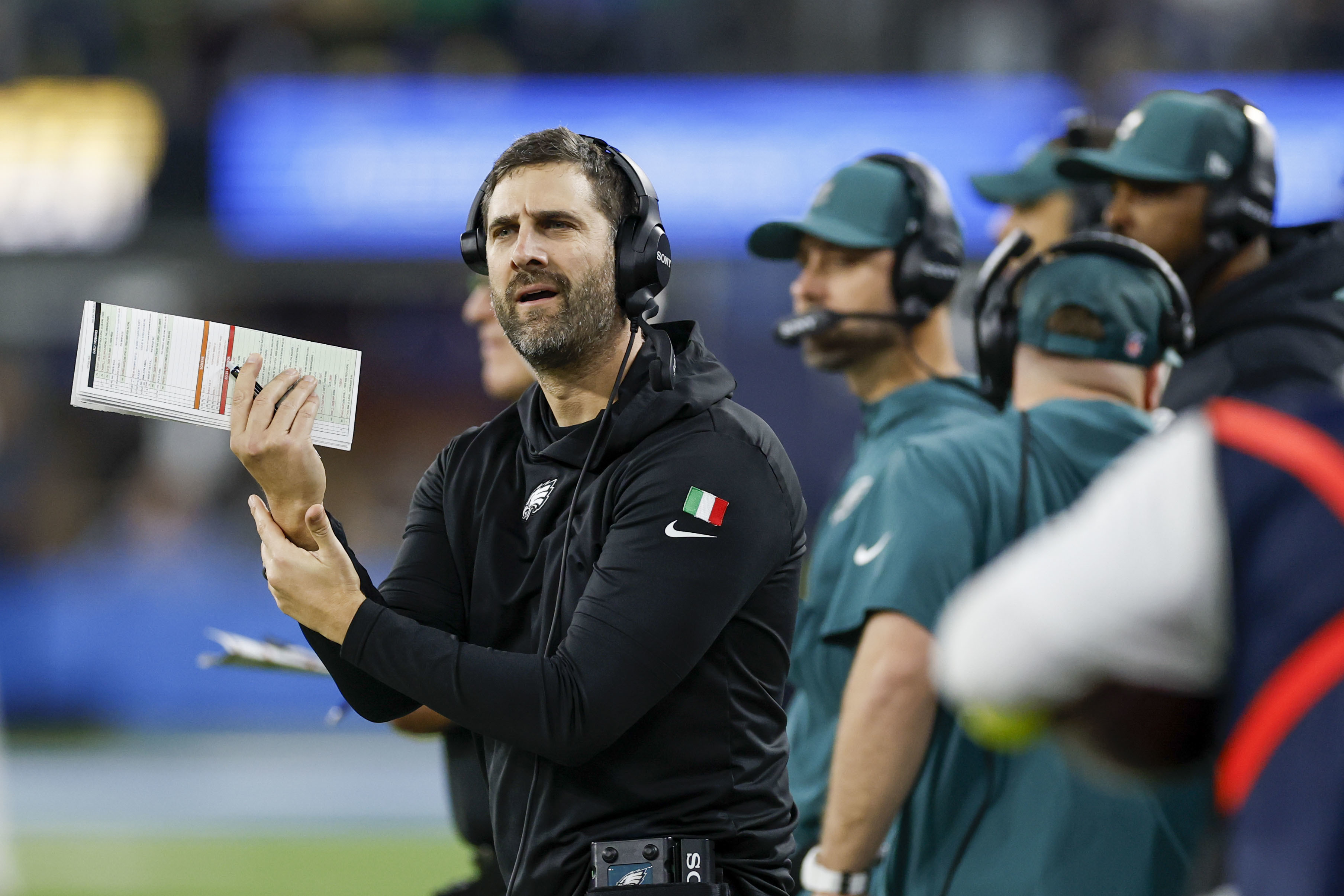
Coach Nick Sirianni complains to the officials after the Eagles were called for holding late in the second quarter at SoFi Stadium.
They have lost three straight games, and they are poised for a breakdown as bad or worse than their collapse in 2023. That was six losses in seven games and a franchise that faced an inflection point with its head coach. This is different. This disintegration, if it continues, will be harder and graver, because it will mean their season is transforming from an attempt to defend a championship into a referendum on the coach, the quarterback, and any number of players who were presumed to be part of a talented and tested team’s core.
“Who said it was going to be easy?” Brandon Graham said. “This year, coming off a Super Bowl, man, all we got to do is make sure we stay together.”
Easy to say. Challenging to do. The dynamic within the Eagles right now, the divide in performance between one side of the ball and the other, is fertile ground for dissension to bloom. Anyone who has paid attention to them over the last five games could tell you what Monday made clear: that they are regressing on offense, that some of their best and highest-compensated players are letting them down, and that there’s little or no reason to believe that anything about the unit is going to improve in the short term.
Since their bye five weeks ago, the Eagles have played one good stretch on offense, and that stretch was brief. In their loss to the Cowboys on Nov. 23, they scored 21 points in the game’s first 18½ minutes, then didn’t score again. Those 18½ minutes seem like a mirage now. They marked the only game in a month and a half that the Eagles put up more than 19 points, and the offense’s performance against the Chargers only reinforced the reality that something about it has to change.
Jalen Hurts was a mess. Kevin Patullo’s play calls are too predictable too often, the offensive line didn’t help Hurts much, and A.J. Brown helped him even less, dropping a deep ball on the game’s first play, then T-Rex-arming an over-the-middle pass in the fourth quarter that led to an interception. But even with those excuses or extenuating circumstances, Hurts was still a mess.
He threw four interceptions. He failed to see some open receivers and threw wildly to others. His play this season is raising the question of whether, assuming he remains their starting quarterback for several more years, the Eagles will be able to win another Super Bowl, or even come close again, if they don’t surround him with the best roster in the NFL.
Jalen Hurts is sacked by Chargers linebackers Tuli Tuipulotu and Odafe Oweh during the first quarter.
We’re getting to the point where removing Hurts and inserting Tanner McKee would be helpful, just to create a control in this ugly experiment that is the Eagles offense. It’s unlikely to happen, and it’s possible, even probable, that such a change would do more harm than good. It would create an instant controversy, no doubt. Hurts might take the demotion as an insult, in the same way Carson Wentz viewed the decision to draft Hurts in 2020, and demand to be traded. There are an infinite number of scenarios that could play out from such a seismic move. One of them, though, could be that the Eagles would acquire some certainty about who and what have been the real problems with the offense all along.
That decision would come with enormous risk for the man who presumably would make it. Nick Sirianni would be acknowledging that he and his handpicked offensive coordinator can’t fix Hurts, can’t help him get back to being someone who at least didn’t hurt the Eagles’ chances of winning. Once Sirianni crosses that bridge, there’s no going back, and there’s nothing Jeffrey Lurie is less willing to forgive than a head coach who fails to allow the franchise quarterback to thrive.
“The people we have in there have won a lot of football games,” Sirianni said. “Right now, we’ve lost three in a row. Again, I saw a great, great week of preparation, and I’m confident in the coaches that we have, the players that we have, the owner that we have, the front office that we have — that we’re built to overcome. We know how to do that.”
Then they’d better get to doing it. Fast. No, this wasn’t just another loss for the Eagles, and this is no small slump. This is a test for everyone in that locker room. And let’s be honest here: Have they given anyone any reason to believe that they’re going to pass it?
INGLEWOOD, Calif. — On Monday night, the Hollywood lights were too bright for Jalen Hurts.
The fifth-year starting quarterback tossed a single-game career-high four interceptions in the Eagles’ 22-19 overtime loss to the Los Angeles Chargers at SoFi Stadium. Backup safety Tony Jefferson called game, picking off Hurts near the end zone on a pass intended for Jahan Dotson.
The game went to overtime after Chargers kicker Cameron Dicker tied it, 19-19, with eight seconds remaining in regulation. The Eagles won the toss, and the Chargers had the first possession. Vic Fangio’s defense got gashed on the ground, but limited the Chargers to a field goal, giving the offense a chance to win the game with a touchdown.
On the first play of the drive, Justin Herbert kept the ball and rushed right for a 12-yard gain punctuated by a stiff-arm on Reed Blankenship with his injured left hand. Omarion Hampton followed it up with an 18-yard run to the same side.
Ultimately, the Chargers were forced to settle for a 54-yard field goal.
The Chargers and the Eagles scored one touchdown apiece. Los Angeles scored on its opening drive on a 4-yard pass to Hampton, while Saquon Barkley notched a 52-yard rushing touchdown in the fourth quarter off a Tush Push fake.
Here’s our instant analysis from the Eagles’ third straight loss:
Hurts throws four picks
Entering Monday, Hurts had thrown two interceptions all season. He tossed four against the Chargers and also fumbled the ball away as he went 21-of-40 for 240 yards (31.2 quarterback rating).
No play better encapsulated Hurts’ struggles than his second-quarter interception and the chaos that ensued. On third-and-2, with the Eagles in the red zone for the first time that evening, Hurts dropped back out of an empty set. He tried to fit the ball into a tight window over the middle for A.J. Brown, but Chargers defensive lineman Da’Shawn Hand was lurking underneath and made the interception.
Will Shipley tried to save the day, punching the ball out of Hand’s hands. Hurts grabbed the loose, bouncing ball, but Chargers defensive lineman Jamaree Caldwell then knocked it free from the quarterback’s grasp. Linebacker Troy Dye fell on the ball at the Chargers’ 43, bringing the wonky — and extremely rare — play to an end.
Da'Shawn Hand picks off Jalen Hurts. Da'Shawn Hand fumbles. Jalen Hurts recovers. Jalen Hurts fumbles. Troy Dye recovers. @Chargers ball.
Hurts turned the ball over a third time on the ensuing drive. On second-and-10 from the Eagles’ 28, Hurts attempted a pass for DeVonta Smith, but cornerback Donte Jackson undercut the pass and picked it off.
The third interception came halfway through the fourth quarter on a pass over the middle intended for Brown. The ball bounced off Brown’s hands and into cornerback Cam Hart’s.
Jalen Hurts had one of the worst performances of his NFL career in LA.
Hurts nearly had two more interceptions. On the first play of the second quarter, Hurts overthrew Jahan Dotson in the slot on third-and-4 from the Eagles’ 15-yard line. His pass was nearly intercepted by safety R.J. Mickens, but the ball hit the turf before he corralled it, making it an incomplete pass.
He also missed Brown late in the fourth quarter as the Eagles attempted to break the 16-16 tie. Hurts was hit by outside linebacker Khalil Mack as he tried to fit a pass into a tight window. Jackson got a hand on the ball, forcing the Eagles to punt.
When it was pointed out to Hurts after the game that not turning the ball over has typically been a point of pride for the quarterback, he reframed the statement.
“I think winning is a point of pride to me,” Hurts said. “That’s why we play the game. And I’ve got to find ways to lead our team to victories. It’s not something that’s foreign to us. We’re just not able to do it at the moment. It starts with me and how I play, how I lead, and how I go out there and do my job. So, when I look at it at any point, it’s about how I respond to a test. How I respond to it and what level of resilience and resolve I have to push forward and figure things out.”
Hurts wasn’t the only player who faltered. Drops plagued the Eagles receivers in critical moments. With just over two minutes remaining in the fourth quarter, Brown dropped a would-be 26-yard touchdown pass. On the following play, Hurts got the ball out to Smith while being blitzed, but the wide receiver failed to control it.
Eagles wide receiver A.J. Brown drops a pass in the end zone in the fourth quarter Monday.
Near defensive domination
The Chargers ultimately had just six points to show for Hurts’ turnovers.
The defense, especially Nakobe Dean, tightened up after conceding a touchdown on the Chargers’ opening drive that gave them a 7-0 lead. Dean failed to pick up Chargers running back Kimani Vidal on a dump-off pass, a desperation play that turned into a 60-yard gain.
Linebacker Nakobe Dean was part of a group that made life rough on Justin Herbert.
But Dean was one of the keys to the Eagles’ ability to generate pressure up front in the absence of Jalen Carter. On the Chargers series following Hurts’ second interception, Dean blitzed the A gap, and Hampton didn’t hold up in pass protection.
Dean took down Herbert and knocked the ball out in the process. Byron Young fell on top of the loose ball, ensuring that the Chargers wouldn’t capitalize on the interception.
The defensive line also got pressure on Herbert by taking advantage of a weak offensive line. On third-and-4 from the Chargers’ 37, Jaelan Phillips pushed third-string right tackle Bobby Hart back and managed to get a hand on Herbert’s right arm as he launched a pass for tight end Oronde Gadsden. But the ball fluttered in the air short of its intended target, allowing Adoree’ Jackson to leap up and snag it.
Zack Baun also got a piece of Herbert when he blitzed the A gap late in the third quarter, breezing past Hampton for a sack split with Jordan Davis on second-and-13.
After Hurts’ third interception, the Eagles defense limited the Chargers to a 31-yard field goal, which tied the game, 16-16. Once again, the Eagles’ defensive front swarmed Herbert on the third-and-3 drop back beforehand, forcing the quarterback to throw the ball away.
Davis earned a full sack late in the fourth quarter as the Chargers sought to break the tie. He cleaned up the initial pressure generated by Nolan Smith that forced Herbert to step up in the pocket on third down.
Jake Elliott made four field goals but also had a critical miss just before halftime.
Special-teams woes
It’s been a tough second half of the season for Jake Elliott, the Eagles’ ninth-year kicker. In his last six games entering Monday, he missed four field goal attempts and an extra point.
His struggles continued against the Chargers. At the end of the first half, Elliott missed a 48-yarder wide left. The Eagles trailed, 10-6, at halftime.
After the game, Elliott said that he felt like he struck the ball well on the miss, even though he was forced to prepare for the attempt quickly on the heels of Herbert’s interception and before the end of the half. Still, he lamented his misses in recent weeks.
“They need to stop,” Elliott said. “I feel like I’m striking the ball well. Last week [against the Chicago Bears], obviously, windy conditions. But no excuses here indoors. It’s frustrating.”
Elliott wasn’t the only special teams player who made mistakes. On the Chargers’ 36-yard field goal attempt in the third quarter, Moro Ojomo used leverage to boost himself on the back of left tackle Jamaree Salyer, earning Ojomo an unsportsmanlike conduct penalty. The play gave the Chargers a fresh set of downs from their own 9-yard line.
Luckily for Ojomo, the Eagles defense held up in the red zone again. Young sacked Herbert on second down, and the Chargers quarterback threw an incomplete pass for Vidal on third. Los Angeles settled for a field goal again for a 13-6 lead late in the third quarter.
Elliott attempted to make up for his miss late in the third quarter. The Eagles had sputtered at the Chargers’ 36, partially thanks to Barkley’s shotgun run for a loss of four yards on second-and-10. This time, Elliott made the 54-yard field goal, cutting the Chargers’ lead to 13-9.
Injury report
Late in the second quarter, Landon Dickerson exited the game with a calf injury. Brett Toth took over for him at left guard.
However, Dickerson returned late in the third quarter with the Eagles down, 13-9.
The Philadelphia school board on Monday signaled its intentions to play ball: Later this week, it will hold a special action meeting to vote on a resolution authorizing Superintendent Tony B. Watlington Sr. and his team to consider handingover a portfolio of unused school buildings to the city.
Watlington, the resolution states, “recommends that, in the best interests of the district and its students, the district explore and pursue negotiations with the city to potentially convey certain vacant and surplus district property.”
Parker, in a statement, said the process was about “public health and public safety” and the school buildings can be used to improve residents’ quality of life.
Officials “cannot let blighted buildings in the middle of residential neighborhoods lie vacant — many of which have been vacant for many years — from two years to over 30,” Parker said. “It’s unconscionable to me that we are in the middle of a housing crisis and we have government buildings sitting vacant for years or even decades. That cannot continue.”
School board president Reginald Streater said that no decisions are final and that public deliberation will still happen at the special meeting at 4 p.m. Thursday. But, he said, the move makes sense with “the board moving toward being much more willing to be intergovernmental partners” with the city.
“Many of these properties have not been used in the last decade or more, and they require a significant amount of upkeep and maintenance,” Streater said. “These properties are unused, for the most part, and unnecessary for K-12 education.”
The district is in the business of running schools, Streater said.
“I do believe that the city possesses considerably more expertise and capacity than the district does regarding property development,” Streater said. “We are an education institution. To build the capacity to do such things is out of our wheelhouse, and economic development would take us out of our lane.”
According to the language of the resolution, the district is urging Watlington to consider all angles — bond obligations, property conditions, financial protection of the district, any legal processes that would need to happen, and more.
The action comes as something of a surprise, happening just a week after what was to be the final voting meeting of the year. Streater said he did not want to add it as a walk-on resolution to the December school board meeting, but wanted to give members of the public time to understand it and provide testimony, if desired.
Giving unused school buildings to the city could further academic outcomes, the school board president said.
“It’s possible,” Streater said, “that conveying these vacant and surplus properties to the city for redevelopment and revitalization could help stabilize and grow the city and district’s tax base … and consequently positively impact future revenues to the district and educational experiences for students.”
Asked for a list of the unused buildings the resolution would cover, school board officials said more internal evaluation is needed before such a list is released.
The possible transfer of district properties to the city comes as officials debate the specifics of one of Parker’s signature initiatives.
The mayor wants to spend $800 million on her housing initiative, Housing Opportunities Made Easy, or H.O.M.E. In a rare sign of division, Council last week allotted more housing funds to the city’s poorest residents over the Parker administration’s objections.
Because of Council’s move, more legislation is now needed to advance H.O.M.E. It will not come until January at the earliest.
Thomas, chair of Council’s education committee, has long been pushing for a school facilities plan.
“It’s unclear to say what this step forward means, but I want to understand how it fits into a larger plan for Philly’s educational institutions,” Thomas said in a statement.
“Without getting into hypotheticals, and due to a lack of communications with City Council, there are a lot of moving pieces and still many questions about what this means and what is the overall plan for the future of our school buildings,” Thomas said.
When the World Cup arrives in town next summer, diehard soccer fans and casual followers will tune in to see the action. If you’re one who doesn’t know everything about all the teams that will play at Lincoln Financial Field, we’re here to help.
Here’s our ranking of the five group games Philadelphia will host.
5. Curaçao vs. Ivory Coast
Group E, June 25, 4 p.m.
Curaçao will be one of this World Cup’s great underdog stories. The former Dutch territory leveraged its diaspora in the Netherlands to recruit talented players like brothers Leandro and Juninho Bacuna. Their manager is a Dutch legend, Dick Advocaat.
Curaçao’s celebrations at the final whistle of its tie at Jamaica last month that clinched the Caribbean island’s first World Cup qualification.
The Blue Wave will probably be routed by Germany and Ecuador in their first two group games, so this could be their tournament farewell. Hopefully, though, they will get a nice send-off from a city that loves underdogs.
Ivory Coast is led by midfielder Franck Kessié and forwards Amad Diallo and Sébastien Haller. You’ll also want to keep an eye on 19-year-old winger Yan Diomande. He lived for a few years in the United States as a young teen, and played high school and youth club soccer in Florida before turning pro in Europe in November 2024.
The other upside to this matchup is that since the teams’ fan bases aren’t huge, there’s a chance local fans will be able to get tickets for it. Perhaps only a small chance, because there will be huge demand — and exorbitant prices — for every World Cup game no matter who’s in it.
Yan Diomande celebrates scoring a goal for Ivory Coast in a World Cup qualifier in October.
4. Ivory Coast vs. Ecuador
Group E, June 14, 7 p.m.
Picking the game to rank fourth was even harder than picking the game to rank fifth. It came down to star power vs. potential atmosphere in the stands, and the tie went against the atmosphere.
So we apologize to Ivory Coast for putting both of its games at the bottom. We also apologize to the tens of thousands of Ecuador fans who will ensure that Philadelphia’s first men’s World Cup game is a fast sellout. La Tri’s faithful have a long track record of traveling all over the U.S. when their team plays here, and creating boisterous atmospheres.
Kendry Paez (center) played for Ecuador against the United States in October.
3. Croatia vs. Ghana
Group L, June 27, 5 p.m.
We said players break ties, and no one’s better for that than legendary Croatian playmaker Luka Modrić. He will be atop the marquee for this game, and he won’t just draw Croatia fans in their famed red-and-white checkerboard jerseys. Anyone who has relished watching his club career with Real Madrid and AC Milan will want to be there, as Modrić plays in his final World Cup at age 40.
Even at age 40, Croatia’s Luka Modrić (left) remains one of the soccer world’s great midfield wizards.
2. France vs. Bolivia, Suriname, or Iraq
Group I, June 22, 5 p.m.
Now for the easy part. France commands attention with star power and success. Kylian Mbappé led Les Bleus to the 2018 World Cup title and the 2022 final, and there’s every reason to believe they could make another deep run next year.
From reigning world player of the year Ousmane Dembélé to fast-rising youngsters Bradley Barcola, Désiré Doué, and Michael Olise — just a few of the many names that could go here — France has a depth of elite talent that almost no other national team can match.
They also have a national anthem in “La Marseillaise” that’s perfect for belting out from the stands, even on a hot summer evening.
We’ll know which team France will face after the intercontinental playoffs in March. Bolivia hasn’t been to a men’s World Cup since 1994, when Marco Etcheverry and Jaime Moreno played before becoming some of MLS’s first stars. Iraq hasn’t been on this stage since 1986.
From here, and from the view of many followers of soccer in North and Central America, there will be a soft spot for Suriname. Like Curaçao, the nation that’s officially in South America’s land mass has leveraged its Dutch connections to rise up Concacaf’s ranks.
The Natio are led by forward Sheraldo Becker, who played with Medford’s Brenden Aaronson in 2023-24 at Germany’s Union Berlin. He then moved to Spain, first at Real Sociedad and now at Osasuna.
Sheraldo Becker (left) in action with Spain’s Real Sociead last season.
1. Brazil vs. Haiti
Group C, June 19, 9 p.m.
The top pick was obvious, but just in case, here’s a little more juice for it. A few hours after the World Cup schedule was announced, this writer went to the Big 5 Classic and was asked by a few friends and colleagues about the games coming here.
The answer always started with Brazil, and every time it didn’t finish before that one word produced an amazed reaction.
That’s the power of the most decorated team in men’s World Cup history. The Seleçao’s five championships are the record, and they are the only team to play in every men’s World Cup there’s ever been. Philadelphia will be the 60th all-time city in which Brazil has played a men’s World Cup game.
Nor can any team match the nation’s history of superstars, from Garrincha to Pelé to the original Ronaldo — all wearing the eternal yellow-and-green jerseys.
Dunga lifted the trophy and paraded it around the Rose Bowl when Brazil won the 1994 men’s World Cup in the United States for its fourth title.
Now comes what might be the final piece of the puzzle, famed manager Carlo Ancelotti. He coached many of these players at Spanish club Real Madrid, and has the clout to make the big decisions necessary to pick the World Cup team.
What makes this specific game even better is Brazil’s opponent. Haiti is in its first men’s World Cup since 1974. Its vibrant diaspora across North America will flock to town, even if the Trump administration bans travelers from the nation itself.
Les Grenadiers also have two players with Philadelphia ties, Union midfielder Danley Jean Jacques and Penn alumnus Duke Lacroix. As rare as it is to play in any World Cup, it’s even rarer to get a homecoming game on soccer’s biggest stage.
Two Philadelphia police officers who drove after a fleeing drug suspect until the man crashed his car and killed a bystander are not liable under federal law for causing the fatal collision because the officers didn’t intend to harm anyone, an appeals court ruled.
In an opinion issued last week, the three-judge panel from the Third Circuit Court of Appeals said officers Christian Kane and Alexander Hernandez were forced to make a quick decision in 2020 when they sped after a man they’d seen dealing drugs in Kensington.
The pursuit of the suspect, Tahir Ellison, proceeded at a normal speed for a few blocks, court documents said, but became dangerous after Ellison drove through a red light and down a one-way street.
The episode ended in tragedy when Ellison ignored another red light and crashed into Virgen Martinez’s car at the intersection of Allegheny and Frankford Avenues, killing Martinez, a 47-year-old mother of four.
Ellison pleaded guilty in 2023 to charges including third-degree murder and was sentenced to 10 to 20 years in prison, court records show.
But Martinez’s relatives sued Kane and Hernandez, arguing in part that the decision to speed after Ellison — which violated the police department’s policy to avoid most car chases — also violated Martinez’s 14th Amendment due process rights and made the officers liable for her death. Last year, U.S. Magistrate Judge Scott W. Reid agreed that that question should be put before a jury.
The officers appealed. And in the opinion issued last week, Circuit Judge Stephanos Bibas wrote that although Hernandez’s death was a tragedy, the officers made a “snap judgment” to pursue Ellison and did not behave egregiously during the portion of the chase in which Ellison began speeding and ignoring traffic signals.
“We ask not whether in hindsight [the officers] chose rightly, but whether they intended to cause harm,” Bibas wrote.
Philadelphia police directives generally prohibit car chases, which are often dangerous for both citizens and officers. Exceptions are made only if officers are seeking to capture suspects fleeing violent felonies, or to prevent imminent death or serious injuries.
An Inquirer investigation published last year found that about half of all reported chases by Philadelphia police were in violation of department polices and that the city had spent about $20 million since 2020 to settle crash- or chase-related lawsuits involving police.
Earlier this year, the city agreed to pay $2.9 million to settle a lawsuit over a crash in which a man on a dirt bike being pursued by a city police officer struck two bystanders — including a 6-year-old girl — in Upper Darby.
In that case, however, the officer initiated the chase without witnessing any crime, continued driving after the man for nearly 10 miles, and was later accused by the department of providing false statements to a superior and falsifying official documents.
Bibas wrote that Kane and Alexander, by contrast, “had a split second” to decide whether to follow Ellison, whom they’d seen dealing drugs from his car. And the dangerous portion of the pursuit spanned about half a mile and 39 seconds before Ellison crashed into Martinez’s vehicle.
Jim Waldenberger, one of the attorneys who filed suit on behalf of Hernandez’s relatives, said he and his colleagues disagreed with the ruling.
Before the officers’ pursuit turned dangerous, Waldenberger said, they pursued Ellison at a normal speed with their police lights on for several blocks, meaning their decision to continue the chase when he sped up was not a snap judgment made under unavoidable pressure.
The department conducted an internal investigation and found that the officers violated departmental policies regarding pursuits, and each spent at least several months on administrative duty, court documents said. The documents did not specify whether either officer faced additional discipline.
Sgt. Eric Gripp, a police spokesperson, said Monday that Kane is still on the force but that Hernandez left last year. Gripp declined to comment further.
Waldenberger said he and his colleagues were still weighing whether to appeal the Third Circuit’s ruling on the officers’ liability.
The lawsuit can proceed on more limited grounds surrounding whether the city sufficiently trains police officers regarding pursuits, and whether Kane, who was driving the police car, violated state negligence laws.
STATE COLLEGE, Pa. — Following a 54-day national coaching search filled with reported hiring whiffs and leaked audio from a private meeting between the university’s athletic director and several players, Penn State on Monday introduced Matt Campbell as its 17th head football coach.
“It’s a dream come true for me,” Campbell said as he fought through tears. “It’s one of the greatest honors of my life, and I couldn’t be more grateful to be here.”
Campbell, 46, spent the last 10 seasons as head coach at Iowa State, where he won a program-record 72 games. The Massillon, Ohio, native signed an eight-year deal with Penn State that will pay him $8 million in 2026 and gradually rise to $9.25 million in 2033, the university announced Monday following approval from Penn State’s Board of Trustees.
Campbell is now tasked with winning the Nittany Lions’ first national championship since 1986, a challenge he embraces.
“From this day forward, we’re going to wake up every single day in this football program, and we’re going to build championship habits,” Campbell said. “We’re going to do it one day at a time, we’re going to do it from the ground up, and we’re going to do it in a football program that’s going to demand toughness, discipline, and most importantly, togetherness.”
Campbell’s contract is filled with incentives, including an automatic two-year extension and a $1 million bonus for winning a national championship, according to a copy of his contract released by the university. He would earn an additional $100,000 for winning Big Ten Coach of the Year and $350,000 for winning the Big Ten championship game, among other incentives.
The university is reportedly committing significant resources to Campbell, who will have around $30 million in Name, Image, and Likeness funds, plus an additional $17 million staff pool, to build his roster and coaching staff, according to The Inside Zone.
Matt Campbell gives a heartfelt thank you to Iowa State University at his Penn State Introductory Press Conference. pic.twitter.com/8C5dOHdusv
Penn State allocated significant resources to former head coach James Franklin, who was fired Oct. 12 after a 3-3 start in what many considered a championship-or-bust season.
“Matt Campbell is Penn State: hard-nosed, humble, relentless,” athletic director Patrick Kraft said. “He’s built for championships. He embraces our expectations, not as pressure, but as a privilege. … Penn State football is once again a program that no one wants to see on their schedule.”
Early reports noted the program’s interest in Indiana’s Curt Cignetti, Texas A&M’s Mike Elko, Nebraska’s Matt Rhule, and Georgia Tech’s Brent Key, who later signed contract extensions at their respective universities.
Penn State offered Brigham Young’s Kalani Sitake a lucrative deal to become the school’s next coach, according to ESPN. But once Sitake accepted an extension at his alma mater, Kraft pivoted to Campbell, who reportedly had turned down several college and NFL coaching offers during his tenure at Iowa State before accepting a move to State College.
“If you’re ever going to leave, it better be about your family,” Campbell said. “If [my family] were ever to leave Iowa State, I wanted to go somewhere I wanted to finish my career, I wanted to stand for something that is bigger than Matt Campbell. And I found that [at Penn State].”
Retaining Terry Smith
In a statement released Friday by Penn State Athletics, Kraft announced the university will retain Terry Smith, who served as the Nittany Lions’ interim head coach for the final six games this season. ESPN later reported a four-year contract extension for the 56-year-old.
Smith will serve as associate head coach, among other responsibilities, according to 247 Sports.
“Terry is Penn State. I made Terry the interim coach because I felt he was the one person in that building to unify the team,” Kraft said. “The [decision to retain Smith] was an absolute no-brainer. … I think I’ve got the best football coach in the country [in Campbell], and I’ve got a partner for him who will fight for Penn State.”
Smith, who played wide receiver at Penn State from 1988-91, led the Nittany Lions to a 3-3 record. His players lobbied for him by holding up “Hire Terry Smith” signs after wins over Nebraska and Rutgers.
The longtime Nittany Lion garnered head coaching interest from Memphis and UConn, according to Jordan Shultz. But as Smith said at his introductory news conference, he bleeds blue and white.
Campbell lauded Penn State’s “impressive” turnaround under Smith’s leadership. He said one of the first questions he asked during initial conversations with Penn State was whether he could keep Smith on his staff.
“It was critically important for me to keep Terry. I know what he’s about and what he stands for,” Campbell said. “The fact that Terry wants to stay and wants to be a part of this, I couldn’t be more grateful. To work hand-in-hand with him, knowing what it means to play here, what it means to coach here, what it means to lead here, that’s huge for me and the rest of our staff.”
They say it takes a village to raise a child. But what about to age in place?
More than ever, older adults want to age in their homes. According to a 2024 survey by AARP, 75% of adults ages 50 and over want to stay in their homes as they get older, and 73% want to stay in their communities.
Economic and logistical barriers, however, can make aging in place difficult. Single-family homes in suburban neighborhoods can be isolating for older adults, especially those who don’t drive.
Moving into a retirement community with built-in care and socialization, on the other hand, can be expensive. This paradigm often forces older adults to make difficult decisions about if, and how, they can age in their homes.
To combat these challenges, a group of Lower Merion residents is building the Lower Merion Village, a local chapter of the nationwide Village to Village Network. The network seeks to “change the paradigm of aging” by connecting older adults to social events, transportation, household help, and other services while keeping them in the neighborhoods they know and love.
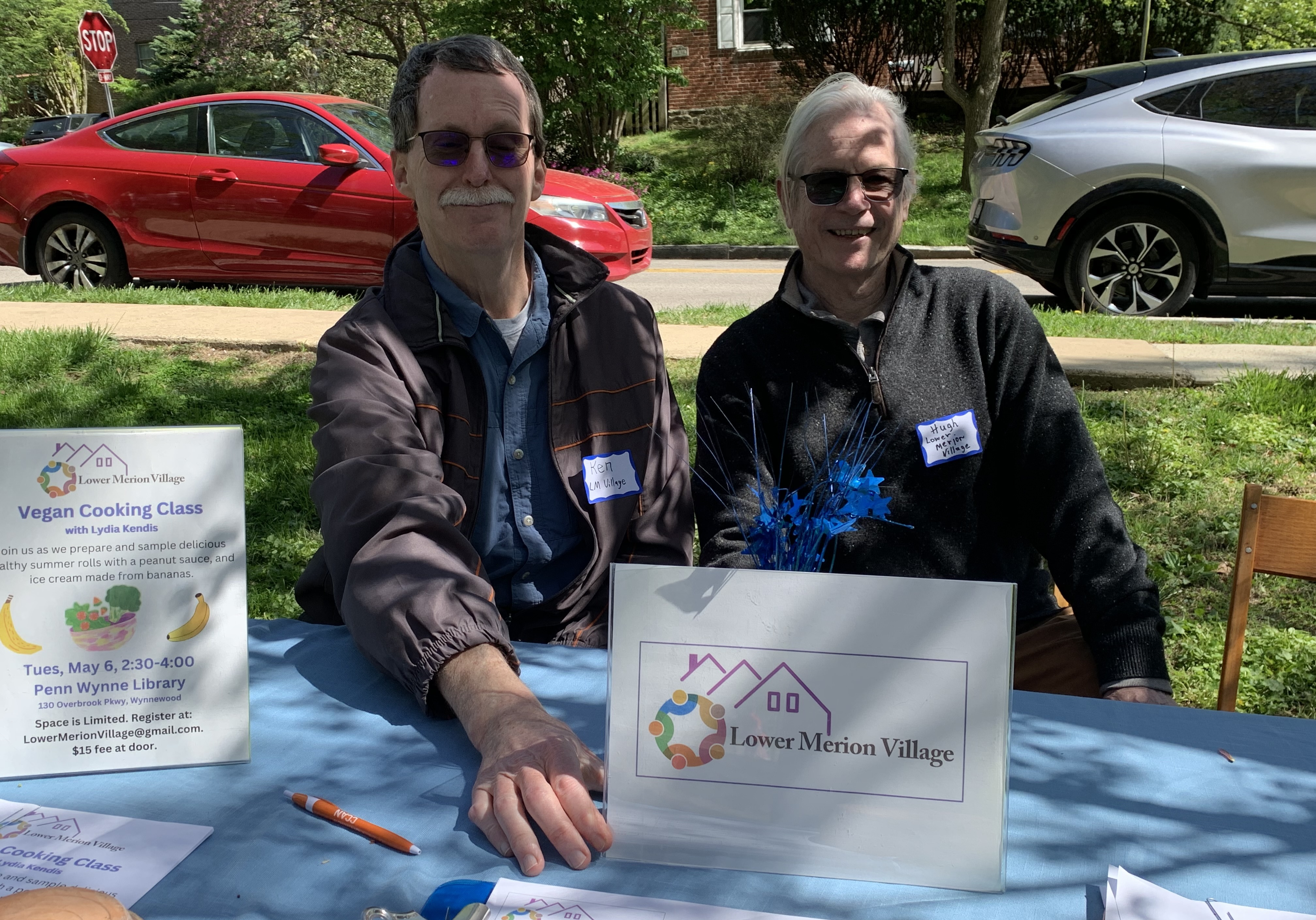
Lower Merion Village volunteers tabling at an Earth Day celebration in Wynnewood Valley Park in April.
Bonnie Asher, a member of the Lower Merion Village’s program committee, got introduced to the village model through her mother, who lived in her suburban Maryland home until her death at 99.
Asher remembers worrying about her mother, especially as she got older and driving became a challenge. Getting involved in a village changed her mom’s life. Suddenly, she made new friends, got rides to the doctor’s office, and signed up for lectures, which she brought Asher to when she visited.
“Those connections were just really important,” Asher said.
The Village to Village Network is a national nonprofit that originated in Boston and has since spread from Fairbanks, Alaska, to upstate New York. The network provides guidance and resources to local chapters, which cater to older adults’ needs on a hyperlocal level.
Villages are membership-driven, self-governing organizations that are run by volunteers, and, at times, have a small paid staff.
There are five existing villages in the Philadelphia region: Penn’s Village (Center City), Village on the Ridge (Roxborough), East Falls Village, Shtetl 2.0 (Northwest Philly), and the Northwest Village Network (Northwest Philly).
In 2023, a group of neighbors in Wynnewood began tossing around the idea of starting a village. One conversation turned to a few gatherings at a neighbor’s house, then a monthly meeting at the library.
As the Wynnewood group dreamed up their village, its members got connected with Sara Crimm, also a Wynnewood resident and the founder of Families CCAN, a nonprofit focused on adults with disabilities.
Crimm saw the village as an opportunity to create a strong community infrastructure for both older adults and people with disabilities who want to stay, and thrive, in Lower Merion. Crimm met with the village organizers, and the newly formed coalition quickly got to work.
In spring 2024, Families CCAN received around $21,000 in American Rescue Plan (ARP) funds as part of Lower Merion Township’s ARP Non-Profit Vitality Grant Program. The funds were earmarked to help get the village off the ground, and most of the grant money went to pay Crimm’s salary as its first and only staff member.
With that foundation, the village has launched a growing slate of social events as it works to establish its official nonprofit structure. The group takes weekly walks, perusing the Wynnewood Valley Park Sensory Garden or the local fall foliage. They’ve baked challah with Jewish Family and Children’s Service of Greater Philadelphia and hosted lectures — last month’s was on “ethical wills.” They meet monthly for coffee at Narberth’s GET Cafe.
When Asher moved to Lower Merion, her kids were already out of school, so she missed out on the opportunity to make friends through her children’s activities.
“One of the things that I’ve already gotten from the experience is making new friends. At this age, it’s just amazing,” said Asher, 74.
With regular lectures, walks, volunteer commitments, and lunches, Asher said with a laugh, “I got kind of busy.”
“We’re safer living in communities that are connected,” Crimm said, noting that many of the village programs are designed to build social connections and ward off the loneliness and depression that can sneak into older adulthood.
The Lower Merion Village is still in its infancy. It’s not officially accepting members yet, and Crimm is working to build a dues structure, create a website, and establish the organization as a 501(c)3 nonprofit.
The Lower Merion Village plans to charge an individual membership rate of $125 per year and a household rate of $200 per year. The village hopes to provide a scholarship option down the road for people who can’t afford it. The membership will come with access to all of the village’s programs, as well as to a network of volunteers who can help with household tasks, give rides, and troubleshoot technology.
Transportation is a particularly difficult issue for older people in Lower Merion, Crimm said. While SEPTA can take people into Center City or out to Norristown, getting around within the township can be difficult for people. Rideshares like Uber offer a temporary, but costly, solution.
Crimm noted that Lower Merion’s village will be less expensive than neighboring villages and assisted living communities. (Penn’s Village members pay $600 annually to gain access to services, and a one-bedroom apartment at Sunrise of Haverford, asenior living community that offers healthcare services, starts at $3,770 per month).
When asked about the misconceptions around aging, Crimm said there’s a pervasive ageism in how we see older adults’ wants and needs.
“These are people who are so rich in experience, and they have so much to give back,” she said. “Let’s support people to stay in their neighborhoods and to make those neighborhoods richer and stronger.”
Those interested in getting involved in the Lower Merion Village can email lowermerionvillage@gmail.com.
The Golden Globe Awards on Mondayannounced its nominees for the best in television and movies, and with it, another chance for victoryfor regional productions and local actors.
The ceremony airsJan. 11 with awards given in 28 categories.
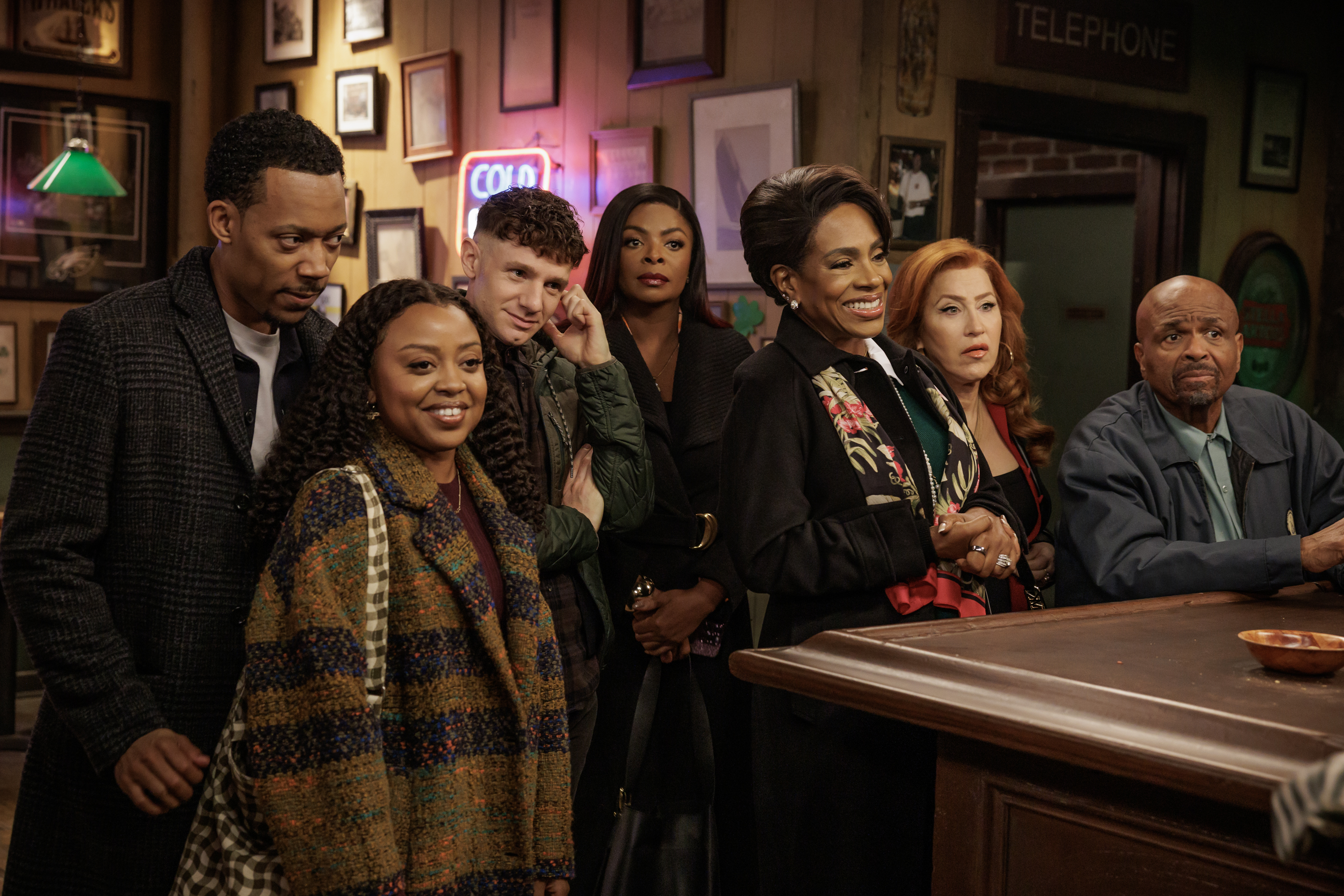
The Abbott Elementary crew visits the Always Sunny gang at Paddy’s Pub in the “It’s Always Sunny in Philadelphia” and “Abbott Elementary” crossover.
In its fifth season, Abbott Elementary has already won the hearts of Philadelphians and three Golden Globes. Still, this wholesome band of teachers, starring Philly-native Quinta Brunson, isup again for best musical or comedy television series.
HBO’s Task and Peacock’s Long Bright River, two crime thrillers set in Philadelphia neighborhoods and suburbs, both have leading actors nominated for Golden Globes this season.
Mark Ruffalo as Tom, Alison Oliver as Lizzie, Thuso Mbedu as Aleah, and Fabien Frankel as Anthony in “Task.”
Amanda Seyfried (left) and Asleigh Cummings in the Kensington-set Peacock series “Long Bright River,” based on the novel of the same name by Temple professor and novelist Liz Moore.
Liz Moore’s crime novel Long Bright Riverturned heads when it was released in 2020, detailing the harrowing story of a Kensington police officer, played in the series by Amanda Seyfried, searching for her sister in a cat-and-mouse chase with a killer targeting sex workers. While the television adaptation was filmed in New York City, the bulk of the show takes place in Kensington and other Philadelphia neighborhoods, with Seyfried grabbing a nomination for best female performance in a dramatic limited series.
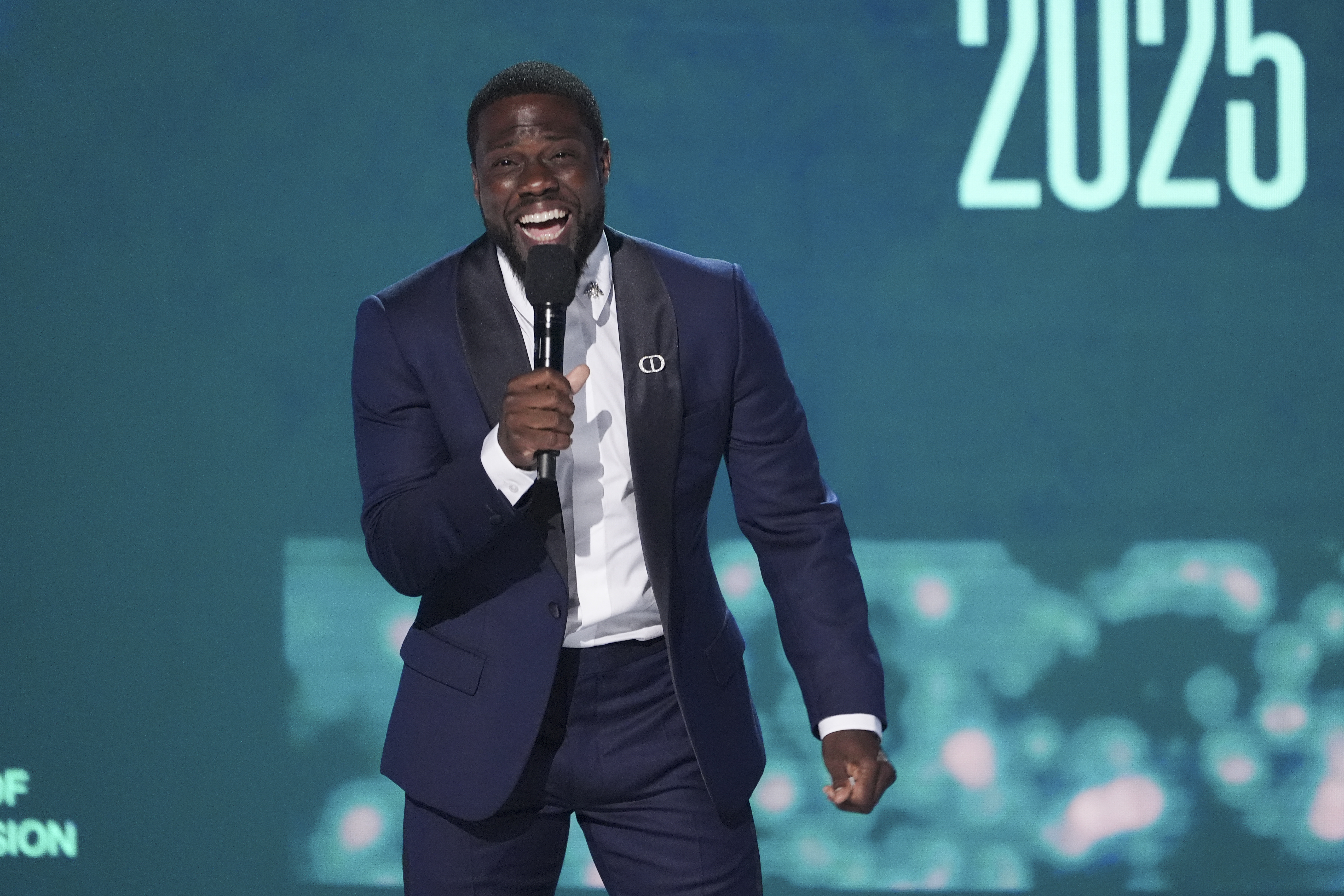
Hometown stand-up icon Kevin Hart was back to his roots with a new comedy special, Kevin Hart: Acting My Age, tackling injuries after 40, Chick-fil-A’s spicy chicken sandwich consequences, and slipping in the shower. He earned a nomination for best stand-up comedy performance on television.
Host Kevin Hart speaks during the BET Awards on Monday, June 9, 2025, at the Peacock Theater in Los Angeles.
And through a few degrees of separation, several other nomineescan be claimed as Philly-adjacent.
Hannah Einbinder, whose father is from Doylestown, accepts the award for outstanding supporting actress in a comedy series for “Hacks” during the 77th Primetime Emmy Awards on Sunday, Sept. 14, 2025, at the Peacock Theater in Los Angeles. (AP Photo/Chris Pizzello)
Take Hacks actress Hannah Einbinder, who shouted “Go Birds!” during her speech after winning an Emmy for best supporting actress in a comedy series, and was filmed by the evening news crying in the streets of Los Angeles after the Eagles’ 2018 Super Bowl win.
She may not be from Philadelphia (her father, actor Chad Einbinder, is from Doylestown), but she reps the city. HBO’s Hacks, which follows a veteran Las Vegas comic mentoring a young comedy writer, is up for best musical or comedy television series, with Einbinder and costar Jean Smart nominated for best supporting female actor and best actor in a musical or comedy series, respectively.
And there are some broader Pennsylvania and New Jersey ties among the nominees.
The breakout medical drama The Pitt, which takes place in the fictional Pittsburgh Trauma Center, depicts a 15-hour shift in an emergency room, split across 15 one-hour episodes. The Pitt’s lead actor, Noah Wyle (known for his role as Dr. John Carter in NBC’s ER), is up against Ruffalo for best male actor in a dramatic television series.
After a major overhaul of the award show in recent years, including the sunsetting of the Hollywood Foreign Press Association due to ethics and diversity concerns, the new Golden Globe Awards are judged by a panel of 400 journalists from across the world.
The Golden Globes will be broadcast live on Jan. 11 at 8 p.m. Philadelphia time on CBS and streaming on Paramount+.