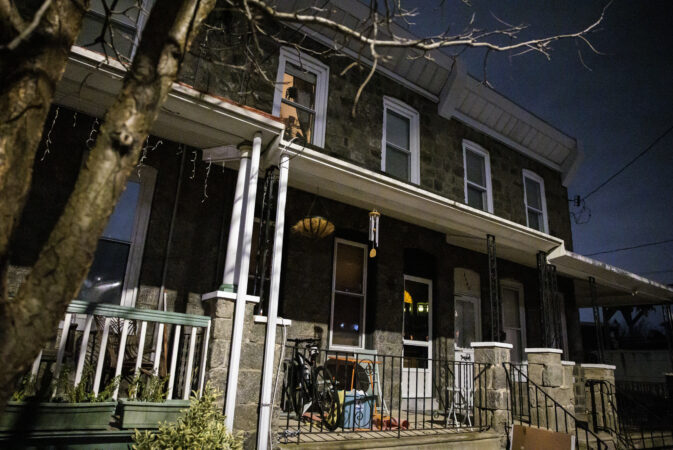
The buyers: Jessica Lubniewski, 41, museum educator; David Jacobs, 40, electrical engineer
The house: A 1,300-square-foot rowhouse in East Falls with 3 bedrooms and 1½ baths, built in 1930.
The price: listed for $325,000; purchased for $327,500
The agent: Benjamin Camp, Elfant Wissahickon
The ask: Jessica Lubniewski and David Jacobs didn’t want to buy just any house; they wanted to buy their friend’s house. But when the friend didn’t accept their offer, they had to pivot.
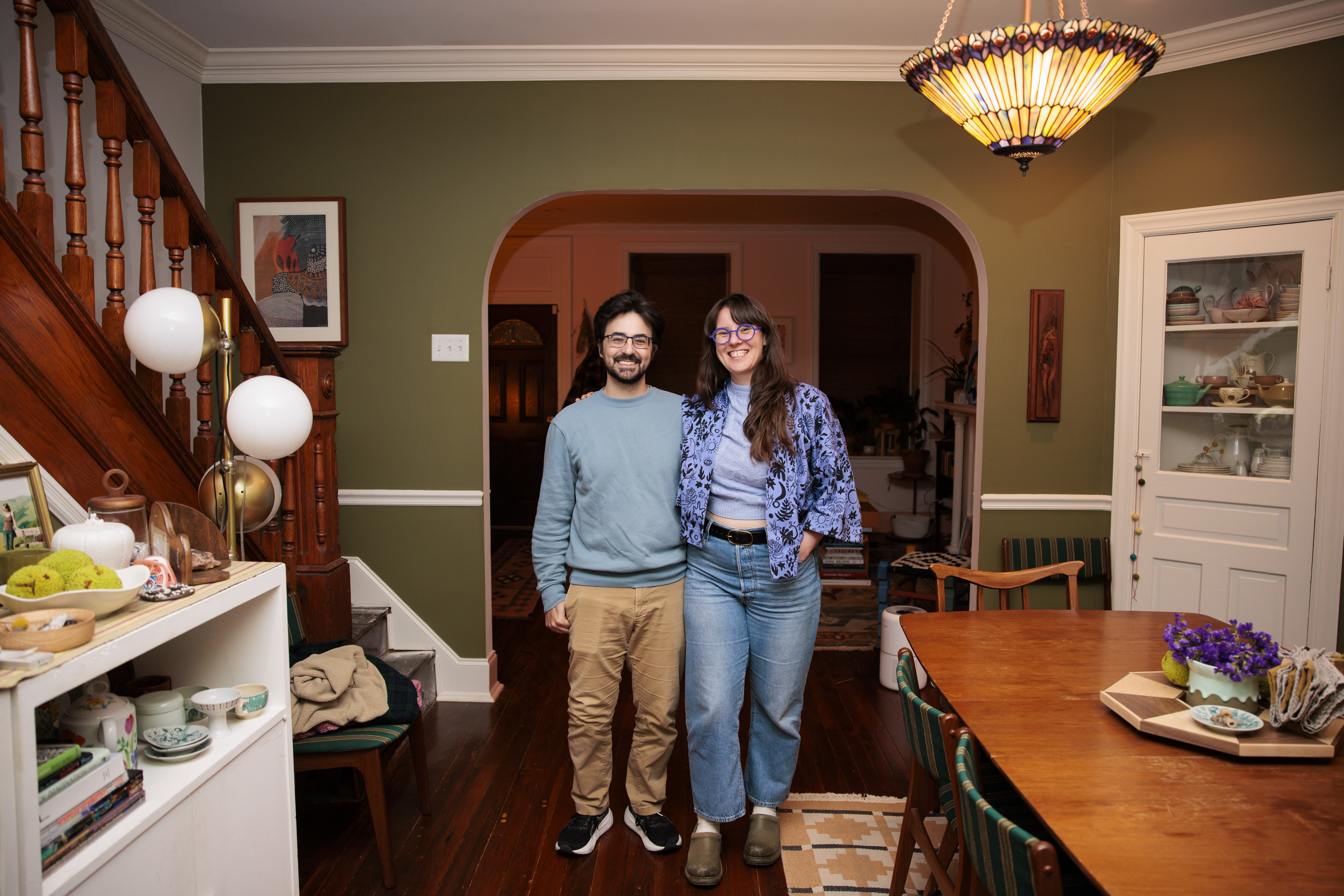
The couple started looking for houses that cost less than $375,000 in East Falls. They wanted at least three bedrooms, a bathroom on the first floor, and a dining room that was big enough to entertain. “That was a really big thing for me,” said Lubniewski. They also wanted character and original details — not a recently flipped property.
Lubniewski and Jacobs in their dining room that is big enough to entertain.
The search: The couple went to a few open houses and spent their evenings browsing Zillow listings, where Lubniewski spied a preview listing for a house that wouldn’t be on the market for a few weeks. “I just kept looking at it and being like, ‘Man, that house looks so cool,’” said Lubniewski. “It was right around the corner from where we were renting our apartment and had all the things we were looking for.” Lubniewski and Jacobs told their agent they wanted to see the house and he worked to get them “the first viewing on the first day that it was on the market,” said Jacobs.
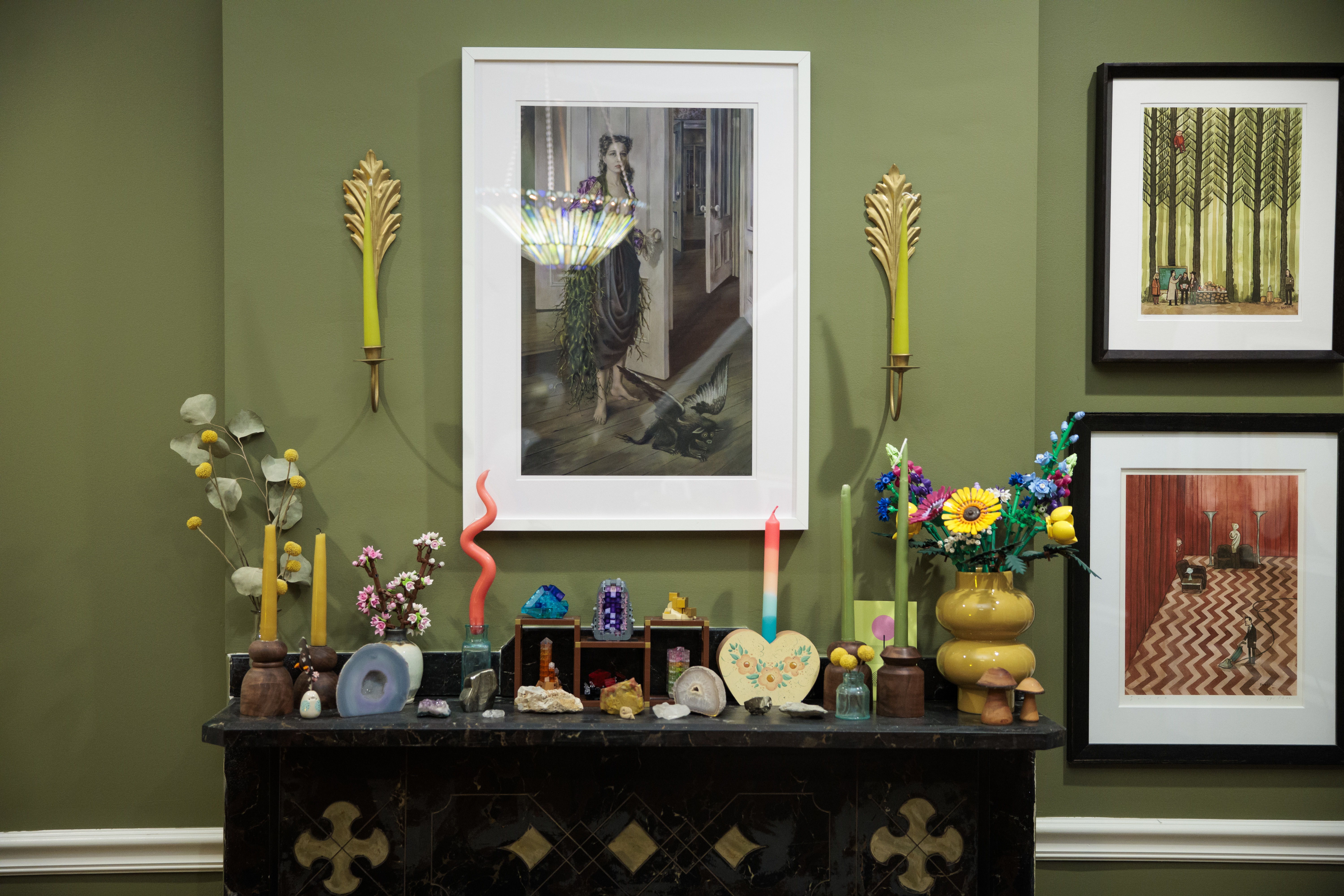
The appeal: The couple loved the look of the first floor,which includes two fireplaces. “Neither of them are working,” said Lubniewski, but the mantles are “so beautiful.” The one in the living room has its original facade.
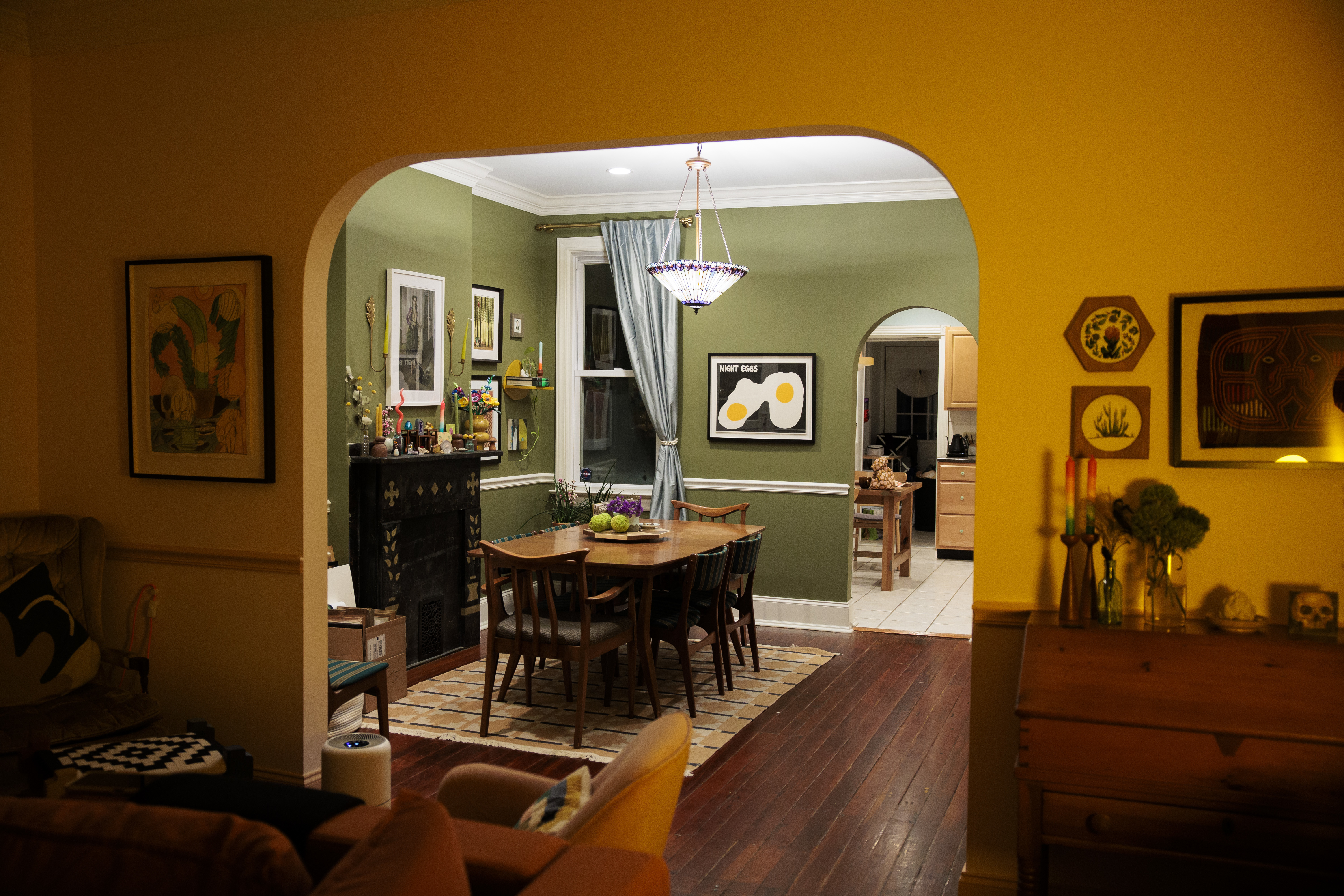
The arched doorways in between the living room and the dining room and the dining room and the kitchen give “a nice look,” said Lubniewski. Jacobs appreciates the house’s central air system.
Arched doorways separate the living room from the dining room and the dining room from the kitchen
The deal: A few hours after visiting the home, the couple put in an offer. Their agent suggested they bid a few thousand dollars over the asking price, so they offered $2,500 more for a total of $327,500. Lubniewski thinks they may have been the only people to see the house.
The seller accepted their offer and after the inspection, agreed to cover $5,000 of the closing costs. He also threw in the patio furniture and the grill. In exchange, the couple did a 30-day closing.
“It all happened pretty smoothly and pretty quickly,” said Lubniewski.
One of the couple’s favorite aspects of the house were the two original fireplace mantels in the living room and the dining room.
The money: The couple had $90,000 to spend on their home. That included $40,000 of personal savings.
“We don’t have any kids. We don’t have a lot of expenses,” said Lubniewski regarding how they were able to save. And after Jacobs got his current job as an electrical engineer, they were “able to save a lot quite easily,” she added, a first for both of them.
They also got $40,000 from Jacobs’ parents, and additional money they inherited from relatives who died earlier in the year.
They tried to pursue a first-time homebuyer’s mortgage but were about $500 over the income limit, Lubniewski said, so they got a 30-year-mortgage with a 6.45% interest rate instead. They put 20% down, about $65,000.
The move: Lubniewski and Jacobs made a few changes to the house before they moved in, including ripping out the carpeting upstairs. “It was horrible work, so gross,” said Lubniewski. They hired someone to redo the floors and buff the original hardwood downstairs. They officially moved in at the end of July, said Lubniewski, “on what felt like the hottest day of the summer.”
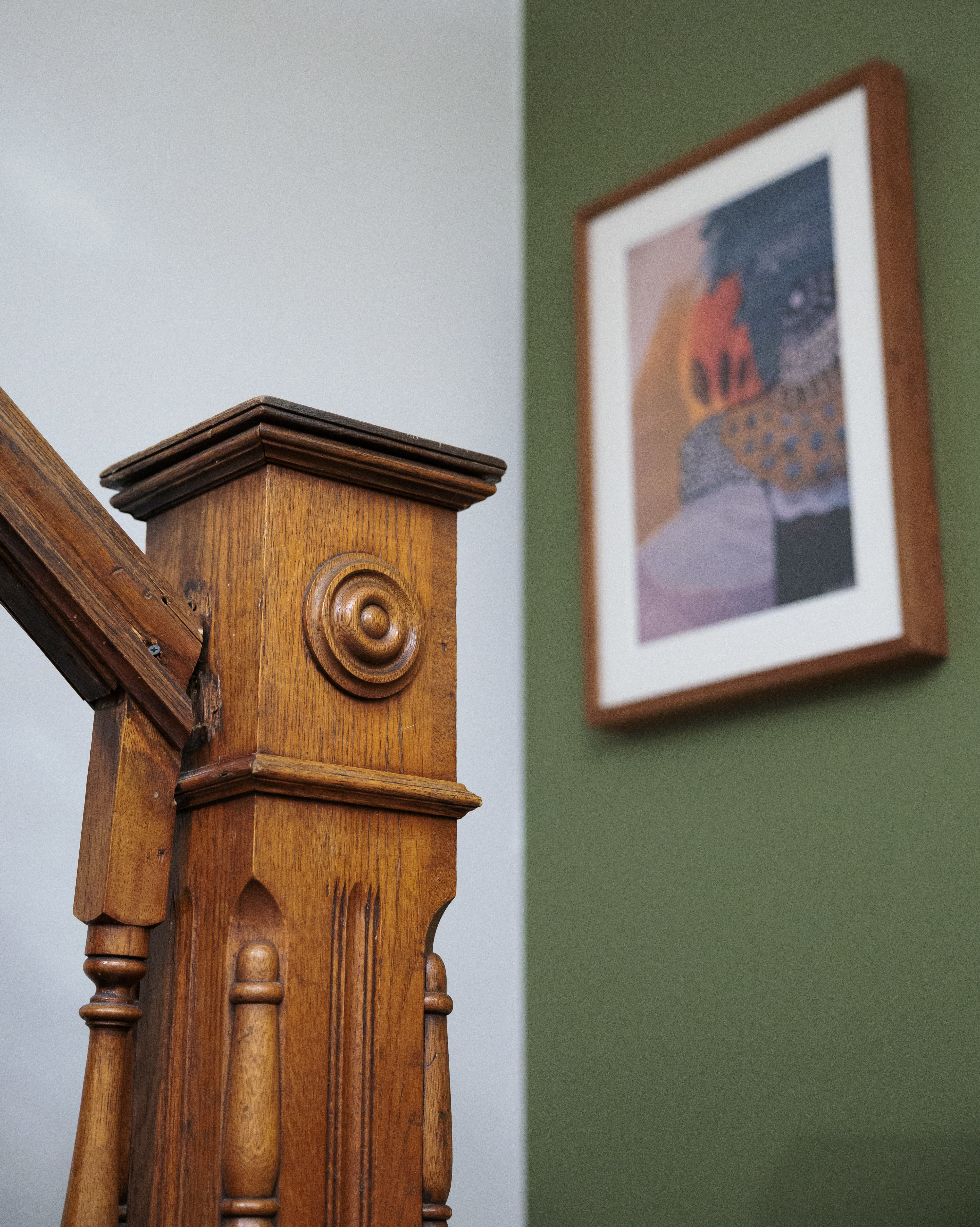
Original details, like the woodworking on the staircase banister, was important to Jacobs and Lubniewski.
Any reservations? Jacobs wishes they had time to replace the old electrical wiring they discovered after they moved in. “In the basement the electrical all looked really good, and the inspector didn’t flag anything.” But when they tried to replace a light fixture in the dining room, they encountered old, fabric-wrapped wire, an outdated type of electrical wiring that exists in many old homes. They think there may be more, but they don’t want to bust through the walls right now to find out.
Life after close: Since moving in, Jacobs and Lubniewski have been busy getting to know their neighbors. In fact, a woman who grew up in the house stopped by on Halloween and asked to peek inside. “She was really excited,” said Lubniewski. She even had her son take a photo in front of the fireplace mantel, the same spot her mother took a photo of her on Halloween in the ‘70s. “It’s always so interesting to know what has changed,” Lubniewski said. Or in the case of the fireplace mantel, what hasn’t.
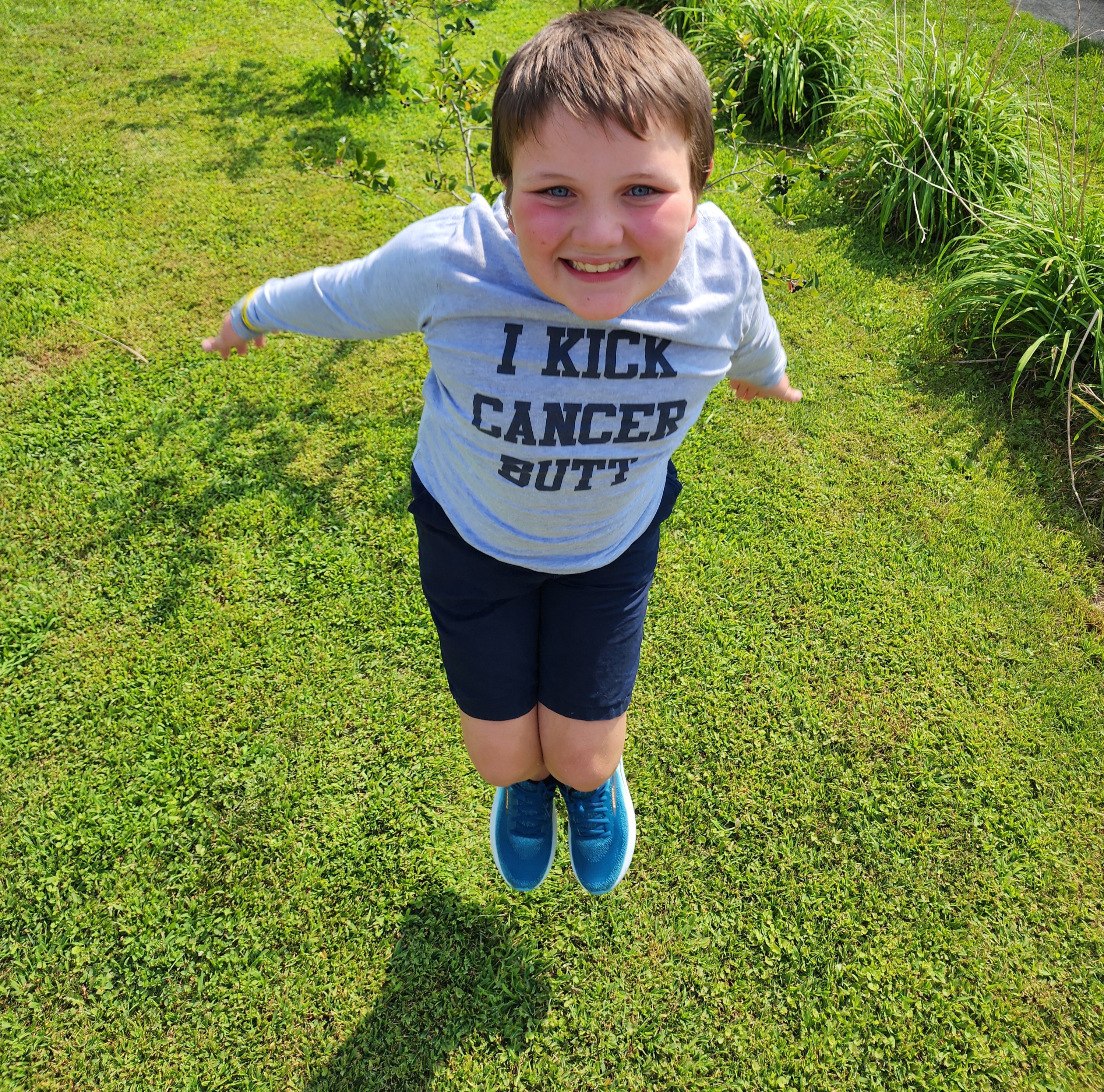
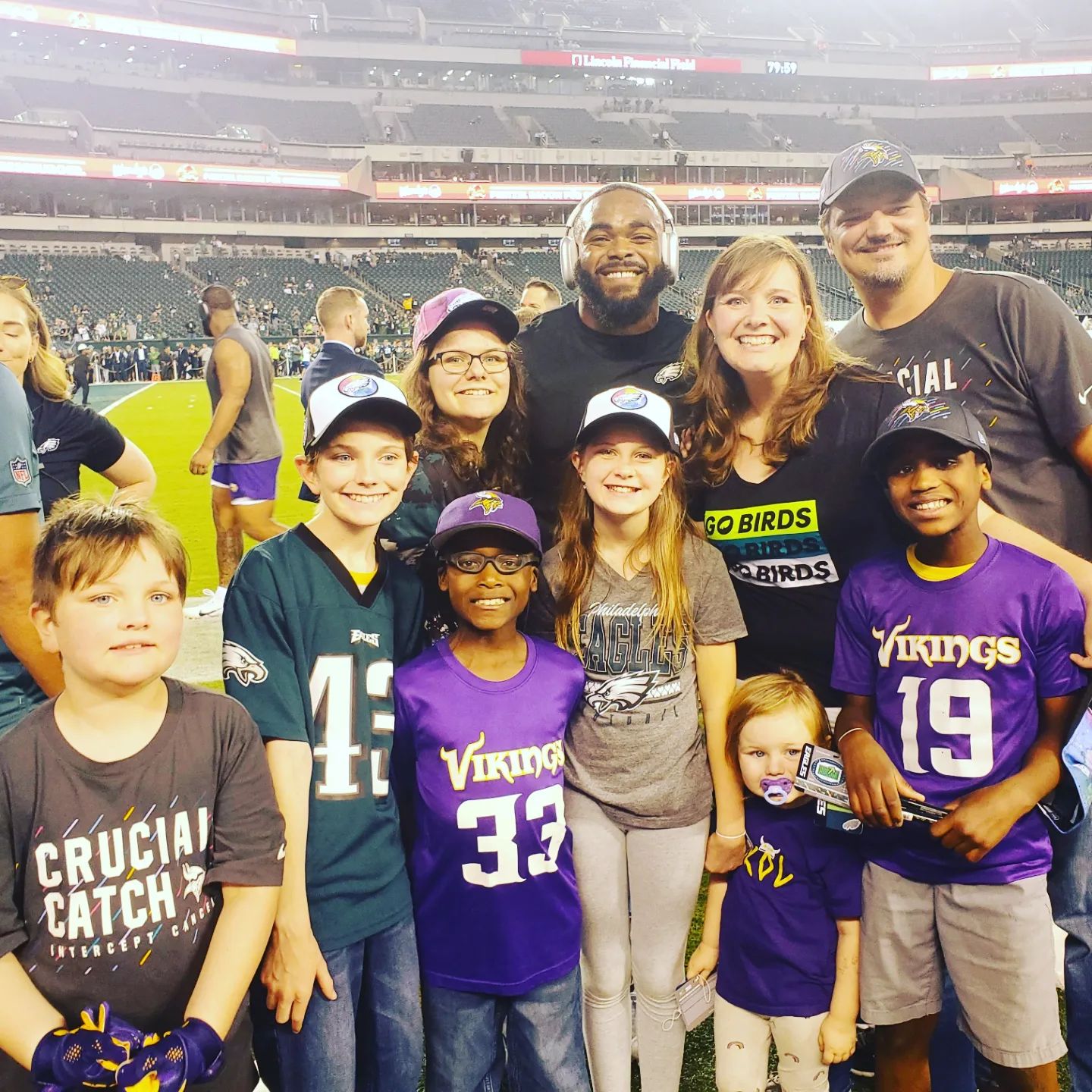
Standing alongside his parents and his six siblings, Caleb Quick posed for a photo with Brandon Graham and Milton Williams, wearing a gray shirt that stated, “I kicked cancer’s butt.” After the photo, Caleb untangled the yellow wristbands in his right hand and handed them to both players. The bracelets read: For Childhood Cancer Warriors.
“People see football players as heroes,” Caleb said. “So, when the kids look at them they’ll see their heroes wearing the bands to support them.”
When speaking with Caleb, you learn he loves the typical 10-year-old hobbies. He loves to play board games, he loves riding roller coasters, and he loves football. But if you ask him more about himself, you’ll also learn it’s his mission to raise awareness for pediatric cancer after he was diagnosed with leukemia at just 5 years old.
Caleb Quick and his family have made it their mission to battle pediatric cancer after he was diagnosed with leukemia at 5 years old.
The Quick family isn’t your typical family. In fact, they’re quite hard to miss. Naomi and her husband, John, are raising seven kids all under the age of 17. Their youngest is Hannah, who is 6 years old, then it’s Caleb, 10; Noah, 12; Grace, 13; James, 14; John Daniel, 15; and their oldest daughter, Chara, 16.
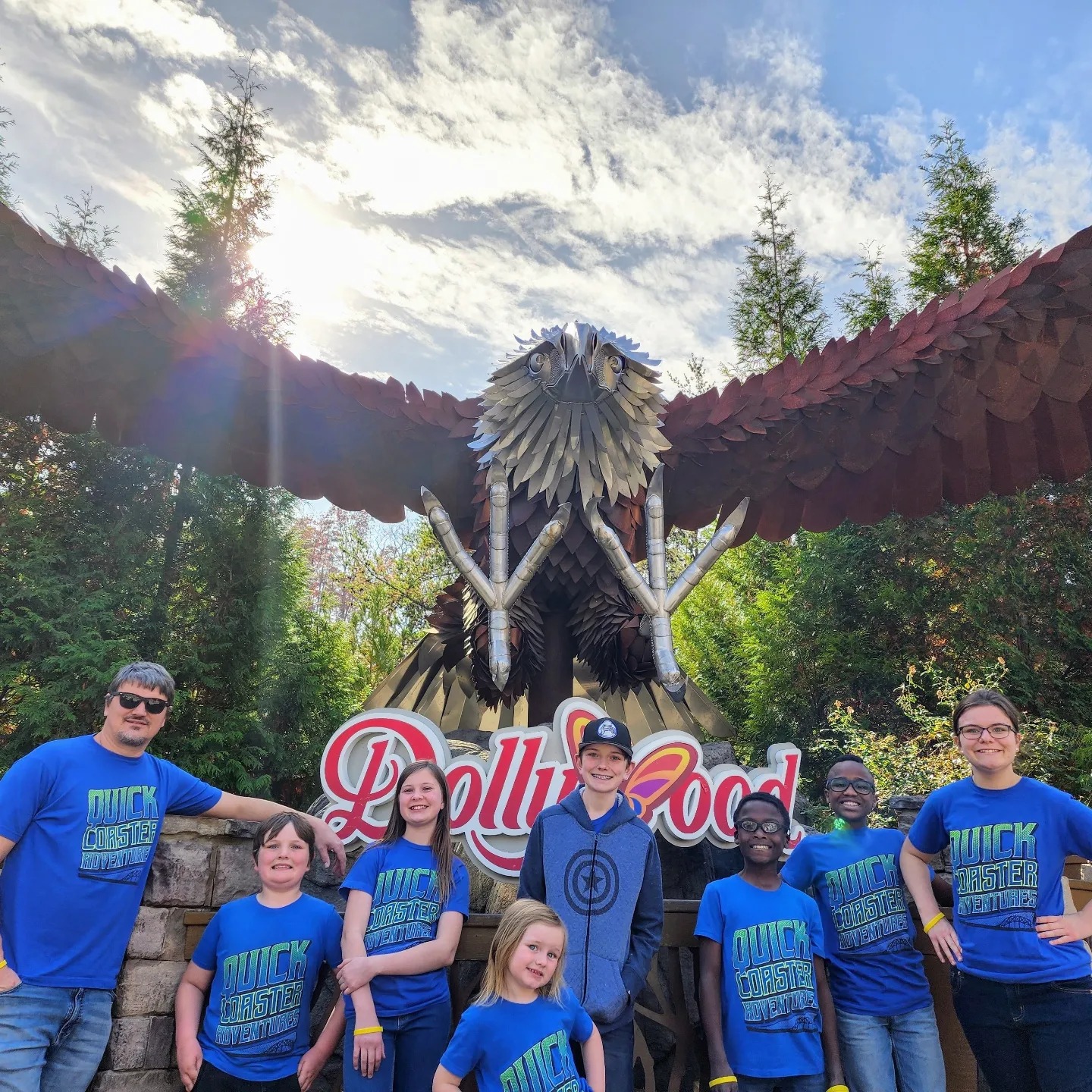
The Delaware natives have already combined their mission to raise awareness for pediatric cancer with their love for roller coasters, riding more than 100 of them from Minnesota to Tennessee.
“Our family just kind of draws attention,” Naomi said. “So people kind of look anyway so we use that to our advantage. We would wear foundation T-shirts to the different parks to raise awareness for the different foundations that help childhood cancer. It was raising awareness in this really fun way that didn’t leave people sad. Instead it was more hopeful.”
Some of these foundations included: B+ Foundation, the Landon Vargas Foundation, Live Like Lucas, Project Outrun, and Kisses for Kyle. Caleb’s Give Kids the World passport, which grants families free access to parks around the country, made this mission possible.
“Childhood cancer is like a roller coaster that no one wants to get on,” Naomi said. “It is full of ups and downs and it makes you feel sick sometimes. And life is a roller coaster in general. But kids should get to ride coasters. Not have to fight cancer.”
Now, the Quicks are ready to raise awareness through the family’s next love: football.
Caleb Quick (second from left) and his family also share a love for roller coasters, and have used that passion to further their mission of supporting pediatric cancer awareness.
‘Bad luck’ for the Quicks
Just months before Caleb was diagnosed with leukemia, his father, John, had just battled ocular melanoma, the most common eye cancer in adults. “Both him and Caleb had genetic testing done and there’s no link between the two,” Naomi said. “So, it’s just like a really bad situation. I don’t know what else to call it, bad luck.”
John was diagnosed in 2019 and was declared cancer free in January 2020 after he was treated by sewing in radiation seeds into his eyeball, the procedure ended up taking the vision from his right eye. Seven months later, Caleb was diagnosed with leukemia.
Naomi remembers bringing Caleb to the emergency room in August 2020, after Caleb was complaining about being tired and having knee pain. She wasn’t expecting her next conversation with the doctor to be something so life changing.
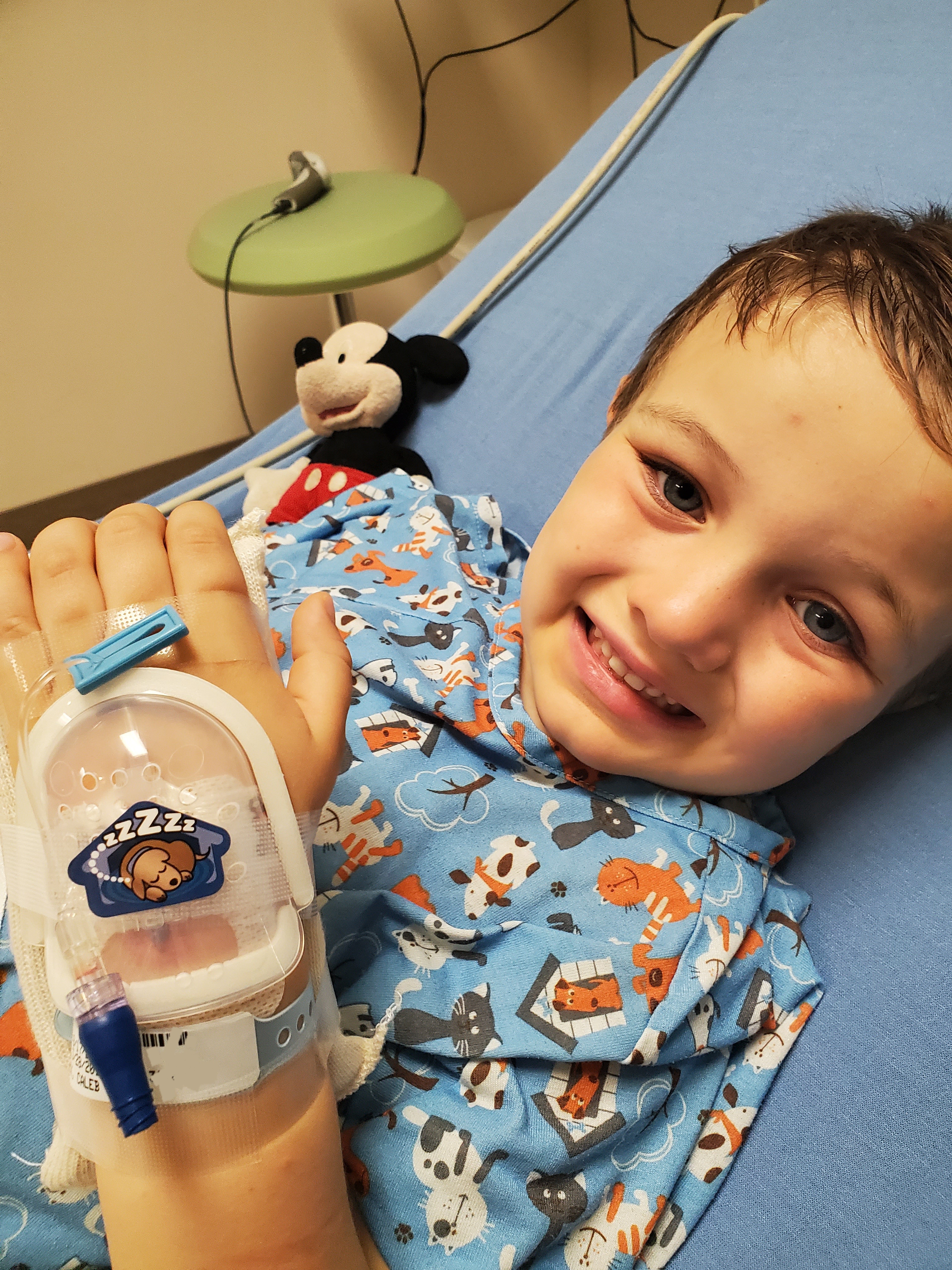
Caleb Quick was in remission within 28 days, but continued treatment for another two years.
“To have a doctor sit across from you and tell you that you’re really spunky, climbs-all-over-everything, never-settles-down kid has cancer was …” Naomi said before falling silent.
Caleb’s initial hospitalization at the Nemours Children’s Hospital in Wilmington was 22 days. Within the first three days, Naomi said, Caleb couldn’t walk and he was covered from head to toe in bruises.
“It was a really quick progression, and then he developed blood clots unfortunately in his central line, which meant he had to be on blood thinners for a good portion of his treatment as well,” Naomi said. “It was definitely a little bit more complicated than even just the regular treatment.”
By that November, after months of physical therapy and using a walker to move around the house, Caleb rebuilt his muscles and learned to walk again. However, he still has slight residual weakness in one leg from chemotherapy.
Caleb was in remission within 28 days. But due to a high rate of relapse without the maintenance period of chemotherapy, his treatment lasted another 25 months. His official Ring the Bell date was Oct. 22, 2022. Right after his last dose, he went home to ring the bell in front of his family.
When asked what he wanted to do with his meds and supplies, Caleb responded: “I wanted to burn them.”
Of course, they didn’t burn the medicine. But they did throw a big party and burned a few papers to signify he was done with his treatment. And throughout the Quick family’s battle with cancer — not once, but twice — they gained an even stronger sense of community.
“Our family has seen those really hard times bring us closer together and make us stronger,” Naomi said. “For all of us, we learned to get through hard times doing it as a family and doing it together. Nobody here had to fight alone, which was good. But that can’t be said for all the other families and so I think it’s really made us more aware and more passionate about fighting on behalf of other families that are going through their own cancer battle.”
Brandon Graham, whose mother overcame leukemia, gave inspiration to Caleb Quick during his battle with cancer.
‘Football was the saving grace’
On Sept. 19, 2022, Caleb had finished one of the biggest chemo days he had left in his treatment. Later that night, he and his family attended the Eagles’ home opener against the Minnesota Vikings.
The Eagles invited the Quicks to the sideline before the game after learning that they were divided between Vikings and Eagles fans. “It’s split 5-4 in favor of the Eagles, I’m proud to say,” Naomi said. “The Vikings fandom comes from their father’s Minnesota roots.”
Caleb Quick (left) and his family pose with Brandon Graham at the Eagles’ 2022 home opener against the Vikings. The family is split between Eagles and Vikings fans due to their father’s Minnesota roots.
Caleb is a fan of both teams. So it was a dream come true for the family to witness both teams in action. Before the game, Graham walked over, welcoming the family with a sweaty hug and words of encouragement.
“He looked at me and he said, ‘My mom had leukemia as a kid and she was told she would never have kids, and look where I am,’” Caleb remembered.
A few weeks earlier, Caleb took part in the Phillies’ Childhood Cancer Awareness Night, and got to meet then-first lady Jill Biden.
Caleb Quick (left) got to meet Jill Biden, then the first lady, and many Phillies players during Childhood Cancer Awareness Night in 2022.
Two weeks later, toward the end of his treatment, Caleb took a dive in health. The cumulative effect of over two years of chemo had taken its toll on his body. He developed three different viral infections and four different bacterial infections.
“It was a little scary, and I just remember thinking to myself, replaying those words that Brandon had spoken. He did say that, ‘With God, all things are possible. He’s a fighter, he’s going to make it,’” Naomi recalled. “And I just held onto that because I needed that encouragement. And to have it come from somebody who is a hero to the community, it was a really special interaction.”
Football has always played a special role for the Quick family, through both Caleb’s and John’s cancer battles. For John, it was an escape. For Caleb, it was an inspiration.
“John was diagnosed right in the middle of the football season,” Naomi said. “So, football games were this way that we could have normal family time. It was just kind of an escape from reality during both of their cancer fights. Meanwhile, football was an inspiration for Caleb to walk again.
“Football was the saving grace, and like I said, when he lost his ability to walk, he would say, ‘Mom, I can’t play in the NFL anymore.’ He wants to play in the NFL and he can’t do that if he can’t walk.”
Eagles wide receiver DeVonta Smith was wearing his yellow bracelet in support of childhood cancer awareness when he caught this touchdown against the Tennessee Titans in December 2022.
‘For childhood cancer warriors’
During the 2022 season, Eagles wide receiver DeVonta Smith wore a yellow wristband given to him by 10-year-old Nicholas Purificato, who was battling Ewing’s sarcoma, a rare bone cancer. Starting that October, Smith wore the bracelet every day at practice and during games to support his fight.
One day, Caleb spotted the yellow bracelet and looked up at his mom and said, “Mom, No. 6, Smith, he cares about kids like me. Look at those bands,” Naomi recalled.
At that moment, she ordered similar yellow bands for her son, with the words “For childhood cancer warriors”and a gold ribbon engraved on them.
At last year’s Big Climb, a fundraiser for the Leukemia Lymphoma Society, Caleb met Milton Williams and Tarron Jackson, a pair of former Eagles defensive ends. Williams, who signed with the New England Patriots this offseason, shared his story about his mother’s battle with breast cancer and proudly accepted Caleb’s bracelet. A few months later, Williams was still wearing the bracelet.
“We offered him one and then he took a whole bag to the locker room and passed them out,” Naomi said. “We ended up seeing the team pictures later in August and he was wearing them in his team pictures. Caleb was showing it to all of his friends and family. It was a cool moment.”
But it’s not just Caleb and Naomi’s mission to raise awareness for pediatric cancer. After watching Caleb battle leukemia at such a young age, his siblings have made it their mission as well.
“Since we know how hard it is for kids to go through cancer, we know that other families who have to go through the same thing, it’s hard for them too,” said Caleb’s sister Grace. “So, when you raise awareness, those families know that you care.”
Caleb’s older brother J.D. added: “If they’re wearing bands and they’re asked by a reporter why they’re wearing them, then people start to wonder more about cancer because a lot of people don’t know a whole lot about cancer until somebody they know has had it.”
The Quick family’s ultimate goal is to get bracelets to all 32 teams in the NFL.
“September is childhood cancer awareness month and it really doesn’t get as much publicity as some other awareness months do, which is odd,” Naomi said. “It seems to be that you have to be in this world to know a lot about it. So, our hope was that if we could get to all 32 teams, then kids across the country, no matter who they’re rooting for, will know that there are people rooting for them. Every child deserves that. Every kid deserves to know that they’re not fighting alone.”
As of October, Caleb was moved to annual visits after his three-year off treatment lab results came back perfect.
The longest shutdown of the federal government in this nation’s history ended after Republicans finally agreed to consider Democrats’ appeal for an extension of expiring Affordable Care Act subsidies that help families buy health insurance.
What action Republicans will ultimately take is anyone’s guess before the subsidies expire in January. As for President Donald Trump, he treats healthcare like every other issue: mostly making nebulous, politically calculated statements that are counterproductive when leadership from the White House is needed.
For years,Trump has derisively called “Obamacare” bad legislation that never should have been passed, but he has never offered a better alternative.
“My first day in office, I am going to ask Congress to put a bill on my desk getting rid of this disastrous law and replacing it with reforms that expand choice, freedom, affordability,” Trump said on the campaign trail in 2016. Several proposed replacements to the ACA were subsequently introduced after his election, but each was defeated in the Senate, with even some Republicans voting against the inadequate alternatives.
Trump never produced anything better than Obamacare during his first administration, but that didn’t stop him from again making the healthcare law a major talking point during his reelection campaign. “We’re signing a healthcare plan within two weeks, a full and complete healthcare plan,” Trump said in July 2020. “We’re going to be doing a very inclusive healthcare plan. I’ll be signing it sometime very soon.”
But the plan never came, and Trump lost the election.
He stewed during Joe Biden’s four years as president, but promised voters during his 2024 campaign that he was ready to replace Obamacare. Pressed by reporters to reveal his alternative, Trump had to admit he had only “concepts of a plan.” Nearly a year has passed since his second inauguration, but Trump’s concepts of a better plan to make sure health insurance is affordable are still a mystery.
Unless that changes before the increased ACA subsidies expire, Congress should vote to extend them.
The subsidies help Americans who earn up to 400% of the federal poverty level — $15,650 annually for an individual and $32,150 for a family of four — pay for insurance. Without those subsidies, a person now paying $325 a year for health insurance might have to pay as much as $1,562 annually.
Many whose insurance costs will go up may decide to rejoin the ranks of the uninsured. That would be a travesty. The medically uninsured rate in America almost halved from 17.8% when the ACA became law in 2010 to 9.5% in 2023. Studies show uninsured adults have less access to medical care, receive poorer quality of care, and experience worse health outcomes than insured adults.
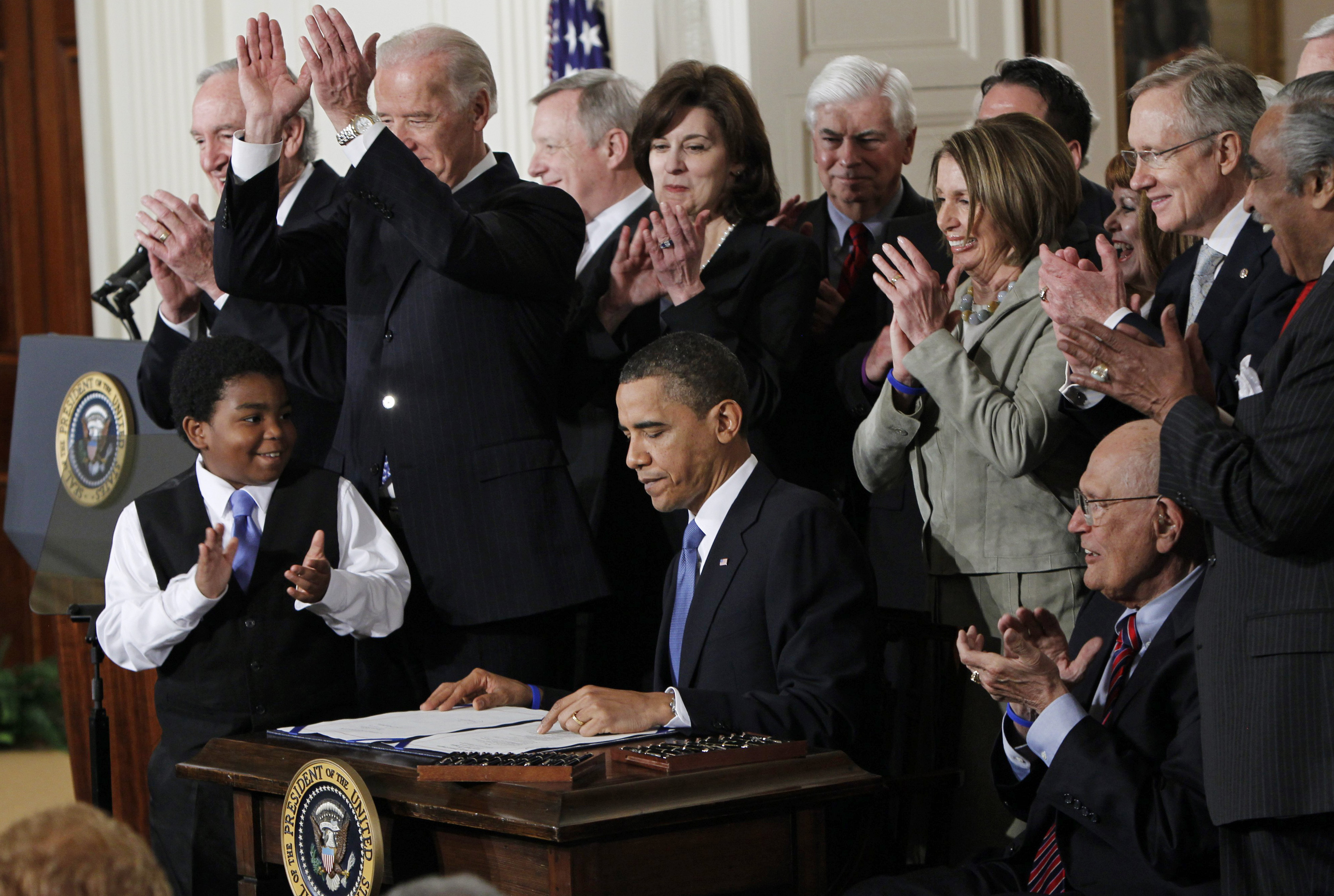
President Barack Obama is applauded after signing the Affordable Care Act into law in the East Room of the White House in 2010.
The ACA was this country’s alternative to installing a “single-payer” healthcare system, such as Canada’s, where most funding and payments for medical treatment come directly from the government via taxes paid by the public. The ACA system in America instead retains the third-party role of private medical insurance companies such as Blue Cross, Aetna, and Cigna, whose revenue has increased greatly under Obamacare.
Most Canadians also have private insurance to pay costs not included in their government coverage, so even they don’t consider a taxpayer-funded, single-payer system the best way to provide healthcare. In fact, a survey of 11 healthcare systems provided by the world’s highest-income nations ranked Canada 10th and the United States last.
Despite spending far more of our gross domestic product on healthcare, America is at the bottom in terms of access to patient care, administrative efficiency, equity, and healthcare outcomes. In other words, we’re spending a lot of money and getting sicker in return.
The study by the Commonwealth Fund said the highest-ranked nations, including Norway and the Netherlands, which topped the list, shared four distinguishing features:
They provide universal coverage and remove cost barriers.
They invest in primary care systems that provide high-value services to all people in all communities.
They reduce administrative burdens that divert time and spending from health improvement efforts.
They invest in social services, especially for children and working-age adults.
That last point brings up another issue regarding healthcare and Trump. The omnibus legislation passed in July, which he dubbed the “One Big Beautiful Bill,” made drastic cuts to Medicaid to help pay for tax cuts expected to reduce federal revenue by $4 trillion between 2025 and 2034. Why should Medicaid, which helps cover medical costs for low-income families, older adults, and people with disabilities, be sacrificed so that Trump can boast he cut taxes?
Why is this president always finding some perceived wrong among the most vulnerable Americans while lavishing praise and largess on the wealthy? Certainly, he’s more familiar with the latter, having grown up rich and being more comfortable among his people. But so many less fortunate Americans voted for him, including more than a few who depend on Medicaid.
Shouldn’t he at least occasionally seem to care for their health?
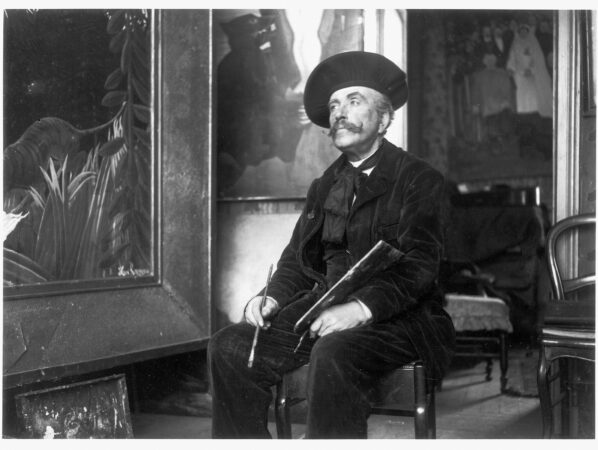
These are some of the figures in the iconic jungle pictures by Henri Rousseau (1844-1910), a self-taught French artist who strove to realize financial and critical success as a professional painter.
He also had a criminal record of embezzlement and bank fraud.
Despite a lack of formal art training, Rousseau was confident he was a significant artist who deserved official recognition. Nicknamed “Le Douanier” (the customs officer) by Alfred Jarry, a playwright who was also a family friend, Rousseau did collect tariffs on goods coming into Paris.
In 1893 at age 49, he retired early with a modest pension to devote himself to full-time painting.
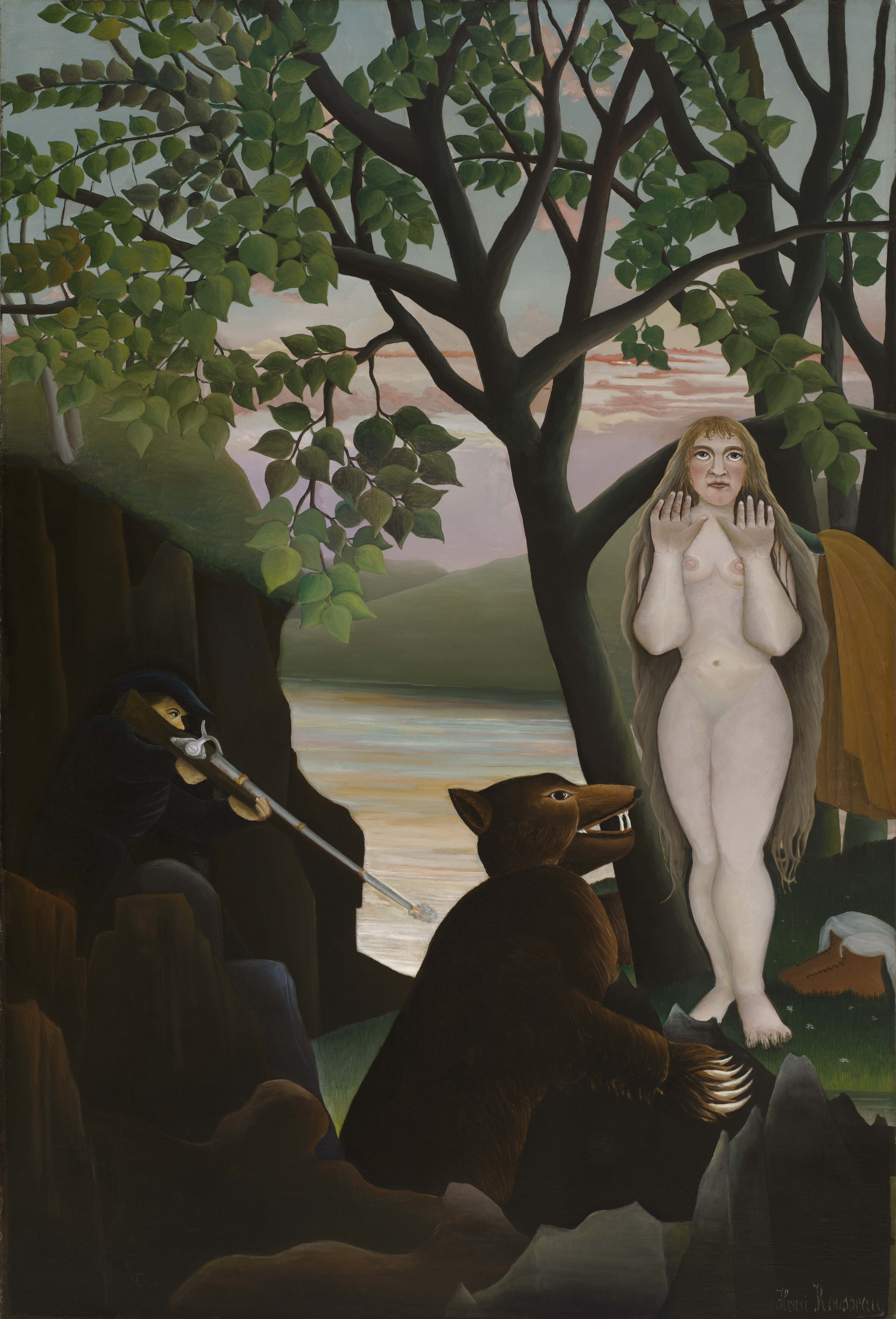
Henri Rousseau. Unpleasant Surprise, 1899–1901. Oil on canvas.
Whether portraits, landscapes, or the uniquely imagined jungle scenes, Rousseau’s pictures reveal features common to an artist with no academic art instruction: anatomical inaccuracies, flatness, scale distortion, outlined forms, and repetitive patterning. Some of his canvases defy logic, mixing fact and fantasy like Tropical Landscape — An American Indian Struggling with a Gorilla (1910).
At the Barnes’ ongoing “Henri Rousseau: A Painter’s Secrets,” Rosseau’s art is arranged in seven thematic sections.
The curators — Nancy Ireson, the deputy director of collections and chief curator at the Barnes, and Christopher Green, professor emeritus at the Courtauld Institute of Art in London — have assembled 56 works including major loans from museums around Paris, to showcase an artist with “entrepreneurial energy in marketing,” as Green put it in a recent press preview.
The compact exhibition offers a glimpse at Rousseau’s journey from an outsider artist to a modern master, revealing, as the exhibition notes say, “the thoughts and intentionality behind some of his most famous works.”
Henri Rousseau. Fight between a Tiger and a Buffalo, 1908. Oil on canvas.
Interestingly, an ongoing show at the Philadelphia Art Museum is titled “Dreamworld: Surrealism at 100.” Rousseau’s visionary work was admired by Andre Breton, who wrote the Manifesto of Surrealism in 1924. Although Rousseau deals with such similar matters as childlike imagination, eroticism, and dreamy scenarios, no recognition of his role as an inspirational precursor is presented in this survey of about 180 artworks up the Parkway.
Yet, Le Douanier was certainly on that road to surrealism.
Between 1923 and 1929, Albert C. Barnes, the voracious collector of modern art, acquired 18 paintings to form the world’s largest group of Rousseau canvases under one roof. (Eleven are displayed in this show, nine of which will travel overseas for the first time in 40 years when the show goes to the Musée de l’Orangerie in Paris next year.) Barnes admired Rousseau’s “honesty” of approach, saying, in 1925, “his pictures have the charm of a child’s fairy-tale.”
“But there is nothing childish or untutored in the skill with which they are executed,” he maintained.
Henri Rousseau. Tropical Forest with Monkeys, 1910. Oil on canvas.
Rousseau did not begin painting until he was in his 40s. He submitted work to the recently established Salon des Indépendents, the nonjuried annuals that required only a modest fee and provided a venue to anybody to have work on public display.
The 1894 painting TheWar, an allegorical image, raised his profile and elicited enthusiastic as well as derisive responses. The central figure is strangely positioned not on but in front of the galloping horse as it leaps across a battlefield strewn with bodies and scavenging black crows.
Henri Rousseau. Scouts Attacked by a Tiger (Éclaireurs attaqués par un tigre), 1904, Oil on canvas.
A decade later, Scouts Attacked by a Tiger (1904), a large jungle picture of impending danger, attracted considerable notice. Rousseau’s rather novel tropical scenes like this one began to gain some notoriety among a circle of talented bohemian personalities that included Pablo Picasso.
Louis Vauxcelles, the young art critic who coined the terms fauvism and cubism, acknowledged that Rousseau was becoming “a celebrity in his own way.”
The artist, however, never left France.
His jungle paintings are pure fantastic compositions of faraway places created in his Parisian studio. For visual reference, he used sundry postcards and photographs and made repeated visits to the Jardins des Plantes with its botanical gardens and zoo. Rousseau found his niche painting such “imaginative voyages” during the late years of his career.
When the artist was on trial for participation in a bank fraud scheme in late 1907, his lawyer brought to court a tropical painting depicting monkeys (the exact canvas is not known). Based on the visual evidence of the picture, the defense maintained that Rousseau was too naive to know that he was committing a crime.
It worked. The artist only received a suspended sentence.
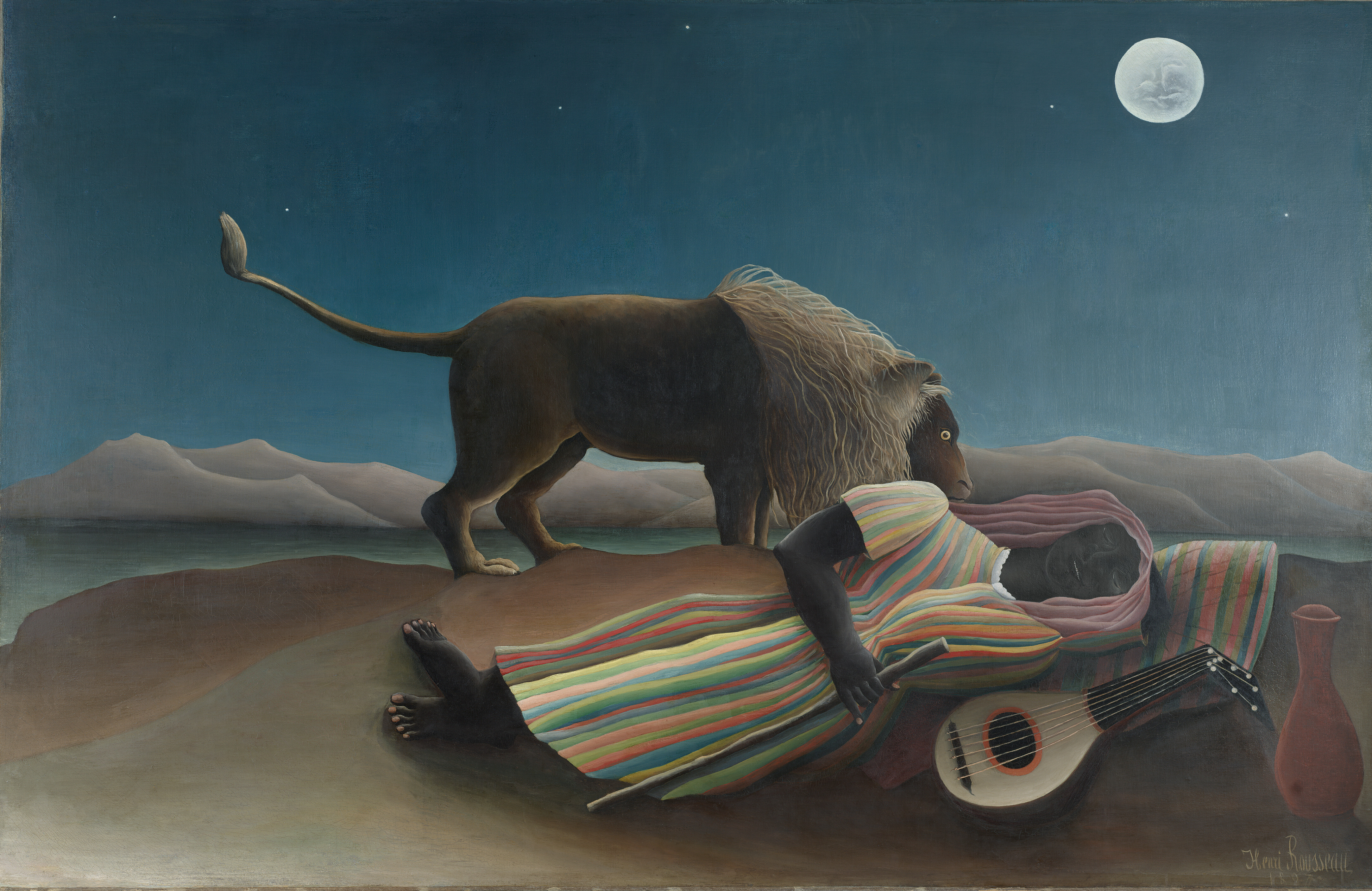
Henri Rousseau. The Sleeping Gypsy, 1897. Oil on canvas.
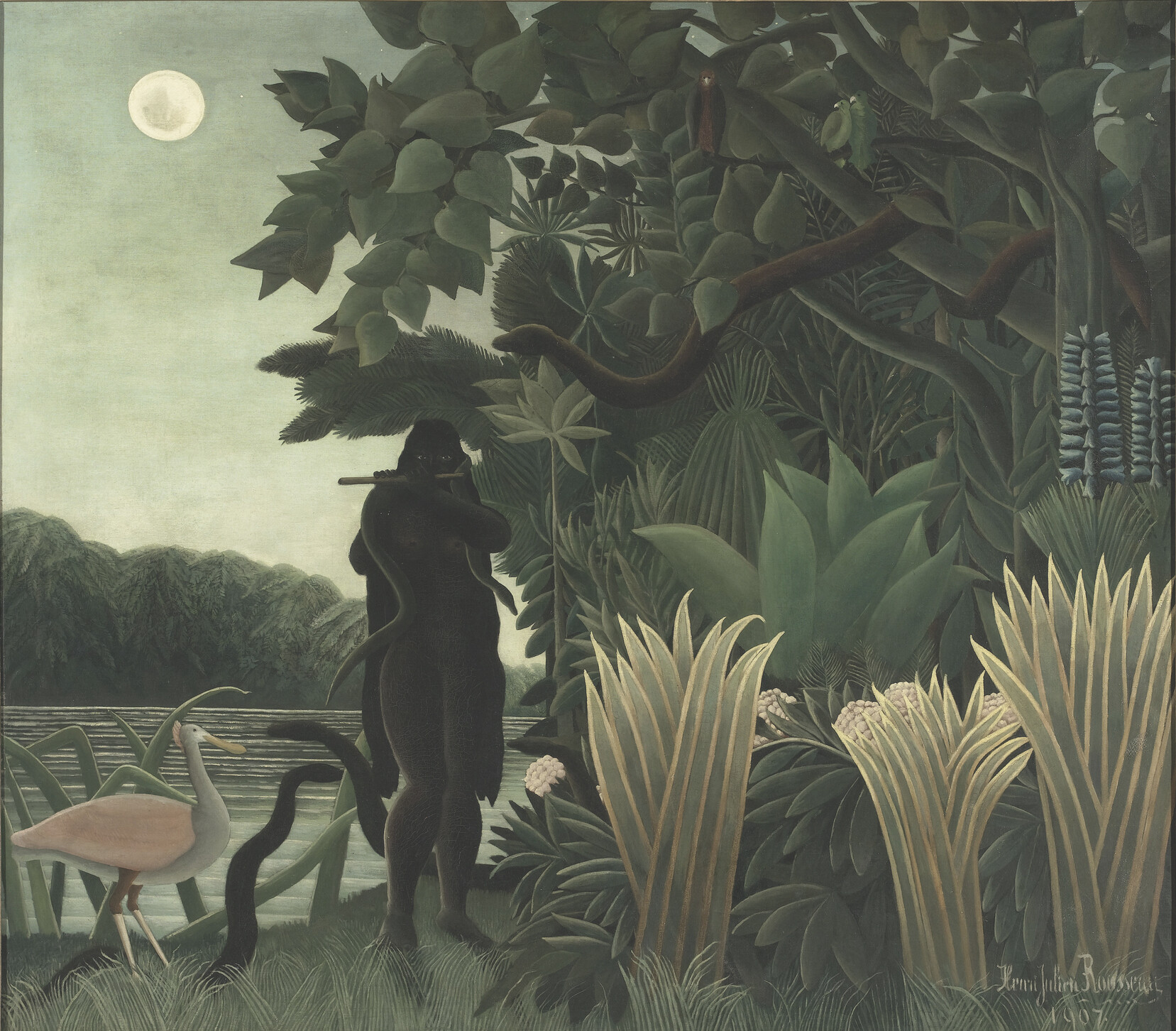
The piece de resistance of the Barnes exhibition is the last gallery where three key works by Rousseau have been brought together for the first time: The Sleeping Gypsy (1897), from the Museum of Modern Art in New York; Unpleasant Surprise (1899-1901), in the Barnes collection; and The Snake Charmer (1907), from the Musée d’Orsay, which entered the Louvre in 1936, giving Rousseau the official state recognition he had hoped to realize in life.
With striking light effects and subtle tonalities, these fantasy scenes remain poetic, mysterious, and beguiling. They certainly raise more questions than answers. It is understandable why Green described Rousseau as a “story giver not a storyteller.”
Henri Rousseau. The Snake Charmer, 1907. Oil on canvas.
In 1908, Picasso shined a spotlight on Rousseau when he bought The Portrait of a Woman (1895) for a few francs. The formidable portrait depicts a woman (believed to be a Polish lover of Rousseau), who stands in front of a balcony and curiously holds an upside-down branch like a cane. Though it came from a secondhand dealer who was selling the canvas for reuse, Picasso always spoke “movingly about this picture, keeping it with him all his life,” said Green.
That large Rousseau picture is here on loan from the Musée National Picasso-Paris.
To celebrate his newly acquired Rousseau, Picasso organized a dinner party with the painting as the centerpiece in his Montmartre studio. In front of an illustrious circle of Picasso’s avant-garde artist friends as well as Gertrude and Leo Stein, Rousseau toasted with unabashed chutzpah his host: “We are the great painters of our time, you in the Egyptian style, I, in the modern style.”
Guillaume Apollinaire, an influential figure of the Parisian avant-garde who was also invited to that Picasso party, prophetically saluted the guest of honor: “Vive, Vive, Rousseau!”
“Henri Rousseau: A Painter’s Secrets” through Feb. 22, Barnes Foundation, 2025 Benjamin Franklin Parkway, barnesfoundation.org
“Dreamworld: Surrealism at 100″ through Feb. 16, Philadelphia Art Museum, 2600 Benjamin Franklin Parkway, visitpham.org
It’s almost Thanksgiving and maybe you’re not the cooking type. Or maybe you just have too much on your … plate. I invited two Inquirer journalists to answer the age-old holiday conundrum. We do get to the bottom of it.
Evan Weiss, deputy features editor: OK, the question is …
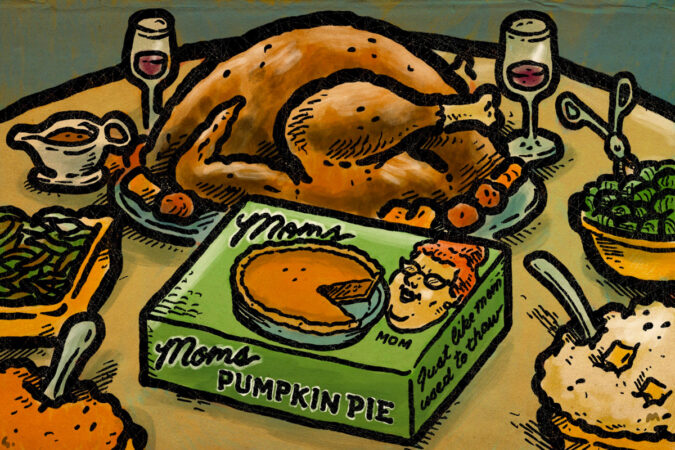
Is it rude to bring a store-bought Thanksgiving dish when everyone else is cooking from scratch?
Margaret Eby, food editor: I feel very strongly about this! The answer is no, of course not! Unless you said you were bringing a homemade casserole and show up with a bag of half-eaten Doritos or something, it’s not rude.
Sam Ruland, features planning and coverage editor: I think it comes down to how much you like these people.
Margaret Eby: Oooh OK so homemade is only for people you like? Or vice versa?
Sam Ruland: If they’re the relatives you adore, put in the effort. Make something, even if it’s simple.
If they’re the relatives who fight over politics and ask why you’re still single? Pay $12.99 for a pie, pop it on a plate, and walk in confidently.
Margaret Eby: Hahahah that’s a spicy take. To me, I appreciate someone bringing something. I love cooking! But I don’t always have the energy.
I also have a weird problem, which is that people don’t like cooking for food editors and writers. I think they assume I’ll judge them in the same way we review restaurants, and that’s not true at all. I find it to be a huge compliment whenever anyone cooks me anything, down to a grilled cheese.
But maybe that’s part of why I feel like it’s fine to let yourself and other people off the hook. Plus, restaurants and bakers and other professionals are great at cooking! It’s fine to let them cook for you!
Sam Ruland: I totally get that — cooking for food people does feel like a high-stakes audition.
Margaret Eby: That’s just because you can’t see us behind the screen eating string cheese for lunch.
Sam Ruland: And this is where my chaotic Thanksgiving philosophy kicks in: I’m a huge fan of buying something and quietly placing it in your own dish like you spent hours on it. If it saves your sanity, do it.
Margaret Eby: I support that entirely.
It is not anyone’s business who made those potatoes.
Evan Weiss: OK, what’s the best thing to buy and pass off as your own?
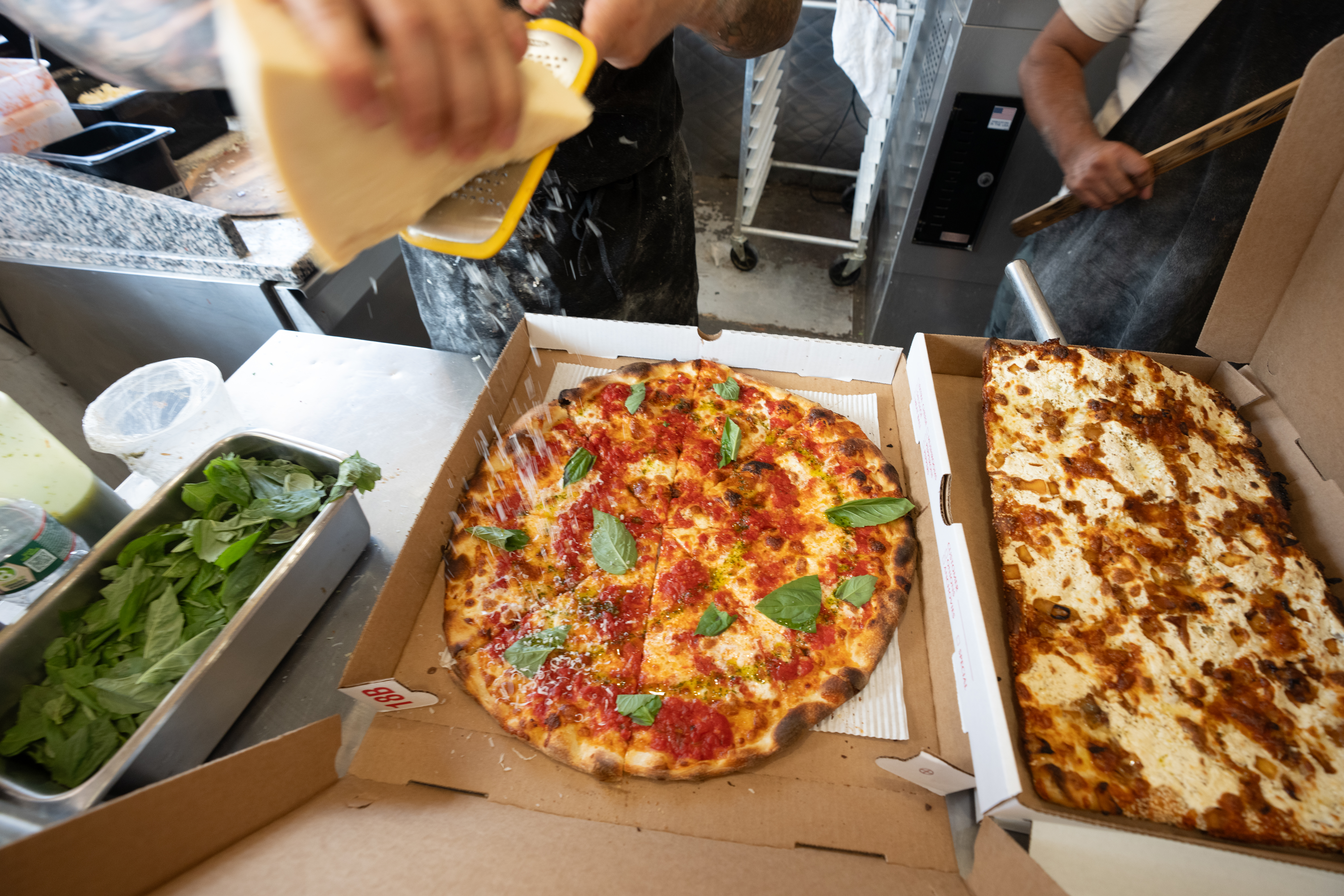
Margaret Eby: A whole pizza.
No, just kidding. But bringing a whole pizza to a party — it’s kind of a baller move.
Bring a Johnny’s Pizza from Bryn Mawr?
Sam Ruland: Honestly, I’m more offended not by someone buying it from the store, but by not even trying to hide it. At least commit to the bit! Put it in a real dish!
Margaret Eby: I think if you’re attempting to pass it off as your own, you do have to be a little realistic. Like that beautifully crafted hand-latticed pie is a great thing to bring. But if you don’t bake pie, your cover is going to be blown pretty quickly.
The homemade thing people are always impressed by no matter how “rustic” it looks is bread, I’ve found. I’ll bring over a really complicated dish and bread as an appetizer, and people are always more impressed by the bread
Sam Ruland: Right, the pie lie has limits. This is why I fully endorse buying something like lobster mac and cheese, putting it in your casserole dish, and sighing deeply like it took you hours. Play to your strengths: commitment and presentation.
Margaret Eby: Feigning struggle is an important part of Thanksgiving!
Sam Ruland: The sigh, the smudge of flour on your shirt that you did not earn — it’s all part of the illusion.
Evan Weiss: Also, so many great restaurants around here do great Thanksgiving takeout. You might get some cred if you say where you got it. (Also, bonus because then you don’t have to lie.)
Sam Ruland: That’s true, restaurant flexing is its own kind of prestige. But I maintain: the quiet dignity of transferring it to your own dish and pretending you suffered for it? Iconic.
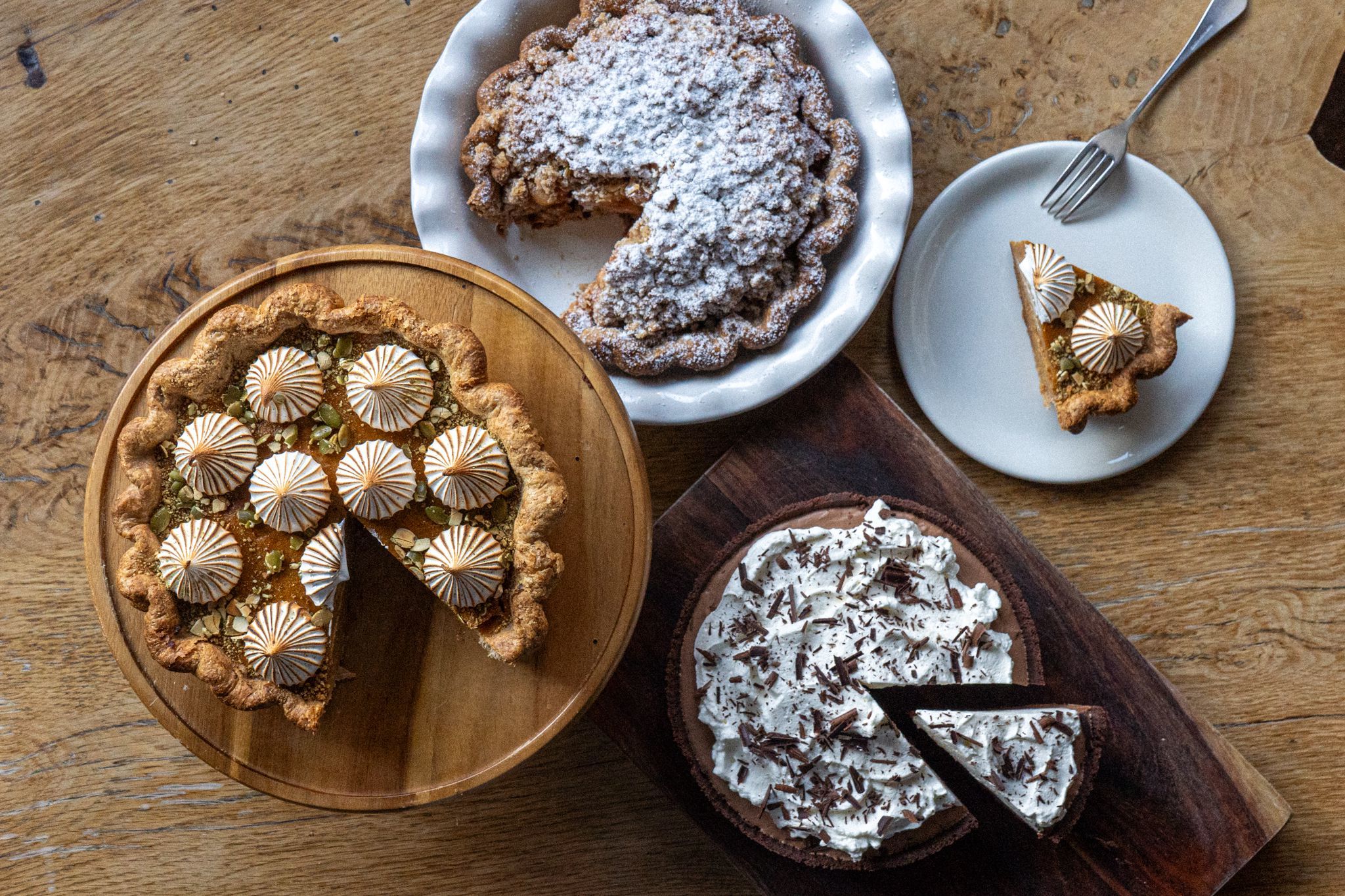
Margaret Eby: I think if you put the thought into picking up a fabulous pie from The Bread Room or a whole bundle of goodies from Zig Zag, for example, people will be just as impressed by that effort as if you made it your own.
Or I would be, anyway.
The Bread Room by High Street Hospitality’s line up of Thanksgiving treats, clockwise from right to left: miso caramel apple pie, dirty chai chocolate pie, and basque pumpkin cheesecake.
Sam Ruland: True! Like my family loves the cannolis from Isgros, so that’s something that would be a crowd pleaser no matter what and wouldn’t get grumbles.
Margaret Eby: Picking up cheese from DiBruno’s is also a great move. And you don’t have to pretend that you have a secret cheese cave in your basement.
However, I believe that the holidays are all about long-running bits with your friends and family. And passing off a dish as your own instead of purchased is a classic bit.
So maybe DO pretend you made the cheese, why not.
Evan Weiss: “Yes, I made this wine in Sonoma in 2013!”
Margaret Eby: “It was a great year, thanks!”
Evan Weiss: So the answer is: No, it’s not rude to bring prepared food. But either commit to the bit or get it from somewhere good.
Margaret Eby: Yep, we solved it.
And don’t be like my friend in college who would bring a ziplock bag of whiskey to parties.
No one appreciates that.
Have a question you’d like us to answer? Email us!
On Nov. 19, a webpage at the Centers for Disease Control and Prevention was updated with a stunning reversal of the agency’s long-held — and scientifically backed — position on vaccines and autism.
Previously, the CDC has noted on its website that decades of research show no link between receiving vaccines and developing autism.
Now, the site reads: “The claim ‘vaccines do not cause autism’ is not an evidence-based claim because studies have not ruled out the possibility that infant vaccines cause autism.”
A header on the webpage still reads “Vaccines do not cause autism.”
But the phrase is followed by an asterisk leading to another statement explaining the header remains “due to an agreement with the chair of the U.S. Senate Health, Education, Labor, and Pensions Committee that it would remain on the CDC website.”
The chair is Sen. Bill Cassidy (R., La.), who made his confirmation vote for Health and Human Services Secretary Robert F. Kennedy Jr. contingent on that agreement.
The move was met with outrage from public health experts who say that Kennedy, a longtime anti-vaccine advocate, is risking lives by calling vaccines’ safety into question. The New York Times reported two days later that he had personally ordered the website changed.
Diana Robins, the director of the A.J. Drexel Autism Institute at Drexel University, which studies autism from a public health perspective, spoke with The Inquirer about the update and what it means for public health.
This interview has been lightly edited for clarity and brevity.
Question: Take us through the update on the CDC’s website about vaccines and autism.
Answer: The frightening thing, to me, is if a person who is not really familiar with the science reads this website, there is a lot of convincing-sounding language. It feels like deliberate gaslighting.
It’s using terms they’ve learned from scientists over the last several months — “gold-standard science” and “evidence-based claims” — and using them in directly inaccurate ways.
The very first key point at the top of the page says, “The claim ‘vaccines do not cause autism’ is not an evidence-based claim because studies have not ruled out the possibility that infant vaccines cause autism.”
Part of what makes that so egregious is that scientists believe in the scientific process. Unfortunately, the federal administration is weaponizing the fact that scientists won’t come out and say it has been proven. A scientist will never say we have 100% ruled out all possibilities. Something we think we know could change tomorrow when we learn something new.
But there are dozens of studies over many, many years that fail to show a link between vaccines and autism. All the studies that are rigorous and methodologically sound fail to show a link between vaccines and autism. That is unequivocal.
Q: What’s the danger in changing the CDC’s language around vaccines?
A: Vaccines save lives. Vaccines are one of the frontline public health strategies to support health in the population. We’re already seeing what happens when vaccine compliance goes down, when there’s an erosion of the public confidence in vaccines.
There have been measles outbreaks in the last year in the United States. Some kids just get sick and they get better, but some kids have serious illnesses and occasionally die. And it’s not just measles. We’re vaccinated against a lot of life-threatening diseases.
The cost is a huge shift in public health, and the protective factor that vaccines give us against life-threatening illness.
If you told me that reading books past 10 p.m. might cause autism, I would say there’s probably not a lot of cost if you stop reading books at 9:59. But not vaccinating children? The costs are huge. Even one death that’s preventable is a tragedy.
And there will be a lot of preventable serious illness and death if parents don’t vaccinate their children.
Q: How does this affect the public’s view of federal health agencies?
A: I think it makes it very difficult for people to know what to trust. And there is already decreased trust in the medical community, scientific community, higher education broadly.
If pages like this are intermingled with legitimate pages, how will people know which ones are the accurate pages and which are the ones with gaslighting and anti-science? I think people will likely lose their faith in the CDC altogether, which is a terrible blow to the public health of the whole country. If we can’t trust our Centers for Disease Control, who can we trust?
Q: How can scientists communicate accurate medical information with the public?
A: One thing I think is slightly heartening in the face of this devastation is that professional societies and organizations that are medical or scientific are all aligned. There have been so many statements that came out within the first day of this, and they are fully aligned in agreement. The only differences are in which words they yell the loudest.
You can usually not get scientists to agree to anything in a day. That means a lot. It’s the responsibility of all the legitimate scientists and public health experts to try to combat that misinformation every which way we can.
[At the A.J. Drexel Autism Institute], we’re trying to do more outreach to the public. We actually developed some vaccine info sheets just a couple months ago that are posted on our website. We have a new website … that brings together all of the information.
Vaccines are one of our biggest public health successes. If we roll those back, we have stepped back decades in the health of our country. It’s that big. It’s that serious.
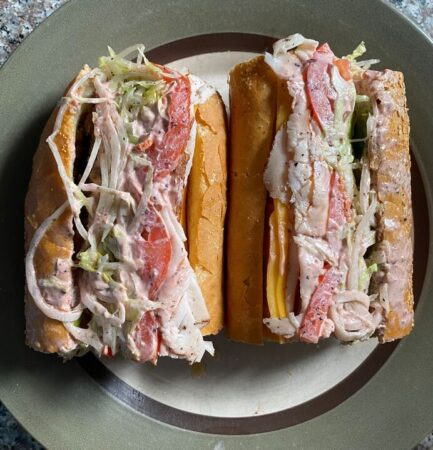
The Gobbler has seen some bougie updates in the years since Wawa made it a thing. But the offering from Dolores’ 2Street isn’t fancy, and that’s to its credit. It’s built with solid ingredients, on a seeded Sarcone’s roll. Owners Peter Miglino and wife Victoria Rio lean hard into the leftover motif by offering a mostly cold sandwich made with cold cuts: thick slices of oven-roasted turkey and squares of orange-colored cheddar cheese. The little bit of heat (and crunch) comes from the house-made stuffing, carefully crafted by Miglino’s mother, Maria, a Philly restaurant veteran.
Adding stuffing to a hoagie shouldn’t work. But this isn’t just any stuffing. This is Maria’s family recipe, which she prepares for almost an entire day so it’s just right. This Gobbler is as inclusive as a big Italian family, marrying the cold cuts and stuffing with a nice tang from a cranberry mayo that doesn’t overpower the palate, rings of raw onion, a confetti of lettuce, small slices of tomato, and a splash of olive oil. It’s a heavyweight sandwich, clocking in at just under a half-pound; you will most definitely need a nap afterward. As Rio compiled my sandwich on a mid-November afternoon, she said I ordered the first Gobbler of the season. They got it right from the jump. Dolores’ 2Street, 1841 S. Second St., 267-519-3212, facebook.com/Dolores2Street
— Tommy Rowan
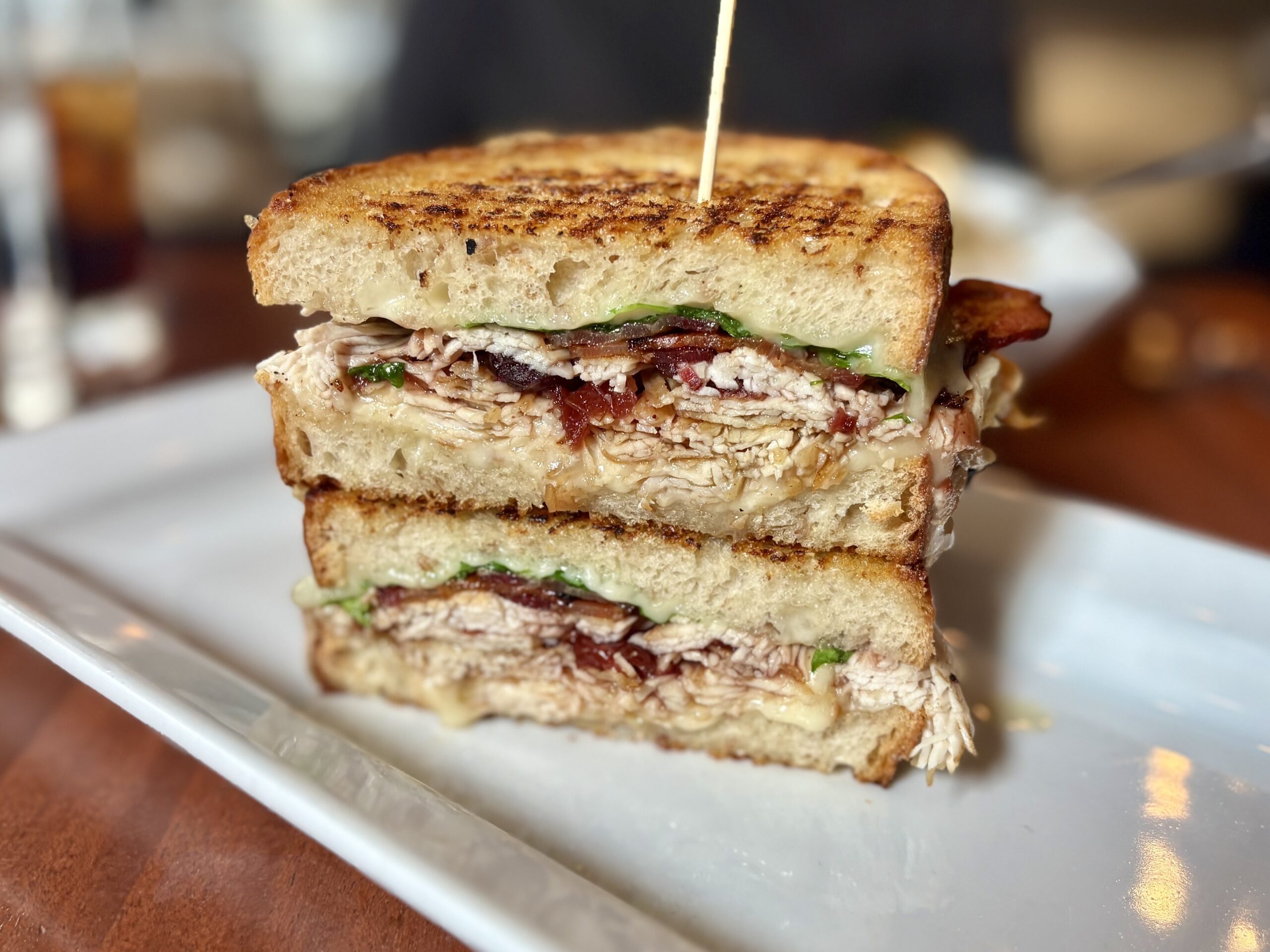
A grilled Swiss cheese with turkey, bacon and cranberry chutney at Marathon Grill comes with a cup of soup. This “special” is so popular it hasn’t left the menu in over a year.
Turkey-cranberry grilled cheese special at Marathon Grill
By this time next week, most people will likely be in turkey leftover sandwich overload. But right now still I’m pre-gaming for Thanksgiving hard, and I could not resist this seasonally appropriate special at Marathon Grill. It’s essentially a grilled Swiss cheese on excellent sourdough bread, with turkey, cranberry chutney and bacon also tucked inside. That can potentially be an overwhelming mess. But I was impressed by how carefully the sandwich was built, with no particular ingredient overwhelming the others. The grilled bread’s buttery crisp and moist interior hit all the right savory and sweet notes for a preview of the feast to come. It’s served alongside a cup of tomato-basil soup for extra value (I swapped mine out for Marathon’s excellent matzo ball soup), so it’s no surprise it’s been a hit. In fact, Marathon’s regulars love it so much it’s been a “special” since they put it on the menu additions an entire year ago. Marathon Grill, 1839 Spruce St., 215-731-0800, eatmarathon.com
— Craig LaBan
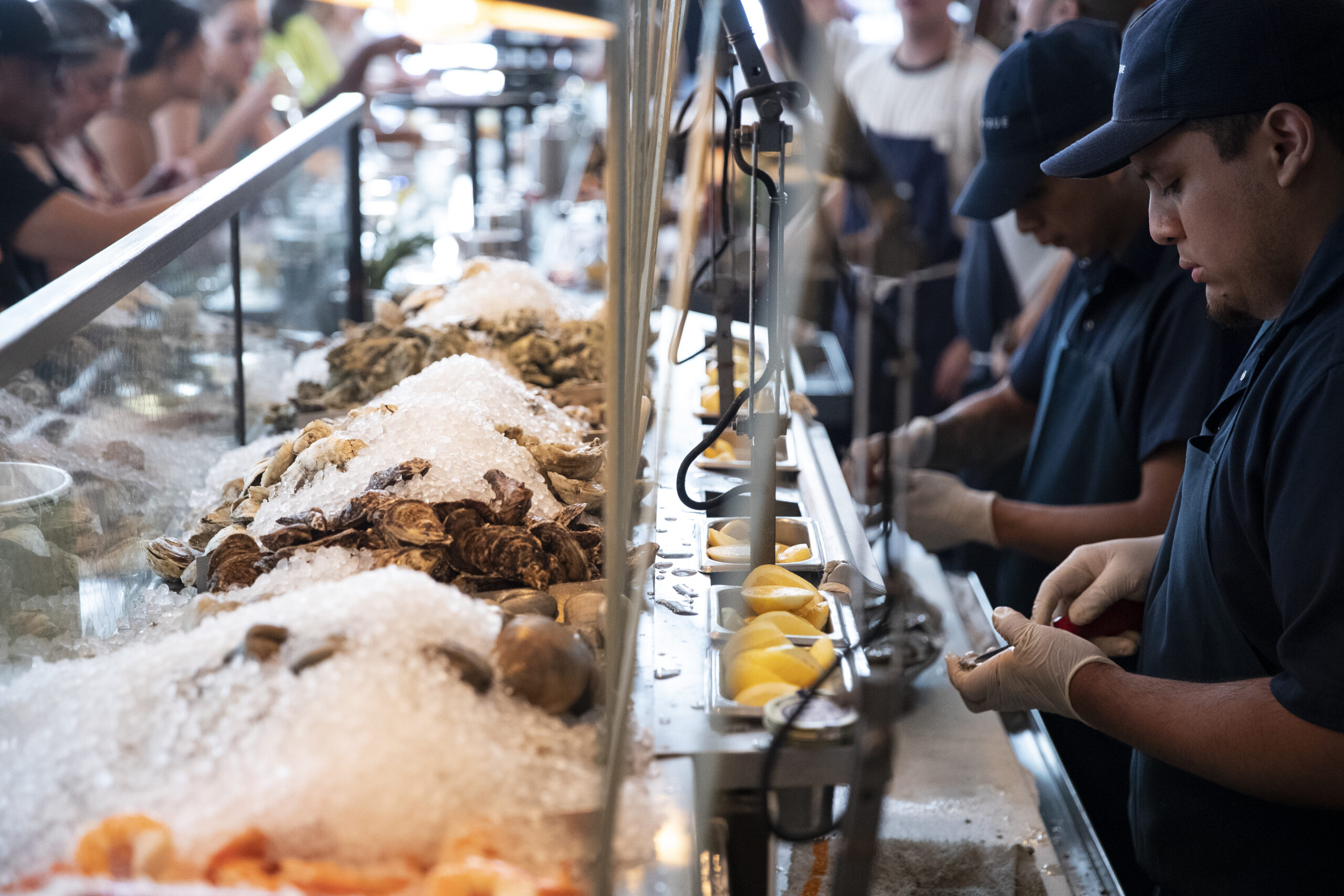
Oysters rest on ice as shuckers work nearby at Pearl & Mary.
Fish and chips at Pearl & Mary
To quell the anxiety of a visit to the phone store, I found myself at Pearl & Mary, Michael Schulson’s Center City raw bar. My companion dove right into the Savage Blonde and Pink Moon oysters, both from Prince Edward Island. Oysters aren’t my thing, but my soul was soothed by the aroma wafting from the broth of my shrimp dumplings — a perfect small plate on this brisk Sunday morning. But my main highlight was the traditional fish and chips, with an especially succulent piece of cod and a buttery crust with a robust tartar sauce that leaned into its zest. The french fries are thin-cut and extra salty, as they should be. Pearl & Mary, 114 S. 13th St., 215-330-6786; pearlandmary.com
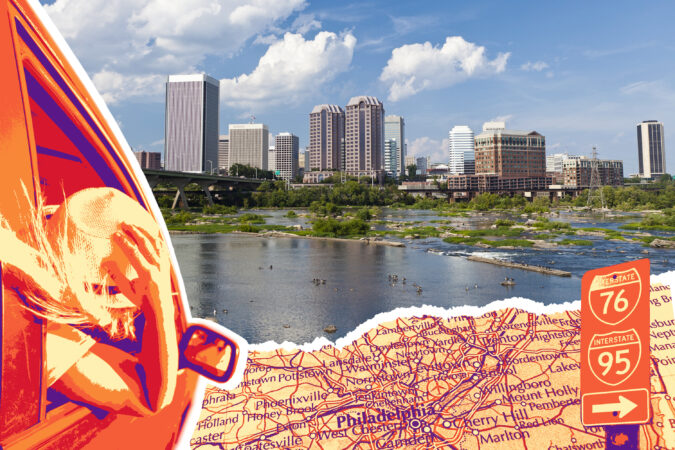
Wilmington, Baltimore, Washington — watch their exits blur past on I-95 as you head farther south and see color return to the trees. The leaves that have already fallen in Fairmount Park and Rittenhouse Square seem to reappear here, lighting up the old oaks and elms that line Richmond’s stately streets. Autumn clings a little longer in this university town, where nature — from wild riverside woods to formal gardens — feels ever-present.
Just over four hours from Philly, Richmond, Va., offers everything you’d want in a weekend escape: smart restaurants, fascinating history, and a new hotel from one of the country’s most creative hospitality groups.
One of the best bakeries in the country, Sub Rosa calls Richmond’s Church Hill neighborhood home. After a devastating 2024 fire and a long rebuild, it reopens this November — and it’s absolutely where any RVA weekend should begin. Made with house-milled Virginia and Pennsylvania flours, its pastries include croissants stuffed with garlicky mushrooms or sour cherry-pistachio, crunchy biscotti, and polenta thumbprints filled with housemade jam. Order one of everything — you’ll wish you had anyway.
📍 620 N. 25th St., Richmond, Va. 23223
Learn: Poe Museum
A 15-minute walk from Sub Rosa (just enough time to finish that coffee and croissant) brings you to the Poe Museum. Edgar Allen grew up and worked as a journalist in Richmond before achieving literary acclaim, a life chronicled inside this petite museum founded in 1922. It’s filled with letters, first editions, and personal relics — including the silver candelabras by which Poe wrote The Bells. The museum complex includes the Old Stone House (the oldest standing residence in the city), Poe Shrine, and the lush Enchanted Garden. Keep an eye out for the resident black cats, whose shenanigans are detailed on the @poemuseumcats Instagram account.
📍 1914 E. Main St., Richmond, Va. 23223
Stay: Shenandoah Mansions
Ash Hotels’ forte is retrofitting historic buildings into eccentric, artsy-craftsy inns, and the new Shenandoah Mansions is no exception. Expect four-posted beds draped in tentlike canopies, block-printed quilts, hand-painted lamps, and checkerboard-tiled showers. Located in the Fan District — a neighborhood full of architectural candy — the inn feels residential yet central to everything.
One of Richmond’s greatest assets is its proximity to nature. The James River Park System covers more than 600 acres, all within walking distance of Broad Street, the city’s main thoroughfare. Pick up the head of the North Bank Trail at South Cherry Street and Oregon Hill Parkway for an hourlong walk along boardwalks and dirt paths, past historic cemeteries, and through tunnels of color-changing leaves.
📍 4001 Riverside Dr., Richmond, Va. 23225
Visit: Maymont
Exit the trail near Hampton Street and Kansas Avenue, and you’ll find yourself at Maymont, a 19th-century estate built by financier James Dooley and his wife, Sallie. Though the Gilded Age mansion is closed to tours while undergoing renovation, the grounds alone are reason to visit. Wander through the Italian Garden, along the butterfly trail, and through the Japanese Garden (the oldest on the East Coast), where boulder-backed waterfalls, koi ponds, and storybook bridges create incredible photos.
Fires, fortunes, presidents — and even a few alligators — have passed through the grand Jefferson Hotel since it opened in 1895. Every visitor should see the lobby’s marble floors and sweeping staircase, even if you’re not checking in. Stop by TJ’s Restaurant & Lounge for a predinner cocktail under the chandeliers; the Rotunda old-fashioned tastes like grapefruit, walnut, and old money.
A Richmond legend since 1983, Stella’s remains the last word in Greek cooking here. The food (artichoke moussaka, ouzo-kissed crab cakes, feta-and-Manouri cheese fries covered in shaved lamb) is just enough off-center from traditional to be interesting, while still honoring the soulfulness of the country’s cuisine. The regulars pack the dining room, creating a comfortable, gregarious vibe. Go ahead and think it: If we lived in Richmond, we’d be here all the time.
For the most part, award-winning author Diane McKinney Whetstone’s characters live their complicated lives in between El stops in early to mid-20th-century West Philly.
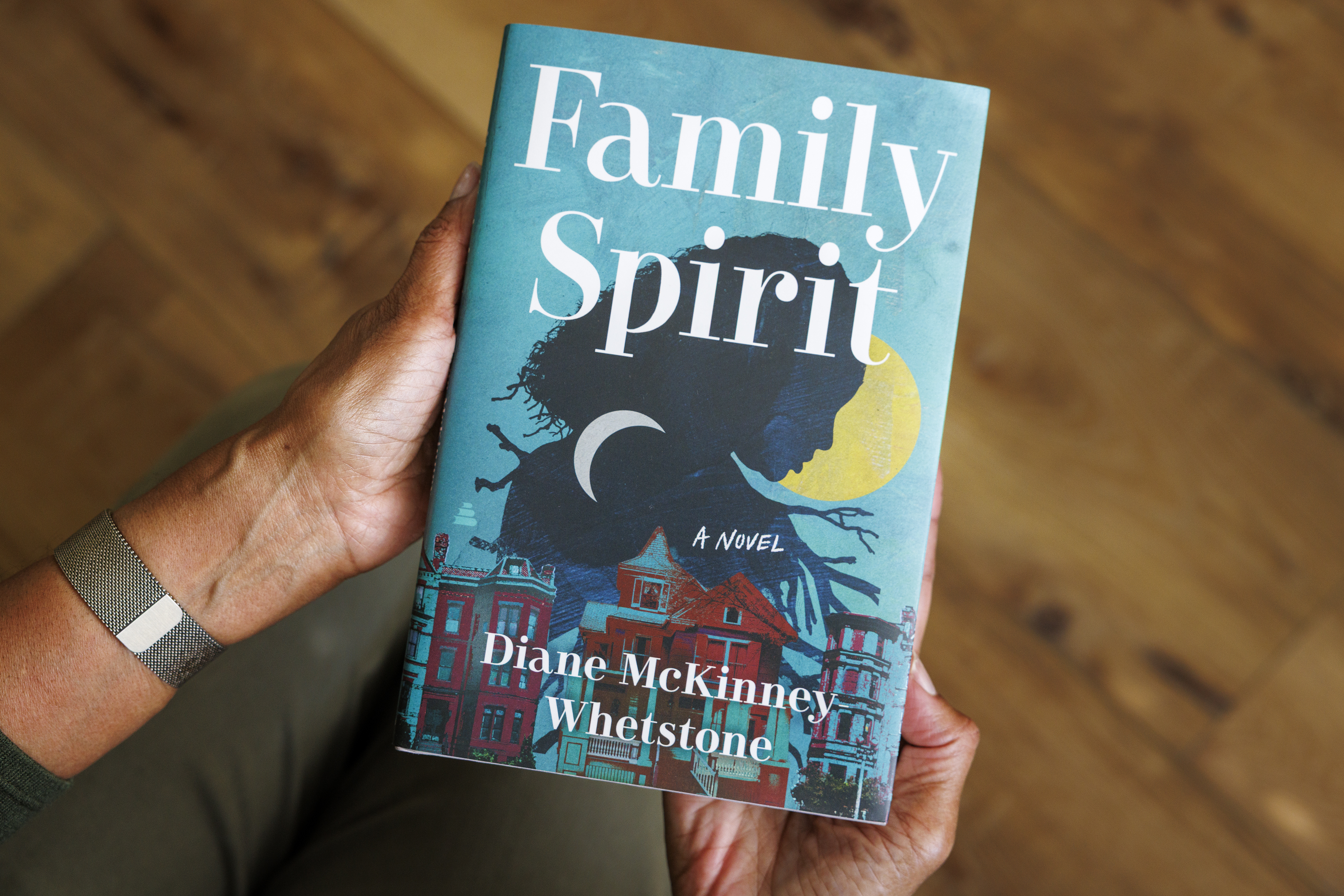
In her new book Family Spirit, released by Amistad earlier this fall, her protagonist Ayana works at a fictional West Philly coffee shop in 2019.
And Ayana is clairvoyant.
Whetstone packs a lot of Philadelphia in this 229-page book. Ayana weaves in and out of downtown office buildings. Her aunt Lil flashes back to 1970s Philly when she was shopping at Wanamakers and up for a gig on TheMike Douglas Show, when the variety show was filmed in Old City.
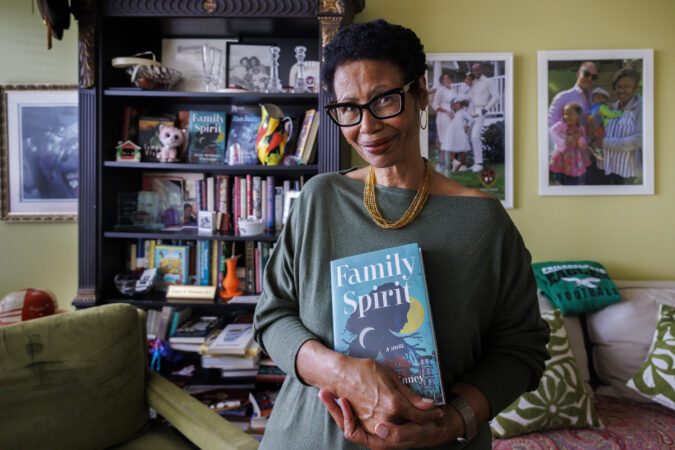
Diane McKinney Whetstone, author of newly published book Family Spirit at her home in Wynnewood, PA., Thursday, October 23, 2025.
But the majority of the story takes place in Southwest Philly at the Mace family house, where women on Ayana’s paternal side have gathered for 100 years to take part in rituals that reveal the future.
We talked to Whetstone, a lifelong Philadelphian, about her perfect Philly day.
5 a.m.
I get up early and make really strong coffee. Every day I spend a couple of hours writing. I have to, that’s my best time of the day. Sometimes I will write for three hours. Other times, I write until noon. Sometimes, I write the whole day if the spirit hits me.
8 a.m.
If it’s not a writing day, and I’m done for the day, my husband and I will go out for breakfast. Sometimes we will go toSabrina’s Cafe in Wynnewood.
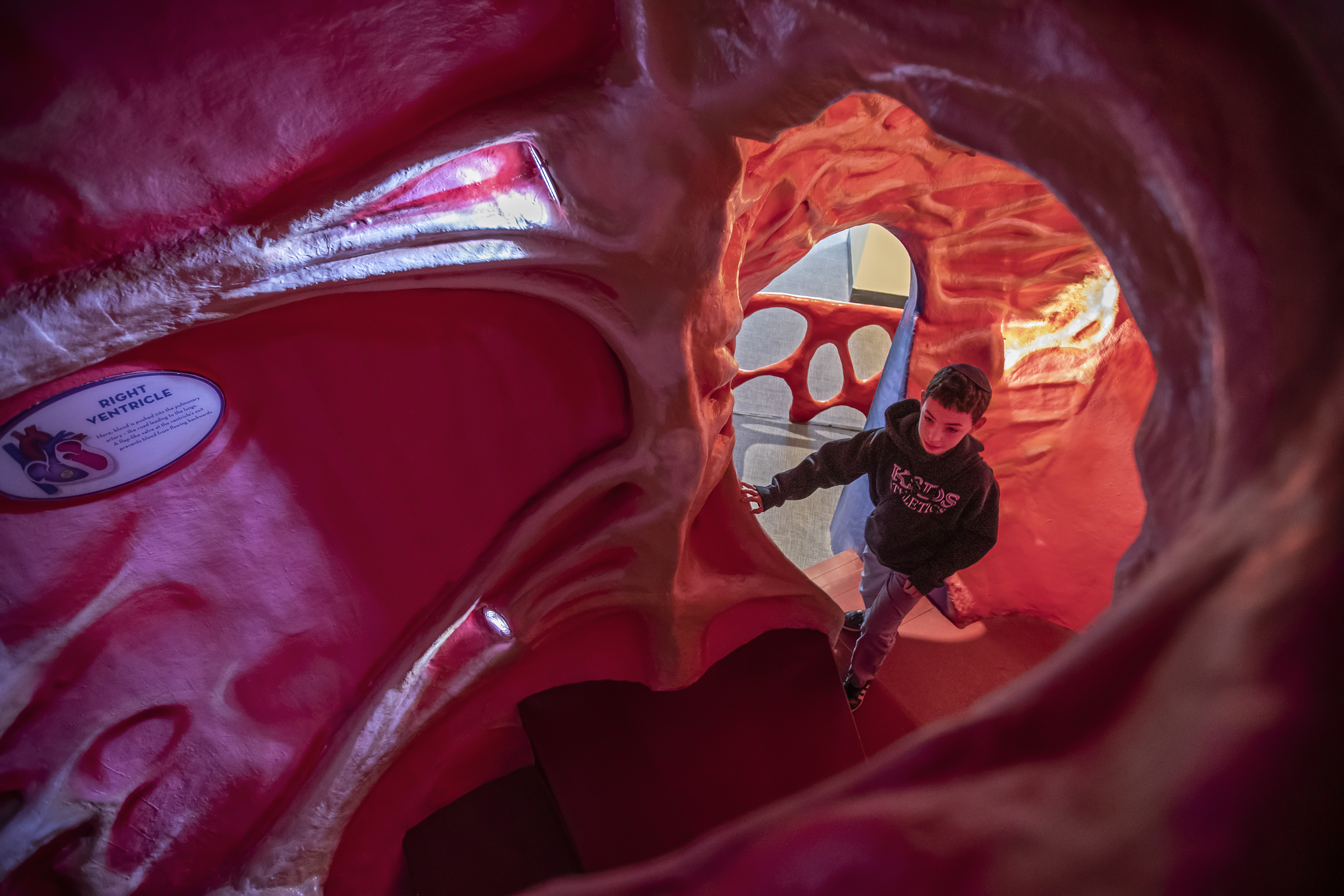
A student from the Krieger Schechter Day School of Baltimore, MD, on a field trip to the Franklin Institute on February 12, 2020, enters the right ventricle of the Giant Heart.
But lately, I’ve really liked going to Boutique River Falls off Kelly Drive, near Midvale. They have the best pancakes and fried fish. If my grandkids are with me, we will go to the Frankie [The Franklin Institute] and go through “Body Odyssey,” especially the “Giant Heart.” They love it.
If we have a lot of time, we take a nice long walk on Kelly Drive. I’m a big walker.
11 a.m.
Both my husband and I are from Philadelphia and we like to drive around our old neighborhoods. On some days we will head down Lancaster Avenue where it intersects with Haverford and reminisce about the days it was a central shopping district like Center City.
Sometimes we will drive down to 52nd Street. When I’m over there, the sounds of the El train, the way the houses are situated on the street, it takes me immediately back to my childhood.
1 p.m.
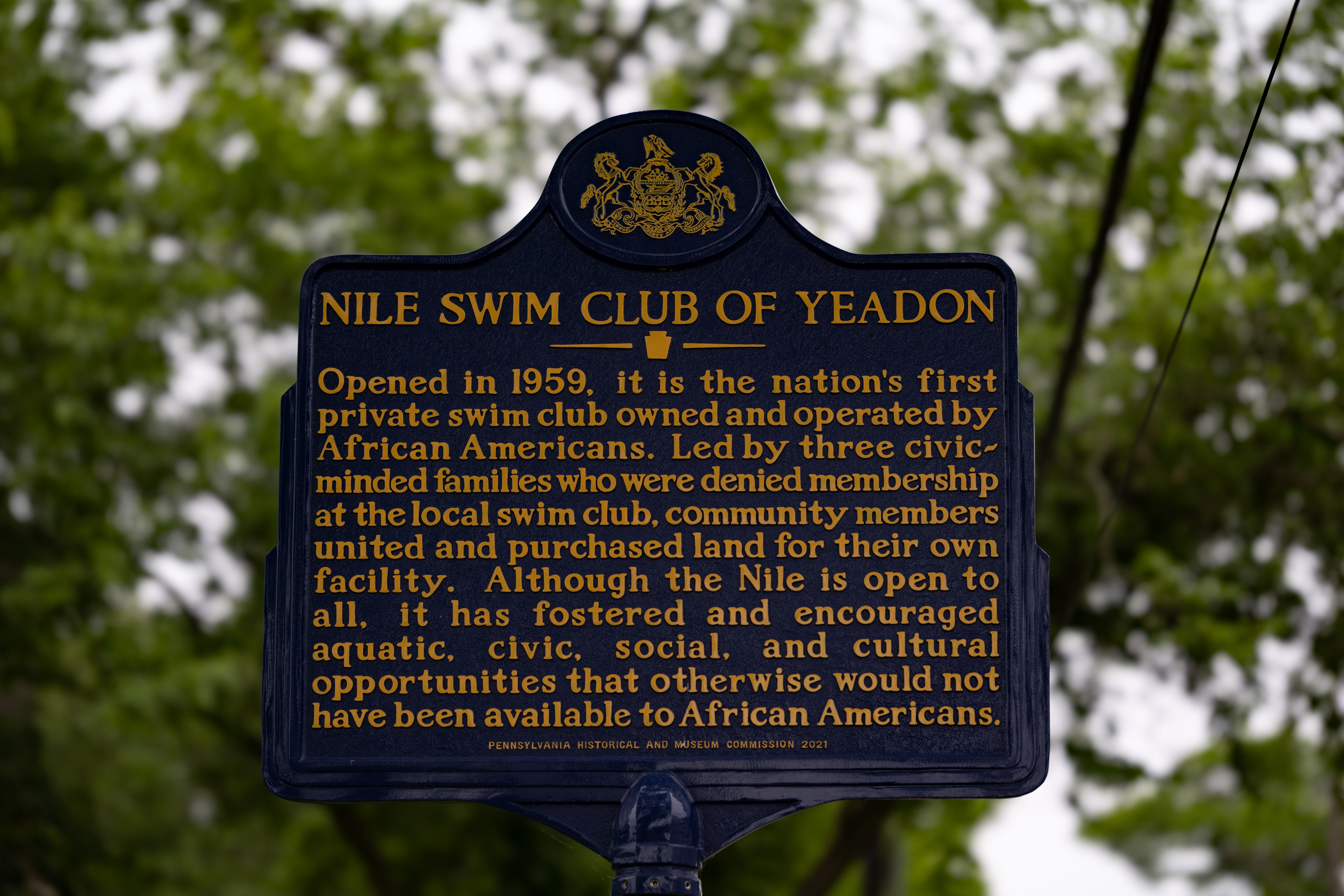
If it’s a nice day in the summer, we may go to theNile Swim Club in Yeadon. My sister has a membership there. On any given day there are families there relaxing, sharing stories. It’s a really nice place to relax.
A historical marker is pictured ahead of the opening for the summer season at Nile Swim Club in Yeadon, Pennsylvania, U.S., May 27, 2022.
2 p.m.
Again, if my grandkids are in town, we may go to a matinee atthe Academy of Musicin Philadelphia. We saw The Wiz. It was so good. Then we went around the corner to Samurai Japanese Restaurant. I’m not a real big fan of raw fish, but the teriyaki there is just so good.
4 p.m.
I cook a lot at home and especially a lot of fish. I eat salmon three times a week and I love it fresh. I really enjoy going down to Fairmount to pick up my order from Small World Seafood. I love that I get to cook restaurant-quality food.
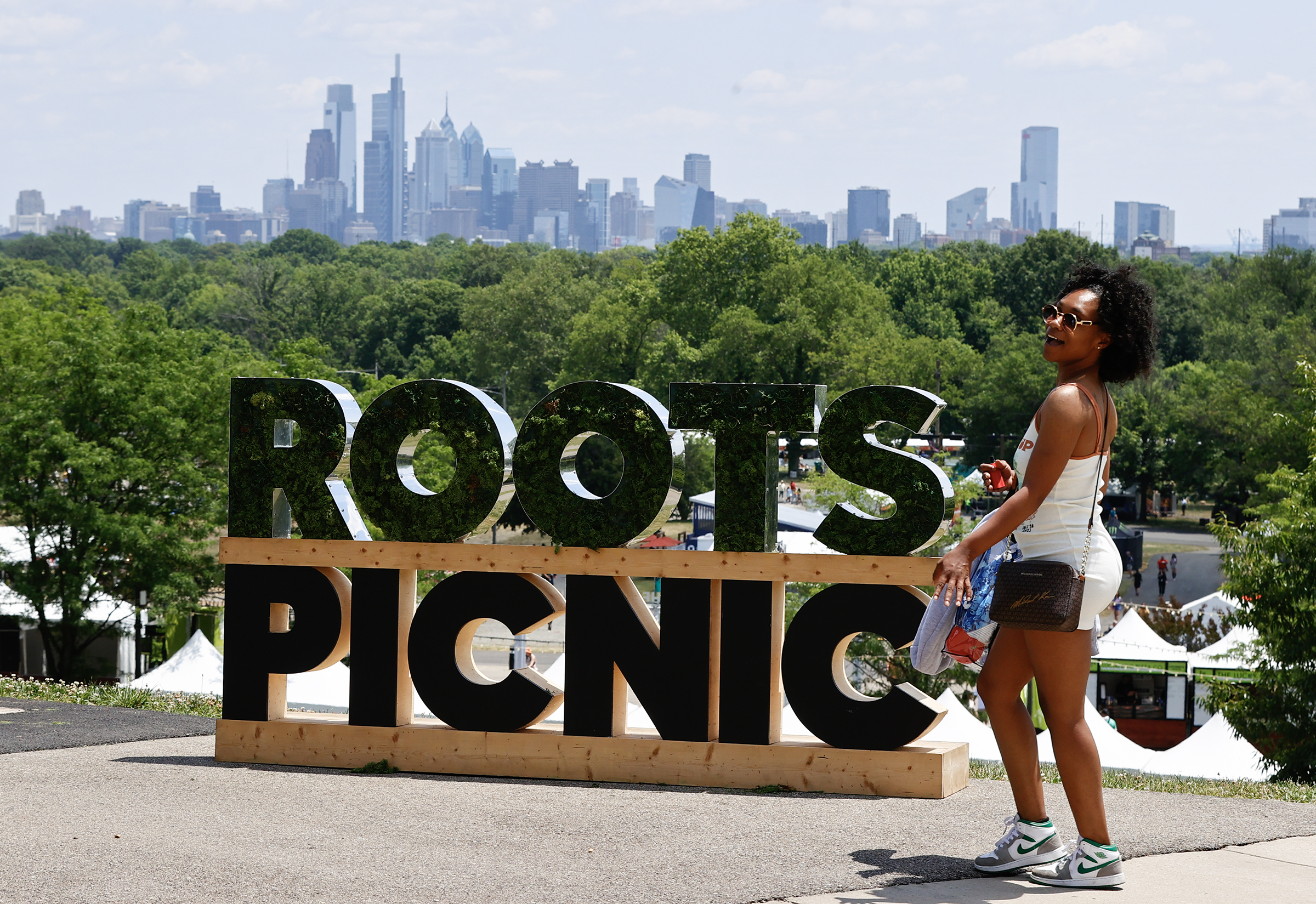
Bri Smith of West Philadelphia poses by the Roots Picnic sign with the city skyline in the background before the start of day 2 of the Roots Picnic at the Mann Center for the Performing Arts on Sunday, June 4, 2023.
8 p.m.
I would end my day at a concert at the Highmark Mann Center for the Performing Arts. I saw Cynthia Erivo there in June and it was incredible. She sang Roberta Flack’s “The First Time Ever I saw Your Face” and I nearly cried. The view of Philadelphia’s skyline is amazing. It’s just a wonderful way to end a day.
ARIES (March 21-April 19). Life accelerates because you remove what’s unnecessary. Narrow down your options, shorten your lists, lose a few rules. Also, whatever time constraints you can lift will eliminate stress. What if, like the gods, you had all the time in the world?
TAURUS (April 20-May 20). There’s lots that you could chase, but what’s worth the energy? Maybe you have a bit to burn off today, but it’s still better to invest that energy in something that will pay you back instead of squander it on something shiny and ultimately fruitless.
GEMINI (May 21-June 21). When you let others assist, you get to observe how they communicate, collaborate and show care. That tells you something about who they are and what kind of relationship you might want with them going forward.
CANCER (June 22-July 22). Trust discernment over guilt. Sometimes the most loving move is to hire the help instead of rescuing another. Competence is compassion in action. Surround yourself with people who lighten the load, not those who need you to carry theirs.
LEO (July 23-Aug. 22). Even when you’re deeply connected to someone, you still need your personal space. Today, that balance happens effortlessly. You and the other person will intuitively know when to lean in and when to pull back, without having to talk about it.
VIRGO (Aug. 23-Sept. 22). You don’t need to know where things are going to trust that the road continues. It applies to relationships of all kinds today — professional, personal and existential. Go forward in faith because the world often materializes around your confidence.
LIBRA (Sept. 23-Oct. 23). You treat all relationships as though you know they are going to be lasting ones. Because even the briefest interactions should feature your integrity. And stay aware of how others interact because the small signals will foreshadow.
SCORPIO (Oct. 24-Nov. 21). Today, choose happiness over hustle. While you normally give your best focus to work and practical responsibilities, it will nourish your spirit and relationships to prioritize emotional fulfillment and connection before anything professional or financial.
SAGITTARIUS (Nov. 22-Dec. 21). You’ve had many tests: the test of a small but persistent irritation, the test of a formidable opponent, the test of everything happening at once. You deserve today’s test — the test of what happens when you get the chance to relax.
CAPRICORN (Dec. 22-Jan. 19). Protecting your energy is wise. You pour so much into others that you sometimes forget to refill. Stop mid-giving; breathe, receive. Reciprocity is holy; it keeps the current alive. When you’re nourished, your kindness glows.
AQUARIUS (Jan. 20-Feb. 18). Opportunity comes around. Make it easy by being in a high-traffic location. Find out the events, places and people opportunity likes to visit and go there. “If opportunity doesn’t knock, build a door.” — Milton Berle
PISCES (Feb. 19-March 20). When things are too easy or open-ended, your mind wanders. But when you’re faced with limits like tight deadlines, limited resources, tough rules or challenging people, you’re forced to focus, invent and discover, which will be a thrill.
TODAY’SBIRTHDAY (Nov. 22). Welcome to your Year of Brilliant Balance. You’ll perfect the art of work-play harmony. Wellness becomes effortless when you treat your body as an ally, not a project. Your relationships get the tone and amount of focus they need to thrive. More highlights: A creative breakthrough that leads to money, a spiritual practice that restores faith and travel that expands your point of view. Pisces and Capricorn adore you. Your lucky numbers are: 10, 12, 20, 16 and 7.