Muriel Crescenzo finally earned her United States citizenship Tuesday morning, after more than three years of waiting and more than seven with her husband, James. On Tuesday evening, they celebrated by watching the Flyers take home a 4-2 win against the Washington Capitals.
The Crescenzos met at the Okemo Mountain ski resort in Vermont in 2018. Muriel was working there for the season, and James was on a snowboarding trip. He’d fallen down on one of the hills, and Muriel came to help him. They instantly clicked, and James asked her out. They went on their first date at a bar called Mr. Darcy’s, in Ludlow, Vt., which Muriel said she felt was a sign — Pride and Prejudice is her favorite book and Mr. Darcy is a main character in it.
So when Muriel returned to her home in Santiago, Chile, in the offseason, James, an Egg Harbor Township native, traveled to see her.
“For me, it was no more winter,” he said. “In the winter, I would go to South America for three or four months, and I was working on a golf course, so you were laid off in the winter anyway. It actually worked perfectly.”
The couple took turns visiting each other every year, with Muriel coming up to New Jersey and James heading down to see her in Chile. The two also took a number of international trips together, to London, Prague, Amsterdam, and Buenos Aires.
But when the pandemic hit, those annual plans were upended, and the Crescenzos decided to start the process of getting married and getting Muriel permanent residency in the U.S. They got married in Las Vegas, and have been living in the Philadelphia area ever since. James is a lifelong Philly sports fan, and he has turned Muriel into one as well since their move back to the area.
“When we first moved here, everything was just magical right away,” said James, 43. “That first year we saw [Michael] Lorenzen throw his no-hitter. Every Flyers game we went to, they would win in overtime, sudden death. It was always a magical, special game that first season. It’s been a little rough since, but we still believe.”
Flyers national anthem singer Lauren Hart (left) meets James and Muriel Crescenzo at Tuesday’s game.
So when Muriel, 34, got her naturalization interview date, they knew they wanted to celebrate at a Flyers game.
“It felt different because I could sing the song,” Muriel said. “Before, I didn’t know it that well, the anthem. But now, I could sing it and I’m a part of it.”
The Crescenzos even met Flyers anthem singer Lauren Hart, and of course, Gritty. They also got to take in a Flyers win.
The next step will be going back to Chile to visit her family. During the citizenship application process, she was not allowed to leave the country, so the Crescenzos haven’t been able to take any international trips for more than three years.
“We’re not worried anymore,” Muriel said. “I finally feel secure. We finally can be together. Nothing’s going to stop that happening.”
Steve Frates of Ocean View, N.J., was driving along Route 9 in Cape May County on a recent bitter cold day and noticed something strange: dead robins lying by the side of the road.
Lots of them.
Frates was even more startled when one flew into his Ford F-150 and died. The 72-year-old retired telecommunications manager wondered what was happening.
“I noticed when it was really cold that I would see flocks of birds alongside of the road as I was traveling up and down Route 9 and the Garden State Parkway,” Frates said. “I would see a lot of birds that had been hit. I’d never seen anything at that scale. This was at a level I’ve never experienced before.”
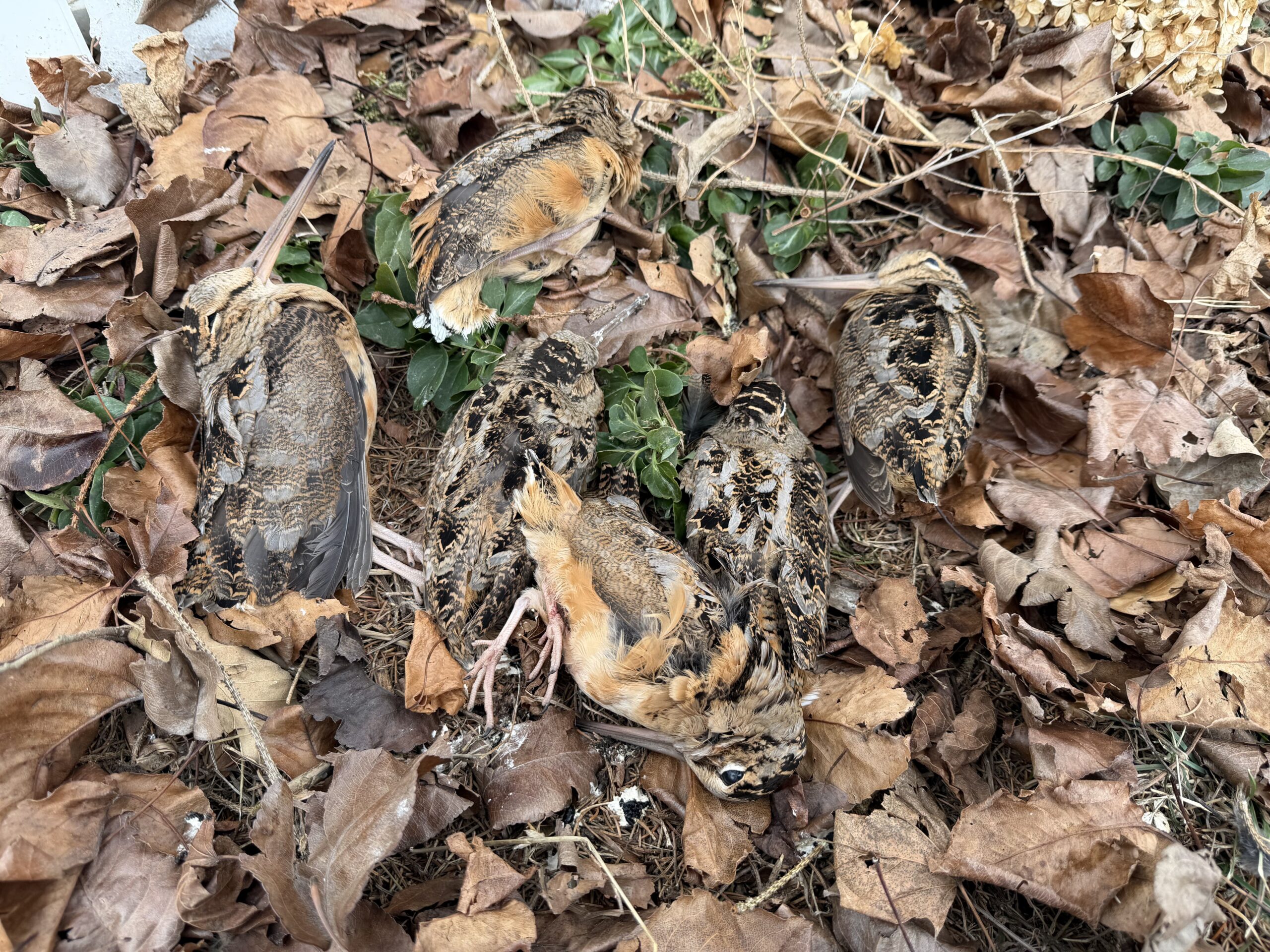
The winter has been hard on the region’s animals, wiping out 95% of the woodcocks in Cape May Point, fostering frostbite on opossums in Philadelphia, and freezing turtles in place in ponds.
Experts say the animals are well adapted to survive the cold, but this winter has been especially harsh, producing a frozen snowpack that keeps animals from digging for food, and a prolonged cold that has pushed some to the brink.
About 200 woodcocks have died in the area of Cape May Point since the Jan. 25 snowfall that froze under a prolonged cold spell. These were found likely seeking food near the edge of homes.
Woodcocks are starving
Mike Lanzone, a wildlife biologist and CEO of Cellular Tracking Technologies, has been busy the last two weeks helping to gather hundreds of dead woodcocks in Cape May Point and West Cape May. His company makes products that track birds via GPS and other technology.
He described a devastating die-off for the woodcocks, which depend on finding food by probing the ground to extract worms and invertebrates. They have been unable to penetrate the snow and ice, causing starvation.
“They were losing a lot of muscle mass, and they weren’t able to eat anything,” Lanzone said. “We started seeing them die off. First it was just a few. Then 10. Then 15. Then 40. Then almost 100 woodcocks.”
Lanzone said about 254 woodcocks had died as of Thursday.
“There was at least a 90-95% die-off,” he said. “That is what we know for sure. At least in Cape May Point and West Cape May.”
Lanzone said the woodcocks were being taken to the Academy of Natural Sciences of Drexel University in Philadelphia to be examined.
Jason D. Weckstein, associate curator of ornithology at the academy, said such die-offs have happened before. He will examine the birds and, using chemical signatures in their bodies, determine where they were born.
“They’re dying because they’re starving,” Weckstein said. “They can’t feed. Most of those birds were super emaciated and just died.”
Robins are desperate
Chris Neff, a spokesperson for New Jersey Audubon, said the robins that Frates saw along the side of the road had been driven there in search of food.
“Birds are congregating along the melted edges of roads searching for bare ground on which to find food and even meltwater to drink,“ Neff said. ”Birds are desperate to consume enough calories each day during this extreme weather, and this makes them bolder, meaning they may not fly off when a car approaches if they have found something to eat.”
American robins, he said, travel in large flocks. When their food is exhausted, a few will take off in search of the berries of American holly and Eastern red cedar. The rest will follow en masse, followinga path that might lead them across a road.
The chances of collisions with cars become much higher.
Neff advises that people should slow down if they see birds congregating along a road and keep an eye out for any that might fly across.
“Like deer,” Neff said, ”if one darts across the road, there are sure to be more following.”
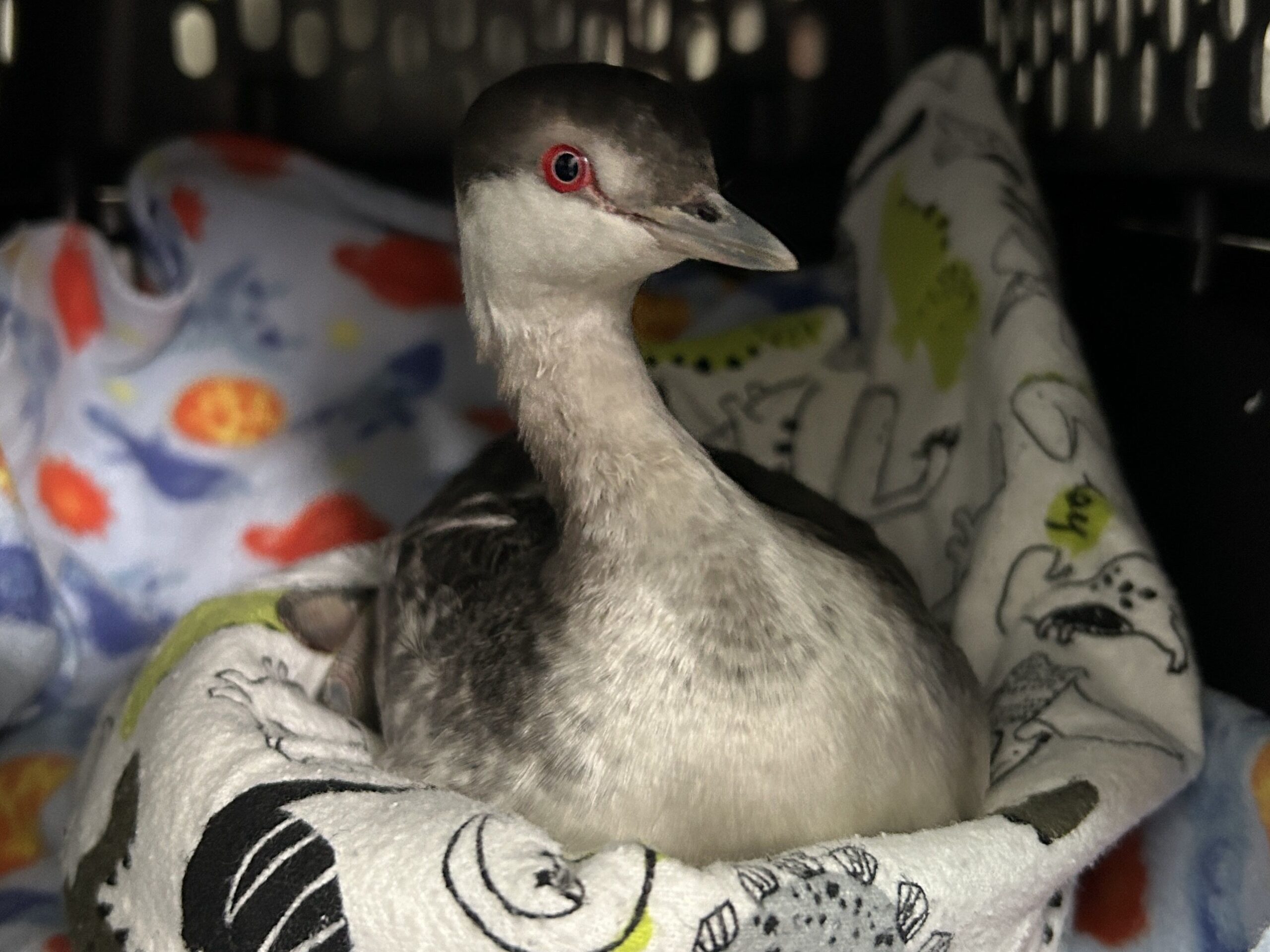
A grebe that was rescued amid the harsh winter weather and taken to the Wildlife Clinic at the Schuylkill Center for Environmental Education, where it is being fed and cared for until an open water source can be found for it to be released.
Opossums and other animals
Sydney Glisan, director of wildlife rehabilitation for the Wildlife Clinic at the Schuylkill Center for Environmental Education in Northwest Philadelphia, characterizes the severe winter conditions as a critical “make it or not” period for local wildlife.
Some animals, such as deer, are well adapted to the cold and can eat fibrous bark and twigs to survive. Other species, however, struggle.
She said Virginia opossums found in Philadelphia, despite being a native species, have physical attributes that “do not really work for this type of weather.” She has treated multiple opossums for frostbite. The latest patient arrived Friday.
They are susceptible, she said, because their ears, tails, and paws have no fur for protection. Often, tails or fingers need to be amputated.
Residents often find them curled up and immobile, mistakenly believing the animals are dead when they are actually just trying to stay warm or are in a state of shock.
The weather also affects aquatic birds like grebes, which become stranded on land because they require open water to take off and cannot walk well on ice or ground.
Even squirrels struggle, as the ice prevents them from digging up cached food, Glisan said.
Glisan advises the public to be cautious about intervening for wildlife such as birds. She notes that even well-intentioned acts, such as providing heated birdbaths, can result in hypothermia if a bird’s wet feathers subsequently freeze in the air.
“As much as it might sound rude, I always say doing nothing is the best thing that you can do,” Glisan said. “I recommend helping by not helping.”
Reptiles and amphibians
Susan Slawinski, a wildlife biologist at the Schuylkill Center, said the danger for reptiles and amphibians comes as lakes and ponds freeze over. Aquatic species such as green frogs, painted turtles, and snapping turtles overwinter at the bottom of ponds.
There, the animals survive by slowing their metabolisms enough to eliminate the need to eat or surface for air. However, prolonged cold poses a specific danger as ponds freeze solid to the bottom. Those hibernating will perish.
The Schuylkill Center uses a bubbler in its Fire Pond to maintain a gap in the ice to let in oxygen.
Despite the risks, Slawinski emphasizes that native wildlife is historically resilient, though mortality is an unfortunate reality for animals that select poor hibernation spots.
For example,thegray tree frog uses glucose to create a natural “antifreeze” that prevents its cell walls from bursting in freezing temperatures.
“Native wildlife is very good at adapting to cold temperatures,” Slawinski said. “There have been colder winters, longer winters before. Unfortunately, there is always going to be a mortality risk.”
Accompanying one of the more-enduring snowpacks in the period of record, ice has continued to build in the Philadelphia region’s waterways, and all indications are that it’s going to intensify in the next three days, perhaps significantly.
With temperatures expected to fall to single digits by Saturday night and wind gusts up to 55 mph, the region is about to experience an assault from a “cold air gun,“ said Alex Sosnowski, senior meteorologist at AccuWeather Inc.
The combination, plus the below-freezing temperatures at least through Monday and the ongoing cold spell that began last month, will not only deepen the ice cover but will make it more uniform by freezing over breaks in the ice.
“You’re going to see the ice-over become more extensive,” Sosnowski said.
Earlier in the week, icing temporarily stranded a vessel on the Delaware River that was delivering much-needed salt supplies to Philly. (They did eventually get here.)
The U.S. Coast Guard was using a 175-foot-long cutter to break up ice on a portion of the river channel that runs from the mouth of the ice-covered Delaware Bay — where Cape May-Lewes Ferry service was disrupted this week — to Trenton.
As of Friday morning, the craft had been ramming ice for 45 hours since the freeze began at the end of last month, U.S. Coast Guard Petty Officer Matthew West said.
So far, however, the ice hasn’t reached crisis levels, said Ryan Mulvey, a spokesperson for the Philadelphia Regional Port Authority. For ship traffic on the river, it’s been more a matter of “road work ahead” rather than ”road closed.”
“We’re open as usual,” he said. “I think the largest ships help with breaking up some of the ice flow.”
One thing is certain, meteorologists are warning: The ice factory is going to be in full production mode until Tuesday.
And, ironically, even as precipitation deficits and drought conditions persist, flooding potential is a source of concern.
The short-term outlook for icing in the Philly region
A key to melting, said Sosnowski, is having a sequence of daily average temperatures above freezing, not just daytime highs above 32 degrees. Nights also have to warm up.
The prospects of that happening aren’t looking good for the next several days. Officially, Friday was the 12th consecutive day of a snowpack of at least 5 inches at Philadelphia International Airport, the seventh-longest such stretch in records dating to the winter of 1884-85.
Daily average temperatures have been below freezing every day since Jan. 23.
Highs on Saturday and Sunday, even in the city, may struggle to reach 20 degrees, with lows in single digits Sunday and Monday mornings.
A promised warmup during the workweek wasn’t looking as toasty on Friday as it was earlier in the week. Monday’s temperatures were forecast to top out in the 20s, and no daily average temperatures are forecast above freezing through Friday.
Some rain or snow also is possible Wednesday, said Nick Guzzo, a meteorologist with the National Weather Service in Mount Holly. A storm is possible next weekend, but computer models continue to disagree with each other, and themselves.
To erase the snowpack, the region could use a warm, moist air mass and rain that would produce “river rises” that would help break up the ice, the weather service says.
But not too much rain.
The long-term outlook: Flooding concerns amid a drought
Moist air preceding a rainfall all but erased the snowpack with a historic melt. When that air came in contact with the snow, it condensed, releasing latent heat that sped up the melting.
Rain followed, and liberated ice jams led to destructive flooding along the Delaware and the Susquehanna Rivers and a presidential disaster declaration.
NOAA’s Middle Atlantic River Forecast Center is well aware of the potential and is monitoring conditions, said senior hydrologist Johnathan Kirk.
“That’s what we have to watch for,” said Sosnowski, who well remembers 1996.
“It is going to take one of the more mild-mannered thaws to avoid ice-jam flooding,” he said.
A mild thaw is possible, Sosnowski said, but “the odds are stacked against it. It’s been so cold for so long.”
Dirty Franks says ’25 and up’ — and the regulars reclaim the bar: B+
Dirty Franks banning 24-year-olds and under sounds, on paper, like the plot of a generational culture war. In reality, it’s a dive bar doing what dive bars have always done: protecting the room.
The catalyst? A fake ID featuring Ben Franklin that successfully scanned. Over the past year, Franks has been overrun by increasingly bold fake IDs, TikTok-fueled crowds, and behavior that doesn’t match the unspoken social contract of a place where regulars expect to sit, talk, and not babysit a bar.
This isn’t about hating young people. It’s about a bar that has never been a college bar suddenly being treated like one. Quantity over quality, as owner Jody Sweitzer put it. More bodies, same money, harder nights.
The temporary 25-plus rule is blunt, maybe even unfair to the responsible 22-year-olds who just want a cheap beer and a dart board. But Philly bars have always operated on feel as much as fairness. When something’s off, you fix it first and argue about it later.
And by most accounts, it worked. The room is calmer. Regulars are back. People can sit again. Staff aren’t playing bouncer-scanner-detective every five minutes, trying to outsmart IDs that look like they came straight out of a CIA prop department.
Is it sustainable? Probably not. Is it extremely Philly to say “we’ll relax when the nonsense stops”? Absolutely.
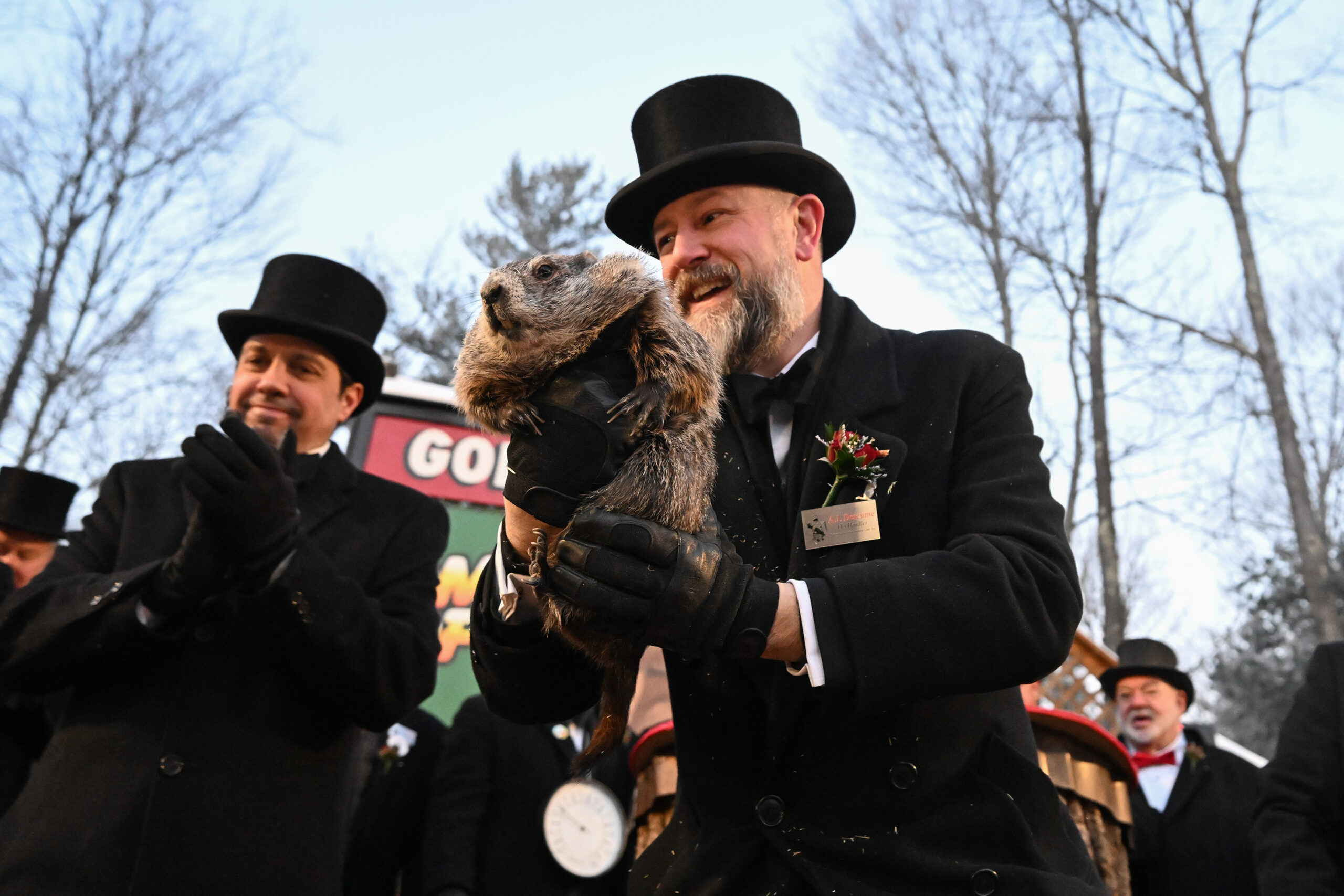
Groundhog Club handler A.J. Dereume holds Punxsutawney Phil, the weather prognosticating groundhog, during the 140th celebration of Groundhog Day on Gobbler’s Knob in Punxsutawney, Pa., Monday, Feb. 2, 2026. Phil’s handlers said that the groundhog has forecast six more weeks of winter. (AP Photo/Barry Reeger)
Punxsutawney Phil sees his shadow, condemning Philly to six more weeks of this: D
Six more weeks of winter doesn’t mean snowflakes and cozy vibes in Philadelphia. It means gray piles of ice that never melt, sidewalks that double as obstacle courses, and that specific kind of cold that seeps through gloves.
Phil seeing his shadow wasn’t news. The snow is still here. The side streets are still a mess. The wind is still disrespectful. And now we’re being told to mentally prepare for another month and a half of bundling up just to take out the trash.
Phil’s track record doesn’t help his case. He’s been wrong more often than right, but somehow still gets the power to set the emotional tone for an entire region. And the tone this year is simple: exhausted, sore, and deeply over it.
We don’t hate Phil. We just resent him for reminding us that winter in Philadelphia isn’t a season: It’s a long, drawn-out test of patience, balance, and civic infrastructure.
Six more weeks? Fine. We’ll survive. But we’re not happy about it.
Heavy equipment clears snow and ice from South Broad Street near Tasker Street in South Philadelphia, Tuesday, Feb. 3, 2026.
Philly sends in ‘snow ambassadors’ because the cleanup still isn’t done: C
At this point, the storm itself is old news. What isn’t: frozen crosswalks, ice-packed corners, and a city that still feels stuck in cleanup mode.
So now comes the next phase of winter in Philadelphia: improvisation.
The city is deploying 300 “snow ambassadors” to manually chip away at ice piled up at crosswalks and corners. We’re well past the point where plows and salt were enough, and if the choice is between stubborn ice lingering for weeks or sending people out with tools to break it up, the latter is the only real answer.
But it also says a lot about how this cleanup has gone.
The city is now in hand-to-hand combat with the leftovers of a storm that dropped 9.3 inches and then immediately locked them in place with days of deep cold. The fact that crosswalks still need this level of attention, days later, underscores how uneven the original response was, especially on side streets and pedestrian infrastructure.
Calling them “ambassadors” doesn’t change the reality: This is a workaround. A necessary one but still a sign that the system didn’t fully deliver the first time around.
That said, credit where it’s due. The city didn’t just shrug and tell people to wait for a thaw. It adjusted. It added manpower. It acknowledged that what’s left isn’t just inconvenient but dangerous. And focusing on crosswalks and ADA ramps is exactly where the effort should be right now.
This isn’t a win. It’s a course correction.
Phillies designated hitter Kyle Schwarber celebrates his solo home run with teammate J.T. Realmuto against the Kansas City Royals on Saturday, Sept. 13, 2025, in Philadelphia.
Phillies spring training hope (and the kids knocking): A
This is the part of the calendar where Philly collectively exhales.
Spring training is just getting started, and already the Phillies feel lighter. Not because anything’s been won. Not because the roster is flawless. But because February baseball is where optimism still gets the benefit of the doubt.
Clearwater represents a reset. New grass. Fresh routines. The annual illusion that this version of the team will be the one where everything clicks at the right time. It doesn’t matter how last season ended, spring training always feels like permission to believe again.
And for the first time in a while, the kids are actually coming. Justin Crawford looks like the opening-day center fielder. Andrew Painter is finally healthy enough to matter again. Aidan Miller is looming. The Phillies’ farm system has spent years as a drip-feed; now it feels like a faucet that might finally turn on.
That matters for a team that’s been built around a veteran core for so long. Bryce Harper and Kyle Schwarber anchoring things in Clearwater feels familiar in the best way, but the real intrigue is whether the next wave can actually stick. Whether this spring is the start of something sustainable, not just another “run it back.”
Spring training is baseball’s softest sell. No standings. No scoreboard pressure. Just story lines, roster battles, and enough sun to trick you into thinking October is guaranteed. Philly knows better than to fully trust it, but we still show up every year.
Because hope is part of the ritual. And for now, it’s earned.
If nothing else, pitchers and catchers reporting means one undeniable thing: Winter is losing leverage, and baseball is back in the conversation. Around here, that’s worth an A all by itself.
A rolling video screen above the admissions counter at the West Entrance at the Philadelphia Museum of Art Monday, Oct. 6, 2025, features a “youse should visit” slide and a new logo. The name change was eventually reversed back to its original – Philadelphia Museum of Art – but the griffin was kept.
The Art Museum walks it back (somewhat): B+
Four months after trying to rename itself the Philadelphia Art Museum, the Philadelphia Museum of Art has decided to do what Philadelphians do best: Stop pretending and call it what everyone was calling it anyway.
But this wasn’t a full rewind. The museum kept the updated look — the bold fonts, the sharper visual identity, the griffin logo pulled from the building’s roofline. The feedback was clear and consistent: People who know the institution (members, donors, staff) felt alienated by the name change.
The Philadelphia Museum of Art isn’t just branding; it’s muscle memory. You don’t casually swap that out without expecting pushback. But surveys also showed that the broader public didn’t hate the new look itself. So the museum split the difference.
It kept the visual refresh. It dropped the name change, which felt unnecessary and confusing. And it signaled, intentionally or not, that listening matters more than doubling down.
Philly gets its own Monopoly board, and the arguments have already started: A
A Philadelphia edition of Monopoly is coming this fall, and honestly, the game itself almost feels beside the point. The real action is happening now, in the collective act of imagining what would, and absolutely would not, be allowed on a Philly board.
The gaming company behind the project is soliciting public nominations for landmarks, businesses, and nonprofits, which means we’re about two seconds away from the most Philly fight imaginable: not about what belongs on the board, but what deserves Boardwalk money and what gets stuck near Baltic Avenue out of spite.
Picture it. Pass GO at City Hall. Community Chest immediately fines you for blocking a crosswalk. Chance card sends you directly to SEPTA delays — do not collect $200. Jail is the Roundhouse. Free Parking is somehow still under construction.
Some squares feel obvious: the Art Museum steps, LOVE Park, Independence Hall. Others are going to be chaos picks. Wawa utilities. Delco railroads. A corner bar that hasn’t changed since 1987 somehow costing more than Center City. Someone will nominate their neighborhood dive and mean it sincerely. Someone else will nominate their rowhouse just to prove a point.
And that’s where this gets interesting. A Philly Monopoly board isn’t really about the game. It’s about which places people think matter, and which ones they’ll argue should’ve made the cut.
‘We’ll shew ya whereta gew in the snew’: Visit PA leans into accents — and Philly winter energy: B+
If you’re going to tell Philadelphians to leave the house in February, you’d better sound like someone we trust. Preferably someone who says “youse.”
The Pennsylvania Tourism Office seems to get that, according to WHYY. Its new winter “Snow Day Hotline” is staffed by prerecorded Philly and Pittsburgh accents, plus live comedians during select hours.
Call the number and you’re greeted by exaggerated but affectionate regional voices walking you through things to do around the state, from museums to indoor hangs. It’s intentionally old-school, phone only, no app.
The Philly side of the operation is handled by comedian Betsy Kenney, whose accent isn’t natural but feels familiar anyway: a composite of neighbors, aunts, and the person behind you in line at Wawa explaining why something is “not worth it, but also maybe worth it.” The advice isn’t groundbreaking. The delivery is the point.
So when a highly accomplished Jeopardy! champion (16-game winner, nearly half a million dollars in earnings) visibly struggled to pronounce “Schuylkill” on national television this week, Philly collectively leaned forward and went, here we go.
To Scott Riccardi’s credit, he got the answer right. The river that runs through Pottsville, Reading, and Philadelphia? Yes. Correct. No notes. But the pronunciation (Skol-kull) sent Ken Jennings into referee mode, which is never where you want to be when the clue involves Pennsylvania geography.
For the record (again): it’s Skoo-kl. Two syllables. No drama. No extra letters pronounced.
Riccardi walks away with a B: smart, successful, and close enough to get partial credit. But full points are reserved for anyone who can say Schuylkill on the first try without breaking eye contact.
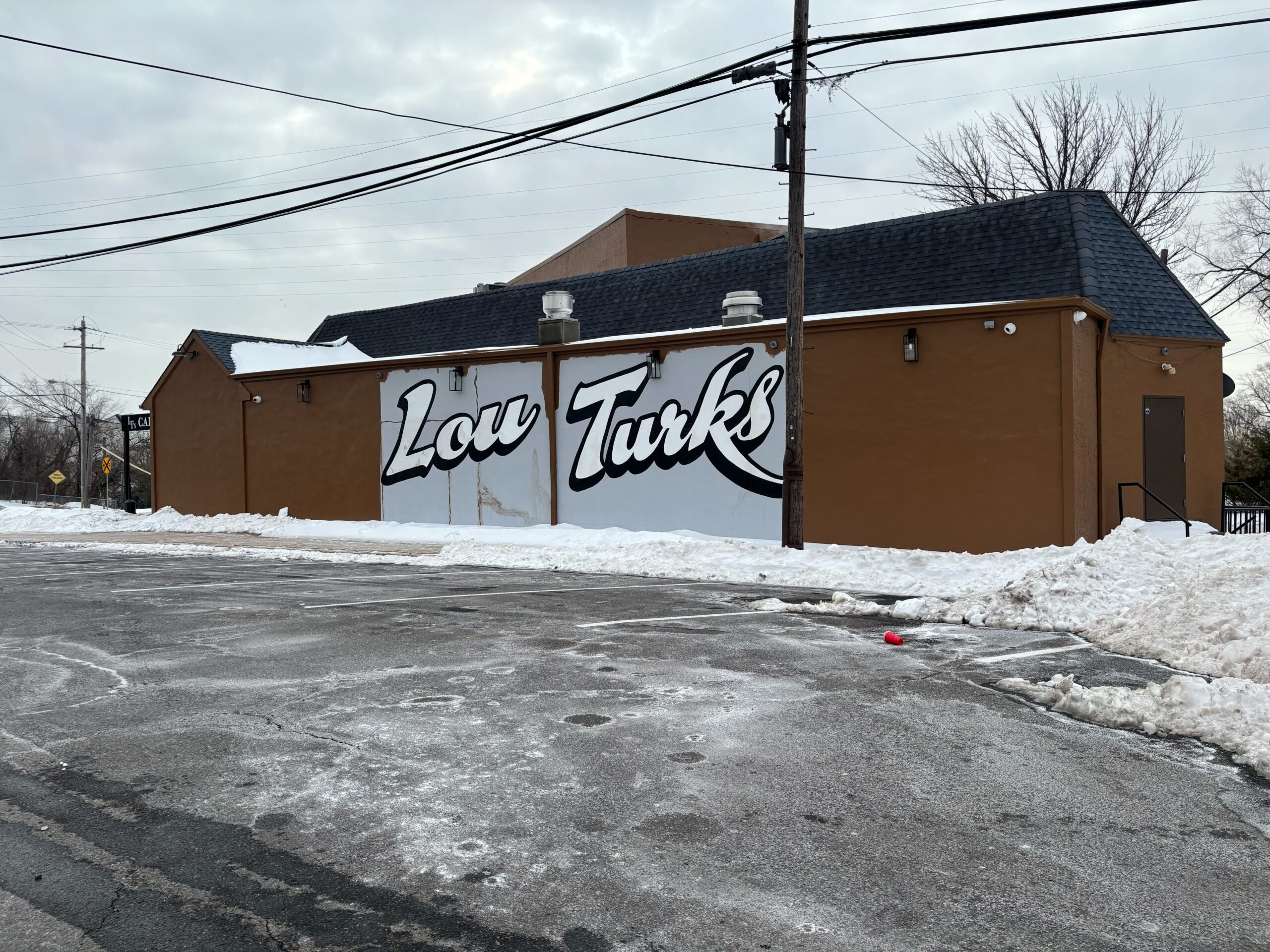
Lou Turk’s, a Delaware County strip club with more than 50 years in business, announced it will change its name to the Carousel Delco.
Lou Turk’s rebrands, Delco shrugs: A
Only in Delco could a strip club rebrand spark genuine cultural concern. Not about the name, but about whether Mother’s Day flower sales would survive.
Lou Turk’s, Delaware County’s lone strip club and one of its most stubborn institutions, announced it’s changing its name to the Carousel Delco. The response was immediate disbelief, light outrage, and a collective understanding that no one is actually calling it that. Ever. This is Gallery/Fashion District math.
Stephanie Farr laid it out perfectly: Lou Turk’s isn’t just a business, it’s a landmark. A place that exists in the Delco imagination as much as it does off Route 291, wedged between a Wawa and an Irish pub like it was placed there by a zoning board with a sense of humor.
The new name raises questions (mostly “why?”), but Delco culture is resilient. The club can swap signage, management, and branding buzzwords all it wants. It will still be Lou Turk’s. And more importantly, it will still sell flowers on Mother’s Day, preserving one of the county’s most unhinged and beloved traditions.
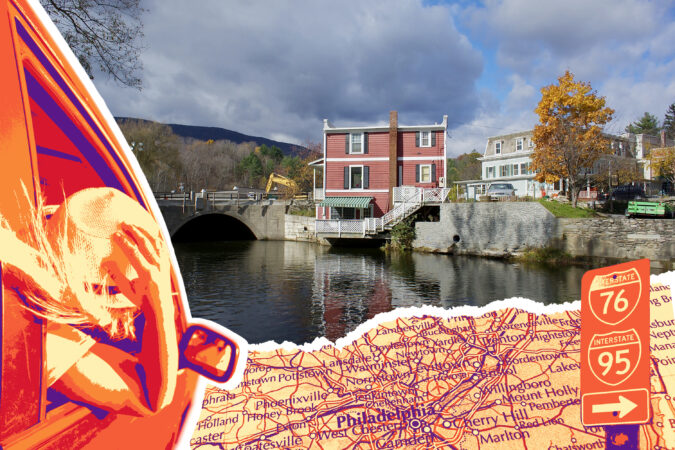
A tiny state, more than a third of which represents conserved land, Vermont has done things its own way since the colonial era. Its Green Mountain Boys militia once fended off land claims from New York and New Hampshire, and for a brief moment, Vermont even functioned as its own republic. That don’t-tread-on-me energy still lingers today, blended with a deep respect for the arts, outdoors, history, and small business. In southern Vermont, less than five hours from Philly, the village of Manchester is a microcosm of that personality. Slung between the Green Mountains, the glowing town looks like something straight out of a Hallmark movie — especially in winter, when snow this time of year is nearly guaranteed.
Stone fireplaces, leather chairs, plaid wallpaper, draft-blocking drapes, a grand front porch … Kimpton Taconic hits the winter-in-New-England vibes hard. The 86-room boutique hotel sits right on Main Street, close to everything in town, and has a solid on-site tavern, the Copper Grouse (think cider-brined chicken and maple crème brulée). The hotel also offers seamless equipment rentals through a Ski Butlers partnership. Bookings also include two free adult tickets to Hildene.
📍 3835 Main St., Manchester, Vt. 05254
Visit: Hildene
Just south of town, surrounded by woods and snow, Hildene was built at the turn of the 20th century by Mary and Robert Lincoln, the only son of Abraham and Mary Todd Lincoln. Run as a museum nonprofit since 1978, the Georgian Revival estate, gardens, and 12 miles of trails are open to visitors, making it a must-stop whether you’re into history, architecture, design, or horticulture. Train buffs will love Sunbeam, the restored Pullman carriage from Robert Lincoln’s tenure as president of the Pullman Co. from 1897 to 1911.
Take a short detour off Main Street into the forest and you’ll find Southern Vermont Arts Center. This estate includes classrooms, museum galleries, performance space, a yoga studio, and a café. Originally built in 1917 as a summer estate for an Ohio socialite and philanthropist, the property was acquired by the arts center in 1950. Grab a coffee at the café and walk — or snowshoe, or cross-country ski — through their epic sculpture park.
📍 860 Southern Vermont Arts Center Dr., Manchester, Vt. 05254
Shop: Northshire Bookstore
Northshire Bookstore is almost a caricature of Vermont: a rambling country house riddled with cozy alcoves. Opened in 1976 and now run by three sisters who grew up shopping there, the store leans hard into its indie roots — staff bios list genre specialties and years of service. They’ve got the bestsellers, sure, but it’s their rare-books collection that’s really special. A signed Jimmy Carter autobiography, for example, or an alternatively illustrated British edition of Harry Potter and the Chamber of Secrets.
Located only 10 minutes from town, Bromley Mountain’s 47 trails represent a solid mix of expertise levels. If you’re skiing experience begins and ends with the Poconos, maybe start with a few runs on the family-friendly Chase-It trail before leveling up to the Lord’s Prayer, the Plunge, and Havoc.
📍 124 Bromley Lodge Rd., Peru, Vt. 05152
Relax: Spa at the Equinox
After a day on the slopes, soothe those boot-bound feet and sore hammies at the Spa at the Equinox. Deep-tissue massage, Ayurveda treatments, cupping therapy, maple sugar scrubs — get one, get them all. You won’t want to leave the spa. It’s got cozy relaxation lounges, a huge indoor pool stretching out beneath an open-beam ceiling, and an outdoor hot tub perpetually cloaked in steam.
Points for the name alone. The Reluctant Panther, whose moniker nods to Vermont’s resistance to outside rule in the late 1700s, has been operating as a bed-and-breakfast since the 1960s — but its restaurant is open to the public. The food is exactly what you want to eat in the winter here: a Vermont cheese board, thick pork chops with German potato salad and smoked maple gastrique, venison osso buco, all served in a fireplace-warmed dining room. The wine list has earned Wine Spectator recognition four years straight. Meow.
Scott Harmon and Mark Williams met each other in a maximum-security prison in the heart of Pennsylvania coal country in 2012.
They had both grown up in the Philly area; both were in their early 20s, at the very beginning of life sentences without the possibility of parole for homicide convictions. Both had sons.
They were also both desperate to leave State Correctional Institution (SCI) Greene, the isolated prison where they met and which they described as harrowing. They aimed to appeal their convictions and get free.
They clicked as lifelong friends.
In 2018, Williams was transferred to the more desirable SCI Phoenix, in Montgomery County, and soon Harmon was transferred there as well. Both saw the reunion as an unexpected gift, and they became cellmates, or “cellies.”
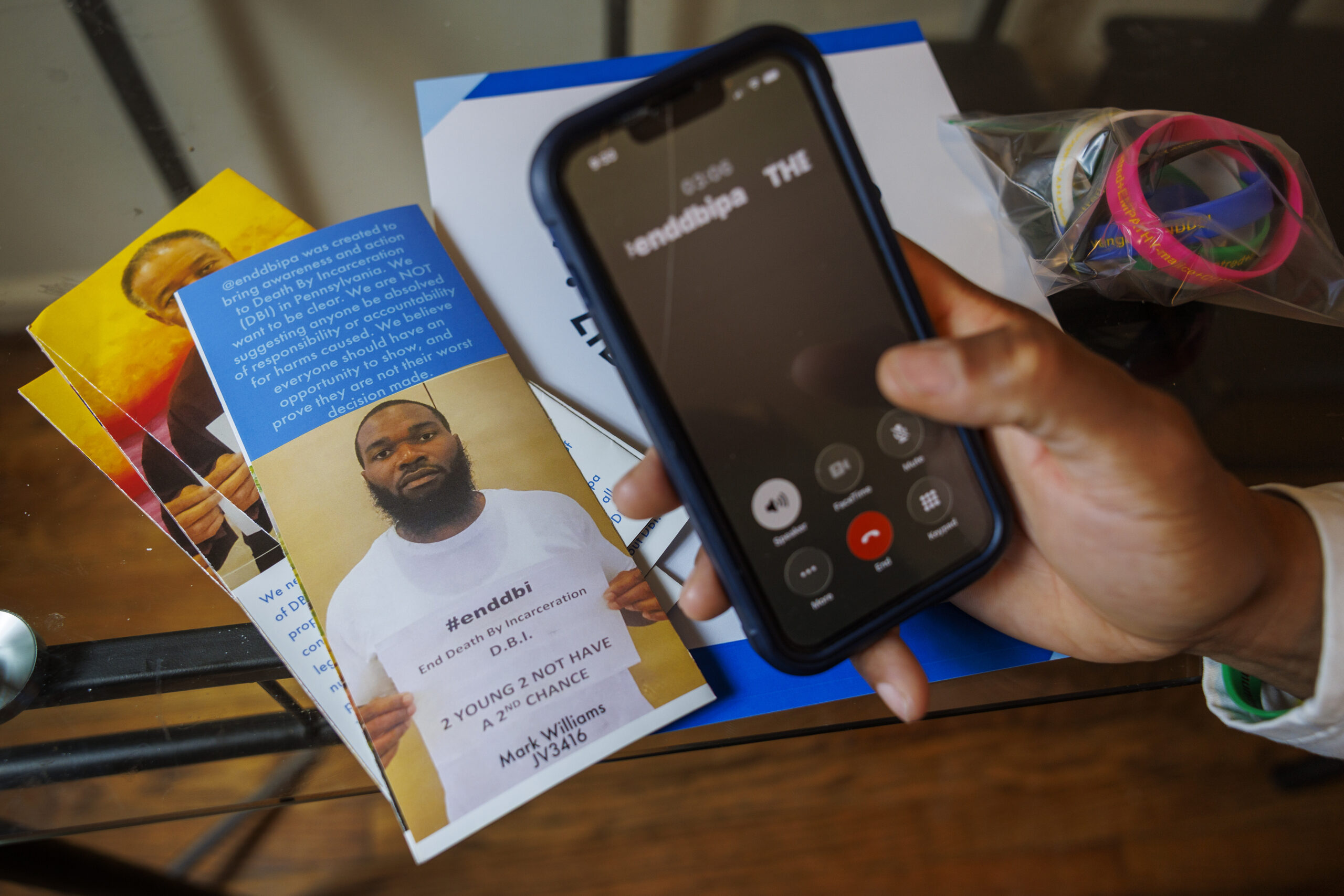
While organizing with the activist group the Coalition to Abolish Death by Incarceration and working with the same attorney to appeal their separate cases, they maintained a similar mindset: Despite what the courts said, their sentences would not last the length of their lives.
“When you’re sentenced to life, there’s really very little reason to hope that you’re ever going to get out again,” said Catherine Trama, an attorney with Wiseman, Schwartz, Cioschi & Trama who represented both men. They showed “a positivity that would be impossible for most people.”
Harmon was 22 when he was arrested for killing a 24-year-old man, Timothy Haines, in North Philadelphia. In 2011, he was convicted and given a mandatory life sentence without the possibility of parole. He maintained his innocence for the next decade-plus.
In 2024, his murder convictionwas overturned. The District Attorney’s Office stopped short of endorsing his innocence but offered him a plea deal, in which he pleaded guilty to third-degree murder and firearms violations to get out of prison in April 2025. (“When that opportunity is offered to you: you can go home today, or you can take a chance fighting the system again, you don’t fight the system again,” Harmon, 39, said).
Harmon and Williams, who call each other chosen brothers, had been working toward the same goal, but now one had achieved freedom and the other had not.
“It was really difficult for a while. I didn’t want him to feel as though I was upset that he was leaving, or wasn’t happy for him,” Williams, 36, said.
Mark Williams, 36, is currently incarcerated at SCI Phoenix, and challenging his conviction through the Post Conviction Relief Act. He and Scott Harmon call each other chosen brothers.
Williams is still incarcerated at SCI Phoenix, and is currently challenging his conviction through the Post Conviction Relief Act, claiming the state violated his right to due process. He was 21 when he was convicted of killing a 21-year-old man, Isaiah McLendon, in Darby Borough and also given a mandatory life sentence without the possibility of parole.
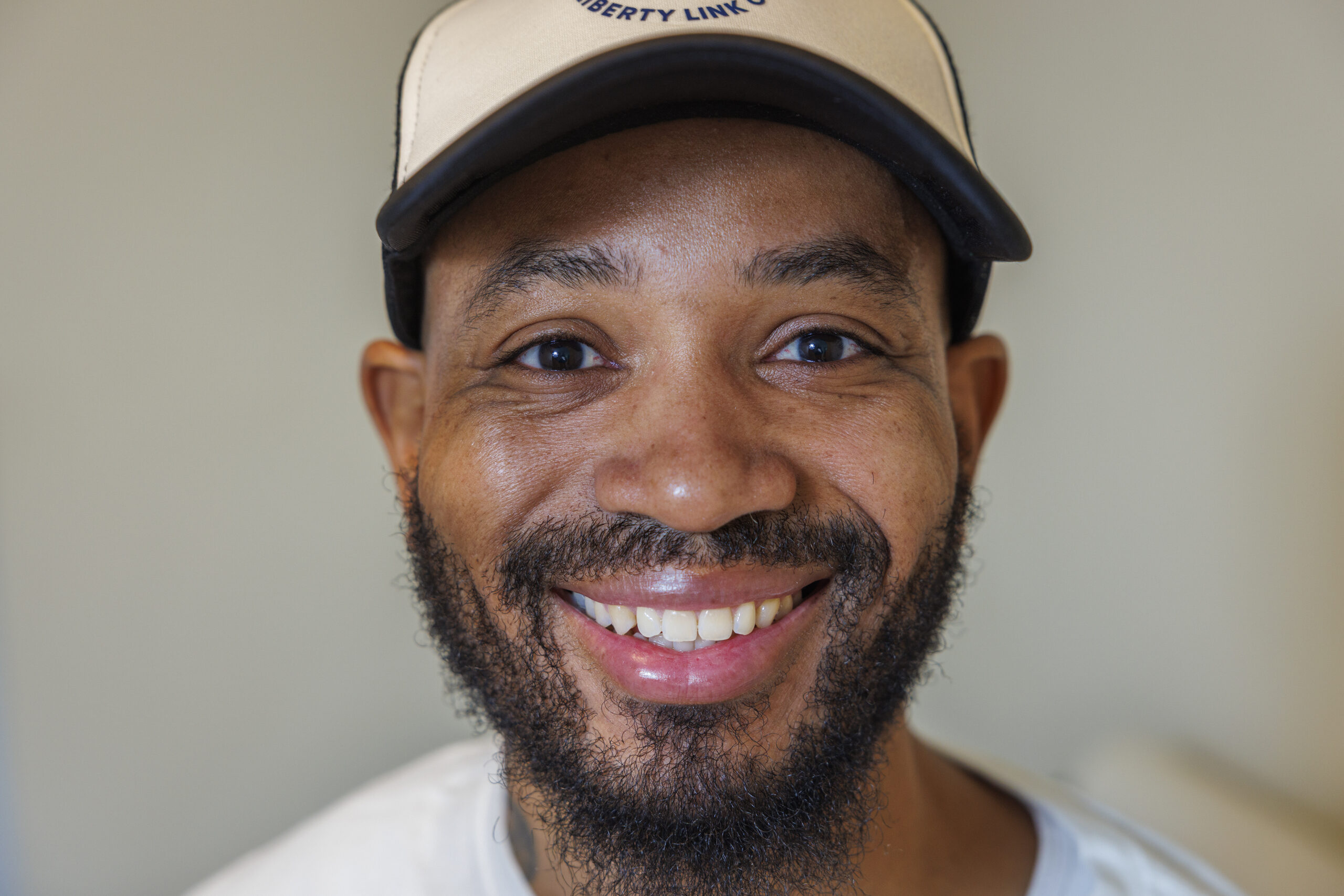
Harmon is now a utility worker at a country club and lives in the Philadelphia suburbs. He has a girlfriend who he met as a teenager and reconnected with while in prison.
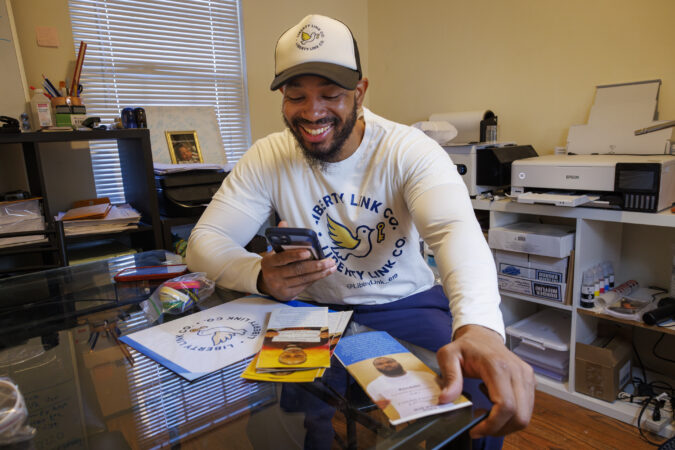
It is against state Department of Corrections policy for Harmon and Williams to meet in person because Harmon was formerly incarcerated, a spokesperson for the PA DOC said. Instead, they speak almost every day by phone.
The following, as told to Zoe Greenberg in separate interviews, has been edited for length and clarity and combined.
On meeting at a maximum-security prison in southwestern Pa.
Mark: Everybody calls Scott “Slim.” I met Slim when he came upstate in 2012. We were young. Just seeing the shock of our new reality setting in with him, I had just experienced that a year ago. I could share how I made it through and hopefully it could help.
Scott: He seemed like a cool dude. We didn’t dive into each other’s cases, we just both knew that we were sentenced to die at such a young age. We call it death by incarceration, or a “DBI” sentence.
We had the same intention, which was getting out of prison.
On boiling water in buckets and grueling workouts together
Scott: We ate together all the time. The commissary is extremely limited — for the bags of instant rice that they sell, you need really hot water, which we figured out ways to make.
We would buy an extra bucket, put water and baking soda or denture tabs in it with an extension cord, and it heats up. You put your food inside a trash bag, you put a trash bag over the bucket, and you set your food on it, and it cooks.
Scott Harmon, who is now a utility worker at a country club, pictured at home.
We also started working out together. In prison, we work out so hard because it’s stress relief. We punish our bodies physically: 100 burpees may be a warm-up.
On the outside, I tried to do 10 sets of 10 pull-ups. Mark laughed at me when I told him I couldn’t.
On being transferred to the same prison, 35 miles from Philly
Mark: SCI Greene was in a very, very racist part of the state. That environment kind of makes tighter bonds in people.
I transferred to SCI Phoenix [35 miles from Philly] maybe six months before Slim did. When I got transferred, it was an emotional time. It was hard. I didn’t really understand how close we were, until it was severed in that way.
Scott: You can’t choose what prison you go to. It’s like rolling a dice.
For those that were sentenced to “death by incarceration,” you have to stay seven years write-up free to get transferred. Now, mind you, you can get a write-up for having the thing that I just told you that we used to cook with. [The state DOC confirmed this.]
Mark: When he got here, that was a huge relief. To have someone back where it’s like, I know this is one of my brothers. It’s something I wasn’t expecting.
At the time, I think I was collecting trash on the walk. He was coming around the walk. And I saw him. We just were yelling and hugging.
On becoming cellies at SCI Phoenix
Mark: As soon as he got to Phoenix, we start pulling strings to get in the cell together.We had to talk to the unit managers, talk about why we wanted to be cellmates, how it would make sense for our incarceration. Our argument was all about compatibility: I’m compatible with this person, and I won’t keep asking you to move me from cell to cell to cell.
Scott: We had bunk beds — two grown men. It’s not normal for two fully grown men to be in such a small space: maybe eight steps to the door, and four steps sideways.
We talked about being free, and what that freedom will look like, and reaching back for each other. He would say, “If I get out, you don’t have to worry, I’m not gonna be like other guys,” and I’m saying the same thing.
On trying to stay connected to the outside together
Scott: I was trying to build a relationship with my son. Mark told me, “Just keep at it, just keep writing, just keep calling.”
It is extremely frustrating when you want to be there, and you’re not being allowed. Had Mark not been there to advise me about the best way to go about it, I may not have the relationship I have with my son today.
Mark: Going through COVID was one of the hardest times. We were locked down all the time — we were getting out less than an hour a day.
The person that you were living with, you had to really be able to tolerate. We were in there, tight, every day, annoying each other, annoyed with what was going on.
You don’t know what your relationship will be with somebody until you’re actually trapped in a small space with them for a year.
On freedom — for one of them
Scott: I get on the phone and my attorney is like, “We heard back from the judge, and they overturned your conviction.”
I lost my breath, got nauseated, I started crying. Mark is two phones down. He started hugging me. It was a moment, man. I couldn’t even talk to him, snot was running down my nose. He was just happy for me, man. So happy for me.
Mark: It was a shock to me, just like it was a shock to him.Immediately I just felt joy, and excitement.
Then as time passed, it was more complicated. It wasn’t anger or jealousy. It was more of maybe sadness, and trying to reconcile the feelings of gain and loss at the same time. The situation was bringing up all types of feelings.
Scott: It’s never a conversation about him not getting out. The conversation is always like, “You’ll be out here soon.”
On saying goodbye
Mark: I think I probably did have a fear that we wouldn’t be as close as we are. Over the years, we experienced a lot of people that we built bonds with who went home. We might still be close with them, but we don’t talk as frequently. It’s not what it was.
Scott: We both worked in hospice, so the nurse allowed us to come down to the hospital and say goodbye to each other a day or two before I left.
I left him all my property. I left my TV to him. I left the books and stuff that he wanted, any clothes or sneakers that I had that he might want. I didn’t take anything out with me.
On keeping in touch now
Scott: I talk to him every day. I know intimately what type of support he needs. Our conversations have changed in that it’s not about our freedom, it’s about his freedom.
The experience is like how guys are in theArmy: because I was dead to the world. I was maybe in contact with 10 people out of the billions and billions of people on the Earth. He talks to maybe 20 people outside of prison. That’s nothing.
Scott Harmon takes a call from Mark Williams at his home in the Philadelphia suburbs.
Mark: We talk about the new realities that he’s facing, and some of the ones that I have to look forward to.
It might have been harder for me to leave him behind. Survivor’s remorse — that can be tough to deal with.
Yes, I want my freedom, but it’s not much more than I wanted him to have his freedom.
This story is part of a new series about life partners across the Philadelphia area.
If you want to share your story about who you’re navigating life with romantically or otherwise, write to lifepartners@inquirer.com. We won’t publish anything without speaking to you first.
When you walk into Koselig Nook, Aracelis Mullin wants you to feel a wave of calm. She intentionally designed the teahouse that way: From its welcoming furniture to its lighting, its green paint, its scents, it is meant to be a relaxing third space, a stopping point between work and home, where people can gather, craft, focus on wellness, or anything between. Don’t forget to take off your shoes. (Really. It’s a rule.)
Koselig Nook, a late-night teahouse, plans to open in Exton, at 333 E. Lincoln Highway, later this month. The business is relocating from Coatesville, where it opened in 2024, to be more central for customers within the county and traveling from Philly.
“The whole idea and the purpose is to bring the people out of their houses and to enjoy another place where they can network or just spend some time or talk,” Mullin said.
Named for the Norwegian term encompassing contentment and coziness, Koselig Nook’s seating is meant to be secure and comfortable — with plush, downy pillow seating and blankets, oils, and low lighting, inviting people to lounge.
So much of today’s gathering culture revolves around bars and drinking, Mullin said. Though sober options are opening in metropolitan areas, like Philadelphia, people in the county have fewer places — especially places open later, she said.
That’s the gap Koselig Nook seeks to fill, she said.
“I think there’s a big need for third places that are more calm; for introverted people, they can come and network, too, little by little, but they don’t have the pressure of society saying, ‘Hey, do you want to drink?’” she said.
Instead, customers can sit and study or work from 11 a.m. to 3 p.m. for $25 on Tuesdays through Fridays. Students spent a lot of time holed up in the Nook’s Coatesville location during finals week in December, Mullin said.
In the evenings, from 7 to 11 p.m. for $35 on Friday and Saturday, people can go somewhere that is not about drinking.
During various events offered week to week, people can come to workshops where they junk journal, cutting up pictures and pasting them into notebooks, or take a meditative break surrounded by gongs and chimes and singing bowls in a sound bath session, or spend time with a medium. You can pick up letters from a pen pal in another country or pen your own, facilitated through Koselig Nook. You can silently read your own book and then, in a formal discussion, chat about it with other readers, trading recommendations.
Some make events out of it. For one 24-year-old’s birthday, she and her friends journaled together, sipping their tea, and had a sound bath.
Others come alone and leave with connections: During a full moon ceremony, only two of the 15 women who came knew each other. By the end, “they all shared their phone numbers. … It was amazing,” Mullin said.
The business traces its lineage to when Mullin’s daughter, Victoria, was living in California in 2020. She frequented a teahouse where customers could reserve time and sit and enjoy themselves during the evening hours. After Mullin visited herself, she felt compelled to bring something similar to the East Coast. She picked the brains of the owners.
With her background — she ran a traveling tea party business for young girls and a birthday party business in Thorndale — Mullin embraced their model; her teahouse is reservation-only. There is unlimited tea, and a selection of premade snacks. Everything is provided without extra charge once you are in the Nook. Socks only.
“I wanted to have that community place where the people come and gather, regardless of what your politics and your religion, so we did it. I was scared to death,” she said.
She expected to have to go a bit more slowly in Chester County, for people to understand the business. But she was met with a lot of enthusiasm.
“The people are so in need of this that they love it,” she said.
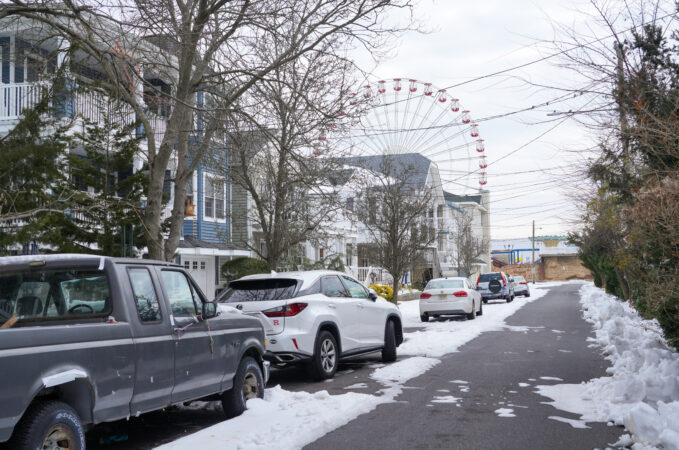
OCEAN CITY, N.J. — Marie Crawford was immediately charmed in 2021 when she and her soon-to-be-surfer husband Rich moved into their historic house in the literal shadow of Gillian’s Wonderland Pier.
They’d come from Blue Bell, Pa., to live year-round by the ocean, and landed with an amusement park right up the street.
“The ball drop, that was what we heard from my house,” she said, referring to the 130-foot-high Drop Tower ride. “It was, ‘Ah, ah, ahhhhhhhh,‘” she said, imitating the screams she would sometimes hear.
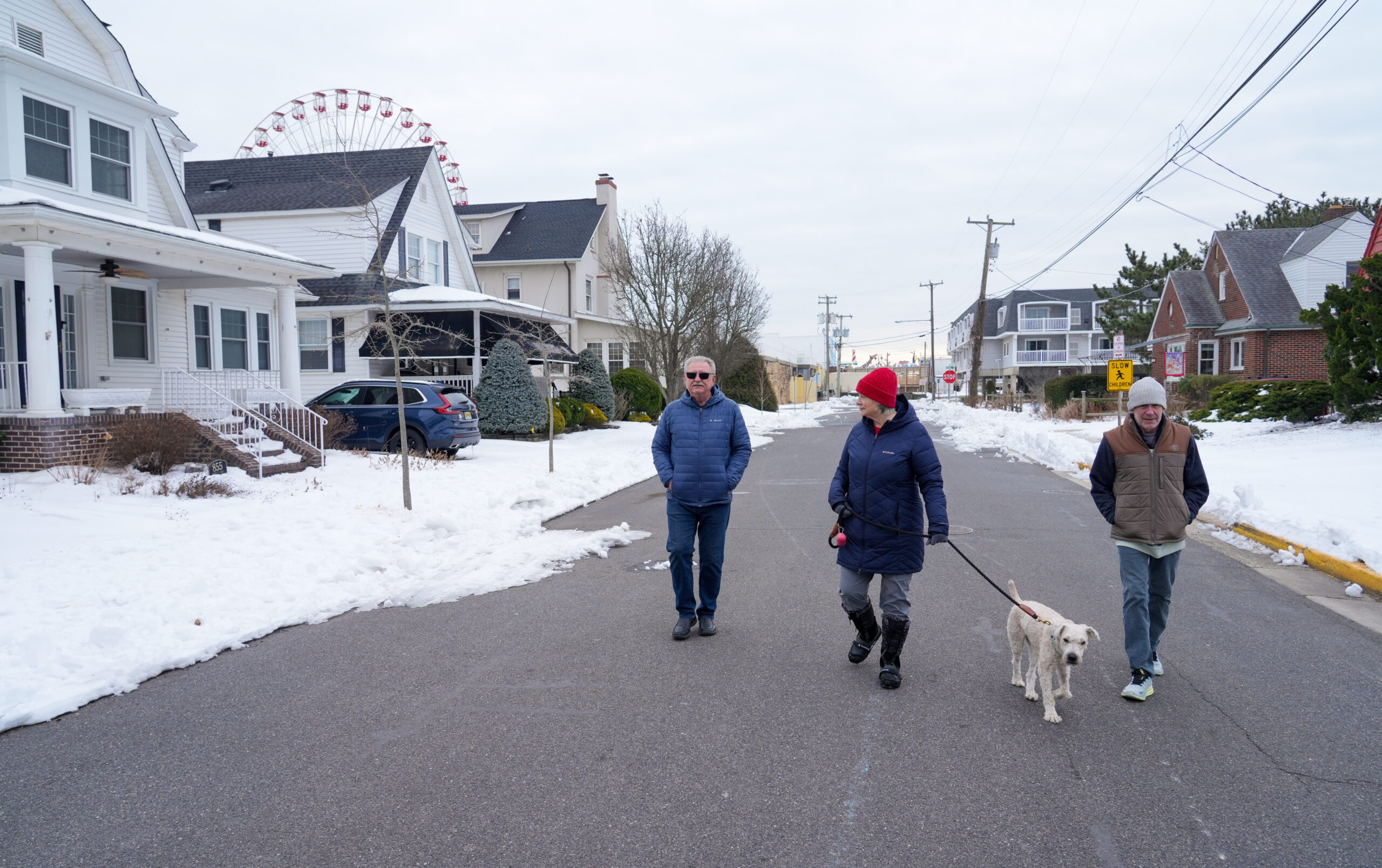
Jack Gutenkunst, left, Marie Crawford and her husband Richard with Shiloh, a 9-year-old soft coated wheaten terrier, walk along Plaza Place, in Ocean City, Tuesday, Feb. 3, 2026.
“It was so beautiful and romantic. On our porches, we would hear the ocean, not the amusement park. There were families, babies in strollers, coming up the street, flowing up to Wonderland. We were kind of ambassadors.”
Now, more than a year after the closing of Gillian’s, the residents are faced with the possibility of a seven-story hotel they fear will block their sun, bring traffic to their streets, and threaten the small-town charm they found in their little pocket of Ocean City.
“It’s just another example of maximizing, pushing,” said Rich Crawford, Marie’s husband, who programs music for his family’s Christian radio station, WDAC, located in Lancaster, Pa. In his 60s, Rich fell in with Ocean City’s surfing crowd and unexpectedly grew to love his little community.
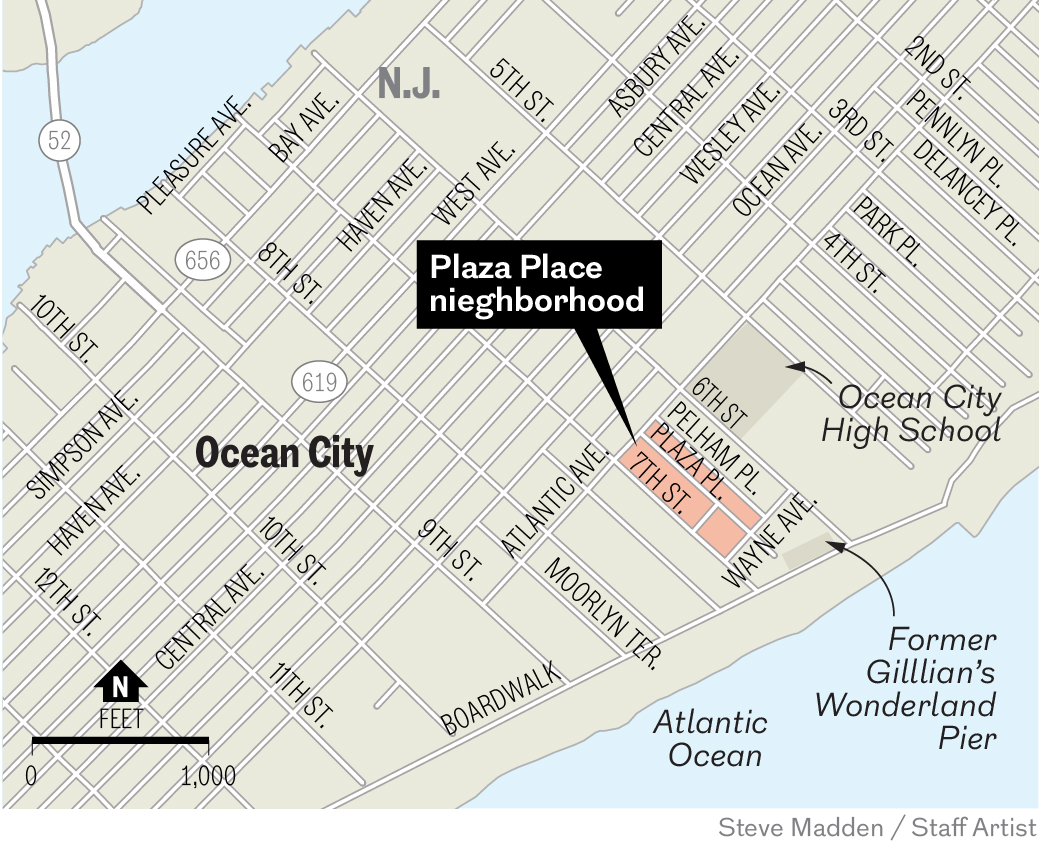
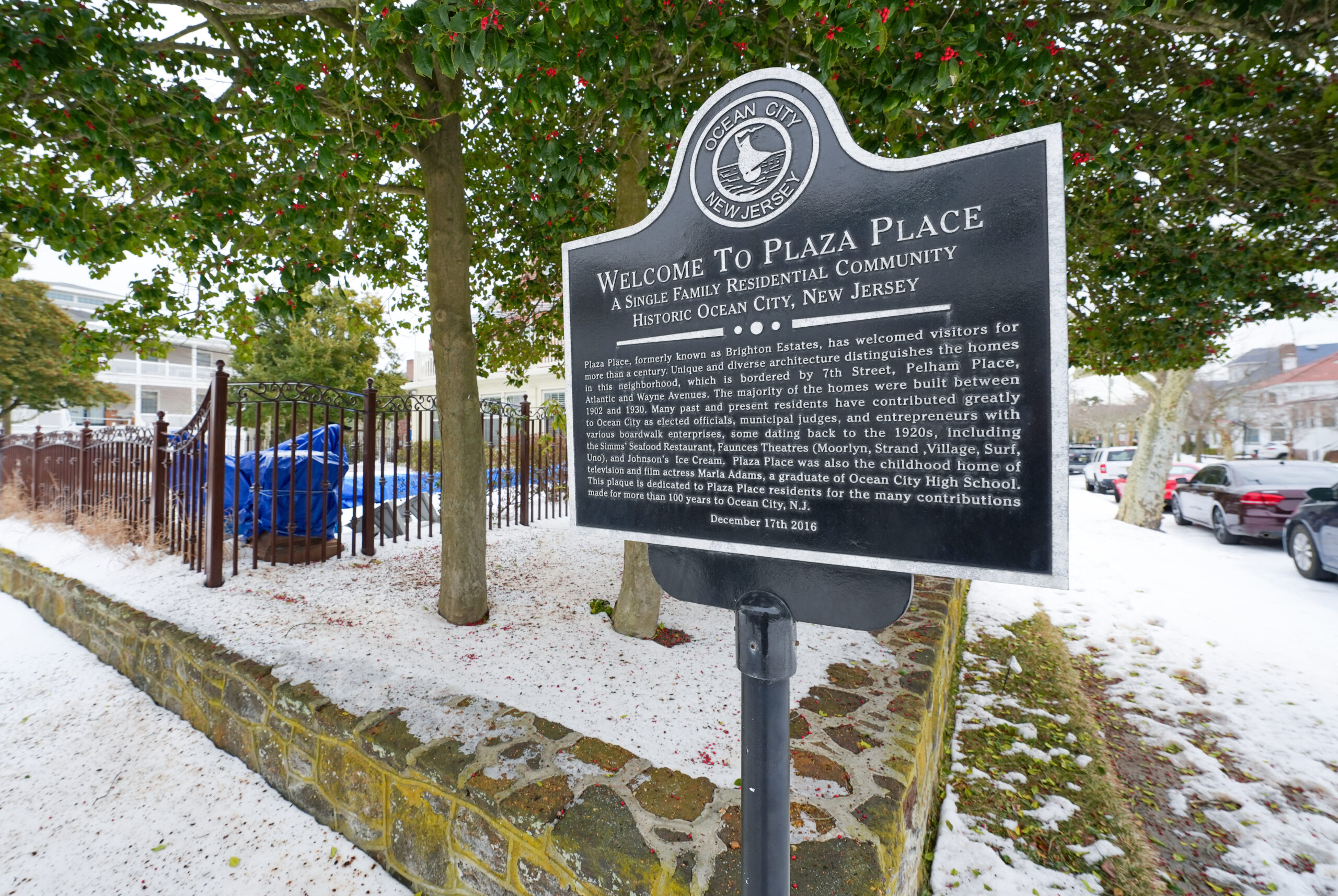
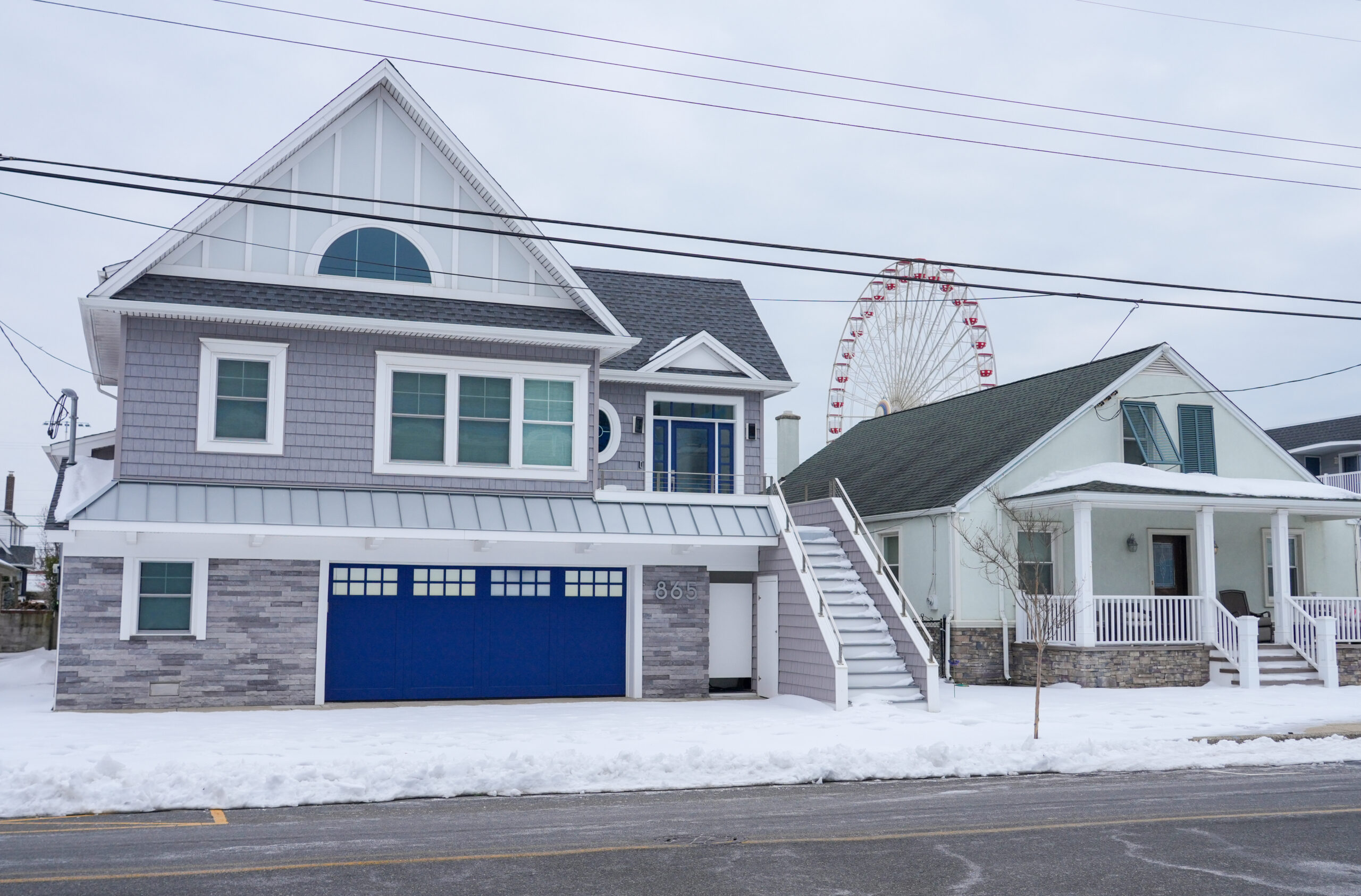
The Crawfords’ neighborhood of 100-year-old homes and 153 trees is called Plaza Place, which is one block each of Pelham Place, Plaza Place, and the north side of Seventh Street, between Wayne Avenue and Atlantic.
Across Wayne Avenue, toward the ocean, was Wonderland. On a clear day, a red ball of sun creeps up above the boardwalk and peeks into their little neighborhood.
On Pelham Place, residents each also own a two-foot- wide stretch of land across the street from their houses, a quirk of their deeds originally designed to prevent the rooming houses on Plaza Place that backed up against Pelham Place from using Pelham as an alleyway for their trash. There are dedicated gardeners on the streets who turn those strips into showpieces.
The sun sets behind the Ferris wheel on the final day for the beloved Wonderland Pier in Ocean City Sunday, Oct. 13, 2024.
Neighbor Barb Doctorman, whose family owns the Islander store on the boardwalk, said she used to take her children up on the Ferris wheel and peer down at their neighborhood. So lush, it looked like a forest, she said.
“I looked up the impact of a high-rise,” said Doctorman. “We’re going to lose some sun. The airflow is going to be totally changed from what it was. There’s a heat radiant that comes off it.”
Her husband, Doc, said: “We want something up there, but we know there could be more of a draw to that boardwalk than just the hotel.”
Marie Crawford (left) holds the leash of Shiloh, a 9-year-old soft-coated wheaten terrier, while standing with her husband Richard (center) and neighbor Jack Gutenkunst at the end of Pelham Place in Ocean City.
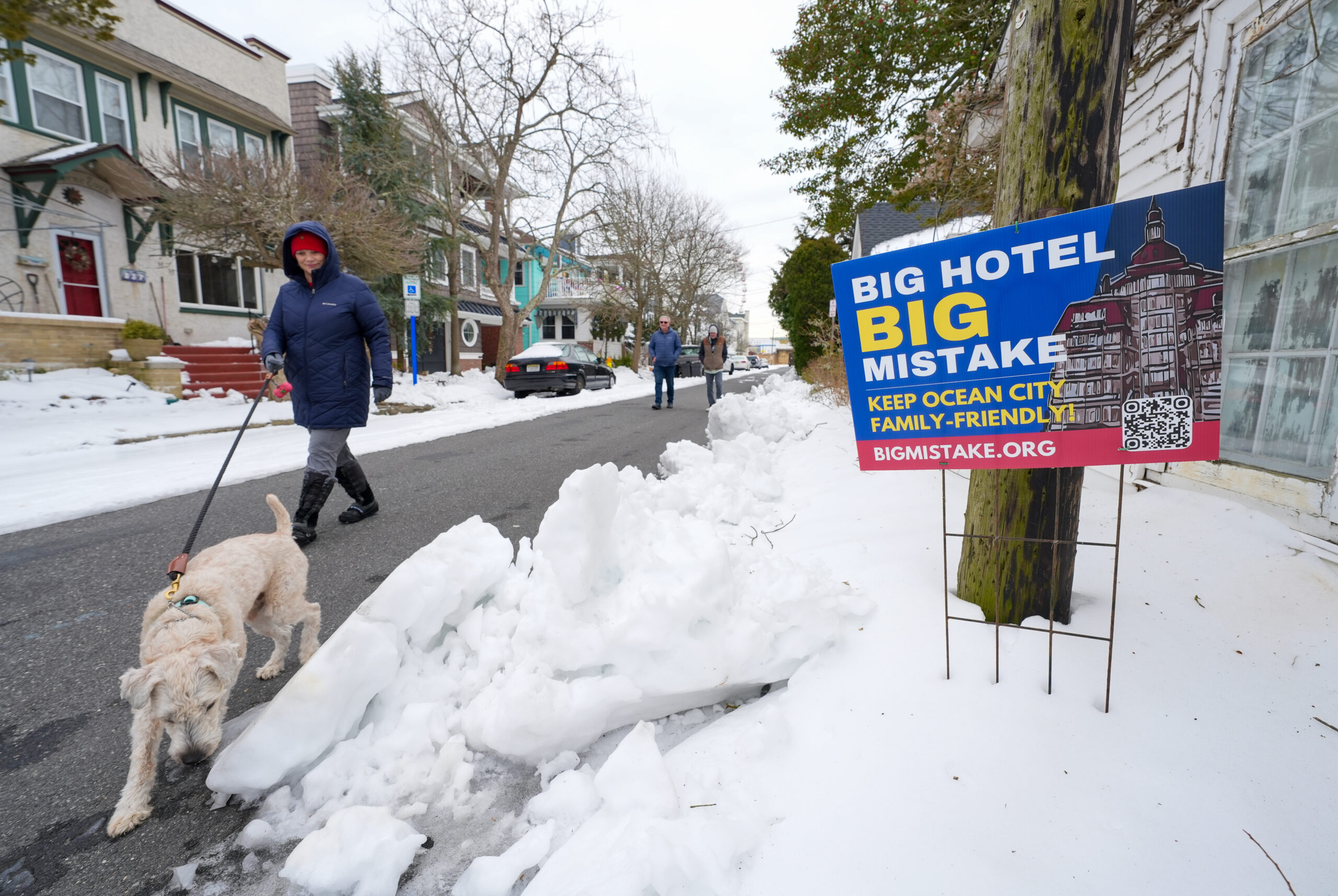
The land is owned by developer Eustace Mita, who has proposed Icona in Wonderland, a 252-room hotel that would preserve the Ferris wheel, carousel, and some kiddie rides.
So far, the city has not declared the site in need of rehabilitation, as Mita has requested, or otherwise moved to rezone the area to allow a hotel.
Merchants have begged the city to allow the hotel, and described how their businesses have suffered since the closure of Wonderland. Some residents have clung to the idea that an amusement park can return, though those numbers are dwindling.
Marie Crawford, her husband Richard, right, along with Shiloh, a 9-year-old soft coated wheaten terrier, and their neighbor Jack Gutenkunst, walk past a sign against the development of a hotel at the site of the old Wonderland Pier on the boardwalk in Ocean City, Tuesday, Feb. 3, 2026.
In Plaza Place, the opposition is less sentimental, more practical. They fear traffic, and the shadow from a neighboring seven-story hotel. Like residents in other towns who fought dunes, they fear the loss of the ocean breeze, or a shift in wind patterns that will affect surfing at the popular Seventh Street Beach.
“It’s got that old feel to it, and everybody’s house is different,” said Marie Crawford, who bought her Craftsman Colonial on the north side of Pelham for $905,000 in 2021. She estimates it’s worth $2.5 million now. There are about 60 homes in the Plaza Place civic association.
The association is one of several groups that are prepared to go to court if the city tries to change the zoning to allow a hotel, without going through a thorough master plan process, said Jack Gutenkunst, the Plaza Place Association president.
While Wonderland brought thousands of people on a summer night, the pier itself had no parking. So people parked elsewhere and excitedly walked through their neighborhood on their way to the rides. People on their porches called out, “Have a blessed evening,” and chatted the night away, said Crawford. The hotel proposal calls for parking underneath the structure.
A sign stands near the historic neighborhood behind the old site of the Wonderland Pier in Ocean City, Tuesday, Feb. 3, 2026. Residents are against the development of a hotel at the boardwalk site.
Crawford stressed that it’s not a case of selfish NIMBY, Not In My Backyard. Despite Ocean City’s decades-old pattern of replacing single-family homes with duplexes, there are nearly 1,400 homes over 100 years old still left in Ocean City, said Bill Merritt, president of Friends of OCNJ History & Culture.
Being a block from the boardwalk, and living in a beach town, does not mean the neighborhood’s purpose is primarily hospitality, said Crawford. Its distinct, increasingly rare Jersey Shore character deserves to be valued, she said.
“It’s height. It’s chaos. It’s the change in culture,” she said, when asked what specifically worries her about the hotel. “It’s a transient population coming through here for three nights at a time. That’s in the hospitality district. We are not the hospitality district.”
The neighborhood behind the old Wonderland Pier site on the boardwalk in Ocean City, Tuesday, Feb. 3, 2026. Residents are against the development of a hotel at the boardwalk site.
The demolish-and-rebuild mania that took over a lot of the rest of the island has mostly left Plaza Place alone, though residents acknowledge that is also a threat to their way of life. They also fear a hotel will prompt Plaza Placeans to sell.
“It’s a Norman Rockwell painting, it just is,” Councilman Keith Hartzell says in the documentaryPlaza Place: The Enigmatic Street, a locally made short film about the neighborhood. “It’s right here in Ocean City, and you kind of don’t expect it, when there’s two streets away a bunch of duplexes.”
Hartzell, who is running for mayor against incumbent Jay Gillian, the former owner of Wonderland who sold to Mita, says he hopes to negotiate with Mita over height, parking, and other issues before considering any kind of zoning allowance or rehabilitation designation. A city council-appointed subcommittee tasked with assessing the boardwalk’s usage as a whole is holding a public meeting at 10 a.m. on Feb. 7 at the city’s library.
The residents of Plaza Place worry about the survival of the hidden little neighborhood by the beach they fell in love with. “The neighborhood is so beautiful and so old,” said Marie Crawford. “If the hotel goes in, the dramatic change that will be for all of us with the traffic, the tone of the neighborhood — you’re going to see people sell. That threatens the neighborhood. The people won’t want to stay.”
The house: A 1,590-square-foot rowhouse in West Philly with three bedrooms and two bathrooms, built in 1925.
The price: listed for $425,000; purchased for $410,000
The agent: Benjamin Camp, Elfant Wissahickon
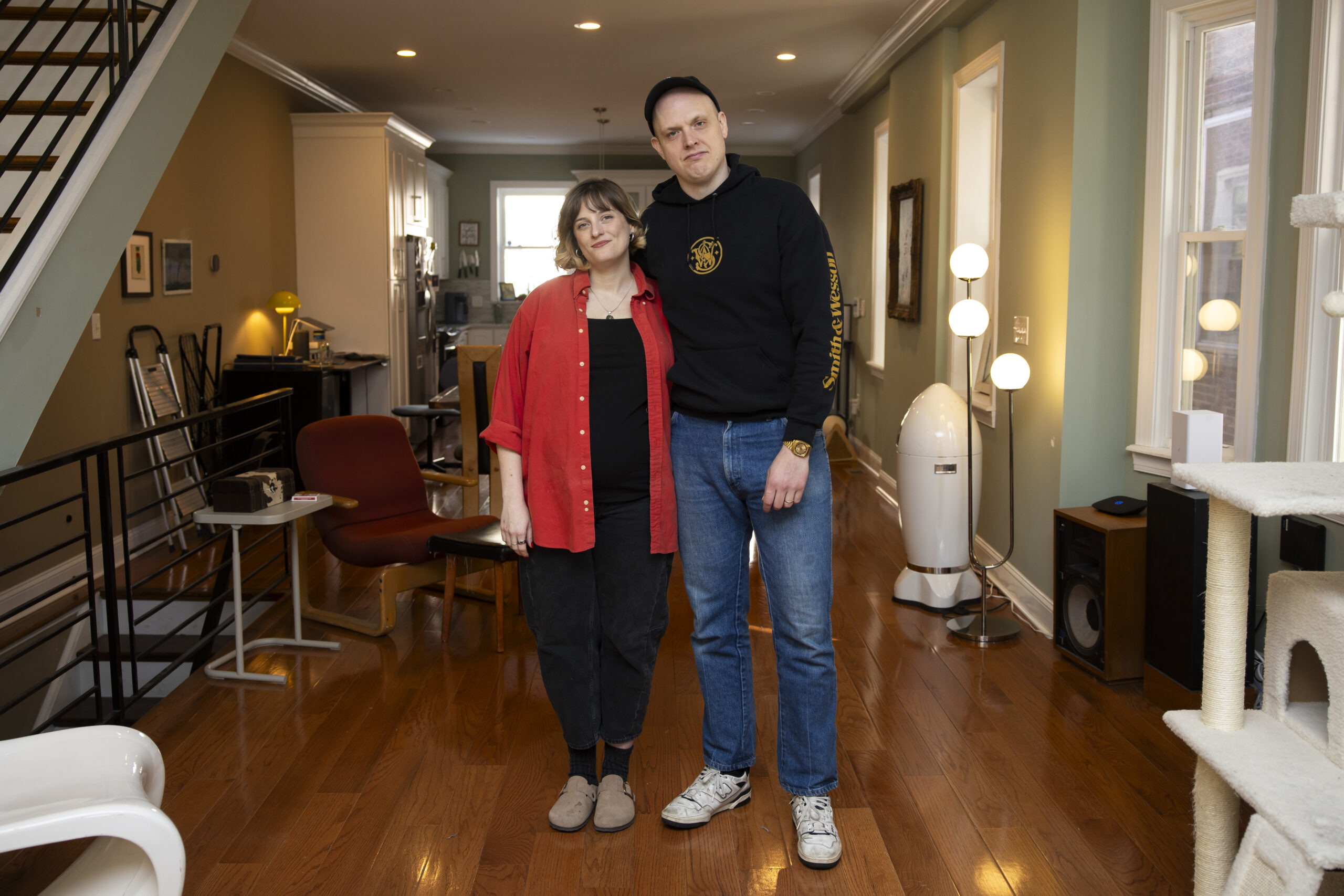
Rhiannon and Malcolm Critcher bought their West Philly home after a very short search. They saw only two other homes.
The ask: After a few years in Tucson, Ariz., Malcolm and Rhiannon Critcher knew they wanted to return to the East Coast. They tested a few cities first. Washington felt “a little too nerdy,” Malcolm Critcher said. New York swung too far in the other direction: “a little too main character.” Philadelphia felt just right. “It was a Goldilocks situation,” Critcher said. “We both came here and instantly fell in love.”
They moved in 2023 and rented in Center City for a year to get their bearings and explore neighborhoods. They fell in love with South and West Philly, but the latter’s parks and tree-lined streets ultimately won them over. They wanted to start a family soon, and West Philly‘s “green, verdant life,” Critcher said, “just felt like a really cool place to be a kid.”
Their must-have list was short but specific: a kitchen meant for hosting, an open-concept floor plan, and a basement big enough for Critcher, who is 6-foot-4, to stand in.
The search: One morning in November 2024, after getting breakfast in West Philly, they decided to walk to nearby open houses. They saw three houses. The third was a recently renovated semi-detached twin with light pouring in from multiple sides.
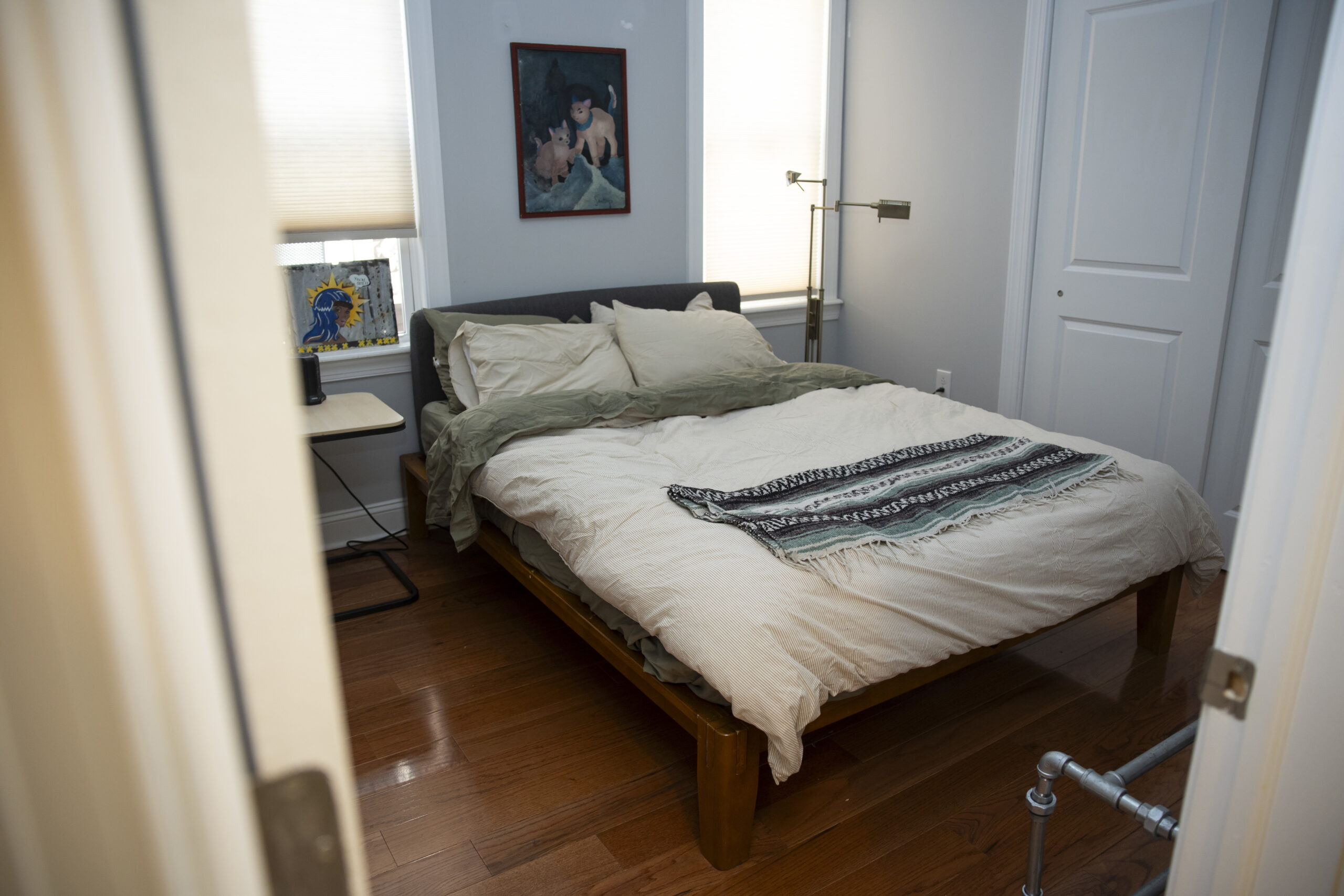
One of three bedrooms in Malcolm and Rhiannon Critcher’s home.
They both wanted to buy it right away, but worried they were being impulsive, so they decided to test the walk to the train. The couple doesn’t have a car and relies heavily on public transportation. It took less than five minutes. On the ride home, they realized they weren’t interested in delaying for the sake of process. “If you find the perfect thing early on, it’s still the perfect thing,” Critcher said.
Having previouslybought and sold three houses, Critcher had the confidence to move quickly. “I know what I’m looking for and what I want,” he said. They called their agent and made an offer that afternoon.
The appeal: The layout was the first draw. The open first floor flowed naturally from the living room to the kitchen, making it feel larger than its footprint. Then there was the renovation. Unlike the gray-floored, hastily flipped houses they had seen elsewhere, this one felt considered, as if the sellers had remodeled it for themselves, not for resale. They liked the finishes, the flow, and little design choices like the kitchen backsplash. “My wife walked into the kitchen and was just like, ‘Wow, this is my favorite kitchen I’ve ever been in,’” Critcher said.
The couple wanted a kitchen that would be great for hosting.
For him, the basement stole the show. It was finished, spacious, and didn’t require him to duck.
The deal: The house was listed at $425,000 — the very top of the couple’s budget. It had been on the market for justone day when they saw it. They decided to offer $25,000 below the asking price, but they promised to take it as-is, as long as the inspection didn’t reveal anything concerning. The sellers agreed to the terms but requested $410,000, which the couple agreed to.
Light pours in from multiple sides of the Cratchers’ semi-detached twin.
The inspection came back spotless. The appliances had all been replaced in 2018. The sewer line had recently been redone. There were no structural issues. “Literally the most perfect housing inspection possible,” Critcher said.
The money: All told, Critcher and his wife brought a little over $100,000 to closing. Most came from the sale of their previous home in Tucson. They bought that house in early 2020 for $179,000 and sold it in 2024 for $300,000. The proceeds went straight into a high-yield savings account and remained untouched until the couple was ready to buy again.
The couple’s dog, Pablo, likes to hang out in the second bedroom.
The down payment on their new house came in just under 20% — about $82,000 — and closing costs were $26,000.
For Critcher, the exact breakdown mattered less than the total. He approached the purchase with a fixed pot of money and trusted their lender and agent to structure the details responsibly.
The couple loved the open floor plan on the first floor.
The move: The couple closed in mid-December 2024 while they were out of town. A notary in Arizona helped them file the necessary paperwork. The move itself happened in mid-January. Compared to moving across the country a year earlier, moving from Center City to West Philly wasn’t too bad. They hired movers to load a U-Haul from their sixth-floor apartment, then unloaded it themselves at the new house. Packing took about a week. The move took two days. Unpacking stretched on for a month.
Any reservations? Critcher wouldn’t recommend their approach to first-time homebuyers. “It was very impulsive,” he said. “But we both just fell deeply in love with it.”
Life after close: They’ve kept things simple since moving in. They haven’t undertaken any major renovations or upgrades. “We’re just kind of floating,” Critcher said.
ARIES (March 21-April 19). You will be remarkably efficient and complete a task in record time, mostly because you have to. It’s nice to know how cool you are under pressure, and how constraint sharpens you. Next, invest your energy something that actually moves your life forward.
TAURUS (April 20-May 20). Emotion is linked to memory, and it’s part of the reason that your memory is remarkable. Because you feel things deeply, the lessons will stick. You may forget minutiae, but the essence and meaning resonates deep within you.
GEMINI (May 21-June 21). Outgrowing relationships is a natural part of life. People evolve, and when your needs shift, it’s normal to notice that some connections no longer work. You’re being honest with yourself and valuing your own growth.
CANCER (June 22-July 22). Your project is humming along. It’s infused with so much of you now. You’re in the perfect moment to refine things, this time with a fresh set of eyes. Invite outsider feedback. As an old Polish proverb goes, “A guest sees more in an hour than the host in a year.”
LEO (July 23-Aug. 22). Hunger is not a misunderstanding. Yearning is not immaturity. Longing for more is not the problem, especially not for someone like you who is willing to work for the “more” and take the risks necessary to bring home the prize.
VIRGO (Aug. 23-Sept. 22). Today favors learning through direct experience rather than theory. Ask better questions. Questions meant to confirm a position answer only that. Shift from “Is this right?” to “What’s actually happening?”
LIBRA (Sept. 23-Oct. 23). Sweep the corners and hang up the broom. A job half-finished drains energy. A job completed gives energy. Today’s joy comes from follow-through. You’ll sleep better knowing you brought it all the way home.
SCORPIO (Oct. 24-Nov. 21). Some small degree of self-sacrifice is all that’s required. The amount is barely detectible to you because you’ve been generous every day for such a long time that it’s natural and automatic. If you feel any loss at all, you’re giving too much.
SAGITTARIUS (Nov. 22-Dec. 21). You don’t need a grand adventure or sparkling treasure to tell you that you’re lucky. You know it, you feel it, you witness your good fortune everywhere, especially in unassuming blessings that send you straight to gratitude. Your gratitude keeps you oriented toward life.
CAPRICORN (Dec. 22-Jan. 19). You’ll bear witness to other people’s wins. You’ll celebrate them because you’re generous. You’ll ache with longing for your own wins because you’re alive. Both truths can be present at the same time. That’s the particular tension you’re living inside.
AQUARIUS (Jan. 20-Feb. 18). In many ways you’re an artist and not paid nearly enough for what you do. Just know that your artistry won’t disappear because it’s underfunded at the moment. Talents wait. Perceptions gather. Sensibilities sharpen. And your payday is coming very soon.
PISCES (Feb. 19-March 20). If a financial investment doesn’t pay off, you can always go make more money. But time is different. Time is a nonrenewable resource. That’s why waiting around feels like a violation of something sacred, and maybe it is.
TODAY’S BIRTHDAY (Feb. 7). Welcome to your Year of the Prosperous Weave, when earning power and enthusiasm combine. Healing and abundance braid together into a most fortuitous situation — you have much to share and the high energy to enjoy it, travel with it, spread it across the world. More highlights: restorative routines, a personal life populated by unexpected characters and activities, teaching moments that change lives. Virgo and Sagittarius adore you. Your lucky numbers are: 5, 10, 33 18 and 2.