NEW YORK — Don Mattingly has lived through his share of managerial firings by the baseball teams in this city.
“Oh really?” he said, smiling.
Indeed, in 14 seasons with the George Steinbrenner-era Yankees, Mattingly played for eight managers, including Billy Martin three times and Lou Piniella twice. The Boss fired a manager midway through a season five times in Mattingly’s career.
And even if that wasn’t the case, Mattingly is managing the Phillies right now only because president of baseball operations Dave Dombrowski fired Rob Thomson on April 28 after a 9-19 start.
Surely, then, Mattingly must have thoughts on the Mets’ decision Friday to can manager Carlos Mendoza amid a six-game losing streak and with the third-worst record (34-47) in the National League.
Oh, and just in time for a visit from the Phillies.
“We don’t know what’s been going on over there, and we’ve got enough stuff to deal with ourselves,” Mattingly said. “So, I kind of just get back to the coldhearted [viewpoint]. If I’m hitting, I need to get a good pitch to hit and I need to hit it hard. If I’m playing [defense], I need to make baseball plays for the situation of the game.
“I don’t worry about what’s going on with them.”
Phillies interim manager Don Mattingly said he does not get caught up in other organizations’ personnel decisions.
For the Phillies, the managerial change served as a pivot point in the season. But as Mattingly notes, it had less to do with a difference between him and Thomson than with better starting pitching. The offense has started to come around, too.
The Phillies were 36-15 under Mattingly — and 45-36 overall, a 90-win pace at the mathematical midpoint of the season entering Friday night.
It may be too late for the Mets to save their season. But maybe they’ll get a boost under interim manager Andy Green, who was promoted after spending the past 2½ seasons as farm director.
Like Mattingly, Green didn’t expect to be in this position. Green has managed previously in the majors, steering the Padres to a 274-366 record from 2016-19.
“I just think it [feels like] you are where you’re supposed to be, right?” Mattingly said. “It just falls into your lap more than anything else, and then you just take it and just do the best job you can.”
Alan Rangel will take the hill Saturday for the Phils.
Rangel ready
Two and a half hours before Friday night’s game began, Alan Rangel stepped out from the Phillies’ dugout and took a photo of Citi Field.
He will pitch here Saturday.
Mattingly said the Phillies were still deciding if Rangel will start the game or enter after an opener. Either way, it will be his latest audition for what amounts to the Phillies’ fifth-starter spot.
It will mark Rangel’s second turn since replacing demoted righty Andrew Painter. The 28-year-old righty, released as a minor leaguer with the Angels in 2024, came in after opener Tim Mayza on Monday night in Washington and allowed one run in five walk-free innings.
“He’s got an interesting mix, honestly,” Mattingly said. “[Commanding the ball] up-down is a mix that you’ve seen work in the game with different guys. You don’t have to be throwing 100 to have success, and he’s got a mix that can work. He has stuff to get people out.”
Painter, meanwhile, is scheduled to start Sunday for triple-A Lehigh Valley. It wouldn’t be surprising to see Painter throw primarily fastballs. It’s essential for him to regain confidence in his heater after opponents batted .404 and slugged .660 against it in the majors.
Phillies shortstop Trea Turner has begun to heat up slightly.
Extra bases
Mattingly on struggling Trea Turner, who went 6-for-20 in four games in Washington to raise his average to .231 and OPS to .618: “I think Trea’s fine. I mean, when do we decide that he’s there? When he’s getting two hits a night for 10 straight days? He’s getting his hits.” … Rangel will be opposed at 4:10 p.m. Saturday by Mets righty Christian Scott (2-0, 3.10 ERA). Scott, the Mets’ fifth-round pick in 2021, and Painter were teammates at Calvary Christian Academy in Fort Lauderdale, Fla.
A Philadelphia wedding photographer who has been the target of complaints from so many couples in Pennsylvania and New Jersey that they created their own Facebook group was sued on Friday by the Pennsylvania Attorney General’s Office for allegedly ripping off her customers for at least $75,000.
Christina Garcia, who also did business as Christina Hernandez Artistry LLC and Wandering Stardust Collective, allegedly failed to provide contracted photo and video services and refused to refund deposits, the attorney general’s office said.
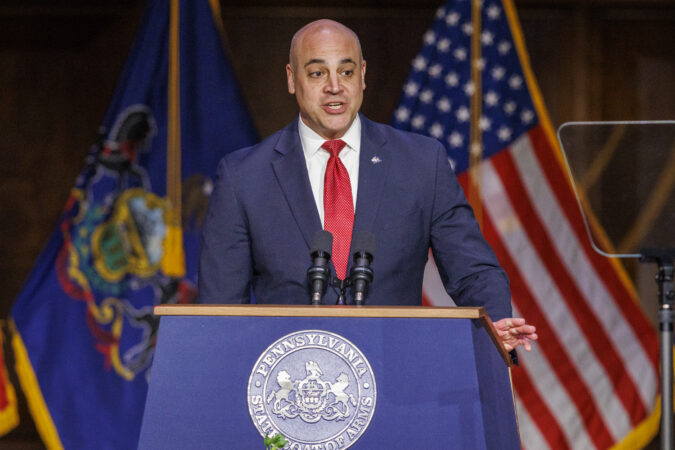
Attorney General Dave Sunday vowed in a statement Friday to make sure “this photographer never again conduct[s] business in the Commonwealth.”
Sunday said in his statement: “A wedding day is one of the most precious and cherished moments in the lives of a couple, and this business darkened those days by neglecting appointments, then refusing to refund customers.”
Attorney General Sunday announced a lawsuit against Philadelphia-based photographer Christina Hernandez Artistry LLC — a.k.a. Wandering Stardust Collective — for allegedly failing to provide wedding photos and videos to consumers. https://t.co/qQtjyt6bgvpic.twitter.com/3mH6un14sJ
— PA Attorney General Dave Sunday (@PAAttorneyGen) June 26, 2026
Garcia has been the focus of reports from the Washington Post, NJ.com, and CBS New York.
She could not be reached for comment Friday. Her Instagram account and business website are now set on private.
In that Post story, Robson said it was “an unfortunate situation” where Garcia faced a “perfect storm that included a health emergency regarding her husband, significant technological issues, and becoming so sought after that there were not enough hours in the day for her to finish her work as promptly as she would have liked.” Robson said Garcia was trying to “do right by her clients.”
The Post reported that nearly 50 unhappy customers were part of a private Facebook group called “Brides Wronged by WSC.” It was unclear on Friday if the group still exists.
A customer posted on Reddit about Garcia last June and said she was a member of the Facebook group. The customer said Garcia, with the help of a lawyer, supposedly was trying to deliver some of her contracted photos and videos. It was unclear what happened after that Reddit post.
The Pennsylvania Attorney General’s Office alleged that Garcia had represented that she would personally photograph their weddings. Instead, Garcia allegedly double- or triple-booked herself on wedding dates and canceled at the last minute, sending replacement photographers instead.
Customers who believe they were victimized by Garcia were urged to contact the Pennsylvania Attorney General’s Office to file an online complaint.
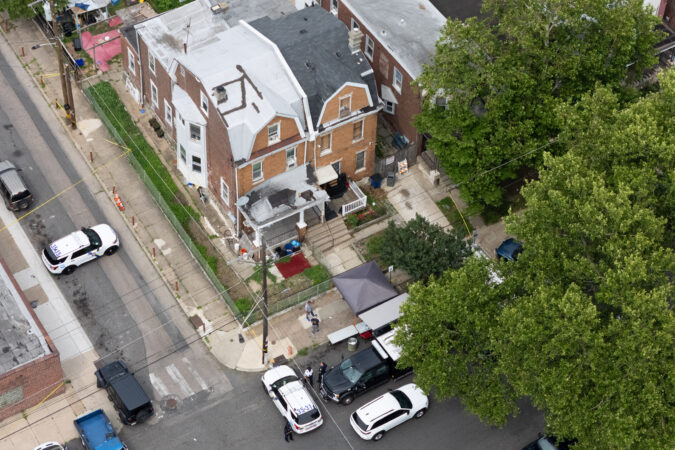
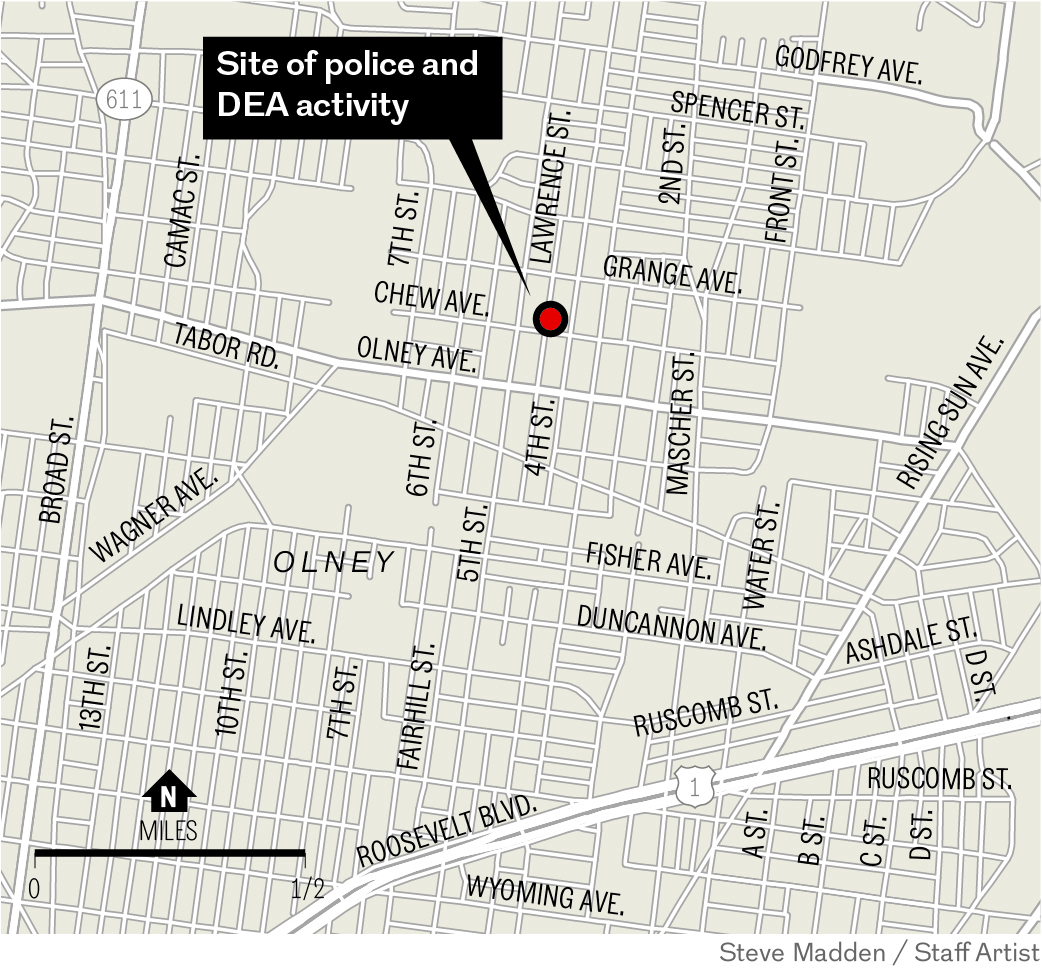
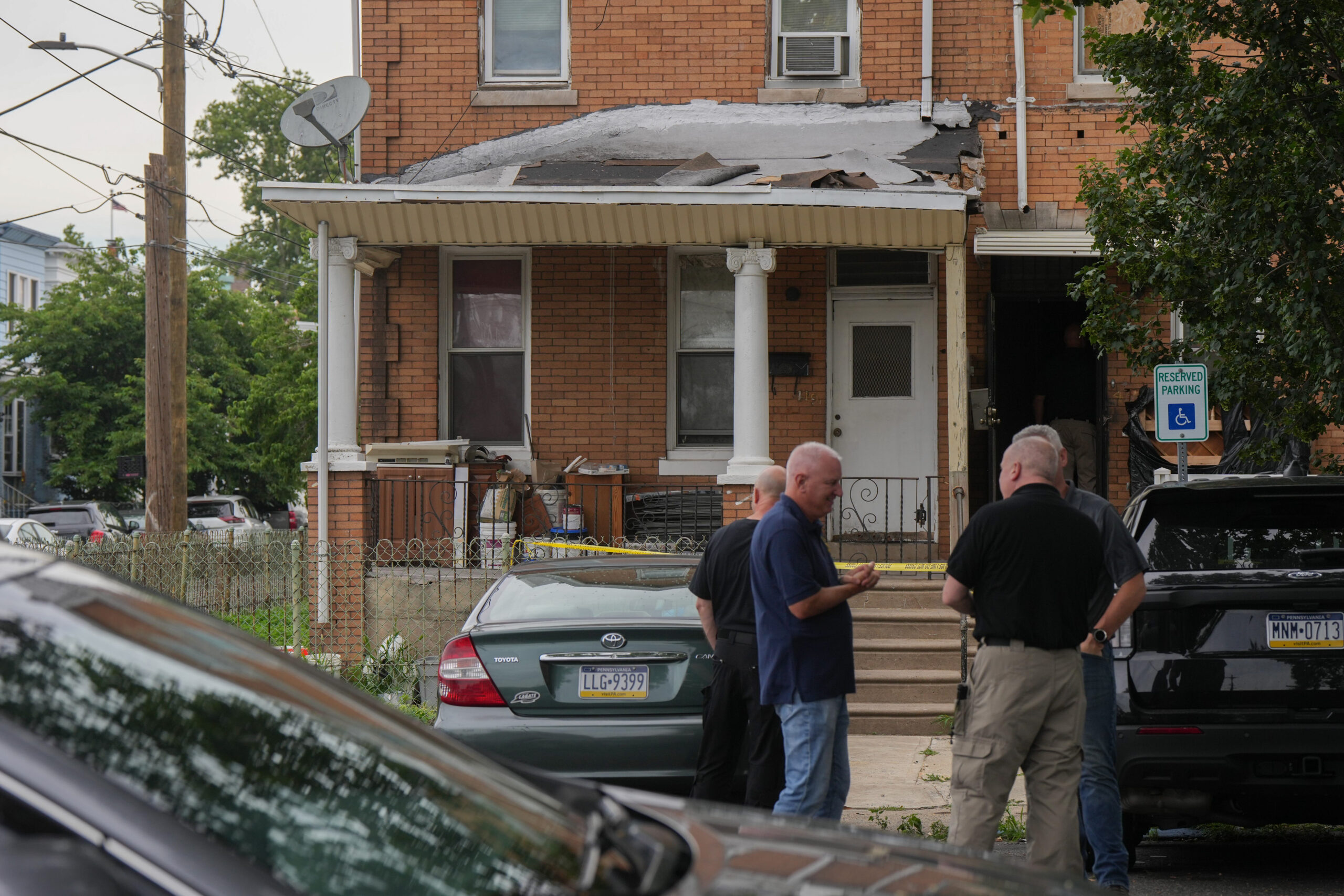
The 400 block of West Chew Avenue in Olney was largely shut down Friday afternoon as Philadelphia and federal law enforcement officials searched a home on the block to determine if its owner had connections to at least two missing women.
Residents of the block had effectively been sealed in as caution tape and Philadelphia Police Department vehicles cordoned off the street. Some residents gathered on their porches or sidewalks as federal officials produced equipment from the back of a black, unmarked utility truck.
“I have been living here all my life,” Larry Alosi, 56, said. “It used to be a safe place, but it changed with time.”
Consisting largely of rowhouses and small businesses, the North Philadelphia neighborhood of Olney is among the city’s most diverse, with large Korean American and Latin American populations calling the area home.
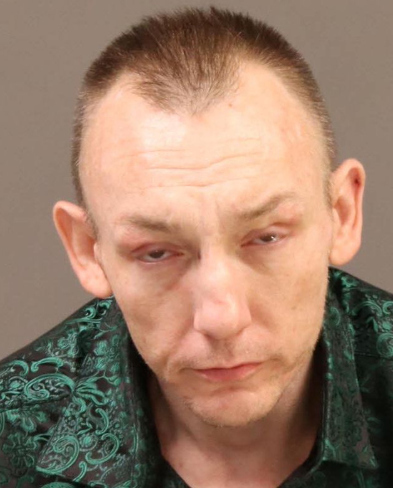
The search had been ongoing for nearly a week, and came after U.S. Park Police encountered Eugene Albert Horsch, 44, acting suspiciously in a black BMW near Sixth and Market Streets on June 19, police said. Investigators recovered two firearms with obliterated serial numbers from Horsch’s vehicle, as well as cocaine, fentanyl, and marijuana — along with a baton, a cattle prod device, a switchblade, and a falsified U.S. Drug Enforcement Administration badge with Horsch’s photograph depicting a falsified name.
Officials took Horsch into custody following the stop, and charged him with illegal gun possession and drug crimes. Searches of his home began last week.
Horsch was being held Friday at Curran-Fromhold Correctional Facility with bail set at $500,000.
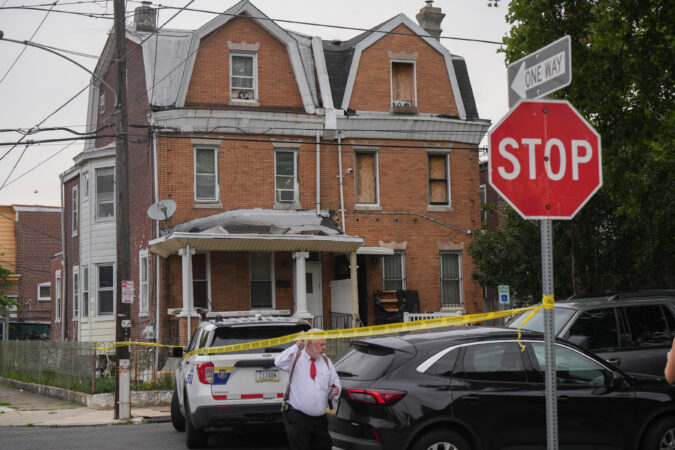
A passerby called the West Chew Avenue residence “a house from a scary movie,” with boarded-up windows on its second and third floors. A camera on the exterior points to the street. The windows on the first floor have bars from top to bottom. Pink flowers remain on the lawn, decorated with pieces of broken glass from the door.
Neighbors on Horsch’s block said the area is a quiet one, though it occasionally has its issues. Fabin Ingram, an area resident, said he never saw anyone coming or going at the corner of West Chew near Horsch’s home, and he largely worked to avoid the intersection.
“I’m big on energy and feelings,” Ingram said. “If I get an eerie feeling, I act on it.”
Investigators at 417 W Chew, searching a home in Olney neighborhood in Philadelphia, June 26, 2026.
One neighbor, Sid Brunson, who used to cut Horsch’s grass, described Horsch as a quiet, jittery man who “had a lot on his mind.” Brunson said that Horsch’s father, R.C. Horsch, a convicted drug manufacturer and erotic filmmaker, died in 2025, leaving a pall over the home.
“You will never see a man other than him coming or leaving the house after that,” Brunson said. “If there was visitors at the home, it was always a female, never a male.”
Another neighbor, who asked not to be identified for fear of reprisal, said Horsch was someone who got into disagreements with neighbors over parking and trash. He had long driven an impeccably maintained gold 1980s Lexus, and in recent years had started driving a new black BMW — and was often seen bringing women home with him, the neighbor said.
The ongoing search of Horsch’s home this week was the latest in a series of odd developments at the property, with investigators saying that several urns had been found inside the home, including one that was labeled with the name of a deceased relative. Officials also discovered a 55-gallon drum with connections to water lines leading into a hole in the ground, as well as materials to grow marijuana, though it was not immediately clear if the items in the home were connected to drug manufacturing or more violent purposes.
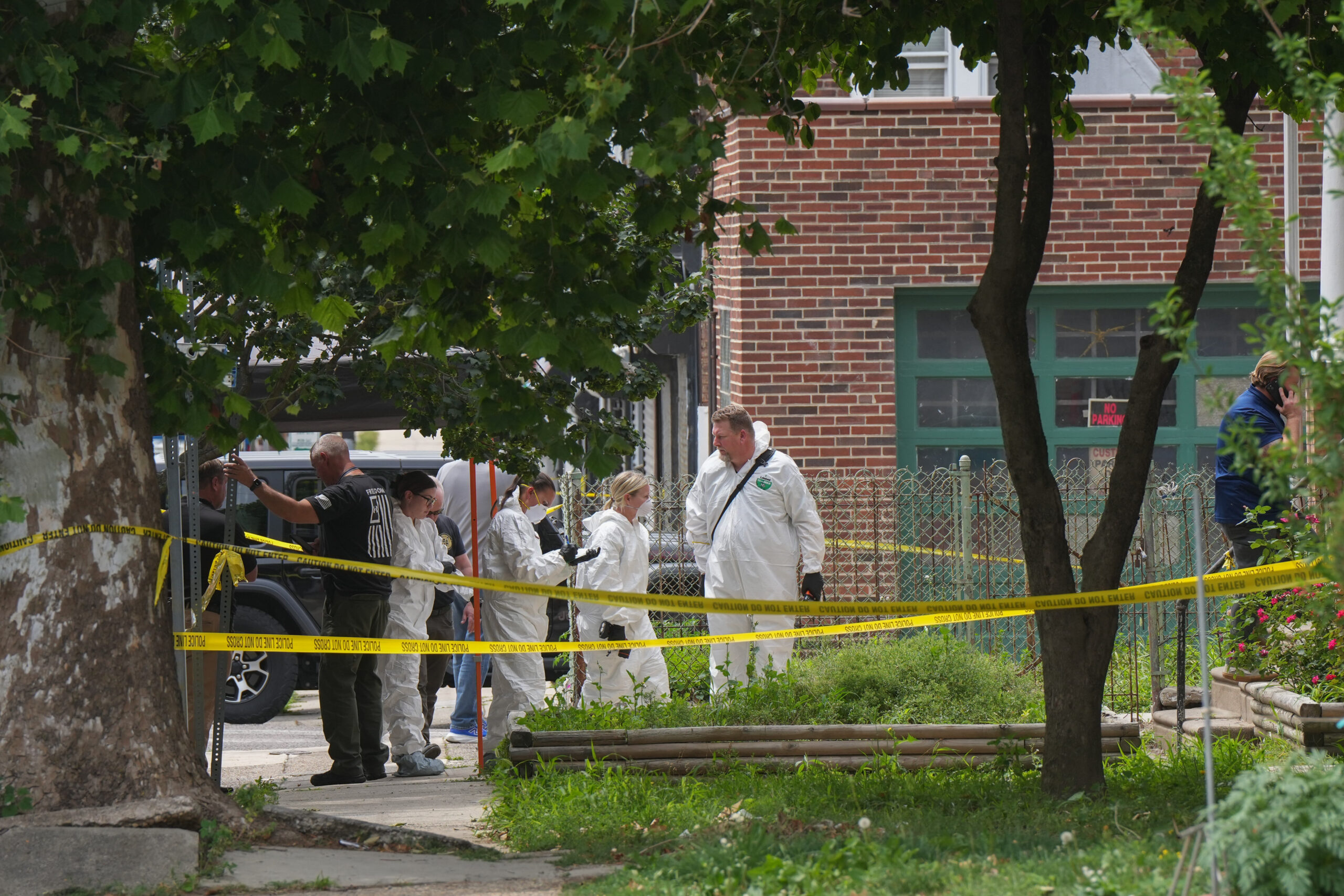
On Friday, law enforcement officials wearing hazmat suits were seen entering and exiting the property.
During Horsch’s arrest last week, a woman falsely identified herself using the name of a 38-year-old woman who had been reported missing in Kensington in February 2023, sources told The Inquirer. Deputy Police Commissioner Frank Vanore declined to identify the woman who had been reported missing, but reports indicate that Horsch’s father had been questioned in the 2016 disappearance of his ex-wife, Amy McHale, of South Philadelphia.
By late Friday afternoon, the investigation into Horsch’s home had not ceased, but a large FBI truck was spotted leaving the scene. Late in the day, the area had been largely left quiet, with the crime-scene tape on the home’s door serving as conspicuous evidence of the day’s events.
Staff writer Andrea Padilla contributed to this article.
During a weeklong search of a crumbling Olney twin, federal agents and Philadelphia police found guns and drugs, tubs of chemicals, a curious unsigned letter, and fake law enforcement badges as they were investigating the homeowner’s connection to at least two women who have been missing for years.
The unusual investigation began under similarly bizarre circumstances: U.S. Park Police encountered Eugene Albert Horsch, 44, acting suspiciously in his black BMW parked near Sixth and Market Streets on the morning of June 19, Deputy Police Commissioner Frank Vanore said.
As the ranger approached the car, Vanore said, he heard a woman in the backseat say, “You’re going to hurt me.” The woman then falsely identified herself to the officers using the name of a 38-year-old woman who had been reported missing in Kensington in February 2023, said the sources, who spoke on the condition of anonymity to discuss an ongoing investigation.
The woman, 39, later told investigators that she’d given the alias because she had open warrants for her arrest in ongoing drug cases, and that Horsch had previously made her fake identification cards in that name, telling her she could use it if she was ever stopped and questioned by police, the sources said.
And later, the sources said, she told officials that she did not know that missing woman — but feared something bad may have happened to her.
Eugene Albert Horsch, 44, of Philadelphia.
When police searched Horsch’s car outside Independence Hall, they recovered two firearms with obliterated serial numbers, as well as cocaine, fentanyl, and marijuana, according to an affidavit of probable cause for his arrest. What’s more, a source said, the car also contained a collapsible baton, a cattle prod, switchblade knives, and a fake U.S. Drug Enforcement badge with Horsch’s photograph under the name “Eugene Frederick Steiner.”
Horsch was taken into custody and charged with illegal gun possession and drug crimes. He’s currently being held on $500,000 bail at Curran-Fromhold Correctional Facility.
Officials with federal drug enforcement began searching Horsch’s home on the 400 block of West Chew Avenue alongside Philadelphia police on June 19.
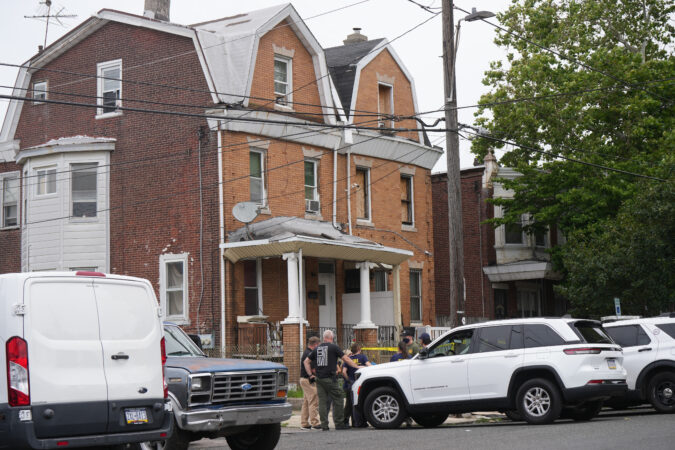
The house at the 400 block of W. Chew Avenue in Olney being investigated.
Vanore, in a news conference Friday, said the conditions of the boarded-up twin and materials recovered inside of it — including hidden compartments, drums filled with chemicals, and what appeared to be urns holding at least one of Horsch’s relatives’ cremated remains — only deepened the mysteries of the case.
And investigators soon found themselves confronting a second concerning thread: Horsch’s late father, R.C. Horsch, a convicted drug manufacturer and erotic filmmaker, had an ex-wife who was last seen at the Olney property in 2016 and has never been found.
Horsch’s attorney, Jerome Brown, said he did not have details about the ongoing police investigation.
Brown said R.C Horsch, who died in 2025, had been questioned in the June 2016 disappearance of his ex-wife Amy McHale, of South Philadelphia. She suffered from mental health and substance abuse issues, he said.
“This is much ado about nothing,” Brown said of the missing persons investigation. “They’re barking up the wrong tree.”
Inside Horsch’s home, investigators found another handgun, chemicals and bottles of liquid that forensics investigators in white hazmat suits were still working to identify on Friday, Vanore said. There was also a 55-gallon drum with connections to waterlines leading into a hole in the ground, he said, and materials to grow marijuana upstairs.
Federal investigators also found a multipage and unsigned handwritten letter that described references to hurting unspecified people, and references to the serial killer Ted Bundy, according to an affidavit of probable cause to search the home that was obtained by The Inquirer.
“Acting on emotion is where problems occur. What I don’t think I told you was that the first time it was planned ahead of time. The threat was made before you know who came over and I already had a 2ft zip tie in my pocket and a drum set up,” the letter said, according to the affidavit.
According to the warrant, it went on: “I had been ready and waiting and I damn sure showed no hesitation. And it was fun.”
Law enforcement sources said investigators were working to verify the authenticity of the letter, who wrote it, and whether it was meant to serve as a portion of a novel or screenplay. Horsch’s father published several works of fiction with masochistic themes, including one described as an “autobiographical memoir of a caring, empathetic serial killer.”
Police also found bank cards in the name of the woman who went missing in 2023, and also recovered what appeared to be a death certificate for another woman who died last year, the document stated.
Vanore said no human remains were found inside the home.
Forensic experts from the FBI are now analyzing the liquids and materials recovered in the home, he said.
Vanore said it wasn’t clear whether the chemicals were intended for a drug manufacturing operation or another purpose.
“We just don’t know what he’s doing, if he’s producing something, if he’s making something, if he’s irrigating something, we don’t know,” Vanore said. “I’m not a chemist, but from what I’ve been told … they could have been explosives.“
And, he said, it was too early to say whether the evidence would speak to any of the missing person cases tied to the property. He declined to identify the woman who had been reported missing in 2023 and did not answer questions related to the ongoing investigation into McHale’s disappearance.
“We’re certainly going to look into the activities that went on at that house,” he said.
Investigators on W. Chew Avenue.
News reports of the search of the Horsch home reopened wounds for McHale’s family. Gloria McHale said her daughter struggled with mental health issues and a drug addiction, and was married to R.C. Horsch for several years before disappearing June 14, 2016.
In an interview Friday, she said when police questioned R.C. Horsch at the time of her daughter’s disappearance, he said he last saw McHale drinking vodka before he went to bed, and that when he woke up, she was gone.
“I knew that wasn’t right,” McHale’s mother said. “She wouldn’t disappear. She had a daughter and grandkids. Her daughter was about to get married.”
Prior to his arrest last week, Eugene Horsch had a criminal history that included at least 10 other arrests for drug possession, dealing, assaults and drunk driving. He was sentenced to four to eight years in prison after police discovered $1.9 million worth of cannabis inside the Chew Avenue home in 2013, court records show.
He was arrested again in May 2025 for possession of marijuana and amphetamines and handed three years’ probation.
Then, in March, he was charged with aggravated assault after police said he stabbed a man in the stomach at Eighth and Market Streets. Prosecutors withdrew the charges in May after a witness failed to appear in court, court records show.
Since his release from jail, he appeared to be living back at his rundown home on Chew Avenue, a property that city inspectors cited as vacant and unsafe in recent years and that neighbors described as an increasingly off-putting presence on the block.
On Friday morning, anxiety swirled along the typically quiet residential neighborhood, about a mile from the Montgomery County border.
A security camera mounted on Horsch’s home between the boarded-up windows on the upper floors looked out over an overgrown yard where at least a dozen local and federal agents collected and tested evidence into the late afternoon.
Sid Brunson, a construction worker who lives nearby and occasionally cut the grass in front of Horsch’s house, said Horsch often had women who appeared to use drugs at his property. A fire broke out on the upper floors of the property several months ago, he said, which led to plywood covering the windows.
He described his neighbor as a “quiet” and “real jittery” man who kept to himself.
“He always had a nice shirt on like he was going to the office,” Brunson said, “but he never gave you enough time to talk because he was always rushing.”
Staff Writers Ryan W. Briggs, Samantha Melamed, Brett Sholtis, Michelle Myers, Isabel Maney, Andrea Padilla, and Jesse Bunch contributed to this article.
A U.S. park ranger last week conducted what seemed like a routine traffic stop near Independence National Historical Park, approaching a black BMW that was parked in front of a fire hydrant and asking to speak with the driver.
But just moments into the encounter, the ranger discovered a series of alarming pieces of evidence inside the car, according to a police report obtained exclusively by The Inquirer: switchblade knives, drug materials, a cattle prod and, eventually, two loaded guns.
The car’s occupants, too, were displaying troubling behavior, the report said — a woman inside said the driver was going to hurt her. And she then produced a fake identification that included her photo, but had the name of another woman who had been missing for three years.
The episode kicked off what has since become a weeklong investigation into the car’s owner and a variety of unsettling materials police have since found in the man’s Olney rowhouse.
And the probe has only intensified in recent days, growing to include Philadelphia homicide detectives, FBI agents specializing in chemical analysis, and unsubstantiated rumors spilling across social media about corpses being found in a basement.
Officials said Friday that they had no indication that Eugene Albert Horsch, 44 — the man who owns the BMW and the home in Olney — had actually stored human remains in his house on the 400 block of West Chew Avenue. But Deputy Commissioner Frank Vanore cautioned that the investigation remained ongoing, and that law enforcement agents were examining a host of unusual evidence connected to Horsch and his home.
Horsch, in the meantime, remains jailed on gun and weapons charges that were filed after his initial encounter with the park ranger last Friday.
The police report obtained by the Inquirer, as well as the affidavit of probable cause for Horsch’s arrest, gave this account of how that episode unfolded:
Around 8 a.m. on June 19, a park ranger patrolling the area noticed Horsch’s BMW stopped on Sixth Street in a restricted area, and the ranger walked up to the car to speak with the driver.
When Horsch rolled down his window, the ranger heard a woman inside the car yell out that the man inside was going to hurt her. The ranger also noticed signs of potential drug use by the occupants of the car, including a butane lighter and tweezers, and he asked both people in the vehicle for identification.
The woman then provided an ID that had her photo but the name and other details of a woman who had been reported missing several years ago.
And when the ranger asked Horsch to step out of the car, he noticed Horsch had scissors, a switchblade knife, and a glass drug pipe. The ranger’s partner then searched the car and found more troubling signs under the floorboards: two loaded firearms.
The rangers then handcuffed Horsch and the woman, but Horsch told police the guns were not hers. He also then said he had crack cocaine in a compartment near his steering wheel.
Both Horsch and the woman — whom The Inquirer is not identifying because she has not been charged with a crime — then began hyperventilating, and were taken in separate vehicles to Jefferson Hospital.
Officers continued searching Horsch’s car and found more apparent drug materials, a baton, a cattle prod, another knife, and fake credentials that purported to identify Horsch as an agent with the Drug Enforcement Administration.
After being released from the hospital, Horsch and the woman were taken to DEA headquarters. Horsch declined to speak with investigators.
The woman, however, said she’d met Horsch a few months ago, and provided enough details about their interactions at his house that investigators applied for a search warrant.
Vanore, of the police department, said investigators were continuing to sort through a mix of guns, drugs, chemicals, and even urns they’d found inside — including during searches Friday.
The possibilities of why such materials could have been on hand include drug manufacturing, explosive production, or other activities, he said, adding: “We’re certainly going to look into the activities that went on at that house.”
A 50-year-old Camden man is dead after being shot on the city’s east side Thursday night, law enforcement said.
Police responded to reports of a person shot on the 300 block of Morse Street around 10:20 p.m., according to a joint statement from the Camden County Prosecutor’s Office and Camden County police.
Officers found Cornelius Smith, 50, lying in the street with a bullet wound. The Camden resident was transported to Cooper University Hospital, where he was pronounced dead about 10:46 p.m., officials said.
No arrests have been made. The investigation into the killing is continuing, police said.
Smith’s killing was the third fatal shooting in Camden this month.
Around 12:20 a.m. on June 9, police responded to a report of a shooting in the 200 block of Morse Street and found Luis J. Bonet, 24, of Camden wounded by gunfire. He was pronounced dead at Cooper University Hospital a short while later.
The following day, Eric Irizarry, 45, was charged in connection with Bonet’s death with first-degree murder, second-degree unlawful possession of a weapon, and second-degree possession of a weapon for an unlawful purpose.
A week earlier, a fatal shooting in Camden, police said, was tied to a multi-vehicle crash in neighboring Pennsauken.
While responding to a shooting on the 3300 block of Westfield Avenue on June 2, police discovered multiple shell casings and an unoccupied vehicle that had been struck by gunfire, officials said.
A few minutes later, Pennsauken police responded to a crash involving five vehicles at Drexel Avenue and Route 130 in Pennsauken. One of the vehicles involved in the crash had been struck by gunfire and the driver, later identified as Izaiah Minzy, 36, of Westville, had been shot.
Minzy was taken to Cooper University Hospital, where he was pronounced dead at 8:11 p.m.
Six people in the other cars involved in the crash sustained minor injuries.
The prosecutor’s office has not announced any arrests in the case.
The violent June comes after Camden experienced a record year in 2025 with its lowest recorded homicide total in four decades and its first homicide-free summer, police said, in 50 years.
Camden recorded 12 homicides last year, down from 17 in 2024, and saw an overall 6% drop in violent crime compared with the previous year, including a 32% decrease in sexual assaults and a 12% decrease in robberies, according to police.
The decline came more than a decade after the city’s police department was disbanded in 2013. Since then, the department’s successor, the Camden County Police Department, has taken a new approach to community policing that includes pairing social workers with officers and supporting programs designed to help at-risk youth.
Homicides have dropped by 82% since 2012, the last full year of the former police structure. During that time, the city has also invested heavily in public spaces and infrastructure, including $100 million for parks and street repaving.
Earlier this month, U.S. Sen. Cory Booker (D., N.J.) visited the department’s headquarters alongside Camden Mayor Victor Carstarphen and Camden County Commissioner Director Louis Cappelli Jr. to get a firsthand look at some of the advanced tools and training methods police have utilized in recent years.
Booker is promoting federal legislation designed to help other law enforcement agencies adopt similar technology, like automated license plate readers, live cameras, drones, and more, which Camden County Police Chief Gabriel Rodriguez has said contributed to the reduction in crime across the city.
Officials asked that anyone with information about any of the recent shootings contact the Camden County Prosecutor’s Office Homicide Unit or the Camden County Police Department. You can also submit anonymous tips online.
Nearly 1,200 nurses at Jefferson Einstein Philadelphia Hospital this week ratified a contract that includes raises and additional staffing at the Logan hospital.
The nurses, part of the Pennsylvania Association of Staff Nurses and Allied Professionals union, reached a contract agreement with Jefferson Health officials after authorizing union officials to call a strike last week.
Jefferson officials said in a statement that the three-year contract “reflects a thoughtful and collaborative approach, balancing the financial realities facing healthcare organizations today with our ongoing commitment to invest in the communities we serve.”
Nurses had called for assurances that the hospital will not close departments; the health system announced plans earlier this year to close several pediatric outpatient clinics that are staffed by non-union nurses.
As part of the new contract, union officials said in a news release, the hospital will add staff to behavioral health units. And a committee of nurses and nursing directors must agree with any plans to reduce staffing levels in any hospital department.
The union negotiated wage increases of 10% to 14% over the course of the three-year contract. In addition, nurses who work weekends will also see higher pay rates to retain staffing levels on weekends.
The hospital also agreed to continue contributing to nurses’ pensions, and cannot “negatively impact” sick and vacation time. The union said Jefferson employees will also save money on health insurance costs thanks to changes to pediatric-care coverage.
“We’re trying to make Jefferson Einstein a more desirable place to work by enhancing our benefits,” said Jyll Kurczewski, a registered nurse in Einstein’s emergency department and the Einstein union’s co-president, in a statement.
“There are many healthcare networks in the area where RNs can choose to work. We want them to want to be at Einstein and to stay at Einstein.”
A Jefferson spokesperson said that wages and benefits in the contract are “consistent with Jefferson’s compensation philosophy and include the support we provide to all the dedicated professionals who deliver exceptional patient care every day.”
It’s been a long time coming, Matthew Mckena reflected. There were hiccups in the process. But by midday Friday, he was officially a U.S. citizen, in time for the country’s 250th birthday, and welcomed by Gov. Josh Shapiro, a George Washington reenactor, and even a bald eagle.
“It just became a battle of perseverance, but also we’ve come so far,” he said. “The hope in itself is also in the waiting, and so it’s now coming in full circle. It’s just unbelievable of having waited for so long for something, and then finally having it.”
Mckena, 21, was one of 63 people from 17 counties to take their oaths as new citizens in Valley Forge on Friday. For many of them, who ranged in ages 18 to 87, the day was a culmination of years of effort and lives they’d built in the country.
Mckena’s siblings were born in the United States, before his family moved back to Kenya, where he was born. When he was in high school, his family returned to the U.S. He’s now a college student pursuing a degree in mechanical engineering.
“[There are] so many opportunities that have been afforded with this move to be at a place where it’s so easy to access education infrastructure,” he said.
New citizen Helene Hartmann Dirani with her 3-year-old daughter Victoria are greeted by Gov. Josh Shapiro as he welcomes 63 new citizens from 17 countries at the historic Founding Forward in Phoenixville.
Helene Hartmann Dirani, 42, has called a few nations home: Originally from Kazakhstan, she moved to Germany at 13 years old, and then studied in Austria. She later met her now-husband in the United States. After years of long-distance dating, they settled down, and she moved to the country 13 years ago. Three children later, the ceremony felt like a special moment for Hartmann Dirani.
“Being with my husband and my children, and settling down is really what makes it so special,” she said.
The naturalization ceremony was held one week before America’s Semiquincentennial in historic Valley Forge. Chester County Court of Common Pleas President Judge Ann Marie Wheatcraft called the new citizens’ attention to that legacy.
“Valley Forge reminds us that citizenship is not simply inherited, it is claimed often at a great cost, and many of the many of us take that for granted. You understand better than most,” she said. “You chose America. You worked hard for this. … Bear with us your gifts, your culture, and all that makes you unique.”
Rohan Bakshi talks about becoming a new citizen before Gov. Josh Shapiro welcomed 63 new citizens from 17 countries at the historic Founding Forward in Phoenixville on Friday, June 26, 2026.
America has always been “a land of dreams” for Rohan Bakshi, 45. He came to the country from India in 2012, and has felt a part of the country. He built a life, family, and career here. After so many years, this was a “dream come true,” he said.
“This is the best country to live in,” said Bakshi, whose wife will be sitting in his seat soon, as she pursues her own citizenship. “I’ve seen other countries as well. It’s a privilege to be an American citizen.”
Lina Zhang, 41, felt emotional as she waited to take her oath. Roughly 14 years ago, she moved from China to the United States. In the beginning, her English “sucked,” she said. But she learned fast: attending GED classes, using her translator app to translate English to Chinese, and then translating back to English, so she could take her exams.
Her hard work earned her some of the highest marks her teacher had seen in years, she said. She went on to college, majoring in accounting and minoring in finance, landing a job with a public accounting firm.
Surrounded by her family Friday, she was glad to be sitting at the ceremony.
“I’m proud of myself,” she said.
New citizen Lina Zhang poses with George and Martha Washington reenactors Randall Spackman and Karyrn Saece before taking the oath of citizenship with 63 new citizens from 17 countries at the historic Founding Forward in Phoenixville.
Speaking to the new citizens, Gov. Josh Shapiro recognized the work each person had put in to reach this moment. But, he warned: “As new Americans, your work is just beginning.”
Recalling Ben Franklin’s famous quote, “A Republic, if you can keep it,” Shapiro told them those words — “if you can keep it” — was their charge.
“Each successive generation of Americans have continued that work, caring for their neighbors, standing up for freedoms that our founding fathers fought for, taking an oath of citizenship, working in the halls of Congress, the halls of our state capitol, the halls of our county — that work now falls to each of you to be engaged American citizens,” he said.
New citizens got to visit with Noah the bald eagle from the Elmwood Park Zoo after some 63 new citizens from 17 countries took the oath of citizenship at the historic Founding Forward in Phoenixville.
After the ceremony, Mckena said, from his experience, a lot of people discount the value of American citizenship.
“There really is a high cost that a lot of people pay, and there really is a huge disparity in what democracy offers and what the rest of the world offers, and so really it’s a special opportunity,” he said. “People who already had it [should] really treasure and understand it. And for those who don’t, seek after it.”
This suburban content is produced with support from the Leslie Miller and Richard Worley Foundation and The Lenfest Institute for Journalism. Editorial content is created independently of the project donors. Gifts to support The Inquirer’s high-impact journalism can be made at inquirer.com/donate. A list of Lenfest Institute donors can be found at lenfestinstitute.org/supporters.
More funding for SEPTA and dozens of financially strained mass transit systems across Pennsylvania has beenon the back burner in this year’s budget debate, but it may get some more attention now.
“By dedicating a portion of skill game revenue to transportation, we can protect and strengthen transit services without placing additional burdens on taxpayers, while ensuring our transit agencies have the resources they need,” Republican State Sen. Frank Farry of Bucks County said Friday in a statement.
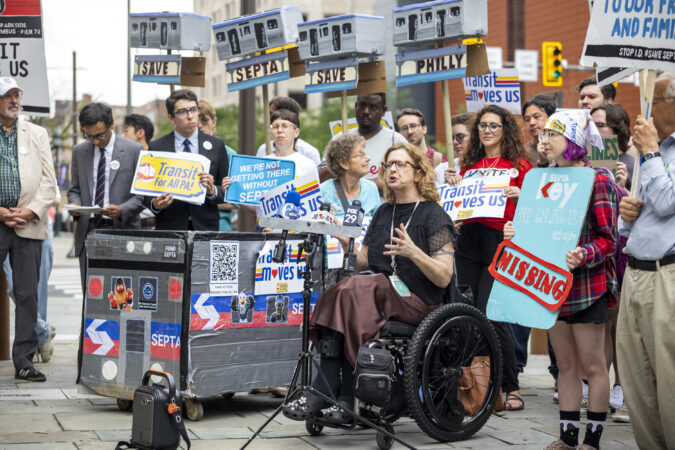
Transit advocates renewed what has become an annual public push for more money for SEPTA and fellow transit agencies at a news conference in front of the Fifth Street/Independence Hall Station — prompted in part by the court decision.
Farry issued the statement in support of that effort.
“I have the freedom to be able to come here, thanks to this elevator behind us, which was recently renovated,“ said Julie Rea, an organizing fellow for Transit Forward Philadelphia who uses a wheelchair and depends on the Market-Frankford El (now called the L).
“Without the long-term funding that SEPTA really needs, we’re not going to be able to keep the system accessible for all,” she said.
Last year, lawmakers and Gov. Josh Shapiro failed for a third time to reach agreement on his proposal to dedicate an increased portion of general sales tax revenue to consistently fund transit agency operations for five years.
Republicans, who control the Senate, did not want to take more sales tax revenue for transit, and the Democrats in charge of the House did not want to take up the GOP leadership’s counterproposal to use state money for infrastructure projects for operations instead.
Farry offered legislation in 2024 to regulate and tax skill games and dedicate 50% of the revenue to create a stable source of funding for public transit. The most optimistic assessments are that taxes on the games at or near the rate casinos must pay for their slots could generate up to $1 billion a year.
Taxing skill games has been discussed in budget deliberations for several years, though it never came together, in part because of differences of opinion in the GOP Senate caucus.
“Maybe the court decision will spur people to get their act together,” Farry, who is up for reelection in the fall, said in an interview. “We have a pathway.”
Meanwhile, this year, paratransit and shared-ride services are in trouble throughout the state and transit systems in Lancaster, Westmoreland County, and the Lehigh Valley are considering service cuts.
“We know that the rural-urban divide is manufactured, and that a public good, like transit, touches us all,” said Connor Descheemaker, statewide campaign manager for Transit for All PA.
Pennsylvania health officials and doctors on Friday said several people have been hospitalized amid a growing measles outbreak that has spread to six counties in the southeastern and central parts of the state.
At a news conference in Lancaster on the outbreak, which has sickened 72 people in the area since April, health officials stressed that vaccination was the best defense against the highly contagious disease.
Secretary of Health Debra Bogen said she could not comment on the exact number of people hospitalized to protect their privacy, as the number was still relatively small.
About one in 10 people who contract measles will require hospitalization, and three people were treated at hospitals in Lebanon County at the onset of the outbreak in late April.
Fahmida McGann, an infectious disease doctor at Penn State Health, said the health system’s Lancaster Medical Center has treated patients who needed to be hospitalized for several days with symptoms including serious electrolyte abnormalities and liver and kidney dysfunction.
Measles can infect up to 90% of unvaccinated people who come into contact with the disease, which can linger in the air for up to two hours.
Newborns and young children are at higher risk for serious complications, but adults can also experience them, especially if their immune systems are weakened. Doctors at Friday’s news conference said they had treated both adults and children in hospitals.
The state response
In the current outbreak, state officials have recorded 41 cases in Lancaster County, 20 in Lebanon County, six in Northumberland County, two each in Berks and Dauphin Counties, and one in York County.
Overall, the state has seen 84 measles cases this year, more than five times the cases recorded in all of 2025.
The outbreak is spreading largely among people who are unvaccinated, Bogen said.
“These are not numbers,” Bogen said. “They are children, parents, neighbors and friends.”
The health department is conducting contact tracing to detect cases, and working with local healthcare providers and community organizations to ensure residents have access to vaccines and accurate information on their efficacy and side effects.
(function() {
var l2 = function() {
new pym.Parent(‘HE_MEASLES2.html’,
‘https://media.inquirer.com/storage/inquirer/projects/innovation/arcgis_iframe/HE_MEASLES2.html’);
};
if (typeof(pym) === ‘undefined’) {
var h = document.getElementsByTagName(‘head’)[0],
s = document.createElement(‘script’);
s.type = ‘text/javascript’;
s.src = ‘https://pym.nprapps.org/pym.v1.min.js’;
s.onload = l2;
h.appendChild(s);
} else {
l2();
}
})();
Health providers in Lancaster have said they believe there were more cases in the area than officials were aware of. Bogen said the department was working with community members to build trust and ensure that cases get reported.
“People who are part of the community are really the key to the response, because we want people to know that if they call the department, we are here to help them,” she said.
The department has vaccinated more than 430 people at pop-up clinics in the region in the last two months, she said, and state-run health centers around Pennsylvania have administered more than 1,300 measles, mumps, and rubella vaccine doses this year.
“We’re not sitting back and just watching the virus spread,” Bogen said. “We will not slow down until this outbreak is over.”
It’s crucial that residents get vaccinated, she said, to protect people who cannot safely get the vaccine, like newborns and pregnant women, and people whose immune systems are weakened, like organ transplant recipients and cancer patients.
On Wednesday, the department recommended that physicians vaccinate infants and young children against measles early, beginning at 6 months, in affected areas. The same precautions should be taken by families with infants traveling to these areas.
The department has also hosted webinars for hundreds of healthcare providers across the state. Measles was considered eradicated decades ago, and many doctors practicing today have never seen a case, Bogen said.
Jeffrey Martin, a physician at Penn Medicine’s Lancaster General Hospital, said he last encountered a measles case 30 years ago, as a medical student in Colorado.
“I still remember that patient, a child with a high fever, red eyes, and the classic rash we learned about in textbooks. At the time it was an illness we were trained to recognize,” he said. “None of us imagined that one day measles would become so rare that most physicians would go their entire careers without ever seeing a case.”
Now, he said, physicians in Lancaster must keep measles in mind when they’re treating patients with respiratory symptoms. The virus’s early symptoms include a fever, a cough, and a runny nose — similar to other respiratory diseases — before patients develop a telltale rash.
“It underscores the importance of being especially thoughtful about how we identify and respond to possible cases,” he said.
It’s also key for families to call ahead to doctors’ offices if they’re experiencing measles symptoms, so physicians can prepare to treat them without exposing other patients, Martin said.
Lower vaccination rates
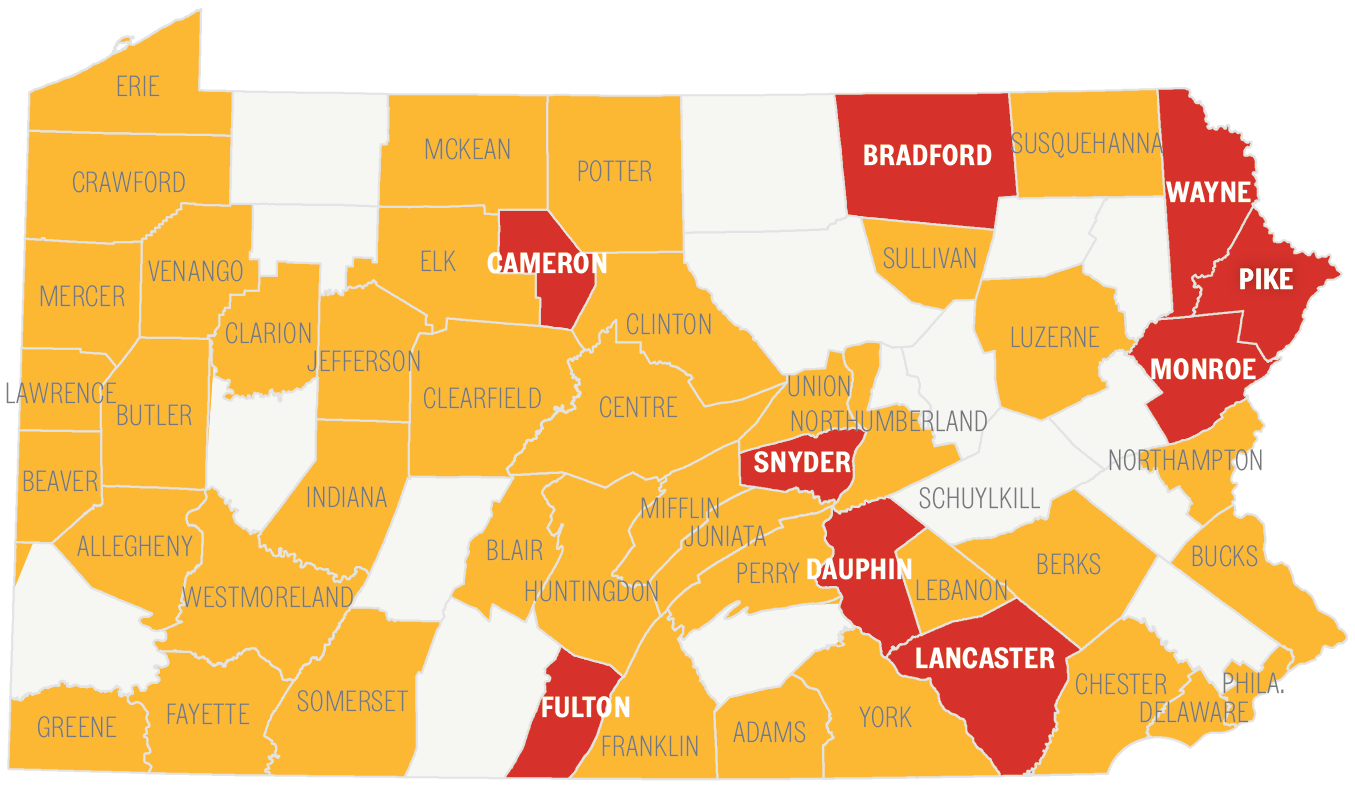
Vaccination rates among kindergarteners have decreased across Pennsylvania in recent years, and some counties affected in the current outbreak have particularly low rates, including Lancaster, where about 88.5% of kindergarten students are vaccinated.
Health experts say 95% of a community must be vaccinated to prevent the spread of the disease.
A map showing vaccination rates in kindergarteners for the 2024-2025 school year. Counties in yellow have vaccination rates between 95% and 90%. Counties in red have vaccination rates below 90%. To halt the spread of measles, at least 95% of a community must be vaccinated against the disease.
The state is working with schools to increase vaccination rates, Bogen said Friday.
Bogen said she hoped the new database would encourage schools with lower vaccination rates to reach out to healthcare providers to ensure students have access to vaccines.
“We want to make sure as a public health department that we’re ensuring that anybody who wants access to a vaccine has that,” she said.
“It is a defining characteristic of our community to help others, especially the most vulnerable, during times of crisis,” he said.
Residents now have an opportunity to help protect vulnerable people from measles by getting vaccinated, raising awareness about the disease, and helping doctors decrease exposures in care settings, he said.
“When vaccination rates are high, the virus has very little opportunity to spread. When gaps emerge, even small ones, measles can find a way back in because it is so contagious,” Martin said. “Ultimately what keeps measles rare is not luck. It’s the choices we make together to protect those who cannot protect themselves.”