Tag: topic-link-auto

  • Meek Mill joins the July 4 ‘One Philly: Unity Concert for America’ lineup

    Meek Mill joins the July 4 ‘One Philly: Unity Concert for America’ lineup

    The event billed as the nation’s largest free concert and biggest celebration of America’s 250th anniversary just got bigger.

    Meek Mill will join headliners Christina Aguilera, Jill Scott, and The Roots to perform at the “One Philly: Unity Concert for America” on July 4 on the Benjamin Franklin Parkway.

    ESM Productions and Live Nation Urban announced the addition of the Dreams and Nightmares rapper to the Parkway bill on Tuesday morning, hot off his Saturday night performance at “Lit in AC,” a hip-hop festival featuring early 2000s bling-era rappers T.I., Eve, Shyne, Havoc, and Ms. Jade.

    Will Smith & DJ Jazzy Jeff; Kathy Sledge, lead singer of ’70s R&B girl group Sister Sledge; and State Property, the Philly hip-hop collective that includes Beanie Sigel, Freeway, Peedi Crakk, and Chris and Neef, are also scheduled to perform.

    While the bill includes mostly Philadelphia-area musicians — Aguilera grew up outside Pittsburgh — performers also include Seal, the Brit whose hit “Kiss From a Rose” still stops music fans in their tracks; Infinity Song, the Detroit-born soft rock and soul family; and Jordan Davis, the Louisiana-born country music singer.

    Comedian and part-time Media resident Wanda Sykes is hosting. Gillie da Kid and Wallo267 are also slated to make an appearance.

    The nearly seven-hour show will start at 5 p.m. and end just before midnight, with a fireworks finale to follow. Admission to the concert starts at 3 p.m.

    The “One Philly: Unity Concert for America” is presented by the City of Philadelphia and produced by Center City-based ESM Productions with executive producers Scott Mirkin, Shawn Gee (The Roots’ manager and head of Live Nation Urban), and Roots frontman Ahmir “Questlove” Thompson.

    Wawa is a sponsor of the concert, but the show is not part of Wawa Welcome America, the series of events leading up to the July 4 holiday, which this year will include concerts with Queen Latifah, Eve, Idina Menzel, and Pink Sweat$, among others.

    The “One Philly: Unity Concert for America,” according to the news release announcing the event, is “designed as a non-partisan celebration of unity, diversity, and democracy” that brings together “voices, perspectives, and performances that reflect the richness of the American experience across generations and genres.”

  • With win in Washington, socialists have momentum in urban America

    With win in Washington, socialists have momentum in urban America

    The biggest city in the country is led by a democratic socialist, and another is in the running to lead the second biggest. Seattle has a socialist mayor. And in 2027, a democratic socialist will almost certainly be taking the reins of the nation’s capital.

    With her convincing victory in the Democratic primary in Washington last week, Janeese Lewis George, 38, became the latest candidate to claim victory with the once-forbidden “S word” in her biography and an ambitious left-wing agenda, promising to harness the power of municipal government to tackle the costs and challenges of urban living.

    Tapping into frustrations about housing and the cost of raising children, Lewis George pledged to greatly expand childcare assistance, build tens of thousands more homes and expand rent stabilization. Her critics derided those promises as unrealistic; voters ate them up.

    “I think people were like, ‘I don’t buy that the status quo is all we can do,’” Lewis George said in an interview. Instead, she said, they thought, “‘I want to see leaders do something more than tell people what they can’t do.’”

    Lewis George, who in a city as blue as Washington is close to a lock in the general election, joins a vanguard of young democratic socialists, including the new mayors of New York City and Seattle. Some are formal members of the organized Democratic Socialists of America, some not, but all have won on platforms of robust government action, arguing that the older Democratic establishment has failed.

    Democratic socialists say that solutions to challenges like the rising costs of childcare and housing lie in community organizing and direct government action, not the free market or timeworn tax incentives. While they cast themselves more in the mold of a mayor from Stockholm than Leningrad, they do not shy from confrontation with business interests, whether that means private utilities or landlords, oligarchs or plutocrats.

    Not everyone running from the left in big blue cities has won, as losers of the most recent mayoral races in San Francisco and Philadelphia can attest.

    But socialist success indicates an ascendant left — a generational movement as much as a political one — might have considerably more room to run.

    “We’re seeing real opportunities open up here,” said Kurtis Hagans, chair of the DSA chapter in the Washington metro area. “It’ll be interesting to see how the Democratic establishment wants to move forward into the midterms.”

    Zohran Mamdani, 34, who twice beat Andrew Cuomo, the former New York governor, in his unlikely rise to the New York City mayor’s office, is in many ways the lodestar for the rising brigade of democratic socialist candidates. He unapologetically pledged in his inauguration speech to “replace the frigidity of rugged individualism with the warmth of collectivism.”

    He has since moderated positions in deference to the political realities of governing a city of 8 million. He retained Jessica Tisch, a relatively moderate billionaire heiress, as police commissioner and ceded significant policy control to her. He has backed away from his vow to give up unilateral control of the school system, and from his pledge to expand an expensive housing subsidy program.

    He has developed a strong working partnership with New York Gov. Kathy Hochul, a relative moderate in the Democratic Party, and he has struck up a surprisingly amiable relationship with President Donald Trump, despite once characterizing him as a despot. “Sewer socialism,” with images of an army of volunteers shoveling snow or squads of pothole fillers, has become as much a Mamdani calling card as his campaign promise of free buses.

    The act of governing is the big test for a movement propelled by idealism and bold promises, along with a disenchantment with the compromises that its followers believe are too often made by those in power.

    But fiscal constraints on municipal government can be strict, particularly in Washington, a federal enclave subject to extensive congressional oversight. And at a time when Washington’s finances are suffering from the impacts of federal job cuts as well as a lingering pandemic downturn, the city has had a hard enough time paying for the social programs already in place.

    “Especially at the local level, governing is a practical affair,” said Mary Cheh, a former council member who endorsed Lewis George’s main rival in the primary but acknowledged the appeal of her message.

    “There will be some change, I’m sure,” she said. “But it’s not going to be all that they hoped for.”

    The limits of idealism have inevitably led to compromise and, at times, friction.

    In Los Angeles, Nithya Raman, 44, a City Council member and a democratic socialist, is in a runoff against Karen Bass, the Democratic mayor who is running for reelection. Raman’s ascent in 2020 coincided with the Black Lives Matter protests that rippled through big cities across the country.

    Support for Raman in her first race that year, against an incumbent on the City Council, became a kind of social shorthand for progressive politics at a moment when flying a Black Lives Matter flag outside of a home was de rigueur among Los Angeles’ wealthy liberals.

    But in recent years, Raman, as a council member, has broken with the DSA on some issues, including how to alleviate Los Angeles’ crushing housing crisis. While she and her DSA-aligned colleagues have both sought protections for poor tenants, Raman has also backed more development-friendly housing policies.

    Up the coast in Seattle, Katie Wilson, a self-identified socialist but not a DSA member, has largely avoided the ideological battles many had expected after her upset victory in November.

    Tension between Wilson and a Seattle City Council that is more moderate has so far led to negotiations rather than conflict, as when she agreed to turn on newly installed security cameras in the city’s stadium district during the World Cup, despite her initial opposition.

    Like many of her fellow politicians of the left, Wilson has made housing a priority. She promised to open 500 new shelter beds or emergency housing units by the start of the World Cup but appears to have fallen short by more than 400. She has pledged to build 1,000 new units by the end of her first year and 4,000 by the end of her four-year term, a tall order.

    “I certainly have a learning curve, but I don’t want to portray myself as coming in with some kind of unrealistic idea that this would be easy,” she said in an interview last month. “There’s the way things have been done for a very long time, and it takes a very long time to change that. I’m not surprised at where we’re at.”

    But at a time when voters across the political spectrum feel like government has stopped working for them, the promises of a robust and responsive public sector have clearly resonated among voters, regardless of the fiscal or partisan realities.

    “When people see you deliver on the small things,” Lewis George said, “they trust that you can also deliver on the big things.”

    This article originally appeared in The New York Times.

  • Iranian president lands in Pakistan as US-Iran teams work to finalize a war-ending deal

    Iranian president lands in Pakistan as US-Iran teams work to finalize a war-ending deal

    ISLAMABAD — Iran’s president arrived in Pakistan for talks Tuesday with officials who have been mediating negotiations between Tehran and Washington on a permanent end to the war in the Middle East, even as discrepancies emerged on what had been agreed so far and violence broke out again in Lebanon.

    President Masoud Pezeshkian’s visit to Islamabad comes as technical teams were working on details of the deal following high-level negotiations in Switzerland on Monday led by U.S. Vice President JD Vance and Iran’s parliamentary speaker, Mohammad Bagher Qalibaf.

    In Tehran, Iran’s capital, Foreign Ministry spokesperson Esmail Baghaei told reporters that no visits have been scheduled for the U.N. watchdog — the International Atomic Energy Agency — to examine Iranian nuclear sites bombed by the United States last year. Vance previously said the negotiations in Switzerland won an agreement for the IAEA to inspect the sites.

    The IAEA has been in and out of Iran since Israel’s 12-day war in 2025, but has not been granted access to the bombed enrichment sites targeted by the U.S. at the time.

    Meanwhile, violence flared again in southern Lebanon as Israeli soldiers opened fire, killing two people. The reports of violence came after two days of calm following a ceasefire brokered on Saturday. Any renewal of heavy fighting could threaten the broader diplomatic talks, since Iran has demanded that a full truce in Lebanon be part of any comprehensive deal.

    Iran’s president makes his first visit to Islamabad since the war started

    President Asif Ali Zardari, Prime Minister Shehbaz Sharif and other senior officials received Pezeshkian upon his arrival in Islamabad amid tight security, according to Pakistani state media. Television footage showed Pezeshkian embracing Zardari and Sharif as they welcomed him.

    This is the Iranian president’s first visit since the conflict started with the U.S. and Israeli attack on Iran on Feb. 28.

    Pezeshkian and Sharif were to hold a joint news conference after their discussions.

    In the initial talks, marking the start of a 60-day diplomatic process that seeks to reach a permanent deal to end the Iran war, Iran and the U.S. agreed to create a “de-confliction cell” to address the fighting in Lebanon between Israel and the Iranian-backed Hezbollah militant group. The U.S. said negotiators also discussed “mechanisms” to ensure that the Strait of Hormuz, a key waterway for oil transit that Iran had effectively blocked during the war, remains open.

    Ahead of his meetings in Pakistan, Pezeshkian cautioned that “the effectiveness of the talks depends on full commitment to the agreed obligations and their precise implementation.”

    “Progress on this path will be measured by practical adherence to accepted responsibilities,” he wrote on X. “Statements outside the agreed text do not help advance the negotiations.”

    Iran says negotiation groups focused on sanctions relief, nuclear issues and more

    Iran suggested that the ongoing technical talks in Switzerland have led to the creation of specific negotiation groups, including those focused on sanctions relief, nuclear issues, reconstruction, and monitoring, according to the state-run IRNA news agency.

    The report quoted Kazem Gharibabadi, a deputy foreign minister leading the technical talks, saying that the countries involved also formed a contact mechanism over ships moving through the Strait of Hormuz and over the fighting in Lebanon between Israel and Hezbollah.

    It remains unclear whether the deconfliction cell being created will be enough to stop fighting between the Lebanese militant group Hezbollah and Israel, which occupies part of Lebanon and insists it must maintain a free hand to attack militants launching attacks into northern Israel.

    Israeli forces opened fire and killed two men in the southern Lebanese town of Nabatiyeh al-Fawqa on Tuesday, Lebanon’s state-run National News Agency reported, adding the pair were next to a bulldozer that was clearing the road at the time.

    Separately, the agency said Israeli troops fired on residents on the outskirts of the town of Hadatha as they were heading to carry out a burial in the town’s ceremony with a Lebanese army escort.

    There was no immediate comment from Israel.

    Discrepancy on Iran’s use of unfrozen funds

    Following the high-level talks in Switzerland, Vance had said if Iranian financial assets were unfrozen, they would be used to buy American-grown food.

    Vance said that the U.S. and Qatar would have approval over the process, but if Iranian money becomes accessible as sanctions are lifted, it “would actually go to buy American soy, American corn and American wheat for the benefit of the Iranian people.”

    However, Iran has no current demand for U.S. crops and Baghaei said on Tuesday that Tehran’s decisions on what to import would be based on “prices and quality.”

    “It is interesting that the philosophy and goal of the war, which was the destruction of the Iranian civilization and the collapse of Iran, has become enriching American farmers,” Baghaei said at the news conference in Tehran.

    Iran’s ambassador in Geneva, Ali Bahreini, also questioned Vance’s contention that the U.S. and Qatar would have to approve how Iran uses unfrozen funds.

    “Iran is the only country who decides what to do with those assets,” he told reporters.

    Netanyahu raises new questions over fragile Lebanon ceasefire

    Mediators Pakistan and Qatar said the cell would include the Lebanese government and would “ensure the adherence of the termination of military operations in Lebanon,” but Israeli Prime Minister Benjamin Netanyahu raised new questions late on Monday, saying his military still has “full freedom of action to thwart any direct or emerging threat to them or to the residents of the north.”

    Neither Israel nor Hezbollah is a signatory to the U.S.-Iran deal, and Netanyahu has vowed to keep his forces in southern Lebanon until any threat to Israel is eliminated. Hezbollah has refused to halt attacks unless Israel commits to withdrawing.

    When asked about Netanyahu’s comments, U.S. President Donald Trump later said “we’re going to take a look at it,” adding that he wouldn’t say what action he would take but that the situation would “get solved.”

    “I’m a problem solver, I get problems solved real fast, including with Bibi,” he said, using a nickname for Netanyahu.

    No Israeli airstrikes or shelling have been reported since Sunday, a day after a ceasefire was reached, and Hezbollah also has not claimed any attacks in what has been the longest halt in the fighting since the latest Israel-Hezbollah war erupted on March 2.

    Lebanon and Israel planned another round of direct talks in Washington on Tuesday, which are expected to focus on developing a plan for an Israeli withdrawal.

  • The U.S. healthcare system is an embarrassment. Americans need a public option. | Editorial

    The U.S. healthcare system is an embarrassment. Americans need a public option. | Editorial

    Long ago, when most Americans left the house for mass entertainment, they flocked to carnivals that crisscrossed the country to delight small towns and big cities. Shows typically included a barker whose steady stream of superfluous oratory enticed folks to spend their hard-earned cash on sometimes dubious performances.

    Too often today, our nation’s capital resembles that midway where a slick barker spouts enticements to assure people who want to believe what they want to believe that he will always give them what they want. That may be fine when the tickets sold are for harmless attractions, but what mostly seems for sale in 21st-century Washington is this country’s very soul.

    One glaring example of our current predicament is an embarrassingly disappointing healthcare system that fails to meet the needs of millions of Americans who can neither afford adequate medical treatment nor a health insurance plan to help them pay for a doctor or the cost of a hospital stay.

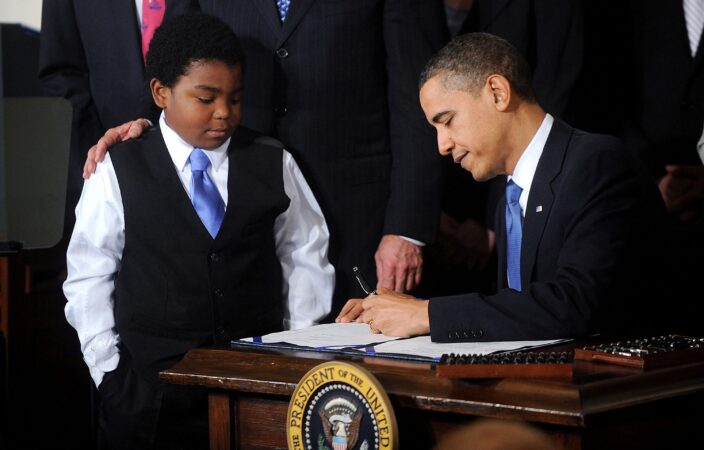
    Even as the Affordable Care Act (ACA) was being signed into law by President Barack Obama in 2010, it was clear it would need future adjustments. Unfortunately, that necessity has been ignored by President Donald Trump, who in both his first and current administrations has found it more beneficial politically to criticize rather than improve Obamacare.

    The ACA has helped cut the percentage of Americans without health insurance from nearly 16% in 2016 to 8% last year. That means more work needs to be done. But while Trump keeps promising a better alternative to Obamacare, he’s barely delivered on even the “concept of a plan” to improve healthcare access for all.

    Trump proposed an ACA alternative in January that he calls “The Great Healthcare Plan,” but it’s too weak to get the health insurance industry to become a better partner in extending coverage to more Americans. Trump’s plan would instead end the ACA subsidies that have helped millions of people pay for health insurance while cutting prescription drug prices and requiring insurance companies to do a better job reporting their costs and profits.

    A National Institutes of Health study concluded the Obama administration “bowed to the demands of the medical industrial complex comprised of hospitals, insurance companies, and drug companies” to help it make the ACA law because “it was not politically feasible” to get the bill passed any other way. Unfortunately, the feasibility of improving Obamacare has become even more remote under Trump.

    President Donald Trump holds a picture of the Lincoln Memorial Reflecting Pool during an event on health care affordability in the Oval Office in April.

    That’s a sign of the political strength of major health insurance companies, including UnitedHealth Group, Cigna, Kaiser Permanente, Elevance Health (the parent company of Anthem Blue Cross Blue Shield), and CVS Health, which acquired Aetna in 2018. Those firms have earned more than $9 trillion since the ACA was passed in 2010, and show no sign of wanting to ever voluntarily reduce any income derived from federally subsidized premiums paid by Obamacare customers.

    It’s time to stop the giveaway to health insurance companies and reconsider an idea that has failed past attempts to survive Washington politics. Americans need a public option similar to Medicare that would allow eligible participants of all ages to pay adjusted health insurance premiums based on their incomes. Switzerland, Germany, and the Netherlands have similar programs, and President Harry S. Truman proposed a public option for the United States more than 70 years ago, but Congress wouldn’t approve it.

    “Millions of our citizens do not now have a full measure of opportunity to achieve and enjoy good health,” Truman said in 1945. “Millions do not now have protection or security against the economic effects of sickness. The time has arrived for action to help them attain that opportunity and that protection.” That same speech could be made today, but this Congress and president seem even more in thrall to the powerful insurance companies that today employ more than three-fourths of all U.S. doctors.

    The American Medical Association, in a recent report, cited Washington’s kowtowing to corporate healthcare interests trying to maximize profits as a contributing factor to a current statistic that one in five physicians in the United States say they plan to retire within the next two years. “Many physicians find themselves practicing in direct conflict with their own values, the values that led them to a career in healthcare in the first place,” said the AMA report.

    With thousands of doctors abandoning their practices and millions of Americans still unable to afford health insurance, it’s time for a bolder, better healthcare system. This country is too prosperous to have so many Americans worrying themselves to death while trying to figure out how to afford decent medical care.

    This nation cannot afford our president’s weak ideas to fill huge gaps in America’s healthcare delivery system. Franklin Delano Roosevelt showed how it’s done in steering the passage of the Social Security Act in 1935. Lyndon B. Johnson got both Medicare and Medicaid through Congress 30 years later. And Obama opened the door for a successor to craft the next phase of the Affordable Care Act. It’s time for Trump to stop promising something even better and produce it.

  • Judge blocks bans on using food stamps for sugary drinks and candy

    Judge blocks bans on using food stamps for sugary drinks and candy

    WASHINGTON — A federal judge on Monday blocked the Trump administration from barring the use of food stamps to buy sugary drinks and candy.

    Since last year, the Agriculture Department has approved waivers in more than 20 states that allow them to bar participants in the federal Supplemental Nutrition Assistance Program from using their benefits to buy soda, energy drinks, candy or other prepared desserts. In March, recipients in five states sued the agency over the waivers, arguing that the limits were unlawful and confusing and made it difficult to manage health conditions such as diabetes.

    Judge Amy Berman Jackson of the U.S. District Court in Washington, in a 68-page decision, agreed with the recipients that the Agriculture Department did not have the authority to approve the waivers and also failed to abide by a notice period. Monday’s decision was a rollback of restrictions that officials have characterized as a major achievement of the Make America Healthy Again movement.

    Jackson wrote that while the law allows for the department to approve projects related to the administrative and logistical efficiency of the SNAP program, the agency essentially “purports to waive not just a mere administrative or technical obstacle, but the very definition of ‘food’ as it was laid down by Congress.”

    “The federal defendants and the states may have a genuine desire to improve the health of SNAP households by encouraging healthy choices at the store, and they can take lawful steps to meet those goals,” she wrote. “But what they cannot do is violate the law and their own regulations along the way.”

    The case was brought by the National Center for Law and Economic Justice, a nonprofit that advocates on behalf of low-income people, and Shinder Cantor Lerner, an antitrust law firm.

    Katharine Deabler-Meadows, a senior attorney at the National Center for Law and Economic Justice, said in a statement that the decision was “a major step in restoring essential food assistance to the millions of families that rely on SNAP nationwide.”

    The Agriculture Department did not immediately respond to a request for comment about the ruling. A spokesperson for the agency had earlier told The Associated Press that it “will not be backing down from the fight to Make America Healthy Again.”

    This article originally appeared in The New York Times.
  • Would you try this cheesesteak-flavored olive oil? We did.

    Would you try this cheesesteak-flavored olive oil? We did.

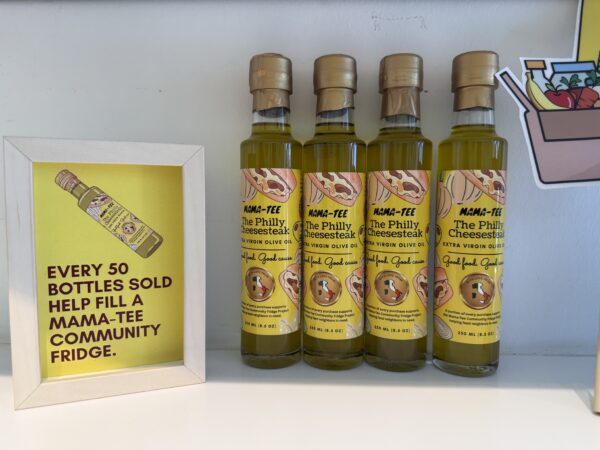
    “It tastes like oil from a real cheesesteak wrapper,” proclaims the slogan of Mama-Tee’s Philly cheesesteak-flavored extra virgin olive oil.

    Mama-Tees are community fridges, notable for their bright yellow paint jobs, that are scattered around Philadelphia. The cheesesteak oil ($19) is part of a fundraiser to combat food insecurity locally, along with three other flavored oils: Basil Bliss, Truffle Love, and Pepper Pleaser. Proceeds go to helping fill the fridges with food. So if the oil prompts cheesesteak-flavored burps, it would do so in the name of a noble cause.

    We at The Inquirer had to do a taste test.

    Is this merely a novelty or could it have legitimate culinary applications?

    The ingredients of the Philly cheesesteak-flavored oil intriguingly are only “extra virgin olive oil” and “onion flavor.” How could these two ingredients, neither of which involves cheese nor steak, encompass the nuanced experience of consuming an actual cheesesteak? The Inquirer sought to get to the bottom of these questions.

    The first round of cheesesteak experts was summoned.

    “It smells like a deli case,” said food editor Margaret Eby. “There is a cheesiness to it. It’s like that cheese oil that gets trapped in a charred, upturned pepperoni cup on your pizza.”

    “I think it should be called ‘hoagie oil,’” said food reporter Beatrice Forman.

    “It is like unwrapping a hoagie,” agreed critic Craig LaBan. “When you get the vinaigrette soaking through the wrapper. And it tastes like French’s fried onions, but burnt.”

    “I don’t know what it could be used for,” said food reporter Michael Klein.

    “It tastes like old fryer oil,” grimaced reporter Ryan Briggs. “It’s gravitating toward capturing that cheesesteak shop smell when they’re frying all the onions.”

    Reporter Max Marin poured the oil over his youtiao, a savory Chinese cruller, while at lunch at Lau Kee in Chinatown. “It’s got a chemical taste that makes me think there’s a number in one of its ingredients.” But does it make the youtiao taste like a cheesesteak? “It does not.”

    Inquirer reporter Max Marin pours Mama-Tee’s Philly cheesesteak-flavored oil on his youtiao at Lau Kee.

    Various Philly chefs were more open-minded in the cheesesteak oil’s applications.

    “I think the flavor is great,” said Juan De Ocampo, sous chef at Fairmount’s Manong, as he poured the oil onto a pile of fried shrimp chips.

    “I kind of like the cheesesteak oil,” said dancerobot’s Justin Bacharach. “It’s pungent and although I don’t cook with olive oil, I would use it to add a little funk and fat to a dish, like to dress an antipasto with South Philly vibes like sharp provolone and soppressata, and in the Japanese canon, I think it would be fun drizzled on top of a gyudon (beef and onions over rice) where you’d normally use mayu (a Japanese scorched black garlic oil).”

    “It feels really heavy,” said Melissa Fernando, the chef behind long-running pop-up Sri’s Company. “In Sri Lankan food, we mostly use coconut oil to cook, but I suppose I’d use this to sauté onions and garlic.”

    That perceived “heaviness” is easily addressed, according to 637 Sushi Club’s Kevin Yanaga, no stranger to unusual pairings. “I just need a lemon or something acidic with it. I could then use it on a fluke crudo. It’s rough and funky on its own, but salt and acid would help.”

    After careful consideration of these diverse opinions, the Mama-Tee cheesesteak oil had only one test remaining to undergo: a side-by-side comparison between it and the oil from an actual cheesesteak wrapper.

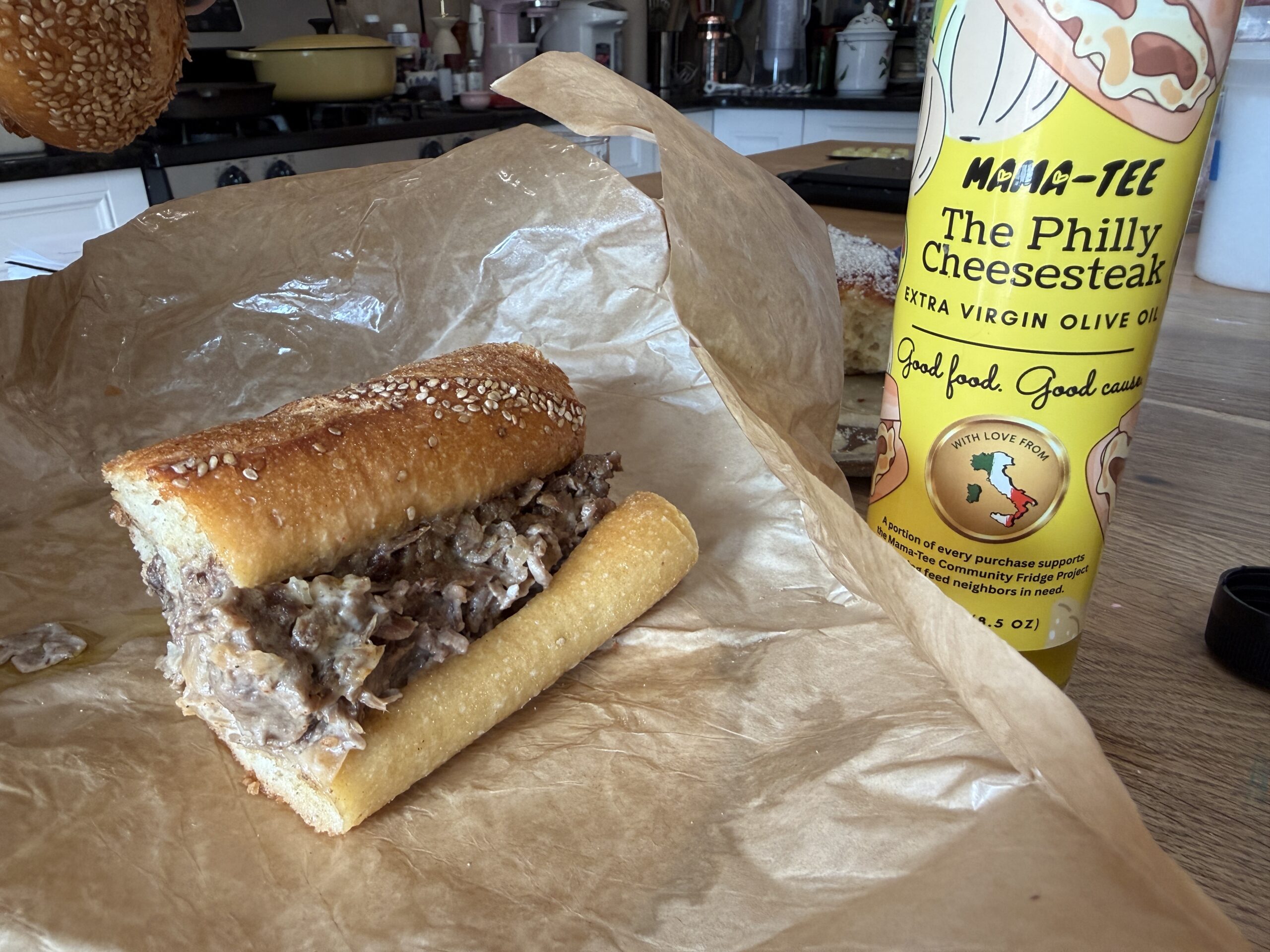
    A Del Rossi’s cheesesteak (wit onions, of course) was summoned. A wrapper was licked. A shot of cheesesteak oil was taken. The wrapper had the distinct advantage of beefiness. When applied directly to the cheesesteak, the oil oddly enhanced the cheesesteak’s flavor. And another thing the oil had in common with a real cheesesteak? Real cheesy, oniony burps after consumption.

    A Del Rossi’s cheesesteak and Mama-Tee’s cheesesteak oil, consumed in unison.

    Mama-Tee’s Philly cheesesteak oil ($19) can be purchased at Wegmans in King of Prussia, though more locations may be added soon.

  • Military members and veterans in Camden County can now get free legal services. Here’s what to know.

    Military members and veterans in Camden County can now get free legal services. Here’s what to know.

    Current and former military personnel can now receive free estate planning assistance in Camden County to help support their families’ futures.

    The Camden County Board of Commissioners launched the new clinic last month, one of several no-cost legal services available to vulnerable South Jersey residents.

    The clinic, currently scheduled monthly, gives active service members, veterans, and their spouses living in Camden County access to certain legal services at no charge. The county will provide a last will and testament, power of attorney, and an advance directive, which documents a person’s preferences for medical treatment in case they become unable to make their own healthcare decisions.

    Sixteen veterans are signed up for the first Veterans Will Clinic on Wednesday at the Camden County One-Stop Career Center in Cherry Hill Township, said Morgan Callan, the county’s external communications manager. There is no current cap for how many veterans can participate.

    The Camden County Office of Veterans Affairs is now accepting registrations for the second clinic, on July 29. Anyone interested should contact the office by calling 856-374-5801, or by visiting the office at 1 Collier Drive in Blackwood, part of the Camden County Lakeland Complex.

    Help for veterans

    Camden County has nearly 19,000 veterans, according to the most recent estimate available from the U.S. Census Bureau.

    The Camden County Office of Veteran’s Affairs has partnered with Susan Purvin, an attorney from Gloucester County, to help provide the services. Louis Cappelli Jr., one of Camden County’s three commissioners, said in a statement that he hopes everyone eligible takes advantage of the program.

    “Our veterans and servicemembers have sacrificed so much in service to our nation, so have their families,” Cappelli Jr. said. “The least we can do is help them get their affairs in order, giving them the confidence that their last wishes will be protected.”

    The cost to Camden County for the program is $50 per will, $25 per power of attorney, and $100 per hour for every legal information session, with the total cost varying based on how many people show up for the clinics, said Dan Keashen, the county’s public affairs director.

    Other counties in South Jersey provide similar services. All active military personnel and veterans in Gloucester County can receive assistance with a simple will, a legal document for those not looking to involve complicated estates or trusts in their end-of-life plans.

    About 20 attorneys recently volunteered for a free event in Cape May County that helped veterans and their spouses prepare a will, power of attorney, and healthcare directive free of charge.

    More free legal services

    You don’t have to be a veteran to find free legal services in Camden County.

    The Camden County Bar Association hosts Wills for Heroes, a small, volunteer-led clinic that provides free wills and estate planning documents to firefighters, police officers, and paramedics, and their spouses annually. The 2026 clinic, which took place in March, was full at 21 participants.

    Kara Edens Graser, the association’s executive director, said she hopes to run the same clinic next year.

    Camden County also offers free legal workshops, which cover the same services as those now available to veterans, for seniors and residents with disabilities aged 18 and over.

    Plus, about 300 attorneys volunteer on an as-needed basis for the Volunteer UP Legal Clinic, a Camden-based nonprofit that provides legal expertise to those who need it. The nonprofit spent more than $300,000 in 2024 to provide legal services for tenants, criminal record expungement, estate planning, and name changes, according to its 2024 tax filing.

    Volunteer UP also provides same-day eviction defense for tenants in Burlington, Camden, Cumberland, Gloucester, and Salem Counties, CEO Steven Salinger said via email.

  • The ‘demand is real’ for backyard cottages, in-law suites, and other ADUs, says a Philly-area builder

    The ‘demand is real’ for backyard cottages, in-law suites, and other ADUs, says a Philly-area builder

    Homeowners across the Philadelphia region want to build garage apartments, in-law suites, and backyard cottages on their properties.

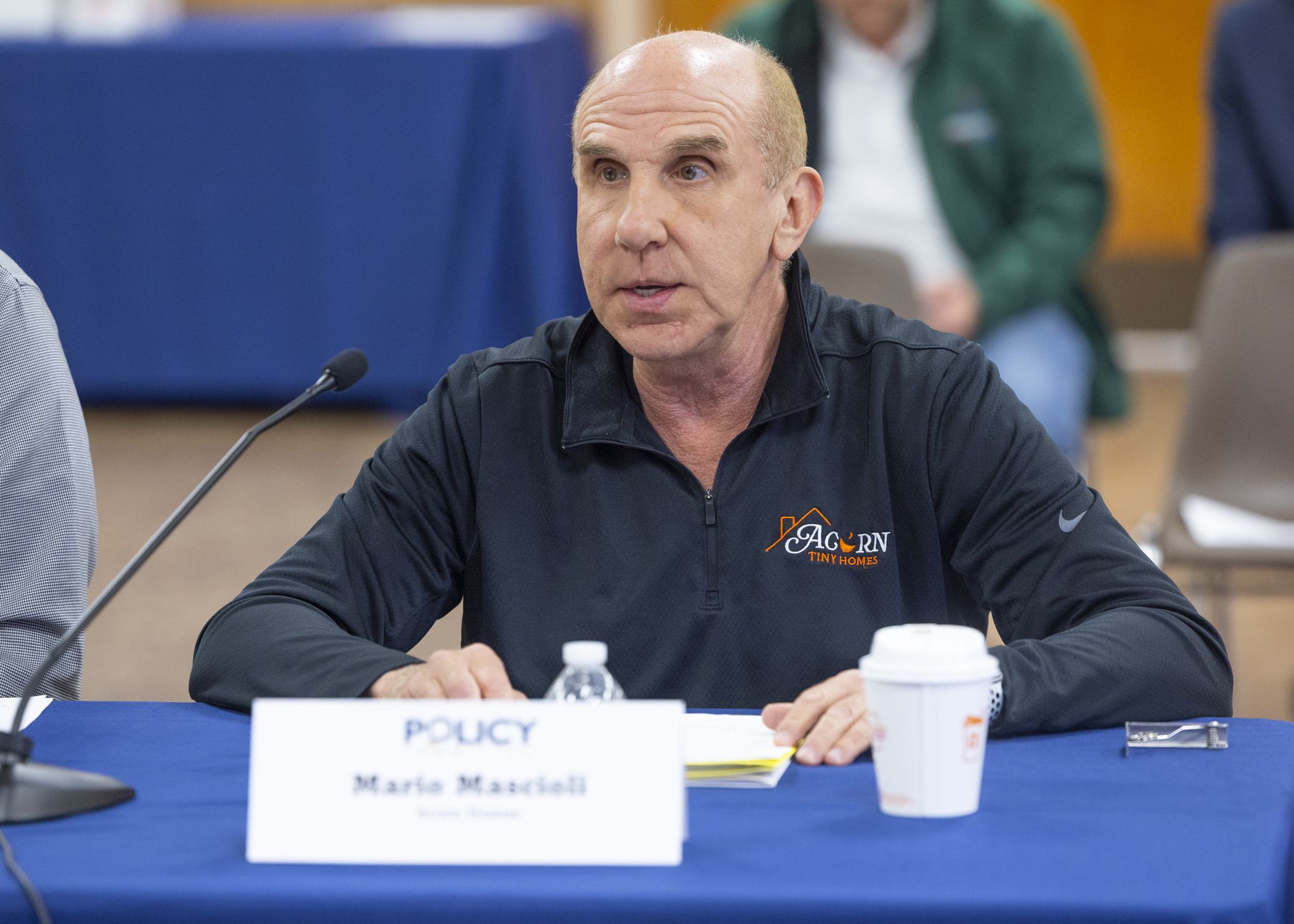
    Mario Mascioli, owner of Acorn Built Homes, said he gets hundreds of inquiries per month for these accessory dwelling units (ADUs), which have made up the bulk of Mascioli’s business since his company opened in late 2024.

    “The demand is real,” said Mascioli, who works across southeastern Pennsylvania and in Princeton. And builders like him are ready to create ADUs. But municipalities’ varying and often restrictive land-use rules often make that difficult.

    Pennsylvania lawmakers are currently considering legislation that would allow homeowners to create ADUs in places that are zoned for single-family houses without having to get special permission. The bill passed the state House earlier this month and is now before a state Senate committee.

    Allowing for the construction of ADUs is part of Pennsylvania Gov. Josh Shapiro’s plan to increase the state’s housing supply and provide Pennsylvanians with more affordable housing options.

    Mascioli has testified before state lawmakers to advocate for the loosening of restrictions for ADUs.

    “It would mean that homeowners that want these — which are plenty of them — would be able to get it done quickly, more economically, favorably,“ he said. ”It would be fantastic.”

    The Inquirer talked to Mascioli about the ADU landscape.

    This interview has been edited for length and clarity.

    Mario Mascioli, owner of Acorn Built Homes, testifies about accessory dwelling units at a policy committee hearing of Pennsylvania legislators on May 21, 2026.
    Why do people want ADUs?

    The three drivers for why people want them are: aging-in-place elderly parents; adult children that can’t afford rent or can’t afford to buy a home; and third, people want rental income.

    What types of ADUs do you offer?

    We build studios as small as 240 square feet. [But] most people want a space that has at least 500 square feet. Most opt for one or two bedrooms.

    We [also] do additions. We do garage conversions. We do conversions of basements.

    In many cases, we have to attach an ADU as an addition to a house because of the township requirements. And in many cases, we’re limited as to the features we can put into it, because of those requirements.

    What’s something that clients have asked for that they weren’t able to get because of local land-use rules?

    I’ll give you a real-time example. We start every project with what we call our “feasibility and scoping” phase. That takes about four or so weeks to dial in on what’s buildable from a structural, construction, architectural, and also an approvable perspective.

    We have a customer we’re in the final phase of that study with. They have a beautiful property, plenty of land. They wanted a detached ADU for the couple’s mother, who’s going to be moving up from Florida to take care of their newborn, [who is due] in December. In this case, we can’t do a detached unit without going through a variance.

    We also uncovered through our feasibility process that … if we were to extend the garage and build on top of it, that would require a variance.

    Third thing is there’s a floodplain that runs through the property. And any modification to the footprint of the property would also be a variance.

    Those are three separate variance processes, each of which would require attorneys and fees and zoning hearing boards.

    So what we’re left building [without zoning approvals] is to raise up the loft on the second floor of the garage, put some dormers in it to make it more spacious, and create a one-bedroom living space there — but without a full kitchen with built-in cooking facilities. We can only put a kitchenette in.

    That is very typical. That’s 90% of what we deal with as it relates to ADUs.

    What’s different about building an ADU vs. a typical single-family home?

    Basically, the red tape impedes or kills [ADU] projects before they start. And that is because there’s over 2,500 municipalities in Pennsylvania. Each with different zoning rules as it relates to ADUs.

    In some townships, you can build one with no issues. But if you step, you know, a mile over the line in any direction, it’s either banned entirely or there are so many restrictions and other requirements that it takes [a] very long [time], if at all, to get through zoning hearing boards.

    Permitting and the expense of the red tape can make many projects impractical.

    Why did you decide to go into the ADU business in Pennsylvania with the challenges you’ve described?

    If you look at things from a national perspective, 20 states have passed legislation like Pennsylvania currently has in its legislature.

    People want them. That’s about affordable housing. I thought and still believe that it would be inevitable that ultimately Pennsylvania would pass such legislation. And if we were here in advance of that, establishing ourselves in the market, we would benefit from that legislation being passed.

  • Every bottle of this Kensington-made NA spirit is packaged by hand. At local bars, it’s already a hit.

    Every bottle of this Kensington-made NA spirit is packaged by hand. At local bars, it’s already a hit.

    A non-alcoholic Philly spirits brand is finding early success by doing everything — from blending to bottling — by hand.

    Cult of Trees is a new line of alcohol-free aperitifs produced at Maken Studios in Kensington. Inside the sunny production space, founder Meredith Sheehy spends hours each week distilling homemade herb blends into a line of zero-proof cocktails that taste like fizzy spritzes.

    The brand’s three flavors include Hare Brain, which is akin to a cola-spiked negroni; Meadow Core, a citrusy and floral blend of red fruits; and Billy Goat, which tastes like rolling in a field of wildflowers thanks to a mixture of herbs, honey, and elderflower. Since sales began in January, Cult of Trees has been selling well at local grocery stores and bars, such as Solar Myth and Enswell, where the drinks are served straight or floated with sparkling water or cold brew.

    For Sheehy, who moved to Philly in 2022, the city is as much an inspiration for the brand as the ingredients themselves. After closing her Brooklyn-based Mezcal bar La Loba Cantina due to the pandemic, Sheehy began bartending at Philadelphia Distilling. Philly, she said, had a refreshing scene.

    “People will answer questions and pour tastes of curiosities on their back bars, with genuine excitement to share,” said Sheehy. “It’s a beautifully welcoming culture here.”

    From left: Hare Brain, Billy Club, and Meadow Core, Cult of Trees’s three flavors of non-alcoholic aperitifs. Bottles are sold at Riverwards Produce in Old City and Herman’s Coffee in Pennsport.

    Fascinated by distilling alcohol, yet increasingly conscious of her own dwindling consumption, Sheehy was inspired by the growing sober curious movement to start her own non-alcoholic cocktail brand.

    Fewer and fewer young people are building their social lives around drinking, and more zero-proof drink brands are available than ever. But, Sheehy noticed, most of them showcased the same styles on repeat — one-to-one spirits replacements like zero-proof whiskeys or gins, and spritzes as far as the eye could see. Many also weren’t transparent about where their ingredients came from.

    Sheehy wanted to create something that wasn’t just about emulating the experience of drinking alcohol. Abstaining “shouldn’t mean that you need to take away flavor or an interesting story,” she said.

    At Cult of Trees, each aperitif is made with ingredients sourced from Pennsylvania farms and requires a multiday routine of distillation, carbonation, and bottling. It’s an analog process that contrasts with that of large scale brands, which Sheehy said often rely on commercial flavor extracts — as opposed to dried botanicals or herbs — to quicken production and lower costs.

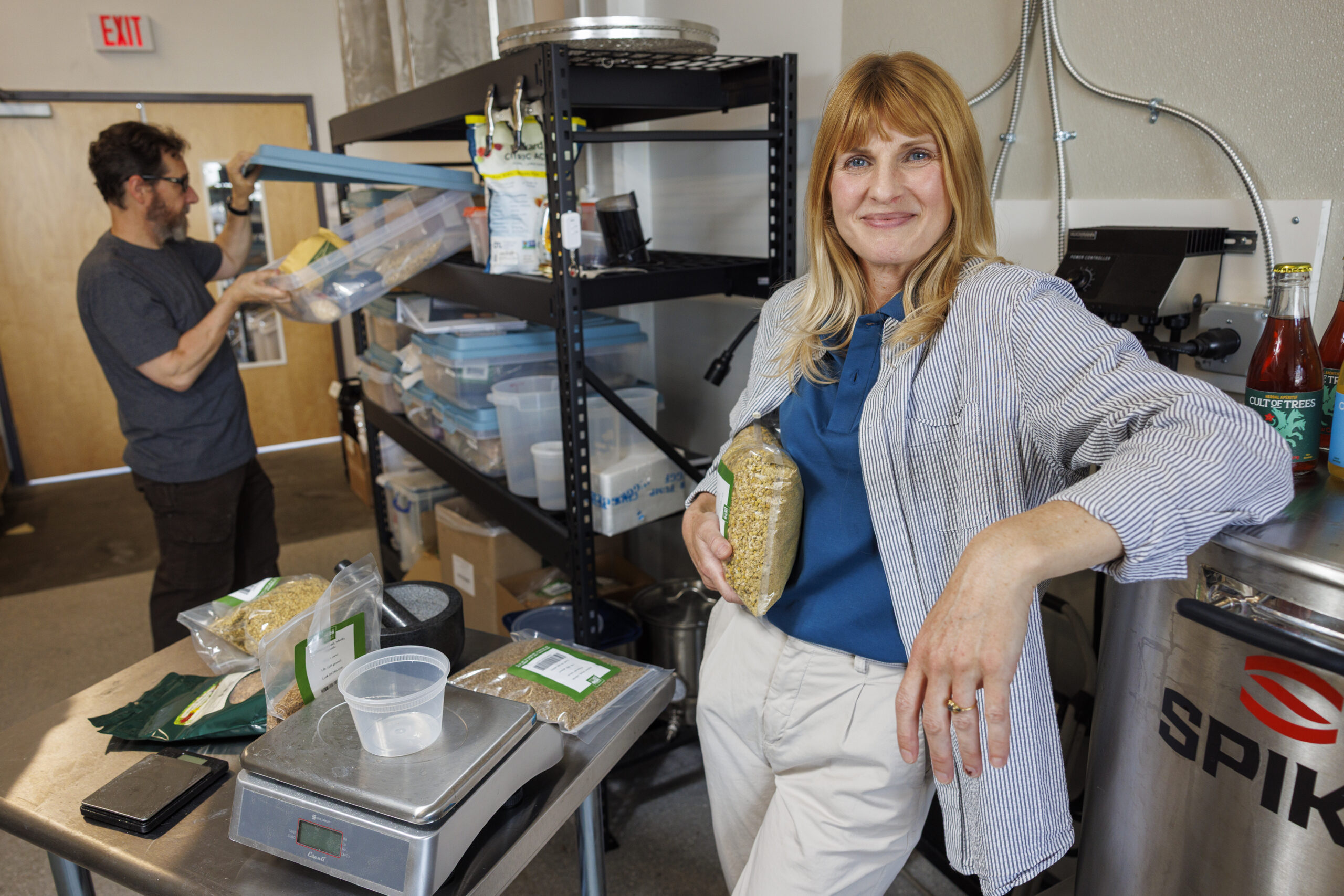
    Meredith Sheehy, owner of Cult of Trees, sprinkles caraway seed into a mortar and pestle to make one of the herb blends for her line of zero-proof spirits.

    Getting started, then getting set back

    While at Philadelphia Distilling, Sheehy became close with Jack Falkenbach, the expert distiller and legendary Philly bartender that died last year at 44. Falkenbach, she said, was always “willing to explain specialized process details at the distillery. We both liked deep-diving on things like acid phosphate,” she said. “I deeply trusted his style of drink making and technical know-how.”

    Falkenbach was among Cult of Tree’s earliest supporters, Sheehy said, and one of the first people she involved in building the company. Around this time last year, the pair was making test batches together; Falkenbach was focused on nailing the carbonation as Sheehy refined the packaging.

    Then the first real workday arrived. Falkenbach did not.

    Meredith Sheehy, owner of Cult of Trees, poses for a photo while preparing one of the herb bases for her line of zero-proof spirts, which is based at Maken Studios in Kensington.

    His passing, Sheehy said, was doubly “heartbreaking,” but launching Cult of Trees left little time to grieve. “I did what all business owners have to do,” she said. “You recover and pivot, or you don’t and you lose the idea.”

    Sheehy went on to launch the business with a single employee: Gordon Grubb, a veteran brewer who had been put out of work by Iron Hill’s sudden closures. Together, they make each batch of aperitifs.

    Hand-bottled and hand-carbonated

    Zero-proof spirits still require distillation to get the right flavors and mouthfeel, which is why many come with a higher price tag.

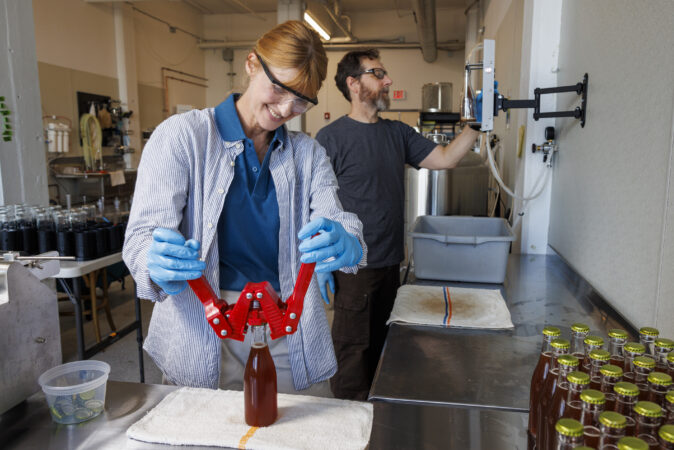
    Each batch of aperitifs takes at least three days to produce, Sheehy said, and begins with her macerating and boiling the original herb blends that serve as the base for each beverage. Distillation is the longest part of the make process and can take upwards of several hours. After, Sheehy and Grubb carbonate and bottle each beverage by hand.

    Hare Brain from Cult of Trees, a zero-proof aperitif that tastes like cola.

    A single batch yields only 18 to 20 cases, according to Sheehy. “It’s labor intensive right now,” she said, “but will start to get more turnkey as we grow and are able to incorporate more equipment.”

    Already, Cult of Trees can be found on the beverage menus at Solar Myth, Tulip Pasta & Wine Bar, Enswell, and the International Bar.

    “It’s a popular suggestion from our entire team when guests are looking for a unique and local NA option,” said Enswell manager Chelsea Boyer, who often pairs Hare Brain with Rival Bro’s Whistle & Cuss espresso. “The bitter nature and gentle carbonation of the Hare Brain pairs perfectly with the candied nuttiness of the espresso.”

    Meredith Sheehy, owner of Cult of Trees, caps a bottle of Hare Brain at her Kensington production facility. Each bottle of the non-alcoholic spirit is packaged by hand.

    Retail placements at Riverwards Produce, Herman’s Coffee, and Queen Village’s Moon & Arrow are also new, but a sign of growth.

    The drinks have been selling well at Riverwards’ Old City location, said CEO Dan Morgan, buoyed by an April pop-up where Sheehy poured samples for guests. “I think their great flavors and beautiful packaging will really help them stand out,” Morgan said.

    Cult of Trees production manager Gordon Grubb fills bottles of Hare Brain during the carbonation process at the brand’s Kensington studio.

    Sheehy is betting on the same. “In my opinion, consumers increasingly want transparency, local sourcing, and a story behind what they drink,” she said. “That’s what we’re trying to do.”

  • House of the week: A six-bedroom Victorian twin in University City for $689,000

    House of the week: A six-bedroom Victorian twin in University City for $689,000

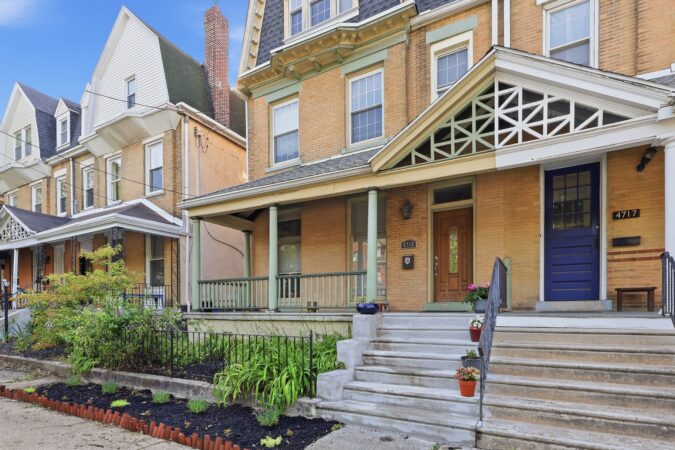
    The six-bedroom, three-bathroom twin in University City is just two blocks from where Emma Steiner was born. Still, it has given her and her husband, Joe Leonard, a totally new housing experience.

    Steiner, a psychotherapist, and Leonard, an attorney, had been renting in the Graduate Hospital neighborhood when they decided in 2013 to make the Victorian twin their first house.

    The living room. The home has hardwood floors.

    The open floor plan was unusual for the neighborhood, Steiner said, and Leonard “was blown away by the big old trees.” And she said both were impressed by the large windows at the front of the house.

    The couple and their two children, aged 10 and 7, will be moving three blocks away to a larger house with a bigger yard.

    “We’re staying in the neighborhood we love,” Steiner said.

    Kitchen
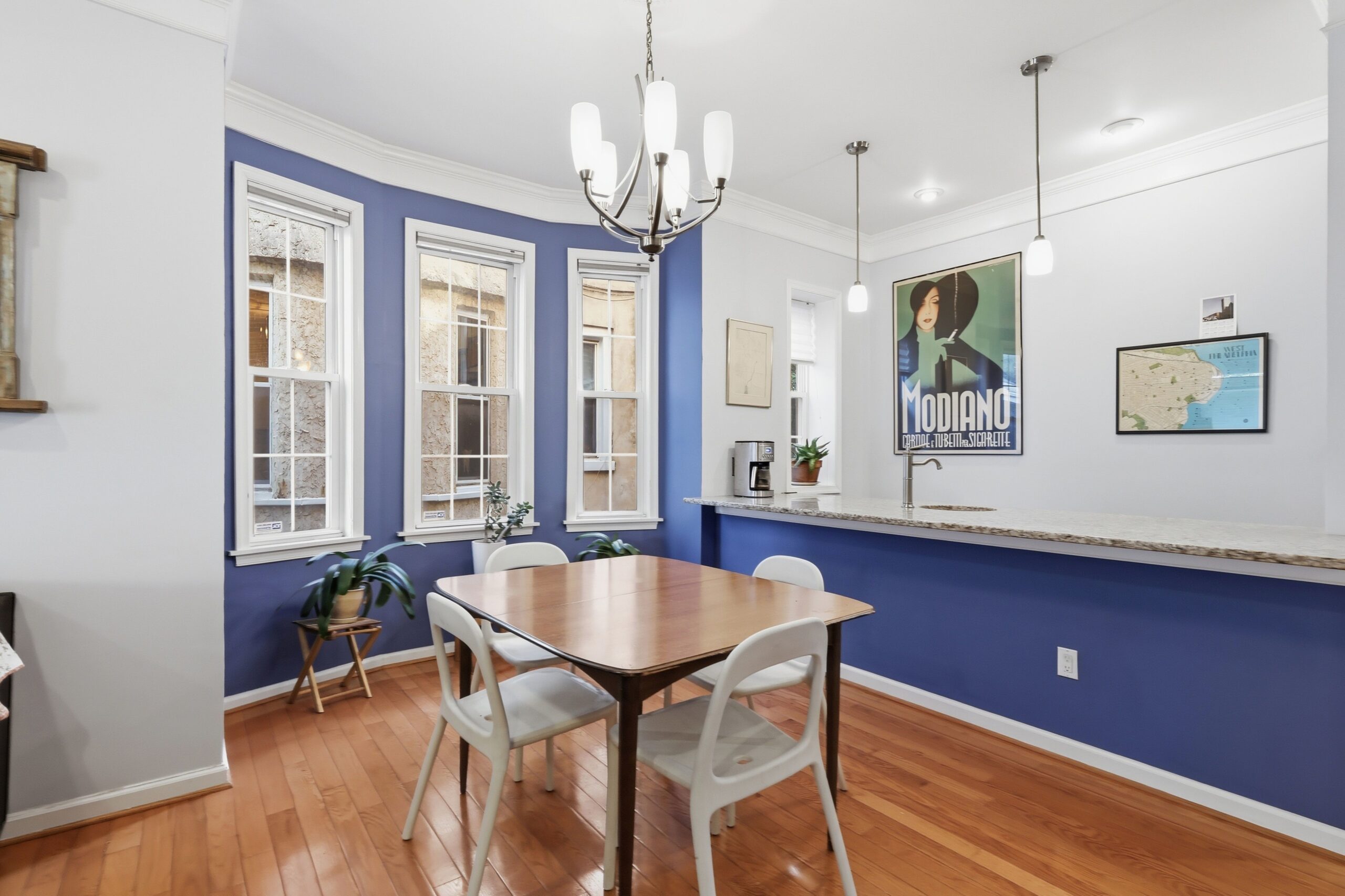
    Breakfast nook

    Their home had undergone a complete renovation in 2008, opening up the first floor with high ceilings.

    Steiner and Leonard replaced the flat roof and mansard roof last year and this year, adding a new skylight. And they replaced the porch steps and basement electrical panel.

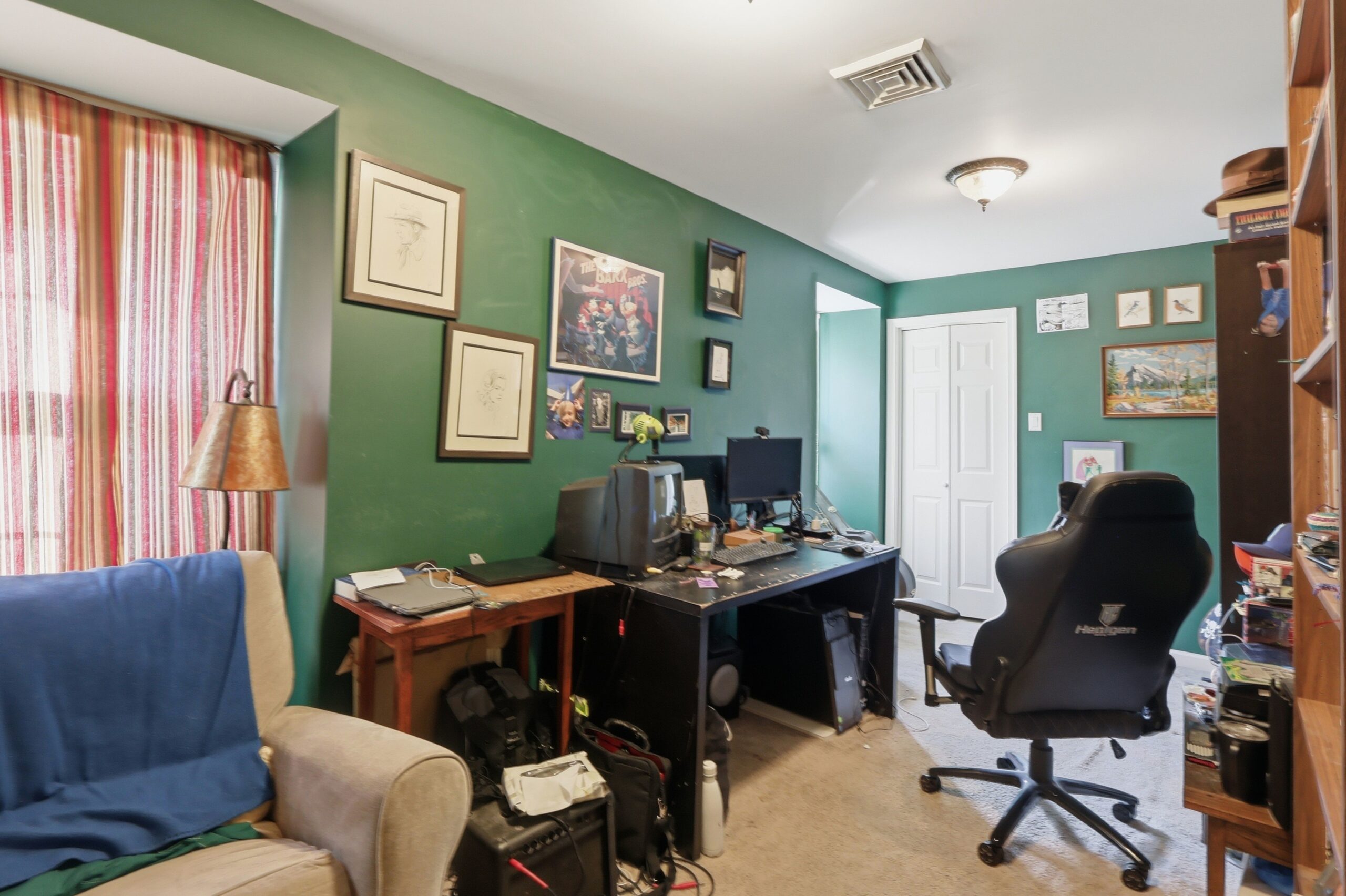
    Office

    Built in 1913, or perhaps a little earlier, the house has hardwood floors, central air, and is 2,760 square feet.

    There are three bedrooms on the second floor, including the primary suite and its en suite bathroom. One of the bedrooms is used as a family room.

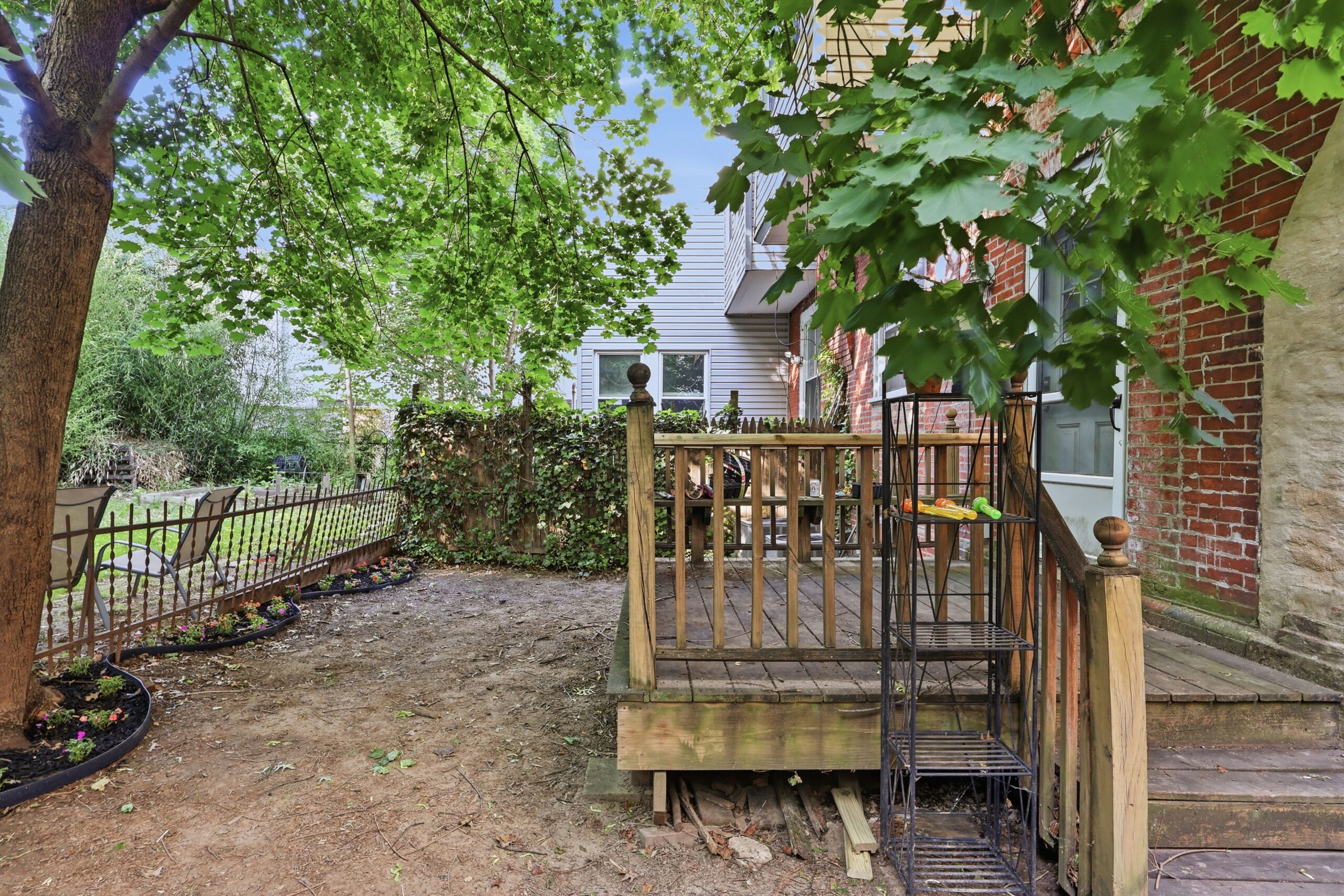
    Back yard

    There are three bedrooms on the third floor. The second and third floors each have a hall bathroom.

    The house is a short walk to Clark Park, the renovated Kingsessing Recreation Center, Baltimore Avenue stores, Children’s Hospital of Philadelphia, and Drexel University.

    It is listed by Asher Brooks Chancey of OCF Realty for $689,000.