Tag: U.S. men’s soccer team

  • Before Auston Trusty scored a World Cup goal, he ‘put the work in’ at Penncrest High and Nether United

    Before Auston Trusty scored a World Cup goal, he ‘put the work in’ at Penncrest High and Nether United

    Auston Trusty plays centerback for the U.S. men’s national team, a position that doesn’t lend itself to scoring. But when he fired a goal against Turkey in the group stage finale of the World Cup, William Hall wasn’t surprised.

    The University of Richmond junior was well-acquainted with Trusty’s shot. He’d seen it dozens, if not hundreds, of times, standing in the net at Chester Park in Wallingford, Pa.

    It was the spring of 2020. Hall was 14 years old, an incoming freshman at Strath Haven High School, and Trusty was 21, a starting defender on the Colorado Rapids. COVID-19 had, pushed back the MLS season, and Trusty was at home in his native Media, Pa.

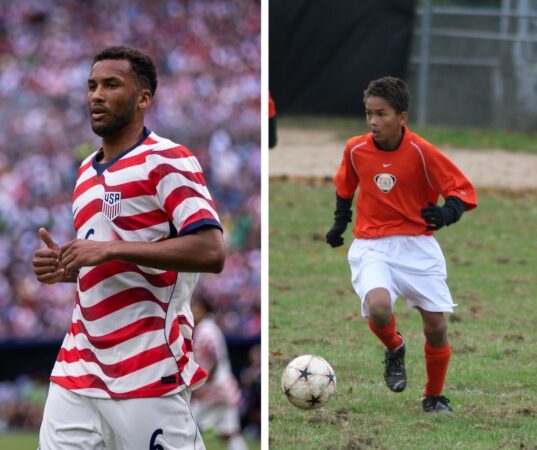
    He still needed to train, but there were few options available. So, the professional athlete decided to return to where it all began: Chester Park, home of youth soccer club Nether United, now 1776 United FC.

    Trusty had played under coach John Waraksa for six seasons, two years above his age group, before going to the Philadelphia Union Academy in 2013. Hall was on Nether United’s U-15 team when the pandemic hit.

    The teenager would often train with his teammates at Chester Park, and one day in late April or early May, Trusty showed up. They ran through warm-ups, then L-shape passing drills, then finishing drills, then shooting drills.

    Hall was the only goaltender present, which put him in the unenviable spot of having to defend against a world-class athlete. It didn’t go well for the teenager.

    Unlike players Hall’s his age, Trusty moved with a quicker pace and a harder strike. The ball would curl into the corner rather than launching straight ahead.
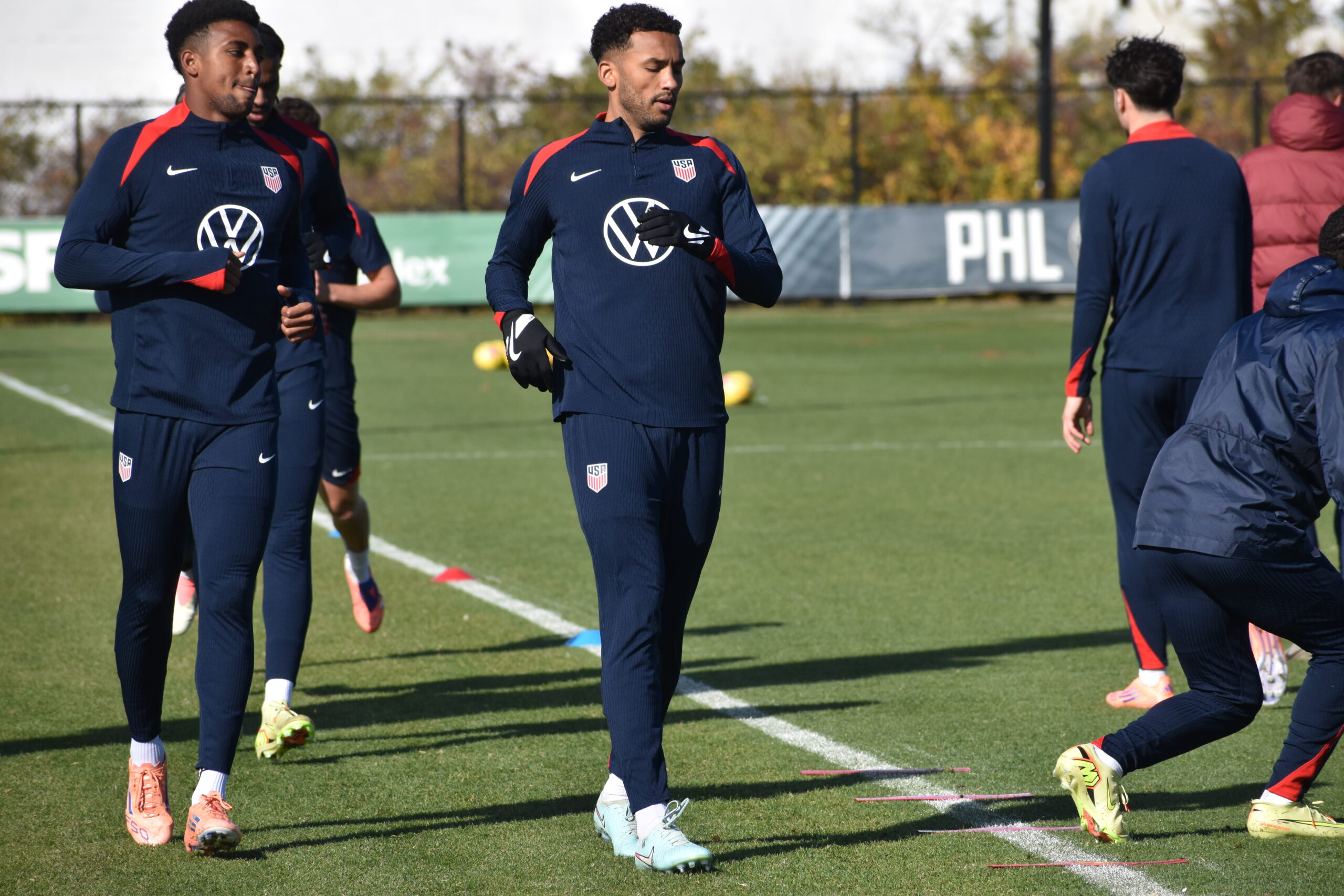
    Auston Trusty (center) made his return to the Philly area in November as part of the U.S. men’s national team group that faced Paraguay at Subaru Park.

    “He would just pound them into the net, over and over,” Hall said. “I would say if he shot 20 shots, he’d probably make 18. Maybe hit the post on one of them. And I could scrape a hand on the last one.”

    Trusty continued coming back to Chester Park, training with Hall and a group of local players five or six times that spring. It was a thrill for the teenager then, but now, those moments mean even more.

    The “Delco-head,” as national team goalie and Wayne, Pa. native Matt Freese calls him, has made an imprint on the sport’s biggest stage. His goal against Turkey on June 25, which came in the third minute, was the second fastest in U.S. World Cup history.

    It was not only Trusty’s first international goal, but the first men’s World Cup goal scored by a player born in the Philadelphia region.

    “The group chats were going crazy,” said Hall. “But I think my first thought was, ‘I played with a player who just scored in the World Cup. That is insane. I saved his shot as a young kid.’”

    Others throughout the Delaware Valley soccer community felt similarly. Paul Norris, who coached Trusty as a freshman at Penncrest High School, said he became emotional just hearing his name and hometown during the roster reveal.

    As was the case with Nether United, Trusty was playing far above his weight at Penncrest. Even as a 14-year-old, he was starting alongside players who were much older and bigger than he was.
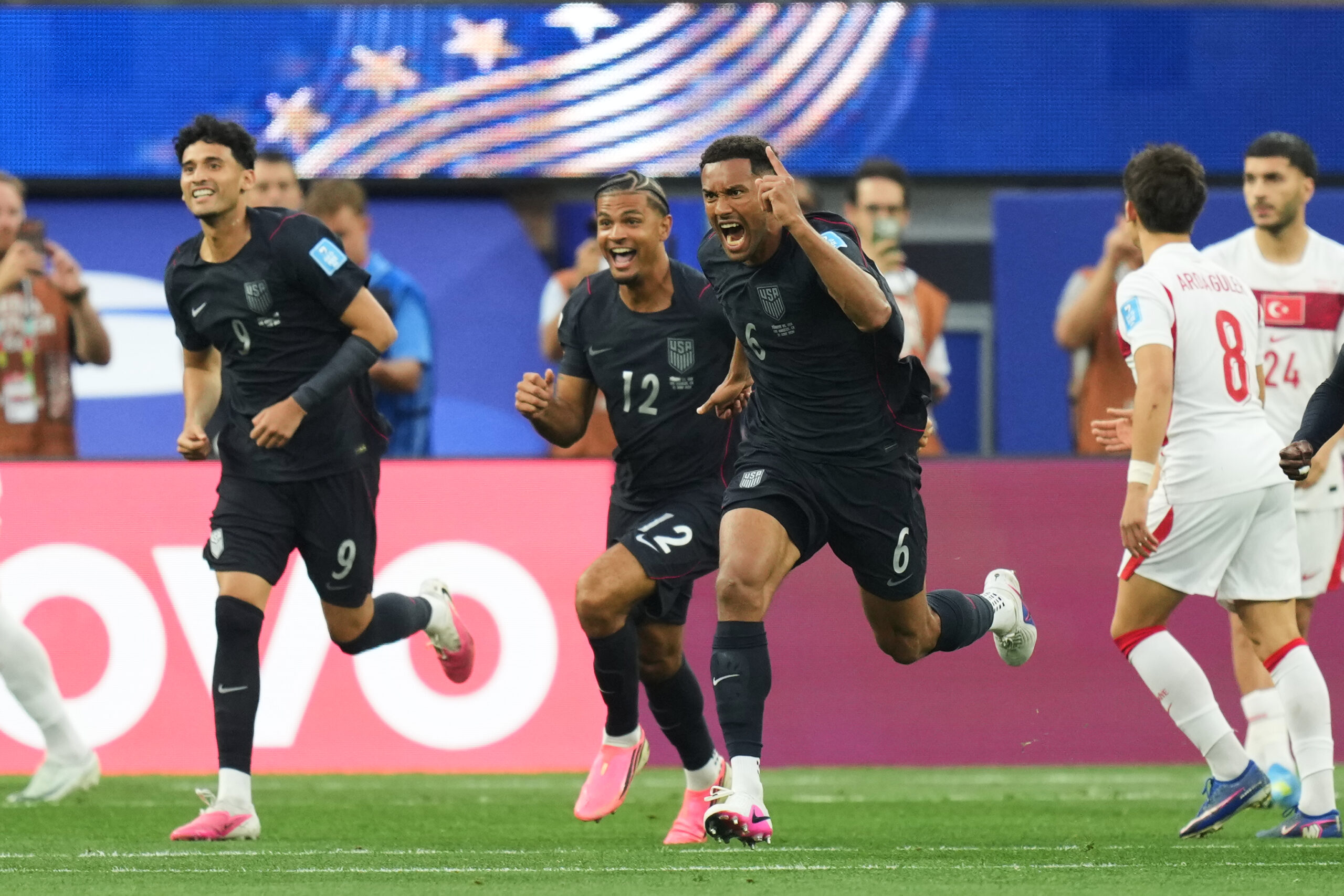
    Auston Trusty (center) celebrates scoring his first-ever U.S. goal in the final match of Group D for the Americans against Turkey.

    “What people laugh at now is he plays professionally as a defender,” Norris said. “But at the time, he had obviously a lot of skill, and we had him as a striker. And he was our second leading goal scorer that year.”

    For the last 25 years, Norris has worked both at Penncrest and at Springton Lake Middle School, where he taught Trusty physical education. He still sees that lanky kid when he’s roaming the defensive line for Team USA (even though that kid now stands at 6-foot-3, 172 pounds).

    So does Waraksa. The 1776 United coach has known Trusty since he was 8 and was at his World Cup debut in Seattle against Australia on June 19. He was down the shore, in Ocean City, N.J., watching with friends and family when the Media native scored his first goal.
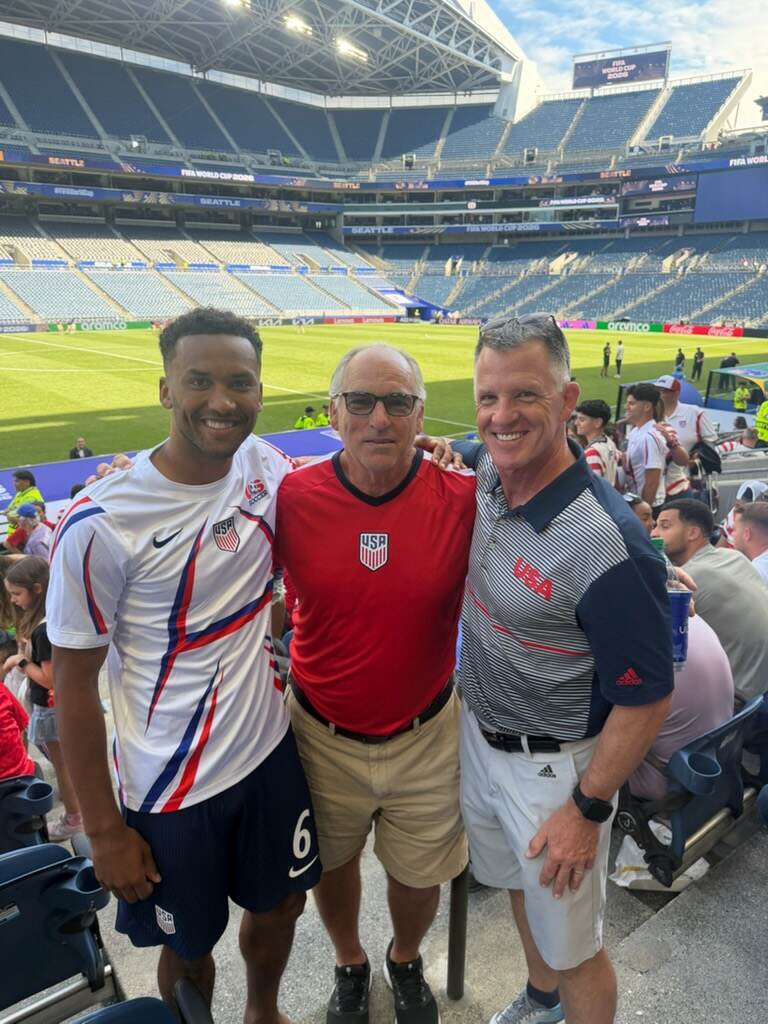
    U.S. men’s soccer defender and Media native Auston Trusty (left), poses for an image with his former youth soccer coaches and his former club head coach John Waraksa (center).

    It brought Waraksa back to 2013, when Trusty scored in Nether United’s state cup final against Lehigh Valley.

    “Lehigh had won the last five state championships at our age group,” the coach said, “so he stepped up, even two years young, in a state cup final. I mean, who does that?”

    Trusty found himself in some challenging situations with Nether United. Waraksa put him on a high back line, but even from an early age, he took to it. Once the centerback realized he could compete amid a more advanced style of play, his confidence only grew.

    And as he continues to represent his country, that confidence is as high as ever. Norris is still coaching varsity soccer at Penncrest, and for the past few years, he’s shown his players clips of Trusty back when he was playing for the Philadelphia Union.
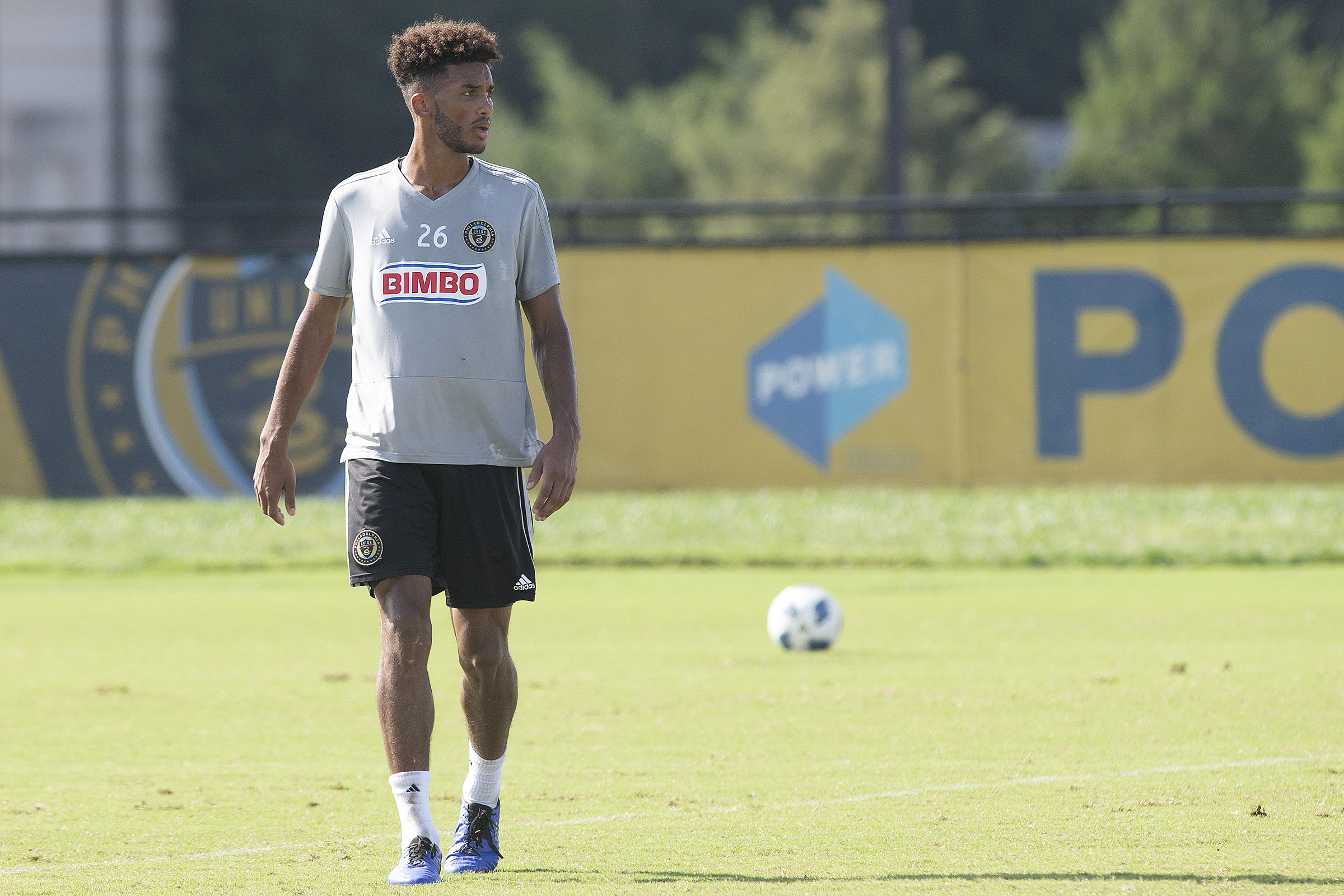
    In addition to his time with Nether United, Trusty was also groomed in the Philadelphia Union’s academy and played for its first team.

    A lot has happened since then. In 2022, Trusty signed with Arsenal. He returned to Europe in 2023, signing with Sheffield United, and in 2024, he penned a five-year-deal with Celtic.

    But Norris now has the best Auston Trusty highlight reel of all, one that is “slightly updated” from his Union days. And with Penncrest’s preseason rapidly approaching, the coach can’t wait to show it off.

    “We try to remind the kids that this was somebody who was local,” Norris said. “This was not that many years ago. These are things that somebody who was in this school, and in the seat that you may be sitting in, has done.

    “You’re all capable of it. It’s just a matter of, do you want to put the work in for it?”
  • FIFA overturned USMNT star Folarin Balogun’s suspension vs. Belgium. Was Trump involved?

    FIFA overturned USMNT star Folarin Balogun’s suspension vs. Belgium. Was Trump involved?

    SEATTLE — U.S. men’s soccer team star striker Folarin Balogun will be available to play in Monday’s World Cup round-of-16 game after all.

    FIFA announced just before the team’s practice on Sunday that the one-game suspension that came with Balogun’s red card against Bosnia in the round of 32 has been suspended “for a probationary period of one year.” The governing body said it invoked Article 27 of its disciplinary code, which says, “The judicial body may decide to fully or partially suspend the implementation of a disciplinary measure.”

    It’s a special treatment that world soccer’s governing body has only given twice in its history.

    At the 1962 World Cup, Brazilian star Garrincha had a red card overturned after lobbying from his nation’s federation and host Chile’s president — and, allegedly, a potential bribe to a referee, allowing him to play in the final.

    Last November, FIFA suspended two games of a three-game ban given to Portugal’s Cristiano Ronaldo after he elbowed a Republic of Ireland player in a World Cup qualifier. That allowed him to play in two group games this summer that he otherwise would have missed.

    “In line with article 27 of the FIFA Disciplinary Code, the implementation of the match suspension is suspended,” the governing body’s statement said.

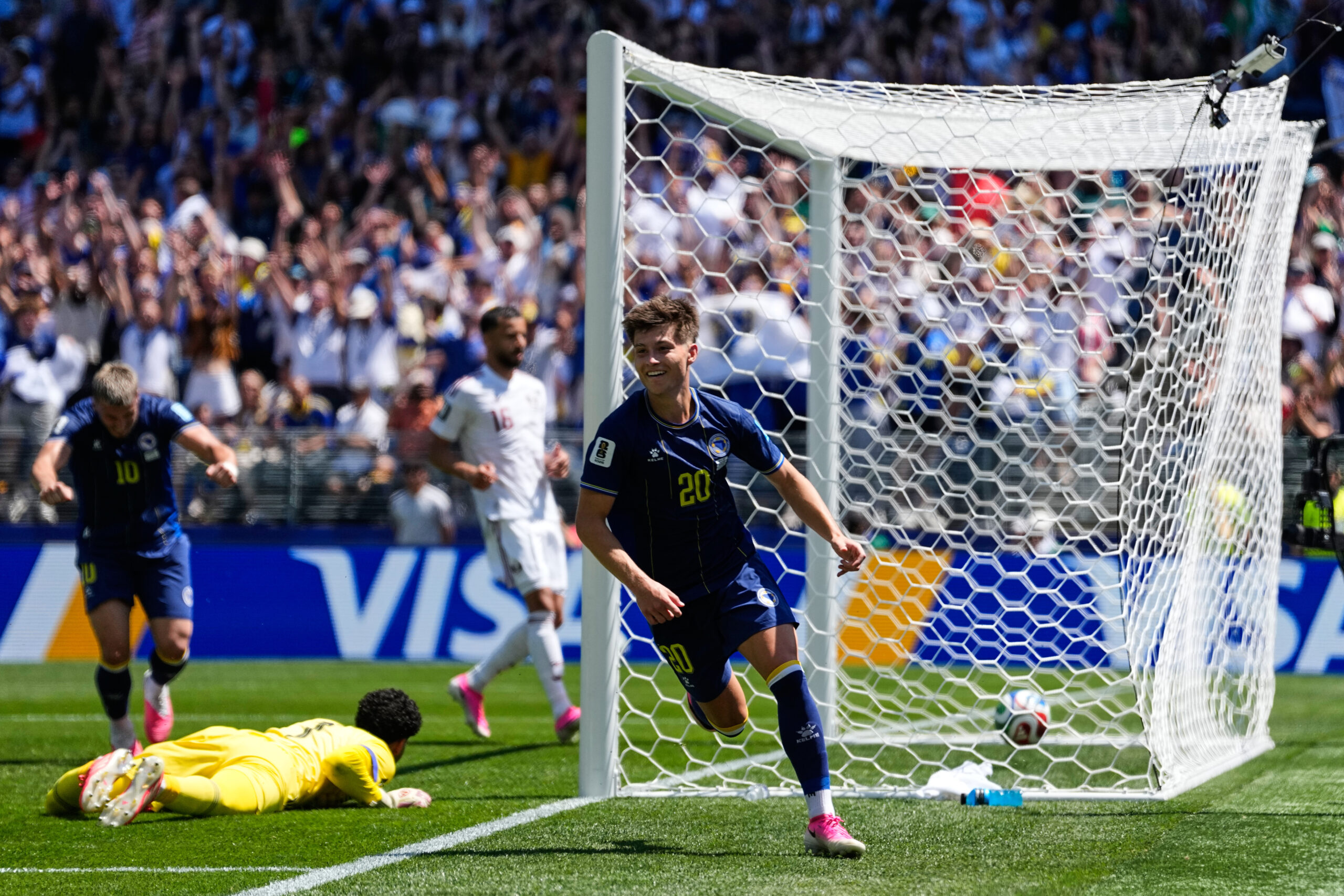
    Balogun was ejected during the U.S. round-of-32 win for running the studs of his right cleat down Bosnia’s Tarik Muharemović’s right calf before catching the back of his foot.

    Referee Raphael Claus didn’t call it at first, but the video review officials saw it and recommended that Claus take a second look. Once he did, the red card felt inevitable.

    FIFA does not allow appeals of red cards, but the governing body can decide on its own to suspend a suspension.

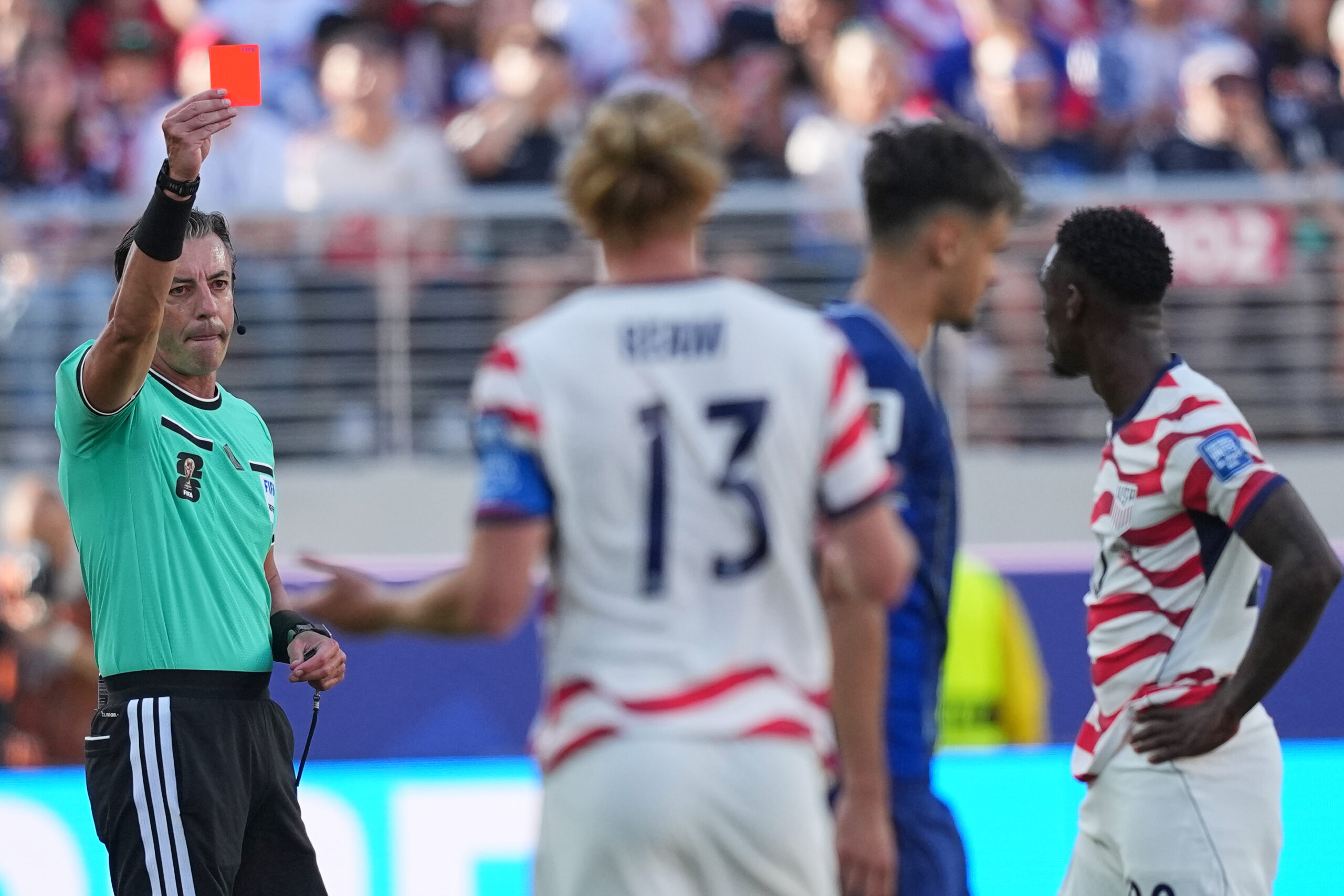
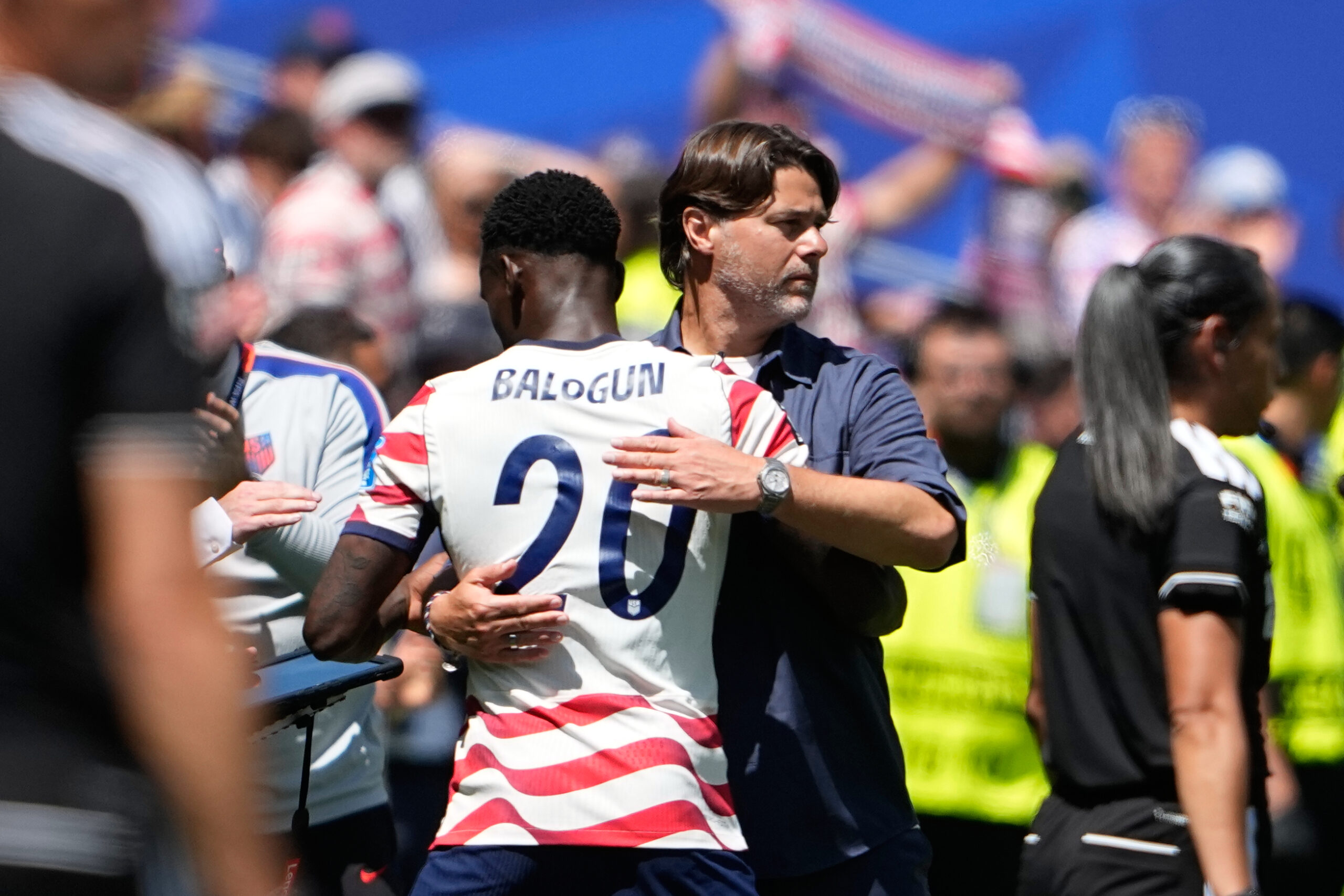
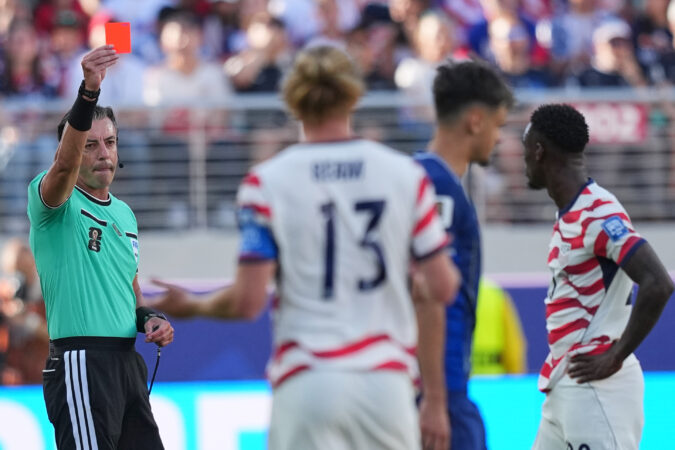
    Referee Raphael Claus (left) showing Folarin Balogun the red card in Wednesday’s game.

    There’s some irony in the fact that when the ejection happened, FIFA was criticized for Claus’ use of a slow-motion replay that might have been against the rules of video reviews. But FIFA’s announcement made no mention of that.

    “We accept the decision of the Disciplinary Committee and are pleased that Folarin Balogun is eligible to compete [Monday],” U.S. Soccer said in a statement. “Our full attention is focused on the round of 16 match against Belgium in Seattle, and we look forward to the continued support of our amazing fans.”

    Confusion over the rules

    Star playmaker Christian Pulisic opened a can of worms when he said, “Obviously we made that appeal, and felt like there was a good chance, because anyone can look at that and say it was super harsh.”

    A U.S. Soccer spokesperson was asked if there was, in fact, an appeal or if Pulisic misspoke, given the federation’s previous statement that no appeal was possible. The response was that U.S. Soccer was “engaged in the process” with FIFA’s disciplinary committee, but no details were given.

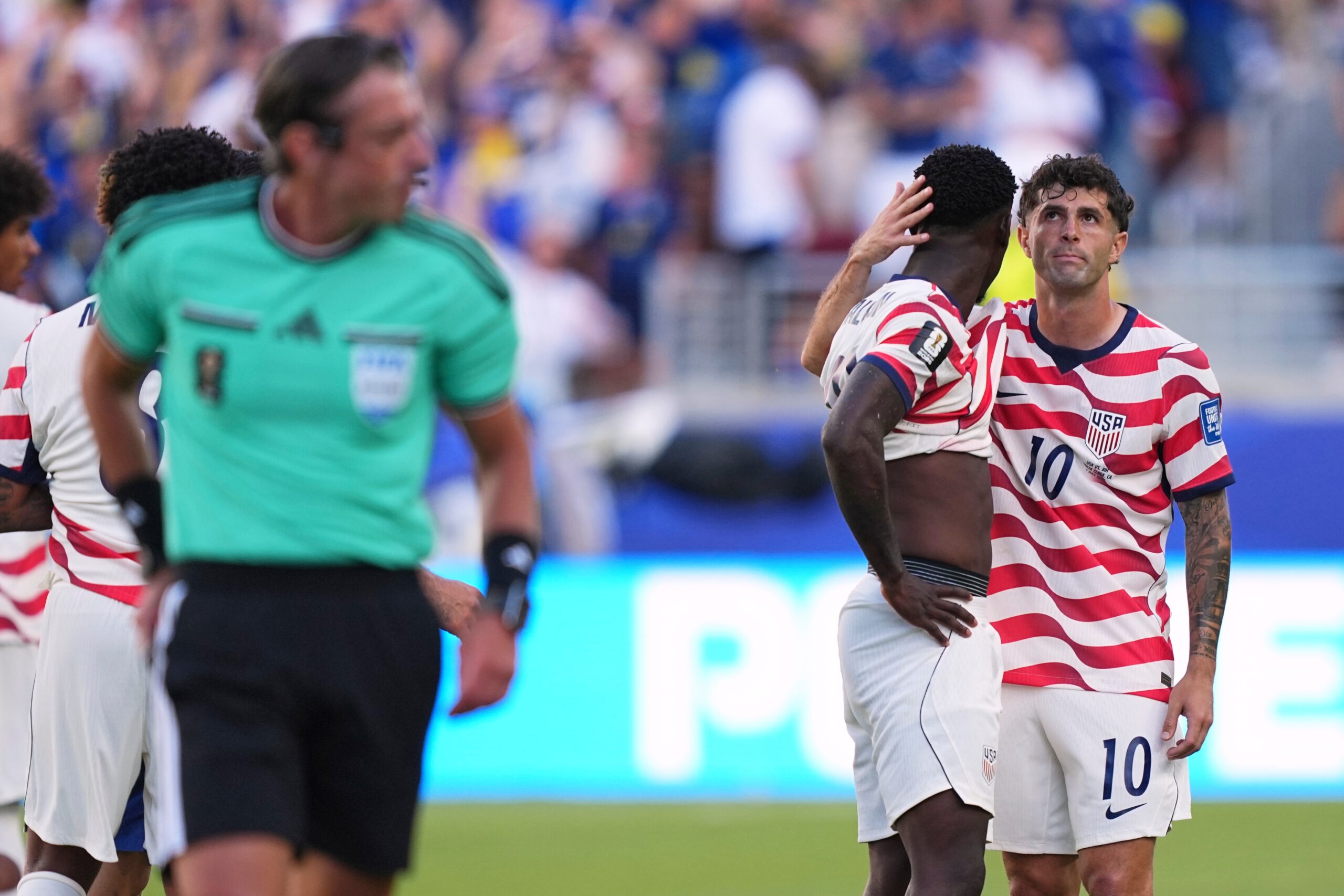
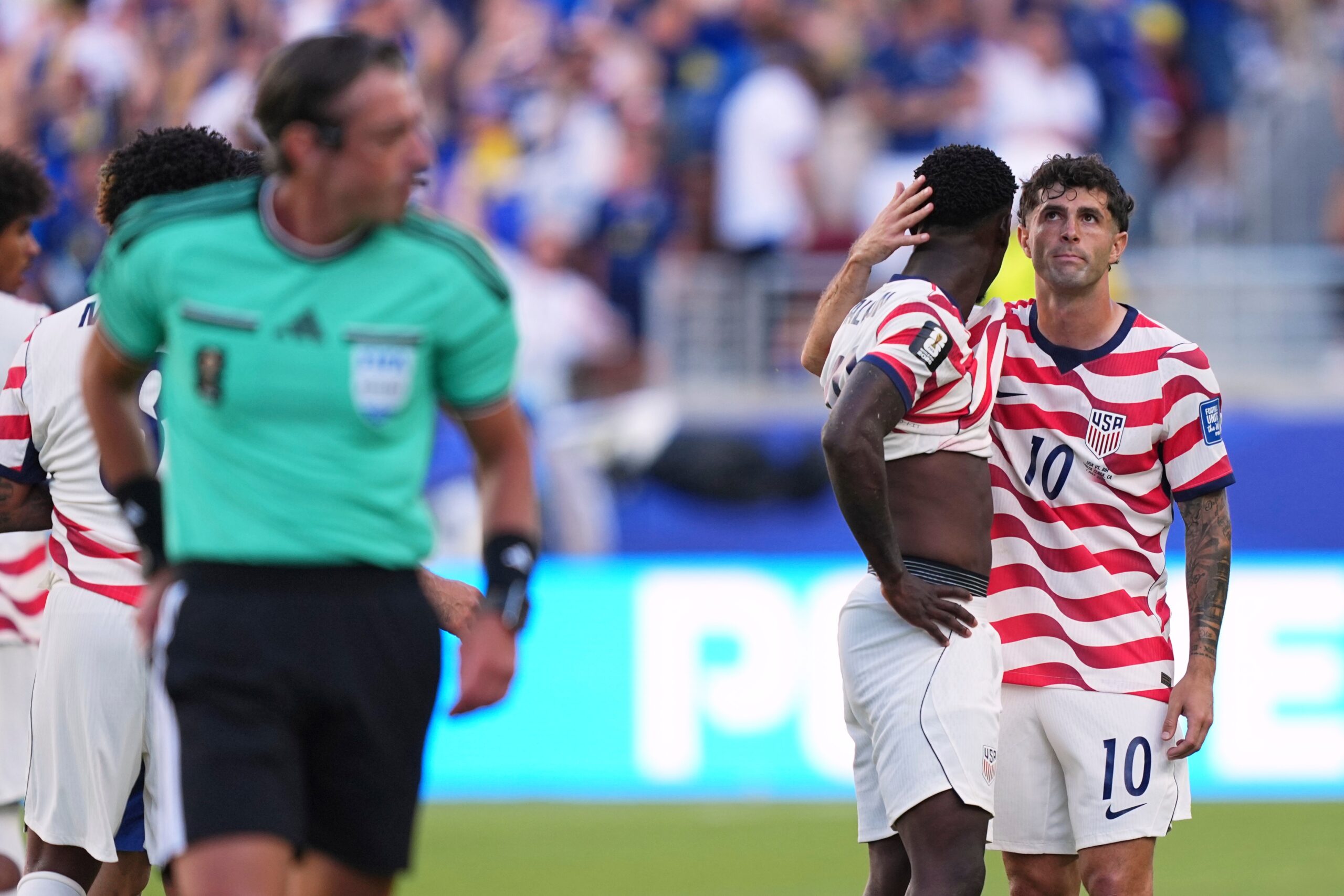
    Christian Pulisic (right) consoling Folarin Balogun after the ejection.

    U.S. players found out about the decision on the bus ride over to Friday morning’s practice. Balogun was not among the players who spoke when they arrived. He said on Saturday that he disagreed with the decision, but had moved on in part to be a role model for fans watching.

    “We weren’t quite sure if it was true or not,” centerback Chris Richards said of the moment he heard the news. “I think everyone knows with AI and with this and that, [there] can be a few question marks. But ultimately we found out through social media, so it was cool to finally get the confirmation that it was true.”

    Asked what it means that Balogun got treatment only previously accorded to Ronaldo, he said: “I don’t know what goes on behind the scenes — I don’t know if they’re comparing Flo to Cristiano Ronaldo or what’s going on. I try to focus on what goes on on the field, but clearly they saw something in the decision that they thought deserved to be overturned.”

    Fellow defender Alex Freeman said, “I had no clue” that it was in the works.

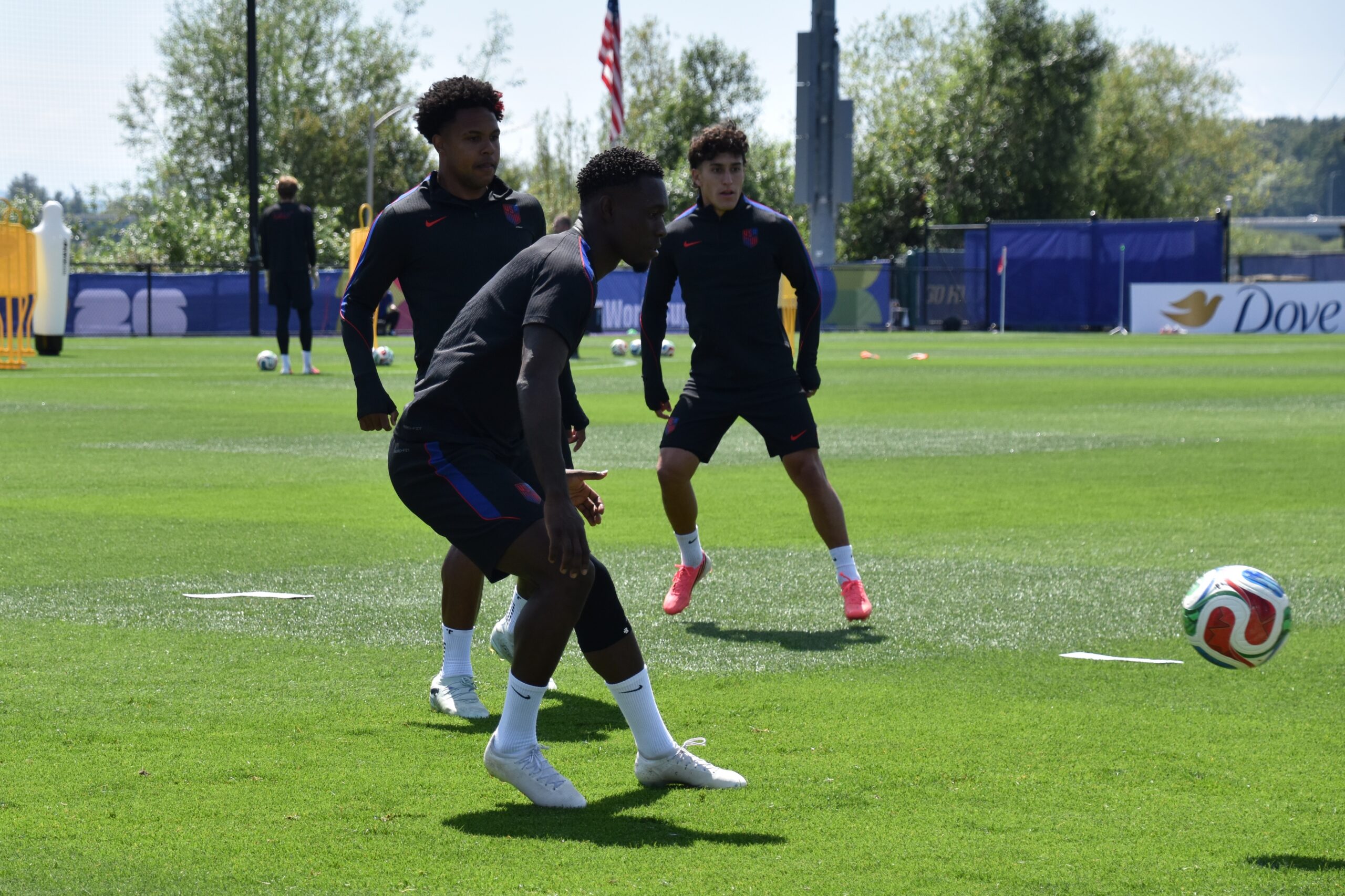
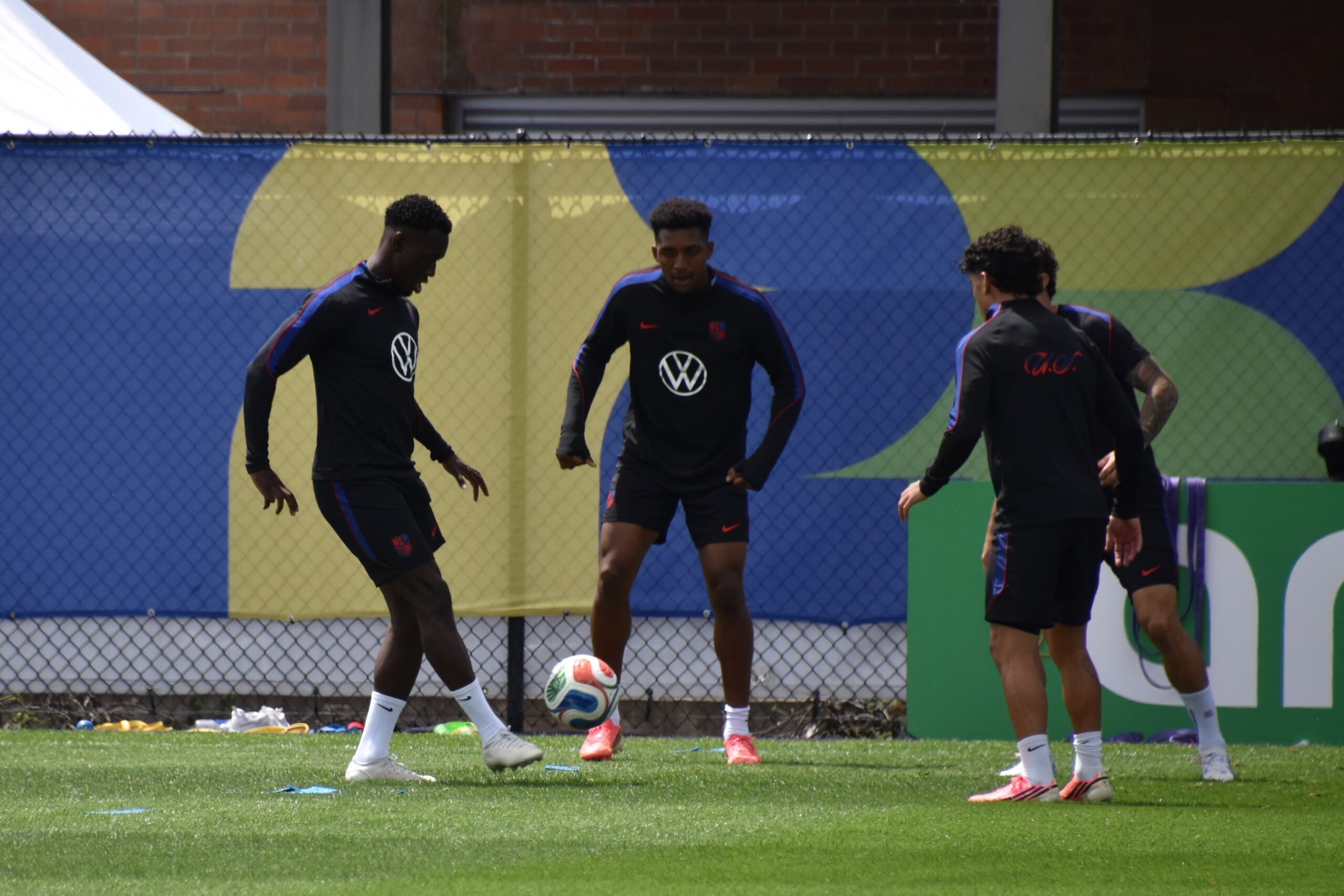
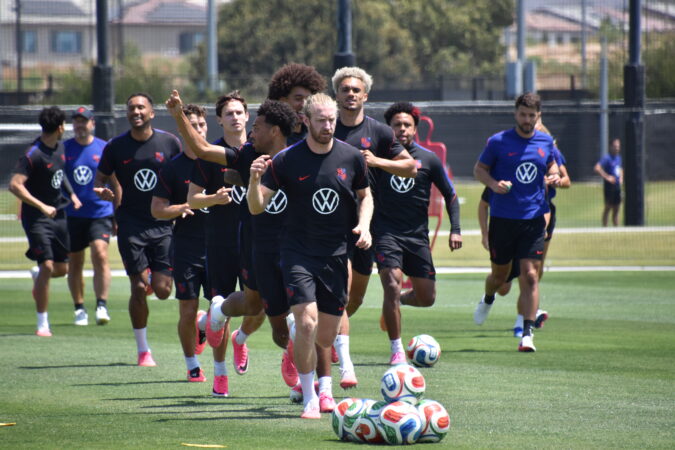
    Folarin Balogun working in a drill with teammates on Friday.

    “I think it’s a little strange for us,” he said. “I have no clue how it happened, but for us, we’re just happy that it happened, and happy that we’re able to go in and have a phenomenal player like Balogun to be able to go in and play.”

    There was immediate criticism on social media, including from international journalists who accused FIFA of rigging the game for the host country.

    A statement from Belgium’s federation said it was “astonished by FIFA’s decision,” and that “in order to safeguard the legitimate rights of all participating teams and to protect the fundamental principles of fair play in our sport, both at this FIFA World Cup and at future editions of the tournament,” it was “investigating all potential options.”

    But it did not say what those options could be.

    Belgium manger Rudi Garcia said, “the Belgian federation isn’t just defending itself — it’s defending football in general.”

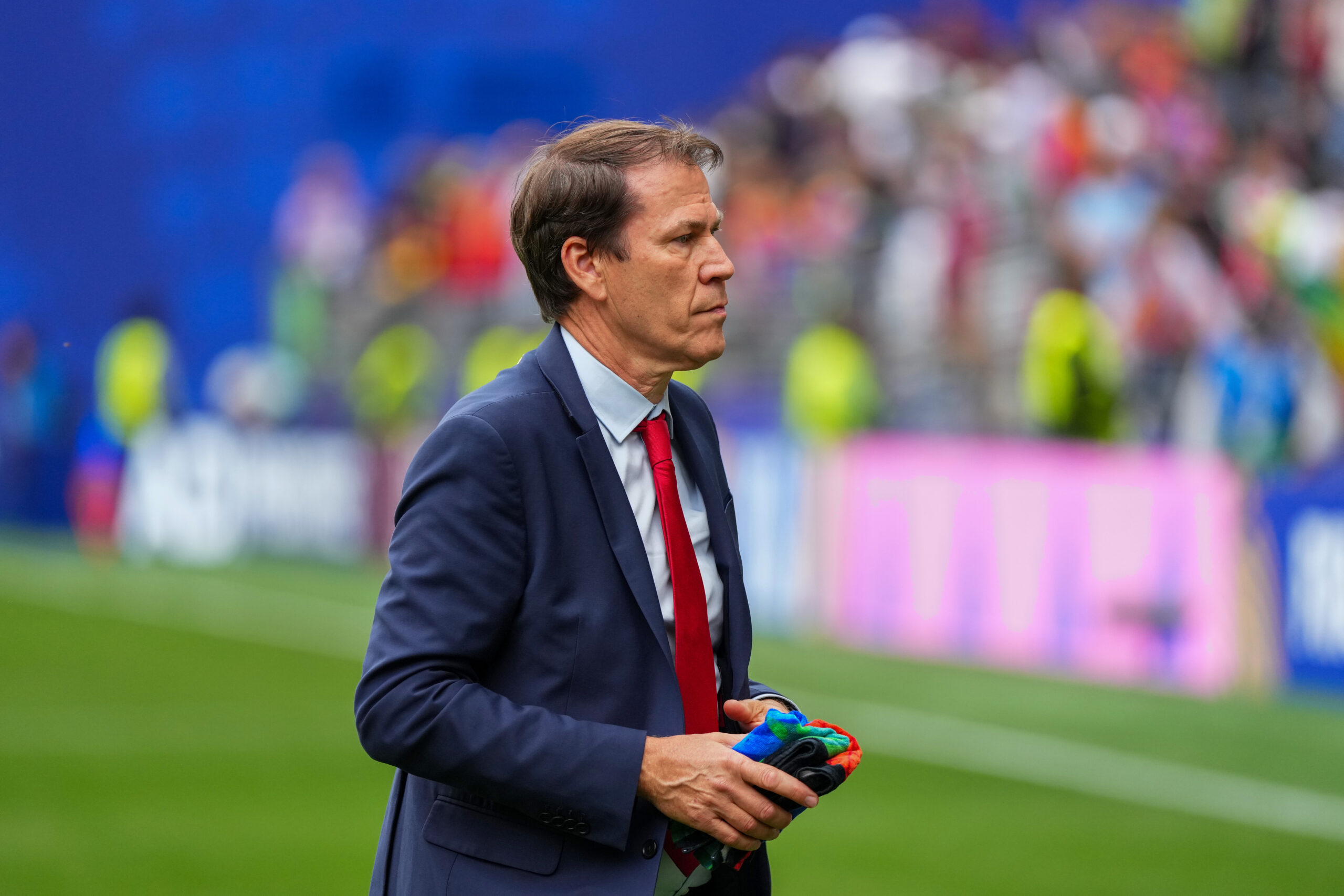
    Belgium manager Rudi Garcia was even more blunt in his news conference Sunday afternoon.

    “I didn’t know that at FIFA’s headquarters, July 5 is the same thing as April 1 in Europe,” referring to a calendar date that also applies in the United States. “I think you should refer to the statement by my federation … The Belgian federation isn’t just defending itself, it’s not just defending the national team. It’s defending football in general. It’s defending its integrity, defending its ethics.”

    Another question on the subject drew a quick “Don’t waste your time asking about it” answer. And when Garcia was asked if he believed his star striker Romelu Lukaku would get the same treatment from FIFA, he answered: “Ah, I can’t answer that question.”

    But those reactions were just the tip of the iceberg.

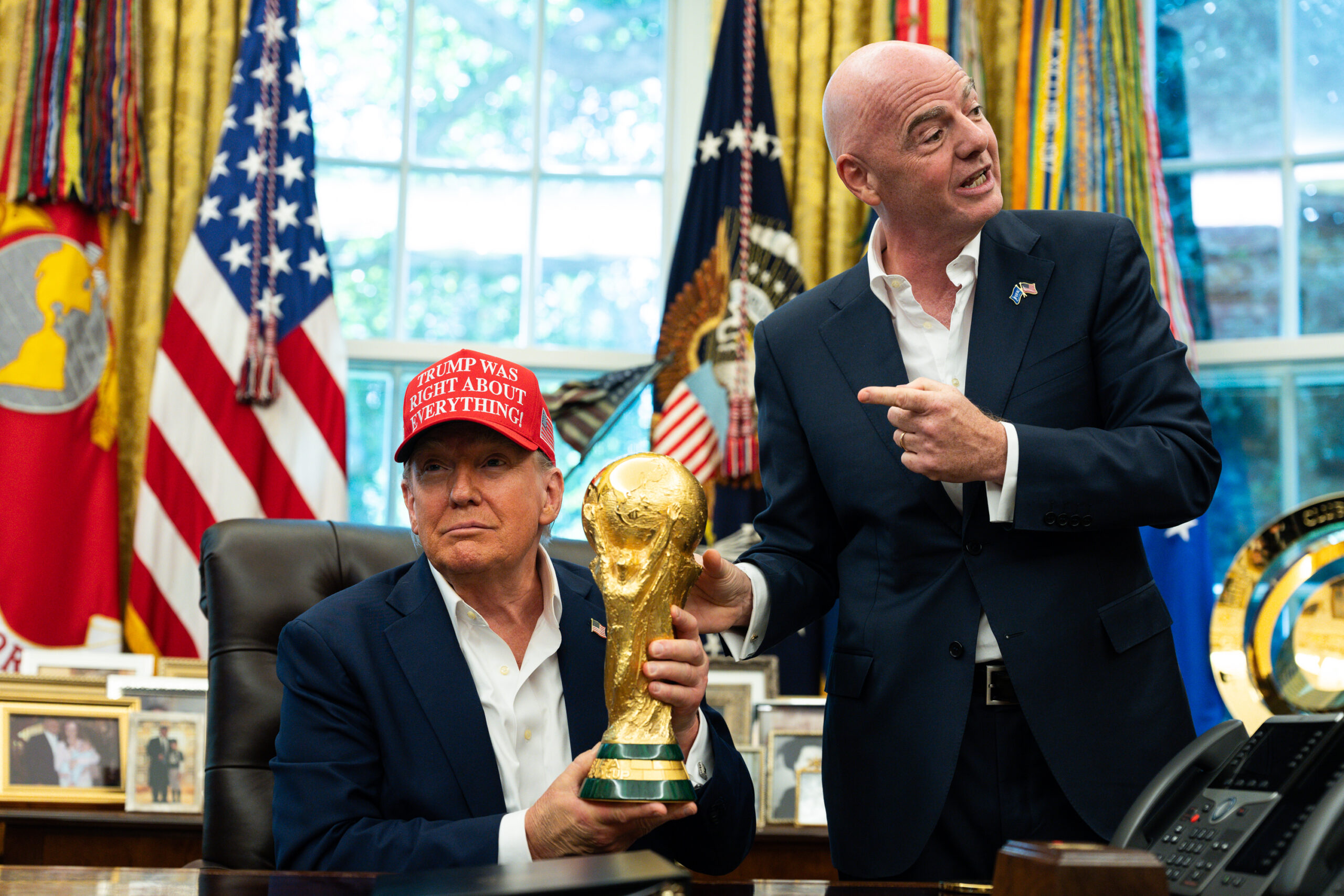
    FIFA president Gianni Infantino (right) giving U.S. President Donald Trump the men’s World Cup trophy at the White House last year.

    Trump lobbied his friend

    A source with knowledge of the matter confirmed reports that President Donald Trump personally called FIFA president Gianni Infantino to lobby for Balogun’s suspension to be overturned.

    The New York Times reported that Trump called Infantino on Wednesday — the night the game was played in Santa Clara, Calif. — and English radio network TalkSport reported that “FIFA sources insist White House influence could not affect the decision.”

    That did not stop Trump from posting on his Truth Social platform: “Thank you to FIFA for doing what was right, and reversing a great injustice!”

    A request for further comment from FIFA has not yet been returned.

    Sources in Seattle said there was a point in the past few days when Trump or Vice President J.D. Vance might attend Monday’s game, with authorities in town preparing for them to visit. But it was confirmed on Friday that they are not.

    U.S. manager Mauricio Pochettino said he wasn’t involved in any lobbying by U.S. Soccer, though he named CEO JT Batson as someone who was. Pochettino also said he didn’t know about Trump’s involvement until reporters told him at his news conference.

    “No, we cannot mix that,” he said. “That is a decision from FIFA with the evidence that happened before, and that’s it.”

    But he was, of course, very happy that the decision went his team’s way.

    United States head coach Mauricio Pochettino said, “I think it’s fair, the decision, to not punish us more.”

    “It’s not only because I am the coach of the U.S. men’s national team that I need to defend my side,” Pochettino said. “I think it’s 100% — or 99%, because there are always some people, 99.9% — we all agree that was an unfair red card.”

    He also was not surprised that it became such a big deal.

    “I come from cultures in Argentina [in] Europe where fútbol, soccer, is more than a religion. It does not surprise me that in this country, that feeling has started to grow.”

    Pochettino spoke repeatedly of his respect for Garcia, whom he has known a long time. But beyond that, he said “I think it’s fair, the decision, to not punish us more. Because I think it was enough. And now focus on the game.”

    Staff writer Dugan Arnett contributed to this article.

  • For the USMNT, being in the World Cup on July 4 is a special honor

    For the USMNT, being in the World Cup on July 4 is a special honor

    SEATTLE — The players of the U.S. men’s World Cup squad came together from 13 states and homes in four nations abroad. The club teams they represent span 10 leagues around the world’s game.

    They are not the same, in many ways. But they are American, and that never feels more true than on the Fourth of July.

    This time, it isn’t just the nation’s Independence Day. It’s the first one since 1994 in which the U.S. men are active in a World Cup. And like that one, it happens to be on their own soil.

    “It is special,” centerback and team captain Tim Ream said. “It’s double-special because it’s during the World Cup, and triple-special because it’s here in the U.S.”

    It was a working holiday for Tim Ream (center) and the U.S. men’s soccer team.

    The St. Louis native then made a point of highlighting his belief that the team’s diversity is a strength.

    “We’ve said this: With all our different backgrounds, where we all have grown up, it’s a true representation of what America is,” he said. “It’s a melting pot of personalities, of characters, and, like I said, it’s a perfect representation of what the U.S. is and what it’s about.”

    Ream has even seen manager Mauricio Pochettino, a fiercely proud Argentina native, embrace the national spirit.

    “He’s obviously taken to the culture, and at the same time, has added his bit of culture to us as well,” Ream said, which makes Pochettino the latest of many Argentines to do that in this country. From players and coaches to broadcasters like Telemundo’s famed Andrés Cantor, the country has a long history of sharing its passion — and immigrants — with the U.S.

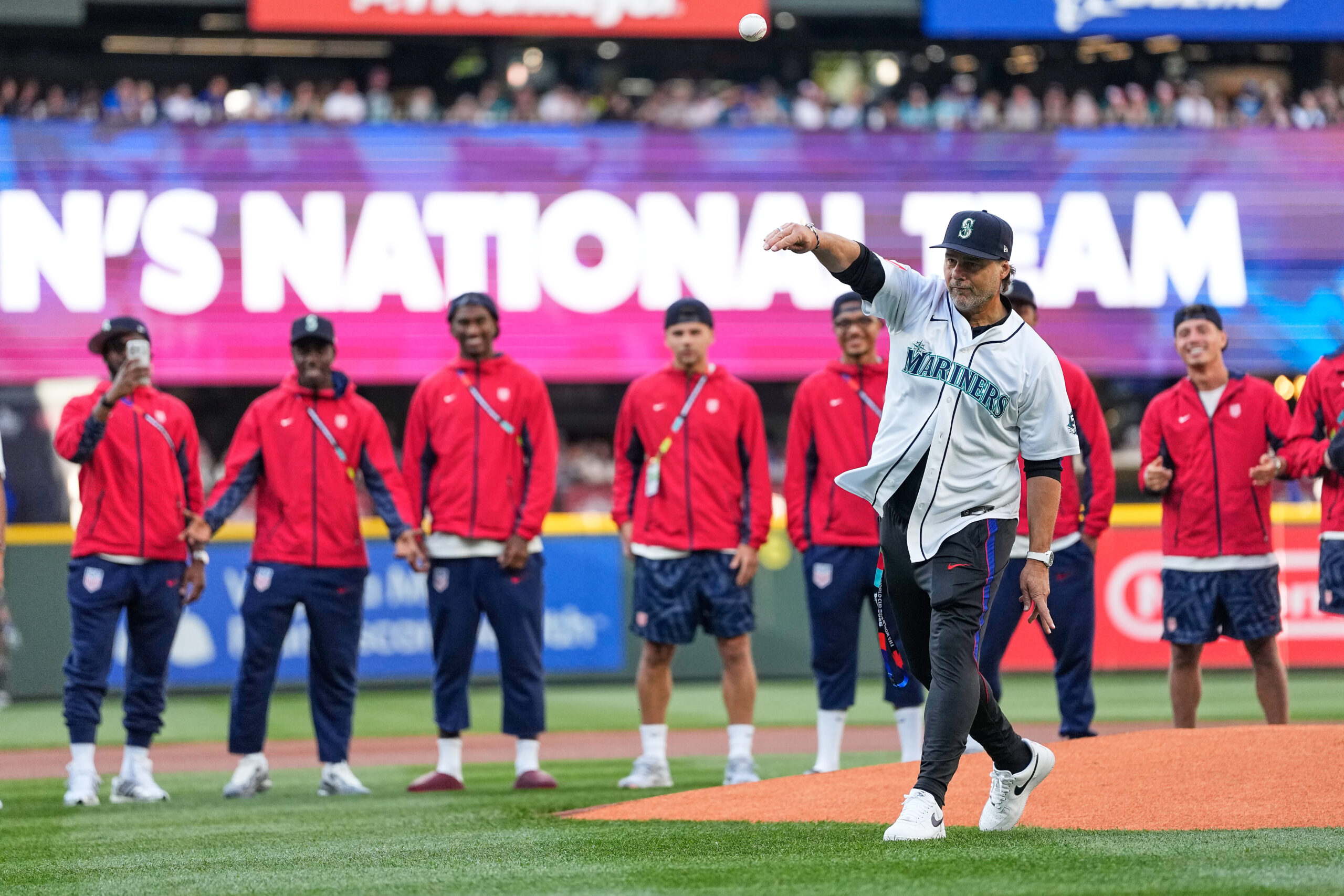
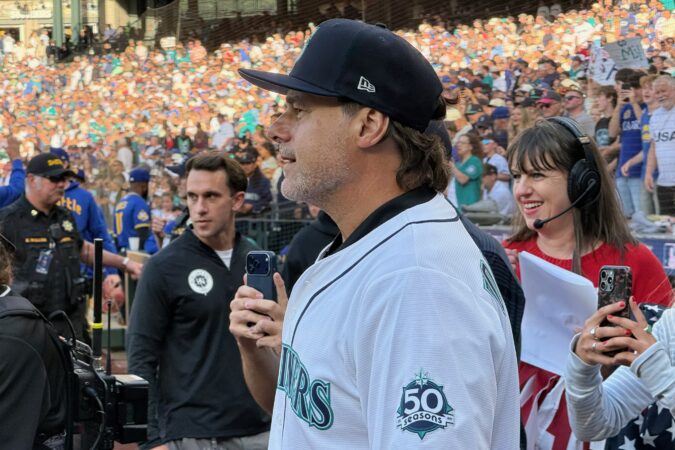
    U.S. manager Mauricio Pochettino got to sample a classic piece of American culture by throwing out the first pitch at the Seattle Mariners baseball game on Friday.

    “As he said after the first here in Seattle [the U.S.’s group stage win over Australia], he felt something with ‘Country Roads’ being played and blasted through the stadium [postgame],” Ream said. “The group is such a melting pot [with] staff, players, and, again, it’s just an incredible representation of who we are as people. But, yeah, he definitely won’t let us forget that he’s still Argentine at the end of the day.”

    The 38-year-old Ream has experienced the holiday in multiple ways, too. When he played in England from 2012 to 2024, he spent some Fourths over there instead of over here. Then he returned to MLS to join Charlotte FC, where he’s now in his third season.

    “It’s a little bit different celebrating here than over there,” he said. “A lot of people [in England] don’t actually know why we celebrate the Fourth, which is crazy to me because they were a big part of why we celebrate.”

    That line drew a round of hearty laughs, even from the English media who have been following the U.S. team during the World Cup.

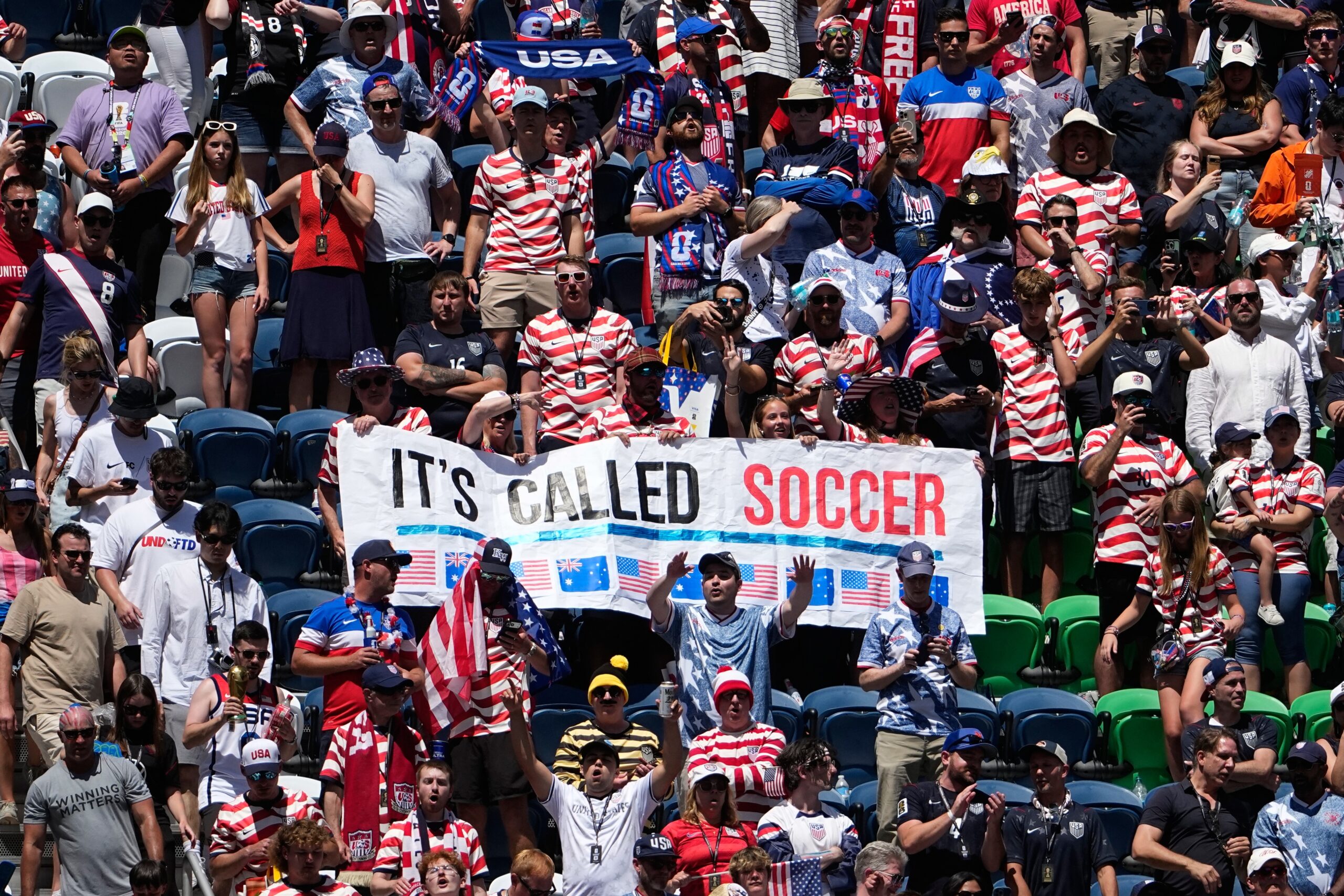
    At the U.S.-Australia group game in Seattle, some fans brought a banner that read “IT’S CALLED SOCCER” to poke fun at England.

    “The memories for me are just the typical standard: barbecue, enjoy time with family all day, fireworks in the evening, and just celebrating, obviously, what it means to have freedom, to have independence,” Ream said. “It doesn’t have to be this big, extravagant thing, but just acknowledging why we are a country, and how we became a country, and how we became independent is enough for any of us.”

    There wasn’t going to be much extravagance for the team as it worked through the holiday. But there would be time in the evening to gather with friends and family and watch Seattle’s big fireworks show from a rooftop downtown.

    Then they’ll be back at it, trying to give the nation one more festival in Monday’s round of 16 game against Belgium (8 p.m., Fox29, Telemundo).

    “We are, as we all continue to say, very aware of the impact that we’re having around the country, the impact we’re having on generations of people and fans and supporters,” Ream said. “Aware, but it’s not something that is at the forefront of our thinking at the minute. It’s more the game, and what we have to do to continue to move on.”

  • World Cup bracket: Philadelphia helps kick off a round of 16 that’s full of fireworks

    World Cup bracket: Philadelphia helps kick off a round of 16 that’s full of fireworks

    Though this is the first time that a World Cup’s round of 16 is the second knockout round, some of the matchups are loaded with history.

    One of them will take center stage in Philadelphia’s July 4 festivities. France and Paraguay have met twice in World Cups, and both were momentous.

    In the 1998 round of 16, La Albirroja held Les Bleus scoreless on home turf for 114 minutes until defender Laurent Blanc scored a sudden-death winner. (Soccer briefly settled games that way.)

    In the 1958 group stage, French striker Just Fontaine scored a hat trick in a 7-3 win on the way to totaling 13 goals in the tournament — still the most goals by one player in one World Cup.

    That record could fall this summer, thanks partially to another French superstar. Kylian Mbappé has six goals so far, one behind Lionel Messi’s tournament-leading seven for Argentina. Yes, the extra round helps, but both are in the all-world category. Not many people will argue if they beat Fontaine’s mark.

    Messi’s next chance to score is Tuesday, when he leads the Albiceleste into Atlanta to face Mo Salah’s Egypt.

    Philly fans won’t have to travel far (if they can get tickets) to see one of the round’s most star-studded clashes: Brazil’s Vinícius Júnior vs. Norway’s Erling Haaland on Sunday in New Jersey’s Meadowlands.

    Strangely, the five-time World Cup champion Seleçao have never beaten the Vikings in three friendlies and one World Cup meeting. Norway pulled off a 2-1 upset in the 1998 group stage.

    Monday’s Portugal-Spain showdown in suburban Dallas will have the most rivalry spice. The next-door neighbors have met 41 times dating back to 1921, but just twice in World Cups: the 2010 round of 16 and the 2018 group stage. We’ll see if this round of 16 game sends Spain on the same path it followed in 2010 to its first World Cup title.

    Finally, we come to the games that will matter most in our part of the world. All three cohosts are still alive, but they all face big tests.

    Canada goes first on Saturday, facing Morocco in Houston. The Atlas Lions made the 2022 semifinals and are looking sharp again this summer.

    Then comes an all-time Sunday night on this continent’s most famous soccer stage. Mexico, fresh off its first knockout win since the last World Cup it hosted in 1986, hosts England at the Estadio Azteca.

    While there’s no question that the Three Lions have the better talent, they’ve never played at anything like Mexico City’s 7,220-foot altitude. Will that plus a deafening home crowd propel El Tri to a famous win?

    Finally, there’s the world’s version of Monday Night Football in Seattle. The U.S. men play the biggest game in program history when they face Belgium, trying to win two knockout games in one World Cup for the first time. It’s the game so many people have dreamed of for years, and now it’s finally here.

    World Cup round of 16 schedule

    All games are televised on Fox29 in English and Telemundo 62 in Spanish. All times listed are local to Philadelphia.

    Saturday

    1 p.m.: Canada vs. Morocco in Houston

    5 p.m.: Paraguay vs. France in Philadelphia

    Sunday

    4 p.m.: Brazil vs. Norway in East Rutherford, N.J.

    8 p.m.: Mexico vs. England in Mexico City

    Monday

    3 p.m.: Portugal vs. Spain in Arlington, Texas

    8 p.m.: United States vs. Belgium in Seattle

    Tuesday

    Noon: Argentina vs. Egypt in Atlanta

    4 p.m.: Switzerland vs. Colombia in Vancouver, British Columbia

    Quarterfinals

    July 9

    4 p.m.: Paraguay or France vs. Canada or Morocco in Foxborough, Mass.

    July 10

    3 p.m.: Portugal or Spain vs. United States or Belgium in Inglewood, Calif.

    July 11

    5 p.m.: Brazil or Norway vs. Mexico or England in Miami Gardens, Fla.

    9 p.m.: Argentina or Egypt vs. Colombia or Ghana in Atlanta

    UPDATE THIS CAPTION BEFORE FILING

    Semifinals and beyond

    July 14

    3 p.m.: Paraguay, France, Canada, or Netherlands vs. Portugal, Spain, United States, or Belgium in Arlington, Texas

    July 15

    3 p.m.: Brazil, Norway, Mexico, or England vs. Argentina, Egypt, Colombia, or Ghana in Atlanta

    July 18

    5 p.m.: Third-place game in Miami Gardens, Fla.

    July 19

    3 p.m.: Final in East Rutherford, N.J.

  • Baseball and soccer cross paths as Seattle welcomes the USMNT back in the World Cup

    Baseball and soccer cross paths as Seattle welcomes the USMNT back in the World Cup

    SEATTLE — America’s national pastime crossed paths with the world’s favorite game on Friday evening when the Seattle Mariners hosted the U.S. men’s soccer team at their game against the Toronto Blue Jays.

    It was a rousing welcome back to town for the Americans, who beat Australia in the group stage here and will play the biggest game in team history against Belgium in the round of 16 on Monday (8 p.m., Fox29, Telemundo 62).

    The U.S. squad met the Mariners in their clubhouse before the game, and were introduced to a cheering crowd one-by-one on a red carpet. Manager Mauricio Pochettino then stepped to the foot of the mound and threw the ceremonial first pitch.

    Mauricio Pochettino throws a fine first pitch for a soccer manager who might not ever have picked up a baseball before this morning:

    #USMNT

    [image or embed]

    — Jonathan Tannenwald (@jtannenwald.bsky.social) July 3, 2026 at 7:18 PM

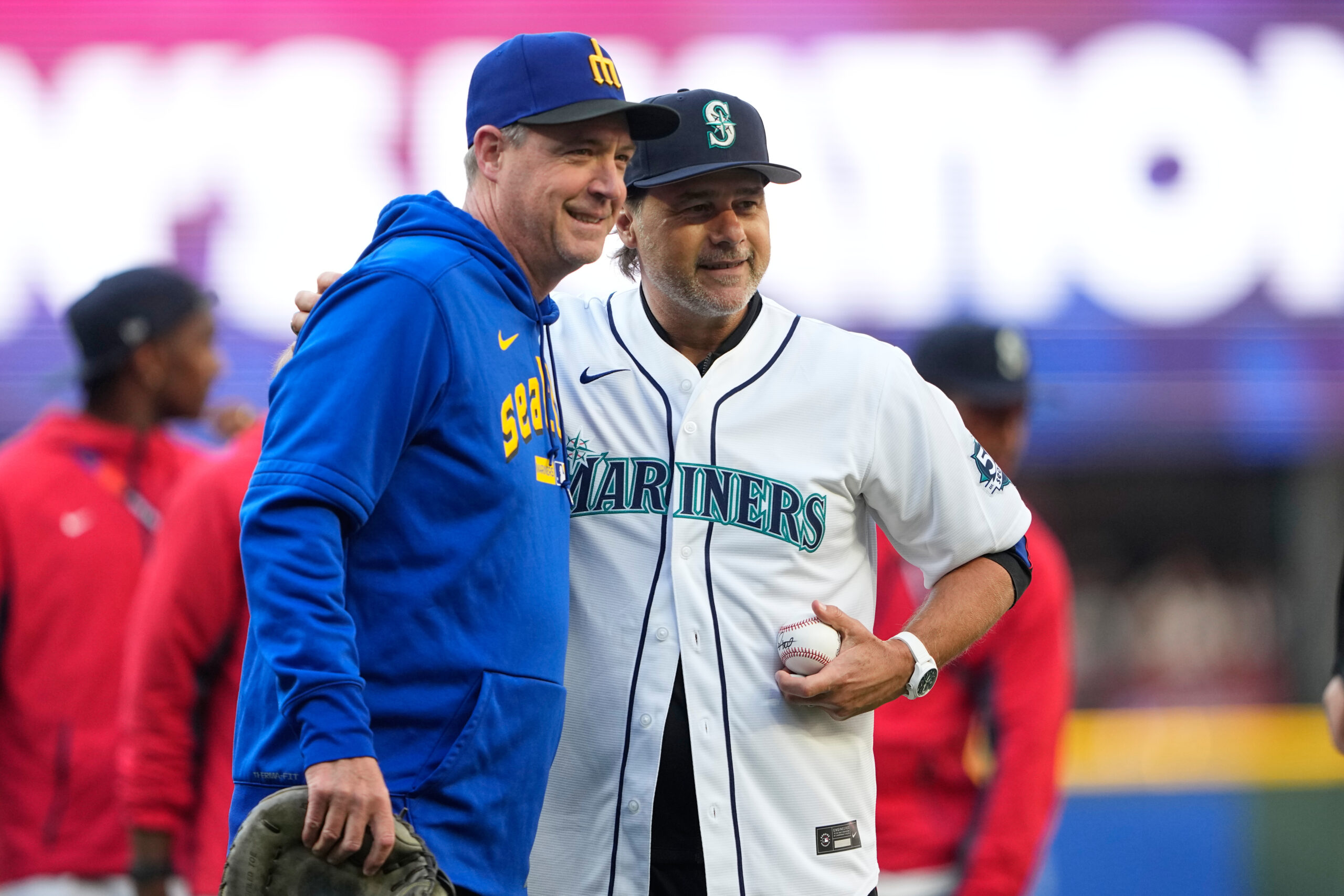
    For an Argentina native who barely had any baseball experience before now, his throw to Mariners manager Dan Wilson was impressively clean.

    Pochettino practiced some in the morning, before his team got to work on the University of Washington’s soccer field across town. The Huskies’ baseball team lent balls and gloves, and U.S. backup goalkeeper Matt Turner — who played shortstop at St. Joseph Regional High School in north Jersey — gave his boss some tips on throwing form.

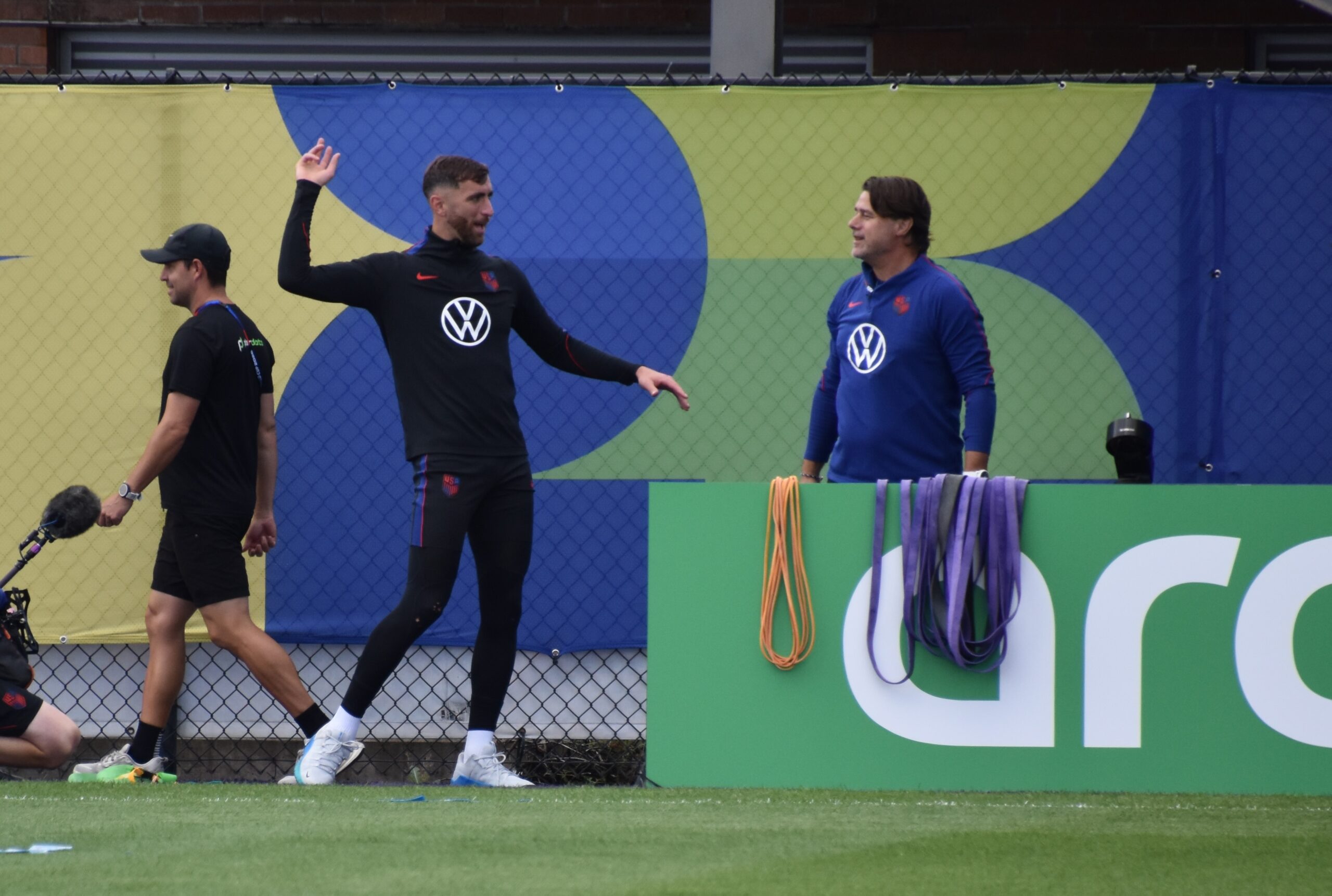
    Matt Turner (left) giving Mauricio Pochettino advice on how to throw a baseball at Friday morning’s U.S. practice.

    “It’s amazing to be here again and feel your support,” Pochettino told the crowd. “The city is amazing. It’s a baseball city. It’s a soccer city. Thank you so much — thank you to the 12th man.”

    That bonus reference to Seahawks football fans was one of a few cultural crossovers in a city with big stadiums are a block from each other at the southern edge of downtown.

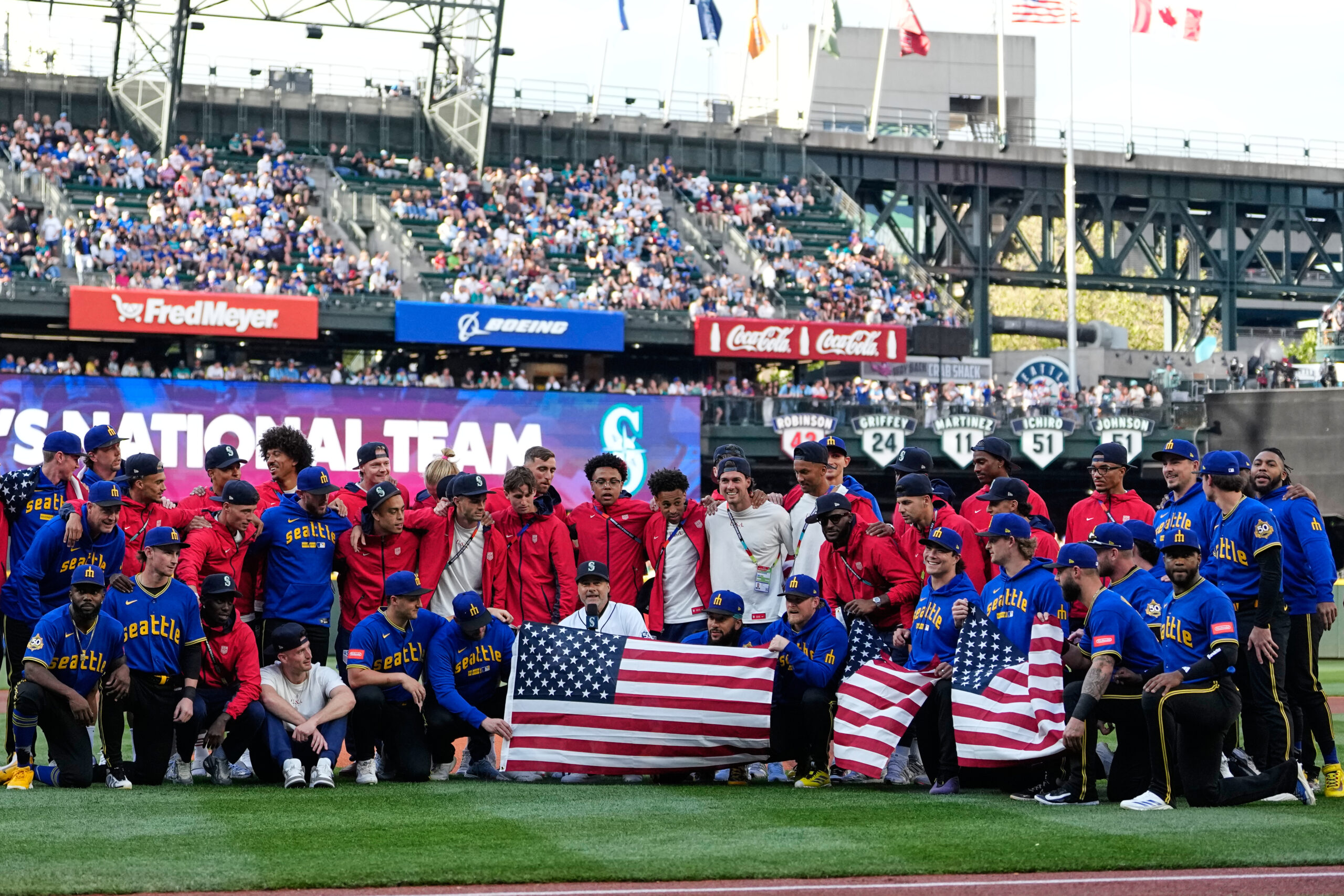
    The U.S. men’s soccer team and the Mariners got together on the field for a photo after the ceremonial first pitch.

    Between the Mariners and Jays’ pregame warmups, John Fogerty’s classic baseball anthem “Centerfield” played on the T-Mobile Park public address system while extra time of the Argentina-Cape Verde game was shown on the big screen, including the moment Argentina took a lead. A gaggle of fans with field access gasped as they watched the goal.

    A few minutes later, the World Cup’s official song, “Dai Dai” by Shakira and Burna Boy, was the DJ’s pick for the playlist. And not long after that, the fans gasped again when Cape Verde tied the score a second time, then once more when Argentina scored a late winner.

    “To have the USA team here earlier [in the tournament] and now to have them back, I think is pretty cool,” Wilson said. “And a chance to meet some of these guys, and [have] the fans give them a chance to show their appreciation for the job that they’ve done. Obviously, this is a global event that has been followed all over the world, and it’s exciting. It brings people together.”

    Mariners manager Dan Wilson (left) with Mauricio Pochettino.

    That appreciation certainly arrived. Though the Blue Jays always bring lots of fans for their visits here thanks to a big fan base in nearby Vancouver, there were big cheers as the U.S. players were introduced individually. Cristian Roldan drew the biggest, as the Seattle Sounders stalwart was saved for last. He brought the Mariners’ trident out with him and said a few words as the U.S. and Mariners squads gathered for a group photo.

    “Thank you, Seattle — thank you for the love and support,” Roldan said. “Let’s go win a World Cup! Go USA; go Mariners!”

    Cristian Roldan brings out the Mariners’ trident:

    #USMNT

    [image or embed]

    — Jonathan Tannenwald (@jtannenwald.bsky.social) July 3, 2026 at 7:07 PM

    As everyone left the field, John Denver’s “Country Roads” played, the U.S. team’s song of choice for the tournament.

    The Mariners’ active roster is as global as any in baseball, with players from six countries. Center field Julio Rodríguez, a Dominican Republic native, has befriended French World Cup winner and soon-to-be Orlando City playmaker Antoine Griezmann. (Rodríguez wasn’t around to talk about that on Friday because he’s sidelined with a concussion.)

    “We have players from all over, and many of them played soccer as kids,” Wilson said. “I think that’s what the beauty of the event of the World Cup is: It affects so many people. Yeah, these guys are watching the games, and you always know when a team scores because you hear it down the hall. So it’s pretty fun.”

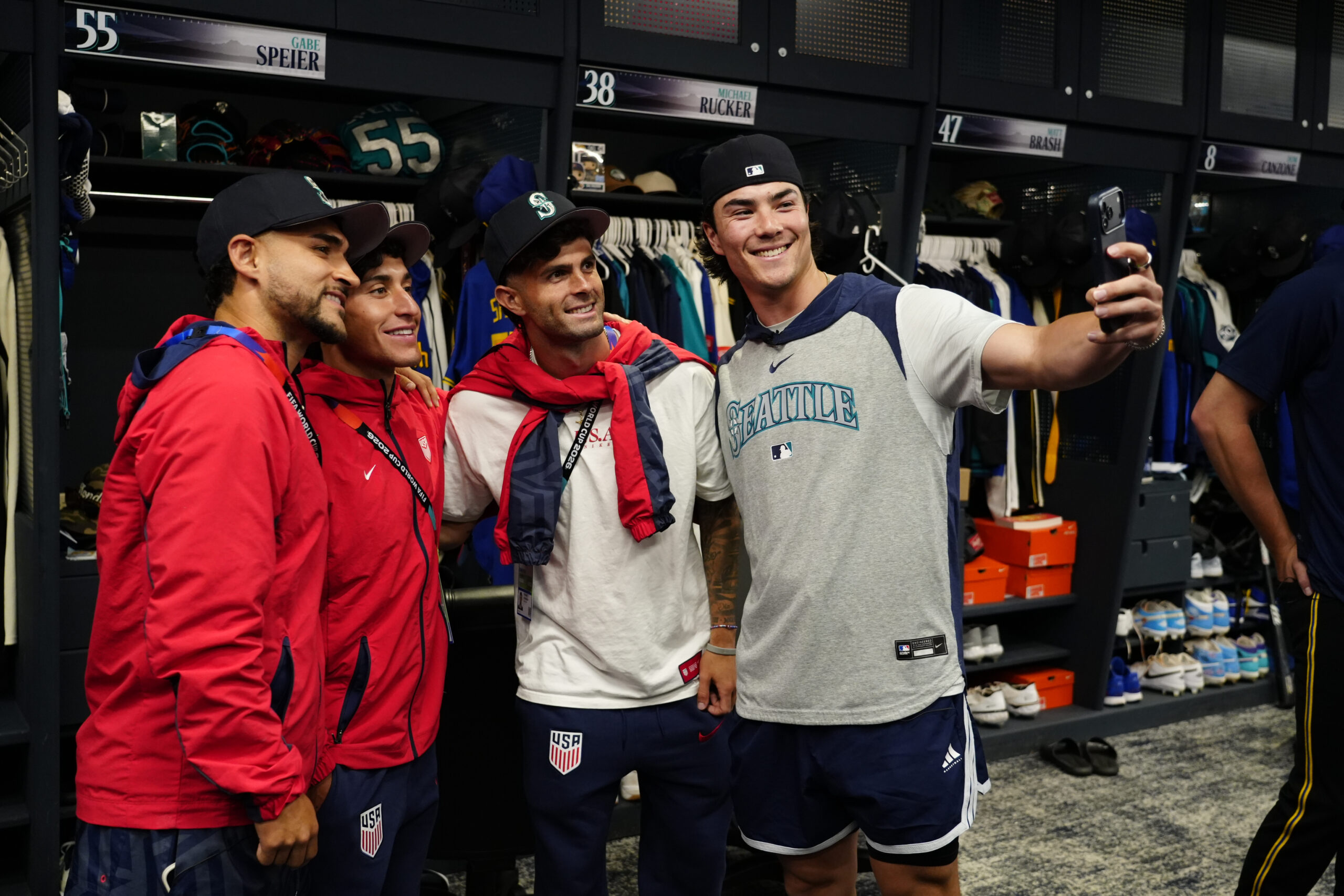
    Mariners pitcher Bryan Woo (right) took a selfie in the locker room with (from left) Cristian Roldan, Alejandro Zendejas, and Christian Pulisic
  • Folarin Balogun has already moved on from his red card, and backs the USMNT to do the same

    Folarin Balogun has already moved on from his red card, and backs the USMNT to do the same

    SEATTLE — Folarin Balogun still isn’t happy about the red card he was given in Wednesday’s U.S. World Cup win, but he isn’t lingering on it.

    “I feel calm right now, I feel OK,” the striker said at Friday’s practice, his first time speaking with the media since the ejection. “We’re going to go out to practice, and always, being on the practice fields just helps me to take my mind off things. So, yeah, for me, you know, it’s another day.”

    FIFA’s rules don’t allow appeals of red cards, and the nature of the incident meant an appeal very likely would not have won despite Balogun’s lack of intent. At least there won’t be any additional suspension, which U.S. Soccer and FIFA confirmed Friday.

    “If you played the game, you would understand, there’s scenarios that you simply can’t avoid, and it has to be taken into context when it’s being reviewed,” Balogun said. “I felt it wasn’t on this occasion. I think, as you all saw, there’s nowhere else to put your leg — it’s going to be unavoidable.”

    He acknowledged the wide range of opinions out there, and concluded that “a yellow card would have been fair. It’s something that’s happened, so we have to move forward, and I have to accept it, but the most important thing is just to focus on the bigger picture, which is Belgium.”

    Balogun also admitted he had “a roller coaster” of emotions in the wake of the incident, but he returned to the goal of staying calm in a heated moment.

    “I’ve been upset, I’ve been happy — it’s been surreal, to be honest,” he said of a game where he also scored the opening goal. “But for me, I think it was just important to stay calm. I never want to react out of anger and out of emotion. There’s still lots of people we’re inspiring, little kids, boys and girls who are watching, and we have to show them the correct way to handle things, even when you think it’s unjust.”

    After the final whistle Wednesday, Balogun returned to the field to shake hands with Brazilian referee Raphael Claus. That was a nice gesture of sportsmanship, and one Balogun said he tries to make after every game he plays.

    Flo Balogun on the field with his USMNT teammates after the match and shook the hands of all referees. Didn’t linger or seem to protest.

    [image or embed]

    — Tom Bogert (@tombogert.bsky.social) July 1, 2026 at 7:08 PM

    “Even though you can feel like something unjust has happened to you, it’s not an excuse to be disrespectful, or to not do the right thing,” he said. “The most important thing for me is to give the correct example to people watching. I’m aware that the World Cup might be the first time a lot of American viewers are tuning in, so it’s important just to show people, whether things happen to you good or bad, just to continue to be yourself.”

    For now, he will be the team’s biggest fan, hoping that Ricardo Pepi or Haji Wright can step in and help the Americans topple Belgium in Monday’s round of 16 contest — the biggest game in U.S. men’s soccer history (8 p.m., Fox29, Telemundo 62).

    “Just to support the boys, support the team,” Balogun said. “I love seeing how engaged the country is in our journey, and what we’re doing. So I think my role is just to continue to support everybody, to keep morale high.”

    Folarin Balogun (left) working out at Friday’s U.S. practice.

    A baseball diversion

    The U.S. team was to be honored at Friday night’s Seattle Mariners game, with manager Mauricio Pochettino throwing out the first pitch.

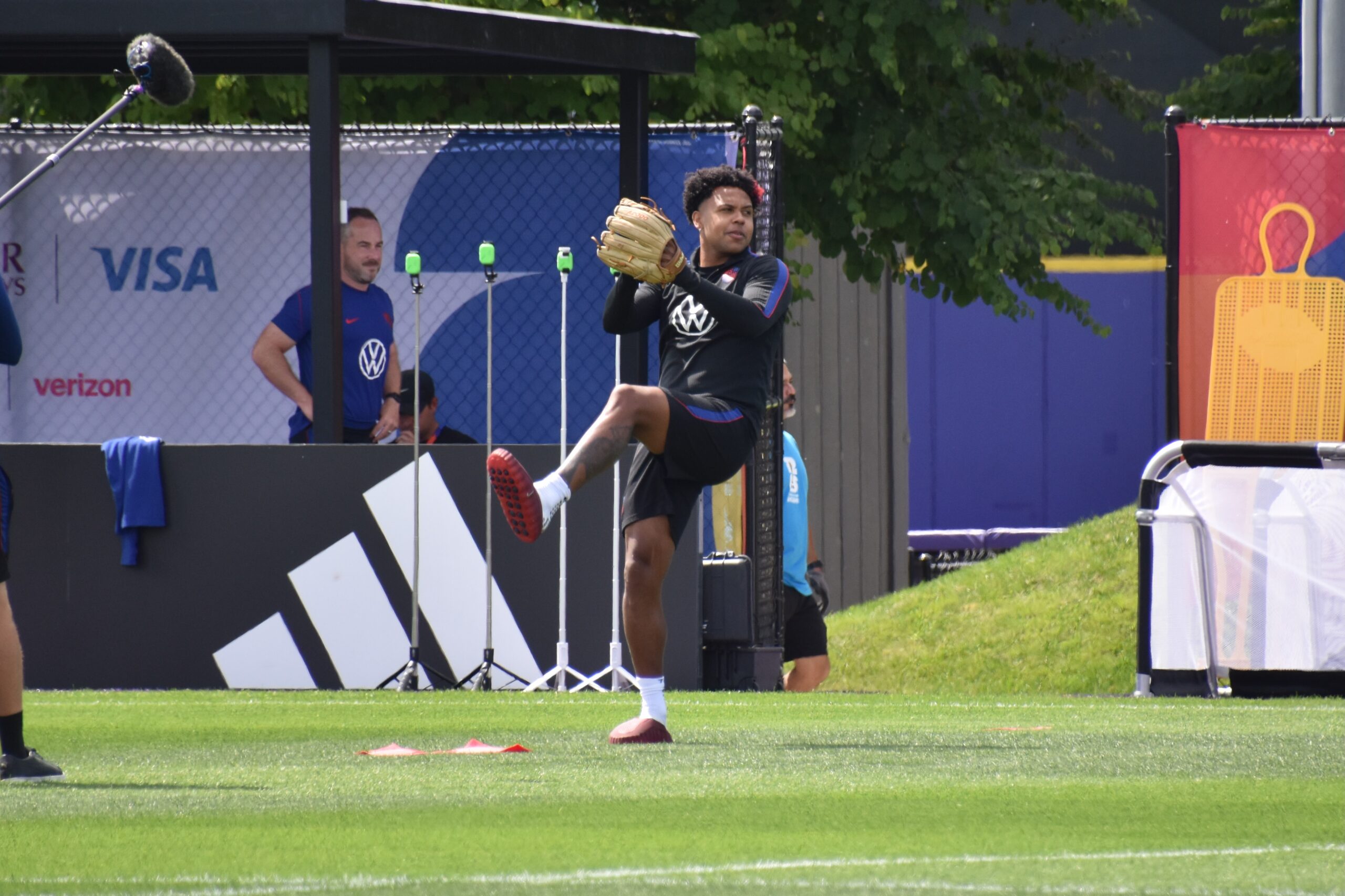
    With that in mind, one of the first warmup exercises at U.S. practice was a round of long toss among some of the players. Tim Ream, Matt Turner, Weston McKennie, and Alejandro Zendejas passed around balls and gloves provided by the University of Washington’s baseball program, whose stadium is next door to the soccer field where the Americans trained.

    Texas natives McKennie and Zendejas hammed it up a bit for the cameras, the former doing his best Nolan Ryan impression with windups and throws to the latter. Zendejas tried his luck at a catcher-style crouch for a while, then thought better of it and took the rest on one knee.

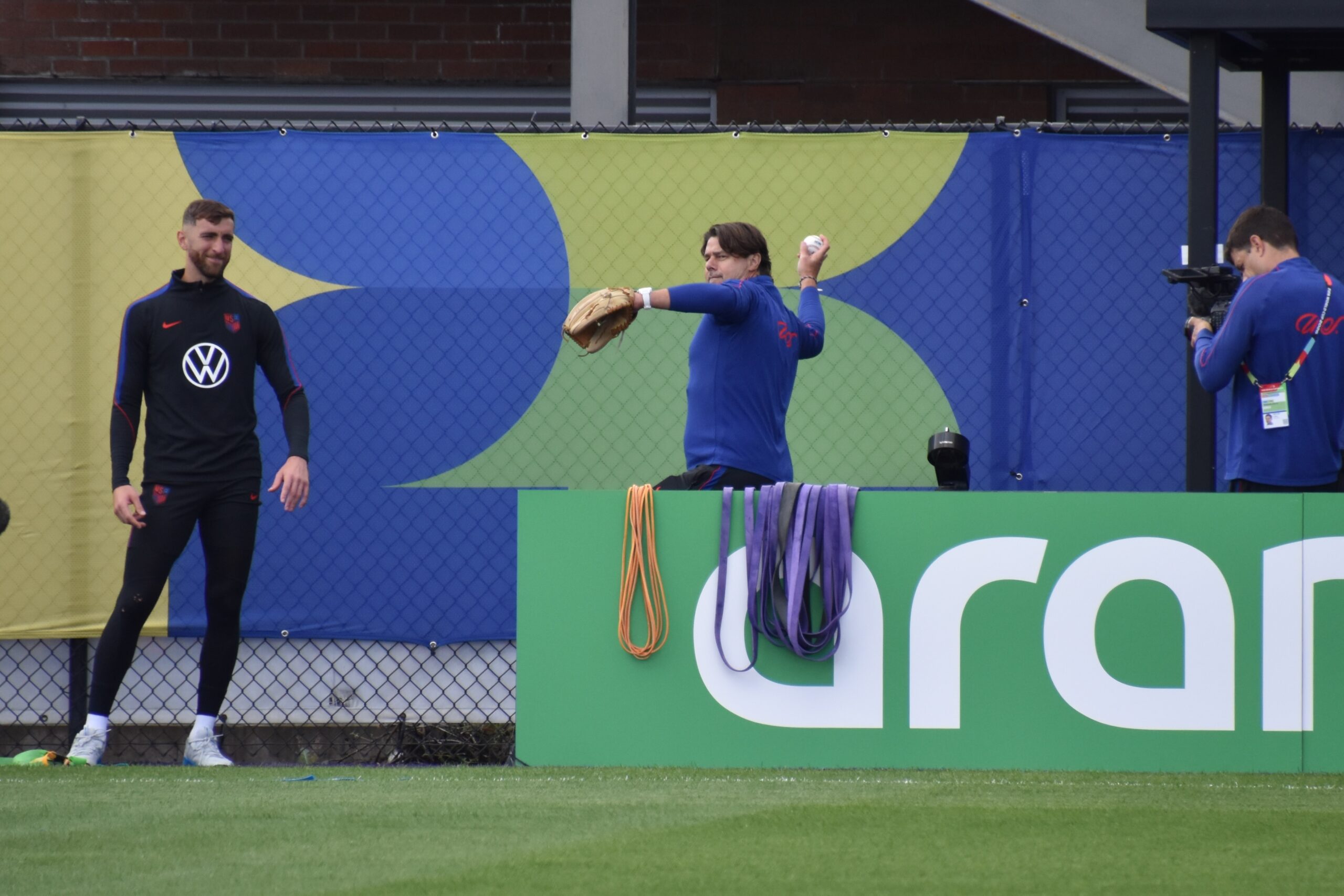
    Pochettino also got some practice in Friday morning, with Turner offering some tips on technique.

    Mauricio Pochettino (center) practices throwing a baseball during the United States men’s national soccer team’s practice at the University of Washington.

    Balogun was born in New York but grew up in London, so he likely knows more about cricket than America’s bat-and-ball sport. But he certainly relished the invitation to take in this country’s pastime, and the chance for a little fun in a serious week.

    “I think that sort of stuff can only happen in America,” he said. ” I’m very, very proud — this is a very unique experience for me, being in the World Cup in your home nation. And yeah, I think you’re seeing, we’ve been able to be so focused, but at the same time have so many things we can do to distract ourselves, and to take our mind off the high-pressure environment.”

    Weston McKennie winds up to throw a pitch.
  • Malik Tillman’s heroics helped the USMNT survive Folarin Balogun’s red card and make World Cup history

    Malik Tillman’s heroics helped the USMNT survive Folarin Balogun’s red card and make World Cup history

    SANTA CLARA, Calif. — Malik Tillman’s shoe was broken.

    He’d been stepped on by a Bosnian player, not hard enough to need to leave the game but enough to need a replacement cleat from the bench.

    The new one didn’t have any magic dust, but it didn’t need it. Tillman practices free kicks a lot, so he was ready when the moment came.

    His team was a goal up, a man down, and fighting with every ounce it had to secure its first men’s World Cup knockout win in 24 years. In the 82nd minute, the chance to regain momentum finally arrived.

    Bosnia’s Stjepan Radeljić held back Sergiño Dest, earning the U.S a free kick just outside the 18-yard box. Tillman, with a bloodied sock underneath that new shoe, stepped up to score the goal that clinched the 2-0 win.

    “I’ve been dreaming about this game. I’ve been dreaming about maybe taking a free kick and scoring a free kick,” he said. “I practiced this in training, and today I think I showed what I can do.”

    Soccer now has its own version of Curt Schilling’s bloody sock saga in the American sports history books — though Tillman is much more soft-spoken than the former pitcher who played for the Red Sox, Phillies, and more.

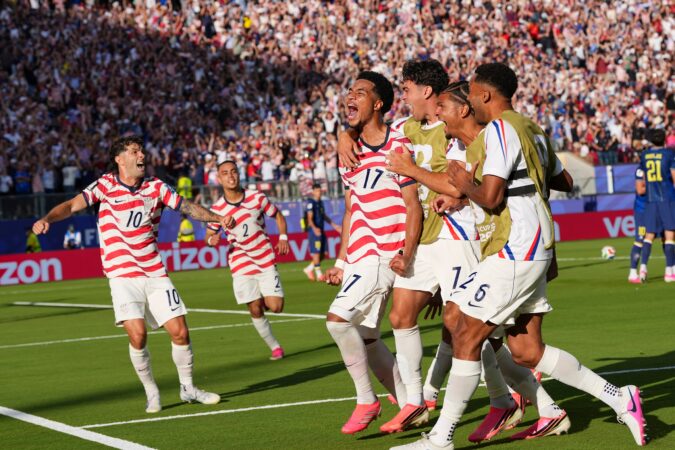
    As Tillman ran toward the end line to celebrate, his teammates joined him in a joyous mass, fusing its energy with a crowd that had dug in just as much down the stretch. That energy came through loud and clear all night, in hopes of seeing a new chapter in a story that began when the Bay Area hosted the U.S. men’s soccer team’s first World Cup knockout game of its modern era in 1994.

    “I’m a different type of person on the pitch,” Tillman said. “Of course, maybe you don’t really see my emotions, but if you score a goal like this, you guys saw my emotions. It’s a great feeling, and, of course, a very proud moment for me.”

    It’s easy to say that the Americans don’t face the kind of pressure as the world’s traditional powers like Brazil, Argentina, England, and Germany. Even next-door neighbor Mexico deals with more, thanks to a rabid fan base that spans both sides of the Rio Grande.

    But this time, the weight on the U.S. was massive. A squad of players long hyped as a golden generation had to win this game, or else they’d be tarred as failures in the big moment.

    The stakes rose even higher when cohosts Canada and Mexico won their round of 32 contests first. Imagine the reaction in the soccer world had the U.S. failed to match them.

    There still will be plenty at stake when the Americans play Belgium in the round of 16 on Monday in Seattle. This team still hasn’t beaten a really good opponent in this World Cup, or in general for a while. Nor has anyone forgotten that the ninth-ranked Red Devils thumped the U.S., 5-2, in March in Atlanta, even if that was a friendly with different squads.

    The U.S. also still has a poor all-time record against European teams in World Cups. Wednesday’s win was just the fourth win in 26 such games, against 15 losses and seven ties. Raising the win total to five now would make an all-time impact.

    About the red card

    The call certainly was controversial, and by the letter of the law, referee Raphael Claus might have relied too much on slow-motion replay footage instead of watching at real-time speed.

    But the decision was not totally wrong. First and foremost, any time a replay shows a player dragging his studs down an opponent’s calf and landing on the foot almost certainly will be a red.

    An obvious counter to that is that Lionel Messi wasn’t sent off in Argentina’s group game against Algeria for landing his studs in an opponent’s calf even more directly.

    This is life in the sport, and every player knows it. Had Balogun been hit in a similar way, even though the initial collision was 50/50, U.S. fans surely would have brayed for the opponent’s dismissal.

    Also, if Balogun had been given a yellow card right away, the odds might have decreased that a video review would upgrade the call to a red.

    Referee Raphael Claus (left) showing the red card to Folarin Balogun.

    Because there was no card initially, when Claus went to the monitor, all he could do was give a red or let it go. The rules mandate that a video review of a call with no card can’t lead to a yellow. FIFA’s rules also mean U.S. Soccer can’t appeal the decision, though it almost certainly would have lost.

    “Typical FIFA,” U.S. veteran Tyler Adams said of the rule book. But he didn’t totally argue with the call.

    “You’re asking the wrong person, with how I tackle,” he said. “I think it’s a yellow card. I think when you slow everything down, it’s always going to look worse. I don’t want to say too much.”

    It definitely will sting the U.S. to face Belgium’s stars without the striker who has more than justified the hype around his talent. Ricardo Pepi presumably will start, with Haji Wright coming off the bench.

    Ricardo Pepi (right) subbed on in the 87th minute to help close out the game.

    Pepi didn’t stop to talk with the media after Wednesday’s game, but Wright did. The last U.S. striker to score in a World Cup before Balogun’s three this summer declared himself “always ready and always prepared to give my best for the team.”

    There also was lots of support for Balogun from his teammates.

    “He’s done so much for us, and now we’ve got his back,” Christian Pulisic said, and Chris Richards said nearly the same words.

    Christian Pulisic (right) consoles Folarin Balogun after the striker’s ejection.

    Freese’s satisfaction

    Let’s close this piece on a positive note.

    Matt Freese grew up in Wayne idolizing Tim Howard, the U.S. Hall of Famer who cemented his legend with 16 saves in the 2014 World Cup’s 2-1 loss to Belgium. Freese didn’t have to be that busy against Bosnia, but his three stops and command of his box still were plenty to confirm his status as the No. 1 in net.

    Now he has a historic reward: being the goalkeeper of record for the first World Cup knockout win in so long.

    “It means, really, more than I can say,” Freese said. “You dream of putting your name up there with the guys that you watched growing up. And there’s a lot more to do, but it’s an honor and a privilege to be in goal for this team.”

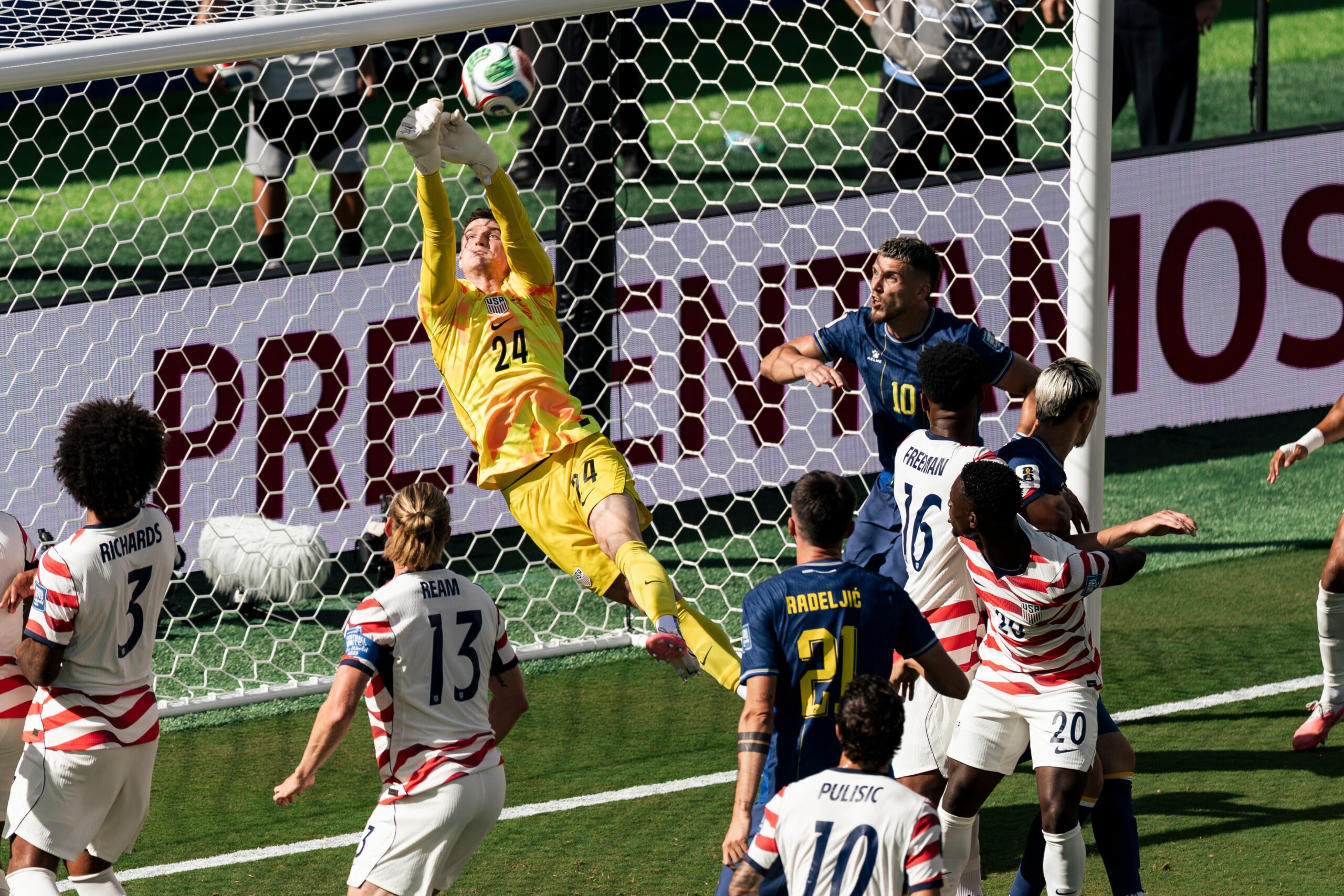
    Matt Freese (center) making one of his big stops in Wednesday’s game.
  • USMNT fight past Bosnia and Herzegovina for its first World Cup knockout win in 24 years

    USMNT fight past Bosnia and Herzegovina for its first World Cup knockout win in 24 years

    SANTA CLARA, Calif. — The U.S. men’s soccer team finally ended its 24-year wait to win a World Cup knockout game, though it came at a cost.

    Wednesday’s 2-0 win over Bosnia and Herzegovina featured goals by Folarin Balogun and Malik Tillman, but also a red card to Balogun that means he’ll miss the round of 16 matchup against Belgium in Seattle on Monday (8 p.m., Fox29, Telemundo 62).

    When the 11th minute passed, the U.S. had gone the longest it had in any game of this World Cup without scoring a goal. That was a low bar to clear in the big picture, but there also definitely were nerves on both sides of the field. Matt Freese had to make two big stops early, but it took until the 18th minute for the Americans to really test Bosnian goalkeeper Nikola Vasilj.

    Balogun was the first player to find the back of the net, in the 31st minute, and not long after he’d gone down inside Bosnia’s 18-yard box, though without enough contact to earn a penalty kick. He was then frustrated a second time by the offside flag, and that call was also correct.

    The breakthrough finally came in the 45th minute. Tim Ream intercepted a Vasilj clearance and knocked the ball forward to Tyler Adams, who made a backheel flick into space. The ball rolled to Tillman, who turned and played the ball forward toward Balogun. He had some work to do, but a misplay by Bosnian centerback Tarik Muharemović gave the striker room to collect the ball and slot it home.

    As the crowd of 68,827 roared, Balogun celebrated with LeBron James’ “Silencer” dance move. The basketball star — quite a soccer fan himself — returned the compliment on social media right away.

    Balogun then came inches from doubling the lead in first-half stoppage time, at the end of a lovely teamwide sequence. Alas, his close-range flick hit the crossbar and flew out of bounds.

    The U.S. held a 5-1 advantage in shots halftime, a sign of how they’d come into the game but also how many nerves there were.

    The game’s first substitutions came in the 51st minute, in a triple-move from Bosnia manager Sergej Barbarez, one of which was star striker Edin Džeko, after pulling up lame. The other moves were tactical, including the much-anticipated arrival of winger Esmir Bajraktarević — a 21-year-old winger who grew up in Wisconsin to parents who fled the Bosnian war of the 1990s.

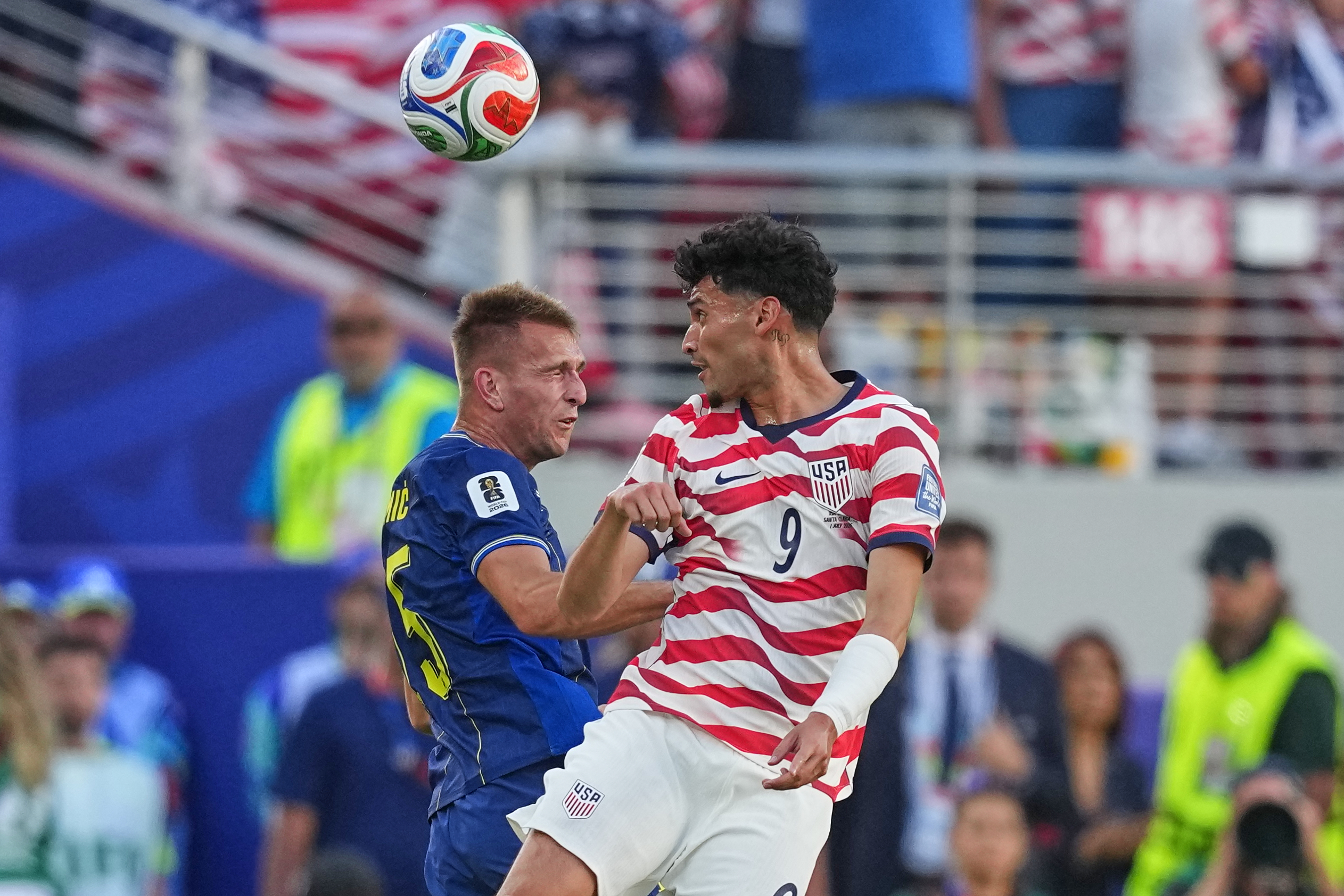
    Balogun’s ejection came in the 64th, after the video review officials watched him rake the studs of his right cleat down the back of Muharemović’s right calf in a tussle. It looked like a 50/50 challenge at first, but the replays clearly showed a cardinal sin for a soccer player — even if he didn’t intend it. By the time Raphael Claus left the monitor, it wasn’t too surprising that he pulled the red card out.

    The ejection meant Balogun would miss not just the rest of this game, but will miss the U.S.’s round-of-16 showdown with the Belgians.

    Now, it was about playing defense, and every U.S. player did his part. Even Tillman, usually much more of an attacking player, got stuck into a loose ball in the 77th.

    Soon after that, the U.S. broke free on a counterattack and Christian Pulisic forced the ball in, but he was clearly offside when Tillman passed to him.

    The biggest break finally came in the 82nd. Stjepan Radeljić held back Sergiño Dest, Claus booked the Bosnian defender, and the U.S. had a free kick on the edge of the 18. Tillman spun it right past Bosnia’s defense and into the net, unleashing a huge celebration from U.S. players and fans alike.

    U.S. manager Mauricio Pochettino finally made his first substitutions in the 88th minute, sending in Ricardo Pepi and Sebastian Berhalter for Pulisic and Dest. In stoppage time, Gio Reyna replaced Weston McKennie.

    There were still plenty of nerves from there, including 10 minutes of stoppage time. But the Americans held on, with the crowd cheering every save, block, and sequence of passes — and exhaling as two Bosnian shots in the final moments went inches wide of Freese’s net.

    Then, at the final whistle, there was the biggest unleashing of all. Thirty-two years after the U.S. men played the first World Cup knockout game of their modern era in the Bay Area, they finally delivered the sight that everyone here had waited so long for.

    This generation of American players finally has its biggest World Cup win.

  • It’s World Cup knockout time for the U.S. against Bosnia. Our writers weigh in on who wins and why.

    It’s World Cup knockout time for the U.S. against Bosnia. Our writers weigh in on who wins and why.

    Going solely off paper, the U.S. men’s national team has the talent to defeat Bosnia and Herzegovina and advance to the FIFA World Cup’s Round of 16. Oddsmakers all over have the United States winning and have even built parlays around the notion.

    When the U.S., No. 15 in FIFA world rankings, plays No. 61 Bosnia in San Francisco on Wednesday (8 p.m., Fox29), it will be the U.S. seeking its first win in the knockout stages since 2002. During the last World Cup in Qatar in 2022, the USMNT lost 3-1 to Netherlands in the round of 16.

    This is Bosnia’s first knockout-round appearance and just the second time qualifying for the tournament since its debut at the 2014 edition in Brazil.

    This feels ripe for the taking. But again, this World Cup might go down as one of the most shocking in recent memory with teams in the knockout stage in their first-ever World Cup (see Cape Verde) and some even needed a playoff game to even make the tournament (see Democratic Republic of Congo). To equate this to casual American fans, this is March Madness, this is Florida Gulf Coast’s Sweet 16 run circa 2013, or tiny Fairleigh Dickinson knocking off No. 1 Purdue in 2023.

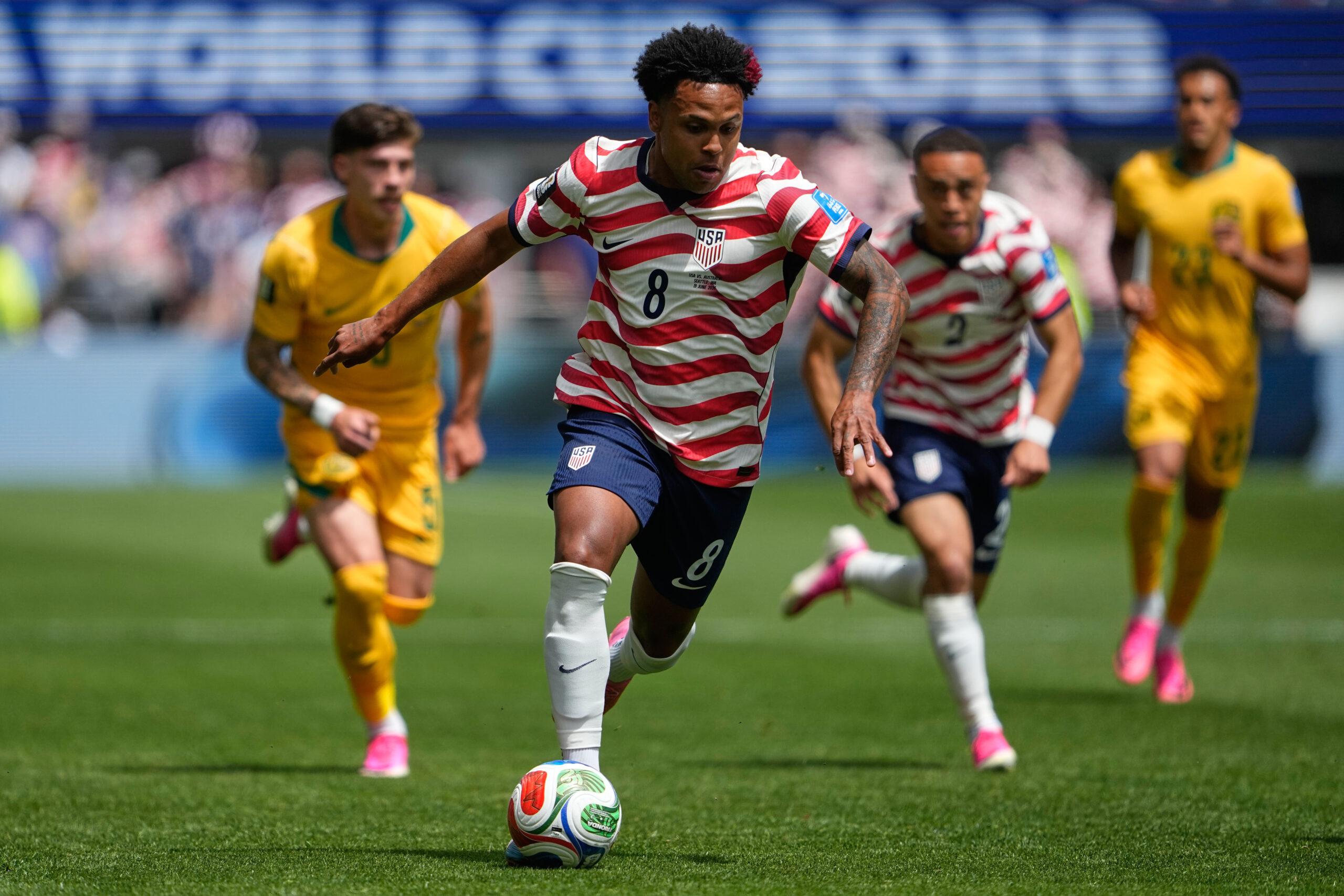
    Weston McKennie (8) has been one of the U.S. men’s national team’s toughest players in this World Cup.

    It’s been a must-watch because the underdogs are bringing it. What does that mean for the United States, a team that showed dominance through the group stage but is coming off an eye-opening loss to Turkey entering the knockout phase?

    Did that loss recenter these players, and they’re ready to show what they learned against a Bosnia team happy to still be in the fight? Or will there be a World Cup-ending theater late on Wednesday night?

    Our team of writers take a look at the matchup and the tournament at large to offer where they think this one will end up.

    Jonathan Tannenwald

    I know it will shock all of you that I’m a cynic by nature, not just profession. The stakes for the U.S. losing this game are almost higher than for winning it, because everything the program has done for the last eight years — not just since 2022 — goes up in smoke if they go out now.

    Meanwhile, Bosnia is on house money, and I can only imagine how many emotions will be in Esmir Bajraktarević’s mind as he plays against the nation he used to represent. But in the end, the U.S. has the better talent and should have another electric home crowd behind it in the Bay Area.

    That’s good for one goal, and a first-choice starting lineup (even if the bench isn’t full) is worth another.

    Prediction: United States 2, Bosnia and Herzegovina 0

    Bosnia’s Esmir Bajraktarević (left) was in the U.S. youth system before committing to playing for Bosnia in the World Cup.

    Kerith Gabriel

    How this plays out for me is largely determined by the lineup U.S. manager Mauricio Pochettino puts out against a really big, physical Bosnia team that bullied its way to four points against Canada and Qatar after shaking off a 4-1 beat down to Switzerland in its second game of Group B.

    There are guys who need to be on the field for the U.S. in the biggest moments. Chris Richards is one of them. Tyler Adams is another, and obviously, a healthy Christian Pulisic and locked-in Matt Freese make the difference.

    Plus, moving to the next round on U.S. soil, on the West Coast, where the Americans have already found success, feels natural. Frankly, they should want it more. So if we’re talking about what’s at stake for the U.S. vs. what Bosnia stands to gain, it’s tough to see how this American contingent doesn’t take that into account, play the best 11 of the 26, and move on. But I’ll hedge that it won’t come easy.

    Prediction: United States 1, Bosnia and Herzegovina 1 (U.S. wins 5-4 on penalty kicks)

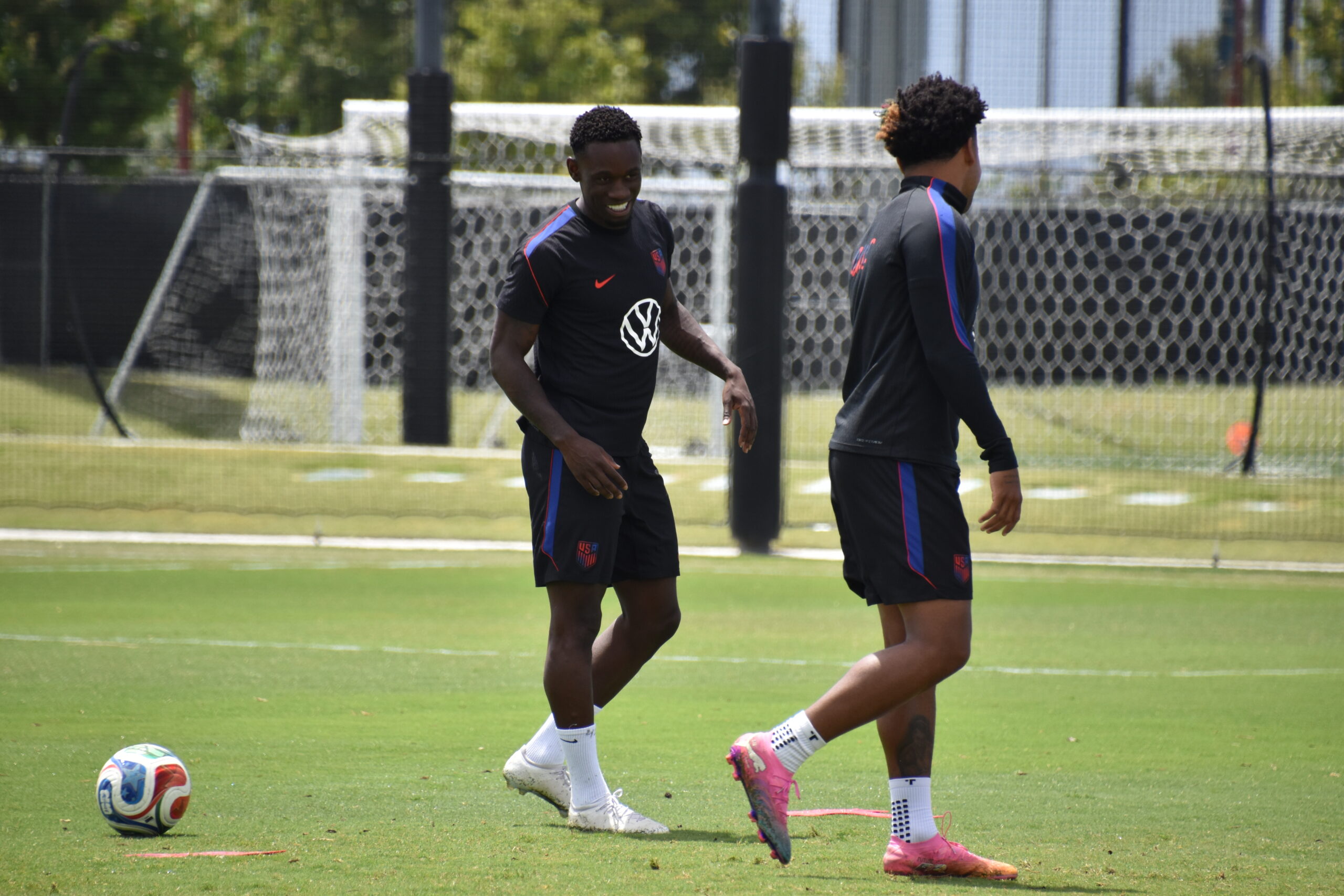
    Folarin Balogun (left) is all smiles during the U.S. national team’s practice at Great Park in Irvine, California, this week.

    Owen Hewitt

    Key American players like Adams, Folarin Balogun, and Tim Ream watched from the bench as the U.S. conceded a 98th-minute winner to Turkey in the USMNT’s group stage finale.

    But since the Americans had already secured the group and a place in the knockout rounds, the worst the loss could do was produce a temporary sting. Now, a loss could end it all. The U.S. will need to follow up a strong group stage performance with its second-ever win in a knockout game at the World Cup.

    A win in the expanded knockouts wouldn’t quite have the magnitude of the “dos a cero” round of 16 win over Mexico in 2002, but knockouts are knockouts.

    The U.S. has played confidently at this World Cup, something it will need to continue to snap a 10-game losing streak against European sides. The Bosnians will be a tough test, but a well-rested American team should overcome its recent form against Europe.

    Prediction: United States 2, Bosnia and Herzegovina 0

  • The Bay Area’s famed rallying cry rings true with the USMNT in town for the World Cup: Just win, baby

    The Bay Area’s famed rallying cry rings true with the USMNT in town for the World Cup: Just win, baby

    SAN JOSE, Calif. — No one needed the reminder at this point, but it came anyway.

    While the U.S. men’s soccer team’s charter flight from Orange County to the Bay Area was in the air, a lightning bolt struck the World Cup when Paraguay toppled Germany.

    Germany undoubtedly wasn’t good enough, and not for the first time in this tournament. There must have been kegs worth of angst in the air at Brauhaus Schmitz on South Street, Philadelphia’s most famous fussball destination, among fans who’d dreamed of seeing the four-time champions come to town on July 4.

    But to lose to the same Paraguay squad that the U.S. ran off the field in their tournament opener? That was a shock and the latest of many lessons in this World Cup.

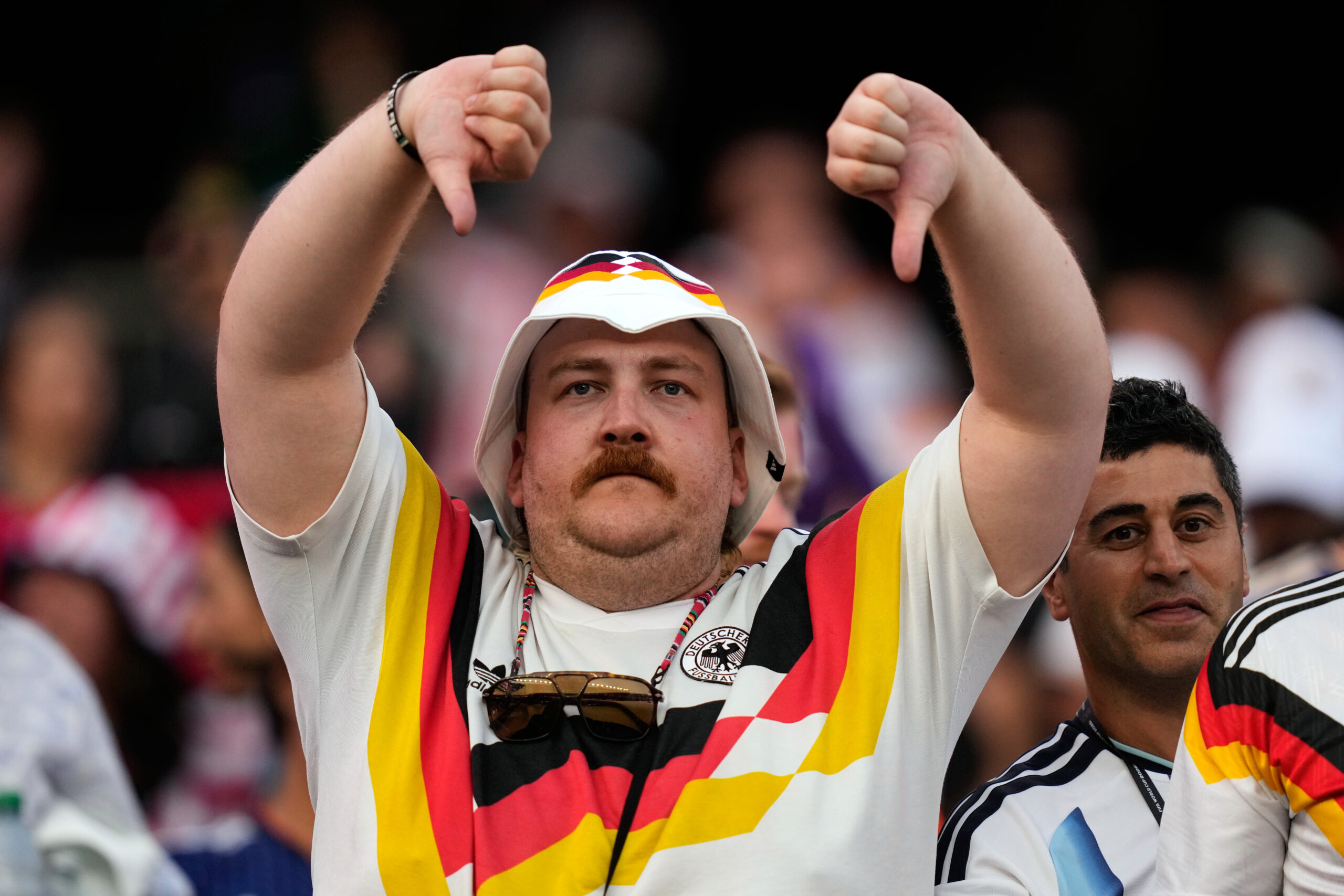
    A Germany fan at Monday’s game offers his opinion of the four-time World Cup champions’ upset loss to Paraguay.

    Yes, anyone can get a result against anyone else these days. Which means the 64th-ranked Bosnia and Herzegovina team the U.S. faces on Wednesday night has more than a chance against the cohosts, who return to the site of an infamous loss in the 2016 Copa América and a triumph in the Gold Cup final a year later.

    There’s no taking any World Cup game for granted these days, especially when it’s a knockout contest. Nor can you take a moment off, as all three of Monday’s games proved. Before Paraguay-Germany, Japan gave up a 95th-minute winner to Brazil. Afterward, the Netherlands played a lot of ugly soccer, gave up a 90th-minute equalizer to Morocco, then lost on penalties.

    “Hopefully we can get it done in regular time — the extra 30 minutes plus pens can get a little bit dangerous,” U.S. centerback Chris Richards said. “We saw the upset yesterday, so us going into this game, [it’s] making sure that we take care of business and go on.”

    The point really should have been hammered home in the American camp by the last-kick-of-the-game loss to Turkey in the group stage finale. But if it was your youth soccer team, Little League baseball team, or CYO basketball team, wouldn’t you make one last nudge before the big game?

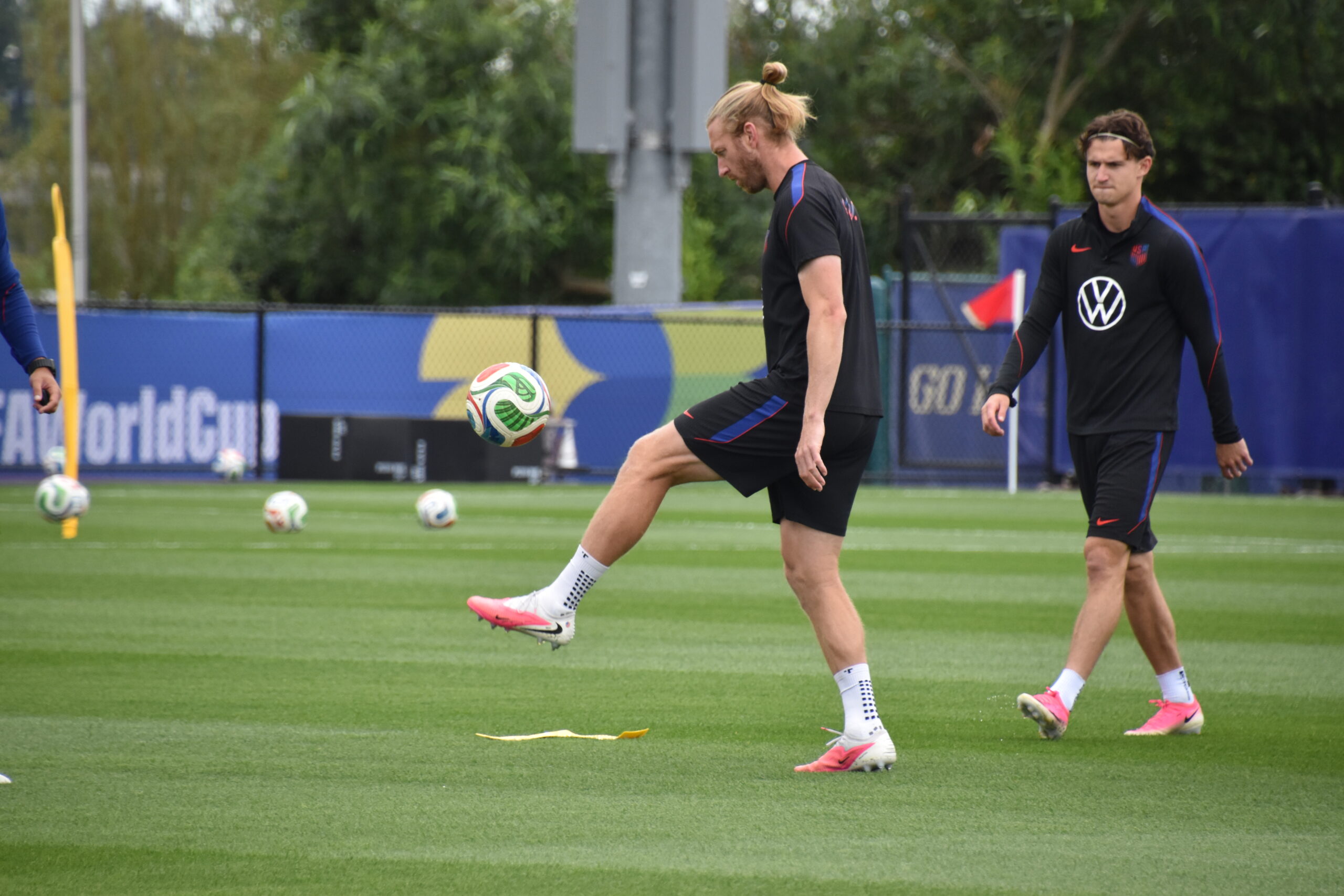
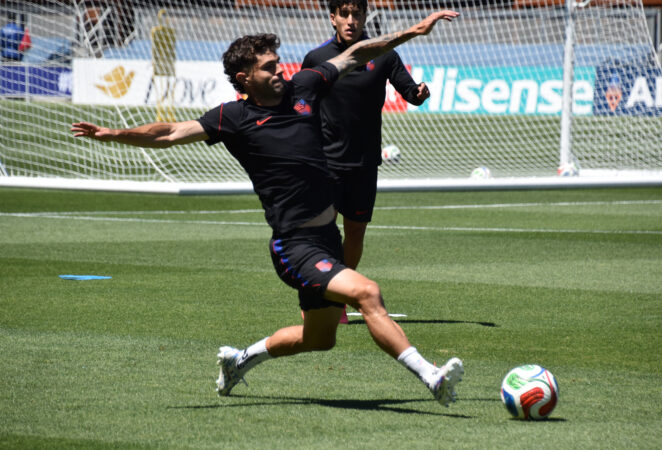
    Chris Richards (center) on the ball during a drill at Tuesday’s practice.

    “It’s a World Cup. You’re never going to get the so-called favorite winning every single time,” said playmaker Christian Pulisic, who called himself “definitely ready” to start after coming off the bench against Turkey.

    “This is soccer. This is the way things go: you can defend all game and win in a penalty kick shootout, and that’s the beauty of the game,” he continued. “So we have to be ready for whatever’s to come tomorrow. We don’t think it’s going to be easy by any means, so we have to put on a really high-level performance.”

    If it feels like this point has been overstated this week, it’s because it ranks so much higher than everything else there is to say.

    Sure, there’s a tactical analysis to write about how Richards will fare against 40-year-old Bosnian striker Edin Džeko, a veteran of big clubs including England’s Manchester City, Italy’s AS Roma and Inter Milan, and Germany’s Wolfsburg and Schalke. Or how young right winger Esmir Bajraktarević will fare against U.S. defender Antonee Robinson.

    Esmir Bajraktarević celebrates one of Bosnia’s goals against Qatar in their group stage finale last Wednesday.

    There’s certainly much to say about Bajraktarević, and for good reason. The 21-year-old grew up in Appleton, Wis., and his parents were refugees from the Bosnian war of the 1990s.

    He spent a season in the Chicago Fire’s youth academy (2019-20), then moved to the New England Revolution, where he turned pro and spent three seasons before a move to Dutch club PSV Eindhoven — and is now teammates with U.S. veterans Ricardo Pepi and Sergiño Dest and formerly Malik Tillman.

    Along the way, Bajraktarević played for U.S. youth national teams at the under-19 and under-23 levels, and earned one cap for the senior U.S. squad in a January 2024 friendly. But because that wasn’t in an official competition, he could change nationality.

    When Bosnia called a few months later, he made the switch, and debuted in the fall. A year and a half later, he scored the shootout penalty kick that qualified the Dragons for this World Cup with a playoff upset of Italy.

    But if the U.S. team has its way, that story will become just a sidebar when the opening whistle blows. At that point, the motto will become one that’s well-known at the other end of San Francisco Bay from here, in Oakland: Just win, baby.

    Even Tillman, who was born in Germany and has grown into understanding American sports, gets the point.

    “Yeah, it’s true,” he said, when asked his opinion. “In the end, the win is the most important. And I think after, of course, you can analyze the game, but if you go to the next round, this is the most important.”

    I asked Mauricio Pochettino what he thinks of the "Just win, baby" slogan – and whether his saying "it's the final of the World Cup tomorrow" means more focus on winning at all costs, and less on tactics.

    Pochettino gave a long answer. Here it is in video form:

    youtu.be/iGVv_P8__jM?…

    [image or embed]

    — Jonathan Tannenwald (@jtannenwald.bsky.social) June 30, 2026 at 6:56 PM