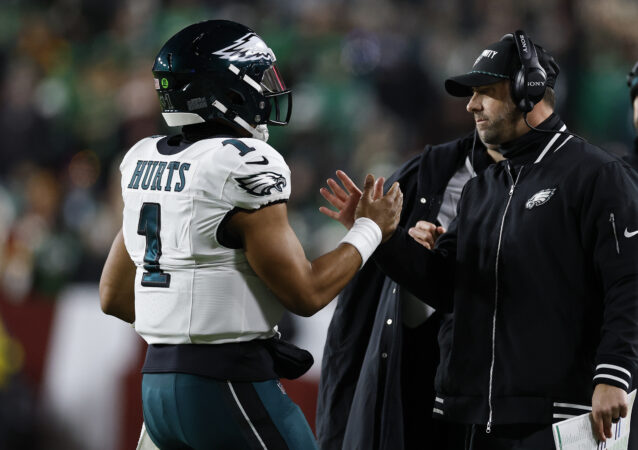
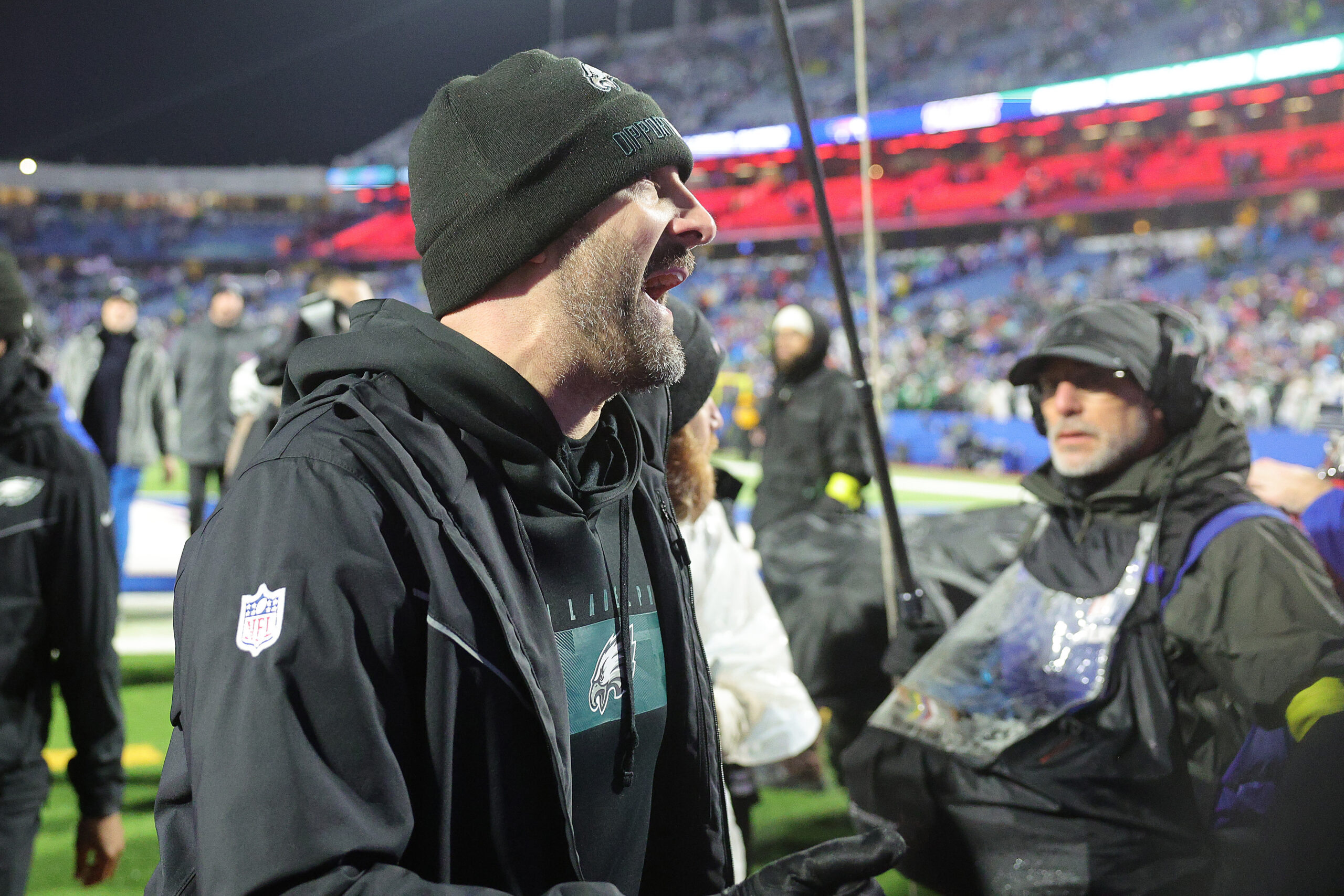
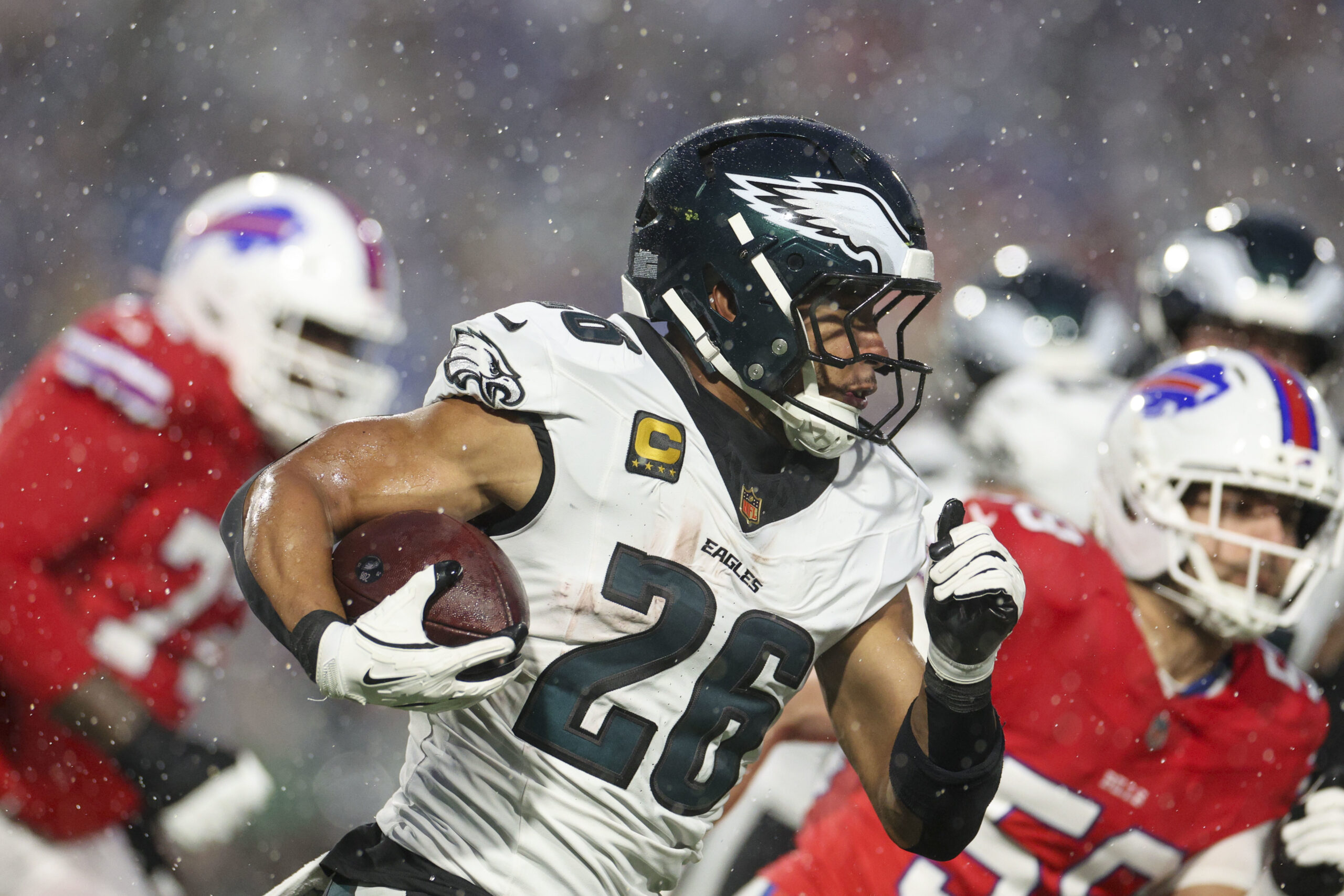
The quieter his offense is, the louder Nick Sirianni gets. There he was Sunday night, strutting down a tunnel at Highmark Stadium in the aftermath of the Eagles’ 13-12 victory over the Bills, crowing about how all those Buffalo fans had nothing more to say, how they didn’t have so much bleep to talk anymore. He caught up to A.J. Brown and turned to look him in the eye, and Brown shot a smirk back that said, Coach, did you watch us try to move the ball after halftime?
Did Sirianni watch it? Of course. Did he care? My guess: only so much. If you’re complaining about the Eagles’ impotent offense and unimaginative play-calling both from Sunday’s second half and from several previous games this season, if you’re waiting for Sirianni and coordinator Kevin Patullo to have some eureka moment and suddenly start dazzling everyone with their play designs and a wide-open style of offense, you’re missing the key to understanding the 2025 Eagles.
They want to play like this. They want to rely on their defense. They want to limit every and any available possibility that their offense and special teams might commit a turnover. It took some time and some trial and some error, but they’ve settled on an approach, and this is it.
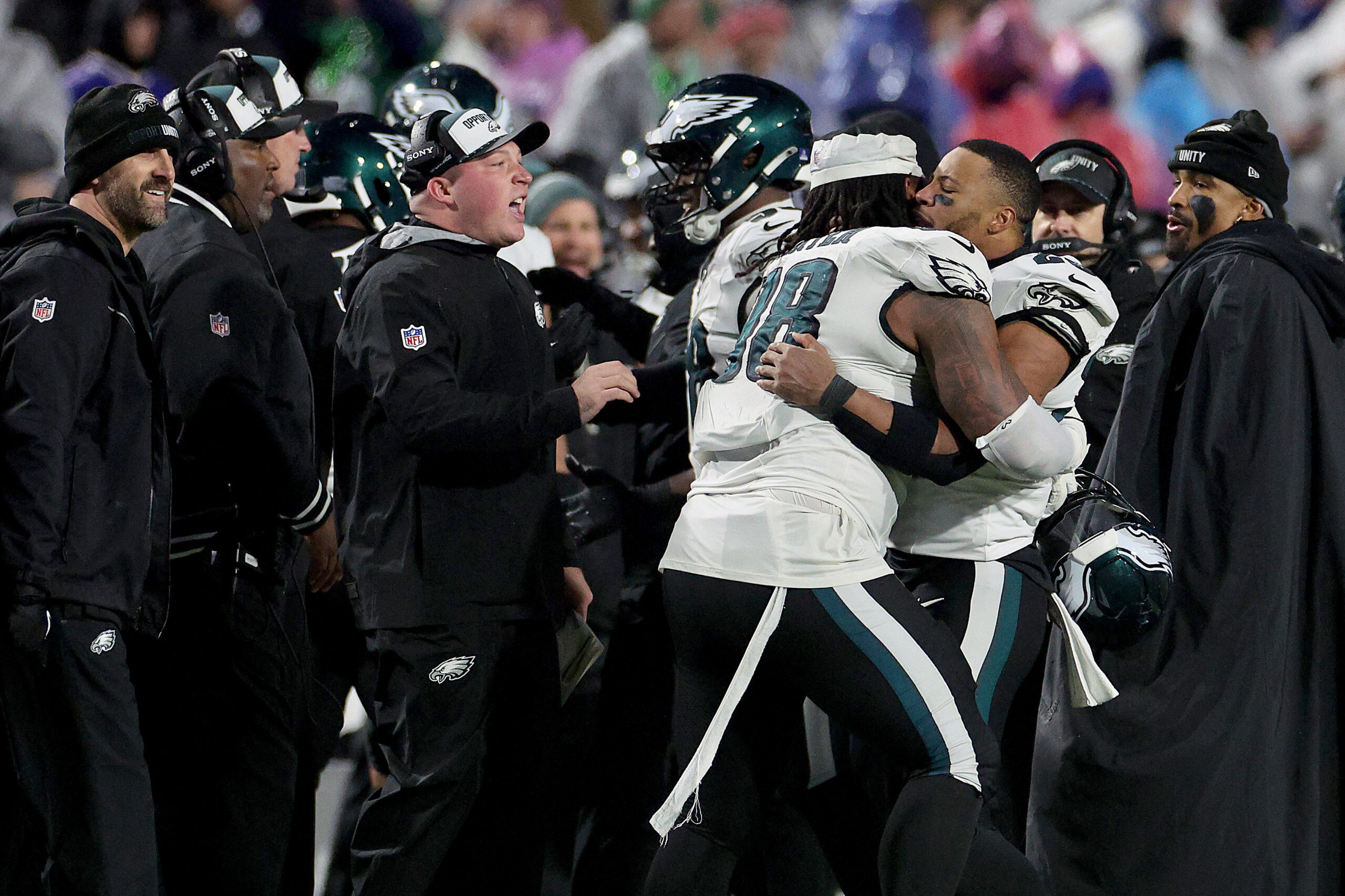
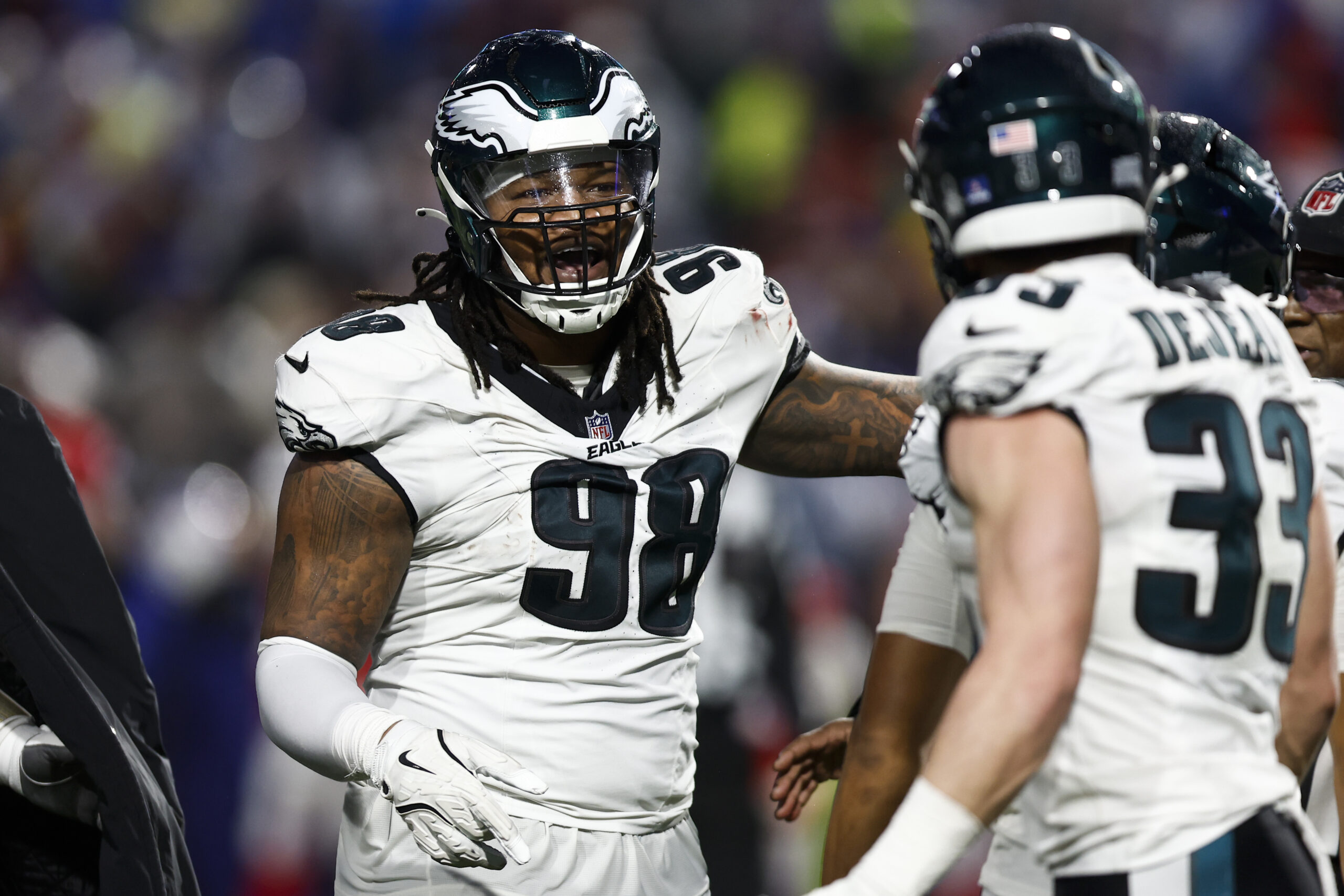
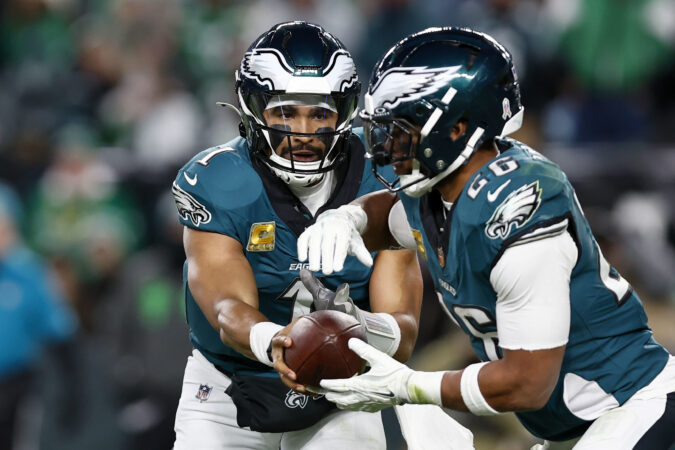
Running back Saquon Barkley (right) embraces defensive tackle Jalen Carter after the Eagles defense stopped the Bills on a two-point conversion attempt late in the fourth quarter Sunday.
By they, I don’t necessarily mean Jeffrey Lurie and Howie Roseman. They’re happy with the wins, to be sure, and they’re surely thrilled that Roseman and Vic Fangio have worked to create a defense of such quality that the Eagles can gain all of 17 yards in a single half and still hold on to beat a Super Bowl contender, which is what happened Sunday. But you can pretty much guarantee that Lurie, in particular, is looking at the money and salary-cap space that he has allocated to Brown, Jalen Hurts, Saquon Barkley, DeVonta Smith, Dallas Goedert, Lane Johnson, Jordan Mailata, Landon Dickerson, and Cam Jurgens and asking himself, Did I really spend all that money so Jalen could hand the ball to Saquon on delayed inside handoffs in second-and-long situations?
No, by they, I mean Sirianni. If he rented a small plane, attached to its tail a banner that read, WHEN WE DON’T TURN IT OVER WE WIN, and flew it over Lincoln Financial Field, he could not be more overt about his intentions here, about the way he wants the Eagles to play. He even put the lie to the notion that nothing revealing comes out of HBO Max’s Hard Knocks series anymore, because the cameras captured him in a team meeting earlier this month spelling out this strategy.
“This is what it’s about this week,” he said to an auditorium full of players. “We’ve got to be obsessed with the football. We’ve got to be obsessed with the [expletive] football. When we take care of the football, it is so hard to beat us. When we turn the football over as a defense, it is so hard to beat us. …
“This is the most important fundamental we have. We’ve got to be so locked in to this, because as we continue on this year, this is what presses us: the ball, the ball, the ball, the ball. We win when we take care of the football. We win when we turn them over on defense.”
Here is Nick Sirianni’s message to the team prior to last weeks game from Hard Knocks.
He is hammering home the importance of turnovers saying “we gotta be obsessed with the football.”
He stressed when the Eagles take care of the football they are very hard to beat as well as… pic.twitter.com/3kqo1UagBn
During Sirianni’s five-year tenure as their head coach, the Eagles have won 42 of the 44 games in which they have committed fewer turnovers than their opponents; that record includes Sunday’s win, when Josh Allen lost a fumble while trying to fend off Jaelan Phillips and the Eagles did nothing so daring that might have cost them possession of the football. That 42-2 mark is a stark and striking statistic, one that has a talismanic quality for Sirianni. He believes in its power so deeply that he is willing to bet that the Eagles can build an early lead, then hold any opponent at bay thereafter.
Two games from the last five weeks are particularly insightful in this regard. On Nov. 23, the Eagles lost to the Dallas Cowboys, 24-21, after getting out to an early 21-point lead. On Dec. 8, they moved the ball well against the Los Angeles Chargers but still lost, 22-19 in overtime, largely because Hurts threw four interceptions and lost a fumble. One could certainly conclude from those losses that the Eagles should have continued to be aggressive on offense, that it would be a mistake for them to dial back their aggressiveness. They tore up the Dallas defense for that game’s first 15½ minutes, and it took an all-time terrible performance from Hurts, maybe the worst of his career, to cost them a victory against the Chargers.
Eagles coach Nick Sirianni banters with Buffalo Bills fans after Sunday’s victory in Orchard Park, N.Y.
But after scoring a combined 60 points against a couple of bad teams (the Las Vegas Raiders and Washington Commanders), the Eagles went right back to being conservative against a good team, the Bills. The lesson that Sirianni took from the Dallas and L.A. losses wasn’t, In one game, we took our foot off the gas pedal, and it came back to bite us. In the other, Jalen had the kind of game that he’s unlikely to have again. So we can afford to open things up. No, the lesson he took was, We opened things up, and we lost. We can’t afford to do that again.
Can the Eagles return to the Super Bowl and win it again this way? Yes, they can. But that doesn’t mean they will, and even if they do, their journey there will be stressful and tenuous, with winter storms and giant potholes. But this is the road they’ve chosen. So stop mentioning the firepower that they have on offense, the players whose talents are being wasted. Stop arguing over whether Hurts is a winning winner who just wins or a fraud who has been propped up by the infrastructure around him. Those discussions are pointless. This is who the Eagles have been this season. This is who they are. This is who they’re going to be. They don’t have Trent Dilfer at quarterback, but they’re going to play like they do. Get used to it.
Thanks to Vic Fangio’s defense, the Eagles outlasted Josh Allen and the Buffalo Bills, 13-12, on Sunday. While the Eagles offense posted just 17 yards on 17 plays in the second half, their defense made just enough stops to seal the victory.
Despite all of the ugliness that has characterized the Eagles’ season, particularly for the offense, the NFC’s No. 2 seed is still in play. The Eagles are familiar with that path, having begun last season’s playoffs as the No. 2 seed on their quest to the Super Bowl.
The Chicago Bears are the only team in their way. An Eagles win at home over the 4-12 Washington Commanders in the regular-season finale on Sunday and a Bears loss to the Detroit Lions in Chicago would make Philadelphia the No. 2 seed. That improved seeding would lock in a wild-card matchup against the reeling, Micah Parsons-less Green Bay Packers.
Here’s what we know (and what we don’t) about the Eagles heading into Week 18:
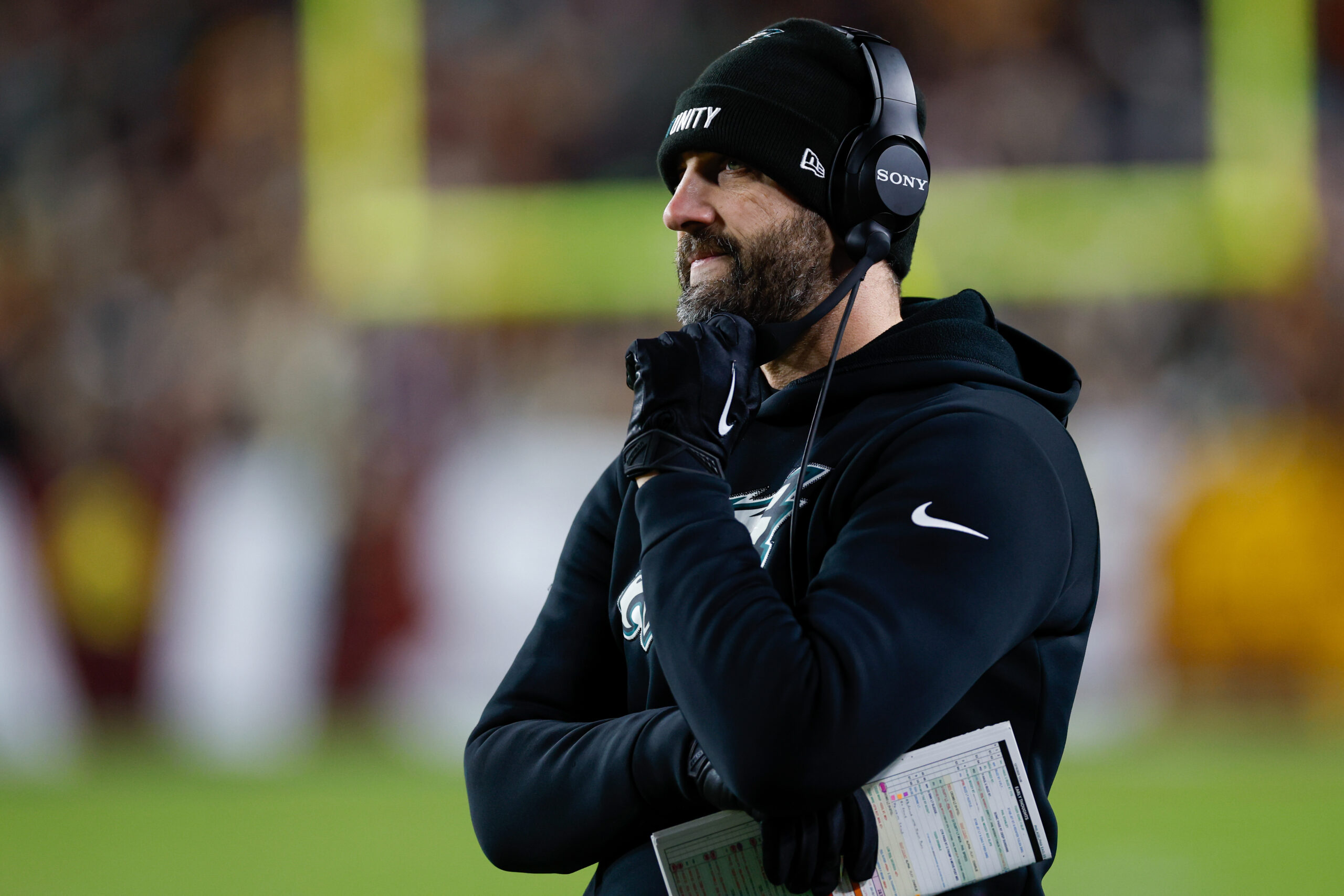
Play his starters on Sunday or rest them for the playoffs? There are risks and rewards with either decision for Eagles coach Nick Sirianni.
To rest or not to rest?
Hamlet didn’t know what he was talking about. The real question, at least to Nick Sirianni this week, is: to rest or not to rest the Eagles’ starters?
Sirianni will be tasked with deciding whether the starters should play against the Commanders on Sunday in an effort to improve their chances at the No. 2 seed. There are risks and rewards associated with either decision.
If all of the starters play, the Eagles likely have their best chance at a win vs. lowly Washington. But Sirianni has been burned by playing his starters in the season finale. In the last regular-season game of the 2023 season against the New York Giants, A.J. Brown injured his knee, which sidelined him for the wild-card loss to the Tampa Bay Buccaneers the following week.
Jalen Hurts also hurt a finger on his throwing hand against the Giants, although he ended up playing against Tampa Bay.
Technically, the starters had something to play for in Week 18. The Eagles could have had a shot at the No. 1 seed with a win, but they were also at the mercy of the Dallas Cowboys, who were playing simultaneously against the Commanders. Dallas ultimately won and clinched the division.
Could Sirianni take the same approach with his starters this time around? The Eagles likely have a better shot at beating the Commanders with Hurts, Brown, Saquon Barkley, DeVonta Smith, and Dallas Goedert than they do with Tanner McKee, Will Shipley, Jahan Dotson, Darius Cooper, and Grant Calcaterra.
But would they still have a decent shot with the backups? It’s possible. After all, the Commanders were down numerous key players in their Christmas Day loss to the Cowboys last week, including quarterback Marcus Mariota (the de facto starter with Jayden Daniels shut down) and left tackle Laremy Tunsil. Center Tyler Biadasz left the game with knee and ankle injuries.
Perhaps there is a middle ground in which some of the Eagles starters play and others sit. Sirianni offered a window into his thinking Sunday night after the starters beat the Bills when he discussed the importance of coming out of the game healthy.
“I thought it was really important that we played in this particular game,” Sirianni said. “Fortunately, we got through this, I think. I haven’t talked to the doctors yet, but fortunately we got through this. … I know there will be some bumps and bruises, but we’ve got through what we needed to get through and you feel really good.”
Jalen Carter and the Eagles defense were dominant again on Sunday against the Bills.
The age-old question
Seventeen games and 17 “what we know” exercises later, we still don’t know if this style of victory from the Eagles — a dominant defensive performance and just enough firepower on offense — will be sustainable in the playoffs.
It might seem unlikely any other year. As noted ahead of the Week 12 loss to the Cowboys, only one Super Bowl champion offense in the last seven seasons registered a negative expected points added (EPA) per play during the regular season — the 2023 Kansas City Chiefs (-.04). EPA measures how much one play improves or hurts a team’s chances of scoring.
The Eagles are sitting at an EPA of -.02 this season (tied for 11th in the NFL) after their third-worst showing of the year against the Bills (-.21).
But is there enough parity in the NFL this season that the Eagles could still win this way in the postseason?
Maybe. Every team in the league has its flaws, as evidenced by the fluctuation of the NFC playoff seeding over the last couple of weeks. The Eagles’ path to a repeat is made easier by the Kansas City Chiefs no longer being the perennial powerhouses they once were, too.
The Eagles’ Super Bowl-winning offense was also flawed, but not thisflawed, especially in the running game. Even if the 2025 Eagles can win this way, Sirianni made it clear that it’s not the way he necessarily wants to win. The Eagles beat the Bills, but Sirianni emphasized that he wasn’t satisfied with the offensive showing and pushed back on the notion that he was playing not to lose in the second half.
“We weren’t in a mode of saying, ‘Hey, [a] 13-0 [lead] is enough,’” Sirianni said after the game. “Not against this quarterback. Not against this offense. So I don’t think our mindset was ever that.”
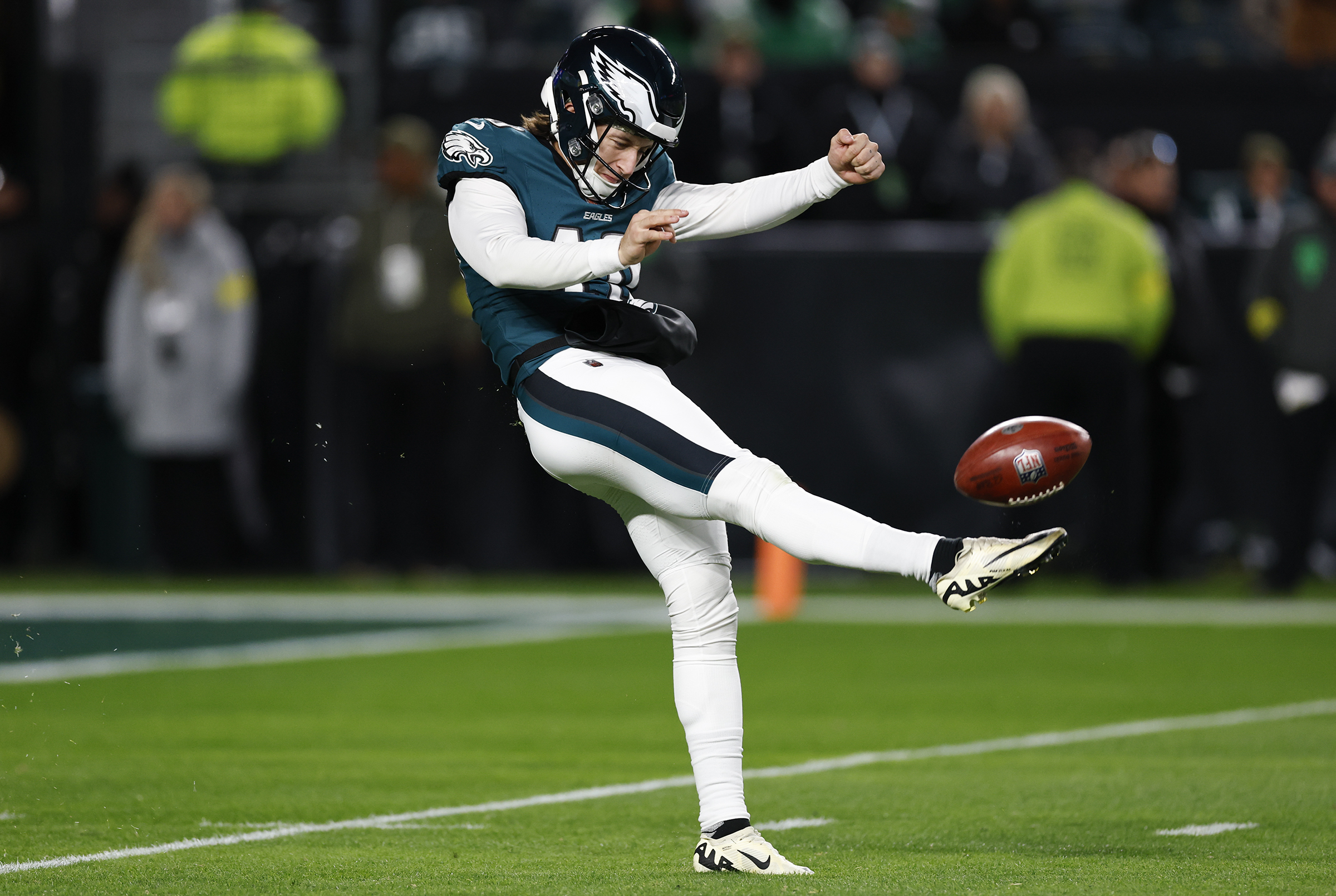
The Eagles’ Braden Mann is tied for third in the NFL with 69 punts.
Mann of the year
It’s a miracle that Braden Mann’s leg is still attached to his body at this point in the season. When you punt for the New York Jets for three years, though, you’re probably used to a hefty workload.
Mann, the Eagles’ 28-year-old punter, is tied for third in the league with 69 punts. He’s been an unsung hero when the offense sputters. Mann is one of just six punters averaging more than 50 yards per punt (he ranks fifth in the league at 50.4).
The Eagles will need every edge they can get heading into the playoffs, including continued contributions from Mann. He’s hitting his stride heading into the postseason. Even in the wet conditions, Mann had one of his best showings of the year against the Bills.
He averaged 55.4 yards per punt on Sunday (388 yards on seven punts), his third-best rate of the year. Mann had a pair of punts for over 60 yards (65 and 62) and he pinned the Bills inside their own 20 twice (the 17-yard line and the 10). Even while their special-teams unit attempted to block his punts, Mann didn’t flinch.
“They were coming after us to try and block a lot of them and our interior did a really good job,” Mann said after the game. “So I’m always super comfortable in there, which is not something that needs to be overlooked. And then I trust the gunners on the outside. They do such a good job on our coverage team. So I can just punt freely, and I think that helps.”
From the Bills to Bill
The Commanders are full steam ahead on the Hot Mess Express, but they have one emerging offensive weapon not named Terry McLaurin who could provide a challenge to the Eagles defense.
Jacory “Bill” Croskey-Merritt, the 24-year-old rookie running back, is coming off his second career 100-yard rushing performance against the Cowboys. Granted, the majority of that total came on a 72-yard house call that helped the Commanders chip away at Dallas’ 14-point lead at the time.
Still, he had 11 carries for 105 yards and two touchdowns on Thursday, an uptick in volume over his eight carries for 25 yards and a score two weeks ago against the Eagles. Croskey-Merritt earned more touches in the absence of Chris Rodriguez, who was inactive with an illness.
The Commanders have nothing to lose, so perhaps they will look to get their rookie more involved in the season finale.
The Eagles defense will be up for any kind of challenge on the ground. Even in the absence of Nakobe Dean, the Eagles limited Bills running James Cook, the league’s leader in rushing yards, to just 74 yards on 20 carries (3.7 yards per carry, his fourth-lowest clip of the season).
Nemours Children’s Hospital is launching a new maternal and fetal health program designed to help families with complex fetal diagnoses get specialized care closer to home.
The Institute for Maternal Fetal Health will begin treating patients at Nemours’ flagship hospital in Wilmington in early 2026. The institute’s goal is to provide advanced care for mothers and babies with potentially life-threatening diagnoses, such as congenital heart disease, metabolic disorders, and genetic defects. They may otherwise have had to travel to farther-away hospitals in Philadelphia, Baltimore, Pittsburgh, or New York.
The institute will provide in utero surgery — procedures that are done on a fetus before birth to correct certain debilitating birth defects, such as spina bifida, which is when the spinal column does not completely close and leaves the spinal cord exposed.
It will also offer more education and resources for other family members, especially other children, to help them cope with a fetal diagnosis.
“Our biggest impetus is to help families stay closer to home,” said Julie S. Moldenhauer, a maternal-fetal medicine specialist and the institute’s inaugural executive director.
Julie S. Moldenhauer, a maternal-fetal medicine specialist and fetal interventionalist, is the inaugural executive director of the Institute for Maternal Fetal Health.
Advanced prenatal care at Nemours
The new maternal fetal health institute builds on Nemours growth in the area. The Delaware-based nonprofit health system in 2024 took over pediatric offices previously operated by Crozer Health, which closed under bankruptcy earlier this year.
At its Wilmington hospital, Nemours is adding three new dedicated operating rooms for C-sections, complex deliveries, and fetal surgeries.
The institute will also include more patient rooms and neonatal stabilization rooms for babies who need extra support after birth.
A new wellness room will serve as a place for families to gather for a meal, play time, art therapy, or yoga.
A rendering of a shared patient space planned for the Institute for Maternal Fetal Health at Nemours Children’s Hospital in Wilmington, where families will be able to gather for a meal, play time, or planned activities.
Support for the whole family
For parents, a fetal diagnosis can result in excitement about a new baby being replaced by fear for their child’s health.
What’s more, getting the care they need may involve traveling from home for frequent appointments and procedures. That can be expensive for families who need to take time off work, pay for travel and hotel stays, and find childcare for any siblings remaining home.
“All those hopes and dreams can feel like they’re a candle being blown out,” Moldenhauer said. “Building a beautiful nursery becomes — how are we going to get back and forth to all these appointments?”
When families have to travel for advanced prenatal care, siblings who remain at home may feel left out or scared about whether their parents and the baby will be all right.
At its new institute, Nemours will offer support groups for grandparents, and education for siblings to demystify the medical process.
Psychologists can help couples who are struggling with their relationship during a complex pregnancy, or talk to children who are showing signs of being affected by their parents’ stress.
“Until you see your child with all the tubes in a NICU, in an incubator, it doesn’t feel real,” said Moldenhauer. “We want to fortify the whole family.”
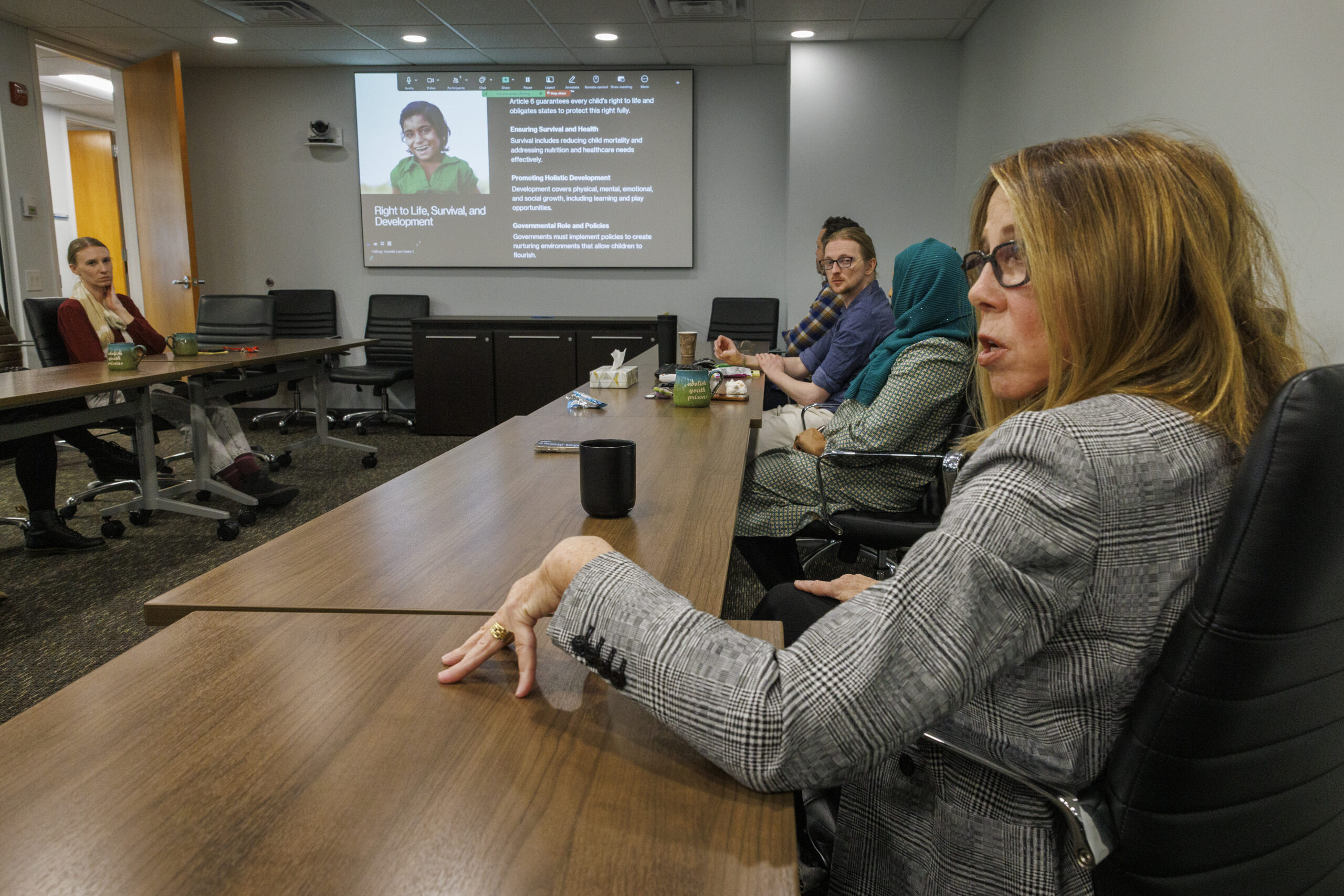
Marsha Levick took her seat at a conference table at the Juvenile Law Center on a recent Wednesday for what would be one of her last meetings. She walked colleagues through the basic principles of the United Nations Convention on the Rights of the Child, the 1989 treaty that laid out, in clear terms, what the world said it owed young people.
At the heart of the treaty is a simple idea: A child’s best interests come first — even when that child enters the justice system. It has been ratified by all but one of the U.N.’s member nations: the U.S. And in many of those 196other countries,Levick said, children younger than 14 cannot be prosecuted at all.
“Wait,” a staffer interjected. “Kids younger than 14 aren’t in the justice system?”
“I know,” Levick said. “It’s very different.”
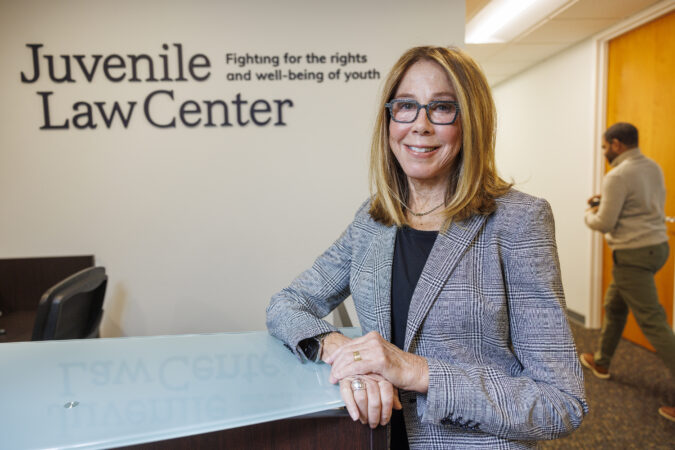
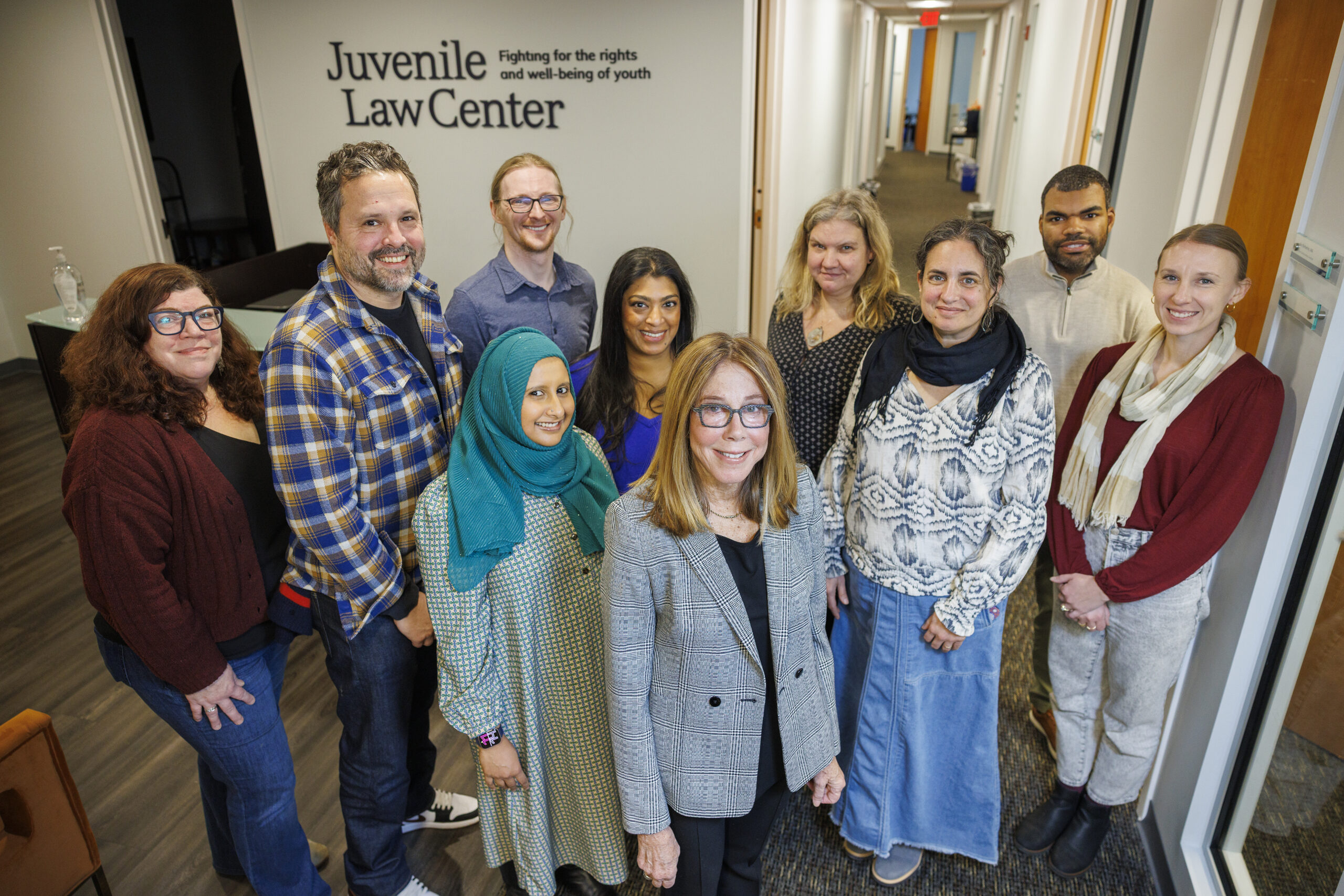
Marsha Levick, chief legal officer and cofounder of the Juvenile Law Center, speaks with staff on Dec. 17.
For 50 years, Levick, 74, has been one of the most persistent and influential voices in the American juvenile justice system, a driving force in turning what was once a niche legal specialty into a national civil rights movement. Colleagues credit her with helping to rewrite how courts view children — persuading judges, including those on the U.S. Supreme Court, to treat youth not as miniature adults but as citizens with distinct constitutional protections and needs.
Levick will step down Wednesday from her position as chief legal officer of the Juvenile Law Center, the Philadelphia-based organization she helped build from a walk-in legal clinic in 1975 into a national leader in children’s rights.
Her departure coincides with the center’s 50th anniversary. At a celebration gala in May, the nonprofit honored Levick with a leadership award that recognized her body of work.
Levick’s career ranged from representing individual teenagers to steering landmark litigation that forced states to overhaul abusive practices. She helped lead the Juvenile Law Center’s response to the “kids for cash” scandal in Luzerne County. She coauthored briefs in a series of U.S. Supreme Court victories that throttled the harshest punishments for kids, including life in prison.
But Levick is also stepping down at what she calls a “dark moment” forcivil liberties in America — a time when rights once thought settled are being rolled back.
Levick was in law school in 1973 when the U.S. Supreme Court handed down Roe v. Wade, the landmark decision that recognized a constitutional right to abortion. In the years that followed, a constellation of rights — from marriage equality to access to contraception — also expanded.
Roe was overturned, however, in 2022. Since then, other decisions have also chipped away at affirmative action in colleges and LGBTQ+ protections.
“It’s hard to convey the shock that it imposes,” Levick said in a recent interview. “Now, 50 years later, you’re pushing the rock back up the hill.”
She made clear she was unsparing with herself, quick to point out what she perceived as shortcomings. “There were high moments for sure,” she said. “But I am not foolishly happy about that. I’m shocked that that’s all we could do. That’s as far as we got.”
Yet even as fresh battles loom, colleagues say the groundwork Levick has laid will guide the Juvenile Law Center’s mission and the broader fight for children’s rights for years to come.
Jessica Feierman, the center’s senior managing director, will step into Levick’s role. “It is a huge privilege and also an immense responsibility,” she said. “In this moment of attacks on civil rights and children’s rights, it’s even more vital that we build on the victories of the last 50 years.”
From Philadelphia to the U.S. Supreme Court
Raised in Philadelphia’s Fairmount neighborhood, Levick discovered early the charge of using her voice, first as a girl who demanded a recount in an elementary school election and won the presidency, and later as a teenager who inhaled The Feminine Mystique and the feminist writers who followed. She earned an undergraduate degree from the University of Pennsylvania and a law degree from what is now Temple University Beasley School of Law.
She cofounded the Juvenile Law Center in 1975 with three law school classmates: Bob Schwartz, a classical music aficionado and part-time semi-pro baseball umpire; Phil Margolis, a vegetarian and free spirit; and Judy Chomsky, a mother of two and passionate Vietnam War resister.
Seven years earlier, the U.S. Supreme Court had ruled that juveniles were entitled to due process. That decision cracked open an untapped field, Levick said, to buildwith her classmates a new kind of civil rights practice focused on children.
For the first year, they worked out of the Chestnut Street office of Chomsky’s husband, a cardiologist, carving out space in his waiting room and sidestepping an exam room on the days he saw patients.
In its earliest years, the center took on individual cases for children. One of Levick’s first clients was in Montgomery County, a teen girl who had participated in a protest at a nuclear plant and who was arrested and charged with trespassing, she said.
But the center struggled financially. The founding partners laid themselves off at one point, Levick said, so they could keep paying the few employees they had hired: a divorced mother who worked as a receptionist; their first lawyer, Anita DeFrantz, who was an Olympic rower; and a social worker.
In 1982, Levick quit the center to become the legal director of the national NOW Legal Defense and Education Fund, now Legal Momentum. By the time she left there six years later, she had become its executive director.
At the NOW Legal Defense and Education Fund, Levick said, she learned how to build national cases — coordinating multistate litigation and filing amicus briefs in federal courts. By the time she returned to the Juvenile Law Center in 1995, after a stint at a small Paoli firm, she had come to believe that individual wins, while necessary, would not be enough to create lasting change.
The center’s mission became more focused on appellate litigation and national advocacy, setting the stage for children’s rights to reach state supreme courts and, eventually, the U.S. Supreme Court.
Hundreds of juveniles resentenced, released
In 2005, in Roper v. Simmons, Levick cowrote in a brief that social science research on youth development should inform constitutional law. Children, she also wrote, have a greater capacity to change.
“We just pushed ourselves into the center of it,” Levick said. “We were like, ‘We’re here. We’re writing the amicus brief.’”
The high court overturned decades of precedent when it ruled in Roper that the Eighth Amendment forbids the death penalty for juveniles. Five years later, in Graham v. Florida, it barred life-without-parole sentences for juveniles in non-homicide cases, after reading another brief Levick coauthored.
In 2012, Levick helped persuade the court to end mandatory life-without-parole sentences for youths convicted of homicide in Miller v. Alabama. And in 2016, she served as cocounsel in Montgomery v. Louisiana, the case that made the Miller decision retroactive across the country.
Since then, hundreds of juveniles — including nearly 500 in Pennsylvania — have been resentenced or released from prison. One of them: Donnell Drinks, freed in 2018 after 27 years.
The first time Drinks met Levick, he hugged her. “I couldn’t believe how small she was, because of her presence, her legal prowess, has all been so enormous,” recalled Drinks, who works as a leadership and engagement coordinator at the Campaign for the Fair Sentencing of Youth.Levick is 5-foot-3.
Those cases brought Levick into courtrooms across the state, often alongside public defenders. One of them, Bradley S. Bridge, a retired Philadelphia public defender who worked with her on dozens of resentencings, called Levick a “zealous advocate” who “always saw the big picture.”
Her ability, he said, “to think toward the future, I think, was most glorious.”
Levick agreed that looking ahead had always been part of her work. “We always tried to look around the corner,” she said.
One of those moments came in 2008, when she and her colleagues began fielding troubling calls from Luzerne County — the first hints of what would become the “kids-for-cash” scandal.
Seeing more in the ‘kids-for-cash’ scandal
In 2007, Laurene Transue called the Juvenile Law Center. Her daughter, 14-year-old Hillary Transue, had been ordered to serve three months in a detention facility after she created a Myspace page mocking her school principal, she said at the time.
“We saw in that one phone call something that was clearly much bigger,” Levick said.
In fact, it was one of the most egregious judicial corruption cases in modern American history: Two Luzerne County judges had accepted kickbacks in exchange for sentencing thousands of juveniles — many for minor misbehavior — to extended stays in private detention centers.
“It was kind of like, if I may, what the f— in my mind,” Levick recalled.
Levick and the center petitioned the Pennsylvania Supreme Court, which ultimately threw out and expunged thousands of adjudications. They later helped families pursue civil damages, with the help of other firms. The judges, Mark Ciavarella and Michael Conahan, were convicted of federal crimes and sentenced to long prison terms; President Joe Biden commuted Conahan’s sentence in 2024.
Hillary Transue now serves on the Juvenile Law Center’s board.
Transue told The Inquirer that as a teenager she believed that “highly educated” adults in “positions of authority” were “mean, nasty people who were out to hurt you.” But Levick, she said, “brushed up against my perception of adults” and proved her wrong.
“I think she’s a goddamn superhero,” Transue said recently.
Marsha Levick (center) stands with staffers at the Juvenile Law Center earlier this month.
Among the successes, Levick still sees failures
Despite the victories, Levick is quick to cite the cases she lost. “I’ve had successes. I’ve also failed many times,” she said.
She still thinks about clients like Jamie Silvonek, sentenced to 35 years to life in prison after killing her mother, whose early release Levick has fought for but has not yet won, or a recent bid to expand parole access for people convicted as juveniles that fell flat in Florida.
Those losses have hardened her view of how deeply punishment is embedded in American law. “I feel like punishment is in our bones,” she said. “The way that we think about crime is that it is always followed by punishment.”
That instinct, she said, has left behind people who could have thrived outside prison — including juvenile lifers who will never be released. One of them is Silvonek, whom Levick described as brilliant and warm. “I want her to be able to share that warmth and joy with her family and with her community, who are all behind her,” Levick said.
“We lost what they had to give,” she added.
Levick isn’t done yet
Levick, who is married with two adult daughters, is not leaving the field. She will become the Phyllis Beck chair at Temple’s Beasley School of Law, a post once held by her cofounder Bob Schwartz, and will teach constitutional law to first-year students.
She feels newly urgent about the course. “I am outraged at the degree to which the law has been perverted by the current moment, and I think I still can say and do something about that,” she said. “I think that the things that motivate me include outrage.”
She expects much of the future progress in youth justice to come from state supreme courts rather than the U.S. Supreme Court — a shift she sees as pragmatic, not pessimistic. Washington State Supreme Court Justice Mary Yu, who has heard Levick argue successfully before her, called her a fearless litigator. “She’s an extraordinary appellate lawyer,” Yu, who is also retiring Wednesday, said in an interview.“It’s almost instinctual to her.”
And even now, Levick said, she has hope.
“We’re not going to abolish the juvenile justice system in America, but we could transform it radically,” Levick said. “I believe that. But it takes more than just lawyers to care. It takes more than the community to care. It takes people in positions of power to care. And that’s the hard part.”
Correction: An earlier version of this article misstated the name of a legal advocacy group at which Levick worked. She worked at NOW Legal Defense and Education Fund. The story also misstated the year Laurene Transue called the Juvenile Law Center; she called the law center in 2007.
That’s what Temple men’s basketball coach Adam Fisher said he wanted his team’s identity to be when he spoke during media day on Oct. 27.
Those two facets of the game proved to be Temple’s Achilles’ heel last season, but with 11 new players, Fisher was out to avoid what prompted a collapse in the second half of last season.
With nonconference play finished and Temple (8-5) opening American Conference play at Charlotte on Tuesday, the Owls seemingly have accomplished what Fisher wanted. New faces have stepped up and their defense has improved.
Temple takes down Princeton 65-61, closing the non-conference slate on a four-game winning streak.
The Owls enter American Conference play with a 6-1 record in North Philadelphia.
“We know this is a challenging league. There [are] great coaches and there [are] fantastic players,” Fisher said. “There’s a reason why people pick from our league at the end of the year. We’ll probably have the lowest retention, because people see this league and they pull from it. So we know it’s a great challenge.”
Temple’s offense has seen an influx of depth that was evident during its current four-game winning streak. The Owls set a program record of 78.8 points per game last season and that has continued in 2025-26. They are averaging 77.8 points, the fifth-highest mark in the American.
Last season, the offense went through guard Jamal Mashburn Jr. and forward Steve Settle. While Zion Stanford was a viable third option, there was still a drastic drop-off and the offense was stuck.
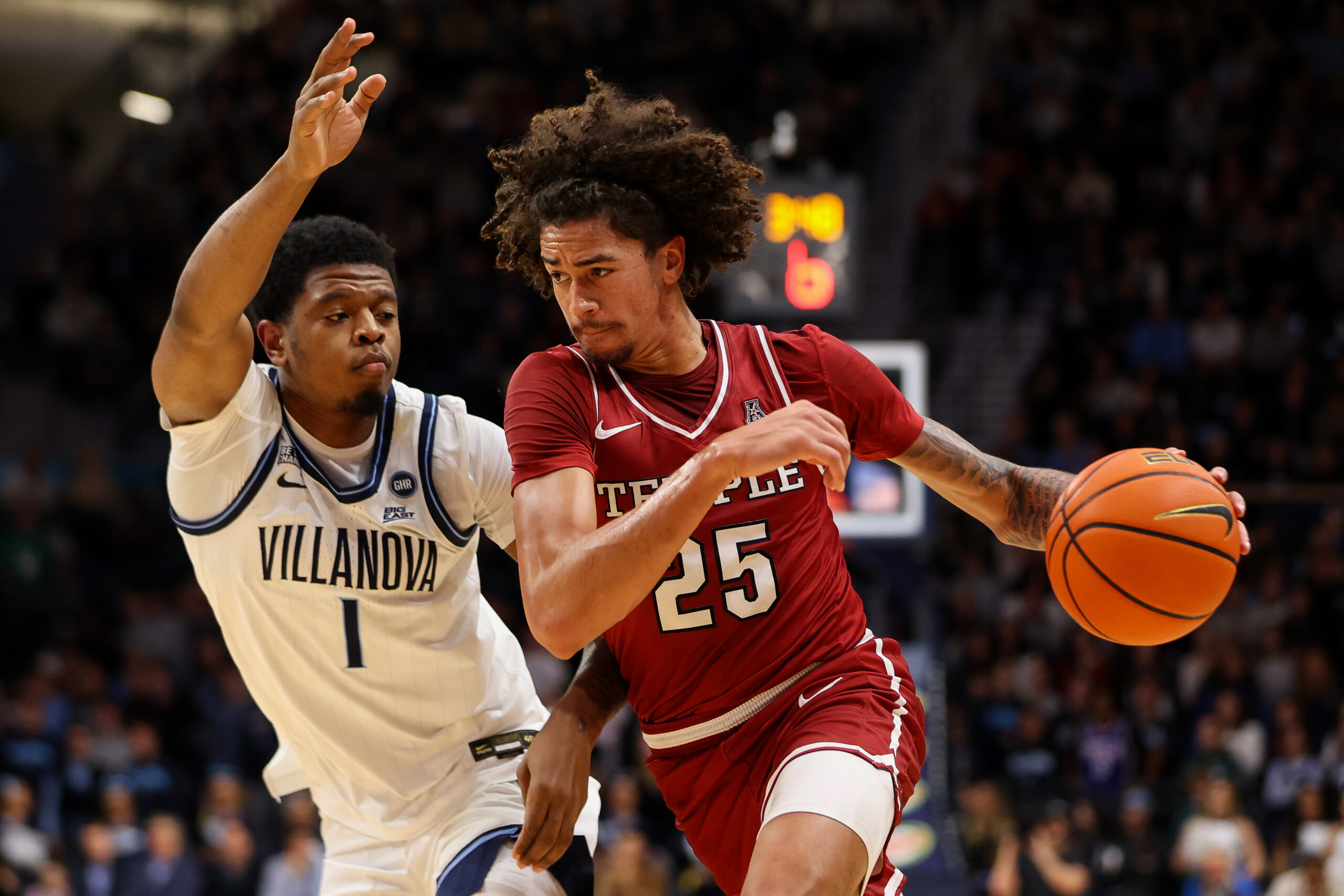
Temple guard Aiden Tobiason is averaging 15.1 points a game.
This season, Temple’s best players have been able to coexist when the ball isn’t in their hands. Derrian Ford (17.8 points per game) and Aiden Tobiason (15.1) lead the team in scoring, becoming a one-two punch in the backcourt. Point guard Jordan Mason averages 11.2 points and 4.7 assists. Guard Gavin Griffiths has seen a career resurgence on North Broad Street, averaging 10 points. He leads the team with 27 three-pointers.
“We’ve got four guys that can space the floor and four guys that can shoot, dribble, and pass,” Griffiths said. “So it’s really fun to play when you have a team like that.”
Griffiths scores his points in bunches, often pulling the Owls out of a rut. He did so by knocking down three straight threes against Boston College on Nov. 15. On Dec. 14 against St. Francis (Pa.), 14 of his 17 points came in the first half to put the game out of reach.
Mason spearheads the offense, one of the reasons the Owls average just 9.8 turnovers, the fewest in the conference. He has added scoring to his prowess, being someone who steps up when Ford or Tobiason can’t get shots to fall. His presence gives the Owls offense something that it hasn’t had in Fisher’s tenure.
“He’s fantastic. I think he just makes the right reads,” Fisher said. “But we just have trust in him. … I think when your players know we have that belief in you, our guys know to always have their eyes on him.”
Temple’s defense looked like it was revamped after a string of good performances to start the season. That was quickly erased when the defense was exposed in a November tournament in Florida, when the Owls lost, 91-76, to UC San Diego and 90-75 to Rhode Island.
However, the last four opportunities have been different, and the Owls defense comes into conference play with momentum against a 6-7 Charlotte team that scores 72.1 points per game.
“Since we got back from Florida, I think we’ve guarded much better,” Fisher said. “I think that’s been a huge point of emphasis for us, defending and rebounding.”
Questions remain
After Tuesday’s matchup against the 49ers (7 p.m., ESPN+), Temple will face two more teams with losing records before a road game against reigning American champion Memphis on Jan. 14.
The Owls offense has been able to put up points, but many of them come in bunches as they go stretches of time without scoring, often looking lost. They typically resort to hero ball and isolation, with one player trying to end the drought himself.
Temple has taken a more collective approach to the season rather than building around top talent.
The abundance of Owls guards has also been an issue.
Masiah Gilyard was brought in for his defense and rebounding skills. Cam Wallace has shown he can be a future cornerstone, but he is still developing as a freshman. Former Alabama State star CJ Hines was brought in with the expectation to bring NCAA Tournament experience and be a three-point threat, but he hasn’t played yet while the NCAA reviews his eligibility.
AJ Smith has not played since the game against Villanova on Dec. 1 because of a shoulder injury; when he might return is unknown.
“It’s to a point now if there’s conversations with his family. We thought about having it,” Fisher said. “I said to him, ‘Go home for Christmas. Let’s talk to your family. Let’s jump on a call, see how you feel,’ and then we’ll probably make that decision on what he does from there.”
ORCHARD PARK, N.Y. — Jalen Hurts sat at his locker stall and nodded as Nick Sirianni spoke. The quarterback listened intently to his coach until he ended the conversation with an adage that summed up the Eagles’ defensive-minded 13-12 victory over the Buffalo Bills on Sunday.
“Hey,” Hurts said to a parting Sirianni, “a win’s a win.”
They mostly have defensive coordinator Vic Fangio’s unit to thank. Special teams should get kudos as well. And lastly, they should give gratitude to Bills coach Sean McDermott, who shockingly went for two and the win despite the ineptitude of the Eagles offense in the second half.
For more than three quarters, Buffalo quarterback Josh Allen was rendered mortal by the Eagles defense. But he flipped a switch and drove the Bills to two touchdowns in the final frame as Hurts and Co. kept going three-and-out.
McDermott’s team would have had all the momentum going into overtime. But Fangio’s group answered the bell once more and hurried Allen into throwing his two-point conversion attempt wide of receiver Khalil Shakir.
It might have been the wind that followed a steady rain at Highmark Stadium, but a collective sigh of relief seemed to release from an Eagles sideline full of offensive players holding their breath. Namely, Sirianni, Hurts, and offensive coordinator Kevin Patullo.
The second half was that bad, especially when you consider the Bills’ suspect run defense. The Eagles ran 17 plays and gained just 17 yards before Hurts knelt in the victory formation. They produced one first down. Hurts didn’t complete any of his seven pass attempts.
In the first half, the offense seemed to build off the improvements shown in the previous two games. The offense wasn’t exactly high-powered, but it was effective as the Eagles took a 13-0 lead into halftime. But Sirianni and Patullo seemingly took their foot off the pedal.
“We weren’t in a mode of saying, ‘Hey, 13-0 is enough,” Sirianni said. “Not against this quarterback, not against this offense. And so I don’t think our mindset was ever that. But I’ve got to do a better job there in that scenario. I’ll put that on myself.”
This wasn’t the first time this season that the Eagles have watched a double-digit lead evaporate, or the first time the offense has had disparate halves, or the first time the coach’s conservatism has come under question.
Sirianni can add another victory to a remarkable 43-2 record when the Eagles win the turnover margin during his five years at the helm. The offense didn’t give the ball away once, while the defense forced an Allen fumble.
But Hurts seems to be coached into doing anything to avoid turnovers. He had four throwaways and gave himself up for one sack on his eight drop backs in the second half.
“I don’t think it’s a conservative thing to have good ball security and be mindful that the turnover margin directly correlates with winning,” Hurts said. “That’s a truth of the game, and that’s a well-known fact of what we’ve been able to do and how we’ve been able to play over the last five years collectively.”
But how can an offense that gained 174 yards — 110 of them through the air — look almost the polar opposite after a 15-minute break? The Bills made some adjustments in their run defense, according to guard Landon Dickerson. Tackle Fred Johnson said their defense became more “exotic.”
The Eagles ran on first and second down on four of five drives, though. Hurts threw from under center only once — after Saquon Barkley ran for 5 and 10 yards on the first two plays of the second half. On the Eagles’ next 15 plays, they picked up just 2 yards.
Barkley kept running into heavy lines and stacked boxes. Certain Eagles, notably center Cam Jurgens and tight end Dallas Goedert, couldn’t sustain blocks with Bills defenders flying downhill. This was a unit ranked 31st in run defense.
“I don’t know if they had a bead on it, but we just didn’t take advantage of our situations well enough,” Jurgens said. “We can put that on our shoulders and do a little better, especially do better when we’re calling these runs, and we need to make things work.
“And I know I missed a couple blocks I want back.”
There were good moments on the ground through Barkley’s first two carries of the second half. He had 66 yards on 13 rushes up until that point. But he gained just 2 yards on his final six rushes. The Eagles just don’t have consistent enough blocking to run at will and there seemed to be times when Hurts needed to check out of calls against bad looks.
Saquon Barkley fell short of the big game many expected of him against the porous Bills run defense.
“We kind of went back to a consistent theme of playing really well one half and not well the other half, not putting a full game together,” Barkley said. “And, obviously, we know we’ve got to get better at that. Easier to get better from it when it’s a win.
“But, personally, I feel like when it’s like six minutes left, you want to end the game with the ball in your hands and we didn’t do that, I didn’t do that. I take responsibility for that.”
Barkley shouldn’t. He’s the least of the problems. But for all the positives in that realm since the Chargers game, the Eagles seem to be back to square one on the ground. And there’s obvious concern that the offense has regressed heading into the postseason.
“We’ve got to mix in some of the play-action things that we’ve done so well in the last couple weeks and not wait there again. That’s on me,” Sirianni said. “You know, I know what the first play is going into every series.”
Patullo’s first-half play calling had some rhythm. Receiver A.J. Brown was getting open and Hurts was finding him. The Eagles turned Allen’s fumble into seven points with another red zone conversion and a touchdown pass to Goedert.
But there were some head-scratching moments as well, like the third-and-9 draw to Will Shipley or the third-and-8 screen to Goedert at the Bills’ 13-yard line. As Sirianni noted, Buffalo wasn’t going away. The Eagles needed to pounce when they had chances.
And they needed to double down in the second half. How often was the defense expected to save the offense? Predictably, Fangio’s group relented — until it didn’t, thanks in part to McDermott, one of La Salle High School’s most esteemed alums, throwing caution to the wind.
Wins don’t get asterisks, of course. That was a solid team the Eagles beat, a sort of litmus test for how they stack up against one of the AFC’s best. The Eagles have a defense that can match almost any offense, and a decent special teams.
Nick Sirianni attempted to accentuate the positive after the win.
But the Sirianni-Patullo-Hurts offense has been a running (pun intended) joke. After 16 games, it would be ridiculous to think it’ll finally find its way in the postseason. The Eagles can scrape by as long as they don’t turn the ball over, and that may be enough.
“You’ve got to feel pretty good, right?” Sirianni said when asked about the state of the Eagles. “Three-game winning streak. In this league, three-game winning streaks are hard. Winning 11 games is hard. Winning the division is hard. And so, you feel really good about some of the things, but there’s also an opportunity to self-scout yourself and do some different things there.
“We’ll see what we do this upcoming week. I think there’s still an opportunity for us to get the [No.] 2 seed.”
There was at the time Sirianni spoke, and that possibility held up later in the evening, after the Chicago Bears lost to the San Francisco 49ers. The Eagles’ only path to the No. 2 seed is to defeat the Washington Commanders while the Bears lose to the Detroit Lions. Both games will be played at 4:25 p.m. next Sunday. Sirianni may also want to play his starters to give his offense another outing against the Commanders’ subpar defense.
But it seems like some issues won’t ever be properly resolved until the offseason.
ORCHARD PARK, N.Y. — O’Cyrus Torrence is a large human being. At 347 pounds, he is the heaviest member of the Bills offensive line and the roster as a whole. He is the kind of man who eats turkey wings instead of chicken wings, and even then he does so only after he has first rolled them in flour and fried them in oil and doused them in melted butter. In fact, Torrence recently did all of these things in a handy how-to video he recently posted to Instagram. His smothered turkey wings look like quite the treat, at least for anybody who expects to have easy access to indoor plumbing for the rest of the night.
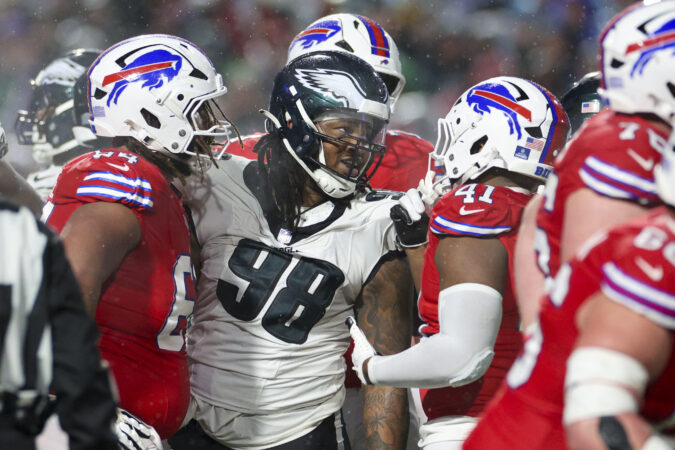
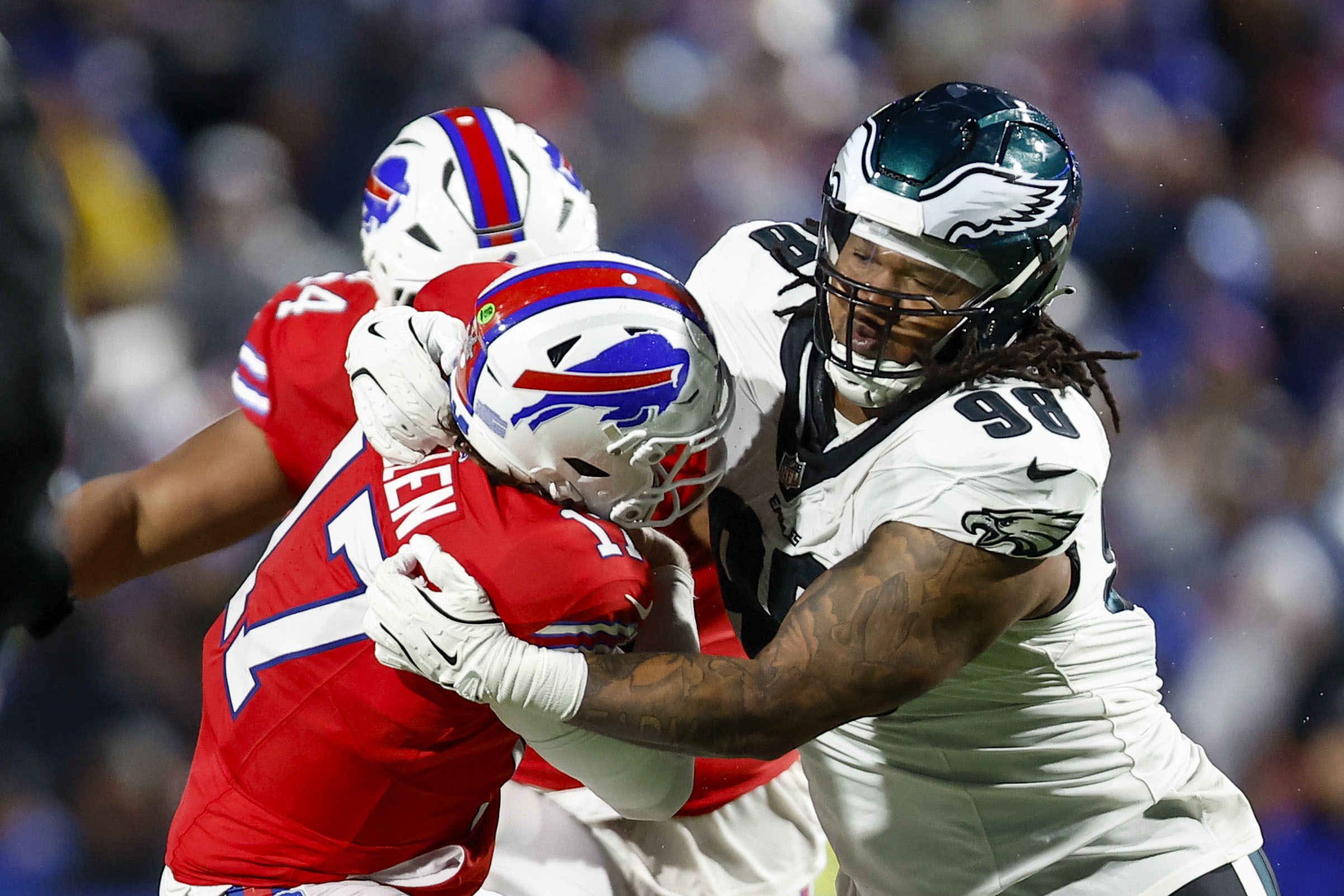
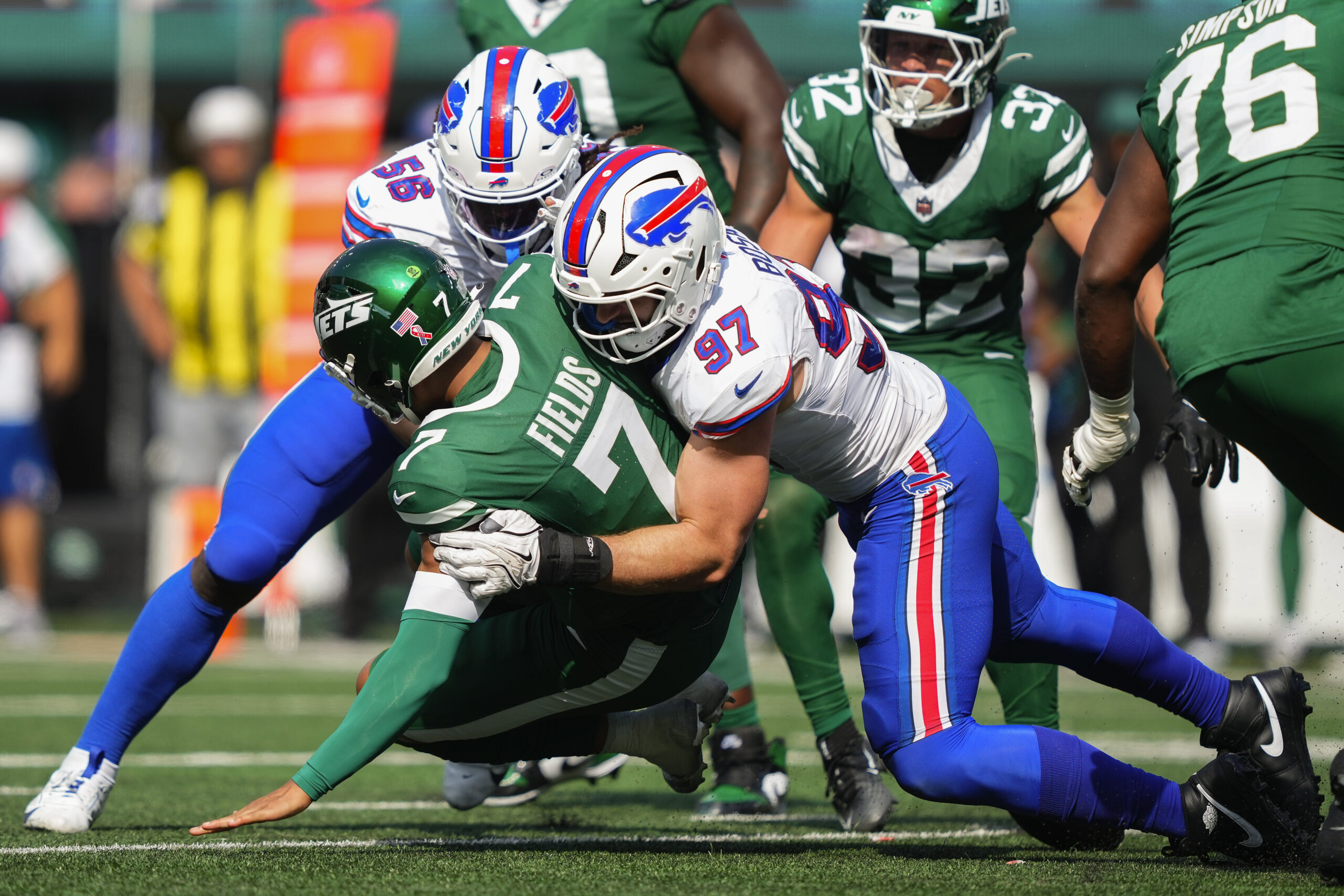
Bear with me, Eagles fans. There is a relevant point in all of this. See, Torrence isn’t just the heaviest man on the Bills offensive line, or the heaviest on its roster. He also happens to be 33 pounds heavier than the man who, late in the second quarter of the Eagles’ 13-12 victory over the Bills on Sunday, pushed him 5 yards into his own backfield and then tossed him aside the way a baggage handler might a memory foam pillow. The resulting sack of Josh Allen was a big play for the Eagles in the sense that it forced the Bills into a third-and-18. Much bigger was what it signified. Jalen Carter is back, and the Eagles once again have a defense that can win a Super Bowl on its own.
“You guys see what he does for us,” said defensive end Jaelan Phillips, who added a sack for an Eagles defense that racked up five total. “He had a blocked extra point that basically won us the game, if you think about it. I thought that in his absence, we did a great job, but having him back is key. It’s huge.”
As Phillips noted, Carter and the Eagles defense had their fingerprints all over this one, right down to the blocked extra point with 5 minutes, 11 seconds remaining that left the Bills needing a two-point conversion to win after another Allen touchdown run with five seconds left. Until that frantic ending, which featured two touchdown drives totaling 137 yards, Vic Fangio’s unit looked plenty capable of winning three straight playoff games on its own. The Eagles battered Allen in the pocket and held James Cook, the NFL’s leading rusher, to 74 mostly harmless yards on 20 carries. For 55 minutes, a second shutout in three games looked like a distinct possibility, this time against a team that entered the weekend with the third-best odds to win the Super Bowl.
We can’t ignore the fact that the Eagles again came way too close to losing a game. In this case, they came within 2 yards, after Allen’s frantic last-minute touchdown drive ended with a missed two-point conversion. The greatest testament to the strength of the Eagles defense is just how bad their offense looked. All of the usual criticisms applied. The quarterback was adequate, at best, if you squinted. The running game wasn’t good enough to make up for it. The result was an offense that looked about as dynamic as a truck stuck in mud. The Eagles mustered just 190 total yards, 16 of them in the second half. Rarely do you watch them and think, Wow, this is an enjoyable thing to watch. That will be a difficult way to go through the postseason.
What warrants reconsideration is the conclusion that many folks have drawn. As lackluster as the offense has looked, as underwhelming as Jalen Hurts has played, the Eagles have a good enough defense to make them one of the small handful of teams that will have an even-or-better chance against any other team in the playoff field. Say what you will about the Rams or the Seahawks or the 49ers. The Eagles have as good a chance as any of them. Maybe even better.
“You’ve got to give yourself points when you win football games,” Eagles coach Nick Sirianni said. “There’s always things to clean up when you come out of a football game. But when you come out of a football game that you win on the road in a hostile environment against a really good football team that’s had the sustained success that we have, if you come out of this and think about all the negative things, that makes for a miserable existence. We’ll get there.”
Eagles defensive tackle Jalen Carter sacks Buffalo Bills quarterback Josh Allen during the second quarter.
With this defense, the Eagles may only need an offense that is on the lower end of functional. That’s what we saw against the Bills. Same as we saw against the Lions, and the Packers, and the Chargers. Against a Super Bowl-caliber quarterback, in a playoff-caliber environment, the Eagles defense was the best unit on the field for all but the last five minutes of the fourth quarter. The Bills gained just 12 first downs on their first nine possessions and did not score a point before Allen capped their last two drives of the game with short touchdown runs.
The story of the game was Carter, who returned after a four-game absence because of procedures on both shoulders. The third-year defensive tackle said earlier this week that he’d previously been in so much pain that he could not do a pushup. Against the Bills he looked as strong as anybody … not only with his manhandling of Torrence on his sack of Allen, but also on the blocked extra point that proved to be the difference in the game.
It’s funny how he always looks like the biggest player on the field, even when he isn’t. On a unit that is brimming with talent around him, Carter’s presence makes the Eagles the caliber of unit that can win a Super Bowl on its own.
NEW YORK — Penn State’s second overall appearance in the Pinstripe Bowl, played Saturday at storied Yankee Stadium against Clemson, wasn’t a big enough draw for 16 Nittany Lions players, including star senior running back Nicholas Singleton and senior defensive tackle Zane Durant, part of a sizable PSU group that skipped the team’s final game of the 2025 season.
Perhaps the event could have been subtitled the Opt-Out Bowl.
The Lions’ tumultuous season began with three straight victories and championship expectations, but later nosedived during a six-game losing streak that cost coach James Franklin his job after an October loss to Northwestern.
But despite the historic Yankee Stadium venue, a national television audience, and Penn State riding a three-game winninig streak under Smith, the more tantalizing PSU storyline leading into Saturday’s tilt was how many Lions players were not in uniform.
Twenty-four hours before the game, Smith was asked whether he was disappointed in the numerous players who opted out.
“Well, we’re not disappointed. We have a tremendous opportunity to finish this season off the way the last three games have gone, and here’s a moment and an opportunity for these guys to step forward,” Smith said on a Zoom call with reporters. “It’s the next man up. This is today’s college football. We’re adapting and adjusting, and we have a game to play, and that’s all that matters. … We’re going to play hard and get after it like we’ve done the past four or five weeks.”
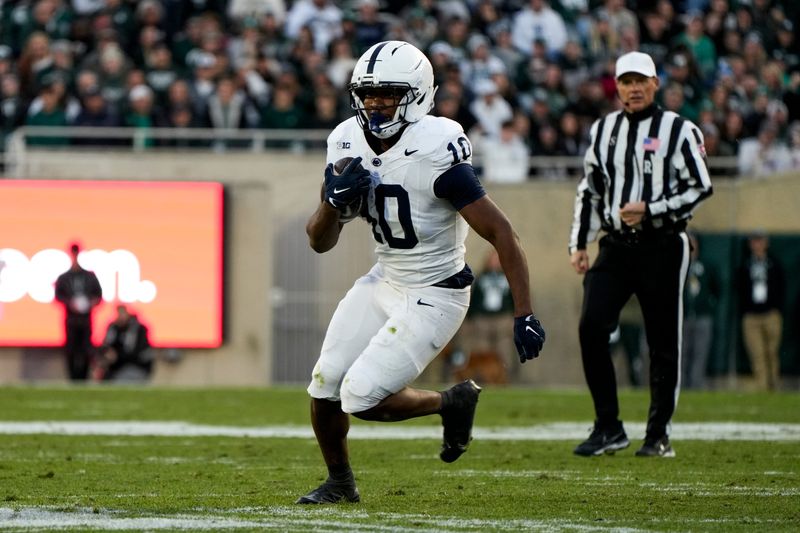
Penn State was without star senior running back Nicholas Singleton, who opted out of playing in the bowl game earlier this season.
Singleton, the Shillington, Pa., product who is the university’s career leader in rushing touchdowns (45) and all-purpose yards (5,586), and Durant, an All-Big Ten honorable mention selection, had both made their opt-out intentions public earlier this month. Singleton’s father, Tim, told The Inquirer that “the risk versus the reward wasn’t worth it” for his son to play in the Pinstripe Bowl.
“It was a tough season, with Franklin getting fired,” said Tim Singleton, who still works as a mailman in Shillington. “Time to move on. Nicholas is in New York [for the game] and is going to support his teammates, especially the guys he came in with. We’re wishing them well.”
Singleton is projected to be an early pick in the 2026 NFL draft, and Tim Singleton said his son would start the new year training in preparation for the Senior Bowl (Jan. 31), the NFL Scouting Combine (Feb. 23-March 6), and ultimately, the draft from April 23-25.
“Hopefully, [we] stay healthy,” said Tim Singleton.
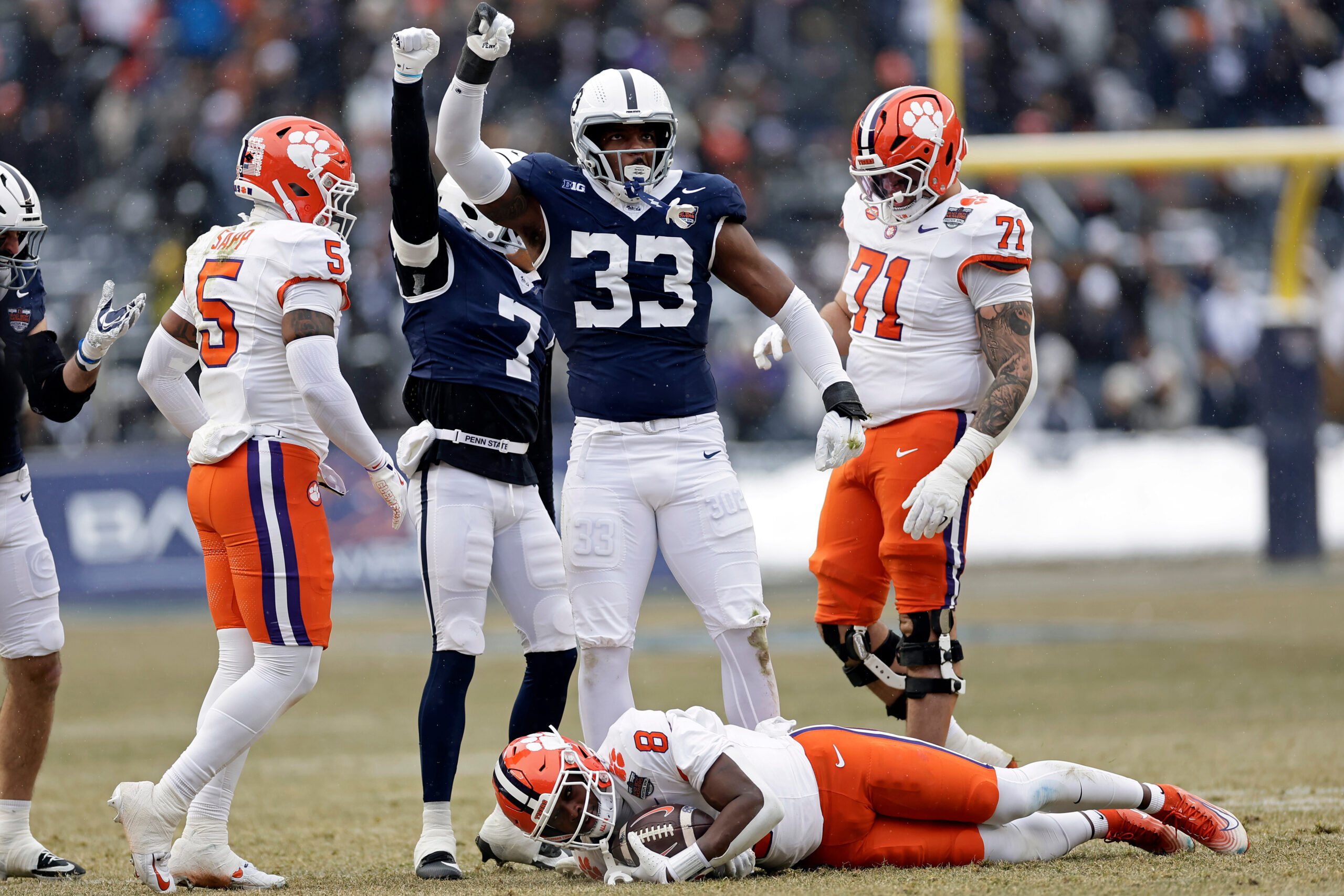
Penn State defensive end Dani Dennis-Sutton (33) reacts after tackling Clemson running back Adam Randall (8) during the first half of the Pinstripe Bowl on Saturday.
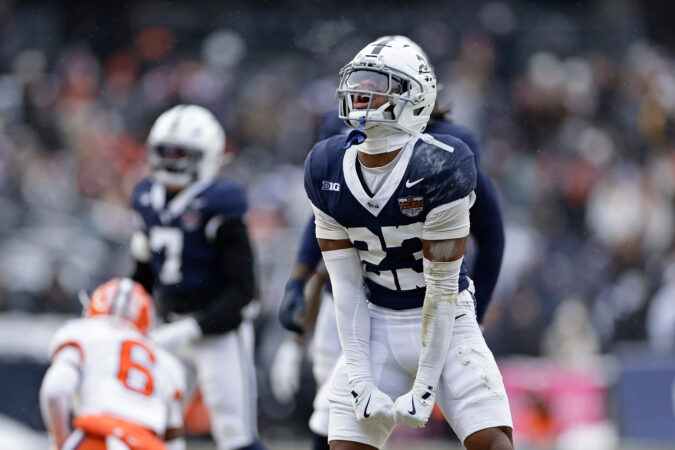
One senior who did not opt out was defensive end Dani Dennis-Sutton, who recorded two sacks in Saturday’s win.
“Dani is my MVP, because this guy didn’t have to play today,” Smith said.
Dennis-Sutton said it was a “no-brainer” to play in the season finale. “I made a dedication to this program,” he said. “I love playing football. I love this program.”
The risk/reward component was likely a key factor for many of the players not in uniform — with no college playoff implications at stake, why risk injury in a game only months away from the draft, when many college players hope to make a lucrative jump to the pros?
Both Penn State and Clemson began the season with title hopes, but each finished with a mediocre record — Penn State was 6-6, and Clemson was 7-5. Clemson coach Dabo Swinney, however, already has two national championships with the Tigers on his resumé.
Smith, the former Nittany Lions star receiver, meanwhile, coached his final game at the Penn State helm Saturday. Former Iowa State coach Matt Campbell assumes coaching duties in 2026.
Smith, who will remain with the program, said before the game that Campbell would attend the Pinstripe Bowl.
“Matt will be there, but I don’t know if he’s going to be on the sidelines or not,” Smith said. “He wants to stay hidden away and allow us to run the game.”
Smith said he has had “terrific” communications with Campbell so far.
“Yeah, it’s been great. He has made himself really accessible to the staff. We’re just trying to piece together and retain roster and bring in new roster players,” Smith said. “But he’s been very, very good. The guys that have come with him so far, they’ve been awesome, as well. We’re just learning [about] each other.”
As for Penn State’s running game, Swinney said his team’s main worry going into the Pinstripe Bowl was how to contain the Lions’ rushing attack.
“The biggest thing is [Penn State] can run the football. They’re big, strong, physical,” he said. “They’ve got the all-time leading rusher in the history of Penn State [in Kaytron Allen]. If you follow Penn State football, that says a lot. There have been a lot of people [who have played] there like Franco Harris and Saquon Barkley. They’ve had a bunch of great ones roll through there. So he’s a big strong back.”
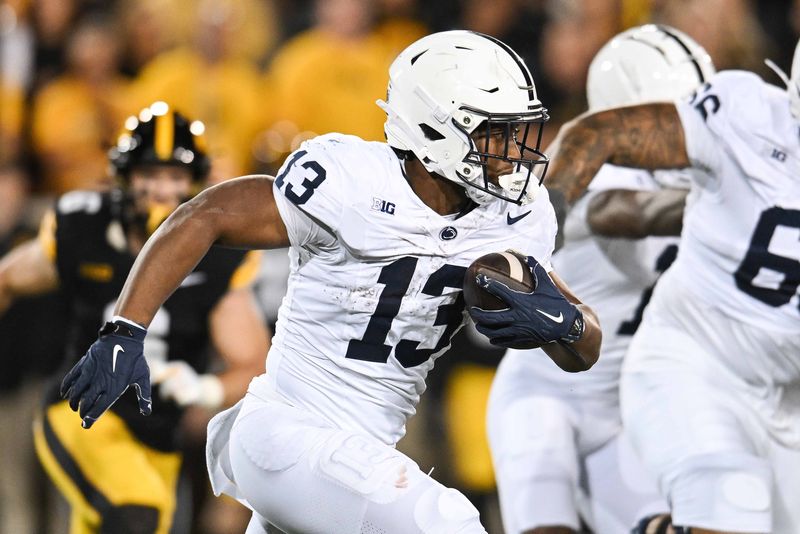
Penn State running back Kaytron Allen missed Saturday’s Pinstripe Bowl game due to injury.
But even though Smith said Allen would be in uniform Saturday, Allen did not play due to injury. Allen is Penn State’s career rushing leader (4,180 yards), and is also expected to be a coveted draft pick next spring. Quinton Martin Jr. took the bulk of the Lions’ carries Saturday and finished with 101 yards.
Nick Dawkins, Penn State’s center and the son of the late 76ers star Darryl Dawkins, was another opt-out. And there was only one PSU starting offensive lineman from the 2025 season, guard Anthony Donkoh, who was in uniform for Saturday’s game.
On the heels of a winter storm that dumped several inches of snow on New York City on Friday night and into Saturday morning, the two teams took the field in frigid conditions before 41,101 fans. It was the first time the teams had met since the 1988 Citrus Bowl, a 35-10 Clemson victory.
Congratulations to @PennStateFball, winner of the George M. Steinbrenner III Bad Boy Mowers Pinstripe Bowl Championship Trophy 🏆
A dull first half ended with Penn State leading, 6-3. Lions kicker Ryan Barker booted field goals of 22 and 48 yards. Barker also later hit a 43-yarder. Quarterback Ethan Grunkemeyer (23-for-34, 262 yards), who took over after starter Drew Allar suffered a season-ending ankle injury on Oct. 11, connected with Trebor Peña for a 73-yard score. He connected with Andrew Rappleyea for an 11-yard, fourth-quarter TD to ice the game.
As for Smith’s swan song as Penn State head coach?
“It was a great ride,” he said. “I’m ready for the next chapter.”
Not present
The complete list of Penn State players who opted out of the Pinstripe Bowl included: Singleton, Durant, Dawkins, OL Alex Birchmeier, DE Chaz Coleman, DE Zuriah Fisher, CB AJ Harris, OL Vega Ioane, LB Kari Jackson, DE Daniel Jennings, LB Alex Tatsch, CB Elliot Washington, S Zakee Wheatley, TE Khalil Dinkins, OL Nolan Rucci, and OL Drew Shelton.
The Eagles travel to face the Buffalo Bills in a Week 17 matchup at Highmark Stadium on Sunday at 4:25 p.m. Here’s what you need to know about the game:
When the Eagles have the ball: The Eagles have a chance to build off their recent success on the ground by facing another poor run defense. The Bills are second-to-last in the NFL in yards allowed (5.4) and expected points added per rush (0.08). They’ve allowed 63 runs of 10-plus yards, which is second worst to only the New York Giants. Buffalo coach Sean McDermott doesn’t exactly stack boxes at a high rate (20.7%), but he’ll stay in his base 4-3 front vs. heavy personnel. The bigger issue has been how his defenders have — or haven’t — handled run fits. There have been a lot of big holes for running backs to run through. Tackling also has been a problem. The Bills are last in the league in rushing yards allowed after contact (4.1).
Say what you will about the last two opponents, but the Eagles have improved in the run game. “Turned the corner” would be too strong a phrase, but some wrinkles have contributed to the Eagles averaging 174.7 rushing yards in the last three games. Buffalo is depleted in the interior. Defensive tackles Ed Oliver, DaQuan Jones, and Jordan Phillips will be out. I think Saquon Barkley could also do some damage if he gets to the second level. The Bills have corners who don’t tackle well in space, and they’ll also be without veteran safety Jordan Poyer. The Eagles didn’t dial up as many runs from under center last week vs. the Washington Commanders as they did the week before. I could see Nick Sirianni and Kevin Patullo using Buffalo’s weak defense as a chance to reestablish that facet of their offense.
Joey Bosa (97) is expected back to help bolster the Buffalo pass rush this week.
The Bills have gotten behind in games because of their inability to stop the run. They’ve allowed an average of 13.9 points in the first half, but have been better after the break (9.1). Why the disparity? It could be McDermott’s ability to make adjustments, or the Bills have benefited from their offense getting ahead, which has forced quarterbacks to throw. Buffalo has a good pass defense. It has allowed just 52.8% of passes to be completed. A lot of the Bills’ success can be traced to their defensive ends getting pressure. Greg Rousseau (14.3%) and Joey Bosa (13.8%) have above-average rates on their rushes. Right tackle Fred Johnson, who is starting again for the injured Lane Johnson (foot), will have a stiff test in Bosa. Rousseau will bounce back and forth between each side.
McDermott doesn’t blitz — a 23rd-in-the-league 23.7% rate this season — as much as he once did. He’ll send any of his linebackers, but Matt Milano and Terrel Bernard are most effective in getting pressure. A.J. Brown and DeVonta Smith should have opportunities on the outside, though. Cornerbacks Tre’Davious White and Christian Benford are beatable, especially in man coverage. McDermott’s zone-man split is about 70-30. His safeties do a good job of rotating late. Cole Bishop is solid, but Poyer’s replacement — whether it’s rookie Jordan Hancock or veteran Darnell Savage — could be exploited.
When the Bills have the ball: Josh Allen makes the Bills offense go, but I’m going to focus first on running back James Cook. He’s been arguably the best running back in the league this season. He leads the NFL with 1,532 rushing yards and averages 5.3 yards a carry. He’s not especially big at 5-foot-11, 190 pounds, but he’s fast and runs hard. Cook has great vision and can slip through creases. If he has a kryptonite this season, it’s ball security — he has lost three of six fumbles. Cook runs behind a reliable, if not spectacular, offensive line led by left tackle Dion Dawkins. The unit’s relative good health has contributed to its chemistry. The Bills also have good blocking tight ends, although Dalton Kincaid (knee) and Dawson Knox (knee) are questionable.
Josh Allen (17) remains dangerous, but the Eagles can’t sleep on the electric James Cook (4) either.
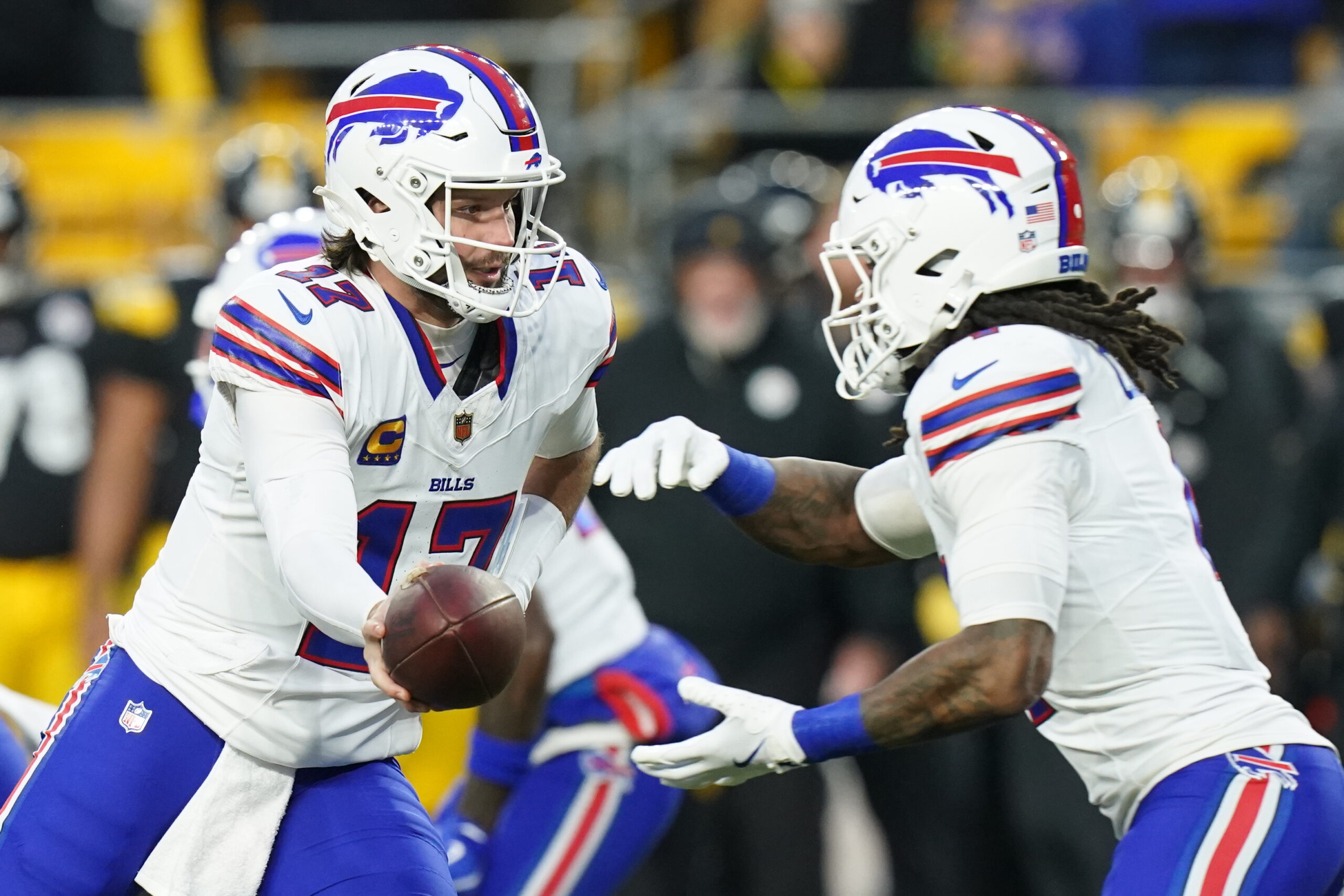
Allen, of course, is almost as dangerous on the ground. Offensive coordinator Joe Brady will dial up designed runs, but Allen scrambles as well as any quarterback. He often knows when running is applicable and can be hard to bring down. A foot injury limited him early in the week, but he’s cleared to go. The Eagles have to stay disciplined in their rushes. I’d imagine defensive coordinator Vic Fangio will devote a linebacker to spying Allen on obvious passing downs, especially against empty sets. The Bills have effectively used their version of the Tush Push with the 6-5, 237-pound quarterback converting 13 of 15 rushing attempts on third- or fourth-and-1.
Allen holds the ball longer than most — a sixth-longest 2.93 seconds — because he can make big plays out of structure. He doesn’t get sacked at a high rate (8.12% of attempts), but he can take big losses or turn the ball over when playing the hero. Allen doesn’t have a group of receivers that gets much separation downfield. He has cut down on interceptions by not forcing throws into tight windows — 11.3% of the time, which is 31st among qualifying quarterbacks — vs. last season (16.8%). Brady has helped by utilizing the under-center run game to set up play-action passes. He’ll also employ misdirection and motion at the snap.
The Bills don’t often keep their tight ends or backs in to help with the pass rush. They want to give Allen underneath options to offset what he lacks on the outside. Fangio blitzes at a low rate (19.4%), so Brady probably won’t alter the formula. Receiver Khalil Shakir leads the offense with 66 catches. Most of his yards (515 of his 684) come after contact off short passes. The Eagles will need to be stout in tackling after the catch. Cornerback Quinyon Mitchell could be neutralized simply by Allen staying away from him.
Extra point: The weather could change, but it looks like rain will be a factor late Sunday afternoon. Both teams have kicker woes. Jake Elliott’s struggles over the past five games have been documented. The Eagles are sticking with their guy — for now. The Bills will be without 41-year-old Matt Prater (quad) for a second straight game. His replacement, Michael Badgley, missed an extra point and the landing zone on a kickoff last week. Buffalo tried out some kickers as a result, but Badgley will get another chance.
The Eagles don’t have as much on the line as the Bills. I don’t think that should matter much. Sirianni’s squad wants to measure itself against one of the best. Two years ago, they outlasted Buffalo, despite an amazing performance by Allen. Elliott’s 59-yard field goal sent the game to overtime and Jalen Hurts walked it off. I just realized I didn’t mention the Eagles quarterback above. He has settled down since the Los Angeles Chargers debacle. I think he’ll hit some shots downfield as long as the offense takes advantage on the ground. The Eagles’ defense has been susceptible at times against the run, but it has tightened the hatches since the Chicago Bears game. Jalen Carter (shoulders) is back, although the front more than managed in his absence.
I don’t feel great about my pick. My gut says the opposite. But it’s hard to pick against Allen in the penultimate game at the Bills’ longtime home, Highmark Stadium.
When Dhamir Cosby-Roundtree was starring at Neumann Goretti, the forward drew interest from multiple high-level programs. Two schools rose to the front of his recruitment: Miami and Villanova.
Playing for the Wildcats would give him a chance to remain in Philadelphia, but the Hurricanes’ recruiting efforts were led by assistant coach Adam Fisher, with whom Cosby-Roundtree developed a close relationship.
In the end, the 6-foot-9 forward committed to Villanova, but he gave Fisher a call to let him know of his college decision, which stuck with the coach.
They remained in touch as they went their separate ways and reconnected at the NBA Summer League this year. Fisher, by then the Temple head coach, and Cosby-Roundtree, then a video assistant with the Brooklyn Nets, sat together and chatted for the entire half of a game.
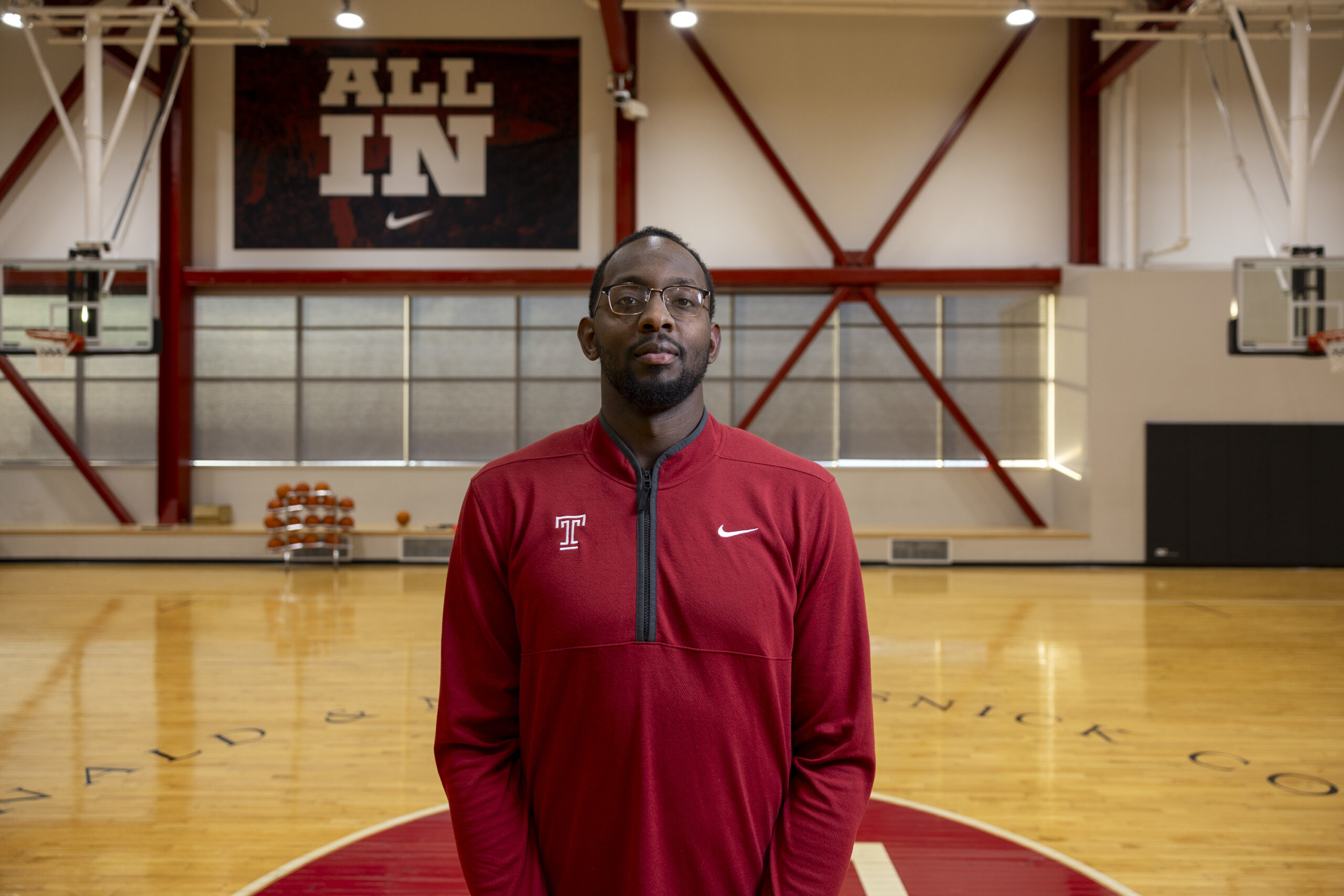
Fisher was looking to fill the director of player development position on his staff. He knew Cosby-Roundtree wanted to move into college basketball. After bringing Cosby-Roundtree in for an interview, Fisher realized the former Villanova standout had exactly what he was looking for. So the coach hired him, and now, Cosby-Roundtree is back in the city where his basketball journey started.
“I’ve been enjoying it. I love it,” Cosby-Roundtree said. “I’m learning so much about college basketball coaching now, compared to what it was when I was playing. I think for me, the biggest learning curve is patience.”
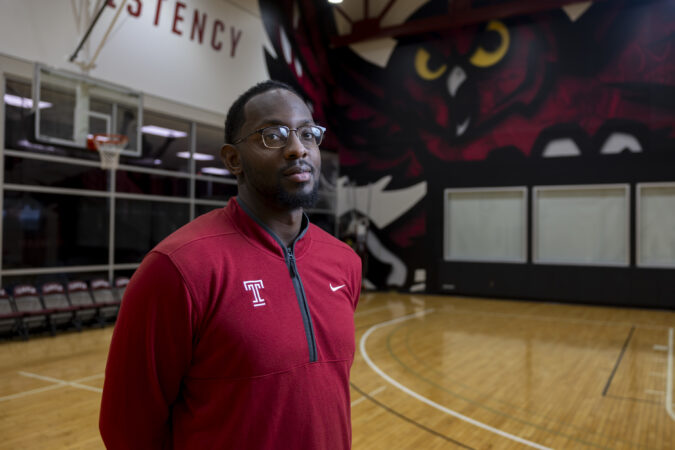
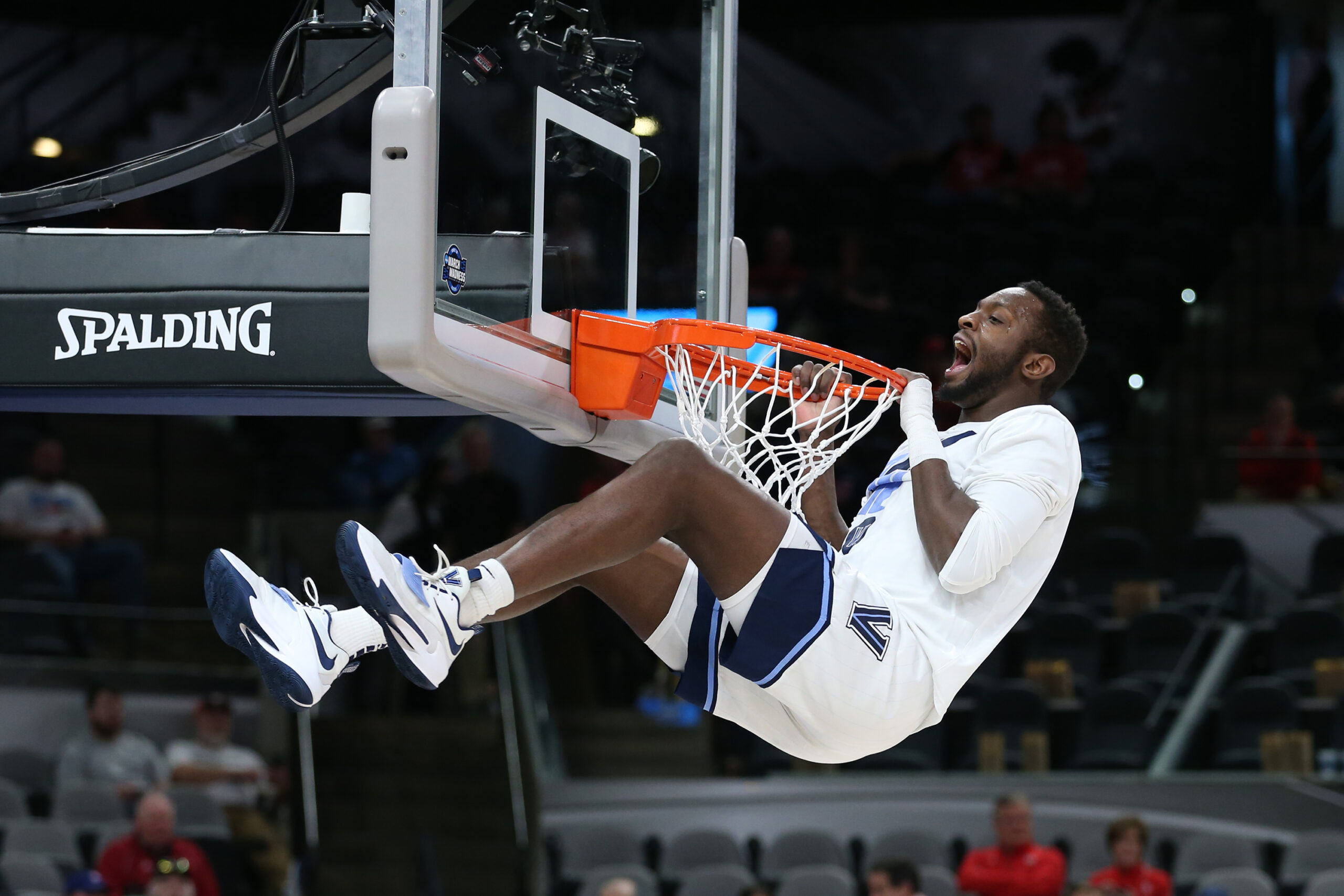
Dhamir Cosby-Roundtree says he started “naturally coaching” as a senior at Villanova.
When Cosby-Roundtree joined Villanova in the 2017-18 season, he walked into one of the top college basketball programs in the country. The Wildcats had won the national championship two years prior and were led by coach Jay Wright.
Cosby-Roundtree won a national championship in his freshman year and spent the following two seasons growing in his role as a reserve forward.
However, the end of his Villanova career was hampered by injuries.
Cosby-Roundtree had stress fractures in his shins, which he had dealt with since high school. He missed the entire 2020-21 season and played in six games in 2021-22, his final year of college basketball.
Despite not playing, Wright wanted Cosby-Roundtree to remain around the team and help players during practice. He also provided a veteran presence on the bench. Cosby-Roundtree initially wasn’t interested in coaching, but watching from the sideline at Villanova gave him a new perspective.
“I just found myself seeing a game from a different view,” Cosby-Roundtree said. “I was just overly talking, overly communicating. Like, ‘Hey, you should do this, or you should do X, Y, and Z, make sure you’re here.’ I was just naturally coaching.”
After graduating from Villanova, Cosby-Roundtree spent a year coaching at Cristo Rey before he moved into a video assistant role with the Nets.
At both stops, he learned the ins and outs of coaching. He had to learn how to be patient with high school kids and be prepared to help the professionals in the NBA.
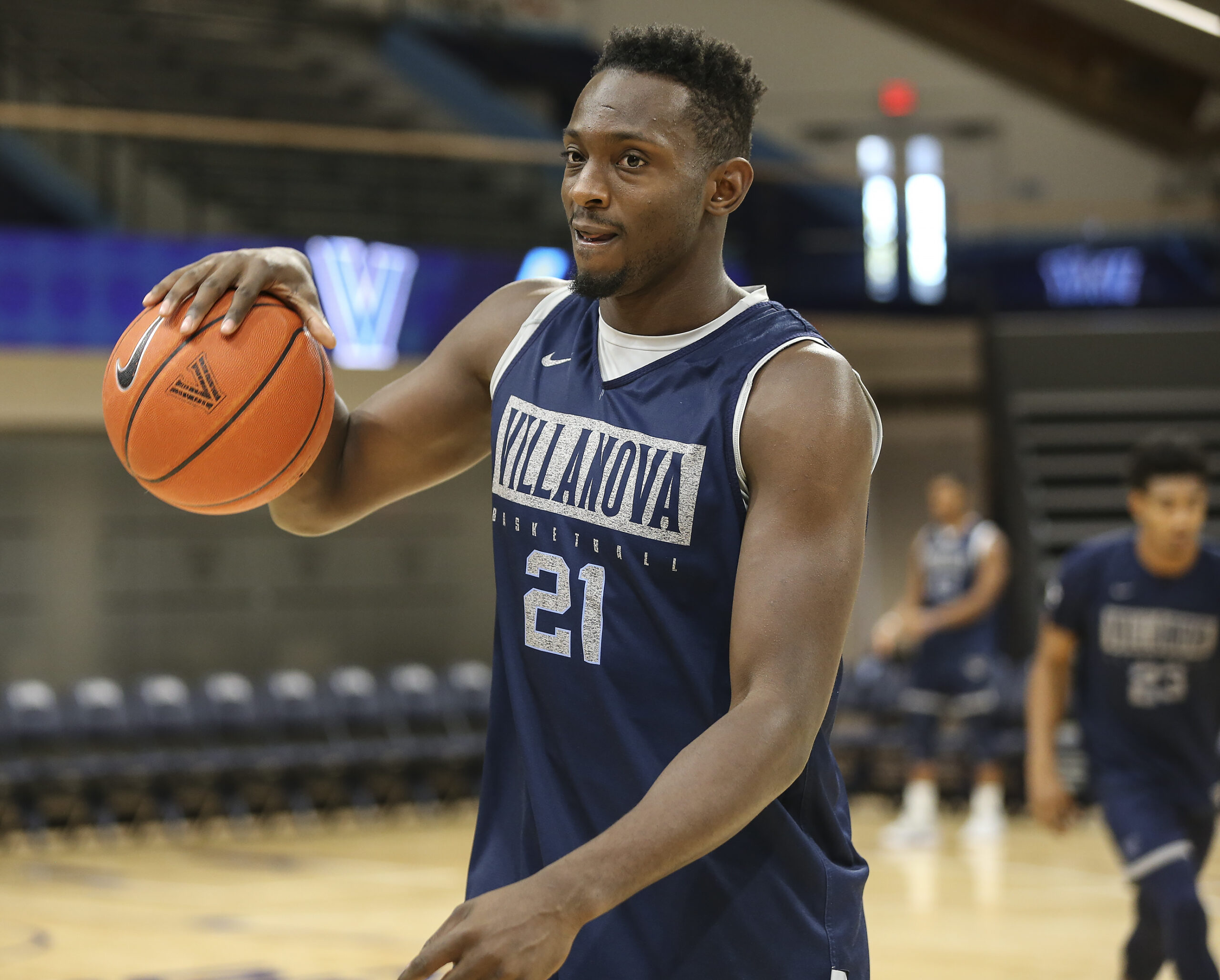
Dhamir Cosby-Roundtree spent four years on Villanova’s basketball team.
“It was more just the difference is the amount of patience doesn’t have to be as long, for better or worse,” Cosby-Roundtree said. “You can explain it to [NBA players], and they’ll catch onto it quicker. … I think during my time with the Nets, I learned a lot about how to be organized, how to prepare, and how to improve guys.”
Cosby-Roundtree believes his experience with the Nets helped shape a seamless transition to the college game, where Fisher was waiting for him.
Fisher had the same staff for his first two years at Temple, but a position opened on the coach’s support staff when former Owls guard Khalif Wyatt — who currently is facing an NCAA penalty for placing hundreds of bets while as an assistant at West Chester in 2022 — left for a job as a video coordinator with Nets G League team this offseason.
Fisher asked Wright, as well as some of Cosby-Roundtree’s coaches in Brooklyn, about the 27-year-old coach. He got rave reviews.
“[His] character was off the charts,” Fisher said. “So then we brought him in and we talked to him, and he just aligned with what I’m looking to do. He gets Philadelphia, gets the Big 5. He understands the history of Temple. He’s a worker. This guy’s in here early. He’s detail-oriented. I’ll say, ‘Hey, I want to come up with two new drills.’ By midnight, I get an email with a video in writing and things that match what I’m looking for. He has been a fantastic addition.”
Coming to Temple also offered Cosby-Roundtree a chance to return to the city where he fell in love with basketball.
“To be able to give back to the city that I came from, and where I grew up is something that I personally really wanted to do,” Cosby-Roundtree said. “Being able to impact young lives … I enjoyed it, and that’s something that I take a lot of pride in.”
Dhamir Cosby-Roundtree grew up in Philadelphia and played at Neumann Goretti.
Cosby-Roundtree knows he still has plenty to learn, and Temple is his chance to soak in more information. He hopes to have the opportunity to one day run his own program.
“I just want to keep learning,” Cosby-Roundtree said. “The more I can learn from this staff, where everybody’s been a head coach before and they’re long-tenured assistant coaches, just learning as much as I can from them.”