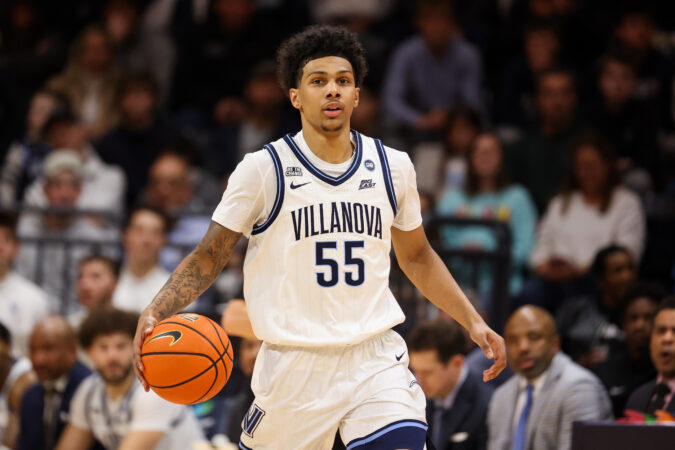
Powered by its star newcomer, Villanova snapped a losing streak at Marquette that was approaching six years long.
It took the game’s final minutes, but, fueled by Acaden Lewis, the Wildcats won, 76-73, marking the first time since Dec. 23, 2020, that they beat Marquette on the road. Lewis, a freshman guard who has impressed since arriving on the Main Line, scored a team-high 20 points and had eight assists, tying a career-best.
Villanova (13-3, 4-1 Big East) picked up its third consecutive conference road win. Wildcats coach Kevin Willard noted that while he’s pleased, replicating that success inside the Finneran Pavilion has been a challenge.
“I think we’ve really developed a road identity,” Willard said. “I think we need to take that identity and bring it home and really have that same kind of dog mentality that we have on the road at home. I think if we can develop that same attitude, we’ll continue to get better.”
Lewis, the four-time Big East Freshman of the Week, is averaging 12.5 points and 5.0 assists.
Despite being outscored in the second half for the second consecutive game and third time this season, Villanova shot 48.2% in the second half to escape Milwaukee. Graduate guard Devin Askew led Villanova’s second-half effort with 13 points off the bench.
“[Devin] has been playing really well,” Willard said. “The last four or five games, [he] hasn’t been shooting well, but he’s been playing well. And I thought he got a couple of good mismatches, hit a couple of really big pull-up jumpers that kind of settled us down and kept the lead going.”
Overall, the Wildcats shot 31-for-56 (55.4%) from the field, including 7-for-25 from beyond the arc, and 7-for-7 from the free throw line.
Defensive ups and downs
Villanova struggled defensively to stop the worst three-point shooting team in the Big East from beyond the arc in the first half. However, the Wildcats shut Marquette down in the second half, though they lacked defensive stops throughout the game, much like in their four-point home loss to Creighton on Wednesday.
The Golden Eagles (6-11, 1-5) entered the game 340th in the country in three-point percentage, averaging 29.5% but shot 11-for-31 on three-pointers on Saturday. Nigel James Jr. led the way with a career-high 31 points, shooting 7-for-9 from deep.
James was perfect in the second half offensively with 12 points, shooting 4-for-4 from the field, including 2-for-2 from beyond the arc. Royce Parham scored 15 of his 17 points. The duo accounted for 27 of Marquette’s 35 second-half points.
“[Marquette was] just scrappy,” Askew said. “They were playing hard, and I’m glad we could pull it through.”
In the second half, Villanova held Marquette to 3-for-13 (23.1%) from beyond the arc and 11-for-24 (45.8%) from the field.
Villanova got into foul trouble in the back half of the game. Duke Brennan (12 points, four rebounds), the nation’s third-leading rebounder, picked up four fouls in the second half and fouled out with 4 minutes, 29 seconds to go.
After Brennan’s fourth foul, at the 8:28 mark, Villanova shifted to a small-ball lineup, with Matt Hodge (14 points, five rebounds) at center.
“Luckily [Marquette] went small,” Willard said. “So we were able to play [Hodge] at the five and Malachi [Palmer] at the four. And so we didn’t have to really worry about battling something at the rim. We were able to kind of go small with them.”
Villanova committed 16 personal fouls, and Marquette was in the double bonus with 8:13 to go. Marquette shot 12-for-15 (80%) from the free-throw line.
Up next
Villanova will look to make it four straight away from home in a road game against Providence (8-7, 1-3) on Tuesday (6:30 p.m., FS1). Providence defeated Villanova, 75-62, in Rhode Island in the teams’ last matchup.
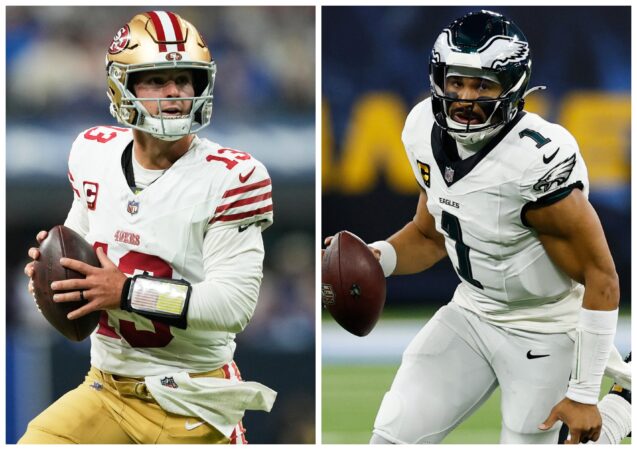
The Eagles host the San Francisco 49ers in a wild-card playoff matchup at 4:30 p.m. Sunday at Lincoln Financial Field. Here’s what you need to know about the game:
When the Eagles have the ball
The 49ers don’t have a good defense. Season-ending injuries to their two best players — linebacker Fred Warner and defensive end Nick Bosa — were a prominent reason why coordinator Robert Saleh’s unit struggled most of the season. But there also isn’t much talent elsewhere on that side of the ball. The 49ers ranked 25th in expected points added per play and 29th in success rate. Saleh has been forced to play a bend-but-try-not-to-break defense, which has meant more two-high safety shells than he’s accustomed to employing and hoping that opposing offenses eventually will make mistakes on grind-it-out drives. The 49ers have done a good job of limiting explosive plays as a result and rank ninth in allowing 20-plus-yard plays in EPA. They’ve also buckled down in the red zone, where they rank 12th overall and fourth in goal-to-go situations.
The Eagles’ offense, conversely, has been at its best inside the 20 and ranked first in the league. Getting there on a consistent basis has been a season-long problem. The chess match here could center on which unit is willing to get out of its comfort zone. Will the 49ers play more aggressively and stack the box — only the Eagles and New England Patriots had a higher rate of light boxes — knowing the Eagles have struggled in the run game when numbers haven’t been in their favor? Or will the Eagles come out firing, looking for explosives through the air, knowing that Saleh likely will make Jalen Hurts and the pass game beat his defense?
Nick Sirianni and Kevin Patullo have several directions they can go that should favor the Eagles, even if the 49ers match heavy personnel with their base front. It would be foolish not to test San Fran’s run defense, especially an off-ball linebacker unit that could be down to its fourth and fifth options on the depth chart. Warner’s replacement, Tatum Bethune, went down for the season last week, which means the aging Eric Kendricks, the younger brother of former Eagle Mychal Kendricks, will be at middle linebacker. Outside linebackers Dee Winters and Luke Gifford also are questionable. The Eagles offensive line, with right tackle Lane Johnson expected to return, likely will need to adapt to a slanting front if they want to carry out their combo zone blocking schemes. But if even all doesn’t go according to plan, Saquon Barkley should have opportunities to do it on his own against a run defense that missed 11 tackles against the Seattle Seahawks in Week 18.
I think more of Hurts on designed runs, and a sprinkling in of the more north-to-south Tank Bigsby, could further buoy a run offense that has shown marginal improvement over the last month. I wouldn’t be surprised to see Patullo open with a fair amount of empty sets. Hurts has operated well out of that formation. It forces defenses to have to account for his legs on draws or scrambles if they’re going to match in man coverage.
Saleh still favors Cover 3 more than any zone, but he’s going to have to pick his poison with Eagles receivers A.J. Brown and DeVonta Smith having skill and size edges over cornerbacks Deommodore Lenoir, Renardo Green, and Upton Stout. Logic would suggest that tight end Dallas Goedert should get a healthy dose of pass plays as the first read with the 49ers’ linebacker corps battered. The same could be said for getting Barkley more involved in the pass game. Hurts should have time in the pocket. San Fran’s pass rush has been deficient without Bosa. Former Eagle Bryce Huff may be the 49ers’ best edge rusher. I watched enough of Johnson and Jordan Mailata dominating him in training camp a year ago to think they’ll keep him under wraps on Sunday. The Eagles’ offensive line must be prepared, though, for a high rate of stunts that Saleh calls to offset his rushers’ inability to win one-on-one.
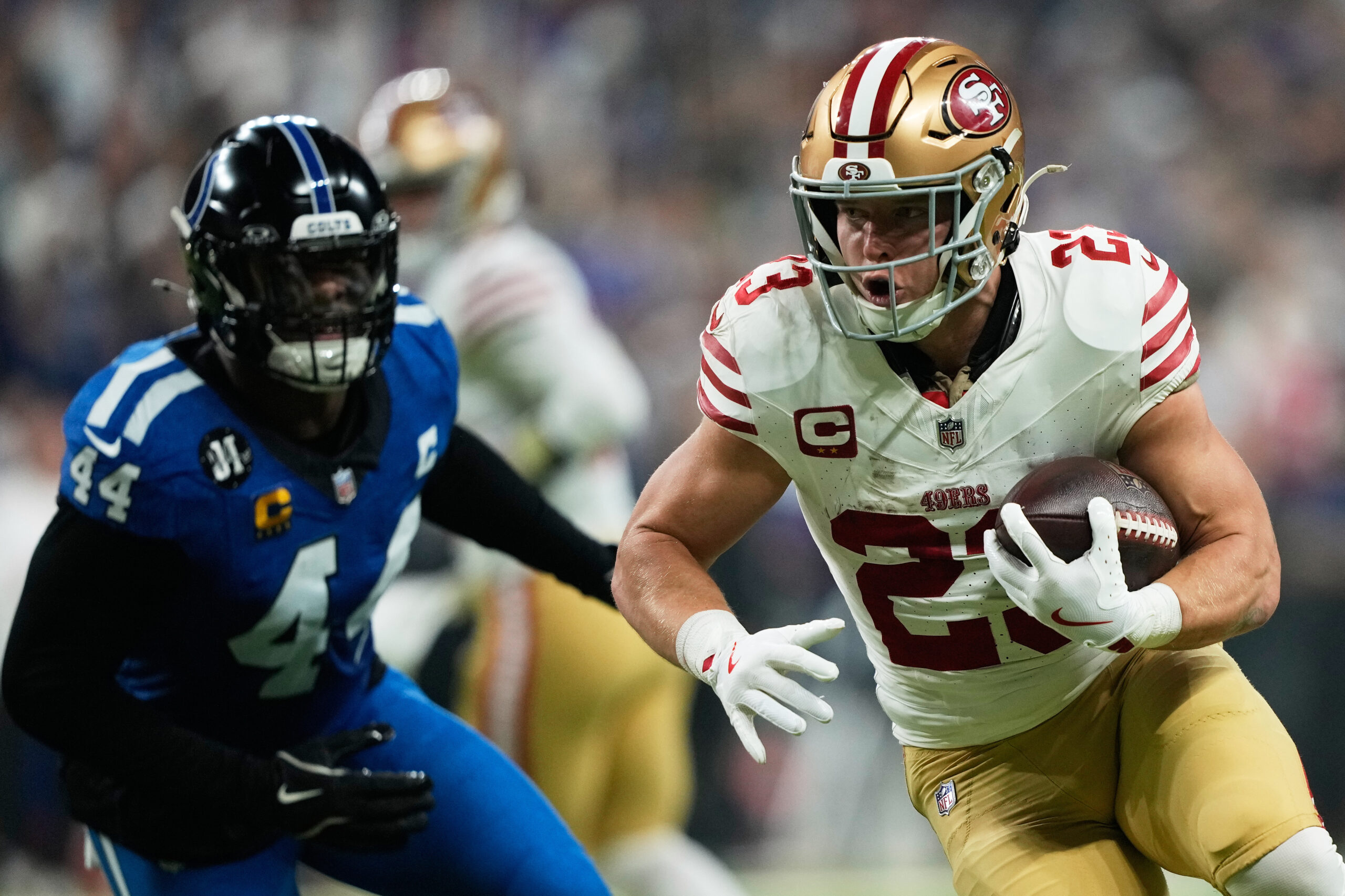
San Francisco 49ers running back Christian McCaffrey (23) runs against Indianapolis Colts outside linebacker and Philly native Zaire Franklin (44) on Dec. 22.
When the 49ers have the ball
This is where the more intriguing matchup lies with 49ers coach Kyle Shanahan and Eagles defensive coordinator Vic Fangio, two of the best play-callers in the business. While Fangio’s defense has jelled into a unit comparable to last year’s, Shanahan’s offense hasn’t been as explosive as it was in previous seasons when the 49ers reached the playoffs. He still has one of the more sophisticated run schemes in the NFL, but the production just hasn’t been there for various reasons. Like the Eagles, San Fran has faced a high rate of stacked boxes. That often is by design. No team utilizes two-back personnel more than the 49ers, who have fullback Kyle Juszczyk. At 34, he isn’t as dynamic, but Shanahan lines him up all over, increasingly in an unorthodox offset position in which he can be a blocker in a variety of ways.
Christian McCaffrey remains the workhorse running back, often from under center. He finished second in the league in carries (311), but had the lowest rushing yards over expected per attempt (-0.5) of his career. The 49ers’ scheme has long majored in wide zone runs, but McCaffrey has had more success running in between the tackles this season. Shanahan’s offense often needs to establish its ground game to utilize play action. His two-back personnel will force Fangio to decide between using his base five-man front to stop the run or his preferred nickel four-man front to protect the back. It will likely be based on the situation, but Fangio doesn’t want to leave his secondary susceptible to throws off play-action. The 49ers’ run game had two strong showings vs. the Indianapolis Colts and Chicago Bears, but it regressed last week against an athletic Seahawks defense.
The possible return of Hall of Fame-bound left tackle Trent Williams (listed as questionable) would help San Fran, but if the Eagles contain McCaffrey, it could be a long day for Shanahan’s unit. He’ll scheme up pre-snap motions to manipulate a defense, and he’ll dial up naked bootlegs and screens to compensate for struggles on the ground. But his offense has been lacking in the dropback game without a top receiver who can consistently get separation downfield for quarterback Brock Purdy. Ricky Pearsall would be the best candidate, but he’s questionable after not practicing all week. That has left most of the heavy lifting to tight end George Kittle and McCaffrey, who led the team with 102 catches. Kittle can do it all. Shanahan will use him like a chess piece. He can win vs. linebackers, safeties, and cornerbacks. The Eagles’ Zack Baun, Reed Blankenship, and Cooper DeJean will be most responsible for keeping him in check.
Purdy isn’t just some byproduct of Shanahan’s genius. He’s quick through his progressions, has good pocket movements, and can extend plays as well as most quarterbacks. He’s not necessarily a scrambler, but he can run to the sticks. If you can collapse the pocket, the throws get harder for him because he’s only 6-foot-1. Purdy’s excellent when “hot,” so it makes little sense to blitz him much — not that Fangio would be inclined to send extra rushers a lot. Shanahan likely will go after cornerback Adoree’ Jackson with Quinyon Mitchell on the opposite side. Fangio has found ways to cover for Jackson with split-field zones. I also could see Purdy targeting safety Marcus Epps or returning linebacker Nakobe Dean on middle-field throws.
Extra point
The 49ers have a lot of success throwing over the middle. But there’s a risk. Eight of Purdy’s 10 interceptions have come between the numbers. That’s part of the reason Hurts doesn’t throw over the middle as often as other quarterbacks. Sirianni has hammered winning the turnover battle into his team. The Eagles finished the season plus-6 in turnover differential, while the 49ers finished minus-6. I also give Sirianni the nod in game management and fourth-down decision-making. He has been more conservative this season, partly because the Tush Push is no longer close to automatic.
Shanahan has lacked the gumption in key spots over his career. He’s a master game-planner and play-caller. But if his teams get behind, they often struggle to rally because his offense isn’t as strong in the dropback world. The same could be said for Sirianni’s system, as well. I think the first team to 20 points wins this game. The Eagles of old could salt away a second-half lead, but Sirianni and Patullo have been unable to find a formula when ahead. It’s been ugly at times and that should be worrisome. But this is how I see the matchup: There’s a push when it comes to the Eagles’ underperforming offense vs. the 49ers’ subpar defense; but I give the edge to a great Eagles defense over a very good, but not great 49ers offense.
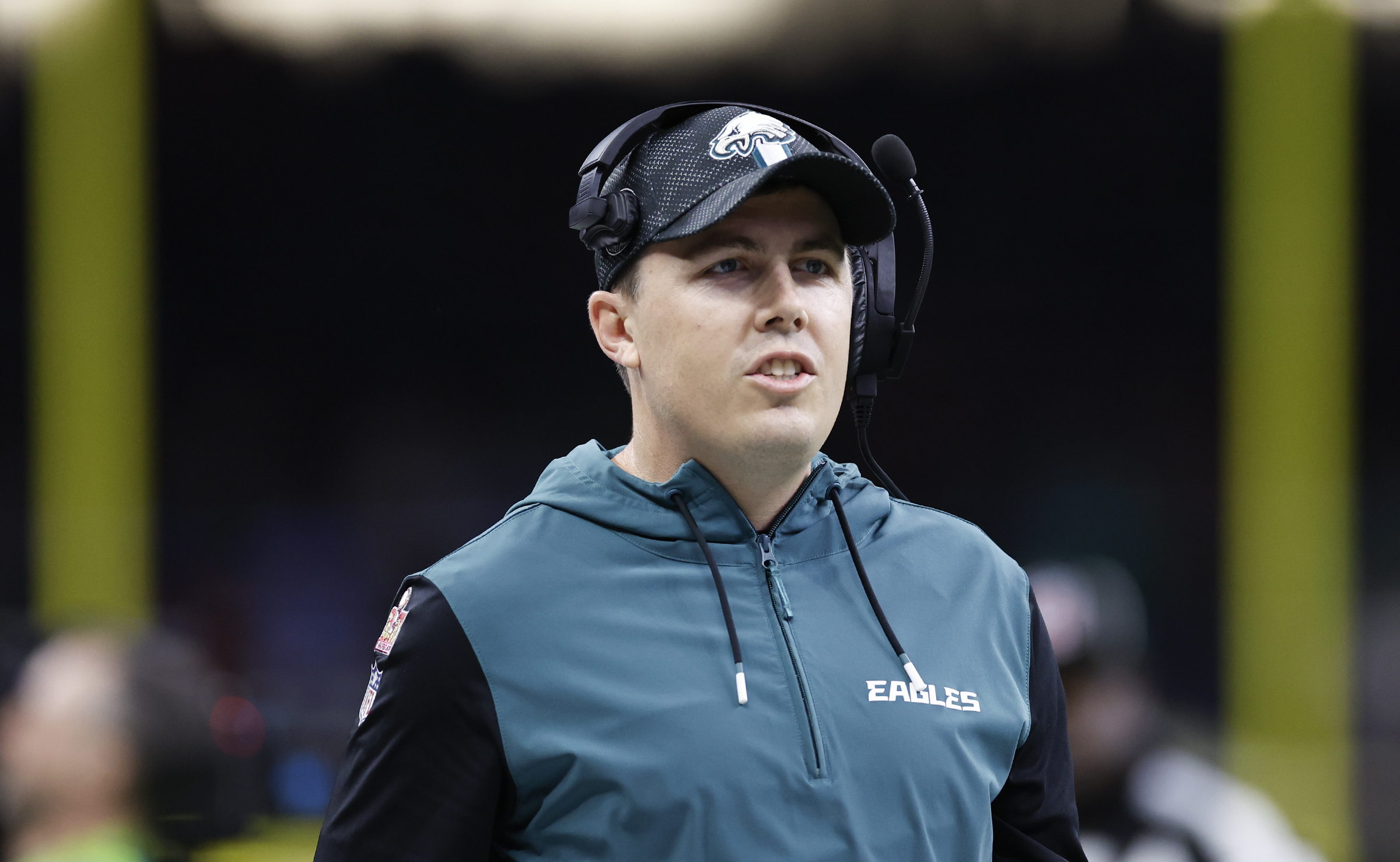
It’s become fashionable to pile on first-year offensive coordinator Kevin Patullo. He’s the target of local and national self-styled experts, none of whom, you might note, works for an NFL or college team.
Certainly, no matter how close his friendship with Nick Sirianni, Patullo won’t survive next week if the offense again struggles and the Eagles don’t beat the San Francisco 49ers on Sunday. The offense averaged 22.3 points, down 4.9 points from the Super Bowl team of 2024, and 311.2 yards, down 56 yards from last year.
If you know anything about the Eagles front office, without a deep postseason run, that sort of performance simply will not stand.
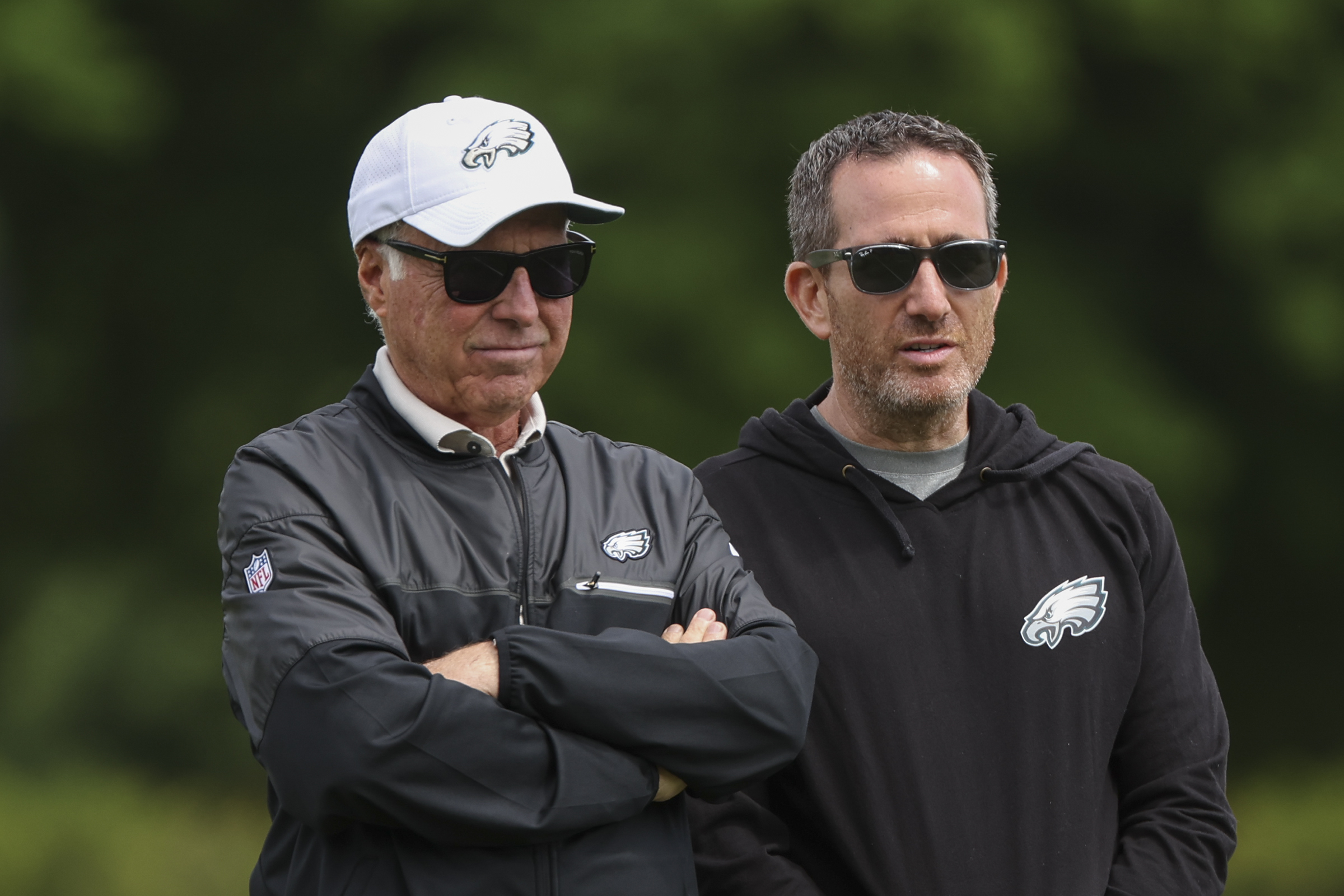
Jeffrey Lurie and Howie Roseman have standards that are not being met.
Howie Roseman spent $128 million of Jeffrey Lurie’s money on that side of the ball, more than twice what they spent on defense. No matter how badly the players have executed, a quick playoff exit will spell the end for at least Patullo, and probably quarterbacks coach Scot Loeffler as well. No player on the team has regressed as much as Jalen Hurts.
But if the day after the wild-card game turns out to be Black Monday for Patullo, his defenders, if they exist, should have some ammunition. Because regardless of the plays called, the real problem lies with the players running them. These are not failures of scheme or sequence. These are failures of execution, focus, and maybe even heart.
Is it age? Right tackle Lane Johnson is 35, but A.J. Brown and Saquon Barkley are just 28. Then again, in the NFL, high-usage receivers and backs age in dog years.
Is it fatigue? Maybe. The Eagles enter Sunday having played 38 games in the past two seasons, more than any other team. Including playoffs, Barkley had 482 total touches last season, second-most in NFL history.
Is it injury? Maybe. Offensive linemen Cam Jurgens, Landon Dickerson, and Johnson, who have 11 Pro Bowls among them, have been limited or absent all season. Brown battled a hamstring issue in training camp and through at least the first eight games, and he managed the lowest yardage total of his four-year tenure in Philly — but just 76 yards lower than last year.
In fact, as much as folks want to criticize the Eagles’ passing game, it actually averaged 6.4 more yards per game this season (194.3) than it did in 2024 (187.9).
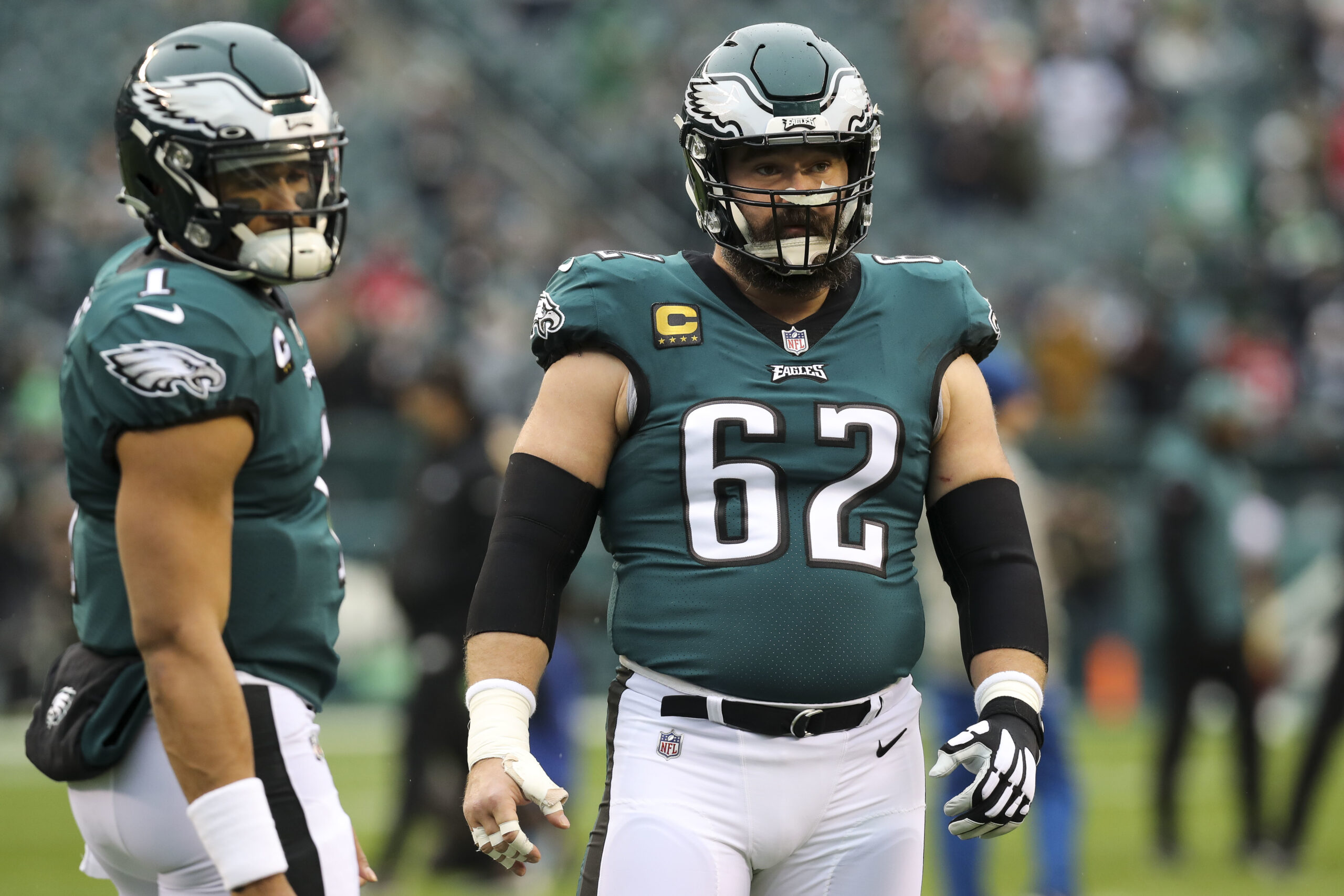
Jason Kelce isn’t walking through that door, and it’s fair to ask how much the Eagles have really overcome his absence.
The brutal truth is the passing offense hasn’t been the same since center Jason Kelce retired after 2023, despite Jurgens making the last two Pro Bowls.
Are there other factors at work?
Was last year’s passing offense a casualty of Barkley’s 2,504 rushing yards, which is an NFL record, playoffs-inclusive? Or was it because the passing game wasn’t sharp in 2024, either? After all, Hurts threw for seven more touchdowns and 321 more yards in 2025.
Second, opposing defenses more steadfastly forced Hurts — and, of course, Patullo — to beat them through the air.
You can’t blame Patullo for the stagnation of Hurts’ game. His processing remains slow, his footwork remains clunky, his arm strength no better than average.
But what Patullo will be blamed for, fairly or not, is that he did not make more of Lurie’s $255 million man. It won’t matter that Patullo’s predecessor didn’t, either.
Kellen Moore was hired to maximize Hurts’ abilities the way he’d allegedly done with Dak Prescott as the Dallas Cowboys’ quarterbacks coach or offensive coordinator from 2018 to 2022 — emphasis on allegedly.
History has been kind to Kellen Moore … perhaps too kind.
Prescott’s passer rating during Moore’s five seasons was 98.8. His quarterback rating was 55.2. Since Moore left, it’s 99.4 and 73.4. Justin Herbert’s passer rating of 93.2 in 2023, Moore’s single season as the Chargers’ OC, matched Herbert’s career-low.
Just saying: Maybe Moore wasn’t the reason the Eagles shined as brightly as they did. After all, four healthy potential Hall of Famers on any offensive line can cover up lots of shortcomings.
Nobody likes watching Patullo call passing plays that give Hurts limited options and require too long to throw. Nobody likes watching running plays that, given the defensive alignment, appear doomed on conception. Those are on Patullo — but those also are infrequent. Besides, no OC nails every call.
Nobody likes watching Hurts deal with pressure in his face from up the middle on every third dropback because his center and guards get blown off the ball. Nobody likes seeing tight end Dallas Goedert rounding off his routes.
We’ve also seen Brown give up on routes and short-arm passes, seen Barkley hit holes soft, misread blocks, and run out of bounds when he didn’t have to, and we’ve seen Hurts miss wide-open receivers, sometimes two on the same play. He clearly has no interest in running the football much anymore; he ran 105 times this season, one-third less than his average over the last four seasons.
Sure, some of that is Patullo.
But a lot of it is a worn-down Hurts and his quickly aging cast.
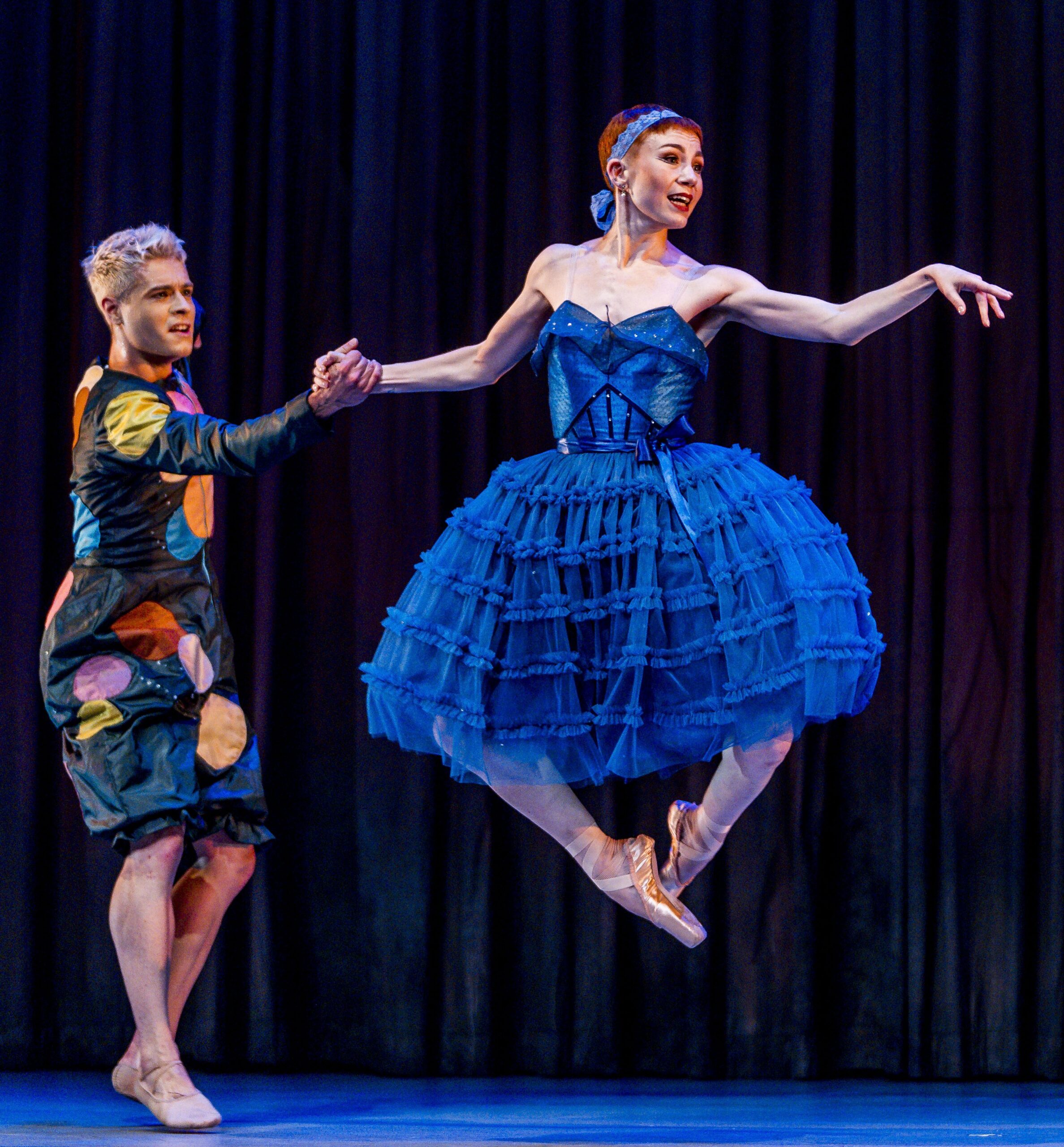
BalletX and the Philadelphia Chamber Music Society opened the world premiere of Amy Hall Garner’s highly colorful, theatrical Petrushka Thursday night at the Kimmel Center’s Perelman Theater.
Petrushka takes the second half of a program that opens with ensemble 132 alone in the first act, playing Bartok, Wiancko, and Mozart. So when Peter Weil (as Pete, who becomes Petrushka) wanders on stage and settles in for a nap, it is amusing already.
It’s as if a Kimmel visitor walked through the wrong door.
Now the musicians, playing the Stravinsky score — rescored for, and played by, a piano quintet, are backstage while a surreal fever dream of a scene erupts. Pete is woken up by a chorus of dancers who steal his blanket and wrap him into the traveling show that is approaching.
It’s like we went to a classical concert and a circus broke out.
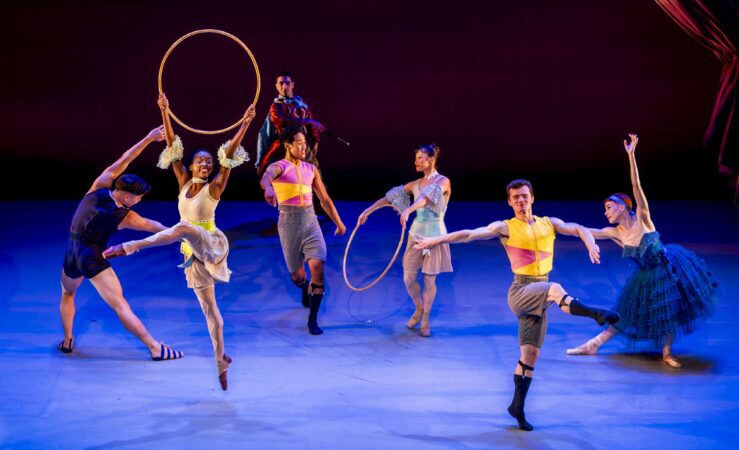
BalletX dancers Peter Weil as Petrushka and Lanie Jackson as Belle in Amy Hall Garner’s “Petrushka.”
Last summer, BalletX offered a preview of Petrushka, for which choreographer-in-residence Garner teamed up with theater director Nancy Meckler and set and costume designer Emma Kingsbury. Then, it was intriguing but hard to parse.
Garner’s story is still hard to parse without reading the program notes, but it’s a wild adventure.
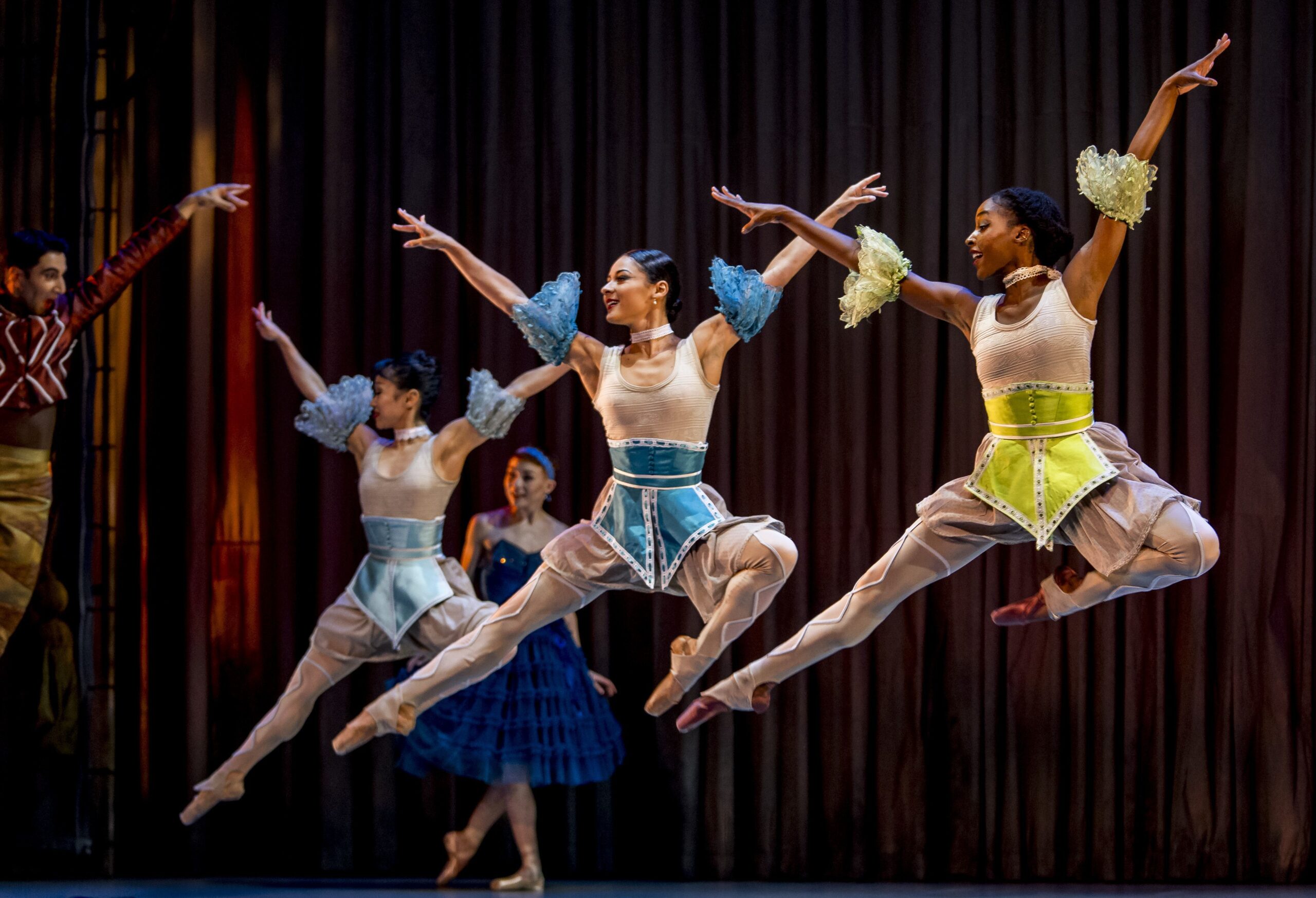
BalletX dancers Ashley Simpson, Itzkan Barbosa, Minori Sakita, and Lanie Jackson (back) in Amy Hall Garner’s “Petrushka.”
This is the first time BalletX has remade an older story, artistic director Christine Cox said on stage before the show.
Garner’s traveling show is an amusing cast of circus characters who are sometimes puppets, other times human. A hilarious strongman (Mathias Joubert) and a magician/impresario (Jonathan Montepara) share the role as the bad guys. Montepara controls everyone with his wand. Both Pete and the magician are in love with Belle, the ballerina (Lanie Jackson).
Jackson convinces Pete to change into a costume, thus becoming Petrushka and distracting the audience.
There are also acrobats and dancers who perform with ribbons, clubs, and hoops.
BalletX dancers are used to a variety of types of dance and roles. The company specializes in new work, so they are all flexible and able to perform in many ways. More surprising was how good they are as actors. In particular, Weil and Jackson didn’t only impress with their dancing but their strong storytelling and range of emotions.
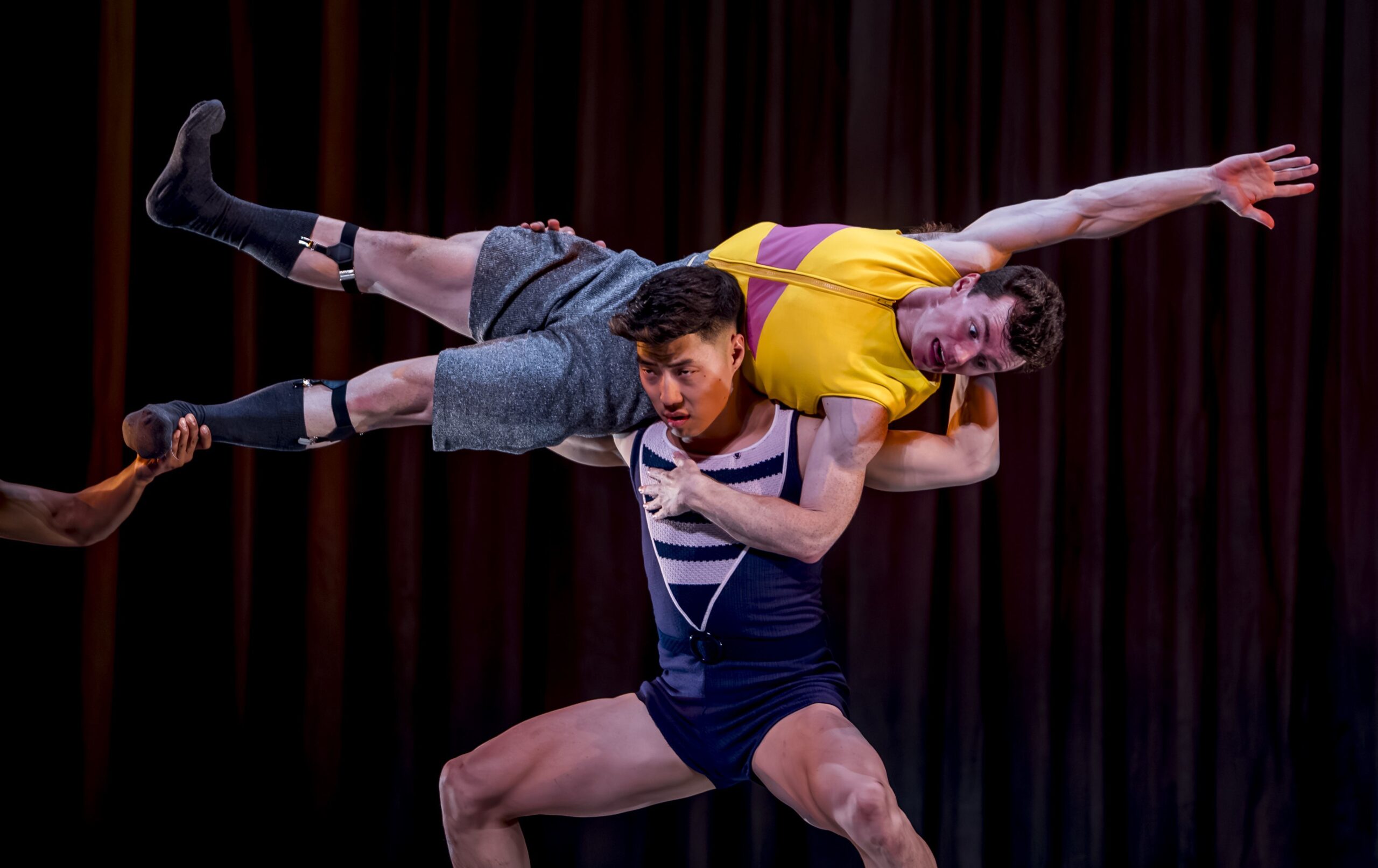
BalletX dancers Mathis Joubert lifts Jerard Palazo in Amy Hall Garner’s “Petrushka.”
Joubert was the strongest supporting character as the egotistical strongman, breaking the fourth wall to use it as a mirror, flexing his muscles and kissing himself.
The large number of bodies on stage made for a lively scene, but it also overwhelmed the Perelman stage at times. Ensemble 132, which owned the first half, almost faded into the background in the second.
It would be interesting to see this sometime at the Highmark Mann Center for the Performing Arts, BalletX’s second home.
If they made a movie about the Phillies as 2026 begins, the climactic scene would feature Bryce Harper at the plate, flipping his Victus bat, and shouting four words at a bloodthirsty crowd.
It’s a fair question. Because the Phillies have a $300-plus-million payroll and as many stars as a planetarium. They won more games in the last three seasons than all but two teams (Dodgers, Brewers). And only the Dodgers have a streak of playoff appearances longer than the Phillies’ four-year run.
Surely, the 3.3 million fans who surged through the gates of Citizens Bank Park last season enjoyed all that.
Except, well, you know what keeps happening to the Phillies in October: divisional-round ousters in 2024 and ’25 after the Game 6 and 7 soul-crushers at home in the 2023 National League Championship Series. That’s eight losses in 10 playoff games — and nothing to show for so much regular-season success.
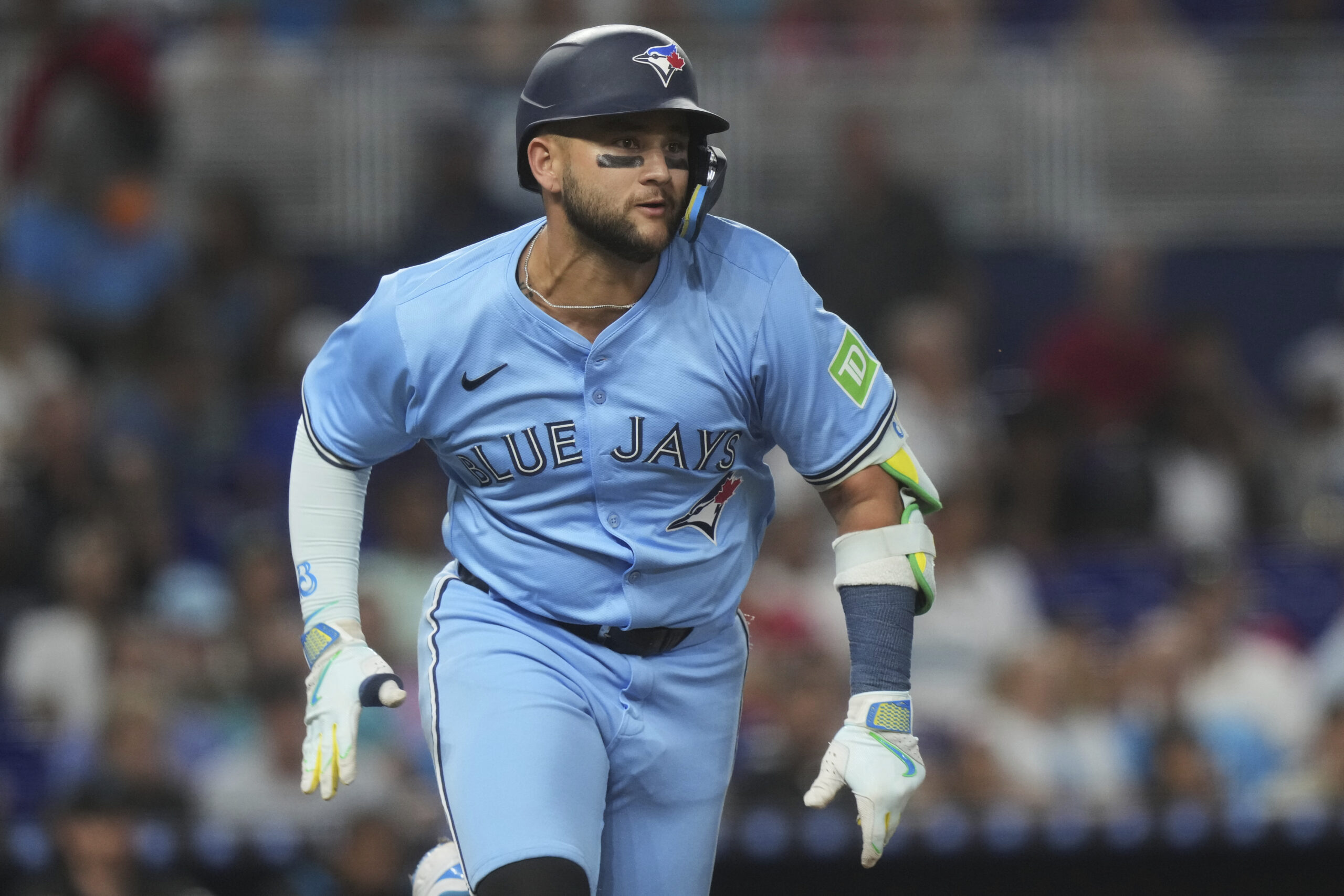
So, when the Phillies re-signed Kyle Schwarber last month and made an offer to bring back franchise catcher J.T. Realmuto, it mostly was met with a shrug from fans who are more wary than they should be about keeping together the guts of a roster that chased 90 wins three years ago with 95 and then 96.
But before channeling our inner Gladiator and questioning the entertainment value of yet another winning summer spent with the cast that disappoints every autumn, the Phillies went and set up a meeting next week with star free-agent infielder Bo Bichette, a major league source said Thursday, confirming a report by The Athletic.
Entertaining? Maybe. Interesting? Definitely.
Free-agent infielder Bo Bichette is scheduled to meet with the Phillies over video next week, according to a major league source.
Bichette, who will be 28 next season and twice led the American League in hits, would bring a high contact rate and right-handed power to the Phillies’ lineup. Imagine a batting order that looked like this:
But the real explanation for the fans’ collective endorphin rush is that Bichette — son of former major leaguer Dante Bichette, godson of ex-Phillies manager Joe Girardi — would represent the biggest change of the mix since Turner’s arrival as a free agent in December 2022. And let’s be clear: Signing Bichette would be like taking a blender to the roster.
Not only would the Phillies need to teach Bichette a new position (third base), but to squeeze him into the budget — with the payroll pushing up against the highest luxury-tax threshold — they must move third baseman Alec Bohm’s $10.2 million salary and say goodbye to Realmuto.
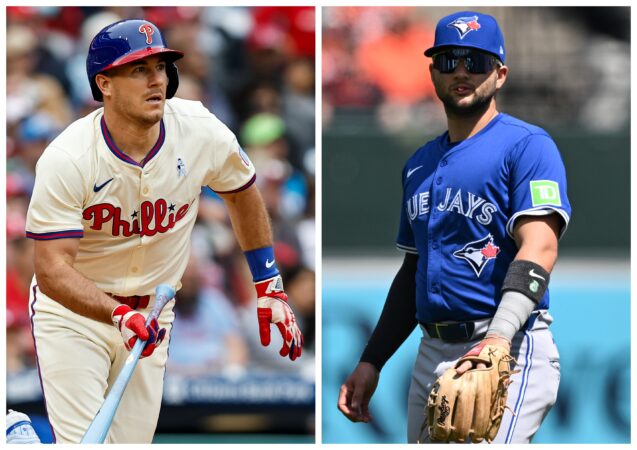
Are the Phillies really better off with Bichette? Maybe. Realmuto is older (35 this season) and amid a three-year decline at the plate. But he still has more wins above replacement over the last three seasons (9.0, as calculated by Baseball-Reference) than Bichette (8.0). And he’s beloved by the pitchers for his leadership and game-calling.
The Phillies remain hopeful of retaining Realmuto, but the sides have been locked in a contractual staring contest for a month. There isn’t a Phillies story — and depending how things go Sunday at the Linc, maybe not a Philadelphia sports story — that will dominate the news more than the Bichette-Realmuto saga for as long as it lasts.
But 2026 will bring several entertaining Phillies storylines, such as:
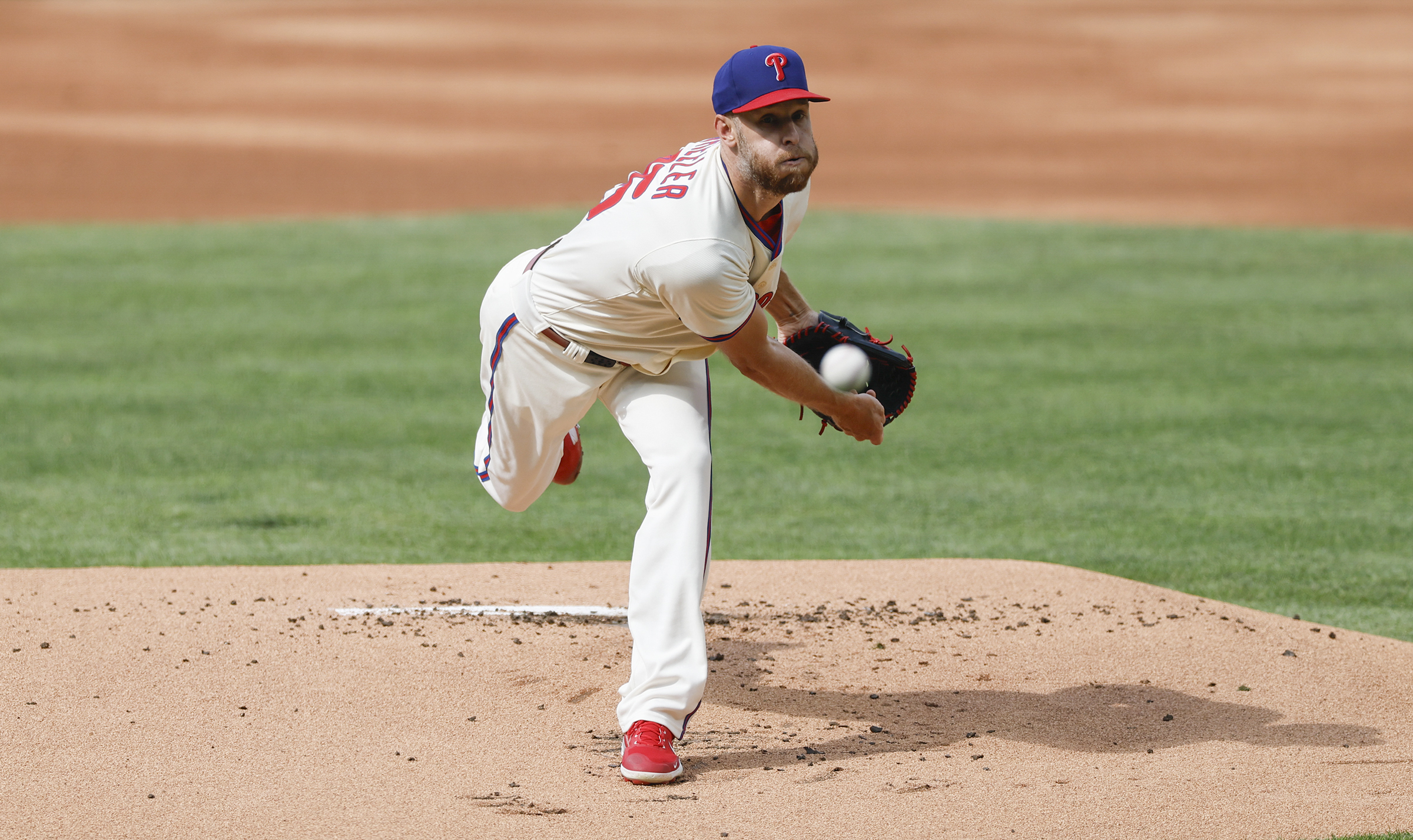
Phillies ace Zack Wheeler is seeking to return from thoracic outlet decompression surgery.
Whither Wheeler?
When we last heard from Zack Wheeler, it was August, and he was where he normally is, smack dab in the conversation with Paul Skenes, Tarik Skubal, and maybe Garrett Crochet for the best pitcher in baseball.
Then, in the flash of his fastball, he was gone, diagnosed with a blood clot near his right shoulder.
The clot was brought on by venous thoracic outlet syndrome, a condition in which the subclavian vein gets compressed between the collarbone and rib cage. Wheeler had season-ending surgery to remove the clot, then another procedure in late September in which his top rib was removed to relieve the pressure on the vein.
(Aside: It’s difficult not to wonder if the divisional series against the Dodgers would’ve turned out differently if the Phillies had Wheeler and reliever José Alvarado. Then again, they scored only seven runs in the three losses — and lost by a total of four runs. Pitching wasn’t the problem.)
Wheeler is throwing again — from 75 feet, manager Rob Thomson said before seeing him in person this week. The Phillies are optimistic he won’t miss much of the season. As one major league source put it, his recovery is “going great.”
“The trainers seem to think he’s doing very well,” Thomson said, purposely not venturing a guess for Wheeler’s return.
But thoracic outlet syndrome isn’t as common as, say, Tommy John surgery, and the return isn’t always as smooth. Maybe Wheeler, 35 in May, will make a full recovery, à la Diamondbacks righty Merrill Kelly, who was in his 30s when he returned from TOS. Maybe he will need to reinvent himself on the mound.
Either way, it won’t be as automatic as winding up Wheeler and watching him dominate for 200 innings. And the rest of the starting rotation, still the Phillies’ backbone, must be adjusted accordingly.
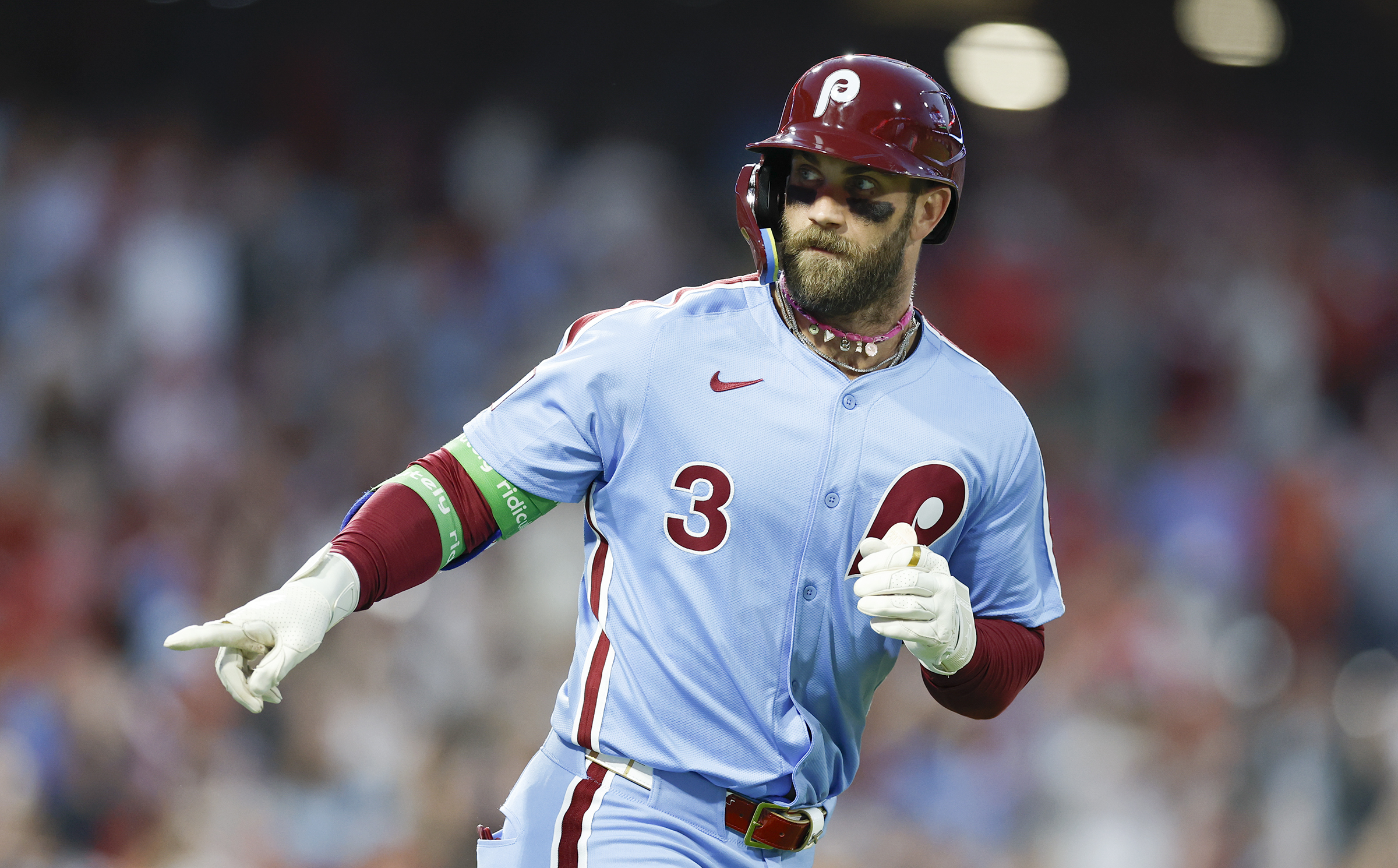
Bryce Harper finished with an .844 OPS last season, 11th among qualified National League hitters.
But there are tangible things that Harper can improve.
Start here: Harper swung at 35.6% of pitches out of the strike zone last season, 129th among 144 qualified hitters, according to Statcast. Not only was it worse than the league average (28.4%) but also his career mark (29.3%).
Harper was hampered in the first half of the season by an inflamed right wrist, which eventually sidelined him for 23 games. And he did still finish with an .844 OPS, 11th among NL hitters who qualified for the batting title.
Not bad. Just not … elite.
There’s that word again.
“He expanded a little bit more than we’re accustomed to,” hitting coach Kevin Long said in November on Phillies Extra, The Inquirer’s baseball podcast. “I don’t know what his actual chase rate ended up being, but it was probably 35%. That’s high. If he gets that number down to 32, just drop it 3%, now he’s swinging at better pitches, [and] he’s going to do more damage.”
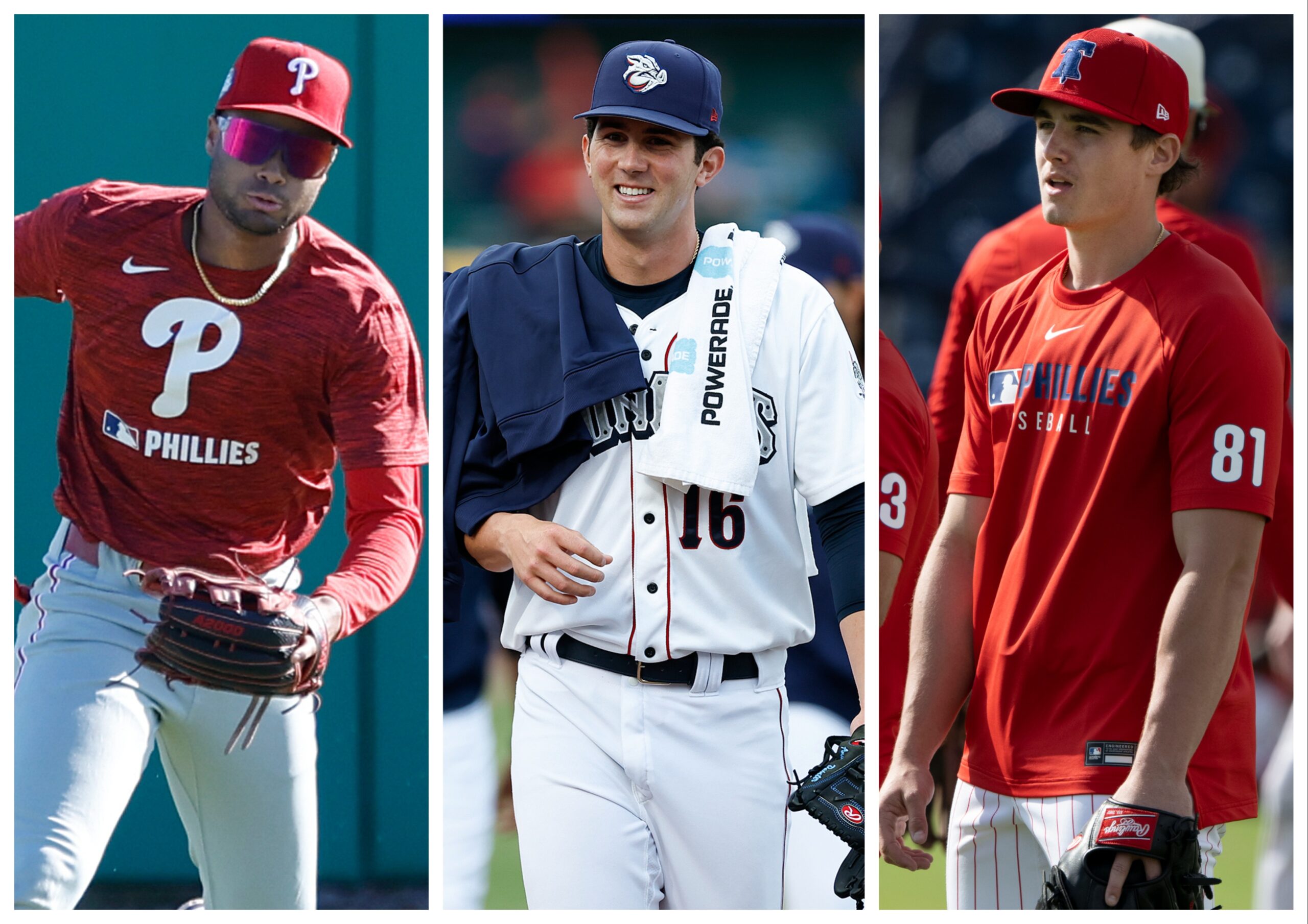
Justin Crawford (left), Andrew Painter, and Aidan Miller are among the Phillies’ top prospects.
Will the kids be all right?
The Phillies had 12 players make their major league debuts in the last three seasons — fewer than any team, based on FanGraphs research.
That’s about to change.
Barring a spring training from hell, Justin Crawford will be part of the Phillies’ opening-day outfield, likely in center, on March 26 against the Rangers. There’s a decent chance Andrew Painter will be in the season-opening rotation, especially if Wheeler misses the first few weeks.
And if infielder Aidan Miller plays well for a few months in triple A, he could accelerate the Phillies’ timetable to call him up.
The existing core is aging, though not yet old. Harper and Schwarber will play at 33 all season; Turner and Aaron Nola will turn 33 in June. And if this is the year that the Phillies finally scale the October mountain, their stars will have led the charge.
But it’s imperative that the Phillies’ trio of top prospects graduate to majors and provide at least as much impact, if not more, than the last wave of young players.
“I’ve said this all along, and I still believe this: We need to start working our young players into our [roster],” Dombrowski said last month. “We have good young players, and we’ll be better for it. I do think that good organizations can blend young players with veterans.”
Speaking of the Phillies’ previous youth brigade, Stott and Marsh finally got better results at the plate last season after making midyear changes. Stott hit .294 with an .855 OPS after the All-Star break; Marsh batted .303 with an .836 OPS after a hitless April. Can they build on that success?
And will reliever Orion Kerkering bounce back from his devastating season-ending throwing error?
File them away among the subplots in the Phillies’ 2026 soap opera.
But another recent announcement seemingly sent people over the edge. For the first time in the history of the tournament, FIFA will charge fans to attend its fan festivals across many of the 16 cities in North America selected to host games in the monthlong tournament.
And while that has been made public for at least one of the hosts, general admission to Philly’s fan festival, scheduled for June and July on the grounds of Lemon Hill Mansion in the Brewerytown section of the city, will remain free, according to Philadelphia Soccer 2026, the committee responsible for the planning and execution of Philly’s tournament footprint.
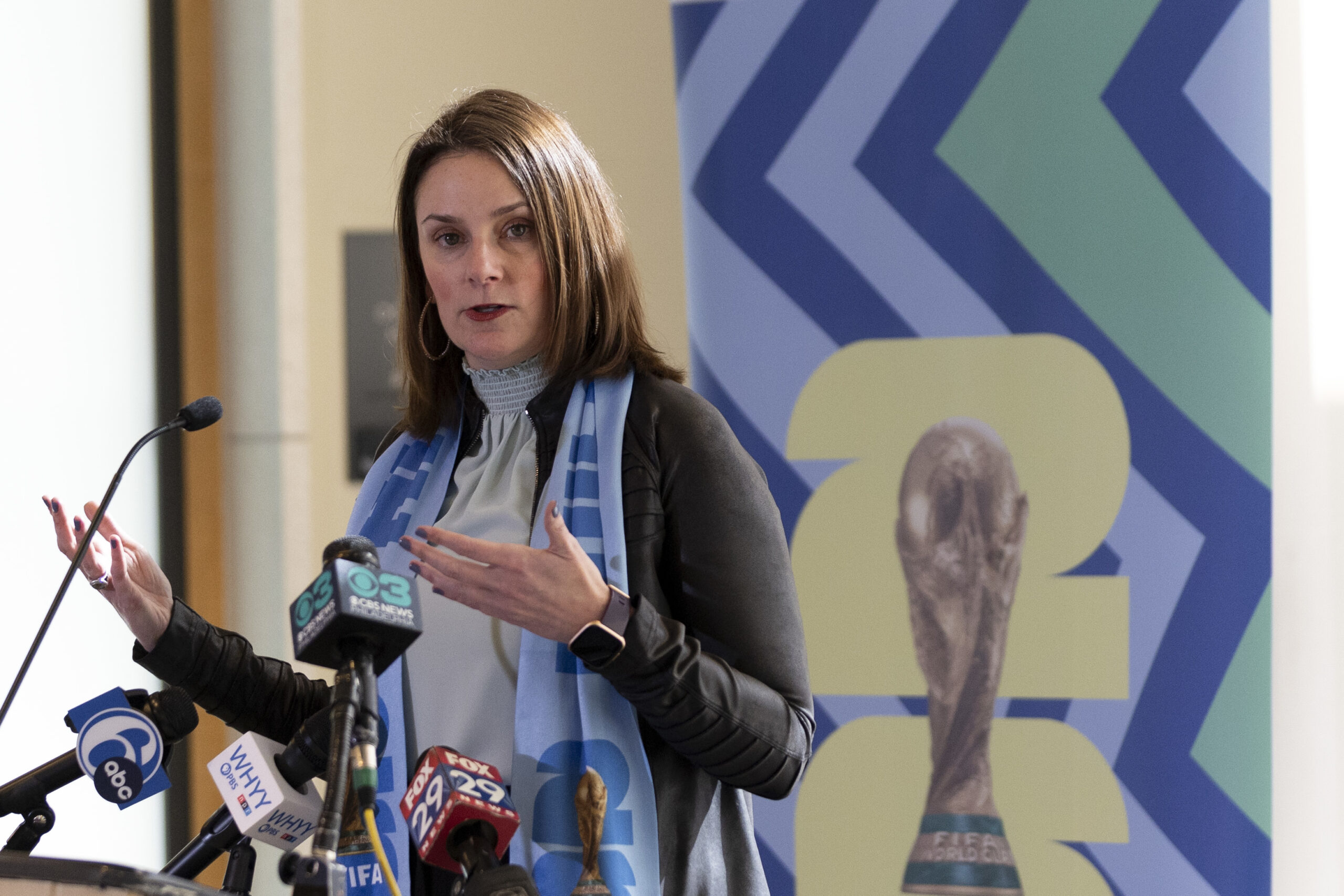
Meg Kane, host city executive for Philadelphia Soccer 2026, said Philly’s version of FIFA’s Fan Fest will remain free, as the event is “committed to making sure every fan can share in the excitement.”
“Since our selection as a host city in 2022, Philadelphia Soccer 2026 has remained committed to making sure every fan can share in the excitement, culture, and community of this generational sporting event,” Meg Kane, host city executive of Philadelphia Soccer 2026, said in a statement to The Inquirer on Wednesday.
“Essential to that commitment, we made the decision to offer free general admission to FIFA Fan Festival at Lemon Hill, ensuring an inclusive and welcoming environment where fans from all backgrounds can come together to celebrate the world’s game.”
While general admission will remain free for the scores of fans who are expected to descend upon Philly over the course of five group matches and a massive round of 16 game on July 4, there will be “optional VIP experiences,” including expedited entry into festival grounds, and are expected to be available for purchase at a later date.
Kane’s announcement mirrors that of other cities, such as Kansas City and Vancouver, which also have stated their intention to keep admission free for their events.
But when the news of potential fees at fan festivals initially landed, it certainly didn’t appear that would be the case.
Amid the news that FIFA plans to charge for its fan festivals, it was overlooked that only one delegation has formally announced its intent to charge an upfront entrance fee.
In fact, a spokesperson with knowledge of the proceedings told The Inquirer that any intention to add a fee to the festivals was not a blanket decision made by FIFA as soccer’s world governing body; instead, it is left to host city committees to decide.
A FIFA spokesperson confirmed this and added on Thursday that while some host city delegations have begun relaying their fan festival plans, “FIFA will communicate the full suite of details [for all 16 host cities] in the first quarter of 2026,” where, in addition to what’s to come at those sites, announcements of which ones might consider charging a fee will be made public.
Artists rendering of what Philadelphia’s 2026 World Cup fan fest site at Lemon Hill will look like.
“From the outset, FIFA has worked closely with host cities and local stakeholders to help shape meaningful fan experiences beyond the stadiums that are community-led, fan-oriented and aligned with the spirit of the FIFA World Cup,” a FIFA spokesperson said in a statement to The Inquirer. “It is important to recognize that there is no one-size-fits-all model for fan engagement across a tournament of this scale.”
FIFA’s spokesperson also noted that “fan experiences can take many forms — from large-scale gatherings to more decentralized, community-driven activations,” which dovetails into the preliminary plan of attack of the New York-New Jersey delegation, which isn’t viewing its overall fan engagement strategy as hosted at one large site, but several.
For soccer fans planning a trip for the World Cup final or New Yorkers who can’t afford it but want in, tickets are available for New York’s main fan festival at Liberty Park via Ticketmaster for $12.50.
But there’s a methodology at play here.
According to a host city committee official, the move isn’t as much a revenue driver as a crowd management strategy designed to regulate capacity and effectively coordinate staffing, security, and transportation.
Essentially, by putting a limit on the number of people expected to descend upon the area to watch a series of matches in June and July, the Liberty Park fan festival can be capped at a number, one anticipated to still be in the tens of thousands, daily.
To accommodate a global population, the delegation plans to bring in a scaled-down version of its festival, termed as “fan zones,” into all five New York boroughs. The first two have already been announced: Rockefeller Center in Manhattan will host a “fan village,” as will the Billie Jean King National Tennis Center, the home of the U.S. Open in Queens.
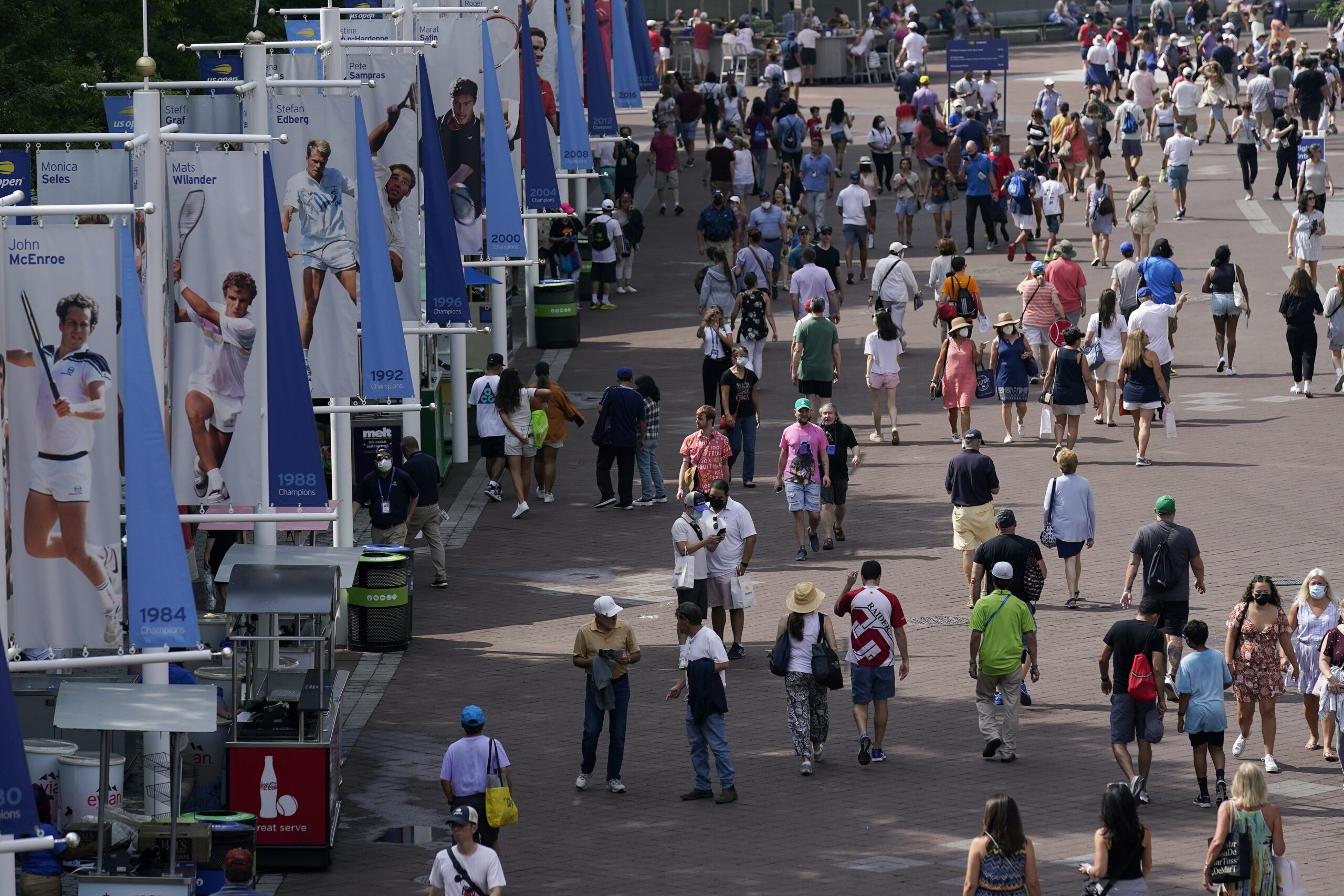
The grounds of the Billie Jean King National Tennis Center will also be utilized as one of five FIFA World Cup “fan zones” across New York’s five boroughs in addition to the Liberty Park Fan Festival on the banks of the Hudson.
More are expected to be announced later, and the fan village at Rockefeller Center will be free to attend. As of now, New York-New Jersey is the only host city committee planning fan experience that’s not situated in a single location.
“New York-New Jersey is building a regional fan experience unlike anything seen in World Cup history,” Alex Lasry, CEO of the New York-New Jersey host committee, told The Inquirer. “We’re proud to have announced three official NYNJ Host Committee fan experiences that will bring the World Cup far beyond the stadium.
“These spaces are essential to the World Cup experience, creating accessible and affordable places for people to come together and experience the biggest games in one of the world’s most iconic venues. And this is just the beginning — we look forward to announcing additional fan engagement opportunities so the entire region can feel the impact of the World Cup.”
The University of Pennsylvania, German biotech firm BioNTech, and Osage University Partners, a Bala Cynwyd venture capital firm, have formed a $50 million fund to back early-stage life sciences startups at Penn, the partners announced Friday.
The announcement came on the eve of the much-hyped annual J.P. Morgan Healthcare Conference in San Francisco, which starts Monday. The conference has become a way to measure the mood of the biotech sector, which has slumped after investment peaked in 2021. It’s been particularly difficult for early-stage biotech companies to raise money in recent years, according to a recent J.P. Morgan report.
For Penn scientists and company founders, the so-called Penn-BioNTech Innovative Therapeutics Seed Fund, or PxB Fund for short, will step into that gap. It is designed to invest in companies that are developing new therapeutics, diagnostics, and research tools.
The announcement did not include a breakdown of how much money each of the three backers provided. Osage University Partners, which has $800 million under management and had previously invested in at least 10 Penn spinouts, will run the fund.
“Penn has a remarkable track record of creating cutting-edge startups,” Marc Singer, an Osage managing partner, said in a statement.
Penn was among the first six universities Osage partnered with 15 years ago when it started investing in spinouts from research universities, while allowing the institutions to share in some of the profits. This was at a time when few universities were investing in their own startups.
Penn’s evolution as an investor in its own startups
For Penn, that began changing about a decade ago. The university’s first investment in one of its own faculty-member spinouts came in 2016, when it invested $5 million in Carl June’s Tmunity Therapeutics. In 2018, Penn Medicine agreed to invest an additional $45 million in Penn biotech companies over three years in conjunction with outside funds.
In December, Penn announced a $10 million fund that will make seed investments of up to $250,000 in companies that have at least one founder affiliated with the University of Pennsylvania. That fund is for the entire university, not just life sciences.
PxB is another part of what John Swartley, Penn’s chief innovation officer, called in an interview Friday a “constellation of different support structures and funding sources that our companies can draw upon in order to advance their opportunities and agenda.”
Anna Turetsky, a biotech investor in New York who received her undergraduate degree at Penn and has a doctorate in biophysics from Harvard University, has joined Osage and will serve as PxB’s general partner.She said PxB is a 10-year fund and is expected to build a portfolio of around 15 companies in the early years.
“Part of why this is a fantastic time to start this fund is that there has been a gap in venture funding for early stage startups over the last few years. Everyone wants to see clinical data these days,“ Turetsky said. If that continues, ”then in a few years, there will be no early-stage clinical companies,” she said.
Germany’s BioNTech, which partnered with Pfizer on one of the COVID-19 vaccines that used mRNA technology developed at Penn, will use the fund to deepen its longstanding ties to Penn researchers.
Philadelphia’s place in biotech
Some observers of Philadelphia’s biotech sector have lamented the relative lack of local investors, which are abundant in places like Boston and San Francisco and have helped turn those metro areas into leading innovation centers.
Quaker BioVentures was a local investment fund that raised $700 million in the early 2000s to buy into biotech firms in Philadelphia and elsewhere, but was not successful for its investors, which included Pennsylvania state pension funds.
Others, when asked why the Philadelphia region trails Boston, San Francisco, and San Diego, as a biotech hub, point to the need for a deeper pool of management talent.
“Part of our hope with the fund is to create some companies, start from scratch, take technology, find management teams, start them in Philadelphia. Hopefully, that will create a new crop of managers,” he said.
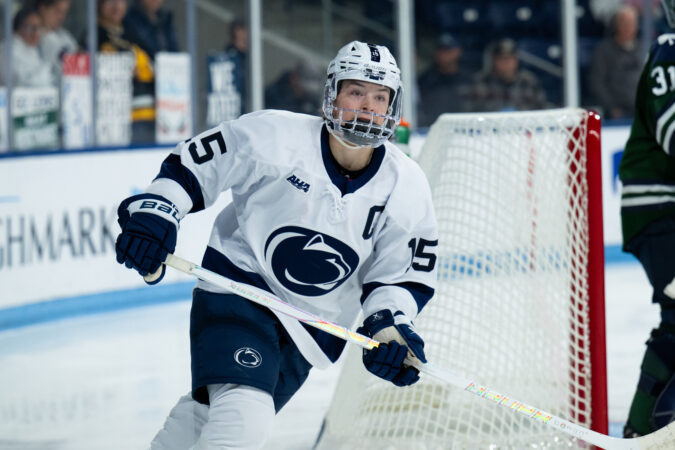
Tessa Janecke has dominated college hockey since arriving at Penn State in 2022.
Following a 47-point rookie campaign, Janecke earned the College Hockey America conference’s Freshman of the Year award. In the last two seasons, she was named a second team All-American.
And Friday of last week, the senior became the first Penn State player named to the United States Olympic women’s ice hockey team. The Winter Games, in Milan, Italy, have opening ceremonies on Feb. 6, though the team’s first game is Feb. 5.
In a collegiate career filled with stellar goals and nearly 100 wins, being a member of Team USA marked a monumental achievement for the Orangeville, Ill., native — one she had envisioned since the first time she put on skates.
“[Making the Olympic team] was always my dream,” Janecke said. “Going to college games and seeing those players on national teams, players I’m now playing with, I think [it shows] that no dream is ever too big if you work hard for it.”
Tessa's headed to Milan!
She becomes the first Nittany Lion ever to be named to the USA Women's Ice Hockey Olympic roster🇺🇸
— Penn State Women’s Hockey (@PennStateWHKY) January 2, 2026
Janecke said she was “relieved” when she found out that she made the team. She gave the news to her parents and teammates, phone calls she labeled as “very cool moments” with those who had made her achievement possible.
The 5-foot-8 forward made her USA Hockey debut in 2022, winning a silver medal at the International Ice Hockey Federation under-18 Women’s World Championships. She later won two gold medals and a silver medal across three appearances at the IIHF World Championships.
In 38 appearances with the U.S. senior national squad, Janecke has scored 13 goals and added 15 assists. Her highlight moment came this past April, when she scored the game-winning overtime goal to give the United States a 4-3 victory over Canada and secure a gold medal at the IIHF World Championships.
Bottom line: Janecke is no stranger to the international stage. And in Milan, she is eager to add another gold medal to her collection.
“Everything is going to come down to the gold medal game,” Janecke said. “So cutting out noise and focusing on the people in the locker room is going to be what’s most important.”
In four seasons at Penn State, Janecke has tallied 181 points, with 75 goals and 106 assists, all the best in program history, which began play on the Division I level in the 2012-2013 season. As a junior, she became the university’s all-time points leader, setting the record for both the men’s and women’s programs.
Halfway through Janecke’s senior campaign, her trophy case is packed.
Tessa now owns the record for both the most career goals (75) and career assists (106) in program history
— Penn State Women’s Hockey (@PennStateWHKY) January 3, 2026
She is a two-time Atlantic Hockey America Player and Forward of the Year and a two-time All-AHA first team selection. In Janecke’s four seasons at State College, Penn State is 98-31-6 with three NCAA Tournament appearances.
Now in Italy, she’s looking forward to representing something more.
“It’s always an honor to throw on your flag, to take in that moment and appreciate what has led you to that moment,” Jackecke said. “You just have to be grateful for how you’ve gotten there in the past and how it’s set you up for these moments.”
Janecke will miss “about a month” of Penn State’s season for the Olympics. But she remains confident that her team can sustain its success during her absence.
And she has the backing of Jeff Kampersal, Penn State women’s hockey coach, who lauded his star forward’s opportunity to “make history” at the Olympics.
“We are proud of Tessa making the USA Olympic Team,” Kampersal said. “Coming to Penn State, Tessa wanted to make history, not join history … [There is] no question Tessa has elevated all standards in our program. We appreciate her loyalty, and we are proud of her.”
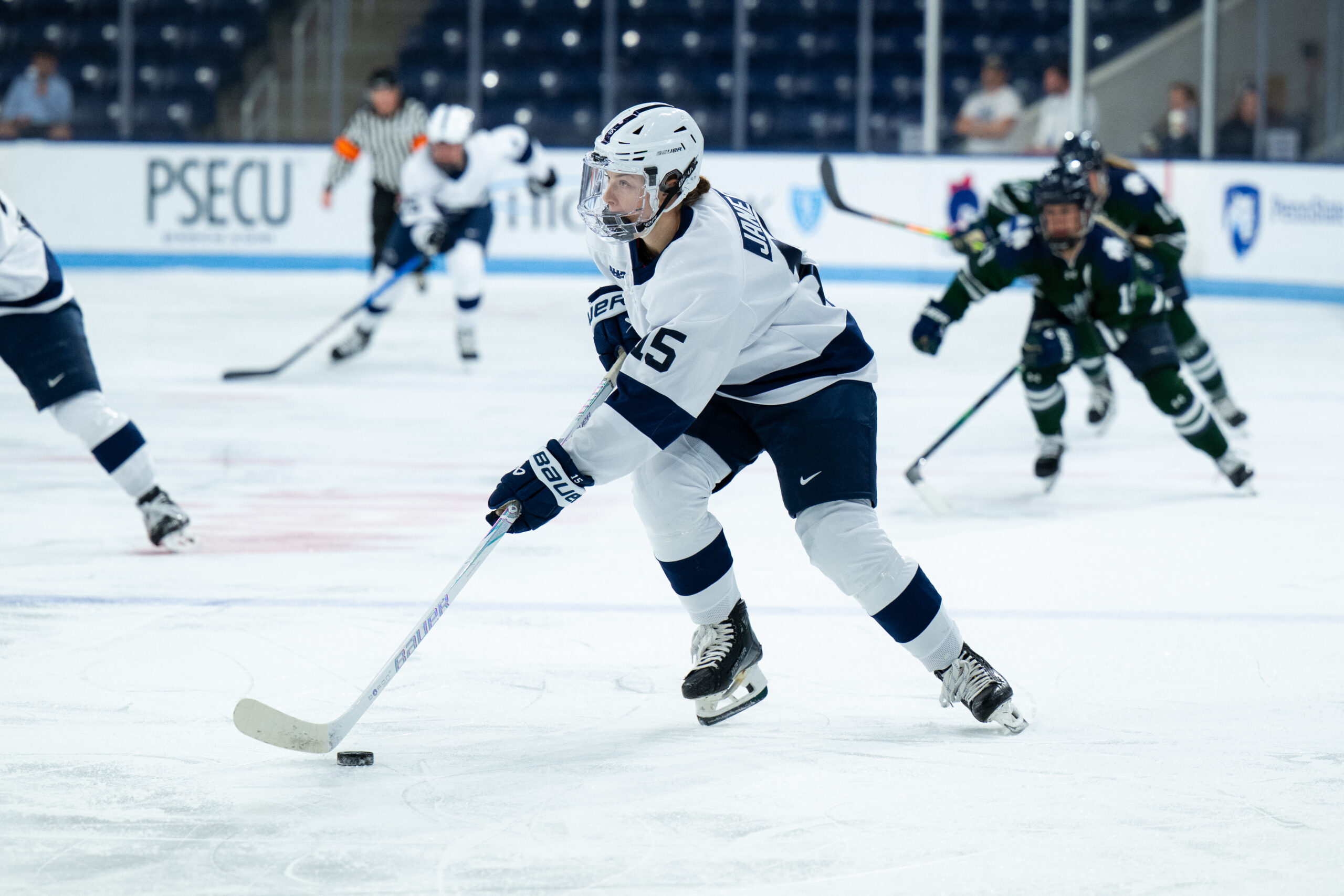
Penn State’s Tessa Janecke in action during the Nittany Lions’ 5-2 win over St. Lawrence on Sept. 26 at Pegula Ice Arena.
The U.S. women’s team opens Olympic play on Feb. 5 against Czechia before dates with Finland, Switzerland, and Canada in the preliminary round. The quarterfinals, semifinals, and gold medal game are scheduled for Feb. 13-19.
“This is going to be [played] on a much bigger scale, a lot more eyes on you,” Janecke said. “We have to go in there with the right mindset. There can’t be a moment too big or one that we’re not prepared for.”
With all due respect to Ralph Waldo Emerson, a door can be a wall sometimes, too.
Take poor Kevin Patullo, for instance.
The goal of every NFL assistant on either side of the football is to eventually land a coordinator gig. It can be a tough slog. In addition to the long hours and relative anonymity, a position coach must contend with the weight of the knowledge that his fate is only partially within his control. There are a lot of positions on a football team, and only so many ways to distinguish oneself from his peers. At times, a promotion to play-calling duties can feel more like a function of internal politics and personal relationships than good old-fashioned gridiron merit.
Last February, after climbing the coaching ranks for two decades, Patullo finally got his chance to hold the laminated play sheet and talk into the magic microphone. Two of the last three men to hold the position with the Eagles had landed head coaching gigs within a year. His door had finally opened. All Patullo had to do now was repeat as Super Bowl champion and make sure a historically great running game didn’t take a step backward despite a short offseason and a tougher schedule and another year of age tacked on to a veteran core that had remained uniquely healthy in 2024.
Jalen Hurts and the Eagles offense have sputtered under coordinator Kevin Patullo.
I’ll pause here to acknowledge the counterargument from Eagles fans.
Boooooooooooooooo!
Point taken. I’m not trying to paint Patullo as Gavroche in a headset. But I do wonder sometimes if he feels a little bit like Wile E. Coyote trying to run through a tunnel.
The Eagles offense took a lot of well-deserved heat during the regular season. Patullo has overseen a unit that fell from seventh in the league in scoring under Kellen Moore in 2024 with 463 points to 19th with 379 points. The Eagles likewise saw a significant drop in total yards, from eighth in the NFL to 24th, and yards per play, from 11th to 22nd. But the numbers also say that the bulk of the decline in overall production is attributable to something other than the passing concepts that have become the rage bait of choice of every amateur internet film sleuth with an NFL+ subscription. The Eagles offensive line was unsustainably dominant last season. This year, that dominance has not been sustained.
You can see it with your eyes. The numbers will back them up. Last season, Eagles rushers averaged 3.2 yards before contact, as good of a common statistical measure as there is for judging run-blocking. This year, they have averaged 2.6 yards. The difference between those two numbers is basically the difference between their overall yards-per-carry average last season and this year. They averaged 1.7 yards after contact in 2024, and 1.6 yards after contact in 2025.
Once can certainly argue that the selection and sequencing of plays can have an impact on an offensive line’s ability to block. One can also argue that the best coordinators are counterpunchers. What worked for a team last year, against last year’s opponents, may require adaptation in order to fit the present reality. But one can’t argue that the best coordinators can turn Fred Johnson into Lane Johnson, or Tyler Steen into Mekhi Becton. Nor can they fix whatever physical ailments have limited players like Landon Dickerson and Cam Jurgens.
The absence of star tackle Lane Johnson with a foot injury has not helped the Eagles offense.
Patullo certainly has a role in overcoming these things. I’m just not convinced that this year’s offense would look any different if Moore had remained at coordinator.
The pertinent question for Patullo and the Eagles now is what the offense will look like moving forward. This is a weird time of year. Sunday’s wild-card game against the 49ers could be the start of a month of football that leaves us memory-holing our four months of angst. Or, it could be the start of the offseason, and a litany of questions that sound way closer to January 2024 than January 2025.
The 49ers are something of a fresh start for Patullo. A new opportunity. The offensive line is rested. Lane Johnson is expected to be back. The Eagles have essentially had two weeks to prepare for the playoffs after their conscious mailing-in of Week 18. The opponent is ripe for a statement. The 49ers defense is a legacy unit that right now looks a lot closer to Hewlett Packard than Apple.
The Niners are a lot worse than even those of us who know how bad they’ve been probably realize. They finished the regular season with one of the NFL’s 10 worst defenses in yards per play (5.6, 22nd), net yards per pass attempt (6.5, 23rd) and turnover percentage (8.4, 23rd). The overall numbers looked good in Week 18 against the Seahawks, but Seattle punted once and twice had the ball inside the 10-yard-line and walked away with no points. All told the Seahawks left at least nine points and more accurately closer to 13 on the field. This, in a game when they only really had seven possessions.
Over the last four weeks, the 49ers have allowed 138 yards on 17 carries to Tony Pollard and Tyjae Spears, 92 on 17 to D’Andre Swift and Kyle Monangai, and 171 on 33 to Kenneth Walker and Zach Charbonnet. Bryce Huff is starting for them. Enough said.
Patullo needs this one.
Potential replacements are no doubt keeping a keen eye. Mike McDaniel, the former 49ers offensive coordinator recently fired by the Dolphins, is one of the best run-game schemers in the league. Since he arrived in Miami in 2022, the Dolphins rank sixth in the NFL rushing average at 4.5 yards per attempt. Kliff Kingsbury, who recently parted ways with the Commanders, led an offense that ranked third in the NFL in yards per carry in his two seasons at the helm. That includes 5.4 yards per attempt this year, despite missing Jayden Daniels for much of it.
Coach Nick Sirianni with offensive coordinator Kevin Patullo before the Eagles played the Minnesota Vikings on Oct. 19.
The Eagles moved decisively at the coordinator position in 2023. With four losses in their last seven regular-season games and a wild-card loss, 2025 would look different only in the level of drama that accompanied a late-season swoon.
The Eagles are better than the 49ers. They need to be a team that scores plenty of points against this sort of opponent, in this sort of situation. This is a time of year when the scoreboard matters much more than individual coaching careers. Sunday will matter for both.
Is anyone on or around the Eagles having any fun? It doesn’t seem that way. It hasn’t seemed that way all season. Sure, Jordan Davis has a personality as big and buoyant as he is, and Brandon Graham’s return from retirement has brought some effervescence back to the locker room. But on the whole, things have been pretty dour, or at least kind of grave and serious and humorless, for a team that’s coming off a championship.
The examples are everywhere. Jalen Hurts has won a Super Bowl, was named the most valuable player in that Super Bowl, plays his best in the Eagles’ most important games, and has a smile that would stop a beauty shop. Yet in public, he often has a demeanor that suggests that, if he so much as grinned, his face would split open down the middle. Before he left the lineup because of his foot injury, Lane Johnson had not spoken after a game since the Eagles’ loss to the New York Giants on Oct. 9, when he called out the team’s offense for being “too predictable.” Not exactly Once more into the breach, dear friends stuff.
Hurts’ relationship with A.J. Brown has been a source of speculation and tension for months. Brown has made his feelings about getting the ball — or, more accurately, not getting the ball — plain on social media, and his complaints sparked a ridiculous discussion about whether the Eagles might/should trade him in the middle of this season. Adoree’ Jackson and Kelee Ringo have, at various times, been considered the single worst cornerback in team history, as if Izel Jenkins, Nnamdi Asomugha, or Bradley Fletcher had never lined up against a decent receiver and immediately been burnt like toast. And if you want to be the ultimate Debbie Downer at a friendly get-together, just say the words Kevin Patullo, and you’re bound to start one of the partygoers ranting like a wing nut online influencer. Hell, your house might even wind up covered in egg yolk.
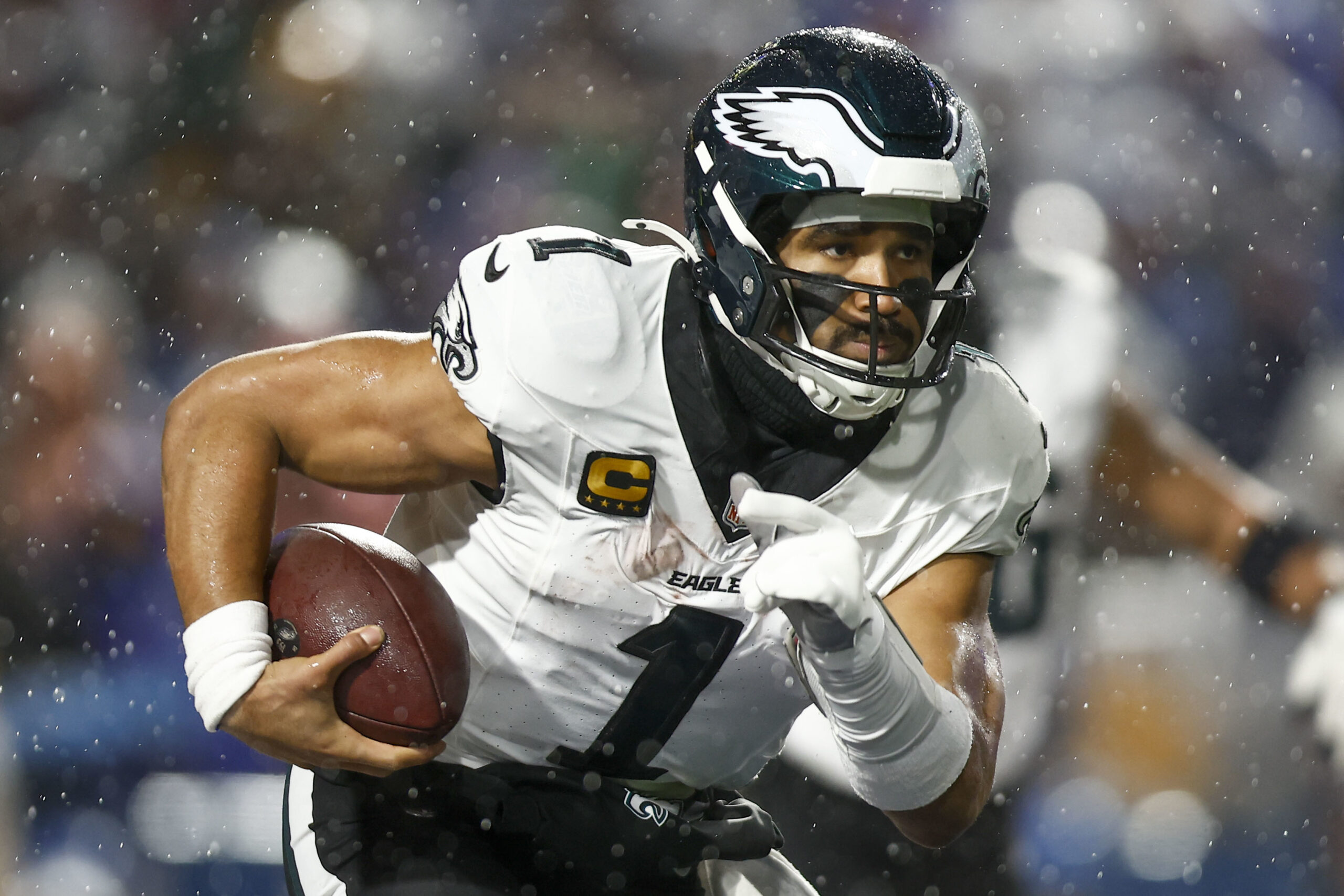
Eagles quarterback Jalen Hurts, the Super Bowl LIX MVP, has come under criticism this season.
The point here is not to suggest that the Eagles have been beyond criticism. Of course they haven’t. The point is that their entire season has felt like one of their offensive possessions. It has been a generally joyless slog that, even when it leads to a good outcome — a touchdown, a victory, a second straight NFC East title — hasn’t inspired much optimism or hope that the team will repeat or sustain that success.
You don’t need to be a gridiron genius or a Philly sports sociologist to understand why. There are plenty of cities and markets where, if a team won a Super Bowl in the manner that the Eagles did last season — winning 16 of its final 17 games, dominating the conference championship game and the Super Bowl itself — the celebratory buzz would last for years. Championship? Who needs another championship? We just won one! That backup long-snapper never has to buy a drink in this town again.
Philadelphia is not one of those cities or markets. Here, winning is the most addictive of drugs, and when it doesn’t happen, or when it doesn’t happen in the most satisfying manner, the entire region goes into a collective withdrawal, and a more powerful hit — a higher high — is required for everyone to level off.
From Eagles fans to the players themselves, there has seemed to be an ever-present blanket of expectations weighing on them. It’s as if the only thing that would make anyone happy and relieved at any moment this season would be another Super Bowl victory — a benchmark so lofty that it virtually guarantees people will be worried at best and miserable at worst unless the Eagles win every game 49-0.
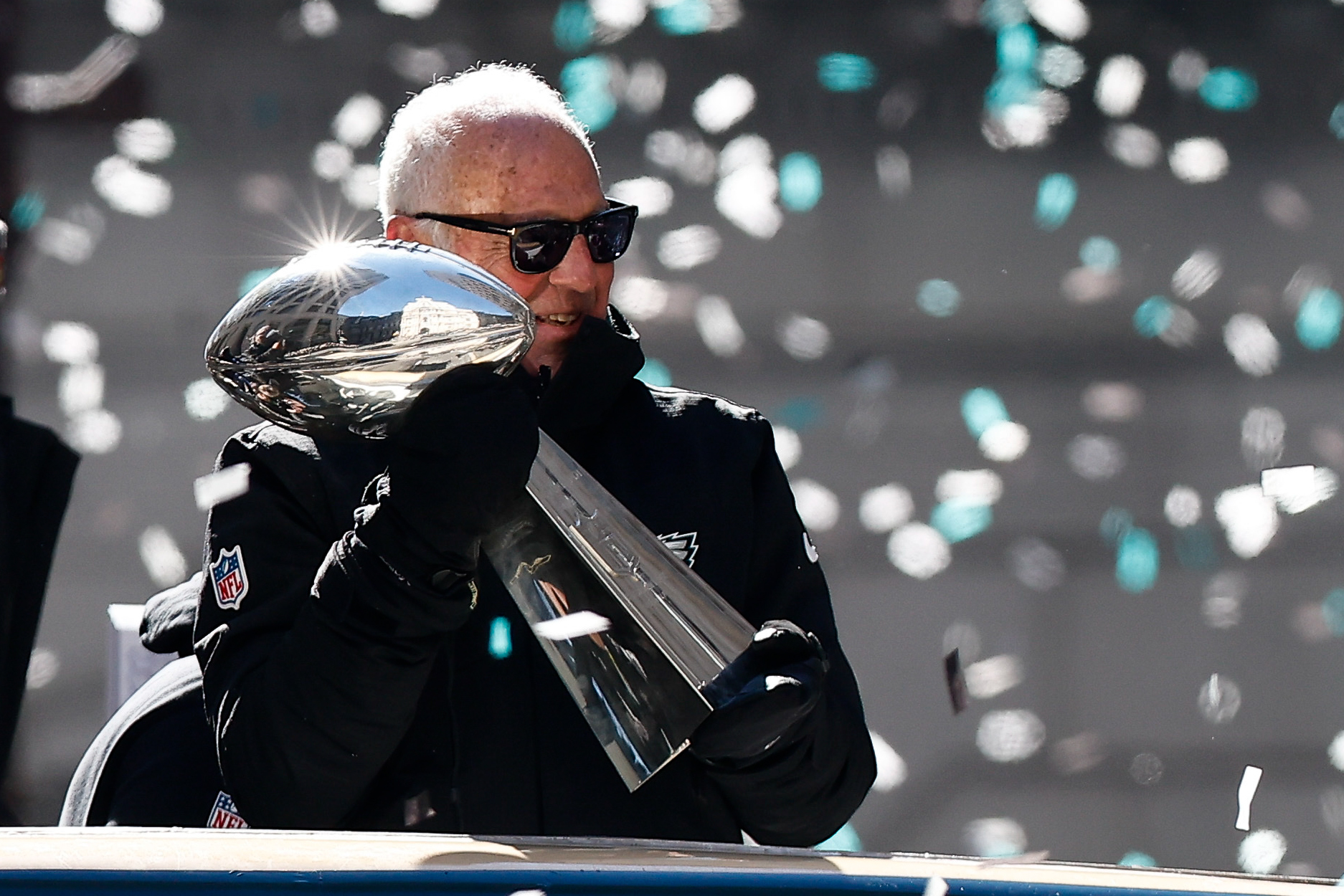
Jeffrey Lurie and his Eagles are chasing that Super Bowl glow again.
The one person who appears to acknowledge this dynamic, and appears to be fighting against it, is Nick Sirianni. He has spoken since the middle of last season about his attempts to “bring joy” to every practice, every game, every day of work, as if to lighten the burden that his staff and players were bearing.
“In professional football,” he said recently, “there are all these pressures, these ups and downs and everything like this, but we got into this game because we loved it. I think that’s a really important thing. In the world, you can let things beat you down a lot and not really give knowledge to all the things you have going on that are really good.”
Hanging on a wall in Sirianni’s office is a photograph of him and his three children. The photo was taken after the Eagles’ 20-16 victory over the Cleveland Browns last season — the game after which Sirianni brought the kids into his postgame news conference and was criticized bitterly for it. I did some of the criticizing, and I stand by it. The gesture was silly and tone-deaf at the time, mostly because the Eagles were 3-2 and playing terribly and Sirianni’s career-dissipation light was flickering. No one was about to give him or them the benefit of the doubt then.
But now that they have won a championship, it’s easier to see that moment as part of a continuing effort by a head coach to keep the pressure of meeting that standard from crushing his team. In that way, the Eagles’ toughest opponent in this postseason won’t be the San Francisco 49ers or the Los Angeles Rams or the Seattle Seahawks or whatever team they meet in Super Bowl LX if they happen to make it that far. Their toughest opponent will be, and has been all along, themselves.