Tag: UniversalPremium

  • Winter meetings preview: The outlook for Kyle Schwarber and J.T. Realmuto, a potential trade, and more

    Winter meetings preview: The outlook for Kyle Schwarber and J.T. Realmuto, a potential trade, and more

    As free agents, Kyle Schwarber and J.T. Realmuto are entitled to shop around for the best offers.

    The Phillies have given them space.

    “It’s really more their process than it is ours at this time in the sense that they set the time frame,” Dave Dombrowski said. “They know we have interest, and then it’s up to them to kind of say, ‘OK, we’re ready to move forward,’ or not, whenever that ends up happening.”

    That was three weeks ago. Schwarber and Realmuto have had five weeks to browse the market. By now, they have a decent idea of what’s there for them beyond the Delaware Valley. The Phillies probably do, too.

    And with the baseball world set to gather again Sunday night in Orlando for the three-day winter meetings, it might finally be time for all parties to circle back to one another. In the shadow of the Magic Kingdom, of all places, the fantasyland of rumors about which teams are curious about which players will give way to a better sense of reality about whether Schwarber and Realmuto will return or move on.

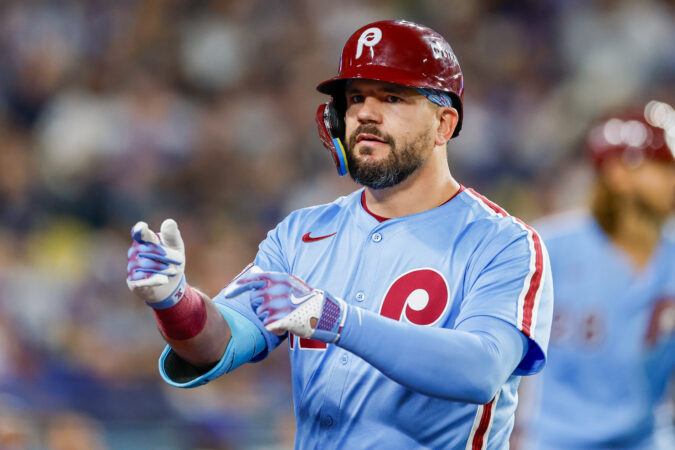
    The Phillies haven’t hidden their strong desire to keep both. Even though Schwarber will be 33 and Realmuto 35, and they’re central to a team that made the playoffs four years in a row but stubbed its toe in October, Dombrowski described them as “very important” and said they “mean a lot to the organization.”

    With the exception of Japanese ace Yoshinobu Yamamoto, owner John Middleton hasn’t lost out on a free agent that he’s wanted since the “stupid money” winter of 2018-19. And free agents have wanted to play in Philly over the last half-decade because of the culture set by Schwarber, Realmuto, et al.

    No wonder most of the industry expects Schwarber and Realmuto to find their way back to the corner of Pattison and Darien.
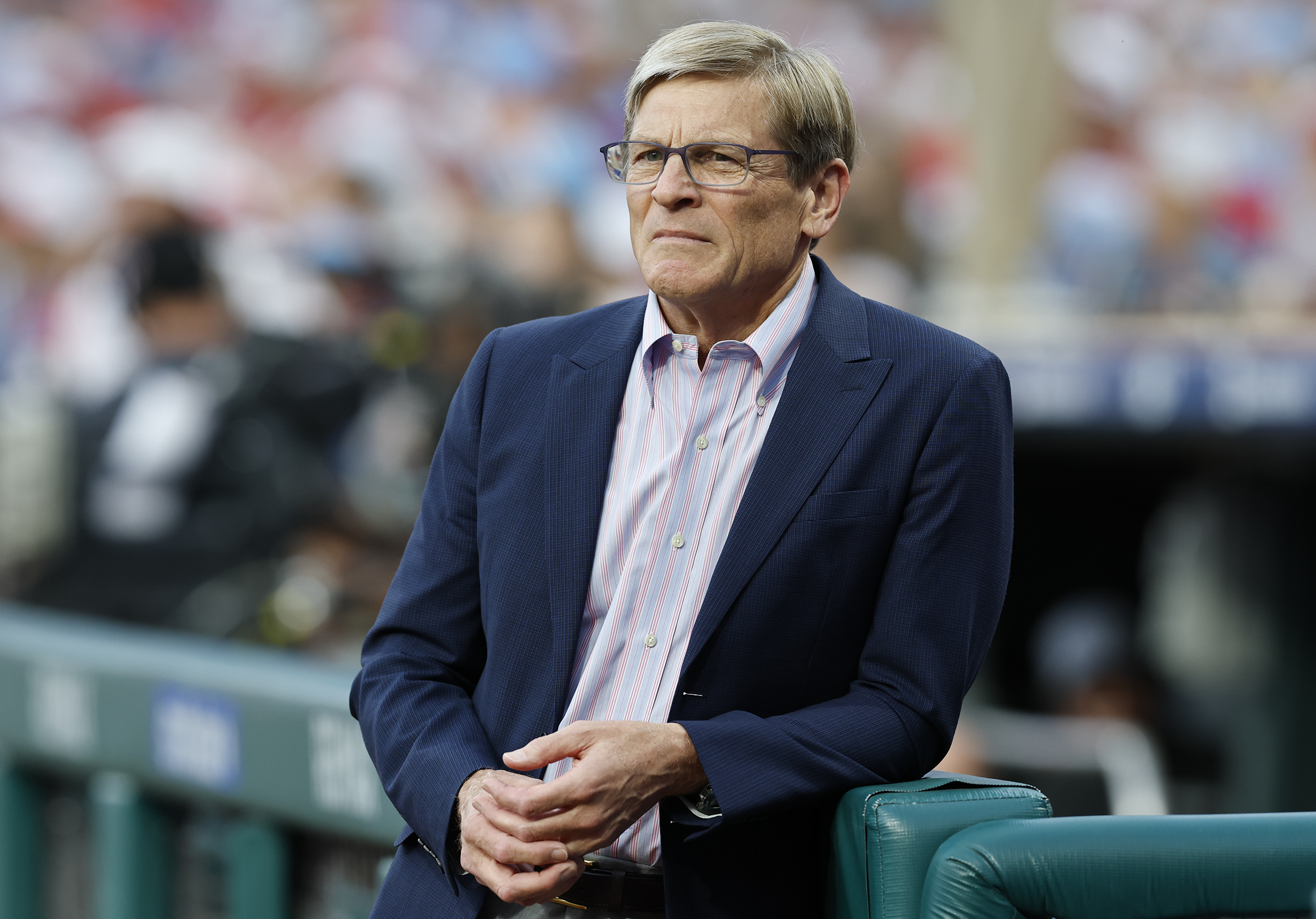
    Phillies owner John Middleton hasn’t been outbid for many free agents over the last half-decade.

    But even if it feels like almost a fait accompli, the mission for their agents is to get offers that will at least drive up the price. Maybe they’ve done that. Maybe not.

    Schwarber’s market is especially fascinating because it lacks most of the high-payroll teams. The Dodgers’ designated hitter is Shohei Ohtani, only the best player on the planet. The Yankees (Giancarlo Stanton) and Astros (Yordan Alvarez) are set at DH, too. George Springer had a career renaissance as a DH for the Blue Jays, who are in on seemingly every marquee free agent except Schwarber. The Cubs appear to be focused on pitching.

    The Red Sox want to add a middle-of-the-order bat, chief baseball officer Craig Breslow said last month, and Alex Cora loved managing Schwarber in 2021. But given their lineup’s lefty lean and Fenway Park’s dimensions, righty-hitting Pete Alonso or Alex Bregman might be better fits. And Boston doesn’t spend money like it once did, either.

    The Reds’ interest in bringing Schwarber home to southwest Ohio is real, multiple sources confirmed this week. It makes sense for a young team that is rich in starting pitching but lacking power and veteran leadership. Asked in July about the prospect of being courted by his childhood team, Schwarber said this: “I think it’d be awesome.”

    But the Reds intend to keep their payroll in the $120 million range, president of baseball operations Nick Krall told reporters last month, leaving them with about $20 million to spend for 2026. Schwarber figures to cost at least $30 million per year.

    And even if they had the cash, spending big for free agents isn’t in the Reds’ organizational DNA. They’ve done only two nine-figure contracts in their history, and Joey Votto and Homer Bailey were extensions. Their largest free-agent contracts: Mike Moustakas and Nick Castellanos, both four years, $64 million.

    That leaves, well, who? Various reports have linked Schwarber to the Giants and Pirates (seriously).

    The Mets are “in the mix” for Schwarber, at least according to an ESPN.com report. It’s plausible as a backup plan if New York doesn’t re-sign Alonso, although president of baseball operations David Stearns emphasized run prevention as the team’s chief offseason focus. Schwarber doesn’t help there.

    But the best way for Schwarber’s agents to hike the price on the Phillies might be to claim interest from the rival Mets, owned by Steve Cohen, the wealthiest man in baseball. And the Mets could attempt to gain leverage over Alonso by suggesting they’d pivot to Schwarber.

    In any case, the Phillies remain the favorite in the Schwarber derby.

    “You have the owner who wants him, you have Dave Dombrowski who wants him, you have the coaching staff, you have [manager] Rob Thomson, you have a fan base — everybody involved here wants [him] to be back, including Kyle — so what does it come down to?” hitting coach Kevin Long, who is close with Schwarber, said on The Inquirer’s Phillies Extra podcast. “What’s his market value, and are we willing to give him his market value? And I think the answer is yes to that.

    “I think it would be devastating to this organization and this fan base and everybody involved if he wasn’t a Phillie.”

    The last five weeks have been about establishing market value for Schwarber and Realmuto. Next week might finally mark the Phillies’ chance to meet it.

    A few other thoughts leading into the winter meetings:
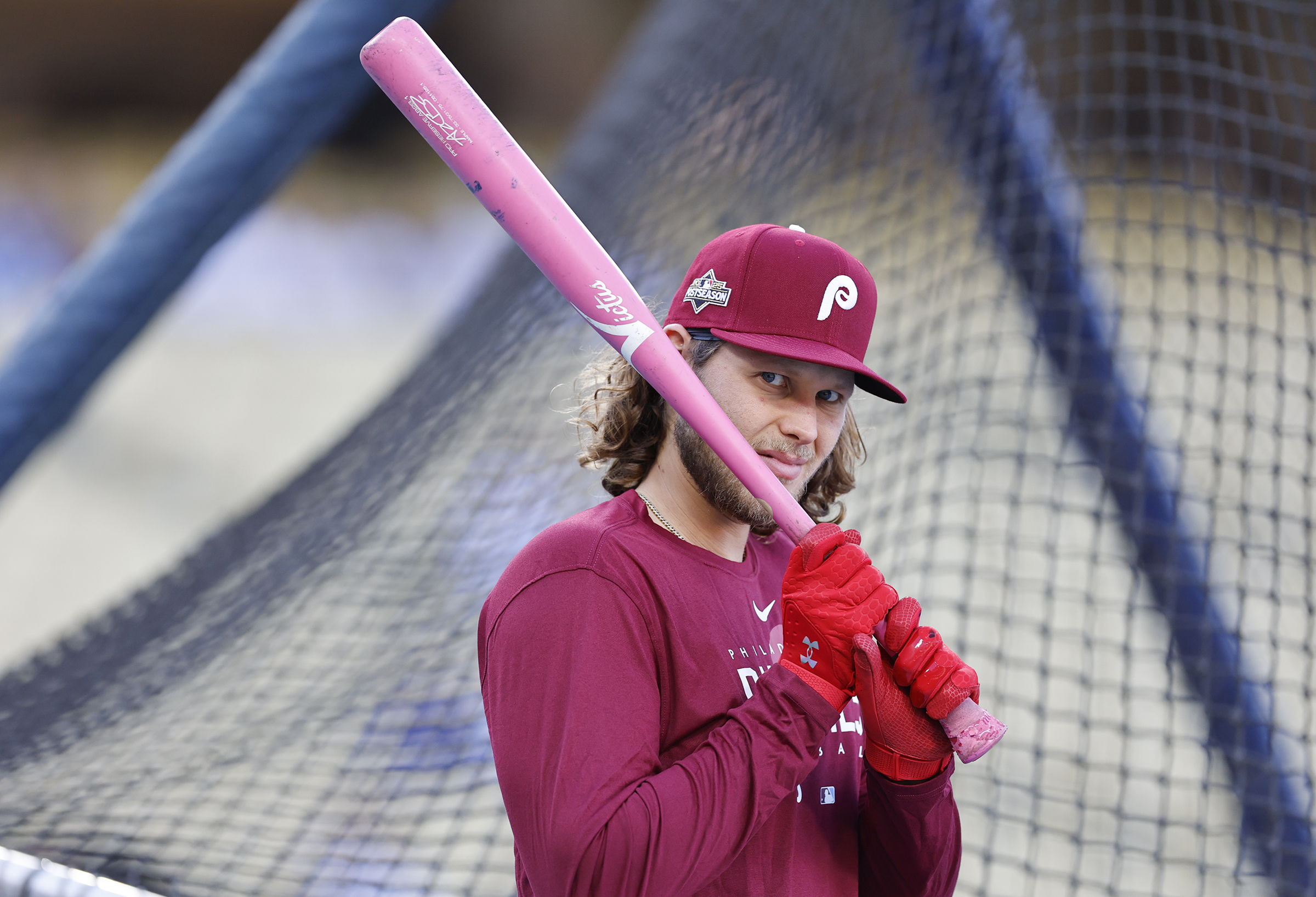
    Phillies third baseman Alec Bohm is once again a candidate to be traded in the offseason.

    Trading places

    Two of the most intriguing offseason moves so far were one-for-one trades of major leaguers.

    The Orioles swapped four years of control over gifted but often-injured pitcher Grayson Rodriguez to the Angels for walk-year outfielder Taylor Ward. Then, the Mets dealt popular outfielder Brandon Nimmo to the Rangers for second baseman Marcus Semien in a change-the-mix move.

    And there’s more to come.

    Across the sport, the trade market is hyperactive, multiple team officials said this week, perhaps because some clubs are wary of signing free agents to multiyear contracts amid labor uncertainty beyond 2026.

    Once again, Alec Bohm‘s name will come up in the Phillies’ conversations. But they couldn’t agree on his value in trade talks last winter, and it figures to be even lower now that the third baseman is one season from free agency.

    Lefty reliever Matt Strahm could be another potential chip, especially after Dombrowski volunteered in an end-of-year news conference that the veteran declined to do pitcher fielding drills before the postseason.

    Rivals believe the Phillies prefer trading from their major league roster rather than the farm system after moving teenage shortstop Starlyn Caba (for Jesús Luzardo) and catcher Eduardo Tait and right-hander Mick Abel (for Jhoan Duran) within the last calendar year. Andrew Painter, Aidan Miller, and Justin Crawford are thought to be largely off limits, with Painter and Crawford ticketed for the opening-day roster and Miller close behind.

    As long as the Phillies cling to that trio, it’s difficult to see them matching up with the Diamondbacks for second baseman Ketel Marte, the Red Sox for outfielder Jarren Duran, or especially the Twins for center fielder Byron Buxton, if Buxton decides to waive his no-trade clause.

    But maybe there’s a trade to be made for someone like Astros center fielder Jake Meyers, a solid defender who batted .292 with a 103 OPS-plus this season and is reportedly available.

    Jesús Luzardo had a big season for the Phillies after being acquired in a trade last December.

    Making a pitch

    A year ago, the Phillies weren’t focused on starting pitching at the winter meetings. But they traded for Luzardo a few weeks later, and it wound up as their best offseason move.

    Just something to keep in mind.

    Because although the rotation remains the strength of the roster even amid the expected departure of free agent Ranger Suárez, there are questions. Aaron Nola is coming off an injury-interrupted season in which he posted a 6.01 ERA. Painter’s prospect shine isn’t quite as luminescent after he struggled in triple A.

    Oh, and although Zack Wheeler is close to throwing a ball again, a source said this week, the recovery from thoracic outlet decompression surgery isn’t always a linear process.

    And Dombrowski, who values starting pitching as much as any executive in the sport, recently noted the drop-off after Cristopher Sánchez, Luzardo, Wheeler, Nola, Taijuan Walker, and Painter.

    “We don’t have a lot of starting pitching depth, so that’s something that we have to be cognizant of,” he said. “It’s not our highest priority, but I can’t say that we wouldn’t [add another starter]. That doesn’t necessarily mean top of the market, but where does that fit in? Because you never have enough starting pitching.”

    After making a bid for Yamamoto two years ago, it wouldn’t be surprising if the Phillies show interest in Japanese right-hander Tatsuya Imai. Or maybe they will be opportunistic in the trade market again.

    One other bit of winter-meetings business: The Phillies are still looking for a bench coach. Don Mattingly remains a leading candidate, if he’s interested in returning to the dugout after leaving the Blue Jays’ staff after the World Series.

  • One year of inspections at Riddle Hospital: November 2024 – October 2025

    One year of inspections at Riddle Hospital: November 2024 – October 2025

    Riddle Hospital was cited by the Pennsylvania Department of Health for failing to properly monitor a patient’s vital signs in the emergency department earlier this year.

    The incident was among six times inspectors visited the Media hospital, which is owned by Main Line Health, to investigate potential safety problems.

    Here’s a look at the publicly available details:

    • Jan. 10, 2025: Inspectors came to investigate a complaint but found the hospital was in compliance. Complaint details are not made public when inspectors determine it was unfounded.
    • June 30: Inspectors cited the hospital for failing to properly monitor a patient’s vital signs while waiting for care in the emergency department. Inspectors found that a patient was evaluated in the emergency department as a triage level 3, meaning their vital signs should be checked every four hours. Records show the patient’s vital signs were documented at 12:40 a.m., and not again until almost seven hours later. Administrators reviewed the hospital’s emergency triage policies and retrained staff.
    • Aug. 13: Inspectors came to investigate a complaint but found the hospital was in compliance.
    • Sept. 15: Inspectors came to investigate a complaint but found the hospital was in compliance.
    • Sept. 18: Inspectors visited for a special monitoring survey and found the hospital was in compliance.
    • Sept. 18: Inspectors followed up on the June citation regarding vital sign monitoring and found the hospital was in compliance.
  • The Phillies can’t afford not to re-sign Kyle Schwarber

    The Phillies can’t afford not to re-sign Kyle Schwarber

    What would it mean to keep Kyle Schwarber in a Phillies uniform?

    Just look at the names he is likely to pass on the franchise’s all-time home runs list by the end of 2026, his age-33 season.

    Sitting at 187 dingers since joining the Phillies, Schwarber likely will pass Bobby Abreu (195) and Dick Allen (204) before the All-Star break. A month or two later, he could pass Jimmy Rollins (216) and Cy Williams (217).

    By then, Schwarber will be in striking distance of three of the heaviest hitters in Phillies history, literally and figuratively.

    • Greg Luzinski, 223
    • Chase Utley, 233
    • Chuck Klein, 243

    A repeat of Schwarber’s 56 homers in 2025 would leave him in a tie with Klein for fifth place all-time. Only Del Ennis (259) and Pat Burrell (251) would stand between him and Mike Schmidt (548) and Ryan Howard (382).

    You can’t let a guy like that walk away. We know it. The Phillies know it. And, yeah, Schwarber’s agent knows it. Which is why we are here, in early December, on the eve of baseball’s annual winter meetings, still waiting for confirmation that the last of the Schwarbombs has yet to fall on South Philadelphia.

    Do not fret, sweet children. Save your angst for the Eagles. The baseball offseason is in its opening laps. The pace car is still on the track. The top of the market has barely begun to percolate. Kyle Tucker, Bo Bichette, Alex Bregman, Cody Bellinger … all have yet to agree to terms. All will remain free agents for the foreseeable future. Exactly one position player has signed a multiyear contract. Schwarber and the Phillies are right where we should have expected them to be.

    The one big deal to date actually bodes well for the Phillies. Josh Naylor’s five-year, $92.5 million contract with the Mariners suggests that the market won’t grow too outlandish for sluggers at nonpremium positions.

    Kyle Schwarber will enter his age-33 season coming off a 56-homer campaign in 2025.

    You can argue that Naylor barely qualifies as a slugger, with 88 home runs over the last four seasons. Whatever the semantics, he clearly is in a different power class. But there is some comparability here. Naylor’s 124 OPS+ from 2022 to 2025 is in a similar tier to Schwarber’s 134. He is also four years younger than Schwarber and has a good glove at first base.

    The logic goes something like this: The same types of teams that would have interest in a hitter like Schwarber probably would have interest in a hitter like Naylor. If Naylor had signed for six years and $120 million or five years and $110 million, we might be sitting here wondering if it really would be wise for the Phillies to shell out the stupid money it would take to retain Schwarber. The answer probably still would be yes. But it’s nice not to have to consider it.

    It’s fair to assume that the market will look as it has the past several seasons. There is a pretty hard limit on the amount teams are willing to spend on players who don’t add significant value on defense. Besides Juan Soto, the only hitters to sign for more than $95 million over the last three offseasons have played shortstop, center field, or starting pitcher (Shohei Ohtani). The last first baseman or designated hitter to sign for more than five years and $100 million was Freddie Freeman, who landed six years and $162 million from the Dodgers in 2022.

    Schwarber can — and should — argue that he is a different case. A typical designated hitter doesn’t finish second in MVP voting. Schwarber’s power and consistency are transcendent enough to disregard positional archetypes. The only hitter with more home runs than his 187 over the last four seasons is Aaron Judge (210). He, Judge, and Ohtani (also at 187) stand alone. In terms of impact on a contender, Schwarber is much closer to Freeman than he is to Naylor. Six years and $150 million is a defensible ask.

    The Phillies can argue that Schwarber’s age and positional limitations are legitimate factors. Just look at Pete Alonso, who is pretty close to a carbon copy of Schwarber at the plate. The Mets’ first baseman had to settle for a two-year, $54 million contract last offseason. Not only that, Alonso is on the market again after opting out of his deal. Or, consider Teoscar Hernández, who signed with the Dodgers for three years and $69 million last year. Schwarber is better than Hernández. But is he better than two Hernándezes? For the Phillies, four years and $100 million is a justifiable offer.

    Hopefully, we’re just waiting for the two sides to split the difference. Five years and $125 million would be a steep price to pay to lock up the designated hitter position through Schwarber’s age-37 season. But then, Schwarber will be bigger than a 37-year-old designated hitter when that time comes. He will be one of the defining players of an era, one of the franchise’s all-time greats, a fixture in the community and a potential Hall of Famer. He may have passed Howard for second on the franchise home run list. He may be closing in on 500 for his career.

    Can the Phillies afford to sign Schwarber?

    The better question is whether they can afford not to.

  • Rollouts have ‘twisted the knife’ at Big 5 games for 70 years, but can the tradition endure?

    Rollouts have ‘twisted the knife’ at Big 5 games for 70 years, but can the tradition endure?

    The banner made its way to the bottom of the student section, and a crew of security guards soon was hovering. Everyone had to go, they said.

    “We were like ‘What?,’” said Luke Butler, who led the crew of Temple students that night at La Salle.

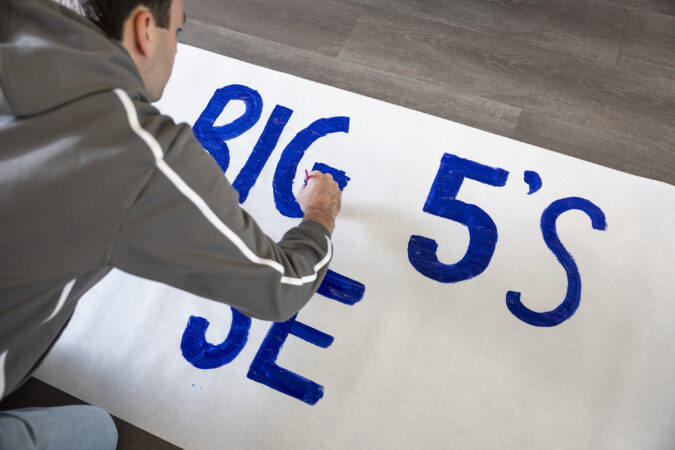
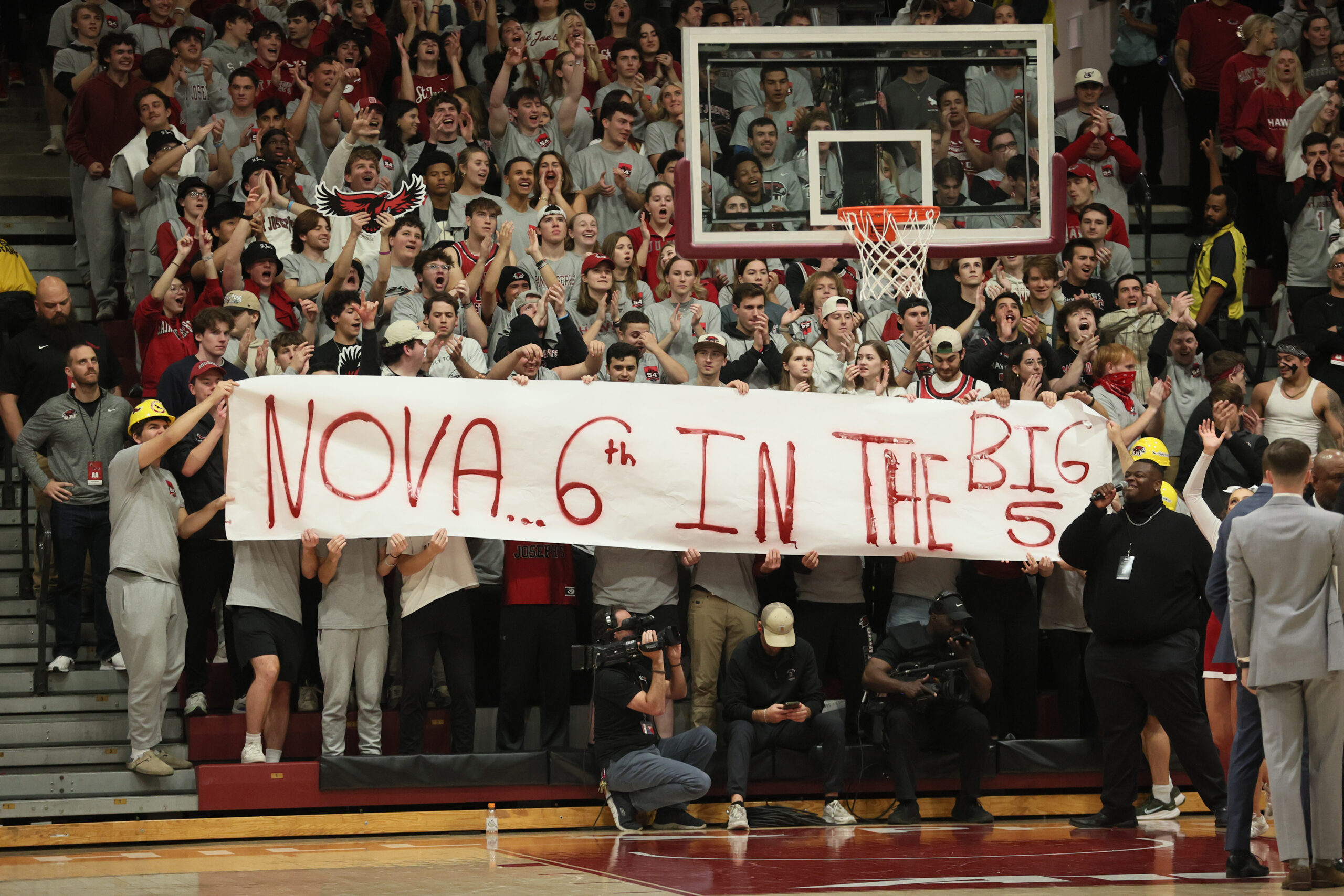
    The fans — the Cherry Crusade — spent a few days crafting one-liners to paint onto 30-foot banners that would be rolled out during the Temple-La Salle basketball game. The “rollouts” have been a Big 5 tradition since the 1950s, even surviving a brief ban when the schools thought the messages had become too racy.

    The rollouts often are a play on words or innuendoes that make light of the opposing school. You roll out your banner and then hold your breath while the other school shows theirs. Each student body takes turns dissing each other like kids in a schoolyard. The best rollouts, Butler said, are the ones that “twist the knife” just a little.

    St. Joe’s students unveil a banner referring to Villanova finishing last in the Big 5 Classic last year.

    But this one, Butler learned, twisted a little too much.

    The Explorers entered that game in February 2010 on a seven-game losing streak, and Ash Wednesday had been two weeks earlier. Temple, down a point at halftime, raced away in the second half. And here came the rollout: “LA SALLE GAVE UP WINNING FOR LENT.”

    The Temple students — the same crew who held a “funeral” a year later for the St. Joe’s Hawk — thought it was good banter. But a priest was offended, and security had instructions.

    “They were like ‘Father is pissed. You basically affronted their faith, and they don’t want you in the building,’” Butler said. “That was a good example of a rollout where we said ‘This will get a good reaction.’ It did. It just wasn’t the reaction we were thinking of.”

    70 years of rollouts

    The rollouts trace back to the Palestra, when the building was the home of the Big 5 and basketball doubleheaders. The bleachers were filled, the basketball was good, and the crowds were lively. Philly was the center of the college basketball universe, and the Palestra was a scene.

    The “rooters” who sat behind the baskets would roll out banners during the games about opposing schools. The messages were a chance for a student body to take a shot at their rivals from across the court. When La Salle students hung a dummy of their coach in the early 1960s from a campus flagpole, St. Joe’s rolled out a banner a week later that said “We Fly Flags on our Flagpole.”

    The messages became more pointed, as the Daily News wrote in January 1966 that “the rollouts wandered from the realm of good taste.” The Big 5 athletic directors agreed to ban them, saying that “certain rollout subject matter has been offensive and detrimental to the best interests and continued success of the Palestra program.”

    The president of the St. Joe’s student section protested the decision at the Big 5’s weekly luncheon, telling the athletic directors that they were ruining “the greatest spectator participation event in sports” and the rollouts were part of the “spectacular” that was basketball at the Palestra.

    “It’s not a spectacular,” said Jack Ramsay, then the coach and athletic director for St. Joe’s. “We’re down there to play basketball. If the students want to join in, that’s fine.”

    No longer allowed to roll out their messages, students at the Palestra began to shout what they would have written. Banner Ball gave way to Chorus Ball, the Daily News wrote. A year later, the students won, and rollouts were welcomed back to the Palestra as long as messaging was preapproved by the school’s athletic office.

    The banners became as integral to a Big 5 game as a soft pretzel from the Palestra concession stand. You didn’t miss a basket during a doubleheader, but you also made sure you caught the dig the opposing students made during a timeout about your school.

    The banners were the game within the game as the student sections planned their rollouts like a comedian preparing a stand-up skit. The jokes had to be fresh. How many times can you call the other coach ugly before it’s no longer funny? They had to be timely and tap into current events. That scandal involving a prominent alumni from the other school? Fair game. The football team stinks? That’ll work. A basketball player got arrested? There’s a rollout to be made.

    And they had to be timed just right. You can’t come out swinging with your best bit. You have to build up the crowd with a few decent banners and then roll out the one you know will hit.

    “You could tell from the other alumni if they were like, ‘Whatever,’ or if it really pissed them off,” Butler said. “Ultimately, that’s what you’re looking for. From brainstorming, to the making of them, to rolling them out, you’re looking for that reaction of them saying ‘Ugh.’”

    A fading tradition

    The rollouts, just like the Big 5, seem to be waning. Student attendance at local games is no longer what it was. The basketball programs have been down, the transfer portal has made players hard to identify, and conference realignment has introduced games with unfamiliar opponents.

    Villanova — the lone Big 5 school to make an NCAA Tournament in the last five years — is the only team that regularly draws a large swath of students. Most schools fill up a student section for the marquee games but attract just a small group on most nights. Attracting students to a once-integral aspect of campus life has become a challenge.

    Each school is trying to confront the decline of student participation, and Temple decided last year to revamp its student section. The Cherry Crusade does not have a student president, and the rollouts are made by athletic department staffers.

    A banner made by the Olney Outlaw’s La Salle Student Section on Thursday.

    They sold out their tickets two years ago when they reached the final of the Big 5 Classic and still fill the student section for a big game. The challenge has been to build a consistent presence.

    “We want to find those passionate fans to bring back what the Cherry Crusade was,” said Katie Colbridge Ganzelli, Temple athletics’ marketing coordinator for on-campus initiatives. “They’re still there. We’re just trying to find those passionate students who want to be in charge of the student section like it used to be.”

    Villanova’s rollouts earlier this week vs. Temple — “Rocky would’ve gone to Villanova,” one said — didn’t twist the knife. Penn’s student section is dormant, forcing the band to provide rollouts. The tradition seems to be fading across the Big 5, but credit La Salle for trying to keep the edge.

    The school revived its student section this season, and the Olney Outlaws took aim at a Big 5 coach for being follically challenged and used another rollout to dunk on Villanova and St. Joe’s. They’re twisting the knife in Olney.

    “We had noticed a lack of student engagement and thought this would be a fun way to get kids involved,” said Paige Mitchell, a senior marketing major who founded the Olney Outlaws. “I was working in the athletic department, and my boss at the time gave me a project to come up with something that would get everyone more engaged. It’s grown from there.”

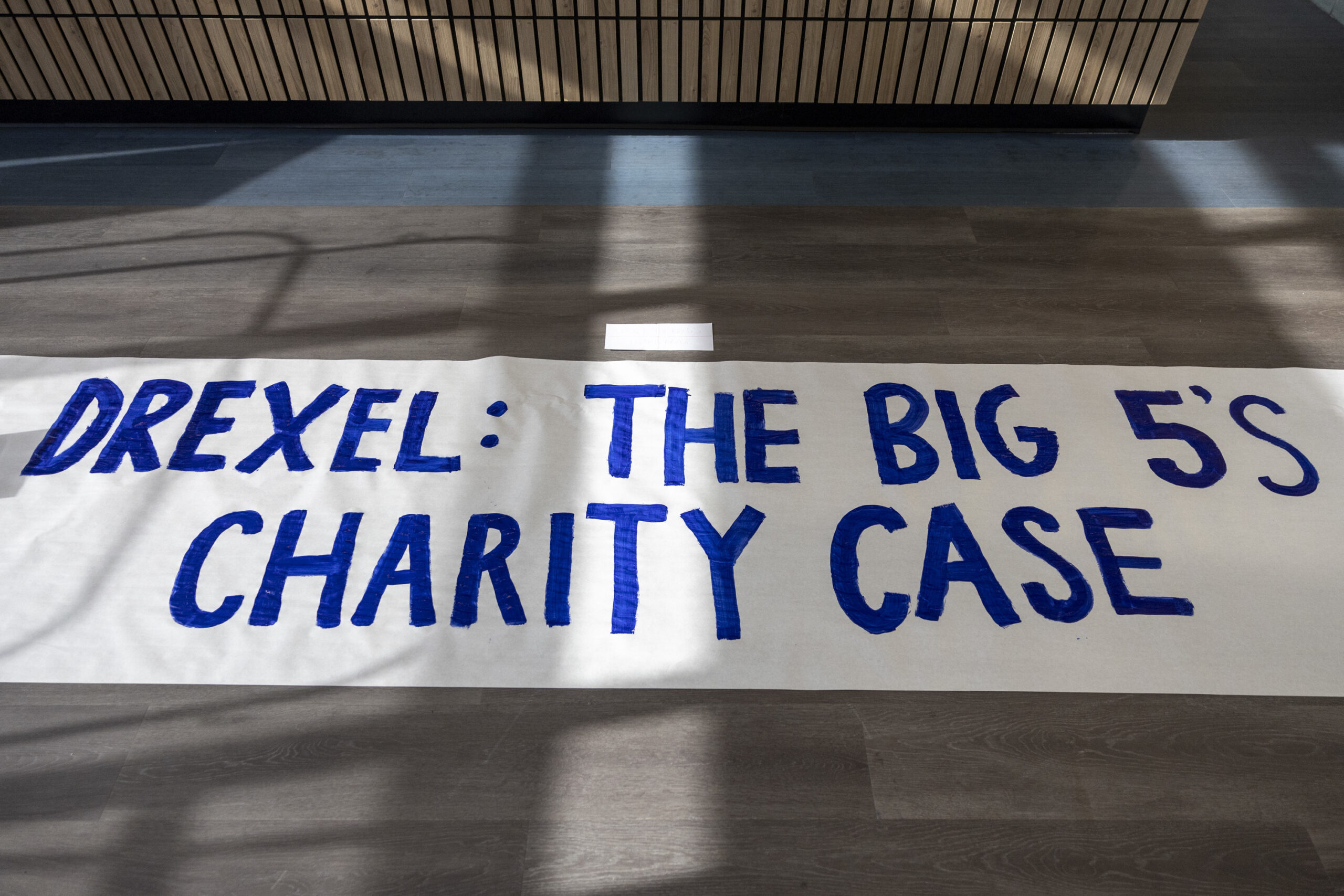
    The group of students — “I have a couple guys in the group who are pretty clever,” Mitchell said — brainstorm ideas for the rollout before they meet to paint their signs. They’re ready for Saturday, when La Salle plays Drexel in the Big 5 Classic.

    “It’s stressful making sure they get rolled out at the right time,” said Mitchell, who’s also a center forward on the Explorers’ water polo team. “But I love seeing the way the students react. I have a couple friends who were sitting behind the rollout, and they’re blowing up my phone like, ‘What did it say?’ It’s just exciting.”

    Perfectly Philly

    Butler asked the La Salle security guard if he could talk to the priest, hoping he could ask for absolution. The priest was still steaming as Butler told him it was a misunderstanding. It was just some college kids making a joke, he said. The priest offered Butler penance: the Temple students could stay, but they had to hand over the rest of their banners.

    But the Owls were going to clinch the Big 5 title that night, and the Cherry Crusade brought a rollout to celebrate it. Butler pleaded with the priest to allow them to keep that sign. He rolled it out to show the priest and security guard what it said. “Fine,” said the priest. The rollouts, once again, would not be banned. A perfectly Philly tradition lived on.

    “There’s something in the Philly culture that rollouts hit a perfect vein,” Butler said. “The thing about people from here is that there is respect if you can dish it and you can take it. People love to twist that knife. When people did good rollouts against us, you were angry, but there was respect there.

    “It’s making fun of people who appreciate it, but also hate it, and it gives you an opportunity to be a little bit of an a—. At the end of day, it’s all love. We all love Philly basketball, even though I’ll never root for St. Joe’s and I’ll never root for Villanova. But I still want them around. I want everyone to do well, so then the hate means something.”

  • Inside the Big 5 coaching fraternity: From wanting to ‘kill each other’ to being ‘brothers’

    Inside the Big 5 coaching fraternity: From wanting to ‘kill each other’ to being ‘brothers’

    In March of 2013, La Salle pulled off the improbable. The Explorers hadn’t been to the NCAA Tournament since 1992. They hadn’t advanced past the Round of 64 since 1990.

    But here they were, on a chilly night in Kansas City, edging out Kansas State, 63-61, to earn a spot in the Round of 32.

    As players danced in the middle of the locker room, with the music blaring, an unlikely figure emerged.

    Donning a black suit with a blue dress shirt, the visitor walked through the chaos, straight to La Salle’s head coach, John Giannini.

    It was Jay Wright.

    His team had a game in a few hours, against North Carolina, but the Villanova head coach wanted to congratulate his dear friend.

    Former La Salle head coach John Giannini during a game against Butler on Jan. 23, 2013.

    “Once we got to the tournament, we were always rooting for each other,” Wright said of the Big 5 programs. “It was always about Philadelphia basketball.”

    This was the way he and his Big 5 counterparts had been taught. When Wright was an assistant at Villanova in the late 1980s and early 1990s, he watched as head coach Rollie Massimino battled with Temple’s John Chaney.

    The games were intense, and often heated, but they always showed each other respect. Sometimes, Big 5 coaches would go to dinner afterwards. It wasn’t uncommon for them to get together during the offseason.

    The coaches would celebrate each other’s wins, even though they were technically competitors. Every time Wright advanced in the NCAA Tournament, he’d get a call from Chaney.

    When Martelli reached the Elite Eight in 2004, he heard from Wright and longtime La Salle coach Speedy Morris.

    The men who preceded them practiced the same habits, from Temple’s Harry Litwack, to Villanova’s Al Severance, to St. Joseph’s Dr. Jack Ramsay.

    “The initial [Big 5] group was so together, and so tight, that when the rest of us joined, it was just the way it was done,” said Fran Dunphy, who spent a combined 33 seasons at the helm of Penn, Temple, and La Salle. “The culture was already set.”

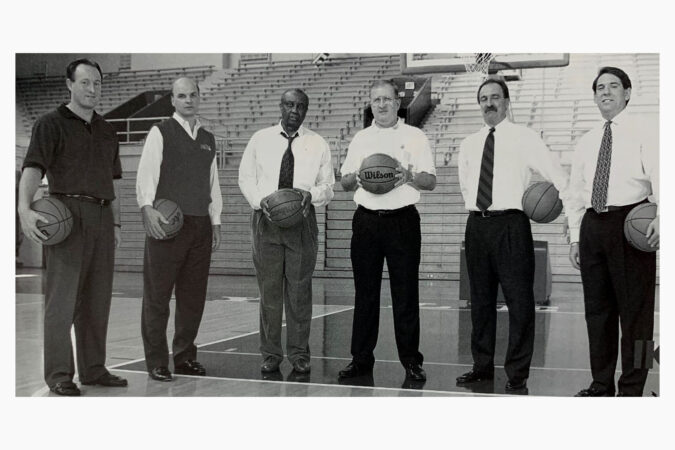
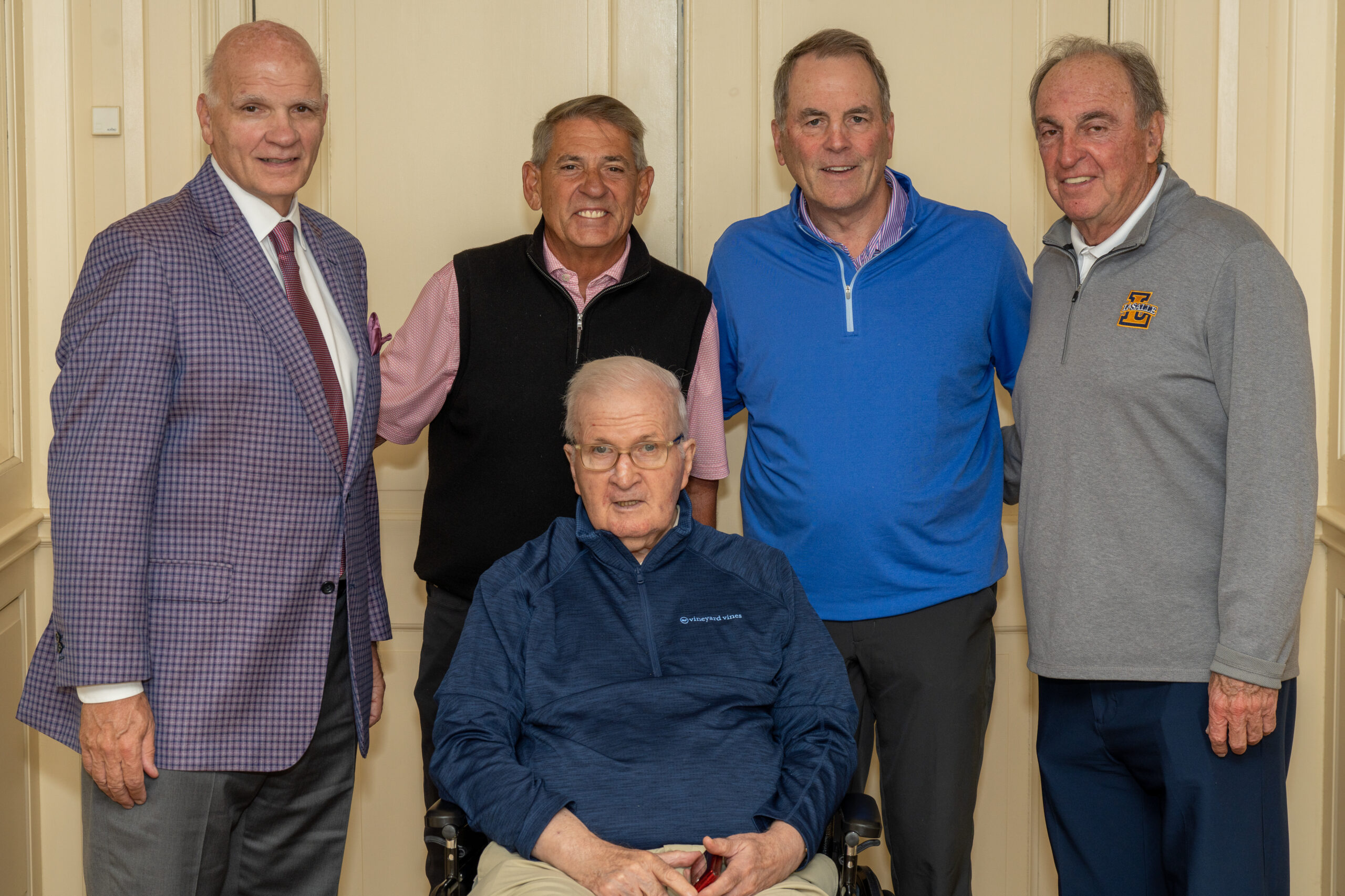
    Former Big 5 coaches Phil Martelli, Steve Lappas, John Griffin, Speedy Morris, and Fran Dunphy.

    For former Big 5 coaches in the area, that culture is still intact. Martelli, Dunphy, and Wright remain good friends. They visit with Morris, and are in regular contact with other former colleagues, like Giannini, Steve Lappas, and John Griffin.

    The coaches believe this brotherhood is unique to Philadelphia, a city rich with basketball lore.

    “On the court, you wanted to kill each other,” Wright said, “and off the court you were like brothers.”

    A ‘different’ kind of bond

    Dunphy was born and raised in Drexel Hill, only a few years before the founding of the Big 5 in 1955.

    Back then, it was an association of five Division I schools: Villanova, Penn, St. Joe’s, Temple, and La Salle (Drexel was added in 2023).

    The future coach rooted for them all, without prejudice. He’d often spend his Wednesdays, Fridays, and Saturdays at the Palestra, watching Big 5 teams square off.

    “There were three nights of doubleheaders,” Dunphy said. “It was an amazing experience.”

    When he was hired as the head coach of Penn in 1989, Dunphy felt a deep sense of pride. He also felt respect for his peers, many of whom had toiled through the same high school and assistant coaching ranks.

    Their connections went far back. In 1976, when Wright was in the ninth grade, he attended a basketball camp in the Poconos. His camp counselor was a young Martelli.

    A few years later, Martelli coached his first high school game for Bishop Kenrick in Norristown, which closed in 2010. His opponent was Dunphy, who was leading Malvern Prep at the time.

    Morris and Chaney were introduced during their tenures at Roman Catholic and Simon Gratz in the late 1960s and 1970s. Lappas was an assistant at Villanova when Martelli assisted at St. Joe’s in the 1980s.

    All of this only fortified the “brotherhood.”

    Fran Dunphy spent a combined 33 seasons at the helm of Penn, Temple, and La Salle.

    “It was different than going to an ACC school or a Big Ten school or whatever the major conferences are,” Dunphy said. “Let’s say we went to Orlando for an AAU tournament. There might be three or four of us sitting together as Philly coaches, because that’s what we did. And we might be recruiting the same guy.

    “And there would be coaches from other leagues, and they’d say, ‘What are you guys doing?’ Well, that was just the way it was.”

    Added Martelli: “You never said, ‘I’m going to talk bad about this guy or that guy, just so we can get a recruit.’ Because you knew [the other coaches] weren’t doing it. So we were not going to do it.

    “People from the outside marveled at it. They’d say, ‘Seriously, this is what you guys do?’ And I’m like, ‘Yeah.’”

    Despite this unspoken pact, the coaches were not thrilled when a Big 5 rival would scoop up a promising player. Martelli, for example, was very frustrated when Dunphy earned local star Lavoy Allen’s commitment in late 2006.

    “I would say that in a complimentary way,” Martelli said. “I was like, ‘I can’t believe we didn’t get him. And to make matters worse, Temple got him. We’ve got to deal with him for four years?’”

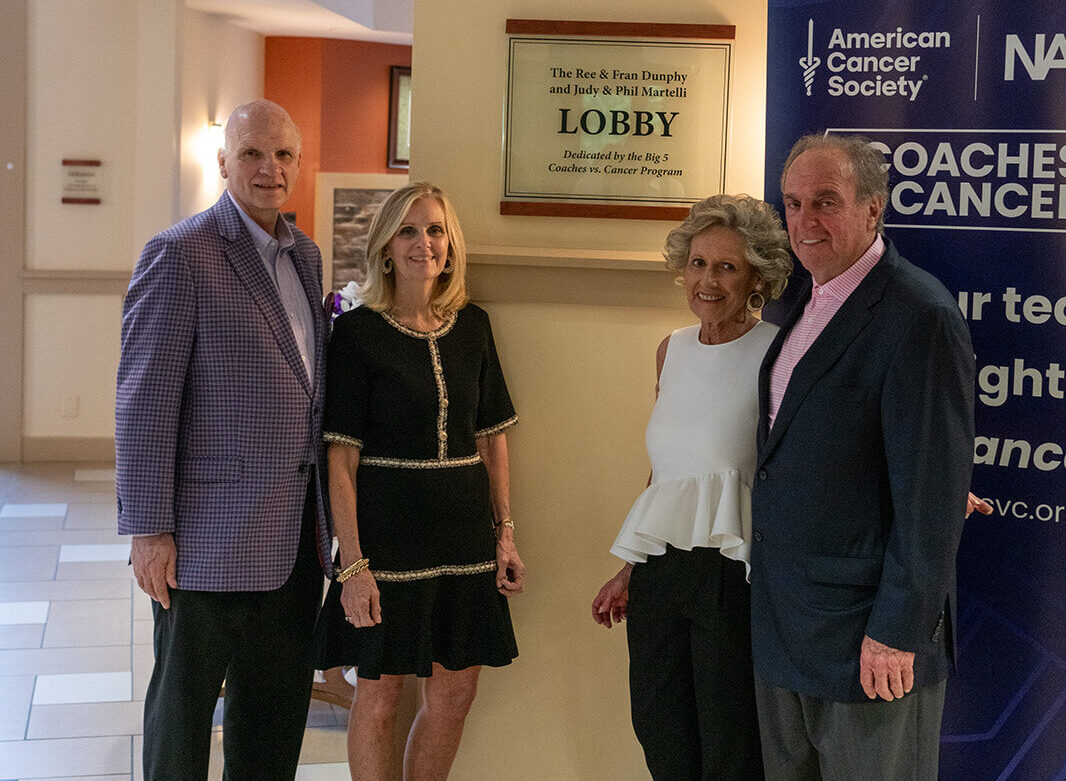
    Even at the height of their competitive prowess, the coaches would band together for the betterment of the sport and the world around them. In 1996, Martelli and Dunphy started the Philadelphia chapter of Coaches Vs. Cancer, a nonprofit that raises awareness and funds for cancer research.

    They looped in their fellow Big 5 coaches: Lappas, Morris, Chaney and Bill Herrion (who was at Drexel). Not long after Wright was hired as head coach of Villanova in 2001, he accompanied Martelli and Dunphy to meet the CEO of Blue Cross/Blue Shield, Fred DiBona, for lunch in Center City.

    Former Big 5 coaches Phil Martelli and Fran Dunphy with their wives at a Coaches Vs. Cancer event.

    The insurance company offered them $50,000, and became the group’s first corporate sponsor. That donation helped lift the chapter off the ground.

    “The three of us were really competing against each other, right then,” Wright said. “And we all went together during basketball season, up to his office, and got that thing spearheaded.”

    Wright, Martelli, and Dunphy are still very involved with Coaches vs. Cancer. The Philly chapter has since become the most successful in the country, raising over $22 million.

    It is not the only legacy they’ve left behind. Over recurring breakfasts at Overbrook Golf Club, the coaches would talk about everything from scheduling to the format of the Big 5 round-robin.

    Some of those ideas will be implemented on Saturday, in the third-annual Big 5 classic. Wright said that the triple-header format was discussed as far back as “15-20 years ago.”

    He and peers wanted to put on a big event, one that didn’t cause scheduling conflicts.

    “It was healthy, because we were from different leagues,” Martelli said. “Fran was in the Ivy League, I was in the Atlantic 10, and Jay was in the Big East.

    “It was always for the greater good. It wasn’t about, ‘What’s best for St Joe’s? It was, ‘What’s best for college basketball?’”

    ‘The elder statesmen’

    Wright, Dunphy, and Martelli have a reverence for Morris and the late Chaney, “the elder statesmen” of the group.

    Chaney took special interest in Dunphy, who replaced him at Temple in 2006. The former head coach liked to share his thoughts after games. This was especially true if Temple had too many turnovers.

    The next day, Dunphy’s phone would ring. He always knew who was calling.

    “The conversation would go, ‘Franny, what the hell is going on out there?’” he recalled. “‘Why are we turning the ball over?’

    “‘I know, Coach. We’re working on it. We’ve gotta get better.’”

    Speedy Morris and John Chaney developed a friendship while serving as Big 5 coaches.

    Like their younger counterparts, Morris and Chaney were contemporaries. They both grew up in the city; Morris in Roxborough and Chaney in North Philly.

    The coaches also shared a flair for the dramatic. Neither man was above throwing his coat, or screaming at a referee, or stomping up and down the court.

    They found kindred spirits in each other.

    “He was tough,” Morris said of Chaney. “But I enjoyed him, very much.”

    One day, in the late 1990s, the La Salle coach came up with an idea. The Temple coach was known for his expensive clothes, especially his ties. He’d often give them away as gifts.

    So, Morris decided to pay it forward. He grabbed a few dozen of the ugliest 70s-era ties he could find, and asked his wife, Mimi, to wrap them up in a box. She sent it to Temple, with a note.

    “It read, ‘You’ve been so kind to share some of your beautiful ties with me,’” Morris’s son, Keith, recalled. “‘I’d like to share a few of mine with you.’

    “Chaney opened it up, and he was like, ‘What is this [expletive]?’”

    After Chaney retired from coaching in March of 2006, he became an occasional attendee at Morris’ practices and games at St. Joe’s Prep. There was one, in particular, that stuck out in Morris’s mind.

    It was 2006, and the two coaches had just paid a visit to Tom Gola, who was dealing with a health scare. They headed back to the Prep, where they’d parked their cars. As Morris said goodbye, Chaney made an impromptu announcement.

    He would be coming to practice, too.

    John Chaney, Speedy Morris, and Fran Dunphy.

    Morris was thrilled. The high school coach asked his friend if he wanted to take the lead. Chaney insisted he didn’t. But once Morris started running a defensive drill, that quickly changed.

    It was a 2-3 matchup zone, and a Prep player missed a weak-side box-out. Chaney jumped out of his chair, as if he was still at Temple.

    He ran from midcourt to the paint.

    “He said, ‘No!’” Morris recalled. “‘That’s not how we do it!’”

    Chaney proceeded to give the student a 10-minute, expletive-laden lesson on rebounding and positioning. Keith Morris, an assistant coach at the time, nervously looked around to make sure there weren’t any Jesuit priests in the gym.

    The two coaches stayed close until Chaney died in 2021. They’d talk on the phone at least once a week. They’d get lunch together in Manayunk, discussing basketball and life.

    “They called each other brothers,” Keith said.

    ‘The caretakers’

    This level of camaraderie is more challenging in today’s game. When Wright, Dunphy, and Martelli were coaching, the idea of having a player transfer from one Big 5 school to another was unfathomable.

    Now, it is commonplace, with much more relaxed rules. The advent of NIL has pushed programs to generate more revenue, so they can remain competitive and pay their players. It has led to a corporate, less familial environment.

    But despite these challenges, the coaches still believe that upholding the Big 5 brotherhood is worth the effort.

    “Because the guys who are coaching now, they didn’t create the Big 5,” Martelli said. “They don’t own the Big 5. But they are the caretakers. And the same goes for all of us.”

  • A second woman says she was sexually abused by Philly doctor facing rape charges

    A second woman says she was sexually abused by Philly doctor facing rape charges

    A second woman is accusing Philadelphia doctor John Smyth Michel, the medical director and owner of Excel Medical Center, of sexual abuse. She said Michel touched her inappropriately when she worked for him several years ago, according to a recent court filing by the Philadelphia District Attorney’s Office.

    Prosecutors charged Michel with felony rape and sexual assault earlier this year after a female patient said he raped her during an October 2024 office visit.

    Michel, 55, of Jenkintown, told police and state medical licensing authorities that he had sex with the 39-year-old patient, but he claimed it was consensual, criminal and state licensing records show.

    The new accusations involve a former female employee who worked for Michel as a medical assistant from 2015 to 2019 at his East Mount Airy office on Stenton Avenue and at another location in Germantown on Chelten Avenue.

    She recently told law enforcement authorities that beginning in 2018 Michel touched her breasts over her clothing on multiple occasions while she was working in the office. He additionally groped her vagina over her clothing before she quit in 2019.

    The accusations have not resulted in new charges at this time, but the investigation remains ongoing, according to Marisa Palmer, a spokesperson for the DA’s office.

    Prosecutors are seeking to introduce the groping accusations as evidence to bolster its sexual assault case against Michel, given there were no witnesses to the alleged rape.

    “The incidents reveal a common plan, scheme or design on the part of the defendant to engage in unlawful and similar nonconsensual sexual conduct with vulnerable women in his medical offices,” Assistant District Attorney Eamon Kenny wrote in a Nov. 24 court motion.

    The judge presiding over the criminal case must decide whether to grant Kenny’s motion and put the 34-year-old former employee’s accusations before jurors at trial.

    The Inquirer does not identify alleged victims of sexual assaultwithout their permission.

    Michel did not return phone calls and emails from The Inquirer this week. His criminal defense lawyer, Andrew Gay Jr., declined to comment Wednesday.

    Michel founded Excel Medical Center, which grew to more than a dozen medical clinics located throughout the city, with about 20,000 patients and 200 employees.

    Last month, Excel’s general manager wrote a letter to patients informing them the practice “will be ceasing operations” as of Dec. 1. “We truly value the trust you have placed in us for your care,” the manager stated in the Nov. 11 letter obtained by The Inquirer.

    A woman who answered the phone at Excel’s main location in West Mount Airy on Thursday said the practice was not taking any new patients in preparation of closing. She said the practice might resume operations and accept new patients after the new year. Michel’s lawyer declined to comment when asked about the practice’s status.

    Criminal trial slated for February

    The criminal case, which is pending in Common Pleas Court, involves a then-38-year-old patient.

    According to police and court records, she accused Michel of kissing her during a May 2024 exam at his East Mount Airy location.

    She told him “no,” left the office, and did not report the kissing incident.

    About five months later, she went to an appointment at Michel’s North Philadelphia office on West Diamond Street. During the Oct. 14, 2024, visit, she says Michel raped her with such force that her head banged twice against the exam room wall.

    The exterior of Excel Medical Center at 2124 Diamond Street in Philadelphia.

    In early November 2024, she told her husband what had happened and subsequently filed a police report. Michel was arrested and charged about three months later.

    Michel’s trial was initially slated for Dec. 9, but during a hearing on Monday, a judge postponed it until Feb. 17 after the DA’s office asked for more time to investigate, court records show.

    Michel’s suspension nears end

    In June, the State Board of Osteopathic Medicine, which regulates and oversees licensure of osteopathic doctors like Michel, disciplined him for having sex with a patient — a violation of state regulations.

    He apologized to the board in a letter, saying, “I fully acknowledge that I crossed a professional boundary” and is “profoundly contrite.”

    The board suspended his medical license for six months, followed by 18 months of supervised probation, and fined him $4,000. Michel’s suspension is set to end on Dec. 11.

    If convicted in the criminal case, Michel could permanently lose his medical license.

    In an e-mailed statement on Thursday, the Pennsylvania Department of State, which oversees professional licensing boards, said its prosecution division “continues to closely monitor Dr. Michel’s criminal charges and review his compliance with the terms of the consent agreement.”

    Abuse in office hallways

    The accusations outlined in Kenny’s motion include new details of sexual misconduct. The former employee said Michel approached her from behind to “grab her breast over her shirt.”

    She was stunned and “hated the feeling,” but she feared losing her job so she didn’t say anything to him.

    Once, he simultaneously “cupped” her breast and vagina over her clothes with his hands. She turned around and screamed at him to stop touching her, according to the motion. He replied, “`You know you want it and you know you like it,’” she recounted.

    She said she couldn’t quit because she needed the income and told her co-workers about the abuse. Those colleagues helped her “avoid him” while at work. She also told her husband, though she persuaded him not to confront Michel.

    She resigned in 2019 after landing a new job. They had no contact until this year when he texted her.

    When she asked why he wanted to talk to her after so much time had passed, Michel texted nevermind, the former medical assistant told prosecutors. She then wrote back, “explaining how she felt about his abuse all these years later, that the thoughts of it still traumatized her.”

    Inquirer staff writer Chris Palmer contributed to this article.

  • The family of dancers that has danced the Philadelphia Ballet ‘Nutcracker’ for at least a dozen years

    The family of dancers that has danced the Philadelphia Ballet ‘Nutcracker’ for at least a dozen years

    The Nutcracker is about family. It centers around a girl named Marie, her parents and little brother, and the magical things that happen after they throw a Christmas party.

    At Philadelphia Ballet, it’s more than just that.

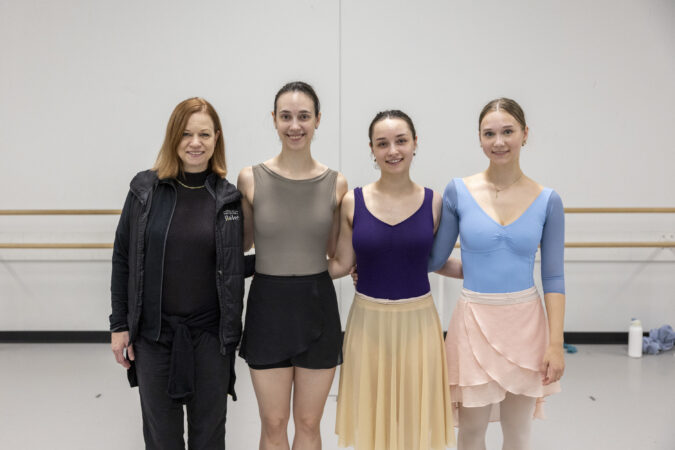
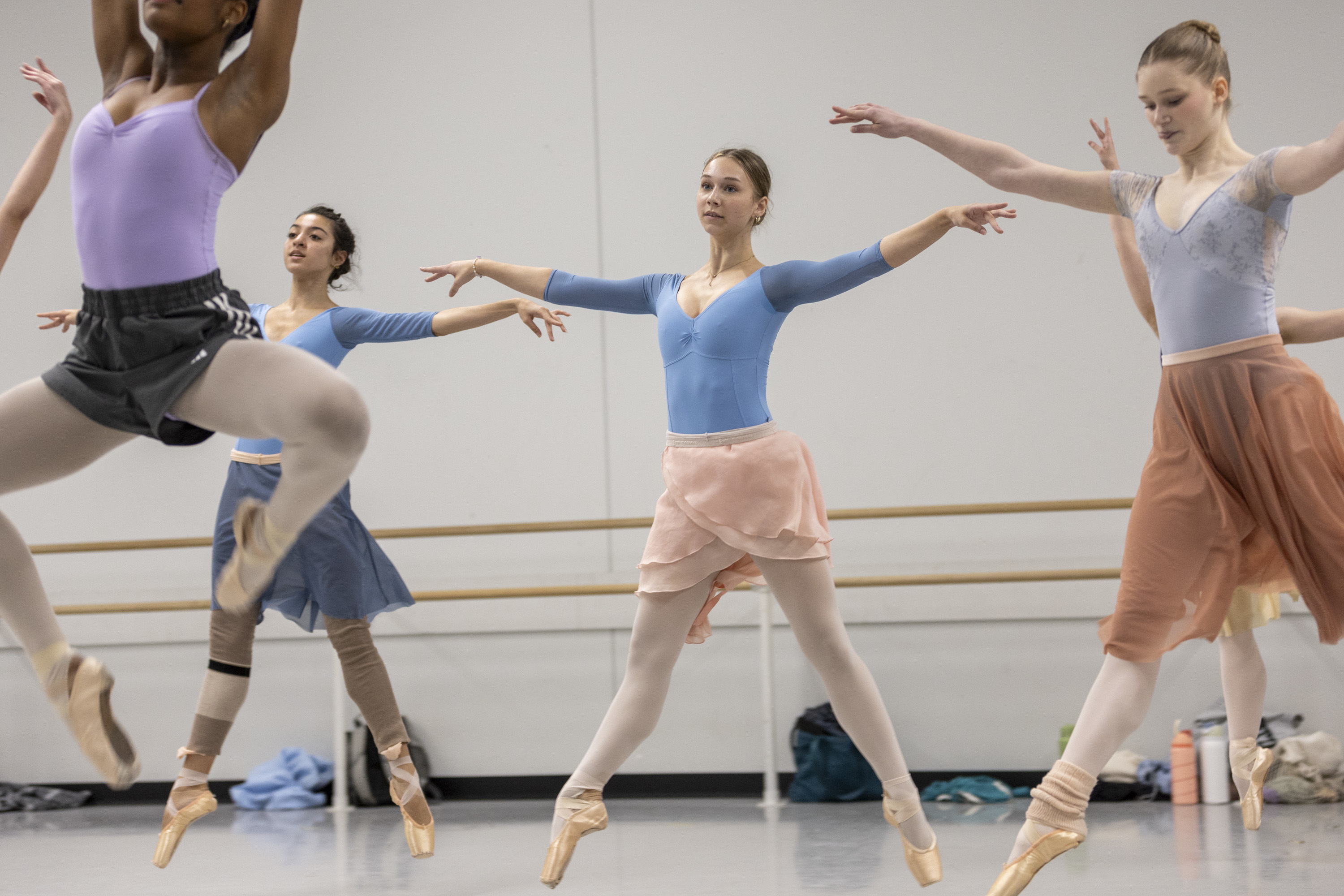
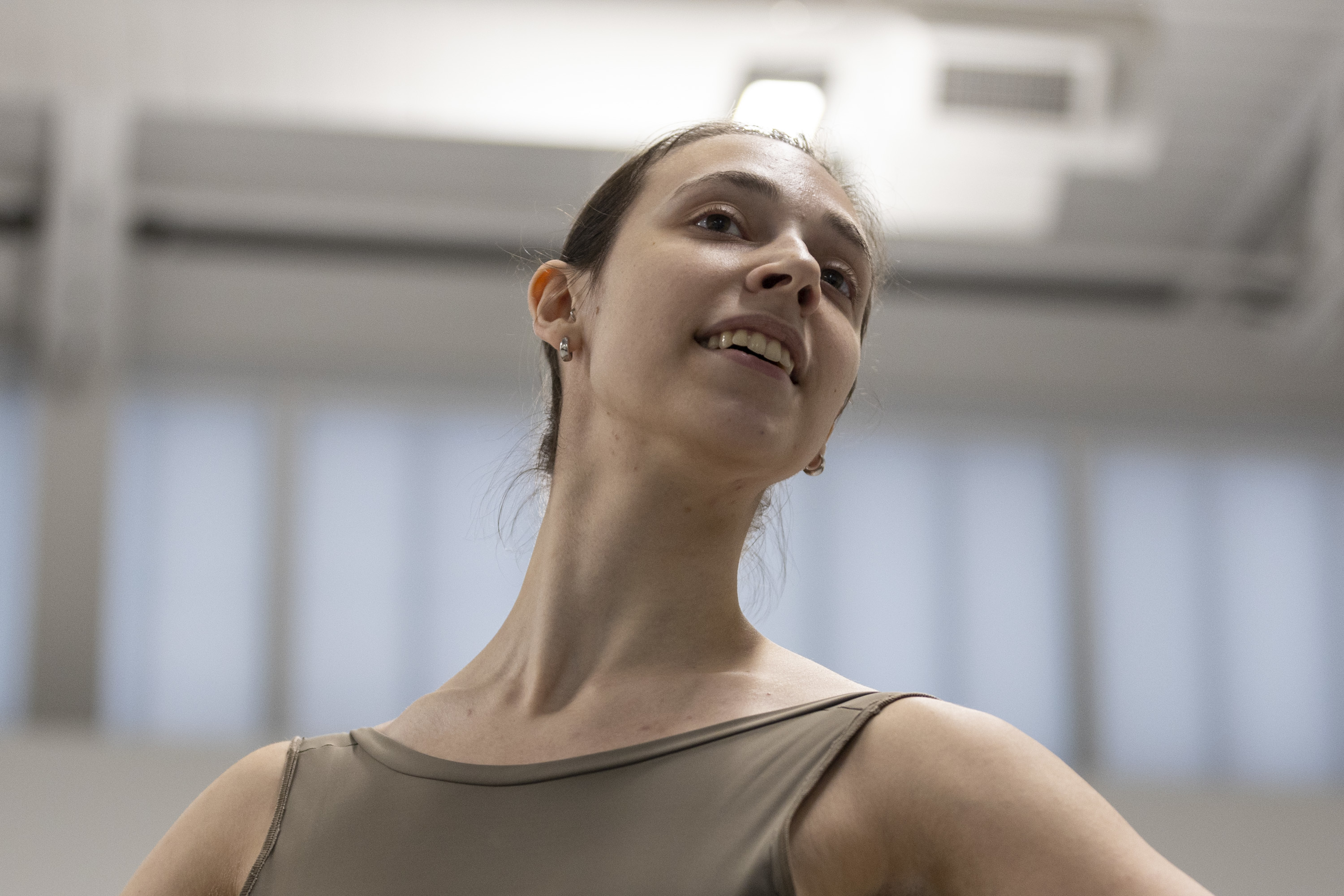
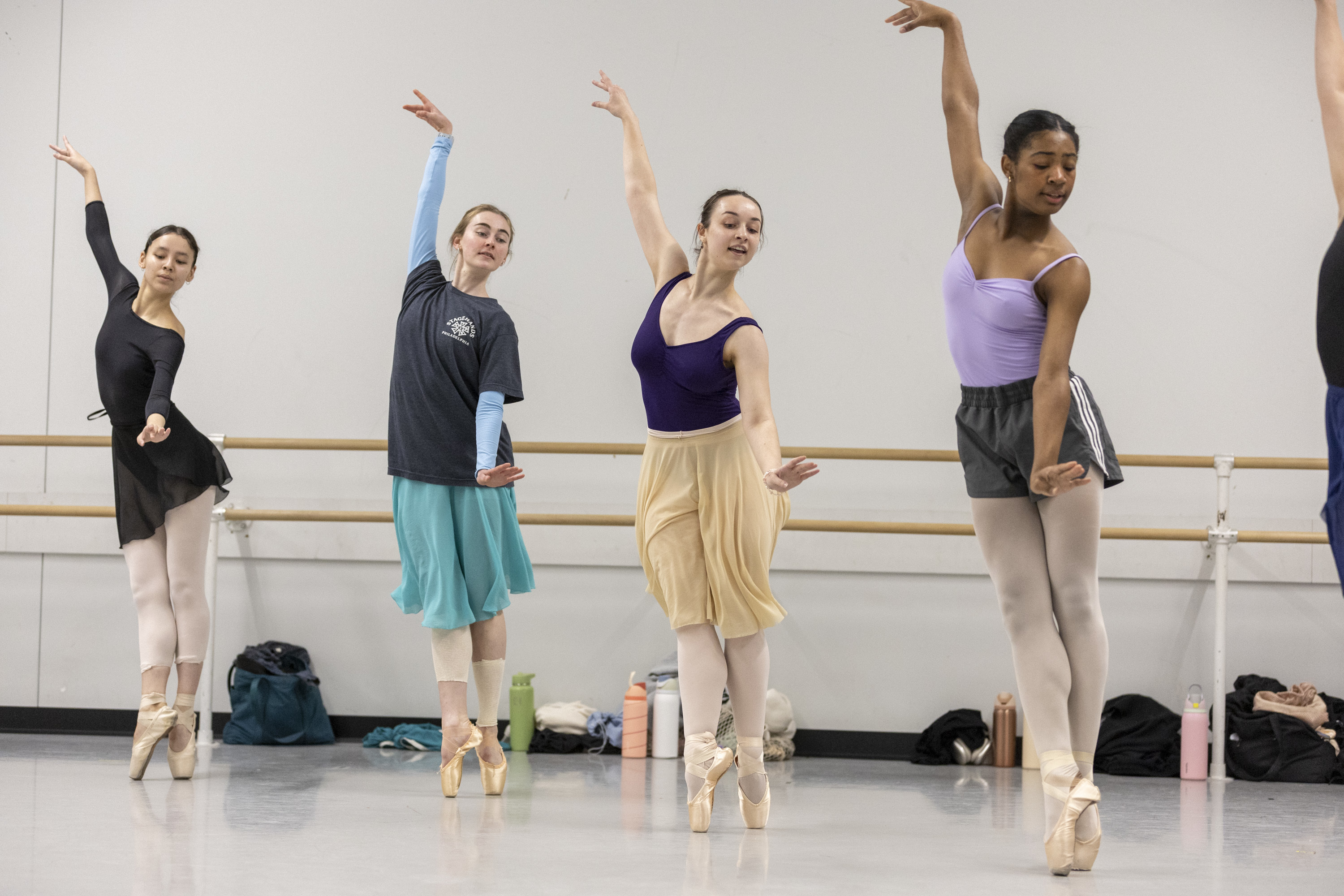
    Four members of a dancing family make Nutcracker magic onstage together. Sisters Isabella, 21, Ava, 19, and Olivia DiEmedio, 16, are all members of the company. Isabella is in the corps de ballet, Ava an apprentice, and Olivia in Philadelphia Ballet II.

    When the company opens its annual production of George Balanchine’s The Nutcracker this weekend at the Academy of Music, the sisters will perform as snowflakes, flowers, parents, maids, and a variety of sweet treats.

    Olivia DiEmedio, 16, (center) rehearses “The Nutcracker” with Philadelphia Ballet.

    The sisters are still on the rise in the company, and are yet to explore most of the principal roles. But they’ve filled most of the children’s, many of the corps, and some soloist roles. In fact, there has been a DiEmedio in one scene or another of The Nutcracker for at least a dozen years.

    Even their mother is sometimes onstage alongside them.

    Charity Eagens, who grew up in East Norriton, Montgomery County, was in the company, then known as Pennsylvania Ballet, for 10 years, starting in 1996. Now she is a teacher in the School of Philadelphia Ballet and the children’s ballet stager. She is also the grandmother in some performances of The Nutcracker.

    Eagens has taught all three of her daughters throughout their training, and she continues to do so once a week, when she teaches company class.

    In ballet class, she is their teacher. As soon as they step outside the studio, she is Mom.

    “It would be really awkward for all my friends to see me calling you Miss Charity,” Ava said to her mother on Zoom, gathering around a table at Philadelphia Ballet.

    “I would never say ‘Miss Charity,’” Olivia added. “I would just say what I needed to say and, like, just raise my hand.”

    The DiEmedio sisters grew up on Philadelphia Ballet.

    Isabella DiEmedio, 21, rehearses “The Nutcracker” with Philadelphia Ballet.

    “I took Isabella to see her first ballet [when] she was 2 years old, which is a little bit too young,” Eagens said. “But a lot of my friends were still in the company, and I took her. I thought, ‘Let me just see how long she sits.’”

    It was Sleeping Beauty, which is well over two and a half hours.

    “So it’s probably not the best one,” said Eagens. “However, she sat on the edge of her seat for the whole thing.”

    In 2007, when she was 3, Isabella started ballet classes in a local school where Eagens taught.

    When she was 4, Isabella went to her mother and said, “I want to dance on the same stage as you, Mom,” Eagens said.

    In 2012, when Isabella was 7, the company reopened its school (after becoming the Rock School for Dance 20 years earlier, when it looked like the troupe might fold), and Eagens signed her up.

    Her sisters followed in the same pattern: local classes at 3, moving over to the School of Philadelphia Ballet for more serious training when they were 7. They tried gymnastics, too, but ballet is what stuck for all of them.

    Ava DiEmedio, 19, (second from right) rehearses “The Nutcracker” with Philadelphia Ballet.

    The Nutcracker was a staple in their lives. Ava and Olivia both danced the role of Marie. Isabella was too tall when it might’ve been her turn, putting the top child’s role out of her reach.

    These days, Isabella lives independently, sharing an apartment with another dancer in the company. Ava is considering moving out as well, but her father is encouraging her to stay put and save money. Meanwhile, she and Olivia split their time living with Eagens in Worcester, Montgomery County, and with their father in Philadelphia, which is convenient for getting to the studio and theater.

    At 16, Olivia is a junior in high school, doing her academic work online through the Brandywine Virtual Academy, which is affiliated with the Methacton School District she used to attend in person.

    “I never had to withdraw them from school,” Eagens said.

    At different stages of their burgeoning careers, the sisters continue to support one another.

    “In combined company class with the men and women, I’ll stand behind Isabella,” Ava said. “And then in the ladies class, I stand behind Olivia. Sometimes I’ll tell [Olivia] little things I noticed about her technique.”

    Their boss has his eye on them.

    “Isabella, Olivia, Ava, and their mother Charity each bring their own artistry and dedication to Philadelphia Ballet,” said artistic director Angel Corella, “and watching them share the stage is incredibly moving.”

    The sisters are all eager to improve and get opportunities.

    “I want to be the best that I can and see how far I can take it,” Isabella said.

    Ava agreed. “I want to be able to branch out of corps roles.”

    As the youngest, Olivia knows she may have to wait her turn, although in ballet even the youngest professionals can get big roles.

    “Technically, I’m still in training,” as a second company member, she said. “So I have to always keep in mind and have a good mindset about it and keep working hard every day.”

    But, she added, “I really want to become someone who is, like, the star.”

    Philadelphia Ballet in “George Balanchine’s The Nutcracker.” Dec. 5-31, Academy of Music. $28-$282, 215-893-1999 or ensembleartsphilly.org

  • If you haven’t been paying attention to the Eagles’ troubles, let’s get you up to speed

    If you haven’t been paying attention to the Eagles’ troubles, let’s get you up to speed

    One of the regrettable developments of the modern media age is that, too often, coverage of a particular subject — whether it’s sports, politics, or whatever strange currents were vibrating between Robert F. Kennedy Jr. and Olivia Nuzzi during the summer of 2024 — presumes that news consumers already are intimately familiar with a story’s background and details.

    The truth is that not everyone, not even most of us, can know the ins and outs of every single news item that pops up, slot-machine-style, on our smartphones and social media scrolls. People are busy and preoccupied, especially this time of year. They have jobs to work, bills to pay, kids to raise, decorations to put up, gifts to buy, and gatherings to plan, and they’re going to spend whatever free time they have left watching the latest episodes of Stranger Things, because holy mother of mercy are those episodes long.

    Here at The Inquirer, we’re not about to make that same mistake. Sure, it might seem like everyone in the Philadelphia area has a firm grasp of all the problems plaguing the Eagles these days. But there are plenty of people out there who either don’t follow the Eagles closely or pay just enough attention to wonder why fans and media are making such a fuss about them. Didn’t they just win the Super Bowl? And isn’t their record pretty good? And don’t they still have that cutie-patootie Cooper DeWhatshisname?

    So in the interest of getting everyone up to speed on the big issues around this team ahead of its game Monday night against the Los Angeles Chargers, here’s a quick review of what’s been happening. Once you read this summary, you’ll be able to speak with total confidence about the Eagles at any holiday party, even to those insufferable neighbors whose Christmas lights are brighter and redder than a Kenny Rogers Roasters sign.

    Let’s start with Nick Sirianni, the Eagles’ coach. Over his four-plus seasons, Sirianni has pulled off the remarkable feat of leading the team to the playoffs four times, winning one Super Bowl, reaching another, compiling the fifth-highest winning percentage among the 537 head coaches in the 105-year history of the National Football League, and still convincing most Eagles fans that he has no idea what the hell he’s doing. In fact, many Eagles fans wonder exactly what Sirianni does do, since he does not call plays on offense, does not have much to do with the defense, has minimal say-so over personnel matters, and has instilled so much discipline and precision in his players that they have committed the fifth-most penalties in the league this season.

    Eagles offensive coordinator Kevin Patullo has received a lot of heat from fans because of the offense’s struggles this year.

    The offense has struggled, and coordinator Kevin Patullo has come under fire for his rudimentary play design, his unimaginative play calling, and his inability to persuade quarterback Jalen Hurts to throw to receivers who aren’t already standing alone in an empty cornfield. The public anger at Patullo became so intense that, on the morning after the Eagles’ recent loss to the Chicago Bears, his house was egged — a stupid, childish, and completely indefensible act, especially since there’s no evidence that Patullo gave out apples and black licorice on Halloween this year.

    Hurts has faced his share of criticism, as well, and not merely because wideouts A.J. Brown and DeVonta Smith could run their routes, recite the first four stanzas of The Waste Land, then rerun their routes — and Hurts still would be holding the ball, waiting for them to get really open. The Eagles used to have Hurts carry the ball a lot. But not anymore. For a couple of weeks, the Eagles had Hurts take more snaps from under center, which allowed them to use a wider array of plays. But not anymore.

    The general belief is that Hurts isn’t totally comfortable and on board with those tactics, so they have been phased out of the offense, much like the entire running game has. Hurts also has taken to speaking during postgame press conferences as if he were cracking open fortune cookies and reading the messages, and his admiration of Michael Jordan and his affiliation with the Jordan Brand have become such a huge part of his persona that it won’t be long before he starts answering the question, How’s it going, Jalen? by turning to an invisible TV camera and saying, I took that personally.

    Brown himself has been the source of a good bit of controversy for his frequent, cryptic social media posts — an unnecessary distraction, given that retweeting a Mike-Myers-as-Dr.-Evil THROW ME A FRICKIN’ BONE HERE meme would have sufficed. People have been debating whether Brown is a team-first guy who is using extreme means to call attention to the Eagles’ lousy passing game or a me-first diva who is most happy when he gets his. No one seems to accept that the correct position to take on the matter is Yes.

    Meanwhile, Saquon Barkley has morphed into DeMarco Murray. The offensive line is beat up, hasn’t been blocking well even when its members were reasonably healthy, and lately has been failing to push Hurts’ tush. The defense just lost its most talented player to a shoulder procedure, still hasn’t solidified its No. 2 cornerback spot, and this week attempted to solidify that spot not by putting Cooper Patootie there but by hoping to bring back a nearly-35-year-old former No. 2 cornerback. And Jeffrey Lurie would like to see if all these issues might be resolved by having someone else pay to build him a domed stadium.

    That about does it. Now you have the skinny on the 2025 Eagles. You wouldn’t know, from this synopsis of their season, that they’re 8-4, in first place in their division, and likely to be favored in four of their remaining five games. But at least you’ll have the requisite information and context to hold your own in any conversation about them. Unless your Kenny Rogers neighbor asks for your thoughts on going for two when you’re down nine. In that case, make a beeline for the bar and don’t look back.

  • Temple lands a hidden gem in Roman Catholic’s Ash Roberts: ‘Everyone is going to see soon’

    Temple lands a hidden gem in Roman Catholic’s Ash Roberts: ‘Everyone is going to see soon’

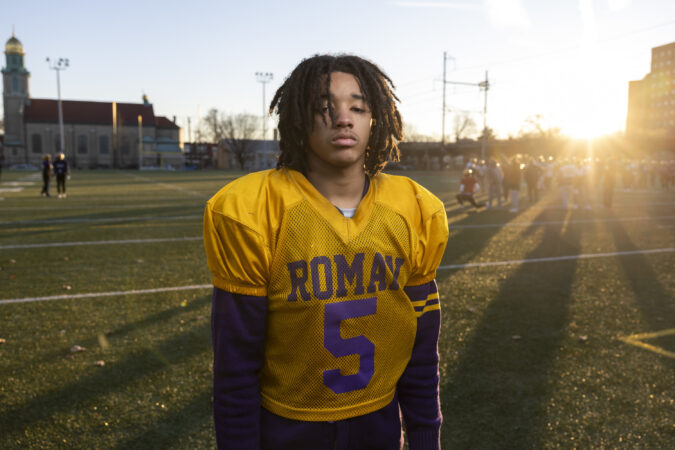
    Ash Roberts remembers the dark. Some nights he would sob in a pillow, wondering if he lost his one love, football.

    The 5-foot-10, 175-pound senior receiver at Roman Catholic never wanted anyone to hear or see him during those restless moments alone that kept him up burdened by self-doubt. He was the only one, he thought, who would forge through it.

    Three years ago, major college recruiters would flock to see Tyseer Denmark, now at Penn State, work out when he was with Roman. But someone else also caught the scouts’ attention — a skinny, fast-twitch freshman. That’s when Roberts began receiving scholarship offers from programs such as Penn State, Alabama, Pittsburgh, and Michigan.

    Something happened along the way. He broke his left collarbone before playing a down his freshman year, wiping out the season. Six games into his sophomore year, he snapped the same collarbone again. After 10 months of recovering, looking forward to a breakout junior season, he lost another year when he tore a meniscus in his right knee. The attention slowly dissipated. He found himself in a recruiting wasteland.

    Roberts had only his senior year to prove himself — and he did just that. In Roman’s second game, Roberts scored three touchdowns in the Cahillites’ 49-35 victory over Cardinal Newman (Fla.). Against Catholic League champion and PIAA Class 6A state finalist La Salle College High School, he scored three touchdowns on two TD receptions and an 81-yard kickoff return. In Roman’s 39-36 win, he had 225 all-purpose yards, 130 yards receiving, and 95 return yards, looking arguably like the best player on a field filled with Power 5 recruits like La Salle’s Joey O’Brien, a Notre Dame signee, and Gavin Sidwar, who is heading to Missouri. In Roman’s 48-20 Class 5A state semifinal victory over Springfield (Delco) last Saturday, he had two touchdowns and a game-high five catches for 114 yards.

    Temple football coach K.C. Keeler was not about to let a talent up Broad Street slip away from him, and on Wednesday, Roberts signed to play for Keeler and the Owls.

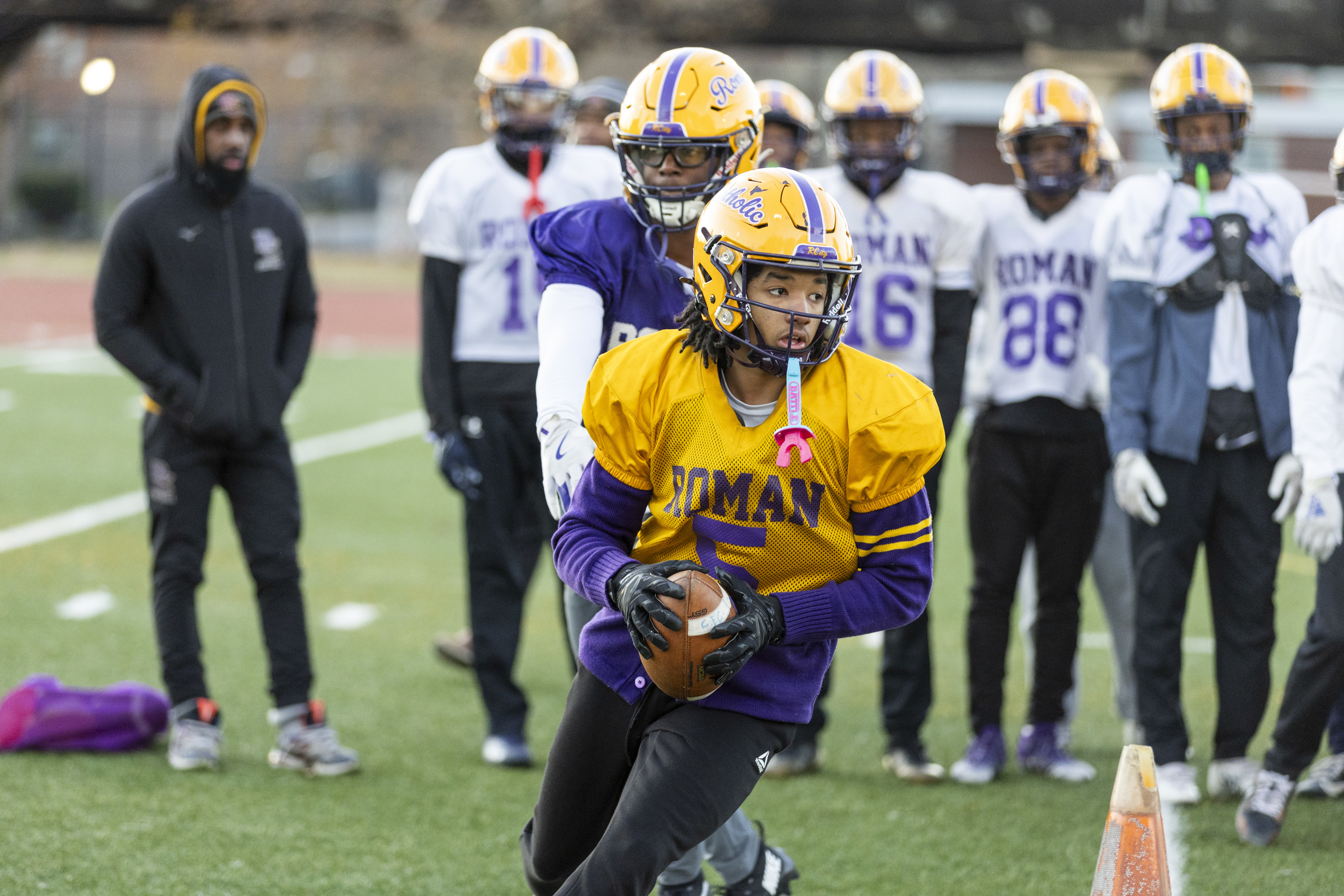
    Roman Catholic receiver Ash Roberts doing some drills during practice on Wednesday.

    , Roberts will play a vital role Friday in Roman’s quest toward its first PIAA state football championship. The Cahillites (11-3) face District 3 and defending state champion Bishop McDevitt (12-2) at Cumberland High School in a rematch of last year’s Class 5A title game, won by McDevitt in overtime, 34-31.

    As the days wind down toward his final high school game, Roberts said his injury ordeal sometimes causes him to pause and reflect on where he might have been if he did not encounter adversity.

    “There were a lot of nights I was up and emotional, where I would question myself, ‘Why me, why is this happening to me?’” Roberts said. “I didn’t want anyone to hear me or see me like that. I had to stop feeling sorry for myself. I was not about to quit. I had people there for me, but you can only do the work and get through it yourself.

    “I kept telling myself, ‘Everyone is going to see soon, everyone is going to see soon.’”

    They are seeing.

    Once a 5-foot-7, 140-pound freshman, Roberts found the weight room — with a little push from former teammate and current Duke freshman linebacker Will Felder, one of the Cahillites’ team captains last season.

    “I couldn’t even lift 95 pounds when I started,” Roberts said, laughing. “I can hit 245 pounds for a couple of reps now. I never liked lifting. Being around Will, I wanted to put in the work and gain that confidence. I would do anything to get out lifting. I would go in there and just do leg presses and try to avoid the coaches.

    “I wanted to play football and didn’t think I needed to lift. I would lock myself in the bathroom stall and get on my phone. The times I got caught in the bathroom, I would tell my coaches, I’m studying plays on my phone. They never believed me.”

    He’s added three inches and 35 pounds.

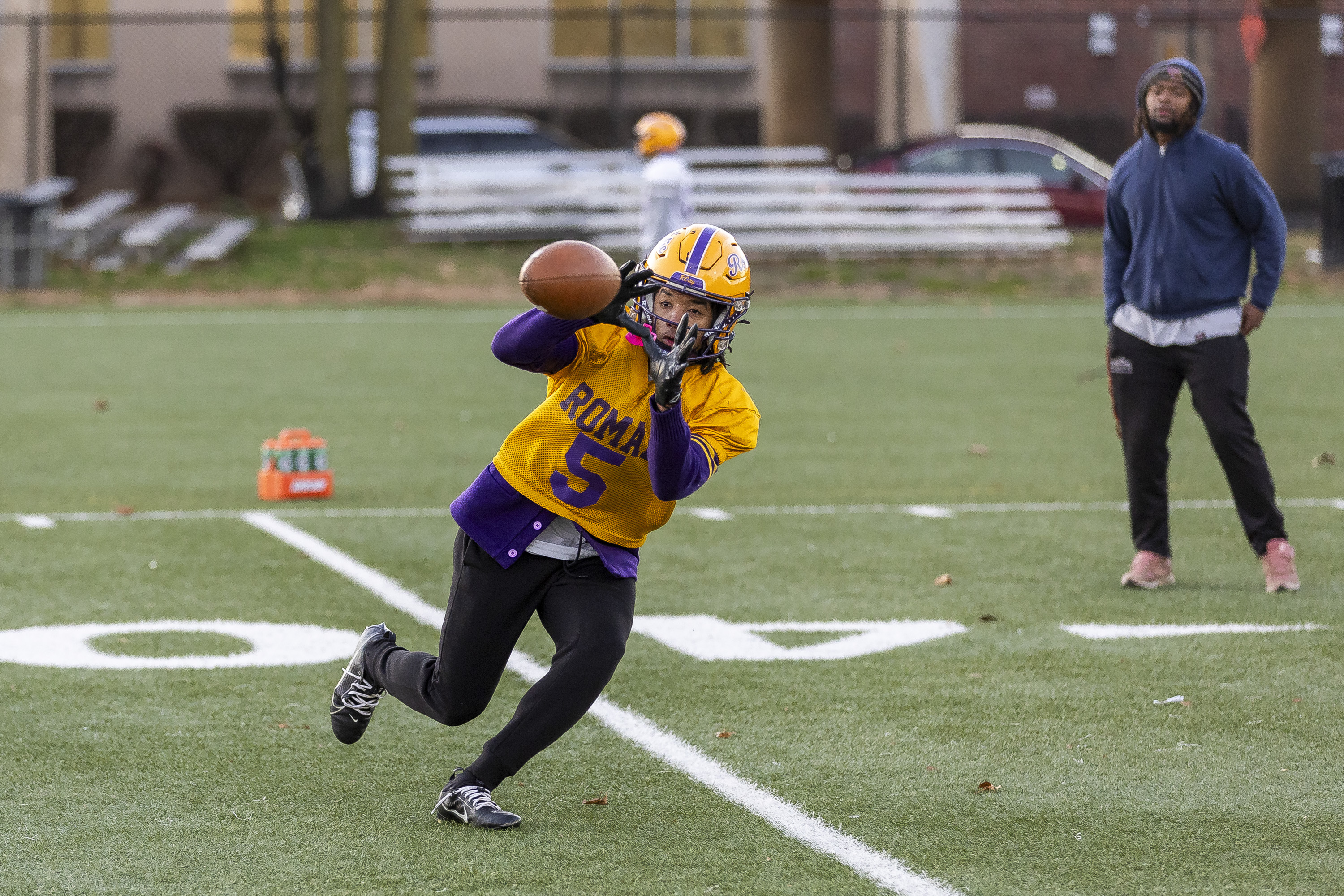
    Roman Catholic receiver Ash Roberts only had his senior season to prove himself on the field.

    In March 2024 when he was working out, he felt discomfort in his right leg. He had a torn meniscus, which could heal through rest, doctors told him.

    It was another setback, after building himself up to squat 405 pounds, and power clean 265 pounds.

    “Ash always had the talent, he needed to put the work behind it,” said Felder, who is getting playing time as a true freshman and carrying a 3.6 GPA at Duke. “We only live about five minutes away from each other, and I would take him to school every day. We would have long talks, and I think that helped him. Ash is like my little brother. I’m really proud of him, because he hated to lift. The biggest thing I wanted to reinforce to Ash was he’s still ‘that guy,’ and God would not put him in a situation he could not handle.

    “Ash was so talented [that] he did not feel he had to lift. I stressed to him that if he got bigger and stronger, he would be a better player. I finally convinced him to do the work. Now look at him.”

    Roman coach Rick Prete said he could have played Roberts late last season, but knowing he would be back his senior year, he was not about to risk Roberts’ future. Prete saw him tiptoeing around the weight room to become one of the team leaders there.

    “It all came together, and a lot of college coaches are beginning to see what we knew about Ash here at Roman,” Prete said. “I think Ash is a great fit for Temple and Coach Keeler. Coming out of high school, considering Ashdan’s path, this has been great for him. Ash is on the quiet side, but with his teammates, that changes and he is outgoing. Beyond the shadow of doubt, Ash is the best wide receiver in Pennsylvania. He is bringing a level to his game that I love to see, adding something physical to the receiving room.”

    That manifested in the state semifinal game when Roberts caught a pass on the sideline, lowered his shoulder and rammed through a couple of Springfield defenders during the second quarter. That showed the trust Roberts has in himself. It showed he conquered the doubts of whether he could withstand a hit. He woke up at 5 a.m. three days a week throughout the summer and into September to work out, a routine he built with Felder.

    Ash Roberts and Roman Catholic will compete in the PIAA Class 5A final on Friday night.

    Though he sat out his junior season, Roberts was on the sideline last December when Roman lost to McDevitt in overtime. He remembers seeing the tears stream down the senior’s faces, strengthening his resolve to come back the next season and make an impact.

    “I know what it is like having football taken away from me,” he said. “It’s something I took for granted. I took my talent for granted. I took my health for granted. I don’t take anything for granted anymore. With the breaks and tears, I learned something you love can be taken away from you in a split second. I want more. If I didn’t go through the injuries, I would not be as hungry as I am. I’m looking forward to working out with Will this summer. I want this state championship for him, for every senior who lost last year.

    “Winning this state championship will be for them. We’re going to get the job done. We cannot let the work we put into this season go to waste.”

  • What will it take Roman Catholic and La Salle to come out as state champions?

    What will it take Roman Catholic and La Salle to come out as state champions?

    Roman Catholic has never won a PIAA state football championship. La Salle College High School has not won a state championship in 16 years. Both stalwart Philadelphia Catholic League programs will get their chance to make their respective marks this weekend in the PIAA Class 5A and Class 6A championships at Cumberland Valley High School.

    In a rematch of last year’s 5A championship, Roman will face Harrisburg’s Bishop McDevitt, the alma mater of former Eagles LeSean McCoy and Ricky Watters, at 7 p.m. Friday. La Salle will follow on Saturday at 7 p.m. in the 6A final against Pittsburgh’s Central Catholic.

    As both programs near the title game, neither Roman Catholic coach Rick Prete nor La Salle coach Brett Gordon have brought up winning a state title to their teams.

    “We haven’t even mentioned the words ‘state championship’ all year,” Gordon said. “We want to stay on message. It’s been more of, ‘Let’s get into November playing our best football.’ I think we’re close. But I don’t think we’ve peaked. We hold a high standard.”

    Prete has stressed constant improvement all season.

    “Our message to the kids is that we didn’t play our best game in the state championship last year,” Prete said. “It bothered the coaching staff. It bothered the kids. It’s why our focus is playing a strong, clean game. We want to see what that looks like. The seniors this year want to do it for those kids who were in that game last year.”

    PIAA Class 5A final

    • (District 12) Roman Catholic (11-3) vs. (District 3) Bishop McDevitt (12-2)

    In last year’s Class 5A championship, Roman rebounded from a 21-3 deficit early in the third quarter to tie it in regulation before losing, 34-31, in overtime. McDevitt is on a 12-game winning streak, last losing in August. The Cahillites are on a seven-game winning streak, and have been so dominant that they have not played their starters for an entire game since their 40-39 overtime loss to St. Joseph’s Prep on Oct. 10.

    McDevitt has a first-year starting quarterback, junior Sebastian Williams. He has done a solid job filling the void left by the graduation of Pennsylvania’s all-time leading passer, Stone Saunders, now at Kentucky. Williams has thrown for 2,179 yards and 19 touchdowns against eight interceptions this season. He showed considerable poise in leading the Crusaders in the final minutes to a walk-off 31-28 victory over Peters Township in the state semifinals.

    Roman runs a no-huddle, up-tempo offense, ignited by Akron-bound senior quarterback Semaj Beals, who has passed for more than 12,000 career yards. He has two Temple-bound receivers in seniors Ash Roberts and Eyan Stead Jr., and a capable ground attack centered around sophomore tailback Trey Montgomery. Much will come down to the time Roman’s offensive line can provide Beals, who gets the ball out quickly.

    Senior tight end Giovanni DeSimmone, senior right tackle Gustavo Gomez, junior right guard Malik Cochran, senior center Khalif McNear, senior left guard Dom Ramos, and junior left tackle Sebastian Waddell believe they have a mission to accomplish since losing to McDevitt last December.

    “I know Roman is well-coached, Rick Prete does a great job, and I know they have a lot of guys back from last year,” said McDevitt coach Jeff Weachter, who has more than 300 career victories in 23 years. “They are explosive offensively, and they do a lot of different things on defense. They are physical. They run well. We have an idea what we’re up against with their up-tempo offense. They go fast. From what I understand, they are going even faster this year. That will be a little bit of an adjustment. It takes a little bit to get a feel for that. …This will be a great game.”

    Prete likes the experience his team has going into the title game. Last year was a mountain of firsts for the Cahillites, who accomplished their first state playoff appearance, first state playoff victories, and first appearance in the state title game.

    Roman was up 21-0 in the first quarter against Springfield in the state semifinals and was leading District 6 champion Hollidaysburg 48-0 in the first half of the state quarterfinals.

    “This is a group that knows what to expect and we know how to conduct ourselves; we are not just happy getting to the state championship again,” Prete said. “Starting with the offense, we are not forcing anything. Defensively, scheme-wise, we have been good at figuring out the strengths of other teams and what our strengths are. This is a young group that is playing very maturely.”

    Senior defensive back Justus Gaskin and junior linebacker Walter Hudson have been defensive standouts, and Stead has been a big contributor on the defensive side, too.

    Roman’s inherent bonus is getting great preparation for this stage during the regular Catholic League season against stellar programs, like St. Joe’s Prep and La Salle.

    “The Catholic League is the best in the state,” Prete said. “You have great coaches and great players, and your sense of everything is heightened. Playing great teams exposes your weaknesses. La Salle had the ball with a minute-something left down a score, with the ball in a Missouri quarterback’s hands [Gavin Sidwar] and a Notre Dame-bound receiver to throw to [Joey O’Brien]. We got a big stop. … As talented as McDevitt is, playing in the Catholic League allows us not to be surprised by the talent that we are going to see. McDevitt is a very formidable opponent, obviously the defending state champions.”

    PIAA Class 6A final

    • (District 12) La Salle (12-1) vs. (District 7) Central Catholic (13-1)

    Neither team has won a state championship under the Class 6A system, installed in the 2016 season. La Salle’s last state championship was in 2009 (24-7 over State College at 4A) — when the Explorers became the first Philadelphia Catholic League team to win a PIAA state football championship under late hall of fame coach Drew Gordon, Brett Gordon’s father.

    Central Catholic has not won a state title since 2015 (21-18 over Parkland at 4A). The Vikings are 0-4 in state championship games against Philadelphia area teams (losing to North Penn and St. Joe’s Prep three times, including a 35-6 defeat last year).

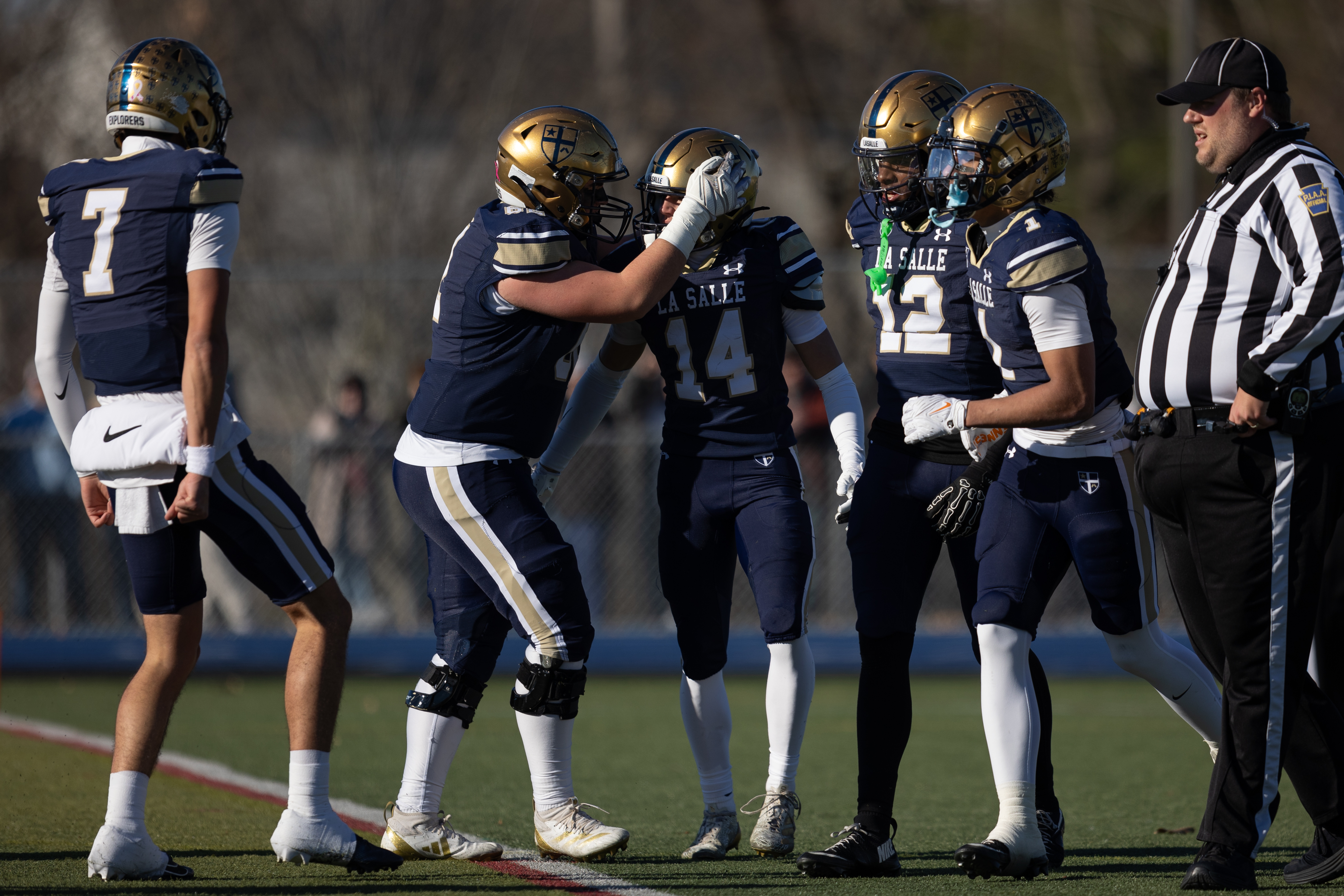
    Explorers wide receiver Jim Mahoney (14) celebrates with teammates after scoring a touchdown against North Penn on Nov. 29.

    This is a rematch of the season-opening game, won by La Salle, 23-6. Gordon and Central Catholic coach Ryan Lehmeier stressed that their teams are far different from the ones that faced each other on Aug. 22. The Vikings have an offensive line that averages 284 pounds. La Salle’s offensive line averages 283 pounds. The difference is, Central Catholic has won on the ground, and La Salle wins through the air, featuring Sidwar, O’Brien, senior receiver Jimmy Mahoney, junior receiver Owen Johnson, and senior tight end John-Patrick Oates, who is now heading to Virginia Tech and new Hokies coach James Franklin.

    In Central Catholic’s 32-14 win over Harrisburg in the state semifinals, the Vikings plowed ahead behind their massive front and sophomore tailback Chrys Black Jr., who rushed for 216 yards and three touchdowns. That template may be repeated, keeping La Salle’s potent offense off the field, and wearing down the Explorers’ defense.

    “From an overall health standpoint, I like where we are, but what I didn’t like is that we put the ball on the carpet three times, losing two [in La Salle’s 49-14 state semifinal win over North Penn last Saturday],” Gordon said. “It is not characteristic of who we are. It is safe to say, I like where we are going into this game. We were pressed by Prep and Imhotep. Central Catholic is good at every position. I told people all year long that Central Catholic was the best team we played this season. When you turn on the film, there is no one you can look at as a weakness. ”

    La Salle is receiving good interior work from 6-foot-2, 275-pound senior defensive tackle Jemel Williams, and Oates has blossomed into a quality edge rusher, where he may now play in college. Williams was disruptive in state playoff victories against run-oriented teams, including Easton and North Penn, while senior defensive end Ryan Fandozzi has been consistent all season.

    Since La Salle lost to Roman in late September, Sidwar has completed 78% of his passes, with 24 touchdowns and no interceptions.

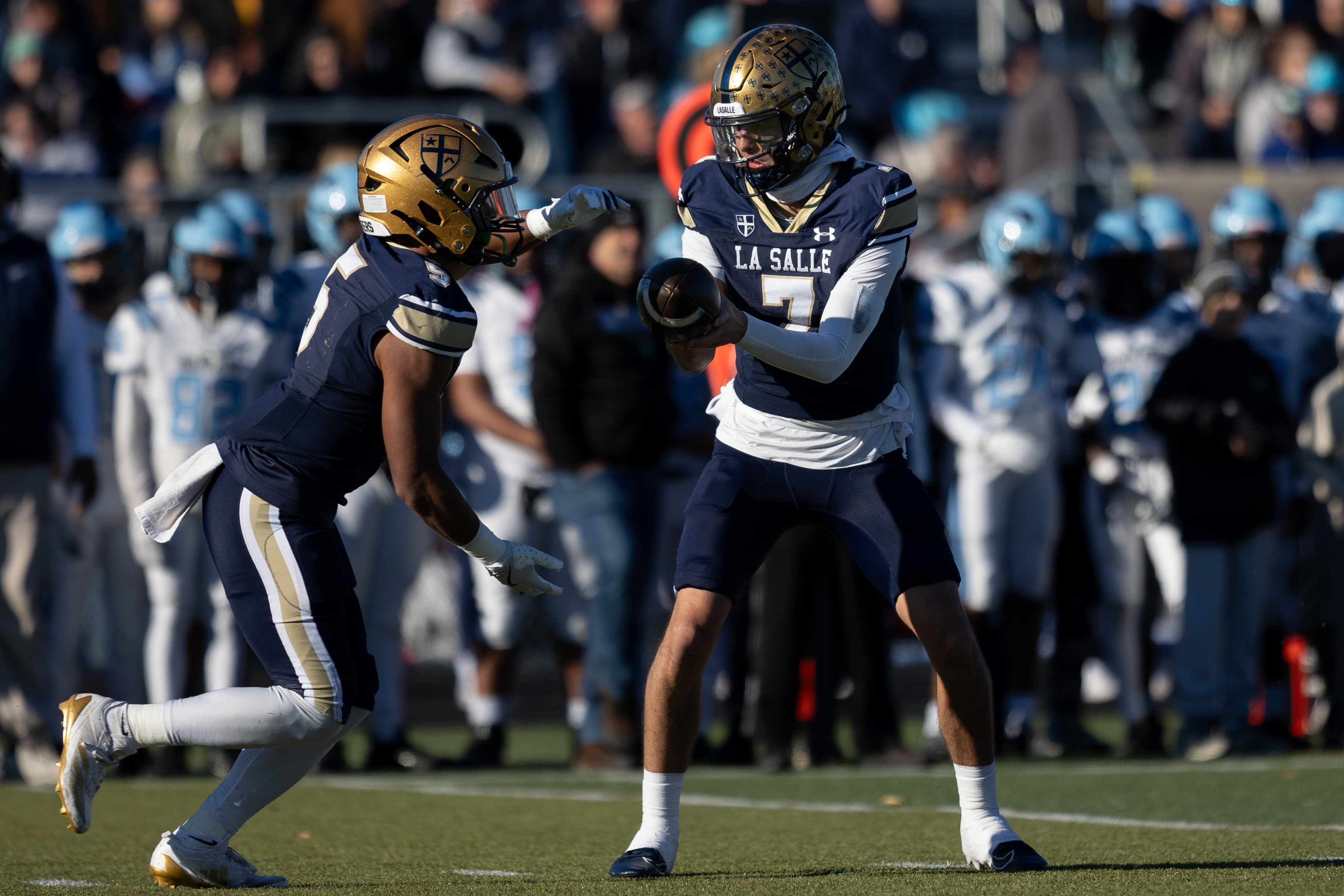
    Explorers quarterback Gavin Sidwar (7) hands the ball off to running back Desmond Ortiz during the PIAA Class 6A football semifinal game against North Penn on Nov. 29.

    Since the opening loss to La Salle, Lehmeier said his team matured this season.

    “Anytime you get this deep into a season, it means you pretty much have had success in all three phases of the game, and the point of emphasis against La Salle on Saturday is to play our style of football,” Lehmeier said. “Whether it’s the quarterback [Sidwar], or their young kid [Johnson] coming on, because I know Joey O’Brien gets a lot of press, they are pretty good. Their ability to spread the football and anytime you have a quarterback like that, it allows you to run that type of offense, which is hard to stop. They are obviously very impressive there. They do some great things on defense, too. They have tremendous football players.”