The arguments that go nowhere are usually the ones that have nowhere else to go. That’s especially true whenever the argument revolves around Jalen Hurts … which is pretty much every Sunday right now. Debating Hurts is like locking yourself in a clothes dryer. You spin around in circles a bunch of times and then walk away hot. It has always been that way with him, even when he was in college.
A good question to ask yourself in these sorts of situations:
What, specifically, are we arguing about?
It’s a question everybody should be asking themselves now that we again find ourselves snowballing down the slippery slopes on Aggregation Mountain. We’ve apparently reached the point in the news — take — news cycle where everybody needs to register their opinion about Hurts. But, like, to what end?
At plenty of points in time, a robust debate about Hurts has been warranted. Should Alabama bench him? Can Oklahoma contend for a title with him? Should the Eagles have drafted him in the second round? Should they start him over Carson Wentz? Can he win a Super Bowl? Should they give him a franchise-level extension?
It’s worth noting that the answer to all of these questions has turned out to be an unqualified yes. Few athletes in history have as lengthy and unblemished a track record of exceeding the measuring sticks placed before him. Wherever his career goes from here, he will retire as one of the most unprecedented performers in football history.
And yet …
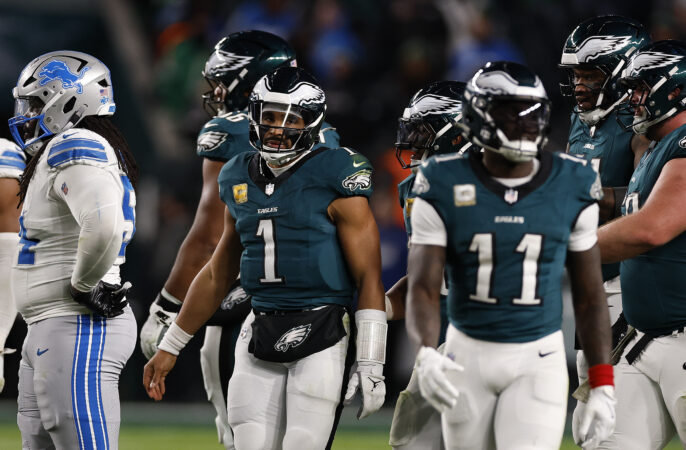
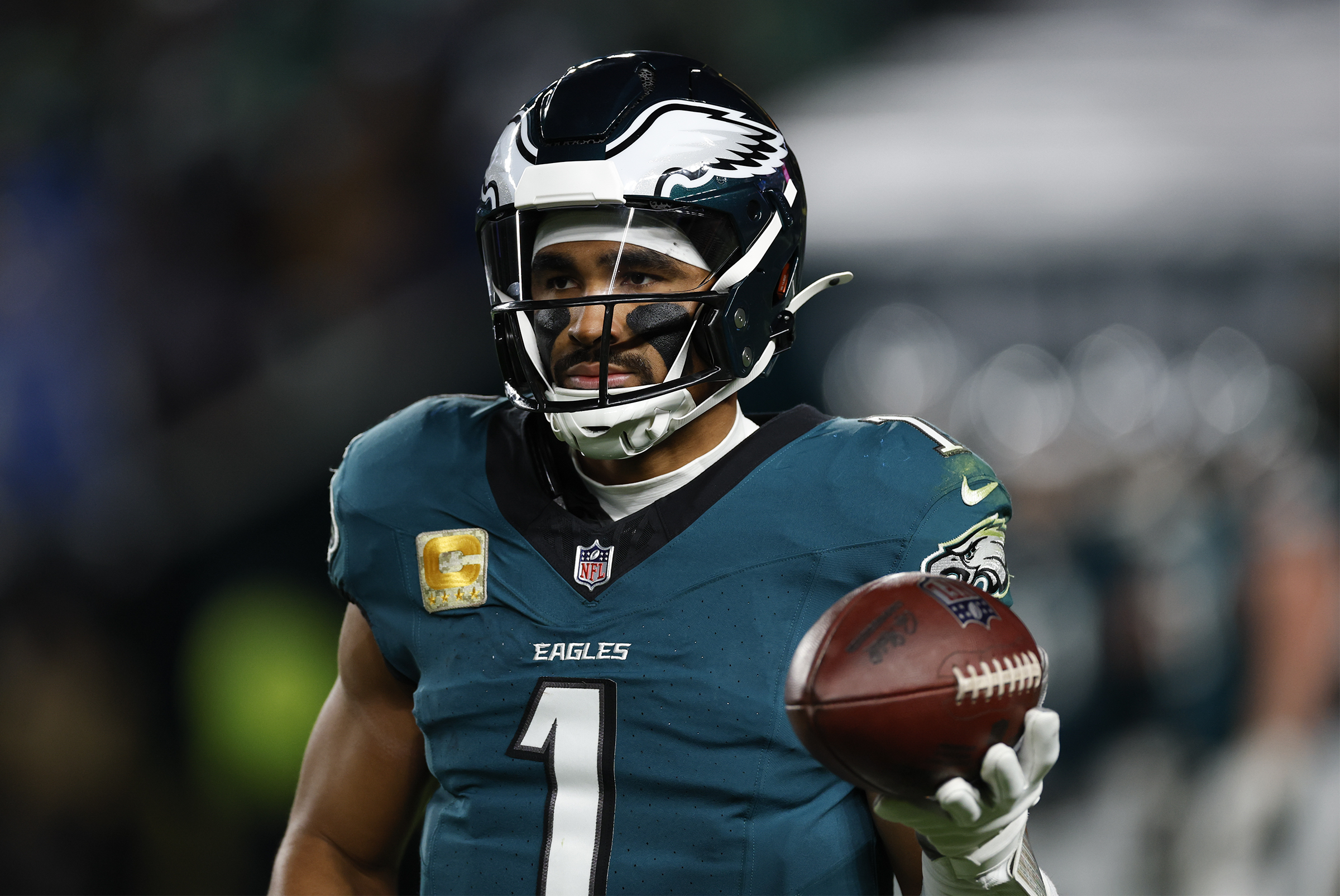
There Hurts was, on Wednesday afternoon, the quarterback of an 8-2 team, the reigning Super Bowl MVP, the leader of the NFL’s current betting favorite, the pitchman for one of sports’ most iconic brands, fielding another one of those questions that suggests something about him is still up for debate. Hurts was clearly aware of the tempest that had been whirling around his name in the wake of a couple of media reports that suggested a certain level of frustration with Hurts among some coaches and players.
Eagles quarterback Jalen Hurts said Wednesday that work to fix the offense begins with him.
“I’m not surprised by anything,” Hurts said, wearing a black compression shirt with the Jumpman logo on his right breast. “This is kind of the nature of the position.”
The original reports themselves are rather oblique in nature. Longtime Philly insider Derrick Gunn reported that people in the Eagles organization feel like Hurts has been hurting the offense by playing “his game” rather than the one the game plan calls for. Meanwhile, The Athletic reported a frustration from players about Hurts’ reluctance to throw into tight windows against zone coverage.
None of this news qualifies as earth-shaking. In fact, it barely qualifies as news. We know the Eagles are frustrated with their offense. Left tackle Jordan Mailata recently labeled it “stuck-in-the-mud.” Wide receiver A.J. Brown has made it very clear he is frustrated that he isn’t getting the football. Likewise, Hurts has very clearly struggled. When he struggles, he does so in a specific way. He is hesitant, indecisive, overly focused on the safest option, too willing to buy time with his feet and shifts the offense to scramble mode.
That’s not a slight against the reports themselves. The notable thing isn’t the news. It’s that the news is being reported.
My real focus here is everything that comes after the news. The TV segments, the sports radio calls, newspaper columns like this one, the hour-to-hour churn of the Sports Take Industrial Complex. Everybody has decided it is time to have an honest discussion about Hurts.
The thing that most of these opinions ignore is that there is nothing much to discuss. Any time an offense plays the way the Eagles offense has for most of this season, the quarterback will help matters by playing better. Beyond that, there is little to say. There is no existential question. Hurts has already answered all of them.
What’s missing is context. In the last 23 years, Jalen Hurts is one of 12 people on the face of the earth to win a Super Bowl as a starting quarterback. He was named the MVP of that Super Bowl, and he very easily could have taken home the award in the other Super Bowl he started in. He is signed to a contract worth a quarter of a billion dollars. The Eagles have been the best team in the NFC for nearly two full seasons now. You can argue that they would already be a dynasty if they had their current defense for the last four years.
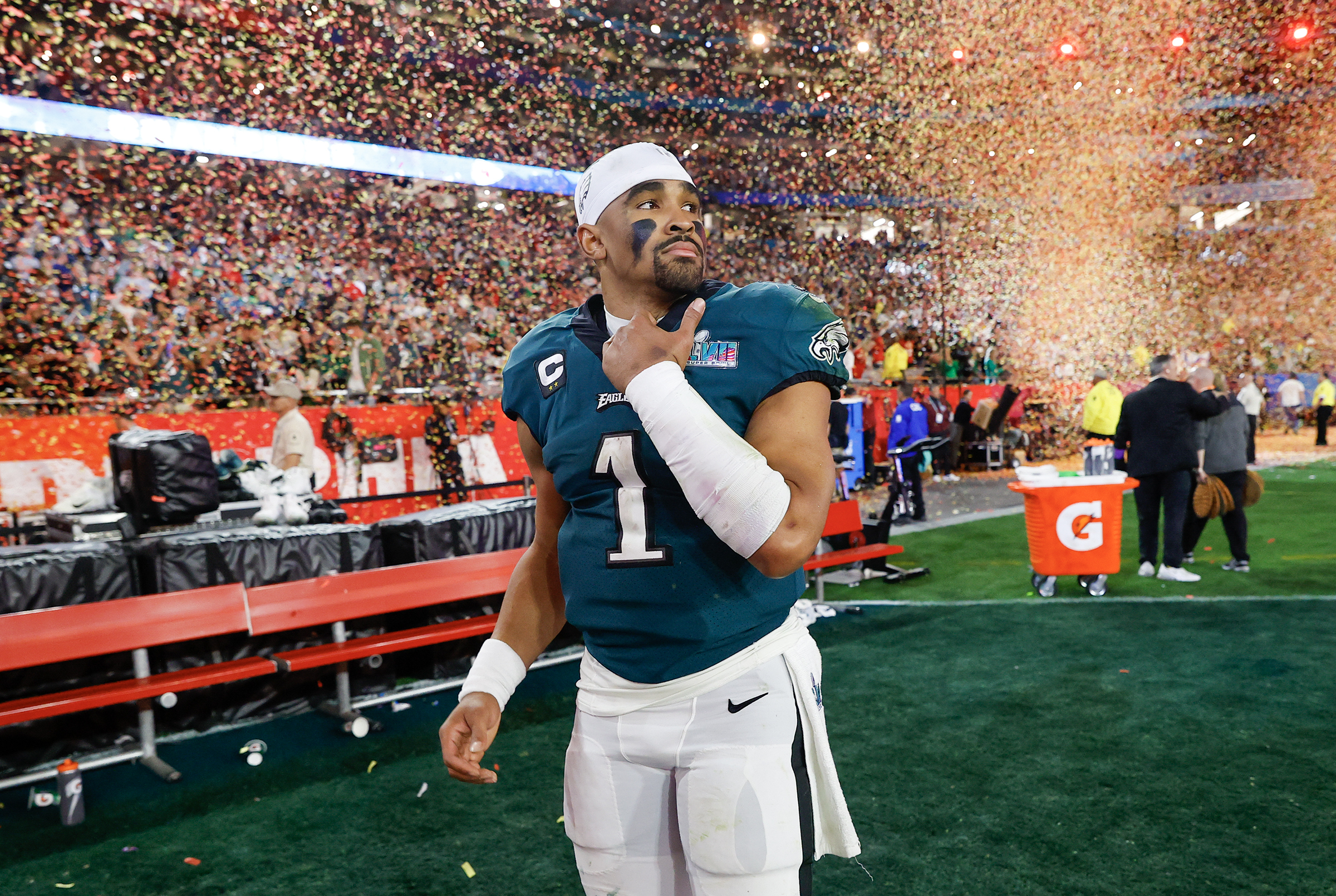
Eagles quarterback Jalen Hurts shown after the Super Bowl LVII loss to the Chiefs.
Can Hurts play better? Sure. It isn’t heresy to suggest it. We’ve seen him do it, most definitively in that Super Bowl LVII loss to the Chiefs. But he is never going to be Patrick Mahomes, or Joe Burrow. The Eagles’ offense might be higher functioning if they had Joe Burrow or Drake Maye. But all of those arguments are roads to nowhere. The only thing that matters is that Hurts has been good enough that the Eagles no longer need to acquire one of those other guys. Coaches and players are more than justified if they are frustrated with some aspects of Hurts’ approach and performance. But they also surely know that they are more fortunate than most.
There’s the context that’s often missing from the Hurts debates: how bad so many other teams have it. Watch the Cam Wards, the J.J. McCarthys, the Tua Tagovailoas, any of a number of other quarterbacks who were drafted higher than Hurts with the hope they would become what he is. There is a lot of bad quarterback play out there. There are a lot of teams that have no hope. The divide between the tier of passers who can and can’t is stark. Even at his worst, Hurts is one of the few.
There will be no trade, no competition, no readjustment of sights to the Tanner McKee era. That should be obvious to even Hurts’ most ardent of critics. Which brings us back to the original question. What are we arguing about?
Temple University Hospital’s Episcopal campus was cited by the Pennsylvania Department of Health for failing to maintain cleaning logs for the crisis center in May.
The incident was among more than a dozen times inspectors visited Temple’s main campus, Jeanes campus, or Episcopal campus to investigate potential safety problems between September 2024 and August. The three campuses operate under a shared license, and inspection reports do not always distinguish which campus inspectors visited.
Here’s a look at the publicly available details:
Sept. 27, 2024: Inspectors came to investigate a complaint but found the hospital was in compliance. Complaint details are not made public when inspectors determine it was unfounded.
Oct. 1: Inspectors followed up on a January 2024 citation and found the hospital was in compliance. The Episcopal campus had been cited for failing to properly update and document mental health patients’ records and treatment plans every 30 days.
Jan. 6, 2025: The Joint Commission, a nonprofit hospital accreditation agency, renewed the hospital’s accreditation, effective May 2024, for 36 months.
Jan. 11: Inspectors came to investigate three separate complaints but found the hospital was in compliance.
Jan. 16: Inspectors came to investigate a complaint but found the hospital was in compliance.
Jan. 21: Inspectors came to investigate a complaint but found the hospital was in compliance.
Jan. 29: Inspectors came to investigate a complaint but found the hospital was in compliance.
Feb. 5: Inspectors came to investigate a complaint but found the hospital was in compliance.
Feb. 11: Inspectors came to investigate a complaint but found the hospital was in compliance.
Feb. 21: Inspectors came to investigate a complaint but found the hospital was in compliance.
March 4: Inspectors came to investigate a complaint but found the hospital was in compliance.
March 10: Inspectors came to investigate a complaint but found the hospital was in compliance.
March 12: Inspectors visited for a monitoring survey and found the hospital had violated rules related to patients’ rights to care by competent personnel. Details of the problem were not made public because the issue was fixed before inspectors arrived. The hospital’s correction plan included educating staff about how to protect vulnerable patients from leaving the hospital against medical advice. Administrators also established a system to review patients at risk and an environmental safety checklist.
March 31: Inspectors came to investigate a complaint but found the hospital was in compliance.
April 4: Inspectors came to investigate a complaint but found the hospital was in compliance.
May 6: Inspectors cited Temple’s Episcopal campus for not having sanitation documentation and cleaning logs for the crisis response center. Administrators retrained staff on the hospital’s sanitation policies and record-keeping requirements.
May 8: Inspectors came to investigate a complaint but found the hospital was in compliance.
June 10: Inspectors came to investigate a complaint but found the hospital was in compliance.
July 14: Inspectors came to investigate a complaint at the Jeanes campus but found the hospital was in compliance.
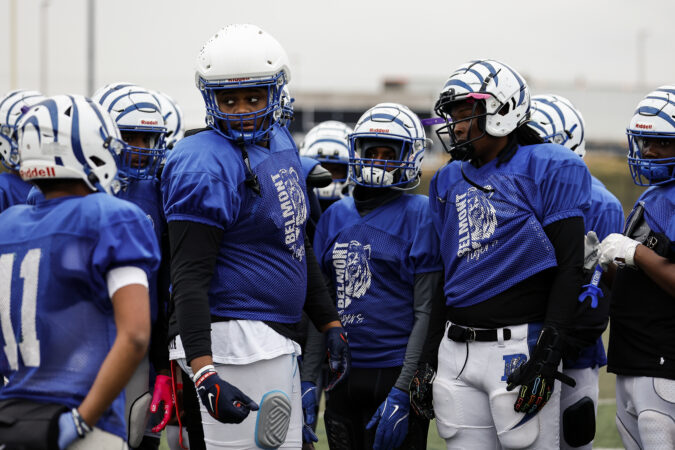
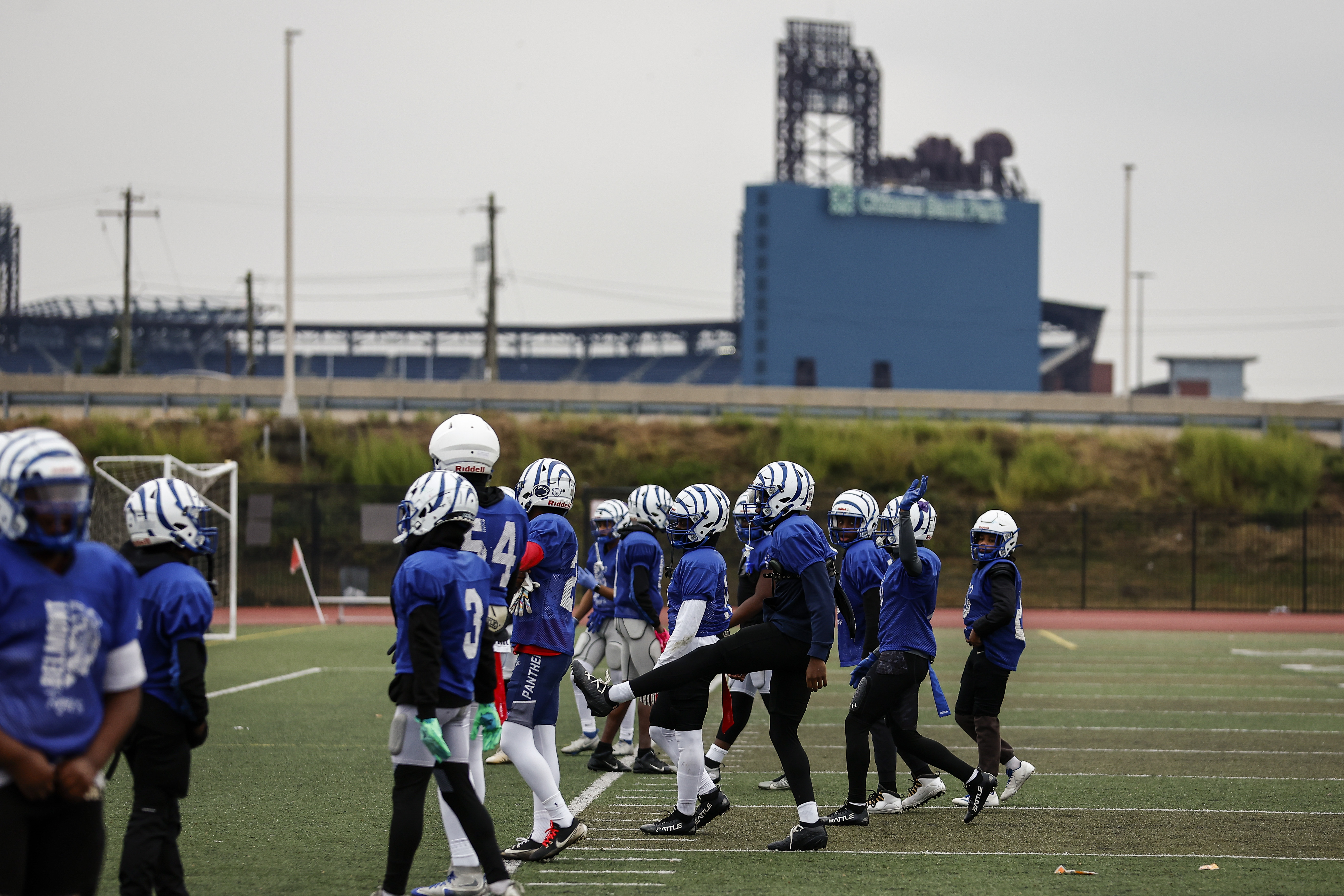
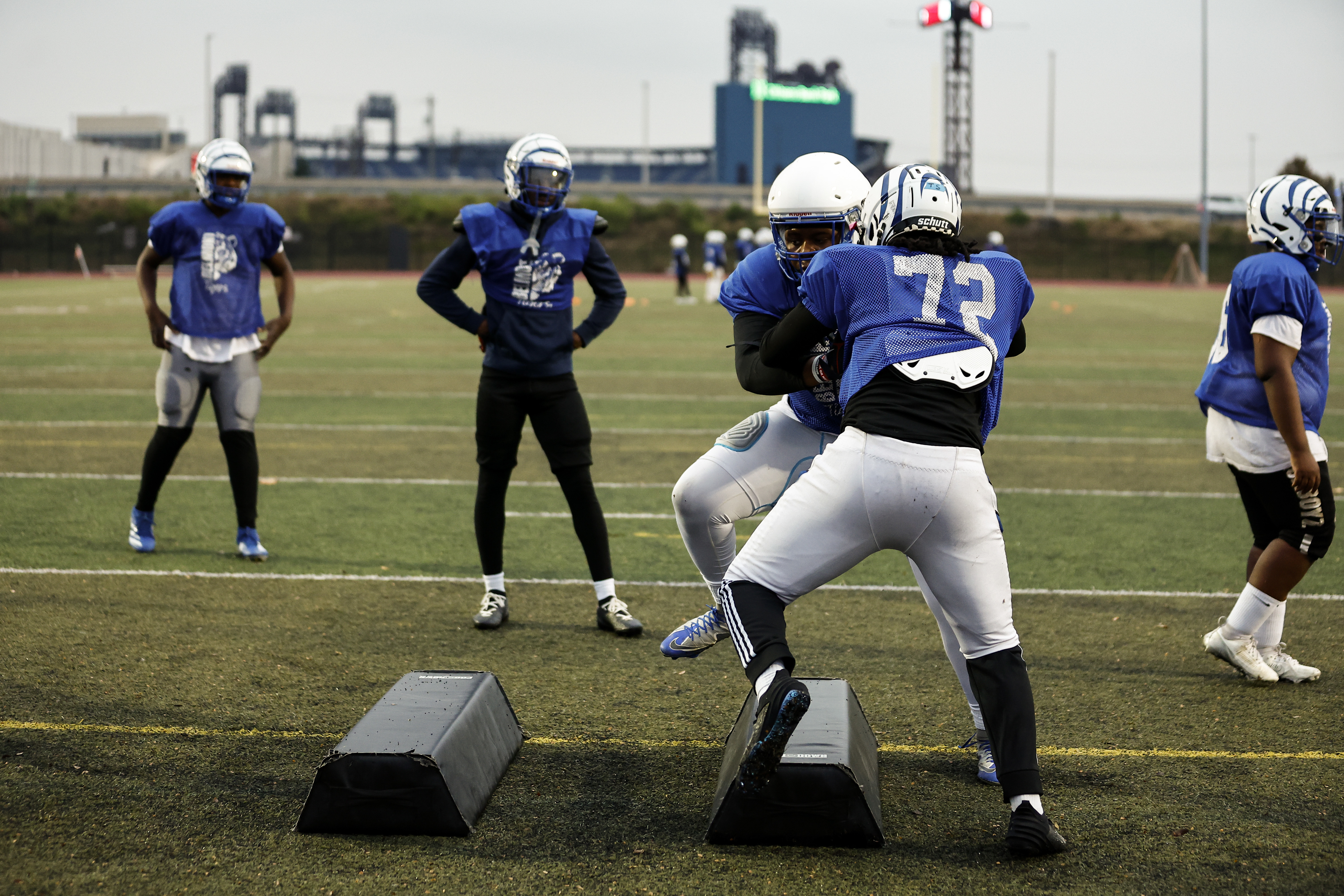
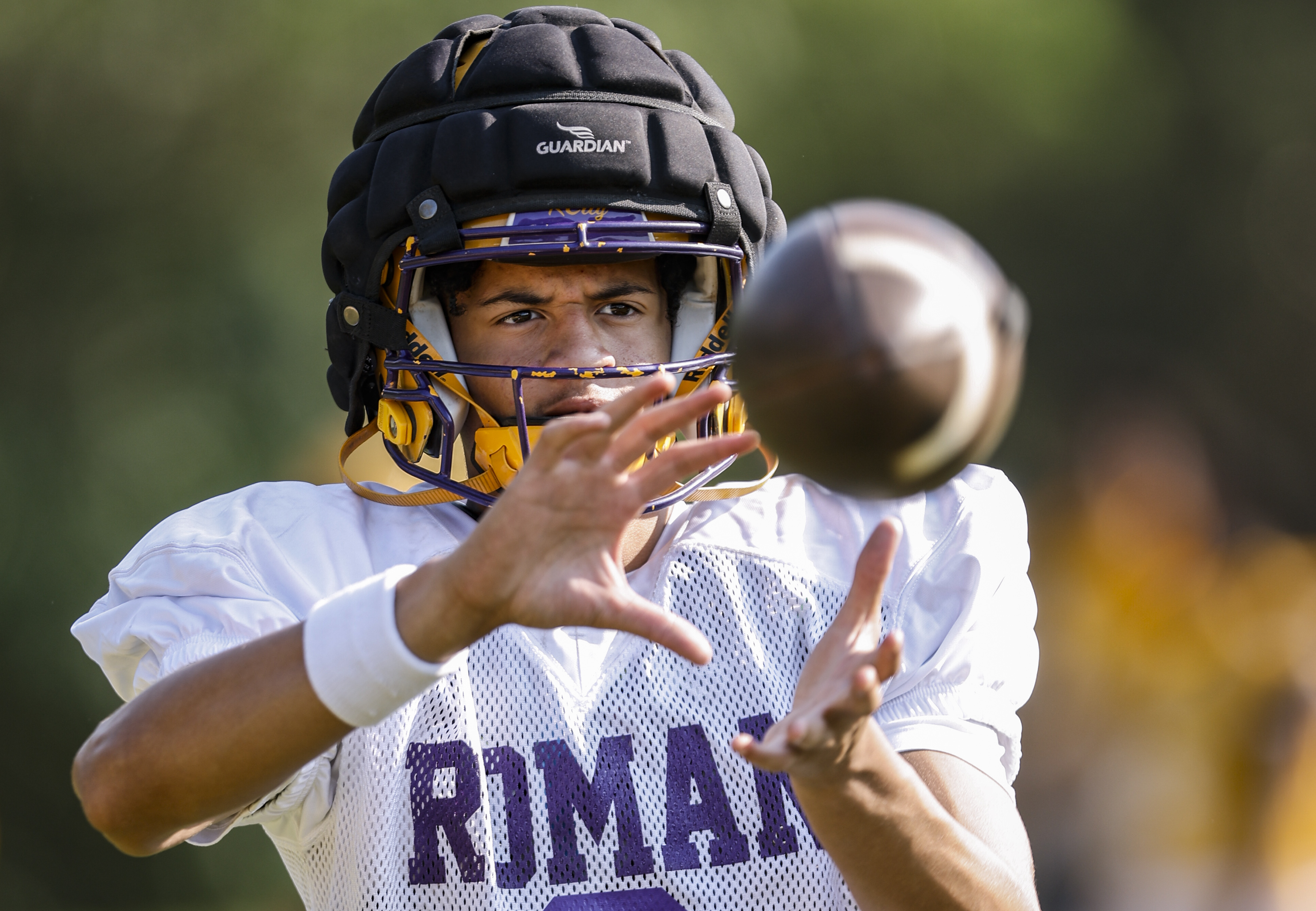
All 20 players on the Belmont Charter football team were back on a school bus Tuesday, this time for practice at the South Philadelphia Super Site. It was a sweet upgrade from its usual practice field, best described as an open space in Fairmount Park.
With a male enrollment of 127, Belmont Charter is the smallest Public League school with a football team. Belmont Charter, now located in the former John W. Hallahan Catholic Girls High School near Logan Square, has no home stadium and has had varsity football only since 2021.
“With limited resources, we do make the best out of it,” said Cintella Spotwood, the school’s athletic director.
Belmont Charter still can do something that no other Public League can match this season: win a PIAA state football championship. The Tigers (9-1) play Lackawanna Trail (12-1), from near Scranton, in the Class 1A quarterfinal Friday night at Northern Lehigh High School, about a half-hour’s drive north of Allentown.
Since the PIAA playoffs began in 1988, no team from Philadelphia or the suburbs has won a state title in Class 1A, the smallest of six enrollment classifications. Imhotep Charter, with a Class 3A title in 2015 and a Class 5A title in 2023, is the only Public League school with a state title.
Belmont Charter practicing at the South Philadelphia Super Site on Wednesday.
Plus, Belmont Charter is one of only 10 teams from the city or suburbs among 48 teams still alive for six state championships. The others: La Salle College (10-1), Pennridge (12-1), and North Penn (11-2) in 6A; Roman Catholic (9-3), Springfield (Delco) (13-0), and Chester (13-0) in 5A; Cardinal O’Hara (9-4) in 4A; Neumann Goretti (8-4) in 3A, and Lansdale Catholic (11-2) in 2A. Pennridge and North Penn play each other Friday, as do Springfield and Chester.
This will be only the third state playoff game in Belmont Charter history, compared with the 24th for Lackawanna Trail, which lost in the state championship game in 2019. And yet a lack of players, facilities, and postseason experience does not appear to bother the Tigers.
“They’re just like us,” Kabir Knight, a junior wide receiver and defensive back, said of Lackawanna Trail. “They’re just in our way.”
Belmont Charter, a four-year college-preparatory and career-readiness high school and part of the Belmont Charter Network, was founded in 2017 with a class of 75 freshmen. Before moving into the Hallahan facilities this year, the school was located on Belmont Avenue in West Philadelphia.
Belmont Charter is coming off its first victory in the state playoffs — a 36-20 triumph last Saturday over host York Catholic, where the Tigers rolled to a 24-7 lead in the first nine minutes. Freshman quarterback Nafis Watkins passed for 253 yards and three touchdowns.
“That’s how we should have been playing all season,” said Mason Billingsley-Walker, a 6-foot-4 and 310-pound senior tackle on both offense and defense.
The victory softened a tough 28-22 loss last year to Delone Catholic that had motivated the 14 returning players to launch training in January for the 2025 season. The team’s only loss this season was by six points last month to Central, which has a student body six times larger.
“Gotta go through the downs, but there have been more ups than downs lately,” said Terrell Brent, the Tigers’ effervescent third-year head coach.
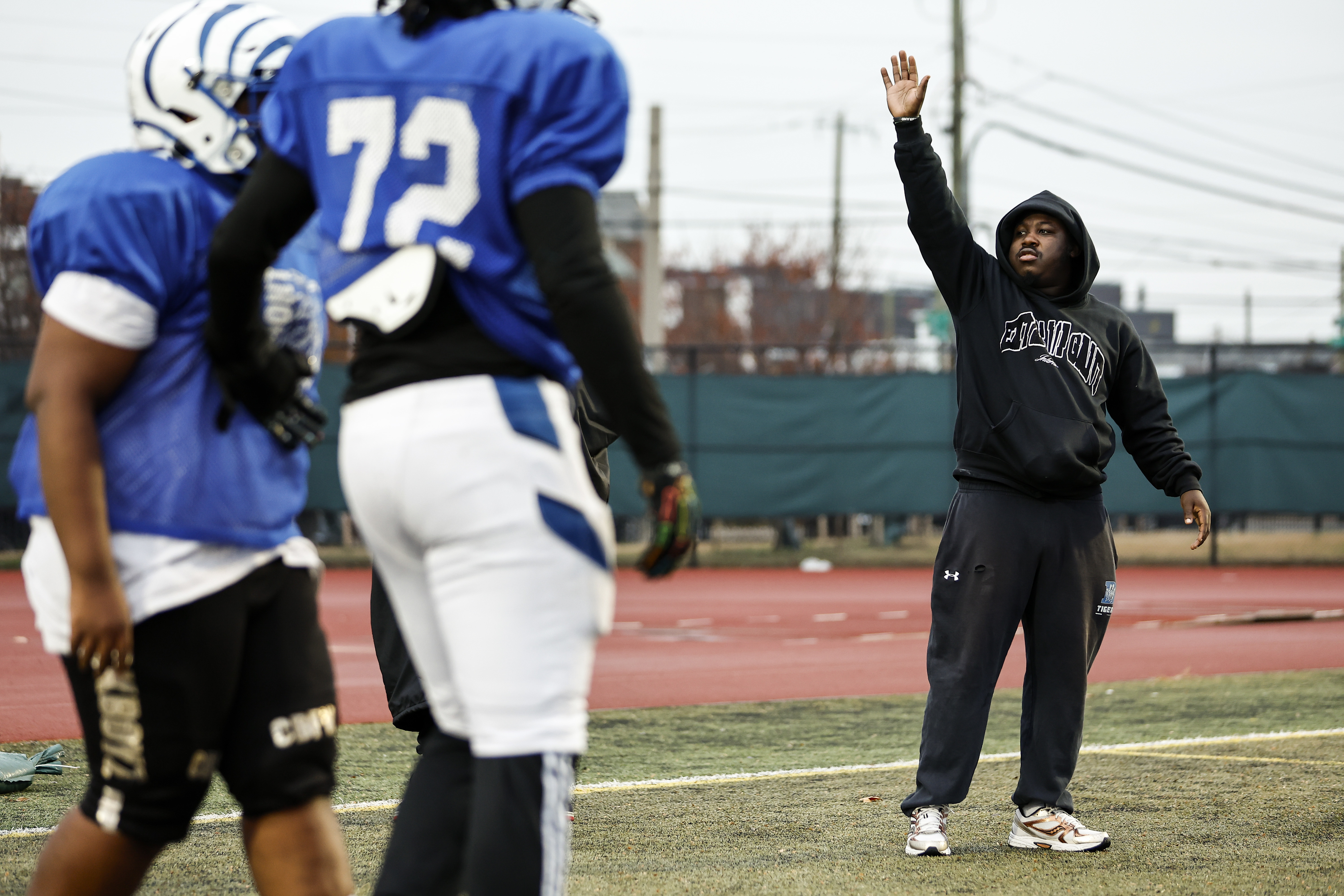
Belmont head coach Terrell Brent leads practice on Wednesday.
He said of the long bus ride home from York: “Instead of going home crying, there were happy tears — and smiling.”
Brent, 26, is a health and physical-education teacher at the school. He joined head coach Ed McCabe’s staff at Belmont when Brent was still a student at East Stroudsburg University, during COVID-19, which delayed and shortened the Tigers’ junior varsity schedule.
The Tigers have made progress each season. They lost a 2023 play-in playoff game to Steelton-Highspire, the eventual state champion, but they finished 5-6 last year, beating District 1 champ Morrisville in a play-in game before losing to Delone Catholic. The Tigers beat Morrisville again this year to earn the playoff game against York Catholic.
“Our coaches motivate us, but we keep each other accountable,” said Shyneem Newsuan, a sophomore linebacker and running back. “We don’t overlook anyone. We just play hard-working football.”
Billingsley-Walker said the lack of a practice field near the school — they take a bus to the athletic fields across the Avenue of the Republic from the Please Touch Museum, not far from Belmont’s former location — can take away valuable practice time.
But still: “I like us in the long run,” Billingsley-Walker said.
Because Belmont Charter faces schools its size in the playoffs, the Tigers won’t be overwhelmed by teams with substantially larger rosters. York Catholic had 28 players on its roster, according to MaxPreps, and Lackawanna Trail has only 30.
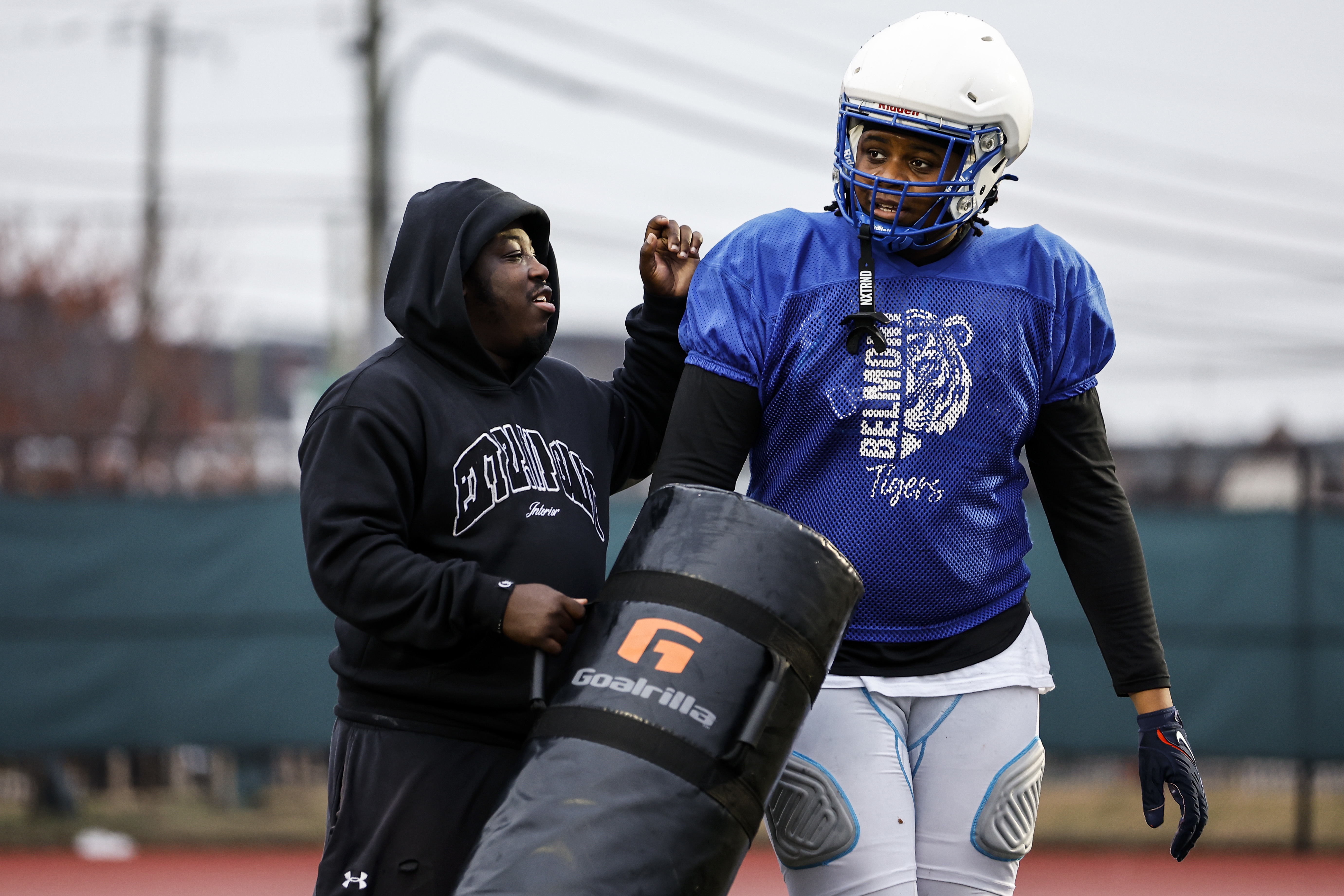
Belmont head coach Terrell Brent stands with senior tackle Mason Billingsley-Walker during practice on Wednesday.
(Roxborough High, another Public League team, played a regular-season game last month against Olney with only 17 players in uniform.)
Still, the four-weekend grind through the state football playoffs is much more punishing and treacherous for Class 1A teams than larger schools.
At a school like Belmont Charter, ranked 202nd in the state (Lackawanna Trail is 97th), there is no such thing as a depth chart, because everyone is needed to play both ways. Injuries can’t be avoided, but Brent has kept his team healthy by paying attention to training details.
“We always try to take care of the kids,” he said. “For the most part, they’re trying to get their bodies right. I believe in the staff and the abilities of the coaches to put kids in the best position possible.”
The Tigers find a way to manage. Their game against Morrisville was supposed to be held in Philly, but Spotwood said she could not find an available field in the city, so the game was played at Morrisville. The Tigers won, 19-0.
They will practice at the South Philadelphia Super Site for as long as they are playing in the playoffs. It has lights, and the open space they normally use for practice is ringed by trees. Their bus to South Philly was late, and when they got to the field, a soccer goal was on it.
Belmont Charter is the smallest school in the Public League with a football program.
The goal, fortunately for Belmont Charter, was on wheels, so two players were able to easily push it aside. But Brent already had a Plan B: If they could not move the goal, they would just use half the field — it is not as if the team is overflowing with players.
“To the outside world, we would be underdogs,” Brent said. “But we’re confident in the coaching staff and the kids to go 1-0 every week.”
When K.C. Keeler was hired by Temple last Dec. 1, there was one question swirling in wide receiver Kajiya Hollawayne’s mind: Should he leave?
In fact, he’d pondered that thought since former coach Stan Drayton was fired. He wouldn’t have been the first, as nearly 20 players entered the transfer portal after Drayton’s dismissal.
However, this wasn’t Hollawayne’s first experience with a coaching change.
His primary recruiter at UCLA, quarterbacks coach Dana Bible, retired before his first practice as a freshman in 2021. Hollawayne bounced between programs, including Grambling State and Riverside Community College, but left for greener pastures. This time, he decided he wanted to stick out the challenge at Temple.
“I just thought it’s time to stop running from the struggles that I have got going,” Hollawayne said. “Every school I’ve been at has had coaching changes. So I was like, ‘Let me stop running and see the other side, see how the grass is on this side.’ So when I stayed, I just knew to put my head down and grind, because a lot of times, coaching staff that come in, it’s not better for us. It’s like whoever comes in has a better hand on things like that, so I was just thinking about trying to get on their radar.”
The redshirt senior climbed Temple’s depth chart amid the offseason departures. Hollawayne talked to Keeler and new offensive coordinator Tyler Walker, who knew they could mold the receiver into the Owls’ system. The result: Hollawayne is the team’s best receiver this season. He leads the Owls (5-5, 3-3 American Conference) with 445 receiving yards and six touchdowns entering Saturday’s matchup against Tulane (8-2, 5-1) at Lincoln Financial Field (3:45 p.m., ESPNU).
“It’s been a steady process since January,” Walker said. “He’s come a long way. And he’s definitely earned a reputation as a guy that we can throw the football to in critical moments, and we feel confident that he’s going to go get the football.”
Before arriving at Temple, Hollawayne was a three-star quarterback out of San Jacinto (Calif.) High School, where he was ranked 34th in the state. He committed to UCLA under then-coach Chip Kelly, who also coached the Eagles from 2013 to 2015 and now is the Las Vegas Raiders offensive coordinator, but only lasted a season at UCLA.
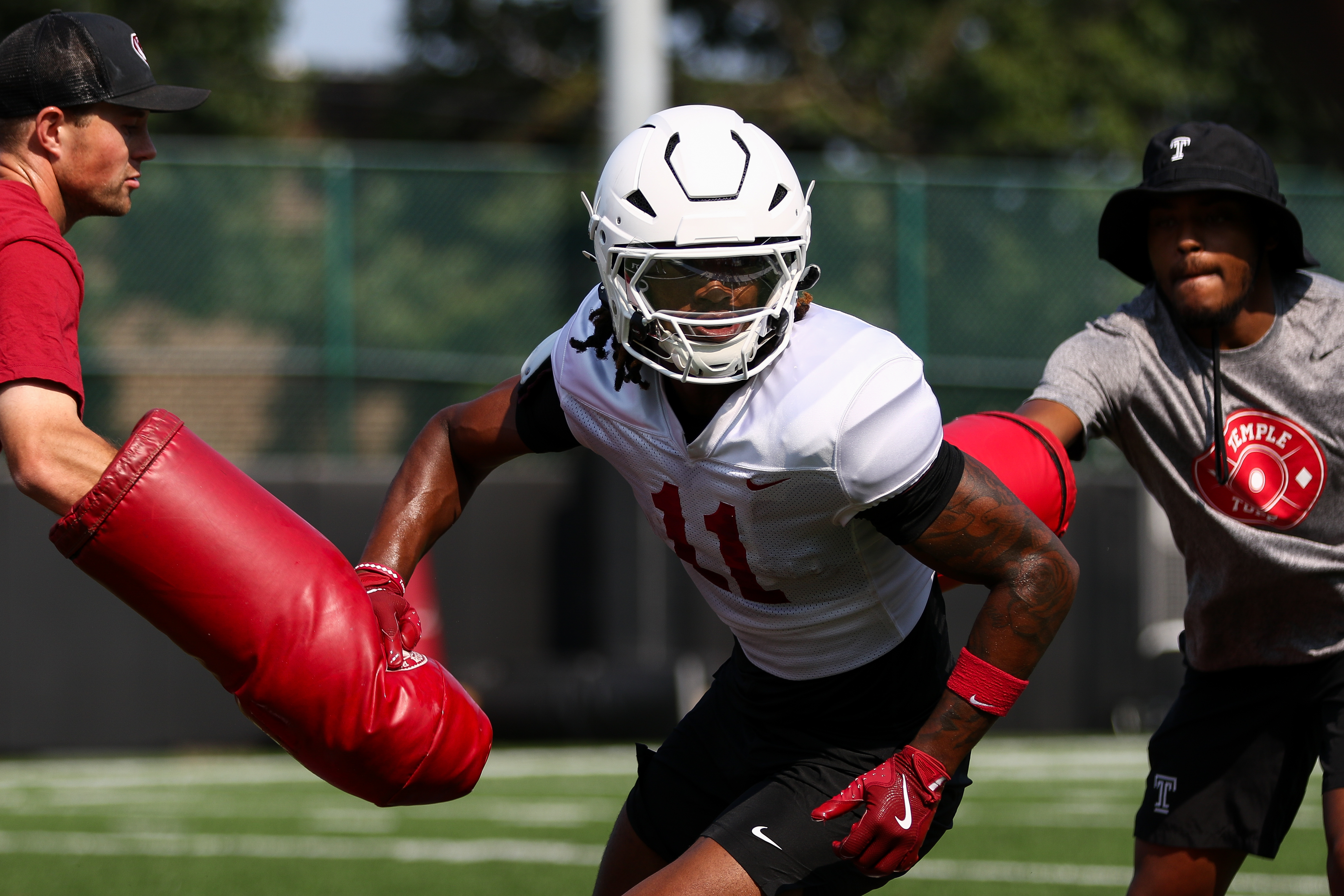
Temple wide receiver Kajiya Hollawayne takes part in drills during practice on Aug. 4.
He spent the 2021 season backing up Bruins starter Dorian Thompson-Robinson. Hollawayne, then 18, didn’t want to wait on the sidelines for another year. So he left.
He landed at Grambling State, which then was coached by Hue Jackson, but another setback occurred. Hollawayne suffered a severe strain on his rotator cuff that dated back to pitching while he was in high school. If he were to continue playing quarterback, he would need to have surgery.
Not wanting to lose another year of eligibility, Hollawayne asked his coach how he could get on the field, which led to a position switch from quarterback to wide receiver.
“It was kind of easy, because growing up, everybody played wideout,” Hollawayne said. “The hard part was learning how to block and stuff like that. There’s little things to block that you can get beat on.”
At Grambling State, he bonded with Tyron Carrier, the wide receivers coach. Even after Hollawayne left for Riverside Community College, they remained in touch. Eventually Carrier was hired at Temple and recruited Hollawayne.
While Hollawayne followed suit, he didn’t hit the ground running. He was behind wide receivers Dante Wright, Ashton Allen, John Adams, and Antonio Jones on the depth chart. While he finished with 120 receiving yards in 2024, Hollawayne used the opportunity to learn behind those older receivers.
“I was behind Dante in the slot, and he was a great player, just paying attention to him, seeing how he works the game, how he plays the game,” Hollawayne said. “Also just working because I haven’t been playing wide receiver for a long time. I’m looking at different wide receivers in our group, seeing what I can take from their game, put into my game. Also looking online and seeing what you can do better, like hand work.”
He also formed a connection with quarterback Evan Simon, who transferred to Temple from Rutgers that offseason.
When Hollawayne transferred to Temple from Riverside, he didn’t have a dorm room for the first month. Jones, who was roommates with Simon, asked if Hollawayne could crash on their couch. Simon obliged, and, before long, they were tossing passes together.
“[Antonio] is like, ‘Is it cool if Kajiya Hollawayne lives with us for a little bit?’ Absolutely,” Simon said. “Then next thing, we’re throwing on our own, him and I. We’d be out here throwing after whatever. He’d wait out there for me to get the gate because he couldn’t get in.”
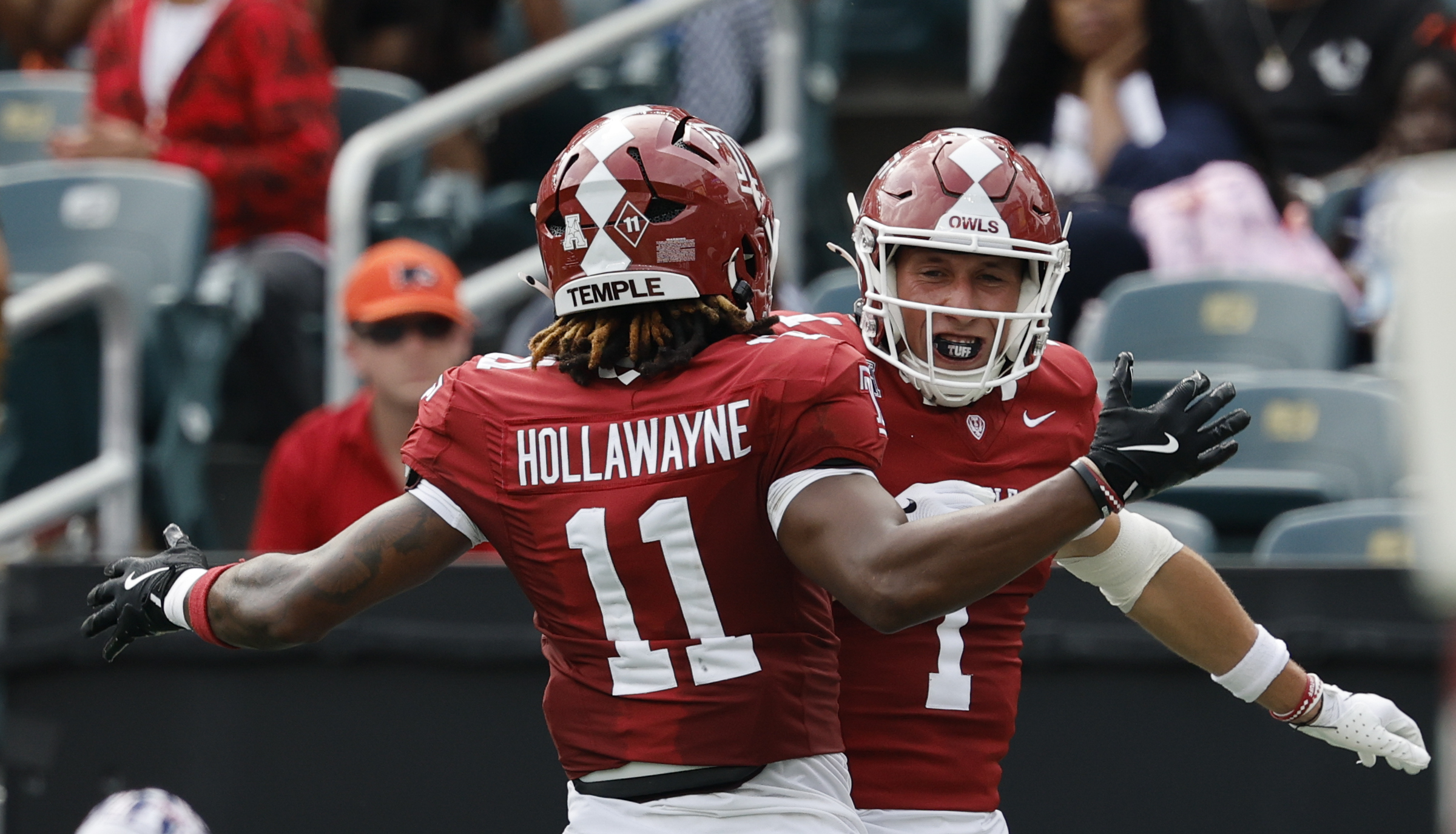
Temple wide receiver Colin Chase (right) celebrates a first quarter touchdown reception with teammate wide receiver Kajiya Hollawayne on Sept. 6.
Simon and Hollawayne’s extra work has paid off this season.
“I think some of it definitely was him trusting in his ability, and him seeing the results, and then him understanding that we have confidence in him to throw the ball in key moments,” Walker said. “Then when he makes those plays, it just builds confidence. I think a lot of it was that he always had the athletic ability, that was never an issue. It was just getting him to fine tune his ability and get him to do some things that naturally take some time, and he’s done a great job.”
For Hollawayne, his development on the field comes from his journey, which has had many twists and turns.
“I think that freshman year helped me a lot,” Hollawayne said. “I think if I would have played my freshman year, I wouldn’t be the man I am right now, because that actually humbled me a lot.”
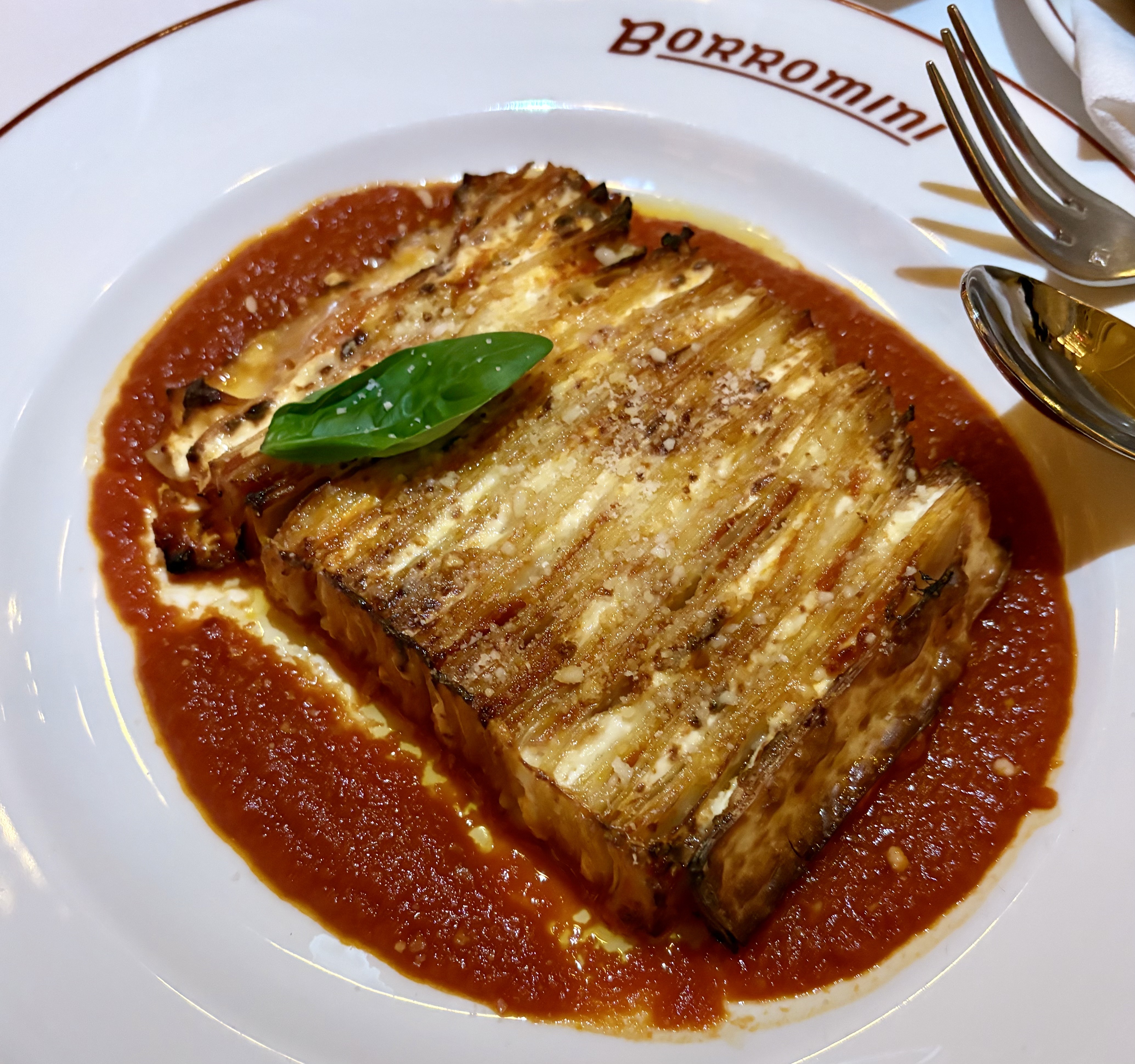
Borromini’s 100-layer lasagna looks like a miracle of noodle engineering. It’s the kind of “more is more” pasta spectacle that commands its own showcase box on the menu, puts curious diners in chairs, and requires a team of three dedicated attendants in Borromini’s vast kitchen to meticulously construct its layers — a tall stack of pasta sheets alternating with microscopic schmears of ricotta, creamy béchamel, and tomato sauce — that get baked, sliced, then crisped on one side, to be served atop a puddle of pomodoro.
Its intricate ridges are beautiful to behold. But to eat, this lasagna is more like a doorstop than a showstopper. The layers are so tightly compressed, it’s closer to a muddled mush than a deck of delicate harmonies, a squidgy blur of cheese and dough whose individual virtues could have been more compellingly conveyed in 10 layers rather than 100. Add a slow-cooked, jammy tomato sauce that leans sweet rather than bright and lively, and the final effect is one-dimensional. It has subtly evolved over the course of my multiple visits, but each time it prompted a disappointed shrug.
The 100-layer lasagna at Borromini has been constantly evolving. This version, eaten in November, three months after opening, has been called “the final version” by owner Stephen Starr.Borromini, 1805 Walnut St., on Aug. 16, 2025.
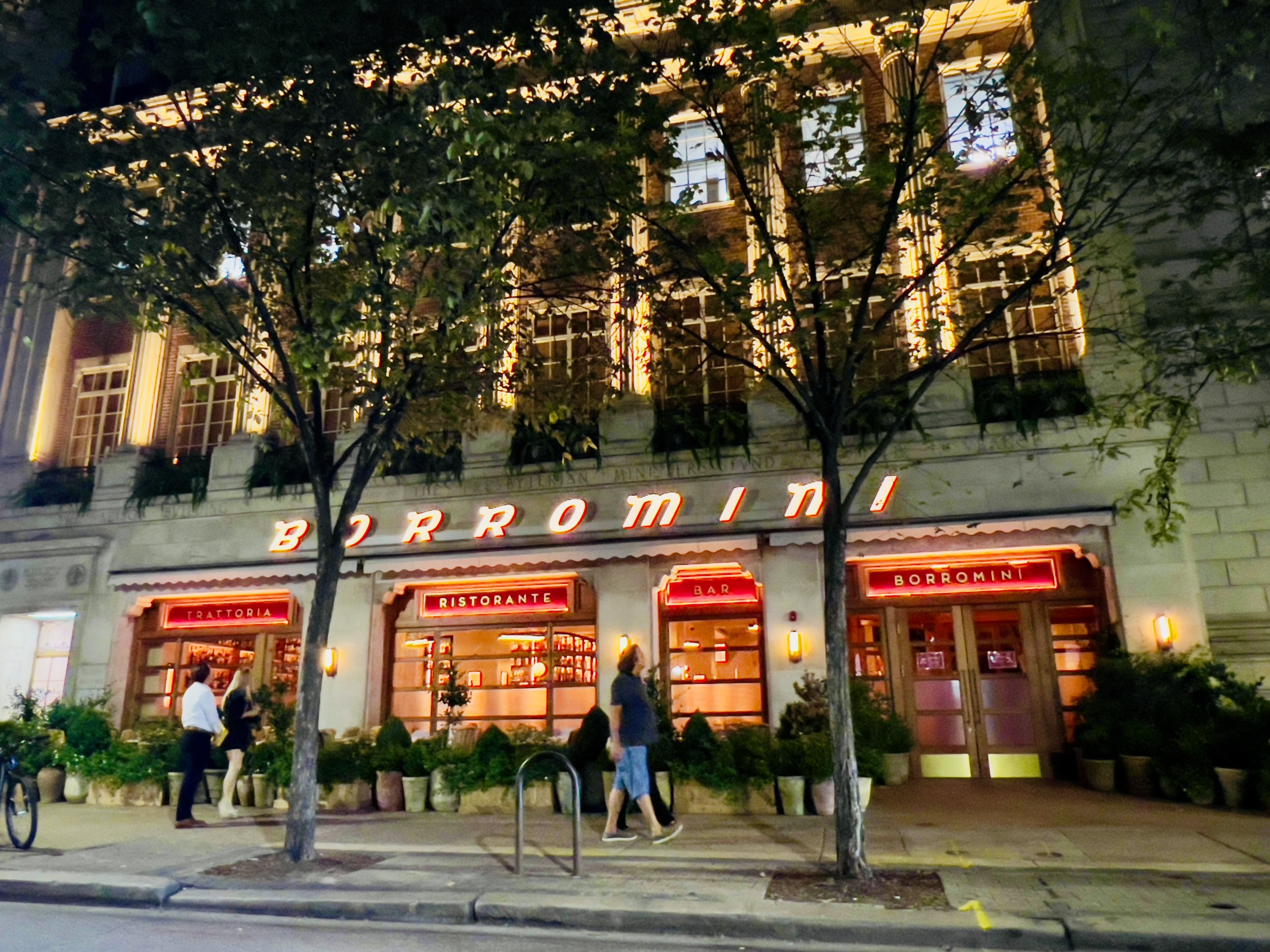
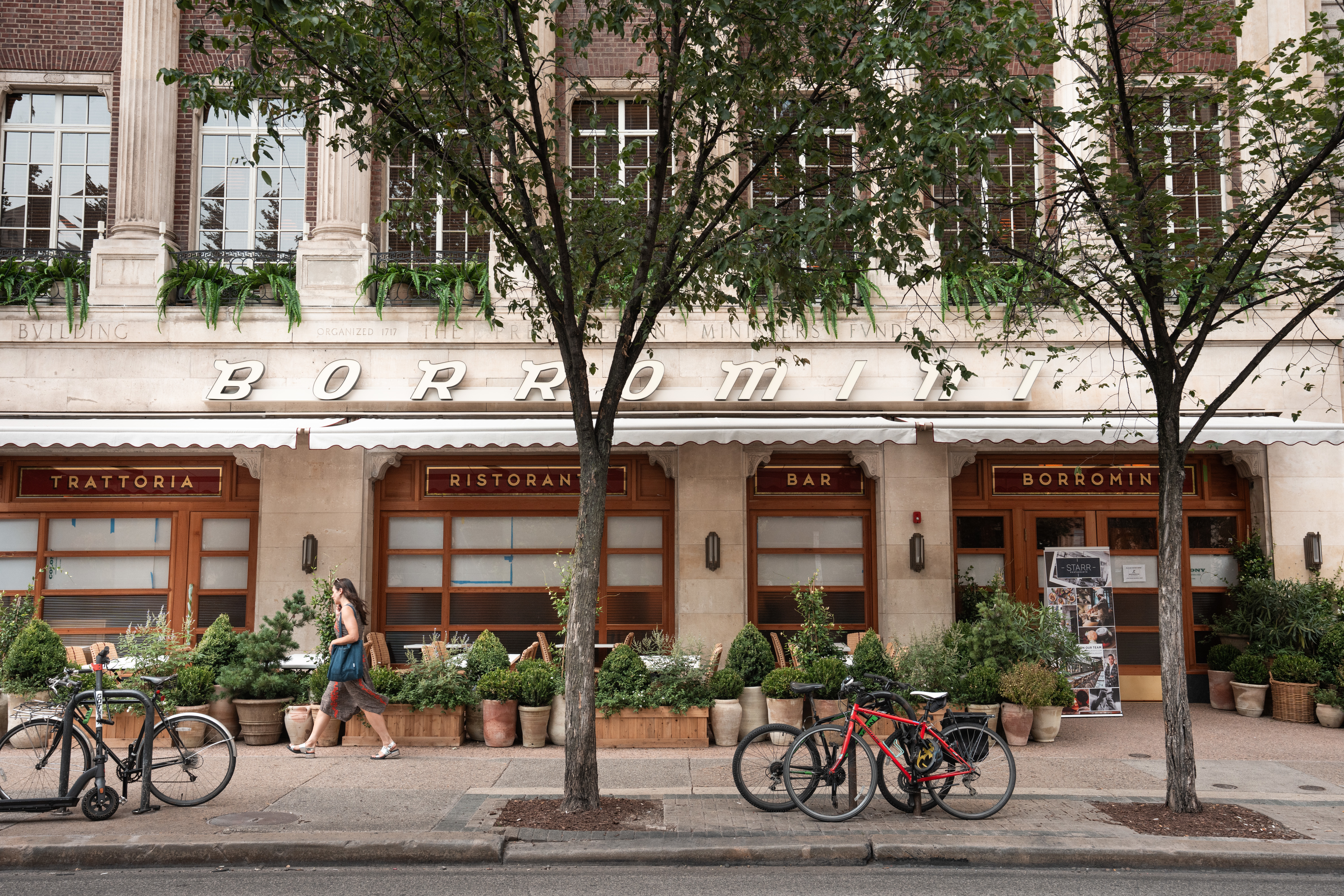
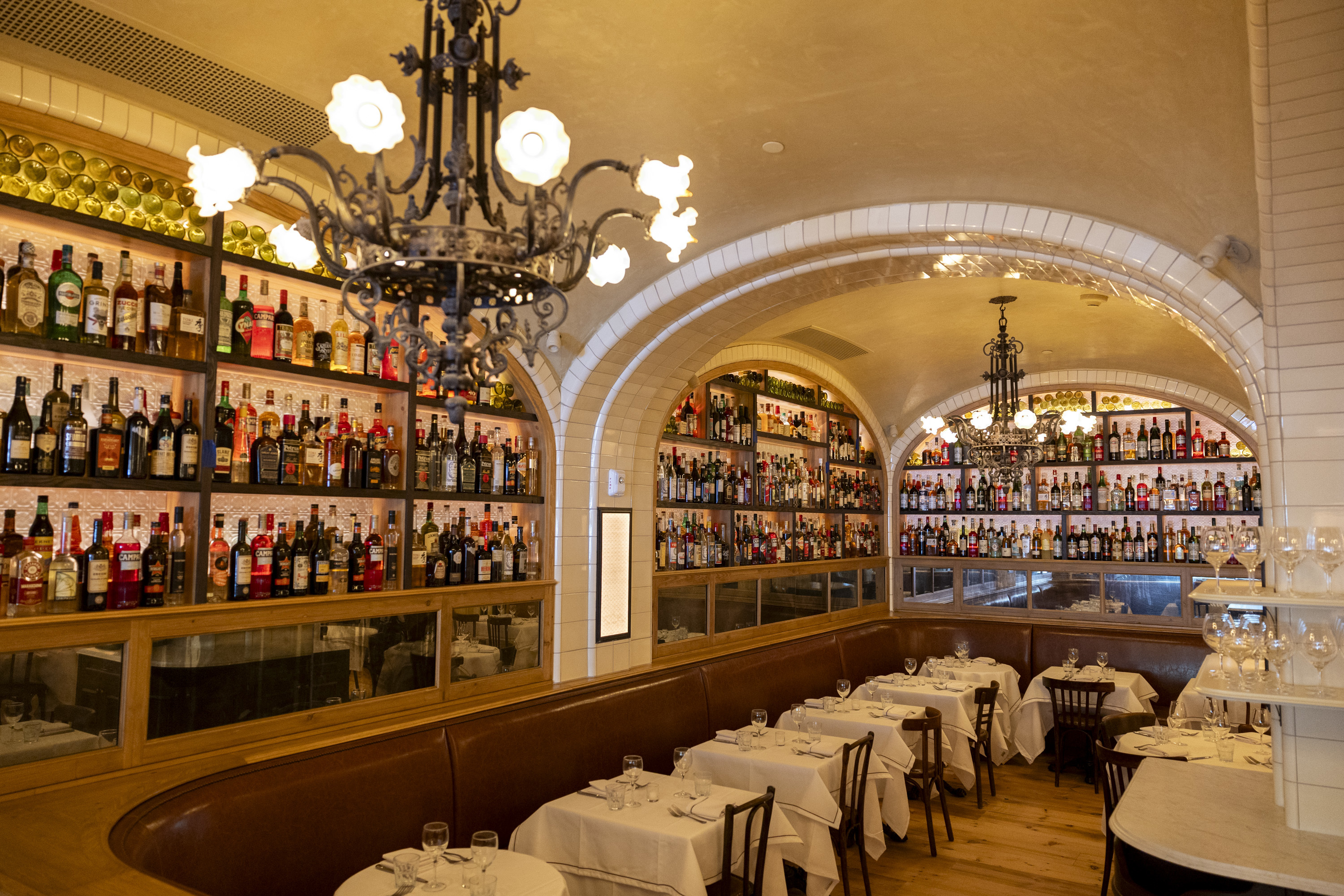
That’s not the thrill I expected from the marquee dish at this glitzy $20 million, 320-seat trattoria, whose dramatically lit column facade glows red over the northern edge of Rittenhouse Square. Stephen Starr’s first major hometown restaurant in years (and his 41st overall) is arguably the biggest opening in Philly in 2025. He went all out transforming the former Barnes & Noble into what many have aspiringly dubbed “the Italian Parc,” a two-story Roman-themed palace with vaulted ceilings, an intricate stone chip floor, and walls lined with 3,000 bottles. Starr brought on legendary New York restaurateur Keith McNally to design the space (Starr has syndicated McNally’s Pastis bistro to multiple cities since they partnered to revive it in 2018).
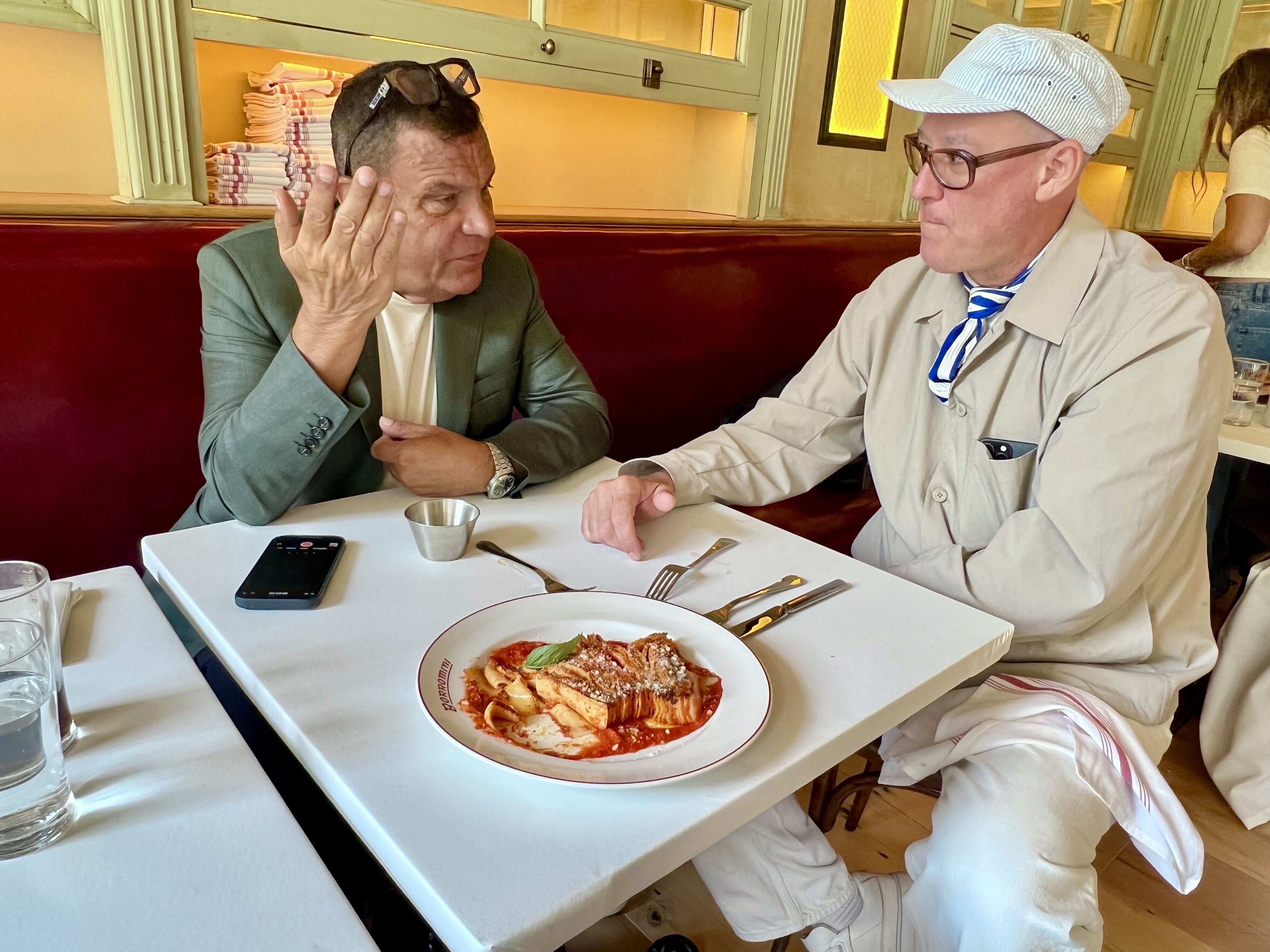
He also enlisted a hive of respectedculinary minds to create the menu over the course of 90-plus tastings, with his corporate food team and Borromini’s executive chef, Julian Alexander Baker, collaborating with Mark Ladner, the former chef of New York’s now-closed Del Posto, where Starr first tasted a magical rendition of that lasagna many years ago.
Stephen Starr (left) and chef Mark Ladner discuss Borromini’s version of Ladner’s signature 100-layer lasagna during a menu tasting at Borromini on July 15, 2025.
Ladner initially declined to recreate that decades-old hit when first asked. Starr should have listened. But Ladner — now the chef at Babbo, which Starr reopened in New York in October (and where a meaty version of that lasagna is also a menu feature) — ultimately gave in.
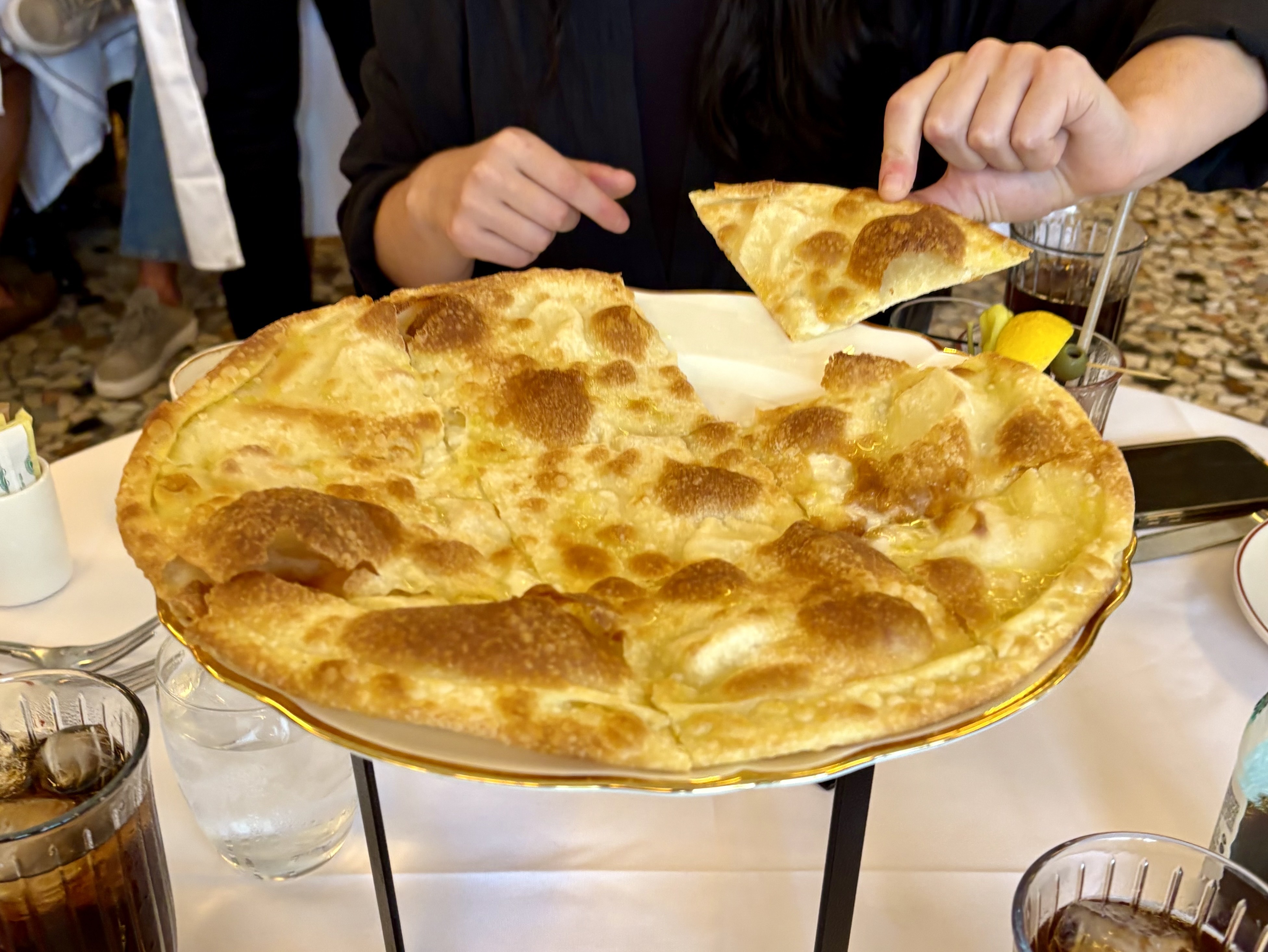
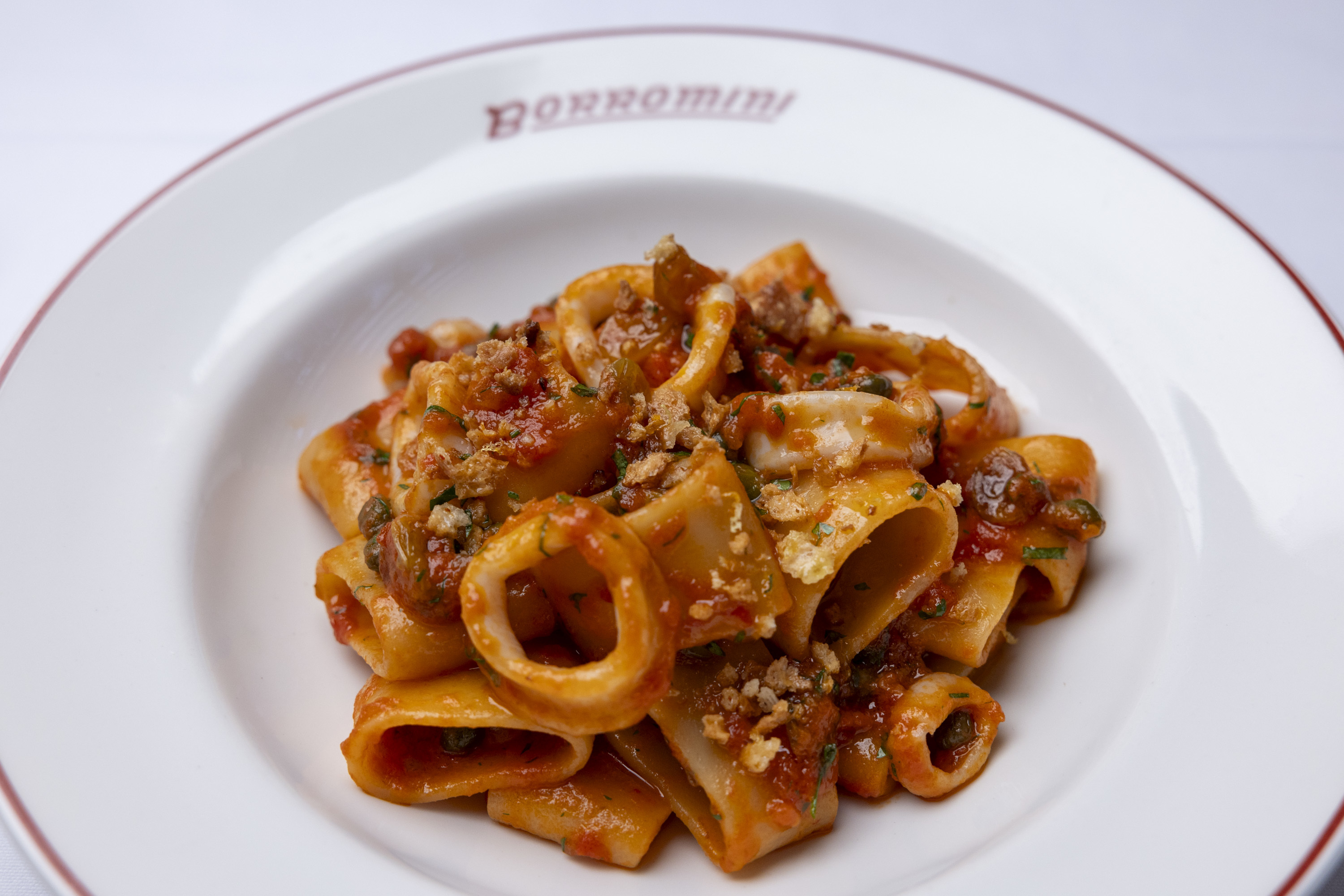
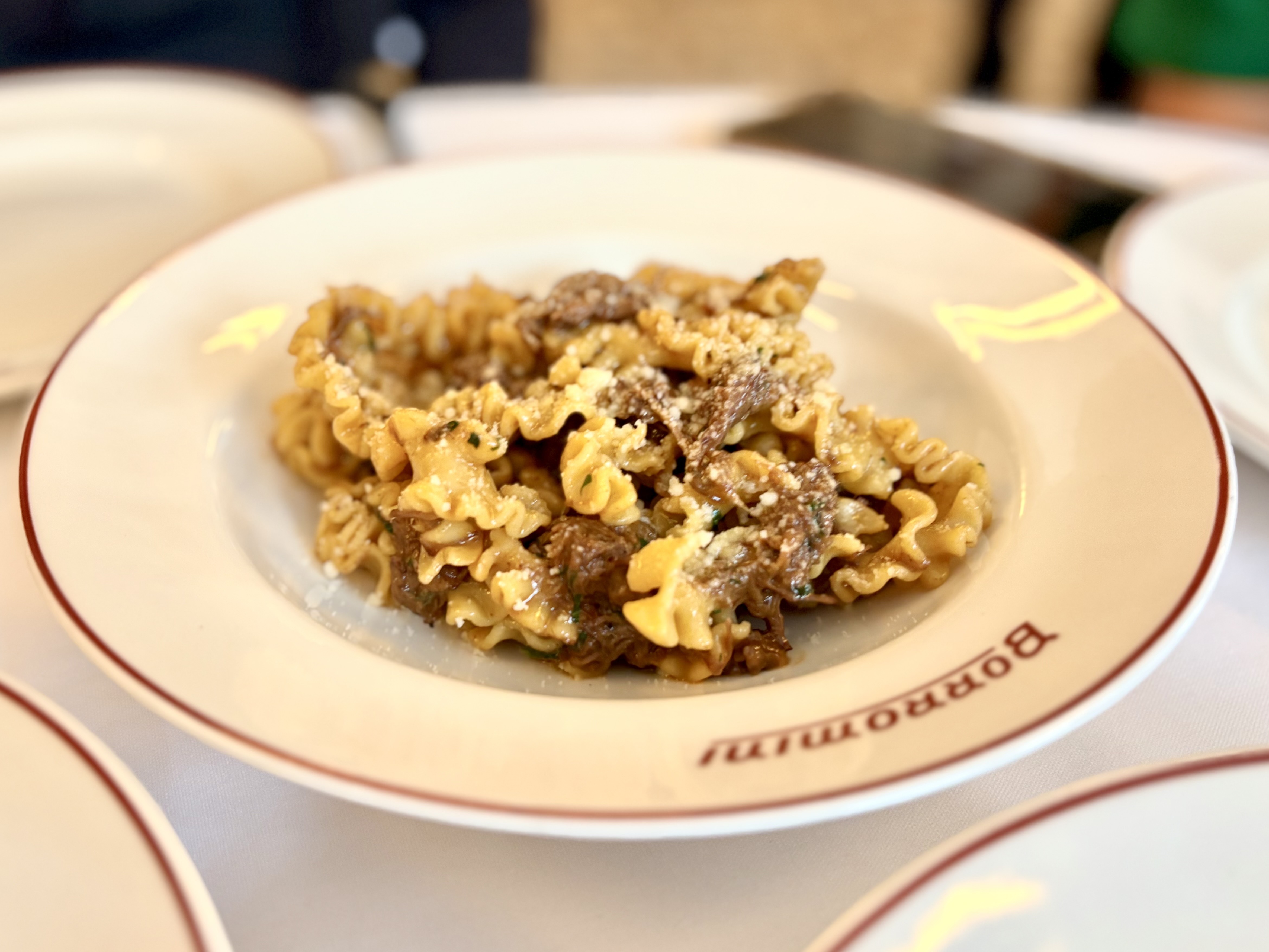
There are plenty of other, more admirable dishes on the menu here, including the focaccia di Recco from another consulting chef, Nancy Silverton, the LA star with whom Starr runs Osteria Mozza in D.C. The hot crisp of her flatbread’s wafer-thin rounds sandwiching tangy stracchino cheese is the one dish I order every time. I loved the contrast of silky braised oxtail that gathered in the frilly-edged ribbons of the house-extruded mafaldine. And the calamarata pasta loops, paired “Sicilian lifeguard”-style with look-alike rings of tender squid, chili spice, and golden raisins, is exactly the kind of delicious, obscure regional dish that shows how infinitely surprising the world of pastas can be.
The focaccia di Recco at Borromini is layered with tangy stracchino cheese.The “Sicilian lifeguard” calaramata with calamari and golden raisins at Borromini in Philadelphia, on Thursday, Nov. 13, 2025.
But Borromini is more about polishing the familiar than unearthing regional quirks. And that big lasagna has become an apt metaphor for why Borromini’s food too often seems off. No matter how grand the ambitions of a dish (or this restaurant in general) may be, stellar Italian food comes down to finesse, touch, and soul — elements that a kitchen-by-committee cannot engineer. In a town with exceptional Italian restaurants in varied styles, not to mention a population with a deep reservoir of red-gravy family nostalgia, the room for error is slim for a dining experience that averages just under $80 per person (before tax and tip).
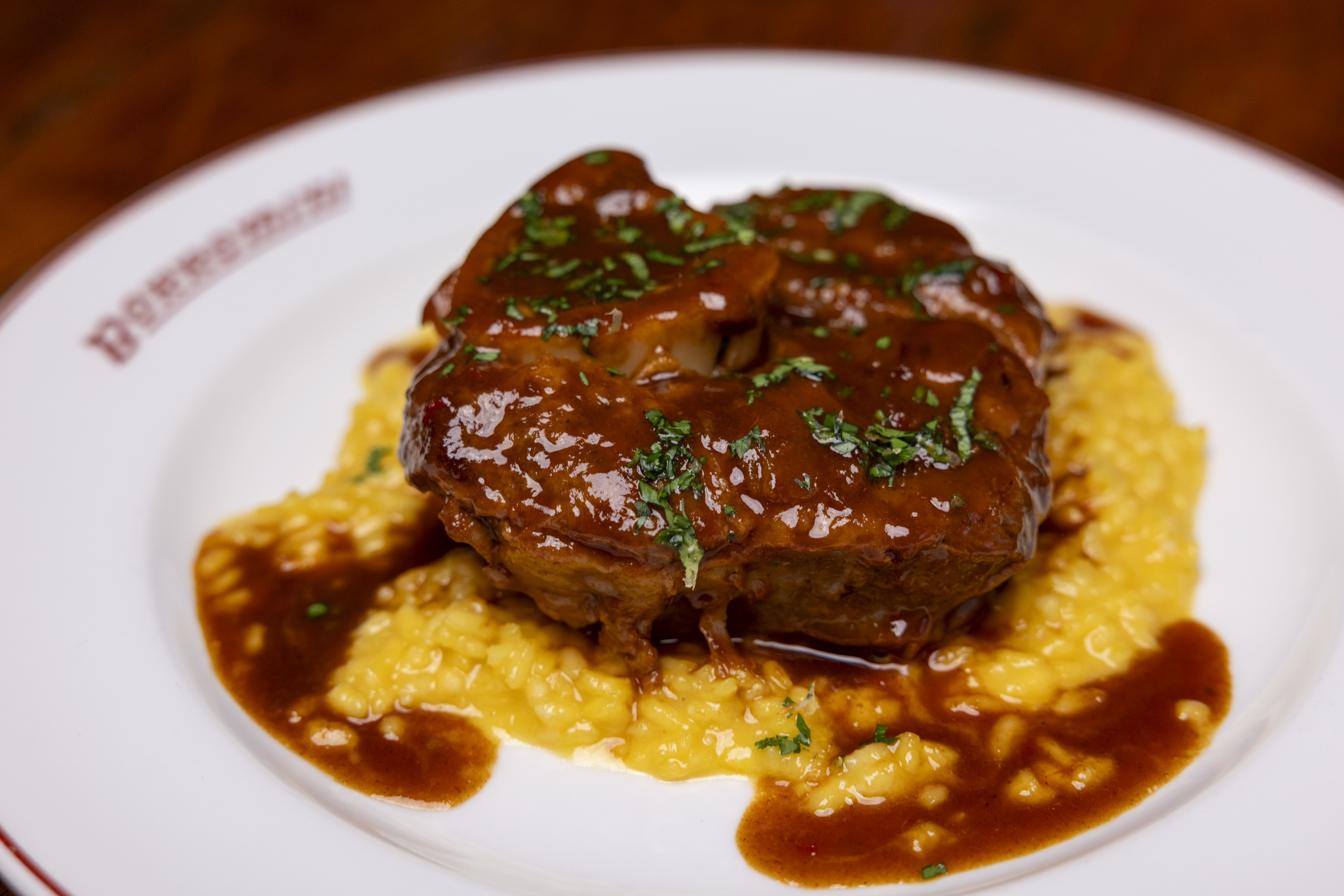
The crisply fried squash blossoms stuffed with lemony ricotta and the hamachi crudo dressed simply with Meyer lemon and olive oil were tasty, if not necessarily distinctive. The arugula with shaved raw artichokes would be my salad pick. The massive, fork-tender osso buco, a 1-pound shank drizzled with brown jus over saffron risotto with a marrow spoon poking skyward from its bone, is as close to textbook Milanese perfection as Borromini gets.
The osso bucco at Borromini in Philadelphia, on Thursday, Nov. 13, 2025.
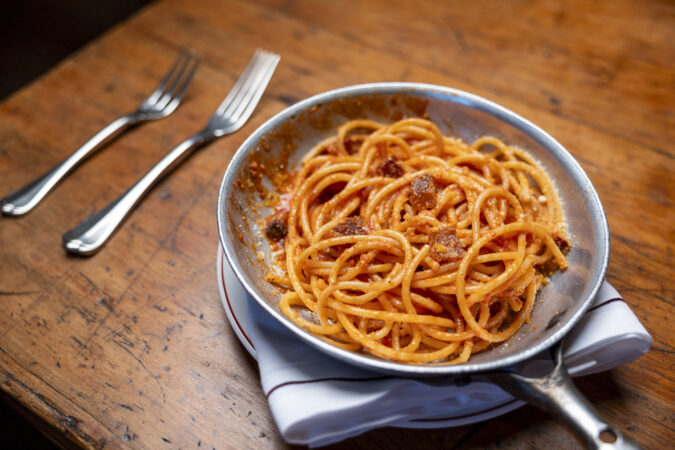
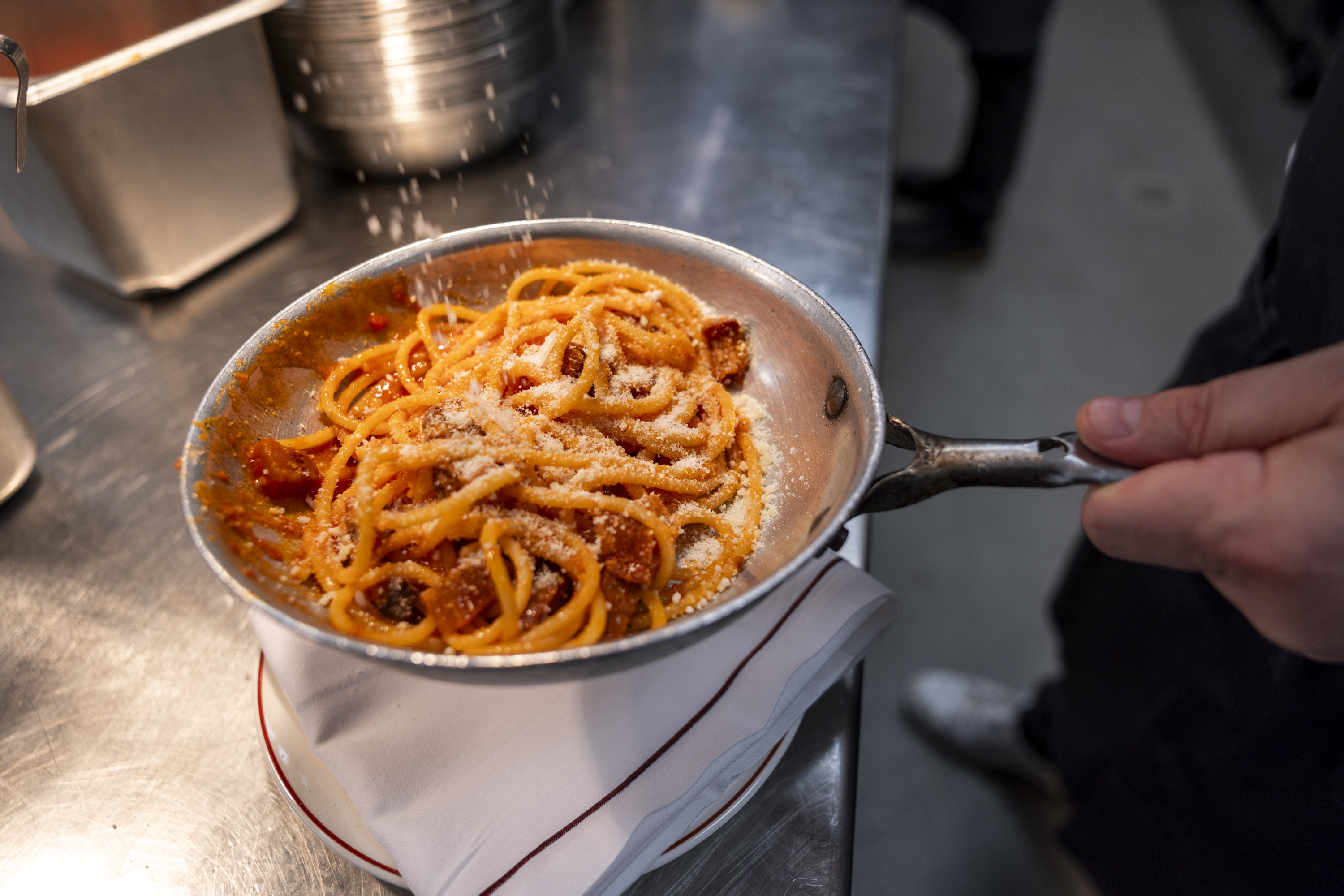
Borromini’s kitchen, however, struggled with consistency on several other traditional dishes. My favorite of the restaurant’s minimalist Roman-style pastas is the bucatini all’Amatriciana that’s brought to the table in the pan. But will you receive the version I tasted most recently, its simple tomato sauce vividly infused with the juniper- and pepper-sparked savor of properly rendered guanciale? Or will it taste bitter from the scorched nubs of cured pork I encountered at a previous meal?
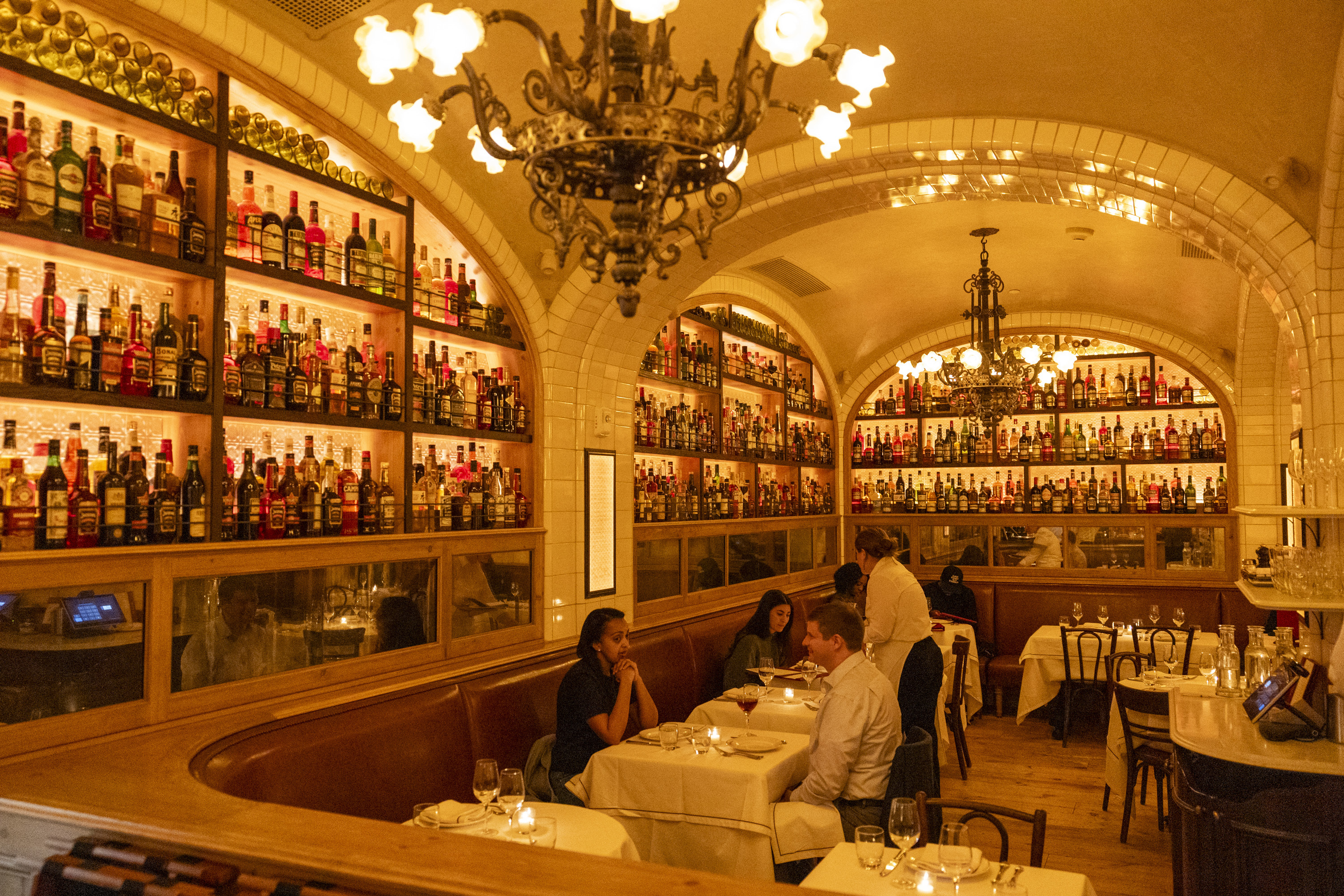
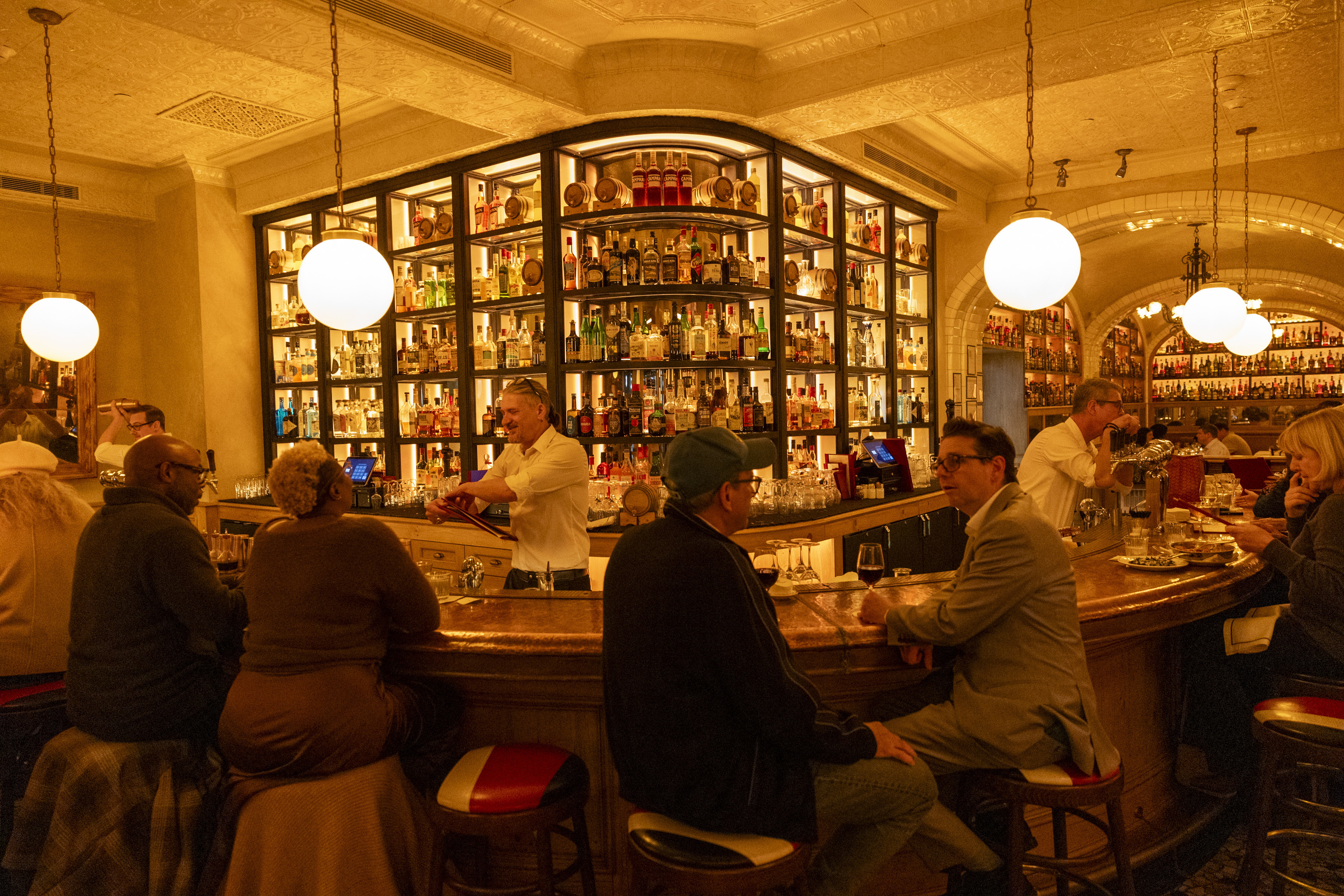
The pasta all’Amatriciana at Borromini in Philadelphia, on Thursday, Nov. 13, 2025.People dining in at Borromini in Philadelphia, on Thursday, Nov. 13, 2025.
I might agree with my Italian server, Thomas, that Borromini’s carbonara is one of the best I’ve tasted in Philly, its mezze rigatoni tubes glazed in a golden shine of well-tempered eggs and guanciale fat. Too bad it was already cold when I took a bite the moment it arrived at my table.
A number of the pastas were notable, including a spaghetti bright with lemon, butter, and pasta water, a deft display of minimalist satisfaction. I was also a fan of the Sardinian gnochetti with blue crab, uni, and tomatoes that brought a burst of seafood savor some other pastas lacked — like the linguine with clams that was virtually brothless, or the lobster spaghetti that was bountiful with crustacean but whose sauce lacked depth. The short rib agnolotti might have been excellent had their dumpling dough not been so thick.
The cacio e pepe has been consistently disappointing. Its peppercorn-speckled noodles were pasty and dry, with no halo of creamy sauce to spare. The clam pizzetta was a floppy round of spongy dough piled high with chopped Italian clams that radiated raw garlic. The $125 bistecca alla Fiorentina, a 2-pound prime porterhouse centerpiece for sharing, was so achingly oversalted, it wasted an otherwise stellar slab of beef that had been lovingly massaged with confit garlic butter.
The kitchen’s other stations turned in mixed results, as well. I much preferred the crispy-skinned dorade with salsa verde to the branzino with white beans, which was also horrendously oversalted. The eggplant parm was stiff with too much breading, though the splurge-worthy bone-in veal parm for $72 was good (unfortunately, they’ve since resorted to a boneless version). The lamb chops with salsa verde were more memorable, as was the rabbit cacciatore served in its metal crock with peppers and Castelvetrano olives, a rustic gem inspired by feedback from yet another consulting voice, the legendary Lidia Bastianich.
The mafaldine with braised oxtail ragu at Borromini.Folks dining in at the bar at Borromini in Philadelphia, on Thursday, Nov. 13, 2025.
It would be wrong to call Borromini a total bomb. Any place with a steady deluge of crowds putting it on target to generate $20 million in annual revenue has to be doing something right, and that would be its La Dolce Vita vibes. These sprawling rooms are a boisterous and glamorous crossroads for a broad swath of Philadelphians out for a night in their finest — fueled by flutes of “mini-tinis” (which my guest gleefully declared “filthy” with salty burrata brine), sweet-side Negronis, and Cynar-spiked espresso martinis.
Starr’s greatest talent may be his gift for building energetic public spaces that feel as if they’ve always been there. And while Borromini lacks the corner space and open cafe windows that allow Parc in its al fresco moments to become part of the fabric of Rittenhouse Square, McNally has crafted a Fellini-esque stage set of leather booths, honeyed light, and linen-draped wooden tables that feels magnetic — especially the undulating copper bar on the ground floor, where an intriguing collection of 100-plus amari and digestivi awaits.
All my servers — five different people over the course of my visits — were personable, outgoing, and well-prepared to make smart pairing suggestions.
I should have stuck with their suggestions to indulge those digestivi with desserts. The airy tiramisu here backfired, its lightweight cloud of whipped mascarpone lacking the richness to counter an overzealous cocoa shower and the wickedly acidic twang of ladyfingers soaked in espresso.
My favorite finish was sour in the best way possible: a hollowed-out lemon stuffed with sweet-tart lemon sorbetto. You’ve maybe seen something just like this in your neighborhood Italian place, brought in from the Italian frozen dessert powerhouse Bindi. But this was Borromini at its best, transforming something familiar into a better, fresher, more elegant version of itself. It will make you smile even as it puts a pucker on your face.
The lemon sorbetto served inside a hollowed-out lemon at Borromini in Philadelphia, on Thursday, Nov. 13, 2025.
Lunch served Monday through Friday, 11 a.m. to 3 p.m. Dinner served Sunday through Wednesday, 5 to 10 p.m.; Thursday through Saturday, until 11 p.m. Brunch Saturday and Sunday, 10 a.m. to 3 p.m.
Dinner pastas and entrees, $19-$72.
Wheelchair accessible.
There are several gluten-free options, including high-quality gluten-free pasta, which can be substituted with most sauces.
Drinks: The bar program offers 19 Italian wines by the glass, ranging from $12 house wines to $27 Franciacorta, a deep bottle list with more prestige options, Italian cocktails heavy on the expected spritzes and Negroni variations, and a list of nearly 100 amari and digestivi.
Menu Highlights: focaccia di Recco, squash blossoms; hamachi crudo; artichoke-arugula salad; pastas (spaghetti al limon, gnochetti sardi with crab, oxtail mafaldine, spaghetti all’Amatriciana, carbonara, “Sicilian lifeguard” calamarata); polpetta; rabbit cacciatore; dorade; osso buco; sorbetto al limon.
Borromini, the new Italian restaurant on Rittenhouse Square, in Philadelphia, July 29, 2025.Some of the first-floor dining area at Borromini in Philadelphia, Pa., on Tuesday, August 12, 2025.
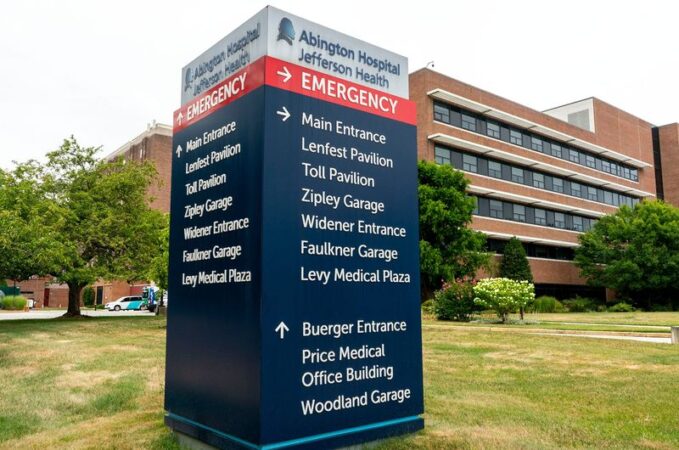
Jefferson Abington Hospital has closed its inpatient behavioral health unit and will use the 23 beds to accommodate extra patients in its emergency department, the health system said this week.
Abington will continue to provide crisis services to stabilize patients who are experiencing a mental health emergency when they arrive at the hospital, and will provide psychiatric evaluations needed to transfer them to specialized facilities. The hospital will also continue to provide outpatient behavioral health services.
The shift “will better serve our emergency department patients both with and without behavioral health needs,” Jefferson Health said in a statement.
A spokesperson confirmed the change on Tuesday but declined to say when the hospital had transitioned the 23 behavioral health beds into an emergency department “surge unit” or whether any staff members were laid off.
Jefferson Health announced in October that it had laid off between 600 and 700 of its 65,000 employees. The system reported an operating loss of $104 million in the first quarter of fiscal 2026, which ended in September, driven largely by its struggling insurance business.
The spokesperson also declined to say whether the hospital had plans to reopen the psychiatric unit in the future, or whether the change was part of ongoing restructuring across the sprawling 32-hospital system. Jefferson leaders have said they plan to streamline services across the Jefferson network, which has grown significantly through acquisitions since 2015.
The hospital’s inpatient psychiatric unit treated 350 patients in 2024, according to the most recent data from the Pennsylvania Department of Health.
Patients experiencing severe mental and behavioral health emergencies often need to be admitted to a specialized psychiatric hospital. General hospitals like Abington are critical entry points, helping to stabilize these patients and providing psychiatric evaluations, said Carla Sofronski, executive director of the PA Harm Reduction Network, a nonprofit organization that advocates for people with mental and behavioral health needs.
Patients must be evaluated by a psychiatrist or psychologist before being transferred to a specialized facility.
Sofronski said she worries that being in the emergency department could become even more stressful and scary for patients in a mental health crisis if they do not have dedicated rooms to decompress.
“It’s a very busy emergency department — what does that experience look like for people who are suffering?” she said.
Last year, an Abington security guard was accused by the Pennsylvania Department of Health of using excessive force against a patient being treated in the hospital’s psychiatric unit. Video footage of the hallway encounter obtained by The Inquirer showed the guard bringing the patient — who was naked beneath a hospital-bed blanket wrapped around her body — to the floor after she ignored his orders to stop walking. Jefferson has said the guard followed protocol.
Jefferson declined to say where it planned to transfer patients.
Other options nearby for patients in need of these services include Holy Redeemer Hospital’s 24 inpatient psychiatric beds, according to health department data from 2024, the most recent year available.
Elsewhere in the Jefferson network, Jefferson Einstein Philadelphia has 37 inpatient psychiatric beds and the system’s flagship hospital has 16.
The opening round of the PIAA state football playoffs arrived with a number of achievements and several firsts for area programs. This weekend promises more in the state quarterfinals.
Three defending state champions remain alive: Class 1A Bishop Guilfoyle of Blair County (District 6), Class 3A Northwestern Lehigh of Lehigh County (District 11), and Class 5A Bishop McDevitt of Dauphin County (District 3). Of the 48 teams that have reached the state quarterfinal round, 10 teams remain alive from District 12 and District 1.
In District 12, there is a team alive at each level (Belmont Charter-1A, Lansdale Catholic-2A, Neumann-Goretti-3A, Cardinal O’Hara-4A, Roman Catholic-5A, and La Salle-6A), with two major games coming this Friday in the District 1 Class 6A championship (Pennridge vs. North Penn) and Class 5A championship (Chester vs. Springfield).
Here’s a breakdown of the local teams competing in the state quarterfinals:
La Salle (10-1) vs. District 11 champion Easton (13-0) at Liberty High on Friday (7 p.m.).
This is the deepest La Salle has gone in the state playoffs since reaching the quarterfinals in 2015, when the Explorers lost to Parkland in the final year of the Class 4A system. The Explorers entered this season with the goal of winning the program’s first state championship since 2009.
After leading 24-0, La Salle scrambled to stave off a furious rally by Philadelphia Public League champion Imhotep Charter on Saturday and did it by leaning on its running game to win, 31-16.
“Easton is a very good football team, that is a senior-heavy team whose quarterback [Cole Ordway] has rushed for over 2,000 yards this year,” La Salle coach Brett Gordon said. “Easton historically likes to establish its running game, and that will be an important piece of the game to stop that.”
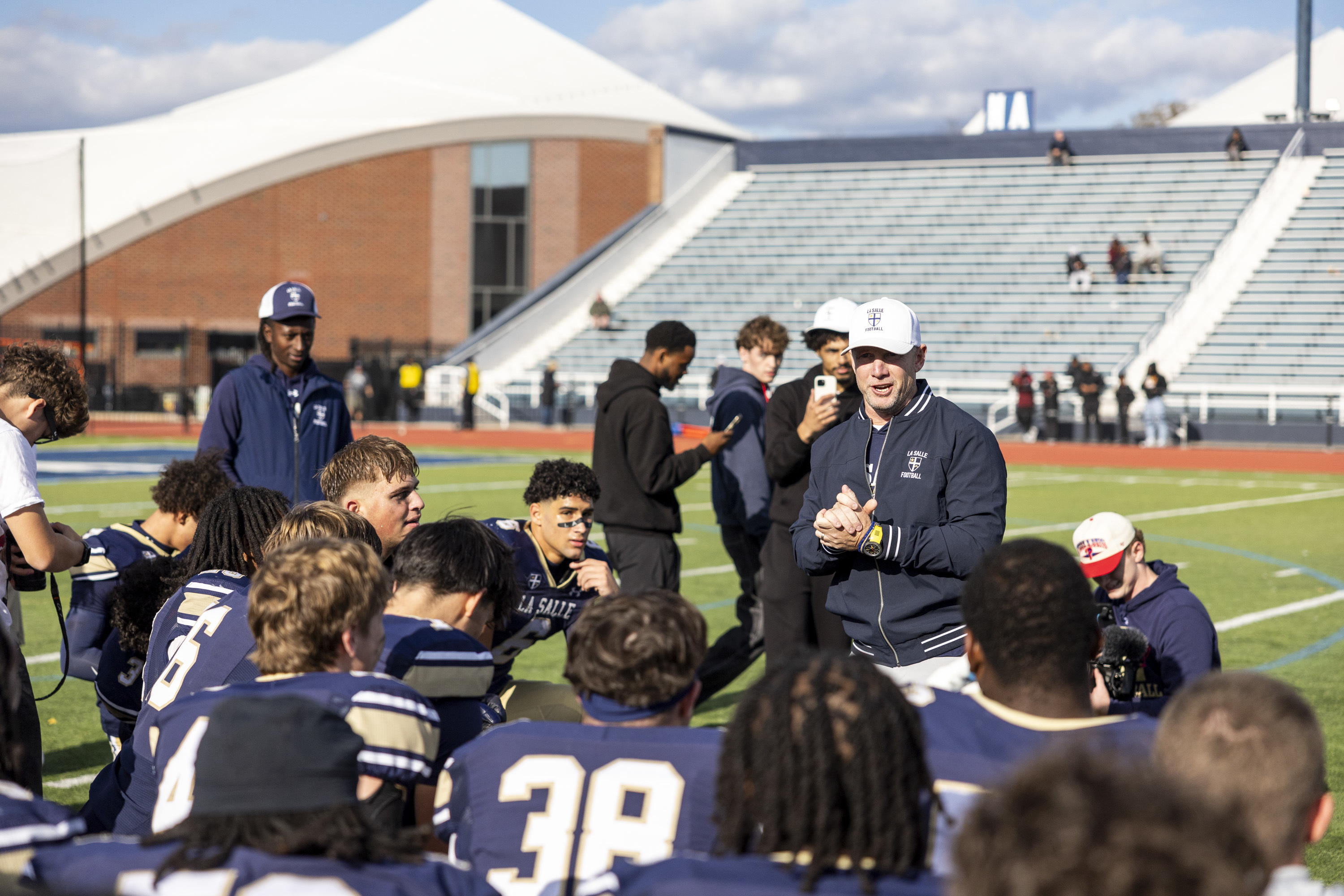
Brett Gordon speaks to his team after beating St. Joe’s Prep at Villanova Stadium on Nov. 1.
North Penn (11-2) at Pennridge (12-1) in District 1 Class 6A championship on Friday (7 p.m.)
This is a rematch of Pennridge’s 34-10 regular-season victory over traditional Southeastern Pennsylvania powerhouse North Penn, the first time the Rams beat North Penn since Oct. 19, 2012. Pennridge has never won a District 1 championship in football. Until this season, the Rams had not won a district playoff game during a full season since 2017. Pennridge has won more games this season (12) than its previous three years combined (2-8 in 2022, 3-7 in 2023, and 4-7 in 2024). The Rams will lean on 6-foot-3, 215-pound four-year starting quarterback Noah Keating, and running backs Ryan Rowe, a Princeton pledge, and William Dougherty.
“It’s always really hard to beat a good team twice, and they have changed a lot since they played us,” Keating said. “They have changed up personnel on both sides. We have changed some things, too. I think we are pretty confident going into this. We have been tested. We beat three really good defenses to get here in Plymouth-Whitemarsh, Downingtown East, and Coatesville.”
North Penn is riding an eight-game winning streak since the Pennridge loss. The Knights have not won a District 1 Class 6A championship since 2016, the first year that PIAA instituted the Class 6A classification system. The Pennridge-North Penn winner will face the La Salle-Easton winner in the state semifinals next weekend.
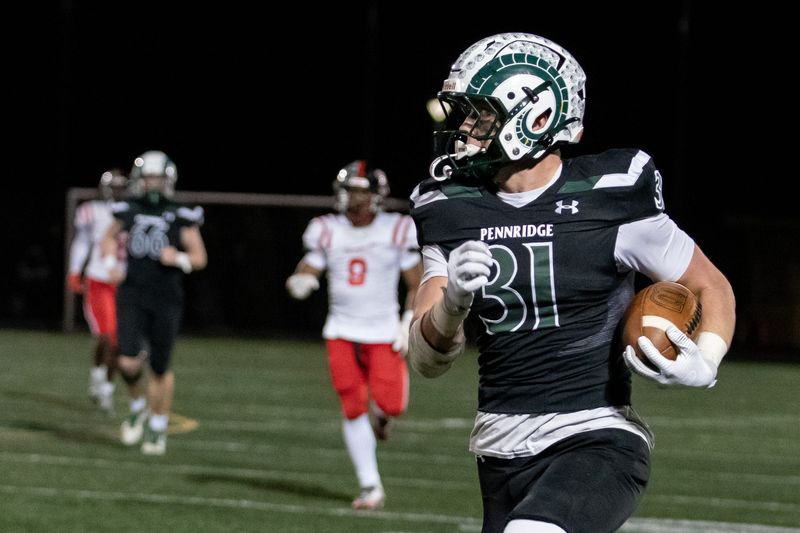
Pennridge running back Ryan Rowe running for a touchdown against Coatesville on Nov. 14.
PIAA Class 5A
Roman Catholic (9-3) vs. District 6 champion Hollidaysburg (13-0) at Mechanicsburg’s Memorial Park on Friday (7 p.m.).
This is a rematch of last year’s state quarterfinals, won by Roman, 48-14. Over their last three games, the Cahillites have averaged 53.3 points, having outscored their opponents by 160-28. Akron-bound senior quarterback Semaj Beals is the only Philadelphia-area quarterback to throw for more than 11,000 yards in his career, and he has two Division I threats in Ash Roberts and Eyan Stead Jr., both committed to Temple.
Roman coach Rick Prete may have the best team in the state. The Cahillites beat La Salle during the regular season and suffered one-point regular-season losses to St. Joseph’s Prep and Providence Day (N.C.). Hollidaysburg is averaging 50 points in its last three games. But the Golden Tigers have not faced a team as fast as Roman.
“Hollidaysburg is good, and faster than they were last year,” Prete said. “I feel good how we are playing right now, and we exposed ourselves early to learn what are flaws were. I feel we are battle-tested. Playing in the Catholic League and our nonleague schedule, and I don’t think we face anyone like the teams we saw. Styles make fights, and while we are battle-tested, we still have work to do. Springfield is really good, and Chester is really good and very well-coached. We are playing our best at the right time, but they are kids and we are trying to make sure we do not skip over any steps.”
Roman Catholic’s Semaj Beals is the only Philly-area quarterback to throw for more than 11,000 yards in his career.
Chester (13-0) at Springfield (Delco)(13-0) in District 1 Class 5A championship on Friday (7 p.m.).
This is the game of the weekend. Springfield, the No. 1 seed, is expecting more than 6,000 fans. It is a classic clash of the only two undefeated teams in the area, and they have been circling each other all season. Neither team has ever won a District 1 championship in football. Springfield has been to the district final four previous times (2014, 2016, 2017, and 2024).
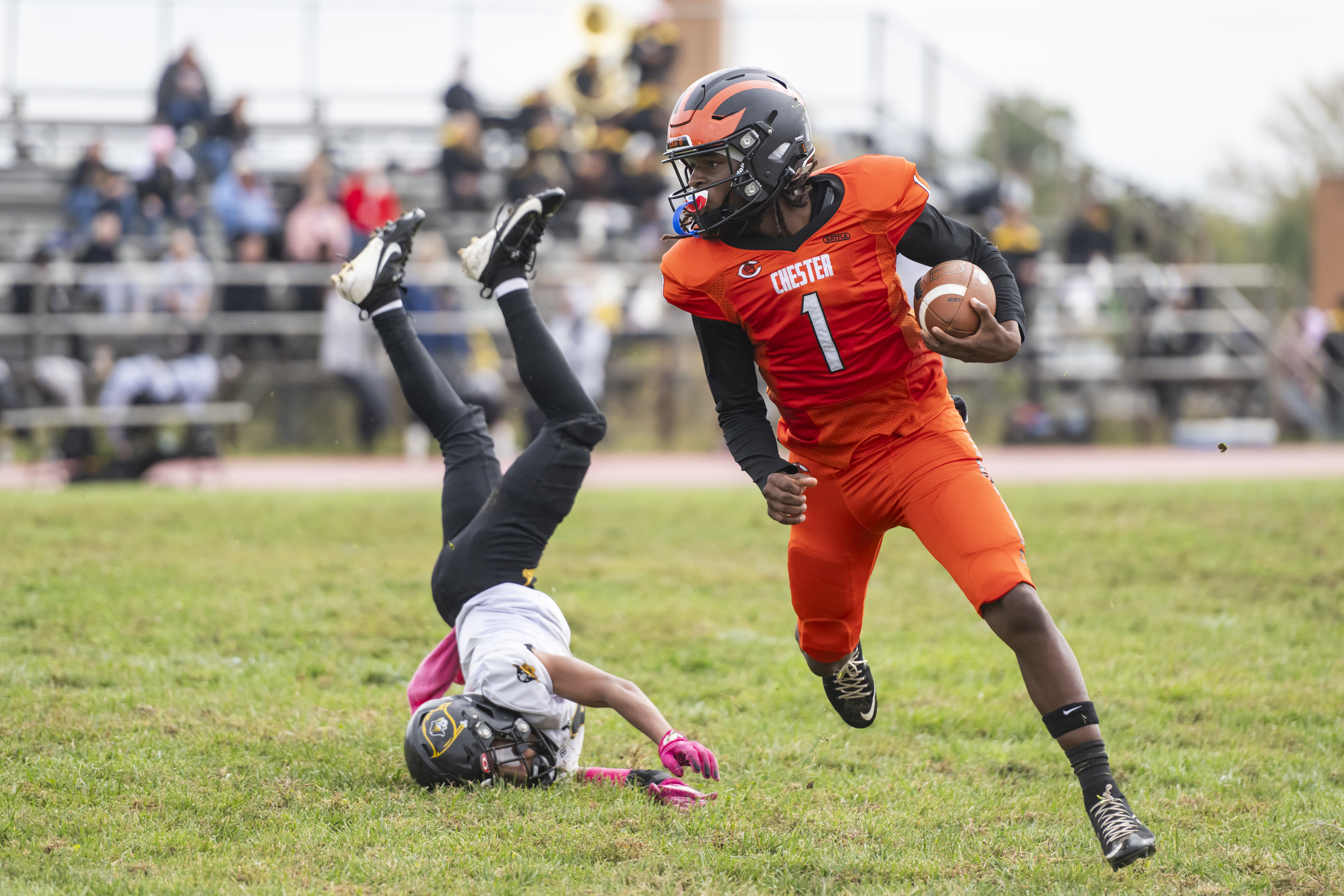
Chester, the No. 2 seed, has reached the final once, losing to Strath Haven in 2023. Chester is having a historic season, winning the most games in a season. This is the longest the Clippers have ever gone undefeated. The Clippers have won their last two district playoff games without their best player, Daron Harris, who was serving a two-game suspension after being ejected in the Marple Newtown opening-round playoff game. Harris will be eligible to play, and he will be joined by 6-foot, 170-pound junior receiver Sekai Brown-Murray, who missed five games with a pulled hamstring. Jalen Harris, Daron’s twin and the Clippers’ quarterback, has filled in nicely as a defensive back with five interceptions this season. Senior running back and linebacker Jerrell Palmer anchors the middle while 6-8, 330-pound tackle Semaj Henry, who’s committed to Syracuse, blocks everything else out.
“Springfield is a good football team, they are well coached, but we like where we are as a team right now,” Clippers coach Dennis Shaw said. “We are playing our best at the right time. We have seen everything teams can do to us with the power run.”
Springfield is 13-0 for the first time since 2017, when the Cougars lost to Unionville in the district final. Cougars coach Chris Britton has been successful behind his offensive line comprised of juniors Shane Kilroy (tight end), Zion Culbreth (left guard), Jaxon DeConti (center), and Alex McGinnis (right guard), along with seniors Dom Stewart (left tackle) and Michael Francks (right tackle). It is a young team made up of primarily sophomores and juniors.
“We are playing selfless football, and we focus on details,” Britton said. “We have very coachable kids. We hit adversity various times of the season and these guys didn’t get flustered. Chester is well coached; they do a good job of mixing things up. They throw well, they run well. They check a lot of boxes. We need to keep them off the field. If we give up explosive plays, we are going to have problems.”
Jalen Harris avoids a tackle against Interboro High School on Oct. 11.
PIAA Class 4A
Cardinal O’Hara (9-4) vs. District 2 champion North Pocono (13-0) at Whitehall on Friday (7 p.m.).
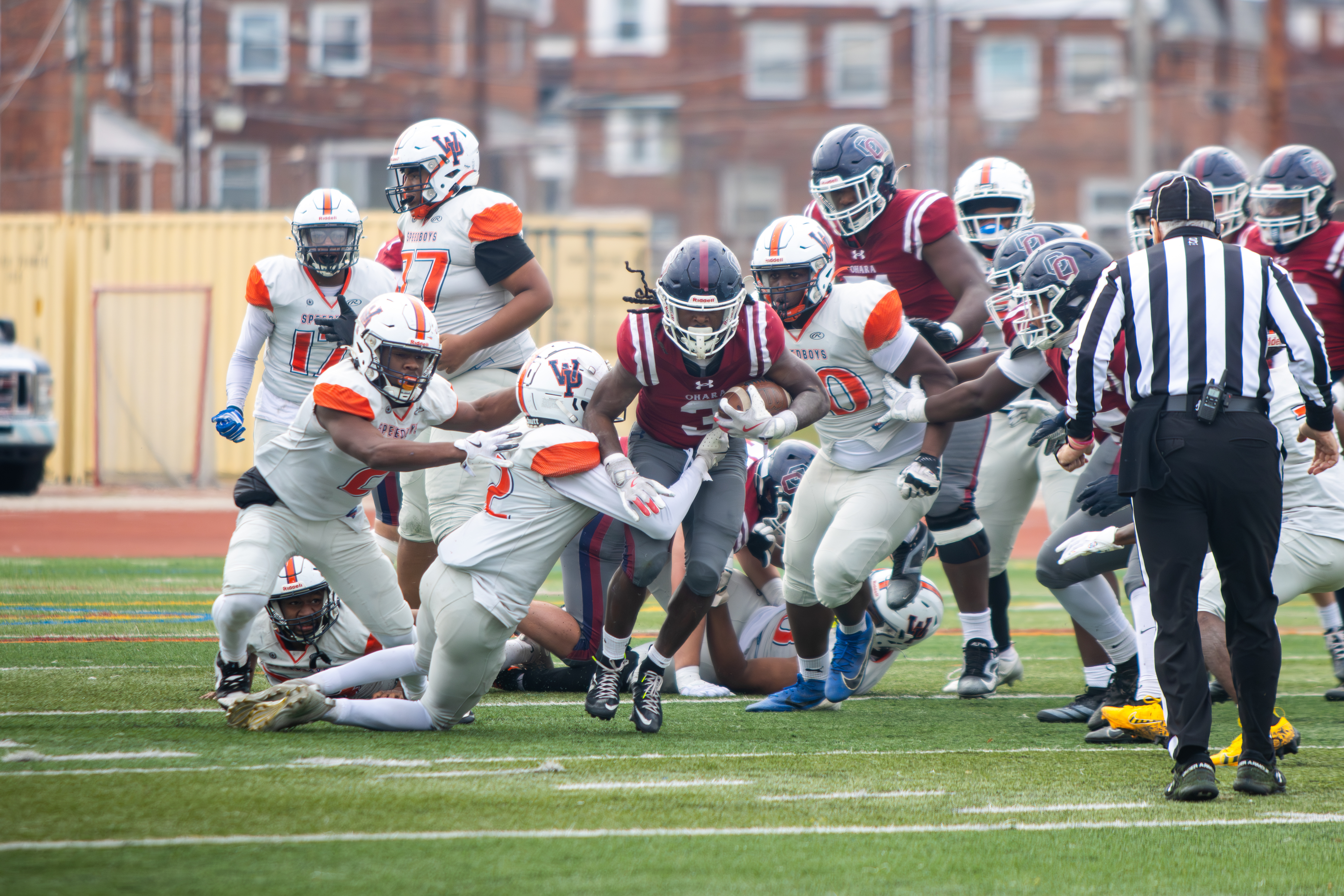
The Lions get to play at Saquon Barkley’s alma mater after beating West Philadelphia, 34-6, in the District 12 championship on Saturday for O’Hara’s first district championship and first state playoff victory. Senior tailback Amahj Gowans has been exceptional, carrying the offensive load. O’Hara’s defense will rely on Hakim Allah, Sammy Dantonka, and Jalen Patterson, who were game wreckers against West Philly, combining for seven tackles for losses of 32 yards.
Amahj Gowans of Cardinal O’Hara pushes through a group of West Philadelphia defenders on Nov. 15.
PIAA Class 3A
Neumann Goretti (8-4) vs. District 3 champion Trinity High School (10-3) at Exeter Township High on Friday (7 p.m.).
Neumann Goretti coach Albie Crosby continues to produce winners. He guided Imhotep Charter to the PIAA Class 3A state championship in 2015, enabling the Panthers to become the first Philadelphia Public League team to win a state championship. This year, he lost his starting quarterback, sophomore Shane “King” Salley, to injury in the season opener. He has since found 6-1, 170-pound freshman quarterback Marquis Coleman, who has produced a 6-1 record as a starter.
“We are playing hard and gritty — there is nothing pretty about our wins,” Crosby said. “We look like a South Philly boxer or point guard. We believe in Marquis. He’s very poised. Nothing bothers him. We need to go 3-0.”
Lansdale Catholic (11-2) vs. District 11 champion Williams Valley (12-1) at Lehighton High on Friday (7 p.m.).
This is Crusaders coach Dom D’Addona’s seventh season at the helm and this is the deepest Lansdale Catholic has gone in the PIAA state playoffs, since the late Hall of Fame coach Jim Algeo led the Crusaders to the 2004 PIAA Class 2A championship.
The Crusaders’ 43-7 victory over District 2 champion Lakeland last weekend was their first state playoff victory in 21 years. The Crusaders offense revolves around two-year senior quarterback Yeboa Cobbold. Cobbold threw for two touchdowns and scored one rushing in Lansdale Catholic’s opening-round romp over Lakeland.
Belmont Charter (9-1) vs. District 2 champion Lackawanna Trail (12-1) at Northern Lehigh High on Friday (7 p.m.).
This is Belmont’s fifth season as a program, and the Tigers have reached the PIAA quarterfinals for the first time. Freshman quarterback Nafis Watkins threw three touchdown passes and rushed for another score in Belmont’s 36-20 victory over York Catholic. Lackawanna Trail’s Isaac Ryon is a game-wrecking threat. He rushed for 150 yards and two touchdowns in the Lions’ state playoff-opening 31-20 win over District 4 champion Line Mountain.
When a Marriott representative visited the construction site of the W Philadelphia hotel in Center City in January 2019, months after the project should have been completed, the concrete floors were so uneven that a pen placed on the ground rolled downhill.
The construction of Philadelphia’s largest hotel, home of the W and the Element, both part of the Marriott umbrella, began in 2015 and had a strict 2018 deadline for completion. Delays led to an avalanche of nearly 30 lawsuits with the site’s owner, construction contractor, and design company pointing fingers at each other.
The W, which comprises 295 rooms of the 51-story building, eventually opened in 2021, roughly three years late.
Bringing to a close 25 of the lawsuits, a Philadelphia judge issued a 69-page memo last weeklaying out the saga and finding the construction company responsible for the project going “off the rails.”
Common Pleas Court Judge James Crumlishfound that the construction contractor, Tutor Perini Building Corp., subcontracted the concrete work to a company that botched the job. And despite knowing about the problems, which were detrimental to the entire project, Tutor denied the issues for months.
The judge’s finding comes after trial testimonies that took five months as the parties “turned this litigation into a challenging behemoth that made any effort at resolution impossible,” Crumlish wrote.
A yearslong saga
The saga began when Chestlen Development LP, the owner of the site, picked Tutor as the construction manager. The agreement capped the cost of construction at $239 million and required completion within 1,017 days after April 2015.
An attorney for Tutor did not respond to a request for comment.
From the outset, Tutor suffered “chronic turnover of its personnel,” the judge wrote, resulting in the loss of “institutional knowledge of key decisions.”
Tutored subcontracted the concrete work to Thomas P. Carney Inc. Construction, a Bucks County company.
When a different subcontractor, Ventana DBS LLC, began installing the wall-window systems, they immediately noticed a “big problem,” according to the judge’s memo. In many places the concrete wasn’t level or did not meet the elevation requirements in the design.
Tutor pushed back, denying that there was a problem, while quietly attempting to grind the edges of the concrete slabs to address the issue.
While denying the problem, Tutor hired outside advisers to evaluate the concrete work. But they confirmed the problem too.
Finally, in March 2018, Tutor shared the outside reports that acknowledgedCarney’s shoddyconcrete work with Chestlen’s representative for the project.
As summer 2018 began, it was clear that the project would not be completed on deadline.
In September 2018 Tutor asked Chestlen for an extension, which the owner rejected, saying the request came “months if not years after some of the concrete issues started to become apparent,” according to Crumlish’s memo.
The remediation of the floor began in April 2019 andwas completed in October.
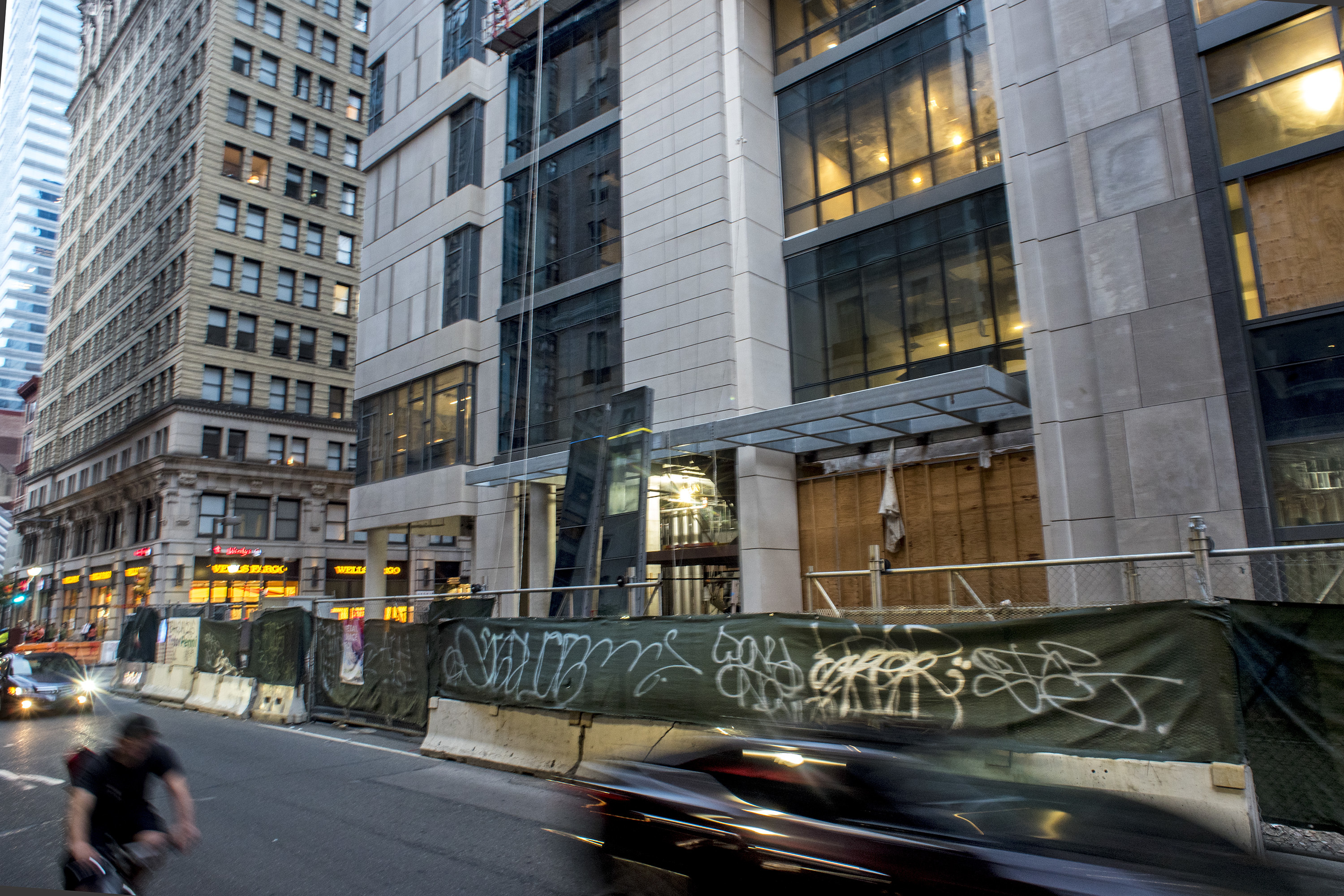
The sidewalk area of W Philadelphia and Element Philadelphia Hotel under construction, looking northwest along the 1400 block of Chestnut Street July 2, 2019.
The building finally obtained a certificate of occupancy in April 2021. But Marriott couldn’t open the W until August because over a hundred window vents were inoperable because Tutor failed to follow the design.
“Tutor knew that the floors did not meet specifications but did not timely disclose its knowledge to Chestlen or consult with it,” Crumlish wrote. The judge further found that Tutor refused to work with contractors to remediate the problems in 2017 and 2018, and proceeded to install interiors over the deficient concrete floors.
The blame game
Throughout the litigation, the parties all blamed one another for various problems and aspects of the delay.
Costs and liens piled up.
Chestlen paid Tutor $239 million for the construction, accrued over $40 million in damages as set in its contract with Tutor, and paid tens of millions to remediate the floors. The property is “clouded with over $155 million in liens,” according to the judge’s memo.
Crumlish concluded that Tutor breached its contract when it failed to oversee the concrete work and the window-wall installation, and generally didn’t fulfill its obligations.
“Every delay in the performance and completion of the project is the responsibility of Tutor and Carney,” the judge said. The judge will decide on the amount of damages following hearings scheduled for January.
Chestlen’s attorney was unavailable to provide comment. Carney did not respond to a request for comment.
The W hotel is located where One Meridian Plaza used to be, before that building suffered a devastating fire in 1991 and was finally demolished in 1999.
Filling the vacant lot, a mere block from City Hall, became a top priority for policymakers during Mayor Michael Nutter’s time in office. The hotel proposal eventually received $75 million in taxpayer support across local, state, and federal funding sources in addition to other legislative assistance.
The project was developed by Brook Lenfest, son of the former Inquirer owner H.F. “Gerry” Lenfest, whose foundation continues to own the newspaper today.
Last summer, K.C. Keeler and his wife, Janice, began building a house in Wilmington. This would not have been notable if Keeler were coaching at an SEC dynasty or a Big 10 stalwart.
But he works for Temple, where head football coaches have long been transient.
The Owls have shuffled through 11, including interims, in 15 years. Some were fired because they weren’t winning; some were poached to fill higher-paying jobs.
One coach, Manny Diaz, stayed for 17 days before running off to the University of Miami. Another, Geoff Collins, led Temple to a 15-10 record, only to leave for Georgia Tech after two years.
Collins took over for Matt Rhule, who went 28-23 over four seasons before departing for Baylor. Rod Carey came next, and was fired after three seasons, during which he posted a 12-20 record.
Stan Drayton, who won only nine games in parts of three seasons, didn’t even make it to the end of the 2024 campaign.
This dynamic — being a smaller Division I program with fewer resources — has led Temple to a difficult balancing act. The school is established enough to hire good coaches but not always to keep them.
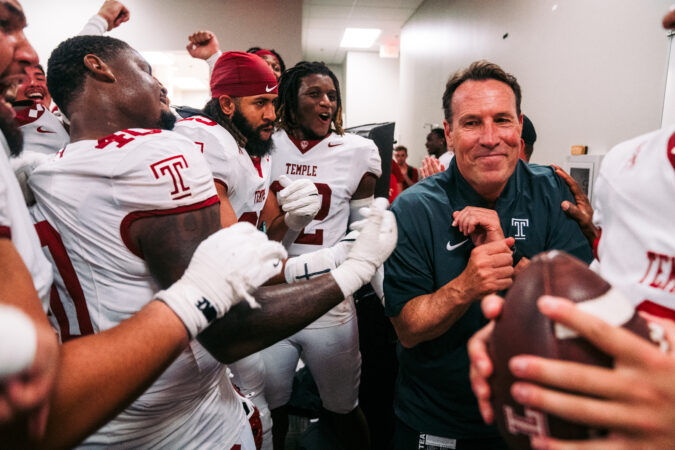
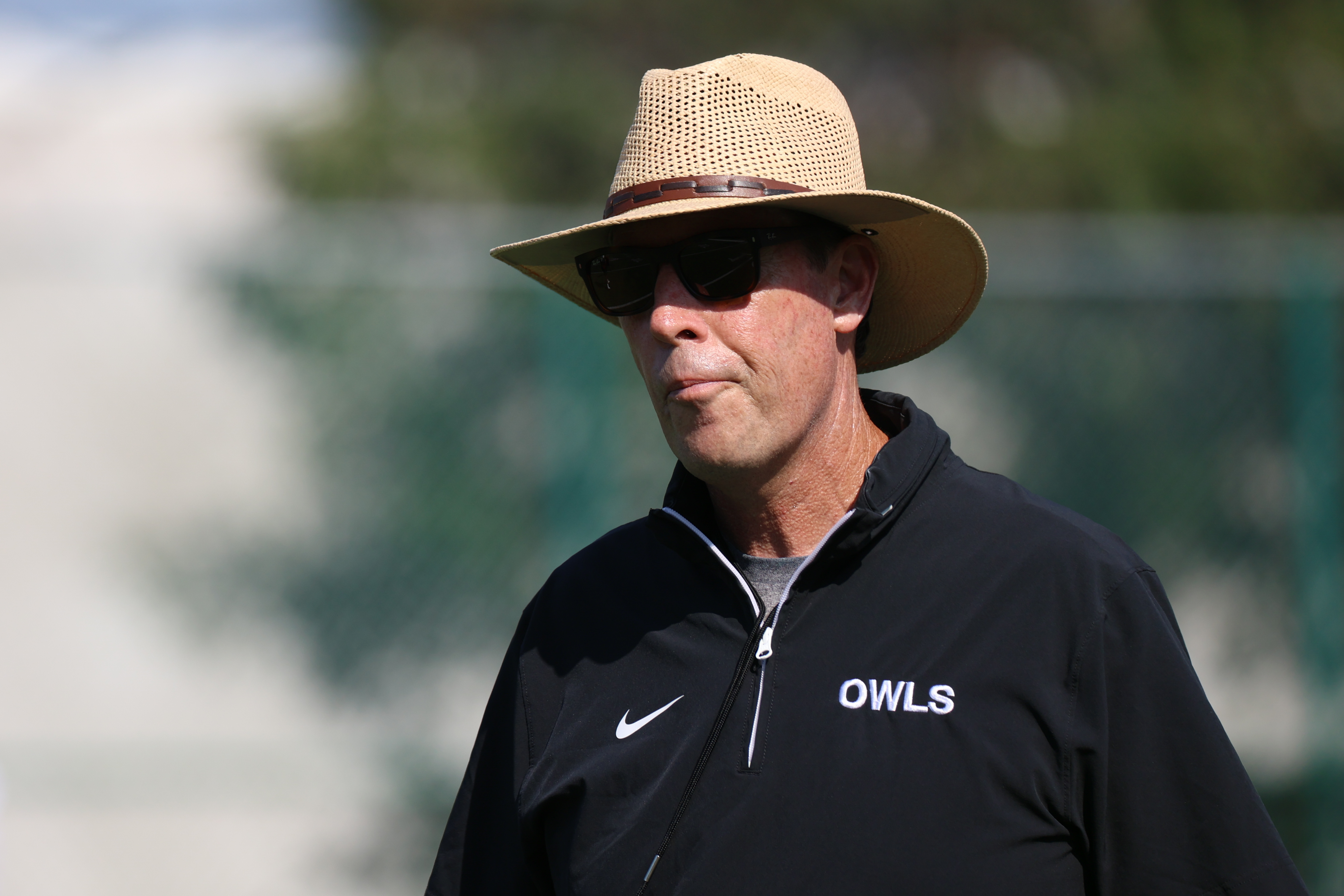
Temple coach K.C. Keeler looks on during practice at the Edberg-Olson Hall football facility in July 30.
Keeler, whom the Owls hired on Dec. 1, appears to be different. He has an established track record of building winning programs, and the 66-year-old won’t likely use Temple as a stepping stone.
He’s deeply invested in the Owls and has genuine belief in his team’s ability. He also has local ties: The coach grew up in Emmaus, Lehigh County, 50 miles north of Philadelphia, and has a daughter and grandchildren who live in Delaware.
Which is why he built a home in the area. Keeler is the first Temple head coach since Bruce Arians in the mid-1980s to do so.
“It’s incredible what he’s done,” said senior quarterback Evan Simon, “and it’s only his first year. I wish I had a couple more with him.”
A winning legacy
Keeler’s first memory of Temple dates to the late 1970s, when he was a starting linebacker at the University of Delaware.
The Blue Hens were a strong team but consistently struggled against the Division I Owls. In 1978, they won 10 games but were soundly beaten by Temple, 38-7.
In 1979, when it won a Division II national championship, Delaware lost only one game. It was to Temple, at home, 31-14, on Sept. 22.
Keeler graduated in 1981, and was hired as an assistant coach at Amherst College in Massachusetts that year. Rowan added him to its staff in 1986 (when it was known as Glassboro State College) and named Keeler head coach in 1993.
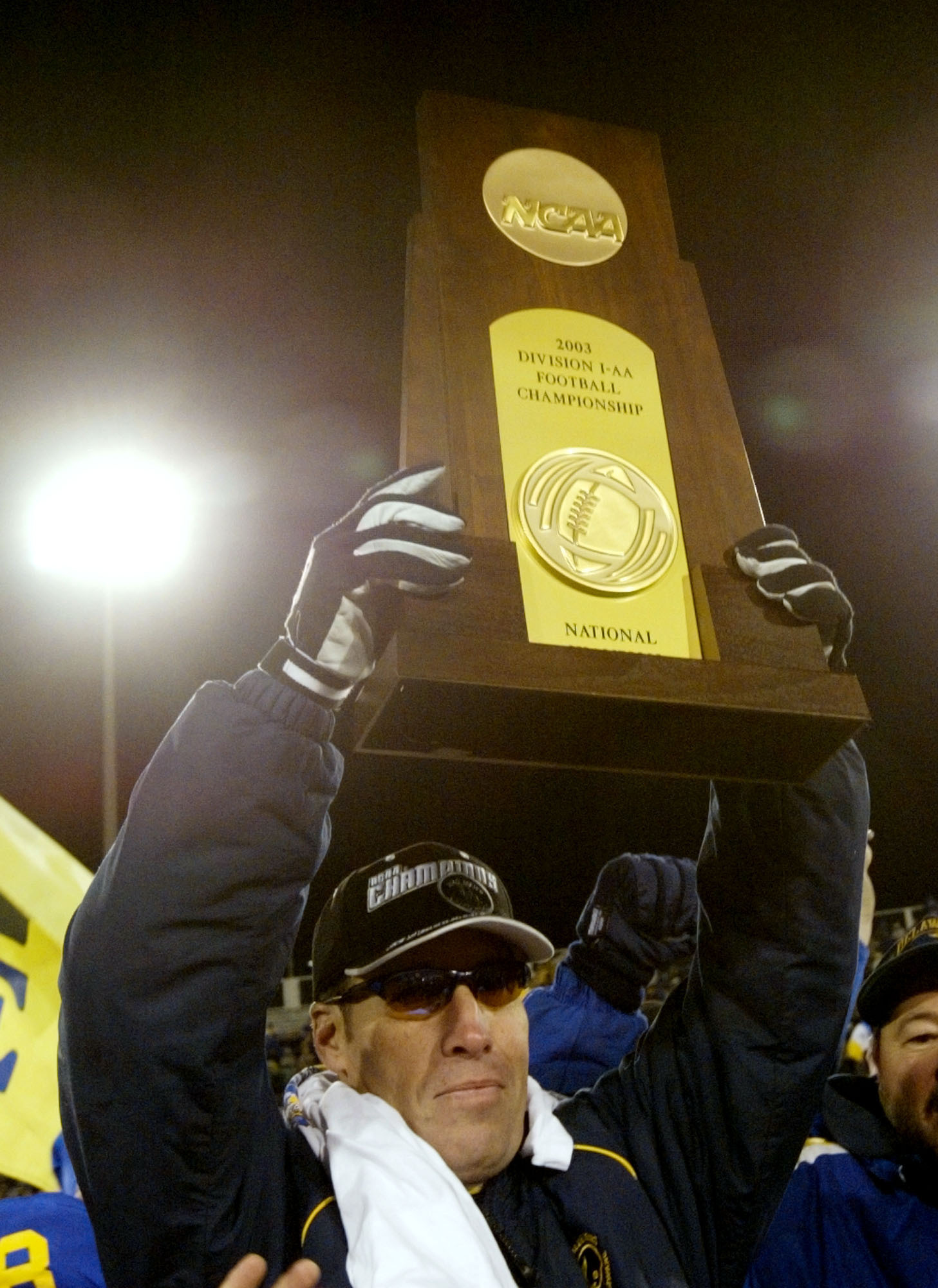
Over nine seasons, he led the Profs to an 88-21-1 record, with seven Division III playoff appearances. Delaware brought him on as head coach in 2002 (succeeding Tubby Raymond after 36 seasons) and Keeler went 86-52 with the Blue Hens, reaching the Division I-AA national title game three times and winning a championship in 2003.
He joined Sam Houston State as head coach in 2014, and posted a 97-39 record through 11 seasons, making the FCS playoffs six times and winning a second national title in 2020.
Temple, meanwhile, notched only 11 winning seasons between 1981 and 2024. The Owls had suffered an especially tough stretch of late, failing to win more than three games in a season since 2019.
K.C. Keeler won the NCAA Division I-AA Championship at Delaware in 2003.
But for Keeler, the shine of those 1970s-era teams never wore off. He still saw a winner. So, when Temple approached him last year after firing Drayton, he took the opportunity.
Things got off to a slow start. Some players were worried that they wouldn’t be welcomed back.
Others were unsure of how they’d jell with Keeler and his staff.
The head coach held a team meeting in December, before his introductory news conference. He tried to tell a couple of jokes, to lighten the mood.
No one laughed. Keeler turned to his special teams coordinator, Brian Ginn.
“Boy, these guys are serious,” he said.
“Yeah,” Ginn responded. “They just went 3-9. I can see why they’re serious.”
A few hours later, Keeler told the media what he told his team: that there would be no rebuild. That he was here to win a bowl or a conference championship.
Simon, the senior quarterback, was standing in the back of the room, listening acutely.
“It was a little scary [at first],” he said. “I mean, this place hasn’t won more than three games since, who knows? I don’t even know.”
Over the next few days, Keeler held one-on-one meetings with all 114 players on Temple’s roster.
He asked what they liked — and disliked — about the program, and what changes they wanted to see.
The coach quickly showed a willingness to listen, even to seemingly mundane concerns. Many players lived off-campus and mentioned that they had to pay for a meal plan that they didn’t use.
Keeler talked toa few higher-ups, and was able to make a change, putting $500 worth of meal money back into players’ pockets. Temple now provides grab-and-go lunches and snacks, available outside the locker room.
The head coach continued to encourage his team to communicate, and gradually, the players began to feel more comfortable.
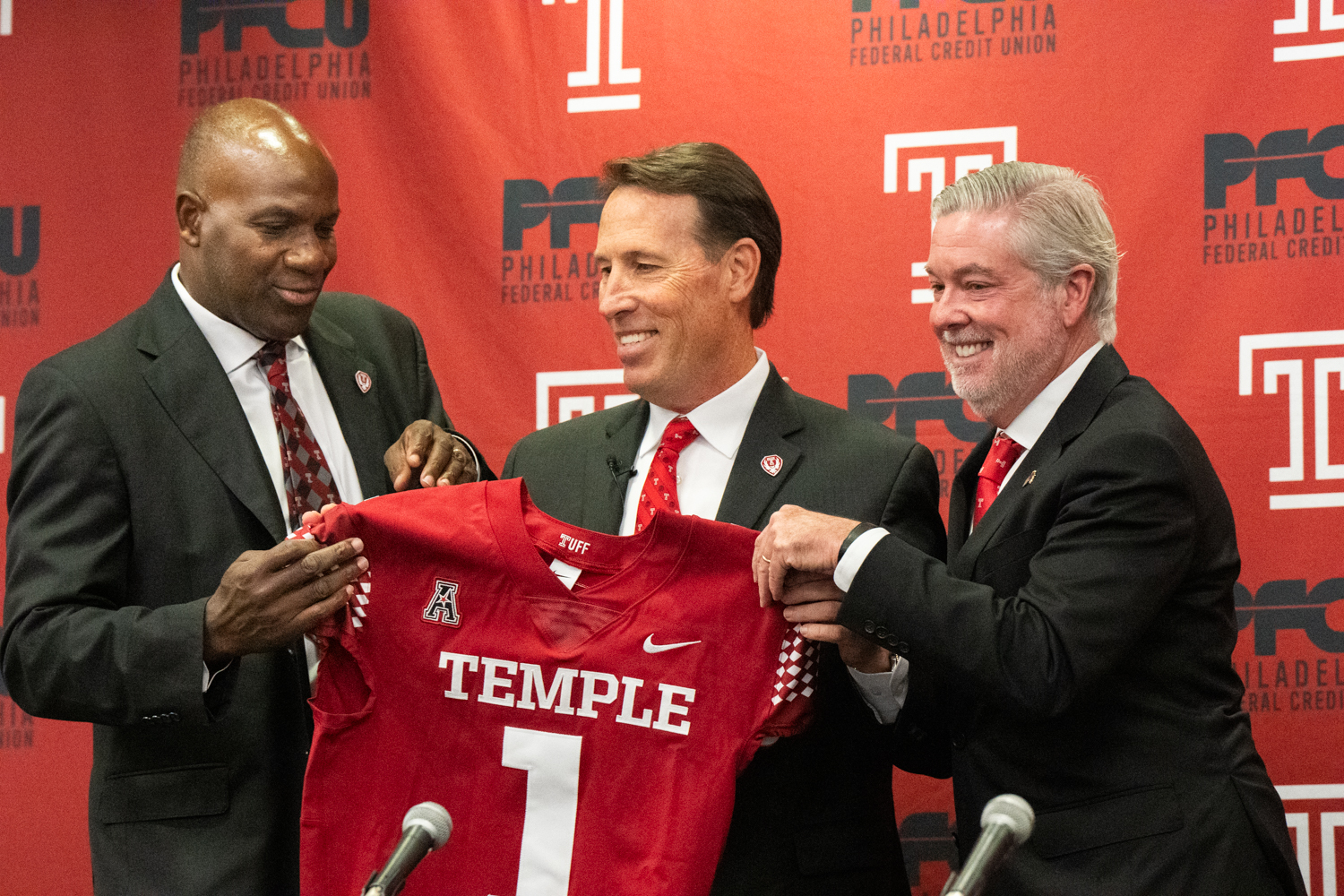
From left, Temple athletic director Arthur Johnson, newly-hired football head coach K.C. Keeler, and university president John Fry at a news conference on Dec. 3.
In February, Keeler got word that a former Temple defensive tackle, Demerick Morris, would be leaving Oklahoma State. He had transferred there in December 2024 but had a change of heart, and was eager to return to Philly.
Keeler wanted to bring him back, too, but decided to ask his defensive line coach, Cedric Calhoun, to check with rest of the linemen first.
They were not on board.
“Coach Calhoun goes, ‘They said, [expletive] no. There’s no way they’re taking him back,’” Keeler said. “And he was in a panic. I’m like, ‘It’s OK, let me handle this.’”
The three defensive linemen — Allan Haye, K.J. Miles, and Sekou Kromah — shuffled into Keeler’s office and sat shoulder-to-shoulder on his cherry-red couch.
Before Keeler explained his side, he made sure the players knew it was their decision.
Then, he asked for their perspective. They said that years ago, the four linemen had made a pact not to enter the transfer portal. To stay at Temple and “fix” the program.
When Morris left for Oklahoma State, Haye, Miles, and Kromah felt betrayed.
“[To them], it was ‘Demerick broke the pact,’” Keeler recounted. “‘Demerick took the money.’”
The head coach laid out the situation in more pragmatic terms. Temple needed to bring in another defensive tackle, regardless. Why not go with the familiar option?
K.C. Keeler directing Temple against Howard on Sept. 6.
“I know Demerick is a great player,” Keeler told them. “I can’t guarantee the [other] guy we’re going to bring in is going to be a great player.
“I know Demerick is a great person. The guy we bring in … I don’t know a lot about him. I know Demerick loves Philadelphia. He’s living here now. He’s from Chicago.”
The linemen changed their minds.
“Again, the key was, this is still your call,” Keeler said. “I am not going to overrule your decision.”
Poor push-ups and ‘terrible’ dance moves
When Simon showed up to practice last summer, he could tell things were going to be different.
At 66, Keeler was doing push-ups in the middle of the field. He was running sprints and stretching alongside his team.
He even took control of the stereo sometimes, playing the music of his adolescence: Bruce Springsteen, Bananarama, and, of course, KC and the Sunshine Band.
The quarterback compared it to being around your fun “uncle.”
“They’re the world’s worst push-ups,” Simon said. “But his energy, it lifts the program. You’re allowed to have fun at practice.”
Keeler strikes a balance. There are times when practice is not fun. The head coach has high standards and pushes his team hard.
But he also tries to foster human connection wherever he can, whether it’s sending a birthday text to a player, hosting team dinners, or organizing trivia nights at Temple’s Liacouras Center.
One of Keeler’s biggest assets is his humor. He isn’t afraid to laugh at himself.
On Oct. 4, in Temple’s fifth game of the season, the Owls trailed Texas-San Antonio, 14-3, at the half.
Keeler reamed his players out in the locker room. He told them that it was the first time he’d been embarrassed to be their coach.
“I said, ‘This the first time I’ve ever even thought this, in my 10 months here,’” Keeler recalled.
“A lot of comments like ‘I dance like an old white guy,’” he said. “Well, yeah, I am an old white guy. But, you know, winning is hard. So when you win? You celebrate.”
The post-win dance quickly became a team tradition, and Keeler began to get creative with which guys he’d single out.
On Oct. 18, in the final seconds of Temple’s victory over Charlotte, he looked to the sideline to find three of his players — Cam Stewart, Khalil Poteat, and Mausa Palu — dancing.
“Giakoby, come on down!” Keeler said. “Birthday boy is going to lead the dance.”
This may seem like a silly custom, but for a team that couldn’t muster a laugh back in December, it’s progress.
Temple quarterback Evan Simon has 22 touchdowns with 1,847 passing yards and only one interception through 10 games this season.
And for players like Simon, it has made a difference. The quarterback is in the midst of a career season. He has 22 touchdowns with 1,847 passing yards and only one interception through 10 games.
He credits a lot to “Uncle” Keeler.
“He’s so easy to talk to,” Simon said. “And that’s important as a player. Not being nervous all the time. Because I’ve experienced that, where there’s tension, [and you’re] afraid to mess up. But he’s super easygoing.”
‘Not afraid to fail’
There are plenty of young players who have thrived under Keeler’s quirky coaching style.
But none as successful as Bengals quarterback and 18-year NFL veteran Joe Flacco, who played at Delaware in 2006 and 2007.
Keeler brought the same enthusiasm back then that he does now (with fewer dance moves, to which Flacco responded: “Thank God”).
When Flacco transferred from Pittsburgh to Delaware, he was a backup quarterback, sorely in need of a good spring.
K.C. Keeler coached Joe Flacco at Delaware.
He contemplated playing collegiate baseball, an idea the coach quickly put an end to. Keeler told his pupil that he needed to focus on football. He reiterated, time and time again, that Flacco would be drafted by an NFL team.
It was helpful for the young quarterback to hear.
“I was honestly happy,” Flacco said. “I thought I wanted to pursue [baseball], but deep down, I really didn’t. And he didn’t want me to do it. So, I was like, ‘Good, I don’t really want to do it.’”
After Flacco was selected by the Baltimore Ravens in the first round of the 2008 NFL draft, he met with his former coach.
Keeler asked him a question.
“I’m going to be talking to another team [someday], and they’re going to want to know,” he said, “what makes Joe Flacco great?”
The quarterback answered without hesitation.
“I’m not afraid to fail,” he responded.
Keeler might have this quality, too. He was not afraid to loudly proclaim that he wanted Temple to become bowl-eligible this season, and his team is close to meeting that threshold.
The Owls have lost their last two games, in part because of mounting injuries. Despite that setback, they sit at 5-5, the most wins since 2019.
Temple needs to win one of its remaining two games — Saturday against Tulane or Nov. 28 at North Texas — to qualify for a bowl game.
But regardless of what happens, Keeler won’t be afraid of the outcome. And if the Owls win, he certainly won’t be afraid to dance.
“[He has] a belief and ability to make [a program] bigger than what everybody thinks it is,” Flacco said of his former coach. “It’s not only that he says it, and preaches it, but he also gets you to believe it. And that’s huge.”
From his rookie season in 2007 through 2015, Darrelle Revis was the NFL’s best cornerback: seven Pro Bowls, four first-team All-Pro selections, 28 interceptions, three pick-sixes. He was so good that the Jets, for whom he played most of his career, seldom gave him help from safeties, which left him on an island. His nickname soon became Revis Island, a place where receivers went to disappear.
Soon, Quinyonamo Bay will be as famous as Revis Island.
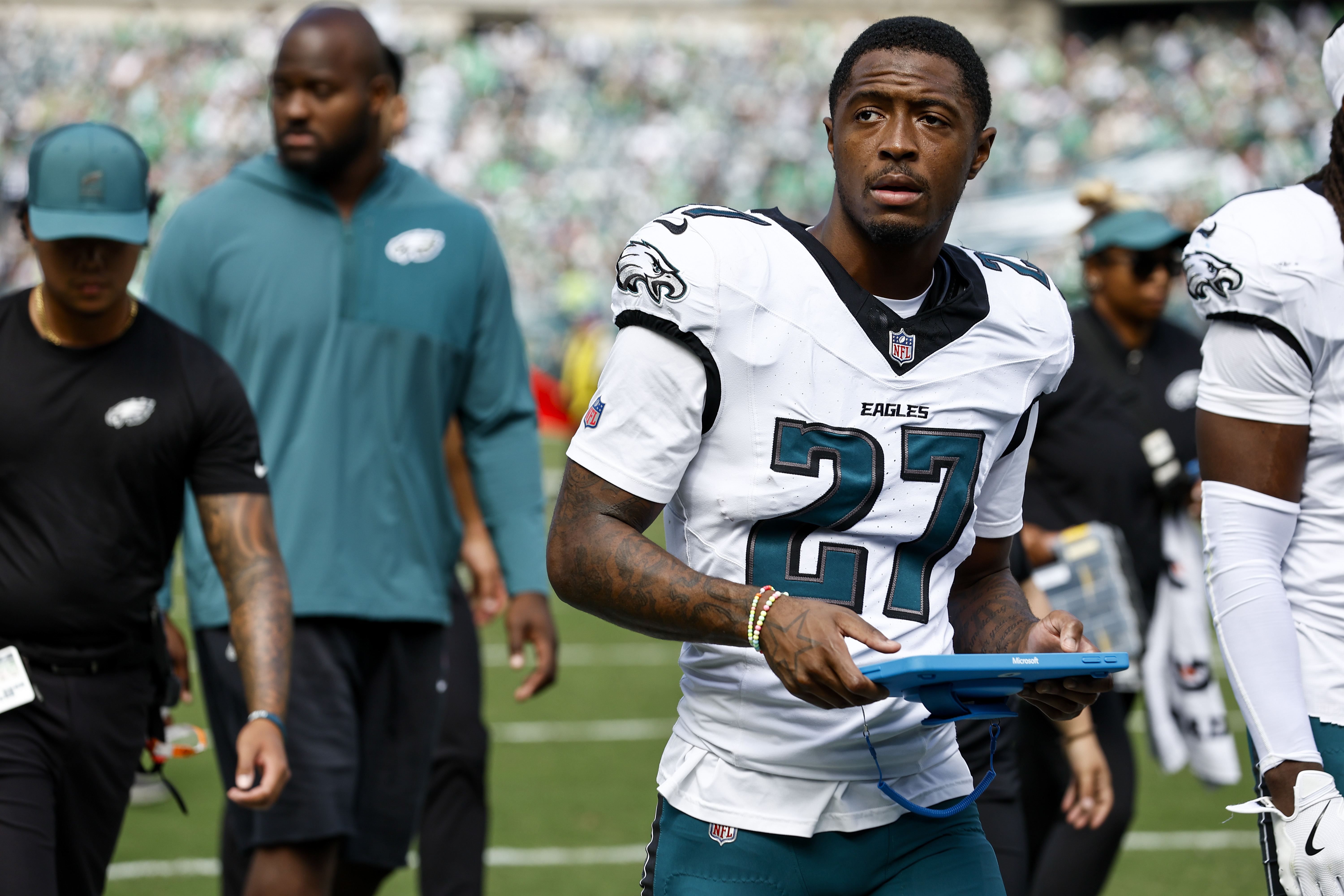
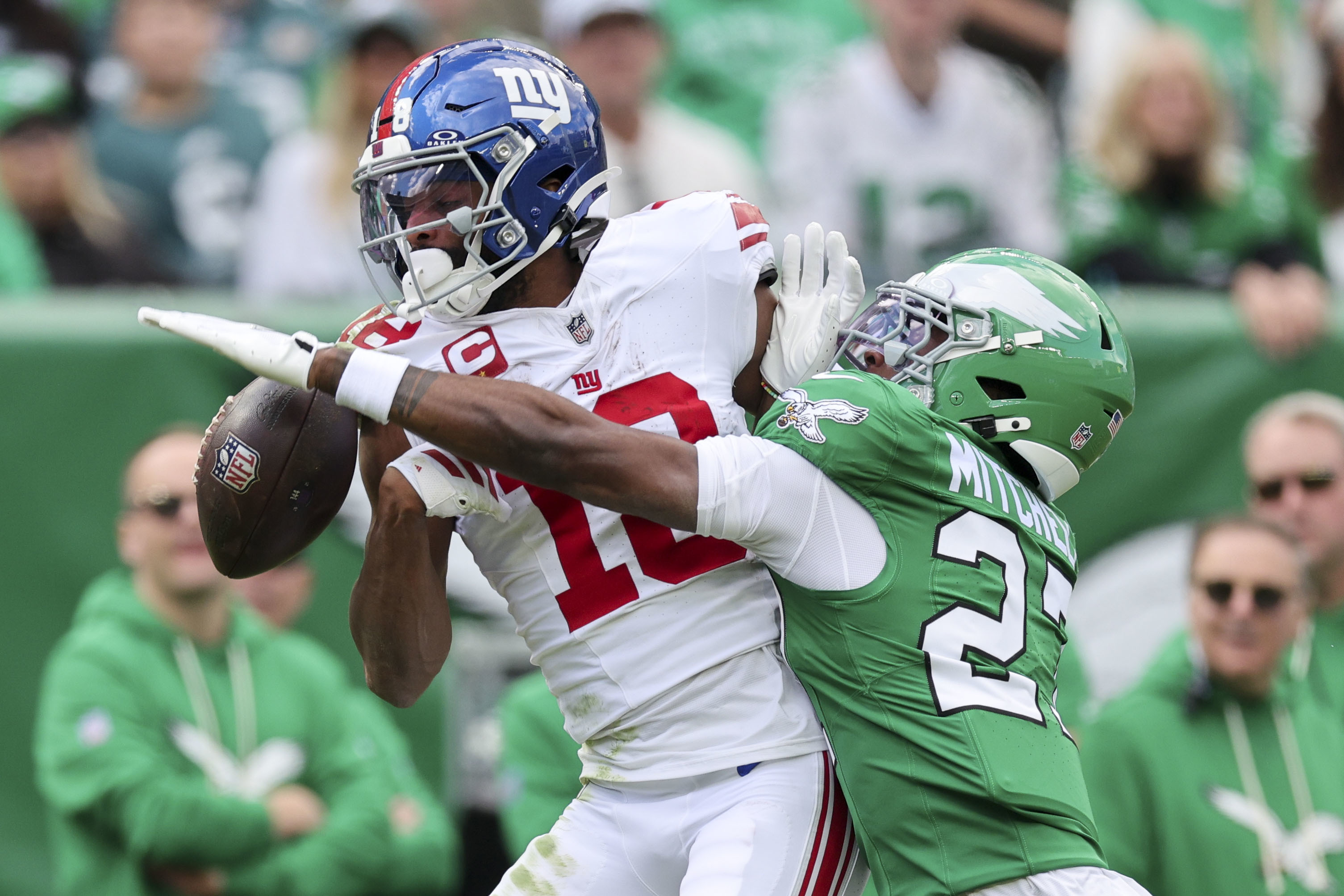
That’s the early nickname for the twilight zone that surrounds Quinyon Mitchell, the Eagles’ current best candidate for Defensive Player of the Year. It refers to Guantánamo Bay, the U.S. naval base and notorious military prison on the Cuban coast.
Maybe it’s not the most tasteful play on words, but it’s a bit of phrasing that aptly connotes both the sinister intent and dire prospects associated with challenging the best cover corner in the NFL.
On Sunday night, in perhaps Mitchell’s finest hour of many fine hours to date, a dozen of his friends and family from Williston, Fla., attended a 16-9 win over the Lions in what could be an NFC championship game preview. Most were second cousins, and all were laid-back Florida mellow.
From 47-year-old cousin Kendall Edwards, the senior member of the clan, to 13-year-old T.J. Snead, the aspiring quarterback / safety / outfielder / pitcher, they were bursting with pride that “Q” had played so well in prime time in a game dominated by the Eagles defense.
Eagles cornerback Quinyon Mitchell is in the midst of a shutdown season.
“It was awesome,” said Snead. “But cold.”
Factoring in 25-mph winds, the real-feel temperature Sunday night in Philly was 30 degrees. It was 79 back in Williston. Mitchell was even hotter.
He allowed zero catches and zero yards on six targets, according to Next Gen Stats. The league said that tied for the best performance against at least six targets since the beginning of the 2024 season.
In fact, through 10 games, Mitchell has allowed a 41.9% completion rate, which, according to Next Gen, is the lowest since 2018. He has not allowed a touchdown pass.
Quinyon Mitchell did not allow a reception on any of his 6 targets, tied for the most targets without allowing a reception in a game over the last two seasons.
Mitchell has allowed a 41.9% completion percentage this season, the lowest by any player since 2018 (min. 50 targets).… pic.twitter.com/cbrbygdGY2
As well as new edge rusher Jaelan Phillips has played; as well as linebacker Nakobe Dean has played since returning from injury; and as well as hard-hitting corner Cooper DeJean, linebacker Zack Baun, and defensive tackle Jalen Carter, the linchpin of the defense, have played all season, none has been as suffocatingly good as Mitchell.
Mitchell has not gotten the recognition he deserves because he does not take as many chances as most corners, which means he doesn’t get beaten, but he also doesn’t rack up interceptions. He has zero picks in his 26 regular-season games, but that doesn’t mean he can’t catch. He picked off Packers quarterback Jordan Love in the Eagles’ wild-card playoff win in January and snagged one from Jayden Daniels in the NFC championship game win over the Commanders.
Mitchell faces the best of the best — Hall of Fame-caliber quarterbacks and Pro Bowl receivers who play on proven teams.
The Eagles opened the season against the Cowboys, who feature CeeDee Lamb and George Pickens. They then visited Patrick Mahomes in Kansas City. They then beat Matthew Stafford, Puka Nacua, and Davante Adams when the Rams visited and did the same to two-time Pro Bowl quarterback Baker Mayfield in Tampa, when Mitchell was named NFC Defensive Player of the Week.
Mitchell blanketed Justin Jefferson, the league’s best receiver, when the Birds won in Minneapolis: one catch, 10 yards, three targets. He gave up two catches for 24 yards on seven targets in Green Bay; then, on Sunday Night Football, he pitched a shutout against Amon-Ra St. Brown and, occasionally, Jameson Williams.
NBC analyst Cris Collinsworth, who owns Pro Football Focus, an analytics service that rates every NFL player, believes in the numbers. He said Sunday that Mitchell already is among the best corners in the league, if not the best.
Emmanuel Acho, a retired Eagles linebacker and current NFL analyst, posted a film session Tuesday with evidence from Sunday to support Acho’s claim that Mitchell is No. 1.
Like Acho, Mitchell’s three cousins, who played with him at Williston High, presented evidence.
“He traveled well,” said Malik Latson, who was a senior receiver when Mitchell started as a freshman cornerback.
He referred to Mitchell often covering St. Brown whether the Lions receiver lined up on the left side, the right side, or the slot. Last season, Mitchell lined up almost exclusively on the right side. This season, Mitchell travels all the time.
“He recognized a lot of routes before they ran them. He understood leverage,” Latson continued. “That off-man, I think, is his best coverage.”
Indeed, Mitchell seemed most effective when he gave the Lions receivers a few yards of cushion at the line of scrimmage.
But still, no picks. Revis knows: Picks get you to the Pro Bowl.
“That’s fine. No picks, that’s fine,” said Zachary Riley, who was a senior receiver and defensive back at Williston when Mitchell was a freshman. “He completes the assignment. There were no big catches on him. I mean, no catches at all, that I remember.”
He remembered correctly.
“I mean, he just looked normal. Smooth,” said C.J. Strange.
He would know best.
Quinyon Mitchell breaking up a pass intended for Giants receiver Darius Slayton on Oct. 26.
Strange and Mitchell graduated together. Strange played quarterback (and punter) with Mitchell, who played not only corner but also running back in high school and ran for 983 yards and 11 touchdowns as a senior.
Mitchell and Strange played high school basketball together as well. That’s why Strange got the White Glove treatment last weekend, while the rest of the clan fended for themselves.
Mitchell picked up Strange at the airport around midday Saturday. They had an early dinner, then went back to Mitchell’s home to watch college football.
Latson and Riley are working as truck drivers out of Virginia, so they rented a car and drove up, but as they crossed the Pennsylvania state line and called Mitchell in the early evening, he replied, “Sorry. I’m about to head to the team hotel.”
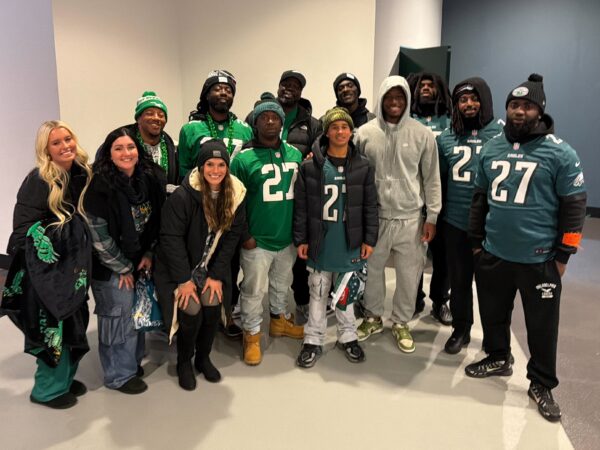
They spent the night in his home with Strange, and the trio of teammates carpooled to the game in Mitchell’s truck, piling out two hours before game time in matching midnight green No. 27 jerseys.
They didn’t see Mitchell until after the game, when he emerged from the locker room tunnel and found himself awash in the affection unique to big families from the South.
“It means a lot, having this support system, and some of them coming all the way from Florida,” Mitchell said. “A whole lot of love here.”
And with that, the whole group left Lincoln Financial Field, eager to bask in the aura of Quinyonamo Bay.