Philadelphia is the newest destination forLilly Gateway Labs, an incubator for early-stage biotech companies backed by pharmaceutical giant Eli Lilly & Co., the companyannounced Wednesday.
The Center City incubator will be Lilly’s fifth in the United States. Biotech hotbeds Boston, South San Francisco, and San Diego already have them. (South San Francisco has two.) Companies at those locations have raised more than $3 billion from investors since the program started in 2019, Lilly said.
Lilly’s Philadelphia operation will occupy 44,000 square feet on the first two levels of 2300 Market St. in Center City.
Lilly expects to house six to eight companies there, aiming to welcome the first startups to the site in the first quarter of next year, said Julie Gilmore, global head of Lilly Gateway Labs. She did not identify prospects.
Typically, Gateway Labs residents are at the stage of raising their first significant round of capital from investors, called Series A, and are two or three years from clinical testing, she said.
The arrival of high-profile Lilly, which has seen resounding success with its GLP-1 drugs for diabetes and weight loss, could turn out to be a shot in the arm for a local biotech scene. Philadelphia has a growing biotech sector but has lagged places like Boston, despite the presence of world-class scientists atlocal research universities.Their work has fueled groundbreaking discoveries in cell and gene therapy, as well as vaccines.
But Lilly is interested in supporting ideas that go beyond the city’s cell and gene therapy strengths, said Gilmore. Gateway labs is part of Lilly’s Catalyze360 Portfolio Management unit, which provides broad support to fledgling biotech firms, including venture capital.
“What we like is to go after innovative science. Who are the companies trying to solve really hard problems?” Gilmore said. “And we do know that Philadelphia has had a ton of success in gene therapy and CAR-T and I hope we can find some great companies in that space, but we’re going to be open to other types of innovative science as well.”
Expanding Philly’s life sciences footprint
Indianapolis-basedLilly already has a small presence in Philadelphia with Avid Radiopharmaceuticals Inc., a company it acquired in 2010. Avid still operates in University City. Lilly’s chief scientific officer, Daniel Skovronsky, founded Avid in 2004 after receiving a doctorate in neuroscience and a medical degree from the University of Pennsylvania.
Lilly is interviewing people to lead Philadelphia’s Gateway Labs location. They like to hire people who are familiar with the local universities and venture funds for those jobs, but that’s not all that matters. “We’re also looking for somebody who’s got deep drug development expertise,” Gilmore said.
Lilly’s incubator adds to the life sciences activity at 23rd and Market Streets.
Breakthrough Properties, a Los-Angeles-based joint venture of Tishman Speyer and Bellco Capital, announced plans for the eight-story, 225,000 square-foot building in 2022. Last week, Legend Biotech, which is headquartered in Somerset, N.J., celebrated the opening of a new cell therapy research center on the building’s third floor.
Lilly Gateway Labs companies agree to stay for at least two years, and they can apply for up to another two years, Gilmore said.
“The goal is, a company moves in and they can just worry about their science, worry about their team, and moving their mission forward, and we try to take care of everything else,” she said.
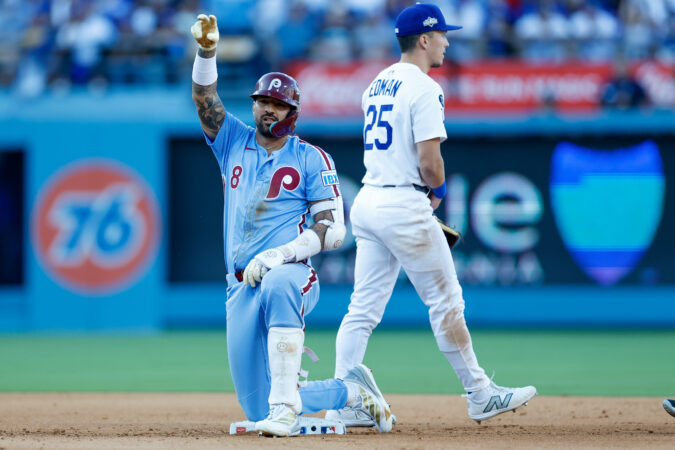
The most important variable in any negotiation is what the other side thinks you are willing to pay. Right now, the other 29 teams in Major League Baseball have every reason to think the Phillies aren’t willing to pay Nick Castellanos anything. That’s a tough starting point for Dave Dombrowski as he tries to find someone interested in trading for the veteran right fielder.
Fact is, Castellanos is due to make $20 million this season, which is at least $18 million more than he could reasonably expect to make if he were a free agent. Even if the Phillies eat most of that money, why would a team trade anything of value for Castellanos rather than signing this year’s version of Mark Canha for a couple of million bucks?
The only realistic option for the Phillies is to find a team that is looking to shed a similarly overpriced contract. Even then, Dombrowski may have to further incentivize an interested party. That quickly leads to a point where the Phillies are better off simply releasing Castellanos. Or walking a lot of things back before he reports for spring training.
Here are three examples of deals that maybe, kinda, sorta, if you squint could potentially make a fraction of a smidgen of sense for both parties.
Get excited!
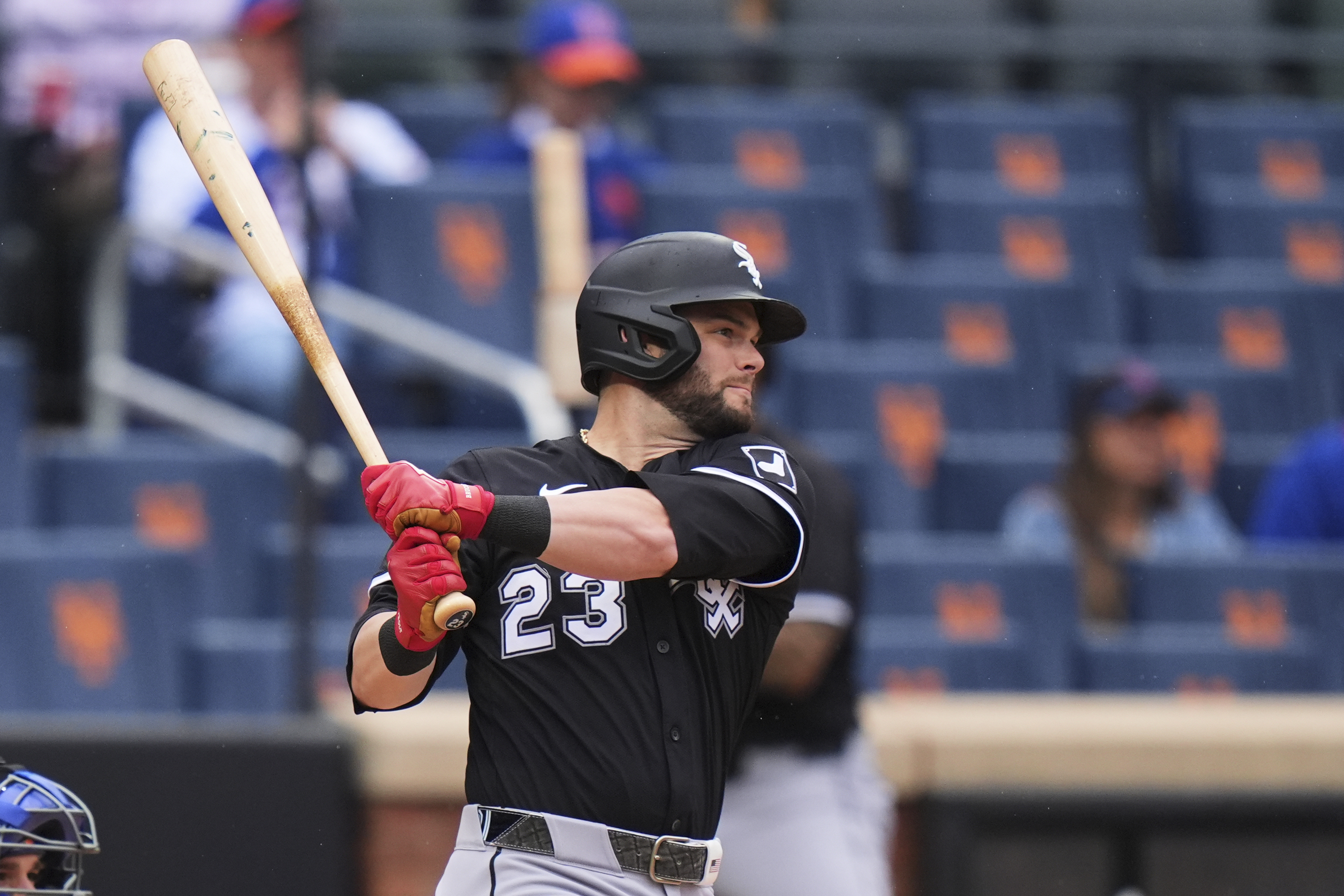
Andrew Benintendi is slashing just .245/.309/.391 in his first three years with the White Sox.
1. Andrew Benintendi plus cash to the Phillies, Castellanos to the White Sox
This is the baseball equivalent of one of those NBA trades in which a couple of overpriced veterans and 16 second-round draft picks change hands but nobody ends up with more than they started with. You only live once, baby.
Benintendi has been a sunk cost the moment he signed a five-year, $75 million contract in Chicago in 2023. Was it only three years ago that the White Sox were trying? Apparently, it was.
Benintendi hit free agency as the rare hitter still in his prime, having broken into the big leagues at 21 years old on the watch of none other than Dombrowski. He hasn’t come close to the .782 OPS he posted in his first seven seasons in the majors, hitting just .245/.309/.391 in his first three years with the White Sox. He showed a little life in the second half of last season and finished with a .738 OPS that was slightly above league average. But he didn’t show nearly enough life to warrant salaries of $17.1 million this season and $15.1 million in 2027.
Swapping Castellanos for Benintendi would make some sense from an accounting perspective. The Phillies would be taking on an additional $12.2 million in “dead” money over two years. More importantly from a competitive standpoint, they’d be tacking on $15 million in average annual value to next year’s payroll rather than paying Castellanos $20 million up front and then being free and clear.
But what if the White Sox included $10 million in cash to pay Benintendi’s 2027 salary? That would essentially enable the Phillies to split up Castellanos’ money over two years, saving them $10 million this year while adding $10 million next year. And, hey, maybe Benintendi gives them a little something in the outfield rotation as a Max Kepler replacement. At 31 years old, the chances of that aren’t zero.
What’s in it for the White Sox? Well, they’d save $5 million in cash in 2027 at the expense of an extra $3 million this year. I’m not sure whether this trade makes sense for both sides or makes sense for neither side. But that’s where we’re at.
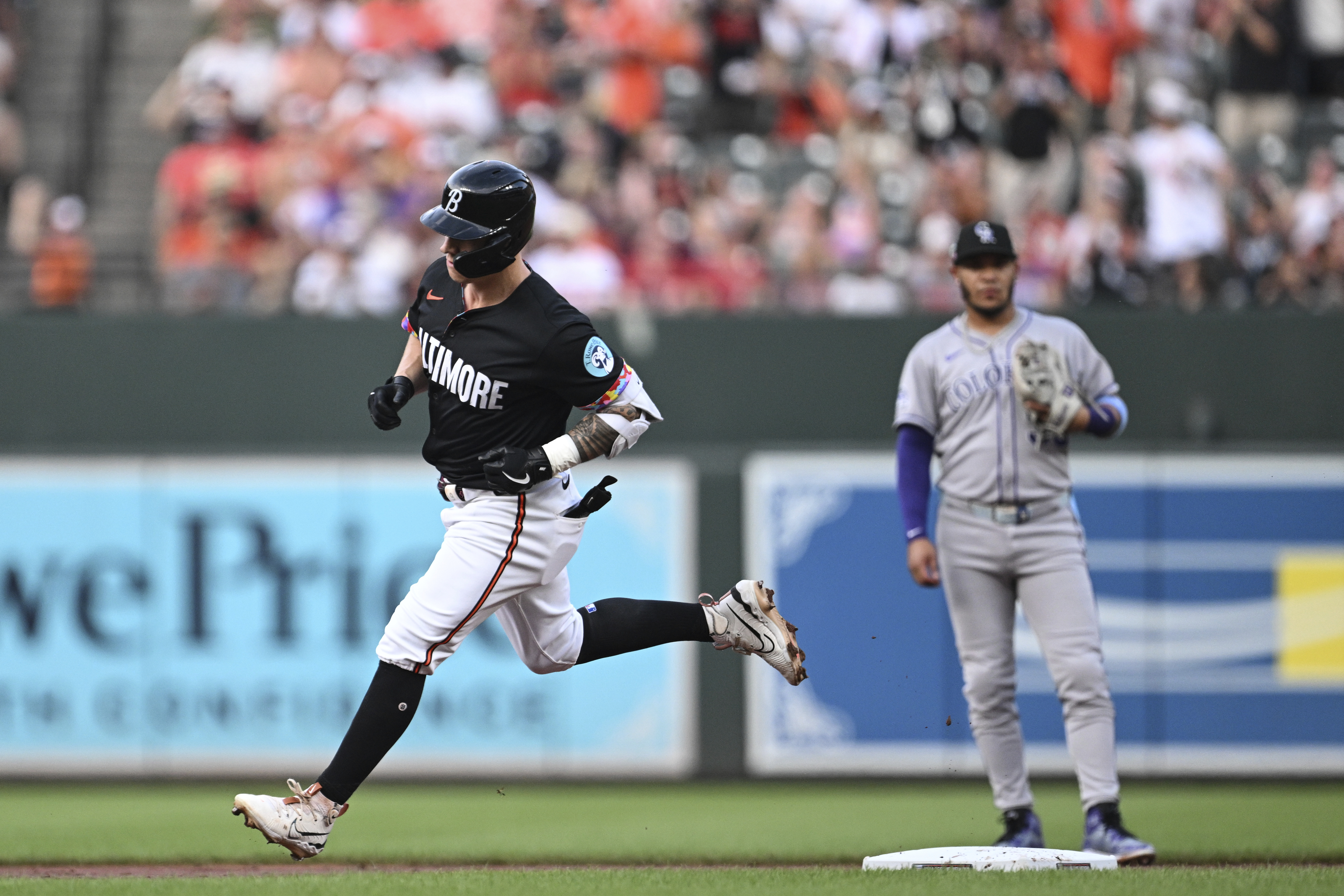
The Orioles’ Tyler O’Neill had just 209 plate appearances and nine home runs in 2025.
2. Tyler O’Neill to the Phillies, Castellanos to the Orioles
Truthfully, I’m not sure how much sense this makes for either side. O’Neill signed a three-year, $49.5 million contract last offseason after a big year with the Red Sox (.847 OPS, 31 home runs). He was a major disappointment, posting a .684 OPS and nine home runs in 209 plate appearances in a season marred by injuries.
The argument from the Phillies’ perspective goes like this. They’d essentially be signing O’Neill to a two-year, $13 million deal, given the $20 million they are saving on Castellanos. That’s pretty close to fair market value for O’Neill, who has mostly been a league-average hitter outside of his two spike years (2021 with the Cardinals and 2024 in Boston).
The Phillies get a right-handed hitter who still might have another big season in him. Even if he doesn’t, maybe he is an adequate enough rotational corner outfielder for two years (O’Neill is heading into his 31-year-old season). They also save $3.5 million on this year’s official payroll.
Is all of that worth $16.5 million less in spending power next offseason? Probably not.
Likewise, what are the Orioles really gaining? Saving $13 million over two years isn’t nothing. But it’s probably not worth sacrificing the chance that O’Neill bounces back.
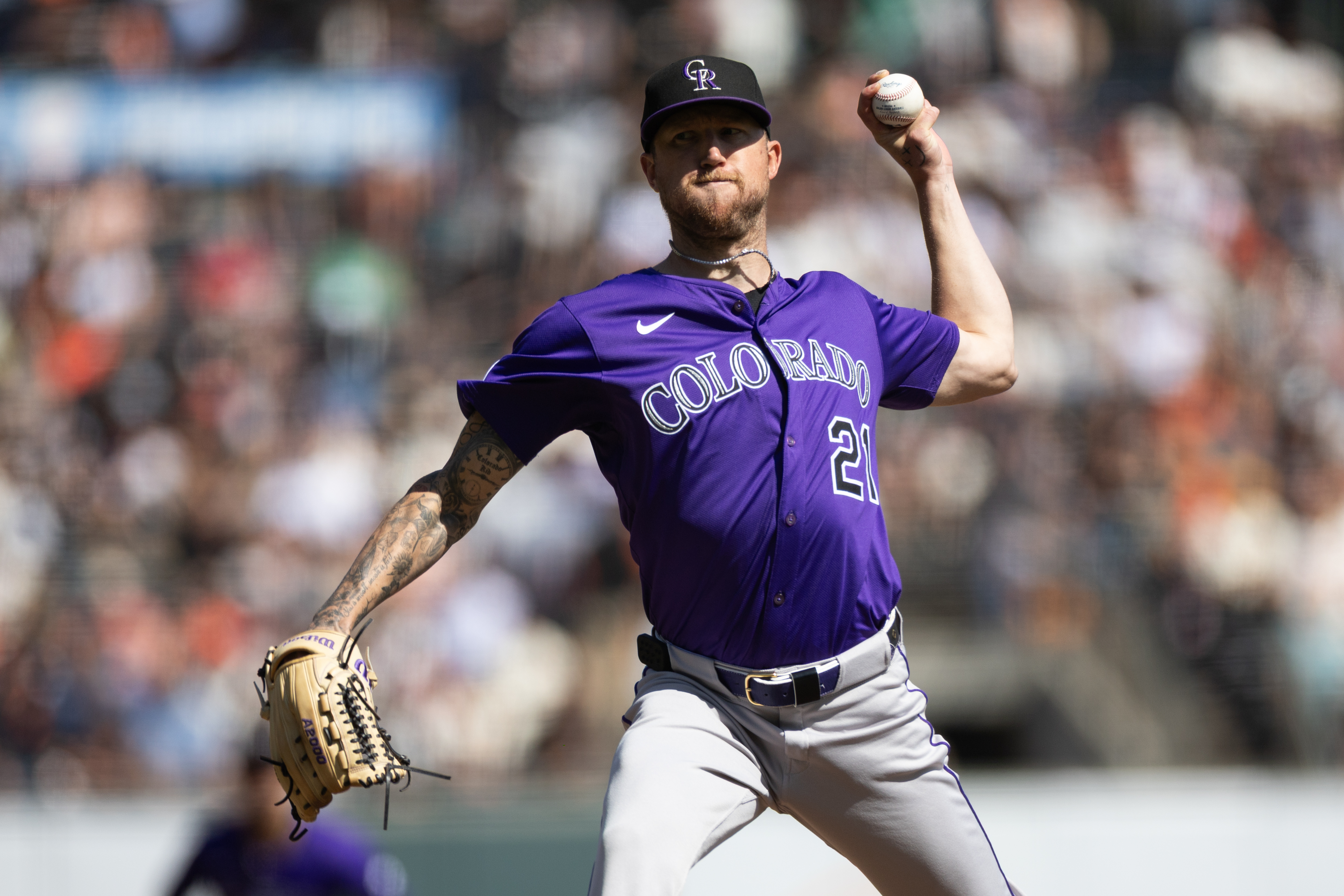
Kyle Freeland, 32, has spent his entire career with the Rockies and has been better away from Coors Field.
3. Kyle Freeland to the Phillies, Castellanos plus cash to the Rockies.
Freeland, who has spent his entire career with the Rockies, has one year and $16 million left on his deal. That’s a lot to pay a guy who has a 5.07 ERA over the last three seasons. Castellanos has hit well at Coors Field with a .914 career OPS in 88 plate appearances. The Phillies get another piece of rotation depth in the form of a guy who has had some decent years on the road in his career. The Rockies get a guy who at least has chance of regaining some value between now and next year’s trade deadline.
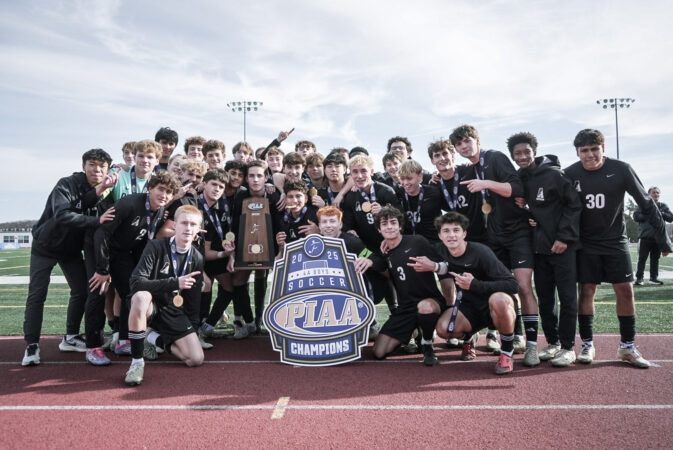
After 41 years, the school will add its third state championship banner to the gymnasium rafters after the boys’ soccer team defeated West Chester Henderson, 3-1, in the PIAA Class 4A championship on Friday, marking the program’s first state crown.
“It feels amazing,” senior captain Sean Westmoreland said. “I don’t think I’ve fully processed it yet, but it’s amazing. I feel like the community has been with us and brought us together.”
Abington finished its season 22-2-3, with those two losses coming against Haverford High in the season opener and District 1 final.
“They were disappointed that Haverford had beaten them in the district final, 3-1,” longtime Abington coach Randy Garber said. “It left a bad taste in their mouth, and the only thing that could erase that disappointment was running for a state title and winning that, and that’s where their focus was.
“When it came to the [state] final, I don’t think they wanted to be denied. … They came out on fire.”
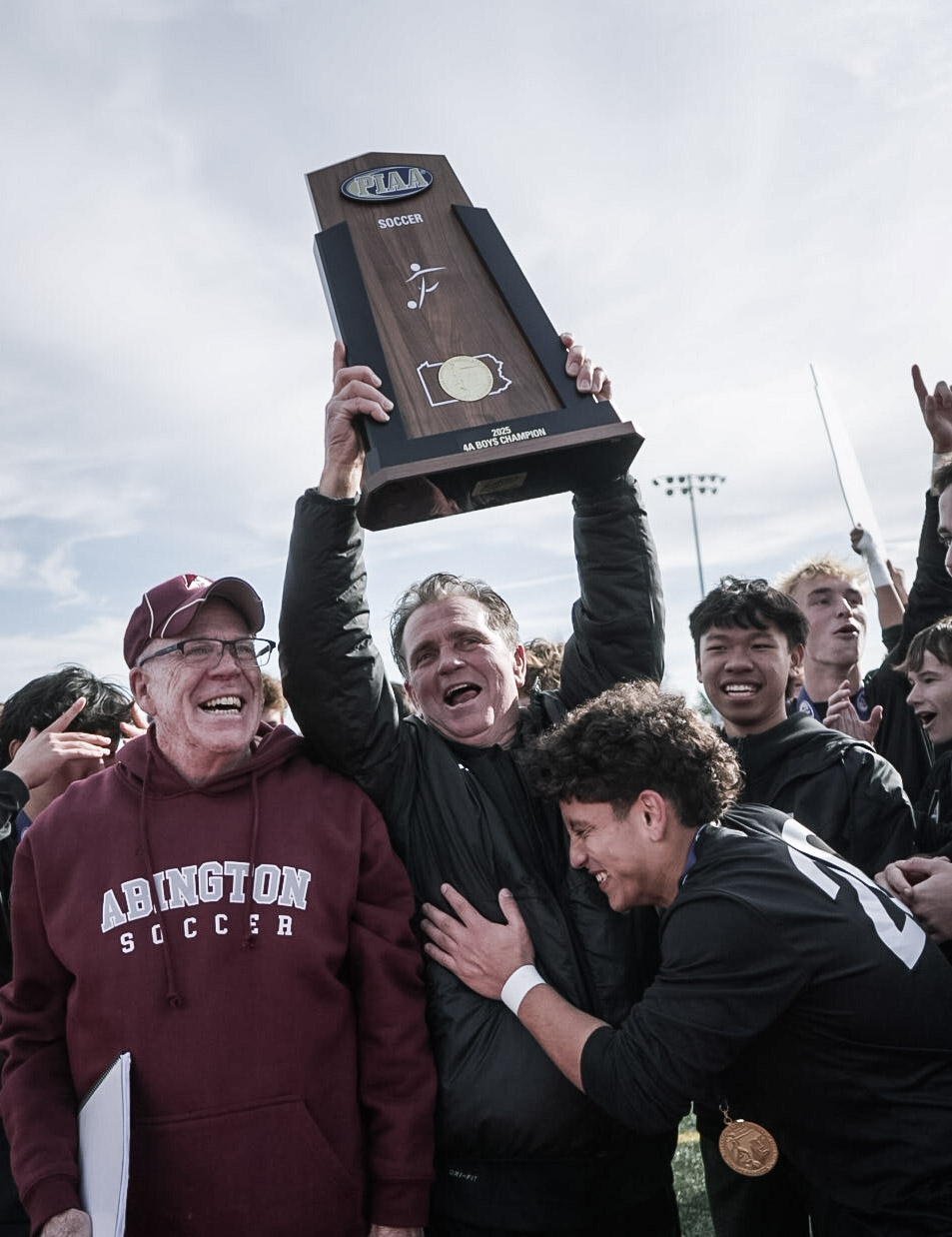
Randy Garber holds the state championship trophy.
For Garber, who graduated from Abington in 1971 and has been the head coach for 32 years, winning a state crown was the cherry on top in his career, and he plans to step down.
“People reached out by text, by phone that I haven’t [heard from] in a while,” said Garber, who played professionally for the North American Soccer League and Major Indoor Soccer League. “I have more than 100 texts from former players just reaching out saying how great it was, a long time coming — it’s your last season as head coach, and this happens.
“The moment was extremely special. I’ve had good teams in the past that did extremely well but couldn’t get over that hump because of whatever reason. … This year with this team, everything fell into place. One thing got better than the next.”
Abington had a 3-0 lead at halftime, putting it in a solid position to claim the title. No team scored four goals in a game against the Ghosts this season.
“I mentioned this in the huddle,” Westmoreland said. “There’s 40 minutes left in the season no matter what. Forty minutes left in some guys’ soccer careers, so we just wanted to have a lasting impact and leave everything out on the field. I think that was the mindset coming out of halftime. Just put the game away.”
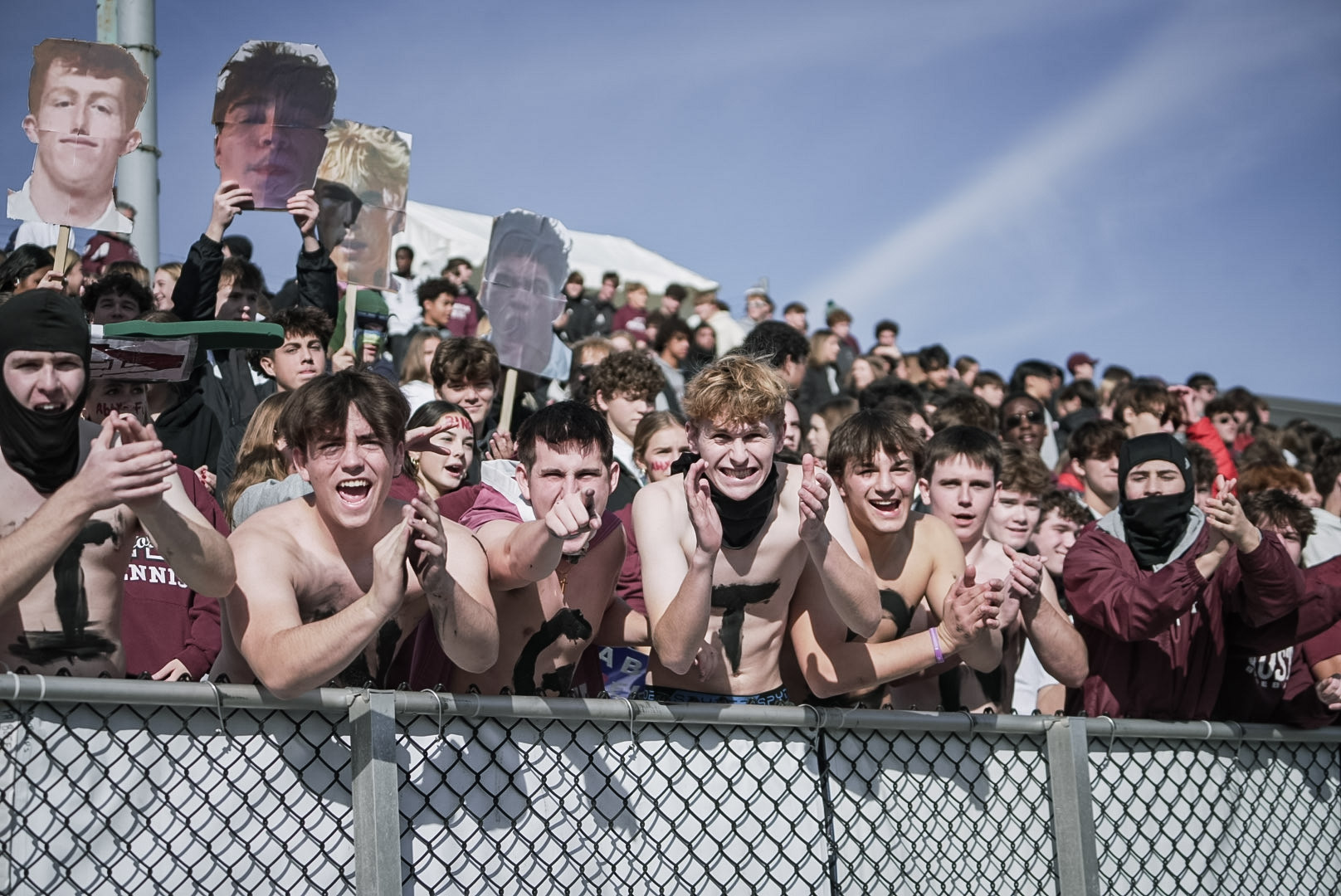
The Abington student section supporting the boys’ soccer team.
Despite school being in session, plenty of students made the trip to Manchester, York County, in support of their team. Back home, the Abington community awaited the newly crowned state champions’ return to celebrate with a parade.
“It’s just great for the community, the school,” Garber said. “They’re all rallying around the soccer team because it’s the first state championship since 1981. … The senior high filled with students watching [the game] live while we were playing [Friday morning]. The elementary schools were watching it in Roslyn Elementary in the gymnasium, and the parade on the way home … that took us all [though] Glenside and all through the elementary schools, and the students out on the sidewalk just waving. It was a treat. It was a real treat.
“I don’t know that any of the students and surely the coaches knew it was going to be celebrated in that fashion. We didn’t expect the fire trucks. We might have expected a police car [escort], but we did not realize how they got the community out. … There were people just walking out of the house and clapping. … It was an all day and night [celebration] — the school did a really nice job getting everyone to know that we won.”
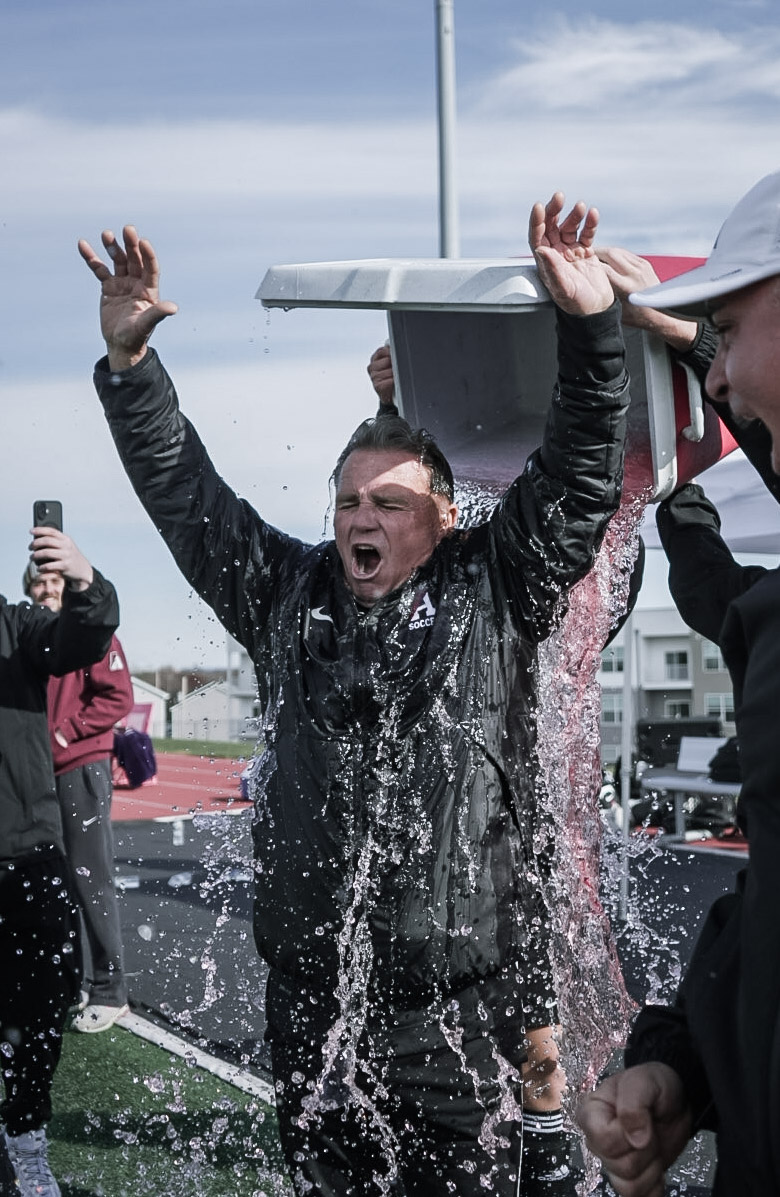
Randy Garber gets drenched in water after leading Abington to its first state title in boys’ soccer.
The legacy Garber leaves behind is one of a kind, and the impact he made goes beyond winning a state crown.
“Seeing the way he interacts with our students, our athletes, not just on the field, but he’s a health and [physical education] teacher,” Abington athletic director Charles Grasty said. “He does an excellent job with the students here. … He knew he had a good team going into the year, and they worked hard and trusted him and listened to him.”
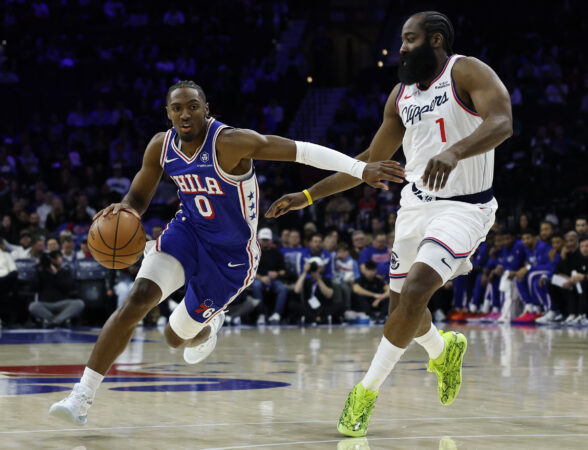
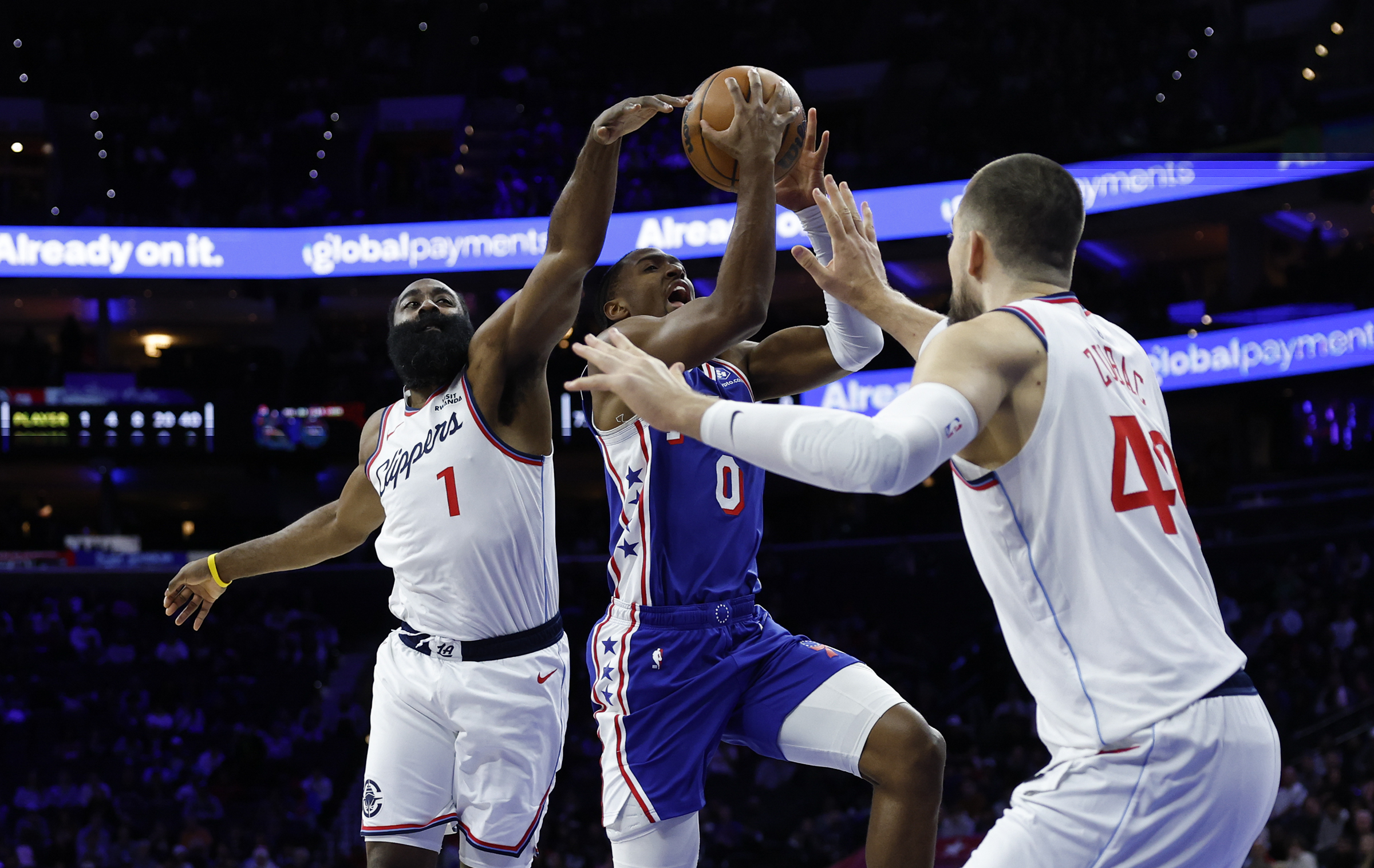
Tyrese Maxey hurt Big Bro’s feelings Sunday night. When James Harden and the Clippers flew in from Boston on Sunday evening, Harden expected Maxey to have called and left a message, or to at least have sent a text, inviting Harden to meet Maxey somewhere in Philly for food and fellowship.
But then the plane touched down, and Harden turned on his phone and … crickets.
The Beard was bummed. After all, he’d mentored Maxey for the 18 months they’d been 76ers teammates in the 2021-22 and 2022-23 seasons. It was a mentorship Maxey rode to his All-Star appearance the very next season.
They are similar, and they remain close. When Harden began battling the Sixers’ front office in 2023, Maxey defended him and called him “my big brother.”
On Sunday, though, Big Bro was left to his own devices, and he mentioned that to Maxey before they faced each other Monday night: “Bro, you didn’t call me. I mean, like when I landed … nothing.”
Maxey replied, “Yeah, I thought you were gonna go to sleep. Back-to-back. [You’re] getting old now.”
Harden might be old — he’s 36, and he’s playing in his 17th season — but he’d dropped 37 on the Celtics, he entered Philly averaging 26 points in his 12 games this season, and he’d averaged 34.0 points, 9.8 rebounds, and 8.8 assists in his last four games. This, after making his 11th All-Star team last season.
Harden managed 28 points Monday, but 18 of those came in the first half. Then the Sixers threw a few junk defenses at him, and he missed 14 of 16 shots in the second half and went 0-for-6 in the fourth quarter, when the Clippers blew a 10-point lead. The Sixers muzzled Harden and won, 110-108, serving the Clippers their eighth loss in their last nine games.
It wasn’t just the box-and-one and double-team schemes that diminished Harden’s effectiveness. Playing without Kawhi Leonard and Bradley Beal, Harden had averaged 39 minutes per game in his last five games. He played almost 37 minutes Monday.
“The minutes he’s been playing … I think he got tired,” coach Tyronn Lue said. “Got worn down.”
Sixers guard Tyrese Maxey drives to the basket against Clippers guard James Harden (1).
Afterward, Harden, who has the fashion sense of a Muppet, put on his fuzziest sneakers, used a pick to groom his luxurious facial fur, shook his head, and said, “I’m not tired. I wasn’t exhausted.”
In fact, he said he has not felt this good since the 2019-20 season, his last full season in Houston, when he won his third consecutive scoring title. A raft of injuries, he said, hindered his efforts to both perform consistently and to reach his physical peak.
But then, Harden has faced years of criticism about his conditioning — he once was accused of wearing a fat suit to force a trade from Houston to Brooklyn — so he will forever challenge any hint that he might ever get tired.
Little Bro certainly wasn’t tired.
After missing eight of 12 shots in the first half, Maxey scored 27 of his game-high 39 points in the second half, including 14 in the fourth quarter. It was the eighth time in his 13 games that he’s scored at least 30 points and the fifth time he’s scored at least 39.
The student has surpassed the master. Of course, the student is 11 years younger, and, as ever, affectionate:
“I love James,” Maxey said.
The rest of Philadelphia does not share his Brotherly Love.
Harden was roundly booed every time his name was mentioned Monday night, and the ire came across generations. When Harden bobbled a loose ball near the sideline in the fourth quarter, a middle-aged businessman in a tailored suit rage-cheered from the third row. Ten seats down, a 20-something in a fancy sweatsuit leaned over fans in the second row so he could hard-clap and taunt Harden from a few feet closer.
This is all lingering residue of Harden’s acrimonious departure from Philly in the late summer of 2023, when he forced a trade to his hometown Clippers. He burned the bridge between himself and Sixers president Daryl Morey, who acquired and enriched Harden in Houston and Philly but declined to overpay him two years ago. In response, Harden ended his brief and disappointing time with the Sixers by opting into the final season of his deal and leveraging his way home.
He’ll always be shown a little love in Philly as long as Maxey’s around.
“James has done a lot for me,” Maxey said. Like every little brother, Maxey relishes the chance to outperform Harden: “He scored on me once today. The other times he couldn’t score on me. I tell him, ‘You can’t score me. I know everything you do!’”
That’s because, from crossover drives to step-back threes to wrong-footed finishes, Harden taught Maxey so much. More than anything, Harden said, he is most impressed that Maxey took to heart the message to always stay hungry.
“Just the aggressiveness that he has,” Harden said, “whether you’re missing or you’ve got it going, he keeps shooting. He had that big fourth quarter. So, I’m just proud of the jump that he’s made and the continuous success that he had.
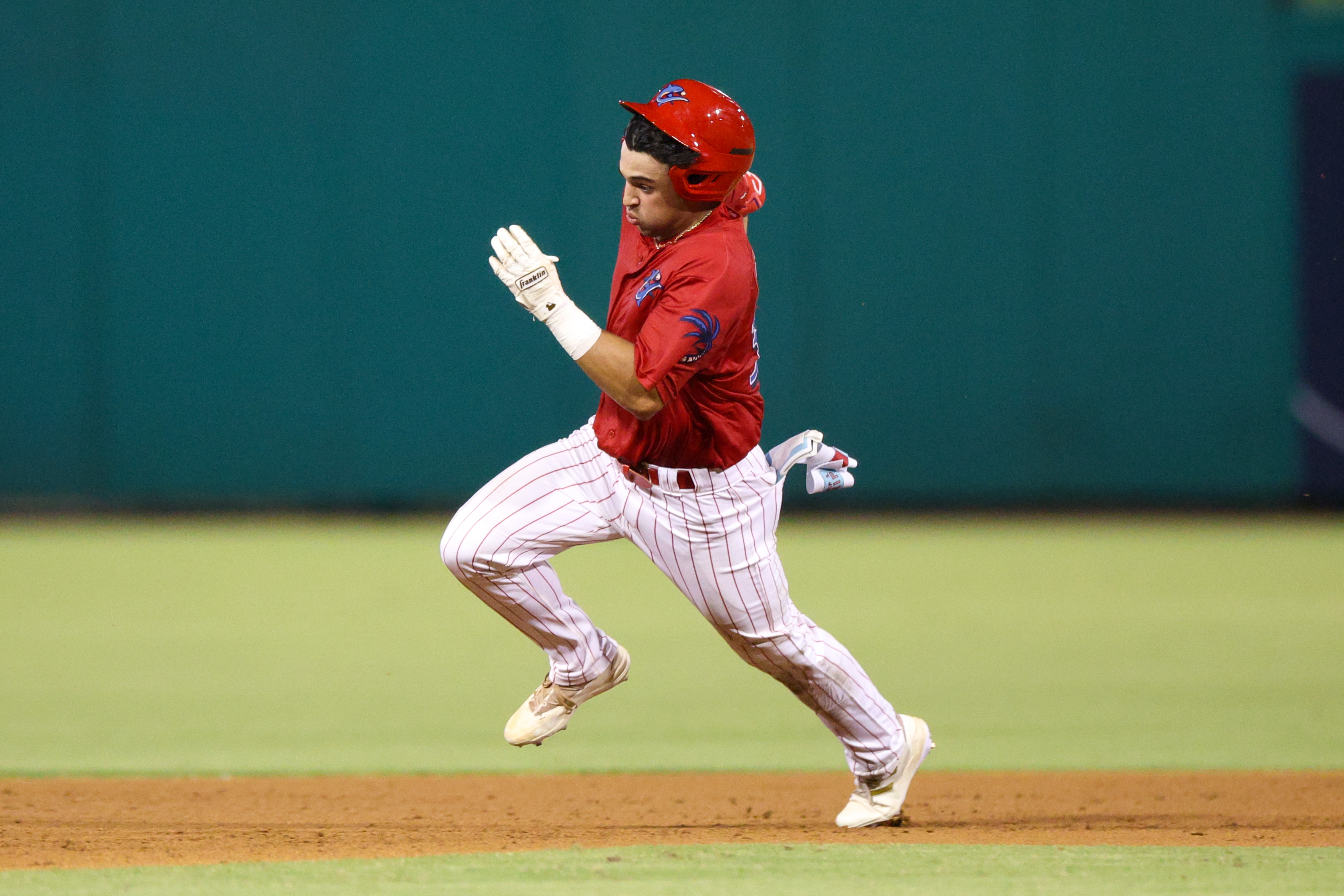
SCOTTSDALE, Ariz. — It only took Phillies outfield prospect Dante Nori 14.76 seconds to leg out an inside-the-park home run in one of his final games in the Arizona Fall League.
On Nov. 6, Nori blasted a ball 414 feet into deep right-center field at Salt River Fields, the spring training home of the Colorado Rockies and Arizona Diamondbacks. Off the bat, Nori thought it was a no-doubter that would certainly carry over the wall.
“Out of the box, I was like, ‘Aw, it’s gone,’” Nori said. “I’ve seen some balls that I’ve hit that well. I was like, ‘All right, that’s going to get out.’ And I remember, right as I passed first base, I saw it clank off the wall. And I was like, ‘Uh-oh, we’ve got to go.”
Despite getting a slow start, the speedy left-handed hitter clocked one of the fastest times recorded around the bases in 2025. Only Boston Red Sox outfielder Jarren Duran (14.71 seconds) circled the bases at a faster pace in a major league game this year.
The Phillies’ 2024 first-round pick dazzled in his short time in the AFL, a six-week showcase for some of baseball’s most promising minor league prospects.
Nori, 21, impressed scouts with his defense and baserunning, while batting .308 with a .386 on-base percentage, .822 OPS, seven RBIs, and two stolen bases in 12 games. But his time was limited due to an undisclosed leg injury that he suffered in his first AFL game on Oct. 7.
Phillies 2024 first-round pick Dante Nori, shown playing for single-A Clearwater, stole 52 bases across three levels of the minor leagues this season.
Nori said he “tweaked something” on a steal attempt, and chose to play it safe, taking the next two weeks off.
He returned to the Surprise Saguaros’ lineup Oct. 21 and saw regular playing time as the leadoff man and center fielder, a spot he hopes to occupy one day for the Phillies. His presence in the Saguaros’ lineup helped them win the AFL championship.
“I think I find ways to help my team win,” Nori said. “If it’s not with your bat, it’s with your glove, it’s with your speed. You know, you’re not always going to have your bat every single day. Sometimes, it might be the opposite. You might not have your glove, but you’re going to find a way to help your team win.”
Nori’s first full season in the Phillies organization started slowly — he batted just .221 through his first 50 games at single-A Clearwater — prompting him to modify his approach, as well as his bat selection.
“After the first two months I was struggling, so we made an adjustment,” Nori said. “I moved closer on the plate, and I switched to the torpedo bat, and since then, it’s been good.”
Nori saw immediate results, batting .300 with a .410 OBP and .860 OPS over his final 58 games in single-A, earning him a promotion to high-A Jersey Shore in mid-August, before finishing his regular season at double-A Reading.
Nori said the torpedo bat made an impact.
“Honestly, [the bat] just brings the barrel closer to my hands,” Nori said. “All my mishits are usually close to the hands, so it’s one of those things where it’s like, ‘Hey, if I’m missing there, why not bring more of the barrel in, up closer to the plate, so it just brings the barrel closer to me?’ And I’m able to contribute more. So, I like it way more. It’s been fun.”
Late in July, Nori was thrilled to receive a call about playing in the Fall League. He believes he made the best of the experience, and said his favorite part was making connections with other players and coaches, and learning from them.
“Honestly, just the relationships,” Nori said. “Just hearing how different organizations work, and just keep playing the game. We’ve been playing since January, and I think it’s a privilege to be here, and just to finish the year on a high note against some top competition, that’s all I could ask for.”
With his first full season of pro ball behind him, Nori will head home for the winter. He hopes to start 2026 in double A.
“I could see myself starting in double A,” Nori said. “That’s the goal. [I wanted to] come down here and prove that [I] can play at that level. So, start in double A, and then you know, you just take it one step at a time. So, the next one’s triple A, and then after that, it’s the big leagues.”
But before beginning his next minor league assignment, Nori has his eyes fixed on another objective: playing in the World Baseball Classic for Team Italy. While his addition to the team has not yet been finalized, Nori, who is of Italian heritage, has been in contact with the Italian national team and is excited about the potential opportunity to play in the WBC.
Dante Nori slashed .261/.361/.372 across three levels of the minor leagues in 2025, his full season in professional baseball.
Nori, the son of longtime NBA assistant coach Micah Nori, was born in Canada and spent most of his childhood in the United States. His grandfather is a longtime baseball coach who helped recruit Phillies slugger Kyle Schwarber to play at Indiana University.
“I worked out with Schwarber in the offseason these past three seasons,” Nori said. “So, I’m at his facility hitting with him, so I know I have a great bond with him.”
And he added about the National League home run king, who is a free agent: “I’m really hoping he comes back.”
Don’t expect A.J. Brown to be happy any time soon.
Brown called the Eagles’ offense a “bleep show” on a livestream last week, prompting an unprecedented, on-field admonition at Thursday’s practice from Eagles owner Jeffrey Lurie, who reportedly told him to stop whining about the offense on social media.
The offense isn’t likely to get any better with the news that right tackle Lane Johnson will miss several weeks with a Lisfranc sprain in his right foot.
Johnson has been the team’s best player during its current Golden Era, evidenced by the club’s 15-23 record when he does not play. He missed 14 games early in his career to PED suspensions but has been remarkably durable, although ankle issues have plagued him the last few seasons and this injury reportedly will cost Johnson at least a month and maybe six weeks, if not longer. Johnson is 35, and he has long suffered chronic problems with his surgically repaired right ankle.
Johnson’s replacement, Fred Johnson, played passably well after Lane’s exit Sunday night, but Fred’s an undrafted seven-year career backup for a reason.
This means that, likely for the rest of the season, the Eagles will continue their streak of having zero consecutive games in which the first-team offensive line begins and finishes the game. Center Cam Jurgens just returned from an injury bug that also has affected left guard Landon Dickerson and, earlier in the season, Lane Johnson.
The Eagles had the No. 1 defense during their run to the Super Bowl LIX championship, but they also had the No. 1 offensive line, according to Pro Football Focus. In fact, in the span from 2013-24, the Eagles’ line was considered by most to be the best in football.
Line coach Jeff Stoutland arrived in 2013. He campaigned to draft Lane Johnson, a former high school quarterback, with the No. 4 overall pick.
To be fair, all might not be lost.
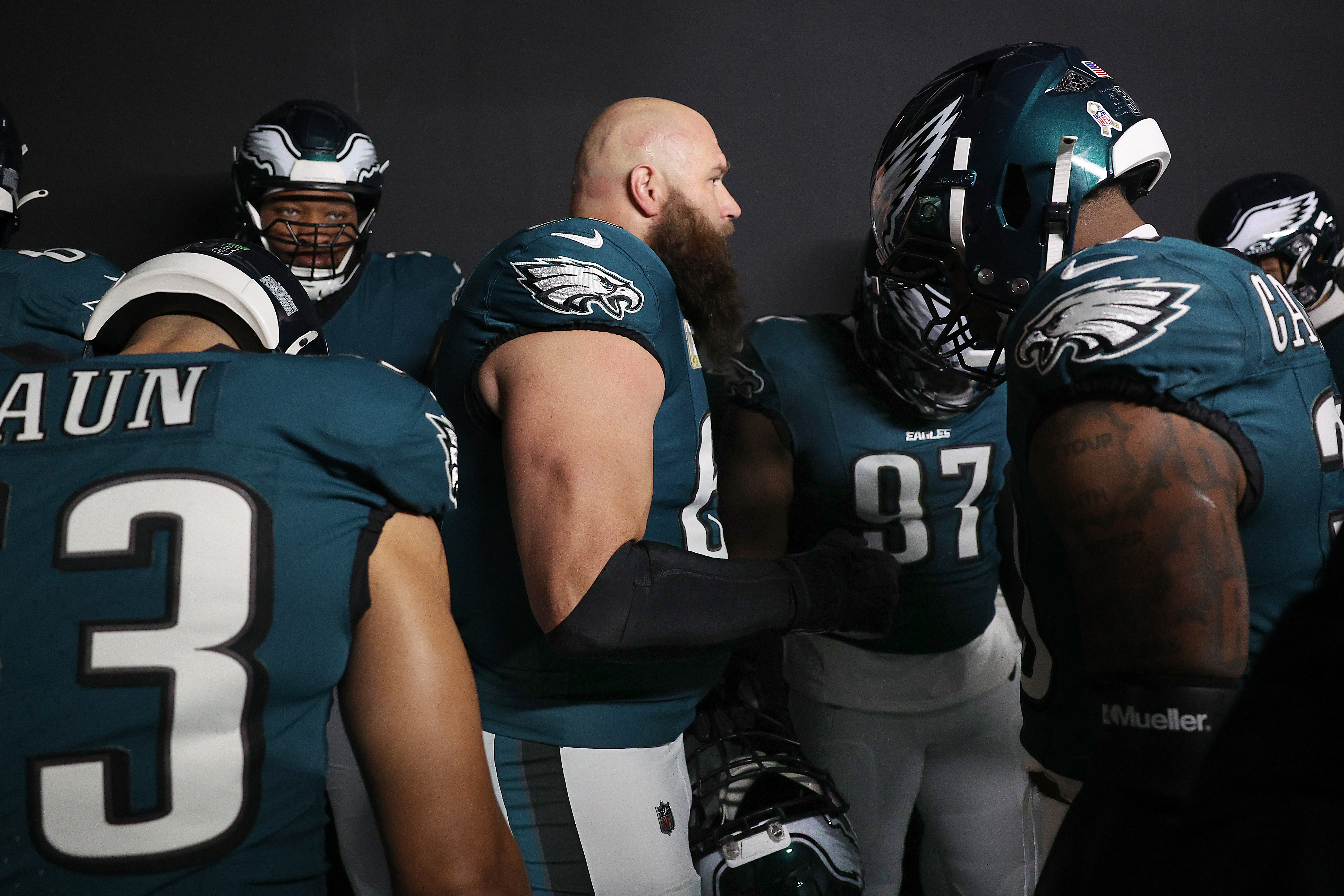
Eagles tackle Lane Johnson (center) giving a pep talk to teammates before heading out to the field prior to the game against the Lions.
Even with the lack of continuity, PFF ranked the Eagles’ line No. 5 entering Sunday. But the Birds rank 25th in yards per game and, to Brown’s repeated point, they have the 28th-ranked passing offense. This, despite boasting Brown, bookend DeVonta Smith, tight end Dallas Goedert, and Saquon Barkley, who is a home-run threat by run or pass out of the backfield.
And even without Lane Johnson, those rankings might soon rise, considering that the Eagles visit the Cowboys on Sunday, then host the Bears on Black Friday. They are two of the league’s poorer defensive teams.
Rest assured, if the Eagles offense doesn’t improve, Brown will let you know on your hellsite platform of choice.
The Eagles are on a four-game winning streak that has them atop the NFC standings. They’ve allowed 14.5 points per game in that stretch and 16 total points in their last two games in prime time, at Green Bay on Monday Night Football then home against the potent Lions on Sunday Night Football.
What happened four games ago?
Nakobe Dean returned.
Dean was the play-caller for the Eagles’ top-ranked defense that eventually won Super Bowl LIX, although he missed the end of the playoff run and the first five games of the 2025 season with a knee injury. He was limited in his first three games but has been unleashed in the last two. Sunday night, he was everywhere.
Eagles linebacker Nakobe Dean leaves the field after his standout effort against Detroit.
On the Lions’ interception, Dean covered the back out of the backfield, Jared Goff’s first read. On Jaelan Phillips’ sack, Dean covered the receiver who chipped Phillips at the line, again taking away Goff’s first read.
Early in the third quarter, Dean blitzed and forced an incompletion. Late in the fourth quarter, Dean covered speedy running back Jahmyr Gibbs, then, on consecutive plays, he blanketed Jameson Williams, the fastest active receiver in the league. Finally, Dean bulled over 230-pound running back David Montgomery and sacked Goff. Dean weighs 231. It was brutal.
Said NBC analyst Cris Collinsworth, before the replay: “Don’t look if you’re squeamish.”
There have been other developments on the Eagles defense, chief among them the addition of edge rusher Phillips, but he has played only the last two games. It has been Dean’s kamikaze play and his indomitable spirit that have injected the Birds with some midseason juice.
He’s sharing time with first-round rookie Jihaad Campbell, and he’s still a bit lost in zone coverages, but Dean has once again become the soul of the defense.
“If all else fails, just strike somebody. Strike somebody. Be physical. Put hands on somebody.”
It’s been working.
Extra points
If the playoffs began Monday, neither the 5-5 Chiefs, who have made it for 10 straight years and played in four of the last five Super Bowls, nor the 6-4 Lions, who were cofavorites with the Packers at some sportsbooks to win the NFC, would even qualify. However, most analytics sites still give each a better than 50% chance to reach the postseason. … Bengals superstar wideout Ja’Marr Chase has been suspended next Sunday against the visiting Patriots after very nastily spitting a huge loogie on cornerback Jalen Ramsey in Pittsburgh on Sunday. The league’s emphasis on sportsmanship led to the one-game (sort of) suspension of Eagles defensive tackle Jalen Carter after he spat on Dak Prescott in the NFL season opener. Chase may appeal.
Tower Health’s preliminary financial report in August for fiscal 2025 showed a $5.9 million operating profit, a gain that came thanks for the sale of a shuttered hospital in Chester County.
But that apparent annual profit, the Berks County nonprofit’s first since 2017, turned into a $20.6 million loss when Tower released its annual audit.
Auditors from KPMG decided that Tower should boost medical malpractice reserves and give up on collecting millions owed by patients, Tower said in a statement.
“As part of our standard accounting process, the audited financials for the full year reflect increased malpractice insurance reserves and final adjustments to accounts receivable,” Tower said.
Most of the $26 million swing to a loss came from medical malpractice, but Tower also reduced what is called patient accounts receivable, representing unpaid bills, to $236.6 million from $251.6 million in August’s preliminary results, according to Tower’s audited financial statements that were published Friday.
Separately, Tower reported a $15.9 million operating loss for the three months that ended Sept. 30. That loss was a bit bigger than the $14.2 million loss in the same period last year. Tower’s revenue for the quarter was $501 million, up 4% from $479.8 million last year.
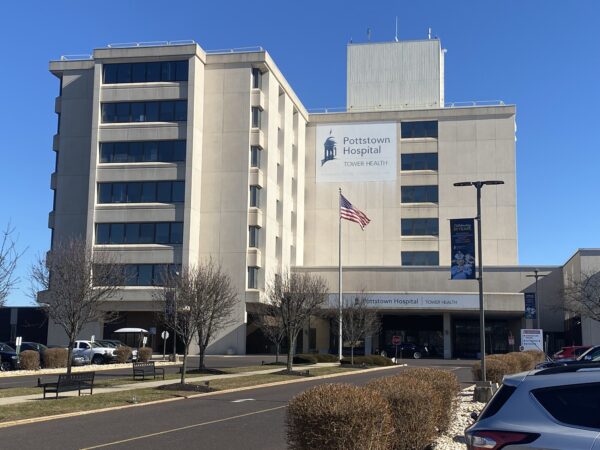
The results for the first quarter of 2026 did not include expenses for Tower’s layoff of 350 employees, or about 3% of its workforce, earlier this month. The cuts hit Pottstown Hospital particularly hard. Tower is eliminating 131 jobs there and eliminating some services.
The closures include the combined intensive care/critical care unit, the Pottstown location of the McGlinn Cancer Institute, and the hospital’s endoscopy center.
Two unions that represent Pottstown employees, the Pennsylvania Association of Staff Nurses and Allied Professionals and SEIU Healthcare Pennsylvania have decried the cuts and called on management to engage in discussions on how to preserve jobs and services.
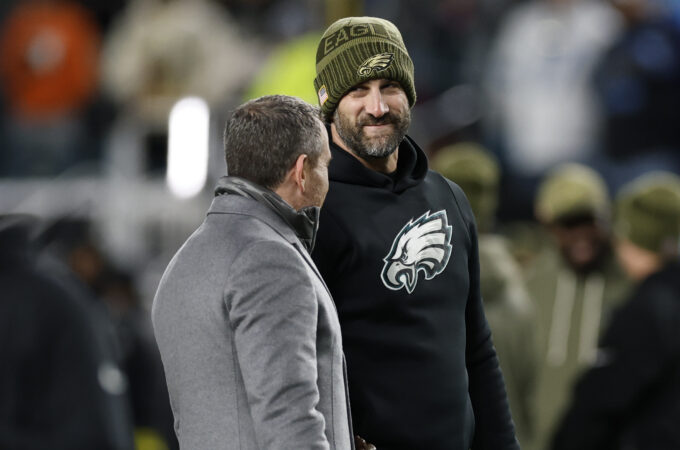
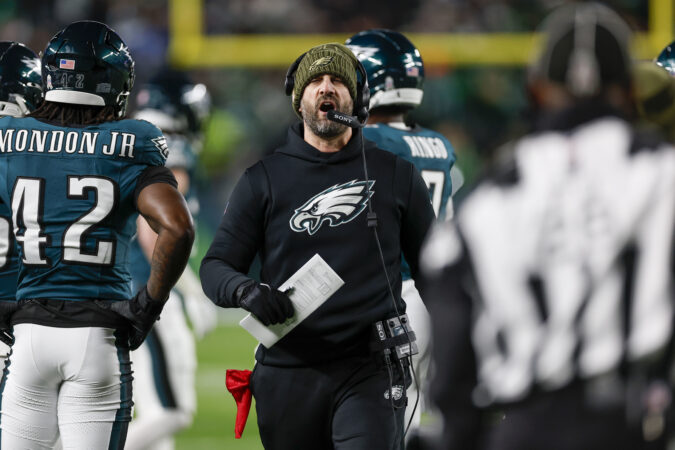
The narrative that the Eagles win in spite of Nick Sirianni still exists despite his continued success.
His detractors were given more ammunition Sunday with another lackluster offensive performance and another aggressive fourth-down gamble from the coach that failed. They’ll point to contradictory decision-making that leaned conservative early on but was almost reckless in the latter stages at Lincoln Financial Field.
Sirianni’s critics will credit Vic Fangio and his defense for the Eagles’ 16-9 victory over the Detroit Lions. They’ll say any coach can win with the roster general manager Howie Roseman has assembled. And some will spend the next week digging through stats and film to support their claim.
They might have an argument, especially this season. This version of the Eagles may defy logic. But it’s hard to debate facts. They’re 8-2 and possibly two more wins from clinching the NFC East before December. They sit atop the conference having already beaten the 8-2 Rams, not to mention five other playoff teams from last season.
And Sirianni just piles up W’s — 56 in his first 78 regular-season games — and in each of his five seasons in Philly he’s found a different way to do so. For most of this season, the Eagles have been a team in search of an identity.
They haven’t quite found one on offense and that remains a concern. But after two dominating defensive performances, it’s clear the Eagles can ride Fangio’s unit to the playoffs as long as Sirianni’s aesthetically unpleasing philosophy holds.
“I think our guys have this knack of knowing,” Sirianni said. “As I watched football today, I feel like I saw a lot of teams waiting to lose. Our team’s waiting to win because they know how to win.”
Some fans have become spoiled by all the winning since Sirianni arrived. There’s nothing wrong with having a high standard. The Eagles have it themselves and have struggled at times to enjoy the victories when they’ve looked unappealing, particularly on offense.
A.J. Brown has been the most vocal about the deficiencies and despite being targeted Sunday night more than the wide receiver has all season, the offense looked just as inept as it did last week at the Packers. The Eagles averaged just 3.9 yards per play vs. the Lions. They finished with their worst expected points added per drive (-1.40) in nearly two seasons.
But unlike in 2023, they have a defense and a coordinator to compensate. Even Brown seemed resolved to accept this current version of the Eagles. He may have no choice.
“We’re in the business of trying to get better,” Brown said. “It’s not that we just moping around. We’re excited. Guys were just here dancing.”
Sirianni is an offensive-minded coach, but the defense still works for him. Fangio is the schematic architect. And Roseman has built a young group that has elite talent at all three levels. But the coach has established a culture centered on a slogan — “Tough, detailed, together” — that may seem hackneyed until you watch his players execute it.
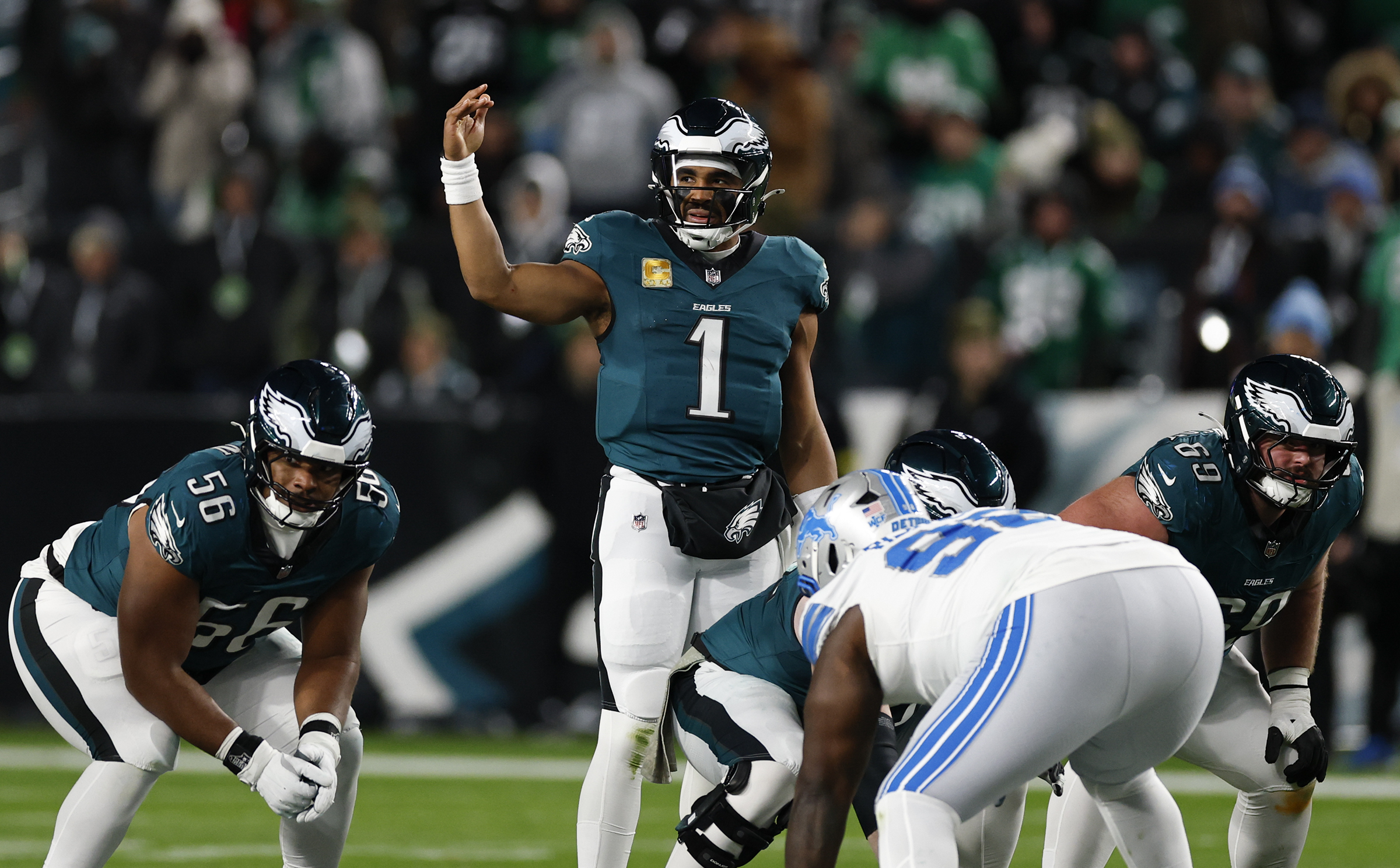
“I think it comes from the bond and the familiarity within the building,” quarterback Jalen Hurts said. “You’ve heard me talk a lot about those Georgia guys on the other side of the ball and how familiar they are with one another. I think they bring a special energy to the defense and into the team.
“You see it out there today with all those guys making plays. The defense was playing lights out. It was one of the best performances I’ve ever seen.”
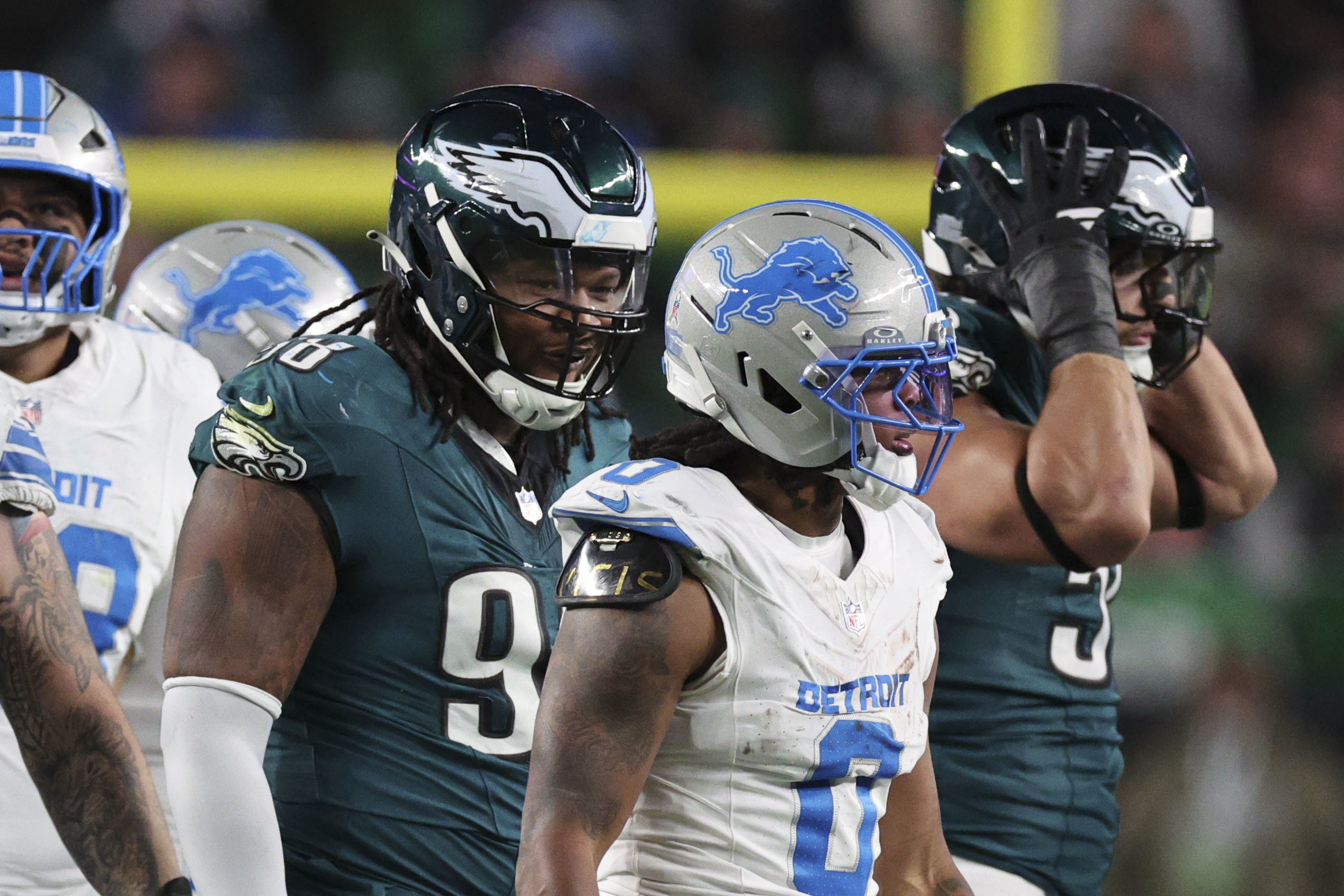
Eagles defensive tackle Jalen Carter has some words with Lions running back Jahmyr Gibbs.
Two of the Georgia guys — defensive linemen Jordan Davis and Jalen Carter — combined to deflect five passes at the line of scrimmage. One of Davis’ deflected to cornerback Cooper DeJean for an interception.
It was the Eagles’ lone takeaway, but they had five fourth-down stops that Sirianni characterizes as turnovers. The offense, meanwhile, didn’t give the ball away and still has the lowest turnover percentage in the NFL.
“That’s always a philosophical staple and what he believes,” Hurts said of Sirianni and winning the turnover battle. “It’s always been that.”
It wasn’t the only offensive highlight. The four-minute offense finally delivered with running back Saquon Barkley (26 carries for 83 yards) picking up tough gains in the final moments. There were occasional glimmers.
But Hurts and Co. struggled again to get into any rhythm. Offensive coordinator Kevin Patullo’s play-calling resulted in more negative-yard plays and three- and-outs. There were self-inflicted wounds: dropped passes, penalties, missed blocks, and throws.
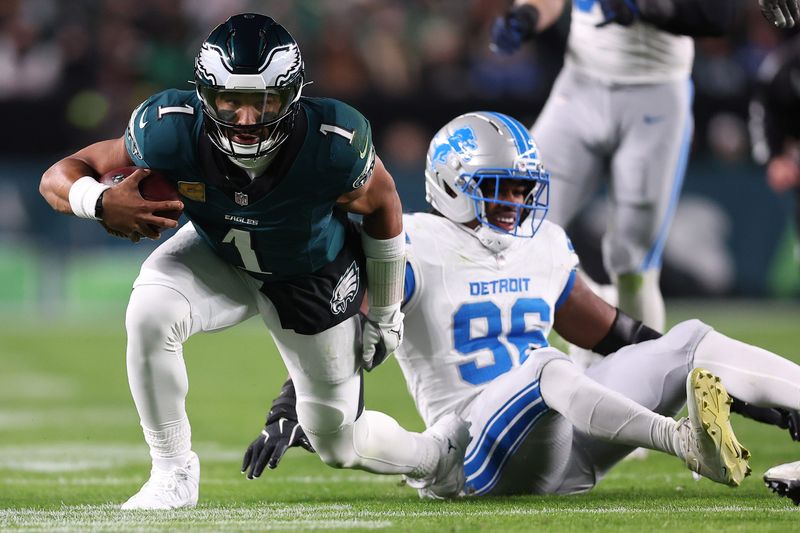
Hurts completed just 50% of his passes. He was sacked only once. Left tackle Jordan Mailata was instrumental in keeping Lions defensive end Aidan Hutchinson from wrecking the Eagles, especially after right tackle Lane Johnson left early with a foot injury.
But with Barkley failing to find light on the ground, the drop-back game often resulted in errant throws or Hurts scrambling and throwing the ball away. He forced the ball to Brown at times. Four of his first six attempts went to the receiver and 11 overall. Brown caught seven for 49 yards, but he never broke free after contact or found much separation downfield.
“It wasn’t about targets last week or the week before … it wasn’t about that at all,” Brown said. “It was me trying to help and contribute. That’s all. And regardless of what that looked like in phases, I think I did.
“But like I said, it’s a lot of stuff that we as [an] offense — and me myself — need to continue to get better at.”
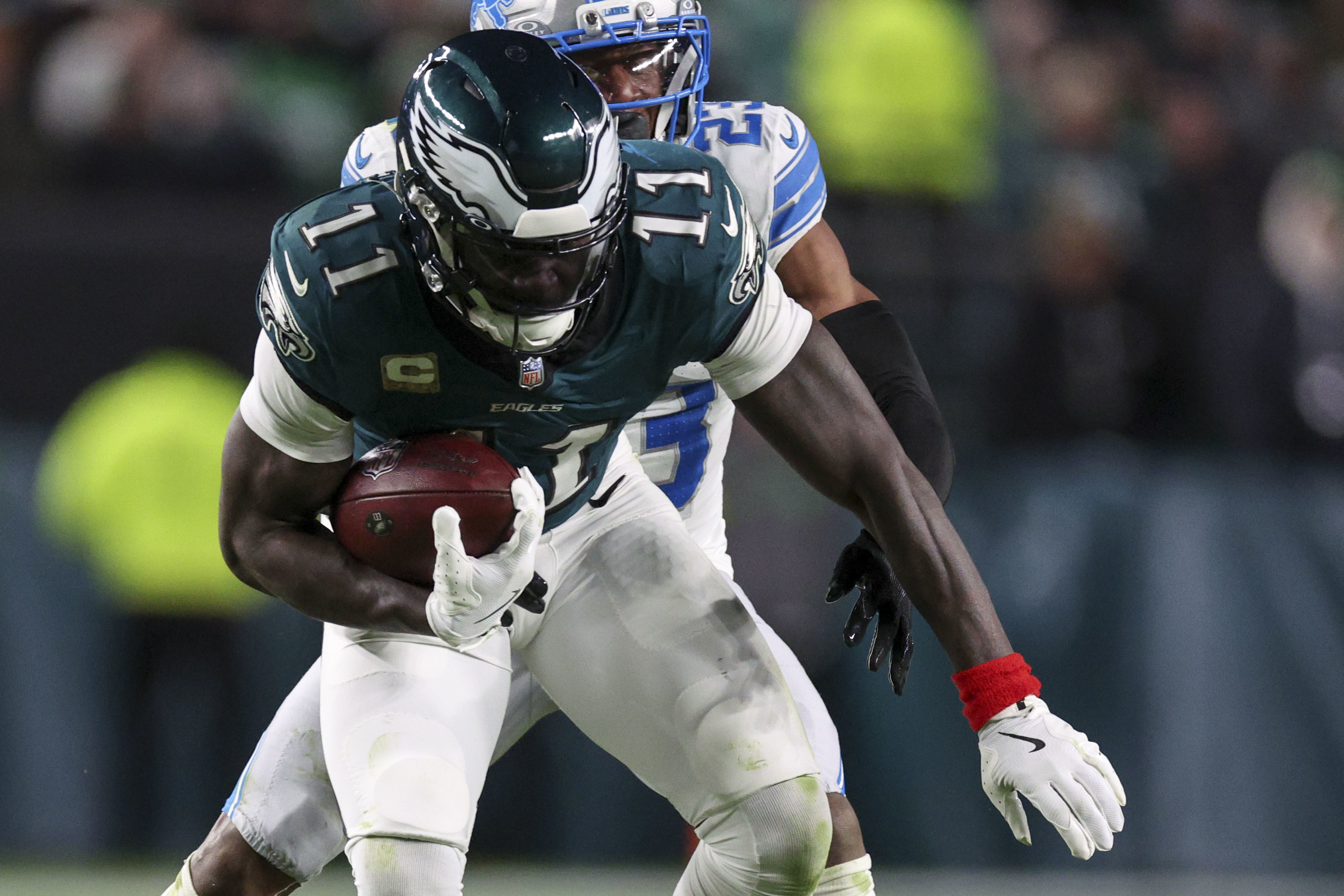
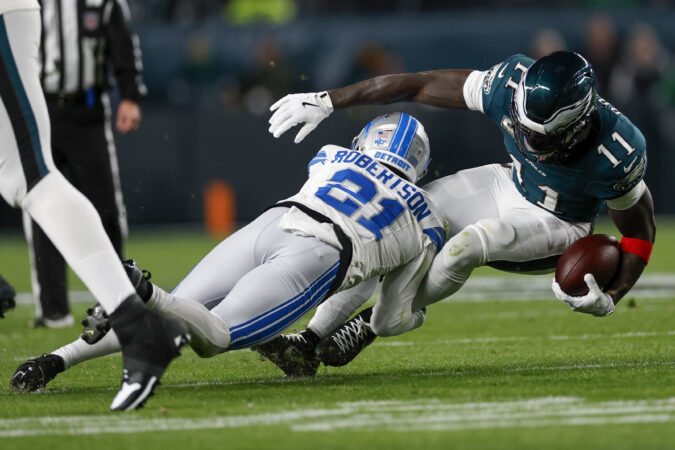
A.J. Brown was more involved on Sunday night, but the offense remained inconsistent.
Asked about Brown’s targets after the receiver saw the ball come his way just three times in Green Bay, Hurts said he was “going with the flow of the game” and “how it was called.”
“That may be a KP question,” he added.
Hurts spoke with several reporters off the podium after his news conference ended in the early morning hours. He talked about the various ways the offense has approached each week based on game planning and how it has been defended. He wasn’t making excuses, but it’s obvious the Eagles are still trying to find an element to hang their hats on.
“We have to do a bit of identifying who we are, so we can find consistency in something and go out there and execute at a high level,” Hurts said earlier. “I think there was a lot of encouragement coming into the bye week, where we were still with a ton of room to improve. But you know what I feel about momentum, it can begin to end at any moment.
“But as I told you guys last week, is it half-full or half-empty? Everybody’s got to be all hands on deck and trying to improve that. Nothing takes over the precedent of winning.”
Hurts has faced the same scrutiny as Sirianni and the belief from some that he is a product of his supporting cast. But the idea that the offense, despite returning 10 of 11 starters, has elite talent across the board may be an erroneous one.
And yet, Sirianni rolled the dice on fourth-and-1 with the Tush Push — after falling short on third down — on the Eagles’ 29 with three minutes left in the game. He essentially handed Detroit at least three points when Hurts was stopped short, but his defense — some might say — bailed him out.
“Obviously, I’m going to be second-guessing myself about the fourth-and-1 in our own territory there, but awesome job by the defense holding them to three there,” Sirianni said. “We got about half of it the play before. I thought we could get the other half right there. We didn’t. I have to live with that when we don’t execute on fourth down.”
It was the second straight week that Sirianni’s fourth-down gamble nearly cost his team. Game management has mostly been a strong point, especially after he handed over offensive play calling in 2021. So he gets the benefit of doubt once more.
But the only guy in the Super Bowl era to win at least eight of the first 10 games of a season four times in his first five years — some guys named George Halas, Paul Brown, and Guy Chamberlin did it — may deserve more than that.
All you have to do is look at the rest of the NFL to put Sirianni’s accomplishments in perspective. Lions coach Dan Campbell had multiple dubious calls and decisions that backfired on him Sunday night.
Sirianni will face the gauntlet after another ugly win. He knows as well as anyone that the Eagles won’t likely win another Super Bowl if his offense keeps sputtering.
“Do we want things to be better? Yeah, of course,” he said. “You’re in a constant quest of getting better and we’re going to be crazy tomorrow about the things. We are working tomorrow.”
Seven hundred and twenty-four days ago, Nick Sirianni stared into a bank of TV cameras and dared the NFL — hell, dared the whole world — to stop the play that the Eagles had mastered and no one else in pro football had. It was late October 2023, and while holding a seven-point lead against the Miami Dolphins, the Eagles ran a quarterback sneak, a Tush Push, on fourth-and-1 with 10 minutes, 1 second left in regulation. That wasn’t the striking part. Neither, really, was the fact that Jalen Hurts powered forward for a first down. The striking part was that the Eagles were on their own 26-yard line, a set of circumstances that made a bold postgame assertion from Sirianni all the more memorable.
“If everybody could do it,” he said that night, “everybody would do it.”
Well, there the Eagles were Sunday night, and for once, the Tush Push was an issue for them. For once, it wasn’t automatic. For once, its magic was gone, and of all the ramifications of the Eagles’ 16-9 victory over the Detroit Lions, that relative demystifying of their signature, unstoppable play was among the most concerning. For these last few years, the Tush Push had given them an innovative and significant advantage over their opponents, had meant the Eagles really needed just 9 yards to get a first down, because the 10th yard was a fait accompli.
Nothing was that easy Sunday. The Eagles succeeded just once — Hurts’ second-quarter touchdown, the team’s only one of the game — in their six sneak attempts. They false-started. They were stuffed. With 2:54 left in regulation, with the Eagles up 10 and facing fourth-and-1 from their own 29-yard line — a situation similar to the one they confronted against the Dolphins in ’23 — Hurts went nowhere, and that failure invited the Lions back into the game by handing them at least a chance to cut the lead to a single score.
“I’d do it again over and over,” tackle Jordan Mailata said. “I’d take us any day. Now, we’ve got to go back and watch that play and see what went wrong. But I’d still take us any day of the week. When you have a defense like ours, it does make it easier to go for it on fourth down. There’s the trust and faith in the guys up front, but also, if we don’t get it, there’s the trust and faith in the guys on defense.”
That was the knee-jerk justification for a call that, in the context of this particular game and the condition of this particular Eagles offensive line, Sirianni never should have made. When he had the Eagles go for it from their own 26 nearly two years ago, his decision was surprising because it was so unconventional at the time. He was correct then: The Eagles were the only team that could run the Tush Push with so high a rate of success, and they could because of the players they had blocking on the play: Jason Kelce, Lane Johnson, Mailata, all healthy.
Jalen Hurts has been frequently working behind a different version of the O-line than the dominant one that patented the Tush Push.
Sunday was so far from that same scenario. Johnson was ruled out at halftime with a foot injury, and center Cam Jurgens, having missed the previous two games with a knee injury and already playing through the painful effect of offseason back surgery, had exited, too, with 5:06 to go. So two backups, Fred Johnson and Brett Toth, were subbing for them. And the NFL and its officials and a chorus of complainers are now watching every twitch and subtle hint of movement every time the Eagles run the Tush Push. And now a play that was once a slam dunk is something closer to a midrange jump shot.
“They’re homing in on it,” Hurts said. “They’re very strict on the guard and the center and how they operate. They’ve got their eyes on it, and we’ve got to go out there and be as clean as possible.”
This sliver of doubt when it comes to the Tush Push might seem a small matter. It isn’t. The play’s reliability was a tangible symbol of the strength of the Eagles offense: the manner with which they controlled the line of scrimmage. Lane Johnson’s warning last month, after a loss to the New York Giants, about the offense becoming “predictable” was in that sense silly. No offense in the NFL last season was more predictable than the Eagles’. Everyone knew Saquon Barkley was getting the ball, and still no one could stop it.
This season, the worry for a team that is 8-2 and atop the NFC is simple: That inevitable dominance hasn’t been there, and that reality has to change the calculus when it comes to the Eagles’ trademark aggressiveness in their play-calling. They could afford to go for it anytime, anywhere in short-yardage situations when they had the best collection of blockers in the league. The line’s regression should compel Sirianni to coach the team he has right now, not the one he used to have or the one he wished he had, and over the rest of the season, he has to weigh how much he asks of a defense that is carrying the Eagles, that allowed them to get away with two subpar offensive performances against two playoff-caliber teams.
“Always. Always. You always think about those things,” he said. “You think about how it plays in-game, but you also think about your past experiences. Everything is taken into account. But you definitely think about how it’s playing in-game. … Any time we don’t get a fourth-down conversion, I’m going to put that on myself. I’m always going to be hypercritical of myself. Obviously, if I had known we weren’t going to get it, I would have punted it.”
He couldn’t have known it, but he could have suspected it, and he has to start asking himself a question that he once didn’t have to contemplate. Of course, if everybody could do the Tush Push, everybody would. But what if the Eagles can’t?
If that sounds harsh, well, harsh is a pretty good word to describe the experience of watching the Eagles offense right now. The play-calling lacks imagination. The run-blocking lacks the dominance that was once its hallmark. The quarterback has always lacked aggression. Now, he lacks accuracy, too.
That’s not an ideal formula. There are all kinds of ways you can shrug off the staggering ineptitude the Eagles displayed while muddling their way to a 16-9 win over the Detroit Lions on Sunday night. It’s an easy thing to do when your defense consistently forces opponents to play bleepier than you. The Eagles are 8-2, with the best Super Bowl odds in the NFC, and victories over four of the five teams whose odds are just behind theirs. That stuff matters. But you can’t shrug off the one question that every team with Super Bowl aspirations must constantly ask itself.
Are we a championship team in our current form?
That the Eagles can even think about answering yes is a testament to how good they are everywhere outside of offensive execution.
Brown said it best on Sunday night.
“This team is resilient,” said the Eagles’ wide receiver, who broke free of his recent on-field anonymity with 11 targets and seven catches, albeit for only 49 yards. “Show up, work hard, find a way, no matter what it looks like.”
Brown is right. And he has been right all along. The Eagles are a very good team. Winning football games is important. But so is progress. Right now, the Eagles are a long way off from being the best team they can be.
Nothing that we saw from them on Sunday night suggests their fundamental problem has been solved. It isn’t just that the Eagles aren’t scoring enough points. It’s that they don’t appear to be getting any better.
They have scored 17 or fewer in four of their last six games, including a combined 26 in their last two. Are they capable of winning a Super Bowl in their current form? Absolutely. But you can’t ignore how different their current form is from the one that saw them win the Super Bowl last season.
For the second straight game, and for the fifth time this season, the Eagles failed to crack 300 yards of total offense. That only happened three times all last season. Heck, it only happened five times in 2023.
There are plenty of mitigating circumstances. Last week’s game in Green Bay was played in real feel temperatures that dropped into the teens. Sunday’s win over the Lions featured a steady wind with wild gusts above 30 miles per hour. In both games, the Eagles lost All-Pro right tackle Lane Johnson to an injury (most recently, his foot, which sidelined him for all of the second half Sunday night).
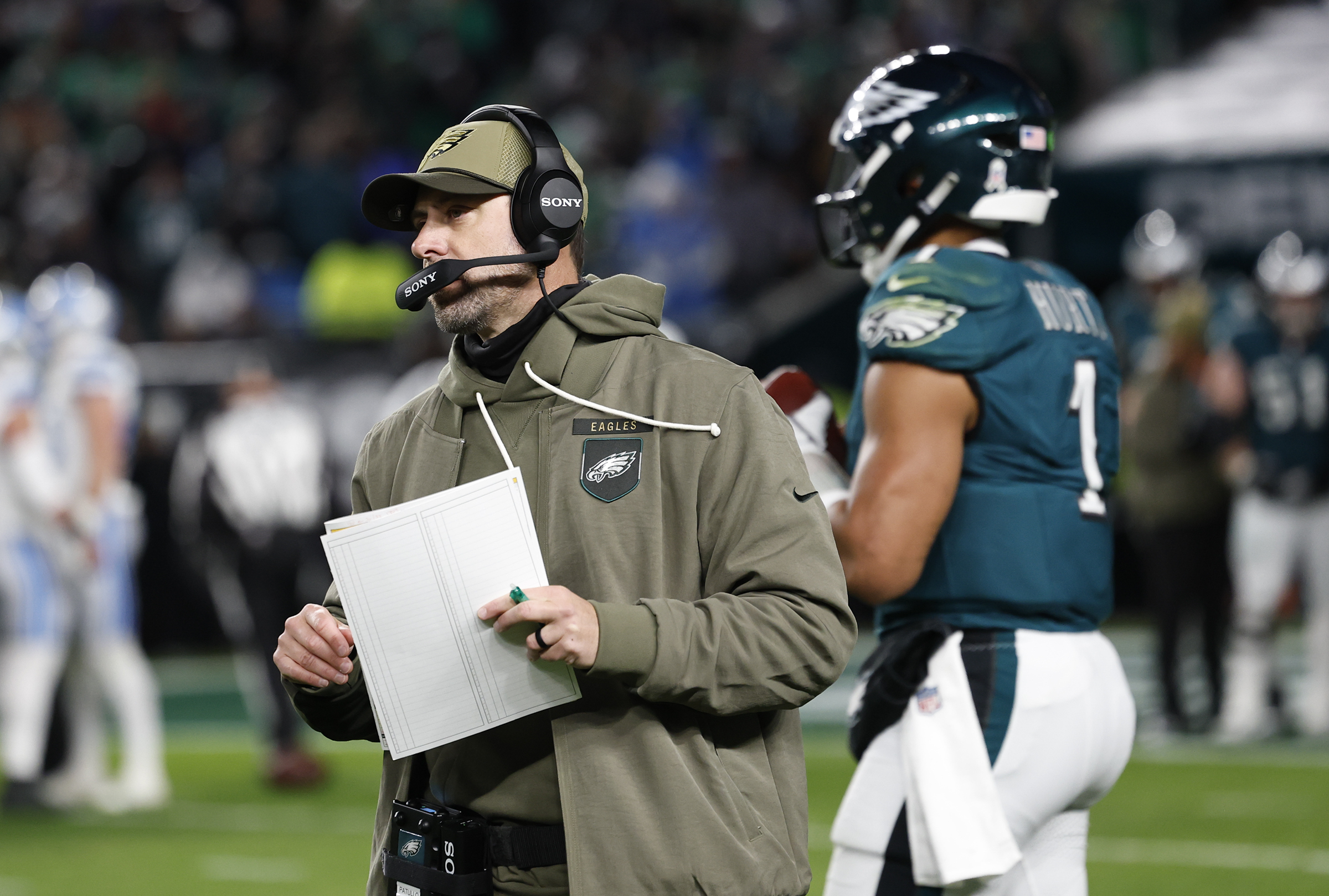
Coordinator Kevin Patullo is among those seeking answers to the team’s offensive issues.
The schedule has been brutal. The Lions defense entered Sunday ranked seventh in the NFL in yards per play allowed. The Eagles had already faced three of the six teams who ranked above Detroit (Denver Broncos, Green Bay Packers, Los Angeles Rams).
“We want to be better than what we were tonight, but every game’s played a little bit differently,” coach Nick Sirianni said. “Every game is played to win, but do we have to clean up things on offense? Of course we do. As good as the defense played, we’re going to have to clean up things on defense. As good as the special teams played, we’re going to have to clean up things on special teams. But on offense, there’s some shooting ourselves in the foot that’s happening and some of those things are things that, we always talk about [things that] take no talent, and we have such good talent that we have to be able to master the things that take no talent so our talent can shine.”
Give them credit for trying something new. They tried to force the ball to Brown, which is something that he and plenty of Eagles fans have been lobbying for in recent weeks. His 11 targets were more than he had in the last two games combined, including last week’s three-target, two-catch nothingburger in Green Bay.
The concerning thing is that nothing else changed. Brown’s seven catches went for just 49 yards. The Eagles scored just one touchdown. Even on a night when Jared Goff was out of sync and the Lions went 0-for-5 on fourth down, Detroit’s offense looked like the more highly evolved unit. The pinnacle came in the second quarter, when Goff hit Amon-Ra St. Brown for 34 yards and then Jameson Williams for a 40-yard touchdown. The 74 yards the Lions gained on two plays were more than the Eagles had gained all game to that point.
There were plenty of stretches last season when the Eagles looked like that sort of offense. Brown was always at the center of it, it seemed.
Jalen Hurts and the Eagles offense must find a rhythm if they wish to make a run at another Super Bowl.
The Eagles need to find a way to make Sunday night a building block. Good things happen when you target even a diminished Brown. The final example came with 1:47 left, with the Eagles one play away from turning the ball back over to the Lions for a chance at a wholly unearned game-tying touchdown drive. On third-and-8 from the Eagles 37, Jalen Hurts forced a pass to a tightly covered Brown, and Lions cornerback Rock Ya-Sin panicked. Instead of watching Hurts’ pass sail wide of its mark and short of the sticks, he reached out toward Brown and drew a flag. It was a questionable call, but the end result gave the Eagles a first down, and kept the Lions offense on the sidelines for the rest of the game.
“We’re always trying to get A.J. involved,” Sirianni said. “Always, always, always, always. The game play is played differently each and every week of what happens. I don’t think I’ve been shy about saying this. The game plan’s always going to start in the passing game with him and [WR] DeVonta [Smith] and [TE] Dallas [Goedert], and so we’re always trying to do that and get him the football. That’s the way the game played out a little bit today.”
At some point, it will need to play out better. Let’s hope that point comes soon.