Tag: University of Pennsylvania

  • These professors say they’re part of a growing movement banning laptops from the classroom

    These professors say they’re part of a growing movement banning laptops from the classroom

    Biology professor Jody Hey was lecturing on human evolution one recent day at Temple University.

    His students vigorously took notes by hand in paper notebooks.

    There wasn’t a laptop in sight. Nor an iPhone. No student’s face was hidden by a screen.

    Hey said he stopped allowing them about a year and a half ago after seeing research that students are too often distracted when laptops are open in front of them and actually learn better when they have to distill lectures into handwritten notes.

    “The clearest sign that it’s making a difference is that students are paying attention more,” said Hey, who has taught at Temple for more than 12 years. “And they want to participate much more than before.”

    Hey is among a seemingly growing number of professors who have chosen to keep laptop and phone use out of class, with exceptions for students with disabilities who require accommodations. Several said they made the decision after seeing what some students were doing on their laptops during class.

    Temple University biology professor Jody Hey stopped allowing laptops to be used in class about a year and a half ago. He said he’s noticed improvement in student performance.

    Jessa Lingel, an associate professor of communication at the University of Pennsylvania and director of the Gender, Sexuality, and Women’s Studies Program there, stationed teaching assistants in the back of her room to observe.

    Students “were out there booking flights and Airbnbs,” Lingel said. “Fun fall cocktail recipes. They were online gambling in class. I thought, ‘This is not acceptable.’”

    She originally disallowed laptops in 2017, but decided to go easy in 2021 as students returned after the pandemic, she said. She reinforced the ban after her teaching assistants’ observations.

    “It’s a movement,” Lingel said. “More and more people are headed in this direction.”

    In Hey’s class, students have warmed up to the laptop ban.

    “At first I didn’t like it,” said Jess Nguyen, 20, a junior genomic medicine major from Broomall, “because I kind of organize all my notes on my laptop. But I feel I’ve been learning better by writing my notes.”

    When she took notes on her iPad, she sometimes got distracted and played computer games, she said. In Hey’s class, that’s not an option.

    Students said it takes more time to write notes and sometimes their hands get tired.

    “After a couple classes, you kind of get used to it,” said Sara Tedla, 22, a senior natural sciences major from Philadelphia.

    She’s on the fence about which way she prefers to take notes.

    “It’s good that for an hour and 20 minutes you can just sit down and, without any technological distractions, focus because that’s a part of your brain you can work on,” said Quinn Johnson, 20, a senior ecology major from Philadelphia. “The more you do it, the easier it becomes to focus on something for a long period of time.”

    ‘Students learn better’

    Professors say laptops are pretty ubiquitous in the classroom when they are permitted.

    Hey conducted research on laptop use and presented it at a Temple department faculty meeting earlier this year.

    “As early as 2003, a study was done contrasting the retention of lecture material by two groups of students, one who had laptops and unrestrained internet access and a second who worked without laptops,” he said. “In that study, students with laptops scored 20% lower on average in the subsequent exam.”

    Four of every five students who used laptops in a general psychology class said they checked email during lectures, another study showed, while 68% used instant messaging, 43% surfed the net, 25% played games, and 35% said they did “other” activities.

    He also cited studies showing students who took notes by hand performed better on tests. Others cited that research, too.

    Penn President emerita Amy Gutmann co-teaches a class at Penn’s Annenberg School for Communication with the dean Sarah Banet-Weiser. They don’t allow laptops or phones to be used in the classroom.

    “I read the literature on it and it really showed that students learn better when they’re taking notes rather than trying to type as fast as they can verbatim what you say,” said Amy Gutmann, Penn president emerita, who is co-teaching a class at the Annenberg School for Communication this fall.

    Gutmann and co-teacher Sarah Banet-Weiser, dean of Annenberg, do not provide students with copies of their lecture slides, either.

    “We give them time to write down what’s on the slides,” Banet-Weiser said.

    Benefits of technology

    Some professors say laptop use in class can be beneficial.

    Sudhir Kumar, a Temple biology professor, said he asks his class of 150 students to respond to questions on their laptops every 10 minutes. Their answers count toward their grades.

    “It’s constantly keeping them on their toes,” he said.

    He would not want to see everyone give up on laptop use in class.

    “We cannot fight technology,” he said. “Teachers have to embrace technology, whether it is artificial intelligence or computers. That is a standard mode of operation for most people today.”

    (Left to Right) Jess Nguyen, 20, a junior from Broomall, Allan Thomas, 22, a senior from Philly, and Sara Tedla, 22, a senior from Philly, in a class taught by Temple University biology professor Jody Hey last month.

    In Cathy Brant’s social studies methods class of 20 to 25 students at Rowan University, laptops are key. Brant, an associate professor of education, said there are lots of hands-on group projects, and she frequently asks students to check New Jersey standards online as they prepare their lessons. She also teaches them how to use AI appropriately in the classroom.

    One of her students, she said, recently handed in a paper with very detailed notes from Brant’s lecture that she probably got only because she was able to type quickly on her computer.

    “You’re responsible for paying attention in class,” she said. “Maybe it’s a little harsh, but I’m just like, ‘If you want to be on Facebook the entire time during class, that’s on you.’”

    Jordan Shapiro, an associate professor at Temple, more than a decade ago used to make a point of having his students post on Twitter, now X, during class and counted it toward classroom participation.

    Now, he tells students to put their laptops away during class.

    “I tell them I have no problem with tech or laptops,” he said. “I just think that none of us get enough time in our lives to just focus on ideas or to listen in a sustained way to the people around us.”

    He also became concerned about students doing homework during class, he said, and using artificial intelligence to supply them with questions and comments to ask in class. They were “outsourcing class participation to the robots,” he said.

    Mark Boudreau, a biology professor at Penn State Brandywine, disallowed laptops for the first time this semester.

    “I thought I would get real pushback … or people might even drop the class,” he said. “But … a lot of students have had other faculty who have this policy.”

    Exam scores in his three courses are better this year, he said.

    Hey noted student grades have gone up, too. But he can tell some students struggle with note-taking; some just listen and don’t take notes.

    “That’s better than sitting there and going on Facebook,” he said.
  • A House committee is investigating allegations of antisemitism in Philadelphia schools

    A House committee is investigating allegations of antisemitism in Philadelphia schools

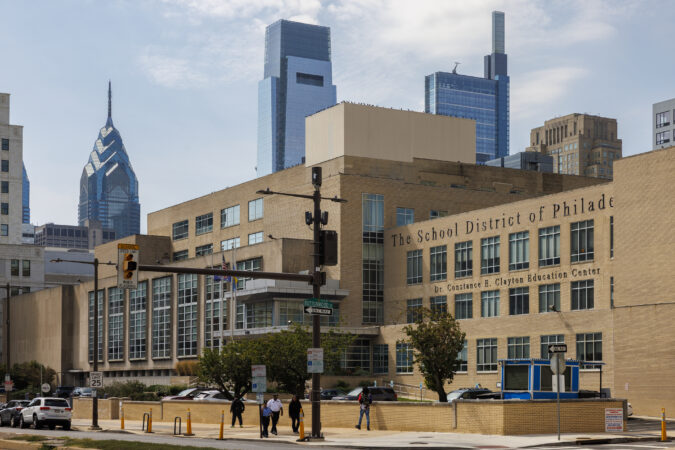
    A congressional committee is investigating allegations of antisemitism in the Philadelphia School District.

    U.S. Rep. Tim Walberg (R., Mich.) said this week that the House Education and Workforce Committee — which he chairs — would probe “disturbing reports of Jewish students being harassed and subjected to open antisemitism in their classrooms and hallways” in three school systems: Berkeley Unified in California, Fairfax County in Virginia, and Philadelphia.

    Walberg and U.S. Rep. Ryan Mackenzie, a freshman Republican who represents the Lehigh Valley, informed Superintendent Tony B. Watlington Sr. of the investigation in a letter sent Monday.

    The committee, the lawmakers said, “is deeply concerned” that since the Oct. 7, 2023, Hamas attacks on Israel, it has “received allegations that SDP is rife with antisemitic incidents, including allegations of teachers spreading antisemitism in the classroom and SDP approving antisemitic walkouts that isolate Jewish students.”

    Monique Braxton, a spokesperson for the district, said she cannot comment on ongoing investigations.

    The Republican-led committee has, in recent years, used hearings and investigations as platforms to criticize academic institutions perceived as progressive, long a target of conservatives. In 2023, following the Oct. 7 attack on Israel and the subsequent rise of campus protests against Israel’s war in Gaza, University of Pennsylvania president Liz Magill resigned after the committee held a hearing on Penn’s handling of allegations of antisemitism during her administration.

    The district in late 2024 reached a settlement with the U.S. Department of Education’s Office for Civil Rights requiring school officials to hold training on antidiscrimination policies and educate thousands of students about racial and ethnic discrimination.

    The Office of Civil Rights found in December 2024 that despite “repeated, extensive notice” of acts of antisemitism and other harassment in its schools, the district did not adequately investigate the claims, take appropriate steps to respond to them, or maintain all necessary records.

    Walberg and Mackenzie’s letter said that even after the Office of Civil Rights settlement, antisemitic incidents have continued unanswered.

    Allegations of antisemitism against certain educators

    The lawmakers called out “numerous educators who allegedly promote antisemitic content in their classrooms.”

    The representatives also referred to the district’s director of social studies curriculum, who they said “has been widely condemned by Jewish advocacy groups in light of his ‘pattern of denying the Jewish connection to the Land of Israel, refusing to speak about peace or coexistence, and downplaying the lived experiences of Jewish people in the face of violence.’”

    Philadelphia, the letter said, failed “to exercise oversight of antisemitic materials in the classroom.” Officials also took issue with what they said was a partnership between the district and the Council on American-Islamic Relations-Philadelphia. (The organization this summer announced it was available to partner with local schools and administrations to provide religious accommodations and build inclusivity.)

    Ahmet Tekelioglu, executive director at CAIR-Philadelphia, said it “takes pride in offering these resources” but had no special partnership with Philadelphia’s school district. Instead, it was broadly offering its educational materials and training to any school, educator, or district, he said.

    Tekelioglu dismissed the investigation as the machinations of “wild, right-wing” congresspeople.

    “It’s a continuation of McCarthyism, what they are trying to do against colleges,” Tekelioglu said. “They are trying to quell and suppress academic freedom in school districts.”

    What are the representatives calling for?

    The committee requested documents “to assess SDP’s compliance with Title VI and determine whether legislation to specifically address antisemitism discrimination is needed.”

    The district was given a deadline of Dec. 8 to produce documents including an anonymized chart of all allegations of antisemitism against students, faculty, or staff since Oct. 7, 2023; all documents and communications since that date “referring or relating to walkouts, toolkits, workshops, curricula, course materials, educational material, guest speakers, lecture series, partnerships, teacher training, or professional development, referring or relating to Jews, Judaism, Israel, Palestine, Zionism, or antisemitism, in the possession of SDP schools or offices”; and more.

  • A Philadelphia jury reached $35 million verdict against Main Line Health and Penn Medicine for cancer misdiagnosis

    A Philadelphia jury reached $35 million verdict against Main Line Health and Penn Medicine for cancer misdiagnosis

    A Philadelphia jury reached $35 million verdict last week against Main Line Health and the University of Pennsylvania Health System for a cancer misdiagnosis that led a then-45-year old Philadelphia resident to undergo a total hysterectomy in 2021.

    Main Line discovered later that the biopsy slides used to make the diagnosis in February 2021 were contaminated. The cancer diagnosis was due an error that involved a second person’s DNA, not that of the plaintiff, Iris Spencer, who did not have cancer.

    Main Line settled with Spencer in 2022 for an undisclosed amount, so it won’t have to pay its share of the verdict.

    The jury found Penn and its physician, Janos Tanyi, a gynecological oncologist, liable for $12.25 million, or 35%, of the total awarded in damages for her unnecessary hysterectomy. The lawsuit said Spencer suffers from “surgically-induced menopause.”

    The lawsuit against Penn and Tanyi said the physician did not do enough to resolve a conflict between biopsy results at Main Line and those at Penn, where Spencer sought a second opinion.

    A Penn biopsy did not find cancer. Other tests were also negative, but Spencer did not know about those results.

    “The verdict affirms the central importance of the patient and the doctor’s obligation to inform the patient of all of the test results, of all of her options, and that she shouldn’t be dismissed because she’s a patient and not a doctor,” Spencer’s lawyer, Glenn A. Ellis, said Monday.

    The $35 million verdict is Philadelphia’s largest this year for medical malpractice, according to data from the Philadelphia Court of Common Pleas.

    Medical malpractice costs have been rising throughout healthcare. A factor in Pennsylvania is a 2023 rule change that allowed more flexibility in where cases can be filed.

    In 2023, a Philadelphia jury issued a state record $183 million verdict against the Hospital of the University of Pennsylvania in a birth injury case.

    A laboratory mistake

    Spencer’s troubles started in February 2021 at Main Line’s Lankenau Medical Center where her biopsy found that she had cancer in the lining of her uterus despite the lack of symptoms.

    For a second opinion, Spencer saw Tanyi at Penn a few days later. A repeat biopsy came back negative, according to Spencer’s complaint that was filed in early 2023. Tanyi also performed other tests, all of which came back negative, but he did not share that information with Spencer, the complaint says.

    After Tanyi performed the complete hysterectomy on March 8, 2021, Penn’s pathology laboratory found no cancer in the tissues that had been removed from Spencer’s body.

    That’s when Spencer, who has since moved to Georgia, went back to Lankenau seeking an explanation. Seven months later, Main Line informed her that she never had cancer.

    Main Line and Spencer subsequently “reached an amicable full and final settlement to resolve and discharge all potential claims for care involving the health system,” Main Line said in a statement. Main Line did not participate in the trial.

    Penn said in a statement: “We are disappointed by the jury’s verdict in this case that was unmoored to the evidence presented at trial on negligence and damages. Our physician reasonably relied on the pathology performed at a hospital outside our system that revealed a very aggressive cancer.”

    Penn said it plans to appeal the verdict, which could increase by more than $2 million if the court approves a motion for delay damages that Ellis filed Saturday.

  • Trump is changing the way aid goes to cities. Philly stands to lose tens of millions of dollars for housing.

    Trump is changing the way aid goes to cities. Philly stands to lose tens of millions of dollars for housing.

    Philadelphia stands to lose tens of millions of dollars in federal funds intended to fight homelessness under a plan issued by the Trump administration that advocates say could significantly disrupt permanent housing programs and return formerly homeless people to the streets.

    The U.S. Department of Housing and Urban Development released the plan earlier this month, saying it would “restore accountability” and promote “self-sufficiency” in people by addressing the “root causes of homelessness, including illicit drugs and mental illness.”

    Nationwide, advocates say, the HUD plan could displace 170,000 people by cutting two-thirds of the aid designated for permanent housing.

    The number of individuals in Philadelphia at risk of losing stable housing hasn’t been tallied because the city’s Office of Homeless Services (OHS) is still reviewing the plan’s impact, said Cheryl Hill, the agency’s executive director.

    Overall, there are 2,330 units of permanent housing, many of them financed by $47 million the city received from HUD last year, according to city officials.

    The new strategy comes as Mayor Cherelle L. Parker attempts to move ahead with an ambitious plan to increase the supply of affordable housing in the city. Parker declined to comment on the Trump administration’s policy shift.

    A preliminary analysis by HopePHL, a local anti-homelessness nonprofit, estimates around 1,200 housing units with households of various sizes would lose federal aid and no longer be accessible to current residents, all of whom are eligible for the aid because they live with a physical or mental disability.

    HUD plans to funnel most of the funding for permanent housing into short-term housing programs with requirements for work and addiction treatment. The agency also said that it’s increasing overall homelessness funding throughout the United States, from $3.6 billion in 2024 to $3.9 billion.

    “This new plan is disastrous for homelessness in Philadelphia,” said Eric Tars, the senior policy director of the National Homelessness Law Center, who lives and works in Philadelphia. “The biggest immediate harm would be that those who were once homeless but are now successfully living in apartments will be forced out of their homes.”

    Other critics say the policy is based on a failed model that strips away civil liberties and doesn’t address what scholars and people who run anti-homelessness agencies say is the main reason Americans are homeless: the dearth of affordable housing.

    “We have broad concerns about what we’re seeing,” said Candice Player, vice president of Advocacy, Public Policy and Street Outreach for Project HOME, the leading anti-homelessness nonprofit in Philadelphia. “We are all in a very difficult position here.”

    Amal Bass, executive director of the Homeless Advocacy Project, which provides legal services to those experiencing homelessness, agreed, saying the city is “bracing for homelessness to increase in Philadelphia as a result of these policy choices.”

    The need to house thousands of people suddenly made homeless would force cities, counties, and states to spend money they may not have, according to a statement from the National Alliance to End Homelessness.

    Asked for comment, a HUD spokesperson sent a statement saying the agency seeks to reform “failed policies,” and refutes claims that the changes will result in increased homelessness.

    HUD hopes that current permanent housing shift to transitional housing will include “robust wraparound support services for mental health and addiction to promote self-sufficiency.”

    The agency added that it wants to encourage the “12,000 religious organizations in Pennsylvania to apply for funding to help those experiencing homelessness.”

    New restrictions on ‘gender ideology extremism’

    The federal government funds local governments to address homelessness through so-called Continuums of Care (CoC), local planning bodies that coordinate housing and other services. In Philadelphia, the CoC is staffed by the city’s Office of Homeless Services, and governed by an 18-member board, including homeless and housing service providers, and physical and behavioral health entities.

    In its plan, HUD will require the local planning bodies to compete for funding, and will attach ideological preconditions that could affect how much money a community like Philadelphia receives.

    For example, the new HUD plan “cracks down on DEI,” essentially penalizing a local board for following diversity, equity, and inclusion guidelines. HUD would also limit funding to organizations that support “gender ideology extremism“ — programs that “use a definition of sex other than as binary in humans.” And HUD will consider whether the local jurisdiction“prohibits public camping or loitering,” an anti-encampment mandate that advocates such as the Legal Defense Fund say criminalizes homelessness.

    Funding for programs that keep people in permanent housing could be cut off as early as January, according to HUD documents.

    Philly an early adopter of Housing First

    The new HUD policy dovetails with the views of President Donald Trump, who signed an executive order in July that sought to make it easier to confine unhoused people in mental institutions against their will.

    Trump has also said he wants municipalities to make urban camping illegal, helping to clear homeless encampments from streets and parks. He’s expressed a preference for moving people who are homeless from municipalities to “tent cities.”

    Planners in Utah are working toward creating such a facility known as an “accountability center” that would confine people who are experiencing homelessness and force them to be treated for drug addiction or behavioral health issues.

    HUD’s new direction is a repudiation of Housing First, which gives people permanent housing and offers services without making them stay in shelter and mandating treatment for drug abuse or behavioral health issues. Philadelphia was an early adopter and was the first U.S. city to use it specifically for people with opioid disorders, according to Project HOME, which was cofounded by Sister Mary Scullion, an early proponent of Housing First.

    Time and again it’s been proven that “offering, rather than requiring, services to help those who are homeless, has greater effect,” said Michele Mangan, director of Compliance and Evaluation at Bethesda Project, which provides shelter, housing, and case management services to individuals experiencing homelessness in Philadelphia.

    The administration’s move toward transitional housing and required treatment hasn’t worked before, according to Dennis Culhane, a social policy professor at the University of Pennsylvania who’s an expert in homelessness and assisted housing.

    The people most in need of help couldn’t comply with clean and sober requirements and were evicted, he said.

    “It’s a misguided approach that blames the victim and fails to address the lack of affordable housing,” Culhane said. On the other hand, Housing First has had an 85% success rate in helping to lead people out of homelessness, Culhane said.

    He added that he “distrusts the administration’s motivation. It just wants people out of sight and moved into fantastical facilities with tents and alleged care because they’re seen as a nuisance.”

    Ultimately, said Gwen Bailey, HopePHL’s vice president of programs, it’s not clear whether the Trump administration “thinks it’s doing the right thing. I don’t know their data.

    “But in Philadelphia right now, today, I see all kinds of people facing frightening situations.”

    Staff writer Sean Collins Walsh contributed to this article.

  • Penn is testing beanies for NICU babies that block harmful noise and play parents’ messages

    Penn is testing beanies for NICU babies that block harmful noise and play parents’ messages

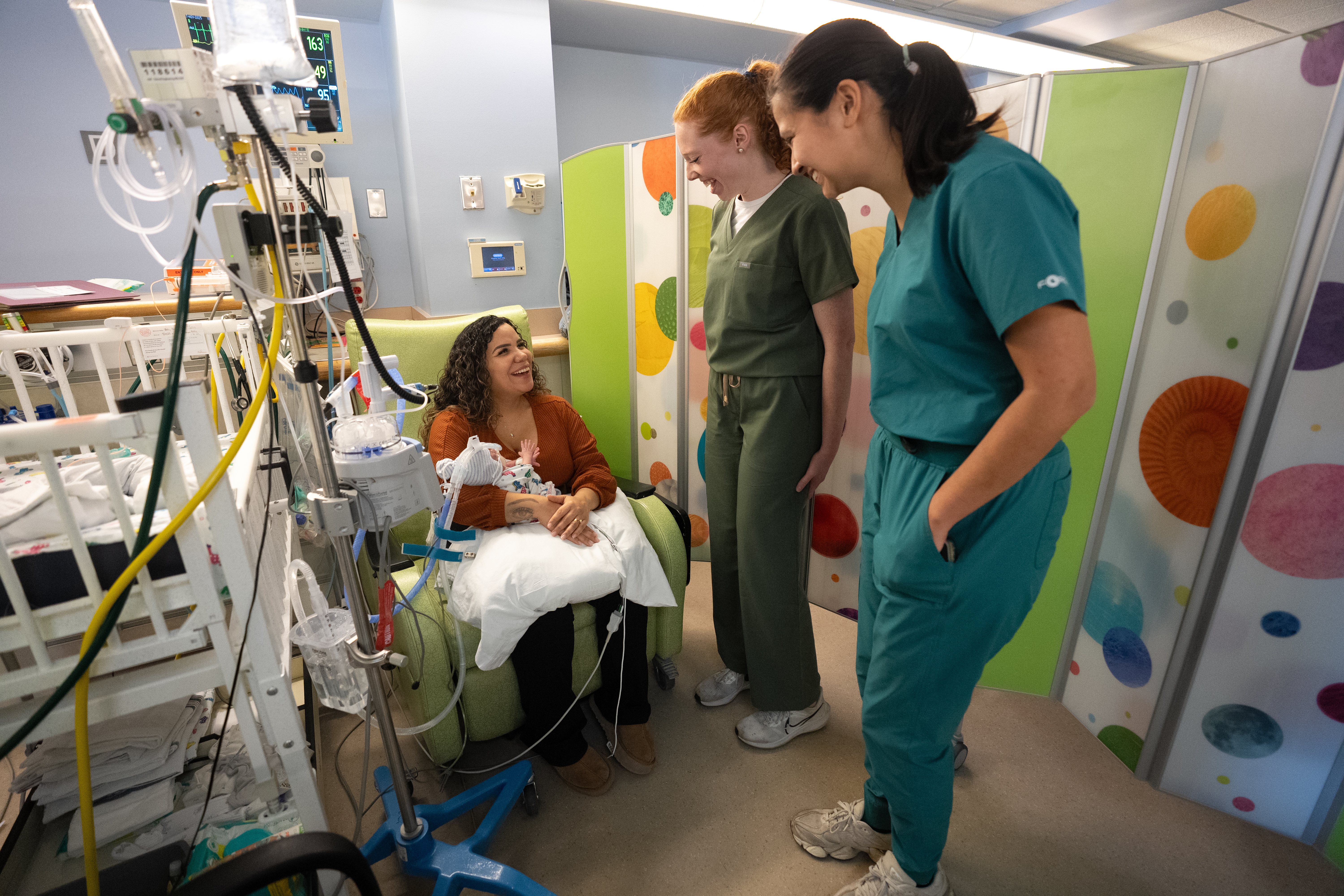
    When Pamela Collins was pregnant, she would talk and sing to her son through her belly, telling him he was loved.

    He was the “miracle” that the 32-year-old mother had been waiting for, after four miscarriages and an ectopic pregnancy.

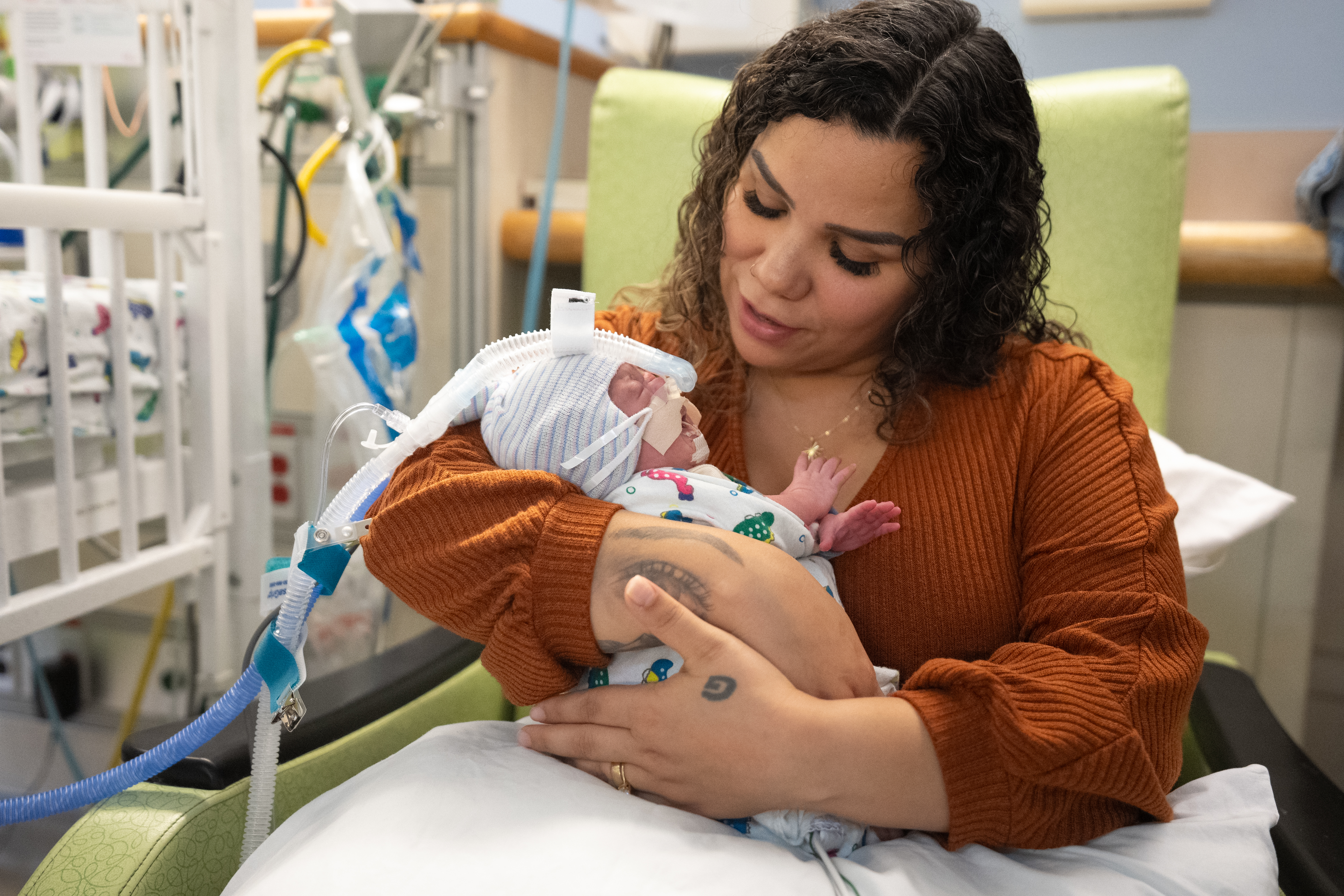
    She never expected that her son, John, would arrive early at 29 weeks in September and have to spend his first months in the intensive care nursery at the Hospital of the University of Pennsylvania.

    Her family has relocated from Mount Pocono to stay at the nearby Ronald McDonald House, a charity, so they can visit John every day. Even still, she wishes she could be with him all the time, to sing to him and tell him that he is strong and loved — just as she did when he was in her womb.

    A new medical device being tested at HUP could help her do just that.

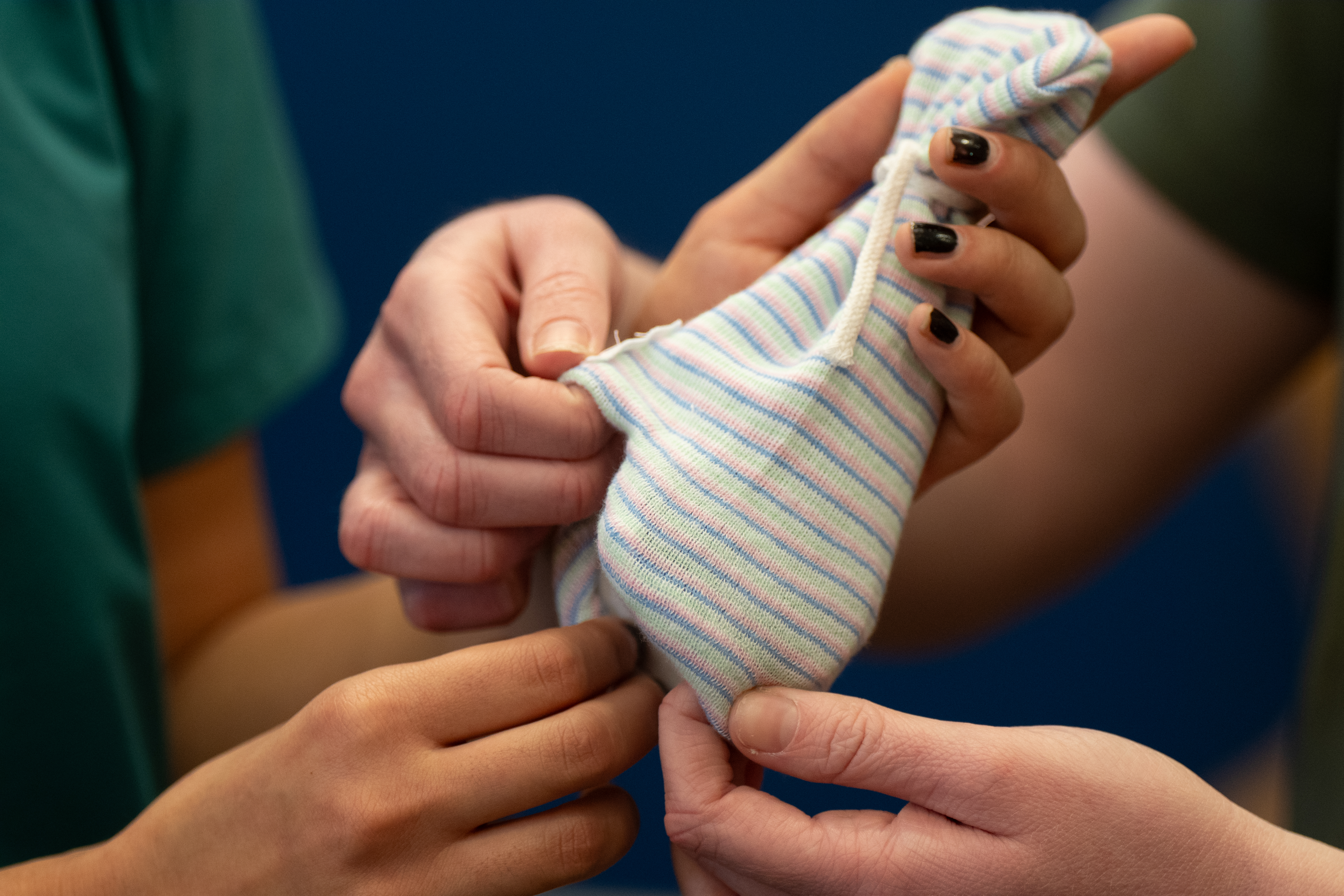
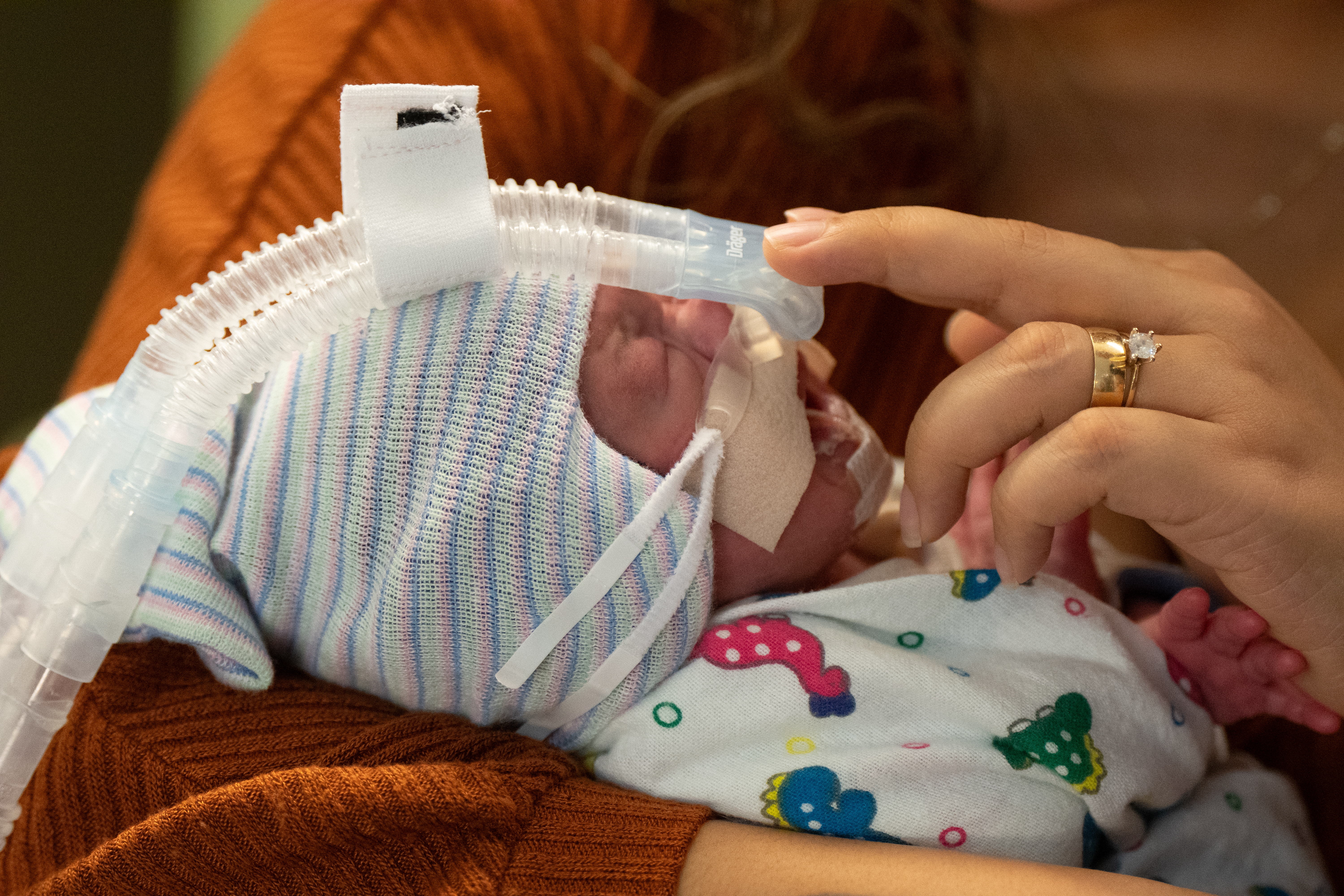
    Collins’ son is one of five babies so far to try out the Sonura Beanie, a device that aims to connect NICU babies with their parents and block out harmful noises in the hospital environment.

    Invented by five undergraduates at the University of Pennsylvania, the beanie is designed to mimic the womb, by filtering out high-frequency sounds like alarms — which frequently plague the NICU — while allowing human voices at low frequencies to be heard.

    The device can also deliver audio messages recorded by parents for their babies.

    “It’s as if they were laying on your chest [or] as if they were in the womb,” said Sophie Ishiwari, one of the founders.

    Their idea won Penn’s 2023 President’s Innovation Prize, which provided a $100,000 cash award and living stipends for the team to pursue their commercial project after graduation. Three of the original members went onto medical school, leaving two — Gabby Daltoso and Ishiwari — to continue working on the product full-time.

    In the two years since graduating, they’ve tested the device in the lab and pitched it to hospitals around the country, earning accolades along the way. Now, they’re putting the beanie on infants in the hospital for the first time.

    Over the next several months, Ishiwari and Daltoso will be testing the beanie on 30 infants in HUP’s intensive care nursery. They’ll be looking to see whether the beanie can reduce stress, based on changes in heart rate, respiratory rate, and oxygen saturation.

    They will also evaluate how easy it is for nurses to use, and how parents feel about the experience.

    Collins joined the study hoping the beanie could help her son feel calmer by hearing her voice, as well as that of his father and teenage sister.

    “I know my baby can listen more than he can see, and I’m excited to know he’s listening to our voices instead of this beeping,” she said, gesturing to the noisy NICU machines.

    Pamela Collins suffered four miscarriages and an ectopic pregnancy before giving birth to John.

    The origin

    The first thing Daltoso and Ishiwari noticed when shadowing in the NICU was how loud it was. Between beeping from machines to hospital alarms going off, it felt overwhelming even for adults.

    “They can’t turn the alarms off because it’s their job to keep patients alive,” Daltoso said.

    In the womb, a fetus would primarily be exposed to low frequency sounds under 500 Hertz. Alarms in the NICU can hit 2,000 Hertz and higher, Daltoso said. Imagine having to hear a fire alarm go off continuously throughout the day.

    A 2014 study found that babies in a NICU in Massachusetts were exposed to frequencies over 500 Hertz 57% of the time.

    Some medical equipment also emit high frequencies of sounds. Babies on a ventilator, for example, are exposed to sounds in the 8,000 Hertz range of frequencies, Daltoso said.

    “They’re in a room of 20, so if one baby’s on it, they’re all exposed,” she added.

    In the short term, this noise can stress babies out to the point of not being able to sleep or eat, Daltoso said. Babies may experience trouble gaining weight as a result and show unstable signs such as heart rates that are faster than normal.

    Babies in the NICU could also suffer long-term impacts from what is known as “language deprivation,” Ishiwari said.

    Normally, an infant would be exposed to language early in life, which is important for the infant’s neurodevelopment. But a baby in the NICU has less exposure to their parents’ speech.

    Studies have shown that preterm babies are generally at higher risk of language delays and deficits.

    Daltoso and Ishiwari, alongside those three other seniors majoring in bioengineering at Penn, were inspired to create the beanie for their senior capstone project in 2023.

    Through a sound-engineering class and interviews with hundreds of clinicians and parents, they devised the technology inside the beanie to cancel out high-frequency noises, particularly above the 2,000 Hertz range, while allowing lower frequencies through.

    A mobile app connects to the hat to enable parents to send songs, stories, audio messages, and recordings of their heartbeat to the baby remotely through a speaker in the hat.

    The babies wear the beanies during feeding so that it mimics a real-life interaction, where the baby would normally be lying against their mother’s chest.

    Ishiwari said she has teared up listening to some of the messages parents were leaving for their babies. They’ve so far included bedtime stories, songs, and shorter messages like “I love you” and “good night.”

    “A lot of them don’t know where to put that love and joy and excitement,” Daltoso said. “This is a place that they can.”

    Gabby Daltoso and Sophie Ishiwari are testing the beanie at the Hospital of the University of Pennsylvania.

    Sending love from afar

    When Collins and her husband, Franqlin, prepared to record messages for John, they turned off the lights in the room and prayed.

    Then they started recording.

    Collins, who is originally from Brazil, sang a Brazilian song to tell him that he is perfect the way he is. Her husband made up a story about John, and her 15-year-old daughter narrated another with the message that he is enough.

    A nurse told Collins that John was laughing when he wore the beanie.

    “I can tell he loved that,” Collins recalled the nurse telling her.

    Babies in the study wear the beanies for three 45-minute sessions a day, but Collins wishes her son could wear his the whole day.

    “I feel babies can be more calm now and [won’t] be crying all the time,” she said.

    The beanie designed by Gabby Daltoso and Sophie Ishiwari cancels out high-frequency sounds while allowing low-frequency sounds through.

    Michelle Ferrant, a clinical nurse specialist in HUP’s intensive care nursery, was excited that its NICU was chosen as a pilot site.

    Her team has done projects to try to reduce noise levels in the NICU, including putting signs up to remind people to use hushed voices, and closing doors and trash can lids as softly as possible.

    “There are a lot of things that might not seem very loud to us, but [if] you’re a small baby and it’s so close to [you], it sounds much louder,” Ferrant said.

    However, until the beanie study came along, they didn’t have a way of filtering which noises babies heard.

    The Sonura Beanie team is next looking to launch a multi-center trial that will evaluate whether wearing the beanie could help promote weight gain.

    Exposure to their mother’s voice and reduced noise levels can help preterm infants with weight gain and feeding, studies have shown.

    “We will be looking to prove that our hat is able to soothe the babies to the point where they are taking in more food, gaining more calories, growing faster, and hopefully going home faster,” Daltoso said.

    They also plan to launch in other hospitals, including Stanford Medicine Children’s Health, affiliated with Stanford Medicine and Stanford University in California, so that clinicians can test out the product and see how it fits into their workflow. These pilots would function like “a trial for a pre-purchase,” Daltoso said.

    They are currently working on submitting their medical device for clearance by the Food and Drug Administration so they can begin selling it.

    Because the product is deemed low-risk in terms of safety, they are eligible for fast-track approval, which they expect to get within the next year, Daltoso said.

    The team is still working on setting a price and declined to disclose details.

    They would eventually hope to get the product covered by insurance as a sensory-integrative technique. For that, they would need their larger clinical study to show that the beanie has functional outcomes.

    ‘Holding the miracle’

    John weighed only one pound and 14 ounces at birth.

    John doesn’t have a specific release date from the NICU. The timeline will depend on when he is able to breathe on his own and put on weight.

    At birth, he weighed only 1 pound, 14 ounces. Today, he weighs more than 4 pounds and no longer requires a feeding tube.

    Collins was 20 weeks pregnant when she found out that John had a heart defect that doctors said may one day require surgery. A few weeks after that, doctors found an issue with the placenta that ultimately led to his preterm birth.

    Now, when she holds her son in her arms, she feels like “I am holding the miracle,” she said.

  • Thousands of Penn graduate student workers could soon strike

    Thousands of Penn graduate student workers could soon strike

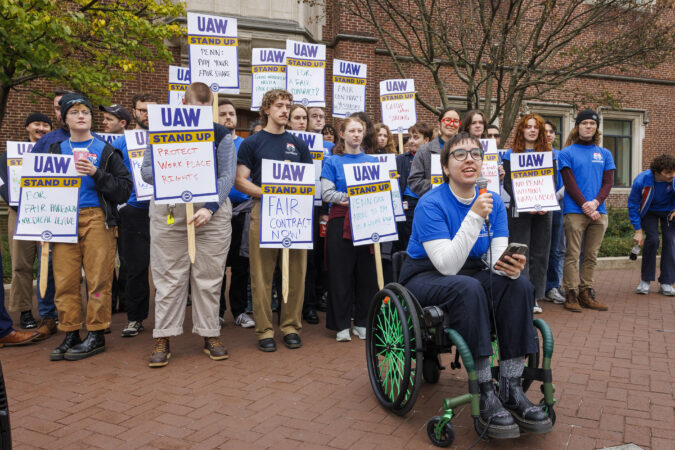
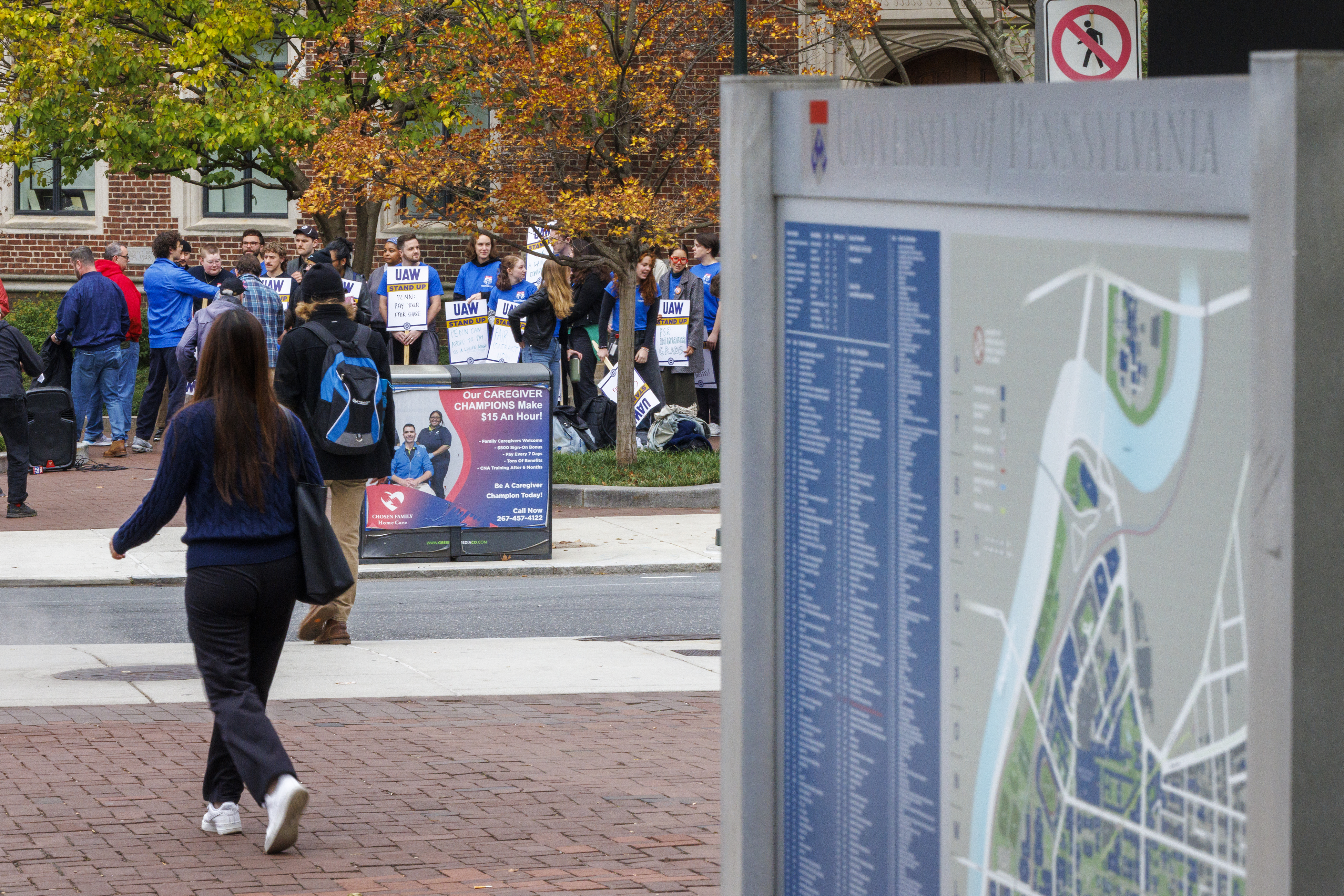
    Graduate student workers at the University of Pennsylvania have voted to strike if their union calls for it, as they work toward a first contract with better pay and benefits.

    The graduate students, who research and teach at the university, voted to unionize last year, after two decades of organizing attempts.

    The union’s total membership is about 3,400, and 2,416 participated in the strike vote. Of them, 92% voted in favor of calling a strike if needed to reach an agreement.

    “As the city of Philadelphia’s largest employer and a world-class research institution, Penn must do better by the workers that ensure its continued success,” Katelyn Friedline, a bargaining committee member and Ph.D. student, said at a news conference earlier this month.

    The union, Graduate Employees Together-University of Pennsylvania (GET-UP) is part of the United Auto Workers (UAW), which represents groups of university workers across the country, including Penn postdoctoral researchers and research associates who voted to unionize in July.

    The strike vote comes amid a wave of labor actions across Penn and other campuses. During contract negotiations in 2023, Temple University graduate workers went on strike for 42 days. The same year, Rutgers University educators, researchers, and clinicians walked off the job for a week.

    Since 2023, resident assistants at Penn, Temple, Drexel University, and Swarthmore College have also unionized. This month, graduate student workers also voted to form a union at Pennsylvania State University.

    GET-UP has been bargaining with Penn since October 2024, but sticking points include wages, healthcare coverage, and more support for international student workers.

    Hilah Kohen, a Ph.D. student in comparative literature, and hundreds of supporters march into College Hall during a GET-UP rally in October 2023.

    A strike would be disruptive, said Sam Schirvar, a Ph.D. candidate in history and sociology of science, and would be a “last resort” for the union.

    “A work stoppage would really inhibit the basic teaching and research functions of Penn, and would make it very difficult for it to operate as it does as an academic institution,” said Schirvar, who has been organizing with the union for over five years.

    A university spokesperson, Ron Ozio, said via email on Thursday that Penn has been bargaining in good faith with the union.

    “We believe that a fair contract for the union and Penn can be achieved without a work stoppage, but we are prepared in the event that the union membership votes to authorize a strike,” said Ozio.

    What are graduate workers asking for?

    “There’s still a lot of room between the kinds of things that we’re calling for and the kinds of things that management is proposing,” said Schirvar.

    Wages

    The majority of the bargaining unit is made up of Ph.D. students who are paid an annual stipend, while workers pursuing master’s degrees receive hourly pay.

    Stipend workers make a minimum of about $39,000 annually, and hourly workers have no university minimum, Schirvar said.

    In its most recent proposal, the university offered $19 an hour for hourly employees and a minimum of $44,000 for the annual stipend starting in July 2026. The union is asking for a minimum wage of $37 an hour for those paid hourly and $55,500 for those on an annual stipend upon ratification of the contract.

    “While we’re asking for these things because it would make meaningful and life changing differences in our own individual lives, it also helps keep Penn a competitive, world-class institution,” said Friedline.

    Healthcare improvements

    The union is asking for the university to cover the full cost of health insurance for graduate student workers including dental, vision, and dependent coverage. The university already pays full healthcare benefits for graduate student workers, and some dental reimbursements depending on their department, said Friedline.

    Support for international students

    The union is also asking for more protections for international student workers on visas, who represent roughly a third of the bargaining unit, said Friedline. That support is important at this time, Friedline said, “amidst a national anti-immigrant political climate.”

    The union wants Penn to reimburse up to $3,000 of immigration expenses, bar immigration enforcement agents from entering nonpublic areas of campus unless legally required to, and alert the union if access is granted for a search or arrest warrant.

    Guruprerana Shadadi, a second-year Ph.D. student in the computer science department and an international graduate worker from India, said he had to cover the costs of moving to the U.S. before getting his first paycheck from the university, which included visa expenses.

    “I was lucky enough to be able to afford this, but I know several international graduate workers who found it extremely hard to go through this process,” he said. “Receiving a livable wage and higher stipends would go a long way for international students who literally have to start from zero to set up their lives here when they move to the United States.”

    University of Pennsylvania graduate students held a news conference and rally calling for a strike vote Nov. 3.

    Vacation days

    The union is asking for 20 paid vacation days and 20 sick days in a year. University leadership has said that this proposal exceeds what full-time staff get in their first few years. The university has proposed five paid days off per fiscal year and noted in a proposal that workers can “request flexibility in scheduling” when sick.

    Penn doesn’t currently have a centralized paid time-off policy for graduate student workers, and employees may be grading student work, preparing teaching materials, or working in a lab during the university’s academic breaks, said Schirvar.

    Why are graduate students organizing now?

    The academic job market has changed in recent decades, said Adrienne Eaton, a distinguished professor in the Rutgers School of Management and Labor Relations. In the past, graduate student workers might have been more willing to get paid less, knowing that time would ensure they could get good jobs later on.

    “You could kind of sacrifice those wages, that salary for a while, because you were pretty sure that when you finished, you were going to be able to get a tenure track job — and that just hasn’t been true, probably more like 20 years, depending on what field you’re in,” she said.

    Meanwhile, the cost of living has risen, said Eaton. “Those stipends that used to be kind of OK, I think, have gotten to be viewed as much more inadequate.”

    Whether or not Penn graduate workers actually strike, Eaton noted that passing a strike authorization vote typically sends a message.

    “It’s a leverage tool in bargaining to kind of let the employer know we’re serious about this, and you need to be serious about what you’re doing at the bargaining table,” she said.

  • Bryn Mawr birth center Lifecycle Wellness to close in early 2026

    Bryn Mawr birth center Lifecycle Wellness to close in early 2026

    Lifecycle Wellness, a birth center in Bryn Mawr that offered an alternative to hospital delivery for Philadelphia-area parents, is shutting down operations amid growing financial pressure, the nonprofit announced Thursday.

    The nonprofit, which provides “homelike” births for low-risk pregnancies at its birth center and at Bryn Mawr Hospital, will stop delivering babies on Feb. 15. Patients who are due on Feb. 1 or later will need to transition to a different provider.

    In an open letter posted on its website Thursday, Lifecycle leaders said the organization was strained by rising operations and medical malpractice costs that outpaced insurance reimbursement rates — industrywide challenges that have plagued small and large health organizations alike.

    “From the beginning, Lifecycle Wellness has been dedicated to providing evidence-based, family-centered care that empowers clients to make informed choices and experience birth in a supportive, homelike environment,” Jessi Schwarz, executive and clinical director, and Lauren Harrington, board president, wrote. But, they added, “growing challenges have made it increasingly difficult for small, independent, and non-profit maternal health providers to exist.”

    Lifecycle reported a profit of $135,303 last year, down from $221,578 in 2023, according to its most recent tax filings.

    The organization provided prenatal and birthing services to about 600 patients a year, according to its 2024 tax filings. It employed 73 people that year.

    But in their letter announcing the closure, Schwarz and Harrington said that “shifts in public health and rising rates of medical complications have reduced the number of families eligible for this model of care.”

    Medical malpractice strain

    The number of malpractice cases rose in Philadelphia after a 2023 rule change allowed patients to sue outside the county in which they received medical treatment.

    Medical malpractice lawsuits are common in obstetrics, and Philadelphia’s court is known for verdicts with high awards.

    In 2023, a Philadelphia jury awarded a record-setting $180 million to the family of a child who was born with severe brain injuries at the Hospital of the University of Pennsylvania.

    The Birth Center is currently facing seven lawsuits in Philadelphia.

    The industry’s financial headwinds can be harder for independent, specialized healthcare organizations to face.

    Last year, Rothman Orthopaedic Institute ended a decades-long run as the official team physicians for the Philadelphia Eagles, citing the risk of medical malpractice liability. A year earlier, a Philadelphia jury awarded $43.5 million to former Eagles safety Chris Maragos, who sued Rothman over the treatment he received for a career-ending knee injury.

    Birth resources outside Philadelphia

    Lifecycle said it would continue to work with families who are expected to give birth by the end of January.

    The organization will work with families due after Feb. 1 to identify a new provider and transition their care.

    Lifecycle plans to continue offering limited prenatal, postnatal, and gynecological care through the end of March. The organization will also phase out its mental health and lactation services in February and March.

    “Access to respectful, equitable, community-based care is shrinking for many, particularly for marginalized communities who need it most,” Schwarz said in a statement to The Inquirer. “Our situation reflects a broader reality that the health, safety, and well-being of pregnant people and families is not prioritized within our current payment structures.”

    They did not offer specifics about where existing patients may be able to transfer their care.

    Birth centers are designed as alternatives to hospitals, offering a more natural, “homelike” setting. They have limited pain medications, and patients are typically not connected to fetal monitoring devices, allowing them to move more freely.

    This type of care is only an option for low-risk pregnancies, as birth centers are not licensed to perform c-section operations, and will need to transfer patients to a hospital if there is a serious complication during birth.

    “I felt very much in the arms of a beloved community of people who were really on your side,” said Monica Moran, who delivered her children with the support of Lifecycle midwives in 2007 and 2009.

    Moran, who lives in Havertown, has continued to go to Lifecycle for routine gynecological services and isn’t sure where she will go instead.

    She said she worries for families who were counting on Lifecycle’s providers for a nonhospital delivery.

    Nearby hospitals with labor and delivery services include Bryn Mawr Hospital and Lankenau Medical Center, both of which are owned by Main Line Health.

    The system is “well-positioned and prepared to manage increased patient volume while maintaining our high standards of care,” a spokesperson said in a statement.

    It has already seen an influx of patients since Crozer Health closed earlier this year. Crozer delivered 960 babies in 2024, according to health department records.

  • An artist started befriending strangers in Pa. prisons. Now she is turning them into artwork.

    An artist started befriending strangers in Pa. prisons. Now she is turning them into artwork.

    Over the course of three years, Carolyn Harper and Donna Martorano became fast friends.

    The two women, on different sides of Pennsylvania, lived very different lives and shared few similarities. But they bonded over emails, handwritten letters, and virtual visits.

    Martorano shared tales of her family, her health issues, her hopes of reconnecting with her two sons, and her growing sense of detachment from the outside world.

    They spoke daily, but before they could meet, Martorano died in July 2024 at age 74 at the State Correctional Institution in Cambridge Springs. She was serving a life sentence without parole for first-degree murder for contracting two men to kill her husband in 1992.

    The official cause of her death was a heart attack.

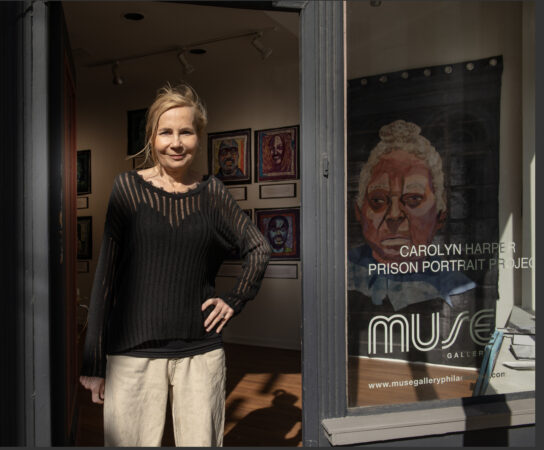
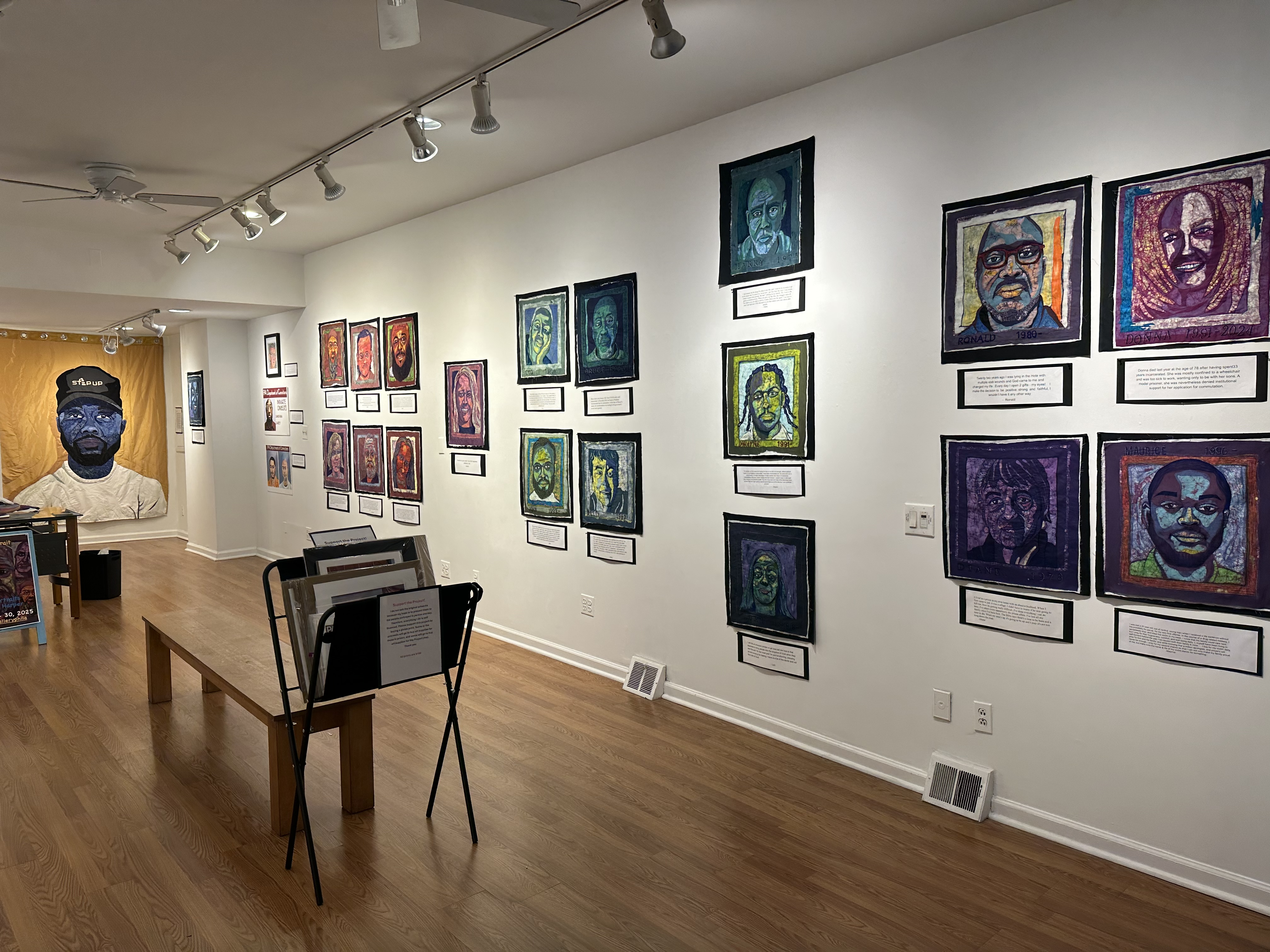
    Artist Carolyn Harper’s portrait series, “Prison Portrait Project: Faces of Despair, Hope and Transformation,” is on display at Old City’s Muse Gallery.

    Harper said Martorano’s past and conviction weren’t the end of her story. In the 32 years she was incarcerated, Harper said, Martorano became a certified braille transcriber and took violence prevention and mentoring programs.

    But in her later years, she grew increasingly “bitter,” Harper said. Martorano was confined to her bed and wheelchair and was often bullied as her health worsened.

    “Her spirits were crushed,” Harper said. “I really feel she died of a broken heart because she was not given institutional support. A lot of prison administrators just don’t care. She told me she had nothing left to live for.”

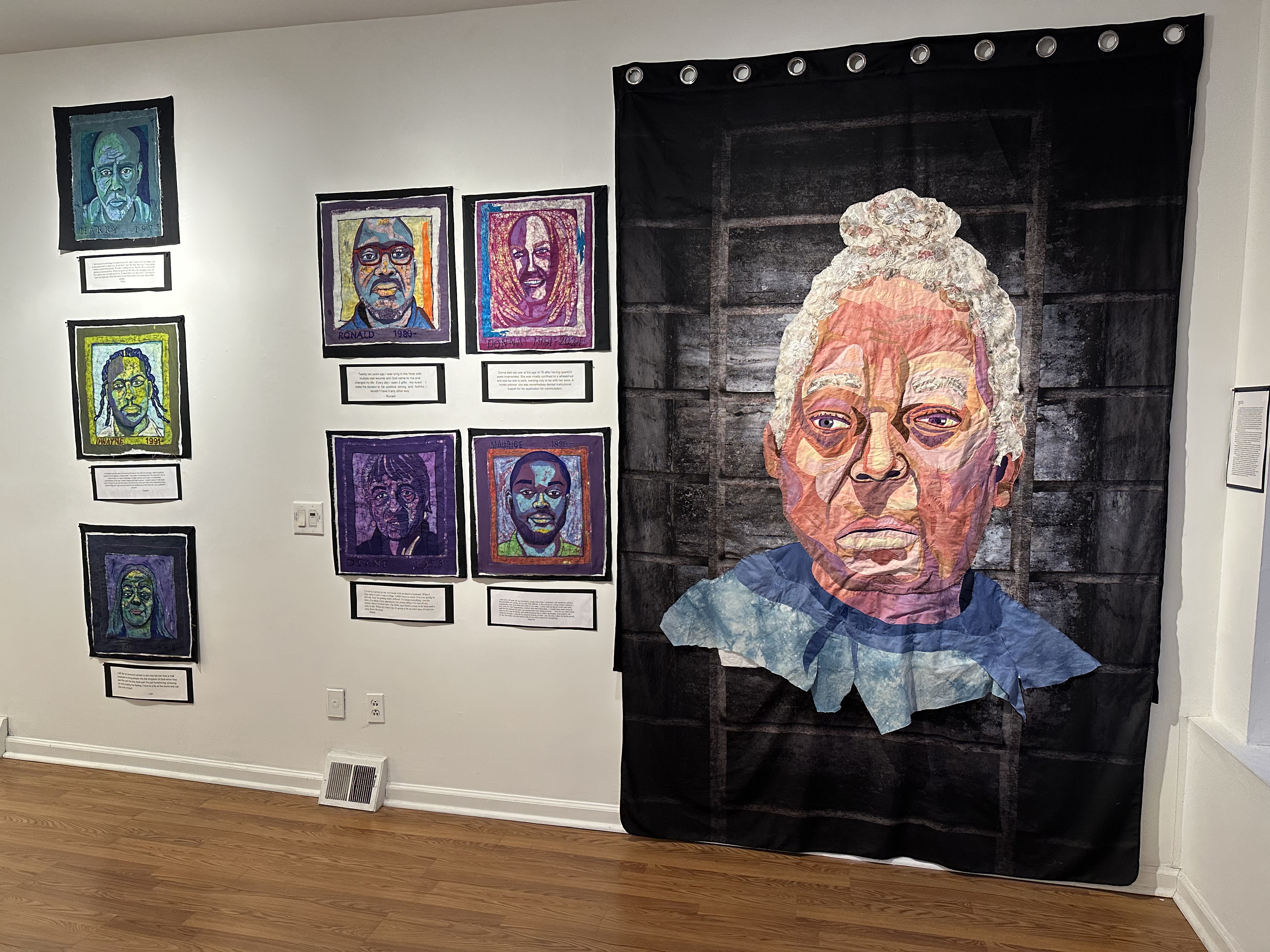
    Artist Carolyn Harper’s portrait of her friend, Donna Martorano, who was incarcerated for decades before her death at age 74.

    For the past five years, Harper, 60, has connected with dozens of other incarcerated people, some with stories similar to Martorano’s and others with far different lives.

    These stories, Harper said, opened her eyes to the emptiness, detachment, and inhumanity people experience in prisons.

    Their names, faces, and stories are now at the center of her latest portrait series, “Prison Portrait Project: Faces of Despair, Hope and Transformation,” on display at Old City’s Muse Gallery.

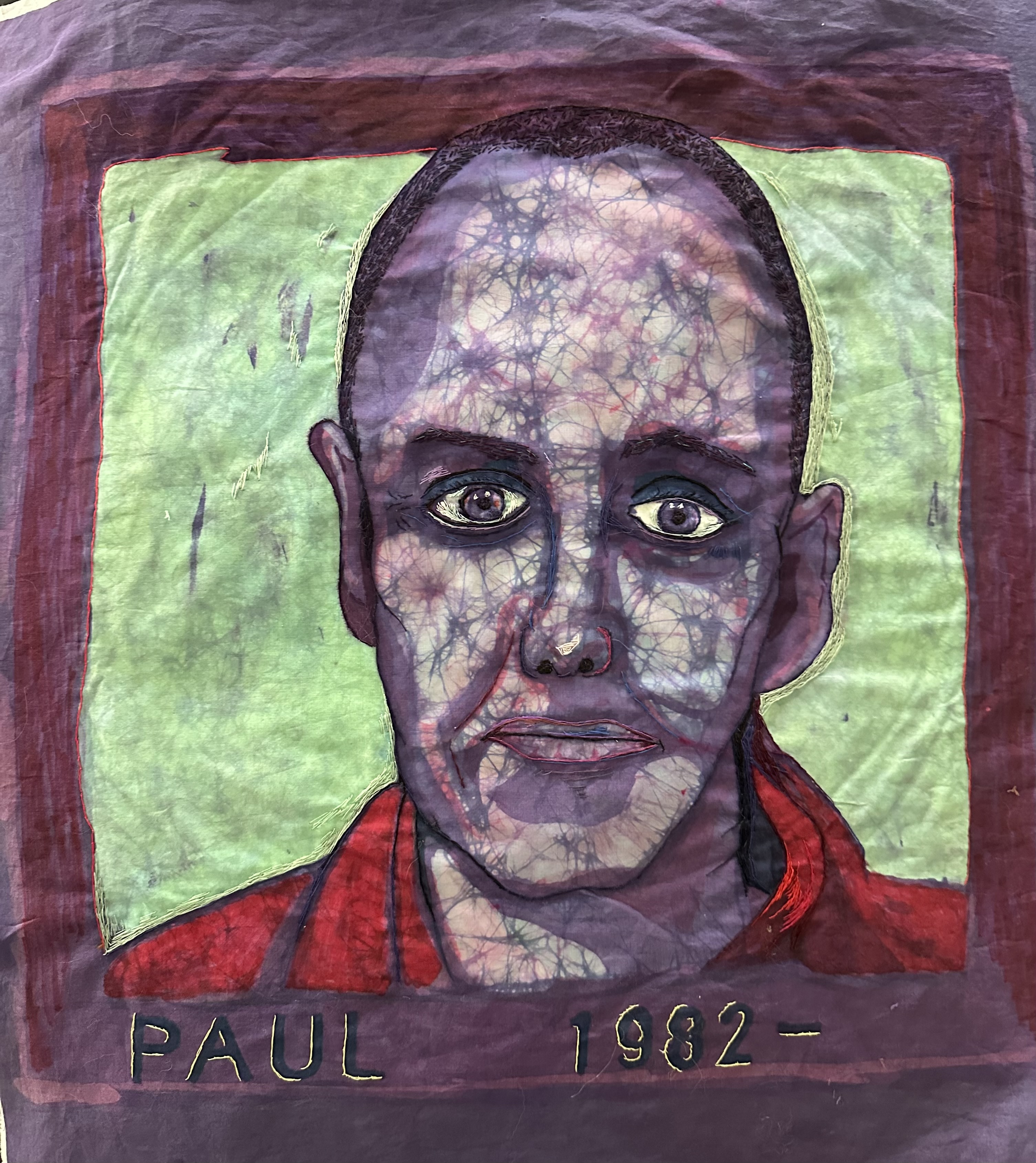
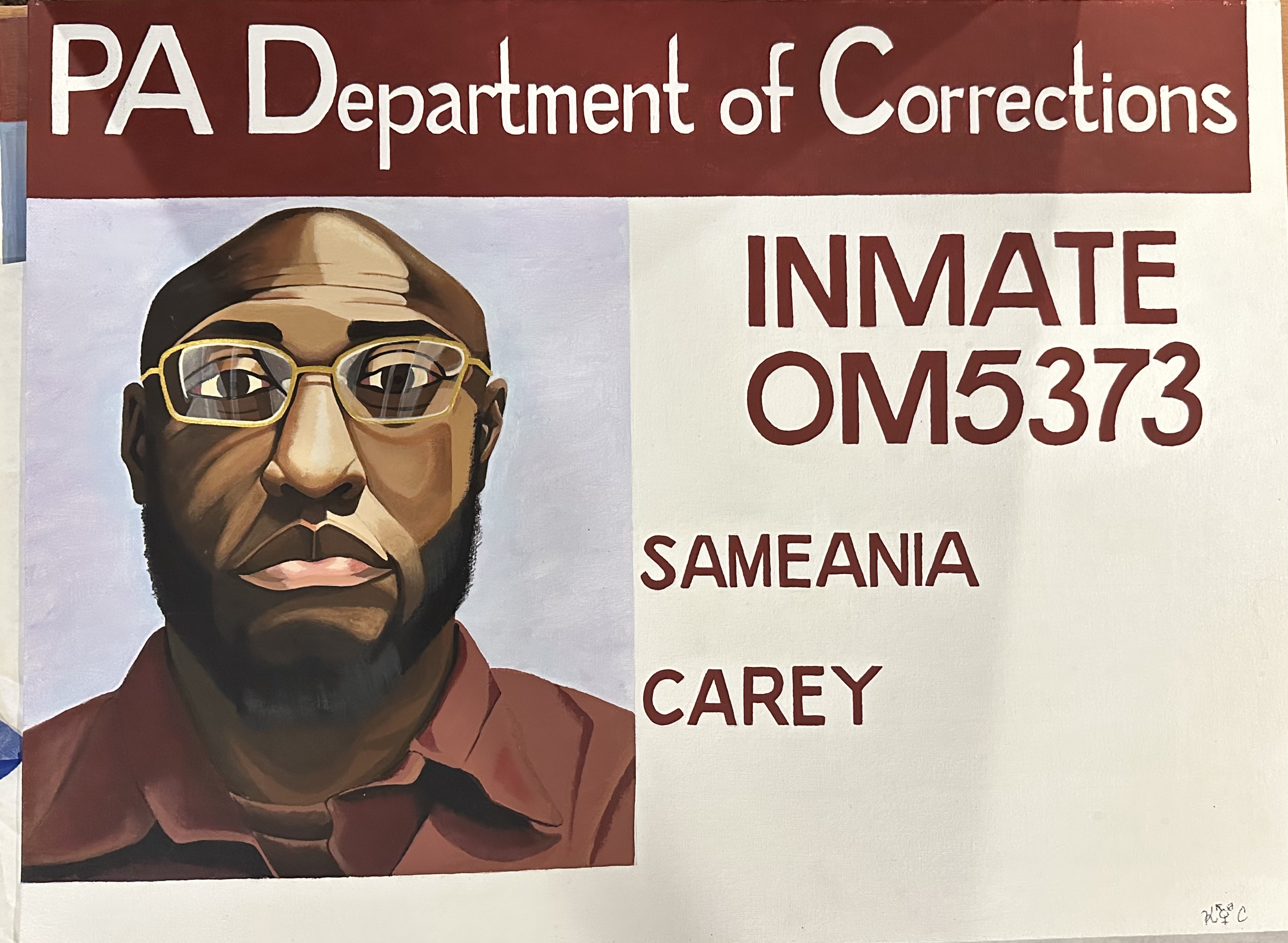
    Harper has placed their portraits on hand-sewn quilts and vibrant batiks, transforming the faces of those suffering from the country’s carceral system into artwork.

    For artist Carolyn Harper’s new exhibition, she highlighted the stories of incarcerated people in the state prison system. Among them is Harper’s friend, Lori, who has been incarcerated since 1988.

    Like Martorano, several of Harper’s subjects are serving death sentences, with little to no path for early release or commutation. Harper has never asked specific questions about their pasts, and everything she knows about them is what she has been told voluntarily. But she’s certain about one thing: None of the people she has befriended is the same person they were when they were first incarcerated.

    Pennsylvania, she found out, is one of two states in the country that has a mandatory life without parole sentence, known as “death by incarceration,” for both first-degree and second-degree felony murder.

    “I have come to see that guilt or innocence, while important, is not the critical thing here,” Harper said. ”It’s the idea of redemption and rehabilitation. This, to me, is the real story — the story of transformation.”

    For decades, people suffering from abuse, discrimination, and disenfranchisement have made their way onto Harper’s quilts.

    In the mid-1990s, she created panels for the AIDS Memorial Quilt, a visual project that memorializes the hundreds of thousands of Americans who died from AIDS-related causes at the height of the epidemic.

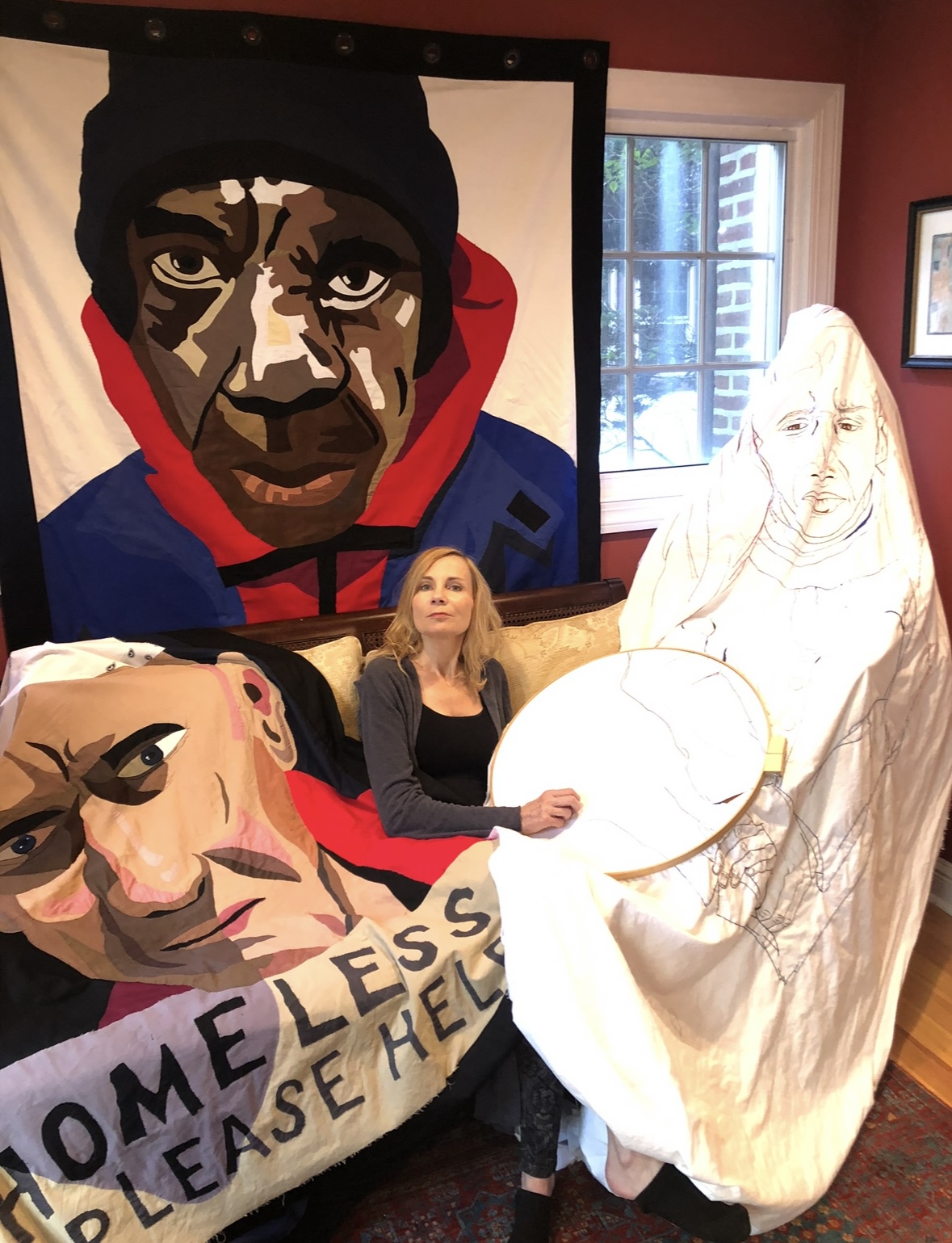
    She also developed a series of textile portraits championing queer love stories, and another shedding light on the systemic issues faced by those wrestling with dispossession and homelessness.

    “People often come out of prison and don’t have a pathway to find a real job or housing,” Harper said. “I started to see that connection, and I became interested in the issue of incarceration.

    “We pay lip service to this idea that prison is reformative, but really it’s punitive.”

    Among the subjects for Harper’s exhibition is Paul. He’s been incarcerated since 1982 for a crime he doesn’t remember committing.

    Born in Rochester, N.Y., Harper moved to Philadelphia in 1989 to study art at the University of Pennsylvania. Her days volunteering as an art teacher at local homeless shelters from 2013 to 2020 are what first drew her to the links between homelessness, dispossession, and incarceration. She was driven to learn more about the state’s prison system.

    After her best friend was arrested in 2020 for abusing his husband, Harper’s interest became a lived reality. The health of her friend, who struggled with addiction and mental health issues, worsened due to his incarceration. Shortly after his release in 2021, he took his own life.

    That pushed Harper to join organizations such as the Coalition to Abolish Death by Incarceration, We The People Coalition, and others. She wrote postcards, letters, and emails to incarcerated people throughout the state.

    Before this, a self-described “snowflake,” Harper would veer away from conversations about incarceration. She started out fearing that she wouldn’t be able to emotionally cope with the struggles incarcerated people endure and write to her about in their letters. But she grew to become a listening ear, resource, and friend to people seeking human connection.

    Through her hand-sewn and fabric-dyed portraits, she encourages her audience to step outside their worlds and enter the worlds of her subjects. Through her art, she highlights the forgotten humanity of incarcerated people and uses their testimonies to draw attention to Pennsylvania’s “harsh sentencing laws,” and correct the misconceptions people hold of those who are incarcerated.

    The “Prison Portrait Project” started off with Harper writing to the people whose names, faces, and stories make up her art. Would they send her a photograph, she asked, and consent to be a part of her exhibition?

    Harper’s exhibit also features self-portraits from incarcerated artists.

    Most replied with a photo or told Harper where she could find one. Others had family members send photos to her. After she sewed them or transferred them onto quilts, Harper shared images of the final pieces with the subjects of the expressive portraits.

    “I think seeing their self-portrait, and knowing it’s going in an exhibition, helps them see themselves in a different light. And that can be empowering,” Harper said.

    Each quilt and batik-style image features a written statement from the person who inspired the portrait, ensuring their stories (along with their faces) are integral parts of the exhibit.

    A binder containing more stories, statements, and poems written by people Harper connected with through the years, sits at the front of the gallery. Three self-portraits of incarcerated artists are also on display.

    An image of Carolyn Harper’s new portrait series, titled “Prison Portrait Project: Faces of Despair, Hope and Transformation,” which is on view at Muse Gallery through Nov. 30.

    Harper is hopeful the show will inspire audiences to view those who are incarcerated as people, rather than lifeless serial numbers and charge sheets.

    “Most of us don’t think about people in prison. If we do, it’s sort of with the feeling, ‘Well, they probably did something and deserve to be there.’”

    She wants people to recognize the lack of redemptive pathways for people upon release, and the need for advocates to protect, defend, and humanize Pennsylvania’s incarcerated population.


    “Prison Portrait Project: Faces of Despair, Hope and Transformation,” through Nov. 30, Muse Gallery, 52 N. Second St., Wednesday to Sunday, noon to 5 p.m. musegalleryphiladelphia.com

  • Eli Lilly & Co. is opening a Lilly Gateway Labs biotech incubator in Philadelphia

    Eli Lilly & Co. is opening a Lilly Gateway Labs biotech incubator in Philadelphia

    Philadelphia is the newest destination for Lilly Gateway Labs, an incubator for early-stage biotech companies backed by pharmaceutical giant Eli Lilly & Co., the company announced Wednesday.

    The Center City incubator will be Lilly’s fifth in the United States. Biotech hotbeds Boston, South San Francisco, and San Diego already have them. (South San Francisco has two.) Companies at those locations have raised more than $3 billion from investors since the program started in 2019, Lilly said.

    Lilly’s Philadelphia operation will occupy 44,000 square feet on the first two levels of 2300 Market St. in Center City.

    Lilly expects to house six to eight companies there, aiming to welcome the first startups to the site in the first quarter of next year, said Julie Gilmore, global head of Lilly Gateway Labs. She did not identify prospects.

    Typically, Gateway Labs residents are at the stage of raising their first significant round of capital from investors, called Series A, and are two or three years from clinical testing, she said.

    The arrival of high-profile Lilly, which has seen resounding success with its GLP-1 drugs for diabetes and weight loss, could turn out to be a shot in the arm for a local biotech scene. Philadelphia has a growing biotech sector but has lagged places like Boston, despite the presence of world-class scientists at local research universities. Their work has fueled groundbreaking discoveries in cell and gene therapy, as well as vaccines.

    But Lilly is interested in supporting ideas that go beyond the city’s cell and gene therapy strengths, said Gilmore. Gateway labs is part of Lilly’s Catalyze360 Portfolio Management unit, which provides broad support to fledgling biotech firms, including venture capital.

    “What we like is to go after innovative science. Who are the companies trying to solve really hard problems?” Gilmore said. “And we do know that Philadelphia has had a ton of success in gene therapy and CAR-T and I hope we can find some great companies in that space, but we’re going to be open to other types of innovative science as well.”

    Expanding Philly’s life sciences footprint

    Indianapolis-based Lilly already has a small presence in Philadelphia with Avid Radiopharmaceuticals Inc., a company it acquired in 2010. Avid still operates in University City. Lilly’s chief scientific officer, Daniel Skovronsky, founded Avid in 2004 after receiving a doctorate in neuroscience and a medical degree from the University of Pennsylvania.

    Lilly is interviewing people to lead Philadelphia’s Gateway Labs location. They like to hire people who are familiar with the local universities and venture funds for those jobs, but that’s not all that matters. “We’re also looking for somebody who’s got deep drug development expertise,” Gilmore said.

    Lilly’s incubator adds to the life sciences activity at 23rd and Market Streets.

    Breakthrough Properties, a Los-Angeles-based joint venture of Tishman Speyer and Bellco Capital, announced plans for the eight-story, 225,000 square-foot building in 2022. Last week, Legend Biotech, which is headquartered in Somerset, N.J., celebrated the opening of a new cell therapy research center on the building’s third floor.

    Lilly Gateway Labs companies agree to stay for at least two years, and they can apply for up to another two years, Gilmore said.

    “The goal is, a company moves in and they can just worry about their science, worry about their team, and moving their mission forward, and we try to take care of everything else,” she said.

  • EEOC sues Penn for failing to release information related to antisemitism investigation

    EEOC sues Penn for failing to release information related to antisemitism investigation

    The U.S. Equal Employment Opportunity Commission is suing the University of Pennsylvania for failing to release information related to an investigation it began in 2023 over the school’s treatment of Jewish faculty and other employees regarding antisemitism complaints.

    Penn, according to the complaint filed in federal court Tuesday, has not complied with a subpoena for information, including the identification of employees who could have been exposed to alleged harassment and the names of all employees who complained about the behavior.

    In its quest to find people potentially affected, the EEOC demanded a list of employees in Penn’s Jewish Studies Program, a list of all clubs, groups, organizations and recreation groups related to the Jewish religion — including points of contact and a roster of members — and names of employees who lodged antisemitism complaints.

    Penn usually does not comment on litigation, but in this case, the school ardently objected to the EEOC’s characterization of its cooperation and the personal nature of the material it was still seeking.

    The school said in a statement it has cooperated extensively with the EEOC, including providing more than 100 documents and over 900 pages.

    But the private university said it will not disclose personal information, specifically “lists of Jewish employees, Jewish student employees and those associated with Jewish organizations, or their personal contact information” to the government.

    “Violating their privacy and trust is antithetical to ensuring Penn’s Jewish community feels protected and safe,” the university said Tuesday.

    Penn also provided information on employees who complained and agreed that it could be shared, the school said, but the school would not provide information on those who objected.

    “Penn also offered to help the EEOC reach employees who are willing to speak with the agency by informing all employees of the investigation and how they could reach out to the agency,” the university said. “The EEOC rejected that offer.”

    The original complaint was launched by EEOC Commissioner Andrea Lucas, now chair of the body, on Dec. 8, 2023, two months after Hamas’ attack on Israel that led to unrest on college campuses, including Penn, and charges of antisemitism. It was also just three days after former Penn President Liz Magill had testified before a Republican-led congressional committee on the school’s handling of antisemitism complaints; the testimony drew a bipartisan backlash and led to Magill’s resignation days later.

    Lucas, who was appointed chair this year by President Donald Trump, also brought similar antisemitism charges against Columbia University that earlier this year resulted in the school paying $21 million for “a class settlement fund.”

    EEOC complaints typically come from those who allege they were aggrieved. Lucas, according to the complaint, made the charge in Penn’s case because of the “probable reluctance of Jewish faculty and staff to complain of harassing environment due to fear of hostility and potential violence directed against them.“

    The EEOC’s investigation ensued after Lucas’ complaint to the EEOC’s Philadelphia office that alleged Penn was subjecting Jewish faculty, staff, and other employees including students “to an unlawful hostile work environment based on national origin, religion, and/or race.”

    The allegation, the complaint said, is based on news reports, public statements made by the university and its leadership, letters from university donors, board members, alumni and others. It also cited complaints filed against Penn in federal court and with the U.S. Department of Education over antisemitism allegations and testimony before a congressional committee.

    The EEOC complaint pointed to public comments by Magill, addressing antisemitism while she led Penn.

    “I am appalled by incidents on our own campus, and I’ve heard too many heartbreaking stories from those who are fearful for their safety right here at Penn,” Magill said in 2023. “This is completely unacceptable.”

    Magill also in a message had addressed “a small number of Penn staff members” who “received vile, disturbing antisemitic emails that threatened violence against members of our Jewish community,” in November 2023.

    The complaint cited incidents of antisemitic obscenities being shouted on the campus, destruction of property in Penn’s Hillel, a swastika painted in an academic building, graffiti outside a fraternity and a pro-Palestinian encampment on the campus in 2024 that eventually was dismantled by police.

    “Throughout its investigation, the EEOC has endeavored to locate employees exposed to this harassment and to identify other harassing events not noted by respondent in its communications, but respondent has refused to furnish this information, thereby hampering the EEOC’s investigation,” the complaint said.

    Penn said it had received three antisemitism complaints, according to the federal complaint, but the EEOC questioned that number given the university’s workforce of more than 20,000. It demanded that the school provide names of all people who attended listening sessions as part of the school’s task force on antisemitism and all faculty and staff members who took the task force’s survey.

    Penn objected to the subpoena and the commission partially modified it in September, ordering the school to comply within 21 days, the complaint said.

    In its statement to The Inquirer, Penn defended its response to antisemitism.

    “Penn has worked diligently to combat antisemitism and protect Jewish life on campus,” the school said.