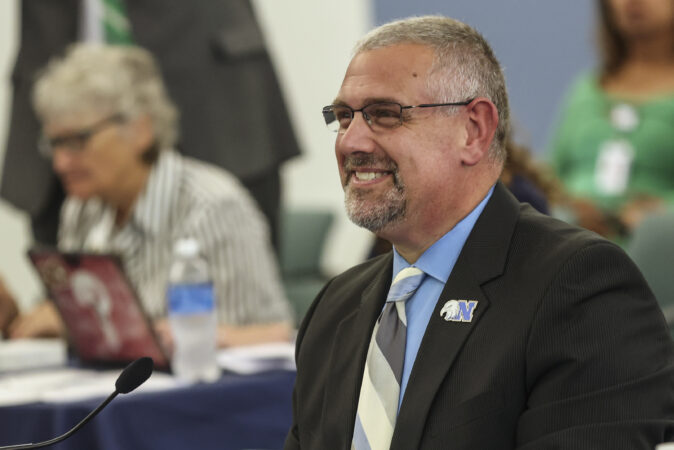
The woman, then battling an addiction to heroin, said she sought help at the Opioid Crisis Action Network, a beacon of hope for those struggling with substance abuse disorder in Delaware County.
But instead of providing compassionate care, Larry Arata, the nonprofit’s founder, offered her gift cards in exchange for oral sex in his car in 2024, the woman testified Thursday in a Delaware County courtroom.
The experience traumatized her, she said, and within a month she had dropped out of recovery and overdosed.
“I was still on heroin, and I needed help,” the woman said, her voice breaking as she recalled the encounter. “I didn’t expect to have to do that.”
As she spoke, Arata, 65, sat in the courtroom for a preliminary hearing in a sweeping prostitution and trafficking case that Delaware County prosecutors brought against him late last year.
He has denied any wrongdoing, and his lawyers said Thursday that they would present a robust defense at trial.
In emotional testimony, six women took the stand and accused Arata of criminal behavior. The Inquirer is not naming the women because the newspaper does not identify victims of sex crimes without their permission
One woman said Arata hired her to clean the Opioid Crisis Action Network’s office as she was trying to get sober. Almost immediately, she said, he began complimenting her appearance. Eventually, they began having sex in Arata’s private office at the nonprofit and at a nearby hotel, she said, where he sneaked her in a back door.
Afterward, she said, Arata would give her a $300 paycheck, as well as extra cash and gift cards.
Other women who sought the Action Network’s help said Arata made comments about their appearance and offered them financial incentives after sexual encounters in parks, hotels, and in one case, his father’s home.
Arata founded the Opioid Crisis Action Network after his son died of an overdose in 2017, and he became something of a figurehead for issues surrounding addiction in the suburban county.
But Arata abused his position of influence, prosecutors said in November as they charged him with multiple counts of trafficking, patronizing prostitutes, promoting prostitution, obstruction, and one count of harassment.
They said Arata twisted his nonprofit’s mission, using cash, gift cards, and rent payments to elicit sex from vulnerable women who relied on him for help.
In one case, a woman testified that Arata told after a sexual encounter that “secrets are meant to be kept.” Others said he worried that his wife would find out about the sexual encounters and asked them to delete sexually explicit images they had texted him.
And one woman — who said Arata had cornered her in his office and tried to kiss her — said that when he later learned that she had spoken to county investigators about the incident, called her a liar and told her to recant.
Arata’s attorneys did not call any witnesses. They told the judge their client’s alleged behavior did not meet the legal standards for many of charges against him, including trafficking and obstruction.
After hearing nearly four hours of testimony, Delaware County Court Judge Benjamin Johns said prosecutors had presented sufficient evidence for all charges against Arata to stand.
Brandi McLaughlin, an attorney for Arata, told reporters that her team would try the case in a “courthouse, not the media.”
Rides on the two trolley lines serving Delaware County promise to be safer but longer with a modern signal system scheduled to go live on Monday, SEPTA said.
The upgraded signals on the D1 and D2 trolley lines will require operators to make more gradual accelerations and decelerations. They will also enforce speed limits and stop signals with automatic braking if needed.
“It will reduce the possibility of operator error,” SEPTA general manager Scott A. Sauer said. “They won’t be able to speed and risk derailment. They won’t be able to violate stop signals or misaligned switches.”
But the computer won’t replace the judgment of the people operating a trolley, Sauer said. Operators will get an alert, and the system provides backup if they cannot correct it in time, he said.
Trips will be up to 15 minutes longer on the D1 route and 10 minutes on the D2 route, depending on where a passenger boards and gets off the trolley.
The trolleys operate between Media and the 69th Street Transportation Center in Upper Darby, and between Sharon Hill and the transit hub. They were formerly called Routes 101 and 102.
SEPTA accounted for the increased Delaware County trolley travel times in the new schedules, which begin Monday.
It took about a decade and $75 million to install the system, called Communications-Based Train Control, on the Delco trolleys, said John Frisoli, SEPTA’s top rail signals engineer. Radios communicate between the control system and the trolleys.
A similar system has operated in the Center City trolley tunnel since 2005. SEPTA has been adding safety features to its rail-signal systems for about 20 years, including the installation of Positive Train Control on Regional Rail, which controls train speed and applies automatic brakes to prevent crashes caused by human error.
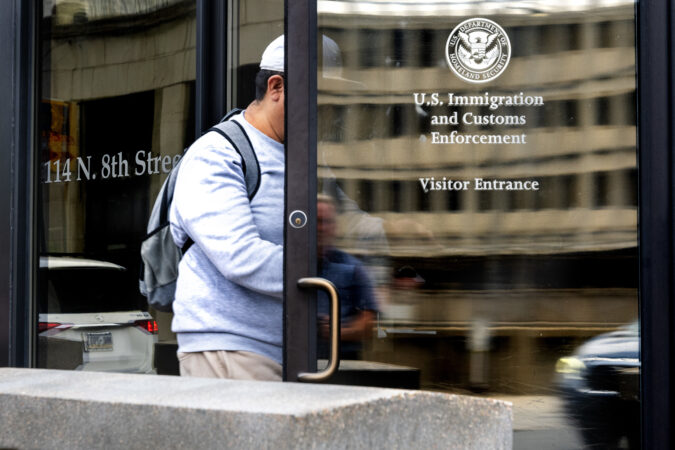
The Upper Darby Township Council passed a resolution Wednesday to restrict cooperation with U.S. Immigration and Customs Enforcement in response to growing concerns about the agency’s activities in the diverse township.
The 11-member council, made up entirely of Democrats, voted unanimously to pass a resolution saying the town will not use its resources to assist ICE with non-criminal immigration enforcement. But the largely symbolic resolution nearly mirrors the municipality’s existing guidelines, leading to criticism that it does not go far enough.
The resolution’s passage comes after Parady La, an Upper Darby resident struggling with addiction, died last month in a hospital while in ICE’s custody. It also follows the chaotic scenes in Minneapolis, where federal agents fatally shot Renee Good and Alex Pretti last month as President Donald Trump’s administration targeted the city with a massive immigration enforcement operation.
Those events have fueled anxiety in Upper Darby, where nearly a quarter of the population is foreign-born, compared with 15% in Philadelphia. Armed ICE agents wearing masks have become a familiar sight in the township, prompting residents to question why their community is suddenly under pressure, including high school students who held a walkout earlier this month.
Council President Marion Minick called the resolutiona chance to show immigrants in the community “they are not alone.”
“We can demonstrate through our votes and through our voices that Upper Darby Council will do everything within our legislative power to shield our residents and their families from this climate of intimidation,” he said.
The council’s resolution comes as localgovernmentsacross the country and in the Philadelphia area try to curb ICE’s impact on their residents. Last month, Haverford passed a similar measure and Bucks County ended its agreement with the agency that allowed sheriff’s deputies to act as immigration enforcement.
Council member Kyle McIntyre, a progressive community organizer who began his term last month, emphasized that the resolution is “just the start.”
“There is so much more than we can do, and we will be doing, and I make that solemn promise to the community right now,” he said before the vote.
“If we don’t do more, hold us accountable,” he added.
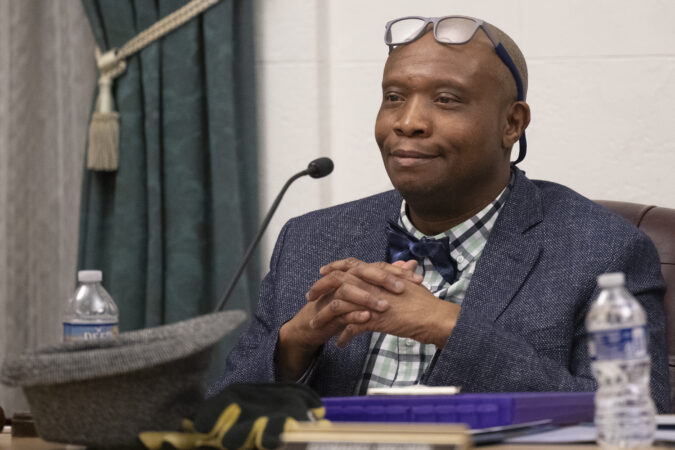
Kyle McIntyre, an Upper Darby Township council member, listens to residents’ comments during a township meeting on Wednesday, Jan. 21, at the Upper Darby Municipal Building in Upper Darby, Pa.
Township solicitor Mike Clarke said that police will cooperate with ICE if the agency has a criminal warrant signed by a judge.
“Local law enforcement is not supposed to be in the immigration enforcement business, and essentially that’s what this resolution is saying … but if it’s a criminal warrant, they will be involved,” Clarke said.
A list of frequently asked questions about ICE on the township’s website already stated that Upper Darby does not participate in civil immigration enforcement or ask residents their immigration status, though it does cooperate with lawfully issued criminal warrants and court orders. Township spokesperson Rob Ellis confirmed that the resolution reaffirms the town’s existing internal policy.
The lack of cooperation seems to be going both ways.
Upper Darby Mayor Ed Brown said earlier this month that ICE would no longer communicate with local police to tell them when agents are operating in the township, calling the change “scary.” ICE did not immediately respond to a request for clarity on Thursday.
Some residents at the meeting expressed concern about the reaffirmed policy getting in the way of public safety, and McIntyre later said the policy ensures anyone in Upper Darby can feel comfortable reporting crimes to the police. He said “anybody that commits a crime in Upper Darby Township will be held accountable,” regardless of immigration status.
Jennifer Hallam, who said she has worked with immigrants in Upper Darby for almost a decade, urged the council to postpone its vote and instead pursue legislation that has more teeth.
“The current resolution really just preserves the status quo,” she said.
She called for a resolution that would restrict ICE from municipal property without judicial warrants, prohibit the collection and sharing of immigration status among municipal employees, and prohibit ICE from wearing masks. Philadelphia lawmakers are attempting to ban ICE from wearing masks, though experts are split on whether the measure would be legally sound.
McIntyre said in an interview that Wednesday’s resolution puts the council’s values down on paper and provides clarity to the community, but he acknowledged that a resolution is not enforceable.
A death in ICE custody close to home
The community has been grappling with the death of La, a 46-year-old Cambodian immigrant and Upper Darby resident who, according to his widow, Meghan Morgan, struggled with addiction. La came the United States in 1981 as a refugee around the age of 2. He became a lawful permanent resident a year later but lost his legal status after committing a series of crimes over two decades, ICE said.
ICE said agents arrested La outside his home last month before he received treatment for severe withdrawal in a Philadelphia detention center. He was admitted to the hospital in critical condition, where his condition worsened and he died, the agency said.
Morgan and La’s daughter Jazmine La said they believe he was not given proper medical treatment and the Pennsylvania ACLU filed a Freedom of Information Act request surrounding his detention and death.
McIntyre last month called on Delaware County District Attorney Tanner Rouse and Philadelphia District Attorney Larry Krasner to investigate La’s death.
Rouse said at the time that Delaware County law enforcement was not involved or aware of La’s detainment when it happened, and that his office would investigate it. He said Thursday that surveillance footage showed La was detained “without violence” but that his death in Philadelphia should be addressed by “investigating authorities” in the city.
Krasner’s office declined to comment, saying it was a federal matter.
Staff writer Jeff Gammage contributed to this article.
Within the serpentine halls and stairways of Olivet Covenant Presbyterian Church, congregants have established several private, off-limits rooms ― each a potential last-stand space where members would try to shield immigrants from ICE, should agents breach the sanctuary.
Church leaders call them Fourth Amendment areas, named for the constitutional protection against unreasonable search and seizure. The plan would be to stop ICE officers at the thresholds and demand proof that they carry legal authority to make an arrest, such as a signed judicial warrant.
“It’s a protective space,” said the Rev. Peter Ahn, pastor of the Spring Garden church. “While you’re here, you’re safe, is what we want to assert.”
Could it come to that? A pastor confronting armed Immigration and Customs Enforcement agents in the hallway of a church?
It’s impossible to know. But across Philadelphia, churches, community groups, immigration advocates, and block leaders are actively preparing for the time ― maybe soon, maybe later, maybe never ― that the Trump administration deploys thousands of federal agents. People say they must be ready if the president tries to turn Philadelphia into Minneapolis ― or Los Angeles, Chicago, or Washington, D.C.
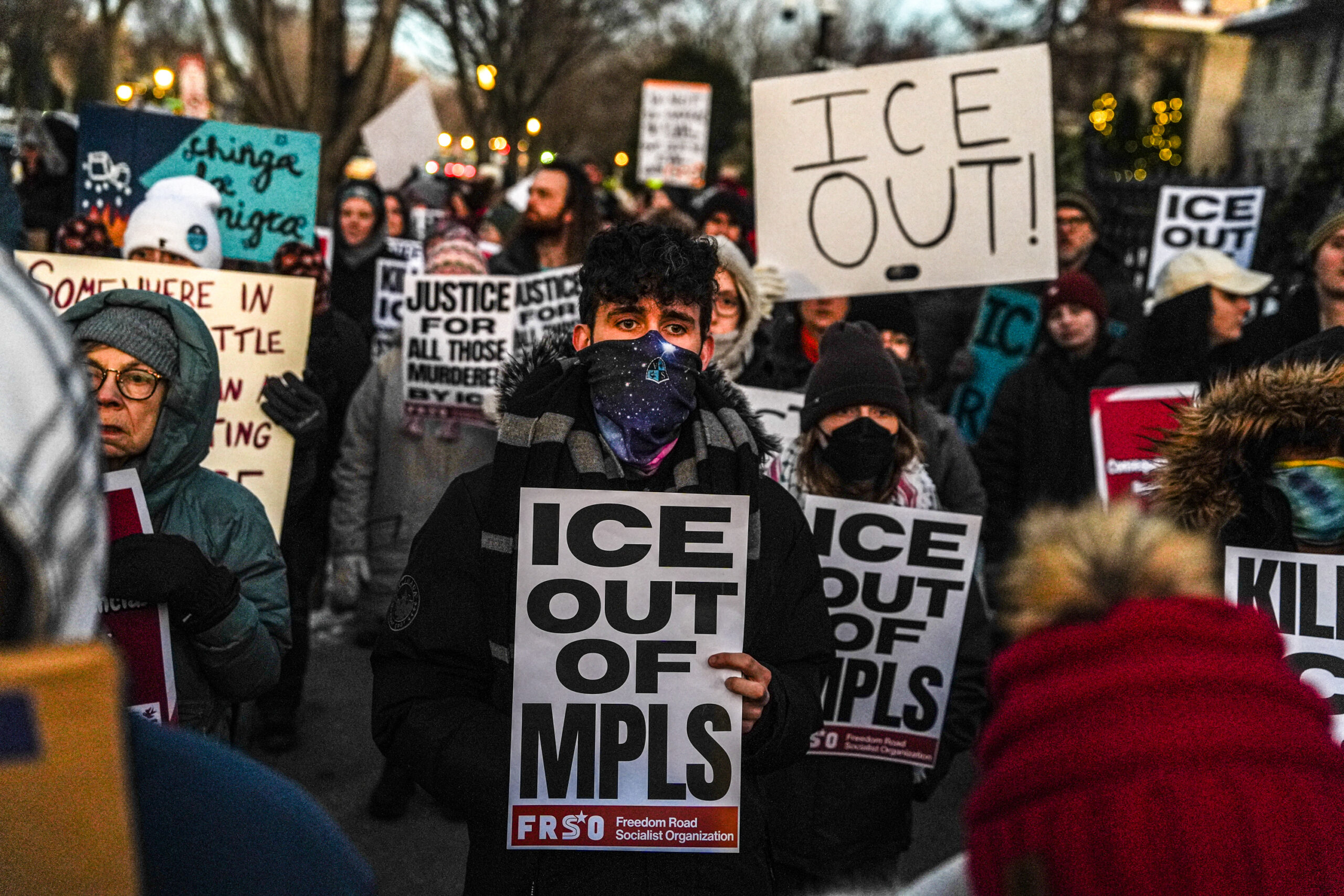
People participate in an anti-ICE protest outside of the Governors Residence on Feb. 6, in St. Paul, Minn.
Know-your-rights trainings are popping up everywhere, often to standing-room-only attendance, and ICE-watch groups are abuzz on social media.
The First United Methodist Church of Germantown held a seminar last week to learn about nonviolent resistance, “so that we will be ready for whatever comes,” said senior pastor Alisa Lasater Wailoo.
“That may mean putting our bodies in the path to protect other vulnerable bodies,” she said. “We’re seeing that in Minnesota.”
In Center City, Temple Beth Zion-Beth Israel has ordered 300 whistles ― portable and efficient tools to immediately alert neighbors to ICE presence and warn immigrants to seek safety.
“There was a sense of needing to support our neighbors if it comes down to it,” said Rabbi Abi Weber. “God forbid, should there start to be ICE raids in our neighborhood, people will be prepared.”
In other places around the country, immigrant allies have similarly readied themselves for ICE’s arrival, and organized to react in concert when agents show up.
In Washington state, the group WA Whistles has distributed more than 100,000 free whistles to create what it calls “an immediate first line of community defense.” Chicago residents set up volunteer street patrols to warn immigrants of ICE and to contact family members of those detained. In Los Angeles, people raised money to support food-cart vendors, and organized an “adopt a corner” program to protect day laborers who seek work outside Home Depot stores.
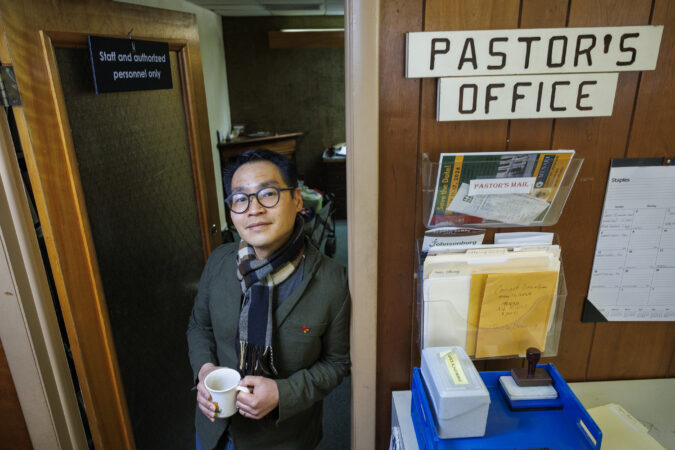
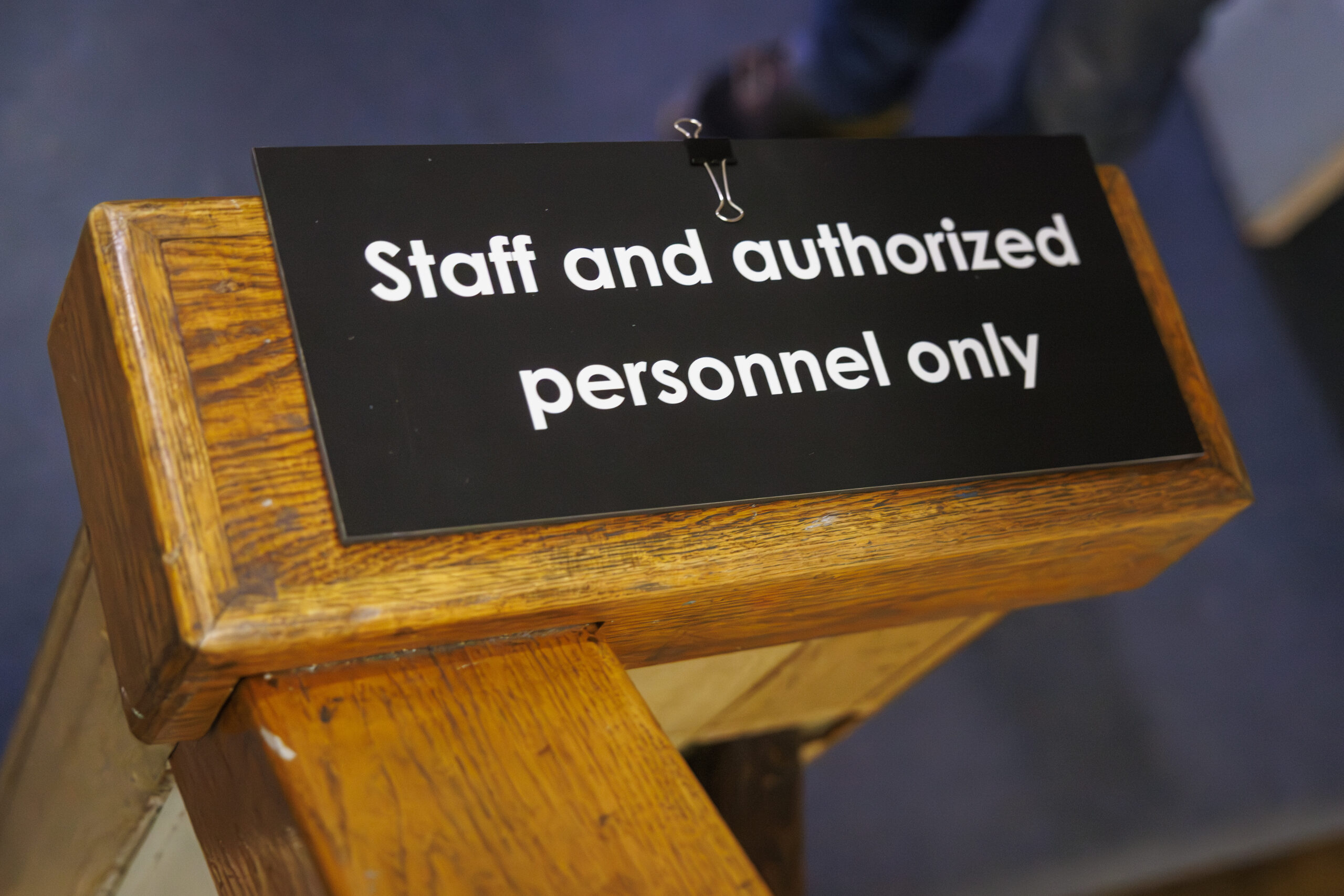
A small sign at the Olivet Covenant Presbyterian Church, where the Rev. Peter Ahn is creating space to shield immigrants if necessary.
The agency’s Philadelphia office serves as headquarters not just for the city but for all of Pennsylvania and for Delaware and West Virginia as well. Arrests take place every day in the Philadelphia region.
“You all seem to be ‘preparing’ for something that’s already happened,” veteran activist Miguel Andrade wrote on Facebook.
What has changed, however, is the dramatic escalation in ICE enforcement, particularly visible in Democratic-run cities like Minneapolis, where agents fatally shot two U.S. citizens in January.
ICE detained 307,713 people across the country in 2025, a 230% increase over the 93,342 in 2024. What federal immigration agencies record as detentions closely mirror arrests.
For immigrants who have no legal permission to be in the U.S. ― an estimated 14 million people ― the rising ICE presence steals sleep and peace of mind. They know not just that they could be arrested and deported at any moment, which has always been true, but also that the U.S. government is expending vast resources to try to make that happen.
A woman who came to Philadelphia from Jamaica last year, and who asked not to be identified because she is undocumented, said she rarely leaves her home. She said she steps outside only to go to the grocery store, a doctor, or an attorney.
She recently asked her daughter to check something on the computer, and the girl balked ― afraid to even touch the machine, worried that ICE could track her keystrokes and identify their location, the woman said.
“How can I tell her it’s going to be OK when I don’t know it’s going to be OK?”asked the woman, who came to the U.S. to escape potential violence in Jamaica. “You come here expecting freedom, but here it’s like you’re in jail except for the [physical] barriers of the four walls.”
Some say President Donald Trump doesn’t want to ruin the summer celebration of the nation’s 250th birthday, or spoil the grandeur of the World Cup or Major League Baseball’s All-Star Game. Others suggest that he might be timing an ICE deployment to do exactly that.
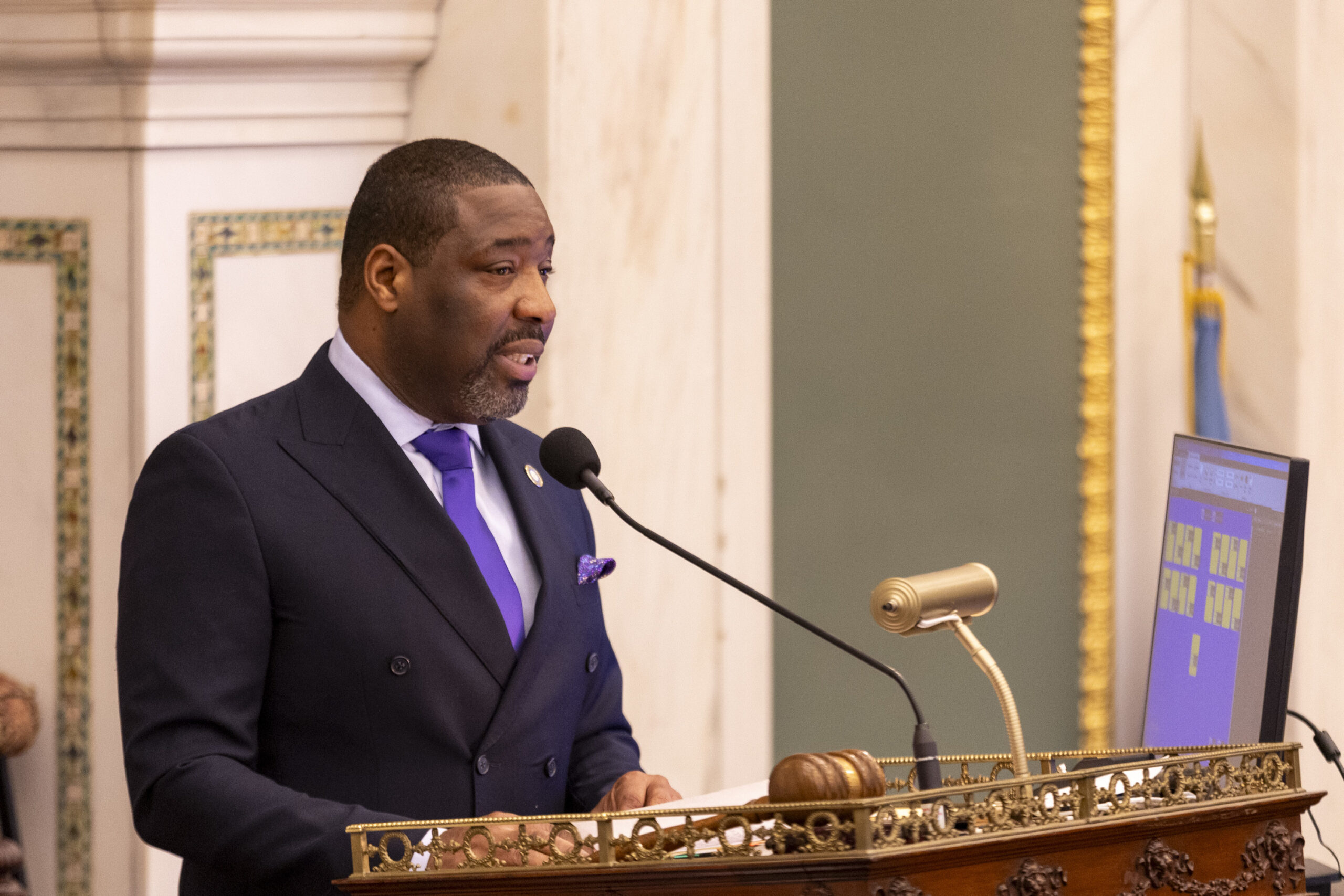
City Council President Kenyatta Johnson speaking at the City Council’s first session of the year Jan. 22. He said this month that it’s time to stand up for immigrants in Philadelphia. “It’s my responsibility to step up in this space and be more vocal,” he said.
Trump told NBC News this month that he is “very strongly” looking at five new cities.
Some people are not waiting to see if Philadelphia is on the list.
The monthly Zoom meeting of the Cresheim VillageNeighbors usually draws about 20 people. But a hundred logged on in January to hear a presentation: What to do if/when ICE comes to our neighborhood.
The short advice: If it happens, get out your phone and hit “record.”
“If I see ICE agents, I will film,” said neighbors group coordinator Steve Stroiman, a retired teacher and rabbi. “I have a constitutional right to do that.”
Federal immigration enforcement agents shatter a truck window and detain two men outside a Home Depot in Evanston, Ill., on Dec. 17, 2025.
In a sliver of University City, Miriam Oppenheimer has helped lead three block meetings where neighbors gathered to discuss how they would respond.
They set up a Signal channel so people can communicate. And they formulated a loose plan of action: People will come outside their homes and take video recordings ― and try to get the names and birth dates of anyone taken into custody, so they can be located later.
“Courage is contagious,” Oppenheimer said. “Everybody is waiting for somebody else to do something, but we have to be the ones.”
Inside Olivet Covenant Presbyterian Church, doorways to some rooms now bear black-and-white signs that say, “Staff and authorized personnel only.”
Issues around ICE access to churches have become more urgent since Trump rescinded the agency policy on “sensitive locations,” which had generally barred enforcement at schools, hospitals, and houses of worship.
Legal advocates such as the ACLU say ICE agents can lawfully enter the public areas of churches, including the sanctuaries where people gather to worship. But to go into private spaces they must present a warrant signed by a judge.
“There are many front lines right now,” said Ahn, the Olivet pastor. “We’re not trying to be simply anti-ICE, or anti-anybody. We’re just trying to be for the rights of the Fourth Amendment.”
Staff writer Joe Yerardi contributed to this article.
After Sharif Street Jr. got into a highly public fight at Mayor Cherelle L. Parker’s 2024 inauguration ceremony, his boss, City Councilmember Jim Harrity, extended him some grace.
Harrity, who credits Street Jr.’s father, State Sen. Sharif Street (D., Philadelphia), with giving him a second chance earlier in his own career, kept the junior Street on staff as a special assistant, saying the incident was a lapse in judgment.
But according to another staff member in Harrity’s office, it was not the only transgression.
Shanelle Davis, a former constituent services representative, filed a federal lawsuit last week against the city claiming that she told supervisors months before the inauguration fight that Street Jr. had sexually harassed her while she was at work, including twice grabbing her and making sexualized comments about her body.
She said in the suit, filed in the U.S. District Court for the Eastern District of Pennsylvania, that no action was taken and Street Jr. remained on staff.
Davis is seeking unspecified damages from the city, which she claims violated state and federal laws related to gender-based discrimination. Street Jr. is not named as a defendant in the suit, but he is mentioned throughout the 13-page filing.
Davis’ complaint portrays a dysfunctional workplace environment in the City Hall office, including an alleged physical altercation between Street Jr. and another staffer for which no one was reprimanded. Davis, who is Black, claimed another colleague in Harrity’s office made racist comments, including hurling the N-word toward her.
Davis, who was hired in late 2022, said in the lawsuit that she was fired for underperforming at her job about a year later, after Harrity won reelection.
Her attorney did not respond to a request for comment Monday. Street Jr. did not respond to calls seeking comment.
Harrity, a Democrat who represents the city at-large and was a longtime aide to the elder Street, said in a statement that he “categorically denounce[s] workplace harassment, or any conduct that undermines a respectful and professional work environment.”
He declined to comment further, citing the ongoing legal proceedings. A spokesperson for the city law department also declined to comment.
The lawsuit is the latest legal trouble involving Sharif Street Jr., 26, who over the last three years has pleaded guilty to criminal offenses in Philadelphia, Montgomery, and Delaware Counties. In August, his employment with the city was terminated the week he pleaded guilty to charges in connection with the inauguration assault and another incident.
City Councilmember Jim Harrity speaks to colleagues on during a Council session in September.
Street Jr. comes from one of Philadelphia’s most well-known political families. His grandfather is former Mayor John F. Street, his mother is Common Pleas Court Judge Sierra Thomas Street, and his father is a state senator and the former head of the state Democratic Party who is now running for a seat in Congress.
Anthony Campisi, a spokesperson for the elder Sharif Street’s congressional campaign, said the state senator had “no knowledge” of the sexual harassment allegations.
“Sharif loves his son unconditionally and has supported his son through personal troubles, like so many parents across Philadelphia,” Campisi said. “That being said, Sharif unequivocally condemns sexual harassment in all its forms and is looking for the legal process to play out.”
City Council President Kenyatta Johnson, who took over as leader of the chamber in 2024, declined to comment. Under City Council rules, individual members are responsible for hiring and terminating their own employees.
State Senator Sharif Street (D., Phila.)is in the state House chamber as Gov. Josh Shapiro makes his annual budget proposal Feb. 3, 2026.
Street Jr. was arrestedseveral times over three years while working in City Hall as an assistant in Harrity’s office, court records show. Davis’ lawsuit comes about six months after Street Jr.’s employment in Harrity’s office ended, according to payroll records.
In January 2024, Street Jr. punched a security guard at the entrance to Parker’s inauguration ceremony at the Met Philadelphia on North Broad Street. He told The Inquirer at the time that he was defending his grandfather, the former mayor, whom he said the guard had grabbed because they were trying to enter at a back entrance without waiting in line.
“I saw my grandfather get grabbed and I just sort of blacked out,” Street Jr. said. His father defended him at the time, saying the security guard had initiated the altercation.
Later that month, Street Jr. was charged in connection with a hit-and-run from the previous August that left a 14-year-old injured.
The two cases were consolidated in Common Pleas Court, and Street Jr. pleaded guilty in August to charges of assault and causing an accident that resulted in an injury. According to prosecutors, he was sentenced to 60 days in jail.
Four months later, when he was no longer working in city government, Street Jr. was briefly jailed in Delaware County following what police in Upper Darby described as a “prolonged struggle” during a traffic stop. He pleaded guilty to disorderly conduct, a summary offense.
A former Villanova professor says in a federal lawsuit filed this week she was fired from the Catholic university after accusing its law school of racial discrimination involving one of her students.
Stephanie Sena, who had been an anti-poverty fellow in the law school and taught at Villanova for more than 20 years, was dismissed in 2024 for what the school said were “student complaints,” according to the lawsuit.
But Sena’s lawyers say the dismissal was due to her filing an ethics complaint against the school for racial discrimination for comments that administrators made around a decision not to give her student a financial award that would have alleviated her debt, citing a speech the student made at a law school symposium.
The student, Antionna Fuller, accused Villanova of racialdiscrimination and failing to appropriately support her with financial aid during a 2021 symposium speech at the university, titled “Shifting the Poverty Lens: Caritas in Focus.” Sena hosted the symposium, during which Fuller also publicly asked for an apology from Villanova.
“How can you say caritas [which means love and charity in Latin] and Black lives matter with no thought to a Black life in front of you, systematically oppressed by your hands?” Fuller said,according to a video of the speech. “It’s not only hypocritical, but it’s embarrassing. We cannot talk about oppression and white supremacy without acknowledging its very presence here.”
Her speech drew a standing ovation, but later caused consternation among law school leadership.
Sena found out that law school dean Mark Alexander, in a letter to the scholarship committee, asked that Fuller not receive the debt relief award because she “maliciously maligned” the law school, according to the suit.
Sena‘s lawsuit alleges that then-law school vice dean Michael Risch said after the student’s speech that the student was “lucky” to have gotten into the law school and that she would not be there if she were white.
Villanova said in a statement Wednesday that Sena’s lawsuit “lacks merit” and that the university “will vigorously defend against these baseless allegations.”
“We look forward to presenting the actual facts surrounding the plaintiff’s separation from Villanova. To be clear, Villanova University does not tolerate discrimination or retaliation of any kind, and the allegations in Plaintiff’s lawsuit are contrary to our written policies and conflict with the core values of our University.”
Sena, 46, of Media, declined to comment.
Fuller, 29, who now lives with her mother in the South, said in an interview Wednesday that she feels both relieved and anxious about seeing the issue aired publicly.
“I am happy, at least relieved, that truth is coming out,” said Fuller, who graduated summa cum laude from the University of South Carolina and got her Villanova law degree in 2022. “I’ve been in such an isolated place and just carrying this trauma for so long.”
She said she sought therapy after the reaction she got to her speech from Villanova administrators and last year wrote a book, I Almost Sued My Law School, about her journey as a first-generation, low-income Black student. She no longer wants to practice law, she said, and is still figuring out her next steps.
But she said she was grateful to Sena, whom, during the symposium speech, she called “my hero, advocate, and my friend.”
“She was the first person to publicly stand up for me,” Fuller said.
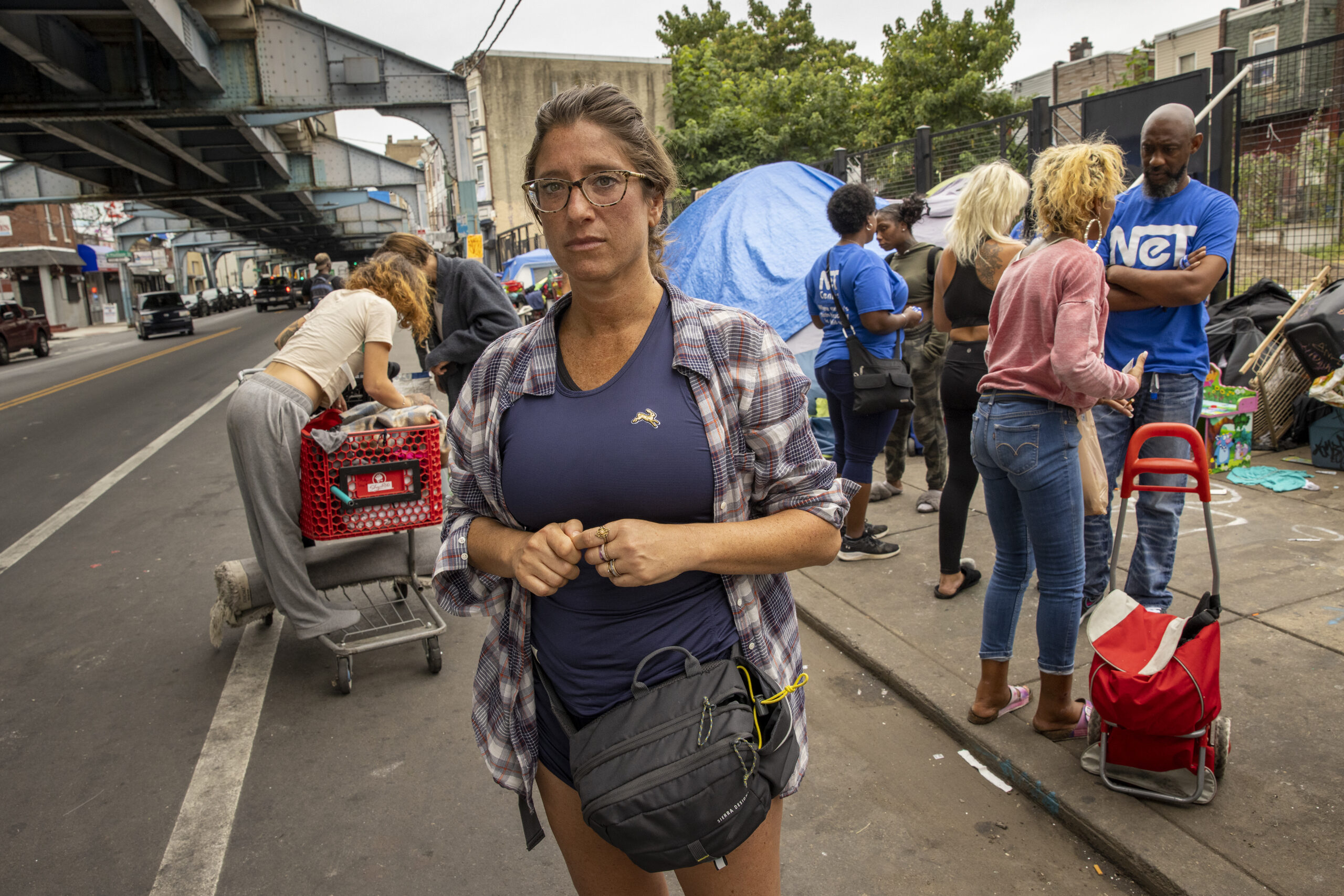
Stephanie Sena stands at site of an encampment along Kensington Avenue in 2021.
Fallout from symposium speech
Sena, a longtime activist who has worked to help people experiencing homelessness and opened a homeless shelter in Upper Darby in 2022, was fired in 2016 from her job as an adjunct professor at the Pennsylvania Academy of the Fine Arts after defending students who accused a classmate of rape. She sued PAFA and the case ended in a confidential settlement.
She also led activists in lawsuits against the city in 2021 over its intentions to remove homeless people in a Kensington encampment. In 2023, the head of Norristown’s municipal council planned to bus homeless people to Villanova’s campus because of Sena’s advocacy for the homeless in Norristown. Villanova at the time was criticized for not defending Sena and making a stronger response.
Sena was hired to teach at Villanova in 2003 and began to work at the law school in 2020, serving as a full-time faculty member and anti poverty fellow. She was also an adjunct professor at Villanova’s Center for Peace and Justice.
In herlawsuit against Villanova, Sena asserts that law school leadership met with her in 2022, several months after Fuller’s symposium speech, and asked her if she had known what Fuller planned to say. Matthew Saleh, former assistant dean for admissions, told her it would be harder to attract Black students to the school because of the speech, according to the suit. Risch, the vice dean, made the comment about Fuller not being at Villanova if she had been white, the suit says.
Saleh, who now is the senior associate dean of enrollment management and financial aid at Rutgers’ law school, said in an interview that he does not recall making that comment and that he doesn’t think it’s even the case that Fuller’s speech would hurt recruiting.
“That would not have even come to my mind,” he said. “I couldn’t reasonably see a way that it would impact recruiting.”
Sena “objected to the race discriminatory and retaliatory comments” made to her in that meeting, according to the suit.
In October 2023, she complained again about the comments in an email to two administrators who headed diversity, equity, and inclusion at Villanova,according to the lawsuit complaint. Then came the award committee meeting on Jan. 30, 2024, where the dean in a letter argued against Fuller’s receiving the award, according to the suit.
Students who were in the award committee meeting and were upset about the law school dean’s reactionapproached Sena and asked what they could do, according to the suit. Sena said the students, who are not named in her lawsuit, could contact the diversity, equity, and inclusion office and file a climate complaint.
Sena, according to the suit, complained again one day after the award committee meeting that Villanova “had engaged in a dangerous pattern of race discrimination” and filed an ethics complaint with the university. She also expressed her concerns in an email to faculty and in a meeting with a law professor, who told her the students had committed an ethics violation by revealing confidential details of the awards meeting they were in, according to the suit.
After filing the complaint, Sena said in her lawsuit, she was “treated differently,” “unjustly criticized,” and “blamed for issues outside her control.”
In June 2024, human resources informed her that she was under investigation after students said she had pressured them to file complaints against the deans, which Sena denied, the suit said.
She was fired July 30, 2024, even though, the suit said, she had no prior performance or disciplinary issues and had received awards and promotions. She is seeking damages including economic loss, compensatory and punitive, and attorneys’ fees and costs.
An apology and acknowledgement
During the symposium, Fuller had said she wished Villanova would apologize and acknowledge what happened. She said that the school had given her $15,000 in financial aid toward her annual $65,000 cost, but that she subsequently learned other students had gotten more, even though her mother worked multiple jobs as a nurse’s aide to support the family.
“I was confused,” she told the audience. “How can a student with seemingly the most need graduate with the most debt?”
She learned of a free-tuition public interest scholarship that Villanova awards to incoming students and sought it after she was enrolled, she said. She was turned down repeatedly, she said, even though Villanova had recently awarded its largest group of the scholarships.
“Am I invisible?” she asked. “To walk into this law school building every day, to be surrounded by wealth and prestige, while struggling and burdened with debt, and while expected to perform like those who are not feels inhumane.”
She said during the speech she would graduate with almost $200,000 in student debt. Villanova officials, she said Wednesday, later accused her of exaggerating because she was including her undergraduate debt, too, and maintained that the total was really $160,000 — $126,000 of which was from the law school.
Fuller said Wednesday she had apologized to law school leadership, hugged them at graduation, and thought everything had been resolved. She said she was surprised to hear that the dean wanted to block her access to the debt award, she said.
“My intent wasn’t to harm, attack or mislead,” Fuller wrote in her book, “but to share my personal experience — my fears and financial anxieties — as part of the larger conversation about finding solutions to reduce poverty, which the conference was centered around.”
Staff writer Abraham Gutman contributed to this article.
Federal judges in Philadelphia have been unusually outspoken in recent weeks about what they call the “illegal” policy by ICE of mandating detention for nearly all undocumented immigrants — and have been sharply critical of the “unsound” arguments by government attorneys seeking to justify the approach.
U.S. District Judge Harvey Bartle III has overturned the government’s attempts to detain people in six cases over the last two months, writing in one opinion that Immigration and Customs Enforcement “continues to act contrary to law, to spend taxpayer money needlessly, and to waste the scarce resources of the judiciary.”
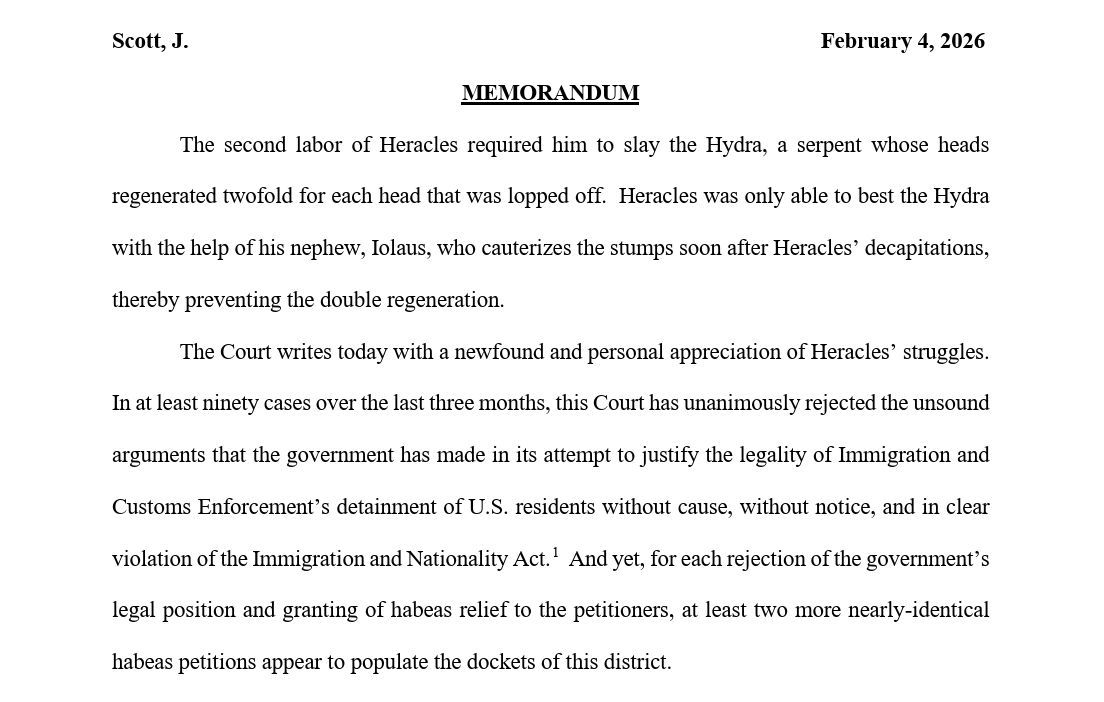
And U.S. District Judge Kai N. Scott became the latest jurist to equate the ongoing legal battle with the government to Greek mythology, saying she and her colleagues on the bench have been squaring off with the Justice Department in a manner similar to Heracles’ confrontation with Hydra, the serpentlike monster that grew two heads every time one was chopped off.
Although the region’s federal judges have “unanimously rejected” the government’s attempts to rationalize ICE detention of immigrants “without cause, without notice, and in clear violation” of federal law, Scott wrote, the government has continued to detain people in the same fashion day after day. And after each rejection, she wrote, “at least two more nearly identical” petitions seeking relief pop up on the court’s docket.
“The Court writes today with a newfound and personal appreciation of Heracles’ struggles,” she said.
District Judge Kai N. Scott’s Feb. 4, 2026 memo granting another habeas petition filed by an immigrant, and expressing frustration with the federal government’s arguments.
The judicial rebukes come as immigration authorities have continued sweeping the nation to fulfill President Donald Trump’s promise of mass deportations. The number of detained immigrants has exploded — as has the number of court petitions from people seeking immediate release, which are known as habeas petitions.
The enlarged legal workload has put a corresponding strain on the nation’s U.S. attorney’s offices, which typically defend ICE’s actions in federal court. Prosecutors from the New Jersey U.S. Attorney’s Office, for example, requested an extension in January to handle part of a class-action suit in order to deal with a surge in immigration release petitions.
“This Office continues to handle an unprecedented volume of emergent immigration habeas petitions, which we continue to prioritize because of the liberty interests at issue,” the letter said.
And in Minnesota this week, a federal prosecutor said she wished the judge would hold her in contempt so she could get some sleep in jail. Julie Le seemed exasperated when the judge pressed her on why the government had been ignoring his release orders.
“What do you want me to do? The system sucks. This job sucks,” Le said, according to a court transcript.
The issue at the center of each incident involves ICE’s mandatory detention policy. The policy was rolled out over the summer, and it requires that nearly all undocumented immigrants be held in custody as their cases wind through the country’s backlogged and complex immigration system.
That upended decades of government practice, which typically allowed people who entered the country illegally, but who were otherwise law-abiding, to at least receive a bond hearing and determine if they could remain in the community as their cases moved forward.
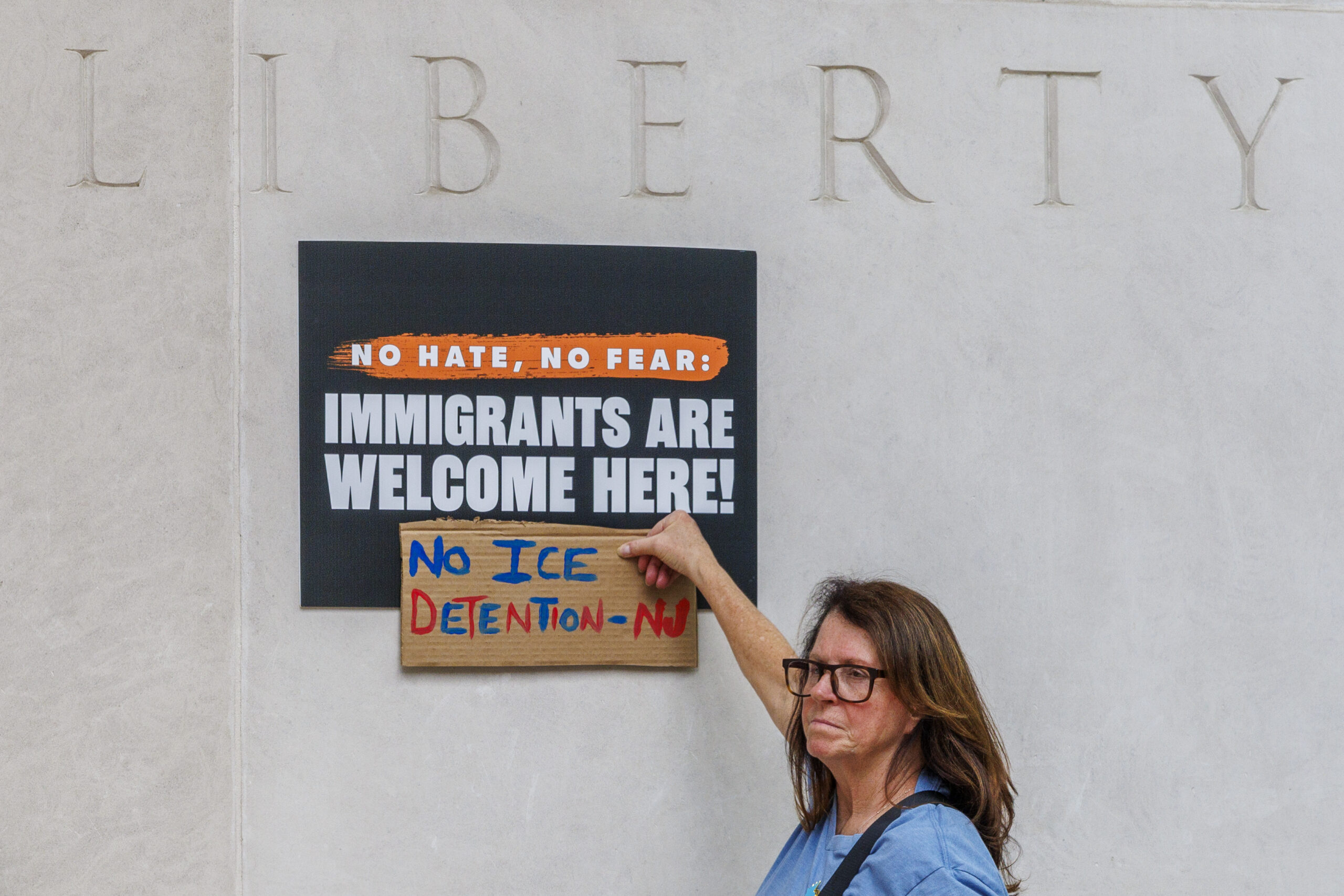
Jeanne Ottoson with Cooper River Indivisible attends an Immigrant rights groups rally outside the Third Circuit Court of Appeals to defend the New Jersey state ban on immigration-detention contracts on May 1, 2025.
Some of those detained as a result of the policy have filed habeas petitions, arguing that their detention violates the Constitution. And in the Eastern District of Pennsylvania, Philadelphia’s federal court, judges have granted challenges to the policy at a near-universal rate.
Still, those decisions have been made on a case-by-case basis, with relief extended only to one petitioner at a time. The U.S. Court of Appeals for the Fifth Circuit, which is based in New Orleans and is considered one of the country’s most conservative jurisdictions, heard a broader challenge to the policy. A divided 2-1 court ruled Friday that ICE can detain undocumented immigrants the agency is seeking to deport, even those who have been in the country for years.
The ruling covers only federal courts in Louisiana, Mississippi, and Texas, and many legal experts expects the matter to ultimately end up before the U.S. Supreme Court.
In Philadelphia, Scott’s expression of frustration came this week in response to the release petition of Franklin Leonidas Once Chillogallo. The 24-year-old from Ecuador came to the United States in 2020, lives with his partner and his 6-month-old twin daughters in Upper Darby, and works as a construction worker. He has no criminal history.
After ICE arrested Once Chillogallo outside his home on Jan. 13, he was held in the Philadelphia Federal Detention Center without the opportunity for an immigration judge to review his case.
Just as happened in the previous 90 cases, Scott rejected the argument that Once Chillogallo, an immigrant who has been in the country for years, was subject to the same bond rules as those who were caught entering without permission. The judge ordered Once Chillogallo’s release, which took place the following day, according to the court docket.
Inside the federal courthouse Thursday, judges held three hearings on arcane legal questions surrounding habeas petitions.
Dozens of other habeas petitions remain pending, court records show. In many that were recently decided, judges used terse or brusque language to point out that the government’s interpretation of the law has been repeatedly rejected.
“Across the board, there is frustration. There is frustration from attorneys. There is frustration from the judges,” said Kimberly Tomczak, an immigration attorney who represented Once Chillogallo. “Nothing seems to be changing on the immigration side in response to the flood of habeas grants across the nation.”
The Norristown Area School District’s board is moving to oustits superintendent, saying the district needs a new leader to reverse years of poor test scores.
The move to replace Superintendent Christopher Dormer, who has led the Montgomery County district since 2018 and whose contract expires June 30, comes after five new members were elected to the nine-person school board in November. The board voted unanimously Jan. 20 to give Dormer notice they would not renew his contract.
Some community members expressed shock at the decision to part ways with Dormer, who is also the president of the Pennsylvania Association of School Administrators. Dormer has been a vocal advocate for increasing funding to Norristown, which is considered underfunded by the state, and where nearly three-quarters of students are economically disadvantaged.
Jeremiah Lemke, who joined the Norristown school board in December and is now its president, acknowledged Dormer as “a leader statewide” in advocating for a new school funding system and a superintendent who has done “many good things for the district.” But, he said at the Jan. 20 meeting, test scores are a concern.
“Student achievement in Norristown hasn’t been winning, under Mr. Dormer, for years, not months, but years — seven to be exact,“ Lemke said in an emailed statement Wednesday. ”If the Eagles didn’t win for seven years, regardless of what positive developments happened in the organization, there would be no questions asked when the head coach was replaced.“
Norristown, a majority Hispanic district, enrolls about 8,000 students.
About 28% of Norristown’s third-through-eighth graders scored proficient or above in English language arts on the Pennsylvania System of School Assessment standardized tests last year, compared to 48.5% statewide. In math, 27.4% of Norristown students were proficient, compared to 41.7% statewide.
Over the last few years, changes in Norristown’s test scores have largely tracked Pennsylvania’s as a whole, with ELA scores sliding, and math scores improving. In 2023, 30.7% of Norristown students scored proficient in ELA, compared to 53.7% of students at the state level. In math, 21.6% of Norristown students scored proficient in 2023, compared to 39.4% statewide.
In a message to staff and families after the Jan. 20 vote, Dormer said he was proud of what the district had accomplished during his tenure — “including consecutive years with minimal to no tax increases, the sizable and significant additions in staffing after years of reductions, the sustained investment in new instructional resources and educational opportunities after years of unaffordability, the development and implementation of our facilities master plan after decades of deferred maintenance, and the commitment to the principles of equity, inclusion, and belonging as we navigated a worldwide pandemic and an increasingly politically divided country.”
Dormer, who began his career in education as an educational assistant in the Lower Merion School District, spent 13 years as a teacher, coach, and athletic director in the Upper Darby School District before moving into administration in 2005. He became Upper Darby High School’s principal in 2008, a role he held for five years, and came to Norristown in 2016.
Performance reviews on the district’s website show Dormer was rated “proficient” by the board in 2021-22 and 2022-23. More recent reviews were not listed online.
On Wednesday, Dormer declined to comment.
Lemke — who works for a Philadelphia nonprofit, Jounce Partners, that has coached charter school leaders to improve teacher performance — said in a statement Wednesday that the decision was “thoughtful, reflective, data-informed, and unanimous, amongst new and continuing board members.”
The board last week voted to approve a $79,500 contract with Alma Advisory Group, a Chicago-based firm, to conduct a national search for a new superintendent.
Jordan Alexander, another new school board member, said during that board meeting that members “often have to make decisions that are very unpopular.”
“I’m gonna be honest, I wasn’t so sold,” Alexander said. A former Norristown student, Alexander said that when Dormer “came to the scene, the pride did go up, and it was a breath of fresh air.”
But “we cannot advocate ourselves to be the best if our performance does not reflect that,” Alexander said.
Community reaction to the ouster
Some community members accused the board of a predetermined decision.
“Staff were not aware of these changes … the community was not aware, or anybody. You guys just threw it out there,” Ericka Wharton, a parent and leader of a Norristown community center, told the board at last week’s meeting. Wharton warned the decision could create instability, including a decline in student achievement.
Carmina Taylor, a local advocate, told the board that community members deserved “a full explanation with dates and details that led to your decision.”
“This decision is short-sighted, abrupt, without consideration as to how the students will be impacted by this major shift in leadership,” said Taylor, co-founder of the Movement for Black and Brown Lives in Montgomery County.
The election of the new board came after infighting in the local Democratic Party. Chris Jaramillo, the former board president, lost the local Democratic Party’s endorsement for reelection last year. Jaramillo had opposed a tax break for a senior affordable housing development. Last week, the new board voted to rescind a November district policy that restricted tax abatements, saying it would replace it.
Jaramillo is also a co-founder of the Movement for Black and Brown Lives in Montgomery County. In an interview Wednesday, he described the board’s new leaders as inexperienced and questioned how it could quickly replace Dormer without causing disruption.
“I don’t think it’s a sound decision,” said Jaramillo. He said he worried the board would pick someone “without any sort of knowledge of how diverse Norristown and its surrounding area are.”
Taylor said Wednesday she wasn’t speaking on behalf of Jaramillo. She accused the board of “plotting” to remove Dormer.
“How in the world, if they didn’t have a sense of what they wanted to do, could they have even attempted to do that in the last 45 days?” said Taylor, who has filed a complaint with the school board, alleging insufficient transparency.
Lemke said it is “categorially false” that the board acted too quickly and without transparency. “Once we were installed, we had a short time period in which to make a decision because we knew that if we didn’t renew his contract it would not be a quick task to do a national search for a superintendent,” he said.
Taylor noted that while the district’s test scores “are bad,” Norristown has only been receiving additional state money under a new formula intended to remedy constitutional underfunding for the past two years. (The budget proposed by Gov. Josh Shapiro Tuesday would give underfunded districts their third installment of a nine-year plan.)
“It’s not enough to address the systemic issue, period,” she said.
“Given the conditions of the roads and the issues that the mayor and others have talked about, and out of an abundance of caution,” district offices will remain closed Tuesday, and after-school programs and athletics are also closed, Watlington said.
The superintendent prioritizes in-person learning, he said, but Tuesday “and any subsequent inclement weather days will be remote learning days.”
Virtual instruction, closures and delays beyond Philly
Districts around the region were starting to make similar calls.
Haddon Heights, in South Jersey, had already called a two-hour delay.
The Cheltenham School District is also going virtual.
“After consulting with my team, many roads remain unpassable and are likely to refreeze after dusk, making bussing on Tuesday too risky,” Superintendent Brian Scriven told families in a message Monday afternoon.
Schools have increasingly been turning to online instruction during winter storms, though some districts use a different calculus on when to go virtual. New Jersey schools do not allow for virtual instruction.
Scriven said Cheltenham administrators were “hopeful schools will return to normal operations as soon as possible,” and would communicate any additional schedule changes before Wednesday.
Upper Darby schools also announced virtual instruction.
“Unfortunately, we are going to need another day to continue to remove snow and ice,” Superintendent Dan McGarry told families Monday afternoon.
Officials with the Centennial School District in Bucks County also said they would have virtual instruction, telling community members in a message that “conditions remain challenging, and our facilities personnel are hard at work clearing lots and entryways.” Central Bucks also called a remote learning day.
The Colonial School District, meanwhile, announced a second traditional snow day Tuesday.
“More work needs to be completed on our secondary roads to make it safe for our students to travel on Wednesday,” Superintendent Michael Christian said in a message to families. In the event of more inclement weather, Christian said, the district would have virtual instruction.
Camden schools will also be closed on Tuesday. So will Cherry Hill, Winslow, Woodbury, and Washington Township, among others.
In the sweltering August heat of the West Texas desert, U.S. Immigration and Customs Enforcement — through a $1.2 billion private contract that was awarded under some strange circumstances — in 2025 opened up a large tent city detention camp near El Paso to take some of the thousands swept up in Donald Trump’s mass deportation raids.
It took just a matter of days for horror stories to begin leaking out of the sprawling camp on the grounds of Fort Bliss.
A Cuban refugee identified as Isaac, a pseudonym, told investigators from a coalition of human rights groups that guards had violently assaulted him as part of a campaign to convince him and other detainees to be dumped in Mexico rather than tocontest their deportation.
Isaac told the groups’ lawyers in a sworn declaration that “the guards hit my head” and “slammed it against the wall approximately ten times” before grabbing and crushing his testicles, then handcuffing him and putting him on a bus with 20 other detainees that was driven to the border. They were told, according to Isaac, “If we don’t want to go to Mexico, then we would either be sent to a jail cell in El Salvador or Africa.”
This undated photo provided by Jeanette Pagan-Lopez shows Geraldo Lunas Campos with his three children. Lunas Campos died Jan. 3 at an ICE detention facility in El Paso, Texas.
The implication was that if the Trump regime did not act, things at Camp East Montana would get worse.
They did.
Over a 33-day stretch that straddled the arrival of the new year, three ICE detainees at the Texas camp died under murky circumstances. One of the cases — the Jan. 3 death of 55-year-old Geraldo Lunas Campos, also a Cuban immigrant — was on Wednesday ruled a homicide by the county medical examiner, citing efforts by camp guards to restrain him. The medical examiner wrote in his report that Campos died from “asphyxia due to neck and torso compression.”
The U.S. Department of Homeland Security, which oversees ICE, has continued to maintain that Campos’ death was “a suicide,” and that any encounter he had with guards was an effort to prevent him from taking his own life. Two fellow detainees who reported seeing guards choking Campos have now received deportation notices. The mother of two of Campos’ children told the New York Times, “He was being abused and beaten and choked to death.”
The alleged killing of Campos is arguably the worst example of what many critics predicted when Trump won the presidency in 2024, behind supporters waving placards, “Mass Deportation Now.” The squalid, hastily erected tent city in the Texas desert is the flagship of what experts describe as a growing network of concentration camps. And now, one year into Trump’s second term, people are dying in them.
“It’s everything that we warned it would be, even before it opened,” Haddy Gassama, a senior policy counsel at the ACLU who’s been working on the issues around Camp East Montana, told me this week. “I think their goal is still to put 5,000 people in this space with inadequate healthcare, inadequate food, and inadequate recreation.”
The high-profile, increasingly violent immigration raids that have been taking place in Minneapolis, Chicago, and other U.S. cities have swelled the number of detainees in ICE custody to more than 73,000, an all-time record. DHS is currently planning a large-scale 2026 expansion of its gulag archipelago that would even include repurposing remote rural warehouses for holding human beings.
In such a large population of detainees, some deaths would be inevitable, but the current ongoing spike in fatalities has shocked and alarmed experts. The sixth ICE detainee death of 2026 took place on Sunday, which is a rate of one every three days. That extrapolates to more than 120 deaths over a year, which would be more than 10 times the rate in the last year of the Biden administration, when only 11 detainees perished.
Parady La, of Upper Darby, died while in ICE custody in Philly.
That Jan. 18 fatality also occurred at Camp East Montana, when Victor Manuel Diaz, 36, of Nicaragua, died of what government officials called a “presumed suicide.” Unlike Campos, the autopsy on Diaz will not be done by the county medical examiner, but by government doctors at an Army medical center. Diaz was one of many migrants swept up in the current ICE operation in Minnesota.
The third recent death tied to the Texas concentration camp — Francisco Gaspar-Andres, 48, of Guatemala, who wastaken to an El Paso hospital — was determined by an autopsy to have been caused by complications of alcohol-related liver disease.
That the majority of ICE custody deaths are linked to medical causes doesn’t necessarily exonerate either the agency or its private contractors. A 2024 report by Physicians for Human Rights that looked at 52 deaths in ICE custody from 2017 to 2021, or during Trump’s first term, found that 95% were preventable, or possibly preventable, if appropriate medical care had been provided.
One such medical death occurred here in Philadelphia earlier this month when Parady La, a 46-year-old Cambodian refugee who lived in Upper Darby, died after he was taken from the city’s federal detention center to Thomas Jefferson University Hospital. ICE said La was suffering from severe drug withdrawal symptoms, but family members are questioning whether the feds paid enough attention to his illness, or even administered the right treatment.
Human rights watchers insist that the spike in ICE detention deaths cannot be viewed as a coincidence, but as an outgrowth of problems that include not only medical neglect but also squalid conditions, substandard food, rancid water, and patterns of physical and sexual abuse by guards. They say the problems are not new, but have substantially worsened as the Trump regime hastily expands its networks of detention centers and camps.
In December, another Camp East Montana detainee — Thomas, also a pseudonym — told human rights lawyers that “he was beaten by officers so severely he sustained injuries across his body, lost consciousness, and had to be taken to a hospital in an ambulance.” Like his fellow detainee Isaac, he alleged guards grabbed his testicles and crushed them.
Today, I was notified of yet another death at Camp East Montana.
This is the 3rd person who has died in the $1.24 billion privately-run facility that focuses on profits instead of meeting basic standards. https://t.co/pZuXwfNS1T
Gassama, the ACLU attorney, said the horrific track record of ICE detention raises all kinds of red flags about its current plans, aided by its $175 billion windfall in Trump’s “Big Beautiful Bill” that was signed last year, to house as many as 80,000 detainees in a new network of revamped warehouses. “You can only imagine what a remodeled warehouse would be like to detain people, human beings, long term,” she said.
It’s true that — as right-wing pundits are always quick to point out — the U.S. mass deportation regime offers nothing that comes close to the death camps Nazi Germany established at the end of the Holocaust. But experts like author Andrea Pitzer say the similarities to concentration camps that Adolf Hitler set up for his political enemies after taking power in 1933 are too many to ignore.
History has shown again and again that rounding up masses of people based on their identity strips them of their basic humanity. And that becomes the sick justification for violent abuse, neglect, endemic disease, and, ultimately, death.
The most famous victim of the Nazi Holocaust, the teenage diarist Anne Frank, wasn’t killed in a gas chamber, but died from typhus at the Bergen-Belsen concentration camp, which was the result of unsanitary conditions and medical neglect.
Now, people are dying in record numbers in “the camps” on sunbaked U.S. soil. This is shameful beyond words.
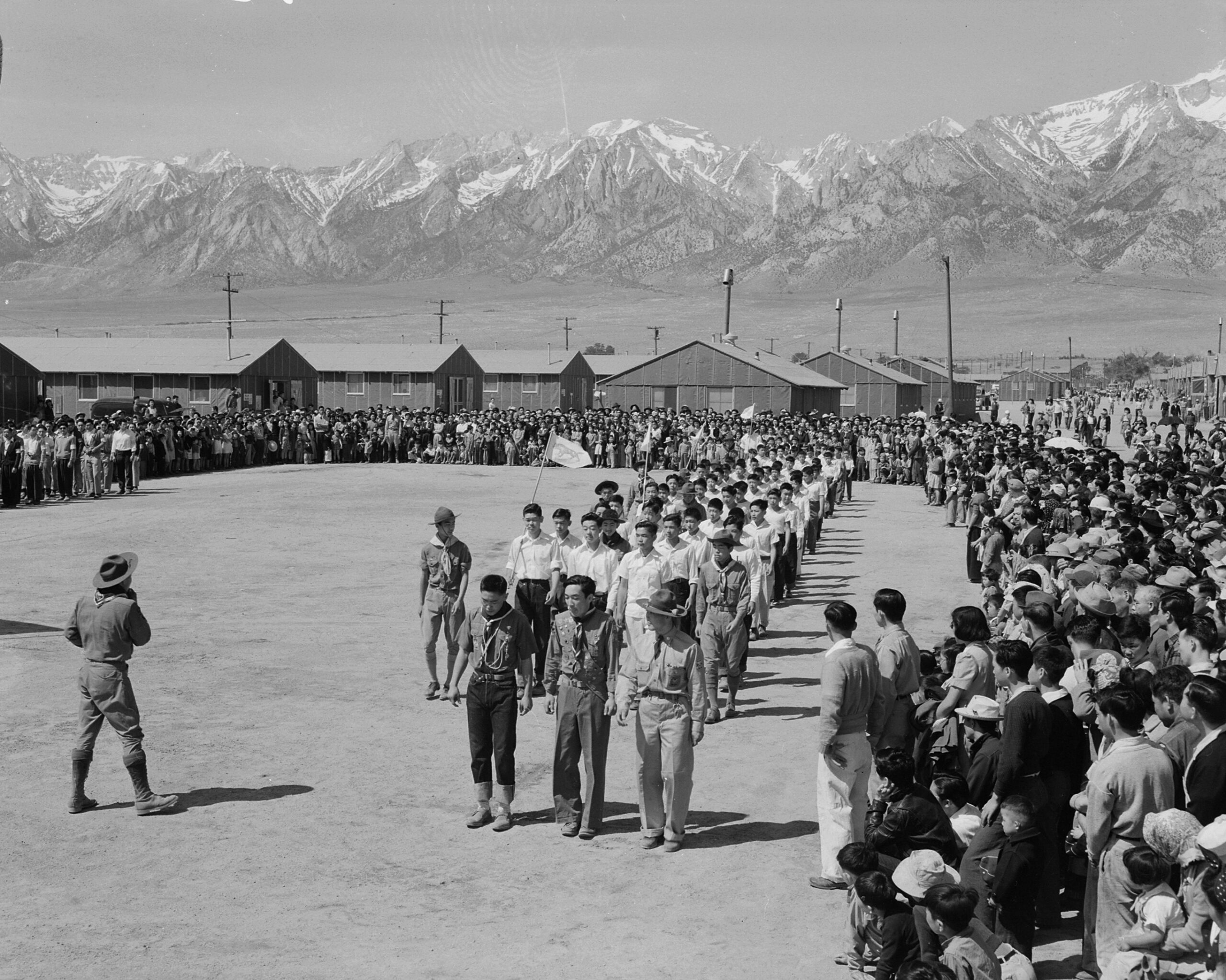
In this photo provided by the National Archives, Japanese Americans, including American Legion members and Boy Scouts, participate in Memorial Day services at the Manzanar Relocation Center, an internment camp in Manzanar, Calif., in May 1942.
These human rights abuses now occurring at Camp East Montana are also a tragic echo of the longer arc of history of its Fort Bliss location. In 1942, thousands of detainees — mostly Japanese Americans, with some people of German or Italian descent — were shipped from the West Coast to be held in a barbed-wire camp under constant watch by armed guards. Over the course of World War II, some 1,862 Japanese Americans died in the broader network of internment camps, many from harsh conditions.