Tag: Upper Darby

  • Head of Delco nonprofit traded cash for sexual favors from women in addiction, DA says

    Head of Delco nonprofit traded cash for sexual favors from women in addiction, DA says

    After losing his son to a heroin overdose in 2017, Lawrence Arata devoted his life to helping people in addiction, founded an Upper Darby nonprofit to further that mission, and even ran a failed congressional campaign in which the opioid crisis was his tent-pole cause.

    But behind the scenes, prosecutors in Delaware County said Wednesday, Arata twisted that mission, trading cash, gift cards, and other services from his nonprofit, the Opioid Crisis Action Network, for sexual favors from women who were desperate for help.

    One woman told investigators that she saw the relationship as transactional: “He had what I needed, and I had what he needed,” she said, according to court filings.

    Arata, 65, has been charged with trafficking in individuals and patronizing prostitutes, as well as witness intimidation for trying to coerce some of the women he victimized to recant their statements to police, court records show.

    Arata, of Villas, Cape May County, was freed after posting 10% of $500,000 bail.

    His attorney, Ronald Greenblatt, said Arata had done nothing wrong.

    “The evidence that will come out in court will show his innocence,” he said. “Mr. Arata is a pillar of the community who turned the personal tragedy of losing his son to a drug overdose into a career of helping people.”

    Delaware County District Attorney Jack Stollsteimer, in announcing the charges, said Arata “cynically and cruelly” misused opioid settlement funds to “satisfy his sexual desires.”

    “I want to thank the courageous women in recovery who fell victim to Mr. Arata, as well as those working to help others find their way into recovery, for having the courage to come forward and trust law enforcement to stop this predator,” Stollsteimer said. “We heard you and we support you.”

    Stollsteimer said he believes other people may have been victimized by Arata and urged them to contact his office.

    Investigators learned of Arata’s alleged crimes in August, when a former program director at his nonprofit gave a statement to Upper Darby police, according to the affidavit of probable cause for his arrest.

    The woman said Arata behaved inappropriately with his clients, kissed, them, touched them, and asked them to stay in hotel rooms with him. Some of the clients left the program because his behavior made them uncomfortable, she said, and she resigned from her position because of similar concerns.

    Detectives later interviewed one of the women Arata had initiated a relationship with. She said that during one encounter in 2024, Arata approached her after a group meeting and said she “looked like she could keep a secret.”

    At the time, the woman said, the weather had started to turn cold and, in need of a coat, she agreed to perform oral sex on Arata inside his car in exchange for gift cards. The woman told police she could not refuse, because she needed the benefits offered by OCAN to survive.

    The woman said she saw Arata again in March, when he was doing outreach on 69th Street in Upper Darby. Hungry and in need of resources, she told police, she approached Arata and again performed oral sex on him inside his car.

    Another woman, who lives in Atlantic City, said she and Arata had a yearslong sexual relationship. Arata met the woman while she was living in a recovery house in Chester, and she told him about her years of addiction and the time she spent as a sex worker in order to survive.

    Arata began trading gift cards and cash for sex with the woman, she told police. Later, when she returned to Atlantic City, she said, Arata continued their relationship.

    The woman said she needed the cash and gift cards to survive, and saw the arrangement as mutually beneficial. Earlier this month, Arata texted her from an unfamiliar phone number, saying police had confiscated his cell phone and urging her not to speak with investigators.

    But Arata didn’t just assault women in recovery, police said. A therapist who worked for his organization said Arata repeatedly told her she was beautiful, asked her to visit his hotel room in Chester, and once kissed her against her will.

    Later, after police had begun to investigate Arata, he pulled the woman aside, accused her of making “false allegations” against him, and demanded she retract her statement, authorities said.

    Other employees of OCAN said they had raised concerns to Arata about his methods, saying the repeated use of gift cards as an incentive to clients felt tantamount to a bribe, the affidavit said. He ignored or dismissed those concerns.

    Arata told The Inquirer in 2017 that the death of his son, Brendan, inspired him to raise awareness on the lack of resources for people in active addiction.

    “Getting very busy on this issue was a way for me to deal with my grief,” Arata said. “This is not a partisan issue. This disease has killed Republicans and Democrats.”

    Arata ran unsuccessfully for Pennsylvania’s Fifth Congressional District seat in 2018 as a Democrat, receiving just 925 votes.

  • Why Delaware County’s council race is focused around rising property taxes

    Why Delaware County’s council race is focused around rising property taxes

    Democrats have dominated Delaware County government since the 2019 election.

    As suburban communities across the nation flipped from red to blue, Democrats took control of the county council for the first time since the Civil War — the result of long-term shifts accelerated by President Donald Trump’s first administration. The party has held all five seats on the governing board ever since, easily retaining seats in 2021 and 2023.

    But on the heels of a double-digit property tax increase last year, Republicans see an opening to regain representation.

    Two seats on the five-member board are on the ballot in November. Democrats argue tax increases were necessary to make up for decades of underinvestment by Republicans.

    But Republicans insist spending is out of control. While they cannot take control of the board this year, they are asking voters to give them a voice to push back against the Democrats.

    “The money tree in the backyard does not exist,” said Brian Burke, one of two Republicans running for council.

    Who is running?

    Republicans nominated Burke, the former president of the Upper Darby Township Council, and Liz Piazza, a former county employee, for the two seats.

    Burke, a union steamfitter, was first elected to Upper Darby’s township council in 2019 as a Democrat. He became a Republican to unsuccessfully run for mayor of the township in 2023 following years of feuds with the Democratic administration. While on the township council, Burke worked in conjunction with Republicans on the board as well as two other Democrats to challenge Democratic leadership in Upper Darby. He said this experience would aid him as he worked to hold Democratic leadership in Delaware County accountable.

    Piazza worked for decades in Delaware County Court’s domestic relations department, where she ran the warrant division and served as a liaison for judges and attorneys. Running for council, Piazza has been vocal about wanting to devote opioid settlement funds toward grandparents caring for the children of those struggling with addiction.

    Democrats nominated incumbent Councilmember Richard Womack and County Controller Joanne Phillips.

    Womack was first elected to the council in 2021 after spending 10 years on the Darby Township Board of Commissioners. Womack spent years as an advocate in the labor movement, including serving as an adviser on community and religious affairs for the national AFL-CIO.

    Phillips was elected controller in 2017, the first year Democrats swept county-level positions. In the controller role, she has been responsible for auditing county offices and advising on council spending matters.

    What is the Republican platform?

    Burke and Piazza are urging voters to elect them to “stop the spend.”

    After the council raised property taxes by 23% last year, the pair of Republicans argued the taxes were a result of out-of-control spending in the county. They say there needs to be a voice on the council acting as a check on spending.

    “There’s a lot that needs to be cut. There’s a lot of spending,” Piazza said.

    If elected, the two Republicans would not have control over county spending, but they would have votes on the five-member board to oppose new spending and work to sway their Democratic counterparts.

    What is the Democratic platform?

    Womack and Phillips are largely defending the actions of the Democratic council over the last five years. Republican leadership, they argue, did not raise taxes for 12 years and allowed county infrastructure to fall into disrepair. As a result, they say, Democrats had to increase taxes to fund county services and infrastructure improvements.

    No one wanted to increase taxes, Womack said, but it was unavoidable.

    “Our county has really been underserved for many decades,” Womack said. “In the long run, it costs you a lot more money to repair than if you had taken care of things gradually.”

    If elected, Phillips says she would like to do more public vetting of contracts and work to increase development in Delaware County so that the local tax base can be increased without more tax hikes. Womack has said he wants to work on expanding affordable housing options in the county.

    Why were taxes raised? Will there be another hike?

    The county council voted last year to increase property taxes by 23%, which comes out to roughly $185 annually for the owner of a home assessed at the county average. The county had used pandemic relief funds to stave off significant tax increases in prior years, but those funds were running dry and additional dollars were needed to cover employee salaries amid inflation, council members said at the time.

    Piazza and Burke insist that another double-digit tax increase is on the way. Too much of the current budget, they argue, still depends on short-term federal pandemic relief funds or transfers from other county funds.

    “They’re going to come out after November 4th election and basically tell the residents of Delaware County, ‘You’ve got another 20% increase,’” Burke said.

    Womack, the sole member of the county council who voted against the increase, said that he anticipated another tax hike but that he could not imagine it would reach 20%.

    The incumbent spearheaded a citizens budget task force that has spent the year seeking areas to cut spending.

    “It’s kind of hard to really project what we’re looking at right now,” Womack said. He noted that, amid a federal government shutdown, details on state and federal aid are unclear.

    However, the county is not expecting to release its preliminary budget until mid-November, after the election. Last year, the county did not release its proposed budget until Dec. 3.

    Where do Republicans want to cut?

    Republicans have identified three primary areas they argue represent overspending: the county health department, the prison, and outside legal assistance.

    Delaware County, the largest county in Pennsylvania without a health department at the onset of COVID-19, launched its health department in 2022.

    Republicans in the county have long argued it was an unnecessary expense. Though the $18 million department is currently funded entirely by state and federal grant dollars, Burke argued it will eventually cost taxpayers.

    “In my eyes, that [money] could have been used somewhere else,” Burke said.

    In 2020, the council voted to explore options to retake control of the county prison from the private firm that had run it. Phillips, who was controller at the time, argued the decision was in the county’s best interest and has better served inmates and staff.

    The prison was de-privatized after a series of complaints of mismanagement and mistreatment of prisoners. The prison’s superintendent resigned in 2019 after an Inquirer investigation revealed allegations of racism and abuse of employees.

    But Republicans argued that the county’s costs have gone up too much and that the county opened itself up to litigation that it would not have been vulnerable to if the prison had remained privately run. The union representing prison employees often clashed with the first warden the county chose to lead the prison.

    In an interview, Burke argued the county could find significant savings if it put the prison back in private hands. In 2025, the prison cost the county over $59 million. The county’s last contract with GEO, which managed the prison privately, paid the company $259 million over five years.

    Phillips said the health department and public prison, while significant expenses, will save the county and its residents in the long run. Even when the prison was run privately, she said, infrastructure repairs were on the county and the private operators sought to maximize the number of inmates in the building.

    “Government should take care of its people,” Phillips said.

    Finally, Republicans point to the ballooning cost of legal counsel to the county. Last year, the county paid more than $4.4 million to outside legal counsel, including a firm that once employed Phillips and County Councilwoman Christine Reuther. Republicans argue this represents misuse of funds and political cronyism.

    Phillips and Womack instead point to the county’s small in-house legal team and the growing number of cases brought against the county, including defending against frivolous suits filed by election deniers, as well as managing complex legal issues, such as the Prospect Medical Holdings bankruptcy filing that closed two major hospitals in the county.

    Even if they won both seats, Republicans would hold the minority on the council for at least the next two years. This means they would have to persuade Democrats to come along with them on any policy changes or budget cuts.

    “I would love to win the seat and get in there and get into the nitty-gritty and kind of see what goes on behind closed doors and have a voice for the residents and be there for them,” Piazza said.

    This suburban content is produced with support from the Leslie Miller and Richard Worley Foundation and The Lenfest Institute for Journalism. Editorial content is created independently of the project donors. Gifts to support The Inquirer’s high-impact journalism can be made at inquirer.com/donate. A list of Lenfest Institute donors can be found at lenfestinstitute.org/supporters.

  • Six months in, how are Philly-area businesses handling Trump’s tariffs?

    Six months in, how are Philly-area businesses handling Trump’s tariffs?

    It’s been six months since President Donald Trump announced new tariffs on U.S. imports. For local small-business owners, the impact so far depends on what they sell. But they’re all thinking ahead about more adjustments they will have to make.

    Trump declared an “Independence Day” on April 2, implementing a minimum 10% tariff on all countries selling products into the U.S., with larger ones on countries including India and China. Since then the president has either threatened or implemented additional tariffs on certain products such as steel and aluminum, sectors such as furniture, and “reciprocal tariffs” on countries to match their tariffs on American imports.

    Many economists have warned that these higher costs will drive up inflation, slow our economy, and hurt many small businesses that rely on imported goods.

    Fred Woll, president of Philadelphia packaging products supplier F.P. Woll & Co., said he’s seen tariffs from overseas suppliers but “decided to eat a 5% price increase.” He doesn’t think he can do that again.

    “We have been in business in the City of Philadelphia since 1907, and gone through many, many challenges over the last 100-plus years,” he said. “This current challenge may end up being existential, and it’s our country doing it to itself.”

    George Patti, the owner of Head Start Shoes in Philadelphia, is also feeling pressure.

    “Everything is costing me more money and the dollar has dropped in value,” Patti said. “The costs of our merchandise is higher, and we’ve had to raise prices 10% to 15%.”

    At Tildie’s Toy Box in East Passyunk and Haddonfield, owner Michelle Gillen-Doobrajh said tariffs have made this year “confusing and difficult” and the added costs will “absolutely” have an impact on how they do business going forward.

    Michelle Gillen-Doobrajh (right) talks with 10-year-old customer Harlowe McGrath at Tildie’s Toy Box shop in downtown Haddonfield.

    “I am beginning to pass on items where the cost has gone up too much to be realistic for the consumer,” she said. “I fear that product selection will decrease, and many manufacturers will end up going out of business and retailers will follow.”

    “We will have to get used to paying more money for less product,” Gillen-Doobrajh added.

    Not every company is suffering. The family-run Trappe Tavern in Trappe, Montgomery County, has not seen a significant impact.

    “We’ve had some prices creep up,” David Duryea, the restaurant’s owner said. “In general, it hasn’t really had much of an effect at all.”

    If the costs of his food and other supplies continue to go up, Duryea said, people will eventually cut back on their spending and that could affect his business.

    “If that happens, we’re going to have to raise prices like everyone else,” he said.

    Despite new tariffs on steel, Upper Darby-based Delaware Valley Steel has not been significantly impacted, at least for now. That’s because “we don’t import any of our inventory,” said Jerry Sharpe, the company’s CEO.

    However, Sharpe warns that whenever tariffs are applied, the domestic steel mills that sell him products see that as an opportunity to raise prices.

    “If demand picks up, which I believe it will later this year, we will see increased pricing from the domestic mills,” he said. “We’re also going to be hit with a 20% tariff on an expensive piece of machinery we have ordered.”

    Kevin McLaughlin, a partner at business advisory firm Centri Consulting in Philadelphia, said the common theme among his firm’s clients is uncertainty.

    “While the full impact of tariffs has not yet sifted through every corner of the economy, growing businesses and businesses with thinner margins and less negotiating power than large corporations are often the first to feel the pressure,” he said.

    Ten year-old customer Harlowe McGrath looks through figures — all of them 3D printed in the U.S. — at Tildie’s Toy Box shop in downtown Haddonfield Wednesday, Oct. 15, 2025. Store owner Michelle Gillen-Doobrajh is one of many Philly-area business owners dealing with tariffs. McGrath, who lives in town, was shopping with her mother, Kimberly McGrath.

    How small-business owners are navigating tariff uncertainty

    Woll says he’s focusing on cutting his overhead and may lay off employees. Gillen-Doobrajh is changing her product mix by “stocking up where tariffs are low” and foregoing unnecessary items.

    “I’m trying to be really smart and frugal with buying overall,” she said. “I am also paying attention to where items are made and holding out hope that these tariffs will dissolve so that our industry can survive.”

    Frank Cettina, who runs operations at Computer Components Corp., a precision tools contract manufacturer based in Philadelphia, is passing along any added costs to customers, with transparency. Tariff-related cost increases are noted separately and determined “on a customer-by-customer basis,” he said.

    “We are not making blanket cost increases because our intention is to remove them when and if they go away or change,” Cettina said. “We are also offering any alternative sources where we can.”

    Patti said he will likely buy less product but will also “buy higher quality just to pick up my margins” and compensate for the loss of volume.

    McLaughlin, the consultant, struck a more positive tone. He said clients are “stress-testing” multiple “what-if” scenarios so their businesses can adapt quickly.

    “With all the uncertainty, we are consistently encouraged by how resourceful our clients are through this unique time,” he said. “Many are using this moment as an opportunity to strengthen supplier relationships, accelerate efficiency, and polish their value propositions.”

  • Delco’s Taylor Hospital sells to local investors aiming to offer medical services

    Delco’s Taylor Hospital sells to local investors aiming to offer medical services

    Crozer Health’s shuttered Taylor Hospital in Ridley Park will be sold to a group of local healthcare executives for $1 million, according to an agreement filed Friday in bankruptcy court proceedings for its owner, California-based Prospect Medical Holdings.

    The buyer is a partnership led by Delaware County business owner Todd Strine. The group’s goal is to refill the empty property with medical services, Strine said.

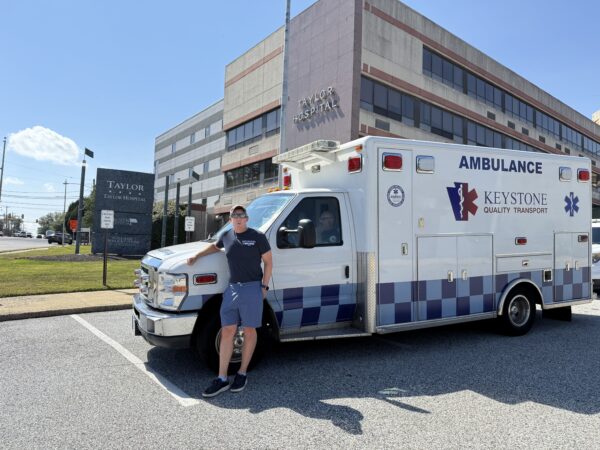
    “The ideal thing that could happen is we reopen an emergency room, because that’s what Delaware County needs,” said Strine, who is the majority owner of medical transport company Keystone Quality Transport.

    Prospect closed Taylor in late April after the failure of a state-led effort to find a new operator that would return the Crozer health system to nonprofit ownership. Shortly thereafter, Crozer-Chester Medical Center also closed.

    Crozer was Delaware County’s largest healthcare system and a provider of critical safety-net services. For-profit Prospect had previously closed Springfield Hospital and Delaware County Memorial Hospital in 2022.

    “It’s a fact that Delaware County is less safe today than it was when these hospitals were operating,” Strine said.

    He said it seems unlikely that a full-blown hospital would return to Taylor.

    Ridley Park Council president Dane Collins said he’s hopeful that an emergency department and doctors services will return to the site. “It’s no secret. The area’s in desperate need of it,” he said.

    As part of the agreement, Delaware County, Ridley Park Borough, and the Ridley School District agreed to reduce the taxable value of the property from its assessed value of $60 million to a fair market value of $1 million for the next two years.

    The inflated $60 million assessment was tied to financial deals Prospect undertook with a real estate investment firm in 2019 and 2023.

    The reduced value slashes the amount of property taxes that can be earned on the property for the next two years. However, beginning in 2027, the taxing authorities would be permitted to appeal the value of the building.

    The decision to reduce the building’s value so dramatically in tax rolls was opposed by some members of Ridley School District’s board of education, which only narrowly approved the measure on a 5 to 4 vote last week.

    Prospect hasn’t paid property taxes on the property since 2022, according to public records.

    Delaware County councilmember Christine Reuther called the new value a “tough pill to swallow” in an interview. The property was worth more than the “fire sale price” it had gone for, she said.

    The building would be worth less than many homes on the county’s tax rolls, Reuther noted, at a time when property values and home costs are increasing.

    She called the resolution yet another example of the negative fallout from Prospect’s abandonment of healthcare resources in the community.

    “There’s literally nothing we can do that isn’t going to resolve in a worse result, and that’s wrong,” Reuther said.

    Strine acknowledged that the price seems cheap, but noted the building is empty, and it’s a special-use building, making it harder to find tenants. “There’s a ton of carrying costs and a lot of uncertainty about how long it’s going to take to fill up,” he said.

    The investment needed to bring the building back to life is going to be many times the price, Stine said.

    “It’s positive movement to have an experienced local businessperson purchase the property instead of allowing the property to become abandoned,” said Frances Sheehan, president of the Foundation for Delaware County, whose mission is promoting health and welfare in the county.

    Taylor is the second shuttered Crozer hospital to be sold in less than a month. Upper Darby School District bought the former Delaware County Memorial Hospital for $600,000 on Aug. 14. It plans to use the property for expansion of its neighboring high school.

    In both cases, U.S. Bankruptcy Judge Stacey Jernigan said Prospect could abandon the properties, which means that local authorities would have had to put the real estate up for a tax sale.

    Prospect had told the judge that the top offers it had received were $1.25 million for Delaware County Memorial, which closed in 2022, and $575,000 for Taylor.

    Given the risk of abandonment by Prospect, county and local authorities risked a total loss to tax rolls if Prospect abandoned the property entirely.

    Robert Strauss, an economics professor at Carnegie Mellon University who studies property tax, noted that the buyers may have backed out of a deal if they couldn’t obtain the reductions in property taxes.

    “It’s hard to envision anything easy happening in the short run that would bring it back onto the tax rolls and be profitable,” he said. “The reduction in revenues seems to me to be inevitable in the next couple of years, regardless.”

    This suburban content is produced with support from the Leslie Miller and Richard Worley Foundation and The Lenfest Institute for Journalism. Editorial content is created independently of the project donors. Gifts to support The Inquirer’s high-impact journalism can be made at inquirer.com/donate. A list of Lenfest Institute donors can be found at lenfestinstitute.org/supporters.