Tag: Villanova University

  • Pope Leo XIV celebrates immigrants in speech to Philadelphia crowd amid clash with Trump ahead of 250th anniversary

    Pope Leo XIV celebrates immigrants in speech to Philadelphia crowd amid clash with Trump ahead of 250th anniversary

    Addressing a Philadelphia crowd live from the Vatican, Pope Leo XIV called for a “recommitment” to American ideals.

    The first U.S.-born pope delivered remarks virtually at an interfaith ceremony inside Philadelphia’s National Constitution Center on the eve of the United States’ 250th birthday to accept the center’s prestigious Liberty Medal.

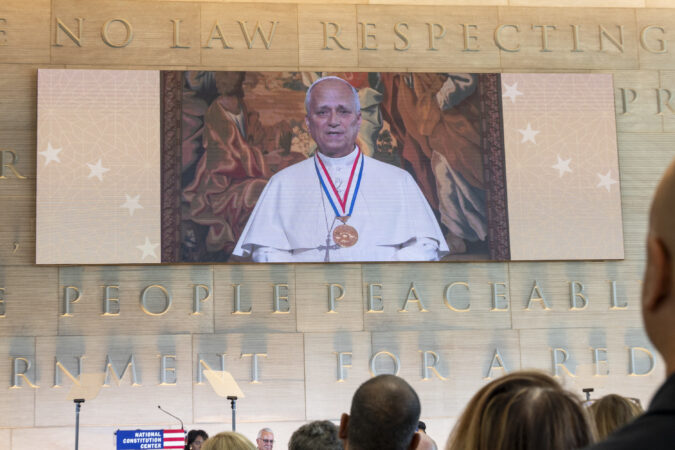
    Facing a screen showing the live, cheering Philadelphia audience, the pontiff wore his Liberty Medal along with a cross around his neck.

    Leo, who grew up in Chicago and attended Villanova University, quickly pointed out his American roots, calling himself “a son of this great country.”

    “I join you in asking God’s blessings upon America’s future that the lofty ideals enshrined at the beginning of the Declaration of Independence may continue to guide the flourishing of the nation in unity, justice, and peace,” he said.

    Leo, who was elected pope last year, spent years serving the church in Peru and has been outspoken about calling for international peace. That’s landed him at odds with President Donald Trump’s administration on the issue of migrants, the war in Iran, and more.

    The pope leaned into some of those themes in his speech, even though he did not refer to the president directly.

    He nodded to his advocacy for humane treatment of immigrants and noted that the founders of the United States “made America a byword for freedom, as the country opened its doors to successive waves of immigrants, enabling them and their children to play their part in shaping the future of the nation.”

    He said the “love of freedom” in the United States has inspired the country “to look beyond itself and at great sacrifice to champion the cause of freedom beyond its own borders.” But he acknowledged that mission hasn’t been straightforward, noting that building a society that embodies such ideals “was not always easy and, in many respects, is still a work in progress.”

    The pontiff’s speech comes the day before he plans to visit Lampedusa, an Italian island known as a stop for migrants making the dangerous journey across the Mediterranean Sea from North Africa to Europe. His predecessor Pope Francis made his first official visit outside of Rome in 2013 to the same island and condemned the “globalization of indifference” toward migrants.
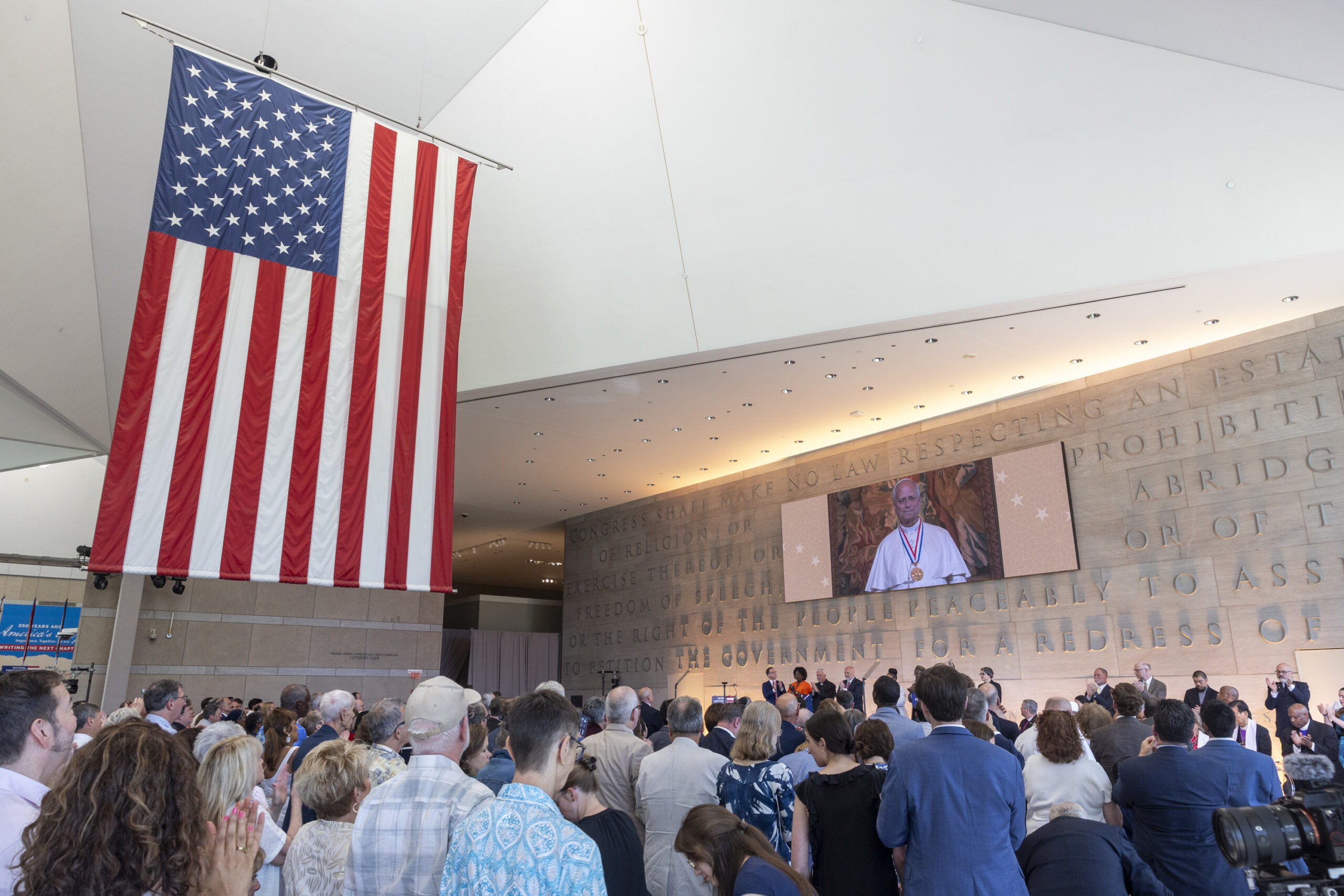
    Pope Leo XIV speaks at the Liberty Medal Ceremony at the National Constitution Center in Philadelphia on Friday.

    Julie Silverbrook, the chief content and learning officer for the National Constitution Center, emphasized in a Friday interview that Leo is a “global leader who has been uniquely shaped by American ideals.”

    “He has brought together people of different faith traditions, and through his ministry really reflected his belief in the inherent dignity of all human beings,” she said.

    Leo declined an invitation from Trump to the United States to celebrate the country’s 250th birthday on July Fourth, the New York Times reported. The first American-born pope opting to visit migrants instead sends a stark message as the president pursues his mission of mass deportations.

    But the pontiff’s participation in the Philadelphia program highlights his connections to the region, which isn’t lost on the National Constitution Center.

    The Philadelphia-based private nonprofit organization chose Leo for the award due to “his lifelong work promoting religious liberty and freedom of conscience and expression around the world — ideals enshrined by America’s founders in the First Amendment to the U.S. Constitution.” That, and also because he is the first pope born in the United States, and has connections to Philadelphia, Silverbrook said.

    “He was shaped by those freedoms … in much the same way that the Declaration of Independence was shaped by the city of Philadelphia, and of course a reflection of American values that have been carried globally,” she said.

    When a delegation from Philadelphia’s National Constitution Center met with Leo at the Vatican in April to present him with the medal in person, they also bore a few local goodies: a bundle of Villanova swag, a replica of George Washington’s Acts of Congress, and a Wawa tote bag filled with Tastykakes.

    “I think he very much so feels a connection to Philadelphia, both having been educated here, and I think in this semiquincentennial moment, I think the eyes of the world are on Philadelphia, and we’re thinking about the ideals that have emanated from this place for 250 years,” Silverbrook said.

    Leo, a 1977 Villanova alum, recently passed on a surprise message to graduates of his alma mater. Vince Stango, the interim president and CEO of the National Constitution Center, also went to the Augustinian university on the Main Line, which co-sponsored the NBC10 broadcast of the event along with the archdiocese and Malvern Prep.
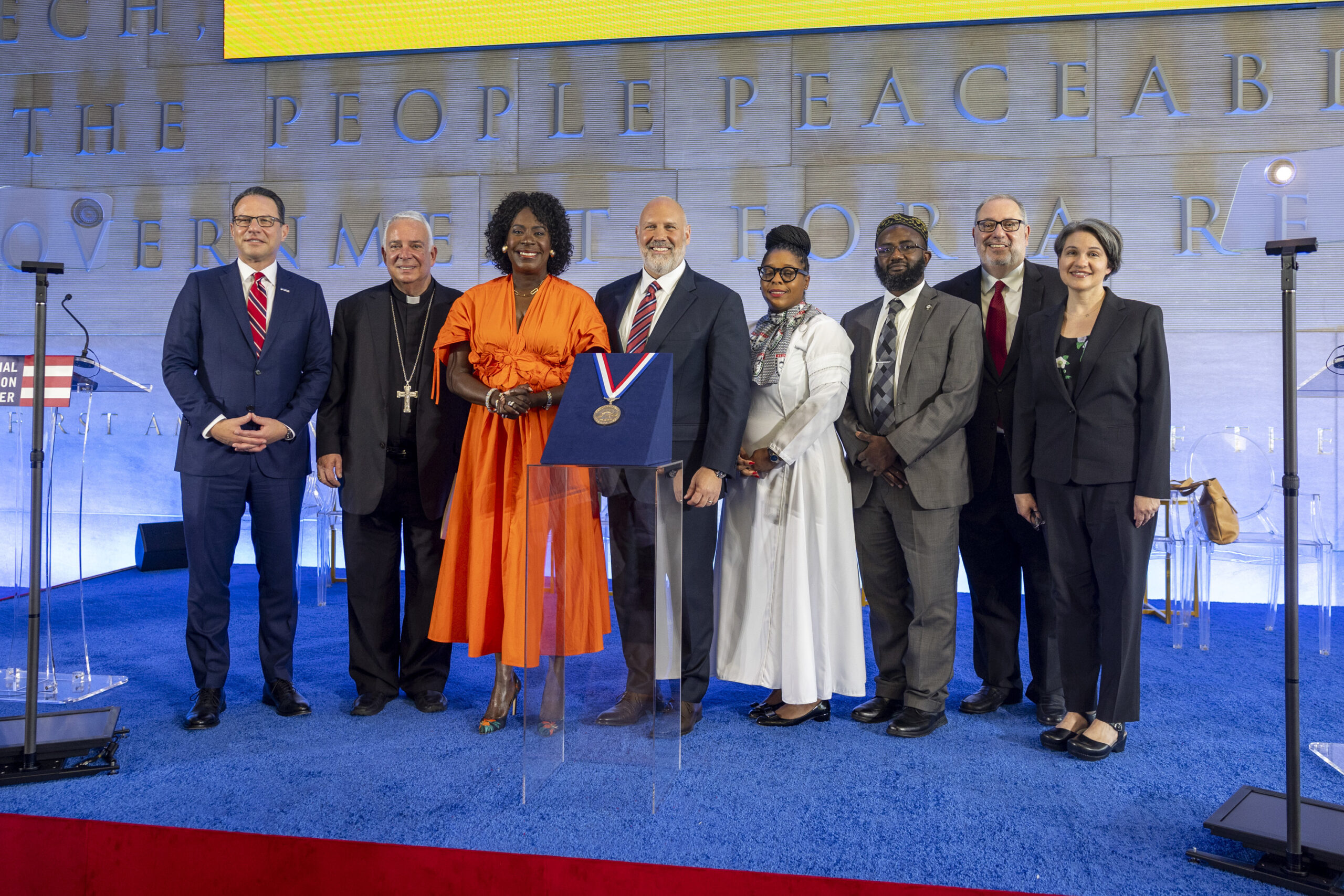
    (From left to right) Gov. Josh Shapiro, Rev. Nelson J. Pérez, Mayor Cherelle L. Parker, Interim President & CEO of National Constitutional Center Vince Stango, Rev. Carolyn C. Cavaness, Imam Quaiser D. Abdullah, Rev. Luis A. Cortés Jr., and Rabbi Jill L. Maderer, pose for a photo at the Liberty Medal Ceremony at the National Constitution Center in Philadelphia, Pa., on Friday.

    Clashing with Trump

    The pope has contended that it’s up to each country to determine how they want to accept migrants while also denouncing the Trump administration’s “extremely disrespectful” treatment of them.

    He has also spoken out against Trump’s threats against Iran, and declined to participate in the president’s “Board of Peace” for Gaza’s reconstruction.

    In an April social media rant, Trump complained that he doesn’t “want a Pope who criticizes the President of the United States.” The president called the Catholic leader weak and accused him of “catering to the Radical Left.”

    Leo told reporters that month that he has “no fear, neither of the Trump administration, nor of speaking out loudly about the message in the Gospel, and that’s what I believe I am called to do, what the church is called to do.”

    In his Friday remarks, the pope made a call for unity but warned that a country should come together with “ideals that do not fade with the passing of time.”

    He called on the United States to recognize its values of “peace and prosperity, a country characterized by generosity and nobility of heart,” and said the values of “shared human dignity, equality, and the rights laid out in the Declaration of Independence” can help unite and guide the nation.

    The Liberty Medal

    The Liberty Medal was created in 1988 and has been hosted by the National Constitution Center since 2006.

    The award has gone to storytellers, philanthropists, civil rights leaders, and politicians on both sides of the aisle, such as Ukrainian President Volodymyr Zelenskyy, former Supreme Court Justice Ruth Bader Ginsberg, the Bushes, Malala Yousafzai, and Thurgood Marshall.

    The center describes its recipients as individuals who “strive to secure the blessings of liberty to people around the globe.”

    The process of selecting Leo began about a year ago, Silverbrook said.

    The speech was initially going to be projected on Independence Mall, but the event was moved indoors due to the extreme heat and livestreamed by the center online.

    Rich Russo, 63, a Fishtown resident who attended the event in person, called the experience “once in a lifetime.”

    “How many times do you get the pope talking to you?” said Russo, who works for a bank.

    Gov. Josh Shapiro, who is Jewish, and Mayor Cherelle L. Parker, a Baptist — both Democrats who have been outspoken about their own faiths — joined Philadelphia Archbishop Nelson J. Pérez and other religious leaders who made remarks on stage prior to the pope’s speech. Pennsylvania Attorney General Dave Sunday, a Republican, rang a replica Liberty Bell outside.

    “Philly is proud that the pope is a graduate of Villanova University who spent time living and working in our region,” Pérez said on stage. “Pope Leo knows us, and we feel like we know him, too.”

    “His influence, however, extends beyond Philadelphia,” the archbishop added.
  • Religious liberty isn’t the only American principle on Pope Leo XIV’s mind as he accepts the Liberty Medal

    Religious liberty isn’t the only American principle on Pope Leo XIV’s mind as he accepts the Liberty Medal

    The common wisdom that “There will never be an American pope” went up in white smoke on May 8, 2025, when Cardinal Robert Prevost, a boy from the South Side of Chicago and a graduate of Villanova University, was elected pontiff and took the name Leo XIV.

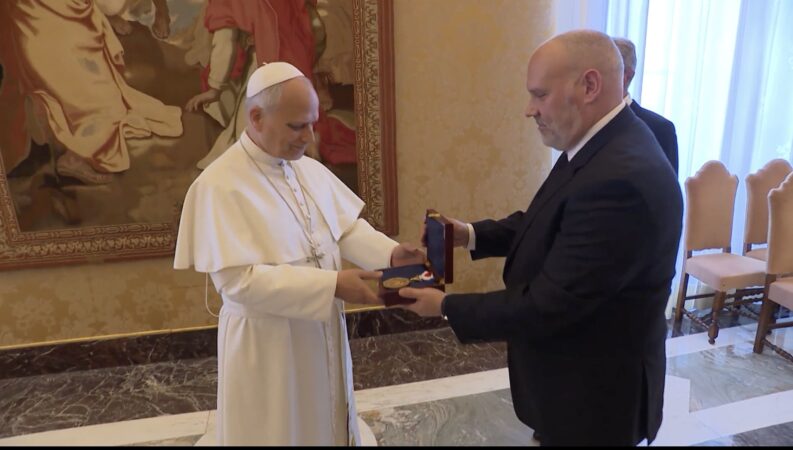
    Now, on the eve of America’s Semiquincentennial, as if to underscore how much has changed, the American pope has been awarded the National Constitution Center’s Liberty Medal. Pope Leo accepted the award at the Vatican on April 30. On Friday, in a ceremony at the National Constitution Center on Independence Mall, the pontiff will address the audience live from the Vatican in a speech that will be livestreamed globally.

    The medal, according to the center’s interim president and CEO, Vince Stango, will celebrate how “[i]n formal Vatican statements and public addresses, His Holiness has affirmed that peace cannot exist without freedom of religion, freedom of thought, and freedom of expression, principles that closely align with constitutional protections guaranteed by the First Amendment.”

    One reason an American pope was long unthinkable is that American principles have not always aligned with Catholic principles. The proud American refusal to establish the Catholic Church as the national religion flew in the face of traditional Catholic teaching that the church should ensoul the body politic.

    That was never going to happen in the United States, of course. Not even close. And so the question then became, from the Catholic point of view, what to say about the American model that included the First Amendment, with its coordinated guarantees of the “free exercise” of religion and the nonestablishment of religion by Congress.

    Rome’s response has changed over time. In the late 1800s, Pope Leo XIII noted with approval the religious situation of Catholics in the United States, yet cautioned against the error that separation between the church and the civil power was to be the norm. By the 1950s, though, some Catholic thinkers were claiming the American model, in fact, stated the ideal, reasoning that the First Amendment guarantee of “free exercise” is necessary for a person to honor his God-imposed duties.

    By now, even though the Second Vatican Council (1962-1965) stated that it was leaving the church’s traditional teaching “untouched,” the nonestablishment of religion and a legal guarantee of individual and group free exercise of religion, subject to just limitations for the common good, constitute the norm proposed by the Catholic Church to the world as we know it.

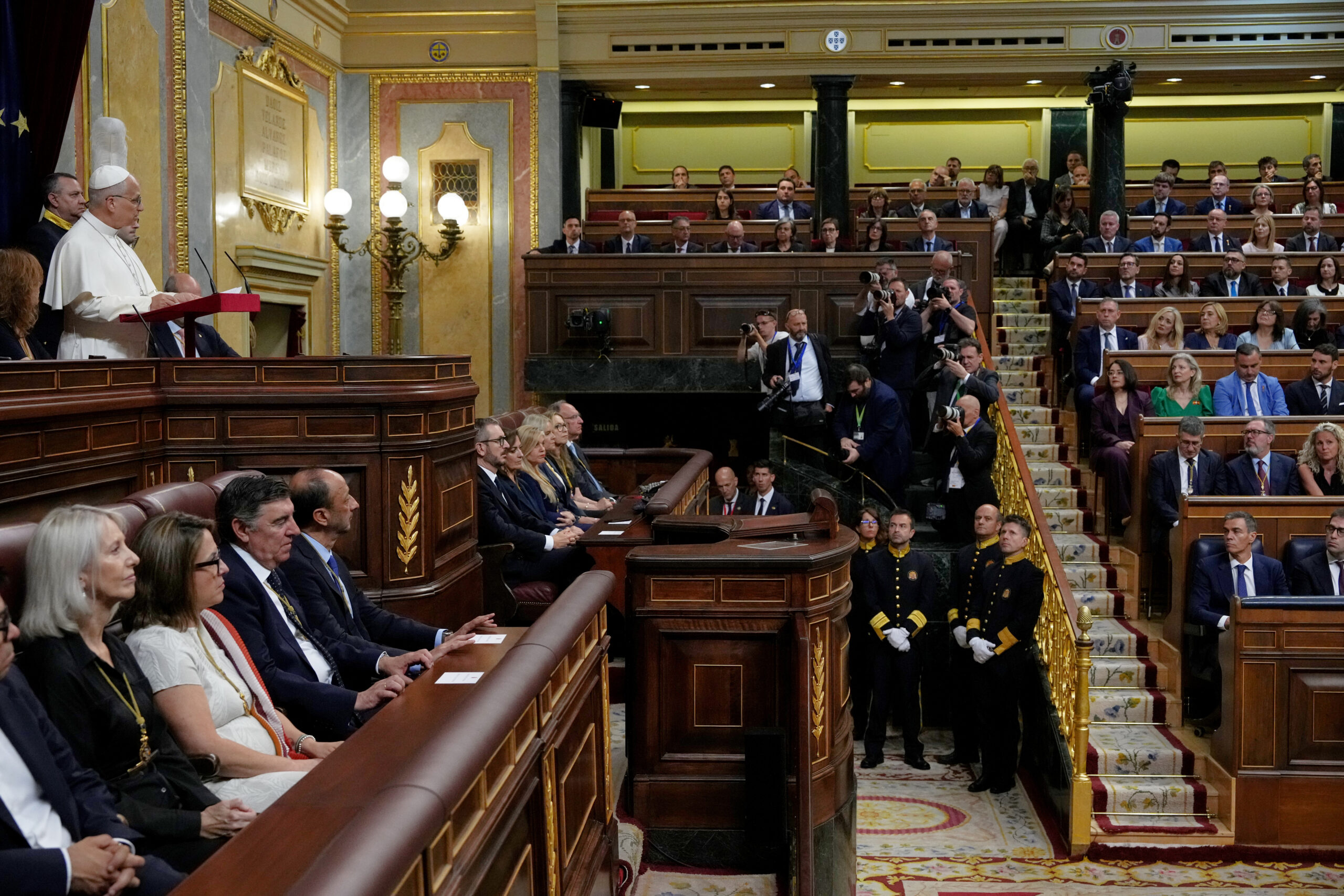
    Pope Leo XIV speaks to members of the Spanish Parliament at the Congress of Deputies, in Madrid, on Monday, June 8.

    In speaking to the Spanish Parliament on June 8, for example, Pope Leo insisted that laws must respect “freedom of thought, conscience and religion, a fundamental right that protects the most intimate sphere of the person. The freedom upon which the contemporary state is built, if it is authentic, recognizes the religious dimension of the human person.”

    In the ceremony on Independence Mall on Friday, Pope Leo will address a nation in which, for the first time in its history, it is becoming socially acceptable to oppose the free exercise of religion for some people. Litigation that threatens to cancel people’s freedom to live according to their conscience becomes more common. The seal of confession, long protected in the United States, is under assault, and the threat is real. In his address to the Spanish Parliament, Pope Leo warned against the withdrawal of that protection, and the warning needs to be echoed in the United States.

    It would be one of history’s great ironies for an American pope to call his country back to a principle that his church learned, in part, from America.

    Religious liberty is not the only American principle on the American pope’s mind, as his message to the 2026 graduates of his alma mater makes clear. “This being the 250th anniversary of the United States of America, I would invite you to recall in a special way the guiding principles of the foundations of our nation: ‘We hold these truths to be self-evident: that all [people] are created equal; that they are endowed by our Creator with certain inalienable rights, and among those are Life, Liberty and the pursuit of happiness.’”

    The principles of the First Amendment are to be cherished, but prior to those principles, the pope has reminded us, are the principles of the Declaration of Independence around which the nation was formed in 1776. And while the declaration does indeed attest to the nation’s commitment to the people’s Creator-given right to liberty, the outstanding principle of the declaration to which President Abraham Lincoln later found the nation “dedicated” since 1776 was that all people are “created equal.”

    When Lincoln summoned the American nation to rededicate itself to the equality of all persons, he did so for good reason: Unless we are related to one another as equals, we are related to one another as fractions to wholes. The three-fifths clause of the original U.S. Constitution gave effect to slavery, a grievous injustice removed by the 13th Amendment in concert with the other Reconstruction amendments. These amendments constitutionalized the nation’s earlier commitment to our having been “created equal,” but not everyone is a believer in the equality of all people.

    Today, Americans are divided over the declaration and, specifically, the claim that we are “created equal.” Human equality is said by some to be a self-evident lie, and even among those who pay it lip service, commitment to the basic equality of all people is undermined by identity politics, race-based priorities, and blood guilt.

    Pope Leo, though, is not in doubt about the equality of all people. In his first encyclical, Magnifica Humanitas, he writes that we are equal in “ontological dignity, which is neither acquired nor earned, nor does it need to be justified.” This immutable and foundational equality is true of all people because we are, without exception, “created in the image and likeness of God.”

    And this is another truth Americans need to reclaim.

    In order to reclaim it, we need to understand that human equality was never meant to state something empirical or measurable about people. The equality declared by the declaration and celebrated by Lincoln, and fully constitutionalized by the Reconstruction amendments, depends on what is spiritual in a person, represented by the radical Christian judgment that underneath the obvious and often wonderful diversity of people lies a universal sameness in being created in the divine image.

    When G.K. Chesterton was asked, “What is America?” he gave a characteristically smart answer that has been debated ever since: “America is a nation with the soul of a church. America is the only nation in the world founded on a creed. That creed is set forth with dogmatic and even theological lucidity in the Declaration of Independence.”

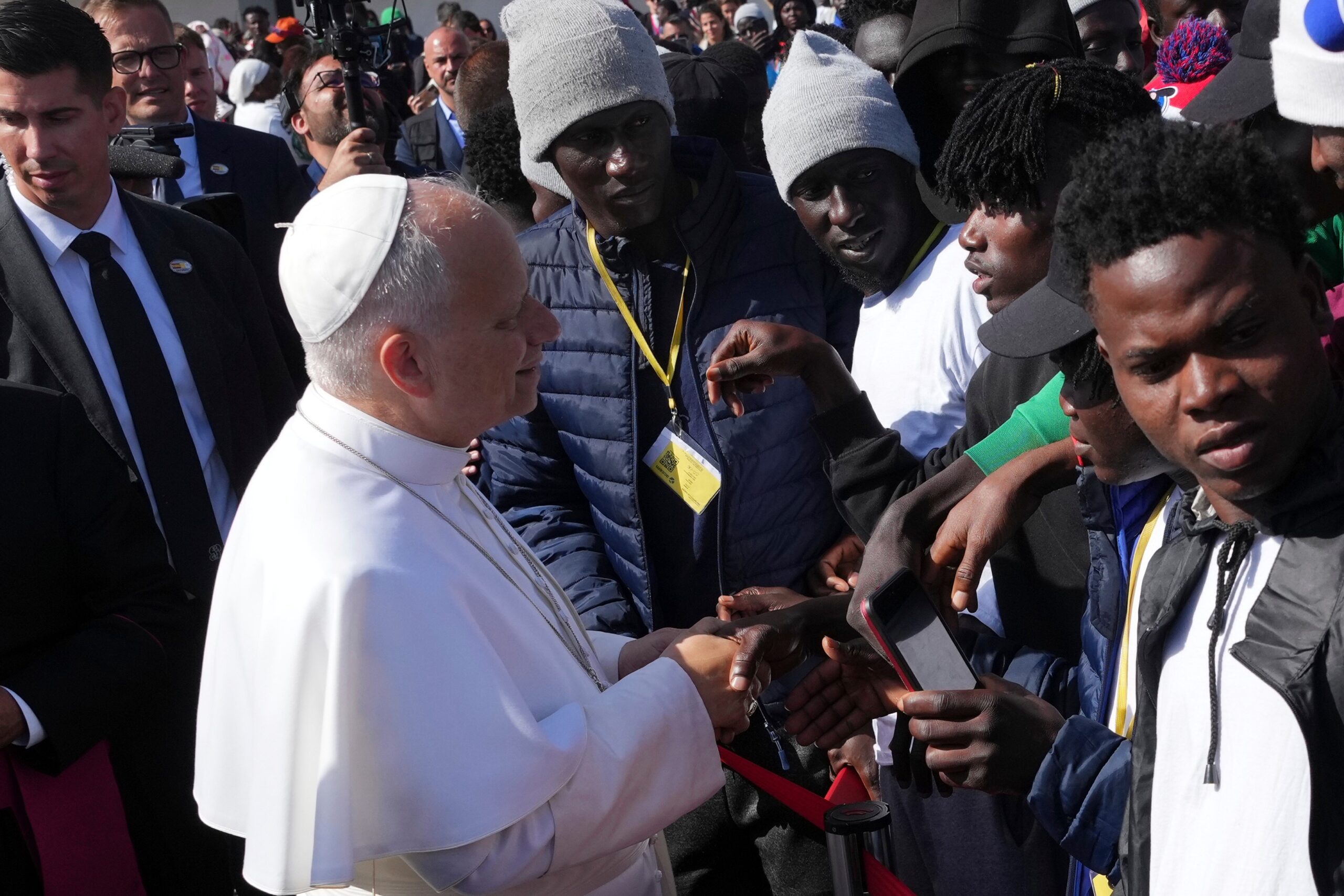
    Pope Leo XIV meets migrants at the Las Raices center, in San Cristobal de la Laguna, Tenerife, Spain, June 12.

    Robert Prevost, now Pope Leo, was formed, in part, in that “church” with its declarational creed. He was also, and first, formed in the Catholic Church, with its commitment to the universal equality of all people.

    What the American pope can do now, in a way no other person on earth can, is to remind Americans that the equality to which their nation has been dedicated since 1776 depends on what Christianity has shown the world: that even the least, in worldly eyes, are equals in God’s eyes.

    Patrick McKinley Brennan is the chair of Catholic legal studies and a constitutional law scholar at Villanova University.

  • No, Pope Leo XIV wasn’t at a ’70s Villanova University fraternity party in this viral photo

    No, Pope Leo XIV wasn’t at a ’70s Villanova University fraternity party in this viral photo

    Did Pope Leo XIV actually go to a Villanova University fraternity party?

    That’s what one user on X purported when he posted an aged photo of the leader of the Catholic Church standing with a group of young men — one wearing a Villanova T-shirt and holding a small dog — in front of a brick bungalow. “The future Pope Leo XIV at a Villanova frat party in 1976,” the caption read.

    The tweet had 1.4 million views and more than 15,000 likes as of Sunday.

    But internet sleuths were suspicious:

    “Not one of them is holding even a beer. That’s one tame frat party,” one of nearly 150 comments read.

    “Doesn’t this look more like a step ranch in/near Chicago than anything on the Main Line?” another user smartly deduced.

    The photo was actually taken at a fellow Wildcat’s house on the South Side of Chicago, where the pontiff is from, according to a classmate who has a copy. The classmate, who declined to be named for privacy reasons, assured The Inquirer it was not a frat party and dated the photo to the mid-’70s.

    Pope Leo graduated from Villanova in 1977. He’s the first U.S.-born pope, which presumably could also mean he’s the first to brush up against Greek life, but Villanova does not have fraternity and sorority housing. The Holy See, the Vatican’s governing body, did not immediately respond to an email seeking more information about the photo.

    Still, people were intrigued by the idea of the Pope at a party:

    “It’s important to me that the pope has been to a frat party even if it was a daytime frat party of eight,” one user wrote.

    Another said, “Learning your frat bro is now the pope. That’s like something from the epilogue of Animal House.”

  • The short- and long-term implications of Matt Hodge’s injury for Kevin Willard and Villanova

    The short- and long-term implications of Matt Hodge’s injury for Kevin Willard and Villanova

    It’s worth addressing the human part of Matt Hodge’s right ACL tear first.

    The Villanova forward was having a solid first college basketball season after an NCAA ruling prevented him from playing last year as a freshman. The long wait was worth it. Hodge made his 29th start in Villanova’s 29th game of the season Saturday night at Madison Square Garden. He hit two three-pointers and was on his way to reach his season average of 9.2 points per game before he crumpled to the floor early in the second half after making a move in the post.

    Hodge will undergo surgery to his right knee and miss the rest of the season.

    “It just really stinks that the kid was going to be able to play in his first Big East tournament, his first NCAA Tournament, that’s really where [my head] is at,” Villanova coach Kevin Willard said Tuesday.

    But this is March, crunch time in college basketball, and so while Willard was feeling bad for the player he recruited out of high school while still the coach at Maryland, Villanova has a game Wednesday night and another on Saturday before postseason play begins.

    Hodge was averaging more than 28 minutes in the 28 games prior to Saturday, and the 6-foot-8 forward going down leaves Willard with a big hole to fill for a team with limited frontcourt depth.

    Willard answered the obvious first question — who goes into the starting five? — by saying sophomore wing Malachi Palmer, who will likely get his first college start in his 52nd career game Wednesday night at DePaul. Palmer, a 6-6 sophomore wing, is the sort of obvious replacement. Save for 7-foot backup center Braden Pierce, Palmer is the biggest and most physical defender Villanova brings off the bench.

    Villanova guard Malachi Palmer could make his first on Wednesday night.

    Palmer had a relatively quiet first half of the season but has emerged in conference play as a willing defender and someone who can knock down three-point shots.

    “Obviously not having Matty stinks, but Malachi has played really well,” Willard said. “It does hurt us, but it’s not catastrophic.”

    While Palmer starting offers more of a traditional one-through-five lineup for Willard, there will be variations that have the Wildcats going smaller or bigger. The smaller unit would have Tyler Perkins — who at 6-4 is Villanova’s second-leading rebounder (5.5 per game) — guarding a forward in a lineup that also has three other guards — Acaden Lewis, Bryce Lindsay, and Devin Askew — on the floor.

    The bigger unit would be one that hasn’t happened yet this season: Pierce being on the floor at the same time as 6-10 starting center Duke Brennan. Neither big man stretches the floor with outside shooting ability. So, how would that work?

    Willard pointed to his two-big lineups last year at Maryland, where Derik Queen and Julian Reese played side-by-side and while Queen could shoot a little bit, he rarely attempted three-pointers. Lineups with Brennan and Pierce on the floor at the same time would feature more screening and more side-to-side action, Willard said. One big hides in the dunker’s spot, for example, while the other is rolling.

    Villanova has practiced with both bigs on the floor, Willard said, in case it ever needed to match up against bigger lineups. It’s a lineup the Wildcats could have had to use in the postseason with or without Hodge’s injury, now it’s one they could deploy as soon as Wednesday night.

    Temple transfer Zion Stanford, who has barely played in conference play, could factor into the rotation more significantly, too.

    Kevin Willard believes Villanova forward Matt Hodge will have a large role when he returns from injury next season.

    Those are the short-term implications, and Willard has two regularseason games to tinker with the rotation before the Big East tournament.

    But it being March also means it’s time to start considering next season’s roster. Willard said Hodge’s injury “does and it doesn’t” have major implications for the 2026-27 Wildcats. That’s because Willard is planning for Hodge to return and take on a big role. Willard said he expects Hodge to need around eight months to return from his injury, and he could be practicing by October.

    “We’re planning on Matt playing for us next year,” Willard said.

    There will still need to be plans for the portal, though. That means making sure to stockpile the roster via the portal or otherwise in case Hodge isn’t ready to go right away or, worse, has a setback. Villanova’s priorities for the portal were going to be adding talent and athleticism in the frontcourt anyway with Brennan graduating.

    From that standpoint, Hodge’s injury hasn’t changed a ton. But it will be on Willard’s mind as he and general manager Baker Dunleavy navigate the frenzy that is the transfer portal, which is only one month away.

  • Gov. Josh Shapiro talks basketball, family, and faith with former Villanova coach Jay Wright

    Gov. Josh Shapiro talks basketball, family, and faith with former Villanova coach Jay Wright

    A failed exam and getting cut from University of Rochester’s basketball team led Gov. Josh Shapiro to his first political endeavor: student government.

    Decades of politicking later — winding his way from Pennsylvania state representative, to county commissioner, then attorney general, and now the commonwealth’s highest executive — Shapiro says he still looks at leadership through the prism of basketball.

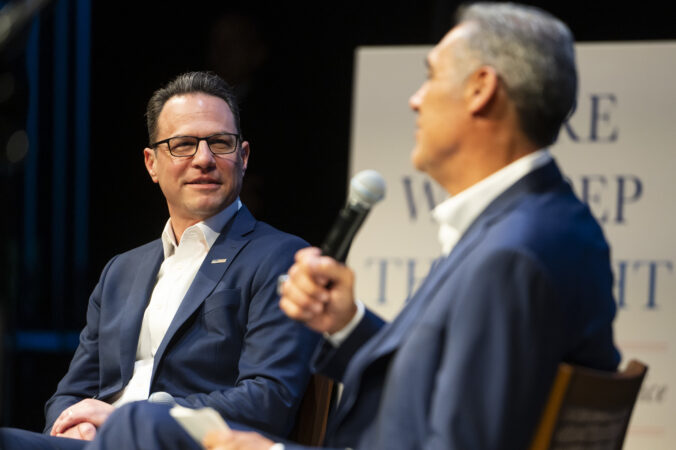
    At the latest event to promote his memoir, Where We Keep the Light, Shapiro discussed his love of the sport Saturday evening at Villanova University alongside decorated former men’s basketball coach Jay Wright. While Shapiro is often floated as a likely 2028 presidential candidate, the conversation was largely apolitical, instead focusing on core themes of the book — family, faith, and the governor’s ethos.

    Shapiro, once a point guard with a midrange jumper, talked about his “get stuff done” mentality and putting “points on the board” for Pennsylvanians.

    “Teams win when every single player, every coach — even the players on the bench who don’t have a role on the floor — each operates at their highest level,” Shapiro said. “My job is to get the most out of myself and all the people around me so we can be successful for others.”

    The governor spoke extensively about his propensity to listen: to constituents on the campaign trail; to his wife and children; to his beliefs. Shapiro said his family and Jewish faith have driven him to a life of public service.

    A premier Catholic basketball school, Villanova was an apt venue for the event, as Shapiro described how he sees religion as a way to bridge divides. (Shapiro, however, incorrectly identified Villanova as Jesuit — not Augustinian. The crowd jeered, and Wright assured him it was a common mistake. “Even the Catholics don’t know all the orders,” Wright said.)

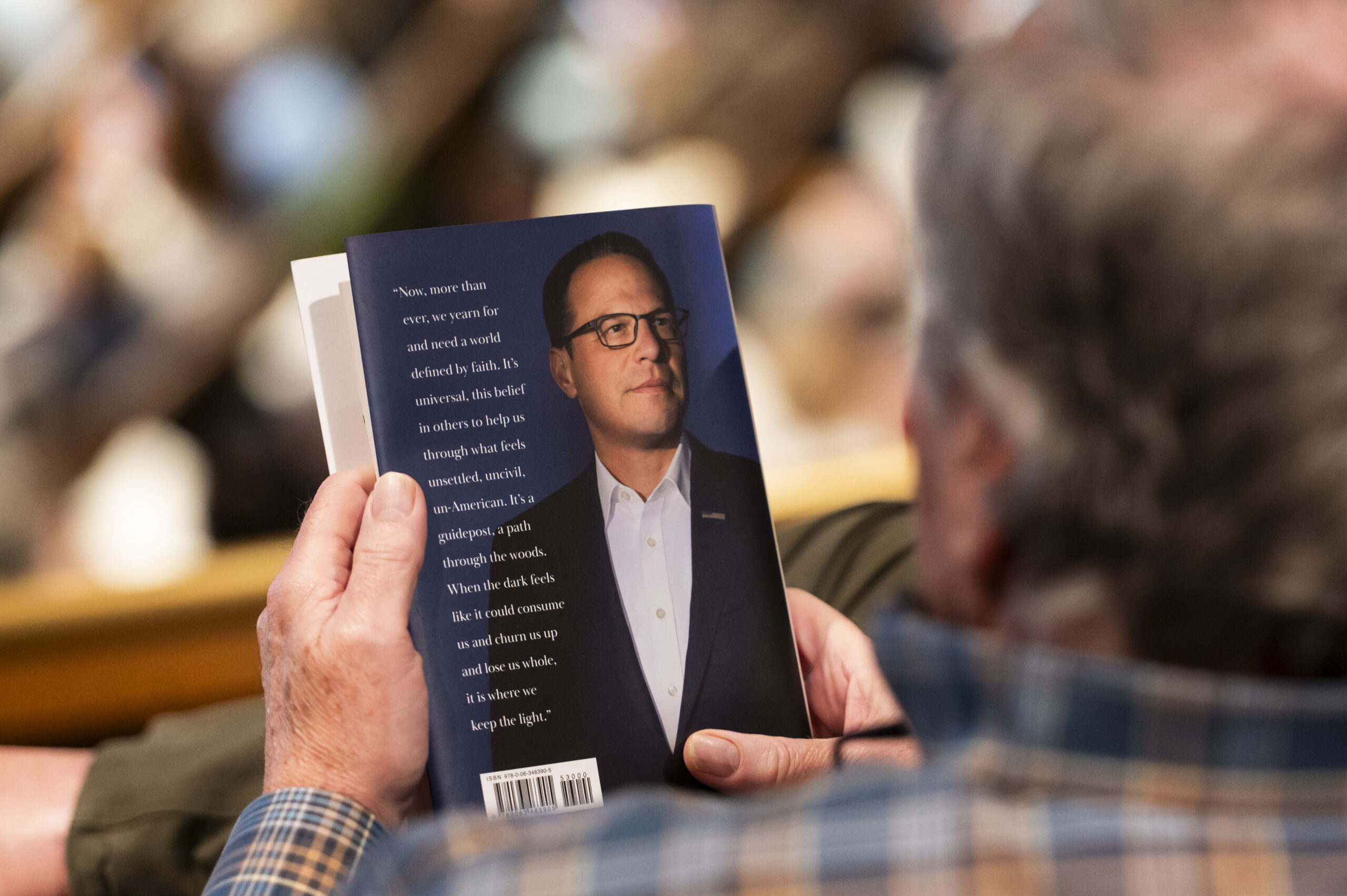
    An attendee looks at the back of Gov. Josh Shapiro’s new book, “Where We Keep the Light,” before a book discussion with Jay Wright, former head men’s basketball coach, at Villanova University on Saturday, Feb. 28, 2026.

    “By being close to my faith, it allows me to understand people of other faiths better,” Shapiro said. “There’s different ways religions go about their practice, there’s different customs, there’s different ceremonies. But there really is a shared through line of faith.

    “Love thy neighbor, feed the hungry, clothe the naked — these are all universal teachings that I think sometimes we end up losing sight of, and frankly, I think that leads to a lot of division in our society.”

    Shapiro’s Jewish heritage is chronicled in the book, as well as the arson attack at the governor’s residence during Passover last spring. On Saturday, Shapiro opened up to the 350-person audience about how he squares fatherhood and marriage with a life in public view. In the aftermath of the attack, Shapiro said his political aspirations — including when he was considered for Kamala Harris’ vice president and whether to seek reelection for the governorship — became family discussions.

    “There’s an emotional toll. … [My family] all had to be in,” Shapiro said. “They were all in because you can’t let the bad guys win. We can’t let those who try to intimidate good people from doing this work prevail. You’ve got to stay in the arena, and you’ve got to keep fighting.”

    While the conversation largely steered away from politics, Shapiro promised fair midterm elections, discussed views on capital punishment, and touched on civil discourse and unrest nationwide.

    “I’m still betting on the people of Pennsylvania — betting on the American people — to help us through this challenging moment that we’re in,” he said. “If the people really continue to rise up, … demand more, seek justice, try and build a world that has more equity in it, eventually politicians are enough to hear those voices, and that’s going to correct our politics. That’s going to help us find more light.”

    Staff writer Katie Bernard contributed to this article.

  • Villanova’s Bryce Lindsay is breaking out of his slump at the right time for the Wildcats

    Villanova’s Bryce Lindsay is breaking out of his slump at the right time for the Wildcats

    Bryce Lindsay isn’t very superstitious, so he didn’t take Kevin Willard up a few weeks ago when the Villanova coach suggested maybe he should reorient himself in bed and sleep a different way.

    Lindsay did, however, take Willard and his family and support staff up on their advice in recent days. Lindsay was 13-for-65 from three-point range in the 11 games that preceded his 15-point effort, behind four triples, last week in an overtime road win over Xavier. The redshirt sophomore guard carried Villanova at times through its nonconference schedule, but being the focus of the opposing team’s scouting report was taking its toll.

    “They’re telling me, ‘Go out there and be you,’” Lindsay said Wednesday night after Villanova’s 82-73 win over Butler. “‘Don’t think too much. Focus on defense, focus on the other things, and your shot will come.’”

    Lindsay scored 19 points Wednesday and helped Villanova get to 22-6 on the season and 13-4 in Big East play. He went 2-for-6 from three-point range and was 6-for-14 from the field overall and 5-for-5 from the free-throw line. It was Lindsay’s first time making six shots in a game since a Jan. 3 road win at Butler. He made six or more in eight of Villanova’s first 14 games before a 13-game drought.

    Villanova has fared just fine despite Lindsay’s prolonged slump. But there’s no denying how much easier the offense comes when Lindsay — who shot 40.8% from deep at James Madison last season — is filling it up.

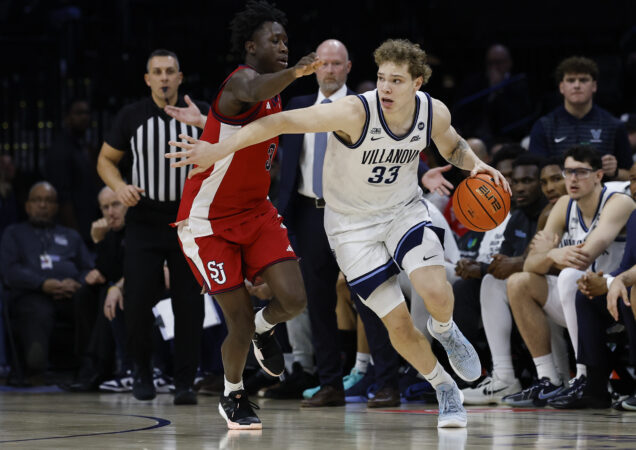
    Bryce Lindsay and Villanova are third in the Big East behind St. John’s and UConn.

    It did take a bit for Lindsay to understand that there was more to impacting a game than just making shots. This was the first real slump he remembers going through. He had some off shooting nights at JMU last season, but things never snowballed the way they did in recent weeks.

    “That was probably one of the hardest things I have ever went through in my life,” Lindsay said. “I’ve never, ever played that bad until now. It comes with the game. When you’re the No. 1 player on the scout, they’re going to try to take you away and that’s what they did. I’m just figuring out ways to maneuver through that.”

    Willard would certainly disagree with Lindsay’s assessment of his play, and he spent recent weeks trying to build him up and remind him of that when he noticed Lindsay’s frustration showing up in his body language.

    “Sometimes when you’re a shooter and you’re not shooting good and you’re standing on the court and you’re thinking about it, it’s like the worst thing you can do,” Willard said. “Just trying to get them to focus on all of the positive stuff.

    “There are times on the floor where he’s plus-8, plus-9, but he’s 0-for-4. You can see his body language. You can see everything going down. But your team is playing well when you’re out there.”

    Lindsay, who is averaging 14.3 points over the last three games, was plus-12 in 31 minutes Wednesday night. The advanced stats show a team that has a much better net rating in conference play with Lindsay on the floor.

    “In my head I feel like I was playing bad, but in their head I’m not playing bad because [of] the stats, my plus-minus is good,” Lindsay said. “I was always able to make shots, but when I don’t see the ball go in it’s hard.

    “These past few games I tried not to focus on it as much.”

    His effort Wednesday helped Villanova bounce back from Saturday’s deflating loss to No. 6 UConn in front of a sold-out Xfinity Mobile Arena. The Wildcats built a 14-point halftime lead but started sloppily in the second half and allowed Butler to climb back into the game. The lead was one before Lindsay extended it back to three with a layup with more than eight minutes to play. He again scored inside to bump an eight-point lead back to double digits with four minutes to go, then helped seal the game with four free throws inside the final two minutes.

    The fact that Lindsay scored all 10 of his second-half points inside the arc is a positive sign, too. It seemed at times that he was becoming too reliant on shooting threes in trying to break out of his slump.

    “Just focusing on other things,” Lindsay said when asked how he navigated it all. “My defense, my rebounding …”

    Willard, who was seated at the postgame podium between Lindsay and Devin Askew — who scored 16 points Wednesday — leaned over as Lindsay went on with his answer and circled a stat on the sheet in front of Lindsay.

    Focused on rebounding? Lindsay had zero rebounds Wednesday.

    The player and coach shared a laugh. After six weeks of slumping, Bryce Lindsay can finally smile.

  • Nordic-style sauna with cold plunge debuts at Schuylkill Center

    Nordic-style sauna with cold plunge debuts at Schuylkill Center

    Erin Mooney, executive director of the Schuylkill Center for Environmental Education, slipped out of a sweltering sauna last weekend wearing only a bathing suit and strode barefoot straight into the coldest day of the winter.

    “I never thought that I would find myself in a bathing suit laying down in the snow on a 15-degree day, and I found myself doing that at the Schuylkill Center,” Mooney said.

    It marked the opening weekend of a new experience that the Schuylkill Center, on Hagy’s Mill Road in Philadelphia, is offering along with a local sauna company, Fiorst — one that already has had solid booking off social media views, despite having just opened Saturday.

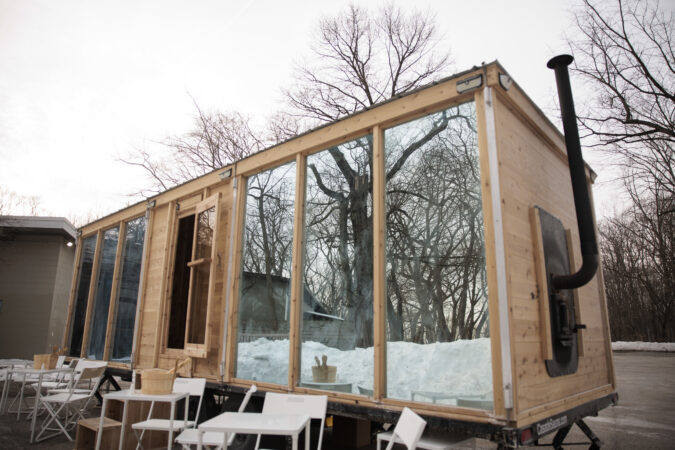
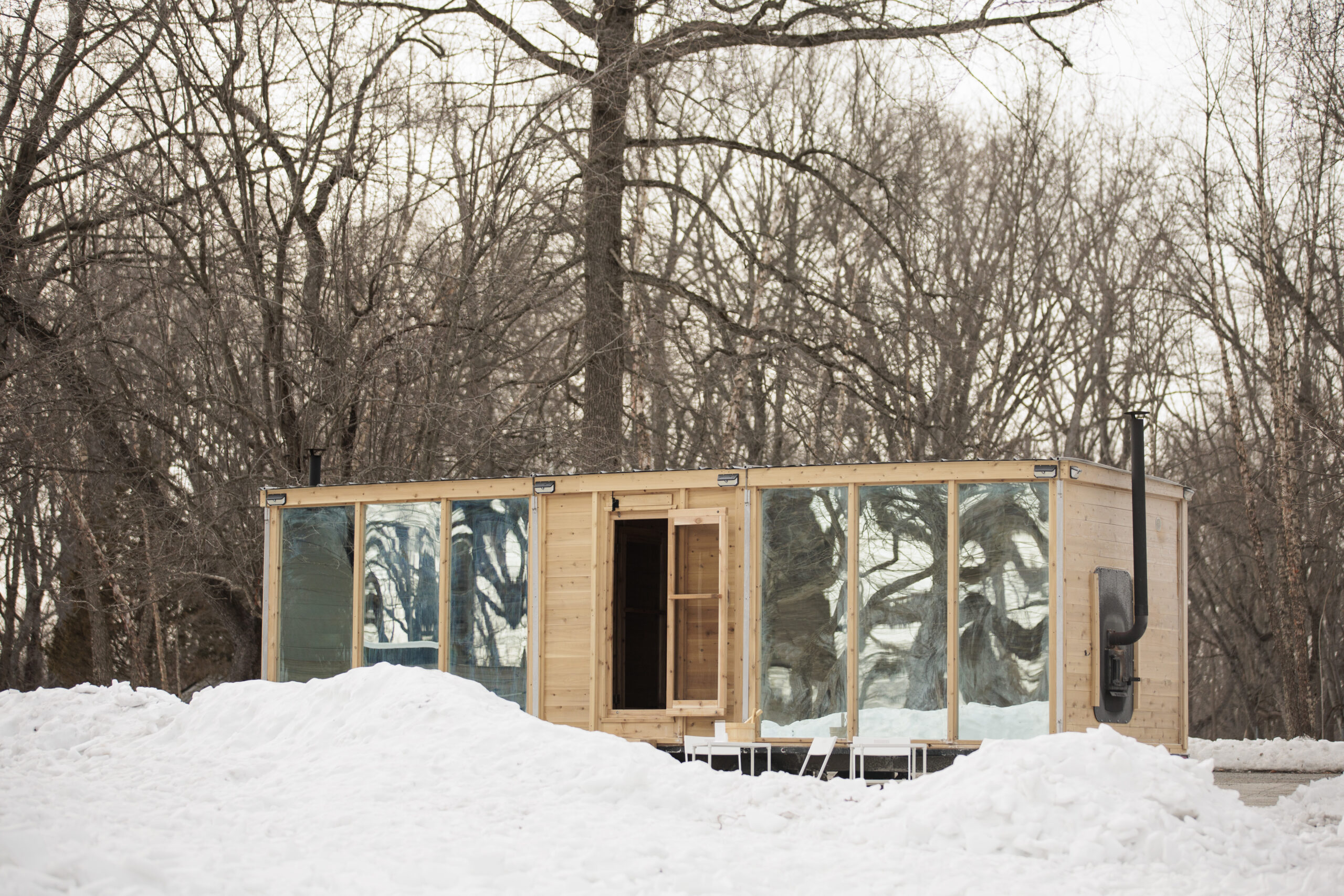
    Visitors will have the chance to relax in a glass-walled, wood-fired sauna overlooking a snowy field and woods in Northwest Philly, paired with a cold plunge.

    Mooney said the idea to host a mobile sauna on the preserve’s grounds grew from a desire to keep the center lively through winter and draw in new visitors. She was inspired by a sauna exhibit by the American Swedish Historical Museum in FDR Park and began looking for a way to bring that Nordic tradition of “hot and cold” to her own facility.

    She spotted Fiorst, a mobile sauna venture run by Jose Ugas, on social media, reached out, and the two forged a near-instant partnership. They spoke on Jan. 30, a Friday; by the next Friday, a custom sauna unit from Toronto rolled onto the grounds.

    By last Saturday, the fire was lit, and guests arrived.

    “It was, you know, kind of kismet, in a way, we were able to have this shared vision,” Mooney said. “And with him doing this servicing of the saunas on site, it makes it so much easier for us.”

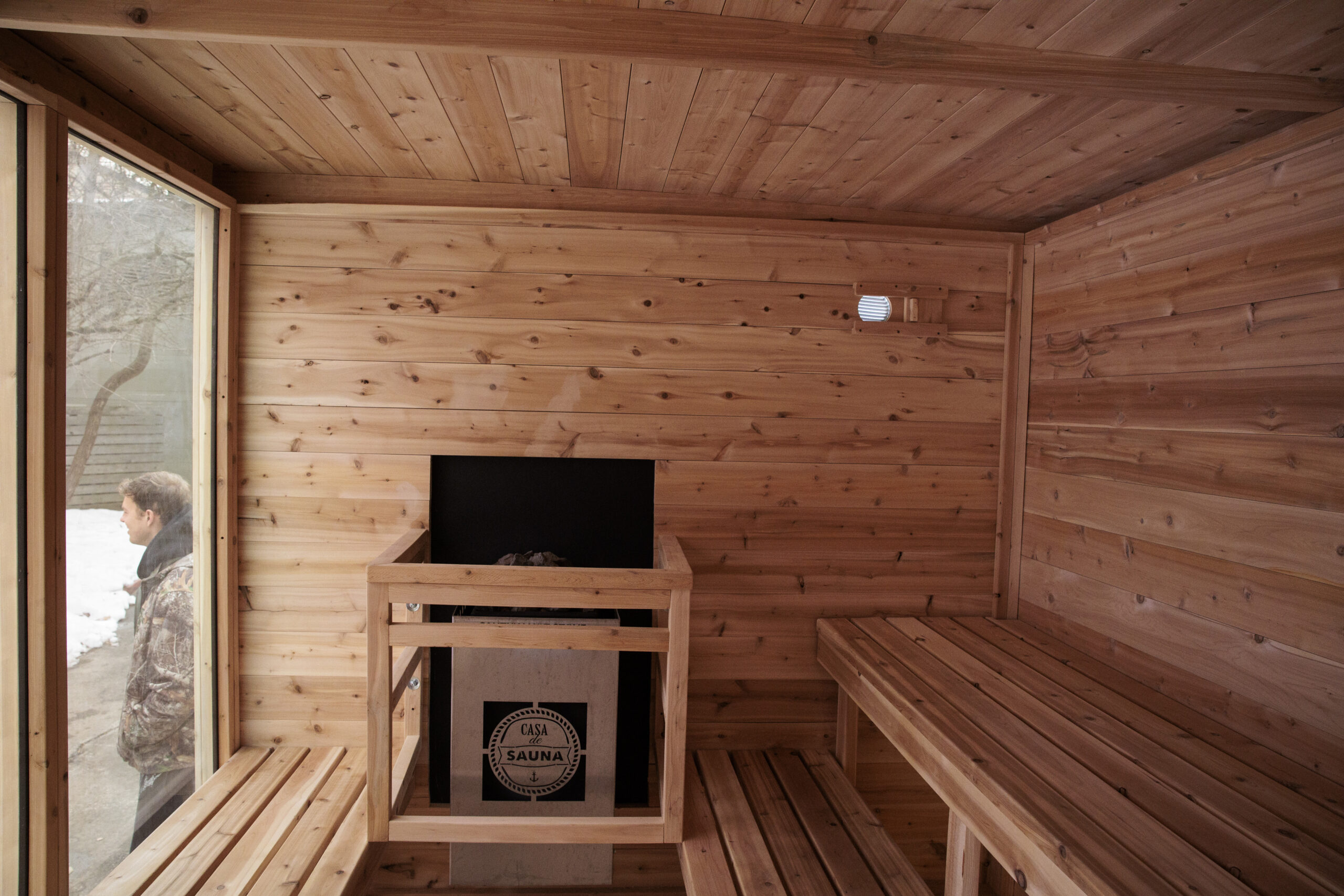
    The interior of the Nordic-style sauna at the Schuylkill Center for Environmental Education.

    How does the sauna work?

    Nordic-style wood saunas are notable for their minimalist design and high heat, which participants couple with either a plunge into a cold shower, tub, or lake or a step outdoors.

    Fiorst’s installation overlooks the center’s main wooded area, framing the winter landscape through a glass wall as guests sweat it out inside the sauna’s 170- to 190-degree temperatures. Each 90-minute session allows participants to cycle at their own pace through intense heat and biting cold, a contrast Mooney found invigorating.

    The sauna is modeled on a concept popular across Nordic countries, including Norway, Finland, Denmark, and Sweden.

    Mooney said the project has already pulled in new visitors from neighborhoods like Fishtown or outside Philadelphia who might not typically visit for hiking or birdwatching.

    She believes the sauna fills a niche for “clean, wholesome, healthy fun” that is alcohol-free.

    However, unlike the typical Nordic experience of being nude during the sauna, the Schuylkill Center experience is strictly “bathing-suit friendly,” a choice tailored to American comfort levels.

    The collaboration operates on a revenue split, with a charitable twist. During February, the center’s share of the proceeds goes to its Winterfest for Wildlife campaign to support the on-site wildlife clinic.

    For now, the sauna remains a seasonal experiment, but it will stay in place as long as demand — and winter weather — holds up.

    “I think it will stay seasonal,” Mooney said. “We live in a sauna already in the summer in Philadelphia.”

    The sauna is open on weekends at the Schuylkill Center from 9 a.m. to 5 p.m. and is booked through the Fiorst website. The cost for a 90-minute session is $75. You can add a friend for $25. Private sessions of up to 16 cost $600. For now, bookings can be made only one week in advance.

    The Schuylkill Center is expecting Valentine’s Day weekend to book quickly.

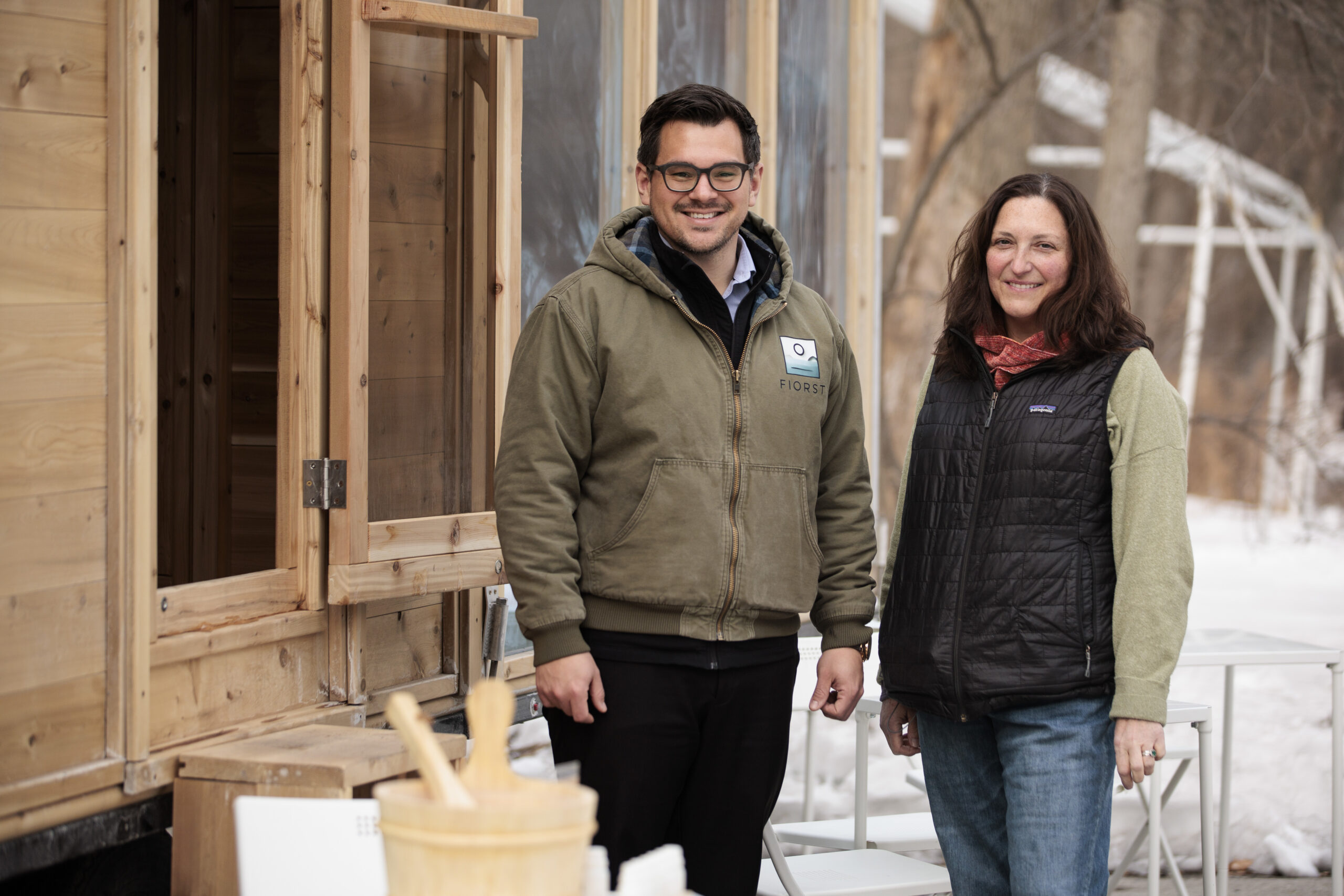
    Jose Ugas (left), founder of Fiorst, and Erin Mooney, executive director of the Schuylkill Center for Environmental Education, at the sauna.

    ‘A moment of clarity’

    Ugas, a bioengineer at Johnson & Johnson who lives in Whitemarsh Township, felt compelled to bring a Nordic-style sauna experience to the region after a trip he took to Sweden following the loss of his mother to brain cancer in 2023. There, friends introduced him to a traditional Scandinavian ritual: enduring searing dry heat inside a wooden sauna, followed by a plunge into icy water or a cold shower.

    What began as a distraction soon crystallized into a moment of clarity, Ugas said.

    “Just that time together and kind of going between the hot and the cold just was like a mental reset for me,” Ugas said.

    Ugas, who will graduate with an MBA from Villanova University this spring, wanted to replicate the nature-immersive element that had grounded him overseas.

    He found a Toronto company that builds portable glass-fronted wooden saunas and ordered a custom unit equipped with a wood-fired stove, hot stones, steam, aromatherapy, and a cold-plunge tub. Ugas launched Fiorst in 2024, describing it as “nomadic” at first.

    The venture first hosted sessions overlooking Valley Forge and at Fitzwater Station in Phoenixville. Ugas then established a more permanent site, which he calls Riverside, on River Road in Conshohocken where he still books sessions.

    Ugas calls the partnership with the Schuylkill Center a natural fit given its location amid nature, merging his wellness goals with the venue’s environmental focus.

    “At the core of our mission and their mission is to get people out in nature,” Ugas said.

    So far, he has relied on social media to market the sauna, which has drawn hundreds of visitors to its locations.

    The Nordic-style sauna at the Schuylkill Center for Environmental Education in Philadelphia.

    ‘Social sauna’

    Serena Franchini, a nurse and founder of Healing Fawn Inner Child Work & Somatic Therapy, has taken sauna sessions at Ugas’ other locations. She sees it as a tool to help with nervous system regulation while offering an immersion in nature.

    “I loved the idea that it was outside,” Franchini said.

    She likes the relaxed atmosphere compared with some traditional saunas that often enforce strict time limits on heating and cooling cycles. Instead, she cycles between the sauna and cold-plunge tub at her own pace.

    Franchini highlighted the mental wellness aspect of Ugas’ “social sauna” sessions, noting Friday night events as “skip the bar” alternatives that allow strangers to gather for a healthy, communal experience.

    “It’s a great way for community to connect with people that are interested in the same things that you are,” Franchini said.

  • For Gopuff, Super Monday is the national holiday

    For Gopuff, Super Monday is the national holiday

    Sunday’s Super Bowl LX, featuring some 66 ads costing corporate brands an average $8 million for half a minute, shone a light on America’s snacking trends, tracked closely by Gopuff, the Philadelphia-based national delivery service.

    The game between the Seattle Seahawks and the New England Patriots, also featuring Bad Bunny’s Spanish-language halftime spectacular, was watched by nearly 40% of Americans. Their delivery orders gave marketers a broad, almost instant view of what Americans were consuming and how their ads were working — or not, said Michael Peroutka, GoPuff’s head of ads, in his Super Bowl postmortem report Monday.

    The product with the most spectacular Super Bowl increase didn’t advertise.

    Philadelphia-based Gopuff reported sharp increases in advertised snacks, but also in basic party ingredients such as limes and red party cups, during Super Bowl LX.

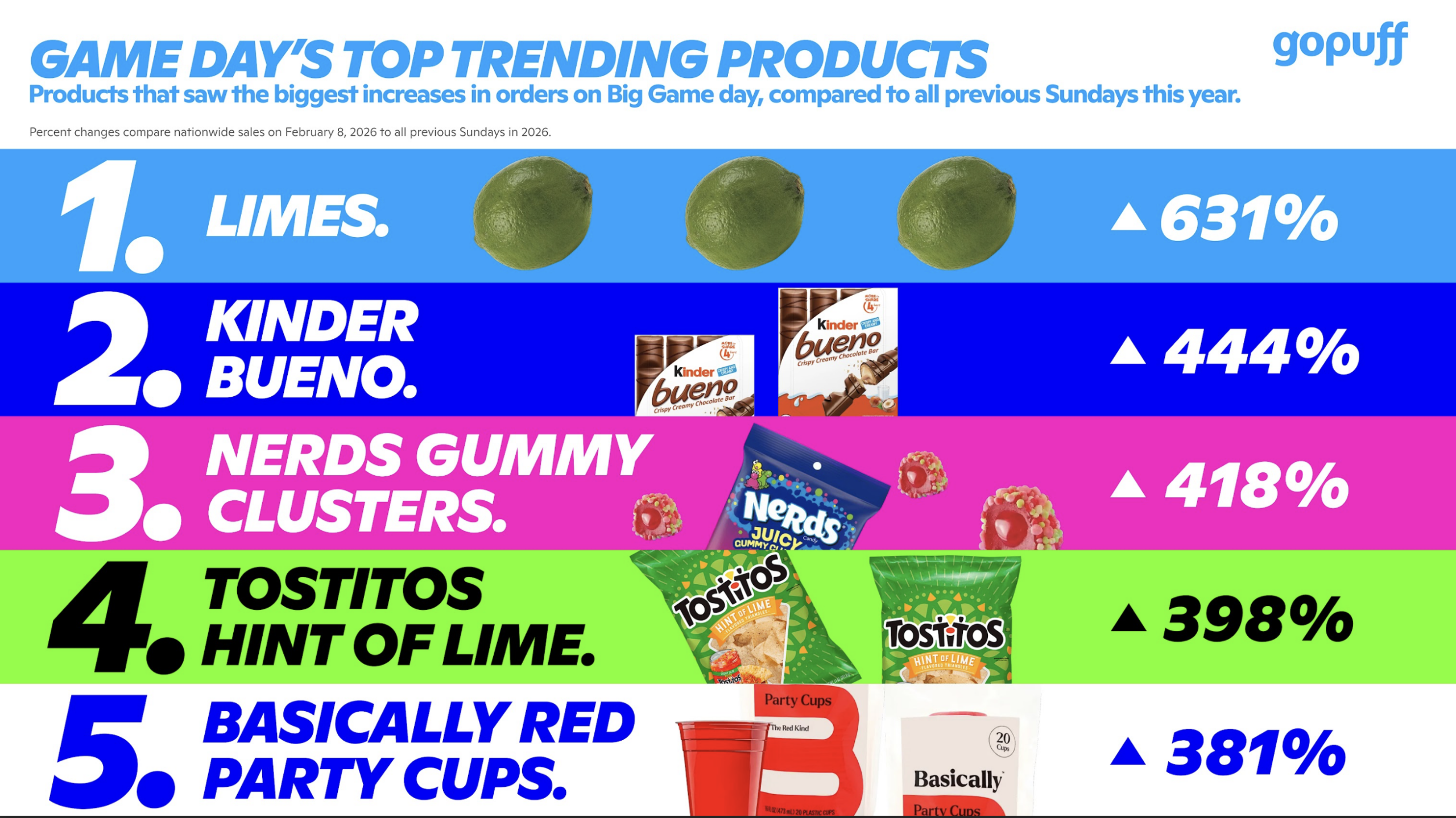
    Orders for limes during the game jumped over 600% over previous Sundays in 2026. Limes are, after all, a key ingredient in popular plates like guacamole and pico de gallo, served with Mexican beers and margaritas, and “easily forgotten at the store,” making them a natural for last-minute delivery, said Gopuff spokeswoman Brigid Gorham.

    Though lime consumption has been growing rapidly, the increase was more than four times last year’s Game Day spike, and no one could say exactly why.

    Lime sales exploded even more than Gopuff’s Basically-brand red party cups, a three-year-old in-house brand, which was up 381% on Super Bowl Sunday above recent Sunday sales.

    Overall, alcohol sales nearly doubled from recent Sundays. Soda sales were up more than one-third and salty snacks by about one-quarter. Compared to last year, when the Eagles were in the Super Bowl, the number of Philadelphia orders were up 7%.

    Other Super Bowl Sunday growth-leaders included PepsiCo’s Tostitos Hint of Lime chips, which were up 398%.

    But the top gains were two candies made by Italy-based candy maker Ferrero. Gopuff orders for Kinder Bueno, chocolates marketed heavily in Latin America and U.S. Hispanic neighborhoods, were up 444% vs. recent Sundays, and Ferrero’s Nerd Gummy Clusters, were up 418%.

    Kinder Bueno and Nerd Gummy Clusters saw sales roughly double in the hour after their Super Bowl ads ran. Liquid Death and Dunkin also saw orders rise at least 50% after ads.

    Day off?

    Gopuff also noticed well before the game that a record 13 million American workers planned to schedule Monday off; 10 million planned to call out sick, go in late, or not show up, and millions more were thinking about it, according to a Harris Poll survey funded by work software maker UKG.

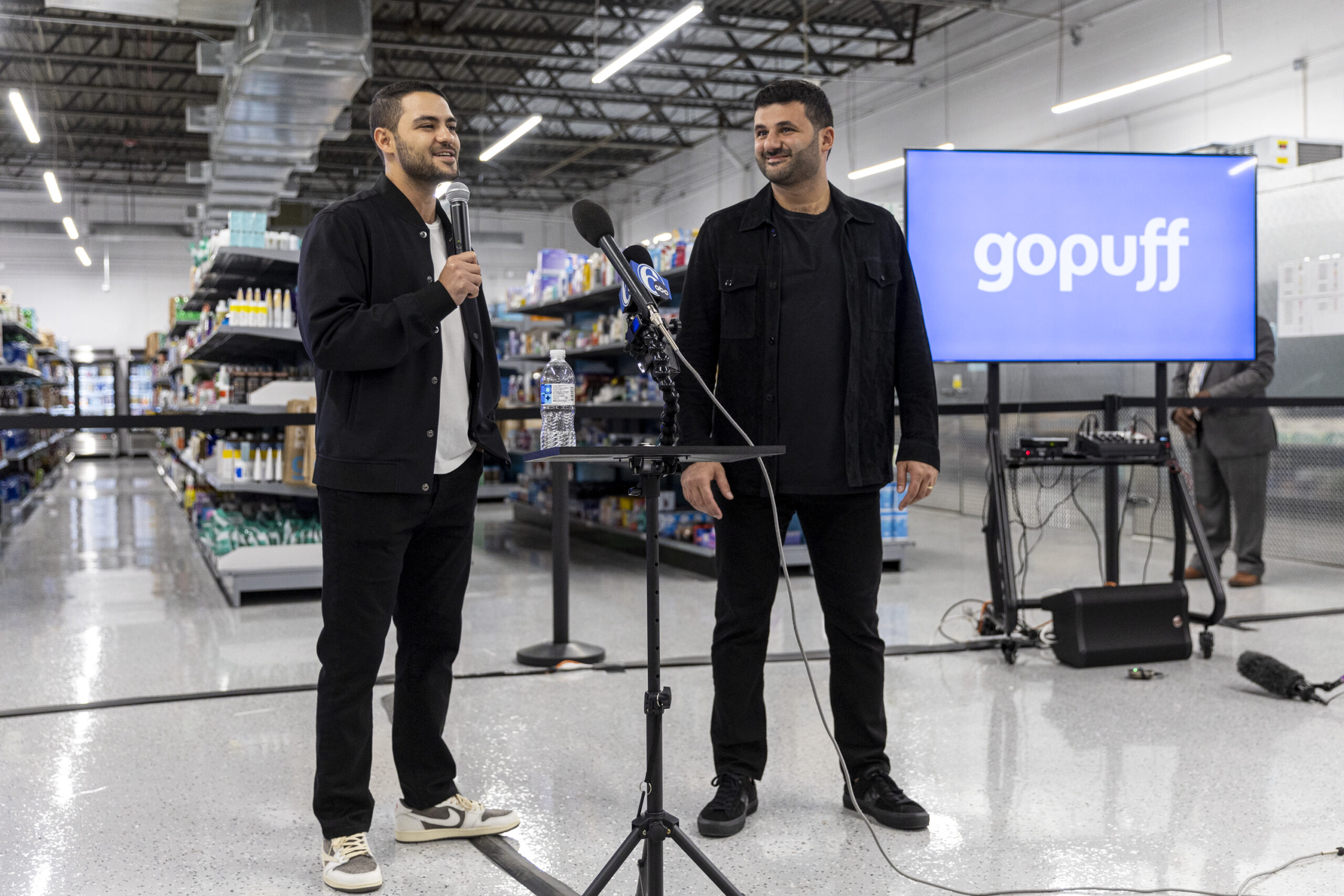
    Founders and CEO of Gopuff Yakir Gola (left) and Rafael Ilishayev speak to a room full of staff and team members of Gopuff at a recently opened center in Philadelphia in 2022.

    Cofounder Yair Gola and his colleagues saw those numbers and thought, “This ought to be a holiday.” Last fall, it set up a 501(c)4 lobbying group, the Super Monday Off Coalition, pledging at least $250,000 to get the effort rolling.

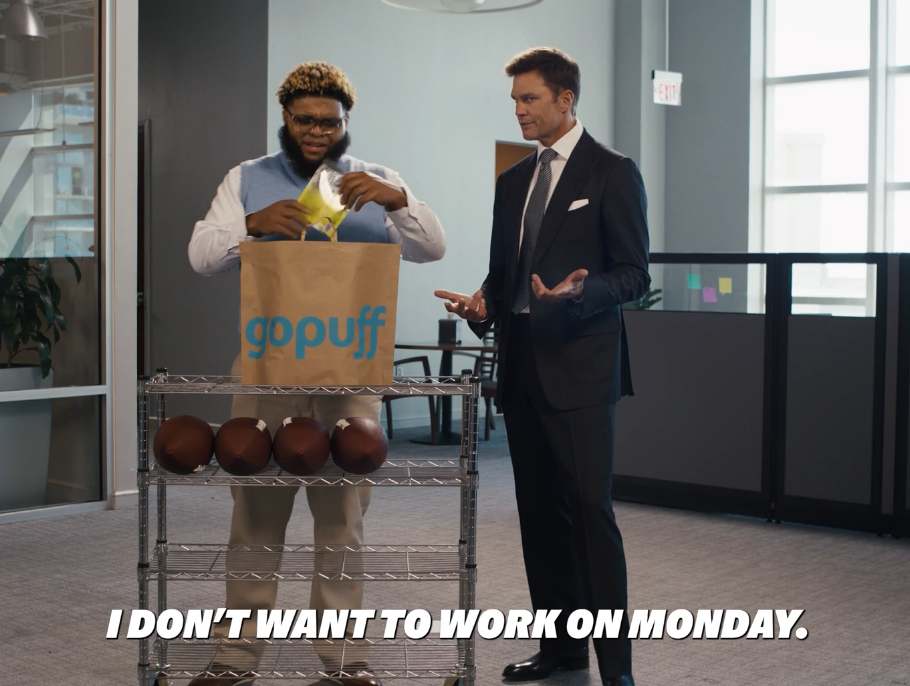
    They hired retired Patriots quarterback Tom Brady and comedian Druski to promote the cause.

    Druski (left) and former NFL quarterback Tom Brady in an ad for Philadelphia-based Gopuff promoting its campaign to designate “Super Monday” as a national holiday, since millions already take the day off.

    The company’s contribution to the lobbying would be funded by 1% of Gopuff’s profits from sales of certain boxes of beer, sugary drinks, hot dogs, and other products from Thanksgiving to game day.

    Heavy users who placed at least four $30 orders in that period would also get $20 “Gocash” discounts and receive a chance at a Birkin handbag, a Rolex watch, and other prizes.

    By Monday, Gopuff hadn’t announced its planned donation, but the campaign was declared “a winner” by Charles R. Taylor, a Villanova University marketing professor who tracks Super Bowl ads. He spotlights not just successful marketing but also ineffective efforts like Nationwide’s painful 2015 “Boy” campaign and GM’s 2021 “No Way Norway” misfire.

    Partnering with high-profile Brady and Druski gives “instant visibility and credibility” with fans and wider audiences, Taylor said. Even if the campaign costs more than Gopuff actually donates to the cause, a national holiday is “a clever hook” watchers will remember, Taylor said.

    Going public?

    Gopuff raised over $5 billion from Saudi, Japanese, and U.S. private investors during the digital-delivery investment boom that lasted into the COVID years. These big investors hoped Gopuff (officially Gobrands) founders and early investors would win them big profits by selling shares in a high-priced stock market initial public offering or selling to DoorDash, Uber, or other delivery giants.

    But app use and delivery growth slowed in the COVID recovery. Gopuff’s perceived valuation tumbled as its publicly traded rivals’ share prices fell. The company, which had expanded to hundreds of city neighborhoods and college towns, shut marginal centers and laid off staff at its Spring Garden Street headquarters to reduce losses and save investors’ capital for better times.

    Now Gopuff is showcasing efforts to win new investor attention.

    In the past year the company announced an on-screen snacks-order app targeting Disney+, ESPN, and Hulu views; a cash-with-your-order partnership with online-broker Robinhood; hot warehouse-brewed Starbucks coffees from stores in Philadelphia and some other areas; and a partnership with Amazon to speed grocery delivery in Britain, where Gopuff remained after ending its European programs.

    Gopuff has added a warehouse camera feed and local product-sales stats for fans who want to know what neighbors are buying, app-based order updates, and user product recommendations. It added over-the-counter pharmacy items and new lines of vegan organic GOAT Gummies (which Brady is also promoting).

    The company also began accepting SNAP EBT electronic food-stamp accounts and donated $5 million for SNAP when the federal shutdown threatened low-income families dependent on the program.

    New hires include economist Matt McBrady — a veteran private-equity investor, former adviser to President Bill Clinton, and sometimes Wharton instructor — as Gopuff’s new chief financial officer, noting his experience taking companies through public stock offerings.

    Last fall Gopuff raised $250 million, its first investment since a 2021 convertible-bond financing that had valued the company at a stock-market-bubble-inflated $40 billion.

    This time, the largest investors included previous Gopuff backers Eldridge Industries and Valor Equity Partners, along with Robinhood, Israeli billionaire Yakir Gabay, the cofounders, and other earlier investors. Eldridge chairman Todd L. Boehly in a statement called Gopuff “resilient.”

    Valor partner Jon Shulkin cited the company’s “focus, innovation, and substantial gains in profitability.”

    This latest capital-raise implied a valuation of $8.5 billion — a fraction of what Gopuff was worth on paper during the digital-delivery bubble, but enough for the venture capitalists to hope they may yet get their money back with at least a modest profit.

  • Villanova football player accused of rape texted victim hours after alleged assault

    Villanova football player accused of rape texted victim hours after alleged assault

    A freshman football player at Villanova University texted the woman he is accused of raping to apologize for the encounter, according to the affidavit of probable cause for his arrest, offering new details about the incident.

    D’Hani Cobbs, 20, was charged with rape, sexual assault, and related crimes after police say he assaulted a woman who also attends the university. He was removed from campus following the Dec. 7 attack, school officials said in a statement. The student newspaper the Villanovan first reported his arrest.

    According to the affidavit, Cobbs allegedly assaulted the woman in Good Counsel Hall on the Main Line school’s South Campus.

    The early morning attack began after Cobbs and the woman, whom police did not identify, met at an off-campus event and exchanged phone numbers, the document said.

    The two later got a ride with others back to South Campus, according to the affidavit. Sometime between 1 and 2 a.m., Cobbs and the woman entered a residence hall room along with another person, whom the filing did not identify. That person left, the document said, leaving the woman alone with Cobbs.

    Cobbs asked the woman for a hug, and then he “tried to kiss her, and she said no,” the filing said. Cobbs then “pinned her up against a desk” and began touching her buttocks and genitals and penetrated her with his fingers, the affidavit said. He then grabbed her and lifted her on top of his bed and allegedly raped her, according to the affidavit.

    The woman later told police she was screaming and crying during the attack. She said she left the room in tears and asked Cobbs to call a friend to pick her up.

    Cobbs later contacted the woman twice, according to the filing.

    Around 2 a.m., he texted: “Are [you for real] good tho? That was random [as hell]” and “U were jus fine.”

    Just before 5:30 p.m., Cobbs texted: “Yoo Wsp, u ok? My apologies if I made u feel uncomfortable in any way last night I didn’t have any intentions on making u feel uncomfortable. If u want to talk about it over the phone or in person we can just to come to more of a understanding.”

    When investigators interviewed Cobbs that week, he did not deny that he had sexual contact with the woman but said it was consensual.

    Cobbs’ defense attorney, Thomas G. Masciocchi, did not immediately return a request for comment.

    Delaware County District Attorney Tanner Rouse said in a statement Monday that prosecutors had reviewed evidence in the case and swiftly brought charges.

    “The message here is as simple as it is clear — when it comes to other people’s bodies, no means no, and stop means stop,” Rouse said. “That’s what we tell our kids and it holds true throughout life, no matter who you are or how talented an athlete you might be.”

    As of this week, Cobbs’ player bio page on Villanova’s website is out of service with an error message.

    Cobbs’ profile on ESPN is still active, and lists the New Jersey native as a wide receiver. He returned one punt last season, according to the page. A post from the Instagram account for Villanova’s football team announced Cobbs’ signing in 2024.

    A Villanova spokesperson said in a statement that in addition to ordering Cobbs to leave campus, the school is “committed to both supporting the victim and fostering a safe environment for all of our students.”

    Cobbs was arraigned Friday and was released on unsecured bail, according to court records. He is scheduled to appear in court for a preliminary hearing on Feb. 12 and is ordered not to have contact with the woman.

  • Villanova Wildcats football player charged with sexually assaulting another student on campus

    Villanova Wildcats football player charged with sexually assaulting another student on campus

    A freshman football player at Villanova University has been charged with rape and sexual assault stemming from a December incident on campus, a university spokesperson said Sunday.

    D’Hani Cobbs, 20, faces charges of rape, sexual assault, and related offenses in Delaware County, court records show. He is accused of assaulting another student on Dec. 7, the university said in a statement, which did not provide any additional details about the alleged incident. The arrest was first reported by student newspaper The Villanovan.

    Cobbs was arraigned Friday and held on $250,000 bail, according to court records.

    A university spokesperson said school leaders reported the incident to law enforcement and “removed” Cobbs from campus shortly after the incident in December.

    “Sexual violence of any kind is not tolerated on our campus and we are committed to both supporting the victim and fostering a safe environment for all of our students,” the university said in the statement.

    A player bio page on Villanova’s website was out of service with an error message on Sunday, but according to social media and sports news outlets, Cobbs graduated from Camden High School in 2025 and played wide receiver at Villanova. Recruiters for the Villanova Wildcats posted a “welcome to the family” message on social media after recruiting Cobbs in December 2024.

    An attorney for Cobbs did not immediately respond to a request for comment Sunday.