If you’re a regular visitor to the Jersey Shore, catching up with your longtime favorite foods, chefs, and restaurants can often tell a wider story about what’s been happening in your favorite beach towns. The economic pressure of rising real estate prices has made the arrival of a sweet little BYOB like Joy & Salt on Long Beach Island a test case for the future of the small operator. The saga of ongoing attempts to revitalize Atlantic City’s Tennessee Avenue development? It just got a fresh boost from the comeback of a talented local chef. A new gem for stellar soul food, a growing audience for deep-crusted pizza, the rise of fancy iced coffee (with everything but the taste of coffee), and sage advice on how to choose the right pasta shape all added a tasty helping of color to this week’s fresh batch of restaurant reports from LBI to Margate.
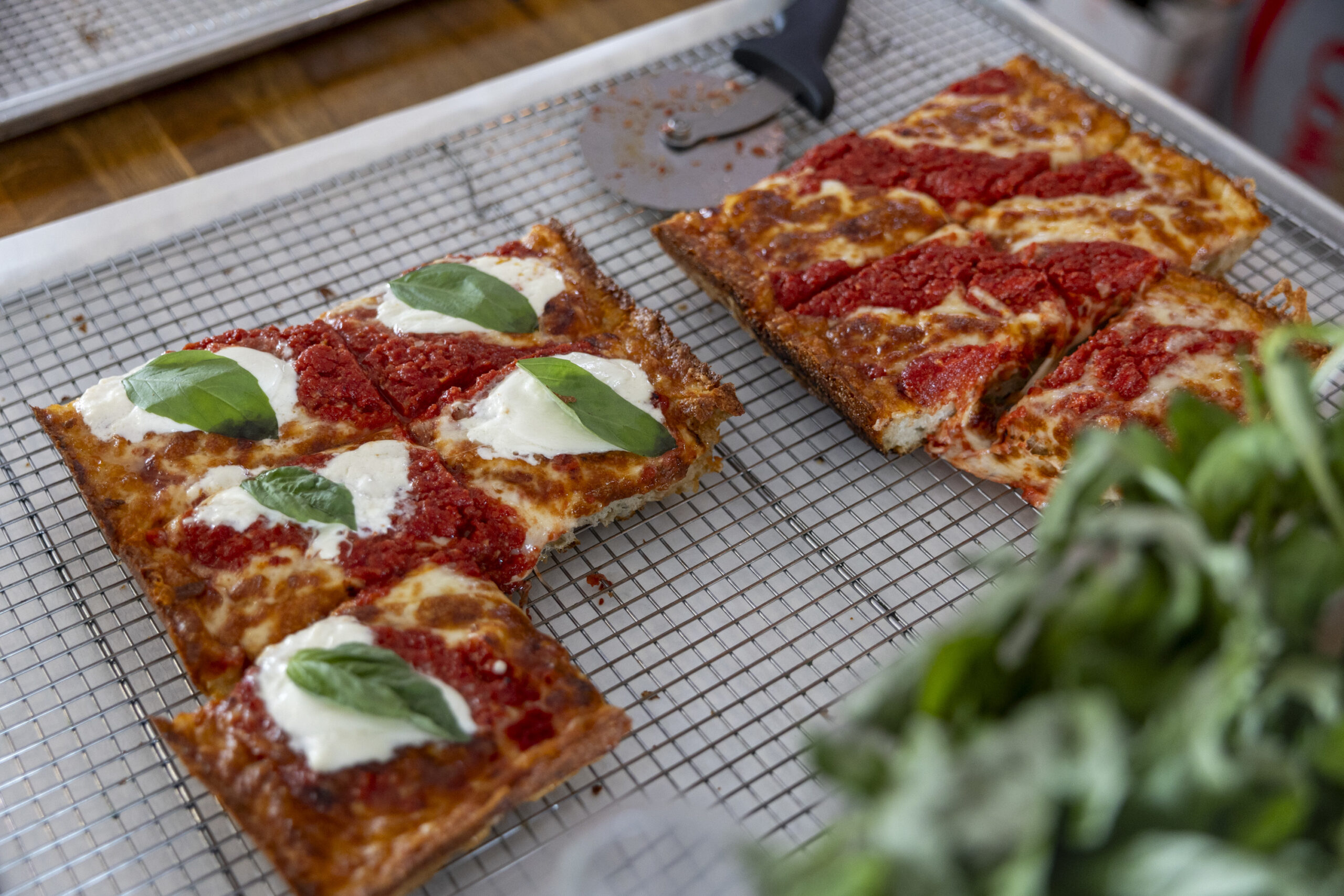
The burrata with fresh basil and plain cheese pie at Queen City Crust in Beach Haven, N.J., on Thursday, June 18, 2026.
I also delve into the Ventnorian controversy over a classic sub shop that’s been remade into an artisan sourdough bakery and touched a nerve with locals who fear their community is becoming too bourgeois. Then again, when something is as good as Florida Cuts is, perhaps it’s not simply change for the sake of trends but actual progress.
Next week: new options from Cape May to Ocean City.
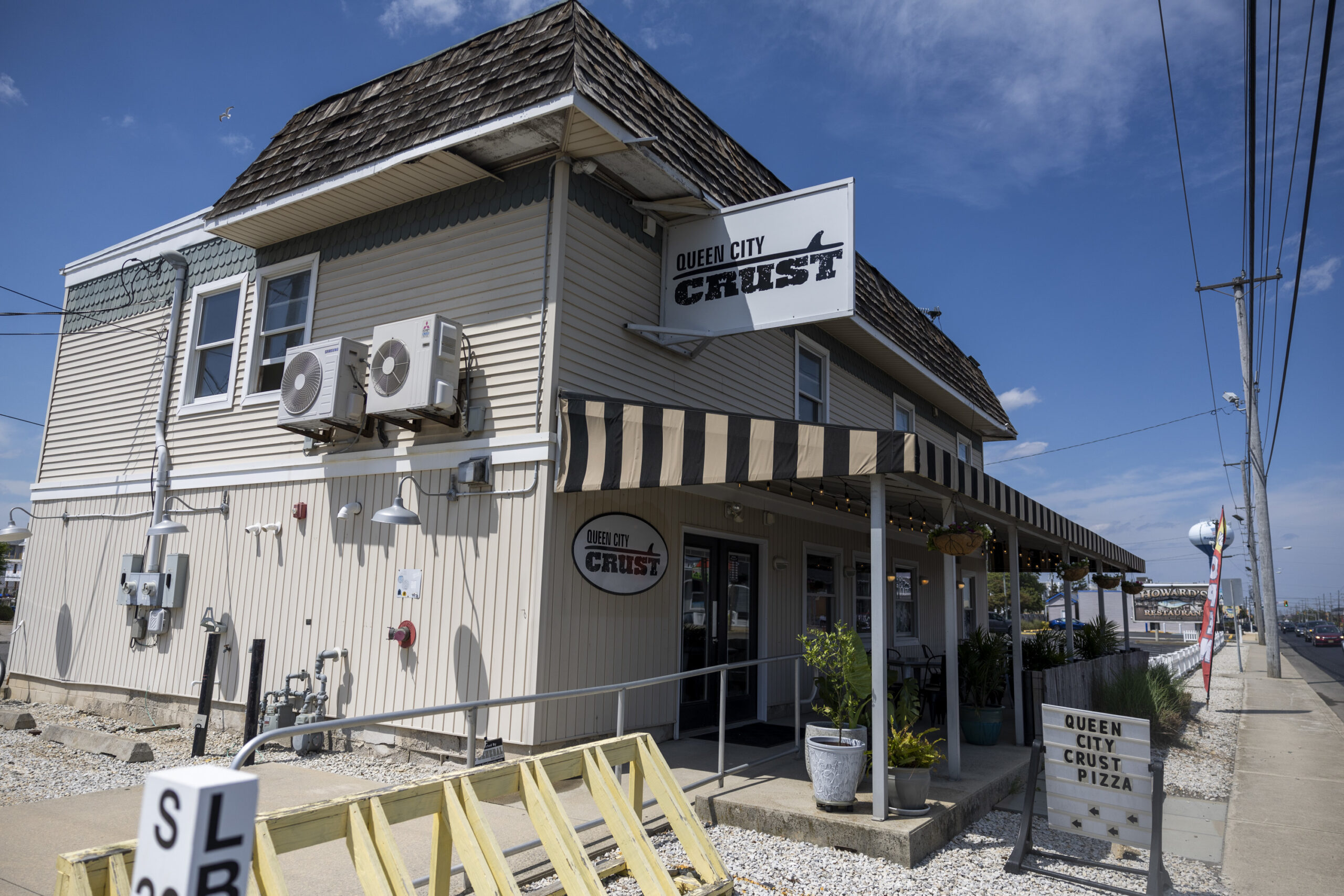
The outside of Queen City Crust in Beach Haven, N.J., on Thursday, June 18, 2026.
LONG BEACH ISLAND
Joy & Salt Cafe
With a temporary sign, and an understated location at an intersection near the ocean where drivers slingshot on and off the causeway to Long Beach Island, you could easily miss Joy & Salt Cafe. But it’s worth a stop at this low-key newcomer to Ship Bottom, a collaboration between two veteran chefs hoping to claim one of the few remaining corners of the island and make what partner Jordan Miller says is “a last-ditch effort for the charm of an old-school BYOB.”
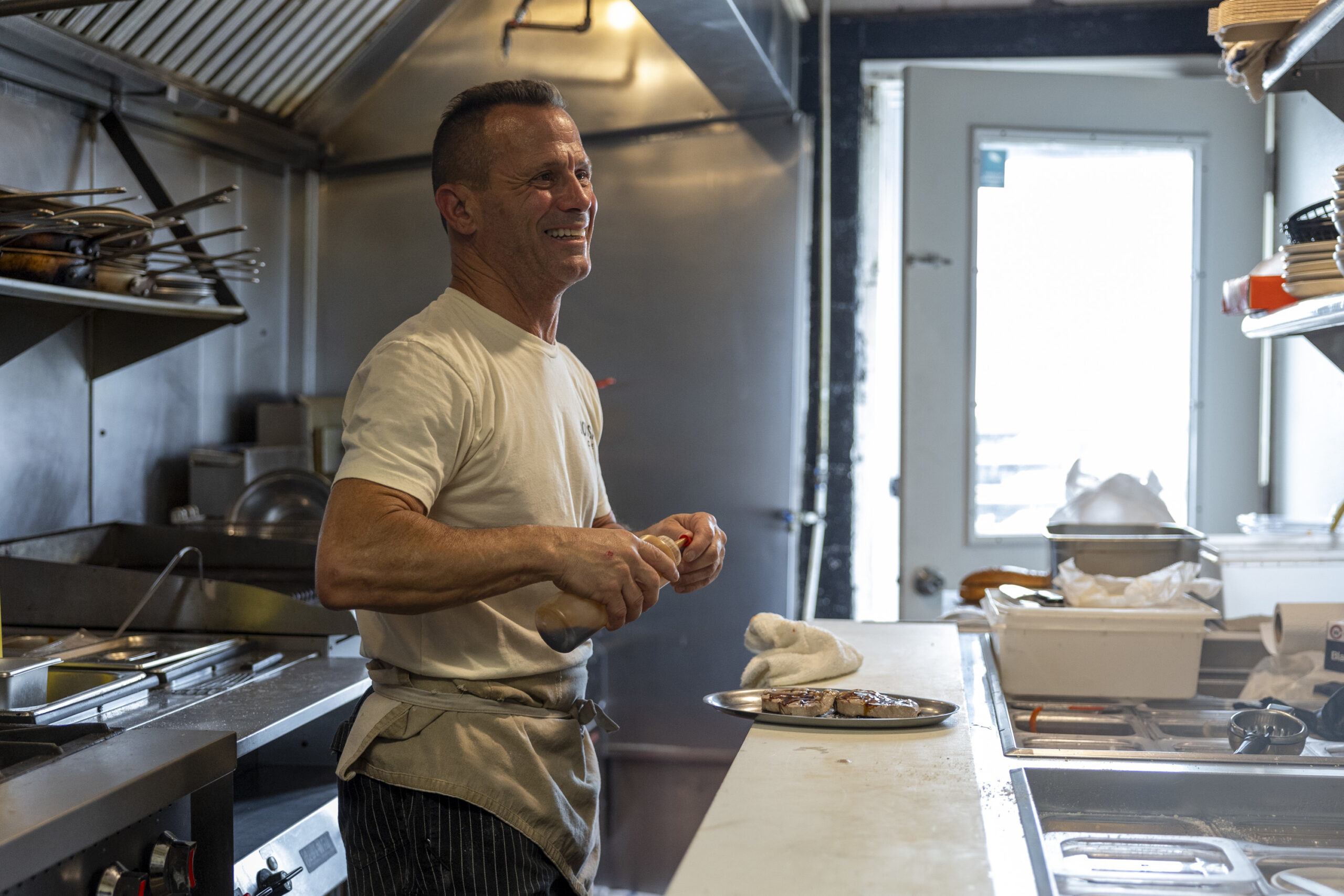
Miller and his business partner and co-chef, Jimi Savianeso, make up for the understated location with genuine hospitality and hands-on scratch cooking. The duo met cooking on the line years ago at local favorite Black-Eyed Susans. With years of fine dining experience behind them, they are opting for a more casual approach to this diner-space and channeling good local ingredients into food they simply like to eat.
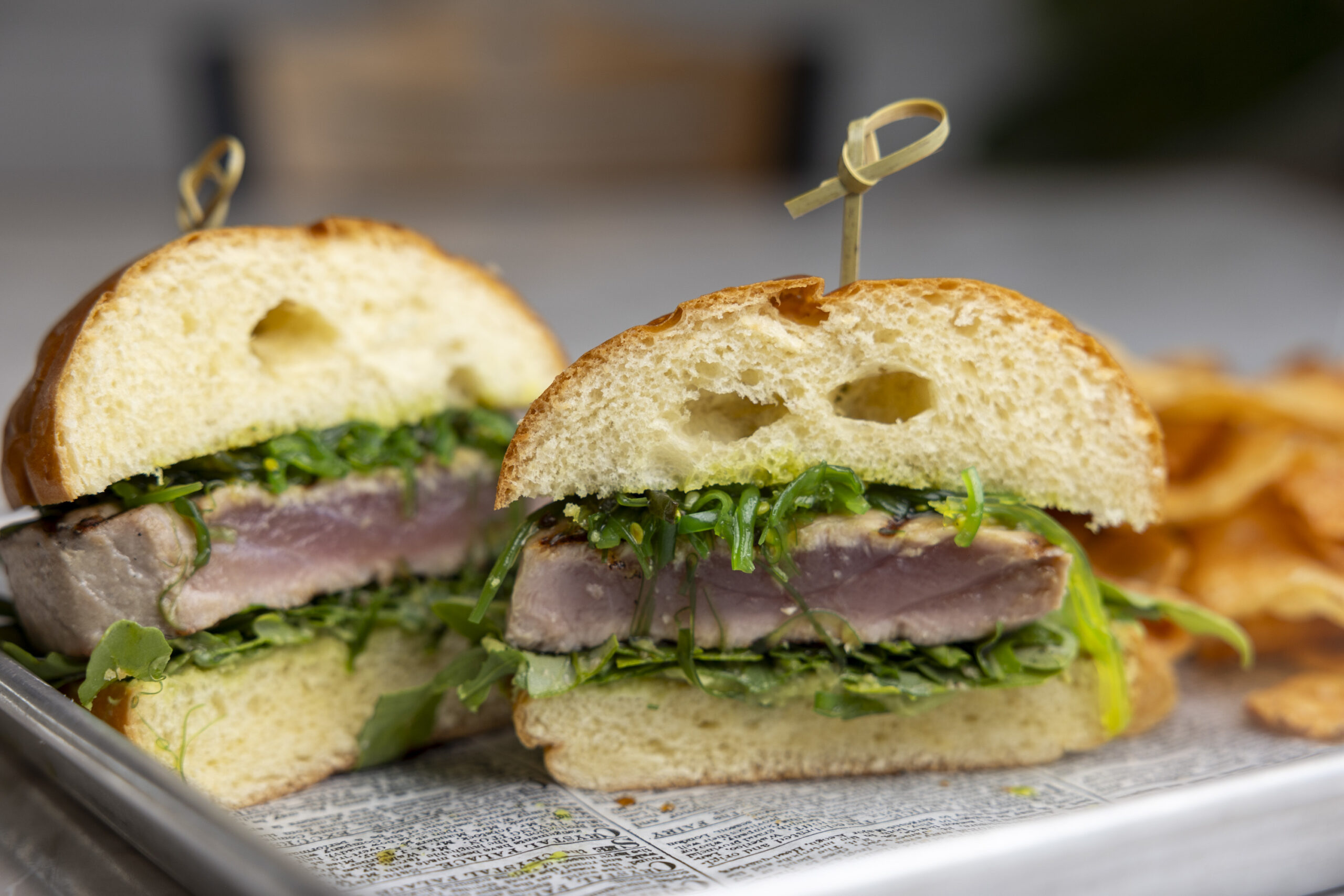
James Savianeso, chef and co-owner of Joy & Salt Cafe, working in the kitchen in Ship Bottom, N.J., on Thursday, June 18, 2026.The grilled ahi tuna sandwich at Joy & Salt Cafe in Ship Bottom, N.J., on June 18, 2026.
That could mean a flavorful chowder made from just-dug whole clams, a slice of locally fished grilled tuna on brioche glossed in house-made Japanese barbecue sauce, or a bountiful chilled shrimp cocktail tossed in a saucy Mexican-style marinade (the secret? fresh tomato juice and orange soda). The duo routinely cook fresh-off-the-boat seafood specials for dinner sourced from the nearby docks, but the menu’s default is a homey Italian touch that comes natural to Savianeso, whose North Jersey upbringing imbues his red sauce and sausage and peppers with a nonna-esque magic. That is especially evident at lunch, where Savianeso’s chicken cutlet parm drenched in super-creamy vodka sauce may well become LBI’s sandwich of the summer.
Joy & Salt Cafe, 816 Long Beach Blvd., Ship Bottom, N.J. 08008; 609-342-0794; joysaltkitchen.com
Ellis’ Chicken & Crab Cakes
Takeout can be tricky when determined diners are waiting in lines up to two hours for a seat at one of the Tide Table Group’s roster of popular restaurants on Long Beach Island (Parker’s Garage, Bird & Betty’s, Black Whale, Ship Bottom Shellfish) and in Manahawkin (Mud City Crab House, the Old Causeway Steak & Oyster House). They’ve addressed that conundrum with the creation of Ellis’ Chicken & Crab Cakes, a convenient destination for some of their greatest hits, collected in the fast-casual confines of a crisply rehabbed former antiques shop in Beach Haven that doubles as a boardinghouse for many of the company’s summer workers.
The name offers a good clue as to the specialties: the fried chicken is the same crackle-crusted, buttermilk fried bird from Parker’s Garage. The crab cakes comes in two styles, the somewhat bready OG cakes from Mud City or the baked variation from Parker’s which I far preferred, not only because they’re gluten-free, with tapioca starch for binding, but because they’re made from sweet lump crab bound with a béarnaise sauce flavored with tarragon and Old Bay. The super-plump peel-and-eat shrimp offer a worthy, non-fried option. But this kitchen’s best assets are all about the crisp. Don’t leave without a side of deep-fried green tomato tots covered in creamy drizzles of zesty pimento cheese.
Ellis’ Chicken & Crab Cakes, 208 N. Bay Ave., Beach Haven, N.J. 08008; 609-342-1100; ellislbi.com
Queen City Crust
Jersey Shore pizza has been trending toward thicker crusts in recent years, rising from the cardboard-thin rounds that have long been the boardwalk prototype to heartier, pan-baked pies with flavorful slow-fermented doughs and borders that snap with crispy cheese edges. Bakeria 1010 and Squares & Fare are two outstanding examples I’ve enjoyed in Ocean City and Somers Point, respectively. Long Beach Island has also gotten into the Detroit-style pie action with Queen City Crust, a former pop-up sensation that is now in its third year as a standalone storefront in Beach Haven.
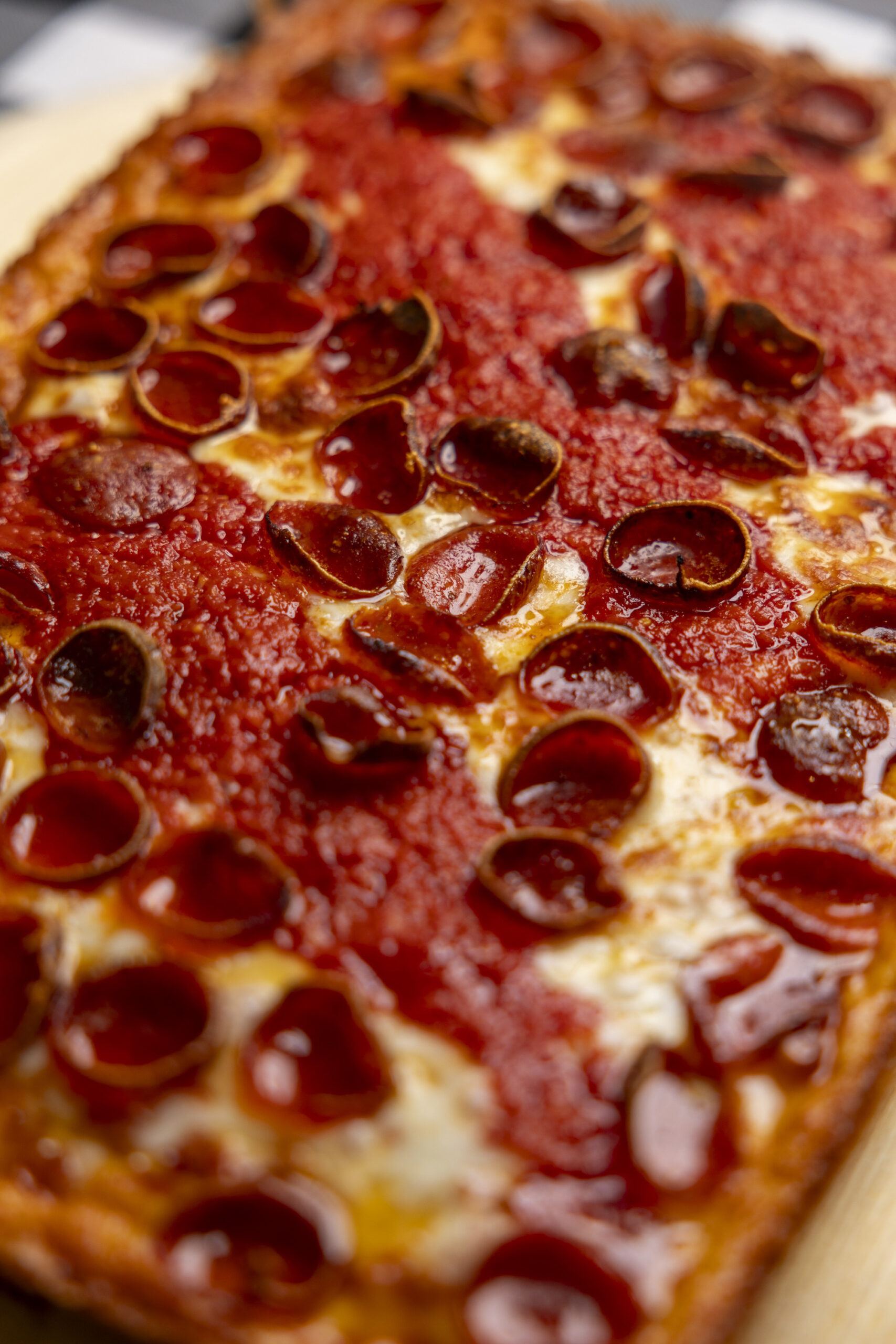
Hot honey pepperoni pie Queen City Crust in Beach Haven, N.J., on Thursday, June 18, 2026.
Owner Troy Sambalino, who spends his offseason running the service pass at Jean-Georges in Manhattan, says the Detroit style, which involves a slower, lower-temp prebake followed by a hot flash to finish pies to order, is ideal for beach locations with the technical limitations of a standard oven. But he still manages to crank out 200 pies on a busy Friday night, good enough to earn him the No. 1 spot in a 2025 ranking of 55 Shore pizzerias by NJ.com.
Sambalino has a patient approach to his dough, which, after a two-day cold ferment, has both an impressively airy interior and a bottom that forms a delicate crisp against the olive oil-lined pan. Mozzarella and tangy cheddar are his cheese combo of choice, with the cheddar tucked near the edges forming a toasty crisp. One 10-by-13-inch pan can easily feed two to four people, but I appreciate that Queen City also sells its pies by the slice so you can taste a variety of toppings. From the cup-and-char pepperoni drizzled with hot honey to sausage with crunchy banana peppers, basil-topped puddles of milky burrata laced with bright tomato sauce, or a fusion pie of breaded chicken bits streaked with spicy Asian barbecue sauce, these pies offer hearty satisfaction when your teeth sink into their crusts.
Queen City Crust, 13504 Long Beach Blvd., Beach Haven, N.J. 08008; 609-661-7769; queencitycrust.com
Guapo’s Coffee House
As I steadily caffeinated during my restaurant research missions up-and-down the Jersey Shore, my encounters with confectionary-sounding coffee drinks that included “dulce de leche, “dot cake,” and “banana bread” in the titles made it clear that running a cafe in 2026 is as much about thinking like a pastry chef as a barista.
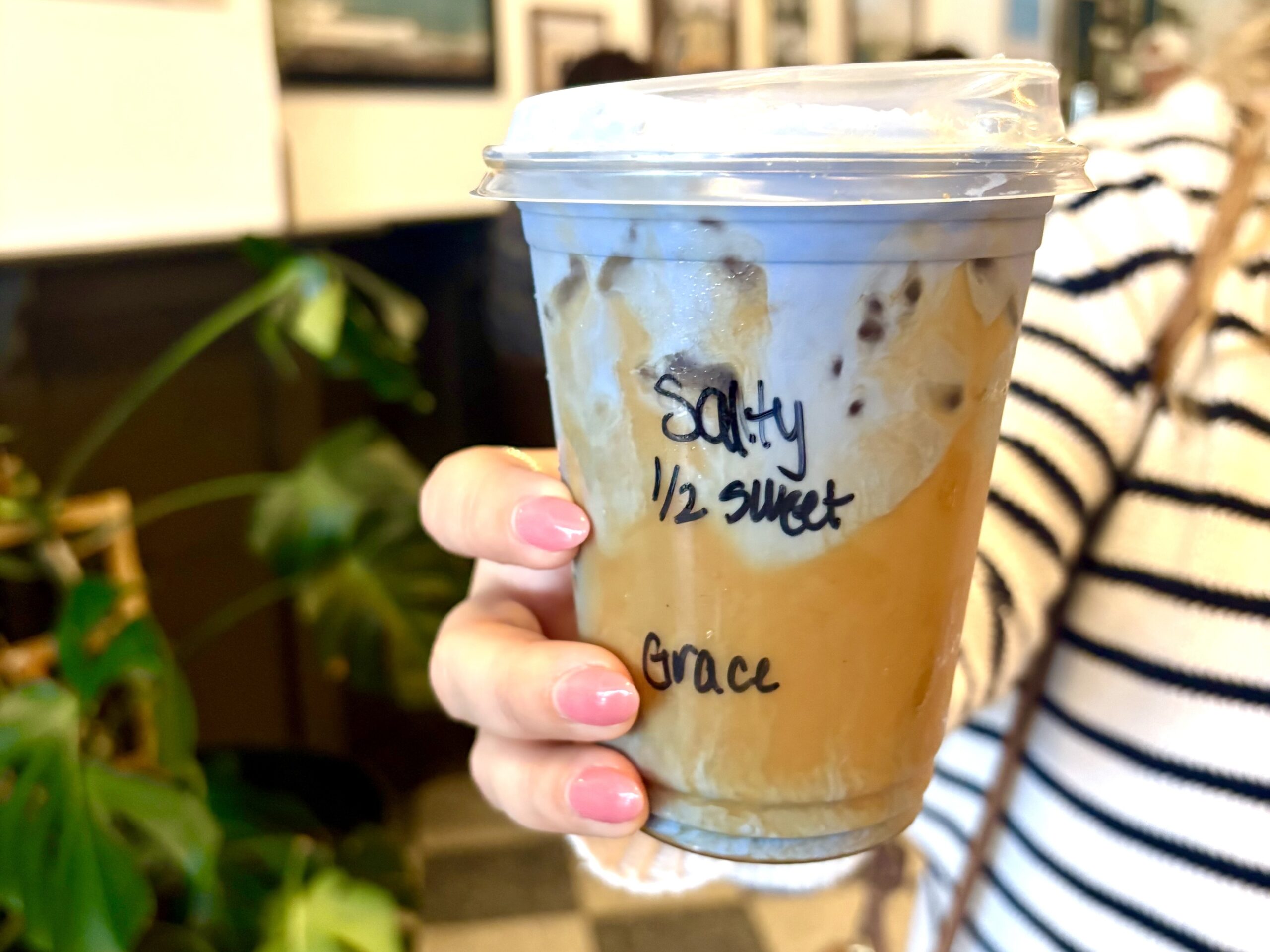
The Salty Dog iced coffee at Guapo’s Coffee House in Beach Haven blends salted caramel-sweetend espresso with whipped cream turned blue with spirulina. It’s become a viral hit.
In general, I’m not a dessert coffee fan. But the reason I returned multiple times to Guapo’s in Long Beach Island is because their specialty drinks still taste like they also actually include coffee. Even owner Sammy Jo Alvarez’s most viral and colorful drink, the Salty Dog (named for her pup Guapo), still delivers a toasty undertow of the house blend of Ethiopian and Colombian beans, roasted to a medium hue by Yellow Dog Roasters in nearby Manahawkin. The secret to making creatively flavored drinks that still have coffee integrity, says Alvarez, a longtime local bartender before launching her roof deck-topped cafe in Beach Haven four years ago, is balance and focusing on natural ingredients. All the add-in ingredients here are made in-house, from the sea salted caramel syrup to the top layer of fresh whipped cream (aka “cold foam”) that she turns sky blue with organic spirulina. “Basically, it looks like a day at the beach inside a cup — and people love it.”
Guapo’s Coffee House, 106 N. Bay Ave., Beach Haven, N.J. 08008, 609-661-3504; guaposcoffee.com
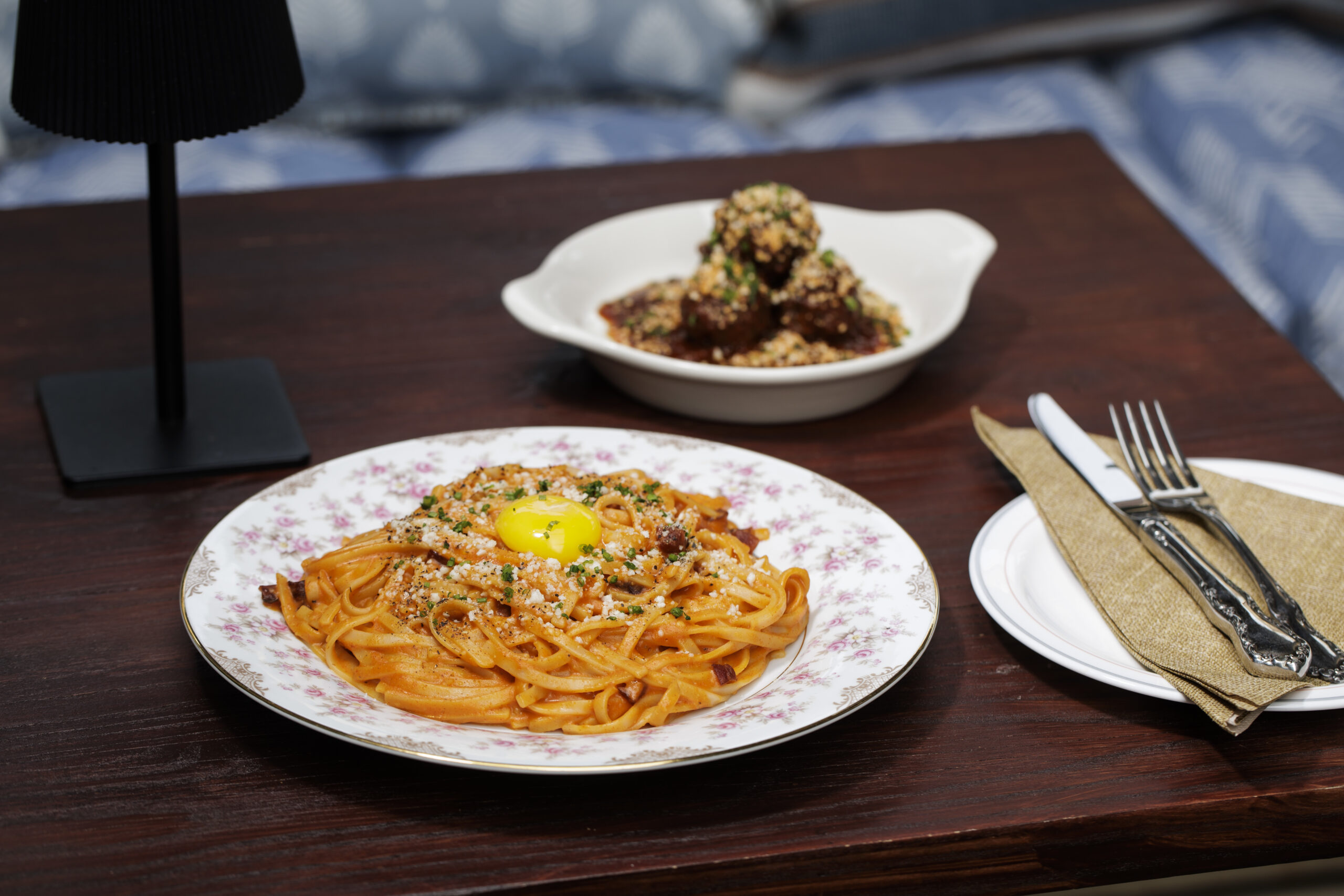
The gochujang carbonara and Oaxacan meatballs at the Iron Room in Atlantic City, N.J. The Iron Room is hidden behind a door at Bar 32.
ATLANTIC CITY
Nana’s Good Eats
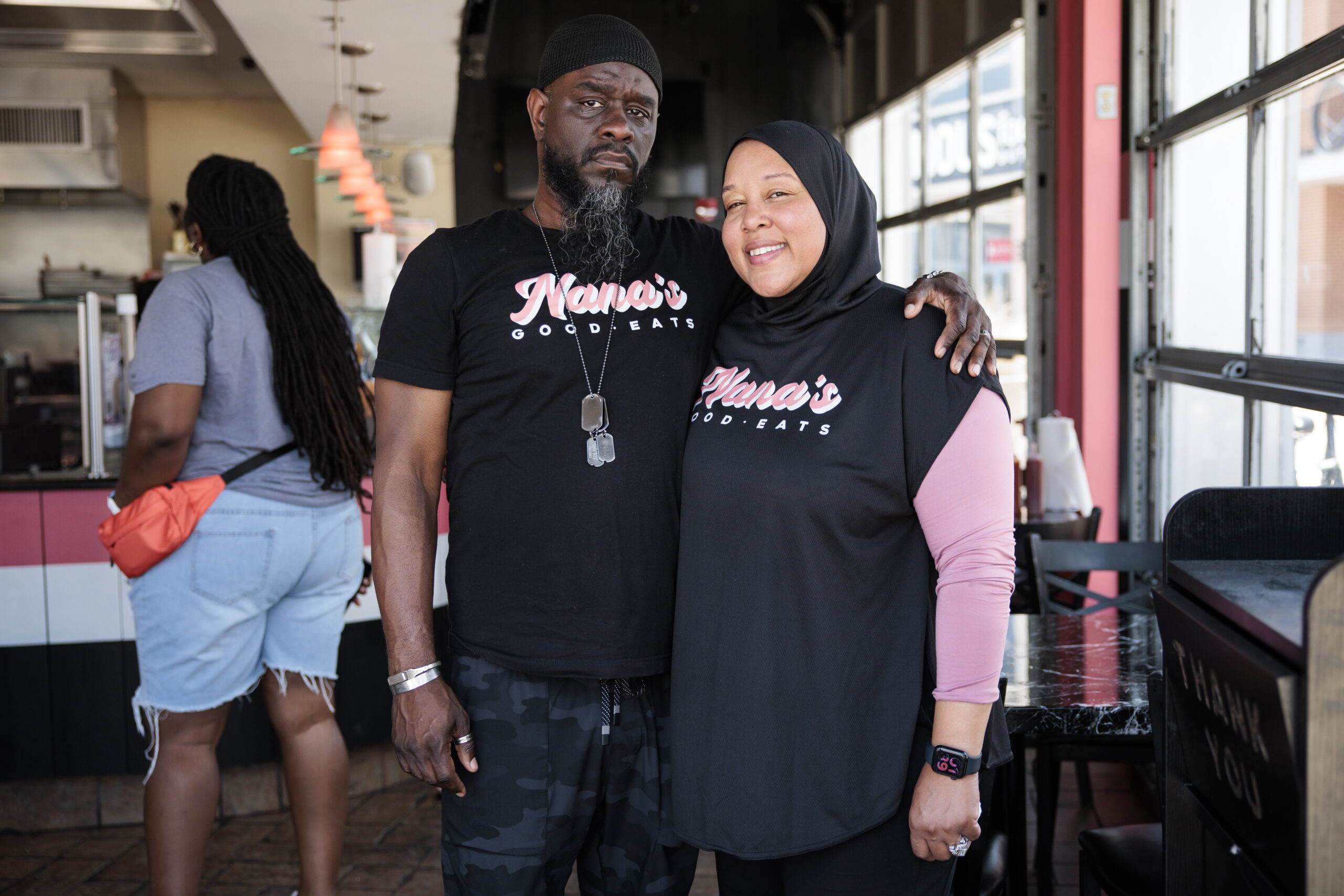
If there’s a 20 minute-plus wait for your food at Nana’s Good Eats, it’s for a good reason: nothing hits the fryer before you order from this cheerful soul food hub, located on the pedestrian pavilion of Atlantic City’s Tanger Outlet mall. The wait is absolutely worth it, because Nana’s serves up some of the most delicious fried whiting I’ve had in recent memory, a huge portion of plump and lemon-scented fresh fillets sealed inside a delicate cornmeal crust, just as owner Samantha Prescott’s grandpa Dennis McDowell, a professional chef, taught her as a little girl. (“Most parents lead with how to tie your shoe, but my grandpa started by teaching me how to stir a pot of grits so it doesn’t stick to the bottom.”) Prescott’s cooking chops are also evident in her succulent fried jumbo shrimp, as well as every side I sampled. The mac and cheese retained the almost fluffy texture of perfectly cooked cavatappi while a balanced five-cheese sauce remained creamy, not broken or greasy. The tender braised collards were infused with the whiff of smoked turkey wings and a perky finishing tang.
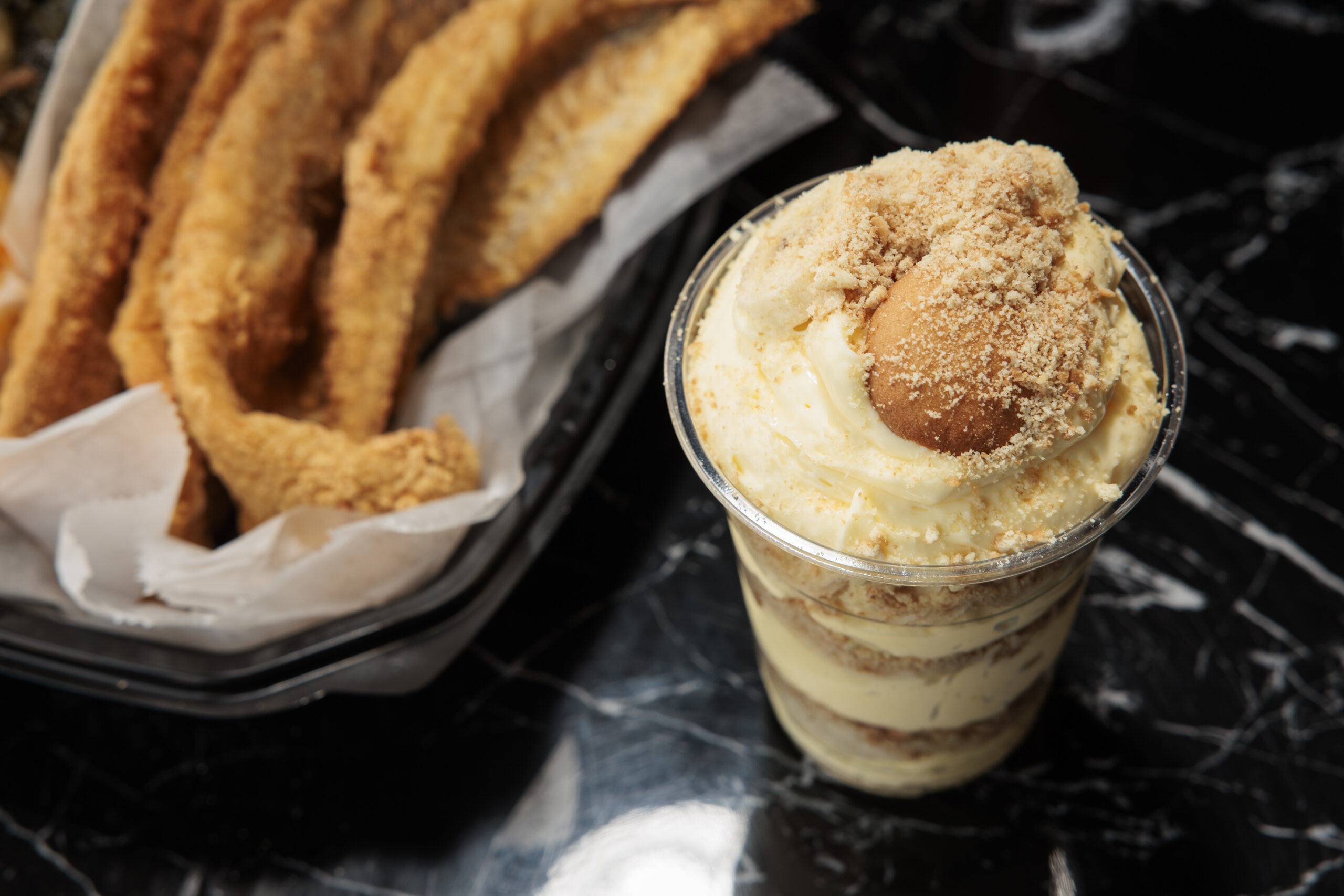
The OG banana pudding at Nana’s Good Eats in Atlantic City, N.J.Owners Rahman and Samantha Prescott at Nana’s Good Eats in Atlantic City, N.J.
Prescott’s talent as an entrepreneur, meanwhile, answers all that savory goodness with the sweet indulgence of her first endeavor, Nana’s Good Puddin’. Prescott brought the customization concept of Cold Stone ice cream to the world of pudding in a popular dessert business she opened in 2020 in the Hamilton Mall, which she has since closed and merged into the Atlantic City Good Eats location. The build-your-own options here are vast, with 30 different base puddings (from classic flavors to white chocolate, pistachio, or Oreo cream), crunchy cookie add-ins and various different crumbles. I chose the OG banana pudding and was impressed by its banana-flavored intensity, but also by the meticulous manner in which it was constructed to order, with multiple layers of creamy pudding, crunch and vanilla wafer cookies being patiently added until, at last, it was finally handed over and I dove in spoon first.
Nana’s Good Eats, 122 N. Michigan Ave., Atlantic City, N.J. 08401; on Facebook
The Iron Room
Do you believe in do-overs? The reboot of chef Kevin Cronin’s Iron Room, Atlantic City’s favorite hidden gastropub — now in its third incarnation and second location — might be the spark that finally gives the Tennessee Avenue development some momentum. First, you have to find it. True to its speakeasy roots (the original Iron Room was located behind a liquor store) this restaurant is tucked into an enclosed back alley patio accessed through the rear door of another establishment, Bar 32 Chocolate & Cocktails. A tall green wall on one side of the 50-seat al fresco space faces an awning-covered bar where some of the best cocktails I sipped this summer — a smooth but potent Manhattan; the mezcal-washed Storm Queen — are served in antique crystal coupes inherited from Cronin’s grandmother while a retro acoustic soundtrack sets a mellow mood.
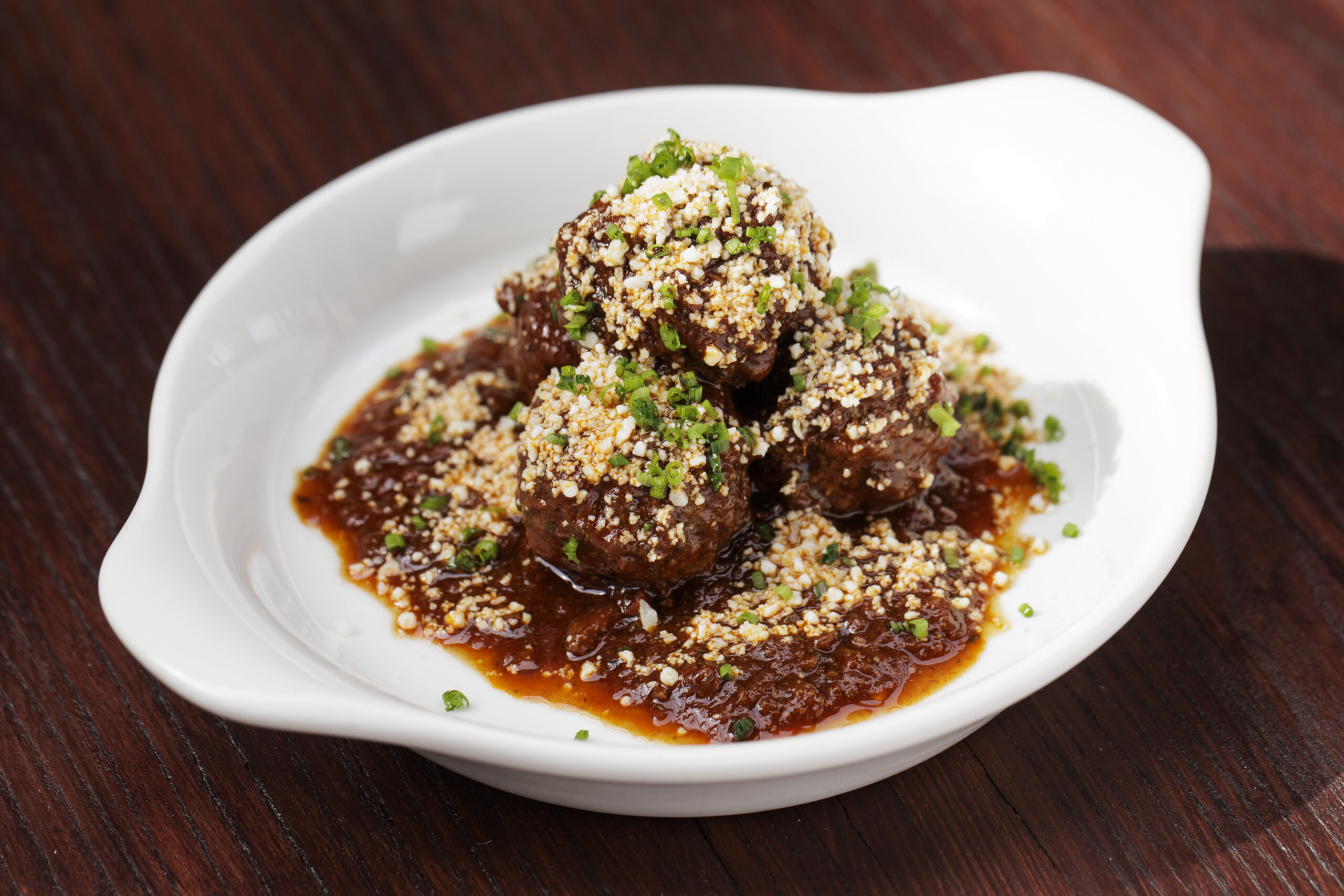
The Oaxacan meatballs at the Iron Room on Thursday, June 11, 2026 in Atlantic City, NJ. The Iron Room is hidden behind a door at Bar 32.
The small plates emerging from the shipping container kitchen are pure fusion fun, with bold flavors that resurrect some established Iron Room hits, including a thick-cut hunk of candied Nueski’s bacon, truffled udon mac and cheese, and a tamari-charred hanger steak fanned over brussels sprouts. Cronin’s new creations are equally bold. The spicy Oaxacan chorizo meatballs glazed in red salsa and shavings of Bar 32 chocolate were a favorite, along with the barbecue sauced boneless Korean-fried chicken and a rich pasta carbonara blushing with Korean gochujang spice. I would have loved the shrimp toast had the top layer of crustacean paste not been turned an unappetizing gray by the addition of black garlic. Next time, I’d consider preordering one of the menu’s large-format specials: a spatchcocked whole barbecue chicken with sides; a “big ass whole snapper” with tostones, or the Ron Swanson special (a rib eye, deviled eggs, and a flight of Lagavulin) that was also an old Iron Room “iykyk” draw. Hopefully, this time it will take.
The Iron Room, 121 S. Tennessee Ave., Atlantic City (enter through Bar32 Chocolate, and head to back alley through back door); instagram.com/ironroom_ac
Bar 32 Chocolate & Cocktails
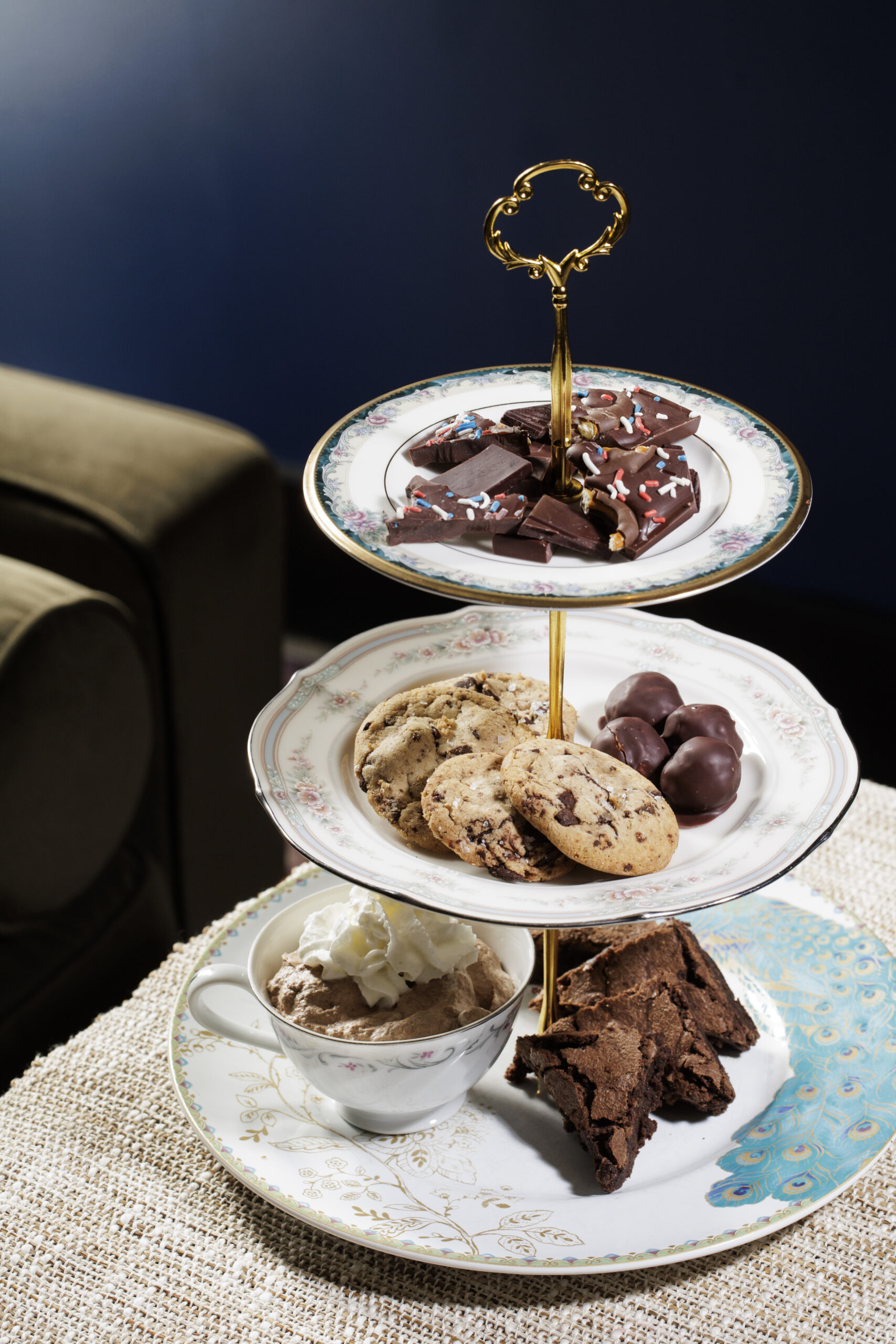
There’s no dessert served at the Iron Room by design. The separate and independent bar that fronts it has that course covered. Nicole Callazzo’s revamp of the project formerly known as Made Atlantic City Chocolate Bar has kept the original concept’s ambitious bean-to-bar chocolate production in place as the anchor for the chocolate-themed sweets menu. While there are more sophisticated chocolatiers in the region, the quality of Callazzo’s small batch chocolates made from ethically sourced cacao, which can take up to five days to make, is satisfying in a straightforward way. You can sample a little bit of several specialties on a tiered platter, which brings multiple shades of chocolate bars, double fudge brownies, chocolate mousse, and various bonbons. Try it while sipping a martini infused with the bar’s own 60% cocoa chocolate. The baked-to-order brown butter cookie skillet is also a popular choice here, if you have an extra 15 minutes to wait. But I’d return especially for one of the Bar 32 whiskey flights, which pair three different pours of Michter’s (or Whistle Pig) whiskey with different chocolates for $40. Considering the quality of the spirits, it’s a fair deal.
Bar 32 Chocolate & Cocktails, 121 S. Tennessee Ave., Atlantic City, N.J. 08401, 609-248-6960; bar32chocolate.com
“A little bit of everything” at Bar 32 on Thursday, June 11, 2026 in Atlantic City, NJ. Bar 32 offers bean-to-bar chocolate, handmade desserts, and craft cocktails.
Moments at Scannicchio’s
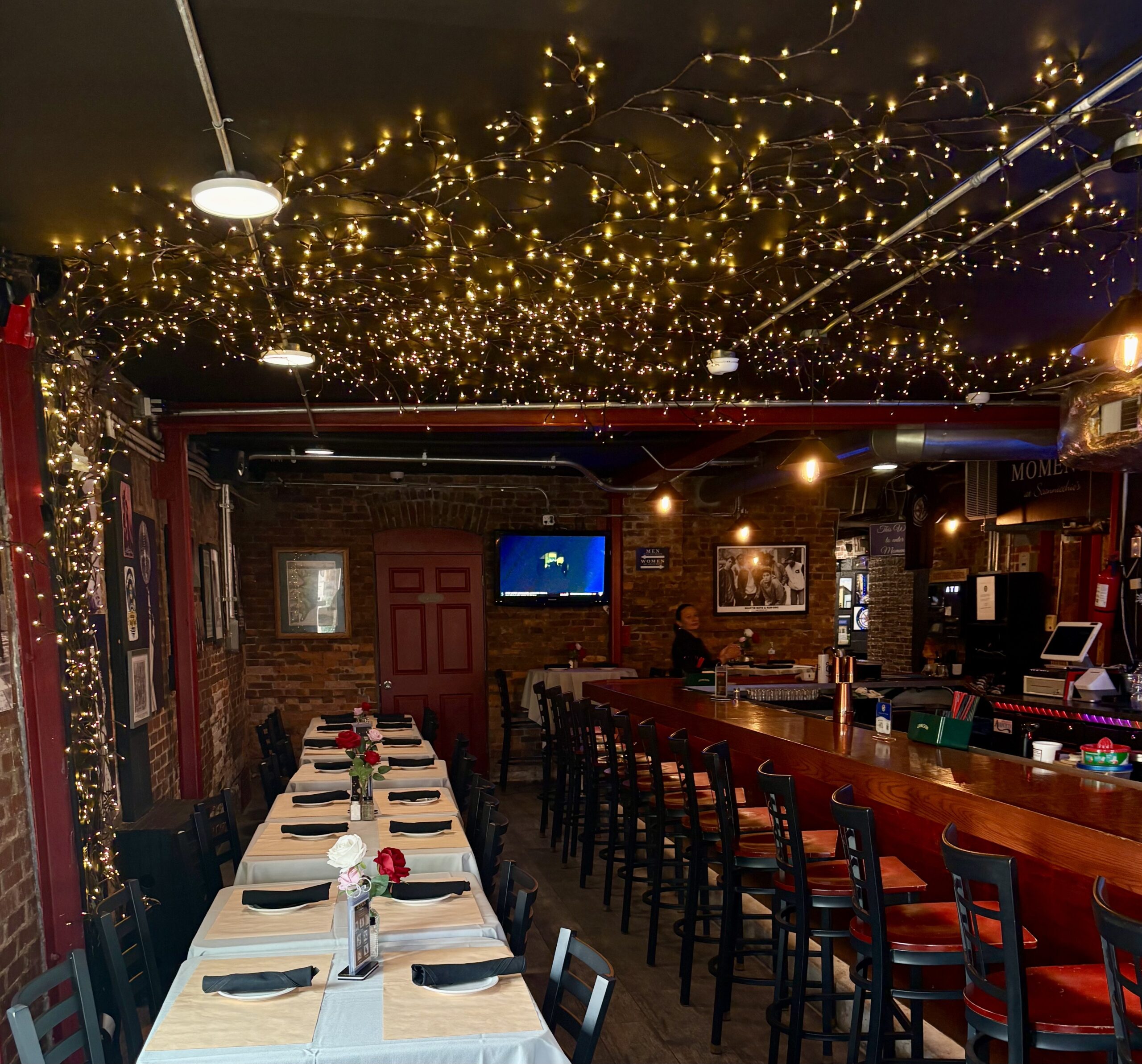
Some places are all about the food. Others revel in quirky ambiance. You can get a bit of both at this Atlantic City sibling to Scannicchio’s, one of my favorite old-school Italian haunts in South Philly. The AC experience offers the split personality of two adjoined spaces: the charming intimacy of a dark corner barroom lit with Christmas lights, and a bright sports bar lounge next door where a DJ spins retro hits for a handful of dancers while spillover dinner crowds sup at high-tops in the glow of large TVs.
The corner dining room of Moments at Scanniccho’s in Atlantic City is darker and more intimate than the neighboring lounge.
A tender and massive double-cut pork chop Siciliana buried beneath a zesty gravy of cherry peppers, onions, olives, and mushrooms was the hands-down highlight of our meal. The big menu also showcases several familiar favorites from the South Philly original (clams casino, a stuffed artichoke, the sausage and figs app), although it was not cooked with the same consistency and finesse. Even so, we enjoyed the experience. And I’ll especially treasure the moment our larger-than-life server (who had a bear hug for every one of the restaurant’s many regulars) offered a memorable logic for his general preference of pasta shape with entrees: “Why should I waste calories twirling spaghetti when I can just get straight to it with penne? Stab and eat! Stab and eat!” Such wisdom alone is worth the visit.
Moments at Scannicchio’s, 2647 Fairmount Ave., Atlantic City, N.J. 08401, 609-344-5338; momentsatscannicchios.com
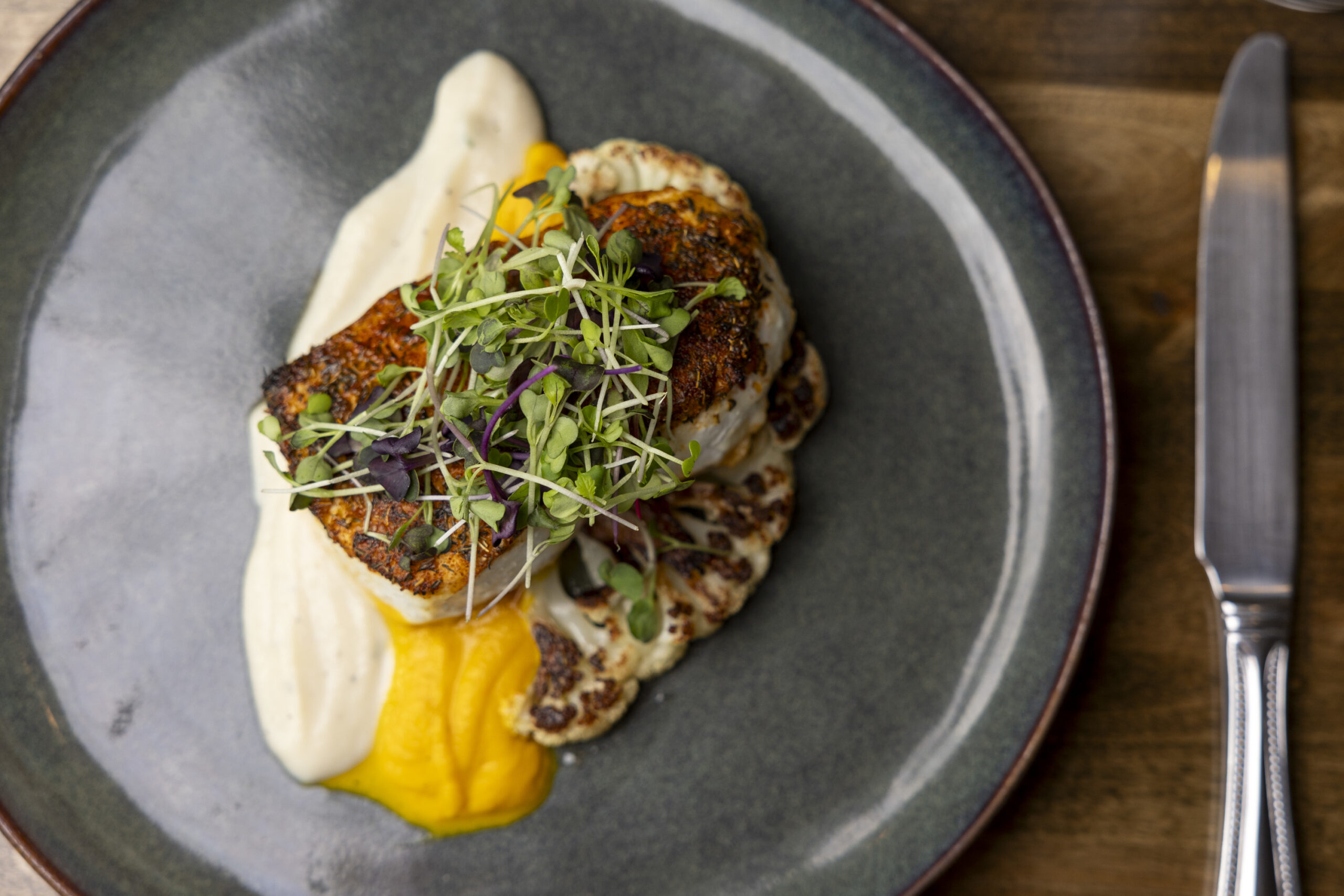
The halibut entree at Rustico in Ventnor City, N.J., on Wednesday, June 10, 2026.
VENTNOR
Rustico
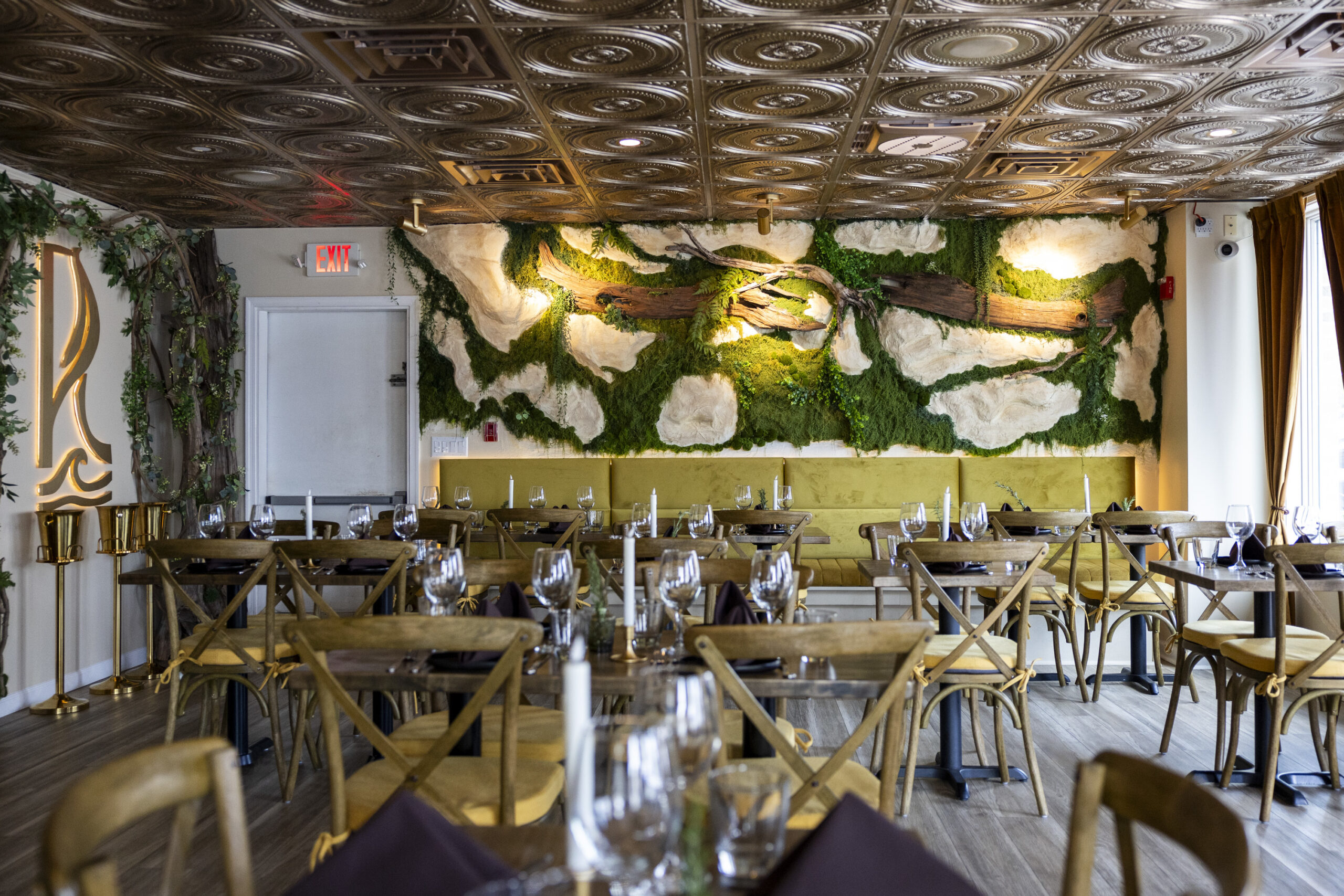
Few restaurant couples have been able to create evocative dining experiences in small BYOB spaces through DIY design as deftly as Tanya and Petar Petrov. A veritable lemon grove on the ceiling of their debut Italian hit last year, Martina’s, conjured a glimpse of the Amalfi Coast on Atlantic Avenue. This year, they’ve turned to a closer source of marine inspiration — the bay beside their Ventnor home — for the makeover of Petar’s former Cafe Velo into Rustico, a naturalistic dinner cove that wraps diners in plastered wall montages of foraged driftwood, sea moss, and rocks. The menu is still decidedly Italian. While some Ventnorians have complained to me about menu overlap between the two restaurants, the fact that waiting lists can exceed 300 names for those hoping to get into 48-seat Martina’s means there is a legitimate demand for 80 more seats at Rustico (plus 28 more outside), where devotees can order the tried-and-true arancini, linguine with vongole, and chicken Parm.
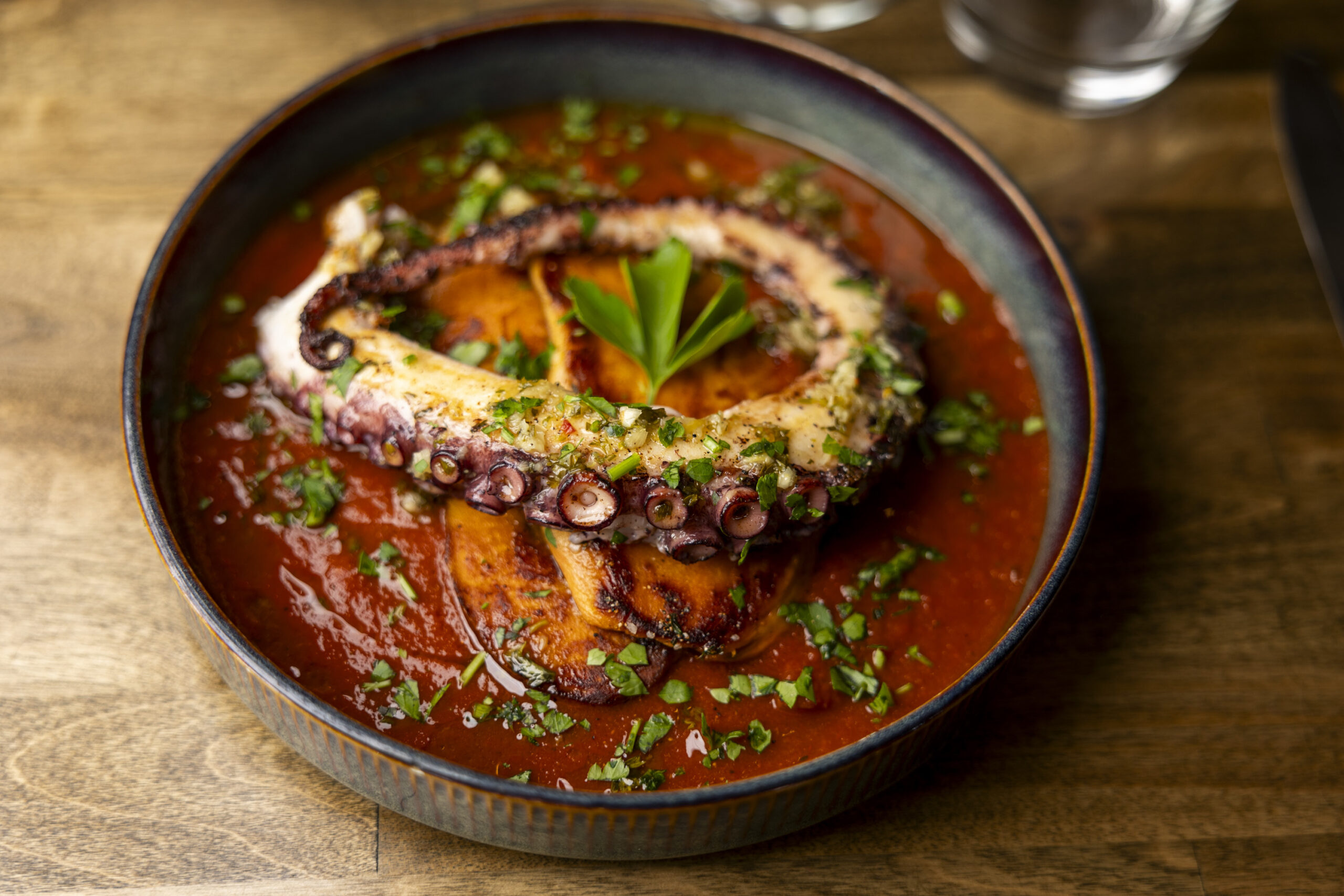
The octopus dish at Rustico in Ventnor City, N.J., on Wednesday, June 10, 2026.The inside of Rustico in Ventnor City, N.J., on Wednesday, June 10, 2026.
The chicken Parm was the least compelling thing we ate at Rustico. An unconventional starter of grilled octopus curled over a platform of sweet potato turned out to be delicious, the potato’s soft sweetness contrasting the texture of the meat while balancing the savory tomato sauce. That dish is a legacy of Cafe Velo’s early days, when the tiny kitchen would cross-utilize ingredients between the popular breakfast and dinner menus. Rustico, which expanded both its dining rooms and kitchen, has capacity now to undertake ambitious specials like broiled lobster and linguine feasts for two (very limited nightly). A soulful short rib and shiitake ragù was a hearty winner over fresh pappardelle made by Haddon Township’s Severino, whose owner is the Petrovs’ neighbor.
Fresh seafood also remains a strength, with entrees like blackened ahi tuna with red bliss potato hash and hollandaise. A moist and meaty halibut set over two-toned purees of cauliflower and carrot was also fantastic, a special-turned-standby from chef de cuisine Lorenzo Hernandez. Of course, I ordered at the very moment this kitchen ran out of halibut. Luckily, Petar had a spare portion in the fridge at nearby Martina’s, and he retrieved it just in time for this busy kitchen not to miss a beat: “That’s the beauty of having two restaurants so close,” says Petar. “Stuff happens!”
Rustico, 6525 Ventnor Ave., Ventnor City, N.J. 08406, 609-727-0499;rusticoventnor.com
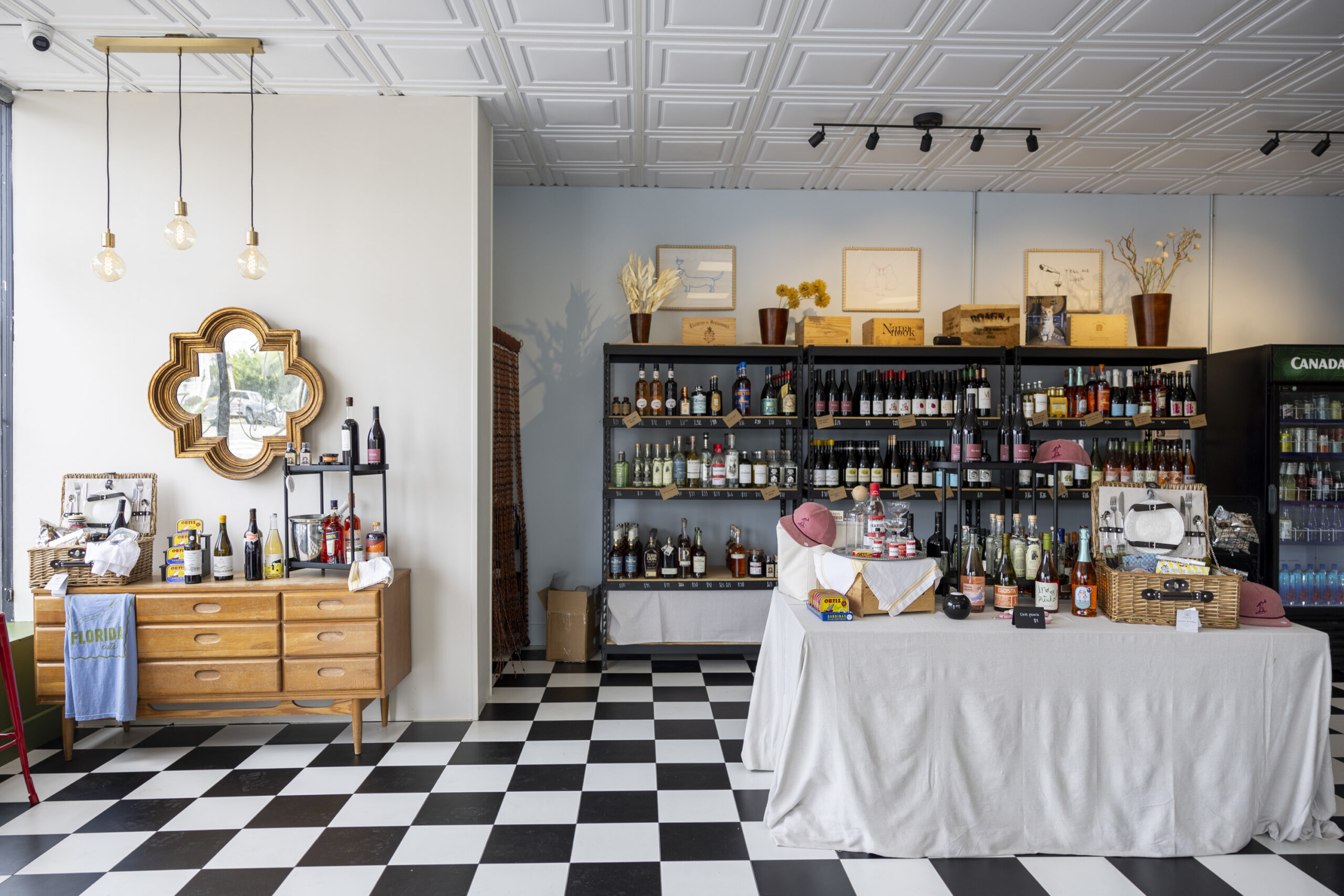
The inside of Florida Cuts in Ventnor City, N.J., on Wednesday, June 10, 2026.
Florida Cuts
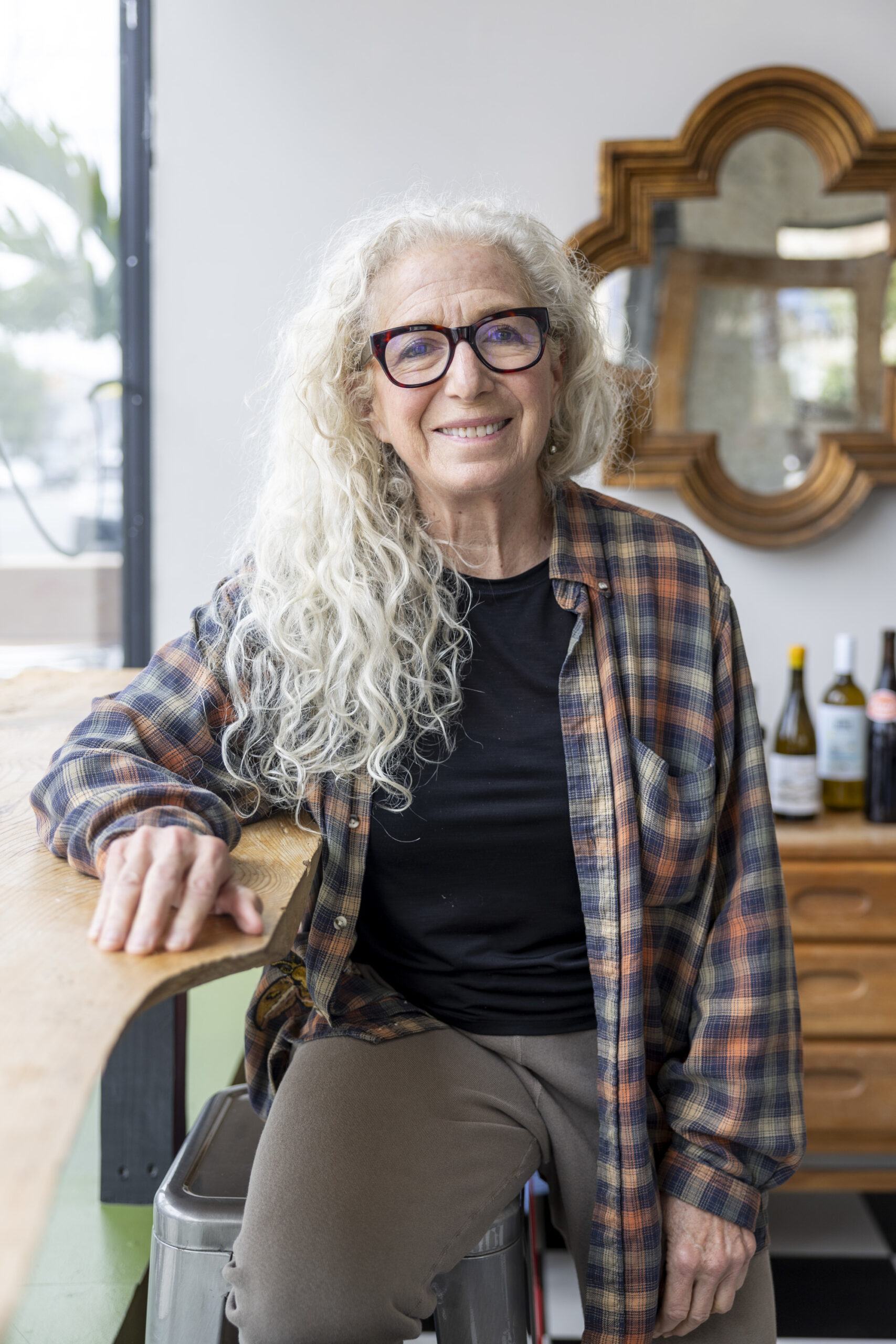
Cookie Till of Steve & Cookie’s bought the half-century-old Florida Cold Cuts & Liquors deli in 2022 and began to reshape it to her vision. What was a gradual makeover the first few years, most notably upgrading the sandwiches and bottle selection, became a wholesale change this spring when Till removed “cold” from the name and replaced the classic sub shop format with an artisan sourdough bakery turning out a lineup of grab-and-go sandwiches built on two kinds of focaccia and sesame-speckled semolina baguettes. The longtime tuna salad and Italian hoagie crowd is not pleased: “Cookie really took a good thing … and turned it into something nobody needed,” a reader wrote me in a direct message on social media.
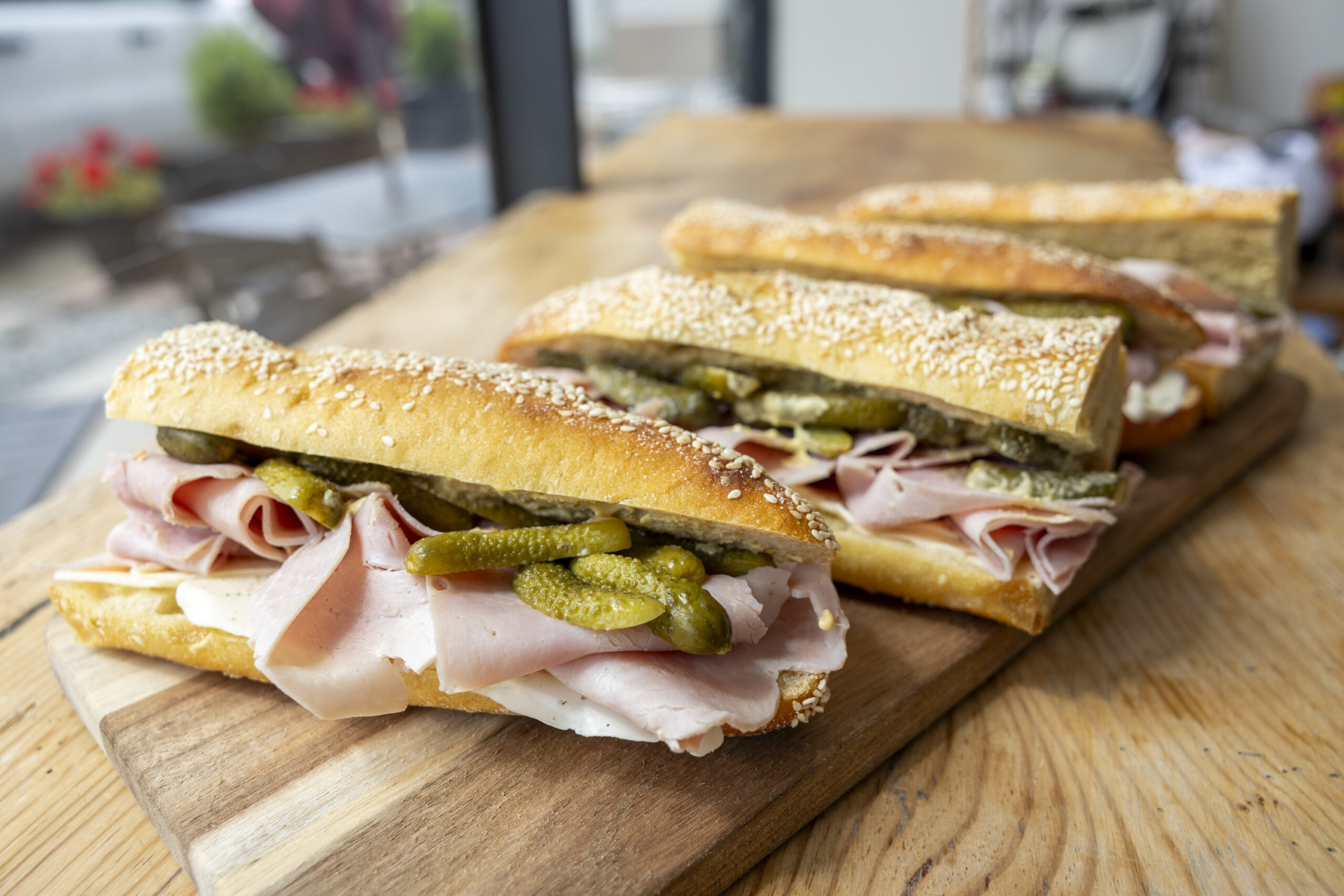
The ham and butter baguette at Florida Cuts in Ventnor City, N.J., on Wednesday, June 10, 2026.
I loved the old corner shop’s house-baked tavern ham sandwiches as much as anyone, but I disagree. What makes a smart restaurateur like Till so invaluable is her willingness and wherewithal to take risks to do things differently. Till has a track record of creating top-notch progressive concepts people simply didn’t realize they needed until she made it happen, from a craft coffee shop in Ventnor No. 7311 to an interactive organic farm with a philanthropic mission at Reed’s Farm. There are plenty of places to get a classic sub on Absecon Island, but there is nothing like the new Florida Cuts, where lead baker Santina Renzi (a longtime key contributor at Her Place Supper Club), consultant Jon Taus, and sourdough specialist Victoria McHugh are working with Till’s partner Kim Richmond to create stellar loaves made from flour milled from local grains that result in bread with integrity and flavor. They’re used for original sandwiches that are largely outstanding, from the minimalist focaccia laced with mortadella, ricotta, and pistachios (all crackly crust and lush stuffing richness), to the freshly house-roasted turkey layered with Steve & Cookie’s signature “ugly tomato salad,” Gorgonzola, and crispy shallots. The tuna salad fragrant with lemon zest and crunchy peperoncini rings is a sleeper hit, while the ham and butter on a sesame semolina loaf can compete with Philly’s best.
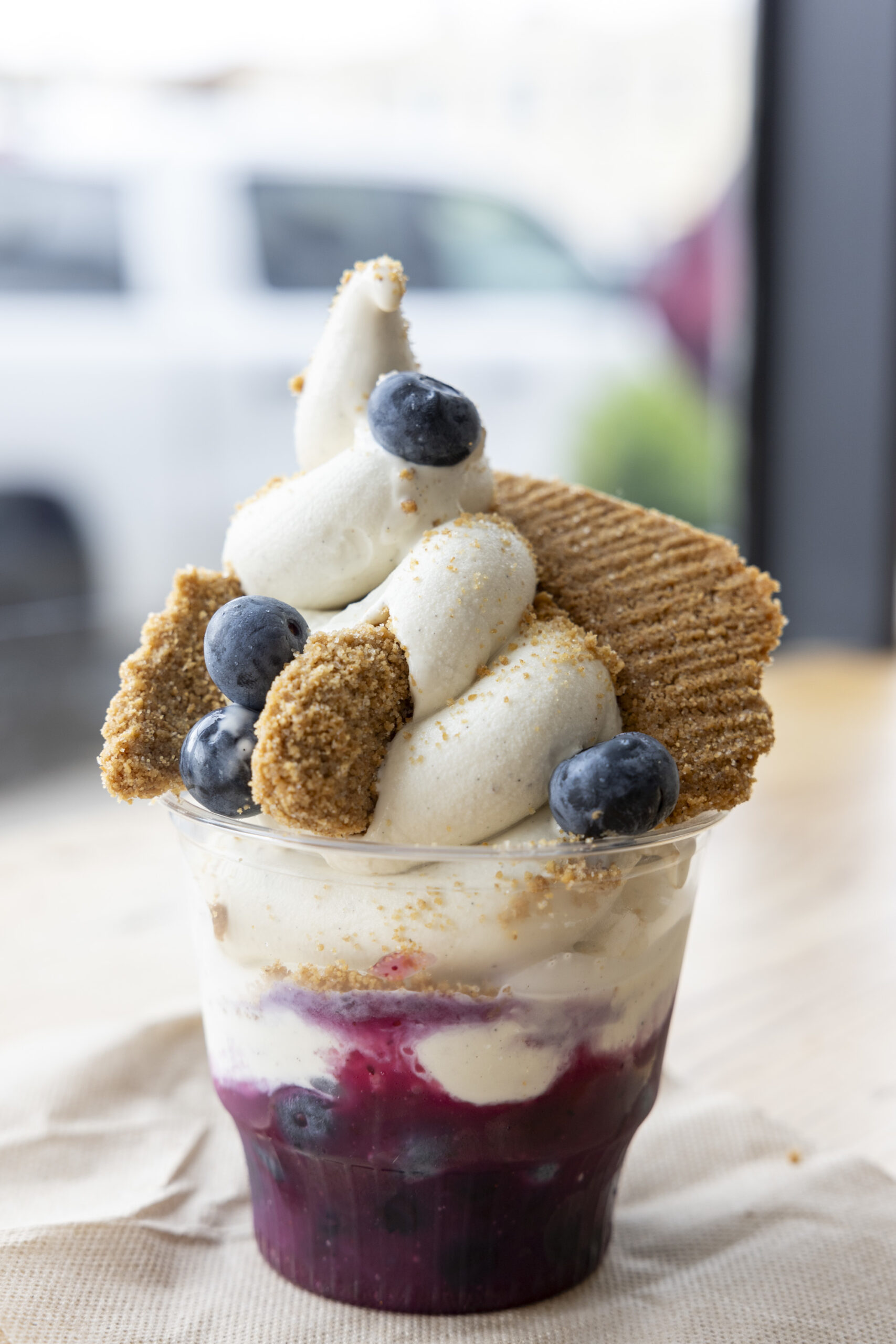
Owner Cookie Till at Florida Cuts in Ventnor City, N.J., on Wednesday, June 10, 2026.The soft-serve sundae with Steve& Cookie’s blueberry pie at Florida Cuts in Ventnor City, N.J., on Wednesday, June 10, 2026.
My one disappointment was the cutlet sandwich, which didn’t have nearly enough Caesar salad inside. But there were so many consolations: a fridge case stuffed with local farmstead cheeses; focaccia flatbread topped with butter-poached clams; warm rounds of fresh-baked sesame tahini cookies; shelves stocked with quality spirits and affordable natural wines. There’s also soft-serve now, offered as a sundae layered with Cookie’s famous blueberry pie. Now I definitely need that, even if I didn’t know it before I walked in the door.
Florida Cuts, 7301 Ventnor Ave., Ventnor City, N.J. 08406; floridacuts.com
MARGATE
Tideline
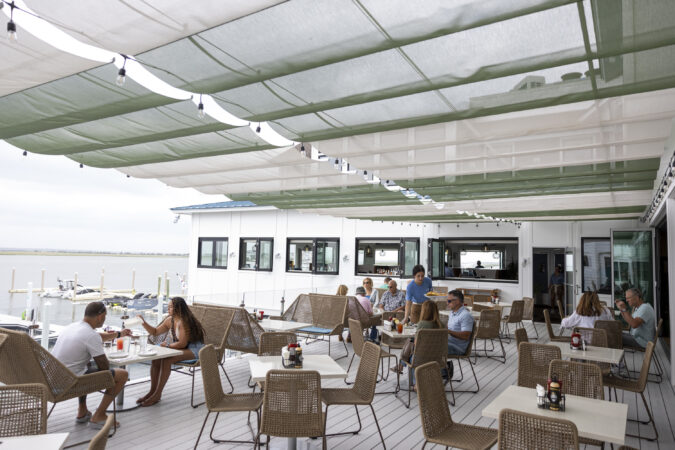
The scene at Tideline on the bay behind Margate City, where full restaurant service is offered on deck to 30 moored boats and 12 Jet Skis at a time, could make anyone have yacht envy. But this splashy yearling from the family behind Tomatoes — an unabashed gesture to the city’s ever more ritzy denizens — has room on its multifloor 240-seat bar complex for everyone else to linger, nibble, imbibe, and observe. One of the area’s most spectacular bay perches for sunset views is an undeniable bonus. Given the swanky setting, the food from chef Carlo Marsini’s kitchen is a notch better than it has to be, from the generously stuffed truffled cheesesteaks and chicken Italiano cutlet sandwiches to the shot glasses stuffed with fried soft-shell crab halves dunked into an avocado green crema sparked with poblanos.
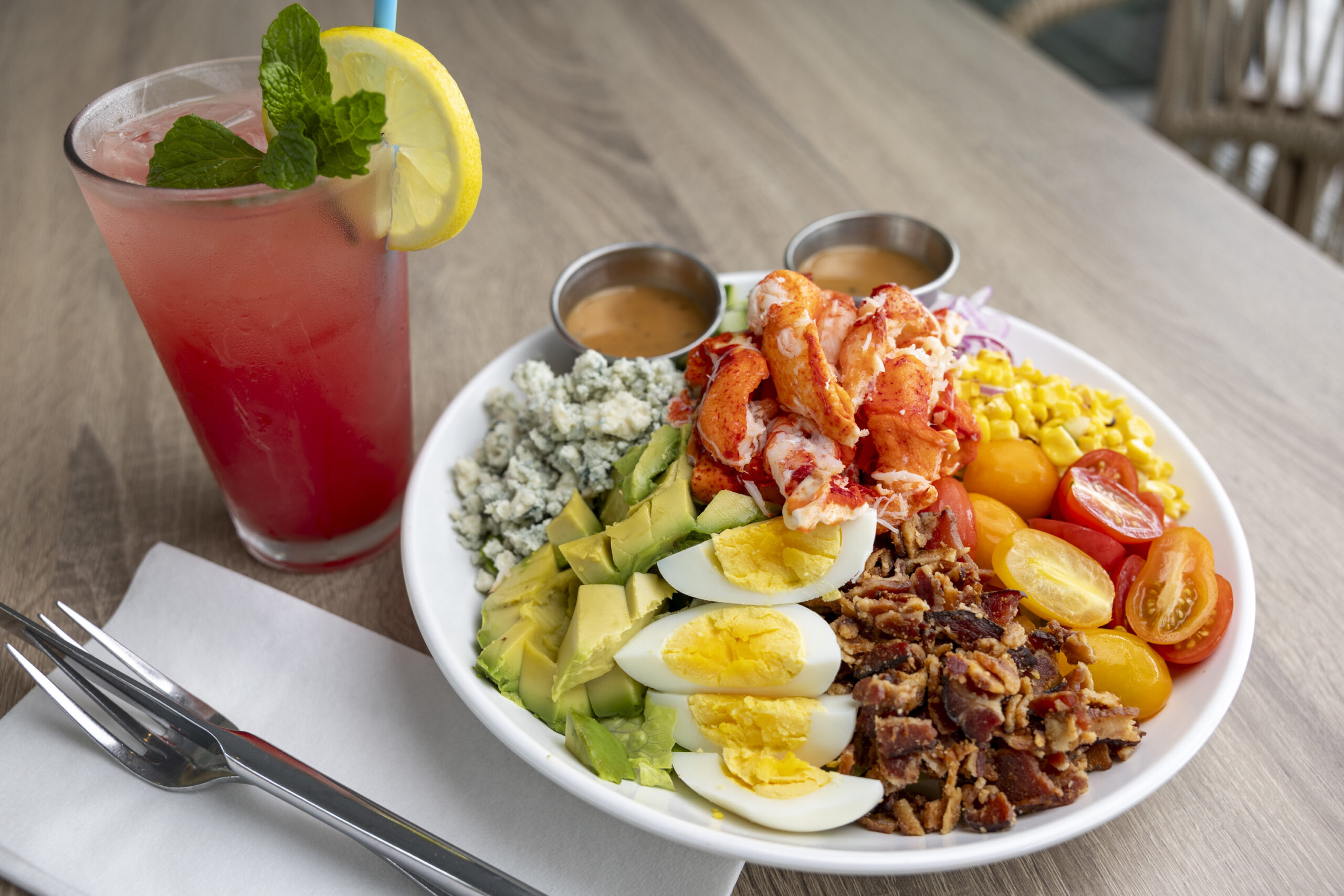
The lobster Cobb salad at Tideline in Margate City, N.J., on Wednesday, June 10, 2026.
I’d definitely return for the generous lobster Cobb salad and a Dockside cocktail of watermelon juice spiked with Tito’s. But don’t get too ambitious. The items we ordered from the large plate section, chicken kebabs and a $32 coffee-rubbed pork chop, were incinerated by the grill chef. The drink menu has a danger zone, too, with a cocktail called Liquid Art. It’s made with trendy Clase Azul Gold tequila and a chile pepper but what’s spicy is the price tag of $1.1 million. That’s because this drink comes with a 39-foot speed boat. That may be the stuff yacht club dreams are made of for some, even if there’ve been no takers yet. But unsurprisingly, this land-loving mezcal fan wasn’t even tempted.
Tideline, 9317 Amherst Ave., Margate City, N.J. 08402; 609-350-6717; tidelinemargate.com
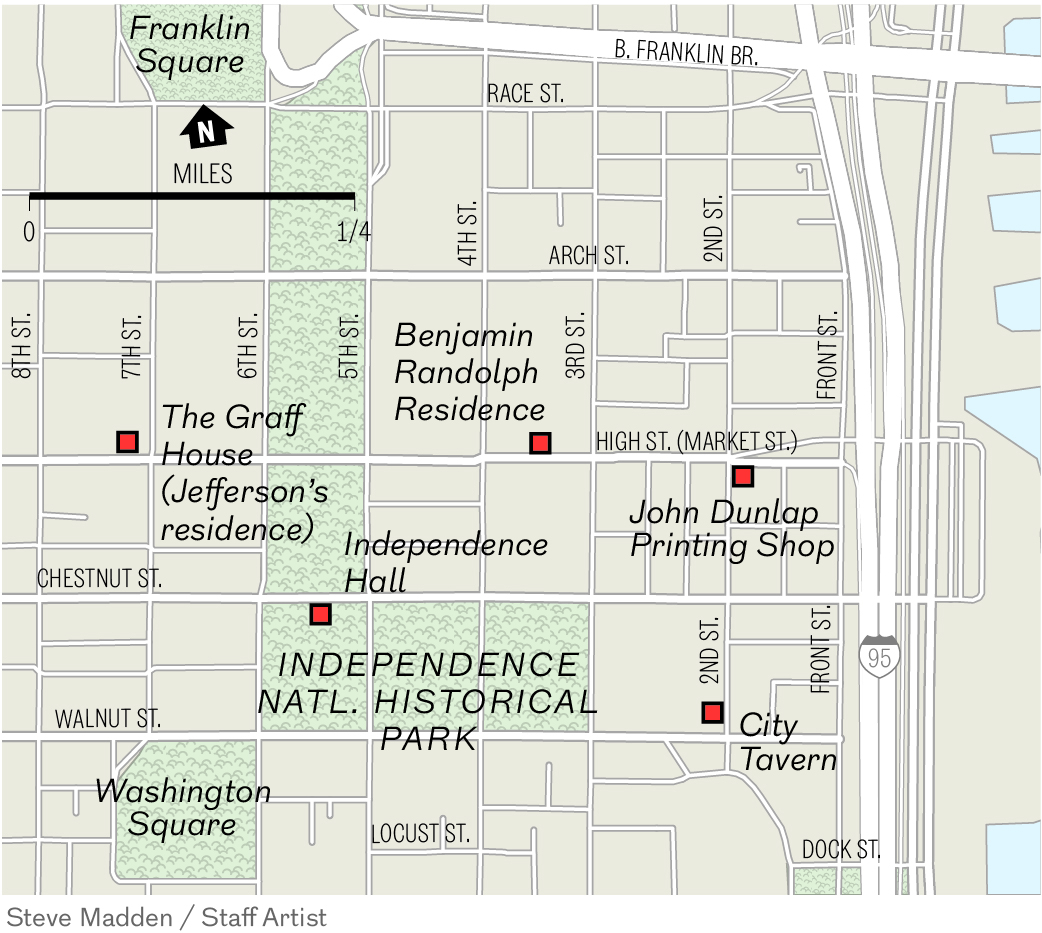
John Dunlap, 29, an immigrant from Northern Ireland who operates a printing shop at Second and High Streets, a short stroll from the Pennsylvania State House, where the rebels conspire, has watched with keen attention the epochal events of the preceding days.
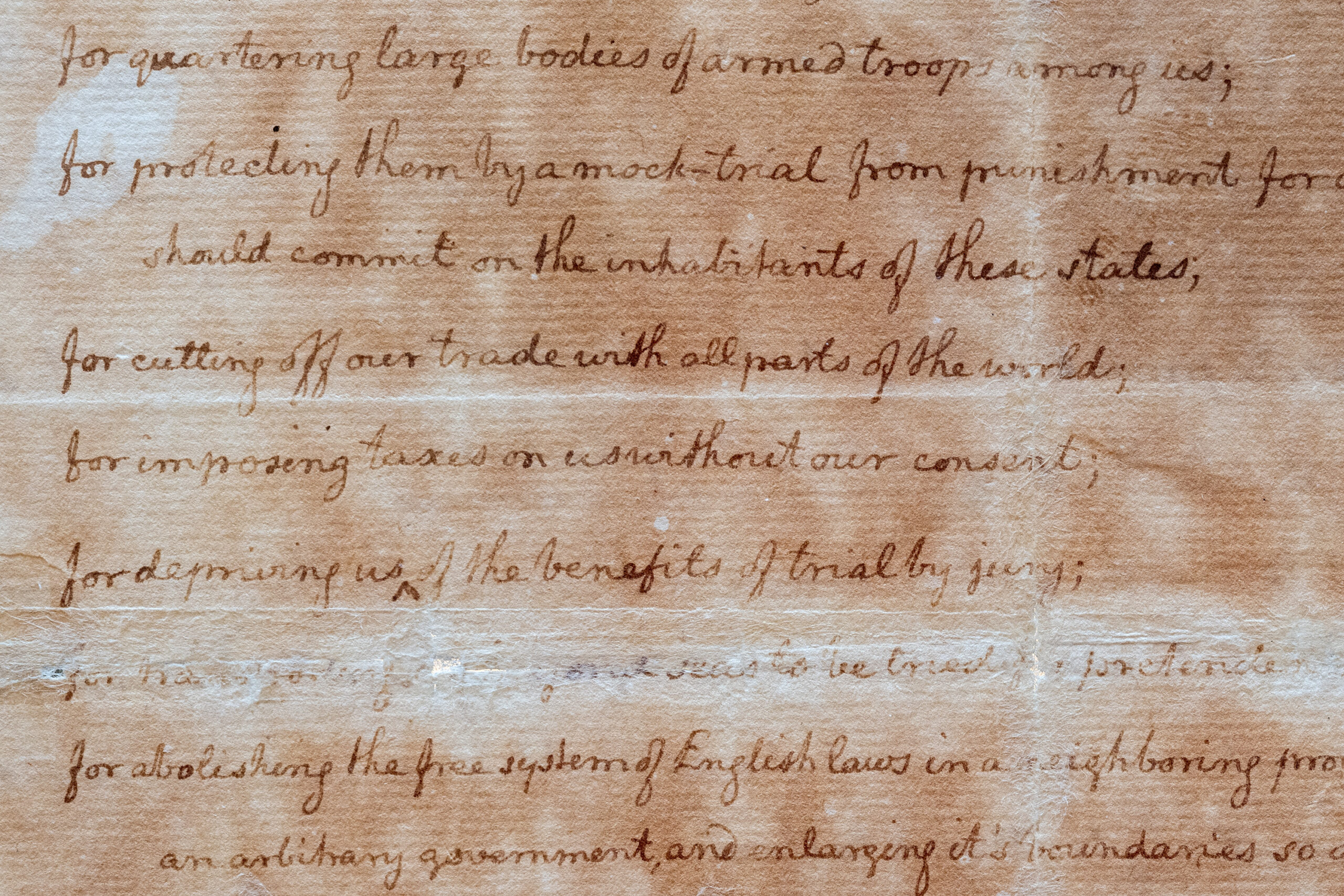
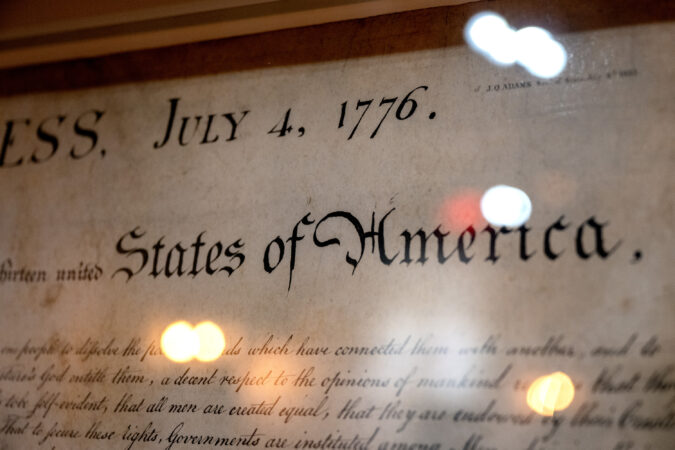
A faded copy of a draft of the Declaration of Independence handwritten by Thomas Jefferson.
The exultant patriots and curiosity seekers who braved suffocating summer heat to stand watch outside the State House on July 1, when the 56 delegates of the Second Continental Congress finally commence their locked-door debate on independence. The rapture that seems to ring out from every Philly tavern and tippling joint, coffee house, and street corner on July 2, when word that Congress voted to sever ties with King George III spreads through America’s largest and wealthiest city, like a bolt from one of Dr. Franklin’s electricity experiments. The joy. Hope.
And now, as an unusually mild morning gives way to rain-laden clouds, Philadelphia holds its breath upon the brink of a mighty happening.
Cloistered inside their chambers, the delegates fiercely debate and painstakingly parse Thomas Jefferson’s draft of America’s founding creed. Its passage will formalize independence.
The ink-stained Irishman with the whipcord build of a jockey prepares the shop for the Herculean task he knows is coming. The delegates will desire to thunder out the news of American independence before the iron gall ink even dries on the Dutch paper. John Hancock, 40, charismatic president of the Congress, will want as many broadsides as Dunlap can muster by dawn. Printing broadsides by hand in sweltering, trembling candlelight — meticulously setting the type, carefully rolling the ink, and pulling the heavy presses — is messy, demanding work, the hardened printer knows. He’ll plan to toil until morning’s light.
Outside, citizens collect in High Street. Soon, the print shop door pushes open. A man, his face obscured by the sun, darkens the doorway. He holds something close. A rag paper manuscript written in fine hand, still wet from fresh changes, and borne by delicate hand to the expectant printer. Words upon which a nation now rests. A declaration.
At the Second Street boarding house of Mrs. Sarah Yard, John Adams, 40, awakes before dawn. The unyielding lawyer and farmer from Massachusetts has become accustomed to the city’s morning clarion cry of crowing roosters, ringing bells, clanking ships, and cursing sailors. But not its heat.
Behold this atlas of independence at his breaking point. Exhausted. Homesick. Hot. Beyond cantankerous that any rational being could yet flinch at the surety and necessity of American independence. For weeks, Adams answers angry letters from citizens demanding to know why Congress stalls.
“The only question is concerning the proper time for making a specific declaration in words,” Adams writes, barely concealing his own impatience. “But remember you can’t make thirteen clocks strike precisely alike at the same second.”
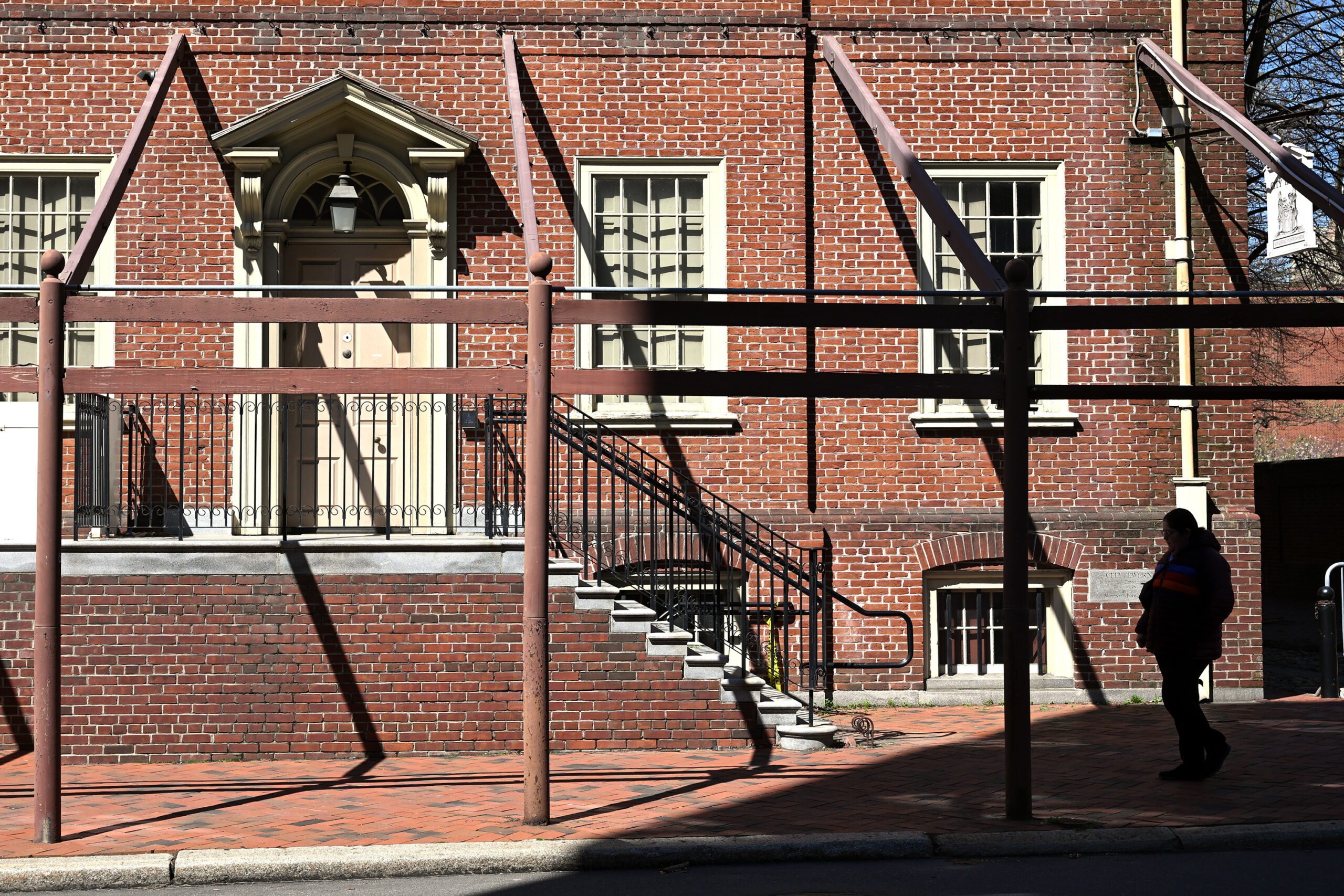
John Adams and his cousin, Samuel, shared a boarding house near the City Tavern in July 1776. This reconstruction of the original tavern was built in 1975.
For nearly two years, John Adams has fought for liberty like a bruising prizefighter, while his less refined older cousin, Samuel, 53, conducts a campaign of persuasion in the shadows. No one has done more than John Adams for independence. On this morning, John Adams dresses in the twilight, wishing that he had been blessed with the graces and gifts of ancient orators.
“This morning is assigned the greatest debate of all,” Adams writes before leaving for the State House. “A declaration, that these colonies are free and independent states, has been reported by a committee some weeks ago for that purpose, and this day or tomorrow is to determine its fate. May heaven prosper this newborn republic.”
At 9 a.m. on July 1, 1776, Andrew McNair, old and gray bellman of the State House, pulls shut the chamber’s heavy doors. Hancock gavels history to order.
In the silence, rises Pennsylvania’s reluctant rebel, John Dickinson. His writings once rallied American farmers against British taxes. Now, ghostly and gaunt from illness, he remains a dogged dissenter against independence. Summoning his strength, he abides his conscience, arguing America is not yet ready.
To proceed with a declaration during an uncertain struggle would be “to brave the storm in a skiff made of paper,” he tells his colleagues, before sitting.
Outside, the heat breaks. Rain beats against the chamber’s tall windows. Thunder booms. Lightning flashes.
Adams stands. He speaks over the stormy din. His precise words are lost to posterity. He speaks for two hours. John Adams moves men.
Adams speaks “with a power of thought and expression that moves us from our seats,” Jefferson, remaining characteristically mum at his table, will later recall.
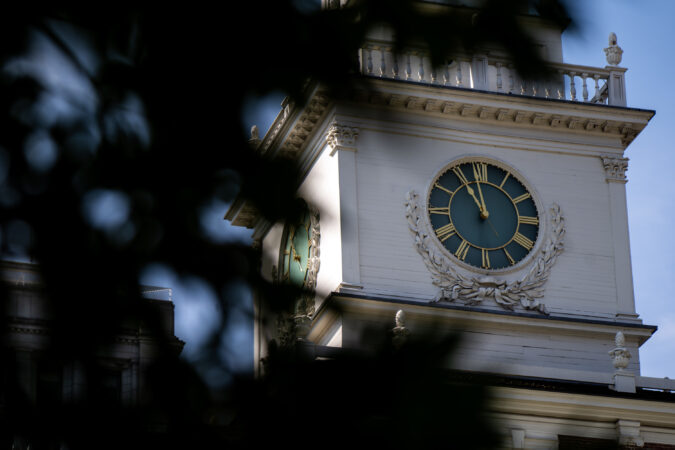
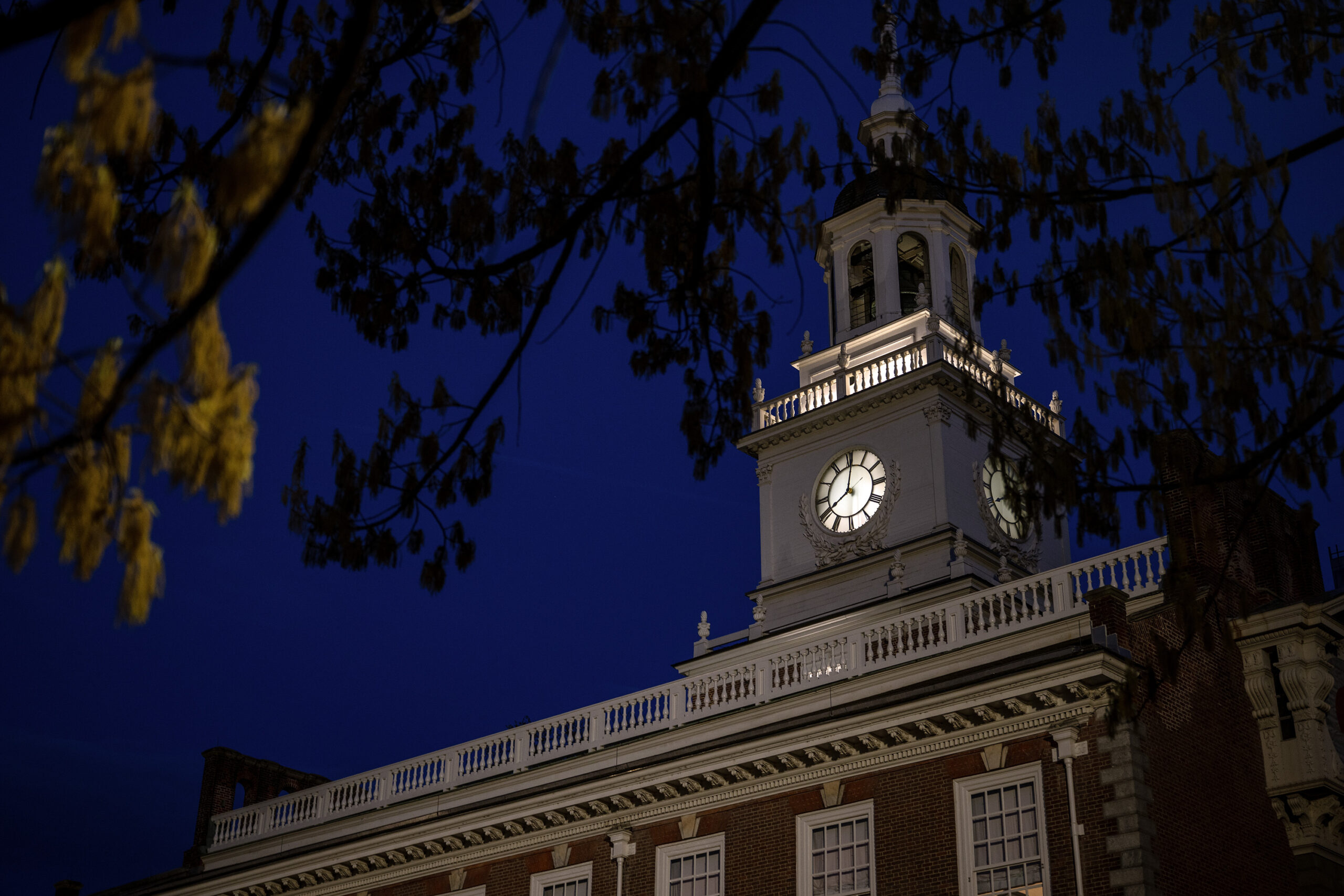
Recreating the daily hub of the Revolutionary City in 1776. You can hear the cannons from the bell tower of the Pennsylvania State House at Sixth and Chestnut Streets, where the rebels conspire. Now, it’s Independence Hall, photographed April 14, 2026.
A preliminary vote is taken by candlelight. Despite popular opinion, four colonies — including four members of Pennsylvania’s critical seven-man delegation — vote no.
Late into the night, at the City Tavern, the delegates drink upon tenterhooks.
July 2, 1776
The second day of debate begins with a prosperous portent. Caesar Rodney, of Delaware, mud-splattered boots and spurs, arms akimbo, bursts in before the doors to Congress close. The gravely ill delegate rode 80 miles through the tempest to cast his vote for independence.
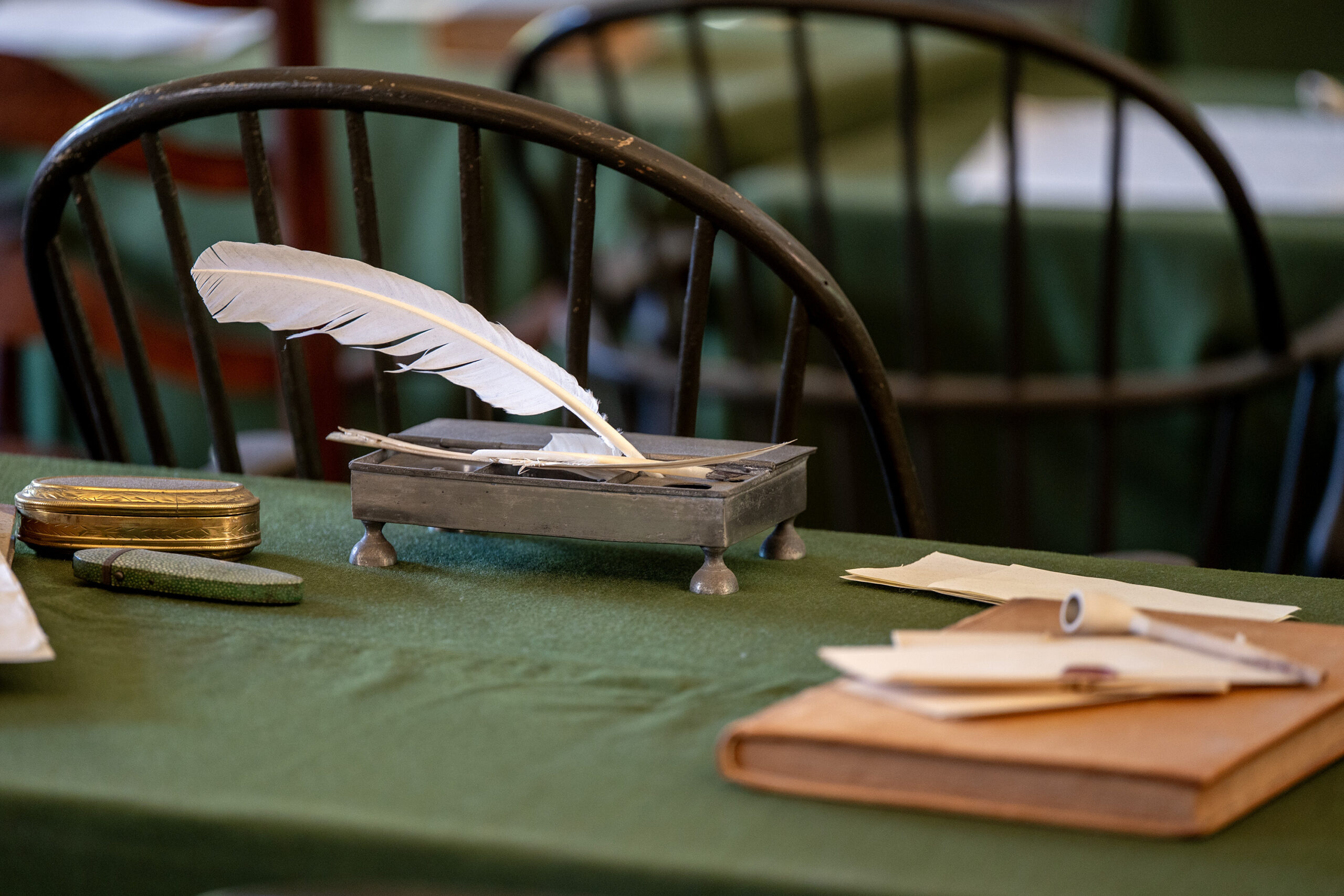
Replica desks in the Assembly Room in Independence Hall, known as the Pennsylvania State House in 1776. This is the exact space where the Second Continental Congress met and the Declaration of Independence was adopted.
Better still are the two conspicuously empty chairs at the Pennsylvania table. Unable to vote for independence, but unwilling to thwart unanimity, Dickinson and fellow delegate, Robert Morris, voluntarily abstain. Despite his feelings, Dickinson will soon join the rebel militia — to fight for his country.
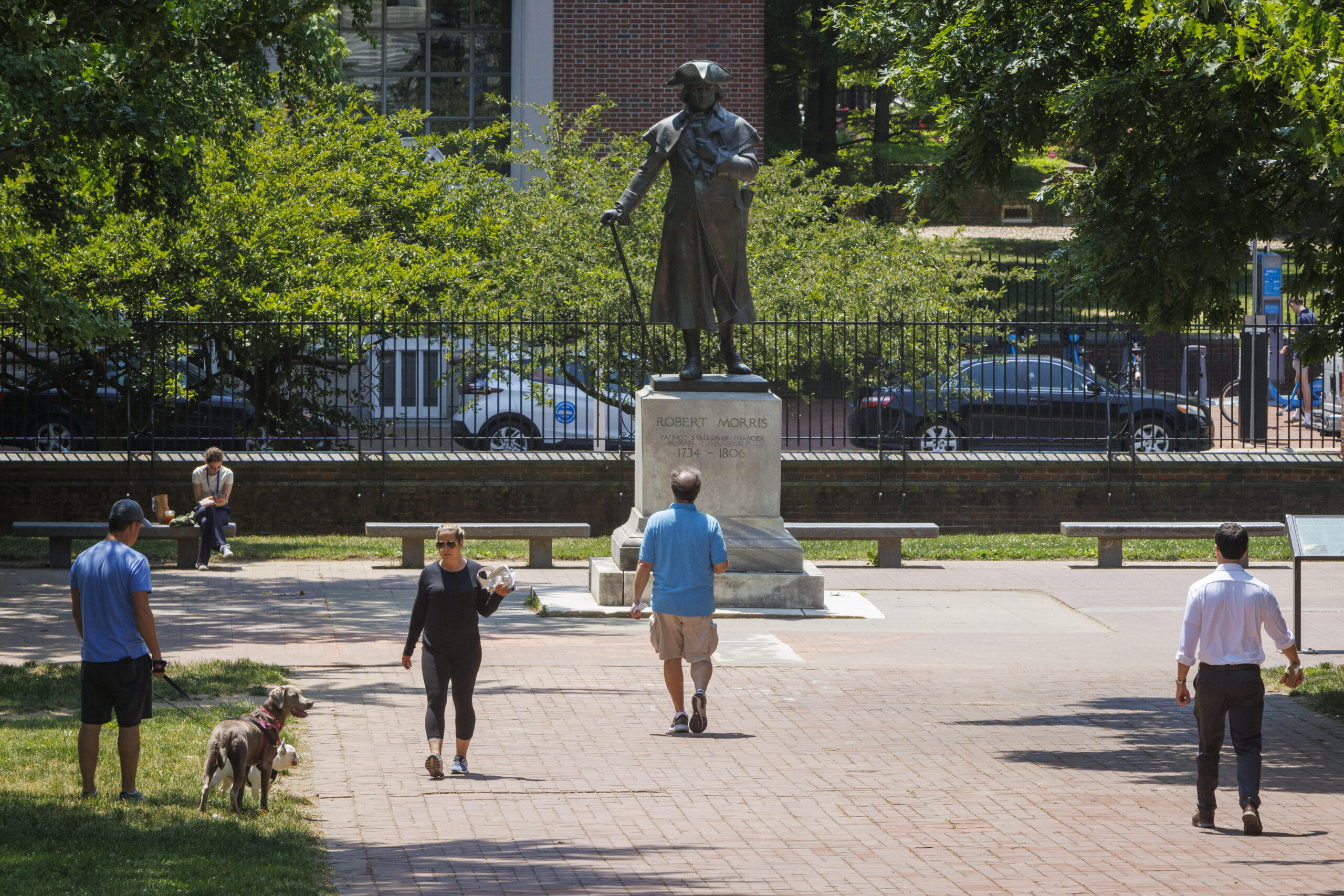
The statue of Robert Morris in Independence National Historical Park on May 31, 2023.
Again, the skies open up, raindrops drumming upon the glass.
With New York abstaining — and Pennsylvania swinging toward independence — the vote goes quick.
It is done.
Independence.
July 3, 1776
The Congress continues without a break.
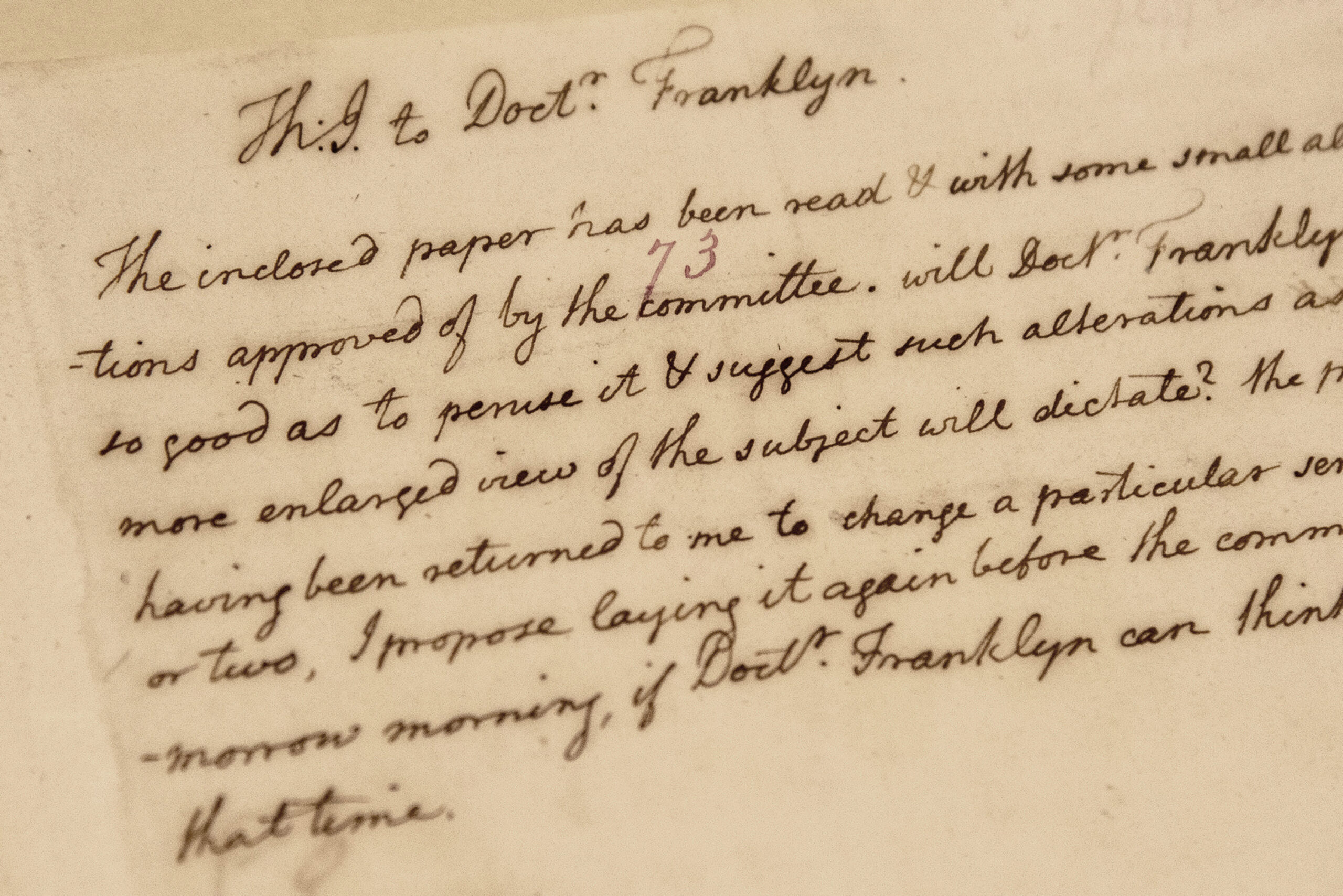
Days earlier, before handing in his draft of the Declaration of Independence, Thomas Jefferson turned to Benjamin Franklin for one last look.
A letter from Thomas Jefferson to “Doct. Franklyn” (Benjamin Franklin) in June 1776 asking for suggestions on the Declaration of Independence.
“Will Doctr. Franklyn be so good as to peruse it and suggest such alterations as his more enlarged view of the subject will dictate?” Jefferson inquires, in a note delivered to the silver-haired statesman’s High Street home.
It’s Franklin, sly satirist, homespun philosopher — grand auteur of America’s self-made aura — who possibly suggests, the inspiring “self-evident” phrasing, replacing Jefferson’s initial “sacred and undeniable truths.”
And it is Franklin, 70, spectacled lion of liberty, sage of Philadelphia, tamer of lightning, dean of American charm and wit, wooer of women, broad of bow and frame, portly of paunch and plain of coat, a winsome spark dancing across his gray-blue eyes, who comforts the young writer as delegates slash away at his declaration. The winking newspaperman unspools a tale about an enterprising hatmaker who wishes to advertise his wares. By the time the hatter’s friends finish their edits, all that remains is the man’s name, and a photo of a hat, Franklin jokes.
The delegates trim Jefferson’s harsher language about King George. They excise completely his evisceration of the slave trade. Jefferson does not publicly protest.
July 4, 1776
At 11 a.m., debate is closed.
The moment will eventually be memorialized in painting. The towering trio — Adams, Jefferson, Franklin — presenting America’s credo for approval. Imagine them, these Founding Fathers. These imperfect men for the ages who hazard everything to chance a republic, and change a world.
There is little ceremony. Horseflies from a nearby stable buzz. One after another, a chorus of “Ayes.”
Delegates break the tension with gallows humor about whose necks will snap the swiftest.
History does not record the face of the man who darkens the doorway of John Dunlap’s print shop. Perhaps it was Adams, unable to yield his obsession even in its ultimate realization. Perhaps, it was Franklin, delivering the declaration with a deliciously wry aphorism. Or Jefferson, solemn and silent with the weight of his words.
Dunlap works all night to the thumping groan of the presses. By morning, roughly 200 broadsides start to spread America’s newly minted founding document far beyond Philadelphia. Breathless riders herald the news in town squares.
In the trenches in New York, Washington orders the declaration read aloud. Bells ring. Troops parade. Bonfires alight. Candles burn. Prayers are whispered, for those sons and fathers who will die in the bloody conflict ahead.
By July 6, the Pennsylvania Evening Post, a paper published near Dunlap’s shop, prints the declaration word for word. Its previous issue had been put to press too early to capture the momentous events.
Instead, the July 4, 1776 edition included usual fare.
“To be sold,” read one back-page ad. “A NEGRO BOY, about four or five years of age.”
Crowds pack the State House yard, where the rebels had long conspired. A military officer reads the manifesto to the hushed masses.
Words that birth the American experiment on an ideal — and the sin of slavery. Words that will endure Civil War and oppression. Words that beckon centuries of American promise and possibility, triumph and failure. Words that inspire new revolutions, new freedoms, new fights. Words that transform. Words that twist. Words that promise a pursuit of happiness — but withhold so much from so many. Words that stand tested still.
Words written in Philadelphia.
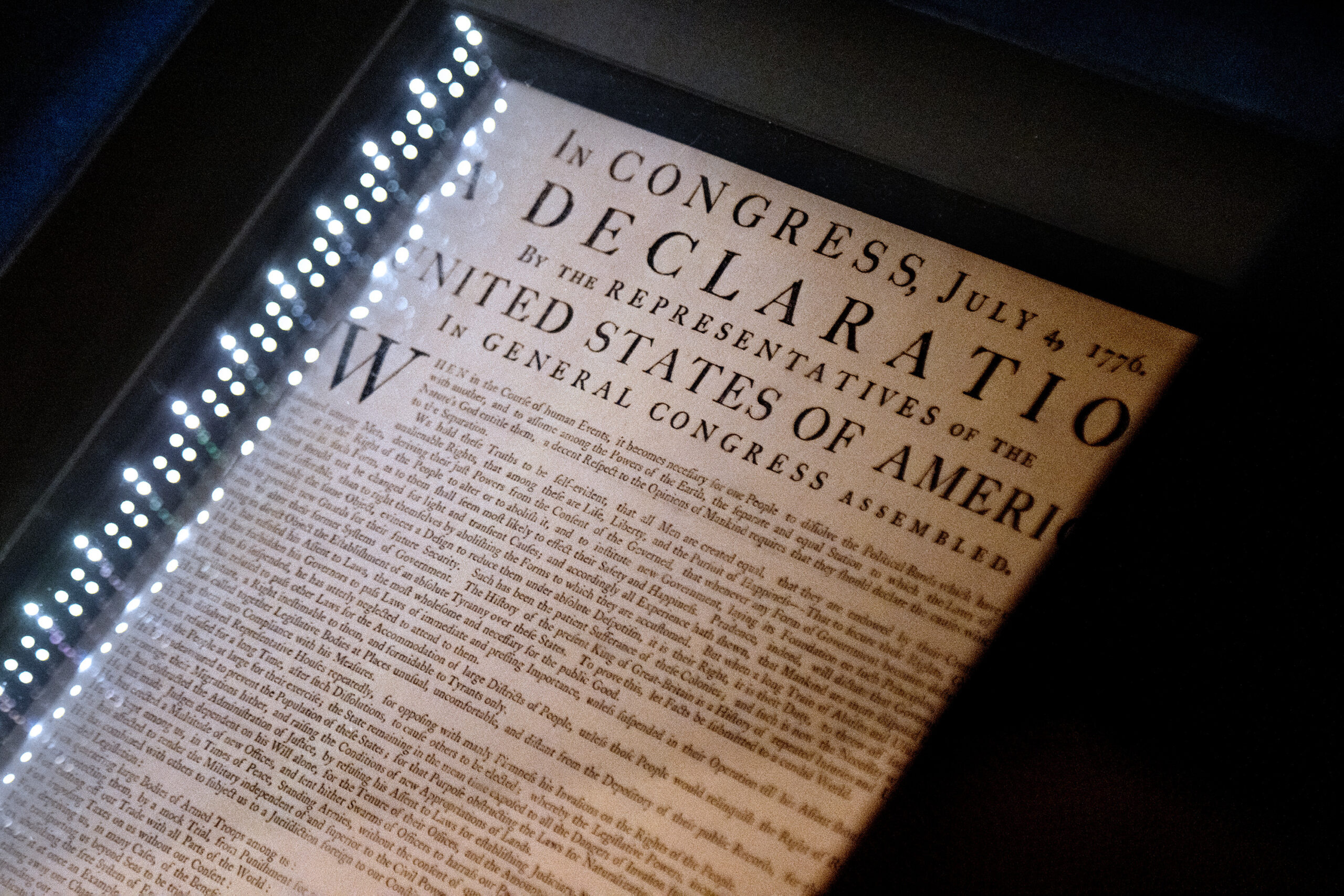
An original broadside copy of the Declaration of Independence printed by John Dunlap on display in the “Great Essentials” exhibit in the West Wing of Independence Hall on July 29, 2025.
It’s a common sound in Philadelphia’s historic district during the summer. I was photographing tourists in front of Independence Hall on Wednesday when the beat of a single snare drum a block away achieved its intended purpose.
Just like when the fife and drum corps would relay tactical commands over the noise of the battlefield, or regulate a soldier’s daily routine, I stopped what I was going and headed in the direction of the beating pulse.
It was coming from the normally quiet Signer’s Garden pocket park, across 5th Street.
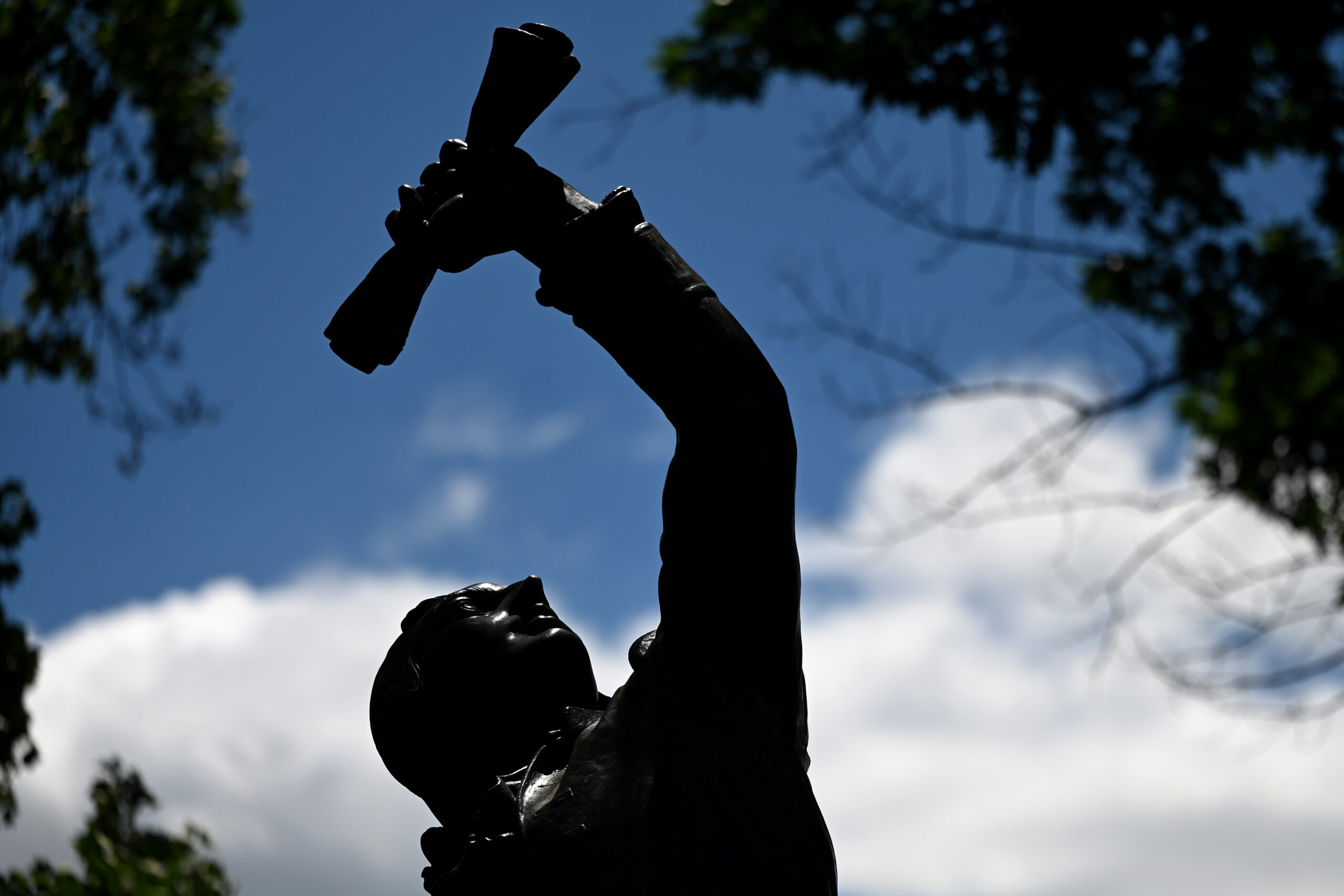
I had intended to go there anyway to photograph the statue — “The Signer” — as I am working with present-day descendants of the signers of the Declaration of Independence on a photo essay that will be posted online this Fourth of July weekend.
The statue was inspired by George Clymer, a Philadelphia merchant, statesman, and signer of both the Declaration of Independence and the U.S. Constitution. A National Park Service plaque at the entrance reads “it commemorates the courage of those who altered their lives, and ours, by affixing their names to these documents.”
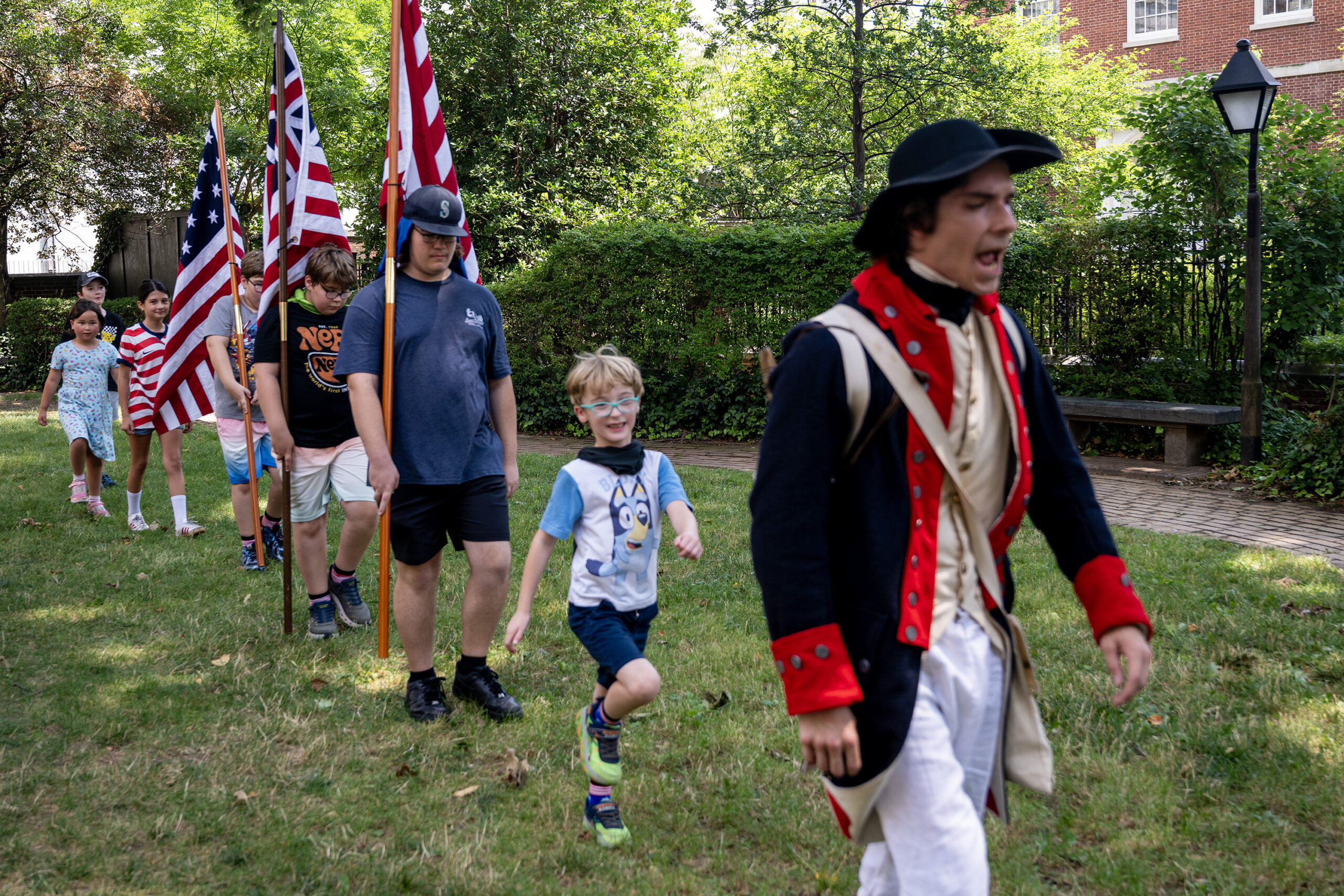
The drum was mustering holiday week visitors for a presentation by two costumed actors from Historic Philadelphia portraying continental soldiers. I watched as the tourists watched them “draft” youngsters into their performance and found myself smiling more than once at how they engaged the kids — and the rest of us in the crowd — with some of their one-liners.
Historic Philadelphia actor Lane Norris portraying Continental soldier Conrad Frye leads a contingent of young tourists in Independence National Historical Park Wednesday, July 1, 2026.
Did I say, smile? I might have had a slightly more sentimental reaction. I have written before that Independence Day has always been my favorite holiday. My dad, who passed away a few years ago, was born on the Fourth of July.
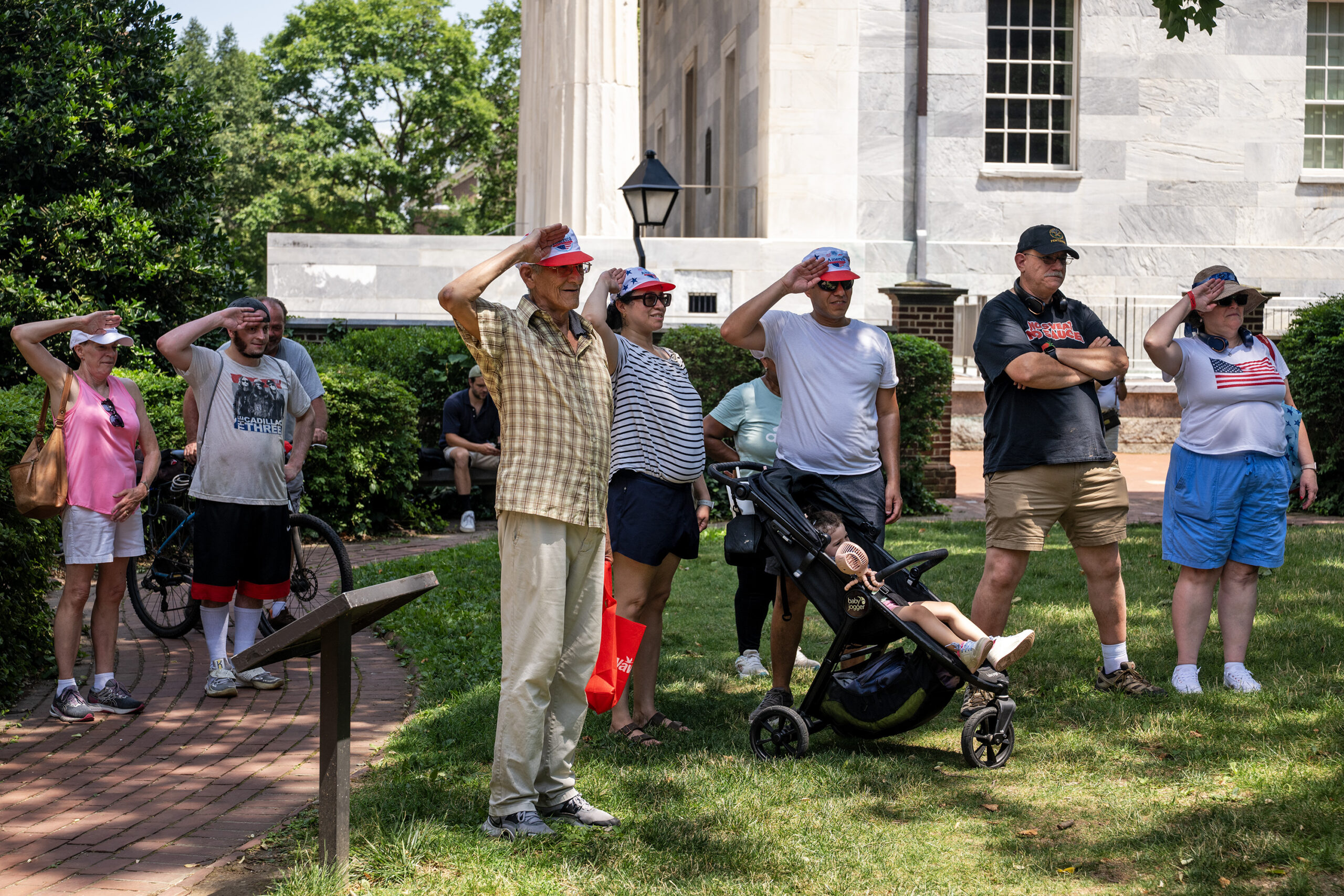
As I looked around at the crowd I could tell everyone else was also getting into the interactive and engaging program. I photographed saluting adults who I assumed were parents, mirroring the actions of their kids doing the marching drills.
Afterward, I learned they weren’t. They had a toddler still in a stroller. They were immigrants from Venezuela, and just happy to be here. Like me.
We’re still in the middle of Philly’s celebration of America’s 250th birthday (with canceled events in a declared heat emergency with 100-plus degree temperatures!). Here are more of my Fourth of July photos and those of my colleagues:
Since 1998 a black-and-white photo has appeared every Monday in staff photographer Tom Gralish’s “Scene Through the Lens” photo column in the print editions of The Inquirer’s local news section. Here are the most recent, in color:
Happy 250th, America! We’ll show you a July Fourth-themed photo taken in the Philly-area, you drop a pin where you think it was taken. Closer to the location results in a better score. Good luck!
Round #40
Question 1
Where are these fireworks?
Loading…
ClickTap on map to guess the location in the photo
ClickTap again to change your guess and hit submit when you're happy
You will be scored at the end. The closer to the location the better the score
Charles Fox / Staff Photographer
Pretty good/Not bad/Way off! Your guess was from the location.Spot on! Your guess was exactly at the location. Here's also where a random selection of Inquirer readers guessed.
Fireworks over the Philadelphia Museum of Art and the statue of George Washington at Eakins Oval during the Wawa Welcome America Festival on July 4, 2023.
Quiz continues after ad
Question 2
Where is this crowd?
Loading…
David Maialetti/ Staff Photographer
Pretty good/Not bad/Way off! Your guess was from the location.Spot on! Your guess was exactly at the location. Here's also where a random selection of Inquirer readers guessed.
The crowd gathered at Independence Hall is seen through the “O” in the OY/YO sculpture across the street during the Wawa Welcome America Salute to Independence Day Parade on July 4, 2023.
Quiz continues after ad
Question 3
Where is this ceremony?
Loading…
Tyger Williams / Staff Photographer
Pretty good/Not bad/Way off! Your guess was from the location.Spot on! Your guess was exactly at the location. Here's also where a random selection of Inquirer readers guessed.
Thirteen Immigrants are sworn in as American citizens at the Betsy Ross House on July 15, 2021.
Your Score
ARank
🇺🇸 Amazing work. A star-spangled success.
BRank
📜 Good stuff. Your knowledge is self-evident.
CRank
📝 C is respectable, but you might need a few amendments.
DRank
🗽 D isn’t great. Life, Liberty, and the pursuit of improvement.
FRank
🪶 We don’t want to say you failed, but maybe back to the drafting board.
You beat % of other Inquirer readers.
We’ll be back next Saturday for another round of Citywide Quest.
O little town of Bethlehem, how we see thee as just a place to visit during the holidays.
It’s true that the former steel city, tucked between Allentown and Easton along the Lehigh River, leans into — and has built a whole tourism industry around — its Christmas-themed name and roots, but there’s much more to Bethlehem than carols and holly.
The forest and river beckon in summer, and the city’s position along the Delaware and Lehigh Trail, which parallels the Lehigh Canal, puts visitors within easy access of both.
There’s an old-fashioned ice cream parlor, a grand historic hotel, a blueberry festival, even a UNESCO World Heritage Site. And if you really, really need a dose of holiday spirit, Christmas in July is right around the corner.
Bethlehem’s main street (literally, Main Street) twists up from the Lehigh River and stretches like taffy into a long straightaway lined in shops and cafes. At the foot of this drag is Hotel Bethlehem, built atop the 1741 foundation of the First House of Bethlehem and later the 1823 Golden Eagle Hotel. It has operated as Hotel Bethlehem — through periods of both glamour and neglect — for more than a century. Today, its crimson neon sign glows above the brick facade, while its rooms blend industrial touches with classic historic design. Across the street, a collection of modern suites houses the hotel’s spa. The property has been named the nation’s best historic hotel by USA Today, for five years running.
Cross the river to the South Side Historic District for breakfast — think vanilla-cinnamon French toast or loaded home fries bowls — or lunch, with options like a Cuban sandwich or cheddar-jalapeño burger. Cafe the Lodge is more than a charming cafe with a courtyard garden and art gallery. Since opening in 2012, it has provided transitional employment and housing opportunities for adults living with mental health diagnoses.
📍 427 E. Fourth St., Bethlehem, Pa. 18015
See: Moravian Church Settlements
Long before the Protestant Reformation, the Moravians were establishing a religious movement in Central Europe. Fast-forward a few centuries, and the Moravian church established an American foothold in Bethlehem whose well-preserved 18th-century buildings, cemetery, and museum now form part of the only transnational UNESCO World Heritage Site in the U.S. (sister settlements in Ireland, Denmark, and Germany comprise the collective). The Moravian Church Settlements tour explores this fascinating history, whether you’re interested in religion or simply great storytelling.
You gotta love a small-town summer fruit festival, and Bethlehem goes all in on blueberries every July. The 39th annual Bethlehem Blueberry Festival returns to Burnside Plantation the weekend of July 18 with blueberry pie, ice cream, coffee cake, lemonade, doughnuts, strudel, and just about every other indigo-colored treat imaginable. There are also live musicians, blacksmithing demonstrations, baby-goat snuggling and, naturally, a pie-eating contest. Resist the urge to yell, “Violet, you’re turning violet, Violet.”
📍 1461 Schoenersville Rd., Bethlehem, Pa. 18018
Move: Historic Bethlehem River Tours
There’s no need to decide between a paddle down the Lehigh River or bike along the Delaware and Lehigh Trail with Historic Bethlehem River Tours. Their Glendon Dam Discovery package, which launches from the Nagy’s Landing trailhead just east of downtown, pairs a peaceful two-mile downstream paddle with a six-mile bike ride to the dam’s overlook. It’s beginner-friendly and unguided, meaning you can go at your own pace, with HBRT providing all the equipment (and a shuttle back if you’re feeling lazy).
Named after a wild mushroom, Bolete isn’t just one of Bethlehem’s best restaurants. It’s one of Pennsylvania’s best restaurants. Chef-owner Lee Chizmar serves an exactingly prepared, terroir-driven menu in a stone-walled former country inn dressed with maximalist wallpaper and antique lighting. Depending on the season, you might find smoked pork chop with cherries and shiitakes, or foie gras paired with funnel cake, blueberries, and Valley Milkhouse fromage blanc.
If a town has a historic ice cream stand, and it’s summer, you should proceed immediately there for dessert. Bethlehem’s is the Bethlehem Dairy Store, a low-slung diner with neon sundaes and hot dogs in the windows that’s giving Nifty Fiftys. But “The Cup,” as locals call it, far predates Nifty, opening way back in 1927. Hand-dipped ice cream, soft serve, frozen yogurt, and sherbet comprise the roster of frosty treats, coming in flavors like dulce de leche, lemon cookie crunch, chocolate raspberry truffle, and mint Oreo.
Philadelphia historian, author, and educator Michelle Craig McDonald knows her coffee. Especially the revolutionary kind.
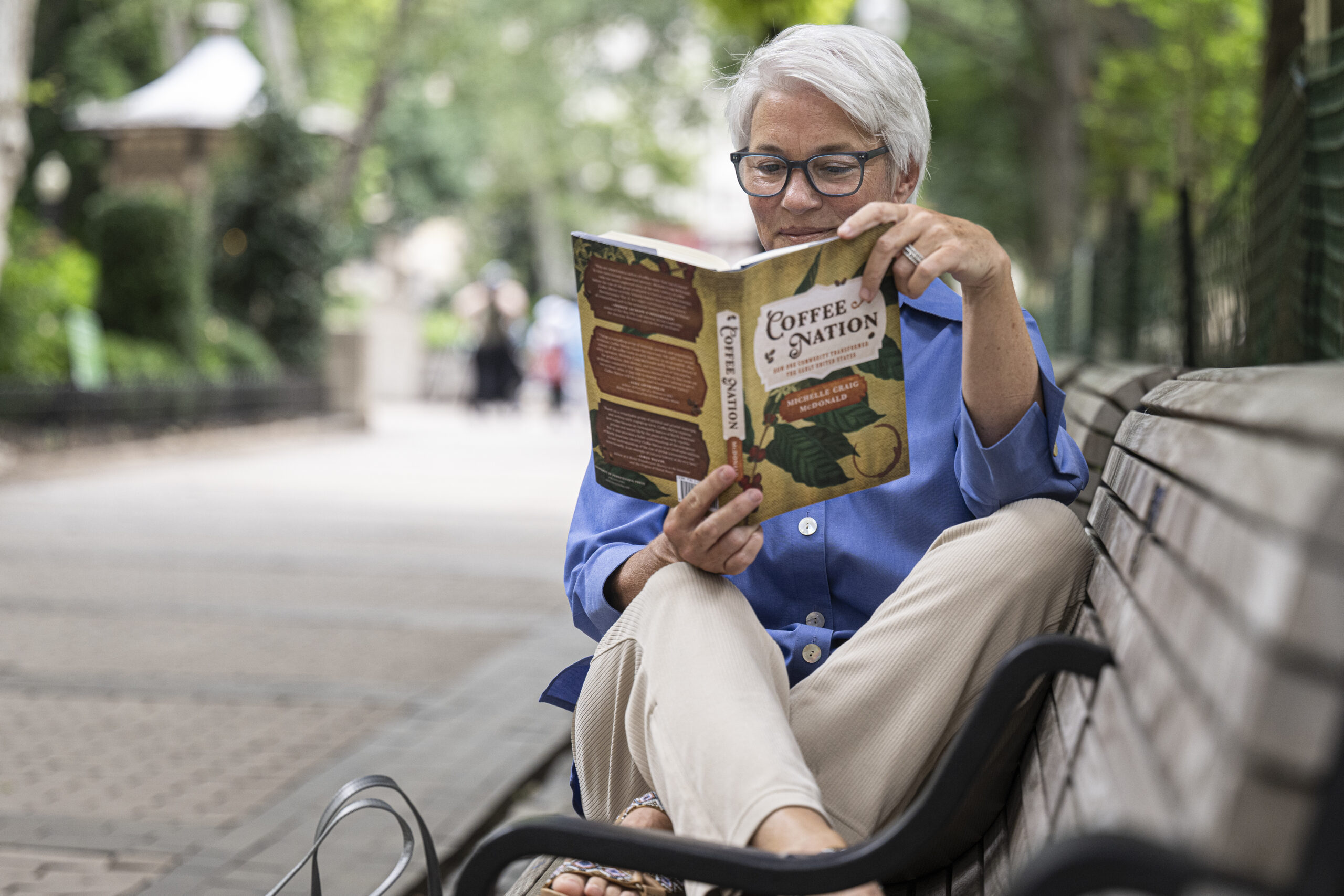
McDonald, who serves as an academic adviser for PBS’s series Drive By History, is the author of the new book, Coffee Nation: How One Commodity Transformed the Early United States.
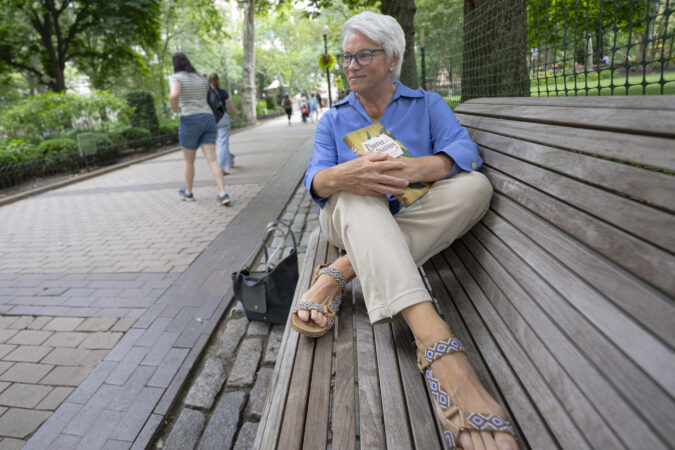
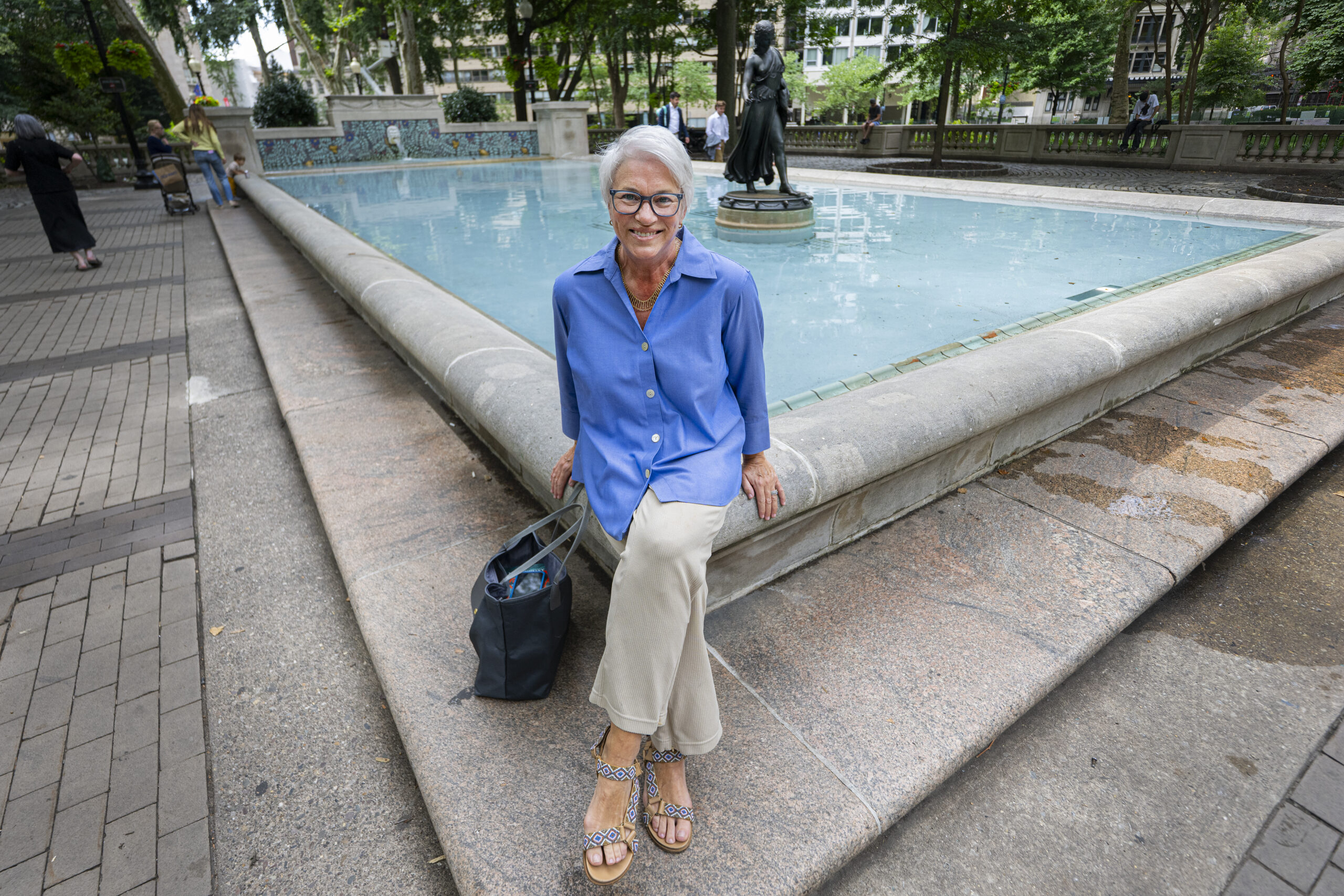
Philly historian and educator Michelle Craig McDonald enjoys reading in Rittenhouse Square Park. She is the author of “Coffee Nation: How One Commodity Transformed the Early United States.”
Telling the story of America and coffee, McDonald traces the bean’s beginnings from slavery-based plantations of the Caribbean and South America in the early 1700s through its prominence in Colonial life to the rebranding of the exotic good as an American staple. McDonald details the emergence of coffee shops, like the Old London Coffee House at Front and Market Streets, as critical Revolutionary-era hubs for politics and business.
“Within 50 years of our independence, the United States becomes one of the largest suppliers of coffee to the world — but we can never grow it,” said McDonald. So in this moment, when we think about independence, coffee really reminds us that the United States remains deeply tied and deeply embedded with the economies of the region. It was not just a self-sustaining nation that looked inward.”
Given the nature of her research, it’s no surprise that McDonald’s Perfect Philly Day revolves around food and drink. McDonald, a Southern California native who lives in Rittenhouse Square with her husband and fellow historian, Roderick A. McDonald, said her perfect day includes lots of coffee and cooking, a great Philly workout, and reading crime novels in Rittenhouse Square.
6:30 a.m.
My coffee pot is my first spot. I’m going to need fortification if I’m going to tackle the day’s news. I just go with the tried and true Colombian roast from Trader Joe’s.
When we are down the Shore, my favorite comes from Remedee Coffee, started by two sisters who source their beans from Colombia. It’s a great small business.
On a perfect day, this is when we do our New York Times games — like Connections or Wordle — which we do together. My sister says it’s cheating. I like to say it’s “collaborating.”
8:30 a.m.
I love cooking of all kinds, but baking is my first love. My go-to on a perfect day is a batch of scones. I have a recipe that I got online from a website called Love and Lemons. It’s a base recipe. You can make anything you want. Cranberry, orange walnut, apricot, ginger almond, or my brother-in-law’s favorite, which I know because he buys the ingredients every time I visit, blueberry lemon.
I used to head over to Metropolitan Bakery on 19th Street, which I am still mourning the loss of.
I loved their Millet Muffins and raisin walnut bread. My freezer is stuffed with both because I bought as many as I could before they closed. And I’m slowly rationing them so I don’t lose them quickly.
9:30 a.m.
We have a solid division of labor in the household. I do the cooking. But my husband does the shopping. While the scones are in the oven, he may well be on his way down to the Italian Market on his vintage 1962 Schwinn bicycle — expertly serviced by Curtis at Via Bicycle on Broad Street. He’s a fan favorite!
My husband is the provisioner of the house. I get to take what he brings back from the list — and sometimes not from the list. It feels like my own personal version of Chopped. He comes home with five ingredients and says, “What can you do with this?’”
10 a.m.
I’m hitting the gym. I do love eating, which means I need to pay the piper. I go to Pure Barrein Center City. It’s wonderful. It’s a class — a core-based workout that does weightlifting, planks, pushups. An hour there, any day I can get it, gives me enough brownie points for the rest of the day’s culinary adventures.
If the weather is nice, we might substitute a bike ride down the Schuylkill River Trail. Manayunk is a great destination.
Noon
That’s when Small World Seafood is in the area with deliveries. It’s an Old City business that was born out of necessity. The owner provided fresh seafood to restaurants during the COVID-19 pandemic. Then he began an online business selling directly to customers. You can get anything — halibut, skate steaks, steelhead trout, oysters, clams — for a lazy cooking night.
Michelle Craig McDonald’s perfect Philly day includes lots of coffee and cooking, a great Philly workout, and reading crime fiction in Rittenhouse Square.
1 p.m.
I’ve got the fish and I’m marinating it for dinner. Steelhead trout is one of my favorites, so super easy, a little bit of soy, a little bit of orange, a little bit of brown sugar, a little bit of maple, and garlic.
2 p.m.
On a perfect day, when I can while my time away, you will find me reading in Rittenhouse Square. I have an abiding passion for crime fiction. Ann Cleeves. Donna Leon.
And if it’s not great weather, you could still find me reading, but probably in one of any of a dozen coffee shops that are within walking distance of my house.
There was a great article that just ran recently in The Inquirer about the rise of Yemeni coffee shops in the city, such as Moka & Co.
3 p.m.
This is where it’s going to get busy. I would be remiss if I didn’t bring a little history and culture into this day. The American Philosophical Society has a wonderful project called “The Revolutionary City: A Portal to the Nation’s Founding.” It’s a partnership where five Philadelphia historical institutions — the APS, the Library Company of Philadelphia, the Historical Society of Pennsylvania, the Kislak Center at Penn Libraries, and the Museum of the American Revolution — came together to plan for 2026, and all their exhibits build on each other. Now I know that’s a long afternoon. Readers can pick and choose and see the others on their second favorite perfect Philly day [laughter].
6 p.m.
My husband and I cook together. If it’s Saturday, the compulsory listen is “The Many Moods of Ben Vaughn.” Cooking is my way to unwind and my husband is an excellent sous chef.
8 p.m.
We tend to have a leisurely meal with a glass of wine or two, and review the day’s exploits. An episode of television in the evening is a good escape. We are huge PBS fans. We love British crime dramas. We are huge fans of Shetland, a Scottish crime drama, and Vera, an old British crime drama with a curmudgeonly police detective.
10 p.m.
I am not a night owl. But I will confess to a wee dram of bourbon most evenings. Then, a little more light reading. And it’s time for lights out.
This interview has been edited for length and clarity.
The house: A 1,150-square-foot townhouse in Southwest Philly with two bedrooms and two bathrooms built in 1925.
The price: Listed for $180,000; purchased for $165,000.
The agent: Kristie Bergey, Coldwell Banker
The ask: Dylan Foglesong felt like he was overpaying for his apartment. He was spending $2,600 a month, plus utilities, for a two-bedroom place in Manayunk, and the money was going toward a place he would never own.
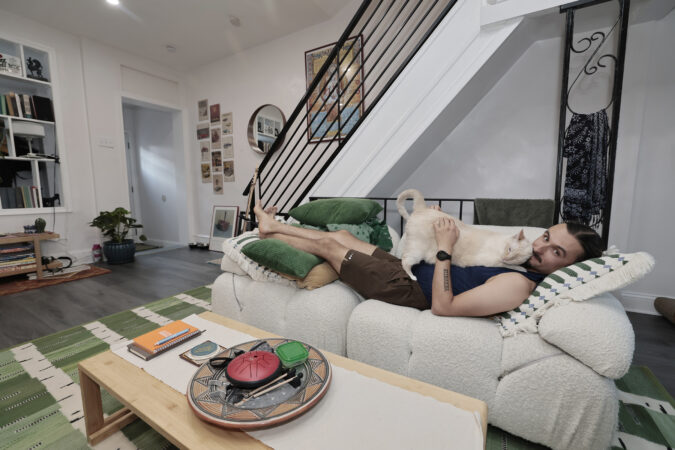
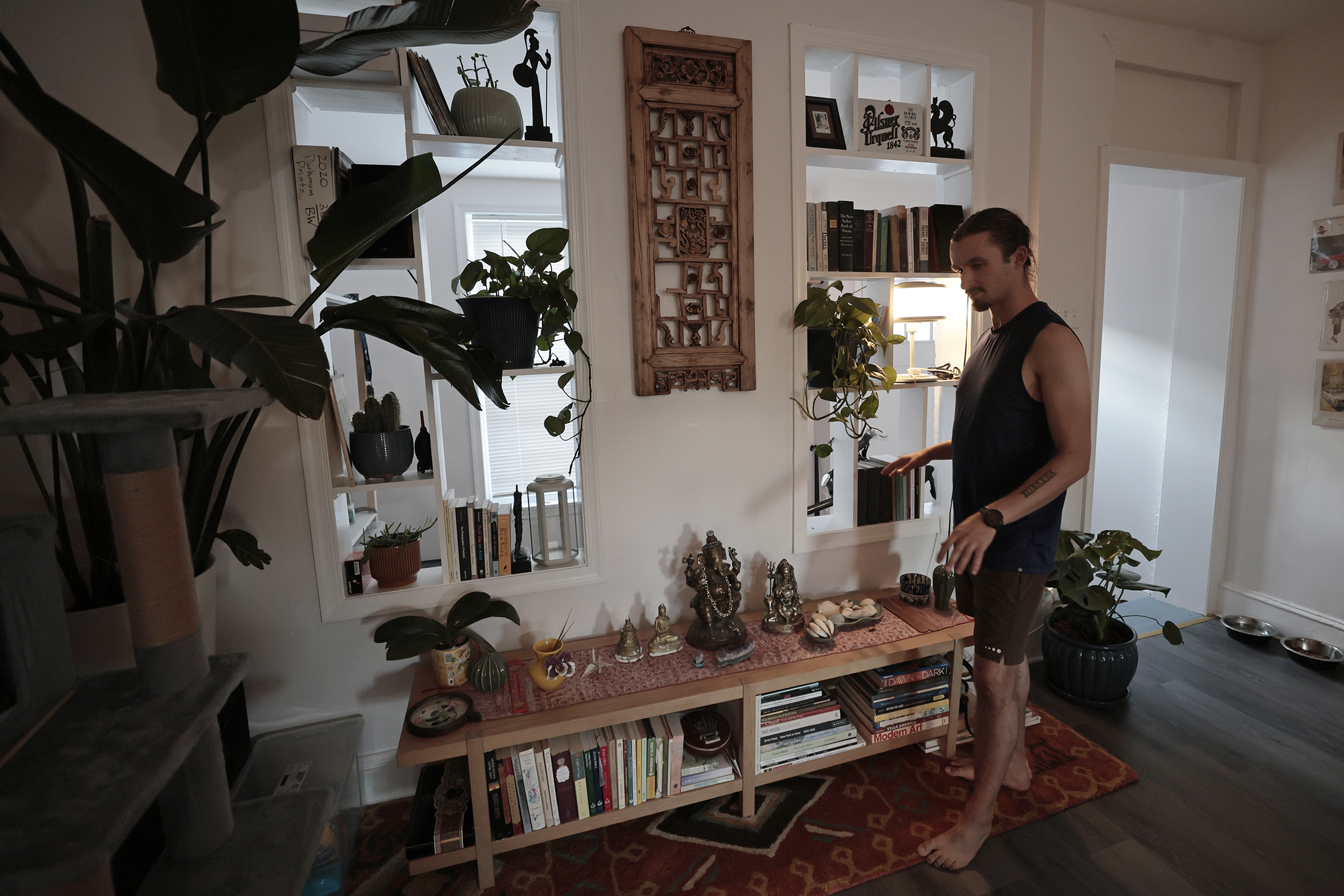
Dylan Foglesong tends to an area he calls the shrine in his home.
After six months, he paid the fee to break his lease and moved into a house with friends. His rent dropped to $600 a month, and because he was subletting month-to-month, he could leave whenever he wanted. He was saving more than $2,000 a month, and he realized he could put that money toward buying a house.
Foglesong had a simple wish list. As an avid cyclist, he wanted to be near multiple bike paths. He also wanted outdoor space, two usable bedrooms, and a low price. He did not care about central air or polished finishes. “I just wanted a cheap place that worked,” he said.
The search: Foglesong started searching in January,focusing on a small section of Southwest Philadelphia near Bartram’s Garden and the trail network along the Schuylkill. He wanted to remain close to Center City so he could bike to work.
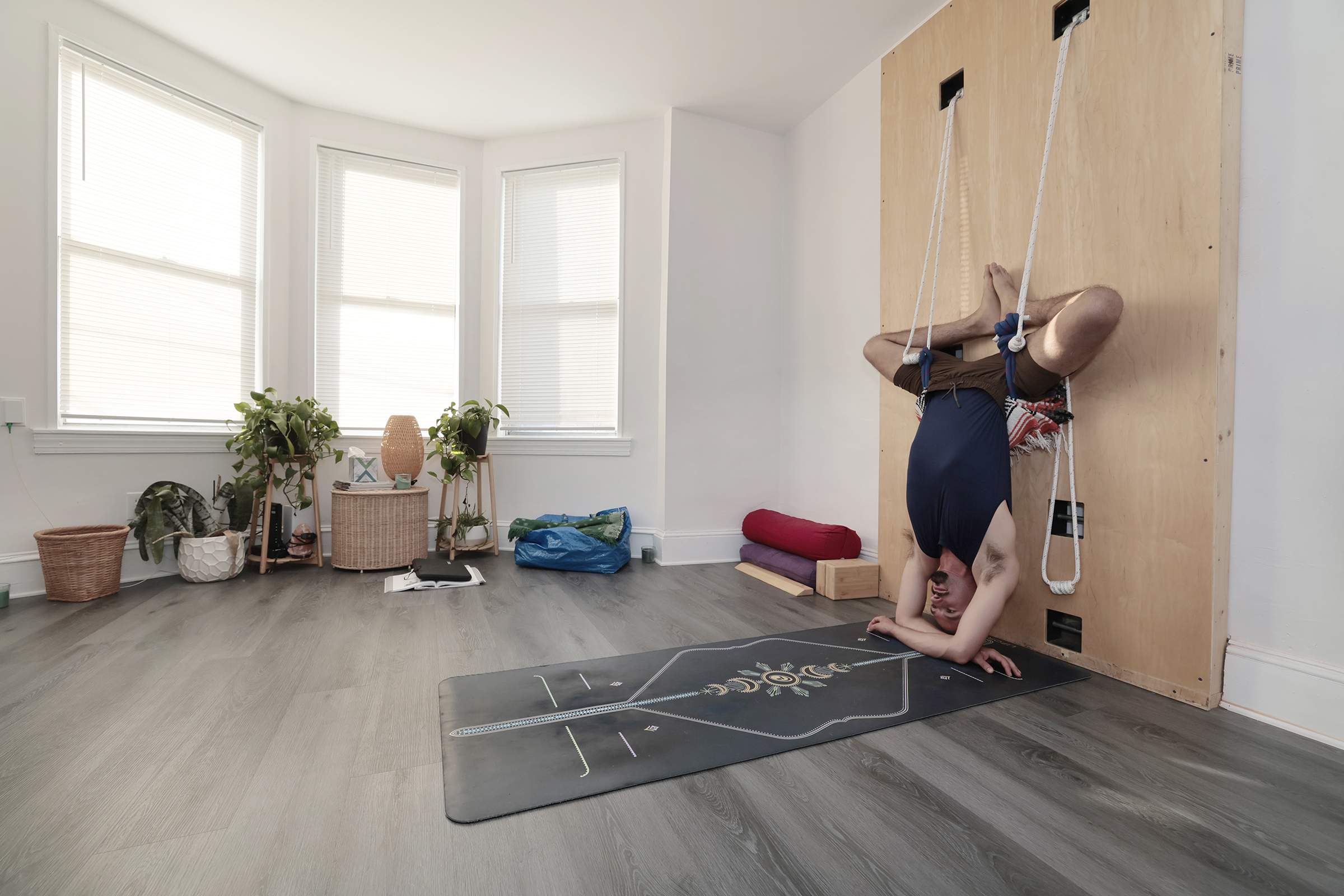
Foglesong uses the rope wall to work out in the studio of his home.
He saw five houses. The first one was in his ideal location, but the floors were scratched and coming up, the kitchen looked decades out of date, and the upstairs had the cramped three-bedroom layout he wanted to avoid. It would have taken too much work to reach a point where he was not “barfing every morning at how much of an eyesore it was,” he said.
The only other serious contender had a large backyard, a clean basement, and an updated kitchen. But a quarter of the ceiling in one upstairs room appeared to be collapsing because of a leak. The house was listed for about $212,000. Foglesong offered $190,000, figuring he could use the difference to repair the roof, but the seller rejected the offer.
The appeal: The fifth and final house had a great layout. Both rooms upstairs were large. It also recently had “a really thoughtful renovation,” Foglesong said. The updates included a new HVAC system and appliances, while the house also had a finished basement with high ceilings, outdoor space, and an enclosed front porch where he could store his bikes.
Foglesong also liked the location on a quiet side street with little through traffic. “It’s on the kind of street that you wouldn’t drive down unless you lived there or you knew someone who lived there,” Foglesong said. Most of the houses on the block were occupied, which made the neighborhood feel established.
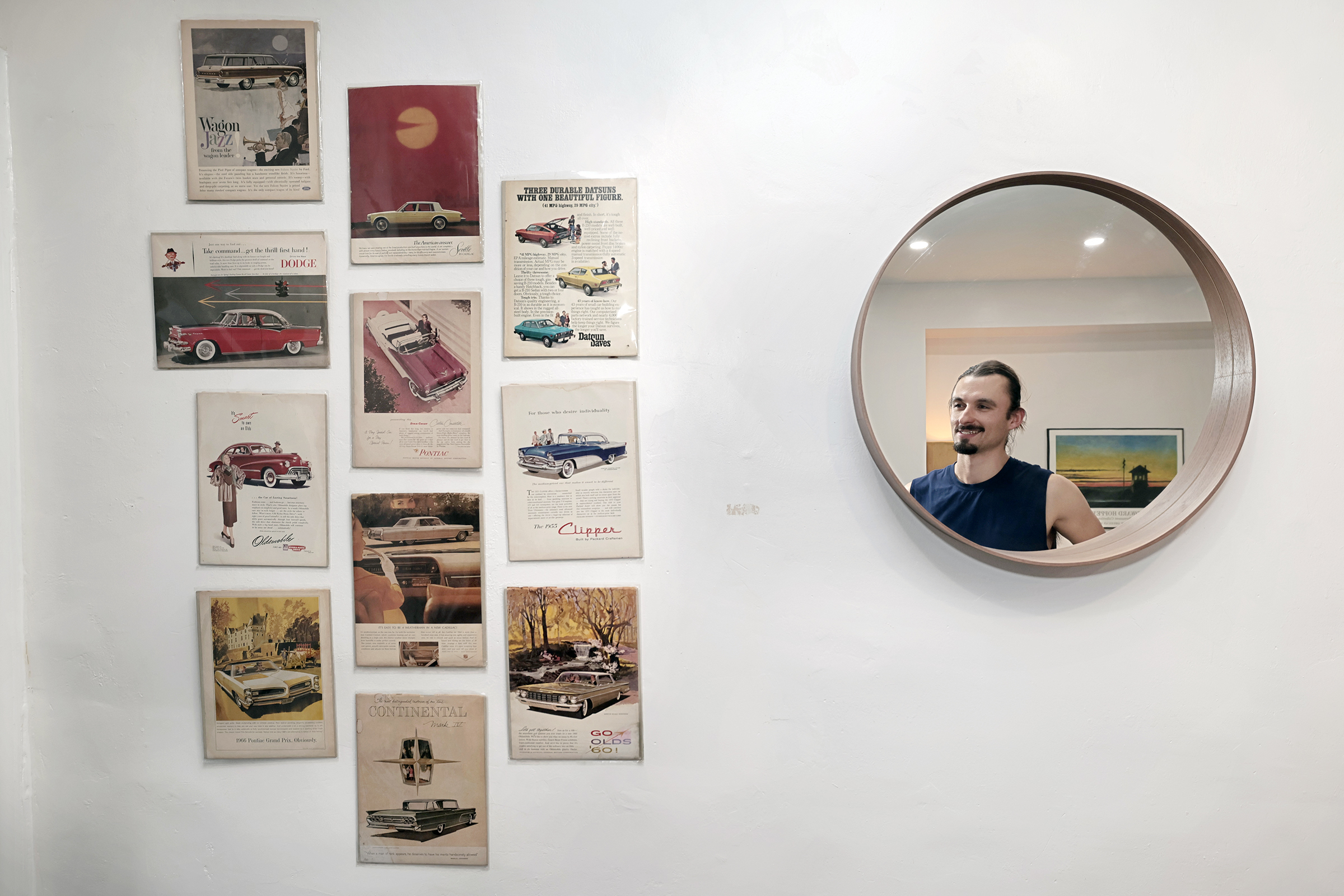
Dylan Foglesong is reflected in a mirror that hangs, next to classic car ads, in the foyer of his home.
The deal: The house had initially been listed for a little more than $181,000 before the seller lowered the price to $180,000. It had been on the market for roughly five months by the time Foglesong saw it.
He offered $170,000 and asked the seller to contribute 3% toward closing costs. They declined the closing assistance but countered at $165,000. The lower price ended up saving Foglesong the same amount of money, so he accepted.
The inspection was clean, save for one issue with the electrical. When Foglesong called Peco to arrange service, he learned that the house was not legally connected, even though the power was on. An electrical inspection found that the breaker box needed work, and the seller hired an electrician to set it up properly. But Foglesong still could not transfer the service into his name until the seller paid thousands of dollars in outstanding utility balances. The whole thing “seemed a little sus,” Foglesong said, but it worked out.
The money: Foglesong put 3% down, or $4,950. Including his closing costs, he paid about $11,600 out of pocket to buy the $165,000 house. His mortgage rate is 6.25%. Today, his monthly payment, including property taxes, is $1,300.
He already had some savings when he moved in with roommates, but the drop in rent allowed him to build the rest quickly. He estimates that he was saving nearly $3,000 a month. Within 3½ months, he had accumulated enough to cover the down payment and closing costs. “You take that little compromise for a couple of months,” Foglesong said about moving in with friends, “and all of a sudden you have $11,000 in your bank account.”
The move: Foglesong closed in April and moved his belongings from the shared house into a 10-foot U-Haul. Everything fit in one load, and he completed the move over two days without hiring movers or asking friends to help.
He managed it alone because he did not own much heavy furniture. His couch comes apart into sections, and he sleeps on a futon that he could fold and carry over his shoulders. For everything else, he improvised. “You put a blanket on the stairs, slide the furniture down,” Foglesong said. “You figure it out.”
Life after close: At first, buying the house felt less momentous than Foglesong expected. He had imagined “a really grand, movie-montage sequence,” he said, but moving in felt much like any of the other moves he had made during his 10 years in Philadelphia.
But as the weeks passed, the difference between his new home and the others became clearer. He was no longer paying rent for a place that belonged to someone else. He owned the house, and the monthly payment was within his budget. “It’s very grounding to wake up in a place that you can afford,” Fogelson said.
The experience also reinforced his belief that young buyers may need to reconsider what they expect from their first home. “You have to be realistic about what you can access right now,” Foglesong said. “Your first house doesn’t have to be your dream home.”
Editor’s note: This article has been updated to correct real estate agent Kristie Bergey’s name.
Did you recently buy a home in the Philadelphia area or South Jersey? Share the story of how you did it. Email Inquirer real estate reporters at properties@inquirer.com.
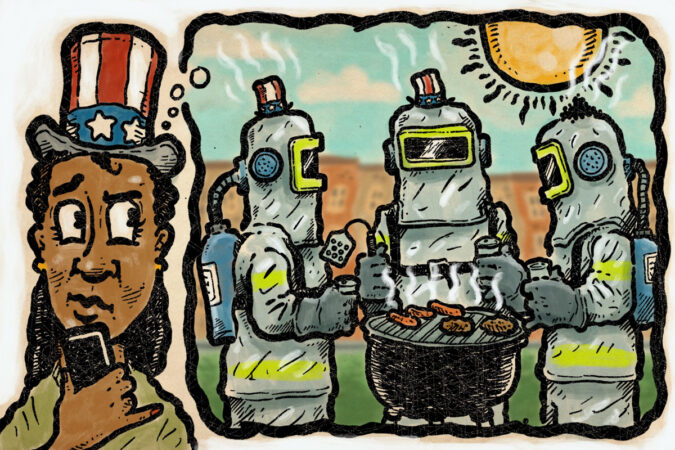
Is it rude to turn down a Fourth of July barbecue because it’s going to be 1,000 degrees? Let a woman sit inside … I’ll cook faster than the chicken.
Rosa Cartagena, Arts & Entertainment reporter
My knee-jerk response: Say no, and don’t feel guilty.
But for a better read on the situation — what’s your relationship to the host? Is this a must-do annual gathering? Are these friends you haven’t seen in a long time? Either way, we’re experiencing an extreme heat advisory, and you need to take care of yourself, so maybe staying home is the best bet.
Mike Newall, Life & Culture reporter
Before we begin, let me tell you a few facts about myself — so you can fully understand my bias. I was born with transparent skin. Nickname was Casper. I also hate sweating. Not if I’m exercising or playing sports or working. But if I’m just sitting down — I don’t want to be sweating.
I also don’t drink anymore. Given all that, I don’t ever like to be at a barbecue unless it’s in chilly Maine or I’m cooking. Because then I’ll be working, at least.
And Rosa’s right. Look after number one when it comes to heat advisories!
Rosa Cartagena
Oof, yeah, I agree with Mike — the sweat situation won’t be cute for anyone. What’s so special about this particular cookout, aside from the holiday? If it’s not an important tradition for you and your loved ones, then pass on this one and find another (cooler) time to enjoy the food and outdoors without so much discomfort. But if you do feel pressure to show up, you could always stop by early for a quick hour to show face and then duck out.
For my part, I do love the sun, and I think day drinking is the only July Fourth activity that I properly enjoy, but especially if you’re someone who’s older, or possibly have health concerns, it’s not worth the risk for some hamburgers. Protect your body (and your peace).
Mike Newall
Show your face to the bathroom mirror when you’re all sunburned!!!
Look, barbecues are just occasions to do things that aren’t enjoyable in 100-degree heat: make small talk, make sure the kiddo doesn’t get hurt or hurt anyone else, drink constant water and soda to keep boredom and nerves at bay and keep having to ask to use the bathroom (because of all that water and soda).
Rosa Cartagena
Totally true. I’d only add that it might be worth calling the host to see if their plans have shifted given the impending inferno — if they’re making adjustments to bring the party indoors, it may be worth the heat of traveling there and back. If not, just think how much happier you’ll be at home, in your AC, watching the World Cup and fireworks from the comfort of your couch.
Mike Newall
Call this host and ask them what the heavens to Betsy they were thinking of in the first place! Inviting you to such an obviously dangerous party in the first place! This selfish Meatapalozza in the middle of inhuman temps!
An event you would have to prepare an item for, pick out an outfit for, think of witty remarks for — all in the middle of Dante’s return!
But look, I’m someone who talks a big game, then goes and has the time of my life. So it’s really jump ball!
Look one things for certain. You can have a blast at a barbecue. It can be the summer kickback your soul needed. But this weather ain’t no joke.
Rosa Cartagena
Of course, there’s something really special about being outside and partying this week because there are thousands upon thousands of tourists enjoying the city and bringing such amazing, positive energy that I’d encourage everyone to experience. So if you wind up thinking, I want to have a good time during this historic, momentous celebration, I’m on your side. It could be a game-day decision. The urge to party may outweigh the dreaded sweat.
For me, I’d probably need just a couple tequila shots to make me feel invincible to the heat. (Then lots of water after, I promise.)
Mike Newall
Yes, drink responsibility! Do what you want! Have fun! And if anyone at this party brings up the 250th, just talk longly and loudly about how it all happened here. In short, be you. Be Philly. Happy 250th!
So The Inquirer’s Dugan Arnett, previously of the Boston Globe, went north to investigate. What followed was less a travel story and more a historical audit.
The Battle of Bunker Hill wasn’t actually fought on Bunker Hill. Plymouth Rock probably wasn’t where the Pilgrims first stepped ashore. Paul Revere never completed the ride he’s famous for. Even Ben Franklin’s grave turned out to be a replica. That’s a tough box score.
None of this is to say Boston isn’t one of America’s great historic cities. It is. The Freedom Trail is worth walking, and the city has every right to celebrate its place in the nation’s founding.
But if you’re going to challenge Philadelphia to a history contest, your greatest hits probably shouldn’t come with so many asterisks.
Meanwhile, Philadelphia is just over here with the Declaration of Independence, the Constitution, the Liberty Bell, Independence Hall, and enough actual founding history that Nicolas Cage based an entire movie around stealing it.
Philadelphia didn’t have to make a case for itself; Boston made it.
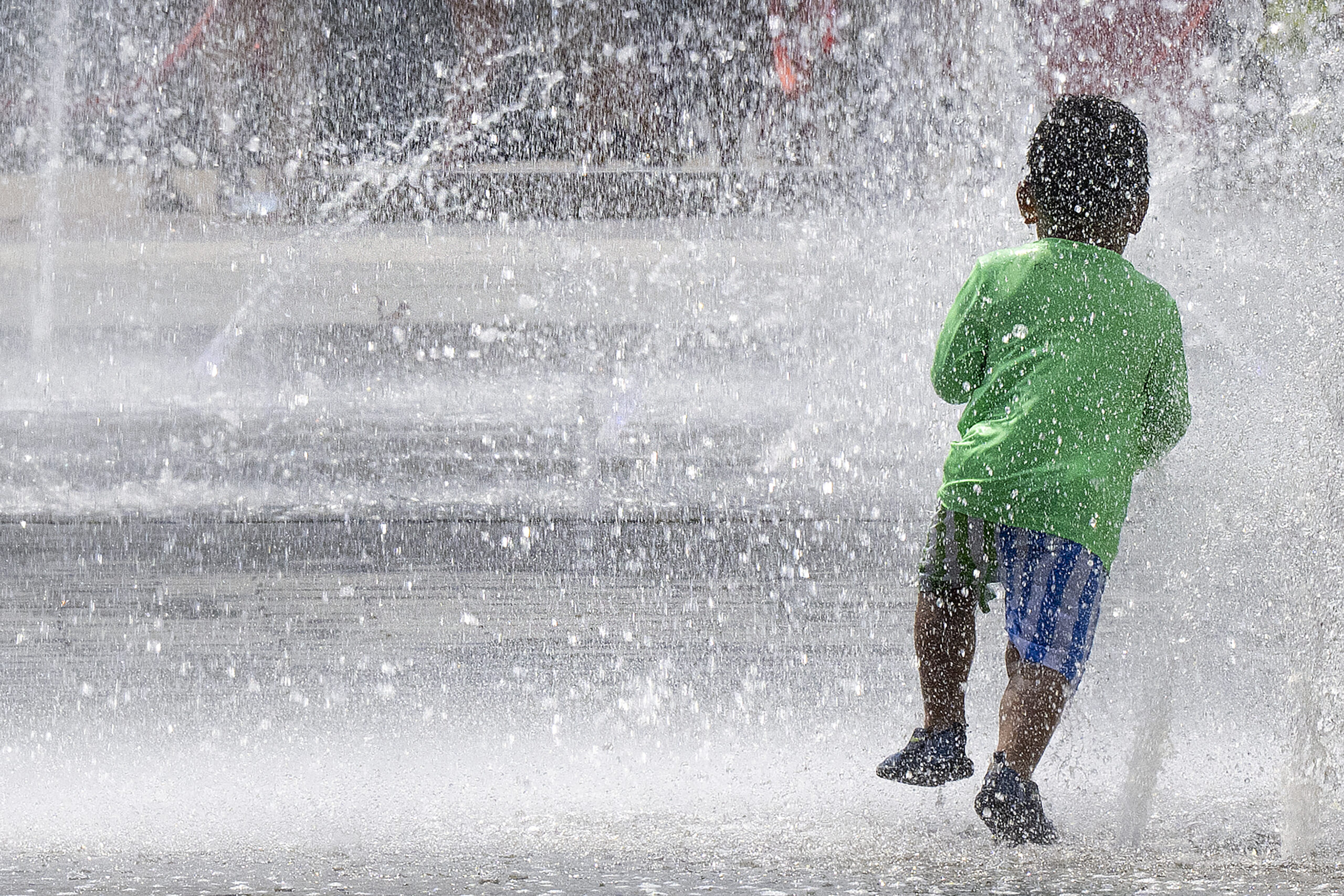
A young boy runs through the spray from the fountains at LOVE Park on a hot summer day on July 1. Temperatures are expected to break a bit Saturday into Sunday as the heat wave finally moves out of the region.
The Fourth of July heat: D-
If there were ever a week for Philadelphia to catch a break from the weather, this was it.
Philadelphia has spent years preparing for this once-in-a-generation celebration. The city can’t control the weather, but the weather doesn’t particularly care about 250 years of planning.
Hopefully, the forecast proves just pessimistic enough to keep everyone safe without putting too much of a damper on the festivities. Because nobody wants to spend America’s birthday wondering whether it’s too hot to light the grill.
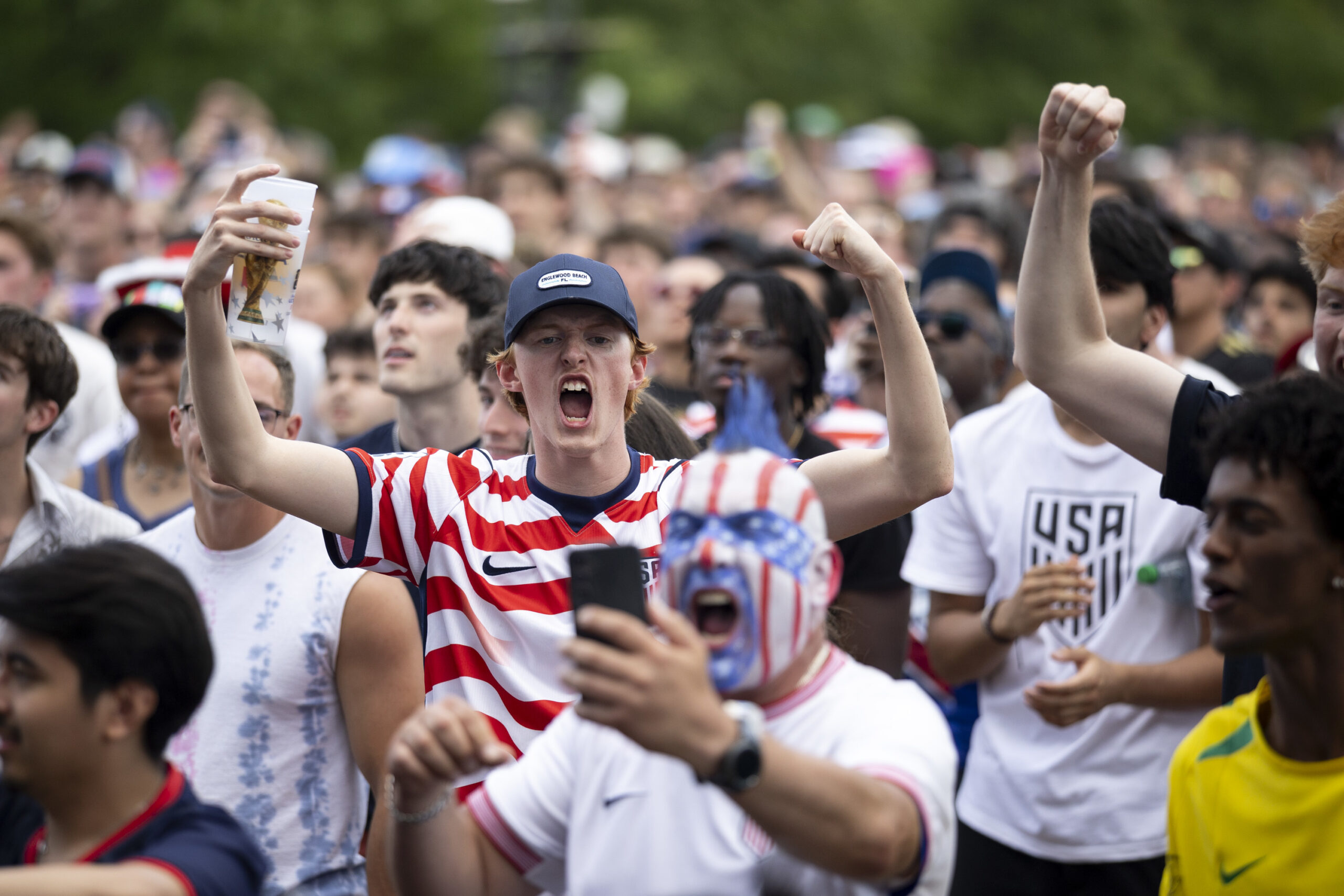
Cam Gorman, 23, of Gilbertsville, Montgomery County, cheers with Philly Sports Guy at the FIFA Fan Festival on June 19 as the USA beats Australia.
To be fair, Boston only ever planned to keep the festival open through the group stage. Meanwhile, we’re still going.
As the tournament moves into the knockout rounds, Philadelphia still has a Fan Festival, another World Cup match, and America’s 250th birthday celebration all packed into the same week.
So for one more week, Philadelphia still feels like the center of the soccer world.
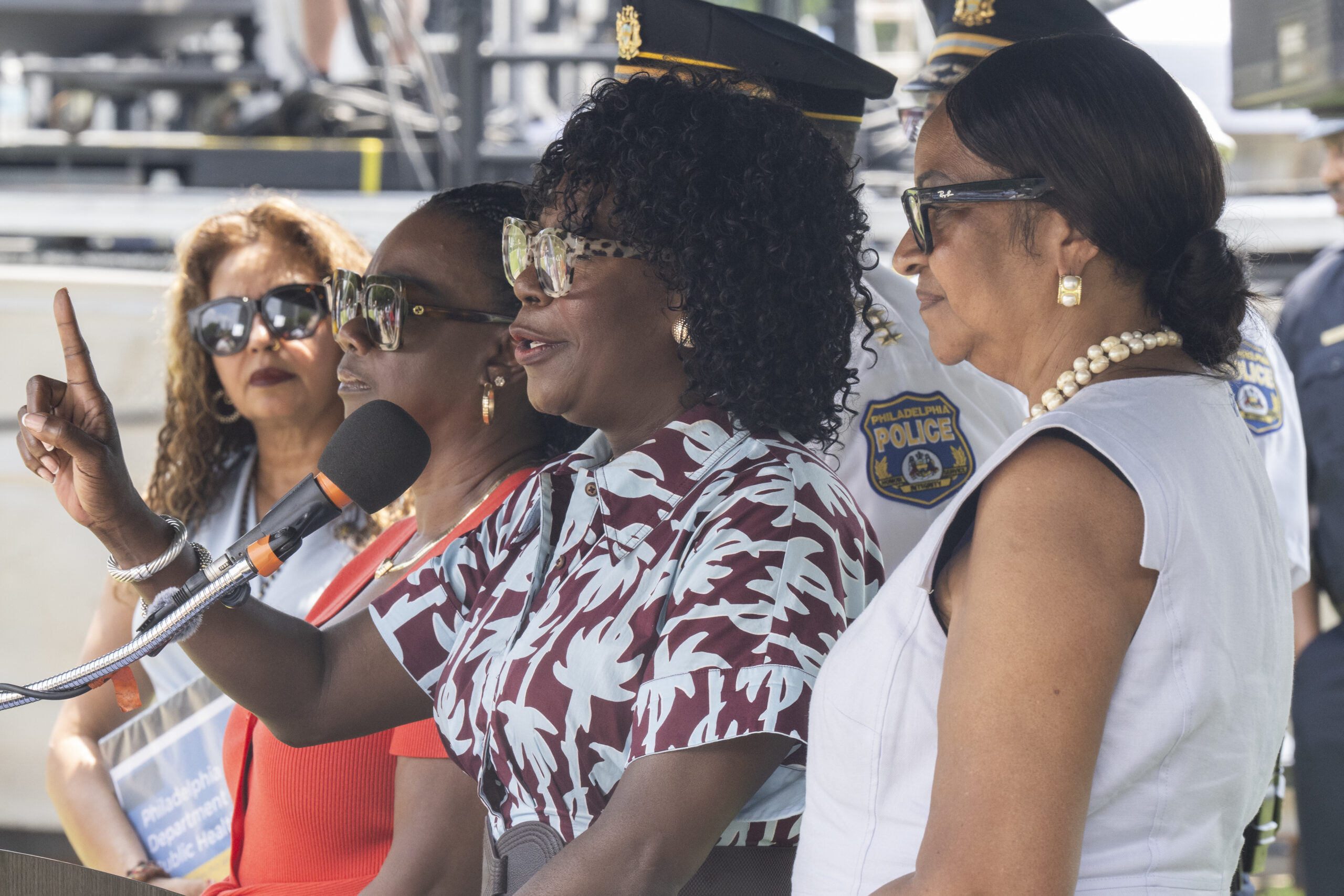
At a Wednesday news conference, Philadelphia Mayor Cherelle Parker outlines public safety and transportation plans for the July 4 concert expected to draw thousands to the Benjamin Franklin Parkway.
If it wasn’t broken: C-
Philadelphia didn’t need to reinvent its Fourth of July celebration.
You can spend years planning a wedding, but you can’t plan for 300 Croatian soccer fans.
A Philadelphia couple stepped outside City Hall for the classic wedding photos last week and instead found themselves in the middle of a sea of red-and-white checkered print, singing and dancing. The celebration quickly became one of the most joyful viral moments of the World Cup.
The funny part is that the newlyweds weren’t the ones who got crashed. They were the ones who accidentally wandered into Croatia’s party.
The fans serenaded the couple, posed for photos, declared them honorary Croatians, and are now trying to raise money to send them to Croatia for a future trip, Billy Penn reported.
It’s hard to imagine a better advertisement for Philadelphia hosting the World Cup.
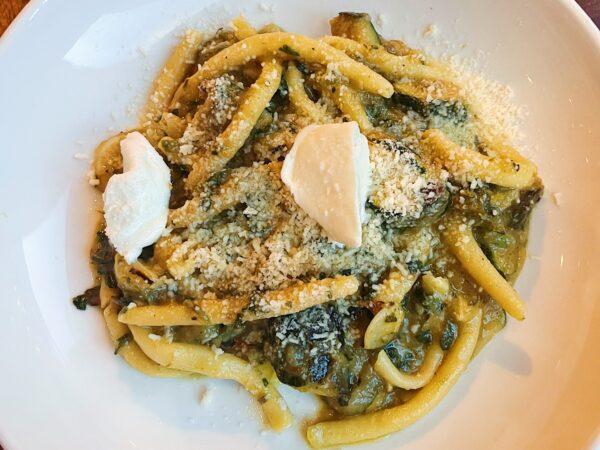
There’s something special about a thick, hand-rolled noodle. As part of its summer menu, Le Virtù’s ceppe — a chewy Abruzzese pasta shape that resembles a short and stout bucatini noodle — are made by hand and tossed in a bright squash blossom pesto. I later learned that ceppe gets its name from the wooden sticks or rods they mimic, a nice bit of pasta trivia I will stow away for quizzo. The hearty plate is topped with zucchini ragu, with a generous amount of the plant mixed throughout the dish, and mozzarella di bufala. It’s best enjoyed with a glass of wine on the restaurant’s beloved patio. Le Virtú, 1927 Passyunk Ave., 215-271-5626, levirtu.com
— Emily Bloch
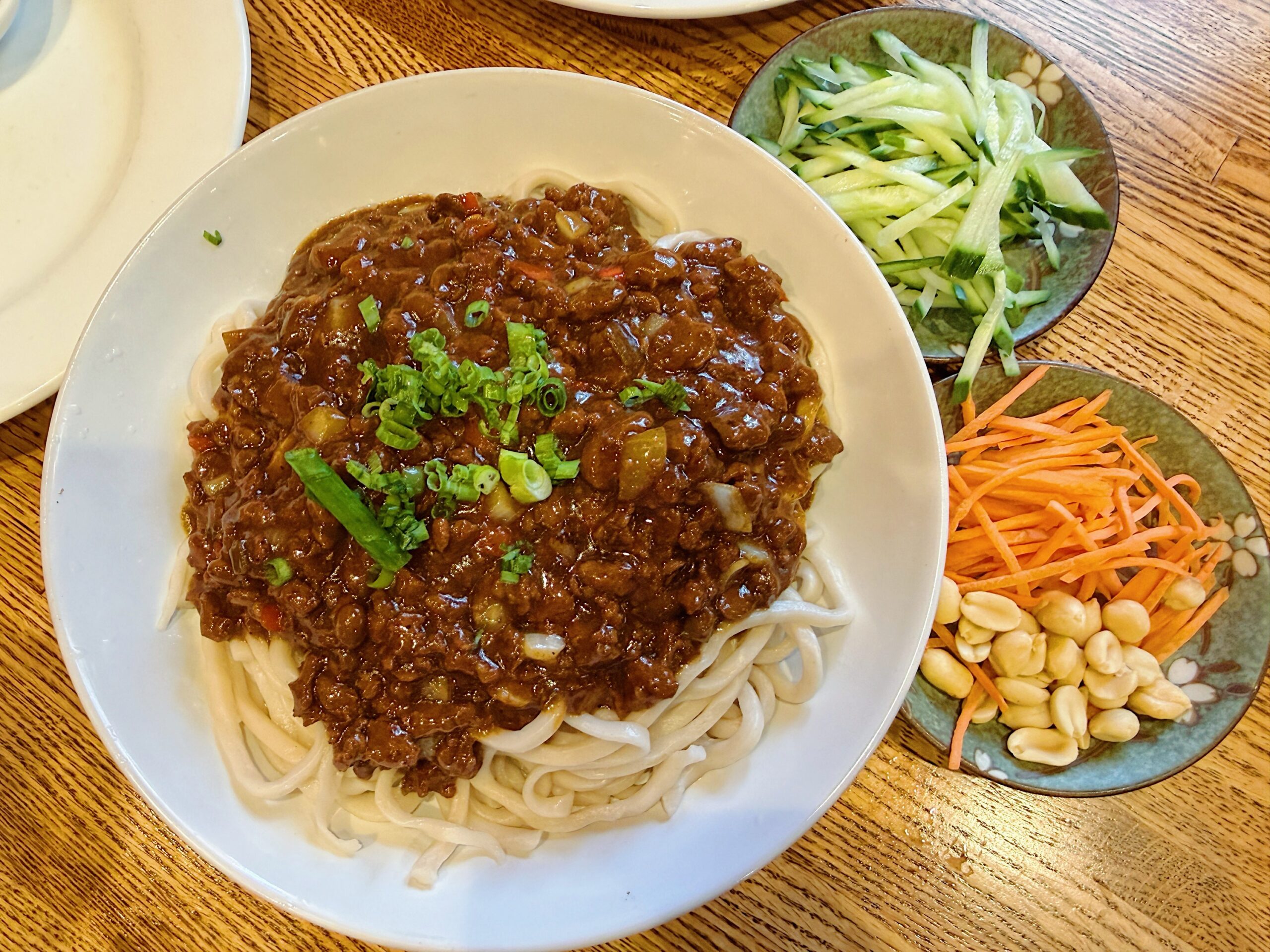
Zhajiang Mian at Opera House, 112 N. Ninth St.
Zhajiang Mian at Opera House
It has taken me far too long to get to Opera House, which opened about a year ago in the former Rangoon space. Rangoon had been my favorite restaurant in Philly for years, and I was admittedly bitter about them no longer occupying that storefront on Ninth Street. Now, I’m very pleased to report that my bitterness has now been assuaged.
Opera House is bright, beautiful, sparkling clean, a visual ode to Chinese opera that specializes in Northern Chinese food. They do have some Cantonese items on the menu (that are just fine), but the real star of the show is their $14.95 zhajiang mian. Saucy, with lean ground pork and lots of slow-cooked onions, these noodles are a true celebration of handmade textures. They’re intentionally a little wonky from being hand-stretched — some parts are thinner than others — so they sop up the super umami-rich fermented soy sauce in interesting ways. Served with sides of cucumber and carrot matchsticks and roasted peanuts, it’s likely the best version of the dish I’ve had in Chinatown, and such a beautiful play on varying textures and temperatures. Opera House, 112 N. Ninth St., 267-639-2376, operahousephilly.com
— Kiki Aranita
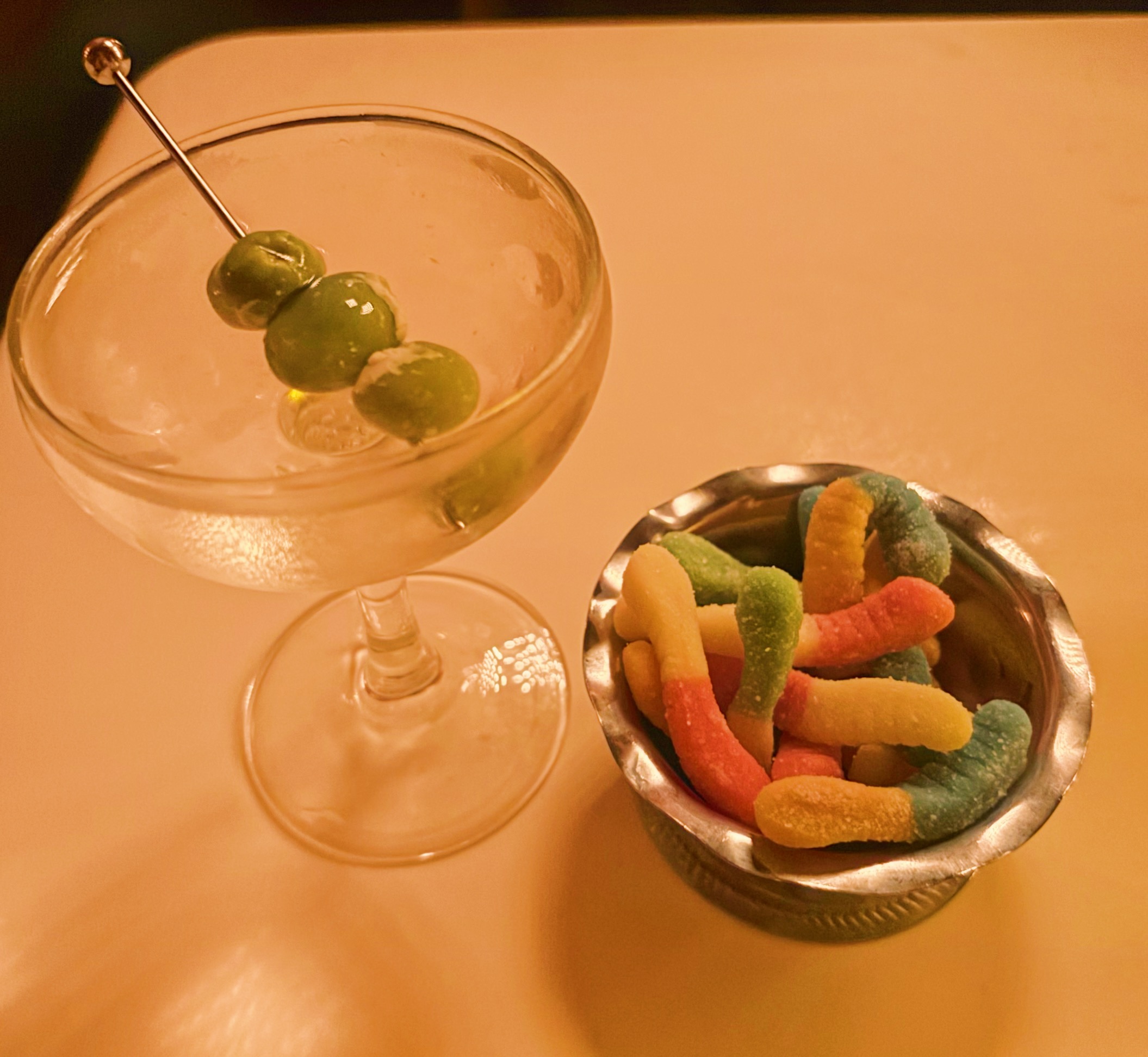
The Girl Dinner cocktail, a clarified gin martini with a sidecar of gummy worms, at Angeloni’s Club Madrid in Atlantic City, N.J.
Girl Dinner at Angeloni’s Club Madrid
Atlantic City is a weird and magical place, particularly for those of us who tend to visit in 24-hour increments. I made such a journey last weekend, and the highlight was finally getting to try Angeloni’s Club Madrid, the retro-styled Italian spot that opened in 2024 from the owner’s of the beloved Tony’s Baltimore Grill. Angeloni’s was everything I hoped it would be — part cozy dining experience, part lounge party. Case in point: a DJ somehow seamlessly incorporated Norah Jones into a dance-y set.
The menu included one of the best versions of cacio e pepe I’ve had in a long time. But the star of the show is the cocktail menu, which has interesting interpretations of classic cocktails, executed with both fidelity to the drink and total whimsy. My favorite was the Girl Dinner, a perfect dirty gin martini served with a blue-cheese stuffed olive and a sidecar of gummy worms. It shouldn’t work — blue cheese and gummy worms? — but it does. It has that kind of slightly off-kilter energy that a really fun party does, where things are always threatening to fly off the hinges but somehow stay just contained enough for a memorably good time. Angeloni’s Club Madrid, 2400 Arctic Ave., Atlantic City, N.J., clubmadridac.com
— Margaret Eby
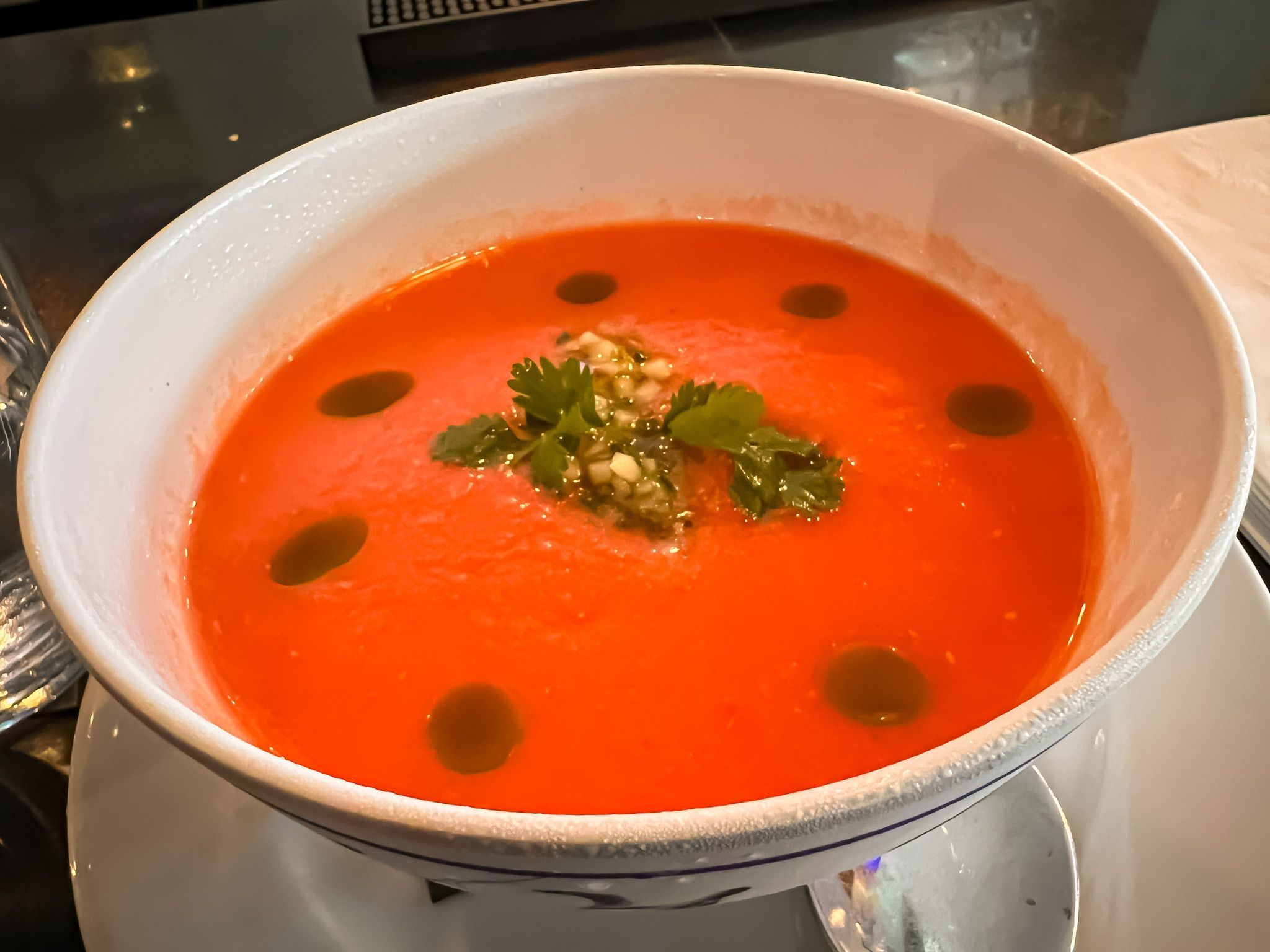
Watermelon gazpacho at Cantina Feliz, Ambler.
Watermelon gazpacho at Cantina Feliz
I always look to July 4 as the unofficial start of watermelon season. This year, that feels especially fitting: Forecasters are calling for one of the hottest Independence Days Philadelphia has seen in nearly a quarter-century, making cold watermelon all the more appealing. That spirit comes through in this watermelon gazpacho from Cantina Feliz in Ambler, which leans savory rather than sweet. Cucumber amplifies the freshness, while finely diced red onion and chives add bite without overwhelming the fruit. A drizzle of verdant herb oil lends richness, and the accompanying shot of sherry gives it a nutty, tangy depth. It’s a refreshing summer starter that becomes more layered with every spoonful. Cantina Feliz, 111 E. Butler Ave., Ambler, 215-646-1320, cantinafeliz.com