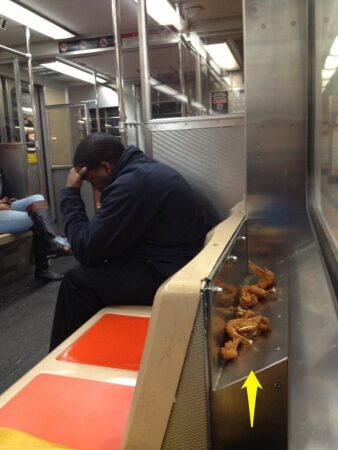
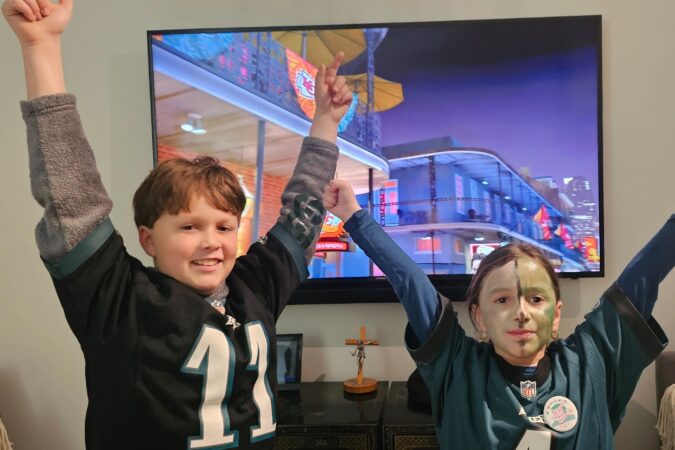
There are two architects of Philadelphia’s chicken-bone temple. One has whiskers. The other has hands.
Curious Philly asked why there were so many chicken bones on the streets of our city. Turns out it’s a whole circle of life testament to gross urban living. Rats rip into trash bags, raccoons drag leftovers into the street, and yes, sometimes humans just … drop them.
Somewhere in Philly, a squirrel is dragging a drumstick across a crosswalk like it just led the Mummers Parade down Broad. A raccoon is performing minor surgery on a Hefty bag. And a rat is simply responding to the opportunity. Philadelphia is the eighth-rattiest city in America (which feels relevant here), and twice-weekly trash pickup means an extra day of opportunity. A ripped bag on the curb is an open invitation.
Meanwhile, dog owners are performing full-contact tug-of-war in the middle of the Gayborhood because their shih tzu refuses to give up a chicken bone that is just as likely to choke them to death.
So please, put a tight lid on the trash cans. Until then, the sidewalk wing night continues.
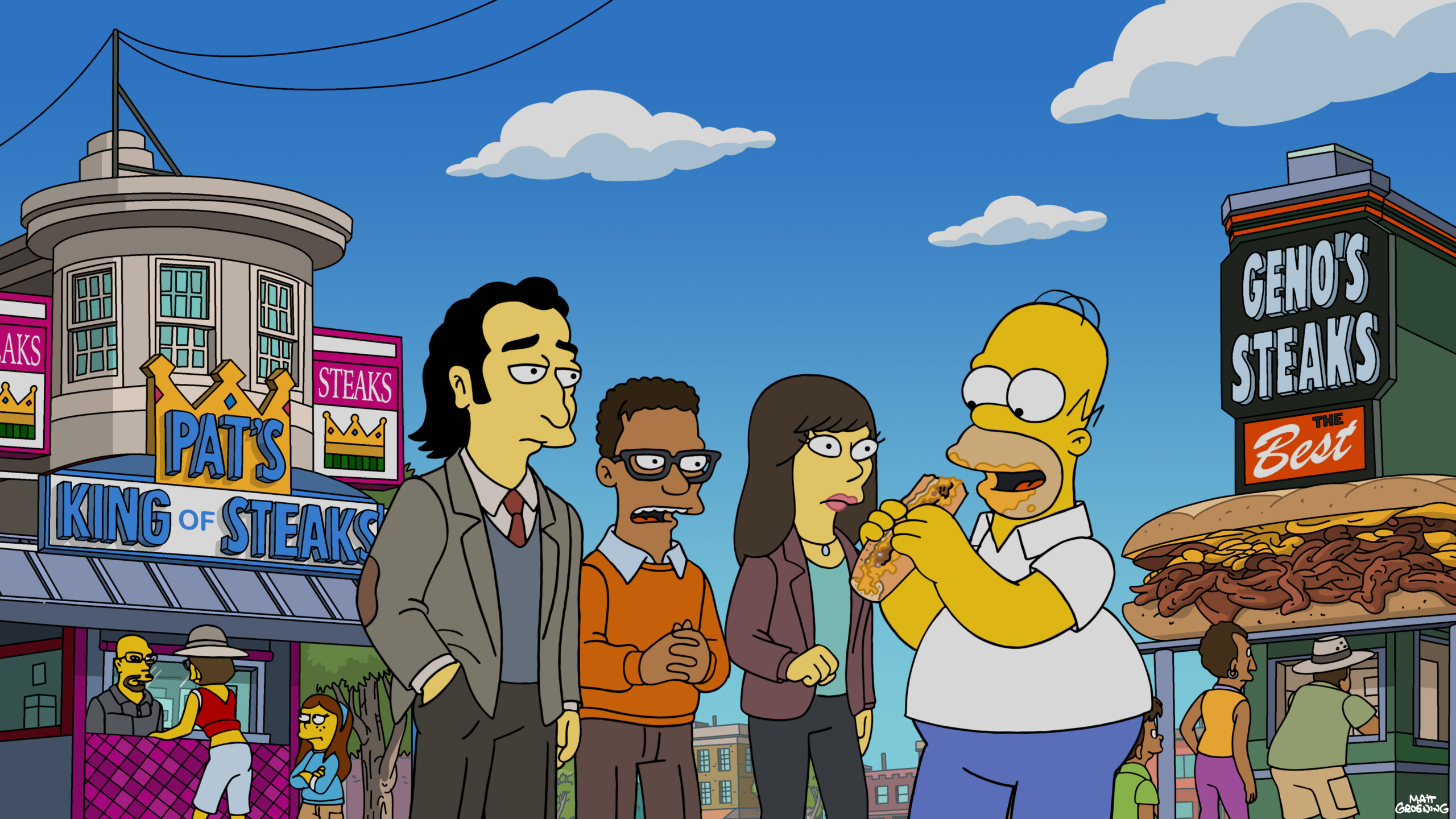
Homer (Dan Castellaneta) eats a cheesesteak in South Philly in an upcoming episode of ‘The Simpsons.’
They covered the obvious beats. Rocky, Wawa, cheesesteaks, the whole “wooder” universe. That’s low-hanging fruit.
But tucked into the background of the episode was a joke that wasn’t obvious, wasn’t tourist-friendly, and absolutely wasn’t generic: a fictional dog park called Michael Vick Reparation Park, “the best dog park in the world.” That’s a deep-cut, morally messy, and very-Philly sports memory.
Vick arrived here after serving prison time for running a dogfighting ring. His signing split the fan base and forced years of uncomfortable conversations about redemption, talent, and how much winning smooths things over. He rebuilt his career in Eagles green. Some fans forgave, while others never did. The tension is the punchline.
It works because it’s The Simpsons. And it lands because this episode wasn’t written by someone skimming Wikipedia. It was written by Christine Nangle, Oxford Circle-raised, Penn-educated, and still passionately Philly. You don’t make that joke unless you remember how complicated that era was.
The episode even found space to include a nod to the late Dan McQuade in the Roots concert scene. Blink and you’d miss it, but it’s a tribute that meant something if you knew.
So the moral of the story is anyone can animate the Liberty Bell. It takes a local to slip in a joke that sharp and trust the audience to understand it.
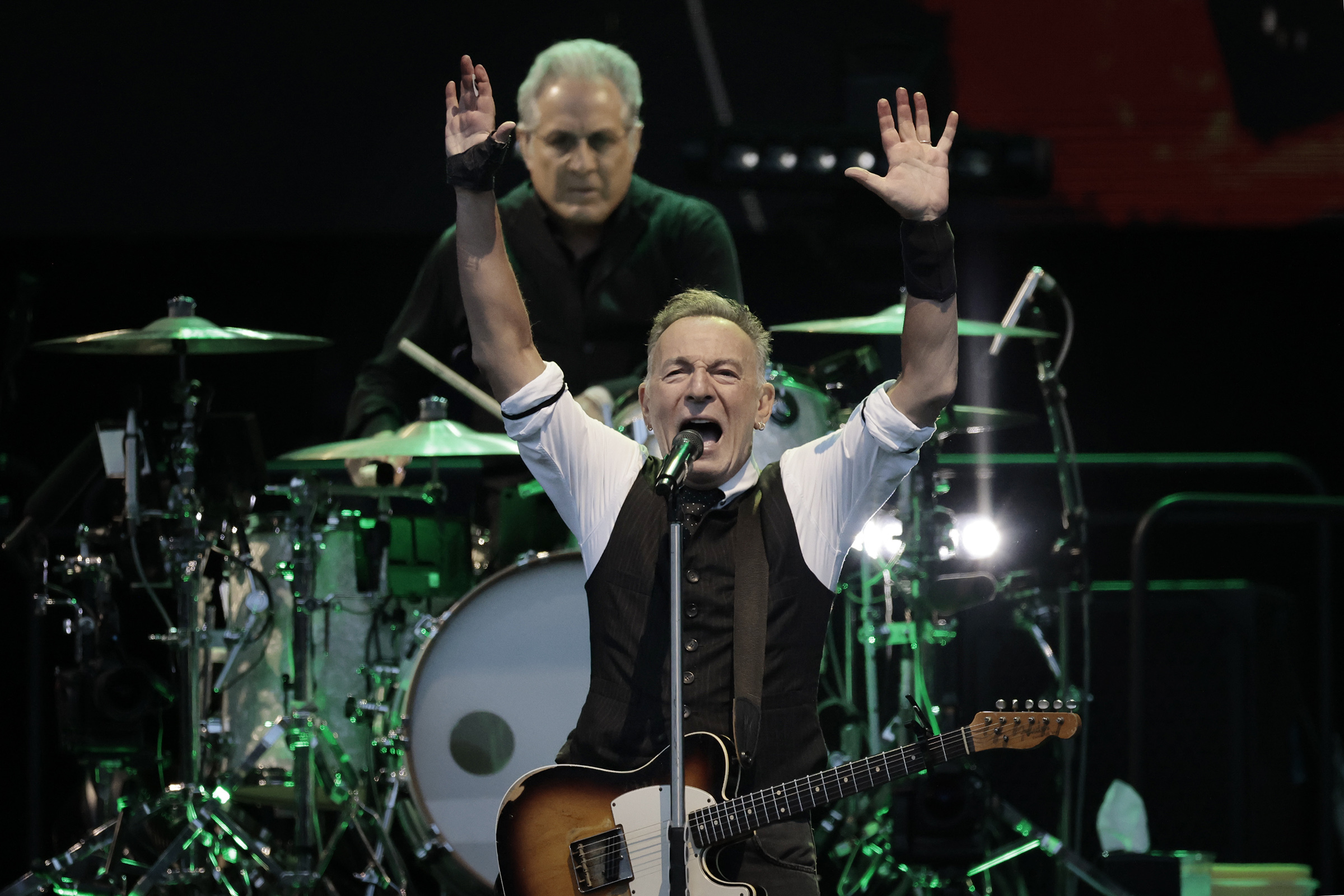
Bruce Springsteen and Max Weinberg performing during the Bruce Springsteen and the E Street Band 2024 World Tour at Citizens Bank Park in Philadelphia on Wednesday, August 21, 2024.
As in, windows-open, water-ice-in-hand, skyline-glowing, baseball-season May.
And instead of Citizens Bank Park, where he played two summers ago under actual sky, the “Land of Hope and Dreams” tour is landing at Xfinity Mobile Arena.
Indoors.
This is not anti-arena slander, but May in Philadelphia is outdoor concert weather. It’s built for a ballpark.
The tour includes 19 arena dates and one baseball stadium finale in Washington. Which makes it feel even more criminal that Philly — a city that will scream every word to “Born to Run” — is getting the indoor version.
(We’ll still go, obviously.)
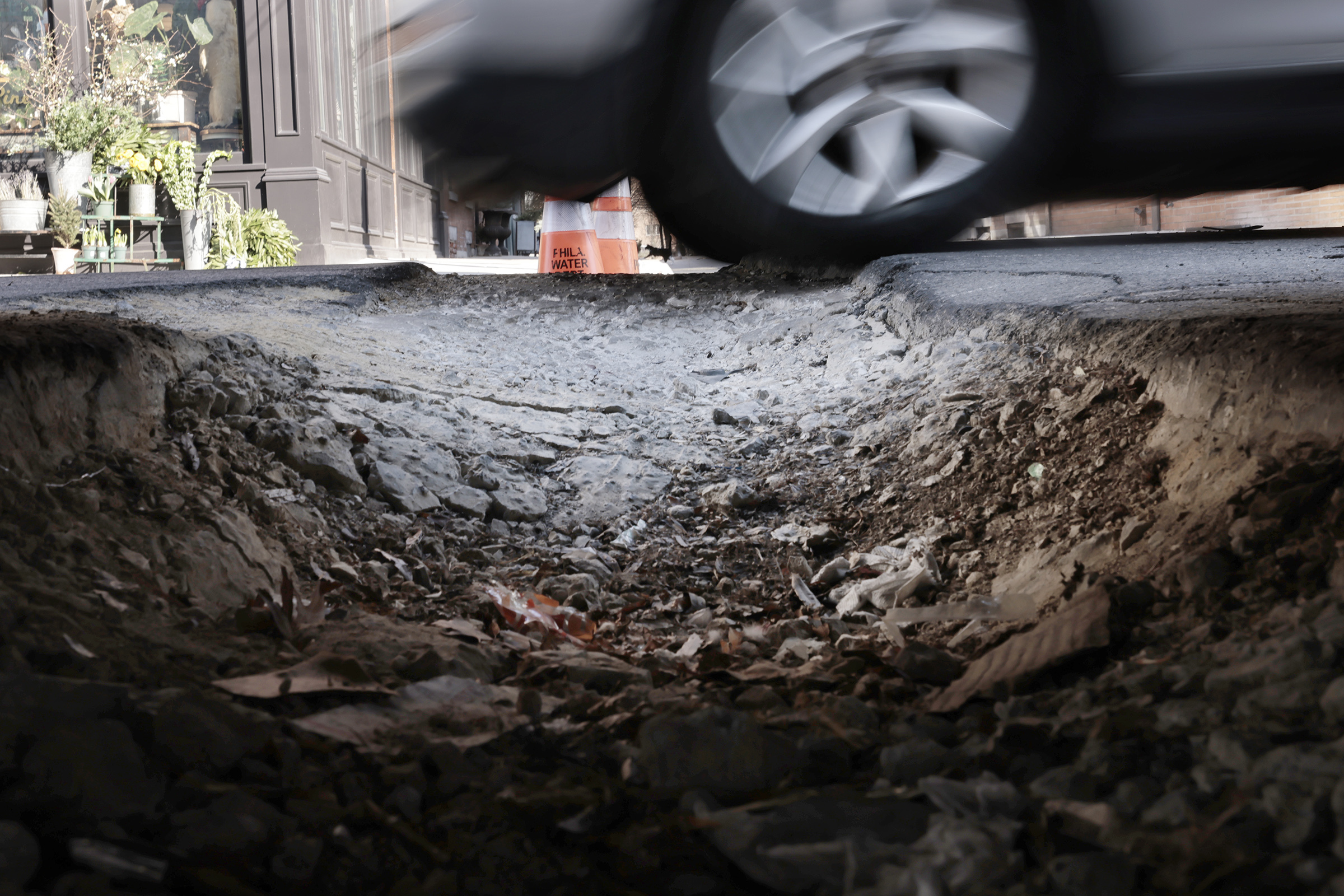
A car slams into the edge of a large pothole on the 700 block of South 4th Street in Philadelphia on Wednesday, March 12, 2025.
Pothole season officially begins: F
The snow is melting, which means two things in Philadelphia. People are wearing shorts in 42 degrees and the roads are about to betray us.
As the ice pulls back, the damage reveals itself. Broad Street suddenly looks like it survived a minor asteroid shower. A harmless bump from January is now a cavity. That thin crack you ignored all winter? Now you slow down for it instinctively.
You can tell the season has arrived by the driving alone. Traffic doesn’t flow in straight lines anymore, it zigzags. Group texts start circulating with hyper-specific intersection warnings. A single traffic cone materializes in the middle of the street and quietly becomes semi-permanent infrastructure.
Some craters get patched fast. Others linger long enough to earn neighborhood lore. “Turn left at the one that swallowed the Camry.”
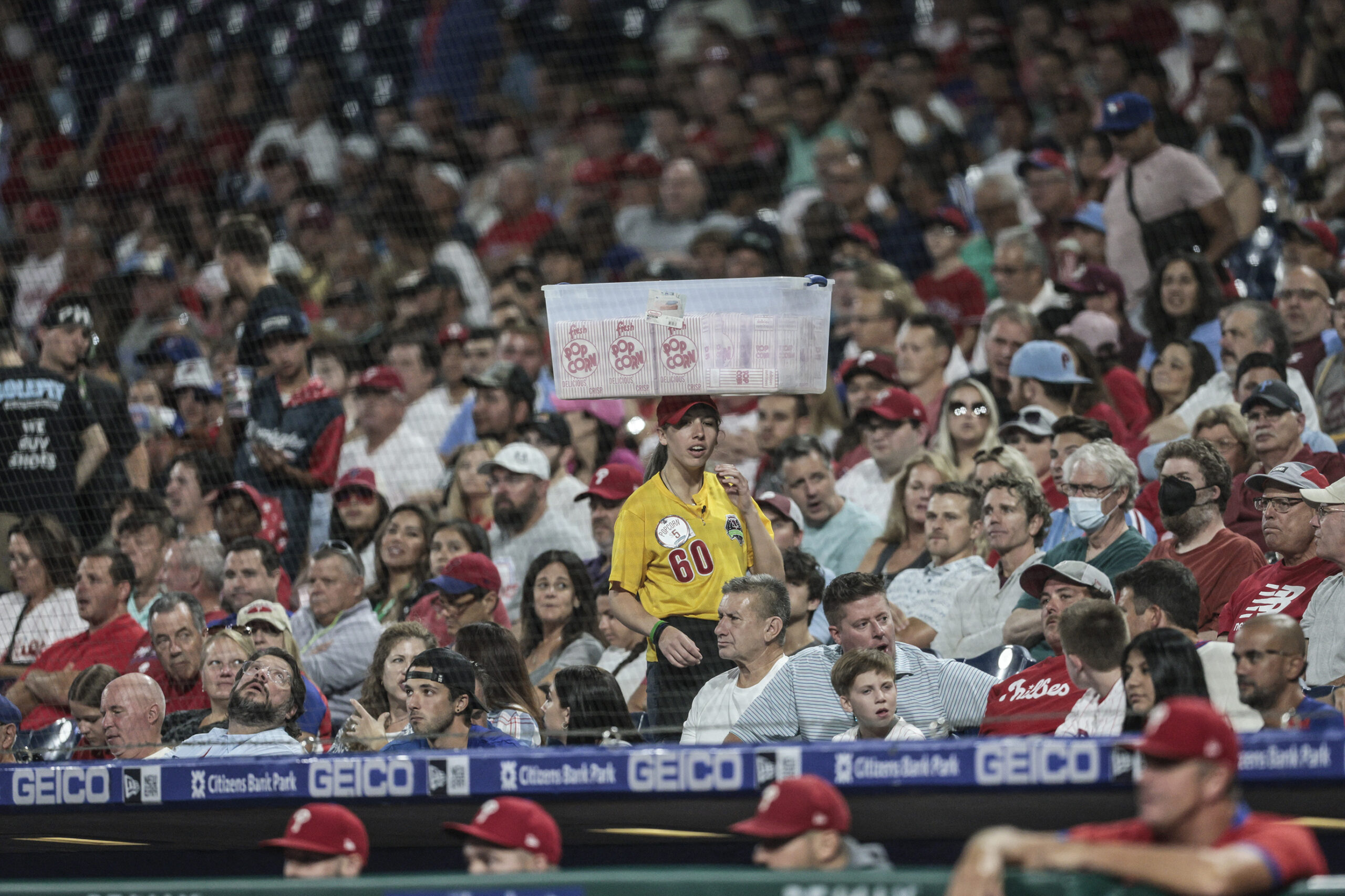
Samantha DiMarco, a popcorn vendor at Citizen Bank Park sells popcorn by balancing the box on her Tuesday, September 20, 2022
Citizens Bank Park without Sam the Popcorn Girl: F
The Phillies will still play. The popcorn will still be sold.
But one of the ballpark’s most recognizable faces won’t be in the aisles for most of the season.
Sam the Popcorn Girl is a minor celebrity at Citizen’s Bank Park, balancing popcorn on her head, popping up on Phanavision, and playfully sparring with Mets fans.
Over the last decade, she’s become an essential part of the atmosphere at the ballpark. Sure, she’s not on the roster, but she was part of the team. And this summer, she’ll be working on a Carnival cruise ship instead.
It’s temporary, and she promises she’ll be back. But this is Philadelphia. We’ve seen how this goes. First it’s a cruise contract. Next thing you know, the bullpen collapses in June.
Remove one of the ballpark’s regulars and suddenly everything feels off, and it’s way too early to be testing the baseball gods.
Booking the Shore before the snow melts: A-
There are still snowbanks clinging to street corners in Philadelphia.
And yet Margate agents are fielding multiple rental calls before lunchtime.
Last year, people waited, booking shorter stays and trying to read the market. This year, they’re locking in weeks while there’s still salt on the sidewalk.
The Shore has always been a seasonal reset button. But booking it in February (before anyone has even vacuumed the sand out of last year’s trunk) feels like a quiet shift.
After a few summers of sticker shock, people are now less afraid of being priced out then they are of being too late.
Soon we’ll be arguing over beach tags and debating Avalon vs. Sea Isle. Soon someone will be panic-buying Wawa hoagies on the Parkway.
We thought it was still winter. But summer, apparently, starts when the snow is still melting.
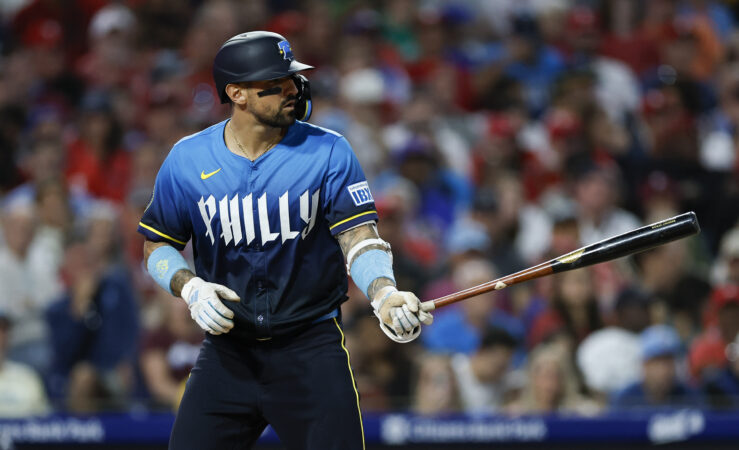
In the note, he finally filled in the blank: “Ok apparently I need to address the Miami incident.”
For eight months, the “Miami incident” hovered over the franchise without much other information. It was a turning point, but no one outside the clubhouse knew why.
Now we know his side of the story: After being pulled late in a June game in Miami, he brought a can of Presidente into the dugout and confronted Rob Thomson about what he saw as inconsistent standards. Teammates took the beer before he drank it. He apologized. The next day, his starting streak ended. And after that, the relationship was never the same.
But still, this ending lands with nostalgia.
This was the guy who turned tragic news cycles into accidental baseball folklore. The timing of his biggest hits was just uncanny. The day I-95 collapsed, or the day a president was shot at, or the day another dropped out of a race.
Then there was Liam, andthe joy of getting to experience Red October with his son in the stands. Back-to-back postseason multihomer games with his kid watching. Whatever else you thought about Castellanos, those nights felt special.
He was never boring, and that counts for something.
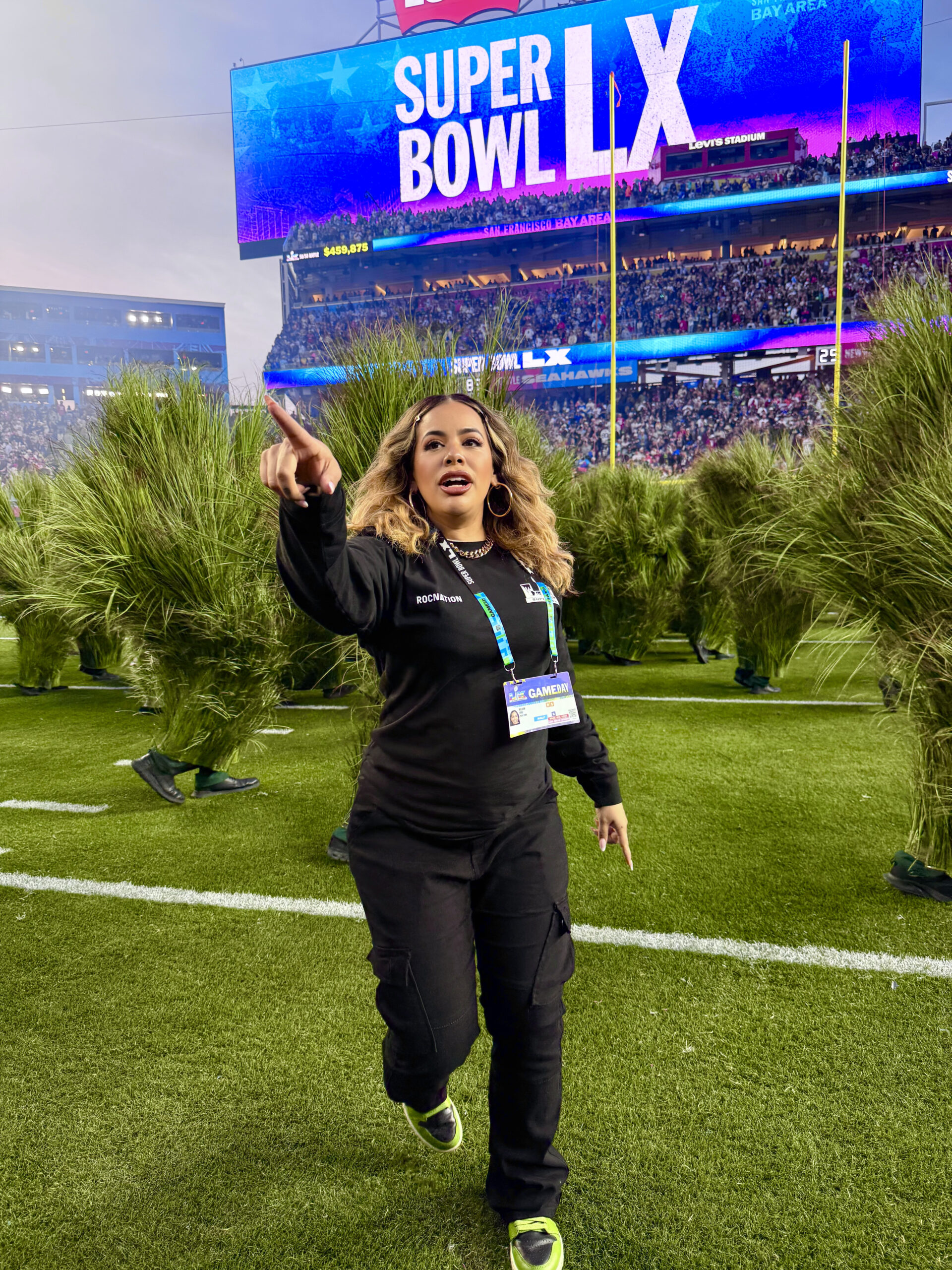
Northeast Philadelphia’s Delilah Dee walks through Bad Bunny’s halftime show stage at Santa Clara’s Levi’s Stadium, on Feb. 8 2026
An Eagles fan from Fishtown spent weeks rehearsing in a 50-pound grass suit, keeping the secret, grinding through 12-hour days, then waddling past Pedro Pascal and Cardi B on global television. A Northeast Philly marketing pro manifested her way onto the field crew and helped execute one of the most high-pressure seven-minute turnovers in live entertainment.
The plant story is peak Philly optimism: “The Eagles didn’t go, so I went for them.” That’s delusional in the best way. That’s Broad Street confidence. The field-team story hits deeper. In a halftime show centered on Latino pride and visibility, a Mayfair native who’s built community through Latin culture here in Philly ends up helping pull off the mechanics of the moment.
Would it have been better if it were an Eagle-and-Benito Bowl? Obviously. But Philly showed up anyway. Grass suit. Stage crew. Go Birds.
It hits 40 degrees and Philly declares emotional spring: A-
People are planning vacations, talking about the Cherry Blossom Festival, and declaring the worst is behind us while carefully sidestepping three-foot snowbanks and skating past frozen crosswalks. Someone said, “It’s gorgeous out,” and meant it sincerely.
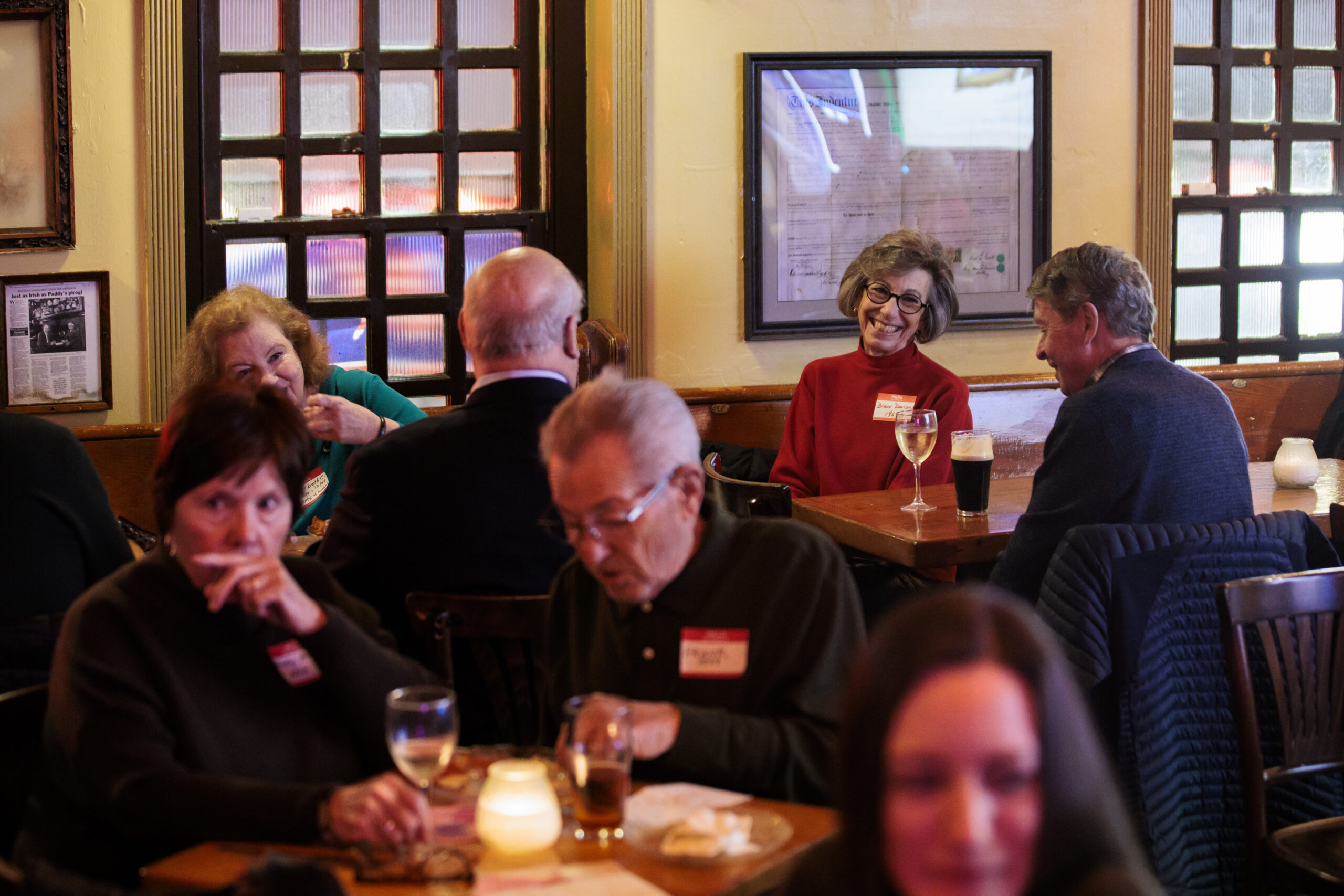
Diane and John Davison (back, right), who met here in 1969, laugh with other attendees at McGillin’s on Feb. 3, 2026. Attendees gathered for a book talk on “Cheers to McGillin’s: Philly’s Oldest Tavern.”
McGillin’s proves love doesn’t need an algorithm: A
The 166-year-old pub gathered dozens of couples this month who found love under its low ceilings and tinsel hearts. Some have been married 50-plus years while others are newlyweds who matched over wings and Yuenglings. The upstairs bar looked like a class reunion for romantics.
In a city that loves to argue about everything, this one’s hard to fight: Proximity still works. (Eye contact and beer don’t hurt, either).
There’s something deeply comforting about the idea that the most reliable matchmaker in Philly isn’t an app. It’s a place with oak tables, framed liquor licenses from the 1800s, and bartenders who’ve seen it all. At some point, the legend becomes self-fulfilling. If everyone believes McGillin’s is where love happens, eventually it does.
Pennsylvania watching eagle eggs hatch on a livestream: A
There is something deeply Pennsylvania about thousands of people spending their morning refreshing a live webcam of a bald eagle nest in an undisclosed Lancaster County tree.
More than 100 live viewers at mid-morning, with nearly 700,000 views last year. The chat section is full of viewers who are emotionally invested in avian domestic life.
There’s something quietly moving about it. Bald eagles were nearly wiped out here with just eight known active nests in 1990. Now there are more than 300.
Spring is coming. And until baseball starts, this is what we’ve got.
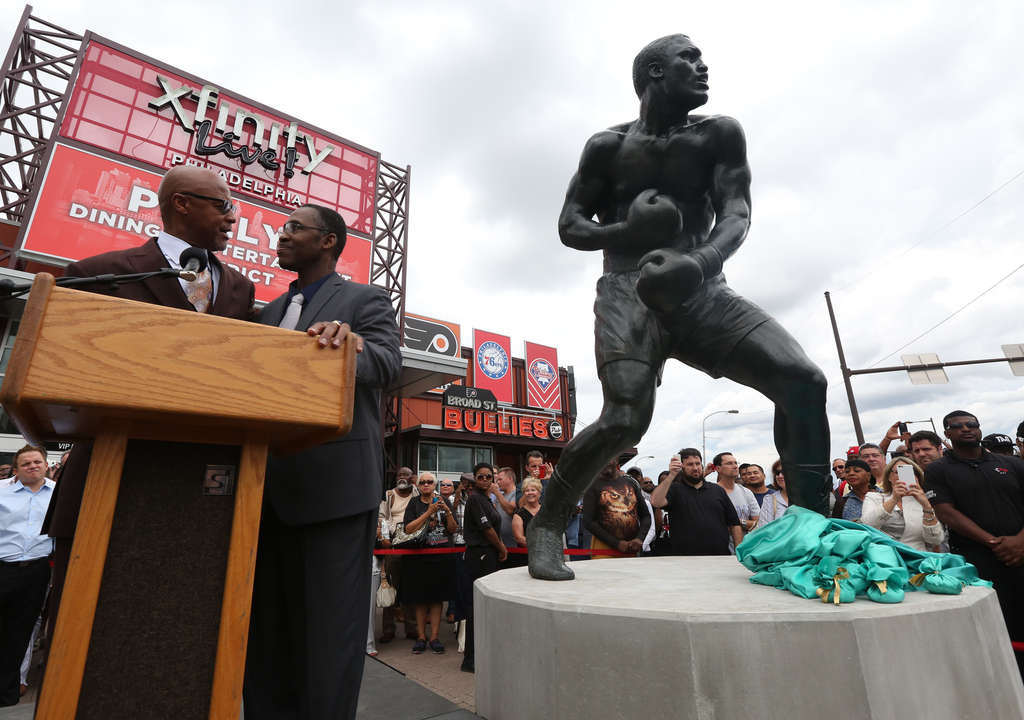
FILE – His son, and former heavyweight boxer Marvis Frazier (right), and Rev. Blane Newberry from Enon Tabernacle Baptist Church bless a 12-foot-tall 1,800-pound bronze statue of “Smokin’ Joe” Frazier after it was unveiled Saturday, September 12.2015 at XFinity Live in South Philadelphia.
The Art Commission voted unanimously to relocate Frazier’s 12-foot bronze statue from the sports complex to the base of the museum steps — the spot Rocky has occupied for two decades. Rocky, meanwhile, is headed back to the top.
On one level, the move feels overdue. Frazier wasn’t a metaphor. He was a real Philadelphian, an Olympic gold medalist, a heavyweight champion, the man who handed Muhammad Ali his first professional loss. Meanwhile, Rocky, beloved as he is, is a fictional character who may have beeninspired in part by Frazier’s life.
There’s something quietly powerful about visitors encountering Joe first, before heading up top to take a selfie with a myth.
Yes, there are valid conversations about symbolism, especially in Black History Month, about a real Black champion standing below a fictional white character. The city’s explanation is practical: Frazier’s statue is physically larger and not structurally suited for the top. Rocky’s footprint is smaller and easier to manage up there.
Logistics matter, but narrative does too, and this move reshapes the narrative. You climb the steps for the movie moment, but you pass the real champion on the way.
World Cup wants 4 a.m. last call. Philly isn’t sure it even wants 2: B-
On paper, this is easy. The World Cup is coming, and along with it comes half a million tourists and a global spotlight. Other host cities pour until 4 a.m. Philly shuts it down at 2.
The pitch is simple: if Brazil and Haiti kick off at 9 p.m., and knockout games can run long, why send thousands of fans back to their hotels when Miami and New York are just getting started?
The last time Pennsylvania tried this, during the 2016 DNC, the response was tepid, reported Philly Voice. Businesses had to deal with expensive permits and confusing rules, and the result wasn’t exactly a citywide bacchanal. And even now, bar owners quietly admit the late-night crowds aren’t what they used to be.
There’s also the Philly tension underneath this: We want to be global, but we also want to sleep. Would it be cool to say Philly partied like a World Cup city? Sure.
But it’s also true that if bars will be pouring until sunrise, at least half the neighborhoods would immediately be on 311, complaining about all the drunk and noisy tourists.
Dirty Franks says ’25 and up’ — and the regulars reclaim the bar: B+
Dirty Franks banning 24-year-olds and under sounds, on paper, like the plot of a generational culture war. In reality, it’s a dive bar doing what dive bars have always done: protecting the room.
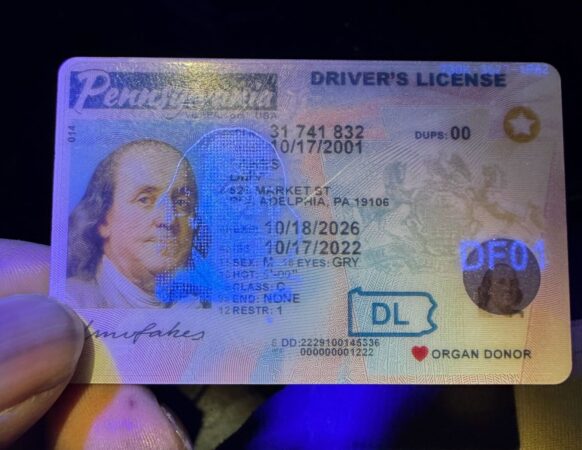
The catalyst? A fake ID featuring Ben Franklin that successfully scanned. Over the past year, Franks has been overrun by increasingly bold fake IDs, TikTok-fueled crowds, and behavior that doesn’t match the unspoken social contract of a place where regulars expect to sit, talk, and not babysit a bar.
This isn’t about hating young people. It’s about a bar that has never been a college bar suddenly being treated like one. Quantity over quality, as owner Jody Sweitzer put it. More bodies, same money, harder nights.
The temporary 25-plus rule is blunt, maybe even unfair to the responsible 22-year-olds who just want a cheap beer and a dart board. But Philly bars have always operated on feel as much as fairness. When something’s off, you fix it first and argue about it later.
And by most accounts, it worked. The room is calmer. Regulars are back. People can sit again. Staff aren’t playing bouncer-scanner-detective every five minutes, trying to outsmart IDs that look like they came straight out of a CIA prop department.
Is it sustainable? Probably not. Is it extremely Philly to say “we’ll relax when the nonsense stops”? Absolutely.
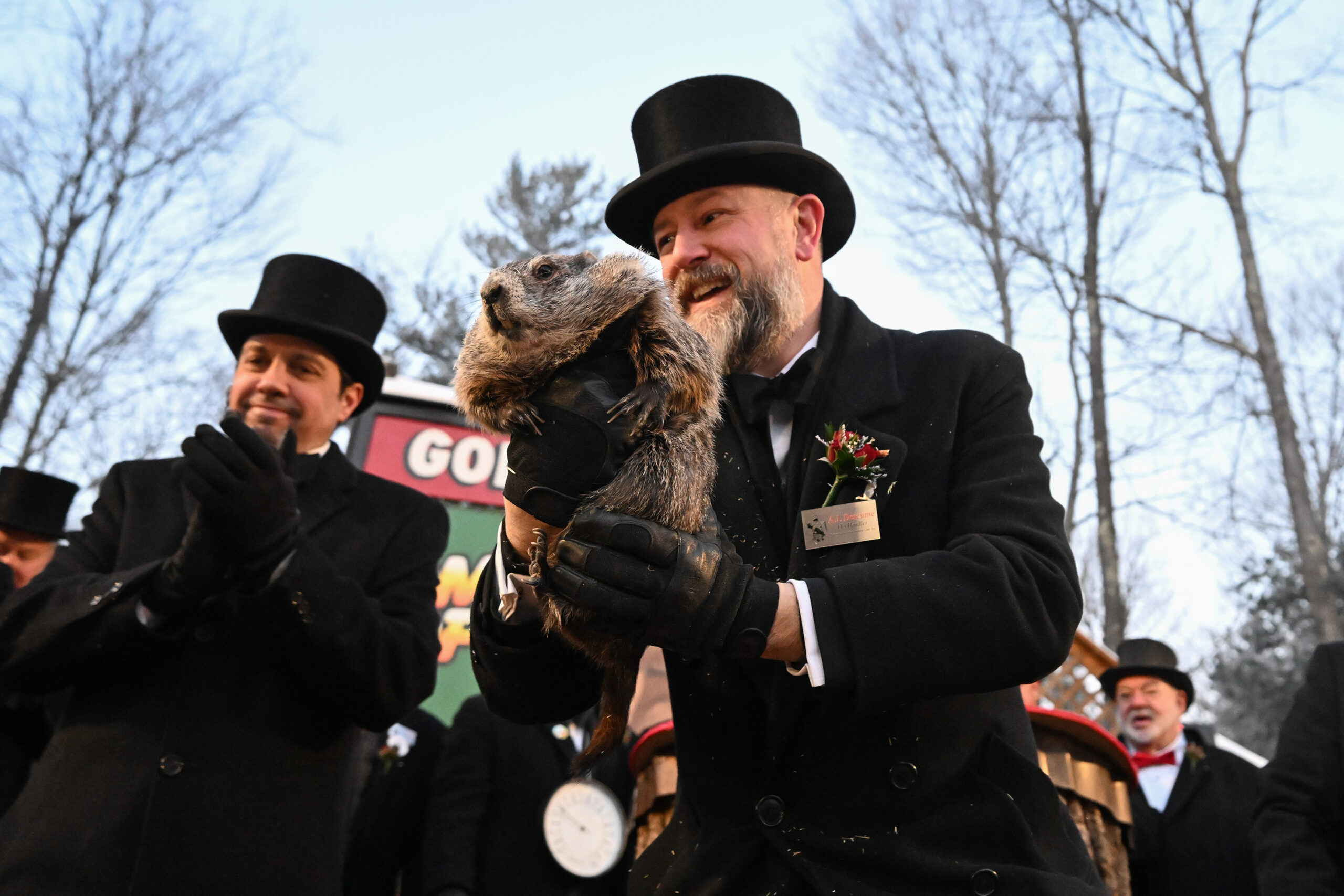
Groundhog Club handler A.J. Dereume holds Punxsutawney Phil, the weather prognosticating groundhog, during the 140th celebration of Groundhog Day on Gobbler’s Knob in Punxsutawney, Pa., Monday, Feb. 2, 2026. Phil’s handlers said that the groundhog has forecast six more weeks of winter. (AP Photo/Barry Reeger)
Punxsutawney Phil sees his shadow, condemning Philly to six more weeks of this: D
Six more weeks of winter doesn’t mean snowflakes and cozy vibes in Philadelphia. It means gray piles of ice that never melt, sidewalks that double as obstacle courses, and that specific kind of cold that seeps through gloves.
Phil seeing his shadow wasn’t news. The snow is still here. The side streets are still a mess. The wind is still disrespectful. And now we’re being told to mentally prepare for another month and a half of bundling up just to take out the trash.
Phil’s track record doesn’t help his case. He’s been wrong more often than right, but somehow still gets the power to set the emotional tone for an entire region. And the tone this year is simple: exhausted, sore, and deeply over it.
We don’t hate Phil. We just resent him for reminding us that winter in Philadelphia isn’t a season: It’s a long, drawn-out test of patience, balance, and civic infrastructure.
Six more weeks? Fine. We’ll survive. But we’re not happy about it.
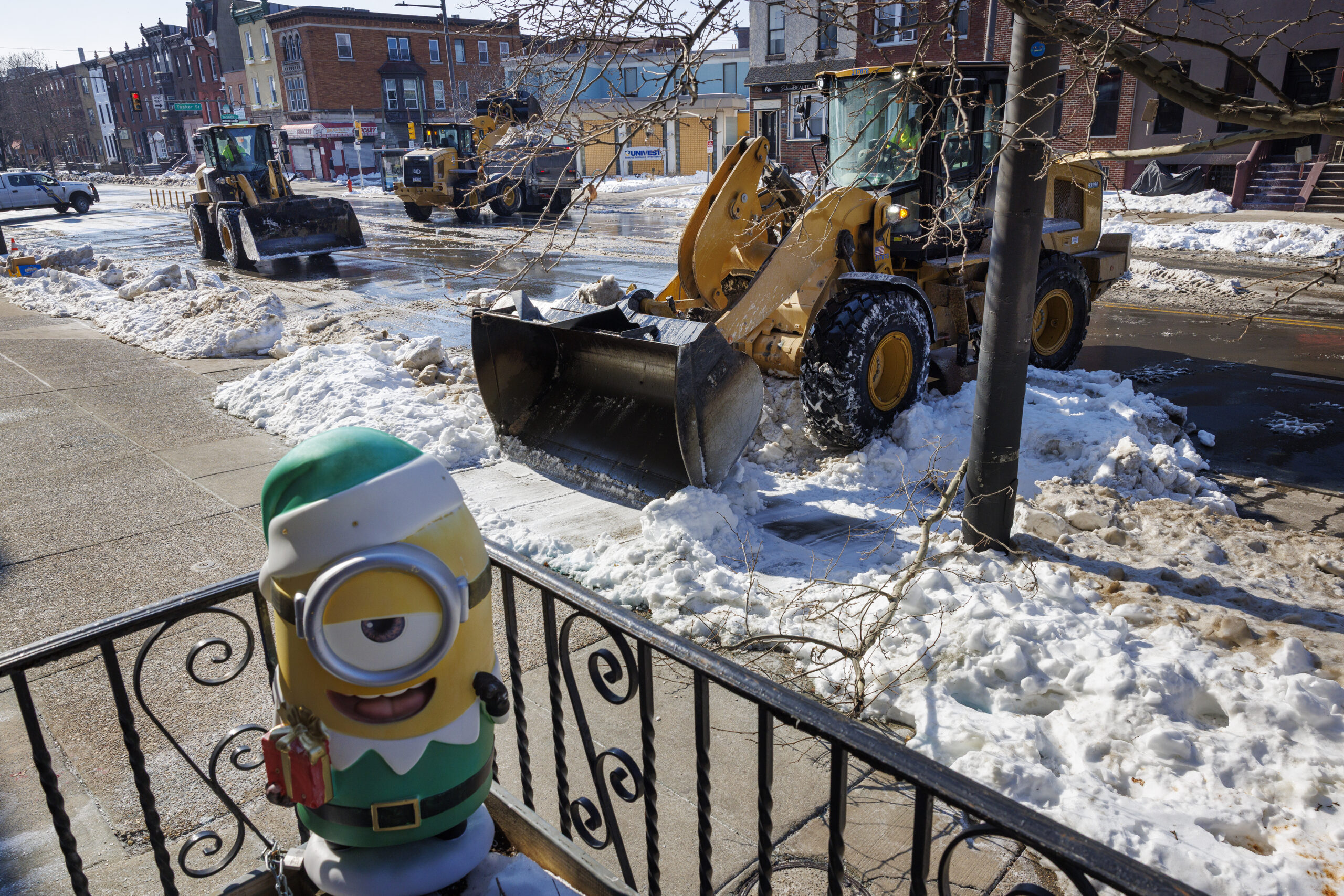
Heavy equipment clears snow and ice from South Broad Street near Tasker Street in South Philadelphia, Tuesday, Feb. 3, 2026.
Philly sends in ‘snow ambassadors’ because the cleanup still isn’t done: C
At this point, the storm itself is old news. What isn’t: frozen crosswalks, ice-packed corners, and a city that still feels stuck in cleanup mode.
So now comes the next phase of winter in Philadelphia: improvisation.
The city is deploying 300 “snow ambassadors” to manually chip away at ice piled up at crosswalks and corners. We’re well past the point where plows and salt were enough, and if the choice is between stubborn ice lingering for weeks or sending people out with tools to break it up, the latter is the only real answer.
But it also says a lot about how this cleanup has gone.
The city is now in hand-to-hand combat with the leftovers of a storm that dropped 9.3 inches and then immediately locked them in place with days of deep cold. The fact that crosswalks still need this level of attention, days later, underscores how uneven the original response was, especially on side streets and pedestrian infrastructure.
Calling them “ambassadors” doesn’t change the reality: This is a workaround. A necessary one but still a sign that the system didn’t fully deliver the first time around.
That said, credit where it’s due. The city didn’t just shrug and tell people to wait for a thaw. It adjusted. It added manpower. It acknowledged that what’s left isn’t just inconvenient but dangerous. And focusing on crosswalks and ADA ramps is exactly where the effort should be right now.
This isn’t a win. It’s a course correction.
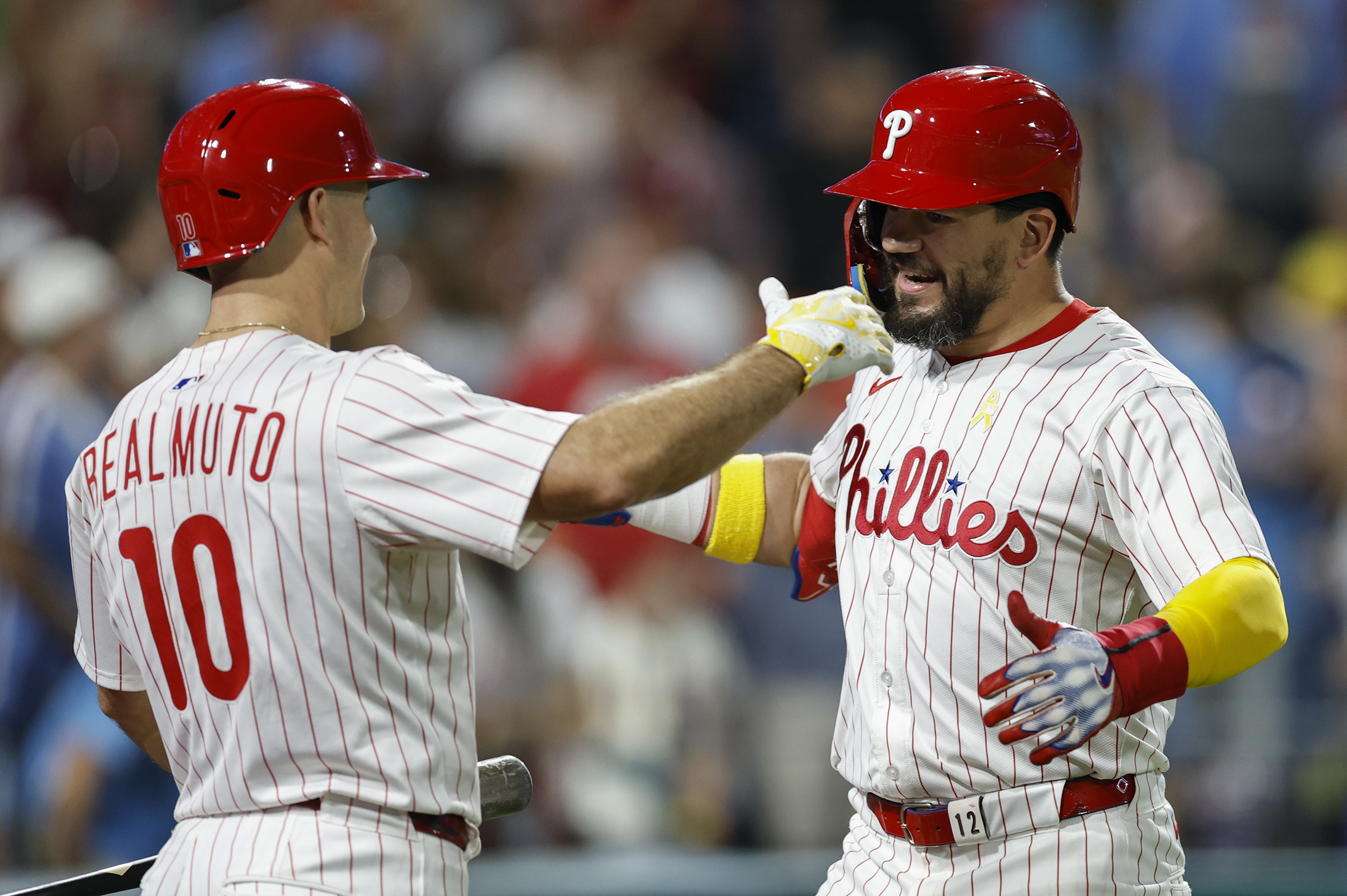
Phillies designated hitter Kyle Schwarber celebrates his solo home run with teammate J.T. Realmuto against the Kansas City Royals on Saturday, Sept. 13, 2025, in Philadelphia.
Phillies spring training hope (and the kids knocking): A
This is the part of the calendar where Philly collectively exhales.
Spring training is just getting started, and already the Phillies feel lighter. Not because anything’s been won. Not because the roster is flawless. But because February baseball is where optimism still gets the benefit of the doubt.
Clearwater represents a reset. New grass. Fresh routines. The annual illusion that this version of the team will be the one where everything clicks at the right time. It doesn’t matter how last season ended, spring training always feels like permission to believe again.
And for the first time in a while, the kids are actually coming. Justin Crawford looks like the opening-day center fielder. Andrew Painter is finally healthy enough to matter again. Aidan Miller is looming. The Phillies’ farm system has spent years as a drip-feed; now it feels like a faucet that might finally turn on.
That matters for a team that’s been built around a veteran core for so long. Bryce Harper and Kyle Schwarber anchoring things in Clearwater feels familiar in the best way, but the real intrigue is whether the next wave can actually stick. Whether this spring is the start of something sustainable, not just another “run it back.”
Spring training is baseball’s softest sell. No standings. No scoreboard pressure. Just story lines, roster battles, and enough sun to trick you into thinking October is guaranteed. Philly knows better than to fully trust it, but we still show up every year.
Because hope is part of the ritual. And for now, it’s earned.
If nothing else, pitchers and catchers reporting means one undeniable thing: Winter is losing leverage, and baseball is back in the conversation. Around here, that’s worth an A all by itself.
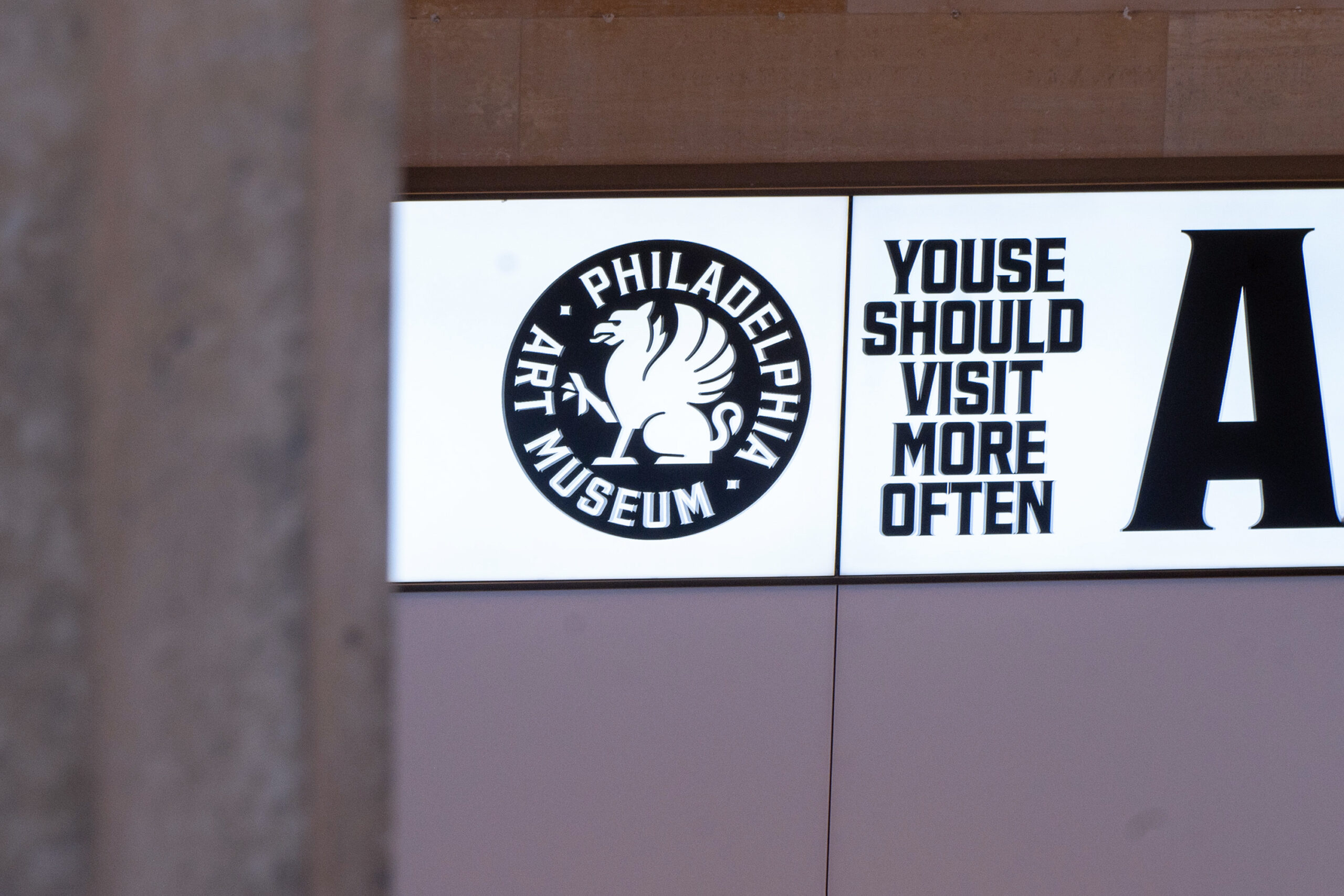
A rolling video screen above the admissions counter at the West Entrance at the Philadelphia Museum of Art Monday, Oct. 6, 2025, features a “youse should visit” slide and a new logo. The name change was eventually reversed back to its original – Philadelphia Museum of Art – but the griffin was kept.
The Art Museum walks it back (somewhat): B+
Four months after trying to rename itself the Philadelphia Art Museum, the Philadelphia Museum of Art has decided to do what Philadelphians do best: Stop pretending and call it what everyone was calling it anyway.
But this wasn’t a full rewind. The museum kept the updated look — the bold fonts, the sharper visual identity, the griffin logo pulled from the building’s roofline. The feedback was clear and consistent: People who know the institution (members, donors, staff) felt alienated by the name change.
The Philadelphia Museum of Art isn’t just branding; it’s muscle memory. You don’t casually swap that out without expecting pushback. But surveys also showed that the broader public didn’t hate the new look itself. So the museum split the difference.
It kept the visual refresh. It dropped the name change, which felt unnecessary and confusing. And it signaled, intentionally or not, that listening matters more than doubling down.
Philly gets its own Monopoly board, and the arguments have already started: A
A Philadelphia edition of Monopoly is coming this fall, and honestly, the game itself almost feels beside the point. The real action is happening now, in the collective act of imagining what would, and absolutely would not, be allowed on a Philly board.
The gaming company behind the project is soliciting public nominations for landmarks, businesses, and nonprofits, which means we’re about two seconds away from the most Philly fight imaginable: not about what belongs on the board, but what deserves Boardwalk money and what gets stuck near Baltic Avenue out of spite.
Picture it. Pass GO at City Hall. Community Chest immediately fines you for blocking a crosswalk. Chance card sends you directly to SEPTA delays — do not collect $200. Jail is the Roundhouse. Free Parking is somehow still under construction.
Some squares feel obvious: the Art Museum steps, LOVE Park, Independence Hall. Others are going to be chaos picks. Wawa utilities. Delco railroads. A corner bar that hasn’t changed since 1987 somehow costing more than Center City. Someone will nominate their neighborhood dive and mean it sincerely. Someone else will nominate their rowhouse just to prove a point.
And that’s where this gets interesting. A Philly Monopoly board isn’t really about the game. It’s about which places people think matter, and which ones they’ll argue should’ve made the cut.
‘We’ll shew ya whereta gew in the snew’: Visit PA leans into accents — and Philly winter energy: B+
If you’re going to tell Philadelphians to leave the house in February, you’d better sound like someone we trust. Preferably someone who says “youse.”
The Pennsylvania Tourism Office seems to get that, according to WHYY. Its new winter “Snow Day Hotline” is staffed by prerecorded Philly and Pittsburgh accents, plus live comedians during select hours.
Call the number and you’re greeted by exaggerated but affectionate regional voices walking you through things to do around the state, from museums to indoor hangs. It’s intentionally old-school, phone only, no app.
The Philly side of the operation is handled by comedian Betsy Kenney, whose accent isn’t natural but feels familiar anyway: a composite of neighbors, aunts, and the person behind you in line at Wawa explaining why something is “not worth it, but also maybe worth it.” The advice isn’t groundbreaking. The delivery is the point.
So when a highly accomplished Jeopardy! champion (16-game winner, nearly half a million dollars in earnings) visibly struggled to pronounce “Schuylkill” on national television this week, Philly collectively leaned forward and went, here we go.
To Scott Riccardi’s credit, he got the answer right. The river that runs through Pottsville, Reading, and Philadelphia? Yes. Correct. No notes. But the pronunciation (Skol-kull) sent Ken Jennings into referee mode, which is never where you want to be when the clue involves Pennsylvania geography.
For the record (again): it’s Skoo-kl. Two syllables. No drama. No extra letters pronounced.
Riccardi walks away with a B: smart, successful, and close enough to get partial credit. But full points are reserved for anyone who can say Schuylkill on the first try without breaking eye contact.
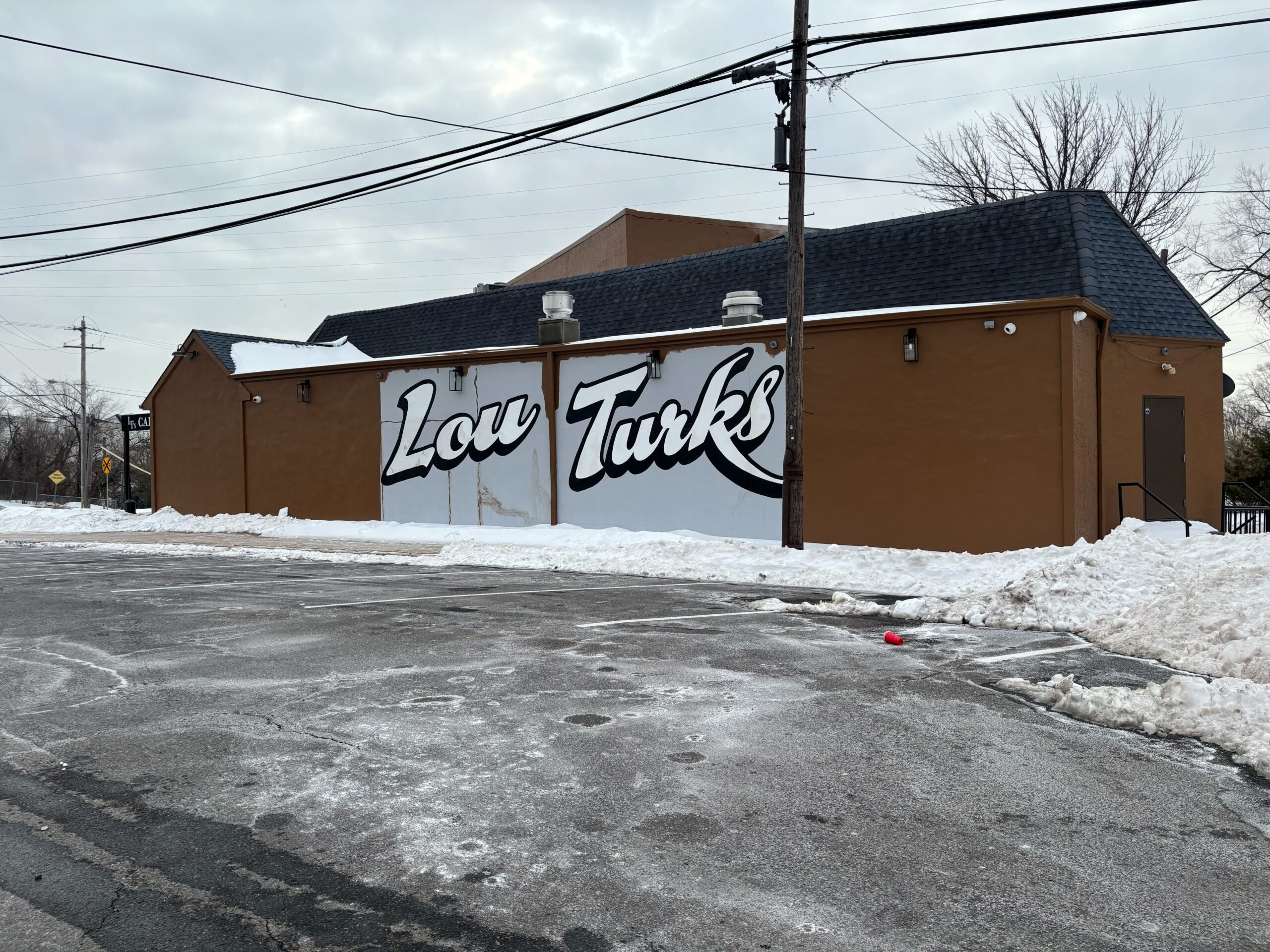
Lou Turk’s, a Delaware County strip club with more than 50 years in business, announced it will change its name to the Carousel Delco.
Lou Turk’s rebrands, Delco shrugs: A
Only in Delco could a strip club rebrand spark genuine cultural concern. Not about the name, but about whether Mother’s Day flower sales would survive.
Lou Turk’s, Delaware County’s lone strip club and one of its most stubborn institutions, announced it’s changing its name to the Carousel Delco. The response was immediate disbelief, light outrage, and a collective understanding that no one is actually calling it that. Ever. This is Gallery/Fashion District math.
Stephanie Farr laid it out perfectly: Lou Turk’s isn’t just a business, it’s a landmark. A place that exists in the Delco imagination as much as it does off Route 291, wedged between a Wawa and an Irish pub like it was placed there by a zoning board with a sense of humor.
The new name raises questions (mostly “why?”), but Delco culture is resilient. The club can swap signage, management, and branding buzzwords all it wants. It will still be Lou Turk’s. And more importantly, it will still sell flowers on Mother’s Day, preserving one of the county’s most unhinged and beloved traditions.
This isn’t a typical report card item, and it shouldn’t be.
This week made it impossible not to understand who Dan McQuade was — and how deeply he mattered to Philadelphia — just by reading what people shared about the journalist and Philadelphia superfan after he died of cancer this week at age 43.
Colleagues, friends, editors, and readers kept circling the same truths: how funny he was, how kind he was, how precise his understanding of the city felt. Not in a forced or caricatured way, but in the way that comes from paying close attention, loving a place, and never taking it (or yourself) too seriously.
Dan had a gift for finding meaning in the everyday. He treated Philly’s quirks, tics, and absurdities not as punchlines to exploit, but as things worth documenting, celebrating, and occasionally poking fun at with affection. He gave people permission to laugh at the city without laughing at it. That’s harder than it sounds.
His impact was everywhere this week: in stories about Rocky runs and boardwalk T-shirts, in memories of long happy hours that turned into lifelong friendships, in anecdotes about him being the go-to fact-checker for all things Philly, in the way people described him as both brilliant and generous. A writer who made others better. A friend who showed up. A presence that made rooms, and timelines, lighter.
The tributes weren’t performative or flowery. They were specific. Personal. Grounded. Which feels fitting. McQuade’s work was never about being loud or self-important. It was about noticing things, connecting dots, and reminding people that there’s joy, and humor, in paying attention to where you live.
Philadelphia lost a journalist. But it also lost one of its clearest interpreters. Someone who understood that “Philadelphianness” isn’t a brand or a gimmick, but a way of moving through the world with skepticism, warmth, and a well-timed joke.
An A+ doesn’t feel like enough. But it feels right to say this much: Philly is better for having had Dan McQuade in it. And it won’t quite be the same without him.
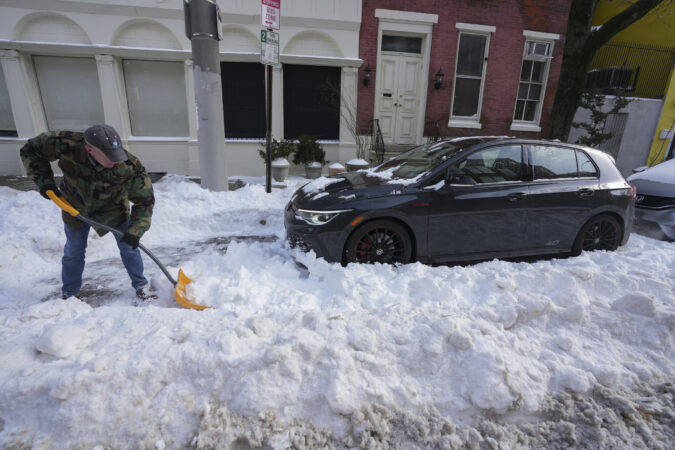
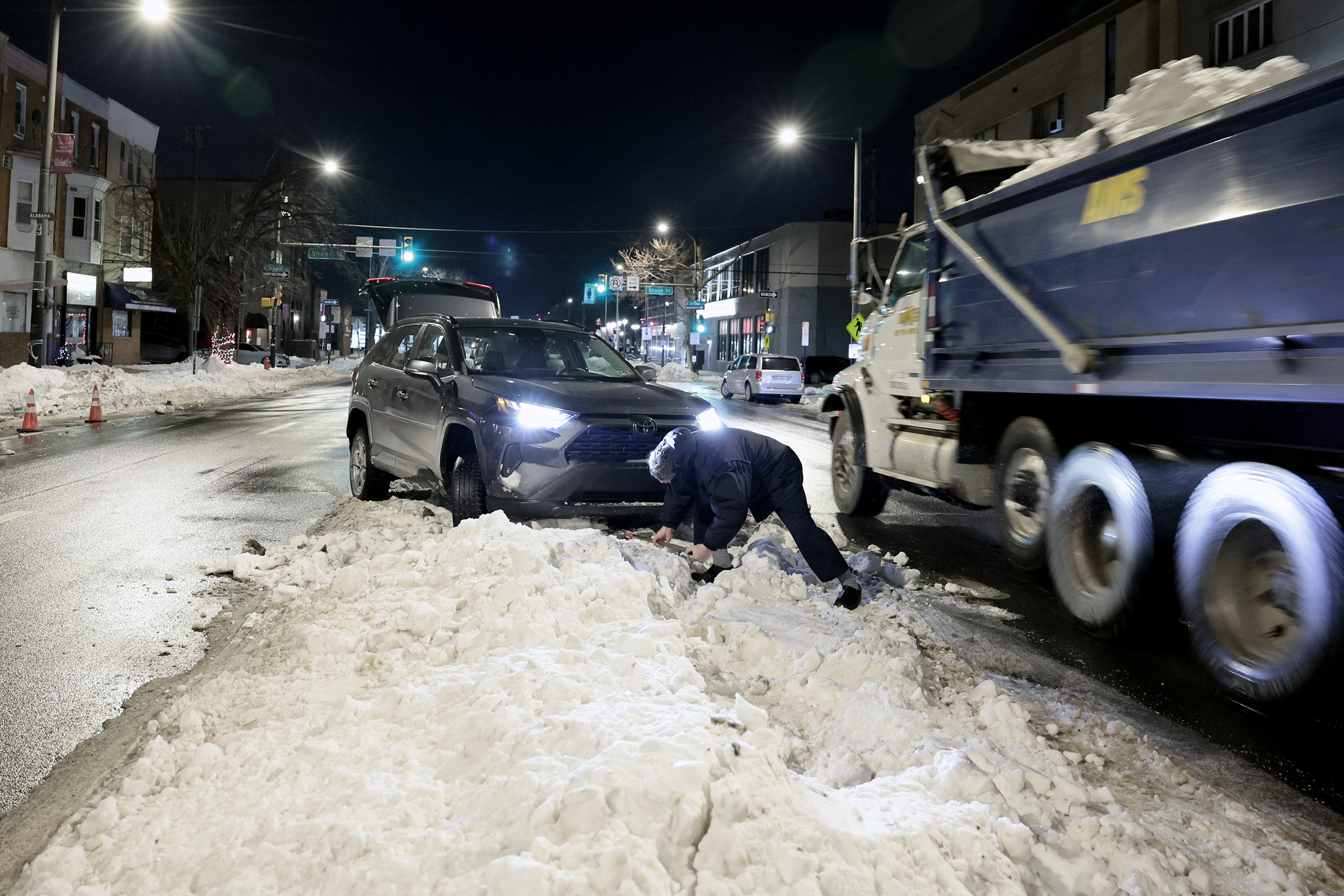
A man shovels snow from underneath his car after it became hung up while trying to park in the middle of South Broad Street in the early morning hours of Jan. 28, 2026. Dump trucks filled with snow from the city’s snow removal operations were zooming by as he worked to get his car free.
The snowstorm delivered. The plowing did not: F-
Let’s be clear: The snow itself did what snow is supposed to do. Nine-plus inches, pretty at first, historic enough to brag about, disruptive enough to cancel plans and spark group-chat meteorology. Fine. That’s winter.
What came after? That’s where everything fell apart.
The city promised differently. Mayor Cherelle L. Parker stood in front of cameras before the storm and said every street would get attention “as long as it takes.” That message mattered because Philadelphians have heard this story before, and expectations were deliberately raised.
Then reality hit.
Plow data show roughly a quarter of city streets got no treatment at all after the storm ended. Not plowed. Not salted. Nothing. And the longer it sat, the worse it got — snow compacting into ice, intersections blocked by frozen berms, cars effectively entombed.
This isn’t just an inconvenience. People with limited mobility are stuck. Workers can’t get out. Streets department explanations about sleet, freezing rain, and illegally parked cars may be true, but they don’t change the fact that many blocks are still uncleared a week later.
This is the part where Philly frustration kicks in hardest: The storm wasn’t unprecedented, but the response feels familiar in the worst way. The expectation has long been “don’t count on a plow,” and this week did little to change that.
New York tries to claim ‘Delco.’ Pennsylvania says absolutely not: A
Every so often, something happens that instantly unites Delco. Snowstorms. Eagles runs. Wawa shortages. And now: a county in upstate New York attempting to brand itself as “Delco.”
Absolutely not.
Stephanie Farr laid out the case perfectly: Delco isn’t just shorthand for Delaware County. It’s a culture. A personality. A way of life built on hoagie trays, Catholic school rivalries, beach flags, and a shared, deeply ingrained chip on the shoulder.
New York’s Delaware County is rural. Ours is suburban chaos packed into 184 square miles, powered by Wawa coffee, tailgating energy, and a pride so aggressive it gets tattooed on bodies and planted in Jersey Shore sand like a territorial marker.
The funniest part isn’t that there’s another Delaware County (there are several). It’s that this one thought it could simply adopt the nickname, slap it on merch, and call it authenticity. That’s not how Delco works. Delco is earned.
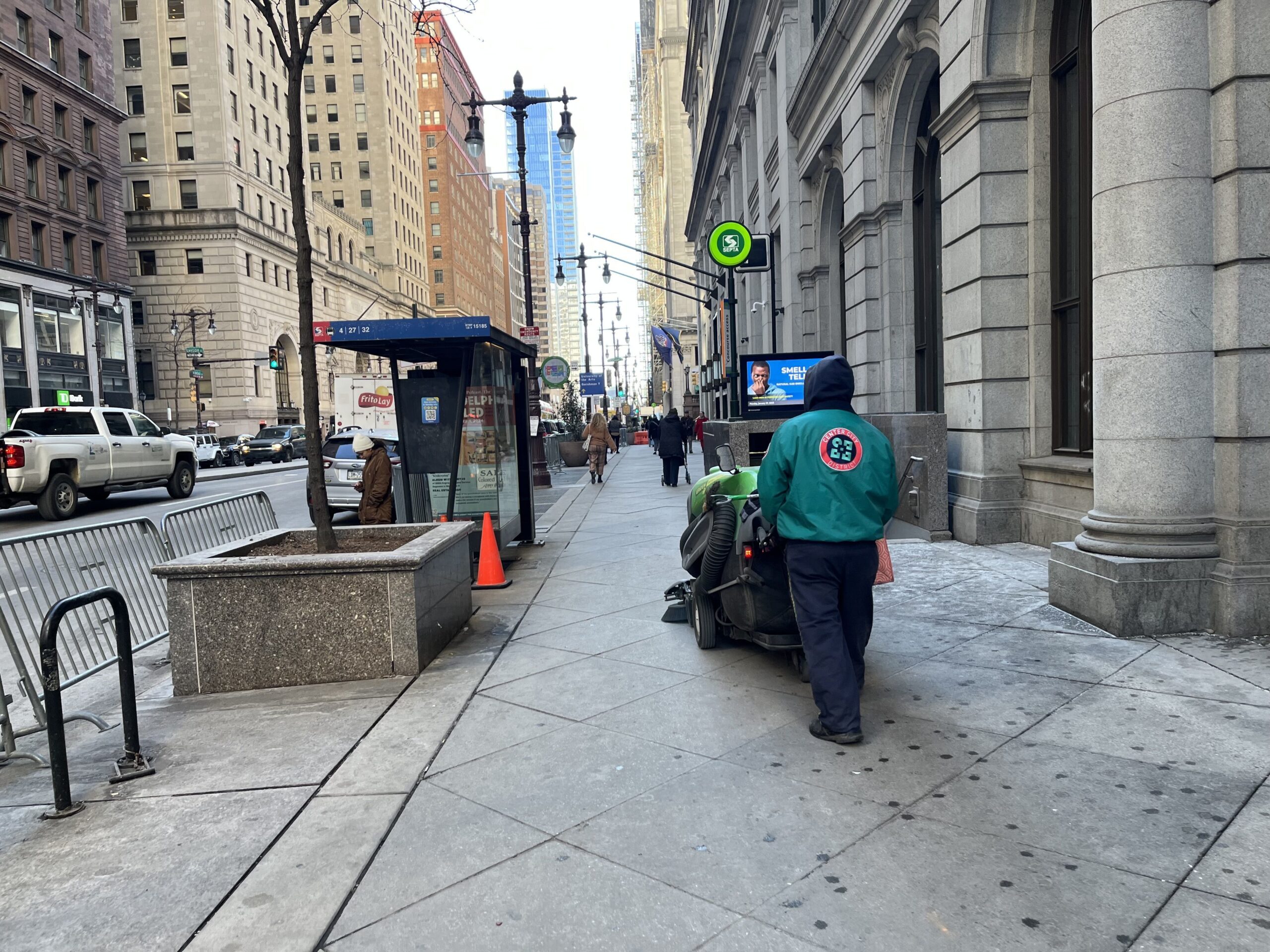
A Center City District worker cleaning the sidewalk on Broad Street the morning after the Philadelphia Eagles won the NFC Championship.
Center City West sidewalks are getting grimy (and it’s not your imagination): C
For nearly a decade, a lot of Center City West quietly benefited from something most people never realized existed: a privately funded sidewalk cleaning program that swooped in after city trash pickup and handled the leftover mess.
Asthe Fitler Focus reported, that program ended when the Center City Residents’ Association let its contract expire at the end of 2025. Not out of neglect, but necessity. The cost had ballooned to about 41% of CCRA’s projected 2026 budget, which is an unsustainable chunk for what was essentially backstopping city services.
The result has been immediate and visible. Trash bags torn open overnight. Litter lingering days after pickup. Sidewalks that used to reset themselves now just… don’t. CCRA deserves credit for being upfront about the trade-off and pivoting toward enforcement, even if it won’t bring immediate results.
The frustrating part is that the rules haven’t changed. Trash placement regulations exist. Containers are required. Enforcement is technically possible. But in reality, it’s complaint-driven, slow, and uneven. Meaning the difference between a clean block and a gross one often comes down to who has the time and energy to call 311 and wait on hold.
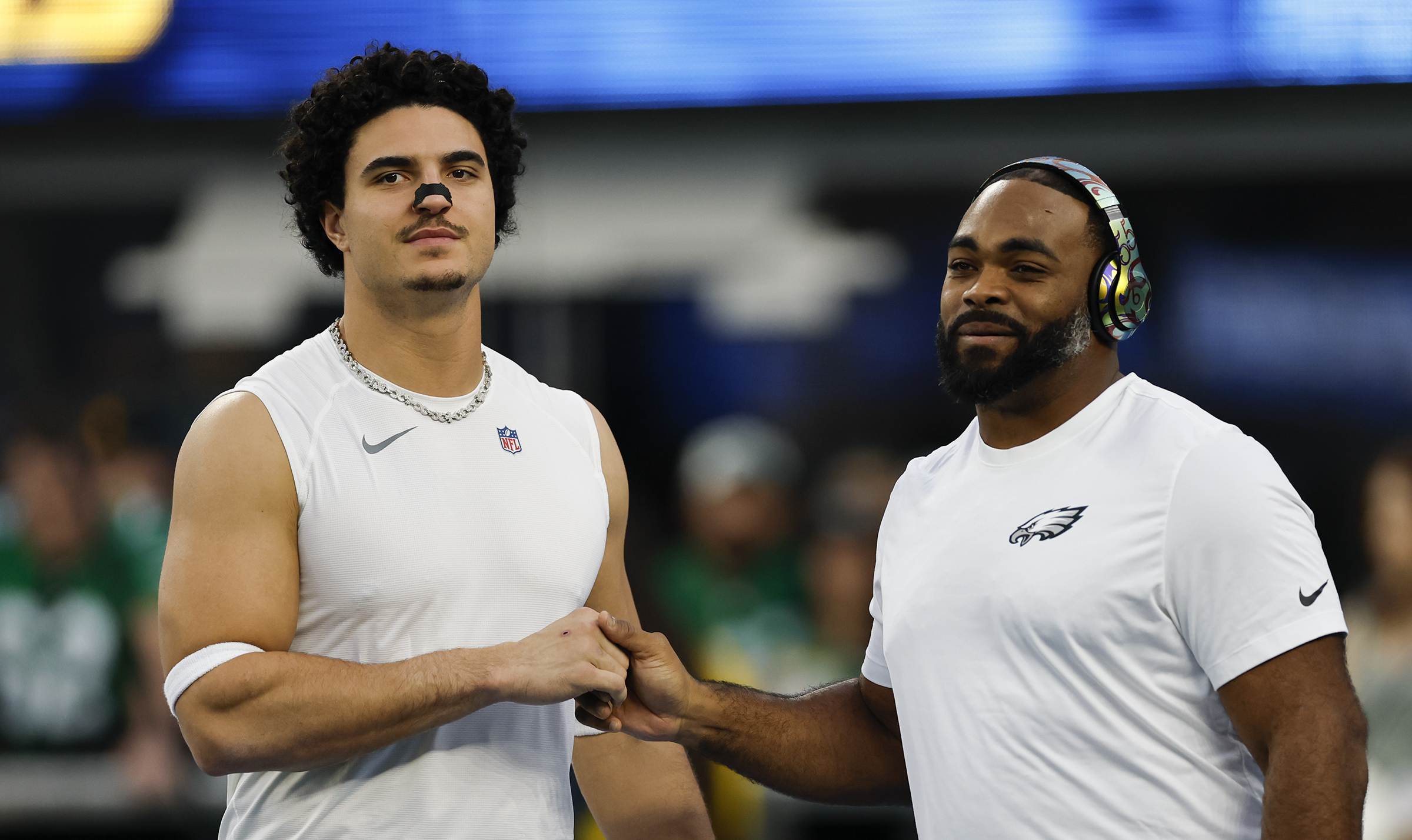
Eagles linebacker Jaelan Phillips (left) and defensive end Brandon Graham during warm-ups before the Eagles play the Los Angeles Chargers on Dec. 8, 2025 at SoFi Stadium in Inglewood, Calif.
Eagles fans agree on almost everything — except the part that actually hurts: B
In this year’s Inquirer Stay or Go poll, Eagles fans were unusually aligned on who still feels like the future: young defensive studs, the offensive line pillars, the rookies who look like actual hits. Cooper DeJean and Quinyon Mitchell clearing 96% stay feels less like optimism and more like self-preservation. The message is clear: The defense isn’t the problem. Or at least, it’s not our problem.
Where things get interesting is offense. Not because fans are confused, but because they’re suddenly colder. Jalen Hurts is still trusted, but not untouchable. A.J. Brown’s dip is real and telling: not rage, not rejection, just disappointment, Philly’s least favorite emotion. Fans didn’t turn on him. They just stopped defending him reflexively, which in this city is its own warning sign.
And then there’s Brandon Graham, the emotional Rorschach test of the poll. A franchise legend. A locker room heartbeat. A guy people want to want back. The split vote says everything: respect battling reality. Philly loves its icons, but it hates lying to itself more.
No one landed in the mushy middle. Fans know who they’re done with. They know who they’re attached to. There’s little patience left for “maybe.”
This wasn’t a meltdown poll. It was a sorting exercise. And the conclusion fans keep circling is uncomfortable but consistent: The Eagles don’t need vibes. They need clarity — and probably a few hard goodbyes.
The Inquirer mapped Philly’s dive bars (and proved how much the city loves them): A
When The Inquirer put out a call for Philly’s favorite dive bars, the response was immediate and overwhelming. Nearly 400 submissions poured in, which tracks for a city where dive bars aren’t just places to drink. They’re personal landmarks.
What the map really shows isn’t just where to grab a cheap beer. It’s how attached people are to the bars that feel like theirs. The ones tied to first jobs, postgame rituals, bad breakups, good Tuesdays, and nights that went exactly nowhere and somehow mattered anyway. These are rooms where nobody’s performing, the prices are low on purpose, and the atmosphere is set by regulars, not a concept.
It also surfaced one of Philly’s most reliable debates: Is being called a dive bar a compliment or an insult? Some owners bristle at the label. Others embrace it. Many bars live in the gray area: cheap, unpretentious, deeply loved, and absolutely uninterested in how they’re categorized. Very Philly.
Are there bars missing? Of course. There always will be. Philly has too many neighborhood institutions, and too many people willing to argue for them, for any list to feel definitive. But that’s not a failure of the map, it’s a feature of the city.
This isn’t a checklist. It’s a snapshot of how much Philadelphians still value places that don’t try to be anything other than what they are.
Snow savesies are back, and Philly is absolutely feral about it: C+
Every major snowstorm in Philly brings back the same question we never resolve: If you shovel out a spot, is it yours, or is public parking still public? This week’s viral Reddit thread, sparked by a wooden chair left in a shoveled space with a handwritten threat (“Move these chairs & I will destroy your car. Try me.”), confirms we are once again incapable of calm thought.
Some commenters were immediately in the respect the chair camp. One wrote, “After digging my s— out from snow past my knees I just want to one time come back to a spot,” while another argued, “Normally vehemently anti-savesies, but I feel like spending an hour digging out earns you a [savesie] or two.” This group is running on sore backs, wet boots, and pure principle.
Then there’s the other side: the chaos agents. “I’d move the chair and watch someone else park there,” one commenter said, which feels less like civic engagement and more like performance art. Another proudly added, “I take peoples cones all the time when I’m walking around. F— em.” (This explains so much.)
Somewhere in the middle were people admitting the quiet truth: Everyone dug out a spot. “The person who’s parked there dug out their car this morning, too,” one commenter noted, puncturing the idea that only one hero labored for the block.
So where does that leave us? With a very Philly stalemate. The chair is obnoxious. The threat is unhinged. The labor is real. The fear of retaliation is realer.
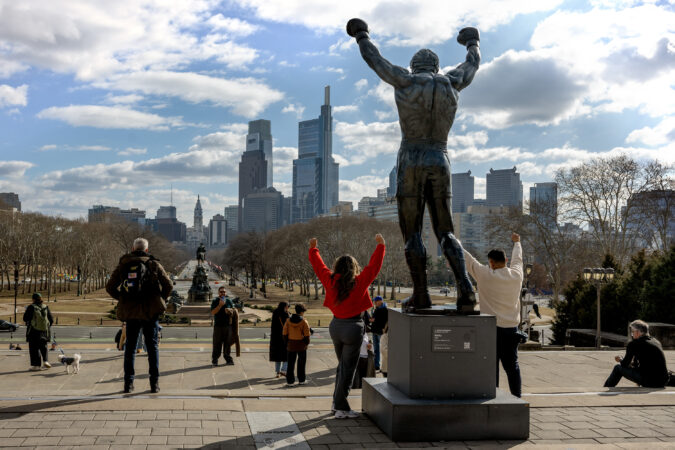
Rocky already has a perfectly good spot. People find it. They take photos. They run the steps. They leave happy. The city gets its tourism moment without blocking views, rerouting pedestrians, or turning the top of the Art Museum steps into a permanent selfie bottleneck.
Moving the statue to the top isn’t about improving the experience — it’s about maximizing it. More drama. More branding. More spectacle. And, quietly, more privatization of space that used to just be… there.
That’s the part that grates. The Art Museum grounds have been slowly filling up with things that make sense individually — pop-ups, shops, events, installations — but collectively start to feel like you need a reason, a ticket, or a purchase to exist there. Rocky at the top isn’t just a statue move; it’s another inch taken from a public place that worked fine as-is.
There’s also the price tag. Spending up to a quarter-million dollars to relocate a movie prop in a city that can’t reliably maintain sidewalks or fund its parks feels, at best, tone-deaf. At worst, it sends the message that the view matters more than access.
Rocky is supposed to represent the everyman. Putting him on a pedestal, literally, kind of misses the point.
Leave him where he is. Let the steps belong to everyone.
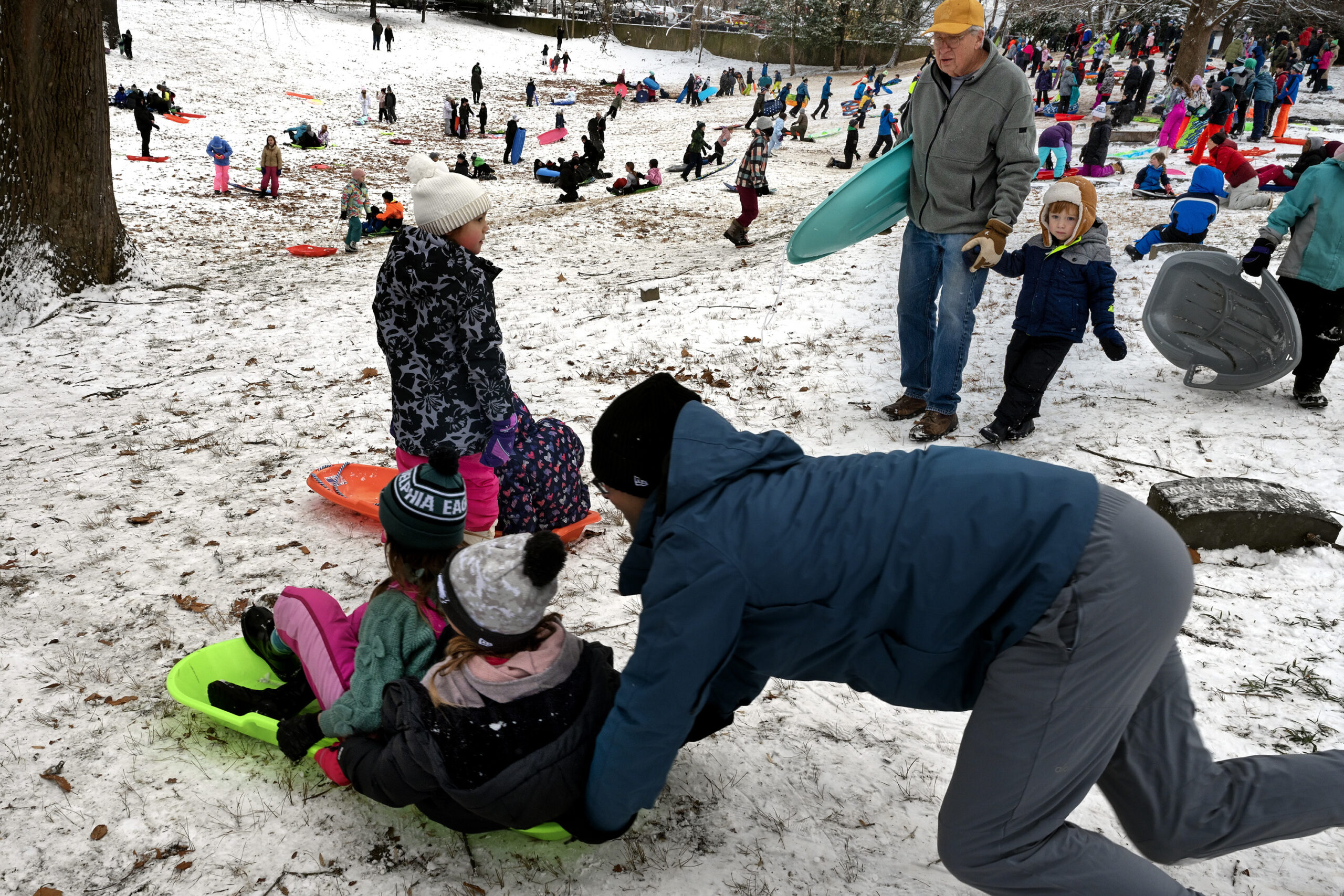
Doug Taylor (center) of Collingswood, sledding with his 3-1/2 year old grandson Will, waits for a space to open up on the crowded hill in the Haddonfield Friends Meeting cemetery on Jan. 6, 2025. “This is the best day ever!” said Will, about his first real experience with snow.
Snow is beautiful. Everything else about it is not: A for the initial excitement and beauty, F for the cleanup
The snow itself? Gorgeous. Magical. Instagrammable. The Wissahickon is about to look like a snow globe and for about 12 minutes, we will all pretend winter is charming.
The problem is everything that comes with it.
The grocery stores are already stripped bare like a snowstorm personally offended them. Bread is gone. Milk is gone. Eggs are gone. Somehow the rotisserie chickens are gone. People who have never once made French toast are suddenly preparing for a weeklong siege.
Then there’s the shoveling. The bending. The freezing. The part where you convince yourself it won’t be that bad and then immediately regret every life choice once your boots hit the sidewalk. And that’s before you remember some forecasts are floating numbers as high as 17 inches.
Group chats will fill with radar screenshots and passive-aggressive optimism. “Let’s see how it looks Sunday morning,” someone will say, knowing full well no one is leaving the house.
And yes, we’re all rooting for the plows. We always do. We say their names like prayers. We lower our expectations just enough to avoid heartbreak, but not enough to stop hoping.
An F because while snow may be pretty, it is also disruptive, exhausting, and a logistical nightmare that turns adults into meteorologists and grocery shoppers into survivalists. Enjoy the view. Then grab a shovel.
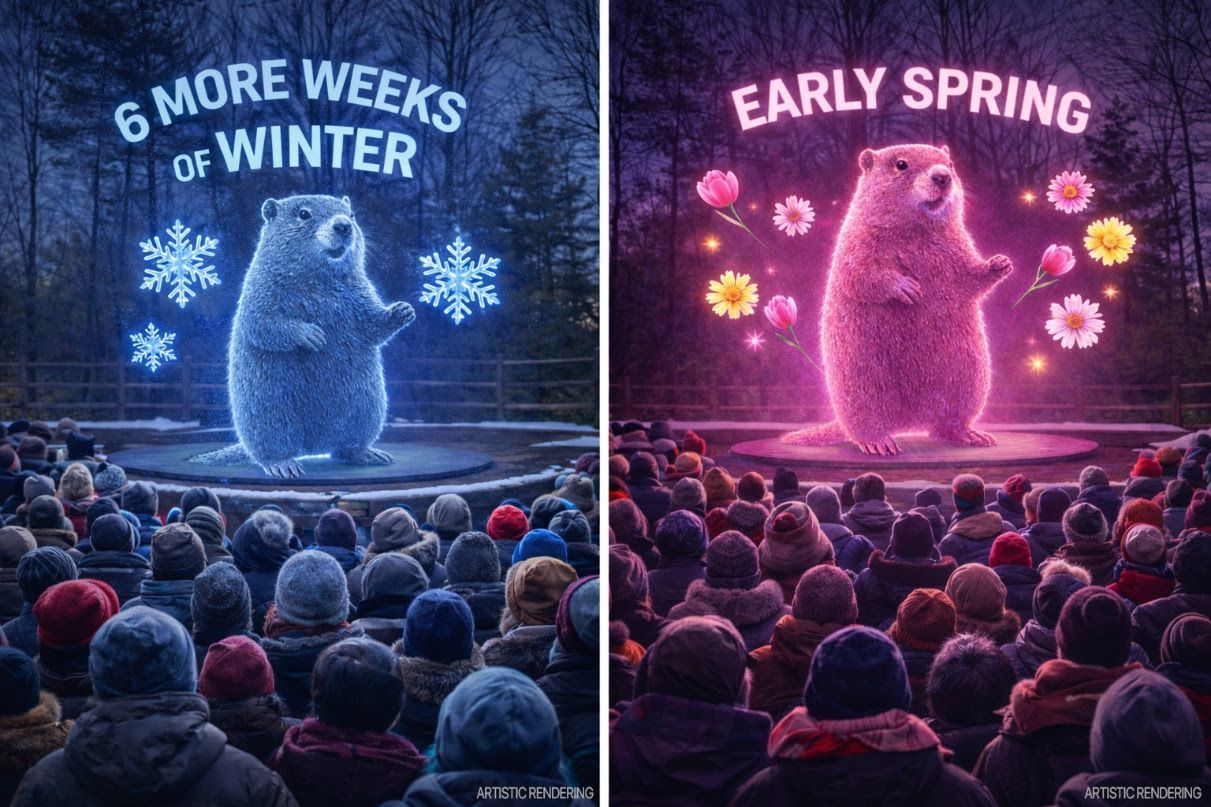
An artistic rendering of the hologram PETA is offering to replace Punxsutawney Phil.
PETA wants Punxsutawney Phil replaced with a hologram. Pennsylvania says absolutely not: A
Every January, right on schedule, PETA shows up with a new proposal to fix Groundhog Day. And every January, Pennsylvania responds with the same energy it reserves for people who suggest putting ketchup on a cheesesteak.
This year’s idea: Retire Punxsutawney Phil to a sanctuary and replace him with a massive, color-changing 3D hologram. A digital marmot. A Bluetooth rodent. Phil, but make it Coachella.
The problem isn’t animal welfare — it’s that Groundhog Day is not a TED Talk. It’s a pre-dawn ritual involving cold fingers, bad coffee, and a collective agreement to believe in something deeply unserious. Turning Phil into a hologram misses the point entirely. If people wanted a clean, efficient, high-tech weather forecast, they would simply look at their phones and go back to bed.
The most Pennsylvania response came from Josh Shapiro, who posted a photo of Phil with “DON’T TREAD ON ME,” effectively summarizing the state constitution in four words. This is not a debate about projections versus puppets. It’s about tradition versus disruption, and Pennsylvania will pick tradition every time, even when it makes no sense.
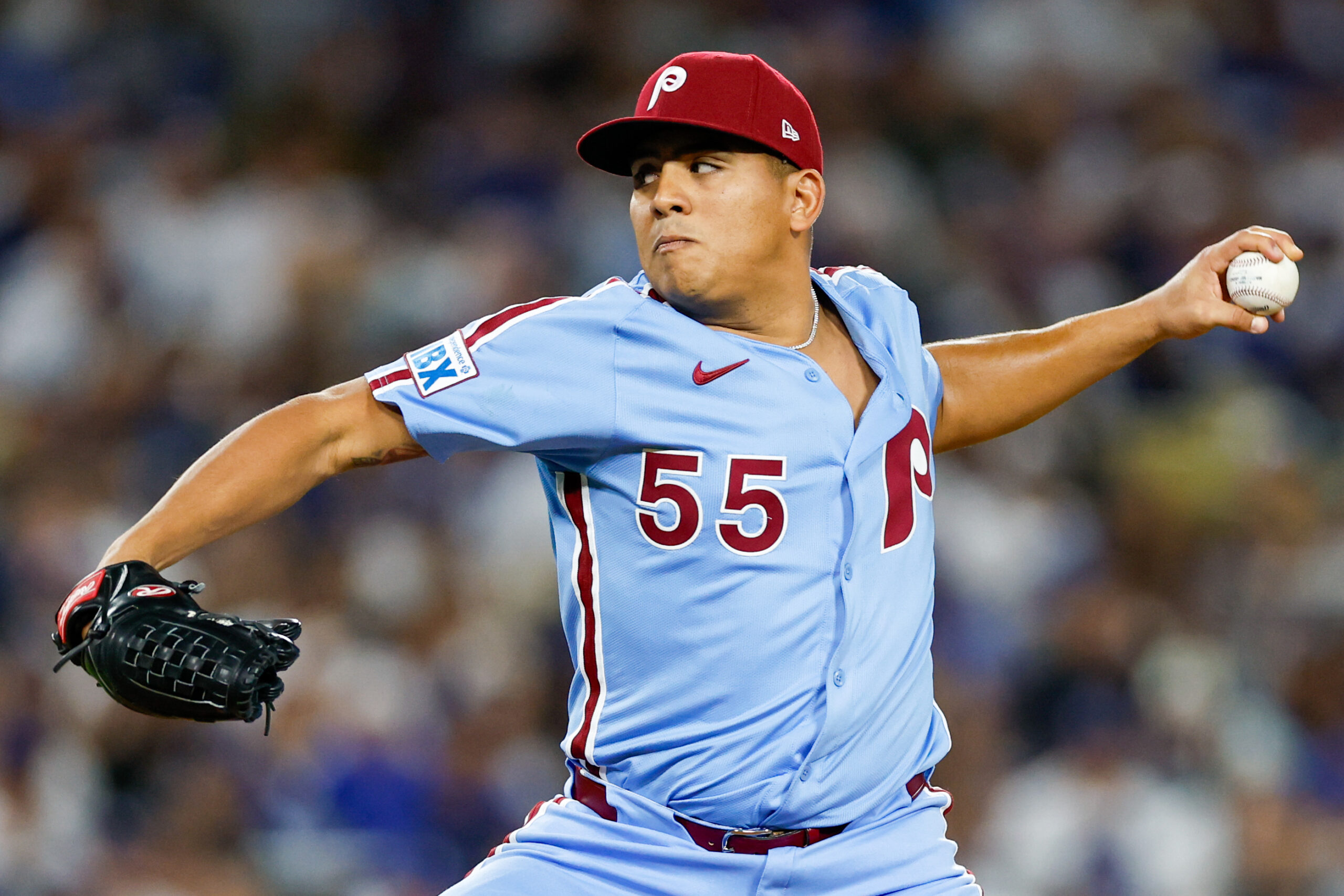
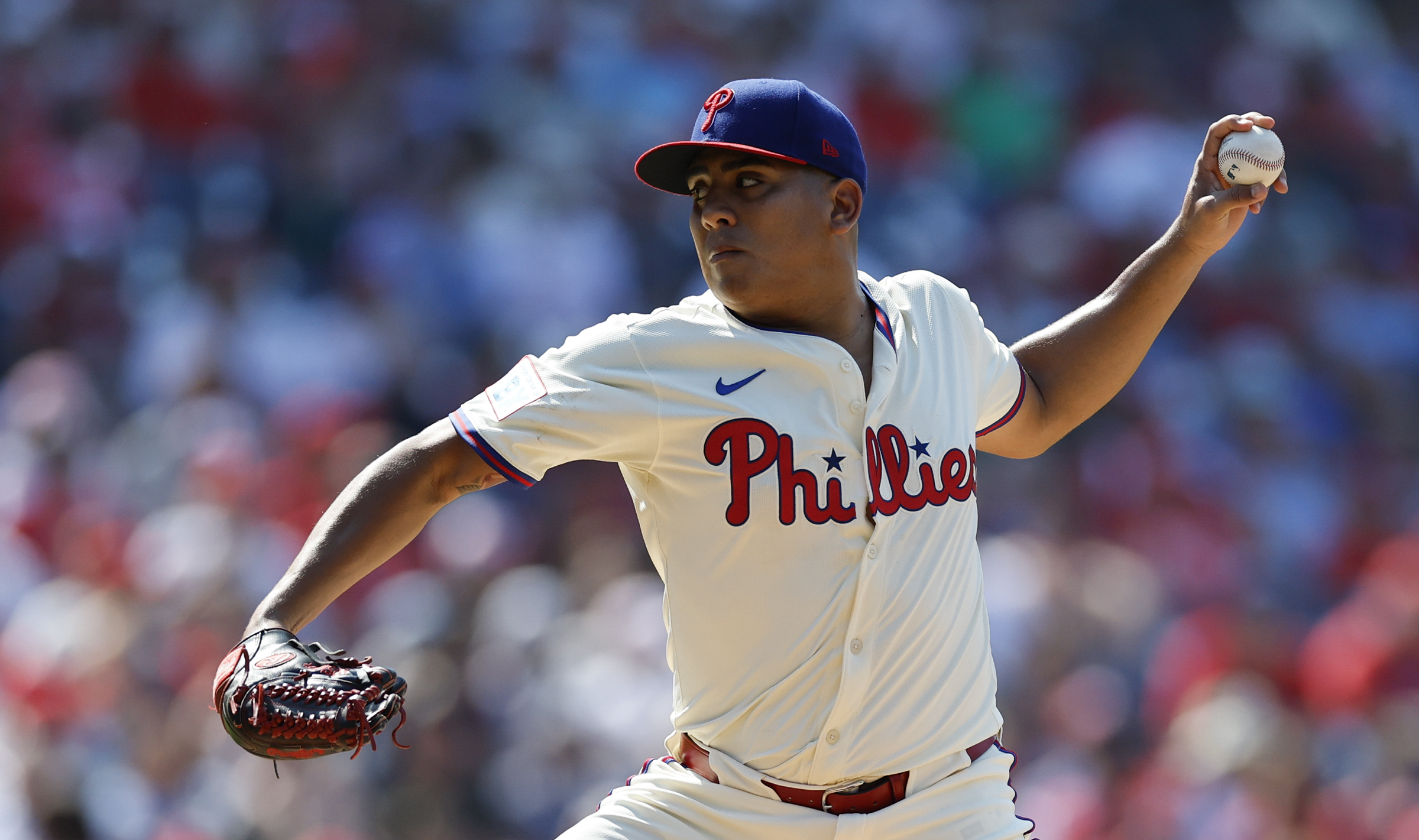
Phillies pitcher Ranger Suárez throws during the third inning of Game 3 of baseball’s NLDS against the Los Angeles Dodgers Wednesday, Oct. 8, 2025, in Los Angeles.
Wait, we loved Ranger Suárez. How did we get his name wrong?: C
This one landed like finding out you’ve been calling a close friend by the wrong nickname for years… not out of malice, just momentum.
Because Philly didn’t just like Ranger Suárez. Philly loved him. He was homegrown. Trusted. October-tested. His walk-up song was literally “Mr. Rager.” We chanted it. We printed it. We built a whole vibe around it. And somehow, in all that time, nobody stopped to say, “Hey, by the way, is this right?”
The funny part is that this revelation didn’t come with tension or correction. It came with grace. Of course it did. Suárez wasn’t scolding anyone. He wasn’t reclaiming anything. He was just explaining, gently, to a new city, while reassuring the old one that we didn’t need to panic.
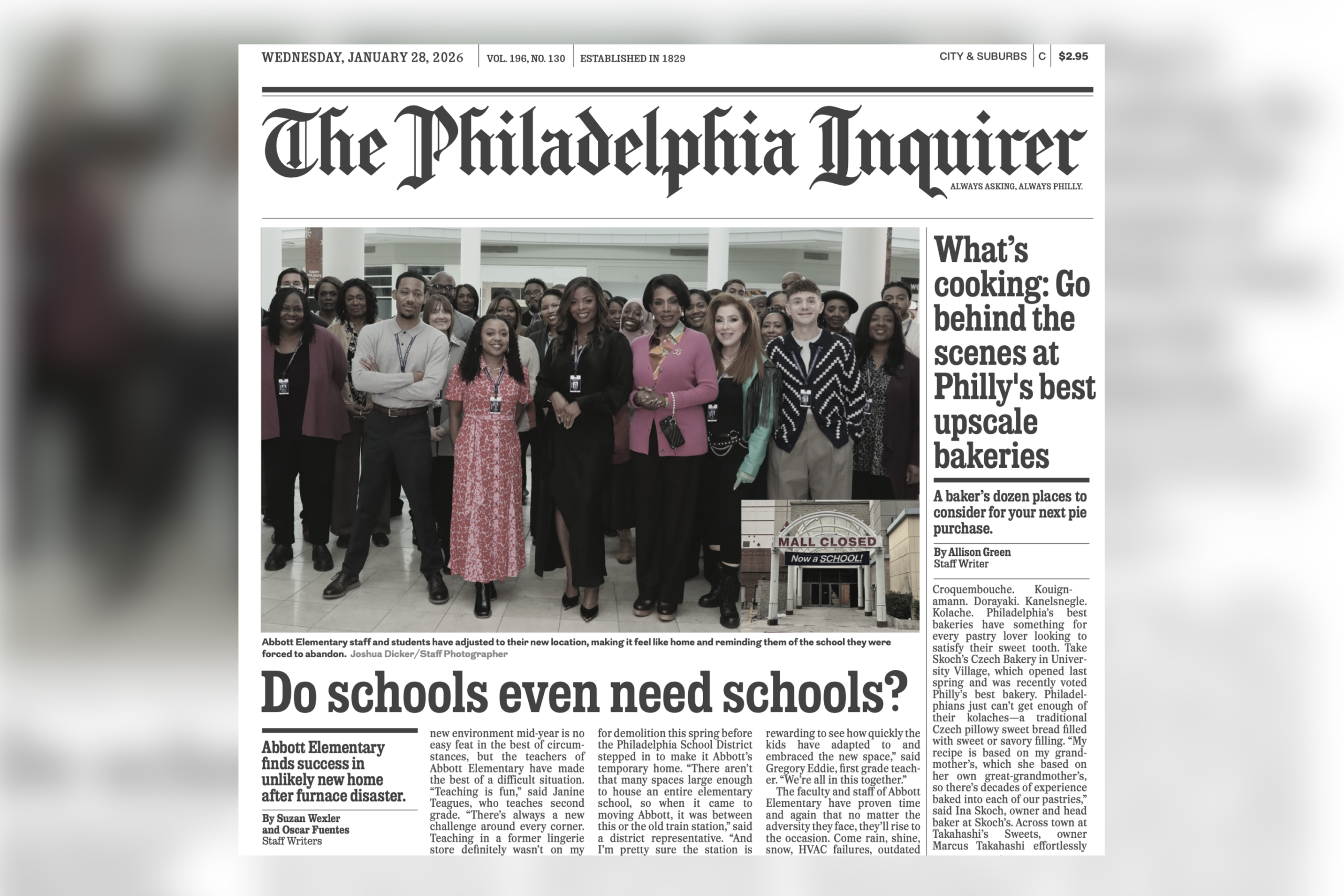
A mock front page of the Philadelphia Inquirer as seen in Season 5 of “Abbott Elementary.”
‘Abbott Elementary’ puts The Inquirer on the front page and nails the vibe: A
This could’ve gone sideways fast. A fictional front page cameo is exactly the kind of thing that can feel smug, indulgent, or weirdly self-important.
In this week’s episode, the paper shows up to cover Abbott’s unexpected success while the school operates out of an abandoned mall. The headline is glowing. The teachers react. Janine beams. Melissa checks whether her quote made it in. Barbara does a victory lap. And then, crucially, the moment passes.
Because in Philly, a front page is not the finish line. It’s a moment.
The district still drags its feet. The construction crew gets reassigned. The attention becomes something administrators can point to instead of acting on. That’s the joke, and it’s a sharp one. Abbott understands that recognition often arrives right before progress stalls, not when it accelerates.
The Four Seasons drops a $25,000-a-night penthouse and Philly blinks twice: B-
Look, nobody is confused about who this is for. It’s still jarring to see the number written down.
For that price, you get 4,000 square feet, sweeping views, curated art, wellness rooms, and menus tied to Vernick Fish and Jean-Georges. Luxury, in other words, is being taken extremely seriously.
And to be fair, this makes sense on paper. Philly is bracing for a monster tourism year with the World Cup, the Semiquincentennial, and a calendar stuffed to the margins. High-end visitors are coming, and the city would like to make sure they don’t stay in New York and commute down like it’s a day trip.
Still, there’s something very Philly about the collective reaction here, which is less awe than quiet disbelief. Not outrage. Not moral panic. Just a pause, followed by: Who is actually booking this?
Because this is a city where luxury tends to coexist awkwardly with reality. A $25,000-a-night penthouse sits a few blocks from potholes, delayed trains, and a whole lot of people who are very proud of finding a good deal.
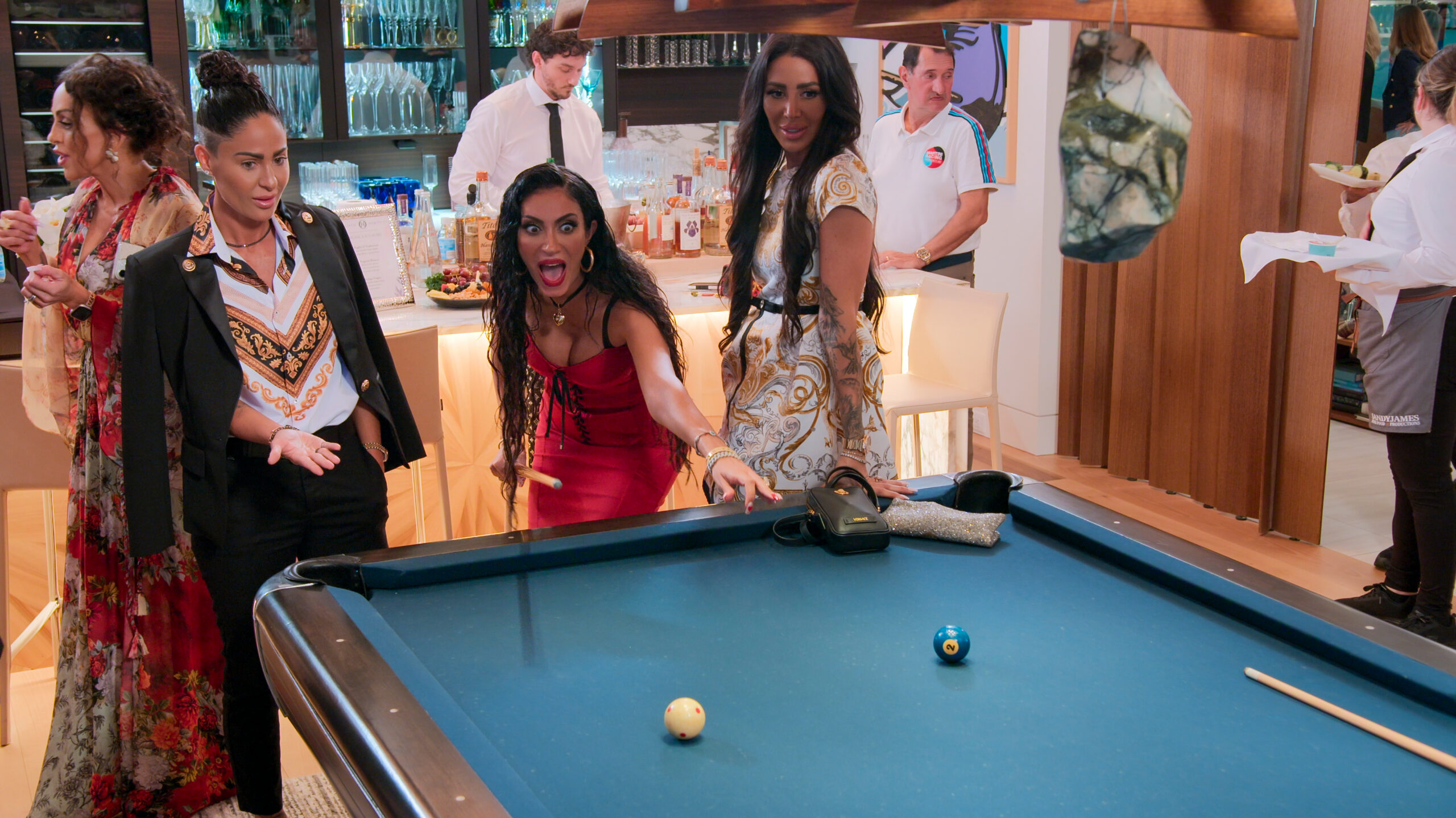
Maria Cozamanis and Romina Ustayev in episode 101 of “Members Only: Palm Beach.”
Philly somehow gets dragged into a Palm Beach reality show: D
This isn’t fun, campy reality TV. It’s stiff, glossy, and deeply invested in rules that feel made up for the sole purpose of excluding someone. The clothes are loud, the behavior is small, and the hierarchy is treated like gospel. Everyone is performing wealth as if it’s a full-time job, and no one seems to be enjoying it.
Set in the orbit of Mar-a-Lago, the show mistakes proximity to power for personality. Conversations revolve around who belongs where, how to dress “properly,” and which customs are acceptable. It’s uncomfortable in a way that feels less accidental than the show probably intends.
The Philly connection only adds to the weirdness. Aside from one recognizable name, these aren’t women who reflect anything most people here recognize as Philly culture. They don’t feel local. They feel imported, like a version of “high society” that got lost on the way to a country club and wandered onto Netflix instead.
And yet, it’s weirdly watchable. Not because it’s good, but because it’s baffling. The kind of show you finish not feeling entertained, just slightly grimy and confused about how this became the vibe.
Sam Salvo didn’t deliver a nuanced breakdown of route trees or personnel groupings. He didn’t cite EPA or All-22 tape. He simply announced — with the confidence of someone who has never had to answer a follow-up question — that Kevin Patullo should be flipping burgers at McDonald’s. Philly nodded in unison.
The funniest part isn’t that it went viral. It’s that a day later, Patullo was gone, and the city collectively decided the kid deserved at least partial credit. In a town where people once egged an offensive coordinator’s house (too far), this somehow felt like the healthier outlet.
Sam’s rant worked because it was pure, unscripted Philly logic: blunt, emotional, metaphor-heavy, and somehow accurate. “One-half cooked, one-half raw” is not just a roast, it’s a season recap. And when he popped back up afterward saying, “I just wanted to say anything that could get him fired. And it worked,” it sounded less like a joke and more like a performance review.
The follow-up reactions only added to the lore. Fans celebrated. Former players debated scapegoating. Someone somewhere probably floated Big Dom calling plays. And the Eagles, intentionally or not, let the internet believe that an 11-year-old helped nudge a major coaching decision.
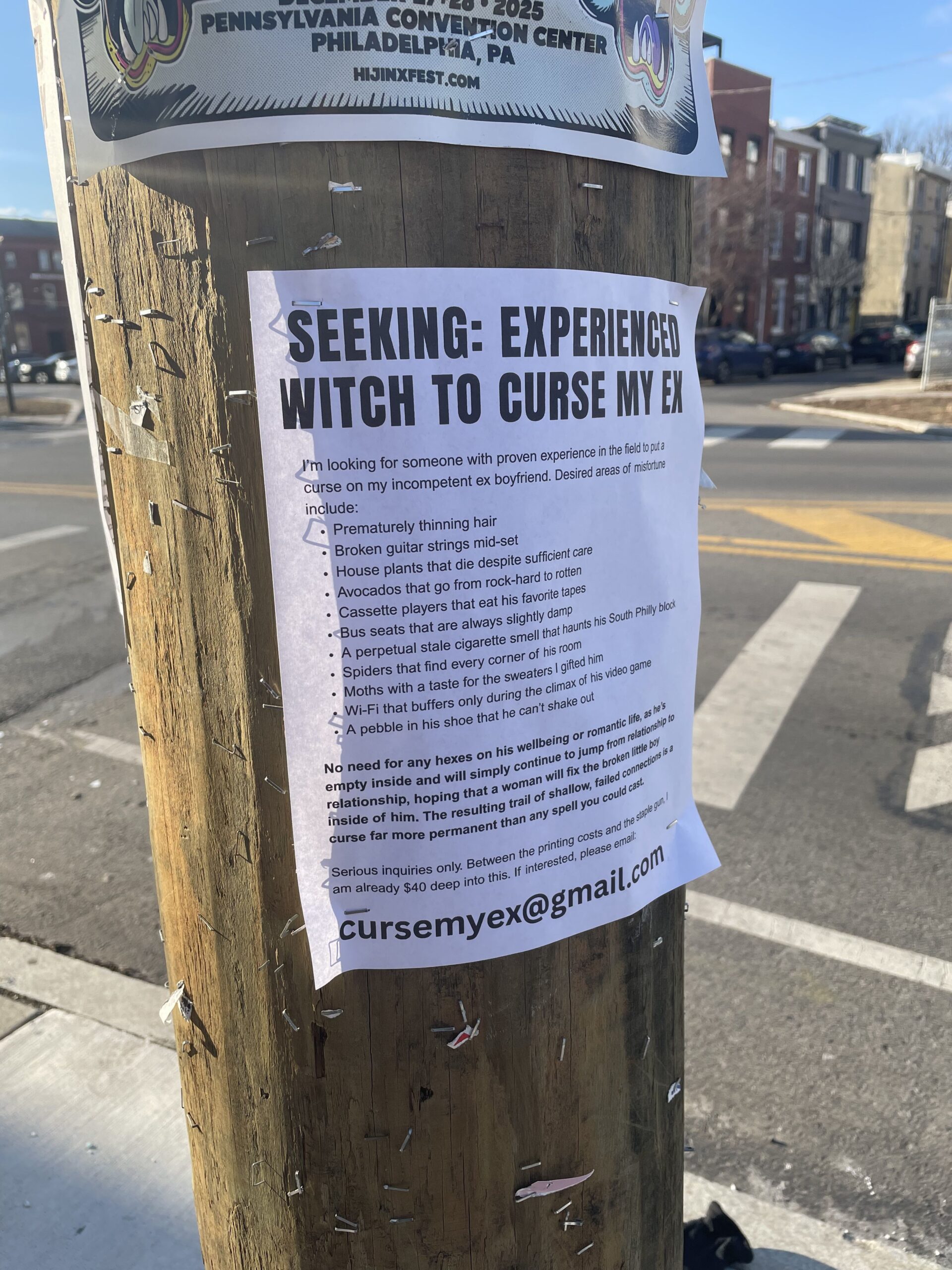
One of the witch-seeker’s fliers hangs in Fishtown on Sunday, Jan. 4. After ending a two-year relationship, a Philadelphia woman posted the fliers around the city and in Phoenixville as a way to channel her emotions over the breakup.
Philly collectively supports hexing an ex (with rules): A
At some point this winter, Philadelphia decided that asking a witch to curse your ex (politely, creatively, and without touching his health or love life) was not only acceptable, but deeply relatable.
The flier itself did most of the heavy lifting. “Seeking: Experienced Witch to Curse My Ex,” stapled to poles from Phoenixville to Fishtown, with a list of curses so specific and mild they felt less like dark magic and more like emotional Yelp reviews: thinning hair, damp bus seats, buffering Wi-Fi, eternally pebbled shoes. Nothing fatal. Nothing irreversible. Just inconvenience with intention.
Instead of pearl-clutching, the city leaned in. The flier spread through neighborhood Facebook groups and socials, where strangers did what they do best: offered commentary, solidarity, jokes, and unsolicited advice. Some people cheered her on. Some defended the ex. Others asked how it ended. And plenty of women recognized the feeling immediately: that moment after you’ve done the therapy, the journaling, the “being mature,” and still need somewhere for the anger to go. This wasn’t about actually ruining someone’s life. It was about yelling into the city and having the city yell back, “Yeah, that sucks.”
The rules mattered, too. No curses on his health. No messing with his love life. Philly rage has boundaries. Even our hexes come with ethics.
Wawa learns Philly does not want a vibes-only convenience store: C-
Philadelphia has many hard rules, but one of the hardest is this: If you remove the shelves from a Wawa, you are no longer operating a Wawa.
And in Philly, that’s not innovation. That’s friction.
This was once one of the company’s highest food-service locations before the pandemic, which makes the experiment feel even more puzzling in hindsight. People weren’t avoiding this store because they didn’t want Wawa. They were avoiding it because it stopped functioning like one. A convenience store that requires commitment, planning, and patience defeats the entire concept.
The grade isn’t lower because this wasn’t malicious or careless. It was a genuine attempt to test something new. But Philly answered clearly, quickly, and repeatedly: We don’t want a Wawa that feels like an airport kiosk. That’s what will get your store closed.
Phillies pitcher Ranger Suárez throws against the Cincinnati Reds on Saturday, July 5, 2025, in Philadelphia.
Saying goodbye to Ranger Suárez hurts, even if it makes sense: B+
This one lands softly and hard at the same time.
Ranger Suárez leaving Philadelphia was never shocking, just quietly devastating. Signed by the Phillies as a teenager, developed patiently, trusted in big moments, and forever tied to the pitch that sent the city to the World Series in 2022, Suárez felt less like a roster spot and more like a constant. You looked up in October and there he was, calm as ever, getting outs without drama.
Now he’s on the Red Sox.
The Phillies weren’t wrong to hesitate on a five-year, $130-million deal for a pitcher with mileage, injury history, and a fastball that succeeds more on craft than velocity. Andrew Painter is coming. The rotation math is real. This is how smart teams stay competitive.
But Philly doesn’t grade purely on spreadsheets.
Suárez embodied a certain Phillies ideal: unflashy, durable when it mattered, unfazed by the moment, and always a little underestimated. He wasn’t the loud ace. He was the steady one. The guy you trusted to calm everything down when the season felt like it might tip.
That’s why this stings. Not because it was reckless to let him go, but because losing someone who felt like a Phillie is different than losing someone who just wore the uniform. Watching him head to Boston is one of those reminders that the version of the team you emotionally commit to is always a few contracts behind the one that actually exists.
OpenTable adds a 2% fee, and Philly sighs deeply: C
Philadelphia understands restaurant math. We’ve lived through inflation menus, pandemic pivots, staffing shortages, reservation deposits, and the great “please cancel if you’re not coming” era. What we don’t love is when the bill quietly grows another line item after we thought we were done reading it.
That’s why OpenTable adding a 2% service fee to certain transactions (no-show penalties, deposits, prepaid dining experiences) landed with more fatigue than outrage. Not rage. Just tired acceptance.
The logic isn’t wrong. No-shows are brutal for small dining rooms, especially in places like South Philly where a missed table can knock a whole service sideways. Restaurants can absorb the fee or pass it on, and in many cases, the platform is genuinely helping places protect their bottom line.
But from a diner’s perspective, this is yet another reminder that convenience now comes with micro-costs layered so thin you barely notice them, until you do. The reservation is free … unless you’re late. Or cancel. Or book a special dinner. Or blink wrong. It’s another reminder that each new surcharge chips away at the simple joy of making dinner plans without feeling like you’re navigating airline baggage rules.
Philly draws the line at selling dinner reservations: A-
Philadelphia has tolerated a lot in recent years: prix-fixe creep, credit card holds, cancellation windows measured in hours, and now, yes, platform fees (see above). But selling a free dinner reservation for profit? That’s where the city finally says no.
The attempted resale of coveted tables at Mawn didn’t just irritate the restaurant’s owners, it offended a basic Philly value system. You can love a place. You can hustle for a table. You can brag that you got one. What you can’t do is turn access into a side hustle and expect people to shrug.
The reaction was swift and very local: public call-out, canceled reservations, and a clear message that this isn’t New York, Miami, or a StubHub-for-dinner experiment. Yes, reservation scalping exists elsewhere, powered by bots and platforms like Appointment Trader. And yes, Philly has passed laws trying to shut that down. But what made this moment resonate wasn’t legislation. It was cultural enforcement. A collective agreement that making money off a free reservation crosses from clever into gross.
Put simply: Waiting your turn is still the rule here. And if you try to flip your way around it, don’t be surprised when the city flips right back.
Amanda Seyfried gives Colbert a very real Allentown community calendar: A
Stephen Colbert has a recurring bit where he asks celebrity guests to promote actual events from their hometowns. When Amanda Seyfried, who grew up in Allentown, took her turn this week, she didn’t try to punch up the material.
She didn’t have to.
Seyfried read through a lineup of events that sounded exactly like a Lehigh Valley bulletin board: all-you-can-eat pasta night, speed dating for seniors, board games at a funeral home, a pirate-themed murder mystery, and Fastnacht Day donuts heavy on lard and tradition. No setup. No apology. Just listings.
That restraint is what made it land. Seyfried treated the segment like she was helping out a neighbor, not auditioning for a tourism campaign.
For viewers around Philly and the surrounding counties, it was immediately recognizable. This is the kind of stuff you scroll past in a local Facebook group or see taped to a coffee shop door without a second thought. Put it on national TV, though, and suddenly it becomes comedy.
The New York Times also names Philly the top place to visit in 2026: A- (yet again)
Well, here we go again. Philadelphia has once more been crowned the world’s best place to visit in 2026 — this time by the New York Times, which means we are now in the extremely Philly position of being right twice and still deeply suspicious about it.
Yes, the reasons are familiar. The Semiquincentennial. The World Cup. The All-Star Game. Fireworks, parades, exhibitions, concerts, TED talks, themed balls, and a calendar so packed it feels like someone dared the city to see what would break first. It’s a lot. Enough, apparently, to push Philly to the top of the Times’ “52 Places to Go” list.
But at this point, the events are almost beside the point. Big moments don’t explain why people want to be here, they just give them an excuse.
Philly keeps landing on these lists because it’s a place that feels alive even when nothing “special” is happening. It’s opinionated without being curated. Historic without being precious. Welcoming in a way that involves some yelling, a little side-eye, and eventually someone telling you where to eat. You don’t visit Philly to be impressed. You visit to be absorbed.
So why not an A+? Because every time the outside world decides Philly is the place to be, the city pays for it in very real ways. Hotel prices climb. SEPTA gets stress-tested. Streets designed for horse traffic brace for global crowds. And locals are once again asked to host a massive party while still making it to work, daycare pickup, and whatever delayed train they’re already standing on.
There’s also the small matter of validation fatigue. Philly didn’t suddenly get good because the New York Times said so — just like it didn’t when the Wall Street Journal said it. The city’s been doing this for a long time, whether or not anyone was paying attention.
Nothing says Philadelphia quite like being named the top travel destination in the world for 2026 and, at the exact same time, going viral for a road sign that simply reads: “Avoid Philadelphia.” No explanation. No branding. Just a warning.
The photo resurfaced on r/philly and immediately became a public forum for collective truth-telling. When one user asked, “Why?” the answers poured in: “The usual reasons.” “Mental health reasons. Financial reasons.” “SEPTA.” Another went full blunt-force: “Bad things happen in Philly.”
Of course, the Eagles entered the chat. “Eagles lost yesterday,” one commenter offered. Another countered, “Or Eagles won yesterday… Could be Eagles just did a thing. Go Birds.” Honestly, both feel correct.
Then came the traffic trauma. “Spend a day on the Blue Route,” someone wrote — a sentence that should probably be included in driver’s ed. One person proposed Google Maps should add a new setting: “avoid highways, avoid toll roads, avoid Philadelphia.”
But buried in the comments was the buzzkill reality check: This sign is almost certainly old. Several users pointed out it likely dates back to the I-95 bridge collapse in 2023, when avoiding Philadelphia was not a vibe, but a Department of Transportation directive. “Why are you posting a 5+ year old pic?” one top commenter asked, ruining the mystery but improving the accuracy.
But the timing is what makes this perfect. As the Wall Street Journal and the New York Times roll out the red carpet for 2026, locals are standing off to the side holding a faded road sign like, just so you know. It’s not anti-tourism. It’s informed consent.
An A for honesty, context, and a comment section that somehow functions as a city guide, traffic alert, sports recap, and warning label… even when the photo is old.
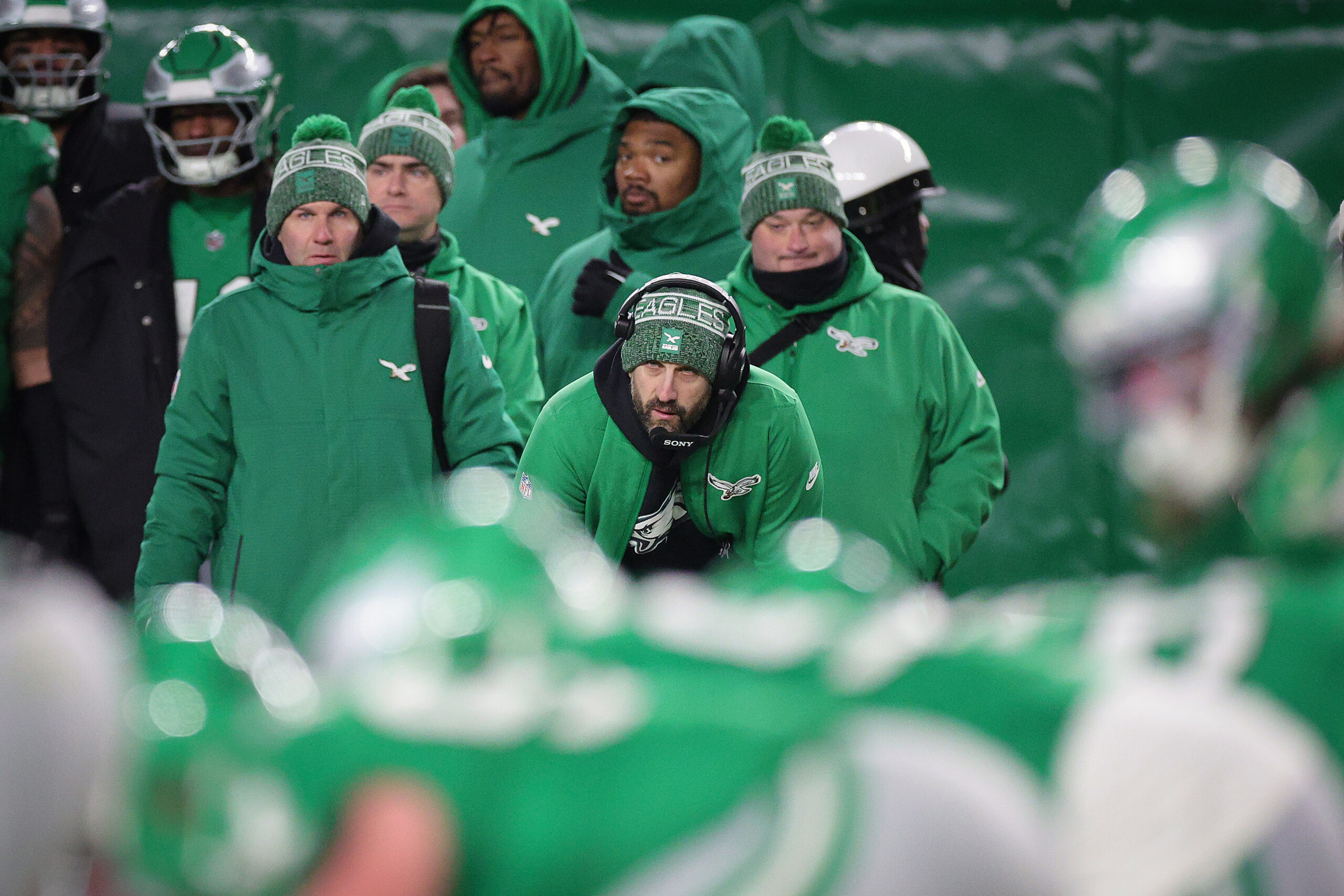
Philadelphia Eagles head coach Nick Sirianni (center bottom) watches his team play the Washington Commanders at Lincoln Financial Field in Philadelphia on Sunday, Jan. 4, 2026.
Eagles start the playoffs as the No. 3 seed: B-
The Eagles enter the playoffs as a No. 3 seed, a position that history treats like a warning label. The math is rude: Few No. 3 seeds make the Super Bowl, and most of them don’t even sniff it. The Eagles themselves have tried this route before and usually wound up packing up by the divisional round. Not great.
And yes, this is at least partially self-inflicted. Resting the starters in Week 18 cost them a real shot at the No. 2 seed and an objectively easier path. That decision is already being litigated in every bar, group chat, and radio segment. And it will keep getting relitigated until either A) the Eagles lose or B) they win enough that no one wants to admit they were wrong.
The 49ers limping into the Linc with injuries, tired legs, and a defense that is no longer the Final Boss version Philly remembers? That’s manageable. The Eagles’ defense has been the most reliable unit all season, and if this game turns into trench warfare, that favors the Birds. Saquon Barkley doesn’t need to be vintage playoff Saquon yet. He just needs to exist long enough to keep the offense functional.
Still, the unease is earned. This is a team with Super Bowl expectations walking a historically unfriendly path, powered by a defense everyone trusts and an offense no one fully believes in. That’s not nothing. That’s the whole tension.
So yes, the road is harder than it needed to be. Yes, the margin for error is thin. And yes, if this goes sideways, the No. 3 seed will be Exhibit A in the postmortem.
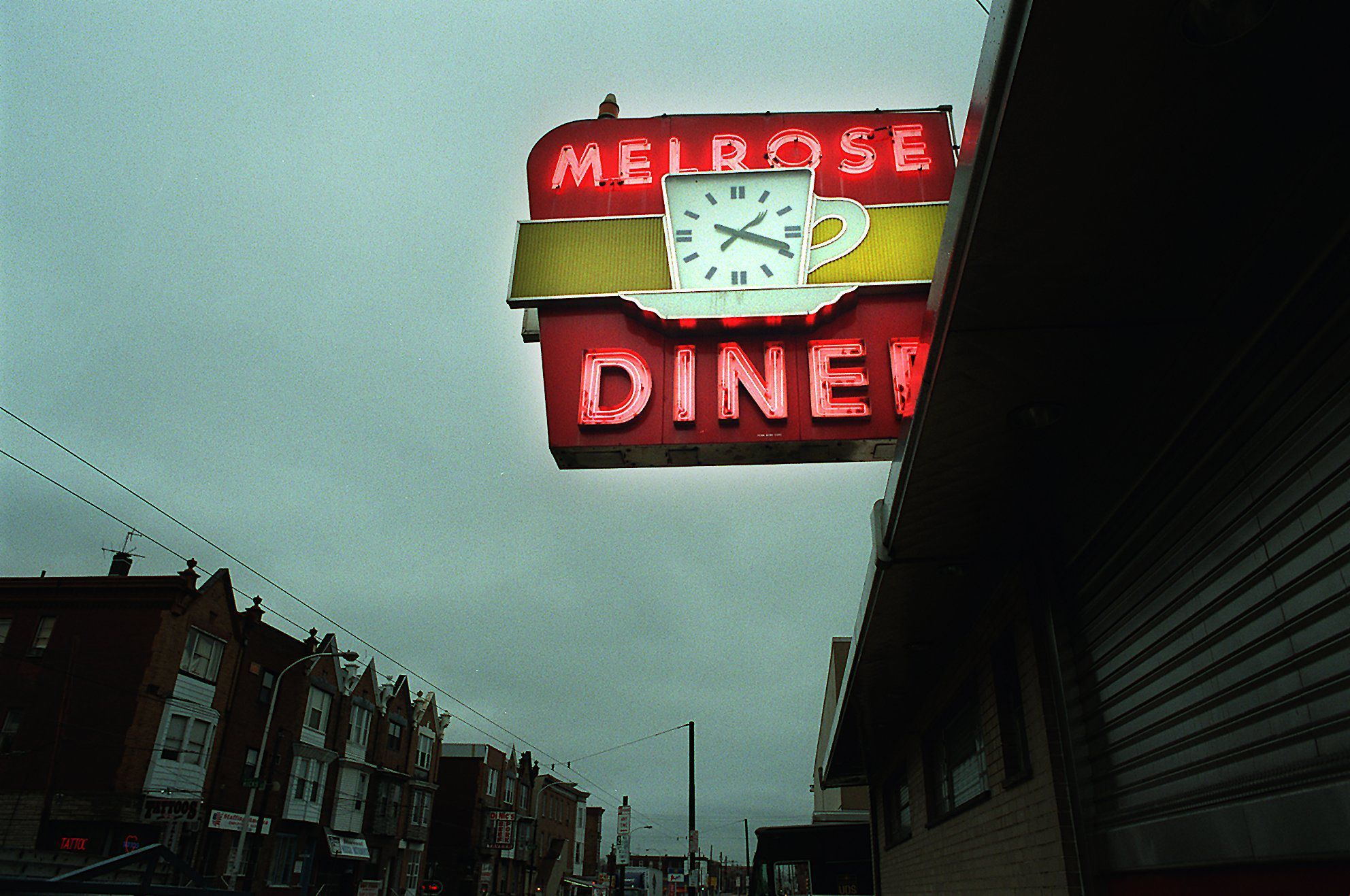
In this photo from 2000, the Melrose Diner sign shines bright on a gray day.
The Melrose Diner sign hits Facebook Marketplace: A+
Nothing says Philadelphia like scrolling Facebook Marketplace and suddenly finding the neon soul of a demolished diner listed as “very heavy and totally cool.”
Yes, the iconic Melrose Diner sign — red, yellow, stainless steel nostalgia and all — is apparently for sale. Not at auction. Not through a preservation society. Not behind glass in a museum. Just vibes, photos, and the immortal Marketplace closer: “Serious inquiries only.”
There’s something perfectly on-brand about this. The Melrose didn’t go out quietly. It didn’t get a tasteful plaque or a respectful archival goodbye. It got torn down for apartments, went into “storage,” and has now reemerged like a ghost asking for a sizable offer and a pickup truck.
The listing itself is doing a lot of work: four pieces, sold as a set, “used — good,” with the helpful reminder that Olga’s Diner once sold signage for $12,000. Philly translation: Don’t lowball me, I know what I’ve got.
Selling the sign feels a little like selling a family photo album. The Melrose wasn’t just a diner — it was late nights, early mornings, post-bar waffles, post-court appearance coffees, and at least one story involving a mobster, depending on who you ask.
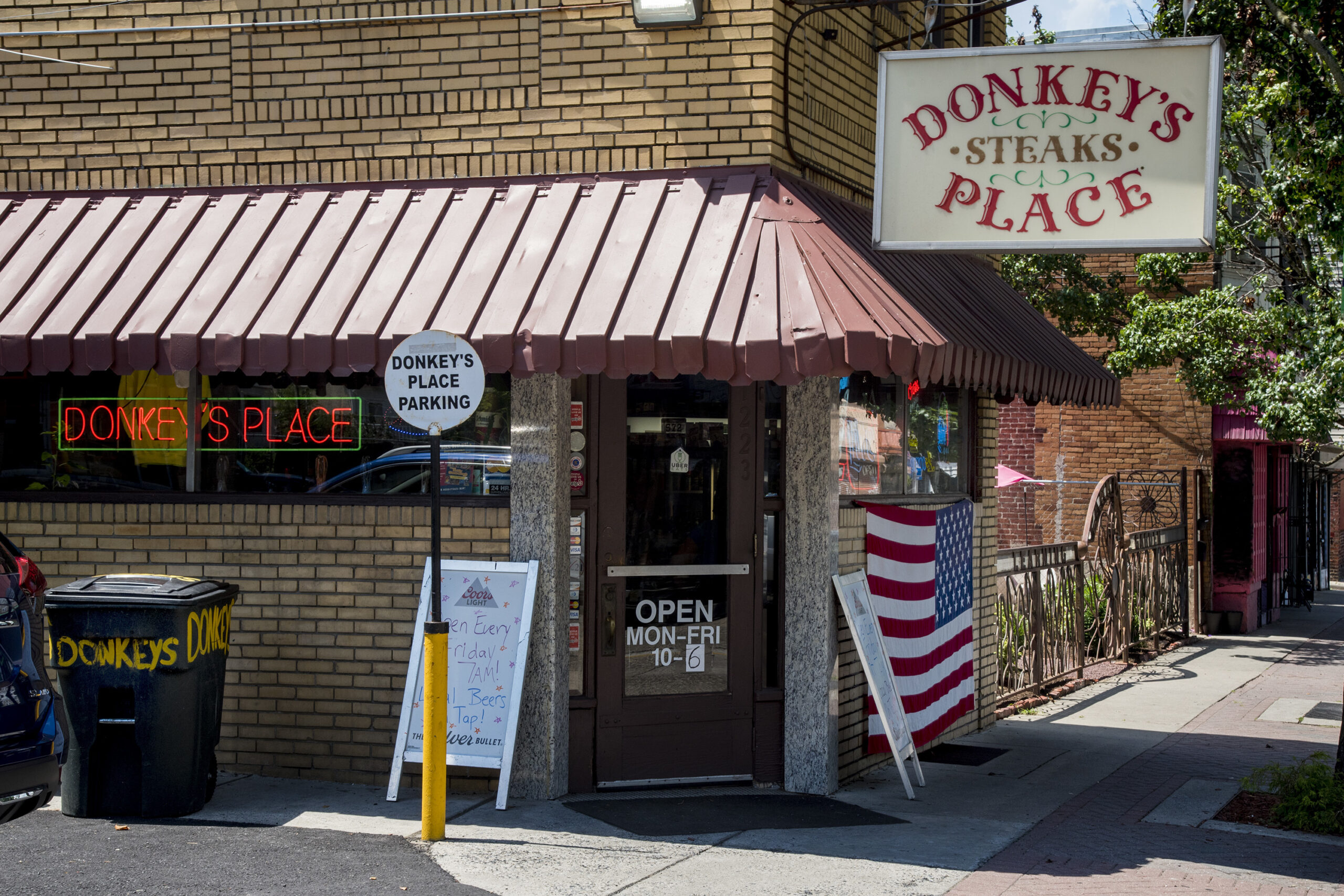
Donkey’s Place in Camden on July 18, 2018, one of 10 eateries Anthony Bourdain visited in a 2015 episode of his “Parts Unknown” show in New Jersey.
Donkey’s Place walrus bone theft: D (return it, coward)
Donkey’s Place didn’t ask questions about the bone for years — it just existed, looming behind the bar like a strange guardian angel of cheesesteaks and beers. It wasn’t sentimental, it wasn’t precious. It was just there. Which somehow makes taking it worse.
The alleged thief wrapped it in a scarf and walked out like this was Ocean’s Eleven: South Jersey Edition, and now the bar is left explaining to the internet why they’re asking nicely for a walrus baculum to be returned, no police report, no drama, just vibes and decency.
The deduction from an A is only because this never should’ve happened. Otherwise, this is peak Philly-area energy: a historic bar, an inexplicable artifact, security footage, TikTok pleas, and a collective regional agreement that yes, this matters.
Mail it back. No questions asked. Everyone will pretend this never happened.
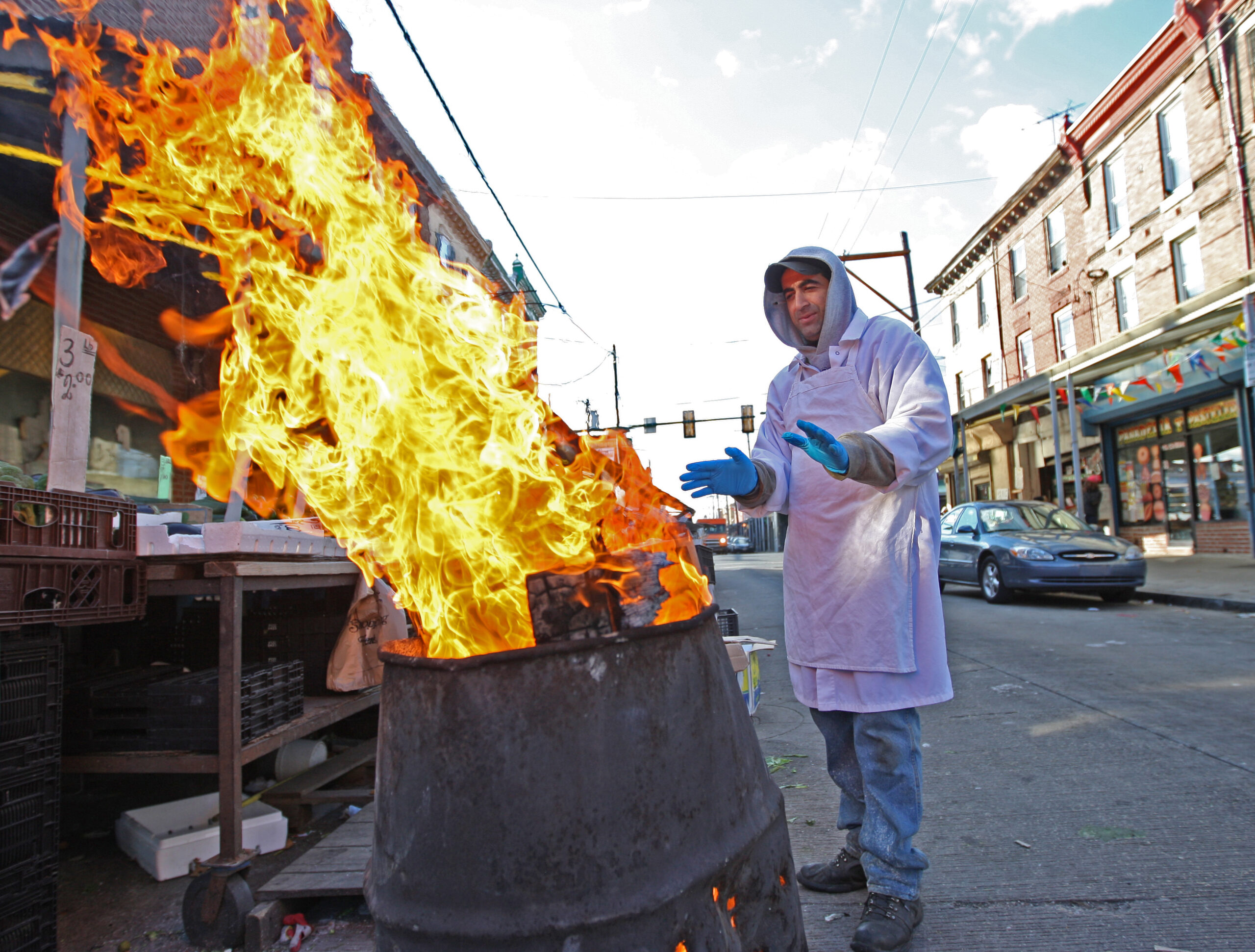
In this Dec. 4, 2007 Inquirer file photo, Joe Carioti, of Carl’s Poultry, warms his hands on the first really cold day down at the market.
Trash can fires are back on Ninth Street: A
You don’t need a calendar to tell you winter has arrived in Philadelphia. You just need to walk down Ninth Street and see a trash can on fire.
The barrels come back when mornings turn brutal and vendors are out before dawn, unloading boxes, setting up stalls, and bracing against the cold. This isn’t nostalgia or aesthetic — it’s practical. A few minutes of heat for hands that don’t get to stay in pockets, a pause before the work continues.
They’re regulated, debated, occasionally questioned, and absolutely unmoved by any of that. Every winter, they come back anyway. Not as a statement, but as a fact of life.
When spring shows up, they’ll disappear again. Until then, the fire’s on.
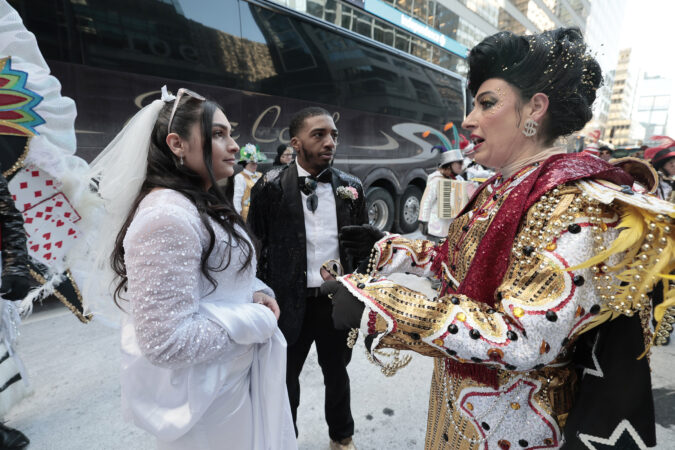
If you’re going to get married in Philadelphia, this is the correct way to do it: sequins, sneakers, a string band, bitter cold, delayed schedules, and a crowd that didn’t ask for romance but got it anyway.
A couple saying “I do” in the middle of the Mummers Parade is the purest expression of this city’s personality. Equal parts earnest and unhinged. Romantic, but only after everyone’s been standing around freezing for hours. Vegas chapel energy, but filtered through South Philly logistics and Broad Street chaos.
This wasn’t a viral stunt or a look-at-us wedding. It was two people already marching, already committed, deciding that if they were going to wait around in the cold anyway, they might as well get married while they’re at it. Honestly? Efficient.
The details make it sing: golden sneakers instead of heels, a flask for warmth and nerves, vows practiced on a bus, Elvis officiating, and the inevitable Philly closer, “I’m glad it’s done so I can get warm.” That’s love, but realistic.
And of course it happened at the Mummers. The parade that routinely features feathers, fake arrests, grown adults sobbing at saxophone solos, and more sequins than dignity. If any institution could absorb a full wedding without breaking stride, it’s this one.
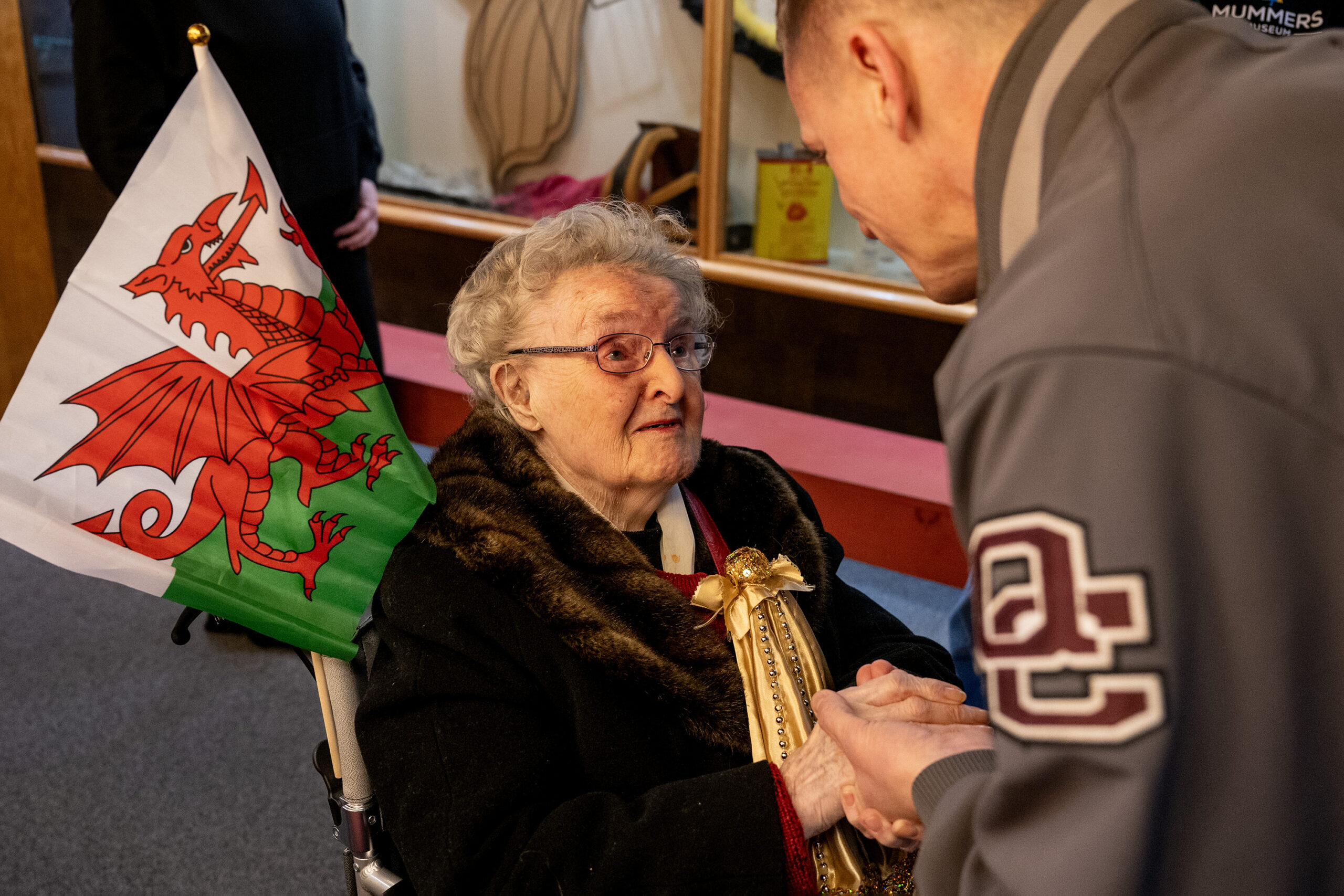
”Queen Mumm” Avril Davidge, a 93-year-old Welsh grandma meets Quaker City String Band Captain Jimmy Good as he surprises her at the Mummers Museum on Wednesday, Dec. 31, 2025. Davidge got to live her dream of going to the Mummers Parade, starting on New Year’s Eve morning with a tour of the museum.
Mummers devotion, no notes: A+
Yes, we’re grading two Mummers stories this week, and no, that’s not an accident.
Avril Davidge didn’t come to Philadelphia for irony or spectacle. She came because she fell genuinely, deeply in love with the Mummers through YouTube — learned the string bands, picked favorites, developed opinions — and decided, at 93, that she needed to see it in person. That alone clears the grading curve.
What makes this story land isn’t just the transatlantic trip. It’s how naturally Philly met her energy. A museum tour. A surprise meeting with her favorite band captain. A golf cart to the parade. No skepticism, no gatekeeping … just, “Yeah, of course. Welcome.”
And then there’s the wedding: sequins, sneakers, vows exchanged in the cold on Market Street, because if you’re already marching, why not also get married? It’s unhinged. It’s beautiful. It’s extremely us.
No notes.
Philadelphia’s cost of living vs. the suburbs: C (with math and feelings)
On paper, this sounds like a win: It’s up to 26% cheaper to live in Philadelphia than in places like Ardmore, King of Prussia, and Phoenixville, Philadelphia Business Journal reported. Congrats to the city for clearing the extremely low bar of not being the suburbs.
The problem is the second half of the equation: income.
Suburban households make dramatically more money, which means they somehow pay more and end up with way more left over. Ardmore residents, for example, are apparently out here saving more than $50,000 a year, which is a number that sounds fake if you live south of Girard.
So what we really have here isn’t a victory lap. It’s a familiar Philly paradox. The city is more affordable because it has to be. Lower costs don’t feel like a flex when they’re paired with lower wages, longer commutes, and the constant background hum of “maybe next year.”
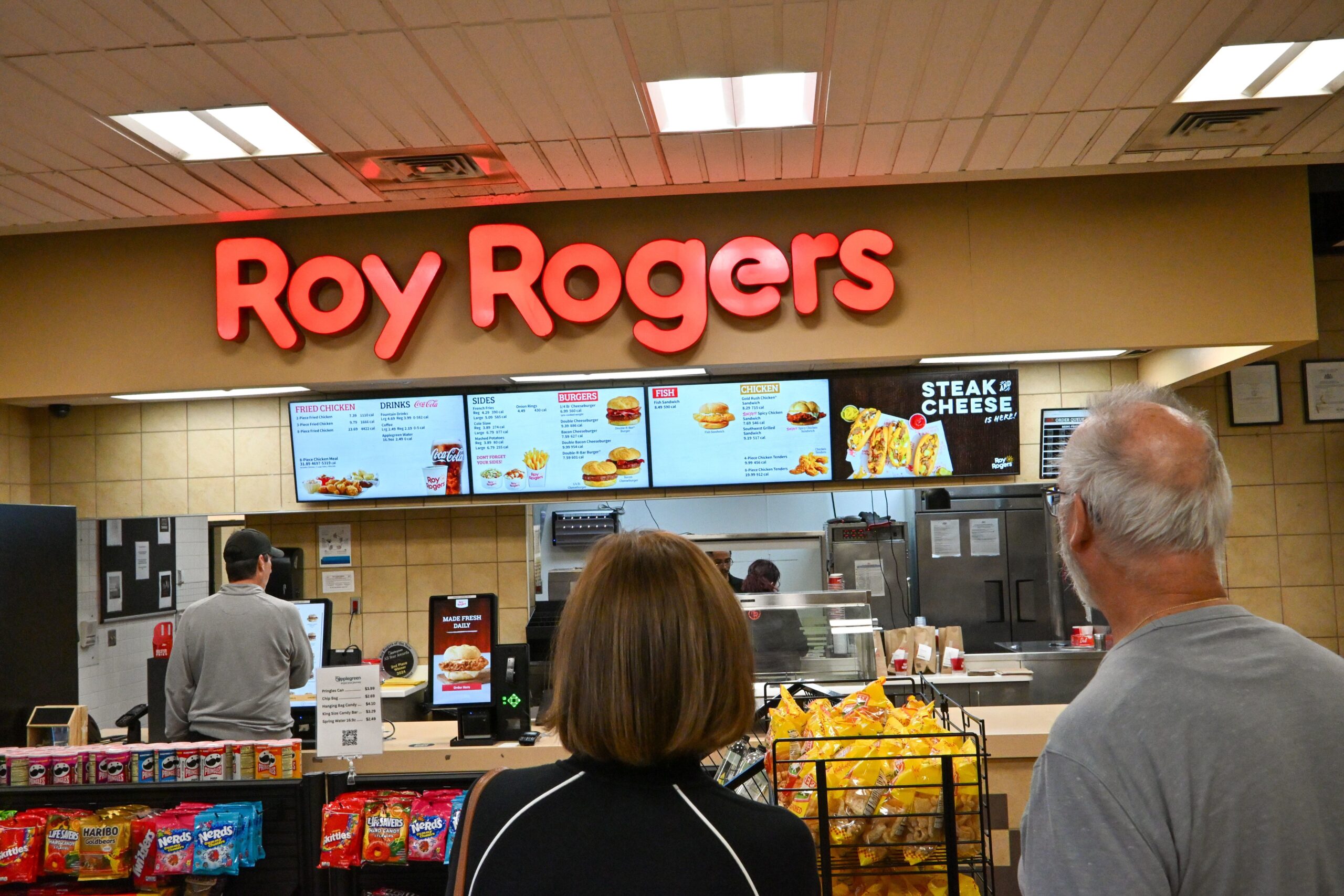
Mary Wright and Rich Misdom of Collingswood consider their options at the Roy Rogers located in the Peter J. Camiel Service Plaza on the Pennsylvania Turnpike in late November 2025.
This isn’t just personal bitterness; it’s structural. The Turnpike’s dining lineup is effectively locked in by a decades-old contract, which explains why eating on one of the state’s busiest roads feels less like a pit stop and more like a museum exhibit titled Fast Food, 1998. Auntie Anne’s. Burger King. Dunkin’. Starbucks. Repeat until New Jersey.
To be clear, this isn’t about disrespecting Roy Rogers. Roy Rogers has survived longer than many of our friendships. But when New Jersey and New York travelers are choosing between Shake Shack and Pret a Manger, and Pennsylvanians are debating whether this Sbarro feels better or worse than the last one, something has gone off the rails.
A C+ feels right. The food won’t kill you. It will fill the void. It might even unlock a memory of your mom liking Roy Rogers, which is sweet in its own way. But if the Turnpike is going to keep charging premium tolls, it might eventually want to acknowledge that the rest of the world moved on from mall food courts, and took better rest-stop dining with it.
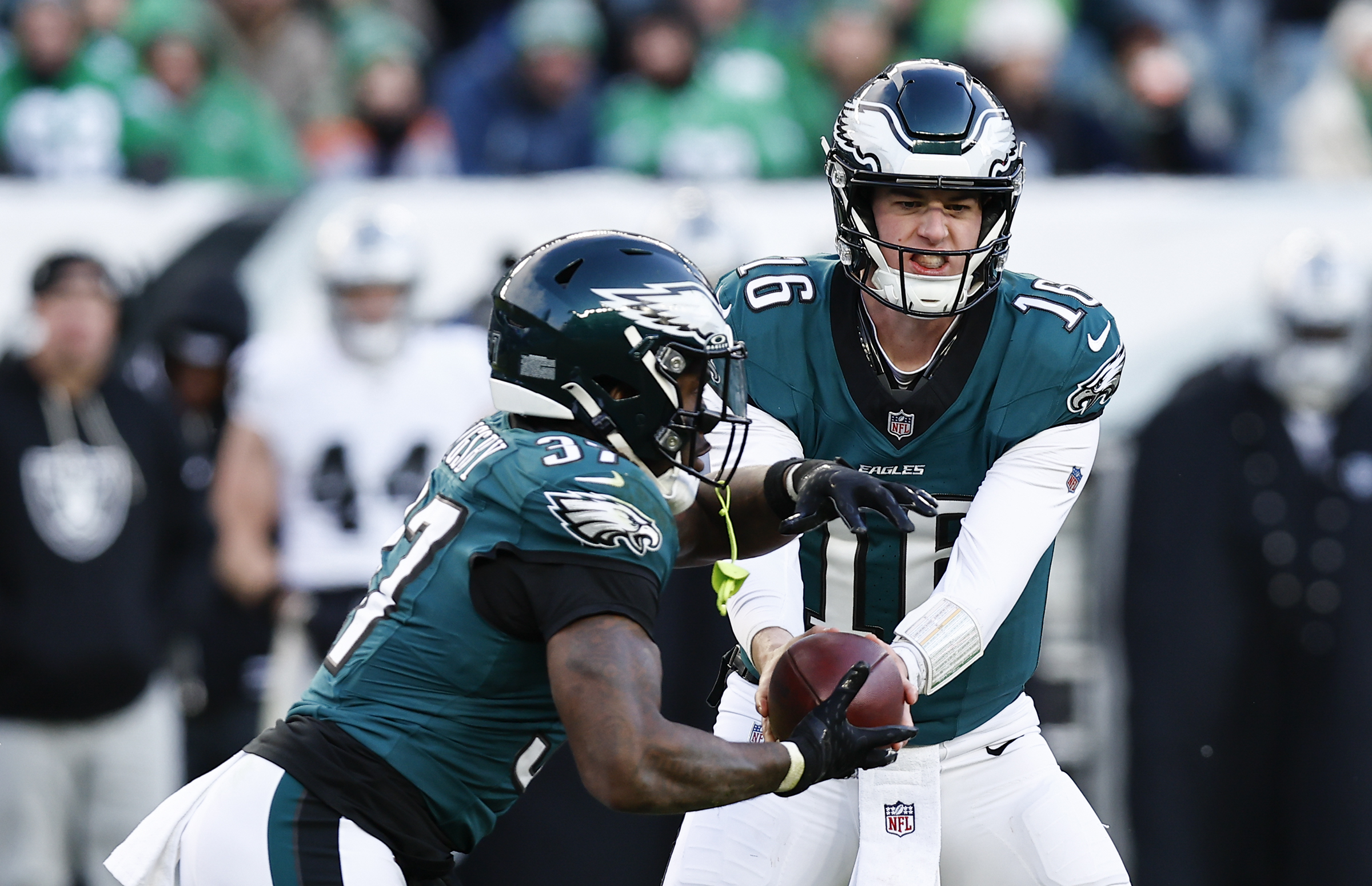
Eagles quarterback Tanner McKee hands off the football to running back Tank Bigsby against the Las Vegas Raiders in the fourth quarter on Sunday, December 14, 2025, in Philadelphia.
Eagles resting the starters (and trusting the vibes): B+
This is one of those decisions that feels smart, responsible, and completely terrifying all at once … which means it’s extremely on brand for Philadelphia football.
The Eagles are essentially turning Week 18 into a spa day for Jalen Hurts and most of the starters, handing the keys to Tanner McKee and asking the football gods to be normal about it. On paper, it makes sense. They’ve been here before. Sirianni keeps pointing out that the two Super Bowl runs came with byes, rest, and fresh legs. He’s not wrong. The scars from 2023 — A.J. Brown getting hurt in a meaningless finale, Hurts dislocating a finger — are still very much part of the group chat.
But this is Philly, so we can’t just rest people quietly.
Because technically, this game still matters. There’s still a path to the No. 2 seed. There’s still a chance to build offensive momentum, which has been… inconsistent, let’s say. And instead, the Eagles are choosing peace. Or at least the idea of it.
If McKee plays well, WIP will combust. If he struggles, everyone will retroactively insist the starters should’ve played. There is no outcome where this doesn’t get litigated.
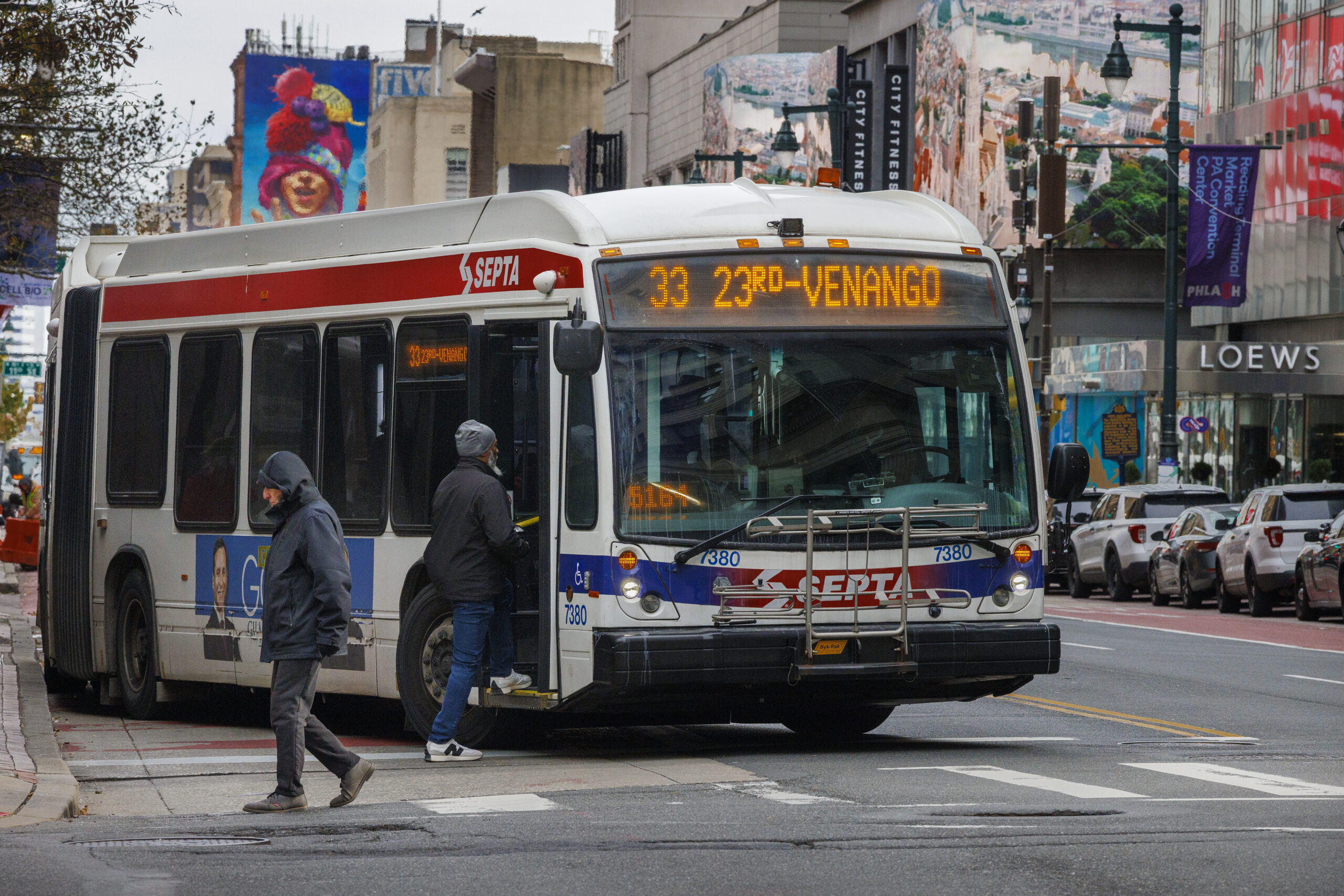
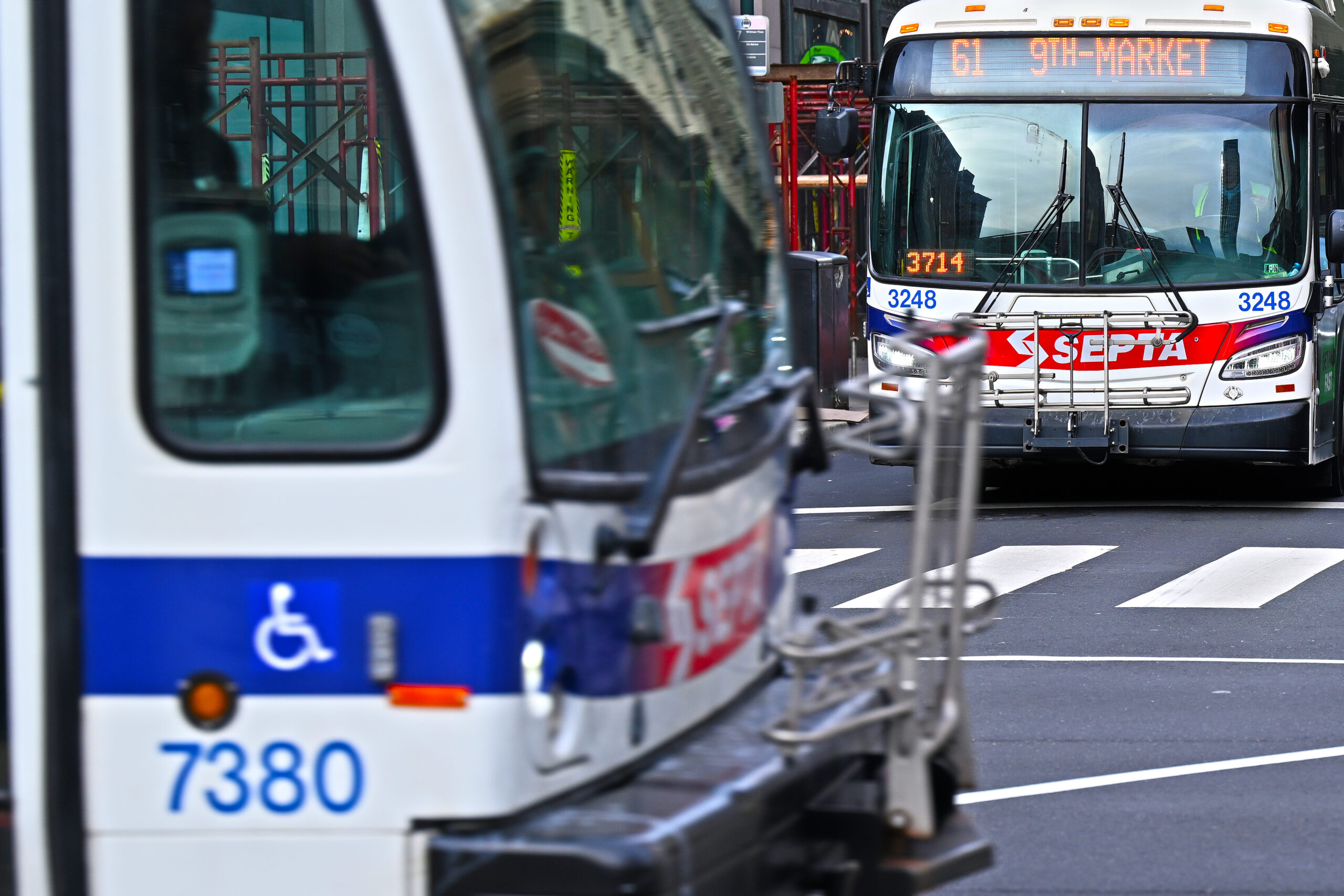
SEPTA 33 bus picking up passengers at 13th and Market Street, Center City Philadelphia, Monday, December 8, 2025.
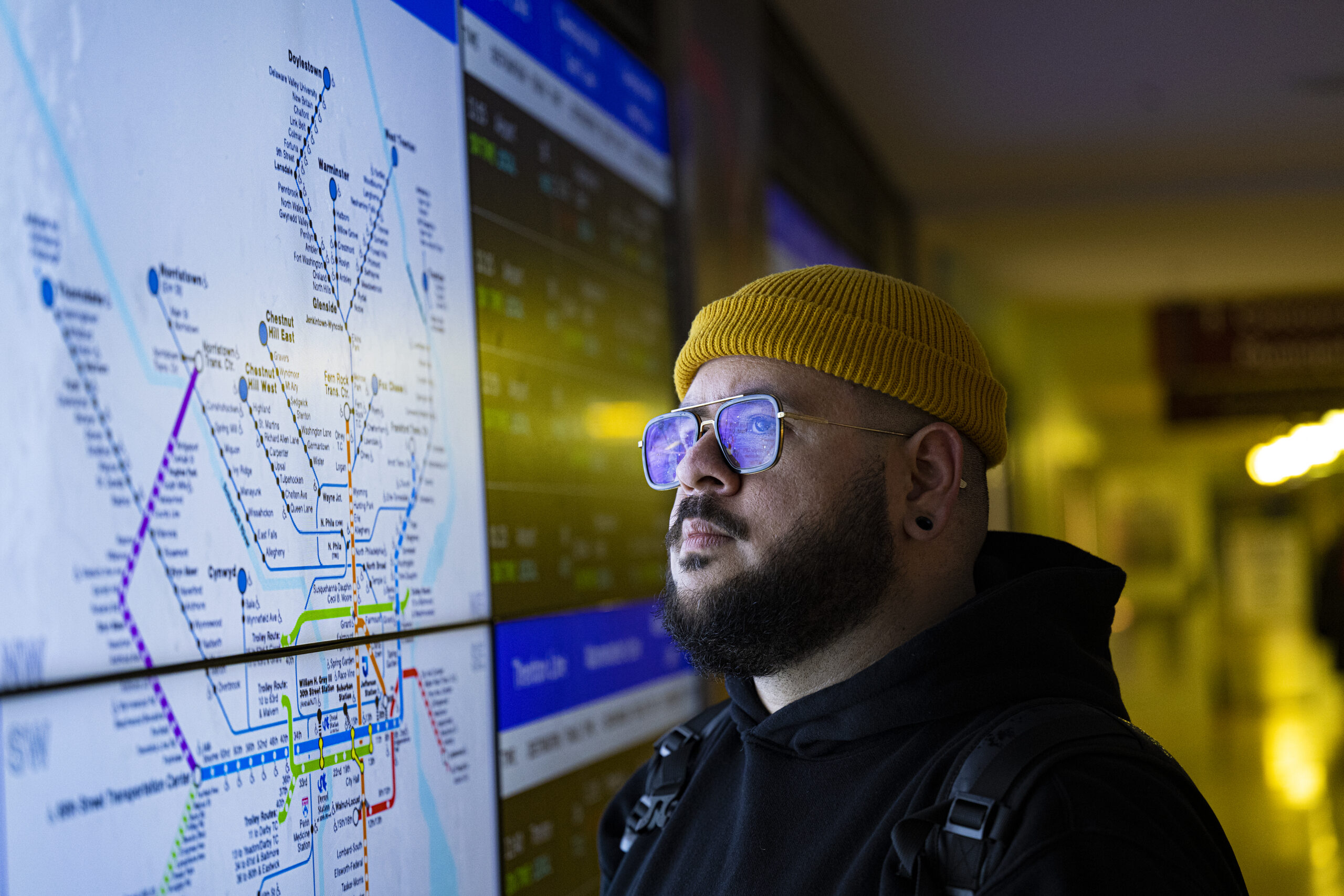
If you rode transit even semiregularly this year, you don’t need a recap. You felt it in missed connections, sudden service cuts, mystery delays, and that low-grade anxiety that comes from not knowing whether your train is late, canceled, or quietly on fire. Five Regional Rail fires. A trolley tunnel that closed, reopened, and closed again. A budget cliff so real it had a dollar amount attached to it. Near-strikes. Court-ordered service reversals. Emergency money parachuting in at the last second like SEPTA is a reality show contestant who keeps surviving elimination.
The most Philly part? SEPTA technically survived. Barely. With duct tape, emergency funds from Gov. Josh Shapiro, and the kind of last-minute labor deal that had everyone holding their breath. There’s something almost admirable about how resilient the system is — not because it’s thriving, but because it simply refuses to collapse on schedule.
To be fair, some things improved. Serious crime dropped. Fare evasion finally got gates and consequences. SEPTA moved hundreds of thousands of people for the Super Bowl parade without melting down, which honestly might have been the most impressive transit achievement of the year.
But none of that erases the larger truth: SEPTA spent 2025 lurching from crisis to crisis, stuck in the same funding limbo it’s been warning about for years, with riders paying the price in time, stress, and reliability. The money fixes were temporary. The politics were familiar. And the promise for 2026 is essentially: please let us just do the basics.
That’s a low bar… and one SEPTA hasn’t consistently cleared in a while.
New Jersey’s minimum wage lapping Pennsylvania: D (for us)
We love to say we’re better than New Jersey. Spiritually. Culturally. Hoagie-wise. But on minimum wage? Absolutely not. Not even close.
New Jersey is heading into 2026 with a $15.92 minimum wage, adjusted for inflation like it’s a normal, functioning place that occasionally updates laws to reflect reality. Pennsylvania, meanwhile, is still parked at $7.25 — the same number it’s been since 2009, back when we all thought flip phones might be making a comeback.
That gap isn’t just embarrassing; it’s structural. You can cross the bridge and make more than double per hour doing the same work. And while yes, New Jersey is more expensive overall, that doesn’t magically excuse Pennsylvania paying wages that don’t come close to covering basic needs. Even the MIT living wage calculator, which is not exactly a radical think tank, says Pennsylvanians need far more than $7.25 to survive. Shock.
Philly has been stuck in the same frustrating loop for years. The city wants the power to set its own minimum wage. The governor supports raising it. Bills exist. Rallies happen. And yet nothing changes, leaving workers watching Jersey do the thing we keep promising to “get to.”
Daniel Rodriguez travels through Philadelphia’s Suburban Station on Friday, Dec. 19, 2025, in Philadelphia. Rodriguez uses the station to commute between Philadelphia and metro Atlanta, taking a train from Center City to Philadelphia International Airport before boarding flights to and from his company’s Atlanta office.
Flying to Atlanta twice a week so you can keep living in a Jewelers’ Row apartment with your wife, avoid owning a car, and still make your job work is the kind of stubborn, impractical devotion this city respects. It’s extreme. It’s exhausting. It makes no sense on paper. And yet it somehow feels more reasonable than moving to the suburbs.
This isn’t about hustle culture or going viral (though he did). It’s about refusing to uproot your life because the job market is broken, SEPTA is unreliable, and cities don’t always make it easy to stay. Instead of leaving Philly, Rodriguez made the commute worse. Heroic behavior.
Is it sustainable? Questionable. Is it environmentally clean? Debatable. Is it the most Philly response imaginable to a bad system? Absolutely.
The Wall Street Journal crowns Philly the best place to visit in 2026: A
Congratulations to Philadelphia, which has officially been named the world’s best place to visit in 2026 — a sentence that still feels fake even after you say it out loud.
The Wall Street Journal says it’s because of America’s 250th birthday, the World Cup, March Madness, the MLB All-Star Game, and a stretch of months where Philly will be hosting basically every major event short of the Olympics.
But let’s be clear: Big events don’t make a city great. They just expose whether it already is.
Philly works as a destination because it can handle the chaos. This is a city that treats historic milestones and sports meltdowns with the same emotional intensity. Where strangers will give you directions, opinions, and a life story within 30 seconds. Where the best part of your trip will almost certainly be something you didn’t plan: a bar you ducked into, a neighborhood you wandered through, a crowd you got absorbed into without realizing it.
So why not an A+? Because Philly being crowned “best place to visit” comes with consequences we know all too well. Inflated hotel prices, SEPTA stress tests, streets that were never designed for this many people, and locals being asked, again, to carry the weight of a global party while still getting to work on time.
And because, frankly, Philly doesn’t need outside validation. This city didn’t suddenly get interesting because the Wall Street Journal noticed. We’ve been loud about this for years, from barstools, stoops, and comment sections, and now the rest of the world is finally catching up (and booking flights).
Still, credit where it’s due. This is a huge moment, and a deserved one. Philly is about to have the kind of year cities dream about, even if we’ll spend most of it grumbling, redirecting tourists, and muttering “we told you so.”
We’ll host the world. We’ll complain the entire time. And somehow, we’ll still prove them right.
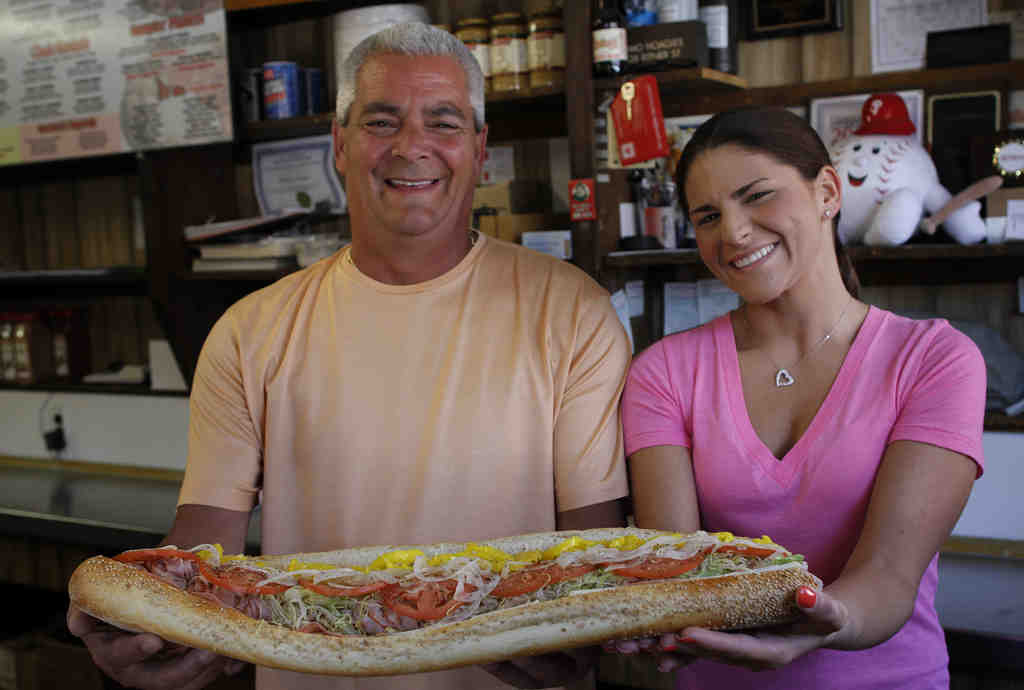
Primo’s founder Rich Neigre and Audrey Neigre, his daughter, hold a whole Italian hoagie in 2011.
Primo Hoagies covering big-dog adoption fees: A+
This is what “using your powers for good” looks like.
As PhillyVoice reported, Primo Hoagies quietly covering adoption fees for large dogs at a South Jersey shelter is the kind of move that cuts straight through the holiday noise. No brand stunt. No overexplaining. Just: These dogs keep getting passed over, that’s not right, let’s fix one part of it.
Big dogs are the last ones out the door. Everyone wants the tiny, apartment-friendly, Instagram-ready pup. Meanwhile, the 70-pound sweethearts sit there, year after year, wondering what they did wrong (answer: nothing). Removing the fee doesn’t solve everything, but it removes one very real excuse, and sometimes that’s all it takes.
Also, this is extremely on-brand Philly energy. Feed people. Love dogs. Don’t make a big deal about it. Just do the thing.
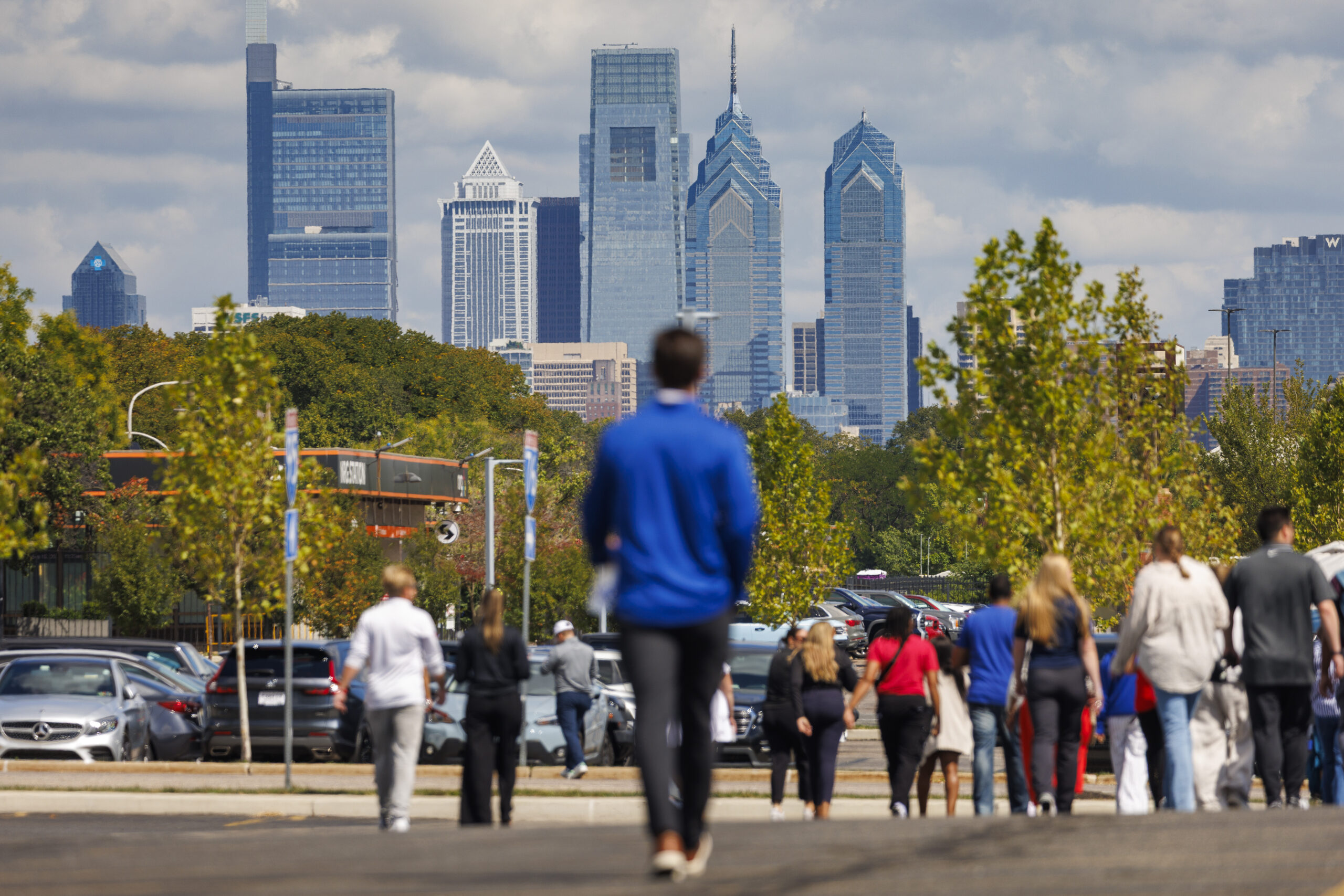
City skyline with people present for the unveiling of the new logo for Xfinity Mobile Arena the former Wells Fargo Center on Tuesday, September 2, 2025.
Philly making Zillow’s hottest housing markets list: B (with side-eye)
Zillow’s takeaway is that Philly is “affordable,” centrally located, and culturally desirable. Which is true. It’s also the most polite way possible to say: People are moving here because they’ve been priced out of everywhere else. Welcome! Please enjoy our rowhouses, strong opinions, and streets that were absolutely not designed for this many buyers.
The median home value sitting around $230,000 looks great on a national list. On the ground, it translates to open houses packed like an Eagles tailgate and starter homes disappearing in 48 hours with cash offers that make lifelong renters quietly spiral. Philly didn’t suddenly become hot. It became relatively attainable, which in 2025 is the real flex.
But let’s acknowledge that there is tension baked into this moment. Being desirable is good. Being affordable is better. Staying both at the same time? That’s the hard part.
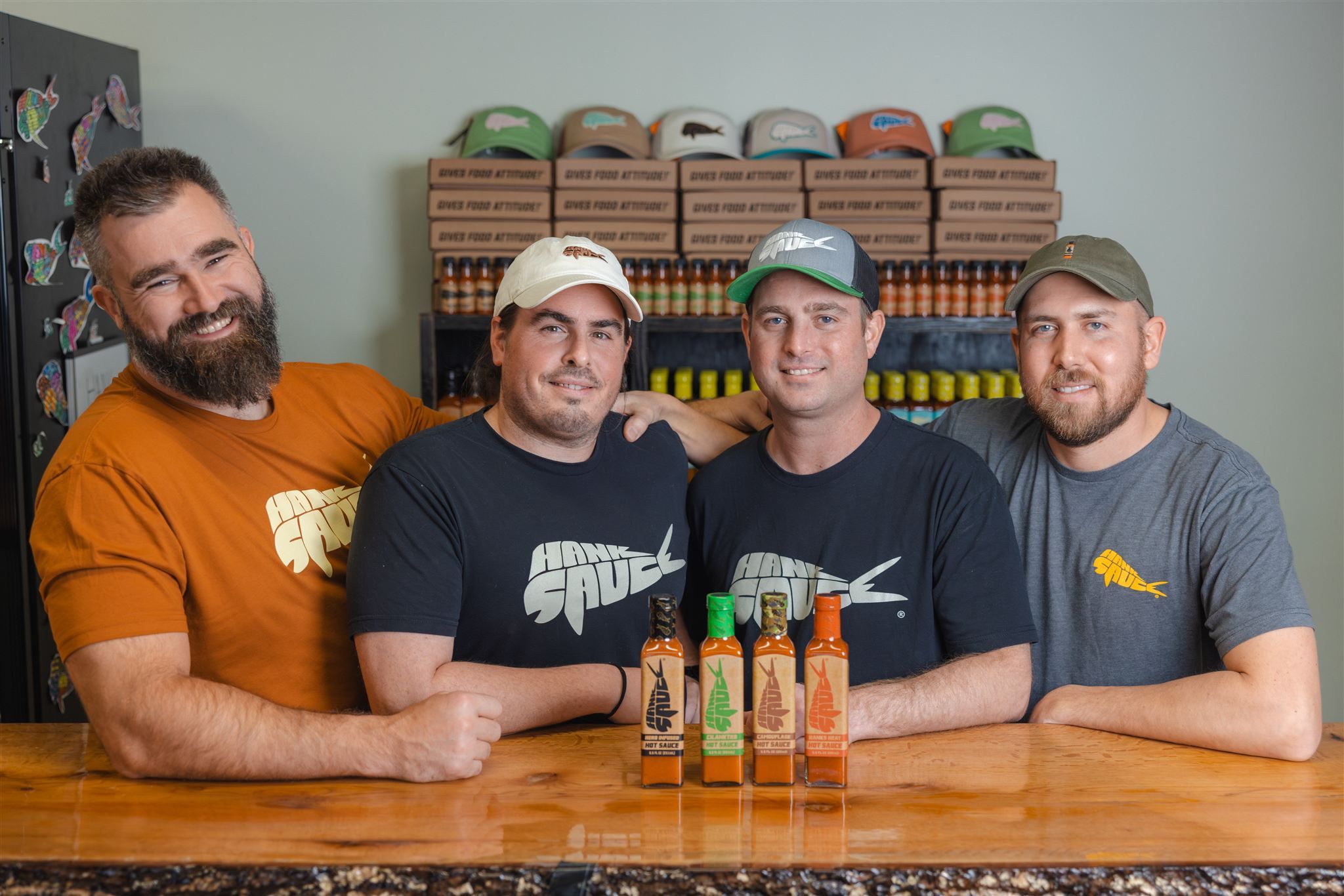
Jason Kelce with the Hank Suace cofounders (from left): Matt Pittaluga, Brian “Hank” Ruxton, and Josh Jaspan. Hank Sauce was founded in 2011 and is based in Sea Isle City. Kelce announced a partnership with the local brand and his family’s Winnie Capital.
Jason Kelce investing in Hank Sauce: A+ (this was inevitable)
There are celebrity investments, and then there are ones so perfectly aligned they feel less like a business move and more like destiny. Jason Kelce backing Hank Sauce, a Sea Isle City staple sold in surf shops, Shore houses, and Philly-area grocery stores, is very much the latter.
Sea Isle is so Jason Kelce. He’s there constantly. He bartends there. He fundraises there. He rips his shirt off there. He eats there. At this point, investing in a Sea Isle brand feels less like branching out and more like protecting his natural habitat.
And Hank Sauce? Also a perfect match. It’s not about pain tolerance or macho heat levels. It’s a hot sauce for people who want flavor without suffering, which somehow mirrors Kelce’s whole deal: loud, intense energy paired with surprising warmth and accessibility.
This doesn’t feel like a celebrity slapping his name on a product he just met. Kelce was already a customer. Already a fan. Already drinking beers with the founders in the back room years ago. Philly and the Shore can smell authenticity a mile away, and this one passes immediately.
Will this help Hank Sauce grow further nationally? Almost certainly. But more importantly, it feels earned. It’s a local guy with local roots putting money behind something that already belonged to the place — and to him.
SEPTA buses travel along Market Street on Dec. 8, 2025, in Philadelphia.
Philly’s ever-lengthening commute: C-
Nothing bonds Philadelphians quite like the shared understanding that getting to work will take longer than it should, feel more chaotic than advertised, and somehow still be your fault for not “leaving earlier.”
A new report confirms what everyone stuck on the Schuylkill, the El, or a delayed Regional Rail train already knows: Philly’s average commute is longer than most big cities — and it got worse last year. Thirty-three minutes doesn’t sound brutal until you remember that’s a one-way trip, on a good day, assuming nothing’s on fire (which, this year, was not a safe assumption).
Yes, return-to-office mandates are part of it. Yes, traffic is bad everywhere. But Philly commuters have been playing on hard mode: SEPTA funding drama, service cuts that almost happened, service cuts that did happen, train inspections, near-strikes, and the ever-present question of whether your bus is late or just gone.
The most Philly part is that it’s still technically better than 2019. Which feels less like a victory and more like saying, “Hey, at least it’s not the worst version of this misery.”
New York’s commute is longer. Congrats to them. But Philly’s special talent is making 33 minutes feel like an emotional journey. You leave your house hopeful. You arrive at work already needing a break.
An Eagles fan holds up a sign supporting the Tush Push as the Eagles faced the Green Bay Packers at Lambeau Field last month.
The Tush Push is officially losing its magic: C
Let us be honest with each other, because denial is unbecoming. The Tush Push is no longer a cheat code. It’s a memory. A beautiful, violent, once-automatic memory.
Three tries. Three failures. False starts, no gain, another flag, and then Nick Sirianni punting like a man quietly admitting something he didn’t want to say out loud. When the Eagles chose not to run it on fourth-and-1, that was the tell. Not the stats. Not the penalties. The vibes. Coaches don’t abandon unstoppable plays. They abandon plays that might get them booed.
For a while, the Tush Push was everything Philly loves: blunt, physical, a little rude, and wildly effective. It turned short-yardage into theater. It broke opponents’ spirits. It sent NFL discourse into absolute hysterics. It won games. It won a Super Bowl. It made grown men scream about “nonfootball plays” like the Eagles had discovered witchcraft.
And now? Teams figured it out. Officials started staring at it like it personally offended them. Hurts clearly got tired of being a human battering ram. What was once inevitable is now… work. And unreliable work at that.
This grade isn’t a condemnation. It’s grief. The Tush Push didn’t die because it failed once. It died because it stopped being feared. It went from “automatic” to “ugh, here we go,” and that’s not good enough in January.
The Eagles will be fine. They have Saquon Barkley, creativity, and other ways to move the ball. But the era of lining up and daring the defense to stop you, knowing they couldn’t, is over.
Raise a glass. Pour one out. Say something nice. Then move on.
Every Philly-adjacent viral saga eventually ends the same way: not with a plot twist, but with probation.
The Delco Pooper (a title no one asked for but Delaware County fully delivered) finally reached the unglamorous end of her moment in the internet sun this week. Instead of a trial, Christina Solometo entered a first-time offender program that includes probation, community service, anger management, and a strict “no posting about this” rule that feels tailor-made for someone who briefly became a meme.
If she completes it all, her record could be wiped clean. Which feels… both reasonable and deeply unceremonious, given how loudly this story echoed across the internet.
Here’s the thing: This was never really a crime story. It was a spectacle. A perfect storm of road rage, cell phone video, Delco energy, and a news cycle that will absolutely stop to rubberneck if given the chance. The moment went viral because it was shocking and absurd, not because anyone was asking for a legal reckoning.
And now, like most viral Philly chaos, it fizzles out in a courtroom with no cameras and a lot less laughter.
The C grade isn’t about whether the punishment fits the offense. It’s about the strange disconnect between how massive this story became and how ordinary its ending is. Two years of probation and some mandated self-reflection doesn’t feel dramatic. But maybe that’s the point. Real life isn’t a meme, and viral notoriety doesn’t translate to anything meaningful once the internet moves on.
Philadelphia Eagles quarterback Jalen Hurts (1) scores a touchdown against the New York Giants during the third quarter of an NFL football game, Sunday, Dec. 11, 2022, in East Rutherford, N.J. (AP Photo/John Minchillo)
Taking back a Jalen Hurts touchdown ball: D
If a quarterback hands you a touchdown ball, that’s not a loan. That’s a gift. And if the allegations in this lawsuit are even mostly true, what followed was one of the most aggressively uncool things the NFL industrial complex could’ve done to a fan.
Jalen Hurts scored, made history, and chose a guy in an Eagles jersey to share the moment with. That should’ve been the end. Instead, according to the suit, it turned into security, state police, and multiple officials allegedly insisting the fan return the ball, including being told he’d be “breaking the law” if he didn’t.
Yes, historic game balls matter. Yes, teams want them back. But there is a time-honored, normal-person solution here: You ask nicely, you offer a jersey or autographs, everyone leaves happy. What you don’t do is allegedly escalate a good-vibes moment into a stadium-security fever dream.
If this played out the way it’s described, the failure wasn’t policy. It was vibes. You can’t spend all week saying fans are the heart of the game and then, on Sunday, treat one like he stole the Declaration of Independence.
That said — and this is where Philly clears its throat — declaring you’re no longer an Eagles fan over it is… a lot. We’ve survived the Vet, Santa, and several entire seasons of Chip Kelly. Eagles fandom is not something you simply return at the gate like a confiscated football.
So yes: If the ball was forcibly taken back, that’s deeply uncool and deserves a D. But also: Buddy, you still bleed green. You just had a very bad day at MetLife.
Every winter, Philadelphia relearns the same brutal lesson: The stoop is not a safe place, especially in December. This week’s Philly Reddit reminder came courtesy of a transplant who made it almost a full year without incident, a rare and beautiful run, only to have a Christmas package stolen. Not electronics. Not sneakers. Homemade cookies from an aunt. The kind of theft that doesn’t just steal stuff, but steals joy.
The comments quickly turned into a familiar group therapy session: delivery drivers who won’t ring the bell, packages sitting untouched until they’re suddenly gone, neighbors debating whether knocking on strangers’ doors makes you a Good Samaritan or a suspect on Ring footage. One person suggested fake poop packages. Another admitted they stopped ordering anything between Thanksgiving and New Year’s. Several people basically said, “Welcome. This is Philly.”
The unofficial Philly solution, as always, is community. Grab your neighbor’s packages. Knock if you see a box sitting too long. Use lockers if you can. Put up a sign that says “PLEASE RING THE BELL” and hope for the best.
The two most-beloved Pennsylvania convenience store chains are just .3 miles apart – with a CVS in between – Thursday, Sept. 19, 2024, as the first Wawa in Central Pennsylvania – solid Sheetz territory – had its grand opening in the Dauphin County borough of Middletown.
Wawa absolutely cooking Sheetz: A+
Wawa once again reminded Pennsylvania who the main character is. The Delco-born convenience store giant is still the state’s largest private company. And while Sheetz’s revenue took a 20% tumble, Wawa kept cruising, widening the gap like a hoagie wrapper slowly unpeeling in victory.
Sure, Wawa’s revenue dipped slightly on paper. In reality? The lights were on, the coffee was hot, and no one has ever stress-cried in a Wawa parking lot at 2 a.m. wishing they were at Sheetz instead. That’s brand power you can’t spreadsheet.
Sheetz hired more people. Wawa hired none of our doubts. It’s expanding, it’s everywhere, and it continues to dominate the only metric that truly matters in this region: where people go when they’re tired, hungry, and emotionally fragile.
The Christmas Village mystery package hut: A
Only in Philadelphia would one of the longest lines at the Christmas Village be for a booth selling completely unknown items in heavily taped boxes. No cocoa, no ornaments, no guarantees. Just curiosity, chaos, and the real possibility you’re paying $25 for either a diamond bracelet or a deadbolt.
Hundreds of people a day are voluntarily handing over cash for packages nobody ordered, nobody claimed, and nobody is allowed to peek inside. It’s reckless. It’s hopeful. It’s the purest form of “eh, sure” spending this city has ever embraced.
Watching grown adults aggressively shake mystery mail like they’re working airport security is peak Philly behavior. So is opening it immediately, accepting your fate, and announcing it’s “actually perfect” no matter what comes out. Lacy lingerie? Seasonal. Random hardware? Useful. Animal pregnancy tests? That’s a story you’ll be telling for years.
This hut works because it removes all the pressure of gift-giving. You didn’t pick a bad present — the box did. And now it’s everyone’s problem.
Some cities do traditional Christmas markets. Philly sells you a taped-up question mark and says, “Good luck.”
FILE – Chicago Cubs closing pitcher Brad Keller celebrates after the Cubs defeating the Pittsburgh Pirates in a baseball game, Aug. 16, 2025, in Chicago. (AP Photo/Paul Beaty, File)
Phillies landing Brad Keller: A-
Credit where it’s due: The Phillies actually identified a problem and spent real money fixing it. That alone deserves applause.
Brad Keller isn’t a flashy closer signing or a back-page splash, but he’s exactly what this bullpen has been screaming for: a legit, high-leverage righty who doesn’t make everyone start bargaining with the universe in the seventh inning. A 2.07 ERA, a fastball that suddenly touches 97, and proof he can handle pressure without combusting? We’ll take it.
This is also a refreshing break from the Phillies’ recent bullpen habit of “maybe this guy will be fine” optimism. Keller isn’t a flier. He’s a bet. And at two years, $22 million, it’s a smart one. Not cheap, not reckless, just intentional. That’s new.
Is there risk? Of course. Relievers are famously fragile creatures. But after last postseason’s bullpen roulette wheel, it’s hard to argue this team didn’t need another arm they can trust when the game tightens and the stadium starts vibrating.
The best part: This move signals awareness. Dave Dombrowski didn’t pretend last year’s formula was good enough. He didn’t wait for July. He didn’t say “internal options” and hope everyone forgot October.
No parade yet. But for once, the Phillies didn’t ignore the fire and buy another rug.
Donna Kelce and Jason Kelce pose for a photo at the premier of Jason Kelce’s documentary at Suzanne Roberts Theater in Philadelphia on Friday, Sept. 9, 2023. The film, “Kelce,” is a feature-length documentary featuring Jason Kelce and the Eagles’ 2022-23 season.
Donna Kelce on ‘The Traitors’: A (Philly claims her, sorry not sorry)
Donna Kelce entering a Scottish castle to scheme, lie, and possibly backstab for $250,000 feels less like reality TV casting and more like destiny. Yes, she technically gave birth to two NFL stars in different cities. But let’s be clear: Jason Kelce played his entire Hall of Fame career here, wore a Mummers parade costume, screamed about underdogs, and permanently imprinted his mom onto the city’s cultural fabric. Donna Kelce is Philly now.
Watching her plot alongside Johnny Weir (a Coatesville native, also claimed) is just icing on the Tastykake. While the rest of the cast is stacked with reality-show professionals who’ve been training for deception their whole lives, Donna’s superpower is subtler: calm mom energy and the ability to disappoint you with one look. That’s lethal in a game like this.
Also, the idea of Donna Kelce quietly maneuvering through a castle while reality stars spiral feels extremely on brand. She has raised elite athletes, survived Super Bowl media weeks, and somehow stayed likable through all of it. A few traitors don’t stand a chance.
If she wins, we’re counting it as a hometown victory. If she betrays someone? Even better.