Tag: West Mount Airy

  • Lincoln Drive and dozens of other Philly roads get $13 million from PennDot

    Philadelphia is getting $13 million to support six traffic-safety projects in Philadelphia, courtesy of speeders caught and fined by automated enforcement cameras.

    The Pennsylvania Department of Transportation announced the grants Wednesday for an array of city projects, including $2 million for traffic-calming measures on Lincoln Drive between Kelly Drive and Wayne Avenue.

    Some of that money will help pay for speed humps at 100 additional public, parochial, and private schools in the city, PennDot said.

    Since taking office in 2023, the Shapiro administration has invested $49.7 million in city traffic-safety projects, all from revenues raised by speed cameras.

    Calming speeders

    Under the automated speed-enforcement program, grants are plowed back into the communities that generated the revenue. Philadelphia is so far the only municipality in the state where speed cameras are authorized.

    Next week, the Philadelphia Parking Authority is activating speed-enforcement cameras in five school zones under an expansion of the program.

    Pennsylvania also has automated speed enforcement in highway work zones, but that revenue goes to the Pennsylvania State Police for extra patrols and more troopers, the turnpike for safety projects and speeding counter-measures, and the general treasury.

    Lincoln Drive improvements

    Fed-up West Mount Airy residents pushed state and local officials for years to reduce speeding, aggressive driving, and near-daily crashes on and near Lincoln Drive, which has hairpin curves and a posted speed limit of 25 mph, and thick commuter traffic zipping through dense neighborhoods.

    It was a high-profile instance of Philadelphians rallying around and demanding projects from the city’s Complete Streets program, a road-design approach that seeks to make roadways safer for all users, including pedestrians and cyclists, as well as drivers of motor vehicles.

    The new grant is meant to continue traffic-safety work on Lincoln Drive that began a couple of years ago.

    That includes speed humps, speed slots, new phosphorescent paint, flexible lane delineators, a smoother merge point where the road narrows, and marked left-turn lanes.

    “It’s made a huge difference,” said Josephine Winter, executive director of the West Mount Airy Neighbors civic group, which organized residents.

    “People that live along Lincoln Drive are feeling positive,” she said — though there is a split between people who are angry at what speed bumps have done to their cars’ undercarriages and those who support what they say are life-saving improvements.

    “The city was wonderful, very responsive,” Winter said. “We’re been fortunate to get something done here.” Next up: working with other Northwest residents to get improvements on side streets, Wissahickon Avenue, and others.

    Other grants

    • $1.5 million for planning work to upgrade traffic signals, better lane and crosswalk markings, and intersection modifications.
    • $5 million for design and construction of safety improvements along commercial and transit corridors. Those include curb extensions, concrete medians, bus boarding bump-outs, and new crosswalks. Locations include: Frankford Avenue (Tyson Avenue to Sheffield Avenue); 52nd Street (Arch Street to Pine Street); Hunting Park Avenue (Old York Road to 15th Street); and Germantown Avenue (Indiana Avenue to Venango Street).
  • In ‘Melt the ICE’ wool caps, a red tasseled symbol of resistance comes from Minneapolis to Philadelphia

    In ‘Melt the ICE’ wool caps, a red tasseled symbol of resistance comes from Minneapolis to Philadelphia

    Some yarn shops around Philadelphia are running low on skeins of red wool, as local knitters and crocheters turn out scads of “Melt the ICE” caps in solidarity with protesters in Minnesota.

    The hats don’t feature a patch or logo that says “Melt the ICE.” In fact, they carry no written message at all. What they offer is a deep scarlet hue, a dangling tassel, and a connection to an earlier, dangerous time, when a different people in another land sought to silently signal their unity.

    “The hat is really a symbol and reminder,” said knitter Laura McNamara of Kensington, who is making two caps for friends. “People are looking for a sense of community.”

    She refused her friends’ offers of payment, asking instead that they not let their involvement start and end with a hat ― but find a means to stand up for civil rights in some specific way.

    The original hat was a kind of conical stocking cap, known as a nisselue, worn in Norway during the 1940s as a sign of resistance to the Nazi occupation. The Germans eventually caught on to the symbolism and banned the caps.

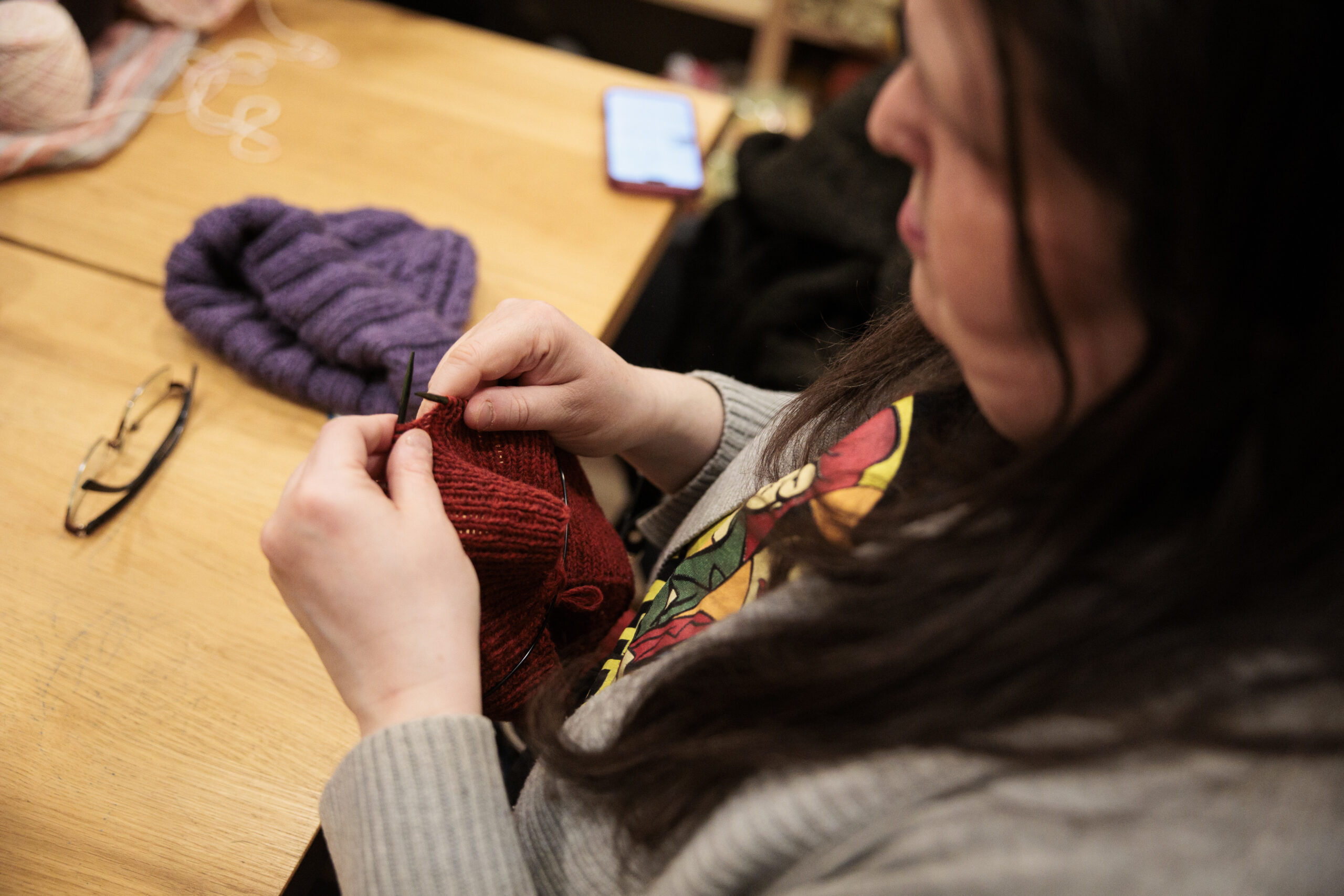
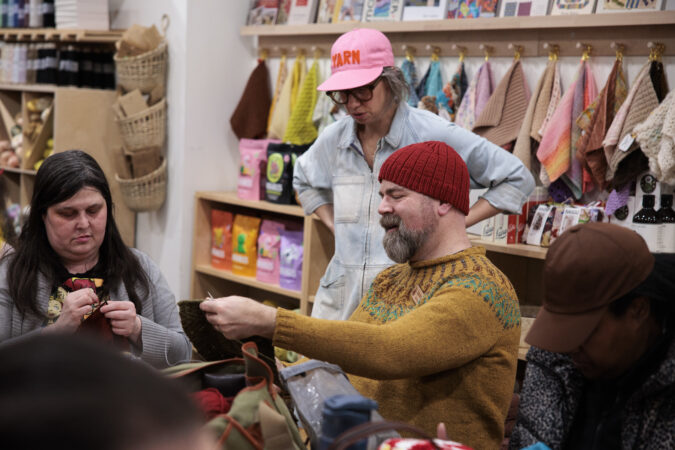
    Amanda Bryman works on a red wool hat known as a “Melt the ICE” hat, during Fiber Folk Night at Wild Hand yarn shop in Philadelphia on Wednesday.

    Now the new version that originated in a suburban Minneapolis yarn shop is spreading across the country. The hats signal opposition to U.S. Immigration and Customs Enforcement, which surged thousands of agents into Minneapolis, and sadness and anger over the deaths of Minnesotans and U.S. citizens Renee Good and Alex Pretti, who were shot to death by federal agents.

    Today, comparisons of ICE agents to Nazis have become both frequent and contentious in American politics, with even some Democrats, including Gov. Josh Shapiro, who is Jewish, rejecting that equivalence as wrong and unacceptable.

    ICE officials did not respond to a request for comment.

    This is not the first time that the Philadelphia region’s craftivist movement, as it is known, has brought its knitting needles and crochet hooks to bear.

    On the eve of Donald Trump’s first inauguration, artisans here turned out scores of cat-eared headgear known as pussy hats, a feline symbol of protest worn at the Women’s March on Washington. The hats aimed to tweak the then-president-elect over his comment about grabbing women by their genitals.

    The Melt the ICE caps carry some controversy within the fiber community, as it calls itself. There have been online complaints that it’s easy to tug a red cap over one’s ears, but unless that is accompanied by action it holds no more significance than clicking a “Like” button on Facebook.

    “It is just preening,” one person wrote in an internet forum.

    Another said that “if your resistance is only this hat, then you have not actually accomplished anything except make a hat.”

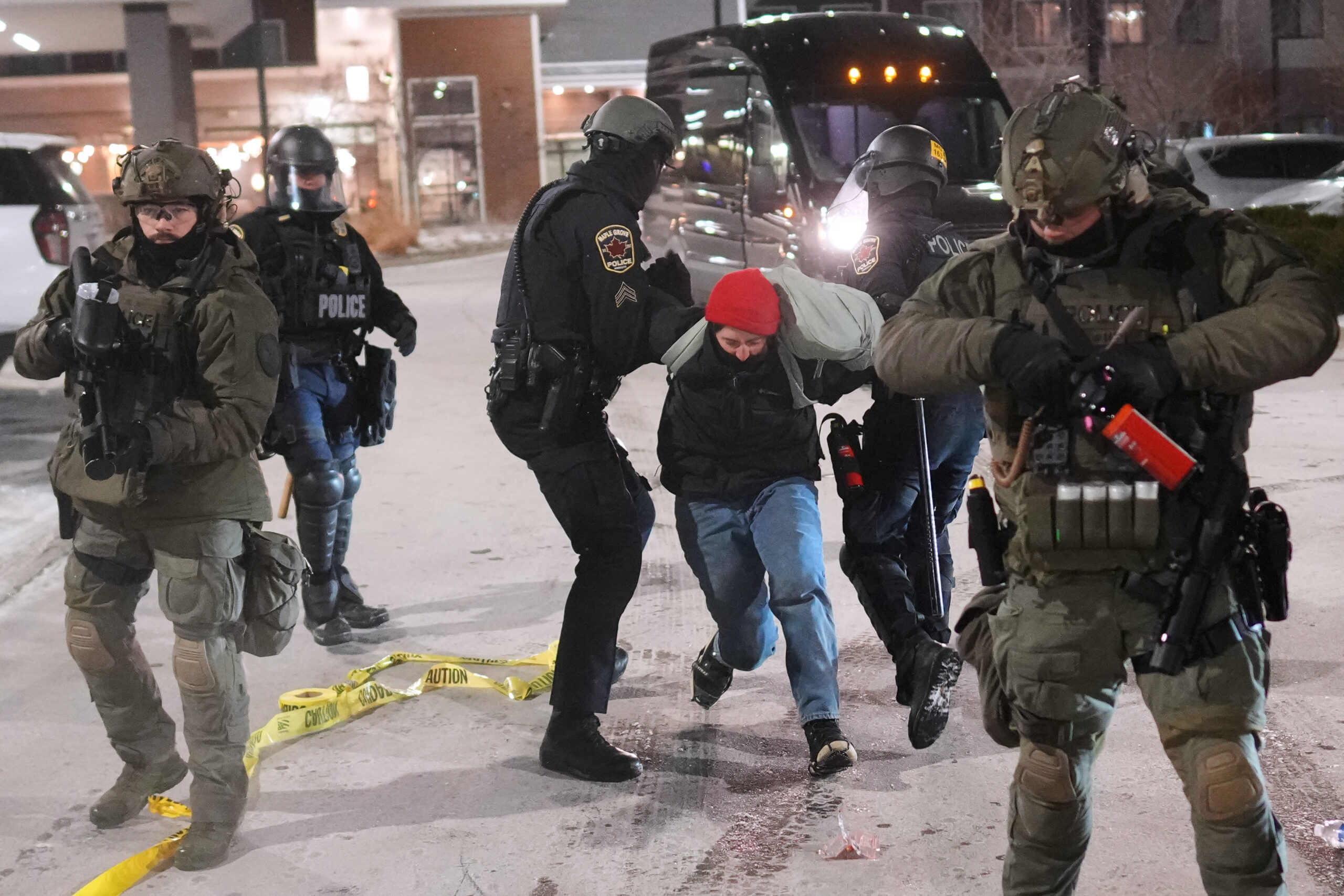
    Law enforcement officers detain a demonstrator during a protest outside SpringHill Suites and Residence Inn by Marriott hotels on Jan. 26 in Maple Grove, Minn.

    Liz Sytsma, owner of Wild Hand in West Mount Airy, has heard the criticism.

    But “the people in our community who are participating in making the hats, this is one of many things they are doing,” she said. That includes taking part in protests, calling elected leaders, and giving money to causes they support.

    On Wednesday, more than a dozen people gathered at Wild Hand for the weekly Fiber Folk Night, where crafters gather to knit, crochet, and chat ― and, now, to work on hats.

    Damon Davison traveled from Audubon, Camden County, having developed his own hat pattern, with sale proceeds to go to the activist group Juntos in South Philadelphia.

    He wants to show solidarity with people “who are expressing resistance to what has been happening in Minneapolis, but also what’s happening here in Philly,” he said. “The idea is to make it a little bit more local.”

    The shop has seen a rush on red, sought by about 70% of customers whose purchases have depleted stocks during the last couple of weeks.

    “We’re really low,” said store manager Yolanda Booker, who plans to knit and donate a hat. “I want to do whatever small part I can do to help out.”

    A single hat can take two or three days to make, though the best and fastest knitters can complete one in a couple of hours.

    In Minnesota, the owner of Needle & Skein, which produced the hats’ design, told reporters this month that online sales of the $5 pattern have generated more than $588,000 to be donated to area organizations.

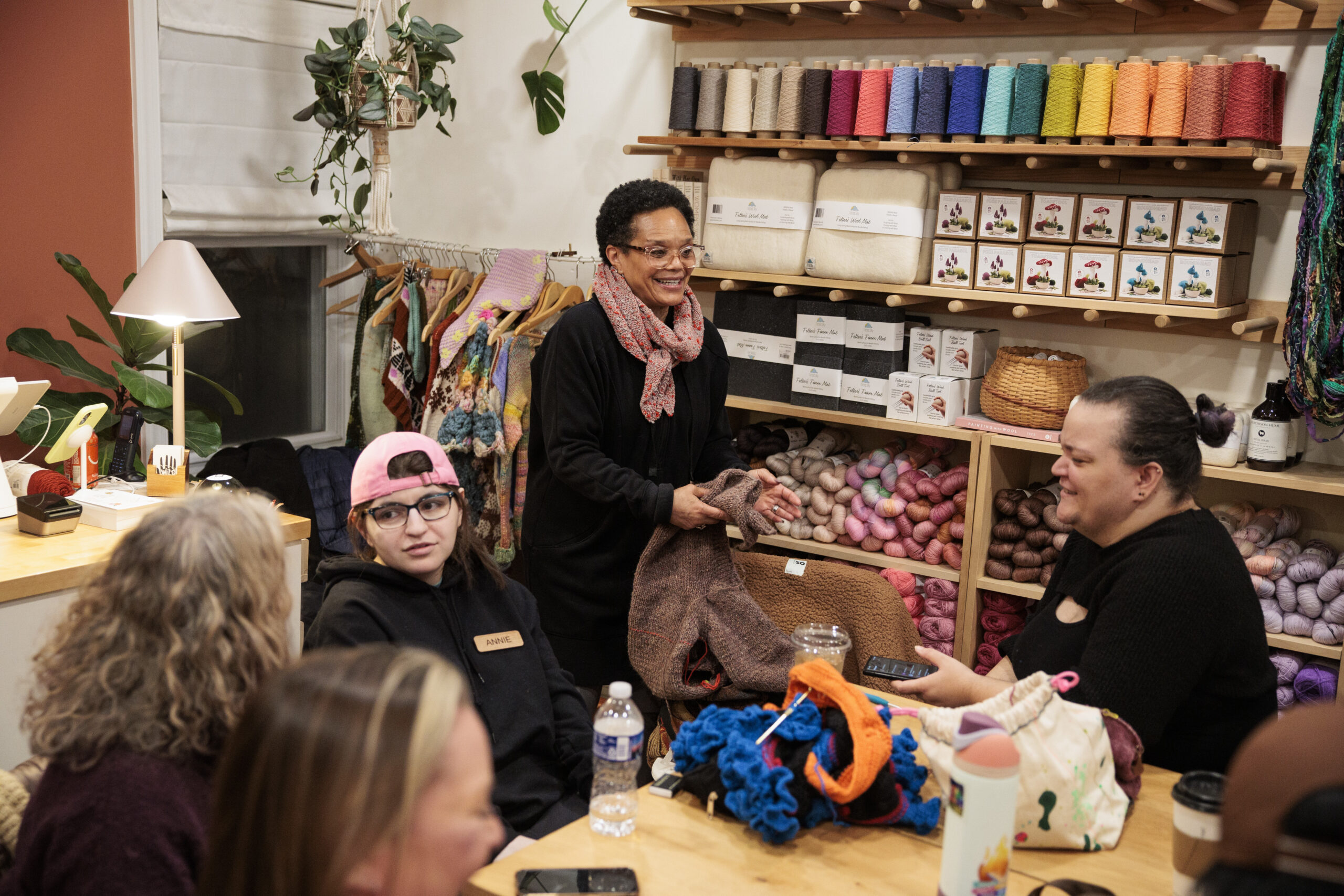
    Store Manager Yolanda Booker, standing, laughs with attendees during Fiber Folk Night at Wild Hand yarn shop in Philadelphia on Wednesday.

    In West Mount Airy, Kelbourne Woolens closed its physical doors during the national “ICE Out” strike in late January and donated its online profits of $4,000 to Asian Americans United, Juntos, and New Sanctuary Movement of Philadelphia, said team member Bailey Spiteri. She estimated the store has sold enough red yarn to retailers to make 500 or 600 hats.

    At Stitch Central in Glenside, customers donated $1,000 during the strike and the store matched it, with the $2,000 going to Nationalities Service Center in Philadelphia.

    “Sometimes people are skeptical. How does wearing a hat or even making a hat make a difference?” asked Allison Covey of Drunken Knit Wits, a local knitting and crocheting organization. “But look at the donations. It does make a difference.”

    Veteran knitter Neeta McColloch of Elkins Park thinks the same. She has ordered enough yarn to make eight hats. And she is curious to see how the phenomenon will develop.

    “This is probably bigger than I think,” she said. “Knitters tend to be the type of people who in my experience have a strong moral compass. If they can combine something they love to do with something in which they can make a statement, that’s important to them.”

  • Craig Kellem, celebrated talent agent, TV producer, and ‘comedic genius,’ has died at 82

    Craig Kellem, celebrated talent agent, TV producer, and ‘comedic genius,’ has died at 82

    Craig Kellem, 82, of Philadelphia, former talent agent, celebrated TV producer, show developer, writer, longtime script consultant, author, and “comedic genius,” died Monday, Nov. 24, of complications from dementia at Saunders House assisted living in Wynnewood.

    Born in Philadelphia, Mr. Kellem moved to New York as a teenager and, at 22, burst onto the entertainment scene in 1965 as a talent scout and agent for what was then called Creative Management Associates. He rose to vice president of the company’s TV Department and, over the next 30 years, served as director of development for late night, syndication, and daytime TV at 20th Century Fox Television, vice president of comedy development at Universal Television, and executive vice president of the Arthur Co. at Universal Studios.

    He worked with fellow TV producer Lorne Michaels at Above Average Productions in the 1970s and was a popular associate producer for the first season of Saturday Night Live in 1975 and ’76. He was quoted in several books about that chaotic first season, and his death was noted in the show’s closing credits on Dec. 6.

    At Universal Studios, he created and produced FBI: The Untold Stories in 1991. At Universal Television in the 1980s, he developed nearly a dozen shows that aired, including Charles in Charge and Domestic Life in 1984. In 1980, he developed Roadshow for 20th Century Fox Television.

    Mr. Kellem worked for years in New York and Los Angeles.

    “He had a lot of energy and ideas,” said his wife, Vivienne. “He had a creative spirit.”

    His producing, creating, developing, and writing credits on IMDb.com also include The Munsters Today, The New Adam-12, Dragnet, and What a Dummy. He produced TV films and specials, and worked on productions with Eric Idle, Gladys Knight, Sammy Davis Jr., and the Beach Boys.

    In 1998, he and his daughter, Judy Hammett, cofounded Hollywoodscript.com and, until his retirement in 2021, he consulted for writers and edited and critiqued screenplays. In 2018, they coauthored Get It On the Page: Top Script Consultants Show You How.

    “He loved working with writers,” his daughter said. “He was super creative. It was part of his essence.”

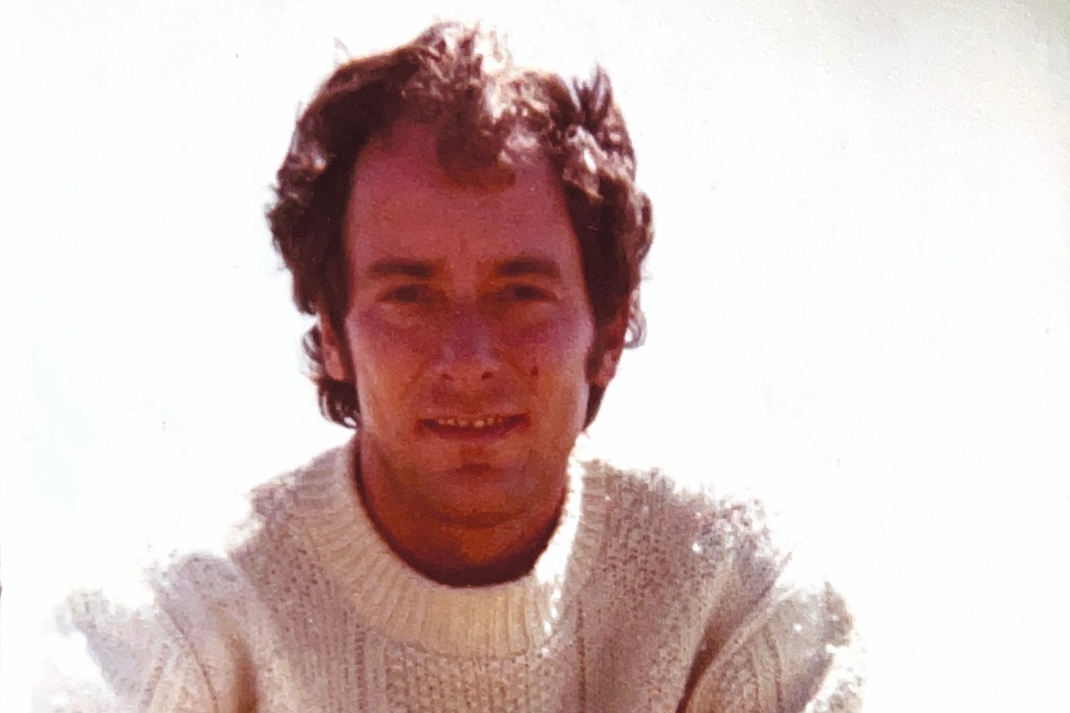
    Mr. Kellem enjoyed time with his daughter Joelle (left) and his wife Vivienne.

    As an agent in the 1960s and ’70s, Mr. Kellem represented George Carlin, Lily Tomlin, and other entertainers. His eye for talent, dramatic timing, and sense of humor were legendary.

    “My dad’s humor opened hearts, tore down walls, and allowed people to connect with each other’s humanity, vulnerability, and spirit,” said his daughter Joelle. His daughter Judy said: “He was a comedic genius.”

    His wife said: “He was a fascinating, funny, loving, and sensitive man.”

    Craig Charles Kellem was born Jan. 24, 1943. He grew up with a brother and two sisters in West Mount Airy, played with pals in nearby Carpenter’s Woods, and bought candy in the corner store at Carpenter Lane and Greene Street.

    Mr. Kellem and his son, Sean.

    “Craig was like a father to me,” said his brother, Jim. “He helped guide my children and was always there for the whole family.”

    He graduated from high school in New York and moved up to senior positions at Creative Management Associates after starting in the mailroom. He married in his 20s and had a daughter, Judy.

    After a divorce, he met Vivienne Cohen in London in 1977, and they married in 1980, and had a son, Sean, and a daughter, Joelle. He and his wife lived in California, Washington, New Hampshire, and New Jersey before moving to Fairmount in 2017.

    Mr. Kellem enjoyed movies, walking, and daily workouts at the gym. He volunteered at shelters, helped underserved teens, and routinely carried dog treats in his car in case he encountered a stray in need. “That’s the kind of man Craig was,“ his wife said.

    Mr. Kellem and his daughter Judy operated their own writing consultation business together for years.

    His son, Sean, said: “My dad’s personality was big, and he was deeply compassionate toward other human beings.” His daughter Joelle said: “He was an open, sensitive, warm, and passionate human being who believed deeply in the work of bettering oneself and taking care of others.”

    His daughter Judy said: “They don’t make people like my dad.”

    In addition to his wife, children, and brother, Mr. Kellem is survived by four grandchildren and other relatives. Two sisters died earlier.

    Private services are to be held later.

    Donations in his name may be made to the Alzheimer’s Association, 399 Market St., No. 250, Philadelphia, Pa. 19106; and Main Line Heath HomeCare and Hospice, 240 N. Radnor Chester Rd., Suite 100, Wayne, Pa. 19087.

    Mr. Kellem enjoyed daily workouts at the gym.
  • A second woman says she was sexually abused by Philly doctor facing rape charges

    A second woman says she was sexually abused by Philly doctor facing rape charges

    A second woman is accusing Philadelphia doctor John Smyth Michel, the medical director and owner of Excel Medical Center, of sexual abuse. She said Michel touched her inappropriately when she worked for him several years ago, according to a recent court filing by the Philadelphia District Attorney’s Office.

    Prosecutors charged Michel with felony rape and sexual assault earlier this year after a female patient said he raped her during an October 2024 office visit.

    Michel, 55, of Jenkintown, told police and state medical licensing authorities that he had sex with the 39-year-old patient, but he claimed it was consensual, criminal and state licensing records show.

    The new accusations involve a former female employee who worked for Michel as a medical assistant from 2015 to 2019 at his East Mount Airy office on Stenton Avenue and at another location in Germantown on Chelten Avenue.

    She recently told law enforcement authorities that beginning in 2018 Michel touched her breasts over her clothing on multiple occasions while she was working in the office. He additionally groped her vagina over her clothing before she quit in 2019.

    The accusations have not resulted in new charges at this time, but the investigation remains ongoing, according to Marisa Palmer, a spokesperson for the DA’s office.

    Prosecutors are seeking to introduce the groping accusations as evidence to bolster its sexual assault case against Michel, given there were no witnesses to the alleged rape.

    “The incidents reveal a common plan, scheme or design on the part of the defendant to engage in unlawful and similar nonconsensual sexual conduct with vulnerable women in his medical offices,” Assistant District Attorney Eamon Kenny wrote in a Nov. 24 court motion.

    The judge presiding over the criminal case must decide whether to grant Kenny’s motion and put the 34-year-old former employee’s accusations before jurors at trial.

    The Inquirer does not identify alleged victims of sexual assaultwithout their permission.

    Michel did not return phone calls and emails from The Inquirer this week. His criminal defense lawyer, Andrew Gay Jr., declined to comment Wednesday.

    Michel founded Excel Medical Center, which grew to more than a dozen medical clinics located throughout the city, with about 20,000 patients and 200 employees.

    Last month, Excel’s general manager wrote a letter to patients informing them the practice “will be ceasing operations” as of Dec. 1. “We truly value the trust you have placed in us for your care,” the manager stated in the Nov. 11 letter obtained by The Inquirer.

    A woman who answered the phone at Excel’s main location in West Mount Airy on Thursday said the practice was not taking any new patients in preparation of closing. She said the practice might resume operations and accept new patients after the new year. Michel’s lawyer declined to comment when asked about the practice’s status.

    Criminal trial slated for February

    The criminal case, which is pending in Common Pleas Court, involves a then-38-year-old patient.

    According to police and court records, she accused Michel of kissing her during a May 2024 exam at his East Mount Airy location.

    She told him “no,” left the office, and did not report the kissing incident.

    About five months later, she went to an appointment at Michel’s North Philadelphia office on West Diamond Street. During the Oct. 14, 2024, visit, she says Michel raped her with such force that her head banged twice against the exam room wall.

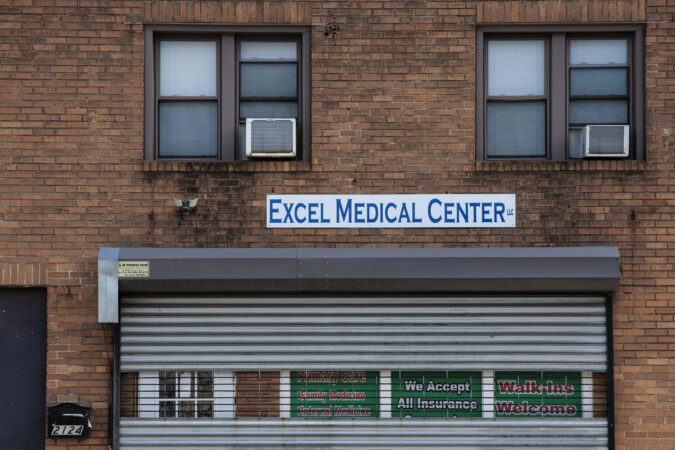
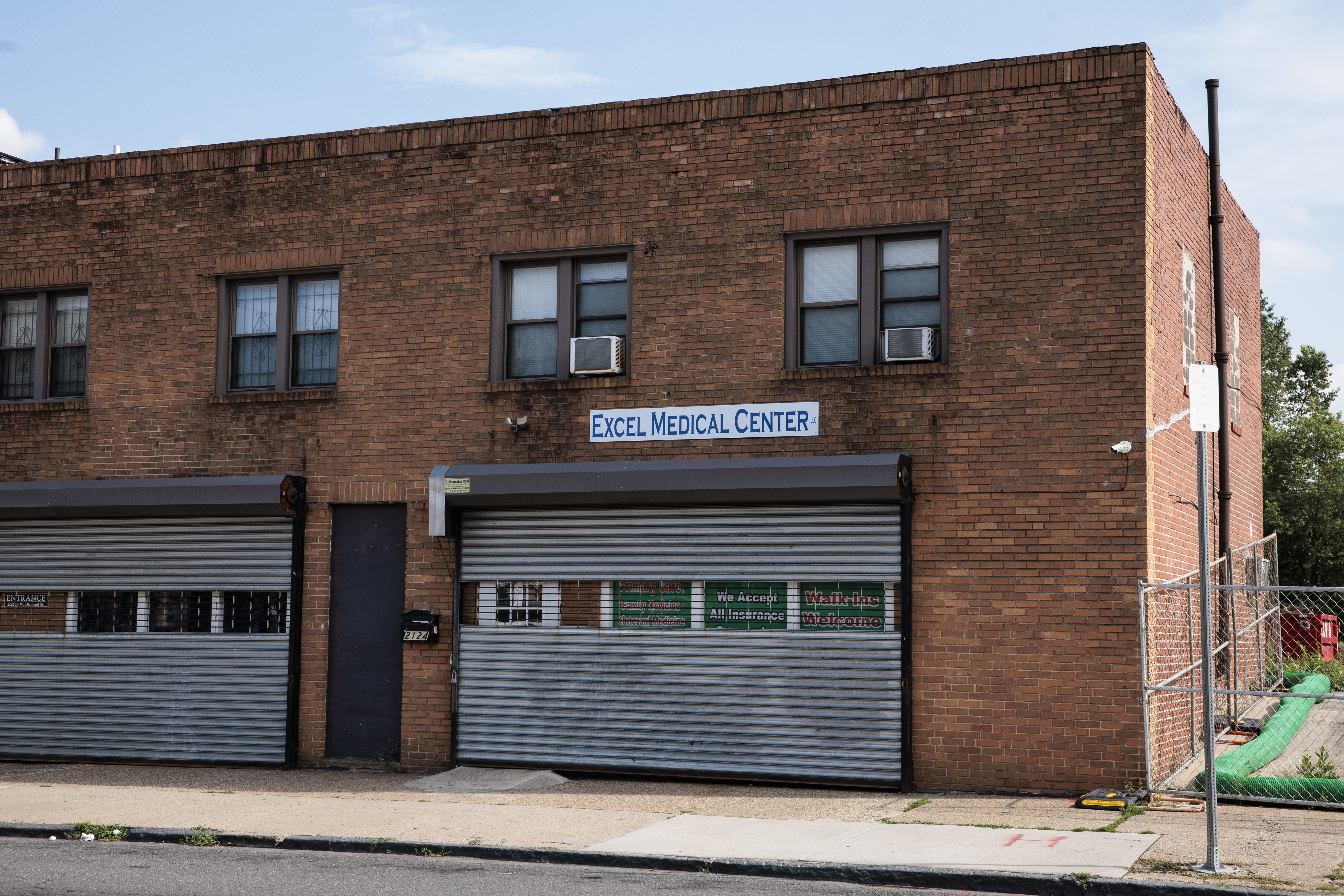
    The exterior of Excel Medical Center at 2124 Diamond Street in Philadelphia.

    In early November 2024, she told her husband what had happened and subsequently filed a police report. Michel was arrested and charged about three months later.

    Michel’s trial was initially slated for Dec. 9, but during a hearing on Monday, a judge postponed it until Feb. 17 after the DA’s office asked for more time to investigate, court records show.

    Michel’s suspension nears end

    In June, the State Board of Osteopathic Medicine, which regulates and oversees licensure of osteopathic doctors like Michel, disciplined him for having sex with a patient — a violation of state regulations.

    He apologized to the board in a letter, saying, “I fully acknowledge that I crossed a professional boundary” and is “profoundly contrite.”

    The board suspended his medical license for six months, followed by 18 months of supervised probation, and fined him $4,000. Michel’s suspension is set to end on Dec. 11.

    If convicted in the criminal case, Michel could permanently lose his medical license.

    In an e-mailed statement on Thursday, the Pennsylvania Department of State, which oversees professional licensing boards, said its prosecution division “continues to closely monitor Dr. Michel’s criminal charges and review his compliance with the terms of the consent agreement.”

    Abuse in office hallways

    The accusations outlined in Kenny’s motion include new details of sexual misconduct. The former employee said Michel approached her from behind to “grab her breast over her shirt.”

    She was stunned and “hated the feeling,” but she feared losing her job so she didn’t say anything to him.

    Once, he simultaneously “cupped” her breast and vagina over her clothes with his hands. She turned around and screamed at him to stop touching her, according to the motion. He replied, “`You know you want it and you know you like it,’” she recounted.

    She said she couldn’t quit because she needed the income and told her co-workers about the abuse. Those colleagues helped her “avoid him” while at work. She also told her husband, though she persuaded him not to confront Michel.

    She resigned in 2019 after landing a new job. They had no contact until this year when he texted her.

    When she asked why he wanted to talk to her after so much time had passed, Michel texted nevermind, the former medical assistant told prosecutors. She then wrote back, “explaining how she felt about his abuse all these years later, that the thoughts of it still traumatized her.”

    Inquirer staff writer Chris Palmer contributed to this article.

  • A man died driving on Northwest Philly’s winding, wet roads. The neighborhood has tried addressing the danger for decades.

    A man died driving on Northwest Philly’s winding, wet roads. The neighborhood has tried addressing the danger for decades.

    A 65-year-old man died Sunday after he lost control of his vehicle on Cresheim Valley Drive in Chestnut Hill, striking a downed guardrail and flipping the car upside down into a creek. Just weeks before, another driver veered off the same road but survived.

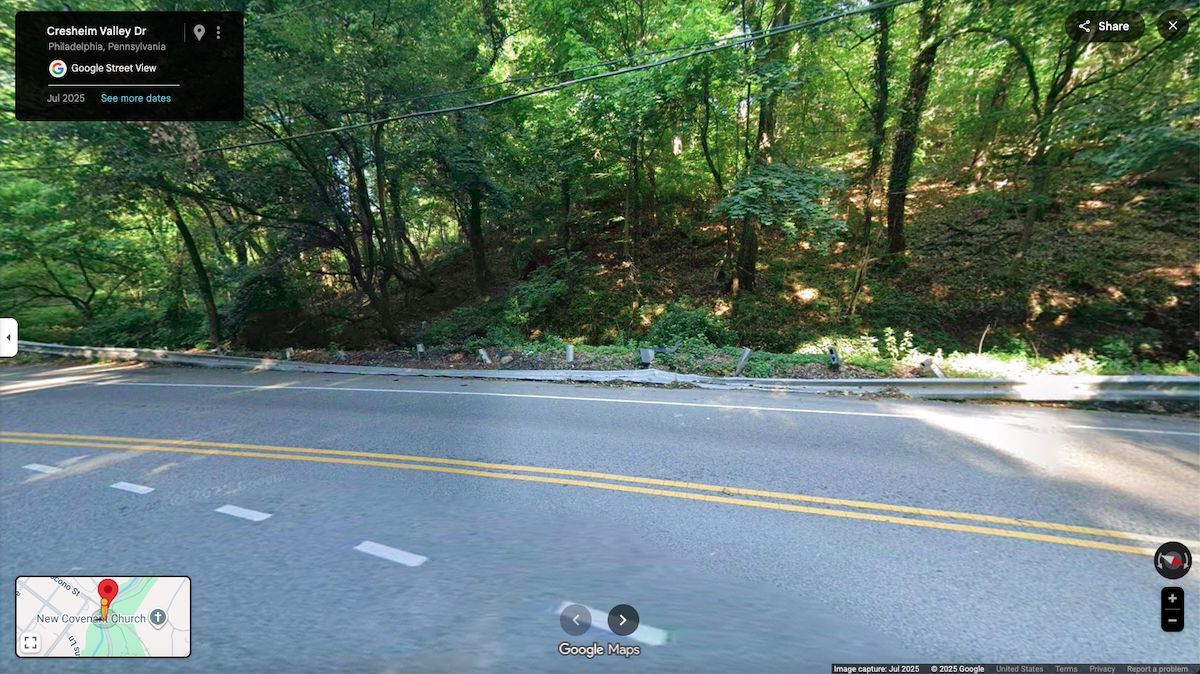
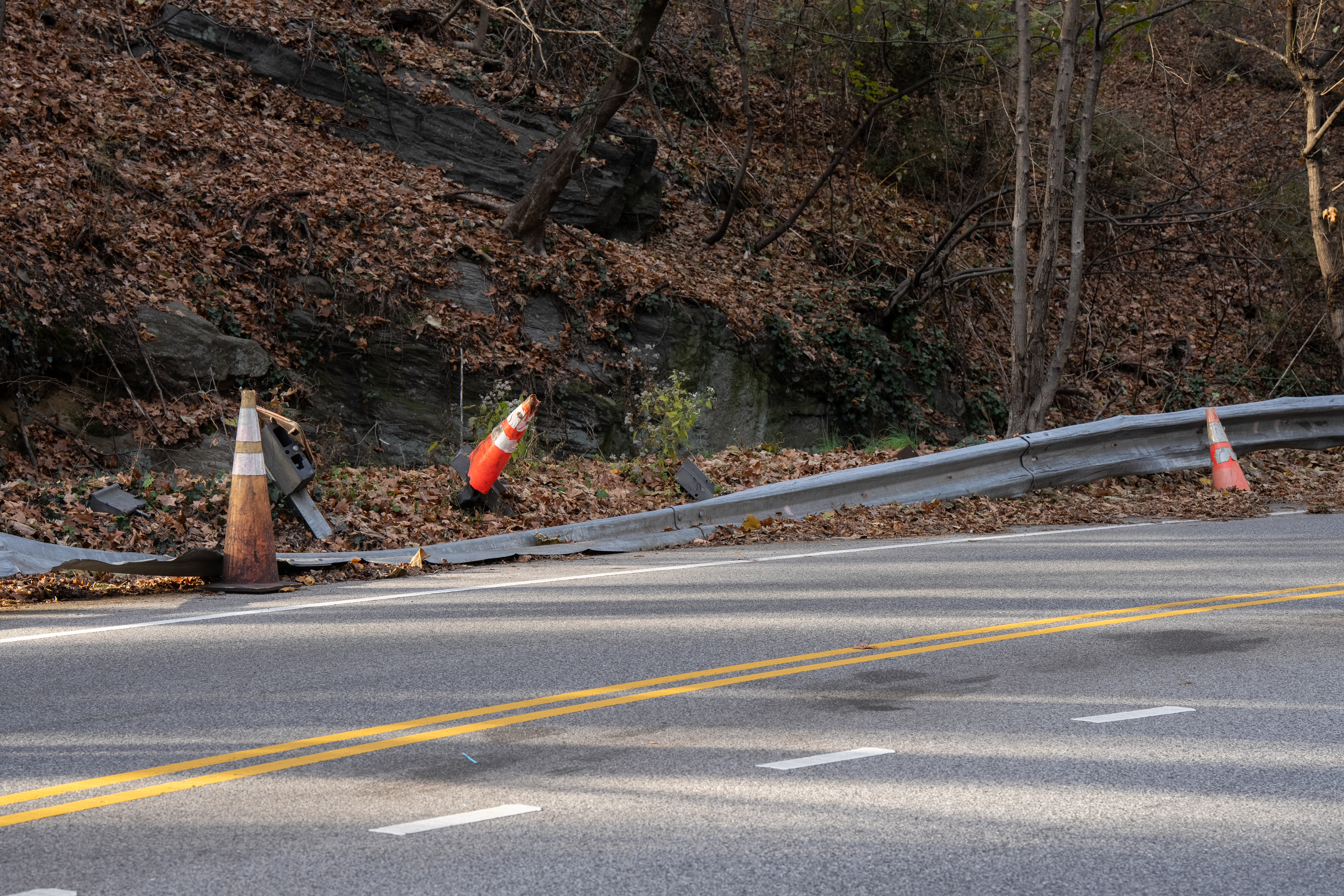
    Compounding this latest traffic death is the fact that the guardrail meant to prevent cars from swerving off the road was broken and nearly flattened from previous crashes, leaving a gap in the guardrails for months, said Josephine Winter, a Mount Airy resident and executive director of West Mount Airy Neighbors (WMAN). “The guardrail was down, and it was previously crumbled so it’s a frequent site of crashes,” she said. Images from Google Maps show the guardrail down as far back as July.

    The Philadelphia Streets Department is aware of the recent crash and is conducting an assessment of the guardrail on Cresheim Valley Road. “The streets department’s top priority is public safety,” a spokesperson said.

    A screenshot of a Google Map’s street view captured in July 2025 shows the downed guardrail on Cresheim Valley Drive in the Chestnut Hill neighborhood of Philadelphia. On Nov. 30, 2025, a 65-year-old man crashed and went over the guardrail, later succumbing to his injuries.

    Neighbors say accidents, sometimes fatal, have plagued the winding roadways in Chestnut Hill and Mount Airy for decades. These traffic safety concerns came to a head with Sunday’s deadly crash.

    “It’s a curvy, tricky road, especially when it’s wet, and people tend to speed on that road,” Winter said of roadways like Lincoln and Cresheim Valley Drives, which are lined with trees, have swooping dips and hills, and are prone to flooding.

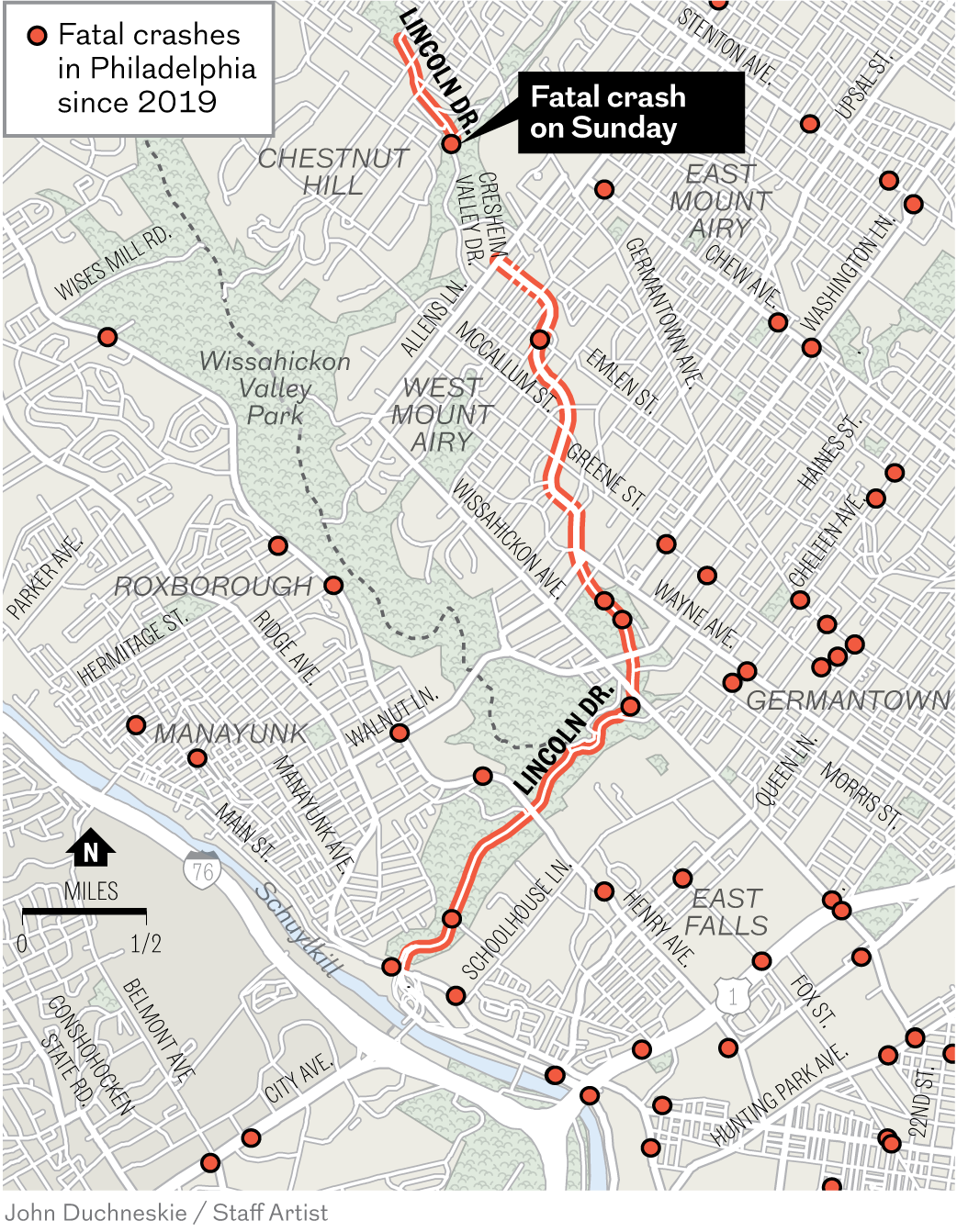
    Map of fatal crashes in Northwest Philadelphia since 2019.

    Since 2019, according to city crash data, at least five people have died while driving on the dark, winding sections of Lincoln Drive, which intersects with Cresheim Valley Drive, prompting many neighbors to fear walking down their street or leading them to invest thousands on giant boulders to protect their home and lawn.

    Winter, who leads WMAN’s traffic-calming committee, and other neighborhood organizations have petitioned for city support, urging the streets department to slow the speed of traffic on Cresheim Valley Drive, Lincoln Drive, and Wissahickon Avenue. The group’s efforts are so ingrained in the fabric of the neighborhood that, when digging through Temple University’s Urban Archives, Winter found an advertisement from 1968 stressing the need for cars in Mount Airy to “slow down to keep kids safe.”

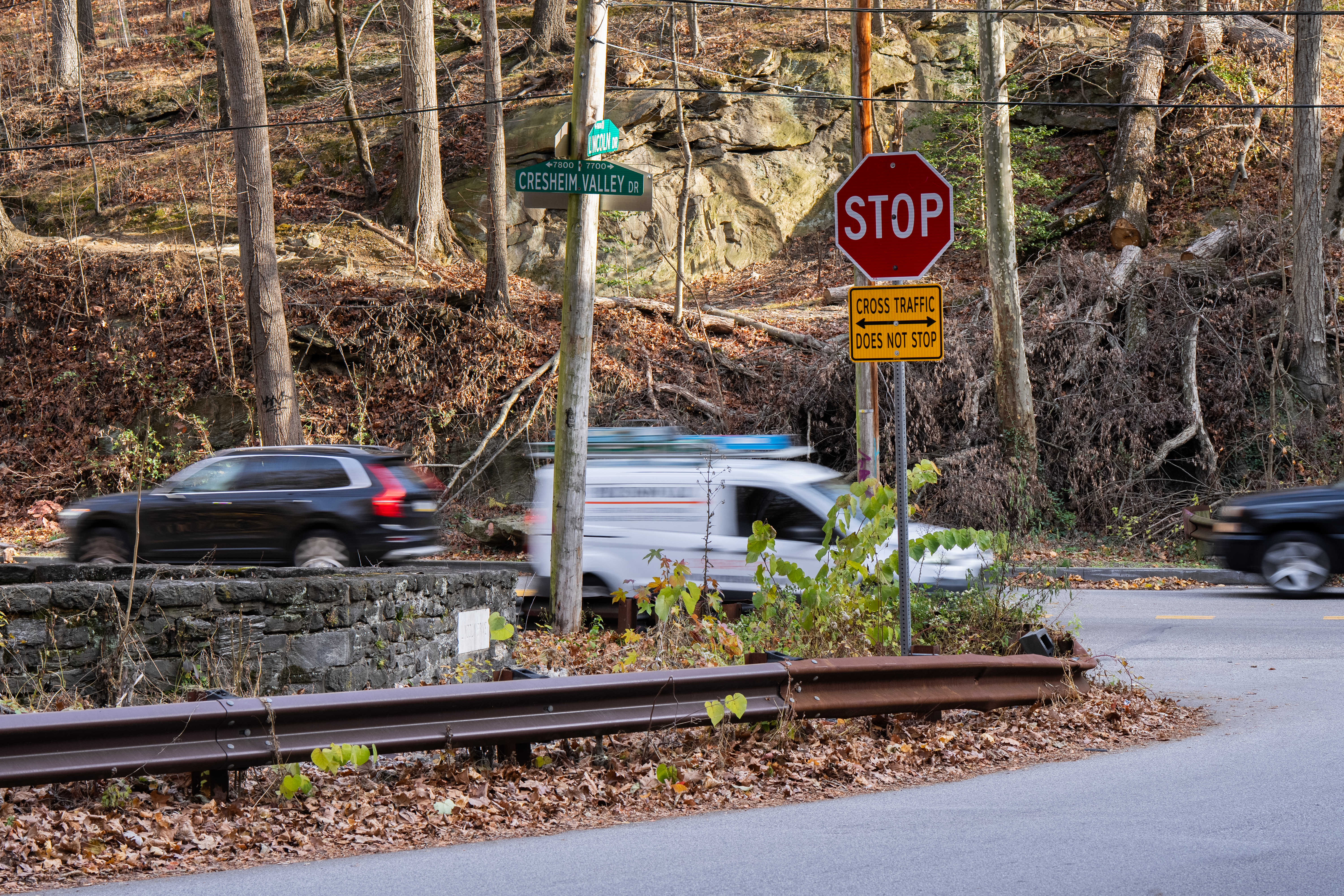
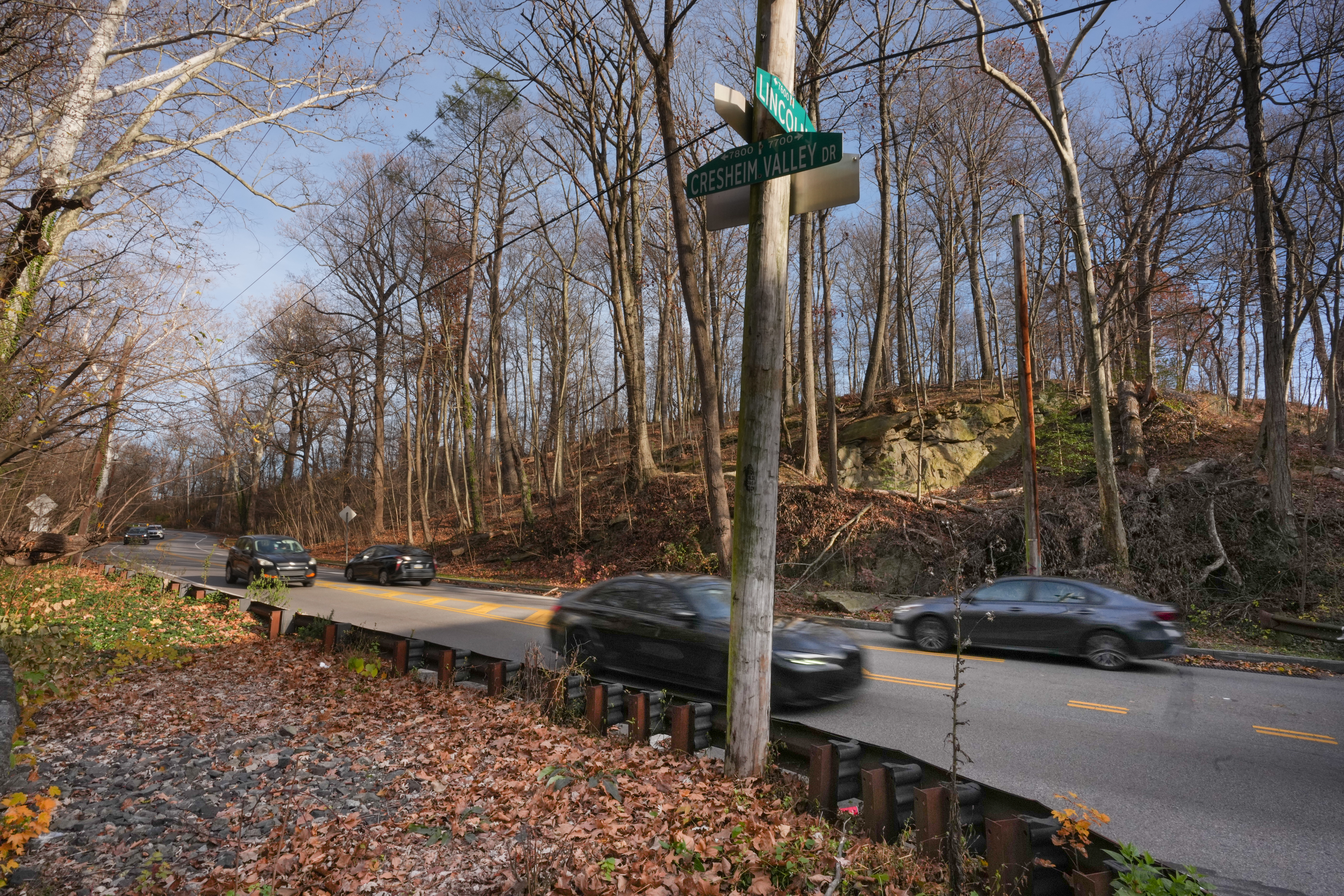
    The intersection of Cresheim Valley Drive and Lincoln Drive, in Philadelphia, PA, Dec. 1, 2025.

    The streets department installed “speed slots,” traffic-calming structures similar to speed bumps, earlier this year along Lincoln Drive between Allens Lane and Wayne Avenue. Along the same stretch of road, the Pennsylvania Department of Transportation installed rumble strips and speed tables to slow drivers down in 2023, in addition to traffic lane separators to keep drivers from using center lanes to pass other vehicles.

    In addition to the recently completed speed slots and traffic-calming measures on sections of Emlen Street, which becomes Cresheim Valley Road, signal upgrades are planned for Lincoln Drive as well.

    However, the work to improve these streets is not over, Winter said. Additionally, the streets department plans do not include changes to Cresheim Valley Drive, where Sunday’s crash happened.

    “We’ll need a collaborative approach as soon as possible to temporarily address the downed guardrail, and then see what the options are moving forward,” Winter said.

    The intersection of Cresheim Valley Drive and Lincoln Drive, in Philadelphia, PA, Dec. 1, 2025.

    Throughout the last decade, locals have suggested better-timed signals, more speed tables, and reducing the number of driving lanes from two in either direction down to one. They also want to see more roundabouts and curb bump-outs in the neighborhood to keep traffic flowing, but at a reasonable speed.

    A mere 50 to 100 feet from Cresheim Valley Drive is a parallel bike trail, where trail organizers like Brad Maule are accustomed to the crashes on the road nearby. Before Sunday’s fatal crash, he remembers two other cars that drove off the side of the road in recent months, not counting the crashes on the roadway itself. The city recently installed pedestrian crossing signs and repainted the crosswalk on nearby Cresheim Road, but Maule hopes speed bumps will follow.

    Cresheim Valley Drive near where it intersects with Lincoln Drive, in Philadelphia, PA, Dec. 1, 2025.

    While Winter said that engineers from the Philadelphia Streets Department were among the first calls she received Monday morning responding to the crash, and that the community appreciates the response, she, Maule, and other neighbors hope that more safety improvements will be considered to save more lives.

    “I’m just looking forward to the new measures of safety that come here,” Maule said. “Hopefully, people will abide by them.”

    Staff writers Max Marin and Dylan Purcell contributed to this article.

  • Hal Sirowitz, acclaimed performance poet, longtime teacher, and passionate Parkinson’s disease advocate, has died at 76

    Hal Sirowitz, acclaimed performance poet, longtime teacher, and passionate Parkinson’s disease advocate, has died at 76

    Hal Sirowitz, 76, of Philadelphia, internationally acclaimed performance poet, former poet laureate of Queens, N.Y., author, mentor, retired special education elementary school teacher, and passionate Parkinson’s disease advocate, died Friday, Oct. 17, of complications from Parkinson’s at KeystoneCare Hospice in Wyndmoor.

    Born in Manhattan to an expressive and overprotective mother, Mr. Sirowitz moved to Queens after college and, motivated by his early work with an inspirational young student, spent 23 years, until his retirement in 2003, as a special education elementary school teacher in New York.

    “He saw the impact he had on that student and realized the impact he could have,” said his wife, Minter Krotzer.

    He was a good listener and a lifelong reader and writer, and, in 1979, at 30, he started reciting his own writing in poetry events at New York cafes and theaters. He found that poignant poems, dark yet amusing, about his larger-than-life mother, Estelle, resonated with people.

    “Everyone either has a mother or is a mother, and they identify right away,” he told Newsday in 1998. By 1993, he was a favorite on the local poetry circuit and traveling to regional and national competitions.

    On Mother’s Day in 1996, his first book, Mother Said, was published to great acclaim. He went on to write four more books and to serve as poet laureate of Queens from 2001 to 2004.

    Until recently, when Parkinson’s made it impossible, Mr. Sirowitz performed his poems in his signature deadpan delivery, with perfect pauses and pacing, and his engaging New York accent. He spoke at colleges and conferences, bookstores and libraries, museums and workshops.

    He guested on national radio and TV shows, and read during visits to Israel, Finland, Iceland, and elsewhere around the world. Many of his poems, such as “Chopped Off Arm” and “Crumbs,” are about the angst and guilt he felt as a boy under the thumb of his always-worried mother. Later, he wrote about Parkinson’s, too.

    In “Crumbs,” he said: “Don’t eat any more food in your room,/Mother said. You’ll get more bugs./They depend on people like you./ Otherwise, they would starve./But who do you want to make happy,/your mother or a bunch of ants?/What have they done for you?/Nothing. They have no feelings./They’ll eat your candy. Yet/you treat them better than you treat me./You keep feeding them./But you never offer me anything.”

    He and his poems were featured in The Inquirer, the New York Times, Newsday, and other publications. Mother Said was celebrated in the United States and became a bestseller in Norway. He followed it up with My Therapist Said in 1998, Before, During, and After in 2003, Father Said in 2004, and Stray Cat Blues in 2012.

    “There must be a need for people to read funny sad poems about parents,” he told the Schuylkill Valley Journal. He told the New York Times in 1996: “I feel almost like I’m a conduit for my mother. I’m giving her her voice.”

    His poems inspired music composers and filmmakers, and were read in public by other literary notables. They appeared in anthologies, magazines, and journals, and were translated into 13 languages.

    He earned fellowships from the National Endowment for the Arts and the New York Foundation for the Arts, and he won the 2013 Nebraska Book Award for poetry. Colleagues called him “legendary,” an “icon,” and the “Maestro from Flushing.”

    Mr. Sirowitz and his wife, Minter Krotzer, married in 2002.

    One colleague said in a tribute: “Hal was a true inspiration. I relished his humor and perseverance.” Another said: “I often felt his poems were one-minute telescopes of therapy sessions.”

    He told the Schuylkill Valley Journal: “To me, one purpose of being a writer is to show others that it’s good to express yourself. You create your own personal history by the poems and stories you write.”

    Mr. Sirowitz was diagnosed with Parkinson’s in 1997 and, with his wife, became a vocal advocate and activist for others dealing with the disease. He spoke at medical centers and to support groups about having Parkinson’s. His wife talked of being his caregiver.

    In 2015, she wrote in The Inquirer: “Through poetry he had been able to forge a way through the illness and make art from the experience. … Keeping on with the writing of poetry is a way of saying ‘so there’ to the Parkinson’s. ‘I’m still at it.’”

    Mr. Sirowitz told the Schuylkill Valley Journal: “My life has been a struggle against limitations, like the Parkinson’s. But it also provided me definitions. I know who I am.”

    Harold Sirowitz was born March 6, 1949. He grew up between two sisters, Lauren and Iris, on Long Island, N.Y., and confronted a stutter and other speech issues when he was young.

    He was a soccer star in high school and earned a bachelor’s degree in English literature at New York University in 1972 and a master’s degree in education at Hofstra University.

    He met fellow writer Minter Krotzer at a book party in 2000, and they married in 2002. They lived in Brooklyn before moving to West Mount Airy in 2007, and she was his longtime editor, collaborator, and caregiver.

    “He had this childlike wonder about things,” his wife said. “He had a real sweetness and a connection with people.”

    Mr. Sirowitz was a runner and a hiker, and he quit his beloved New York sports teams to follow the 76ers, Eagles, Phillies, and Flyers. He especially enjoyed reading and spent one summer digesting the entire works of William Shakespeare.

    “He was a fighter, and people called him the ‘ultimate mensch,’” his wife said. “He said he had no regrets and did what he set out to do in life. It was amazing to witness someone so heroic.”

    In addition to his wife and sister Lauren, Mr. Sirowitz is survived by other relatives. His sister Iris died earlier.

    A private service was held in October. A public celebration of his life is to be held later.

    Donations in his name may be made to the Parkinson Council, 520 Carpenter Lane-COMM, Philadelphia, Pa. 19119; and KeystoneCare Hospice, 8765 Stenton Ave., Wyndmoor, Pa. 19038.