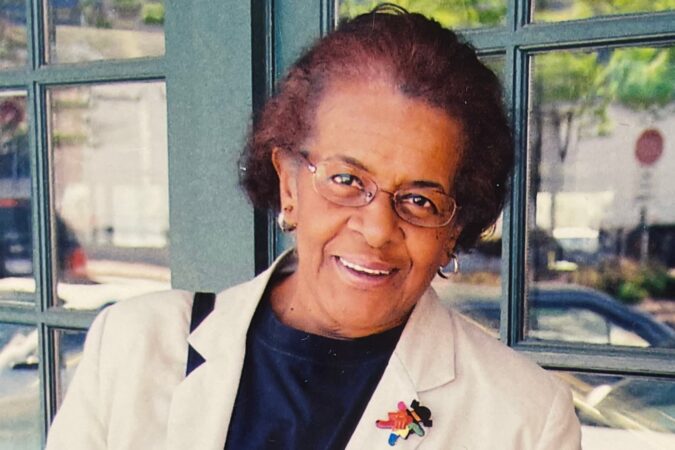
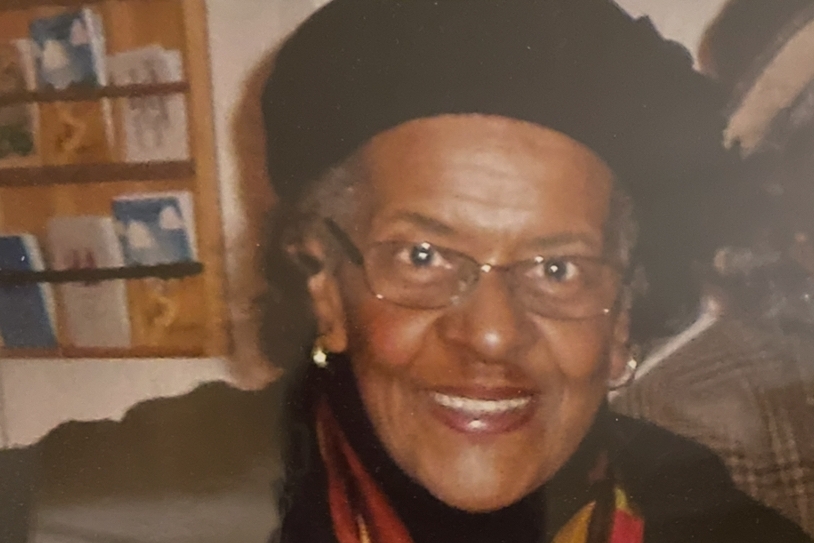
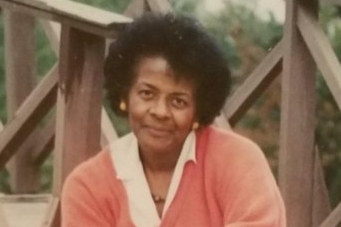
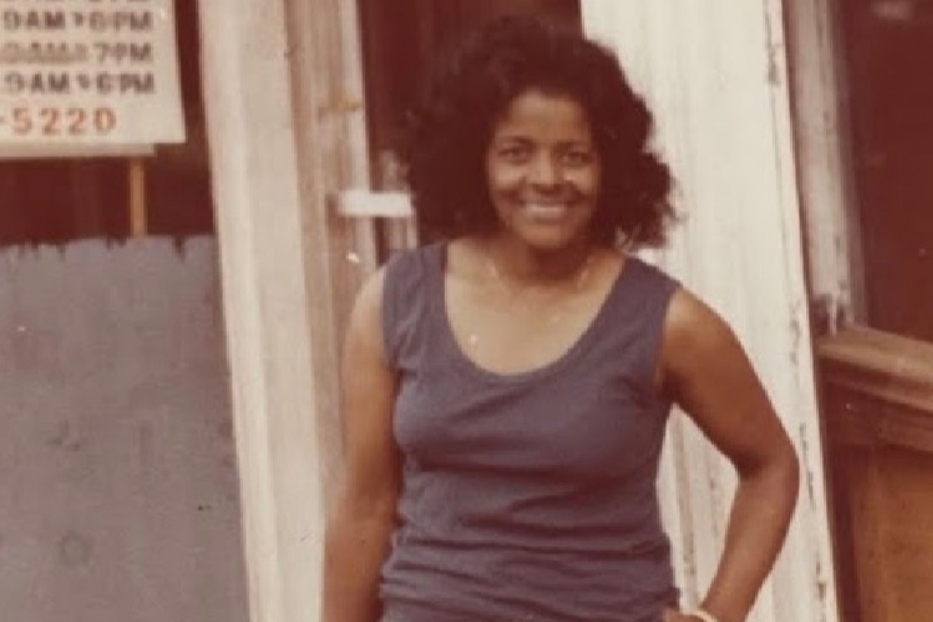
Mae Laster, 87, of Philadelphia, retired French, algebra, and photography teacher for the School District of Philadelphia, longtime president of Friends of Wynnefield Library, award-winning committee chair for the Philadelphia section of the National Council of Negro Women Inc., community center adviser, church trustee, volunteer, and undisputed Laster family Scrabble champion, died Friday, Jan. 2, of age-associated decline at Lankenau Medical Center.
Born in Philadelphia, Ms. Laster earned academic degrees at West Philadelphia High School and Temple University. She was a lifelong reader and stellar student, and she tutored her high school classmates in math and later taught elementary and middle school students for 30 years.
“She was a firm and no-nonsense kind of teacher,” a former student said in an online tribute. “But she was a lot of fun. As an adult, she always offered guidance and advice.”
Her daughter, Lorna Laster Jackson, said: “She had a passion for learning and sharing with others. She was always an advocate for children.”
Ms. Laster chaired community service and Founder’s Day committees for the National Council of Negro Women Inc.
Ms. Laster served as president of Friends of Wynnefield Library for more than 20 years and was active at its many book readings, content discussions, concerts, and fundraisers. She earned several important financial grants for the library, and her personal collection of books at home numbered more than 1,000.
“She loved reading to our young patrons, especially during our Dr. Seuss birthday celebrations,” library colleagues said in a tribute.
She chaired community service and Founder’s Day celebration committees for the National Council of Negro Women and earned the local section’s achievement award in 1998. “Mae was a blessing to the Philadelphia section,” colleagues said in a tribute. “We will always remember her feisty way of asking questions and not easily put off.”
Ms. Laster was an advisory board member at the Leon H. Sullivan Community Development Center and a trustee at Zion Baptist Church. Colleagues at the community center called her “a very thoughtful and talented person.” They said: “She was always forthright and had a strong opinion.”
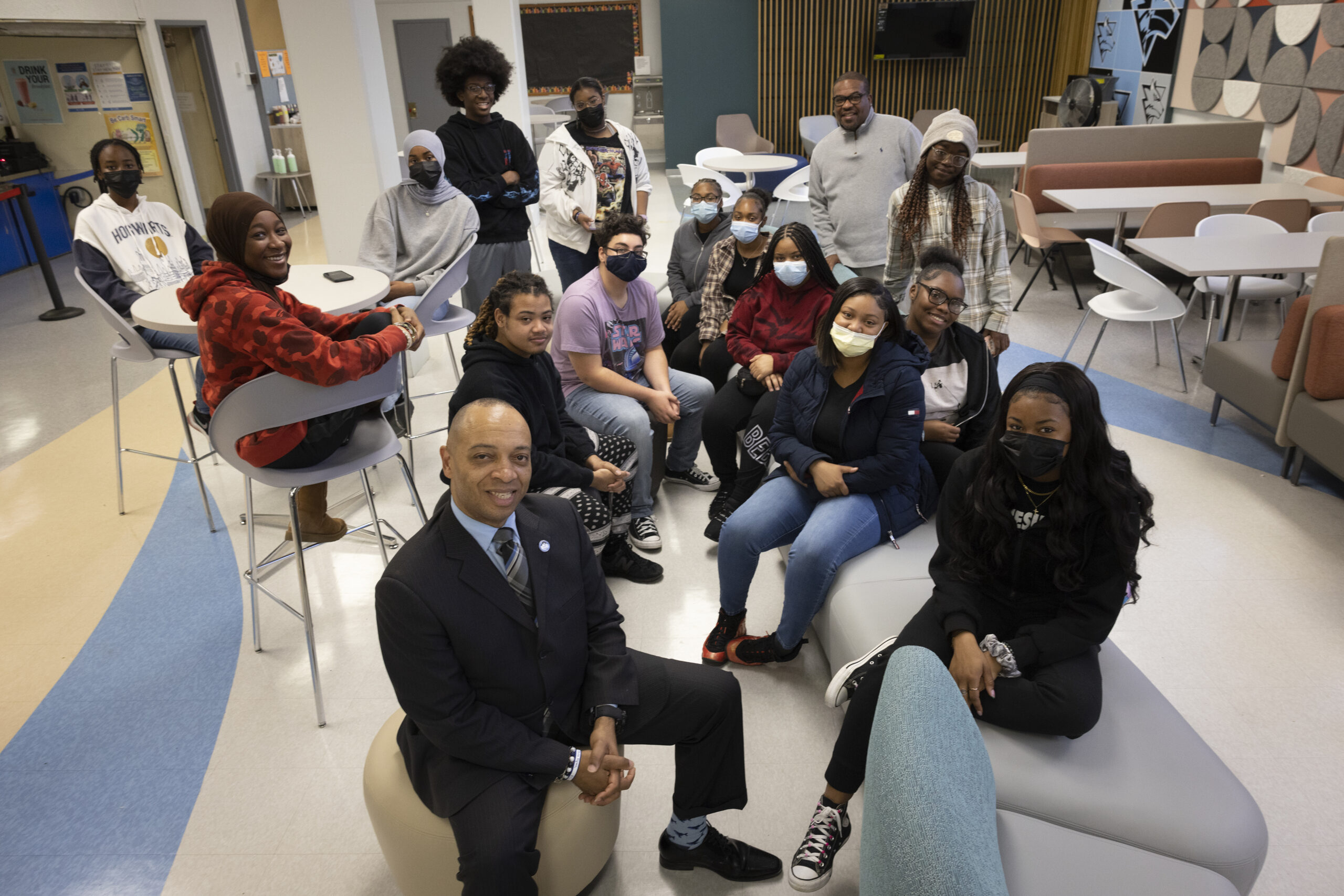
Ms. Laster (center) especially enjoyed reading to young people at the Wynnefield Library.
At church, she was a member of the New Day Bible Class and proofreader for the newsletter. She also volunteered with the Wynnefield Residents Association, the Girl Scouts, and the 4-H Club.
In a citation, City Council members praised her achievements regarding “education, community service, and all those whose lives were enriched by her wisdom, kindness, and unwavering faith.” In a resolution, members of the state Senate noted “her extraordinary life, her enduring contributions, and her lasting impact on education, community, and faith.”
Friends said in online tributes that she “had a great sense of humor” and was “the sweetest mom on the planet, who was always like a mom to me.” One friend called her “a community-minded leader who advocated tirelessly to preserve the quality of life in Wynnefield.”
At home, Ms. Laster studied the dictionary, knew words that nobody else did, and became the undisputed Scrabble champion of her family and friends. She was so good, her daughter said, that nobody volunteered to play against her. “It was humiliating,” her daughter said.
Ms. Laster was a lifelong advocate for children.
Mae R. Johnson was born June 5, 1938, in Philadelphia. She grew up in Winston-Salem, N.C., with her grandmother and returned to Philadelphia in the 1950s to live with her mother and begin high school.
She was an excellent student, especially good with words and numbers, and she graduated from West Philadelphia High in 1956 and earned a bachelor’s degree in early childhood education at Temple.
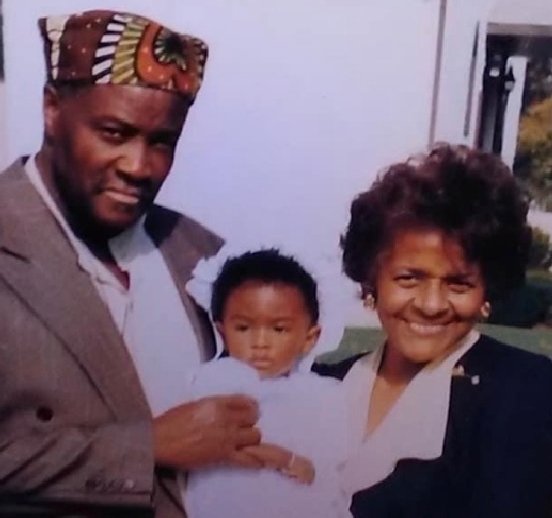
She met Francis Laster in the neighborhood, and they married, and had a daughter, Lorna, and sons Francis Jr., Charles, and Ahman. Her husband owned and operated the popular Rainbow Seafood Market, and they lived in West Philadelphia and Wynnefield. They divorced later. He died in 2020.
Ms. Laster enjoyed bowling, photography, and horticulture. She listened to jazz, classical, and gospel music. She collected butterflies and stamps.
Ms. Laster was “all about positive change,” her daughter said.
She shared recipes with friends and kept in touch through memorable phone calls. She helped organize high school reunions and appreciated the educational TV shows on the Public Broadcasting System. She retired from teaching about 20 years ago.
“She was all about positive change,” her daughter said. “She spoke from compassion and her truth. She did more good than she knew. She was dynamite.”
In addition to her children, Ms. Laster is survived by six grandchildren, three great-grandchildren, three great-great-grandchildren, a sister, and other relatives. A brother died earlier.
A celebration of her life was held earlier.
Donations in her name may be made to Friends of Wynnefield Library, Attn: Terri Jones, 5325 Overbrook Ave., Philadelphia, Pa. 19131.
Ms. Laster graduated from West Philadelphia High School in 1956 and earned a bachelor’s degree in early childhood education at Temple.
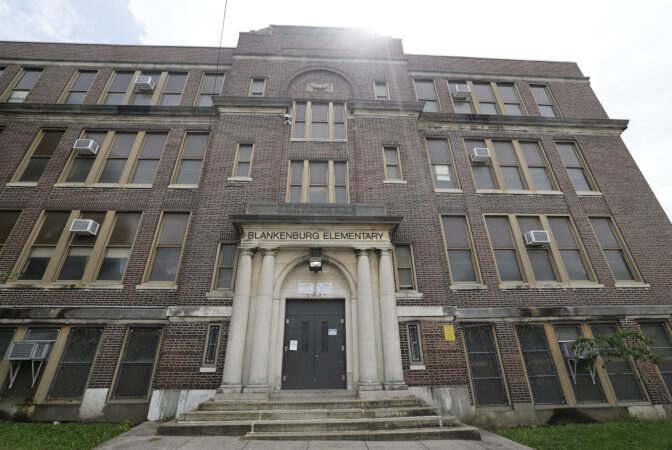
Rudolph Blankenburg Elementary School in West Philadelphia serves kids with complex needs — and test scores reflect that.
The school, where nearly 95% of students are considered economically disadvantaged, had been a Comprehensive Support and Improvement school — a federally mandated designation for schools performing in the bottom 5% statewide.
But last fall, Blankenburg shed that label. Many students are still struggling but are making gains, teachers said — progress they fear will be threatened by a district proposal to close the schoolas part of a sweeping facilities plan.
“We’ve worked really hard, with a consistent staff and all types of resources in place, for our students to pull ourselves out of that status,” said Flori Thomas, a middle school science teacher at Blankenburg.
That’s her biggest fear, she said: “You’re going to impact our scholars.”
Blankenburg is one of 20 district schools proposed for closure under the plan released last month. Six other schools would be colocated and more than 150 modernized as part of the proposal — which is facing resistance from City Council.
District officials say closures are needed in a system that has lost more than 80,000 students over the last 30 years, many to charter schools. The district has struggled to fund repairs of aging buildings — including at Blankenburg, where staff report chipping paint and roof leaks.
Marquita Jenkins, the school’s dean of climate and culture, does not disagree that the building, which opened in 1925, needs repairs — or that it is underutilized. The K-8 school, which currently enrolls 278 students, has room for almost 600. Officials said the school’s enrollment has declined by about 100 students over the last four years.
But the relatively low enrollment has also enabled smaller class sizes, helping student growth, Jenkins said. A former fourth- and sixth-grade teacher at Blankenburg, she recalled teaching a class of 33 students, 11 of whom had individualized special education plans: “It was tough.” Classes now are smaller, she said.
Like other staff, she worried about where Blankenburg students would end up. The district proposes to reassign them to Edward Heston School, James Rhoads Elementary School, and a newly colocated Martha Washington Academics Plus School and Middle Years Alternative School.
Blankenburg‘s building near 46th and Girard, meanwhile, would be conveyed to the city for “affordable workforce housing and/or job creation,” according to the district.
Jenkins and other staff questioned the safety of the routes to schoolfor reassigned students.
They also voiced concern for particularly vulnerable students: Blankenburg is surrounded by at least seven homeless shelters and “tends to have attendance fluctuations,” assistant principal Sandra Pitts said at a virtual community meeting with district officials this month. She questioned how families would be “assisted to avoid further trauma.” (Officials said they would be supporting students with housing instability in placements.)
Staffers noted that Blankenburg also has a significant population of students with special needs, who make up 25% of its enrollment.
Among them is Sherell Robinson’s kindergartener, Illiyin, who has autism and medical complexities.
Robinson, who lives in West Philadelphia, said that Illiyin had been denied enrollment at other district schools, and that she was told she had to send her daughter to Blankenburg.
Robinson initially had a negative impression of Blankenburg but was impressed with the school’s principal, Sheena Wilson, who “didn’t try to sell me, or placate me” — just presented what the school had to offer, she said.
What Robinson found was a small environment, “loving people,” and a routine for Illiyin. Now she is panicked at the prospect of the school closing.
“For them to be taking this whole community away is really devastating,” Robinson said. “It takes time to find the correct programming and environment and teachers who are neuro-affirming, especially for Black children.”
A real estate agent, Robinson said there was an irony to the district’s plan to convert Blankenburg to workforce housing — something she believes she currently would qualify for. But if she does not find a stable school environment for her daughter, she isn’t sure she will be able to keep her job.
“They might look at me as a single case, but I can assure you I am not an anomaly,” said Robinson, who also works for a disability nonprofit and is in touch with other parents of autistic children. “This is going to affect how we can take care of our families, how that perpetuates what we’re already experiencing. … I don’t want to normalize that struggle to them.”
Teachers said they are committed to Blankenburg’s students. “We bring a lot of positivity and try to keep our kids safe,” said Jenkins, who has led field trips to places including the Kimmel Center in Center City and the National Museum of African American History and Culture in Washington.
Thomas, who grew up in the neighborhood around Blankenburg and now lives in New Jersey, said that whenever students learn about her commute, she tells them they are worth the drive.
Others outside the city see headlines about crime, Thomas said, but she tells students: “I see you.”
State Rep. Chris Rabb announced Thursday he will not seek reelection to Harrisburg this year while he runs for a seat in Congress.
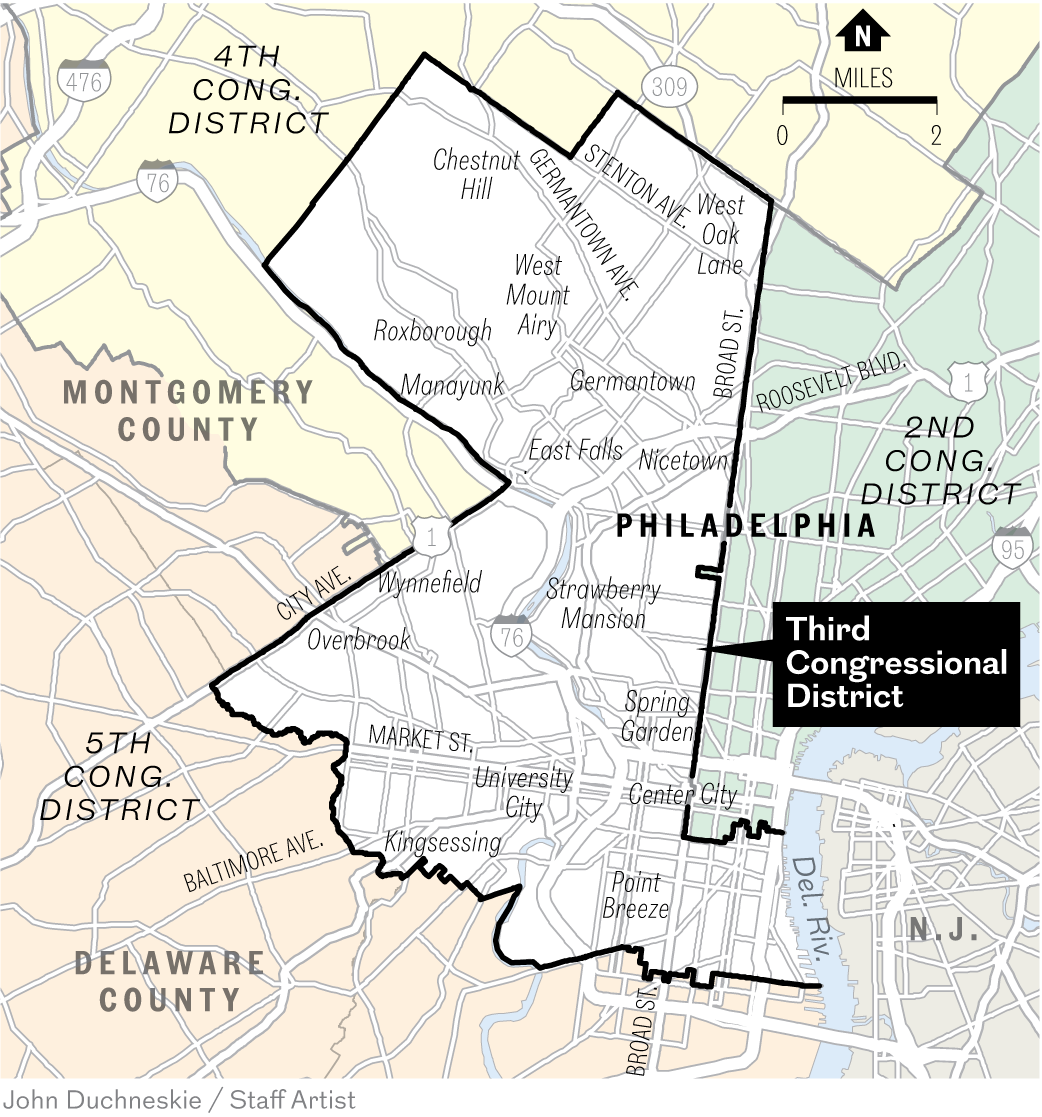
State lawmakers are allowed to simultaneously run for two offices. But Rabb, a Democrat, said he is fully committed to his campaign for Pennsylvania’s 3rd Congressional District, which covers roughly half of Philadelphia and is, by some measures, the most Democratic district in the nation.
“I’m so inspired and overwhelmed by the tremendous outpouring of support we are seeing all across the city, and today I want to send a message loud and clear: I am all in on this race for Congress,” Rabb said in a statement.
Rabb served five terms in the Pennsylvania House’s 200th District in Northwest Philadelphia, a seat once held by Mayor Cherelle L. Parker. A progressive who often operates as a political lone wolf, Rabb has frequently clashed with the city’s Democratic establishment, especially Parker and her allies in the Northwest Coalition political organization.
In his first election, Rabb in 2016 defeated Tonyelle Cook-Artis, Parker’s close friend who now serves as an aide in the mayor’s office. Two years later, he bested Melissa Scott, who is now the Parker administration’s chief information officer. In 2022, redistricting forced Rabb to run against fellow incumbent State Rep. Isabella Fitzgerald, and he won again.
Map of Pennsylvania’s Third Congressional District.
State Sen. Sharif Street, of North Philadelphia, is not up for reelection this year, meaning he will keep his seat in Harrisburg if he loses the congressional race without having to run two campaigns. Street last year resigned as chair of the Pennsylvania Democratic Party after facing questions about whether his congressional campaign would conflict with his party leadership role.
State Rep. Morgan Cephas, who chairs the Philadelphia delegation in the state House and represents a West Philadelphia district, is up for reelection this year. Her campaign on Thursdaysaid she intends to simultaneously run for another term while vying for the congressional seat.
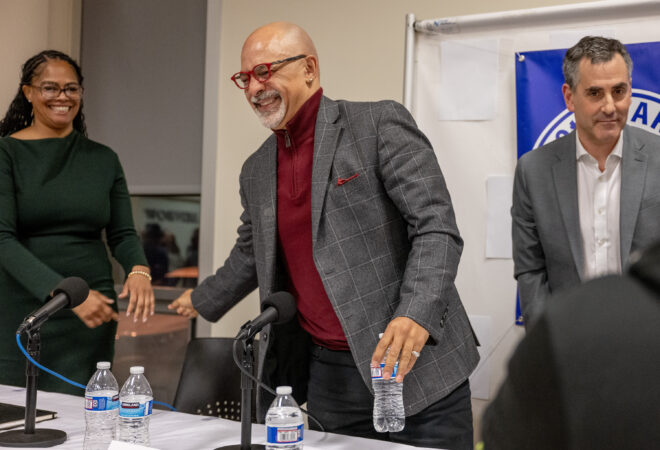
(left to right) Alex Schnell, physician Dave Oxman, State Sen. Sharif Street, physician Ala Stanford, State Rep. Morgan Cephas, and Pablo McConnie-Saad appear during a candidate forum for the 3rd Congressional District seat at Church of the Holy Trinity on Monday, Feb. 9, 2026 in Philadelphia. The seat vacancy comes from Rep. Dwight Evans’ retirement.
It is common for state legislators to run two simultaneous campaigns while seeking federal office. Their reelection bids often require little effort, as incumbents rarely face serious challenges. (Rabb’s career as an anti-establishment legislator in the backyard of one of Philadelphia’s most powerful political factions, however, has made him an outlier in that regard.)
He declined to say how much money went missing. In his most recent campaign finance report, Rabb reported raising $127,000 in the last three months of 2025 and entering the year with $99,000 in cash on hand, which at the time represented the fifth-largest reserve among the 3rd District hopefuls.
Rabb’s decision not to run for reelection means the Northwest Coalition now has its best opportunity in a decade to recapture the 200th District state House seat. Northwest Philadelphia’s liberal voter base, however, also opens the door for another progressive to follow in Rabb’s footsteps.
“It has been the honor of a lifetime to serve Philadelphia families across the 200th House District for the past 10 years and I look forward to seeing the great candidates who will run,” Rabb said. “In the coming weeks, I’m committed to working with my fellow progressive leaders and advocates across this district to ensure that this seat continues to be held by a true champion for Philadelphia’s working families.”
Anyone hoping to succeed Rabb in Harrisburg will have to act quickly. Candidates must submit petitions to appear on the ballot. The window to gather signatures opened this week and closes March 10.
Rabb said Wednesday that his congressional campaign collected the required 1,000 signatures in just 12 hours, which he said makes him the first candidate in Pennsylvania to submit qualifying petitions and shows that his campaign “continues to build strong grassroots support across Philadelphia.”
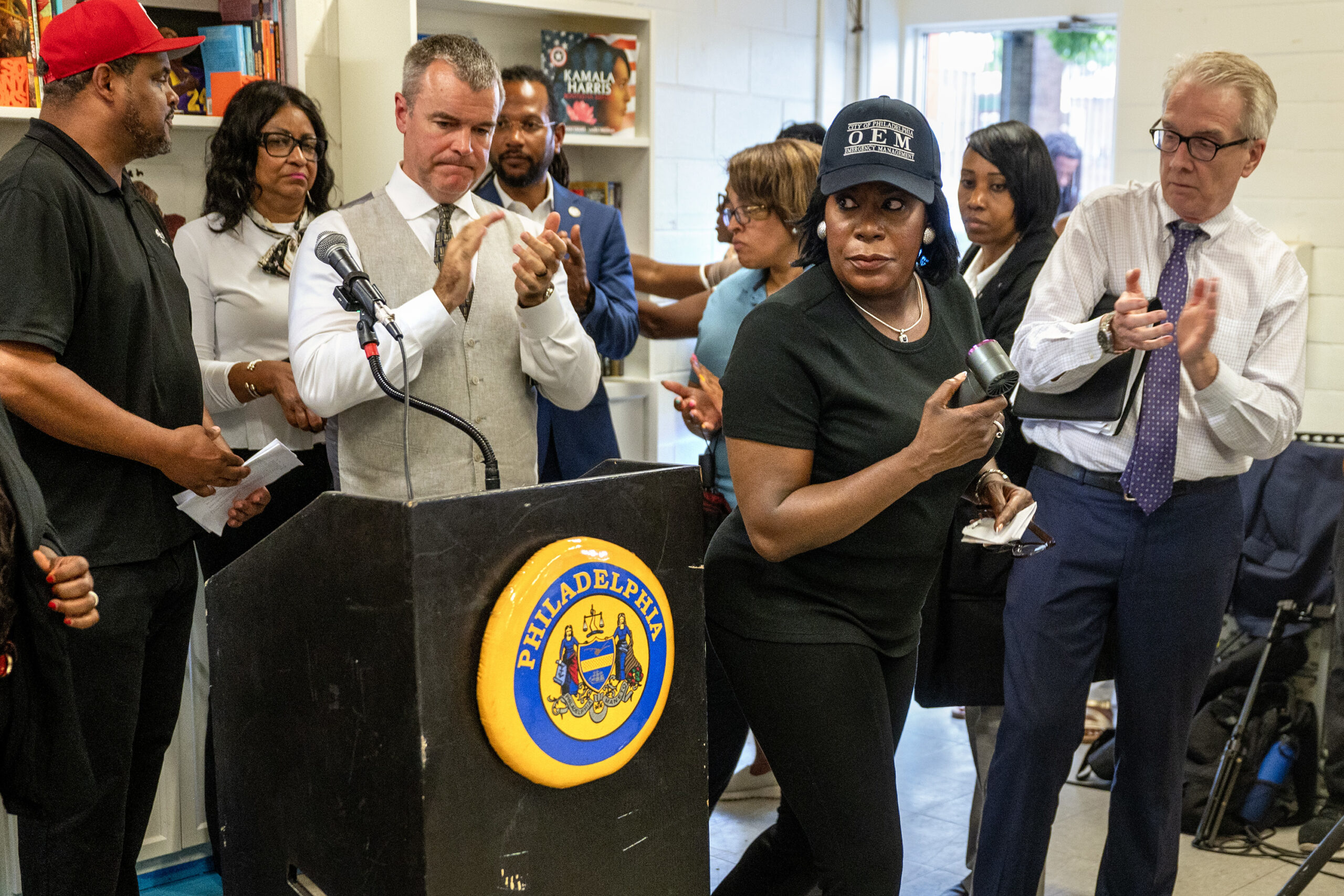
When Mayor Cherelle L. Parker stood in the city’s emergency management center last month and announced that her administration was preparing for the worst winter storm Philadelphia had seen in years, she was flanked by the police commissioner, the head of public schools, and a dozen other deputies.
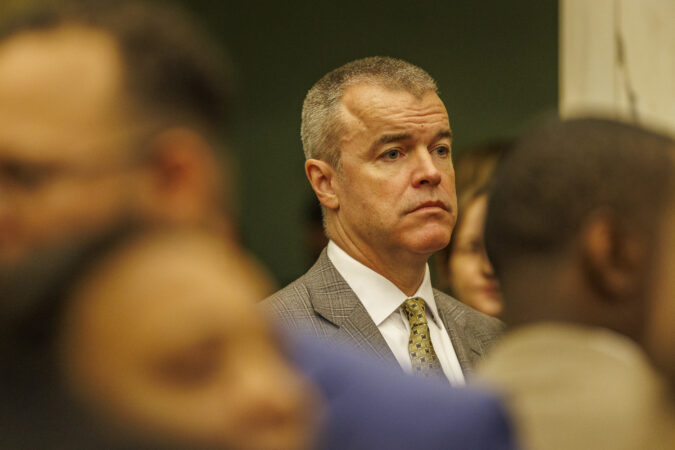
Missing from the news conference of Philadelphia’s top officials was Managing Director Adam K. Thiel, whose job it is to oversee the delivery of city services.
It wasn’t the only time over the last year that Thiel, Philadelphia’s No. 2 public official, was noticeably absent.
Thiel, who is effectively the city’s chief operating officer, was out of office last year for a total of nearly five months, much of which he spent on military leave, according to 2025 payroll register records obtained by The Inquirer. His increasingly low profile in Philadelphia City Hall has generated frustration and fueled questions about his job performance among some lawmakers, especially as the city faced criticism over the recent snow cleanup.
Almost half of Thiel’s $316,200 city salary last year was for paid time off, according to payroll records. He is one of the highest-paid officials in the government and made more than Parker, who last year earned $280,000.
In addition to his top city role, Thiel is a major in the U.S. Army Reserves. He joined the reserves in August 2024, eight months after beginning his job as managing director.
Thiel also holds other positions outside government. In 2024, while he was managing director, he made more than $300,000 working as a consultant, according to financial disclosures. He is an adjunct faculty member at two universities and sits on several nonprofit boards.
Five City Council members told The Inquirer that it has been months since they interacted directly with Thiel.
“The managing director of the city is an extremely important job,” said Councilmember Jamie Gauthier, a Democrat from West Philadelphia. “I do not understand how someone who is absent as much as Thiel is able to carry out this job effectively.”
Managing Director Adam Thiel during graduation ceremonies for the police academy Class #402 of the Philadelphia Police Department and Temple University Police Department at Temple University Performing Arts Center June 17, 2024.
The administration declined requests to interview Thiel and Parker for this article. In a statement, Thiel thanked Parker for her “continued support of our city of Philadelphia employees who also serve the United States of America.”
Sharon Gallagher, a spokesperson for the managing director’s office, said in a statement that Thiel has been employed by the city for nearly 10 years and “earns leave offered by the city the same way as other city employees accrue vacation, sick days, family, medical, military and other leave categories.”
Payroll records show that Thiel logged six weeks of military leave time last year — the maximum amount the city offers employees. Gallagher said he also used 11 weeks of accrued vacation time to cover additional military assignments.
The administration declined to answer questions about Thiel’s military service, including details about his location and unit. His LinkedIn page says he “helps provide emergency management subject matter expertise to combatant commands and partner nations.”
Thiel is also founding partner of one consulting firm and the president of a second, though the specific nature of that work is not known and he has declined to disclose his clients publicly.
In 2024, Thiel said his consulting work took fewer than 10 hours per week. Gallagher said Tuesday that “nothing has changed” since then.
The Parker administration did not publicly announce when Thiel was on leave last year, but officials acknowledged it once asked by reporters last summer. At the time, Deputy Managing Director Michael Carroll filled in on an interim basis.
Thiel, 53, is a nationally recognized expert in emergency management. He held a variety of firefighting, public safety, and disaster preparedness roles across the country before coming to Philadelphia in 2016 to serve as fire commissioner and deputy managing director under former Mayor Jim Kenney.
Thiel said in a statement Tuesday that Williams was “the best choice to lead our city’s unified response to the recent snowstorm operation and is the right leader for future snow and ice events.”
Gauthier said the city’s handling of the storm “needed a higher-level emergency response.” She said while she respects Thiel’s military service, she raised his consulting work as a concern.
“A decision needs to be made what he wants to do. Does he want to serve locally, or does he want to do other things?” Gauthier said. “We need a managing director who will serve full time.”
The administration did not answer questions about whether Thiel was in town through the duration of the city’s 26-day winter emergency response.
Parker’s chief of staff, Tiffany W. Thurman, said in a statement that the city is proud to offer benefits such as military and administrative leave that support employee well-being and professional development.
Thurman said Thiel “is always reachable and fulfills the responsibilities of his position as needed based on the situation.”
“His leadership — as is the case with the leadership team of any large city — is not limited by time designated as leave,” she said.
The purpose of the Philadelphia managing director
The authors of the 1950s-era Philadelphia Home Rule Charter created the position of managing director to serve as a barrier between the mayor’s political appointees and the city’s operational departments.
The idea was that having a bureaucrat at the helm would ensure city service delivery would be apolitical, and the mayor cannot fire the managing director without cause.
In reality, different mayors have granted their managing directors varying levels of power.
In this 2018 file photo, LOVE Park is by (left to right) then-Philadelphia Parks and Recreation Commissioner Kathryn Ott Lovell, former City Council President Darrell Clarke, former Philadelphia Mayor Jim Kenney and then-Managing Director Michael DiBerardinis.
For example, former Mayor Michael Nutter dispensed with decades of tradition and assigned robust portfolios to several deputy mayors. While his managing directors were important figures in his administration, they oversaw fewer operating departments than their predecessors.
Kenney, Parker’s immediate predecessor, sought to re-empower the city’s managing director position, while his deputy mayors took on advisory roles. He reassigned almost all departmental oversight to the managing director’s office.
“We’re going to have a managing director that’s actually a managing director,” Kenney said before he took office.
Council members who were in office before Parker’s 2024 swearing-in became used to the managing director being accessible. Several lawmakers said that under Kenney’s administration, they routinely communicated about constituent services matters with ex-Managing Director Tumar Alexander and his predecessor, Brian Abernathy.
That hasn’t been the case with Thiel in the role.
“Since the beginning of this administration, I have gone to Carlton Williams,” said Councilmember Jeffery “Jay” Young Jr., a freshman Democrat who represents parts of North Philadelphia.
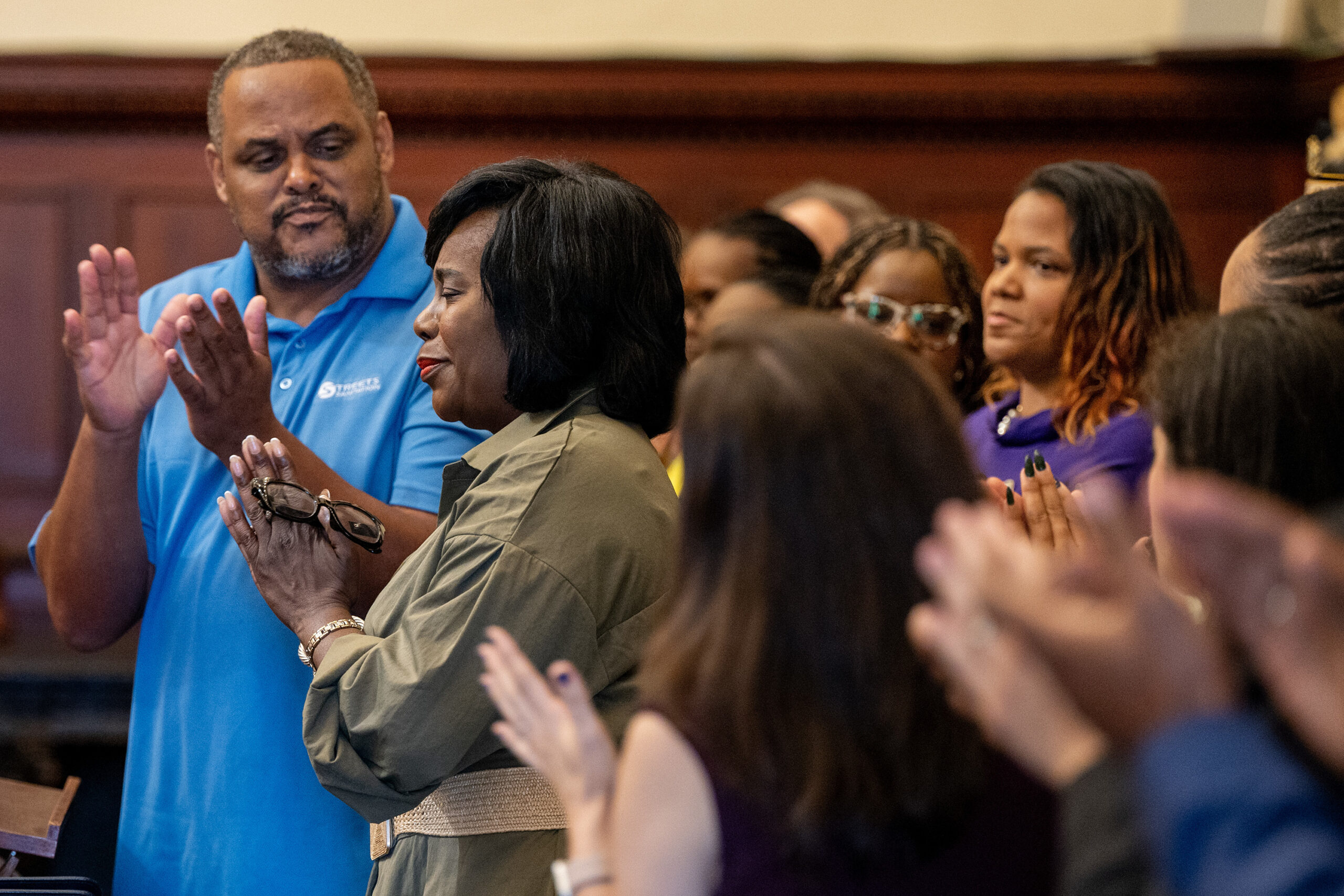
Mayor Cherelle L. Parker is applauded by members of her administration at City Hall Wednesday, Jul. 9, 2025, hours after reaching a tentative contract agreement with District Council 33 leaders overnight, ending the workers’ strike. At left is Carlton Williams, director of the Office of Clean and Green Initiatives and Chief Deputy Mayor Sinceré Harris is behind the mayor at right.
Several other members said that instead of going to the managing director’s office, they take administrative needs to legislative affairs staff, agency heads, or Thurman.
“Almost everything goes through Tiffany, and she’s able to get things done,” said one Council member who spoke on the condition of anonymity to preserve relationships with the administration.
Parker doesn’t deny that little happens at the top rungs of city government without Thurman’s involvement. The mayor has come to see her chief of staff as the central figure in her administration and calls her the city’s “chief air traffic controller.”
Phil Goldsmith, who served as managing director for two years under former Mayor John F. Street, said Thiel’s minimized public role may be because Parker appears to favor “a very strong mayor’s office.”
“It seems to me that the managing director may have to go through more hoops to get things done than, for example, I had to do,” Goldsmith said. “That’s just a function of what a mayor wants and feels comfortable with.”
Fading out of public view
Thiel’s lack of public appearances over the last year has been unusual for a managing director.
It has been 10 months since he testified before City Council, despite the managing director in previous administrations being a mainstay in hearings to answer lawmakers’ questions about city services ranging from street repaving to emergency preparation.
And in December, when a half-dozen top Parker administration officials spoke during the mayor’s State of the City event, Thiel was not on the roster.
The decrease in visibility marks a departure from his first year in office, when Thiel had a more consistent public presence and was often seen beside the mayor.
Ahead of a snowstorm in January 2024, Thiel stood with Parker during a news conference about preparations. He donned a suit while snowflakes fell, and he reassured the city that the administration was ready for the service disruptions that bad weather can bring.
Mayor Cherelle L. Parker (center) with Managing Director, Adam Thiel (right) and at left Carlton Williams, Director of Clean & Green Initiatives, at a news conference with city officials in Northeast Philadelphia on Friday, Jan. 19, 2024 to share the city’s response to the snowstorm.
Through his first year in the position, Thiel also faced scrutiny as the face of some of the mayor’s most controversial initiatives.
He took a leading role in Parker’s efforts to end the open-air drug market in the city’s Kensington neighborhood, and he oversaw the development of the Riverview Wellness Center, a new city-owned recovery house for people with substance use disorder.
Today, much of Kensington initiative is overseen by the public safety director, who reports directly to Parker. A new head of community wellness is leading development at Riverview, and Williams was the face of the storm response.
Mayor Cherelle L. Parker finishes a news media briefing with her leadership team at the Tustin Playground at 60th St. and W Columbia Ave. Tuesday, Jul, 1, 2025, on the first day of the strike by District Council 33. At left are Carlton Williams (Phillies cap), Director of Clean and Green Initiative with the Dept. of Streets Sanitation Division; and Managing Director Adam Thiel (at lectern).
But by the time the strike was resolved, Thiel had faded from public view, departing from his city job for one of his stints on military leave. After Parker reached an agreement with the union, she held a news conference with 20 top deputies and thanked each of them by name.
Thiel, absent from the City Hall news conference, was not one of them.
Staff writers Ryan W. Briggs and Sean Collins Walsh contributed to this article.
If you own a business in Philadelphia and you’re looking for financing, one little known resource is the Philadelphia Industrial Development Corp. or PIDC. Don’t be put off by the word industrial. The public-private organization was formed as a nonprofit by the City of Philadelphia and the Greater Philadelphia Chamber of Commerce to provide financing to all sorts of businesses to create jobs and revitalize neighborhoods.
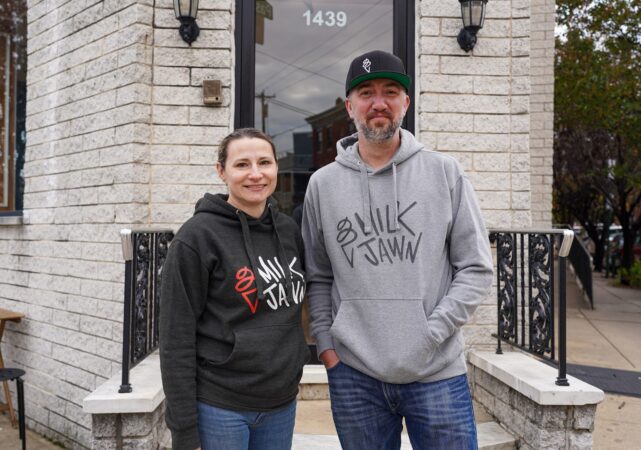
For example, Milk Jawn, an ice cream shop in East Passyunk used PIDC financing to help with its expansion.
“PIDC was our first type of institutional financing,” said Amy Wilson, Milk Jawn’s founder. “Our early growth was friends and family and some crowdfunding. PIDC then helped fund our build out and kitchen construction.”
The organization says it’s focused on helping companies expand, and many different types of businesses would qualify for financing.
“PIDC is Philadelphia’s partner for business growth,” said Kevin Lessard, a senior vice president at the organization. “We help businesses, nonprofits, and developers overcome barriers to expansion by providing financing and real estate solutions that make starting, staying, and scaling in the city possible.”
To qualify for a loan through PIDC, your business must be located within the city, have operated for at least two years, and earn at least $100,000 in annual revenues. Special considerations may be made based on what the funds will be used for (i.e. building in a low-income area) or whether you’re a “disadvantaged” business owner. Personal guarantees and collateral are also normally required.
Loans can be used for equipment and property as well as working capital needs and “soft” costs like legal, accounting, permits, and appraisals. One of the more popular uses of the loans is for commercial real estate financing, where financing can be used to acquire and renovate property or to fund new construction.
Philly success stories
For Alexander Sherack, a co-owner of Korea Taqueria, an eatery with several locations in Philadelphia, PIDC financing fit the kind of deal he was looking for.
“We needed a property that was zoned commercial and mixed-use plus working capital so it wasn’t a typical path for a traditional bank loan,” he said. “We went with PIDC because it helped us replace rent with ownership — and our property turned out to be a hidden gem.”
Businesses can apply online and will then go through an underwriting and due diligence process which usually includes submitting financial reports, bank statements, and tax returns, along with a business plan and forecast. Corporate documents such as bylaws and articles of incorporation are also required. Once the loan is received, there’s ongoing reporting and other compliance requirements, which include regular submission of financial information and updating any major changes in the business.
Kia Jones owns Past Your Bedtime childcare in West Philadelphia and used PIDC financing for both working capital and renovations.
“The staff there made it very easy,” she said. “Any questions that I had, they were right on it.”
Pros of PIDC loans
PIDC funding can be a great bridge to a traditional bank loan. Some applicants who may find themselves turned down for a bank loan may still be able to receive funding from the PIDC.
PIDC takes more of a holistic, mission-driven approach. If a traditional bank turns you down, PIDC may still structure a deal — particularly if your project creates jobs or revitalizes neighborhoods. Getting PIDC involved may also encourage traditional banks to offer additional funding both now and in the future.
PIDC loans generally have much lower interest rates than a traditional bank loan. Milk Jawn’s Wilson, for example, accessed a special 0% interest program in early 2022 through PIDC, a major cost savings in a time of rising interest rates. (This was part of a one-time pandemic relief program.)
Finally, the PIDC provides education, support, and networking programs to help their community of borrowers manage and grow their businesses. And the connections can pay off.
“We were able to meet partners of the PIDC,” Jones said. “One partner program called Boost Your Business got us a $50,000 forgivable loan. The organization is also very familiar with city grants and other local funding options.”
Real talk
As helpful as the organization can be, business owners shouldn’t expect to get immediate funding.
Sherack recommends starting early and “building a transaction timeline” into any agreement where property is being purchased.
“Don’t assume quick money,” he said. “Submit your documents fast and press for clarity on timing so you don’t lose the deal.”
Wilson agrees and said she had to get a loan from a family member while she waited for the application process to complete.
“We’re a mission-driven lender using public and public-private capital, so every deal requires careful underwriting and a clear path to economic impact,” Lessard said. “Unlike conventional lenders, we tailor each financing package to the business.”
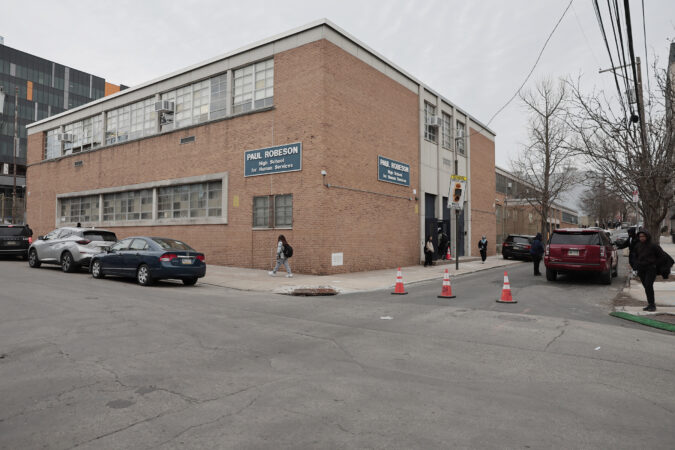
But four years later, the Philadelphia School District hasrecommended closing Robeson, suggesting its small size limited students’ opportunities. Superintendent Tony B. Watlington Sr. wants its students to attend Sayre High, where Robeson would become an honors program, losing its separate identity, administration, and staff.
A hallway at Paul Robeson High School, which the district is attempting to close for the second time.
Having Robeson listed among 20 schools slated for closure was the worst kind of déjà vu for some in the Robeson community: In the last round of large-scale Philadelphia school closures, district officials recommended closing Robeson and sending students to Sayre, which is about two miles away.
“This is the exact same plan,” said Andrew Saltz, who helped organize the Robeson community against closure in 2013 and who is doing it again 13 years later. “We need a different plan.”
The community is speaking out, hoping to persuade the school board to save Robeson again when it votes on Watlington’s recommendations later this winter.
An upward trajectory
Robesonsoared after successfully fending off its last attempted shutdown.
By 2017, it was named the district’s most-improved high school. It built upon its core of dedicated teachers and students; though most Robeson students come from its own West Philadelphia neighborhood, it is a citywide school, meaning they have to apply to be there.
Robeson expanded existing partnerships and formed new ones that gave students opportunities to get onto nearby college campuses. Richard Gordon, who came to lead the school in 2013, was recognized as national principal of the year. (Gordon has since been promoted to assistant superintendent in the district.)
Multiple Robeson teachers have been honored as among the district’s best.
Then-Principal Richard Gordon (front, tie), then-assistant principal Lawrence King (rear, gray sweater) and members of the Robeson High student body in the newly renovated cafeteria in this 2022 file photo.
Then-Mayor Jim Kenney visited Robeson to tout its success. So did then-Gov. Tom Wolf.
Elana Evans, a beloved Robeson teacher and the school’s special education compliance monitor, has already weathered one school shutdown — she taught at the old University City High School, closed in 2013
That loss was brutal, Evans said. But she is proud of what the community has built at Robeson.
“It’s an amazing story that continues to stay amazing because we still keep growing,” Evans said. “To say, ‘OK, you’re going to merge with this school, and your name is just going to fade to nothing,’ is, to me, disrespectful.”
District officials are pitching Robeson’s closure — and the closingswrit large — as a move to expand opportunities for all students.
Sayre, with Robeson as a part of it, would get modernized career and technical rooms and equipment in the facilities plan, Sarah Galbally, Watlington’s chief of staff, told the Robeson community. Sayre would get more accessibility features; renovated stormwater management, roof, and restrooms; and new paint.
But that didn’t convinceEvans.
“You say one thing, ‘This is how it’s going to look like,’ but for real for real, stop gaslighting me,” Evans said.
‘They needed something small’
Samantha Bromfield homeschooled her twins for seven years, and was wary when she enrolled her children in public school — until Robeson made her believe.
The move to shut the school frustrated and saddened her, Bromfield said. Sheand many other Robeson parents said they would not send their children to Sayre.
“If you as a board choose to close Paul Robeson, I choose to pull my children from the public school system,” Bromfield said at meeting held at Robeson on Saturday. “They needed something small. They needed a family. They needed someone who could hold their arms around the children and say, ‘Hey, are you having a bad day?’”
Multiple parents echoed Bromfield’s statements.
The district is choosing to invest in some schools but not others under the facilities proposal, they said.
“Cassidy got a new school, why not us?” one parent told district officials, referring to a $62.1 million new building for a West Philadelphia elementary school.
‘Y’all don’t know’
Ahrianna DeLoach, a Robeson ninth grader, struggled in middle school but is soaring at Robeson, she said, because of the nature of a place where teachers know every student’s name.
“I don’t want it to close down,” DeLoach said. “I was looking forward to graduating from this school. It would devastate me if I couldn’t.”
Antoine Mapp Sr., a West Philadelphia resident, expresses frustration that the Philadelphia School District is attempting to close Paul Robeson High School. Mapp spoke at a district meeting on the subject.
West Philadelphia resident Antoine Mapp Sr. graduated from University City High, but has been spending time at Robeson since he was 11. Mapp’s West Powelton Steppers and Drum Squad rehearses inside the Robeson gymnasium.
It feels especially cruel to lose Robeson as gentrification creeps in, Mapp said, and with gun violence still plaguing Philadelphia. He worries about the routes children would have to take to get to Sayre, and about neighborhood rivalries.
“You guys don’t understand what it’s like living in the community or our neighborhood, or what we go through,” Mapp said. “Y’all don’t know how hard it is just to go to the store in our community. Y’all don’t know what it’s like trying to go to an activity in our neighborhood. We have none of those things. Now you want to take this school away from us and send our kids to different communities. I want you to know that the crime rate and the murders are going to increase and there’s nothing y’all can do about it.”
Shelley R. grew up as a gender-nonconforming kid, and she loves the queer and trans community she’s built in Philadelphia — where sometimes she can feel like the seventh wheel when it’s dinner time and the entire party leaves to go on a group date together.
But she’s also ready for something new in romance. Shelley, who The Inquirer is referring to by her first name and last initial because she doesn’t want her experience to reflect on her employer, is a “nontraditional person seeking normal love.”
A 31-year-old trans woman, she just wants a nice, monogamish boyfriend.
Raised by hippies in Boston who were devotees of New Age spirituality, Shelley was assigned male at birth, and as a teenager came out as gay.
“I’ve never had the choice to just be like, ‘This is my boyfriend. He loves me. We live together and we’re hosting a little board game night,’” Shelley R. said.
As a young adult, she attended Hampshire College, a small, very progressive school in Western Massachusetts, where she started identifying as trans. After graduation, she moved to Philadelphia, where she underwent gender-affirming surgery as part of her transition. She describes herself now as a “post-op” trans woman, and told The Inquirer, “I’ve had all that work done. I am essentially the same as a cisgender woman in most of the ways that count, except for one big one: fertility.”
She now lives in West Philadelphia and is seeking what she describes as “typical love.”
“I just want a guy who will commit,” she said.
The following, as told to Zoe Greenberg in interviews and a letter, has been edited for length and clarity.
On being a “post-op” trans woman on the dating apps in Philly
If I don’t mention I’m trans on my profile, then I’ll get a lot of men who will immediately turn me down when they learn I’m trans, either due to prejudice or because they value being able to get their future wife pregnant. The “trans panic” can also be dangerous, if a man feels deceived. People get murdered or assaulted this way.
If I just mention that I’m trans on my profile, with no medical information, many will make incorrect assumptions about my genitals, which could be a deal-breaker for them one way or the other.
If I say I’m “post-op trans,” then I’m putting on my dating profile, “BY THE WAY, I HAVE A VAGINA!!!” which makes me come across as very focused on sex. Most men on dating apps already assume that no matter what I say I’m looking for, I’m looking for sex.
I think I might try putting, “I have a little secret, and I’ll tell you when you get to know me a little more.”
I’m only half-serious about that.
On attracting married men and depressed artists
Married men are strangely drawn to me. I’ve set a rule for myself: no more. They weren’t cheating, it was always an open marriage, and yet they all turned out to be quite close to divorce.
I attract a lot of depressed artists and activists seeking a manic pixie dream girl to experiment with. Breakup conversations with me often include things like, “I understand myself better now, and subsequently have decided to move to Iceland.”
Apparently dating me is a therapeutic journey.
On becoming an accidental role model for her crushes
I was on a little trip with my friends this weekend, and we met this guy from Central Pa. He was cute and he was nice, and I was flirting with him a little bit. Then we get back to Philly, and I got a text message from him that’s like, “You’re so cool and so amazing and so smart. You helped me realize I want to transition.”
That’s another common occurrence: people who date me not actually being interested in me as a person, just in getting to know any trans woman, so that they can figure out if they want to transition themselves. Roughly 50% of the men I’ve dated fall into this category.
On wanting a ‘more typical romance’
I was raised by hippies, I’ve been trans and gender-nonconforming my whole life. All my friends are queer, poly, trans, pansexual.
I’ve never had the choice to be in a monogamous, traditional relationship with a man. I’ve never had the choice to just be like, “This is my boyfriend. He loves me. We live together and we’re hosting a little board game night.”
I just want a romantic relationship, like what people have. I mean, a liberal-blue-state-normal relationship. If he was having a busy workday, I’d cook him a meal. Give him a little massage.
I’m a nontraditional person seeking normal love, and not a polycule. Because I’ve already done the polycule, and my polycule was a disaster.
This story is part of a new series about life partners across the Philadelphia area. See other stories in the series here and here.
If you want to share your story about who you’re navigating life with romantically or otherwise, write to lifepartners@inquirer.com. We won’t publish anything without speaking to you first.
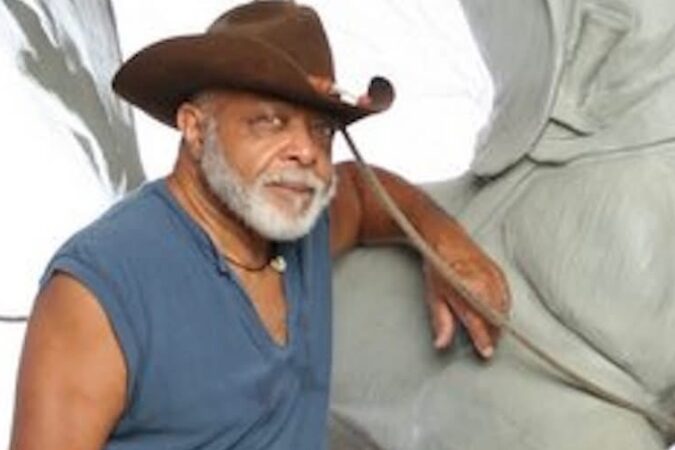
Phil Sumpter, 95, formerly of Philadelphia, celebrated sculptor, artist, art teacher, TV station art director, veteran, mentor, urban cowboy, and revered raconteur, died Thursday, Jan. 1, of age-associated decline at his home in San Juan, Puerto Rico.
A graduate of John Bartram High School and the old Philadelphia College of Art, Mr. Sumpter taught art, both its history and application, to middle and high school students in Philadelphia for 27 years. He was an engaging teacher, former students said, and a founding faculty member at the Philadelphia High School for the Creative and Performing Arts in 1978.
He started teaching in 1955 and, after a break in the 1960s and ’70s, finally retired in 1992. “You are very lucky to have a teacher in your life that believed in you, nurtured you, challenged you, and loved you,” a former student said on Facebook. “Mr. Sumpter did all that and more.”
Other former students called him their “father” and a “legend.” One said: “You did a lot of good here on earth, especially for a bunch of feral artist teenagers.”
Mr. Sumpter (left) talks about his sculpture of Underground Railroad organizer William Still in 2003.
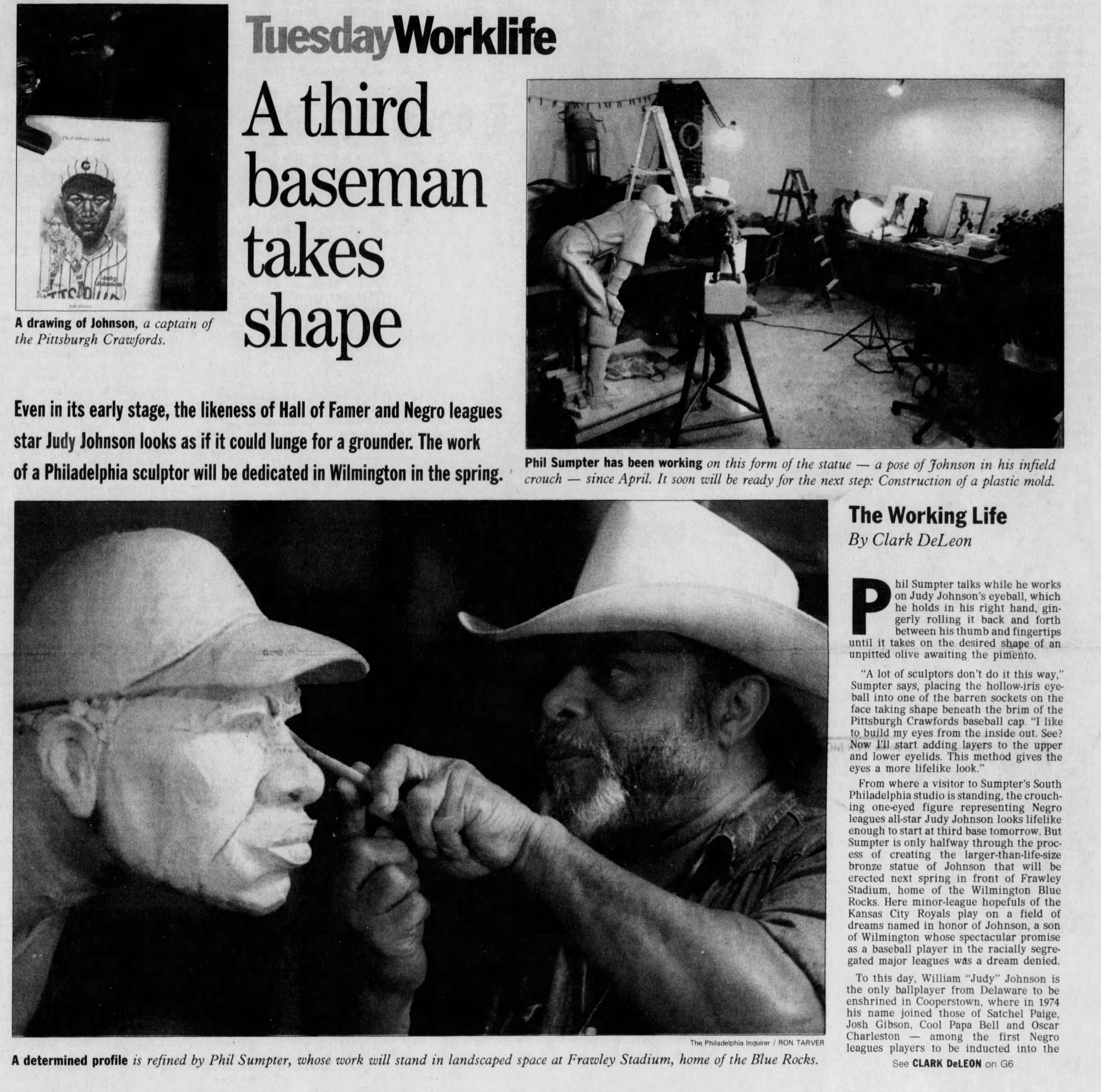
Outside the classroom, Mr. Sumpter sculpted hundreds of pieces and painted and sketched thousands of pictures in his South Philadelphia stable-turned-studio on Hicks Street. Prominent examples of his dozens of commissions and wide-ranging public art presence include the bas-relief sculpture of Black Revolutionary War soldiers at Valley Forge National Historical Park in Montgomery County, the action statue of baseball star Roberto Clemente in North Philadelphia, the Negro Leagues baseball monument in West Parkside, and the Judy Johnson and Helen Chambers statues in Wilmington.
He worked often in clay and paper, made murals, and designed commemorative coins and medals. He especially enjoyed illustrating cowboys, pirates, Puerto Rican jibaros, and landscapes.
His statue of Clemente was unveiled at Roberto Clemente Middle School in 1997, and Mr. Sumpter told The Inquirer: “I think I’ve captured a heroic image, an action figure depicting strength plus determination.”
He was among the most popular contributors to the Off the Wall Gallery at Dirty Franks bar, and his many exhibitions drew crowds and parties at the Bacchanal Gallery, the Free Library of Philadelphia, the Plastic Club, and elsewhere in the region and Puerto Rico. He hung out with other notable artists and community leaders, and collaborated on projects with his son, Philip III, and daughter, Elisabeth.
Mr. Sumpter worked often in clay and paper, made murals, and designed commemorative coins and medals.
He even marketed a homemade barbecue sauce with his wife, Carmen. His family said: “He is remembered for mentorship, cultural fluency, and presence as much as for material works.”
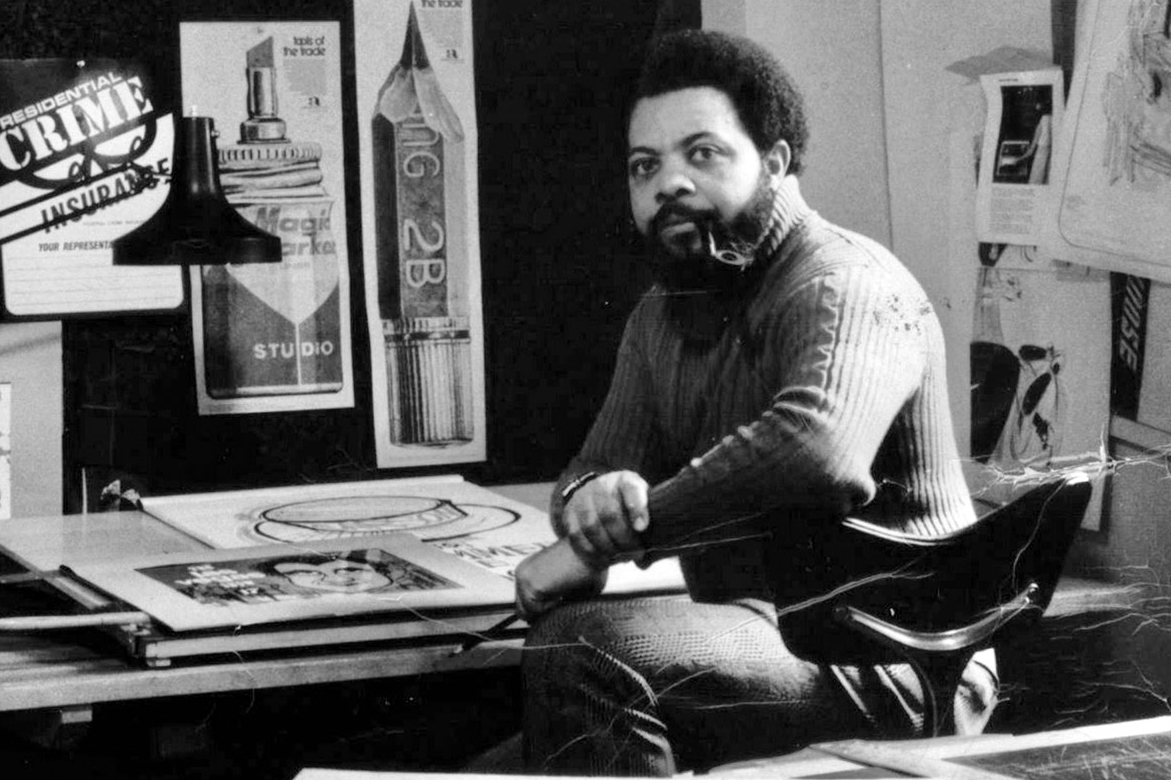
He founded Phil Sumpter Design Associates in the 1960s and worked on design and branding projects for a decade with institutions, educational organizations, and other clients. He was art director for WKBS-TV, WPHL-TV, and the Pyramid Club.
“The word for him,” his son said, “is expansive.”
Mr. Sumpter was friendly and gregarious. He became enamored with Black cowboys and Western life as a boy and went on to ride horses around town, dress daily in Western wear, and depict Black cowboys from around the world in his art. His viewpoints and exhibits were featured often in The Inquirer, the Philadelphia Tribune, Philadelphia Magazine, Dosage Magazine, and other publications.
Mr. Sumpter (in white cowboy hat) views his statue of Roberto Clemente in 1997.
He was an air observer for the Air Force during the Korean War and later, while stationed in England, studied sculpture, ceramics, and drawing at Cambridge Technical Institute. His daughter said: “He taught me how to open the portal to the infinite multiverse of my own imagination, where every mind, every soul can be free.”
Philip Harold Sumpter Jr. was born March 12, 1930, in Erie. His family moved to segregated West Philadelphia when he was young, and he earned a bachelor’s degree in art education at PCA.
He married and divorced when he was young, and then married Florence Reasner. They had a son, Philip III, and a daughter, Elisabeth, and lived in Abington. They divorced later, and he moved to Hicks Street in South Philadelphia.
He met Carmen Guzman in Philadelphia, and they married in 2001 and moved to San Juan for good in 2003. He built a studio at his new home and never really retired from creating.
Mr. Sumpter (second from left) enjoyed time with his family.
Mr. Sumpter enjoyed singing, road trips to visit family in Pittsburgh, and bomba dancing in San Juan. He was a creative cook, and what he called his “trail chili” won cook-offs and many admirers.
“He was a larger-than-life person,” his son said. “He was fearless in his frontier spirit.” His wife said: “His joy for life was contagious, as was his laughter.”
In addition to his wife, children, and former wife, Mr. Sumpter is survived by other relatives.
A celebration of his life was held earlier in Puerto Rico. Celebrations in Philadelphia are to be from 2 to 5 p.m. Saturday, March 14, at Dirty Franks, 347 S. 13th St., Philadelphia,Pa. 19107, and from 2:30 to 4:30 p.m. Sunday, March 15, at the Plastic Club, 247 S. Camac St., Philadelphia, Pa. 19107.
Mr. Sumpter’s work was featured in The Inquirer in 1994.
Each night, Louis-Hunter Kean spiked a fever as high as 104.5. He would sweat through bedsheets and shiver uncontrollably. By morning, his fever wouldease but his body stillached; even his jaw hurt.
He had been sick like this for months. Doctors near his South Jersey home couldn’t figure out why a previously healthy 34-year-old was suffering high fevers plus a swollen liver and spleen. In early 2023, they referred Kean to Penn Medicine.
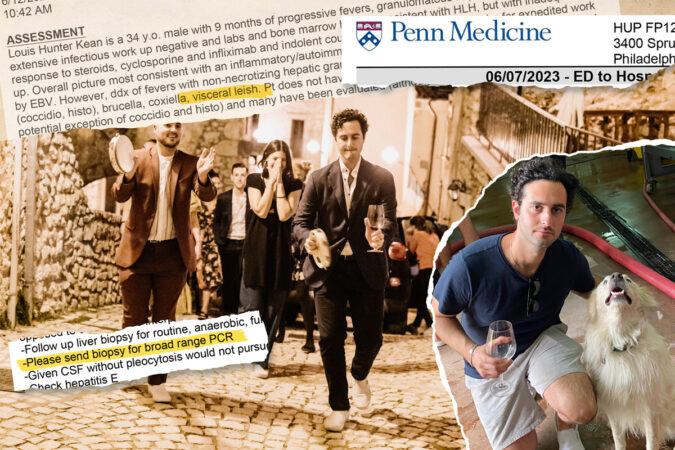
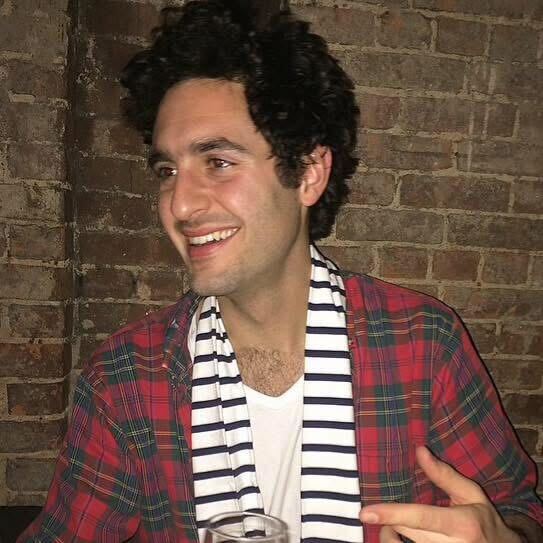
Louis-Hunter Kean visiting a winery in the Tuscany region of Italy in September 2021. He first spiked a mysterious and persistent fever about a year later in August 2022.
“These doctors are very sharp, and there are a lot of teams working on it,” Kean texted a friend after being admitted to the Hospital of the University of Pennsylvania (HUP) in West Philadelphia.
Was it an infection? An autoimmune disease? A blood cancer? Over the next six months, at least 34 HUP doctors — rheumatologists, hematologist-oncologists, gastroenterologists, infectious disease and internal medicine specialists — searched for an answer.
Kean was hospitalized at HUP five times during a six-month period in 2023. His electronic medical chart grew to thousands of pages.
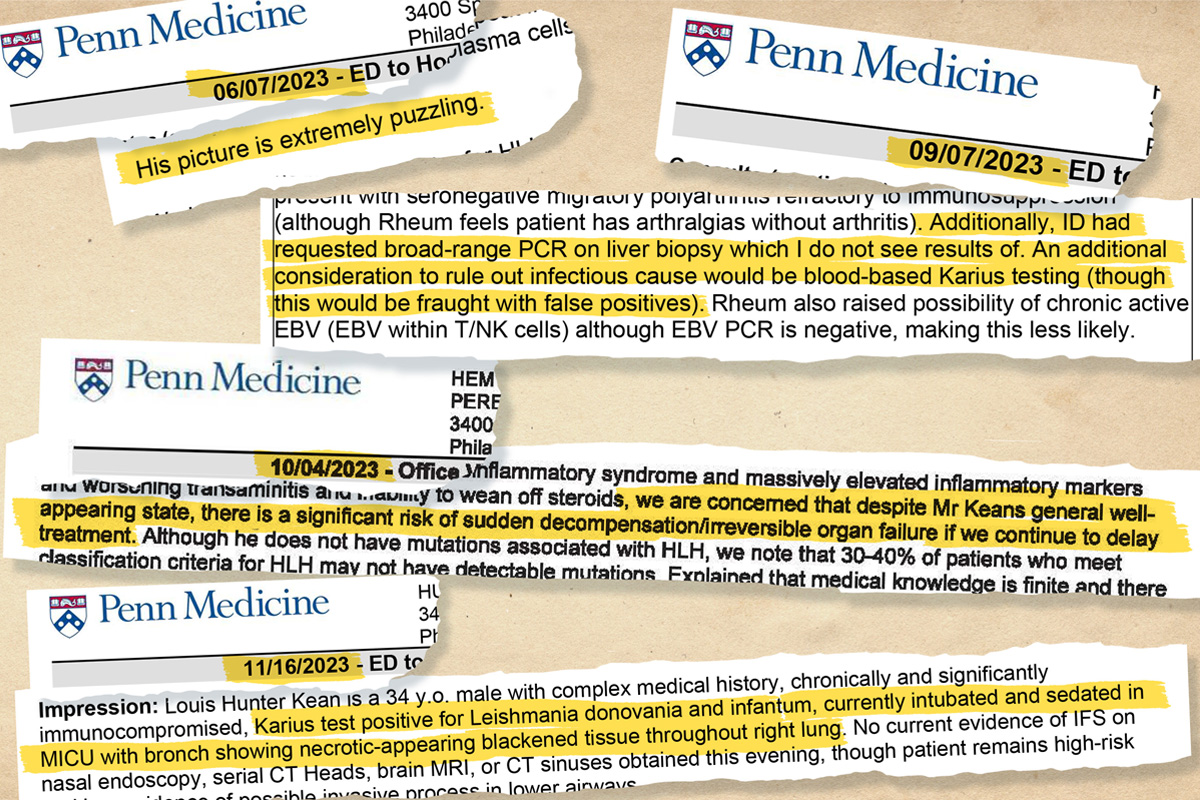
Along the way, doctors missed critical clues, such as failing to obtain Kean’s complete travel history. They recommended a pair of key tests, but didn’t follow up to make sure they got done, medical records provided to The Inquirer by his family show.
Doctors involved in Kean’s care, including at Penn, prescribed treatments that made him sicker, said four infectious disease experts not involved in his care during interviews with a reporter, who shared details about his treatment. Penn doctors continued to do so even as his condition worsened.
Louis-Hunter Kean receives a kiss from bride Ashley Greyson at the October 2021 wedding of his close friend, Joshua Green. Green and Kean graduated from Haddonfield High School in 2007.
“No one was paying attention to what the doctor before them did or said,” Kean’s mother, Lois Kean, said.
“They did not put all the pieces together,” she said. “It was helter-skelter.”
Kean’s family is now suing Penn’s health system for medical malpractice in Common Pleas Court in Philadelphia. The complaint identifies nearly three dozen Penn doctors, accusing them of misdiagnoses and harmful treatments. These physicians are not individually named as defendants.
In court filings, Penn says its doctors did not act recklessly or with disregard for Kean’s well-being, and his case is not indicative of any systemic failures within its flagship hospital. A Penn spokesperson declined further comment on behalf of both the hospital and the individual doctors involved in Kean’s care, citing the pending lawsuit.
The puzzle of Kean’s diagnosis finally came together in November 2023 after a Penn doctor, early in his career, sought help from the National Institutes of Health (NIH).
An NIH doctor recommended a test that identified the cause: a parasite prevalent in countries bordering the Mediterranean Sea. Kean likely got infected while vacationing in Italy, four parasitic disease experts told The Inquirer.
The infection, which is treatable when caught early, is so rare in the U.S. that most doctors here have never seen a case, the experts said.
By the time Penn doctors figured it out, Kean’s organs were failing.
Louis-Hunter Kean and his then-girlfriend Zara Gaudioso at a friend’s wedding in Tuscany in September 2021. Kean and Gaudioso got engaged in early 2023. Gaudioso was smitten by Kean’s good looks and sense of humor.While vacationing in Italy in September 2021, Louis-Hunter Kean and his friends hiked in the foothills of the Apennine Mountains and visited Gran Sasso and Monti della Laga National Park.
A missed clue
When a patient has an ongoing and unexplained fever, an infectious disease doctor will routinely start by takinga thorough travel history to screen for possible illnesses picked up abroad.
A medical student took Kean’s travel history during his initial workup at HUP in June 2023. An infectious disease specialist reviewed the student’s notes and added a Cooper University Hospital doctor’s earlier notes into Kean’s electronic medical chart at Penn.
Those records show Kean had traveled to Turks and Caicos with his fiancée in May 2022. The next month, he took a work trip out West, including to California, where he visited farms, but didn’t interact with livestock.
This was not unusual for Kean, who worked with fruits and vegetables imported from around the world at his family’s produce distribution center on Essington Avenue in Southwest Philadelphia.
Kean’s fiancée, Zara Gaudioso, said she repeatedly told doctors about another trip: In September 2021, about a year before his fevers began, they traveled to Italy for a friend’s wedding in Tuscany.
The couple hiked remote foothills, danced all night in a courtyard, dined by candlelight surrounded by a sunflower farm, and slept in rustic villas with the windows flung open.
“We told everybody,” Gaudioso said. “A lot of Americans go to Italy — it’s not like a third-world country, so I could see how it could just go in one ear and out the other.”
But notes in Kean’s medical record from the Penn infectious disease specialist don’t mention Italy. Neither do the ones the specialist copied over from Kean’s infectious disease doctor at Cooper.
Kean “does not have known risk factors” for exposure to pathogens, the Penn specialist concluded, except possibly from farm animals or bird and bat droppings.
Still, the specialist listed various diseases that cause unexplained fever: Tick-borne diseases. Fungal infections. Tuberculosis. Bacteria from drinking unpasteurized milk.
The possible culprits included a parasitic disease, called visceral leishmaniasis, transmitted by a bite from an infected sandfly. It can lie dormant for a lifetime — or, in rare cases, activate long after exposure, so it’s important for doctors to take extensive past travel histories, parasitic experts say.
The parasite is widely circulating in Southern European countries, including Spain, Greece, Portugal, and Italy.
“Mostly, people living there are the ones who get it. But it’s just a lottery sandwich, and there’s no reason that travelers can’t get it,” said Michael Libman, a top parasitic disease expert and former director of a tropical medicine center at McGill University in Canada.
But few cases become severe. Hospitals in Italy reported only 2,509 cases of active infection between 2011 and 2016, affecting fewer than one in 100,000 people. Infections requiring hospital care in Italy began to decline after 2012, according a 2023 European study by the Public Library of Science (PLOS) journal Neglected Tropical Diseases.
Caught early, visceral leishmaniasis is treatable. Without treatment, more than 90% of patients will die.
In addition to fever, other telltale symptoms are swelling of the liver and spleen and low blood cell counts. Kean had all of those.
A missed test
The infectious disease specialist requested a test to examine tissue biopsied from Kean’s liver, which was damaged and enlarged. Lab results showed that immune cells there had formed unusual clusters — another sign that his body might be fighting off an infection.
In her notes, the specialist identified “visceral leish” as a possible diagnosis, which repeated — via copy and paste — seven times in his medical record. Her request to “please send biopsy for broad-range PCR” repeated five times.
That is a diagnostic (polymerase chain reaction) test that looks for the genetic fingerprint of a range of pathogens.
The test comes in different versions: One looks broadly for bacteria. The other is for fungi. The broad fungal test candetect leishmania, even though it’s not a fungus. However, it’s not always sensitive enough to identify the parasite and can produce a false negative, experts said.
The specialist’s chart note doesn’t specify which type she wanted done.
It’s not clear if anyone asked. The test wasn’t done.
Louis-Hunter Kean (right, with wine glass and tambourine) leads a wedding procession through the small stone village of Santo Stefano di Sessanio in Italy’s Abruzzo region in September 2021.
She did not order a low-cost rapid blood test that screens specifically for leishmaniasis by detecting antibodies made by the immune system after fighting it. She also didn’t order a leishmania-PCR, which is highly targeted to detect the exact species of the parasite.
Nor did the medical record show that the specialist followed up on the results of the broader test she requested, even though she saw Kean on nine of the 13 days of his first hospitalization at HUP in June 2023.
Penn has a policy that a lead doctor on the patient’s case is responsible for making sure that recommended tests get done. The specialist was called in as a consultant on Kean’s case. During that June hospitalization alone, his medical chart grew to 997 pages.
Patient safety experts have warned for years that electronic medical record systems — designed for billing and not for care — can become so unwieldy that doctors miss important details, especially with multiple specialists involved, or repeat initial errors.
A seemingly innocuous step in charting — copying and pasting previous entries and layering on new ones— can add to the danger, patient safety experts say.
That’s how the specialist’s mention of “visceral leish” and her test recommendation got repeated in Kean’s chart.
Marcus Schabacker, president of ECRI, a nonprofit patient-safety organization based in Plymouth Meeting, said “copy and paste” in electronic medical records puts patients at risk of harm.
“The reality is if you are reading something over and over again, which seems to be the same, you’re just not reading it anymore. You say, ‘Oh, yeah, I read that, let’s go on,’” said Schabacker, speaking generally about electronic medical record systems and not specifically about Kean’s case.
Louis-Hunter Kean plays guitar in his younger years. He loved music and shared eclectic playlists with his friends.
When treatments harm
Penn doctors believed Kean had a rare,life-threatening disorder, known as hemophagocytic lymphohistiocytosis (HLH), in which the immune system attacks the body. Instead of fighting infections, defective immune cells start to destroy healthy blood cells.
In most adults, the constellation of symptoms diagnosed as HLH gets triggered when an underlying disease sends the body’s immune system into overdrive. Triggers include a blood cancer like lymphoma, an autoimmune disease like lupus, or an infection.
Penn doctors across three specialties — hematology-oncology, rheumatology, and infectious disease — were searching for the cause within their specialties.
“His picture is extremely puzzling,” one doctor wrote in Kean’s chart. “We are awaiting liver biopsy results. I remain concerned about a possible infectious cause.”
As HUP doctors awaited test results, they treated Kean’s HLH symptoms with high doses of steroids and immunosuppressants to calm his immune system and reduce inflammation.
The treatments, however, made Kean highly vulnerable to further infection.And defenseless against another possible trigger of HLH: visceral leishmaniasis.
At the time, a Penn rheumatologist involved in Kean’s care before his first hospitalization warned about steroids “causing harm” to Kean if it turned out he had an infection. He wrote, “please ensure all studies requested by” infectious disease are done, medical records show.
Steroid treatments would allow the parasites to proliferate unchecked, experts said.
“It’s unfortunately exactly the wrong treatment for parasitic disease,” said Libman, the leishmania disease expert at McGill University.
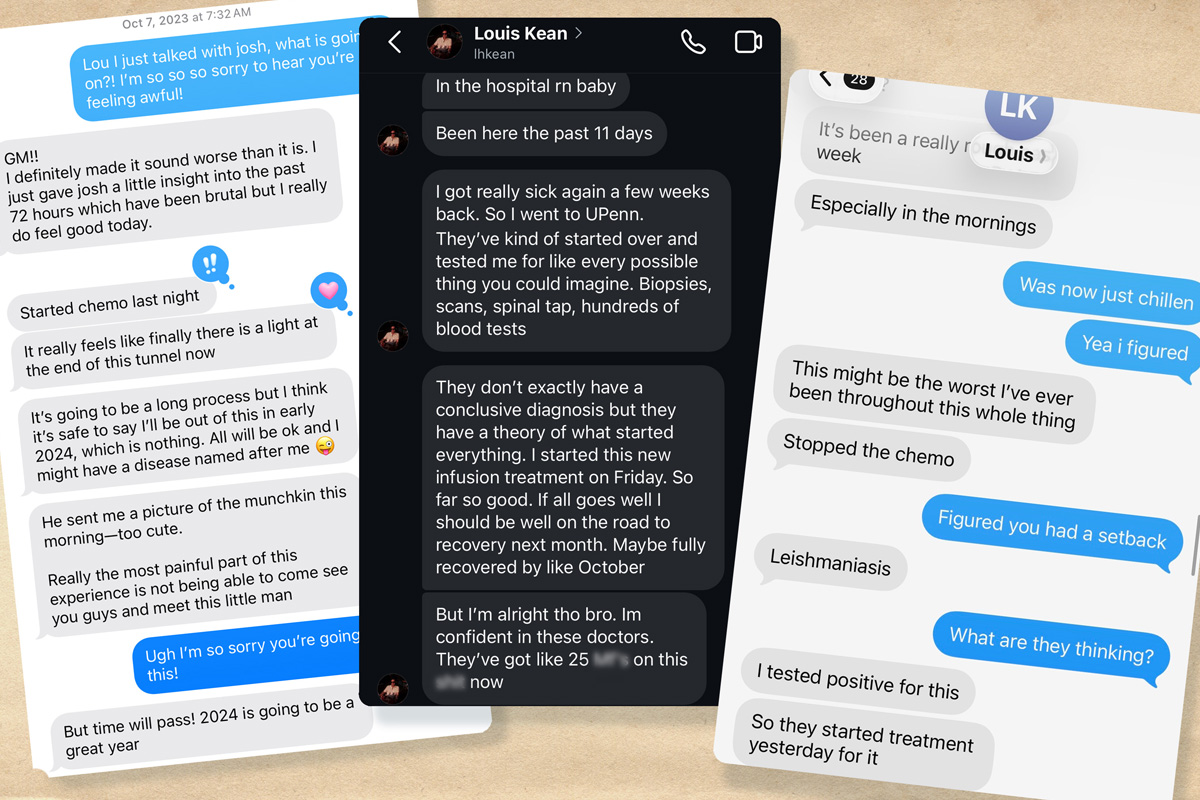
As Kean grew sicker, he was readmitted to HUP for a third time in September 2023. He texted a friend: “I’m on more medications than I’ve ever been on and my condition is worse than it’s ever been.”
A sampling of Louis-Hunter Kean’s electronic medical records, which ballooned to thousands of pages over five HUP hospitalizations within six months in 2023.
Handoffs between doctors
No single doctor seemed to be in charge of Kean’s care, his family said. And the number of specialists involved worried them.
“Everyone just kept being like, ‘We don’t know. Go see this specialist. Go see that specialist,’” Kean’s sister, Priscilla Zinsky, said.
By fall 2023, rheumatologists hadn’t found a trigger of Kean’s symptoms within their specialty. They turned to doctors specializing in blood cancer.
During the handoff, three doctors noted that they didn’t see the results of the test requested by the infectious disease specialist back in June. They still thought it was possible that Kean had an infection, records show.
“An additional consideration to rule out infectious cause would be blood-based Karius testing (though this would be fraught with false positives),” wrote that doctor, who was still training as a hematologist-oncologist.
A supervising physician reviewed the Sept. 8, 2023, note and signed off on it. The medical records don’t show any follow-up with infectious disease doctors, and the test wasn’t done at the time.
In the coming days, blood cancer specialists struggled to find a link between Kean’s symptoms and an underlying disease.
They thought he might have a rare form of leukemia, but tests weren’t definitive, Kean texted friends.
Untreated HLH symptoms can lead to rapid organ failure, so doctors often start patients on treatment while trying to figure out the underlying cause, said Gaurav Goyal, a leading national expert on HLH, noting that it can take days to get test results.
“You have to walk and chew the gum. You have to calm the inflammation so the patient doesn’t die immediately, and at the same time, try to figure out what’s causing it by sending tests and biopsies,” said Goyal, a hematologist-oncologist at the University of Alabama at Birmingham.
Medical records show that Penn doctors feared Kean was at “significant risk” of “irreversible organ failure.”
They suggested a more aggressive treatment: a type of chemotherapy used to treat HLH that would destroy Kean’s malfunctioning immune cells.
In his medical record, a doctor noted that beginning treatment without a clear diagnosis was “not ideal,” but doctors thought it was his best option.
Four parasitic disease experts told The Inquirer that chemotherapy, along with steroids and immunosuppressants, can be fatal to patients with visceral leishmaniasis.
“If that goes on long enough, then they kill the patient because the parasite goes out of control,” Libman said, explaining that ramping up the HLH treatments weakens the immune system. “The parasite has a holiday.”
A sample of text messages from Louis-Hunter Kean to friends during separate HUP hospitalizations over a six-month period in 2023.
Chemo as last resort
Kean banked his sperm, because chemo infusions can cause infertility. He told friends he trusted his Penn team and hoped to make a full recovery.
“Started chemo last night. It really feels like finally there is a light at the end of the tunnel,” he texted a friend on Oct. 7, 2023.
“I’m gonna get to marry my best friend, and I think I’m going to be able to have children,” Kean wrote in another text to a different friend.
Kean spent nearly all of October at HUP getting chemo infusions. He rated his pain as a nine out of 10. His joints throbbed. He couldn’t get out of bed. He started blacking out.
Doctors added a full dose of steroids on top of the IV chemo infusion. By the end of the month, Kean told a friend he feared he was dying.
A year had passed since Kean first spiked a fever. He no longer could see himself returning to his former life — one filled with daily exercise, helping run his family’s produce store, nights out with friends at concerts and bars, and vacations overseas.
Lethargic and weak, he could barely feed himself. His sister tried to spoon-feed him yogurt in his hospital bed.
He started texting reflections on his life to friends and family, saying his illness had given him a “polished lens” through which he could see clearly. He wrote that their love felt “like a physical thing, like it’s a weighted blanket.”
“I’ve lived an extremely privileged life. I don’t think it’s possible for me to feel bad for myself,” he said in a text. “And I don’t want anyone else to either.”
Louis-Hunter Kean enjoying dinner out with his sister, Jessica Kean, in Manhattan in 2014. Friends and family described him as a “foodie” and health food advocate prior to the onset of his illness in August 2022.
Puzzle solved
One doctor involved in Kean’s care had seen him at Penn’s rheumatology clinic in early June 2023, just before his first HUP hospitalization. The doctor, a rheumatology fellow,urged him to go to HUP’s emergency department, so he could be admitted for a medical workup.
The fellowremained closely involved in Kean’s care, medical records show. Also in his 30s, this doctor shared Kean’s interests in music, fashion, and the city’s restaurant scene, according to Kean’s family.
“They had a rapport,” Kean’s father, Ted Kean, said. “Louis thought a lot of him, and he seemed to think a lot of my son.”
By early November 2023, the rheumatology fellow was extremely concerned, medical records show.
The chemo infusions weren’t helping. Kean still was running a fever of 103. The fellow wrote in his chart that he was worried Kean needed a bone-marrow transplant to replace his failing immune system.
And doctors still didn’t know the root of his symptoms.
The fellowcontacted the NIH, medical notes show.
An NIH doctor recommended a test to check for rare pathogens, including parasites that cause visceral leishmaniasis,according to family members present when the testing was discussed.
The NIH-recommended Karius test was the same one suggested two months earlier by the Penn hematologist-oncologist in training, but with no follow-up.
File of sign on front of Hospital of the University of Pennsylvania (HUP) taken on Tuesday, March 19, 2024.
On Nov. 16, the fellow got the results. He went to Kean’s bedside.
After five HUP hospitalizations over six months, a single test had revealed the cause of his illness: visceral leishmaniasis.
Kean cried with relief and hugged the fellow, joined by his mother and sister.
“‘You saved my life,’” Kean’s sister, Jessica Kean, recalled her brother telling the doctor. “‘Finally, we know what this is, and we can treat it.’”
Kean’s medical chart was updated to note that he traveled to “Italy in the past,” also noting he had visited Nicaragua and Mexico. A HUP infectious disease doctor consulted with the Centers for Disease Control and Prevention on antiparasitic medications.
Meanwhile, Kean’s nose wouldn’t stop bleeding. He felt light-headed and dizzy, with high fever. Even on morphine for his pain, his joints ached.
“I’ve been struggling, buddy,” he texted a friend on Nov. 20. “This might be the worst I’ve ever been.”
By Nov. 22, he stopped responding to text messages. He began hallucinating and babbling incoherently, family members recalled. “Things went downhill very, very quickly, like shockingly quickly,” his sister, Priscilla Zinsky, said.
When she returned on Thanksgiving morning, he was convulsing, thrashing his head and arms. “It was horrifying to see,” Zinsky said.
Her brother had suffered brain bleeds that caused a stroke. His organs were failing. He had a fungal infection with black mold growing throughout his right lung, medical records show.
Kean was put on life support, with a doctor noting the still-preliminary diagnosis: “Very medically ill with leishmaniasis.”
“Prognosis is poor,” read the note in his Nov. 29, 2023, medical records.
A few hours later, Kean’s family took him off life support. He died that day.
“All of his organs were destroyed,” said Kean’s mother, Lois Kean. “Even if he had lived, he had zero quality of life.”
Portraits of Lois and Ted Kean’s four children decorate a wall at their home in Haddonfield. Their son, Louis-Hunter, died after contracting visceral leishmaniasis, a parasitic infection he likely picked up in Italy. When caught early, it’s treatable with medication. It’s deadly without treatment.
It’s not clear why the parasites began to attack Kean a year after his return from Italy. Healthy people rarely develop severe disease from exposure to the deadly form of the parasite circulating outside the U.S., experts said.
Most people infected by a sandfly “are probably harboring small amounts of the parasite” in their organs, according to Naomi E. Aronson, a leishmania expert and director of infectious diseases at the Uniformed Services University of the Health Sciences in Bethesda, Md.
“Most of the time, you don’t have any problem from it,” Aronson said.
Children under age 5, seniors, and people who are malnourished or immunodeficient are most susceptible to visceral leishmaniasis. Aronson said she worries about people who might harbor the parasite without problems for years, and then become immunocompromised.
Libman, the parasitic expert from McGill, said he’s seen six to 10 patients die from visceral leishmaniasis because doctors unfamiliar with the disease mistakenly increased immunosuppressants to treat HLH during his 40 years specializing in parasite disease.
“That’s a classic error,” he said.
Kean’s case “should be a real clarion call” for infectious disease specialists and other doctors in the U.S., said Joshua A. Lieberman, an infectious disease pathologist and clinical microbiologist who pioneered the leishmania-PCR test at the Washington state lab.
“If you’re worried about an unexplained [fever], you have to take a travel history that goes back pretty far and think about Southern Europe, Iraq, Afghanistan, India, and maybe even Brazil,” Lieberman said.
In the wake of Kean’s death, his family was told that Penn doctors held a meeting to analyze his case so they could learn from it.
An infectious disease doctor called Zinsky, Kean’s sister, to let her know about the postmortem review and shared that doctors discussed that Kean had likely picked up the parasite in Tuscany.
“Why didn’t you guys have this meeting,” she asked, ”while he was alive?”
Editor’s note: This story has been updated to clarify that ECRI President Marcus Schabacker was not speaking specifically on Kean’s case.
Lankenau High’s 11th-grade class is tiny — just 25 students.
That’s one of the reasons why closing the school is for the best, Philadelphia School District Associate Superintendent Tomás Hanna said at a community meeting last week.
At small schools, Hanna said, programming options are limited and “what’s left behind is very difficult environment for young people.”
The district proposes merging Lankenau into Roxborough High as an honors program — a move that officials say will maximize opportunities for students at both schools. That proposal has been met with fierce opposition from the Lankenau community, whose members say stripping the school of its identity and removing it from its unique location on 400 wooded acres is unjustifiable.
When the school system dramatically revamped its special-admissions process in 2021, moving to a centralized lottery from a system where principals had discretion over who got into the district’s 37 criteria-based schools, enrollment dropped at some magnets.
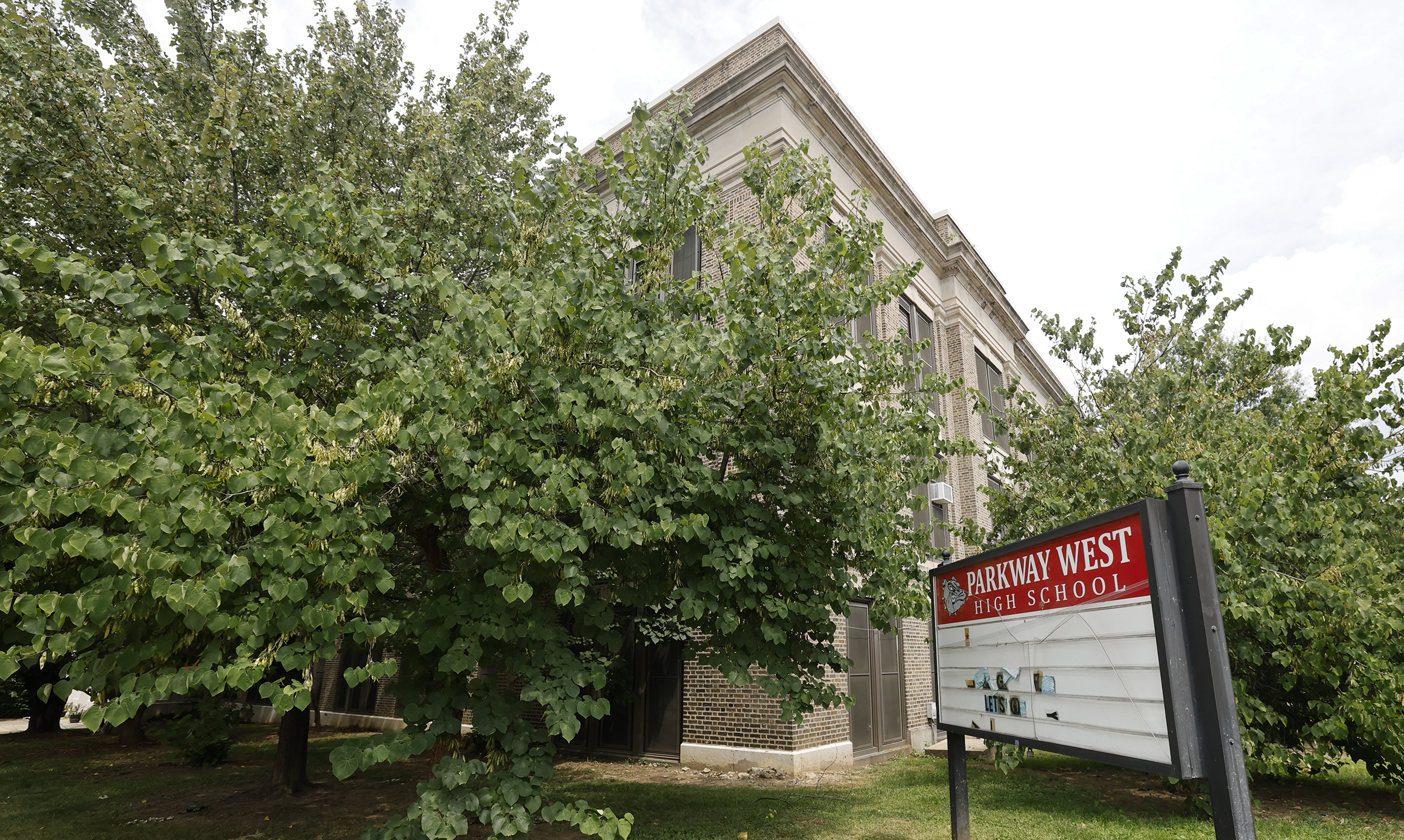
For the 2022-23 school admissions cycle, Lankenau, Motivation, Parkway West, and Parkway Northwest — four of the 20 schools tagged to close — had dozens of unfilled seats in their ninth-grade classes.
window.addEventListener(“message”,function(a){if(void 0!==a.data[“datawrapper-height”]){var e=document.querySelectorAll(“iframe”);for(var t in a.data[“datawrapper-height”])for(var r,i=0;r=e[i];i++)if(r.contentWindow===a.source){var d=a.data[“datawrapper-height”][t]+”px”;r.style.height=d}}});
The district setacademic standards for admission to those schools, and stopped allowing schools to admit students who were close to meeting academic requirements and who demonstrated they would be a good fit for the individual schools, as had been done in the past. (Officials said they wanted to centralize admissions to avoid demographic imbalances at schools; those four magnets did not have a history of them.)
The district’s using Lankenau’s tiny now-junior class to justify closings infuriated many, including Matthew VanKouwenberg, a science teacher at the school.
Lankenau’s size “is a district-designed and district-created problem,” VanKouwenberg said. Though the lottery was begun for equity reasons, “the result is disastrous.”
But Tonya Wolford, the district’s chief of evaluation, research, and accountability, said Lankenau, Motivation, Parkway West, and Parkway Northwest had declining numbers of students applying prior to the lottery changes.
And for years, those schools accepted large numbers of students who didn’t meet the district’s criteria, Wolford said.
Dramatic enrollment drops after district orders
The data are clear: After the district pushed changes to the admissions process, the four schools all saw dramatic drops in enrollment — and some of them never recovered.
Motivation, in West Philadelphia, had a freshman class of 83 students and a total enrollment of 336 in 2022-23. It saw a 77% drop in its ninth- grade class — just 19 freshman in 2023-24. The school now has 151 students, and the district wants to close it and make it an honors program inside Sayre High School. It is operating at only 15% of its full capacity.
The Lankenau Environmental Science Magnet High School in Roxborough.
Lankenau, in Upper Roxborough, had 91 freshman in 2022-23, then 31 in 2023-24, a 66% decline. It now enrolls 225 students. The school is using 49% of its capacity.
Parkway Northwest had 77 ninth graders in 2022-23, then dropped to 30 in 2023-24, a 61% decrease, and is 60% full. It’s got 248 students this year, and the district wants to close it and make it an honors program of Martin Luther King High.
And Parkway West had 54 freshman in 2022-23, then 19 the following year, a 65% decrease. It now has just 140 students, and is using 40% of available seats. It’s proposed to close and become part of Science Leadership Academy at Beeber.
A staffer who worked at Parkway West as the special-admissions process changes rolled out said they were devastating to the school, which typically filled three-quarters of its slots for incoming ninth graders with students who qualified on every measure, and a quarter by feel.
Parkway West High School, in West Philadelphia, is proposed to close under a Philadelphia School District facilities proposal.
“We found kids who maybe missed one criteria, but they were good kids, and had strong recommendations,” said the staffer, who asked not to be identified because they were not authorized to speak to a reporter.
When Parkway West lost that ability, its enrollment tumbled, and never recovered.
Lankenau community members say interest in their unique school has never waned, but the size of their incoming classes continues to be limited by the district — even beyond the admissions changes.
For the applicant class set to start high school in the fall, 107 students listed Lankenau as their first choice, staff said, and 95 have accepted Lankenau’s school board offer.
But since 2022-23, district officials have limited Lankenau to two sections of ninth graders, and with class sizes capped at 33. So despite having interest and students enough for 99 freshmen, it won’t have staff for more than 66.
In the last few years, staffers said, more than 66 students show up at the start of the school year. But with only enough teachers for 66, classes are overcrowded and some students end up transferring out.
“That is the only reason we lose enrollment,” said Erica Stefanovich, a Lankenau teacher. “We wouldn’t be in this situation if they hadn’t put us in it. This is an artificial problem.”
But, Wolford said the trend lines were clear for Lankenau and other schools.
In 2019-20, for instance, the prior to the district’s admissions changes just 34 students met Lankenau’s criteria, but 81 students accepted offers for the ninth-grade class, Wolford said. That same year, eight students qualified for Parkway Northwest on paper, but 34 were admitted, according to district data.
Schools like Lankenau and Parkway Northwest “were existing without following the criteria,” said Wolford.
Trees, bees, and a Lorax
Lankenau is putting up a spirited battle to stay open.
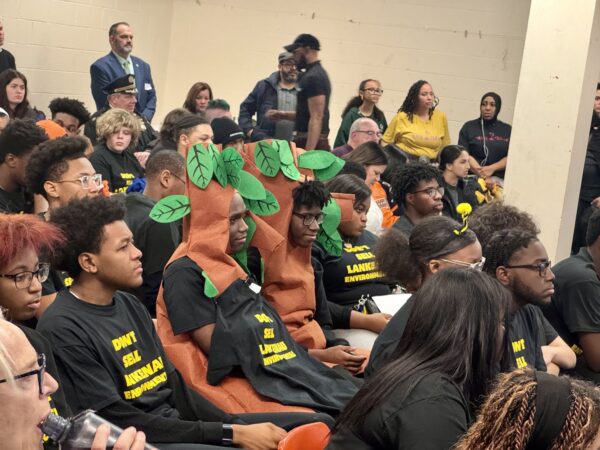
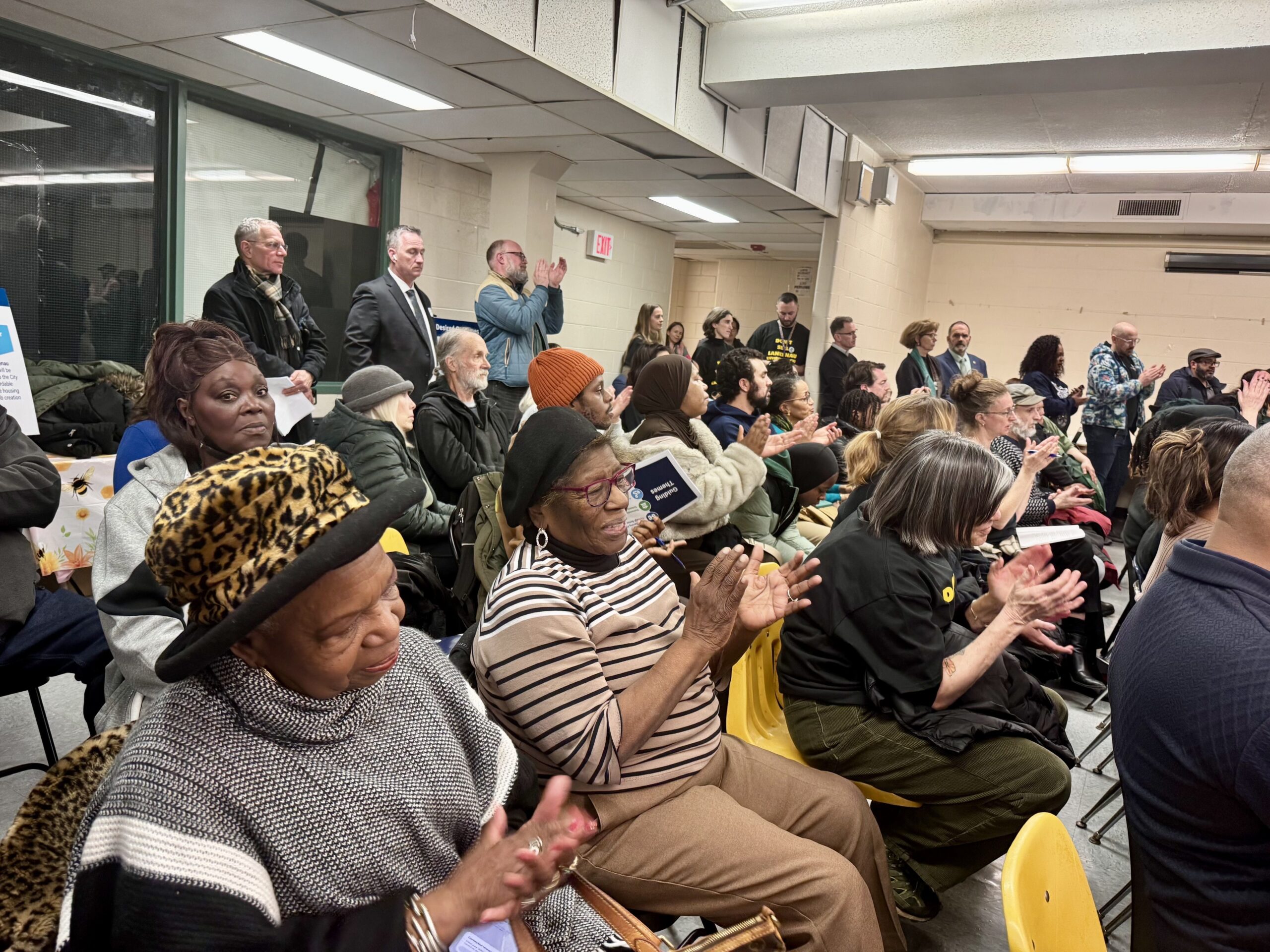
Last week, an overflow crowd — more than 100 students, staff, parents, representatives from Lankenau’s many partner organizations, and community members — packed the school for a student showcase and district-led meeting about the closure. Some students dressed as trees, bees, and a Lorax, the Dr. Seuss character who “speaks for trees” — to emphasize the importance of their school’s setting amid 400 acres of woods.
Community members at Lankenau High School applaud a student telling district officials why the school should not close. Lankenau is one of 20 Philadelphia School District schools proposed for closure.
First, Lankenau students wowed visitors with presentations — about their study of natural resources, about the experience of foraging for ingredients to brew their own artisan teas — and then, it was down to business. Lankenau is too small, officials said, and the district must find ways to offer a more equitable experience for all students.
“I don’t discount that there is magic inside of these walls,” Deputy Superintendent Oz Hill said. “What I’m sharing with you is if we can take that magic and enhance it with more extracurricular activities, more expanded academic programming, the sky’s the limit.”
The parents, students, and staff in the audience weren’t having it.
Lankenau was just certified to become the state’s only three-year agriculture, food, and natural resources career and technical education program — a designation that took years to achieve, and cannot transfer to a new building.
Officials are proposing closing Lankenau a year and a half from now; that’s not enough time for the district to reapply for the designation for a new Lankenau-inside-Roxborough CTE program.
District officials said at the meeting that they believe their “close relationship” with the state education department will give them enough time to get a new Roxborough program certified in time for the Lankenau closing.
Multiple parents told district leaders they would not send their children to Roxborough High.
And Akiraa Phillips, a Lankenau ninth grader, said she couldn’t imagine attending school in another setting.
In Lankenau’s current setting, “learning doesn’t stop at the desk. Our campus is the classroom,” Akiraa said. “We learn science by being in it. Here, we don’t just talk about ecosystems, climate, and sustainability, we walk through it. That kind of learning sticks with you. You can’t stick this into any random building and expect it to work.”
The community turned out in full force, but politicians and other decision-makers were in the room, too. Three school board members, including president Reginald Streater, attended the meeting.
State Sen. Sharif Street (D., Philadelphia), the front-runner to replace U.S. Rep. Dwight Evans in Congress, said he “was against closing the school,” but noted that the decision didn’t rest with him, and said the state needed to better fund schools “because we have not met our obligation to fully fund the program.”
And Councilmember Cindy Bass said she was particularly incredulous that the district was attempting to close a successful magnet — Lankenau has a 100% graduation rate.
“If it works, why are you breaking it?” Bass said. “I do not understand what the logic and the rationale is that we are making these kinds of decisions. We’re not just closing a school, we’re disrupting the lives of young people.”