Tag: Wissahickon

  • Philly area’s housing market is ‘weird’ right now, agents say

    Philly area’s housing market is ‘weird’ right now, agents say

    Brenda Beiser knows firsthand how difficult buying a home in the Philadelphia area can be. She’s not only a Redfin real estate agent, but she’s also an empty nester who wanted to downsize.

    Her six-bedroom house in Mount Airy sold right away when she put it on the market in May. But she decided not to buy a replacement.

    “I went for a rental because I didn’t really want to compete with everyone who’s trying to get into a smaller house,” Beiser said. “A lot of people who are in their 60s and would have traditionally downsized into a smaller house just aren’t doing it. They can’t find a place to go.”
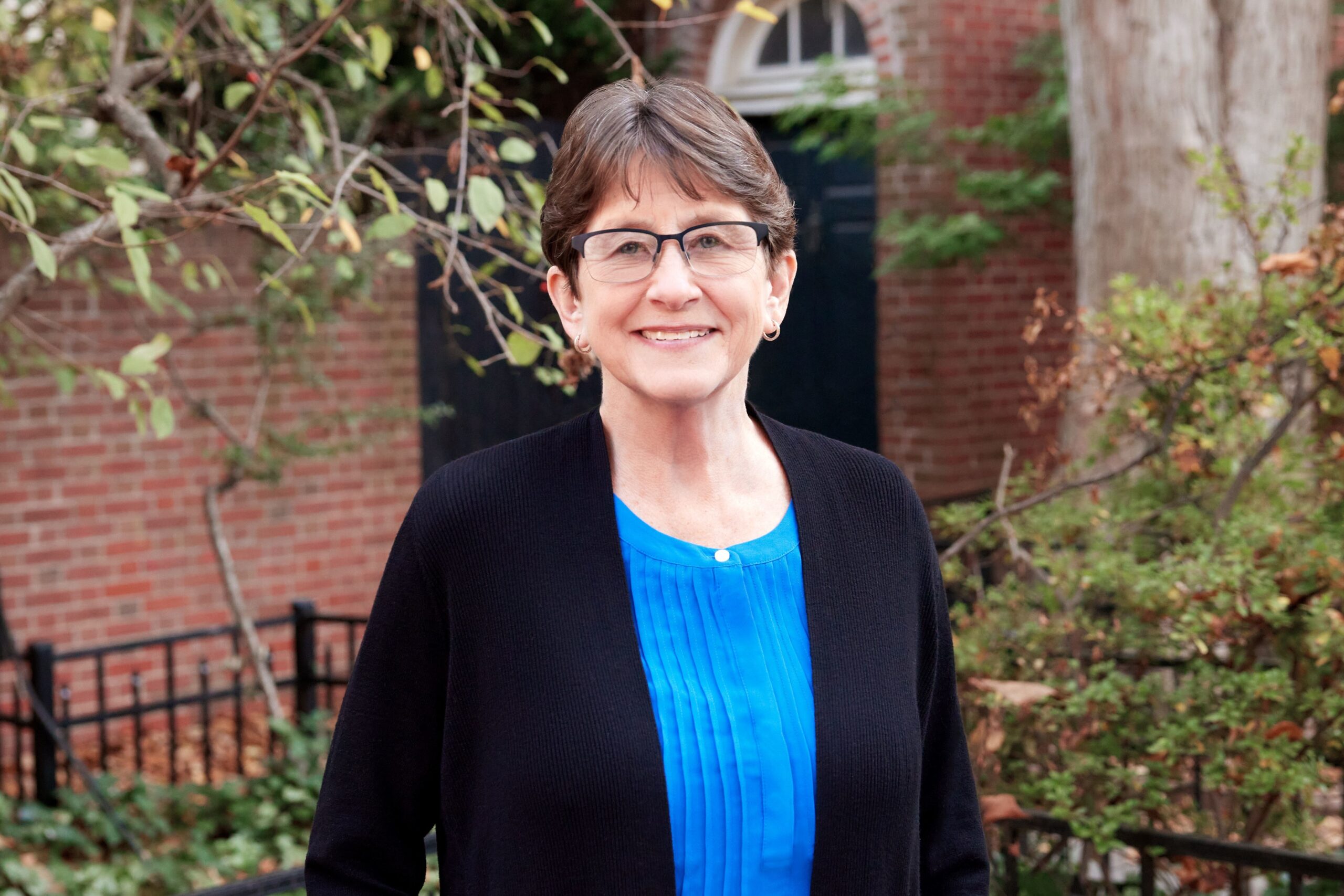
    Brenda Beiser, a Redfin real estate agent in the Philadelphia area, decided not to buy another home when she sold her Mount Airy house, because she didn’t want to enter the region’s competitive housing market.

    The Philadelphia region has a housing supply problem, just like large swaths of the country, and that’s impeding both repeat and first-time buyers. Inventory is particularly low across the Northeastern United States, where construction has not kept up with demand. In the beginning of this year, Zillow predicted that the Philadelphia metropolitan area would be one of the country’s 10 most-competitive housing markets of 2026.

    Home supply, however, has also ticked up a bit in the region compared with last year, and homes are staying on the market a bit longer before they sell. For the four weeks ending June 21, the region was in the top five markets with the highest annual increase in new home listings, according to a Redfin analysis of the 50 most-populous metropolitan areas.

    “The market’s encouraging,” said Jake Markovitz, president of the board of directors for the Greater Philadelphia Association of Realtors. “It’s certainly more balanced than it has been the last four, five years.”

    Erin Thompson, CEO of the Montgomeryville office with Keller Williams and leader of the Erin Thompson Team, agrees. She said buying and selling is “ebbing and flowing but trending toward a more stabilized market.”

    “Although I feel like I’ve said that twice in the recent past, and then it’s gone bonkers,” she said.

    The region’s market is a mixed bag.

    Some homes are sitting for a while, and some owners are at risk of selling properties for less than they bought them for a few years ago. Other homes have inspired five or more buyers to compete against each other, hiking up prices, said Markovitz, an associate broker with the Karrie Gavin Group at Elfant Wissahickon Realtors.
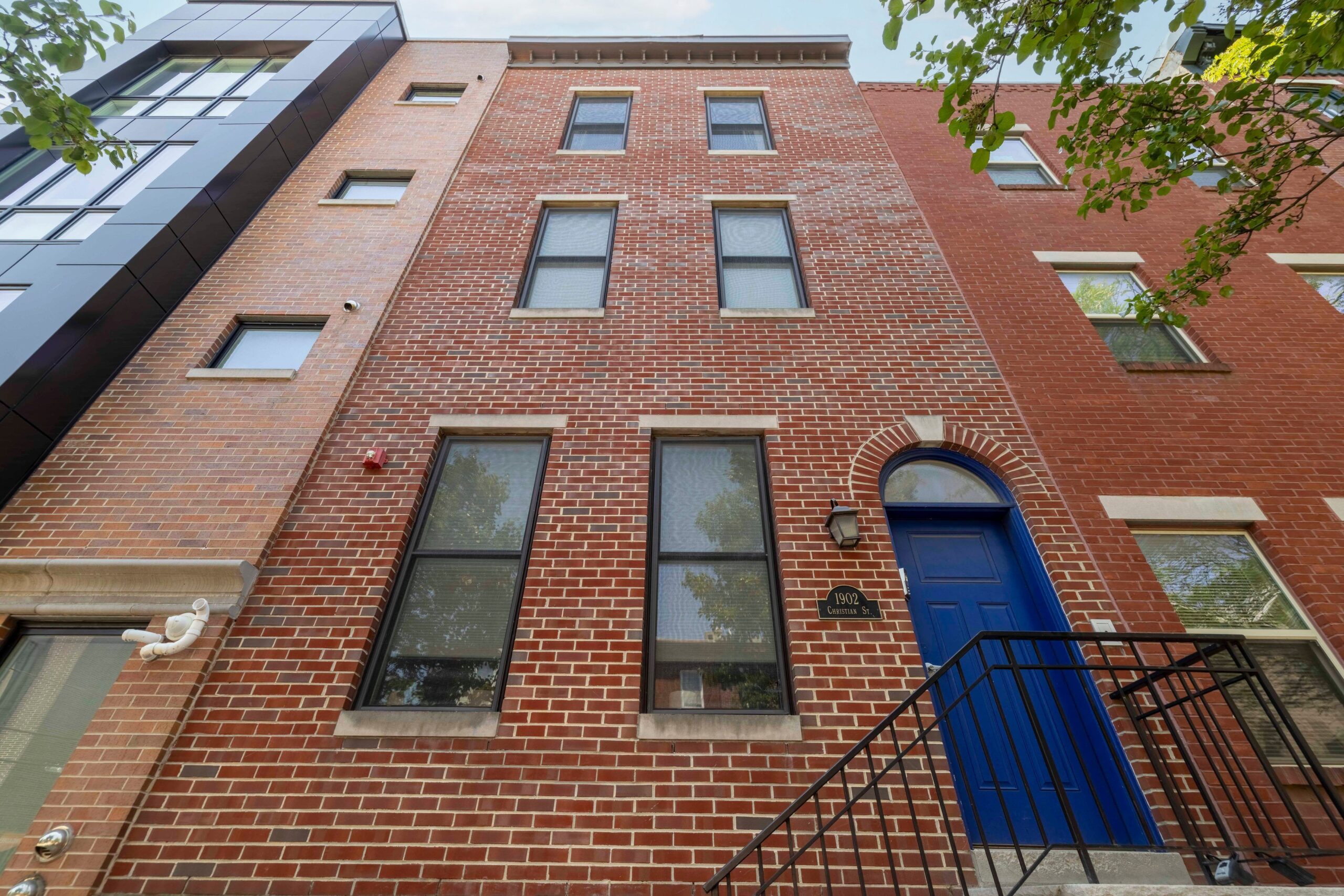
    This Graduate Hospital home went under contract last month a few weeks after it was listed for sale.

    “As an example, I’m seeing more inventory in Chestnut Hill than I have in a long time, which is giving buyers a little bit of power,” he said. But if the right property hits the market, it will go fast.

    He’s seen the same happen in neighborhoods such as Graduate Hospital and Fishtown.

    Because of strong demand for homes in the region, “I just don’t think we’ll see any major shift in prices coming down,” he said.

    ‘Weird’

    Markovitz and Thompson both used the same word to describe the recent real estate market: weird.

    They said housing activity isn’t always following time-tested rules.

    Philadelphia homes that sat on the market for months last fall, typically a busy season, suddenly went under contract in the winter, typically a slow one.

    A house that sits on the market for 30 days that a buyer thinks can be theirs at a lower price can suddenly attract two other buyers at the same time. And now they all need to be ready to pay more.

    Housing markets have always been hyperlocal, with buyer demand varying from neighborhood to neighborhood and block to block. But now, “it’s almost like a property-by-property basis,” even for comparable homes, Thompson said.

    Owners bound by ‘golden handcuffs’

    Even with recent upticks in home listings, the region’s housing supply is nowhere near enough to meet demand.

    “Most people are anticipating this year will continue to be a little tough,” Thompson said, “and then next year we’ll start to see some more inventory.”

    Markovitz said homeowners who bought properties five years ago with 3% or 4% mortgage interest rates are still experiencing “some sticker shock” from current rates, which lately have been averaging about 6.5% for a 30-year, fixed-rate mortgage.

    “Those people, even if they’re ready to leave, are kind of bound by their golden handcuffs,” not wanting to sell and then have to buy a home at a higher interest rate, he said.

    But for many homeowners, “the reality of the market has set in a little bit,” he said. “Where people were sort of hoping, wishing that rates would come back down, they’re not.” And life events such as births, deaths, and job moves mean that people need to sell their homes.
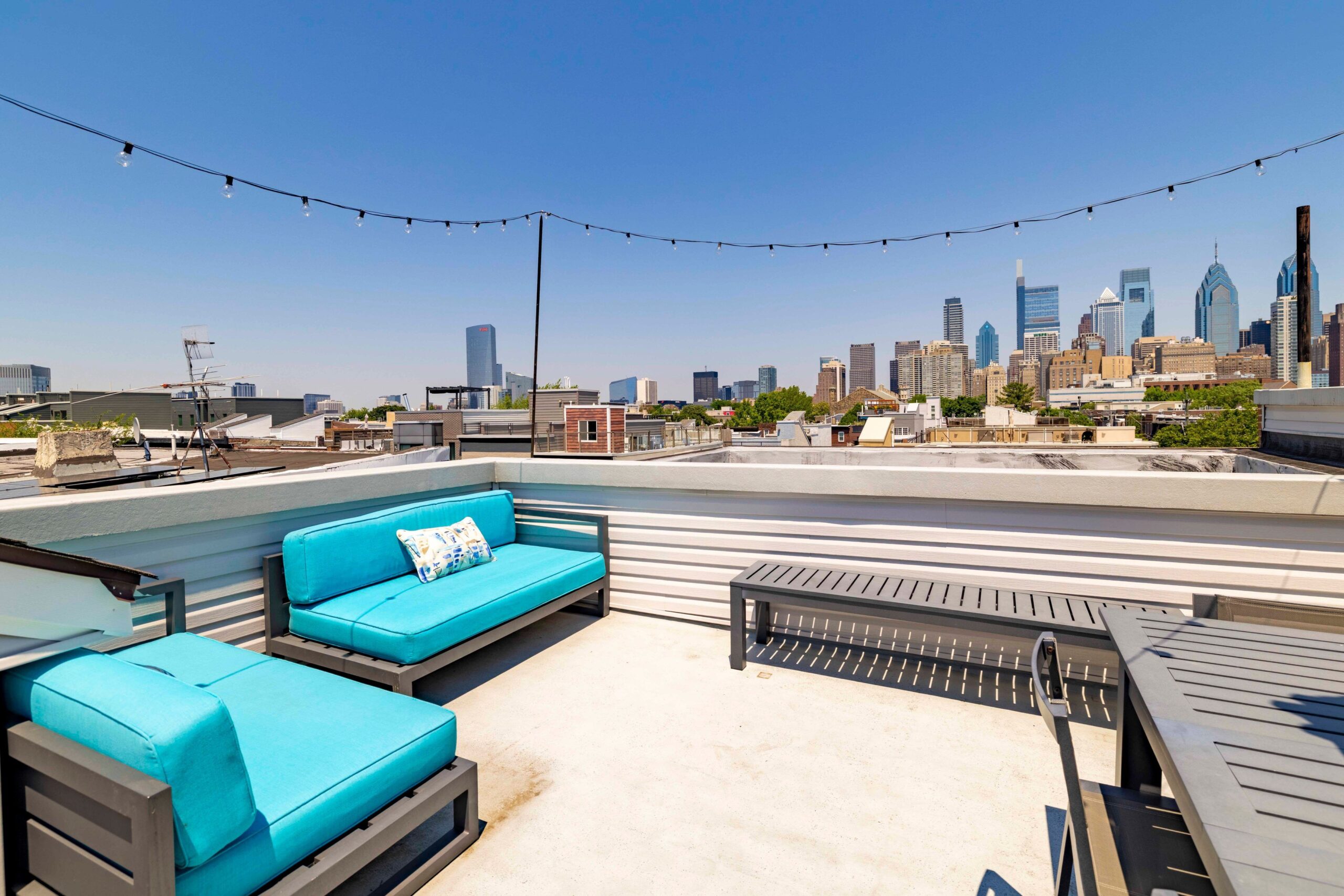
    This recently sold Graduate Hospital home has skyline views from the roof deck.

    And buyers show up to purchase them.

    Thompson said she was nervous when she listed a Phoenixville home for sale during Memorial Day weekend, when many homebuyers might be traveling. But a lot of people came to see it, and the seller ended up with seven offers and a final price that was well over what they expected.

    Buyers, however, aren’t accepting just anything. They are more selective and less likely than in past years to skip home inspections. If sellers want to get the highest price, they have to prepare their properties for sale, agents said.

    Homes, and especially kitchens and bathrooms, need to be up-to-date, and central air-conditioning is a plus, said Annette Collier, owner and real estate broker at Able Real Estate, based in West Philadelphia.

    “That’s what buyers are looking for, and I don’t think they’re willing to settle,” said Collier, who works in the city and surrounding areas. “I find that less buyers want to do any renovations. Most buyers want a move-in-ready situation.”
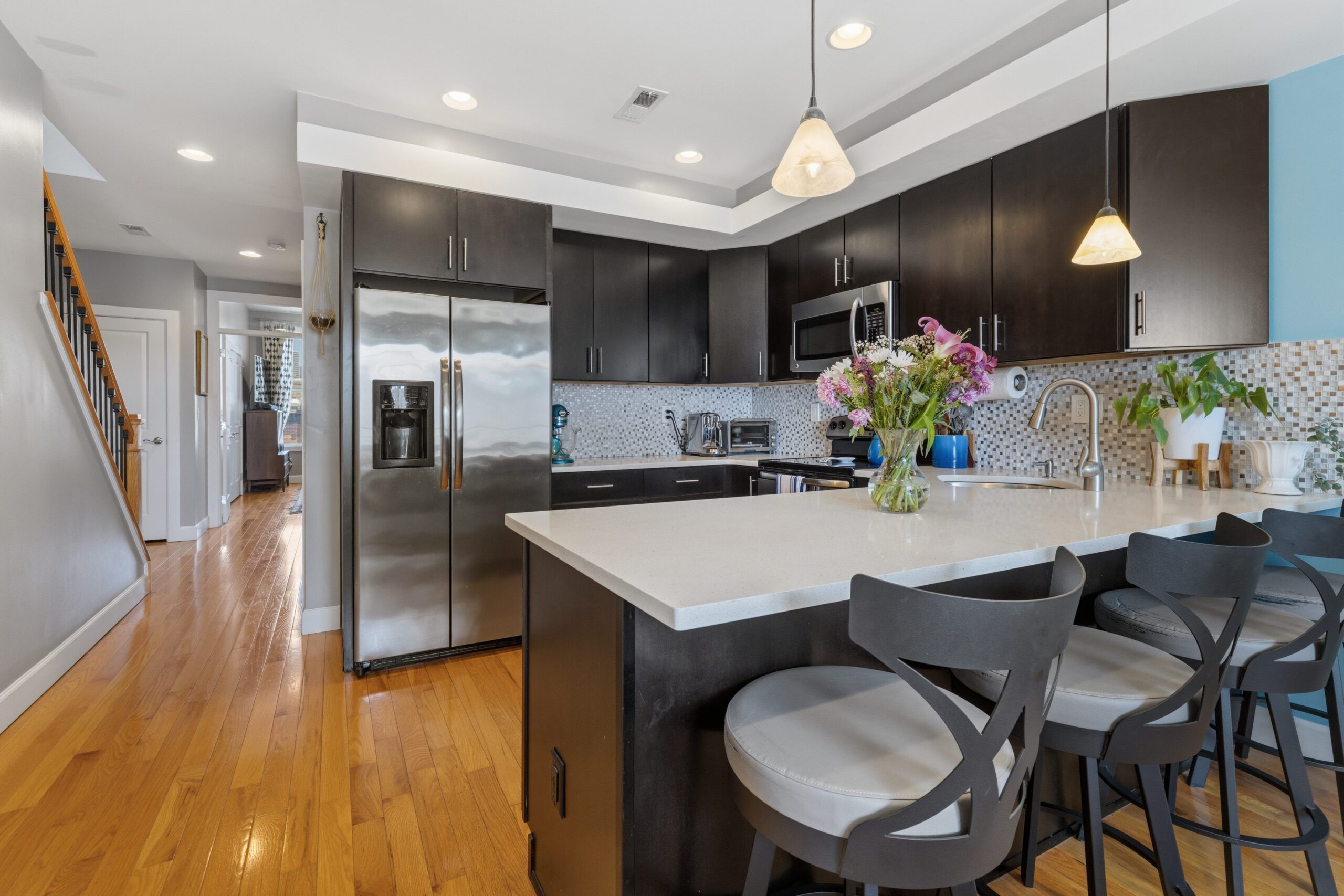
    Homebuyers want updated kitchens, like this one in a Graduate Hospital home that recently sold.

    And sellers need to be realistic about how much they can get for their home.

    “If you overprice by even just a little bit,” Thompson said, “you’ll end up sitting.”

    Buyers ‘ready to pounce’

    Generally speaking, buyers now have more time to make decisions than they did last year, since homes are staying on the market longer.

    But, in some submarkets, especially in Philadelphia’s collar counties, “there’s so much demand that certain houses are just going to fly off the shelves,” said Beiser, who works in Philadelphia and surrounding areas.

    “I have some buyers in the suburbs, and they‘ve kind of stopped looking because it’s too challenging,” she said.
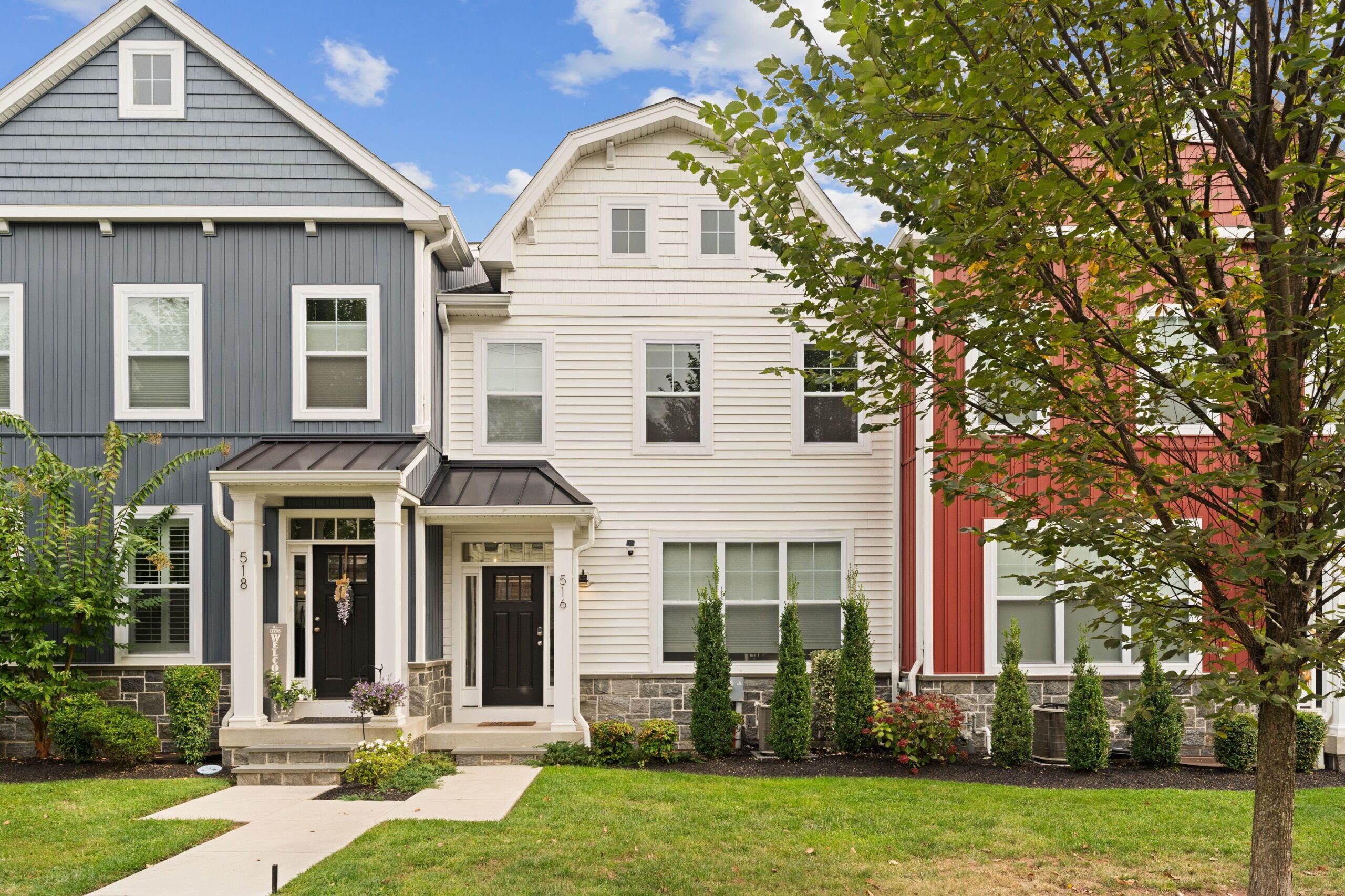
    This home in Upper Merion Township is listed for sale for $699,900 by agent Erin Thompson.

    Beiser has been working with a couple with children who live in Philadelphia but want to move to the suburbs. Each spring for the last three years, her clients make a plan to try to find their next home. But every year, they decide that continuing to live in the city is more convenient than facing competitive markets in which they’re expected to skip home inspections to win a property, Beiser said.

    Thompson has seen a growing trend of frustrated buyers putting in offers above the asking price even when they’re not facing direct competition. One client recently went under contract on a Fishtown home they had immediately put an offer on.

    “They came in aggressive, because they’d just lost out on a house, and they’d been looking for a while,” she said. “You have these buyers who are scarred and tired, so they’re coming in more aggressive.”

    Thompson tells buyers to make sure they’re as prepared as possible before starting their home search.

    “You have to be ready to pounce the second [a home] comes to the market,” she said.
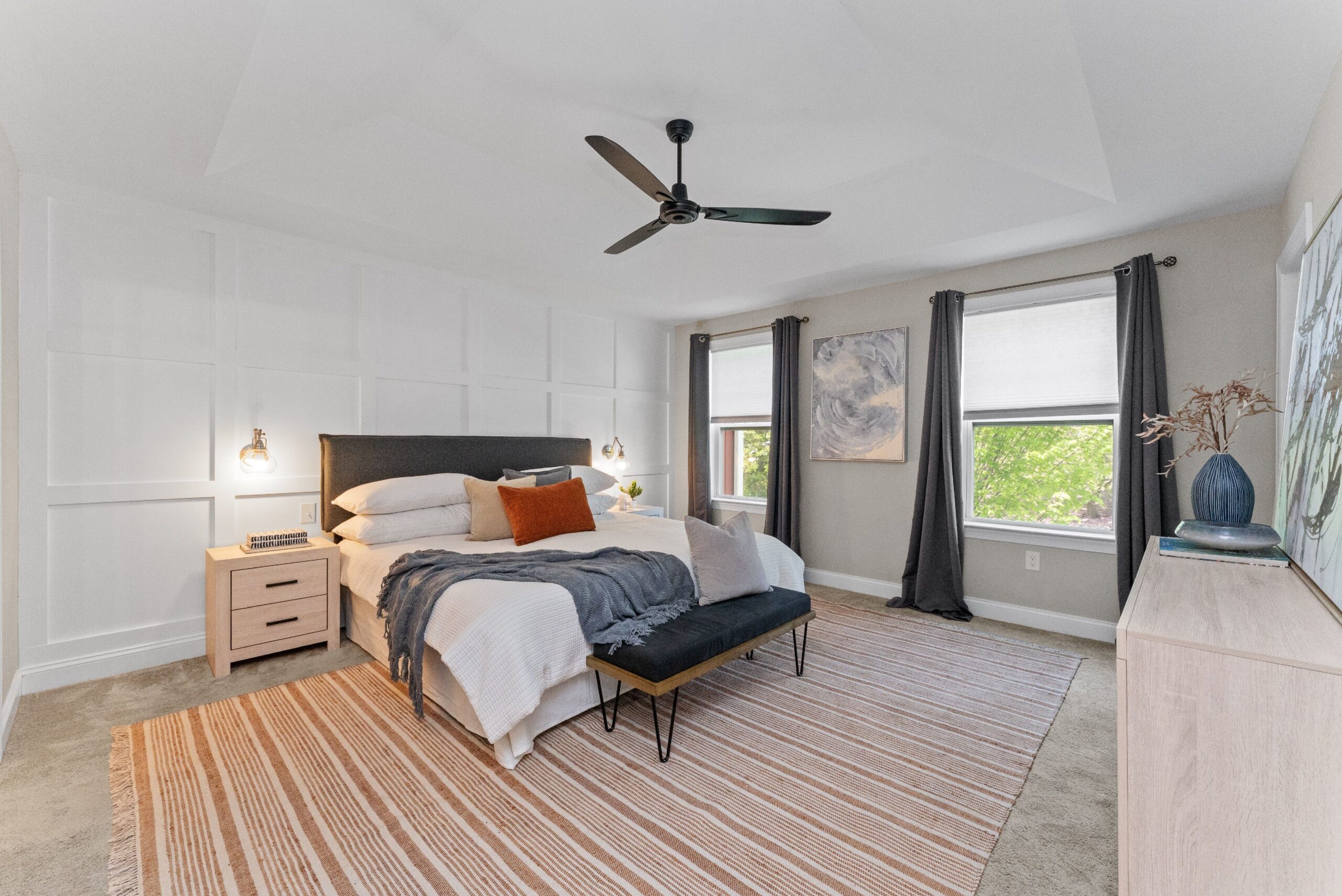
    This home on the market in Upper Merion Township spans more than 2,800 square feet and has three bedrooms.
  • Philly area set to receive record-breaking $322M in state and federal money for trails

    Philly area set to receive record-breaking $322M in state and federal money for trails

    Philadelphia and its surrounding counties are set for what could be a record-breaking $322 million in federal and state funding to go toward building new trails segments, say trail advocates.

    Projects in line for funding include the much-anticipated Spring Garden Connector in Philly. And it would include the Newtown Rail, Chester Creek, and Parkside-Wynnefield-Cynwyd trails in the suburban counties.

    The money is part of a larger $8.2 billion pool of transportation funding updated through the federal Transportation Improvement Program (TIP) for 2027 and spread over four years.

    “We consider this to be potentially record breaking,” said Patrick Monahan, vice chair of the Circuit Trails Coalition in Pennsylvania. “It’s proof that the trails are being treated as essential infrastructure, making it safer and easier to walk and bike in the region.”

    In 2024, Pennsylvania received $200 million for trails under TIP.

    Pennsylvania gets its TIP plan updated every two years and the majority of money goes to highways, bus and rail systems, trolleys, and ferries. It is part of an agreed-upon list of priority transportation projects. That list includes 344 projects.

    In all, this year’s proposed $322 million in funding for trails would advance 27 bike and pedestrian projects across Philadelphia, Bucks, Chester, Delaware, and Montgomery Counties.

    The Delaware Valley Regional Planning Commission (DVRPC) is set to vote on approving the allocations in July.

    The trails, either begun or being planned, are part of the Circuit Trails, a network of hundreds of miles of multiuse trails throughout the Philadelphia region including southern New Jersey, which updates its TIP funding in alternate years.

    A sample of the trail projects in line for funding include:

    • $11 million for the second phase to extend the Schuylkill Banks trail in Philadelphia south from near 61st Street to Passyunk Avenue that would include a new park at the base of the Passyunk Avenue Bridge.
    • $58.5 million for Philadelphia’s Spring Garden Connector project that would link trail systems along the Delaware and Schuylkill rivers and make Spring Garden Street safer for cyclists and pedestrians.
    • $50 million to improve safety for roadway users, including pedestrians and cyclists, on PA 291 from Irving Street to Ridley Creek. The project includes building a multiuse side path that will be designated as part of the East Coast Greenway, a trail system linking Maine to Florida.
    • $8.5 million for the Chester Valley Trail, a multiuse trail along the alignment of the former Philadelphia and Thorndale Branch, a former freight train route, including renovation of the Whitford Bridge and Downingtown Trestle Bridge for bicycle and pedestrian use.
    • $10 million to develop a segment in Whitemarsh Township, Montgomery County, that would run from the existing Wissahickon Trail in Fort Washington State Park to the existing Cross County Trail near SEPTA’s Fort Washington Station.
  • Where to watch Fourth of July fireworks in Philly, the suburbs, South Jersey, and the Shore

    Where to watch Fourth of July fireworks in Philly, the suburbs, South Jersey, and the Shore

    This Fourth of July will be unlike any in recent memory. As the nation marks its 250th anniversary, Philadelphia and the surrounding region are packed with celebrations — and fireworks displays. From the city and suburbs to South Jersey and the Shore, there are dozens of opportunities to catch a show.

    Whether you’re staying in Philadelphia, heading to the suburbs, or spending the holiday down the Shore, here’s where to find Fourth of July fireworks across the region.

    Fireworks in Philadelphia

    Fireworks after the San Diego Padres and Philadelphia Phillies game at Citizens Bank Park on July 2, 2025.

    Fireworks in Bucks County

    Fireworks in Chester County

    Fireworks in Delaware County

    Fireworks in Montgomery County

    Fireworks in Allentown

    Fireworks in South Jersey

    A view of Atlantic City’s fireworks from the Marina. (Courtesy of the Casino Reinvestment Development Authority)

    Fireworks at the Jersey Shore

  • They went to Mount Airy ‘on a whim’ and found love to last decades

    They went to Mount Airy ‘on a whim’ and found love to last decades

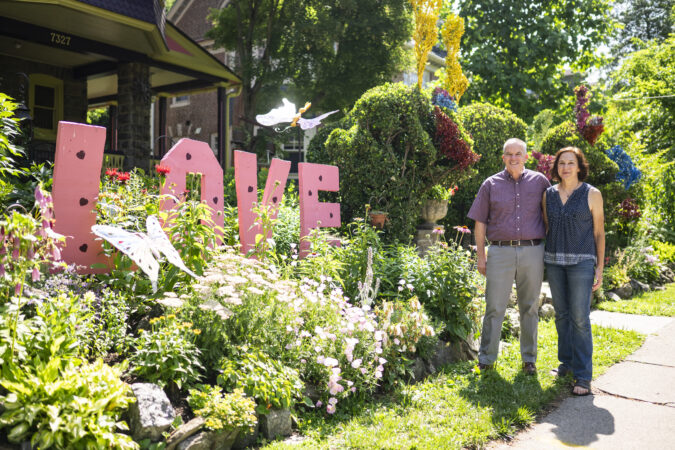
    Over more than 25 years, Jean Miller and Craig Heim have transformed their East Mount Airy home, a 1907 Dutch Colonial, through countless renovation projects.

    “But no matter what state the house was in, whatever was torn apart or upended as we did a project, it’s always been an amazing house to come home to,” Heim said. “We are always happy to come in the front door.”

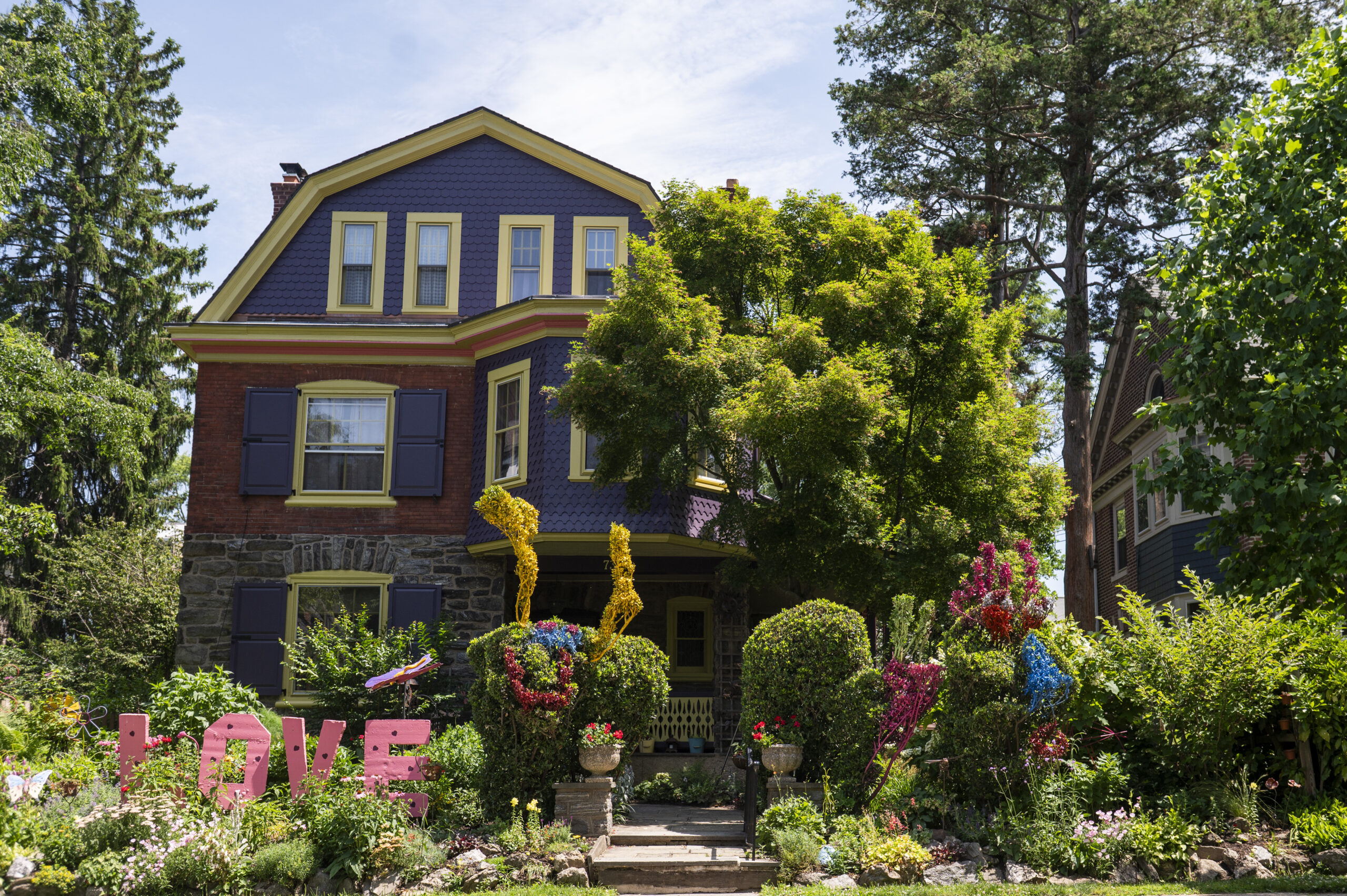
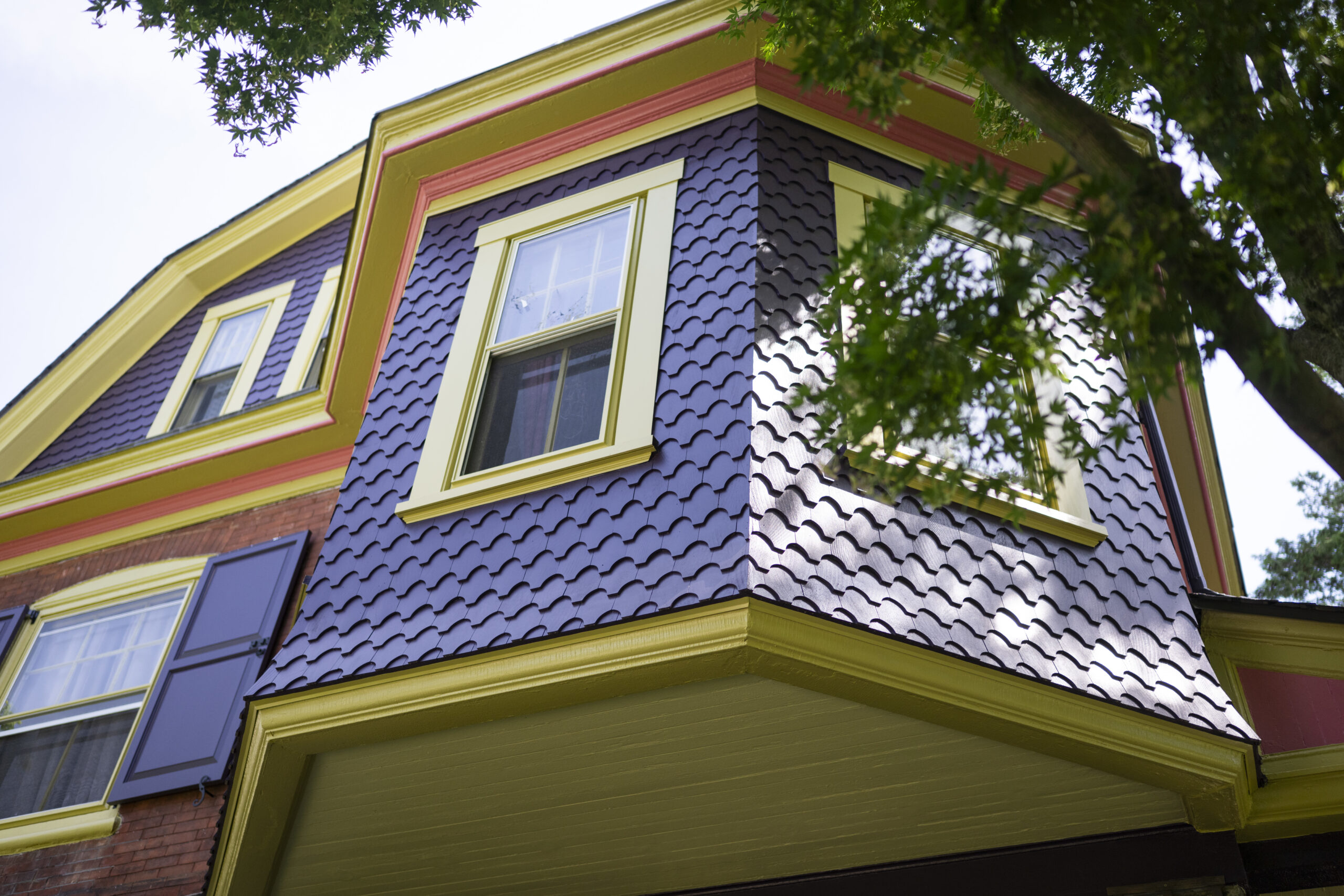
    The facade surrounding that front door was the most recent project. They painted it a bold purple and updated the porch, shutters, and shingles.

    Miller said she had always wanted a purple house. “It makes the house pop.”

    The exterior of Miller and Heim’s home and their front garden are bursting with color.
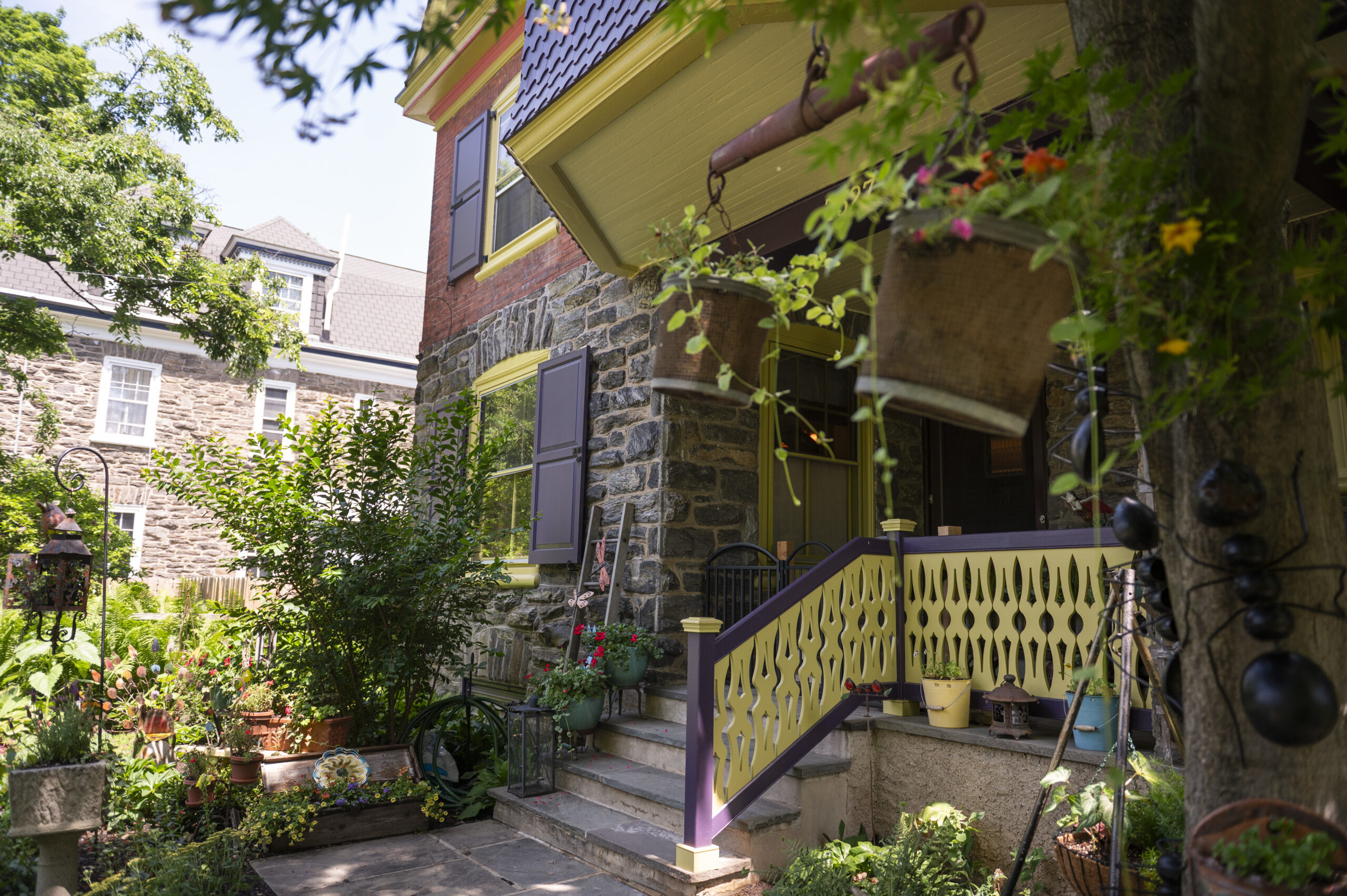
    The porch railing and soffit are painted purple and yellow.
    The home was covered in asbestos shingles when Miller and Heim bought it, and they uncovered the original cedar shakes.

    The couple bought the seven-bedroom, 2½-bath home in March 2000, and moved in that spring after some initial work. At the time, they were renting near the Italian Market in South Philly and planned to buy there.

    “On a whim, we looked in Mount Airy after friends mentioned a huge house for sale nearby. Once we saw the neighborhood and how much space we could afford — including a yard — we shifted our search to Mount Airy,” recalled Miller, a physician at the Hospital of the University of Pennsylvania. Heim works for human services nonprofit Face to Face in Germantown.

    Over the past two decades, they updated nearly every part of the 3,200-square-foot house and its garden, as they raised their two children. Sara, 22, is a Penn graduate who now lives in South Philly, and Pete, 20, is a sophomore at Michigan State.

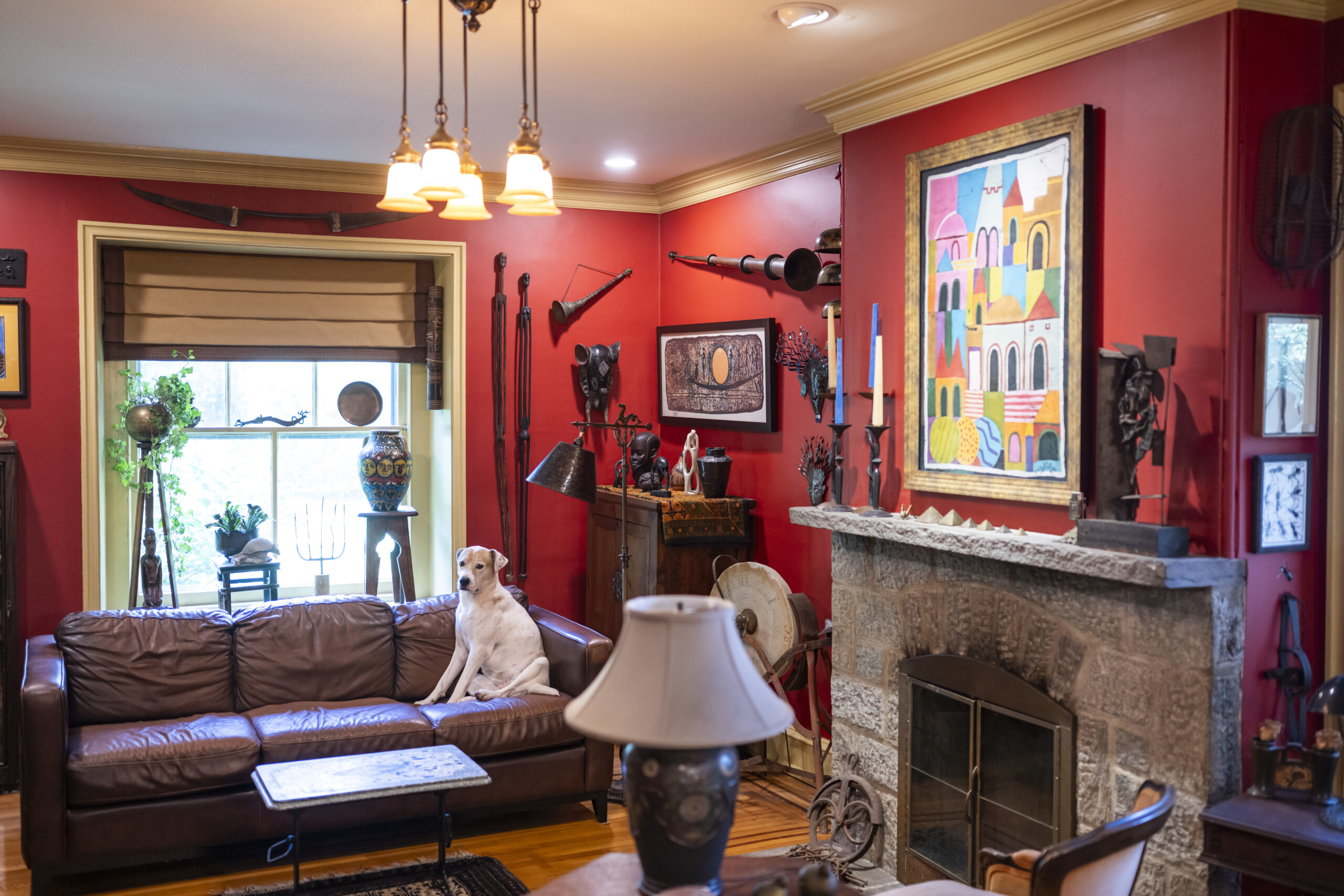
    Miller said the living room and dining room are favorites. The spaces are made cozy by a wood-burning fireplace, also a backdrop for entertaining.

    Art and instruments line the walls of the living room, as Maddie the dog enjoys the couch.
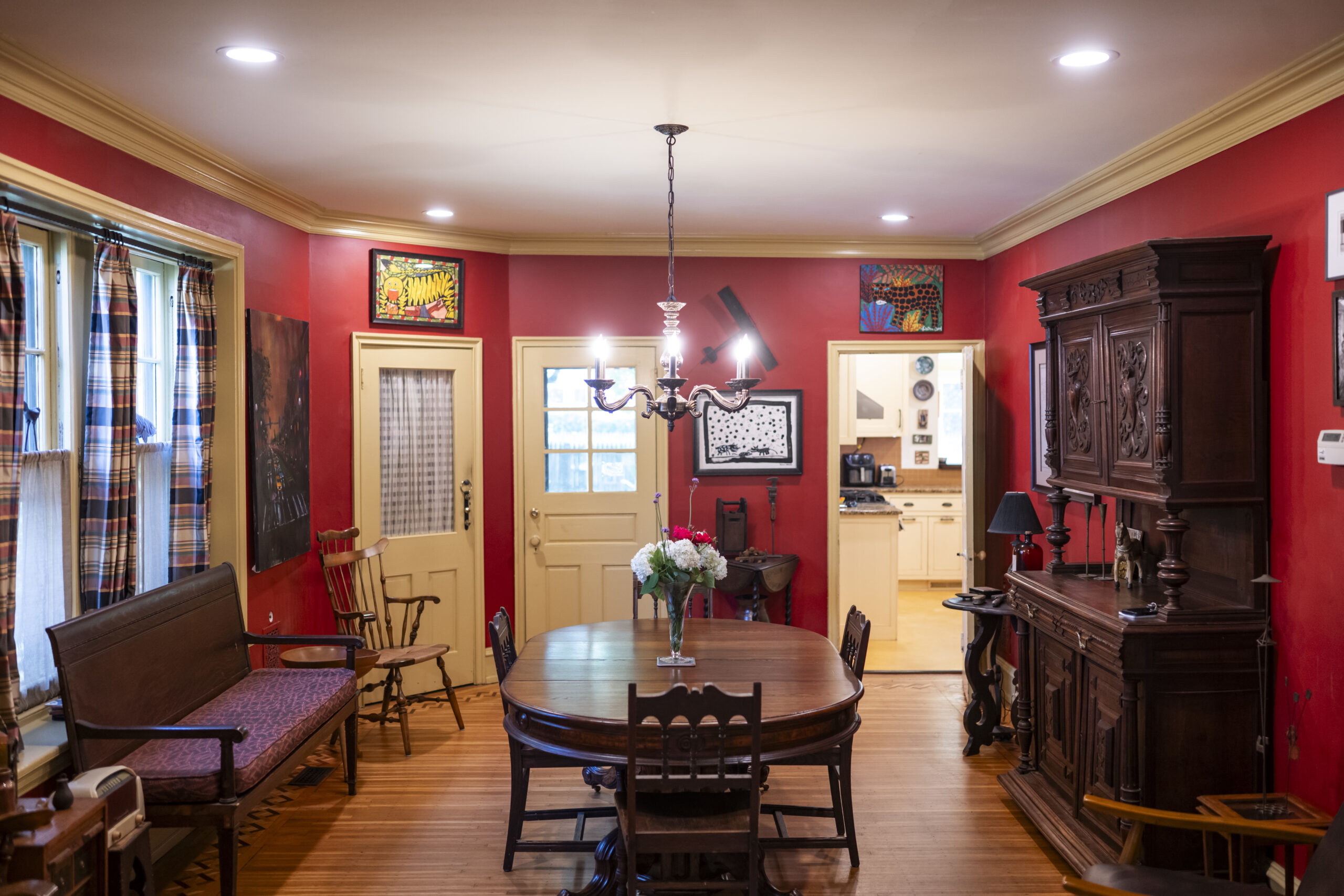
    The dining room has red walls and crown molding.

    When they moved in, Miller recounted, the home’s living and dining rooms had already been altered, losing their original woodwork. A wall with pocket doors had likely been removed and replaced with folding screen doors. The rooms were painted red with white trim.

    “We designed a wooden arch, installed larger crown molding, and removed a non-original built-in cabinet in the dining room,” said Miller. “Fortunately, the contractor removed it in sections and discovered it had been supporting the house’s main beam after studs had been taken out.”

    They decided to keep the red walls and, after testing many samples, chose a trim color in greenish gold that gave the rooms a completely different look.

    The home boasts an eclectic mix of furniture that they acquired from family, vintage shops, and what Miller described as “trash picking.”

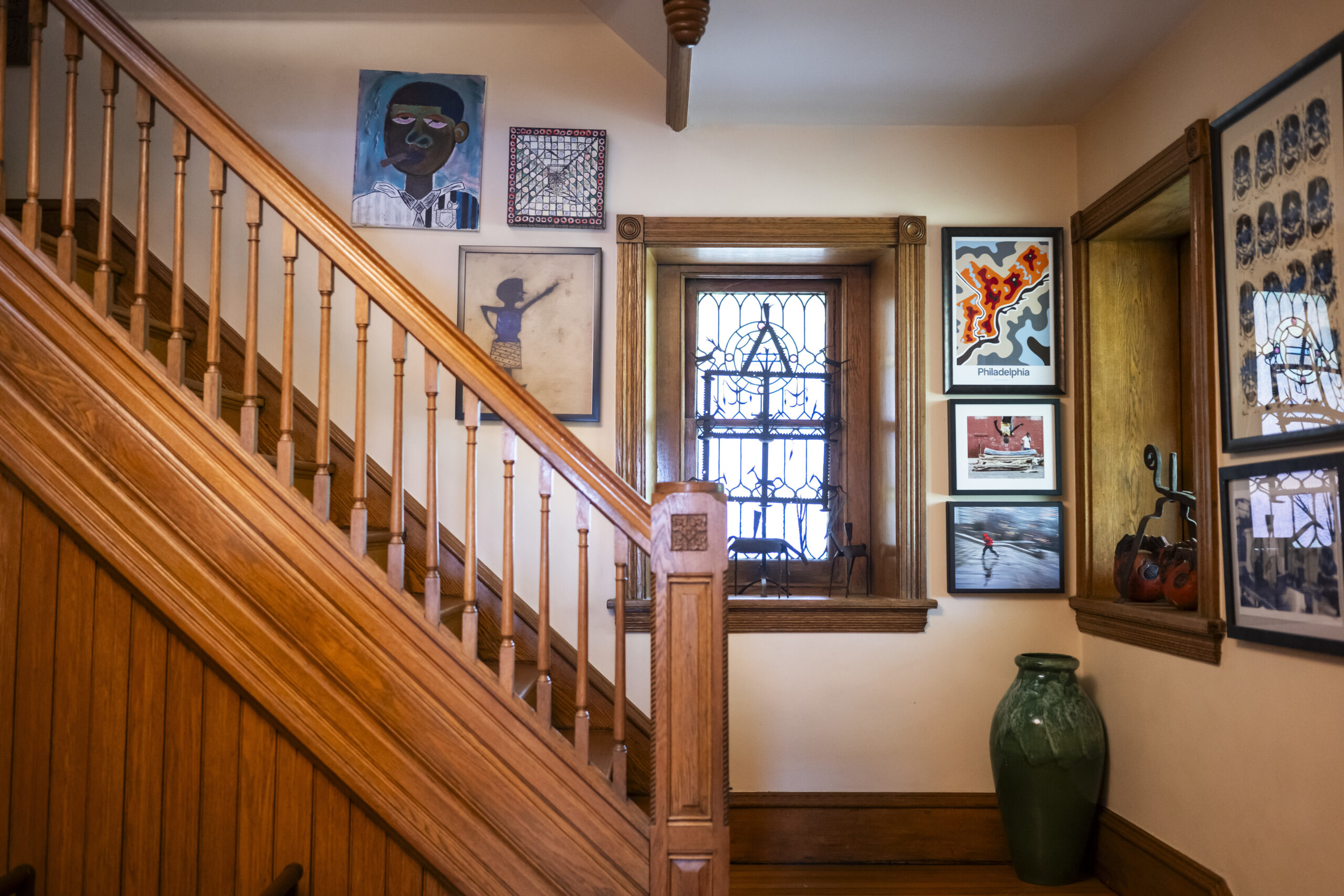
    Paintings and photographs by local artists line the walls along the staircase.
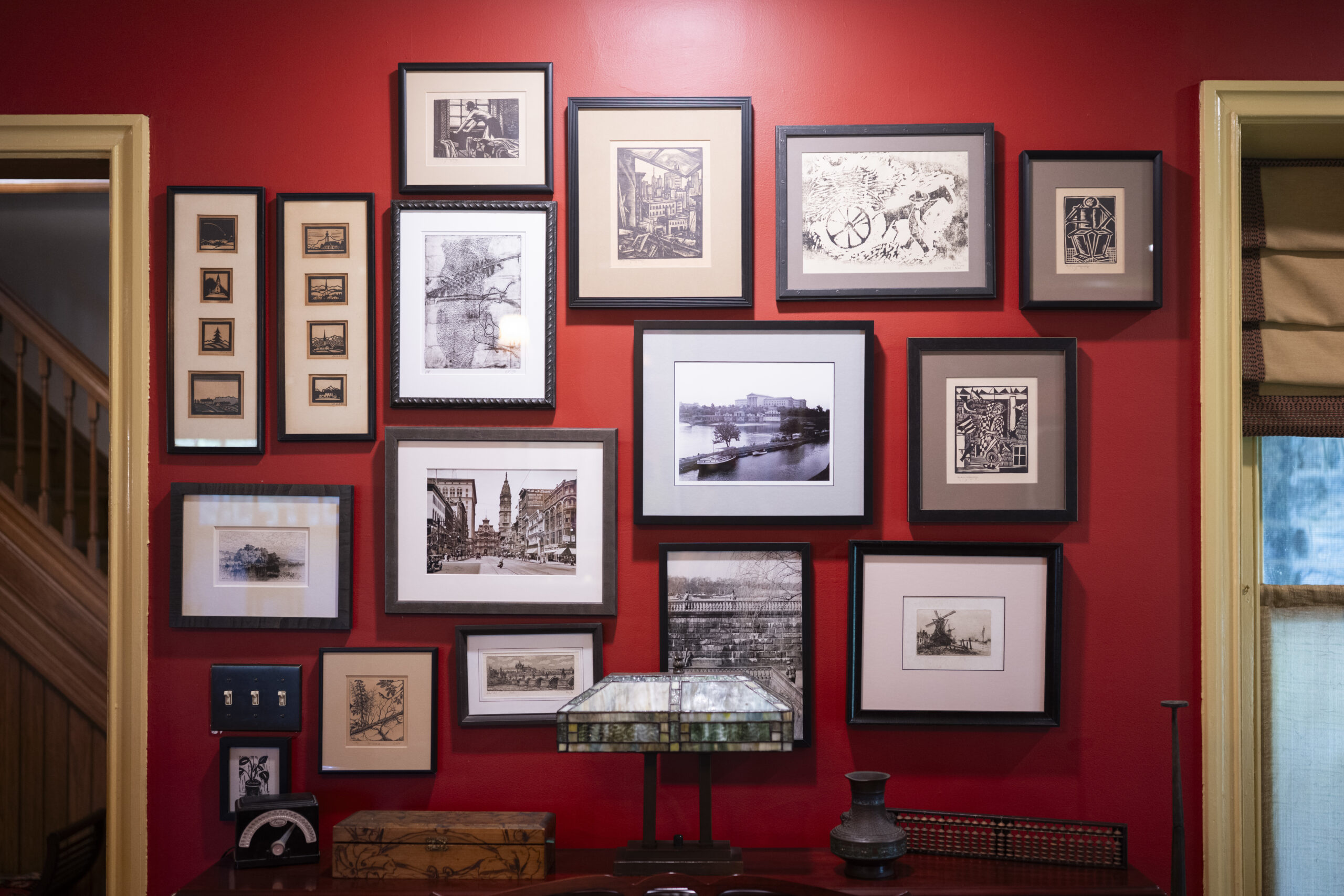
    Art fills nearly every inch of this wall in the living room.

    An abundance of art hangs on the walls, loosely grouped into collections. Miller has dedicated one whole wall to “works from family and local artists.”

    “We use every space to display art and objects.”

    Back when Miller and Heim bought the house, the kitchen appeared to have been last renovated in the 1960s. The sheet-vinyl floor was torn and the subfloor so soft, it crumbled to dust when they pulled it up, recalled Miller.

    As a temporary fix, they installed veneered plywood, adding lines and nail marks to mimic wide-plank hardwood, and sealed it with polyurethane. They also painted the cabinets and walls. Those quick fixes held them over until a full kitchen renovation. A neighbor who is an architect designed the new kitchen, transforming it to include a bright breakfast room filled with natural light.

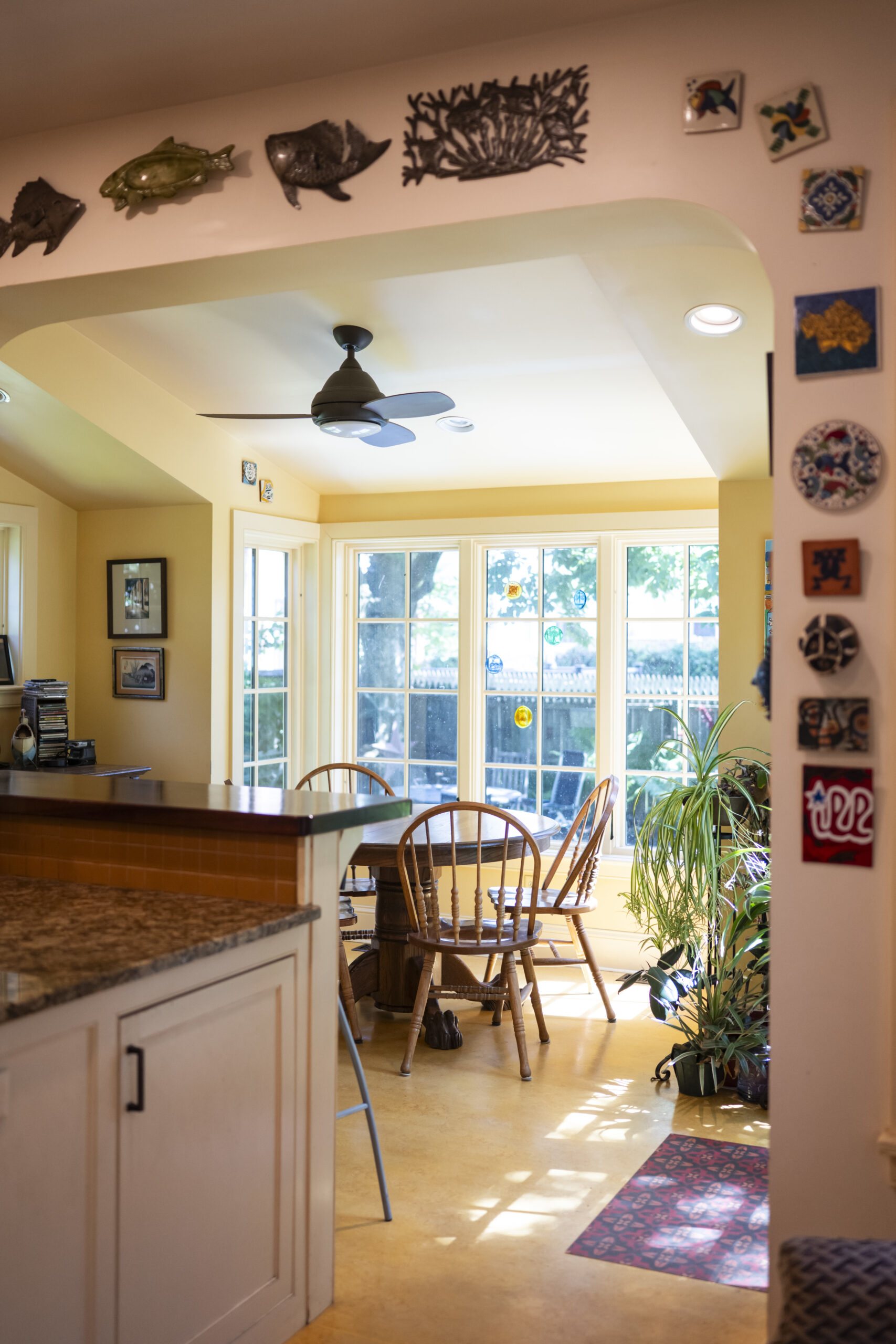
    Tiles and wall sculptures line an arch into the kitchen’s breakfast nook.
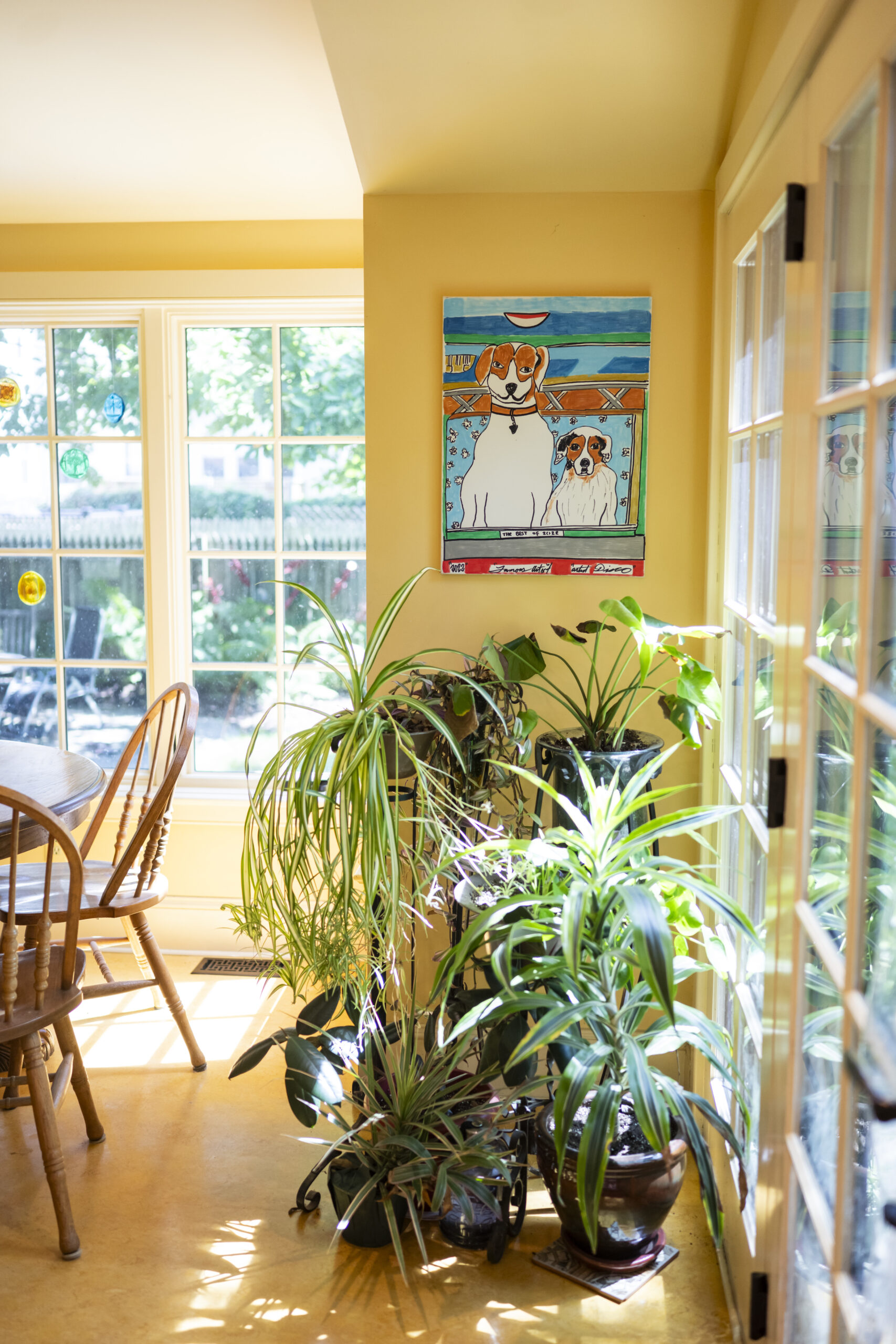
    A portrait of Jean Miller and Craig Heim’s dogs, Maddie and Mabel, is on display in the sun-filled breakfast area.

    “The kitchen was definitely a game changer, and it still feels new to me after 17 years. I love walking into it and feeling the brightness and natural light,” said Heim. “It’s the hub for so much of what happens every day and for special occasions, a very natural gathering place.”

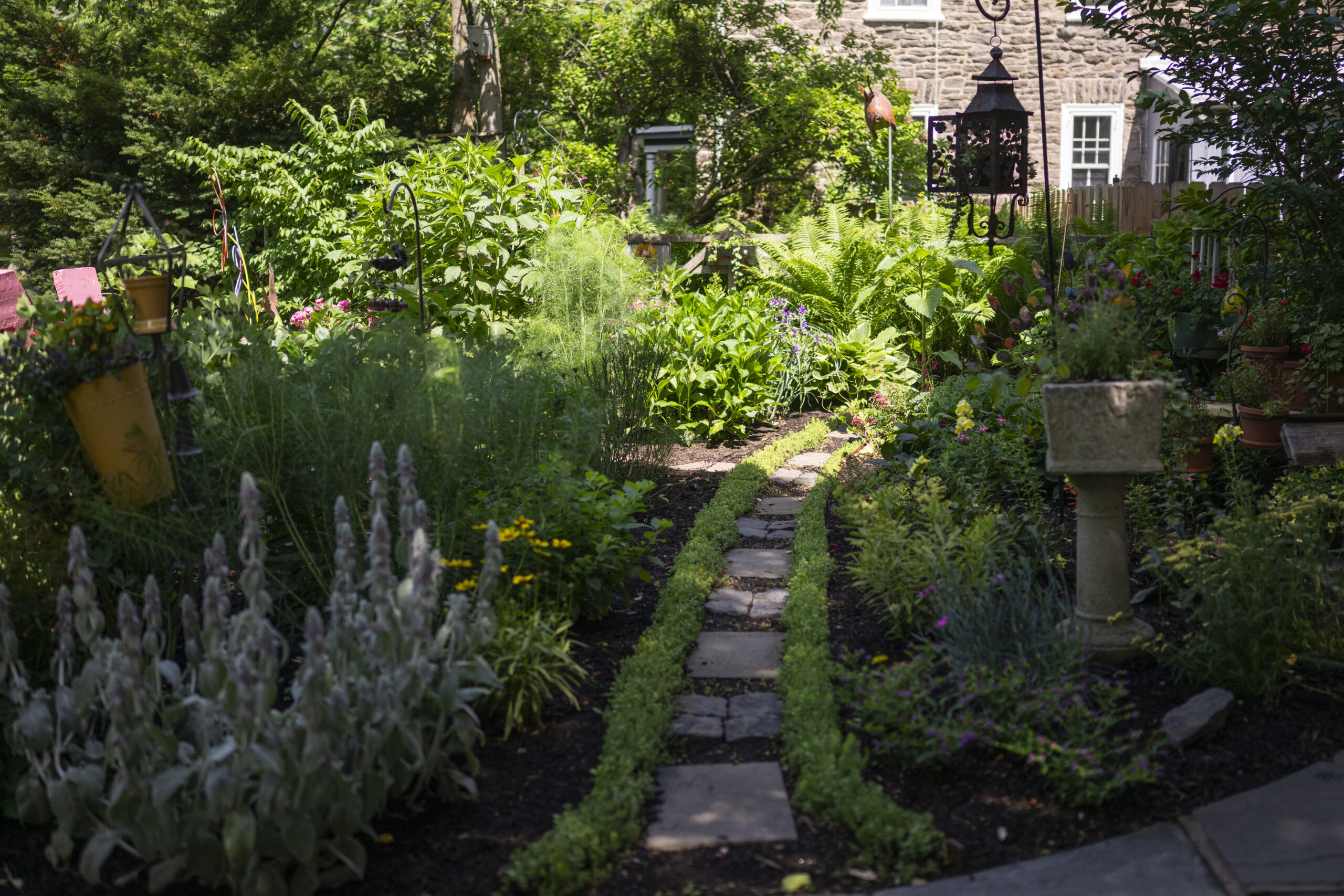
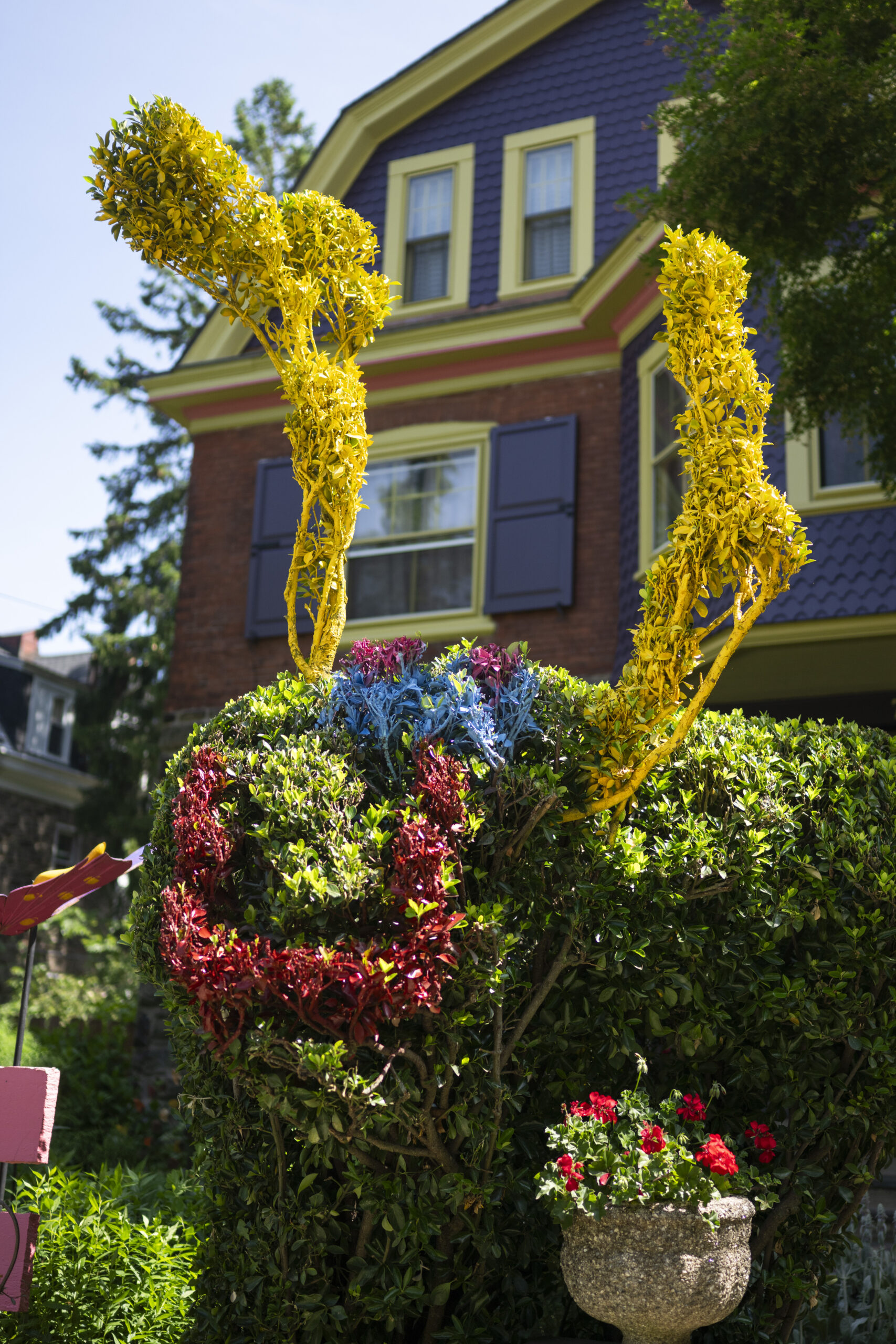
    Outdoors, the garden is a treasure trove of found objects combined with topiary and plantings to create an eye-catching mix. The large porch leads to the front garden.

    “It connects us to our neighborhood and neighbors,” Miller said. “Our garden is a destination for many on their walks and allows us to connect with people. It feels like an outdoor room.”

    A path of stones runs through the garden.
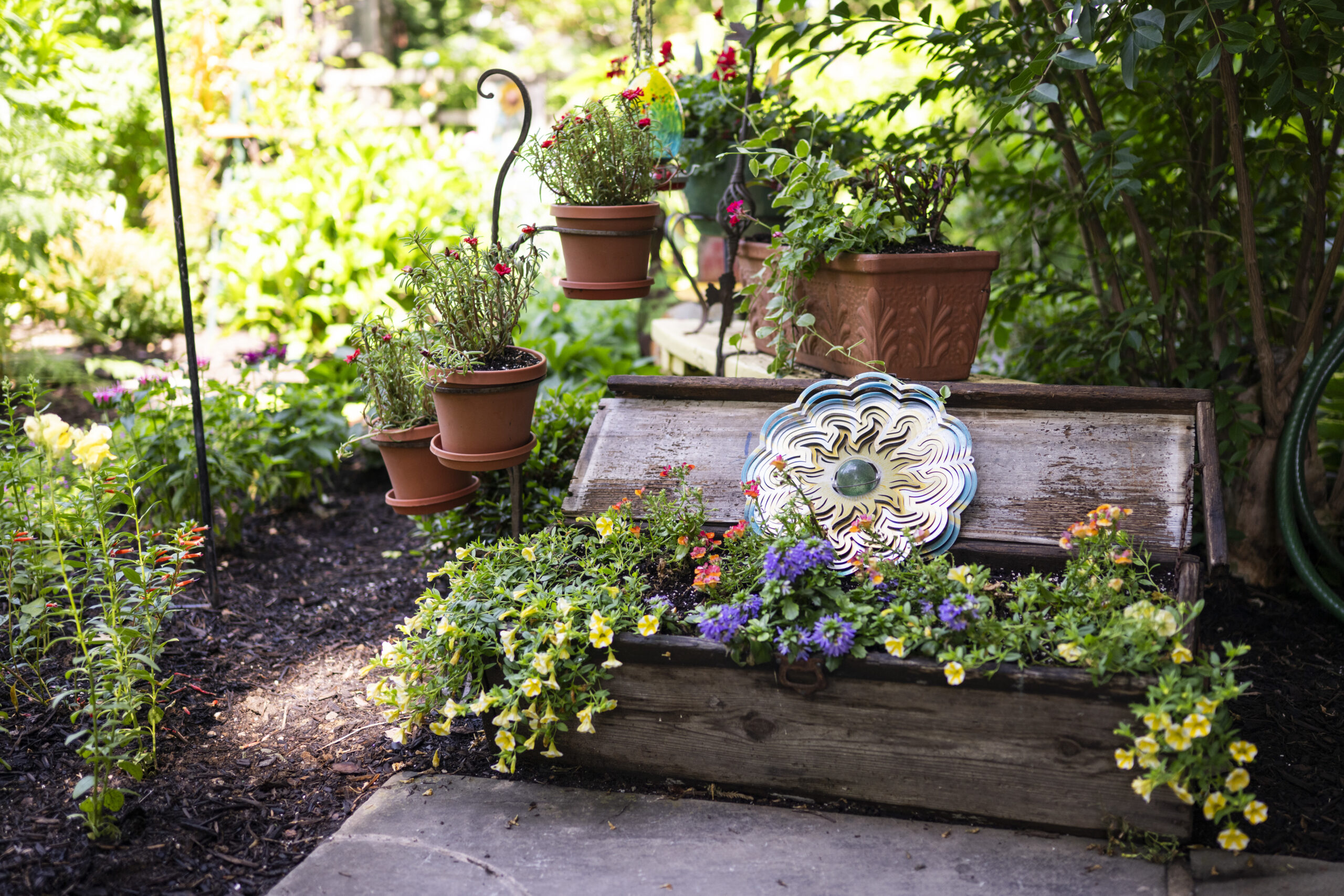
    A planter the family trash-picked is filled with and surrounded by potted flowers.

    The creativity inspiring the garden also shines through in the house’s bold facade.

    “When the house recently needed to be repainted, we wanted to do something with a bit more pop,” Heim said. “So, we added the golds and pink to give things a little more zip.”

    For holidays, they decorate the yard with inflatables, lights, and ornaments.

    A hedge painted and shaped into a “happy bull” grows in front of the home. Heim often spray paints and cuts the hedges into shapes or characters.
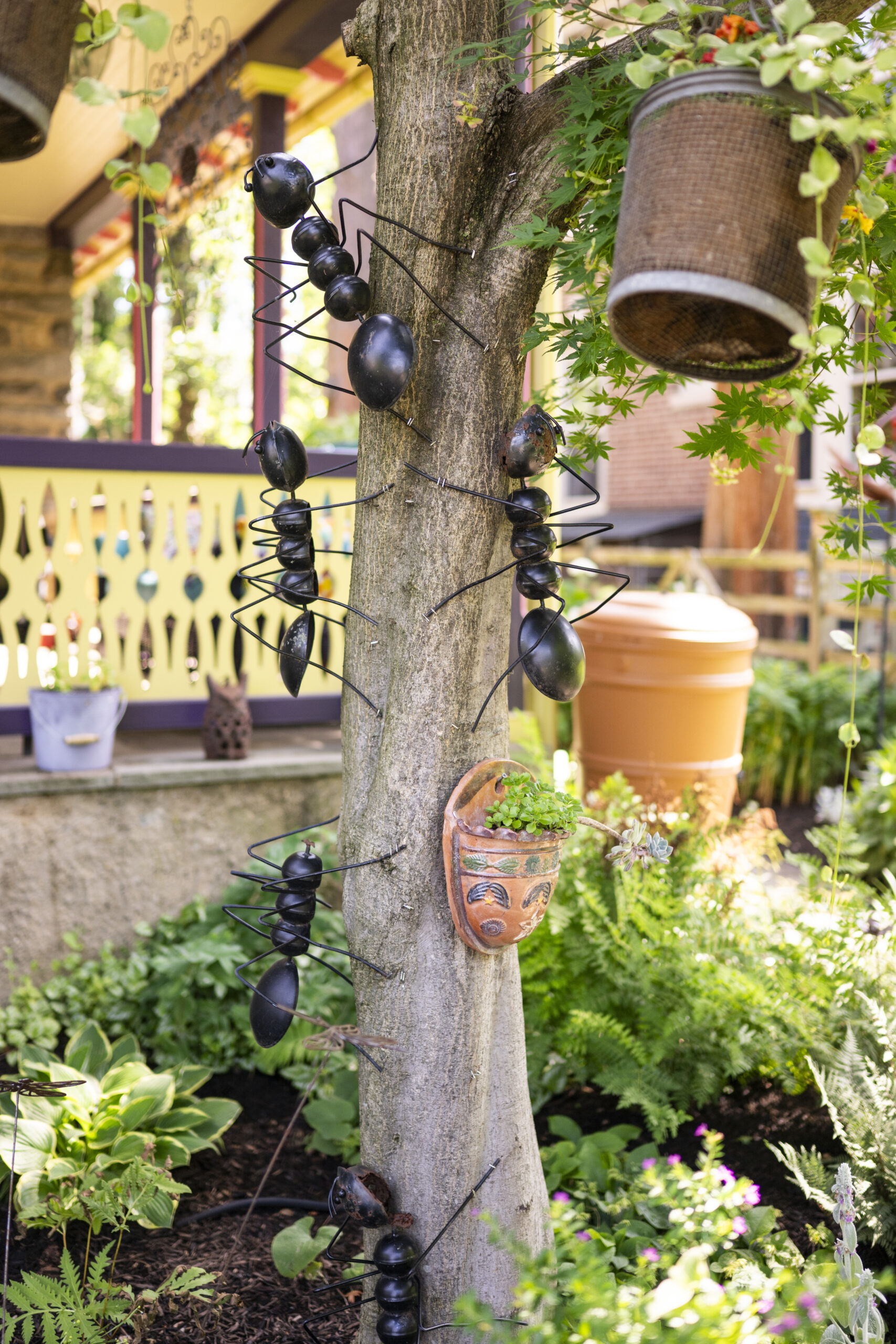
    Decorative oversized ants are arranged as though climbing up a tree in the front garden.

    Mount Airy now holds a special place in both of their hearts. They enjoy an easy walk to the train, Germantown Avenue’s commercial strip, the Wissahickon, and Chestnut Hill.

    “We have a tight-knit group of neighbors, many long-term residents from our era and even earlier, and a whole new generation of younger people with kids,” said Miller. “It’s a wonderful community.”

    Is your house a Haven? Nominate your home by email (and send some digital photographs) at properties@inquirer.com.

  • Eleanor M. Kelley, longtime French teacher, lifelong athlete, and mentor to many, has died at 79

    Eleanor M. Kelley, longtime French teacher, lifelong athlete, and mentor to many, has died at 79

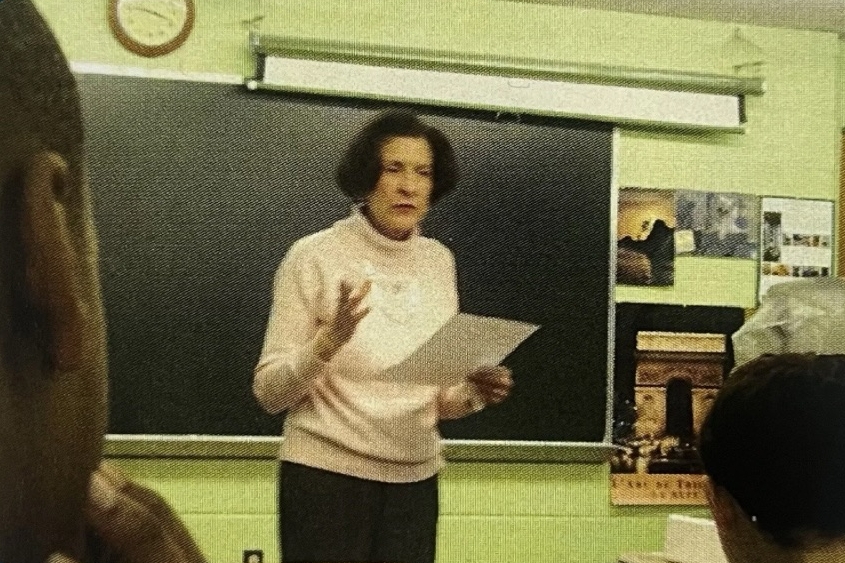
    Eleanor M. Kelley, 79, of Philadelphia, longtime French teacher at International Christian High School, onetime adjunct professor at Temple University, role model, mentor to many, and lifelong athlete, died Friday, Feb. 20, of complications from Parkinson’s disease at Rydal Park & Waters retirement community in Jenkintown.

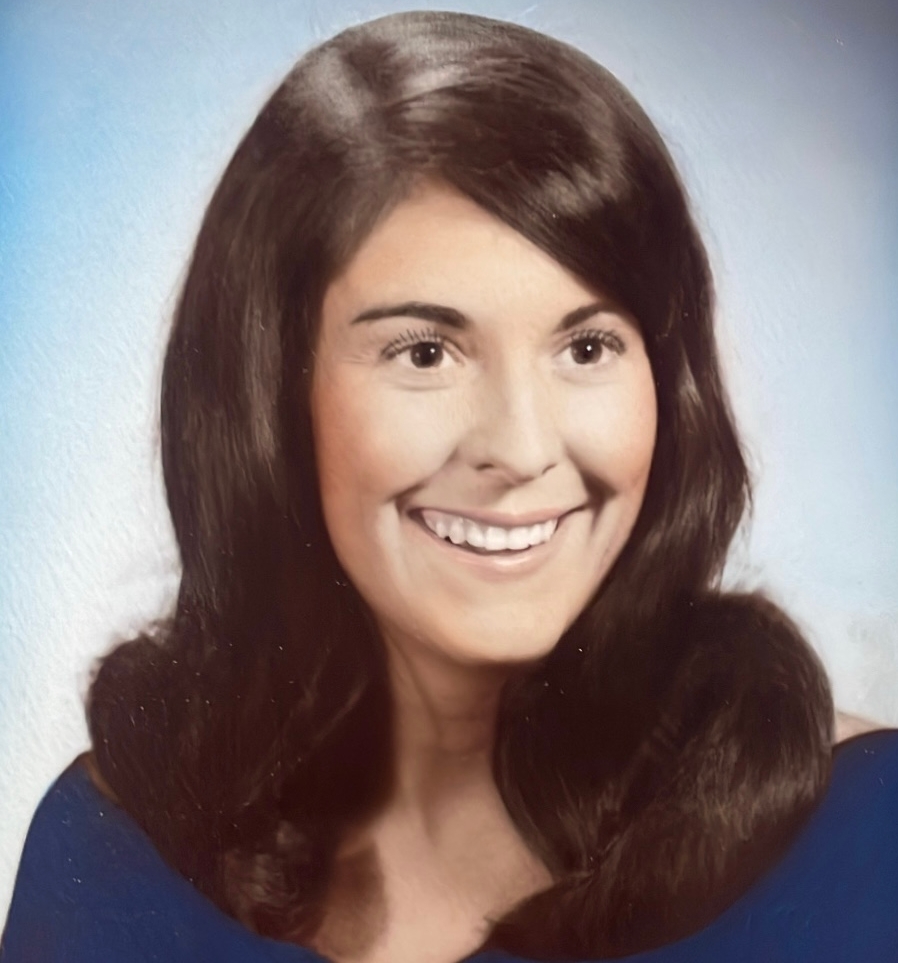
    An honors graduate at Abraham Lincoln High School and twice at Temple, Mrs. Kelley was a compassionate, faith-driven intellectual who excelled at languages, teaching, and friendship. She taught French for two years as an adjunct professor at Temple and then for 48 years, from 1972 to 2020, at Cedar Grove Christian Academy and its successor, International Christian High School.

    She worked with thousands of students from around the world at International Christian in Olney and chaperoned nine trips to Paris with her French classes. She connected with students, they said in online tributes, by smiling often and singing songs and quoting the Bible in French.

    Former students called her “intellectually challenging” and “fiery when it came to teaching French.” They said: “You never gave up on us.”

    Mrs. Kelley was honored online by colleagues at International Christian High School.

    Her achievements were recognized by educational organizations, and she told her husband, Bill: “I need to find new ways to challenge the students. I must avoid getting caught up in the routine of teaching.”

    Nearly everyone called her Madame Kelley, and they dedicated three school yearbooks to her. Several of her online tributes were written in French. “Au revoir, Madame,” they said. “Merci.”

    On Facebook, Benjamin Brittin, head administrator at International Christian, said: “Mrs. Kelley was a devoted co-worker, wise, fair-minded, loving, and faithful in her support of both students and colleagues.”

    She also taught English and health, and was the school’s discipline administrator and director of the Honors Society. She served on school and church committees, and helped her husband coach the International Christian boys’ basketball team.

    Mrs. Kelley played basketball and volleyball at Abraham Lincoln High School.

    “She was one in a million,” a former school colleague said in a Facebook tribute. Another said: “I will never stop striving for the perfection you maintained with incredible grace.”

    Mrs. Kelley played basketball and volleyball in high school, and later earned 10 medals and trophies at local running events. One time, her husband said, she slowed near the end of a race so a friend could pass her and win a medal.

    She earned three awards for coaching the boys’ basketball team at International Christian, and she and her husband ran often in Wissahickon Valley Park and along Kelly Drive.

    “Teaching was her passion, indeed a promissory gift to so many of her students,” her husband said. “She was a fisher of minds and souls who made ideas matter.”

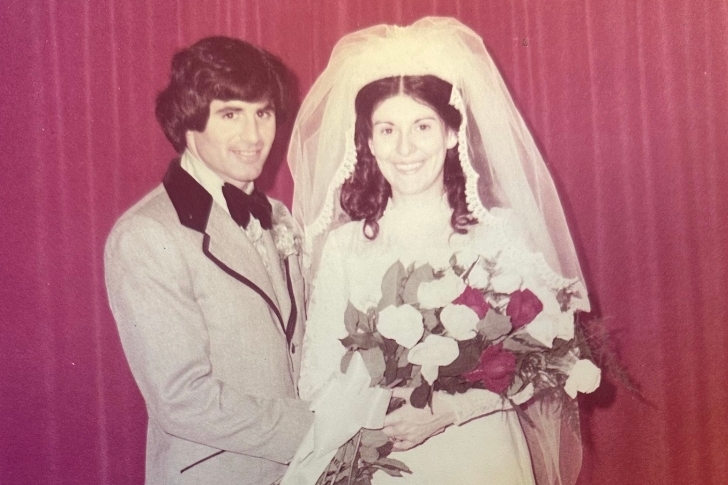
    Mrs. Kelley and her husband, Bill, married in 1972.

    Eleanor Mary Tolia was born Feb. 12, l947, in Philadelphia. She enjoyed family vacations in Atlantic City when she was young and graduated summa cum laude from Abraham Lincoln High.

    She met Bill Kelley when both were students at Temple, and they married in 1972. He was on his way to basketball practice one afternoon when he saw her in her father’s diner, and he stopped in to meet her.

    They lived in Roxborough, and he doted on her for more than five decades, including daily visits to her bedside over the last year. At Temple, she earned summa cum laude bachelor’s and master’s degrees in French.

    Mrs. Kelley and her husband made memorable trips to Cape Cod Bay in Massachusetts and the Jersey Shore. She loved flowers and Italian food, adopted three stray cats, and framed and displayed all 54 of the poems her husband wrote for her every Christmas.

    Mrs. Kelley “gifted me more of my humanity,” her husband said.

    She usually mailed more than 125 Christmas cards and stayed in touch with former students who became old friends. She wrote letters to the editor of The Inquirer about local events, filled 30 albums with photos, and saved practically every note and letter she ever received.

    Friends called her Ellie Kelley. “She showed more humanity than anyone I ever met,” her husband said. “She gifted me more of my humanity. She was my life. She was my hero.”

    In addition to her husband, Mrs. Kelley is survived by a brother and other relatives.

    Private services are to be held later.

  • Philly has lots of trails. For the first time, it is hiring a full-time crew to maintain them.

    Philly has lots of trails. For the first time, it is hiring a full-time crew to maintain them.

    Philadelphia’s miles of trails draw a constant stream of runners, walkers, hikers, cyclists, and commuters.

    Yet for years, city officials have depended on residents calling in or logging in to the 311 system to report trail issues before a crew was sent out.

    Now, Philadelphia Parks and Recreation (PPR) is set to roll out the city’s first dedicated trail-maintenance crew, a pilot program funded by a $600,000 grant from the William Penn Foundation.

    The money will fund a six-person team tasked exclusively with monitoring and maintaining multiuse trails that thread through 10 watershed-protecting parks.

    Susan Buck, PPR’s deputy commissioner of operations, said the crew would launch this summer and resolve a long-standing logistical problem.

    “The focus has always been on building the trails,“ Buck said. ”However, in recent years we would go to community meetings and hear more about trail maintenance.”

    Right now, addressing a downed tree or a washed-out path means pulling staff away from recreation centers and neighborhood parks. A dedicated trail crew will ease that strain, she said, and position the city to address issues before they snowball into bigger problems.

    Now, PPR can be proactive, she said.
    Parks are priorities

    The crew’s immediate priority will be to rotate through 10 watershed parks, such as Wissahickon Valley, Pennypack, Tacony Creek, and Cobbs Creek. Crews will also monitor the Schuylkill River Trail, which recently saw major repairs to sinkholes and storm damage.

    Buck said the crew will initially be responsible for about 80 miles of trails.

    The city has 166 miles of trails or more depending on what’s being counted. Overall, PPR manages asphalt, gravel, and dirt trails that residents use not only for recreation but for commuting and walking neighborhood to neighborhood.

    The new crew will have skid-steer loaders, which are small versatile vehicles with mechanized arms and buckets used to clear, dig, grade, and lift. And they’ll have other equipment such as wood chippers and chainsaws.

    For the average park-goer, it should translate to a smoother weekend run, daily commute, or less frustrating bike ride, Buck said.

    “Overall, people will see safer trails and more enjoyable trails,” Buck added. “If you’re a runner or cyclist getting hit by overgrown brush, maybe we’ll be able to get to that faster. Ruts and divots should get filled in faster.”

    By having a mobile team that can move from the Wissahickon to East Fairmount Park, the city aims to create a uniform experience for all users.

    Buck has been working alongside Sarah Clark Stuart, the trails manager for the Streets Department.

    The two are working toward a cost-sharing agreement between the two departments to turn the pilot program into an annual part of the city budget.

    That way the crew can continue to clear overgrown brush, haul away downed trees, fix washouts, tackle soil erosion, eliminate tripping hazards, and clean graffiti off signs.

    The pilot program could use existing employees or result in new hires, she said.

    ‘Great cities have great parks’

    Sara Stevenson, executive director of Friends of the Wissahickon (FOW), said the dedicated crew represents a shift in the way the city has viewed its natural assets. The nonprofit FOW helps manage the city-owned Wissahickon Valley Park.

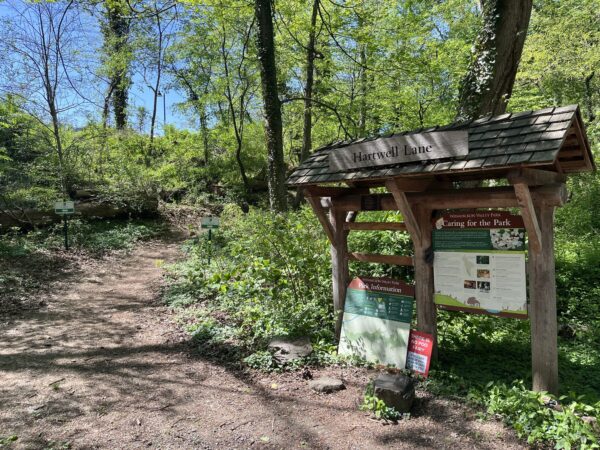
    The 2,000-acre park has more than 50 miles of paved and dirt trails. The new trail crew will be assigned to help with paved paths and major arteries like Forbidden Drive.

    “It’s a great program,” Stevenson said. “The more we can invest in Parks and Rec, the better our city will be. This is a good step forward and a recognition of how important the trail system is.”

    The Wissahickon relies on thousands of volunteers annually to pull invasive species, clear debris, and help with other maintenance. Stevenson said that the demands of maintaining sustainable trails requires a professional, daily presence.

    “Great cities have great parks,” Stevenson said. “I think what we’ll see is a new standard of care … It’s an illustration that the city understands the value of the trail across the entire city.”

  • Lincoln Drive and dozens of other Philly roads get $13 million from PennDot

    Philadelphia is getting $13 million to support six traffic-safety projects in Philadelphia, courtesy of speeders caught and fined by automated enforcement cameras.

    The Pennsylvania Department of Transportation announced the grants Wednesday for an array of city projects, including $2 million for traffic-calming measures on Lincoln Drive between Kelly Drive and Wayne Avenue.

    Some of that money will help pay for speed humps at 100 additional public, parochial, and private schools in the city, PennDot said.

    Since taking office in 2023, the Shapiro administration has invested $49.7 million in city traffic-safety projects, all from revenues raised by speed cameras.

    Calming speeders

    Under the automated speed-enforcement program, grants are plowed back into the communities that generated the revenue. Philadelphia is so far the only municipality in the state where speed cameras are authorized.

    Next week, the Philadelphia Parking Authority is activating speed-enforcement cameras in five school zones under an expansion of the program.

    Pennsylvania also has automated speed enforcement in highway work zones, but that revenue goes to the Pennsylvania State Police for extra patrols and more troopers, the turnpike for safety projects and speeding counter-measures, and the general treasury.

    Lincoln Drive improvements

    Fed-up West Mount Airy residents pushed state and local officials for years to reduce speeding, aggressive driving, and near-daily crashes on and near Lincoln Drive, which has hairpin curves and a posted speed limit of 25 mph, and thick commuter traffic zipping through dense neighborhoods.

    It was a high-profile instance of Philadelphians rallying around and demanding projects from the city’s Complete Streets program, a road-design approach that seeks to make roadways safer for all users, including pedestrians and cyclists, as well as drivers of motor vehicles.

    The new grant is meant to continue traffic-safety work on Lincoln Drive that began a couple of years ago.

    That includes speed humps, speed slots, new phosphorescent paint, flexible lane delineators, a smoother merge point where the road narrows, and marked left-turn lanes.

    “It’s made a huge difference,” said Josephine Winter, executive director of the West Mount Airy Neighbors civic group, which organized residents.

    “People that live along Lincoln Drive are feeling positive,” she said — though there is a split between people who are angry at what speed bumps have done to their cars’ undercarriages and those who support what they say are life-saving improvements.

    “The city was wonderful, very responsive,” Winter said. “We’re been fortunate to get something done here.” Next up: working with other Northwest residents to get improvements on side streets, Wissahickon Avenue, and others.

    Other grants

    • $1.5 million for planning work to upgrade traffic signals, better lane and crosswalk markings, and intersection modifications.
    • $5 million for design and construction of safety improvements along commercial and transit corridors. Those include curb extensions, concrete medians, bus boarding bump-outs, and new crosswalks. Locations include: Frankford Avenue (Tyson Avenue to Sheffield Avenue); 52nd Street (Arch Street to Pine Street); Hunting Park Avenue (Old York Road to 15th Street); and Germantown Avenue (Indiana Avenue to Venango Street).
  • It only took one day to buy their West Philly dream home | How I Bought This House

    It only took one day to buy their West Philly dream home | How I Bought This House

    The buyers: Malcolm Critcher, 32, creative director; Rhiannon Critcher, 32, communications analyst

    The house: A 1,590-square-foot rowhouse in West Philly with three bedrooms and two bathrooms, built in 1925.

    The price: listed for $425,000; purchased for $410,000

    The agent: Benjamin Camp, Elfant Wissahickon

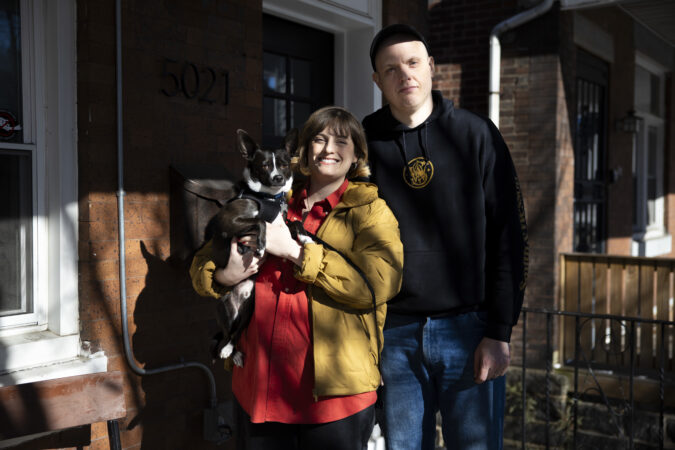
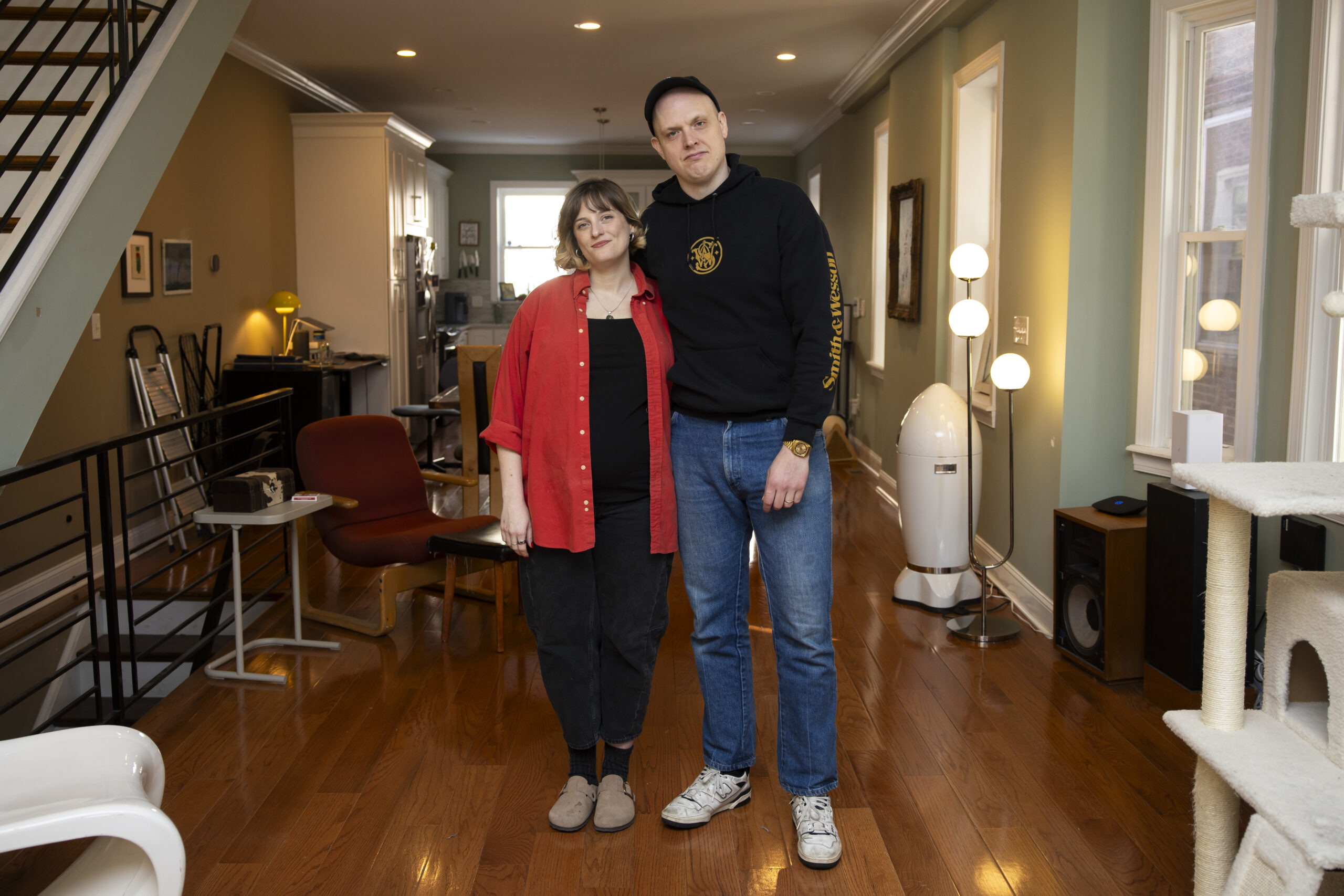
    Rhiannon and Malcolm Critcher bought their West Philly home after a very short search. They saw only two other homes.

    The ask: After a few years in Tucson, Ariz., Malcolm and Rhiannon Critcher knew they wanted to return to the East Coast. They tested a few cities first. Washington felt “a little too nerdy,” Malcolm Critcher said. New York swung too far in the other direction: “a little too main character.” Philadelphia felt just right. “It was a Goldilocks situation,” Critcher said. “We both came here and instantly fell in love.”

    They moved in 2023 and rented in Center City for a year to get their bearings and explore neighborhoods. They fell in love with South and West Philly, but the latter’s parks and tree-lined streets ultimately won them over. They wanted to start a family soon, and West Philly‘s “green, verdant life,” Critcher said, “just felt like a really cool place to be a kid.”

    Their must-have list was short but specific: a kitchen meant for hosting, an open-concept floor plan, and a basement big enough for Critcher, who is 6-foot-4, to stand in.

    The search: One morning in November 2024, after getting breakfast in West Philly, they decided to walk to nearby open houses. They saw three houses. The third was a recently renovated semi-detached twin with light pouring in from multiple sides.

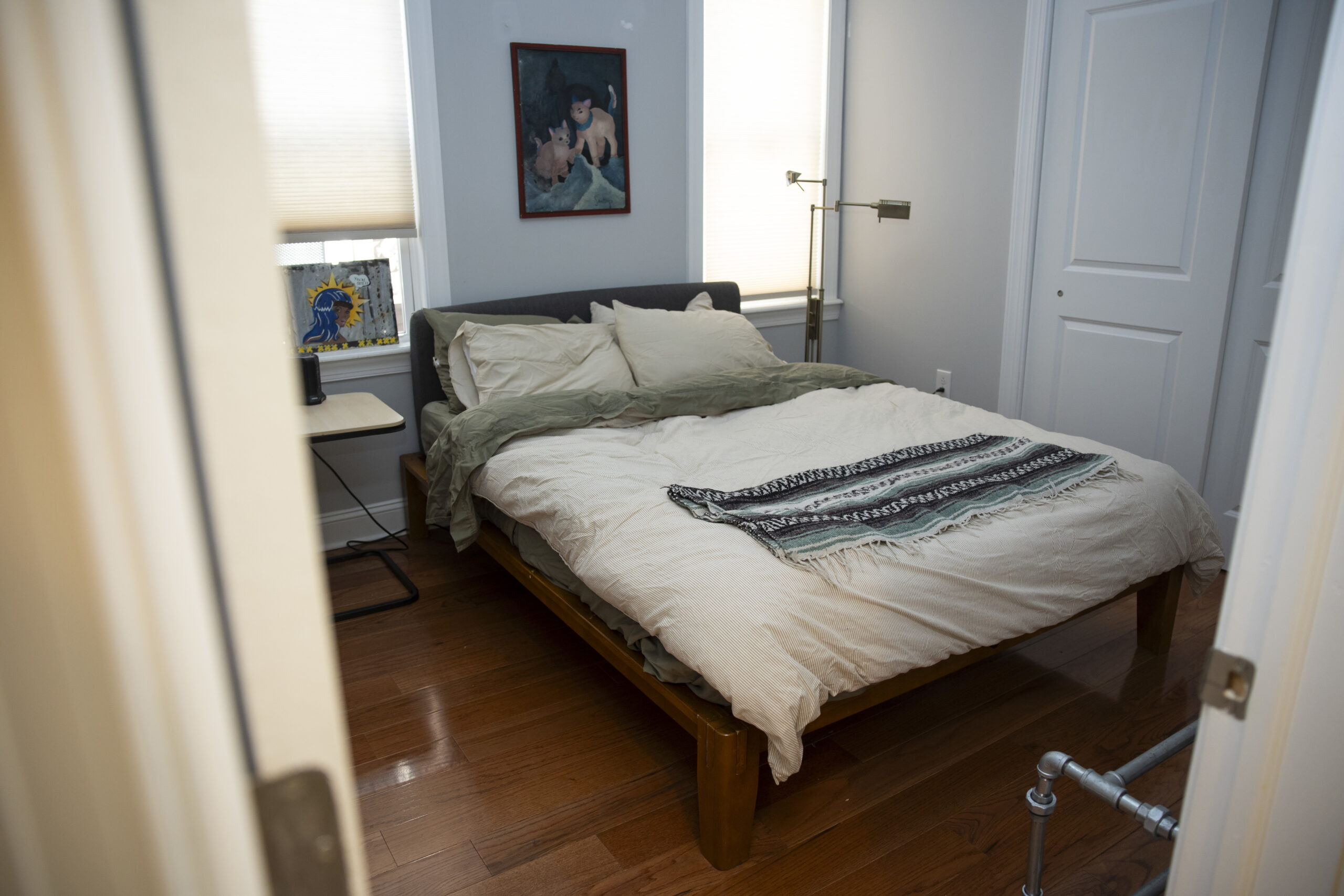
    One of three bedrooms in Malcolm and Rhiannon Critcher’s home.

    They both wanted to buy it right away, but worried they were being impulsive, so they decided to test the walk to the train. The couple doesn’t have a car and relies heavily on public transportation. It took less than five minutes. On the ride home, they realized they weren’t interested in delaying for the sake of process. “If you find the perfect thing early on, it’s still the perfect thing,” Critcher said.

    Having previously bought and sold three houses, Critcher had the confidence to move quickly. “I know what I’m looking for and what I want,” he said. They called their agent and made an offer that afternoon.
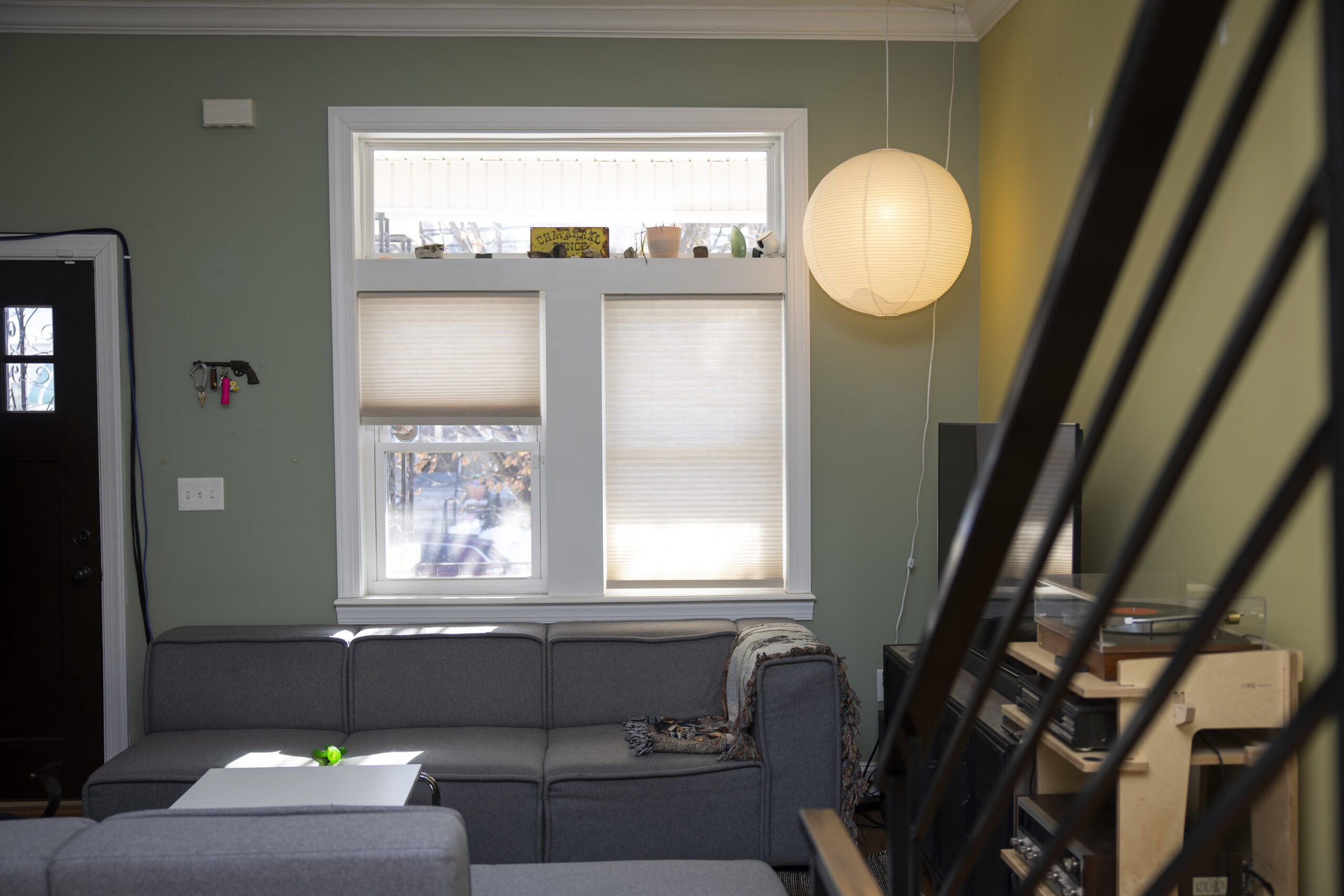
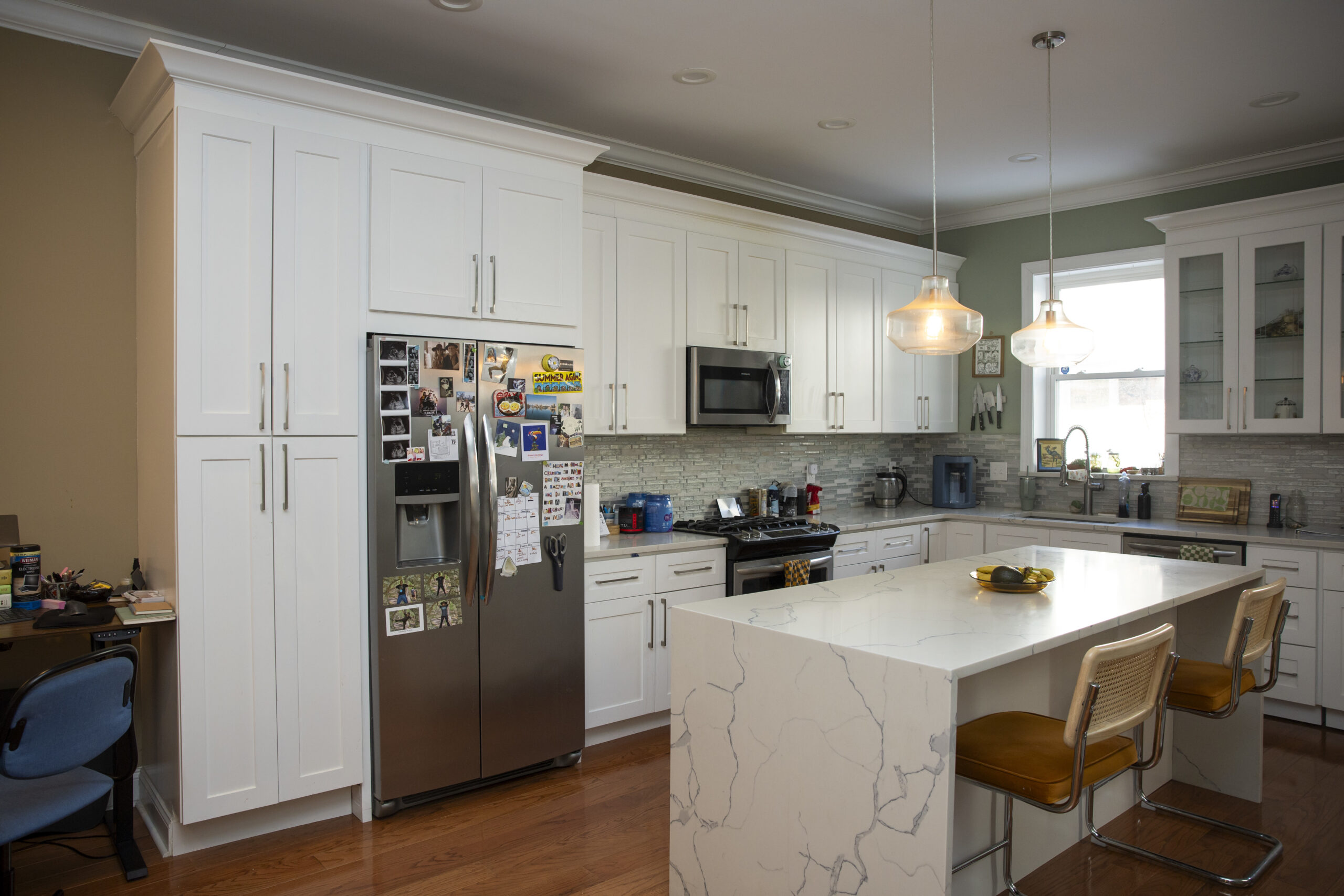
    The appeal: The layout was the first draw. The open first floor flowed naturally from the living room to the kitchen, making it feel larger than its footprint. Then there was the renovation. Unlike the gray-floored, hastily flipped houses they had seen elsewhere, this one felt considered, as if the sellers had remodeled it for themselves, not for resale. They liked the finishes, the flow, and little design choices like the kitchen backsplash. “My wife walked into the kitchen and was just like, ‘Wow, this is my favorite kitchen I’ve ever been in,’” Critcher said.

    The couple wanted a kitchen that would be great for hosting.

    For him, the basement stole the show. It was finished, spacious, and didn’t require him to duck.

    The deal: The house was listed at $425,000 — the very top of the couple’s budget. It had been on the market for just one day when they saw it. They decided to offer $25,000 below the asking price, but they promised to take it as-is, as long as the inspection didn’t reveal anything concerning. The sellers agreed to the terms but requested $410,000, which the couple agreed to.

    Light pours in from multiple sides of the Cratchers’ semi-detached twin.

    The inspection came back spotless. The appliances had all been replaced in 2018. The sewer line had recently been redone. There were no structural issues. “Literally the most perfect housing inspection possible,” Critcher said.

    The money: All told, Critcher and his wife brought a little over $100,000 to closing. Most came from the sale of their previous home in Tucson. They bought that house in early 2020 for $179,000 and sold it in 2024 for $300,000. The proceeds went straight into a high-yield savings account and remained untouched until the couple was ready to buy again.

    The couple’s dog, Pablo, likes to hang out in the second bedroom.

    The down payment on their new house came in just under 20% — about $82,000 — and closing costs were $26,000.

    For Critcher, the exact breakdown mattered less than the total. He approached the purchase with a fixed pot of money and trusted their lender and agent to structure the details responsibly.

    The couple loved the open floor plan on the first floor.

    The move: The couple closed in mid-December 2024 while they were out of town. A notary in Arizona helped them file the necessary paperwork. The move itself happened in mid-January. Compared to moving across the country a year earlier, moving from Center City to West Philly wasn’t too bad. They hired movers to load a U-Haul from their sixth-floor apartment, then unloaded it themselves at the new house. Packing took about a week. The move took two days. Unpacking stretched on for a month.

    Any reservations? Critcher wouldn’t recommend their approach to first-time homebuyers. “It was very impulsive,” he said. “But we both just fell deeply in love with it.”

    Life after close: They’ve kept things simple since moving in. They haven’t undertaken any major renovations or upgrades. “We’re just kind of floating,” Critcher said.
    Did you recently buy a home? We want to hear about it. Email acovington@inquirer.com.

  • How to have a Perfect Philly Day, according to Provenance chef Nicholas Bazik

    How to have a Perfect Philly Day, according to Provenance chef Nicholas Bazik

    What’s changed for chef Nicholas Bazik in the weeks since his Society Hill restaurant, Provenance, earned a coveted star from the Michelin Guide?

    Everything.

    And nothing.

    “There’s this strange duality to it,” says Bazik. “It’s like a complete life-changing event. … But at the same time, the day-to-day is exactly the same. It’s just a little more amplified and there’s more things to do.”

    Bazik’s Provenance was one of three local restaurants to be awarded a Michelin star in November, and already, the accolade has brought lots of things: National acclaim, a rush on reservations, and a plaque (yet to be delivered) that will be displayed inside the restaurant, which opened in 2024.

    Then there’s the pressure that comes with earning the culinary world’s highest honor.

    “The restaurant industry in and of itself is unique, because at every step, every milestone that you get, it just means that there’s more work to do — and more pressure,” Bazik says. “Having a Michelin star means that everyone coming through the door is seeing you as that thing, so there’s no time to let [up].”

    The one exception might be Sundays, when the restaurant is closed and Bazik can finally take a breath. It’s a day that, for him, revolves almost entirely around family — though food, not surprisingly, also plays a supporting role.

    This interview has been lightly edited for clarity.

    7:30 a.m.

    I normally wake up around 7:30, which is around the time my 4-year-old son wakes up.

    In my previous job, prior to me going on paternity leave, the owner gave me a gift certificate to a coffee company, saying, “You should get yourself an espresso machine because you’re going to need it.” That was one of the best, most thoughtful gifts I’ve received from an employer. It’s a Jura espresso/coffee machine, and I use that everyday.

    Then we’re going to Sulimay’s. It’s as close to a perfect diner as it gets. The food is great, the service is great, the space is unique to Philadelphia. Any breakfast spot, I always get the same thing which is two eggs over easy, bacon, hash browns, and rye toast.

    10 a.m.

    I’ll spend some time at the farmers market at Headhouse Square, which is largely how I like to shape my menus and figure out exactly what’s seasonal, what’s on offer, what’s relevant, what’s good. My family’s with me, and I’ll do shopping there for the restaurant and I’ll also do some shopping for home.

    My son and my wife will go to Three Bears Park, which is around the corner from us, and I’ll go meet up with them there, and we’ll play and then go back home for a light lunch with some of the things that we got at the market.

    1 p.m.

    After lunch, we’ll go to Adventure Aquarium in Camden. My son is just obsessed with everything aquatic. He has an encyclopedic knowledge of sharks and fish and whales. We love going there — it doesn’t matter if we’re looking at the same fish every single time, he loves it. So we’ll go there for an hour, and make our next move, which is somewhere outdoors.

    2-4 p.m.

    Ideally, we’d make two stops. We’d go to Lemon Hill, which is where my wife and I got married, and then go to Wissahickon Park — so essentially try to spend the whole afternoon in a green space.

    To be able to travel from Center City and 15 minutes later be in a green, open space with trees and wildlife, it’s incredible.

    5 p.m.

    Because our son is 4 now, he has the full capability of selecting what he wants to eat for dinner, so we leave it up to him. And we essentially go to one of two places: Kim’s Restaurant in North Philly, which is the oldest charcoal grilled Korean barbecue spot. The other one is Mr. Joe’s restaurant, which is my son’s name for Picnic in Fishtown.

    For our purposes, Picnic is the perfect restaurant. It has chicken, french fries (my son’s favorite food group), oysters, and green salad. We get the same thing every single time, and we go enough that we should have a designated table.

    6 p.m.

    It’s time to go home and start the bedtime routine. We do shampoo time, and it’s the only time that my son watches any sort of TV. We’ll watch 20 or 30 minutes of something — normally a deep-sea documentary or a solar system documentary.

    Then from 9-10 p.m., my wife and I get to talk about what’s happening that week — what’s happening with him at school, what events are coming up that week, giving her a proper heads up on what’s happening at work, because everything happens so fast that it’s sometimes hard to keep up.

    And ideally, it’s in bed by 10 p.m., and then it’s start the week the next day.

  • He was ‘particular but not picky’ about a two-bedroom in Norris Square| How I Bought This House

    He was ‘particular but not picky’ about a two-bedroom in Norris Square| How I Bought This House

    The buyers: Evan Todtz, 35, urban designer

    The house: A 960-square-foot townhouse in Norris Square with two bedrooms and one bath, built in 1920.

    The price: Listed for $255,000; purchased for $255,000

    The agent: Kate McCann, Elfant Wissahickon

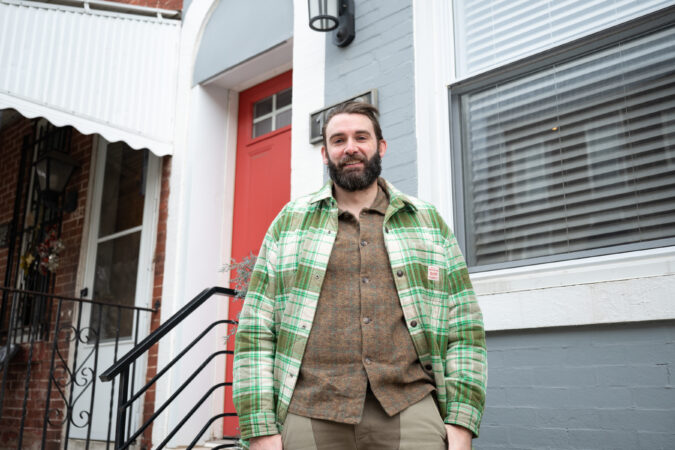
    Todtz saw potential in the house’s flexible floor plan.

    The ask: Evan Todtz was tired of commuting from Baltimore to Washington, D.C. He didn’t want to live in the latter, and he couldn’t find work in the former, so he considered the next-closest big city: Philadelphia.

    “I’ve always really loved Philly and wanted to spend more time in it,” Todtz said. When his company approved a transfer to its Philadelphia office, Todtz moved north and rented an apartment in Norris Square. A year later, he was ready to make it official. “I felt like I was getting into a groove in Philly,” he said, “and I wanted to invest in a place and make this my home.”
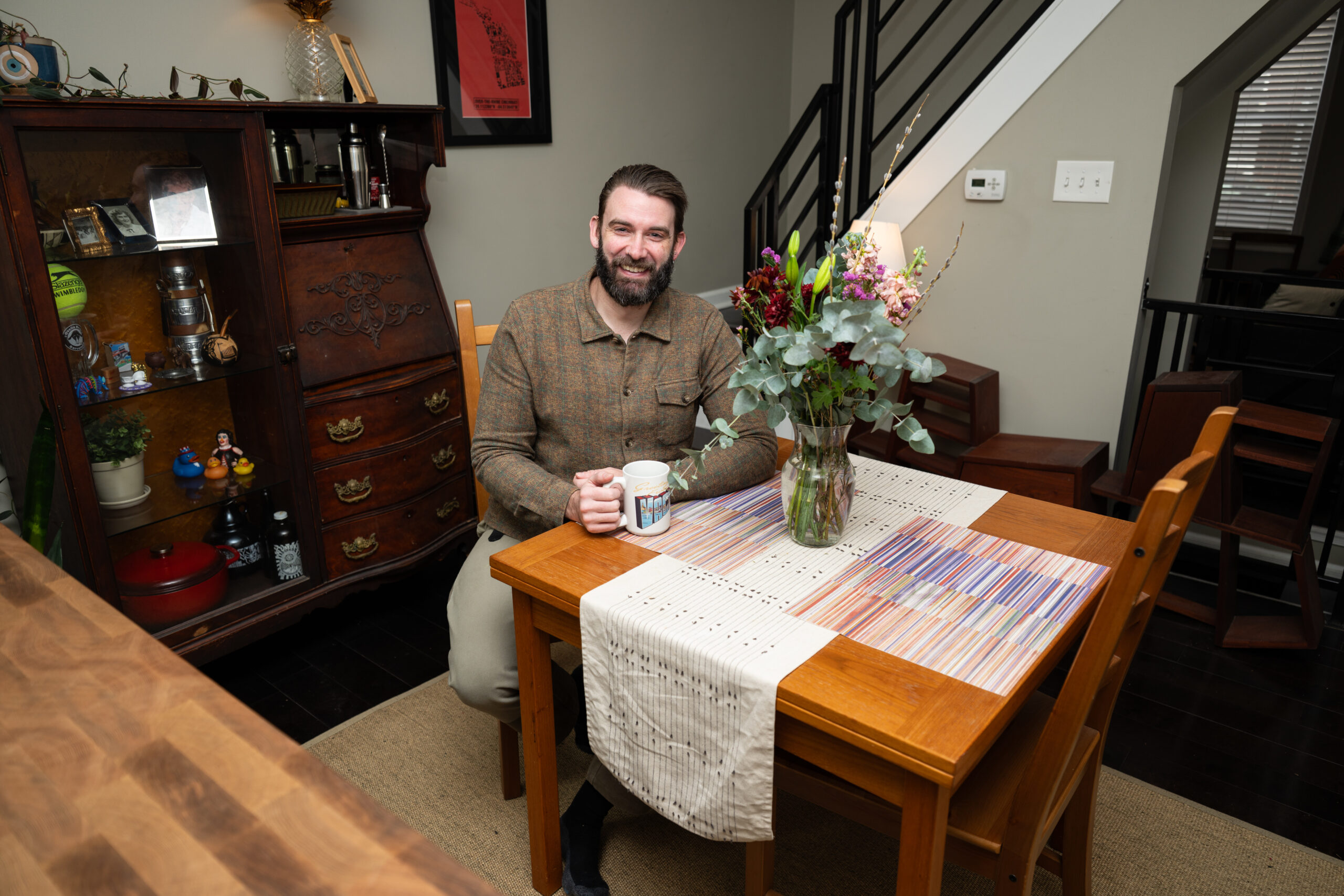
    Transit access was Todtz’s top priority. He frequently travels along the east corridor for work, so being close to the Market-Frankford line, which could take him directly to 30th Street Station in the “wee hours of the morning,” was a nonnegotiable. He wanted two bedrooms, enough space to host visitors, and an outdoor space. Everything else was flexible. “I’m particular, but I’m not picky,” he said.
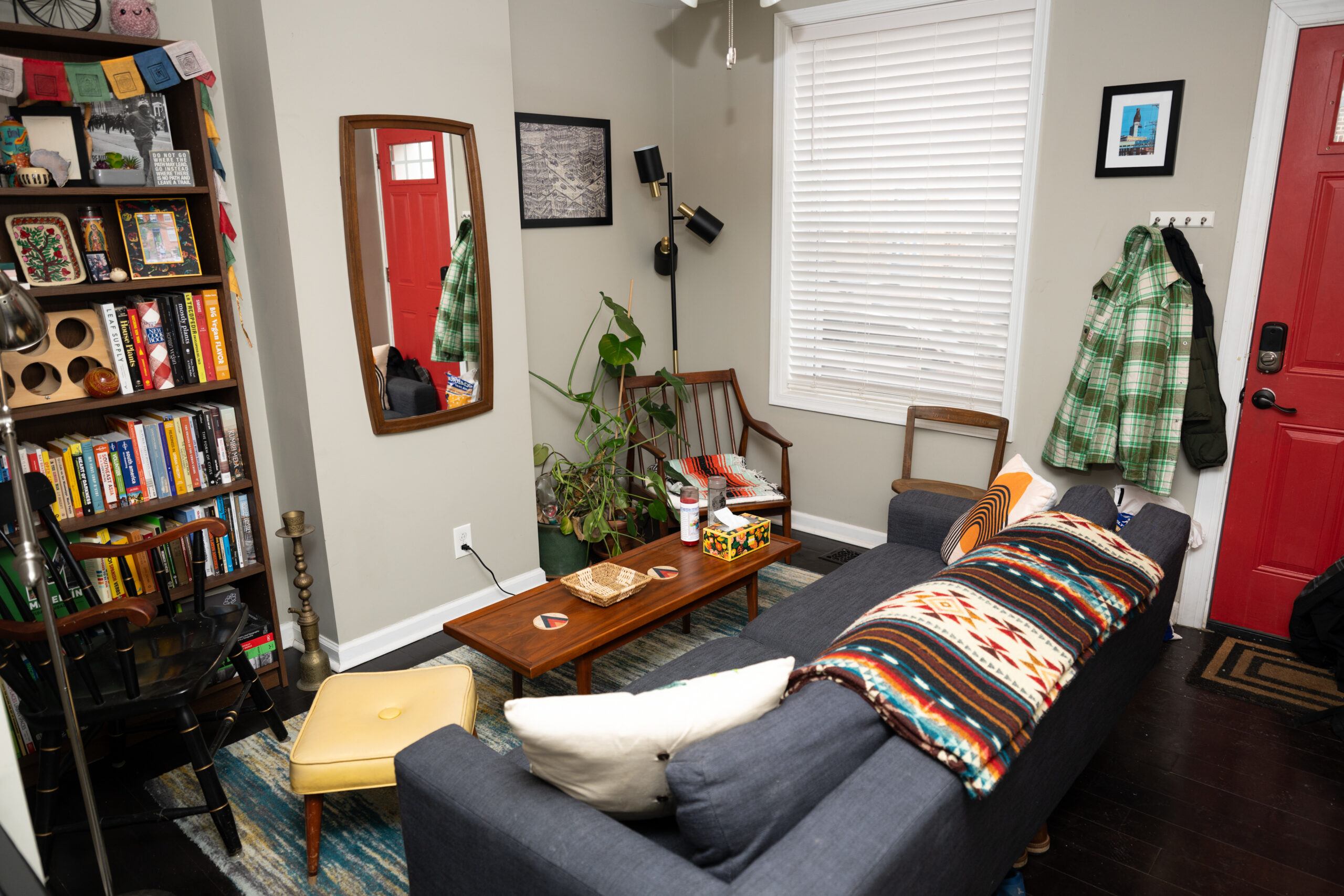
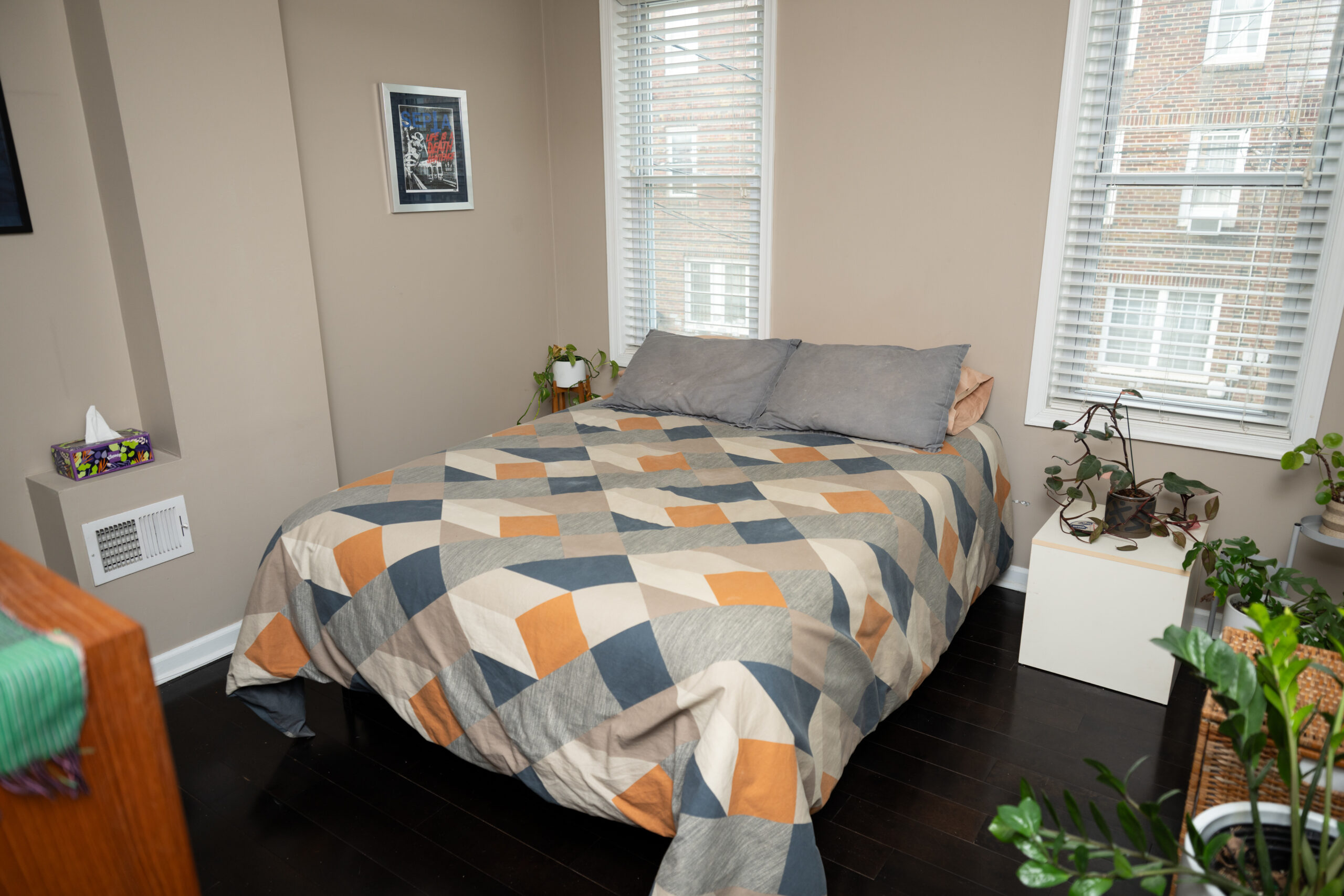
    Todtz liked the living room’s tan walls and dark floors. They made the room feel cozy.

    The search: Todtz began looking seriously at the end of 2023, after attending a first-time homebuyers workshop hosted by Philly Home Girls. Over a month, he saw several homes on weekends and evenings. He saw the house he would eventually buy early in his search, but it felt out of reach. Originally listed at $280,000, it hovered just above what he felt comfortable paying. He put it on a mental “maybe” list and kept looking. One month later, the price dropped to $255,000. “That’s when it felt within striking distance,” Todtz said. “It was closer to comps in the market.”
    The appeal: Todtz immediately noticed the quality of the renovation. The house looked polished but not flashy, neat but not boring. “There weren’t super high-end finishes I wasn’t going to appreciate,” Todtz said, “and there wasn’t the gray-washed millennial nothingness design that so many new houses have.”

    Instead, the house felt solid and lived-in, with dark wood floors and warm-colored walls. “It was very cozy and pretty,” Todtz said. He also liked the flexible floor plan and could see “potential in the footprint,” he said. Mostly, he liked that there wasn’t anything glaringly wrong with it. “It just felt very manageable,” he said. “It didn’t feel like I was taking on a massive project that I didn’t know how to start.”
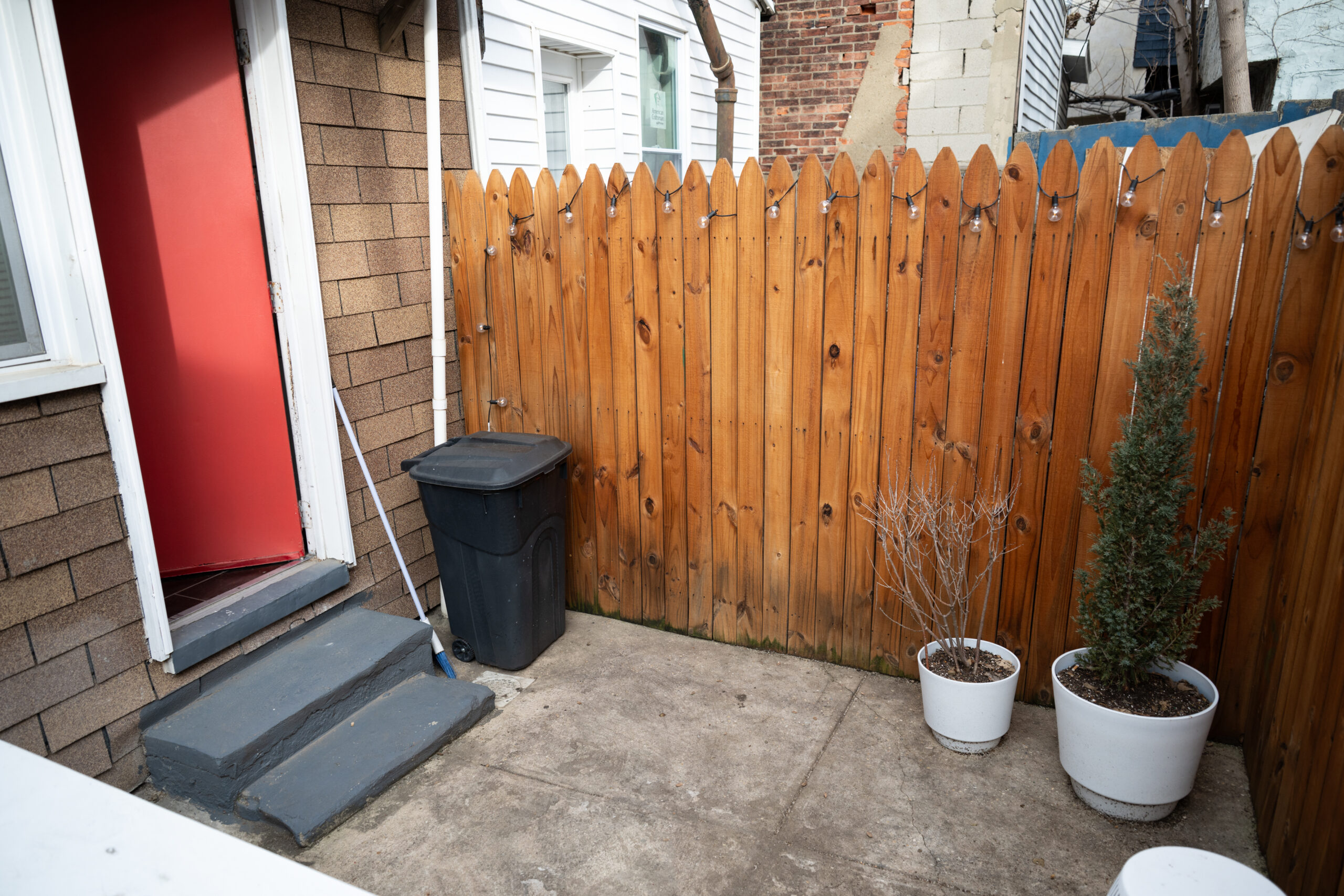
    Todtz said he would be happy with any kind of outdoor space.

    The deal: By the time the price dropped to $255,000, the house had been sitting on the market for months. Todtz and his agent sensed the seller was “eager to get it off his books,” so they offered the asking price and requested a 3% seller’s assist. The seller agreed. “That was a huge win,” Todtz said. It effectively lowered the price to $247,000.

    The inspection turned up only minor issues. The silver coating on the roof was wearing, and the seller, a small-time developer from Queens, N.Y., offered to address it without hesitation. “He was very chill,” Todtz said. “It was great to work with him.”

    The money: All in, Todtz spent about $21,000 on closing costs and upfront expenses. Todtz’s mortgage is through the Keystone Home Loan Program, which required only a 3.5% down payment, provided he paid mortgage insurance. The money came primarily from his long-term savings.

    One of two bedrooms in Evan Todtz’s house.

    “Every paycheck since graduating from undergrad, I’ve been putting money away,” Todtz said. “However modestly, whether it was 50 bucks or 100 bucks.” Eventually, he transferred some of those savings into a mutual fund that he let grow for a decade. He put the rest in a high-yield savings account. He also received a few thousand dollars from his grandmother’s estate.

    The move: Todtz closed on April Fools’ Day, which he feared was a bad omen. His agent reassured him it wasn’t. He spent the next month moving small items in his car, then hired movers to handle the bulk of the work over a weekend in May. He didn’t ask his friends to help him move. “I want to keep my friends,” Todtz said. ”I don’t want to make them stop talking to me.”

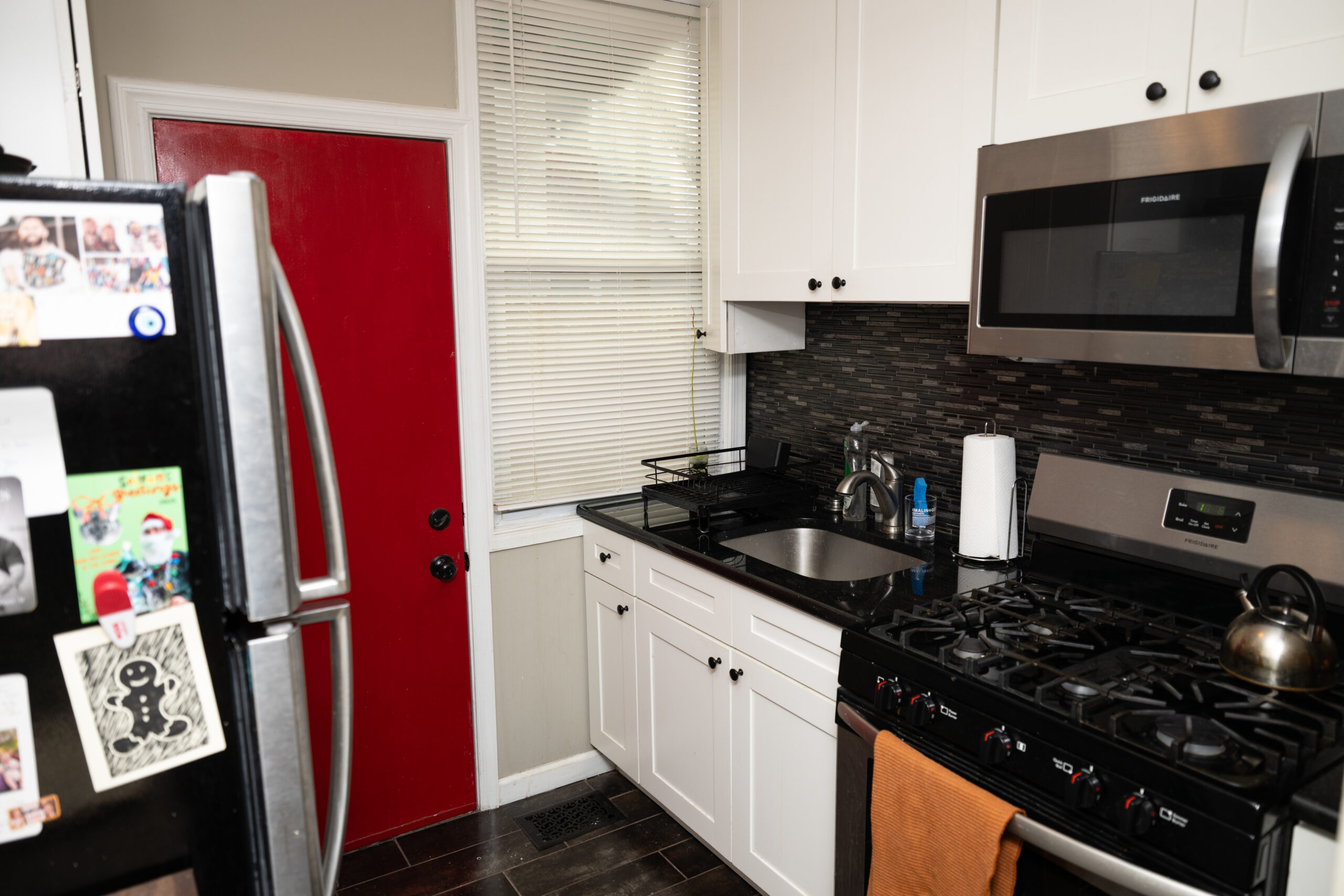
    Todtz loves his kitchen even though it’s “a little small,” he says.

    The move was mostly smooth, except for one casualty: a box spring that couldn’t fit up the new house’s narrow staircase.

    Any reservations? Todtz doesn’t regret buying, though he acknowledges that homeownership comes with new anxieties. Given the current state of the economy, “renting and being able to flee is kind of attractive,” he said.

    Still, he’s glad he made the leap. “I’m happy to own,” he said, “and I feel comfortable learning as I go.”

    The custom wood butcher block Todtz built with the help of the Philadelphia Table Co.

    Life after close: Most of the changes Todtz has made have been cosmetic. “I didn’t want to bite off more than I could chew,” he said. He tackled the patio first, pressure-washing the concrete, re-staining the fencing, and adding cafe lights. After that, he partnered with Philadelphia Table Co. to build a custom wood butcher block that has doubled the counter space in his kitchen.

    He has a couple of larger projects he plans to tackle next year, such as a full HVAC upgrade, but for now, he’s focused on rebuilding his savings. “I’m happy with the investment,” he said, “but I’m very much in a house-poor moment right now.”

    Did you recently buy a home? We want to hear about it. Email acovington@inquirer.com.